Choose the experimental features you want to try

This document is an excerpt from the EUR-Lex website

Document 52025SC0394

COMMISSION STAFF WORKING DOCUMENT EVALUATION Evaluation of the National Emission Reduction Commitments Directive

SWD/2025/0394 final

Table of contents

1Introduction

1.1    Context of this evaluation    

1.2    EU clean air policy and the NECD    

1.3    Purpose and scope of the evaluation    

2What was the expected outcome of the Directive?

2.1    Description of the intervention and its objectives    

2.2    Points of comparison    

3How has the situation evolved over the evaluation period?

4Evaluation findings (analytical part)

4.1    To what extent was the intervention successful and why?    

4.2    How did the EU intervention make a difference and to whom?    

4.3    Is the intervention still relevant?    

5What are the conclusions and lessons learnt?

5.1    Effectiveness and coherence    

5.2    Efficiency    

5.3    EU added value    

5.4    Relevance    

5.5    Key lessons learnt    

Annex IProcedural Information

1    Lead Directorate-General, Decide references    

2    Organisation and timing    

3    Consultation of the Regulatory Scrutiny Board    

4    Evidence, sources and quality    

Annex IIMethodology and Analytical models used

1    Overview    

2    Modelling approaches    

3    Literature review    

4    Consultation activities methods and evaluation    

In a separate document:

ANNEX III    Evaluation matrix and details of answers to the evaluation questions

ANNEX IV    Overview of benefits and costs, simplification and burden reduction

ANNEX V    Stakeholder consultation – synopsis report

ANNEX VI    Overview of the NECD

ANNEX VII    Mapping of monitoring under the NECD with respect to its impact assessment

ANNEX VIII    International context and competitiveness

ANNEX IX    Examples of Member State approaches to reduce emissions

Glossary

Term/acronym

Meaning/definition

Term/

acronym

Meaning/definition

AAQD

Ambient Air Quality Directive(s)

NAPCP

National air pollution control programme

Air Convention

UNECE Convention for Long-Range Transboundary Air Pollution (also referred to as CLRTAP)

NECD

National Emission reduction Commitments Directive

BAT

Best available techniques

NECD IA

The 2013 impact assessment underpinning the NEC Directive

BCR

Benefit-cost ratio

NH3

Ammonia

CAO

Clean air outlook

NMVOC

Non-methane volatile organic compounds

CAP

Common agricultural policy

NOx

Nitrogen oxides

CLRTAP

UNECE Convention for Long-range Transboundary Air Pollution

PaMs

Policies and measures

ERC

Emission reduction commitment

PM

Particulate matter

FTE

Full-time equivalent

PM2.5 

Fine particulate matter

GP

Gothenburg Protocol (UNECE Air Convention)

SO2

Sulphur dioxide

IED

Industrial Emissions Directive

Source legislation

EU legislation regulating emissions from specific sources (e.g. industrial sources, vehicles, etc.)

IIR

Informative inventory report

WAM

Projection of compliance ‘with additional measures’

LPS (inventory)

Large point sources

WM

Projection of compliance with current measures (‘with measures’ scenario)

MRV

Monitoring, reporting and verification

ZPAP

Zero pollution action plan

MTFR

Maximum technically feasible reductions

EU Member States

AT

Austria

EL

Greece

LV

Latvia

BE

Belgium

FI

Finland

MT

Malta

BG

Bulgaria

FR

France

NL

Netherlands

CY

Cyprus

HR

Croatia

PL

Poland

CZ

Czechia

HU

Hungary

PT

Portugal

DE

Germany

IE

Ireland

RO

Romania

DK

Denmark

IT

Italy

SE

Sweden

EE

Estonia

LT

Lithuania

SI

Slovenia

ES

Spain

LU

Luxembourg

SK

Slovakia

1Introduction

1.1Context of this evaluation

Air pollution damages human health and the environment. Several pollutants are emitted into the air from different sources. The effects may be felt locally or even hundreds of kilometres away due to the pollutant being transformed and transported in the atmosphere. Air pollution policy addresses this complex reality. It comprises legislation covering environmental quality standards and the abatement of specific emissions sources (nationally and at EU level), as well as strategic legislation to tackle long-range pollution that crosses national borders, including an international agreement under the auspices of the United Nations Economic Commission for Europe (see Box 1 below). There are strong inter-connections between the various policies influencing air pollution. This reflects the reality that similar economic activities often affect both air pollution and climate change, as well having an impact on water pollution and ecosystems. This makes evaluating the specific role of the National Emissions reduction Commitments Directive (NECD) 1 particularly challenging.

The NECD sets out mandatory commitments per Member State to reduce emissions of five key air pollutants that have a distinct transboundary effect and a harmful impact on human health and the environment. There are emission reduction commitments (ERCs) to be achieved by 2020 and another set of commitments to be achieved by 2030. Inventories of emissions are reported annually by the Member States to monitor the effectiveness of national policy programmes and measures to abate emissions. The purpose of the current evaluation therefore is to take stock of progress made so far and to assess whether additional effort or policies may be needed to ensure delivery of ERCs by 2030. Moreover, the evaluation will specifically address opportunities for cost reduction and simplification, in line with the Commission’s reinvigorated simplification agenda and its commitment to improving the EU’s economic competitiveness 2 .

The evaluation will inform the Commission’s agenda on clean, competitive and socially fair prosperity by providing insights for implementing key political initiatives, such as the  Clean Industrial Deal , the Vision for Agriculture , the Water Resilience Strategy  and the upcoming Bioeconomy Strategy. It will also show the extent to which the Directive is contributing to implementing the related targets and objectives set so far, notably as part of the European Green Deal. More specifically, the analysis will take into account links with other policy areas that either directly or indirectly influence air pollutant emissions, such as climate, energy, mobility, industrial and agricultural policies.

BOX 1.The Gothenburg Protocol under the UNECE Air Convention and the EU’s role

The Gothenburg Protocol (GP), officially known as the 1999 Protocol to Abate Acidification, Eutrophication and Ground-level Ozone, is a key international agreement under the UNECE Convention on Long-range Transboundary Air Pollution (Air Convention). The Convention was adopted in 1979 and provides a platform for clean air policy discussions, supported by a well-established science network ( EMEP ).

The GP was established to reduce air pollution and its harmful effects on human health and the environment across Europe and North America. It sets ERCs for major air pollutants and their precursors. Along with the individual EU Member States, the EU is a signatory to the Protocol. The amended GP was ratified by  Council Decision (EU) 2017/1757 . The protocol is currently under revision following a decision  taken at the 43rd session of the Executive Body of the Convention in Geneva in December 2023, with the aim of finalising the process by its 46th session in 2026. The revision is a follow-up to a review of the Protocol, which found that countries in the UNECE region are set to suffer long-term damage to human health, ecosystems, crop yields and the climate from air pollution, and that current efforts would not be sufficient to avoid these harmful effects.

1.2EU clean air policy and the NECD

The NECD is part of a comprehensive clean air policy framework that relies on three main pillars:

the Ambient Air Quality Directive(s) (AAQD) 3 , which sets air quality standards for concentration levels of 12 pollutants in ambient air;

the NECD, which sets out mandatory commitments per Member State to reduce the emissions of five key air pollutants contributing to transboundary pollution; 

EU source legislation, which tackles air pollutant emissions from key sources, such as road vehicles, domestic heating installations and industrial installations.

While the AAQD regulates the exposure of the public to pollutant concentrations at local level, the NECD addresses pollutant emissions at national level. It aims to reduce background concentrations, i.e. the air pollutant concentrations to which individuals are exposed over the longer term, independently of the influence of individual sources (e.g. industrial locations, major roads) 4 . Reductions of emissions from key sources are complemented by the global approach of the NECD, as source legislation does not limit the number of sources (e.g. industrial installations or products).

Since the NECD was adopted in 2016, the policy context in which it is embedded has evolved. In December 2019, the European Commission committed, in the European Green Deal, to further improving air quality and to aligning EU air quality standards more closely with the recommendations of the World Health Organisation (WHO). The WHO Global Air Quality Guidelines were most recently updated in September 2021 5 and are subject to periodic scientific review. The objective of closer alignment with the latest scientific findings was confirmed in the zero pollution action plan (ZPAP) and underpinned the revision of the AAQD adopted in October 2024.

The ZPAP outlines a vision for 2050 where air (and water and soil) pollution is reduced to levels that are no longer considered harmful to human health and natural ecosystems, and that respect planetary boundaries. In addition, the ZPAP introduced two targets for 2030 (relative to 2005):

reduce by over 55% the health impacts of air pollution (premature deaths); and

reduce by 25% the share of EU ecosystems where air pollution threatens biodiversity.

The evaluation takes into account this updated clean air policy framework to assess not just whether the legislation has met the initial objectives, but also whether it continues to be relevant in view of the targets and standards adopted since.

The interplay between the relevant EU legislation listed in the intervention logic and the NECD is analysed using the effectiveness and coherence criteria. The effect of developments at international level and other external factors are also considered. See a short description of the NECD in Section 2.1 and a detailed one in Annex VI.

1.3Purpose and scope of the evaluation

1.3.1Purpose of this evaluation

This evaluation fulfils the commitment laid down in Article 13 of the NECD. It comes midway between 2020, when ERCs were first applied, and 2030, the year by which Member States must meet more ambitious ERCs. It is thus an opportune moment to take stock as to whether Member States have implemented sufficient measures to meet the 2020-2029 ERCs and are on track towards achieving their 2030 objectives.

In line with the requirements of Article 13, as regards ammonia, this evaluation also assesses the latest scientific evidence, updates to UNECE guidance on the matter, updates to Best Available Techniques (BAT) under the old and revised Industrial Emissions Directive (IED) and relevant measures in the common agricultural policy (CAP).

Furthermore, Article 13 includes a specific point on mercury, as it refers to the need to consider measures for reducing mercury emissions and, if appropriate, to submit a legislative proposal. In 2017, a Regulation on mercury was adopted, which was last  revised in 2024 . The IED also covers mercury emissions into the air. As these policy developments are in line with the requirements on mercury laid down in Article 13 of the NECD, this evaluation does not cover this point.

1.3.2Scope of this evaluation

This evaluation includes the NECD and other acts related to its implementation, namely  Commission Implementing Decision (EU) 2018/1522 laying down a common format for national air pollution control programmes under Directive (EU) 2016/2284;  Commission Guidance for the development of National Air Pollution Control Programmes under Directive (EU) 2016/2284 and the Commission Notice 2019/C 92/01 on ecosystem monitoring under Article 9 and Annex V of Directive (EU) 2016/2284.

In line with the Commission’s Better Regulation Guidelines , this report assesses the NECD against all five of the standard evaluation criteria: effectiveness, efficiency, coherence, relevance and EU added value.

This evaluation covers the period from adopting the NECD on 14 December 2016 until 31 October 2025, and looks at how it has been implemented across all current EU Member States (with some consideration given to transboundary pollution from outside the EU).

1.3.3Methodology, robustness and limitations 6  

The evaluation relies on reported data for levels of emissions (air pollutant emission inventories), ecosystem monitoring (measured data on sites), data on administrative burden (reported data) and data on funding related to clean air (tracking of clean air funding). The latest air pollutant emissions data refer to 2023 (reported in 2025). To cover the full 2016-2025 evaluation period, we had to base 2024 and 2025 data on Member State emission projections and the (greenhouse gas and air pollution interactions and synergies (GAINS) model. Evidence regarding adjustment costs was also very limited. This gap was also covered via the GAINS model.

Annex II to this staff working document describes the GAINS model in detail. It is important to note that the model is validated against reported data (e.g. national statistics) and monitoring data (e.g. atmospheric concentrations of PM2.5). Assumptions on national policies, activity data and cost parameters are checked with Member State and industry experts. The GAINS modelling framework shows the aggregate effects (and costs) in future years of the emissions abatement measures already taken by the Member States (and of the measures that are likely to be applied). However, the framework integrates all relevant measures, including those taken due to non-air pollution policies (such as climate or energy policies, or source legislation). It is therefore not possible to disentangle the modelled impacts of air pollution policies from impacts linked to other policies. Thus, it is not possible to estimate the share of emission reductions that are due to the NECD: policies act in synergy and individual effects are impossible to determine. This ripples through to assessing adjustment costs and benefits. These limitations are highlighted throughout this document as well as in Annex III.

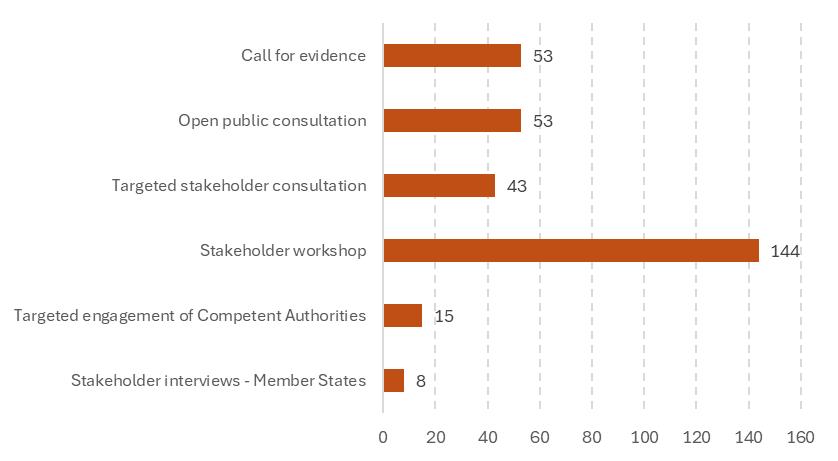
In addition to the above, the evaluation has also used desk research and a range of consultation activities to supply further evidence on the evaluation criteria. The response to the open public consultation (OPC) (53 replies) and targeted stakeholder consultation (TSC) (42 replies) was limited. Thus, the results are not representative and must be interpreted with caution. It is not possible to draw general conclusions.

2What was the expected outcome of the Directive?

2.1Description of the intervention and its objectives

The main objective of the NECD is to contribute to achieving levels of air quality that do not give rise to significant negative impacts on and risks to human health and the environment. The main tools for addressing this objective are the ERCs for Member States’ emissions of sulphur dioxide (SO2), nitrogen oxides (NOx), non-methane volatile organic compounds (NMVOCs), ammonia (NH3) and fine particulate matter (PM2.5). These are in place for the 2020-2029 period, with more stringent ERCs applicable from 2030 onwards. The ERCs were defined considering what was both technically feasible and cost effective, while contributing to the main objective of the NECD.

Significant progress in reducing air pollution had already been made under the predecessor legislation , but, as stated in the 2013 Commission Communication ‘ A Clean Air Programme for Europe ’, significant negative impacts on and risks to human health and the environment remained. The NECD was adopted to support compliance with obligations under the EU’s air quality legislation, to harmonise with international requirements under the amended Gothenburg Protocol to the Air Convention 7 (GP), and to achieve the EU’s long-term objectives on air quality. These objectives are supported by the WHO Global Air Quality Guidelines , and the EU’s biodiversity and ecosystem protection objectives. The latter aim to reduce levels of and deposition from air pollution – which causes acidification, eutrophication and ozone damage – to below the critical loads and levels 8 set out by the Air Convention.

In addition, the NECD was intended to address some of the shortcomings in implementing the predecessor legislation. It aimed to do this by better coordinating national policy, reducing pollution through the most cost-effective sectoral measures, and improving the information base through better reporting.

The intervention logic underpinning the NECD is summarised in the figure below. It shows the needs that triggered the interventions, and the objectives of those interventions. It explains how the interventions were expected to work (activities that were expected to be carried out) and the achievements expected in the short, medium and long term (expected outputs, results, impacts). External factors and other EU policies that influence the implementation of the Directive are also reflected in the intervention logic.

Figure 1 – Intervention logic of the NECD

The core of the NECD consists of the national emission reduction commitments (ERCs) for five main air pollutants. These are set for the period 2020-2029, with stricter ones for 2030 onwards (2030+). The ERCs are defined in percentages in relation to emission levels for the five main air pollutants in the base year 2005.

The ERCs vary among the Member States depending on national situations and among pollutants depending on technical abatement potential and costs. In consequence, for most Member States ERCs are lower for ammonia and higher for SO2. The 2020-2029 ERCs align EU requirements with the international commitments set out in the amended GP. They had to be attained by 2020 and be, at least, maintained throughout that period. The 2030+ ERCs reflect a cost-effective strategy for attaining a higher level of health and environmental protection across the EU, which Member States must reach starting from 2030.

The NECD sets an indicative emission level for 2025 that is based on a linear reduction trajectory between the 2020 and 2030 ERCs 9 . This indicative benchmark has been used to see whether Member States are on track towards achieving the 2030+ ERCs and help direct effort to areas where they are falling short. Member States may deviate from the linear trajectory, if justified, but few Member States have seen the need to use this option.

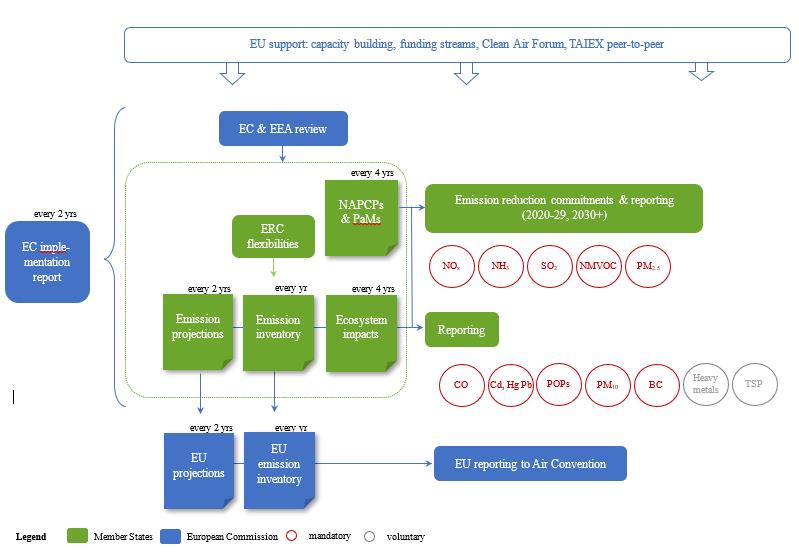
The Commission, with the support of the European Environment Agency (EEA), checks whether Member States comply with the ERCs on the basis of yearly air pollutant emission inventories. Inventories consist of emission estimates for different sectors produced using well-established methodologies set out in the EMEP Reporting Guidelines , the EMEP/EEA air pollutants emission inventory guidebook and further guidance material adopted under the UNECE Air Convention. These methodologies are regularly updated based on evolving scientific knowledge. The Commission verifies the transparency, accuracy, consistency, comparability and completeness of the emission inventories, and whether they have been prepared in accordance with approved methods. Member States may apply for flexibilities to become compliant under certain conditions, such as non-compliance due to using improved inventory methods; due to exceptional weather conditions; due to power failure or failure of the heat supply or production system; or when effecting a pollutant swap (compensating for non-compliance of one pollutant by reducing another pollutant by an equivalent amount) 10 .

Member States also have to submit projections of future national emissions reflecting known policies and measures. The Commission and the EEA also review projections to ensure that they are as reliable as possible. These projections have been assessed against the 2025 benchmark.

The reporting on air pollutants for which ERCs have been established is complemented, for monitoring purposes, by reporting requirements for other major air pollutants, such as carbon monoxide, heavy metals and black carbon. Based on data reported by Member States, the Commission reports to the Air Convention on behalf of the EU.

These programmes set out policies and measures (PaMs) across different sectors, whether adopted or planned, which are decided upon nationally to tackle air pollution. The NAPCPs provide timetables for implementation; describe impacts on emission reduction, air quality and the environment; and ensure coherence with plans and programmes under other relevant policies. Where emission inventories or projections show that ERCs are not complied with or there is a risk of non-compliance, Member States must update their PaMs. The NAPCP thus constitutes an essential policy instrument for Member States. It ensures coordination across policy areas and ministries, bringing a system-level focus on reducing air pollutants that is unique in the clean air policy field.

BOX 2.Policies and measures (PaMs) included in national programmes (NAPCPs) 11

The Commission reviews the NAPCPs and publishes NAPCP review reports for all Member States 12 . Most PaMs target emissions from the agriculture (21%), energy (26%) and transport (29%) sectors. Examples of the most common objectives of PaMs are presented below:

Agriculture: improved animal waste management systems (NH3); improved livestock management and rearing installations (NH3); low-emission application of fertiliser/manure on cropland and grassland (NH3).

Energy: increase in renewable energy (NOx, NMVOCs, PM2.5, SO2); improvement in the energy and transformation sector (NOx, NMVOCs, PM2.5, SO2); efficiency improvements of buildings (NOx, NMVOC, PM2.5, SO2); efficiency improvement of appliances (PM2.5, NOx, SO2).

Transport: fast adoption of zero emission vehicles, shift to less polluting modes of transport (NOx, NMVOCs, PM2.5).

Annex III Part 2 of the NECD sets out a list of obligatory and optional measures related to agriculture, to be addressed through the NAPCPs. This annex reflects the significant contribution of agriculture to NH3 and PM2.5 emissions and the potential to address them through concrete actions proposed at EU level. NH3 is a direct contributor to eutrophication and an important precursor for the formation of secondary particulate matter in the atmosphere 13 . The NECD explicitly requires for an evaluation to assess the latest scientific evidence and the evolution of measures in the context of the CAP, the IED and the Air Convention 14 .

To assess whether emission reductions are effective in reducing impacts on the environment, Member States are required to monitor and report the impacts of air pollution on water and terrestrial ecosystems. When setting up appropriate monitoring systems, Member States may use existing monitoring systems that have been established for example under the Air Convention.

The figure below provides a visual summary of the workings of the NECD. Annex VI provides a more detailed description of the requirements of the NECD.

Figure 2 – Main elements of the NECD

2.2Points of comparison 

As outlined in the Better Regulation Guidelines, points of comparison are based on the expected results and impacts of the preferred option, as defined in the 2013 impact assessment accompanying the NECD proposal (NECD IA) 15 . However, changes to the proposal during the legislative process limit the possibility of using the NECD IA as a point of comparison. The main changes affecting points of comparison were:

methane ERCs and reporting requirements were deleted, affecting compliance costs and environmental impacts;

the ambition of ERCs for the five main air pollutants were lowered, affecting compliance costs and environmental impacts;

the frequency of NAPCP submissions, inventories for gridded data and large point sources (LPS) was reduced from every two years to every four years, affecting administrative costs;

the use of ecosystem monitoring indicators annexed to the Directive were changed from mandatory to optional, affecting compliance costs;

several of the agricultural measures annexed to the Directive were changed from mandatory to optional, affecting compliance costs and environmental impacts.

In most cases, it was not possible to provide a reliable, quantified point of comparison for elements connected to these changes based on the NECD IA. This was mainly due to the fact that the IA did not break down related cost items. It was not possible to reconstruct the calculations based on the information available (see details in Annex III Section 3).

Evaluation questions check the expected results and impacts against the actual implementation of the Directive for all evaluation criteria in the evaluation period:

Effectiveness looks at compliance with national ERCs for the five pollutants covered in the NECD and at whether the expected health and environmental benefits have been attained. The evaluation first and foremost checks whether Member States have attained the currently applicable ERCs, based on past emissions data. In addition, it attempts to assess whether the efforts made by Member States have been sufficiently effective to put them on track towards meeting the more ambitious 2030 ERCs. It analyses the role of specific NECD requirements, of other policies and of EU international commitments in reaching the objectives. The analysis relies on extensive documentation from the Member States, including national policies and measures and their effects; emission inventories and projections; and reviews of those inventories and projections. 

Efficiency analyses administrative costs (mainly for Member States, as the addressees of the Directive and main bearers of such costs) and abatement costs (for Member States and businesses, e.g. farmers reducing ammonia emissions). It also investigates the cost of inefficiencies, for example due to overlaps between similar but not identical requirements of EU policies. It contrasts costs with benefits, such as the monetised health and economic benefits of improved air quality. This analysis focuses on the cost of actions taken over the evaluation period (2016 to 2025).

Coherence investigates both coherence within the NECD (internal coherence) and coherence with related EU policy and the relevant EU international commitments (external coherence). It analyses synergies, overlaps, incoherences and how they have changed over the evaluation period. 

Relevance checks the NECD objectives and delivery mechanism against the evolution of related EU policies, technical and scientific progress, and other external factors. It examines whether the scope of pollutants covered by ERCs or by reporting requirements is pertinent, and whether emission reduction measures for agriculture are relevant (Annex III Part 2 of the NECD).

The EU added value criterion checks the extent of transboundary pollution and examines scenarios in which Member States take action via national policies or act within the international framework of the GP. 

The analysis systematically integrates input from stakeholder consultation. The evaluation matrix 16 summarises the points of comparison, the indicators used to assess them, the sources and the methods used.

3How has the situation evolved over the evaluation period?

When the NECD was adopted in December 2016, Member States were required to bring into force provisions related to reporting inventories and projections by 15 February 2017, and to fully transpose (i.e. integrate into national law) the Directive by 1 July 2018. The Commission subsequently checked the conformity of the national measures notified and launched nine infringement procedures due to national legislation not being in conformity with the requirements of the Directive. All but one 17 of those procedures have since been closed.

The first NAPCPs had to be submitted to the Commission by 1 April 2019, but only seven Member States did so by that deadline. The Commission opened infringement procedures for late submission of NAPCPs for five Member States which were subsequently closed once the programmes were submitted. The reporting of NAPCPs continues to see serious delays. Only six Member States updated their NAPCPs on time.

Member States have reported yearly emission inventories since 2017, building a solid base of emissions data. The inventory reviews show that inventory quality has improved over time 18 . Overall, reporting of inventories has been complete and on time 19 , with a just a few cases of delays. There has been one case of emission inventories and projections not being reported, which led to an infringement procedure being opened. 

Put simply, emissions are calculated by multiplying activity data with emission factors at detailed sectoral level. As such, inventories reflect changes in production patterns observed over time, including changes in the activity level of certain economic activities 20 and changes in the way a given economic activity is conducted 21 .

Figure 3 – 2005-2023 trends in EU emissions of NH3, PM2.5, NMVOC, NOX and SO2, as percentages of 2005 levels, set against EU Member States’ GDP as a percentage of 2005 GDP (source: EEA NECD briefing 2025 )

Emissions of the five main pollutants have decreased at EU level. Figure 3 shows the trend in the emissions of the five main pollutants since 2005, the base year against which the NECD sets ERCs. This is based on emission inventory data submitted annually by Member States (reported data). Emissions have decreased most for SO2 (-85%) and least for NH3 (-17%), reflecting the different targets of ERCs. This, however, hides differences in Member State performance. The evolution of emissions per pollutant and Member State over time are detailed in EEA publications 22 .

The Commission has been carrying out compliance assessments against the ERCs since 2022, when Member States reported emissions data for the first time for the year 2020 23 . Based on these assessments, overall compliance is relatively good for all pollutants except ammonia, for which 11 Member States failed to reduce emissions sufficiently in 2020. This number progressively reduced to 8 Member States in 2022 (based on the 2024 submission), with the latest submission from 2025 indicating that, in 2023, 5 Member States were non-compliant for ammonia. The compliance situation for all other pollutants is considerably better and, in the latest submission, only 1 Member State is non-compliant per pollutant (see Table 1 below and the more detailed overview in Annex III Section 2). As ERCs are set for 5 pollutants across 27 Member States, there is a total of 135 pollutant-Member State combinations for which compliance is checked. Table 1 shows that the number of ERCs not met out of that total has progressively reduced over time (from around 14% to 6% of all 135 combinations). The Commission has followed up on the non-compliance cases by starting infringement proceedings, as summarised in Annex III, Section 2.1.6.

Table 1 – Overview of Member States non-compliant with 2020-2029 ERCs per pollutant since the first inventories were submitted for 2020

Year

NH3

PM2.5

NMVOCs

NOx

SO2

No of ERCs not met/all ERCs

2020* 

11

3

2

2

1

19/135

2021**

10

3

3

2

1

19/135

2022***

8

2

1

2

1

14/135

2023****

5

1

1

1

1

9/135

*According to inventories reported by Member States in 2022 (on which the letters of formal notice issued in January 2023 were based).

**According to inventories reported by Member States in 2023 (on which the letters of formal notice and reasoned opinions issued in November 2023 were based).

***According to inventories reported by Member States in 2024.

****According to inventories reported by Member States in 2025.

Comparing 2023 air pollutant emissions with the more ambitious 2030+ ERCs shows that all but 4 Member States 24 need to reduce emissions in the future for one or more pollutants. Some pollutants need to be reduced substantially. All but 10 Member States 25 need to reduce emissions to ensure they are on a linear reduction trajectory in 2025 26 .

Member States also submitted projections of air pollutant emissions. These provide insights as to whether the policies and measures that have been implemented and planned are likely to be successful in reducing emissions going forward. Projections ‘with measures’ (WM) take into account the effects of PaMs that have been adopted. Projections ‘with additional measures’ (WAM) take into account also the effects of PaMs that Member States are planning to adopt to further improve the compliance situation by 2025, as well as in view of 2030+ ERCs. When considering also additional PaMs, four Member States project non-compliance in 2025 against the 2020–29 ERC, and 9 in 2030 against the 2030+ ERC.

In addition to Member State projections, the Clean Air Outlook reports provide a consistent set of EU projections for the main air pollutants. It is based on an updated baseline that reflects the latest developments in EU and national policies (modelled data). The latest edition (CAO4) was published in March 2025 27 . The CAO4 baseline projects that 7 Member States will have ammonia emissions that exceed the maximum allowed level defined by their ERC in 2025 (2 Member States for NOx and 1 Member State for PM2.5). 18 Member States are on track to meet the ERCs currently applicable for all five pollutants in 2025. The assessment worsens when compared with the linear reduction trajectory in 2025, with 17 Member States projected to exceed the indicative 2025 level for ammonia alone, and only 8 Member States in line with the indicative 2025 levels for all pollutants. Finally, only 4 Member States are on track to meet their 2030 ERCs for all pollutants (with 21 projected to exceed the 2030 ERC for ammonia alone).

Table 2 – Number of Member States projected not to meet their ERCs based on 4th Clean Air Outlook projections

Scenario

Year

NH3

PM2.5

NMVOC

NOx

SO2

Baseline

2025

7

1

0

2

0

Baseline

2025 (indicative)

17

5

1

2

0

Baseline

2030

21

8

3

2

0

Note: 2025 (indicative) means that the assessment is carried out against the linear reduction trajectory.

The difference in performance across pollutants can also be seen when looking at how key indicators tracking progress against health and environmental objectives have evolved: The EEA indicator on the number of premature deaths attributable to exposure to PM2.5 over time registers a decrease of 45% between 2005 and 2022 (with a 16% reduction achieved over 2016-2022, i.e. since the adoption of the NECD). Latest EEA data show a decrease of 57% between 2005 and 2023 28 . The EEA indicator on the total area where nitrogen deposition exceeded the critical loads for eutrophication, which is a key indicator for assessing the impact of air pollution on the environment, fell by only 13% between 2005 and 2022 29 . This in turn is mirrored by the assessment comparing performance with the EU’s zero-pollution targets, with the Zero Pollution Monitoring and Outlook 2025 confirming that the EU is on track to reduce premature deaths attributable to PM2.5 by 55% by 2030 compared to 2005, but that it is unlikely to reduce the area where biodiversity is at risk from air pollution by 25% by 2030.

Policies and legislation affecting air pollution have evolved since the adoption of the NECD. In 2019, the Commission adopted the European Green Deal. In 2021, the ZPAP followed. The more stringent energy and climate policies adopted under the Fit for 55 package have been particularly relevant for reducing EU greenhouse gas emissions by at least 55% by 2030 with a view to putting the EU on the path to achieve climate neutrality by 2050. The 2023 Biodiversity Strategy and the related 2024 Nature Restoration Law  (NRR) also impact the links between air pollution and ecosystems. Later, as a response to Russia’s unprovoked military aggression against Ukraine, the European Commission then adopted the REPowerEU package. At the same time, the Commission prepared the ground for more ambitious ambient air quality standards, with the revised AAQD adopted in October 2024 30 . The revised IED, adopted in 2024, is expected to have a positive impact, with some limitations 31 .

Figure 4 shows the stages of implementing the NECD alongside the development of key EU policies and other external factors. These are addressed in more detail in Chapter 4 below.

Figure 4 – Implementation of the NECD alongside key EU policy developments and external factors

4Evaluation findings (analytical part)

4.1To what extent was the intervention successful and why? 

This chapter analyses whether the implementation of the NECD over the evaluation period has been effective, efficient and coherent (notably in relation to other policies). It builds on the detailed analysis in Annex III, Sections 2, 3 and 4.

4.1.1An effective and coherent policy framework for reaching national emission reduction commitments and moving towards zero-pollution targets

The effectiveness of the NECD in reaching ERCs is examined from two perspectives, both relating to the expected situation of Member States in 2025:

Whether Member States comply with the current ERCs based on information available in 2025 (with 2023 data being the latest reported data available). Member States had to achieve their 2020-2029 ERCs in 2020 or in any year afterwards within this period.

Whether Member States are on a linear reduction trajectory in 2025 to meet their ERCs applying from 2030 onwards. The evaluation includes this aspect, as Member States had to take action to realistically be able to reach the stricter ERCs in 2030 (Article 4(2) of the NECD). 2025 is the midway point towards this milestone.

Chapter 3 provided the current state of play regarding compliance with the Directive’s 2020-2029 ERCs. In summary, out of the 135 ERCs (5 per Member State) that became applicable in 2020, Member States had achieved 116 in 2020 and 126 by 2023. Despite a significant decrease in emissions of the five main air pollutants at EU level compared to 2005, some non-compliances still remain at Member State level. According to emission inventories for 2023 (submitted in 2025) 32 , 5 Member States did not reach their 2020-2029 ERCs for ammonia (BG, LV, PT, SE and SK), and 1 Member State did not reach its 2020-2029 ERCs for each of the other four pollutants (LT for NOx and NMVOCs, CY for SO2 and RO for PM2.5). The Commission has followed up on the non-compliance cases by starting infringement proceedings, which are an essential tool for enforcement. They help keep the issue on the agenda in Member States, trigger regular checks and dialogue between the national and EU administrations, and can thus help in defining adequate ambition for NAPCPs and PaMs. This contributes to effectively implementing the NECD – and provides added value compared to the GP, which lacks the strong implementation and enforcement mechanisms available under EU law.

In a few cases and limited to 4 Member States, the use of flexibilities available under the Directive has helped Member States to comply with their ERCs. Nonetheless, in most of these cases there have still been continued efforts to tackle the emission source despite the use of flexibility (analysed in detail in Annex III 2.5).

The reductions in emissions of the five main air pollutants are the combined result of efforts to comply with the NECD and other relevant legislation. Source legislation, the NECD and the AAQD form the three pillars of clean air policy. While the AAQD regulates exposure of the public to pollutant concentrations at local level, the NECD addresses pollutant emissions at national level. There is a virtuous loop of effectiveness between the two: the NECD focuses on the most important transboundary air pollutants, thus contributing to reducing overall background air pollution. This, in turn, contributes to achieving AAQD air quality standards at local level in Member States. The pollutants covered by the two directives are largely complementary. Ozone as a secondary pollutant is not covered by the NECD, but some ozone precursors are, in particular NOx and NMVOCs, methane being an exception. The NECD and AAQD provide a coherent, mutually supportive, clean air policy framework. This also holds for the 2024 revised AAQD. Though the application of the revised AAQD does not fall within the evaluation period, the entry into force of stricter air quality standards under the AAQD coincides with the application of stricter ERCs under the NECD as from 2030. The revised AAQD additionally recognises the role of NAPCPs in tackling ozone precursors and contributing to the establishment of air quality plans.

BOX 3.Internal coherence of provisions in the NECD

The analysis of internal coherence took into account the NECD, as well as Commission Implementing Decision (EU) 2018/1522 on a common format for NAPCPs and the Guidance for the development of NAPCPs, both adopted based on Article 6 of the NECD. The assessment (see Annex III, 4.1 for details) concludes that, in most cases, the provisions of the NECD are coherent. Nonetheless, the timing for adopting and submitting updated NAPCPs and PaMs is not clear, as the provisions under Articles 6(3), 6(4), 10(1) and 10(2) do not fully interlink. Furthermore, while the NECD and Commission Implementing Decision on the common format of the NAPCP are detailed as to the content of the first NAPCP, they are less explicit with regard to updating NAPCPs and PaMs. This has led to some variation in submissions from the Member States.

The third pillar of EU clean air policy comprises policies that target emissions from specific sources (e.g. emissions from transport or industry) and policies addressing pollutants directly or indirectly (e.g. climate and energy policy, agricultural policy). The 2013 NECD IA stressed the role of the Directive as a framework to deliver the additional reductions needed (on top of those achieved through source legislation) to reduce emissions in line with long-term health and environmental targets. This role is encapsulated in recital 11 of the NECD: ‘This Directive should contribute to the progressive reduction of air pollution, building on reductions delivered by Union source-based air pollution control legislation which addresses emissions of specific substances.’

This evaluation analysed the possible extent of the role of the NECD in driving emission reductions over the evaluation period.

A first step was to analyse the  policies and measures  (PaMs, reported data) that Member States have adopted and described in their NAPCPs to achieve compliance with their reduction commitments. Member States had to indicate whether the PaM was linked to other EU policies. An analysis of this data suggests that most measures (62%) were put in place specifically to implement the NECD. This number is likely an over-estimate, as some Member States did not link their PaMs to other policies even where there was a clear link. Despite this weakness, the percentage shows that a significant proportion of PaMs resulted directly from the NECD, and therefore, emission reductions are partially attributable to the NECD. Thus, the exact share of emission reductions due to the NECD cannot be quantified.

In a second step, a detailed analysis of the contribution of other EU policies to reaching NECD objectives was undertaken (Annex III Section 2.7). This was based on impact assessments and evaluations of other EU policies to understand their impact on air pollutant emissions. The analysis concluded that in most cases it was not possible to quantify the contribution of other policies, mainly because reliable and comparable data series were lacking. Comparability was affected by several methodological differences, including sources included, emission factors used, and the base year chosen. Therefore, in most cases only qualitative conclusions could be drawn.

Other EU policies contributed to the objectives of the NECD mostly in a positive way 33 . In some cases, this was due to coherent policy design (e.g. transport policy including Euro 6 emission standards, legislation on roadworthiness and alternative fuel infrastructure, IED, Water Framework Directive, Regulation on the Governance of the Energy Union and Climate Action). In other cases, there were major co-benefits (e.g. climate policy including governance and effort sharing regulations, legislation on vehicle CO2 emission standards, Energy Efficiency Directive).

Policies targeting sources that are high emitters brought the highest contributions over the NECD evaluation period. Based on the analysis, it is estimated that the Euro 6/VI standards contributed around 30% to the reduction of NOx from road transport. The estimated contribution of the IED to the reduction of air pollutant emissions covered by NECD ERCs in the period 2016-2023 is 33% for NOx, 12% for NMVOC, 22% for NH3 and 97% for SOx 34 . These percentages also show that reaching the ERCs is a common effort: source legislation brings down pollution per source, but it takes additional action at national level, triggered by the NECD, to bring down total emission levels according to the ERCs, with subsequent benefits for air quality.

In some cases, the contribution to emission reductions was limited to a specific product group, with uncertain impacts on the reduction of emissions (e.g. relevant product groups under the Ecodesign Directive).

The CAP has built-in coherence with the NECD. For example, it specifies reducing ammonia emissions as an objective that CAP strategic plans (SPs) can prioritise, bans the burning of arable stubble as part of the conditionality, and through cross-compliance in the previous CAP. The potential to reduce NH3 emissions is thus significant. Member States can decide to address the needs identified (e.g. reduction of ammonia) using CAP instruments or other policy measures (see examples in Ireland and Austria in Box 7). This makes measures to reduce ammonia dependent on being prioritised at national level (using CAP support or other instruments). This can potentially limit synergies and actual reductions achieved.

From an assessment of Member States’ NAPCPs and PaMs, and further information provided by Member States for this evaluation, 18 Members States mention support via the CAP to implement NECD Annex III Part 2 agriculture measures, in most cases without specifying exact amounts of funding 35 . Under the 2014 to 2020 CAP funding period, 28 Rural Development Programmes in 16 Member States provided measures to reduce NH3 emissions 36 . As further explained in Section 4.3.3.3 of Annex III, the 2023 to 2027 CAP cycle shows improved coherence with the NECD, with Member States required to indicate how their CAP strategic plans contribute to the objectives of the NECD. Under the 2023 to 2027 CAP funding period, 14 Member States proposed in the CAP Strategic Plans 30 rural development interventions that support the reduction of air pollution in farming, the majority of which are partially relevant and include other objectives 37 . Reducing ammonia emissions has been identified as a need in most CAP Strategic Plans (SPs), with high (14 Member States) or medium (10 Member States) priority. A total of 19 Member States (20 CAP SPs) set a target for the indicator ‘R.20 air quality ammonia emissions’. In addition, 24 CAP SP linked the support provided under investments to air pollution (including for manure management and low emission fertiliser application). The mapping and analysis of CAP SPs concluded that the CAP SPs will likely contribute to reducing air pollution across the EU. ‘Productive investments in improved manure storage’ is one of the most common interventions 38 supported 21 times in 17 CAP SPs 39 and aligned with the voluntary measures under the NECD.

Considering that ammonia emissions have seen the slowest reduction over the evaluation period, with the highest number of Member States falling short of the 2020-29 ERCs, further action is needed at Member State level (further analysis below in section 4.1.2 and Annex III 4.3.3) 40 .

The Nitrates Directive and the NECD are considered coherent overall (see Annex III 4.3.3). Implementing them jointly at national level, also together with provisions and implementing rules relevant to livestock under the IED, is expected to create synergies in reducing emissions of ammonia. An integrated approach, where applied (e.g. Ireland – see Box 7 – and examples provided in the support study in Chapter 3.4), can also ensure the right balance between the different types of nitrogen pollution risk when implementing the measures. For example, where the Nitrates Directive requires a longer manure storage period, this could increase NH3 emissions, especially when the manure stored is not properly covered. In the event that both nitrate and ammonia emissions are problematic, both directives contribute in their own way to managing the underlying driver of pollution, i.e. excessive manure due to concentrated livestock production.

The only case where there is a negative contribution to emission reductions is linked to biomass. Under the Renewable Energy Directive (RED), biomass is seen as a contribution to the renewable energy target (subject to the sustainability criteria, which, however, do not cover pollutant emissions), even if the use of biomass in small, inefficient heating appliances in households contributes to PM2.5 and NMVOC emissions 41 . This is the main conflicting issue revealed by the coherence analysis. NECD policies and measures in some Member States (e.g. information about correct wood burning, promoting the replacement of heating systems) and other EU policies (e.g. ecodesign for solid fuel local space heaters) are helping to address this problem. The cascading principle governing uses of biomass (laid down in the ‘Fit for 55’ communication) also provides a useful safeguard for minimising associated air pollutant emissions.

Overall, the coherence analysis confirmed the finding that action is mostly coherent across EU policies, and that changes in legislation over the evaluation period mostly reinforced coherence (see Annex III 4.3 for details). For example, the NECD and legislation on Euro emission standards are coherent, as emission standards help Member States reach their ERCs by reducing air pollutant emissions from transport. The NECD does not include any specific measures related to transport, thus avoiding any duplication or contradiction between the two. At the same time, the NECD limits air pollutants with considerable emissions from the transport sector at national level. It therefore helps to accelerate action on cleaner transport. The Euro 7 Regulation strengthens this coherence: it reduces air pollutant emissions by limiting emissions from brakes and tyres, and by introducing stricter exhaust emission limits for new heavy-duty vehicles. The analysis found similar interplay for other transport legislation and Ecodesign 42 . The 2024 revision of the IED also reinforced coherence by including additional sources of pollution, by strengthening rules on the emission limits to be stated in permits, and by increasing the number of exploitations under its remit. The Commission will, by the end of 2026, produce a report under the revised IED to assess the need for Union action to comprehensively address emissions from the rearing of livestock, in particular from cattle, and propose legislation, where appropriate. The analysis also confirmed the mutual reinforcement mechanism between energy and climate policies and the NECD, and potential reinforcement mechanisms between the NRR and the NECD. For biodiversity-related policies, it found coherence in fighting eutrophication and acidification.

While energy and climate policies and the NECD are coherent overall and in fact synergistic, the analysis found that the links between the Energy Union and Climate Action Governance Regulation and the NECD could be further strengthened. The issue relates to insufficient coordination in Member States during the preparation of national energy and climate plans (NECPs) and NAPCPs. This is further hampered by the fact that the timing of reporting under the Governance Regulation and the NECD are not aligned.

BOX 4. Linking national air programmes (NAPCPs) and climate/energy plans (NECPs)

Air pollutant emissions are influenced by national choices on the energy mix. Air and energy/climate legislation is connected and requires links to be made between the NAPCPs and the NECPs submitted under the Governance Regulation . The Commission’s guidance on developing NAPCPs specifically invites Member States, when drafting their NAPCPs, to consider the PaMs also in the light of climate and energy obligations. In turn, Commission guidance on drafting NECP updates encourages Member States to update their NECPs in line with their NAPCP updates, paying special attention to better assessing the impact of planned policies and measures on air pollutant emissions 43 .

While there is scope for further strengthening coherence, according to the 2024 horizontal assessment 44 , the NAPCPs generally describe the energy and climate change priorities as part of the policy framework well. 14 Member States included information on the key targets for reducing greenhouse gas (GHG) emissions, renewable energy and energy efficiency objectives. Similarly, the majority of additional PaMs selected for adoption were found to be coherent with NECD and NECP objectives 45 .

According to the Commission’s 2023 assessment of draft updated NECPs 46 , more than half of the submitted plans did not include the required information on the impact of policies on projected emissions of the main air pollutants under the Directive, or on the alignment of NAPCPs with energy and climate programmes. The 2025 assessment of final updated NECPs 47 encourages Member States to further consider synergies and trade-offs between the planned measures and air pollution when implementing their updated NECPs. 

4.1.2Effectiveness of national measures to address emissions of air pollutants 

We have shown above that, overall, Member States have put in place effective national measures to meet their ERCs under the NECD. At the same time, from assessing both inventories and projected emissions against the indicative 2025 levels and the 2030+ ERCs, it appears that many Member States have not yet put in place sufficiently effective measures to ensure they are on the right track towards the more ambitious ERCs (this conclusion holds across CAO4 and national projections – all projections are modelled data). According to CAO4, this is true in particular for NH3 and PM2.5.

Several Member States deviated from the linear trajectory. Most of these deviations were temporary, with Member States complying with their ERCs or expected to comply with a linear trajectory in the second half of the 2020-2029 period. There were only two cases where the Member State provided an explanation for the deviation in their NAPCP: LT referred to the efficient design of measures (without providing further details) and PL explained that it was technically unfeasible, as matching the linear trajectory would have required most PaMs to be implemented in the first years of the decade 48 .

BOX 5.What measures could Member States have taken to be on a linear reduction trajectory in 2025 – a modelling perspective

As part of the 4th Clean Air Outlook, an ‘ERC scenario’ was modelled to show the additional emission reductions necessary to meet ERCs, as well as the abatement options Member States could have taken up to 2025 to be on track for the indicative ERCs in 2025. For NH3, key additional measures are in agriculture. They include wider adoption of improved mineral nitrogen fertiliser application and manure management systems (including measures for different animal categories in relation to housing, storage and application of manures on fields). Accelerated introduction of more efficient stoves and boilers in the residential heating sector, as well as an effective ban on the ground of agricultural residue burning in specific Member States (in addition to measures adopted under the CAP – GAEC 3) would achieve much of the additional reductions needed in PM2.5 emissions. Fewer Member States require additional reductions of NOx and NMVOCs. For NOx, measures include improving inspection and maintenance to reduce emissions from high-emitting vehicles with either malfunctioning or tampered-with emission control systems, and further rolling out cleaner vehicles across a number of vehicle classes. For NMVOCs, it is mainly about further controlling emissions from solvents.

As regards PM2.5, 62% of EU emissions in 2022 were from the ‘residential, commercial & institutional’ sector, in other words, small-scale combustion of solid fuels (coal and biomass), mostly for residential heating. The bulk of PM2.5 emissions is thus from a sector characterised by many small emission sources, meaning many parties are involved. This makes it difficult to abate emissions effectively. Joint Research Centre (JRC) authors have analysed the sources of emissions in the residential sector. While coal use has decreased, there has been a shift towards biomass combustion 49 , leading to important particulate matter (PM) emissions. The shares of different energy sources differ widely, with forest-abundant Member States recording high shares of fuelwood use, whereas in others natural gas is the dominant fuel in the residential subsector 50

EU legislation has introduced mandatory ecodesign requirements for solid fuel boilers and local space heaters that address PM emissions 51 . However, residential stoves and boilers have a relatively long lifespan. It therefore takes a long time to improve the stock of appliances in a Member State.

A study commissioned by the European Commission 52  identified around 130 measures implemented (in the EU and some non-EU countries) to address the adverse impacts of small-scale bioenergy use on air pollution. These have been classified according to four broad categories: operational measures, aimed at improving the emissions from existing appliances (including improved fuel quality); stock replacement measures, aimed at improving the emission performance of installed appliances by replacing them with lower or zero-emission alternatives; restrictions that prevent the use of all or certain categories of bioenergy appliances under given conditions; and information and training.

Overall, it concludes that measures have been put in place to address air pollution from bioenergy use in most, if not all, Member States. However, variations in the use of bioenergy at domestic level, e.g. as a primary or secondary heating source, and in the age and type of appliances, etc., means that the precise issues and challenges vary between Member States. The level of ambition shown in controlling air pollution emissions also varies. The study did not investigate whether measures were triggered by the NECD specifically. Rather, it is likely that clean air policy in general, i.e. the AAQD and NECD being applied in harmony, is motivating Member States to take measures, given that the AAQD sets air quality standards for both PM2.5 and PM10.

BOX 6.Examples of addressing air pollution from residential combustion 53  

Denmark: Denmark’s Wood Stove Order 54 empowers municipalities to increase restrictions and enforcement on wood burning and impose additional regulations on wood use in their jurisdiction. Furthermore, it allows municipalities to ban the use of wood-burning stoves and fireplaces produced before June 2008 in areas with district heating or natural gas from 1 January 2023. Public information campaigns have been run at national level by both public authorities and industry. The LIFE Clean Heat project also supported reduced and better wood burning in Denmark.

France: A 2016 Ministerial Decree 55 authorises prefectures to temporarily suspend the use of inefficient biomass combustion devices. There are further geographical bans under the Atmosphere Protection Plan 56 applicable in agglomerations greater than 250,000 inhabitants where air quality standards are not complied with.

Germany: There are rigorous requirements for regular chimney sweeping, with chimney sweeps going through an intensive, three-year training programme. They test fuels as part of chimney sweepings. All data collected is entered into a nationwide harmonised database, which generates data on national fuel statistics and numbers of appliances.

Bulgaria (Sofia): Two key measures are applied in Sofia: a Low Emission Zone (LEZ) for transport and household heating, and an appliance replacement scheme. The LEZ for household heating covers mostly central areas of Sofia and entails a ban on solid fuel heating (wood and coal, but not wood pellets) 57 . The appliance replacement scheme is linked to a LIFE IP Clean Air Programme project which aims to help transition from heating with wood and coal towards heating with pellets or gas, or heating using the central heating network.

Given that ammonia is the pollutant that has registered the highest number of non-compliance cases under the NECD, it is worth focusing further on why ammonia emissions have not decreased as expected in some Member States and on how a number of Member States are nevertheless making progress. In 2023, over 94% of NH3 emissions originated from the agricultural sector 58 . As mentioned above, under the CAP, ammonia reduction measures depend on prioritisation at national level. They are widely proposed in the existing CAP strategic plans, but Member States can decide to address their needs using a broader policy mix, with mandatory measures accompanied by financial support. Despite most CAP SP having identified reducing ammonia emissions as a need, this need is addressed mainly using investments, and not all Member States made use of eco-schemes and agri-environment-climate commitments to address livestock-related issues. Hence, the corresponding targets in the CAP SPs vary widely 59 . Given the voluntary nature of CAP interventions, they also rely on farmers’ willingness to adopt the practices: participation rates vary across Member States. The actual uptake on the ground continues to be monitored. 

According to the support study, Member States flagged that interventions addressing ammonia were often difficult and expensive to implement, and small farms might face financial difficulties despite CAP support 60 . The CAP simplification package 61  found that certain practices and needs are not yet sufficiently taken into account in the CAP Union legal framework, which does not permit Member States to adjust the various instruments to the specific circumstances, especially in the case of livestock. The recent package adopted by the Commission will make it possible to grant payments per livestock unit for agri-environmental-climate management commitments and therefore extend the scope of eco-schemes in this sector. The cases of Austria and Ireland (Box 7) show that where a Member State decides to use CAP funding for ammonia reduction and complement this with mandatory measures and/or a comprehensive cost-effective strategy, compliance can be achieved. The dynamics and trends of the agricultural sector during the last two decades should be analysed back-to-back with the trends of ammonia emissions. The increase of crops and animal production (e.g. milk and meat) 62  drive e.g. higher use of fertilisers or increasing housing periods for livestock, thus of ammonia emissions. A wider and targeted adoption of mitigation measures is therefore even more important to decouple ammonia emissions from sectoral growth.

Generally speaking, it is more challenging to address emissions from many small emission sources and many actors involved 63 , compared to e.g. addressing emissions from a few large industrial installations.

The NECD sets out concrete mandatory and optional measures that apply specifically to the agriculture sector to help it reduce NH3 and PM2.5 emissions. The mandatory measures for NH3 emission reductions in Annex III, Part 2 of the NECD concern establishing a national advisory code of good agricultural practice (NACGAP) and prohibiting the use of ammonium carbonate fertilisers. The support study for this evaluation found that 19 Member States have fully implemented both of the mandatory measures. Another 6 Member States have adopted rules prohibiting ammonium carbonate fertilisers and are preparing to adopt a NACGAP, and 2 Member States have adopted only a NACGAP. Member States have applied optional measures to varying degrees. For example, between 10 and 16 Member States have applied optional measures for mitigating NH3 emissions from applying and storing manure and from manure in animal housing. The reasons for the lower uptake of optional measures may be linked to their voluntary character, higher costs and lower effectiveness, or to the fact that they are less relevant in specific circumstances in some Member States. It is worth recalling in this context that all the measures in the Commission’s proposal for the NECD were mandatory.

The results of the OPC indicated that stakeholders perceived the measures in Annex III, Part 2 as somewhat helpful to achieving the Directive’s objectives (27 respondents, corresponding to 66%). According to some of the respondents to the TSC, the fact that Member States can decide whether to apply voluntary measures is one of the reasons why those measures do not contribute significantly to the emission reduction objectives. The support study found that there does not appear to be a clear correlation between the uptake of the measures in Annex III, Part 2 and meeting the ERC for ammonia. This makes it difficult to establish the extent to which these measures have been effective in reducing emissions.

Annex IX provides examples for strategies to reduce NH3 emissions and shows the trend of these emissions – summarised in Box 7 below. These examples underscore that Member States face very distinct challenges. Denmark’s agricultural sector is characterised by intensive livestock production, meaning that BAT conclusions under the IED have played an important role. CAP funding has helped Austria and Ireland to make progress towards achieving the ERCs. The analysis suggests that, depending on the Member State context, NH3 emissions can also be successfully reduced through regulatory measures (such as mandating certain practices), coupled with winning support for such measures through extensive dialogue with the main stakeholders involved, notably the farming sector.

BOX 7.Reducing NH3 emissions in Denmark, Ireland and Austria 

Denmark started addressing NH3 emission from agriculture in 1987 and applied best practices early on. The NECD set a relatively ambitious ERC of 24% for Denmark for both the 2020-29 and the 2030+ period. Policies for tackling NH3 emissions included the use of IED BAT conclusions, complemented with additional provisions. This is particularly relevant in Denmark, where 90% of the agricultural land is dedicated to intensive production. Furthermore, requirements on the use of manure and its storage, as well as voluntary agreements on animal feed were put in place. Although inventories for 2020 and 2021 showed non-compliance with the 2020-29 ammonia ERC, 2022 and 2023 inventories display compliance. Projections for the ERCs of 2030+ also indicate compliance.

Austria’s agricultural sector is characterised by many small-scale farms, often operating in mountainous areas and engaged in animal husbandry. NH3 emissions rose between 2005 and 2017, but have fallen since then, with the pace of the reductions accelerating in recent years. The NECD sets an ERC for NH3 of 1% over 2020-29, and of 12% for 2030+.

Austria used CAP support to promote NH3 reduction measures but considered that complementary mandatory measures are needed. To reach agreement on mandatory measures, Austria conducted extensive consultations across ministries and with key stakeholders (also from the farming sector) and obtained detailed background knowledge on reduction measures and activity data. Austria adopted an ammonia reduction ordinance (in force since January 2023), which makes the rapid (within four hours) incorporation of fertilisers and covering manure storage obligatory. Inventory data for 2020-2022 indicated a lack of compliance with the ERC. The inventory for 2023 (submitted in 2025) indicates compliance, with a reduction of nearly 6% having been achieved since 2005.

In Ireland, NH3 emissions increased significantly between 2011 and 2018. This was due to the country’s agricultural sector increasingly specialising in livestock production, particularly beef and dairy, and the removal of EU milk quotas leading to increased production. The NECD sets an ERC of 1% for the current period, and 5% for 2030+. Inventory data for 2020-2022 indicated a lack of compliance with the ERC for NH3. The implementation of measures to improve farm efficiency and mitigate harmful emissions (in particular, low-emission slurry spreading and the use of inhibited urea fertiliser) have to some extent counteracted higher emissions from increased production. Ireland has recently intensified efforts to increase the uptake of these and other measures. Teagasc (the Agriculture and Food Development Authority) provided a marginal abatement cost curve for ammonia that quantifies not only the reduction potential for abating ammonia emissions but also the associated costs and benefits, and therefore serves as an evidence base for selecting measures.

Support is available under the 2023-27 CAP SP and several measures benefit commitments under both the NECD and the Nitrates Directive. Irish authorities actively seek synergies between these two Directives. Direct engagement with farmers has also been noted as a factor for success. The inventory for 2023 indicates compliance, with a reduction of 6% having been achieved since 2005.

BOX 8.Why did Member States not achieve their ERCs? A stakeholder view

Stakeholders who responded to the OPC and the TSC shared some reasons why certain reduction commitments have not yet been achieved by Member States.

Business stakeholders focused on insufficient support for abatement technologies and their application, mentioning that this was a particular obstacle for small and medium-sized enterprises. This was also echoed in the OPC by a consumer organisation that cited structural difficulties in critical sectors (e.g. agriculture and transport) that require technical changes and significant investments. In the OPC and the TSC, some public authority respondents also highlighted the need for large investments (e.g. to modernise industrial plants, resolve traffic problems, incentivise better agricultural practices and provide subsidies and solutions for alternative heating for households) as being a barrier to achieving the ERCs. Some public authorities also stated in the TSC that ammonia was a particular challenge that would require a closer link with the CAP. In the TSC, a public authority also highlighted the contradiction between climate/energy policy and the NECD with regard to the use of wood combustion for heating. Seven members of the public who responded to the OPC also cited the widespread use of wood burning as an obstacle to achieving the ERCs.

One business stakeholder indicated insufficient implementation in national law and a lack of urgency to address the issue as a reason for not achieving the ERCs, while in the OPC, one consumer organisation highlighted insufficient implementation of national policies. Environmental organisations responding to the consultations thought that the lack of urgency was due to the ERCs being too lenient, while other NGOs responding also referred to the lack of urgency and thought that enforcement should also consider whether Member States are on track towards 2030+ ERCs. In the OPC, some public authorities cited insufficient ambition in the NAPCPs, while others indicated in the TSC that the ERCs were too ambitious and risked negative socio-economic impact. According to individuals who responded to the TSC in a professional capacity, failure to achieve the ERCs was due mainly to a lack of political will, structural problems and gaps in EU legislation (especially in the agriculture sector).

In the TSC, public authorities added that inventories were not of sufficient quality, or that the timing and duration of measures meant that their effects were not noticeable.

Some business and public administration stakeholders cited misalignment between EU policies, such as the AAQD, transport policies (Euro 7, the Non-Road Mobile Machinery Regulation) and agricultural policy.

4.1.3Effectiveness of reporting

As explained above, the Member States have numerous reporting obligations under the NECD, many of which are fully aligned with the GP requirements and refer to the same reporting guidebook and templates. Reporting reliable data is essential to ensure the effective implementation of the NECD and provides a reliable basis for prioritising clean-air-related policies. Member States need high-quality inventories and projections of emissions to detect source sectors where more needs to be done to reduce emissions in line with ERCs. Member States report emissions data online to the Central Data Repository managed by the EEA. The Commission relies on these data for compliance checks and enforcing the NECD.

The timeliness of reporting has improved overall throughout the evaluation period and most Member States now submit national emission inventories, national emission projections and related documentation on time, with the submission of emissions projections accounting for most of the delays in the past 64 . On the whole, those delays did not prevent the Commission from assessing progress, but they made it more difficult to obtain a comprehensive and timely overview to steer ambition towards compliance with the ERCs.

In line with Article 10(3)(a), the Commission, assisted by the EEA, regularly checks Member States’ emission inventories ‘to verify the transparency, accuracy, consistency, comparability and completeness of information submitted’. These checks monitor achievement of the ERCs and improve the quality of reporting. Inventory reviews focusing on the five main pollutants that are subject to ERCs have been conducted since 2017. The reviews result in findings for each Member State that are summarised in national review reports, as well as an EU-level summary or ‘horizontal’ review report 65 .

As well as assessing the quality of the submissions, the reviews establish a dialogue between the review team and the inventory compilers in Member States to increase the quality of inventories over time. Reviews are thus also capacity-building opportunities that the Commission provides to Member States. The Commission has also provided the following additional targeted support to Member States to improve the quality of inventories:

a dedicated capacity-building component as part of the 2017 inventory review, to ensure high-quality emission estimates for 2005, the base year of the NECD; 

dedicated capacity-building on how to develop national emission inventories in 2021, including the preparation of guidance material for inclusion into the EMEP/EEA Guidebook;

the development (by the JRC) of the Agricultural Emission Estimation (AgrEE) tool 66  to help Member States produce more accurate estimates for emissions from agricultural sources, which is valuable given the ammonia compliance challenges; and

the TAIEX Peer-2-Peer tool  to provide practical support to help Member States improve their inventories.

Although the quality of inventory submissions has improved over time across Member States, the quality of a few inventories could still be significantly improved. Also, some areas could still be improved across all sectors and pollutants 67 , especially as regards: 

the transparency of the assumptions that inform the compiling of inventories (and of projections) in the informative inventory report submitted by Member States alongside their data tables;

some remaining accuracy issues, particularly related to data on emissions from the agricultural sector (this is linked to the use of simpler ‘lower tier’ estimation methods that rely on default values in instances where more detailed and up-to-date national data depicting the particularities of Member States is not readily available – for example regarding the extent of abatement measures employed).

The quality of both emissions data for ‘non-ERC’ pollutants (for which the NECD does not set emission reduction commitments) and other types of data (i.e. LPS and gridded data) showed limited improvement over time. Annex III, Section 2.3.2 provides more detail.

Member State projections, which are submitted every two years, provide information on future compliance prospects. The Commission also assesses the quality of the projections against the five criteria of transparency, accuracy, consistency, comparability and completeness (set in Annex IV, Part 2 of the NECD). A lack of transparency about assumptions is the most commonly raised issue for most Member States. The accuracy of the projections varies significantly, and some submissions suffer from inconsistencies (e.g. with the historical inventory). Overall, there has been slower improvement in the quality of projections over time, with some more marked improvements in the last submission of 2025. Slower progress may be due to fewer resources being dedicated to compiling projections than to compiling inventories.

No generalised statements can be made on the quantification of the impacts of air pollution on ecosystems across the EU on the basis of the findings from analysing the data on the monitoring of the ecosystem impacts that have been reported for the two reporting cycles that have taken place so far (2018-2019 and 2022-2023). This is due to the considerable differences between the datasets reported by Member States during the two cycles (both spatially and temporally, and in terms of monitoring site types, measurement protocols and the parameters monitored). In other words, the current quality of submitted data is too low to assess the Directive’s longer-term effectiveness in reducing the impact of air pollution on ecosystems. To draw meaningful conclusions from the submitted data, there is a need for greater consistency and coherence both within and between the data submitted by Member States. This would require reducing the variability in Member State approaches to collecting and submitting ecosystem impact data. This could mean providing clearer guidance to Member States, beyond the templates and guidance notes already provided, to steer them towards a clearer common purpose.

The stakeholder feedback gathered corroborates the above-mentioned current challenges related to ecosystems monitoring and reporting. Targeted engagement of competent authorities revealed that they consider ecosystems monitoring to be ineffective largely due to its voluntary design. One Member State went on to suggest that the requirement as it stands does not produce data as intended and that it should either be removed, or more specific requirements or guidance should be developed to ensure that the data produced is more comparable across Member States.

4.1.4Efficiency of the intervention

4.1.4.1Summary of administrative costs to public bodies and authorities 68

‘Administrative burdens’ are defined as specific types of compliance costs incurred by enterprises, public authorities, and citizens in meeting administrative obligations. Such NECD-relevant items include reporting, provision of data, as well as monitoring and assessments needed to generate the information 69 . The analysis followed the Standard Cost Model (SCM) guidance under the Better Regulation Toolkit to assess the administrative burden associated with compliance with the NECD. The analysis covers all the costs associated with reporting under the NECD, which includes the ‘information requirements’ imposed on Member States, businesses and the European Commission itself. The analysis is based on reported data that often covered work strands related to several EU policies and the GP.

The key obligations of Member States quantified in this analysis 70 are: (i) the development of NAPCPs; (ii) the submission of emission inventories and projections; and (iii) reporting on the monitoring of impacts on ecosystems.

Table 3 – Summary of estimates of the administrative burden of the obligations under the NECD and related policy drivers – average cost per Member State (based on those who completed the targeted engagement of competent authorities, reported data) (in EUR, at 2025 prices)

Obligation (main policy drivers)

Upfront cost (range) – first reporting period

Ongoing cost (range) per reporting period

Ongoing cost (range) per year

Representative annualised ongoing cost (central)

Inventories and projections (NECD, GP)

Not assessed

n/a

EUR 749 000 71

(range EUR 56 900 - EUR 3 080 000)

EUR 749 000

NAPCPs (NECD, Governance Regulation)

EUR 207 000

(range EUR 11 400 – 290 000)

EUR 137 000

(range EUR 5 720 – 500 000)

n/a

EUR 34 000

Ecosystems monitoring and reporting (mainly NECD-driven)

EUR 337 000

(range EUR 17 000 to EUR 1 200 000)

EUR 1,152,000

(range EUR 7 430 - EUR 6 720 000)

n/a

EUR 287 000

TOTAL

Not assessed 72

n/a

n/a

EUR 1 071 000

Note: Member State figures often represent the totals for several work strands, including the GP, the AAQD and the GHG inventories under the Governance Regulation. Figures were excluded from the average cost across Member States where Member State data did not allow costs to be split between air pollutant and GHG inventories. In the case of ecosystems reporting and NAPCPs, it was not possible to make an adjustment to allow the costs of the NECD to be identified more precisely. However, Member States noted that these costs were mainly NECD-driven. In the case of ecosystem monitoring, some costs might also be due to obligations stemming from, e.g., Water and Marine Strategy Framework Directives. The analysis did not attempt to split costs between reporting for the NECD and GP that both NECD and GP require.

The wide ranges above indicate differences that are due to national circumstances. Member States’ compliance with the ERCs results in key differences for the NAPCPs. Administrative effort is greater in the case of non-compliance, as Member States need to identify, develop, assess, cost and consult on additional PaMs. The burden for ecosystems reporting can depend on whether the Member State taps into existing networks (e.g. those set up for monitoring under the Water Framework Directive and the Marine Strategy Framework Directive), and on how many sites they monitor. The number of sites varies greatly, from 3 sites in Malta to 2 003 in Germany. The resulting ranges in costs might also reflect Member States’ flexibility in implementing certain provisions, with the monitoring of ecosystem impacts being a good example. In terms of inventories and projections, differences often depend on the availability of data. Other factors are: (i) the Member State’s process for reporting; (ii) the national governance structure; (iii) the extent of transboundary consultation; and (iv) the take-up of voluntary actions.

A representative estimate of the total administrative burden facing a typical Member State could be around EUR 1 071 000 per year (2025 prices). Given the differences between Member States and the partial coverage of the data, this number is not reliable and is indicative only.

The findings suggest that the costliest recurrent obligation associated with the NECD (in terms of annualised ongoing costs) relates to the development, submission, and reporting of annual emission inventories.

The analysis concluded that the NECD IA underestimated the administrative burden on Member States for NAPCP updates and the total costs of ecosystems monitoring, while it overestimated the effort of developing the first NAPCP and the cost of ecosystems monitoring per site. These comparisons have limitations, as the IA’s preferred option does not correspond to the NECD as adopted (see Section 3.2.1 in Annex III). Furthermore, the IA did not quantify costs related to emission inventories and projections, as it did not consider these as additional to the precursor legislation or to Gothenburg Protocol obligations. That approach has been rejected here to give a more complete picture of the administrative burden linked to the NECD, even if some obligations are close or identical to those under the GP.

The evaluation also quantified costs incurred by the European Commission and the EEA 73 . The average annual staff cost for the European Commission is estimated to be around EUR 520 000, with a total estimated burden of around EUR 5 200 000 between 2016 and 2025 74 . The contract values for outsourced work within the same period totalled EUR 12 100 000. Together, the total estimated costs for the European Commission are therefore EUR 17 300 000 over the 10-year period, or EUR 1 730 000 on average per year. Although it was not possible to break staff time down by specific obligations, contract values have been broken down by work areas. The area where most resources were deployed was inventory reviews (roughly 43% of contract values), whereas the lowest outsourced cost item relates to NAPCP reviews (roughly 5% of contract values).

The EEA also supports the implementation of the NECD. The data provided relate to budget, contractor costs and EEA staff time. Between 2016 and 2025, the EEA’s average costs were estimated to be around EUR 230 000 per year, or EUR 2 300 000 over the 10-year period (2025 prices). EEA staff time dedicated to reporting was the costliest task item in most of the years during that period.

4.1.4.2Summary of administrative costs to business

The NECD places direct obligations only on Member States’ competent authorities and the European Commission. Thus, any administrative cost for business can only be indirect. Information was gathered through stakeholder consultations, including additional engagement with businesses and competent authorities; and a review of information provided in Member State NAPCPs and in informative inventory reports (reported data, see a detailed analysis in Annex III 3.3).

Based on the open stakeholder consultation, businesses and business associations consider that administrative costs for businesses are moderately high (10 out of 23 private sector respondents), with 5 responses stating that administrative costs were high.

The analysis of data gathered from businesses, discussed in Member State reporting and provided through targeted engagement with competent authorities showed that most Member States use data and information gathered from businesses to develop emission inventories and projections, with some using the information for other obligations too (e.g. NAPCPs). However, the NECD is only rarely the primary or sole driver for collecting this information. (This is the case for only 2 Member States out of the 14 that responded to this question, namely Estonia and Germany). Instead, competent authorities reported that the information is already collected or made available under different legislation or a different process, e.g. the IED, the E-PRTR (and IEPR) 75 , the Large Combustion Plant and Medium Combustion Plant Directives, data available as part of permits, energy and climate legislation, as well as many overlaps with the GP.

The support study for this evaluation attempted to provide an approximate order of magnitude for the cost elements provided by Member States that was based on estimates of the number of days needed to compile the information and the average wage rates compiled by Eurostat 76 . Where Member States indicated that there were policy drivers other than the NECD, the analysis either applied a 50% split or the split provided by the Member State, where available. The illustrative range of annual costs at Member State level (comprising the costs of all businesses affected) was between EUR 815 for Hungary and EUR 1 840 000 for Slovakia (which was significantly higher than for other Member States). This range is affected by: (i) the availability of data in the Member State; (ii) the extent to which competent authorities research existing data; (iii) whether and to what extent additional information is sought; and (iv) what the competent authorities replying to the targeted engagement considered to be pertinent to the NECD. In the case of Hungary, the low cost estimate reflects that the competent authority contacts only a few important industrial plants for additional information or data validation and otherwise relies on data in its information system. In the case of Slovakia, about 8 000 operators are required to provide data annually, with the main driving force being the IED and the Medium Combustion Plant Directive. Discounting these two outliers, the average administrative cost for businesses at Member State level is close to EUR 100 000 per year. The likely administrative burden on businesses is thus very low, in contrast with stakeholder perceptions.

4.1.4.3Opportunities for simplification 77

The coherence analysis and input from stakeholder consultation helped identify inefficiencies, unnecessary overlaps and potential opportunities for simplification. The analysis quantifies cost reduction opportunities where data on administrative costs enable such a quantification (see previous sections and Annex III, Section 3.1). Estimates are based on assumptions (notably on the number of person-days needed to carry out a given task) and are indicative only.

The development of NAPCPs by Member States and their review by the Commission provided opportunities throughout the evaluation period to gather input on the common format and its implementation 78 . The analysis combines that input with input from the stakeholder consultation. The key areas for potential simplification are summarised below.

The NAPCP format could be simplified and clarified, especially regarding the update of NAPCPs (as opposed to the development of the first NAPCP) and the level of detail for Member States that comply with the ERCs. This is a gap in current guidance that can be addressed in the short to medium term by adapting the Commission Communication or the Implementing Decision and, therefore, without amending the Directive. For illustrative purposes, on average, adapting the format of reporting could enable each Member State to save approximatively EUR 7 000 per year (the savings relative to average annual ongoing costs per Member State for developing the NAPCP are estimated to be EUR 34 000). Some public authorities also suggested updating the NAPCPs only if emission projections indicate non-compliance for any of the five main air pollutants. The consequences of those authorities’ suggestion would need to be analysed in greater depth. This would potentially require amending the Directive.

The timing for developing the NAPCP could be aligned more closely with the timing of the NECP 79 . This could mean adopting the NECP’s cycle of reporting every five years instead of every four and keeping the deadlines closer together (which would require amending the NECD). According to input from competent authorities during the stakeholder consultation, a one-month difference between the deadlines would be sufficient to avoid excessive effort. However, reviewing all the NAPCPs at the same time would increase the costs for the Commission. This alignment could simplify matters, but further reflection is needed to identify the most efficient approach. The support study estimated the efficiency gains from streamlining preparatory work between the two instruments to be roughly EUR 3 420 per Member State per year (assuming that Member States save 10% of their average annual ongoing costs (estimated to be EUR 34 200) for developing the NAPCPs). 

Through the targeted engagement, competent authorities suggested options to improve the user-friendliness of the PaM tool. These suggestions included: (i) the possibility to work on the PaMs offline, also to avoid the risk of errors or data loss; and (ii) to include pre-filled data where possible. A further possibility could be to reuse NECP-related PaMs or previous NECD PaMs. While the feasibility of some of these points would need to be explored in the future, these suggestions could be implemented in the short term without amendments to the Directive. Although the evaluation could not quantify the potential cost savings related to this item, these actions could lead to significant time savings.

One Member State suggested aligning the frequency of projections with the GP by reporting projections every four years instead of every two. This could achieve average savings of EUR 187 000 per Member State per year (relative to annual average ongoing costs for inventory and projection development, estimated to be EUR 749 000 per year per Member State) 80 . However, receiving projections every two years is valuable for compliance checks and enforcement, and has thus been useful for the Commission in its role as guardian of the treaties. Further reflection would therefore be needed before reducing the frequency, as this would also require amending the NECD.

Regarding inventories, the analysis for this evaluation identified the following potential simplification options 81 .

Stakeholders have questioned the role of large point source (LPS) data. Data on LPS pollutant emissions (including into the air) are available yearly via the Industrial Emissions Portal (IEP - former E-PRTR- set up by the 2024 IEP Regulation), whereas the NECD air pollutant data are delivered every four years. At the same time, the Air Convention also requires its Parties to report LPS data every four years 82 , thus a potential change to reporting LPS must be examined in the light of compliance with the Air Convention.

The analysis of reporting on non-ERC pollutants 83 indicated that modellers and users of national emissions data do not use data on heavy metals and persistent organic pollutants (PoPs) (both of which need to be monitored under the GP). Therefore, the potential simplification of no longer reporting them could be considered. Furthermore, the reporting of total suspended particulate (TSP) could be further evaluated, likewise due to limited use. Further analysis is needed to understand the impact of this potential simplification on the EU’s and Member States’ compliance with international obligations.

According to a competent authority, aligning review activities between the NECD and the GP could reduce the burden for both the Commission and the GP. This option would depend on agreements between the GP and EU bodies and its feasibility is unclear.

The Copernicus Atmosphere Monitoring Service (CAMS)  could also leverage Earth observation and related data products and applications to simplify the compilation and verification of inventories in the future. This might require additional research and development.

BOX 9.Copernicus and Earth Observation in clean air policy

Earth Observation and CAMS is currently already used under the NECD for supporting the analysis of flexibility applications based on Article 5(2), which allows for averaging emissions over several years based on exceptional meteorological conditions; and for the analysis of potential impacts of sectoral policy measures. Current capabilities of CAMS make it also suitable for quality assurance of inventories: the Sentinel-5P satellite provides data on emission hotspots and can help verify the spatial consistency of inventories. The Sentinel-4 mission (starting in 2025) strengthens these capabilities by facilitating near real-time profiling of emission events. The Sentinel-5 mission (starting in 2025) will provide daily, global measurements of air quality, climate, ozone and UV radiation. Further detail is provided in Annex III Section 3.5.11.

Artificial intelligence (AI) techniques are not yet suitable for autonomous emission reporting or review. Its role could be explored for assisting data processing, anomaly detection and verification under expert supervision. This area is developing fast, and the ability of AI to simplify reporting should be reviewed regularly.

For both inventories and projections, the differences between NECD and GP reporting are limited 84 . The key differences are due to the following EU policy choices: (i) introducing ERCs for the 2030+ period and following a linear trajectory towards them in 2025; (ii) not counting some agricultural sources of air pollutants towards compliance with ERCs (see also the relevance analysis in Section 4.3.4); and (iii) some additional circumstances for applying a flexibility under the NECD. Some of these policy choices contribute significantly to the NECD’s effectiveness (e.g. the 2030+ ERCs) or are considered essential by some Member States (e.g. greater range of flexibilities). The two reporting streams use the same template, and both are submitted via the EEA. Thus, although it would, in principle, be possible to have a single submission, cost savings would be minimal. 

Indicators under ecosystems reporting are voluntary, but costs proved to be significant, depending on the extent of the monitoring network and the number of indicators covered. Member States report highly heterogeneous data 85 and the lack of comparability makes it impossible to analyse the status of ecosystems at EU level, or to ascertain with confidence whether Member States’ sites are representative, as required by the NECD. The following are some of the suggestions made by competent authorities.

Monitoring should be less comprehensive, but of better quality. Key parameters that can realistically be monitored and that give a good picture of the status of ecosystems should be identified to improve the quality of the data reported. Given the data’s current incomparability and heterogeneity, this could improve the present situation. If this route is taken in the future, additional work would be needed to identify core parameters and quality requirements. Work can be started in the short term, and there is no need to amend the NECD.

Alignment should be achieved with the UNECE Air Convention’s International Cooperative Programmes (ICPs) related to ecosystems 86 . This could help the Member States that are currently participating in ICPs to make their reporting more efficient but would entail an initial (and potentially significant) cost for the Member States that do not participate. This cost would be driven by the establishment of new monitoring networks. Currently, 11 Member States are active in the ICP integrated monitoring, 21 in ICP Vegetation, 26 in ICP Forests and 12 in ICP Waters. Potential cost savings cannot be estimated with any certainty, given the heterogeneous approaches to monitoring in different Member States. Based on input from competent authorities, the average efficiency gains for countries that already participate in ICPs could amount to approximately EUR 115 000 per year and per Member State (relative to the annual average ongoing cost of ecosystems monitoring, which is estimated to be EUR 288 000 per year per Member State) 87 . Further analysis of this option is needed. Analysis can start in the short term.

A 2022 Commission report 88 found Member States needed guidance to strengthen the links between national measures defined under the NECD and those required under the AAQD air quality plans, mostly to help them coordinate reporting and ensure coherence. The analysis carried out under this evaluation found that the two policies were designed to be complementary. Thus, the NAPCP template requires Member States to put PaMs in the context of air quality-related efforts under the AAQD; while under the revised AAQD, Member States have to rely on the NAPCPs to overcome exceedances of ozone target values and to co-ordinate between NAPCPs and air quality plans and roadmaps. Therefore, the opportunities to strengthen synergies and exploit efficiencies across the NECD and the AAQD arise more from improving practices at Member State level to weave these two pillars together.

4.1.4.4Summary of adjustment costs

Adjustment costs are defined in the Better Regulation Guidelines as investments and expenses that businesses, the public, or public authorities have to bear in order to adjust their activity to the requirements contained in a legal rule. In this evaluation we also use the term ‘abatement cost’, as the expenses and investments are related to reducing (abating) the emissions of the five main air pollutants.

This evaluation analysed: (i) the expected adjustment costs identified in the NECD IA; (ii) information on adjustment costs available through the CAOs (modelled data); and (iii) Member States’ cost indications in NAPCPs and PaMs.

Given that the NECD IA’s preferred option did not correspond to the requirements in the adopted NECD, the impact assessment cannot be considered a suitable point of comparison. The support study identified the options closest to the solution implemented in the Directive and relied on sensitivity analysis carried out for the impact assessment to approximate the expected adjustment costs for the NECD as adopted. These costs are EUR 2.8 - 3 billion per year for the period up to 2030 to achieve the ERCs that will apply from 2030. (The 2020-29 ERCs as adopted were erroneously considered to represent no additional cost compared with the baseline). The impact assessment also assumed that national air pollution control measures represented 33% of the total costs, resulting in a cost estimate of around EUR 1 billion per year in the period up to 2030 for national measures.

Successive CAOs  published since 2018 have used the GAINS model 89  to calculate abatement costs under various emissions reduction scenarios. The GAINS model attempts to stay as close to reality as possible. Thus, each CAO involves a detailed review of EU policies and the most recent Member State NAPCPs, to align the starting point for the modelling with the abatement measures taken in practice. This is further complemented by consultation meetings with Member States. It is important to note that the GAINS model captures the effect of all relevant EU and national policies on emissions. Thus, costs related to the NECD only cannot be isolated. Therefore, the abatement costs related to the NECD provided in the following paragraphs are overestimated. 

The support study for this evaluation carried out an additional analysis that uses the GAINS model to better understand additional (compared with the pre-NECD situation) adjustment costs. The support study developed a counterfactual scenario to the version of the GAINS model used for CAO4. The modelling underpinning the CAOs was designed in such a way that the model’s baseline gradually includes developments in the EU and national policy landscape and then forecasts future developments that are in addition to progress already achieved. To better understand the additional effort carried out since the adoption of the NECD in 2016, the analysis froze emission controls (policies that affect emissions, e.g. the IED, climate and energy policy, etc.) at the 2015 level (the year available in modelling that is closest to the NECD adoption date). By comparing this counterfactual scenario with the CAO4 baseline (which includes all EU and national‑policy-linked controls in 2023), the analysis sought to explain how emission controls contribute to the costs of achieving ERCs relative to other factors, in particular, changes in economic activity (e.g. a reduction in coal-based electricity production and an increasing proportion of wind- and solar-derived electricity). This analysis gives the most accurate picture of the effect and costs of controls over the evaluation period, including those carried out as a result of the NECD, the effect of which cannot be isolated.

Using this approach, the total (discounted) costs associated with additional air pollution control measures linked to all policies (including the NECD) adopted after 2015 are estimated to be EUR 92 billion 90 . Given that this estimate includes the effect of a range of policies, it is an overestimation of the costs attributable to the NECD and represents an upper limit 91 . The cost of the measures adopted after 2016 is equivalent to 0.08% of GDP in 2020 and to 0.14% of GDP in 2025.

To compare modelled data with available data, the evaluation included an analysis of abatement cost information provided by Member States in NAPCPs and PaMs (reported data). This analysis showed that this optional information was rarely provided. Only 4% of the measures in the December 2024 version of the PaMs database included costs. Thus, available evidence on the abatement costs related to national measures linked to the NECD is mainly only anecdotal. The box below provides examples of the evidence available for Romania (which provided the most complete cost-benefit information) and Hungary (which provided information on the cost of agricultural measures).

BOX 10.Examples of cost information in the PaMs database

In the PaMs database, Romania provides cost data for measures across five sectors: waste management, industrial processes, transport, energy consumption, and energy supply. The absolute annual costs identified amount to almost EUR 371 million. The ‘costs abated’ range from EUR 4 per tonne of NMVOC abated (for industrial processes – ‘Improving the reporting/recording of Category 2.D.3.a NMVOC emissions related to the use of household solvents’) to EUR 26 655 per tonne of PM2.5 abated (for energy consumption – ‘Residential sector package’). Absolute annual benefits from the measures quantified exceed EUR 584 million. Both absolute costs and benefits are greatest for the energy consumption and transport sectors in Romania, although the benefit-cost ratio of these sectors (at 1.4 to 1.5) is similar to the waste management and energy supply sectors. However, the industrial processes sector has a drastically higher benefit-cost ratio (at 690) than any of the other sectors, making this by far the most cost-effective sector for NECD measures according to this example from the Romanian NAPCP.

In the NAPCP and supporting documents, Hungary provides a detailed overview of costs associated with measures in the agriculture subprogramme. By way of example, Hungary estimates that the additional cost of applying litter manure would be EUR 220-290/ha on average, and that of applying slurry would be EUR 140-360/ha, depending on the method of application and the conditions at the place of production. The cost of being required to cover slurry stores would be EUR 2-1 200 per storage facility if the cover is made of organic material, and EUR 240-40 000 if plastic or other films are used as the covering material.

More details are available in Annex III, Section 3.2.4.1.

Adjustment costs for businesses

The IA analysis (modelled data) suggested that most costs were related to ‘households’ (32% of total costs) and ‘agriculture’ (31%). These were followed by ‘other energy-intensive’ sectors (8%), refineries (7%) and electricity supply (6%). The IA also presented macroeconomic modelling, which captures how these first-order effects are passed through supply chains and the wider economy. Accounting for this, several economic sectors that face direct costs also benefit from additional demand and see a net output increase. However, two economic sectors were estimated to face a net burden: the agriculture and the refinery sector.

The CAO series (modelled data) replicated the analysis under the IA and reached similar conclusions. Agriculture, in particular, was repeatedly found to be the sector likely to face the greatest reduction in output from meeting the ERCs. Sensitivity modelling demonstrated that the wider policy context may affect which sectors bear the costs. For instance, under CAO3, the REPowerEU scenario 92 shifted costs to the power sector.

Respondents to both the open and targeted online stakeholder consultation indicated that abatement costs for business are among the top cost categories related to the implementation of the NECD. Of the 23 businesses and business associations responding to the OPC, 14 considered this to be a high cost (3 considered it a moderate cost). Of the 9 associations responding to this question in the targeted consultation, 3 associations considered the abatement costs for business to be high and 3 associations considered those costs to be moderate. However, stakeholders also felt that Member States had themselves faced significant costs, with the public also sharing some of the impact (with the general caveat that these results are based on surveys with a low response rate).

Regarding the agriculture sector, a survey on requirements 93  revealed that about one third of the farms responding considered that compliance with most of the environmental and health requirements was challenging. A similar result emerged for requirements related to air pollution, with 33% of respondents noting that meeting requirements was difficult and 21% stating that the requirements were not clear.

PaMs put in place by Member States and at EU level and the way they were funded determined where costs have ultimately fallen. Information from funding trackers suggest that the level of EU funding contributing to air quality improvement either directly or as a co-benefit, has been significant, i.e. EUR 171.4 billion over the 2021-2025 period, corresponding to EUR 34.3 billion per year. Clean air is expected to remain a priority in EU funding in the future, with the proposal for the 2028-34 EU budget 94  including a 35% climate and environment spending target and an improved system to EU spending on green objectives and the corresponding results. Most of EU funding for clean air in recent years has come from the Recovery and Resilience Facility (RRF): it amounted to EUR 131 billion over the 2021-2025 period (EUR 26.5 billion per year on average) 95 . The RRF funded numerous projects that have the added benefit of improving air quality, such as those that encourage cleaner energy production, more sustainable transportation and greater energy efficiency in buildings. In some Member States (e.g. Lithuania and Slovenia) 96 , this is complemented by national funding. Although it is difficult to compare funding figures directly with estimates of abatement costs 97 , it appears that a significant proportion of the costs of achieving ERCs will be covered by public funding, thereby shifting the direct burden from businesses and households to the public sector.

BOX 11.Do non-EU businesses face adjustment costs related to air pollution?

Annex VIII analyses the legal requirements in countries that are principal trading partners of the EU 98  and the air pollutant trends in the evaluation period compared with 2005 (the base year of the NECD ERCs).

Air pollution is a global issue, with 99% of the world’s population exposed to unhealthy concentrations of air pollutants, and with the economic costs estimated to be nearly 5% of global GDP 99 . In response to this, 67% of the countries in the world have introduced air quality standards. All the EU’s principal trading partners, except for Türkiye and the Russian Federation, have introduced legal standards. Thus, the EU is not acting alone 100 .

In terms of emission reductions, the EU, China, Japan, Norway, Switzerland, the UK and the USA have comparable levels of abatement, depending on the pollutant. Reductions have been achieved against a backdrop of growing global GDP, suggesting that a gradual decoupling of emissions and GDP is also taking place beyond the EU.

China and India have the highest air pollutant emissions. China is expected to reduce these significantly over the coming decades, while emissions in India are lower but are increasing. Further reductions are expected over the coming decades for all pollutants in most of the countries included in the analysis, except for NH3, which is increasing in most of the countries.

When looking at emissions of air pollutants per million inhabitants in 2025, we see that the EU is situated in the mid-range, with only its SO2 emissions being below the average of the countries included in the analysis. The EU is at the lower end of the ‘air pollutant emissions per billion euro of GDP’ indicator (due to its lower emission intensity), while Canada, Japan, South Korea, the UK and the USA have similar values, depending on the pollutant.

The analysis thus suggests that the EU’s principal trading partners are making efforts to achieve abatement. Although the extent of these efforts varies across pollutants, many of the EU’s partners are making similar efforts to the EU.

4.1.4.5Costs for SMEs

The analysis did not find that the administrative burden is passed on to SMEs. The few informative inventory reports that provide information on this topic (the reports from Germany and Finland) state that SMEs are not requested to provide information to the authorities. Likewise, targeted engagement of businesses did not reveal issues linked to the NECD. Instead, it highlighted the potential future impact of larger companies asking smaller farmers for data on the basis of other legislation (e.g. the Corporate Sustainability Reporting Directive  101 and GHG reporting).

The response to the consultations did not reveal any evidence to suggest that SMEs had faced higher or disproportionate adjustment costs compared with other economic stakeholders. In response to the targeted engagement with businesses, stakeholders reported that the abatement costs for the agriculture sector had been high. One stakeholder explained that farms are required to use various emissions-reducing practices and technologies related to, e.g., manure handling, storage, spreading, and feeding, with some measures incurring significant costs (e.g. tightly covering a manure storage facility can double its cost) 102 . Some respondents reported that while costs were specific to each farm, both smaller and larger farms have faced additional costs, with one stakeholder believing (without providing any evidence) that the costs placed on SMEs were disproportionate. However, respondents also highlighted that it was not possible to isolate the effects of the NECD from other connected legislation.

4.1.4.6Summary of benefits

The ERCs set by the NECD aim to reduce emissions of harmful air pollutants. Member States put in place policies and measures aimed at reaching the ERCs. Thus, they contributed to reduce exposure to these pollutants, leading to improvements in human and environmental health. Abatement measures taken to meet ERCs may also deliver wider benefits, for example energy and raw material savings and lower GHG emissions. Beyond direct effects, further benefits are likely to trickle down through wider supply chains and the economy 103 . In addition to GHG emission reduction, stakeholder engagement also points out that the NECD has delivered (to varying degrees) other related benefits, specifically: environmental protection (e.g. of ecosystems); reduced economic costs linked to air pollution; and energy and fuel cost savings.

The NECD IA represents the point of comparison. It identified a range of benefits, including human health benefits corresponding to between EUR 63 bn and 223 bn per year (adjusted to 2025 prices). However, changes during the co-legislative process reduced the amount of benefits delivered compared to the IA figures.

The CAO series (modelled data) used methods similar to the IA to estimate the benefits in its emission reduction scenarios. The CAO reports estimate significant additional benefits of achieving the ERCs relative to the baseline. However, throughout the series, the benefits’ absolute value has decreased (alongside costs) as more policies to reduce emissions are included in the baseline.

The support study relied on the counterfactual scenario (see Chapter 4.1.4.4) to identify the benefits of all emissions controls taken up after the adoption of the NECD over the evaluation period. This avoids the problem of having these increasing amounts of abatement action captured by the baseline, and hence not reflected in the net benefit assessed relative to that baseline in the scenarios of the CAO reports. The analysis estimates that emission reductions associated with additional controls taken up over the evaluation period have delivered significant benefits. Depending on whether the value of a potential life year (value of life year – VOLY) or the value of preventing a fatality (value of statistical life – VSL) is considered, the estimated benefit is around EUR 372 billion or EUR 1 180 billion 104 . These figures reflect all (EU and national) policies with an impact on emission reductions; the specific effect of the NECD could not be isolated. However, these figures can be used as reference values to compare costs and benefits, as they capture the joint effects of EU and national emission control policies.

The analysis provided additional estimates of benefits using other approaches.

Building on annual emission inventories reported by Member States for the years 2016-2023, the total estimated benefits since the NECD adoption amount to EUR 506 billion (VOLY) or EUR 1 580 billion (VSL). As inventories provide an overview of the level of emissions in a given year, they also capture the effects of other EU policies and external factors.

The foregone benefit of not reaching ERCs applicable since 2020 was estimated at EUR 2.4 - EUR 3.6 billion per year (VOLY); or at EUR 7.9 - EUR 8.9 billion per year (VSL) 105

Most stakeholders responding to the OPC and TSC considered that the NECD delivered either large or some benefits in terms of protecting human health (44 of 53 respondents to the OPC and 28 out of 41 respondents to the TSC). This was followed by benefits such as protecting the environment (e.g. ecosystems, 43 replies OPC, 27 TSC); reducing costs linked to air pollution (34 replies OPC, 22 TSC); reducing GHGs (26 replies OPC, 20 TSC); and energy or fuel cost savings (19 replies OPC, 13 TSC).

4.1.4.7Benefit-cost ratio

The analysis yielded adjustment cost and benefit figures that include the impact of all policies affecting air pollutant emissions. Thus, the benefit-cost ratio is not specific to the NECD but rather shows the general efficiency of clean air policy. The figures are used as indicative values only, to reach a conclusion on the typical relationship between costs and benefits in this area, which also applies to the NECD. The ratio was calculated relying on cost and benefit figures generated by applying the same approach to ensure that only comparable figures are used.

Across all modelling studies, from the IA through the CAO series, the benefits of meeting the ERCs are shown to significantly and consistently outweigh the costs. For example, in CAO4, the benefits of achieving ERCs with additional mitigation over and above the baseline were estimated to be 14 (VOLY) or 46 (VSL) times higher than costs. In these modelling studies, the benefits remain greater than the costs even under much more ambitious scenarios delivering emissions reductions beyond the ERCs.

This conclusion also holds in counterfactual scenario, which compares the costs and benefits of all additional emissions controls taken up since the adoption of the NECD in 2016: the benefit-cost ratio of additional emissions controls implemented over the 2016-2025 period through all policies is estimated at 4:1 (VOLY) or 13:1 (VSL). As the costs and benefits generated through this analysis most closely reflect the effects of emission controls, this is the reference figure used for this evaluation.

Due to limited data and differences in timeframes and methods, it was not possible to establish a benefit-cost ratio for policies implemented at Member State level. An attempt was made to understand the relationship between costs and benefits for Member States whose NAPCPs and PaMs provide the highest levels of details on costs. However, the figures are too uncertain to draw conclusions from them. What is clear from the order of magnitude of the figures is that the benefits systematically outweigh the costs.

14 out of the 53 stakeholders responding to the OPC thought that the benefits greatly outweighed the costs. For the TSC, that number was 12 out of 41. 7 OPC respondents and 6 TSC respondents thought that the benefits somewhat outweighed the costs. 8 OPC respondents and 5 TSC respondents thought that the costs outweighed the benefits. Public authorities, NGOs and citizens more commonly considered benefits to outweigh costs, while business associations more commonly thought that the costs and benefits were in balance or that the costs outweighed the benefits.

4.2How did the EU intervention make a difference and to whom?

4.2.1Why Member State action is not sufficient and why the objective is better achieved by the EU

Air pollution is the number one environmental health problem in the EU. One of the factors influencing air quality is transboundary pollution - pollution that crosses borders from one country to another. Due to geographical factors, transboundary air pollution originating from Member States and non-EU countries is a common challenge in the EU. The justification for legislative EU action on air pollution has long been established based on the transboundary nature of air pollution. The legal basis for action is Article 192(1) of the Treaty. At present, transboundary pollution continues to be a significant source of pollution in most EU Member States: a large share of PM2.5 background concentration in individual Member States is generated in other Member States and neighbouring countries. This is projected to remain the case in the future. In 2020 the share of population-weighted PM2.5 background concentrations originating from outside sources (EU and non-EU) ranged from 29% to 92%. For most Member States, this share was in the range of 40% to 70% 106 . At the same time, pollution from sources outside the EU has been increasing (particularly for Member States sharing borders with non-EU countries).

Effective air emission reduction policy therefore requires action and cooperation at global, European, regional, national and local levels. Neither national legislation nor national jurisdictions alone can be employed effectively against pollution that has its origin in another country. At international and pan-European level, the Air Convention provides a system that sets reduction commitments for an entire region, which includes both EU Member States and countries in the EU’s neighbourhood (in particular the Western Balkans and the Eastern Europe, Caucasus and Central Asia region). However, the Convention and its protocols have proven less effective than action at EU level, because they lack the strong implementation and enforcement mechanisms which are available under EU law. The view that air pollution is a cross-border problem that requires coordinated EU action, including in order to ensure a fair and consistent approach across Member States, is also shared by stakeholders.

4.2.2EU added value for different actors and in different territories (including urban, rural, outermost regions) 

Section 4.1 highlighted a significant net benefit associated with the implementation of the NECD. This benefit also arises from the unique role of the NECD in “capping” total air pollutant emissions from different sources regulated by specific legislation (see also in section 4.3). The question then arises about how these benefits have been distributed among different actors and across the EU.

EU citizens and regional impacts: Air pollution has both short-term and long-term effects on human health. In the short term, exposure to pollutants like particulate matter, NO2, SO2 and O3 can exacerbate respiratory conditions such as asthma and bronchitis. Vulnerable populations, including children, older adults and those with preexisting health conditions, are particularly at risk. Long-term exposure to air pollution is linked to more severe health outcomes, including the development of chronic respiratory diseases, cardiovascular diseases, and lung cancer. Moreover, prolonged exposure is associated with premature mortality and reduced life expectancy.

Chapter 3 has shown a downward trend in emissions of the main air pollutants. Emissions of air pollutants translate into ambient concentrations of pollutants; and higher levels of concentration lead to more adverse health impacts. In contributing to reducing emissions of the main air pollutants, the NECD has therefore delivered public health benefits.

BOX 12.From emissions of air pollutants to concentrations, to health impacts

Air pollutant emissions influence ambient concentrations both directly (e.g. PM2.5, NOx and SO2 emissions contribute to PM2.5, NO2 or SO2 ambient concentrations) and indirectly (e.g. primary air pollutants undergo chemical reactions in the atmosphere to form secondary air pollutants, such as ozone). Concentrations are also influenced by meteorological conditions that influence dispersion (wind speed and direction, precipitation) and orography (valleys can trap pollutants, leading to higher concentrations, whereas coastal regions might experience more immediate dispersion due to sea breezes). So, while there is an established link between pollutant emissions and concentrations, the exact relationship differs at the local scale. Health impacts are assessed on the basis of concentration response functions that link the risk of health impacts (such as premature mortality, or diseases associated with air pollution) to changes in the concentration of a given air pollutant in ambient air (see Annex II 2.2 for a step-by-step explanation). 

Over 2016-2022 (latest data available), population-weighted PM2.5 concentrations in the EU decreased by 17% 107 . The (prototype)  zero pollution dashboard  for regions shows how concentrations of PM2.5 have changed over 2016-2022 at the level of EU regions. It shows that from 2016 to 2020, air quality improved in 97% of regions, with 17 regions having improved air quality by one third or more. Reduced concentrations of PM2.5 can be attributed to reduced emissions at the national level, driven by the NECD working in synergy with source legislation.

Reduction in exposure translates into reduced health impacts. Reduction in exposure translates into reduced health impacts. According to EEA calculations, the number of premature deaths attributable to exposure to PM2.5 decreased by 45% between 2005 and 2022 108 , with a 16% reduction achieved over 2016-2022 109 .

How are the benefits from reduced health impacts distributed across the EU? While EU clean air policy is based on the principle that citizens across the EU have the same right to clean air (hence the same air quality standards apply throughout the EU), air quality concentration maps 110 show that large disparities remain across Europe, as well as within a given Member State, with a clear urban-rural divide. The two directives are complementary: the NECD sets ERCs at national level, and the AAQD addresses local air quality issues, such as high air pollutant concentrations in cities. EEA analysis  furthermore points out to persisting air quality inequalities between wealthier and less well-off regions 111 .

Despite such remaining disparities, the effectiveness analysis in this evaluation showed that, overall, remarkable progress in air emission reduction and improved air quality was made over the evaluation period. This has benefitted all Member States, with improvements also in countries that started from much lower levels of air quality. As regions with the highest level of pollution were the largest recipients of EU funding, EU funds may have had a significant role in achieving these results 112 .

BOX 13.Treatment of outermost regions

Article 2(2) of the NECD excludes the EU’s outermost regions from its scope: ‘This Directive does not cover emissions in the Canary Islands, the French overseas departments, Madeira, and the Azores’. Article 4(3)(b) furthermore excludes ‘emissions from national maritime traffic to and from the territories referred to in Article 2(2)’ from the national total of emissions that is used as a basis for compliance checks against the ERCs. So, neither does the NECD regulate emissions occurring in the outermost regions, nor does it address the emissions associated with national maritime transport to and from those regions.

Ecosystems: Air pollution not only harms humans but also affects ecosystem health through acidification, eutrophication and ozone impacts. Besides addressing human health impacts, the NECD set out to contribute to reducing such negative effects on the environment 113 .

Acidification is now less of a concern than in the past 114 , primarily as a result of measures that have successfully reduced SO2 emissions over the past decades, including measures taken under the NECD and its predecessor.

The situation is considerably less positive when looking at eutrophication 115 . The EEA estimated that in 2022, 73% of the ecosystem area in the EU was above the critical load for eutrophication. The total area where nitrogen deposition exceeded the critical loads for eutrophication fell by a mere 13% between 2005 and 2022 116 .

Ground-level ozone concentrations have fluctuated considerably year-to-year. Despite decreases in emissions of ‘precursor’ pollutants (of which NOx and NMVOCs are regulated in the NECD), which react to form ozone in the atmosphere in the presence of sunlight and heat, there are not yet any signs of significant decreases in ozone levels in the EU. In 2022, almost one third of Europe’s agricultural lands were exposed to ground-level ozone concentrations above the threshold value set for protection of vegetation in the AAQD 117 . Ozone exposure has direct economic consequences for forests (reduced timber production) and cropland (reduced yields).

Economic operators: The benefits of reduced exposure to air pollution trickle down to economic operators as well, as a healthy population also means a healthier labour force. In other words, productivity losses and the number of workdays lost due to air pollution are reduced. The Clean Air Outlook reports regularly assess workdays lost, with the latest CAO 4 estimating a 13% reduction in air pollution-induced workdays lost between 2020 and 2025 (49% compared to 2005) 118 .

With respect to costs, this evaluation shows that the administrative costs to businesses are low, and in all cases indirect (as the NECD places obligations only on Member States, the European Commission and the EEA). Adjustment costs for businesses differ by economic sector. Successive CAOs analyses and feedback from stakeholders suggest that the agricultural sector is amongst the sectors likely to face the greatest net cost or largest reductions in output from meeting ERCs.

As part of this evaluation, we also looked at whether non-EU businesses have likewise faced adjustment costs of clean air policies. This analysis suggests that the EU’s principal trading partners are undertaking their own pollution abatement measures. Although the extent of the measures varies depending on the pollutant, a significant number of partners are matching the EU effort, and thus EU businesses are not disproportionately affected.

Economy-wide, all evidence gathered suggests that clean air policies adopted to meet the requirements of the NECD have yielded benefits that significantly outweigh the costs, with the benefit-to-cost ratio estimated, under the more conservative assumptions, at 4:1. This estimate is based on using (partly back-casted) data on costs and benefits over the evaluation period from the GAINS model. While very little information on adjustments costs actually incurred is available from Member States, and while the available estimates are hardly comparable across Member States, a rough comparison of costs and benefits for certain Member States also shows that the benefits outweigh the costs.

4.2.3Subsidiarity

Obligations stemming from the NECD, like all requirements under EU legislation, are subject to the principle of subsidiarity, which is fundamental to the functioning of the EU. The NECD sets national ERCs for each Member State following a staged approach (and based on international agreements) but leaves a substantial margin to the Member States in deciding how best to achieve their obligations. Thus, recognising that implementation largely relies on national, regional and local measures tailored to specific needs and circumstances, the NECD is in line with the principles of subsidiarity and proportionality.

4.3Is the intervention still relevant?

4.3.1Objectives of the NECD and how these reflect (current and future) needs

The NECD set out to reduce impacts of air pollution on human health and the environment, by helping to (i) achieve EU air quality standards; (ii) ensure the EU delivers on its international commitments (GP); and (iii) ensure synergy between clean air and other EU policies.

Addressing air pollution to reduce impacts on human health remains an urgent objective. Air quality has improved in the EU over the last decades, thanks to joint efforts by the EU and national, regional and local authorities and to a coherent framework of EU clean air legislation working hand in hand with source and other legislation. Since 2005, the EU’s GDP has grown by close to 50% while emissions of the main air pollutants have decreased by 17% to 85% depending on the pollutant 119 . Exposure to ambient concentrations and the associated health impacts have been reduced accordingly, as discussed in the previous sections. However, significant negative health impacts remain, with approximately 182 000 premature deaths per year attributable to exposure to PM2.5 in the EU, 63 000 to O3 and 34 000 to NO2 in the EU in 2023 120 . The harmful effects of air pollution are well established, and new evidence has been presented over the past decade. Indeed, the 2021 edition of the WHO Air Quality Guidelines confirms that for several air pollutants, adverse health impacts occur at concentration levels below what had been stated in previous editions 121 . EEA analysis further shows that air pollutant concentrations in 2023 remained well above the guideline exposure levels recommended by the WHO and that most people living in urban areas in the EU were exposed to air pollution at levels that to some degree damage their health 122

Stakeholders across all stakeholder groups strongly agreed on the continued relevance of the NECD, stating that air pollution remains a major environmental and public health risk, and that the NECD plays a critical role in addressing it. With its continued attention to human health effects, the NECD, alongside the AAQD, improves knowledge of the potential benefits of addressing emissions also through related policies.

Regarding ecosystem impacts, eutrophication 123  of ecosystems linked to air pollution remains a serious concern, with an estimated 73% of the ecosystem area in the EU being above the critical load for eutrophication in 2022 124 . The relevance of this issue is underscored by the recently adopted European Water Resilience Strategy and European Ocean Pact . There are also important ecosystem impacts from exposure to ground-level ozone, with direct economic consequences for forests (reduced timber production) and cropland (reduced yields). In 2022, almost one third of Europe’s agricultural lands were exposed to ground-level ozone (O3) concentrations above the EU threshold value set in the AAQD, leading to losses in wheat and potato yields of up to 10% in individual Member States 125 . Achieving lower levels of air midway through the period to 2030, this evaluation found that the downward trend in air pollutant emissions has continued in recent years and that current progress towards meeting the ERCs is relatively good, apart from the targets for NH3 emissions. However, Member States have not yet taken sufficient action to be on a linear downward trajectory towards the more ambitious 2030 commitments. Additional action is needed for all pollutants. The outlook to 2030 is most promising for SO2 and most challenging for NH3, NOx and PM2.5 emissions. The analysis also showed that even if the 2030 ERCs are delivered, harmful impacts of air pollution will remain.

New policy needs and legal requirements have arisen over the evaluation period. These include the targets related to clean air of the ZPAP for 2030 and the revised air quality standards of the 2024 AAQD. The more stringent exposure guideline levels of the 2021 WHO Air Quality Guidelines are also relevant for the long-term air quality objective for the NECD. In addition, Article 1 of the revised AAQ Directive sets out the aim of achieving a toxic-free environment by 2050.

How does the NECD fare against these new needs? The latest two editions of the CAO and of the Zero Pollution Monitoring and Outlook report have shown that under current policies:

the EU is unlikely to meet the 2030 zero-pollution target of reducing the ecosystem area where air pollution threatens biodiversity by 25% compared to 2005 (expected reduction between 2005 and 2030 is 19%).

the EU is on track to meet the 2030 zero-pollution target of reducing premature deaths due to PM2.5 exposure by 55% compared to 2005.

The ecosystem-related target is also missed in a scenario where Member States meet the more ambitious 2030 ERCs. The current ambition level of the ERCs is thus insufficient to address the need to reduce negative impacts on the environment and to ensure that the EU meets the zero-pollution target for ecosystems.

Compliance with air quality standards set in the AAQD has improved over time. For 2023, Member States reported 27 zones in exceedance of the annual mean for NO2 compared to 119 zones in exceedance for 2016. They also reported 38 zones in exceedance of the daily mean in 2023 for PM10 compared to 96 zones in exceedance for the year 2016. Therefore, while broad compliance has been reached for several key pollutants, poor air quality remains a concern in specific locations. As a result, several infringement cases related to exceedances of EU limit values set by the AAQD are currently ongoing. While 2030 air quality limits have already been met at a majority of stations, closing the gap to full compliance will require additional reductions. WHO guideline exposure levels are currently being met at a minority of stations only 126 .

CAO4 provides projections of air quality and population exposure to PM2.5 and NO2 concentrations in 2030, to gauge what is possible to achieve with current policies, including the ERCs applicable currently and from 2030 onwards. Pollutant concentrations are expected to continue falling over time. As background concentration levels decrease, the number of people living in areas with clean air is set to rise in the EU. In 2030, 14% of the EU population (just over 64 million) will, however, still be exposed to PM2.5 concentrations above 10 µg/m3 (the then applicable EU limit value) under current policy assumptions. In a scenario where Member States meet their 2030 ERCs under the NECD, that portion would decrease to just under 13% (or around 56 million). This shows that, while having the potential to bring air quality closer in line with revised air quality standards, compliance with the 2030 ERCs is not sufficient for meeting air quality limits for PM2.5 everywhere in the EU, and by extension, even less so to ensure air quality in line with the WHO guideline levels.

Clearly, given the more stringent air quality objectives ahead, continued efforts to reduce air pollution at national level under the NECD are needed to effectively complement measures taken at local or regional level. This is also in line with the goal of increasing sustainable production in the EU as set out, for example, in the Clean Industrial Deal. Swift and full implementation of recent and upcoming initiatives (such as the NRR, the upcoming Circular Economy Act, and the Water Resilience Strategy and European Ocean Act) could help in further accelerating NECD compliance.

4.3.2Continued relevance in view of developments in related policies

The objectives of the NECD and the means of achieving them remain highly relevant in light of developments in related policy fields. More stringent energy and climate legislation and more ambitious goals set in source legislation adopted under the European Green Deal have contributed to reducing emissions of the main air pollutants regulated by the NECD, yielding important co-benefits. However, these co-benefits do not equally affect all the main air pollutants. Reductions in SO2 and NOx emissions in particular have been achieved through more ambitious targets for energy efficiency, less reliance on solid fossil fuels and stricter emission standards for vehicles (and more reliable emissions tests in real driving conditions), as well as due to growing electrification rates in road transport. For PM2.5, while many energy and climate measures achieve reductions in particulate matter, the growing reliance on bioenergy for heating (a significant source of particulate matter emissions and other pollutants), promoted alongside other renewable energy sources, means that dedicated pollutant abatement strategies continue to be needed and relevant 127 . The upcoming revision of Ecodesign standards for solid fuel boilers and local space heaters is an important lever for continued and steeper reductions of PM2.5 to ensure Member States get onto a linear reduction trajectory to meet 2030 ERCs. Of the five main pollutants, NH3 has seen the least reductions and is the one that is the least addressed by other legislation. At the same time, it is a major precursor for particulate matter and contributes to its associated negative health effects. It is also a direct contributor to the eutrophication of ecosystems. Therefore, specific action on NH3 remains highly relevant.

Source legislation on its own cannot cap the overall, combined impact of relevant sources (e.g. road transport, domestic heating, industrial emissions), as it regulates what a single source (e.g. a car, a stove, an industrial installation) emits. The NECD draws attention to the combined effect of these sources and provides a legal framework to bring them down at national level. This mechanism is unique to the NECD and remains relevant in the evolving policy context, considering also the continued need to address the main air pollutants (as discussed in 4.3.1).

4.3.3Continued relevance in view of scientific and technical progress

EU clean air policy is based on scientific evidence, including relevant WHO air quality guidelines and programmes. This already well-established evidence has been further developed over the past decade, with the 2021 edition of the WHO guidelines confirming that for several air pollutants adverse health impacts occur at concentration levels below what had been stated in previous editions.

Technical progress, for example, breakthroughs in clean technologies or end-of-pipe abatement techniques, may in time render specific legal and policy actions less relevant. Over the evaluation period, there were no technological innovations affecting the relevance of the NECD. Rather, various developments in other areas, including clean energy and clean industry policies, and external factors (Covid-19, Russia’s military aggression against Ukraine), have favoured gradual shifts in economic activity and a gradual uptake of existing abatement techniques that mitigate emissions of air pollutants. For example, the effects of best available techniques under the IED increase with every new permit that is issued in line with the latest BAT conclusions. The rate of stock renewal is an important determinant of how quickly reductions in air pollutant emissions materialise. This holds for appliances with Ecodesign criteria and for vehicles covered by Euro emission standards where the effect is linked to fleet turnover rates. All this means that source legislation continues to contribute (and in some cases increasingly so, see findings on coherence over time in Section 4.1.1) to achieving the objectives of the NECD. One limitation of source legislation is that it does not limit the number of sources emitting a certain pollutant. In contrast, the NECD intervenes at Member States level, requiring Member States to act also on the sum total of pollutants, rather than just on pollutants per site or product.

Article 13 of the NECD puts a special emphasis on reviewing scientific evidence as regards ammonia. Specifically, the UNECE Guidance Document on Preventing and Abating Ammonia Emissions from Agricultural Sources of 2014 (the ‘Ammonia Guidance Document’) 128 and the 2015 UNECE Framework Code for Good Agricultural Practice for Reducing Ammonia Emissions 129 are referred to in and have informed Annex III, Part 2 of the NECD, which sets out emission reduction measures for ammonia. These guidance documents are under revision at the UNECE, with the involvement of the Commission. A separate Guidance on integrated sustainable nitrogen management was adopted in 2021, covering the wider nitrogen cycle, with a view to harvesting multiple co-benefits of integrated nitrogen management. Annex III, Part 2 remains relevant for now, but some revisions might be necessary following the review of the UNECE documents.

To further assess the relevance of the measures under Annex III, Part 2, the support study to the evaluation considered the effectiveness of the techniques included. In particular, it sought to find if there were more effective techniques available not included in the annex. Based on a review of the relevant literature and expert knowledge, and taking into account requirements under related legislation, the support study found that the measures were potentially effective. Their effectiveness in the abatement of ammonia emissions was estimated as ranging from moderate to high. Effectiveness sometimes hinges on the practical implementation by Member States. Some measures fully or partially overlap with requirements of the Nitrates Directive and IED, though requirements for these Directives are applicable only to certain farm types 130 . As such, this overlap does not have negative consequences, and overlaps will depend on the implementation at Member State level. 

Stakeholders generally consider the measures in the annex effective and relevant to modern farming systems. However, they point out that in some cases the wording in the annex allows for a broad range of implementation options, which may vary in effectiveness. The two mandatory measures, A1 (national advisory code of good agricultural practice) and A3 (prohibiting the use of ammonium carbonate fertilisers), are still considered relevant by the respondents to the targeted stakeholder consultation (23 respondents, 96% of opinions received regarding A1; and 20 respondents, 95%, regarding A3). To strengthen the relevance of the national advisory code, some respondents (NGOs) called for a more ambitious code and others (public authorities) called for more regular updates based on local conditions. Despite the uneven uptake, the optional measure on national nitrogen budgets was generally considered relevant by stakeholders (18 respondents; 78%).

4.3.4Assessment of the relevance of the NECD’s scope

The evaluation has also assessed relevance in more detail, addressing the Directive’s scope in terms of the pollutants and sources of emissions it covers.

The five main pollutants that the NECD sets ERCs for remain relevant. They were chosen under the GP because of their negative health effects and because they and the secondarily formed pollutants (e.g. ozone) are transported in the atmosphere over long distances (and across borders). The relevance of the five air pollutants is well rooted in scientific evidence (see Section 2.1.4 of Annex III for references). The air pollutant with the biggest human health impact in Europe is PM2.5, followed by ozone and NOx. NOx, and NMVOC are ozone precursors. Ammonia contributes to the formation of PM2.5. The continued relevance of these pollutants and their effects on human health have been addressed specifically in the latest WHO air quality guidelines. Also, the ongoing revision of the GP does not question the choice of these pollutants but rather considers adding – at least for monitoring purposes – additional pollutants such as methane, which is a major ozone precursor. Likewise, the majority of stakeholders responding to the TSC (20) supported this view, while 11 respondents thought that the range was not relevant anymore, proposing further relevant pollutants. When expanding their replies, most stakeholders raised the need to include further pollutants, with methane, black carbon and ultrafine particles quoted most often across OPC and TSC replies.

During the evaluation period, the understanding of the condensable part of particulate matter improved, which was also reflected in the EEA/EMEP Guidebook. These are emissions initially in vapour form (inside or close to the stack) that transform into particulate matter when discharged into ambient air. They affect air quality and are therefore relevant to the NECD objectives. They stem mostly from domestic heating. Progress in their reporting would allow them to be included systematically in inventories in the future.

Several conclusions emerge from the analysis of other pollutants and types of data. The knowledge base on some pollutants expanded during the evaluation period, allowing a potential inclusion of these pollutants in reporting (without them necessarily being subject to ERCs).

Black carbon emissions currently have to be reported if available. Developments now would allow them to be reported systematically, which several stakeholders call for. Another potential addition would be organic carbon. 

Methane is already reported under EU and international climate change regulations and has a major role as an ozone precursor (see the box below). Several stakeholders raised the need to address methane through the NECD. 

Ultrafine particles and additional contaminants such as additional heavy metals and per- and polyfluoroalkyl substances (PFAS). A few stakeholders mentioned the need to include their reporting.

The relevance of reporting inventories for heavy metals and POPs, as well as for TSP was questioned, since these data are not used by modellers or users of national emissions data (see also Section 4.1.4.3 ). Reporting gridded data under the NECD still appears to be relevant, but the accuracy of the reporting should be improved.

Finally, LPS data reported under the NECD has limited relevance, as they largely overlap with data reported under the European Industrial Emissions Portal.

BOX 14.Non-inclusion of methane in the scope of the NECD

This evaluation has also addressed methane and the continued relevance of excluding it from the NECD 131 . The 2013 Commission proposal had included ERCs for methane given its role as an ozone precursor. During the negotiations methane was excluded, leading the Commission to issue a Declaration on the Review of Methane Emissions, placed at the end of the NECD.

Methane emissions in the EU have decreased (by 38% since 1990), thanks to reductions of emissions from energy supply, waste and – to a lesser extent – agriculture, which is the main source of emissions and accounts for around half of current EU methane emissions. All methane emissions, including from agricultural sources, are covered under the Effort Sharing Regulation . Emissions from the energy and waste sectors are targeted via the Regulation on the reduction of methane emissions in the energy sector , the IED and waste legislation 132 . The IED also addresses methane emissions from refineries, the chemical sector and large combustion plants, as well as from intensive pig and poultry rearing. The CAP includes interventions to reduce GHG emissions generally (i.e. including methane). 

While methane emissions are decreasing in the EU, global methane emissions and the relative contribution of methane to global warming are increasing. Global methane emissions also significantly influence ground-level ozone concentrations in Europe 133 . Action on methane at international level is taken via the Global Methane Pledge  launched in 2021. However, the future effectiveness of this global voluntary framework, initiated jointly by the EU and the USA, needs to be closely observed. The possibility of including methane in the GP is also being discussed. Evidence from modelling studies makes a strong case for tackling methane globally, alongside other precursors, in order to reduce ozone levels effectively. Therefore, there is still an urgent need to address methane, given its role both as a potent GHG and as an ozone precursor. It remains to be seen which framework would be most effective for taking further action to reduce methane.

This evaluation also assessed whether it is still justified to exclude certain sources of emissions for assessing compliance with ERCs in accordance with Article 4(3) of the NECD. Member States report estimates for these sources of emissions in their emission inventories. This makes it possible to analyse the significance of these sources, how they have developed over time, and the robustness of the emission estimates 134 .

Recent available evidence confirms that the impact of aviation cruise emissions on ground-level concentrations of air pollutants and of ozone is limited 135 . The main source of air pollutant emissions, such as soot, NOx and SOx, remains take-off and landing, with emissions occurring around airports 136 . Furthermore, including aviation cruise emissions under the scope of the NECD would make relatively little difference to the trend in emission reductions over time, and therefore to compliance with ERCs across the EU, although in some Member States impacts are more pronounced. Excluding aviation cruise emissions is also fully in line with GP reporting. Therefore, while there are reasons to consider the current exclusion relevant, given the limited recent evidence on the impact of cruise emissions on ground-level air pollutant concentrations, this should be kept under review.

Excluding emissions from international maritime transport 137  is fully in line with the GP. However, this approach may not provide an accurate reflection of the extent to which shipping activities affect concentrations of air pollutants. Recent literature suggests that shipping emissions as a whole (of which international shipping is a major component) have a significant impact on concentrations of some pollutants in coastal areas, even outside port areas and well into the mainland 138 .

That said, shipping emissions are addressed by several pieces of international and EU legislation, partly driven by climate action. At international level, the International Maritime Organization’s MARPOL Convention includes several mechanisms to reduce air pollution from ships of all flags, regardless of whether they are calling at European ports or simply transiting. These mechanisms include global sulphur caps and sulphur and NOx emission control areas, which are far less stringent than those applying on land, however. These mechanisms are not complemented by many targeted measures at national level.

Therefore, while there may be grounds for keeping international maritime transport emissions outside the scope of the NECD, the increasing relevance of maritime shipping emissions for pollutant concentrations in ports and coastal areas means that they should be kept under close scrutiny, including whether international maritime shipping emissions close to ports and coastal areas should be reported and added to the national total for compliance. At the latest, the review of the AAQD by 2030 (Article 3 of the recently revised AAQD) would be a good opportunity to assess how international maritime shipping is dealt with, given its contribution to ambient concentrations, and whether the exclusion remains relevant or not 139 .

Some of the NOx and NMVOC emissions excluded from agricultural activities and agricultural soils/crop cultivation are relatively large and would substantially change the relative contributions from source sectors to the national compliance totals if they were included. In some countries where the contribution of these emission sources is particularly large (e.g. NMVOC emissions for Ireland and the Netherlands), including them would flatten emission trends considerably over time.

Some of these sources are difficult or particularly expensive to control (e.g. NMVOC from standing crops). It is nevertheless reasonable to question whether this is a valid reason for excluding these sources from the compliance total, as the abatement costs would be taken into account in the integrated assessment modelling studies used when setting ERCs and ambition levels more generally.

A major reason for excluding these sources at the time was that emission estimates were considered particularly uncertain. While this was a reasonable consideration, this approach was not applied consistently across all other emission sources. There were some limitations to existing methods available in the EMEP/EEA Guidebook, but this was addressed by improvements made to the Guidebook. As for other sources, Member States can also pro-actively develop more accurate country-specific methods, which would reduce uncertainty and reflect the impact of mitigation measures in their inventories.

Excluding agricultural emission sources creates an inconsistent approach between the NECD and the GP, since these sources are included in the GP for compliance checks. While the GAINS model, which was used for modelling cost-effective ERCs for both the 2012 GP and the 2016 NECD revision, did not include these sources at the time, this has since changed, and a further developed version of the model now underpins the modelling to inform the ongoing revision of the GP. All in all, this evaluation considers that excluding agricultural emission sources is no longer relevant 140 . Consideration should therefore be given to including these sources in the NECD in the future, following the approach under the GP revision.

5What are the conclusions and lessons learnt?

5.1Effectiveness and coherence

The clean air policy framework – including the NECD – has been largely successful in reducing emissions of the five main air pollutants in the Member States, albeit with some exceptions. Emissions of all five pollutants have followed a downward trend at EU level since the reference year 2005, while the GDP has increased over the same period 141 .

In 2023 142 , 19 Member States had met their 2020-29 ERCs for all 5 air pollutants, 7 Member States did so for 4 air pollutants, and 1 Member State was in compliance only for 3 of its emission reduction commitments. While ERC non-compliance for NOx, NMVOC, SO2 and PM2.5 is down to 1 case each, NH3 is the outlier and poses the greatest challenge: 5 Member States have still not met their 2020-29 ERC. Non-compliant Member States are subject to infringement procedures and will have to step up their measures.

Meeting reduction commitments and contributing to better air quality has been most successful where EU and Member State policies acted coherently to tackle major sources of an air pollutant. Coherence between the NECD and the AAQD is high. An exception is ozone, where the NECD ERCs only cover a subset of relevant precursor pollutants (namely NOx and NMVOC but not methane). The NECD is therefore failing to meet its full potential to achieve the EU air quality standards for ozone set in the AAQD. Coherence has further improved with the revision of the AAQD, which introduced additional direct references to the NECD to increase the use of data reported under the NECD for air quality assessment and management.

Coherence between the NECD and other relevant policies is generally good and was reinforced over time with policies covering a wider range of emission sources (e.g. the IED) or through strengthened rules (e.g. energy efficiency targets, Euro emission standards for vehicles, the IED). The analysis found that further integration between planning tools under the NECD and climate and energy policies (i.e. NAPCPs and NECPs) could improve synergies. An area of incoherence is the fact that under the Renewable Energy Directive (RED), biomass is seen as a contribution to the renewable energy target (subject to the sustainability criteria, which, however, do not cover pollutant emissions), even if the use of biomass in small, inefficient heating appliances in households contributes to PM2.5 and NMVOC emissions. NECD policies and measures in some Member States (e.g. information about correct wood burning, promoting replacing heating systems) and EU policies (e.g. ecodesign for solid fuel local space heaters) are helping to address this problem. Furthermore, given the challenge of meeting NH3 ERCs, even though the revised IED is expected to make a further contribution to reducing ammonia emissions, due to its extended scope covering pig and poultry farms, additional reductions will have to be considered. As the rearing of livestock and related activities constitute a significant source of pollutant emissions into the air, the co-legislators agreed that the Commission should assess the need for Union action to comprehensively address the emissions from rearing of livestock, in particular from cattle. Another important lever to address NH3 emissions identified in this evaluation is increasing Member States’ (and eventually farmers’) uptake of funding streams and voluntary measures available under the CAP.

The NAPCPs proved instrumental in this context, as their development promotes coordination between different sectors and different parts of government. Clarifying requirements on the timing of the update of NAPCPs and PaMs as well as on their content and presentation could make NAPCPs even more useful.

At international level, the NECD has helped Member States and the EU to comply with their obligations under the Gothenburg Protocol to the Air Convention.

As regards meeting a linear reduction trajectory towards the 2030+ ERCs, several Member States have not yet taken sufficient action, as only 15 Member States project to reach the indicative 2025 levels for all pollutants under the current measures (18 when considering the ‘with additional measures’ scenario). Additional action is needed for all pollutants (with the outlook for 2030 being most promising for SO2).

At EU level, the target to reduce the number of premature deaths by 55% by 2030 compared to 2005, as set out in the ZPAP, is nonetheless expected to be achieved. Although the relationship is not quantifiable, reductions of emissions of air pollutants through the NECD contributed to reducing background concentrations for the most impactful pollutants, namely PM2.5, NO2 and, to a lesser extent, ozone (through its precursors, NOx and NMVOC). On the other hand, to meet the ZPAP objectives on ecosystems, the current set of measures targeting ammonia are not yet sufficient, unless more coordinated approaches to tackle eutrophication affecting ecosystems are taken at both national and EU level.

5.2Efficiency

A representative annual administrative cost across all NECD-related Member State reporting obligations amounts to EUR 1 071 000. As only part of the costs could be split and assigned directly to the NECD, this is likely an over-estimate. The total average annual cost for EU bodies (the Commission and the EEA) is EUR 1 960 000 (based on reported data). The obligations related to yearly emission inventories represent the largest cost item for both Member States and the Commission. For the Commission this concerns the review of inventories. Inventories are necessary to assess compliance with ERCs and GP obligations and are the basis for Member State decisions on additional policies and measures. Good-quality inventories are therefore also key for the effectiveness of the NECD.

Administrative costs differ significantly across Member States. This is due to a wide set of variables, including governance structure and process for reporting, the extent of non-compliance, data availability, the approach to implementing certain obligations (e.g. ecosystems monitoring) and the take-up of voluntary actions. The analysis identified opportunities for simplification regarding improvements to the NAPCP format and PaM tool, certain aspects of emission inventories (LPS data, reporting on heavy metals and PoPs), and ecosystems monitoring (some of which would require targeted legislative changes). Further opportunities lie in improving synergies with NECPs and the GP processes.

Some of the reporting obligations for Member States indirectly affect businesses (where data collection is passed on to businesses), albeit to a very limited extent, as the NECD is only rarely the primary or sole driver for collecting information. The average administrative cost for businesses at Member State level is low at approximatively EUR 100 000 per year. The analysis did not find that the administrative burden was passed on to SMEs.

An important cost category for business are adjustment (abatement) costs. Abatement costs are a result of all policies that are affecting air pollution. In most cases, it is impossible to determine the main policy driver of these costs. Given the well-established coherence and synergy across existing EU policies, separating out the effects of different policies will remain a challenge: these policies represent an ecosystem rather than single, unconnected measures.

The evaluation estimated that the total abatement cost associated with additional air pollution control measures linked to all policies (including the NECD) post 2015 is EUR 92 billion. A significant proportion of the cost in the private sector was likely offset through EU and national funding.

The benefits stem from improvements in human and environmental health, which impact the economy, for example in the form of less working time lost to sickness and higher yields. The evaluation could not split benefits per policy. Emission reductions associated with additional air pollution control measures taken up over the evaluation period linked to all policies (including the NECD) have an estimated benefit of EUR 372 billion (VOLY) or EUR 1 180 billion (VSL). The resulting benefit-cost ratio is 4:1 or 13:1. This ratio reflects the adjustment costs and benefits of all policies affecting air pollutant emissions but suggests that, for all clean air interventions, benefits significantly outweigh costs. This finding was also confirmed by anecdotal evidence at Member State level. The table below provides a summary of all costs and benefits.

Table 4 – Summary of costs and benefits based on the detailed table in Annex IV

Who is affected

Quantitative assessment

Costs

Administrative cost

Public administrations

Member States: EUR 1.1 m/yr (reported data)

European Commission: EUR 1.7 m/yr (reported data)

EEA: EUR 0.23m/yr (reported data)

Administrative cost is NECD-related.

Administrative cost

Business

Indirect cost: EUR 0.1 m/yr (estimate made on very limited reported data using assumptions)

Administrative cost is NECD-related.

Adjustment costs

Citizens, business, administrations

Cumulative cost for 2016-2025 (modelled data): EUR 92 bn (EUR 9 200 m/yr). Includes costs of all policies affecting air pollution. Businesses are most affected (agriculture and energy-intensive/-related sectors).

Benefits

Health

All

Cumulative benefit for 2016-2025 (modelled data):
EUR 372
 bn (VOLY) or EUR 1 180 bn (VSL). Includes benefits of all policies affecting air pollution.

Environmental health

All

EUR 430 m-EUR 870 m per year in 2030 to meet ERCs, over the baseline (no quantification available for the evaluation period, modelled data).

Economic

Citizens

Meeting ERCs would result in 30 000 to 39 000 additional jobs and an increase in household consumption of between 0.006% and 0.007% in 2030, over the baseline (no quantification available for the evaluation period, modelled data).

Economic

Business

Meeting ERCs would result in a GDP increase of 0.053% over the baseline. Net negative effect only for livestock sector, impact less than 0.15% net cost in 2030 (no quantification available for the evaluation period, modelled data).

5.3EU added value

Transboundary air pollution remains a significant source of pollution in most EU Member States. Effective air emission reduction policy therefore requires action and cooperation at global, European, regional, national and local levels. Neither national legislation nor national jurisdiction alone can be employed effectively against pollution that has its origin in another country.

The Air Convention is the main framework for action beyond the EU and in the EU neighbourhood. It has played a key role in advancing clean air policy in a pan-European and broader hemispheric context over the past decades. However, it is less effective than action at EU level. This is because the GP lacks the strong enforcement mechanisms available under EU law (see also 4.1.1).

The NECD has brought significant benefits to the EU population as part of the wider clean air policy framework, by contributing to cleaner air in Europe and reducing the negative impacts of air pollution on human health and ecosystems. There are still inequalities when it comes to exposure of the EU population to air pollution 143 . EU funding has been available to address air pollution and can help alleviate financing constraints in lower-income parts of the EU.

Healthier people also mean a healthier workforce. The benefits from reduced exposure to air pollution for both individuals and the environment (with less impressive progress in past years in reducing environmental impacts) trickle down to economic operators as well. Through reduced pollution levels, productivity losses due to bad air quality and air-pollution-induced workdays lost are reduced, with other benefits accruing from reduced healthcare costs.

An analysis looking into the question of whether non-EU businesses have likewise faced adjustment costs from clean air policies suggests that abatement efforts are being made by many of the EU’s major trading partners. Although the extent varies across pollutants, a wide range of partners are making similar efforts to the EU, meaning EU businesses are not disproportionately affected.

National ERCs are set for each Member State following a staged approach while leaving a substantial margin for the Member States to decide how best to achieve the prescribed commitments. It is therefore recognised that implementation largely relies on national, regional and local measures tailored to specific needs and circumstances, which brings the NECD in line with the principles of subsidiarity and proportionality.

5.4Relevance 

The needs addressed by the NECD have developed further over the evaluation period. The ZPAP introduced two air pollution-related targets to be met by 2030, and the 2024 revision of the AAQD introduced more stringent air quality standards. The AAQD revision was informed by scientific evidence as summarised in the 2021 WHO air quality guidelines, which confirm that for several air pollutants adverse health impacts occur at concentration levels below what had been indicated in previous versions of the guidelines. Therefore, there is still a very strong case for having a NECD that helps to keep national emissions in check to achieve cleaner air in all EU Member States and that addresses transboundary pollution, bringing a system-level view that considers the combined effect of emission sources.

The evaluation showed that the current ambition level of ERCs is insufficient to address the need of reducing impacts on the environment and to ensure the EU meets the zero-pollution target for ecosystems. It also shows that while having the potential to bring air quality closer in line with revised air quality standards, compliance with the 2030+ ERCs is not sufficient for meeting air quality limit values for PM2.5 everywhere in the EU, and by extension, even less so to ensure air quality in line with the 2021 WHO guideline levels.

The analysis showed that the scope of the NECD remains mostly relevant in terms of pollutants covered. Discussions are under way on potentially including methane under the GP as part of the ongoing revision of the Protocol. Several stakeholders argued for including methane under the NECD, also as a pollutant affecting air quality (a precursor to ozone). Black carbon was also frequently mentioned by stakeholders, and improved practice would allow it to be systematically reported. The evaluation suggests that excluding certain aviation and shipping emissions from the compliance checks should be kept under review. This holds true for shipping in particular, given its growing relative contribution to ambient concentrations in port cities and near coasts and the broader, renewed attention to the source-to-sea nexus. Excluding certain agricultural sources of NOx and NMVOC from compliance checks appears to have lost its relevance given our improved understanding of these emission sources and the mitigating measures in place to address them.

The evaluation also found that the agricultural measures set out in Part 2 of Annex III to the NECD remain relevant, as evidence still suggests that the listed measures are generally deemed to be effective ammonia abatement measures (while their effectiveness on the ground is dependent on actual uptake by Member States, which is particularly true for the voluntary measures). The list of measures also remains relevant in view of the UNECE guidance documents on ammonia, but some revisions may be needed in the future, as the UNECE documents are currently under revision. 

5.5Key lessons learnt

This evaluation was timed for publication midway towards achieving compliance with the more ambitious 2030+ ERCs. The above conclusions show that Member States are partially on track: according to the latest emission inventory data for 2023, 19 Member States met their 2020-29 ERCs. The update of the study on the cost of non-implementation of environmental law estimated that the foregone benefit of not meeting the 2020-29 ERCs ranges between EUR 2.4 billion and EUR 3.6 billion 144 .

The current reporting, review and enforcement system – alongside the synergies of the clean air policy landscape – drove improvements in compliance over the evaluation period: 14 Member States were found to be non-compliant for at least one pollutant in 2020 based on the 2022 inventories. This figure dropped to 8 in 2023 based on the 2025 inventories, and this downward trend is expected to continue.

Most compliance challenges relate to reducing ammonia emissions, 94% of which stem from the agriculture sector 145 . To improve compliance and reap the associated benefits, in the period leading up to 2030 the possibilities set out below could be considered.

Improving the availability and take-up of funding, especially for small farms, to boost the implementation of effective voluntary measures to reduce ammonia emissions. Make full use of funding and investment opportunities through the CAP, including by encouraging Member States to better target ammonia-related measures and use national data or other information available to identify key source sectors or activities. In line with the Vision for Agriculture and Food, strategic planning of agricultural spending is essential to ensure that the farming sector is future-proof and contributes effectively to clean air objectives.

Maintaining and, where possible, strengthening the coherence between the NECD and the instruments addressing ammonia emissions in agriculture, including the CAP, the IED and the Nitrates Directive. As this evaluation found an overall coherent legal framework at EU level, the Member States have an important role to play to ensure that EU provisions on nitrogen management are implemented coherently at national level. The EU could provide support through facilitating peer-to-peer exchanges between Member States, because some countries have made more progress in applying integrated approaches. The results of the upcoming evaluation of the Nitrates Directive could provide further indications. The Water Resilience Strategy and the European Ocean Pact also stress the need to limit nutrient pollution of aquatic and marine ecosystems. 

Supporting and ensuring full implementation of the relevant BAT conclusions for pig and poultry farms under the IED and, as from 2030, ensuring full implementation of uniform conditions for operating rules under the revised IED.

Providing continued support to Member States, including at their request, such as through the TAIEX EIR Peer-2-Peer tool and through relevant funding programmes.

Almost all Member States must take further action on almost all pollutants to meet the more stringent 2030+ ERCs, with SO2 representing the lowest risk of non-compliance. Some avenues to explore to support convergence with ERCs are:

taking into account the need to reduce PM2.5 emissions from domestic fuel burning under ecodesign and energy labelling rules for solid fuel boilers;

continuing to accelerate changes to renewable and low-pollution heating solutions via synergies with the NECPs (PM2.5);

ensuring sound implementation of sustainable mobility legislation and policy (NOx).

Although the EU is on track to meet the zero-pollution target of reducing premature deaths due to PM2.5 exposure, the current ambition level of the ERCs may be considered to be insufficient for meeting the ZPAP target of reducing threats to biodiversity. Compliance with the 2030+ ERCs is not sufficient for meeting air quality limit values for PM2.5 everywhere in the EU, and even less so to ensure air quality in line with the 2021 WHO guideline levels. These insights, coupled with our improved understanding of certain pollutants and their effect on human health, should be taken into account in the discussions on the ongoing revision of the Air Convention’s Gothenburg Protocol, in relation to issues such as including methane under the Protocol.

Some of the simplification opportunities can be addressed without amending the NECD. These include clarifying the NAPCP guidance, including related to the contents of programme updates; developing a more user-friendly interface for reporting PaMs; and amending to the guidance on ecosystem monitoring. The evaluation recommends initiating action or starting analysis in the short term, as appropriate.

However, changing the frequency of reporting (e.g. to better synchronise the NAPCPs with the NECP timelines, and to build synergies with relevant upcoming plans, such as under the NRR) would require amending the NECD, and the consequences of some simplification opportunities require further assessment (e.g. aligning the NECD’s ecosystem monitoring with the Air Convention’s international cooperative programmes). These issues can be addressed in the long term.

Some simplification opportunities would lead to incoherence with the Air Convention (e.g. removing the reporting of LPS data, heavy metals and PoPs). The evaluation does not therefore recommend taking this route, unless these reporting requirements are removed under the Air Convention.

One of the key limitations of this evaluation was the difficulty of isolating the effects of the NECD to other EU policies. To address this limitation for future evaluations, the way Member States currently report on links to other EU policies in the PaM tool would need to be improved, while minimising any additional administrative burden. One possible avenue would be to rely on the logic of the Rio markers , and set a weighting on the basis of whether a policy is significantly or principally linked to the NECD. 

Annex NProcedural Information

Annex ILead Directorate-General, Decide references

The evaluation of the National Emission reduction Commitments Directive is led by the Directorate-General for Environment. It was included as item PLAN/2023/2072 in Decide.

Annex IIOrganisation and timing

An interservice group (ISG) to steer the evaluation was set up with representatives from the following Directorates-General: Agriculture and Rural Development (AGRI), Budget (BUDG), Climate Action (CLIMA), Communications Networks, Content and Technology (CNECT), Communication (COMM), Competition Policy (COMP), Defence Industry and Space (DEFIS), Economic and Financial Affairs (ECFIN), the European External Action Service (EEAS), Employment, Social Affairs and Inclusion (EMPL), Energy (ENER), the statistical office of the EU (ESTAT), Internal Market, Industry, Entrepreneurship and SMEs (GROW), the Joint Research Centre (JRC), Justice and Consumers (JUST), Maritime Affairs and Fisheries (MARE), Mobility and Transport (MOVE), European Neighbourhood Policy and Enlargement Negotiations (NEAR), Regional and Urban Policy (REGIO), Research and Innovation (RTD), Health and Food Safety (SANTE), the Secretariat-General (SG), the Legal Service (SJ), Taxation and Customs Union (TAXUD) and Trade (TRADE).

Timeline

Date

Who

Description

15 Nov 2023

(COM)

ISG for NECD evaluation established

15 Dec 2023

(COM)

1st ISG meeting - exchange of views on

·draft intervention logic and evaluation questions; 

·draft call for evidence;

·draft consultation strategy;

·draft terms of reference for a support study.

30 Jan 2024

(COM)

Launch of the service request to the contractors under Framework Contract ENV.01/FRA/2023/0006 (Ares(2024)685770) (with a deadline for submitting proposals by 20 February 2024)

15 Feb 2024

(EXT)

Publication of the call for evidence on the Better Regulation Portal (public feedback closed on 14 March 2024)

17 Apr 2024

(COM)

Signature of the contractor for the support study with the consortium led by RPA Europe

27 Jun 2024

(MS)

Meeting of the Ambient Air Quality Expert Group dedicated to the NECD, with a session on the evaluation

4 Jul 2024

(COM)

2nd ISG meeting – exchange of views on

·draft evaluation matrix

·draft questionnaire for the open public and targeted consultations

3 Sep 2024

(COM)

Launch of the online open public consultation and targeted consultation (end of contribution period for both: 26 November; duration: 12 weeks)

26 Sep 2024

(MS)

Meeting of the Ambient Air Quality Expert Group – sub-group on ecosystems monitoring. This meeting focussed on the review of the 2023 monitoring exercise and feedback from Member States on the exercise.

14 Oct 2024

(COM)

Stakeholder workshop

13 Jan 2025

(COM)

Upstream meeting with the Regulatory Scrutiny Board. This meeting focussed on the Board’s suggestions for overcoming complexities in disentangling the effects, costs and benefits of several EU policies contributing to the same objective and on overcoming data gaps.

15 Jan 2025

(MS)

Meeting of the Ambient Air Quality Expert Group on the implementation of the NEC Directive. Related to the evaluation, the meeting focused on presenting the initial results of tasks under the supporting study, including on the stakeholder consultation, and discussed data gaps concerning information held by Member States.

23 Jan 2025

(COM)

3rd ISG meeting – information and exchange of views on:

·initial results from the stakeholder consultation;

·comments by ISG members on the interim report of the supporting study;

·debrief on the upstream meeting with the Regulatory Scrutiny Board.

30 Apr 2025

(COM)

Written consultation with ISG members on the draft final report of the support study. Services had three weeks to provide comments.

15 May 2025

(COM)

4th (final) ISG meeting – discussing the draft staff working document (SWD)

ISG members had two weeks to provide comments on the draft SWD. Departments could raise issues related both to the SWD and the draft final report of the support study.

16 July 2025

(COM)

Regulatory Scrutiny Board meeting

18 July 2025

(COM)

Opinion of the Regulatory Scrutiny Board

2 Oct 2025

(COM)

Launch of the interservice consultation on the staff working document

Legend
(COM) Interservice
group or Regulatory Scrutiny Board
(MS) Member State input via the Ambient Air Quality Expert Group

(EXT) (External) stakeholder input (including stakeholder consultation)

Derogations granted and justification:

No derogations were made during this evaluation.

Annex IIIConsultation of the Regulatory Scrutiny Board

An upstream meeting with the Regulatory Scrutiny Board (RSB) took place on 13 January 2025.

The draft staff working document was discussed on 16 July 2025. RSB issued a positive opinion with reservations on 18 July 2025.

The following key issues were raised.

(1)The report does not sufficiently acknowledge the limitation of not being able to disentangle the effects of the evaluated Directive from those of related policies. This is notably the issue when presenting the costs and benefits, the EU added value analysis as well as in the conclusions.

(2)The report does not systematically distinguish between observed/reported data and estimates when analysing impacts, costs and benefits, and broader outcomes.

(3)Regarding the costs, it is not sufficiently clear what the adjustment costs for business are, what the basis for the estimates is, and what the impact of EU and national funding is.

(4)The overall conclusions need to better reflect the limitations in the analysis. Lessons learned need to better reflect improving observational data availability and underlying causes related to challenges with ammonia.

The table below lists the aspects to improve and how these were reflected in the text.

RSB comment – what to improve

Reflection in text

(1)The report acknowledges that it is not possible to separate the effects of the Directive from those of related policies but does not apply this systematically, in particular when it comes to the cost benefit analysis and reporting benefit-cost ratio. In addition, the report should better explain the analytical approach linking measures on pollution and health impacts. The application of the VOLY and VSL approaches should be better explained. The report should clearly explain how other factors such as changing patterns of production are taken into account in the analysis.

Where applicable, we have systematically included in the text (main text and annexes) the caveat that the effects of the NECD could not be isolated from the effect of other related policies. We emphasised this particularly in Section 4.1.4.7, discussing the benefit-cost ratio, by adding a new introductory paragraph. We inserted a new Table 4 in the main text, which summarises cost and benefit information, specifying if these cover all policies or where these are specifically NECD-related, and specifying what data sources were used (reported or modelled/estimated information).

In Section 4.1.4.6 (Summary of benefits), we added further information on the analytical approach to health impacts. We have also added a more detailed explanation on how health benefits were estimated in Section 2.2 of Annex II.

Changes in the patterns of production are reflected in the emission inventories and therefore embedded in the data underpinning much of our analysis. We have added text in Chapter 3 to explain that emissions are estimated by multiplying activity data with emission factors, and as such reflect both changes in the activity level of certain economic activities (e.g. shifts from more to less polluting activities), and changes in the way a given economic activity is conducted (through e.g. application of abatement technologies).

(2)The report needs to better explain the relevance and EU added value of the Directive, considering its role as a monitoring and measurement framework and as enforcement mechanism for the specific legislation on the air pollutants in scope.

We have added information to Section 4.3 (Is the intervention still relevant?) to highlight aspects that assign a unique role to the NECD within the clean air policy landscape. We have highlighted the added value of reporting in Section 4.1.3 (Effectiveness of reporting).

We elaborated on the role and value of enforcement within the NECD in Section 4.1.1 (An effective and coherent policy framework) and added a short description of enforcement processes in Annex VI (Overview of the NECD).

(3)It should be clear throughout the report when calculations and resulting findings are based on reported data and when on estimates. The underlying modelling used needs to be better explained notably how the accuracy of inputs based on estimates, such as costs for businesses, is ensured.

We added throughout the text (main text and annexes) systematic references to whether the data points cited in the analysis are reported or modelled data. We highlighted the main limitations better in Section 1.3.3 (Methodology, robustness and limitations).

We added more information in Annex II to explain the sources of data used in the modelling, which influence the accuracy of inputs and outputs.

(4)The main report should systematically be clear on which claims relates to events and developments during the period evaluated, and where it instead relies on projections regarding possible future developments. The use of modelling and projections of future events and developments should be clearly explained and strictly limited only where reported data are not available; and in case they are employed at all, the main report should clearly state what assumptions they are based on, the reliability of these assumptions, and how sensitive the outcome of the analysis would be to alterations of the assumptions.

We systematically added indications on whether the data used rely on projections or modelling. A new table (Table 4) in the main text summarises costs and benefits, specifying the source of data.

The use of modelling and projections is used for evaluation purposes only where reported data are not available (this is to fill the gap between reported data – data reported in 2025 for 2023 emissions – and the end of the evaluation period, 2025). We supplemented Annex II with new information on the assumptions and the reliability of the model, as well as on the sensitivity analysis performed in the context of validating GAINS modelling results.

The fact that we present the benefit-cost ratio using alternative approaches (VOLY and VSL) shows that the conclusion that clean air policies produce benefits that outweigh costs is not sensitive to how health benefits are estimated. Section 3.4.3 of Annex III, 3.4.3 also spells out an alternative approach of estimating damage from air pollution, to test the sensitivity of the results, based on Member States’ inventories rather than GAINS modelling. The estimates of the two approaches are comparable.

(5)For costs, the report needs to be clearer about what assumptions are made and present the figures with the necessary caveats. To the extent possible, the estimates should be corroborated by evidence derived from available observational data. In terms of offsetting the compliance costs, the report should better explain the role of Member States and EU financing, in particular regarding the Recovery and Resilience Facility.

We have strengthened the caveats and indications on the nature of the data used to assess costs in the main text and in Annex II. We added further information on the Recovery and Resilience Facility (4.1.4.4). We explained the limitations of comparing adjustment cost information with funding data (also 4.1.4.4). We have also added a further explanation on the coherence between the Recovery and Resilience Facility and the NECD in Sections 4.4.1 and 4.4.2 of Annex III.

(6)The main report should assess why some Member States have considered it more politically, technically and/or economically feasible to rely on some other reduction trajectory than the linear reduction assumption.

We have added an assessment of deviations from the linear trajectory and information on the few cases where Member States provided explanations on the reasons for deviating in Section 4.1.2.

(7)Given the shortcomings in reaching targets linked to ammonia emissions, the evaluation should discuss in more detail the root causes of this. It should also analyse more in detail and draw lessons learned regarding the coherence with the Nitrates Directive and CAP and why the compound effect of the policies did not result in delivery on the targets.

We integrated more information in the main text on coherence with the Nitrates Directive and the CAP (4.1.1). We added a discussion of the root causes of specific challenges in the agricultural sector that hamper the achievement of ammonia targets (4.1.2).

(8)Given the difficulties in disentangling the effects of the Directive, the conclusions should systematically be phrased in such a way as to reflect this important limitation. The lessons learned should also reflect the observational data needs for future evaluation.

We have introduced wording in the conclusion to make it systematically clear where conclusions cannot isolate the effects of the NECD.

We have included a new final paragraph in Section 5.5 (lessons learnt) on the use of markers for improving the disentangling of the effect of the NECD in the future.

Annex IVEvidence, sources and quality

The evaluation drew on reporting by Member States (emission inventories, projections, NAPCPs, PaMs and ecosystem monitoring) and the Commission reviews of these documents 146 . Reviewed information is of high quality and ensures that data reporting is in line with the well-established methods used for the Air Convention ( EMEP-EEA guidebook ).

The same information forms the basis of further EEA analysis, resulting in high-quality overviews at EU level through the yearly NECD briefings , emissions data viewer  and PaMs dashboard . This analysis was also used during the evaluation.

The 2013 NECD impact assessment 147  (modelled data) was used to identify points of comparison and to explain the intervention logic.

The Commission publishes Clean Air Outlook reports (CAOs) 148  every two years, analysing the prospects for reducing air pollution in the EU by 2030 and beyond. They are based on modelling work and assess (i) the extent to which the emission reduction obligations of the NECD would be met under various policy scenarios; and (ii) the implications of emission reductions in terms of air quality, health, ecosystem impacts and their costs and benefits to society. CAOs also present results informing related policy areas, such as work under the ZPAP and its outlook, interactions between climate and energy policies and clean air, etc. The evaluation relied on the CAOs and underpinning modelling, especially to understand adjustment costs and benefits of clean air policy over the evaluation period, e.g. where no reported data were available or where reported data were too limited to draw conclusions. The models are well established (see detailed description of the GAINS model in Annex II) and were also used to prepare the proposal for the NECD and related analysis.

The Commission commissioned a study to support elements of the evaluation. The study focused on conducting and analysing stakeholder consultations, analysing costs and benefits (efficiency), analysing the agricultural measures laid down in Part 2 of Annex III to the NECD (coherence and relevance), and analysing the relevance of the scope of the NECD in relation to certain emission sources not counted towards ERC compliance. The limitations identified in this study are described in Annex II.

In addition, the Commission commissioned a series of studies over the evaluation period, on specific aspects related to the implementation of the NECD, including the following studies:

Increasing policy coherence between bioenergy and clean air policies and measures (2022);

Analysis of and recommendations for the inventory reporting requirements under Directive (EU) 2016/2284 not linked to emission reduction commitments (2023);

Comparison between the Directive (EU) 2016/2284 and the amended Gothenburg Protocol under the UNECE Air Convention (2023).

The analysis also relied on evaluations and impact assessments of relevant EU policies on effectiveness. Most of those documents were reviewed by the RSB. It is important to note that approaches to assessing the effectiveness of policies differ across those assessments, making it difficult to compare information and draw quantified conclusions, as described in the relevant sections of this SWD.

Data gaps were filled through stakeholder consultation, including a stakeholder workshop. Participation in the open public consultation (53 replies) and targeted stakeholder consultation (42 replies) was relatively low. The results must therefore be interpreted with caution, as they are not representative and do not allow for general conclusions to be drawn. Importantly, respondents did not provide quantified information on the costs of implementing the NECD. To fill this gap, targeted engagement with competent authorities and businesses was put in place, complemented by interviews. The response to the targeted engagement with competent authorities was good (14 Member States covered), but limited with businesses (9 responses).

Annex VMethodology and Analytical models used

1Overview

This Annex describes the analytical methods and the data and information sources used in the evaluation. It also identifies what evidence gathering and analysis has been completed and by whom, the limitations and caveats in the modelling approaches and evidence base, and the mitigating measures taken to overcome them.

The evaluation was guided by an initial Call for Evidence that outlined the context, purpose and scope of the evaluation, looking in particular at the five evaluation criteria outlined in the Better Regulation agenda. This translated into 18 overarching evaluation questions, covering the criteria of relevance, effectiveness, coherence and EU added value. Following the Call for Evidence, the list of evaluation questions was reviewed and expanded to 21 questions based on an elaborated theory of change and presented alongside indicators and points of comparison in a detailed evaluation matrix.

The evaluation was underpinned by a study undertaken by a consortium led by Logika Group 149 . The support study did not cover all activities and evidence gathering under the evaluation, but instead delivered tasks targeted at areas of the evaluation where the Commission has prioritised the need for support. The specific objectives of this contract were to:

carry out a public consultation and a targeted consultation, and other forms of evidence gathering (including targeted interviews and stakeholder meetings);

analyse and synthesise the data gathered from the stakeholder consultation with a view to answering the evaluation questions;

review the scope and relevance of the NECD regarding emissions from specific sectors, i.e. agriculture, international maritime traffic and aviation;

assess the state of implementation of the emission reduction measures set out in Part 2 of Annex III to the Directive in each Member State and their relevance in view of technical progress and any update of guidance material and assess overall coherence of the NECD with EU agricultural policy;

contribute to the analysis of the costs of implementation of the NECD, with a particular focus on the assessment of administrative cost and administrative burden, and to summarise the overall costs and benefits;

identify possible unnecessary costs and options for simplification;

draft analytical support documents to inform the evaluation throughout the duration of the exercise.

The final set of evaluation questions is set out in  Table 5  with a mapping to the tasks of the support study. For evaluation questions not falling under the scope of the support study, evidence was collated and analysed separately by the European Commission, with the exception of stakeholder engagement activities, which all fell under the scope of the support study.

The analytical approach used to evaluate the NECD was based on the analysis of consultation findings, a triangulation of stakeholder views, literature review and data collection, and qualification and quantification of costs and benefits estimates.

Table 5 – Evaluation questions and mapping of tasks to support study (ticks mark where tasks contribute to the evidence base supporting difference evaluation questions)

Evaluation Criteria

Evaluation Question

Support study task

Assessment of costs and benefits

Coherence and relevance with respect to agriculture policy and developments

Relevance regarding emissions from specific sectors

Stakeholder engagement

Effectiveness

1) To what extent has the NECD been successful in reducing emissions of the 5 pollutants for which it establishes national emission reduction commitments, to move towards achieving levels of air quality that do not give rise to significant impacts on and risks to human health and the environment?

2) To what extent have the following requirements of the NECD been instrumental in reaching the Directive’s objectives:

a) the NAPCP, its template, the related requirements for transboundary consultations and consideration of the agricultural measures of Annex III, Part 2?

b) inventories and projections reporting?

c) ecosystem monitoring?

3) To what extent have the flexibilities established by the NECD in Article 5(1) to (4) hindered or facilitated emission reductions?

4) To what extent has the use of Gothenburg Protocol related documents (guidelines, templates etc.), as stipulated in the NECD, contributed to the effective implementation of the NECD?

5) To what extent have other EU policies or external factors affected emissions of the 5 pollutants?

Efficiency

6) What are the costs for implementing the NECD?

a) administrative costs of Member State reporting obligations,

b) abatement costs,

c) administrative costs and adjustment costs for businesses.

7) What are the benefits of the implementation of the NECD (and reversely the costs of not implementing it) and do they outweigh the costs of implementation?

8) Have inefficiencies been identified, including in the handling and use of reported information? Is there potential for simplification and reduction of administrative costs?

9) Have other policies or factors affected the costs of compliance?

Coherence

10) Internal coherence: Are the requirements under the NECD coherent with each other, e.g. reporting requirements including their timing?

11) Is the NECD coherent with the current and revised Ambient Air Quality Directives?

12) Coherence with other sectoral legislation and wider EU policies:

Has the NECD proved coherent with:

a) source legislation;

b) climate and energy policies;

c) Common Agricultural Policy, in particular on ammonia (Article 13(2)(d) in relation to Annex III to the NECD);

d) biodiversity-related provisions;

e) other EU policies, such as innovation.

13) To what extent has EU funding contributed to the efficient implementation of the NECD?

14) Coherence with the international framework: Have the NECD and the Gothenburg Protocol proved to be sufficiently coherent?

15) To what extent has the non-inclusion of methane in the NECD hampered reduction of methane emissions (from agriculture, waste, energy) at EU and international level?

16) Has coherence changed over time?

Relevance

17) Has the relevance of the objectives of the NECD and of the means of achieving them changed over the past years, in particular in light of developments in:

a) related policy fields (e.g. European Green Deal, Union climate and energy policies)

b) technical and scientific progress, including with regard to UNECE guidance related to ammonia and BAT under the Industrial Emissions Directive?

18) How have the needs to which the NECD was meant to address and identified in the Intervention Logic evolved and how would they evolve in the future? Would the current objectives of the NECD still address them?

19) Does the scope of the NECD remain pertinent:

a) In terms of pollutants covered and not covered by emission reduction commitments)?

b) In terms of pollutants and type of data covered by reporting obligations, but for which no reduction commitment has been established?

c) In terms of sources of emissions accounted for, for complying with the emission reduction commitments?

d) In terms of ecosystem impacts covered?

e) In terms of the list of emission reduction measures quoted in Annex III on agricultural measures, including the split between mandatory and optional measures?

EU added value

20) To what extent is the initial subsidiarity analysis still valid?

21) Do needs and objectives addressed by the NECD continue to require action at EU level?

In this evaluation, the following types of costs and benefits have been distinguished, following the guidelines as set out in the Better Regulation Toolbox:

‘Administrative burdens’ are defined as ‘specific types of compliance costs incurred by enterprises, public authorities, and citizens in meeting administrative obligations. This captures a broad range of administrative activities including labelling, reporting, registration, provision of data, as well as monitoring and assessments needed to generate the information’ 150 . The analysis in this study has followed the Standard Cost Model (SCM) guidance under the Better Regulation Toolkit to assess the administrative burden associated with compliance with the NECD. The analysis captures all costs associated with reporting under the NECD, covering ‘information requirements’ imposed on businesses, Member States and the European Commission itself.

Adjustment or abatement costs are defined in the Better Regulation Guidelines as investments and expenses that businesses, citizens, or public authorities have to bear in order to adjust their activity to the requirements contained in a legal rule. The NECD sets national emission reduction commitments (ERCs) for five main air pollutants. Member States must decide how to meet their ERC for each pollutant through the deployment of policies and measures to abate air pollutant emissions. These actions will carry associated costs (or ‘abatement costs’) in the form of upfront investment costs associated with putting the measure in place, and ongoing costs to keep the measure operational over its lifetime.

The benefits achieved under the NECD are primarily driven by the ERCs set for the five pollutants which each Member State must meet. These ERCs aim to deliver reduction in the emission of harmful air pollutants, which in turn should deliver reduction in exposure to these pollutants, delivering improvements in human and environmental health. Abatement measures taken to meet ERCs may also deliver wider benefits, for example in terms of energy or raw material savings, and reductions in greenhouse gas (GHG) emissions. There may also be further benefits as these primary benefits (and also the costs) cascade through wider supply chains and the economy.

Cost of non-implementation considers the costs and foregone benefits of the lack of implementation of EU environmental law. The ‘implementation gap’ is defined as the difference between actual environmental status and the respective environmental target(s). In this case, the analysis compares the 2022 air pollutant inventory emissions (as per inventories reported in 2024, the latest reviewed inventory data available at the time of drafting) to Member State ERCs for 2020-29 and 2030+.

Impact on competition considers whether intervention in markets to regulate the behaviour of businesses may in some cases restrict competition further than is necessary to achieve the desired policy objectives. Competitive markets encourage enterprises to be efficient and innovative, thereby creating more choice for consumers, reducing prices, and improving the quality of goods and services. Impacts on SMEs considers the potential effects for small and medium sized businesses specifically, given minimising burdens on SMEs is particularly important, because the costs of regulation often affect SMEs proportionately more than large companies, while the benefits of regulation tend to be more evenly distributed among companies of different sizes. Meeting the ERCs will place costs on a range of economic actors. As such, the NECD has the potential to have impacts on competitiveness and SMEs. To shed light on impacts on competitiveness, this evaluation investigated whether non-EU businesses also face adjustment costs related to air pollution by considering whether the EU’s principal trading partners have introduced similar clean air legislation and have achieved comparable abatement of air pollutant emissions.

2Modelling approaches

Annex VIIntroduction of the modelling framework

The evaluation draws on several key supporting studies, specifically the IA supporting the adoption of the NECD and the Clean Air Outlook (CAO) reports 151 . These studies have undertaken forward-looking analysis of the prospects for reducing air pollution in the EU by 2030 and beyond, assessing the implications of emission reductions in terms of air quality, health, ecosystem impacts and their costs and benefits to society. These reports are broadly based on the same (but updated) methodological approach, deploying the GAINS integrated modelling system to assess emissions under different scenarios of emission control deployment, with each edition reflecting latest developments in relevant policies at EU and Member State level. The GAINS outputs are then used in linked models to assess the health (Alpha-RiskPoll model) and macroeconomic (JRC-GEM-E3 model) effects associated with the scenarios.

The GAINS (Greenhouse Gas-Air Pollution Interactions and Synergies) model explores cost-effective multi-pollutant emission control strategies that meet environmental objectives on air quality impacts (on human health and ecosystems) and greenhouse gases 152 . GAINS, developed and maintained by the International Institute for Applied Systems Analysis (IIASA), brings together data on economic development, the structure, control potential and costs of emission sources, the formation and dispersion of pollutants in the atmosphere, and an assessment of environmental impacts of pollution. The model is available online  alongside a more detailed summary 153 . A schematic overview of the flow of information in GAINS is shown in the figure below.

Figure 5 – Schematic overview of the GAINS model

GAINS has been used to address air pollution impacts on human health from fine particulate matter and ground-level ozone, vegetation damage caused by ground-level ozone, the acidification of terrestrial and aquatic ecosystems and excess nitrogen deposition to soils, in addition to the mitigation of greenhouse gas emissions. GAINS describes the interrelations between these multiple effects and the pollutants (SO2, NOx, PM, NMVOC, NH3, CO2, CH4, N2O, F-gases) that contribute to these effects at the regional scale; for PM (particulate matter), representing primary PM, the model distinguishes explicitly various size fractions (PM1, PM2.5, PM10, TSP), carbonaceous PM, i.e. black carbon and organic carbon 154 , as well as mercury (Hg) 155 . To estimate where air pollutant emissions occur, the model relies, inter alia, on up-to-date data on population distribution, road networks, plant locations, open biomass burning, etc. The figure below illustrates the multi-pollutant and multi-effect framework showing how specific pollutants and GHGs link/contribute to various environmental impacts.

GAINS explores, for each of the source regions considered in the model, the cost-effectiveness of more than 1,000 measures to control emissions to the atmosphere. It computes the atmospheric dispersion of pollutants and analyses the costs and environmental impacts of pollution control strategies. In its optimisation mode, GAINS identifies the least-cost balance of emission control measures across pollutants, economic sectors and countries that meet user-specified air quality and ecosystem targets.

Figure 6 – The GAINS multi-pollutant, multi-effect framework. Note: the ‘+’ and ‘-‘ indicate warming and cooling impacts, respectively.

Activity projections used in Clean Air Outlook related work originate for the EU from the consistent energy and agriculture modelling framework, i.e. PRIMES model for energy and CAPRI model or agriculture. For each of the source regions considered in GAINS, emission estimates for a particular emission control scenario consider (i) the detailed sectorial structure of the emission sources that emerges from the downscaling of the activity projection described above, (ii) their technical features (e.g. fuel quality, plant types, etc.) that make it possible to derive the uncontrolled emission factor, and (iii) applied emission controls (GAINS includes a database of over 1 000 technical measures). GAINS estimates future emissions by varying the activity levels along exogenous projections of anthropogenic driving forces and by adjusting the implementation rates of emission control measures. The GAINS model holds relevant databases for all European countries, which employ international energy and agricultural statistics and appropriate emission factors.

The GAINS model, while a modelling tool, is validated against reported data and information. It is informed by data from national and international statistics and reports on levels of economic activity in the sectors covered, on the types of and the degrees at which emission control measures are applied (as represented by source-specific emission factors). Additionally, IIASA validates the model outcomes (atmospheric concentrations of PM2.5) against monitoring data. IIASA, as the owner of the GAINS model and in their role as the Commission contractors supporting the development of Clean Air Outlook reports, has conducted detailed consultations with Member States (half-day meetings per Member State followed with bilateral exchange between national and IIASA sectoral experts) to consult assumptions on national policies and data.

The cost-effectiveness analyses are conducted with the GAINS optimization algorithm, which identifies cost-effective portfolios of emission reduction technologies that reduce ambient PM2.5 concentrations to a desired level 156 . It balances emission control measures across pollutants, economic sectors and contributing emission source regions in such a way that user-defined target levels on the various environmental impacts are met at least cost. The GAINS model estimates costs of emission reduction technologies for all distinguished sources considering both capital expenditures (e.g. in new equipment, add-on measures) and operational expenditure (material, energy and labour costs for operating pollution control equipment) and related cost savings (e.g. from selling by-products, energy efficiency gains, avoided costs of waste disposal). For each of the emission control options included in the model, GAINS calculates their costs of local application considering annualised investments, fixed and variable operating costs, and how they depend on technology, country 157 and activity type. The starting point of any cost-effectiveness analysis are data gathered on the level of uptake of specific technologies and country-specific cost parameters. At each update of the model, a reality check is performed (including discussions with Member States) to check whether the model follows real-world developments sufficiently closely to draw reliable conclusions. Thorough checks are performed with Member States and industry experts. Although not deployed under the support study, the evaluation draws on assessment and monetisation of health impacts generated using the ALPHA-RiskPoll (ARP) model. This model was developed by EMRC specifically for air policy scenarios assessment. The model is privately owned, though all technical details are public 158 . The model has been used for several air policy analysis, by the European Commission, the EEA, the OECD, while specific national versions of the model are used in France and Sweden. The model is structured around a logical and sequential impact pathway, going from pollution exposure to health benefits assessment. It can be applied at any scale for which exposure (population x concentration) data are available. The main external inputs to the model are therefore pollution concentration data, derived either from monitoring or from other models, such as GAINS. The model uses response functions for health impact that follow the recommendations of the HRAPIE study carried out by WHO-Europe on behalf of the European Commission. The model has been updated recently to take into account most recent advancements, including the EMAPEC study results 159 . Background data on incidence and prevalence of healthy conditions come from WHO sources. The model assesses health impacts through mortality (premature deaths) and morbidity effects (such as hospital admissions, incidence of bronchitis, lost workdays). The model has been extensively reviewed and debated since its development and it has been used extensively to provide benefits assessment of air policies, alongside the cost-effectiveness analysis of the GAINS model.

Although not deployed under the support study, the evaluation draws on analysis of macroeconomic effects using the JRC-GEM-E3 model deployed under other studies. GEM-E3 is an applied general equilibrium model that covers the interactions between the economy, the energy system and the environment. It represents the whole economy and the interactions between key actors: firms, households and governments in the EU and in the rest of the world.

Annex VIIApplication of modelling framework for the evaluation

The IA and CAO series presented forward-looking assessments of health and environmental benefits and abatement costs under various emission reduction scenarios. However, there is also a back-casting element as GAINS yields outputs for historic years (such as 2005, the base year of the NECD, and 2015, that is closest to the start of the evaluation period in 2016). As such, outputs from GAINS and the linked models are useful to inform the development over the evaluation period.

In 2013, the Commission published an Impact Assessment (IA) alongside the proposal for the NECD. The IA presented an analysis of the costs and benefits of a range of options against a baseline. Under the baseline of ‘no additional EU action’, no new EU policies were envisaged. More specifically, the baseline was based on the assumptions set out in the following table.

Table 6 – NECD IA baseline assumptions (see Table 7 of the IA)

Regulatory area

Assumption

AAQ Directives

No change. Existing limit values, attainment dates, and other provisions, are maintained. Enforcement continues and is extended where appropriate.

NECD for 2020 - Directive 2001/81/EC

Reduction commitments for 2020 only in line with the 2012 amendment of the GP (met on the baseline trajectory).

EU source controls

No new EU source control measures other than relying on emission reductions yielded by current legislation, including resolution of the ‘real world emissions’ issue (relating to vehicle emissions) not later than 2017.

Member State source controls

All Member State actions required to reach compliance with AAQ Directives and NECD (Directive 2001/81/EC) continue as guided also by ongoing Time Extension Notification (TEN) conditions 160 and/or EU enforcement actions.

EU support measures

No new supporting measures other than ongoing revisions of TENs, targeted workshops supporting that process and availability of existing EU funds.

With respect to ERCs, the IA assessed policy objectives for 2020 and for 2025-30. For both time periods, the IA assessed the impacts of different levels of ambition, defined in terms of different levels of emission reduction achieved. The impacts were modelled using the GAINS integrated modelling system, simulating varying deployment levels of technical abatement measures available in 2012. To estimate the costs, the modelling selected the most cost-effective group of abatement measures to deliver the required gap closure objectives.

For 2020, the IA considered two options:

5A - Adopt new EU source control legislation to reduce air pollution;

5B - Amend the National Emission Ceilings Directive (Directive 2001/81/EC) so as to include stricter provisions compared to the recently agreed amendment of the Gothenburg Protocol.

For 2025-2030, the IA considered five options defining different levels of ‘gap closure’ for PM2.5 related to health impacts between the baseline and the Maximum Technically Feasible Reduction scenario (or MTFR): 25% gap closure (Option 6A), 50% (6B), 75% (6C), 100% (6D) and >100% (6E) of the gap closure.

The CAO series assesses the impacts and costs of different emission reduction scenarios. A list of selected scenarios most relevant for this evaluation are presented in the following table. As can be seen from the table, inclusion of the NECD in different scenarios has evolved over time, which has influenced the analysis and what conclusions can be drawn regarding the impacts of the NECD. Furthermore, each CAO developed an updated baseline, involving a detailed review of EU policies and the most recent Member State NAPCPs, to align as far as possible the starting point for the modelling with abatement measures taken up in practice. This includes half-day meetings with each Member State held by the Commission contractors supporting the CAO work to consult assumptions on national policies and data. Industry experts are also regularly consulted to inform the development of GAINS. IIASA also regularly validates the model outcomes, such as reported data on emissions as well as monitored atmospheric concentrations of air pollutants. Baseline updates also capture any pertinent changes in relevant policy (e.g. including energy and climate targets) and underlying activity projections.

Table 7 – Description of key scenarios included in CAO series

CAO

List of key modelled scenarios

CAO1 (completed in 2018)

PRIMES 2016 REFERENCE activities projection

with the legislation already in place in 2014 (the ‘pre-2014’ legislation).

with the new legislation adopted after 2014 (the ‘post-2014’ legislation).

with full implementation of the technical emission control measures (MTFR).

cost-effective achievement of the emission reduction requirements (ERRs).

CLIMATE AND ENERGY POLICY activities projection

with the new legislation adopted after 2014 (the ‘post-2014’ legislation).

with full implementation of the technical emission control measures (MTFR).

cost-effective achievement of the emission reduction requirements (ERRs).

CAO2 (completed in 2020)

Baseline scenarios

CAO2 baseline – latest EU-wide legislation and already adopted national air pollution control measures. This also includes the 32% target for renewable energy and 32.5% for Energy Efficiency in 2030.

NAPCP – as CAO2 baseline, plus additional measures (policies and measures selected for adoption of the NAPCPs).

The latest climate policy scenario

NAPCP scenario as above, plus Mix55 scenario from  2020 Commission proposal .

CAO3 (completed in 2022)

Baseline scenarios

Baseline - Green Deal, Fit for 55 climate and energy package, plus latest EU-wide legislation, including legislative proposals for IED update (as regards agriculture) and for Euro 7, and adopted national air pollution control measures.

REPowerEU – baseline as above, plus alternative energy scenario reflecting for EU27 in response to the Ukraine war, including measures announced in May 2022 161 .

CAO4 (completed in 2025)

Baseline – captures developments since CAO3 in EU climate and energy legislation (including reflecting latest political agreements on the legislative initiatives part of the “Fit for 55” package and REPowerEU initiative) and source-specific legislation (such as final revision of Euro 7 and IED), alongside developments in national air pollution control legislation and programmes (based on NAPCPs and discussions with Member States).

ERC – cost-optimized scenario where the model forces all Member States to meet all their
2020-29 emission reduction commitments by 2020 and 2025, and 2030 ERCs by 2030.

Additional modelling work using the GAINS model was undertaken under Task 5 of the service request supporting the development of the CAO4. The aim was to provide additional insight to the role of policies and measures resulting from the implementation of the NECD versus other (national or EU level) source control policies. The analysis sought to address, and to the extent possible disentangle, the (i) effectiveness, (ii) efficiency, and (iii) coherence of various EU and national policies introduced and analysed since the implementation of the NECD. To address these questions, two types of analysis were performed:

(A) compares emissions and costs between 2005 and 2030, separating the effect of changes in emissions controls and of changes in the activity data. This separation provides insights into the extent to which the changes were driven by more stringent air pollution policy (including the NECD) relative to external factors which influence activity levels (this includes other policies, such as energy and climate policies, as well as exogenous factors, such as economic growth). The analysis under this Section is most relevant to evaluation questions 5 and 9.

(B) constructed counterfactual scenarios to explore specifically what the implications (emission reductions, costs) of the measures introduced between 2015 (just before the NECD) and the future years are. In the analysis, the CAO baseline scenarios are compared for each year 2020/2025/2030 with a corresponding counterfactual in which the emission controls stay at the 2015 levels. This comparison illustrates how much impact the deviation from the 2015 emission controls, i.e. the NECD and associated air pollution policy changes, had/will have over time.

Health benefits are estimated in the CAO series as well as the counterfactual calculations as follows.

Adding an atmospheric chemistry modelling component to the emissions calculated in GAINS enables understanding of where pollution would likely end up after being emitted.

GAINS and EMEP model calculate the extent to which the population is exposed to the different pollutants, by combining spatial concentration data with data on population.

It is then analysed how this pollution is likely to affect the population (mortality and morbidity), based on a defined set of so-called concentration response functions combined with exposure data (done through the Alpha-RiskPoll model).

The concentration response functions are taken from scientific literature, with the WHO playing an important role in reviewing evidence and moderating exchange amongst researchers to arrive at scientific consensus on functions to be employed. The 2021 WHO air quality guidelines have systematically reviewed the evidence and meta-analyses of quantitative effect estimates. Evidence linking exposure to air pollution to detrimental health impacts has continued to grow since, see Annex III 5.1.2.1.

Finally, economic valuation (also done through the Alpha-RiskPoll model) implies applying monetary values to the estimated health impacts. These values are again derived from a range of scientific papers, depending on the health outcome, references for which are listed in past CAO reports 162 .

Annex VIIIShortcomings and uncertainty of modelling approach

A key challenge for the analysis was that it is not possible to assess precisely a cost attributable to the NECD alone, as measures which deliver emissions reductions are driven by a range of interacting policy (of which NECD is one) and external factors. The NECD sits as part of the wider clean air policy package to deliver improved air quality across the EU. It complements the Ambient Air Quality Directives and captures one end of the source-receptor pathway which is central to the control of air pollution and its impacts in the EU. Furthermore, the achievement of the ERCs under the NECD is supported by a range of EU source-specific instruments, which impose specific requirements on individual sources of emissions, such as vehicle emissions standards (‘Euro standards’) and industrial Best Available Technique conclusions (BATc) implemented through the IED. The implementation of many abatement measures will be driven by the source-specific instruments but also contribute to meeting overall ERCs. Hence the separate pillars of the clean air policy act together to drive action to reduce emissions and improve air quality. Although it is not possible to assess the costs of the NECD directly, studies and further analysis conducted under this evaluation have explored the costs of meeting the ERCs set. These capture the costs of emissions controls implemented, which would at least partly be attributable to the NECD, but also to other influencing policies and factors, and hence provide the closest insight into the effects of the NECD.

The IA and CAO series presented forward-looking assessments of health and environmental benefits and abatement costs under various emission reduction scenarios, and as such do not present a backward-looking analysis of outturn data regarding what has occurred over the evaluation period. That said, and as explained in the previous section, there is also a back-casting element as GAINS yields outputs for historic years (such as 2005, the base year of the NEC Directive, and 2015, that is closest to the start of the evaluation period in 2016). As such, outputs from GAINS and the linked models are useful to inform the development over the evaluation period. To inform this exercise, each CAO involves a detailed review of EU policies and the most recent Member State NAPCPs, to align as far as possible the starting point for the modelling with abatement measures taken up in practice. However, this is not a perfect exercise as consistent and complete information is not always available, and the construction of the scenario in GAINS is limited to deploying the techniques defined within the model. As such, there is likely to be some variation between the measures simulated as adopted and those taken up in practice. However, this modelling provides the best source of evidence to provide insight into the likely effects of the NECD, given evidence regarding the actual costs of policies and measures is extremely limited and not routinely recorded or reported.

The modelling has frequently used 2030 as a reference year for estimating costs and benefits, which is beyond the time period in scope of this evaluation (from adoption to 2025). In most cases, results are also provided for 2025, and while these are still projected estimates, the evidence base refers to it to illustrate the likely evolution of impacts over the evaluation period. Where this is not possible, the evidence base presents the analysis of impacts in 2030 as an illustration of the anticipated trend of impacts of the NECD (and of national air pollution control policies adopted in response to the NECD) over the evaluation period. Furthermore, additional analysis using the outputs of CAO4 has been undertaken to illustrate the costs of additional emissions controls implemented after the adoption of the NECD over the evaluation appraisal period.

The GAINS model used does not consider the full potential of non-technical or local measures which can also contribute to emissions reductions. This may lead to the modelling understating the costs of meeting ERCs.

Finally, there are several factors biasing the modelling of the benefits towards under-estimation:

Not all health benefits are captured in the modelling. For instance, the effects of air pollution on mental health and other emerging impact pathways are not accounted for (even if there is growing evidence of those).

Only the mortality related to long-term exposure to PM, NO2 and O3 is considered. Other pollutants and mortality due to short-term exposure are not considered.

Results for mortality are corrected for overlaps between the different pollutants (i.e. by excluding mortality effects associated with exposure to NO2). As an indicative estimate for the order of magnitude of the overlap, HRAPIE suggests an overlap of 33%. This number is, however, associated with a large uncertainty.

Possible co-benefits associated with air quality measures in other policy areas (in particular transport and climate policies) are not accounted for, such as reduced GHG emissions, reduced noise or congestion, etc.

Although these limitations exist, the modelling undertaken by the IA and subsequent CAO series presents a key source of evidence providing insights into the costs and benefits of the NECD. The analysis is produced using a well-established and reviewed modelling system, and each modelling exercise is underpinned by a detailed review of EU policies and the most recent Member State NAPCPs, to align as far as possible the starting point for the modelling with abatement measures taken up in practice. As such, the IA and CAO series present a robust and reliable set of modelling outputs for use in the analysis under the evaluation. Throughout the different Clean Air Outlook reports, the modellers have consistently checked results for sensitivity against key assumptions. This involved:

Performing analysis of how different factors (activity data change, introduction of additional policies) contributed to changes in emissions and costs (this is done by IIASA on a routine basis);

Varying assumptions about the health outcomes included in the health impact assessment, depending on how established findings are;

Using value of a life year (VOLY) vs value of statistical life (VSL) approach in health impact assessment.

Annex IXLiterature review 

A comprehensive literature review was undertaken to identify relevant secondary sources of information and data. It drew on relevant literature and data from a variety of sources including the European Commission, the Member States and peer-reviewed literature. Sources were identified in various ways, including through targeted searches and identified by stakeholders. Information from the review was relevant for all aspects of the evaluation, including for the analysis of costs and benefits (in particular the IA and CAO series as identified in the preceding section).

Literature and data were primarily sourced in English, but targeted searches in other EU languages were conducted to bridge information gaps.

There were several shortcomings of the literature, in particular that key data and information is not well captured in published material. For example, evidence on administrative burdens associated to NECD obligations, and on the actual costs of the NECD, of policies and measures and of emissions controls are not routinely recorded or reported.

That said, where evidence and insight have been drawn from the literature, this has in the majority of cases been drawn from high-quality, robust studies which have undergone rigorous review and have been published by reputable sources (e.g. European Commission).

Annex XConsultation activities methods and evaluation

Annex XISummary of engagement activities

Stakeholder consultation activities, led by RPA, were undertaken horizontally across the evaluation, feeding into other aspects of the methodology, including the literature review and modelling exercises. This consisted of an initial Call for Evidence, a stakeholder workshop, an open public consultation, a technical targeted stakeholder consultation, and targeted engagement with competent authorities as well as with businesses, as summarised in more detail in the Consultation Synopsis report.

Between 15 February 2024 and 14 March 2024, the Commission conducted a Call for Evidence on the 'Have your say' portal. The objective was to provide stakeholders and the public with an opportunity to share their views on the functioning of the NECD. Feedback was provided by 53 participants. The respondents included three academic/research institutions, twenty-three EU citizens, one trade union, twelve NGOs, ten business associations, three other organisations, and one company/business.

The open public consultation (OPC) took place as a survey questionnaire that ran from 3 September 2024 to 24 November 2024 via the ‘Have your say’ portal. It intended to collect input from a broad range of stakeholders and the public on the NECD’s implementation and effectiveness. 53 responses were received, and participants had the opportunity to provide supporting documentation. From the responses that were not requested to be kept anonymous, the greatest proportion of responses were from participants representing business associations, EU citizens, NGOs, and public authorities. One of the main limitations of the OPC lies in the generally low response rate, and the particularly low participation from certain stakeholder groups. Some stakeholder groups such as academics, consumer organisations, trade unions, and environmental organisations were relatively underrepresented, while certain sectors and countries were not represented at all (for example Poland, Romania, Sweden, Greece, Bulgaria, Ireland, Lithuania, Slovenia, and Latvia). Respondents to public consultations are normally self-selected, with responses more likely to come from individuals or organisations who are already engaged, have strong opinions, or vested interests in the topic. This restricts the extent to which the results can be considered representative of the broader stakeholder landscape. Hence, the analysis of the results needs to be read with caution, taking into consideration the number of responses from each stakeholder group, which is provided in the analysis. A total of 11 position papers were submitted in response to the OPC. These were manually reviewed and analysed to extract key information.

The targeted stakeholder consultation (TSC) ran from 3 September 2024 to 26 November 2024. The targeted consultation questionnaire was distributed via email to 144 stakeholders who had registered for the stakeholder workshop and received 43 responses. The aim of the TSC was to allow targeted stakeholders to provide their views on the experience of the NECD, notably as regards its effectiveness, efficiency, relevance, coherence, and EU added value, and thus inform the evaluation process. As for the OPC, the TSC also received a low number of responses, with most responses from public authorities, industry associations and NGOs. Hence, the interpretation of the TSC results also requires caution, taking into consideration the number of responses from each stakeholder group, which is provided in the analysis. A total of 16 position papers were submitted in response to the TSC. These were also manually reviewed and analysed to extract key information.

Further written contributions outside the above-mentioned consultations activities were received from FAIRMODE and Bayerischer Landtag who sent contributions during the consultation period.

A hybrid stakeholder workshop was conducted on 14 October 2024 to discuss several topics relevant to the evaluation of the NECD. 144 stakeholders registered, 55 attending in person in Brussels and 89 participating remotely. Stakeholder groups represented included business associations, public authorities, Member State representatives, trade unions, research institutions, professionals, and NGOs. The aim of the stakeholder workshop was to gather initial views regarding whether the legislation has been successful in achieving its objectives and if the objectives are still relevant in view of changing circumstances.

Subsequently targeted engagement of competent authorities was undertaken through an additional survey that was sent to Member State authorities from 10 February 2025 to 28 February 2025. This aimed to address information gaps on costs and benefits, areas for simplification of the NECD, coherence and relevance with respect to agriculture, and the NECD’s relevance to certain emission sources. The survey received 15 responses, with one respondent from each of the following countries: Belgium, Croatia, Denmark, Estonia, Finland, France, Germany, Greece, Hungary, the Netherlands, Portugal, Romania, the Slovak Republic, Spain, and Sweden. Bilateral follow-ups were conducted to clarify specific points raised in the feedback, ensuring a more comprehensive understanding of the responses. As part of this engagement, selected stakeholder interviews were conducted online between 26 February and 20 March 2025 with the aim of following up with specific Member States in response to the additional survey described above and other stakeholders:

Four targeted interviews were conducted to get information on the costs and benefits, in particular administrative burden imposed by the NECD obligations. These interviews were conducted with the main aim of clarifying data already submitted, to ensure accuracy of interpretation. They also aimed to get more details on some of the answers provided in the additional survey, in particular around administrative burden and the use of data and information collected from businesses. Interviews were conducted virtually in March 2025, each lasting 1 hour, with representatives from four Member State competent authorities (Estonia, Denmark, Luxembourg and Portugal).

Interviews with national inventory compilers and modellers were undertaken with a particular focus on the relevance of certain emission sources not included within compliance totals. Four interviews were conducted with national inventory compilers from the inventory teams in Denmark, Germany, France, and Croatia. Interviews were also conducted with an air pollution modeller from TNO (in the Netherlands) and an integrated assessment modeller from IIASA (Austria).

Another targeted engagement of businesses was undertaken through an additional survey that was sent to around 50 business representatives that had participated in prior consultation activities (OPC, TSC or stakeholder workshop) and which was open from 4 April 2025 to 25 April 2025. The purpose of this survey was to deepen the evidence and understanding on administrative burdens and abatement costs for businesses, including SMEs, related to the implementation of the NECD. By end of April, nine replies were received, with six of them providing additional information that has been integrated into the efficiency analysis. Answers mainly came from businesses or associations in the agriculture sector, and the limited reply meant it was not possible to significantly broaden information on costs for businesses.

Annex XIIShortcomings of the stakeholder consultation

Multiple stakeholder engagement activities were undertaken to support the evaluation, engaging a wide range of stakeholders. However, there are limitations:

Relatively low response rate to the OPC, and the particularly low participation from certain stakeholder groups. Some stakeholder groups such as academics, consumer organisations, trade unions, and environmental organisations were relatively underrepresented, while certain sectors and countries were not directly represented at all (for example Poland, Romania, Sweden, Greece, Bulgaria, Ireland, Lithuania, Slovenia, and Latvia, although it is noted that several responses identified themselves as EU-wide). The majority of responses to the OPC were from business associations (20 of 53 responses).

Relatively low response rate to the TSC, with most responses from public authorities, industry associations and NGOs.

Respondents to public consultations are normally self-selected, with responses more likely to come from individuals or organisations who are already engaged, have strong opinions, or vested interests in the topic. This restricts the extent to which the results can be considered representative of the broader stakeholder landscape.

Hence, although the evidence and opinion collected through the stakeholder engagement is useful for providing insights into specific issues (in particular from stakeholders who are often engaged in issues around air quality), interpretation of the OPC and TSC results also requires caution, and taking into consideration the number of responses from each stakeholder group should not be assumed to be representative of the broader stakeholder landscape.

No campaigns were identified in the consultation responses, although two OPC respondents provided very similar replies, and a number of stakeholders participated in the call for evidence, OPC and TSC. Eight respondents participated both in the OPC and TSC; of these, three also participated in the Call for Evidence.

(1)       Directive (EU) 2016/2284 of the European Parliament and of the Council of 14 December 2016 on the reduction of national emissions of certain atmospheric pollutants, amending Directive 2003/35/EC and repealing Directive 2001/81/EC.
(2)      Europe’s Choice – Political Guidelines for the next European Commission 2024-2029 .
(3)      Directive 2008/50/EC of the European Parliament and of the Council of 21 May 2008 on ambient air quality and cleaner air for Europe (OJ L 152, 11.6.2008, p. 1) and Directive 2004/107/EC of the European Parliament and of the Council of 15 December 2004 relating to arsenic, cadmium, mercury, nickel and polycyclic aromatic hydrocarbons in ambient air (OJ L 23, 26.1.2005, p. 3) recast in Directive (EU) 2024/2881 on ambient air quality and cleaner air for Europe (OJ L, 20.11.2024, p. 1).
(4)      See also Ambient Air Quality Directive ((EU)2024/2881): ‘urban background locations’ means places in urban and suburban areas where levels are representative of the exposure of the general urban population and ‘rural background locations’ means places in rural areas with low population density where levels are representative of the exposure of the general rural population, vegetation and natural ecosystem.
(5)      WHO (2021) WHO Global Air Quality Guidelines .
(6)      See the detailed assessment in Annex II.
(7)      It was also considered important for the EU to ratify the amended Gothenburg Protocol in order to stimulate wider ratification by non-EU parties, to promote the green economy in non-EU countries and ultimately to reduce the impact of non-EU countries on EU air quality.
(8)      The critical load or level refers to a threshold below which the ecosystem can absorb pollutants deposited from the atmosphere without disruption. Deposition above this threshold is likely to disrupt terrestrial and aquatic ecosystems and lead to changes in species diversity.
(9)      This follows from Article 4(2) of the NECD, which states further that ‘Member States may follow a non-linear reduction trajectory if this is economically or technically more efficient and provided that as from 2025 it converges progressively on the linear reduction trajectory and that it does not affect any emission reduction commitment for 2030’. Member States need to justify in their NAPCP the reasons for following a non-linear trajectory.
(10)      The pollutant swap flexibility was added to help Member States comply with their ERCs, where these had been set at a more stringent level than the cost-effective reduction modelled for that pollutant and Member State (see Annex III 2.5 for details).
(11)      For further information on PaMs, see the detailed analysis on effectiveness (Annex III 2.2.2 on the additional PaMs selected and Annex III 2.2.5 as well as Table A-64 in Annex III 5.3.4 on additional agricultural measures under Annex III Part 2 of the NECD) and examples on Member State approaches to reducing ammonia (Annex IX). 
(12)       https://environment.ec.europa.eu/topics/air/reducing-emissions-air-pollutants/national-air-pollution-control-programmes-and-projections_en  
(13)      Gaseous ammonia can be transformed through chemical reactions in the atmosphere into aerosols (secondary particulate matter) such as ammonium sulphate. Similarly, sulphur dioxide and nitrogen oxides can be transformed into nitrates and sulphate aerosols.
(14)      See Annex III, Sections 5.1 and 5.3.
(15)      Impact assessment accompanying the proposal for a Directive on the reduction of national emissions of certain atmospheric pollutants and amending Directive 2003/35/EC (and three other documents), SWD(2013) 531 final  
(16)      See Annex III Section 1 of this evaluation.
(17)    The procedure that is still open is against Poland, as it has failed to transpose some requirements into national law (e.g. it has not included the obligatory emission reduction measure in NAPCPs and the requirement to conduct transboundary consultations) and it has failed to set penalties for breaching the Directive.
(18)      Inventory reviews per Member State and horizontal inventory reviews: https://environment.ec.europa.eu/topics/air/reducing-emissions-air-pollutants/emissions-inventories_en .
(19)      Annex III 2.2.1 has a detailed overview of timeliness of reporting under the NECD.
(20)      Such as due to increased uptake of new activities, e.g. shift from fossil fuel combustion to non-combustible renewable sources of energy.
(21)      Such as through abatement techniques to render an existing activity less polluting (e.g. end-of-pipe abatement by installing particle filters in mobile or stationary combustion or changes in the way animal manure is handled).
(22)    For pollutant trends per country, see EEA National air pollutant emissions data viewer 2005-2023 . For the latest state-of-play on distance to compliance per Member State and an overall assessment of progress, see  EEA NECD briefing 2025
(23)      Member States submit emission inventories covering a full time series on an annual basis (Article 10(2) of the NECD), but with a two-year time lag between the last emissions and the submission of the data.
(24)      Belgium, Estonia, the Netherlands, Finland ( EEA NECD briefing 2025 ).
(25)      Belgium, Croatia, Denmark, Estonia, Finland, France, Greece, Netherlands, Slovenia, Spain
(26)      Article 4(2) of the NECD requires Member States to take the necessary measures aimed at limiting their 2025 emissions to the indicative level determined by the mid-point between the maximum allowed levels according to their 2020-2029 and 2030+ ERCs.
(27)      Fourth Clean Air Outlook Report from the Commission (COM(2025) 64 final), and its underlying support study by IIASA et al. (2025): https://environment.ec.europa.eu/topics/air/clean-air-outlook_enhttps://environment.ec.europa.eu/topics/air/clean-air-outlook_en
(28)       https://www.eea.europa.eu/en/analysis/indicators/health-impacts-of-exposure-to . The EEA assessment is based on WHO recommendations regarding the relationship between the concentration of an air pollutant to which a population is exposed and a health outcome (e.g. mortality) and the counterfactual concentrations above which health impacts are considered (see the section on ‘Supporting information’ under above link). As can be seen when looking at the time series of the indicator, the number of estimated attributable deaths is subject to a certain interannual variability.
(29)       https://www.eea.europa.eu/en/analysis/indicators/eutrophication-caused-by-atmospheric-nitrogen  
(30)      Directive (EU) 2024/2881 of the European Parliament and of the Council of 23 October 2024 on ambient air quality and cleaner air for Europe (recast).
(31)      As shown in IIASA et al (2025) ‘ Support to the development of the fourth clean air outlook’ , reduced ambition of the revised IED for agriculture (compared to the Commission’s proposal) results in higher ammonia emissions in 2030.
(32)      The Commission had not yet reviewed these inventories at the time of writing this evaluation. Therefore, information on compliance status might change.
(33)      See detailed analysis in Annex III section 2.7.2.
(34)      Please note that the NECD inventories cover SO2 emissions only. The numbers give an order of magnitude, as also the effects of the IED are intertwined with that of other sectoral legislation.
(35)      See the support study to this evaluation: Logika Group, RPA Europe, Aether, IIASA, EMRC & the University of Hertfordshire (2025), Final report on supporting the evaluation of Directive (EU) 2016/2284 on the reduction of national emissions of certain atmospheric pollutants (NECD) and its appendices . Clean air tracking of the EU budget shows an estimated €1.1 billion over 2014-2020 from the European Agricultural Fund for Rural Development, and an estimated contribution of €1 billion over 2021-2025. Under the 2023-27 CAP, the contribution is estimated to increase reaching a total of €1.79 billion over 2021-27.  
(36)      See support study section 3.3.2.
(37)      See support study section 3.3.3.
(38)      Other interventions may include equipment for low-emission slurry spreading (N20), precision farming equipment (N20), investments in anaerobic digestors (N20), and investments in energy efficiency (C20). 
(39)       Mapping and analysis of CAP strategic plans – Assessment of joint efforts for 2023-2027 , Publications Office of the European Union, 2023.
(40)      More stringent source legislation at EU level could also play a role in the future. Of relevance to emissions from intensive livestock rearing, it is worth noting that the Commission will, by the end of 2026, produce a report under the revised IED to assess the need for Union action to comprehensively address emissions from livestock, in particular from cattle, and propose legislation, where appropriate.
(41)      Small-scale biomass combustion led to an increase in PM2.5 emissions, which is estimated to have prevented an additional emission reduction of 6 percentage points for this pollutant over the 2005-2022 period (see Annex III 2.7.2). There is a similar effect on NMVOCs, but its extent is unclear.
(42)      The Commission is reviewing existing legislation on ecodesign and energy labelling for solid fuel local space heaters (mostly biomass stoves) and solid fuel boilers. The aim is to set new ecodesign measures and update and rescale the applicable energy labels. The review is exploring with stakeholders the potential for improving energy efficiency and reducing air pollutant emissions, in particular PM.
(43)      In Annex I, Section A, Paragraph 5(1)(i) of the Governance Regulation. The NECD calls in Article 1 for enhanced synergies with climate and energy policies; in Annex III, Part 1 for consistency in policy priorities in NAPCPs; and in Annex IV, Part 2 for consistency in projections.
(44)       https://circabc.europa.eu/ui/group/cd69a4b9-1a68-4d6c-9c48-77c0399f225d/library/31b32689-c97b-4ae4-b6c6-53881b14ae6d/details?download=true  
(45)      See also Annex III, section 2.2.2.
(46)      Commission Communication on the EU-wide assessment of the final updated national energy and climate plans – An important step toward the more ambitious 2030 energy and climate objectives under the European Green Deal and RePowerEU, COM(2023) 796 final .
(47)      Commission Communication on the EU-wide assessment of the final updated national energy and climate plans - Delivering the Union’s 2030 energy and climate objectives,  COM(2025) 274 final .
(48)      The Commission will comprehensively check performance against the linear trajectory in 2027, when Member States submit emission data for the year 2025.
(49)      A shift towards natural gas was also observed.
(50)      Banja, M and Ebeling, A (2023), Improving the estimation of air pollutant emissions from small-scale combustion sector , Publications Office of the European Union, Luxembourg, 2023.
(51)      A review of both requirements is ongoing ( solid fuel boilers ; local space heaters ).
(52)      EC (2024), Increasing policy coherence between bioenergy and clean air policies and measures .
(53)      Ibid. 
(54)      Danish Wood Stove Order (2022), https://www.retsinformation.dk/eli/lta/2022/199 .
(55)      Arrêté du 7 avril 2016 relatif au déclenchement des procédures préfectorales en cas d'épisodes de pollution de l'air ambiant,  https://www.legifrance.gouv.fr/loda/id/JORFTEXT000032376671/ .
(56)      Direction Regionale et Interdepartementale de l'Environnement et de l'Energie (2017). Atmosphereprotection plan for Ile-de-France 2018-2025,  https://inis.iaea.org/records/1djt1-pbk69 .
(57)      Center for the Study of Democracy (2023), Reversing the Trend: Smart Enforcement of the Low-Emission Zone in Sofia, Bulgaria .
(58)       EEA data viewer 2025
(59)      Mapping and Analysis of CAP Strategic Plans, p. 484.
(60)      See support study section 3.4.1 on ‘Barriers and limitations’, as well as Annex III .4.3.3.2.
(61)      COM(2025)236.
(62)       Statistics on agricultural production (apro)| Eurostat
(63)      The agriculture sector is predominantly represented by very small and small farms (output below €8,000 per year accounted for two-thirds (63.7 %) of all farms in the EU in 2020). Small farms under 5ha were typical in Romania (90.3% of farms), Malta (96.6%), Cyprus (87.5%), Greece (74%), Portugal (73.4%), Croatia (70.6%), Hungary (64.9%) and Bulgaria (64%) (source: Eurostat ).
(64)      An infringement procedure was opened for one Member State for failure to submit its emissions inventory, projections, and the accompanying informative inventory report.
(65)      All reports are available on the  NEC webpages .
(66)       https://edgar.jrc.ec.europa.eu/agree_tool/public/  (EU Login required to access).
(67)      These conclusions are supported by the horizontal review reports issued in recent years.
(68)      A detailed assessment of these administrative costs is provided in Annex III Section 3.1.
(69)      See Tool 58 of the European Commission’s Better Regulation Toolbox.
(70)      Member States provided information on administrative costs through the targeted stakeholder consultation, a specific follow-up engagement with competent authorities and related interviews.
(71)      This figure excludes cost data from Member States that provided a global cost for the NECD and GHG inventories (ES, FR, LU, PT and SE). If we assume a 50/50 split between the two reporting streams, the average cost amounts to EUR 728 000 (range: EUR 56 900 – EUR 3 080 000), bringing the total annual representative ongoing cost to EUR 1 049 000. 
(72)      A total for the upfront cost was not estimated as: (a) no data were available on upfront costs (probably because these activities were broadly carried forward from the previous Directive 2001/81/EC and had therefore been implemented many years ago); and (b) the initial costs are likely to be very different from the ongoing annual cost (therefore it is not appropriate to attempt to use ongoing annual costs as a basis for estimating initial costs).
(73)      These costs were not taken into consideration in the 2013 NECD IA.
(74)      Based on DG BUDG (2023), Average costs to be used for estimates of ‘Human Resources’ in the Legislative Financial Sheets (unpublished).
(75)      According to the supporting study to the Fitness check of monitoring and reporting obligations arising from EU environmental legislation (IEEP, 2017), most of the burden from the E-PRTR Regulation stems from internationally derived obligations through the UNECE Kiev Protocol.
(76)      See a detailed analysis in Annex III Section 3.3. 
(77)      See a detailed analysis in Annex III Section 3.5.
(78)      See reports on the NECD webpages .
(79)      Part 2, point 3 of Annex IV to the NECD requires that the NECD emission projections be consistent with the NECP projections.
(80)      This will vary greatly between Member States, in line with the differences between Member States indicated in Section 4.1.4.1. This figure is merely illustrative.
(81)      We note that professionals involved in developing inventories, as well as users of the data (modellers) considered that all the data reported were relevant.
(82)      UNECE (2013), Decision 2013/4 on reporting of emissions and projections data under the Convention and its protocols in force.
(83)      Analysis prepared by Aether, CITEPA and Ricardo, published as: European Commission: Directorate-General for Environment, Analysis of and recommendations for the inventory reporting requirements under Directive (EU) 2016/2284 not linked to emission reduction commitments – Final report , Publications Office of the European Union, 2023.
(84)      Logika Consultants for the European Commission (2023), Comparison between the NECD and the amended Gothenburg Protocol under the UNECE Air Convention .
(85)      Williamson, T et al. Ecosystem data reported by Member States under Directive 2016/2284 , 2024.
(86)      Integrated Monitoring of Air Pollution Effects on Ecosystems (IPC IM), IPC Vegetation, ICP Forests, ICP Waters, ICP Modelling and Mapping.
(87)      This will vary greatly between Member States, in line with the differences between Member States indicated in Section 2.2.1. This figure is merely illustrative.
(88)      European Commission: Directorate-General for the Environment, Strengthening of air quality monitoring, modelling and plans under the Ambient Air Quality Directives , Publications Office of the European Union, 2022.
(89)      See a description of the GAINS model in Annex II.
(90)      This is a gross figure reflecting costs only (benefits are not considered).
(91)      Table A-40 in Annex III presents the costs extracted from the NECD IA and CAO series and the relative change versus the 2015 baseline, as well as a cumulative present value cost between 2016 and 2025. Based on the most up-to-date CAO4 baseline scenario, the total present value of costs from the adoption of the NEC Directive in 2016 until 2025, is estimated to be EUR 37.8 billion. However, this cost estimate is influenced by the underlying changes in activity (e.g. changes in the energy mix). The corresponding value from the IA is EUR 95 billion, which represents an impressive overall reduction in costs driven by the clean transformation of the EU economy. 
(92)      See Annex II for descriptions of the different scenarios modelled. 
(93)       Simplification – the farmers’ point of view  shows first insights into the results of the survey running from 7 March to 8 April 2024. 26 886 farmers replied to the survey.
(94)      Proposal for a regulation of the European Parliament and of the Council establishing a budget expenditure tracking and performance framework and other horizontal rules for the Union programmes and activities, COM(2025) 545 final
(95)      Calculated according to the clean air tracking methodology, see Section 4.4.1 of Annex III for further information.
(96)      Examples reflect the limited data available on funding in NAPCPs.
(97)      Limitations include the approach to modelling costs in the CAO series vs the range of activities considered in clean air tracking. Climate and energy actions are part of the CAO baseline and not captured as leading to additional cost; whilst funding tracking considers these actions as contributing to clean air objectives (at least partially).
(98)      Eurostat (2024), International trade in goods by partner .
(99)      The World Bank (2025) – Accelerating access to clean air for a liveable planet .
(100)      WHO air quality standards database .
(101)      Note that the Commission proposal amending Directives 2006/43/EC, 2013/34/EU, (EU) 2022/2464 and (EU) 2024/1760 as regards certain corporate sustainability reporting and due diligence requirements ( COM(2025) 81 final ) proposes removing small companies from the scope of the CSRD. 
(102)      Measures such as manure storage are not specific to the NECD and are also used to deliver on other parts of the EU acquis (e.g. the Nitrates Directive to prevent pollution of adjacent water streams, or biodiversity/soil pollution prevention).
(103)      For example, policy measures to abate pollution increase demand for goods and services contributing to pollution abatement. Reducing sickness related to air pollution may also lead to a positive feedback loop, where households have more income and time available for activities with positive economic impact. The CAO series and linked studies explore these benefits through macroeconomic modelling.
(104)      The CAO series calculates benefits using the VOLY (value of life year) and VSL (value of statistical life) approach. VOLY is an estimate of damage costs based on the potential years of life lost from a specific risk, based on an estimated life expectancy. Therefore, the result is affected by the age at which deaths occur. VSL is an estimate of damage costs based on the value a given population places ex ante on avoiding the death of an individual – therefore, it yields higher values (definition sources: OECD, Mortality risk valuation in Environment, Health and Transport Policies , 2012). Opinion amongst economists is divided as to whether mortality valuation is better represented by using VOLY or VSL. It has therefore been standard practice in clean-air-related policy assessments to present both. See also Box 8 in Annex III 3.4.3.
(105)      DG Environment, EMRC, Logika Group and RPA Europe (2025), Update of the costs of not implementing EU environmental law . The values presented here were adjusted to 2025 prices.
(106)      GAINS calculations done by IIASA et al (2025), ‘ Support to the development of the fourth clean air outlook ’, Publications Office of the European Union.
(107)      EEA Burden of disease of air pollution (Countries & NUTS) . Reduction in population-weighted NO2 concentrations were 23% over the same period. 
(108)      Latest EEA data show a decrease of 57% between 2005 and 2023. As can be seen when looking at the time series of the EEA indicator , the number of estimated attributable deaths is subject to a certain interannual variability.
(109)      Reduction of NO2 attributable deaths was 34% over the period 2016-2022.
(110)      Provided in Annex III, Section 2.1.4.
(111)      Earlier EEA analysis (‘ Unequal exposure and unequal impacts ’) found that ‘uneven distribution of the impacts of air pollution […] on the health of Europeans closely reflects the socio‑demographic differences within our society’, that ‘in many European countries, such disproportionate exposure occurs in urban areas’, and that regions that are both relatively poorer and suffering from higher PM pollution ‘are located mainly in eastern and south-eastern Europe’. However, ‘the link between socio-economic status and exposure to PM is also present at a finer-scale, local level’.
(112)      See Annex III, section 6.4.
(113)      The 2025 implementation report on the Water Framework Directive found that the most significant pressures for surface water bodies in all reporting Member States is pollution from atmospheric deposition (affecting 59% of waterbodies).
(114)      EU ecosystem area affected by acidification reduced by 63% over 2005-2020 (CAO4).
(115)    Assessed as area of ecosystems where nitrogen deposition exceeds the critical loads.
(116)       https://www.eea.europa.eu/en/analysis/indicators/eutrophication-caused-by-atmospheric-nitrogen , and by 12% over 2005-2020 (CAO4) for comparison with acidification .  
(117)      EEA web report no 22/2024, Impacts of air pollution on ecosystems in Europe .
(118)      Findings that reduced air pollution leads to greater productivity have been confirmed by a 2019 OECD working paper on “ The economic cost of air pollution: Evidence from Europe ”, based, however, on data preceding the evaluation period (2000-2015). The study estimated that a 1μg/m3 increase in PM2.5 concentration causes a 0.8% reduction in real GDP in the same year, predominantly due to reductions in output per worker, which can occur through greater absenteeism at work or reduced labour productivity.
(119)       EEA NECD briefing 2025  
(120)    EEA (2025),  Harm to human health from air pollution in Europe: burden of disease status . This estimate (for the year 2023) is based on air pollution concentration monitoring and only includes premature deaths attributable to air pollution above WHO air quality guidelines level. Estimates for the environmental burden of disease are made individually for the respective air pollutants, and cannot be added up as they are correlated, especially in the case of PM2.5 and NO2.
(121)      See Annex 10 of the impact assessment underpinning the Commission’s proposal to revise the AAQD ( SWD(2022) 545 final , PART 4/4).
(122)    European Environment Agency Air quality status report 2025 , 2025.
(123)    Assessed as area of ecosystems where nitrogen deposition exceeds the critical loads.
(124)     https://www.eea.europa.eu/en/analysis/publications/impacts-of-air-pollution-on-ecosystems-in-europe  
(125)      EEA web report No 22/2024, Impacts of air pollution on ecosystems in Europe .
(126)      See Annex III, Section 5.2.1.
(127)      EC (2024), Increasing policy coherence between bioenergy and clean air policies and measures includes a ‘toolbox’ addressed at policy makers on how to best manage air quality trade-offs from using bioenergy.
(128)      Decision 2012/11/EC, ECE/EB/AIR/113/Add. 1.
(129)      Decision ECE/EB.AIR/127, paragraph 36e.
(130)      Based on location in nitrate vulnerable zone (Nitrates Directive) or based on farm type/size i.e. only pig and poultry farms over certain thresholds under the IED.
(131)      The detailed analysis is contained in Sections 4.6 (coherence) and 5.3 (relevance) of Annex III.
(132)       Waste Framework Directive and the Landfill Directive .
(133)      EEA (2025),  Methane, climate change and air quality in Europe: exploring the connections , EEA Briefing No 01/2025.
(134)      Annex III, Section 5.3, as well as in the support study to this evaluation, chapters 4 to 6, contain the detailed analysis. 
(135)      A recent modelling study was done by Concawe (2023) , more evidence is summarised in the annex and the support study (Chapter 5).  
(136)      See for example Contrails and aviation's other hidden emissions | T&E .
(137)      Article 4(3) also excludes emissions from national maritime traffic to and from the EU’s outermost regions. This is justified given their specific situation and in particular their remote location. The analysis here therefore does not further address this exclusion from the scope of the NECD.
(138)      The impact assessment underpinning the Commission’s proposal to revise the AAQD ( SWD(2022) 545 final ) demonstrated that the comparative share of shipping for NO2 will increase over time as a result of more effective abatement of other transport modes (in particular road).
(139)      Increased EU-level action on maritime emissions could also be considered. Article 11(2) of the NECD requires the Commission to ‘investigate the need for further action’ and, where appropriate, ‘present legislative proposals, including new source-based air control pollution legislation, in order to ensure compliance with the commitments of this Directive’, if non-achievement of ERCs ‘could be the result of ineffective Union source-based air pollution control legislation’.
(140)      The Commission’s 2013 proposal for a revised NECD did not propose such an exclusion.
(141)       EEA NECD briefing 2025
(142)      2023 is the latest year for which data have been reported by Member States in 2025.
(143)      EEA report 22/2018 ‘ Unequal exposure and unequal impacts .
(144)      DG Environment, EMRC, Logika Group and RPA Europe (2025), Update of the costs of not implementing EU environmental law .
(145)       EEA data viewer 2025 .
(146)      All reports and review results are available via the webpages of the NECD .
(147)      Impact assessment accompanying the proposal for a Directive on the reduction of national emissions of certain atmospheric pollutants and amending Directive 2003/35/EC (and three other documents), SWD(2013) 531 final .
(148)      All reports are available via the CAO webpages .
(149)      Logika Group, RPA Europe, Aether, IIASA, EMRC & the University of Hertfordshire (2025), Final report on supporting the evaluation of Directive (EU) 2016/2284 on the reduction of national emissions of certain atmospheric pollutants (NECD) and its appendices .
(150)      Tool 58 of the Better Regulation Toolbox .
(151)       https://environment.ec.europa.eu/topics/air/clean-air-outlook_en  
(152)      M. Amann et al. (December 2011), “Cost-effective control of air quality and greenhouse gases in Europe: Modeling and policy applications,” Environ. Model. Softw., vol. 26, no. 12, pp. 1489–1501, doi: 10.1016/j.envsoft.2011.07.012.
(153)      IIASA (2025), The GAINS framework
(154)      Z. Klimont et al. (July 2017), “Global anthropogenic emissions of particulate matter including black carbon,” Atmospheric Chem. Phys., vol. 17, no. 14, pp. 8681–8723, https://doi.org/10.5194/acp-17-8681-2017 .
(155)      F. M. Brocza, P. Rafaj, R. Sander, F. Wagner, and J. M. Jones (June 2024), “Global scenarios of anthropogenic mercury emissions,” Atmospheric Chem. Phys., vol. 24, no. 12, pp. 7385–7404,  https://doi.org/10.5194/acp-24-7385-2024 .
(156)      F. Wagner, C. Heyes, Z. Klimont, and W. Schoepp (February 2013), “ The GAINS optimization module: Identifying cost-effective measures for improving air quality and short-term climate forcing ” IIASA, Laxenburg, Austria, Interim Report IR-13-001. 
(157)      Country-specific parameters considered in the cost calculation include labour costs, energy prices, size distributions of plants, plant utilisation, fuel quality, animal fodder prices, paper collection rates, composting rates, the state of technological development, and the extent to which emission control measures are already applied.
(158)      Details were first published in: Holland, M. Pye, S., Jones, G., Hunt, A. and Markandya, A. (2013b) EC4MACS Modelling Methodology: The ALPHA Benefit Assessment Model. Subsequent updates are detailed in the underpinning consultant reports to the Clean Air Outlook series.
(159)      Forastiere F., Spadaro J.V., Ancona C., et al. (2024) Choices of morbidity outcomes and concentration–response functions for health risk assessment of long-term exposure to air pollution . Environmental Epidemiology 8(4):p e314.
(160)      Referring to postponement related to attainment deadlines for specific air pollutants under Directive 2008/5/EC.
(161)      Commission Communication on the REPowerEU Plan ( COM (2022) 230 ) and Commission Staff Working document on Implementing the REpowerEU action plan: investment needs, hydrogen accelerator and achieving the bio-methane targets ( SWD (2022) 230 ).
(162)    The support study to CAO2 has a detailed list of references (Table 1.28). Support studies to subsequent Clean Air Outlooks add the latest references considered.
Top

Table of contents

Annex III. Evaluation matrix and Details of answers to the evaluation questions (by criterion)

1The evaluation matrix

1.1    Effectiveness    

1.2    Efficiency    

1.3    Coherence    

1.4    Relevance    

1.5    EU added value    

2Detailed analysis of the “effectiveness” evaluation criterion

2.1    To what extent has the NECD been successful in reducing emissions of the 5 pollutants for which it establishes national emission reduction commitments, to move towards achieving levels of air quality that do not give rise to significant impacts on and risks to human health and the environment?    

2.2    To what extent has the NAPCP and related requirements been instrumental in reaching the Directive’s objectives?    

2.3    To what extent has inventories and projections reporting been instrumental in reaching the Directive’s objectives?    

2.4    To what extent has ecosystems monitoring been instrumental in reaching the Directive’s objectives?    

2.5    To what extent have the flexibilities established by the NECD in Article 5(1) to (4) (inventory adjustments, “extreme weather event” flexibility, etc.) hindered or facilitated emission reductions?    

2.6    To what extent has the use of Gothenburg Protocol related documents (guidelines, templates etc.), as stipulated in the NECD, contributed to the effective implementation of the NECD?    

2.7    To what extent have other EU policies or external factors affected emissions of the five pollutants?    

3Detailed analysis of the “efficiency” evaluation criterion

3.1    What are the costs for implementing the NECD?    

3.2    Abatement costs of reduction measures    

3.3    Administrative costs and adjustment costs for businesses    

3.4    What are the benefits of the implementation of the NECD (and reversely the costs of not implementing it) and do they outweigh the costs of implementation?    

3.5    Have inefficiencies been identified and is there potential for simplification and reduction of administrative costs?    


Glossary

Term/acronym

Meaning/definition

Term/acronym

Meaning/definition

AAQD

Ambient Air Quality Directive(s)

NECD

National Emission reduction Commitments Directive

Air Convention

UNECE Convention for Long-Range Transboundary Air Pollution (also referred to as CLRTAP)

NECD IA

The 2013 impact assessment underpinning the NECD

BCR

Benefit-cost ratio

NFR

Nomenclature for reporting

CAO

Clean Air Outlook

NH3

Ammonia

CAP

Common Agricultural Policy

NMVOC

Non-methane volatile organic compounds

CLRTAP

UNECE Convention for Long-range Transboundary Air Pollution

NOx

Nitrogen oxides

ERC

emission reduction commitment

OPC

Open public consultation

FTE

Full time equivalent

PaMs

Policies and measures

GAEC

Good agricultural environmental conditions

PM

Particulate matter

GP

Gothenburg Protocol (UNECE Air Convention)

PM2.5 

Fine particulate matter

IED

Industrial Emissions Directive

SO2

Sulphur dioxide

IIR

Informative inventory report

Source legislation

EU legislation regulating emissions from specific sources (e.g. industrial sources, vehicles, etc.)

LPS (inventory)

Large Point Sources

TSC

Targeted stakeholder consultation

MRV

Monitoring, reporting and verification

WAM

Projection of compliance ‘with additional measures’

MTFR

Maximum technically feasible reductions (GAINS)

WM

Projection of compliance with current measures (‘with measures’ scenario)

NAPCP

National Air Pollution Control Programme

ZPAP

Zero Pollution Action Plan

EU Member States

AT

Austria

EL

Greece

LV

Latvia

BE

Belgium

FI

Finland

MT

Malta

BG

Bulgaria

FR

France

NL

Netherlands

CY

Cyprus

HR

Croatia

PL

Poland

CZ

Czechia

HU

Hungary

PT

Portugal

DE

Germany

IE

Ireland

RO

Romania

DK

Denmark

IT

Italy

SE

Sweden

EE

Estonia

LT

Lithuania

SI

Slovenia

ES

Spain

LU

Luxembourg

SK

Slovakia

Annex III. Evaluation matrix and Details of answers to the evaluation questions (by criterion)

In this section we present the evaluation matrix. The evaluation matrix lists evaluation questions by evaluation criterion, and provides indicators and sources used to analyse them. The evaluation matrix considers the input of members of the interservice group.

Further chapters in this annex provide a detailed analysis by evaluation question.

1The evaluation matrix

1.1Effectiveness

Question / Sub-question

Assessment criteria / points of comparison

Indicators

Data sources / collection methods

Data analysis approaches

1) To what extent has the NECD been successful in reducing emissions of the 5 pollutants for which it establishes national emission reduction commitments, to move towards achieving levels of air quality that do not give rise to significant impacts on and risks to human health and the environment?

i. Emissions of the five pollutants from each Member State have achieved (or are on track to achieve) emission reduction commitments (ERCs), across all Member States

ii. Emissions are reduced so as to contribute to achieving air quality standards as defined in the AAQ Directives as well as to long-term air quality objectives as supported by the WHO guidelines.

iii. Emissions are reduced so that EU is on track to meeting the air related targets of the Zero Pollution Action Plan (reduce by more than 55% the health impacts - premature deaths - of air pollution, and by 25% the EU ecosystems where air pollution threatens biodiversity, by 2030)

iv. No infringement cases have been brought, and/or none brought for non-compliance with ERCs, and/or infringement cases brought for this reason have been successfully resolved.

i. Emissions of the five pollutants over the evaluation period, relative to 2005 and respectively to the ERCs

ii. Atmospheric concentration of air pollutants compared to WHO guideline exposure levels and EU air quality standards over the evaluation period, relative to 2005 and related quantified health impacts;

iii. Quantified ecosystem impacts of air pollution and whether the EU is on track for the ecosystem-related ZPAP target

iv. Number of ongoing infringement cases for non-compliance with ERCs, rationale for cases being brought and status

NECD emissions inventory data 1 (2020-2023 estimates from 2025 submissions) and Commission’s review of national inventories 2 .

EEA annual status briefings on achievement of emission reduction commitments 3 , on air quality and premature deaths 4 and ecosystem data 5 .

4th Clean Air Outlook (CAO4) and preceding reports 6 .

Data on infringement packages 7 .

Emissions projections review (2023 and 2025) and horizontal reports.

Methods:

Desk research

Stakeholder engagement.

Quantitative: Emission trends (also by sector) over the evaluation period can be gained from emissions inventory data, and presentation of other quantitative clean air indicators (as listed in the respective column).

Quantitative: Compliance & non-compliance margins in 2020-2022 for all Member States and the 5 pollutant ERC are calculated as part of the Commission’s review of national inventories (and anticipated future compliance will be defined under studies such as the Emissions Projections Review (2023) and CAO4 and earlier versions, including analysis of the number of countries failing to meet ERCs and infringement cases brought.

CAO4 and other studies (e.g. EEA Status of Air Quality reports) will inform the achievement of air quality standards, and the contribution of NECD to this.

2) To what extent have the following requirements of the NECD been instrumental in reaching the Directive’s objectives:

2a) the NAPCP, its template, the related requirements for transboundary consultations and consideration of the agricultural measures of Annex III, Part 2?

i. NAPCPs have been submitted by all Member States on time, and they comprehensively cover all the required aspects and are judged to be of sufficient quality (and updated and resubmitted as appropriate).

ii. NAPCPs and PaMs address effectively compliance risks and gaps

iii. The NAPCP template is useful and is followed; it allows for an effective review of PAMs (all necessary data are made available)

iv. Inter-ministry discussions and coordination between national, regional and local action took place, including when preparing NAPCPs and PaMs.

v. The public has been consulted in accordance with Directive 2003/35/EC and the results captured in the NAPCPs.

vi. Transboundary consultations have taken place in all relevant instances, have involved all relevant stakeholders, and have been effective, and the results captured in the NAPCPs.

vii. Agricultural measures (mandatory and optional) have been considered by all Member States and have suitably been reflected in the NAPCPs.

viii. NAPCP reviews by the Commission helped enhance the quality of the programmes.

ix. Stakeholders believe that NAPCPs and their constituent elements have effectively supported achievement of the Directive’s objectives.

i. Extent and timing of NAPCP submission across Member States, their quality and coherence and comprehensiveness.

ii. PaMs have been selected for adoption that address compliance gaps and they can credibly contribute to the targeted emission reductions.

iii. Extent to which NAPCPs submitted follow the template; qualitative assessment of the effectiveness/usefulness of the template.

iv. Extent of inter-ministry discussions and of coordination across governance levels to ensure policy coherence.

v. The correct and timely consultation of the public, evidence in NAPCPs that results have been reflected.

vi. Number of transboundary consultations the quality of discourse, and outcomes.

vii. Extent to which additional agricultural measures under Annex III Part 2 have been considered, including in NAPCPs, and implemented.

viii. Qualitative analysis of the extent to which recommendations in review reports were followed up in subsequent programmes.

ix. Stakeholder opinion.

NAPCPs and PaMs submitted by Member States.

NAPCP reviews (formal reviews by the Commission and shadow NGO evaluation for the EEB), horizontal reports on NAPCP reviews.

Assessment of Policies and Measures in NAPCPs 8 .

Evaluation of NAPs under the Nitrates Directive.

Ongoing work for the Commission on the evaluation of the Nitrates Directive and development of operating rules for livestock farms under the IED (to be reviewed further under Task 4 under the support contract).

Results of task 4 under the support contract regarding the implementation of emission reduction measures under Part 2 of Annex III.

Stakeholder engagement (mainly targeted consultation).

Methods:

Desk research

Stakeholder consultation (targeted)

Detailed analysis of the NAPCPs has already been undertaken across several studies. These will inform the extent to which NAPCPs have been developed, the adherence to the requirements of the NECD, and their quality. Review reports also include information on whether recommendations on previous editions of NAPCPs have been followed up, which will inform the indicator on the effectiveness of Commission reviews.

Stakeholder engagement will provide valuable insight into the extent to which NAPCPs and their constituent elements have contributed to the achievement of the Directive’s objectives.

Further analysis of uptake of Annex III part 2 measures will result from Task 4 of the support contract, complemented by the stakeholder consultation.

2b) inventories and projections reporting?

i. Inventories, projections and informative inventory reports (IIRs) have been submitted on time by all Member States and meet the requirements of the Directive

ii. Submitted inventories, projections, and accompanying IIRs are of suitable detail and quality (transparency, consistency, completeness, comparability, accuracy).

iii. Submitted inventories, projections, and IIRs are consistent across Member States, and in line with relevant guidance.

iv. Technical corrections (TCs) and recommendations are minimal and are responded to in subsequent submissions.

v. Stakeholders believe that inventories and projections, and their review have effectively supported achievement of the Directive’s objectives.

i. Extent and timing of inventory, projection and IIR submissions across Member States.

ii. Quality and comprehensiveness of inventory, projections and IIRs.

iii. Consistency in reporting across Member States.

iv. Number of TCs and recommendations (& their trends and follow-up of recommendations in previous editions).

v. Stakeholder opinion.

Emission inventory and projections review outputs.

Air Convention reporting guidelines and reporting templates 9 , EMEP/EEA guidebook 2023 10

Stakeholder engagement.

Methods:

Desk research

Stakeholder consultation (targeted)

The reviews of inventory and projections will be the key source of information on the extent, quality, detail and comprehensiveness of submissions across Member States.

Stakeholder engagement will provide valuable insight into the extent to which the inventories and projections have contributed to the achievement of the Directive’s objectives.

2c) ecosystem monitoring?

i. Monitoring of ecosystems is undertaken across Member States as required by Article 9 of the Directive, including through a representative sample of sites.

ii. Monitoring is comprehensive and covers key impact indicators in Member States.

iii. Reported monitoring data meets required quality standards, is consistent, and is coordinated with other relevant monitoring programmes (as per Article 9(1) of the Directive.

iv. Stakeholders believe that ecosystems monitoring has effectively supported achievement of the Directive’s objectives.

i. Extent of monitoring across Member States (site coverage).

ii. Completeness of monitoring within each Member State (parameters covered, consistency between sites and monitoring data reported, use of Annex V of the NECD).

iii. Quality of reported monitoring data and its consistency with other programmes.

iv. Stakeholder opinion.

Reports (2018, 2019, 2022, 2023) on: national monitoring networks, monitoring data, monitoring sites and parameters 11 .

Stakeholder engagement.

Methods

Desk research

Stakeholder consultation (mainly targeted)

Reports related to Article 9 will provide analysis of the extent, completeness, consistency and quality of monitoring. The extent and completeness of monitoring are challenging to assess because of the formulation in the Directive to coordinate with other impact monitoring programmes and the nature of reporting obligations.

Stakeholder engagement will provide valuable insight into the extent to which this has contributed to the achievement of the Directive’s objectives, if and where monitoring sites have been set up to fill gaps between existing programmes and the NECDs, and where and how monitoring data has been used to inform policy making.

3) To what extent have the flexibilities established by the NECD in Article 5(1) to (4) (inventory adjustments, “extreme weather event” flexibility, etc.) hindered or facilitated emission reductions?

i. Applications have been used as intended by the NECD.

ii. Accepted applications have not significantly changed the national total emissions for compliance. Member States have still made reduction efforts despite using flexibilities.

iii. Stakeholders agree that the use of flexibilities has positively contributed to the achievement of the Directive’s objectives or did not hinder reaching its objectives.

i-1. Number of applications – split by flexibility type.

i-2 - Improvement in inventories in line with new methodologies due to the possibility of adjustments

ii. Quantified impact of accepted applications on emissions and their significance (e.g. in relation to national total emissions for compliance for a given pollutant) (where available) qualitative information on whether Member States made reduction efforts despite using flexibilities.

iii. Stakeholder opinion.

Emission inventory review outputs.

Stakeholder engagement.

Methods:

Desk research

Stakeholder consultation (targeted)

The reviews of inventories will be the key source of information on the nature of applications submitted across Member States, their results and the potential impact on emission reductions.

The assessment of flexibilities will differentiate across their types (Article 5(1) to (4)). To assess the usefulness of Article 5(1) flexibility, the process for updating inventory methodologies and the role of the EMEP guidebook will be considered.

Stakeholder engagement will provide valuable insight into the extent to which adopted applications have contributed to the achievement of the Directive’s objectives.

4) To what extent has the use of Gothenburg Protocol related documents (guidelines, templates etc.), as stipulated in the NECD, contributed to the effective implementation of the NECD?

i. Gothenburg Protocol documents are used by all Member States, as set out by the NECD, and are used in a correct way.

ii. Gothenburg Protocol related documents provide information needed for the implementation of the NECD.

iii. Stakeholders agree that the use of Gothenburg Protocol related documents has positively contributed to the implementation of the Directive and the achievement of its objectives.

i. Extent of use of Gothenburg Protocol related documents across Member States, and accuracy in their application.

ii. Gaps in in the Gothenburg Protocol related documents compared to the information needed for reporting under the NECD (if any).

iii. Stakeholder opinion.

Emission inventory and projections review outputs, (and Member State informative inventory reports if necessary).

NAPCPs and their reviews – in particular in relation to agriculture measures and use of the ammonia guidance document.

Stakeholder engagement.

Study on differences between NECD and the Gothenburg Protocol

Methods:

Desk research

Stakeholder consultation (targeted)

The review reports and stakeholder engagement will provide valuable insight into the extent to which Gothenburg Protocol documents (such as EMEP reporting guidelines including annexes, EMEP/EEA Guidebook) have been used by Member States, and their contribution to the achievement of the Directive’s objectives.

5) To what extent have other EU policies or external factors affected emissions of the 5 pollutants?

i. Emissions of five pollutants over the evaluation period.

ii. Other EU policies which have complemented the NECD to deliver emission reductions and have not curtailed reductions or increased emissions.

iii. Sector specific policies show a clear link to the delivery of the NECD objectives and NECD has spurred more stringent source-specific legislation and non-legislative clean air programmes.

iv. External factors have contributed to emission reductions or have had a significant detrimental effect on emission reductions.

v. Stakeholders believe that the NECD has made an additional contribution to emission reductions, over and above other policies.

i. Changes to emissions of the five pollutants over the evaluation period. To the extent possible, attributed to changes due to NECD related requirements, other EU policies or external factors.

ii. Emission reductions achieved by other EU policies, their relationship to the NECD and influence of NECD on the formulation of these policies.

iii. Effect of sector-specific policies on emissions of air pollutants subject to ERCs. Their relationship to the NECD and influence of NECD on the formulation of these policies.

iv. Trends in external factors (as listed in the Intervention Logic), relative to the assumptions underpinning the 2013 NECD IA projections and how these affected air pollutant emissions.

v. Stakeholder opinion.

Evaluations and impact assessments of other EU policies that impact air pollutant emissions (e.g. sector-specific air pollution legislation, climate and energy policy).

NAPCPs submitted by Member States.

NAPCP reviews (formal reviews by the Commission and shadow NGO evaluation for the EEB), horizontal reports on NAPCP reviews.

Assessment of Policies and Measures in NAPCPs 12 .

CAO4 (in particular Task 3 and 5) and preceding studies.

EEA reports.

Stakeholder engagement.

Methods

Desk research

Stakeholder consultation (OPC and targeted)

Reviewing impact assessments and evaluation of other EU policies will identify projected emissions reductions and links to NECD.

CAO4 and the integrated modelling approaches used consider the impacts of the NECD alongside other contributing policies (e.g. sector-specific legislation and climate and energy policies). The modelling could be used to provide insight into the role of NEC vs other EU policies in reducing emissions. CAO4 will also consider trends in external factors which influence emissions and the achievement of emission reductions.

An analysis of measures implemented to deliver emission reductions and their underpinning rationale could help inform causal links to the NECD e.g. considering where Member States have had to implement additional policies and measures to achieve their commitments.

Stakeholder opinion will provide further insight into the achievement of the NECD and the attribution of effects.

1.2Efficiency

Question / Sub-question

Assessment criteria / points of comparison

Indicators

Data sources / collection methods

Data analysis approaches

6) What are the costs for implementing the NECD?

a) administrative costs of Member State reporting obligations: inventory and projections reporting, preparation of NAPCP, ecosystem monitoring and reporting

i. Administrative costs for achieving the reporting obligations of the Directive are proportionate and do not include unnecessary costs. Variance by Member States is not due to inefficiency or ineffectiveness in implementation.

i. Administrative costs (€/year or per reporting obligation, as appropriate) 2017-2023, split direct and indirect, with consideration for how and why this varies by Member State.

Outputs of Task 3 of the supporting contract assessing administrative costs based upon data from stakeholder consultation and literature review.

Methods:

Desk research

Stakeholder consultation (targeted)

Standard Cost Model

Expert judgement

Application of the Standard Cost Model to assess administrative costs. This will first establish actions driven by the NECD which lead to burden, assessing unit costs and recurrence of tasks, number of entities affected, etc. Data on unit costs of actions to come largely from stakeholder consultation as well as expert judgement.

b) abatement costs: emission reduction measures

i. Abatement costs for achieving the requirements of the Directive are proportionate and do not include unnecessary costs.

ii. Abatement costs are proportionate relative to GDP.

i. Abatement costs (€) 2017-2023 and per year, split by sector, and direct and indirect costs.

ii. Abatement cost as share of GDP.

Outputs of CAO 1-4 on abatement costs associated with the EU clean air legislative package.

NAPCPs submitted by Member States, where these provide information on costs.

NAPCP reviews (formal reviews by the Commission and shadow NGO evaluation for the EEB), horizontal reports on NAPCP reviews.

Assessment of Policies and Measures in NAPCPs.

Data on cost of measures targeting agriculture based on the evaluation of the Nitrates Directive.

Stakeholder engagement.

Methods:

Desk research

Stakeholder consultation (targeted, e.g. Member State national modelling exercises)

Utilise outputs of CAOs 1-4 to assess abatement costs of emission reduction measures, including sectoral split, extrapolating data on years if necessary.

Analysis of NAPCPs and their reviews will provide insight into the measures implemented, and in some cases their costs.

This question considers the costs of abatement measures and importantly links to Question 9 which considers the extent to which these can be attributed to the NECD.

c) administrative costs and adjustment costs for businesses

i. Administrative costs falling upon businesses for achieving the requirements of the Directive are proportionate and do not include unnecessary costs.

ii. Adjustment costs falling upon businesses for achieving the requirements of the Directive are proportionate and do not include unnecessary costs.

iii. Administrative and adjustment costs are proportionate relative to GDP.

i. Administrative costs for businesses (€/year or per reporting obligation as required) 2017-2023, with consideration for how and why this may vary by business type or size, split between direct and indirect costs.

ii. Abatement costs for businesses (€) 2017-2023 and per year, split by sector and direct and indirect.

iii. Administrative and adjustment costs for business as share of GDP.

Outputs of Task 3 of the support contract assessing administrative costs based upon data from stakeholder consultation and literature review.

Questions 6a and 6b.

NAPCPs submitted by Member States.

NAPCP reviews (formal reviews by the Commission and shadow NGO evaluation for the EEB), horizontal reports on NAPCP reviews.

Assessment of Policies and Measures in NAPCPs.

Stakeholder consultation.

Methods:

Desk research

Standard Cost Model

Stakeholder consultation (targeted)

Application of the Standard Cost Model to assess administrative costs. First establishing whether Member States have imposed any obligations on businesses to e.g. inform their national reporting under NECD (there are no direct reporting obligations for businesses). Approach will then assess unit costs and recurrence of tasks, number of entities affected, etc. Data on unit costs of actions to come largely from stakeholder consultation.

Analysis of adjustment costs will draw on the outputs of question 6b and undertake additional research and analysis to explore the extent to which these costs have fallen on businesses. Analysis of NAPCPs will detail some of the policies through which measures have been delivered, and responsibility for implementing them.

Stakeholder consultation will also provide valuable insight.

7) What are the benefits of the implementation of the NECD (and reversely the costs of not implementing it) and do they outweigh the costs of implementation?

i. NECD has delivered substantial benefits for human and environmental health.

NECD

ii. Costs of non-implementation (i.e. non-compliance) to date have been minimised.

iii. The benefits of implementation of the NECD outweigh the costs.

iv. Benefits are in line or exceed expected benefits described in the initial NECD IA.

i. Monetised benefits of air quality improvements / reduction of emissions associated with the implementation of the NECD (€/year, share of benefits in GDP).

ii. Impacts of non-implementation of the NECD, monetised as missed benefits due to non-compliance (remaining gap between emissions and ERCs).

iii. Cost-benefit ratio.

iv. Comparison of cost-benefit ratio relative to that anticipated in the NECD IA.

Questions 1 and 5.

CAO 1-4

NAPCP reviews.

Outputs of Task 3 of the support contract.

Questions 6a, 6b, 6c and 9.

NECD IA 2013.

European Commission study around the Costs of Non-implementation of EU Law (to conclude early 2025).

Methods:

Desk research

Stakeholder consultation

Questions 1 and 5 will explore the benefits of (and the extent to which they can be attributed to) the NECD. These will draw on the outputs of CAO 1-4 which explore the benefits of implementation of the EU’s clean air legislative package (in particular ‘ERC scenario' in CAO4).

Benefits will be monetised as part of CAO4 using the most up-to-date approaches and valuation techniques.

Consideration of the wider benefits of measures (e.g. fuel savings, GHG emission reductions) can be made through review of the CAO 1-4 outputs, alongside the types of measures implemented as reported through the NAPCPs.

In case of gaps in information, additional surveys or research will be conducted.

The costs of non-implementation can be estimated by monetising the gap between emissions and the ERCs where they have not been achieved (from 2020).

Task 3 of the supporting contract includes the analysis of benefits of implementation and where relevant, its lack of implementation, and will bring together the above analysis.

Costs can be compared to benefits to derive the cost-benefit ratio. When doing so, costs need to be comparable to benefits in terms of price base, discounting, years covered, etc. The outturn cost-benefit ratio can then be compared to that anticipated in the 2013 IA.

Throughout the analysis a consistent approach to attribution of effects to the NECD will be adopted, as under Questions 5, 6a, 6b, 6c and 9.

Stakeholder consultation will provide valuable insight into the perceived cost-effectiveness of the Directive, and the achievement of any wider benefits.

8) Have inefficiencies been identified, including in the handling and use of reported information? Is there potential for simplification and reduction of administrative costs (e.g. reporting overlaps under other policies, synergies with GHG reporting or other)?

i. The Directive does not lead to unnecessary or disproportionate costs.

ii. Implementation of the Directive does not lead to inefficiencies, including in the handling and use of information.

i. List of actions and value of costs (where feasible) assessed to be unnecessary or disproportionate.

ii. List of overlapping requirements in reporting and other actions (where removing/changing these would lead to simplification) and cost (where feasible).

Task 3 of the support contract.

Outputs from service request on: “Analysis of and recommendations for the inventory reporting requirements under Directive (EU) 2016/2284 not linked to reduction commitments”

Evaluation of the Energy Union Governance Regulation, literature regarding GHG reporting.

Results of the 2023 Task force on Emission Inventories and Projections (TFEIP) questionnaire 13 that gathered views from the emissions inventory community on current and future reporting scope and streamlining opportunities.

Methods:

Desk research

Stakeholder consultation (targeted)

Task 3 of the support contract includes an assessment of any potential unnecessary costs, based on in particular on stakeholder consultation data.

Assessment and summary of stakeholder data on burden that overlaps with other legislation and international commitments, or is unnecessary, or is disproportionately high, or associated with inefficiencies.

Review of existing relevant evaluations, surveys and studies (see examples in the “data sources” column) will be identified and analysed to complement stakeholder information.

9) Have other policies or factors affected the costs of compliance?

i. Synergies with other policies are captured, reducing the costs of complying with NECD. Trade-offs which may increase costs are avoided.

ii. Consideration of costs over the evaluation period, relative to those anticipated in the 2013 NECD IA projects.

iii. Other policies contribute to deliver NECD objectives and reduce cost of compliance

iv. Stakeholders believe that the NECD and other policies act in synergy, without additional/ unnecessary costs.

i. Existence of synergies / trade-offs of NECD compliance with other policies.

ii. Comparison of abatement costs relative to the 2013 NECD IA projections.

iii. Costs of other EU policies that can directly be linked to NECD objectives and influence of NECD on the formulation of these policies.

iv. Stakeholder opinion.

Question 5, 6a, 6b, 6c, 8a and 8b.

Task 3 of the support contract.

Evaluations and impact assessments of other EU policies that impact on air pollutant emissions (e.g. sector-specific air pollution legislation, climate and energy policy).

NAPCPs submitted by Member States.

NAPCP reviews (formal reviews by the Commission and shadow NGO evaluation for the EEB), horizontal reports on NAPCP reviews.

Assessment of Policies and Measures in NAPCPs 14 .

CAO4 (in particular Task 3 and 5) and preceding studies.

NECD IA 2013.

Methods:

Desk research

Stakeholder consultation (targeted)

Qualitative assessment of co-benefits/synergies and trade-offs of other policies with NECD objectives.

The approach to considering the additional costs of the NECD will be consistent with that adopted under Question 5 which explores the additionality of effects. It will:

- consider the cost estimates in light of those estimated in the 2013 NECD IA.

- collate cost information from impact assessments of other EU policies.

- use the outputs of CAO 1-4 to consider the contribution of other EU policies to overall cost of emissions reductions.

- Consider where there is a clear direct (or indirect) link between emission abatement measures and the NECD.

- Stakeholder opinion will provide valuable insight into the additional effect (and hence cost) of the NECD.

1.3Coherence

Question / Sub-question

Assessment criteria / points of comparison

Indicators

Data sources / collection methods

Data analysis approaches

10) Internal coherence: Are the requirements under the NECD coherent with each other, e.g. reporting requirements including their timing?

i. All provisions are clear and unambiguous.

ii. All provisions are consistent with one another, they do not contradict or overlap.

iii. No gaps in the provisions which limit the achievement of the Directive’s objectives.

iv. No unintended consequences of the provisions, caused by incoherence are identified.

i. Clarity of provisions.

ii. Consistency of provisions.

iii. Comprehensiveness of provisions.

iv. Unintended consequences.

v. Influence of deadlines on quality and time relevance of input

NECD (and implementing and delegated acts and related guidance documents).

NAPCP reviews.

National inventory review reports and horizontal review reports 15 .

Minutes of relevant meetings of the AAQEG.

Stakeholder feedback.

Methods:

Desk research

Stakeholder consultation (targeted)

This qualitative analysis will draw on a number of sources to identify any areas of internal incoherence, including:

- Review of the Directive and acts adopted under the Directive by a legal expert.

- The NAPCP review may help to identify variance between Member States in terms of their submissions, and whether variation was driven by ambiguity or gaps in the Directive itself or the NAPCP common reporting format, challenges associated with reporting deadlines (i.e. scheduling of inventory and projections reporting), or due to another reason.

- Stakeholder engagement will be invaluable in determining the potential for internal coherence, in particular engagement with Competent Authorities.

11) Is the NECD coherent with the current and revised Ambient Air Quality Directives?

i. The wider requirements (other than ERCs) under the NECD have complemented the (current and revised) AAQ Directives in improving air quality and in helping Member States to achieve (current and revised) air quality standards.

ii. Achievement of AAQ Directives’ requirements has not been challenged by the scope of NECD. There are no gaps or overlaps between the (current and revised) AAQ Directives and NECD which created inefficiencies.

i. Complementarity as well as overlaps, gaps and inconsistencies between (current and revised) AAQ Directives and the NECD beyond the ERC.

AAQ Directives IA and supporting analysis, and AAQ Directives Fitness Check.

Effectiveness (Questions 1 and 5).

Efficiency (Questions 8b and 9).

Relevance (Question 19).

Stakeholder engagement.

Method

Desk research

Stakeholder consultation (OPC and targeted, in particular competent authorities and NGOs)

Review of the coherence between the NEC and the AAQ Directives by a legal expert.

Stakeholder opinion (in particular from Competent Authorities and NGOs) will inform the extent to which both come together to drive action on air pollution, coordinating action at national and local level, and whether the wider requirements of the NECD are complementary and also help support achievement of the AAQ Directive’s objectives.

Efficiency analysis, in particular identifying any unnecessary costs will support the identification of overlaps with AAQ Directive, alongside stakeholder engagement. The analysis of the relevance of the NECD, in particular under Question 19, may help to inform whether any gaps detrimentally affected achievement of the AAQ Directive’s objectives.

12) Coherence with other sectoral legislation and wider EU policies: Has the NECD proved coherent with:

a) source legislation (e.g. Euro vehicle emission standards, Industrial Emissions Directive, Ecodesign legislation, Non-Road Mobile Machinery legislation, Fuel Quality Directive);

i. Source-specific legislation is coherent with the objectives and delivery mechanisms of the NECD and vice versa.

ii. Source-specific legislation and NECD are complementary and coherent, and there are no gaps, contradictions of overlaps.

iii. Improvement in or continuous coherence over time.

i. Coherence of source-specific legislation with the NECD

ii. List of elements that may lead to incoherence between NECD and sectoral legislation and elements that lead to synergies and mutual reinforcement between the NECD and sectoral legislation.

iii. Change in coherence over time.

Task 4 of the support contract outputs (related to IED).

Source-specific impact assessments and evaluations (e.g. IED evaluation and IA).

CAO4 and preceding reports.

Effectiveness (Question 5).

Stakeholder engagement,

Methods:

Desk research

Stakeholder consultation (targeted, in particular sectoral and trade associations)

The analysis will draw on the outputs of Task 4 of the support contract, which will consider coherence with agricultural policies (including IED).

Stakeholder engagement will inform about synergies or contradictions, in particular from businesses and trade associations who will need to respond to the range of environmental legislation relevant for their sector.

Sector-specific IAs and evaluations will have considered coherence with NECD directly, in particular many have recently been issued following the EGD associated with proposed revisions to such legislation (e.g. Euro 7, IED).

CAO and Question 5 will assess the effects of source-specific policies in combination with the NECD.

b) climate and energy policies including Fit for 55 legislation (including the CO2 standards for light and heavy duty vehicles, Energy Efficiency Directive and energy efficiency first principle) and the Regulation on the Governance of the Energy Union and Climate Action (e. g. links between NAPCPs and national energy and climate plans – NECPs)

i. Climate and energy policies are coherent with the objectives and delivery mechanisms of the NECD and vice versa.

ii. Climate and energy policies and NECD are complementary and coherent, and there are no gaps, contradictions of overlaps.

iii. Improvement in or continuous coherence over time.

i. Coherence of climate and energy policies with the NECD.

ii. List of elements that may lead to incoherence between NECD and climate and energy legislation and elements that lead to synergies and mutual reinforcement

iii. Change in coherence over time.

Stakeholder engagement.

Climate and energy policy impact assessments and evaluations (e.g. of the EU Climate Law).

CAO4 and preceding reports.

Effectiveness (question 5).

Existing study – Increasing policy coherence between bioenergy and clean air policies and measures.

Methods:

Desk research

Stakeholder consultation (OPC, targeted – in particular sectoral and trade associations)

Stakeholder engagement will be informative for identifying synergies or contradictions, in particular from businesses and trade associations who will need to respond to the range of environmental legislation relevant for their sector.

Climate and energy policy IAs and evaluations will have considered coherence with NECD directly, in particular many have recently been issued as part of the European Green Deal.

CAO and Question 5 will assess the effects of climate and energy policies and will provide insight into in combination with the NECD.

c) Common Agricultural Policy, in particular on ammonia (Article 13(2)(d) in relation to Annex III to the NECD);

i. Comprehensive uptake of mandatory measures in Annex III Part 2, and effective uptake of optional measures, supported by EU agricultural policy.

ii. EU agricultural policy does not present an obstacle to pollution reduction and there are no inconsistencies between EU agricultural policy and NECD (e.g. actions which may increase emissions).

iv. Improvement in or continuous coherence over time.

i. Extent to which EU agricultural policy supports measures defined in Annex III.

ii. Obstacles to pollution reduction linked to EU agricultural policies/ inconsistencies between EU agricultural policies and the NECD.

iii. Change in coherence over time.

Task 4 of the support contract.

Stakeholder consultation.

Evaluation of the Nitrates Directive.

Methods:

Desk research

Stakeholder consultation (targeted, in particular sectoral associations, NGOs and competent MS authorities)

Set out under Task 4 of the support contract, including stakeholder engagement and links with evaluation of the Nitrates Directive.


d) biodiversity related provisions (e.g. Water Framework Directive as regards aquatic ecosystems, Global biodiversity framework – target 7);

i. Biodiversity-related legislation is coherent with the NECD’ objectives and delivery mechanisms and vice-versa.

ii. There are no overlaps, gaps and contradictions.

iii. Improvement in or continuous coherence over time.

i. Coherence between the NECD and biodiversity-related policies

ii. Overlaps, gaps and contradictions.

iii. Change in coherence over time.

Stakeholder engagement.

Biodiversity related legislation impact assessments and evaluations (e.g. Nature Restoration Law).

CAO4 and preceding studies. Efficiency Question 7.

Coherence Question 11b.

Zero Pollution Monitoring report and outlook.

Assessments undertaken on coherence between NECD and Nitrates Directive.

Methods:

Desk research

Stakeholder consultation (targeted, in particular sector NGOs and biodiversity experts in academia, competent MS authorities)

Stakeholder engagement will be informative for identifying synergies or contradictions, in particular from NGOs / environmental experts who will consider the extent to which reduction in air pollution and disposition driven by NECD provides a benefit to biodiversity and ecosystem services. Views of public authorities involved in the implementation of these policies will also be valuable in assessing coherence.

Biodiversity related provision IAs and evaluations will have considered coherence with NECD directly, in particular many have recently been issued as part of the EGD (e.g. Nature Restoration Law).

CAO models the change in impact of air pollution on ecosystem services, as does the Zero pollution monitoring report. These benefits will be captured in analysis under Questions 7 and 11b.

Wider reports have looked specifically at the coherence of NECD with other policies – e.g. work by AERU focusing on the Nitrates Directive.

e) other EU policies, such as innovation.

i. Synergies are identified and captured with wider EU policies.

ii. There are no overlaps, contradictions or gaps with wider EU policies.

iii. Improvement in or continuous coherence over time.

i. Capture of synergies between NECD and other EU policies.

ii. Presence of overlaps, contradictions and gaps.

iii. Change in coherence over time.

Stakeholder engagement.

AAQ Directive IA and Fitness Check.

Methods:

Desk research

Stakeholder consultation (targeted)

Stakeholder engagement will be informative for identifying synergies or contradictions, in particular given the wide-ranging scope, this will help identify directly more significant interactions.

The AAQ Directive IA and Fitness Checks have considered coherence of overarching air policy with other EU policies and may usefully identify interactions also relevant for the NECD.

13) To what extent has EU funding contributed to the efficient implementation of the NECD?

i. Amount of air quality initiatives supported by EU funds is significant.

ii. Air pollution abatement measures receives a substantial contribution from EU funds, in line with other environmental issues.

iii. Improvement in allocation over time.

i. Quantity of EU funds supporting clean air initiatives, and in particular air emission reductions.

ii-1. Proportion of EU funds supporting clean air, and in particular air emission reductions versus other initiatives.

ii-2. Contribution of EU funds to the integration of new methods or technologies into the delivery mechanisms of the NECD (to the extent possible)

iii. Change in above indicators over time.

Internal Commission analysis (documented in 2020 implementation report).

EU Fund trackers 16 .

Cohesion Funds improving air quality 17 .

LIFE Programme funded projects improving clean air, and in particular air emission reductions.

Horizon and FP7 projects on air quality ( data base ).

Connecting Europe Facility ( Transport infrastructure (CEF) funded projects).

Funding for agriculture measures under CAP to be considered as part of Task 4 of the support contract.

Stakeholder engagement.

Methods:

Desk research

Stakeholder consultation (targeted, in particular Member States, NGOs and sectoral associations)

The methodology used to track EU funding available to implement clean air policy has been elaborated and adopted as part of the Commission’s 2020 implementation report. To be revisited to understand what has changed and whether an update can be made.

Analysis will compare the total quantity of funds targeted to air quality, in light of that dedicated to other environmental issues (i.e. climate), and in light of the total costs of NECD (from Question 6).

14) Coherence with the international framework: Have the NECD and the Gothenburg Protocol proved to be sufficiently coherent?

i. The NECD effectively transposed the EU’s commitments under the Gothenburg Protocol.

ii. There is no variation between NECD and Gothenburg Protocol (in terms of e.g.(a) scope of sources, (b) geographical boundaries, (c) flexibilities, (d) reporting obligations (e) target dates, and (f) definitions and terminology) that creates ambiguity, unnecessary burdens and/or a risk that the EU’s commitments will not be met.

iii. Improvement in or continuous coherence over time.

i. Alignment of NECD ERCs and those established under the amended Gothenburg Protocol.

ii. List of elements that may lead to incoherence between the NECD and the Gothenburg Protocol.

iii. Change in coherence over time.

Past analysis to compare Directive (EC) 2016/2284 and the amended Gothenburg Protocol under the UNECE Air Convention.

Documentation around the revision of the Gothenburg Protocol.

Wider documentation and guidance issued under the UNECE CLRTAP.

Stakeholder engagement (those involved in CLRTAP).

Stakeholder engagement.

Task 3 of the support contract – assessment of unnecessary costs.

Methods:

Desk research

Stakeholder consultation (targeted, in particular MS, experts involved in the CLRTAP, NGOs)

An analysis has already been undertaken to compare the NECD and Gothenburg Protocol. The analysis lists the similarities and differences between the documents (including consideration of geographical differences).

The analysis to answer this evaluation question will explore whether any differences create unnecessary burden (also considered under Task 3 of the support contract).

15) To what extent has the non-inclusion of methane in the NECD hampered reduction of methane emissions (from agriculture, waste, energy) at EU and international level?

i. Emissions of methane have not sufficiently reduced over time, across sectors.

ii. Synergies with climate, agriculture and energy policies at EU and international level are affected by the non-inclusion of methane in the NECD.

i. Emissions of methane over time, split by sector.

ii. Coverage of methane in targets and measures under climate, agriculture, energy and waste policies at EU and international level, identification of gaps relevant for the NECD.

EEA air emissions reporting data.

CAO4 and preceding reports.

Modelling undertaken for the Fit for 55 package and individual climate related policies. Relevant evaluations and impact assessments (e.g. impact assessment of the regulation on the reduction of methane emissions in the energy sector).

Analysis of inventory requirements not linked to emission reduction commitments.

Question 12b.

Stakeholder engagement

Methods:

Desk research

Stakeholder consultation (targeted, in particular academia, emission projection experts, NGOs, MS competent authorities, international bodies)

The analysis will compare trends in reported methane emissions in the EU and across sectors. It will explore whether emissions have reduced (overall and by sector).

CAO4 has a dedicated part considering CH4, looking at the importance of EU vs non-EU/global reduction of CH4 and implications on ozone.

Stakeholder engagement will also provide valuable insight to this question, in particular whether Member States have implemented and/or considered methane specific emissions control policies and measures, have the tools to analyse relevant options, and hence deliver further emissions reductions if methane was included under the NECD.

16) Has coherence changed over time?

i. Coherence of NECD has improved or continued over time.

i. Coherence of NECD over time with respect to: internally; with other clean air legislation and targets; with sectoral legislation and wider EU policies; with EU funding; with the international framework; and re inclusion of methane emissions.

Outputs of questions 10-15 and supporting material.

The temporal aspect of coherence will be considered under each individual evaluation question 10-15 as it will rely on the same source material. This will be drawn together and presented under this question.

1.4Relevance

Question / Sub-question

Assessment criteria / points of comparison

Indicators

Data sources / collection methods

Data analysis approaches

17) Has the relevance of the objectives of the NECD and of the means of achieving them changed over the past years, in particular in light of developments in:

a) related policy fields (e.g. European Green Deal, Union climate and energy policies)

i. The objectives of the NECD remain relevant following the adoption of and follow-up to the European Green Deal, Zero Pollution Action Plan, Fit for 55, Euro 7 etc.).

i. Fit of objectives and mechanisms of the NECD with needs from the time of introduction until the time of the evaluation.

Documents setting out linked Union policies and programmes.

NECD IA 2013.

AAQ Directives fitness check and IA.

CAO.

Stakeholder engagement.

Methods:

Desk research

Stakeholder consultation (OPC and targeted)

Qualitative analysis on how the objectives and mechanisms of the NECD fit with needs from the time of introduction until the time of the evaluation.

The outputs of this question will link to Q18, which will consider overall relevance of the objectives in light of changes in the needs since the Directive was implemented, and in the future.

b) technical and scientific progress, including with regard to UNECE guidance related to ammonia and BAT under the Industrial Emissions Directive?

i. Changes in our understanding of the risks to human and environmental health, and/or to methodologies to assess them, have not had a material impact on the needs as defined in the intervention logic (in particular quantification of effects).

ii. No change in UNECE guidelines on ammonia that significantly affect understanding of emission sources and associated levels of emissions (as known at the time of the evaluation).

iii. No change in emissions abatement techniques, in terms of range of options, their feasibility, availability, costs and impact, which influence understanding of the level of cost-effective abatement across sectors and Member States.

i. Understanding of human and environmental health risk of exposure to air pollution and methodologies to assess effects.

ii. Robustness of UNECE Guidance on ammonia.

iii. Range, cost and effectiveness of abatement techniques across different sectors (where feasible).

CAO4 (and preceding versions).

IED BREFs and BAT conclusions.

Service request assessing industry emissions to 2050.

AAQ Directive IA.

UNECE guidance for ammonia and discussions under Air Convention on its revision.

CLRTAP Task Force on Reactive Nitrogen (TFRN) guidance/good practice documents.

Assessments of relevance of Annex III, Part 2 measures for agriculture under Task 4 of the support contract.

Stakeholder engagement.

Methods:

Desk research

Stakeholder consultation (targeted, in particular scientific community, international stakeholders,

CAO4 will undertake a detailed review of the latest evidence around human and environmental risks, and methodologies to assess these. This will highlight whether any changes have occurred that significantly impact on the needs expressed intervention logic (e.g. changing the scope of the need, or the size of effects).

CAO4 will be based on the latest version of the GAINS model, which will contain an up-to-date database of abatement options, their effects and costs. It will run various scenarios, including one selecting all ‘cost-effective’ abatement techniques. This can be used to understand whether there have been significant technical developments which would influence the relevance of the NECD. This can be complemented by deeper dives into specific sectors or techniques where required, for example around industrial abatement techniques.

This element will also be supported by the outputs of Task 4 of the support contract considering the agricultural sector.

18) How have the needs which the NECD was meant to address and identified in the intervention logic evolved and how would they evolve in the future? Would the current objectives of the NECD still address them?

i. Air pollution still causes significant levels of detrimental human health and environmental impacts, respectively to evolved needs (as set out in the Zero Pollution Action Plan and 2021 WHO guidelines).

ii. Lack of compliance with air quality standards, now and in the future (revised standards).

iii. Ratification of 2012 amended Gothenburg Protocol.

iv. Complete/incomplete coverage of needs by objectives.

i. Levels of human health and environmental impacts, now and in the future.

ii. Levels of compliance with air quality standards, now and in the future (number of exceedances).

iii. Progress in ratifying 2012 amended Gothenburg Protocol, and status of international framework since and in the future.

iv. Mapping of needs to objectives.

EEA reporting both on emissions and compliance with air pollution standards.

EEA reporting on the human and environmental health burden of air pollution.

Question 1 and impacts on emissions, concentrations and health.

Question 7 and assessment of costs of non-implementation.

Question 11a and 11c on coherence with AAQ Directives.

Question 14 considers coherence with international protocols.

CAO4 and preceding versions.

Stakeholder engagement (national, regional and local stakeholders).

Methods:

Desk research

Stakeholder consultation (targeted)

Assessment of effectiveness will strongly inform the extent of needs as they stand now, in particular for current impacts on human and environmental health, and progress towards longer-term air quality objectives, including those from the zero-pollution action plan. CAO4 will undertake analysis as to likely it is to meet these objectives under current policies (including ‘ERC scenario’ in CAO4).

Assessment of coherence (question 14) will consider any developments in the Gothenburg Protocol and alignment, whereas here ratification of GP will be considered.

This will also link to Q17a which considers relevance of the objectives related to synergy with other Union policies.

A final step will then be to map the needs now and how they are expected to evolve in the future, against the general and specific objectives as defined in the intervention logic. This will identify any gaps and/or uncertainties.

19) Does the scope of the NECD remain pertinent?

a) In terms of pollutants covered by emission reduction commitments (e.g., methane not included, condensable part of PM not specified)?

b) In terms of pollutants and type of data covered by reporting obligations, but for which no reduction commitment has been established?

i. No reduction in the level of risk associated with exposure to pollutants under existing scope, and no new pollutants identified that pose a risk to human and/or environmental health.

ii., iii. and v. For pollutants not covered by ERCs and/or reporting obligations, scientific developments (e.g. around understanding sources, quantity of emissions, levels of exposure, robustness of emission estimation approaches have either:

- not been sufficient to include these under monitoring or emission reduction obligations; and/or

- have been sufficient but resulting risk level does not warrant their inclusion in monitoring or emission reduction obligations.

iv. and v. For pollutants not covered by ERCs and/or reporting obligations, improvements in extent and robustness of monitoring has either:

- not been sufficient to include these under obligations; and/or

- have been sufficient but resulting risk level does not warrant their inclusion in obligations.

i. Range of pollutants with an established risk to human and/or environmental health, and levels of associated risk.

ii. Understanding of pollutant sources, how emissions are generated, quantity of emissions, and levels of exposure.

iii. Robustness of techniques to estimate emissions and exposure.

iv. Extent of monitoring of different pollutants.

v. Robustness of monitoring techniques of different pollutants.

NECD IA 2013.

CAO 3 (condensables).

Commission study on non-ERC NECD pollutants.

Study on systematic assessment of monitoring of other air pollutants not covered under Directives 2004/107/EC and 2008/50/EC 18 .

WHO Air Quality Guidelines 2021.

WHO HRAPIE2 and EMAPEC (forthcoming).

Materials from the work of the Centres and Task Forces contributing to the UNECE Air Convention.

AAQ Directive IA.

Results of the 2023 TFEIP questionnaire that gathered views from the emissions inventory community on current and future reporting scope and streamlining opportunities.
Review of documentation from groups in the Air Convention (TFTEI, TFRN for emissions controls, and the Centre for Integrated Assessment Modelling on the costs and optimisation of policies & measures.

Stakeholder feedback.

Methods:

Desk research

Stakeholder consultation (OPC and targeted)

The analysis will start with a review of the rationale and evidence supporting the selection of pollutants under different obligations from the 2013 NECD IA. It will then consider changes in the supporting evidence that influence the pertinence of the NECD’s scope.

The WHO review of its Air Quality Guidelines provided a comprehensive review of evidence of human health effects associated with exposure to different air pollutants. Likewise, where published over the course of the evaluation, the forthcoming HRAPIE2 and EMAPEC project outputs will help inform whether there has been a significant change in understanding of the risk of different pollutants.

Analysis of work of the Centres and Task Forces contributing to the UNECE Air Convention will inform changes to the risks for environmental health from different pollutants.

AAQ Directive IA assessed the evidence base supporting around emerging pollutants as part of the policy options (options A4, L1, L2 and Ø).

The TFEIP questionnaire and non-ERC pollutants studies consulted a range of stakeholders on whether they thought existing reporting of emissions (in the Air Convention) was fit for purpose.

c) In terms of sources of emissions accounted for complying with the emission reduction commitments (e.g. not covering certain agricultural emissions; aviation beyond landing and take-off, or international maritime traffic)?

i. The Directive captures key emission sources of different pollutants and captures the majority of emissions.

ii. Directive covers all sectors and pollutants for which approaches to estimate emissions are suitably robust and certain.

iii. Directive captures all sectors and pollutants which can be attributed in an acceptable way such that it does not pose implementation risk.

i. Quantity of emissions of different pollutants across sectors.

ii. Guidance and approaches to estimating emissions from different source sector, and their robustness.

iii. Robustness and acceptability of attribution of emissions.

This element will be analysed in detail in the supporting study.

Technical literature and data related to each emissions source.

TFEIP reports and past analysis to compare Directive (EC) 2016/2284 and the amended Gothenburg Protocol under the UNECE Air Convention.

CAO3 and 4.

Stakeholder feedback.

Methods

Desk research

Stakeholder consultation (OPC and targeted)

The analysis will start with a review of the rationale and evidence supporting the selection/omission of sectors under different obligations from the 2013 NECD IA (i.e. Soil emissions were excluded because they were considered uncertain; aviation cruise/international maritime were excluded on the basis of challenges in source location as well as to avoid possible double reporting with other international obligations). It will then consider whether there has been a sufficient change in the supporting evidence to warrant a change.

Task 5 under the support contract will critically consider the evidence base around emissions from: agriculture, aviation (beyond landing and take-off) and international maritime traffic.

Sources not included in the NECD were analysed in the CAO3 and will be also reanalysed in CAO4 both in terms of compliance with ERCs as well as implications for health impacts.

e) In terms of the list of emission reduction measures quoted in Annex III on agricultural measures, including the split between mandatory and optional measures?

i. Directive captures all measures which would effectively and efficiently abate emissions in the agriculture sector.

ii. Directive classifies as optional those measures where there may be material variation between Member States which could influence their effectiveness or efficiency.

iii. Directive aligns with international frameworks with respect to mandating specific measures.

iv. The Directive does not prescribe emission reduction measures that are already part of other source legislation.

i. Qualitative assessment of whether the list of emission reduction measures is fit for purpose considering technical, scientific and international developments

ii. Qualitative assessment of whether the split into mandatory and optional measures remains relevant.

iii. Coherence with international frameworks.

iv. List of overlaps or duplications with source legislation.

Sources for agriculture will be informed by Task 4 of the support contract.

NECD IA 2013.

Stakeholder engagement (reviewing the existing measures, their uptake, the effectiveness of defining measures in Annex III, and also the need for new measures to be added).

Methods:

Desk research

Stakeholder consultation (OPC and targeted)

This analysis will start with consideration of the rationale for defining techniques as mandatory and optional. It will then consider whether: for those measures currently captured in Annex III, whether this rationale still holds (both for their inclusion and status as optional/mandatory); the status of measures not listed in Annex III.

This will draw on the analysis performed under Task 4 of the supporting study around relevance of the measures in Annex III in light of regulatory, technical and scientific progress.

1.5EU added value

Question / Sub-question

Assessment criteria / points of comparison

Indicators

Data sources / collection methods

Data analysis approaches

20) To what extent is the initial subsidiarity analysis still valid?

i. Transboundary pollution remains a significant source of pollution across EU Member States.

i. Significance of transboundary pollution.

NECD IA 2013

Member State emissions reporting.

CAOs.

Questions 1, 7, 11a, 11c and 19c.

AAQ Directive IA.

Stakeholder engagement.

Methods:

Desk research

Stakeholder consultation (OPC and targeted)

The basis for the analysis is the initial NECD IA, which sets out the initial subsidiarity analysis. The transboundary nature of air pollution and the nature of the products affected were part of this rationale.

The analysis of other evaluation questions, including reflecting on the reported emissions data, will inform the extent to which transboundary air pollution remains an issue and explore the contribution of different sources to remaining emissions.

The transboundary aspect is something that has been highlighted in most of the CAOs.

Stakeholder engagement and feedback on all these aspects will be a useful complement.

21) Do needs and objectives addressed by the NECD continue to require action at EU level?

i. Transboundary pollution remains a significant source of pollution across EU Member States.

ii. A higher level of protection (i.e. greater or faster emission reductions) would not be achieved in the absence of the NECD; likely non-compliance with international commitments in the absence of the NECD

iii. Significant variation in reductions in air pollution and associated costs would occur in the absence of NECD.

i. Significance of transboundary pollution.

ii. Level of protection achieved relative to action at Member State level and relative to a situation where only the Gothenburg Protocol exists (no NECD).

iii. Fairness and equity in reduction in air pollution and costs of abatement across EU Member States in the absence of NECD (qualitative assessment).

Effectiveness and efficiency evaluation questions.

2013 NECD IA

AAQ Directive IA and Fitness Check.

CAOs.

Coherence (evaluation question 14).

Stakeholder engagement.

Methods:

Desk research

Stakeholder consultation (OPC and targeted)

The analysis of the effectiveness evaluation questions, including reflecting on the reported emissions data, will inform the extent to which transboundary air pollution remains an issue.

The transboundary aspect is something that has been highlighted in most of the CAOs.

Coherence analysis will consider the relationship to the international framework and differences in the involvement / commitment of Member States.

Stakeholder engagement and feedback on all these aspects will be a useful complement.

2Detailed analysis of the “effectiveness” evaluation criterion

BOX 1.Summary of evaluation questions on effectiveness

To what extent:

-has the NECD been successful in reducing emissions for the five main pollutants to reach the directive’s objectives?

-have the reporting requirements been instrumental in reaching the objectives?

-have the flexibilities influenced the emissions trends of the five pollutants?

-have the links to the Gothenburg Protocol contributed to the effective implementation of the Directive?

2.1To what extent has the NECD been successful in reducing emissions of the 5 pollutants for which it establishes national emission reduction commitments, to move towards achieving levels of air quality that do not give rise to significant impacts on and risks to human health and the environment?

The analysis below shows the trends in the emission of air pollutants based on the yearly emission inventories submitted by Member States. Inventories reflect changes to emissions resulting from measures adopted and implemented under different EU and national policies. Inventories also reflect changes due to external factors, e.g. the rate of uptake of green innovation and clean technologies, increased awareness of the effects of air pollution or developments at international level. The effects of the NECD could therefore not be isolated from those of other policies and external factors (see also Annex III 2.7.2 for further analysis.

2.1.1Emissions of the five pollutants over the evaluation period, relative to 2005 and respectively to the 2020-29 ERCs

Member States are obliged to prepare annually national emission inventories for the five main pollutants for which the NECD establishes emission reduction commitments, and to submit them to the European Commission. They form the basis for further analysis of the evolution of emissions since 2005. According to Article 11(1) of the Directive, the European Commission has an obligation to inform the European Parliament and the Council on the progress made in its implementation. Two implementation reports were presented, one in 2020, and another in 2024 19 .

These reports are complemented by the yearly briefing of the EEA on the status of reporting under the NECD 20 and the Clean Air Outlooks (CAOs) 21 . The CAO reports analyse the prospects for reducing air pollution in the EU and beyond, providing a trajectory to compliance, considering various policy scenarios.

This section looks at the status of implementation combining insights from these three sources.

The figure below shows the trend of the five main pollutants since 2005, the base year against which the NECD sets emission reduction commitments. From 2005 to 2023, PM2.5 emissions fell by 38%. Emissions of SO2 fell significantly between 2005 to 2023 with a decrease of 85%. Major reductions were also seen for nitrogen oxides (53%), and NMVOC (35%). Ammonia remains the biggest challenge. NH3 emissions fell by 17% since 2005, the least out of all pollutants tracked (the ERCs set for ammonia are also the lowest out of the five pollutants).

Figure A - 1 – 2005-2023 trends in EU emissions of NH3, PM2.5, NMVOC, NOX and SO2, as percentages of 2005 levels, set against EU Member States’ GDP as a percentage of the 2005 GDP (source: EEA NECD briefing 2025 )

Looking at the EU wide evolution hides discrepancies between Member States, whose changes over time are detailed in European Environment Agency (EEA) publications 22 and summarised in the table below. 

Table A - 1 – Summary of 2005-2023 trends in EU emissions of NH3, PM2.5, NMVOC, NOX and SO2 for all Member States

Member State

Pollutant

NH3

NMVOC

NOx

PM2.5

SO2

BE

-21%

-39%

-63%

-50%

-84%

BG

6%

-34%

-52%

-41%

-95%

CZ

-9%

-34%

-53%

-42%

-77%

DK

-33%

-39%

-61%

-48%

-69%

DE

-20%

-35%

-47%

-41%

-54%

EE

-7%

-28%

-51%

-43%

-86%

IE

-6%

-13%

-51%

-51%

-90%

EL

-17%

-59%

-55%

-45%

-93%

ES

-17%

-29%

-58%

-38%

-92%

FR

-19%

-40%

-59%

-53%

-83%

HR

-46%

-51%

-44%

-40%

-91%

IT

-21%

-37%

-57%

-24%

-83%

CY

-14%

-46%

-44%

-56%

-73%

LV

5%

-32%

-31%

-46%

-56%

LT

-7%

-22%

-30%

-49%

-67%

LU

-12%

-40%

-82%

-50%

-87%

HU

-17%

-38%

-50%

-20%

-73%

MT

-9%

-29%

-53%

-58%

-99%

NL

-25%

-11%

-57%

-51%

-74%

AT

-6%

-37%

-56%

-44%

-59%

PL

-10%

-25%

-41%

-28%

-75%

PT

-2%

-23%

-53%

-24%

-84%

RO

-16%

-37%

-42%

-17%

-95%

SI

-18%

-42%

-57%

-43%

-94%

SK

-12%

-45%

-52%

-63%

-84%

FI

-26%

-51%

-57%

-50%

-70%

SE

-10%

-33%

-46%

-55%

-58%

EU27

-17%

-35%

-53%

-38%

-85%

Source: EEA National air pollutant emissions data viewer 2005-2023 .

The charts below illustrate the main source sectors for the five pollutants. The coherence analysis in Annex III chapter 4 looks into the interplay with legislation regulating the main source sectors.

Figure A - 2 – 2005-2023 trends in EU emissions of NH3, PM2.5, NMVOC, NOX and SO2, with sectoral breakdown. Source: EEA compilation based on data reported by Member States  

The table below provides the breakdown per Member State and pollutant on how this development at EU level translates into Member States performance against the Directive’s ERCs. Compliance against the ERCs has been checked since 2022, the year in which Member States submitted emissions data for 2020. In line with Article 4(1), ERCs apply since 2020. Since the first compliance checks and subsequent legal proceedings to address non-compliance, there has been a slow, but notable improvement over time. This is most marked for ammonia, where the 11 non-compliance situations identified have reduced to 8 in the 2024 inventory submission, and to 5 based on the 2025 submission. This may still be subject to change in the course of the inventory review.

Table A - 2 – Overview of compliance with ERCs in 2023

Member State

Pollutant

NH3

NMVOC

NOx

PM2.5

SO2

BE

-22%

-54%

-66%

-59%

-267%

BG

8%

-23%

-43%

-35%

-388%

CZ

-5%

-34%

-50%

-43%

-137%

DK

-13%

-44%

-29%

-28%

-110%

DE

-19%

-51%

-21%

-25%

-72%

EE

-8%

-31%

-84%

-50%

-375%

IE

-5%

-27%

-24%

-64%

-253%

EL

-12%

-20%

-59%

-18%

-298%

ES

-16%

-24%

-50%

-37%

-325%

FR

-18%

-20%

-37%

-55%

-165%

HR

-76%

-46%

-27%

-37%

-379%

IT

-20%

-8%

-47%

-18%

-272%

CY

-4%

-19%

-4%

-23%

37%

LV

5%

-11%

-6%

-56%

-109%

LT

3%*

6%

23%

-55%

-38%

LU

-11%

-53%

-246%

-71%

-402%

HU

-9%

-22%

-44%

-9%

-112%

MT

-6%

-12%

-28%

-76%

-1701%

NL

-16%

-22%

-44%

-30%

-179%

AT

-5%

-38%

-51%

-44%

-81%

PL

-10%

-15%

-30%

-16%

-66%

PT

6%

-11%

-42%

-11%

-128%

RO

-4%

-23%

-2%

13%

-405%

SI

-22%

-46%

-49%

-33%

-472%

SK

6%

-52%

-44%

-74%

-175%

FI

-8%

-47%

-59%

-39%

-137%

SE

6%

-20%

-26%

-80%

-85%

Source: Horizontal review report of 2025 . *Shown in green to indicate compliance due to pollutant compensation flexibility, despite positive compliance percentage.

Notes: Percentages express how much national totals for compliance need to be reduced by (in case of percentages >0) to meet emission reduction commitments (or, in case of percentages <0, how much national totals could increase by, while remaining compliant). Green cells indicate where compliance is achieved, and red cells indicate where compliance is not achieved. The compliance assessment takes into account the effects of the inventory review and flexibility applications (which the TERT recommended the EC to accept). While all decimal places were used for the calculation of the compliance numbers, only rounded values are shown here for easier reading.

The NECD stipulates ERCs for 2020 to 2029 and more ambitious ones for 2030 onwards. Assessing the effectiveness of the Directive involves checking whether Member States are currently on track towards meeting the more ambitious future commitments.

The EEA NECD briefing  takes the yearly inventory submissions by Member States to illustrate where Member States stand as regards the Directive’s commitments. The figure below shows both the current (2023 data) compliance situation, which is analysed in more detail below, and the current performance against the 2030 ERCs.

Looking at 2030, the biggest challenges are expected to be NOx, PM2.5 and NH3 (see the figure below). Only four Member States 23 are already meeting their 2030 emission reduction commitments based on the 2023 data for all the five main air pollutants. As seen in the EEA briefing, the distance to the target is significant for many Member States and pollutants.

Figure A - 3 – Number of Member States meeting or not meeting ERCs for the 2020-29 (P1) and 2030 and beyond (P2) period, based on 2025 inventories reflecting 2023 emission data. Source: Member States reviewed inventories submitted in 2025 for P1 and  EEA NECD briefing for P2. 

Below we provide an overview of non-compliances with 2020-2029 ERCs based on inventory data of 2020-2023.

Table A - 3 – Overview of non-compliances with ERCs since the provision of the first inventories concerning the year 2020

Pollutant

Member States non-compliant in 2020* 

Member States non-compliant in 2021**

Member States non-compliant in 2022***

Member States non-compliant in 2023****

NH3

11 MS: AT, BG, DK, ES, HU, IE, LT, LU, LV, PT, SE

10 MS: AT, BG, DK, HU, IE, LT, LU, LV, PT, SE

8 MS: AT, BG, HU, IE, LT, LV, PT, SE

5 MS: BG, LV, PT, SE, SK

PM2.5

3 MS: HU, LT, RO

3 MS: HU, PL, RO

2 MS: HU, RO

1 MS: RO

NMVOC

2 MS: LT, PL

3 MS: LT, LU, PL

1 MS: LT

1 MS: LT

NOx

2 MS: LT, RO

2 MS: LT, RO

2 MS: LT, RO

1 MS: LT

SO2

1 MS: CY

1 MS: CY

1 MS: CY

1 MS: CY

*According to inventories reported by Member States in 2022 (on which the letters of formal notice issued in January 2023 were based).

**According to inventories reported by Member States in 2023 (on which the letters of formal notice and reasoned opinions issued in November 2023 were based).

***According to inventories reported by Member States in 2024

****According to inventories reported by Member States in 2025.

Stakeholders responding to both OPC and TSC indicated that the Directive has made the greatest perceived contribution to reductions in sulphur dioxide (SO₂) and nitrogen oxides (NOₓ), with moderate to significant impact also reported for PM2.5 and ammonia (NH₃). Stakeholders considered that the NECD has had a less significant impact on emissions of non-methane volatile organic compounds (NMVOC), particularly amongst public authorities responding to the TSC. While the overall sentiment was that the Directive had helped reduce emissions across all five pollutants, a minority of respondents in both consultations believed that for certain pollutants—especially NMVOC and NH₃—the impact had been minimal or insufficient.

2.1.2Are Member States on track towards the 2025 indicative maximum emission levels and 2030+ ERCs?

Article 4(2) of the Directive requires Member States to take the necessary measures aimed at limiting their 2025 emissions to the indicative level determined by the mid-point between the maximum allowed levels according to their 2020-29 and 2030+ ERCs. Article 4(2) also states that Member States may follow a non-linear reduction trajectory if this is economically and technically more efficient and provided that, as from 2025, it converges progressively on the linear reduction trajectory not affecting the emission reduction commitment for 2030. The inventory submission of 2027 (covering 2025 emissions data) will show whether Member States are indeed on a linear trajectory for 2025. For now, it is worth assessing current performance against the indicative 2025 levels determined by the mid-point between the currently applicable and the 2030+ ERCs to see whether Member States are on track.

According to emission inventories for 2023 (submitted by Member States in 2025), the following Member States need to reduce emissions further to ensure they are on a linear trajectory:

-NH3: 13 Member States (AT, BG, CY, CZ, HU, LV, LT, LU, MT, PT, RO, SK, SE)

-NMVOC: 4 Member States (HU, IT, LT, PT)

-NOx: 6 Member States (CY, DE, LT, MT, RO, SE)

-PM2.5: 6 Member States (CY, HU, IT, PL, PT, RO)

-SO2: 1 Member States (CY)

Ten Member States 24  already meet the 2025 indicative maximum emission levels for all five pollutants, based on emissions data for 2023 that they submitted in 2025.

Article 10(2) of the Directive requires Member States to submit, every 2 years, projections of air pollutant emissions for the years 2020, 2025 and 2030, which allows to assess the extent to which Member States are on track to meet their ERCs for 2020-2029 and for 2030 onwards. Projected emission levels for 2025 are also assessed against the linear trajectory between the 2020-2029 and 2030+ ERCs. Projections must cover a ‘with measures’ scenario (existing measures only) and, where relevant, a ‘with additional measures’ scenario (existing measures and planned additional measures). If a Member State projects that it will meet all of its emission reduction commitments under existing measures, no ‘with additional measures’ scenario is required.

The latest reporting of projections by Member States took place in 2025. All Member States submitted projections in time to be reviewed in detail 25 . For the ‘with measures’ scenario, non-compliance was most frequently projected for NH3 (5 Member States in 2025 against the 2020-29 ERCs, and 8 Member States in 2030 against the 2030+ ERCs), highlighting the need for additional measures addressing NH3 emissions. NMVOC, NOx and PM2.5 show similar occurrences of projected non-compliance both in 2025 with one or two Member States each and in 2030 with 6 (NMVOC, NOx) and 4 (PM2.5) Member States each. With one exception, meeting the SO2 emission reduction commitments does currently not appear to be an issue across the EU.

Under the ‘with measures’ scenario, the analysis further shows that 19 Member States 26 project to fulfil all 2020-2029 emission reduction commitments in 2025, while the number falls to 13 27 for the 2030 commitments in 2030. All Member States that project not reaching their emission reduction commitments with existing measures need to put in place additional measures. However, 4 Member States that project non-compliance with one or more emission reduction commitments in their ‘with measures’ scenario did not report a ‘with additional measures’ scenario 28 .

In parallel, of the 16 Member States that reported a ‘with additional measures’ scenario, one does not project compliance with all of the emission reduction commitments in 2025 29 and 6 in 2030 30 . These Member States (along with those projected to be in non-compliance in the ‘with measures’ scenario and not reporting a ‘with additional measures’ scenario) will need to put in place additional measures to fulfil their emission reduction commitments.

Projections submitted by Member States were also assessed against the linear reduction trajectory between emission reduction commitments in 2020 and 2030. While 19 Member States project their 2025 emissions to be in line with the 2020-2029 emission reduction commitment under the ‘with measures’ scenario, this number drops to 15 31 when assessed against the linear reduction trajectory in 2025. Considering also the ‘with additional measures’ scenario, 18 Member States 32 project to meet the linear trajectory.

The Commission also conducts its own modelling exercise to complement Member State projections to assess compliance prospects under different scenarios. The  Fourth Clean Air Outlook  (CAO4) summarises the results of the latest modelling (see table below).

Table A - 4 – Member States projected to miss their emission reduction commitments. (Source: 4th Clean Air Outlook, based on IIASA et al, 2025 33 , modelling results)

Scenario

Year

NH3

NMVOC

NOx

PM2.5

SO2

Baseline

2025

DK, IE, LV, NL, PT, SK, SE

-

LT, RO

RO

-

Baseline

2025 (indicative)

BG, CZ, DK, DE, IE, ES, FR, HR, LV, LU, HU, NL, PL, PT, SK, SI, SE

LT

LT, RO

CZ, HU, PL, RO, SI

-

Baseline

2030

BE, BG, CZ, DK, DE, IE, ES, FR, HR, CY, LV, LU, HU, NL, AT, PL, PT, RO, SK, SI, SE

LT, HU, SI

MT, RO

CZ, DK, CY, ES, HU, PT, RO, SI

-

All technical measures

2030

NL

-

-

-

-

Note: 2025 (indicative) means that the assessment is carried out against the linear reduction trajectory. ‘ - ’ means all Member States are projected to meet the targets.

It is not surprising that there are some differences in the projected emissions and hence the projected status of compliance between the national projections submitted by Member States under Article 10(2) and the Clean Air Outlook projections. In most cases, this can be explained by differences in baseline assumptions that have remained despite overall good alignment 34 . Also, CAO4 does not provide a ‘with additional measures scenario’, but focuses on current policies in its baseline formulation.

Assessing both current emissions as well as projected emissions (and this conclusion holds across CAO4 and national projections) against the indicative 2025 levels and the more ambitious ERC for 2030 onwards shows that many Member States have not yet implemented effective measures to ensure they are on the right track. As part of the 4th Clean Air Outlook, an ‘ERC scenario’ was modelled to assess feasibility of compliance and necessary additional emission reductions to meet ERCs. The analysis shows the abatement options Member States could have taken over 2015 to 2025 to meet the ERCs.

For NH3, key additional measures are in agriculture, including improved mineral nitrogen fertiliser application (‘Agr. Fertilizer – improved management’ in Figure) referring primarily to applying urea fertilisers more efficiently, use of urease inhibitors, or substitution with for example ammonium nitrate – all of these actions will result in comparable reduction. The other major category is manure management which is distinguishing measures for different animal categories addressing housing, storage and application of manures on fields. 

Most additional reductions for PM2.5 are addressed through effective ban of agricultural residue burning and residential sector by accelerated introduction of more efficient and cleaner stoves and boilers.

For NOx (only LT and RO projected to be in non-compliance in 2025), measures include improved inspection and maintenance to reduce emissions from high emitting vehicles with either malfunctioning or tampered emission control systems (a low-cost though not necessarily easily implementable one), and further roll-out of cleaner vehicles across a number of vehicle classes.

For NMVOC (only LT projected to be in non-compliance in 2025), it is about further controlling emissions from solvents.

For SO2, the GAINS modelling projects compliance for all Member States in 2025. See the figure below for a visual illustration for NH3, with additional pollutants presented in appendix 3 of the support study to this evaluation.

Figure A - 4 – Key categories of measures to achieve additional reductions of NH3 emissions to reach indicative 2025 levels (interpolation between 2020-29 and 2030 ERCs). The figure shows % reduction of emissions in 2025 compared to the baseline, and types of measures needed, where applicable (where no bar is shown for a Member State, no additional reductions are required beyond the baseline).

2.1.3Effectiveness of air pollution abatement measures according to stakeholders

Stakeholders responding to the open public consultation (OPC) and targeted consultation (TSC) 35 shared some reasons why certain reduction commitments have not yet been reached by Member States.

Business stakeholders responding to both consultations were focussing on insufficient support for abatement technologies and their application, mentioning that this was a particular obstacle for small- and medium-sized enterprises. This was also echoed by a consumer organisation (OPC), that cited structural difficulties in critical sectors (e.g. agriculture and transport), where technical changes and significant investments are needed. Some public authority respondents (OPC, TSC) also highlighted the need for large investments as a barrier (e.g. to modernise industrial plants, resolve traffic problems, incentivise better agricultural practices, lack of subsidies and solutions for alternative heating for households) and added (TSC) that ammonia was a particular challenge, where a closer link with CAP would be needed. A public authority (TSC) also highlighted the contradiction between climate policy and the NECD concerning the use of wood combustion for heating.

One business stakeholder highlighted insufficient implementation in national law and lack of urgency to address the issue as a reason; one consumer organisation highlighted insufficient implementation of national policies (OPC). Environmental organisations responding thought that the lack of urgency was due to ERCs being too lenient; other NGOs responding also referred to lack of urgency and thought that enforcement should also consider reaching 2030 ERCs. Some public authorities cited insufficient ambition in NAPCPs (OPC), whilst others thought that the ERCs were too ambitious and risked negative socio-economic impact (TSC). According to individuals in a professional capacity responding to the TSC, lack of political will, structural problems and gaps in EU legislation (especially in the agriculture sector) were the main reasons.

Public authorities (TSC) added that inventories were not of sufficient quality, or that the timing and duration of measures did not allow to see their effects.

Some business and public administration stakeholders cited misalignment between policies, mentioning the AAQD, transport policies (Euro 7, NRMM) and agricultural policy.

Some of the citizen respondents to the OPC (7) cited the widespread use of wood burning as an obstacle to reaching ERCs.

2.1.4Atmospheric concentration of air pollutants compared to WHO guideline exposure levels and EU air quality standards over the evaluation period, relative to 2005 and related quantified health impacts

Reaching ERCs is not an end in itself. Rather, and as stipulated in Article 1 of the NECD, it is a means ‘to move towards achieving levels of air quality that do not give rise to significant negative impacts on and risks to human health and the environment’. The air pollutant with the biggest impacts on human health in Europe is PM2.5, followed by ozone (O3) and NOx. The NECD sets emission reduction commitments for direct emissions PM2.5 and NOx. While it does not regulate ozone emissions directly (as ozone is a secondary air pollutant that forms in the atmosphere by reactions of ozone precursors in the presence of sunlight and heat) it does set reduction commitments for the emissions of ozone precursors NOx and NMVOC (but not for methane, which is an important ozone precursor also). Emissions of air pollutants influence ambient concentrations both directly (such as PM2.5, NOx or SO2 emissions contributing to PM2.5, NO2 or SO2 ambient concentrations, respectively) and indirectly (such as primary air pollutants undergoing chemical reactions in the atmosphere to form secondary air pollutants, see the ozone example above, or NH3 emissions combining with SO2 or NOx to transform into secondary PM2.5). Concentrations are also influenced by meteorological conditions that influence dispersion (wind speed and direction, precipitation) and orography (valleys can trap pollutants, leading to higher concentrations, whereas coastal regions might experience more immediate dispersion due to sea breezes). So, while there is an established link between pollutant emissions and concentrations, the exact relationship differs at the local scale.

Health impacts are assessed on the basis of concentration response functions that link the risk of health impacts (defined as either premature mortality or and morbidity linked diseases associated with air pollution) to changes in the concentration of a given air pollutant in ambient air. Despite ongoing overall improvements in air quality, air pollutant concentrations in 2023 remained well above the guideline exposure levels recommended by the World Health Organization (WHO) in its 2021 air quality guidelines . In 2023, most people living in urban areas in the EU were exposed to air pollution at levels that to some degree damage their health 36 . The EEA estimates that air pollution is the single largest environmental health risk in Europe and it is one that disproportionately affects sensitive and vulnerable social groups 37 , making action to address air pollution also a matter of fairness and equality.

Air quality and thus associated health impacts are not the same across the EU, there are clear regional disparities. In 2023, the year for which the latest validated data are available, PM2.5 concentrations above the EU annual limit value were seen in Italy and some eastern European countries (see Figure A-5). Solid fuel use is the main reason for the situation in central and eastern Europe, together with an older vehicle fleet. In northern Italy, relatively high concentrations are due to the combination of a high density of anthropogenic emissions and meteorological and geographical conditions that favour the accumulation of air pollutants in the atmosphere and the formation of secondary particles. Within a given Member State, there are differences between rural and urban locations. EEA analysis  furthermore points out differences between wealthier and less well-off regions: ‘despite improving trends in air pollution for both the richest and poorest regions of the European Union over the 2007-2021 period, inequalities remain with PM2.5 concentrations consistently higher by around one third in the poorest regions’ 38 .  

Figure A - 5 – Concentrations of PM2.5 in 2023 in relation to the EU annual limit value and the WHO annual guideline level. Source:  EEA air quality status 2025 .

The average exposure indicator (AEI) for PM2.5 between the base year (around 2010 or 2011) and 2023 shows how background concentrations have developed over time. Specifically, it assesses the general population’s long-term exposure to PM2.5 in urban areas and is based on a 3-year average measured at urban background stations. For instance, the AEI in year 2023 is the average of years 2023, 2022 and 2021. It is used as the basis for assessing whether Member States meet the national exposure reduction target (NERT) set in the AAQD (2008/50/EC). All Member States have reduced exposure of their urban population to PM2.5 by at least 17% at a national level. Five Member States have at least halved levels of exposure, with several others close to halving. The figure below indicates that in relative terms, the biggest drops observed were in IE, LU, BG, CZ and DK. In absolute terms, the biggest drops were in BG, CZ, LU, BE and PL. The impressive drop in the AEI and hence reduced background concentrations can be attributed to reduced emissions at the national level, showing that the NECD working in synergy with source legislation have been effective in reducing population exposure to PM2.5.

Figure A - 6 – Reduction in AEI 2023 in relation to the base AEI and distance to the NERT. Source: EEA 39 . Note: Total stacked bars indicate the initial baseline AEI for 2010 or 2011 (AEI 2015 in the case of Croatia). Triangles indicate the national exposure reduction target (NERT) to be met in 2023, applying the percentage reduction to the AEI baseline. Blue bars indicate the reported AEI2023. If the triangle is to the right of the blue bar, the NERT was achieved in 2023.

The zero pollution dashboard for regions 40 shows how concentrations of PM2.5 have changed over 2016-2022 at the level of EU regions. It shows that from 2016 to 2020, 97% of regions have improved air quality, with 17 regions having improved air quality by one third or more. The EEA’s  European city air quality data viewer gives even more granular information on the air quality in European cities (>50 000 inhabitants) in 2022 and 2023 and allows for comparisons between cities. The resulting map shows a very similar pattern to above concentration map for PM2.5. The leading source of NO2 is road transport, which emits NOx close to the ground, mostly in densely populated areas, disproportionately contributing to population exposure. Other important sources are combustion processes in industry and energy supply. Concentrations above the annual limit value were found in some big cities with a high volume of traffic, as shown in the figure below.

Figure A - 7 – Concentrations of NO2 in 2023 in relation to the EU annual limit value and the WHO annual guideline level. Source:  EEA air quality status 2025 .

Ozone (O3) is formed in the atmosphere when heat and sunlight cause chemical reactions between nitrogen oxides and volatile organic compounds (VOC). The NECD sets reduction commitments for NOx and non-methane volatile organic compounds (but not for methane). Emissions of these gases occur from anthropogenic sources (transport and industry being important sources of NOx and NMVOC, respectively) and, in the case of VOC, also from biogenic sources. Ozone concentrations in Europe are also strongly influenced by emissions of long-lived precursor pollutants (such as methane) from other parts of the northern hemisphere. Meteorology plays an important role and explains ozone peaks occurring in summer months. In 2023, the highest concentrations were found in the eastern Mediterranean Sea, Italy, the Iberian Peninsula and central Europe (see figure below). Ozone concentrations have seen little reduction, with the population weighted SOMO35 exposure indicator having decreased by 10% over 2005 to 2020 41 .

Figure A - 8 – Concentrations of O3 in 2023 in relation to the EU target value. Source: EEA air quality status 2025 .

Together with source legislation, the NECD and the AAQD form the three pillars of clean air policy. Whilst the AAQD focuses on exposure of citizens to pollutant concentrations at the local level, the NECD addresses pollutant emissions at national level, which contributes to reducing overall background air pollution. In this way, the NECD helps achieve air quality standards in Member States set by the AAQD.

At the same time, to comply with air quality standards under the AAQD, Member States implement air quality plans at local and/or regional level, including measures reducing air pollutant emissions, in turn contributing to complying with ERCs under the NECD. The extent of this effect depends on the particular situation in each Member States, including on how significant the emission reductions brought by local measures are in relation to the national total emissions for a given pollutant. In looking at the compliance situation in 2022 for both the emission reduction commitments under the NECD and the corresponding air quality standards under the AAQD (see the table below), it is apparent that there is no close correlation between the two. For example, there are a number of Member States (11) that are compliant with all their NECD ERCs, yet continue to have at least one zone in exceedance under the AAQD. For some of those, this could be interpreted as a lack of coherence between the ambition level of ERCs and air quality standards. For others, exceedances under the AAQD are limited to one or very few zones. This would then represent a matter of resolving a local air quality hotspot, rather than one linked to an elevated level of national air pollutant emissions. In a few other Member States, the air quality limit values most closely associated with NECD main pollutants are met, yet there are non-compliances with ERCs, in several cases with those for ammonia for which monitoring requirements under the AAQD have only been introduced recently. The ozone target value under the AAQD is exceeded in a relatively large number of zones.

Table A - 5 – Overview of compliance in 2022 with emission reduction commitments under the NECD and selected air quality standards under the AAQD


NECD

(√=compliant, X=non-compliant in 2022 based on 2024 submission)

AAQD standards

(number of zones in exceedance in 2022)

NOX

NMVOC

SO2

NH3

PM2.5

NO2

(annual limit value)

PM10 (daily limit value)*

PM2.5

(annual limit value)

SO2

(daily and hourly limit values)

O3

(target value, daily 8-hour mean)

AT

X

   0

0

0

0

7

BE

3

2

0

0

0

BG

X

1

3

0

0

2

CY

X

0

0

0

0

1

CZ

0

1

0

0

2

DE

2

0

0

0

11

DK

0

0

0

0

0

EE

0

0

0

0

0

ES

1

1

0

0

10

FI

0

0

0

0

0

FR

4

1

0

0

12

GR

1

3

0

0

2

HR

0

1

1

0

2

HU

X

X

0

1

0

0

2

IE

X

0

0

0

0

0

IT

9

28

6

0

47

LT

X

X

X

0

0

0

0

0

LU

0

0

0

0

1

LV

X

0

0

0

0

0

MT

0

0

0

0

1

NL

0

0

0

0

0

PL

4

14

1

0

0

PT

X

2

0

0

0

1

RO

X

X

2

4

0

0

6

SE

X

0

3

0

0

0

SI

0

1

0

0

1

SK

0

3

0

0

0

Note: The AAQD sets both a daily and an annual limit value for PM10. Overall, compliance with the annual limit value for PM10 is higher. To highlight outstanding challenges, compliance with the daily limit value has been used for the purposes of this overview.

In terms of health impacts, approximately 239 000 premature deaths are attributable to exposure to PM2.5 in the EU, 70 000 to O3 and 48 000 to NO2 in 2022 42 . At the same time, clear improvements have been tracked over time, with the number of deaths in the EU attributable to PM2.5 falling by 45% between 2005 and 2022. Latest EEA data show a decrease of 57% between 2005 and 2023 43 , leading to 182,000 deaths from exposure to fine particulate matter (PM2.5), 63,000 from exposure to ozone (O3) and 34,000 from exposure to nitrogen dioxide (NO2) in the EU in 2023 44 . If this trend continues, which depends in particular on the effective implementation of all existing and planned legislation, the EU is set to overachieve the target to reduce the number of premature deaths by 55% by 2030 compared to 2005, which was established in the Zero Pollution Action Plan (ZPAP). The 4th Clean Air Outlook  (CAO4) report shows that by 2030, depending on the scenario assumption, premature deaths may fall between 62% to 68% compared to 2005.

Figure A - 9 – Cases of premature deaths attributable to the exposure to total PM2.5 concentrations in the EU27, in thousand cases per year. Source: CAO4 , based on IIASA et al. (2025) . Note: The marked 55% refers to the Zero Pollution target. Only anthropogenic sources of PM2.5 are included, in line with the way the zero pollution target was set. ‘ERC’ is a scenario in which the model assumes Member States meet their ERC (within feasibility constraints), ‘ZPAP’ is a scenario that estimates the cost-effective set of measures needed to reach the 25% reduction target at EU level, ‘MTFR’ is the maximum technical feasible reduction scenario.2.5 are included, in line with the way the zero pollution target was set. ‘ERC’ is a scenario in which the model assumes Member States meet their ERC (within feasibility constraints), ‘ZPAP’ is a scenario that estimates the cost-effective set of measures needed to reach the 25% reduction target at EU level, ‘MTFR’ is the maximum technical feasible reduction scenario.

Figure A-10 shows what the latest data on air pollutant concentrations means for compliance with EU air quality standards and WHO air quality guideline levels for different pollutants. Due to progress made over time driven by EU clean air policies and source legislation pulling in the same direction, the compliance situation with current EU air quality standards is good for the vast majority of monitoring stations for PM2.5 and NO2, with challenges remaining for meeting the ozone target value.

However, concentrations remain above the WHO air quality guideline levels for PM2.5 at the vast majority (>90%) of monitoring stations. For NO2, air quality at around a third of monitoring stations is already in compliance with the more stringent WHO guideline level. For ozone, most stations report values above WHO guideline level.

Figure A - 10 – Percentage of reporting monitoring stations registering concentrations above the EU limit values (target value in the case of O3) and the WHO guideline levels in 2023 and (based on preliminary data) 2024. Source: EEA air quality status 2025

There was broad agreement across stakeholders (and this holds across both the OPC and TSC) that the NECD has played a positive role in improving air quality in the EU. In the OPC, over three-quarters of respondents considered the Directive to have contributed either moderately or significantly to better air quality and the reduction of associated health and environmental risks. Similarly, the TSC results showed an overwhelming consensus across all stakeholder groups that the Directive had contributed to improved air quality. While the majority view was positive, a small minority — most notably among NGOs, industry representatives and public authorities — expressed more neutral or sceptical views, suggesting that in some contexts the Directive’s impact may have been limited or difficult to attribute.

2.1.5Quantified ecosystem impacts of air pollution and whether the EU is on track for the ecosystem-related ZPAP target

Ecosystem impacts of air pollution

Air pollution does not only cause harm to humans, but also affects ecosystem health through acidification, eutrophication and ozone impacts:

-Acidification (‘acid rain’): Air pollutants like SO2 and NOx can react with water in the atmosphere to form acid rain. This acidic precipitation can lower the pH of soil and water bodies, damaging aquatic habitats, killing fish and other aquatic life, and leaching essential nutrients from the soil, which adversely affects plant growth.

-Ozone damage: Ground-level ozone, formed when volatile organic compounds, including methane and non-methane ones, and NOX react in the presence of sunlight, can harm plants by damaging leaf tissues, reducing photosynthetic efficiency, and impairing growth. This can lead to decreased agricultural yields and affect the health of forests and other vegetation.

-Eutrophication: Nitrogen is present in the air in different forms, including as nitrogen monoxide, nitrogen dioxide and ammonia. Nitrogen pollution, often from agricultural runoff or vehicle emissions, can lead to eutrophication in water bodies. This process accelerates the growth of algae, which can deplete oxygen in the water upon decomposition, leading to dead zones where aquatic life cannot survive. In sensitive terrestrial ecosystems such as grasslands, if critical loads 45 for nitrogen deposition are exceeded, sensitive species can be lost.

Ecosystems can further be damaged by particulate matter settling on leaves and soil, affecting photosynthesis and respiration in plants, and by contamination through heavy metals.

Acidification has significantly reduced – by 63% over 2005-2020 46 – and is set to continue to reduce: By 2030, less than 3% of the ecosystem area in the EU would suffer from acid deposition exceeding critical loads, compared to 15% in 2005 (CAO4). This demonstrates the benefits of the significant decrease in SO2 emissions that has already been achieved over the past decades.

The situation is considerably less positive when looking at the eutrophication impacts of air pollution 47 . The EEA estimated that in 2022, 73% of the ecosystem area in the EU were above the critical load for eutrophication 48 (the figure below shows the spread of eutrophication across Europe). At Member State level, the highest exceedances of nitrogen critical loads in 2022 were found in the Po Valley in Italy, on the border areas between the Netherlands and Germany, along the border between Denmark and Germany and in north-eastern Spain, with some additional hotspots in the Netherlands and its border areas with Belgium. The total area where nitrogen deposition exceeded the critical loads for eutrophication fell by 13% between 2005 and 2022 (and by 12% over 2005-2020, to have a figure corresponding to the one above derived from the GAINS model for acidification).

Figure A - 11 – Atmospheric nitrogen deposition above critical loads for eutrophication in Europe in 2022. Source : EEA (2024) Impacts of air pollution on ecosystems in Europe

The ZPAP aims to reduce pollution in the EU to levels not harmful to human health or ecosystems. Target 3 of the plan sets an objective to reduce the area of ecosystems where nitrogen deposition exceeds critical loads by 25% by the year 2030, compared to levels in 2005. Based on the latest projections done in CAO4, the EU will not achieve this target under baseline policies only ( Figure A - 12 ). Under the baseline scenario, 69% of the EU ecosystem area would still suffer from eutrophication in 2030 (compared to 86% in 2005, with expected additional benefits from implementing the Nature Restoration Regulation 49 ). Under the same baseline conditions, protected areas would continue to be highly affected in 2030, with 60% of Natura 2000 areas suffering from eutrophication (compared to 78% in 2005). If all technical measures were taken (‘MTFR’), the share of the EU ecosystem suffering from eutrophication would fall to 59% (to 49% in Natura 2000 areas) by 2030.

Figure A - 12 – Ecosystem area in the EU-27 where the critical loads for eutrophication are exceeded. Source: CAO4 based on IIASA et al. (2025). Note: The marked 25% indicates the zero-pollution target. ‘ERC’ is a scenario in which the model assumes Member States meet their applicable ERCs (within feasibility constraints), ‘ZPAP’ is a scenario that estimates the cost-effective set of measures needed to reach the 25% reduction target at EU level, ‘MTFR’ is the maximum technical feasible reduction scenario.

There are also important ecosystem impacts from exposure to ground-level ozone, with direct economic consequences on forests (reduced timber production) and cropland (reduced yields). In 2022, almost one third of Europe’s agricultural lands were exposed to ground-level ozone (O3) concentrations above the threshold value set for protection of vegetation in the AAQD. The highest wheat yield losses in 2022 were estimated in Belgium (7.3%), France (6.9%), Czechia (6.6%) and Spain (6.4%), while the highest potato losses were estimated for Czechia (10%), Slovenia (8.9%) Germany (8%) and France (7.1%) 50 .

2.1.6Number of ongoing infringement cases for non-compliance with ERCs, rationale for cases being brought and status

In 2022 (based on 2020 data), the Commission found 19 cases of non-compliance with the national emission reduction commitments for 2020 to 2029, spread over 14 Member States 51 . While all five pollutants are concerned, most non-compliance cases related to ammonia. As a consequence, the Commission issued letters of formal notice to these 14 Member States 52 .

In 2023 (based on 2021 data), the compliance assessment showed that most non-compliance cases had not been resolved, and that there were a few additional breaches. The Commission followed up accordingly, with three 53 additional letters of formal notice and nine 54 reasoned opinions issued in November 2023 55 . The case against Spain for not meeting ammonia reduction commitments was closed in 2023, as the inventory submitted in 2023 showed compliance across the time period covered by the case. In November 2025 56 , the Commission decided to refer four Member States 57  to the Court of Justice of the European Union and issued a letter of formal notice to another Member State 58  for failure to comply with ERCs.

2.2To what extent has the NAPCP and related requirements been instrumental in reaching the Directive’s objectives?

This section explores the contribution of the NAPCPs, the NAPCP template and related requirements for transboundary consultations and agricultural measures of Annex III part 2 to the objectives of the NECD. Unless stated otherwise, the findings presented in this section result mainly from the horizontal review report of the NAPCP submissions 59 .

2.2.1Extent and timing of NAPCP submission across Member States, their quality, coherence and comprehensiveness.

Article 6 of the Directive requires Member States to draw up, adopt and implement national air pollution control programmes (NAPCPs). The NAPCP is the principal governance tool under the NECD supporting Member States to achieve the national emission reduction commitments for 2020-2029 and 2030 onwards and to contributing effectively to the achievement of the air quality objectives. Additional policies and measures (PaMs) selected for adoption by Member States to further reduce emissions where required constitute an essential part of the mandatory content. These additional PaMs have to be reported via the ‘EEA-PaM tool’, a web-based tool developed by the European Environment Agency (EEA).

Timeliness

In accordance with Articles 6 and 10 of the Directive, Member States were required to provide the Commission with their first NAPCP by 1 April 2019 and to update it at least every four years thereafter. There have been significant delays in meeting this obligation (see table below). Only seven Member States submitted their first NAPCP on time and only 6 out of the 26 Member States for which an update had been required so far, submitted it within the deadline. First and updated NAPCPs taken together, the deadlines for 14 NAPCPs was missed by more than one year 60 .  

Table A - 6 – Overview of Member States' timeliness in submitting their NAPCPs (November 2025)

Number of Member States meeting/ missing the deadline

NAPCP

1 April 2019

At the latest 4 years after the previous submission

Submission within the deadline

7 MS (26%)

6 MS (22%)

Late submission

20 MS (74%), including:

2 MS missing deadline by less than two months

12 MS missing deadline by 2 to 12 months

6 MS missing deadline by more than 1 year

13 MS (48%), including:

4 MS missing deadline by less than two months

7 MS missing deadline by 2 to 12 months

2 MS missing deadline by more than 1 year

No submission

0 MS (0%)

7 MS (26%) having not submitted, including 6 MS missing the deadline by more than 1 year

Deadline not yet due

0 MS (0%)

1 MS (4%)

Infringement procedures were opened in February and July 2020 for five Member States for failure to submit their first NAPCP. All Member States concerned subsequently submitted their NAPCP and the procedures were closed. In July 2025, the Commission opened infringement procedures by sending letters of formal notice to six Member states concerning their failure to submit NAPCP updates 61

The NAPCP is a central governance instrument for Member States to ensure that their emission reduction commitments are met. Of the 40 (first and updated) NAPCPs that were not submitted on time or are still missing, 18 concern 12 Member States that are subject to an open infringement procedure for failing to meet their ERC for at least one pollutant. Although the requirement and deadlines for NAPCP submission apply equally to any Member State, delays in submitting NAPCPs are particularly problematic for Member States not meeting their emission reduction commitments where late submission reflects limited progress in addressing sources of pollution at the Member State level. In addition, delays in updating the NAPCPs affect the Commission's ability to assess the progress made by Member States that fail to meet or that are at risk of not meeting their national emission reduction commitments.

Article 6(4) of the NECD requires that Member States update the PaMs contained in the NAPCPs within 18 months of the submission of the latest national emission inventory or national emission projections if according to the submitted data the Member State is found to be non-compliant or at risk of non-compliance. Only 8 updates were submitted by the deadline, as shown in the table below.

Table A - 7 – Overview of Member States' timeliness in submitting their PaMs (November 2025)

PaMs (27 PaMs updates)

At the latest 18 months after the submission of the latest national emission inventory or national emission projections if it shows non-compliance or risk of non-compliance with ERCs

Submission within the deadline

8 submissions (30%)

Late submission

13 submissions (48%)

No submission

6 submissions missing (22%)

Member States give various reasons for delays in reporting NAPCPs and PaMs, including internal problems linked with the adoption of the NAPCP (change of government, lengthy inter-ministerial consultations or public consultations), the wish to align the submission with the finalisation of the NECP, the need to collect better data or the wish to examine possible additional measures.

Through targeted engagement of competent authorities, some respondents addressed the frequency of updates, mentioning that it does not seem necessary to update the NAPCP every 4 years, particularly for those Member States that are meeting (or are anticipated to meet under baseline projections) their ERCs.

Completeness

The Commission adopted in October 2018 an implementing act laying down a common format for NAPCPs 62 , in application of Article 6(10) of the Directive. Member States are required to use this common format according to Article 2 of the implementing act. The common format differentiates between mandatory and optional reporting content.

Mandatory content

Most Member States have provided almost all mandatory reporting content in their first submission, with minor gaps in the information on additional PaMs and in the reporting of emission projections. Another frequent shortcoming is the lack of explanations provided when a Member State follows a non-linear emissions trajectory, with only three of the 14 Member States in that situation providing an explanation to support it. Only two Member States had significant gaps in mandatory reporting requirements in their first submission.

17 Member States have submitted updated NAPCPs. The majority of these are considered to be complete or mostly complete with minor gaps, with only two Member States having major gaps in mandatory content requirements. The most common gap is the lack of detail in reporting the projected impacts on air quality improvement in the "with measures" (WM) scenario. Inconsistencies between information provided in the NAPCP and via the EEA-PaM tool were also identified. The reporting of information when a Member State follows a non-linear emission reduction trajectory remains a gap, with only two out of six Member States providing an adequate explanation.

Overall, Member States’ NAPCPs have been rather complete as regards the mandatory content.

Optional content:

The reporting of optional content in NAPCPs varies substantially among Member States. The most commonly reported optional content in first NAPCP submissions included accompanying graphics, optional measures relating to agriculture in Annex III Part 2 to the NECD, identification of authorities responsible for source sectors and an executive summary.

The reporting of certain optional content in the first NAPCP is considered particularly helpful for assessing effectiveness of measures, such as:

the estimation of costs and benefits of additional PaMs. This information was provided by 8 Member States (Bulgaria, Czechia, Estonia, Spain, Croatia, Romania, Slovakia and Sweden), with Romania having particularly comprehensive information. In addition, Denmark provided some limited information regarding the estimation of costs of additional PaMs and Cyprus reported information on the costs of some of the already adopted PaMs.

the projected impacts of additional PaMs on the environment (under a WAM scenario). This information has not been reported by any Member State.

Regarding updated NAPCPs, the extent to which Member States reported optional content continued to vary widely. Optional content that was most frequently reported included an executive summary, identification of authorities responsible for source sectors and accompanying graphics.

The reporting of certain optional content in the updated NAPCP is considered particularly relevant for assessing effectiveness of measures, such as:

interim targets to monitor progress of selected PaMs in the EEA-PaM tool submissions. Only three Member States provided this information (Luxembourg, Lithuania and Poland).

the estimation of costs and benefits of the PaMs considered for adoption and associated sources of funding. This information was reported by four Member States (Cyprus, Lithuania, Spain and Slovenia). 

the projected impacts of additional PaMs on the environment (under a WAM scenario). Germany was the only Member State to provide this information.

In sum, reporting of optional content has been highly variable, which is readily explained by the optional nature of the related reporting items. There has been rather limited reporting on optional content that is considered particularly relevant for assessing effectiveness of measures, such as costs and benefits, and interim targets to monitor progress in implementing PaMs.

As further outlined in the support study to this evaluation, the fact that Member States provided few data on costs and benefits of measures meant that this information was of limited use to inform the efficiency analysis under this evaluation.

Quality and coherence

Coherence of NAPCP emission projections and emission projections reported under Article 10(2)

Consistency between projections reported in the NAPCP and projections submitted by Member States under Article 10(2) is part of the assessment of the likelihood of non-compliance with the emission reduction commitments performed when reviewing NAPCPs. This assessment comprises a comparison of the reported date of projections, the base year (where available) and the emission values.

For reporting of air pollutant emission projections under Article 10(2), the NECD specifies that projections need to be consistent with the inventory year ‘x-3’. When reporting projections using the NAPCP common format, Member States were asked to report the date of emission projections and the year of the historical inventory used for their development (i.e., base year) (Tables 2.5.1 and 2.8.1 of the common format). For the first submission, the base year for projections presented in the NAPCPs has not been widely reported by the Member States in their NAPCPs whereas it has been reported by the majority of Member States in their updated NAPCPs.

For the first submissions of NAPCPs, all submissions of the NAPCPs presented WM projections. Where the WM scenario showed non-compliance with emission reduction commitments, all Member States except two included a WAM scenario projection. The vast majority of Member States submitted projections in their NAPCPs that were considered as consistent or as inconsistent with minor inconsistencies with the latest available emission projections under Article 10(2). 8 Member States had major inconsistencies in their WM scenario and 3 Member States had major inconsistencies in their WAM scenario, as different conclusions on projected compliance with at least one emission reduction commitment can be drawn depending on the dataset used.

Regarding updated NAPCPs, out of 16 NAPCPs that included projections in their NAPCPs, 12 Member States were found to be consistent or inconsistent with minor inconsistencies with their latest Article 10(2) projections. Only one Member State was found to have inconsistencies that compromised the projected achievement of its emission reduction commitments.


Coherence with air quality policies

The emission reduction commitments set out in the NECD are intended to contribute to achieving air quality levels that do not give rise to significant negative impacts on and risks to human health and the environment.

Article 6 of the NECD requires Member States to assess to what extent national emission sources are likely to have an impact on air quality in their territories (and neighbouring Member States) and consider compliance with air quality objectives as part of the preparation of their NAPCP. Annex III Part 1 of the NECD lists the following as a minimum content requirement for the NAPCP regarding air quality:

the progress made by current policies and measures in reducing emissions and improving air quality, and the degree of compliance with national and Union obligations; and

policy options considered to meet the emission reduction commitments and to further improve the air quality, and where available the impact of the PaMs on air quality.

Consequently, the NAPCP common format requires information on air quality policy priorities, progress made by current PaMs in improving air quality, projected improvement in air quality under WM and WAM scenarios and an assessment of how selected PaMs ensure coherence with air quality objectives in a Member State and, where appropriate, neighbouring Member States.

The progress achieved by current PaMs in improving air quality has been demonstrated by the Member States through reporting on historical trends in ambient air pollutant concentrations and results of compliance assessment with EU limit values. This reporting is in line with the requirements of the NAPCP common format. In some cases, Member States have provided a reference or a weblink to the air quality plans in order to demonstrate what PaMs have been in place to date. However, only two Member States have decided to adopt additional PaMs, beyond those required to meet the emission reduction commitments, in order to further improve air quality or meet air quality objectives.

The PaMs selected for adoption by the Member States will overall contribute to the improvement in air quality across Europe through reduction in emissions of NECD pollutants. Section 2.6.2 of the common format allows Member States to report on the impact of PaMs selected for adoption on air quality to ensure coherence with the AAQD, albeit as an optional content.

The completeness and quality of the reporting of that section by Member States varies and is dependent on the air quality priorities of each Member States. In the first submissions of NAPCPs, out of the 22 Member States providing WAM scenarios, 18 Member States reported on impacts on air quality of PaMs selected for adoption (WAM scenario), either quantitatively or qualitatively. Only two Member States did not provide any information on air quality impacts of the WAM scenario PaMs. For the updated NAPCPs, Member States have claimed that impacts on air quality have been taken into account qualitatively when selecting PaMs for adoption. Impacts of individual PaMs on air quality were not reported by any Member State. Member States have expressed in their EEA-PaM tool submissions that the impact on air quality from PaMs cannot be determined at an individual level.

Coherence with other policy areas

One of the objectives of the NECD as stated in Article 1(2) is to contribute to ‘enhanced synergies between the Union's air quality policy and other relevant Union policies, in particular climate and energy policies’.

There are many links between air policies and climate/energy policies, as emitting sources of greenhouse gases and of air pollutants are often the same. Therefore, one measure can often help to meet both air and climate goals (e.g. developing clean transport modes, better insulation of buildings to reduce energy consumption). However, there can sometimes also be trade-offs (e.g. the use of bioenergy for domestic heating).

Air and energy/climate legislation refer to one another and require links to be made between the NAPCPs and the national energy and climate plans (NECPs) submitted under Regulation (EU) 2018/1999 on the Governance of the Energy Union and Climate Action 63 . Regulation (EU) 2018/1999 requires Member States to draft NECPs, including policies and measures to demonstrate how they will achieve their objectives in the five dimensions of the energy union.

According to Annex III Part 1 of the NECD, NAPCPs should include a description of the policy framework in context of which the programmes have been developed including the relationship to priorities set in other relevant policy areas such as climate change, and an assessment of how selected policies and measures ensure coherence with plans and programmes set up in other relevant policy areas.

The Commission’s guidance on developing NAPCPs specifically invites Member States, when drafting their respective NAPCPs, to consider the policies and measures planned also with a view to climate and energy obligations. In turn, Commission guidance 64  on drafting NECP updates encourages Member States to update their NECPs closely with their NAPCP updates, paying special attention to strengthening the assessment of the impact of planned policies and measures on air pollutant emissions.

Due to different legal deadlines and delays in submitting NAPCPs and NECPs, submission dates may not align. Consistency between the two may therefore need to be ensured on the basis of draft NECPs. Nevertheless, the links between air and climate/energy should be reflected in the final NECPs that were due by 30 June 2024. According to the Commission’s 2023 assessment of draft updated NECPs 65 more than half of the submitted plans did not include the required information on the impact of policies on projected emissions of the main air pollutants under the Directive, or on the alignment of NAPCP with energy and climate programmes. The final assessment 66 encourages Member States to further consider synergies and trade-offs of the planned measures with air pollution when implementing their updated NECPs. An NAPCP capacity building workshop held in January 2022, however, highlighted examples where Member States managed to integrate the NAPCP with the NECP despite the challenging differences in legal deadlines.

Through targeted engagement of competent authorities, several Member States indicated that improvements could be made by better aligning NECP and NAPCP reporting deadlines. Two Member States commented that it might be desirable to harmonise the reporting deadlines between the NECP and the NAPCP, with one directly linking the mismatch in deadlines to delays in the adoption of NAPCPs. However, some Member States commented that having the two deadlines completely aligned would increase the burden of reporting, with some Member States suggesting a delay of one month to spread the workload.

According to the 2023 assessment of NAPCPs, the programmes describe generally well the energy and climate change priorities in the policy framework. Most Member States have included information on the key greenhouse gas reduction targets, as well as on their renewable energy and energy efficiency objectives. However, multiple Member States have raised that achieving coherence between NECPs and NAPCPs is challenging. This is reflected through the lack of detail provided in NAPCPs on coherence with NECP. NAPCPs often built on what was already included in the NECPs and were then used to rectify some of the measures which were unfavourable for air quality e.g. concerning the use of biomass.

The analysis of the NAPCPs indicates that links between clean air and climate and energy policies could be strengthened to increase the effectiveness of the underlying policies. This would involve a more systematic assessment of those links, including of synergies and trade-offs between them. As an example of trade-offs, two Member States (Cyprus and Ireland) selected PaMs for adoption that prioritised objectives set out in the NECP that conflicted with achieving emission reductions for NH3 67 . These PaMs were selected with the aim of reducing greenhouse gas emissions but are likely to increase NH3 emissions if not accompanied by measures aimed at decreasing NH3 emissions.

Through the targeted engagement of competent authorities, it has also been conveyed that there is potential for enhanced coherence between NAPCPs and NEPCs. This would include

a merger of the reporting of PaMs databases and energy and climate and air quality reporting,

the possibility in the NAPCP to cross-reference the NECP, and/or

a sub-chapter in the NECP on air quality.

In addition to links with energy and climate measures, NAPCPs should also seek synergies with agricultural measures to reduce above all ammonia emissions. Ammonia is primarily emitted through agricultural activity, both from livestock management and cultivation of crops (fertiliser use). The Commission has monitored the integration of clean air considerations into Member States’ 2023 strategic plans under the 2023-2027 Common Agricultural Policy. It focused on incentivising Member States to develop and implement interventions and result indicators that are directly relevant for reducing ammonia emissions, given the challenges for several Member States to further reduce their ammonia emissions. As regards NAPCPs, according to the 2024 assessment, nine of the 18 Member States having submitted an NAPCP and/or PaMs update selected additional agricultural PaMs for adoption according to the EEA-PaM tool. Six Member States (Austria, Estonia, France, Ireland, Luxembourg and Slovenia) reference the 2023-2027 CAP Strategic Plan as the priority policy programme to which additional agricultural PaMs are aligned. One Member State (Slovenia) demonstrates how the CAP Strategic Plan is the main source of funding for agricultural PaMs in the NAPCP.

2.2.2PaMs having been selected for adoption address compliance gaps and they can credibly contribute to the targeted emission reductions

According to Annex III Part 1 of the NECD, Member States need to include in their NAPCPs the policy options considered and selected to comply with their emission reduction commitments. For those PaMs selected for adoption, the Member States should report a timetable for adoption, implementation and review and the competent authorities responsible (Table 2.7.1 of the common format). This reporting must be done via the web-based ‘EEA-PaM tool’, managed by the EEA.

PaMs reported in NAPCPs are collated by the EEA into the NECD policies and measures database 68 (also known as the EEA-PaMs or PaMs database). In total, the database (version ‘3, Dec. 24’) captures 809 measures reported by Member States in their NAPCPs (noting this may contain some duplicate measures). Examining the PaMs database more broadly, there is significant variation between Member States regarding the number of PaMs reported, ranging from zero identified by Bulgaria, Finland and the Netherlands, to over 157 measures identified by Lithuania. Similarly, the number of these PaMs which are adopted or not currently adopted varies considerably, with 12 Member States having adopted all identified measures and five countries having adopted none of them. Although informative, the quantitative analysis of the PaMs is limited and must be taken with some caution for various reasons, including the fact that the expected impact of PaMs can vary significantly from one to another and that inconsistencies and errors in reporting are common. 

The assessment of PaMs reported has been performed for each submission in the NAPCP review reports 69 and summarised in horizontal review reports 70 . The extent and level of detail of the reporting by Member States on their additional policies and measures across the Member States and across the PaMs themselves.

The key challenge the Member States are facing is to reduce emissions of pollutants from the largest emission sources: agriculture (NH3); combustion in commercial, institutional and household sectors and road transport (PM2.5); and industrial solvent use (NMVOC). The analysis of PaMs showed that Member States have prioritised the consideration and adoption of PaMs for those sectors that contribute to the largest share of emissions. According to 2022 horizontal review report more than half of the PaMs considered for the transport, agriculture and energy supply sectors covered by the report have been selected for adoption. The 2024 horizontal review report concluded than more than two thirds of the PaMs considered for the agriculture sector covered by the report have been selected for adoption, and over half the transport and energy consumption PaMs considered covered by the report were selected for adoption. However, very few PaMs were considered and selected for adoption in the industrial processes and waste management sectors.

Given that the majority of the PaMs selected for adoption in the context of the first NAPCP were due for adoption in 2019, 2020 and 2021, they were unlikely to deliver the emission reductions required for Member States to comply with the 2020-2029 emission reduction commitments in 2020. This is due to the very short time available for the successful implementation (although this depends on the exact design of PaM). However, PaMs selected for adoption in the NAPCPs are likely to contribute to the attainment of 2020-2029 emission reductions commitments after 2020 (i.e. in the period from 2021 to 2029) and are important in the context of achieving compliance with the emission reduction commitments for 2030 onwards.

According to the national emission projections reported by Member States in 2025, when taking into account also additional PaMs scenarios, four Member States project to be in non-compliance in 2025 against 2020-29 ERC, and nine in 2030 against 2030+ ERC. These Member States have to take additional measures to reach their ERC.

According to the targeted stakeholder consultation, there was a broad view among public authorities and non-governmental organisations groups that NAPCPs and PaMs have supported the identification of the most cost-effective actions to reduce emissions. In the open public consultation, a majority of respondents indicated that the Directive has somewhat supported the identification and uptake of cost-effective measures.  The targeted consultation also concluded that for NOx, NMVOCs, and SO2, the majority of the views was that the PaMs were appropriate, although there were significant minority views that they were too lenient. For NH3 and PM2.5, the majority view was the PaMs were too lenient, although there was a significant minority view that they were appropriate. The replies to this question were clearly divided between those of the NGO stakeholder group indicating that the PaMs were too lenient and the majority of the responses from the public sector group indicating that the PaMs were appropriate.

When reporting via the EEA-PaM tool, the Member States have to provide the title of the PaM and an additional description. Both fields were completed by all Member States and often the descriptions provided further details to supplement the PaM title. However, in many instances, the description of the PaMs was not extensive and did not provide specific information on PaM design and focus. In some cases, PaMs reported in the NAPCP were inconsistent with the PaMs reported via the EEA-PaM tool (e.g. in terms of the overall number of PaMs, PaMs selected for adoption, projected emission reductions).

Several gaps in PaMs reporting which reduce the potential to assess to which extent the PaMs are appropriate or sufficient to allow Member State to meet their ERCs have been identified in horizontal review reports. A summary of those shortcomings is listed below:

Pollutants targeted by the PaM – some PaMs were listed to target multiple, if not all, pollutants relevant to the NECD. Many of these PaMs did not have quantified emission reductions for these pollutants, and no explanation was given how the PaM could reduce emissions for each pollutant where it is not obvious (e.g. information campaigns on increasing energy efficiency resulting in a reduction in NH3 emissions).

Planned uptake of the PaM – linked to the above, the descriptions of the PaMs to describe assumptions on the projected uptake of PaMs was often lacking. This information is useful to provide context to how emission reductions were estimated, and to give insight in the work required to be conducted within the given implementation period. Such information could include, for example in the residential sector, if a PaM was assumed to be improving energy efficiency of buildings: the anticipated rate at which buildings will be modernised (i.e., how many buildings per year); or in the road transport sector: the rate of electrifying public transport fleet (i.e. total vehicles per year).

Anticipated emission reductions compared to business as usual – the impact on emission reductions can be reported by the Member States either for a single PaM or for packages of PaMs. The review has found the majority of emission reductions were not quantified, while in principle it should have been possible to quantify them. Where the emission reduction was reported for a package of PaMs, it makes it difficult to assess whether the PaMs included in a given package could realistically lead to the reported emission reductions or to determine which individual PaMs are expected to make the largest contribution to emission reductions. Where emission reductions were reported at individual PaM level, the lack of information on the design of PaMs and their planned uptake made it difficult to assess their credibility. Estimations of quantified reductions could also not be compared with similar PaMs selected for adoption by different Member States or compared to each Member States’ WM and WAM projections included in the NAPCP.

Uncertainty of emission reductions – very few Member States reported likely emission reductions from the PaMs in ranges. Best practice is for Member States to account for uncertainties related to the uptake and potential impacts of PaMs and clearly explain these.

Type of policy instruments – many PaMs were reported against multiple policy instruments. While in principle this is valid as a PaM can make use of several tools (e.g., combining fiscal support with awareness raising), it has often been difficult to clearly understand what is being proposed where multiple policy tools were coupled with a generic description of a PaM.

Timescales for implementation – many PaMs were reported to have implementation start dates prior to the date of publication of the NAPCP, and 2030 as the end year of implementation. PaMs with an implementation start date that significantly predates the adoption date of the NAPCP cannot be considered to be truly additional. Moreover, it is acknowledged that assigning an implementation end year of 2030 is appropriate for PaMs selected for adoption in order to achieve 2030 emission reduction commitments. However, it is often unclear what will be achieved within the timeframe if interim targets are not provided, especially if a Member State is projected to follow a nonlinear emission reduction trajectory. Very few Member States included interim targets in the EEA-PaM tool submission.

Costs and benefits – information on the costs of PaMs considered and selected for adoption have rarely been reported within the NAPCP and/or EEA-PaM tool submission. Inclusion of the cost estimates would increase the confidence in the analysis that Member States have conducted in preparation of NAPCPs and planning for implementation and allow for sharing of best practices and information among Member States.

Article 6 of the Directive also specifies that Member States must include in their NAPCPs measures for the agricultural sector, laid down as obligatory in Part 2 of Annex III and may include measures laid down as optional in Part 2 of Annex III or measures having equivalent mitigation effect (Table 2.6.4 of the common format). All of the first NAPCP submissions either select the agricultural measures referred to in Annex III, Part 2 of the Directive in their NAPCP, or provide evidence that these measures are already in place and implemented through other programmes or action plans. The 2024 horizontal review report also highlighted that, although NH3 is the pollutant for which the fewest PaMs have been selected for adoption in the submission covered by the report, all Member States that selected additional PaMs for adoption included PaMs that are stated to target NH3.

Annex IX presents in further details the trend of NH3 emissions and strategies to reduce those in three Member States – summarised in the box below. These examples underscore that Member States face very distinct challenges. Denmark’s agricultural sector is characterised by intensive production so that BATc under the IED have played an important role. In Austria and Ireland, CAP funding helped in progressing towards ERC achievement. The analysis suggests that further elements to successfully reducing NH3 emissions are regulatory measures (such as mandating certain practices), coupled with extensive dialogue with the main stakeholders involved, notably the farming sector, to win support for such measures.

BOX 2.Reducing NH3 emissions in Denmark, Ireland and Austria

Denmark started addressing NH3 emission from agriculture in 1987 and applied best practices early on. The NECD set a relatively ambitious ERC of 24% for Denmark for both the 2020-29 and the 2030+ period. Policies addressing NH3 emissions included the use of IED BATc, complemented with additional provisions, which is particularly relevant in Denmark, with 90% of the agricultural land dedicated to intensive production. Furthermore, requirements on the use of manure and its storage and voluntary agreements on animal feed were put in place. Whilst inventories for 2020 and 2021 showed non-compliance with the 2020-29 ERC for ammonia, 2022 and 2023 inventories register compliance. Projected compliance for the ERCs of 2030 beyond also show compliance.

Austria’s agricultural sector is characterised by a many small-scale farms, often operating in mountainous areas, many of which engage in animal husbandry. NH3 emissions have been on the rise since 2005 until 2017, with reductions achieved since then, and more accelerated reductions in recent years. The NECD sets an ERC for NH3 of 1% over 2020-29, and 12% as of 2030.

Austria has made use of CAP support to promote NH3 reduction measures but considered that mandatory measures are needed to complement. To reach agreement on mandatory measures, extensive consultations across ministries and involving key stakeholder, including from the farming sector, were conducted, and detailed background knowledge on reduction measures and activity data was sourced. Austria adopted an ammonia reduction ordinance (entered into force in January 2023), which obliges rapid (within 4 hours) incorporation of fertilisers as well as covering of manure storage.

Inventory data for 2020-2022 showed non-compliance with the ERC. The latest inventory submitted in 2025, indicates compliance, with a reduction of close to 6% achieved since 2005. The updated Austrian NAPCP submitted in 2024 also projects compliance with the 2030 ERC for NH3 based on additional measures.

NH3 emissions in Ireland have seen a steep increase between 2011 and 2018, with its agricultural sector increasingly specialised towards livestock production, particularly beef and dairy, with removal of EU milk quotas leading to increased production. The NECD sets an ERC of 1% for the current period, and 5% for 2030+. Inventory data for 2020-2022 showed non-compliance with the NH3 ERC.

The implementation of measures improving farm efficiency and mitigating harmful emissions, notably low-emission slurry spreading and the use of inhibited urea fertiliser, have counteracted to some extent the rise of emissions from increased production. Ireland has intensified efforts in past years to increase uptake of these and other reduction measures. A marginal abatement cost curve for ammonia provided by Teagasc, the Agriculture and Food Development Authority, provided quantified reduction potential to abate ammonia emissions and associated costs and benefits and hence an evidence base to select measures.

CAP support is available under the 2023-27 CAP Strategic Plan and several measures are benefiting both commitments under the NECD and the Nitrates Directive. Irish authorities actively seek to ensure synergies between the two. Direct engagement with farmers has also been noted as a factor to success. According to the inventory submitted in 2025, 2022 and 2023 NH3 emissions are below the maximum allowed level stipulated in the NECD.

2.2.3Extent to which NAPCPs submitted follow the template; qualitative assessment of the effectiveness/ usefulness of the template

The Commission adopted in October 2018, an implementing act laying down a common format for national air pollution control programmes 71 , in application of Article 6(10) of the Directive. Member States are required to use this common format according to Article 2 of the implementing act. The Commission also adopted a guidance 72 , developed in accordance with Article 6(9) of the Directive, to support Member States in developing their NAPCPs.

A large majority of Member States use the common format albeit sometimes only partially:

For the submission of their initial NAPCP, 14 Member States used the common format, 12 Member States partially used it and one Member State did not follow it. Gaps and insufficient detail were more commonly identified where Member States did not fully use the common format or did not report their PaMs via the EEA-PaM tool. 

Of the 17 updates of NAPCPs received, the common format was used by ten Member States, partially used by three and not used by four.

An assessment 73 of the common format identified 29 recommendations to improve the drafting and reporting of the NAPCPs respecting the requirements of the NECD, as well as one recommendation that would require a modification of the NECD.

Five recommended changes aim to reduce the overall burden of reporting NAPCP. This includes reducing the repetition of mandatory reporting content for PaMs considered for adoption (section 2.6.1 of the common format) and PaMs considered and selected for adoption (section 2.7.11 of the common format), such as implementation years and responsible authorities. It also includes reducing the scope of optional reporting content, such as the executive summary and reporting of costs for PaMs considered but not selected for adoption. Considering that the common format has been elaborated in view of the reporting of the first NAPCP, various recommended changes also relate to the improvement of the NAPCP common format to make it timeless.

Seven recommendations were made that would increase reporting burden but are considered valuable to increase transparency of proposed measures. They are inspired by reported content from some Member States’ NAPCPs that is considered best practice, and include reporting:

the sources of funding to implement PaMs,

the updates and progress made to PaMs selected for adoption under the previous NAPCP, and

further details on the coherence between a Member State’s NAPCP and NECP.

Further suggestions were made for updating the EEA PaM tool such as:

Enabling users to download their PaM tool submission for inclusion in the main text of the NAPCP. This could reduce the occurrences of inconsistencies between the reporting of PaMs within the NAPCP and in the PaM tool.

Enabling users to update an earlier PaMs submission in the PaM tool, for easier tracking of updates of adopted PaMs.

Although no quantification could be made, it is estimated that such changes would lead to significant time savings in reporting.

Through the targeted stakeholder consultation, one respondent noted that although reporting around PaMs is important, there are inherent difficulties in the quantitative assessment of impacts, action by action, which may not be equally complex for all measures and in some cases, may be impossible. The respondent elaborated that knowing the reduction potential of certain actions is valuable for developing the action plan, but a detailed assessment, measure by measure, for each Member State, generates significant and unnecessary costs. Therefore, it is considered that an overall assessment of the plan is sufficient to monitor compliance with the trajectory, particularly when this assessment shows compliance with the objectives is sufficient.

Other suggestions for simplification around NAPCPs offered through the targeted engagement of competent authorities included:

Improving the reporting system, with one stakeholder expressing that the reporting system for the policies and measures under climate reporting (EEA’s ReportNet3.0) is much more user friendly than EIONET,

Providing a more user-friendly template for reporting PaMs that would allow users to download and complete it offline, make modifications as needed without errors or data loss, and include prefilled data where possible would be highly beneficial.

Adjusting the common format to make it more suitable for NAPCP updates (noting that the current template was more appropriate for the first NAPCPs submitted in 2019).

2.2.4Consultations conducted in preparing NAPCPs

Public consultations

Article 6(5) of the Directive requires Member States to consult the public, in accordance with Directive 2003/35/EC, and relevant competent authorities on their draft NAPCP or any significant updates prior to the finalisation of those programmes.

Although a large majority of Member States provided partial or complete evidence that public consultations were carried out during the development of the NAPCP, only five NAPCPs provide enough details to explain how comments received during consultation were incorporated while five others provide explanation of why comments have not resulted in any changes.

Out of the 44 NAPCP submissions, 10 NAPCPs do not provide evidence of public consultations and 18 submissions do not provide clear information on how the public consultation impacted the NAPCP.

A study carried out by the environmental NGO European Environmental Bureau (EEB) 74 reports that responses to a survey of selected EEB member organisations indicated that public consultations on the first submissions of NAPCPs lacked appropriate timeframes, often being conducted at a late stage in the development of the NAPCP and having little impact on the final NAPCP.

Inter-ministry discussions and coordination across governance levels

Insufficient coordination between national, regional, and local levels within Member States is a widely recognised challenge in air pollution policy implementation. OPC results indicated that a majority of respondents, particularly public authorities, NGOs, and EU citizens, strongly agree that better coordination is needed. Business associations and industry representatives show a mix of agreement and uncertainty. TSC respondents largely echo these concerns, with significant agreement among academic institutions, NGOs, and public authorities, though some industry associations and other stakeholders remain uncertain or neutral. 

Similarly, concerns were raised about insufficient capacity at the regional and local levels to effectively design and deliver air pollution policy. Academic and research associations, individuals in a professional capacity, industry associations, and some public authorities agreed that this remains a challenge, while NGOs were divided in their views with more disagreeing.

Transboundary consultations

Article 6(6) of the Directive requires Member States to conduct transboundary consultations, where appropriate. Only three Member States have reported to have consulted neighbouring countries, namely Luxembourg, Czechia and the Netherlands. In the case of Czechia, Poland was consulted on the first NAPCP, resulting in a sharing of emission data. In its updated NAPCP, Czechia reported to have consulted Poland and Slovakia, however, it remains unclear how comments received were taken up. In the case of the Netherlands, their NAPCP indicates that no comments were received following the transboundary consultation. Luxembourg states that transboundary consultations were carried out with authorities from neighbouring countries where appropriate. However, it does not provide further evidence of these transboundary consultations being conducted or of their results.

While other Member States have not provided information on transboundary consultations, about half of the remaining Member States have provided some sort of analysis of transboundary impacts of emissions.

Views on transboundary consultations yielded mixed results. OPC stakeholders reported a range of opinions, with NGOs, business associations, and EU citizens indicating there was some level of help to support achieving the objectives, but with a high degree of uncertainty. TSC stakeholders were mostly neutral, though some industry associations and NGOs noted moderate benefits. Public authorities, however, largely maintained a neutral stance.

Figure A - 13 – Responses to the question on whether the requirement for transboundary consultations as part of NAPCP development helped achieve the Directive’s objectives. OPC responses are shown in the top graph, TSC responses in the bottom graph.

When asked to elaborate, respondents to the TSC generally thought that in principle this requirement was important due to the transboundary nature of air pollution. Across different stakeholder groups, respondents agreed that currently this requirement is not carried out to an extent to be productive. According to some NGO respondents, this was due to the weak wording in the Directive, requiring to carry out transboundary consultations “where appropriate”. At the same time, some Member State public authorities argued that transboundary consultations should be limited to situations where emissions have impacts in other Member States and should not be mandatory.

2.2.5Extent to which additional agricultural measures under Annex III Part 2 have been considered, including in NAPCPs, and implemented

To reduce air pollutant emissions from agriculture, in particular NH3 and PM2.5 emissions, Member States are required, according to Article 6(2) of the Directive, to include in their NAPCPs the emission reduction measures laid down as mandatory in Annex III Part 2 of the Directive. Furthermore, Annex III Part 2 covers a list of optional measures which Member States may implement on a voluntary basis.

BOX 3.List of agricultural measures in Annex III Part 2

A: Measures to control ammonia emissions

Measure A1: Member States shall establish a national advisory code of good agricultural practice to control ammonia emissions, taking into account the UNECE Framework Code for Good Agricultural Practice for Reducing Ammonia Emissions of 2014, covering at least the following items:

(a) nitrogen management, taking into account the whole nitrogen cycle;

(b) livestock feeding strategies;

(c) low-emission manure spreading techniques;

(d) low-emission manure storage systems;

(e) low-emission animal housing systems; and

(f) possibilities for limiting ammonia emissions from the use of mineral fertilisers.

Measure A2: Member States may establish a national nitrogen budget to monitor the changes in overall losses of reactive nitrogen from agriculture, including ammonia, nitrous oxide, ammonium, nitrates and nitrites, based on the principles set out in the UNECE Guidance Document on Nitrogen Budgets.

Measure A3: Member States shall prohibit the use of ammonium carbonate fertilisers and may reduce ammonia emissions from inorganic fertilisers by using the following approaches:

(a) replacing urea-based fertilisers by ammonium nitrate-based fertilisers;

(b) where urea-based fertilisers continue to be applied, using methods that have been shown to reduce ammonia emissions by at least 30 % compared with the use of the reference method, as specified in the Ammonia Guidance Document; and

(c) promoting the replacement of inorganic fertilisers by organic fertilisers and, where inorganic fertilisers continue to be applied, spreading them in line with the foreseeable requirements of the receiving crop or grassland with respect to nitrogen and phosphorus, also taking into account the existing nutrient content in the soil and nutrients from other fertilisers.

Measure A4: Member States may reduce ammonia emissions from livestock manure by using the following approaches:

(a) reducing emissions from slurry and solid manure application to arable land and grassland, by using methods that reduce emissions by at least 30 % compared with the reference method described in the Ammonia Guidance Document and on the following conditions:

   (i) only spreading manures and slurries in line with the foreseeable nutrient requirement of the receiving crop or grassland with respect to nitrogen and phosphorous, also taking into account the existing nutrient content in the soil and the nutrients from other fertilisers;

   (ii) not spreading manures and slurries when the receiving land is water saturated, flooded, frozen or snow covered;

   (iii) applying slurries spread to grassland using a trailing hose, trailing shoe or through shallow or deep injection; and

   (iv) incorporating manures and slurries spread to arable land within the soil within four hours of spreading;

(b) reducing emissions from manure storage outside of animal houses, by using the following approaches:

   (i) for slurry stores constructed after 1 January 2022, using low emission storage systems or techniques which have been shown to reduce ammonia emissions by at least 60 % compared with the reference method described in the Ammonia Guidance Document, and for existing slurry stores at least 40%;

   (ii) covering stores for solid manure; and

   (iii) ensuring farms have sufficient manure storage capacity to spread manure only during periods that are suitable for crop growth:

(c) reducing emissions from animal housing, by using systems which have been shown to reduce ammonia emissions by at least 20 % compared with the reference method described in the Ammonia Guidance Document; and

(d) reducing emissions from manure, by using low protein feeding strategies which have been shown to reduce ammonia emissions by at least 10 % compared with the reference method described in the Ammonia Guidance Document.

B: Emission reduction measures to control emissions of fine particulate matter and black carbon

Measure B1: Without prejudice to Annex II on cross-compliance of Regulation (EU) No 1306/2013 of the European Parliament and of the Council, Member States may ban open field burning of agricultural harvest residue and waste and forest residue. Member States shall monitor and enforce the implementation of any ban implemented in accordance with the first subparagraph. Any exemptions to such a ban shall be limited to preventive programmes to avoid uncontrolled wildfires, to control pest or to protect biodiversity.

Measure B2: Member States may establish a national advisory code of good agricultural practices for the proper management of harvest residue, on the basis of the following approaches:

(a) improvement of soil structure through incorporation of harvest residue;

(b) improved techniques for incorporation of harvest residue;

(c) alternative use of harvest residue; and

(d) improvement of the nutrient status and soil structure through incorporation of manure as required for optimal plant growth, thereby avoiding burning of manure (farmyard manure, deep-straw bedding).

Measure C: Preventing impacts on small farms

In taking the measures outlined in Sections A and B, Member States shall ensure that impacts on small and micro farms are fully taken into account. Member States may, for instance, exempt small and micro farms from those measures where possible and appropriate in view of the applicable reduction commitments.

Overview of the state of implementation of Annex III Part 2 agricultural measures by Member States

A difficulty encountered in assessing the extent to which NAPCP have contributed to the implementation of Annex III Part 2 measures is that Member States do not have to report agricultural measures already implemented in the NAPCP. Therefore, examining only the Annex III Part 2 measures mentioned in the NAPCP does not give the full picture of their implementation.

A literature review of Member State implementation of Annex III Part 2 measures was conducted by the consultant supporting the evaluation, utilising Member State NAPCP reporting and the PaMs database, as well as where relevant, information from the Member State IIRs. The preliminary findings were shared with Member State authorities for confirmation and additional information. Responses were received from 22 Member States (AT, BE, DK, FI, FR, EL, IE, IT, LV, LU, ES, PL, PT, SK, HR, CY, MT, NL, RO, SE, SI, LT), with BG, CZ, EE, DE, and HU absent. For those that did not respond, the assessment was based only on a desk-based review.

In the assessment full implementation of mandatory measures (A1, A3, and C) was understood as meaning all aspects of the measure, including all sub-measures (for A1). In cases where specific regulation is in development or not yet published, with sufficient detail provided by the Member States, this was assessed as being partially implemented. For optional measures (A2, A4, B1, B2), the uptake of sub-measures has been assessed. Optional measures have been assessed as partially applied where the measure is being developed but not yet operational.

Mandatory measures have been widely implemented. The assessment shows that 13 Member States have fully implemented all three mandatory measures (AT, CY, DK, FR, DE, HU, IE, IT, LV, LT, ES, PT and SE), while six have fully implemented two (BE, BG, FI, EL, RO and SI). Table A-7 shows that measure A1 (establishing a national advisory code of good agricultural practice to control ammonia emissions) has been fully or partially implemented in all Member States, and the mandatory element of measure A3 (prohibition of ammonium carbonate fertilisers) has been implemented in all Member States except FI and SK. No information regarding the implementation of measure C (avoiding impacts on small and micro farms) was found for seven Member States (CZ, EE, HR, LU, MT, NL, PL) and SK informed that no such rules had been adopted. These cases are all marked as not applied in Table A-7. It should be noted though that measures C does not directly act on emission reductions. A detailed assessment per (sub)measure is available in the support study to this evaluation 75 .

All Member States have applied optional measures, albeit to varying degrees. ES has applied all 17 optional sub-measures in full, while FR, DE and LT have either fully or partially applied the complete range of measures. 10 Member States have applied less than half the optional measures available to them (AT, BE, CZ, EE, LU, MT, NL, PL, RO, SK). Optional measures have typically lower uptake, with A2 (establishment of a national nitrogen budget) not being applied in 12 Member States and only partially in 5, where the development of such a budget is underway. Uptake for measure B2 (a national advisory code for harvest residues) is also low, not being applied in 11 Member States and partially applied in 3. Measure A4 includes a number of optional sub-measures for mitigation of ammonia emissions from manure application, storage and animal housing, and there are varying levels of implementation of the specific sub-measures. This ranges from A4b.iii (sufficient manure storage capacity) with the highest uptake (18 Member States) to A4a.iv (incorporation manures and slurries into soil within 4 hours) with the lowest uptake (10 Member States). These measures can be particularly effective for reducing ammonia emissions (depending on the specific measure implemented in practice) but can also be costly to implement with some practical challenges.

The reason for the lower uptake of optional measures is not fully clear, but is partially related to perceived higher costs, lower effectiveness or less relevance. In a small number of cases, Member States indicated the measures are not/less relevant due to local circumstances or general practices (A3, B1, B2d).

When considering the current emission inventories and projections for ammonia, there does not appear to be a clear correlation between uptake of Annex III Part 2 Measures and meeting emission reduction commitments for ammonia. Therefore, the extent to which Annex III Part 2 measures have helped to drive ammonia reductions in countries that are meeting their ERCs is not clear. It is important to note that some of the measures listed in Annex III, Part 2 are described in general terms which results in a broad range of ways of implementing them and consequently of effectiveness. For example, measure A4bii encompasses low emission storage systems including options with abatement efficiency from 40-100%. Therefore, the measure can be implemented with options that could be more effective than others.

According to replies to the OPC, the agricultural measures in Annex III Part 2 of the Directive are perceived as somewhat helpful to achieving the Directive’s objectives (27 respondents; 66%). Respondents in the TSC thought that the variation in uptake of voluntary measures was a reason why they are not contributing more to the objectives, while mandatory measures would have been better.

Table A - 8 – Uptake of Annex III Part 2 measures across all Member States

A1

A2

A3

A3 (a)

A3 (b)

A3 (c)

A4 (a)i

A4 (a)ii

A4 (a)iii

A4 (a)iv

A4 (b)i

A4 (b)ii

A4 (b)iii

A4

(c)

A4 (d)

B1

B2 (a)

B2 (b)

B2 (c)

B2 (d)

C

AT

Y

P

Y

Y

Y

Y

P

P

P

P

P

P

P

Y

Y

Y

N

N

N

N

Y

BE

Y

P

Y

P

P

Y

P

P

P

P

NI

NI

NI

P

NI

Y

P

P

P

P

P

BG

Y

Y

Y

Y

Y

Y

Y

Y

Y

Y

Y

Y

Y

Y

Y

Y

N

N

N

N

P

HR

P

N

Y

NI

NI

NI

P

P

P

P

P

P

P

P

P

Y

N

N

N

N

N

CY

Y

P

Y

N

Y

Y

P

Y

Y

N

P

P

Y

P

P

Y

Y

Y

Y

Y

Y

CZ

Y

N

Y

NI

Y

NI

NI

NI

NI

P

P

NI

NI

P

NI

Y

NI

NI

NI

NI

N

DK

Y

Y

Y

Y

Y

Y

NI

NI

NI

NI

Y

Y

Y

Y

Y

Y

N

N

N

N

Y

EE

Y

N

Y

NI

NI

NI

NI

NI

Y

P

P

P

NI

NI

NI

Y

NI

NI

NI

NI

N

FI

Y

Y

P

P

P

Y

Y

Y

Y

P

Y

Y

Y

Y

Y

Y

P

N

P

P

Y

FR

Y

Y

Y

Y

Y

Y

Y

Y

Y

Y

P

P

Y

P

Y

Y

Y

Y

Y

Y

Y

DE

Y

Y

Y

P

Y

Y

Y

Y

Y

Y

Y

Y

Y

Y

Y

Y

Y

Y

Y

Y

Y

EL

P

N

Y

Y

Y

Y

Y

Y

Y

N

P

Y

Y

N

N

Y

Y

Y

Y

Y

Y

HU

Y

P

Y

Y

Y

Y

N

Y

P

P

Y

N

Y

Y

P

P

Y

Y

N

Y

Y

IE

Y

Y

Y

N

Y

Y

Y

Y

Y

Y

Y

N

Y

Y

Y

Y

Y

Y

Y

Y

Y

IT

Y

Y

Y

Y

Y

Y

NI

NI

Y

P

Y

Y

NI

Y

Y

Y

Y

NI

NI

Y

Y

LV

Y

N

Y

NI

Y

Y

Y

Y

P

Y

Y

P

Y

P

P

Y

N

N

Y

Y

Y

LT

Y

P

Y

Y

Y

Y

Y

Y

Y

Y

Y

Y

Y

Y

Y

Y

Y

Y

Y

Y

Y

LU

P

NI

Y

NI

NI

NI

NI

NI

Y

Y

Y

Y

Y

Y

NI

N

NI

NI

NI

NI

N

ES

Y

Y

Y

Y

Y

Y

Y

Y

Y

P

Y

Y

Y

Y

Y

Y

Y

Y

Y

Y

Y

MT

P

N

Y

N

N

Y

Y

Y

n/a

P

N

Y

Y

N

NI

Y

NI

NI

NI

NI

N

NL

P

N

Y

NI

NI

NI

P

NI

NI

Y

Y

NI

NI

Y

Y

Y

NI

NI

NI

NI

N

PL

Y

N

Y

N

N

Y

Y

Y

Y

P

N

N

Y

N

NI

Y

NI

NI

NI

NI

N

PT

Y

Y

Y

NI

NI

Y

P

P

P

P

Y

Y

Y

Y

P

N

NI

NI

NI

NI

Y

RO

P

N

Y

P

Y

Y

NI

NI

NI

P

NI

NI

NI

N

N

Y

P

P

P

Y

Y

SK

Y

N

N

P

P

P

Y

Y

Y

N

Y

Y

N

P

Y

Y

N

N

N

N

N

SI

Y

Y

Y

Y

Y

Y

P

Y

Y

Y

Y

N

Y

Y

Y

Y

NI

NI

NI

NI

P

SE

Y

N

Y

NI

Y

Y

Y

Y

Y

Y

Y

Y

Y

Y

Y

Y

Y

Y

Y

Y

Y

Notes: Mandatory measures are in bold.
Y = yes, measure applied. N= no, measure not applied. P= measure partially applied. NI = no information provided. N/A = measure not applicable in Member State

2.2.6Qualitative analysis of the extent to which recommendations in review reports were followed up in subsequent programmes

Article 10(1) of the Directive requires the Commission to examine the national air pollution control programmes and their updates. In this context, recommendations are made to Member States to ensure compliance or act on areas for improvement in their submission of NAPCPs and PaM. Encouragements are made for Member States to include optional reporting content that improves the quality of NAPCP and PaMs reporting beyond the minimum requirements of the Directive, which can be considered good practice and is commendable.

Recommendations to Member States are prioritised according three categories, namely:

1.Ensuring compliance – non-compliance with the NECD, where the minimum content is not reported and/or the Member State does not demonstrate how it may achieve its emission reduction commitments.

2.Areas for improvement – the NAPCP is reported to be compliant with its emission reduction commitments and provides the minimum content required by the common format but areas for improvement to strengthen compliance have been identified.

3.Encouragements – where optional reporting and/or the NAPCP could be closer aligned with the guidance document on preparation of initial NAPCPs to strengthen the quality of the NAPCP.

To date, 17 Member States have updated their first NAPCP. The degree to which Member States have acted on recommendations from previous NAPCP review reports varies. No Member State fully acted on all relevant recommendations. Some Member States acted on only some recommendations fully, whereas some Member States acted on all recommendations only partially.

According to the targeted stakeholder consultation, there is a consensus on the fact that NAPCP reviews by the Commission have somewhat improved the quality of the programmes. For the two groups that provided the most responses – public authorities and NGOs – the view that NAPCP reviews by the Commission have somewhat improved the quality of the programmes was held by a significant majority. The majority of stakeholders replying to that consultation also expressed the view that the NAPCP reviews by the Commission have somewhat improved the effectiveness of the programmes.

2.2.7Effectiveness of NAPCPs according to stakeholders

According to the majority of respondents to the OPC and TSC, the development and submission of NAPCPs contributed positively to reaching the objectives of the NECD. 8 OPC (5 business associations, one business and one public administration and one trade union) and 12 TSC respondents (6 public authorities and three industry associations) thought it greatly helped, and 33 OPC (12 business associations, 8 NGOs, 6 EU citizens, 3 public administrations) and 16 TSC (6 public authorities, four NGOs and three industry associations) respondents indicated that it somewhat helped. Only one stakeholder responding to the OPC (EU citizen) and two respondents to the TSC (industry association and other stakeholder) thought that it somewhat hindered reaching objectives.

When prompted to expand their reply, respondents to the TSC across several stakeholder categories stated that NAPCPs were a central management tool to help Member State plan the national policies and measures to meet ERCs. At the same time, stakeholders mentioned some limitations that reduce the effectiveness of the tool, including:

issues of conflicting timing with NECP submissions (public administrations, individuals in a professional capacity);

NAPCPs did not prove to be a sufficiently strong tool to trigger compliance with ERCs (NGOs);

consultations did not trigger changes to NAPCPs (NGOs);

insufficient readiness of implementing the measures by governments and economic sectors (public administrations).

Stakeholder feedback on more detailed aspects of NAPCPs has been integrated into above sections.

2.3To what extent has inventories and projections reporting been instrumental in reaching the Directive’s objectives?

2.3.1Extent and timing of inventory, projection and IIR submissions across Member States (submissions and meeting requirements)

Table A - 9 –Timeliness of emission inventories, informative inventory reports and emission projections 76

Number of MS meeting/missing the deadline (in brackets: [deadline missed by more than two weeks])

Obligation

Deadlines

Emission inventories

– 15 February

2017

2018

2019

2020

2021

2022

2023

2024

2025

Deadline met

17 MS (63%)

22 MS (81%)

21 MS (78%)

21 MS (78%)

26 MS (96%)

26 MS (96%)

25 MS (93%)

26 MS (96%)

21 MS (78 %)

Deadline missed

10 MS

[4 MS]

5 MS

[4 MS]

6 MS

[2 MS]

6 MS

[1 MS]

1 MS

[0 MS]

1 MS

[0 MS]

2 MS

[1 MS]

1 MS

[0 MS]

6 MS

[5 MS]

Informative Inventory Report – 15 March

2017

2018

2019

2020

2021

2022

2023

2024

2025

Deadline met

20 MS (74%)

22 MS (81%)

21 MS (78%)

20 MS (74%)

23 MS (85%)

24 MS (89%)

21 MS (78%)

26 MS (96%)

22 MS (81%)

Deadline missed

7 MS

[5 MS]

5 MS

[4 MS]

6 MS

[4 MS]

7 MS

[4 MS]

4 MS

[0 MS]

3 MS

[0 MS]

6 MS

[2 MS]

1 MS

[1 MS]

5 MS

[4 MS]

* Member States may resubmit inventories due to errors within four weeks.

.

Emissions projections

– 15 March

2017

2019

2021

2023

2025

Deadline met

16 MS (59%)

19 MS (70%)

19 MS (70%)

13 MS (48%)

18 MS (67%)

Deadline missed

11 MS

[7 MS]

8 MS

[5 MS]

8 MS

[6 MS]

13 MS

[9 MS]

9 MS

[4 MS]

National gridded data by source category – 1 May

2017

2021

2025

Deadline met

17 MS (63%)

19 MS (70%)

17 MS (63%)

Deadline missed

10 MS [9 MS]

8 MS [5 MS]

10 MS [6 MS]

Large Point Sources by source category – 1 May

2017

2021

2025

Deadline met

16 MS (59%)

19 MS (70%)

17 MS (63%)

Deadline missed

11 MS [10 MS]

8 MS [5 MS]

10 MS [7 MS]

Most Member States submit emission inventories, emission projections and IIRs on time, with most delays occurring in the reporting of re-submissions of emission inventories and of submissions of emissions projections. Timeliness of reporting has globally improved throughout the NECD evaluation period, with the exception of projections.

An infringement procedure was opened for one Member State for failure to submit its emission inventory, projections, and the informative inventory report all due by or before mid-March 2023. The Member State concerned subsequently complied with all reporting obligations and the procedure was closed.

In most cases, delays did not prevent the Commission from performing its assessment but they hinder a timely monitoring of progress and ensuring a comprehensive overview of compliance with emission reduction commitments.

As regards projections and to complement table A-9 above, a few Member States have, in past submission rounds, not provided a WAM scenario even though their WM scenario projects non-compliance for one or several pollutants.

2.3.2Quality, comprehensiveness and consistency of reporting of inventories, projections and IIRs

2.3.2.1Quality of inventories for main pollutants

In line with Article 10(3)(a), the Commission, assisted by the EEA, regularly checks Member States’ emission inventories ‘to verify the transparency, accuracy, consistency, comparability and completeness of information submitted’. Inventory reviews under the NECD have been conducted since 2017. Especially in recent years the reviews have focused on the five main pollutants, to ensure high-quality emission estimates for the pollutants subject to emission reduction commitments. The quality of inventories on ‘non-ERC’ pollutants, i.e. pollutants that are reported but for which the NECD does not establish reduction commitments, is addressed at the end of this section. Reviews result in findings per Member State that are summarised in national inventory review reports, as well as an EU-level summary or ‘horizontal’ review report. All reports are available online 77 .

The purpose of these reviews goes beyond quality assessing the submissions made in a given year. They also ensure that the Commission relies on solid evidence when checking compliance and possibly following up with infringement procedures. Furthermore, the reviews involve a continuous dialogue between the review team and the inventory compilers in Member States with the aim of increasing the quality of inventory submissions over time. The funding of a detailed review process is thus partly capacity building provided to Member States by the Commission. Further efforts from the Commission’s side have been made to promote good quality inventories, which included:

a dedicated capacity building component as part of the 2017 inventory review, also to ensure high-quality emission estimates for 2005, the base year of the NECD,

a dedicated capacity building regarding the development of national emission inventories in 2021, including the preparation of guidance material for integration into the EMEP/EEA Guidebook

the development (by the JRC) of the AgrEE tool for emissions from the agriculture sector, as well as

using the TAIEX Peer-2-Peer tool to provide practical support to a Member State in improving its inventory. 

Looking at the review outcomes over the years, the quality of inventory submissions has improved over time, across the EU. Still, while most Member States submit inventories of good quality, the quality of a few inventories remains significantly poorer. Important areas of improvement exist across all sectors and pollutants 78 .

As part of the 2023 inventory review, the team of consultants supporting the Commission and the EEA in the exercise, drafted a report identifying best practices in inventory compilation along with identifying current quality issues 79 . This collection includes both Member States with a long track record of high-quality submissions, also given long-standing engagement in the Air Convention, and Member States that have significantly improved their submissions more recently.

Transparency

Lack of transparency remains one of the issues that most limits the review process. Transparency is ensured through IIR which should, among others, provide descriptions, references and sources of information of the methodologies and assumptions used in compiling the inventories. IIRs that are consistently assessed as being of good quality are not only extensive, but many also provide direct access to Excel tables, either on-line or as report annexes.

A key take-away message is that transparency issues are typically associated with a limited or complete lack of information being provided in the IIR. The IIR needs to provide sufficient documentation relating to the sources and the emission estimates to enable verification and allow the emissions inventory review team to replicate the calculations used to determine the emissions estimates.

Accuracy

Tier 1, tier 2 and tier 3 methodologies: A tier represents a level of methodological complexity. Tier 1 is the basic method, tier 2 is intermediate, and tier 3 is the most demanding in terms of complexity and data requirements. Tier 2 and 3 are generally considered to be more accurate, while the use of default parameters in tier 2 methods reduces notably the possibility to reflect country specific conditions and the effect of policies and measures 80 . The occurrences of tier 1 methodologies being used for key sources has decreased across recent years. There are still some occurrences, but these are now relatively isolated instances. This reflects improvements made to the EMEP/EEA Guidebook as well as the success of the inventory reviews and the supporting work.

Uncertainty analyses: Many Member States continue to not report an uncertainty analysis. This is a key tool in interpreting the emission inventory outputs as well as in steering improvement activities. The barrier is thought to be associated with the Member States’ resources/prioritisation rather than a lack of good guidance material.

Completeness

There have in the past been some recurring completeness issues, but the majority of these have been addressed. Some isolated cases remain and are identified each year during the review. A lack of completeness can arise from either inadequate resources for identifying relevant existing emission sources in the country, a lack of data for estimating emissions from existing sources, or insufficient or unclear guidance presented in the EMEP/EEA Guidebook. The respective Member State will need to work on addressing issues that arise from a lack of resources and/or data. Proxy solutions have been developed to overcome shortcomings of the EMEP/EEA Guidebook, and these are considered in chapter 4 below.

Consistency and Comparability

Consistency is generally of a good standard across the Member States, and where issues arise, they are typically isolated errors, such as transcription errors, which are then corrected in future reporting. The availability of a common Guidebook plays a key role in ensuring consistency. Comparability is rarely an issue, with common definitions and reporting structures being used across all Member States.

The 2023 best practice report 81  concluded that ‘[whilst] there has been a significant improvement in addressing recurring issues found during the NECD emissions inventory reviews, it may now be slower to address the remaining issues. This is because many require a new or amended methodology to be developed and published in the EMEP/EEA Guidebook, and then implemented by the MS’.

BOX 4.Lithuania working on improving its emission reporting

Reviews of Lithuanian emission inventories showed several shortcomings in the reporting of emissions leading to a high number of corrections and recommendations covering all sectors in the inventory review reports. Difficulties encountered were found to related to technical issues as well as inventory management issues:

-Use of a methodology and/or emission factors to calculate emissions for a key category not in line with the reporting guidelines and EMEP/EEA guidebook. Member States are not applying a tier 2 or tier 3 methodology when calculating their air pollution emission estimates for key categories;

-Emission estimates not estimated for some emission sources.

Inventory management issues

-Lack of information provided in Member States’ informative inventory reports regarding data sources, parameters, assumptions and methodologies used to estimate air pollution emissions estimates;

-Use of coherent approach in compiling air pollution and greenhouse gas emission inventories, for one or more sectors (including use of common underlying data and assumptions within separate air pollution and greenhouse gas emission inventories).

LT participated in capacity building for Member States regarding the development of national emission inventories in 2021 proposed by the Commission.

In its latest NAPCP, LT included measures targeting the improvement of inventory data.

On 15 to 17 May 2023, a TAIEX-EIR expert mission took place requested by the Lithuanian Environmental Protection Agency. Among the aims was to:

-strengthen the administrative capacity regarding data sources and compilation, in particular in the sectors fuel combustion and industrial processes, to allow to apply more precises inventory methodologies for key emission categories;

-increase the transparency of the Informative Inventory Report;

-improve the capacity to quantify effects of policies and measures.

The review of the 2024 emission inventory showed that progress had been made in terms of accuracy of the inventories and transparency of the IIR for certain pollutants.

In the NECD inventory review 2024, the technical expert review team tagged the TACCC (transparency-accuracy-consistency-completeness-comparability) principle(s) that were relevant for the findings. Transparency was the principle that was relevant for the highest number of findings (157), followed by accuracy (89) and consistency (64). The accuracy flag was assigned most often to technical corrections (12) and revised estimates (nine) since these types of findings are related to and intend to improve the accuracy of emission estimates (see Figure below). It is important to note that the number of findings does not necessarily correlate with quality or the lack thereof. Findings include observations of different nature, including minor and more significant issues. The same holds true for comparing number of findings across Member States (related statistics are available in the  2024 horizontal review report ).

Figure A - 14 – Number of findings by TACCC principle. Source: 2024 horizontal review report based on findings documented in the EEA EMRT-NECD tool . Note: Since a finding may relate to more than one TACCC principle, the number of findings in this graph does not add up to the total number of findings.

The table below shows the findings for main pollutants and PM10 from the NECD inventory reviews 2017-2022 that were not (fully) implemented. It is apparent that the number of open findings first issued in the year 2022 is very high with 56 findings, out of which eleven were related to a key category 82 . The reason for this high number is that the NECD inventory review 2022 was an ‘in-depth’ review of main pollutants (and main pollutants have been reviewed in depth since), leading to a much higher number of total findings than in previous years, during which the reviews have focused on other types of reported data (gridded and LPS data, heavy metals and POPs).


Table A - 10 – Findings for main pollutants and PM10 from the NECD inventory reviews 2017-2022 that were not (fully) implemented

From 2017

of which KC

From 2018

of which KC

From 2019

of which KC

From 2020

of which KC

From 2021

of which KC

From 2022

of which KC

Total

of which KC

Number of not (fully) implemented findings in the 2023 inventory submission

EU total

13

5

1

0

5

2

7

2

9

2

35

11

Number of not (fully) implemented findings in the 2024 inventory submission

EU total

6

3

1

0

3

1

7

2

3

1

56

11

76

18

Note: KC= key category. 2023 is based on 26 Member States as Croatia was not reviewed in the NECD inventory review 2023 since it did not submit any inventory within the reporting deadline in 2023. Findings from the NECD inventory review 2023 (2022 for the first row) have not been included in this analysis since Member States might still be working on the implementation of those findings. Both reviews focused on main pollutants, therefore, previous findings relating to other pollutants and LPS and gridded data that Member States have not (fully) implemented are not included in this table.

In terms of sectors with recurring issues, the top sectors typically include the industrial processes and product use (IPPU) sector, but also energy, waste and agriculture. The 2023 best practice paper (Aether, 2023) provide a more detailed discussion of what are typical remaining issues and what recent solutions were found in recent years for some of them.

2.3.2.2Quality of inventories for ‘non-ERC’ pollutants as well as of large point source and gridded data

In accordance with Article 8 and Annex I and Annex IV to the NECD and in addition to inventories for the five main air pollutants, for which the NECD sets emission reduction commitments, Member States are required to also report annually inventories of black carbon (BC) ‘if available’, PM10, carbon monoxide (CO), heavy metals (Cadmium, Mercury, Lead), and persistent organic pollutants (POPs), for which the Directive does not establish emission reduction commitments 83 . Member States shall also report emissions for large points sources (LPS) and gridded data every four years. Furthermore, under the same article of the Directive, Member States may prepare annual inventories for other heavy metals (Arsenic, Chromium, Copper, Nickel, Selenium and Zink and their compounds) and total suspended particles.

The most recent in-depth reviews by the Commission related to non-ERC pollutants occurred:

In 2019 for POPs and heavy metals (Cd, Hg, Pb) with a follow-up review in 2020. In 2025, POPs and heavy metals have been reviewed again, but the quality analysis was not concluded in time for this evaluation.

In 2020 for gridded data and LPS with a follow up review in 2021.

In 2021 for CO, PM10 and BC with a follow-up review in 2022.

The corresponding horizontal review reports have all been published 84 . Above cited DG ENV commissioned work assessed the comprehensiveness and quality of current Member State reporting of non-ERC pollutants, drawing on submitted historical inventory data, with the most recent datasets taken into account being the 2023 submissions (giving a timeseries up to 2021). This work was based on reviewing the horizontal review reports of above-mentioned reviews as well as additional data checks performed and stakeholder feedback gathered in the course of the service request.

In terms of other types of data, i.e. LPS and gridded data, it is hard to conclude whether the outputs of the 2020 and 2021 horizontal review reports imply a greater need to prioritise improvements in terms of comprehensiveness or quality between either of these spatial data sets. However, it does appear clear that there are at least some technical improvements that are required across most Member States. A small number of Member States received multiple priority recommendations, and this is particularly the case in relation to gridded data.

The horizontal review report for 2021 indicates that there may be lowest quality and comparability of inventories for BC, PM10, TSP and CO, with BC standing out as potentially the lowest quality pollutant among the group. As a newer pollutant within NECD reporting, it is perhaps unsurprising that there is greater variance between Member States in terms of the quality of reporting for this pollutant at this stage.

Additional checks on BC and PAHs emission inventories undertaken by Aether, CITEPA and Ricardo (2023) found potential reporting errors for both pollutants across multiple Member States. However, the largest number of potential errors were identified in the PAH emissions data, and these potential errors occurred across more Member States than it was the case for other (groups of) pollutants analysed.

These checks do not indicate the magnitude or significance of potential error(s), but the findings do raise questions about the quality of the reported data and reduce confidence in the accuracy and completeness of reporting for both BC and the PAHs.

Where trend anomalies are observed, this may be a result of genuine changes e.g., changes in industrial activity that cause an associated change in emissions. However, when aggregating emissions totals to EU27 level and for all sectors, it is expected that these genuine interannual changes would become increasingly masked for most pollutants, leaving a smooth trend. On this basis, the observed trends at EU27 level for the non-ERC pollutants highlight POPs, notably HCB and total PAH as having emissions trends and interannual changes that might imply greater trend inconsistencies in comparison to other non-ERC pollutants.

As to stakeholder feedback gathered during the service request, the quality of reporting of pollutants not regularly covered within inventory reviews under the NECD 85 , as well as those that are reported on a voluntary basis 86 , has been highlighted as needing improvement, particularly by the modellers and users of national emissions data. The improvements needed for these pollutant groups cover all quality criteria, but transparency and accuracy are the most commonly identified. 

2.3.2.3Quality of projections

Projections need to be of good quality for a reliable assessment of the future risk of non-compliance. This also allows Member States to adopt well-targeted additional measures addressing the sectors and sources of pollution where more effort is required. The Commission reviews Member States’ emission projections for each reporting cycle (every 2 years) 87 and takes into account the latest reporting guidelines. Five quality assessment criteria for projections are set in Annex IV, Part 2 to the Directive: transparency, accuracy, consistency, comparability and completeness.

Transparency

Lack of transparency has been identified as the main shortcoming, with a majority to all Member States failing to provide sufficient detail on the methodologies, input datasets and assumptions used for preparing their projections in their IIRs. Sometimes available information is spread across multiple documents e.g., within the IIR, separate methodology reports or other documents, which renders the analysis of submissions more cumbersome. This lack of transparency is a recurring finding of the reviews across the past rounds of submissions.

Accuracy

Results of checks related to accuracy vary significantly across the Member States. This suggests that there are no particular cross-cutting barriers (such as lack of guidance) to compiling projections to a good standard of accuracy. While generally there is variation across Member States rather than pollutants, projections for SO2 have tended to be of better accuracy than those for the other pollutants.

The level of transparent and comprehensive reporting by Member States is a key factor influencing the accuracy of projections (this links back to the need for more transparency and clear descriptions of methodologies and assumptions used in the IIR). Many of the accuracy issues raised are associated with the use of Tier 1 methodologies; simple methods for estimating future emissions from key categories; or an incompleteness in the emissions inventory which present an underestimation of national total emissions.

Consistency

Consistency issues are found frequently in the reviews. Minor consistency issues raised in the reviews are often associated with misallocation of emission sources in the projections, and exclusion from the projections of some small emission sources present in the historical inventory. For a limited number of Member States, there are inconsistencies with a potentially more significant impact on national totals, that is inconsistencies between the emissions reported in the reference year in projection submissions and the values included for that year in the historical inventory.

Comparability and completeness

Across the reviews, comparability has been assessed as being of a good standard for most or even all Member States. This is in line with the finding that Member States generally make good use of the existing guidance, guidelines and templates available to support comparable submissions 88 .

Completeness is of good standard in a majority of Member States. While improvements are still possible, there is limited impact on overall quality of projections.

Overall quality assessment over time

As regards the overall quality assessment of projections, there is some improvement over time, though it has been somewhat slower than for inventories (with a more marked improvement in the latest, 2025 submission). One reason for this can be that more resources are devoted to the process of reviewing inventories, which includes the yearly dialogue between the review team and Member States as part of the review 89 . This process can be seen as a capacity building mechanism for Member State inventory compilers, leading to better quality submissions overtime. As regards the quality assessment of past submission of projections: 

2019 projections: 1 out of 28 reviewed submissions had a “good” quality ranking across all five pollutants (5 Member States had a “good” quality ranking for at least four pollutants), whereas major improvement needs across all five pollutants have been identified for 5 out of the 28 Member States.

2021 projections: 4 out of 25 reviewed submissions had a “good” quality ranking across all five pollutants (6 Member States had a “good” quality ranking for at least four pollutants), whereas major improvement needs across all five pollutants have been identified for 9 out of the 25 Member States.

2023 projections: 4 out of 21 fully reviewed submissions had a “good” quality ranking across all five pollutants, whereas major improvement needs across all five pollutants have been identified for 7 out of 21 Member States.

2025 projections: 9 out of 27 fully reviewed submissions had a “good” quality ranking across all five pollutants, whereas major improvement needs across all five pollutants have been identified for 3 out of 27 Member States.

The number of recommendations and encouragements varies by sector. Throughout the submission rounds, agriculture, energy and transport were the sector with the most recommendations. In terms of total number of recommendations and encouragements, these have remained roughly stable across reviews, with considerable variation across Member States. But similar to inventories, the number of findings is not necessarily an indicator of quality.

In 2023, the Commission adopted a delegated act 90 making targeted amendments to two annexes of the Directive that require Member States to use, as of 2025, the latest template 91 for the reporting of projections adopted under the UNECE Air Convention. This will produce emission projections in higher resolution by disaggregating source sectors in the same way as it is done for inventories, giving Member States an improved basis for designing targeted additional measures. Already in 2023, while not yet mandatory to use, around half of the Member States reported their projections in the more disaggregated version of the submission template. In 2025, all Member States reported in the new template in line with the amended Directive.

2.3.3Effectiveness according to stakeholders

The majority of respondents replying to both open public and targeted stakeholder consultations considered the reporting of emission inventories and projections of future emissions at least as somewhat helpful. This support was expressed across all stakeholder groups.

Figure A - 15 – To what extent have inventories helped achieve the Directive’s objectives (OPC replies on top, TSC replies bottom)
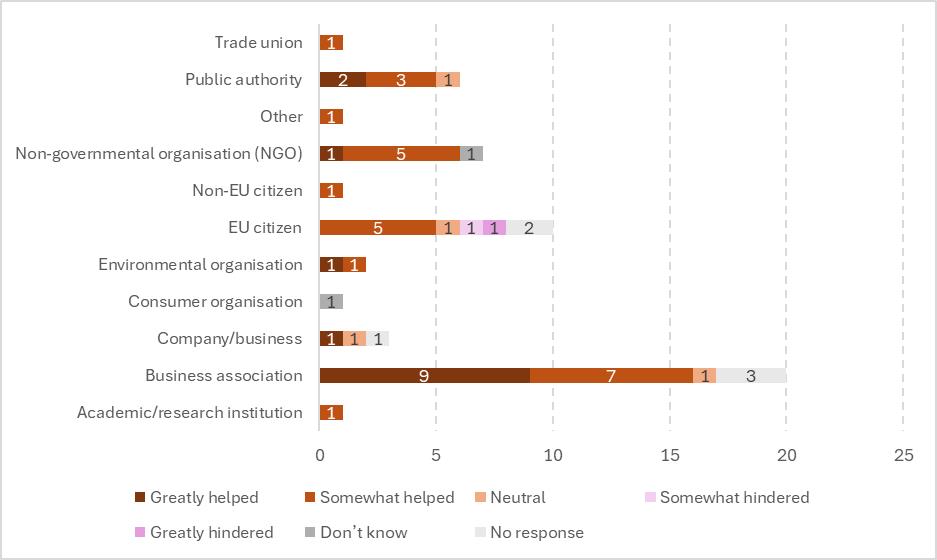
Figure A - 16 – To what extent have projections helped achieve the Directive’s objectives (OPC – top figure; TSC – bottom figure)

When prompted to expand on their reply, TSC respondents highlighted that inventories were crucial to monitor progress towards ERCs and to inform the implementation of reduction measures (academia, NGOs, public administrations). One individual in a professional capacity remarked that the reliance on the methodologies used under the Air Convention was useful. One public administration thought that the added value of inventories under the NECD was limited, as Member States report to the Air Convention.

Some respondents thought that projections were essential to help Member States understand whether they are on track and to inform adjustment to NAPCPs and PaMs (academia, NGOs, public administrations). One public authority thought that inventories were of more significance for understanding the development of emissions respectively to projections.

2.4To what extent has ecosystems monitoring been instrumental in reaching the Directive’s objectives? 

Following Article 10 (4) of the NECD, every four years Member States have to report to the Commission data about their monitoring of impacts of air pollution upon ecosystems based on a network of monitoring sites that is representative of their freshwater, natural and semi-natural habitats and forest ecosystem types, taking a cost-effective and risk-based approach, as stated in Article 9. The reporting is done in two steps (Article 10(4) of the NECD):

by 1 July 2018, and then every four years, Member States report the location of the monitoring sites and the associated indicators used for monitoring air pollution impacts,

by 1 July 2019, and then every four years, Member States report the monitoring data on ecosystems impacts.

Annex V to the NECD lists optional indicators that Member States can use for this monitoring. To support Member States in monitoring and reporting, the Commission produced a number of tools:

Commission Guidance notice on ecosystem monitoring ;

Guidance on monitoring site selection (2022) 92 ;

Reporting template  - updated in 2022 for the second reporting cycle in 2022-2023, in close consultation with Member States and the EEA, has developed a reporting template.

The use of the template is voluntary, and it allows Member States flexibility as to which data they can report.

Since the adoption of the NECD in 2016, two cycles for this reporting obligation have been completed by Member States (2018/19 and 2022/23). The Commission has contracted work to analyse the data reported by Member States to establish the quality of the reported data and to draw possible conclusions from the data on the impact of air pollution on ecosystems. This section is based on these reports, all available on the Commission website .

2.4.1Extent of monitoring across Member States (site coverage)

In both reporting cycles (2018-2019 and 2022-2023), all Member States complied with their reporting obligations, and most of them did so in a timely manner (see table below). During the first cycle of reporting (2018/19), all Member States used the standardised reporting template for at least a portion of their 2019 data submission. During the second cycle, all Member States used the (updated) reporting template apart from three Member States 93 .

Table A - 11 – Timeliness of ecosystem reporting

Reporting obligation

Deadlines

Monitoring sites and indicators

1 July 2018

1 July 2022

Deadline met

19 MS (70%)

18 MS (67%)

Deadline missed

8 MS [6 MS]

9 MS [4 MS]

Monitoring data

1 July 2019

1 July 2023

Deadline met

16 MS (59%)

22 MS (81%)

Deadline missed

11 MS [5 MS]

5 MS [2 MS]

Note: Number of MS meeting/missing the deadline, according to submission dates as reported in the Central Data Repository , and according to reports made by consultants. In brackets: [deadline missed from more than two weeks].

The Commission’s assessment of Member States’ first reporting cycle showed that the network of sites and reported data were not sufficiently representative and adequate to monitor the effects of air pollution on ecosystems. The analysis of monitoring sites reported in 2018-19 concluded that some ecosystems especially sensitive to air pollution (heathlands, bogs and acid-sensitive grasslands) are underrepresented, even in Member States where these ecosystems are widespread. However, in most Member States, various levels of exposure to different pressures are monitored through sites located in both low and high sulphur and nitrogen deposition areas, thus providing a positive contribution to the representativeness of the reported data.

Building on the lessons learnt from the first reporting cycle, a guidance note on site selection was prepared by the Commission, supported by the EEA and Member State experts. It aims to help each Member State set up a representative monitoring network. Furthermore, the optional reporting template was adapted following feedback from Member States and the EEA. The analysis of the second reporting cycle shows an increase in the total number of sites and parameters reported compared to the first submission (+14%), with a total of more than 4700 sites reported in 2022. At national level, however, there are both cases of increased number of sites and of a reduced number of sites from 2018 to 2022. Similar to the first cycle, two Member States, Germany and Sweden, still account for around 60% of the reported sites.

Although the distribution of sites is more aligned with the distribution of ecosystem types across the EU, the ecosystem types ‘rivers and lakes’ and ‘woodland and forest’ remain overrepresented, while cropland, wetland and heathland/shrubland sites remain underrepresented.

In relation to the deposition of nitrogen and sulphur, the reported sites were located across the range of deposition values. Since Member States should take a risk-based approach for the selection of monitoring sites, locations with higher pollution pressures should be preferred. Due to the uneven nature of the site numbers per Member State, it is difficult to draw conclusions in relation to whether the proportion of sites in different deposition level areas is appropriate. Nor can it be determined from the submitted data the degree to which critical loads exceedances played a role in decisions on site location. However, there are clearly some areas of high deposition and high critical load exceedance where monitoring is either absent or extremely limited, namely the Po Valley in Italy, Northern Spain and Northern France. Monitoring of ozone effects on non-woody species seems mainly to be limited to areas with low to moderate ozone concentrations, with the latter generally characterised by high ozone fluxes (POD).

2.4.2Completeness of monitoring within each Member State (parameters covered, consistency between sites and monitoring data reported, use of Annex V)

Information about the completeness of reporting by the Member States is presented in Table A-12 below. The completeness of data is assessed against the list of core parameters which the Commission and the Member States agreed on. This table gives an overview of the data provided on the main freshwater and terrestrial parameter groups. Only when, for a specific parameter group, no data for all of the parameters within that group are reported, it is listed as ‘no data’ in this table. For the parameters on Nitrate Leaching and Carbon Flux, respectively only 2 and 3 out of 27 countries have reported data. 10 out of 27 Member States have reported on the ozone related parameter groups Ozone foliar damage and Exceedance flux-based critical levels of ozone. These four parameter groups are the ones that the fewest Member States have reported on. Croatia and Portugal have not reported on any of the terrestrial parameters, while Greece and Luxembourg have not reported on any of the freshwater parameters. No Member State has reported against all core parameters.

In general, it is clear that the current dataset is highly heterogeneous (i.e. variable in terms of the site types, measurement protocols and parameters measured), both spatially and temporally. This is not surprising due to the increase of the set of indicators / parameters since 2018. The method used by Member States to judge whether their sites to be representative (as required by the NECD) isn’t always clear from the provided data and/or accompanying documents.

For investigating different source-effect relations, specific parameters have to be available in the dataset being monitored. The current dataset gives the opportunity for investigating source-effect relations only for a limited number of sites. This holds for about 10 to 350 sites, depending on the source-effect relations, this means that, only for about 0.2% to 7% of the sites, source-effect relations can be investigated.

Table A - 12 – Overview of data provided in the 2023 data submissions from EU Member States by parameter groups. Source: 2022/23 data analysis report  

Note: Each column in the table corresponds to one parameter group. A blank cell means that the Member State has provided data for at least one parameter in the given parameter group.

No Member State’s 2023 data submission matched completely what was expected from the sites and parameters submission in 2022. While for some the discrepancies were small, for others the variation was very large. The net result of this across all Member States is that data has been reported for 20% fewer parameters in 2023 than were indicated in the 2022 sites and parameters reports. The reasons for these discrepancies are not clear, neither from the data submissions themselves nor from the accompanying documents. Overall, it appears that Member States are not always able to predict which data they will be able to report. More detailed analysis is available in the 2022/23 data analysis report .

There were also significant differences between the monitoring frequencies (and thus data averaging times) suggested by the reporting template and what was submitted by Member States with, again, the level of difference varying by Member State (see Table 3-4 in the 2022/23 data analysis report ).

2.4.3Quality of reported monitoring data and its consistency with other programmes

Based on the findings of analysing the reported data of these two cycles, no generalised statements are possible for the quantification of impacts of air pollution on ecosystems across the EU. This is also due to the considerable differences between the datasets reported by Member States during the two cycles (both spatially and temporally, and in terms of monitoring site types, measurement protocols and parameters monitored). This prevents a reference point being put in place for the future assessment of the Directive’s longer-term effectiveness.

While the datasets produced through Article 9 reporting are potentially highly valuable in establishing the state (and changes in the state) of ecosystems across the EU, the role of air pollution in these, and the benefits of reducing emissions over time in terms of increasing ecosystem value, the current quality of submitted data is too low. To draw meaningful conclusions from the submitted data, there is a need for greater consistency and coherence both within and between Member State data submissions. This would require reducing the variability in Member State approaches to the process of collecting and submitting ecosystem impact data. This may require clearer guidance to Member States, besides the templates and guidance notes already provided, to steer them towards a clearer overall purpose.

Concretely and based on the analysis of data submitted during the 2nd reporting cycle, two analyses were attempted:

1)to assess what could be discerned about the state of ecosystems by comparing data across biogeographical regions regardless of Member State boundaries, and

2)to assess whether simple causal chains could be established between emissions and final ecosystem outcomes using the data submitted.

For the first analysis, it was found that the data submitted was too heterogenous to allow a comparison across biogeographical regions to be undertaken. Gaps in the datasets, variability in data averaging times both within and between Member State datasets, and other such discrepancies meant that a meaningful comparison could not be undertaken.

For the second analysis, a logic model was constructed (see Figure A-17 below) and Member State terrestrial data submissions compared to the steps in the logic model. While this analysis has clear limitations, it was concluded that no Member State (as outlined in detail per Member State in the annex to the 2022/23 data analysis report ) could reliably construct a full causal chain from emissions to impacts using the data collected and submitted under Article 9 and 10(4). In other words, beyond attempting to draw EU-wide conclusions, the reported data is also considered insufficient to draw conclusions for Member States separately. Only for individual ecosystems where the reported monitoring data is sufficiently complete to establish a direct relationship between the source (air pollutant emission source) and the receptor (ecosystem), it is possible to quantify the effects of air pollution on the basis of the reported monitoring data.

Figure A - 17 – Simple ecosystem data logic model. Source: 2022/23 data analysis report .

The Directive explicitly requires Member States to take a cost-effective approach, by coordinating with other monitoring programmes established pursuant to Union legislation, the LRTAP Convention and to make use of the data collected under those programmes. This approach was widely used by Member States in both reporting cycles, since most of the data provided follow international protocols, such as those from the International Cooperative Programmes (ICP) or from other EU directives (most commonly, the Water Framework Directive and the Habitats Directive . This limits the administrative costs of the Directive’s requirements to monitor ecosystem impacts and its consistency with other programmes.

Starting with 2026, Eurostat will start collecting ecosystems data based on Regulation (EU) 691/2011 . The data gathered will be complementary to the NECD reporting (there are no overlaps in the data required). Developments in this area should be kept under review to analyse how data resulting from this Regulation could contribute on indicators for monitoring the impact of air pollution on ecosystems.

2.4.4Effectiveness according to stakeholders

Stakeholder feedback gathered corroborates the current challenges observed in the ecosystems monitoring and reporting as outlined above. In the stakeholder workshop, one participant (competent authority) stated that ecosystem reporting seems irrelevant as it is. Targeted engagement of competent authorities revealed a perception that ecosystems monitoring was ineffective largely due to the voluntary design and implementation of national monitoring programmes. One Member State went on to suggest that the requirement as it stands does not generate data as intended and should either be removed or have more specific requirements or guidance developed to ensure the data produced is more comparable across Member States.

Stakeholders were divided in their opinions about the contribution of ecosystems monitoring and reporting to the objectives of the NECD.


Figure A - 18 – OPC and TSC replies on the contribution of ecosystem monitoring and reporting to the NECD objectives

In both consultations, a relatively high number of respondents considered that this requirement had a neutral effect (18 OPC, 19 TSC). Most OPC respondents thought that this requirement helped somewhat, and only two respondents considered it greatly helpful; three respondents thought that it somewhat hindered reaching the NECD objectives. 11 TSC respondents considered the requirement somewhat helpful, and four considered it helped greatly.

Through the open public consultation, one public authority suggested that ecosystem monitoring should be reformulated in such a way to allow for conclusions to be drawn, making better use of existing monitoring data for entire territories.

Input from the TSC regarding the effectiveness of ecosystem monitoring pointed to the lack of harmonisation of protocols (e.g. different monitoring frequencies, different parameters, lack of methodological harmonisation) and the voluntary design as being obstacles to the effectiveness of this requirement. These issues were highlighted across the different stakeholder groups responding. At the same time, individuals in a professional capacity and NGOs highlighted the importance of monitoring the effects of air pollution on ecosystems.

A specific challenge highlighted by a public authority was that the current models were not able to take into account influencing factors other than air pollution, skewing the results.

2.5To what extent have the flexibilities established by the NECD in Article 5(1) to (4) (inventory adjustments, “extreme weather event” flexibility, etc.) hindered or facilitated emission reductions? 

2.5.1Number of applications – split by flexibility type

Article 5 of the Directive provides for four exceptions to compliance with an emission reduction commitment that Member States may invoke:

Adjusting emission inventories where non-compliance would result from applying improved emission inventory methods updated in line with scientific knowledge since the emission reduction commitments were first set, under certain conditions stipulated in Annex IV Part 4 to the Directive – Article 5(1);

Averaging national emissions over three years in case of an exceptionally cold winter or an exceptionally dry summer 94  – Article 5(2);

Compensating for non-compliance with one emission reduction commitment by an equivalent emission reduction of another pollutant, if a more stringent level than the cost-effective reduction was set for that pollutant – Article 5(3);

Sudden and exceptional interruption or loss of capacity in the power and/or heat supply or production system leading to non-compliance – Article 5(4).

While the flexibility based on adjustments under Article 5(1) was part of the Commission’s proposal for the Directive, the other three flexibilities were added by the co-legislators. The flexibilities according to Article 5(1), (2) and (4) are based on similar flexibilities agreed in the Gothenburg Protocol.

Since the entry into force of the Directive, no Member State has made use of the flexibilities according to Article 5(2) and Article 5(4). One Member State made use of the flexibility according to Article 5(3) in 2024 for one pollutant for one inventory year and in 2025 for one pollutant and four inventory years. The flexibility allowing for adjustments to the emission inventory is used most frequently.

Table A - 13 – Use of flexibilities since the application of the ERCs 95 according to Annex II to the Directive

Year of application

Type of flexibility

Country

Source sectors

Inventory years

concerned

pollutant

Acceptance yes/no

2022

Inventory adjustment Article 5(1)

Ireland

2H2 Food and Beverages (Spirits)

2005, 2020

NMVOC

yes

2023

Inventory adjustment Article 5(1)

Ireland

2H2 Food and Beverages (Spirits)

2005, 2020, 2021

NMVOC

yes

2024

Inventory adjustment Article 5(1)

Ireland

2H2 Food and Beverages (Spirits)

2005, 2020-2022

NMVOC

yes

2024

Inventory adjustment Article 5(1)

Czechia

3Da1 Inorganic N-fertilizers

2005, 2020-2022

NH3

yes

2024

Pollutant Compensation Article 5(3)

Lithuania

NH3 national total

2020

NH3

yes

2025

Inventory adjustment Article 5(1)

Ireland

2H2 Food and Beverages (Spirits)

2005, 2020-2023

NMVOC

yes

2025

Inventory adjustment Article 5(1)

Czechia

3Da1 Inorganic N-fertilizers

2005, 2020-2023

NH3

yes

2025

Pollutant Compensation Article 5(3)

Lithuania

NH3 national total

2020-2023

NH3

yes

2025

Inventory adjustment Article 5(1)

Finland

3B Manure Management

3D Agricultural soils

5B2 Biological treatment - Anaerobic digestion

6A Other (cats & dogs)

2005, 2020, 2021

NH3

yes

Rationale for flexibilities:

The flexibilities related to extreme weather conditions and unexpected loss in capacity to provide energy have the purpose to cater for unforeseeable, extreme situations forcing Member States to deviate from their emission reduction policy to meet immediate needs of their population. They are similar to the concept of force majeure preventing a party from fulfilling its obligation under contractual law.

The flexibility based on a compensation of non-compliance for one pollutant by an emission reduction beyond the emission reduction commitment for another pollutant is linked to the fact that when those commitments were agreed, some Member States were expected to reduce certain emissions beyond what had been determined to be a cost-effective effort in the Thematic Strategy on Air Pollution Report No 16 of 16 January 2015 ( TSAP 16 ). The report, which consists of parts 16a and 16b , provides an optimisation calculation for the most cost-effective emission reductions by Member State to reach the aim of reducing health impacts in 2030 by 52% compared to 2005 which was set out in the Clean Air Package in 2013.

The flexibility allowing an adjustment to emission inventories accounts for the fact that a Member State is non-compliant because it has used better methods to establish its inventories since the emission reduction commitments were set in the amended Gothenburg Protocol. Article 5(1) provides that the 2020-2029 emission reduction commitments are considered to have been set on 4 May 2020, date on which the amended Gothenburg Protocol was adopted. The point of comparison is thus the methodological status set out in the EMEP/EEA guidebook applicable at that time. Member States should thus be dissuaded not to improve their inventory methods to avoid becoming non-compliant because of applying a better inventory method. The details of this flexibility are stipulated in Article 5(1) and Annex IV Part 4.

2.5.2Improvement in inventories in line with new methodologies due to the possibility of adjustments

The possibility to apply for adjustments to inventories has been included in the NECD in alignment with the Air Convention to encourage Member States to continuously improve their emission inventories based on the best available science and data quality criteria. The adjustment flexibility allows Member States to embrace better inventory methods without running the risk that the application of those improved methods would bring them into non-compliance with their emission reduction commitments because those methods were not used when the emission reduction commitments were set. Regular updates of the EMEP/EEA guidebook ensure that new inventory methods recognised by the scientific community are identified. It should be noted though that on the one hand, not every improvement of inventories would justify an adjustment, as the conditions are well defined. For example, updated activity data that leads to an increase in emissions would not fulfil the criteria for an adjustment. On the other hand, not every improvement of inventory compilation leads to an increase in emissions. To the contrary, in many cases it has been shown that more sophisticated inventory methods (avoiding the use of default values) entail lower emission estimates.

2.5.3Quantified impact of accepted applications on emissions and their significance (e.g. in relation to national total emissions for compliance for a given pollutant), (where available) qualitative information on whether Member States made reduction efforts despite using flexibilities

Ireland – adjustment

Table A - 14 – Approved adjustment for Ireland based on the circumstance ‘new emission source’

Description

Reference

Pollutant estimates (kt)

2005

2020

2021

2022

2023

NMVOC

National total for compliance

77.171

65.624

67.723

67.278

63.752

Effect of the flexibility application submitted by the Member State, which the TERT recommended DG ENV to accept

2H2 Food and Beverages (Spirits)

Adjustment IE-1

-8.376

(11%)

-20.340

(31%)

-23.874

(35%)

-24.735

(37%)

-23.194

(36%)

National total for compliance after adjustment

68.795

45.284

43.849

42.543

40.558

Maximum allowed emissions stemming from the National Emission Reduction Commitments (updated to take into account inventory adjustment, where applicable

-

51.596

51.596

51.596

51.596

Source: National Inventory Review Report 2025 for Ireland

For Ireland adjustment applications for NMVOC inventories for the years 2005, 2020, 2021, 2022 and 2023 on the grounds of the identification of a new emission source category that was not accounted for at the time when the emission reduction commitments were set, were approved in 2025. While in 2005, the new emission source category constituted about 11% of the non-adjusted national total for compliance, this figure has risen to 37% in 2022 and 36% in 2023. This increase can be attributed to two developments, a decrease of emissions from other sources of NMVOC and an increase of NMVOC emission from the newly identified source.

This example shows that the adjustment has led to improved inventories, providing more precise emission estimates. However, this has not gone hand in hand with a reduction of emissions from this new source.

Czechia – adjustment

Table A - 15 – Approved adjustment for Czechia based on the circumstance ‘new emission factor’

Description

Reference

Pollutant estimates (kt)

2005

2020

2021

2022

2023

NH3

National total for compliance

78.983

77.030

76.445

76.085

71.531

Effect of the flexibility application submitted by the Member State, which the TERT recommended DG ENV to accept

3Da1 Inorganic N-fertilizers

Adjustment CZ-3

-3.548

(4%)

-7.682

(10%)

-7.084

(9%)

-6.493

(9%)

-4.583

(6%)

National total for compliance after adjustment

75.435

69.349

69.361

69.592

66.948

Maximum allowed emissions stemming from the National Emission Reduction Commitments (updated to take into account inventory adjustment, where applicable)

-

70.155

70.155

70.155

70.155

Source: National Inventory Review Report 2025 for Czechia

In 2025, Czechia submitted an adjustment application based on improved emission factors for determining emission from inorganic N-fertilisers that differed significantly from those used when the emission reduction commitments were set. Though the total consumption of mineral fertilisers in Czechia had been decreasing since 2016, the production of NH3 had increased following calculations using the revised emission factors 96 . The application was approved and brought the Member State into compliance with its NH3 emission reduction commitment in the years 2020, 2021, 2022 and 2023 with adjustments constituting 10%, 9%, 9% and 6% of the national total emissions for compliance respectively. While emissions from the source in question have increased between 2005 and 2021, they have decreased between 2021 and 2023 showing continued efforts to tackle the emission source despite the use of flexibility.

Lithuania – compensation

Table A - 16 – Article 5(3) flexibility for Lithuania compensating NH3 emissions with PM2.5 emission reductions

Reference number

Year

NH3 emission level (kt)

NH3 "excess emissions" (kt)

PM2.5 emission level (kt)

PM2.5 emission "over-achievement" (kt)

NH3 excess emissions expressed in PM2.5 equivalence (kt)

Sufficient for complying with NH3 ERC?

LT_2025_1

2020

39.220

6.116

11.460

2.781

1.187

yes

LT_2025_1

2021

38.180

5.076

11.640

2.601

0.985

yes

LT_2025_1

2022

34.968

1.864

11.013

3.228

0.362

yes

LT_2025_1

2023

34.134

1.030

9.159

5.082

0.200

yes

Source: National Inventory Review Report 2025 for Lithuania

In 2024 and 2025, Lithuania applied for the use of the flexibility under Article 5(3) of the NECD regarding its NH3 emissions. It was the first time that a Member State made use of this kind of flexibility. Lithuania was eligible as its emission reduction commitment for NH3 for 2020 to 2029 had been set at a more stringent level than the cost-effective emission reduction identified in TSAP 16. In 2024, Lithuania demonstrated that the emission reductions achieved for PM2.5 beyond the respective emission reduction commitment could make up for the non-achievement of the required reduction for NH3 in 2020. The NH3 emissions compensated for under this flexibility amounted to about 15% of the national total emissions considered for compliance. As the flexibility was applied only to the year 2020, there is a continued need to reduce NH3 emissions to come into compliance. In its NAPCP of 2024, Lithuania set out ongoing and planned measures tackling NH3 emissions, such as more efficient use of fertilisers and updating solutions for the design and operation of manure and wastewater management structures. In 2025, Lithuania applied the flexibility to its NH3 emissions in the years 2020 to 2023. Despite the possibility to use the Article 5(3) flexibility, NH3 emissions decreased between 2020 and 2023.

Finland – adjustment

Table A - 17 – Approved adjustment for Finland based on the circumstances ‘new source’ and ‘new emission factor’

Description

Reference

Pollutant estimates (kt)

2005

2020

2021

2022

2023

NH3

National total for compliance

40.903

33.723

32.946

29.995

30.160

Effect of the flexibility application submitted by the Member State, which the TERT recommended DG ENV to accept

3B Manure Management

3D Agricultural soils

5B2 Biological treatment - Anaerobic digestion

6A Other (cats & dogs)

Adjustment FI-1

-2.238

(5%)

-3.017

(9%)

-3.033

(9%)

-

-

National total for compliance after adjustment

38.665

30.705

29.912

-

-

Maximum allowed emissions stemming from the National Emission Reduction Commitments (updated to take into account inventory adjustment, where applicable)

-

30.932

30.932

-

-

Source: National Inventory Review Report 2025 for Finland

In 2025, Finland applied improved emission inventory methods to the entire NH3 time series, which led to non-compliance with the NH3 emission reduction commitment in the years 2020 and 2021 for the first time. Finland introduced an adjustment application for those two years covering several source sectors based on the inclusion of new emission sources and on the application of updated emission factors for determining emissions from specific sources, which was accepted. Using better inventory methodology did not lead to non-compliance in the years 2022 and 2023 as NH3 had already further decreased for those years. This shows that in this case the use of the adjustment and the efforts to reduce NH3 were independent of each other.

The flexibilities under Article 5(2) and Article 5(4) have not yet been used by Member States and hence no data on their impacts are available.

2.5.4Effectiveness according to stakeholders

Overall, public authorities tend to consider that flexibilities have helped achieving the emission reduction commitments, while NGOs are more critical in this respect. NGOs in particular argued that allowing adjustments, pollutant swapping, and exemptions under certain conditions introduces a degree of ambiguity that can weaken the coherence of the policy framework and reduce the incentive for sustained action. According to the targeted stakeholder consultation, the flexibility under Article 5(1) on adjustments is considered to hinder emission reductions by the majority of NGOs (6 out of 8), while some public authorities are of the view that it greatly helped in reducing emissions. The fact that flexibilities under Article 5(2) and 5(4) have not yet been used and the flexibility under Article 5(3) only once, is reflected in the replies to the stakeholder consultations which indicate to a large extent ‘not applicable’, ‘don’t know’ or ‘no response’. Three stakeholders commented that adjustments are an incentive to improve inventory methods used, two of which from the health sector adding that this should be monitored to ensure that Member States reduce emissions in a cost-effective manner.

2.6To what extent has the use of Gothenburg Protocol related documents (guidelines, templates etc.), as stipulated in the NECD, contributed to the effective implementation of the NECD? 

2.6.1Extent of use of Gothenburg Protocol related documents across Member States, and accuracy in their application.

Although the NECD is more prescriptive than the Gothenburg Protocol (GP) in terms of its requirements and the obligations placed on Member States, much of the guidance accompanying the NECD, such as on the development of emissions inventories, derives from the bodies and processes associated with the GP.

Under the NECD, Member States must use the Guidelines for Reporting Emissions and Projections Data under the Convention on Long-range Transboundary Air Pollution ( EMEP Reporting Guidelines ), and in particular their reporting templates, to prepare their inventories, projections and informative inventory reports. The reporting templates are used by all Member States, allowing them to report data in response to both their obligations under the NECD and their obligations under the Air Convention. Next to the EMEP Reporting Guidelines, the most important guidance referenced in the NECD is the EMEP/EEA Air Pollutant Emission Inventory Guidebook  which contains methodologies for calculating emission inventories and projections for all sectors. The methodologies contained in the Guidebook are applied by most Member States in the compilation of their emission inventories. The NECD requires that emissions from key categories are calculated according to the methodologies defined in the Guidebook, unless Member States use compatible methodologies that lead to more accurate estimates. The Guidebook has been the major reference work on emission inventories methodologies in Europe for decades now and has been a collective effort of many scientists that distilled their knowledge in measuring and modelling emissions into well-known and used methods and inventory models, such as the COPERT model for road transport emission inventories. 

Other guidance and documents describing good practices developed by the UNECE Air Convention (see Guidance documents ) are also relevant for Member States when they want to estimate the effect of various policies on the pollutant emissions regulated by the NECD. Note that some of these guidance documents need to be updated to technical progress in order to remain relevant.

BOX 5.Links with the Air Convention and its Gothenburg Protocol 

The equivalent of the NECD is the Gothenburg Protocol (GP) under the UNECE Air Convention . The NECD and the GP have many similarities and are overall very coherent. Importantly, Member States prepare emission inventories, projections and Informative Inventory Reports (which e.g. explain assumptions taken) using well established methodologies set out in EMEP Reporting Guidelines , the EMEP/EEA air pollutants emission inventory guidebook and further guidance material adopted under the Air Convention. There are, however, also certain elements that are different between the two instruments (see Annex III, 4.5. for a complete list). The main elements missing from the GP are ERCs for post 2030, the requirement to submit NAPCPs, detailed monitoring and reporting of impacts on ecosystems, detailed descriptions of measures to reduce ammonia from agriculture and most importantly a strong enforcement mechanism.

In some instances, the NECD provides a more detailed description, relative to the GP, of possible measures to be considered for reducing emissions of ammonia from agriculture. Both the NECD and GP make reference to the Air Convention ammonia guidance document on measures for agriculture, where significantly more detail is provided on specific measures for manure application and storage, livestock housing and livestock feeding strategies. National advisory codes of good agricultural practice to control ammonia emissions, have been established by 21 Member States and partially implemented by six Member States according to the support study. The NECD also refers to the Air Convention guidance on national nitrogen budgets , which was adopted after the most recent amendments to the GP.

The NECD also includes possible optional measures to be considered for the control of PM and black carbon emissions from agriculture linked to management of harvest/forestry residue and waste. No such equivalent is included within the GP.

The targeted stakeholder consultation included questions on the effectiveness of various Gothenburg Protocol related documents and asked participants to comment on whether each of them is beneficial to the effective implementation of the NECD. The response rate to these questions was moderately high, with most responses coming from public authorities and NGOs, while industry associations, when replying, mainly responded ‘don’t know’.

Generally, all of the documents were considered to have been beneficial. The documents that were considered most beneficial were the EMEP Guidelines, the EMEP reporting templates, and the EMEP/EEA Guidebook. These documents were considered very beneficial by most public authority respondents, with most NGOs considering the EMEP/EEA Guidebook as being very beneficial.

There were some small minority views (by a few public authorities and the small number of academic respondents) that some of the documents 97 had not been beneficial.

As part of additional comments provided in the TSC, six NGOs commented that the EMEP guidelines would be even more effective if widely used by all Member States. On the EMEP/EEA Guidebook, three public authorities commented that the methodological guidance provided in the EMEP/EEA Guidebook, while being essential, does not sufficiently reflect the technological progress in combustion technologies. In particular, the Guidebook could be clearer on the treatment of condensable particulate matter, which, according to these three respondents, should not be counted towards reduction commitments.

Figure A - 19 – Summary of the responses to the TSC sub-questions on whether the Gothenburg Protocol related documents (guidelines, templates etc.) are beneficial to the effective implementation of the NECD.

2.6.2Gaps in in the Gothenburg Protocol related documents compared to the information needed for reporting under the NECD (if any)

There are certain gaps and improvements required in the Guidance documents under the Gothenburg Protocol, mostly deriving from the fact that work to produce these documents is underfunded. Efforts are being made to prioritise those gaps and deal with them according to the resources available. For instance, a 2024 Commission project reviewed all improvement areas and gaps of the EMEP/EEA Air pollutant emission inventory guidebook in order to address them, either via Commission or Member State led projects. The review identified more than 200 issues that required improvement over the various sectors with varying degree of importance.

While the focus of the EMEP/EEA Guidebook is on historical inventories, guidance on projections had been very limited and only in the 2019 version of the Guidebook was it expanded to some extent. The findings of a Commission contract showed that the lack of detailed sector specific guidance on air pollution emission projections limited the accuracy of Member State projections 98 . The guidance produced as part of that Commission contract fed into the 2019 update of the EMEP/EEA Guidebook which improved the situation.

2.7To what extent have other EU policies or external factors affected emissions of the five pollutants? 

2.7.1Changes to emissions of the five pollutants over the evaluation period

Emissions of the five main air pollutants have been decreasing in the EU since the 2005 reference year, as was shown in Figure A-1. Figure A-20 below shows changes to the level of the five main pollutants since 2016, when the NECD was adopted, based on the 2024 emission inventories (including data up to 2022). It also displays the projected total emissions for 2025 and subsequent 5-year periods based on projections of the 4th Clean Air Outlook . These projections take into account the expected effect of relevant EU policies in force in 2024 and the effect of PaMs under the NAPCPs based on the GAINS model 99 . This figure also indicates key NECD, EU policy and external events that could have influenced changes in emissions.

Please note that the effect of NAPCPs and PaMs is expected to be spread out over the years. This is due to NAPCP and PaM submissions that are spread out over time (e.g. some Member States still have not delivered updated NAPCPs in 2025 100 ); and PaMs showing their effects on the medium to long term. Considering that the first submission deadline for NAPCPs was in 2019 and that data is reported with a two-year time lag, the period for which we have inventory data that could reflect impacts of PaMs is limited, limiting also conclusions regarding the effect of external factors that show on mid- to long-term (e.g. effects of the Russian military aggression against Ukraine).


Figure A - 20 – Evolution of emissions of the five main air pollutants over time based on NECD inventories (up to 2022) and projections of the 4th Clean Air Outlook baseline scenario (as of 2025), combined with main EU policy and external effects.

The kick-off of the cycle of NAPCPs and related Member State PaMs shows correlation with sharper drops in NOx emissions. There may be some correlation between the outbreak of the COVID-19 pandemic and drops in NOx and SO2 emissions, followed by an increase in 2021 and further decrease starting from 2022. According to projections of the 4th Clean Air Outlook, the combined effect of EU and Member State policies in place in 2024 should lead to further drop of emissions in the future.

The overall reduction was higher than the aggregated reduction at EU level as set out in the NECD. This represents an indication of the total effort of all Member States – however, in line with the Directive, Member States have to achieve their ERC at national level, the NECD does not establish a reduction commitment for the EU (Article 4 only refers to Member States).

SO2





NOx



NH3



PM2.5



Figure A - 21 – Percentage of reductions for the period 2020-2029 as set out in NECD (EU28) and the current status according to the 2023 air emission inventories submitted by Member States in 2022 (EU27)

Below we present the approaches we took to attribute these changes to the NECD-related requirements, or other EU policies or external factors; and the results of these analyses.

Effects of other EU policies – MS indications in the PaMs database

When reporting their policies and measures in the PaM tool, Member States had to specify whether the PaM resulted from the implementation of a Union policy. According to the categorisation provided by Member States, 38% of the 1290 PaMs  in the database were linked to another EU policy besides the NECD. A PaM could be linked to several policy areas at the same time.

The figure below provides an overview of the number of references per policy area.

Figure A - 22 – Number of references to other EU policy areas in PaMs (Source : elaboration based on EEA PaMs database , date of extraction : 31/10/2024)

The analysis suggests that most of the measures (62%) were put in place due to the NECD. This number represents an over-estimation, as some Member States did not link their PaMs to other policies even where there was a clear link (result of a point check).

Despite this weakness, the analysis above suggests that a significant part of PaMs was put in place as a result of the NECD, and therefore, a related important part of emission reductions are expected to be due to the NECD. This link cannot be quantified, as we do not have data on the emission reductions per PaM and we do not have a reliable figure on the number of PaMs triggered by the NECD alone.

Effects of other EU policies – analysis of impact assessments and evaluations of related policies

To further analyse the contribution of other policies to the reduction of the five main air pollutants covered by ERCs under the NECD (NH3, NMVOC, NOx, PM2.5 and SO2) during the evaluation period, we analysed impact assessments and evaluations available on related EU policies. The analysis sought quantified data on the expected or actual effect of these EU policies on the five main air pollutants with the aim of separating out the effect of the NECD to the extent possible.

A summary of this analysis is presented in the table below.

The policies included were either:

1) first implemented during the evaluation period (2016–2024), with ex-ante (impact assessment) or ex-post (evaluation) impacts on air pollution; or

2) initially implemented prior to the evaluation period but evaluated over a timeframe overlapping with the NECD evaluation period.

The table was compiled based on impact assessments and evaluations of policies that had an influence on air pollutants covered by the NECD throughout the evaluation period. Evaluations represent the most appropriate source, as they are backward-looking and reflect the effect of legislation in force. Data from impact assessments are often based on estimates and projections, thus data derived from them have higher uncertainty. Furthermore, the selected policy option may be modified during the co-legislation process, which limits the validity of the data in the impact assessment for the policy as adopted. These uncertainties have to be considered when drawing conclusions based on data in impact assessments.

2.7.2Emission reductions achieved by other EU policies, their relationship to the NECD and influence of NECD on the formulation of these policies

Legislation

Air pollutants in common

Source of information

Are effects on air pollution quantified?

Quantified information on air pollution

Comments on disentangling the effects of the NECD and the legislation analysed

Transport:

Euro 6 / Euro VI

NOx
PM

Evaluation 101 (reference period: for Euro 6: 09/2014 – 2020; for Euro VI: 2013-2020)

Yes

Emission savings related to the introduction of Euro 6 and VI emission standards compared to the respective baselines Euro 5 and Euro V for NOx, PM and CO emissions were calculated, backward-looking over the evaluation period (2013/2014 until 2020), as well as forward-looking, up to 2050, at EU-28 level.

Cumulative emissions savings from light-duty vehicles (cars and vans) related to the implementation of Euro 6 compared to Euro 5

2014-2020

2020

2021-2050

Expected change in 2020(In 2007 IA) 102

NOx (% change compared to Euro 5)

1 680 kt (21.8%)

450 kt (36.7%)

44 190 kt (78.1%)

24%

PM

10 kt (6.4%)

<10 kt (10.0%)

250 kt (17.0%)

0%

CO

2 780 kt (11.5%)

820 kt (17.7%)

60 810 kt (14.3%)

n.a.

Expected emission savings for NOx in the year 2020 from the implementation of Euro 6 compared to Euro 5 were fulfilled (24% expected and 36% observed).

Cumulative emissions savings from heavy-duty vehicles (buses and lorries) related to the implementation of Euro VI compared to Euro V

2013-2020

2020

2021-2050

Expected change in 2020(in 2007 IA) 103

NOx (% change compared to Euro V)

4 000 kt (35.7%)

900 kt (52.0%)

60 500 kt (76.4%)

37%

PM

< 10 kt (13.5%)

<10 kt (22.6%)

300 kt (52.5%)

22%

CO

1 500 (43.1%)

300 kt (61.9%)

21 700 kt (90.0%)

n.a.

Expected emission savings for NOx in the year 2020 from the implementation of Euro VI compared to Euro 5 were fulfilled (37% expected and 52% observed).

How is this policy relevant to the NECD?

The successive Euro emission standards for vehicles set emission limits for air pollutants, with varying levels of stringency depending on the version of standards as well as the category of vehicles considered.

Therefore, Euro emission standards help Member States meet their NECD emission reduction commitments (ERCs) by ensuring a reduction of relevant air pollutant emissions from road transport. To reach ERCs, emissions from road transport can be further targeted by national policies (e.g. through incentives for early adoption of clean vehicles, scrappage schemes, etc). Out of the PaMs included in the PaM tool, Member States linked 10 of the total of 1110 PaMs specifically to the Euro 6/VI legislation 104 .

Looking at the pollutants covered by the evaluation of the Euro 6/VI emission standards based on national air emission inventories provided under the NECD 105 , in 2022, road transport represented 35.5% of NOx emissions and 8.1% of PM2.5 emissions. Based on data reported to the Gothenburg Protocol, the share of road transport within total CO emissions in the EU27 was 24.7% 106 . Based on the same inventories, in the period 2014-2020, NOx emissions from road transport decreased by 33.9%, PM2.5 emissions by 30.3% and CO emissions by 29.3%. These figures include the effect of the Euro 6/VI emission standards and other Member State policies and measures to address these emissions.

What effects did Euro 6/VI emission standards have on emissions over the NECD evaluation period?

For the 2014-2020 period, NOx emissions from heavy-duty and light-duty vehicles reported by MS were 18 446 kt 107 . During the same period (2014-2020) the evaluation report calculated 5 680 kt NOx emission savings due to the introduction of Euro 6/VI, i.e. the savings brought on by Euro 6/VI correspond to about 30% of the total NOx emissions reported by this sector for the same years.

Limitations

In NAPCPs, Member States typically complement EU level measures (e.g. the introduction of the Euro standards) with other national or regional measures, thus the reductions seen in NECD inventories are not solely due to the application of Euro standards.

Such measures include promotion of e-mobility by scrappage schemes, low or no taxes for electric vehicles, preferential lane usage and free parking, urban access restrictions for older vehicles, higher taxes for polluting vehicles, etc.

The evaluation of Euro 6/VI computes emission savings for PM emissions, without distinguishing between PM2.5 and PM10, making it difficult to compare emission savings brough by Euro 6/VI to PM2.5 ERCs.

Conclusions

It is thus clear that the Euro 6/VI emission standards for vehicles helped Member States meet their ERCs over the NECD evaluation period. 

However, it is not clear what share of the decrease in emissions from road transport is due to ERCs and implementation of national policies and measures under the NECD; and what share can be attributed directly to vehicle emission standards. For the years 2014-2020 the NOx emissions saved by the introduction of Euro 6/VI seem to account for 30% of the total emissions from road transport.

The percentage that could be accounted by additional measures due to the NECD cannot be easily quantified as measures introduced in MS are potentially connected to several EU policies (e.g. National Energy and Climate Plans for the electrification of road transport).

Transport: Roadworthiness Directives 108

NOx, CO, hydrocarbons (HC, relevant for NMVOC)

Impact Assessment 109

Yes.

The impact assessment calculated impacts on CO, NOx, and HC emissions for the preferred option: 6.98 kt NOx eq. of annual emissions savings compared to the baseline.

How are these policies relevant to the NECD?

The Roadworthiness Package Directives are set to ensure vehicles meet safety and environmental standards on the road, for instance by setting periodic inspections or roadside inspections for heavy duty vehicles.

Although these Directives were set to ensure that the emission levels are complied with during the lifetime of the vehicle, they fail to correctly measure emissions from the latest Euro 5 and Euro 6 vehicles and therefore have less emission savings than expected originally (mostly by removing from circulation older polluting vehicles). The Roadworthiness Directive is currently under revision to address the issue of measuring emissions from the newest generation of vehicles more efficiently, among others.

What effects did the Roadworthiness Directive have on emissions over the NECD evaluation period?

In general, the Roadworthiness Directives are contributing by eliminating from circulation older or grossly non-compliant vehicles. Their contribution to emission reduction is hard to estimate.

Some Member States, like the Netherlands, or Germany have already introduced more modern testing methods during their inspection schemes and are expected to have obtained higher emission reductions.

Conclusions

Thus, this piece of legislation has marginal direct effects on air pollutant emissions, but it could potentially assist by ensuring the emission savings expected from Euro emission standards. The extent of this effect depends on the testing methods used.

Transport: Non-road mobile machinery Regulation (NRMM Regulation)

NOx, PM

Review support study 110

Yes.

The technical support study to the review calculated emissions for 2019 NRMM for the EU-28:

(in kt)

NOx

PM

2005

2019/ 2020 111

2005

2019/ 2020

Agriculture & construction

1 032

535.67

62.06

27.66

Inland waterways

119

107

4.2

4

Railways

295

187

6

4

Total NRMM

1 446

829.67

72.26

35.66

The review study calculates projections until 2050 as well: for agriculture and construction equipment, NOx emissions are projected to further decrease until after 2030 and remain constant afterwards. Similarly, PM emissions are expected to remain constant and very low after 2030.

For railways, NOx and PM emissions are expected to gradually decline until 2040, then remain constant. For inland waterways, they are expected to continue constantly declining until 2050.

How is this policy relevant to the NECD?

The NRMM Regulation requires engine manufacturers to obtain type-approval for engines of different power ranges. To obtain this, engines must meet emission limits for air pollutants. Air pollutants NOx, PM, CO and hydrocarbons (HC, relevant for NMVOC) are covered by emission limits for at least one category of NRMM under the Regulation.

According to the review support study, “NRMM sources are relevant contributors to total NOx emissions; in 2016 the sector accounts for about 10% of total emissions. [They] contribute somewhat to total PM2.5 (about 3,5 % in 2016), [and] significantly to BC emissions (about 16 % in 2016).”

Thus, the NRMM Regulation helps Member States to comply with ERCs for these pollutants.

What effects did the NRMM Regulation have on emissions over the NECD evaluation period?

According to the review support study, NOx emissions covered by the NRMM Regulation decreased by 42.6% between 2005 and 2019, and PM emissions decreased by 49.3%. Over the rest of the NECD evaluation period (2019-2025), NOx and PM emissions are projected to continue decreasing due to the introduction of new emission limits stages, but no precise quantitative data was available from the review study.

Technical limitations

The review support study recognises that NOx emissions calculated in their study are about 45% higher than the ones reported in emission inventories under the NECD: “This might be due to different methods and emissions factors used across Member States”.

Conclusions

Emissions covered by the NRMM Regulation decreased drastically between 2005 and 2019 and are expected to decrease further. The NRMM Regulation is very likely to contribute to this decrease but it remains unclear what share of the decrease can be attributed to the NRMM Regulation or to national measures taken due to the NECD; this is further complicated by the fact that methods (e.g. emission factors) used to calculate emissions under the NRMM and the NECD differ.

Transport: Sulphur Directive

SO2, PM

Implementation Report 112

No

A technical report for the International Convention for the Prevention of Pollution from Ships (MARPOL) 113 , used to assess a potential delay of the new limit initially set for 2020 to 2025, estimated the costs of delaying. Keeping 2020 as the entry into force of the new sulphur limit would result for the year 2020 in 8 400 000 kt of SOx worldwide annual emissions savings compared to delaying to 2025, as well as 740 000 kt of PM worldwide annual emissions savings. In terms of health benefits, 3 700 deaths would be avoided for 2020 in Europe compared to a delay to 2025.

These numbers cannot be put in relation to the NECD as they refer to worldwide emissions.

Why is this policy relevant to the NECD?

The 2012 revised Sulphur Directive (codified in 2016) establishes maximum sulphur contents for some land and marine fuels as well as fuels used in port operations. It aligns with the sulphur in fuel limits for maritime transport set by the International Convention for the Prevention of Pollution from Ships (MARPOL) in Regulation 14 of Annex VI, revised in 2008 and entered into force in 2010 114 . It applies, however, to both domestic and international ship flags. 

By setting maximum sulphur content limits, the Sulphur Directive primarily helps reduce SO2 emissions and secondary PMs. It also indirectly contributes to lowering PM2.5 concentrations 115 .

Established sulphur limits are more stringent within SOx Emission Control Areas (SOx-ECAs), where they are recognised as leading to a significant decrease in SO2 concentrations for coastal areas in the EU 116 The Baltic Sea and North Sea were designated by the International Maritime Organisation in 2007-8 as SOx-ECAs. A more stringent sulphur requirement in SOx ECA was introduced the last time in 2015. This requirement also entered into effect in the Mediterranean on 1 May 2025 and will apply in the Northeast Atlantic in 2027 (exact month to be confirmed).

What effects did the Sulphur Directive have on emissions over the NECD evaluation period?

The 2018 Implementation Report estimates that, based on studies conducted by Member States, the new sulphur cap at 0.10% since 2015 in SOx-ECAs “lead to a significant reduction of sulphur dioxides concentrations in ambient air in regions bordering the SOx-ECAs.”

It also states that further reductions of SO2 concentrations in ambient air are expected from the new 2020 sulphur cap outside of SOx-ECAs. To date, no report more recent than 2018 quantified the impacts of the 2020 new sulphur limit. However, a technical report from MARPOL estimates 3 700 deaths to be avoided in Europe due to the introduction of this new limit for the year 2020 (see left column).

According to the 2nd European Maritime Transport Environmental reports  launched on 4th February 2025 SOx emissions in the EU have dropped by about 70% since 2014, largely due to the introduction in 2015 of stringent sulphur limits in ECAs in Northern EU but also in 2020 of the global sulphur cap. Given the still very high sulphur content of marine fuels, the upcoming ECAs in the Mediterranean in the North-East Atlantic Ocean are crucial to deliver further reductions.

Limitations

The Sulphur Directive covers SO2 emissions in the EU from both national and international maritime traffic (Article 1). However, air pollutant emissions from international maritime traffic are not included in national compliance totals under the NECD (Article 4(3)). This approach is in line with the approach taken under the UNECE Air Convention. Both under the NECD and the UNECE Air Convention, inventories of emissions from international shipping are reported.

Looking at SO2 emissions, international maritime traffic accounted for more than 90% of SO2 emissions from total maritime traffic in 2022, according to emission inventories submitted under the NECD 117 . Thus, the largest source of SO2 emissions from maritime traffic, including ships engaged in international trade, while regulated by the Sulphur Directive, is not included in national compliance totals under the NECD (see Annex III section 5.3.3.1).

The effects of the Sulphur Directive were measured by some Member States for coastal areas in terms of concentrations, not air pollutant emissions as this is not a requirement and that directive. However, as a proof of principle, EMSA calculated emission inventories for the period 2014 till 2019, based on real ship movements, for both domestic and international shipping to cover the period of entry into force on SOx ECA requirements and the global cap in 2020. This was done through a number of Cooperation Agreements between EMSA and DG ENV 118 .

This does not allow to fully quantify the contribution of the Sulphur Directive to the effectiveness of the NECD.

Conclusions

The Sulphur Directive impacts positively the evolution of SO2 emissions inventoried under the NECD. Contribution to compliance with ERCs is more limited as the NECD does not count emissions from international maritime traffic towards ERC compliance.

Transport: Fuel Quality Directive (FQD)

NOx, PM10, VOC

Evaluation (reference period: 1995 – 2014) 119

Yes.

The evaluation period for the FQD does not match the evaluation period of the NECD, therefore it is not possible to use the data therein to assess the contribution of the FQD to the effectiveness of the NECD in this evaluation.

The evaluation of the FQD concluded that reductions over the period 1995-2014 did not meet the levels expected at the time of the adoption of the FQD, despite being significant (e.g. decline in NOx by -51% and in PM10 by -42%). The evaluation concludes that both “the FQD and the vehicle emissions standard legislation have jointly contributed to the observed emission reductions” for road transport.

How is this policy relevant to the NECD?

The Fuel Quality Directive (FQD) aims to minimise the negative effects on health and environment from the use of petrol and diesel fuels in road transport and non-road mobile machinery by establishing minimum quality standards including through a ban on lead in petrol and a limit of sulphur content in diesel fuels; and regulating vapour pressure of summer petrol. Therefore, FQD requirements help reduce emissions of air pollutants covered by ERCs in the NECD. The FQD contributes to reducing SO2 emissions through:

the limit in sulphur content;

reducing particles emissions through a PAH fuel quality standard;

reducing VOC emitted during fuel evaporation by a lower volatility requirement during summer; and

indirectly to reducing PM and NOx by technological progress brought by the sulphur threshold which was required for the use of catalysts according to the FQD evaluation.

What effects did the FQD have on emissions over the NECD evaluation period?

As the latest evaluation on the FQD covers the period between 1995-2014, there is no data available on the NECD evaluation period (2016-2025). Although it is clear that the FQD contributed to reducing emissions as explained above, its contribution during the NECD evaluation period is not quantifiable.

Conclusions

Impacts on air pollution of the FQD during the evaluation period of the NECD (2016-2025) were not available. Although it is not possible to quantify the contribution of the FQD to reaching NECD ERCs, it is clear that the FQD has a positive impact in particular for SO2 emissions from transport.

Industrial Emissions Directive (IED)

All NECD pollutants

Evaluation – reference period: 2010-2019 120

Industrial emissions to air are reported to the European Pollutant Release and Transfer Registry (E-PRTR) by large (agro-)industrial installations, when above certain annual load thresholds, with the latest available data coming from 2023. Between 2016 and 2023, the reported emissions decreased by 43.5% for NOx, 30.9% for NMVOC, 33.7% for NH3, 49% for PM10, and 58.2% for SOx 121 .

Concerning NH3, the IED evaluation specified that NH3 emissions at EU level have remained fairly static over the evaluation period (2010 to 2017) compared to 2008, but that “only a few percent of this is emitted by agro-industrial activity regulated under the IED (mainly from intensive rearing of poultry or pigs).”

According to the supporting study to the evaluation of the IED, at the time of the evaluation (2020), only two studies looked at the impacts of BAT Conclusions on sectors at EU level 122 .

The first one projected emission reductions in an ex-ante assessment for Large Combustion Plants, before best available techniques (BAT) conclusions were finalised. However, from January 2016, existing LCPs had to comply with emission limit values set in annex V of the IED. In 2015, the LCP sector was responsible for around 44% of SOx and 14% of NOx emissions in the EU and was thus a significant contributor to air pollution. Compliance with minimum emission limit values as fixed in Annex V of the IED was expected to deliver emission reductions of 45% for SO2, 32% for NOx and 50% for dust on average between 2013 and 2030, compared to the 2013 baseline. Additional reductions were expected in case of uptake of BAT associated emission levels in permit conditions.

For iron and steel, an ex-post assessment of the impacts of implementing the BAT conclusions found that they had led to reductions in emissions of 13.9kt of SO2, 0.5kt of NOx, 8kt of dust (particulate matter), 0.5t of mercury and 12.9g of polychlorinated dibenzo-p-dioxins and dibenzofurans (PCDD/F) in 2016 123 , thus at the very beginning of the NECD evaluation period.

Why is this policy relevant to the NECD?

Under the Industrial Emissions Directive (IED), large industrial installations (including intensive livestock rearing above a certain threshold) require a permit granted by national authorities to operate. Permit conditions are based on the best available techniques (BATs), and the conclusions of these BATs (‘BATCs’) are adopted as Commission implementing decisions for each relevant sector. Notably BATCs can include a range of emission limit values called BAT associated emission levels (BAT-AELs).

The evaluation of the IED 124 indicated that in 2017 installations covered by the Directive were responsible for over half of anthropogenic emissions to air of CO2, SOX, NMVOC and heavy metals (Cd, Hg and Pb), and were key sources of NOX (32%) and PM10 (28%), and represented about 5% of NH3 emissions 125 . Looking at the relationship between the level of pollutants reported to the European Industrial Emissions Portal and for the NEC inventories in 2023, IED covered 17% of the NOx emissions reported to the NEC inventories. The same share was 3% for NMVOC, 4% for NH3 and 47% for SOx (please note that the NECD inventories include SO2 emissions only). This could be used as a proxy for the share of air emissions covered by the IED.

Large combustion plants, refineries, intensive rearing of pigs and poultry, and iron and steel represent the highest share of emissions covered by the IED.

What effects did the IED have on emissions over the NECD evaluation period?

The IED is expected to have contributed to significant emission reductions for SO2, NOx and NMVOC (see left) over the NECD evaluation period and this decrease is likely to be driven by the LCP sector.

To estimate the contribution of the IED to the reduction of air pollutants under the NECD, we calculated the share of reductions between 2016-2023 based on data of the European Industrial Emissions Portal within the reductions for the same period based on the NECD inventories: this resulted in an estimated share of IED-related emission reductions of 33% for NOx, 12% for NMVOC, 22% for NH3 and 79% for SOx (please note that whilst the European Industrial Emissions Portal has values for SOx, the NECD inventories include SO2 emissions only).

Limitations

Figures displaying emission reductions in the industry are available but cannot only be attributed to the IED: the supporting study on the evaluation of the IED states that it is challenging to separate the impacts of IED measures from other factors, such as reduced economic activity and the effect of other sectoral policies. 

Conclusions

It is clear that the IED contributes significantly to limiting air pollutants covered by NECD ERCs from installations included under the IED. However, because of the challenge of splitting emission reductions due to the IED and other sectoral policies (and the NECD and other sectoral policies), it is not possible to estimate the share of the IED in delivering reductions in air pollutant emissions for the NECD. The estimated order of magnitude of this share could be 33% for NOx, 12% for NMVOC, 22% for NH3 and 79% for SOx (with the additional limitation that the NECD inventories include SO2 emissions only).

Furthermore, regarding the NECD, the evaluation stated that: “BAT conclusions contribute to achieving the reduction targets set under the NECD. However, there is no evidence of Member States systematically choosing to set stricter requirements for IED sectors to contribute to national emission ceilings” 126 .

Climate/Energy: Regulation on the Governance of the Energy Union and Climate Action

All.

Evaluation 127 & NECP guidance 128

No

Why is this policy relevant to the NECD?

The Regulation on the Governance of the Energy Union and Climate Action requires Member States to draft National Energy and Climate Plans (NECPs), including policies and measures to demonstrate how they will achieve their objectives in the five dimensions of the energy union. The current plans cover the 2021-2030 period. MS were required to update their NECPs by June 2024.

MS are required to report in their NECPs on the impacts on air pollution of the policies and measures put forward.

What effects did the Regulation on the Governance of the Energy Union and Climate Action have on emissions over the NECD evaluation period?

The evaluation refers to the NECD. Although co-benefits between energy, climate and clean air policies are clear, this relationship is not analysed in-depth or quantified. The evaluation highlights the difficulties in co-ordinating the development of NECP and NAPCPS, mainly because of their different timing.

Conclusions

The two policies are expected to mutually reinforce each other. However, it is not possible to conclude on the extent to which the two policies influence each other’s effectiveness.

Energy:

Medium combustion plants (MCP) Directive

SO2, NOx, PM

Impact Assessment 129 - entry into force: end 2015.

Yes

Emission limit values (ELVs) set in the Medium Combustion Plants (MCPs) Directive are following the ones set in the 2012 amended Gothenburg Protocol.

Projected emissions from medium combustion plants were calculated in the impact assessment for the year 2025, for a baseline with no EU action and for the preferred policy option (applying Gothenburg Protocol’s emission limit values: option 7D).

Emissions from MCPs in 2010, and projected for 2025 with two different scenarios

Emissions (kt/year; % change compared to 2010 levels)

2010

2025

No EU action

Applying Gothenburg ELVs (7D)

SO2 

301

174 (- 42%)

39 (-87%)

NOx 

554

455 (- 82%)

348 (-37%)

PM

53

48 (- 13%)

3 (-94%)

Why is this policy relevant to the NECD?

The Medium Combustion Plants (MCP) Directive covers combustion plants equal to or greater than 1 MW and less than 50MW and thus complements the IED (that covers large combustion plants) and the emission standards adopted under the Ecodesign directive (that cover small combustion plants and appliances).

The MCP Directive implements emission limit values for MCPs, set by the 2012 revised Gothenburg protocol, for NOx, SO2 and PM, pollutants all covered by ERCs under the NECD.

What effects did the MCP Directive have on emissions over the NECD evaluation period?

The MCP Directive contributes to further reduce SO2, NOx, and PM emissions compared to no EU action (see table to the left). The projected annual reductions according to the MCP impact assessment correspond to 13.3% for SO2 and 7.3% for NOx of EU-level emissions from energy supply and manufacturing and extractive industry, as submitted in 2022 emission inventories under the NECD 130 .The MCP Directive is thus expected to bring significant emission reductions for SO2 and NOx in energy- and industry-related sectors.

Limitations

The MCP Directive’s impact assessment and the NECD use different base years: MCPD uses 2010, whilst the NECD uses 2005.

Furthermore, even if emission limits set in the MCP Directive were applied for new plants as of December 2018, they are only applied as of 2024 or 2029 for existing plants (depending on the type of combustion plant). The extent of the contribution therefore cannot be quantified.

Conclusions 

The MCPD is expected to have led to significant emission reductions that contribute to reaching NECD ERCs. However, it is not possible to quantify this contribution due to the use of different base years, changes to the MCPD proposal during its adoption and due to the timeline for the application of Directive to existing plants.

Energy: Ecodesign Directive and Energy Labelling Regulation

PM, NOx, CO, NMVOC

Ecodesign Impact Accounting Report (EIA) 131

Yes.

Annual savings in the ECO scenario (Ecodesign and Energy labelling measures until 2023) compared to the business-as-usual (BAU) scenario (without Ecodesign and Energy labelling measures), for years 2020 and 2022. This accounting covers: space heating, space cooling, water heating, ventilation, lighting, electronics, food preservation, cooking, cleaning, industry components, transport (tyres) and energy sector (utility transformers).

Emission savings due to Ecodesign in kt and compared to the BAU baseline were the following:

% compared to BAU

2020

2022

NOx (kt SO2 eq.)

83 (33%)

98 (41%)

CO (kt)

143 (7%)

244 (12%)

OGC 132 (kt)

10 (7%)

14 (11%)

PM (kt)

10 (6%)

18 (11%)

NOx emissions are calculated in kt SO2 eq., as ecodesign measures focus on the impact on acidification. These emissions equate to 118.6 kt NOx for 2020 and 140 kt NOx for 2022.

Why is this policy relevant to the NECD?

The 2009 Ecodesign Directive and subsequent implementing Regulations established ecodesign requirements for energy-related products. In particular, they set energy efficiency targets and air pollutant emission limits for local space heaters, solid fuel boilers, space and combination heaters, and water heaters. Emission limits are set for NOx for all devices, with additional limits for PM, organic gaseous compounds (OGCs), and CO specifically applied to solid fuel local space heaters and solid fuel boilers. As NOx, PM2.5 and NMVOC (that are included in OGCs) are covered by ERCs under the NECD, the Ecodesign Directive helps MS comply with the NECD.

Additionally, the Energy Labelling Framework Regulation enhances energy efficiency by allowing consumers to make informed choices that reduce energy use. This was expected to contribute to reducing air pollutant emissions emitted by the use of energy-related products also covered by the Ecodesign Directive.

What effects did the Ecodesign & Energy Labelling legislation have on emissions over the NECD evaluation period?

The Ecodesign Impact Accounting Report 2023 (EIA) estimates that, compared to the business-as-usual scenario, legislation related to Ecodesign & Energy Labelling allowed to save up to 41% of NOx emissions and 11% of PM emissions covered in the report for the year 2022.

According to emission inventories submitted by Member States under the NECD in 2022 133 , energy supply and residential, commercial & institutional sectors contribute at EU level for 1 282 kt NOx emissions (23.8% of total NOx emissions) and 823 kt PM2.5 emissions (64.3% of total PM2.5 emissions). Thus, savings expected for 2022 from Ecodesign measures represent 10.9% of NOx emissions and 2.2% of PM2.5 emissions from energy supply and residential, commercial & institutional sectors 134 .

Limitations

The 2023 EIA specifies that NOx emission savings results are “incomplete because insufficient data were available from the preparatory studies and impact assessments to quantify the NOx emissions for the Solid Fuel Boilers and for a part of the Local Space Heaters.”

In addition, in impact indicators used in EIA reports, no distinction is made between NOx and SO2 emissions, reported as acidification emissions in kt SO2 - eq.

Furthermore, the EIA Report does not distinguish between PM2.5 and PM10 emissions. Therefore, any comparison made between expected PM emission savings from Ecodesign and Energy Labelling measures on the one hand and PM2.5 emissions as inventoried under the NECD on the other hand remains an approximation. It is also likely that this overstates the impact that Ecodesign and Energy Labelling measures had on PM2.5 emissions, given that a part of the reduction will concern PM10.

Conclusions

Emission savings from Ecodesign and Energy Labelling legislations help further reduce air pollutant emissions, in particular from heating and cooling devices. However, we cannot determine what part of the emissions reductions occurring over the NECD evaluation period are due to the Ecodesign and Energy Labelling framework, also because of methodological differences.

Energy: Ecodesign – Regulation on Local Space Heaters and Regulation on Solid Fuel Local Space Heaters

NOx, PM, CO, OGC

Impact Assessment 135 & Revision Impact Assessment 136

Yes.

The impact assessment from 2015 dealt with two categories of local space heaters (LSHs): solid fuel LSHs (wood and coal) and non-solid fuel LSHs (liquid, gas and electric).

Impacts on emissions from option A under the impact assessment (the closest to the final measures adopted) are the following, projected for 2030:

Projected emissions in 2030 (kt/year)

BAU

Option A

PM

94

60

CO

1433

993

OGC

49

47

Why is this policy relevant to the NECD?

Ecodesign Regulations concerning local space heaters (LSHs) set energy efficiency targets and emission limits for NOx. For solid fuel LSHs, additional emission limits for PM, OGCs and CO are set. Thus, this has direct impact on NOx, PM2.5 and NMVOC (that are included in OGCs) emissions, all covered by ERCs under the NECD.

Solid fuel local space heaters are covered by the Ecodesign Regulation for solid fuel local space heaters 137 . PM2.5 emissions from small biomass installations amount to around 38% of the total PM2.5 emissions by all sources and fuels, with around two thirds of that share emitted only by solid fuel local space heaters 138 .

What effects did the Ecodesign Regulations related to Local Space Heaters have on emissions over the NECD evaluation period?

Impacts on air pollutant emissions are available only for the year 2030, thus after the NECD evaluation period.

For non-solid fuel LSHs, a new impact assessment preceding a revision looks backward over the period 2000-2020 and states: “As it was the case for the 2015 IA, there is still very little data regarding NOx emissions from local space heaters in the EU, and it has not been therefore possible to quantify the impact of the LSH Regulation on NOx emissions.” However, the limit value for NOx emissions set at 130 mg/kWh is recognised by stakeholders as having led to a significant decrease of NOx emissions for many products.

Limitations

Impacts from the 2015 regulations of both categories of LSHs on emissions are likely to be lower than depicted here, as the adopted measures are globally less stringent than the ones displayed in option A of the impact assessment. Additionally, for solid fuel LSHs, new ecodesign requirements entered into application only in 2022.

Conclusions

Information on impacts from the LSH Regulations on air pollution during the evaluation period of the NECD (2016-2025) was not available. Although it is not possible to quantify the contribution of the LSH Regulations to reaching NECD ERCs, it is likely that the LSH Regulations limit emissions falling under ERCs. It is likely that further emission reductions will materialise after the NECD evaluation period.

Energy: Ecodesign: Regulation on solid fuel boilers

PM, CO, OGC

Impact Assessment 139 - entry into application of standards: 2020 (Review ongoing) & Ecodesign Impact Accounting (EIA) Report 140

Yes.

The impact assessment preceding the proposal for a regulation of solid fuel boilers assessed impacts on PM, CO and OGC (equivalent to VOC) emissions. According to the baseline scenario (BAU), PM emissions are expected to decrease by 81.7% between 2010 and 2040 without any further EU action due to the replacement of highly polluting old boilers.

Impacts on emissions for option B (closest to the final measures adopted) for 2020 and 2030 are the following:

Pollutants (kt/year)

2010

2020

2030

BAU

BAU

Option B

BAU

Option B

CO

1,928.9

613.8

539.6

291.7

146.1

OGC

166.2

52.2

45.0

24.7

10.5

PM

101.7

40.1

35.1

25.1

13.6

The 2023 Ecodesign Impact Accounting report stated the following for solid fuel boilers (figures related to emissions from the total number of solid fuel boilers): “The Ecodesign measures are projected to decrease OGC emissions from 89 kt/a in 2015 to 16 kt/a in 2030 (-48% vs. no measures), PM emissions from 74 kt/a to 27 kt/a (-27% vs. no measures), and CO emissions from 1069 kt/a to 231 kt/a (-40% vs. no measures).”

Why is this policy relevant to the NECD?

The Ecodesign Regulation concerning solid fuel boilers set energy efficiency targets and emission limits for NOx, PM, OGCs and CO. This has direct impacts on NOx, PM2.5 and NMVOC (which are part of OGCs) emissions, all covered by ERCs under the NECD.

What effects did the Ecodesign Regulation on solid fuel boilers have on emissions over the NECD evaluation period?

Impacts on emissions of air pollutants were quantified in the impact assessment for PM, CO and OGC for the year 2020, with savings brought by option B (closest to final measures adopted) representing respectively 12.5%, 12.1%, and 13.8% of emissions from solid fuel boilers in absence of EU action.

Limitations

In the impact assessment, emission limit values in option B were supposed to be applied from 2018. In the adopted Regulation, emission limit values were applied from 2020 onwards. Therefore, impacts during the evaluation period of the NECD are likely to be lower than those displayed here.

From the Ecodesign Impact Accounting Report, emission reductions projected for 2030 are lower than initially projected in the IA, coherent with the fact that adopted policy options were less ambitious than the preferred option (option B).

Conclusions

It is clear that Ecodesign measures contribute to further reducing PM, CO and NMVOC emissions from solid fuel boilers (even under the baseline scenario emissions are expected to decrease extensively). However, it remains unclear to what extent this is already happening over the evaluation period of the NECD and the contribution cannot be quantified.

Energy: Ecodesign: Regulation on Space & combination heaters

NOx

Impact Assessment 141 - entry into force of standards: 2015 onwards

Yes.

Quantified impacts on acidification for the preferred policy option in the impact assessment were the following:

2005

2020

BAU

preferred option

Acidification (kt SOx eq./yr)

821

783

515

The impact assessment estimated to save 268 kt SOx eq. per year in 2020 compared to the business-as-usual scenario.

It is not possible to match these figures to air emissions as calculated for the purposes of the NECD, as the impact assessment calculates SOx equivalents for acidification summing up both NOx and SOx emissions.

Why is this policy relevant to the NECD?

According to the impact assessment, space and combination heaters were “responsible for around 5% of all acidification pollution emissions in the EU-27 in 2005, around 821 kt SOx equivalent.”

The Ecodesign Regulation concerning space and combination heaters sets energy efficiency targets and emission limits for NOx. Thus, this has a direct impact on NOx emissions, covered by ERCs under the NECD.

What effects did the Ecodesign Regulation on space & combination heaters have on emissions over the NECD evaluation period?

According to the impact assessment, in 2020 acidification emissions due to space and combination heaters are expected to be 34.2% lower in the preferred option scenario compared to an absence of EU action (BAU scenario).

Limitations

The option adopted in the Regulation does not correspond to any option considered in the IA, therefore impacts on acidification are likely to differ from the figures displayed here.

A review of the Regulation is ongoing, with the Commission adoption planned for 2026. However, at the time of drafting the NECD evaluation, no further information was available on emission reductions achieved.

Conclusions

It is likely that Ecodesign measures contribute to further reducing NOx emissions from space and combination heaters. However, due to a change between the preferred option and the final Regulation, it is not possible to quantify this contribution.

Energy: Ecodesign: Regulation on water heaters and hot water storage tanks

NOx

Impact Assessment 142 - Entry into force of standards: 2015.

Yes.

Impacts on acidification were calculated for the preferred policy option in the impact assessment:

2005

2020

BAU

preferred option

Acidification (kt SOx eq./yr)

562

603

476

Savings of 127 kt SOx eq./year were expected from implementing the preferred option for 2020. As only NOx emissions were taken into account here (see annex VII of the Impact Assessment), this equates to 181 kt NOx/year 143 of emission savings for 2020.

Why is this policy relevant to the NECD?

According to the impact assessment, water Heaters are a “significant contributor to EU acidification (and smog) emissions (500-600 kt SOx equivalent per year, 5-6% of total)”. This is equivalent to 714-857 kt of NOx emissions, i.e. minimum 9.3% of total 2013 (year of publication of the Impact Assessment) NOx emissions according to emission inventories submitted under the NECD 144 .

The Ecodesign Regulation concerning water heaters set energy efficiency targets and emission limits for NOx. Thus, this has direct impacts on NOx emissions, covered by ERCs under the NECD.

What effects did the Ecodesign Regulation on water heaters have on emissions over the NECD evaluation period?

Emissions savings computed for 2020 are expected to represent 21.1% of emissions leading to acidification from the use of water heaters in absence of EU action.

A review of the Regulation is ongoing, with the Commission adoption planned for 2026. However, at the time of the NECD evaluation, no further information was available on emission reductions achieved.

Limitations

Emission savings due to Ecodesign measures for water heaters were not available over the NECD evaluation period (2016-2025), therefore, they cannot be put in relation to emission reductions occurring from the NECD.

Conclusions

It is likely that Ecodesign measures contribute to further reducing NOx emissions from water heaters. However, quantified impacts on air pollutant emissions from the Ecodesign Regulation on water heaters were available only for the year 2020 and not over the entire NECD evaluation period (2016-2025).

Energy: Energy Efficiency Directive

SO2, NOx, PM2.5

Evaluation 2021 145 & COMBI project 146

Yes

Under H2020 Energy Efficiency, the Commission funded a small number of projects that studied the wider benefits of energy efficiency, including better air quality, and tried to quantify them.

Notably, the project Calculating and Operationalising the Multiple Benefits of Energy Efficiency in Europe (COMBI) computes (using existing models such as the GAINS model) impacts on air pollutant emissions in a scenario where 21 different energy efficiency improvement actions are developed (scenario EFF) and in a baseline scenario without these actions (scenario REF) for 2030.

Emissions displayed below are the total anthropogenic emissions from all major energy-using sectors in EU-28.

Emissions in kt

2015

2030

REF

REF

EFF

SO2

3 010.3

2 259.4

2 048.5

NOx

7 549.1

4 722

4 405.1

VOC

6 608.8

5 386.9

5 216.4

PM2.5

1 318.5

971.7

906.2

Energy efficiency improvement actions that are accounted for in the EFF scenario include:

-Residential and non-residential refurbishment of buildings (notably space heating and cooling): actions 1 to 8;

-Passenger and freight transport: actions 9 to 15;

Industry: actions 16 to 21.

Why is this policy relevant to the NECD?

The Energy Efficiency Directives (EED) set EU level targets of reductions in energy consumption by 2020 and 2030.

According to the latest available emission inventories submitted by MS under the NECD 147 , energy supply is a main source of SO2 emissions, accounting for 43.70% of total SO2 emissions 148 , and for 14.2% of total NOx emissions 149 . According to the same inventories, energy use is also a main source of PM2.5 emissions in 2022, as residential combustion 150 , mainly linked to heating, accounts for 58.8% of total PM2.5 emissions. As the EED will contribute to reducing energy consumption, SO2, NOx and PM2.5 emissions reductions are expected due to less combustion of fuels, with all three pollutants covered by ERCs under the NECD.

What effects did the Energy Efficiency Directive have on emissions over the NECD evaluation period?

The EED recast has set a target of reducing energy consumption by 11.7% compared to the projected consumption levels in 2030. The EED was evaluated in 2021 151 and co-benefits for clean air legislation were identified but not quantified: "the lack of data to quantify the impacts of multiple benefits [including air pollution] of the energy efficiency action has been recognised as an important obstacle in this evaluation."

The COMBI project estimates the potential impacts on air pollutant emissions from energy efficiency improvement actions for 2030 (see left). Biggest emission savings compared to a baseline with no action are expected for SO2 and NOx.

Limitations

Impacts on air pollution emissions quantified in the COMBI project cannot be attributed only to the EED, as underlying energy efficiency improvement actions are linked to other policies as well, e.g. transport and ecodesign policies.

Conclusions

Information on impacts on air pollution during the evaluation period of the NECD (2016-2025) was not available. Although it is not possible to quantify the contribution of the Energy Efficiency Directive to reaching NECD ERCs, it is likely that the EED contributes to limiting emissions falling under ERCs, with the highest benefits expected for SO2 and NOx.

Renewable Energy Directive

SO2, NOx, PM2.5 

Impact Assessment 152 & EEA dashboard 153

Yes.

The impact assessment of the latest revision of the RED (2023) refers to the impact assessment of the Effort Sharing regulation 154 for more details about impacts on air pollutant emissions.

Emission reductions are calculated for the year 2030 in the baseline scenario and in the central scenario of Fit for 55 (MIX). The MIX scenario captures effects from all policies from the Fit for 55 proposal, i.e. increased energy efficiency targets under the revised Energy Efficiency Directive, stricter greenhouse gas emissions targets under the Effort Sharing Regulation, etc.

kt (% change compared to 2015)

2015

2030

Baseline (REF)

MIX (central scenario)

PM2.5 

1365

-41.2%

-50%

SO2 

2473

-56.9%

-68.5%

NOx 

7218

-54.3%

-59%

In an ex-post assessment 155 , the EEA estimated the impact of changes in the renewable energy sources (RES) consumption since 2005 on air pollutant emissions. Compared to a scenario in which RES consumption would have remained at the 2005 levels 156 , the consumption of renewable energy across the EU in 2022 led to a:

-a decrease of 207 kt of SO2 emissions,

-a decrease of 85 kt of NOx emissions,

-an increase of 124 kt of PM2.5 emissions,

-an increase of 299 kt of VOC emissions.

The increase in PM2.5 and VOC emissions is associated to an increase in biomass combustion as a source of energy in small-scale installations and households, which do not fall under the remit of the RED.

Why is this policy relevant to the NECD?

Under the Renewable Energy Directive (RED), each Member State is required to set a minimum target for renewable energy in its energy mix. Increasing reliance on renewable energy reduces the use of other energy sources, such as fossil fuels, whose combustion contributes significantly to air pollution. At the same time, the biomass combustion used as a source of renewable energy emits air pollutants.

What effects did the RED have on emissions over the NECD evaluation period?

Impacts on air pollutant emissions from the RED Directive were not quantified for the 2009 Directive or for the 2018 revision of the RED. The impact assessment regarding the 2018 revision 157 mentions impacts on air pollution from the perspective of increasing reliance on combustion of biomass as a source of renewable energy. However, the impact assessment concludes that other policies are more appropriate to legislate on air pollution from biomass combustion, such as the Ecodesign Directive.

The impact assessment linked to the 2023 revision of the RED as part of the Fit for 55 package mentions impacts on air pollutant emissions. Under the MIX scenario (central scenario of Fit for 55), an additional 10% of emission savings for PM2.5, SO2, and NOx were expected in 2030 compared to the REF scenario, i.e. baseline used for all impact assessments within Fit for 55.

In its 2024 ex post assessment, the EEA estimates an increase in PM2.5 and VOC emissions (that include NMVOC) due to the increased use of biomass combustion as a source of energy since 2005.

Limitations

The only quantified impact on air pollutant emissions is emission savings expected from the implementation of the 2023 revision of the RED for the year 2030 (and this is not the impact of RED alone, but of the suite of measures proposed under the Fit for 55 package). Therefore, no quantification over the NECD evaluation period is available.

The ex-post assessment from the EEA provides an estimate of how the increased use of renewable energy impacted emissions from SO2, NOx, PM2.5 and VOC over the NECD evaluation period. However, it also captures effects from variations in overall energy consumption linked to the Energy Efficiency Directive. This is the case because emissions are compared to a baseline where the final energy demand still corresponds to the real final energy demand, with RES consumption above its 2005 levels being replaced by fossil fuel consumption.

Furthermore, for the years after 2020, emission factors are derived from the 2020 GAINS model and thus are not accounting for Ecodesign regulations entering into force after 2020, such as the Regulation on solid fuel local space heaters , where emission limit values entered into application only in 2022.

Conclusions

On the one hand, the RED improves the effectiveness of the NECD, as it reduces reliance on fossil fuels, thereby contributing to a decrease in air pollutant emissions.

On the other hand, under the RED biomass  is seen as a contribution to the renewable energy target (subject to the sustainability criteria, which, however, do not cover pollutant emissions). The promotion of this solution in some areas of Europe led to a higher use, which impacts negatively PM2.5 and VOC emissions, particularly when used in small, inefficient heating appliances in households.

Based on figures provided by the EEA ex-post analysis of 2024 and on NECD emission inventories 158 , the combined effect of policies increasing the use of renewables (thus, including the RED), contributed for the year 2022 by:

3.6% of the total SO2 emission reductions in 2022 compared to 2005 emission levels 159 ;

1.6% of the total NOx emission reductions in 2022 compared to 2005 emission levels 160 ;

An increase in PM2.5 emissions that suggests that biomass combustion (mostly at a small, household scale) hindered 6 percentage points additional emission reductions for PM2.5 over the 2005-2022 period 161 ;

An increase in VOC emissions, also mainly due to small-scale biomass combustion. As NECD inventories only include NMVOC and the EEA analysis covers VOC emissions, a quantification of this relationship is not possible.

Overall, the RED contributes positively to the effectiveness of the NECD in achieving ERCs for SO2 and NOx.

Water Framework Directive

Fitness Check 162 - reference period: 2000-2017

No

Why is this policy relevant to the NECD?

Under the Water Framework Directive (WFD), MS are required to draft River Basin Management Plans (RBMPs) and to implement Programmes of Measures (PoMs) to protect and, where necessary, restore water bodies in order to reach good chemical and ecological status of surface water bodies, good chemical and quantitative status of groundwater bodies, and to prevent further deterioration.

What effects did the WFD have on emissions over the NECD evaluation period? 

The fitness check identifies clear synergies between the NECD and the Water Framework Directive relating to eutrophication. The main synergy is that implementing the NECD contributes to reducing atmospheric deposition of nutrients. Atmospheric deposition is the pressure which affects the highest amount of water bodies under the WFD. Therefore, the implementation of NECD helps reaching the objectives of the WFD.

Additionally, the fitness checks also indicates that measures put in place to reach the objectives of both Directives are closely linked. This could lead to potential synergies.

Conclusions

No quantification of the relationship between NECD and Water Framework Directive is provided. It is mainly the NECD that contributes to reaching the objectives of the WFD. Additionally, measures from both directives are closely linked, which could lead to synergies in implementation.

Nitrates Directive

NOx, NH3

External technical report 163

Ongoing evaluation

No

Why is this policy relevant to the NECD?

The Nitrates Directive requires Member States to designate Nitrate Vulnerable Zones, to establish Codes of Good Agricultural Practice to be followed on a voluntary basis, and to establish Nitrate Action Programmes (NAPs), to be followed within Nitrate Vulnerable Zones.

The Nitrates Directive and the NECD are synergetic, as manure and fertiliser application are both sources of nitrate pollution to water (that the Nitrates Directive aims to reduce) and sources of NOx and NH3 emissions to the air, both of which are covered by ERCs under the NECD.

What effects did the Nitrates Directive have on emissions over the NECD evaluation period?

A technical report analysing Nitrate Action Programmes, and in particular their interactions with policies and measures in NAPCPs from Member States was published in 2020 and concluded that measures from both policies were mostly synergetic.

Conclusions

No quantification of the relationship between NECD and Nitrates Directive is available. However, it is likely that the Nitrates Directive contributes to reducing NOx and NH3 emissions.

Common Agricultural Policy 164

NH3

Impact assessment

Clean air tracking 165

Yes

Based on the impact assessment for the 2023-27 CAP

The 2018 impact assessment used modelling to estimate that ammonia emissions would reduce between 0.3% and 0.8% in the various options.

Based on funding for clean air via the CAP

The Commission reports on the uptake of EU funds to support the objectives of the NECD, and developed a methodology to do so under the  first NEC implementation report .

For the 2014-2020 CAP cycle (extended to 2022), the methodology for clean air tracking allocated 40% to any intervention linked to focus area 5B (energy efficiency) and focus area 5D (reducing greenhouse gases and ammonia emissions from agriculture) under the European Agricultural Fund for Rural Development (EAFRD). The total CAP funding attributed to clean air between 2014 and 2022 is estimated 166 to EUR 1 314 million 167 , out of a total budget for the EAFRD of EUR 135 billion 168 , thus representing less than 0.97%.

Regarding the 2023-2027 CAP Cycle, the methodology for clean air tracking has as a starting point the result indicators (RI), in particular R.13 (Reducing emissions in the livestock sector: share of livestock units (LU) under supported commitments to reduce emissions of greenhouse gases (GHG) and/or ammonia, including manure management) and R.20 (Improving air quality: share of utilised agricultural area (UAA) under supported commitments to reduce ammonia emissions) as set up by Regulation on CAP strategic plans (Regulation EU nº 2021/2115). Member States have to select RIs for each intervention that they support through the CAP. Interventions linked to R.13 and R.20 contributing principally to air quality were allocated 100% and interventions contributing significantly to air quality 40%. Other interventions contributing to reduce air pollution (mainly investments in manure and fertilisers management, but also advice or cooperation) are not linked to these indicators and its contribution is not quantified.

The total CAP funding attributed to clean air between 2023 and 2027 is estimated to EUR 1 610.5 million, out of total planned financial allocations under the CAP Strategic Plans for 2023-2027 of EUR 264.1 billion 169 , thus representing 0.71%.

Why is this policy relevant to the NECD?

The Common Agricultural Policy (CAP) provides funding for famers in various forms, including funding conditional to the uptake of environmental farming practices. Some of these practices have impacts on NH3 emissions. As agriculture is responsible in 2023 for more than 94% of NH3 emissions at EU level according to emission inventories submitted by Member States under the NECD 170 , the CAP is particularly relevant to the NECD’s effectiveness.

What effects did the Common Agricultural Policy have on emissions over the NECD evaluation period?

The NECD evaluation period covers two different CAP cycles: 2014 to 2020 (extended to 2022) and 2023-2027.

During both cycles, the long-standing ban on burning crop residues (GAEC 3) contributes to reducing all 5 pollutants under the scope of the NECD. This effect is not quantified.

In the first cycle, air pollution reduction measures were funded mainly via the ‘second pillar’ of the CAP with the European Agricultural Fund for Rural Development (EAFRD) through Rural Development Programmes, set by Member States.

In the second cycle, interventions funded by Member States in their CAP Strategic Plans (CSP) could be linked to result indicators R.13 and R.20 that aim to decrease ammonia emissions.

According to the mapping study 171 , 7.4% of utilised agricultural area (UAA) are targeted through interventions linked to R.20 and 2.43% of LU are targeted through interventions linked to R.13. Eco-schemes; environmental, climate-related and other management commitments (ENVCLIM) and sectoral support are not widely used to tackle air pollution and ammonia emissions but the study concluded that Member States’ choices in the CSPs will likely contribute to reduce air pollution. The reasons are that several other instruments in the CAP plans have the potential to tackling air pollution and in particular investments.

The same study found that 24 CSPs also include investment interventions under the CAP addressing air pollution. Support is given to improved manure storage techniques (21 interventions in 17 CSPs) and precision farming techniques (23 interventions in 17 CSPs specifically refer to ‘precision farming’, however all CSPs support precision farming technologies). Investments are also programmed into fertilisation techniques to reduce nutrient losses, such as slurry injection and solid manure incorporation (four interventions in four CSPs).

Some CSPs also rely on COOP actions (enabling greater collaboration and concentration between farmers and producers; 20 COOP actions in 12 CSPs) and KNOW actions (knowledge and information actions, e.g. advice provision; 10 KNOW interventions in 6 CSPs) to help reduce air pollution.

In the impact assessment preparing the 2023-27 cycle, the reduction effect of actions taken under the CAP was estimated in the range of 0.3-0.8% of the then current NH3 emissions but more precise estimates on NH3 or other air pollutants are not available. This is also due to the aggregated nature of data reporting for RDPs and CSPs. The broad categorisation of Focus Area 5D as targeting both GHG and NH3 emissions further complicates the assessment.

Looking at the ERCs defined in the NECD, an overall lowering of NH3 emissions of 6% would be needed at EU level respectively to 2005 in the period 2020-29 (please note that a reduction of 16% was reported in 2022 but reduction commitments are only defined at MS level, the EU percentage is indicative). Reaching the ERCs is generally a combination between action driven by CAP and other relevant EU and national policies.

In both cycles, CAP funding attributed to clean air remained limited (see left).

Technical Limitations

The use of result indicators enables more precise tracking in the 2023-2027 cycle; however, result indicator R.13 combines GHG and ammonia emissions, and this limits tracking specific to air pollution. Other instruments like investments are not quantified under these indicators but are expected to contribute to the NEC objectives.

The estimated range of 0.3%-0.8% of NH3 emission reductions in the impact assessment also goes with uncertainties. The options analysed were not mutually exclusive and were meant to be illustrative of different ways of reaching CAP objectives. This was done to reflect that the contents of future MS CAP strategic plans could not be known when drafting the impact assessment. Support to improve air quality is provided to farmers in the form of voluntary measures, and the actual contribution will also depend on the adoption of these measures during the programming period.

More precise estimates on NH3 based on the actual plans or on effect on other air pollutants are not available.

Conclusions

In conclusion, the CAP provided the framework necessary to support practices and investments to reduce air pollution from agriculture.

As several of the possibilities under the CAP are not widely used, as the actual support is provided using a number of voluntary interventions, the extent of this contribution cannot be quantified at the time of writing this evaluation. 

Although it is possible to track funding that contributed to reducing ammonia emissions and to improving air quality, the actual economic contribution of other interventions like investments cannot be determined based on the information available before the implementation of the plans.

Ambient Air Quality Directives (AAQD)

SO2, NOx, PM2.5, NMVOC, NH3

Fitness Check 172

No.

Why is this policy relevant to the NECD?

Together with source legislation, the NECD and the AAQD form the three pillars of clean air policy. Whilst the AAQD focuses on exposure of citizens to pollutant concentrations at the local level, the NECD addresses pollutant emissions at national level, which contributes to reducing overall background air pollution.

What effects did the AAQD have on emissions over the NECD evaluation period?

To comply locally with air quality standards under the AAQD, Member States implemented locally air quality plans including measures reducing air pollutant emissions, in turn contributing to complying with ERCs under the NECD.

Conclusions

It is not possible to disentangle the effect of the AAQD and the NECD as both instruments contribute together to reducing harmful effects of air pollution.

Conclusions

The analysis of evaluations and impact assessments of relevant EU policies did not allow to provide a quantitative assessment of how much other relevant EU policies contributed to reductions of emissions of the five main air pollutants, and thus to the effectiveness of the NECD. This was mainly due to the following factors:

evaluations or impact assessments could not quantify the contribution of the two policies to each other’s objectives, due to e.g. lack of reliable and comparable data series, covering a sufficient time span to identify possible correlations.

the way of calculating emissions of air pollutants differed between the two policies, e.g. in terms of sources included, emission factors used, focus on concentrations of air pollutants (rather than quantities emitted), quantification of acidification emissions instead of separate NOx and SO2 emissions, etc.

other methodological differences, e.g. a different base year or the period analysed not matching the evaluation period of the NECD.

In some cases, the information presented in the detailed table above is sufficient to conclude on whether the contribution of the policy to reducing emissions was significant or less so; whilst in other cases the extent of the contribution could not be determined. Statements on the significance of the contribution are based on factors such as the contribution of the sector(s) to emissions of the five main air pollutants, the extent of the coverage of the sector(s) concerned by the policy and the available figures on reductions of emissions of the five main air pollutants in the evaluation period.

The table below summarises these conclusions.

Table A - 18 - Summary of findings on the contribution of other relevant EU policies to the effectiveness of the NECD

Policy

Extent of contribution to the effectiveness of the NECD in reducing the five main air pollutants

Transport: Euro 6/VI

Around 30% of NOx from road transport emissions in the period 2014-2020

Significant positive contribution for emission reductions from road transport

Transport: Roadworthiness Directives

Not quantifiable

Marginal positive contribution, enabler of emission savings by Euro standards

Transport: Non-road mobile machinery regulation

Not quantifiable

Positive, but unclear level of contribution

Transport: Sulphur Directive

Not quantifiable

Positive contribution for SO2 emissions from maritime transport (only domestic, not international transport).

Transport: Fuel quality directive

Not quantifiable

Positive for SO2 emissions, but unclear level of contribution. Most of these reductions took place already before the adoption of the NECD.

Industrial Emissions Directive

The estimated order of magnitude of the contribution of the IED to reduction of air pollutants covered by NECD ERCs in the period 2016-2022 could be 33% for NOx, 12% for NMVOC, 22% for NH3 and 79% for SOx (with the additional limitation that the NECD inventories include SO2 emissions only). The numbers give an order of magnitude only, as also the effects of the IED are intertwined with other sectoral legislation.

Climate/energy: Regulation on the Governance of the Energy Union and Climate Action

Not quantifiable

Significant co-benefits 173

Energy: Medium combustion plants Directive

Not quantifiable

Positive, but unclear level of contribution

Energy: Ecodesign Directive and Energy Labelling Regulation

Not quantifiable

Positive, but unclear level of contribution for energy-related products

Energy: Ecodesign for local space heaters and solid fuel local space heaters

Not quantifiable

Positive, but unclear level of contribution

Energy: Ecodesign for solid fuel boilers

Not quantifiable

Positive, but unclear level of contribution

Energy: Ecodesign for water heaters

Not quantifiable

Significant positive contribution for emissions from this product group

Energy: Energy Efficiency Directive

Not quantifiable

Significant positive contribution for air pollutant emissions from energy supply and consumption

Energy: Renewable Energy Directive

Positive contribution by reducing fossil fuel burning; negative contribution through considering biomass as a contribution to the renewable energy target, even if the use of biomass in small, inefficient heating appliances in households contributes to PM2.5 and NMVOC emissions. Positive combined effect for NOx and SO2, negative combined effect for PM2.5 and NMVOC.

In the context of policies contributing to regulating renewables (thus including, but not limited to the RED):

·3.6% of the total SO2 emission reductions in 2022 compared to 2005 emission levels;

·1.6% of the total NOx emission reductions in 2022 compared to 2005 emission levels;

·An increase in PM2.5 emissions that suggests that biomass combustion (mostly at a small, household scale) hindered 6 percentage points additional emission reductions for PM2.5 over the 2005-2022 period;

·An increase in VOC emissions, also mainly due to small-scale biomass combustion. As NECD inventories only include NMVOC and the EEA analysis covers VOC emissions, the extent of this effect is unclear. 

Water Framework Directive

Possible synergies in the implementation of measures between both directives, leading to a contribution of unknown extent (no quantification available)

Nitrates Directive

Not quantifiable

Positive contribution to reducing NOx and NH3 emissions from agriculture, but unclear level of contribution

Common Agricultural Policy

Not quantifiable

Positive and potentially significant contribution to reducing NH3 emissions from agriculture, but the level of contribution is unclear and crucially depending on the extent of uptake of funding streams and eco-schemes

Ambient Air Quality Directives

Not quantifiable

Significant co-benefits

2.7.3Trends in external factors (as listed in the intervention logic), relative to the assumptions underpinning the 2013 NECD IA projections, and how these effect air pollutant emissions

The external factors that have been identified in the intervention logic (Figure 1 in the main part) have partly seen significant development over the evaluation period. Other external factors have emerged that could not have been foreseen at the time of the impact assessment, notably the Covid-19 pandemic and the Russian military aggression against Ukraine, addressed in section 2.7.1 above. Below are some further examples of external factors, how they changed, and what impact this has had on air pollutant emissions.

Strengthening of international climate policy including the EU’s response: The Paris Agreement was agreed in 2015 and entered into force on 4 November 2016, when the condition of ratification by at least 55 countries accounting for at least 55% of global greenhouse gas emissions had been met. The 2nd Clean Air Outlook 174  (CAO2) analysed several climate scenarios with regard to their effects on air pollution. Some of these scenarios were based on the cases developed for the Commission’s ‘Long-term strategic vision for a prosperous, modern, competitive and climate neutral economy’ 175 , including a scenario relying on the circular economy and lifestyle changes, and another relying on technological solutions. A further scenario modelled in CAO2 corresponds to the Commission’s 2020 proposal for a 55% reduction in greenhouse gases by 2030 176 . While the results from CAO2 are forward-looking, they confirm the co-benefits highlighted already above, i.e. that actions to fight climate change most often help to reduce air pollutant emissions. The climate scenario reflecting a move towards a circular economy and lifestyle change is the one that contributes most to reducing air pollutant emissions according to CAO2 modelling. The smallest contribution was identified for PM2.5, likely due to increased use of bioenergy in the more ambitious climate scenarios.

The war in Ukraine led to a further strengthening of EU energy and climate policy in order to end the EU’s dependency on gas, oil and coal imports from Russia, building on the Fit for 55 proposals and in line with the climate neutrality objective of the European Green Deal. The REPowerEU plan tabled additional measures to rapidly save energy for households, businesses and industry, and to accelerate the clean energy transition including by proposing higher targets for renewable energy and energy efficiency for 2030. As part of the Third Clean Air Outlook 177 , the Commission has tested projections on the EU energy mix incorporating, on top of the measures included in the baseline scenario, the potential consequences of phasing out fossil fuels from Russia and the main REPowerEU measures announced at the time (so not factoring in the full suite of measures eventually adopted) 178 , to assess their impact on air pollution. The analysis showed that while the accelerated roll-out of renewable energy (notably wind and solar) would bring long-term benefits, the rebound of coal use due to phasing out Russian gas would worsen air quality in the short term, requiring abatement measures.

Dieselgate: The Dieselgate scandal emerged in 2015, when it was revealed that Volkswagen and other car manufacturers had been installing software in cars, so-called ‘defeat devices’, designed to detect when the cars were undergoing emissions testing and to temporarily reduce emissions to meet regulatory standards. However, during regular driving conditions, these vehicles emitted pollutants, particularly NOx, at levels far exceeding legal limits. This led to developments in EU policy (later followed by others) with the introduction of stricter emission standards and testing procedures, with impacts on air emissions, notably NOx (as addressed in section 2.7.2 above, see Euro 6 entry). As of 1 September 2017, new car models have to pass new and more reliable emissions tests in real driving conditions ("Real Driving Emissions" – RDE) as well as an improved laboratory test ("World Harmonised Light Vehicle Test Procedure" – WLTP) before they can be driven on European roads 179 . The NECD impact assessment already assumed some improvements as regards real driving emissions 180 . Euro 7 introduced some further strengthening of rules by addressing non-exhaust emissions (from brakes and tyres) from new light-duty vehicles, and by introducing stricter exhaust emission limits for new heavy-duty vehicles. The effects of this, however, are only to be seen in future years.

The practical effect of this on emission inventories and projections, was that the emissions of road transport had to be recalculated using new assumptions for the emission factors of Dieselgate-affected vehicles once the extent and levels were better understood. This took place around 2019, with an approximate increase of 10-15% for emissions of Dieselgate-affected vehicles.

Low emission zones (LEZ): These are used as a tool by municipalities to limit access of the most polluting vehicles to certain urban centres. There is evidence that they have been effective in limiting air pollutant emissions from vehicles, of relevance amongst the NECD main pollutants mainly for NOx, but also PM2.5. However, given the NECD addresses national emissions and LEZ being a tool to address air pollution locally, it is not possible to establish with any certainty whether increased numbers of LEZ have had a noticeable impact on national level emissions of air pollutants addressed by the NECD. There have rather been attempts to quantify impacts on local air quality 181 . Logika prepared a  short review for the Clean Cities Campaign  (2022) in the context of the revision of the AAQD, evaluating the air emission (particularly NOx and PM) mitigation potential and evidence of LEZs and zero emission zones (ZEZs). The report noted that ‘well-designed, carefully implemented and stringently enforced LEZs can make a significant contribution to improving air quality in urban areas’, with reductions in NO2 concentrations of around 40% having been seen, it also notes that the effect on PM2.5 concentrations is smaller and puts a general disclaimer that ‘the impacts of LEZs and ZEZs on air quality are difficult to assess with precision. This is mainly due to the problems of constructing a robust counter-factual, and in isolating the effect of the Zone from the wider changes to the vehicle fleet and driver/operator behaviours (as well as wider societal changes)’. All this relates to the impact on concentrations in ambient air, it is even more difficult to draw conclusions on (national) emissions of air pollutants.

Increased knowledge and awareness on clean air issues: The intervention logic refers to several issues under these headings. As regards increased knowledge on the fraction of condensable particulate matter, on black carbon, on soil emissions, ozone-methane interactions, the evidence base has indeed expanded significantly over the evaluation period. Condensable particulate matter emissions are both better understood, reflected in integrated assessment modelling and increasingly also in Member State emission inventories. Similarly soil emissions are now reflected in integrated assessment modelling and can thus be adequately reflected in setting future emission reduction commitments, as is currently done in the context of the revision of the Gothenburg Protocol. Increased interest in methane, including from a climate action perspective, has reconfirmed the need to tackle methane emissions, given its role as a short-lived but very potent climate forcer and as a powerful precursor to ozone. All these are addressed in more detail in other parts of this document (under relevance). The further development of WHO Air Quality Guidelines is addressed below (under relevance).

Increased awareness and better information of the public is an important component of successfully implementing clean air policy, as it can help build public support for clean air policy and measures. An October 2022 Eurobarometer  has tested attitudes of European towards air quality, confirming that air quality is still a serious concern for European citizens. There has also been a perceived clearer messaging in the common media about air pollution being a problem in recent years. At EU level, there are a number of sources that provide information to the public and which have been initiated or further developed over the past years. Whether that is an indication of increased awareness or a response to it, is difficult to assess.  The European Air Quality Portal managed by the European Environment Agency (EEA) links to several databases on air pollutants in the EU. Of particular relevance for raising public awareness are the Air Quality Index and Air Quality Index App , both developed by the EEA to provide the public with Europe-wide near real time data for five key air pollutants. The website also contains multiple  links to national and regional air quality websites . EEA has also compiled a repository of successful citizen science examples of using simple low-cost devices to measure local air pollution levels and hence complement the official monitoring done in line with AAQD requirements. The Commission also organises the EU Clean Air Forum (mandated through Article 12 of the NECD), a major clean air policy event taking place every two years and which brings together clean air stakeholders and interested parties to exchange on the main clean air issues.

While it is not possible to establish any direct link from such developments to levels of air pollutant emissions, public involvement in clean air action can play an important role in accompanying the implementation of the EU acquis in this area.

2.7.4Stakeholder opinion on the contribution of other EU policies to the reduction of emissions

Both in the OPC and TSC, most respondents thought that other policies had a positive contribution to reducing emissions of air pollutants covered by the NECD.

Figure A - 23 – OPC responses on the influence of other EU policies on emissions of NECD pollutants

Figure A - 24 – TSC responses on the influence of other EU policies on emissions of NECD pollutants

The AAQD and the IED were thought to have contributed the most significantly to the reduction of air pollutants (10 OPC and 10 TSC replies indicating significant reductions, 32 OPC and 23 TSC replies indicating reduced emissions). Most other policies were also thought to have contributed positively, with no replies indicating counter-effects. This applies to the ZPAP, the Nitrates Directive, the Methane Strategy and the Energy Efficiency Directive.

Opinions were mixed regarding some other EU policies. No further explanation was provided on the replies:

CAP: Most respondents saw positive effects (three OPC replies indicated significant reduction, 15 OPC and 10 TSC replies indicated reductions). 14 OPC and 8 TSC respondents (out of which 6 NGOs for both OPC and TSC) thought that the CAP resulted in an increase in emissions, one OPC respondent (EU citizen) indicated that these increases were significant.

Renewable Energy Directive: Most respondents saw positive effects (7 OPC and three TSC respondents indicated significant reduction, 17 OPC and 13 TSC respondents indicated reductions). 10 OPC (out of which 4 NGOs) and 6 TSC (out of which 4 public authority) respondents thought that the RED resulted in an increase in emissions, one OPC respondent (EU citizen) indicated that these increases were significant.

Ecodesign Directive: Most respondents saw positive effects (one OPC and two TSC respondents indicated significant reduction, 23 OPC and 19 TSC responses indicated reduced emissions). Two respondents to the OPC (one trade union and one NGO) and one TSC respondent (public authority) thought the initiative increased emissions, and one OPC respondent (EU citizen) thought that these increases were significant.

REPowerEU: Most respondents thought that the contribution was positive (5 OPC and one TSC respondent indicated significant reduction, 15 OPC and 6 TSC respondents indicated reductions). 10 OPC (out of which 5 NGOs) and 4 TSC respondents (distributed across stakeholder groups) thought that the initiative resulted in an increase of emissions. When expanding on the reply, one stakeholder indicated the issue of wood burning.

Biodiversity strategy: Most respondents thought that the contribution was positive (one OPC reply indicated significant reductions, 7 OPC and 7 TSC respondents indicated reduced emissions). 2 respondents to the OPC (EU citizens) thought that the initiative increased emissions.

Euro vehicle emission standards and NRMM: Most respondents thought that the effect was positive, there was only one OPC response (EU citizen) that indicated increased emissions

CO2 emission standards for cars and vans: Most respondents thought that the effect was positive, there were two OPC responses (EU citizen, consumer organisation) that indicated increased emissions.

In open contributions, some other initiatives were mentioned as counter- productive. The Commission Communication on ensuring availability and affordability of fertilisers  (fertiliser support without environmental requirements). Greater consistency in funding could enhance policies.

3Detailed analysis of the “efficiency” evaluation criterion

BOX 6.Summary of evaluation questions on efficiency

Under the efficiency criterion, the analysis looked at the costs (administrative and adjustment costs) and benefits of the NECD, including how other policies or external factors affected costs and benefits.

It also examined whether there were any inefficiencies and potential for simplification. The analysis refers to policies and external factors that affected costs of compliance, where relevant.

3.1What are the costs for implementing the NECD? 182  

3.1.1Administrative costs of Member State reporting obligations

‘Administrative burdens’ are defined as “specific types of compliance costs incurred by enterprises, public authorities, and citizens in meeting administrative obligations. This captures a broad range of administrative activities including labelling, reporting, registration, provision of data, as well as monitoring and assessments needed to generate the information” 183 . The analysis followed the Standard Cost Model (SCM) guidance under the Better Regulation Toolkit to assess the administrative burden associated with compliance with the NECD. The analysis captures all costs associated with reporting under the NECD, covering ‘information requirements’ imposed on Member States, businesses and the European Commission itself.

Several challenges arose when assessing the administrative burden of the NECD. First, Directive (EU) 2016/2284 replaced the preceding Directive 2001/81/EC which required Member States to limit national emissions of SO2, NOX, VOC and NH3 prepare and report annually on national emission inventories and projections. Any upfront costs of putting systems and processes in place to meet these obligations had been invested a significant time ago in response to Directive 2001/81/EU, and information on such upfront costs was unavailable. The present analysis estimated as far as possible the total cost of complying with the NECD, taking into account new, additional activities introduced by Directive (EU) 2016/2284 and activities ‘carried through’ from Directive 2001/81/EC (in particular reporting on inventories and projections), to provide an overall burden estimate to use as a basis for subsequent simplification analysis (see Annex III section 3.5)

Another challenge related to the fact that some NECD requirements have links and overlaps with other policies and initiatives. One such example is the requirement for ecosystem reporting, where the NECD mandates that this activity is streamlined with networks already established under existing legislation. Another key interaction is with the requirements laid out under the Gothenburg Protocol (GP): one objective of the NECD was to bring the GP requirements into EU legislation, so there is a strong similarity between the obligations of the NECD (EU) 2016/2284 and the requirements of the GP (indeed the approach taken in the Impact Assessment accompanying the Commission’s proposal for the NECD did not attribute reporting costs to the proposed Directive given these were undertaken already under the GP). Some of the main similarities between the two instruments include (but are not limited to) 184 :

Both instruments set the same ERCs for the same pollutants for 2020 and beyond (although the NECD also includes a set of ERCs applying to 2030+, unlike the GP).

Both share common emission inventory compilation and reporting requirements. Both rely on the same set of guidance documents and guidebook (developed jointly by EMEP/EEA).

Both require the development and dissemination of a Code for Agricultural Practice to control ammonia emissions.

Both require countries to prioritise emission reduction measures for black carbon when implementing measures to reduce particulate matter emissions.

One key difference between the instruments, however, is that reporting of projections occurs more frequently under the NECD (EU) 2016/2284 (every 2 years) compared to the GP (every 4 years). A review report comparing the obligations under the GP with those of the NECD identified four areas where the administrative burden from the latter is (arguably) greater 185 . These were:

flexibilities (NECD Art. 5);

the requirements for NAPCPs (NECD Art. 6);

the reporting of emissions inventories and projections (NECD Art. 8);

and the reporting of ecosystems impacts data (NECD Art. 9).

That said, the analysis found that the potential additional burdens from the NECD are small, and it could be argued that they are not additional at all.

3.1.1.1Methodology

Following SCM guidance 186 , the administrative obligations in the NECD were first identified and mapped to specific Articles. Each obligation was profiled in terms of: (1) obligation summary, (2) the relevant article, (3) a comparison of the obligation with the requirements of the GP, (4) the responsible body/ implementing authority for the obligation, (5) whether the requirement is voluntary or mandatory and (6) the frequency of which the obligation is required. A mapping of all obligations with a potential associated administrative burden are captured in the following table.

Table A - 19 – Summary table of key obligations identified within the NECD with an impact on administrative burden

Obligation

Article

Mapping of obligation to GP

Responsible
body

Voluntary/ mandatory

Frequency

Demonstration that the use of flexibility (Art. 5) fulfils relevant conditions

Articles 5 and 8(4)

Article 13(2), Annex II, para 5

Member State competent authorities

Mandatory, if used

As required - potential to be multiple times 187  

Review and assess the use of flexibilities

Article 5(6)

N/A

European Commission with assistance from the EEA

Mandatory

As required - potential to be multiple times 188

Development of NAPCPs

Article 6

Article 6

Member State competent authorities

Mandatory

Every 4 years

Facilitation of the elaboration and implementation of NAPCPs through the exchange of good practice

Article 6(7)

N/A

European Commission

Mandatory

As required

Establish guidance on the elaboration and implementation of NAPCPs

Article 6(9)

N/A

European Commission

Voluntary

One-time 189

Specify, by means of implementing acts, the format of the NAPCPs

Article 6(10)

N/A

European Commission

Mandatory

One-time 190

Development of emission inventories

Article 8(1) with reporting under Article 10(2)

Article 7(1) para b

Member State competent authorities

Mandatory

Annual

Development of spatially disaggregated national emission inventories and large point source inventories

Article 8(2) with reporting under Article 10(2)

Article 7

Member State competent authorities

Mandatory

Every 4 years

Development of an informative inventory report

Article 8(3) with reporting under Article 10(2)

Article 7

Member State competent authorities

Mandatory

Annual 191

Development of emissions projections

Article 8(2) with reporting under Article 10(2)

Article 7(1) para b section i

Member State competent authorities

Mandatory

Every 2 years

Development of EU-wide emission inventories and informative inventory report

Article 8(6)

N/A

European Commission with assistance from the EEA

Mandatory

Annual

Development of EU-wide emission projections

Article 8(6)

N/A

European Commission with assistance from the EEA

Mandatory

Every 2 years 192

Development of EU-wide spatially disaggregated Union-wide emission inventories and Union-wide large point source inventories

Article 8(6)

N/A

European Commission with assistance from the EEA

Mandatory

Every 4 years

Monitoring and reporting of air pollution impacts on ecosystems

Article 9 with reporting requirements in Article 10(4)

Article 8

Member State competent authorities

Mandatory

Reporting every 4 years

Review of Member State NAPCPs

Article 10 (1)

N/A

European Commission with assistance from the EEA

Mandatory

According to Member State NAPCP updates and submissions

Review of Member State emissions inventories (and projections 193 )

Article 10(3)

N/A

European Commission with assistance from the EEA

Mandatory

First year of reporting and “regularly” thereafter – in practice, according to Member State submissions of inventories and projections

Implementation report to the European Parliament and Council

Article 11

Article 10

European Commission

Mandatory

Every 4 years

Facilitation of the European Clean Air Forum

Article 12

N/A

European Commission

Mandatory

Every 2 years

Participation in the European Clean Air Forum

Article 12

N/A

Member State Competent Authorities

Voluntary

Every 2 years

Ensure dissemination of NAPCPs, inventories, projections and inventory reports to the public

Article 14(1)

Article(s) 4 and 5

Member State competent authorities

Mandatory

In line with inventory and report updates

Ensure dissemination of Union-wide emission inventories, projections and inventory reports to the public

Article(s) 14(2) and 14(3)

N/A

European Commission

Mandatory

In line with inventory and report updates

Transposition into national legislation

Article 20

N/A

Member State competent authorities

Mandatory

One-time

3.1.1.2Points of comparison

In 2013, the Commission published an Impact Assessment (IA) alongside the proposed NECD. The IA quantified potential administrative costs for several options, including the preferred option which became the basis of the Commission proposal for the NECD. The IA quantified additional costs over and above the baseline which included Directive 2001/81/EU, meaning that activities already undertaken under Directive 2001/81/EU were not assessed. Furthermore, requirements relating to inventories and projections were not assessed, as the IA considered that Member States would have to undertake these activities in any case under the GP. It is important to note that the obligation to develop and submit emissions inventories and projections existed before the adoption of Directive 2016/2284, and as a result so too did the associated burden.

Administrative burdens analysed in the IA only concerned costs for Member State competent authorities (burdens for other parties, such as the European Commission, were not included) and were assessed at Member State level and for the EU28 as a whole. The administrative costs associated with the preferred option were a one-off cost of €8.5 m and €3.1 m annual costs (adjusted to 2025 prices 194 , including EU27 only), as presented in the table below. All these costs were anticipated to fall on Member State competent authorities.

Table A - 20 – Summary of administrative burdens related to the Commission Proposal for the NECD assessed in 2013 IA based on preferred option (all adjusted to 2025 prices and recalculated for EU27).

Requirement

Initial administrative costs

Annual administrative costs

Comprehensive coherent national air pollution control programmes requiring that benefits for air quality be maximised

€6.3m

€219 000

Ecosystem monitoring representative of sensitive ecosystems coordinated with the LRTAP Convention to assess the effectiveness of the NECD in protecting ecosystems

€1.9m

€2.9m

Annex I monitoring and reporting (black carbon)

€249,000

Annual costs were not assessed

The IA is the starting point for the points-of-comparison of the evaluation. Subsequent to the IA, changes were made to the EC proposal on the NECD (as assessed in the IA) in the co-legislation process. Some of these changes have the potential to impact on the administrative burden associated with complying with the requirements of the Directive.

It is not possible to accurately quantify the impact of these changes on the administrative burdens assessed in the IA. These differences limit the use of the IA as a point of comparison for administrative costs. That said, the comparison shows that overall, there are no identified increases of administrative costs for Member States based on the change from proposal to adopted legal text. There are some additional obligations for the European Commission and EEA affecting their administrative costs – however, these were not quantified in the IA. The nature of these changes with further explanation of the impact they have on costs are elaborated in the sections below.

Table A-22 presents a summary of the changes made to the proposal which could have the greatest effect on administrative burdens. Not all administrative burdens associated with the European Commission’s proposal were assessed in the IA, and as such some of the changes in the following table relate to the difference between the European Commission’s proposal for the NECD and the NECD as implemented, rather than comparing between the costs quantified in the IA (as shown in the table above) and those implied by the NECD as implemented.

It is not possible to accurately quantify the impact of these changes on the administrative burdens assessed in the IA. These differences limit the use of the IA as a point of comparison for administrative costs. That said, the comparison shows that overall, there are no identified increases of administrative costs for Member States based on the change from proposal to adopted legal text. There are some additional obligations for the European Commission and EEA affecting their administrative costs – however, these were not quantified in the IA. The nature of these changes with further explanation of the impact they have on costs are elaborated in the sections below.

Table A - 21 – Summary of the changes made between the EC proposal and adopted legal text and impacts on administrative burdens

Impact

Article

Reasoning

Increased cost for Member States

None

N/A

Increased cost for European Commission

Reporting (Arts. 10, 11)

Additional steps for European Commission to check validity of submissions under Article 6; potential higher cost linked to adoption of European Commission decisions in cases where Member States and European Commission cannot reach agreements on technical corrections within NAPCPs; increased frequency of developing implementation report and increased content for reports.

European Clean Air Forum (Art. 12)

New obligation to set up the Forum.

Review (Art. 13)

Commitment to review Directive with specific provisions for ammonia pollution; and to assess impact of mercury and consider measures.

Delegation (Article 16)

Additional report on delegation

Decreased cost for Member States

NAPCPs (Art. 6)

Reduced reporting frequency.

Inventories and projections (Art. 8)

Reduced reporting frequency for spatially disaggregated and LPS inventories and simplifying the flexibilities regime.

Ecosystems reporting (Art. 9)

Indicators changed to voluntary.

Annex I monitoring and reporting for black carbon

Directive wording changed to “if available”.

Annex III part 2 – agricultural measures

Measures changed to voluntary. Part of these measures will include a cost.

Annex IV – methodologies for inventories, projections and IIRs

Member States have more time to prepare projections and some wording changes provide slightly more flexibility.

Decreased cost for Member States and Commission

ERCs (Art. 4)

Removal of proposed ERC for methane results in one less pollutant in scope, affecting related reporting and reviews.

3.1.1.3Costs of NAPCP development (Article 6)

Article 6 of the NECD requires Member State competent authorities to draw up, adopt and implement NAPCPs to limit their anthropogenic emissions in line with their respective ERCs. This measure is mandatory, and programmes must be updated every 4 years. All Member States are required to develop NAPCPs, hence (at least) 27 competent authorities 195 are required to report under this Article every 4 years. However, not all Member States met the deadline for submitting their NAPCP. In many cases, there were significant delays in delivering the NAPCPs 196 .

The administrative burden associated with developing NAPCPs is driven by the supporting actions undertaken, and the approaches taken by Member States to carry out these actions. Although targeted engagement of competent authorities revealed the exact process of compiling NAPCPs can differ between Member States, this typically consists of a set of common steps 197 :

develop a baseline of emissions, which includes gathering data already available from other obligations (NECD emissions inventory and emissions projections, AAQD plans, National Energy and Climate Plans) to identify and review relevant existing measures with an emissions impact;

estimate the emissions impact of existing measures, which is likely to require engagement with others internal to government;

identify any areas of potential non-compliance and the need for new measures;

undertake optioneering to identify, develop and estimate the impacts (although this is not always necessary) of potential new measures (some may undertake preliminary analysis of costs and benefits as a voluntary step);

review/sign off across government;

public consultation (which is a requirement of the NECD) and transboundary consultation (obligatory where appropriate);

final sign-off and submission.

Key steps which carry the most significant burden are the estimation of emission impacts of existing measures, and the development of new measures where needed and estimation of their emission impacts. Insights from one Member State also noted that sometimes additional emissions projections are developed, depending on the timeframe for the adoption of the NAPCP. Through the targeted consultation of competent authorities, multiple respondents highlighted that burden is heavily dependent on the state of play per Member State in relation to their reductions commitments.

One activity involved in the development of NAPCPs is transboundary consultation during the NAPCP development process. A very large majority of Member States did not carry out a transboundary consultation. Only 2 Member States are known to have carried out at least one: Czechia and the Netherlands. The 2020 EEB review found that this work between Czechia and Poland ‘demonstrated both what can be achieved through [existing community level] cooperative programmes [e.g. the UNECE EMEP programme] and the additional PaMs and benefits which are available [e.g. where existing PaMs can be enhanced to deliver additional benefits, or their benefits are realised across multiple countries]’ 198 . These consultations led on to extensive talks on joint modelling work, which goes beyond the mandatory requirements of the NECD (so, while potentially very useful to engage in such discussions, the related costs cannot be attributed (fully) to implementing the NECD). However, overall, the same EEB review concluded that ‘most Member States failed to undertake [transboundary consultation] in a meaningful way’ 199 . This suggests that willingness to facilitating these conversations is dependent on Member State ambition and resource levels.

Furthermore, the burden has also been influenced by the process followed to develop the NAPCP in each Member State. The precise process followed varies by Member State and is dependent on the governance structure of the country. For instance, insights around the legislative process of developing an updated NAPCP in one Member State were elaborated through an interview with the competent authority. The process, beyond the typical requirements, includes outreach to other ministries and administrations to analyse possible impacts of individual policies and develop a final list. Following this, the final list was then circulated for feedback, and this process took around 1 month. It is important to note that there are great differences in administrative structures of different Member States; roles and responsibilities are split differently. Therefore, burden can be affected by how accessible all required parties are to those developing the NAPCP.

Another variable relates to national governance structure. In particular, in Belgium, the national governance structure is split into three regions. The 2023 horizontal review report of the most recent NAPCP publication found that in the case of Belgium, whilst the NAPCP was submitted on time and all reporting requirements were satisfied, “different sections of the NAPCP were written by different responsible competent authorities” 200 . This suggests a higher administrative burden to produce Belgium’s combined NAPCP, an assumption confirmed through targeted engagement with the competent authority.

Administrative burden will also depend on the extent to which voluntary actions have been completed in the process of developing an NAPCP, such as conducting an impact assessment or cost-benefit analysis of measures. In response to the targeted stakeholder consultation, one Member State provided a monetary figure (a contract value) for cost-benefit analysis work, estimating this at €200 000.

The Commission is required to examine the NAPCPs and their updates in the light of the requirements set out in Article 4(2) [ERC] and Article 6 [NAPCPs]. The Commission is also obligated to specify the format of the national air pollution control programmes.

Costs identified in the 2013 NECD IA

Administrative costs linked to the preparation of NAPCPs were assessed in the IA. The IA estimated an initial, one-time cost of €6.3 m and an annual ongoing cost of €219 000 per annum (total for the EU-27, recalculated to exclude the UK, 2025 prices). The IA suggested that the initial and ongoing costs would be greatest for Belgium, which may reflect the administrative effort based on the governance structure of the Member State. Member States with the smallest initial and ongoing costs related to NAPCP development were Bulgaria, Lithuania and Latvia.

The IA costs are reflective of the Commission’s proposal for the NECD, but as noted above, some changes were enacted by the legislator. The key change relating to the NAPCP reporting obligations was that the frequency with which Member States needed to revise their NAPCPs was loosened from every 2 years (in the proposal) to every 4 years (in the adopted NECD). Considering that the frequency of reporting was halved, this could also be assumed to halve the yearly cost, resulting in an annual illustrative cost of €110 000 per annum (50% of cost reduction, 2025 prices).

The IA did not include an estimate of the administrative burden falling on the Commission.

Further evidence on costs related to administrative burden

Evidence regarding the administrative burden of preparing NAPCPs in published sources is very limited.

In its 2022 NAPCP, Lithuania 201 reported a financial obligation to ‘To carry out applied research for air pollution inventory and reduction (control), and air quality assessment, projection and improvement’. This included a cost-benefit analysis of meeting WHO guideline levels, and assessing regulation, feasibility and needs. The financial obligation reported was of €0.5m over 10 years (from 2020 to 2029). As for the estimates, this is significantly greater than the costs estimated in the IA for Lithuania, which was estimated at €16 000 annually. However, this action incorporates many wider activities beyond those which may support the preparation of the NAPCP. No further estimations of costs of preparing an NAPCP have been identified throughout other NAPCPs submitted up to March 2025.

When considering data around administrative costs incurred in practice, it is important to also consider what was delivered and whether the NAPCP covered all obligations. The 2023 horizontal review report assessed all NAPCPs, and policies and measures (PaMs) submitted between October 2022 and the finalisation of the report. Broadly it concluded that “the quality of reporting on the (PaMs) varied across the Member States and across the PaMs themselves” 202 . It found that there were gaps in the reporting of PaMs across all sectors and Member States who had submitted updated PaMs, related to:

planned uptake of voluntary, economic and fiscal PaMs;

anticipated emission reductions at individual or group-level PaMs;

uncertainty analysis;

clarity in timescales for implementation;

costs and benefits.

Furthermore, some Member States (EE, DK, RO) either did not make use of the common reporting format or did so partially. Most Member State submissions did address the majority of the mandatory content required by the NECD; however, detail was assessed as insufficient in many cases 203 .

The most recent horizonal report update (published December 2024) found that only one Member State submission had sufficient information to meet the mandatory reporting requirements of the NAPCP. Similarly to the situation reflected in the interim update in 2023, cost and benefit information was a consistent gap within the description of PaMs provided across all sectors. It is important to note that reporting on costs and benefits of PaMs is optional. In summary, “Only two Member States (Cyprus, Romania) used both the NAPCP and EEA-PaM tool to report the cost data of additional PaMs. Three Member States (Spain, Lithuania and Slovenia) reported information on the absolute costs and sources of funding for additional PaMs in the NAPCP only. Romania was found to have the most comprehensive information reported on the costs and benefits of PaMs” 204 .

Online stakeholder consultations indicated the development of NAPCPs as in important source of costs, although less so than abatement costs. Most respondents to both consultations thought that this item represented a moderate cost (11 respondents both in the OPC and TSC), with some respondents indicating high costs (5 in OPC and 2 TSC) and some indicating low/ minimal cost (6 OPC, 3 TSC). Public authorities responding to the TSC were the ones driving the responses indicating high or moderate costs; whilst in the OPC, responses were more spread out, with several business associations (7) thinking that NAPCP development entailed a moderate cost for Member States.

Targeted engagement with competent authorities provided significant insight into the actual administrative burden experienced in developing NAPCPs. Data was gathered in the form of a survey, and checked and elaborated through follow up clarifications and interviews where required. 16 Member States responded, with 15 providing data on the actual administrative costs of developing an NAPCP. Data was provided in a variety of ways, including some time estimates, some contract values, and some monetary values. Some Member States provided this information as a total per reporting period, and some as an annual figure.

Using the data provided by competent authorities, the study team have undertaken additional analysis develop illustrative monetary estimates of the burden for different Member States where possible. The table below presents the results of the analysis and key steps and assumptions taken in the analysis to develop the estimates – it is important to note that this table presents the outputs of analysis undertaken by the study team and does not present values provided by the competent authorities themselves. Where time estimates are provided, these were then monetised using the relevant Member State annual wage rate for public authorities 205 . Where days were given, the assumption was 230 working days in a year 206 . These rates were inflated to 2025 prices. In some cases (Belgium, Greece and Portugal), no Member State specific wage rate was available in Eurostat, in which case the EU27 average was used.

Table A - 22 – Estimated administrative burden of developing first and updated NAPCPs – results of support study analysis using data provided in response to targeted engagement of competent authorities (2025 prices)

Member State

Development of first NAPCP (€)

Development of updated NAPCP (€)

Key assumptions and data notes

Belgium (Flanders)

Not provided

651 000

Cost of updated NAPCP also covers costs of projections and development of Flemish Air Policy Plan (having broader scope than NAPCP) – it was not possible to differentiate.

Cost based on 2 FTEs per year (for four years) plus € 300 000 of contract values (which were not only used for NECD-related activities).

Only based on Flanders – not national level data.

Germany

239 000

239 000

Based on number of days of work indicated by competent authority (1 000 days for each initial and updated NAPCP), using wage rates defined on Eurostat for Germany.

Denmark

450 000

39 400

Raw data based on contract values, salaries and numbers of days worked.

The stakeholder engagement interview clarified that this accounted for ‘three months of someone’s time’. Therefore, the updated NAPCP is based on an assumed resource of 120 days

Estonia

290 000

150 000

Raw data provided was a total monetary figure.

Greece

11 440

5 720

Raw data provided was total days of work (60 and 30 for initial and ongoing, respectively)

Spain

375 000

500 000

Raw data provided was a yearly monetary figure, so each have been increased (see bullet points below) to reflect total.

Finland

90 000

90 000

Raw data provided was a total monetary figure, for both initial and ongoing work.

France

152 000

152 000

1 FTE each for initial and ongoing as indicated by competent authority.

Competent authority explicitly stated that each cost item (initial and ongoing) is 4 years of work for one FTE.

Croatia

28 900

30 904

Raw data provided was total days of work and contract values.

Luxembourg

Not provided

33 200

Number elaborated during interview, based on burden being worth 90% of one person’s FTE and number of months of work (4).

Estimate relates to compilation of the NAPCP text and does not include burden of data generation and elaboration of measures.

Netherlands

Not provided

10 400

Raw data provided was number of weeks (6-8). No other data given. Assumptions made based on daily wage rate and 1 FTE.

Portugal

263 000

52 600

Numbers estimated by the support study based on the information provided by competent authority during survey.

Initial NAPCP estimate includes combined time taken to develop NAPCP and national air quality strategy: ‘a lot of the NAPCP work was done for the 2016 national strategy for air which took a team of 5 about 2 years in total’.

For ongoing, there were two team members working since 2020 on the update, but not all their time - assumed 20-40%.

Romania

372 000

224 000

Raw data provided was contract values and salaries

Sweden

164 000

164 000

Raw data provided was contract values and salaries.

Slovakia

47 200

35 400

Raw data provided was total years of work: 2 years and 1.5 years for initial and ongoing, respectively). Assumed for 1 FTE.

Member State average (total per reporting period, excl. outliers)

€207 000 (range €11 400 – €290 000)

€137 000 (range €5 720– €500 000

Average cost across Member States excludes Belgium, where costs only represent Flanders.

The table shows that costs for developing NAPCPs (and updating them) are variable amongst Member States. One key variable, elaborated throughout interviews with competent authorities, was compliance with ERCs: where projections indicate non-compliance with a pollutant, this can lead to a much greater administrative effort as Member States need to identify, develop, assess, cost, and consult on PaMs for inclusion in the NAPCP.

The numbers presented in the table above come with significant assumptions and caveats, namely:

In some cases, it has been impossible to split costs with other obligations, such as for Belgium, where the cost estimate captures development of NAPCP and emissions projections. For this reason, this data has not been included in the analysis of average costs across Member States.

Where annual figures were provided, this was multiplied by 2 to find a total for the first NAPCP development, and by 4 (unless Member States mentioned otherwise, such as France) for estimating costs of NAPCP updates. This was done to generate estimates of the ‘total’ cost of each NAPCP, rather than an average annual cost. 

From these calculations, a comparison can be made to the estimated administrative burdens presented in the IA. The IA presented an initial cost, which is compared to the estimate for the number for the development of the first NAPCP. The IA also presented an ongoing annual cost, which is compared here to the cost of updating NAPCPs (for this comparison, the study estimate is divided by four to account for the 4-year updating period, to present a total cost for updating the NAPCP). The IA provided Member State estimations, so for the purposes of comparison, only the estimations for Member States mentioned above (excluding Belgium) are used.

A comparison between the IA estimates and those made in this analysis is presented in the table below. From the comparison, it appears that the IA estimated broadly correctly the burden associated with developing and submitting the first NAPCP and underestimated the burden of updating NAPCPs.

Table A - 23 – Difference between IA and study estimates in terms of administrative burden for NAPCP development

Obligation

IA estimate (average, 2025 prices, per NAPCP)

Evaluation estimate (average, per NAPCP)

Difference between averages (%)

NAPCP (initial)

€270 000

€207 000

-23%

NAPCP (annual cost)

€11 364 207

€34 000

+199%

NAPCPs also carry a burden for the European Commission. These costs reflect NAPCP reviews, which have been estimated to cost over the 2016-2025 period €615 579, or around €61 579 per annum. However, this may not be reflective of all costs, as this does not include staff time for the European Commission or EEA, which is not feasible to disaggregate.

Attribution of costs

The obligations of the NECD interact with those under other legislation and commitments, as noted in the introduction of this section. This challenges to what extent the administrative burden of meeting the obligations should be attributed to the NECD. With respect to NAPCPs, two key areas of interaction have been identified in the evidence gathering: interactions with the GP, and with national energy and climate plans (NECPs) submitted under Regulation (EU) 2018/1999 .

The Gothenburg Protocol requirements do not mandate the development of NAPCPs. However, although the majority of responses to the targeted engagement of competent authorities did not identify an interaction, 3 Member States stated that the administrative burden associated with the first NAPCP development completely overlapped with the GP requirements and a further 2 Member States said this overlap was partial. Two Member States elaborated this interaction further, stating that whilst the exact process of developing and submitting an NAPCP is not mandatory under the GP, decisions have been adopted under the GP encouraging Parties to report on policies and strategies to improve understanding of how Parties are meeting their obligations 208 . This current reporting practice on strategies and policies replaces the previous practice (in force until 2010) in which strategies and policies were monitored using two questionnaires sent to the Parties every two and four years, respectively 209 . Therefore, whilst the obligations are not identical, there is overlap in terms of the specific works needed.

The latest report from the European Commission to the Council and Parliament on NECD implementation noted many links between NAPCPs and the national energy and climate plans (NECPs) submitted under Regulation (EU) 2018/1999 . Guidance for developing each document refers to the other document, so it is likely that some of the costs are shared, for example when projections modelling informs both documents. As identified by one Member State, the NECP considers and adopts packages of sectoral policies and measures that are also relevant for NECD commitments, upon which the NAPCP can build, if further efforts are required to raise the level of ambition to achieve the ERC. This indicates shared burden, but also that there is also work that needs to be done for NAPCPs above that required for the development of NECPs. Furthermore, the specific detail of what Member States need to report for PaMs included in NAPCPs and the defined structure required for the NAPCP creates a NECD attributable burden. Through the targeted engagement of competent authorities, 5 Member States indicated there was some level of overlap with NECP development, with one stating that this overlap was significant. However, 6 Member States stated that there were no overlaps with NECP development. Where Member States elaborated, this was because NECP and NAPCPs are developed separately in these Member States.

The targeted engagement with competent authorities also identified interactions with other areas of legislation and reporting, albeit in fewer cases:

3 Member States stated there were partial overlaps with activities to compile GHG inventories;

One highlighted that there were partial overlaps with other national statistical requirements;

2 Member States stated there were overlaps with the AAQD;

One highlighted some overlap in burden with the Common Agricultural Policy.

It was not clear from the stakeholder engagement activities whether these interactions were positive (i.e. synergies were captured, reducing overall burdens) or negative (e.g. where synergies were not captured, and efforts duplicated). In the case of NAPCP development, limited data was received in terms of this clarification. Stakeholders responding to the TSC raised the need to better synchronise with other reporting obligations in terms of timing. The most cited reporting item was NECPs, and there was one mention of Transport Master Plans in this regard. Regarding the GP, a public authority highlighted that the alignment between the two has been important to reduce duplication of effort (this remark referred to both instruments in general, and not the NAPCPs specifically).

Within the OPC, stakeholders identified some opportunities to strengthen the link between NAPCP development and the implementation of efficient, targeted measures, including through better alignment with national capacities. In terms of the cost and complexity of preparing NAPCPs, stakeholders in the OPC also raised that there is a concern regarding a duplication of reporting requirements across various legislation, such as the Industrial Emissions Portal, the Corporate Sustainability Reporting Directive (CSRD), and the Industrial Emissions Directive.

Overall, it appears that activities to develop the NAPCPs interact to some extent with activities and processes to meet obligations under other legislation and commitments, particularly with the requirements with NECP development and (to a lesser extent) requirements under the GP. However, whilst there is some interaction in some cases, this is certainly not the case across all Member States. Furthermore, although some activities may interact, there are other activities which must be undertaken which are specific to developing NAPCPs.

3.1.1.4Ecosystems monitoring and reporting (Article 9)

Article 9 of the NECD requires Member State competent authorities to monitor the negative impacts of air pollution on ecosystems. To do this, Member States shall coordinate efforts with other monitoring programmes established under other relevant legislation 210 . Member States shall report, every four years as of 1 July 2018, the locations, associated indicators and, every four years as of 1 July 2019, the data referred to in Article 9.

Article 9 states that monitoring must take a cost-effective and risk-based approach. To this end, the Directive requires that Member States shall, where appropriate, use monitoring networks already established under other legislation. Optional monitoring indicators are listed in Annex V of the Directive. This allows Member States flexibility when meeting this obligation.

However, reviews of ecosystems data reported have identified that the lack of consistency in reporting approaches used by Member States has created issues in comparability across Member States and biogeographical regions. A 2023 analysis report for Article 9 ecosystem monitoring argues that the nature of the reporting obligation under Article 9 of the NECD – that reporting is mandatory but what is reported is non-mandatory – means that inconsistencies and issues […] are, to an extent, inevitable 211 . This suggests that the reporting burden may differ between Member States, since Member States adopt different approaches to report data.

A further factor which may impact on the burden associated with this obligation is that Member States with a large surface area and/or greater variability in ecosystem types may require more monitoring than some smaller countries, suggesting a difference in administrative burden relative to the size and/or type of landscape between Member States.

Costs identified in the 2013 NECD IA

The IA assessed potential administrative costs of ecosystem reporting over 955 sites at the EU level (excluding the UK) 212 . Based on this, it estimated a total initial cost of €1 930 000 and an annual cost of €2 930 000 (both excluding the UK, 2025 prices). The IA found that this obligation may create the greatest administrative burdens for Italy and France. The Member States where this was estimated as the least burden was for Malta and Latvia.

This implies a cost per monitoring site of around €2 000 for initial installation, and €3 100 for ongoing monitoring and reporting (adjusted to 2025 prices).

The cost identified in the IA is likely to be an overestimation based on what was eventually adopted. Changes in the co-legislative process to the legal text made all indicators optional, and the ‘cost-effective and risk-based approach’ was added. As a consequence, the administrative burden is expected to be lower in practice relative to the IA, although it is not possible to split the remaining mandatory reporting costs from the optional monitoring elements.

Further evidence on costs related to administrative burden

The administrative burden will be driven in part by the overall number of monitoring sites and data to be reported, which in turn will reflect the size and variability of ecosystems to be covered in a representative network, and the indicators chosen by the Member State. In practice, as shown in the table below, the total number of sites for which monitoring data was reported in 2018 were over four times the figure estimated in the IA. Furthermore, the total number of sites as of 2022 reflected a further increase of 14% at the EU level from 2018, although numbers decreased for a handful of Member States (Belgium, Cyprus, Germany, Hungary, Lithuania, Slovakia and Sweden). As of 2022, Germany and Sweden have most reporting sites (Germany having 2003 alone), which together account for around 65% of total EU reported sites in 2022 213 .

Table A - 24 – Number of sites per Member State in 2018 ecosystem monitoring reporting round compared to the 2022 reporting round

Member State

# of sites in 2018

# of sites in 2022

Member State

# of sites in 2018

# of sites in 2022

Austria

18

66

Italy

15

275

Belgium

56

54

Latvia

9

10

Bulgaria

27

27

Lithuania

17

13

Croatia

19

38

Luxembourg

7

7

Cyprus

128

24

Malta

3

3

Czechia

24

27

Netherlands

297

315

Denmark

54

54

Poland

11

11

Estonia

3

5

Portugal

6

58

Finland

34

37

Romania

27

37

France

21

273

Slovakia

43

39

Germany

2 052

2 003

Slovenia

15

19

Greece

4

4

Spain

14

55

Hungary

120

113

Sweden

1 060

1 057

Ireland

43

113

Total sites

4 127

4 737

A 2024 review report 214 found that some Member States do not report data for all ecosystem types, relative to the range of types expected to be covered based on their context. This has improved since 2018 and is now closer to the distribution of ecosystem types across the EU. Guidance issued in 2019 by the Commission 215 listed 112 core (non-mandatory) indicators. The coverage of these indicators varies greatly between different sites and Member States. In addition, not all Member States report on all sites (as is the case in France) and reporting within Member States may also vary, with some areas reporting more or less than others.

The French competent authority has shared estimates of the administrative effort associated with this obligation, highlighting that the task has been expensive and is increasingly so 216 . The governance structure of fulfilling the requirements of Article 9 in France includes 4 data providers, 1 data coordinator and 1 validation body. body. An annual budget of €500,000 is allocated for one provider. For another data provider, €419,000 were allocated for the last biannual round (2020-2021). Compared to the annual costs identified for France in the IA, the above figures indicate that the IA annual costs were a significant underestimation (these were €269 000 in total per annum, 2025 prices). The presentation also noted planned work items related to increasing the scope of the national ecosystems monitoring work going forward. This includes increasing the number of ecosystem types covered by both biogeographical characteristic and MAES (mapping and assessment of ecosystems and their services) type, improving spatial coverage and increasing the variety of data reported where appropriate for amphibians, insects, mammals and birds. In the same presentation, there was a perceived unnecessary duplication of work at the Member State level as well as an unclear link between the data requested and the overall stated goal of the Directive (this is discussed further in Annex III section 3.5).

In its 2022 NAPCP , Lithuania reported a financial obligation ‘To develop monitoring of the impact of ambient air pollution on ecosystems under the International Cooperative Programmes (ICP) of the 1979 Convention on Long-range Transboundary Air Pollution, implement such monitoring, assess and publish monitoring results, and raise public awareness’ of €1.5 million over 10 years (from 2020 to 2029). As for the estimates for France, this is significantly greater than the costs estimated in the IA for Lithuania (both upfront and ongoing - €10 700 and €16 000 respectively). No further estimations of costs of ecosystem monitoring have been identified throughout other NAPCPs submitted up to March 2025.

Most respondents to the online stakeholder consultations thought that costs related to ecosystem monitoring and reporting were moderate (11 OPC, 10 TSC), with some OPC respondents indicating that these costs were high (6). Some stakeholder thought that these costs were low/minimal (7 OPC, 6 TSC). Other respondents either indicated that it was “not applicable”, or that they did not know or provided no response (29 OPC, 26 TSC). Public authorities responding to the TSC were the ones driving the responses indicating moderate costs (8 replies); whilst in the OPC, responses were more spread out, with several business associations (6) thinking that ecosystem monitoring and reporting entailed a moderate cost for Member States.

Targeted engagement with competent authorities provided further insight into the actual administrative burden experienced with the requirements under Article 9. 12 Member States provided some data or information regarding burdens, out of the 16 total who provided responses. Data provided included some time estimates, and some monetary figures. Some Member States provided these values either as totals per reporting period, or costs per annum. Some Member States also did not provide data for both the initial and ongoing assessments.

Using the data provided by competent authorities, the support study has undertaken additional analysis develop illustrative monetary estimates of the burden for different Member States where possible. The table below presents the results of the analysis and key steps and assumptions taken in the analysis to develop the estimates - – it is important to note that this table presents the outputs of analysis undertaken by the study team, and does not present values provided by the competent authorities themselves.

Table A - 25 – Estimated administrative costs of monitoring and reporting ecosystems impacts under Article 9 – results of the support study analysis based on data provided by competent authorities (total €, 2025 prices)

Member State

Monito-ring and reporting of ecosystem impacts – per first reporting (€)

Monitoring and reporting of ecosystem impacts – per ongoing reporting (€)

Calculated costs per site based on ongoing reporting (€)

Key assumptions and data notes

Belgium (Flan-ders)

Not provided

Not provided

-

No data provided

Germany

180 000

120 000

€60

Raw data provided included number of days of work (750 and 500, for upfront and then every 4 years, respectively) and contract value of €42 000 within the ongoing reporting section on database software.

Denmark

Not provided

75 000

€1 390

Data provided listed €50 000 worth of monitoring costs and ‘some tens of thousands of euros’ collating data. In total, assumed €75 000 here.

Estonia

Not provided

7 430

€1 450

Data was “at least one person spends quite a few days”. Calculation assumes one person spending 60 days (based on expertise of the support study team)

Spain

438 000

488 000

€8 870

Monetary figures given (total value).

Finland

323 000

420 000

€11,400

Monetary figures given (total value).

France

1 020 000

6 720 000

€24 600

Cost estimations made based on budgets provided to monitoring programmes RENEFECOR and BRAMM. Data shared with EC and study team.

Luxem-bourg

222 000

443 000

€63 300

Data given in interview. 1 person on an FTE basis (i.e., 2 years for the first reporting and 4 for the ongoing cycle).

Nether-lands

360 000

720 000

€2 290

Data provided is annual, and raw data was a monetary estimate that was defined as NECD attributable burden only.

Portugal

148 000

160 000

€2 760

Data provided included contract values. Further person-time costs were elaborated by the support study, based on survey feedback from the competent authority. Set up costs required 2 FTEs (one for terrestrial and one for aquatic, over the course of 2 years.

No estimation of person time was provided for ongoing work (cost based on external services only).

Romania

Not provided

3 400 000

€91 900

Raw data provided gave a total monetary figure for ongoing reporting (2024-2028). No estimation provided for first / set-up reporting.

Sweden

17 000

77 300

€73

Raw data provided included number of days of work (75 and 10, for initial set up and ongoing, respectively), plus €75,000 in contract values for ongoing work. Assume that this data is totals.

Number does not include monitoring itself, only data gathering and reporting. The monitoring itself is conducted for reasons other than the NECD, including compliance with AAQ Directive and national forest monitoring.

Slovakia

350 000

760 000

€19 500

Provided both number of days worked, and total costs for each period (total values). Total values therefore used here.

Member State average (Excl. outliers)

€337 000 (range €17 000 to €1 020 000)

€1 152 000 (range €7 430 to €6 720 000)

€19 000 (range €60 -€91 900)

Average cost does not include any quantification for Belgium or Netherlands, given the latter is scaled up from annual estimates.

Average costs assess whole reporting cycles (2 years for the initial reporting and 4 years for an ongoing cycle).

The table shows that costs for monitoring and reporting under Article 9 are variable amongst Member States. Generally, it was easier for Member States to report ongoing costs than set-up costs, but this also varied.

The numbers presented in the table above come significant assumptions and caveats, namely:

The wage rate used was based on disaggregated rates per Member State according to Eurostat (inflated to 2025 prices) 217 . In some cases (Belgium, Greece and Portugal), no Member State specific wage rate is available. Therefore, the EU27 average was used in these cases, where data was received in terms of person days or FTEs.

In some cases, it has been impossible to split costs with other obligations, which may skew the overall figure. For instance, where costs have been provided, attribution solely to the NECD is not possible (see attribution discussion below).

In many cases, Member States were unable to separate the costs of monitoring and reporting, so this attribution is largely unknown, meaning some figures may be particularly large. This is certainly the case for Romania and France.

The calculated average administrative cost for set-up of the ecosystems monitoring and submission of the initial reporting is €337 000 per Member State, and the ongoing work has been reported on average as €1 152 000 per Member State per reporting period. Assuming an ongoing reporting cycle of 4 years, average ongoing work per annum is estimated at €288 000. It is not possible to produce an estimate of total burden for EU27 with any robustness given data was not collected for all Member States and given the observed variance between Member States in the data that was provided.

From these calculations, it is possible to compare to the original estimates made in the IA, as presented in the table below. The IA presented an initial cost, which is compared to the estimate for the number for the development of the first ecosystems report. The IA also presented an ongoing annual cost, compared to the ongoing cost of ecosystems reporting (for this comparison the IA estimate is multiplied fourfold to account for the 4-year updating period, to present a total cost for providing updated ecosystems reporting). Comparing between the IA estimates and the data gathered by this study, it appears that the IA may have significantly underestimated the burden associated with ecosystems reporting (see table below), and more so in regard to the initial reporting.

The lower IA cost is likely driven by the lower number of monitoring sites anticipated in the IA (955) relative to those in practice (4 737 recorded).

This contrasts to the cost per site being higher in the IA relative to the data collected from stakeholders. This may be for a number of reasons, for example Member States may have found efficiencies in developing a much larger network, and/or in response to the stakeholder consultation respondents may have simply noted reporting costs in some cases, and in others the cost of monitoring and reporting.

It is notable that the cost varies significantly between Member States, and only sometimes explained by the number of sites. For instance, France’s ongoing cost is very large, however the actual cost per site is closer to average. In contrast, Romania reported an expenditure of 3.4 million for the whole ongoing reporting process (costs between 2020 and 2024), based only on 37 sites (as of 2022).

Table A - 26 – Difference between IA and study estimates in terms of administrative burden for ecosystems monitoring and reporting (annual averages per Member State).

Obligation

IA estimate (2025 prices)

Study estimate (average)

Difference (%)

Ecosystems (initial)

€88 200

€337 000

+282%

Ecosystems (ongoing/ per annum)

€134 000

€288 000

+115%

Ecosystems (ongoing/ per annum/ per site).

€3 068

€850

-72%

In terms of burden on the European Commission and EEA for Article 9, costs are expected to relate primarily to Article 9 reporting, for which the EEA could provide yearly monetary estimations. Total costs relevant to Article 9 spent since the implementation of the NECD (2016-2025) equal €364 00, which include on average around €29 000 across 2024 and 2025 to cover a contract on soil monitoring.

The European Commission initiated a project on capacity building on ecosystem monitoring and contracts for the review of ecosystem monitoring reporting by Member States. The total cost of these activities for the period 2016-2025 was €639 520. This does not include staff time dedicated to this strand of work, which is not possible to split from the total. Cost estimates for the EEA and the Commission were not made for the purposes of the 2013 impact assessment, so no comparison is possible.

Attribution of costs

The obligations of the NECD interact with those under other legislation and commitments, as noted in the introduction of this section. This challenges to what extent the administrative burden of meeting the obligations should be attributed to the NECD.

With respect to ecosystems reporting, this obligation is designed specifically to rely on pre-existing monitoring networks at the disposal of Member States and developed through other legislation. Hence there is likely to be a strong interaction between the monitoring activities which contribute to meeting the obligations of the NECD and other legislation. The reporting burden is more clearly additional due to a NECD designed reporting template, albeit it is not obligatory to use this. However, estimates of administrative burden in this study are not split between monitoring networks and reporting, and the latter is most likely minimal. This is not to say that this is the case in all instances. In France, direct clarification on the figure provided was sought, and the competent authority confirmed that the NECD is the only piece of EU legislation for which the costs of RENECOFOR and BRAMM are directly related (albeit they contribute to reporting under the Air Convention), suggesting that monitoring may not have used existing networks.

Comparing specific actions undertaken for fulfilment of Article 9 NECD obligations against actions under other legislation for the purpose of mapping administrative burden attribution is impossible because every Member State fulfils this requirement differently. Measuring protocols could be based on other legislation (i.e. Directive 2000/60/EC, Habitats Directive) but could also be based on national legislation. It can also be a mixture of both.

Through the targeted engagement of competent authorities, 6 Member States stated that there were interactions with other legislation. Key interactions identified were with the Water Framework Directive (WFD), the Habitats Directive, and other national legislation. One Member State summarised that from the perspective of monitoring the effects of air pollution on ecosystems, it is not possible to state that NECD activities support compliance with other legal frameworks, instead other frameworks are utilised to support the implementation of Article 9 of the NECD.

Furthermore, the targeted engagement of competent authorities also revealed that:

7 Member States stated there were at least partial overlaps with the GP requirements, with one signalling this overlap is ‘significant’ and for 3 others the overlap was complete.

Two Member States specifically stated that there are at least partial overlaps with national programmes.

However, data received for the purposes of this study did highlight instances where there have been new, NECD attributable burden. In some cases, new requirements have been set up for the sites. One Member State explained that for existing sites, new parameters have been added to be recorded. Another Member State explained that new metrics (the POD metric) have led to additional calculation and reporting work.

Some Member States reported additional work which had not been streamlined; albeit the effort was optional.

In terms of overlaps with other legislation, in the case of ecosystems monitoring and reporting, these overlaps were typically judged as positive, where data was able to be used from existing networks. However, some industry associations and public authorities stated within the TSC that there are challenges to capturing fully potential synergies with actions required by other legislation. Reasons for this, provided within the TSC include:

Some indicators from other monitoring programmes (CLRTAP) are not fully compatible, as they are measured at different temporal resolutions;

Given the ‘vague’ definition of the requirements for monitoring the effects of air pollution on ecosystems, it is not entirely clear which ICPs procedures are to be implemented and to what extent, and

Some stakeholders hold perceptions that other Directives (such as the Water Framework Directive) and programmes are not relevant for ecosystem monitoring under the NECD, since they serve different purposes.

Overall, based on the data provided, there is a strong overlap between NECD monitoring and existing monitoring (but not for all Member States), as well as interaction with some national programmes and the GP. Whilst some burden is shared, there will be some level of additional burden, and it may not be quite as low as was anticipated in the IA. Information is not available on which components are additional per Member State, and therefore, quantification of this additional burden is not possible.

3.1.1.5Emissions inventories and projections

Article 8 of the NECD requires Member State competent authorities to prepare and annually update national emission inventories and informative inventory reports, for pollutants set out in Annex I Table B and national emission projections for the pollutants in Annex I Table C. It also requires Member States to prepare and update spatially disaggregated national emission inventories and large point source inventories every 4 years.

Inventories and projections are compiled following the EMEP/EEA Guidebook , a consistent guide used to compile inventories under the NECD and GP. Inventories and projections are typically compiled by the competent authorities; thus, the costs of compilation are likely to be absorbed into the running costs of the national agencies. Some Member States procure varying levels of support from external consultancies.

The European Commission reviews Member State emissions inventories (and projections 218 ). Review reports on national inventories reveal that since 2018, all Member States had submitted updated inventories every year. The only exception has been in the 2023 report which did not include Croatia’s submission, as it arrived after the legal deadline.

The 2024 review report on Member State inventories and informative inventory reports (IIRs) found that the quality of submissions varied greatly 219 . In total, 1 049 observations were made (EU-27 level) which resulted in 544 findings (the difference between the two numbers being observations that were resolved during the review without needing follow-up action). Most findings resulted in a recommendation, others led to revised estimates provided by Member States, to technical corrections calculated by the review team, or to unquantified potential corrections 220 . These observations suggest that submissions vary based on quality and detail provided, which may be an indicator of the level of effort undertaken to compile each (e.g. how sophisticated the methods chosen to estimate emissions were, whether data is collected only for the purpose of emission inventories or existing data are used), and thus of related costs.

The European Commission is empowered to adopt delegated acts adapting Annex I and IV to developments within the framework of the Air Convention. During the evaluation period, one delegated act was adopted , with the purpose to align the approach in the Directive with the revised reporting guidelines regarding emission projections adopted by the Executive Body of the UNECE Convention on Long-Range Transboundary Air Pollution in December 2022.

Costs identified in the 2013 NECD IA

The IA did not quantify administrative burden associated with compiling inventories nor projections. These were not defined as a separate, additional cost of Directive (EU) 2016/2284 due to Member State commitments under the GP.

There are differences between the inventory and projection compilation for the GP and the NECD, in particular relating to flexibilities and their usage in the NECD, finalised during the co-legislative process. Such differences in the potential usage of flexibilities under the NECD are minor.

Further evidence on costs related to administrative burden

Data regarding the costs of inventory and projections compilation in published sources is very limited.

There is some indicative information available in Lithuania’s 2022 NAPCP annexes 221 . Costs were provided for various PaMs, including ‘improving the quality, reliability and completeness of the inventory and projections of emissions to ambient air and increase the publicity of inventory reports’. In total, measures related to this were estimated to cost €2 090 000 between 2020 and 2029 (2025 prices). Of this total, €1 540 000 was attributed to the Environmental Protection Agency and the Ministry of Environment of the Republic of Lithuania related to the ‘strengthening of administrative capacities, and development of the Lithuanian pollutant emission inventory by applying the highest possible level of detail’. The final €550 000 estimated in this category related to the ‘development of applied research for air pollution inventory and reduction (control), and air quality assessment, projection and improvement’.

Romania provided annual cost estimations for certain measures related to improving the reporting and recording of certain pollutant emissions 222 . These are shown in the following table.

Table A - 27 – Cost estimates for inventory improvements in Romania

Pollutant

Sector

Annual cost (2025 prices)

PM2.5

NFR Category 2.A.1 Cement production

€34 800

PM2.5

NFR Category 2.A.2 Lime production

€35 000

NMVOC

Category 2.D.3.a Domestic solvent use including fungicides

€54 200

In its NAPCP, Hungary estimated the cost of ‘Development of an emissions inventory + monitoring’, focusing on developing country-specific emissions factors for agriculture and improving the system of data collection at holding level. The estimated cost was €1.9 million (it is uncertain whether this is a total or annual cost, and if the former over what period this would be spent), noting that further assessment of costs is underway.

No further estimations of costs of preparing an NAPCP have been identified throughout other NAPCPs submitted up to March 2025.

Although no longer part of the EU, data is available regarding the costs of compiling inventories and projections in the UK. This work is still required under the UK transposition of the Directive despite Brexit and hence can act as a comparative estimate of the costs for EU27. The contracted cost for Compilation and Reporting of the National Atmospheric Emissions Inventory is £32million over a period of ten years 223 . The major caveats with this figure are that the UK’s contract also includes compilation of the greenhouse gas emissions inventory, with the air quality pollutant emission estimates being under half of this contract value. Furthermore, the contract also includes the generation of outputs which are not used for the NECD. Assuming an illustration 60/40 split between climate and air related activities, this could present an approximate cost of around £1.3 million per annum to develop the air emissions inventory.

Most respondents to the online stakeholder consultations thought that costs related to inventories and projections were moderate (15 respondents in both OPC and TSC), with some OPC (3) and one TSC respondent indicating that these costs were high. Five respondents to the OPC thought that these costs were low/minimal. Other respondents either indicated that it was “not applicable”, or that they did not know or provided no response (30 OPC, 26 TSC). Public authorities responding to the TSC were the ones driving the responses indicating moderate costs (12 replies); whilst in the OPC, responses were more spread out, with several business associations (7) thinking that inventories and projections reporting entailed a moderate cost for Member States.

Targeted engagement with competent authorities provided further insight into the actual administrative burden in relation to the development and submission of emissions inventories and projections under the NECD. Data was shared by competent authorities in a range of formats, including costs per annum. In some cases, as displayed in the table below, these costs were provided together without possibility for splitting between inventory-related burden and projections-related burden.

Using the data provided by competent authorities, the study team have undertaken additional analysis to develop illustrative monetary estimates of the burden for different Member States where possible. The table below presents the results of the analysis and key steps and assumptions taken to develop the estimates – it is important to note that this table presents the outputs of analysis undertaken by the study team and does not present values provided by the competent authorities themselves.

Table A - 28 – Estimated administrative costs of developing and submission of emissions inventories and projections – results of support study analysis based on data provided by competent authorities

Member State

Development and submission of emissions inventories (€ per annum)

Development and submission of emissions projections (€ pa)

Key assumptions and data notes

Belgium (Flanders)

439 000

439 000

Cost for projections also includes NAPCP development.

Team of ten working on emissions inventories (air and climate)

Data covers GHG work – not possible to separate.

Only based on Flanders – not national picture.

Germany

383 000

950 000

Raw data provided included number of days (1 600 and 1 500 for inventories and projections, respectively) per year and contract values worth c. €1.9 million every two years for projections.

Denmark

500 000

Data covers both inventory and projections – not possible to separate precisely.

Raw data provided was an overall budget for inventories and projections, for GHG and air of €1.6 million per year. Indication that ‘approximately one third ‘of the total budget of €1.6 million per annum was for air quality.

Estonia

62 000

285 000

Raw data provided included number of people involved (~10)

Raw data also included number of days worked to develop inventories (500 days).

Greece*

5 720

5 720

Raw data provided was a monetary estimate of just NECD attributable burden.

Spain

1 090 000

195 000

Raw data provided is a monetary estimate. Covers both GHG and air emissions.

Finland

270 000

Raw data provided was number of days of work as an annual average (770).

Competent authority also included a monetary estimation of €270 000 for the whole process.

Data covers both inventory and projections – not possible to separate

France

1 500 000

40 000

Raw data provided included 1 FTE for inventory/ projections development and reporting.

Projections estimate is low as this only includes cost of external support contract and does not capture time resource. This exercise involves numerous government departments as well as external service providers to define key assumptions, such as energy consumption, agricultural data, or road traffic. Furthermore, this exercise requires greenhouse gas projections not quantified here

The inventory costs include GHG inventory costs.

Croatia

116 000

41 700

Raw data provided included days worked per year and number of people

Luxembourg

1 550 000

Data covers both inventory and projections – not possible to separate

Netherlands

2 912 000

168 000

Raw data provided were monetary estimates

Portugal

307 000

Not provided

Inventory costs based on 7 FTEs per annum. Estimates elaborated by the support study based on information shared by competent authority in response to survey.

Romania

143 000

105 000

Raw data provided included monetary estimation based on team salaries and days of work, as well as contract values.

Sweden

2 080 000

Raw data stated €2 million for air and climate inventory projections, gridded data, LPS and review processes. This included 1.5 FTE related to air administration.

Whilst some of the inventory work could be assigned to only one of the multiple processes it is used for (mentioned above), most of the work captured in by the cost would relate to both air and climate.

Slovakia

40 900

16 000

Raw data provided included number of hours worked per obligation (2 603 and 2 005 hours for inventories and projections, respectively) and contract values for each (5 350 and 2 250 also respectively).

Average MS cost combined (per annum) (excl. outliers)

€749 000

(Range €56 900 to €3 080 000)

Belgium excluded as costs are for Flanders only.

Greece excluded as an outlier, as seems particularly low.

Spain, France, Luxembourg, Portugal and Sweden also excluded as data provided could not be split between air and climate costs.

Average cost combined (per annum) (assuming 50/50 GHG split)

€728 000

(Range €56 900 to €3 080 000)

Belgium excluded as costs are for Flanders only and include costs beyond inventories and projections.

Greece excluded as an outlier, as seems particularly low.

Further information on wage rates is the same as for the analysis under the NAPCP development and ecosystems obligations. The wage rate used was based on disaggregated rates per Member State according to Eurostat (inflated to 2025 prices) 224 . In some cases (Belgium, Greece and Portugal), no Member State specific wage rate is available. Therefore, the EU27 average was used in these cases, where data was received in terms of person days or FTEs.

As displayed in the table above, data across Member States differs widely in terms of how information was provided, how it was split, and whether respondents were able to estimate a split between air and climate-related work. In the case of Greece specifically, data provided did not include all air-related work, so it is excluded as an outlier. Since some Member States could not estimate a split in the number between inventories and projections, averages are established based on combined totals for inventories and projections for each Member State, and an average estimated across those.

This reveals that the representative average cost for Member States (excluding outliers) for the development of inventories and projections is €749 000 per annum. That said, the amount of effort varies significantly by Member State, with the estimated range of €56 900 to €3 080 000. Furthermore, there is no pattern to observe generally in terms of which obligation (i.e. inventories or projections) is typically considered to be more of an administrative burden.

In many cases it is not possible to precisely unpick the time spent on air emissions inventories projections from that spent on GHG emission inventories (5 Member States explicitly noted that burden figures covered both air and GHG inventory development). These cases are excluded from the above estimate. However, assuming an illustrative 50/50 split between GHG and air inventories, including these 5 Member States the annual average cost per Member State for development of inventories and projections would be €728 000 per annum.

In terms of burden on the European Commission, these costs reflect EU27 inventory and projections development, review reports on Member State submissions, and support to and capacity building for Member States. In terms of contract values, it is clear that inventory reviews are the major cost item, amounting to €4.7 million for the period between 2016-2025. Projection review costs amounted to €750 000 for the same period. The Commission also invested in capacity building for both inventories and projections, amounting to €846 000. Staff cost is not included in these numbers, as they cannot be split per activity.

Attribution of costs

The obligations of the NECD interact with those under other legislation and commitments, as noted in the introduction of this section. This challenges to what extent the administrative burden of meeting the obligations should be attributed to the NECD. With respect to emissions inventories and projections, two key areas of interaction are with: (1) similar requirements under the GP, and (2) the development of GHG emission inventories.

Member States must report emission inventories and projections under the Gothenburg Protocol and as mentioned above, requirements of the NECD and those in the GP are aligned to the greatest extent possible. This is because, in the case of inventories and projections, more so than other obligations, one activity fulfils both objectives (with very limited differences in scope, with the exception of more frequent projection reporting under NECD), and therefore, ‘overlaps’ are more commonly referred to as efficiency gains, rather than burdensome double reporting. A key difference between the two instruments (GP and NECD) relevant to administrative burden is the fact that projections are submitted every two years under NECD and every four years under the GP. Hence, there are additional costs to complying with the NECD obligations in the reporting year that does not align with reporting under the GP.

The NECD’s inclusion of ERCs for 2030 can also give rise to the need for additional reporting compared to the GP. Member States reporting projections that forecast non-compliance with the NECD’s ERCs are required to develop a projections scenario that includes the impacts of additional policies and measures, to demonstrate their planned actions to ensure compliance.

A further difference is around flexibilities. The GP includes a number of flexibilities similar to those laid out in the NECD. The only exception is the flexibility under Article 5(3) of the NECD, which has no equivalent under the GP. Therefore, where the flexibilities established under Article 5(3) of the NECD are used this may be more directly attributable to the NECD, but any additional burden is expected to be negligible. One Member State used this flexibility in 2024.

There are also some small differences in relation to scope. The GP, for instance, includes emission limits and other requirements for stationary and mobile sources, fuels and NMVOC contents of products which are not included in the NECD. The NECD also excludes some emissions of some pollutants falling under certain sectors (emissions of NOX and NMVOC from activities falling under NFR codes 3B Manure management and 3D Agricultural soils from compliance assessments) 225 . Overall, however, the variation is scope of emissions sources is not expected to lead to any significant difference in burden between the NECD and GP.

Through the targeted engagement of competent authorities, Member States elaborated the extent of the interaction. Nine Member States reported that there are complete overlaps between the compilation of inventories under the NECD and that conducted under the GP, with a further 2 stating that there are overlaps that are ‘significant’ (i.e. the activities to prepare both inventories are the same and require little additional effort to prepare one or the other). In turn, six Member States suggested that there are complete overlaps between the projections developed under the NECD and those conducted under the GP, with another one stating that this overlap was ‘significant’. This overlap has been seen as positive given that the majority of activities to meet both obligations are same.

Further insights on the interaction with the GP were provided through the targeted stakeholder consultation, which asked stakeholders to state to what extent the NECD has helped to deliver on international commitments under the GP related to the development of emissions inventories (q. 4.1.55 24) 226 . 20 of 41 respondents (across public authorities, non-governmental organisations, industry associations, academia and individuals in professional capacity) stated that the NECD provided large or some efficiency improvements in this area. Most positive responses came from public authorities and non-governmental organisations. The only stakeholder group to state it has had the opposite effect was 1 respondent from an industry association. There was a similar picture when asked about emissions projections (q. 4.1.56 24); with 23 of 41 respondents stating that the obligation led to large or some efficiency improvements. All stakeholder groups had respondents who corroborated this. In terms of reporting of emissions inventories and projections, 21 stakeholders stated efficiency improvements related to meeting GP requirements due to compliance with the NECD, 12 of which suggested that these were ‘large’. All stakeholder groups had respondents who corroborated this, however most positive response came from non-governmental organisations and public authorities.

The interaction of activities to compile air and GHG emission inventories was elaborated through the targeted engagement of competent authorities, with several Member States explaining that it is often the same team and even the same individuals who are responsible for compiling both, often with responsibilities spit by sector. However, in other cases coordination between ministries can be very limited, with work to develop air quality and GHG inventories occurring in different teams, presenting a significant additional burden. Targeted engagement of competent authorities provided insight into the size of the interaction, with 12 of 16 Member States reporting at least a partial overlap between inventory compilation under the NECD and GHG inventories under the Regulation on the governance of the energy union and climate action (Governance Regulation). In the case of projections, 11 Member States noted that work overlaps with activities undertaken to develop GHG inventories under the Governance Regulation. Typically, this work is conducted by the same or at least overlapping teams, hence some of the activities to prepare the air and GHG inventory are shared (and not duplicated). However, this is not the case across all Member States and depends on the administrative structure of the competent authority.

The targeted engagement of competent authorities also noted several other, less significant, interactions:

3 Member States stated that there are partial or indirect overlaps between inventories and NECP development, with 3 Member States noting interactions between projections and NECP development.

2 Member States report there are overlaps between inventories and national reporting on statistics, with 1 Member State noting a partial overlap between projections with national reporting on statistics.

Overall, key overlaps with other legislation for emissions inventories and projections relate to work conducted also under the GP. This work is almost a complete overlap. The most relevant difference here is the need to produce projections every 2 years instead of 4 under NECD. The other significant overlap relates to GHG inventories and projections under the Governance of the Energy Union and Climate Action regulation.

3.1.1.6Summary of administrative costs

Member State competent authorities

The table below brings together the analysis of the individual obligations based on the stakeholder feedback. For each key obligation (Article 6, Article 8 and Article 9), Member States varied significantly in how much additional burden the obligations created based on national circumstances (as shown by the ranges presented). For example, with respect to NAPCP development, multiple competent authorities highlighted that burden is heavily dependent on the state of play per Member State in relation to their reduction commitments. The findings suggest that the costliest obligation associated with the NECD are the development, submission, and reporting of emissions inventories. Whilst this analysis does not include all obligations, it is anticipated that other obligations would not significantly impact burden.

The table also combines the average estimates for individual obligations to illustrate a combined cost for an average Member State. Given the variance between Member States and the partial coverage of the data, it is not possible to estimate a cost for EU27 with any certainty.

A representative estimate of the total administrative annual burden facing a typical Member State may be in the region of €1 071 000 per annum (2025 prices).

Table A - 29 – Summary estimates of administrative burden of obligations under the NECD and related policy drivers – average cost per Member State (based on those who completed the targeted engagement of competent authorities) (EUR, 2025 prices)

Obligation (main policy driver)

Upfront cost (range) – first reporting period

Ongoing cost (range) per reporting period

Ongoing cost (range) per annum

Representative annualised ongoing cost (central)

Inventories and projections (NECD, GP)

Not assessed

n/a

€749 000

(Range €56 900 to €3 080 000)

€749 000

NAPCPs (NECD, Governance Regulation)

€207 000

(range €11 400 – 290 000)

€137 000

(range €5 720 – 500 000)

n/a

€34 000

Ecosystems monitoring and reporting (mainly NEC-driven)

€337 000

(range €17 000 to €1 200 000)

€1,152,000

(range from €7 430 to €6 720 000)

n/a

€287 000

TOTAL

Not assessed 227

n/a

n/a

€1 071 000

Note: Member State figures were often totals for several work strands, including the Gothenburg Protocol (GP), the AAQD and GHG inventories under the Governance Regulation. Figures were excluded from the average cost across Member States where Member State data did not allow a split of costs between air pollutant and GHG inventories. In the case of ecosystems reporting and NAPCPs, it was not possible to make an adjustment to better isolate the costs of the NECD, however, Member States noted that these costs were mainly NECD-driven. In the case of ecosystem monitoring, some costs may be shared with obligations stemming from e.g. Water and Marine Strategy Framework Directives. The analysis did not attempt a split with the GP.

The table below brings together the comparison between estimates of administrative burdens presented in the IA and estimates made in this study (cost of inventories and projections was not included in the IA). The findings elaborated above find that overall, the impact assessment underestimated the administrative burden that Member States would face for NAPCPs and ecosystems reporting, in some cases significantly.

Table A - 30 – Summary comparison of estimates between IA and updated evidence base – average cost per Member State (based on 16 replies to the targeted engagement of competent authorities) (€, 2025 prices)

Obligation

IA estimate – first reporting

Study estimate – first reporting

Relative difference

IA estimate – ongoing reporting (per annum)

Study estimate – ongoing reporting (per annum)

Relative difference

NAPCPs

€270 000

€201 000

-23%

€11 400

€34 000

+199%

Ecosystems reporting

€88 200

€337 000

+282%

€134 000

€287 000

+114%

European Commission and European Environmental Agency costs

Information on the burden placed on the European Commission and EEA was collated by these organisations and provided via direct communication to the study team.

For the European Commission, information was provided on the total staff time committed to the NECD and total contract values for projects related to reporting from 2016 to 2025. Over the ten-year period, using average costs as defined by the Directorate-General Budget of the European Commission 228 , the average annual staff cost for the European Commission is estimated to be around €520 000, with a total estimated burden over the period of around €5 200 000. The contract values within the same period totalled around €12 100 000. Together, the total estimated costs for the European Commission are therefore €17 300 000 over the 10-year period, or €1 730 000 on average per annum. It was not possible to disaggregate staff time per specific obligation, however this detail does exist for the contract values per work area. The area where most resources were committed was to inventory reviews (roughly 43% of contract values), whereas the smallest outsourced cost item relates to total NAPCP reviews (roughly 5% of contract values).

The European Environment Agency also supports the implementation of the NECD. Data provided related to budget, contractor costs and EEA staff time. Average annual costs between 2016 and 2025 for the EEA were estimated to be around €230 000 per annum, or €2 300 000 over the period from 2016 to 2025 (2025 prices). These costs have been broadly consistent over the evaluation period, but experienced a one-year rise in 2020 related to an increase in outsourced ‘Reporting support’ (before reducing to 2021). Costs have steadily increased from 2023 onwards (owed, at least in part, to the more recent task of ReportNet 3 migration and Article 9 task, both of which have been conducted by ETC-DI. The costliest task item in most years over the period has been the EEA staff time dedicated to reporting (ENV1).

3.1.1.7Key conclusions

The NECD places a number of obligations on Member State competent authorities, the European Commission and the EEA which carry an administrative burden. It was not possible to fully disentangle the administrative burden associated with the NECD, given interactions with other legislation (in particular the GP, AAQD and the Governance Regulation - (EU)2018/1999). Where information reported by Member States allowed it, we have applied a split of costs to arrive to a cost estimate for administrative costs linked to the NECD. This concerned mostly a split between GHG inventories and obligations stemming from the Governance Regulation, on one side, and the NECD on the other side. The key obligations that present a significant administrative burden fall on Member States and are: (i) Article 6 NAPCP development, (ii) Article 9 Ecosystems monitoring and (iii) Article 8 emissions inventories and projections.

The IA identified additional administrative burden for all Member States for changes proposed relative to Directive 2001/81/EC. These    included: developing NAPCPs, reporting on ecosystem monitoring and developing inventories for black carbon. Total additional costs were estimated to be a one-off cost of €8.5 million and €3.1 million annual costs (adjusted to 2025 prices). However, changes to the proposal during the co-legislative process challenge these figures as a point-of-comparison, resulting in an expected reduction in burden for Member States and a slight increase for the European Commission. The IA did not assess costs for emissions inventories and projections.

Targeted engagement with competent authorities through the support study yielded substantial data on which estimates of costs could be made for a subset of Member States and for different obligations. For an average Member State, compliance with the obligations of the NECD could place a burden on the competent authority in the region of €1,071,000 per annum, but there is a wide variation between Member States (estimated range €70 000 - €10 300 000 per annum across all obligations). The key obligation is the burden associated with the development and submission of emissions inventories and projections. Challenges were experienced in terms of the provision of data, with Member States often reporting different amounts and varying quality of information.

There are some key reasons for the differences experienced between Member State competent authorities, dependent on the obligation. For NAPCPs, key differences can be explained, at least in part, by factors such as whether the Member State reached compliance with the ERCs. This was identified as a key factor by Member States during the targeted engagement. Where projections indicate non-compliance with a pollutant, this can lead to a much greater administrative effort as Member States need to identify, develop, assess, cost, and consult on PaMs for inclusion in the NAPCP. Burden for ecosystems reporting can be dependent on whether the Member State taps into existing networks, and on how many sites they include in their monitoring. In terms of inventories and projections, differences often depend on data availability. Some Member States cannot report this data disaggregated between air pollutants and GHGs, because oftentimes this work is conducted by the same team, at the same time.

A significant proportion of costs should not be attributed to the NECD alone. For example, actions undertaken to fulfil requirements under emissions inventories and projections are almost all entirely shared with the requirements under the GP, and, in some cases, with GHG inventory actions under the Governance of the Energy Union and Climate Action Regulation. Activities undertaken to fulfil requirements under ecosystems monitoring share significant costs with the Water framework Directive, Habitats Directives and other relevant national legislation. Again, many competent authorities signalled a high degree of crossover in work here with the GP. Finally, whilst NAPCP development and submission is not a requirement under any existing legislation, including the GP, there are still shared costs, particularly in relation to NECP development under the Governance of the Energy Union and Climate Action Regulation. Costs could not be split between reporting streams to different EU policies, therefore global figures provided were not included in the total. Furthermore, to reflect the fact that the NECD transposed obligations from the GP into EU law with related obligations falling on Member States, this evaluation considered these costs to fall entirely on the NECD.

Whilst the IA did, in places, underestimate the burden associated with the NECD for Member State competent authorities, overall, the costs associated with administrative burden are very insignificant compared to estimates of abatement costs. This chimes in with the opinion of stakeholders via the open and targeted stakeholder consultations: most respondents thought that the costs of developing NAPCPs, inventories and projections reporting and ecosystems monitoring and reporting were moderate, ad were lower than abatement costs (which were considered high by a higher number of respondents than in the case of administrative burdens for public authorities).

Average annual costs have also been identified for the European Commission and the EEA (€1 730 000 and €230 000 on average per annum respectively).

3.2Abatement costs of reduction measures

Adjustment costs are defined in the Better Regulation Guidelines as investments and expenses that businesses, citizens, or public authorities have to bear in order to adjust their activity to the requirements contained in a legal rule.

The NECD sets national Emission Reduction Commitments (ERCs) for five main air pollutants. Member States must decide how to meet their ERC for each pollutant through the deployment of policies and measures (PaMs) to abate air pollutant emissions. These actions will carry costs (‘abatement costs’) in the form of upfront investment costs associated with putting the measure in place, and ongoing costs to keep the measure operational over its lifetime. Although the obligation to meet ERCs is placed on Member State competent authorities in the first instance, costs may be passed on to businesses and other actors depending on how each Member State chooses to meet its ERCs and on the design of other EU policies which influence the deployment of emissions controls.

Two key challenges have arisen in the analysis of abatement costs: the ability to attribute costs of emissions controls to the NECD alone, and the fact that key sources of evidence around costs are modelling studies which focus on costs in future years.

It is not possible to assess precisely a cost attributable to the NECD alone, as the implementation of measures which deliver emissions reductions are driven by a range of interacting policies (of which NECD is one) and external factors. The NECD (which sets targets for air pollutant emission reductions) sits as part of the wider clean air policy to deliver improved air quality across the EU, complementing the Ambient Air Quality Directives (which sets standards for air pollutant concentrations) and a range of EU source-specific instruments (which impose specific requirements on individual sources of emissions). Source-specific instruments include, among others: vehicle emissions standards (also known as ‘Euro standards’) and Best Available Technique conclusions (BATc) implemented through the Industrial Emissions Directive (IED). The implementation of many abatement measures will be driven by the source-specific instruments but also contribute to meeting overall ERCs. Hence the separate pillars of the clean air policy act together to drive action to reduce emissions and improve air quality.

The significant challenge of attributing costs to the NECD was repeatedly highlighted by stakeholders through different engagement activities:

At the stakeholder workshop, a stakeholder recognised it may not be possible to identify costs of the NECD directly given interactions with the wider clean air policy.

Through the targeted engagement with competent authorities, three highlighted that emissions reductions are often the result of a combination of policies and measures, making it almost impossible to attribute certain total costs to any single driver. One competent authority presented the example of NOx emission reductions in their Member State in the transport sector. The stakeholder explained that these reductions were achieved by a combination of interacting influences: EU CO2 emission vehicle standards, introduction of low emission zones in major urban centres, financial measures (e.g. fuel price setting, clean vehicle incentives, road tax reform), behavioural response to ‘dieselgate’ (the scandal around diesel engines emission tests) amongst other factors. Another competent authority noted that the AAQD has predominantly been the driver of action around air pollution over the last few years, but the underlying measures will also contribute to achievement of obligations under the NECD.

In response to the open public consultation, the majority of respondents noted that many other policies and strategies had ‘significantly reduced’ or ‘somewhat reduced emissions’ 229 , in particular: AAQD, IED, Euro vehicle emissions standards, Energy Efficiency Directive, Nitrates Directive, CO2 standards for cars and vans and non-road mobile machinery.

Through the targeted stakeholder consultation, respondents identified several factors that had increased costs (including ‘dieselgate’ and the war in Ukraine and changes in energy markets) and those that decreased costs (including UNFCCC - referring to action taken to meet energy and climate commitments, the COVID-19 pandemic and Low Emission Zones).

Although it is not possible to assess the costs of the NECD directly, studies have explored the costs of meeting the ERCs. These capture the costs of emissions controls implemented in response to the different factors, and hence also capture the cost of actions which would at least be partly attributable to the NECD but would also be influenced by other policies and external factors. These are key evidence sources for the analysis and are summarised in this section, in each case reflecting on their scope.

In specific instances where additional measures are taken at Member State level to meet their ERCs under the NECD (separate to those obligated through EU-level source-specific legislation), the associated costs (and benefits) can be more directly attributed to the NECD. One example of this was identified by the competent authority of Denmark, which noted that measures included in its initial NAPCP submission to abate ammonia emissions could more clearly be attributed to the NECD. A Member State highlighted another example in a meeting of the Ambient Air Quality Expert Group related to the NECD, namely specific action on domestic solid fuel burning. However (and as explored in the following sections), cost data on all PaMs is not complete hence even if we could establish a list of PaMs which can be more directly associated with the NECD, a representative total cost could not be estimated based on reported data.

In addition, the NECD mirrors and extends the Gothenburg Protocol (GP) to the UNECE Convention on Long-Range Transboundary Air Pollution (CLRTAP), to which 25 EU Member States 230 and the EU itself are signatories. The 2020-29 ERCs set under the NECD were implemented to enshrine in EU law the emission reductions committed to under the GP. As such, the costs (and benefits) of meeting the 2020-29 ERCs under the NECD are inseparable from those of meeting similar requirements under the GP. That said, any costs (and benefits) of meeting the 2030+ ERCs are more clearly attributable to the NECD.

A second challenge lies in the nature of the key modelling studies (namely the impact assessment (IA) and Clean Air Outlook (CAO) series) which consider costs of the NECD and associated emissions controls, in particular:

The modelling presented in these studies considers the impacts in different years (usually in 5-year intervals), however the year for which impacts are assessed varies across the studies. The year 2030 is used across these studies as a common modelled year but is beyond the time period in scope of this evaluation (2016- 2025). The modelling does not routinely estimate the costs for a common set of years in the period leading up to 2030. In practice, Member States will incur costs before 2030 (including over the evaluation period) so that they can achieve the ERCs by the compliance date. This is particularly the case given Member States must demonstrate they are following a linear trajectory towards meeting ERCs (unless they explain their use of a non-linear trajectory under Article 4(2)). The analysis in this section mainly refers to impacts in 2030 as this presents a common point of comparison across the modelling studies and is the basis for ex post analysis to identify costs for 2016-2025 (which is used to draw conclusions for the evaluation period). In some places it refers to the analysis undertaken for 2025 – where this is the case it is either for contextual purposes, or as an illustration of impacts in 2030, but where similar analysis was not presented in the IA for 2030. Further ex-post analysis has been undertaken using the outputs of these studies to illustrate the implied impacts over the evaluation period.

These studies present modelled, rather than reported or measured costs (and benefits). The GAINS model attempts to stay as close to reality as possible: each CAO involves a detailed review of EU policies and the most recent Member State NAPCPs, to align as far as possible the starting point for the modelling with abatement measures taken up in practice. However, this is not a perfect exercise as consistent and complete information is not always available, and the construction of the scenario in GAINS is limited to deploying the techniques defined within the model. As such, there is likely to be some variation between the measures simulated as adopted and those taken up in practice. To minimise this variation, the Commission has asked the modelers (IIASA and partner organisations) to conduct consultation meetings with each Member State, to align the assumptions in the GAINS baseline as close as possible to the national contexts of Member States, while maintaining EU-wide consistent energy and agricultural activity projections that were developed along the work on the European Green Deal. That said, these studies present a key source of insight regarding costs and benefits as there is limited wider evidence regarding these impacts elsewhere in the literature.

This section reviews evidence regarding costs across a range of studies and sources, proceeding as follows presenting:

evidence presented in the IA as a starting point-of-comparison (modelled data);

evidence from the subsequent CAO series (modelled data);

additional analysis and modelling undertaken related to abatement costs using the outputs of the CAOs to inform the NECD’s evaluation, specifically to explore further the costs of emissions controls, and illustrate the impacts over the evaluation period (modelled data);

review of information submitted by Member States through their NAPCPs and captured in the PaMs database (reported data);

wider evidence identified through literature and gathered through stakeholder engagement.

Throughout the section all estimates of costs (and benefits) have been adjusted to 2025 prices using ECB inflation data 231 to allow comparability between studies.

3.2.1Points of comparison – impact assessment

In 2013, the Commission published an impact assessment (IA) alongside the proposal for the NECD. Following the Better Regulation Guidelines, the IA presents the points-of-comparison against which further evidence collected on costs (and benefits) under the present evaluation should be compared. The IA presented an analysis of the costs and benefits of a range of options against a baseline. Under the baseline of ‘no additional EU action’, no new EU policies were envisaged. More specifically, the baseline was based on the assumptions set out in the following table.

Table A - 31 – NECD IA baseline assumptions (see table 7 of the IA)

Regulatory area

Assumption

AAQ Directives

No change. Existing limit values, attainment dates, and other provisions, are maintained; Enforcement continues and is extended where appropriate.

NECD for 2020 - Directive 2001/81/EC

Reduction commitments for 2020 only in line with the 2012 amendment of the GP (met on the baseline trajectory).

EU source controls

No new EU source control measures other than relying on emission reductions yielded by current legislation, including resolution of the ‘real world emissions’ issue (relating to vehicle emissions) not later than 2017.

Member State source controls

All Member State actions required to reach compliance with AAQ Directives and NECD (Directive 2001/81/EC) continue as guided also by ongoing Time Extension Notification (TEN) conditions 232 and/or EU enforcement actions.

EU support measures

No new supporting measures other than on-going revisions of TENs [Trans-European Networks], targeted workshops supporting that process and availability of existing EU funds.

With respect to ERCs, the IA assessed policy objectives for two time periods: 2020 and for 2025-30 (in the latter testing options implemented in either 2025 or 2030). For both time periods the IA assessed the impacts of different levels of ambition, defined in terms of different levels of emissions reduction achieved. The impacts were modelled using the GAINS integrated modelling system 233 , simulating varying levels of deployment of technical abatement measures available in 2012. To estimate the costs, the modelling selected the most cost-effective group of abatement measures to deliver the required gap closure objectives.

For 2020, the IA considered two options:

5A - Adopt new EU source control legislation to reduce air pollution.

5B - Amend the National Emission Ceilings Directive (Directive 2001/81/EC) so as to include stricter provisions compared to the recently agreed amendment of the Gothenburg Protocol.

Option 5A defined ERCs in line with those contained in the 2012 amendment of the GP and was identified as the preferred option. The IA concluded that: Although the Gothenburg commitments represent a substantial emission reduction over the 2010 NECD ceilings, in fact they will be achieved by the baseline emission trajectory; as such they will not require additional technical measures beyond those already decided. Hence the IA concluded that the 2020 option under the NECD implied no additional cost over and above the baseline over this time period.

For 2025-2030, the IA considered five options defining different levels of ‘gap closure’ for the long-term health effects of PM2.5 (expressed as premature deaths) between the baseline and the Maximum Technically Feasible Reduction scenario (or MTFR): 25% gap closure (Option 6A), 50% (6B), 75% (6C), 100% (6D) and >100% (6E) of the gap closure. The table below presents the costs estimated by the IA where the options are implemented in either 2025 or 2030. Option 6E, compliance with the then applicable WHO Guideline values (of 10μg/m3 for PM2.5) was assessed as impractical as even the MTFR was modelled to fall short of the required emission reductions in the period 2025-30.

Table A - 32 – Baseline and additional abatement costs (incremental pollution control expenditure) by option (€m per annum, EU28, adjusted to 2025 prices, replicating IA tables 8 and 15)

Year

Baseline

6A

6B

6C

6D

6E

2020

124 199

n/a

n/a

n/a

n/a

n/a

2025

132 704

336

1 830

7 047

71 561

n/a

2030

140 212

323

1 571

6 366

77 155

n/a

Table A - 33 – Costs of achieving objectives of policy option 6C, split by Member State (€m per annum, adjusted to 2025 prices, replicating IA Table A7.4), in 2030

Member State

Abatement Cost (€m)

Abatement Cost (% of total EU27)

Member State

Abatement Cost (€m)

Abatement Cost (% of total EU27)

Austria

134

2.3%

Latvia

5

0.5%

Belgium

172

2.8%

Lithuania

20

0.6%

Bulgaria

84

1.8%

Luxembourg

5

0.1%

Croatia

50

0.8%

Malta

-

0.0%

Cyprus

2

0.0%

Netherlands

97

1.5%

Czech Rep.

164

2.9%

Poland

951

17.4%

Denmark

18

0.6%

Portugal

105

2.0%

Estonia

8

0.1%

Romania

178

5.2%

Finland

20

0.3%

Slovakia

131

2.1%

France

534

9.1%

Slovenia

67

1.2%

Germany

1,262

20.3%

Spain

476

7.4%

Greece

100

2.0%

Sweden

23

0.3%

Hungary

142

2.3%

EU-28

6,366

n/a

Ireland

29

0.5%

EU-27

5,646

100%

Italy

871

15.9%

The IA outlined that the economically rational interim objectives for air pollution policy are those which maximise net benefits (i.e. where the marginal cost equals the marginal benefit). Following this logic, the IA identified Option 6C (75% of the gap closure for PM2.5 health effects) as the option which maximised the net benefit and proposed this as the preferred option.

The IA also presented a split of the costs of achieving the objectives of policy option 6C by Member State, as replicated in the table below. The Member States facing the largest abatement costs under the preferred option were anticipated to be Germany (22% in 2030), Poland (17%) and Italy (15%) 234 . Removing the UK, the starting point-of-comparison for the abatement costs assessed by the IA are therefore:

Annualised abatement cost of €6 270 m in 2025 across EU27 (2025 prices).

Annualised abatement cost of €5 650 m in 2030 across EU27 (2025 prices).

The IA also considered the contribution of source controls to the achievement of the overall target and the gap left for Member States to fill to achieve ERCs. A summary of the economic effort required to achieve the preferred policy option is presented in the following table for 2025 (the IA did not present an equivalent table for 2030). Of the total modelled effort required, around 33% of the total abatement cost was anticipated to be incurred due to national air pollution control measures. Considering the discussion around attribution above, these costs could be more directly attributed to the NECD, whereas the attribution of other costs is shared between the NECD and other legislation (e.g. source-specific and energy and climate legislation).

Table A - 34 – Economic effort required to achieve objectives of 6C policy option and potential contribution of EU and Member States instruments (€m per annum, EU28, adjusted to 2025 prices, replicating IA Table 26), for 2025

Instrument

Sub-sector

Economic effort (€m)

Economic effort (%)

EU28 total

7 125

100%

Ecodesign

2 245

31.5%

NRMM

216

3.0%

MCP

582

8.2%

IED

1 758

24.7%

Of which: 

cement

516

7.2%

glass

44

0.6%

refineries

440

6.2%

chemicals

79

1.1%

solvents

23

0.3%

pigs and poultry

655

9.2%

National air pollution control measures

2 323

32.6%

Following the IA, changes were made to the Commission proposal for the NECD (as assessed in the IA) in the co-legislation process. Some of these changes impacted on the abatement costs associated with complying with the ERCs. The following table presents a summary of the key changes alongside a qualitative assessment of the likely impacts in comparison to the costs assessed in the IA.

Table A - 35 – Analysis of changes between Commission proposal and NECD, and influence on cost estimates

Relevant article and summary of change

Impact on abatement costs

Article 4(1) and Annex II

The Commission proposal contained ERCs that are applicable from 2020 (i.e. those from the revised GP) and from 2030 (it did not contain intermediate ERCs for 2025 as suggested in the IA).

The negotiations did not affect ERCs for the 2020-2029 period.

For the period beyond 2030, changes were made. ERCs were reduced (made less ambitious) by on average: 2% for SO2; 6% for NOX; 10% for NMVOC; 8% for NH3; 2% for PM2.5 at EU level (noting that the Directive does not set EU ERCs).

At Member State level, in a few instances ERCs were strengthened, whilst in most cases there were reduced to a varied extent. Range of changes were the following: for SO2 varying between 6% more and 15% less; for NOX varying between 4% more and 31% less; for NMVOC varying between 2% more and 22% less; for NH3 varying between 2% more and 16% less; for PM2.5 varying between 9% more and 30% less.

The Commission proposal contained ERCs for methane, which were deleted during the negotiations.

Cost impact versus IA: Significant reduction

The NECD adopted ERCs which apply from 2020-29 and 2030+, not from 2025. Hence when considering the costs defined in the IA for the 2025-30 period, it is more appropriate to focus on those assessed for 2030.

Although there will likely be costs prior to 2030 as Member States ramp-up their abatement efforts to meet the 2030 ERC by the compliance date, these are unlikely to be as significant as the costs modelled in the IA for 2025 (which simulate the ERCs being met by 2025).

Changes to the 2030 and beyond ERCs were in most cases reductions (except in isolated cases of specific pollutants for specific Member States) and thus are expected to reduce adjustment costs.

Although the proposal for methane ERCs was removed, this would not impact on the costs assessed in the IA as the IA did not include an assessment of the costs of meeting methane ERCs.

Art. 4(3) Addition of exclusion from ERCs for NOX and NMVOC emissions from NFR sectors 3B (manure management) and 3D (agricultural soils).

Cost impact versus IA: minor reduction

Introducing an exclusion has likely lowered costs in practice as it makes meeting the ERCs less ambitious (i.e. Member States require less abatement).

It is not possible to accurately quantify the impact of the co-legislative changes on the points-of-comparison (costs estimated in the IA). That said, further detail is provided in the IA which provides insights into the potential influence of the changes.

The NECD aims to reduce EU-wide PM2.5 emissions by 49% by 2030 relative to 2005. In the IA, option 6B is anticipated to deliver a 45% reduction, and option 6C a 51% reduction. Hence the abatement cost point-of-comparison intuitively lies between the costs for 6B and 6C. The IA also performed sensitivity analysis around the main modelled options, including marginal deviations around the preferred option. The results of sensitivity tests for varying levels of gap closure between options 6B and 6D are presented in the following table for 2025 (the same analysis is not presented for 2030). As can be seen from the table, the costs increase significantly as ambition is increased above 50%.

Table A - 36 – Total abatement costs in 2025 for sensitivity cases ranging between Option 6B (50% gap closure for PM2.5 health impacts) and Option 6D (MTFR) (in €m per annum, EU28, adjusted to 2025 prices, replicating results from IA Table 24)

Option

6B

6C

6D

Gap closure

50%

65%

70%

75%

80%

85%

MTFR

EU28-wide TOTAL

1 830

3 797

5 103

7 047

10 098

14 812

71 561

The NECD EU-wide emissions reduction of 49% sits two-thirds of the way between the modelled reductions for options 6B and 6C which are 45% and 51% respectively. Translating this into the ‘gap closure’, two-thirds of the way between the 50% (option 6B) and 75% (option 6C) gap closure is 66%. This suggests that the cost of the option implemented in the NECD could in fact be closer to the 65% sensitivity modelled in the IA. The sensitivity analysis was performed for 2025 and not 2030. For illustration, assuming that the same pattern of exponential increase in costs applies to the IA modelling of impacts for the options in 2030, the annualised abatement cost of the NECD as implemented could intuitively sit in the range between €2 800 to €3 000 million in 2030 across EU27 235 , substantially lower than the €5 650m per annum from Table A-33.

This estimation was not made as part of the original IA modelling and hence should be treated as illustrative. Furthermore, it is only based on matching the reduction in PM2.5 emissions between the modelled options in the IA and the NECD EU-wide emission reductions – it does not check the alignment of the reductions in NOX, SO2, NH3 and NMVOC emissions under the 65% sensitivity run in the same way. That said, the EU-wide emissions reductions for these pollutants reduced more significantly (relative to PM2.5) between those associated with the IA preferred option and those implemented in the NECD.

3.2.2Clean Air Outlook modelling

The CAO studies have undertaken forward-looking analysis of the prospects for reducing air pollution in the EU by 2030 and beyond, assessing the implications of emission reductions in terms of air quality, health, ecosystem impacts and their costs and benefits to society. The modelling underpinning the CAO reports has been based on the same broad (but updated) methodological approach as the one followed for the preparation of the Commission’s NEC proposal and accompanying IA, deploying the GAINS integrated modelling system. As noted above, these studies present modelled, rather than reported or measured costs (and benefits). Furthermore, as for the IA, the CAO series does not define a cost solely attributable to the NECD, given the challenges in isolating its effects relative to other complementary legislation. These caveats aside, the CAO series offers a useful insight into how the estimation of costs has evolved over time with subsequent outlooks, and given it uses the same modelling approach, offers a consistent comparison to the points-of-comparison modelled in the IA. Through the targeted engagement of competent authorities, stakeholders also highlighted the CAO series as a key source of comparative material on costs and benefits on implementing technical measures but also highlighted the limitation that the GAINS model does not yet consider the full potential of non-technical or local measures which can also contribute to emissions reductions.

The CAO series assesses the impacts and costs of different emission reduction scenarios. A list of selected scenarios most relevant for this evaluation are presented in the following table.

Table A - 37 – Description of key scenarios included in the CAO series

CAO

List of key modelled scenarios

CAO1 (completed in 2018)

PRIMES 2016 REFERENCE activities projection

with the legislation already in place in 2014 (the ‘pre-2014’ legislation),

with the new legislation adopted after 2014 (the ‘post-2014’ legislation).

with full implementation of the technical emission control measures (MTFR).

cost-effective achievement of the emission reduction requirements (ERRs).

CLIMATE AND ENERGY POLICY activities projection

with the new legislation adopted after 2014 (the ‘post-2014’ legislation).

with full implementation of the technical emission control measures (MTFR).

cost-effective achievement of the emission reduction requirements (ERRs).

CAO2 (completed in 2020)

Baseline scenarios

CAO2 baseline – latest EU-wide legislation and already adopted national air pollution control measures. This also includes the 32% target for renewable energy and 32.5% for Energy Efficiency in 2030.

NAPCP – as CAO2 baseline, plus additional measures (policies and measures selected for adoption of the NAPCPs), also known as ‘CAO2 WAM’.

The latest climate policy scenario

NAPCP scenario as above, plus Mix55 scenario from 2020 Commission proposal 236 , also referred to as CAO2 MIX55_TECH_WAM’.

CAO3 (completed in 2022)

Baseline scenarios

Baseline - Green Deal, Fit for 55 climate and energy package, plus latest EU-wide legislation, including legislative proposals for IED update (as regards agriculture) and for EURO7, and adopted national air pollution control measures.

REPowerEU – baseline as above, plus alternative energy scenario reflecting for EU27 in response to the war in Ukraine including measures announced in May 2022, also referred to as CAO3 RePower’.

CAO4 (completed in 2025)

Baseline – captures developments since CAO3 in EU climate and energy legislation (including reflecting latest political agreements on the legislative initiatives part of the “Fit for 55” package and REPowerEU initiative) and source-specific legislation (such as final revision of Euro 7 and IED), alongside developments in national air pollution control legislation and programmes (based on NAPCPs and discussions with Member States).

ERC – cost-optimized scenario where all Member States meet all their 2020-29 emission reduction commitments by 2020 and 2025, and 2030 ERCs by 2030.

As can be seen from the table, inclusion of the NECD in different scenarios has evolved over time, which has influenced the analysis and what conclusions can be drawn regarding the impacts of the NECD. A summary of the assessment under each CAO study is captured in the table above.

Under CAO1 237 , a ‘pre-2014’ legislation scenario was modelled for consistency with the IA baseline, containing the same scope of legislation. A ‘post-2014’ legislation scenario (also referred to as the ‘2017 legislation’ scenario) was also modelled, capturing additional measures put in place following the completion of the IA modelling, specifically: the introduction of the Ecodesign Directive, the Medium Combustion Plant Directive (MCPD), and Non-Road Mobile machinery (NRMM) Directive. No update was made to the measures assumed to be introduced at Member State level. These scenarios were used as alternative baseline scenarios against which other scenarios were assessed. The costs of the scenarios were presented for modelling year 2030 only.

Against the ’pre-2014’ legislation baseline (i.e. similar to the IA baseline), CAO1 assessed an additional (above baseline) estimated cost of €2 630 million per annum (adjusted to 2025 prices and EU27) in 2030 to meet the 2030+ targets 238 . When comparing to the ‘2017 legislation’ baseline (i.e. when capturing the three Directives implemented post-2014 in the baseline), the additional costs in 2030 to meet 2030+ ERCs fall to €1 405 million per annum (adjusted to 2025 prices, EU27).

Relative to the costs assessed in the IA, the total cost of meeting ERCs assessed under CAO1 appears to be lower. The CAO1 estimated cost of €2 630 million per annum is significantly lower than the cost of the preferred option 6C in 2030 (estimated to be €5 650 million, adjusted to 2025 prices, EU27). It is also below the illustrative cost adjusted to account for changes implemented in the co-legislative process (estimated range of €2 800 million – 3 000 million in 2030, adjusted to 2025 prices, EU27).

Under CAO2 239 , the updated baseline captured EU air pollution legislation as of 2020. The sets of policies and measures were compiled under the following scenarios:

The legislation included into the CAO2 baseline contained EU-wide legislation (including: IED and associated BAT, MCPD, Ecodesign, Fuel Quality Directive, Directives relating to sulphur content in fuels, NRMM, vehicle standards up to Euro 6/VI) as well as already decided additional national air pollution control policies and measures.

The NAPCP scenario, representing additional national air pollution control policies and measures that have been reported by Member States in their NAPCPs and PaMs database as ‘selected for adoption’, in addition to the policies and measures of the CAO2 baseline legislation.

In addition, the baseline also captured energy and climate targets to 2030 (32% renewable energy target, 32.5% energy efficiency in 2030). Underlying activity projections were updated to those consistent with the Commission’s June 2019 assessment of the draft national energy and climate plans (NECPs) submitted by Member States. Consequently, the gap between the 2030 ERCs and the updated baseline under CAO2 is much smaller than the same gap under CAO1, partly due to the inclusion of EU climate policy measures and to additional national pollution control policies and measures that have been adopted since CAO1.

The construction of the scenarios under CAO2 make it more challenging to disaggregate costs of meeting ERCs and identify the effects of the NECD specifically. This is because: (a) no scenario was modelled to meet ERCs, and (b) the CAO2 baseline captured national air pollution control policies and measures based on a review in 2020, hence this will incorporate any measures put in place by Member States between adoption of the NECD and CAO2 and hence cannot be separated out.

The additional cost of NAPCP measures ‘selected for adoption’ over the CAO2 baseline was estimated to be €1 740 million per annum in 2030 (EU27, adjusted to 2025 prices). This estimate is higher than the additional effort estimated under CAO1 required to meet ERCs (€1 405 m per annum by 2030 for EU27). In addition, under the NAPCP scenario not all Member States are modelled to achieve their ERCs, hence the cost of meeting ERCs would be higher than that estimated (although analysis of further measures required to meet ERCs was undertaken, CAO2 contained no estimates of the costs associated with these measures). The CAO2 report also did not provide a breakdown of abatement costs by Member State. Furthermore, the reports also do not present the achievement of other abatement scenarios (e.g. maximum technically feasible reduction - MTFR) relative to ERCs.

Under CAO3 240 , the baseline scenario included underlying energy and agriculture projections reflecting the full implementation of the “Fit for 55” climate and energy package according to the respective legislative proposals and supporting modelling. The baseline captured EU legislation on air pollution and already implemented national policies and measures. In addition, this scenario included: implementation of the agricultural part of the proposal for a revised IED available at the time; the preliminary assumptions for the introduction of the Euro 7 emission standard for road vehicles; and introduction of the Sulphur Emission Control Area (SECA) for the Mediterranean Sea. However, the specification of the scenarios under CAO3 prevents drawing insights on the costs of the NECD as all existing action (at EU and Member State level) was captured in the baseline and cannot be isolated, and no scenario was run to assess the effort required to meet ERCs. Of the wider scenarios run, the MTFR achieves the broadest compliance against ERCs - this meets the requirements for all but one pollutant in one Member State (NOx in Malta). That said, the MTFR significantly increases costs and over-achieves against many ERCs (hence these costs would overstate the costs of meeting ERCs).

The baseline was again updated under the CAO4 study. The CAO4 baseline relies on the latest available expectations on future development trends, and on the most recent climate (based on 2040 climate target analysis), energy (most recent REPowerEU) and transport (such as Euro 7 as adopted) policies. The baseline also captures updated implementation of the revision of the IED reflecting updated assumptions on the uptake of certain agricultural practices and abatement techniques in Member States, including (relative to the proposed option modelled in CAO3): changes around achievement of BAT-AEL ranges; amended thresholds for pig and poultry farms over which IED requirements apply; and removing obligations on cattle farms. Another key element included in the baseline has been the information provided by Member States in the latest versions of their air pollutant emission projections and NAPCPs (primarily related to additional PaMs), gained through discussions with the Member States. Projections for non-EU countries were also updated.

CAO4 modelled a scenario designed to achieve ERCs – hence this can provide more direct comparison to the results of the IA (unlike the scenarios modelled under CAO2 and 3 where such a scenario was not modelled). However, comparability with the IA is complex as a greater number of policies and measures implemented to achieve the ERCs are captured in the CAO4 baseline relative to the IA. Hence the additional cost of achieving ERCs relative to the CAO4 baseline scenario will not capture the cost of all additional action taken to meet ERCs from the implementation of the NECD in 2018. The cost of additional measures to meet 2030+ ERCs over the baseline is estimated to be €720 million per annum in 2030 (EU27, adjusted to 2025 prices). This is significantly lower than the cost of meeting ERCs estimated under the IA and CAO1 and likely reflects that more of the policies and measures taken to achieve ERCs are now captured in the CAO4 baseline, including national air pollution control policies as well as (EU and national level) measures from related policy areas that create clean air co-benefits. 

CAO4 also estimates an additional cost of meeting the 2020-29 ERCs in 2020 of €162 million per annum, adjusted to 2025 prices. This is different to the IA, which suggested no additional effort was required over and above the baseline. This reflects the experience in practice that several Member States did not meet ERCs for particular pollutants in 2020, and hence additional effort should have been taken.

CAO4 presents an additional cost of meeting a linear interpolation between 2020 and 2030 ERCs for 2025 of €101 m per annum (adjusted to 2025 prices). This and the above cost in 2020 can be used to illustrate the costs over the evaluation period from 2016 to 2025. Assuming a linear trend between modelled years, and from zero additional cost in 2016, the present value cumulative cost of meeting ERCs (relative to the CAO4 baseline) is estimated to be around €678 m.

Table A - 38 – CAO key results and estimated abatement costs of meeting ERCs additional to the baseline (€m per annum, all adjusted to 2025 prices)

Study

ERCs

Key findings

IA

2020-29

No additional cost over and above the baseline over this time period

2030+

The starting point-of-comparison for the abatement costs assessed by the IA for option 6C are: Annualised abatement cost in 2030 additional to the baseline of €5 650 m across EU27.

Accounting for changes made in the co-legislative process, illustrative estimates provide annualised abatement cost in 2030 additional to the baseline of around €2 800 to 3 000 m in 2030 across EU27.

Assuming national air pollution control measures represent 33% of total cost, this produces a cost for national air pollution control measures of around €1 000 m per annum in 2030 across EU27.

CAO1

2020-29

No analysis performed of effort (and costs) required to achieve 2020-29 ERCs.

2030+

Additional estimated cost of €2 630 m per annum in 2030 across EU27 additional to the baseline to meet the 2030+ targets relative to ‘pre-2014’ legislation baseline.

Only a few Member States will have to take additional measures for SO2 and NOX beyond the fully implemented post-2014 legislation to meet ERCs. In contrast, the post-2014 legislation will not be sufficient to meet the ERCs for PM2.5 and NH3.

Modelling suggests an additional cost in 2030 of €1 405 m per year for EU27 to meet the NECD ERCs, over and above the ‘2017 legislation’ baseline. Most of the difference in comparison to the ‘pre-2014 legislation’ baseline was seen in the domestic sector, in particular resulting from implementation of the Ecodesign provisions for solid fuel stoves and boilers.

CAO2

2020-29

CAO2 baseline projection suggests several Member States would not meet their 2020 ERCs: four countries for NOX, seven countries for PM2.5, 10 countries for NH3 countries, and two countries for NMVOC. However, no costs are estimated to close the gap to ERCs.

2030+

Additional cost of NAPCP measures ‘selected for adoption’ over CAO2 baseline estimated to be €1 740 m in 2030 across EU27. However, under the CAO2 baseline and NAPCP scenarios several Member States are estimated not to meet their 2030+ ERCs. Most prominently, for 22 out of the 27 Member States the baseline scenario results in higher NH3 emissions in 2030 than allowed by the NECD (and for 15 Member States in the NAPCP scenario). For NOX, PM2.5, and NMVOC, respectively, the baselines of two Member States exceed their ERCs. No costs are estimated to close the gap to ERCs.

CAO3

2020-29

The baseline projections indicate that, for SO2, all countries would be in compliance in 2025 with the 2020-29 ERC. For NOX there is one country projected to be non-compliant in the baseline in 2025, none for PM2.5 and for NMVOC, and 13 countries with projected non-compliance for NH3.

That said, relative to an indicative “2025 ERC” resulting from a linear reduction trajectory between 2020 and 2030 ERCs, the baseline projections indicate that: for SO2 all countries are in compliance; for NOX there are two countries projected to be non-compliant in the baseline in 2025, three for PM2.5, one for NMVOC, and 19 for NH3.

No scenario estimates the cost of meeting ERCs.

2030+

In 2030 in comparison to the 2030+ ERCs, no countries exceed their SO2 ERCs, three exceed for PM2.5, four for and NMVOC, one for NOX, and 20 countries exceed their 2030+ ERC for NH3.

No scenario estimates the cost of meeting ERCs. MTFR meets ERCs for all but one pollutant in one Member State (NOX in Malta). However, costs are significantly increased and MTFR over-achieves against many ERCs.

CAO4

2020-29

In the baseline, in 2020 the following number of Member States are modelled to exceed their ERCs: SO2 one, NOX three, PM2.5 two, NMVOC three and NH3 eleven. By 2025, all countries will comply with the ERC for SO2 and NMVOC, with one exceeding PM2.5, two for NOX and seven for NH3. However, more Member States have emissions above their linear trajectory to 2030. The additional costs of meeting ERCs over and above the baseline is estimated to be €162 m per annum in 2020, and €101 m per annum in 2025 across EU27 (latter based on gap between baseline emissions and linear interpolation between 2020-29 and 2030+ ERCs in 2025).

2030+

For SO2, the baseline projections indicate that all countries will be in compliance in 2030 and beyond. For NOX, emissions of two countries were estimated above the ERCs for 2030. Eight Member States might be above the PM2.5 ERCs in 2030 241 . For NH3, the majority (21) Member States are estimated to be in non-compliance in 2030. For NMVOC, three Member States are anticipated to be in exceedance by 2030.

Under the ERC scenario, all Member States achieve the 2030 ERCs. The additional cost of meeting ERCs over and above the baseline is estimated to be €718 m per annum in 2030 across EU27.


Table A - 39 - Additional costs above the baseline of achieving ERCs, split by Member State across CAO modelling studies in 2030 (€m per annum, price base adjusted to 2025), and ratio of costs between CAO4 and CAO1 studies – replicates table 3 from CAO1 Economic Impacts report and Table 5-8 from CAO4 (Member State split not provided for CAO2 and CAO3)

MS

CAO1

CAO4

Ratio of costs

Member State

CAO1

CAO4

Ratio of costs

€m

% EU27

€m

% EU27

€m

% EU27

€m

% EU27

AT

8

1%

-

0%

0%

LV

2

0%

2.2

0%

144%

BE

21

2%

0.6

0%

3%

LT

2

0%

-

0%

0%

BG

6

0%

1.3

0%

21%

LU

3

0%

2.2

0%

72%

HR

17

1%

6.7

1%

40%

MT

-

0%

2.3

0%

n/a

CY

-

0%

-

0%

n/a

NL

116

8%

1.9

0%

2%

CZ

35

2%

22.4

3%

64%

PL

76

5%

24.9

3%

33%

DK

2

0%

1.0

0%

68%

PT

9

1%

8.4

1%

92%

EE

8

1%

-

0%

0%

RO

14

1%

151.0

21%

1,102%

FI

6

0%

-

0%

0%

SK

6

0%

1.0

0%

17%

FR

111

8%

9.9

1%

9%

SI

3

0%

44.8

6%

1,473%

DE

805

57%

290.7

41%

36%

ES

17

1%

17.3

2%

103%

EL

5

0%

-

0%

0%

SE

2

0%

0.4

0%

25%

HU

14

1%

105.8

15%

772%

UK

56

n/a

n/a

n/a

n/a

IE

61

4%

22.2

3%

36%

EU-28

1 461

n/a

n/a

n/a

n/a

IT

62

4%

0.1

0%

0%

EU27

1 405

100%

718

100%

n/a

The reduction in additional abatement costs for meeting 2030+ ERCs at EU27 level between CAO1 and CAO4 hides variation across Member States, as presented in the table above. Some Member States see their additional costs rather stable between the studies (for example, Latvia, Portugal and Spain). For many Member States, costs have decreased substantially in line with EU27 wide trend (for example, Austria, Belgium, Bulgaria, Croatia, Estonia, Finland, France, Greece, Italy, Lithuania, Netherlands, Poland, Slovakia, Sweden). However, for a few other Member States, cost estimates have increased significantly, not only in terms of relative share of total EU27 costs, but also in absolute terms (for example, Romania, Hungary and Slovenia which under CAO4 face 21%, 15% and 6% of total EU27 costs respectively, whereas under CAO1 all facing very low - 1% or less - of total EU27 additional abatement costs).

It is difficult to identify precisely the reasons for the changes in cost structures given the large number of changes in the modelling between CAO1 and CAO4. That said, this is likely to reflect a mix of:

changes to modelling assumptions that were previously too optimistic - e.g. in CAO1, assumptions around progress in the residential sector in Romania, Hungary and Slovenia were more optimistic relative to CAO4, with the latter capturing updates to emissions factors and technology structure based on new information available from Member States) and

Some Member States have implemented effective air pollution control policies in recent years, while others have not yet sufficiently invested to ensure ERC compliance, and thus lag behind what was expected. E.g. assumptions around NOx emissions from transport in Romania were also more optimistic under CAO1, with consultation under CAO4 revealing that fleets were older than assumed and emissions reductions in transport progressing slower than depicted in the modelling.

3.2.3Additional modelling carried out for the evaluation – analysis of the cost of emission controls

The CAO series provide useful insight into the costs of emissions controls. However, it is challenging to use the CAO results to understand the influence of the NECD because over successive CAOs more and more abatement effort (some of which may be attributable to the NECD) is captured in the baseline. Hence, assessing the costs of achieving ERCs relative to the baseline (where such as scenario has been modelled) will not capture the costs of all abatement measures which have in some way been influenced by the NECD.

Further analysis has been performed using the outputs of the IA and CAO series to provide a different perspective on the costs of emissions controls and attempt to overcome this challenge.

The analysis presented in the CAO series compares the costs of the scenarios relative to the baseline in a given year – for example comparing scenario costs in 2025 to baseline costs in 2025 to present a net additional cost of the scenario in 2025. Instead, additional analysis has been performed comparing the costs under the baseline and scenarios in different modelling years all relative to the baseline costs in 2015. Hence, this analysis will capture the costs of all additional emission controls taken up after 2015.

The year 2015 is selected as this is the closest modelled year to the year in which the NECD was adopted. After this point it is likely that almost all further emissions controls are linked to the implementation of the NECD to varying degrees. However, not all these costs are linked and hence this analysis overstates the costs of the NECD.

It is also important to note that the outturn costs from this analysis will also be influenced by the underlying changes in activity (e.g. energy projections) which GAINS takes as an input from PRIMES model . These changes in activity influence the quantity and hence cost of emissions controls taken up in the scenario. These changes in activity will carry a cost to society (e.g. cost of additional renewable electricity generation), but these costs are not captured in GAINS and in the figures presented here. It is possible that these underlying activity levels have also been somewhat influenced by the implementation of the NECD. For example, efforts to introduce cleaner fuels or stoves/boilers in the residential sector would reduce emissions, however a key motivation for local action is likely to have been exceedance or concentration targets under the AAQD. Likewise, some Member States have introduced policies to control or reduce the number of animals and improve the efficiency of fertiliser application to reduce ammonia emissions, but the adoption of these practices may also have been influenced by the need to comply with the Nitrates Directive and Water Framework Directive. These examples illustrate that activity levels are influenced by a wide range of factors which vary in importance across Member States. That said, many of these factors are likely to be much more significant than the NECD, hence any influence of the NECD (and hence attribution of costs associated with changes in activity to it) is anticipated to be small and certainly much less important than its influence on the take up of emissions controls.

The following table presents the costs extracted from the IA and CAO series and the relative change versus the 2015 baseline. The table also presents a cumulative Present Value cost over the period from 2016-2025, estimated by taking a linear extrapolation between modelled years, and discounting to 2016 using a 3% discount rate.

Table A - 40 – Analysis of IA and CAO cost estimates relative to 2015 (€m, 2025 prices, present value discounted to 2016 using 3% discount rate)

Study

Scenario

Absolute cost

Net cost relative to 2015

Total present value of net costs over period 2016-25

2015

2020

2025

2030

2020

2025

IA

Baseline

110 000

124 000

133 000

140 000

14 600

23 100

95 000

CAO2

Baseline

90 600

103 000

107 000

104 000

12 100

16 700

72 500

NAPCP

-

103 000

108 000

106 000

12 000

17 700

75 200

CAO3

Baseline

88 700

88 000

98 900

95 500

-738

10 200

22 400

CAO4

Baseline

87 300

87 500

103 000

94 400

201

15 600

37 800

ERC

-

87 700

103 000

95 100

363

15 700

38 500

Note: CAO1 costs are not assessed as only costs for 2030 are presented in the reporting. All figures in the table are rounded to 3 significant figures, hence in some cases the net cost may not reflect the difference in the rounded absolute costs between years.

Looking first at CAO4, which presents the latest and most up-to-date modelling, the total (discounted) costs between the adoption of the NECD in 2016 to 2025 is estimated to be €37.8 billion, with a slightly higher cost of €38.5 billion estimated to reach the linear extrapolation of ERCs in 2025.

These cost estimates are much greater than those presented in the previous section, where only the additional costs of the scenario above the baseline in a given year are considered. The cost estimates here capture all changes post 2015 in the modelling, of which the majority are likely to be in some way linked to the implementation of the NECD, but not all and hence this analysis overstates the cost of the NECD.

Between CAO4 and the other CAOs and IA, the absolute costs have changed significantly. It is not possible to fully unpick all the drivers for this change, but a key influence has been the sequential updates made to the underlying activity projections. It is also apparent from the table that in each CAO the absolute costs peak in 2025 and reduce to 2030. Again it is not possible to unpick the reasons for this, but it is likely to be the net effect of two competing drivers: (a) more and more stringent (i.e. expensive) measures (reflecting legislation) on each source; and (b) changes in underlying activity data which reduce the volume of sources to which emissions controls are applied (e.g. electrification of vehicles, switch from coal to renewable electricity generation). Changes in activity data reflect the effect of policies (including that of the NECD) on activities resulting in emissions of air pollutants.

In terms of net costs relative to the 2015 baseline in each study, the 2025 costs are fairly stable across studies. However, there is a large difference in the cost change between 2015 and 2020 between studies – there is a larger increase in costs between 2015 and 2020 in the IA and CAO2, and a much smaller increase under CAO4 (and even a decrease under CAO3). This result then drives the difference in total present value calculated between the studies. Again, it is not possible to unpick the precise drivers for this.

3.2.4Additional modelling carried out for the evaluation – developing a new counterfactual

The costs assessed in the previous section will capture emissions controls taken up after 2015 but will also be influenced by the underlying changes in activity (e.g. energy projections) which GAINS takes as an input from the PRIMES model. To try and isolate the costs of additional emission controls alone (which are likely to be more closely attributable to policies additional to the 2015 baseline), additional modelling work has been undertaken under the CAO4 study.

This analysis developed a new ‘counterfactual’ scenario under which emission controls were held constant at 2015 levels. By comparing this counterfactual scenario to the CAO4 baseline, the analysis sought to provide further insight into the contribution of emission controls to the costs of achieving ERCs, relative to changes in activity levels.

Using this approach, the costs associated with additional emission control measures post-2015 (in CAO4 baseline) are estimated to be

12.3 billion in 2020, €24.6 billion in 2025 and €28.4 billion in 2030.

This is equivalent to 0.08% of EU GDP in 2020, 0.14% of GDP in 2025 and 0.15% of GDP in 2030. Hence although additional emissions controls have carried a cost, relative to GDP these are relatively small.

Deploying the same linear extrapolation approach between modelled years as in the previous section, this modelling implied a total present value of costs between 2016-2025 of around €92 billion. 

This modelling is unable to provide an estimate of the costs solely attributable to the NECD as it also captures the combined influence of all policies acting together on emission controls but can be interpreted as an upper limit of costs.

Furthermore, given this analysis isolates the costs of emissions controls over the 2016-2025 period, which are more closely attributable to the NECD and policies affecting air quality, this analysis could be seen to provide a more direct assessment of the related adjustment costs. However, as noted above, it is possible that the NECD may have in some way also influenced underlying activity levels used as an input to the modelling, although the strength of effect is likely to be much less important than for emissions controls. Where the NECD has had some bearing on activity levels, this will also lead to this approach overstating the costs of the NECD as changes in activity levels have reduced costs. 

Comparing between the two figures, the costs of emissions controls alone at €92bn are significantly higher than the combined costs of emissions controls and activity at €37.8bn – this demonstrates the significant reduction of costs that has been driven by changes in activity levels post-2015.

For the EU27 and all individual Member States costs are higher in all years under the CAO4 baseline relative to the counterfactual, as additional mitigation measures are taken up delivering greater emission reductions under the CAO4 baseline. The overall cost of these measures differs by Member State but again in comparison to GDP these costs are relatively small, with impacts in 2025 ranging from 0.45% in the Netherlands and Sweden, to 0.4% in Lithuania. The following figure also presents a comparison of the additional costs in the CAO4 baseline relative to the counterfactual but presents this relative to GDP of each Member State (for each Member State and modelling year separately).

Figure A - 25 – Difference in abatement costs between the CAO4 baseline and the counterfactual (holding emissions controls at 2015 levels) - additional costs as a proportion of GDP

There is a more significant increase in costs from 2020 to 2025, than from 2025 to 2030. The cost difference is largely driven by more widespread adoption of measures in the transport sector (i.e. vehicle fleet turnover leads to a greater proportion of the fleet meeting the latest Euro standards), rather than additional policies in that sector post-2015. Furthermore, the analysis was also performed for different pollutant sources (e.g. cars, trucks). The comparison of costs between the CAO4 baseline and the counterfactual across 2020, 2025 and 2030 is seen to vary by pollutant source. This suggests that the NECD and other policies delivering emissions controls have had a greater influence on some sources relative to others, potentially placing a greater cost on some sectors relative to others.

3.2.4.1NAPCPs and PaMs database (reported data)

Article 6 of the NECD requires Member State competent authorities to draw up, adopt and implement NAPCPs to limit their anthropogenic emissions in line with their respective ERCs. This is mandatory, and programmes must be updated every 4 years. NAPCPs describe the policies and measures (or PaMs) which Member States have or will adopt to meet their ERCs. Member States can optionally include cost-benefit analysis of these policies and measures. We carried out an analysis of data available on the costs (and benefits) of measures taken to meet ERCs, with the aim of identifying those driven primarily by the NECD.

The Commission periodically undertakes horizontal review reports on the NAPCPs. The latest report was published by the Commission in December 2024. This report presented the consolidated results of the EU-wide reviews of the NAPCPs and PaMs submitted by EU Member States between 15 October 2022 and 1 October 2024. At the time of the finalisation of the report, 18 Member States had submitted an NAPCP and/or PaMs. The review report includes a section summarising the information regarding the costs and benefits of PaMs, which is optional content in the NAPCP format. The primary conclusion was that information on costs and benefits is rarely reported. In fact, only two member states (Cyprus and Romania) used both the NAPCP and PaM tools to report this data. Three Member States (Spain, Lithuania and Slovenia) reported information on the absolute costs and sources of funding for additional PaMs in the NAPCP only. Romania was found to have the most comprehensive information reported on the costs and benefits of PaMs.

The 2022  horizontal review report analysed the PaMs of the 2019-2021 NAPCPs and included information submitted from all Member States (apart from Romania), giving a more complete picture of available information on PaMs costs and benefits. According to this report, 10 Member States (Bulgaria, Czechia, Estonia, Croatia, Slovakia, Sweden, Denmark, Cyprus, Ireland, and Latvia) submitted some form of PaMs cost estimation in their NAPCPs or through the EEA-PaM tool. Though this reflects a broader representation of Member States than the 2024 report, the information was mostly limited to a single value and was not supported by information on timescales or assumptions made, making it impossible to determine the robustness of the estimates. As such, the broad conclusions regarding cost and benefit assessment in this report are much the same as the updated 2024 version.

PaMs reported in Member State NAPCPs are combined by the EEA into the National Emission reduction Commitments Directive (NECD) policies and measures database 242 (also known as the EEA-PaMs or PaMs database). In total, the database captures 809 measures reported by Member States in their NAPCPs (noting this may contain some duplicate measures). Examining the PaMs database more broadly, there is significant variation between Member States regarding the number of PaMs reported, ranging from zero identified by Bulgaria, Finland and the Netherlands, to over 157 measures identified by Lithuania. Similarly, the number of PaMs which are adopted or not currently adopted varies considerably, with 12 Member States having adopted all identified measures and five countries having adopted none of them.

Regarding the sectors addressed, transport and agriculture are the sectors for which most PaMs are reported, while waste management and industrial processes have the fewest identified measures (see figure below).

Figure A - 26 – Sectoral distribution of PaMs (source: EEA PaMs database, December 2024 version)

The cost data available in the PaMs database is also limited – a summary is shown in the Table A-41. Comparing the count of measures for which cost data is provided to the number of measures identified overall in the database, only 31 measures have any cost information, out of the total 809 PaMs (4% of measures). Data is only included for four Member States, and from these only Romania provided a dataset that allows to analyse the cost-effectiveness of measures (i.e. data is provided on both costs and benefits). To provide further illustration of the data contained, a summary of the cost and benefit information provided by Romania is included in the box below.

It is also uncertain how comparable estimates are between Member States, given no further information is provided regarding the figures or their estimation. This applies both in terms of the methodologies used to assess costs and benefits and consistency in their expression (for example, the price base used for each Member State’s data is not clarified, nor whether these are per annum costs or cumulative). In addition, the absence of complete data for more than one Member State means data cannot be compared to other countries across sectors or measures, making it more challenging to sense-check cost estimations across Member States.

In summary, the lack of complete data and uncertainty around the methods used and data contained makes it impossible to estimate a complete, or even a partial, assessment of costs of NECD using the PaMs database.


BOX 7.Member State example: Romania’s PaM costs

In the PaMs database, Romania provides cost data for measures across 5 sectors: waste management, industrial processes, transport, energy consumption, and energy supply. The absolute annual costs identified amount to almost €371 million, with ‘costs abated’ (i.e. abatement costs expressed per tonne of pollutant abated, or €/tonne) ranging from €4 per tonne of NMVOC abated (for industrial processes – ‘Improving the reporting/recording of Category 2.D.3.a NMVOC emissions related to the use of household/household solvents’) to €26 655 per tonne of PM2.5 abated (for energy consumption – ‘Residential sector package’). Absolute annual benefits from the measures quantified exceed €584 million. Both absolute costs and benefits are greatest for the energy consumption and transport sectors in Romania, though the benefit–cost ratio (BCR) of these sectors is similar to waste management and energy supply, at 1.4 to 1.5. Industrial processes, however, have a drastically higher benefit–cost ratio than all other sectors, at 690, making this the most cost-effective sector for NECD measures by far.

Table A - 41 – Cost data provided by Member States in the PaMs database

Member State

Sector

Costs abated (abatement costs expressed per tonne of pollutant abated)

Absolute costs

Absolute benefits

BCR

Range (€/t) across measures

# PaMs with data

Sum across
measures €

# PaMs with data

Sum across measures €

# PaMs with data

Slovakia

Energy consumption;
Energy Supply

€630 to €91 000 / tonne PM2.5 depending on measure*

5

-

-

-

-

-

Agriculture

€716 / tonne NH3

1

-

-

-

-

-

Transport

€2 140/ tonne PM2.5*

2

-

-

-

-

-

Cross-cutting

€36 000 / tonne PM2.5*

1

-

-

-

-

-

Cyprus

Energy Consumption; Industrial Processes

€17 000 000 / tonne PM2.5*

1

€841 000 000

1

-

 -

-

Denmark

Energy Supply

-

-

€6,170 000

1

-

 -

-

Transport

-

-

€29 200 000

5

-

-

-

Agriculture

-

-

€63 800 000

4

-

-

Romania

Waste Management

€15 200/ tonne PM2.5*

1

€386 000

1

€551 000

1

1.4

Industrial Processes

€39 to 108 / tonne PM2.5*

3

€37 100

3

€25 600 000

3

690.0

Transport

€11 000/ tonne PM2.5*

2

€87 600 000

2

€125 000000

2

1.4

Energy Consumption

€2 650 to 26 655 / tonne PM2.5 depending on measure*

5

€283 000 000

5

€433 000 000

5

1.5

Energy Supply

€13 200/ tonne PM2.5*

1

€24 800 000

1

€35 500 000

1

1.4

Notes: Blank cells represent where no data is reported in the PaMs database - only Member States that provided data are included. Absolute cost data for Cyprus for measures under ‘Energy Consumption; Industrial Processes’ was unclear and deemed inappropriate to aggregate – hence only data for the row that contained the highest values for costs abated and absolute costs is presented, assuming this to be a total sum. ‘*’ In PaMs database measure is reported as addressing several pollutants and costs abated are reported separately against each pollutant – for simplicity the table above only presents costs abated per tonne of PM2.5.

To inform the evaluation, a detailed review of NAPCPs and their supporting documents has been undertaken, to check again the source information underpinning the PaMs database and horizontal reports. From this review it is clear that not all information on costs is carried through to the PaMs database. While the PaMs database contains cost information for only four Member States, a review of the latest NAPCPs revealed some form of cost evidence was available for 14 countries.

The table below summarises the information found in a review of the cost information in all Member States’ NAPCPs and an example of such information is provided in the following box for Hungary. However, even though further information is available from the NAPCPs themselves, the data available is still not sufficient to form an overall estimate of abatement costs. The same issues identified for the data in the PaMs database also apply to the NAPCP data, in particular that: most do not provide an estimation of total costs; data is rarely comprehensive, omitting costs for specific measures or sectors; and the metrics in which costs are expressed vary significantly between Member States. The stakeholder engagement (targeted engagement with competent authorities) highlighted that often more detailed evidence and analysis around costs and benefits has been undertaken which may not be fully reflected in the NAPCPs – see next section.

Table A - 42 – Cost information in NAPCPs across Member States (Member States only presented where cost data contained in NAPCP)

Member State

NAPCP version

Detail

Bulgaria

2019

Cost and benefit data is provided for residential heating measures, in euros per tonne of PM2.5. A weighted average cost of heating measures is estimated at €5 954 per tonne. Investment costs (until 2030) are also captured for these measures, estimated at €426 million, as well as Net Present Value (NPV) of benefits minus costs (totalling €1 321million) and an average Benefit-Cost Ratio (BCR) of 4.6. A price year of 2018 is used. Cost information does not capture other measures included in the NAPCP (transport and agriculture).

Croatia

2019

Absolute costs and benefits per year are given in euros for three individual PaMs and packages, but costs and benefits are not provided covering all PaMs listed in the NAPCP. For the three measures for which costs are provided, the total absolute costs per year are approximately €1 125 million. The average BCR (where benefits are estimated) is 77.3:1. A price year is not given.

Cyprus

2019

The cost for energy efficiency interventions until 2030 is estimated to be at least €1 billion, which is estimated to translate to an investment of 0.33% of GDP over 2018-2030. Investment cost data is broken down between household and service sectors, but not specific measures. A price year is not given.

Czechia

2023

Specific costs are only provided for one measure (‘Replacement of heat sources in the Residential Stationary Combustion sector’), estimated to be up to CZK 17 billion (approximately €673 million). Qualitative analysis of the significance of costs is included for two further measures. A price year is not given.

Denmark

2019

Quantitative data are provided on funds allocated to certain (but not all) measures, but no total investment cost is given. Examples of the measures for which cost data are provided include scrapping old wood burning stoves, scrapping diesel cars, enforcement and control of NOx fraud with trucks, and for the committee on ammonia reducing measures in agriculture. A price year is not given.

Hungary

2019

Costs provided for agriculture measures only, expressed per ha. See following information box for details.

Italy

2019

Costs for swine and poultry housing emission reduction strategies are provided in euros per place per year (up to €305 for swine; not provided for poultry) and in euros per kilogram of ammonia nitrogen (NH3-N) reduced per year (up to €182/kg/year for swine and €48/kg/year for poultry). No other measures have specific cost information. A price year is not given.

Latvia

2019

For three measures (‘Replacement of inefficient wood boilers with more efficient boilers meeting Ecodesign requirements’ in households and ‘Replacement of small and medium combustion plants (0.2-50 MW) with plants complying with requirements’ (natural gas and solid biomass separately)), specific costs are detailed in euros per tonne of pollutant, totalling up to €20 000/tonne PM2.5 and €64 000/tonne NOx. For two measures (‘Replacement of small and medium combustion plants (0.2-50 MW) with plants complying with requirements’ (solid biomass) and ‘Increased use of alternative fuel types’ in road transport), pollutant emission equivalent reduction expenditure is provided in euros per tonne, equivalent, totalling up to €103 000/tonne PMequ.

Lithuania

2022

A financial projection is provided for a number of individual measures, but not all. This totals €3.1 bn over varying time periods depending on the measure. A price year is not given. Furthermore, some of these costs cover administrative costs.

Malta

2019

An assessment of two road transport action scenarios (DS1 and DS2) is provided, detailing costs, investments, and the value of benefits and savings. The economic net present values were €992 million and €2 262 million (DS1 and DS2 respectively) and the BCRs were 2.56 for DS1 and 5.0 for DS2. No other cost information is provided. A price year is not given.

Romania

2023

Cost in euros per tonne of reduced pollutant emissions, absolute annual costs (approximately €400 million) and benefits (approximately €682 million), and cost-benefit ratios (average 0.465) are provided for 8 packages (costs are not estimated for only one package – ‘Industrial processes and product use’). Data is provided in the recommended format. A price year is not given.

Slovakia

2019

Quantitative estimates of costs are only provided for two measures: €10 000 for transitioning households to low-emission heat sources, and approximately €28.9 million to connect households using traditional boilers to district heating. No other cost information is provided. A price year is not given.

Slovenia

2024

Overall costs are estimated at €2.5 billion for 2021 to 2030, equivalent to between €200 million and €250 million annually. This is broken down first into building renovation, industry, e-mobility, and electricity generation, then into more detail in a table addressing specific investment needs. For additional measures addressing air pollutant emissions and air quality, costs between 2022 and 2030 are estimated to be approximately €314.3 million.

Spain

2024

In the NAPCP, Spain explains the level of financial funding that the aid programmes will supply, however the cost of the individual PaM is not detailed.

An example of the level of detail provided around costs in some NAPCPs is provided by the box below. This presents the quantitative cost data contained in Hungary’s NAPCP , selected as it presents the most detailed information regarding costs of agriculture measures.

It is important to note that the data provided by the NAPCPs represents estimates (often forward looking) of costs – it does not provide recorded outturn costs.

Comparing between the costs estimated in the NAPCPs and the IA/CAO modelling is challenging given the variance in approaches and scope. For example, the NAPCPs include costs for measures covering both EU legislation (e.g. costs of replacing domestic stoves which is likely driven by Ecodesign), national air pollution measures and may assess measures captured by wider legislation (e.g. actions associated with implementing EU climate and energy policy).

Aggregating cost estimates across NAPCPs would not result in a complete cost estimate, given several NAPCPs do not include cost estimates. Furthermore, doing so would be challenging as the approaches adopted and the way of expressing costs differ between Member State.


3.2.4.2Further evidence regarding the costs of the NECD

The targeted engagement of competent authorities for this evaluation highlighted that further evidence and analysis of the costs of air pollutant abatement measures has been developed for some Member States, and in some cases this evidence has supported the development of NAPCPs.

For example, two studies were identified exploring abatement costs in Denmark which supported the development of the NAPCPs. It was noted that these studies were supplemented by in house socio-economic calculations before being presented to the appropriate government committees. A 2013 study from the Ministry of the Environment of Denmark 243 explored 13 emission abatement measures (mix of technical and ‘policy’ measures) across four pollutants: NMVOC (including requirements for refineries and VOC reduction from paints), PM2.5 (including improvements to wood-burning stoves and particulate filters for ships), NOx (including a NOx tax) and NH3 (including tightening BAT requirements for animal housing). For each individual measure the study estimated the annual budget cost for citizens, businesses and the state, but the analysis did not present directly a cost of the NECD nor a cost of achieving ERCs.

A second study 244 explored the costs of measures that can contribute to reducing ammonia emissions in 2020 and 2030 to help meet its obligations under the NECD. The study drew up a preliminary analysis of 18 instruments which were then combined into 6 measure groups. The study identified a shortfall of approximately 4.7 kt NH3 between the latest emission projection available and the 2030+ ERC. The total cost across all measures assessed ranged from €51m – 104m per year (2025 prices, converted from DKK in 2019 prices), although the total emission reduction across all measures was around 9.3 kt NH3 per year. The study did not group the measures into a combined scenario to achieve the necessary emissions reductions. For illustration, drawing on the outputs of the study, if measures were taken in order of increasing cost effectiveness, emissions reductions to meet the target could be associated with a cost in the range of €26m to 33m in 2030 (2025 prices). Although challenging to compare given the difference in study objectives, scope and approach, it is notable that these costs are higher than the abatement costs estimated for Denmark under both the IA (cost of €18m per year by 2030 under Option 6C, noting that this proposed option was overall more ambitious than the NECD as implemented 245 – see Table A-33) and CAO1 (cost of €2m per year, noting that this is associated with closing a similar gap of around 4 kt of NH3 per annum in 2030 246 – Denmark was anticipated to meet ERCs for all other pollutants in 2030 under the baseline – see Table A-39.

In 2019 the World Bank completed a study  providing technical assistance to the Slovak Ministry of Environment in preparing the Air Protection Strategy for Slovakia. The study undertook several analytical tasks: defining the baseline in terms of emissions and air quality, assessing the emissions and economic impact of measures proposed for inclusion in the NAPCP (across road transport, residential heating, economic instruments and agriculture sectors), before assessing the air quality impacts of a scenario (WAM+) capturing additional emission reduction measures. Together these additional measures were modelled to deliver target emissions for 2030. The fiscal analysis of the WAM+ program showed its financial burden to the state budget to reach a net €649 million (2019 prices, or €798m 2025 prices, or €73m per annum over the period) spread over the period 2020-2030, with the costliest measures being connecting homes to either gas or district heating network, net of revenues earned from tax harmonisation of petrol and diesel. Although the study explored measures to achieve ERCs under the NECD, the report highlights that these measures will also contribute to the achievement of air quality standards under the AAQ Directive. Again although challenging to compare given the differences in study objectives, scope and approach (in particular as the World Bank study assessed impacts on fiscal burden rather than societal costs, and hence included revenue from petrol and diesel tax harmonisation as a benefit), these costs are lower than the abatement costs estimated for Slovakia under the IA (cost of €131m per year by 2030 under Option 6C, noting that this proposed option was overall more ambitious than the NECD as implemented 247  – see Table A-33) and CAO1 (cost of €6m per year, noting that CAO1 and the World Bank study had quite different assessments of the potential gap to be closed in 2030 across different pollutants 248 - see Table A-33). Responses to the targeted engagement of competent authorities indicated that since the study was completed in 2019, many of the data are now outdated. Slovakia is currently in the process of updating its NAPCP and as part of this work, the competent authority is updating the numerical data and evaluation of the proposed policies and measures (but without support of the World Bank). This engagement also highlighted that in Slovakia, district offices in regional capitals prepare programs to improve air quality (PZKO) with the goal of achieving good air quality for specific zones and agglomerations. These programs include long-term measures to improve air quality and also include an estimate of the financial costs for each implemented measure. However, final documents are not yet available for all districts, not all measures are costed and the measures focus on achieving air quality standards rather than emissions targets per se.

In Sweden, the agricultural agency 249  has conducted an assessment of ammonia reduction policies and measures. In the study, the cost of some of the measures is estimated, although this presents the costs to public authorities and does not include some costs for businesses. The study does not present a defined grouping of measures and cost required to meet the 2030+ ERC for NH3. Noting that the challenges of comparing between studies given the differences in study objectives, scope and approach, again it appears that the cost estimates in these studies are higher than those estimated in the EU-wide modelling studies under CAO. CAO1 anticipated that Sweden would have a gap to its NH3 2030+ ERC of around 3 kt in 2030, with measures costing €2 million to close the gap (see Table A-33). In the Swedish study, it is evident that multiple (if not all) measures would be required to achieve this level of reduction, and a simple sum of the costs estimated (costs are not estimated for all measures) comes to around €166 m upfront and €21m ongoing costs.

The targeted engagement of competent authorities also explained in some cases why NAPCPs do not capture cost information. In the case of Belgium (Flanders region), following the implementation of the original 2001 NECD, in-depth studies were commissioned by sector exploring how 2010 NECs could be met, including developing detailed marginal cost curves. However, this exercise was not repeated for the 2016 NECD as projections signalled that 2030+ ERCs could likely be met based on current legislation and no further additional measures are required. This was also the case for Finland where the competent authority flagged there were no additional PaMs and hence no associated costs.

Two Member States explained that often measures which contribute towards achieving the ERCs are governed by different departments or ministries within a Member State, and hence gathering comprehensive cost information is challenging. In another, plans are developed by separate district offices for different regions.

The Spanish competent authority explained that most significant cost estimates were contained in the National Energy and Climate Plan ( NECP ) and carried through to the NAPCP. This highlights the importance of the link between energy and climate policy and air pollution policy, with the NECP indicating measures with an investment cost of €308 billion over a decade.

In some cases, competent authorities flagged that no assessment of abatement costs was available, noting either this had not been carried out or was deemed too complex. In other cases, respondents did not comment. One Member State noted through the targeted stakeholder consultation that a cost-benefit analysis was being undertaken to support the forthcoming submission of its NAPCP.

Through the open public consultation, abatement costs for businesses (19 of 53 responses noted ‘high cost’) and abatement costs for Member States (7 of 53 responses noted high costs) were two of the top three cost categories indicated by respondents as associated with the NECD. The majority of respondents who provided a response indicated that abatement costs for business had been ‘high’ (19 of 53 responses, relative to 8 for ‘moderate’ and 5 for ‘low/minimal’). As shown in the figure below, the majority of stakeholders signalling that abatement costs for businesses were ‘high’ were business associations. Opinion regarding the significance of abatement costs for Member States was more mixed, with the majority of respondents who provided a response suggesting costs were ‘moderate’ (12 of 53 responses, relative to 7 for ‘high’ and 5 for ‘low/minimal’) – ‘moderate costs’ was the most common response across business associations, public authorities and EU citizens. No further insights were provided through the open-text response option to elaborate on the nature or significance of these costs.

Figure A - 27 – Response to open public consultation, split by stakeholder type, for question on the significance of abatement costs (emission reduction measures) – business (top) or public authorities (bottom)

This response was mirrored in the response to the targeted stakeholder consultation, where abatement costs for businesses (14 of 41 responses noted either ‘high’ or ‘moderate cost’) and abatement costs for Member States (12 of 41) were two of the top three cost categories indicated by respondents as associated with the NECD. In this case, opinion around significance varied slightly, with the same number of respondents suggesting abatement costs for business had been either ‘high’ or ‘moderate’ (7 of 41) – as shown in the figure below, this mix of opinions was common across both public authorities and industry association respondents. For abatement costs of Member States, more respondents suggested costs would be ‘moderate’ (7 of 41) than high (5 of 41), and the opinion of ‘moderate costs’ was predominantly provided by public authorities. Furthermore, some respondents signalled there had potentially been a cost for citizens, but that these had not been as significant as those for businesses and public authorities (6 and 2 of 41 respondents identified either ‘moderate’ or ‘low’ costs for citizens respectively).

Figure A - 28 – Targeted stakeholder consultation response to questions: What have been the most significant costs associated with the NECD to date? Abatement costs (emission reduction measures) – business (top) or Member States (bottom)

Among public authorities, slightly more respondents to the targeted stakeholder consultation felt that national governments faced a more significant cost (6 of 41 respondents signalled ‘high cost’, with 9 identifying any level of cost), relative to local (2 of 41 respondents signalled ‘high cost’, with 7 identifying any level of cost) or regional administrations (3 of 41 respondents signalled ‘high cost’, with 5 identifying any level of cost).

3.2.5Key conclusions

Action has been taken to meet ERCs through the deployment of a series of policies and measures to abate air pollutant emissions, triggered by different legislation at EU and national level. These actions will carry associated costs (or ‘abatement costs’). It is not possible to identify costs associated solely with the NECD, as measures which deliver emissions reductions are driven by a range of interacting policy (of which the NECD is one) and external factors. This was a key challenge emphasized by stakeholders through engagement. However, studies have explored emission control costs to meet ERCs, which would all to some extent be linked to the NECD, but also to other policies and influencing factors.

Key evidence is presented in modelling studies which estimate costs for different scenarios and time periods, with 2030 as a common reference year used to present the additional annualised costs of achieving ERCs in that year, over and above the baseline. The Impact Assessment (IA, modelled data) published alongside the Commission’s proposal for the NECD estimated costs for a range of options and provides the starting point-of-comparison. The preferred option included ERCs for 2020 which would be met under the baseline, and hence did not imply an additional cost. The preferred option also selected ERCs for the period after 2020, which carried an estimated annualised abatement cost of €5 650 million per annum in 2030 (adjusted to 2025 prices, EU27). The IA estimated that around 33% of costs would come through national air pollution control measures. Changes introduced in the co-legislative process affected the IA estimates as a point-of-comparison, in particular ERCs were made less ambitious, implying an annualised abatement costs falling in the range from €2 800 to 3 000 m per annum in 2030 (2025 prices, EU27).

The Clean Air Outlook (CAO, modelled data) series present forward-looking assessments of health and environmental benefits and abatement costs under various emission reduction scenarios. Changes in the scenarios assessed and the modelling methodology affect the comparability of estimates over time, and the ability to gain insight as to the ‘costs of the NECD’. Additional costs (associated with emissions controls deployed over and above those in the baseline) of achieving ERCs were estimated to be €1 405 m per annum in 2030 (2025 prices, EU27) under CAO1, lower than IA estimates mainly due to the inclusion of several EU policies in the baseline which were not included in the IA baseline. The most recent analysis under CAO4 estimates the additional costs of achieving ERCs to be €718 m per annum in 2030 (2025 prices, EU27), reflecting an even greater level of action under EU and national air pollution control policies being captured in the baseline. For illustration, the CAO4 modelling could imply a total (discounted) cost of €678m to meet ERCs over the evaluation period from 2016-25, relative to the CAO4 baseline over this period.

Additional analysis undertaken using the outputs of CAO4 study estimated that the total (discounted) costs of all emissions controls implemented post-2016 is estimated to be €92 billion. These cost estimates are much greater than those presented in above as this analysis captures all emission controls adopted post 2016, whereas only the additional cost of the scenario above the baseline in a given year is considered above. Measures adopted post 2016 are linked to air pollution control measures implemented after this date through all EU and Member State policies affecting air pollutant emissions (thus including but not limited to the NECD). The cost of measures adopted post 2016 is equivalent to 0.08% of GDP in 2020, 0.14% of GDP in 2025 and 0.15% of GDP in 2030. Hence, although there have been additional costs to work towards meeting ERCs, relative to GDP these costs are not significant.

The analysis sought reported information to complete the picture and to do a reality check. However, outside of the modelling studies there is limited information regarding abatement costs. These reported abatement costs also relate to different EU policy drivers, not only the NECD.

Cost information for three Member States was found – Cyprus, Denmark and Romania. Reported ‘absolute costs’ of measures range from €37 100 to €841 million, however caution must be taken when comparing between or aggregating across measures, as it is unclear if costs are estimated in a comparable way.

Further information on costs is available in Member State NAPCPs, with 14 Member States including some information regarding costs. For example, Bulgaria present a total cost to 2030 of residential heating measures of €426 million; Croatia report costs for three (but not all) PaMs and packages with a total annual cost of €1 125 million; Czechia report costs for replacement of heat sources in residential sector of €673 million; and Lithuania present costs for a number (but not all) measures totalling €3.1 billion. Again, caution must be exercised when comparing between Member States: costs are presented in different metrics (e.g. total or per annum), there is limited information on the underlying methodology to check consistency in approach, and costs are not estimated for all measures nor all Member States and not for the same timeframe.

Reporting costs in NAPCPs is optional and as a result, most Member States did not include cost data as in some cases costs were too challenging or complex to pull together. Other Member States do not include additional PaMs as ERCs are anticipated to be achieved without further action A limited number of wider studies have been identified which explore costs of abatement measures for some individual Member States, for example: a study assessing measures to abate ammonia in Denmark suggest a potential cost of around €26 million to €33 million per year to meet the 2030+ ERC; a study exploring abatement measures in Slovakia estimated a total cost of around €800 million to 2030 associated with a programme of additional mitigation; and a Swedish study identified additional ammonia reduction policies and measures with a combined cost of €166 million upfront and €21 million ongoing cost. Again, it is challenging to directly compare between studies given the analysis varies in terms of metrics used and the underlying approach is not always transparent, furthermore such studies are not available for most Member States. This prevents using this information to form a reliable estimate of total costs or to confront this information with the modelled adjustment costs. 

3.3Administrative costs and adjustment costs for businesses

3.3.1Administrative costs for businesses

The NECD only places obligations directly on Member State competent authorities and the European Commission. The burden associated with these obligations are discussed in detail in the section on administrative costs of Member States and EU bodies above. The purpose of this section is to explore whether costs also fall elsewhere. In theory, no burden is directly placed on any other actors (including businesses). However, evidence gathered through the study suggests that some burden is passed through to businesses to assist the competent authorities in meeting their obligations.

Some Member States include information in their Informative Inventory Reports (or IIRs, reported data) related to private sector contributions to fulfilling obligations under the NECD. For example:

Austria reaches out for information about activity data and emissions of the industry sector, mostly from individual plants, or in other cases, from the Association of Austrian Industries. Specifically, this includes direct information from energy and transport sectors, surveys to industrial processes and product use (IPPU) sector for companies and industry associations and distributing companies (sales data) from agricultural industry 250 .

In Finland, several industrial associations and companies provide data for the preparation of the inventory.

Croatia asks for activity data via a questionnaire, to certain sectors such as major natural gas producers, road paving sector, pharmaceuticals and biogas facilities. Data gathered includes disaggregated energy balance, vehicle fleet information, input and output fuels and uses of specific abatement, amongst others. The IIR notes that these data are gathered under the IED and ETS.

There is also evidence that some Member States do not require specific business input. For instance, Malta’s IIR did not provide any evidence of direct business input into the development of the emissions inventory. 

In October of 2024, the European Commission issued the results of a survey sent to farmers which ran between March 7 and April 8, 2024. This aimed to:

understand the burden placed on farmers by procedures and rules linked to financial support under the common agricultural policy (CAP), as well as other EU rules for food and agriculture in the EU (the answers thus covered both administrative burden and difficulties related to adjustment); and

identify sources of concern and complexity in the way these policies and schemes are applied in the EU countries.

26 886 responses were received, with 45% of respondents stating that compliance with rules related to the emission of air pollutants had a high complexity, 20% stated medium complexity and only 7% stated a low complexity. This reveals that air pollution measures (although not specified as NECD) are perceived as a complex task. It is important to note that compliance with other environmental and sanitary rules was also perceived as complex: 57% of respondents perceived plant health and pesticides-related rules as highly complex. The same percentage is 53% for nitrates, 48% for water, 40% for Natura2000, 33% for animal health and animal welfare.

Through the targeted engagement with businesses carried out under the present study, most responses provided insight on administrative effort related to agricultural businesses:

One response was related to NH3 emissions reporting undertaken by farmers. In one Member State, farmers are reportedly required to enter a significant amount of information (such as the number of animal places, manure management systems, growth and feeding data) into a pre-defined emissions calculator, with more data needed with more diverse production, leading to greater complexity. Completing these requires systematic data collection throughout the year, entering the data into the calculator, and then inputting the results into the administration's system, with the information then being reported to the EU. The respondent estimated that approximately 10 days are taken for each pig and poultry farm to report this information. However, the NECD was not considered to be the driver of this reporting: instead, the collection of this information was attributed to the IED and IEPR. The response also confirmed that this information is currently only reported once even though it is relevant for different pieces of legislation. The respondent expressed concern that this could change in the future. Overall, however, the response did not indicate that any additional burden on business was created by the NECD.

Another response included feedback on a high level of administrative burden for farmers particularly in relation to detailed registration of farm activities. This includes a declaration for the production, processing, storage and/or use of fertilisers. Overall, it is estimated that 20 days of administrative effort is used to comply with these reporting requirements. The stakeholder described that this data is also used for obligations under the Nitrates Directive, IED and IEPR, and indicated that the information needed is very detailed to a level not necessary for these other obligations.

A third response stated that administrative burden in the agricultural sector was relatively low. However, the response noted that activity data is collected (number of animal and housing systems) through a national data reporting system as part of a mandatory scheme for fertiliser plans and accounts. Since the reporting of activity data is an integrated part of the national scheme, the stakeholder noted it is difficult to isolate any additional costs related to NECD specifically.

Separately, one other response detailed information provided by businesses in the refining sector. The response explained that EU refining industries already report under the IEPR the information Member States need to calculate industrial emissions and comply with NECD obligations. As such, the stakeholder elaborated that assessing any costs associated with the NECD is extremely difficult, and administrative efforts, and reporting structures required for NECD obligations may simultaneously be used to meet the requirements of other EU regulations. As a result, the stakeholder concluded that NECD-specific reporting costs may be concealed within broader compliance activities associated with other legislative instruments.

The targeted engagement of competent authorities provided further insight into where information is gathered from businesses, the type of information gathered and where this is used. Of the 16 Member State responses, 14 provided a response on the question if data is gathered from businesses to support competent authorities to meet their obligations under the NECD. Of these, 13 Member States reported data and information gathered from businesses is used in the development of emission inventories and projections. Furthermore, 3 Member States stated that they also use data gathered from businesses to support NAPCP development. 

In terms of the types of information gathered and used, common responses included data or information on (in brackets we provide indications as to whether the data points are linked to other policies to indicate the likeliness that this data is already available):

emissions of large point sources (IED),

VOC estimations from certain sectors (IED),

industrial production (EU industrial production statistics – PRODCOM – via Eurostat),

all stationary source emissions data (IED, EU ETS for GHGs, MCP Directive),

amounts of waste (Waste Framework Directive),

projections of emissions and estimated reductions through abatement techniques (IED, NECD),

fuel sales (Fuel Quality Directive; EU Monitoring, Reporting and Verification Regulation),

fuel production from refineries (quality and volume of fuel via the Fuel Quality Directive, fuel combustion and production processes via the EU Emissions Trading System, pollutant release via the IED),

vehicle sales (CO2 emissions of vehicles),

airport movements (Single European Sky initiative),

fertilizer consumption (indirectly through the Nitrates Directive, CAP if benefiting from related programmes),

number and method of keeping livestock from producers (farm structure survey via Eurostat),

animal and crop production (farm structure survey via Eurostat, CAP),

protein consumption (CAP via data regarding agricultural practices including feed usage).

However, the engagement also revealed that additional burden associated with the NECD is likely to be very limited, and/or burden is attributable to the NECD only in very specific cases. In only three cases did competent authorities reveal the NECD as the primary driver for collecting certain data from businesses:

Germany noted collecting information from businesses to support reporting of emissions of large point sources (LPS) as per NECD Annex I Table C. This data is collected from the energy sector, the metal industry, mineral industry, chemical industry, waste and wastewater management, paper and wood industry, intensive livestock production and aquaculture, food industry and others. This data was collected from 1 374 businesses in 2021, but importantly no data was collected from SMEs. There was no estimation of the time it takes businesses to provide/ collect this information. Reporting of emissions of large point sources is a reporting obligation of the NECD every four years. This information is collected under the NECD as height class information is not part of the E-PRTR reporting and LPS reporting under the NECD is not limited to large point sources that are emitting above the E-PRTR threshold values for releases into the air (see ANNEX II of EC/166/2006).

Estonia stated that information collected from businesses is primarily used to develop emissions projections under the NECD, however it is not a legal requirement to conduct such work. Affected businesses include the largest polluters subject to environmental permits, equating to ~30 installations, who report every 4 years. This would create a low burden for the NECD; whilst the competent authority does ask for more data, it is likely mostly available already (i.e. through permits).

Finland gathers solvent use data from smaller companies that do not report their data to the national Compliance Monitoring Data System at the Centres for Economic Development, Transport and the Environment (solvent survey). This is requested annually from 80-100 businesses in the printing, paint and plastics industries. The data is usually collected as part of their internal processes. Some additional time is needed to compile the data to the survey response.

Overall, whilst three Member States mentioned that the NECD was the primary driver (at the European or national level), it is important to note that all activities to develop inventories and projections under the NECD also contribute to compliance under the GP. None are therefore attributable only to the NECD, when gathering data for the establishment of the emissions inventories (including large point sources) or projections.

The majority of Member States stated that the NECD was not the primary driver for collecting information from businesses which is used to meet obligations under the NECD. Instead, respondents reported that the information is already collected or made available under a different legislation or processes. Examples of these other mechanisms included: the Industrial Emissions Directive, the E-PRTR (and IEPR) 251 , the Large Combustion Plant and Medium Combustion Plant Directives, data being available as part of permits or Corporate Social Responsibility (CSR) reporting and energy and climate legislation, as well as many crossovers with the Gothenburg Protocol (as reported by Finland). In more detail:

Denmark uses data from the E-PRTR requirements, ‘green accounts’ and CSR. Data is gathered to support inventories. Whilst follow up with the competent authority directly revealed that the work required from businesses is increasing beyond mandatory submissions, no information was available in terms of number of businesses, frequency or estimations of time taken from business. It is concluded that, if any, only a very low additional burden is caused by the NECD.

Greece stated that plant-specific data from the Public Power Company, as well as from the EU-ETS and E-PRTR is used. Additionally, they stated that there is ad-hoc contact with plants when clarifications on reported data are required. Further data used includes fertilizer consumption data from the Association of Fertilizer Producers & Traders. The Member State did not provide any further information in terms of number of businesses, frequency, or what businesses have to do to collate the information including a quantification of the time burden here.

Spain contacts approximately 216 companies and business associations in various sectors 252 by email with a specific MS Excel file to fill out, requesting information about their activity, process descriptions, facilities, and, if available, emission data. This information is collected yearly, and businesses typically reply within 1-2 months. This information is collated in order to comply with both NECD and Governance Regulation. Thus, the burden is shared between the two policies, and data is expected to be available due to other policies (e.g. via IED-related requirements).

France stated that the data collected from industrial operators for the purpose of the inventory are governed under French law which does not incorporate the NECD within its scope. Therefore, the competent authority did not perceive that data was collected directly from businesses to meet the NECD obligations, which had not already been collected under other legislation or obligation.

Croatia states that for inventory purposes, some data is collected annually from legal entities via questionnaires. For example, data on solvents used is collected from pharmaceutical companies, data on the number and method of keeping livestock from producers, data on fuel production from refineries, etc. Some of the data is collected in the national PRTR, some as part of the obligations of the national statistical office. This affects 2 companies in the oil processing industry, 7 in the pharmaceutical industry, ~40 biogas plants, and ~30 farms 253 (79 businesses in total). This information is collected annually, based on data that companies already have available. It is estimated that this takes a maximum of 3-4 hours per year per business to collate and report. There is therefore a very low burden linked to the NECD.

Hungary states that information already available is used for inventory compilation, most importantly data in the National Environmental Information System, collected already by the government from businesses. They also state that some important industrial plants are also contacted for additional information or for data validation. Clarification directly from plants about reasons of sudden changes in specific emissions may also be necessary. The inventory compilers usually contact also the European Solvents Industry Group for their VOC emission inventory. The communication is usually via email, not via formal surveys. This affects ‘very few’ businesses, and the data is collected annually, or less frequently. No estimation was made in terms of time taken to complete this.

Luxembourg can request IED installations to annually report various administrative and thematic data under the IED and PRTR reporting obligations. Examples of data collected include activity data, energy consumption, emissions and measurements of emissions as well as updates to authorisations. The Member State simplifies submission procedures for companies, with a ‘once only’ principle. According to the IEPR database there are 50 relevant installations in Luxembourg 254 . The Member State reported that this information is collected under the IED and IEPR reporting obligations (i.e. there are no requirements under the NECD for businesses but the data submitted under other flows is used for inventories).

Netherlands sends a survey 255 to businesses that fall under annex I of the IEPR every year, totalling about 1 000 facilities. This is required by other legislation; IED and EPRTR/IEP.

Portugal noted that they send a survey to farmers to specifically aid the development of the NAPCP. Portugal also asks for information on fuel sales, vehicle sales, airport movements, vehicle inspection data, port movements, product production amounts, feedstock consumption amounts, animal and crop production, fertilizer consumption, amounts of waste, industrial production, protein consumption and burnt areas. The information is collected through email exchange and database consultation. It was not possible for the competent authority to provide an exact number of engaged businesses, as the data is collected from their associations, federations and other representative bodies. The data is collected as needed, usually once per year. The data requested for NAPCPs is already collected and reported under other legislative obligations, and the key driver for all information is the Regulation (EU) 2018/1999 on the Governance of the Energy Union and Climate Action (about 90% share of data requested). Businesses are usually requested to provide data within 30 days.

Romania stated that certain activity data from main producer associations such as those in agriculture, are used for inventories and projections as well as the development of NAPCPs, however this information request is minimal and already available. Other businesses are also engaged, within all sectors targeted by the NECD (industry, agriculture, transport, waste, energy, economy etc). Hence in many cases, competent authorities are making use of data already available to them and are not requesting new or additional data and information to support compliance with the NECD.

Sweden reports that data required is already available due to the E-PRTR and EU ETS obligations. This is relevant for over 1 300 facilities in the country 256 .

Slovakia reported that based on Act No. 146/2002 on air protection, operators are required, under Section 34, Paragraph 2, Letter d), to report annually, by the end of February, selected, complete, and truthful data about stationary sources, the amount of emissions, compliance with emission limits, technical requirements, and operating conditions for the previous calendar year to the National Emission Information System, in the scope specified by the implementing regulation under Section 62, Letter h), and, upon request, provide additional data about the stationary source and its operation to air protection authorities. This affects more than 8 000 operators of large and medium-sized air pollution sources annually. Operators must continuously collate this information throughout the year. In terms of time that this takes, this depends on the size of the company providing the data and how many facilities it has from which emissions originate. The respondent noted that the NECD is not the main driving force for collecting data. Directive 2010/75/EU on industrial emissions (IED) and Directive 2015/2193 on the limitation of emissions of certain pollutants into the air from medium combustion plants are also drivers.

It is also important to note that even if certain obligations are reported as solely attributed to NECD inventory development, they will, by design, contribute to the GP requirements as well.

As explained, there is quite limited evidence of costs falling on businesses that are a result of implementation of the NECD. Based on the small sample of data and insights provided through the targeted engagement of competent authorities, an illustrative quantification of potential administrative burden on businesses in the EU has been made as presented in the following table. The table also presents key steps and assumptions taken to develop the estimates – it is important to note that this table presents the outputs of analysis undertaken by the support study and does not present values provided by the competent authorities themselves.

The following table and analysis make quite major assumptions with proxy figures developed in order to make use of the abovementioned data provided by national competent authorities – hence this analysis cannot be relied up as robust estimates of burden but merely serve to illustrate an approximate order of magnitude of burden placed on businesses.

In the majority of cases Member States noted that data gathered was driven by the NECD and another EU or national legislation driver. To reflect this, the estimated costs have been adjusted to illustrate a value more ‘attributable’ to the NECD. Where Member States provided an illustrative quantitative split between the NECD and other drivers, this has been used. Where a quantitative split was not provided, a 50% split is applied, which in some cases might lead to quite an overestimate of the NECD related burden (e.g. where data is used that has been reported under the IED/IEPR).

Where no interaction was reported to be the case (e.g. Estonia), no split is applied. However, as mentioned above, it is still important to consider that all activity to develop inventories and projections is expected to contribute to GP.

Table A - 44 – Illustrative quantification of order-of-magnitude of administrative effort for businesses under the NECD – total across all businesses (where data requests are reported to be mainly driven by the NECD, cells are shaded). Results of the support study analysis based on information and insights provided by competent authorities.

Member State

Quantification (MS level, annual, 2025 prices)

Assumptions

Estonia

€75 000

·Requirement seems quite challenging. Assuming around €10 000 -15 000 per business to produce a plan in order to meet future air pollutant targets, with emissions projections calculated (equivalent to cheapest NAPCP cost).

·Data given was that 30 businesses must do this every 4 years. The total was therefore divided by 4 to present an annual average.

·Identified the NECD as primary driver for collecting information; no split applied.

Spain

€17 300

·Based on the information provided, the requirement does not appear onerous as it mainly concerns compiling available data. Therefore, we assume maximum of 1 day per business per year to compile.

·NECD not main driver of data collection, burden shared with Governance Regulation based data request (GHG inventories). Thus, a 50% split has been applied.

Finland

€9 710

·Based on similarity of data provided, the same calculation as applied to Croatia has been applied here, using the Finnish wage rate and number of businesses affected.

·NECD/GP main driver for solvent survey; no split applied

Croatia

€2 340

·Based on information provided (3-4 hours per business reported), wage rate applied hourly and multiplied by number of businesses affected.

·NECD not the main driver for data collection, data already available. Even though the response from Croatia details cross-over with other policies, they do draw out an estimate made solely on collating and reporting data for the NECD. Therefore, this burden is treated as attributable to the NECD.

Hungary

€815

·Based on description of work, this is likely collating information that is already available.

·Assumption is that ~10 companies (response noted ‘very few’) each take 1 day to fulfil this requirement annually.

·NECD not the main driver for data collection, data already available. The response details additional effort related to the NECD requirements only, therefore no split is applied.

Luxembourg

€2 880

·Assuming the same requirement as Croatia.

·Using calculation used for Croatia (and Finland) with the wage rate for Luxembourg based on 50 IED installations as per the most recent update to the E-PRTR (10 March 2025).

·NECD not the main driver for data collection, data already available through IED. A 50% split is applied.

Netherlands

€417 000

·Based on the survey available that companies are required to fill out, assuming 3 days of work per company. Fairly intensive.

·NECD not the main driver for data collection, data already available through IED. A 50% split is applied.

Portugal

€1 190

·Assuming that 50 companies spend 2-3 days fulfilling the requirement.

·NECD not the main driver for data collection, key driver is the Governance Regulation (90% share). Figure reflects the 10% attributable to the NECD.

Romania

€256 000*

·Unclear based on data received what exactly is asked, however activity data should be easily available for operators. Assuming 1 day of compilation for reporting.

·NECD not main driver for data collection, data already available. A 50% is applied.

·Data not available on number of businesses. Thus, the analysis assumed all installations covered by the IED here. It is highly unlikely that all businesses within each sector described are involved, so this may be a significant overestimation. However, there is no data to show number of businesses that are involved.

Slovakia

€1 840 000

·Based on a large number of operators (>8 000) and assuming 5 days of work each based on complexity of requirement.

·NECD not the main driver for data collection, data available via IED. A 50% split is applied.

Average business burden for activities defined by Member States, per year, Member State level

€262 000 (range €815 - €1 840 000)

·Estonia provides the best estimate for NECD attributable burden; however, the figure comes with key assumptions as listed above. It should also be noted again that this exercise is voluntary.

·This presents a very wide range, with the average being raised significantly by 2 within the sample (Netherlands and Slovakia).

Average business burden for activities defined by Member States, per year, Member State level

€97 700 (range €1 190 - €417 000)

·This average leaves out the highest and lowest outlier values (HU and SK).

Note: The table uses the wage rates defined on Eurostat for industry for each Member State (excluding construction). It also assumes a working year of 230 days.

Overall, competent authorities considered the significance of the work necessary for business to collate the requested data to be very low. In most cases, businesses were reportedly gathering this information for internal purposes or for compliance with other EU or national requirements. Not many Member States could provide an estimate of the time it takes businesses to gather data, but those who provided a response suggested that the burden would be small or take only a matter of a few hours. In fact, some Member States have national policies in place aimed specifically to minimise the burden on business, such as ‘ask once’ principles, where businesses legally do not have to provide the same information twice. As such, the figures presented above should be used for illustrative purposes only, as they include many assumptions, primarily around effort for companies in terms of time taken. Furthermore, it is expected that for all items there is a complete overlap with the GP. Relative to other costs, these are minimal. For instance, the burden for competent authorities is around €1 million per annum, and compared with adjustment costs, estimated burden is very small.

Some further insights into the potential burden placed on businesses were provided through the open and targeted stakeholder consultations, some corroborating the evidence gathered through the targeted engagement of competent authorities. Seven public authorities gave insight on this topic through the TSC and revealed that business input is necessary to obtain data for emission inventories. Furthermore, some sectors can be involved in the development of emissions projections. Public authority respondents suggested this might present a small to medium burden on relevant entities.

In total (noting both surveys had limited sample sizes), 6 of 41 respondents to the targeted stakeholder consultation and 23 of 53 respondents to the open public consultation stated that there were ‘high’ or ‘moderate’ administrative costs for businesses associated with the NECD. These respondents were mainly from public authorities and industry associations, with the largest stakeholder group identifying this were business associations responding to the open public consultation (14 responses). However, the response was mixed, with a further 7 of 41 responses to the targeted stakeholder consultation and 9 of 53 respondents to the open public consultation believing there are ‘low/minimal costs’. This response came mostly from those who identified as EU citizens, those from business associations and others (see figure below). Some respondents provided further insights into the nature of the burden through open questions, with one respondent elaborating that the indirect impact of the Directive on industry includes increasing administrative burden associated with double reporting across different legislation.

Figure A - 29 – Stakeholder response in the OPC to the question on the extent of administrative burden on business

In summary, data and information collected from businesses is used by many Member States to develop emissions inventories and projections, but data in specific cases is also used to support compliance with other obligations. However, where business data is used, the collection is often not primarily driven by the NECD, and the information is already available through reporting under other legislation or corporate processes. In specific cases, there may be a degree of additional consultation or input from business, particularly in relation to Annex III Part 2 measures for NAPCP development, albeit such cases are rare. Overall, of the Member States who stated that they do require business input, it can be concluded that all reveal either no or very low additional burden. Where extra data is asked for (such is the case for Estonia, Spain and Portugal) it is likely that businesses already have the data available. However, there is evidence to suggest that some installations, not necessarily covered by key sectoral legislation such as the IED are subject to burden. For instance, Finland’s IIR details the coverage of installations which is wider than that within the IED. The Finnish database, used for reporting installation information, includes information from about 31 000 installations, of which only about 1 000 fall under the IED.

3.3.1.1Administrative costs for small- and medium-sized enterprises (SMEs)

The IA anticipated that there would be no additional administrative burden for SMEs 257 .

There is extremely limited evidence related to any NECD attributable burden for SMEs. Some Informative Inventory Reports (IIRs) touch on the topic explicitly. For instance, Finland’s IIR notes that small and medium sized facilities are not requested to report to the authorities, suggesting no burden for SMEs. Furthermore, although Germany seems to have the most comprehensive/ burdensome national obligations for businesses that are attributable to the NECD, no SMEs are affected by the information gathering process.

Limited further insights were identified through the targeted engagement of businesses. The responses received focused on the potential administrative burden for farmers, a sector with proportionally high representation of SMEs. Responses noted that farmers do face a reporting burden, with one expressing concern around potential future growth in burden if companies are increasingly asked for information to meet, for example, the Corporate Sustainability Reporting Directive, and other climate-related obligations (considering NH3 is a GHG). However, another response suggested that burden could be considered proportionate since SMEs generally have less work to do under the requested data gathering exercise. Multiple responses noted that it is not possible to attribute reporting burden for farmers solely to the NECD.

Thus, the analysis did not find any additional burden for SMEs linked to the NECD.

3.3.2Adjustment cost for businesses

Implementing the abatement techniques required to meet ERCs will carry an associated adjustment (abatement) cost, as explored in the section dedicated to the indicator on adjustment costs. These costs could fall to varying extents on a range of different economic sectors and actors (e.g. businesses, households, public administrations, etc). Where costs have fallen will depend on how each Member State planned to meet its ERCs – in particular, this will depend on:

which abatement measures have been identified for implementation;

the policy mechanism chosen for delivery;

the extent to which public funding is used to offset additional costs;

source-specific and other EU legislation which impacts on emissions and that may also have influenced how costs have fallen across economic actors and sectors.

The implications of these costs then for the economic actors or sectors on which they fall will also depend on their response, and whether they can and have taken action to pass-on these costs – for example businesses which face an abatement cost, may raise prices for consumers to cover these additional costs.

The following section first reviews information presented in the IA on the distribution of costs as a point-of-comparison. It then summarises relevant analysis from the subsequent CAO series, before collating further information around how costs have fallen across different economic actors.

3.3.2.1Impact assessment and CAO studies

The IA represents the point of comparison for estimating adjustment (abatement) costs (modelled data). The IA did not contain analysis on where costs would fall but included a split of the estimated abatement costs under each option by Selected Nomenclature for reporting of Air Pollutants (SNAP) sector 258 . These are presented in the table below, alongside the cost split for Scenario 1 (the baseline), noting that the NECD as implemented likely sits somewhere between options 6B and 6C in 2030.

Table A - 45 – Estimated cost of modelled policy options, split by SNAP sector in 2030 (€m per annum, 2025 prices, compared to baseline) – replicates Tables 16 and 17 from the IA. Data for EU28, IA did not present SNAP sector split for EU27

SNAP Sector

1

6A

6B

6C

6D

Power generation

10 842

55

151

664

5 569

Domestic combustion

13 591

79

464

1 853

29 871

Industrial combustion

3 908

37

266

1 023

2 816

Industrial Processes

7 660

26

190

508

6 172

Fuel extraction

942

-

-

8

846

Solvent use

1 746

21

23

110

18 594

Road transport

80 125

-

-

-

-

Non-road machinery

18 681

2

8

222

4 578

Waste

2

9

11

14

14

Agriculture

2 716

93

457

1 967

8 694

TOTAL

140 212

323

1 571

6 366

77 155

The largest additional costs were modelled to fall on the domestic combustion (29% under 6C in 2030) and agriculture sectors (31%), with significant costs also falling on the industrial combustion (16%), power generation (10%) and industrial process (8%) SNAP sectors. 2025 follows the same pattern of results as 2030.

The IA noted the above costs were allocated by type of activity, but that these activities can take place in different economic sectors. The IA also presented the costs split by economic sector (for 2025 – this split was not presented for 2030) – those for options 6B and 6C are replicated in the table below.

In this case, the sector on which most costs fall are ‘households’ (32% under 6C in 2025) – hence a significant proportion of the costs of meeting ERCs was anticipated to be faced directly by households and associated with abatement relating to domestic combustion. Unlike businesses, households do not have the option to pass through costs to customers but may receive support through funding and other policy mechanisms. Relative to overall household consumption, the additional costs were assessed to be relatively small (0.01% under 6B and 0.02% under 6C).

Table A - 46 – Estimated cost of modelled policy options, split by economic sector in 2025 (€m per annum, adjusted to 2025 prices, replicating IA Table A7.7). Data for EU28, IA did not present SNAP sector split for EU27.

Economic sector

6B (€ m)

6B (% of total cost)

6B (% of sector output)

6C (€ m)

6C (%)

6C (% of sector output)

Agriculture

515

28%

0.07%

2 169

31%

0.27%

Chemical Products

55

3%

0.00%

265

4%

0.01%

Coal extraction

-

0%

0.00%

-

0%

0.00%

Construction

2

0%

0.00%

38

1%

0.00%

Consumer Goods Industries

23

1%

0.00%

149

2%

0.00%

Oil extraction

2

0%

0.00%

2

0%

0.00%

Electricity supply

116

6%

0.02%

402

6%

0.07%

Ferrous and non-ferrous metals

158

9%

0.01%

352

5%

0.02%

Market Services

37

2%

0.00%

82

1%

0.00%

Non-Market Services

3

0%

0.00%

5

0%

0.00%

Refineries

157

9%

0.04%

521

7%

0.13%

Other energy intensive

126

7%

0.01%

592

8%

0.03%

Transport

5

0%

0.00%

29

0%

0.00%

Transport equipment

-

0%

0.00%

2

0%

0.00%

Water Transport

2

0%

0.00%

155

2%

0.05%

Households

633

35%

0.01%

2 285

32%

0.02%

TOTAL

1 830

100%

7 047

100%

The remaining costs were anticipated to fall on businesses in different economic sectors. Agriculture was anticipated to be the most affected business sector (facing 31% of total costs under 6C in 2025), followed by ‘other energy intensive’ (8%), refineries (7%) and electricity supply (6%). Relative to total sector output, abatement costs were anticipated to be small – those most affected were agriculture (costs equivalent to 0.27% of sector output), and refineries (cost equivalent to 0.07% of sector output).

Although the abatement costs are estimated to fall directly on these economic sectors, this does not present a complete picture. This captures the first order effects on those economic actors obligated to reduce emissions, however, investment in abatement techniques will have knock-on effects throughout the economy. Therefore, consideration of where costs ultimately fall needs to be considered:

Which sectors benefit from expenditure in pollution control by delivering the investment goods, and which other expenditure would be crowded out;

Price effects, and the consequences of price changes for international competitiveness and for consumers.

To capture these effects, the IA undertook Computable General Equilibrium (CGE) modelling using the GEM-E3 model. This model takes as an input the estimated additional costs placed on different economic sectors and models the subsequent knock-on effects throughout the EU economy as those directly affected respond. Overall, the estimated aggregate GDP impact was very small for Option 6C: an estimated reduction of 0.025% in GDP where health and environmental benefits achieved through improvements in air quality are not included, and a neutral effect where these benefits are included. Several of the sectors that require additional efforts in terms of pollution abatement investment, such as ferrous and non-ferrous metals, chemicals and the power sector, were observed to benefit from additional demand for the delivery of the required investment goods throughout the economy and see an overall net output increase once these benefits are taken into account. The sectors that face net reduction in output (even after accounting for benefits) were agriculture, petroleum refining and consumer goods industry sector.

CAO1 (modelled data) also produced a disaggregation of the abatement costs split by sector, as replicated in the table below. As under the IA, agriculture was anticipated to face a significant proportion of the additional cost of meeting ERCs, estimated to be 40% under CAO1, although absolute additional costs were similar to those estimated in the IA (in the range of costs between options 6B and 6C). Both the power sector and industry sectors are anticipated to face a greater proportion of the costs relative to that anticipated in the IA, but again the absolute costs estimated for these sectors remain similar to the levels anticipated in the IA. The most significant change is the costs falling on the domestic sector, which reduced significantly under CAO1 relative to the IA both in absolute and relative terms. The key factor here is the inclusion of the Ecodesign Directive in the baseline (‘2017 legislation’ scenario) – this was anticipated to drive significant improvements in domestic solid fuel burning with associated costs, that under CAO1 are now captured in the baseline and are no longer additional. However, it is important to note that these costs for households remain ‘real’ costs that households are likely to have faced, independent of whether these are classified as ‘baseline’ or ‘additional’.

Table A - 47 – CAO 1 - split of abatement costs by sector to 2030 under the ‘2017 legislation’ baseline and scenario depicting cost-effective achievement of emission reduction requirements (ERRs) in 2030 (replicates Table 2 in the Economics Overview, adjusted to 2025 prices)

Sector

Unit

‘2017
legislation’ baseline

ERR 2030 scenario

Additional
costs

Power sector

€m per annum

15,615

15,966

352

Domestic

€m per annum

6,350

6,436

87

Industry

€m per annum

15,508

15,936

428

Road transport

€m per annum

65,735

65,735

-

Non‐road mobile machinery

€m per annum

14,264

14,275

9

Agriculture

€m per annum

3,227

3,813

586

Total

€m per annum

120,699

122,162

1,461

Power sector

%

13%

13%

24%

Domestic

%

5%

5%

6%

Industry

%

13%

13%

29%

Road transport

%

54%

54%

0%

Non‐road mobile machinery

%

12%

12%

1%

Agriculture

%

3%

3%

40%

Total

%

100%

100%

100%

CAO1 deployed the JRC-GEM-E3 model to assess market costs (and benefits) of the clean air policy measures. This modelling sought to capture the knock-on effects throughout the wider economy leading on from the direct costs of abatement required. As noted above, approximately 40% of the additional pollution control costs to reach ERCs fall on the agricultural sector – this translated into an 0.08% output reduction for the sector. However, the benefits of avoided lost workdays and improved crop yields partially mitigates this output loss through improvements in competitiveness, leading to increased exports and a smaller estimated reduction in output compared to the cost‐only assessment. The other sectors identified to reduce output as a consequence of abatement costs are: ‘Coal, oil & gas’, ferrous and non-ferrous metals and consumer goods industries (all reducing output by 0.01%). However, for these and all other sectors (bar agriculture), action to meet ERCs leads to increased net output levels when the benefits in terms of avoided lost workdays are accounted for.

The CAO2 reporting (modelled data) did not include a split of the estimated abatement costs by SNAP or economic sector. It did however repeat the macro-economic modelling of economy-wide effects using the JRC-GEM-E3 model. Under the NAPCP scenario (noting this scenario does not completely achieve ERCs across all Member States), the ‘crop’ sector displayed a reduction in output of -0.15%, that is only partially compensated by higher crop yields from improved air quality. The ‘livestock’ sector experiences a more significant reduction in output (-0.45%). Output levels in all other sectors (power sector, fossil fuels, industry and services) were estimated to be net neutral or increase in response to the scenario.

As noted under the indicator on adjustment cost, the specification of the scenarios under CAO3 (modelled data) prevents drawing insights regarding the costs of the NECD and their distribution, as all existing action (at EU and Member State level) is captured in the baseline and cannot be isolated. The reporting presents macro-economic modelling using the JRC-GEM-E3 model but does so for scenarios where ambition goes further than meeting the ERCs under the NECD. This aside, interesting insight is provided by comparing between the CAO3 and ‘REPowerEU’ scenario modelled under CAO3 as an alternative baseline: REPowerEU has very slightly higher, almost similar, costs of air pollution control in 2030 compared to baseline costs. While the total costs do not differ significantly, there are some more significant shifts in the distribution of costs across sector. In particular, abatement costs in the power sector alone were modelled to increase by about 60% in REPowerEU compared to the baseline scenario (but noting that the absolute change when viewed relative to other sectors was not significant). In addition, abatement costs in transport are estimated to decline (lower number of vehicles that need expensive Euro 6 and 7 controls) compensating for higher cost of controlling larger capacity of power plants.

CAO4 (modelled data) did assess the effects of a scenario to meet ERCs but did not present a cost split by economic sector. That said, the macro-economic modelling using the JRC-GEM-E3 model was replicated. Under this analysis, the ‘livestock’ (-0.154% reduction in output in 2030) and ‘crop’ (-0.037% reduction) sectors were observed to face the largest percentage reductions in output under the ERC scenario relative to the baseline, followed by ‘fossil fuels’ (-0.004% reduction). Under pessimistic assumptions regarding the benefits, all three sectors were observed to face a reduction in output. However, under more optimistic assumptions regarding the size of the benefits (i.e. when crop yield benefits were included and higher, more recent, estimates of productivity benefits through reduced health impacts were assumed), crop and fossil fuel sectors observed an increase in output. The net effect on livestock sector remained negative across all sensitivities modelled (ranging from -0.152% to -0.068% net reduction in output in 2030).

3.3.2.2Wider evidence and insight

Although the obligation to meet ERCs is placed on Member States, costs are likely to be faced by a wider range of economic actors. This is recognised by Member States themselves in the NAPCPs – for example, Latvia notes that the total cost of emissions reduction will be shared between private individuals, economic operators, central and local government ( Latvian NAPCP , 2022). How costs will fall between actors will depend critically on the policies put in place to deliver the abatement techniques.

Article 7 of the NECD aimed to facilitate access to existing Union funds to support the achievement of the ERCs. In doing so, this had the potential to influence the distribution of abatement costs, in particular, shifting some of the burden to EU funds. According to the most recent budget contribution estimates (see table A-59), the EU budget is spending €171.4 billion (bn) over the period 2021-25 to the clean air objective (or €34.3 bn per annum over the period). This is in addition to €46.4 bn reported over the 2014-20 spending period as reported by the Commission (or €6.6 bn per annum).

The comparison of these budget figures to the abatement costs that are produced by the modelling studies varies depending on what emissions controls are considered (and hence which may be supported by budget contributions). For example, CAO4 estimated the:

additional cost of meeting ERCs 259  relative to the baseline, in 2025 was around €101 m per annum (2025 prices, EU27), although this only captures the additional emissions controls over and above those assumed to be taken up under the baseline, which in turn captures a range of EU legislation and national air pollution policies which will deliver emissions controls.

additional cost of meeting ERCs in 2025 relative to emission controls adopted in 2015 in the baseline was €15.7 bn per annum (2025 prices, EU27), although this only captures the cost of additional emissions controls adopted after 2015 (either under policies included in the baseline or as additional effort to reach ERCs).

total absolute cost (i.e. not net of baseline costs) of meeting ERCs in 2025 was €103 bn (2025 prices, EU27).

However, there are reasons why the figures may not be directly comparable. The most important difference is that the modelling studies do not capture the cost of all policies and measures that abate emissions (e.g. ‘climate and energy’ actions are captured in the baseline or underlying activity projections), whereas EU funding going to e.g. energy efficiency improvements or roll-out of non-combustible renewable sources of energy is considered (at least partially) in clean air tracking. The majority of funding in recent years has been sourced from the Recovery and Resilience Facility (RRF). The most relevant objective for clean air initiatives under the RRF is the ‘green transition’ 260 . Within this objective, the policy areas receiving the most funding are energy efficiency, sustainable mobility, and renewable energy and networks. Much of expenditure in these areas comes with clean air co-benefits 261 .

Other reasons (but which are expected to have less impact on the comparison) are that:

The modelling studies focus on the costs of abatement measures implemented over the evaluation period. By contrast, EU funds may invest in innovative measures which carry costs now, but which will not be ‘implemented in the modelling’ until a future period. An example of this is the 2Zero Partnership , which aims to accelerate the development of zero tailpipe-emission road transport in Europe, contributing to improved air quality and mobility safety for both people and goods. The Partnership was funded under the Horizon Europe mechanism from 2021-27 and contributes to the longer-term path towards a climate-neutral European road transport system.

The modelling studies focus on the costs of technical measures to deliver emissions reductions. By comparison, EU funds may cover the costs of a wider range of actions beyond simply the technical costs of the abatement, but which may facilitate emissions reductions (e.g. an information campaign for farmers on ammonia reduction).

Given different EU funds could support different measures across a range of different sectors, it is not possible in most cases to interpret the extent to which EU funds may have supported abatement in any one economic sector more so than any other. One exception to this is the CAP, which focuses on agriculture – in this case the CAP budget contribution amounts (estimated and with the exception of investments) are significantly smaller than the abatement costs estimated in the modelling studies: for example, CAO1 estimates an absolute cost (i.e. not net of the baseline) of EUR 3.8 bn for agriculture in 2030 to meet 2030+ ERCs (see Table A-47).

In their NAPCPs, some Member States also elaborate on proposed arrangements to finance particular measures, which in turn will impact on the proportion of adjustment costs faced by different actors. Where information is provided, it appears that there is an intention for the majority of the abatement costs associated with meeting ERCs to be covered by public sources, therefore limiting the potential costs which are placed on businesses and households. For example:

Lithuania  (Lithuanian NAPCP, 2022) detail a financial projection of €3 bn against 31 separate measures. Potential sources of funding are noted to be: the Climate Change Programme, EU and other international financial support funds, the State budget and other legitimate funds.

Romania  (Romanian NAPCP, 2023) elaborate that: For the coming period, there are several funding sources at local level that can be accessed by local authorities, with the most important being EU funds under the 2021-2027 ROP (2021-2027 Regional Operational Programme) or the JTOP (2021-2027 Just Transition Operational Programme), including six Romanian counties. There are also national programmes for local and regional development which can be accessed. Figures are not provided.

Slovenia  (Slovenian NAPCP, 2024) highlight that in their case, funding for additional measures to reduce emission of air pollutants (with the exception of agriculture) will mainly come from the Climate Change Fund, cohesion funds and the national budget. The funding for direct reduction of emissions on farms will be provided mainly from the European Agricultural Fund for Rural Development (EAFRD).

The stakeholder engagement activities provided further insight regarding the perception of the costs of the NECD. Through the open public consultation, abatement costs for businesses (19 of 53 responses noted ‘high cost’) was the top cost category indicated by respondents as associated with the NECD. The majority of respondents who provided a response indicated that abatement costs for business had been ‘high’ (19 of 53 responses, relative to 8 for ‘moderate’ and 5 for ‘low/minimal’). The majority of stakeholders signalling that abatement costs for businesses were ‘high’ were business associations.

This response was mirrored in the response to the targeted stakeholder consultation, where abatement costs for businesses (14 of 41 responses noted either ‘high’ or ‘moderate cost’) were again the cost categories indicated by respondents as associated with the NECD. In this case, opinion around significance varied slightly, with the same number of respondents suggesting abatement costs for business had been either ‘high’ or ‘moderate’ (each 7 of 41). 

This mix of opinions was common across both public authorities and industry association respondents. Through the targeted stakeholder consultation, a small number of respondents iterated that a cost was placed on civil society, through their role in monitoring and enforcing compliance with obligations under the NECD. One respondent also noted that some costs had likely fallen on households.

Furthermore, respondents to the targeted stakeholder consultation believed that the NECD had helped Member States deliver their obligations under the Gothenburg Protocol more efficiently. 23 of 41 respondents reported efficiency improvements in helping Member States plan and design policy to abate emissions, and 17 of 41 noting efficiency improvements in the cost of measures to abate emissions. In both cases, non-governmental organisations and public authorities were the most prominent stakeholder categories noting that the NECD has had the strongest effect in these cases.

Figure A - 30 – Targeted stakeholder consultation response to question: To what extent has the NECD helped Member States to deliver on their international commitments under the Gothenburg Protocol more efficiently? Planning and design of policy to abate emissions (top) or Cost of measures to abate emissions (bottom)

In response to the targeted engagement with businesses, four stakeholders reported that the abatement costs for the agriculture sector had been high. One stakeholder explained that farms are required to use various emission-reducing practices and technologies (e.g., manure handling, storage, and spreading, and feeding), with some measures incurring significant costs (e.g. tightly covering a manure storage facility can double its price), elaborating that costs are specific to each farm. Another noted significant costs associated with required improvements in animal housing, noting that techniques are not available for all farm types nor possible for all existing farms, whilst installation costs are very high and do not necessarily result in higher prices for produced products. One stakeholder noted that it is impossible to separate the costs associated with various regulations as they have overlapping objectives, noting that reducing ammonia emissions from livestock is a common objective of the NEC and IED Directives.

3.3.2.3Impacts on competitiveness and SMEs

Meeting the ERCs has and/or will place costs on a range of economic actors. As such, the NECD has the potential to have impacts on competitiveness and SMEs.

To this end the NECD included specific wording to mitigate any detrimental impacts on smaller agricultural businesses – specifically Annex III Part 2 includes the obligation that Member States shall ensure that impacts on small and micro farms are fully taken into account and may exempt small and micro farms from those measures where possible and appropriate. For other sectors, EU source-specific legislation also includes certain exemptions or allowances to prevent or minimise impacts on SMEs e.g. the IED sets activity thresholds to limit the inclusion of SMEs under its scope. Beyond EU source-specific legislation, the Member States then have flexibility to design and implement policies and measures to meet their ERCs and can prevent or minimise impacts on SMEs.

The IA (modelled data) provided an initial assessment of the potential effects on competitiveness and SMEs. It identified that potential impacts would concentrate in sectors that would find it more challenging to pass additional costs through to their markets and customers. This would particularly be the case where they are more exposed to international competition. The IA identified refineries, chemicals, iron & steel and agriculture as prime examples of such sectors, noting it is likely that at least a subset of users in these sectors will have difficulty in passing costs through.

Drawing on the macro-economic modelling performed, the IA also highlighted that:

Several of the sectors that require additional efforts in terms of abatement investment, such as ferrous and non-ferrous metals, chemicals and the power sector, also benefit from additional demand for the delivery of the required investment goods throughout the economy and see a net increase in output.

The sectors that bear a comparatively larger share of the burden were agriculture and the refinery sector, which even after accounting for health benefits, were still anticipated to face a reduction in sectoral output of 0.2% and 0.08% respectively under option 6C. However, as noted elsewhere, the NECD as implemented is likely to lie somewhere between option 6C and 6B, the latter carrying lower costs and estimated reduction in output. Furthermore, the modelled costs are very small, indicating headroom to absorb the additional costs.

As explored above, across the CAO series (modelled data) the key conclusions from the IA remained valid: i.e. only a few economic sectors (consistently including agriculture) were anticipated to observe a net reduction in output, and this reduction was likely to be very small relative to total sector output. More specifically:

Under CAO1, approximately 40% of the additional pollution control costs to reach ERCs fall on the agricultural sector – this translates into an 0.05% output reduction for the sector, when benefits of avoided lost workdays and improved crop yields are included. Other sectors identified to reduce output as a consequence of abatement costs are: ‘Coal, oil & gas’, ferrous and non-ferrous metals and consumer goods industries (all reducing output by 0.01%), but all these sectors observe a net increase in output when benefits are accounted for.

In CAO2, the NAPCP scenario modelled a net output loss of 0.13% for the crop sector and 0.44% for the livestock sector. Output levels in all other sectors (power sector, fossil fuels, industry and services) are all neutral or observed to increase.

CAO4 replicated the macro-economic modelling undertaken in previous studies. Under pessimistic assumptions regarding the benefits, the livestock, crop and fossil fuel sectors were all estimated to incur a reduction in output. However, under more optimistic assumptions regarding the size of the benefits, i.e. when crop yield benefits were included or higher estimates of productivity benefits through human health, the crop and fossil fuel sectors observed an increase in output. The net effect on livestock sector output remained negative across all sensitivities modelled, but in all cases the output reduction was less than 0.15% (output reduction for livestock under most pessimistic benefit assumptions).

The response to the targeted stakeholder consultation did not reveal any evidence to suggest SMEs had faced a greater or disproportionate cost relative to other economic actors. A greater number of respondents believed that the most significant costs had fallen on larger businesses (8 of 41 respondents noted ‘high costs’, with 12 signalling any size of cost), relative to SMEs (5 of 41 respondents noted ‘high costs’, with 11 signalling any size of cost). That said, it is important to note the limited overall sample size of the survey, and that none of the respondents identified themselves as a SME business. The open public consultation did not ask any questions to capture any differential effect between businesses of different sizes.

In response to the targeted engagement with businesses, four stakeholders reported that the abatement costs for the agriculture sector had been high with all noting that costs had fallen on SMEs, as the sector is predominantly made up of small or micro farms. One stakeholder elaborated that although costs could be significant, they will always be case-specific to each farm. Another stakeholder believed that the costs placed on SMEs were disproportionate but also noted that it is impossible to separate the costs associated with the various regulations, as they have overlapping objectives. Another stakeholder noted that in their Member State, farms which produced below 500 kg NH3 per year did not have to apply improved housing as a technique, but that this only excluded very small farms. The same stakeholder noted that techniques are only affordable for a certain size of farm, and if implemented, would have a disproportionately negative impact on smaller farms. Another highlighted the importance of achieving a level playing field across Member States and sectors, ensuring that not sector is forced to adopt highly costly solutions before more cost-effective emission reduction options are adopted elsewhere.

Separately, a survey run by DG AGRI in spring 2024 sought to gather insights from farmers on the burden placed on farmers by EU rules and legislation, identify sources of concern and complexity and identify areas where improvements could be made 262 .

The response to the survey was mixed with respect to ‘requirements related to emissions of air pollutants’: one the one hand, 13% of respondents noted no particular difficulties and 33% stated they had no concern / no opinion, but on the other hand 21% stated rules are not clear and 33% noted meeting requirements is difficult. It is important to note that responses were similar regarding other requirements: 41% of respondents though that requirements related to nitrates were difficult; the same percentage was 39% for other environmental requirements, 35% for requirements related to water and 29% for requirements related to Natura 2000.

The survey also asked about difficulty in complying with GAECs. GAEC3, a ban on burning arable stubble, is directly connected to the NECD. 27% of respondents reported no particular difficulties, 8% thought that rules were not clear, 18% deemed meeting the requirements as difficult and 4% referred to other difficulties (45% did not have an opinion). In relation to other GAECs, GAEC3 seemed to call forth the least difficulties.

The survey did not split responses by farm size, hence it is unclear whether difficulties were also correlated with farm size. However, almost 50% of the response was from farms with land less than 50ha. Furthermore, the agriculture sector is predominantly represented by very small and small farms (output below €8,000 per year accounted for two-thirds (63.7 %) of all farms in the EU in 2020, whereas 99,000 farms (3.3 % of the EU total) each produced a standard output of €250,000 per year or more in 2020 263 , hence any difficulties experienced are likely to fall somewhat on smaller businesses.

3.3.3Key conclusions

Regarding administrative costs placed on businesses:

The NECD only places obligations directly on Member State competent authorities and the European Commission. However, evidence gathered through the study suggests that most Member States use data and information gathered from businesses to feed into the development of emission inventories and projections, with some using information for other obligations too (e.g. NAPCPs).

That said, the NECD is often not the primary driver for collecting this information from businesses. In the majority of cases, competent authorities are making use of data already available to them and are not requesting new or additional data and information to support compliance with the NECD. In the few, isolated cases where a Member State collects data for the sole purpose of the NECD, the likely burden on businesses was considered to be very small.

Regarding adjustment costs faced by businesses:

The IA analysis (modelled data) suggested the sectors to which most costs would fall was ‘households’ (32% of total costs) and ‘agriculture’ (31%). These were followed by ‘other energy intensive’ sectors (8%), refineries (7%) and electricity supply (6%). The IA also presented macro-economic modelling which captures how these first-order effects are passed through supply chains and the wider economy – accounting for this, several economic sectors that face direct costs also benefit from additional demand and see a net output increase, however two economic sectors were estimated to face a net reduction in output: agriculture and the refinery sector. The NECD had the potential to impact on competitiveness and SMEs as costs are passed onto businesses. Potential impacts concentrate in sectors that would find it more challenging to pass through costs, e.g. those more exposed to international competition. The IA identified refineries, chemicals, iron & steel and agriculture as prime examples.

The CAO series (modelled data) replicated the analysis under the IA and found similar conclusions. In particular agriculture was repeatedly found to be the sector likely to face the greatest net reduction in output from efforts to meet ERCs, but overall impacts would likely be very small (all sector net impacts modelled under CAO4 are below 0.16% output reduction). Sensitivity modelling demonstrated that the wider policy context may have affected where costs fell – for instance under CAO3, the REPowerEU scenario shifted costs to the power sector.

Where costs have ultimately fallen will have been driven by the policies and measures put in place by Member States and at EU level, and how they were funded. Information from funding trackers suggest the level of funding channelled to air quality improvement measures has been significant. Although it is not possible to compare directly to estimates of abatement costs, this suggests that a significant proportion of the costs of achieving ERCs will be covered by public funding, hence shifting the direct burden from businesses and households to the public sector.

Insights from the stakeholder engagement activities suggest there is a perception that businesses may have faced the most significant abatement costs (mixed response that this was either a ‘moderate’ or ‘high’ cost). Stakeholders highlighted that farms and the agriculture sector had faced significant costs associated with emissions reductions. Four stakeholders responding to the targeted engagement of businesses suggested the agriculture sector faced significant costs, and that have fallen both on larger and smaller farms (i.e. SMEs). This is corroborated somewhat by survey evidence outside of this study suggests a reasonable proportion of farmers find the requirements related to emission of air pollutants challenging, and it is notable that this sector is predominantly made up of small farms. However, stakeholders also felt that Member States had themselves faced a significant cost, with citizens also sharing some of the impact (noting the general caveat that this is based on surveys with low response).

The NECD had the potential to impact on competitiveness and SMEs as costs are passed onto businesses. Potential impacts concentrate in sectors that would find it more challenging to pass through costs, e.g. those more exposed to international competition. The IA identified refineries, chemicals, iron & steel and agriculture as prime examples. Macro-economic analysis completed under the CAO series confirmed that the agriculture sector faces the greatest potential for net costs or output reductions but concluded that overall impacts would likely be very small (all sector net impacts modelled under CAO4 are below 0.16% output reduction). Two stakeholders responding to the targeted engagement of businesses suggested that the agriculture sector faced significant costs, and that have fallen both on larger and smaller farms (i.e. SMEs). This is corroborated somewhat by survey evidence outside of this study suggests a reasonable proportion of farmers find the requirements related to emission of air pollutants challenging, and it is notable that this sector is predominantly made up of small farms.

3.4What are the benefits of the implementation of the NECD (and reversely the costs of not implementing it) and do they outweigh the costs of implementation? 

The key driver of the benefits achieved under the NECD are the ERCs set for the five pollutants which each Member State must meet. These ERCs aim to deliver reduction in emissions of harmful air pollutants, which in turn should deliver reduction in exposure to these pollutants, delivering improvements in human and environmental health. Abatement measures taken to meet ERCs may also deliver wider benefits, for example in terms of energy or raw material savings, and reductions in greenhouse gas (GHG) emissions. There may also be further benefits as the direct effects cascade through wider supply chains and the economy.

The NECD is implemented as part of the wider clean air policy package. As explored under the indicator related to abatement costs, this makes it challenging to directly attribute costs to the NECD, and the same is true for benefits. For example, the achievement of the ERCs under the NECD is supported by a range of EU source-specific instruments, which impose specific requirements on individual sources of emissions. Thus, the implementation of abatement measures driven by the source-specific instruments will deliver emission savings (with associated benefits for human and environmental health) and will also contribute to meeting overall ERCs.

An additional limitation in the assessment of benefits is that it is not possible to link a human or environmental health outcome directly to a change in air pollution. The methods deployed to assess these effects consider a change in risk at population level and estimate a level of effects which can be considered statistically attributable to a given change in emissions. Furthermore, as highlighted by stakeholders at the workshop, the evidence base linking air pollution exposure to health impacts is constantly evolving, deepening the understanding around the range of health effects linked to air pollutant exposure, and the significance of this relationship, and not all benefits of meeting ERCs can be quantified or monetised.

This section first presents the analysis in the IA as the point of comparison. It then reviews relevant material from the CAO series, before summarising relevant information on the benefits from other sources.

3.4.1Benefits identified in the 2013 impact assessment

The IA (modelled data) represents the starting point for developing a point of comparison. As noted under the indicator analysing adjustment costs, the IA identified option 6C as the preferred option for the period 2025-30. The IA quantified a range of anticipated benefits associated with achieving the ERCs relative to the baseline in 2030:

Health benefits of 61 000 fewer premature deaths from long-term exposure to PM2.5 (reduction of 20%) and 1,200 from acute exposure to ozone (reduction of 7%), as well as 80 million fewer sick days.

Environmental benefits of 144 000 additional km2 of ecosystems protected from eutrophication (reduction of 17%), 73 000 of which are in Natura 2000 areas; and 21 000 additional km2 of forest ecosystems protected from acidification (50% reduction).

Direct economic benefits of €3 bn (representing reduced workdays lost, healthcare cost savings, improved crop yields and reduced damage to the built environment, adjusted to 2025 prices).

No net GDP impact when labour productivity benefits accruing from improved health are included. Positive net GDP impact for the majority of economic sectors (with the exception of agriculture, consumer goods industries and petroleum refining) 264 .

Increased employment of 113 000 jobs overall across EU28 (i.e. including UK, no figure was provided for EU27 or split by Member States) once health benefits are captured, and positive improvements for all economic sectors (except agriculture and petroleum refining).

Overall human health benefits in the range of €63 bn – 223 bn per annum (adjusted to 2025 prices, EU28) 265 , 10 to 35 times the compliance costs (without considering the ecosystem benefits – range is driven by the method to value mortality effects).

The figures above will not capture all benefits achieved by meeting ERCs, as not all are disaggregated or included in the modelling. For example, any operating cost savings are not presented separately and would be included in the ‘costs’ estimated by the GAINS modelling (these will be included as negative costs, netted against any implementation costs also associated with a given technique). Furthermore, benefits in terms of GHG emission savings were not captured and only benefits of reductions in PM2.5 and O3 were included in the final aggregate total benefits to avoid potential double counting of effects (notably between PM2.5 and NO2).

In addition (as for the abatement costs presented in Annex III section  3.2 ), IA estimates must be treated with caution given the preferred option identified was different to the NECD finally adopted (primarily due to changes made in the co-legislative process). Two key changes will affect the benefits as they did the costs:

ERCs were defined for the period 2030+, and as such the benefits of the IA options assessed for 2030 are more relevant 266 . As such the quantitative estimates presented above reflect only those for 2030.

ERCs for all pollutants were reduced during the negotiations, i.e. the emission reductions required relative to 2005 were less. As a consequence, the benefits of the NECD are likely to be less than those presented for the IA option 6C above. As discussed with respect to abatement costs, the PM2.5 emissions reductions required by the NECD lie between option 6B and 6C – i.e. monetised health benefits will lie between the ranges of €42 bn – 149 bn and €63 bn – 223 bn.

However, no sensitivity modelling was performed with respect to the benefits to model the trend in benefits achieved between these two options. Therefore, it is not possible to judge where in this range the benefits of the NECD, as implemented, would lie.

3.4.2Benefits appraised in the CAO series

Following the IA and the adoption of the NECD, the Commission has published a series of Clean Air Outlook (CAO) reports (modelled data) which, alongside costs, estimated the benefits of various emission reduction scenarios. As for the IA, these modelling studies are not able to isolate the benefits attributable solely to the NECD given interactions with the wider policies affecting air pollution but are able to provide insights as to the total benefits associated with achieving the ERCs. It is important to note that, although the broad approach to assessing benefits was consistent with the IA, across the CAO series it also evolved to reflect advances in the underlying evidence base. This included expanding the range of human and environmental health effects considered, and the methodologies to assess them. This will have an influence on the comparison of estimates between the studies.

CAO1 considered a revised ‘2017 legislation’ baseline (capturing three key EU legislations introduced post-2014), and a scenario simulating cost-effective achievement of the ERCs. The analysis was extended relative to the IA to include non-health environmental effects on building materials in some applications (though excluding cultural heritage), forests, crops and ecosystems, and also provided additional detail on issues such as productivity losses and healthcare costs. Relative to the 2017 legislation baseline, the scenario meeting ERCs was anticipated to achieve the following benefits in 2030:

Health benefits of 24 000 fewer premature deaths from long-term exposure to PM2.5 and 1 000 from acute exposure to ozone.

Overall monetised human health benefits (including reduced mortality and morbidity) in the range of €25 bn - €89 bn per annum (range is driven by the method to value mortality effects, adjusted 2025 prices). In addition, non-health environmental benefits of €633 m per annum by 2030.

Net GDP impact of positive 0.006% when labour productivity benefits accruing from improved health are included. Positive net GDP impact for the majority of economic sectors (with the exception of agriculture).

Increased employment of 39 000 jobs overall across EU once health benefits are captured, and positive improvements for all economic sectors (except agriculture).

In comparison with the IA, the benefits (as per the costs) of achieving the ERCs are lower. This is driven by: amendments made to the baseline to include the three key EU policies introduced post-2014 which have brought the baseline closer to the ERCs, and the amendment of the ERCs in the co-legislative process which have brought these closer to the baseline.

The construction of the scenarios under CAO2 make it more challenging to disaggregate costs and identify the effects of the NECD specifically. This is because the CAO2 baseline captures national air pollution control policies and measures based on a review in 2020, post-adoption of the NECD. The study did consider an NAPCP scenario incorporating additional national level policies and measures which had been announced, but these were not modelled as sufficient for all Member States to achieve ERCs for each of the five pollutants. CAO2 assessed that the NAPCP scenario would deliver in 2030:

Health benefits of 7 000 fewer premature deaths from long-term exposure to PM2.5 and 30 from acute exposure to ozone.

Overall monetised human health benefits (including reduced mortality and morbidity) in the range of €10.7 bn – €41.2 bn per annum (range is driven by the method to value mortality effects, adjusted to 2025 prices). Where additional health impacts are included (that were not deemed robust enough to include in the central estimation), the estimated benefits increased to €15.2 bn – €55 bn per annum).

Reduction in ecosystems area with nitrogen disposition exceeding critical loads for eutrophication of 57 600 km2, and a reduction in forest area with acid disposition exceeding critical loads for acidification of 11,500 km2.

Monetised environmental benefits of €396 m – 1 104 m per annum by 2030 (adjusted to 2025 prices).

Net GDP impact of negative 0.004% when labour productivity benefits accruing from improved health are included. Positive net GDP impact for the majority of economic sectors (with the exception of agriculture – crops and livestock).

Comparing these estimates to CAO1, the benefits are smaller. This is likely as more measures implemented to achieve ERCs have been implemented as part of the baseline (bringing the baseline closer to ERCs), and also given the NAPCP scenario does not achieve all ERCs.

CAO3 did estimate benefits associated with emissions reductions, however it did not explore a scenario which came close to replicating the impact of achieving ERCs. All existing action (at EU and Member State level) was captured in the baseline and cannot be isolated 267 .

CAO4 modelled a scenario which meets ERCs relative to the baseline. However, this does not capture all additional efforts made to meet ERCs following the implementation of the NECD, as many policies and measures are now captured in the CAO4 baseline. This caveat aside, the study estimated a range of benefits associated with meeting 2030+ ERCs relative to the baseline:

Health benefits of 7 000 fewer premature deaths from long-term exposure to PM2.5, 600 from acute exposure to ozone and 1 200 fewer from exposure to NO2 268 .

Overall monetised human health benefits (including mortality and morbidity effects) in the range of €9.9 bn – €55.9 bn (including NO2 functions only for adult asthma and child acute lower respiratory symptoms, ranges are driven by the method to value mortality effects included, adjusted to 2025 prices).

Reduction in ecosystems area with nitrogen disposition exceeding critical loads for eutrophication of 34 600 km2, and a reduction in ecosystem area with acid disposition exceeding critical loads for acidification of 7 800 km2.

Monetised environmental benefits of €430 m – €870 m per annum by 2030 (adjusted to 2025 prices).

Net GDP impact of ranging from -0.002% to +0.053% depending on the sensitivity around the benefits included. Positive net GDP impact for the majority of economic sectors under most or all of the benefit sensitivities (with the exception of agriculture livestock).

Between CAOs, it appears that the estimated benefits associated with meeting ERCs has reduced from CAO1 to CAO2 but then is fairly consistent between CAO2 and 4. However, it is challenging to compare between CAOs given the changes made between studies. Over time, evidence linking air pollution exposure and health impacts has strengthened, which has allowed a wider range of impacts to be captured and has increased the significance of impacts per unit of exposure – both would increase the benefits estimated under the later CAOs relative to the earlier studies (all other things being equal). More importantly however, the reduction in estimated benefits between CAO1 and CAO2 and 4 is driven by an increasing proportion of abatement being captured in the baseline, leaving a smaller proportion of effort (and hence a smaller proportion of the benefits) to be captured under the ERC scenario (the same mechanism as affecting the abatement costs as discussed in Annex III section 3.2 ).

3.4.3Further analysis of benefits – comparison to the 2015 baseline

As explored in the costs section above, further analysis has been performed on the costs and benefits assessed under CAO4 to provide a different perspective on the impacts of the NECD. The IA and CAO summary presented above only considers the impacts of the scenarios over and above the baseline in a given modelling year (2030). This makes it challenging to understand the impacts of the NECD as: (a) increasing amounts of abatement efforts are captured in the baseline between CAOs; and (b) this considers a modelling year outside of the evaluation period. This further analysis instead compares the benefits assessed in different modelling years over the evaluation period to those quantified in the baseline in 2015.

Estimates of the benefits were taken from the support study to CAO4 (modelled data) 269 . This study only presents estimates of the effects under the baseline for 2020 and 2025 – estimates for 2015 were provided directly from the CAO4 study team. Benefit estimates are based on a value mortality effects as value of life year (VOLY) and value per statistical life (VSL).

BOX 8.Different approaches to valuing mortality – VOLY vs. VSL

Health impact assessments typically apply two different approaches to monetising mortality effects, either using a value of a life year (VOLY) or value of statistical life (VSL) approach. Opinion amongst economists is divided as to whether mortality valuation is better represented by using VOLY or VSL. It has therefore been standard practice in clean air related policy assessments to present both, as a range. VOLY represents an estimate of damage costs based on the potential years of life lost (YOLL) from a specific risk, based on an estimated life expectancy. Therefore, the result is affected by the age at which deaths occur. VOLY is used in contexts where it is important to evaluate the benefits of life extension, such as healthcare interventions, chronic disease management, or any scenario where the goal is to increase the duration of life. VSL is independent of life expectancy and represents the value a given population places ex ante on avoiding the death of an individual. VSL is typically used in policy assessments where the focus is on reducing the probability of death due to specific risks, such as environmental policies that aim to decrease pollution, road safety measures, or workplace safety regulations. It helps in allocating resources toward interventions that can save lives. Both concepts are defined by OECD 270 . VSL values tend to be higher than VOLY values as VOLY reflects the value of extending life expectancy by a single year (per-year valuation), whilst VSL represents the monetary value that individuals place on reducing overall risk of death (thus the value of reducing the probability of death for all remaining life years collectively) 271 .

The adult VSL estimate of EUR 3.6 million from OECD (2012) was updated in 2025 to EUR 7.4 million 272  (see also Annex III 5.1.2). 

The changes between years will reflect both the change in the take up of emissions controls, and the influence of underlying changes in activity which change the volume of emissions sources (to which emissions controls are applied). This is different to the costs, where only the costs of emissions controls are seen in the outputs from the GAINS model (changes in activity will also carry a cost, but these are not reflected in the results). This creates a challenge when comparing costs and benefits as the benefits capture the effects of two changes (activity and emissions controls), whereas the costs only capture one (emissions controls).

As an additional comparison to the modelled results using GAINS, the benefits can also be calculated using emissions inventory data (reported data). Emissions data up to 2023 (reported by Member States in 2025) were shared by the EEA. The difference in emissions relative to 2016 was combined with damage costs for each pollutant, which capture a range of impact pathways in an aggregated impact-per-tonne metric 273 . For simplicity and in adopting a conservative approach, only the damage costs estimating mortality effects using VOLY were used.

These analyses are presented in the following table. Again, alongside the estimates for particular years, a total present value is presented, aggregating the impacts between 2016-2025 (or between 2016-2023 for the estimates based on inventory data), and discounting these effects back to 2016 using a 3% discount rate.

Using inventory emissions data instead to estimate the benefits, the total present value is lower at around €506 billion over the period from 2016 to 2023. This is for two reasons: (a) it is estimated over a shorter time period, to 2023 rather than 2025, and (b) as emissions in the inventory have not followed a linear reduction over time, as is assumed in the interpolation of the GAINS modelled emissions data. Instead, emissions have followed a non-linear trend, lagging the reductions of the assumed linear trend. However, the estimates are broadly comparable to the CAO4 unadjusted baseline results.


Table A - 48 – Estimated benefits combining emissions changes and damage costs (VOLY) (2025 prices, €m, total present value discounts to 2016)

Study

Valuation method

Absolute Damage

Benefits relative to 2015 (reduction in damage)

Total present value of net benefits, over period from 2016

2015

2020

2025

2020

2025

CAO4 - baseline

VOLY

733 000

604 000

479 000

129 000

254 000

954 000

VSL

2 140 000

1 970 000

1 500 000

167 000

637 000

1 970 000

Inventory emissions

VOLY

640 000

511 000

457 000*

130 000

184 000*

506 000**

VSL

1 990 000

1 580 000

1 420 000*

407 000

570 000*

1 580 000**

Notes: ‘*’ value for 2023, last year for which inventory data is available, ‘**’ estimated over period to 2023, rather than 2025 as other estimates in this column.

Over the period from 2016 to 2025, emission reductions implemented since the adoption of the NECD have delivered significant benefits, with a (discounted) value of around €954 billion. 

Using inventory emissions data instead to estimate the benefits, the total present value is lower, at around €506 billion over the period from 2016 to 2023. This is for two reasons: (a) it is estimated over a shorter time period, to 2023 rather than 2025, and (b) as emissions in the inventory have not followed a linear reduction over time, as is assumed in the interpolation of the GAINS modelled emissions data. Instead, emissions have followed a non-linear trend, lagging the reductions of the assumed linear trend. However, the estimates are broadly comparable to the CAO4 unadjusted baseline results.

The estimated benefits in the above analysis comparing to the baseline in 2015 capture the impact on emissions of both changes in emissions controls and underlying activity data. As such, this will significantly overstate the benefits which can be associated with policies affecting air quality.

Similarly to adjustment costs, benefits can also be estimated based on the additional modelling undertaken under CAO4 which defines a counterfactual that holds emissions controls constant at 2015 levels to isolate their effect on emissions (modelled data). This analysis isolates the impact of emissions controls over the period, which are more closely attributable to the to the effects of clean air related policies, including the NECD. Changes in emissions are combined with the damage costs to monetise the effects, as described for the inventory emissions above.

Comparing between the CAO4 baseline and the counterfactual, and monetising the emissions using the damage costs, the estimated benefit:

in 2020 is valued at €55.9 billion (2025 prices, VOLY) and in 2025 of €92.5 billion (2025 prices, VOLY). When a VSL approach is taken, the estimated benefits increase to €177 billion in 2020 and €293 billion in 2025 (2025 prices).

adopting the linear interpolation of impacts from 2015, the total (discounted) benefit over the period from 2016 to 2025 is estimated to be around €372 billion (VOLY). Using the VSL approach, the estimated total (discounted) benefit over the period from 2016 to 2025 increases to 1,180 billion (2025 prices).

As for the costs, the impacts associated with emissions controls are just less than half those estimated looking at the overall change relative to 2015 estimated to be €954 billion for the CAO4 baseline over the period – see Table A-48). This is to be expected, as changes in underlying activity have also delivered emission reductions over this period.

3.4.4Further evidence regarding benefits

In the literature, many studies have been published assessing and monetising the benefits of reducing emission of air pollutants. For example, the EEA 274 has published reports estimating the external costs of industrial air pollution, which define damage costs per tonne for several air pollutants capturing the human and environmental health effects associated with exposure per tonne of emission. In some cases, similar studies have replicated this analysis at Member State level, for example work by Ineris 275 to define damage costs for France for PM, NOx, SO2, NH3 and NMVOC. Such studies do not provide estimates of the total benefits of the NECD or of achieving ERCs, but these reference costs have been noted (e.g. during targeted engagement with competent authorities) to be useful as a decision support tool, to provide an indication of the economic acceptability of abatement measures.

More generally, there is increasing evidence linking reduced exposure to air pollutants with human health benefits, and subsequent reductions in demand for health and social care services and improved productivity. For example, a recent study by Vranken et al (2023) investigated associations between concentrations of PM2.5 and General Practitioner and emergency room visits for young people and adults. The study found a statistically significant association between in-hours and out-of-hours General Practitioner visits with PM2.5 concentrations – assuming causality, reducing PM2.5 levels observed in the lowest quartile of recordings to the whole of Belgium, the authors estimated this could save €43 m in General Practitioner and emergency hospital visits in 2019. Hence this not only benefits public health but also helps ensure the financial stability of the social security system.

A detailed review of the latest evidence was undertaken as part of CAO4 (see section 2.3 of the CAO4 report) noting in particular the conclusion of two major projects exploring the quantification of health impacts. The EMAPEC (Estimating the Morbidity from Air Pollution and its Economic Costs) study coordinated by WHO concluded in summer 2024. This provided updated concentration response functions for ischaemic heart disease, chronic obstructive pulmonary disease (COPD), stroke, diabetes, acute lower respiratory infections and new incidence of asthma, and an additional function for dementia. In October 2024, a second study coordinated by WHO, HRAPIE2 (Health Response to Air Pollutants in Europe 2) released papers considering mortality functions for PM2.5, NO2 and O3.

The stakeholder engagement activities for this evaluation also provided further insight regarding the perception of the costs of the NECD. Through the open public consultation, the benefit considered most significant amongst respondents was ‘protecting human health’ (44 of 53 respondents suggesting the NECD had delivered this either ‘to a large’ or ‘to some extent’). This is followed by (in decreasing order of significance) benefits to ‘protecting the environment (e.g. ecosystems)’ (43 of 53 respondents), ‘reducing economic costs linked to air pollution’ (34 of 53 respondents), ‘reduction in emissions of greenhouse gases’ (26 of 53 respondents) and ‘energy or fuel cost savings’ (19 of 53 respondents). For all benefits considered as part of the OPC, the most common response was that the NECD had delivered these benefits ‘to some extent’. As shown in the figure below, there was corroboration around protection of human health and the environment being the most important benefits across stakeholder types, in particular business associations, public authorities, non-governmental organisations and EU citizens.

Figure A - 31 – Open public consultation response to question: To what extent has the NECD delivered the following benefits? Protecting human health (top) and Protecting the environment (e.g. ecosystems) (bottom)

This result was mirrored in the response to the targeted stakeholder consultation, where the benefit considered most significant amongst respondents was ‘protecting human health’ (28 of 41 respondents suggesting the NECD had delivered this either ‘to a large’ or ‘to some extent’). This is followed by (in decreasing order of significance) benefits to ‘protecting the environment (e.g. ecosystems)’ (27 of 41 respondents), ‘reducing economic costs linked to air pollution’ (22 of 41 respondents), ‘reduction in emissions of greenhouse gases’ (20 of 41 respondents) and ‘energy or fuel cost savings’ (13 of 41 respondents). For all benefits considered as part of the Targeted stakeholder consultation, the most common response was that the NECD had delivered these benefits ‘to some extent’. As shown in the figure below, again there was corroboration around the key benefits and their likely significance across stakeholder types, including public authorities, non-governmental organisations and industry associations.

Figure A - 32 – Targeted stakeholder consultation response to question: To what extent has the NECD delivered the following benefits? Protecting human health (LEFT) and Protecting the environment (e.g. ecosystems) (RIGHT)

The respondents to the targeted stakeholder consultation suggested these benefits had been shared equitably between different groups, with 26 of 41 respondents noting that all citizens had either ‘greatly’ or ‘somewhat’ benefited. The result was similar for vulnerable citizens (26 of 41 respondents noted some level of benefit), citizens living in urban areas (28 of 41) and citizens living in rural areas (24 of 41).

3.4.5Costs of non-implementation

A 2025 European Commission study 276 developed updated estimates of the costs and foregone benefits of the lack of implementation of EU environmental law in the EU-27 Member States. Estimates of the cost of the ‘implementation gap’ were made across eight policy areas, including for clean air. The ‘implementation gap’ is defined as the difference between actual environmental status and the respective environmental target(s). For the NECD, the analysis compared 2022 air pollutant inventory emissions (reported in 2024) 277 to Member State ERCs for 2020-29 and 2030+. The emissions gap (i.e. emissions in excess of the maximum allowed levels set by the ERCs) was then monetised using damage costs per tonne, calculated adjusting those reported by EEA (2023) 278 with updated assumptions from the CAO4 analysis.

The costs of the implementation gap to 2020-29 ERCs are shown in the table below. The total damage associated with not achieving the ERCs in 2022 was estimated to be between €2.3 billion to €7.6 billion per year (taking the low valuation estimates which exclude PM2.5 morbidity functions in CAO4 confidence group 3 covering dementia and diabetes and adjusting original estimates to 2025 prices). The range is driven by different approaches to monetising mortality effects, either using a Value-Of-Life-Year (VOLY) or Value-of-Statistical-Life (VSL) approach. The largest damage estimates for individual pollutants are associated with Romania: PM2.5, Hungary: PM2.5 and NH3, Lithuania: NOx and NH3, and Austria, Bulgaria, Ireland and Portugal: NH3.

The gap to the achievement of the 2020-29 ERCs (and linear interpolation between 2020-29 and 2030+ ERCs to define a target for 2025) is explored further in Appendix 3 of the support study. In particular, further modelling has been undertaken using the GAINS model to explore the abatement options available to close the gap between emissions and ERCs. The analysis shows the abatement options Member States could have taken to meet the ERCs and demonstrates that the set ERCs were feasible. For example, for NH3 the model identifies further abatement through manure management in cattle and poultry farms, and improved fertiliser management (the later in particular for Ireland and Lithuania); for PM2.5 additional abatement could have been achieved through improved residential stoves (in Romania and Lithuania), and for NOx further primary abatement in cement (in Lithuania) and better inspection and management of road transport (in Portugal and Lithuania) could have supported achievement of the ERCs.

Table A - 49 – Damage estimates for the gap between 2022 emissions (reported in 2024 inventory) and 2020-2029 ERCs (€ million/year) aggregated across pollutants. Only countries with excess emissions are shown (replicates Table 2-6 of the original study, adjusted to 2025 prices)


Low VOLY

High VOLY

Low VSL

High VSL

Austria

84

136

245

297

Bulgaria

114

165

336

374

Cyprus

45

73

58

73

Hungary

206

310

674

766

Ireland

45

65

129

156

Latvia

-

1

1

2

Lithuania

169

224

626

671

Portugal

26

47

84

104

Romania

1 726

2 513

5 684

6 398

Sweden

25

44

75

96

Total (across countries with excess emissions)

2 441

3 580

7 909

8 935

Notes: ‘Low’ valuation estimates which exclude PM2.5 morbidity functions in CAO4 confidence group 3 covering dementia and diabetes, whereas ‘high’ valuation includes these impact pathways.

The costs of the implementation gap (i.e. foregone benefits) to the 2030+ ERCs is shown in the table below. Many more countries have emissions above the 2030+ ERCs than for the period 2022-29, and hence there is a substantial increase in damage to between a range of €89 billion to 279 billion per year (adjusting original estimates to 2025 prices). Three countries (Germany, Italy and Poland) each account for more than 15% of estimated total damage. This presents the gap to the 2030+ ERCs based on emissions as of 2022, the implementation gap in 2030 (when the ERCs will apply) is anticipated to look very different. Emissions are likely to continue to fall to 2030, reducing the implementation gap. Hence the damage presented in this section overstates what the gap is expected to be in 2030, presenting a pessimistic scenario where there are no further reductions in emissions.

Table A - 50 – Damage estimates for gap between 2022 emissions (reported in 2024 inventory) and for 2030+ ERCs (€ million/year) aggregated across pollutants. Only countries with excess emissions are shown (only Belgium and Finland are not shown) (replicates Table 2-8 of the cost of non-implementation study, adjusted to 2025 prices)


Low VOLY

High VOLY

Low VSL

High VSL

% of total

Austria

1 848

2 749

5 753

6 662

2.0%

Bulgaria

801

1 131

2 531

2 779

0.9%

Croatia

801

1 232

2 679

3 050

0.9%

Cyprus

94

150

119

151

0.1%

Czechia

5 008

7 472

14 504

16 676

5.2%

Denmark

231

312

693

769

0.2%

Estonia

2

3

4

5

0.0%

France

7 233

10 751

21 958

25 291

7.8%

Germany

21 798

36 640

70 177

82 572

25.2%

Greece

321

499

1 204

1 371

0.4%

Hungary

3 484

5 041

11 740

13 144

4.0%

Ireland

410

547

1 160

1 343

0.4%

Italy

14 432

26 678

48 371

59 266

17.8%

Latvia

65

103

222

253

0.1%

Lithuania

210

281

769

828

0.2%

Luxembourg

75

104

193

225

0.1%

Malta

26

27

23

25

0.0%

Netherlands

383

507

1 230

1 354

0.4%

Poland

18 090

27 235

50 476

58 215

18.4%

Portugal

2 192

3 855

7 389

8 891

2.7%

Romania

5 870

8 328

19 588

21 811

6.6%

Slovakia

99

140

312

355

0.1%

Slovenia

465

728

1 750

2 062

0.6%

Spain

4 837

7 747

14 910

17 807

5.4%

Sweden

462

590

1 509

1 654

0.5%

Total

89 239

142 851

279 264

326 559

100%

A separate study (albeit one similar in nature to the European Commission report summarised above) 279 estimated that air pollution still causes €600 billion (2024 prices) in losses each year in the EU, equal to 4% of its annual GDP. These losses stem from detrimental effects on human health, resulting in absenteeism and a reduction in productivity at work, and detrimental effects on the environment. Furthermore, the study noted that promoting clean air can boost economic growth by between €50 billion – 60 billion every year. Relative to the European Commission study, Mejino-Lopez and Oliu-Barton assess the burden associated with total exposure to air pollution (rather than the gap between current emissions and concentrations and targets set in EU legislation), and deploy a methodology based on an OECD study which estimated that a 1 µg/m3 reduction in the annual concentrations of PM2.5 resulted in a 0.8 percent increase of GDP in Europe throughout the period 2000-2015 (Dechezleprêtre et al, 2019) (whereas the European Commission study monetises the impacts based on damage costs which aggregate impacts across a range of pathways, valued based on willingness-to-pay estimates).

3.4.6Comparison of costs and benefits

The NECD is implemented as part of the wider clean air policy package which, as discussed above, makes it challenging to isolate costs and benefits solely and directly attributable to the NECD. The IA and subsequent modelling studies have instead estimated the total costs and benefits of achieving the ERCs put in place by the NECD, but to which other legislation (in particular EU source-specific legislation and climate legislation) will contribute. In doing so, these studies also provide an illustration of the balance between costs and benefits, and given this is presented as a ratio, this somewhat overcomes changes in underlying methodologies between studies providing a more comparable metric.

The IA (modelled data) again provides the starting point for forming the points-of-comparison. The IA identified option 6C as the preferred option for the period 2025-30, although given subsequent changes in the co-legislation process, the actual costs and benefits are likely to lie somewhere between those estimated for options 6B and 6C for 2030. As can be seen from Figure A-33 below, both of these options are deemed to deliver benefits in excess of the costs. This is the case under both low and high sensitivity around the valuation of benefits (range driven by alternative approaches to the monetisation of mortality impacts). In fact, even option 6D where all available abatement is taken up under the MTFR scenario is still anticipated to deliver a net benefit.

CAO1 (modelled data) considered a revised ‘2017 legislation’ baseline (capturing three key EU legislations introduced post-2014), and a scenario simulating cost-effective achievement of the ERCs, offering some comparability to the IA modelling (although an MTFR scenario was noted as modelled, the results were not presented in the reporting). The scenario achieving ERCs was modelled to again provide a significant net benefit, with the benefit-cost ratio (BCR) ranging between 16.9 and 60.8. The benefit-cost ratio (BCR) also lies in the range between options 6B and 6C as modelled in the IA, suggesting limited change between the expected balance between benefits and costs in the IA to those presented in CAO1.

CAO2 (modelled data) developed an updated baseline which captured national air pollution control policies and measures based on a review in 2020, post adoption of the NECD. Hence this construction makes it more challenging to disaggregate costs and identify the effects of the NECD and/or the ERCs specifically. CAO2 did consider an NAPCP scenario incorporating additional national level policies and measures which had been announced and also modelled an MTFR scenario. The BCR of the NAPCP scenario ranges from 6.4 – 24.3, suggesting additional announced measures would deliver a large net benefit. The estimated BCR range for the NAPCP scenario is below that of options 6B and 6C from the IA. This reflects that CAO2 captured additional abatement in the baseline, and given abatement is taken up in order of cost-effectiveness, leaves relatively less cost-effective abatement to be captured in the NAPCP scenario. Furthermore, the benefits continue to outweigh costs under the much more ambitious MTFR scenario.

The specification of the scenarios under CAO3 (modelled data) is challenging to draw out insights on the costs of the NECD as all existing action (at EU and Member State level) is captured in the baseline and cannot be isolated. CAO3 did model a range of alternative scenarios which may provide insights into the comparison of benefits and costs in the baseline. Specifically, CAO3 modelled scenarios: reflecting the targets in the Zero Pollution Action Plan (ZPAP); achieving the (at the time) proposed ambient air quality standard of 10 µg/m3; and an MTFR scenario. All scenarios, which implement additional abatement measures over and above the baseline, are anticipated to deliver a net benefit and a BCR above 1. Furthermore, sensitivity analysis under CAO3 suggested that these conclusions were robust against various uncertainties in the analysis, including: the choice of metric for mortality valuation, the range over which benefits are quantified (full exposure vs exposure to air pollutant concentrations in excess of the WHO Guidelines), and potential double counting of impacts when estimates for PM2.5 and NO2 health impacts are combined).

Under CAO4 (modelled data) the BCR of scenarios to meet ERCs and MTFR both return a net benefit (ranging from 15 to 58, and 2 to 8 respectively).

In summary, across all modelling studies, from the IA through the CAO series, the benefits of meeting the ERCs are anticipated to outweigh the costs, and significantly so. A summary of the abatement costs, benefits and net benefit estimated are presented in the following figure.

Figure A - 33 – Abatement costs, benefits and net benefits across modelling studies and relevant scenarios (€ million, 2025 prices), all impacts in 2030

Under CAO1 and CAO4, scenarios designed to achieve ERCs both show a net benefit. Although this assessment relates to meeting ERCs, and cannot be attributed solely to the NECD, the Directive plays a key part alongside source-specific legislation in driving the achievement of ERCs. In addition, although the NAPCP scenario under CAO2 does not achieve ERCs in all cases, it isolates additional measures which were planned by Member States at national level to work towards achieving ERCs. This scenario is also shown to deliver a significant net benefit and is arguably a more direct assessment of the potential impacts attributable to the NECD. Furthermore, the BCR remains above 1 (i.e. benefits outweigh costs) even under much more ambitious scenarios which deliver emissions reductions beyond the ERCs (i.e. the MTFR scenario). This provides additional weight to the conclusion that the benefits of achieving the ERCs are likely to have outweighed the costs.

A key assumption across all these modelling studies is that abatement is taken up in order of cost-effectiveness, which may not necessarily be the case in practice as Member States operate without perfect information. This means that the costs in practice may not be as low as those modelled here. That said, not all benefits are captured and monetised in the modelling studies (in particular GHG emission reductions as a co-benefit from air pollution abatement) associated with the measures, suggesting the benefits are also likely to be understated. The range of benefit-cost ratios of the different scenarios is shown in the following figure.

Figure A - 34 – Benefit-cost ratios across modelling studies and relevant scenarios, all impacts in 2030

3.4.6.1Further analysis of impacts – comparison to the 2015 baseline and the counterfactual

In the analysis above and across the IA and CAOs, increasing amounts of abatement are captured in the baseline. Only an undefinable share of this abatement taken up after implementation of the NECD could (to varying degrees) be associated with the NECD, and as such this limits the insights that the analysis can provide as to the effects of the NECD itself. Furthermore, this often focuses on 2030 as a modelled year of impact, which falls outside of the evaluation period.

Additional analyses have been performed presenting an alternative view on costs and benefits based on modelled data. Two calculations have been performed:

Comparing the impacts in future years relative to those in 2015 in the baseline.

Developing a new counterfactual which projects to 2030 whilst holding emissions controls constant at 2015 levels, before comparing the impacts in future years relative to those in 2015 in the baseline.

As discussed in the sections above, the second analysis arguably presents a closer reflection of the effects of the NECD (although it will still overstate these effects). The first analysis will capture changes in both emissions controls and activity over the period and their influence on costs and benefits. By controlling for changes in activity, the second analysis focuses on the effects of changes in emissions controls which are more closely associated with the NECD. That said, neither analysis can provide a direct estimate of the impacts of the NECD, given that the implementation of emissions controls will be influenced by a wide range of policy and external factors.

The main results of this analysis are presented in the table below. In summary:

Over the period from 2016-25 the additional uptake of emissions controls has carried an estimated cost of €92 billion (2025 prices, discounted to 2016).

Over the same period, the emissions reductions delivered by these additional controls has an estimated benefit of €372 billion (VOLY) or €1 180 billion (VSL) (2025 prices, discounted to 2016).

The benefit-to-cost ratio of these additional emissions controls implemented over the period since adoption of the NECD is estimated to be 4:1 (VOLY) or 13:1 (VSL)).

The benefits (and costs) could have been higher had ERCs (linearly interpolated between 2020-29 and 2030+ ERCs) been met in 2025.

Given this controls for changes in underlying activity, this analysis presents a clearer indication of the costs and benefits of emissions controls implemented since the adoption of the NECD, with the key result being that the benefits of these controls significantly outweigh the costs.

The results of this analysis can be compared to those of the analysis which simply compares the results of the modelling to 2015 in the baseline. As can be seen from the table, the estimated costs are higher and the benefits lower in the ‘new counterfactual’ analysis relative to other analysis using 2015 as a benchmark. This is to be expected as: (a) the changes in activity post-2015 have reduced the need for emissions controls, hence reducing the costs, and (b) have delivered additional emissions reductions and associated benefits. As such, the resulting benefit-to-cost ratio of 25:1 is artificially high as a reflection of the impacts of the NECD. The table also includes a comparison to the monetised benefit estimate using emissions inventory data. These emission changes will capture the influence of changes in emissions controls and activity and hence are aligned with those based on the ‘overall comparison to 2015’. The estimated benefits are smaller because (as described in the benefits section above), the timeframe over which benefits are monetised is shorter by two years, and emission in practice have not followed the linear trend as assumed in the extrapolation of the modelling results.

That said, this analysis highlights that the benefits (and costs) could have been higher had ERCs (linearly interpolated between 2020-29 and 2030+ ERCs) been met in 2025.

A tentative comparison can also be made to the BCRs from the IA. The BCR of Option 6B was 27:1 (VOLY) or 95:1 (VSL), and for Option 6C 10:1 (VOLY) or 35:1 (VSL) – as discussed above, the NECD as implemented is anticipated to lie somewhere between the two. It is important to note that: (a) the IA BCRs were calculated for the 2030 modelling year only, and not for the present values of costs and benefits over the evaluation period and (b) this will capture the influence of changes in both emissions controls and activity and hence are more directly comparable to those produced from the ‘Comparison to 2015’ and emissions inventory analyses. These caveats aside, the BCR values for both the ‘Comparison to 2015’ and emissions inventory analyses sit within the ranges for Option 6B and 6C from the IA (the range for the emissions inventory analysis sits towards the lower end, noting that this only captures benefits over a shorter time period) – hence the BCR assessed over the evaluation period remains comparable to that anticipated in the IA. The BCR range for the ‘new counterfactual’ analysis overlaps with the bottom end of the BCR range for Options 6B and 6C from the IA, hence the BCRs still remain broadly comparable, however as noted the ‘new counterfactual’ does not capture the impact that changes in activity levels have on reducing costs and increasing benefits over the appraisal period.

Table A - 51 – Estimated total impacts of additional emissions controls deployed over NECD implementation period – from 2016 to 2025 (2025 prices, €m, present values discounted to 2016).

Analysis

Valuation method

CAO4 Scenario

Present value costs

Present value benefits

Benefit to cost ratio

‘New counterfactual’

VOLY

Baseline

92 100

372 000

4

VSL

92 100

1,180 000

13

Comparison to 2015

VOLY

Baseline

37 800

953 000

25

VSL

37 800

1 970 000

52

Baseline (inventory emissions 2016-23)

VOLY

n/a

37 800

506 000

13

VSL

37 800

1 580 000

42

3.4.6.2Further analysis – comparing costs and benefits at Member State level

Available studies were reviewed to further explore available evidence on comparing costs and benefits beyond modelling. It is very challenging to compare estimates of costs and benefits at Member State level across different studies. Often between studies costs are presented in different ways (e.g. total or annual costs), most appear to capture only some (and not all) abatement measures adopted, and there is uncertainty regarding the comparability of approaches. This section presents a very indicative comparison of costs and benefits for particular Member States, but the results should be interpreted with extreme caution given these limitations. Example Member States have been selected where the cost data presented appears most complete (i.e. covers the majority of measures in the NAPCP) and costs appear likely to have been incurred over the evaluation period.

For Slovakia, a 2019 World Bank study assessed the emissions and economic impact of measures proposed for inclusion in the NAPCP (across road transport, residential heating, economic instruments and agriculture sectors), before assessing the air quality impacts of a scenario (WAM+) capturing additional emission reduction measures. Together these additional measures were modelled to deliver target emissions for 2030. The fiscal analysis of the WAM+ program showed its financial burden to the state budget to reach a net €649 million (2019 prices, or €798m 2025 prices, or €73m per annum over the period) spread over the period 2020-2030. For illustration, this equates to a cost of around €292m over the 4-year period from 2020-2023 (assuming measures start to be deployed in 2020 and are deployed linearly). For comparison, emissions reductions over this period (using latest inventory emissions to 2023) have delivered a monetised benefit of around €5,800 m. This is significantly higher than the costs. Caution must be taken in this comparison, as the estimates of costs were developed several years ago and may not capture all policies and measures which reduce emissions.

Romania’s NAPCP presents absolute annual costs of approximately €400 million covering 8 packages of policies and measures (costs are not estimated for only one package – ‘Industrial processes and product use’). Assuming these apply in each year from 2021-2023, this implies a total cost of around €1,200 million. Over the same period, emissions reductions observed in the inventory carry a monetised benefit of around €7,500 million. However, given Romania’s NAPCP was published in 2023 it is unclear to what extent these measures incurred costs before this date.

Slovenia’s NAPCP presents overall costs of €2.5 billion for 2021 to 2030, equivalent to between €200 million and €250 million annually. This is broken down first into building renovation, industry, e-mobility, and electricity generation, then into more detail in a table addressing specific investment needs. For additional measures addressing air pollutant emissions and air quality, costs between 2022 and 2030 are estimated to be approximately €314.3 million. Together these present a total annual cost of around €289 million, which if assumed to apply over the period from 2021-2023 produces a total cost of €870 million. By contrast, the emissions reductions observed in the inventory over the same period are estimated to provide a monetised benefit of around €2,450 million.

In conclusion, due to the high uncertainties, this analysis can be only taken as an indication that measures to reduce air pollution should produce a net benefit at Member State level.

More confidence can be placed in the comparison between costs and benefits where these are derived from the same study. Using the outputs of the CAO4 modelling, a comparison between costs and benefits can be made at Member State level, as presented for the EU as a whole in the sections above. The same caveat applies in that these are modelled, rather than observed costs, and offer only an illustration of the potential trade-off of impacts at Member State level. The outputs of the ‘new counterfactual’ analysis, extrapolating impacts over the evaluation period using a simple linear interpolation, are presented in the following table.

The ratio of benefits to costs can be seen to vary somewhat by Member State. This will be driven by a range of factors, including the size of emissions reductions delivered and the cost of available actions, and the benefit per unit of emission reduction, which in turn will be influenced by population density, underlying population health, income per capita and other factors. One of the reasons for the variation may be that some Member States are assumed to take significant action under the baseline to abate emissions and/or are closer to their ERCs, and as such adopt increasingly costly emissions controls which reduces their benefit-to-cost ratio. Alternatively, some Member States may face larger issues associated with solid fuel burning, and emissions abatement in this sector translates into more significant health improvements given the proximity of emissions to residential areas.

For the vast majority of Member States, the benefit-to-cost ratio of this illustrative analysis is above 1 (the point at which costs and benefits are in parity), and significantly so. For only three Member States, Cyprus, Finland and Malta, does the benefit-to-cost ratio dip below 1. This result is driven by the relatively low damage cost per tonne of emission reduction. For these countries, the cost of emissions controls relative to GDP is well within the range defined by the rest of the EU27, likewise the emission reductions (in percentage terms) are also well within the range defined by the rest of the EU27. However, when monetised, the valued benefits are significantly lower, due to the lower damage costs. This in turn likely reflects the relatively lower exposure to changes in air pollution, due to lower population densities and their location as islands separate to the European mainland. That said, it is important to note that the benefits here are valued using the VOLY approach, which typically derives a lower, conservative estimate of benefits – health impacts are also usually valued using a VSL approach, which generates a higher bound estimate.

Table A - 52 – Illustrative of costs and benefits over evaluation period using the outputs of the ‘new counterfactual’ analysis (VOLY approach, 2025 prices, €m, discounted to 2016)

Member State

Total present value cost

Total present value benefits (VOLY)

Benefit-cost ratio

Member State

Total present value cost

Total present value benefits (VOLY)

Benefit-cost ratio

Austria

2 510

12 000

4.8

Italy

15 700

58 400

3.7

Belgium

2 710

13 900

5.1

Latvia

360

923

2.6

Bulgaria

1 040

6 310

6.1

Lithuania

1 010

1 420

1.4

Croatia

917

3 990

4.4

Luxemburg

223

1 170

5.3

Cyprus

150

67

0.4

Malta

150

42

0.3

Czech Republic

2 590

13 400

5.2

Netherlands

1 710

15 300

9.0

Denmark

1 670

3 470

2.1

Poland

10 800

51 300

4.7

Estonia

309

367

1.2

Portugal

2 060

3 640

1.8

Finland

2 380

2 100

0.9

Romania

3 190

9 340

2.9

France

12 700

58 200

4.6

Slovakia

923

4 080

4.4

Germany

12 400

73 500

5.9

Slovenia

552

1 900

3.4

Greece

1 660

3 150

1.9

Spain

10 200

22 500

2.2

Hungary

1 540

6 370

4.1

Sweden

1 250

2 180

1.7

Ireland

1 380

2 860

2.1

3.4.6.3Further evidence on the balance of costs and benefits

The balance of costs and benefits was also explored with stakeholders. In the targeted engagement of competent authorities, one stakeholder noted that cost-benefit analyses were undertaken at national level on a regular basis. From these studies the broad conclusion was that the benefits of meeting ERCs outweighed the costs, with very few individual projects showing a net cost.

As part of the open public consultation, 21 of 53 respondents suggested the benefits of the NECD had outweighed the costs, with 14 respondents reporting the benefits ‘greatly’ outweighed the costs. This contrasted to 8 of 53 respondents noting the reverse, that costs had outweighed the benefits (remaining respondents either noted they were in balance – 5 respondents – or reported ‘did not know’ or left the question blank). As shown in the figure below, this opinion varied somewhat between stakeholder types, with public authorities and non-governmental organisations suggesting more strongly that benefits outweighed costs, EU citizens also predominantly thought benefits outweighed costs (although the response was more mixed), whereas a more common response amongst business associations were that costs and benefits were in balance or even costs outweighed the benefits.

Figure A - 35 – Open public consultation response to question: Overall, how have the benefits of the NECD compared to the costs of its implementation?

A similar response was observed to the targeted stakeholder consultation, where the most common response was that the ‘Benefits greatly outweigh the costs’ (12 of 41 responses), with the second most common being ‘benefits somewhat outweigh the costs’ (6 of 41). In contrast, 5 of 41 respondents believed the costs had somewhat outweighed the benefits. Looking forward, respondents took a similar view of the net impact of achieving the 2030+ ERCs, with the most common response again that the benefits will greatly outweigh the costs (13 of 41 responses). As shown in the figure below, opinions varied across stakeholder types, with public authorities and non-governmental organisations more commonly considering benefits to outweigh costs, whereas amongst business associations the most prominent response was that costs somewhat outweighed the benefits.

Figure A - 36 – Targeted stakeholder consultation response to question: Overall, how have the benefits of the NECD compared to the costs of its implementation to date?

3.4.7Key conclusions

Evidence linking exposure to air pollution to detrimental health impacts continues to grow, as demonstrated by two recent key WHO research studies: EMAPEC (Estimating the Morbidity from Air Pollution and its Economic Costs) and HRAPIE2 (Health Response to Air Pollutants in Europe 2). Meeting ERCs will reduce exposure to harmful air pollutants, delivering improvements in human and environmental health. As for the costs, it is not possible to isolate benefits solely attributable to the NECD, but studies have estimated the total benefits of achieving ERCs.

The IA (modelled data) presents the starting point for the points-of-comparison and identified a range of benefits, including monetised human health benefits in the of €63 bn (VOLY) or 223 bn (VSL) per annum in 2030 (adjusted to 2025 prices). Changes during the co-legislative process were likely to significantly reduce the benefits delivered respectively to the IA figures. The CAO series (modelled data) implemented similar methods to estimate benefits of its emission reduction scenarios. Throughout the reports estimates of the additional benefits of achieving ERCs relative to the baseline remain significant but have decreased in absolute terms (alongside costs) as more and more policies limiting emissions are included in the baseline. Stakeholder engagement also highlights that the NECD has also delivered other associated benefits (to varying degrees), specifically: protecting the environment (e.g. ecosystems), reducing economic costs linked to air pollution, reduction in emissions of greenhouse gases and energy or fuel cost savings.

Further analysis has been undertaken using the outputs of CAO4 considering the benefits of all emissions controls taken up after the adoption of the NECD over the evaluation period. This overcomes the challenge of the CAO series where increasing amounts of abatement action is captured in the baseline and hence does not appear in the net benefit of the scenarios assessed relative to the baseline. The analysis estimates that emission reductions associated with additional controls taken up over the evaluation period have delivered significant benefits, with a (discounted) value of around €372 billion. The benefits delivered could have been higher had ERCs been met.

A recent European Commission study developed updated estimates of the costs and foregone benefits of the lack of full implementation of EU environmental law in the EU. The total damage associated with not achieving the 2020-29 ERCs in 2022 was estimated to be between €2.4 billion to €7.9 billion per annum. Further modelling work under this study has demonstrated that abatement options are available to close the implementation gap across Member States and pollutants. The costs of the implementation gap from 2022 to the 2030+ ERCs is much higher as many more countries have emissions above the 2030+ ERCs than for the period 2022-29, and hence there is a substantial increase in damage (a range of €89 billion to 279 billion per year). However, this presents the gap based on emissions as of 2022, and the implementation gap in 2030 (when the ERCs will apply) is anticipated to be smaller as emissions are likely to continue to fall.

Across all modelling studies, from the IA through the CAO series, the benefits of meeting the ERCs are shown to significantly and consistently outweigh the costs. For example, in CAO4, the benefits of achieving ERCs with additional mitigation over and above the baseline were estimated to be 14 to 46 times higher than costs (range driven by approach to valuing mortality effects). In these modelling studies, benefits remain greater than costs even under much more ambitious scenarios delivering emissions reductions beyond the ERCs.

This conclusion also holds in the additional analysis undertaken which compares the costs and benefits of all additional emissions controls taken up since adoption of the NECD in 2016: The benefit-to-cost ratio of additional emissions controls implemented over the period from 2016-2025 is 4:1 (VOLY) or 13:1 (VSL). Applying the counterfactual analysis at Member State level, the VOLY-based BCR for this illustrative analysis ranges between 0.3 (MT) and 9 (NL). Only three Member States show a BCR below one. In these three cases the lower benefits are due to lower damage costs, driven by lower exposure to changes in air pollution.

The majority of stakeholders who responded to the consultation activities also believe that the benefits of the NECD have outweighed the costs.


3.5Have inefficiencies been identified and is there potential for simplification and reduction of administrative costs? 

Under this indicator, we examined

the actions (and where possible, value of costs) assessed to be unnecessary or disproportionate; and

overlapping requirements in reporting or other actions, where removing or changing these would lead to simplification and cost reduction (where possible, we identified the value of costs).

This section focuses on inefficiencies and simplification opportunities tied to administrative costs. The analysis draws on a literature review of reports published since the adoption of the NECD, and stakeholder opinion gathered through the various engagement activities.

3.5.1NAPCP development – synergies with the AAQD

There are clear synergies between these two pillars of clean air legislation, and their reporting instruments, the NAPCPs and AAQD air quality plans.

A 2022 report 280  found that there is room for guidance to strengthen the links between emission reduction policies in the NAPCPs and those required under the AAQ Directives’ air quality plans. During the workshop held in October 2024 under this service request, one stakeholder raised that a disadvantage under the current reporting approach is that there is a fractioning of efforts due to uncoordinated reporting and assessment and raised the potential to coordinate these in the future to ensure better coherence with the AAQ Directives’. Off the back of this, another stakeholder agreed that whilst potentially beneficial, this coordination should not be at the expense of proper enforcement of the AAQ Directives and any other legislation. At the same time, results from the OPC and TSC indicate that coherence between the NECD and the AAQDs is thought as the highest across all instruments (19 OPC and 13 TSC respondents thought that they were highly coherent; 16 OPC and 17 TSC respondents indicated that they were somewhat coherent; 7 OPC and 2 TSC respondents though they were somewhat incoherent and 3 OPC respondents and no TSC respondents indicated that they are highly incoherent.  

Cross-references between the two pieces of legislation are in place. The mandatory NAPCP format requires Member States to explicitly describe progress against air quality objectives; and to show the progress made by PaMs in improving air quality and the degree of compliance with national and EU air quality obligations.

The extent to which the links are established vary across NAPCPs. According to the 2024 Horizontal review report , nine Member states referred to priority air pollutants, linking them clearly to air quality objectives. Member States generally provided information on the progress triggered by PaMs in improving air quality. This has been done through reporting on historical trends in ambient air pollutant concentrations and reporting on compliance with EU limit values. The projected improvement in air quality as a result of additional PaMs was reported by a minority of Member States, with only a few providing maps of air pollutant concentrations provided under a WAM scenario. Two Member States selected additional PaMs for adoption specifically to improve air quality or to meet AAQD objectives.

The AAQD (as currently in force) requires Member States to ensure that the NAPCP is implemented to achieve ozone target values where it is exceeded, and to ensure to the extent possible that the air quality plans established in application of that Directive are consistent with programmes required under the NECD. Similar requirements apply also in the revised AAQD, specifying that NAPCPs need to address ozone precursors where ozone target values are exceeded, and that consistency is also required between air quality roadmaps and NAPCPs.

Considering the above, the NECD and the AAQD and their reporting instruments are designed to exploit the complementarities, thus opportunities to strengthen synergies could stem from improving the practice of reporting, rather than changing reporting cycles or content.

3.5.2NAPCP development – synergies with NECPs

The report from the European Commission to the European Parliament and Council on the Review of the Regulation on the Governance of the Energy Union and Climate Action found that there is scope to enhance coherence and synergies with other policy areas, including related to air quality.

Commission guidance on developing NAPCPs invites Member States to consider the policies and measures planned in light of climate and energy obligations. Guidance on drafting NECPs encourages Member States to align NECP updates with NAPCP updates, however there are different legal deadlines in submitting NAPCPs and NECPs, so submission dates may not align in practice.

It is not possible to quantify the potential savings of this option with high robustness at this stage. For illustration, the option could deliver a potential minor administrative saving, if efficiency gains are realised between the reporting requirements. Whilst it may not be feasible to have one database for reporting both NECPs and NAPCPs at the same time, closer alignment could make the process more streamlined (and enable greater consideration of each set of PaMs in the two plans). This, if realised, could result in a yearly saving competent authorities of €3,400 on average per Member State (assumes 10% saving of average annual ongoing cost to Member States of developing NAPCPs estimated to be €34,200 per annum).

An NAPCP capacity building workshop held in January 2022 highlighted that examples had been identified where Member States managed to integrate the NAPCP with the NECP despite the challenging differences in legal deadlines. However, only three Member States clearly state in their most recent PaMs submission at the time of drafting this evaluation, that all PaMs have been developed in line with their NECP. The workshop slides go onto note that: Examples shared show that the NAPCPs often built on what was already included in the NECPs and were then used to rectify some of the measures which were unfavourable for air quality e.g. concerning the use of biomass. A 2024 Staff Working Document on the review of the Regulation on the Governance of the Energy Union and Climate Action found that: over half of the draft plans do not include the required information on the impact of policies on projected emissions of the main air pollutants regulated under the National Emissions Reduction Commitments nor on the alignment of National Air Pollution Control Programme (NAPCP) with energy and climate programmes 281 . The final assessment 282 encourages Member States to further consider synergies and trade-offs of the planned measures with air pollution when implementing their updated NECPs.

Through the targeted engagement of competent authorities, several Member States revealed that improvements could be made through greater alignment of NECP and NAPCP reporting. Two Member States commented that it might be desirable to better align the reporting dates between the NECP and NAPCP, with one explaining that the disconformity in the deadlines prevents the timely adoption of the NAPCP. The Member States elaborated that the deadlines for NECP and NAPCP preparation should not be the same as this would increase burden, rather than spread the workload. Some Member States suggested a delay of a month would be sufficient to spread the effort.

The issue of inconsistency between the NAPCP and NECP timelines was also mentioned by two individuals responding in a professional capacity and one public authority during the targeted stakeholder consultation as an element that hinders the NAPCPs’ ability to achieve the objectives of the NECD.

Other suggestions for simplification around NAPCPs and NECPs offered through the targeted engagement of competent authorities were to combine the reporting of PaMs databases between energy and climate and air quality reporting, and allow the NAPCP to cross-reference the NECP, and/or have a sub-chapter in the NECP on air quality.

3.5.3NAPCP development – the common NAPCP template

According to six public authorities and two individuals in a professional capacity responding to the TSC, the NAPCP templates have somewhat helped with standardising reporting across Member States. The requirement of listing measures that would reduce emissions was thought to be useful to attain NECD objectives.

During the stakeholder workshop conducted in October 2024 as part of this evaluation, one participant stated that the amount of detail needed in NAPCP reporting is in some instances very high and is not always productive. One example raised by one Member State related to concentrations, noting that whilst the NAPCP template asks for these, it is unclear why they are needed (see stakeholder opinions highlighting the need for connections between AAQD air quality plans and NAPCPs above). Connected to this, another stakeholder (through the targeted engagement of competent authorities) noted that the common reporting template could be made more suitable for NAPCP updates (noting that the current template was more appropriate for the first NAPCPs submitted in 2019).

Public administrations responding to the TSC mentioned several points regarding the format: that a single template was a rigid format that was not adaptable to differences in Member State administrative systems; that the template was technical, and filling it was time-consuming; that, as a consequence it was not appropriate for public engagement.

One respondent from a public entity noted that although reporting around PaMs is important, there are inherent difficulties in the quantitative assessment of impacts, action by action. This is because each would require its own assessment as they may not all be equally complex and, in some cases, may be impossible to determine. The respondent elaborated that knowing the reduction potential of certain actions is valuable for developing the action plan, but a detailed assessment, measure by measure, for each Member State, generates significant and unnecessary costs. Therefore, it is considered that an overall assessment of the plan is sufficient to monitor compliance with the trajectory, particularly when this assessment shows compliance with the objectives is sufficient. On this topic, the NAPCP reviewers’ analysis (see further details below) recommended to provide additional guidance to Member States.

An assessment 283 of the common format identified possibilities for reducing he overall burden of reporting NAPCPs.

Eliminate unnecessary repetition (e.g. information on implementation years and responsible authorities for PaMs considered for adoption and PaMs considered and selected for adoption).

Reduce optional reporting content (e.g. executive summary, reporting costs of PaMs considered but not selected for adoption).

Make the NAPCP format more suitable for updates.  

3.5.4NAPCPs – frequency of updates

Some public authorities mentioned through the targeted engagement of competent authorities that it does not seem necessary to update the NAPCP every 4 years, particularly for those Member States who are meeting (or are anticipated to meet under baseline projections) their ERCs. Two Member States suggested that the PaMs and NAPCP should only be updated in case the emission projections indicate non-compliance for any pollutant.

It is not possible to quantify the potential savings of this option with high robustness at this stage. For illustration, this option could provide a potential annual administrative cost saving of ~20% primarily due to the adapted format for reporting. This could result in an annual saving, for each Member State, of ~€7k on average (saving relative to average annual ongoing cost per Member State of NAPCP development, estimated to be €34 200). However, the key caveat here would be that the actual reduction potential would depend on how detailed – and how aligned with the template – each MS would report. As seen throughout Annex III section 3.1, the quality of, and price of developing, NAPCPs currently widely varies between Member States.

3.5.5Emissions inventories and projections

A questionnaire issued under the 2023 Task force on Emission Inventories and Projections (TFEIP) 284 of the GP previously found that no significant component of the existing emissions reporting requirements was considered unnecessary by the vast majority of respondents. It was also noted that using a simple consensus to decide the scope of reporting is not an appropriate approach. For example, the researchers and scientists who use the emissions of persistent organic pollutants may be very small in number, but the reported emissions are essential to their work. Stakeholder feedback from the emissions inventory community concluded that reducing the number of pollutants reported would result in only a very small reduction in required effort.

Targeted engagement of Competent Authorities revealed that whilst some Member State consider the frequency of reporting to be appropriate (this was corroborated by another stakeholder through the Targeted stakeholder consultation), this is not consistent across all countries. Another Member State suggested the frequency of reporting (of emissions, projections, adjusted data, gridded and LPS data) should be reviewed to ensure this provides opportunity to maximise the quality of the reporting. A further Member State suggested that reducing projections reporting frequency to every 4 years would be beneficial as it is a very costly element of the obligation, noting that projections are reported less frequently under the GP.

It is not possible to quantify the potential savings of this option with high robustness at this stage. For illustration, these synergies could result in a 25% administrative saving, per year. This is because significant man-time would be saved if preparation of reports only had to occur at half the current frequency. Where realised, this could deliver a potential yearly saving of €187 000 per Member State, on average (relative to annual average  ongoing costs of inventory and projection development, estimated to be €749 000 per year per Member State) 285 . However, this is likely to be offset by innovation / R&D related costs which are not quantified. These costs would relate to the ‘higher quality data’ point within the option. This is described further, with additional caveats to consider, in section 2.6 of the support study.

Through the targeted engagement of competent authorities, some Member States made suggestions around the timeline for reporting. One noted that since it is a pre-requisite to align climate and energy scenarios with the NAPCP, it could be useful to align the timeframes for developing GHG and air (NECD) projections. Another mentioned that the same mid-March reporting deadline can be difficult to juggle if the same organisations are responsible for both the air pollutant and the GHG inventory, and a somewhat later deadline then might ease some burden and improve the quality of the IIR reports (although recognising that the current deadlines are in line with the Reporting Guidelines under the CLRTAP). Another three Member States suggested that delaying the reporting of projections by at least one month after March 15th would allow for the incorporation of the latest edition of the inventory. Through the targeted stakeholder consultation one competent authority raised concerns relating to the deadline for reporting the spatial inventory which requires producing and validating an up-to-date spatial inventory within 2 and a half months and suggested to extend this deadline.

A particular inefficiency identified by emissions inventory experts and compilers in the 2023 European Commission study relates to the lack of a robust system that ensures new knowledge is shared quickly and introduced to the EMEP/EEA guidebook in a timely manner 286 . The same report identified that workloads and time efficiency are key barriers to improvement of NECD emissions inventories and datasets and that this is because inventory experts are committed to other reporting requirements beyond the NECD” 287 .

One Member State (through the targeted engagement of competent authorities) suggested taking the opportunity to review Article 5 on flexibilities (although the Member State also stated that this was not a key obligation that had resulted in additional administrative effort to undertake). The Member State perceived that flexibilities specified in paragraphs 2, 3 and 4 have not been used, nor have the Commission adopted any implementing acts (in line with paragraph 7 of article 5). Other Member States highlighted that the flexibilities permitted by Article 5 for the adjustment of national emissions inventories are necessary. This is because the flexibility permitted by paragraph 1 makes it possible to have up-to-date emissions inventories, based on the latest knowledge (methodology, data), and does not require Member States to set up dual accounting consisting of a methodologically up-to-date inventory and an inventory intended for European reporting.

3.5.6Electronic reporting

Electronic submission has been used for the purposes of reporting under the NECD since its adoption.

Member States upload their PaMs via the EEA PaM tool. The EEA provided several trainings to Member States on the use of the tool.

When responding to the TSC question on whether the PaM tool had an influence on the cost or effort of providing information on policies and measures, most respondents from public administrations – who are the main users of the tool – thought that it had no effect on costs (5). Two thought that it somewhat reduced the burden, whilst 3 thought that it somewhat increased the burden, and 2 that it increased the burden greatly. The two respondents in a personal capacity thought that it somewhat increased the burden.

Figure A - 37 – Replies to the question “Did the PaM tool have an influence on the cost/ effort of providing information on policies and measures?” through the targeted stakeholder consultation (2024).

Through the targeted engagement, competent authorities suggested to provide a more user-friendly template for reporting PaMs that would allow users to download and complete it offline, make modifications as needed without errors or data loss, and include prefilled data where possible. Although no quantification could be made, it was suggested that this simplification could lead to significant time savings.

EEA Reportnet2 was used for the NECD during the evaluation period. One of the suggestions of competent authorities through the targeted engagement was to rely on the more user-friendly Reportnet3 as a tool for simplifying reporting. The migration from Reportnet2 to Reportnet3 was already foreseen and is underway at the time of writing this evaluation.

At the moment, artificial intelligence (AI) techniques would not be capable to take over the inventory reporting or review process in a credible manner. The methodology is well established and requires a lot of technical expertise, which cannot be implemented by machines yet. At the same time, AI could be ready for assisting data processing, anomaly detection and data verification under expert supervision.

3.5.7Ecosystems monitoring

There have been challenges in ecosystems monitoring that have led to issues around the usability of the data reported, and hence the effectiveness of the obligation (as explored under Annex III section 3.1 above). The evidence gathered through this evaluation suggests that these challenges which impact on the effectiveness of the reporting are also leading to inefficiency.

A recent report on ecosystem data reported by Member States under the NECD summarised that the current dataset is highly heterogeneous (i.e. variable in terms of the site types, measurement protocols and parameters measured), both spatially and temporally, which means that it is difficult in all cases to ascertain whether sites in all Member States are representative in line with the requirement of the Directive 288 . The report recommended that Member States should be provided with a standardised means to explain how their submission of monitoring data fulfils their NECD obligation and to explain this in terms of cost-effectiveness 289 .

Stakeholder feedback corroborates the current challenges observed in the ecosystems monitoring and reporting. In the stakeholder workshop, one participant (competent authority) stated that ecosystem reporting seems irrelevant as it is. Targeted engagement of competent authorities revealed a perception that ecosystems monitoring was ineffective largely due to the voluntary design and implementation of national programs for data monitoring. One Member State went on to suggest that the requirement as it stands does not generate data as intended and should either be removed or have more specific requirements or guidance developed to ensure the data produced is more comparable across Member States. Through the OPC, one public authority stakeholder suggested that ecosystem monitoring should be reformulated in such a way to allow for conclusions to be drawn, making better use of existing monitoring data for entire territories.

In the workshop, one stakeholder noted that closer alignment with the Air Convention regarding ecosystems reporting would be very cost-effective and efficient (in particular making use of the existing monitoring). This was corroborated through the targeted engagement of competent authorities, where a few Member States suggested that the information and format for reporting to International Cooperative Programmes (ICPs) under the CLRTAP could be used for reporting under the NECD. This view was also raised by a competent authority through the targeted stakeholder consultation who considered that the format and requirements of ecosystems reporting could be improved as it is not sufficiently consistent with the reporting format carried out under the GP, particularly the different indicators required, which degrade the level of information provided. The Member State suggested that stronger links should be established with biodiversity conservation stakeholders. However, using existing monitoring data from other legislation and programmes relies on this data being available, and at this point not all Member States are part of the ICPs. Although data may be available for Member States currently part of ICPs, for this to be effective, the Member States not currently part of the ICPs would need to establish new monitoring networks and for these Member States this would represent an additional burden (being part of ICPs and reporting ecosystem impacts is not mandatory under the Gothenburg Protocol).

It is very difficult to quantify potential administrative savings with any certainty because Member States take different approaches to ecosystems monitoring. Some Member States raised that whilst they did not have to set up new sites, additional parameters or further calculations were needed on top of what is required by other legislation. In some cases, it was indicated that the potential savings stemming from this streamlining process are likely to be minimal; whereas in others savings could be significant bearing in mind the administrative effort for reporting under this obligation currently.

It is not possible to quantify the potential savings of this option with high robustness at this stage. For illustration, we use a potential administrative saving of 40%, if all reporting is streamlined under the GP requirements, in the same template. This is based on Member State accounts of either not utilising the existing templates or taking a reasonable amount of effort to harmonise. This would, however, vary significantly at the Member State level, where some Member States could face significant one-off costs associated with reporting to the ICP under the GP, if they do not participate already. If these efficiency gains are realised, they could deliver an average annual €115 000 saving per Member State (relative to annual average ongoing cost of ecosystems monitoring, estimated to be €288,000 per year per Member State) 290 .

Several Member States noted through the targeted engagement of competent authorities the potential for greater harmonisation and reduction of duplication between different EU obligations. One Member State suggested potential synergies with WFD and biodiversity programmes should be explored, in particular whether the frequency of reporting could be aligned or all requirements combined in a common programme (noting that within the Member State, complexity arises in that one team is responsible for WFD monitoring, but not NECD requirements). In order to better streamline the requirements under Article 9, another Member State suggested that the list of ecosystem types should be reviewed, with the intention of specifying the most vulnerable types on which to target the monitoring. Whilst the list of key ecosystem impacts is still relevant, the monitored variables should be re-evaluated and harmonized (NECD Annex V).

3.5.8Reporting on pollutants not covered by ERCs and other types of data

Work commissioned by DG ENV 291 has analysed the relevance of the range of the ‘non-ERC’ pollutants, i.e. pollutants covered by reporting obligation, as well as other types of data (LPS and gridded data). Annex III section 5.3 provides a more ample summary of the results. It points towards reporting items that may be considered unnecessary, including:

Heavy metals and POPs, often considered of little use because the data is thought to be unnecessary or not used by modellers and users of national emissions data.

TSP is identified as a pollutant that could be further evaluated for removal from NECD reporting requirements given it is not much used.

The role of LPS data submitted under NECD reporting was questioned by stakeholders, particularly against the more frequently updated E-PRTR data.

However, inventory compilers consulted as part of that work have indicated that removing several pollutants would not significantly reduce the resources needed for reporting. The reason for this is that the quantification of these emissions is based on the same activity data as other data points, requiring primarily additional application of emission factors.

The study also indicated that reporting higher quality data less frequently would be preferable to annual reporting for all pollutants.

3.5.9Overlaps between the NECD and IED reporting

The IED requires that large point sources (LPS) report their pollutant emissions (including into air) every year. The NECD requires LPS emissions of the five main air pollutants, via Member State reporting, every four years. Considering this overlap, stakeholders questioned the added value of including LPS reporting under the NECD, stating in the TSC that it did not have an impact on improving information and data available around air pollution. However, stakeholder feedback from the emissions inventory community did not indicate a strong consensus to remove any data reporting.

It is also important to note that this item is required by the GP, therefore any changes to requirements would have an effect on alignment with the GP; and Member States would continue to be required to report these data to the GP as signatories to the Air Convention.

3.5.10Overlaps between NECD and GP reporting

Member States provide the same reports using the same methods and templates for inventories and projections reporting under the NECD and the GP. Two Member States responding to the targeted engagement of competent authorities volunteered the suggestion of combining the data entry for NECD and Gothenburg Protocol, such that the data only needs to be submitted once in one place.

There is a limited set of differences between reporting under the two instruments (see a detailed analysis of the coherence between the NECD and GP under Annex III section 4.5 ). The key differences are related to the additional 2030+ ERCs in the NECD and the requirement to follow a linear trajectory towards these ERCs in 2025; the exclusion some agricultural sources from the inventories under the NECD (see a detailed analysis in Annex III 5.3.3 ); and some additional flexibilities in the NECD respectively to the GP. The two submissions use the same EEA platform. 

As a consequence, the additional effort to comply with NECD requirements is due to policy choices that do not overlap with the GP (e.g. the 2030+ ERCs). Where differences could be eliminated, the potential cost reduction tied to this simplification would be very limited.

One Member State responding to the targeted engagement noted that the further alignment of the review activities around emissions inventory data carried out under the Air Convention with similar activities carried out under the NECD and seeking co-operation on these activities would result in a reduced burden. It was noted that a proposal was presented to the EMEP Steering Body in September 2017.

3.5.11Deriving data from earth observation

CAMS applications are already supporting the analysis of potential impacts of sectoral policy measures and help check conditions for applying for flexibility under Article 5(2).

In the future and based on additional research and development, more enhanced use of earth observation data such as from Copernicus could simplify compilation of air pollutant inventories and inform clean air policies more widely. Since 2014, Copernicus through its Copernicus Atmosphere Monitoring Service (CAMS)  provides continuous data and information describing air quality levels and trends at national and European level. CAMS re-analysis and inversion analysis has the potential to be used to improve emission inventories by combining earth observation and in situ measurements. The current tools are particularly suited for identifying large sources of air pollution and capacity for the verification of diffuse sources is also increasing. For example, combining Sentinel-5P with the American Cross-track Infrared Sounder (CrIS) now yields regional estimates of NH₃ emissions, allowing checks on agricultural reporting. Commercial high-resolution Earth Observation constellations also demonstrate potential for targeted audits of large emitters, subject to validation and data-policy alignment.

The use of CAMS data could not be used to replace the current inventories, but there is potential to explore its use for quality control and verification of emission estimates for certain sectors:

The Copernicus Atmosphere Monitoring Service (CAMS) delivers reanalyses and inversion products suitable for top-down checks of sectoral trends. The Copernicus Sentinel-5P satellite provides NO₂, SO₂, CO and other pollutant data used to identify emission hotspots and verify spatial consistency in national inventories. The newly launched Sentinel-4 mission (July 2025) is designed to provide hourly atmospheric composition data over Europe, facilitating near real-time profiling of emission events. Sentinel-5, launched in August 2025, and hosted on a MetOp-SG A satellite, will provide daily, global measurements of air quality, climate, ozone, and UV radiation. It will monitor trace gases like nitrogen dioxide, methane, and aerosols with high spatio-temporal resolution to support public health, climate science, and environmental applications.

Other Copernicus missions and services – Sentinel-2/3, Copernicus Land Monitoring Service (CLMS), and Copernicus Climate Change Service (C3S) – enhance land-use mapping and meteorology-adjusted trend analysis.

The CO2M constellation of 3 satellites to be launched in the coming years (first satellite in 2027) will form the backbone of a new European CO2 monitoring and verification support capacity (CO2MVS) for monitoring global anthropogenic (human-made) CO2 and CH4 emissions and also associated components such as NO2 for enhanced emission plume detection. CO2MVS is being developed as part of the EU's Copernicus Atmosphere Monitoring Service.

(1)       https://www.eea.europa.eu/en/topics/in-depth/air-pollution/national-air-pollutant-emissions-data-viewer-2005-2023  
(2)       https://environment.ec.europa.eu/topics/air/reducing-emissions-air-pollutants/emissions-inventories_en#review-of-national-emission-inventories  
(3)       https://www.eea.europa.eu/en/analysis/publications/air-pollution-in-europe-2025-reporting-status-under-the-national-emission-reduction-commitments-directive   
(4)       https://www.eea.europa.eu/en/analysis/publications/europes-air-quality-status-2024 , https://www.eea.europa.eu/en/analysis/publications/air-quality-status-report-2025/ and https://www.eea.europa.eu/en/analysis/indicators/health-impacts-of-exposure-to   
(5)       https://www.eea.europa.eu/en/analysis/indicators/eutrophication-caused-by-atmospheric-nitrogen  
(6)       https://environment.ec.europa.eu/topics/air/clean-air-outlook_en
(7)       January 2023 infringement package November 2023 infringement package , November 2025 infringement package
(8)       NECD policies and measures database (europa.eu)
(9)       https://www.ceip.at/reporting-instructions/annexes-to-the-2023-reporting-guidelines  
(10)       https://www.eea.europa.eu/publications/emep-eea-guidebook-2023  
(11)       https://environment.ec.europa.eu/topics/air/reducing-emissions-air-pollutants/monitoring-ecosystem-impacts_en#useful-links-and-information-sources  
(12)       NECD policies and measures database (europa.eu)
(13)      Available at: https://www.tfeip-secretariat.org/_files/ugd/e5a9c7_ac8c033829824496b952fca232e84079.pdf .
(14)       NECD policies and measures database (europa.eu)
(15)       https://environment.ec.europa.eu/topics/air/reducing-emissions-air-pollutants/emissions-inventories_en#review-of-national-emission-inventories  
(16)       https://environment.ec.europa.eu/topics/air/funding-clean-air_en and https://commission.europa.eu/strategy-and-policy/eu-budget/performance-and-reporting/horizontal-priorities/green-budgeting/clean-air-tracking_en
(17)      Available from: https://cohesiondata.ec.europa.eu/      
(18)       https://op.europa.eu/en/publication-detail/-/publication/1c9b2b51-54dd-11ed-92ed-01aa75ed71a1/language-en  
(19)       COM(2020) 266 final and COM(2024) 348 final
(20)      EEA (2025) Air pollution in Europe: 2025 reporting status under the National Emission reduction Commitments Directive
(21)      All available at: https://environment.ec.europa.eu/topics/air/clean-air-outlook_en .
(22)    For pollutant trends per country, see EEA National air pollutant emissions data viewer 2005-2023 . For the latest state-of-play on distance to compliance per Member State and an overall assessment of progress, see  EEA NECD briefing 2025
(23)      Belgium, Estonia, the Netherlands and Finland.
(24)      Belgium, Croatia, Denmark, Estonia, Finland, France, Greece, Netherlands, Slovenia, Spain. 
(25)      Member State review reports of the 2025 projections are available at: https://environment.ec.europa.eu/topics/air/reducing-emissions-air-pollutants/national-air-pollution-control-programmes-and-projections_en .
(26)      Belgium, Czechia, Denmark, Germany, Estonia, Greece, Spain, France, Croatia, Italy, Cyprus, Latvia, Luxembourg, Malta, Netherlands, Austria, Poland, Slovenia and Finland.
(27)      Belgium, Bulgaria, Cyprus, Denmark, Germany, Estonia, Greece, France, Italy, Latvia, Netherlands, Austria, and Finland.
(28)      Bulgaria, Czechia, Hungary and Sweden, this includes projected non-compliances for 2025 and 2030.
(29)      Ireland.
(30)      Spain, Ireland, Lithuania, Malta, Portugal and Slovenia.
(31)      Belgium, Denmark, Estonia, Greece, Spain, France, Croatia, Italy, Cyprus, Latvia, Netherlands, Austria, Poland, Slovenia, and Finland.
(32)      Belgium, Denmark, Estonia, Greece, Spain, France, Croatia, Italy, Cyprus, Latvia, Luxembourg, Netherlands, Austria, Poland, Portugal, Slovakia, Slovenia, and Finland.
(33)      IIASA et al (2025) ‘Support to the development of the fourth clean air outlook’, Publications Office of the European Union, https://data.europa.eu/doi/10.2779/8768689 .
(34)      The authors of the support study underpinning CAO4 conducted consultation meetings with every Member State on national data and other assumptions informing the modelling baseline. IIASA et al. (2025) provide ample information on how both historic and projected data align between CAO4 and national inventory and projections data.
(35)      Due to the low number of contributions (53 for the open public consultation and 42 for the targeted consultation), replies are not representative and make it difficult to draw general conclusions. Most answers represent the view of a single stakeholder, unless specified otherwise.
(36)    European Environment Agency (2025) Air quality status report 2025.  
(37)    EEA Report No 22/2018 .
(38)      Earlier EEA analysis (report 22/2018) has looked into ‘ Unequal exposure and unequal impacts ’ finding that ‘uneven distribution of the impacts of air pollution, noise and extreme temperatures on the health of Europeans closely reflects the socio‑demographic differences within our society’ and that ‘in many European countries, such disproportionate exposure occurs in urban areas’. It further finds that regions that are both relatively poorer and suffering from higher PM pollution ‘are located mainly in eastern and south-eastern Europe’. However, ‘the link between socio-economic status and exposure to PM is also present at a finer-scale, local level’.
(39)       https://www.eea.europa.eu/en/analysis/publications/air-quality-status-report-2025/average-exposure-indicator  
(40)      The dashboard has been published as a prototype, aimed to be progressively finetuned.
(41)      Based on GAINS model used for 4th Clean Air Outlook. The SOMO35 exposure indicator is calculated as the sum of the daily exceedances of maximum 8-hour ozone concentrations over 35 ppb threshold, summed over the whole year.
(42)     https://www.eea.europa.eu/en/analysis/publications/harm-to-human-health-from-air-pollution-2024 . Note that estimations for the environmental burden of disease are made individually for the respective air pollutants: they cannot be added together as they exhibit a degree of correlation (especially in the case of PM2.5 and NO2). Note also that these estimates are based on air pollution concentration monitoring and only include premature deaths attributable to air pollution above WHO air quality guidelines levels, unlike the estimate from CAO4 modelling results shown in Figure A-9, which reflects all impacts (including below WHO guidelines level), to remain consistent with previous Clean Air Outlook analyses.
(43)      The number of estimated attributable deaths is subject to a certain interannual variability, as seen in the time series of the indicator: https://www.eea.europa.eu/en/analysis/indicators/health-impacts-of-exposure-to .   
(44)       https://www.eea.europa.eu/en/analysis/publications/harm-to-human-health-from-air-pollution-burden-of-disease-status-2025  
(45)      The critical load refers to a threshold below which the ecosystem can absorb pollutants deposited from the atmosphere without disruption. Deposition above this threshold is likely to disrupt terrestrial and aquatic ecosystems and lead to changes in species diversity. Critical loads are different for different ecosystem types.
(46)      Based on the GAINS model used for the 4th Clean Air Outlook. 
(47)    Assessed as area of ecosystems where nitrogen deposition exceeds the critical loads.
(48)     https://www.eea.europa.eu/en/analysis/publications/impacts-of-air-pollution-on-ecosystems-in-europe  
(49)       Regulation (EU) 2024/1991 of the European Parliament and of the Council of 24 June 2024 on nature restoration and amending Regulation (EU) 2022/869.
(50)      EEA web report no 22/2024, Impacts of air pollution on ecosystems in Europe .
(51)      Bulgaria, Denmark, Ireland, Spain, Cyprus, Latvia, Lithuania, Luxembourg, Hungary, Austria, Poland, Portugal, Romania and Sweden.
(52)       https://ec.europa.eu/commission/presscorner/detail/EN/inf_23_142  
(53)      Luxembourg, Poland and Romania.
(54)    Bulgaria, Cyprus, Ireland, Hungary, Latvia, Lithuania, Austria, Portugal and Sweden.
(55)       https://ec.europa.eu/commission/presscorner/detail/en/inf_23_5380
(56)       https://ec.europa.eu/commission/presscorner/detail/en/inf_25_2481  
(57)      Bulgaria, Lithuania, Portugal and Sweden.
(58)      Slovakia.
(59)      Ricardo (2022)  Horizontal Review Report , which summarises the results of the reviews of first NAPCP by 25 Member States, and one updated NAPCP provided by Ireland and (2024) Horizontal Review Report , which summarises the results of the NAPCP and PaM reviews submitted by 18 Member States, between 15 October 2022 and 1 October 2024. All but one NAPCPs covered are updated programmes.
(60)      This statement corresponds to the situation observed in November 2025.
(61)       https://ec.europa.eu/commission/presscorner/detail/en/inf_25_1628  
(62)      Commission Implementing Decision (EU) 2018/1522 of 11 October 2018 laying down a common format for national air pollution control programmes under Directive (EU) 2016/2284 of the European Parliament and of the Council on the reduction of national emissions of certain atmospheric pollutants. 
(63)      Regulation (EU) 2018/1999 of the European Parliament and of the Council of 11 December 2018 on the Governance of the Energy Union and Climate Action, amending Regulations (EC) No 663/2009 and (EC) No 715/2009 of the European Parliament and of the Council, Directives 94/22/EC, 98/70/EC, 2009/31/EC, 2009/73/EC, 2010/31/EU, 2012/27/EU and 2013/30/EU of the European Parliament and of the Council, Council Directives 2009/119/EC and (EU) 2015/652 and repealing Regulation (EU) No 525/2013 of the European Parliament and of the Council, OJ L 328, 21.12.2018, p. 1.
(64)      Commission Notice 2022/C 495/02 on the Guidance to Member States for the update of the 2021-2030 national energy and climate plans.
(65)      COM(2023) 796 final.
(66)      COM(2025) 274 final.
(67)      Ireland selected measures including the replacement of calcium ammonium nitrate fertiliser applied to grassland with inhibited urea products and increased liming of soils which are projected to result in an increase in NH3 emissions. Cyprus selected measures aiming at promoting the anaerobic digestion for the treatment and management of animal waste which can have an adverse effect on NH3 emissions.
(68)      Latest update available at the time of this analysis was ‘ver. 3, Dec. 2024’: https://www.eea.europa.eu/en/datahub/datahubitem-view/2f8a584f-3175-42e5-ae33-a08c5535c9ae
(69)      Reports available at https://circabc.europa.eu/ui/group/cd69a4b9-1a68-4d6c-9c48-77c0399f225d/library/a1071db5-2697-4528-b7c5-fe0d1d026e5c
(70)       2022 Horizontal Review Report and  2023-2024 Horizontal Review Report .
(71)      Commission Implementing Decision (EU) 2018/1522 of 11 October 2018 laying down a common format for national air pollution control programmes under Directive (EU) 2016/2284 of the European Parliament and of the Council on the reduction of national emissions of certain atmospheric pollutants.
(72)      Guidance for the development and update of National Air Pollution Control Programmes under Directive (EU) 2016/2284 of the European Parliament and of the Council on the reduction of national emissions of certain atmospheric pollutants (2019/C 77/01).
(73)      Ricardo (2024) Assessment on the suitability of the NAPCP common format and EEA-PaM tool.
(74)      EEB (2020), National Air pollution Control Programmes : analysis and suggestions for the way forward , pp. 26-27.
(75)      See support study section 3.2.2.
(76)      Submission dates as reported in the Central Data Repository .  
(77)       https://environment.ec.europa.eu/topics/air/reducing-emissions-air-pollutants/emissions-inventories_en  
(78)      These conclusions are supported by the horizontal review reports issues in recent years.
(79)      Aether (2023) NECD Emissions inventory review: Examples of best practice in emissions inventories .
(80)      In fact, ‘Tier 2’ reflects a wide range of methods, with more sophisticated Tier 2 methods relying on the use of country-specific information, while others do not.
(81)      Ibid.
(82)      A key category means a source category of emissions that has a significant influence on Member States total emissions. Key categories are defined as those which, when ordered in descending order of magnitude, cumulatively add up to 80 % of the total level (i.e. a Member State’s total emissions). More details on the concept and calculation of key categories are available in the EMEP/EEA Guidebook.
(83)      The analysis here is to a large extent informed by a report commissioned by DG ENV and prepared by Aether, CITEPA and Ricardo, published as: European Commission: Directorate-General for Environment, Analysis of and recommendations for the inventory reporting requirements under Directive (EU) 2016/2284 not linked to emission reduction commitments – Final report, Publications Office of the European Union, 2023, https://data.europa.eu/doi/10.2779/035489 . [henceforth: Aether, CITEPA and Ricardo, 2023]. 
(84)       https://environment.ec.europa.eu/topics/air/reducing-emissions-air-pollutants/emissions-inventories_en#review-of-national-emission-inventories  
(85)      Such as heavy metals and POPs.
(86)      Such as BC
(87)       https://environment.ec.europa.eu/topics/air/reducing-emissions-air-pollutants/national-air-pollution-control-programmes-and-projections_en
(88)      I.e. the best practice guidance presented in the 2019 EMEP/EEA Air Pollutant Emissions Inventory Guidebook and the annexes to the 2023 reporting guidelines .
(89)      While there is a Q&A process with Member States also for the projections review, it is less detailed, with fewer iterations.
(90)    Commission Delegated Directive (EU) 2024/299 of 27 October 2023 amending Directive (EU) 2016/2284 of the European Parliament and of the Council on the methodology for the reporting of projected emissions of certain atmospheric pollutants.
(91)      Annex IV template available here: https://www.ceip.at/reporting-instructions/annexes-to-the-2023-reporting-guidelines .
(92)       Guidance note on site selection – support to Member States regarding the monitoring of effects of air pollution on ecosystems according to Article 9(1) of the NECD, Ecologic Institute for the European Commission, 2022.
(93)      Denmark, Estonia, Slovenia.
(94)      To support the assessment of eligibility for this flexibility, the Copernicus Climate Change Service developed a tool to identify years when a Member State may have experienced an exceptionally cold winter or an exceptionally dry summer.
(95)      Article 21(2) of the Directive provided a transitional provision that enabled the application of this flexibility also to the emission ceilings under Directive 2001/81/EC applicable until 31 December 2019. This use of the flexibility was not considered in the evaluation as it does not relate to the emission reduction commitments stipulated by the NECD.
(96)       CZ Informative Inventory Report of 2025 , p. 156. 
(97)      Guidance document on economic instruments to reduce emissions of regional air pollutants, the Guidance document on control techniques for emissions of sulphur, NOx, VOC, and particulate matter (including PM10, PM2.5 and black carbon) from stationary sources, the Guidance Document on Emission Control Techniques for Mobile Sources, and the Code of good practice for wood burning and small combustion installations.
(98)      Assistance to Member States in Developing National Air Pollution Projections, Service Request 1 under Framework Contract ENV.C3/FRA/2017/0012.
(99)      See a detailed explanation of the GAINS model in Annex II
(100)      See analysis on the timeliness of NAPCPs in Annex III section 2.2.1.
(101)       Euro 6/VI Evaluation Study , European Commission, 2022
(102)      Compared to the baseline (Euro 5), values from an Additional IA following changes in final agreement (EC, 2007).
(103)

     Commission Staff Working Document, Annex to the Proposal for a Regulation on the approximation of the laws of the Member States with respect to emission from on-road heavy duty vehicles and on access to vehicle repair information, Impact Assessment, SEC(2007) 1718 .

(104)      This number may be higher in reality, as Member States do not always provide information on linkages to other EU policies.
(105)      EEA, National air pollutant emissions data viewer 2005-2022 , 2024 edition, accessed 20 February 2025.
(106)      EEA, Air pollutant emissions data viewer (Gothenburg Protocol, Air Convention) 1990-2022 , 2024 edition.
(107)      EEA, National air pollutant emissions data viewer 2005-2022 , 2024 edition, accessed 20 February 2025.
(108)       Directive 2014/45/EU , Directive 2014/46/EU , Directive 2010/47/EU .
(109)      Commission Staff Working Document Accompanying the document Proposal for a Roadworthiness Package, SWD(2012) 206 final .
(110)      EC (2019), Technical support for the review obligations under Regulation (EU) 2016/1628 (NRMM) .
(111)      For Agriculture & construction, data was available for 2019. For inland waterways and railways, data was available for 2020.
(112)      Report from the Commission on implementation and compliance with the sulphur standards for marine fuels set out in Directive (EU) 2016/802 relating to a reduction in the sulphur content of certain liquid fuels, COM(2018) 188 final .
(113)      International Maritime Organization, Marine Environment Protection Committee, Air Pollution and Energy Efficiency, Study on effects of the entry into force of the global 0.5% fuel oil sulphur content limit on human health, MEPC 70/INF.34 .
(114)      Resolution MEPC.176(58) , Revised MARPOL Annex VI.
(115)      Secondary PM2.5 is formed in the atmosphere from precursor emissions including SO2, NOx and NH3.
(116)      Report from the Commission on implementation and compliance with the sulphur standards for marine fuels set out in Directive (EU) 2016/802, COM(2018) 188 final .
(117)      EEA, National air pollutant emissions data viewer 2005-2022 , 2024 edition, accessed 21 January 2025.
(118)      Cooperation agreement between EMSA and DG ENV 070201/2015/714227/ENV.С.З For the development of inventories of shipping emissions based on shipping activity data for domestic, short sea and international shipping through a functionality in THETIS-S including the relevant technical assistance; EMSA-FMI pilot project 'Application of STEAM to the North Sea area – NOx from Ships during October 2009–' 2011 (Project developed with the Finnish Meteorological Institute to use a Ship Traffic Emissions Assessment Model to calculate various types of air emissions from shipping in the North Sea, on the basis of real ship movement information (AIS messages from SafeSeaNet); FMI of emission estimates (CO2, CO, SOX, NOX, PM) using Ship Traffic Emissions Assessment Model (STEAM) for the EU sea area in 2011 (EMSA)
(119)      Commission Staff Working Document, Evaluation of Directive 98/70/EC relating to the quality of petrol and diesel fuels (‘Fuel Quality Directive’), SWD (2017) 178 .
(120)      Commission Staff Working Document, Evaluation of Directive 2010/75/EU on industrial emissions (integrated pollution prevention and control), SWD(2020) 181 .
(121)      EEA (2025),  European Industrial Emissions Portal
(122)      EC (2020), Support to the evaluation of the Industrial Emissions Directive .
(123)      PCDD/F are part of persistent organic pollutants (POPs) and as such PCDD/F emissions are reported by MS under the NECD but are not covered by ERCs.
(124)       SWD(2020) 081 .
(125)      The support study notes that the analysis of various informative data sources and published reports (including modelled data) indicated that the share of emissions from some activities under the IED were likely to be a substantial under-estimate. This could have been due to installations within Member States either not meeting the reporting threshold set in the E-PRTR or under reporting at Member State level.
(126)      Emission ceilings were applicable under the NECD until 31 December 2019 according to Article 21(2) of the NECD.
(127)      Commission Staff Working Document, Evaluation Accompanying the document Report from the Commission on the Review of the Regulation on the Governance of the Energy Union and Climate Action, SWD(2024) 200 .
(128)       C 495/24 .
(129)       SWD (2013) 531 final/2 .
(130)      EEA, National air pollutant emissions data viewer 2005-2022 , 2024 edition, accessed 21 January 2025.
(131)      EC (2024), Ecodesign Impact Accounting Report 2023 .
(132)      Organic Gaseous Carbon (OGC) emissions are essentially equivalent to Volatile Organic Compound (VOC) emissions: NMVOC and methane.
(133)      EEA, National air pollutant emissions data viewer 2005-2022 , 2024 edition, accessed 21 January 2025.
(134)      EEA, National air pollutant emissions data viewer 2005-2022 , 2024 edition, accessed 21 January 2025.
(135)      Commission Staff Working Document, Impact Assessment Accompanying the document ‘Commission Regulation implementing Directive 2009/125/EC with regard to ecodesign requirements for local space heaters, and Commission Delegated Regulation implementing Directive 2010/30/EC with regard to energy labelling for local space heaters’, SWD(2015) 90 .
(136)      Commission Staff Working Document, Impact Assessment Accompanying the document ‘Commission Regulation implementing Directive 2009/125/EC as regards ecodesign requirements for local space heaters and separate related controls and repealing Regulation (EU) 2015/1188’, SWD (2024) 62 .
(137)       Regulation (EU) 2015/1185 implementing Directive 2009/125/EC with regard to ecodesign requirements for solid fuel local space heaters .
(138)      JRC (2023), Improving the estimation of air pollutant emissions from small-scale combustion sector and JRC(2024), Air pollution trends in the heating and cooling sector in the EU-27: A forward look to 2030
(139)      Commission Staff Working Document, Impact Assessment Accompanying the document Commission Regulation implementing Directive 2009/125/EC with regard to ecodesign requirements for solid fuel boilers, and Commission Delegated Regulation supplementing Directive 2010/30/EU with regard to energy labelling of solid fuel boilers and packages of a solid fuel boiler, supplementary heaters, temperature controls and solar devices, SWD(2015) 92 final .
(140)      EC (2024), Ecodesign Impact Accounting Report 2023 .
(141)    Commission Staff Working Document, Impact Assessment Accompanying the document Commission Regulations implementing Directive 2009/125/EC with regard to ecodesign requirements for space heaters and combination heaters, and supplementing Directive 2010/30/EU with regard to energy labelling for space heaters, combination heaters, packages of space heaters, temperature control and solar device and packages of combination heater, temperature control and solar device, SWD(2013) 297 final.
(142)      Commission Staff Working Document, Impact Assessment Accompanying the document Commission Regulations implementing Directive 2009/125/EC with regard to ecodesign requirements for water heaters and hot water storage tanks, and supplementing Directive 2010/30/EU with regard to energy labelling of water heaters, hot water storage tanks and packages of water heater and solar device, SWD(2013) 295 .
(143)      Based on acid equivalency factors used in the Ecodesign Impact Accounting Report 2023 , 1 kt NOx = 0.7 kt SO2 eq.
(144)      EEA, National air pollutant emissions data viewer 2005-2022 , 2024 edition, accessed 21 January 2025.
(145)      Commission Staff Working Document, Evaluation of Directive 2012/27/EU on Energy Efficiency, Accompanying the Proposal for a Directive on energy efficiency (recast), SWD(2021) 625 .
(146)      Mzavanadze (2018), Calculating and Operationalising the Multiple Benefits of Energy Efficiency in Europe, WP3 Air pollution, Quantifying air pollution impacts of energy efficiency, D3.4 Final report .
(147)      EEA, National air pollutant emissions data viewer 2005-2022 , 2024 edition, accessed 21 January 2025.
(148)      Excluding emissions exempted under Article 4(3) of the NECD.
(149)      Including agricultural emissions.
(150)      NFR category 1A4bi.
(151)      Commission Staff Working Document, Evaluation of Directive 2012/27/EU on energy efficiency, Accompanying the Proposal for a Directive on energy efficiency (recast) SWD(2021) 625 .
(152)      Commission Staff Working Document, Impact Assessment Accompanying the proposal for a Directive amending Directive (EU) 2018/2001, Regulation (EU) 2018/1999 and Directive 98/70/EC as regards the promotion of energy from renewable sources, and repealing Council Directive (EU) 2015/652, SWD(2021) 621 final .
(153)      EEA (2024), Dashboard – Impacts of renewable energy use on decarbonisation and air pollutant emissions [Accessed 17 February 2025].
(154)      Commission Staff Working Document, Impact Assessment Accompanying the document Regulation amending Regulation (EU) 2018/842 on binding annual greenhouse gas emission reductions by Member States from 2021 to 2030 contributing to climate action to meet commitments under the Paris Agreement, SWD(2021) 611 final .
(155)      EEA (2024), Dashboard – Impacts of renewable energy use on decarbonisation and air pollutant emissions [Accessed 17 February 2025].
(156)      In this assessment, according to the methodology report of 2019 , final consumption of RES is fixed at 2005 levels, but the final energy demand in every following year of the time series corresponds to the real final energy demand reported to Eurostat. This means that, in the baseline against which the evolution of emissions is assessed, for every year after 2005 fossil fuel consumption replaces all RES consumption that is above the 2005 levels.
(157)      Commission Staff Working Document, Impact Assessment Accompanying the proposal for a Directive on the promotion of energy from renewable sources (recast), SWD(2016) 418 final .
(158)      EEA, National air pollutant emissions data viewer 2005-2022 , 2024 edition, accessed 25 February 2025.
(159)      For SO2 emissions, from 2005 to 2022 EU-wide emissions from national compliance totals decreased from 6 987.3 kt to 1 289.8 kt, thus resulting in 5 697.5 kt of emission reductions. Out of these emission reductions, 207 kt can be attributed to the increase of RES consumption based on the EEA analysis, representing 3.6% of the total SO2 emission reductions.
(160)      For NOx emissions, from 2005 to 2022 EU-wide emissions from national compliance totals decreased from 10 685.9 kt to 5 383.8 kt (before removing agricultural emissions), thus resulting in 5 302.1 kt of emission reductions. Out of these emission reductions, 85 kt can be attributed to the increase of RES consumption based on the EEA analysis, representing 1.6% of the total NOx emission reductions.
(161)      For PM2.5 emissions, from 2005 to 2022 EU-wide emissions from national compliance totals decreased from 1 881.4 kt to 1 279.0 kt, thus resulting in 602.4 kt of emission reductions (32% of 2005 emissions). Based on the EEA analysis, PM2.5 emissions would be 125 kt lower in 2022 if RES consumption would have frozen at 2005 levels. This would represent a decrease in PM2.5 emissions of 38% instead of the observed decrease in emissions of 32% over the 2005-2022 period, thus 6% additional emission reductions.
(162)      Commission Staff Working Document, Fitness Check of the Water Framework Directive, Groundwater Directive, Environmental Quality Standards Directive and Floods Directive, SWD(2019) 439 final .
(163)      EC (2020), Project on the identification of approaches and measures in action programmes under Directive 91/676/EEC .
(164)       https://agriculture.ec.europa.eu/common-agricultural-policy/cap-overview_en  
(165)      EC (n.d.), Clean-air tracking , accessed 15 February 2025.
(166)      Funding for clean-air between 2014 and 2020 is available in the first NEC implementation report , funding for 2021 and 2022 attributed to clean air is available in the clean-air tracking for 2021-2027 .
(167)      As a sum of EUR 1 138 million from the EAFRD for 2014-2020, EUR 98 million for 2021, and EUR 78 million for 2022.
(168)      As a sum of EUR 100 billion from total funding for the EAFRD for 2014-2020, EUR 26.9 billion allocated to the EAFRD for 2021 and 2022, and an extra 8.1 billion from the recovery instrument NextGenerationEU (see https://agriculture.ec.europa.eu/common-agricultural-policy/financing-cap/cap-funds_en ).
(169)      EC (n.d.), Common Agricultural Policy Funds , accessed 15 February 2025.
(170)       EEA data viewer 2025 .
(171)       Mapping and analysis of CAP strategic plans
(172)      Commission Staff Working Document, Fitness Check of the Ambient Air Quality Directives Directive 2004/107/EC relating to arsenic, cadmium, mercury, nickel and polycyclic aromatic hydrocarbons in ambient air and Directive 2008/50/EC on ambient air quality and cleaner air for Europe, SWD(2019) 427.
(173)      The presence of significant co-benefits is confirmed in a scientific paper investigating the co-benefits from the European Emissions Trading System on emissions of PM2.5, SO2, and NOx. While acknowledging that individual policy effects cannot be fully isolated, the authors provide empirical evidence for pollution reductions likely due to the EU ETS, translating into health co-benefits (Basaglia P., Grunau J. and Drupp M.A., 2024, The European Union Emissions Trading System might yield large co-benefits from pollution reduction , PNAS, Vol. 121 No.28).
(174)      COM(2021) 3 final
(175)      COM(2018)773 final.
(176)      COM(2020) 562 final.
(177)      COM(2022) 673 final.
(178)      In COM (2022) 230 and SWD (2022) 230.
(179)       As per Commission Regulation (EU) 2017/1151 of 1 June 2017
(180)      Table 7 of the IA states as part of baseline assumptions, that no new EU source control measures are assumed other than relying on emission reductions yielded by current legislation, including resolution of real-world emissions not later than 2017.
(181)      An overview of LEZ and other urban vehicles access restriction schemes is for example provided here: https://urbanaccessregulations.eu/low-emission-zones-main/impact-of-low-emission-zones .
(182)      The analysis of this indicator is taken from the support study: Logika Group, RPA Europe, Aether, IIASA, EMRC & the University of Hertfordshire (2025), Logika Group, RPA Europe, Aether, IIASA, EMRC & the University of Hertfordshire (2025), Final report on supporting the evaluation of Directive (EU) 2016/2284 on the reduction of national emissions of certain atmospheric pollutants (NECD) .
(183)      See Tool 58 of the European Commission’s Better Regulation Toolbox
(184)      A more detailed overview of the coherence between the NECD and the Gothenburg Protocol is provided in Annex III 4.5  
(185)      Logika Group (2023),  Comparison of the NECD and the revised Gothenburg Protocol .
(186)      See the European Commission’s Better Regulation Toolbox , chapter 8.
(187)      In the period of 2022-2025, there were 9 applications.
(188)      In the period of 2022-2025, there were 9 applications.
(189)      One guidance was developed: Guidance for the development of National Air Pollution Control Programmes under Directive (EU) 2016/2284 of the European Parliament and of the Council on the reduction of national emissions of certain atmospheric pollutants, ( 2019/C 77/01 ).
(190)      One implementing decision was adopted: Commission Implementing Decision (EU) 2018/1522 of 11 October 2018 laying down a common format for national air pollution control programmes under Directive (EU) 2016/2284 of the European Parliament and of the Council on the reduction of national emissions of certain atmospheric pollutants.
(191)      See Table D ‘Annual reporting requirements on informative inventory report referred to in Article 8(3)’ of Annex I to Directive (EU) 2016/2284.
(192)      Fulfilled via the Clean Air Outlooks (CAOs). Four CAOs were published.
(193)      Article 10(3) does not explicitly mention an obligation of the Commission to review projections. But the rules have been interpreted to this effect.
(194)      Uplifts use ECB data series ‘ HICP - Overall index, Euro area 19 (fixed composition) as of 1 January 2015, Monthly’, series key ‘ICP.M.I8.N.000000.4.ANR’.
(195)      Targeted engagement of competent authorities revealed that in the case of Belgium, policies are the responsibility of three regions (Flemish region, Walloon region and Brussels capital region). The implementation of the NECD is done at the regional level. This means emissions inventories, projections and NAPCPs are prepared at the regional level and as a final step, compiled by an interregional institute before being reported to the Commission. Stakeholder insight revealed that this regionalisation results in additional administrative burdens.
(196)      See Annex III section 2.2.1 for a detailed assessment on the timeliness of NAPCP submissions.
(197)      European Environmental Bureau. (2020) National Air Pollution Control Programmes: analysis and suggestions for the way forward , page 38.
(198)      European Environmental Bureau. (2020) National Air Pollution Control Programmes: analysis and suggestions for the way forward , page 52.
(199)      Ibid.
(200)      Ricardo (2023),  NAPCP Interim horizontal review report – final , page 18.
(201)      Ibid.
(202)      Ricardo (2024) NAPCP final horizontal review report – final .
(203)      Ibid: page 21.
(204)      Ricardo. (2024) Review of National Air Pollution Control Programmes and Policies and Measures , page 65.
(205)      Eurostat (2025), Mean annual earnings by sex, economic activity and collective pay agreement (retrieved in April 2025). It is possible that these numbers are highly conservative, as indicated by one Member State during consultation. However, it was not possible to apply specific rates to all Member States. Eurostat figures have been used to ensure consistency.
(206)      This is an assumption and could vary in practice by Member State, but this will be within bounds of uncertainty around the analysis.
(207)      The IA provided an estimation of €9 470 annually. This was based on an expected 5-year reporting period. Therefore, in order to make these estimations comparable with the current study, we have adjusted this estimate upwards by 1.2 (5/4) in order to account for the fact that NAPCPs are needed every 4 years.
(208)      See, for example, EB Decision 2013/2 ‘Reporting on strategies, policies and other measures to implement obligations under the Convention and its Protocols’, as amended by decision 2016/3 ‘Improving the effectiveness of reporting on strategies, policies and other measures to implement obligations under the Convention and its Protocols’.
(209)      See https://unece.org/info/Environmental-Policy/Air-Pollution/events/20227 : documents ECE/EB.AIR/2009/12 and ECE/EB.AIR/2009/13.
(210)      Including Directive 2008/50/EC, Directive 2000/60/EC of the European Parliament and the Council and Council Directive 92/43/EEC and, if appropriate, the LRTAP Convention and, where appropriate, make use of data collected under these programmes.
(211)      Williamson, T. et al. (2023). Ecosystem data reported by Member States under Directive 2016/2284. Report no. J11/13789A/11-D03 , page 27.
(212)      Based on the number of ecosystems types defined under the Natura 2000 framework, categories 3, 6 and 9 have been used as a proxy of the number representative ecosystems types by Member State.
(213)      Williamson, T. et al. (2023) Member State ecosystem impact data (sites and parameters): Full analysis. Report no. J11/13789A/11-D02 , Annex A3
(214)      Williamson, T et al. (2024). NECD Art 9 Ecosystem Monitoring summary
(215)      European Commission. (2019) Commission Notice on ecosystem monitoring under Article 9 and Annex V of Directive (EU) 2016/2284 of the European Parliament and of the Council on the reduction of national emissions of certain atmospheric pollutants (NEC-Directive). Further European Commission guidance published includes guidance on site selection and a reporting template.
(216)      Unpublished presentation – Ministère de la transition écologique et de la cohesion des territoires (2024) “NEC/Ecoystems reporting: The French Experience.
(217)       https://ec.europa.eu/eurostat/databrowser/bookmark/c79f8989-a62d-4cb4-af76-7f9a92dd09af?lang=en  
(218)      Article 10(3) does not explicitly mention an obligation of the Commission to review projections. But the rules have been interpreted to this effect.
(219)      Aether and UBA. (2024) Final Horizontal Review Report . Service Contract No. 09.0202/2023/903481/SER/ENV.C.3. The quality of inventories and projections is analysed in detail in Annex III section 2.2.
(220)      Ibid.
(221)      Šaulytė Skairienė, D. (2022) LT NAPCP 2022 Annexes .
(222)      Ministry of the Environment, Water Management and Forestry (2023) National Air Pollution Control Programme , page 152.
(223)      Based on publicly accessible contract value for tender of the delivery of the National Atmospheric Emissions Inventory (NAEI).
(224)   https://ec.europa.eu/eurostat/databrowser/bookmark/c79f8989-a62d-4cb4-af76-7f9a92dd09af?lang=en  
(225)      Logika (2023) Service Request 7: C omparison between the Directive (EU) 2016/2284 and the amended Gothenburg Protocol under the UNECE Air Convention .
(226)      The detailed reports on the online stakeholder consultations are annexed to the support study to this evaluation.
(227)      A total for the upfront cost was not estimated given: (a) no data was available on upfront costs (likely given that these activities were broadly carried forward from previous Directive 2001/81/EC and hence implemented many years ago) and (b) initial cost are likely to be very different to the ongoing annual cost, therefore it is not appropriate to attempt to use ongoing annual costs as a basis for estimating initial costs. 
(228)      DG BUDG (2023), Average costs to be used for estimates of “Human Resources" in the Legislative Financial Sheets (unpublished).
(229)      Where a policy has reduced emissions, this logically implies that it has already reduced the costs of further emissions reductions to meet ERCs under the NECD.
(230)      Italy and Poland did not ratify the GP (status as of October 2024).
(231)      Uplifts use ECB data series ‘ HICP - Overall index, Euro area 19 (fixed composition) as of 1 January 2015, Monthly’, series key ‘ICP.M.I8.N.000000.4.ANR’:
(232)      Referring to postponement related to attainment deadlines for specific air pollutants under Directive 2008/5/EC.
(233) See https://gains.iiasa.ac.at/models/ , and also Annex II for further detail.
(234)      Although data has only been replicated for 2030, the IA showed the same pattern of effects for abatement costs in 2025, with the same three Member States facing the most significant costs.
(235)      Derived from an annualised abatement cost of around €3 300 to 3 400 m in 2030 across EU28, assuming that the UK’s proportion of the total estimated cost remains constant across scenarios.
(236)      Communication from the Commission to the European Parliament, the Council, the European Economic and Social Committee and the Committee of the Regions: Stepping up Europe’s 2030 climate ambition Investing in a climate-neutral future for the benefit of our people,  COM/2020/562 final .
(237)      See ‘Overview’ and ‘Economic Impact’ consultant reports
(238)      CAO1 only estimated total cost for pre-2014 legislation baseline for EU28. Here an EU27 cost is estimated for comparability with other cost estimates. This assumes the UK proportion of total cost is the same for pre-2014 legislation baseline as under the 2017 legislation baseline.
(239)      See consultant report and annex
(240) See consultant report and annex
(241)      Although several of these instances are rather small according to GAINS calculations, i.e., Cyprus, Denmark, Portugal, within 1% of ERCs.
(242)      Latest update available at the time of drafting this evaluation is ‘ ver. 3, Dec. 2024
(243)      Ministry of the Environment of Denmark (2013), Virkemiddelkatalog for NOX, PM2.5, NMVOC og NH3 - Miljøprojekt nr. 1514 , 2013
(244)      Jacobsen, B. H., (2019). Omkostninger ved virkemidler der kan bidrage til reduktion af ammoniakemission I 2020 og 2030 , 35 s., IFRO Udredning Nr. 2019/05
(245)      Denmark’s modelled reduction of NH3 emissions under Option 6C in 2030 was 38% - see Appendix 7.1 of the IA – in comparison to the NECD 2030+ ERC of 24%.
(246)      See Table 6-5 in CAO1 Overview Report which compares emissions under the baseline in 2030 to 2030+ ERCs.
(247)      Slovakia’s modelled reduction of NOx, NMVOC, SO2, NH3 and PM2.5 emissions under Option 6C in 2030 was 59%, 41%, 79%, 41% and 62% respectively (see Appendix 7.1 of the IA), in comparison to the NECD 2030+ ERC of 50%, 32%, 82%, 30% and 49% respectively.
(248)      See Tables 6-3 to 6-7 in CAO1 Overview Report which compares emissions under the baseline in 2030 to 2030+ ERCs. The World Bank report anticipated emissions in 2030 of SO2 and NH3 to be slightly above those required by ERCs, and emissions of NOx and PM2.5 to be more significantly above required levels, whereas CAO1 anticipated emissions in 2030 of SO2, NOx, NH3 and VOC to be significantly above required levels.
(249)      Jordbruks verket (2024), Uppdrag att utarbeta förslag till styrmedel för att uppfylla Sveriges åtaganden enligt takdirektivet - Redovisning av regeringsuppdrag, (unpublished – shared through the targeted consultation of competent authorities).
(250)       Austria’s Informative Inventory Report (IIR) 2024 , page 32
(251)      According to the supporting study to the Fitness check of monitoring and reporting obligations arising from EU environmental legislation (IEEP, 2017), the majority of the burden from the EPRTR Regulation stems from internationally derived obligations through the UNECE Kiev Protocol. https://ieep.eu/wp-content/uploads/2022/12/ICFIEEP_2017_Support_fitness_check_MR_report_with-annexes.pdf .
(252)      Sectors within scope are aluminium manufacturing, automotives, sugar mills, cement manufacturing, lime manufacturing, coke plants, thermal power plants, calcium carbide manufacturers, railway industry, natural gas, glass industry, landfills, steel industry, refining, paper and paper pulp, extruded polystyrene manufacturers, firefighting equipment manufacturers, ceramic manufacturers, gypsum manufacturers, foundries, waste management and recovery, perfume and cosmetics, vinyl manufacturers, food and beverages, aggregates manufacturers and extraction, paints and printing inks manufacturers, wood protection, agricultural associations, water supply and sanitation, rubber manufacturers, pharmaceuticals, hydrocarbon transport and electrical equipment manufacturers.
(253)      Croatia are planning inventory improvements. These are set to cover about 100 cattle farms, 200 pig farms and about fifty poultry farms.
(254)      Data last updated March 2025. https://doi.org/10.2909/21e758c6-a9ac-4a7d-a64a-19d2ba9eecb7  
(255)      Survey available (in Dutch) in the Appendix I  
(256)       https://utslappisiffror.naturvardsverket.se/sv/Sok/  
(257)       https://ec.europa.eu/governance/impact/ia_carried_out/docs/ia_2013/swd_2013_0531_en.pdf : page 312.
(258)      The Selected Nomenclature for Air Pollution was developed in the EMEP/EEA (Air Pollutant Emission Inventory Guidebook) project and is a structure of source categories for activities resulting in emissions.
(259)      Based on linear interpolation between 2020-29 and 2030+ ERCs.
(260)       https://ec.europa.eu/economy_finance/recovery-and-resilience-scoreboard/green.html  
(261)       Clean air coefficients aligned to EU climate coefficients for the RFF and programmes under CPR for the 2021-27 MFF ; https://ec.europa.eu/economy_finance/recovery-and-resilience-scoreboard/green.html  
(262)       Simplification – the farmers’ point of view ’ first insights into the results of the survey running March 7-April 8, 2024. 
(263)       https://ec.europa.eu/eurostat/statistics-explained/index.php?title=Farms_and_farmland_in_the_European_Union_-_statistics  
(264)      Indicators presented in the IA for 2025 only but noted that relative changes do not differ significantly for 2025 and 2030.
(265)      Captures a range of human health impacts, including: Acute Mortality (All ages), Respiratory hospital admissions (>64), Cardiovascular hospital admissions (>64), Minor Restricted Activity Days (MRADs all ages), Chronic Mortality (All ages) LYL, Chronic Mortality (30yr +) deaths, Infant Mortality (0-1yr), Chronic Bronchitis (27yr +), Bronchitis in children aged 6 to 12, Respiratory Hospital Admissions (All ages), Cardiac Hospital Admissions (>18 years), Restricted Activity Days (all ages), Asthma symptom days (children 5-19yr), and Lost working days (15-64 years).
(266)      The IA also assessed the benefits should ERCs be implemented in 2025.
(267)      Aside from the direct effects on the five pollutants for which ERCs have been defined, CAO3 also explored the impacts of the emission reduction scenarios on black carbon. The study notes that black carbon and methane have been significantly reduced in recent decades, as illustrated in the baseline scenario. For black carbon, the key contributing policies were reported to have been: introduction of diesel particulate filters for vehicles, reduction of coal use in residential sector and eco-design requirements for solid fuel boilers. These are all measures which also work towards achieving the ERCs under the NECD and hence are direct co-benefits.
(268)      The CAO studies note the potential for double counting when analysis combines response functions for more than one pollutant. It is considered appropriate to combine estimates associated with PM2.5 and O3, given differences in the sources of the two pollutants and the mechanisms for pollutant formation, but the benefits from PM2.5 and NO2 are not directly combined.
(269)      IIASA, EMRC, MET Norway, TNO, e-misia, RIVM, Logika Group (2025), Support to the development of the fourth Clean Air Outlook .
(270)      OECD, 2012, Mortality risk valuation in Environment, Health and Transport Policies .
(271)     Econometric model derived from meta-analysis to estimate VSL and VOLY associated to air pollution at a global level - ScienceDirect .
(272)      OECD (2012) Mortality Risk Valuation in Environment, Health and Transport Policies and OECD (2025), Mortality Risk Valuation in Policy Assessment: A Global Meta-Analysis of Value of Statistical Life Studies .
(273)      Damage costs are taken from the study ‘ Update of the costs of not implementing EU environmental law ’, which were updated as part of that study to mimic the approaches to estimating benefits deployed under CAO4.
(274)      See: EEA in collaboration with the European Topic Centre on Human Health and the Environment (ETC-HE) (2024), Technical note. Estimating the external costs of industrial air pollution-Trends 2012-2021v2Page | 1Estimating the external costs of industrial air pollution: Trends 2012-2021; https://www.eea.europa.eu/publications/the-cost-to-health-and-the/technical-note_estimating-the-external-costs/view .
(275)      Ineris (2024), Coûts de référence pour 5 polluants atmosphériques (PM, NOx, SO2, NH3, COVNM) - Version 1, (unpublished – shared through targeted engagement with competent authorities).
(276)      DG Environment, EMRC, Logika Group and RPA Europe (2025), Update of the costs of not implementing EU environmental law .
(277)      Aether (2024): Final horizontal review report - Review of National Air Pollutant Emission Inventory Data 2024 under Directive 2016/2284 (NECD);
(278)      EEA (2023) Estimating the external costs of industrial air pollution: Trends 2012-2021 . Technical note on the methodology and additional results from the EEA briefing 24/2023..
(279)      Mejino-Lopez, J. and M. Oliu-Barton (2024), ‘ How much does Europe pay for clean air?
(280)      EC (2022), Strengthening of air quality monitoring, modelling and plans under the Ambient Air Quality Directives .
(281)      Staff Working Document on the review of the Regulation on the Governance of the Energy Union and Climate Action, SWD(2024) 200 final : page 44.
(282)      COM(2025) 274 final.
(283)    Ricardo (2024)  Assessment on the suitability of the NAPCP common format and EEA-PaM tool.  
(284)       The future of emissions reporting (recent TFEIP questionnaire
(285)      This will vary greatly between Member States, in line with the variability shown between Member States within Annex III section 3.1.1. This figure is merely illustrative.
(286)      European Commission, Directorate-General for Environment, (2023) Analysis of and recommendations for the inventory reporting requirements under Directive (EU) 2016/2284 not linked to emission reduction commitments: final report . Publications Office of the European Union.
(287)      Ibid: page 26.
(288)      Williamson, T et al. (2024). Ecosystem data reported by Member States under Directive 2016/2284 .
(289)      Ibid.
(290)      This will vary greatly between Member States, in line with the variability shown between Member States within section 2.2.1. This figure is merely illustrative.
(291)      Analysis prepared by Aether, CITEPA and Ricardo, published as: European Commission: Directorate-General for Environment, Analysis of and recommendations for the inventory reporting requirements under Directive (EU) 2016/2284 not linked to emission reduction commitments – Final report , Publications Office of the European Union, 2023.
Top

Table of contents

Annex III. Evaluation matrix and Details of answers to the evaluation questions (by criterion) - continuation

4Detailed analysis of the “coherence” evaluation criterion

4.1    Internal coherence    

4.2    Is the NECD coherent with the current and revised Ambient Air Quality Directives)?    

4.3    Has the NECD proved coherent with other legislation (sectoral legislation and wider EU policies)?    

4.4    To what extent has EU funding contributed to the efficient implementation of the NECD?    

4.5    Coherence with the international framework: Have the NECD and the Gothenburg Protocol proved to be sufficiently coherent?    

4.6    To what extent has the non-inclusion of methane in the NECD hampered reduction of methane emissions (from agriculture, waste, energy) at EU and international level?    

4.7    Has coherence changed over time?    

5Detailed analysis of the “relevance” evaluation criterion

5.1    Has the relevance of the objectives of the NECD and of the means of achieving them changed over the past years?    

5.2    How have the needs which the NECD was meant to address and identified in the intervention logic evolved and how would they evolve in the future? Would the current objectives of the NECD still address them?    

5.3    Does the scope of the NECD remain pertinent?    

6Detailed analysis of the “EU added value” evaluation criterion

6.1    Subsidiarity analysis    

6.2    Significance of transboundary pollution    

6.3    Level of protection achieved relative to action at Member State level and relative to a situation where only the Gothenburg Protocol exists (no NECD)    

6.4    Fairness and equity in reduction in air pollution and costs of abatement across EU Member States in the absence of NECD (qualitative assessment)    

6.5    Conclusions on EU added value    

Annex IV. Overview of benefits and costs, simplification and burden reduction

Annex V. Stakeholders consultation - Synopsis report

1The consultation strategy

2Consultation activities

3Analytical methods

4Results

Annex VI. Overview of the NECD

1The NECD

2Acts and guidance related to the NECD

Annex VII. Mapping of monitoring under the NECD with respect to its impact assessment

Annex VIII. International context and competitiveness

1Legal requirements in non-EU countries

2Emission reductions in non-EU countries

Annex IX. Examples of Member State approaches to reduce emissions

1Introduction

2Addressing ammonia emissions in Denmark

3Addressing ammonia emissions in Austria

4Addressing ammonia emissions in Ireland

Annex III. Evaluation matrix and Details of answers to the evaluation questions (by criterion) - continuation

4Detailed analysis of the “coherence” evaluation criterion

BOX 9.Summary of evaluation questions on coherence

Internal coherence - To what extent are the requirements under the NECD coherent with each other, e.g. reporting requirements including their timing?

External coherence - To what extent:

-has the NECD proved to be coherent with relevant EU policies (AAQD, source legislation, climate and energy policies, agricultural policies, biodiversity-related policies, innovation policy)?

-has EU funding contributed to the implementation of the NECD?

-has the NECD proved to be coherent with relevant international frameworks?

4.1Internal coherence 

This evaluation question explored internal coherence along the following dimensions:

Clarity of provisions;

Consistency of provisions (no contradiction or overlap);

Comprehensiveness of provisions (no gaps) and;

Unintended consequences (e.g. due to provisions or incoherence in them).

This assessment reviews internal coherence of the NECD including with the Commission Implementing Directive on a common format for the NAPCP 1 and the Guidance for the development of NAPCPs 2 , both adopted based on Article 6 of the NECD. The assessment summarised in the table below is carried out based on experience gained during implementation and feedback from Member States considering the dimensions set out above.

Table A - 53 – Internal coherence analysis

Provision

Clarity

Consistency

Comprehensiveness

Unintended consequences

Article 1

Objectives and subject matter

Article 2

Scope

Terms ‘exclusive economic zone’ (stemming from the Law of the Sea) and ‘pollution control zone’; There is a definition of ‘pollution control zone’ in Article 3(13). Both terms are used in Sulphur Directive 2016/802; this has not led to any particular problem so far.

Article 3

Definitions

Article 4

National emission reduction commitments

The use of the word ‘subsequent’ in Article 4(2), third subparagraph makes it unclear as to which informative inventory report should include an explanation on reasons for deviation from the linear trajectory and the measures that would bring the Member States back on their trajectory. Article 4(3) could be misunderstood in the sense that emissions that are not counted for compliance do not have to be reported.

While Article 4(2) requires Member States to take measures aimed at limiting their 2025 emissions to meet a linear trajectory, Article 4(1) does not explicitly set out the taking of measures to reach the emission reduction commitments. In addition, measures should be taken beyond 2025 to meet the linear trajectory.

Article 5

Flexibilities

Article 5(2) on a flexibility related to an exceptionally cold winter or an exceptionally dry summer lacks clarity as to how winter and summer should be defined and how to determine what should be considered as ‘exceptional’.

Article 5(3): the TSAP 16 is not clearly referenced in the NECD.

The flexibility under Article 5(2) requires averaging national annual emissions ‘for the year in question, the year preceding that year and the year following it’. This means that it can only be applied/checked in the year following the year in question. It is therefore not possible to determine whether the MS is in compliance with ERCs in the year in question, but only the year after.

Likewise, the deadlines for applying and assessing the flexibility under Article 5(5) and (6) cannot be applied in the ‘year concerned’ as the full data allowing for a complete application and assessment will become available only in the year after.

Article 5(1), subparagraph 2, only refers to emission reduction commitments for the year 2020 to 2029, not to the years 2030 onwards. This has so far not been relevant, because compliance is so far only checked against the 2020-2029 emission reduction commitments.

Article 5(1) allows for adjustments to emission inventories when improved methodology leads to higher emission estimates. The reverse situation is however not considered: When improved methodology leads to lower emission estimates, no adaptation of the emission reduction commitment for that MS is envisaged.

Article 6

National air pollution control programmes

Article 6(3) requires Member States to update their NAPCP at least every four years but does not clarify as of when exactly that four-year period should be calculated.

Article 6(4) requires Member States to update their Policies and Measures within 18 months of the submission of the ‘latest’ national emission inventory or national emission projections. However, inventories are submitted annually, hence there is an updated inventory before the 18-month period elapses. Referring to the “latest” inventory in that context is therefore not appropriate because if taken literally, the 18-month period would start to run again after submission of the next inventory and would not elapse.

Furthermore, Article 6(4) does not clearly spell out what kind of measures should be update. These should be measures that address the non-compliance and would bring the MS into compliance.

A number of NGOs commented in the TSC that too little detail on PaMs was provided by Member States in their NAPCPs.

Article 6(2) last sentence provides that agricultural measures set out as mandatory in Annex III Part 2 to the NECD are included in the NAPCP. Mandatory measures should however directly be transposed into national law, instead of included in the NAPCP which is a programme and has different legal quality than a law.

Article 6(4) only speaks of an update of PaMs, while Article 10(1), when referring to Article 6(4) speaks of an update of the NAPCP.

Article 6(6) requires Member States to conduct transboundary consultations where appropriate when preparing the NAPCP but does not give any indication on how this should be done.

As agricultural measures identified as mandatory in Annex III Part 2 are to be included in the NAPCP according to Article 6(2) instead of implemented on the basis of the Directive, their application cannot be checked through the transposition process. It becomes difficult to verify if a Member State has made those measures mandatory, as NAPCP only details additional measures, but not necessarily measures already put in place.

Article 6(3) requires Member States to update their NAPCP at least every four years. As some Member States were late in reporting their first NAPCP, the deadlines for updating their NAPCPs can be very different from one Member State to another.

Participants in the stakeholder workshop suggested a precise timelines to provide certainty to all involved and to not given an advantage to Member States that delivered late.

Article 7

Financial support

Article 8

National emission inventories and projections, and informative inventory reports

Article 8(3) refers to informative inventory reports, even though those reports also have to provide background on projections. The title of the document is however identical with the same document to be submitted under the Gothenburg Protocol which facilitates alignment.

Article 9

Monitoring air pollution impacts

Article 9 requires Member States to monitor impacts of air pollution on ecosystems. However, no link has been made to Article 6 on taking measures to address those impacts.

The list of habitats to be monitored according to Article 9(1) does not include certain habitats.

Article 9 gives Member State leeway in setting up their ecosystem monitoring networks and indicators to allow them to adapt to their needs. The differences in monitoring make it however difficult to compare data between Member States and draw any EU wide conclusions.

Article 10

Reporting by Member States

Article 10(1), second subparagraph refers to an update of the NAPCP under 6(4) whereas Article 6(4) refers to an update of the policies and measures only. It is therefore unclear whether Member States are only required to update their policies and measures or if a wider update of the NAPCP is required.

Article 10(1) requires the first NAPCP as well as updates of NAPCPs under Article 6(4) to be submitted to the Commission but is silent about the submission of an NAPCP updated under Article 6(3).

Article 10(1), third subparagraph on the examination of the NAPCP by the Commissions refers explicitly to Articles 6 and 4(2) but not to Article 4(1) and Annex III, actually establishing the emission reduction commitments.

Article 10((3) requires the Commission to review the national emission inventory data, however no equivalent provision requires the Commission to review the projections submitted by Member States.

Article 11

Reports by the Commission

Article 12

European Clean Air Forum

Article 13

Review

Article 14

Access to information

Article 14 (3) requires the Commission to publish the results of the examination of NAPCP, but not the results of the review of Member State emission inventories.

Article 15

Cooperation with third countries and coordination within international organisations

Article 16

Exercise of the delegation

Article 17

Committee procedure

Article 18

Penalties

The penalty clause is not clear about what is meant by ‘national provision adopted pursuant to this Directive’. This can be understood to only cover transposition provisions or more broadly as covering any other provisions addressing emissions to air.

Article 19

Amendment to Directive 2003/35/EC

Annex I

Under Table A Member States are required to report on black carbon, ‘if [data is] available’. Similarly, Table D provides for reporting on heavy metals and total suspended particles ‘if available’. It is not clear what ‘if available’ means and what efforts can be expected from a Member State to report these data.

Table C sets out specific projection years for which projections should be provided. Some of these years are outdated now. The provision is thus not future proof and does not provide for an update of projection years.

Footnote 9 in Table A and footnote 1 in Table C provide for the possibility to resubmit inventories in case of errors. This possibility is not stipulated for projections.

Annex II

Tables A and B still contain UK emission reduction commitments and emission reduction commitments for the EU 28.

The NECD does not establish an EU emission reduction commitment in Article 4. The EU has no emissions ‘of its own’ on which to act. The EU percentages shown in the table are, as regards the period 2020 to 2029, those included in Annex II to the Gothenburg Protocol. The emission reduction commitments for the EU are a result of a calculation taking into account all Member State reduction commitments and related reductions in kt at the time of adoption. These amounts vary however due to recalculations in the context of historic inventories, so that the % for the EU is only indicative. Therefore, it is misleading to present the % for the EU as fixed in the NECD.

The table is no longer consistent with the current situation after the UK withdrew from the EU. There is no mechanism to adapt the indicative numbers for the EU.

Annex III

There is some uncertainty about the content and presentation of updated NAPCPs. Member States at expert group meetings raised questions as to the content and scope of updated NAPCP. The review of updated NAPCPs showed that reporting on implementation of PaMs selected for adoption in the previous NAPCP would provide transparency on progress of PaM implementation. 3  

The reference to ‘relevant Ammonia Guidance Document’ in Annex III Part 2 is not precise. On the other hand, the reference to the UNECE Framework Code for Good Agricultural Practice for Reducing Ammonia Emissions of 2014 will become outdated when superseded.

Part 1 point 1(b) refers to ‘policy option’ while other provisions only refer to ‘policies and measures’.

Annex III, Part 2 section B introduces the ban of open field burning of agricultural harvest residue and waste and forest residue as an option but makes it mandatory to monitor and enforce the implementation of any ban implemented and provides for limitations to exemptions to the ban which is inconsistent with the introduction of a ban as voluntary.

Annex II Part 2 sets out mandatory and optional agricultural measures for inclusion in the NAPCP in accordance with Article 6(2). However, there is no obligation for MS to inform about mandatory measures that have already been implemented and are therefore not included in NAPCP as additional measures which hampers reviewing the implementation of mandatory agricultural measures.

Annex IV

Annex IV requests MS to use the EMEP/EEA guidebook but does not clarify which version. In principle, this should be the latest applicable version.

Annex IV, Part 2 point 2 on emission projections establishes that MS must provide a ‘with additional measures’ projections where relevant. The meaning of ‘where relevant’ is ambiguous and has been interpreted differently by MS. “Where relevant” could mean ‘where additional PaM exist’ or ‘where additional PaMs are needed to meet the emission reduction commitments’. The 2023 EMEP/EEA guidebook now includes an explanation, however that reading might not be supported by the provisions of the NECD where Article 6(4) establishes the requirement to update PaMs.

Annex IV Part 3 on informative inventory reports does not clarify that this report should also be used for projections reporting. The title of the report is misleading in this regard, while the EMEP Reporting Guidelines in accordance with which the report is to be prepared, establish that the IIR should also cover projections.

Annex IV, Part 4, point 3 refers to the recalculation of adjusted emission, though is not clear regarding the years of the time series concerned.

Annex IV Part 2 point 1 (a) (b) and (c) set out that the projections should contain policies and measures, results of sensitivity analysis and a description of methodologies, models, underlying assumptions and key input and output parameters. However, there is an overlap with information to be provided either in the NAPCP as regards the policies and measures (Annex III, Part 1), or with the informative inventory report (Annex IV, part 3), which includes information on methodologies, assumptions, input data etc.

In line with the EMEP Reporting Guidelines and the EMEP/EEA Guidebook, this information is provided in the IIR, not the projections.

Annex IV, second paragraph of the introductory part clarifies that provisions of Annex I and Annex IV to the NECD prevail over the EMEP Reporting Guidelines but does not do so in relation to the EMEP/EEA Guidebook.

Annex IV, Part 2 point 3 provides that national emission projections must be consistent with emission inventories for the year X-3. There is however MS (about half of MS) that use more updated inventory data for the preparation of projections, namely inventory data for the year X-2. Since the latter is more up-to-date data this has been accepted. But the NECD does not cover this case. (The EMEP Reporting Guidelines explicitly accept also data from the year X-2.)

Annex V

Annex V sets out optional indicators for monitoring air pollution impacts referred to in Article 9. While the optional character of the indicators was chosen to provide MS with flexibility in adapting the monitoring system to their specificities, it has shown that the lack of obligatory parameters hinders comparability of data.

Commission Implementing Decision (EU) 2018/1522

The Implementing Decision provides the common format for the first NAPCP but does not provide instructions as to the preparation of an updated NAPCP or an update of PaMs under Article 6(4).

Guidance for the development of the National Air Pollution Control Programmes under Directive (EU) 2016/2284

The Guidance is limited to the preparation of the first NAPCP and does not provide support for the preparation of updated NAPCPs.


The analysis of internal coherence considered the NECD and the Commission Implementing Directive on a common format for the NAPCP and the Guidance for the development of NAPCPs, both adopted based on Article 6 of the NECD. The assessment concludes that overall, provisions of the NECD are coherent. Nonetheless, there has been a lack of clarity regarding the timing of the adoption and submission of updated NAPCP and PaMs as the provisions under Articles 6(3), 6(4), 10(1) and 10(2) do not fully interlink. Furthermore, while the NECD, the Commission Implementing Decision on the common format of the NAPCP and the Guidance are explicit on the content of the first NAPCP, they address to a lesser extent the update of NAPCPs and PaMs which has led to questions on content and some variation in submissions from the Member States.

Stakeholders mostly agreed that the structure of the NECD is logically sound and that its core elements—emission reduction commitments, planning through NAPCPs, reporting obligations, and monitoring—are complementary. However, NGOs raised concerns raised about the Directive’s flexibility provisions under Article 5 lowering ambition for sustained action.

4.2Is the NECD coherent with the current and revised Ambient Air Quality Directives)?

This question looks at complementarity, as well as overlaps, gaps and inconsistencies between the NECD and AAQD.

Although the AAQD and the NECD regulate two distinct dimensions of clean air policy, they are interconnected in certain aspects. An analysis of complementarity and additionality, as well as overlaps and gaps between the AAQD and its revised text adopted in 2024 on the one hand, and the NECD on the other, is presented in the table below.

Table A - 54 – Analysis of the coherence between the NECD and the AAQD as currently in force

Provision

Analysis of the coherence with the AAQD

Changes in analysis with the revision of the AAQD

Article 1

Objectives and subject matter

One of the objectives of the NECD is the achievement of the air quality objectives.

Article 2

Scope

The pollutants covered by the directives are largely complementary. Despite ozone not being covered under the NECD, it sets ERCs for some ozone precursors.

Despite methane being an ozone precursor, the NECD does not set ERCs for that pollutant (see sections 4.5 and 5.3).

NH3 and black carbon, already covered by the NECD, have been included in the revised AAQD as a pollutant of emerging concern for monitoring.

Article 4

National emission reduction commitments

By setting national emission reduction commitments for pollutants covered by the AAQD or precursors of pollutants covered by the AAQD, the NECD contributes to the reduction of background concentrations and the attainment of air quality standards.

The AAQD sets stricter limit values to be attained as of 2030. This timeframe is coherent with the stricter ERCs applying under the NECD as from 2030.

Article 6

National air pollution control programmes

The AAQD requires Member States to ensure that the NAPCP is implemented to achieve ozone target values where it is exceeded.

The AAQD requires Member States to ensure to the extent possible that the air quality plans established in application of that Directive are consistent with programmes required under the NECD.

The AAQD requires Member States to ensure that the relevant NAPCP includes measures addressing ozone precursors covered by the NECD, where the ozone target value is exceeded.

The AAQD requires Member States to ensure where feasible, consistency between air quality plans and roadmaps and NAPCPs

Article 7

Financial support

The provision supports the funding of measures to comply with the objectives of the NECD and thus also air quality objectives.

Article 8

National emission inventories and projections, and informative inventory reports

The preparation of national emission inventories, projections, national gridded data of emissions by source category and large point source (LPS) inventories support the implementation of the AAQD (air quality assessment and planning). Gridded and LPS data has been of limited use though for monitoring/ modelling due to the low quality of data and the low frequency of reporting, and the low resolution of gridded data. 4

Explicit references to the use of data gathered under the NECD had been included in the revised AAQD.

This data could also become more relevant with the increased role of modelling under the revised AAQD.

Article 9

Monitoring air pollution impacts

The assessment of risks posed by air pollution to vegetation and natural ecosystem as well as the compliance with critical levels required under the AAQD take into account and complement the ecosystem monitoring set under the NECD.

The AAQD establishes a link between the use of bio indicators and the monitoring undertaken under the NECD. The AAQD also requires a coordination between the monitoring supersites and monitoring of air pollution impacts undertaken pursuant to the NECD.

Article 11

Reports by the Commission

The Commission’s regular implementation reports have to include an assessment of the NECD contribution to air quality levels.

Article 12

European Clean Air Forum

The European Clean Air Forum has the purpose to support the implementation of Union legislation and policies related to improving air quality.

Annex III Part 1

Minimum content of national air pollution control programmes

National air pollution control programmes under the NECD must contain information on progress in improving air quality and, where available, on the impact of the policy options considered on air quality.

Feedback from stakeholders from the scientific community in the target consultation confirmed that the quality, type and frequency of gridded data reported under the NECD could be improved to make it more useful for air quality modelling.

Coherence between the AAQD and the NECD is high. An exception relates to ozone, where the NECD ERCs only cover a subset of relevant precursor pollutants (i.e. not for ozone) thus not fully harvesting the potential to contribute to the achievement of EU air quality standards for ozone as set in the AAQD. Coherence between the texts has also improved with the revision of the AAQD, which introduced additional direct references to the NECD to increase the use of data reported under the NECD for air quality assessment and management.

Stakeholders rated the coherence between the NECD and AAQD as the highest among the policies listed (highly coherent: 19 OPC, 13 TSC; somewhat coherent 16 OPC, 17 TSC). When answering the question whether coherence has changed over time, some NGO respondents highlighted that the revision of the AAQD should be supplemented by an ambitious but pragmatic revision the NECD, to ensure that levels of ambition are coherent. Some public authorities thought that coherence was good with the AAQD and remained at the same level as legislation has been updated in a stepwise manner.

4.3Has the NECD proved coherent with other legislation (sectoral legislation and wider EU policies)?

The evaluation looked at the interactions between the NECD and legislation that has a bearing on air pollutants covered by the NECD and that address specific sources of these air pollutants. It analysed legislation that was changed or adopted during the evaluation period (2016-2025).

The tables below use the term complementary if the policy analysed includes requirements or elements that contribute to the same overall objective as the NECD (“achieving levels of air quality that do not give rise to significant negative impacts on and risks to human health and the environment” – Article 1) but that do not address elements covered by the NECD (e.g. if a policy addresses emission sources that are not counted towards compliance with NECD emission reduction commitments). In this case, there are no overlaps between the two policies.

The table uses the term coherent in cases where the analysed policy includes requirements or elements that directly contribute to complying with the NECD (e.g. by addressing the same pollutant or the same sector), and in doing so is not in contradiction with the NECD.

The text comments on the extent to which the policies are coherent with the NECD, identifies any areas of incoherence, as well as any changes in coherence over the NECD evaluation period.

4.3.1Coherence of source-specific legislation with the NECD

Table A - 55 – Coherence between source-specific legislation with the NECD (transport and industry)

Policy area

EU policy

Remarks on coherence

Road transport

Euro emission standards

Links between the policies

The successive Euro emission standards for vehicles set emission limits for air pollutants, with varying levels of stringency depending on the version of standards as well as the category of vehicles considered.

Therefore, Euro emission standards help Member States meet their NECD emission reduction commitments (ERCs) by ensuring a reduction of relevant air pollutant emissions from road transport. To reach ERCs, emissions from road transport can be further targeted by national policies (e.g. through incentives for early adoption of clean vehicles, scrappage schemes, etc).

Coherence between the policies

The NECD does not include any specific measures related to road transport, therefore there are no overlaps of requirements. Euro emission standards help Member States meet their NECD emission reduction commitments.

The legislation on Euro emission standards and the NECD are therefore coherent.

Change in coherence over time

The introduction of the most recent version of the Regulation on emission standards (Euro 7) from 2025 onwards will help to further reduce air pollutant emissions. Changes brought by the Euro 7 include limiting emissions from brakes and tyres on new light-duty vehicles (cars and vans), as well as stricter exhaust emission limits for new heavy-duty vehicles (buses and trucks). Therefore, the most recent version of the Euro emission standards (Euro 7) contributes more to the achievement of the NECD objectives and the two policies remain coherent with each other. 

Transport

Fuel Quality Directive

Links between the policies

The Fuel Quality Directive (FQD) aims to minimise the negative effects on health and environment from the use of petrol and diesel fuels in road transport and non-road mobile machinery by establishing minimum quality standards including through a ban on lead in petrol and a limit of sulphur content in diesel fuels; and regulating vapour pressure of summer petrol. Therefore, FQD requirements help reduce emissions of air pollutants covered by ERCs in the NECD: the FQD contributes to reducing SO2 emissions through the limit in sulphur content, to reducing particle emissions through a PAH fuel quality standard and reducing VOC emitted during fuel evaporation by a lower volatility requirement during summer. Furthermore, an evaluation of the FQD 5 estimates that technological progress brought by the sulphur threshold indirectly contributed to emission reductions for PM and NOx (both covered by ERCs under the NECD), in conjunction with the enhanced ambition of the most recent Euro emission standards.

As regards regulations on vapour pressure of summer petrol (Article 3(2) of the FQD), Member States can under certain conditions request a derogation to place on the market during the summer period petrol of higher vapour pressure (Article 3(4)). As this has implications for emissions of volatile organic compounds (which are regulated under the NECD, but as an ozone precursor are also of relevance for complying with air quality standards under the AAQD), such derogation can only be granted if the MS is compliant with standards and ERCs under clean air legislation (Article 3(5) of the FQD). According to a 2021 technical assessment study 6 , Member States applying for a derogation estimate that the associated increase in NMVOC emissions ranges between 0.1% to 0.3% of total NMVOC emissions, and that this would not place them at risk of non-compliance with the NECD. It is however expected that the largest improvement in terms of NMVOC from the fuel will be reached by the most recent Euro standards which require a better system to capture evaporative emissions (i.e. NMVOC emissions escaping from the fuel system of a vehicle).

Coherence between the policies

The FQD and the NECD are coherent: FQD requirements help reduce emissions of air pollutants covered by NECD ERCs and its requirements on derogations regarding petrol of higher vapour pressure take into consideration compliance with the NECD.

Change in coherence over time

No change observed over the NECD evaluation period.

Maritime Transport

Sulphur Directive   

Links between the policies

The 2012 revised Sulphur Directive (codified in 2016) establishes maximum sulphur contents for some land and marine fuels as well as fuels used in port operations. It aligns with the sulphur in fuel limits for maritime transport set by the International Convention for the Prevention of Pollution from Ships (MARPOL) in Regulation 14 of the 2008 revised (and entered into force in 2010) Annex VI 7 . By setting maximum sulphur content limits, the Sulphur Directive primarily helps reduce SO2 emissions, which are also covered by ERCs under the NECD. It also indirectly contributes to lowering PM2.5 concentrations 8 . In 2016, the sulphur in fuel EU acquis was also adopted in the countries of the Energy Community.

Established sulphur limits are more stringent within SOx Emission Control Areas (SOx -ECAs), where they are recognised as leading to a significant decrease in SO2 concentrations for coastal areas in the EU 9 The Baltic Sea and North Sea were designated by the International Maritime Organisation in 2007-8 as SOx-ECAs.

The Sulphur Directive covers SO2 emissions in the EU from both national and international maritime traffic (Article 1). Air pollutant emissions from international maritime traffic are not included in national compliance totals under the NECD (Article 4(3)). This is coherent with the approach taken under the UNECE Air Convention. Furthermore, the Sulphur Directive contributes to reduced sea acidification resulting from the deposition of air pollutants containing sulphur into the sea.

Coherence between the policies

The Sulphur Directive is complementary to the NECD, in addressing SO2 emissions from international maritime traffic. Regarding SO2 emissions from national maritime traffic, the Sulphur Directive and the NECD are coherent with each other.

Change in coherence over time

The Mediterranean Sea became a SOx -ECA following the 2022 amendment of MARPOL Annex VI 10 , with the new sulphur limit taking effect from 1 May 2025. Therefore, the impact of the Sulphur Directive on SO2 emission reductions will be enhanced. The North-East Atlantic will also become a SOx ECA as of 2027. It is important to note that these controls are far less strict than that of emissions from land sources, including inland shipping through the NRMM.

The two policies will continue to be coherent with each other.

Maritime Transport

MARPOL Annex VI - Regulation 13

Links between the NECD and the Convention

Annex VI of the MARPOL Convention sets NOx emission limits for marine diesel engines with a power output of more than 130 kW in Regulation 13 since the 2008 revision. Contrary to sulphur cap limits under Regulation 14, NOx emission limits are not directly integrated in EU legislation. However, all Member States ratified Annex VI of the MARPOL Convention and thus are required to comply with these emission limits.

These NOx emission limits contribute to decreasing NOx emissions; NOx being a pollutant covered by ERCs under the NECD. While the MARPOL Annex VI covers both national and international maritime traffic, only NOx emissions from national maritime traffic are included in NECD compliance totals. The latter account for 15.4% of all maritime traffic NOx emissions according to 2022 emission inventories submitted under the NECD 11 .

More stringent emission limits are set in NOx-Emission Control Areas (NECAs), where Tier III limits apply. The 2017 amendment to Annex VI designated the Baltic Sea and the North Sea as NECAs, taking effect from January 2021. As both seas border EU Member States, this is expected to reduce significantly NOx concentrations in North Sea bordering countries and eutrophication in the Baltic Sea 12 . However, as underlined by a support study published in 2018 13 , the Tier III NOx emission limits apply only for new vessels from 2021 onwards, thus NOx emissions are expected to decrease slower than SO2 emissions.

Coherence between the NECD and the Convention

Considering the above, the MARPOL Annex VI is complementary to the NECD in addressing NOx emissions from international maritime traffic.

Regarding NOx emissions from national maritime traffic, the MARPOL Annex VI and the NECD are coherent with each other.

Change in coherence over time

The designation of the Baltic Sea and the North Sea as ECAs taking effect as from 2021 has further enhanced the coherence of Regulation 13 of MARPOL Annex VI with the NECD.

The North-East Atlantic will also become a NOx ECA as of 2027, which will lead to the control of NOx from international shipping in all EU waters except in the Mediterranean and Black Sea. It is important to note that these controls are far less strict than that of emissions from land sources, including inland shipping through the NRMM.

Maritime Transport

FuelEU Maritime Regulation

Links between the policies

The FuelEU Maritime Regulation sets targets for the reduction of the greenhouse gas intensity of fuels used by the shipping sector. It aims for an increased use of renewable and low-carbon maritime fuels.

Following the beginning of application of the FuelEU Maritime Regulation in January 2025, emissions of air pollutants from maritime navigation, namely N2O, NOx, NMVOC, SO2, (the three latter covered by ERCs under the NECD), are expected to decrease through the increased use of onshore power supply (OPS) or equivalent technologies by the most polluting fleet. Passenger traffic activity is also expected to slightly decrease, leading to reduced air pollutant emissions 14 .

However, air pollutant emissions from international maritime traffic are not included in NECD compliance national totals. Furthermore, across relevant pollutants, the major source of maritime emissions remains international maritime traffic (see analysis on the Sulphur Directive above).

Coherence between the policies

The FuelEU Maritime Regulation is complementary to the NECD in addressing emissions from international maritime traffic.

Regarding national maritime traffic, the FuelEU Maritime Regulation and the NECD are coherent with each other.

Change in coherence over time

No change observed over the NECD evaluation period.

Non-road transport

Non-road mobile machinery Regulation

Links between the policies

The Non-Road Mobile Machinery (NRMM) Regulation requires engine manufacturers to obtain type-approval for engines of different power ranges. To obtain this, engines must meet emission limits for air pollutants. Through this mechanism, the NRMM Regulation contributes to compliance with ERCs.

Coherence between the policies

The NRMM Regulation and the NECD are coherent.

Change in coherence over time

No change observed over the NECD evaluation period.

Transport - aviation

ReFuelEU Aviation Regulation

Links between the policies

The ReFuelEU Aviation Regulation promotes the gradual supply and uptake of Sustainable Aviation Fuel (SAF) at Union Airports (2% share of SAF at Union Airports from 2025 up to 70% share of SAF in 2050). In principle due to their more controlled chemical composition, introduction of SAF into the aviation fuel may lead to lower pollutant emissions per flight than conventional aviation fuels. Furthermore, the ReFuelEU Aviation Regulation will assess possible measures to optimise the fuel content of aviation fuels, anticipating that this may unlock reductions in air pollutant emissions and contribute to the long-term sustainability goals. To this end, the supporting analytical work is ongoing under the Pilot Project on “European body for jet fuel standards and safety certification“. It aims to investigate ways to minimise the negative environmental and climate impact of aviation fuel emissions. This primarily focuses on decreasing non-CO2 emissions by optimising the fuels’ chemical composition.

However, the ReFuelEU Aviation Regulation does not cover all aviation fuels used by all types of aircrafts flying within the EU, but only aviation fuels supplied at Union Airports to aircraft operators. The NECD includes under the national compliance totals only air pollutant emissions from aviation during landing and take-off (LTO, Article 4(3)). This is in line with reporting under the UNECE Air Convention.

Coherence between the policies

The ReFuelEU Aviation Regulation is complementary to the NECD, in addressing air pollutant emissions from aviation beyond LTO.

Regarding air pollutant emissions from LTO, the ReFuelEU Aviation Regulation and the NECD are coherent with each other.

Change in coherence over time

The ReFuelEU Aviation Regulation was adopted in 2023 and applies only since 1 January 2024, considering the SAF mandate have only kicked off in January 1st, 2025. It is therefore a significant change, but the real effects are still hard to judge. The two policies are expected to remain coherent with each other.

Industry

Industrial Emissions Directive

Links between the policies

Under the Industrial Emissions Directive (IED), large agricultural and industrial installations require a permit granted by national authorities to operate. The IED sets out the main principles for permitting and controlling those installations. Permit conditions are based on the best available techniques (BATs), and the conclusions of these BATs (‘BATCs’) are adopted as Commission implementing decisions for each relevant sector. Notably BATCs can include a range of emission limit values called BAT associated emission levels (BAT-AELs).

The evaluation of the IED indicated that in 2017 installations covered by the Directive are responsible for over half of anthropogenic emissions to air of CO2, SOX, NMVOC and heavy metals (Cd, Hg and Pb), and are key sources of NOX (32%) and PM10 (28%), and represent about 5% of NH3 emissions.

Large combustion plants, refineries, intensive rearing of pigs and poultry, and iron and steel represent the highest share of emissions covered.

Coherence between the policies

NAPCPs under the NECD can and do refer to the implementation of BATs as a means of delivering ERCs under the NECD. Annex III Part 2 of the NECD on agricultural measures to be integrated in the NAPCP explicitly requires Member States to make use of BATs to reduce NH3 emissions. The IED is an essential instrument in delivering reductions in atmospheric pollution from the installations covered, whilst covering a wider range of pollutants than the NECD ERCs and being more explicit in terms of measures to be applied to installations under its remit. The evaluation of the IED concluded that the IED had been broadly coherent with the NECD.

At the same time, the NECD covers potentially all sources of the five main pollutants, depending on MS policies to reach ERCs, as its coverage is not limited to certain installations per sector as is the IED (e.g. the IED covers only 30% of pig and poultry farms, whereas MS policies to reach ERCs may cover a wider range of farms, and include other sources, e.g. from cattle rearing). The IED offers a framework for Member States that can be used to both implement the requirements of BATC and expand their scope to reach further emission reductions in line with the NECD.

Considering the above, the IED and NECD are complementary and coherent with each other. In particular, the NECD complements the IED in including in its scope emissions independent of size of installations and from a wider range of economic activities (cattle rearing being an example); and the IED contributes to reaching NECD ERCs.

Change in coherence over time

The 2010 IED required MS to set emission limit values that do not exceed BAT-AELs determined in BATCs, without specifying a default value in the range of BAT-AELs. This was changed through the 2024 revision of the IED: the competent authority will have to set the ‘strictest achievable’ emission limit values, based on the analysis of the feasibility of meeting the strictest end of the BAT associated emission limits range and demonstrating the best overall performance that the installation can achieve (article 15(3) of the 2024 revised Directive).

Additionally, the 2024 revision of the IED 15 extended its coverage: IED will cover 37 000 industrial installations, 38 800 pig and poultry farms, as well as waste landfills, metal extraction mining and battery gigafactories. Cattle rearing is not included in the revised IED, but the Commission will review the need for Union action to comprehensively address emissions from livestock, in particular cattle by 2026. By 2050, the implementation of the revised IED is expected to reduce emissions of key air pollutants (PM, SO2, NOX and NMVOC) by up to 40% compared to 2020 levels.

In conclusion, the 2024 revision of the IED extended the scope of pigs and poultry rearing installations covered and require Member States to set by default the strictest achievable emission limit values in permit conditions. Therefore, the coherence of the IED with the NECD has been enhanced.

Industry

Medium Combustion Plants Directive

Links between the policies

The Medium Combustion Plants (MCP) Directive covers combustion plants equal to or greater than 1MW and less than 50MW and thus complements the IED (that covers large combustion plants) and the emission standards adopted under the Ecodesign directive (that cover small combustion plants and appliances).

Coherence between the policies

The MCP Directive implements emission limit values for MCPs, set by the 2012 revised Gothenburg protocol, for NOx, SO2 and PM, pollutants all covered by an ERC under the NECD.

Thus, the MCP Directive is coherent with the NECD.

Change in coherence over time

No changes observed over the NECD evaluation period.

4.3.1.1List of elements that may lead to incoherence between NECD and sectoral legislation and elements that lead to synergies and mutual reinforcement between the NECD and sectoral legislation

The analysis did not identify any elements that may lead to incoherence between the NECD and sectoral legislation. There are no overlapping requirements.

Sectoral legislation and the NECD are coherent and mutually reinforcing each other. Member States rely on requirements of sectoral legislation (e.g. reduced emissions due to the application of euro standards, reliance on IED BATs to reduce emissions from industry) and take complementary action to reach their ERCs.

For the detailed analysis, see Table A-55 above.

4.3.1.2 Change in coherence over time

Where the legislation changed during the NEC evaluation period (2016-2025), this brought about a strengthening of the coherence between policies. For example, the switch from Euro 6 to Euro 7 emission standards limit emissions further, and therefore enhances the potential of the euro emission standards to contribute to the objectives of the NECD; as further maritime areas become SOx ECAs, the impact of the Sulphur Directive on SO2 emission reductions are enhanced; with the 2024 revision of the IED and its extended scope, the coherence between the IED and the NECD is further enhanced.

4.3.2Coherence between climate and energy policies and the NECD

Table A - 56 – Coherence between climate and energy policies and the NECD

EU policy

Remarks on coherence

Fit for 55/ 2030 Climate Target Plan 16

Link between the policies

Climate and energy policy and clean air policy are mutually reinforcing each other: climate and energy policies, while focusing on greenhouse gases, often deliver co-benefits for clean air including decreases of air pollutant emissions. NAPCPs and the 10-year National Energy and Climate Plans (NECPs) share certain policies and measures, and act in synergy on both objectives. For example, measures promoting non-combustible renewable sources of energy and more efficient energy use reduce GHG and air pollutant emissions from energy production; accelerating the adoption of clean transport reduces air pollutants from road transport.

However, as underlined by the European Court of Auditors 17 , there can be policy inconsistencies between climate-oriented policies and those focused on air pollution. In an EEA article 18 , the promotion of renewable wood burning in some areas of Europe as well as the promotion of diesel vehicles by many countries 19 are cited as examples of policies promoted to benefit, among others, climate change, that may have unintended negative impacts on air pollution. A DG ENV commissioned study has further looked into improving policy coherence between clean air and bioenergy policies, focussing on solid biomass for heat and electricity generation 20 .

Coherence between the policies

Climate and energy policy and clean air policy are mostly coherent and mutually reinforcing each other through co-benefits. There are a few trade-offs that need to be managed (e.g. in the field of bioenergy, see section on wood burning above).

Change in coherence over time

No changes observed over the NECD evaluation period.

Energy Union and Climate Action Governance Regulation

Links between the policies

The Energy Union and Climate Action Governance Regulation requires Member States to draft National Energy and Climate Plans (NECPs), including policies and measures to demonstrate how they will achieve their objectives in the five dimensions of the energy union. The current plans cover the 2021-2030 period. MS were required to update their NECPs by June 2024.

Additionally, MS are required to report in their NECPs on the impacts on air pollution of the policies and measures put forward.

The NECD in turn requires national emission projections to be consistent with projections reported under the Governance Regulation. The Commission Implementing Decision on the common format for the NAPCP obliges MS to assess coherence between NAPCPs and NECPs.

Guidance related to the NECPs published by the Commission in 2022 21 recommended "develop[ping] the updated NECPs closely with the update of their NAPCPs", especially as the timeline for updates of both national plans was in 2023, provided that Member States submitted their initial NAPCP in a timely manner.

However, according to the assessment report of initial NECPs 22 , there is "insufficient reporting of the projected impacts of the planned policies and measures on the emissions of air pollutants by Member States in their final plans." The assessment report specifically highlights the lack of analysis in NECPs regarding trade-offs between climate/energy and air objectives, often related to some forms of bioenergy.

At the time of the evaluation of the NECD, only the draft updated NECPs had been assessed on an EU-wide basis by the Commission. The EU-wide assessment of the draft updated NECPs 23 points out that “Over half of the draft plans do not include the required information on the impact of policies on projected emissions of the main air pollutants regulated under the National Emissions Reduction Commitments Directive, nor on the alignment of National Air Pollution Control Programme (NAPCP) with energy and climate programmes.” The final assessment 24 encourages Member States to further consider synergies and trade-offs of the planned measures with air pollution when implementing their updated NECPs.

Coherence between the policies

Although the Governance Regulation and the NECD are intended to be coherent, links may be limited by insufficient coordination in Member States in the preparation of NECPs and NAPCPs. Member States may find it difficult to establish the links for timing reasons (e.g. final NAPCPs not available when NECPs are drafted and vice-versa). Inconsistencies of timeline is an element that was raised by a few stakeholders in the context of the evaluation of the Governance Regulation 25 and repeated in the feedback received under the NECD evaluation.

Change in coherence over time

The 2022 Commission Notice recommended that Member States develop updated NECPs in conjunction with their updated NAPCPs, which would promote greater coherence with the NECD. However, based on above cited analysis, many updated NECPs lack strong synergies with the NAPCPs.

Renewable Energy Directive

Link between the policies

Under the Renewable Energy Directive (RED), each Member State is required to set a minimum target for renewable energy in its energy mix. Increasing reliance on renewable energy reduces the use of other energy sources, such as fossil fuels, whose production and combustion contribute significantly to air pollution. Decreasing reliance on fossil fuels helps reduce air pollutant emissions, mainly of SO2 and NOx, and to a lesser extent of NMVOC and PM2.5 26 .

The RED also allows the use of biomass as a source of renewable energy (that is then called bioenergy) if it fulfils certain sustainability criteria. These criteria do not include air pollution (although it was considered during the latest amendment (2023) of the RED 27 ). In 2021, bioenergy represented 58.9% of all renewable energy consumption, making bioenergy the dominant form of renewable energy in the EU 28 . Bioenergy from fuelwood is subject to combustion to produce energy, emitting significant PM2.5 and NMVOC emissions: more than 50% of all PM2.5 emissions are attributed to bioenergy consumption (of which 99% originate from small-scale combustion, mainly used for domestic-scale heating). Similarly, 13% of all NMVOC emissions originate from bioenergy, of which more than 90% originate from small-scale combustion 29 .

At the same time, air pollution from the combustion of biomass was meant to be addressed by other policies, considered as most appropriate to address it 30 : “the Ecodesign Directive and its implementing Regulations have been identified as the most appropriate tool to set stricter emission requirements for new solid fuel boilers and space heaters, which are applicable since 1 January 2020”. In addition, the use of biomass burning in housing is expected to decrease due to higher efficiency and electrification rates. Given boilers and space heaters tend to be used over many years, renewal of the stock towards cleaner appliances takes time, and hence benefits from reduced pollution are not immediate.

Coherence between the policies

The RED and the NECD act mostly in a coherent manner, with the notable exception that biomass is seen as a contribution to the renewable energy target, even if the use of biomass in small, inefficient heating appliances in households contributes to PM2.5 and NMVOC emissions. The Ecodesign Directive and its implementing regulations complement the RED in ensuring coherence with the NECD as it sets requirements to limit and reduce over time air pollution from the combustion of biomass in households (see section below).

Change in coherence over time

The 2018 31 and 2023 32 revisions to the 2012 Renewable Energy Directive included strengthened targets for the share of renewable energy in the energy mix. If leading to a further increase in small-scale combustion of biomass, this can lead to higher incoherence with the NECD, mainly because of an increase in PM2.5 and NMVOC emissions 33 .

Ecodesign Directive and Ecodesign for Sustainable Products Regulation

Links between the policies

The 2009 Ecodesign Directive and subsequent implementing Regulations established ecodesign requirements for energy-related products. In particular, it sets energy efficiency targets and air pollutant emission limits for local space heaters, solid fuel boilers, space and combination heaters, and water heaters. Emission limits are set for NOx for all devices, with additional limits for PM, organic gaseous compounds (OGCs), and CO specifically applied to solid fuel local space heaters and solid fuel boilers.

Solid fuel local space heaters are covered by the Ecodesign Regulation for solid fuel local space heaters 34 . PM2.5 emissions from small biomass installations amount to around 38% of the total PM2.5 emissions by all sources and fuels, with around two thirds of that share emitted only by solid fuel local space heaters 35 .

Coherence between the policies

As NOx, PM2.5 and NMVOC (that are included in OGCs) are covered by ERCs under the NECD, the Ecodesign Directive helps Member States comply with the NECD.

Thus, the Ecodesign Directive and its implementing Regulations, on the one hand, and the NECD on the other, are coherent.

Change in coherence over time

The 2009 Ecodesign Directive was repealed by the Ecodesign for Sustainable Products Regulation, adopted in 2024, extending the scope to all physical goods except for agricultural and food products and motor vehicles. This new Regulation is likely to bring more emission reductions for NECD related pollutants, thus enhancing coherence with the NECD.

Energy Efficiency Directive

Links between the policies

The Energy Efficiency Directive (EED) recast sets EU level reduction targets in energy consumption by 2030.

According to the latest available emission inventories submitted by MS under the NECD 36 , energy supply is a main source of SO2 emissions, accounting for 43.70% of total SO2 emissions 37 , and of NOx emissions, accounting for 14.2% of total NOx emissions 38 . According to the same inventories, energy use is also a main source of PM2.5 emissions in 2022, as residential combustion 39 , mainly linked to heating, accounts for 58.8% of total PM2.5 emissions. As the EED will contribute to reducing energy consumption, SO2, NOx and PM2.5 emission reductions are expected due to less combustion of fuels, with these three pollutants covered by ERCs under the NECD.

The EED recast has set a target of reducing energy consumption by 11.7% compared to the projected consumption levels in 2030. The EED was evaluated in 2021 40 and co-benefits for clean air legislation were identified.

Coherence between the policies

By reducing energy consumption, the EED also contributes to reducing air pollutants covered by the NECD that are linked to energy production. The latest amending act to the EED explicitly mentions its contribution to improving air quality in its recitals and references the NECD.

Based on the above, the EED and the NECD are coherent with each other.

Change in coherence over time

The 2018 41 and 2023 42 revisions to the 2012 Energy Efficiency Directive included strengthening targets for energy efficiency. Therefore, coherence with the NECD has been enhanced over time.

Regulations on CO2 emission standards for light-duty vehicles and heavy-duty vehicles

Links between the policies

The Regulations on CO2 emissions standards for light- (Regulation 2019/631) and heavy-duty vehicles (Regulation 2019/1242) set fleet-wide CO2 emissions performance requirements for new light-duty vehicles and for fleet-wide new heavy-duty vehicles.

These Regulations will “drive the shift towards zero-[CO2]-emission vehicles, which have no pollutant tailpipe emissions” 43 , thus they will help decrease exhaust emissions from the renewing fleet of light- and heavy-duty vehicles, mainly regarding NOx and PM2.5, both covered by ERCs under the NECD.

Coherence between the policies

The Regulations contribute to decreasing emissions of air pollutants covered by ERCs under the NECD. Therefore, Regulations on CO2 emission standards for light- and heavy-duty vehicles are coherent with the NECD.

Change in coherence over time

The revisions in 2023 for light-duty vehicles 44 and in 2024 for heavy-duty vehicles 45 to align with Fit for 55’s objectives strengthened the CO2 emission standards and therefore contributed to an increased coherence with the NECD.

In the 2015 support study related to the evaluation of 2009 46 and 2011 47 Regulations on CO2 emission standards from light-duty vehicles, diesel cars were presented as a potential point of conflict towards clean air legislation: the CO2 emission standards tend to incentivise fuel efficient vehicles, including diesel vehicles. However, the evaluation support study found no clear evidence that the CO2 emission standards increased the uptake of diesel vehicles. Furthermore, the stricter CO2 standards that will apply in the future are intended to incentivise the uptake of zero-emission vehicles.

Diesel vehicles (LDV and HDV) accounted for 80% of road transport NOx emissions in 2015 and had higher emission limit values than petrol vehicles under Euro emission standards. This was largely solved by the introduction of real-driving emissions testing for both light-duty vehicles and heavy-duty vehicles and stricter NOx emission limits for heavy-duty diesel vehicles through the Euro 7 emission standard.

The combination of Euro emission standards and CO2 emission standards has thus ensured enhanced coherence with the NECD.

4.3.2.1List of elements that may lead to incoherence between the NECD and climate and energy legislation and elements that lead to synergies and mutual reinforcement

Links between air and climate/energy policies are multiple, as emitting sources of greenhouse gases and air pollutants are often the same. Therefore, in many cases, one measure can benefit reaching both air and climate goals (e.g. development of active transport modes, better insulation of buildings to reduce energy consumption). However, in some cases, also trade-offs exist (e.g. the use of bioenergy for domestic heating). Air and energy/climate legislation refer to each other and require links to be established between the NAPCPs and the NECPs 48 . The Commission guidance on the development of NAPCPs specifically invites Member States, when drafting their NAPCP, to consider the policies and measures planned under climate and energy obligations.

It is acknowledged that, due to the sequencing of legal deadlines, NAPCPs submitted on time could only refer to draft NECPs and not to the final ones. On the other hand, the air/climate-energy links should be reflected in the final NECPs, as 26 Member States 49 received in June 2019, in the context of the Energy Union governance Regulation, a Commission recommendation on their draft NECPs to improve the assessment of the air impacts.

The analysis of the NAPCPs indicates that there is, however, scope to enhance the links between clean air and climate and energy policies, and that further integration is needed between the two planning exercises, to increase the effectiveness of the underlying policies.

In summary, see below the list of elements that may lead to inconsistency:

consideration of biomass as a contribution to the renewable energy target (subject to the sustainability criteria, which, however, do not cover pollutant emissions), even if the use of biomass in small, inefficient heating appliances in households contributes to PM2.5 and NMVOC emissions;

difficulties to establish links between NAPCPs and NECPs due to differences in the timelines of reporting

A list of elements that lead to synergies and mutual reinforcement:

co-benefits between climate and energy policies, as reductions in GHGs lead to reduction of air pollutants and vice versa, and measures related to energy efficiency (e.g. through Ecodesign) and the higher share of renewables lead to less air emissions (with the exception of combustion of biomass);

cross-references between policies and measures taken under NAPCPs and NECPs and that reflect how actions to reduce air emissions have co-benefits for climate and vice-versa.

4.3.2.2Change of coherence over time

Where there were changes to the climate and energy legislation, these have mostly had an effect to reinforce coherence further. For example, the strengthened targets for energy efficiency would enhance the coherence with the objectives of the NECD; the extension of the Ecodesign framework to all physical goods except for agricultural and food products and motor vehicles has the potential to bring further co-benefits for air pollution.

Regarding renewable energy, the strengthened targets for the share of renewable energy (the latest revision dates from 2023) in the energy mix are expected to bring a mixed effect: on the one hand, less air emissions due to the wider use of renewables, on the other hand, a potential further increase in small-scale combustion of biomass resulting in higher PM2.5 and NMVOC emissions.

4.3.3Coherence between the Common Agricultural Policy and the Nitrates Directive and the NECD, in particular on ammonia

4.3.3.1Extent to which EU agricultural policy supports measures defined in Annex III Part 2

Table A - 57 – Coherence between the NECD and agricultural policy

EU policy

Remarks on coherence

CAP 2014-2020 (extended to 2022)

Links between the policies

The support study for an evaluation of the CAP 2014-2020 on climate change and greenhouse gas emissions 50 analysed the external coherence of climate-focused measures from the Common Agricultural Policy (CAP) with other EU policies in Annex 7, and in particular with the NECD. Clear synergies were identified between the NECD and the climate-focused measures of the CAP, but the study states that they would deserve an integrated approach, to avoid potential conflicts between different policy objectives.

A specific evaluation on the impact of the CAP on biodiversity, soil and water (natural resources) 51 was published as well in 2021. The related evaluation support study on biodiversity 52 stated that no CAP measures appeared to be clearly incoherent with the objectives of the NECD. However, this same support study underlined the potential negative effects of Voluntary Coupled Support (VCS) measures related to livestock. VCS measures existed to support production to the level necessary to maintain the then current levels of production and was mainly attributed to animal production (in 2018, more than 74% was dedicated to animal products). The support study evaluated that few of the case study Member States (10) limited stock density by limiting the number of animals. However, the impact of VCS payments on increasing herds are difficult to dissociate from other drivers (markets, end of milk quota, etc.). VCS were in some Member States more targeted to specific territories (e.g. mountain areas), or management systems (e.g. traditional extensive livestock) and the actual impact on emissions covered by the NECD are difficult to assess.

The support study to the NECD evaluation also analysed coherence between the 2014-2020 programming period of the CAP (extended to 2022) and the NECD. The cross-compliance mechanism makes CAP direct payments under the ‘first pillar’ of the CAP conditional on respecting a basic set of rules stemming from EU environmental legislation (including the NECD) and good agri-environmental practice established under the CAP. Cross-compliance, and more specifically the Good Agricultural and Environmental Condition number 6 (GAEC 6), is aligned with the NECD. GAEC 6 imposes a ban on stubble burning, thus contributing to reduced emissions of air pollutants. GAEC 6 is the only GAEC that can be directly linked to the measures in Annex III, Part 2 of the NECD.

CAP funding supported air pollution reduction measures included in the NECD, notably through the European Fund for Rural Development (EAFRD) under the ‘second pillar' of the CAP. Member States implement EAFRD funding through Rural Development Programmes (RDPs). RDPs under the EAFRD contributed to air quality improvements by prioritizing six broad policy areas, including emissions reductions. Notably there was a synergy between CAP and the NECD in the Focus Area 5D, which specifically targets the reduction of greenhouse gases and ammonia emissions from agriculture. In addition, 28 RDPs in 16 Member States included specific interventions supporting improved manure storage, organic farming, and use of air scrubbers, which support ammonia reductions and align with NECD objectives. Other RDP interventions like investments also contributed broadly to ammonia emission reductions. These include investments in physical assets to cover manure storages, sealing stables and application of air scrubbers and the Agri-environment-climate Measures for the direct injection of slurry in the soil, actions that are in line with Annex III Part 2 of the NECD.

Member States have recognised the contribution of CAP to the objectives of the NECD, with 18 Member States citing CAP support for the implementation of the NECD Annex III Part 2 measures, especially through RDPs.

Coherence between the policies

Based on the above, the CAP 2014-2020 (extended to 2022) supported to some extent the objectives of the NECD regarding ammonia.

CAP 2023-2027

Links between the policies

Following the reform of the CAP 2023-2027, Member States had to clearly indicate in their CAP strategic plans (CSPs) that the plans contribute and are consistent with the objectives of 12 different directives and regulations, including the NECD (Article 109 of Regulation (EU) 2021/2115 ). The support study to this evaluation analysed coherence between the 2023-2027 programming period of the CAP and the NECD.

The report analysing the CSPs 53 concludes that only 11 CSPs include actions to reduce methane or ammonia emissions from livestock. All 28 CSPs set a target value for the result indicator R.13 (“Reducing emissions in the livestock sector”), corresponding to the share of livestock units (LU) under supported commitments to reduce emissions of greenhouse gases and/or ammonia. Target values for R.13 range from 0.12% to close to 47% of LU, with an average of 2.4% at the EU level. 12 eco-schemes, designed by seven Member States, are linked to R.13 to address livestock emissions. Participation in eco-schemes is voluntary for farmers and Member States design the measures based on their needs.

Nineteen Member States defined R.20 (“Improving air quality”) indicator targets on the percentage of utilised agricultural area (UAA) under commitments to reduce ammonia. The targets are below 20% of UAA to be under supported commitments to address air quality in almost all Member States (except LU, PL and BE), and under 10% in nine of these. Eight Members States have not established R.20 targets at all (CZ, DK, EE, DE, LT, MT, SK, SE). 17 Eco-schemes in 12 CSPs and 30 ENVCLIM in 15 CSPs are contributing to improving air quality.

With only 6% of utilised agricultural area (UAA) targeted through R.20 and 2.43% of livestock units targeted through R13, eco-schemes, ENVCLIM and sectoral support are not widely used to tackle air pollution and ammonia emissions.

Supported investments in renewable energy production capacity, including biomass (R.15 Renewable energy from agriculture, forestry and from other renewable sources) and investments into climate (R.16) can potentially reduce air pollutants. However, the combustion of biomass for energy production can have negative impacts for air quality depending on the type, combustion conditions and what it may be replacing, and these conditions are not regulated under agricultural policy.

CAP interventions to sustainable nutrient management (R.22) focus on reducing nutrient emissions through run-off and leaching into soils and water. These can have a potential impact on ammonia emissions to air depending on the interventions 54 . Investments are important CAP interventions to tackle air pollution. 24 CSPs include investment interventions which respond to at least one air pollution need. The screening of investment interventions indicates that support is given to improved manure storage techniques (21 interventions in 17 CSPs) and precision farming techniques (23 interventions in 17 CSPs specifically refer to ‘precision farming’, however all CSPs support precision farming technologies). Investments are also programmed into fertilisation techniques to reduce nutrient losses, such as slurry injection and solid manure incorporation (four interventions in four CSPs). All of these farm practices will contribute to a reduction of ammonia emissions.

In the area of conditionalities, GAEC 3 (GAEC 6 under the previous period) continues to impose a ban on stubble burning, contributing to eliminating air pollutant emissions due to this practice. GAECs conceived to maintain grassland areas (GAEC 1 and 9) have a demonstrable effect reducing emissions from the use of fertilisers.

Coherence between the policies

Based on the above, the CAP 2023-2027 framework is designed to be coherent with the objectives regarding ammonia reduction of the NECD. The CSPs will likely contribute to reducing air pollution across the EU. In particular, investments are important interventions for reducing emissions, including investments in improved manure storage (supported in 21 CSPs). However, the voluntary nature of CAP interventions is expected to limit the contribution to emission reductions; furthermore, the flexibility Member States have in designing der CSPs leads to not all strategic plans including NECD-related items.

Change in coherence over time

The coherence between the CAP and the NECD has evolved between the two CAP cycles.

In the 2014-2020 CAP cycle, while some synergies were identified between the two policies, potential conflicts and areas for improvement or requiring further analysis were highlighted as well.

The 2023-2027 CAP cycle shows improved coherence with the NECD, with Member States required to clearly indicate how their CSPs contribute to the objectives of the NECD or to explain which other measures outside of the CAP contribute to the NECD objectives. Additionally, the new CAP cycle includes interventions and measures (e.g. conditionality and eco-schemes) aimed at reducing air pollutant emissions. The contribution of voluntary interventions is summarised in indicators such as the "Reducing emissions in the livestock sector" (R.13) and "Improving air quality" (R.20) indicators, with R.13 also including greenhouse gas emissions. Despite these improvements, Member States could make better use of the voluntary measures to achieve sufficient reductions notably of ammonia emissions in line with the NECD objectives. There are some encouraging signs, such as most Member States having identified air quality as a need and several Member States having designed respective measures to make use of the instruments available under the CAP 55 but further targeting and prioritisation of the measures could be necessary. Actual uptake on the ground continues to be monitored 56 .

Nitrates Directive

Links between the policies

The Nitrates Directive requires Member States to designate Nitrate Vulnerable Zones, to establish Codes of Good Agricultural Practice to be followed on a voluntary basis, and to establish Nitrate Action Programmes (NAPs), to be followed within Nitrate Vulnerable Zones.

As explained in the AAQD Fitness Check , “Although it does not apply specifically to air emissions, the Nitrates Directive has an indirect impact on air quality. It aims to protect water quality across Europe by preventing nitrates from agricultural sources to pollute both ground and surface waters and by promoting the use of good farming practices. Since manure and fertilisers are also sources of air emissions (in particular nitrogen oxides (NOx) and ammonia (NH3); both are precursors of particulate matter), preventing water pollution with nitrates from agriculture can have an impact on air emissions.”

A technical report analysing NAPs and their interactions with policies and measures in NAPCPs submitted by Member States, was published in 2020 57 . At the time of the drafting of this technical report (2019), 20 Member States had submitted their first NAPCP. The support study added further elements for a detailed analysis of coherence between NECD and Nitrates Directive 58 . Looking at impacts of measures included in NAPs on pollutants covered by the NECD, some NAP measures were identified as representing a potential conflict (notably measures increasing manure storage periods 59 ), which could result in increases of NH3 emissions. However, exact impacts on NH3 are highly dependent on the manure collection and storage systems in which those measures are implemented. Regarding other NAP measures, they were either synergetic with or neutral towards the NECD. Regarding NECD measures that potentially impact on Nitrates Directive objectives, these were all found to be supporting those objectives or to have limited or no impact. The support study provides a detailed mapping of measures across the two Directives and all Member States in Tables 3-14 to 3-17.

Coherence between the policies

The Nitrates Directive and the NECD are mostly coherent. Only a few marginal measures from either the Nitrates Directive or the NECD have been identified as having unintended negative effects on the other.

Change in coherence over time

No changes observed over the NECD evaluation period.

4.3.3.2Obstacles to pollution reduction linked to EU agricultural policies/ inconsistencies between EU agricultural policies and the NECD

While the CAP and NECD are broadly aligned, the support study to this evaluation identified several barriers and limitations resulting not necessarily from the CAP itself but from the design of its implementation:

Voluntary nature of the interventions: Eco-schemes and agri-environmental measures are voluntary and therefore rely on farmers’ willingness to adopt the practices. This voluntary aspect, combined with the specific needs analysis for each CAP Plan, means that participation rates vary across Member States, which leads to variable impacts on emission reductions.

Despite most CAP Strategic Plans identifying reducing ammonia emissions as a need (with 14 Member States considering it a ‘high priority’ and 10 Member States a ‘medium priority’), optional targets set by Member States for the result indicators R.13 ‘Share of livestock units (LU) under supported commitments to reduce emissions of greenhouse gases and/or ammonia, including manure management’ and R.20 ‘Share of utilised agricultural area (UAA) under supported commitments to reduce ammonia emission’ are low. These indicators do not reflect the complete set of interventions under the CAP contributing to air quality, e.g. they do not reflect the investments in manure storage and other manure management practices. The CAP simplification package found that certain practices and needs are not yet sufficiently taken into account in the CAP legal framework, which does not permit Member States to adjust the various instruments to the specific circumstances, especially in the case of livestock. The recent package adopted by the Commission 60 will make possible payments per livestock unit for agri-environmental-climate management commitments and therefore extend the scope of eco-schemes in this sector. Furthermore, as part of a study conducted by the EU CAP Network, Member States have flagged that interventions addressing ammonia emissions were often difficult and expensive to implement 61 . However, some have successfully combined CAP support and other legislative measures, as demonstrated by the examples provided in Annex IX (examples of Austria and Ireland).

Risk of adverse effects: Investment for renewable energy production (R.15 and R.16) may reduce air pollutants but may also have adverse effects for air quality depending on the combustion conditions, which are not regulated by the CAP. Measures for sustainable nutrient management (R.22) that target nitrogen run-off and leaching may increase ammonia emissions to air.

The evidence of barriers and limitations are consistent with the OPC whereby respondents gave mixed responses in terms of coherence: 9% found the CAP highly coherent with the NECD, and 41% found it somewhat coherent, while 14% reported it as somewhat incoherent, and 36% viewed it as highly incoherent.

An assessment of the synergies and conflicts between measures under the Nitrates Directive and the NED Directive under the support study to this evaluation revealed that there are mostly synergies and where there are potential conflicts these are likely to depend on localised factors which have scope to be mitigated. Potentially increasing NH3 emissions could arise from measures under the Nitrates Directive which address the prolongation of livestock housing and of manure storage periods. However, there is scope to minimise NH3 losses from livestock housing and manure collection and storage, thus this will be highly dependent on the specific systems that are implemented.

4.3.3.3Change in coherence over time

The coherence between the CAP and the NECD has improved between the two CAP cycles. See Table A-57 above for details.

Coherence with the Nitrates Directive did not change over the evaluation period.

4.3.4Coherence between the NECD and biodiversity related provisions

Table A - 58 – Coherence between the NECD and EU policy related to biodiversity

EU policy

Remarks on coherence

Nature Restoration Regulation

Links between the policies

Under the Nature Restoration Regulation (NRR), Member States are required to draft National Restoration Plans, including restoration measures that will be put in place to achieve the specific restoration targets defined in the regulation, covering a broad range of ecosystems.

The impact assessment 62 identified how the NECD should help achieve the objectives of the NRR:

·Air pollutants covered by the NECD affect ecosystems and biodiversity negatively and may (among others) hinder restoration efforts e.g. through eutrophication, acidification, and tissue damage.

·The NECD helps reduce pressures on biodiversity, thereby contributing not only to restoration efforts but also to the “non-deterioration” requirements under the NRR.

Looking at the NRR’s potential contributions to the NECD’s objectives, the NRR aims at the restoration of ecosystems and thereby their services, including air filtration: ecosystems like wetlands, forests and grasslands can filter pollutants from the air, thus improving air quality. The impact assessment further mentions the role of urban green spaces for air quality. No quantification is provided in the impact assessment for any of these effects. However, it is very likely that these ecosystem services promoted by the NRR would have positive impacts on air pollutant concentrations in ambient air (but not on anthropogenic air pollutant emissions directly).

Under Article 14 of the NRR, Member States are also required to take into account NAPCPs when drafting their National Restoration Plans.

Coherence between the policies

The NRR is expected to be complementary with the NECD, as it contributes to the same overall objective, without influencing Member States’ compliance with ERCs.

Change in coherence over time

Not applicable.

Water Framework Directive

Links between the policies

Under the Water Framework Directive (WFD), MS are required to draft River Basin Management Plans (RBMPs), Programmes of Measures (PoMs) and surveillance monitoring programmes to protect and, where necessary, restore water bodies in order to reach good chemical and ecological status of surface water bodies, good chemical and quantitative status of groundwater bodies, and to prevent further deterioration.

A fitness check 63 based on the reference period 2000 – 2017 identifies clear synergies between the NECD and the WFD relating to eutrophication. Air pollutants causing eutrophication are covered by ERCs under the NECD: NOx and NH3. At the same time, reducing eutrophication will help to reach good ecological status of surface water bodies and good chemical status of groundwater bodies under the WFD. The NECD therefore contributes to reaching the objectives of the WFD.

The fitness check report also underlines the importance of adopting a systematic approach regarding environmental problems, using the example of the nitrogen cycle: “If Member States do not take all environmental objectives into account in an integrated manner, there can be a risk of negative effects e.g. when measures to reduce ammonia emissions lead to nitrate pollution in water or vice versa (i.e. shifting pollution instead of reducing it)”. The development of RBMPs contributes to coordinating MS’ approach to eutrophication in a more comprehensive manner, as it includes a summary of PoMs adopted for the protection of water bodies against anthropic pressures, including eutrophication. Measures summarised are also mostly linked to other legislative texts, such as the Nitrates Directive and the Common Agricultural Policy.

Reporting under the NECD includes monitoring of negative impacts of air pollution upon ecosystems (Article 9), and MS are required to coordinate this monitoring with the one conducted under the WFD.

Coherence between the policies

Based on the above, the Water Framework Directive and the NECD are coherent with one another, with mainly the NECD contributing to reaching the objectives of the WFD and with the WFD encouraging Member States to adopt a systematic approach to the nitrogen cycle in water bodies. Concerning ecosystem monitoring, the WFD and the NECD are coherent as set out by Article 9 of the NECD.

Change in coherence over time

No changes in coherence observed over the NECD evaluation period.

Marine Strategy Framework Directive

Links between the policies

Under the Marine Strategy Framework Directive (MSFD), MS are required to develop a marine strategy for their marine waters in respect of each marine region or subregion, including an assessment to determine the good environmental status (GES) of marine waters, a monitoring programme and a programme of measures to achieve or maintain GES.

Reducing human-induced eutrophication is part of the qualitative descriptors that MS have to use to assess the environmental status of marine waters and address in their marine strategies.

NOx and NH3 emissions to air that deposit onto water surfaces are contributing directly to eutrophication.

According to the Commission’s assessment of the Member States’ updated programme of measures 64 , “pressures from airborne emissions are less consistently recognised notwithstanding legislation concerning air quality and emissions to air”. The NECD is only rarely cited by Member States as a driver for measures in relation to nutrient loading, although “airborne nutrient inputs are a significant contributor to inputs especially in enclosed seas such as the Baltic and Black seas”.

Coherence between the policies

Based on the above, the MSFD and the NECD are coherent with one another, with mainly the NECD contributing to reaching the objectives of the MSFD and with the MSFD encouraging MS to use clean air policies including the NECD as a driver for reducing eutrophication in marine waters. Concerning ecosystem monitoring, the MFSD and the NECD are coherent as set out by Article 9 of the NECD.

Change in coherence over time

No changes in coherence observed over the NECD evaluation period.

Forest Monitoring Law

The Forest Monitoring Law was proposed in 2023. The legislative procedure is ongoing.

4.3.4.1Overlaps, gaps and contradictions

The analysis did not identify any overlaps, gaps and contradictions. Article 9 of the NECD on monitoring of the impact of air pollution on ecosystems takes into consideration monitoring defined in other relevant EU legislation, and reporting under biodiversity legislation refers to the NECD, where relevant (e.g. the Nature Restoration Law requiring Member states to take into account NAPCPs when drafting their National Restoration Plans).

The NECD contributes to limiting eutrophication and acidification by limiting the emission of air pollutants.

4.3.4.2Change in coherence over time

There were no changes in coherence observed over the NECD evaluation period. The Nature Restoration Regulation introduced a clear link to clean air by requiring Member States to take into account NAPCPs when drafting their National Restoration Plans. While this is unlikely to help Member States meet ERCs under the NECD, it is supportive of wider clean air and zero pollution objectives.

4.3.5Coherence with other EU policies: innovation

The NECD requires Member States to reduce emissions of the five main air pollutants, but it does not specify how they have to obtain these results 65 . Member States and other affected parties (e.g. businesses) can rely on ways to reduce emissions of air pollutants that are most fit to their context and leaves the door open to use innovative approaches and new technologies to do so.

The European Commission provides funding through several streams to further encourage innovation for clean air. It has to report on the uptake of EU funds to support the objectives of the NECD. The methodology used to track EU funding available to implement clean air policy has been elaborated and adopted as part of the first NEC implementation report  (see also Annex III section 4.4). It builds on the lessons learnt from climate and biodiversity tracking and ensures a consistent approach across various EU programmes.

Based on this methodology, the contribution from Horizon Europe over the 2014-2020 period was estimated to be EUR 4.2 billion (out of a total estimated at EUR 46.4 billion 66 ). For the 2021-2027 period, the contribution from Horizon Europe is estimated to be EUR 3.8 billion 67 (out of a total estimated at EUR 185.5 billion 68 ), however, this only includes estimates for 2021-2024 thus far.

Innovation has also been supported by the Programme for Environment and Climate Action (LIFE), where priority topics for clean air include the reduction of emissions of particulate matter, the reduction of emissions from road and non-road transport, and the reduction of emissions from agriculture, through pilot and demonstration projects. Projects in e.g. industry with decarbonisation as the primary objective also often delivered important co-benefits for clean air. Based on the tracking methodology, the contribution from the LIFE programme over the 2014-2020 period was estimated to be EUR 105 million 69 . According to the clean-air tracking approach, for the 2021-2027 period, the contribution from LIFE is estimated to be EUR 267 million, but this only includes estimate for 2021 and 2022 thus far.

EU research and innovation funding has promoted projects that are of relevance across a range of pollutants and their sources. Research and innovation have particularly supported the reduction of emissions of air pollutants from energy use, transport (both road and non-road), industry and agriculture. The next section provides examples of projects funded both under Horizon Europe and Life.

In reply to the open public consultation, some business stakeholders, public authorities, environmental organisations and a consumer organisation thought that it had a positive impact, incentivising the development of technologies to reduce emissions. A non-EU citizen and an environmental NGO commented that legal certainty, in this case in the form of stable ERCs, helped companies to innovate towards these reduction commitments. Other business stakeholders thought that there was no effect on innovation, and some public authorities remarked that the impact was limited. One consumer organisation explained that measures sometimes lag behind rapid technological development, therefore limiting innovation, e.g. in the field of digitalisation and emerging technologies for monitoring and reduction of emissions. A public authority pointed out that innovation was slow in some areas, e.g. zero-emission transport.

4.3.6Stakeholder opinions on the coherence between the NECD and other EU policy

Overall, OPC and TSC respondents thought the NECD is largely coherent with the majority of other EU policies. The Directive was seen as complementary to the AAQD, source-specific legislation such as the IED, and standards for vehicles and fuels. TSC respondents appreciated that the NECD targets emissions at source and provides a national-level framework for managing air pollutant emissions across sectors. Some OPC respondents emphasised that the Directive’s legally binding reduction commitments provide a necessary counterbalance to the more localised and concentration-focused approach of the AAQDs, thereby reinforcing consistency and accountability across Member States.

Figure A - 38 – Responses in the OPC and TSC to the question “To what extent do you think the NECD is coherent with these policies and initiatives”?

That said, several stakeholders also highlighted practical challenges and inconsistencies:

IED: A stakeholder responding to the TSC pointed out that the IED does not consider ERC exceedances in IED permit conditions.

Renewable Energy Directive: The inclusion of biomass as a source of renewable energy was highlighted as a point of incoherence by two stakeholders responding to the TSC (public authority, “other” category).

Ecodesign: One public authority replying to the TSC commented that national legislation for small combustion installations was more ambitious than the Ecodesign provisions, leading to incoherence. A stakeholder belonging to the “other” category thought that the instrument has failed to provide for sufficient emission reductions from biomass boilers. One academic association urged to include condensable parts in limit values.

Agriculture-related policies: NGOs replying to the TSC highlighted that there was a lack of comprehensive EU response to air pollution from agriculture. They highlighted the scope of the IED noting that the IED does not cover cattle facilities, and argued for stronger consideration of ammonia emissions in instruments related to CAP direct payments. An industry association thought that there should be better alignment between BAT and techniques listed in Annex III Part 2 of the NECD. Some OPC respondents also mentioned weak coordination in relation to ammonia emissions from agricultural sources, referring to several instruments (CAP, Nitrates Directive and the Methane Strategy).

According to respondents to the TSC, coherence over time was stable or increased. It was nevertheless pointed out that the updates to the IED and the AAQD should be considered in a pragmatic review of the NECD to align ambition.

4.4To what extent has EU funding contributed to the efficient implementation of the NECD? 

4.4.1Quantity and proportion of EU funds supporting clean air

EU funding has been made available and successfully used by Member States under various financial streams, by either directly supporting clean air projects or effectively mainstreaming clean air objectives in other investments, e.g. for mobility and agriculture. Article 7 of the NECD stipulates that the ‘Commission shall endeavour to facilitate access to existing Union funds, in accordance with the legal provisions governing those funds, in order to support the measures to be taken with a view to complying with the objectives of [the NECD]’. It does not stipulate a funding mainstreaming target, by which a certain share of the EU budget would need to be mobilised for clean air objectives.

To monitor progress in the uptake of EU funds for this clean air objective, the Commission tracks EU funding contributing to clean air by assessing the extent to which each funding stream contributes to this objective, in line with a tracking methodology developed for that purpose (see Box 10). The latest estimate for EU funding that contributes to the clean air objective in the budget 2021-2027 is around EUR 186 billion (see figure below), including NextGenerationEU, or around 9.7% of the multiannual financial framework. 

Figure A - 39 – Projected clean air contribution from 2021 to 2027 (in million EUR), source: https://commission.europa.eu/strategy-and-policy/eu-budget/performance-and-reporting/horizontal-priorities/green-budgeting/clean-air-tracking_en

Considering only the period under evaluation up to 2025 as done in the table below, the EU budget is spending €171.4 bn over the period 2021-25 to the clean air objective (or €34.3 bn per annum over the period). This is in addition to €46.4 bn reported over the 2014-20 spending period as reported by the Commission 70 (or €6.6 bn per annum). The bulk of funding over recent years comes from the Recovery and Resilience Facility. The most relevant pillar for clean air action under the RRF is the ‘green transition’ pillar, under which the policy areas with the highest recorded expenditure are energy efficiency, sustainable mobility and renewable energy and networks 71 . Investing in these areas often comes with clean air co-benefits, which explains the high share of RRF spending out of total clean-air spending. These co-benefits are reflected in the coefficients of the clean air tracking methodology (see Box below), which for all areas mentioned above are at least 40% (i.e. contribute significantly to the achievement of clean air objectives), and some, such as zero-emission mobility, cycling infrastructure etc. even 100% (i.e. contribute principally to the achievement of clean air objectives).

Table A - 59 – EU budget contribution – clean air (commitments, in million EUR) ( source )  72

Programme

2021

2022

2023

2024

2025

Horizon Europe

1,217.8

1,217.8

689.1

638.3

-

InvestEU Fund

0.0

83.0

539.1

-

-

Connecting Europe Facility (CEF), including Military Mobility

1,468.1

1,525.9

342.4

-

-

Regional Policy (European Regional and Development Fund and Cohesion Fund)

0.0

6,923.5

7,166.1

7,324.2

7,532.6

Support to the Turkish Cypriot Community

0.4

0.4

0.0

-

-

Recovery and Resilience Facility

50,829.3

30,066.3

50,089.4

-

-

Common Agricultural Policy (CAP)

98.0

78.0

94.5

379.0

379.0

Programme for Environment and Climate Action (LIFE)

128.7

138.0

-

-

-

Just Transition Mechanism (JTM)

0.0

816.8

926.6

212.6

204.5

React EU

21.6

277.7

-

-

-

Total (million EUR)

53,763.8

41,127.4

59,847.3

8,554.1

8,116

Total in % (of the EU budget)

12.6%

12.4%

14.4%

4.3%

4.7%

The figures here suggest that the level of funding channelled to air quality improvement measures has been and is planned to be significant – although difficult to compare directly to estimates of abatement costs 73 , this suggests that a significant proportion of the costs of achieving ERCs could be covered by public funding, hence shifting the direct burden from businesses and households to the public sector. There is thus good coherence overall between EU funding streams and the objective of the NECD, addressed in more detail for the most important funding streams in the subsequent section.

BOX 10.EU clean air tracking methodology

The methodology for tracking the contribution to clean air objectives was published along with the first implementation report mandated by Article 11 of the NECD. The methodology is based on the following rationale:

Investment categories that contribute principally to the achievement of clean air objectives are considered with a weight of 100%.

Investment categories that contribute significantly to the achievement of clean air objectives are given a weight of 40%.

Any other expenditure is not considered to contribute to clean air objectives, i.e. it is given a weight of 0%.

The above clean air coefficients used in the clean air tracking methodology are aligned with the methodology used for the Recovery and Resilience Facility climate and environmental tracking and the climate tracking under the Cohesion Policy regulation for the 2021-2027. They can be found on the European Commission's clean air tracking website ( tracking methodology ).

4.4.2Different EU funding streams of relevance for clean air

The EU funding programmes differ in nature and in the objectives they pursue, for example:

Horizon Europe for research and innovation projects and hence for promoting new technologies to support clean air objectives. 

LIFE offers possibilities for pilot and demonstration as well as for governance and awareness projects and has been used in the past for support for the development and implementation of Air Quality Plans and National Air Pollution Control Programmes.

The European Structural and Investment Funds, the Recovery and Resilience Facility and Invest EU are suited to support funding the roll-out of measures, like clean mobility and cleaner domestic heating (e.g. promoting fuel switch in households).

The Technical Support Instrument offers Member States, upon their request, tailor-made technical support to design and implement key investments and reforms to support, among others, clean air objectives.

The Common Agricultural Policy can fund practices to reduce fertiliser input and emissions from livestock management, including through improved manure management, to reduce emissions of ammonia (often alongside reductions of greenhouse gases, and often also reducing impacts on soil and water quality).

Horizon Europe

An overview of the Horizon Europe Programme is provided in the figure below:

Figure A - 40 – The structure of the Horizon Europe Programme, Source : Horizon Europe website

Clean air benefits especially from the so-called clusters in Pillar II. The following clusters are relevant for clean air:

Cluster 1 which deals i.a. with health impacts of air pollution (ambient, but also indoor as part of the ZPAP),

Cluster 3 which includes effects of wildfires on air pollution and the impact on citizens,

Cluster 4 which includes projects reducing emissions from industry and for earth observation (Copernicus),

Cluster 5 with projects related to cleaner mobility (road, maritime and inland waterways, air, rail) and energy (energy efficiency, renewable energy),

Cluster 6 with projects on i.a. air quality monitoring and modelling, reducing emissions from agriculture, impact of pollution on biodiversity.

Some examples of projects leading to the reduction of emissions of fine particles:

DEXXA cluster (support for the development of diesel particulate filters);

projects PAREGEN and UPGRADE (demonstrating filters with 96% efficiency, vs 60-70% in current generation filters, thus allowing stricter Euro 7 limits to be achieved);

DOWNTOTEN (measuring automotive exhaust particles down to 10 nanometres);

SUREAL23 (understanding and measuring sub-23 nm particle emissions from direct injection engines including real driving conditions).

PEMs4NANO (portable nano-particle emission measurement system for nanoparticles below the 23nm threshold, leading also to a huge database of nanoparticle measurements that was used as evidence to support the work of the Euro 7 working group)

GVI Green Vehicle Index and related GreenNCAP test programme, supporting consumers to choose greener vehicles. The project highlighted that some vehicles have high emissions of unregulated ammonia (which produces large amounts of secondary particulate); Projects on particle emissions from brakes: LOWBRASYS (among others, development of a test cycle as input to legislative developments and a disk with very low emissions); AeroSolfd (retrofitting brake emission reduction devices building on the LOWBRASYS project and retrofitting for gasoline engines).

The targeted stakeholder consultation asked about the contribution of the Horizon programme to the objectives of the NECD. Out of the 15 responses addressing the question in substance, 7 respondents (6 NGOs and one “other” stakeholder) thought that it had a significant positive influence, 5 (three public authorities, one from academia and one “other” stakeholder) that it had a somewhat positive influence and 3 that it had no influence (two public authorities, one NGO and one from academia). 26 respondents indicated that they didn’t know or provided not answer. In the more detailed answers, the funding towards research on modelling, monitoring, impacts and policy implementation of air pollution was considered to have helped the implementation of the AAQD and the NECD.

LIFE

The LIFE programme includes Standard Action Projects (SAP) for clean air, with priority topics for reducing particulate matter, reducing emissions from transport, reducing emissions from agriculture, as well as LIFE SAPs for governance and awareness, e.g. for better Air Quality Plans or better information for the public. Additionally, LIFE Strategic Integrated Projects aim at supporting the implementation and further development of Air Quality Plans and National Air Pollution Control Programmes. These are done through open calls. For specific issues, there have been targeted calls, e.g. for measuring emissions from solid fuel heaters, for small air quality sensors, for Emission Control Areas at sea.  Some examples of projects:

LIFE Green-Stove pilot project to further develop and test pellet stoves with lower emissions of PM.  

LIFE Green Ammonia  aims to develop, scale-up and market commercial models that allow the management of livestock waste through the absorption of ammonia, considerably reducing its environmental impact. 

LIFE project - LIFE Małopolska implementation of the regional Air Quality Plan in Małopolska (Poland), eco-managers to advise the public on how to reduce emissions from domestic heating, better public transport in Krakow, citizen science and school projects, air quality information panels in Krakow. 

LIFE MODERn (NEC)  supports the monitoring system in Italy to improve ecosystem monitoring under the NECD (Article 9).

The targeted stakeholder consultation asked about the contribution of the LIFE programme to the objectives of the NECD. Out of the 18 responses addressing the substance, 10 respondents (7 NGOs, one public authority, one individual and one “other” stakeholder) thought that it had a significant positive influence, 6 (three public authorities, one NGO, one from academia and one “other” stakeholder) that it had a somewhat positive influence, one that it had no influence (from academia) and one that it had a somewhat negative influence (public authority). 23 respondents indicated that they didn’t know or provided no answer. In the more detailed answers, one individual in a professional capacity highlighted that the LIFE programme is actively supporting the monitoring of ecosystem impacts and should continue to do so. The role of the LIFE programme in research related to modelling, monitoring, impacts and policy implementation was also mentioned. A public authority commented that applying for funding was difficult and represented further administrative burden for Member States.  A respondent to the open public consultation brought an example that had limited advantages for clean air. In the opinion of the respondent, the PREPAIR project, aiming to help the Po valley to adopt improving practices, overlooked planning and air quality and had in practice provided few or no advantages.

Recovery and Resilience Facility (RRF)

The RRF is a temporary instrument aimed at mitigating the economic and social impact of the coronavirus pandemic and making European economies and societies more sustainable, resilient and better prepared for future challenges and opportunities including the green and digital transitions. For that purpose, the RRF regulation requires that the Recovery and Resilience Plans to contribute through reforms and investment to the climate target with at least 37% and to the digital target with at least 20% of the total allocation. Clean air benefits especially from investment in climate transition, such as those promoting energy efficiency of public and private buildings; future-proof clean technologies to accelerate the use of sustainable, accessible and smart transport, including the installation of charging and refuelling stations and the extension of public transport; and the advancement of future-proof clean technologies and the acceleration of the development and use of renewables. Therefore, the RRF contributes to reaching the objectives of the NECD by offering substantial EU funding for clean air initiatives and financing projects that deliver significant clean air co-benefits.

The targeted stakeholder consultation asked about the contribution of the RRF programme to the objectives of the NECD. Out of the 8 answers that addressed the question in substance, two (public authorities) thought that it had a significant positive influence, 5 (four public authorities and one “other” stakeholder) that it had a somewhat positive influence and one that it had no influence (NGO). 33 respondents did not know or provided no answer. In more detailed answers, a stakeholder brought the example of partial funding for the “Plan de Relance Wallon”, which has been also used for the renovation of buildings and the transition towards clean energy, which contributes to the objectives of the NECD. A stakeholder commented that this was a newer funding mechanism, no detailed analysis is available on the magnitude of its influence, e.g. on clean air. 

Common Agricultural Policy (CAP)

CAP funding, both under the ‘first pillar’ (cross-compliance, conditionality, eco-schemes) through direct payments from the EAGF  and under the ‘second pillar’ through Rural Development Programmes and CAP Strategic Plans via the  EAFRD , has supported the implementation of a number of measures and projects aimed at reducing emissions of ammonia from agriculture. According to the assessments of NAPCPs and targeted engagement with Member States to support the evaluation, 18 Members States mention support of the CAP to implementation of Annex III Part 2 agricultural measures. Among other things, the CAP offers support for investments in physical assets such as systems to cover manure storages and sealing stables, and application of air scrubbers. Investments also concern fertilisation techniques to reduce nutrient losses, such as slurry injection and solid manure incorporation. Under the CAP 2014-2020 funding period, agri-environment-climate commitments (AECCs) supported specifically voluntary farming practices such as incorporating or injecting nitrogen fertilisers, manure or slurry directly into soil to avoid ammonia volatilisation. Under the CAP 2023-2027 funding period, eco-schemes for farms and livestock fund practices that specifically address air quality objectives, such as precision crop farming to reduce inputs and improved manure management and storage. An estimated contribution from the CAP is provided in Table 55 above, based on the tracking methodology that has been adapted for the post 2023 CAP.

European Structural and Investment Funds (ESIF)

The level of investment in clean air targets under Cohesion Policy (ERDF, ESF+ and the JTF) has increased significantly compared to the previous period. In 2014-2020, Cohesion Policy allocated around EUR 30 billion to investments aimed at reducing air pollution. For the 2021-2027 programming period, a total investment of more than EUR 71.4 billion is planned in reducing air pollution under Cohesion Policy, of which over EUR 52.1 billion is in EU funding and the rest is co-funding by Member States or their regions (situation in February 2024) 74 . Comparing this amount in relation to the total allocation of the funds programmed, this represents around a 13% share for 2021-2027 75 . Cohesion funding for clean air is used for inter alia energy efficiency measures reducing heat demand, replacement of heaters by more efficient and cleaner ones, non-combustion renewable energy, more and cleaner public transport, cycling infrastructure, air quality monitoring. 

The targeted stakeholder consultation asked about the contribution of funding under regional policy to the objectives of the NECD. Out of the seven respondents addressing the question in substance, two (public authorities) thought that it had a significant positive influence, three (two public authorities and one “other” stakeholder) that it had a somewhat positive influence, one that it had no influence (academia) and one that it had a somewhat negative influence (NGO). 33 respondents didn’t know or did not answer. Among more detailed answers, a general comment was made on EU funding for road infrastructure, fossils and some other investments leading to more energy and material consumption and therefore representing a negative influence.

Connecting Europe Facility (CEF)

Focused on infrastructure investment at EU level, the CEF fund promotes growth, jobs and competitiveness by developing high-performing, sustainable and efficiently interconnected trans-European networks in the fields of transport, energy and digital services. It promotes easier and more sustainable travel, contributes to improving the interoperability of energy networks across borders, and ensures the security of supply by developing smart energy networks, enhancing the use of renewable energy.  Projects include cross-border railway connections, maritime and inland waterway and port infrastructure, cross-border grid connections and cross-border renewable energy.

The targeted stakeholder consultation asked about the contribution of funding under CEF to the objectives of the NECD. Out of the six respondents addressing the question in substance, one (public authority) thought it had a significant positive influence, two (public authorities) that it had a somewhat positive influence, one that it had no influence (academia) and two (NGOs) that it had a somewhat negative influence. In the more detailed answers, one stakeholder highlighted the role of the CEF in Italy in subsidising LNG port facilities, leading to an increase in methane emissions, a precursor to ozone, leading to worsened air quality.  

InvestEU

The InvestEU programme is an instrument for boosting green growth, innovation and job creation in Europe, providing long-term financing by leveraging private and public funds in support of sustainable recovery. It intends to help mobilise private investments for the EU’s policy priorities, such as the European Green Deal and the digital transition. This programme is based on the provision of a budgetary guarantee derisking financial instruments offered by its implementing partners.

There are four thematic “windows” under the InvestEU fund:

sustainable infrastructure (EUR 9.9 billion),

research, innovation and digitisation (EUR 6.6 billion)

SMEs (EUR 6.9 billion)

social investment and skills (EUR 2.8 billion)

At least 30% of the InvestEU Programme, in line with the European Green Deal objectives, shall support financing for investments that contribute to EU’s climate objectives. Moreover, 60% of the investments supported under the “Sustainable Infrastructure Window” of the InvestEU Fund shall contribute to EU’s climate and environmental objectives. For clean air this window is especially relevant. Projects include retrofitting of industry, rolling stock for public transport, large scale insulation of social housing.

Technical Support Instrument

The Technical Support Instrument is the EU programme that provides tailor-made technical expertise to EU Member States to design and implement reforms. The support is demand driven and does not require co-financing from Member States.

With a budget of EUR 864 million for the period 2021-2027, the technical support is provided in a wide range of policy areas, including in relation to clean air objectives. This includes capacity building support for implementing the revised EU Emissions Trading System, the Industrial Emissions Directive as well as for monitoring air quality data.

4.4.3Facilitating access to Union funds and setting-up a one-stop shop

Beyond making available EU funding to support clean air objectives, the NECD recognises the need to facilitate access to funding to ensure uptake of available funding streams. Article 7 of the NECD sets out that the European Commission:

‘shall endeavour to facilitate access to existing Union funds, in accordance with the legal provisions governing those funds, in order to support the measures to be taken with a view to complying with the objectives of this Directive’; and that it

‘shall evaluate the possibility of creating a one-stop shop, where any interested party can easily check the availability of Union funds, and the related access procedures, for projects which address air pollution concerns’.

To respond to the first requirement on facilitating access to existing Union funds, DG ENV contributed to the elaboration of the legal acts governing the Recovery and Resilience Facility and funding instruments within the Multiannual Financial Framework like European Structural and Investment Funds, relevant funding under Common Agriculture Policy, framework programme for research and innovation (Horizon Europe), LIFE programme and others to facilitate eligibility of projects contributing to air pollution reduction.

DG ENV informed Member States representatives during Ambient Air Quality Expert Group (NECD) meetings on 11 February 2021, 21 October 2022, 20 April 2023 and 27 June 2024 on funding possibilities to facilitate preparation of clean air policy relevant projects in the context of cohesion policy, RRF, and the Technical Support Instrument.

To respond to the second requirement on evaluating the possibility of a one-stop-shop, DG ENV evaluated the possibility to create a one-stop shop where any interested party would be able to access information on available EU funding sources and the respective procedures related to air pollution. The following criteria were considered:

Easy accessibility to broad public;

Cost-efficiency of the measure;

Complementarity with other existing information sources;

Avoiding duplication with and ensuring precision of information given.

It was concluded that a digital solution would respond best to the above-mentioned criteria, achieving easy access and providing precise, up-to-date information, being cost-efficient and avoiding duplication.

To respond to the requirement of accessibility of information in one single place (one-stop shop), a dedicated web page was prepared that collects links to the most relevant web-based sources to provide information on funding opportunities and relevant procedures in place: Funding for clean air . By linking directly to the relevant web sources of each funding instrument, covering the wide set of key polluting sectors, it avoids outdated or erroneous information as well as duplication. This solution was thus considered the most cost-efficient way to achieve the aim of informing any interested party.

4.4.4Stakeholder opinions regarding the contribution of EU funding to the objectives of the NECD

The majority of stakeholders responding to the open public consultation thought that EU funding had an at least somewhat positive influence. Four stakeholders saw significant positive influence (one trade union, one NGO, one non-EU citizen and one other stakeholder). 28 stakeholders indicated that it had a somewhat positive influence. Business stakeholders saw the opportunities in EU funding and would like to see them expanded. This was echoed by a citizen respondent. One consumer organisation, one NGO and one “other” stakeholder acknowledged the availability of funding for reducing ammonia under the CAP and for modelling monitoring and emission reduction under Horizon and LIFE.

Three NGOs and one environmental organisation saw a somewhat negative influence and one EU citizen no influence. According to respondents, the somewhat negative influence is due to insufficient monitoring of programmes. Some of the funding goes to projects that lead to few or no advantage and in some cases counterproductive results (e.g. in the field of energy). Another respondent noted that CAP direct payments did not include instruments to reduce ammonia emissions and in this context questioned the coupled support to livestock.

More detailed stakeholder comments on specific funding streams are included in the chapters above.

4.4.5Change in coherence over time

The numbers presented above have shown that the amount of funding for clean air objectives has increased over time and under the 2021-27 MFF. This is driven to a large extent to the additional funding available through the Recovery and Resilience Facility. Apart from the scaling up, no change in coherence over time has been observed.

4.5Coherence with the international framework: Have the NECD and the Gothenburg Protocol proved to be sufficiently coherent? 

4.5.1Alignment of NECD ERCs and those established under the amended Gothenburg Protocol

The two instruments have common objectives aimed at reducing anthropogenic emissions of sulphur dioxide, nitrogen oxides, ammonia, non-methane volatile organic compounds and fine particulate matter, set at a national scale and using the same “percentage reduction against baseline” approach. A study  details all issues related to the two instruments.

They set the same ERCs for 2020 and beyond although for the NECD, ERCs are specified for 2020-29 and further ERCs apply from 2030 onwards whereas the GP only has ERCs for 2020 onwards.

Both instruments allow for adjustments to emission inventories where there is non-compliance under certain conditions although the NECD is much more explicit on the justification required.

Other common flexibilities allowed for under both the NECD and GP for compliance checking include a 3-year averaging of emissions if an exceedance is due to climatological or infrastructure (power and/or heating supply or production system) issues.

The two instruments share common emission inventory compilation and reporting requirements although these are more explicit in the NECD itself relative to the GP where some of the specific requirements are set out in supporting guidance and decisions. However, they both rely on the same set of guidance documents and guidebook (developed jointly by EMEP/EEA).

Both the NECD and the GP require to draw up and disseminate a Code for Agricultural Practice to control ammonia emissions. Both frameworks specify what should be covered by the Code, and the lists of issues are identical, building on the recommendations of the Air Convention ammonia guidance document 76 .

The GP and NECD require countries to prioritise emission reduction measures for black carbon when implementing measures to reduce particulate matter emissions.

Stakeholders generally confirmed coherence between the NECD and the GP. A majority of stakeholders felt that the NECD provides a coherent mechanism for implementing the emission reduction commitments under the Protocol. In the TSC, several public authorities, NGOs and industry representatives acknowledged that embedding the GP reduction commitments in EU law helps ensure compliance, creates legal certainty, and facilitates enforcement. The inclusion of common reporting methodologies, such as those developed under the UNECE CLRTAP (e.g. EMEP/EEA guidelines), was also seen as promoting coherence and efficiency in monitoring and evaluation.

4.5.2List of elements that may lead to incoherence between the NECD and the Gothenburg Protocol

Differences in geographical scope reflects the coverage of the different bodies concerned (EU and UNECE).

The GP Annexes include emission limits and other requirements for stationary and mobile sources, fuels and NMVOC contents of products which are not included within the NECD. However, these requirements are captured under other EU legislation such as the Industrial Emissions Directive, Euro standards for vehicle emissions, Fuel Quality Directive, etc.

The GP only includes ERCs for 2020 and beyond whereas the NECD sets ERCs for 2020-29 and 2030 and beyond. In addition, the NECD includes a legal requirement to follow in 2025 a linear trajectory towards the 2030 ERCs (except where it can be demonstrated that it is economically or technically more efficient to follow a non-linear trajectory).

The NECD excludes emissions of NOx and NMVOC from activities falling under NFR codes 3B (manure management) and 3D (agricultural soils) for the assessment of compliance against the ERCs.

Member States are required to draw up, adopt and implement their respective National Air Pollution Control Programmes (NAPCPs) under the NECD.

The GP includes explicit definitions for critical load and critical levels which are not set out in the NECD. However, the NECD includes explicit requirements for monitoring and reporting of air pollution impacts on ecosystems (NECD article 9).

Article 13 (Adjustments) to the GP allows Parties to the Convention to apply to the Executive Body for their ERC(s) to be changed. No equivalent adjustment of ERCs is included within the NECD.

In some instances, the NECD provides a more detailed description, relative to the GP, of possible measures to be considered for reducing emissions of ammonia from agriculture. Both the NECD and GP make reference to the Air Convention ammonia guidance document on measures for agriculture where significantly more detail is provided on specific measures for manure application and storage, livestock housing and livestock feeding strategies. The NECD also refers to the Air Convention guidance on national nitrogen budgets, which was adopted after the most recent amendments to the GP.

The NECD also includes possible optional measures to be considered for the control of PM and black carbon emissions from agriculture linked to management of harvest/forestry residue and waste. No such equivalent is included within the GP.

And most importantly, the NECD has a much stronger enforcement mechanism, backed up by infringement cases for any of the obligations in the Directive, while the GP lacks such strong enforcement mechanisms. The Implementation Committee of the Air Convention yearly reviews the reporting by contracting parties, but there is no real enforcement or follow-up of non-compliance cases.

4.5.3Change in coherence over time

The above analysis was done on the basis of the Gothenburg Protocol as amended in 2012, thus there were no changes to coherence throughout time. The GP is currently under revision (process planned to be completed not before end 2026 with even later application). This may affect the coherence and relevance of the NECD respectively to the GP in the future.

Decision 2021/3 of the Executive Body 77  provided for a mechanism whereby the EU can submit a correction of the values in the row for the EU total, in tables, 2 to 6 of Annex II to the Gothenburg Protocol to account for changes in the membership to the European Union. The EU made use of this possibility and submitted a technical correction to reflect the accession of Croatia and the withdrawal of the United Kingdom in the values set out for the EU. This technical correction was communicated by the Executive Secretary to the Parties to the Air Convention. Subsequently, the percentages reduction commitment for NOx changed from 42% to 40%. The indicative percentage for the EU for NOx in Annex II to the NECD remains at 42%.

4.6To what extent has the non-inclusion of methane in the NECD hampered reduction of methane emissions (from agriculture, waste, energy) at EU and international level? 

4.6.1Emissions of methane over time, split by sector

The EEA has published a briefing in 2025 on ‘Methane, climate change and air quality in Europe: exploring the connections’ 78 , which discusses the role of methane both as an ozone precursor and as a potent greenhouse gas (responsible for 12% of greenhouse gas emissions in Europe). The briefing also sets out the development of methane emissions over past decades and focuses on the three main source sectors: agriculture (livestock management), waste and energy.

The figure below shows the development in methane emissions in the EU over time, showing the main sources of emissions. Anthropogenic methane emissions amounted to around 410 million tonnes CO2e in 2022 (EEA, 2025), which corresponds to a reduction of about 38% since 1990. The agriculture, waste and energy sectors are the largest sources of anthropogenic methane emissions in Europe.

Figure A - 41 – Methane emission trends by sector in the EU-27, 1990-2022 (Source: EEA 2025 Methane briefing

While methane emissions are decreasing in the EU, global methane emissions and the relative contribution of methane to global warming is increasing. Global methane emissions also significantly influence ground-level ozone concentrations in Europe. The overall increase in global emissions is apparent when looking at the level of global methane concentration (see figure below), which is now around 1 925 ppb, which is over two-and-a-half times greater than pre-industrial levels (722 ppb). When talking about methane concentrations is it worth noting that methane is emitted from natural and anthropogenic sources, with natural sources making up around 40% (wetlands being the main source) of total global emissions, with the remainder due to human activities 79 .

Figure A - 42 – Atmospheric methane measured in ppb (as dry-air mole fraction) (Source: EEA 2025 Methane briefing )

Methane was included in the Commission’s 2023 proposal for the NECD given its role as an ozone precursor. Ground-level ozone harms human health and is linked to respiratory diseases and premature deaths. In the EU, it remains above levels recommended by the World Health Organization (WHO), with 94% of the EU’s urban population exposed to harmful levels. Staying within WHO’s Air Quality Guideline values could potentially prevent 70,000 premature deaths annually in the EU (EEA, 2025).​ The revised AAQD maintains the target value of 120 μg/m3, but it reduces the number of calendar days that this value may be exceeded to 18 (down from 25) days averaged over three years. Furthermore, the revised Directive introduced methane in the list of relevant ozone precursors that may be monitored at air quality stations as it can also be a relevant regional or local precursor in some areas.

Ground-level ozone also impacts ecosystems and agricultural production. It reduces growth rates and crop yields and is estimated to cause at least EUR 2 billion in damage to food crops every year in Europe 80 .

CAO4 provides analysis changing the assumptions on mitigation of ozone precursors (methane and non-methane ones), in the EU and globally. The modelling confirms that there is great potential globally to reduce methane and other ozone precursors (NOx, NMVOC and carbon monoxide). Joint action at global level reduces ozone concentrations in Europe, bringing many additional stations in compliance with the ozone target set in the Ambient Air Quality Directive, to a greater degree than if the EU alone took action or if global action is taken to reduce only methane, not the other precursors. The impact of additional mitigation is particularly pronounced as of 2040. A similar message emerges from a report by the JRC 81 .  

The EEA (2025) also concludes that further action is needed to control and reduce methane emissions, as well as other ozone precursors, at the European and international levels to mitigate climate change, improve air quality and reduce health impacts.

4.6.2Coverage of methane in targets and measures under climate, agriculture, energy and waste policies at EU and international level, identification of gaps relevant for the NECD

The Commission launched on 14 October 2020 the Methane Strategy 82 , aiming to reduce methane emissions, consisting of actions within the EU in energy, agriculture, waste and wastewater sectors, and envisages a binding legislation for energy-related methane emissions.

Regarding methane emissions from agriculture, the 2023-2027 Common Agricultural Policy allows MS to introduce measures to reduce methane in their CAP Strategic Plans (CSP) in order to address one of the 10 key objectives: contribute to climate change mitigation and adaptation, including by reducing greenhouse gas emissions and enhancing carbon sequestration, as well as promoting sustainable energy. While most of the CAP support to climate mitigation comes from actions to improve soil health, nitrogen efficiency and manure management and support to investments in manure storage and processing, only 11 out of 28 CSP set out actions towards reducing livestock methane emissions from enteric fermentation. It is worth noting that most measures to reduce methane emissions from manure management would also reduce ammonia emissions, the air pollutant for which no-compliance with emission reduction commitments is most frequent 83 .

Regarding methane emissions from waste, these are tackled indirectly but rather effectively, as seen above, due to a comprehensive policy framework on waste in the EU, with the Waste Framework Directive 84 , the Landfill Directive 85 and other circular economy policies and actions promoting waste treatment options higher up the waste hierarchy, hence reducing environmental impacts from landfilling, including emissions of methane.

Regarding energy sector emissions, the EU adopted in 2024 the Regulation on methane emissions in the energy sector 86 (here after mentioned as Methane Regulation), which entered into force on 4 August 2024 and which sets:

1.Mandatory requirements on measuring and reporting of methane emissions in the EU;

2.Mandatory measures on mitigation of methane emissions in the oil, fossil gas and coal sectors in the EU (prohibiting avoidable and routine flaring, and reducing flaring and venting to exceptional situations such as emergencies or technical malfunctions);

3.Mandatory requirements towards importers of energy in the EU (comparable level of MRV than inside the EU as well as an online methane transparency database available to the public).

There are also some provisions under the Industrial Emissions Directive (IED), and the Best Available technique conclusions (BATc) adopted under its remit, of relevance for methane. BATc that address methane emissions include monitoring and prevention/reduction of VOC emissions in the BATc for refineries (2018) and the chemical sector (2016 and 2022), and emissions level in large combustion plants (2017). While landfills are covered by the IED (around 3000 across the EU), work on BATc for landfills has only started in 2024, addressing the key environmental issues related to the operation of waste landfills, including significant emissions of methane. BATc on large pig and poultry farms have some relevance for methane emissions. There are no BATc related to cattle facilities, which are a significant source of EU methane emissions.

Finally, methane emissions are regulated amongst other greenhouse gases under EU climate policy. Methane emissions fall mostly under the Effort Sharing Regulation (ESR), which sets annual national emission reduction targets. These targets cover all GHG from the ESR sectors, such as buildings, transport and agriculture. EU Member States are responsible for meeting these targets, but they have the flexibility to decide how to achieve the required mitigation across the ESR sectors and the different greenhouse gases. In other words, there are no targets for specific sectors or GHG, like N2O in agriculture, F-gases in refrigeration, or CH4 in waste management. It is EU sectoral policies that may trigger reductions in methane emissions, as presented above.

Regarding emissions from international shipping and their treatment under climate policy: In 2023, the European Union Emission Trading System (EU ETS) was extended and adopted to cover, as of January 2024, GHG emissions from all large ships (of 5,000 gross tonnage and above) entering European Economic Area ports, regardless of the flag they fly 87 . Shipping companies will have to purchase and surrender EU ETS emission allowances for each tonne of reported GHG emissions in the scope of the EU ETS system, which will cover carbon dioxide (CO2) as of 2024 and additionally methane (CH4) and nitrous oxide (N2O) as of 2026.

International action: Due to the global transport of methane and the intercontinental transport of ozone, it is necessary to consider methane, along with other precursors, in the context of a broader intercontinental approach to reduce background ozone concentrations in Europe. This is also why methane is on the agenda for the revision of the Gothenburg Protocol.

The required global efforts in methane mitigation are recognised in the Global Methane Pledge  (GMP), which is a collective voluntary commitment to reduce global anthropogenic methane emissions across all sectors by at least 30% below 2020 levels by 2030. The pledge was launched at COP26 by the EU and the United States of America and currently includes 159 participants. Finally, UNEP funded  Climate and Clean Air Coalition also supports actions on “super pollutants” including support to the GMP.  

4.6.3Stakeholder opinion regarding the non-inclusion of methane

A majority of stakeholders in both TSC and OPC responded that methane’s exclusion from the NECD had limited reductions of its emissions across the main source sectors agriculture, energy and waste, driven by a vast majority of NGO responses indicating non-inclusion had limited the reduction potential. There was more of a mixed view among public authorities, while businesses or industry associations mostly disagreed that non-inclusion had hampered methane emission reductions. Below figure gives the example of the agriculture sub-question in the OPC, with energy and waste sub-questions showing a similar pattern of replies across stakeholder groups. Many stakeholders also agreed that excluding methane has limited the potential to reduce ozone levels. Overall, the findings suggest stakeholder support for reconsidering the scope of the NECD to include methane, aligning it more closely with scientific understanding of pollutant interactions and reinforcing synergies with climate policy.

Figure A - 43 – Replies to OPC question ‘Has the non-inclusion of methane in the NECD limited the reduction of … ?’

Figure A - 44 – Replies to OPC question ‘Has the non-inclusion of methane in the NECD limited the reduction of methane emissions from agriculture?’

Seven NGOs provided additional comments in the OPC, highlighting methane’s dual role as a potent GHG and ozone precursor and the need to address methane emissions in agriculture in particular. Four public authorities provided additional comments in the OPC. Statements made included that the non-inclusion of methane does not preclude action to be taken to reduce methane emissions, as well as pointing to the dual role of methane as a GHG and ozone precursor, meaning implementation of abatement measures would result in lower ozone levels.

4.7Has coherence changed over time? 

Overall, the analysis of coherence shows that there is a large degree of coherence between the NECD and other policies or frameworks, with a few exceptions as noted in above sections. Over time, coherence was in many cases maintained, while in some cases it increased.

Coherence with the AAQD has increased with the revised AAQD adopted in 2024, notably because of provisions that will require enhanced alignment between air quality plans and NAPCP and additional direct references to the NECD to increase the use of data reported under the NECD for air quality assessment and management.

Regarding source legislation, where the legislation changed during the NECD evaluation period (2016-2025), this brought about a strengthening of the coherence between policies. For example, the switch from Euro 6 to Euro 7 emission standards limit emissions further, and therefore enhances the potential of the euro emission standards to contribute to the objectives of the NECD; as further maritime areas become SOx ECAs, the impact of the Sulphur Directive on SO2 emission reductions are enhanced; with the 2024 revision of the IED and its extended scope, the coherence between the IED and the NECD is further enhanced.

Regarding climate and energy legislation, changes have mostly reinforced coherence further. For example, the strenghtened targets for energy efficiency would enhance the coherence with the objectives of the NECD; the extension of the scope of the Ecodesign framework has the potential to bring further co-benefits for air pollution. Regarding renewable energy, the strengthened targets for the share of renewable energy (the latest revision dates from 2023) in the energy mix are expected to bring a mixed effect: on the one hand, less air emissions due to the wider use of renewables, on the other hand, a potential further increase in small-scale combustion of biomass resulting in higher PM2.5 and NMVOC emissions.

Between the two cycles of the Common Agricultural Policy, synergies improved. This is mainly due to explicit references to the objectives of the NECD, and the specific indicators for interventions to reduce ammonia emissions from livestock. However, actual take-up will need to be monitored over the CAP 2023-2027 implementation period..

Regarding biodiversity and innovation related policies, no substantial changes in coherence have been observed over the NECD evaluation period though the absolute amount of funding for clean air objectives has increased with the introduction of the Recovery and Resilience Facility.

Coherence with the Gothenburg Protocol has not changed as the latest revision of the GP dates from 2012, however, the GP is currently under revision (process due to be completed not before end 2026 with even later application), which may affect the coherence and relevance of the NECD respectively to the GP in the future.

As regards the non-inclusion of methane and the potential this creates for incoherence, advances have been made since the adoption of the NECD yet the global methane emissions continue to increase. At international level this includes the signature of the Global Methane Pledge. The future effectiveness of this global voluntary framework initiated jointly by the EU and the USA, needs to be observed closely, however. Methane is also discussed for potential inclusion under the Gothenburg Protocol. In the EU, methane emissions from the energy sector are now regulated through the Regulation on methane. Evidence from modelling studies makes a strong case for tackling methane globally, along other precursors, in order to effectively reduce ozone levels. There remains thus an urgent need to address methane both given its role as a potent GHG gas and as a precursor for ozone – and it remains to be seen under which framework further action to reduce methane could be pursued most effectively.

5Detailed analysis of the “relevance” evaluation criterion

BOX 11. Summary of evaluation questions on relevance

-Has the relevance of the objectives of the NECD and the means of achieving them changed?

-Have the needs the NECD intends to address evolved and how are they likely to evolve in the future? Would the current objectives still match the needs?

-Does the scope of the NECD remain relevant?

5.1Has the relevance of the objectives of the NECD and of the means of achieving them changed over the past years?

5.1.1Relevance with respect to changes in related policy fields (e.g. European Green Deal, Union climate and energy policies)

The objectives of the NECD and the means of achieving them remain highly relevant in light of developments in related policy fields. Air pollution still causes considerable harm for human health and the environment. More stringent energy and climate legislation as well as increased ambition in source legislation as adopted under the European Green Deal have contributed to reducing emissions of the main air pollutants regulated by the NECD, hence yielding important co-benefits. However, not all of the main air pollutants ‘benefit’ equally from such co-benefits. SO2 and NOx emissions have benefitted in particular from increased ambition on energy efficiency, less reliance on solid fossil fuels and roll-out of stricter emission standards for vehicles (and in particular more reliable emissions tests in real driving conditions) as well as growing electrification rates in road transport. For PM2.5, while many energy and climate measures achieve reductions in particulate matter, the growing reliance on bioenergy (a significant source of particulate matter emissions and other pollutants) promoted alongside other renewable energy sources means that dedicated pollutant abatement strategies continue to be needed and relevant 88 . Ammonia has seen the least reductions of the five main pollutants and is the one that is less addressed by other legislation, while being an important precursor for particulate matter, hence contributing to negative health impacts, and contributing directly to eutrophication of ecosystems.

Source legislation on its own cannot cap the overall, combined impact of relevant sources (e.g. road transport, domestic heating, industrial emissions), as – by design – it regulates what a single source (e.g. a car, a stove, an industrial installation) emits. The NECD draws the attention to the combined effect of these sources and provides a legal framework to bring these down at national level. This mechanism is unique to the NECD and remains relevant in the evolving policy context, considering also the continued need to address the main air pollutants.

5.1.2Relevance with respect to technical and scientific progress, including with regard to UNECE guidance related to ammonia and BAT under the Industrial Emissions Directive?

5.1.2.1Understanding of human and environmental health risk of exposure to air pollution and methodologies to assess effects

The objectives of the NECD to move towards achieving levels of air quality that do not give rise to significant negative impacts on and risks to human health and the environment remain relevant, also in light of reconfirmed evidence on human and environmental health risk of exposure to air pollution – see, for example, the updated World Health Organization (WHO) global air quality guidelines on particulate matter, ozone, nitrogen dioxide, sulphur dioxide and carbon monoxide (as published in 2021).

As regards human health, EU clean air policy bases itself on scientific evidence, taking into account relevant WHO guidelines and programmes. This evidence of harmful effects of air pollution is well established and has been further developed over the past decade – indeed the 2021 edition of WHO air quality guidelines confirms that for several air pollutants adverse health impacts occur at concentration levels below what had been stated in previous editions 89

In addition, a growing body of research points to the relevance of considering various components of particulate matter, such as black carbon or ultrafine particles 90 (see also Annex III section 5.3 below).

BOX 12.World Health Organization Air Quality Guidelines

Previous versions of WHO Air Quality Guidelines were published in a 2000 edition , and in a 2005 edition . The 2000 edition provided recommendations on a wide range of air pollutants, whereas the 2005 edition indicated more refined guidelines for the major health-damaging air pollutants, including particulate matter (PM2.5 and PM10), ozone (O3), nitrogen dioxide (NO2) and sulphur dioxide (SO2).

In September 2021, a revised edition of the WHO global Air Quality Guidelines was published. This revision focused on particulate matter (PM2.5 and PM10), ozone, nitrogen dioxide, sulphur dioxide and carbon monoxide. For these air pollutants, the WHO offers updated evidence-informed recommendations in the form of guideline levels, including an indication of the shape of the concentration-response functions in relation to critical health outcomes, as well as interim targets to guide reduction efforts.

The  2021 WHO Air Quality Guidelines were formulated following systematic reviews 91 of the evidence and meta-analyses of quantitative effect estimates; assessments of the level of certainty of the bodies of evidence resulting from these systematic reviews; and the identification of guideline levels, that is, the lowest levels of exposure for which there is evidence of adverse health effects.

Following the 2021 WHO Air Quality Guidelines, the AAQD impact assessment and the EEA Air Quality in Europe reports have employed an evolved approach to estimating health impacts using the WHO Air Quality Guideline levels (5 µg/m3 for PM2.5 and 10 µg/m3 for NO2) as lower cut-offs for health impact calculations.

The EMAPEC (Estimating the Morbidity from Air Pollution and its Economic Costs) study coordinated by WHO and published in 2024 92 yielded updated morbidity functions for PM2.5 and NO2. These include updated functions for certain health outcomes, including ischaemic heart disease, chronic obstructive pulmonary disease (COPD), stroke, diabetes, acute lower respiratory infections and new incidence of asthma, and an additional function for dementia. Besides causing people to die prematurely, there is thus also growing evidence on air pollution causing illness with the potential to severely lower the quality of life of those affected.

The scientific evidence informing health impact analysis continues to evolve. In October 2024, first scientific papers have been published considering updated mortality functions for PM2.5, NO2 and O3, drafted in the context of another study coordinated by the WHO – HRAPIE 2 93 – for which no final WHO recommendations are available yet.

The health impact assessment in the Clean Air Outlook, which by extension informed the Zero Pollution Monitoring and Outlook reports, has been updated over the past years, to reflect new evidence, provided by WHO and other academic publications in the area. Amongst the more substantial changes was the integration of the concentration-response functions from the 2021 WHO guidelines for the CAO3, for PM2.5, NO2, and O3 94 , and the EMAPEC results on morbidity for CAO4.

For the valuation of health impacts, which underpins cost-benefit analysis conducted in past CAO reports, all sources of evidence are documented in CAO reports. What is worth noting is that the adult “value of statistical life” estimate of EUR (2015) 3.6 million originates from a 2012 OECD study. The OECD updated this study in 2025 95 . The update included a meta-analysis of a wider range of VSL studies (more than 4000 estimates in 277 studies). The estimated mean based VSL for OECD and high-income countries was adjusted upwards, to USD 8.5 million (corresponding to EUR 7.4 million at the time of writing this evaluation).

Methods to estimate and value impacts on materials, crops, forests and ecosystems have remained more stable, with the exception of updated critical load data on eutrophication and acidification (updating a dataset from 2017), to establish the extent of ecosystem area in the EU where critical loads are exceeded, meaning ecosystems that are at risk from acidification or eutrophication. This new dataset evolves from work by the Coordination Centre for Effects of the Working Group on Effects (WGE) under the Air Convention, finalised in 2021. This new dataset has been used since CAO3 and yielded at EU level similar results for ecosystems at risk compared to using the old critical load data (with more significant shifts (going in either direction) at the level of individual Member States), hence confirming that acting on air pollution to reduce harmful impacts on ecosystems remains relevant.

5.1.2.2Robustness of UNECE Guidance on ammonia

The UNECE Guidance Document on Preventing and Abating Ammonia Emissions from Agricultural Sources of 2014 (the ‘Ammonia Guidance Document’) 96 , and the 2015 UNECE Framework Code for Good Agricultural Practice for Reducing Ammonia Emissions 97 are referred to in and have informed Annex III Part 2 of the NECD setting out emission reduction measures for ammonia. They are currently under revision. The Commission supports the revision process and hosted a workshop in June 2025 to povide a forum to discuss further the ongoing revision. A separate Guidance on integrated sustainable nitrogen management was adopted in 2021, aiming at controlling pollution from agricultural sources in the context of the wider nitrogen cycle in an integrated manner harvesting multiple co-benefits of improved nitrogen management. Among the improvements suggested are introducing emission factors, more information on livestock feeding strategies, ensuring coherence with the UNECE Guidance Document on Integrated Sustainable Nitrogen Management, addressing the interaction between manure management and manure application techniques, including measures on biochar as a synthetic fertiliser in use, including emissions from fertiliser production in the Ammonia Guidance Document, and detailing precision farming technologies 98 .

At this state, the reference in Annex III Part 2 to the UNECE documents remains relevant, but some updates might become necessary in light of their revision and additional guidance material.

5.1.2.3Range, cost and effectiveness of abatement techniques across different sectors

As has been seen throughout the analysis, reductions in air pollutant emissions over time are broadly triggered by two types of changes:

Changes in the activity level of certain economic activities. This may be linked to increased uptake of new activities, e.g. shift from fossil fuel combustion to non-combustible renewable sources of energy.

Changes in the way a given economic activity is conducted. This includes employing abatement techniques, to render an existing activity less polluting (e.g. end-of-pipe abatement through installation of particle filters in mobile or stationary combustion, change of practices in the way animal manure is handled).

Such changes in the patterns of production are reflected in emission inventories, as they influence the key data points needed to estimate emission levels, i.e. activity data and emission factors. There have been no breakthrough developments over the evaluation period in abatement techniques that would have rendered the NECD less relevant. Rather, various developments, including policies stimulating a transition towards cleaner energy and industrial systems, or external factors (Covid-19, Russian military aggression against Ukraine), have favoured gradual shifts in economic activity and uptake of existing abatement techniques that mitigate emissions of air pollutants. This gradual roll-out is built into many of the policies that, as seen above, also lead to reductions of air pollutants. E.g. best available techniques under the IED are seeing their effects increase with every new permit that is issued in line with the latest available BAT conclusions. Ecodesign criteria also see a gradual phase-in as they apply to new appliances, so the rate of stock renewal is an important determinant of how quickly reductions in air pollutant emissions materialise. The same holds for Euro standards, whose effect is linked to fleet turnover rates. All this means that source and other related legislation continues to contribute (and in some cases increasingly so, see sections above related to coherence) to achieving the objectives of the NECD. What source legislation by design does not achieve is setting un upper level to national emissions, which is where the NECD and its emission reduction commitments come in by providing a framework to guide sectoral policies and measures in pursuit of overall health and environmental objectives.

5.2How have the needs which the NECD was meant to address and identified in the intervention logic evolved and how would they evolve in the future? Would the current objectives of the NECD still address them? 

The NECD was meant to address impacts of air pollution on human health and the environment and to help Member States meet EU air quality standards and obligations under the Gothenburg Protocol.

Before going into the detailed analysis, it is worth highlighting that across both consultation exercises stakeholders overwhelmingly agreed with the continued relevance of the NECD to address the identified needs. In the OPC, the vast majority of stakeholders responding agreed that the pollutants targeted by the Directive —SO₂, NOₓ, NMVOC, NH₃ and PM₂.₅ — continue to pose significant risks to human health, ecosystems, and climate. Many respondents stressed that, despite notable improvements in air quality over the past two decades, emission levels of key pollutants remain too high in many areas, and that further action is needed to address persistent exceedances of air quality standards. This view was strongly echoed in the TSC, where stakeholders across all groups — including public authorities, NGOs, industry representatives, and academia — indicated that the Directive addresses issues that are still highly relevant today.

5.2.1Levels of human health and environmental impacts, now and in the future (considering ZPAP and 2021 WHO Guidelines) and levels of compliance with air quality standards, now and in the future (number of exceedances)

Section 2.1 of this annex provides quantified impacts on human health and the environment, including compared to the zero-pollution targets. It shows that under current policies (baseline):

the EU is unlikely to meet the zero-pollution target of reducing the ecosystem area where air pollution threatens biodiversity by 25% in 2030 compared to 2005, with only a 19% reduction expected in areas at risk between 2005 and 2030 99 .

the EU is on track to meet the zero-pollution target of reducing premature deaths due to PM2.5 exposure by 55% in 2030 compared to 2005.

Ecosystems remain under considerable pressure. As shown in Annex III section 2.1.5 and based on the 4th Clean Air Outlook, even in a scenario where Member States meet the 2030+ ERCs (‘ERC scenario’) in 2030, progress is not sufficient (even if the EU comes closer to meeting the 25% reduction in ecosystem area at risk from eutrophication). 73% of the ecosystems in the EU were subjected to nitrogen deposition above critical loads in 2022 with NH3 emissions from agriculture being a main cause 100 . The current ambition level of ERCs can thus be considered insufficient to address the need of reducing impacts on the environment, and to ensure the EU meets the zero-pollution target for ecosystems.

Additional measures would be required to ensure the necessary reductions in particular of ammonia emissions materialise. The latest two CAO editions have shown that there is a mix of technical measures available to ensure the 25% reduction is achieved (‘ZPAP scenario’ modelled in both reports). In particular, this would require additional efforts from Member States to address ammonia emissions from livestock manure (in particular, spreading manure on fields), followed by measures to mitigate emissions from using mineral fertilisers and from breeding pigs and poultry.

BOX 13.Stakeholder responses on adequacy of ERCs

On adequacy of ERCs, the responses reveal a range of stakeholder perspectives, often reflecting the specific challenges and policy environments in different Member States:

For SO₂ and NOₓ, many respondents considered the current emission reduction commitments to be appropriate or achievable, though a number also flagged implementation issues, especially in sectors like energy and transport.

For NMVOC, opinions were more mixed. While some stakeholders viewed the targets as reasonable, others questioned their adequacy, citing ongoing emissions from solvents and industrial processes.

NH₃ stood out as a particular concern. Many respondents described the commitments as insufficiently ambitious, expressing concerns about increases in emissions from intensive agriculture. Several also expressed frustration with the lack of enforcement or sectoral coverage.

For PM₂.₅, perceptions varied widely. Some believed the commitments were adequate, while others stressed that residential heating, especially wood burning, remains a major unaddressed source of pollution.

Compliance with air quality standards set in the Ambient Air Quality Directive(s) has improved over time. As presented in Table A-61, for the year 2023, Member States have reported 27 zones in exceedance of the annual mean for NO2 compared to 119 zones in exceedance for the year 2016. They also reported 38 zones in exceedance of the daily mean in 2023 for PM10 compared to 96 zone in exceedance for the year 2016. Therefore, whilst broad compliance has been reached for a number of key pollutants, poor air quality remains a concern in specific locations. Hence, as of November 2025, there were 23 ongoing infringement cases related to exceedances of EU limit values set by the Ambient Air Quality Directives against 15 Member States.

In addition, and looking ahead, the revised Ambient Air Quality Directive adopted in 2024 sets stricter air quality standards which are presented in the table below. The revised Directive also introduces an average exposure reduction obligation for PM2.5 and NO2 at average exposure territorial unit level to be met by 2030.

Table A - 60 – Comparison of air quality standards under the current AAQD and the revised AAQD

Pollutant

AQ standard 

Averaging Period 

Directive 2008/50/EC    

Directive (EU) 2024/2881  
(to be attained as from 2030)

Air quality standard 

Air quality standard 

NO2

Hourly Limit Value (HLV)

1 hour

200 mg/m3

not to be exceeded more than 18 times per calendar year

200 mg/m3

not to be exceeded more than 3 times per calendar year

Daily Limit Value (DLV)

1 day 

50 μg/m3

not to be exceeded more than 18 times per calendar year

Annual Limit Value (ALV)

Calendar year

40 mg/m3


20 g/m3

PM10

Daily Limit Value (DLV) 

24 hours 

50 mg/m3 

not to be exceeded more than 35 times per calendar year

45 μg/m3 

not to be exceeded more than 18 times per calendar year

Annual Limit Value (ALV) 

Calendar year 

40 mg/m3 


20 μg/m3 


PM2.5

Daily Limit Value (DLV) 

24 hours 


25 mg/m3 

not to be exceeded more than 18 times per calendar year

Annual Limit Value (ALV) 

Calendar year 

25 mg/m3 


10 μg/m³ 


SO2

Hourly Limit Value (HLV)

1 hour

350 mg/m3

not to be exceeded more than 24 times per calendar year

350 mg/m3

not to be exceeded more than 3 times per calendar year

Daily Limit Value (DLV)

24 hours

125 mg/m3

not to be exceeded more than 3 times per calendar year

50 μg/m3

not to be exceeded more than 18 times per calendar year

Annual Limit Value (ALV)

 -

 -


20 μg/m3


Ozone

Target Value

Maximum daily 8h mean

120 mg/m3

not to be exceeded on more than 25 days per calendar year averaged over 3 years

120 mg/m3

not to be exceeded on more than 18 days per calendar year averaged over 3 years

Long Term Objective

-

120 mg/m3


100 mg/m3

99th percentile (i.e. 3 exceedance days per year)

As presented in the figure below, a significant proportion of stations is already reporting for the year 2023 values below the 2030 air quality standards, particularly for NO₂, where more than 70% of stations reported concentrations below the annual limit value for 2030 and 91% of stations reported concentrations below the daily limit value for 2030. Data reported for 2023 also shows that a large majority of stations are already reporting concentrations below the 2030 annual limit value for PM2.5 and over 71% of reporting stations were below the ozone target value.

Figure A - 45 – Comparison of 2023 air quality data against 2030 air quality standards, indicating the percentage of stations already below the 2030 values and those within different concentration ranges above the 2030 values (for Annual Limit Values (ALV), Daily Limit Values (DLV) and Target Values (TV))

An alternative way of presenting the current performance against stricter future limit values as well as against WHO guideline levels is provided in the Figure below.

Figure A - 46 – Percentage of stations in 2023 with annual concentrations below applicable EU and WHO standards. Source: EEA Air quality status report 2025 .

Under the AAQD, Member States’ territory must be divided in zones. In order for a zone to be in compliance, all sampling points in that zone must report values respecting the designated standard. The proportion of zones already in compliance with the 2030 standards in 2023 is therefore lower than the proportion of sampling points already in compliance with the 2030 standards in 2023. However, as shown in the table below, the majority of zones were already in conformity with the 2030 standards for NO2, PM10 and 03 in 2023. Compliance with the 2030 annual mean for PM2.5 was however much lower in 2023, with less than 25% of zones already complying.

Table A - 61 – Proportion of zones in exceedance of air quality standards directed at the protection of human health for NO2, PM10, PM2.5 and 03 in the years 2016 and 2023, as well as the proportion of zones above the stricter standards for 2030 in the year 2023

Pollutant

Proportion of zones in exceedance in the year 2016

Proportion of zones in exceedance in the year 2023

Proportion of zones above the stricter limit values for 2030 in the year 2023

annual mean for NO2

119/610 (20%)

27/614 (4,4%)

277/614 (45%)

annual mean for PM10

23/616 (3.8%)

4/620 (0,6%)

293/620 (47%)

daily mean for PM10 

96/616 (16%)

38/620 (6.1%)

165/620 (27%)

annual mean for PM2.5

37/575 (6,4%)

3/599 (0,5%)

460/599(76%)

daily 8-hour mean for 03

156/542 (29%)

113/551 (21%)

175/551 (32%)

The 4th Clean Air Outlook provides projections of future air quality as well as population exposure to concentrations of PM2.5 and NO2, for 2030 and 2050, to gauge what is possible to achieve with current policies, including the ERCs applicable currently and from 2030 onwards. Below Figure shows annual mean concentrations of PM2.5 calculated with the GAINS model for the period 2005 to 2050 for selected scenarios. Even under current policies (‘baseline’), pollutant concentrations are expected to fall over time and, by 2030, very few areas in the EU are projected to exceed 20 µg/m3 for PM2.5. However, large areas are still projected to have pollution concentration levels above the recommended WHO air quality guideline of 5 µg/m3 in 2030 (and even in 2050).

Figure A - 47 – Annual mean concentrations of PM2.5 (including natural sources) for the baseline, the scenario assuming compliance with ERCs (within feasibility) and MTFR scenario (Source: IIASA et al., 2025)

Translating background concentration levels into impacts on the health of the EU population shows that the number of people living in areas with clean air is set to rise. The past improvements since 2005 are particularly remarkable. Looking at 2030, 14% of the EU population (just over 64 million) would, however, still be exposed to PM2.5 concentrations above 10 µg/m3 (i.e. the then applicable EU limit value) under baseline assumptions. In the scenario where Member States meet their 2030 ERCs under the NECD, that portion would reduce to just under 13% (or around 56 million). This shows that while having the potential to bring air quality closer in line with revised air quality standards, compliance with ERCs is not sufficient for meeting air quality limits for PM2.5 everywhere in the EU.

As seen from below figure, the outlook varies across Member States, though all are projected to see a steady improvement both in background concentrations and the share of population exposed to pollution. It also shows that for some countries, the ‘ERC’ scenario provides more significant improvements than for others, depending on current distance to ERC achievement.

Figure A - 48 – EU-27 population exposed to different concentrations of PM2.5. Source: IIASA et al. (2025). Note: ‘ERC’ is a scenario that assumes all Member States meet their emission reduction commitments. MTFR is the ‘all technical measures’ scenario

As regards NO2, most of the EU population (97%) lives in areas with NO2 pollution levels below the current EU limit of 40 µg/m3, and nearly 60% live in areas below the WHO guideline limit of 10 µg/m3 in 2025. By 2030, this share will increase to over 70%. Considering the revised annual limit value of 20 µg/m3 that will apply as of 2030, 7% (or just over 32 million) of EU population are projected to remain exposed to pollution above that limit value. Achieving ERCs in all Member States would bring only very limited further reductions in exposure of the general population. By 2050, under all scenarios, well over 95% of the EU population is projected to live in areas where pollution remains below the WHO-recommended level for NO2.

Figure A - 49 – Population in the EU exposed to different concentrations of NO2 for selected key scenarios. Source: IIASA et al. (2025)

Ozone levels, for which the AAQD sets a target value, have improved much less since 2005 and are projected to decrease to a very limited extent, as seen in below Figure. The NECD only regulates some of the ozone precursors, i.e. NMVOC, but does not regulate methane, as discussed in other parts of this annex (in particular sections 4.5 and 5.3). Apart from human health impacts, elevated ground-level ozone also harms ecosystems and has direct economic consequences due to reduced forest productivity and crop losses.

Figure A - 50 – Population-weighted SOMO35 indicator (ppb days) in the EU (Source: IIASA et al., 2025)

5.2.2Progress in ratifying 2012 amended Gothenburg Protocol, and status of international framework since and in the future.

Another need the NECD was meant to address was to create coherence with the international framework regarding air pollution. To this end the emission reduction commitments agreed in the amended Gothenburg Protocol were transposed into EU law on the one hand, and, on the other, EU Member States were encouraged to ratify the amended Gothenburg Protocol. In addition, ratification of the Protocol also by other Parties to the Air Convention was meant to be promoted considering the transboundary nature of air pollution.

The amended Gothenburg Protocol has currently been ratified by 31 Parties. Of the EU Member States, all have accepted the Protocol, but Italy and Poland which are currently finalising their ratification. At the end of 2016, when the NECD entered into force, only Sweden had ratified the amended Protocol. During the evaluation period of the NECD there has therefore been considerable ratification activity among EU Member States, however less so by non-EU Parties and non-Parties.

One of the major aims of the ongoing revision of the Gothenburg Protocol is to facilitate ratification of the protocol by current non-Parties. It is therefore expected that if appropriate allowances are made, more countries will sign up to the protocol. This process is independent from the NECD (which only addresses EU MS), but it is important that it is coherent with the enlargement processes in particular for countries in the Western Balkans and other candidate countries.

5.3Does the scope of the NECD remain pertinent?

5.3.1In terms of pollutants covered and not covered by emission reduction commitments (e.g. methane not included; condensable part of PM not specified)? 

There is no evidence to suggest that any of the main pollutants addressed by emission reduction commitments would no longer be relevant, given their established impact on human health and the environment, as well as their transboundary nature. There is some evidence as well as some stakeholders suggesting that the scope of pollutants is too limited, or that current further pollutants should be added to the scope of pollutants for which the NECD sets emission reduction commitments.

Stakeholder were asked as part of the TSC whether the range of main pollutants is still relevant, with the majority agreeing. Dissenting opinions were expressed notably by NGOs, who in open comments suggested to add methane to the list of main pollutants for which the NECD sets ERCs, citing its dual role as a potent greenhouse gas and an important precursor to ground-level ozone. Some also highlighted black carbon and ultrafine particles as pollutants of growing concern that merit regulatory attention under the Directive.

Figure A - 51 – Responses in TSC to the statement ‘The range of air pollutants covered by emission reduction commitments is still appropriate’

5.3.1.1Methane 

Methane has gained significant political momentum since 2016 given its dual role as a relatively short-lived, but extremely potent GHG, as well as an ozone precursor, leading to the Global Methane Pledge to reduce global methane emissions by at least 30% from 2020 by 2030, launched by the European Union and the USA at COP26 in 2021. The main sources of EU emissions of methane have been addressed in Annex III section 4.6 above. Here some additional information is provided about the likely evolution of emissions from these sources in years to come. Based on Member States projections of their GHG emissions 101 , the development of methane emissions from the three main sources in the EU by 2050, compared to current levels would be as follows:

Methane emissions from the agriculture sector are projected to decrease by 3%;

Methane emissions from the waste sector are projected to decrease by 52%;

Methane emissions from the energy sector are projected to decrease by 8%.

This shows that the potential for further reductions varies substantially across sectors. In particular, it demonstrates a very limited additional reduction potential for agriculture, the source sector least addressed by existing regulation, as was seen in Annex III section 4.6. The Biomethane Action Plan , launched in May 2022 as part of the REPowerEU plan, could lead to additional reductions of emissions from manure management. The strategy aims at expanding the production of biomethane by promoting industrial partnerships, accelerating investments and reducing production costs. 

Waste, on the other hand, is a sector addressed by a comprehensive set of policies, with the proposed EU targets for preventing food waste likely to drive further reductions in methane emissions. These sectoral trends are confirmed by modelling undertaken for the 4th Clean Air Outlook, which projects EU methane emissions to fall by 36% by 2050, driven by further action to decarbonise the economy and reduce emissions from waste management. 

The impact assessment to the energy-sector Methane Regulation 102 provides estimations for future methane emission savings:

For policy area 2, consisting of mitigating methane emissions inside the EU, 706, 377 and 317 kt of methane emission savings for respectively 2030, 2040 and 2050 compared to the baseline of no further EU action 103 .

For policy area 3, consisting of transparency requirements for importers, no CH4 emission reductions were quantified due to a lack of relevant data. Instead, the impact assessment report used a sample of the largest exporting countries of oil and fossil gas to the EU, without linking oil and gas production specifically to EU consumption, and estimated CH4 emissions savings to account for 25 513 kt at social and environmental optimal level of abatement in 2030.

While Member States report emissions of methane under climate policy, GHG targets set under EU climate law do not target specific gases and hence there are no specific incentives for Member States to target methane emissions specifically in their GHG reduction policies and measures.

During a survey conducted for work commissioned by DG ENV and prepared by Aether, CITEPA and Ricardo (2023) 104 stakeholders noted the following:

34% of stakeholders surveyed believed that annual emissions of methane should be included in the NECD reporting requirements.

46% of stakeholders surveyed believe that emissions can be taken from the existing regulation (i.e., EU/UNFCCC), but differences of scopes require consideration (cf. Column “additional assessment”).

11% believe that emissions can be taken from the existing UNFCCC data, but that gridded emissions should be incorporated into air quality reporting requirements – although the modelling group of the Air Convention (MSC-West) have indicated that they would not require the reporting of gridded emissions to undertake their modelling studies.

Stakeholders further stated possible uses of reported methane emissions for ozone modelling and air quality forecasting, incl. for formulating policies and measure. 

The authors of the report point toward the existing IPCC Guidelines for CH4 reporting, which could inform possible reporting also under the Gothenburg Protocol/NECD, without needing to add CH4 guidelines in the EMEP/EEA Guidebook (to avoid duplication of effort). The authors further pointed out that due to differences of scope 105 , in sources of emissions and possibly on geographical scope 106 , possible CH4 emissions in NFR format in the frame of Gothenburg Protocol/NECD would not be exactly the same data as from EU / UNFCCC GHG inventories and that resulting ‘national totals’ would differ between GHG and air pollutant reporting. But national inventory systems producing GHG inventory could in principle also report CH4 in NFR format within the Gothenburg Protocol/NECD geographical scope without too much additional effort (the background data for CH4 is already available to be applied for reporting process for NECD frame / NFR format as other pollutants).

5.3.1.2Condensable part of particulate matter

As indicated in the analysis of internal coherence (section 4.1 above), the NECD does not spell out how to handle the condensable part of particulate matter emissions. These are emissions initially in vapour form (inside or close to the stack) that transform into particulate matter when discharged into ambient air. It is important to include these emissions as they add to the low quality of the air we breathe 107 . It was not possible to do so in a systematic manner and for all emitting sectors in the past 108 , but new findings 109 have improved data availability. This is particularly important for the domestic heating sector, where including condensable particulate matter could change, for some Member States, the extent of action needed to reduce real-life emissions. It could therefore also change the split of emissions reductions between economic sectors, increasing the relative share of domestic heating in emissions.

In recent years, the reporting of emissions with condensables has been improving. For several sectors, such as transport, condensables have long been included due to the established measurement methods and the availability of default emissions factors (provided in the EEA/EMEP Guidebook). However, in the case of residential combustion of solid fuels, which is typically a key source of primary PM2.5 emissions, reporting has been more inconsistent. This stems from challenges like a lack of data, differences in the methods used etc. In the 2023 version of the EEA/EMEP Guidebook, a set of emission factors including condensables was introduced. As part of the development of the 4th Clean Air Outlook, IIASA consulted national inventories and Member States directly as regards the inclusion of condensables. According to IIASA et al. (2025), at the time of writing only five Member States remained that did not include the condensable part of PM emissions from residential solid fuel combustion in their inventories (Austria, Estonia, Germany, Lithuania and Luxembourg). Despite this progress, some inconsistencies in reporting still persist due to, for example, (i) use of different emission factor Tiers from the Guidebook, where Tier 1 default factors account only for fuel type and not for type of combustion device, (ii) lack of data about combustion type structure and its development over time, (iii) quality of data or assumptions how to estimate fuel use and combustion practices, etc. This is something that continues to be analysed, including in DG ENV funded work to improve certain elements in the EMEP/EEA Guidebook.

Some of the discussion under the Air Convention have also looked into what an inclusion of condensables would mean for compliance prospects with emission reduction commitments. Some results from the 3rd and 4th Clean Air Outlooks, which have included in a systematic manner condensable emissions: In CAO3, inclusion of condensables was limited to sensitivity analysis. Given the increased inclusion of condensables in national inventories and the fact that the EMEP/EEA Guidebook now provides an emission factor including the condensable fraction, CAO4 included a consistent representation of the condensable part of particulate matter emissions in the baseline model set-up 110 . CAO3 results comparing baseline emissions with and without systematically including condensable PM in the model showed that there are significant changes in a few Member States (notably Austria and Germany). Comparing the impacts at a geographically disaggregated level reveals that PM2.5 concentrations change only marginally in most of Europe. However, it has a pronounced impact in some areas, including some where residential heating has a major role (e.g. Finland and Estonia, where concentrations are overall low), and part of central Europe, e.g. Austria and Germany, that traditionally do not include condensable PM in their national data on PM2.5 emissions. This is seen in a difference map below. 

Figure A - 52 – Impact of including the harmonised set of PM emission factors (EF) with condensable fraction (the same set of emission factors for all countries) on calculation of PM2.5 concentration in GAINS. Difference maps (GAINS with harmonised EFs minus GAINS standard EFs) showing absolute (left) and relative (right) difference for 2015 and 2030 baseline scenario (Source: CAO3 support study, IIASA, 2022).

In CAO3, these changes did not affect any Member State’s prospects of meeting their PM2.5 emission reduction commitments. Also in CAO4, changing the assumptions on whether and how condensables are included barely changes the prospects of meeting the PM2.5 emission reduction commitments 111 . This can be explained by the change in assumptions changing both base year, i.e. 2005 emission levels, as well as the ones in the target year. However, the total volume of emissions reported does change depending on the emission factor used. This is also seen at Member State disaggregated level, see more details available in IIASA et al (2025).

Concluding remarks

The five main pollutants for which the NECD sets ERCs remain relevant.

On methane: In line with what we argued above under ‘coherence’, evidence from modelling studies makes a strong case for tackling methane globally, along other precursors, in order to effectively reduce ozone levels. There remains thus an urgent need to address methane both given its role as a potent GHG gas and as a precursor for ozone – and it remains to be seen under which framework further action to reduce methane could be pursued most effectively.

On condensables: There has been considerable progress in this area. Despite the continued lack of a fully consistent approach to incorporate the condensable part of particulate matter emissions in the small combustion sector across Member States, more and more Member States now do include condensables in their inventories. This has been supported by advances of methodologies available in the EEA/EMEP Guidebook. Condensables are now also reflected in a consistent manner in the GAINS model used for the modelling underpinning the revision of the Gothenburg Protocol. It is therefore considered appropriate in any future revision of the NECD to explicitly reflect condensables both when setting cost-effective ERCs and in Member State inventories (and those also in compliance checks).

5.3.2In terms of pollutants and type of data covered by reporting obligations, but for which no reduction commitment has been established?

Work commissioned by DG ENV and prepared by Aether, CITEPA and Ricardo (2023) has analysed the relevance of the range of the ‘non-ERC’ pollutants, i.e. pollutants covered by reporting obligations, i.e.:

Annual inventories for black carbon (BC) ‘if available’, PM10, carbon monoxide (CO), heavy metals (Cadmium, Mercury, Lead), and persistent organic pollutants (POPs); 

Four-yearly reporting of emissions for large points sources (LPS) and gridded data;

Optional reporting of annual inventories for other heavy metals (Arsenic, Chromium, Copper, Nickel, Selenium and Zink and their compounds) and total suspended particles.

This work was based on literature reviews, including evidence collected in the revised 2021 WHO air quality guidelines and analysis by the project team, as well as a survey and interviews of users (i.e. policy makers, modellers) and compilers (i.e. inventory compilers) of the emissions data. An analysis of reporting requirements under other EU legislation or international agreements formed part of the analysis, to see whether there would be overlaps. When considering reporting of new or emerging pollutants, some (qualitative) assessment was added as regards data availability, and estimated burden associated with reporting. Several conclusions have emerged from this work, which are summarised in below table and corroborated with stakeholder feedback received during the evaluation consultations, while noting that rather few responses were received on related questions during the latter.

Table A -  62 – Findings and stakeholder views on reporting of emissions of air pollutant beyond the five main ones (based on Table 5-1 in the report prepared by Aether, CITEPA and Ricardo for DG ENV , as well as consultations conducted for the NECD evaluation – last column)

Reporting of new or emerging pollutants

Pollutants which emissions are currently not reported under NECD and that could be considered for future reporting requirements:

·The strongest consensus appears to be related to the potential upgrading of black carbon as a mandatory reporting requirement as well as the potential addition of organic carbon.

·The reporting of methane, which is already reported under EU and international climate change regulation but has an important role as an ozone precursor.

·The reporting of ultrafine particles and additional contaminants such as additional heavy metals and PFAS.

In addition to the above, formaldehyde and butadiene, both ozone precursors, were analysed as part of the study but without there being a clear case for inclusion to the scope of the NECD.

NECD evaluation TSC

1 academic association commented that pollutants reported are relevant but the knowledge base on which the emissions are reported is sometimes weak, especially for heavy metals and POPs. Also, some new PM components (e.g. elemental carbon/black carbon, organic carbon, ultrafine particles) could be considered to be added as (mandatory) pollutants given their expected impacts on human health.

6 NGOs and one “other” stakeholder commented that methane should be added.

Reporting of pollutants deemed of little use

·Heavy metals and POPs are often considered of little use because the data is thought to be unnecessary or not used by modellers and users of national emissions data. However, it is important to note that in most cases, there are likely to be smaller groups of experts that do work with such data within their specific roles.

·TSP is identified as a pollutant that could be further evaluated for removal from NECD reporting requirements.

·Importantly, inventory compilers have indicated that removing several pollutants would not significantly reduce the resources needed for reporting – while this reason could have been thought as being the main driver for suggesting a change.

NECD evaluation TSC

1 public authority commented - additional heavy metals could be excluded from reporting.

Role of gridded data

·Findings in relation to gridded data reporting under the NECD focused on a wish to improve the accuracy, consistency and completeness of reporting across Member States for it to be more regularly and confidently utilised by the modellers and users of national emissions data.

·Further disaggregating the datasets spatially and temporally could assist some modellers and users with their need to produce fine scale emissions models.

·Options for improving data storing and publishing were also identified.

NECD evaluation TSC

The majority agreed that reporting of gridded data had improved the information and data available around air pollution and its impacts.

1 academic association and 1 public authority: More frequent submission of gridded data would help modelling of air pollutant concentrations.

3 public authority, 2 businesses, 1 academic association suggested reporting gridded data carries some unnecessary costs.

Role of LPS data

·Findings in relation to LPS data reporting under the NECD focused on a wish to improve the frequency and transparency of reporting for it to be more regularly and confidently utilised by the modellers and users of national emissions data.

·The role of LPS data submitted under NECD reporting was questioned by stakeholders, particularly against the more frequently updated E-PRTR data.

·Views for both improving or entirely removing LPS data reporting requirements were therefore identified.

NECD evaluation TSC

The majority agreed that reporting of LPS data had improved the information and data available around air pollution and its impacts.

1 academic association and one public authority: More frequent submission LPS data would help modelling of air pollutant concentrations.

3 public authority, 2 businesses, 1 academic association suggested reporting LPS data carries some unnecessary costs.

Concluding remarks

Several conclusions emerge from the analysis of pollutants and type of data that the NECD requires to report as part of national inventories, without setting ERCs.

Several pollutants could be considered for future inclusion to the reporting requirements under the NECD (i.e. reporting of emissions as part of national inventories, without these pollutants being subject to ERCs): potential upgrading of black carbon as a mandatory reporting requirement as well as the potential addition of organic carbon; methane, which is already reported under EU and international climate change regulation but has an important role as an ozone precursor; and ultrafine particles and additional contaminants such as additional heavy metals and PFAS. The impact of the use of pesticides for air pollution is something that remains to be watched.

Several pollutants are potential candidates for future exclusion from the scope of the NECD, because the data is thought to be unnecessary or not used by modellers and users of national emissions data: Heavy metals and POPs, as well as TSP. However, it is important to note that in most cases, there are likely to be smaller groups of experts that do work with such data within their specific roles. Any impacts of exclusion would thus need to be impact assessed.

There seems to be a continued relevance of reporting gridded data under the NECD, however, its accuracy merits improvement.

Finally, LPS (large point source) data is considered a potential candidate for future exclusion from the scope of the NECD, given that it largely overlaps with data reported under the European Industrial Emissions Portal. However, such an exclusion needs to be considered carefully since EU Member States would still need to report these data under the Gothenburg Protocol.

5.3.3In terms of sources of emissions accounted for, for complying with the emission reduction commitments (e.g. not covering certain agricultural emissions; aviation beyond landing and take-off, or international maritime traffic)? 

The NECD (in Article 4(3)) excludes certain sources of emissions for the purpose of assessing compliance with emission reduction commitments. These include:

aircraft emissions beyond the landing and take-off cycle, i.e. aviation cruise emissions;

emissions from international maritime traffic 112 ;

emissions of NOx and NMVOC from activities falling under the Nomenclature for Reporting (NFR) categories 3B (manure management) and 3D (agricultural soils).

While Member States report estimates for these sources of emissions in their emission inventories, they are not part of the ‘national total for compliance’, which is the basis for compliance checks with ERCs under the NECD. The fact that Member States report estimates allows for analysing the significance of these sources and how they have developed over time, as well as for analysing the robustness of the emission estimates. Such analysis is provided below for each of the three sources listed above, with additional detail available in chapters 4 to 6 of the support study to this evaluation.

5.3.3.1Exclusion of aviation cruise emissions

Emissions for categories 1A3ai(ii) International aviation cruise (civil) and 1A3aii(ii) Domestic aviation cruise (civil) 113 are both reported as memo items and are not included in the national total for compliance or the national total (for scientific purposes). NOx is the pollutant of greatest relevance here: emissions from cruise aviation were 10.6% of total EU NOx emissions (based on ‘national total for compliance’) in 2022. For SO2, this share was 2.3%, for PM2.5 it was 0.4% and for NMVOC it was 0.2% (ammonia emissions are negligible). There is considerable variation across Member States (see support study chapter 5 for detailed data tables).

Methodologies for estimating emissions from these sources are available in the EMEP/EEA Guidebook and they have been available in numerous previous versions of it and were thus already well established when the NECD came into force. As a result, Member States would have had sufficient time to develop good quality emission estimates, using suitably detailed methodologies. In fact, the support study found that there is almost no difference in the methodologies used by Member States for international and domestic aviation cruise and LTO. This is because they share a common methodology in the EMEP/EEA Guidebook, common sources are used for relevant input datasets, and typically national inventory compliers prioritise improvements and the detail used in these emission calculations in a consistent way. Member States use Tier 1, Tier 2 and Tier 3 methodologies, with Tier 3 being the most common. When compared to other sources across the scope of a national emissions inventory, there is a high percentage of countries using Tier 3 methodologies. This suggests that exclusion from the national total for compliance has not impacted on Member States’ efforts to develop the detail and accuracy of the emission estimates.

Reasons for exclusion and whether these remain valid

When the scope of the current NECD was being discussed, it was recognised that emissions during the cruise phase of a flight (above 3,000 ft altitude) were not sufficiently close to the surface to warrant inclusion in the national total for compliance, i.e. they would not significantly influence ground level ambient concentrations of air pollutants, or of ozone. However, emissions from the cruise phase of both domestic and international flights, should be reported as memo items, so that the information is available to air quality modellers should they wish to include these sources in their studies.

The approach of excluding this source from the national total for compliance was a continuation of the approach used in the 2001 NECD, and it is fully aligned with the reporting requirements of the Air Convention. The reporting differs from the reporting of greenhouse gas emissions under the United Framework Convention on Climate Change (UNFCCC), but this has been a long-established difference in approach, which is justified as unlike for air pollutants, the impact of a unit of greenhouse gas emitted is the same, wherever it takes place.

The support study summarises recent evidence to assess whether this reason for exclusion – limited impact on ground-level concentrations – remains valid, in particular in light of the increase in aviation’s share of total emissions of certain pollutants over the last decade. The analysis identified several relevant studies, focusing on the impact on ground-level NO2, PM2.5 and ozone.

A 2022 report by the ICAO found that, although ground-based and LTO emissions are the main cause of localised air quality problems around airports, cruise NOx emissions can be recirculated to ground level and increase background concentrations of ozone and PM2.5 over large areas. Cruise NOx emissions are estimated to be (globally) the dominant aircraft source of ground-level ozone and PM2.5.

However, a 2018 modelling study 114 found that aviation emissions contributed 1.9% and 0.5% of total O3 and PM2.5 concentrations respectively at the surface, which is small compared with other sectors.

A 2023 modelling study by Concawe 115 compared the contribution of aviation to air pollutant concentrations at several airports, in nearby cities, and on average across Europe. The study found that:

Over the six airports modelled, the average contributions from aviation to the concentration of NO2, SO2 and PM2.5 were 38%, 45% and 6% respectively. The study did not differentiate between LTO and cruise emissions, but in the immediate vicinity of airports LTO emissions are likely to dominate.

By contrast, in the nearby city centres the average contributions from aviation to the concentration of NO2, SO2 and PM2.5 were 2.5%, 1.8% and 0.5% respectively. For one large airport, it was found that the relative contribution of aviation falls by 63% for every 2.8 km increase in distance from the airport towards the city centre, due to reduction in aviation emissions and increase in other emission sources.

Over the whole European domain (including sea areas) the average contributions from aviation to the concentration of NO2, SO2 and PM2.5 were only 0.5%, 0.03% and 0.14% respectively.

In conclusion, some research suggests that whilst - on average over large areas - cruise emissions could contribute more to ground-level background ozone and PM2.5 emissions than LTO emissions, the contribution of aviation as a whole to average background air pollution remains very small. It is therefore likely that that local impacts around airports remain the only large contribution of aviation to ground-level air pollution.

However, one caveat is that relatively few relevant studies were found from the literature search undertaken, so this conclusion can only be made tentatively, and this aspect of relevance should be kept under consideration in future.

Out of the few respondents to the related question in the targeted stakeholder consultation, four respondents indicated that they believed the reasons for exclusion were still valid and five respondents believed that they are no longer valid. However, all of the additional comments received, and the responses from national inventory compilers interviewed, tended to either be neutral or agree that the original reasons for exclusion (low impact on ground-level receptors) still apply.

The impact of including international shipping on national totals and their trend over time

To further assess the continued relevance of the exclusion, it is worth looking at the impact of including aviation cruise on Member States national total emission estimates. Emissions from aviation cruise have increased, in contrast to reduced national compliance totals of the corresponding pollutants.

Including NH3, NMVOC and PM2.5 emissions from aviation cruise in compliance totals would have a very insignificant impact on the trend in compliance total. NH3 emissions are only reported by two Member States (AT and DE) and NMVOC and PM2.5 emissions in absolute terms are small compared to the NECD compliance totals. The trend for these pollutants in national total for compliance - were aviation cruise included - flattens by only approximately 0.1%, despite the large difference in trend in NMVOC and PM2.5 emissions from aviation cruise compared with the national totals for compliance, at the EU 27 level.

For SO2, at the EU27 level there is again relatively little impact, with the trend in the compliance total between 2005 and 2022 flattening by 0.3% (from -81.5% to -81.2%) if aviation cruise is included. At the country level, the change in trend is less than 1% for most countries, but the trend would change considerably for Luxembourg (from -83% currently to -68% if aviation cruise were included).

For NOx, the impact on the EU27 level trend over 2005-2022 is larger than for other pollutants, but still small in absolute terms. The trend in the compliance total changes by 2.9% from -52.8% currently to -49.9% if aviation cruise is included. As with SO2 the impact varies by Member State, but to a lesser degree; in most countries the trend flattens by at least 1%, though again Luxembourg is an outlier (from -81% currently to -70% including aviation cruise) due to the relatively small size of the ground-based emissions.

The extent to which these sources could be controlled by policies and measures

The “international” nature of aviation emissions and particular of the cruise component means that it is usually challenging for the EU or national governments to unilaterally act to control emissions or even to assign them to a particular Member State. Measures driven by climate action which reduce demand for flights, reduce fuel consumption per flight or involve fuel switching to alternative fuels can also have co-benefits for air pollution mitigation. There are also a few examples of national level interventions.

International aviation emissions within the European Economic Area (EEA) are covered by the EU Emissions Trading Scheme (ETS). Under this, airlines receive tradeable allowances covering a certain level of emissions from their flights per year. Although offsetting is one option to meet allowances, it nonetheless adds to incentives to minimise fuel consumption. The global market-based Carbon Offsetting and Reduction Scheme for International Aviation 116 (CORSIA) is similar in nature but expands the geographical scope of flights included.

The ReFuelEU Aviation Regulation promotes the gradual supply and uptake of Sustainable Aviation Fuel (SAF) at Union Airports (2% share of SAF at Union Airports from 2025 up to 70% share of SAF in 2050). The EASA European Aviation Environmental Report 2025 summarises the wide range of different fuels under the term SAF including biofuels, synthetic fuels produced from various feedstocks, and hydrogen. The impact of SAF on air pollution depends on the specific type of fuel and air pollutant. Hydrogen has the potential to eliminate primary PM, SO2 and NMVOC emissions, although NOx emissions would remain. Other hydrocarbon-based fuels (biofuels, synthetic fuels) would have less of an impact, but research projects such as AVIATOR and RAPTOR have shown that certain types of SAF have lower sulphur and aromatic content than fossil jet fuel, so SO2, NMVOC and PM emissions would be reduced.

The EASA report also outlines European research and development activities related to air pollution, comprising a string of Horizon Europe research and innovation activities 117 focus on better understanding and significantly reducing all aviation-related LTO and cruise air pollutants. Furthermore, the European Commission has established the Alliance for Zero Emission Aircraft  (AZEA) to prepare the aviation ecosystem for the entry into service of hydrogen and electric aircraft, which will eliminate or significantly reduce all aviation-related air pollutants.

Concluding remarks

While there are only few scientific studies on this question, recent evidence seems to confirm that the impact of aviation cruise emissions on ground-level concentrations of air pollutants and of ozone is limited. Furthermore, including cruise emissions within scope would make negligible to small differences for the trend in EU emission reductions over time, and hence for compliance with ERCs across the EU, while recognising some more pronounced impacts for a few Member States. This means that the current exclusion should be still considered relevant, though given the limited recent evidence on the impact of cruise emissions on ground-level air pollutant concentrations, this should be kept under review.

5.3.3.2Exclusion of international maritime transport emissions

This section considers the relevance of the NECD in relation to international maritime navigation (shipping). This is defined as a journey taking place at sea, departing in one country and calling at the next port in a different country. Emissions from this source are reported as a memo item as 1A3di(i) International maritime navigation 118 , which is not included in the national total for compliance or the national total (for scientific purposes).

Shipping/marine source categories that are included in the national total for compliance include: 1A3di(ii) International inland waterways 119 , 1A3dii National navigation (shipping), and 1A4ciii National fishing.

The approach of excluding international shipping from the national total for compliance but including it in reporting is fully aligned with the Gothenburg Protocol.

Methodologies for estimating emissions from international shipping were included in numerous historical versions of the EMEP/EEA Guidebook 120 . So, methodologies for estimating these emissions are not a new addition or represent significantly different methodologies/approaches respectively to when the NECD came into force. As a result, Member States would have had sufficient time to develop good quality emission estimates, using suitably detailed methodologies, although it is appreciated that some of these sources are particularly challenging to estimate accurately. Indeed, the analysis found there is a low proportion of Member States that are using more accurate and complex Tier 2 or Tier 3 methodologies to estimate emissions for international maritime navigation. Half of all Member States either use a Tier 1 methodology or use a methodology that is unclearly documented in their IIR.

Reasons for exclusion and whether these remain valid

The key reasons for excluding international shipping sources from the assessment of compliance with ERCs were as follows:

It was considered that emissions from international maritime shipping were not sufficiently close to receptors to warrant inclusion in the national total for compliance. Similarly, it was noted that emissions from both “national” shipping and international shipping in inland waterways should be included due to the closer proximity to both coastal and inland receptors.

The existence of the International Convention for the Prevention of Pollution from Ships (MARPOL) provided a mechanism by which air pollutant emissions from international shipping could be controlled. So, inclusion within the scope of the NECD was not considered a priority.

The approach of excluding this source from the national total for compliance was a continuation of the approach used in the 2001 NECD and has the advantage of being aligned with the reporting requirements of the Air Convention. This approach also aligns with that used for reporting greenhouse gas emissions under the United Nations Framework Convention on Climate Change (UNFCCC), although the UNFCCC classifies emissions from international shipping in inland waterways as “international” and they are therefore not included in national totals.

Ensuring alignment with other international legislation has been a sensible approach. However, there would also have been logic in requiring the source to be split into more detail, allowing more relevant inclusion/exclusion in national totals and consistency with the approach used in aviation (i.e. close to ports / coast vs a “cruise” component 121 ).

It is also worth revisiting the impact of shipping on air quality in the light of more recent studies, given the reduction in land-based source of some pollutants (in particular NOx) over the last decade or so. The EU Horizon 2020 “SCIPPER” project (Shipping Contributions to Inland Pollution Push for the Enforcement of Regulations) is a key recent study on the impact of shipping on air quality in Europe. Among other things, this project included modelling of the contribution of shipping to air pollution exposure in different coastal regions across Europe (and in China for comparison), and in a selection of major ports. Regarding impacts on coastal regions, the SCIPPER project found that:

Based on a comparison of 5 different models, in the Mediterranean, air pollution concentrations are heavily influenced by shipping in only a few coastal areas (coasts of southern Spain, the island of Sicily, and partly also the Greek coasts), with lower impacts in the Northern Mediterranean. In general, models showed a shipping contribution of 5-10% of ambient NO2 concentrations, and 10-15% of PM2.5 concentrations in coastal areas of the Mediterranean. Close to shipping lanes, ozone concentrations are reduced by shipping (due to interactions with NOx), but around 3-6% additional ozone if formed further away from shipping lanes, due to shipping emissions.

Results for the North Sea and Baltic Sea region show that in general, shipping impacts on NO2 concentrations are concentrated within 100km of shipping lanes. Within the lanes in the North Sea and Baltic Sea, shipping accounts for 80% of NO2 concentration. Based on modelling of 2015 emissions, the shipping contribution to NO2 concentration is 30-40% in the coastal zones of the Netherlands and Belgium. More than 100km from coasts, the contribution is much lower, at less than 5%.

Particulate matter (PM) shows shallower spatial gradients (i.e. less concentrated around shipping lanes) due to a longer atmospheric lifetime. Some of the PM is secondary PM formed over land by reaction of NOx and SOx emitted by shipping, with NH3 emitted from agriculture. The regions with the highest shipping contribution to PM2.5 concentrations are the Netherlands, Northern Germany, Denmark and Southern Sweden, at about 8-10%. Further from coasts the contribution is still 5% in many areas.

The percentage contribution of shipping to ambient concentrations is influenced by the significance of other sources of emissions.

A 2023 report by Concawe modelled the impact of shipping on air quality in 19 European ports and port cities. It found that across the 19 port cities modelled, the average contribution of shipping to NO2, SO2 and PM2.5 concentrations was 22%, 18% and 8% respectively (though it is not clear from these results what the relative contributions of domestic and international shipping is to this share).

In summary, it seems that international shipping may, in fact, be responsible for a significant fraction of concentrations of some pollutants on land. The impact is concentrated in ports and coastal areas near to shipping lanes for NO2 but are more widespread for PM2.5. Moreover, even coastal impacts are important for human exposure, given that almost 40% of the European population lives within 50km of the sea 122 .

In response to the targeted stakeholder consultation, six respondents indicated that they believed reasons for exclusion of this source were no longer valid, related to the impact shipping has on air quality. Comments supporting these responses indicated that international maritime emissions are now known to be essential for tropospheric ozone pollution, and that abatement of shipping emissions has not been as strong as in other sectors, so emissions need to be better taken into account. However, three other respondents responded that reasons for exclusion are still valid, and four were undecided, with the main themes in supporting comments related to difficulties of allocation of emissions and national policies.

The impact of including international shipping on national totals and their trend over time

At the EU 27 level, the magnitude of emissions from international maritime shipping in 2022 compared to the national total for compliance was greatest for NOx and SO2, with 27.5% and 18.7% respectively, much lower for PM2.5 with 5.5%, and very small for NMVOC with 0.8% (ammonia emissions are insignificant).

Underlying the EU27 level figures is substantial variation across Member States, partly explained by geography and the presence of major ports in a country (with no emissions in landlocked Member States), and by the presence or absence of other significant emissions sources.

For most countries and pollutants, reported emissions from international maritime shipping in 2022 were considerably greater than those from national navigation and international inland waterways combined. These results show that for many countries with significant maritime activity, international maritime shipping is a substantial emission source. Hence, had these emissions been included in the national total for compliance, then:

The distribution of NOx and SO2 emissions across Member States would have been substantially different.

Trends in emissions would have been substantially influenced by trends in international shipping emissions.

Whilst the NECD compliance total for all pollutants and all Member States has reduced between 2005 and 2022, for international maritime navigation there is a mixed picture, with increasing and decreasing trends observed across Member States. Decreases in SO2 emissions were the largest over the time period, likely due to introduction of the North Sea and Baltic Sea Sulphur emission control areas (SECAs) as well as the reduction in IMO global sulphur fuel content limits (more detail below). Where increases have been reported, this primarily relates to increased shipping activity.

At the EU27 level, the impact of including international maritime navigation in compliance totals is relatively small. For NOx, the trend between 2005 and 2022 is flattened slightly from -52.8% to -48.3%. For PM2.5 and SO2, the trend is steepened by 1.8 and 0.2 percentage points respectively, reflecting overall slightly greater emissions reductions in international shipping than in other sectors over the period. For NMVOC the impact is negligible. The impact varies across Member States, with some more pronounced impact at the level of certain Member States, notably for SO2, where the impact is to steepen the trend by over 10 percentage points for some (LV, SE, DE, DK and NL); as well as for NOx, where for some there is a considerable flattening of the trend by over 10 percentage points (PT, NL, CY, EL) and up to 31 percentage points (EE, where the trend changes from -49% currently to -18% if this source is included).

These results show that while at EU level, the impact of including international maritime navigation in compliance totals is relatively small, for NOx, exclusion of international maritime navigation does have a significant impact on the trends in the national total for compliance and may therefore reduce the efficacy of the NECD to act as a driver for emissions reduction from this source.

The extent to which these sources could be controlled by policies and measures

There are some opportunities for national and EU-level policies to influence shipping emissions, but due to the global nature of shipping and vessel ownership, they are less direct than for other sectors. Member States have very little influence on vessels transiting near to the coast but not calling at a port, except through participation in international negotiations. The main impact of national or sub-national policies and measures would be on at-berth emissions from ships calling at ports, through provision of shore power or lower waiting times. Provision of alternative fuelling infrastructure or financial incentives for lower-emitting engines can have wider impacts by influencing the composition of the fleet calling at ports.

At the international level, the International Maritime Organisation’s (IMO) International Convention for the Prevention of Pollution from Ships (MARPOL) Annex VI 123 includes several mechanisms to reduce air pollution from ships of all flags, regardless of whether they are calling at European ports or simply transiting:

Regulation 13 defines engine NOx emissions standards for new vessels, which include increasingly stringent type-approval emission limits over time (termed IMO Tier I to Tier III) for new diesel-engine vessels, vessels undergoing major renovations, or retrofit requirements for very large vessels.

The “global sulphur cap” decreases sulphur limits for fuel oil over time, the most recent of which was a 0.5% by mass cap introduced in January 2020.

Sulphur and NOx emission control areas (ECAs) have been established in some European waterways (e.g. the Baltic Sea and North Sea including the English Channel, with a Mediterranean SECA coming into force in 2025), which require compliance with IMO Tier III NOx standards and a maximum of 0.1% fuel sulphur content. The Northeast Atlantic may also become a SOx and NOx ECA as of 2027 pending the outcome of negotiations at IMO during 2025-6, which would lead to the control of NOx from international shipping in all EU waters except in the Mediterranean and Black Sea.

Such international measures have been found to be effective in reducing the air pollution intensity of shipping, despite continued growth in traffic in recent years. Remote monitoring of exhaust gas plumes by the European Maritime Safety Agency (EMSA) between 2021 and 2023 has shown that fuel sulphur content limits both within and outside of SECAs are generally being respected 124 .

In addition, the IMO’s 2023 strategy to reduce GHG emissions from shipping 125 includes mandatory measures for improvement in energy efficiency over time (for example through the energy efficiency design index – EEDI). Increasing energy efficiency – all else being equal - will also tend to reduce the air pollution intensity of shipping.

At the EU level, there are over-arching directives which have an influence on national air pollution policies and measures relevant to shipping, climate-related legislation having an impact on shipping air pollution emissions, and specific air quality legislation related to shipping.

Where shipping is a major contributor to local air quality issues, the air quality standards set in the Ambient Air Quality Directive may be a major policy driver for the introduction of national or port-level measures to address emissions in and near to ports.

The Sulphur Directive (EU) 2016/802 transposes global IMO limits on fuel sulphur content limits, but in addition limits sulphur content of marine fuel to 0.1% by mass or ships at berth in EU ports, regardless of their flag; and obliges Member States to enforce this and make available fuels that meet this limit.

The Fit-for-55 package introduced a set of drivers to decarbonise the maritime sector 126 :

oExtending the EU emissions trading scheme (EU-ETS) to the maritime sector;

oThe Alternative fuels infrastructure Regulation (AFIR) which introduces mandatory targets for provision of shore-side electricity and refuelling points at ports; and

oThe FuelEU Maritime Regulation  requiring ships to make use of shore-side electricity or zero emission technologies if electricity is available at the port, or low-carbon fuels whilst in port if possible.

Finally, the Port Services Regulation (Regulation 2017/352) explicitly allows ports to differentiate their port infrastructure charges in order to promote a more efficient use of the port infrastructure, short sea shipping or a high environmental performance, energy efficiency or carbon efficiency of transport operations.

From studying the NECD policies and measures (PaMs) database 127 , there are a range of national and port-level PaMs planned or in force currently. These focus on the provision / incentivisation of shore power to reduce emissions at berth, alternative fuel infrastructure (mainly LNG), engagement in international cooperative measures such as sulphur and NOx emission control areas, measures to increase logistical efficiency, and tax / tariff differentiation based on emissions.

Some respondents to the targeted stakeholder consultation, targeted engagement with Member States and national inventory compilers interviewed, thought that the reason for exclusion of international shipping from compliance totals related to national responsibility for emissions and mitigation still applied. It was argued that it is practically difficult to attribute responsibility for international maritime shipping emissions due to their transboundary nature, and reliance on fuel sales statistics (which are not easy to reconcile with the location emissions occur). There was also doubt about the ability of national policies - the vehicle through which the NECD ERCs actually have an impact on air quality - to effectively make a difference to emissions. EU-level or international policies were seen as being more appropriate. One national inventory compiler interviewed thought that introducing strict national policies unilaterally would simply cause ships to use ports in other countries for bunkering, so was doubtful of the overall impact that would have. Of those respondents who thought the reasons for exclusion were no longer valid, all of the supporting comments provided related to the impact of international shipping on air quality

Concluding remarks

Excluding emissions from international maritime transport from the scope of compliance assessments under the NECD has been a sensible approach to ensure alignment with the Air Convention. However, there would also have been logic in requiring the source to be split into more detail, allowing more relevant inclusion/exclusion in national totals and consistency with the approach used in aviation (i.e. close to ports / coast vs a “cruise” component 128 ).

Recent literature suggests that, in fact, shipping emissions as a whole (of which international shipping is a major component) has a significant impact on concentrations of some pollutants in coastal areas, even outside of port areas 129 .

This having been said, shipping emissions are addressed by a number of international and EU level legislation, several of which are driven by climate action needs. These are complemented by some targeted measures at national level. Due to the global nature of shipping and vessel ownership, the effectiveness of national and EU level measures may be more limited. At the international level, IMO’s MARPOL Convention includes several mechanisms to reduce air pollution from ships of all flags, regardless of whether they are calling at European ports or simply transiting, including through increasingly stringent global sulphur caps and sulphur and NOx emission control areas ECAs).

Therefore, while there could be grounds for continuing the exclusion, the increasing relevance of maritime shipping emissions for pollutant concentrations in ports and coastal areas means that it merits to be kept under close scrutiny, including on whether international maritime shipping emissions close to ports and coastal areas should be reported and added to the national total for compliance.

5.3.3.3Exclusion of NOx and NMVOC emissions from agricultural activities

This section considers the relevance of the NECD in relation to NOx and NMVOC emissions from 3B Manure Management and 3D Agricultural Soils 130 . While regularly reported, these sources of emissions are excluded from the assessment of compliance with ERCs under the NECD (‘national total for compliance’). Unlike the two transport sources considered above, they are, however, counted within the national total (for scientific purposes) of emission inventories.

The category 3B Manure Management contains several more detailed sources relating to manure management linked to different livestock. The category 3D Agricultural Soils contains several more detailed sources as listed below, which also include crop production:

3D Crop production and agricultural Soils

3Da1

Inorganic N-fertilisers (includes also urea application)

3Db

Indirect emissions from managed soils

3Da2a

Animal manure applied to soils

3Dc

Farm-level agricultural operations including storage, handling and transport of agricultural products

3Da2b

Sewage sludge applied to soils

3Dd

Off-farm storage, handling and transport of bulk agricultural products

3Da2c

Other organic fertilisers applied to soils (including compost)

3De

Cultivated crops

3Da3

Urine and dung deposited by grazing animals

3Df

Use of pesticides

3Da4

Crop residues applied to soils

Unlike for the other two sources above, the exclusion from the compliance totals under NECD does not follow from the Air Convention. Under the Gothenburg Protocol, NOx and NMVOC emissions from 3B Manure Management and 3D Agricultural soils are included in compliance assessments.

Methodologies for these source/pollutant combinations were included in the 2013 EMEP/EEA Guidebook (and even earlier versions of the EMEP/EEA Guidebook for NOx emissions) and underwent only minor revisions for the 2016 version of the EMEP/EEA Guidebook. Methodologies for estimating these emissions were thus not new additions, or significantly different methodologies/approaches, when the NECD came into force. As a result, Member States would have had sufficient time to develop good quality emission estimates, using suitably detailed methodologies.

Reasons for exclusion and whether these remain valid

The key reasons 131 for excluding NOx and NMVOC from manure management and agricultural soils from the assessment of compliance with national ERCs were that:

NOx and NMVOC emissions from 3B Manure Management and 3D Agricultural Soils were considered to be high in uncertainty, and especially for NMVOC emissions from both source categories and NOx emissions from agricultural soils. Therefore, emission estimates for these sources would be of poor quality. Whilst emission estimates should still be reported in the emissions inventory, inclusion in the national total for compliance was considered inappropriate.

It was recognised that NMVOC emissions from 3B Manure Management have a different chemical speciation to e.g. combustion and solvent emission sources and have a smaller photochemical ozone creation potential (POCP). As a result, whilst emissions from manure management might be relatively high compared to other sources on a mass basis, they would make smaller contributions to ozone formation. Given that the main aim of achieving NMVOC emission reduction commitments would be to reduce ozone formation, but that compliance would be assessed on a mass basis, including these NMVOC emissions would be unhelpful, and potentially misleading.

It is also noted that these sources were not included in the GAINS analysis that was used as the basis to negotiate the 2030 ERCs for the NECD and to negotiate the 2020 ERCs for the Gothenburg Protocol as amended in 2012, and that overall, there was little knowledge on available cost-effective measures to control NOx and NMVOC emissions from these sources at the time.

The reason given for the exclusion of these sources from the NECD compliance total is that they are high in uncertainty. However, this reasoning was not applied across all emission sources in a consistent way - there are sources which are even higher in uncertainty than NOx and NMVOC from 3B Manure Management and 3D Agricultural Soils and were still included. It would have been more logical to review all emission sources included in the NECD inventories in a consistent way for inclusion/exclusion from the compliance total. It is also noted that these excluded sources/methodologies were not “new” or significantly revised when the NECD was being drafted.

As regards the lower ozone creation potential of NMVOC emitted from the agricultural sector compared to e.g. combustion sources, it is possible to address such concern by using a different metric for NMVOC emissions reporting that reflects the difference in ozone creation potential (i.e. a POCP weighted mass). While this would introduce some uncertainty to emission estimates, it could focus mitigation efforts on reducing emissions from the sources making the largest contributions to ozone formation.

Finally, the GAINS model now includes agricultural NOx and NMVOC emissions, so any future ERCs including these emissions sources could be derived from an integrated assessment modelling where these are taken into account 132 .

The results from the targeted stakeholder consultation indicate that there are more stakeholders who do not think that reasons for exclusion of these sources from the NECD compliance totals are still valid than do – although the results are not unanimous. For NOx emissions from manure management, seven respondents believed reasons for exclusion were no longer valid, whilst only four believed that they were still valid. Similarly for NOx emissions from agricultural soils, seven believed that the reasons were still valid and only three disagreed. The results were slightly more mixed for NMVOC, with six respondents suggesting that reasons for exclusion were no longer valid for both manure management and agricultural soils, and four believing that they were still valid. One respondent cited the inclusion of these sources within Gothenburg Protocol compliance totals as a reason for including these sources within NECD compliance totals, whereas another expressed concerns about the high uncertainty levels. One national inventory compiler interviewed expressed the view that although they agreed with the original reasons for exclusion for these sources, they believe that improvements in methodologies means that exclusion is no longer necessary.

The impact of including emissions in national compliance totals and their trend over time

3B Manure Management

When expressed as a percentage of the national compliance total, NMVOC emissions from manure management are highly variable across Member States but are generally large. For example, there are 10 Member States where the emission is 30% or more of the national total for compliance. So, if this source had been included in the national total for compliance, then:

The distribution of NMVOC emissions for compliance purposes across Member States would have been substantially different.

Trends in emissions for compliance purposes would have been substantially influenced by trends in NMVOC emissions from manure management, and importantly,

The national total for compliance would have included a large source which was both high in uncertainty and was also very different to other sources in terms of its photochemical ozone creation potential.

NOx emissions from 3B Manure Management are also highly variable across the Member States in terms of the percentage contribution that they would have made to the national total for compliance, should they have been included. However, they are considerably smaller than NMVOC in terms of the contribution that they would have made to the national total for compliance, with only two Member States exceeding 2%. As a result, inclusion would not have had a particularly large impact on the national compliance totals.

3D Agricultural Soils

The magnitude of emissions from 3D Agricultural Soils, expressed as a percentage of the compliance total, was around 8.6% for NMVOC and 14.1% for NOx across the EU in 2022. This varies considerably across the Member States. NOx emissions as a percentage of the compliance total varies between 4% (MT) and 56% (IE). For NMVOC the variation is even larger, with a variation between 0.2% (SK) and 32% (FR). This large difference could relate partly to differences in reporting methodology and Member States using more or less complex methods (higher or lower ‘Tier’) for estimating their emissions 133 . However, the differences are also due to the relative size of emissions from other sectors, such as solvent use in industry. For NOx, the methods used to estimate emissions from 3D Agricultural Soils are much less varied, with a Tier 1 method being used by most Member States.

The conclusions for emissions of both pollutants from 3D agricultural soils are therefore similar to those for NMVOC from 3B manure management, i.e. that had this source been included in national totals for compliance, it would have substantially affected the distribution of emissions for compliance purposes across Member States and that the national total for compliance would have included a large source high in uncertainty.

Impact on trends in emission totals

At the EU level, emissions of NMVOC and NOx from 3B and 3D have shown modest declines since 2005, and for NMVOC from 3D a small increase (Table X). This reflects partly the difficulty of controlling emissions from these sources but may also reflect the lack of availability of guidance and methods to capture the impact of abatement measures. The reduction in the national totals for compliance under the NECD for both pollutants over the same period has been more significant (-53% and -40% for NMVOC and NOx, respectively, at the EU level).

Including emissions from 3B and 3D into compliance totals would flatten the trend at EU level – that is, achieved reductions since 2005 would be less substantial, with -49.5% and -34.6% for NOx and NMVOC, respectively (see column CLRTAP compliance total). The impact would be slightly greater for NMVOC than for NOx, because overall the NMVOC emissions from these sources are larger compared with the compliance total than the NOx emissions.

There is significant variation across Member States. For the majority of Member States, in-/exclusion makes relatively little difference to the trend for either NOx or NMVOC, but for Ireland and the Netherlands in particular, the trend in NMVOC emissions when the sources are included is considerably flatter (compare the 4th and 5th columns of below table; -8% versus -39% for IE, and -2% versus -24% for NL), because agriculture makes up a large fraction of NMVOC emissions in those two countries.

Table A - 63 – Percentage change from 2005 to 2022 in Member State emissions of NMVOC and NOx from 3B Manure management and 3D Agricultural Soils, as well as of related compliance totals (Source: Table 4-3 of the support study)

Member State

NMVOC

NOx

3B Manure Management

3D Agriculture Soils

NECD compliance total

CLRTAP compliance total

3B Manure Management

3D Agriculture Soils

NECD compliance total

CLRTAP compliance total

AT

-1.8%

-19.3%

-43.3%

-35.1%

-3.9%

-1.4%

-56.2%

-53.8%

BE

4.2%

-6.5%

-49.1%

-37.5%

11.8%

-11.9%

-61.7%

-58.9%

BG

-25.0%

24.0%

-25.6%

-24.7%

-44.6%

60.7%

-52.8%

-46.2%

CY

6.9%

-60.4%

-55.6%

-47.7%

-4.6%

5.1%

-48.0%

-45.3%

CZ

12.0%

-2.4%

-27.8%

-24.6%

-6.8%

0.3%

-51.8%

-48.9%

DE

-7.5%

-2.8%

-36.0%

-30.0%

-16.0%

-16.0%

-43.1%

-41.1%

DK

6.0%

9.5%

-38.7%

-33.0%

-2.3%

2.3%

-63.8%

-57.8%

EE

16.9%

-4.6%

-26.6%

-21.4%

-24.0%

61.9%

-48.7%

-44.5%

ES

6.3%

-1.8%

-31.1%

-25.7%

-12.7%

5.3%

-59.1%

-55.5%

FI

-8.8%

-27.3%

-53.4%

-48.7%

-14.0%

-4.2%

-54.8%

-52.4%

FR

-5.3%

8.6%

-53.1%

-53.1%

-15.9%

-17.8%

-61.2%

-56.7%

GR

-19.2%

-10.7%

-61.3%

-59.0%

3.8%

-19.3%

-53.4%

-51.8%

HR

-12.4%

-3.8%

-49.4%

-46.2%

-28.1%

-25.9%

-46.6%

-45.4%

HU

-9.9%

-2.8%

-40.7%

-35.7%

-9.8%

15.0%

-49.6%

-43.7%

IE

1.2%

1.4%

-38.5%

-7.9%

0.2%

4.4%

-55.9%

-44.1%

IT

-10.4%

-6.7%

-40.9%

-37.7%

-15.4%

-26.2%

-52.9%

-51.7%

LT

-15.4%

-4.6%

-25.4%

-22.7%

19.0%

27.1%

-28.8%

-22.2%

LU

23.6%

-0.8%

-44.6%

-32.1%

0.3%

-20.4%

-81.1%

-81.0%

LV

-13.0%

-8.2%

-40.3%

-36.1%

-38.6%

60.4%

-35.5%

-29.9%

MT

-7.3%

-9.0%

-37.0%

-33.4%

-8.5%

19.9%

-52.5%

-51.4%

NL

50.7%

-0.8%

-24.3%

-1.6%

17.9%

-11.8%

-59.0%

-54.8%

PL

5.9%

48.6%

-27.6%

-22.6%

-5.7%

2.6%

-40.8%

-37.5%

PT

17.7%

10.8%

-26.1%

-23.2%

30.4%

-14.8%

-54.6%

-53.2%

RO

-31.2%

-20.2%

-34.4%

-32.8%

-30.6%

20.2%

-43.4%

-39.0%

SE

-10.3%

-5.5%

-39.7%

-35.0%

-35.7%

9.9%

-45.7%

-42.4%

SI

0.6%

-9.8%

-45.6%

-40.3%

-12.0%

-4.7%

-55.7%

-53.5%

SK

-37.8%

-15.2%

-39.1%

-39.0%

-30.6%

2.8%

-52.0%

-48.8%

EU27

-3.0%

1.6%

-39.8%

-34.6%

-9.9%

-6.8%

-52.8%

-49.5%

Note: Colour coding has been applied to highlight the variation across Member States (increases = red, decreases = blue, and small changes = white).

In terms of more detailed source categories and to understand what is driving above trends it is worth noting that the largest sources:

within 3B Manure Management are dairy cattle and non-dairy cattle for both NMVOC and NOx;

within 3D Agricultural Soils are inorganic N-fertilisers (followed by animal manure applied to soils) for NOx, and cultivated crops and animal manure applied to soils for NMVOC.

The extent to which these sources could be controlled by policies and measures

NOx emissions 

There is ample evidence and guidance available on agricultural practices that would reduce NOx emissions, along with emissions of other nitrogen species, such as NH3 and N2O 134 . This includes reducing the quantity of nitrogen excreted by livestock or applied to soils, but also other measures, as summarised in the support study. A challenge is that current methods employed by Member States to estimate NOx emissions from these sources do not capture the effect of several of the available abatement measures. This would require Member States to adapt more detailed methodologies rather than Tier 1 to capture the relevant impacts of emission control policies and measures.

There are no specific EU policies targeting NOx emissions from manure management or agricultural soils in particular. However, reductions in NOx emissions will naturally emerge from policies aimed at reducing emissions of other nitrogen compounds, which means that several EU-level policies have relevance:

Some measures to control nitrate loss taken under the Nitrates Directive will have co-benefits for NOx emissions, such as establishing nitrate vulnerable zones and nitrate action programmes (NAPs) within these zones.

The Common Agriculture Policy supports NOx emissions mitigation through conditionality of direct payments (pillar 1) to farmers, the statutory management requirements of which include the Nitrates Directive. In addition, under the new (2023-2027) CAP some eco-schemes of relevance to NOx emissions have been introduced (e.g. nutrient management plans, use of innovative approaches, precision crop farming and improved manure management and storage). Some rural development interventions concern reduction of air pollution in farming are also relevant to reducing NOx emissions 135 .

The revised Industrial Emissions Directive is the basis for permitting of large intensive pig and poultry rearing installations. Whilst limits for NOx emissions specifically are not defined, the BAT conclusions for nutritional management, manure storage and land spreading of manure to reduce emissions of ammonia and other nitrogen losses are nonetheless relevant.

The Effort Sharing Regulation likely has had and will have an indirect effect on NOx emissions from agriculture, through co-benefits of national measures put in place to reduce N2O and methane emissions from agriculture (e.g. regulation of livestock numbers and livestock diets, reduction in nitrogen fertiliser usage).

On the international level, the Air Convention includes NOx emissions from manure management and agricultural soils in compliance totals, which could in theory lead to national action. However, this has not led to specific policy development for these sources, because other sources of NOx have been a priority historically, and unlike the NECD, the Air Convention lacks strong enforcement mechanisms in case of non-compliance.

NMVOC emissions

The potential to control NMVOC emissions from manure management is less well established. While most practices for controlling NH3 emissions from manure management also act to reduce emissions of NMVOC, there is minimal guidance in the EMEP/EEA Guidebook to support Member States with their quantification of the impacts of policies and measures.

Controlling NMVOC emissions from agricultural soils (which includes standing crops) is particularly challenging. NMVOC emissions arise directly from the crop vegetation and also at harvest time. But, as the emissions are not a direct consequence of fertiliser application and the associated application technique, there are very limited practical options for mitigating NMVOC emissions.

In EU policies, NMVOC emissions are covered specifically by the revised Industrial Emissions Directive, which includes specific BAT conclusions for minimising odour (which consists of NMVOC to a large extent) from intensive livestock facilities. The measures applicable to housing, manure storage an application align largely with those for reducing ammonia emissions.

In addition, the other EU-level policies which impact on the production, storage and spreading of livestock manure (CAP, Nitrates Directive, ESR) with an aim of reducing the quantity of ammonia and/or methane emitted will also likely have co-benefits for NMVOC emission reduction.

As with NOx emissions, in theory the inclusion of the agricultural NMVOC emission sources under the Air Convention could provide a stimulus for national policy creation, although this has not been a focus to date.

Responses to a question in the targeted stakeholder consultation asking, 'To what extent has exclusion of these sources from compliance assessment under the NECD affected the relevance and effectiveness of national polices in controlling emissions from these sources?’ were mixed:

High impact

Moderate impact

No impact

NOx manure management

4

3

5

NMVOC manure management

4

3

5

NOx agricultural soils

4

4

4

NMVOC agricultural soils

4

3

5

Several themes emerged from more detailed responses obtained. Two national inventory compilers interviewed commented that exclusion of NOx from agricultural soils from compliance assessment meant that there is no political will to address this source specifically, as the NECD is the strongest driver. At the same time, they both expressed concern about the burden on farmers, especially given the lack of specific mitigation options for these sources 136 . Several survey respondents and interviewees pointed to limited technical options for specifically controlling these emissions, and that their inclusion would make it more difficult to attain the ERCs. One respondent pointed out that models have seen improvements over time and now include agricultural NOx and NMVOC emissions”, and that the improved GAINS model is currently used for scenario analysis to inform the Gothenburg Protocol revision process. Therefore, it now should be possible using GAINS to calculate ERCs which include these sources in an accurate way.

Concluding remarks

The analysis above and with more detail provided in the support study has shown that some of the excluded agricultural emission sources are relatively large and would substantially change the relative contributions from source sectors to the national compliance totals. In some countries where the contribution of these emission sources is particularly large (e.g. NMVOC emissions for Ireland and the Netherlands), inclusion would cause a substantial flattening of emission trends over time.

Some of these sources are difficult, or particularly expensive, to control (e.g. NMVOC from standing crops). However, it is reasonable to question whether this is a valid reason for excluding sources from the compliance total, as the costs of abatement would be taken into account in the integrated assessment modelling studies used when setting emission reduction targets and ambition levels more generally 137 .

Excluding sources from the national total for compliance on the basis that they were particularly uncertain was a reasonable consideration, but this approach was not applied consistently across all other emission sources. There are some limitations to existing methods available in the EMEP/EEA Guidebook, but this could be addressed as part of ongoing efforts to improve the Guidebook. As for other sources, Member States can also pro-actively develop more accurate country-specific methods, which would reflect the impact of mitigation measures in their inventories.

The targeted stakeholder consultation indicates that there are more stakeholders who do not think that reasons for exclusion of these sources from the NECD compliance totals are still valid than do – although the results are not unanimous and are based on a very low number of respondents to the related question.

Unlike for the two other excluded sources assessed above – i.e. certain shipping and aviation emissions – the exclusion of the agricultural emission source 3B and 3D creates an inconsistency in approach between the NECD and the Gothenburg Protocol, where these sources are included for purposes of compliance checks. While the GAINS model, which was used for modelling cost-effective ERCs for both the 2012 Gothenburg Protocol and the 2016 NECD revision, did not include these sources at the time, this has changed, and a further developed model version now underpins the modelling to inform the ongoing revision of the Gothenburg Protocol.

All in all, this evaluation considers that the exclusion is not relevant 138 . It is therefore appropriate to consider inclusion of these sources in the NECD in the future, i.e. beyond 2030, following the approach under the Gothenburg Protocol revision.

5.3.4In terms of the list of emission reduction measures quoted in Annex III on agricultural measures, including the split between mandatory and optional measures?

As the NECD sets out specific emission reduction measures for the agriculture sector in Annex III Part 2 139 , the question arises whether these are still relevant in light of the current regulatory landscape, evolution of the farming sector in the EU, developments in abatement techniques and guidance on abating emissions at international level. To this end, next to assessing their uptake described in section 2.2.5, the support study to the evaluation considered their relevance to modern farming systems, their effectiveness, overlaps with other legislation and discussions in the Air Convention.

It was found that in general the measures are relevant to modern farming systems. In some cases, e.g. regarding measure A4bi, they are more applicable to specific types of farms than others, e.g. new vs. existing farms. Furthermore, the relevance of measures, for example measure A1 on the establishment of a national advisory code of good agricultural practice to control ammonia emissions, depends to a large degree on national implementation, as also highlighted by stakeholders in the targeted stakeholder consultation.

Generally, based on a review of relevant literature, requirements under related legislation (Nitrates Directive, IED) and expert knowledge, the support study also found that the measures have been effective, ranging from moderate to high in abatement of ammonia emissions. In some cases, wording permits a broad range of options for implementation which vary in effectiveness and can therefore include less effective techniques. For example, measure A4bii encompasses low emission storage systems including options with abatement efficiency ranging from 40-100%. Therefore, the measure can be implemented in ways that could be more effective than others. This leeway, however, leaves room to adapt measures to Member State-specific or local circumstances. Again, in some cases, it is not the measure that determines the effectiveness, but rather the practical implementation – and in such cases there is insufficient information on how Member States have implemented individual measures to assess their relevance or effectiveness. This finding regards establishing a national advisory code of good agricultural practice to control ammonia emissions (A1), a national nitrogen budget (A2), or a national advisory code of good agricultural practice for the proper management of harvest residue (B2).

Table A-64 on the assessment of relevance of measures in the support study provides a comprehensive overview of Annex III Part 2 measures, their implementation, relevance for farming systems and effectiveness in abating air pollution.

Mandatory measures have been widely implemented. Measures A1 on a national advisory code of good agricultural practice and A3 on the prohibition of ammonium carbonate fertilisers are still considered relevant in light of regulatory, technical and scientific developments by stakeholders who responded to the targeted stakeholder consultation (23 respondents, 96% of responses; and 20 respondents, 95%, of responses respectively). The relevance of measure A1 could be strengthened through more regular updates and consideration of local conditions as pointed out by public authorities, as well as more ambition forwarded by NGOs.

For optional measures the uptake differs across Member States. Despite the varied uptake of measure A2 on the establishment of a national nitrogen budget (not applied in 11 Member States and partially in 5), this measure was nevertheless considered relevant by stakeholders (18 respondents; 78%) during the TSC, with strong support from public authorities. This suggests that low uptake is not necessarily an indication of a lack of relevance but may be due to other reasons such as the absence of data in this case as highlighted by a stakeholder.

The support study also found that there are a number of measures which are not currently covered in Annex III Part 2 with benefits for ammonia reduction. However, these measures are not necessarily more effective, only additional to the measures in the Annex. Very few examples were given of additional measures by respondents to the consultation. One such example is the review and update of technical and technological solutions for the design and operation of farm animal housing. Most of the other examples could be mapped to those already included in Annex III Part 2.

Relevance was also assessed from the angle of overlaps with other legislation, notably the Nitrates Directive and the IED. It was found that some measures fully or partially overlap with these Directives. For example, the requirement to establish a national advisory code of good agricultural practice (measure A1) partially overlaps with certain elements of the Nitrates Directive Code of Good Agricultural Practice (CoGAP). Measure A3(c) (replacement of inorganic fertilisers by organic fertilisers, and, where inorganic fertilisers continue to be applied, take into account N and P requirements of the crop or grassland and existing nutrient content/use of other fertilisers) overlaps with numerous elements of Nitrate Action Programmes (NAPs), e.g. fertilisation planning and soil sampling. Many of the optional measures under A4 for mitigation of ammonia emissions from manure storage and spreading and animal housing are also covered by the Nitrates Directive or partially by the IED for larger pig and poultry farms. However, requirements under these Directives are applicable only to certain farm types (either based on location in nitrate vulnerable zones according to the Nitrates Directive – though this applies to around 70% of the agricultural area – or based on farm type/size, i.e. only pig and poultry farms above certain thresholds under the IED). The difference in scope as well as the fact that most of the concerned Annex III Part 2 measures are optional justifies these (partial) overlaps of measures. Member States can provide guidance to farmers in the context of the national codes of good agricultural practice to ensure that the implementation of the mentioned Directives at national level promotes coherent and complementary action on reducing ammonia emissions.

Section 5.1.2.2 has already showed that the UNECE Framework Code of for Good Agricultural Practice for Reducing Ammonia Emissions and the UNECE Ammonia Guidance Document remain relevant. There is however potential to update Annex III Part 2 measures based on the forthcoming revision of these documents.

Table A - 64 – Assessment of the relevance of measures in Annex III Part 2 of the NECD (Source: Table 3-19 of support study)

Measure

Current implementation of the NEC Directive measures

Is it established under other legislation?

Is measure relevant to current farming systems?

Is the measure effective?

Magnitude of effect 140

A1. Member States shall establish a national advisory code of good agricultural practice to control ammonia emissions, taking into account the UNECE Framework Code for Good Agricultural Practice for Reducing Ammonia Emissions of 2014, covering at least the following items:

21 Member States fully implemented.

Remaining Member States are in process of implementing final aspects of the CoGAP.

Annex II of the Nitrates Directive (ND) outlines the requirements for guidelines that can be established at national or regional level (CoGAP). While there are overlaps between the measures contained in CoGAPs and the national advisory codes of good agricultural practice under the NEC Directive, the two have different purposes with CoGAPs designed to protect water quality from pollution caused by nitrates from agricultural sources.

See analysis of sub-measures in rows below.

The requirement is to have the measures (a) to (f) below within the CoGAP. It is not possible to determine effectiveness of a CoGAP, only measures implemented in practice. This is reflected below.

n/a

(a) nitrogen management, taking into account the whole nitrogen cycle;

18 Member States implemented.

2 implemented partially. Information not found for 7.

The measure is not mandatory under the ND at EU level but could be required by Member States or regions in their Nitrate Action Programme.

The ND CoGAP may also include “the establishment of fertiliser plans on a farm-by-farm basis and the keeping of records on fertiliser use".

Yes.

See measures A3(c) and A4(a)(i) which relate to this measure in practice.

↓↓

(b) livestock feeding strategies;

17 Member States implemented.

4 implemented partially. Information not found for 6.

The IED sets out BAT on livestock feeding for large pig and poultry farms above certain capacity thresholds

Yes.

See measure A4(d) for an assessment of the measure in practice.

↓↓

(c) low-emission manure spreading techniques;

16 Member States implemented

3 implemented partially. Information not found for 7.

The ND CoGAP should include “procedures for the land application, including rate and uniformity of spreading, of both chemical fertiliser and livestock manure, that will maintain nutrient losses to water at an acceptable level”.

The BATC for intensive rearing of poultry and pigs include techniques for reducing emissions from manure spreading.

Yes.

See measures A4(a)(iii) and A4(a)(iv) for an assessment of the measure in practice.

↓↓

(d) low-emission manure storage systems;

17 Member States implemented.

2 implemented partially. Information not found for 7.

The ND CoGAP should include “the capacity and construction of storage vessels for livestock manures, including measures to prevent water pollution by run-off and seepage… of liquids containing livestock manures and effluents from stored plant materials such as silage”.

IRPP BATC include techniques for reducing emissions from manure storage

Yes.

See measure A4(b)(ii) for an assessment of the measure in practice.

↓↓

(e) low-emission animal housing systems;

16 Member States implemented.

4 implemented partially. Information not found for 6.

IRPP BATC include techniques for reducing emissions from animal housing systems

Yes.

See measure A4(c) for an assessment of the measure in practice.

↓↓

(f) possibilities for limiting ammonia emissions from the use of mineral fertilisers.

17 Member States implemented.

2 implemented partially. Information not found for 7.

No.

Yes.

See measure A3(c) for an assessment of the measure in practice.

↓↓

A2. Member States may establish a national nitrogen budget to monitor the changes in overall losses of reactive nitrogen from agriculture, including ammonia, nitrous oxide, ammonium, nitrates and nitrites, based on the principles set out in the UNECE Guidance Document on Nitrogen Budgets.

10 Member States applied.

11 not applied.

5 applied partially.

Information not found for 1.

No.

Yes - at a national scale, less relevance at farm level.

This is a national scale measure, and it is difficult to determine the effectiveness of a national nitrogen budget as a measure to reduce emissions. When prescribed at farm level this measure is an effective tool for allowing planned use of nitrogen based on needs.

n/a

A3. Member States shall prohibit the use of ammonium carbonate fertilisers and may reduce ammonia emissions from inorganic fertilisers by using the following approaches:

25 Member States implemented.

2 implemented partially.

Prohibition of the use of ammonium carbonate implemented as a NAP measure by 2 member states. In other Member States the prohibition is covered by rules implementing the NECD.

Yes.

Ammonium carbonate-based fertilisers readily breakdown in the environment to release ammonia, a property which has seen their use banned (or being banned) in various parts of the world.  141 , 142 , 143

↓↓

(a) replacing urea-based fertilisers by ammonium nitrate-based fertilisers;

10 Member States applied.

4 not applied.

5 applied partially.

Information not found for 8.

No.

Yes.

As the rapid hydrolysis of urea-based fertilisers leads to high NH₃ losses445 replacement with those based on ammonium nitrate will be beneficial. Ammonium nitrate generates 90 % fewer ammonia emissions per unit of nitrogen than urea. 144 ,445

↓↓

(b) where urea-based fertilisers continue to be applied, using methods that have been shown to reduce ammonia emissions by at least 30 % compared with the use of the reference method, as specified in the Ammonia Guidance Document;

17 Member States applied.

2 not applied.

3 applied partially.

Information not found for 5.

No.

Yes.

Various techniques are available for NH₃ emission reduction following urea-based fertiliser spreading445, including sub-surface injection (80%-90%) 145 , rapid incorporation (50%-80%), surface spreading with irrigation (40%-70%), urease inhibitors (40%-70%) 146 and polymer coatings (≈30%), although effectiveness will be dependent on the precise system used.

↓↓

(c) promoting the replacement of inorganic fertilisers by organic fertilisers and, where inorganic fertilisers continue to be applied, spreading them in line with the foreseeable requirements of the receiving crop or grassland with respect to nitrogen and phosphorus, also taking into account the existing nutrient content in the soil and nutrients from other fertilisers.

21 Member States applied.

1 applied partially.

Information not found for 5.

“Where inorganic fertilisers continue to be applied, spreading them in line with the foreseeable requirements of the receiving crop or grassland…”, covered by multiple ND NAP measures, e.g. fertilisation planning, soil sampling and foliar analysis.

Yes.

The N release rate of organic fertilisers is usually slower than that of synthetic fertilisers, potentially increasing N use efficiency and reducing NH₃ volatilization. 147 , 148 149

↓↓

A4. Member States may reduce ammonia emissions from livestock manure by using the following approaches:

24 Member States applied.

3 applied partially.

See assessment of sub-measures.

See assessment of sub-measures.

See assessment of sub-measures.

n/a

(a) reducing emissions from slurry and solid manure application to arable land and grassland, by using methods that reduce emissions by at least 30 % compared with the reference method described in the Ammonia Guidance Document and on the following conditions:

22 Member States applied.

5 applied partially.

Some member states have ND NAP measures covering application techniques that are permitted (or prohibited), sometimes under specific circumstances, but not explicitly for a 30% reduction in ammonia emissions

Certain sub-measures are included in IRPP BATC (See analysis of sub-measures)

Yes.

A number of options exist with a range of likely levels of effectiveness, some of which are discussed below. However, others too have been shown to reduce NH₃ losses by the required 30% in some situations (e.g. slurry acidification and/or separation) but may have variable levels of effectiveness dependent on soil type and weather conditions 150 , 151 (for example).

n/a

(i) only spreading manures and slurries in line with the foreseeable nutrient requirement of the receiving crop or grassland with respect to nitrogen and phosphorous, also taking into account the existing nutrient content in the soil and the nutrients from other fertilisers;

13 Member States applied.

1 not applied.

7 applied partially.

Information not found for 6.

Covered by multiple ND NAP measures, e.g. fertilisation planning, soil sampling and foliar analysis.

Covered by multiple IED measures, e.g. BAT 20(d).

Yes.

Variable - although reductions in NH₃ losses are expected 152 .

↓↓

(ii) not spreading manures and slurries when the receiving land is water saturated, flooded, frozen or snow covered;

16 Member states have applied.

4 applied partially.

Information not found for 7.

Covered by multiple ND NAP measures, e.g. climate and soil conditions that prohibit the use of fertilisers.

Covered by multiple IED measures, e.g. BAT 20(c).

Yes.

NH₃ losses from surface applied manures / slurries may be limited by cooler conditions 153 .

(iii) applying slurries spread to grassland using a trailing hose, trailing shoe or through shallow or deep injection;

16 Member States have applied.

6 applied partially.

Information not found for 4.

Not applicable for 1 (no grassland).

For ND, some Members States have ND NAP measures that specify application techniques for slurry, but not universally, often for specific circumstances.

Measures are included in IRPP BATC

Yes.

Estimates of NH₃ loss reductions vary considerably but are generally in the range 30%-35% (trailing hose) to >90% (deep injection)443, 154 .

↓↓

(iv) incorporating manures and slurries spread to arable land within the soil within four hours of spreading;

10 Member States applied.

13 applied partially, often to incorporate by 24 or 12 hours (not 4).

3 not applied.

Information not found for 1.

For ND, some Member States have ND NAP measures that specify incorporation times. Some are 4 hours or less, and some will vary with specific circumstances.

For IED, some measures specify incorporation times. Some are 6 hours or less (e.g. BAT 21).

Yes.

May reduce NH₃ losses by 85%-90% (based on 1 hour)444 but effectiveness may reduce significantly with even short delays445, 155 .

↓↓

(b) reducing emissions from manure storage outside of animal houses, by using the following approaches:

21 Member States applied.

6 applied partially.

See analysis of sub-measures.

See analysis of sub-measures.

See analysis of sub-measures.

n/a

(i) for slurry stores constructed after 1 January 2022, using low emission storage systems or techniques which have been shown to reduce ammonia emissions by at least 60 % compared with the reference method described in the Ammonia Guidance Document, and for existing slurry stores at least 40 %;

16 Member States applied.

7 applied partially.

2 not applied.

Information not found for 2.

For ND, some Member States have ND NAP measures covering the design and construction of manure stores, but not explicitly for a 60% reduction in ammonia emissions.

For IED, some measures stipulate design and construction requirements for some elements of stores, but not explicitly for a 60% reduction in ammonia emissions.

Yes - although some systems require (e.g. replacing lagoons with tanks/silos) or are best suited to (e.g. tight-fitting covers) new builds, others (e.g. floating covers) are applicable to existing slurry stores. Therefore, NH₃ reducing storage options are available for most farming systems, although the choice will be dependent on a number of factors (e.g. slurry composition and wider slurry management systems)445 and cost.

Forms of low NH₃ emission slurry storage system vary considerably in their effectiveness from ≈40% (natural crust development and low technology” floating covers (e.g., chopped straw, etc.) to 100% (storage bags)445, , 156 , 157 .

↓↓

(ii) covering stores for solid manure;

13 Member states applied.

6 applied partially.

4 not applied.

Information not found for 4.

Overlaps with IED, e.g. BAT 16(b).

Yes - applicable to all farms with a need to store manure.

Covering solid manure heaps has been shown to be capable of significantly reducing NH₃ losses (particularly if combined with compaction - e.g. 90%) 158 , although the magnitude of the reduction is highly variable (e.g. 14%-89%)448 being dependent on broader manure management practices and conditions.

↓↓

(iii) ensuring farms have sufficient manure storage capacity to spread manure only during periods that are suitable for crop growth;

18 Member States applied.

1 not applied.

2 applied partially.

Information not found for 6.

This is a core ND NAP measure implemented by all member states.

Also overlaps with IED, e.g. BAT 15(d).

Yes - applicable to all farms with a need to store manure.

The use of N balancing (i.e. ensuring that N inputs take into account the needs of the growing crop) are a well-established means of increasing N use efficiency, but there is less information available in relation to its effectiveness in terms of NH₃ loss reduction445.

↓ - Storage

↓↓ - Covered storage

(c) reducing emissions from animal housing, by using systems which have been shown to reduce ammonia emissions by at least 20 % compared with the reference method described in the Ammonia Guidance Document;

15 Member States applied.

7 applied partially.

4 not applied.

Information not found for 1.

For IED, but not explicitly for a 20% reduction in ammonia emissions

Yes - a number of options for NH₃ loss reduction exist for all housed livestock types.

A range of physical (e.g. slatted floors for improved excreta control) and management (e.g. frequent manure removal) based techniques for reducing NH₃ losses from animal housing exist (incl. increasing grazing time – which results in an overall reduction) with the potential to reduce losses by 20% (optimal climatization) to 90% (chemical scrubbers)445.

↓↓

(d) reducing emissions from manure, by using low protein feeding strategies which have been shown to reduce ammonia emissions by at least 10 % compared with the reference method described in the Ammonia Guidance Document.

14 Member States applied.

5 applied partially.

2 not applied.

Information not found for 5.

Overlaps with IED

Yes - widely applicable within the constraints of animal dietary requirements.

Reductions in dietary crude protein significantly reduce N excretion, with the potential to reduce NH₃ losses at all stages of manure management (e.g. by 5%-15%)445.

↓↓

B1. Without prejudice to Annex II on cross-compliance of Regulation (EU) No 1306/2013 of the European Parliament and of the Council ( 1 ), Member States may ban open field burning of agricultural harvest residue and waste and forest residue. Member States shall monitor and enforce the implementation of any ban implemented in accordance with the first subparagraph. Any exemptions to such a ban shall be limited to preventive programmes to avoid uncontrolled wildfires, to control pest or to protect biodiversity.

24 Member States implemented.

1 implemented partially (scheduled for 2025).

2 not implemented.

The burning of crop residues has been either banned or strongly discouraged in many European countries, not least through Cross Compliance. 159 .

Yes.

A ban ensures emissions from burning of crop residues are avoided which include releases of air pollutants covered by the NECD, including NH₃, NOx, SO₂ and fine particulate matter (PM₂.₅) 160  

Not reviewed

B2. Member States may establish a national advisory code of good agricultural practices for the proper management of harvest residue, on the basis of the following approaches:

13 Member States applied.

11 not applied.

3 applied partially.

See analysis of sub-measures

See analysis of sub-measures.

The requirement is to establish a CoGAP. It is not possible therefore, to determine effectiveness directly as this will be a function of the individual measures contained (see below).

Not reviewed

(a) improvement of soil structure through incorporation of harvest residue;

10 Member States applied.

3 applied partially.

6 not applied.

Information not found for 8.

A few member states have ND NAP measures that stipulate how crop residues should be managed including incorporation (burial) under some circumstances, albeit not explicitly for soil structure reasons.

Yes.

The incorporation of harvest residues has been shown to significantly reduce NH4 losses whilst increasing soil organic matter content and structure. Improved soil structure can reduce dust to varying degrees. The variations in PM2.5 impacts as a result of improved soil structure is dependent upon specific meteorological parameters and the amount of rainfall 161

Not reviewed

(b) improved techniques for incorporation of harvest residue;

9 Member States applied.

2 applied partially.

7 not applied.

Information not found for 9.

As above.

Yes.

Different techniques for incorporation / mixing have been shown to result in different degrees of NH₃ loss reduction. For example, some studies have found ploughing in of sugar beet tops to reduce losses by 81% whilst soil mixing reduced them by 63%, with other studies revealing similar benefits for other crops.  162 No till farming is among techniques employed by farmers to improve the incorporation of harvest residue. No till farming reduces dust emissions. Studies have shown reductions of up to 97% in windblown dust particulate matter with no-till practices. 163

Not reviewed

(c) alternative use of harvest residue;

9 Member States applied

3 applied partially

6 not applied.

Information not found for 9.

No.

Yes.

Harvesting and withdrawal of the crop residues (e.g. for animal feed or direct / indirect fuel production) decreases the soil N surplus (especially short term), although crop residue removal may also decrease soil organic matter content and N storage.445

Not reviewed

(d) improvement of the nutrient status and soil structure through incorporation of manure as required for optimal plant growth, thereby avoiding burning of manure (farmyard manure, deep-straw bedding).

12 Member States applied.

2 applied partially

5 not applied.

Information not found for 9.

No.

Yes.

The burning of manures of all sorts (incl. poultry manure) potentially releases a number of air pollutants covered by the NECD, including NMVOCs, NH₃, NOx, SO₂ and fine particulate matter (PM₂.₅). 164 , 165 , 166

C. In taking the measures outlined in Sections A and B, Member States shall ensure that impacts on small and micro farms are fully taken into account. Member States may, for instance, exempt small and micro farms from those measures where possible and appropriate in view of the applicable reduction commitments.

16 Member States implemented.

3 implemented partially.

1 not implemented.

No information for 7 Member States.

No.

However, IED only applies to large pig and poultry farms above certain capacity thresholds.

Yes.

n/a

n/a

6Detailed analysis of the “EU added value” evaluation criterion

This section addresses two evaluation questions to determine the EU added value of the NECD:

To what extent is the initial subsidiarity analysis still valid?

Do needs and objectives addressed by the NECD continue to require action at EU level?

While analysing these questions, we consider to whom the intervention made a difference, and whether the NECD contributed to reductions in air pollutants in a fair and equitable way.

6.1Subsidiarity analysis

Obligations stemming from the NECD, like all requirements linked to EU legislation, should be subject to the principle of subsidiarity, which is fundamental to the functioning of the EU. The principle provides that the EU may only intervene if it is able to act more effectively than Member States at their respective national or local levels. The NECD sets national emission reduction commitments per pollutant for each Member States in Annex II. It also follows a staged approach by setting emission commitments to be achieved for the period 2020-2029 and more ambitious ones as from 2030. However, as indicated in the 2013 impact assessment of the NECD, it largely leaves the choice of the means to achieve those commitments to the Member States. The approach described in the impact assessment remains to date, and the analysis performed therefore remain valid.

6.2Significance of transboundary pollution

In most Member States, domestic sources are the main sources of pollution, however, the analysis in the support study to the 4th Clean Air Outlook (IIASA et al., 2025) confirms that in most Member States, a significant share of PM2.5 background concentration is generated in other Member States. According to GAINS calculations, in 2020 the share of population-weighted PM2.5 background concentrations originating from outside sources (EU and non-EU) ranged from 29% to 92%. For the majority of Member States, this share was in the range of 40 to 70%. This reflects the transboundary nature of air pollution, which justifies taking action at EU level as air pollution generated in one Member State may have negative impacts beyond a Member State’s borders.

At the same time, the analysis also shows that the role of sources outside the EU has increased over time, with their importance varying from country to country and dependent on their geographical location. Two examples are provided below, to showcase different cases of a centrally located Member State (Germany) as opposed to one that is influenced to a considerable extent by non-EU sources of pollution (Bulgaria). The corresponding figures for all Member States are available in the CAO4 support study (IIASA et al., 2025).

Figure A - 53 – Origins of ambient background concentrations of PM2.5 (population-weighted) in DE and BG in the period 2005 to 2050 and the contribution to the changes during respective periods.

Amongst stakeholders responding to both OPC and TSC there was strong agreement that transboundary pollution remains a significant source of air pollution across EU Member States. This confirms the widely held view that air pollutants are not confined by national borders and therefore require coordinated cross-border policy responses. In line with this, there was also broad consensus that EU-level legislation is necessary to effectively reduce emissions of the pollutants covered by the NECD.

Figure A - 54 – Summary of the responses to the TSC to EU added value related sub-questions.

6.3Level of protection achieved relative to action at Member State level and relative to a situation where only the Gothenburg Protocol exists (no NECD)

Due to the transboundary character of air pollution, protection from air pollution at national level is limited to national competences. Neither national legislation nor national jurisdiction can be employed effectively against pollution that has its origin in another country.

A system of an international agreement such as the Air Convention also proves less effective than action at EU level, even if it sets reduction commitments for an entire region. In the hypothetical situation where the emission reduction would rely solely on the commitments taken by Member States in the Gothenburg Protocol the level of compliance is bound to be significantly less, since the Gothenburg Protocol lacks the strong enforcement mechanisms which are available under EU law. As seen in other parts of the analysis (section 2.1 of this annex), the Commission has taken swift action to enforce the NECD in cases of non-compliance with emission reduction commitments. The ability to infringe Member States under EU law therefore allows for achieving a higher level of protection than in the above-described hypothetical situation of Gothenburg Protocol only. Furthermore, it is not certain that all Member State would ratify the Protocol, or would not ratify it at the same time, which would create further inequalities.

There was agreement amongst stakeholders across both consultations that the absence of the NECD would likely lead to non-compliance with international commitments, particularly under the Gothenburg Protocol.

6.4Fairness and equity in reduction in air pollution and costs of abatement across EU Member States in the absence of NECD (qualitative assessment)

While EU clean air policy is based on the principle that citizens across the EU have the same right to clean air – hence uniform air quality standards applying throughout the EU, looking at air quality concentration maps shows that large disparities remain across Europe, as well as within a given Member State, with a clear rural-urban divide. EEA analysis  on income-related environmental inequalities between regions associated with air pollution in Europe has pointed out differences between wealthier and less well-off regions: ‘despite improving trends in air pollution for both the richest and poorest regions of the European Union over the 2007-2022 period, inequalities remain with PM2.5 concentrations consistently higher by around one third in the poorest regions’ 167 .

Despite such remaining disparities, the effectiveness analysis above showed that overall, remarkable improvements in air quality were achieved over the evaluation period, which have benefitted Member States across the EU, including some that started from much lower levels of air quality.

While emission reduction commitments set in the NECD are differentiated according to Member States, it is worth recalling that they were set based on a cost-minimisation approach to meet an EU wide health target on reducing premature deaths related to air pollution (specifically, PM2.5). This approach took into account the cost-effective reduction potential in each Member State, in order to meet the EU wide health objective at lowest possible cost.

Stakeholders responding to both the OPC and TSC have predominantly expressed concern that significant disparities in air pollution levels and associated costs – including health impacts – would likely arise in the absence of the NECD.

Figure A - 55 – TSC replies to statement ‘Significant variation in air pollution and the associated damage costs (to health etc.) across Member States could occur in the absence of the NECD’

Figure A - 56 – TSC replies to statement ‘Significant variation could occur in the absence of the NECD across EU Member States in the adjustment costs associated with complying with emission reduction commitments’

Given it was amongst the objectives of the NECD to increase funding in line with clean air objectives (Article 7 – see also Annex III section 4.4), it is worth considering whether this funding went to the parts of the EU where air quality is worse. EU funding is a key lever to reduce costs related to mitigating pollution, especially for Member States that rely to a large extent on EU funding for implementing environmental policy measures. There are significant differences between Member States in their allocations to investments contributing to the clean air targets. The difference in absolute amounts is partly explained by differences in the size of national allocations under e.g. Cohesion Policy and RRF. The variations in percentages of clean air allocations across the Member States are also due to the needs for compliance with policy objectives, and to priorities set by Member States and their regions. As an example, for Cohesion Policy, the contribution to clean air ranges from 6% (Ireland) to 18% (Poland and Hungary) 168 .

Bruegel in a report on clean air and how much Europe pays for it 169 analysed whether EU funding is allocated across the EU in line with regional needs. The Figure below shows higher clean air funding rates for Eastern European and the Baltic countries. While the RRF significantly increased the funding in these areas, it also did so in Western European countries including France, Italy, Portugal and Spain. Bruegel also concluded based on regression analysis that there is ‘significant correlation between the funds that were allocated in each financial period (i.e. 2014-2020 and 2021-2027), and the burden of air pollution in the previous years, measured in mortality rates, in economic cost, or in air pollution levels. While these relationships do not imply causality, notably because there might be confounding factors, such as GDP per capita or the share of low-income households, it nonetheless suggests that EU funding was indeed allocated to the countries that needed it most.’

Figure A - 57 – Clean air funding across member states in € millions per 100,000 inhabitants for the two considered periods 2014-2020 (left) and 2021-2027 (right). Source: Bruegel (2024). Note: the data for the 2014/2020 and the 2021/2027 periods include the funding from the cohesion fund and the RRF.

6.5Conclusions on EU added value

The above analysis shows that:

The initial subsidiarity analysis remains valid. By setting national emission reduction commitments for each Member States following a staged approach while leaving a substantial margin to the Member States in deciding how to best achieve the prescribed commitments, the NECD is in line with the principles of subsidiarity and proportionality.

Transboundary pollution continues to be a significant source of pollution in most EU Member States, with a significant share of PM2.5 background concentration generated in other Member States, and this is projected to remain the case. At the same time, the role of sources outside the EU has been increasing (particularly for Member States sharing borders with non-EU countries).

Due to the transboundary character of air pollution, protection from air pollution at national level is limited to national competences. Neither national legislation nor national jurisdiction can be employed effectively against pollution that has its origin in another country. A system of an international agreement such as the Air Convention also proves less effective than action at EU level, even if it sets reduction commitments for an entire region. This is because the Gothenburg Protocol lacks the strong enforcement mechanisms which are available under EU law.

Large disparities in air quality remain across the EU, as well as within a given Member State, with a clear rural-urban divide. Despite such remaining disparities, the effectiveness analysis under this evaluation showed that overall, remarkable improvements in air quality were achieved over the evaluation period, which have benefitted Member States across the EU, including some that started from much lower levels of air quality. EU funding may have played a significant role in that, as analysis has shown that EU funding has benefitted most EU regions with higher levels of pollution.

Annex IV. Overview of benefits and costs, simplification and burden reduction

Table 1. Overview of costs and benefits identified in the evaluation

Citizens/Consumers

Businesses

Administrations

Quantitative

Comment

Quantitative

Comment

Quantitative

Comment

Direct – Administra-tive costs

Recur-rent

Not applicable.

No evidence to suggest any administrative burden is passed to citizens or consumers.

Data provided businesses is used in inventory compilation (and other obligations).

Illustrative, ballpark estimates suggest recurrent costs could be up to around €100 000 per annum per each Member State (range €1 190 - €417 000)

No monetary estimation identified directly by stakeholders – estimates made on very limited data provided using assumptions.

Competent authorities predominantly use data already available under other legislation (in particular IED and IEPR), and NECD obligations interact with those of other legislation and commitments (in particular inventories and GP). Estimate takes a 50:50 split in these cases, unless specific indications on the split of costs between instruments.

Member State competent authorities: €1.1m (range 0.06m - €4.9m) per Member State per annum (recurrent)

European Commission: €1.7m per annum (recurrent)

EEA: €0.23m per annum (recurrent)

A significant proportion of the costs are not attributable to the NECD alone. For emissions inventories and reporting, almost all activities also fulfil the obligations of the GP under the Air Convention. Furthermore, for many Member States it was impossible to disaggregate administrative effort between compilation of air pollutant and GHG inventories. This was also the case, but to a lesser extent, for ecosystems reporting and NAPCP development.

Direct compliance costs -Adjustment costs

One-off and recurrent

Not quantified precisely.

Using CAO4 outputs, total discounted costs of additional emissions controls from all policies affecting air pollutants delivered over evaluation period (2016-2025) of €92 billion, of which part will fall on citizens. The proportion of costs could not be quantified.

Evidence (including from stakeholders) suggests citizens may have faced some of the costs of meeting ERCs, but less than businesses and authorities.

Examples of costs faced directly will include for improved boilers or stoves, or fuel switch to cleaner alternatives. A part of this switch is also covered by funding/ financial incentives.

It is important to note that there is no possibility to split the effects of different EU and national policies on pollutants and costs. As a consequence, estimates cover the effect of all policies having an effect on the level of air pollutants. The figures therefore represent an over-estimation. 

Not quantified precisely.

Using CAO4 outputs, total discounted costs of additional emissions controls from all policies affecting air pollutants delivered over evaluation period (2016-2025) of €92 billion, of which a significant (but not quantifiable) part will fall on businesses.

Evidence (including from stakeholders) suggests businesses may have faced a significant proportion of the costs of meeting ERCs, and more so than citizens and authorities.

Analysis suggests the sectors on which most costs fall are ‘agriculture’, followed by ‘other energy intensive’ sectors, refineries and electricity supply.

Examples of costs faced directly will include: developing vehicles compliant with improved Euro standards, implementing process improvements and end-of-pipe techniques in industry, implementation of manure management, housing improvements and other measures in agriculture.

A part of this cost was offset through EU and national funding.

It is important to note that there is no possibility to split the effects of different EU and national policies on pollutants and costs. As a consequence, estimates cover the effect of all policies having an effect on the level of air pollutants. The figures therefore represent an over-estimation. 

Not quantified.

Modelling studies did not model adjustment costs to administrations.


Evidence (including from stakeholders) suggests administrations may have faced a significant proportion of the costs of meeting ERCs, and more so than citizens but less than businesses.

Authorities do not present a significant emissions source and hence do not directly face large adjustment costs. However, authorities may share the burden though funding and support offered to households and businesses to implement emissions controls.

Information from funding trackers suggest the level of funding channelled to air quality improvement measures has been significant. The EU budget is spending €171.4 billion (bn) over the period 2021-25 to the clean air objective (or €34.3 bn per annum over the period). This is in addition to €46.4 bn reported over the 2014-20 spending period as reported by the Commission (or €6.6 bn per annum). Abatement cost and funding figures cannot be compared due to methodological issues.

Indirect costs – em-ployment, consumption and supply chain

One-off and recurrent

Before taking into account benefits, CAO1 estimated that abatement costs to meet ERCs would result in the loss of around 1 000 jobs EU-wide and a reduction in household consumption of between 0.004% and 0.008% in 2030.

Changes in household consumption arise as costs of abatement are passed through by businesses in the form of higher prices (of e.g. electricity or other products from sectors that incur abatement costs).

CAO4 did not model effects on employment and consumption. No data is available on whether the reductions anticipated in the IA happened or not.

Before taking into account benefits, CAO1 estimated that abatement costs of meeting ERCs would result in GDP reduction of between 0.002% and 0.005%, with most significant effects in agriculture (0.08% reduction in output), Coal, oil & gas’, ferrous and non-ferrous metals and consumer goods industries (all reducing output by 0.01%) in 2030.

Under pessimistic assumptions regarding benefits, CAO4 modelled overall negative impact on GDP of 0.002%, with the livestock, crop and fossil fuel sectors were all estimated to incur a net cost in 2030.

Supply chain effects for businesses occur as those directly affected pass costs through the supply chain.

n/a

n/a

Direct benefit – human health

One-off and recurrent

Using CAO4 analysis, total discounted benefits over the evaluation period (2016-2025) are of €372 billion (VOLY) or €1 180 billion (VSL)

Not quantified separately.

Human health improvements will deliver productivity benefits for businesses through reduced absenteeism (e.g. through reduction in workdays lost) and presenteeism (i.e. reduction in illness and improved productivity when at work).

Estimates suggest an economic gain from improved productivity of 0.80% per 1 μg/m3 decrease in the concentration of fine particulate matter (Dechezleprêtre et al. 2019).

See businesses.

See businesses.

Direct benefit – environ-mental health

One-off and recurrent

CAO1 estimated societal environmental health benefit of €507 m per annum in 2030 to meet ERCs, over the baseline (forest carbon sequestration, reduction in ecosystems and material damage).

CAO4 estimated total monetised environmental benefits of €430 m – 870 m per annum in 2030 to meet ERCs, over the baseline (adjusted to 2025 prices).

Does not capture changes in GHG emissions and hence likely underestimates effects.

No quantification available that pertains only to the evaluation period.

CAO1 estimated environmental health benefit of €128 m per annum in 2030 to meet ERCs, over the baseline, likely to accrue to businesses through reduced damage to crops and commercial timber production.

CAO4 estimated total monetised environmental benefits of €430 m – 870 m per annum in 2030 to meet ERCs, over the baseline (adjusted to 2025 prices), of which part will relate to crops and commercial timber production.

Does not capture changes in GHG emissions and hence likely underestimates effects.

See citizens.

See citizens.

Direct benefit – macro-economic benefits

One-off and recurrent

After taking into account benefits of reduction in workdays lost and improved crop yield, CAO1 estimated that meeting ERCs would result in around 30 000 to 39 000 additional jobs and an increase in household consumption of between 0.006% and 0.007% in 2030, over the baseline.

CAO4 did not model effects on employment and consumption.

After taking into account benefits of reduction in workdays lost and improved crop yield, CAO1 estimated that meeting ERCs would result in GDP increase of 0.006% (only sector seeing net reduction is agriculture with net output loss of 0.05%) in 2030, over the baseline.

Under CAO4, taking more optimistic assumptions regarding the size of the benefits, overall net effect on GDP over the baseline was estimated to be positive 0.053% to meet ERCs, with the crop and fossil fuel sectors observe a net benefit. The net effect on livestock sector remained negative across all sensitivities modelled, but in all cases the net impact was less than 0.15% net cost in 2030.

-

n/a

n/a

Caveats:

­Attribution of costs to NECD is not possible given interaction with other policies as measures which deliver emissions reductions are driven by a range of interacting policies (of which NECD is one) and external factors. Instead, the estimated costs focus on the adoption of emissions controls either relative to the baseline in a given year or the baseline modelled for 2015. All emissions controls taken up are likely to be in some way influenced by the NECD, but not all, hence these estimates somewhat overstate the cost attributable to the NECD.

­Key studies have been undertaken to estimate the costs of emissions controls (namely the IA and CAO series). However, cost estimates made are outputs of forward-looking modelling studies, not actual cost data collected. Each CAO involves a back-casting of costs to historic years (including 2005 and 2015, the latter closest to the implementation year of the NECD) and is informed by a detailed review of EU policies and the most recent Member State NAPCPs, to align as far as possible the starting point for the modelling with abatement measures taken up in practice. However, this is not a perfect exercise as consistent and complete information is not always available, and the construction of the scenario in GAINS is limited to deploying the techniques defined within the model. Furthermore, evidence of actual costs associated with policies and measures to deliver emissions controls is extremely limited.

­Estimates vary between studies depending on definition of the baseline. Across the CAO series an increasing amount of efforts to abate emissions is captured in the baseline, making it increasingly difficult to gain insight as to the ‘effects of the NECD’, as this will be captured somewhat in the net impact of scenario versus the baseline, but also in the baseline itself.

­Impacts faced by households, businesses and administrations will depend on policies and measures put in place to deliver emissions reductions at national and EU level. This distribution has not been robustly quantified.


TABLE 2
PART I -
Simplification and burden reduction (savings already achieved)

Report any simplification, burden reduction and cost savings achieved already by the intervention evaluated, including the points of comparison/ where available (e.g. REFIT savings predicted in the IA or other sources).

Savings achieved

Type: N/A

Not quantified. No evidence has been found identifying savings delivered by the NECD. For Member State Competent Authorities, the Directive introduced new obligations which have introduced additional costs, such as the development of NAPCPs, which are likely to outweigh any savings.

At the same time, during the implementation of the Directive, several steps were taken to ease and simplify reporting processes:

·Definition NAPCP common format

·Commission Guidance on NAPCPs to aid competent authorities in compiling the information

·Electronic reporting of PaMs – the EEA PaM tool

·Commission guidance on ecosystem site selection / monitoring

·Template for ecosystem monitoring that has been revised after 1st reporting round involving MS

·Delegated act to amend Directive and ensure continued alignment with reporting under the Air Convention

·Templates developed for applying for specific flexibilities (Art 5(2) and 5(3))

·DG JRC AgrEEE tool helping to compile sections of the inventories related to the agricultural sector

The effect of these elements on the costs of reporting could not be quantified.

PART II: II Potential simplification and burden reduction (savings) 170

Identify further potential simplification and savings that could be achieved with a view to make the initiative more effective and efficient without prejudice to its policy objectives 171 .

Businesses

Administrations

Quantitative

Comment

Quantitative

Comment

Reduction in the frequency of reporting (for emissions inventories – gridded and LPS data, projections) to focus on producing and submitting higher quality data.

Type: Recurrent

No quantification available.

This could affect business, based on the conclusions in the summary table above, however significant savings are unlikely due to policy obligations beyond the NECD. No evidence or data has been provided to quantify the potential savings.

25% of annual reporting cost for typical Member State of €749 000 = savings of up to €187 000 per Member State per year

Whilst opinion differs between Member States, potential savings could be high, particularly since the reporting obligations under these tasks have been identified as the costliest. However, no evidence or data has been identified or provided to quantify these potential savings.

Analysis assumes ballpark a proxy of -25% in terms of administrative saving under this simplification option per year. This is because significant man-time would be saved if preparation of some reports only had to occur at half the current frequency (e.g. this could concern the frequency of projections reporting, but not of inventories, where the yearly frequency is essential both for assessing compliance with the NECD and with the Air Convention and its protocols).

At the EU-27 level, based on data received from Member States for this study, a potential yearly saving of €187 000 is estimated for Member States on average. However, this is likely to be offset by innovation / R&D related costs which are not quantified. These costs would relate to the ‘higher quality data’ point within the option.

The effects of changes to the frequency of reporting would need to be assessed further. This is necessary both to ensure coherence with the Air Convention and its GP, and to ensure that elements are in place to reach the objectives of the NECD.

Simplification in the NAPCP reporting process, including a potential change to frequency

Type: Recurrent

N/A

N/A

20% of annual NAPCP cost for typical Member State of €34 000 = savings of up to €7 000 per Member State per year

It is important to firstly state that there is no unanimous opinion related to either the problems or solutions associated with NAPCP reporting. However, the two key common suggestions are: (i) potential for reduced reporting frequency for Member States who have met ERCs, (ii) simplified processes for reporting (i.e. streamlined PaMs submission). We may estimate that this option would provide a potential annual administrative cost saving of ~20% primarily due to the adapted format for reporting. This could result in an annual saving, at the EU-27 level, of ~€7 000 for Member States on average. However, the key caveat here would be that the actual reduction potential would depend on how detailed – and how aligned with the template – each MS would report. As seen throughout Annex III section 3.1.1.3 , the quality of, and price of developing, NAPCPs currently widely varies between Member States.

A more in-depth analysis would be needed to understand the consequences of reducing the frequency of reporting in case of compliance with ERCs.

Potential synergies to be identified between the NAPCP development process and NECPs under the Governance of the Energy Union and Climate Action Regulation, including better alignment of timeframes and phasing.

Type: Recurrent

N/A

N/A

10% of annual NAPCP cost for typical Member State of €34 200 = savings of up to €3 420 per Member State per year

We can assume a potential minor administrative saving, if efficiency gains are realised between the reporting requirements. A closer alignment could make the process more streamlined (and enable greater consideration of each set of PaMs in the two plans). Stakeholder input suggested that introducing a single deadline would put a strain on the teams handling submissions. Further reflection would be needed on what would be the most efficient approach.

This streamlining, if realised, could result in a yearly saving for Member State competent authorities of €3 420 on average (this estimate does not consider the effects of potential changes to timing).

Potential for closer alignment with requirements related to ecosystems monitoring, the Air Convention, and other EU obligations.

Type: Recurrent

N/A

N/A

40% of annual ecosystems monitoring and reporting cost for typical Member State of €288 000 = savings of up to €115 000 per Member State per year

The area around which there was greatest consensus was that the current form of ecosystems reporting is ineffective, as it does not deliver comparable data. Heterogeneity also leads to difficulties in analysing the status of ecosystems at EU level.

The suggestions included (1) less and better-quality reporting, and (2) alignment with the Air Convention’s International Cooperative Programmes (ICPs).

The widely different approaches applied in Member States make it impossible to quantify the effects of simplification opportunities with confidence; there are also many variables to consider.

Looking at alignment with ICPs, this would enhance efficiency for Member States already active within ICPs but would represent an additional one-off cost for Member States that do not do so.

We assume a potential administrative saving of 40%, assuming that all reporting is streamlined under the GP requirements, in the same template. This is based on Member State accounts of either not utilising the existing templates or taking a reasonable amount of effort to harmonise. This would, however, vary significantly at the Member State level, where some Member States could face significant one-off costs associated with reporting to the ICP under the GP, if they do not already. However, this study estimates that if these efficiency gains are realised, they could incur an annual €115 000 saving, on average, per Member State.

Annex V. Stakeholders consultation - Synopsis report

1The consultation strategy

As part of the evaluation of Directive (EU) 2016/2284 on National Emission reduction Commitments (NECD), the European Commission developed a comprehensive consultation strategy aimed at gathering robust evidence on the Directive’s performance across five key criteria: effectiveness, efficiency, relevance, coherence, and EU added value.

The consultation approach aimed at involving a variety of stakeholder groups to ensure the perspectives of all relevant actors were taken into account. Stakeholders identified for engagement included: the general public, public authorities within all EU Member States, civil society organisations, business representatives, the scientific community, EU institutions and agencies, international partners, and other relevant parties such as social partners and non-EU countries participating in the European Environment Information and Observation Network (Eionet) 172 .

The table below summarises the stakeholder groups identified, and the consultation methods and strategies used for each stakeholder group.

Table A - 65 – Participation of stakeholder groups through different consultation tools

Stakeholder group

Consultation tools and approaches applied

General public

Call for evidence, open public consultation

Consumer organisation

Call for evidence, open public consultation

Companies/businesses

Call for evidence, open public consultation, targeted stakeholder consultation, stakeholder workshop

Trade union

Call for evidence, open public consultation, targeted stakeholder consultation, stakeholder workshop

Member State public authorities

Call for evidence, open public consultation, targeted stakeholder consultation, stakeholder workshop, additional questionnaire, bilateral follow-up emails and interviews, Member State Ambient Air Quality Expert Group

industry/business associations

Call for evidence, open public consultation, targeted stakeholder consultation, stakeholder workshop

Individuals in a professional capacity

Call for evidence, open public consultation, targeted stakeholder consultation, stakeholder workshop

NGOs, environmental organisations

Call for evidence, open public consultation, targeted stakeholder consultation, stakeholder workshop

Academic/research institutions

Call for evidence, open public consultation, targeted stakeholder consultation, stakeholder workshop

Other

Call for evidence, open public consultation, targeted stakeholder consultation, stakeholder workshop

2Consultation activities

Overview of consultation activities

To capture diverse views and ensure both breadth and depth of input, the consultation strategy employed several complementary consultation tools and methods. The figure below shows the number of participants by consultation activity.

Figure A - 58 – Number of respondents per consultation activity

A call for evidence was launched early in the process, running from 15 February to 14 March 2024, on the European Commission’s ‘ Have Your Say ’ web portal. The call described the context and requested feedback on the evaluation questions, developed based on the Better Regulation Guidelines. This provided the public with an opportunity to submit initial feedback on the functioning of the Directive. The call for evidence received contribution from 53 stakeholders: three academic/research institutions, twenty-three EU citizens, one trade union, twelve NGOs, ten business associations, three other organisations, and one company/business. The highest number of contributions came from Germany (9), followed by France (8), Slovakia (7), Belgium (6), and Czechia (5). Three responses were received from both the Netherlands and Poland. Denmark, Spain, Italy, and Finland each submitted two contributions, while Greece, Hungary, Sweden, and the United Kingdom each submitted one.

Figure A - 59 – Number of respondents for call for evidence, per stakeholder group

Two further replies to the call for evidence were sent separately from an environmental NGO and an association coming under the “other” category. They were not included into the statistics, but the content of their contributions is included in the summary.

Building on the call for evidence, a one-day stakeholder workshop was held in Brussels in a hybrid format on 14 October 2024. Topics covered in the workshop were (i) an overview of the NECD; (ii) an introduction to the methodology of the evaluation; (iii) the consultation process; (iv) sessions on each of the five evaluation questions; and (v) closing session and take-aways. One hundred and forty-four stakeholders registered for the workshop. The meeting served as a forum to discuss preliminary insights and to officially launch the open public consultation 173 .

The open public consultation (OPC) 174 ran from 3 September 2024 to 26 November 2024 and was accessible online through the Commission’s ‘ Have Your Say ’ portal. The questionnaire included both closed and open questions and was designed to gather views from the general public in all official EU languages. The OPC received 53 responses. The questionnaire was accessible in all official EU languages and open to anyone with an interest in the NECD. Respondents could participate either in a personal capacity or on behalf of an organisation. They also had the option to support their responses by uploading a position paper and any additional relevant documents.

An overview of the OPC participants per stakeholder group is shown in the figure below.

Figure A - 60 – Overview of OPC participants (N-53)

Although the OPC attracted input from a broad range of stakeholder types and sectors, the overall number of responses was relatively low. This limited sample size affects the degree to which the findings can be viewed as reflective of wider stakeholder or public perspectives. Some stakeholder groups such as academia, consumer organisations, trade unions, and environmental organisations were relatively underrepresented, while certain sectors and countries (for example Poland, Romania, Sweden, Greece, Bulgaria, Ireland, Lithuania, Slovenia, and Latvia) were not represented at all. As is typical with public consultations, participation was self-selecting, meaning that responses were more likely to come from individuals or organisations already involved in the topic, or those with strong views or particular interests. This factor also limits the representativeness of the results across the broader stakeholder community. Consequently, the findings should be interpreted with caution, bearing in mind the distribution of responses across different stakeholder categories.

Contributions were received from a range of EU Member States, with the highest numbers coming from Belgium (14), Germany (9), and France (5). This was followed by the Netherlands and Czechia with three responses each, and Italy, Finland, Croatia, and Portugal with two each. One response each arrived from Austria, Denmark, Hungary, Spain, and Slovakia. In addition, four contributions came from non-EU countries: two from the United Kingdom, and one each from Switzerland and Norway.

OPC participants uploaded a total of thirteen documents: five position papers were from NGOs, two position papers from business associations, two position papers from companies, one position paper was from a public authority, two documents were from one non-EU citizen, and one document was uploaded by a stakeholder who self-identified as ‘other’ (this organisation was the European Respiratory Society based in Switzerland). These were reviewed and analysed to extract key information. The detailed analysis of position papers is provided in the ‘OPC in-depth analysis’ 175 .

In parallel, a targeted stakeholder consultation (TSC) was conducted over the same period. The TSC ran from 3 September 2024 to 26 November 2024, administered via EU Survey. While the questionnaire was available in English only, respondents could submit their answers in any official EU language. This exercise was directed at stakeholders with deeper expertise in air quality and emissions policy, including Member State authorities, environmental and civil society groups, industry stakeholders, and members of the scientific research community. To ensure balanced representation, a pre-identified list of stakeholders covering a broad spectrum of interests and expertise was proactively invited to contribute. The consultation was also publicised through social media and invitations were distributed via Commission expert groups, too. An overview of participants in the TSC are shown in the figure below.

Figure A - 61 – Overview of TSC participants by stakeholder type and country (N=43)

As for the OPC, also the TSC received a low number of responses, hence interpretation of results requires caution. In order to try to increase the response rate, a reminder email was sent from the NECD functional mailbox on 22 November (four days before the closure of the consultation).

The highest number of respondents were from Germany (8) and Belgium (7), followed by France (4). The Netherlands, Sweden, and Ireland had three respondents each. Lithuania, Denmark, Italy, and Croatia had two respondents each, while Portugal, Malta, Czechia, Hungary, Finland, and Austria had one. Two non-EU respondents, one from the United Kingdom and other from the United States of America also contributed to the TSC.

A total of 16 position papers were submitted in response to the TSC: six by industry associations, four by NGOs, three by other stakeholders, two by public authorities and one by an academic research association. These were also reviewed and analysed to extract key information.

As part of a targeted engagement of competent authorities, an additional questionnaire was sent to Member State authorities on 10 February 2025 to address information gaps on costs and benefits, areas for simplification of the NECD, coherence and relevance with respect to agriculture, and the Directive’s relevance to certain emission sources. The questionnaire received 15 responses, with one response from each of the following countries: Belgium, Croatia, Denmark 176 , Estonia, Finland, France, Germany, Greece, Hungary, the Netherlands, Portugal, Romania, the Slovak Republic, Spain, and Sweden. A series of follow-up interviews were conducted online between 26 February and 20 March 2025 with selected Member States in response to the additional questionnaire described above to fill in gaps or clarify responses. Four targeted interviews were conducted to elaborate responses in relation to the costs and benefits, in particular administrative burden imposed by the NECD obligations. These interviews were conducted with the main aim of clarifying data already submitted, and to ensure accuracy of interpretation. They also aimed to elaborate some of the answers provided in the additional questionnaire, in particular around administrative burden and the use of data and information collected from businesses. Interviews were conducted virtually in March 2025, each lasting 1 hour, with representatives from four Member State competent authorities (Estonia, Denmark, Luxembourg and Portugal).

Further evidence and insight was gathered through interviews with national inventory compilers and modellers around estimation of emissions from different sources. When interviewing national inventory compilers and modellers, there was a particular focus on the relevance of emissions from certain sources not included within compliance totals. Four interviews were conducted with national inventory compilers from the inventory teams in Denmark, Germany, France, and Croatia. Interviews were also conducted with an air pollution modeller from TNO (in the Netherlands) and an integrated assessment modeller from IIASA (Austria).

Additional targeted engagement with businesses was carried out to deepen the evidence and understanding on administrative burdens and abatement costs for businesses related to the implementation of the NECD. This engagement took the form of a short, structured set of questions, circulated on the 14 April 2025, to businesses or business associations who had participated in either the workshop, open public consultation or targeted stakeholder consultation (sample of over 50 stakeholders). This engagement received 9 further responses (two European-wide organisations, and from individual businesses or associations from Germany (2), Finland (1), Sweden (1), France (1), Belgium (1), and Denmark (1)), with 5 responses coming from associations representing agriculture or forestry sectors.

Further written contributions outside the above-mentioned consultation activities were received from FAIRMODE and Bayerischer Landtag who sent contributions during the consultation period. In addition, exchanges with the Ambient Air Quality Expert Group provided further opportunities to gather insights on the implementation of the Directive. Inputs received through these expert group meetings were formally documented in meeting minutes.

Awareness of the NECD

Both the OPC and TSC explored stakeholders’ awareness of air pollution issues and their familiarity with the NECD and related implementation tools. The results show a generally high level of awareness among respondents across both consultations, particularly with regard to the pollutants covered by the Directive and their relevance at the EU and national levels. As mentioned in Section 2.1, the high level of awareness is to be expected given that participation was self-selecting, meaning that responses were more likely to come from individuals or organisations already involved in the topic, or those with strong views or particular interests.

When asked about their knowledge of specific aspects of the NECD, TSC respondents demonstrated a high level of familiarity overall. The strongest awareness was observed in relation to the national emission reduction commitments applicable from 2020 and 2030 onwards, as well as the reporting obligations under the Directive. Awareness was somewhat lower in relation to the flexibilities incorporated from the revised Gothenburg Protocol and the content of National Air Pollution Control Programmes (NAPCPs) of countries other than their own. These were the areas where a significant share of respondents reported only limited knowledge.

The OPC findings on Directive-related awareness align with those of the TSC, though levels of detailed knowledge appeared to vary more widely across OPC respondents. While many TSC respondents demonstrated a clear understanding of the NECD and its mechanisms, others showed less familiarity with more technical aspects such as ecosystem monitoring requirements and specific measures in Annex III of the Directive.

Taken together, the results of both consultations indicate that respondents — particularly those with a professional or organisational interest in air quality — are generally well informed about the NECD and the issues it seeks to address. However, awareness appears to be lower for certain technical provisions and for developments in other Member States, highlighting areas where communication and information-sharing could be strengthened.

3Analytical methods

The TSC was designed and launched via the EUSurvey, while the call for evidence and the OPC were published on the ‘Have your say’ portal. The additional questionnaire addressing information gaps was distributed as a word document by email.

There were no campaigns, although two OPC respondents provided very similar replies. Eight respondents participated both in the OPC and TSC; of these, three also participated in the Call for Evidence.

Responses to multiple choice questions are presented through charts indicating the number of responses of each type, segmented by stakeholder groups. Thematic analysis was applied to responses to the call for evidence, to open text questions of the OPC and TSC and uploaded documents to identify common themes and patterns of meaning across stakeholder groups.

The results of the OPC and the TSC have been analysed together, as both exercises sought input on the same set of evaluation questions and were conducted in parallel. While the OPC was open to the general public and the TSC was aimed at stakeholders with more technical expertise, the type and distribution of respondents across both consultations showed notable similarities. In particular, there was a considerable overlap in the stakeholder categories represented, and no significant differences were observed in the overall patterns of responses. Analysing the two consultations jointly therefore allows for a more comprehensive and coherent interpretation of the feedback received.

4Results

The results presented here are a summary of stakeholder views per evaluation criterion resulting from the different consultation exercises conducted. They should not be confused with the conclusions of this evaluation, which are set out in the main part of this SWD (as well as in detail in its Annex III).

Effectiveness

The effectiveness of the NECD was a central focus of stakeholder feedback to the consultation activities. Respondents were invited to comment on the extent to which the Directive has contributed to reducing emissions of the five main pollutants, improving air quality, and ultimately mitigating risks to human health and the environment. The feedback from both the OPC and TSC suggests that the Directive has generally been effective in driving progress towards these objectives, although important challenges and limitations were also identified. The views on impact of the NECD on air quality for both OPC and TSC stakeholders is shown in the figure below.

Figure A - 62 - To what extent has the NECD contributed to the achievement of better air quality, and a consequent reduction in risks for human health and the environment?

Across both the OPC and TSC, there was broad agreement that the NECD has played a positive role in improving air quality in the EU. In the OPC, over three-quarters of respondents considered the Directive to have contributed either moderately or significantly to better air quality and the reduction of associated health and environmental risks. Similarly, the TSC results showed an overwhelming consensus across all stakeholder groups that the Directive had contributed to improved air quality. While the majority view was positive, a small minority — most notably among NGOs, industry representatives and public authorities — expressed more neutral or sceptical views, suggesting that in some contexts the Directive’s impact may have been limited or difficult to attribute.

In terms of specific pollutants, responses from both consultations indicated that the Directive has made the greatest perceived contribution to reductions in sulphur dioxide (SO₂) and nitrogen oxides (NOₓ), with moderate to significant impact also reported for PM₂.₅ and ammonia (NH₃). Stakeholders considered that the NECD has had a less significant impact on emissions of non-methane volatile organic compounds (NMVOCs), particularly amongst public authorities responding to the TSC. While the overall sentiment was that the Directive had helped reduce emissions across all five pollutants, a minority of respondents in both consultations believed that for certain pollutants—especially NMVOCs and NH₃—the impact had been minimal or insufficient.

The majority of respondents noted that a number of other policies and strategies had ‘significantly reduced’ or ‘somewhat reduced emissions’: AAQ Directives, IED, Euro vehicle emissions standards, Energy Efficiency Directive, Nitrates Directive, CO2 standards for cars and vans and non-road mobile machinery.

Participants in both consultations were also invited to reflect on the reasons why emission reduction commitments (ERCs) may not yet have been met in some Member States. A range of interrelated factors were identified. Several respondents, especially within the TSC, pointed to structural challenges such as the high cost of abatement technologies, limited access to funding, weak enforcement mechanisms, and lack of political will. The agricultural sector was frequently cited as a particularly difficult area for emission reductions, with some stakeholders arguing that technical measures often do not deliver the expected results in practice, and that vested interests had undermined the ambition of national policies. Stakeholders also highlighted perceived inconsistencies between different policy instruments and competing objectives across sectors (e.g. climate versus air quality goals), which were seen to limit the effectiveness of the Directive’s implementation.

Another key focus of the consultations was the role of the various implementation tools and requirements set out in the NECD, such as the development of NAPCPs, emission inventories and projections, and ecosystem monitoring and reporting. Responses to the OPC and TSC showed that these instruments are generally viewed as valuable components of the Directive. In particular, the development and submission of NAPCPs and the reporting of emission inventories were widely recognised as having contributed meaningfully to achieving the Directive’s objectives. NAPCPs were seen as important planning tools that help Member States to identify and coordinate national measures, while the emission inventories were valued for their role in tracking progress and informing policy.

However, the consultations also revealed critical perspectives on the adequacy and implementation of these tools. Stakeholders in both the OPC and TSC expressed concerns about the varying quality and level of detail of NAPCPs submitted by Member States, with some noting that they had not always resulted in effective or timely action. Public consultation processes related to NAPCPs were also viewed as lacking in influence, with feedback rarely reflected in final programmes. The NAPCP template was criticised by some public authorities for being overly technical, inflexible, and difficult to use for public engagement purposes. Meanwhile, ecosystem monitoring and reporting — although recognised as important in principle — was widely considered ineffective due to a lack of harmonisation across Member States, insufficient data integration, and limited policy relevance.

The TSC provided additional insight into how the Directive’s requirements have supported policymaking. Most stakeholder groups felt that the data and information generated through reporting obligations — especially emission inventories and projections — had been used to improve national, regional or local policies. Ecosystem monitoring data were again seen as less impactful in shaping policy decisions, with many respondents highlighting the difficulty of attributing observed environmental changes solely to air pollution trends.

On the question of whether the NECD has facilitated greater policy coordination, the feedback was mixed. Respondents to the TSC generally felt that the Directive had done little to improve coordination between Member States, with only limited evidence of systematic transboundary consultation. Coordination between national and regional or local levels was viewed somewhat more positively, particularly by public authorities, but still with room for improvement. Stakeholders noted that while inter-ministerial coordination had often taken place during NAPCP development, these processes were not always sustained or deeply embedded.

In relation to transboundary consultations, the TSC revealed widespread concerns about inefficiencies in their application. While the Directive requires Member States to engage in consultations where appropriate, when preparing NAPCPs, stakeholders reported that such processes are rarely undertaken in a meaningful way. NGOs and public authorities alike suggested that transboundary consultation provisions are vague and inconsistently applied, leading to lost opportunities for regional coordination and information-sharing. Some respondents argued that making such consultations mandatory in cases of significant cross-border pollution could help improve both coherence and efficiency.

Lastly, views were gathered on the effectiveness of the Directive’s flexibilities under Articles 5(1) to 5(4). These include provisions allowing for inventory adjustments, derogations in the case of extreme weather events or unforeseen disruptions, and the possibility to compensate non-compliance with reductions in another pollutant. Across both consultations, stakeholders expressed concerns that these flexibilities may undermine the Directive’s effectiveness by weakening incentives for emission reductions. NGOs in particular were critical of these provisions, arguing that they compromise the Directive’s integrity and should be more strictly limited or removed. Some public authorities, while recognising their utility in certain circumstances, acknowledged that the use of flexibilities had introduced confusion or compliance challenges.


BOX 14.Key messages on effectiveness

The NECD is widely seen as contributing to improved air quality across the EU

The greatest perceived impact was on SO₂ and NOₓ emissions, followed by PM₂.₅. The Directive was viewed as less effective in reducing NMVOC and NH3 emissions

Low achievement of emissions reductions in agriculture, especially for NH₃, has limited overall effectiveness

Lack of political will, high investment needs coupled with insufficient funding were cited as barriers to meeting emission reduction commitments

Perception of specific instances of competing policy objectives (e.g. use of wood-burning stoves to reduce GHG emissions having a detrimental effect on PM2.5) have hindered effectiveness of the Directive’s implementation

Reporting obligations have helped inform policy, especially for inventories and projections. National-regional coordination has improved somewhat but remains inconsistent.

NAPCPs and emission inventories are seen as helpful tools but vary in quality and impact. But stakeholders found public consultation and transboundary consultation on NAPCPs to be superficial or ineffective and stated that it had limited impact on policy coordination.

Ecosystem monitoring is broadly seen as important, but ineffective due to lack of harmonised methods and limited data use

Flexibilities under Article 5 are viewed critically, particularly by NGOs, for weakening incentives to reduce emissions

Stronger enforcement and better alignment with other EU policies could improve effectiveness

Efficiency

The efficiency of the NECD was examined through several consultation activities, with stakeholders invited to reflect on whether the resources invested into the implementation of the Directive — by Member States, businesses, citizens, the European Commission and other actors — have led to proportionate and cost-effective outcomes. Questions also addressed whether the reporting obligations and policy requirements under the Directive are reasonable and manageable, and whether the Directive’s implementation has generated administrative burdens or inefficiencies.

Figure A - 63 – Overall, how have the benefits of the NECD compared to the costs of its implementation to date?

Many respondents acknowledged the societal and economic benefits from reduced emissions and improved air quality, such as lower health costs, increased productivity, and environmental protection. Some industry stakeholders also pointed to opportunities for innovation and competitiveness arising from investments in cleaner technologies, although they emphasised the need for accessible funding mechanisms and clearer implementation pathways.

Regarding costs and benefits associated with the NECDD, respondents considered that the most significant costs were abatement costs (emission reduction measures) falling on businesses. This was corroborated by the targeted engagement with businesses, where respondents noted the costs for businesses had been ‘high’, in particular for those in the agriculture sector. Furthermore, given this is a sector predominantly represented by micro and small farms, respondents highlighted that costs had also fallen on SMEs, with some noting the impacts for SMEs were disproportionate. However, respondents also highlighted it was not possible to isolate the effects of the NECDD from other linked legislation, therefore part of these costs would not be triggered by the NECD. The most significant benefits delivered by the NECD were considered by respondents to be the protection of human health, and protection of the environment (ecosystems).

Through the targeted engagement of public authorities and related interviews, a couple of Member State authorities provided references where adjustment costs of achieving ERCs had been explored, but the majority noted that such information was not available.

Through the targeted engagement, quantitative information regarding the administrative costs for competent authorities was collected and used as a basis of estimations of burden 177 . Furthermore, competent authorities provided valuable insights around whether these costs could be solely attributed to the NECD, or whether the supporting activities also contributed to obligations under other legislation or commitments. Efforts to prepare inventories and projections was reported to almost completely be shared with meeting obligations under the Gothenburg Protocol and often had links with IED and GHG reporting. Activities to prepare NAPCPs reportedly links to other obligations, in particular preparation of National Energy and Climate Plans (NECPs), and there are synergies between ecosystems reporting and monitoring under other legislation, but the overlap in activities is less than that for inventories and projections and varies by Member State.

The targeted engagement also elaborated on the administrative burden placed on businesses. Competent Authorities reportedly collect data from businesses to help fulfil the obligations of the NECD, in particular inventories. That said, in the majority of cases, the data used is also gathered under other legislation (e.g. IED or IEPR), and where additional data is sought, this is often information that is already available in businesses, implying any additional administrative burden from the NECD is very small. This was corroborated through the targeted engagement of businesses, through which respondents highlighted that businesses are required to report information which will help fulfil the objectives of the NECD (in particular in the agriculture and refineries sectors), but that the associated burden cannot be attributed to the NECD alone.

Across all stakeholder engagement activities, a majority of respondents indicated that the benefits of the NECD had outweighed the costs associated with its implementation. Respondents frequently acknowledged the Directive’s role in driving emission reductions and supporting public health and environmental protection, which they considered to be highly worthwhile goals. However, several contributors—particularly from public authorities and business associations —also noted that some of the Directive’s mechanisms impose considerable administrative demands without always delivering proportional benefits.

Similar views were echoed in the TSC, where a majority of respondents, including public authorities (16), NGOs (8), and industry associations (9), supported the Directive’s overall intent and framework.

Responses in the TSC highlighted challenges in implementation that impact its efficiency. Several public authority respondents observed that the Directive’s requirements — while necessary — can be resource-intensive to fulfil, particularly for smaller administrations with limited capacity. For instance, the preparation and updating of NAPCPs was described by some respondents as a burdensome process, exacerbated by the need to coordinate with other planning frameworks, such as the NECPs. That said, the inconsistency in the timing of submission deadlines between NAPCPs and NECPs was seen by some as creating duplication of effort and unnecessary administrative strain.

Stakeholders also expressed mixed views on the efficiency of the NAPCP template. While some respondents recognised that a standardised format promotes consistency across Member States, many — particularly among public authorities — found the template to be overly technical, difficult to use, and ill-suited to communicating plans to non-expert audiences or engaging the public. The tabular format, in particular, was criticised for limiting the scope to describe progress in implementing measures or to adapt plans over time. Several respondents also noted that the current template lacks flexibility to reflect Member State-specific contexts and administrative systems.

The reporting obligations under the NECD were generally seen as essential for tracking progress and enabling evidence-based policy. Emission inventories and projections, in particular, were widely viewed as core components of the Directive and necessary for transparency and accountability. However, some concerns were raised — especially in the TSC — regarding the frequency and effort required to meet these obligations. While many respondents considered the reporting frequency to be broadly appropriate, some public authorities and NGOs argued that certain elements, such as spatially disaggregated data and ecosystem monitoring, could benefit from revised timelines to better balance effort and usefulness. For example, one respondent from academia and several public authorities noted that the infrequent or delayed reporting of ecosystem data reduces its policy relevance and undermines its utility.

Ecosystem monitoring and reporting were viewed as one of the less efficient aspects of the Directive. Although it was regarded as an important element in principle, many respondents across both consultations questioned the practical added value of this element, citing a lack of harmonisation between Member States, unclear guidance, and difficulties in integrating data into national policy processes. Several stakeholders noted that the design and implementation of ecosystem monitoring programmes often require substantial resources but yield limited actionable insights, especially where attribution of environmental change is complex or uncertain.

The TSC asked participants to comment on the extent to which other external factors (other than the wider EU Policy landscape) have influenced the cost of achieving the NECD’s objectives. While there was a relatively low response rate to this question, the factors that were considered to have most increased costs were the military aggression against Ukraine and change in energy markets, and dieselgate (public authorities, NGOs, and industry associations providing most of these responses). The factors that were considered to have most decreased costs were the UNFCCC (public authorities and NGOs providing most of these responses), Low Emission Zones (NGOs providing most of these responses), and the COVID-19 pandemic (public authorities and NGOs providing most of these responses).The importance of the interactions between the NECD and other legislation were reflected in the stakeholder engagement activities, including the response to the OPC. Although not commenting directly on costs, where a policy has reduced emissions, this logically implies that it has already reduced the costs of further emissions reductions to meet ERCs under the NECD.

BOX 15.Key messages on efficiency

The NECD has placed costs on economic actors, with the most significant believed to be adjustment costs for Member States and businesses.

NECD also carries administrative costs for competent authorities, which have been estimated through data provided. Although businesses do not face direct obligations, engagement highlighted that businesses provide data and information, mainly to support inventory compilation. However, data is often either already available or gathered for compliance with other policies (e.g. IED). Thus, any additional burden on businesses attributable to the NECD is likely to be very small.

The benefits of the NECD are widely seen as justifying the effort and costs involved, due to its health and environmental benefits. In particular with respect to administrative burden, emission inventories and projections are seen as essential and efficient tools for policy and compliance tracking.

Through the engagement, a number of ideas for simplification were identified. Some of the key ideas included:

§NAPCP preparation is viewed as resource-intensive, especially due to misalignment with NECP timelines. The NAPCP template is considered overly technical, rigid and difficult to use for public engagement

§Reporting on ecosystem impacts is perceived as inefficient due to low harmonisation and limited policy relevance in its current state

§The frequency of some reporting obligations is seen as appropriate, but certain elements (such as spatially disaggregated data, and ecosystem monitoring) may benefit from revision

§Lack of integration with CAP and NECPs leads to administrative inefficiencies and conflicting policy signals

§Stakeholders call for better coordination, simplification of requirements, and more targeted implementation

Improved policy coherence and enforcement could significantly enhance the Directive’s efficiency.

Coherence

The coherence of the NECD was assessed across all stakeholder engagement activities, with a particular focus on how well the Directive aligns with other EU policies and instruments — especially within the broader framework of clean air legislation — and with international obligations such as those under the Gothenburg Protocol. Respondents were also asked to reflect on the consistency of the Directive’s internal provisions and how they interact with policies in related areas, such as climate, energy, agriculture, and transport.

Figure A - 64 – To what extent do you think the NECD is coherent with these policies or initiatives?

Overall, respondents in both OPC and TSC recognised the NECD as an integral part of the EU’s clean air policy framework and largely considered it to be coherent with other legislation, in particular the Ambient Air Quality Directives, the Industrial Emissions Directive, the Energy Efficiency Directive, the Euro vehicle emission standards, and the Zero Pollution Action Plan. However, many also highlighted practical challenges and inconsistencies in the Directive’s interaction with sectoral policies and international commitments, which may hinder implementation or reduce its overall impact.

In terms of synergies and overlaps with other EU policies, a number of respondents pointed to a lack of coherence between the NECD and related policy frameworks, particularly in agriculture and climate. For example, TSC respondents (NGOs and public authorities) noted that agricultural policies under the Common Agricultural Policy (CAP) often do not align with NECD objectives, making it difficult for Member States to design and fund efficient measures to reduce ammonia emissions. Several stakeholders proposed that better integration of air quality considerations into the CAP and NECP processes could significantly improve policy efficiency and reduce administrative fragmentation.

A strong majority of respondents in the TSC agreed that the NECD plays an important role in the EU’s overall clean air strategy. This view was shared across stakeholder groups including public authorities, NGOs, academia and industry associations. The Directive was seen as complementary to the Ambient Air Quality Directives (AAQDs), source-specific regulations such as the Industrial Emissions Directive (IED), and standards for vehicles and fuels. Respondents appreciated that the NECD targets emissions at source and provides a national-level framework for managing air pollutant emissions across sectors. Similar views emerged from the OPC, where the majority considered the NECD to be a key component of the EU’s air quality policy and supportive of broader objectives such as health protection and environmental quality. Some respondents emphasised that the Directive’s legally binding reduction commitments provide a necessary counterbalance to the more localised and concentration-focused approach of the AAQDs, thereby reinforcing consistency and accountability across Member States.

However, the consultations also revealed a number of concerns about coherence in practice. One recurring theme was the insufficient alignment between the NECD and the CAP. This issue was particularly emphasised in the TSC by NGOs and public authorities, who argued that while the NECD places a strong emphasis on reducing ammonia (NH₃) emissions, the CAP has not sufficiently supported the uptake of relevant measures. Some stakeholders noted that subsidies under the CAP may still encourage practices that are not aligned with air quality goals, such as intensive livestock farming or fertiliser use, thereby undermining the emission reduction objectives of the NECD.

Likewise, some specific inconsistencies were observed in the interaction between the NECD and climate policies. Respondents pointed out that measures designed to reduce greenhouse gas emissions—such as the promotion of biomass for residential heating—may inadvertently lead to increased emissions of particulate matter (PM₂.₅), potentially undermining air quality objectives. These cross-policy trade-offs were viewed by several respondents as a significant challenge, suggesting that greater integration and coordination are needed between climate and air quality policies at both EU and national levels.

Another area of perceived incoherence relates to the Directive’s timing and administrative alignment with other policy instruments. Several public authority respondents in the TSC noted that the timelines for submitting and updating NAPCPs do not align well with the NECPs. This temporal misalignment leads to administrative inefficiencies and limits opportunities to ensure that measures under both planning instruments are mutually reinforcing. Some stakeholders suggested that aligning the review cycles of these two plans would improve coherence and reduce duplication of effort.

Respondents also commented on the coherence of the NECD with the EU’s international commitments under the Gothenburg Protocol. Here, the views were generally positive: a majority of stakeholders felt that the NECD provides a coherent mechanism for implementing the emission reduction commitments under the Protocol. In the TSC, several public authorities, NGOs and industry representatives acknowledged that embedding the Gothenburg reduction commitments in EU law through the NECD helps ensure compliance, creates legal certainty, and facilitates enforcement. The inclusion of common reporting methodologies, such as those developed under the UNECE CLRTAP (e.g. EMEP/EEA guidelines), was also seen as promoting coherence and efficiency in monitoring and evaluation. Nonetheless, a few stakeholders expressed reservations about specific technical inconsistencies, such as differences in metrics or methodologies used across EU and international frameworks. For instance, in ecosystem monitoring, some respondents raised concerns about divergent approaches to assessing ozone damage on vegetation (e.g. AOT40 versus POD metrics), which may result in confusion or limit comparability across Member States.

At the operational level, respondents called for more robust mechanisms to ensure that policies are implemented in a coherent manner across Member States. For example, while the NECD requires transboundary consultations as part of the NAPCP process, these provisions were widely reported in the TSC to be weakly applied or inconsistently enforced. Several stakeholders highlighted that Member States rarely engage in meaningful cross-border dialogue, despite the transboundary nature of air pollution. This lack of coordination was seen as undermining the coherent application of the Directive and limiting its effectiveness.

Finally, respondents reflected on the Directive’s internal coherence. Most agreed that the structure of the NECD is logically sound and that its core elements—emission reduction commitments, planning through NAPCPs, reporting obligations, and monitoring—are complementary. However, concerns were raised about the interaction between these elements and the Directive’s flexibility provisions under Article 5. NGOs in particular argued that allowing adjustments, pollutant swapping, and exemptions under certain conditions introduces a degree of ambiguity that can weaken the coherence of the policy framework and reduce the incentive for sustained action.

BOX 16.Key messages on coherence

The NECD is broadly perceived as coherent within the EU clean air policy landscape

Some specific inconsistencies were observed in the interaction between the NECD and climate policies, specifically the promotion of biomass for residential heating.

Improving alignment with agricultural, energy, and climate frameworks, enhancing the synchronisation of planning instruments, and reinforcing cross-border coordination and enforcement mechanisms would all contribute to a more coherent and effective implementation of the Directive going forward.

The NECD is perceived as overall coherent with the Gothenburg Protocol.

Relevance

Through the various engagement activities stakeholders explored the relevance of the NECD, with stakeholders reflecting on whether the Directive continues to address pressing problems related to air pollution and whether its scope, objectives and design remain fit for purpose in light of evolving environmental, health and policy contexts.

There was consistency across all engagement activities and across all stakeholder types suggesting strong support for the continued relevance of the NECD. Stakeholders consistently recognised that air pollution remains a major environmental and public health issue in the European Union, and that the Directive plays a critical role in addressing it (See figure below).

Figure A - 65 – Air pollution is still having a significant detrimental effect on human health and the environment in the EU

Nonetheless, several respondents called for a strengthening of the Directive’s provisions and highlighted areas where its scope and mechanisms could be improved to better reflect current scientific knowledge, societal priorities and legislative developments.

When questioned directly through the OPC and TSC, stakeholders revealed broad consensus that the NECD remains necessary. In the OPC, the vast majority of respondents agreed that the pollutants targeted by the Directive —SO₂, NOₓ, NMVOCs, NH₃ and PM₂.₅ — continue to pose significant risks to human health, ecosystems, and climate. Many respondents stressed that, despite notable improvements in air quality over the past two decades, emission levels of key pollutants remain too high in many areas, and that further action is needed to address persistent exceedances of air quality standards. This view was strongly echoed in the TSC, where stakeholders across all groups — including public authorities, NGOs, industry representatives, and academia — indicated that the Directive addresses issues that are still highly relevant today. Several respondents emphasised the importance of maintaining EU-level coordination on emission reductions, noting that transboundary pollution and shared environmental responsibilities make national-level action alone insufficient. The Directive’s binding commitments and harmonised reporting obligations were viewed as essential features in ensuring accountability and driving progress across Member States.

While respondents affirmed the relevance of the Directive’s core objectives, many called for its scope and content to evolve in response to changing circumstances. One key message — especially prominent among NGO respondents — was the need to update the list of regulated pollutants. In particular, several stakeholders advocated for the inclusion of methane (CH₄) as an additional pollutant, citing its dual role as a potent greenhouse gas and an important precursor to ground-level ozone, which continues to pose health and environmental risks across Europe. Some also highlighted black carbon and ultrafine particles as pollutants of growing concern that merit regulatory attention under the Directive.

Concerns were also raised about the sufficiency of current emission reduction commitments (ERCs). While the Directive sets binding ERCs for the periods 2020–2029 and from 2030 onwards, many respondents questioned whether these are ambitious enough to align with other EU environmental and health objectives—particularly the zero-pollution ambition of the European Green Deal, the upcoming revisions to the AAQDs, and the long-term goal of achieving air quality levels that do not harm human health. Several NGOs and public authorities argued that more stringent targets are necessary to close the gap between emission reductions and ambient air quality improvements, particularly in urban and densely populated areas.

Another frequently cited issue was the limited effectiveness of the Directive in the agricultural sector, particularly regarding ammonia emissions. Numerous stakeholders expressed concern that the NECD has not been sufficiently successful in driving reductions in NH₃, agriculture being the dominant source of these emissions. The voluntary or weakly enforced nature of many agricultural measures, as well as their limited integration with the Common Agricultural Policy (CAP), was seen to undermine the Directive’s relevance in this critical area. Respondents stressed the importance of strengthening the link between Annex III (agricultural measures) and CAP instruments to ensure more consistent implementation and support for emission reductions in the sector.

Several respondents also pointed to the need to improve the Directive’s capacity to respond to emerging scientific evidence and changing technological and economic conditions. For example, some stakeholders called for more dynamic mechanisms for reviewing and adjusting ERCs in light of new data or modelling, as well as improved coordination with Member States’ NAPCPs and NECPs. Others recommended enhancing the Directive’s responsiveness to new findings on health impacts, such as the growing body of evidence linking long-term exposure to even low concentrations of pollutants with serious health effects.

The NECD’s design and approach were generally seen as broadly appropriate for its objectives. Respondents to both the OPC and TSC supported its focus on national-level emission reduction commitments, noting that these allow for a degree of flexibility in implementation while ensuring collective progress across the EU. The Directive’s emphasis on sector-neutral targets was considered a strength, allowing Member States to determine the most suitable mix of policies and measures based on national circumstances. However, some stakeholders warned that this flexibility must be balanced with more concrete implementation requirements—particularly in sectors like agriculture, where progress has been slow and uneven.

BOX 17.Key messages on relevance

Air pollution remains a major health and environmental issue, and the Directive continues to address important problems. The NECD is widely seen as an essential part of the EU clean air framework

The pollutants regulated under the Directive are still considered highly relevant. Several stakeholders called for the inclusion of additional pollutants, such as methane and black carbon

Current emission reduction commitments may not be ambitious enough to meet the EU’s zero pollution and health objectives

Stakeholders stressed the need to strengthen ammonia reduction measures in the agricultural sector

Respondents recommended aligning the Directive more closely with evolving scientific knowledge and technological developments. Several stakeholders called for more dynamic mechanisms to revise targets and improve responsiveness to new data

The NECD was seen as important in maintaining a level playing field and ensuring consistent action across Member States

Better integration with climate, energy and agricultural policies is needed to ensure the Directive remains relevant and effective

EU added value

Stakeholders explored the extent to which the NECD provides added value through EU-level action across the engagement activities — particularly in comparison to what could be achieved by Member States acting independently. The broad consensus across stakeholders affirmed that the Directive delivers clear EU added value by addressing a transboundary issue, harmonising national efforts, and supporting collective progress towards shared environmental and health objectives.

Across both OPC and TSC, stakeholders consistently agreed that air pollution is a cross-border problem that requires coordinated EU action (see figure below). In the OPC, a large majority of respondents recognised that pollutants such as NOₓ, PM₂.₅ and NH₃ travel across national boundaries and cannot be effectively managed by individual countries alone. This view was echoed in the TSC, where public authorities, NGOs and industry stakeholders all emphasised that EU-level legislation is essential to ensure a fair and consistent approach across Member States.

Figure A - 66 – To what extent do you agree or disagree with the following statement: transboundary pollution remains a significant source of air pollution across EU Member States

Many respondents also noted that the NECD creates a level playing field by establishing binding, harmonised commitments for all Member States. Without such commitments, several stakeholders argued, there would be a risk of uneven ambition and fragmented national efforts, undermining both environmental outcomes and internal market fairness. The Directive’s legal framework was seen as providing not only consistency, but also accountability and pressure for action in countries that might otherwise deprioritise air pollution control.

Stakeholders further highlighted the value of common reporting standards and shared methodologies, which help to ensure comparability, transparency and trust in national data. Several TSC respondents pointed to the EU’s role in developing technical guidance and coordinating reporting processes, which facilitates monitoring and evaluation and reduces duplication of effort.

Another frequently mentioned benefit of EU-level action was the support for capacity-building and knowledge exchange. Respondents noted that EU institutions play a critical role in funding research, disseminating best practices, and fostering collaboration between Member States. This was considered particularly important for smaller Member States or those with limited technical capacity.

Although views on the effectiveness of specific provisions varied, there was broad agreement that the Directive’s existence at EU level provides a strong incentive for long-term investment and planning, particularly in sectors where progress has been slower, such as agriculture and transport. Some respondents suggested that in the absence of EU legislation, many national administrations would lack the impetus or resources to undertake ambitious emission reduction efforts.

BOX 18.Key messages on EU added value

Air pollution is a transboundary issue that requires coordinated EU-level action

The Directive provides clear added value by harmonising national efforts across Member States. Binding EU-level commitments help ensure consistent ambition and accountability. Without EU legislation, national action on air pollution would likely be weaker and more uneven

Common reporting standards and methodologies support transparency and comparability

EU action creates a level playing field and avoids fragmentation of national policies

The Directive incentivises long-term investment and planning in pollution reduction

EU institutions play a key role in building capacity and facilitating knowledge exchange. Smaller or less-resourced Member States particularly benefit from EU coordination and support

Stakeholders strongly support maintaining and strengthening EU-level involvement in emission reduction efforts


Annex VI. Overview of the NECD

1The NECD

The Directive (EU) 2016/2284 (NECD) sets national emission reduction commitments (ERCs) for the Member States' anthropogenic emissions of nitrogen oxides (NOx), non-methane volatile organic compounds (NMVOC), sulphur dioxide (SO2), ammonia (NH3) and fine particulate matter (PM2.5) into air. It also includes reporting of the emissions of further pollutants for monitoring purposes, partly on an optional basis. For example, emissions of carbon monoxide (CO), PM10 and of black carbon (if available) are mandatory to report, whilst Member States may optionally report on heavy metals (arsenic, chromium, copper, nickel, selenium and zinc) and total suspended particles.

These pollutants worsen air quality, leading to significant negative impacts on human health and the environment. For example, these pollutants are linked to asthma, heart disease and stroke; they damage vegetation and ecosystems and affect water and soil quality, thus also crops.

The NECD’s objectives are to achieve levels of air quality that do not give rise to significant negative impacts on human health and the environment, and to contribute to the Union's long-term objective of achieving air quality in line with the World Health Organisation's air quality guidelines. The Directive implements the Gothenburg Protocol 178 , to which most EU Member States and the EU itself are parties.

The NECD came into force on 31 December 2016 (replacing earlier legislation (Directive 2001/81/EC) and features:

-National commitments to reduce emissions of five main air pollutants (NOx, NMVOC, SO2, NH3 and PM2.5) for the period 2020-2029, and more ambitious reductions for 2030 and beyond, expressed as percentage of reduction relative to 2005 emission levels. This is a shift from the fixed emission ceilings expressed in kilotonnes per year in Directive 2001/81/EU;

-A requirement for Member States to produce and regularly update national air pollution control programmes (NAPCPs), demonstrating the policies and measures (PaMs) by which the emission reduction commitments would be achieved, including a series of both optional and mandatory measures to control emissions from agriculture;

-Member State reporting of:

oAir pollutant emission inventories per sector (annually);

oEmission projections, i.e. estimates on the future evolution of emissions (every two years);

oSpatially disaggregated (i.e. per grid point) emissions inventories and large point sources (e.g. power plants) (every four years);

oUpdated NAPCPs (every four years, or more frequently in specified circumstances);

oEcosystem impacts monitoring data (sites and data on a staggered four-year cycle).

Annex III, Part 2 of the NECD includes measures to reduce agricultural emissions, divided into three parts: ammonia control, fine particulate matter and black carbon reduction, and considerations for small farms. To control ammonia emissions, Member States must create an advisory code of good agricultural practice, covering nitrogen management, livestock feeding strategies, low-emission manure techniques, and limits on ammonia emissions from mineral fertilisers, including banning urea-based fertilisers. For fine particulate matter and black carbon, Member States may ban open field burning of agricultural and forest residue, with exceptions for preventing wildfires, pest control, or biodiversity protection. Additionally, they can develop practices to improve soil structure and nutrient status through the incorporation of harvest residue and manure. Measures must also consider the impact on small and micro farms, including exemptions where appropriate.

The table below summarises key requirements and provisions of the Directive. Acts, guidance and other documents complementing the Directive are included in italics.

Table A - 66 – Summary of the NECD requirements

Article

Target group

Requirement/ provisions

4

Member States

Limit anthropogenic emissions of SO2, NOx, NMVOC, NH3 and PM2.5 according to ERCs defined for 2020-2029 and from 2030 onwards, as set out in Annex II

5(1-4)

Member States

Possibility to use flexibilities to adjust national emission inventories. The conditions include:

applying improved emission inventory methods

exceptional weather conditions (e.g. exceptionally cold or dry weather)

compensating the non-compliance for an ERC going beyond cost-effective reduction with equivalent reduction of another pollutant

sudden and exceptional interruption or loss of capacity in power and/or heat supply or production system.

5(6, 8)

EC, assisted by EEA

Review the use of flexibilities and adopt related decisions, taking into account guidance documents developed under the UNECE Convention on long-range transboundary air pollution (CLRTAP) 179 .

6 (1-4)

Member States

Draw up, adopt and implement national air pollution control programmes (NAPCPs). Programmes have to be updated every four years, policies and measures (PaMs) have to be updated within 18 months after national emission inventory or projections are submitted showing non-compliance or a risk of non-compliance.

NAPCPs shall include reduction measures laid down as obligatory in Annex III Part 2 (agricultural measures) and may include the optional measures of the same annex.

 Where appropriate, use data and methodologies  developed by the European Monitoring and Evaluation Programme (EMEP)

6(5,6)

Member States

Consult the public and competent authorities

Conduct transboundary consultations, where appropriate.

6(7)

EC

Facilitate elaboration and implementation of NAPCP, where appropriate through exchange of good practice.

6(9,10)

EC

Establish guidance for NAPCP and specify NAPCP format

 Contents of NAPCPs are regulated through Annex III and Commission Implementing Decision (EU) 2018/1522 laying down a common format for NAPCPs under Directive. The use of the format is mandatory.

  Commission Guidance for the development of NAPCPs

7

EC

Endeavour to facilitate access to existing EU funds (Horizon, Structural and Investment Funds, LIFE) 180

8(1)

Member States

Prepare national emission inventories (annually). Obligatory for the five pollutants set out in Table A of Annex I; optional for pollutants set out in Table B of the same.

8(2)

Member States

Prepare projections every two years, spatially disaggregated national emission inventories and large point source inventories every four years.

8(3,4)

Member State

Prepare informative inventory reports (IIRs) (annually), including information on use of flexibilities, where applicable

8(6)

EC, assisted by EEA

Prepare annual Union-wide emission inventories and IIRs

Every two years, prepare Union-wide emission projections

Every four years, prepare spatially disaggregated Union-wide emission inventories and Union-wide large point source inventories

8(7)

EC

Empowered to adopt delegated acts on reporting

  Delegated Directive (EU) 2024/299 on the methodology for the reporting of projected emissions of certain atmospheric pollutants.

9

Member States

Monitor negative impacts of air pollution upon ecosystems based on a network of monitoring sites representative of freshwater, natural and semi-natural habitats and forest ecosystem types.

Optional monitoring indicators defined in Annex V.

  Commission Notice 2019/C 92/01 on ecosystem monitoring under Article 9 and Annex V of the NECD

 May use methodologies laid down in the LRTAP Convention and its Manuals for the International Cooperative Programmes 181

10(1, 2, 4)

Member States

Reporting of to NAPCPs,

Reporting of emission inventories (including spatially disaggregated and large point source ones), projections (reporting dates defined in Annex I) and informative inventory reports;

 Shall be consistent with reporting to the Secretariat of the LRTAP Convention

Reporting of location of monitoring sites and indicators used for monitoring ecosystems and monitoring data (Art. 9)

10(1)

EC

Examine NAPCPs

10(3)

EC, assisted by EEA

Review inventory data and calculate technical corrections in consultation with Member States; if no agreement, adopt a decision laying down technical corrections.

11(1)

EC

Every four years, report to European Parliament and Council on the implementation of the Directive

 Report from the Commission to the European Parliament and the Council on the progress made on the implementation of the NECD, COM(2020) 266 final

 Report from the Commission to the European Parliament and the Council on the progress made on the implementation of the NECD, COM(2024) 348 final

12

EC

Set up a European Clean Air Forum  to provide input for guidance and facilitate the coordinated implementation of EU legislation and policies related to improving air quality

13

EC

Review the Directive no later than 31 December 2025 (this evaluation).

Present legislative proposals for emission reduction commitments for the period after 2030, if appropriate

Assess impact of mercury, consider measures for reducing mercury emissions and, if appropriate, submit legislative proposal

 Regulation (EU) 2017/852 of the European Parliament and of the Council on mercury

14(1)

Member States

Make available on a publicly accessible website NAPCPs and their updates, inventories, projections and IIRs

14(2,3)

EC

Make available on a publicly accessible website Union-wide emission inventories, projections and IIRs:

-Union wide emission inventory (EU submission to CLRTAP) is available on the website of the Centre on Emission Inventories and Projections (CEIP) ;

-IIR also available on EEA website , and inventories can be found in EEA datahub .

-The Clean Air Outlook constitutes Union-wide projections, all editions are available on a dedicated sub-page on EUROPA .

Publish on website:

assumptions considered for defining emission reduction commitments ( TSAP16a and TSAP16b );

list of relevant Union source-based air pollution control legislation ;

results of examination of NAPCPs

15

EC

Pursue bilateral and multilateral cooperation within international organisations (e.g.  UNEP , UNECE , FAO, IMO , ICAO )

16

EC

Power to adopt delegated acts

 Report from the Commission to the European Parliament and the Council on the exercise of the power to adopt delegated acts conferred on the Commission pursuant to the NECD, COM(2021) 451 final

17

EC and Member States

Commission to be assisted by the Ambient Air Quality Committee

18

Member States

Lay down rules on penalties applicable to infringements of national provisions

Enforcement and implementation support

As for all EU law, the European Commission monitors whether the NECD is applied correctly and on time, taking into account the transposition of the Directive and its amendments, compliance with ERCs and all reporting obligations. In case of failure to transpose or to comply with requirements, the Commission initiates an infringement procedure, which can lead to legal action before the Court of Justice. The status of compliance and related infringement procedures are described in Annex III section 2 (in section 2.1.6 for failure to comply with ERCs, 2.2 for failure to report NAPCPs or their updates, and in 2.3.1 for failure to report inventories or projections on time).

The Commission also provides assistance to Member States to implement EU law correctly, including by providing online information, guidance, capacity building, facilitating exchange between competent authorities and stakeholders, and organising expert group meetings. These mechanisms are in place under the NECD.

How were ERCs established?

ERCs were established for the period 2020 to 2029, meaning that they had to be attained by 2020 and maintained throughout the period; and for 2030 and beyond.

For the period 2020 to 2029, the NECD sets ERCs that are identical to those set in the revised Gothenburg Protocol to the Air Convention.

The ERCs for 2030 and onwards were based on integrated assessment modelling performed in the context of the impact assessment in view of reducing substantially the health and environmental impacts of air pollution based on a cost-effective combination of national emission reduction commitments. Specifically, ERCs were established taking into account:

-an overall health impact reduction by 2030 (compared with 2005) as close as possible to that of the Commission proposal for the Directive, which corresponded to 70% of the maximum feasible reduction, bringing the EU closer to reducing air pollution in line with WHO air quality guidelines applicable at the time 182 ,

-the estimated cost-effective reduction potential of each Member State contained in the Thematic Strategy on Air Pollution (TSAP) Report No 16 ( TSAP 16a and TSAP 16b ), and

-technical examination of the differences between national estimates and those in TSAP 16.

In addition, the NECD sets an indicative emission level for 2025, based on a linear reduction trajectory between 2020-29 ERCs and 2030+ ERCs. The purpose of this is to serve as a “benchmark” to indicate whether Member States are on track towards achieving the 2030+ ERCs by 2030.

Tracking compliance – emission inventories

The core instrument for tracking Member State progress in meeting ERCs and the indicative 2025 emission levels is emission inventories. Inventories are used for both the NECD and the UNECE Air Convention’s Gothenburg Protocol.

Inventories consist of emission estimates for a list of pollutants broken down by sectors and are produced using well established methodologies set out in EMEP Reporting Guidelines , the EMEP/EEA air pollutants emission inventory guidebook and further guidance material adopted under the Air Convention. These methodologies are regularly updated based on evolving scientific knowledge. For reporting on the agricultural sector, Member States may use the AgrEE tool, developed by DG JRC. Inventories are submitted yearly covering a time series from 1990 to the reporting year minus two (n-2), except for PM2.5 inventories which date back to 2000.

The Commission, with the support of the EEA, reviews inventories to verify the transparency, accuracy, consistency, comparability and completeness of the emission inventories, and whether they have been prepared in accordance with approved methods. Where necessary, estimates are recalculated. Inventories also form the basis for compliance checks against the ERCs.

Compliance checks involve the calculation of the maximum level of emissions allowed: the ERC’s percentage reduction is applied to the 2005 emissions for each pollutant. To be compliant, the reviewed emission total per pollutant may not exceed the maximum allowed emissions.

Member States may apply for flexibilities to be applied to inventories when it comes to compliance checking. Accepted flexibility applications are taken into account when reviewing inventories and compliance with the ERC. Member States may request to have flexibilities considered under the following conditions (see Art. 5 of the NECD):

-non-compliance due to applying improved emission inventory methods;

-exceptional weather conditions (exceptionally cold or dry weather) – to support the assessment of eligibility for this flexibility, the Copernicus Climate Change Service developed a tool to identify years when a Member State may have experienced an exceptionally cold winter or an exceptionally dry summer;

-compensating the non-compliance for an ERC going beyond cost-effective reduction with equivalent reduction of another pollutant;

-sudden and exceptional interruption or loss of capacity in power and/or heat supply or production system.

The Commission publishes the reviews of national emission inventories 183 .

The figure below provides an overview of how the ERCs apply and how inventories inform compliance:

Figure A - 67 – ERCs defined in the NECD

The role of projections

Member States submit national emission projections every two years. These reflect the expected future evolution of air pollutant emissions and are used to evaluate whether Member States are on track to meet their ERCs and the indicative 2025 levels determined by the linear reduction trajectory towards 2030+ ERCs. Projections are also used in the Air Convention’s Gothenburg Protocol for tracking compliance with the commitments under the Protocol. The Protocol requires to submit projections every four years.

As for inventories, the underlying methodology for preparing projections is the EMEP/EEA guidebook. Projections take into account:

-A ‘with measures’ (WM) scenario that represents the events or conditions most likely to occur with currently implemented or adopted Policies and Measures (PaMs). These are policies that are enshrined in national legislation in force, or in established voluntary agreements, or that have financial resources allocated or human resources mobilised. Adopted PaMs are those where an official government decision has been made and there is a clear commitment to proceed with implementation (EMEP/EEA guidebook definitions). The ‘WM’ scenario should also incorporate recently adopted EU legislation (e.g. source-based air pollution control), even if not implemented yet.

-A ‘with additional measures’ (WAM) scenario that includes projections of emissions that encompass the effects, in terms of air pollutant emission reductions, of PaMs included in the WM scenario, as well as PaMs that are planned (under discussion and have a realistic chance of being adopted and implemented in the future), at the time the projection is calculated.

Thus, projections link up to the NAPCPs and PaMs, where the implemented/adopted and planned PaMs are identified and described.

The Commission, with the support of the EEA reviews Member State projections to ensure that they are as reliable as possible. The reviews are published 184 .  

2Acts and guidance related to the NECD

The Commission Delegated Directive (EU) 2024/299 on the methodology for the reporting of projected emissions of certain atmospheric pollutants amends the NECD and reflects the changes to the Guidelines for Reporting Emissions and Projections Data under the Convention on Long-Range Transboundary Air Pollution, revised in December 2022 185  as regards the reporting of emission projections. The amendment brought the approach of reporting projections under the NECD in line with the Air Convention’s requirements to improve comparability and consistency. It introduced the use of the updated Annex IV to the Guidelines for Reporting Emissions and Projections Data under the Convention on Long-range Transboundary Air Pollution, which requires a greater level of detail when reporting projections than the requirements in the NECD had asked for so far.

Coherence between the NECD and the Air Convention (Gothenburg Protocol) is addressed by one of the evaluation questions and has been explored through stakeholder consultation.

Commission Implementing Decision (EU) 2018/1522 laid down a common format for NAPCPs. The aim of the Decision was to facilitate the drafting of programmes and their review (an obligation of the Commission according to Art. 10(1) of the NECD) and to provide for better comparability of the NAPCPs across Member States.

The Commission also issued Guidance for the development of NAPCPs . The aim of the guidance was to support Member States in developing the initial NAPCP, due by 1 April 2019. It addresses the format of the NAPCP, the monitoring of progress in its implementation, the consultations on the NAPCP and its dissemination. A toolkit to support consideration and selection of additional policies and measures to comply with emission reduction commitments is set out in the appendix to the guidance.

The Commission Notice C(2019) 1328 on ecosystem monitoring provides guidance on setting up and operating a network of monitoring sites that meets the requirements of Article 9 of the NECD.  

This evaluation explores the usefulness of the common format and the two guidance documents, the extent to which they were used, and any inefficiencies related to their use.

Annex VII. Mapping of monitoring under the NECD with respect to its impact assessment

The impact assessment was supporting not only the proposal for the NECD, but also a Communication on a Clean Air Programme for Europe, a proposal for a Directive on the limitation of emissions of certain pollutants into the air from medium combustion plants (MCP Directive) and a proposal for a Council Decision on the acceptance of the Amendment to the 1999 Protocol to the 1979 Convention on Long-Range Transboundary Air Pollution to Abate Acidification, Eutrophication and Ground-level Ozone.

The monitoring chapter of the impact assessment covered all these elements. The table below focuses on monitoring elements relevant to the NECD.

Table A - 67 – Mapping of monitoring between the NECD IA and as carried out during the evaluation period

Monitoring and evaluation elements in the impact assessment

Who

Related monitoring and evaluation activities

Was monitoring completed as projected?

Achievement of ambient air quality standards, according to AAQD and summarised in the yearly EEA air quality report

MS, EC, EEA

Monitoring according to the AAQD. This includes air quality measurements from stations, annual air quality statistics, data on air quality attainment status, information on Air Quality Plans and Air Quality Measures 186 .

Yearly EEA briefings on Europe’s air quality status 187

Yes

Number of premature deaths due to PM health impacts in the EU

EC, EEA

Regular publications from the EEA on burden of disease status 188

Yes

Number of premature deaths due to acute ozone exposure

EC, EEA

As above

Yes

Ecosystem area for which critical loads are exceeded (eutrophication)

Combined monitoring and modelling of nitrogen deposition to ecosystems

Direct monitoring of sensitive ecosystem impacts under the NECD

MS, EC, EEA

Regular EEA briefing on the impacts of air pollution on ecosystems in Europe 189  

Monitoring of ecosystem impacts under the NECD (Member State reporting and analysis of reported data at EU level)

Yes

Ecosystem area for which critical loads are exceeded (acidification)

Combined monitoring and modelling of nitrogen/sulphur deposition to ecosystems

Direct monitoring of sensitive ecosystem impacts under the NECD

MS, EC, EEA

As above

Yes

Uptake of available funds

EC

Monitoring of the uptake of EU funds to support the objectives of the NECD was put in place ( Clean air tracking )

Yes

Progress towards EU and Member State ERCs for PM2.5, SOx, NOx, NMVOC, NH3 and CH3 for 2020 and 2025-30

MS, EC

National emission inventories and projections, EC review of emission inventories and projections 190

Yes 191

Effect of the reduction of air pollutants on background concentrations of air pollutants (under AAQD)

EC

EEA tracks data on both air pollutant emissions ( NECD data viewer ) and the average exposure indicator (AEI) for PM2.5, which assesses the general population’s long-term exposure to PM2.5 in urban areas and is based on a 3-year average measured at urban background stations.. As part of the Clean Air Outlook series the Commission regularly assesses different air pollution mitigation scenarios and their impact on ambient air concentrations

Yes

Implementation of the new NECD to be evaluated every five years and for the first time no later than 2020

EC

Current evaluation. Article 13 of the NECD requires a review no later than 31 December 2025

Yes

As the table shows, monitoring was carried out as intended in the impact assessment, with changes that are due to modifications introduced during the adoption of the NECD. In its conclusions, this evaluation will reflect on whether changes are needed to the monitoring regime.


Annex VIII. International context and competitiveness

Ambient air pollution is an issue at global level. 99% of people worldwide are exposed to unhealthy concentrations of air pollutants – thus, levels that exceed those recommended by the World Health Organisation. Some of the most damaging impacts occur in low- and middle-income countries. The economic cost related to disease and death burden, productivity loss and cognitive impacts is estimated at nearly 5% of global GDP 192 (4% of annual GDP in the EU 193 ).

The chapters below provide an overview of global regulatory approaches and efforts of to reduce emissions in non-EU countries respectively to the EU efforts. The aim of the analysis is to help determine whether there are important asymmetries in the application of clean air policy in the EU and its main trading partners, with potential disadvantages for the international competitiveness of EU businesses.

The analysis focuses on the principal trading partners of the EU based on Eurostat data available at the time of writing this evaluation, reflecting a 2023 status. The principal partners for EU export of goods were Canada, USA and Mexico; Norway, Switzerland, Turkey, and the UK; China, South Korea and Japan. For the EU import of goods, principal partners were the USA; Norway, Switzerland, Turkey and the UK; China, India, Japan and the Russian Federation 194 .

1Legal requirements in non-EU countries

The WHO developed an air quality standards database , which includes data on legal references for countries taking action to improve air quality. Similar data for legislation limiting air pollution at national level is not available, therefore we use this database as a proxy to show policy interventions in non-EU countries.

The map below shows the countries applying air quality standards and the limit values for annual mean concentrations for PM2.5.

Figure A - 68 – World map of air quality standards for PM2.5. Source: WHO Air quality standards database (accessed on 19/3/2025). For the EU, the annual limit values applicable as from 2030 under Directive (EU)2024/2881 were used.

A Brueghel report extracted information for a selection of countries from national policy documents, showing limit/target values 195 :

Table A - 68 – Comparison of air quality regulations in a selection of countries, proxied by PM2.5 annual concentrations (ranked from looser to stricter limit/target values)

Country

PM2.5 annual concentration (µg/m3)

UK, except Scotland

20

China

15

Japan

15

Mexico

12

Singapore

12

EU (2024 AAQD, as of 2030)

10

Scotland

10

US

9

Canada

8.8

Australia

8

WHO 2021 guidelines

5

Looking at the list of standards laid down in legal documents as indicated in the WHO database, 67% of countries 196 in the world have introduced standards on air quality. The percentages per world region are shown in the figure below.

Figure A - 69 – % of countries that introduced legal standards for air quality, split per world region. Source: WHO Air quality standards database (accessed on 19/3/2025).

Legal standards are present in all world regions. The regions where the smallest number of countries introduced standards include Oceania, the Caribbean and Africa. In other world regions the share of countries introducing standards is above 50%. In North America, Central Asia and the EU all countries in the region introduced such standards.

Looking at the principal trading partners of the EU, the majority introduced legal standards. Exceptions are Turkey and the Russian Federation.

2Emission reductions in non-EU countries

To put the results of clean air policy in the EU into an international context, we are providing below an overview of reductions of air pollutant emissions in the EU and non-EU countries. The focus is on principal trading partners of the EU.

The analysis relies on air pollutant inventories provided to the UNECE Air Convention and further elaborated through GAINS modelling. Both are coherent with approaches used in the NECD to quantify emissions. The GAINS model fuels the EU Clean Air Outlooks (CAOs).

Data is systematically gathered in non-EU countries that are also parties to the Gothenburg Protocol, namely Canada, Norway, Switzerland, the UK and the USA. The Centre for Integrated Assessment Modelling (CIAM) 197 of the UNECE Air Convention provides projections up till 2050. For some non-EU countries that are not parties to the Gothenburg Protocol, data is available through GAINS models (unpublished). These include the key trading partners of the EU. As the GAINS model is also at the basis of the EU CAOs, it is possible to compare EU data reflected in the CAOs and data for non-EU countries modelled through the GAINS and data available on the CIAM.

The figure below presents reductions in the emission of air pollutants between 2005 and 2025 for these countries, in comparison to the reductions obtained at EU level.


Figure A - 70 – Reductions of the five main air pollutants between 2005 and 2025 for the EU and selected non-EU countries. 2025 data are projected and data is only produced for 5-year intervals. Sources: CIAM and GAINS modelling, IIASA, 2025.

NH3 emissions are a challenge across all the countries included in the analysis, with emissions growing in most of them. Out of those countries, Switzerland (-15%), the UK (-12%), China (-10%) and the EU (-9%) obtained the most decrease in these emissions. The highest increase can be observed in Turkey (74%).

For PM2.5, efforts to decrease emissions are put in place in all countries. An increase can be observed in Brazil (2%), reductions are more limited in Turkey (-1%), Mexico (-8%) and India (-8%). The rest of the countries included in the analysis decreased their emissions by a range between 32% (Canada) and 55% (Switzerland). The EU (-42%) sits alongside the jurisdictions obtaining higher reductions.

SO2 emissions were considerably reduced in most countries. The highest reductions can be observed in the USA (-88%), the UK (-87%) and the EU (-85%). The graph shows limited reductions in Brazil (-16%) and an increase in emissions in India (20%).

NOx and VOC emissions grew in India and Brazil. For NOx, the reduction percentages ranged between 5% (Turkey) and 67% (UK), with the EU showing a 52% of reduction. For VOC the same range is between 3% (South Korea) and 45% (Norway), with the EU reaching a 40% reduction.

Overall, the graph shows that the policies and measures introduced in the EU had a visible impact, with the EU reductions being among the highest for all pollutants. Reduction rates obtained in the EU are often comparable to efforts in some other trading partners, with reduction levels generally closest to China, Japan, Norway, Switzerland, the UK and the USA, depending on the pollutant.

The graphs below show the evolution of the emission of air pollutants in kiloton, including projections for the years 2025-2050.


Figure A - 71 – Evolution of the five main air pollutants between 2005 and 2025 in selected countries in kilotonnes (kt). Sources: CIAM and GAINS modelling, IIASA, 2025

Air pollutant emissions are the highest in China and India. China is expected to reduce these significantly over the coming decades, whilst emissions in India are lower, but show an increasing trend.

All countries included in the analysis are expected to reduce their SO2 emissions further. For NOx, VOC and PM2.5 the majority of the countries are expected to reduce their emissions, with some increase noted for Brazil (NOx, VOC), India (PM2.5), the Republic of South Africa (NOx, VOC) and Turkey (NOx, VOC). Most countries are expected to increase their NH3 emissions, with the exception of the EU and the UK. The lowest increase is expected for China, Japan and Switzerland and the highest increase (above 100%) for the Republic of South Africa.

To understand better the levels of emissions, we have put them in relation of the population and GDP of the countries included in the analysis. Figures below displaying kilotonnes of emissions per million of inhabitants give an idea of the comparability of emissions across the countries included into the analysis. Figures showing kilotonnes of emissions per billion euro show the emission-intensity of GDP in the countries included into the analysis.

Figure A - 72 – Emissions of the five main air pollutants in the EU and major trading partners in 2025, shown per million of inhabitants and per EUR billion of GDP.

Air pollutant emissions per million of inhabitants show a more nuanced comparison between the levels of emissions in the countries included into the analysis. Emissions per population are the lowest in Switzerland, with the exception of NH3, where the lowest value is observed in Japan. Emissions are the highest in Brazil (NH3 and PM2.5), Canada (high values across all pollutants), the Republic of South Africa (SO2) and the USA (NOx and VOC). The EU’s emissions are below the average for SO2, above but close to the average for NOx and PM2.5, and above the average for NH3 and VOC.

Air pollutant emissions generated per billion euro of GDP are consistently the highest in India, and showing a considerably higher value than all other countries included into the analysis. The emission-intensity of the economy in the EU is generally at the lower end of this indicator, and is closest to Canada, Japan, South Korea, the UK and the USA, depending on the pollutant. This value is the lowest in Switzerland, except for NH3, where the lowest value is observed in Norway.

It is possible that some of the air pollutant emissions in major trading partners are due to companies that relocated from the EU to third countries; however, this analysis did not find any evidence that EU clean air policy is driving relocation. In any case, this issue is best tackled at international level. The Air Convention highlights the need to assist countries in Eastern Europe, the Caucasus and Central Asia in the ratification and implementation of the Convention, and organises regular capacity building to this purpose 198 . Currently, no information is available on the contribution of EU funding to mitigating these effects. Statistics on spending under the Global Europe instrument register no contribution to climate mainstreaming in the 2021-2024 period, but is expected to reach a share of 25% between 2025-27 199 . If this share is realised, co-benefits are expected for clean air.

In conclusion, UNECE CIAM data show that comparable abatement is taking place in the EU, China, Japan, Norway, Switzerland, the UK and the USA, depending on the pollutant.

Air pollutant emissions in absolute terms are the highest in China and India. China is expected to reduce these significantly over the coming decades, whilst emissions in India are lower, but show an increasing trend. Further reductions are expected over the coming decades for all pollutants in the majority of the countries included into the analysis, with the exception of NH3, where the majority of the countries shows an increase.

When looking at emission of air pollutants per million of inhabitants in 2025, we see that the EU is situated in the mid-range, with only SO2 emissions being below the average of the countries included into the analysis. Air pollutant-intensity of the GDP is at the lower end for the EU, with Canada, Japan, South Korea, the UK and the USA showing similar values, depending on the pollutant.


Annex IX. Examples of Member State approaches to reduce emissions

1Introduction

The following examples provide insights into how three Member States with distinct agricultural sectors have put forward efforts to reduce ammonia emissions.

2Addressing ammonia emissions in Denmark 

This example was selected to illustrate an approach that led to significant reductions in ammonia emissions since 2020.

Relevance of the issue

Based on 2022 inventory data, in Denmark 96.3% of ammonia emissions stem from agriculture. Around half of ammonia emissions comes from the handling of livestock manure in stables and warehouses (around 43%) and the other half from agricultural land in the form of distribution of fertiliser and manure and emissions from growing crops (around 53%) 200 .

The primary agricultural sector accounts for 15% of Denmark’s gross value added. Pigmeat and dairy are the most important sectors in terms of production value and represent 7% of the EU production of pigmeat and 4% of the production of raw milk. There are approximately 35 000 farms in Denmark, with an average physical size of 75ha 201 . These classify as large, with the EU average mean size of agricultural holdings being 17.4ha in the EU in 2020 and with only an estimated 18% of farms that were this size or larger 202 . Over 90% of utilised agricultural area is arable land characterised by intensive and specialised production 203 .

The ERC of Denmark for 2020-29 is among the highest in the EU, committing to 24% reduction respectively to 2005 levels. The same percentage applies for the period 2030 and onwards.

Based on the initial policies and measures (‘with measures’ scenario), Denmark projects to be in compliance for 2025 with the 2020-29 ERCs and also for the ERCs of 2030 and beyond.

Figure A - 73 – NH3 emissions in Denmark since 2005. NECD ERCs apply from 2020. Note: The figure is based on data submitted by Denmark in 2025 (from  EEA data viewer 2025 )

The 2020 and 2021 inventories (submitted in 2022 and 2023, respectively) showed a non-compliance with the ERC. The Commission opened an infringement case against Denmark for not respecting the ammonia ERC with a letter of formal notice dated 26 January 2023 204 . The infringement case is still open at the time of drafting this evaluation.

External circumstances specific to Denmark and influencing ammonia emissions were the temporary ban on keeping mink for fur production (2021-22), which resulted in lower production levels; and higher fertiliser prices due to the energy crisis of 2021, leading to a significant decrease in the consumption of fertilisers and related emissions.

Policies and measures

The foundation of acting on ammonia was the implementation of BATs linked to the IED for livestock farming starting with 2007 205 and amended in 2017. This also included additional requirements regarding deposition for nearby nitrogen-sensitive habitats. According to the Danish NAPCP, BATs, together with requirements related to deposition and a general requirement for reducing ammonia were the driving force for low-emission stables, feed optimisation and the use of environmental technologies for reducing ammonia emissions from stables.

A requirement for protective cover for slurry stores was in place since 1988 and requirements were introduced for fixed covers for solid manure since 2001 based on the Ammonia Action Plan. The same Plan introduced a ban on wide spreading of manure and a tightening of incorporation time when applying manure on unvegetated land to 6 hours. In 2011, requirements for incorporation in grass and brown earth was made general. The 2019 amendment to the Livestock Manure Order strengthened the requirements for the use of fertilisers with particularly high emissions (sulphate of ammonia and urea).

A voluntary agreement for limiting the content of crude protein in feed for dairy cattle and pigs for fattening is in place since 2020.

No new measures were introduced in Denmark based on Annex III part 2 of the NECD. Most of the practices listed there were covered by pre-existing measures, with the exception of the voluntary establishment of a national advisory code for the management of harvest residue, which Denmark did not address.

These policies are all part of the “with measures” (WM) scenario. Given the non-compliance with the 2020-29 ERC, recommendations from the review of the NAPCP included the definition of additional PaMs. Denmark (in their NAPCP) justified not doing so by the fact that their 2021 inventory submission showed a NH3 reduction of 23.9% compared to the 2005 baseline (the ERC is 24%). Therefore, they assumed that they would achieve their 2020-2029 ERC for ammonia in the following years. The consultant’s 2023 NAPCP review concluded that Denmark was at low risk of non-compliance with their ERCs on NH3. Denmark’s emission inventories for 2022 and 2023 (submitted in 2024 and 2025, respectively), show compliance with the NH3 ERC for 2020-2029 period. The 2022 inventory indicates a 3% compliance margin, whilst the 2023 inventory displays a 13% compliance margin.

In its PaMs 206 , Denmark provided absolute cost figures for four measures out of the seven related to agriculture. The measures related to reducing greenhouse gases from agriculture with positive impact on ammonia emissions; the establishment of a committee on ammonia reducing measures; funding for improved animal housing through the EU fund for Rural Development; and improved management of manure. The combined cost of these four measures is EUR 63.8 million at 2019 prices, which represented 2.1% of the gross value added 207 of the Danish agricultural sector in 2019 and 0.02% of the 2019 Danish GDP.

Conclusions

Denmark started addressing ammonia emission from agriculture in 1987 and applied best practices early on. Between 1990 and 2020, total Danish ammonia emissions fell by around 46%. This was mainly due to a decrease in emissions from agricultural land.

The NECD sets a relatively ambitious ammonia reduction commitment of 24% for Denmark and Denmark put in place policies to address ammonia emissions. These included the use of IED BATs complemented with additional provisions, which is particularly relevant in Denmark, with 90% of the agricultural land dedicated to intensive production. Furthermore, requirements on the use of manure and its storage and voluntary agreements on animal feed were put in place.

Whilst inventories for 2020 and 2021 showed non-compliance with the 2020-29 ERC for ammonia, 2022 and 2023 inventories register compliance. Projected compliance for the ERCs of 2030 beyond also show compliance.

3Addressing ammonia emissions in Austria 

Relevance of the issue

Based on 2022 inventory data, in Austria 94% of ammonia emissions stem from agriculture. Half of ammonia emissions comes from the handling of livestock manure in stables and warehouses (49%), the next important source is spreading of manure on land (38%), the remainder is mostly due to mineral fertiliser application (11%) 208 .

The agricultural sector of Austria is characterised by many (more than 110 000) small-scale farms (managing on average about 20ha of land), many of which located in mountainous areas with specific constraints on farming. 82 000 of farms have animal husbandry, with averages of 34 head of cattle, 112 pigs, 33 sheep and 12 goats per farm 209 . The primary sector accounts for 1.2% of the Austria’ gross value added (GVA) 210 .

The ERC of Austria for 2020-29 requires a reduction of 1% of NH3 emissions compared to 2005 levels. A more ambitious commitment requiring a reduction of 12% applies for the period 2030 and onwards. Emissions of NH3 decreased by 9% between 1990 and 2005. They have been influenced by changes in livestock numbers, as well as a change of housing systems in cattle rearing from tied housing to loose housing 211 . Between 2005 and 2017, NH3 emissions increased by over 3%, with some ups and downs as shown in the Figure. Since 2017, emissions decreased by almost 9%, leading to an almost 6% reduction for 2005-2023 according to the Austrian emission inventory submitted in 2025. The first Austrian NAPCP (July 2019) projected non-compliance for the NH3 ERC in 2030 under both ‘with measures’ and ‘with additional measures’ scenarios.

Figure A - 74 – NH3 emissions in Austria since 2005. NECD ERCs apply from 2020. Note: The figure is based on data submitted by Austria in 2025 (from  EEA data viewer 2025 )

Unlike the figure above, which is based on the latest submission made in 2025 212 , the 2020, 2021 and 2022 inventories (submitted in 2022, 2023 and 2024, respectively) showed a non-compliance with the ERC. The Commission opened an infringement case against Austria for not respecting the ammonia ERC with a letter of formal notice dated 26 January 2023 213 . Due to the continued non-compliance, the case was taken forward with a reasoned opinion issued in November 2023 214 . The infringement case is still open at the time of drafting this evaluation.

Policies and measures

Austria submitted an updated NAPCP in early 2024 (dated February 2024). According to the updated NAPCP, emission reduction measures implemented under the Austrian CAP funded agri-environment programme (ÖPUL) have curbed the increase in emissions. The financial volume of the Austrian CAP Strategic 2023-2027 amounts to 1,86 billion EUR/year 215 . Nevertheless, additional measures were considered necessary. As mentioned at the TAIEX event, estimating uptake of CAP linked voluntary measures is difficult to predict. Mandatory measures were therefore considered necessary to complement.

The updated NAPCP projects compliance with the NH3 ERC ‘with additional measures’ by 2024. As seen above, already 2023 data (submitted in 2025) indicate compliance. The updated NAPCP describes several measures to forward to address NH3 emission. The ammonia reduction ordinance entered into force in January 2023 and obliges farmers to incorporate within 4 hours fertilisers on agricultural land without soil cover (applies to liquid and solid farm manure, digestate, undrained sewage sludge and unstabilised urea fertilizer). It also requires covering manure storage facilities (with different provisions for new and existing facilities). An evaluation of the regulation is foreseen by the end of 2026 at the latest. If necessary, further mandatory measures may be imposed, such as low emission techniques for spreading manure or a complete ban of urea fertilizers, to comply with the 2030 ERC 216 .

Further measures are planned (for application in 2024, according to the updated NAPCP) and have been included in the ‘with additional measures’ scenario of the NAPCP:

Optimised nitrogen fertilisation: e.g. forced application with trailing hose, trailing shoe and injector; digitalisation and precision farming;

Further advancements in livestock farming: increasing the share of cattle grazing; better cleaning of cattle sheds; reducing the proportion of fully slatted floors for pigs; increasing the use of belt systems for manure removal for chickens;

Animal waste treatment: increasing production of biogas from slurry; increasing slurry separation;

Reduced protein diet: reducing the raw protein content in cattle and pig feed.

Prior to the adoption of the ammonia reduction ordinance, there was a long (> 2 years) process of extensive discussions across relevant ministries but also involving key stakeholders, e.g. the Chamber of Agriculture as well; as the Environmental Agency Austria. It also involved conducting studies to have a good and quantified understanding of feasibility and reduction potentials of different measures, as well as data surveys amongst livestock farms to have more accurate and detailed activity data 217 .

Annex III part 2 of the NECD are largely implemented in Austria, with the exception of a national advisory code of good agricultural practices for the proper management of harvest residues. An initial national nitrogen budget is being prepared by the Federal Environment Agency (as stated in the updated NAPCP). Some of the optional measures are introduced or reinforced through the ammonia reduction ordinance.

Conclusions

Austria ERC for ammonia is to reduce emissions by 1% over 2020-29, and by 12% as of 2030. Austria’s agricultural sector is characterised by a many small-scale farms, often operating in mountainous areas, many of which engage in animal husbandry. Emissions of ammonia have been on the rise since 2005 until 2017, with reductions achieved since then, and more accelerated reductions in recent years. Inventory data for 2020-2022 showed non-compliance with the ammonia ERC.

Austria has made extensive use of CAP support to promote ammonia reduction measures but considered that mandatory measures are needed to complement. To reach agreement on mandatory measures, extensive consultations across ministries and involving key stakeholder, including from the farming sector, were conducted, and detailed background knowledge on reduction measures and activity data was sourced. Austria adopted an ammonia reduction ordinance (entered into force in January 2023), which obliges rapid (within 4 hours) incorporation of fertilisers as well as covering of manure storage. Further measures were put forward to for application as of 2024.

The latest inventory submitted in 2025, containing emissions data for 2023 and earlier, indicates compliance with the ERC, with a reduction of close to 6% achieved since 2005. The updated Austrian NAPCP also projected compliance with the 2030 ERC based on additional measures.

4Addressing ammonia emissions in Ireland 

This example was selected to illustrate an approach that led to reductions in ammonia emissions amidst recent growth in output from the agricultural sector.

Relevance of the issue

Agriculture accounts for over 99% of Ireland’s NH3 emissions in 2022, the main sources being manure management from cattle (40%), manure application (26%), nitrogen fertiliser application (14%) and depositions from grazing animals (11%) 218 .

There are around 135 000 farms in Ireland, with an average farm size of around 33ha. Farms in Ireland have become increasingly specialised towards livestock production, particularly beef and dairy. The agri-food sector accounts for 4.3% of the country’s economy (total GVA) 219 .

The ERC of Ireland for 2020-29 requires a reduction of 1% of NH3 emissions compared to 2005 levels. A more ambitious commitment requiring a reduction of 5% applies for the period 2030 and onwards. Emissions of NH3 decreased between 2005 and 2011/2012, but then saw a rather steep increase until 2018, driven in large part by changes in milk production following the removal of EU milk quotas and strategies to develop and grow the sector in Ireland, going along with increases in cattle populations, dairy production and nitrogen fertiliser use 220 . NH3 emissions subsequently increased by around 5% over 2005-2018. Since 2018, emissions decreased by over 10%, leading to a 6% reduction for 2005-2023, all based on the latest emission inventory submitted by Ireland in 2025.

Figure A - 75 – NH3 emissions in Ireland since 2005. NECD ERCs apply from 2020 Note: The figure is based on data submitted by Ireland in 2025 (from  EEA data viewer 2025 )

The 2020, 2021 and 2022 inventories (submitted in 2022, 2023 and 2024, respectively) showed a non-compliance with the ERC. The Commission opened an infringement case against Ireland for not respecting the ammonia ERC with a letter of formal notice dated 26 January 2023 221 . Due to the continued non-compliance, the case was taken forward with a reasoned opinion issued in November 2023 222 . The infringement case is still open at the time of drafting this evaluation.

Policies and measures

The implementation of measures improving farm efficiency and mitigating harmful emissions, notably low-emission slurry spreading (LESS) and the use of inhibited urea fertiliser, have led to some decoupling of the increased production from rising emissions 223 . However, continuation of existing measures would lead to further increases in NH3 emissions. The ‘with additional measures’ scenario of the 2021 NAPCP included measures such as increased uptake of LESS for pig and cattle manure as well as of inhibited urea products, reducing the crude protein content of pig feed and introducing clover into grass swards. Including these additional measures projected lower increases in emissions, but with ERCs still exceeded. Annex III part 2 of the NECD are largely implemented in Ireland, with the exception of a national nitrogen budget (voluntary measure) as well as of some inorganic fertiliser related measures.

In the recent years, stabilisation of the national herd was achieved; dairy cows increased by 1.3%, but other cows were down by 4.5% and total sheep numbers decreased by 4.9%. Since 2018, the application of chemical nitrogen reduced by 30% 224 .

In 2023, Ireland published a Clean Air Strategy, to help promote integrated clean air measures across transport, energy, residential heating and agriculture sectors. This national framework is hoped to assist Ireland in developing the necessary PaMs to support compliance with EU and international ambitions on air quality and air pollution and to facilitate integration with national climate policies.

In September 2023, Ireland submitted additional measures targeting NH3 emissions in accordance with Article 6(4) of the NECD. These include increased reduction potential from further uptake of LESS, as well as a range of other measures addressing emissions from slurry and manure handling and chemical nitrogen use. In May 2024, Ireland submitted an updated NAPCP. The ‘with additional measures’ projections in the 2024 NAPCP indicate compliance with the currently applicable NH3 ERC as of 2023, and also project compliance in 2030 with the more ambitious ERC. Both submissions list two further measures that are under consideration for the future, i.e. 1) further reduction in the crude protein in concentrates for grazing livestock, and 2) restriction on the use of unprotected/straight urea (solid/granular form) on both grassland and arable crops.

Selection of additional measures was based on economic cost and reduction capacity. Policy makers could rely on the marginal abatement cost curves (MACC) developed by Teagasc, the Agriculture and Food Development Authority, which quantifies potential to abate ammonia emissions up to 2030 225 . The ammonia MACC identifies 13 measures with associated reduction potential and costs/benefits. Measures such as using protected urea, changing the crude protein content in feed and introducing clover come in fact with negative economic costs. The MACC estimates an average abatement potential at approx. 15.26 kt at a cost of €10.86 million per year. Full implementation of the using protected urea and of LESS would achieve 80% of the total estimated mitigation potential 226 .

In implementing ammonia reduction measures, Irish authorities sought synergies with nitrogen reduction measures taken in accordance with requirements resulting from the Nitrates Directive. Ireland’s 5th National Action Programme under the Nitrates Directive mandates the use of LESS; amongst other relevant measures 227 . Ireland also highlighted the eco-scheme and the Agri Climate Rural Environment Scheme (ACRES) under their CAP Strategic Plan to support implementation on the ground of LESS and other measures. The latter comes with a budget of €1.5 billon over 2023-27 and has 55 000 participating farms across Ireland 228 . At the TAIEX event, the Irish representative reflected on obstacles to engaging with farmers and getting them on-board. In this context, they found that small, farmer-led discussion rounds helped.

Conclusions

Agriculture accounts for over 99% of Ireland’s NH3 emissions in 2022, the main sources being manure management and application as well as chemical fertiliser application. NH3 emissions have seen a steep increase between 2011 and 2018, given an agricultural sector increasingly specialised towards livestock production, particularly beef and dairy, with removal of EU milk quotas leading to increased production. The NECD sets an ERC for of 1% for the current period, and 5% for 2030 and onwards. Inventory data for 2020-2022 showed non-compliance with the ammonia ERC.

The implementation of measures improving farm efficiency and mitigating harmful emissions, notably low-emission slurry spreading (LESS) and the use of inhibited urea fertiliser, have counteracted to some extent the rise of emissions from increased production. Ireland has intensified efforts in past years to increase uptake of these and other reduction measures. A marginal abatement cost curve for ammonia provided by Teagasc, the Agriculture and Food Development Authority, provided quantified reduction potential to abate ammonia emissions and associated costs and benefits and hence an evidence base to select measures.

CAP support is available under the 2023-27 CAP Strategic Plan and several measures are benefiting both commitments under the NECD and the Nitrates Directive. Irish authorities actively seek to ensure synergies between the two. Direct engagement with farmers has also been noted as a success factor. According to the Irish inventory submitted in 2025, 2022 and 2023 NH3 emissions are below the maximum allowed level stipulated in the NECD.

(1)      Commission Implementing Decision (EU) 2018/1522 of 11 October 2018 laying down a common format for national air pollution control programmes under Directive (EU) 2016/2284 of the European Parliament and of the Council on the reduction of national emissions of certain atmospheric pollutants, OJ L256 of 12.10.2018, p. 87.
(2)      Communication from the Commission on Guidance for the development of National Air Pollution Control Programmes under Directive (EU) 2016/2284 of the European Parliament and of the Council on the reduction of national emissions of certain atmospheric pollutants, OJ C77 of 1.3.2019, p. 1.
(3)       Horizontal review report of 2024
(4)      Aether, CITEPA and Ricardo (2023).
(5)      Commission Staff Working Document, Evaluation of Directive 98/70/EC relating to the quality of petrol and diesel fuels (‘Fuel Quality Directive’), SWD(2017) 179 final .
(6)      EC (2021), Technical Assessment of Transport Fuel Quality Parameters .
(7)      Resolution MEPC.176(58) , Revised MARPOL Annex VI.
(8)      Secondary PM2.5 is formed in the atmosphere from precursor emissions including SO2, NOx and NH3.
(9)      Report from the Commission on implementation and compliance with the sulphur standards for marine fuels set out in Directive (EU) 2016/802, COM(2018) 188 final .
(10)      Resolution MEPC.361(79) , Amendments to the Annex of the 1997 MARPOL Convention.
(11)      EEA, National air pollutant emissions data viewer 2005-2022 , 2024 edition, accessed 21 January 2025.
(12)      Report from the Commission on implementation and compliance with the sulphur standards for marine fuels set out in Directive (EU) 2016/802, COM(2018) 188 final .
(13)      IIASA (2018), The potential for cost-effective air emission reductions from international shipping through designation of further Emission Control Areas in EU waters with focus on the Mediterranean Sea .
(14)      Commission Staff Working Document, Impact Assessment Accompanying the Proposal for a Regulation on the use of renewable and low-carbon fuels in maritime transport, SWD(2021) 635 .
(15)       Directive (EU) 2024/1785 amending Directive 2010/75/EU on industrial emissions (integrated pollution prevention and control) and Council Directive 1999/31/EC on the landfill of waste.
(16)      Communication from the Commission: Stepping up Europe’s 2030 climate ambition, Investing in a climate-neutral future for the benefit of our people, COM (2020) 562 final ; Information about the Fit for 55 package (date of retrieval: February 2025)
(17)      European Court of Auditors (2018), Special Report 23/2018 Air Pollution: Our health still insufficiently protected .
(18)      EEA (2017), Cleaner air benefits human health and climate change .
(19)      Diesel vehicles are less CO2-intensive than petrol vehicles but emit more NOx emissions per km driven.
(20)      EC (2024), Increasing policy coherence between bioenergy and clean air policies and measures .
(21)      Commission Notice on the Guidance to Member States for the update of the 2021-2030 national energy and climate plans, 2022/C 495/02 .
(22)      Communication from the Commission, An EU-wide assessment of National Energy and Climate Plans Driving forward the green transition and promoting economic recovery through integrated energy and climate planning, COM(2020) 564 final .
(23)      Communication from the Commission, EU wide assessment of the draft updated National Energy and Climate Plans An important step towards the more ambitious 2030 energy and climate objectives under the European Green Deal and RePowerEU, COM(2023) 796 .
(24)      COM(2025) 274 final.
(25)       SWD(2024) 200 EC (2014), Study on “Contribution of industry to pollutant emissions to air and water”
(26)      According to emission inventories submitted under the NECD, NOx and SO2 emissions from energy supply represent respectively in 2022 14.2% and 41.6% of national compliance totals.
(27)      Commission Staff Working Document, Impact Assessment Accompanying the Proposal for a Directive amending Directive (EU) 2018/2001, Regulation (EU) 2018/1999 and Directive 98/70/EC as regards the promotion of energy from renewable sources, and repealing Council Directive (EU) 2015/652, SWD(2021) 621 final .
(28)      Union Bioenergy Sustainability Report, Annex to the Report State of the Energy Union Report 2023 (pursuant to Regulation (EU) 2018/1999 on the Governance of the Energy Union and Climate Action), COM(2023) 650 final .
(29)      EC (2024), Increasing policy coherence between bioenergy and clean air policies and measures .
(30)      Commission Staff Working Document, Impact Assessment Accompanying the Proposal for a Directive amending Directive (EU) 2018/2001, Regulation (EU) 2018/1999 and Directive 98/70/EC as regards the promotion of energy from renewable sources, and repealing Council Directive (EU) 2015/652, SWD(2021) 621 final .
(31)       Directive (EU) 2018/2001 on the promotion of the use of energy from renewable sources.
(32)       Directive (EU) 2023/2413 amending Directive (EU) 2018/2001, Regulation (EU) 2018/1999 and Directive 98/70/EC as regards the promotion of energy from renewable sources, and repealing Council Directive (EU) 2015/652.
(33)      EEA (2024), Dashboard – Impacts of renewable energy use on decarbonisation and air pollutant emissions [Accessed 17 February 2025].
(34)       Regulation (EU) 2015/1185 implementing Directive 2009/125/EC with regard to ecodesign requirements for solid fuel local space heaters .
(35)      JRC (2023), Improving the estimation of air pollutant emissions from small-scale combustion sector and JRC(2024), Air pollution trends in the heating and cooling sector in the EU-27: A forward look to 2030
(36)      EEA, National air pollutant emissions data viewer 2005-2022 , 2024 edition, accessed 21 January 2025.
(37)      Excluding emissions exempted under Article 4(3) of the NECD.
(38)      Including agricultural emissions.
(39)      Nomenclature for Reporting category 1A4bi as listed in the EMEP/EEA air pollutant emission inventory guidebook (2023)
(40)      Commission Staff Working Document, Evaluation of Directive 2012/27/EU on energy efficiency, Accompanying the Proposal for a Directive on energy efficiency (recast) SWD(2021) 625 .
(41)       Directive (EU) 2018/2002 amending Directive 2012/27/EU on energy efficiency.
(42)       Directive (EU) 2023/1791 on energy efficiency and amending Regulation (EU) 2023/955 (recast).
(43)      Commission Staff Working Document, Impact Assessment Accompanying the Proposal for a Regulation amending Regulation (EU) 2019/631 as regards strengthening the CO2 emission performance standards for new passenger cars and new light commercial vehicles in line with the Union’s increased climate ambition, SWD(2021) 613 .
(44)       Regulation (EU) 2023/851 amending Regulation (EU) 2019/631 as regards strengthening the CO2 emission performance standards for new passenger cars and new light commercial vehicles in line with the Union’s increased climate ambition.
(45)       Regulation (EU) 2024/1610 amending Regulation (EU) 2019/1242 as regards strengthening the CO2 emission performance standards for new heavy-duty vehicles and integrating reporting obligations, amending Regulation (EU) 2018/858 and repealing Regulation (EU) 2018/956.
(46)       Regulation (EC) No 443/2009 setting emission performance standards for new passenger cars as part of the Community's integrated approach to reduce CO2 emissions from light-duty vehicles.
(47)       Regulation (EU) No 510/2011 setting emission performance standards for new light commercial vehicles as part of the Union's integrated approach to reduce CO2 emissions from light-duty vehicles.
(48)      See Directive (EU) 2016/2284 Article 1 (synergies); Annex III, Part 1 (consistency in priorities); Annex IV, Part 2 (consistency in projections). In parallel, see Regulation (EU) 2018/1999, Annex I, Section A, Paragraph 5(1)(i) which requires reporting projected impacts of the planned policies and measures on the emissions of the air pollutants regulated under Directive (EU) 2018/2284.
(49)      All Member States but Spain and France, see https://ec.europa.eu/energy/topics/energy-strategy/national-energy-climate-plans_en .
(50)    Commission Staff Working Document, Evaluation of the impact of the Common Agricultural Policy on climate change and greenhouse gas emissions, SWD(2021) 115 final and Alliance Environnement for the European Commission (2018) Evaluation study of the impact of the CAP on climate change and greenhouse gas emissions.
(51)      Commission Staff Working Document, Evaluation of the impact of the CAP on biodiversity, soil and water (natural resources), SWD (2021) 424 final .
(52)      EC (2019), Evaluation of the impacts of the CAP on habitats, landscapes, biodiversity .
(53)      EC (2023), Approved 28 CAP Strategic Plans (2023-2027) .
(54)      EC 2023, Mapping and analysis of CAP strategic plans – Assessment of joint efforts for 2023-2027 .
(55)    Ibid.
(56)       CAP Strategic Plans - European Commission
(57)      Tzilivakis, J., Green, A., Warner, D.J and Lewis, K.A. (2020), Identification of approaches and measures in action programmes under Directive 91/676/EEC . Report prepared for Directorate-General Environment, European Commission.
(58)      See support study section 3.4.2.
(59)      The support study also identified restricting grazing periods to protect grassland, e.g. over wintertime, as a measure creating a possible conflict, but this is only implemented in one Member State, Hungary, and only partially. More importantly, it is not specifically required by the Nitrates Directive.
(60)       COM (2025) 236
(61)      EU CAP network (2024) Analytical work – The CAP’s Green Architecture – designing green strategies , p.24.
(62)      Commission Staff Working Document, Impact Assessment Accompanying the Proposal for a Regulation on nature restoration, SWD(2022) 167 .
(63)      Commission Staff Working Document, Fitness Check of the Water Framework Directive, Groundwater Directive, Environmental Quality Standards Directive and Floods Directive, SWD(2019) 439 final .
(64)      Commission Staff Working Document, Accompanying the document Report from the Commission on the Commission’s assessment of the Member States’ programmes of measures as updated under Article 17 of the Marine Strategy Framework Directive (2008/56/EC), SWD(2025) 1 final .
(65)      This is true also for agricultural measures in Annex III part 2 of the NECD: the bulk of the measures listed are not mandatory, with the exception of the obligation to establish a national advisory code of good agricultural practice and the prohibition of ammonium carbonate fertilisers. Thus, Member States and farms can choose the measures they enact for reducing ammonia emissions.
(66)       Programme Statement Introduction , Directorate-General for Budget, 2021.
(67)       Overview of clean air funding , retrieved in February 2025.
(68)       Clean-air tracking , retrieved in February 2025.
(69)      Report from the Commission to the European Parliament and the Council on the progress made on the implementation of Directive (EU) 2016/2284 on the reduction of national emissions of certain atmospheric pollutants,  COM(2020) 266 final .
(70)       https://eur-lex.europa.eu/legal-content/EN/TXT/?qid=1593765728744&uri=CELEX:52020DC0266  
(71)       https://ec.europa.eu/economy_finance/recovery-and-resilience-scoreboard/green.html  
(72)      Sums were assessed based on the tracking methodology developed for clean air spending. A more detailed explanation is available in Annex III section 4.4.1
(73)      The most important difference is that the Clean Air Outlook modelling studies do not capture the cost of all policies and measures that abate emissions (e.g. ‘climate and energy’ actions are part of underlying activity projections that feed into the GAINS model and associated costs are not captured in GAINS as part of overall control costs), whereas EU funding going to e.g. energy efficiency improvements or roll-out of non-combustible renewable sources of energy is considered (at least partially, mostly at 40%) in clean air tracking.
(74)      The difference between the EUR 52 bn and the EUR 42 bn in Figure A- 31 above for EDRF+Cohesion Fund is likely due to the data having been compiled at different points in time, with the cohesion data portal reflecting later amendments to operational programmes that increased the clean air related funding (as well as a slightly different presentation of funds, e.g. the cohesion data portal includes the Just Transition Fund, whereas this sits separately on the clean air tracking overview).
(75)       https://cohesiondata.ec.europa.eu/stories/s/21-27-Clean-air-tracking/ff8w-rrvm  
(76)      UNECE (2012), Guidance document for preventing and abating ammonia emissions from agricultural sources , ECE/EB.AIR/120. 
(77)   Decision 2021/3, ECE/EB.AIR/148
(78)      EEA (2025) Methane, climate change and air quality in Europe: exploring the connections , EEA Briefing No 01/2025.
(79)      IEA, 2024, ‘ Global Methane Tracker 2024 – Analysis ’.
(80)      Further information is available in https://www.eea.europa.eu/en/analysis/publications/impacts-of-air-pollution-on-ecosystems-in-europe .
(81)      Bessagnet B et al. (2024), Trends of methane emissions and their impact on ozone concentrations at the European and Global levels .
(82)       COM(2020) 663 final .
(83)      See a guidance prepared by the Taskforce on Reactive Nitrogen (TFRN) under UNECE: ‘ Co-mitigation of methane and ammonia emissions from agricultural sources: policy brief and guidance ’.
(84)      Directive 2008/98/EC of the European Parliament and of the Council of 19 November 2008 on waste and repealing certain Directives.
(85)      Council Directive 1999/31/EC of 26 April 1999 on the landfill of waste.
(86)       Regulation (EU) 2024/1787 .
(87)      Regulation (EU) 2023/957 of the European Parliament and of the Council of 10 May 2023 amending Regulation (EU) 2015/757 in order to provide for the inclusion of maritime transport activities in the EU Emissions Trading System and for the monitoring, reporting and verification of emissions of additional greenhouse gases and emissions from additional ship types.
(88)      EC (2024), Increasing policy coherence between bioenergy and clean air policies and measures  includes a ‘toolbox’ addressed at policy makers on how to best manage air quality trade-offs from using bioenergy. 
(89)      This has been elaborated in detail for a number of air pollutants in Annex 10 of the impact assessment underpinning the Commission’s proposal to revise the AAQD ( SWD(2022) 545 final , PART 4/4).
(90)      The 2021 WHO Air Quality Guidelines note both short-term and long-term effects of exposure to ultrafine particles, including cardiovascular, ischemic heart disease and pulmonary health impacts – but also conclude that the body of epidemiological evidence was not yet sufficient to formulate guideline levels.
(91)      The systematic reviews that informed the formulation of WHO Air Quality Guidelines levels and other related evidence discussed during the process are available in a special issue of Environment International published in 2021, entitled ‘Update of the WHO global Air Quality Guidelines: systematic reviews’.
(92)      Forastiere F., Spadaro J.V., Ancona C., et al. (2024) Choices of morbidity outcomes and concentration–response functions for health risk assessment of long-term exposure to air pollution . Environmental Epidemiology 8(4):p e314.
(93)      Health Response to Air Pollutants in Europe 2.
(94)      Details are provided in Klimont et al., “Support to the development of the third Clean Air Outlook”, IIASA, 2022 [IIASA 2022], available at: https://environment.ec.europa.eu/topics/air/clean-air-outlook_en
(95)      OECD (2012) Mortality Risk Valuation in Environment, Health and Transport Policies and OECD (2025), Mortality Risk Valuation in Policy Assessment: A Global Meta-Analysis of Value of Statistical Life Studies .
(96)      Decision 2012/11/EC, ECE/EB/AIR/113/Add. 1.
(97)      Decision ECE/EB.AIR/127, paragraph 36e.
(98)      UNECE (2024) Report of the Task Force on Reactive Nitrogen .
(99)      Under these circumstances the 25% reduction target is expected to be met between 2040 and 2045.
(100)       Impacts of air pollution on ecosystems in Europe – EEA Briefing 2024
(101)       https://www.eea.europa.eu/en/analysis/maps-and-charts/eea-greenhouse-gas-projections-data-viewer-data-viewers  
(102)       SWD(2021) 459 final .
(103)      To put this into perspective: According to Member States projections of GHG emissions , 2030 methane emissions in the energy industries would be 1 603 kt (2022 reported historic emissions are almost identical), so the projected saving of 706 kt would represent around 44% of 2030 projected emission levels (or of current, i.e. 2022, emissions).
(104)      Analysis prepared by Aether, CITEPA and Ricardo, published as: European Commission: Directorate-General for Environment, Analysis of and recommendations for the inventory reporting requirements under Directive (EU) 2016/2284 not linked to emission reduction commitments – Final report, Publications Office of the European Union, 2023, https://data.europa.eu/doi/10.2779/035489 .
(105)      The NFR code structure does not take account of emissions from LULUCF for example. The scope of emission sources also differs (emissions from national and international aviation are accounted for differently under NECD and Regulation (EU) No 525/2013) and Regulation (EU) No 2018/1999.
(106)      The definition of the geographical scope of some Member States may differ between the NECD/Gothenburg Protocol and EU/UNFCCC GHG inventory. For example, the latter can include overseas territories.
(107)    In particular in domestic heating, condensable particulate matter emissions are estimated to represent about the same level as filterable emissions, the part most usually accounted for.
(108)    Emission inventories submitted by Member States have not always been fully comparable on this matter, due in particular to a lack of scientific consensus on methods to account for condensable PM from the heating sector (residential combustion emissions). This topic is also subject to discussions under the Air Convention ( https://emep.int/publ/reports/2020/emep_mscw_technical_report_4_2020.pdf ).
(109)    Set of consistent emission factors for the heating sector produced in a study for the Nordic Council of Ministers (Simpson et al.,2022, Revising PM2.5 emissions from residential combustion, 2005-2019; Implications for air quality concentrations and trends , Nordic Council of Ministers).
(110)      IIASA et al (2025) tested alternative assumptions as part of the sensitivity analysis to see the effect of including filterable particulate matter only or including a set of higher emission factors that factor in bad combustion practices (which increase emissions further).
(111)      This masks some changes in the margin of compliance, which changes in different directions across Member States. This includes cases where the inclusion of high emission factors improves the margin of compliance.
(112)      Article 4(3) also excludes emissions from national maritime traffic to and from the EU’s outermost regions. This is justified given their specific situation and in particular their remote location and therefore the analysis here does not further address this exclusion from the scope of the NECD.
(113)      As defined in the NFR reporting format, used for reporting to both the NECD and the Air Convention.
(114)       https://pmc.ncbi.nlm.nih.gov/articles/PMC5920554/  
(115)      Also referred to in the  European Aviation Environmental Report 2025 by the European Aviation Safety Agency (EASA).
(116)       https://www.icao.int/environmental-protection/CORSIA/pages/default.aspx  
(117)       https://research-innovation-community.ec.europa.eu/events/icGIke5cMVCM3scpfmT8d/overview  
(118)      As defined in the NFR reporting format, used for reporting to both the NECD and the Air Convention.
(119)      Hence a component of international shipping activities, taking place on inland waterways, is included in both the national total for compliance and the national total (for scientific purposes).
(120)      Although defining international shipping in inland waterways as a component that is included in national totals was only included in the most recent iteration of the NFR categorisation. Analysis and stakeholder engagement undertaken in the context of the support study suggests that some Member States are not able to resolve emissions from 1A3di(i) International maritime navigation and 1A3di(ii) International inland waterways, which potentially leads to inconsistencies in the figures reported across countries.
(121)      Vessels undertaking national navigation journeys, depending on the coastal geography, may spend part of their voyage far enough from land that their emissions have little impact on receptors. Equally, all international voyages starting or ending in a particular country include phases at berth (“hotelling”) and manoeuvring in ports where emissions are occurring close to shore.
(122)       https://south.euneighbours.eu/publication/european-maritime-transport-environmental-report-2021/  
(123)       https://www.imo.org/en/KnowledgeCentre/ConferencesMeetings/pages/Marpol.aspx  
(124)       https://www.eea.europa.eu/en/analysis/publications/maritime-transport-2025  
(125)   https://www.imo.org/en/OurWork/Environment/Pages/IMO-Strategy-on-reduction-of-GHG-emissions-from-ships.aspx  
(126)      The combined effect of climate-related measures will be to incentivise decreased fuel use, use of low-carbon fuels, and use of shore-side electrical power. Energy efficiency improvements and shore-side power usage have clear air pollution co-benefits. The air pollution benefits of low-carbon fuels are less certain, depending on the fuel, mode of use (e.g., combustion versus fuel cell) and abatement measures fitted.
(127)       https://sdi.eea.europa.eu/data/0ce35066-7977-4473-ab8c-e4908006e45e  
(128)      Vessels undertaking national navigation journeys, depending on the coastal geography, may spend part of their voyage far enough from land that their emissions have little impact on receptors. Equally, all international voyages starting or ending in a particular country include phases at berth (“hotelling”) and manoeuvring in ports where emissions are occurring close to shore.
(129)      Based on the review of Member State inventories presented in the support study (section 6.2), for the EU27 as a whole, international maritime shipping in 2022 contributed 60% of NMVOC, 85% of NOx, 83% of PM2.5 and 92% of SOx emissions from all kinds of shipping.
(130)      As defined in the NFR reporting format, used for reporting to both the NECD and the Air Convention.
(131) The list includes arguments put forward during the negotiations of the NECD, complemented by observations from engagement with Member State stakeholders that were present at the time.
(132)      In fact, both CAO3 and CAO4 have performed analysis to see what difference the inclusion of NMVOC and NOx emissions from agriculture would make for projected compliance with NMVOC and NOx ERCs for 2030. As expected, the number of Member States projected to be non-compliant on 2030 would significantly increase (in CAO4, from 2 to 8 Member States for NOx, and from 3 to 6 Member States for NMVOC). However, it is recognised that 2030 ERCs were set based on cost optimisation that did not reflect the abatement costs linked to these emission sources. In other words, reflecting them would have led to a different level of ERCs.
(133) The Tier 1 method for estimating NMVOC emissions from manure management only includes emissions from housing and is all allocated to 3B Manure Management, whereas the Tier 2 method also includes emissions from manure application and grazing, which is allocated to 3D.
(134)      Including by the UNECE Task Force on Reactive Nitrogen (TFRN).
(135)      Chapter 3 of the support study as well as Annex III section 5.3.4 provides more detail on CAP related measures.
(136)      The support study notes that mitigation of these emissions may be achieved as co-benefits of sustainable nitrogen management to control NH3 and N2O emissions (for which there are already many policies in place), so there may be no need to introduce specific policies
(137)      As explained in the main part chapter 2 and in more detail in Annex VI chapter 1 (‘How were ERCs established?’), emission reduction commitments are set through integrated assessment modelling that takes into account the costs of abatement for different pollutants. As explained above in this section, integrated assessment models are now capable of including agricultural NOx and NMVOC emissions, so any future ERCs including these emission sources could be informed by integrated assessment modelling taking these sources into account.
(138)      The Commission’s 2013 proposal for a revised NECD did not propose such exclusion.
(139)      For the list of measures, see section 2.2.5.
(140)      UNECE (2021) Guidance document on integrated sustainable nitrogen management . The magnitude of effect provides a qualitative indication concerning the effectiveness of measures in reducing losses of each nitrogen form, including NH3. Downward arrows indicate a reduction in losses: ↓ small to medium effect; ↓↓ medium to large effect.
(141)      Tzilivakis, J., Green, A., Warner, D.J. & Lewis, .A. (2020) Identification of approaches and measures in action programmes under Directive 91/676/EEC. Final report: Annex D: Risk characterisation of all Nitrate Action Programmes. Report prepared for Directorate-General Environment, European Commission, for project ENV.D.1/SER/2018/0017 by the Agriculture and Environment Research Unit (AERU), University of Hertfordshire, United Kingdom.
(142)      Brondi, M., Eisa, M. Bortoletto-Santos, R., Drapanauskaite, D., Reddington, T., Williams, C., Ribeiro, C. & Baltrusaitis, J. (2023). Recovering, Stabilizing, and Reusing Nitrogen and Carbon from Nutrient-Containing Liquid Waste as Ammonium Carbonate Fertiliser. Agriculture, 13: 909. DOI: 10.3390/agriculture13040909 .
(143)      House of Commons Environmental Audit Committee. (2018). UK Progress on Reducing Nitrate Pollution . House of Commons, London. Available at (Accessed 18 November 2024).
(144)      Yara. (2017). Reducing Ammonia Emissions from Agriculture. Yara International ASA, Oslo.
(145)      Sommer S.G., Schjoerringm J.K. & Denmead, O.T. (2004). Ammonia emission from mineral fertilisers and fertilized crops. Advances in Agronomy, 82: 557-622. DOI: 10.1016/S0065-2113(03)82008-4 .
(146)      Lichiheb, N., Myles, L., Personne, E., Heuer, M., Buban, M., Nelson, A.J., Koloutsou-Vakakis, S., Rood, M.J., Joo, E., Miller, J. & Bernacchi, C. (2019). Implementation of the effect of urease inhibitor on ammonia emissions following urea-based fertiliser application at a Zea mays field in central Illinois: A study with SURFATM-NH3 model. Agricultural and Forest Meteorology, 269-270: 78-87. DOI: 10.1016/j.agrformet.2019.02.005 .
(147)      Niu, J., Saeed, Q., Wang, W., Zhang, R., Liu, L., Lv, F., Xu, J., Han, Y., Zhang, P., Hu, C., Xu, H., Sun, B., Yang, X & Zhang, S. (2024). Manure replacing synthetic fertiliser improves crop yield sustainability and reduces carbon footprint under winter wheat–summer maize cropping system. Journal of Environmental Management, 358: 120936: DOI: 10.1016/j.jenvman.2024.120936 .
(148)      Ren, F., Sun, N., Misselbrook, T., Wu, L., Xu, M., Zhang, F. & Xu, W. (2022). Responses of crop productivity and reactive nitrogen losses to the application of animal manure to China's main crops: A meta-analysis. Science of the Total Environment, 850: 158064. DOI: 10.1016/j.scitotenv.2022.158064 .
(149)      Wei, Z., Ying, H., Guo, X., Zhuang, M., Cui, Z., & Zhang, F. (2020). Substitution of Mineral Fertilizer with Organic Fertilizer in Maize Systems: A Meta-Analysis of Reduced Nitrogen and Carbon Emissions. Agronomy, 10(8), 1149. https://doi.org/10.3390/agronomy10081149.
(150)      Fangueiro, D., Pereira, J., Bichana, A., Surgy, S., Cabral, F. & Coutinho, J. (2015). Effects of cattle-slurry treatment by acidification and separation on nitrogen dynamics and global warming potential after surface application to an acidic soil. Journal of Environmental Management, 162: 1-8. DOI: 10.1016/j.jenvman.2015.07.032 .
(151)      Nyameasem, J.K., Zutz, M., Kluß, C., ten Huf, M., Essich, C., Buchen-Tschiskale, C., Ruser, R., Flessa, H., Olfs, H.-W., Taube, F. & Reinsch, T. (2022). Impact of cattle slurry application methods on ammonia losses and grassland nitrogen use efficiency. Environmental Pollution, 315: 120302. DOI: 10.1016/j.envpol.2022.120302 .
(152)      Newell Price, J.P., Harris, D., Taylor, M., Williams, J.R., Anthony, S.G., Duethmann, D., Gooday, R.D., Lord, E.I., Chambers, B.J., Chadwick, D.R. & Misselbrook, T.H. (2011). An Inventory of Mitigation Methods and Guide to their Effects on Diffuse Water Pollution, Greenhouse Gas Emissions and Ammonia Emissions from Agriculture: User Guide (DEFRA Project WQ0106). Defra, London.
(153)      Lupis, S.G., Davis, J.G. & Embertson, N. (2012). Fact Sheet No. 1.631D: Best Management Practices for Reducing Ammonia Emissions - Manure Application. Colorado State University, Fort Collins, CO.
(154)      Bittman, S., Dedina, M., Howard C.M., Oenema, O. & Sutton, M.A., (eds). (2014). Options for Ammonia Mitigation: Guidance from the UNECE Task Force on Reactive Nitrogen. Centre for Ecology and Hydrology, Edinburgh, UK.
(155)      Webb, J., Pain, B., Bittman, S. & Morgan, J. (2010). The impacts of manure application methods on emissions of ammonia, nitrous oxide and on crop response - A review. Agriculture, Ecosystems and Environment, 137(1-2): 39-46. DOI: 10.1016/j.agee.2010.01.001 .
(156)      Kupper, T., Häni, C., Neftel, A., Kincaid, C., Bühler, M., Amon, B. & VanderZaag, A. (2020). Ammonia and greenhouse gas emissions from slurry storage - A review. Agriculture, Ecosystems & Environment, 300: 106963. DOI: 10.1016/j.agee.2020.106963 .
(157)      Santonja et al (2017) Best Available Techniques (BAT) Reference Document for the Intensive Rearing of Poultry or Pigs .
(158)      Chadwick, D.R. (2005). Emissions of ammonia, nitrous oxide and methane from cattle manure heaps: effect of compaction and covering. Atmospheric Environment, 39(4): 787-799. DOI: 10.1016/j.atmosenv.2004.10.012 .
(159)      European Commission. (2023). Approved 28 CAP Strategic Plans (2023-2027): Summary Overview for 27 Member States - Facts and Figures. European Commission, Brussels.
(160)      Abdurrahman, M.I., Chaki, S. & Saini, G. (2020). Stubble burning: Effects on health & environment, regulations and management practices. Environmental Advances, 2: 100011. DOI: 10.1016/j.envadv.2020.100011 .
(161)      Piccoli, I., Sartori, F., Polese, R. & Berti, A. (2020). Crop yield after 5 decades of contrasting residue management. Nutrient Cycling in Agroecosystems, 117(2): 231-241. DOI: 10.1007/s10705-020-10067-9 .
(162)      de Ruijter, F.J. & Huijsmans, J.F.M. (2012). Ammonia Emission from Crop Residues - Quantification of Ammonia Volatilization Based on Crop Residue Properties. Wageningen UR, Wageningen, The Netherlands. Dămătîrcă et al (2023) Residue incorporation and organic fertilisation improve carbon and nitrogen turnover and stabilisation in maize monocropping. Agriculture, Ecosystems and Environment Vol 342.
(163)      Pokharel et al (2023) Health burden associated with tillage related PM2.5 pollution in the US and mitigation strategies. Science of the Total Environment. Volume 903.
(164)      Havukainen, J., Väisänen, S., Rantala, T., Saunila, M. & Ukko, J. (2020). Environmental impacts of manure management based on life cycle assessment approach. Journal of Cleaner Production, 264: 121576. DOI: 10.1016/j.jclepro.2020.121576 .
(165)      Mudway, I.S., Duggan, S.T., Venkataraman, C., Habib, G., Kelly, F.J. & Grigg, J. (2005). Combustion of dried animal dung as biofuel results in the generation of highly redox active fine particulates. Part. Fibre. Toxicol., 2: 6. DOI: 10.1186/1743-8977-2-6 .
(166)      Leinonen, I & Williams, A. (2013). Environmental Impacts of Poultry Production When Using Poultry Manure as a Fuel on Broiler Farms - Project Report for BHSL , April 2013. (Accessed 20 November 2024).
(167)      Earlier EEA analysis (report 22/2018) has looked into ‘ Unequal exposure and unequal impacts ’ finding that ‘uneven distribution of the impacts of air pollution, noise and extreme temperatures on the health of Europeans closely reflects the socio‑demographic differences within our society’ and that ‘in many European countries, such disproportionate exposure occurs in urban areas’. It further finds that regions that are both relatively poorer and suffering from higher PM pollution ‘are located mainly in eastern and south-eastern Europe’. However, ‘the link between socio-economic status and exposure to PM is also present at a finer-scale, local level’.
(168)       https://cohesiondata.ec.europa.eu/stories/s/21-27-Clean-air-tracking/ff8w-rrvm  
(169)      Mejino-López, J and Oliu-Barton, M (2024) ‘ How much does Europe pay for clean air? ’ Working Paper 15/2024, Bruegel.
(170)      See a detailed summary in Annex III 3.5 and in chapter 4.1.4.3 of the Staff Working Document
(171)       This assessment is without prejudice to a possible future Impact Assessment.
(172)       https://www.eionet.europa.eu/  
(173)      The agenda, summary report and presentations are available on https://circabc.europa.eu/ui/group/cd69a4b9-1a68-4d6c-9c48-77c0399f225d/library/9fa66a2c-2868-45a4-90e3-a0a551f2bfea
(174)      European Commission, Public consultation https://ec.europa.eu/info/law/better-regulation/have-your-say/initiatives/13968-National-Emission-Reduction-Commitments-Directive-evaluation/public-consultation_en .
(175)

     See Appendix 7 of the support study.

(176)      Response via interview. 
(177)      A detailed analysis of these outcomes is available in Annex III section 3.1.1.
(178)       Protocol to Abate Acidification, Eutrophication and Ground-level Ozone , United Nations Economic Commission for Europe (UNECE). Ratification from Italy and Poland outstanding.
(179)       https://unece.org/convention-and-its-achievements  
(180)       Further information on clean air funding  
(181)      See the Working Group on Effects under the Air Convention, which includes references to the websites of the different International Cooperative Progammes that provide the respective manuals (e.g. ICP Forest manuals ).
(182)      Delivering further reductions in background pollution to enable levels of air quality that are closer to those recommended by the WHO and CLRTAP is stated amongst the NECD’s objectives (Article 1(2)(a) of the NECD). The IA assessed a policy option to fully meet the WHO guideline values, but considered these not within reach before 2030 everywhere in the EU with measures and assumptions valid at the time.
(183)       https://environment.ec.europa.eu/topics/air/reducing-emissions-air-pollutants/emissions-inventories_en  
(184)       https://environment.ec.europa.eu/topics/air/reducing-emissions-air-pollutants/national-air-pollution-control-programmes-and-projections_en  
(185)      Guidelines for Reporting Emissions and Projections Data under the Convention on Long-range Transboundary Air Pollution of the Executive Body for the Convention on Long-range Transboundary Air Pollution (ECE/EB.AIR/125, Executive Body decisions 2013/3 and 2013/4), as amended at its 42nd session of 12-16 December 2022 .
(186)      For a detailed overview of data and methods, see the European Air Quality Portal .
(187)      The 2024 edition of the EEA briefing is available at the address https://www.eea.europa.eu/publications/europes-air-quality-status-2024 .
(188)       Harm to human health from air pollution in Europe: burden of disease status , EEA, 2024.
(189)       Impacts of air pollution on ecosystems in Europe , EEA, 2024.
(190)      National emission inventories and projections are available on the Eionet Central Data Repository website. Results of the review of national emission inventories and projection reviews are available on the Europa webpage dedicated to the NECD.
(191)      Changes to the monitoring regime are due to changes to the proposal during the co-legislation process. As a consequence, CH4 is not part of the air pollutants covered by an ERC, therefore is not monitored in this context; and ERCs are defined for the 2020-2029 period and for 2030 and beyond, rather than for 2020 and 2025-2030. Beyond these changes, monitoring is performed as intended.
(192)      The World Bank (2025) – Accelerating access to clean air for a livable planet .
(193)      Juan Mejino Lópey, Miquel Oliu-Barton (2024) – How much does Europe pay for clean air? Brueghel Working paper issue 15/2024.
(194)       https://ec.europa.eu/eurostat/statistics-explained/index.php?title=International_trade_in_goods_by_partner ; retrieved on 14/02/2025. 
(195)      Juan Mejino Lópey, Miquel Oliu-Barton (2024) – How much does Europe pay for clean air?  Brueghel Working paper issue 15/2024, page 7.
(196)      Number of countries in the world and per region sourced from Worldometer (accessed on 19/3/2025). Kosovo was added to the list of countries in addition to the count on Worldometer.
(197)       https://iiasa.ac.at/policy/applications/centre-for-integrated-assessment-modelling-ciam  
(198)      See UNECE (2024) - Addendum to the 2024-25 workplan for the implementation of the Convention .
(199)       https://commission.europa.eu/strategy-and-policy/eu-budget/performance-and-reporting/programme-performance-statements/neighbourhood-development-and-international-cooperation-instrument-global-europe-performance_en  
(200)       NAPCP of Denmark, 2023 update
(201)      EC (2025), At a glance: Denmark’s CAP Strategic Plan
(202)      EC(2022), Farms and farmland in the European Union – statistics .
(203)       https://ec.europa.eu/commission/presscorner/detail/fr/memo_14_2628  
(204)       https://ec.europa.eu/commission/presscorner/detail/en/inf_23_142  
(205)      Act on environmental approval for livestock (Act no 1572 of 20 December 2006), first entered into force on 1 January 2007 and amended by Act no 204 of 28 February 2017.
(206)      EEA, NECD policies and measures database , 18/12/2024 version.
(207)      Eurostat, Gross value added of the agricultural industry – basic and producer prices , accessed on 25/3/2025.
(208)      Presentation by Austrian Federal Agriculture and Environment Ministry ‘Challenges in reducing ammonia emissions utilising CAP Strategic Plans in Austria’ given at the September 2024 ‘ TAIEX-EIR multi-country Flagship workshop on Air quality: Implementation of the National Emissions Commitment reductions Directive (NECD) to further mainstream air and broader pollution reduction in agricultural policy ’ [henceforth: 2024 TAIEX presentation AT].
(209)      2024 TAIEX presentation AT.
(210)      EC (2025) At a glance: Austria’s CAP Strategic Plan .
(211)       Updated Austrian NAPCP
(212)      Emission inventories submitted each year by Member States always contain the full time series since 1990, as sometimes changes in methodologies for estimating emissions also change the historic emissions.
(213)       https://ec.europa.eu/commission/presscorner/detail/en/inf_23_142  
(214)       https://ec.europa.eu/commission/presscorner/detail/en/inf_23_5380  
(215)      2024 TAIEX presentation AT.
(216)      Austria’s updated NAPCP and 2024 TAIEX presentation AT.
(217)      2024 TAIEX presentation AT.
(218)       NECD data viewer 2005-2022
(219)      EC (2025). At a Glance: Ireland’s CAP Strategic Plan.
(220)       Irish 2021 NAPCP  
(221)       https://ec.europa.eu/commission/presscorner/detail/en/inf_23_142  
(222)       https://ec.europa.eu/commission/presscorner/detail/en/inf_23_5380  
(223)       Irish 2021 NAPCP and Irish 2024 NAPCP
(224)      Presentation by the Irish Department Agriculture, Food and the Marine on ‘Irish policies and measures in relation to ammonia emissions’, given at the September 2024 ‘ TAIEX-EIR multi-country Flagship workshop on Air quality: Implementation of the National Emissions Commitment reductions Directive (NECD) to further mainstream air and broader pollution reduction in agricultural policy ’ [henceforth: 2024 TAIEX presentation IE].
(225)       https://www.teagasc.ie/media/website/publications/2020/NH3-Ammonia-MACC.pdf  
(226)      Based on 2024 TAIEX presentation IE, which also clarifies that this assessment is based on the maximum technical abatement potential, something that is extremely challenging to achieve in practice.
(227)       Irish 2024 NAPCP
(228)      2024 TAIEX presentation IE and https://capnetworkireland.eu/schemes/acres/
Top