 EUROPEAN COMMISSION
Brussels, 26.2.2019
SWD(2019) 81 final
COMMISSION STAFF WORKING DOCUMENT
First Flood Risk Management Plans - Member State: Italy
Accompanying the document
REPORT FROM THE COMMISSION TO THE EUROPEAN PARLIAMENT AND THE COUNCIL
on the implementation of the Water Framework Directive (2000/60/EC) and the Floods Directive (2007/60/EC)
Second River Basin Management Plans
First Flood Risk Management Plans
{COM(2019) 95 final} - {SWD(2019) 30 final} - {SWD(2019) 31 final} - {SWD(2019) 32 final} - {SWD(2019) 33 final} - {SWD(2019) 34 final} - {SWD(2019) 35 final} - {SWD(2019) 36 final} - {SWD(2019) 37 final} - {SWD(2019) 38 final} - {SWD(2019) 39 final} - {SWD(2019) 40 final} - {SWD(2019) 41 final} - {SWD(2019) 42 final} - {SWD(2019) 43 final} - {SWD(2019) 44 final} - {SWD(2019) 45 final} - {SWD(2019) 46 final} - {SWD(2019) 47 final} - {SWD(2019) 48 final} - {SWD(2019) 49 final} - {SWD(2019) 50 final} - {SWD(2019) 51 final} - {SWD(2019) 52 final} - {SWD(2019) 53 final} - {SWD(2019) 54 final} - {SWD(2019) 55 final} - {SWD(2019) 56 final} - {SWD(2019) 57 final} - {SWD(2019) 58 final} - {SWD(2019) 59 final} - {SWD(2019) 60 final} - {SWD(2019) 61 final} - {SWD(2019) 62 final} - {SWD(2019) 63 final} - {SWD(2019) 64 final} - {SWD(2019) 65 final} - {SWD(2019) 66 final} - {SWD(2019) 67 final} - {SWD(2019) 68 final} - {SWD(2019) 69 final} - {SWD(2019) 70 final} - {SWD(2019) 71 final} - {SWD(2019) 72 final} - {SWD(2019) 73 final} - {SWD(2019) 74 final} - {SWD(2019) 75 final} - {SWD(2019) 76 final} - {SWD(2019) 77 final} - {SWD(2019) 78 final} - {SWD(2019) 79 final} - {SWD(2019) 80 final} - {SWD(2019) 82 final} - {SWD(2019) 83 final} - {SWD(2019) 84 final}
Table of contents
Acronyms
Introduction
Overview
Overview of the assessment
Good Practices
Areas for further development
Recommendations
1.
Scope of the assessment and sources of information for the assessment
1.1
Reporting of the FRMPs
1.2
Assessment of the FRMPs
2.
Integration of previously reported information
2.1
Conclusions drawn from the preliminary flood risk assessment
2.1.1
Coordination with neighbouring Member States on shared RBDs/UoMs
2.1.2
Information how the PFRA was used in the development of the FHR maps
2.2
Presentation of Flood Hazard and Risk Maps (FHRMs) in the FRMPs
2.2.1
Maps for shared flood risk areas
2.2.2
Conclusions drawn from the flood hazard and flood risk maps
2.3
Changes to the APSFRs or other Flood Risk Areas
2.4
Areas for further development in the earlier assessment of the flood hazard and risk maps
2.5
Good practices and areas for further development in the FRMPs regarding integration of previously reported information
3. Setting of Objectives
3.1
Focus of objectives
3.2
Specific and measurable objectives
3.3
Objectives to reduce adverse consequences from floods
3.4
Objectives to address the reduction of the likelihood of flooding
3.5
Process for setting the objectives
3.6
Good practices and areas for further development regarding setting objectives
4. Planned measures for the achievement of objectives
4.1
Cost of measures
4.2
Funding of measures
4.3
Measurable and specific (including location) measures
4.4
Measures and objectives
4.5
Geographic coverage/scale of measures
4.6
Prioritisation of measures
4.7
Authorities responsible for implementation of measures
4.8
Progress of implementation of measures
4.9
Measures taken under other Community Acts
4.10
Specific groups of measures
4.11
Recovery from and resilience to flooding
4.12
Monitoring progress in implementing the FRMP
4.13
Coordination with the Water Framework Directive
4.14
Good practices and areas for further development with regard to measures
5. Consideration of climate change
5.1
Specific measures to address expected effects of climate change
5.2
Good practices and areas for further development concerning climate change
6. Cost-benefit analysis
6.1
Good practices and areas for further development
7.
Governance including administrative arrangements, public information and consultation
7.1
Competent authorities
7.2
Public information and consultation
7.3
Active involvement of Stakeholders
7.4
Effects of consultation
7.5
Strategic Environmental Assessment
7.6
Good practices and areas for further development regarding governance
Annex A: Supplementary tables and charts on measures
Background & method
Types of measures used in reporting
List of Annex A tables & figures
Measures overview
Measure details: cost
Measure details: name & location
Location of measures
Geographic coverage
Measure details: objectives
Objectives
Category of priority
Timetable
Measure details: authorities
Measure details: progress
Measure details: other
Annex A1: Overview of the Italian FRMPs internet links reported
Annex A2: Objectives in the five FRMPs assessed
Annex B: Definitions of measure types
Catalogue of Natural Water Retention Measures (NWRM)
Acronyms
|
APSFR
|
Areas of Potential Significant Flood Risk
|
|
CBA
|
Cost-Benefit Analysis
|
|
EEA
|
European Environment Agency
|
|
FD
|
Floods Directive
|
|
FHRM
|
Flood Hazard and Risk Map
|
|
FRMP
|
Flood Risk Management Plan
|
|
NGO
|
Non-Governmental Organisation
|
|
NWRM
|
Natural Water Retention Measures
|
|
PFRA
|
Preliminary Flood Risk Assessments
|
|
PoM
|
Programme of Measures
|
|
RBD
|
River Basin District
|
|
RBMP
|
River Basin Management Plan
|
|
SEA
|
Strategic Environmental Assessment
|
|
UoM
|
Unit of Management
|
|
WFD
|
Water Framework Directive
|
|
WISE
|
Water Information System for Europe
|
Introduction
The Floods Directive (FD) (2007/60/EC) requires each Member State (MS) to assess its territory for significant risk from flooding, to map the flood extent, identify the potential adverse consequences of future floods for human health, the environment, cultural heritage and economic activity in these areas, and to take adequate and coordinated measures to reduce this flood risk. By the end of 2011, Member States were to prepare Preliminary Flood Risk Assessments (PFRAs) to identify the river basins and coastal areas at risk of flooding (Areas of Potential Significant Flood Risk – APSFRs). By the end of 2013, Flood Hazard & Risk Maps (FHRMs) were to be drawn up for such areas. On this basis, Member States were to prepare Flood Risk Management Plans (FRMPs) by the end of 2015.
This report assesses the FRMPs for Italy Its structure follows a common assessment template used for all Member States. The report draws on two main sources:
·Member State reporting to the European Commission on the FRMPs as per Articles 7 and 15 of the FD: this reporting provides an overview of the plans and details on their measures;
·Selected FRMPs: Italy has designated 47 Units of Management (UoM); FRMPs are prepared in some cases at UoM level, in some cases at the level of the eight River Basin Districts (RBDs) designated under the Water Framework Directive. Due to the high number of FRMPs prepared in Italy, the assessment has focused on a selected set of plans, chosen to cover both UoM and RBD level plans along with a broad range of methodological approaches. The following FRMPs were reviewed:
oITA (Eastern Alps) RBD: this FRMP was prepared at RBD level. Within the FRMP, the assessment looked in particular at the Isonzo UoM (ITN004), part of a transboundary catchment area with Slovenia.
oITE (Central Apennines) RBD: this FRMP covers the entire RBD and multiple UoMs.
oThe joint FRMP for two UoMs, the Sangro Interregional Basin (ITI023) and Abruzzo Region (ITR131) UoMs: both areas lie within the ITE Central Apennines RBD.
oFRMP for the single UoM covering the Puglia Region and the Ofanto River interregional basin (ITR161I020).
oFRMP for the Sardinia Region (ITR201): this is an example of an FRMP that covers an entire UoM that also matches the RBD territory (ITR201 was also covered in the FHRM assessment).
Overview
Figure 1
Map of Units of Management
Source: WISE, Eurostat (country borders)
Italy has designated 47 UoMs, covering three types of basins: basins of national interest (e.g. Po and Tiber); interregional basins (typically smaller rivers that cross regional boundaries, often between two regions e.g. the Sangro between Abruzzo and Molise); regional basins, covering one or more river catchments within a regional territory e.g. Sicily and Veneto. Before the WFD, water governance in Italy followed the organisational pattern used for the UoMs; with the WFD, Italy established eight RBDs, aggregating many previous basins. Under the Floods Directive, Italy’s FRMPs were prepared at RBD level and, with greater detail, at the level of individual UoMs within the RBDs .
Italy’s FRMPs were approved by RBD authorities in March 2016 and by the national Council of Ministers in February 2017. An exception is the Sicily FRMP, which has not yet been approved, according to information provided by the ISPRA, the Italian Institute for Environmental Protection and Research.
Italy has not uploaded FRMPs to European Environment Agency’s (EEA) WISE, nor has it indicated the total number of FRMPs; nonetheless, for each UoM, internet links are provided to the FRMP and other relevant documents. In addition, Italy has uploaded a file (UoM_RBD.xls) that lists all the units of management and their competent authorities, organised by RBD.
Based on the FRMPs assessed, Italy's plans vary significantly in terms of the amount of information provided. For example, the FRMP for ITA (Eastern Alps RBD) includes a range of details, such as the cost of each measure, that are not found in other FRMPs: for example, the FRMP that covers both the Sangro Interregional Basin (ITI023) and the Abruzzo Region (ITR131) does not provide this information nor a discussion on links with the WFD and RBMP, a topic included in the FRMP for ITA. A few common approaches were identified: for example, all five FRMPs assessed follow the same structure for their objectives; and four of the five FRMPs assessed used a national multi-criteria methodology to prioritise their measures.
The table below gives an overview of all UoMs in Italy, including the UoM code, the name, and the number of APSFRs reported. It also shows if all documents required for each UoM were submitted to European Environment Agency’s (EEA) WISE
– the FRMP as a PDF and the reporting sheet as an XML. (As noted above, no FRMPs were submitted.)
Table 1
Overview of UoMs in Italy
|
UoM
|
Names
|
Number of APSFRs
|
XML Reported
|
PDF Reported
|
|
ITI012
|
Bradano
|
No APSFR assigned (Art. 13.1b applied)
|
Yes
|
No
|
|
ITI014
|
Fiora
|
No APSFR assigned (Art. 13.1b applied)
|
Yes
|
No
|
|
ITI015
|
Fortore
|
No APSFR assigned (Art. 13.1b applied)
|
Yes
|
No
|
|
ITI017
|
Lemene
|
No APSFR assigned (Art. 13.1b applied)
|
Yes
|
No
|
|
ITI018
|
Magra
|
No APSFR assigned (Art. 13.1b applied)
|
Yes
|
No
|
|
ITI021
|
Reno
|
No APSFR assigned (Art. 13.1b applied)
|
Yes
|
No
|
|
ITI022
|
Saccione
|
No APSFR assigned (Art. 13.1b applied)
|
Yes
|
No
|
|
ITI023
|
Sangro
|
No APSFR assigned (Art. 13.1b applied)
|
Yes
|
No
|
|
ITI024
|
Sinni
|
No APSFR assigned (Art. 13.1b applied)
|
Yes
|
No
|
|
ITI025
|
Sele
|
No APSFR assigned (Art. 13.1b applied)
|
Yes
|
No
|
|
ITI026
|
Fissero-Tartaro-Canalbianco
|
No APSFR assigned (Art. 13.1b applied)
|
Yes
|
No
|
|
ITI027
|
Trigno
|
No APSFR assigned (Art. 13.1b applied)
|
Yes
|
No
|
|
ITI028
|
Tronto
|
No APSFR assigned (Art. 13.1b applied)
|
Yes
|
No
|
|
ITI029
|
Noce
|
No APSFR assigned (Art. 13.1b applied)
|
Yes
|
No
|
|
ITI01319
|
Conca-Marecchia
|
No APSFR assigned (Art. 13.1b applied)
|
Yes
|
No
|
|
ITN001
|
Adige
|
No APSFR assigned (Art. 13.1b applied)
|
Yes
|
No
|
|
ITN002
|
Arno
|
No APSFR assigned (Art. 13.1b applied)
|
Yes
|
No
|
|
ITN003
|
Brenta-Bacchiglione
|
No APSFR assigned (Art. 13.1b applied)
|
Yes
|
No
|
|
ITN004
|
Isonzo
|
No APSFR assigned (Art. 13.1b applied)
|
Yes
|
No
|
|
ITN005
|
Liri-Garigliano
|
No APSFR assigned (Art. 13.1b applied)
|
Yes
|
No
|
|
ITN006
|
Livenza
|
No APSFR assigned (Art. 13.1b applied)
|
Yes
|
No
|
|
ITN007
|
Piave
|
No APSFR assigned (Art. 13.1b applied)
|
Yes
|
No
|
|
ITN008
|
Po
|
No APSFR assigned (Art. 13.1b applied)
|
Yes
|
No
|
|
ITN009
|
Tagliamento
|
No APSFR assigned (Art. 13.1b applied)
|
Yes
|
No
|
|
ITN010
|
Tevere
|
No APSFR assigned (Art. 13.1b applied)
|
Yes
|
No
|
|
ITN011
|
Volturno
|
No APSFR assigned (Art. 13.1b applied)
|
Yes
|
No
|
|
ITR051
|
Regionale Veneto
|
No APSFR assigned (Art. 13.1b applied)
|
Yes
|
No
|
|
ITR061
|
Regionale Friuli Venezia Giulia
|
No APSFR assigned (Art. 13.1b applied)
|
Yes
|
No
|
|
ITR071
|
Regionale Liguria
|
No APSFR assigned (Art. 13.1b applied)
|
Yes
|
No
|
|
ITR081
|
Regionale Emilia Romagna
|
No APSFR assigned (Art. 13.1b applied)
|
Yes
|
No
|
|
ITR091
|
Regionale Toscana Costa
|
No APSFR assigned (Art. 13.1b applied)
|
Yes
|
No
|
|
ITR092
|
Regionale Toscana Nord
|
No APSFR assigned (Art. 13.1b applied)
|
Yes
|
No
|
|
ITR093
|
Regionale Toscana Ombrone
|
No APSFR assigned (Art. 13.1b applied)
|
Yes
|
No
|
|
ITR111
|
Regionale Marche
|
No APSFR assigned (Art. 13.1b applied)
|
Yes
|
No
|
|
ITR121
|
Regionale Lazio
|
No APSFR assigned (Art. 13.1b applied)
|
Yes
|
No
|
|
ITR131
|
Regionale Abruzzo
|
No APSFR assigned (Art. 13.1b applied)
|
Yes
|
No
|
|
ITR141
|
Regionale Molise - Biferno e minor
|
No APSFR assigned (Art. 13.1b applied)
|
Yes
|
No
|
|
ITR151
|
Regionale Campania Nord Occidentale
|
No APSFR assigned (Art. 13.1b applied)
|
Yes
|
No
|
|
ITR152
|
Regionale Destra Sele
|
No APSFR assigned (Art. 13.1b applied)
|
Yes
|
No
|
|
ITR153
|
Regionale Sinistra Sele
|
No APSFR assigned (Art. 13.1b applied)
|
Yes
|
No
|
|
ITR154
|
Regionale Sarno
|
No APSFR assigned (Art. 13.1b applied)
|
Yes
|
No
|
|
ITR161I020
|
Regionale Puglia e Interregionale Ofanto
|
No APSFR assigned (Art. 13.1b applied)
|
Yes
|
No
|
|
ITR171
|
Regionale Basilicata
|
No APSFR assigned (Art. 13.1b applied)
|
Yes
|
No
|
|
ITR181I016
|
Regionale Calabria e Interregionale Lao
|
No APSFR assigned (Art. 13.1b applied)
|
Yes
|
No
|
|
ITR191
|
Regionale Sicilia
|
No APSFR assigned (Art. 13.1b applied)
|
Yes
|
No
|
|
ITR201
|
Regionale Sardegna
|
No APSFR assigned (Art. 13.1b applied)
|
Yes
|
No
|
|
ITSNP01
|
Serchio
|
No APSFR assigned (Art. 13.1b applied)
|
Yes
|
No
|
Links to the FRMPs can be found via the following web page:
·
http://www.isprambiente.gov.it/pre_meteo/idro/Piani_gest.html
This page provides links to the FRMP pages of the eight RBDs. From the FRMP pages of the eight RBDs, there are links to the FRMP pages of lower-level UoMs.
Overview of the assessment
The table below gives an overview of the evidence found during the assessment of the FRMPs. The following categorisation was used for the column concerning evidence:
·Evidence to the contrary: An explicit statement was found stating that the criterion was not met;
·No evidence: No information found to indicate that the criterion was met;
·Some evidence: Reference to the criterion is brief and vague, without a clear indication of the approach used for the criterion. Depending on the comment in the adjacent column, “some evidence” could also be construed as “weak evidence”;
·Strong evidence: Clear information provided, describing an approach followed in the FRMP to address the criterion.
Table 2Overview of the evidence found during the assessment of the FRMPs
|
Criterion
|
Evidence
|
Comments
|
|
FRM objectives have been established
|
Strong evidence
|
All five FRMPs assessed set out objectives. For all five, the objectives are grouped around four themes – reduction of risk (some FRMPs refer to reduction of adverse consequences) to human health, cultural heritage, environment and economic activities.
Italy's 47 reporting sheets provide objectives for all UoMs. The structure of four themes is used for nearly all UoMs (though Italy's largest UoM, the Po, ITN008, uses a different structure, as do a few other UoMs, in addressing risks to human health, cultural heritage, environment and economic activities).
|
|
FRM objectives relate to...
|
|
...the reduction of potential adverse consequences
|
Strong evidence
|
Three of the five FRMPs assessed refer directly to the reduction of adverse consequences on human health, cultural heritage, environment and economic activities. The other two FRMPs assessed refer to risk reduction, which includes reduction of potential adverse consequences of flooding. According to Italy's reporting sheets, nearly all UoMs follow one or the other approach (Italy's largest UoM, the Po, uses a different approach but its objectives also address reduction of potential adverse consequences).
|
|
...to the reduction of the likelihood of flooding
|
Some evidence
|
The objectives of the two of the five FRMPs assessed refer explicitly to the reduction of risk, which includes both adverse consequences as well as the reduction of the likelihood of flooding.
|
|
...to non-structural initiatives
|
Some evidence
|
The objectives of the five FRMPs assessed do not refer explicitly to non-structural initiatives (though all the FRMPs assessed include non-structural measures). The reporting sheet for the Po UoM (ITN008) lists as the first of its five objectives a non-structural initiative, "improving knowledge of [flood] risk".
|
|
FRM objectives consider relevant potential adverse consequences to...
|
|
...human health
|
Strong evidence
|
As noted above, for all five FRMPs assessed, objectives are grouped around four themes - reduction of risk for human health, cultural heritage, environment and economic activities. This approach is reported for nearly all of Italy's UoMs (and those FRMPs that follow a different presentation of objectives, such as the Po UoM, ITN008, have indicated that they address human health, cultural heritage, environment and economic activities).
|
|
...economic activity
|
Strong evidence
|
See above under human health. In addition, the Po UoM (ITN008), which follows a different structure, includes as one of its five objectives the defence of cities and metropolitan areas and cites their political, economic and financial roles.
|
|
...environment
|
Strong evidence
|
See above under human health.
|
|
...cultural heritage
|
Strong evidence
|
See above under human health.
|
|
Measures have been...
|
|
...identified
|
Strong evidence
|
Italy has reported a total of 8 346 measures across all UoMs. These measures cover all four aspects - Prevention, Protection, Preparedness, Recovery and Review - as well as the category of "other measures".
|
|
...prioritised
|
Strong evidence
|
Italy has reported the priorities for about 90 % of the measures. Information on the approach for prioritisation was provided for all five FRMPs assessed.
Four of the five FRMPs assessed refer to the use of a multicriteria approach for prioritisation. Three of these FRMPs - for Sangro (ITI023), Central Apennines (ITE) and Puglia/Ofanto (ITR161I020) - indicate that the prioritisation of measures was carried out following an approach indicated by ISPRA, the Italian Institute for Environmental Protection and Research. The fourth FRMP, for the Eastern Alps (ITA), refers to the adaptation of an Austrian multicriteria system: this method includes among its four main criteria, compatibility with the objectives of the WFD.
The reporting sheet for Sardinia (ITR201) states that priority is given to preliminary measures such as mapping and information actions that support other measures; measures that support planning, regulations and civil protection; and measures for emergency and recovery preparations.
|
|
Relevant aspects of Article 7 have been taken into account such as...
|
|
...costs & benefits
|
Some evidence
|
Costs and benefits were taken into account in at least three of the five FRMPs assessed, though information provided on the approaches is sometimes limited.
One of the five FRMPs assessed - for Sardinia (ITR201) - indicates that a cost-benefit analysis (CBA) of non-structural measures was carried out, but further details are not available.
For the Eastern Alps (ITA) FRMP, economic analysis is one of the four criteria used for prioritisation, though further details on the approach are not provided.
The FRMP for the Puglia Region and the Ofanto Interregional Basin (ITR161I020) provides further detail on costs and benefits, including an overview of the costs of measures to be financed by the Puglia Region and presents estimates of the costs of floods for three sectors.
|
|
...flood extent
|
Some evidence
|
Italy's reporting sheets state that flood extent was identified in the Piani di Assetto Idrogeologico (Plans for Hydrogeological Arrangements, PAIs), which pre-date the Floods Directive and were used instead of the PFRA stage in Italy (as per Art. 13(1)(b) of the Directive). Flood extent was further assessed in the FHRM stage. While the FRMPs assessed and Italy’s reporting sheets highlight that the plans were developed on the basis of the FHRMs, details were not found on how flood extent was used to prepare the FRMPs themselves.
|
|
...flood conveyance
|
Some evidence
|
The reporting sheets for the five FRMPs assessed indicate that conveyance routes were studied in the preparation of the FHRMs, which in turn were used to prepare the FRMPs; however, details were not found however on how this influenced the FRMPs.
|
|
...water retention
|
Strong evidence
|
The reporting sheet for the Po UoM, Italy's largest UoM, has among its five objectives providing greater room for the river. In addition, four of the five FRMPs assessed refer to the role of Natural Water Retention Measures (NWRMs) among their measures (the exception being the FRMP for Sardinia, ITR201), and all five contain NWRMs in their list of measures. Examples include measures to restore natural areas where flood waters can expand and to re-naturalise river courses.
|
|
...environmental objectives of the WFD
|
Strong evidence
|
Four of the five FRMPs assessed - those for the Eastern Alps (ITA), Central Apennines (ITE), Puglia/Ofanto (ITR161I020) and Sardinia (ITR201) - cite the environmental objectives in Art. 4 of the WFD. For Sardinia, moreover, the FRMP’s specific objectives call for the mitigation of negative impacts on water bodies as per the WFD and for safeguarding of protected areas designated under the WFD.
References to WFD objectives were not found in the other FRMP assessed - Abruzzo/Sangro (ITI023 and ITR131) - though they are mentioned in the reporting sheets for this and indeed all five UoMs.
|
|
...spatial planning/land use
|
Strong evidence
|
All five FRMPs assessed contain measures to address land use, including actions to address flood risks in urban plans and initiatives to relocate activities away from flood risk areas; however, few details on the actions to be taken are provided.
|
|
...nature conservation
|
Some evidence
|
Three of the five FRMPs assessed - those for the Eastern Alps (ITA), Central Apennines (ITE) and Puglia/Ofanto (ITR161I020) - included measures for nature conservation, such as the development of protocols for environmental protection and analysis for the impact of structural measures on the environment.
|
|
...navigation/port infrastructure
|
Some evidence
|
Little information was found in the five FRMPs assessed: the FRMP for the Eastern Alps (ITA) refers briefly to the completion of an inland navigation canal and its possible use as a floodway; the FRMP for Puglia and Ofanto (ITR161I020) mentions port infrastructure among the factors considered in the plan.
|
|
...likely impact of climate change
|
Some evidence
|
Italy's reporting sheets for all 47 UoMs state that climate change will be addressed in the updates of the FRMPs (i.e. in the second cycle), taking into account Italy’s Climate Change Adaptation Strategy - the Strategy was approved by the Ministry of Environment in June 2015.
One FRMP, for Puglia/Ofanto (ITR161I020), refers to an analysis of climate impacts in on sub-basin and the plan includes a measure to evaluate the effects of climate changes on floods.
|
|
Coordination with other countries ensured in the RBD/UoM
|
Strong evidence
|
The FRMP for the Eastern Alps (ITA RBD) reports ongoing coordination on flood risk management with Slovenian authorities for the shared Isonzo/Soca basin (UoM ITN004). The reporting sheet for the Po (ITN008) reports that coordination with French and Swiss authorities took place during the preparation of the Strategic Environmental Assessment (SEA) for this UoM plan.
|
|
Coordination ensured with WFD
|
Some evidence
|
The five FRMPs assessed provide different levels of information regarding coordination with the second River Basin Management Plans (RBMPs), with some providing examples of good practice such as assessing interactions of FRMP measures with the relevant RBMP.
For example, the Eastern Alps (ITA) FRMP identifies measures that provide synergies with the RBMP, those that are ‘win-win’ for both plans and those that can lead to possible conflicts between the two plans. The FRMP for Puglia/Ofanto (ITR161I020 UoM) indicates that certain FRMP measures (e.g. for the re-naturalisation of rivers) will contribute to achieving good status of water bodies; moreover, the monitoring of the implementation of measures will consider WFD objectives.
And as noted above, the FRMP for Sardinia, ITR201, includes objectives on water body status and protected areas as per the WFD.
The reporting sheet for Sardinia states that coordination between FRMP and RBMP objectives was sought in the identification of FRMP measures and also via the NWRMs.
While the FRMP for Abruzzo/Sangro, ITI023 and ITR131) does not mention WFD objectives or other elements of coordination with the Directive, the reporting sheets for these UoMs state coordination included sharing of the knowledge base as well as the definition of measures; moreover, the authority for the ITE RBD, of which the UoMs are part, played a coordinating role to ensure coherence between FRMPs and the RBMP for the river basin district.
The overall FRMP for the Central Apennines (ITE) notes that several types of measures will contribute to WFD objectives, including those providing room for the river. The prioritisation of measures includes their effect on the status of water bodies.
Moreover, Italy has reported win-win measures for the FD and WFD in all 47 UoMs.
|
|
Active involvement of interested parties
|
Some evidence
|
All five FRMPs assessed refer to the active involvement of stakeholders via public meetings, though the level of information provided varies. Three of these five FRMPs - those for the Eastern Alps (ITA), Central Apennines (ITE) and Puglia/Ofanto (ITR161I020) - identify stakeholders that were actively involved, including both private groups such as businesses and NGOs, as well as public bodies, such as civil protection authorities.
|
Good Practices
The assessment identified the following good practices in the Italian FRMPs assessed.
Table 3
Good practices in the Italian FRMPs
|
Topic area
|
Good practices identified
|
|
Setting of objectives for the management of flood risk.
|
Across all but two of Italy's 47 UoMs, a coordinated approach to objectives can be seen: there are four common themes (protection of human health, economic activity, environment and culture heritage) under which each FRMP then presents its objectives.
In at least one FRMP (ITA, Eastern Alps), the objectives were discussed with stakeholders.
|
|
Planning/implementing of measures and their prioritization for the achievement of objectives.
|
Four of the five FRMPs assessed have prioritised their measures using multicriteria analysis (three using an Italian national system and the fourth using a system adapted from Austria).
Four of the five FRMPs assessed identify indicators to monitor the implementation of measures, two identifying indicators for measures and two for the FRMP as a whole. One FRMP assessed – for Puglia/Ofanto (ITR161I020) – identifies a baseline value for each indicator.
|
|
Public consultation.
|
For ITA (Eastern Alps), a series of about 50 meetings for the public and stakeholders was held across the RBD territory and throughout the preparation period of the FRMP. The themes of the meetings were linked to the phases of development of the FRMP. A final set of meetings described the results of the consultation and active involvement process and presented an overview of how contributions had been addressed in the final version of the plan. Key materials from the meetings - agendas and presentations - are posted on the ITA web site. For ITE (Central Apennines) as well, meetings were held across the RBD territory, and agendas and meeting materials are published online.
|
|
Flood risk governance.
|
The FRMP for ITA describes the mechanism for coordination among government bodies used for the preparation of the FRMP: a working group that brought together national ministries and other bodies, sub-basin authorities, regional and autonomous province governments and irrigation bodies met 20 times over the course of 2015.
Two of the FRMP assessed - for ITE Central Apennines and Sardinia (ITR201) - mention that a participative mechanism, river contracts, will be used in the implementation of the FRMPs at local level.
|
|
International issues in flood risk management.
|
In the Isonzo/Soca basin, shared between Italy (part of the Eastern Alps RBD (ITA) and within the RBD, the Isonzo UoM, ITN004) and Slovenia (the Adriatic UoM, SI_RBD_2), Italy and Slovenia have coordinated measures for alert systems and have agreed to pursue common Interreg projects for flood management. According to the FRMP, meetings of the joint commission between Italy and Slovenia will also monitor coordinated measures.
|
Areas for further development
The assessment identified the following areas for further development in the Italian FRMPs assessed.
Table 4
Areas for further development in the Italian FRMPs
|
Topic area
|
Areas identified for further development
|
|
Integration of previously reported information in the FRMPs.
|
The five FRMPs assessed (as well as Italy's reporting sheets) state that the Plans are based on the prior steps, in particular the FHRMs. The FRMPs assessed do not, however, explain in detail how the FHRMs were used to prepare the FRMPs.
While Italy and Slovenia have had ongoing exchanges of information and coordination, neither the FRMP for ITA (Eastern Alps) nor Italy’s reporting sheet for the Isonzo UoM (ITN004) specifies whether the identification of areas at risk of flooding or the preparation of FHRMs was carried out in coordination with Slovenia in the shared Isonzo/Soča catchment.
|
|
Setting of objectives for the management of flood risk.
|
The objectives set out in Italy's FRMPs are not specific and measurable: they do not include quantitative targets, nor specific locations.
|
|
Planning/implementation of measures and their prioritization for the achievement of objectives.
|
Although four of the five FRMPs assessed identify monitoring indicators, the five FRMPs do not provide a detailed description of how monitoring of the implementation of measures will be carried out, though the plans as well as Italy’s reporting sheets refer to a national database, ReNDiS, used to track implementation of measures financed by the national Ministry of Environment.
Funding sources for measures are defined at a high level.
|
|
Consideration of climate change in the FRMPs assessed.
|
The five FRMPs assessed contain relatively limited information on climate change impacts. Based on Italy's reporting sheets, this appears to be the case for most of Italy’s FRMPs. The objectives of the FRMPs assessed do not refer to addressing climate change impacts and few measures related to climate change were identified.
There is no reference in the FRMPs assessed to the national climate change adaptation strategy.
|
|
Use of CBA in the FRMPs assessed.
|
Only two of the five FRMPs assessed – Sardinia, ITR201 and Puglia and Ofanto, ITR161I020 – refer to the use of CBA. On the basis of the information found, it appears that Italy has not extensively or consistently used cost-benefit analyses in the preparation of its FRMPs.
|
|
Public consultation.
|
The information provided on the consultation process varies across the five FRMPs assessed: for several FRMPs, limited information is provided in the plans themselves (or in other sources, such as the UoM authority web sites) on the approach to consultation or its effects.
|
|
Flood risk governance.
|
Italy has prepared a great number of FRMPs, the system is elaborate and the relationships between different plans is not always clear: FRMPs are prepared at different levels, including RBD, UoM, province and regional levels. Little information is provided in the FRMPs assessed - other than that for ITA - on coordination mechanisms at national level or among government bodies at different levels within the territory covered by the FRMP. For example, neither the FRMP for Abruzzo and Sangro UoMs (ITI023 and ITR131) nor that for the Central Apennines RBD (ITE) describe coordination for the preparation of these two plans, even though the RBD includes the territory of the two UoMs.
|
Recommendations
Based on the reported information and the FRMP assessed, the following recommendations are made to enhance flood risk management (not listed in any particular order):
·Italy's FRMPs should clearly describe how the PFRA stage of the flood risk management cycle (even if it predates the Floods Directive) was used to prepare the FHRMs under the FD, and how the FHRMs were used to prepare the FRMPs.
·To be able to assess progress, Italy's FRMPs should set specific and measurable objectives to the extent possible. How objectives and measures relate to each other should be considered.
·Italy's FRMPs should reinforce climate change considerations in its FRMPs. Coordination with the national climate change adaptation strategy should be elaborated in the FRMPs.
·The FRMPs should consistently explain how monitoring of measures will be carried out.
·Where possible, Italy should expand the use of CBA in the selection and prioritisation of measures. Funding sources for measures should be specified in more detail.
·The FRMPs should consistently provide information on the process for public participation and active involvement of stakeholders or indicate where this information is available.
·On governance: (1) The merits of common national approaches should be considered, inter alia for methods not found in the first cycle of FRMPs, such as CBA and identifying and addressing climate change impacts. (2) Each RBD should ensure that cooperation mechanisms are established among relevant national and RBD bodies, and such coordination mechanisms should be described in the FRMPs.
1.Scope of the assessment and sources of information for the assessment
1.1Reporting of the FRMPs
The exact number of FRMPs prepared in Italy is unclear from Italy’s reporting as the plans prepared were not uploaded to WISE directly. For nearly all UoMs, a link is provided to a plan (see Annex A1 for an overview of Italy’s reporting)
A review of all the UoM reporting sheets moreover has shown that Italy did not make use of Article 13.3 of the Floods Directive, which allowed Member States to make use of previous flood risk management plans for the 1st cycle (provided their content is equivalent to the requirements set out in the Directive).
Concerning the geographic coverage of the FRMPs, there nonetheless is a mix of approaches used in Italy. Some FRMPs are prepared at UoM level, some at sub-UoM level, some at RBD level (covering more than one UoM) and in some RBDs, there are both RBD and lower-level plans. More specifically:
·in at least two RBDs, there is an overall FRMP that covers all UoMs within its territory: ITA, Eastern Alps and ITB, Po.
·Another RBD does not have an overall FRMP, and instead FRMPs are prepared at UoM level: ITC, Northern Apennines.
·A fourth RBD has an overall FRMP as well as separate FRMPs that cover the smaller UoMs: ITE, Central Apennines.
·For ITF (Southern Apennines), an overall FRMP has been developed for the RBD; plans are also developed at regional level.
·Some UoMs correspond to the RBDs: ITN008, Po (ITB for the WFD), Italy’s largest UoM and RBD, covering several regions and sub-basins; and ITR191, Sicily, and ITR201, Sardinia (corresponding to ITG and ITH, respectively) – each covering a single island region; ITSNP01, Serchio, a small “pilot” RBD (ITD) within the Tuscany Region. For each of these four UoMs/RBDs, a single FRMP was prepared.
1.2Assessment of the FRMPs
In order to cover the different FRMP approaches used in Italy, a selection of five FRMPs was assessed:
·ITA Eastern Alps RBD, covering all UoMs within this RBD. Nonetheless, the FRMP also includes as annexes two regional FRMPs, one each for the autonomous provinces of Trent and of Bolzano/Bozen: information in these annexed FRMPs is considered, where it provides additional information. Within the RBD’s FRMP the assessment considers transboundary issues in particular for the Isonzo UoM (ITN004).
·ITE Central Apennines RBD: here too, the FRMP covers an entire RBD and multiple UoMs within it.
·However, there are separate FRMPs for the UoMs within the ITE RBD, and the assessment included the single FRMP that covers both the Sangro interregional basin (ITI023) and Abruzzo Region (ITR131) UoMs.
·The FRMP for the Puglia Region and the Ofanto River interregional basin (ITR161I020): this FRMP covers a UoM within the ITF, Southern Apennines, RBD.
·The FRMP for the Sardinia Region (ITR201): this FRMP covers a UoM that also matches the RBD territory and the regional territory of this island region. ITR201 was also covered in the FHRM assessment and areas for further development identified then in its FHRMs are revisited in this assessment.
The assessment reviewed the FRMPs, their annexes and background documents where relevant, and also Italy’s reporting sheets. It should be noted that Italy provided reporting sheets for each UoM, while some of the FRMPs were prepared at the level of RBD; moreover, one FRMP assessed (Sangro and Abruzzo) covers two UoMs. Consequently, the reporting sheets do not always match the FRMPs.
2. Integration of previously reported information
2.1Conclusions drawn from the preliminary flood risk assessment
Italy applied Article 13.1(b) of the Floods Directive, under which it was decided not to undertake the PFRA, as flood hazard maps, flood risk maps and flood risk management plans had been prepared before December 2010 for all areas of potential significant flood risk. All regions in Italy were required to prepare a “Piano di Assetto Idrogeologico” (Plan of Hydrogeological Status, or PAI) under the national legislation (D.Lgs. 152/2006 art. 67, though the original requirement was set out in D.L 180/1998). All five FRMPs assessed cite these previous plans and indicate that they identified areas at risk of flooding. The FRMPs do not, however, describe the results of preliminary flood risk assessment in those plans in any detail.
In four of the five FRMPs assessed, summary maps which indicate areas of potential flood risks were found within the FRMP report or its annexes:
·In the plan for the Eastern Alps (ITA) a summary map shows areas identified, however, a list and designation of areas was not found in the plan. This map includes the RBD's shared catchments with Slovenia, Austria and Switzerland but it does not appear to show any shared APSFRs (and none are specified in the plan).
·The FRMP for the Central Apennines (ITE) presents a summary map of APSFRs for the largest catchment of the RBD, the Tiber. Summary maps for other basins in ITE were not found
.
·The FRMP for the Sangro and Abruzzo (ITR131 and ITI023) provides an overview map of risk areas.
·The FRMP for Puglia and Ofanto (ITR161I020) provides a list of APSFRs in an annex to the main report; separate annexes provide maps of the areas.
·The FRMP for Sardinia does not contain summary maps but refers to a separate file where these can be found
.
For all of the FRMPs assessed, more detailed maps – flood risk and hazard maps (FHRMs) that show the APSFRs – are available online for download (the links are provided below on page 18). For two of the FRMPs assessed - Sardinia (ITR201) and Puglia and Ofanto (ITR161I020) - a summary map of APSFRs is also available for download.
Links to maps of the APSFRs have been provided in some but not all of the FRMPs assessed:
·Two of the five FRMPs (ITA and ITE) assessed provide links specifically to maps that show the APSFRs.
·The FRMP for ITA (Eastern Alps) provides a link to the main web page of the authority for the RBD where maps can be downloaded from a page with links to detailed maps for the RBD territory, showing areas at risk of flood with depths under three scenarios (30, 100 and 300 year floods).
·The FRMP for ITE (Central Apennines) provides links to the authorities for each UoM within the RBD: for example, the pages for the Tiber Basin provide flood hazard and flood risk maps, which indicate APSFRs.
·The FRMP for Sangro and Abruzzo, ITR131 and ITI023, provides a link to the authority web page, where maps can be downloaded.
·The FRMP for Puglia and Ofanto, ITR161I020, notes that the authority’s web site contains an online GIS showing the APSFRs, but does not provide a direct link to this mapping application.
·The FRMP for Sardinia, ITR201, indicates that these maps are available online but does not provide a direct link
.
Consequently, for all five plans assessed, the web sites for the FRMPs provide separate FHRMs for download that show APSFRs, though not all FRMPs assessed provide either summary maps or direct links.
In the five FRMPs assessed, no references were found to indicate that conveyance routes were taken into account in the PFRA stage. The reporting sheets related to these UoMs, however, state that conveyance routes were studied in the preparation of the flood hazard and flood risk maps. In addition, the report on FHRMs annexed to the FRMP for Sardinia (ITR201) states that conveyance routes were considered in a prior plan, the Piano stralcio delle fasce fluviali (Summary plan for fluvial areas), approved in 2015, but it is not clear how this influenced the FHRMs .
2.1.1Coordination with neighbouring Member States on shared RBDs/UoMs
One of the five FRMPs assessed - ITA, Eastern Alps - shares catchments with other Member States – Slovenia and Austria – and with a third country, Switzerland. The FRMP states that the shared catchments with Austria and Switzerland are minor and do not involve flood risk issues; consequently, there have not been coordination activities. For Slovenia, flood issues in the shared catchment of the Isonzo/Soca are mentioned in the FRMP but it is not specified that the identification of flood risk areas was coordinated; Italy's reporting sheet for the Isonzo (ITN004) also discusses cooperation with Slovenia but does not specify if the identification of flood risk areas was coordinated .
2.1.2Information how the PFRA was used in the development of the FHR maps
Italy applied Article 13.1(b) of the Floods Directive and as a result did not undertake PFRAs under the FD. Instead, all regions in Italy were required to prepare a PAI as described above. All five FRMPs assessed cite the PAIs as the starting point for the preparation of the FHRMs. The FRMP for the Eastern Alps (ITA) presents the process, which included the analysis of further historical flood data as well as additional modelling, in an annex. In Sardinia, a separate volume describes the process: in this UoM, the FHRMs used both the PAI as well as a later plan on river floodplains, which studied fluvial flood risks in greater depth. The FRMP for Puglia/Ofanto (ITR161I020) notes that the flood risk areas identified in the PAI provided the starting point for the FHRMs, which integrated further studies.
The PFRAs appear not to have considered climate change. For example, the report on FHRMs for Sardinia (ITR201), annexed to the FRMP, states that currently available climate scenarios do not provide hydrological data with sufficient detail for incorporation in the FHRMs: this will be addressed by CMCC, the Euro-Mediterranean Centre on Climate Change, for the second cycle of FRMPs. One other FRMP assessed, for Puglia/Ofanto, includes a measure to assess climate impacts (see section 5).
2.2Presentation of Flood Hazard and Risk Maps (FHRMs) in the FRMPs
Two of the five FRMPs assessed include summary flood risk and flood hazard maps within the plans: the FRMPs for the Central Apennines (ITE) and Puglia/Ofanto (ITR161I020). As noted above, FHRMs are provided as annexes for all five plans. The FRMPs for Eastern Alps (ITA), Sangro and Abruzzo (ITI023 and ITR131) and Central Apennines (ITE) specify that the FHRMs took in account the fluvial floods. None of the five indicate that pluvial floods were addressed in the FHRMs. Of the five FRMPs, only the FRMPs for the Eastern Alps and Puglia/Ofanto refer to seawater floods. None of the five FRMPs make a reference to the inclusion of groundwater floods, floods from artificial water bearing structures, floods with no specific source or the combined effects of more than one source of flooding.
The assessment of Italy’s FHRMs also found variations across the UoMs and that not all flood sources were addressed. The FHRM assessment reviewed seven UoMs and found that all addressed fluvial floods, but only two explicitly addressed pluvial floods and only three addressed seawater floods. No information was found on other sources of flooding, . As Italy did not report under the PFRA step, a complete picture of flood sources in Italy is not available.
Links to the flood hazard and flood risk maps have been provided in some but not all FRMPs assessed. Specifically:
The FRMP for ITA (Eastern Alps) provides a link to the main web page of the authority for the RBD -
www.alpiorientali.it
- stating that maps can be downloaded at this site. The web site has a page with links to detailed maps for the RBD territory.
The FRMP for ITE (Central Apennines) provides links to the authorities for each UoM within the RBD: for example, for the Tiber Basin -
http://www.abtevere.it/node/1074
- the pages provide flood hazard and flood risk maps.
For the other FRMPs assessed, though links were not found in the FRMPs, the FHRMs are nonetheless technical annexes to the FRMPs and are available online:
·For Sardinia (ITR201), as PDFs:
http://www.regione.sardegna.it/j/v/2420?s=1&v=9&c=14013&es=6603&na=1&n=10&tb=14006&esp=1
·For Puglia and Ofanto (ITR161I020), both as PDFs and on a web GIS viewer:
http://www.adb.puglia.it/public/page.php?96
·For Abruzzo and Sangro (ITI023 and ITR131), as PDFs:
http://autoritabacini.regione.abruzzo.it/index.php/carta-della-pericolosita-psda
2.2.1Maps for shared flood risk areas
One of the five FRMPs assessed, ITA, shares catchments with neighbouring countries: Austria, Slovenia and Switzerland. The FRMP provides an overview of cooperation on flood issues with Slovenia (pp. 78-9) but does not specify that there are shared flood risk areas, nor if mapping has been coordinated; no information was found either in Italy's reporting sheet for the shared Isonzo UoM (ITN004). The FRMP states that the shared catchments with Austria and Switzerland are minor and do not involve flood risk issues; consequently, there have not been coordination activities.
2.2.2Conclusions drawn from the flood hazard and flood risk maps
The FRMPs (as well as Italy's reporting sheets) state that the plans are based on the prior steps, in particular the FHRMs. Nonetheless, neither the FHRMs nor the reporting sheets explain in detail how the FHRMs were used to develop the plans or their priorities, objectives or measures.
An annex on non-structural measures to Sardinia’s FRMP includes a list of key elements exposed to flood risk (such as cultural heritage sites and critical infrastructure) and on this basis develops a brief analysis of key areas for further assessment, planning and other initiatives.
The reporting sheets for the five UoMs provide an overview of the analytical steps undertaken for the development of the FHRMs, and they indicate that the FHRMs were used to identify objectives and measures. In some cases, specific examples are provided: the summary for ITN004 (Isonzo) indicates that the maps were used to identify potential pollution sources and thus to develop measures to address potential pollution in the event of flooding.
2.3Changes to the APSFRs or other Flood Risk Areas
The assessment looked for information on changes in the identification of APSFRs since December 2011, or in the FHRMs since December 2013, indicated in the FRMP. As noted above, Italy applied Art. 13.1(b) and identified flood risk areas in previous plans. In the FRMP for Puglia and Ofanto (ITR161I020), it is indicated that the flood maps prepared in 2013 included new areas at risk of flooding not identified in the early PAI. No information was found in the other four FRMPs assessed or in the reporting sheets for these FRMPs to indicate that changes were made to the APSFRs since 2011 or to the FHRMs since December 2013.
2.4Areas for further development in the earlier assessment of the flood hazard and risk maps
The FHRM assessment identified the following areas for further development for Italy:
·International UoMs, Art. 6(2): Italy did not report information on information exchange for the production of maps between Member States sharing international UoMs and how it was ensured that coherent maps were produced between the relevant Member States.
·Water depth/level, Art. 6(4)(b): some UoMs (e.g. ITR091, ITR121, ITR201, ITN010) did not report the water depth/level in the FHRMs, and the reasons for the non-inclusion of this element were not provided.
·Inhabitants affected Art. 6(5)(a): some UoMs (e.g. ITR091 and ITR201) did not report the number of inhabitants affected, and the reasons for the non-inclusion of these elements were not provided.
·Type of economic activity Art. 6(5)(b): none of the UoMs reviewed showed the type of economic activities in their FHRMs, and the reasons for the non-inclusion of these elements were not provided.
·Industrial installations and WFD areas Art. 6(5)(c): according to Article 6(5)(c), Member States should report installations under the IPPC Directive (96/61/EC) and potentially affected protected areas identified in annex IV (i) (iii) and (v) to the Water Framework Directive (2000/60/EC). Some UoMs assessed (e.g. ITR091 and ITR201) did not report the location of these installations.
·Italy did not report adverse consequences on the environment in the mapping of the risk from low probability floods, and the reasons for the non-inclusion of these elements were not provided.
·Flood Sources: not all sources of flood were identified in the FHRMs. Although from the methodology for hazard maps it seems that fluvial and pluvial floods have been considered together, this is not explicitly explained, nor graphically represented on the maps. Coastal floods were explicitly identified only in few UoMs, but there is less detail available than for the fluvial floods. It was not clear which sources had been considered, nor how.
·Application of Art. 6(6): it is not clear in which areas within UoMs Article 6(6) was applied (preparation of flood hazard maps for coastal areas only for extreme event scenarios).
In many of the areas for further development identified, maps for ITR201 (Sardinia) were cited. Consequently, the analysis has focused where appropriate on this UoM:
·On information exchange between Member States for the production of maps, one of the FRMPs assessed - ITA, Eastern Alps - includes shared catchments with Austria and Slovenia (as well as a non-EU MS, Switzerland). The FRMP for ITA indicates that Italy and Slovenia collaborated on studies and the analysis of critical issues for the international Isonzo/Soca basin (UoM ITN004 in Italy), as well as measures, but the FRMP does not provide any information regarding exchanges for the production of maps.
·Regarding information on water depth/level in the FHRMs, while this was found for maps linked to some FRMPs (e.g. ITA), water depth/level was not found in maps for ITR091, ITR121, ITR201 or ITN010. It appears that this area for further development still needs to be addressed in full.
·For ITR201, maps prepared for each municipality indicate the number of inhabitants in flood risk areas and the number at risk under different flood scenarios. For Sardinia at least, this area for further development has been addressed.
·The report on FHRMs in ITR201 indicates that industrial and commercial areas are identified on the maps. Consequently, this area for further development has been at least partially addressed.
·The report on FHRMs in ITR201 indicates that IPPC installations are identified in the maps, and a series of separate online documents provides maps for such installations. The maps for the Puglia/Ofanto UoM also identify industrial installations, distinguishing those presenting significant environmental risks, including IPPC installations, from others. Consequently, this area for further development has been at least partially addressed.
·With regard to low-probability floods, the FHRM report for ITR201 cites national legislation (D.Lgs 49/2010) that calls for three scenarios, including low-probability floods (those occurring once every 200 to 500 years). The annexes to the FRMP for ITR201 include maps of Natura 2000 sites, showing how they are affected under different flood scenarios - consequently, in at least one UoM, this area for further development has been addressed. In contrast, in the FHRMs for the Central Apennines RBD (ITE), IPPC installations are indicated but environmental areas such as Natura 2000 sites are not.
·Based on the five FRMP assessed and the maps examined, the FHRMs still present fluvial and pluvial floods together. With regard to coastal floods, four FRMPs assessed refer to coastal flooding: ITR201 (Sardinia), ITA (Eastern Alps), ITE (Central Apennines) and Puglia and Ofanto (ITR161I020). For ITR201, detailed maps of risks and hazards from seawater flooding are annexed to the FRMP. No reference to coastal flooding was found, however, in the FRMP for Abruzzo/Sangro. On the basis of the information gathered, it is not clear if this area for further development was addressed.
·For ITR201, the flood hazard maps for coastal areas cover a range of scenarios, including 2-year and 20-year flood events (as well as 100-year events). However, based on the reporting sheets and the FRMPs, it is not possible to identify which of Italy’s UoMs have applied Art. 6(6) .
2.5Good practices and areas for further development in the FRMPs regarding integration of previously reported information
The following areas for further development are identified:
·The five FRMPs assessed (as well as Italy’s reporting sheets) state that the plans are based on the prior steps, in particular the FHRMs. The FRMPs assessed do not, however, explain in detail how the FHRMs were used to prepare the FRMPs.
·While Italy and Slovenia have had ongoing exchanges of information and coordination, neither the FRMP for ITA (Eastern Alps) nor Italy’s reporting sheet for the Isonzo UoM (ITN004) specifies whether the identification of areas at risk of flooding or the preparation of FHRMs was carried out in coordination with Slovenia in the shared Isonzo/Soča catchment.
3. Setting of Objectives
3.1Focus of objectives
All five FRMPs assessed group their objectives around four key themes from the Floods Directive: human health, cultural heritage, environment and economic activities. The FRMP for the Eastern Alps (ITA), for example, specifies that its four objectives are the reduction of adverse consequences to each of these four themes. The FRMPs for Abruzzo and Sangro (ITI023 and ITR131) and Sardinia (ITR201) also refer to the “reduction of adverse consequences”. Other FRMPs assessed refer instead to the “reduction of risk”: this is the case for the plans for the Central Apennines (ITE), Puglia/Ofanto (ITR161I020).
For each theme, the FRMPs identify specific objectives that are broadly similar but with some variation from one plan to another (see Annex A2 for the objectives in each of the FRMPs assessed). For example, under human health, the FRMP for Puglia/Ofanto has three specific objectives to reduce risk for: human health, human life, and for key structures that provide services for domestic and other users – hospitals, water supply and electricity supply. The FRMP for the Eastern Alps has two specific objectives: protection of health from both direct impacts and indirect impacts that could arise from pollution of the interruption of services such as water; protection of communities from adverse consequences, such as impacts on local governance, emergency interventions, schools and health and social services.
A review of the reporting sheets of all the 47 UoMs shows that 44 follow this approach for objectives. Italy’s largest UoM, the Po, instead uses a different approach. In addition, two UoMs (ITR081, Emilia-Romagna Region, and ITI01319, Conca-Marecchia, which lies in part in Emilia-Romagna) a third approach is used: 29 objectives are listed; they are not grouped in larger categories and appear closely related to measures. For all UoMs, the objectives address human health, cultural heritage, environment and economic activities.
The five FRMPs assessed include objectives to reduce the adverse consequences of floods. In addition, the text discussing objectives in the FRMP for Abruzzo/Sangro (ITR131 and ITI023) refers to the reduction of the likelihood of flood risk: declaring that “the mitigation of risks have to be developed through a set of provisions which aim to reduce the likelihood and impact of floods”.
The FRMPs also indicate that their measures were selected to achieve the objectives. The measures cover prevention, preparedness, protection and recovery; all the FRMPs indicate that prevention is a priority and measures seek to improve knowledge of the areas at risk of flooding and increase efforts to reduce vulnerability. Furthermore, in the FRMPs the objectives are qualified with different level of priorities and the “protection for the human health” is recognized as the most important one.
These objectives apply to the five FRMPs assessed. Consequently, in the FRMPs assessed:
·The objectives aim to reduce the adverse consequences of floods.
·The objectives in some FRMPs explicitly aim to reduce the likelihood of flooding.
3.2Specific and measurable objectives
For the five FRMPs assessed, the objectives themselves do not include quantitative targets, nor specific locations. They do not specify measures or a time frame for their achievement. Nonetheless, as noted above, the choice of measures was linked to the objectives (and for the measures, specific locations are identified – see section 4).
3.3Objectives to reduce adverse consequences from floods
As indicated above, the objectives of all the plans are structured around the four themes of human health, cultural heritage, environment and economic activity. Three of the five FRMPs refer direct to the reduction of adverse consequences; the other two refer to the reduction of flood risk, which includes both adverse consequences as well as the reduction of the likelihood of flooding.
All the FRMPs then contain specific objectives to reduce adverse consequences, such as: protection of human health from the pollution or interruption of water supplies, protection from the interruption or adverse consequences on essential public services (like hospitals, schools, local authorities), protection from negative damages and impact on the environment and from pollution of water sources, protection of natural parks and landscape, protection of agriculture, other economic activities and properties.
3.4Objectives to address the reduction of the likelihood of flooding
The objectives of two of the five FRMPs assessed refer to the reduction of risk, which includes both adverse consequences as well as the reduction of the likelihood of flooding .
Reduction of the likelihood of flooding is moreover directly addressed by measures. In the FRMP for Sangro and Abruzzo UoM (ITI023 and ITR131), for example, the text refers to reduction in the likelihood of flooding; however, this appears to be a reference to the measures and is not listed in the objectives themselves. Indeed, reduction in the likelihood of flooding is among the criteria for prioritising measures in Italy (see section 4).
3.5Process for setting the objectives
None of the FRMPs specify that objectives were coordinated at either national or regional level. Nonetheless, it appears that the objectives were coordinated at national level, as the five FRMPs assessed - and all but two of the UoM reporting sheets - present their objectives grouped around the four themes taken from the Directive. Moreover, it is expected that objectives were coordinated at regional level, as all of the regions are identified amongst the competent authorities for the FRMPs.
The reporting sheets moreover state that specific objectives were set on the basis of the FHRMs and their identification of specific territorial conditions and the flood risks and hazards identified in each UoM.
Only one of the five FRMPs assessed clearly indicates that objectives were discussed with stakeholders: For Eastern Alps (ITA), the objectives were discussed during the public consultation with stakeholders.
3.6Good practices and areas for further development regarding setting objectives
Good practices with respect to the formulation of objectives are the following:
·Across all but two of Italy’s 47 UoMs, a coordinated approach to objectives can be seen: they are grouped around the four themes from the Floods Directive – protection of human health, cultural heritage, environment and economic activities – under which each FRMP then sets its objectives.
·In at least one FRMP (ITA, Eastern Alps), the objectives were discussed with stakeholders.
Areas for further development include:
·The objectives set out in Italy’s FRMPs are not specific and measurable: they do not include quantitative targets, nor specific locations.
4. Planned measures for the achievement of objectives
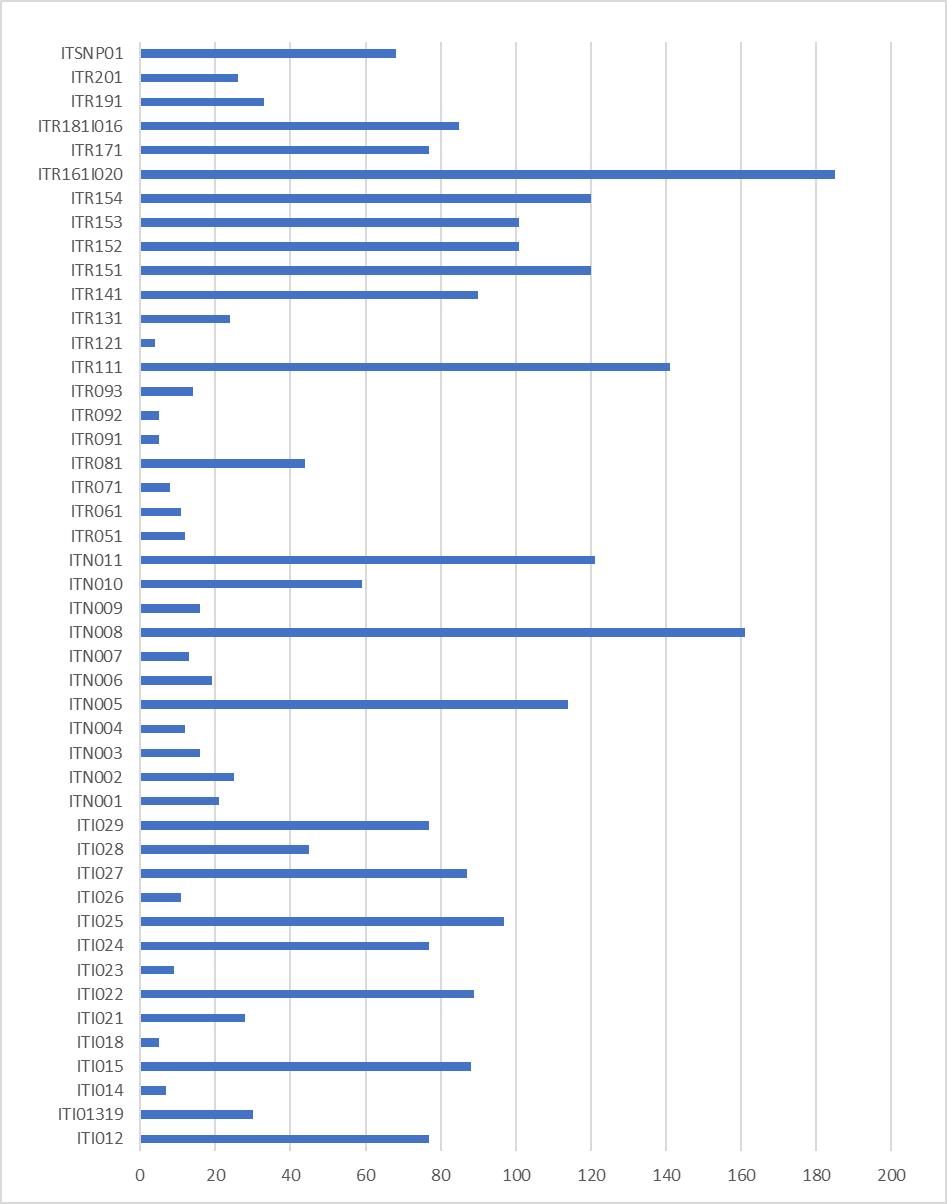
Across all its UoMs, Italy reported 1 605 individual measures and 6 741 aggregated measures for a total of 8 346 measures (the FRMPs do not, however, explain how individual and aggregated measures are defined). The average number of measures per UoM is 241. Some of the national measures are assigned to more than one measure type. To compare the number of measures by type, a total count is used that includes each time a measure is allocated to a measure type (this implies double-counting): this raises the total to 10 064 measures.
Italy reported measures across all four aspects – prevention, protection, preparedness, recovery and review – as well for the category of “other” and nearly all measure types. Italy reported a total of 3 502 prevention measures (35 % of all measures), 4 566 total protection measures (45%), 1 572 preparedness measures (16 %), 408 recovery and review measures (4 %) and 16 “other” measures (less than 1 % of all measures).
Please see Annex A for supplementary tables and charts on measures for this and subsequent questions in this section.
4.1Cost of measures
Table 5
Overall budget for the measures in the assessed FRMPs
|
FRMP
|
Estimated overall budget of planned measure/s (2015-2021) in EUR
|
|
ITA
|
1 380 m
|
|
ITR201
|
1 617 m *
|
|
ITI023 and ITR131
|
-
|
|
ITE
|
-
|
|
ITR161I020
|
783.5 m
|
Note: for Sardinia (ITR201), the costs refer to structural measures.
Cost information about the measures is provided in three of the five FRMPs assessed, namely in Eastern Alps (ITA), Puglia/Ofanto (ITR161I020) and Sardinia (ITR201).
The Eastern Alps (ITA) FRMP provides an estimated overall budget of planned measures. This FRMP also breaks down the budget by UoM within the RBD and by measure aspect. A second FRMP, Sardinia (ITR201), provides the cost of each structural measure and the total cost for all structural measures: estimated at €1 617 m. Information about the costs of non-structural measures is not available.
The Puglia/Ofanto FRMP (ITR161I020) indicates a total cost of €783.5 m, the lion’s share of which (754 m) is for measures in the territory of the Puglia Region, which accounts for most of the UoM territory; smaller amounts are for measures in the Basilicata Region (€25 m) and Campania Region (€4.5 m). The FRMP also indicates the cost by priority of measure, with the bulk for the highest priority measures: €107 m for critical priority measures (about 14 % of the total); and €460 m for very high priority measures (59 %).
For the Central Apennines (ITE), some information is found in the lists of measures for sub-basins; however, no information on costs of measures was found for the largest sub-basin of this RBD, the Tiber; moreover, no information on costs was found in the list of measures for the Abruzzo/Sangro FRMP (ITI023 and ITR131).
Information provided in the reporting sheets indicates that Italy reported the costs for 450 measures spread over three UoMs (ITR161I020, ITR191, ITSNP01). The reported costs ranged from less than €1 m to over €20 m, the majority of the measures (around 51 %) with costs in the range €1-5 m (for details see Tables A5 and A6 in Annex A).
4.2Funding of measures
The five FRMPs assessed provide some information on funding sources, though none provides a comprehensive overview.
·The FRMP for the Eastern Alps (ITA) provides two brief references to national and provincial funds.
·For the Puglia/Ofanto FRMP (ITR161I020), an overview of funding sources is not provided, but references are made to the use of national, regional and local budgets; EU funds in general and the European Agricultural Fund for Rural Development (EAFRD) in particular are also highlighted.
·For Sardinia (ITR201), the report on structural measures refers to national and regional budgetary sources.
·The FRMP for Abruzzo/Sangro (ITI023 and ITR131) mentions the use of regional and local budgets for some measures.
·The FRMP for the Central Apennines (ITE) refers to the use of national and regional budgets.
Table 6
Funding of measures
|
|
ITR161I020
|
ITA
|
ITR201
|
ITI023, ITR131
|
ITE
|
|
Distribution of costs among those groups affected by flooding
|
|
|
|
|
|
|
Use of public budget (national level)
|
✔
|
✔
|
✔
|
|
✔
|
|
Use of public budget (regional level)
|
✔
|
✔
|
✔
|
✔
|
✔
|
|
Use of public budget (local level)
|
✔
|
|
|
✔
|
|
|
Private investment
|
|
|
|
|
|
|
EU funds (generic)
|
✔
|
|
|
|
|
|
EU Structural funds
|
|
|
|
|
|
|
EU Solidarity Fund
|
|
|
|
|
|
|
EU Cohesion funds
|
|
|
|
|
|
|
EU CAP funds
|
✔
|
|
|
|
|
|
International funds
|
|
|
|
|
|
Source: FRMPs
4.3Measurable and specific (including location) measures
Only some of the FRMPs assessed include a clear and explicit description of the measures with regard to:
·What they are trying to achieve,
·How they are to be achieved, and
·By when they are expected to be achieved.
The FRMPs assessed provide information on where measures are to be achieved. The measures indicate the level of location, in most cases this is the RBD/UoM, sub-basin or APSFR.
Table 7
Location of measures
|
|
ITA
|
ITI023, ITR131
|
ITE
|
ITR201
|
ITR161I020
|
|
International
|
|
|
|
|
|
|
National
|
|
|
|
|
|
|
RBD/UoM
|
✔
|
✔
|
✔
|
|
|
|
Sub-basin
|
✔
|
✔
|
✔
|
✔
|
✔
|
|
APSFR or other specific risk area
|
✔
|
✔
|
✔
|
|
|
|
Water body level
|
|
|
|
|
|
|
Municipalities, rivers and also specific points, such as bridges
|
|
✔
|
✔
|
|
|
Source: FRMPs
The extent of information varies across the five FRMPs assessed. The list of measures in the FRMP for the Eastern Alps (ITA) includes a detailed classification of the intervention, including the timetable for the measure. For Sardinia (ITR201), the list of measures indicates the timetable. The list of measures for Abruzzo/Sangro (ITI023 and ITR131), in contrast, does not include a clear timetable, nor do the lists for Puglia/Ofanto (ITR161I020) and the Central Apennines (ITE).
Four of the five FRMPs assessed – Eastern Alps (ITA), Abruzzo/Sangro (ITI023, ITR131), Central Apennines (ITE) and Sardinia (ITR201) – list specific locations for their measures. This is not the case for the Puglia/Ofanto FRMP (ITR161I020), which groups measures in terms of sub-basins and does not list specific locations.
4.4Measures and objectives
In the FRMPs assessed, it is not clear how measures will contribute to the achievement of objectives, nor clear by how much they will contribute. It is also not clear whether the objectives will be achieved when all measures are completed. This due in large part to the fact that the measures themselves are not specific or measurable (see section 3).
4.5Geographic coverage/scale of measures
Italy has reported 2 282 different responses for the location of the measures across all its UoMs in the reporting sheets. A quantitative analysis is therefore unfeasible. The FRMPs for the Eastern Alps (ITA), Abruzzo/Sangro (ITR131 and ITI023) and Central Apennines (ITE) provide information about the specific location of measures, referring to the city, river, and even specific point (e.g. a bridge).
Italy reported information about the geographic coverage of the impacts of measures for 1458 measures in eight UoMs (ITI01319, ITI021, ITN002, ITR051, ITR081, ITR111, ITR191 and ITSNP01) in the reporting sheets. However, the responses vary and aggregation of the data into a small number of categories is not feasible. No information was found in the five FRMPs assessed: for example, in the detailed list of measures for ITA (Eastern Alps), which follows the structure of the reporting questions, the column for geographic coverage is blank for all measures.
4.6Prioritisation of measures
Italy reported the priority for 9 055 measures (90 % of the total 10 064 measures) as ten UoMs did not report any information regarding the category of priority (ITI017, ITI026, ITN001, ITN003, ITN004, ITN006, ITN007, ITN009, ITR051, ITR061): for these UoMs, Italy instead reported on the timetable for implementation (see below on the following page).
Of the 9 055 measures for which priority is indicated: 807 measures are classified as critical (9% of the total); 5 249 measures are classified as very high priority (85%); 2 455 as high priority (27 %); 434 measures as moderate priority (4 %) and 110 as low priority (1 %). Among the measure aspects, over half of the critical priority measures are for prevention (10 % of prevention measures, the highest share amongst the four aspects, are listed as of critical priority). Two-thirds of prevention measures and three-quarters of recovery and review measures are listed as being of very high priority. Almost one-third of protection measures are listed as being of high priority (for further details see Tables A7 and A8 in Annex A).
When looking at the FRMPs assessed:
·Sardinia (ITR201) presents 12 critical measures out of 62 total (19 %), 23 very high priority measures (37 %) and 27 high priority measures (44 %), no moderate or low priorities were indicated.
·For the Sangro (ITI023), 34 measures out of 45 measures (76 %) are classified as very high priority and the remaining 11 as high priority;
·for the Abruzzo regional UoM (ITR131), there is one critical measure (2 %), 15 very high priority measures (25 %), 43 high priority measures (72 %), and one moderate priority measure.
·For Puglia/Ofanto (ITR161I020), a total of 508 measures are indicated, of which 41 are critical (8 %), 382 very high priority (75 %), 81 high priority (16 %), 3 moderate (0.6 %) and one low priority (0.2 %).
·For the Isonzo (ITN004, part of ITA, the Eastern Alps RBD), no information was reported on the priorities of its measures.
The ITA and ITE FRMPs both cover several UoMs – including the Isonzo (ITN004) for ITA and the Sangro (ITI023) and Abruzzo (ITR131) for ITE – and Italy’s reporting to WISE is at the UoM level, not the RBD level of these FRMPs.
The FRMPs for Abruzzo/Sangro (ITI023 and ITR131), Central Apennines (ITE) and Puglia/Ofanto (ITR161I020) indicate that the prioritisation of measures was carried out following an approach indicated by ISPRA, the Italian Institute for Environmental Protection and Research (in 2014). This method uses a multicriteria approach. This method is based on the four themes of the objectives – reduction of social risks (including those for human health), risks to economic activities, cultural heritage and the environment – and then the individual objectives identified by the FRMP under each theme. For each objective, a value is given (for example, reduction of risk to transport infrastructure has different scores for railroads and national, regional and local roads). The values for each objective are summed to give the overall score for each measure.
For the Eastern Alps (ITA), the FRMP refers to a different approach, also based on a multicriteria approach, but one prepared by the Austrian Environment Ministry, composed by four criteria, including short-term economic analysis. This method was tailored to the local conditions and needs in the UoM/RBD and was adopted by Regional and Provincial authorities.
In the FRMP for Sardinia (ITR201), no information was found regarding the approach used for prioritisation of the measures, .
Italy reported information on the timetable for those measures where the priority was not reported: consequently, only 1 009 measures (10 % of the 10 064 measures reported) across 10 of the 47 UoMs: ITI017, ITI026, ITN001, ITN003, ITN004, ITN006, ITN007, ITN009, ITR051, ITR061. For these 10 UoMs, 232 measures (23 % of the 1 009 measures) are to be implemented in 2016-18; 573 measures (57 %) in the period from 2016-21; and 165 measures (16 %) in the period 2019-21. Consequently, 96 % of the measures listed are to be implemented in the current FRMP cycle. The remaining 39 measures (4 % of the 1 009 measures) are to be implemented in the period 2022-27, i.e. in the next FRMP cycle (for further details see Tables A9 and A10 in Annex A). Among the five FRMPs assessed, a timetable is reported only for the Isonzo UoM (ITN004). In this UoM the vast majority of the measure (53 of the total 55 measures) will be implemented in the current FRMP cycle (2016-21) and only two measures in the next cycle.
4.7Authorities responsible for implementation of measures
Italy provided information about the authorities responsible for the measures in its reporting sheets. In most cases, either the level of responsible authority or the name of the responsible authority was reported. On this basis, the level of responsible authority was compiled into six major categories (see tables A11 and A12 in Annex A):
·operators (mainly bodies managing transport and water infrastructure) are responsible for 615 measures (6 % of the total of 10 064 measures);
·municipalities for 1 689 measures (17 % of the total);
·provincial authorities for 333 measures (3 % of the total);
·regional authorities for 6 511 measures (65 %);
·national authorities for 85 measures (0.8 %);
·civil protection authorities for 27 measures (0.3 %); and
·other authorities for 804 measures (8 %).
For the five UoMs assessed, in Sardinia (ITR201) only the regional authorities are identified as responsible authorities: they implement all 62 measures reported.
·For the Isonzo (ITN004) in ITA, the majority of the measures are implemented by regional authorities (82 % of the total 55 measures), eight measures by national level authorities (15 %), one measures by a municipality (2 %), and one by another authority (2 %).
·For Sangro (ITI023), of the 45 measures reported, one is implemented by a municipality (2 %), 41 by regional authorities (91%) and three by other authorities (7 %)
·For Abruzzo (ITR131, reported separately from the Sangro UoM), regional authorities will implement the lion’s share of measures – 163 out of 167 (98 %) measures, a municipality will be responsible for one measure (less than 1%) and other entities for three measures (2 %).
·For Puglia/Ofanto (ITR161I020), where 508 measures are reported: 11 measures are under the responsibility of operators (2 %), 281 of municipalities (55 %), 179 of regional authorities (35 %), three of provincial authorities (1 %) and 34 by others (7 %).
As noted previously, the ITA and ITE FRMPs both cover several UoMs – including the Isonzo (ITN004) for ITA and the Sangro (ITI023) and Abruzzo (ITR131) for ITE – and measures for these RBDs are reported at UoM level.
4.8Progress of implementation of measures
In its reporting sheets, Italy indicated that:
·6 489 of the 10 064 measures have not started (64 %),
·2 283 are in the phase of ongoing construction (23 %),
·918 are in ongoing progress (9 %), and
·379 are completed (4 %).
Just over 80 % of the prevention measures (2 852 out of 3 502) have not been started. Just over 60 % of the protection measures (2 807 out of 4 566 measures) are not started, while 15 % (687 measures) are in the stage of ongoing construction and 17% (794 measures) are in ongoing progress. In contrast, less than half of the preparedness measures (654 out of 1 572, 42%), and a similar share of recovery and review measures (169 out of 408, 41 %) are not started. For preparedness measures, 846 out of 1 572 (54 %) are reported in ongoing construction and a further 46 (3 %) are in ongoing progress. For recovery and review measures, 189 out of 408 (46 %) are in ongoing construction and 20 (5 %) are in ongoing progress (see Tables A13 and A14 in Annex A).
Among the FRMPs assessed:
·for the Isonzo (ITN004, part of the ITA RBD), 26 out of 55 measures (47%) are not started, nine (16 %) are in ongoing construction and 20 (36 %) are in ongoing progress, with none completed.
·For the Abruzzo (ITR131), 29 out of 167 measures have not started (17 %), 59 are in construction ongoing (35 %) and 78 are in ongoing progress (47 %), with only one measure (1 %) completed.
·For the Sangro (ITI023), 14 measures are not started (31%), 26 are in ongoing construction (58 %), four are ongoing progress (9 %) and one is completed (2 %).
·For the Puglia/Ofanto (ITR161I020), 345 measures are not started (68 % of the 508 total measures), 89 are in ongoing construction (18 %) and 74 are in ongoing progress (15 %).
·For the Sardinia UoM (ITR201) the majority (48 %) of the measures are ongoing construction or progress (29 and one of the total 62 measures in the UoM respectively), 17 measures (27 %) have not started and 15 measures (24 %) are reported as completed.
As noted previously, the ITA and ITE FRMPs both cover several UoMs – including the Isonzo (ITN004) for ITA and the Sangro (ITI023) and Abruzzo (ITR131) for ITE – and are not reported separately.
4.9Measures taken under other Community Acts
Member States have been asked to report on other Community Acts under which each measure has been implemented. Italy has reported this information for 2 576 measures, in all cases referring to the Water Framework Directive.
WFD: Three of the five FRMPs assessed refer to coordination with the RBMPs, but do not identify measures taken under the RBMPs: this is the case for ITA (Eastern Alps), for Puglia/Ofanto and for Abruzzo/Sangro. In contrast, no information was found in the FRMPs for Sardinia (ITR201) or the Central Apennines (ITE).
In Italy’s reporting sheets, a total of 2 576 measures across all UoMs (26 %) cite the WFD. Of these, 271 measures (3 %) refer to specific key types of measures under the WFD, while the remaining 2 305 cite the WFD but not a key type of measure. The majority of the measures that cite the WFD are prevention measures (see tables A15 and A16 in Annex A). In the FRMPs assessed, references to the WFD are made for 185 measures in Puglia/Ofanto (ITR161I020), 26 measures in Sardinia (ITR201), 24 measures in Abruzzo (ITR131), 12 measures in Isonzo (ITN004) and nine measures in Sangro (ITI023).
EIA Directive: The FRMP for Puglia/Ofanto states that individual measures will undergo an EIA. The FRMPs for the Central Apennines (ITE) and for the Abruzzo and Sangro mentions the EIA Directive without indicating specific actions to be taken under it. The FRMP for the Eastern Alps (ITA) does not include a reference to the EIA Directive, but mentions EIA procedures for several projects prior to the plan itself. No information was found in the FRMP for Sardinia (ITR201).
SEA Directive: All five FRMPs assessed have undergone an SEA, as noted also in section 7. The FRMPs, however, contain few other references to the SEA Directive. The FRMPs for the Central Apennines (ITE) and Puglia/Ofanto cite the SEA Directive, mainly indicating that the FRMP itself was subject to an SEA. The Directive is included in the list of references for the FRMP of the Eastern Alps (ITE), but further information was not found in the text. The other three FRMPs assessed did not contain a reference to the Directive.
Seveso Directive: The FRMPs for ITA (Eastern Alps) and for the Abruzzo/Sangro both include the protection of Seveso facilities among their sub-objectives. The FRMP for ITE (Central Apennines) mentions the Seveso Directive and includes the protection of Seveso facilities among the context indicators for the monitoring of implementation. No reference to the Seveso Directive was found in the FRMPs for Sardinia (ITR201) or Puglia/Ofanto (including in their annexes on measures).
Civil protection mechanism: While all five FRMPs assessed refer to Italy’s Civil Protection bodies, none contains a reference to the EU Civil Protection Mechanism.
4.10Specific groups of measures
With regard to spatial planning/land use measures, measures are included in all five FRMPs assessed. For example:
·For the Eastern Alps (ITA), the list of measures includes among others nine measures to incorporate new flood risk scenarios in urban plans in sub-basins (e.g. in the interregional catchment of the Lemene River).
·For Sardinia (ITR201), the list of non-structural measures includes a measure to update rules for territorial governance and land use to address flood risks.
·For Abruzzo/Sangro (ITI023 and ITR131), the programme of measures includes measures to establish rules on land use and initiatives to promote the relocation of activities in critical areas.
·The FRMP for the Central Apennines (ITE) also contains measures for relocation from critical areas and guidelines to reduce vulnerability via urban planning rules.
·The FRMP for Puglia/Ofanto (ITR161I020) also contains a measure for delocalisation, as well as another for restrictions of activities in river bodies, .
None of the five FRMPs assessed refer to changes in the framework for land use and spatial planning since 2000, though a couple FRMPs – notably the plan for ITA, Eastern Alps – underline the role that urban expansion has played in aggravating flood risks.
Natural water retention measures (NWRMs) have been planned in all of the five FRMPs assessed. In their main reports, four of the five FRMPs assessed mention the role of NWRMs among their measures (the exception being the FRMP for Sardinia, ITR201). Specific NWRM measures are listed for all five FRMPs assessed:
·In its list of measures, the FRMP for the Eastern Alps (ITA), for example, includes measures for the restoration of areas of natural water expansion –which corresponds to NWRM measure type N03; and for the natural restoration of areas without a description of the specific work.
·The list of measures for the Central Apennines (ITE) and the Abruzzo/Sangro (ITI023 and ITR131) includes measures to strengthen the natural functions of river areas in order to improve the management of river flows, though specific details are not provided (in both cases, designated as measure type M31).
·The list of measures for Abruzzo/Sangro includes also measures to restore natural conditions along river courses but without providing specific details. These measures may correspond to NWRM measure types N05 or N08.
·For Sardinia (ITR201), the list of measures includes an action for the renaturalisation of a river, again related to NWRM measure types N05 or N08.
Measures that specifically consider nature conservation. Three of the five FRMPs assessed – those for the Eastern Alps (ITA), Central Apennines (ITE) and Puglia/Ofanto (ITR161I020) – include measures for nature conservation. The Eastern Alps (ITA) FRMP includes measures for the development of protocols for environmental protection. The Central Apennines (ITE) FRMP provides measure protection measures of type M21 for the protection of natural features of the hydrographic network. The Puglia/Ofanto (ITR161I020) FRMP includes measures for the protection of vegetation and analysis of the impact of structural measures on the environment.
As noted above, several NWRMs refer to the improvement of natural conditions. No information was found in the FRMPs of Abruzzo/Sangro (ITI023 and ITR131) and Sardinia (ITR201) concerning nature conservation measures.
No specific references were found in the five FRMPs assessed that they shall take into consideration navigation and port infrastructure. However, it can be noted that one measure for ITA (Eastern Alps) refers to the completion of an inland canal (the Idrovia Padova-Venezia) that can act as a floodway for the Brenta River; the FRMP for Puglia and Ofanto (ITR161I020) mentions port infrastructure among the factors considered in the plan .
No reference has been found in the five FRMPs assessed to dredging to increase the river channel capacity and its ability to convey water for flood alleviation purposes. Even though no measures specifically refer to dredging, some measures refer to river “maintenance” and four of the five FRMPs assessed refer to actions to improve the capacity of rivers to convey water for flood alleviation purposes. The list of measures for ITA (Eastern Alps) includes several measures to improve the laminar flow of rivers (for example for the Brenta River in the Province of Trento) as well as for the creation of floodway channels (for example, a measure to build a floodway channel for the Cormor River in the Province of Udine). The list of measures for Sardinia’s FRMP (ITR201) includes the implementation of “Piani di laminazione”, plans to increase river channel water laminar flow, and the list of measures for Abruzzo/Sangro (ITR131 and ITI023) includes programmes for this. The FRMP for ITE (Central Apennines) includes a measure for structural interventions to improve laminar flow.
4.11Recovery from and resilience to flooding
The role of insurance policies with regard to the recovery from flooding, preparedness/resilience to flood or other issues is discussed only in one of the FRMPs assessed. The FRMP for Eastern Alps (ITA) includes in its list of measures several measures related to insurance, among which a study on insurance policies for the Isonzo Basin, ITN004. No further information concerning the role of insurance policies (e.g. what types of insurance is available in flood risk areas) has been found in the FRMPs assessed.
4.12Monitoring progress in implementing the FRMP
All but one of the FRMPs assessed provide information on the indicators to be used to monitor the progress of implementation of the planned measures.
·Within the Eastern Alps (ITA) FRMP, the separate, annexed FRMP for the Autonomous Province of Bolzano/Bozen identifies an indicator to monitor the implementation of each measure, with numerical values from 0 (not started) to 1 (completed) for the state of progress.
·The main FRMP for ITA as well as the FRMP for Abruzzo/Sangro (ITI023+ITR131) identified an indicator for each measure, based on the stages of completion listed in the European Commission’s reporting guidance.
·The FRMP for Puglia/Ofanto (ITR161I020) instead identifies a set of indicators for the FRMP as a whole, grouped by measure aspect. For each, a baseline value is indicated. For example, for protection, one of the 11 indicators calls for a reduction in the area exposed to flood risk and gives the current, baseline value for the indicator.
·The FRMP for ITE (Central Apennines) also states that its indicators are for the plan as a whole. The FRMP refers to three types of monitoring indicators: context; process, the progress of implementation of the plan; and sustainability indicators that present the effects of measures. The three are linked together and also linked to the objectives of the FRMP: for example, one of the overall objectives is to reduce impacts on human health; the process indicators refer to the number of measures financed, underway or completed (these are cross-cutting for all objectives); one of the two context indicators for this objective is the current population exposed to flood risks for each area; and related sustainability indicator is the change in the population exposed to flood risks.
·No information was found in the FRMP for Sardinia (ITR201).
The FRMPs provide little information, however, on how monitoring will be carried out. The FRMP for the Eastern Alps (ITA) notes that actions financed by the national Ministry of Environment, Land and Sea will be monitored at national level, also via ISPRA. This FRMP notes that the ReNDiS platform, hosted by ISPRA, will play an important role in monitoring these measures; other FRMPs assessed, such as the FRMP for Puglia/Ofanto (ITR161I020), also refer to the use of this platform, as do all of Italy’s Reporting summaries. The FRMP for the Central Apennines (ITE) states that the RBD authority (the Tiber River Authority, acting as provisional authority for the whole RBD) will prepare yearly monitoring reports, drawing on information provided by regional bodies. The FRMP for Puglia/Ofanto (ITR161I020) states that the authorities responsible for each measure will transmit information to the regional basin authority.
Information concerning the baseline values against which progress will be measured was not found in all FRMPs assessed. As noted previously specific baseline values are mentioned only in the FRMP for Puglia/Ofanto (ITR161I020), where a baseline value is indicated for all indicators that will be used.
4.13Coordination with the Water Framework Directive
The table below shows how the development of the FRMPs has been coordinated with the development of the second RBMPs of the WFD.
Table 8
Coordination of the development of the FRMPs with the development of the second River Basin Management Plans of the WFD
|
|
ITA
|
ITE
|
ITR161I020
|
ITR201
|
ITI023, ITR131
|
|
Integration of FRMP and RBMP into a single plan
|
|
|
|
|
|
|
Joint consultation of draft FRMP and RBMP
|
|
|
|
|
|
|
Coordination between authorities responsible for developing FRMP and RBMP
|
✔
|
✔
|
|
|
|
|
Coordination with the environmental objectives in Art. 4 of the WFD
|
✔
|
✔
|
✔
|
|
|
|
The objectives of the Floods Directive were considered in the preparation of the RBMPs a
|
✔
|
✔
|
*
|
✔
|
*
|
|
Planning of win-win and no-regret measures in the FRMP
|
✔
|
✔
|
✔
|
|
|
|
The RBMP PoMs include win-win measures in terms of achieving the objectives of the WFD and Floods Directive, drought management and NWRMs a
|
✔
|
✔
|
*
|
✔
|
*
|
|
Permitting or consenting of flood risk activities (e.g. dredging, flood defence maintenance or construction) requires prior consideration of WFD objectives and RBMPs
|
|
|
|
|
|
|
Natural water retention and green infrastructure measures have been included
|
✔
|
✔
|
✔
|
|
|
|
Consistent and compliant application of WFD Article 7 and designation of heavily modified water bodies with measures taken under the FD e.g. flood defence infrastructure
|
|
|
|
|
|
|
The design of new and existing structural measures, such as flood defences, storage dams and tidal barriers, have been adapted to take into account WFD Environmental Objectives a
|
✔
|
✔
|
✔**
|
✔
|
*
|
|
The use of sustainable drainage systems, such as the construction of wetland and porous pavements, have been considered to reduce urban flooding and also to contribute to the achievement of WFD Environmental Objectives
|
|
|
|
|
|
Notes:
a Based on reporting for the WFD;
* Reporting for the WFD covers RBDs and not UoMs;
** Information found in the FRMP.
The five FRMPs assessed provide different levels of information regarding the coordination with the second RBMPs
.
The Eastern Alps (ITA) FRMP identifies measures that provide synergies with the RBMP, those that are ‘win-win’ for both plans and those that can lead to possible conflicts between the two plans. Win-win measures include non-structural measures such as alert systems as well as renaturalisation measures. Possible conflicts are identified, among others, for structural measures. It should be noted that the Authority that prepared the ITA FRMP also prepared the ITA RBMP.
For the Central Apennines (ITE), the FRMP notes that several types of measures will contribute to WFD objectives, including those providing room for the river. The prioritisation of measures includes their effect on the status of water bodies. The FRMP also refers to Art. 4 of the WFD, without providing detail on how coordination will be carried out. The FRMP also notes that coordination between WFD and the Floods Directive is probably easier in other Member States where UoMs and authorities match.
For Puglia/Ofanto (ITR161I020), the FRMP cites WFD objectives and states that these are integrated into the FRMP’s objectives. This plan also indicates that certain FRMP measures, including for renaturalisation of river courses, will contribute to the good status objectives under the WFD. Moreover, the monitoring of the implementation of measures will consider WFD objectives. For structural measures, the FRMP states that the EIA process and ex-ante analysis based on a national methodology prepared by ISPRA will be used. The list of measures identifies measures that contribute to WFD objectives.
For Sardinia (ITR201), the FRMP refers to the RBMP but does not describe coordination methods, though its objectives include the mitigation of negative impacts on ecological status. Although not explained in the FRMP, the same authority prepares the FRMPs and RBMPs in Sardinia. The reporting sheet for Sardinia states that coordination between FRMP and RBMP objectives was sought in the identification of FRMP measures and also via the NWRMs.
While the FRMP for Abruzzo/Sangro (ITI023 and ITR131) does not mention WFD objectives or other elements of coordination with that Directive, the reporting sheets for these UoMs state that coordination included sharing of the knowledge base as well as the definition of measures.
As noted previously, in Italy’s reporting sheets, a total of 2 576 FRMP measures make references to the WFD. These are found in all of Italy’s UoMs and cover flood risk management measure aspects (prevention, preparedness, protection and recovery and review). Many but not all of these measures refer to WFD Key Types of Measures (KTMs), including KTM 5, 6, 14, 21, 23 and 26 (due to the high number of measures and different reporting styles, it is not possible to provide an overview of the number for each KTM).
4.14Good practices and areas for further development with regard to measures
The following good practices were identified:
·Four of the five FRMPs assessed have prioritised their measures using multicriteria analysis (three using an Italian national system and the fourth using a system adopted from Austria and adapted).
·All five FRMPs assessed include measures to address land use and spatial planning, and all five include NWRMs in their measures. Three of the five FRMPs assessed include measures related to nature protection.
·Four of the five FRMPs assessed identify indicators to monitor implementation, two identifying indicators for measures and two for the FRMP as a whole. One FRMP assessed – for Puglia/Ofanto (ITR161I020) – identifies a baseline value for each indicator.
The following area for further development was identified:
·Although four of the five FRMPs assessed identify monitoring indicators, the FRMPs do not provide a detailed description of how monitoring of the implementation of measures will be carried out, still, the plans as well as Italy’s reporting sheets refer to a national database, ReNDiS, used to track implementation of measures financed by the national Ministry of Environment.
·Funding sources for measures are defined at a high level.
5. Consideration of climate change
According to Italy’s reporting sheets, climate change will be addressed in the updates of the FRMPs (i.e. in the next cycle) for all UoMs, taking into account Italy’s Climate Change Adaptation Strategy.
All of Italy’s reporting sheets refer to a preliminary national document – “Elementi per una Strategia Nazionale di Adattamento ai cambiamenti climatici” (Elements for a National Climate Change Strategy) – approved in October 2014 by Italy’s Conference of Regions and Autonomous Provinces – and to the “Strategia Nazionale di Adattamento ai Cambiamenti Climatici” (National Climate Change Adaptation Strategy, CCAS), approved in June 2015 by an internal decree of the Ministry of Environment, Land and Sea. The National Strategy refers to increased risk of flooding, including pluvial flash floods.
While all of the reporting sheets referred to the CCAS, this was not the case for the five FRMPs assessed. In the FRMPs for Sardinia (ITR201) and the Eastern Alps (ITA) there are references to the CCAS, but no reference was found in the plans for Abruzzo/Sangro (ITR131 and ITI023), Central Apennines (ITE) and Puglia/Ofanto (ITR161I020).
All of Italy’s reporting sheets note that the National CCAS refers to an increase in flood events in the Mediterranean Sea area, including sea flooding in coastal areas as well as an increase in the frequency and intensity of extreme meteorological events.
The reporting sheet and the FRMP for one of the five FRMPs assessed, the Puglia and Ofanto UoM (ITR16I010), refers to a pilot study that was carried out for a sub-catchment, the Picone river basin. It found that climate change appeared to have less important impact in this basin than other factors, hydraulic and hydrological factors, such as changes in topography (e.g. changes in land use).
The five FRMPs assessed, however, in general do not contain specific sections or extensive information on climate change. In the FRMP for the Central Apennines (ITE), there is a brief note on potential changes in the occurrence of extreme events: the FRMP makes reference to “bombe d’acqua” (literally, “water bombs”), an intense phenomenon of high-intensity precipitation. No reference to a shift in the occurrence of extreme events and changes in numerical recurrence times was found in the other four FRMPs assessed.
Concerning changes in the sources of flooding, there is only one reference in the reporting sheets: for ITN002 (Arno River), there is a brief reference to increased flash floods and pluvial flooding. In the five FRMPs assessed, however, no reference was found to changes in the main sources of flooding due to climate change scenarios.
5.1Specific measures to address expected effects of climate change
Even though the FRMPs assessed include structural and non-structural measures, measures to address land use, spatial planning and pollution risk, little information was found if and how climate change has been considered in the planning of these measures.
A review of the five FRMPs assessed found few measures focused on climate change either. One example is seen in the FRMP for Puglia/Ofanto (ITR161I020), which includes a measure to evaluate the effects of climate changes on floods. The result of that study will be used in the second cycle FRMP for this UoM.
5.2Good practices and areas for further development concerning climate change
The following area for further development was identified:
·The five FRMPs assessed contain relatively limited information on climate change impacts (and no reference to the national climate change adaptation strategy), and based on the UoM reporting sheets, this appears to be the case for most of Italy’s FRMPs. The objectives of the FRMPs assessed do not refer to addressing climate change impacts, and few measures addressing climate change impacts were identified.
6. Cost-benefit analysis
One of the five FRMPs assessed – for ITR161I020, Puglia Regional basins and Ofanto Interregional basin – discusses costs and benefits. The Plan provides an overview of the costs of measures to be financed by the Puglia Region and presents estimates of the costs of floods for three sectors. Flood damages are calculated in terms of the urban/residential, industrial and agricultural sectors. In addition, the reporting sheet for this UoM notes that the last major flooding events in Puglia had an impact on the tourism sector, though this sector is not specifically indicated among those considered in the CBA. The Plan states that recent and historical floods have high costs in terms of transport infrastructure and also in terms of lives (the reporting sheet notes impacts on human health and lives are difficult to quantify and are not included in the analysis.) The Plan indicates that damage costs will be further estimated in the implementation of the Plan itself. In addition, the programme of measures for the FRMP mentions the use of CBA for the identification of economic activities at risk of flood damage that could be moved out of the flood risk zone to reduce such risks.
Information on CBA is found in separate volumes annexed to another FRMP assessed, for Sardinia (ITR201). A report on non-structural measures explains that the University of Cagliari carried out a study to identify possible non-structural measures: this study included a CBA, but the details are not provided. In addition, annexes outlining structural measures in sub-basins of Sardinia note that an assessment of costs and benefits should be carried out for individual projects as part of their approval: one of these volumes presents and applies the assessment method for different project scenarios.
For the Eastern Alps (ITA), one measure refers to the use of benefit-cost analysis for assessing the transfer of archival and library materials in Trento at risk of exposure to floods. For the other two FRMPs assessed (Central Apennines, ITE; and Abruzzo/Sangro, ITR131 and ITI023), references to the analysis of costs and benefits were not found.
6.1Good practices and areas for further development
The following area for further development was identified:
·Two of the five FRMPs assessed – Sardinia, ITR201 and Puglia and Ofanto, ITR161I020 – refer to the use of CBA. On the basis of the information found, it appears that Italy has not exhausted the opportunities for cost-benefit analyses in the preparation of its FRMPs.
7. Governance including administrative arrangements, public information and consultation
7.1Competent authorities
A comparison of the 2014 list of Competent Authorities submitted by Italy and the 2016 reporting on the FRMPs, which included a spreadsheet listing Competent Authorities, showed some changes to the competent authorities in relation to the FRMPs. In the 2014 list ("Competent authorities and Units of Management for IT"), 54 authorities were listed. Two of them are not included in the 2016 list: ITCANL001, the national Ministry of Environment, Land and Sea and ITCANL002, the Department of Civil Protection under the national Presidency of the Council of Ministers (i.e. the Prime Minister's Office). With the removal of these two authorities, all the Competent Authorities are at the sub-national level (including regions, autonomous provinces and basin authorities) .
7.2Public information and consultation
The table below shows how the public and interested parties were informed in the five FRMPs assessed concerning the draft FRMPs. Information on how the consultation was actually carried out and which stakeholders participated is presented in the rest of the section:
Table 9
Methods used to inform the public and interested parties of the FRMPs
|
|
ITA
|
ITE
|
ITR161I020
|
ITR201
|
ITI023
|
|
Media (papers, TV, radio)
|
✔
|
|
|
|
|
|
Internet
|
✔
|
✔
|
✔
|
✔
|
✔
|
|
Digital social networking
|
|
|
|
|
|
|
Printed material
|
|
|
|
|
|
|
Direct mailing
|
✔
|
|
|
|
|
|
Invitations to stakeholders
|
✔
|
|
|
✔
|
|
|
Local Authorities
|
|
|
|
|
|
|
Meetings
|
✔
|
✔
|
|
✔
|
|
|
Other*
|
|
|
|
✔
|
|
Notes: * Other - Notification in Italy's national gazette.
The FRMP for the Eastern Alps (ITA) provides a list of the mechanisms used to inform the public and interested parties about the consultation process: this included a series of about 50 meetings in both previous phases (including the FHRM phase) as well as for the FRMP itself. These meetings both informed the public about the consultation process and also provided forums for active involvement.
A brief review of the web sites for the other four FRMPs assessed indicates that the Internet was used to inform stakeholders and the public. Moreover, for at least the Sardinia FRMP (ITR201), stakeholders were identified and contacted directly. The website for ITE (Central Apennines) lists 10 meetings concerning the FRMP. The reporting sheet for ITR2161I020 (Ofanto and Puglia) states that an informational forum was held in Bari in June 2013, bringing together 100 representatives of interest groups including local governments, orders of professions, research institutes and universities, agriculture and a range of public authorities including local governments, regional bodies and the Civil Protection services (however, it appears from information on the Puglia Region's website that this focused on FHRM work).
The UoM reporting sheet for ITR201 (Sardinia) states that meetings were held in this region to inform citizens and involve professionals working on flood issues. Moreover, the draft FRMP, including a non-technical summary, was published on the regional basin authority's website together with a notification published in Italy's official national gazette.
Several UoM reporting sheets, including that for ITR2161I020 (Ofanto and Puglia) mention a national information campaign entitled "Io - non rischio" (I don't risk), carried out by the national Department of Civil Protection. The website of the campaign provides public information related to floods, sea storms and earthquakes. These references do not clearly indicate if this campaign informed the public also about the consultation process of the draft FRMPs, and no information was found on the website itself, which - while providing interactive maps on historical floods and other information on flood risks - does not appear to refer to the FRMPs or the Floods Directive.
The table below shows how the actual consultation was carried out:
Table 10
Methods used for the actual consultation
|
|
ITA
|
ITE
|
ITR161I020
|
ITR201
|
ITI023 and ITR131
|
|
Via Internet
|
✔
|
✔
|
|
|
|
|
Digital social networking
|
|
|
|
|
|
|
Direct invitation
|
✔
|
|
|
|
|
|
Exhibitions
|
✔
|
|
|
|
|
|
Workshops, seminars or conferences
|
✔
|
✔
|
✔
|
✔
|
|
|
Telephone surveys
|
|
|
|
|
|
|
Direct involvement in drafting FRMP
|
|
|
|
|
|
|
Training course
|
|
|
|
✔
|
|
Source: FRMPs
Information about the consultation was found in the FRMPs for the Eastern Alps (ITA), Central Apennines (ITE), Puglia/Ofanto (ITR2161I020) and Sardinia (ITR201).
For ITA, a series of public meetings were held in seven provincial capitals: topics included the types of measures under consideration and the plan itself, participants were invited to help define priorities among the measures. A final set of meetings (outside the consultation period) just before the publication of the final FRMP presented the observations that had been received and the changes made in response to these modifications.
For ITE as well, public meetings were held across the RBD. Although no information was found in the FRMP for the Abruzzo/Sangro UoMs (ITI023 and ITR131), the website for ITE (Central Apennines), the RBD of which the Abruzzo/Sangro UoMs are part, indicates that two meetings were held in the Abruzzo Region in 2015.
The table below shows how the documents for the consultation were provided:
Table 11
Methods used to provide the documents for the consultation
|
|
ITA
|
ITE
|
ITR161I020
|
ITR201
|
ITI023 and ITR131
|
|
Downloadable
|
✔
|
✔
|
✔
|
✔
|
|
|
Direct mailing (e-mail)
|
✔
|
|
|
|
|
|
Direct mailing (post)
|
|
|
|
|
|
|
Paper copies distributed at exhibitions
|
|
|
✔
|
|
|
|
Paper copies available in municipal buildings (town hall, library etc.)
|
|
|
|
|
|
|
Copies provided at public meetings
|
|
✔
|
✔
|
|
|
Source: FRMPs
For four of the five FRMPs assessed, the draft plan was available on the UoM authority's website. For ITA (Eastern Alps), the draft FRMP was also distributed via direct mailing. Copies of the Puglia/Ofanto FRMP were available for download, at meetings and at exhibitions; and copies of the Central Apennines FRMP were available at public meetings. For Abruzzo/Sangro (ITI023 and ITR131), no information was found.
7.3Active involvement of Stakeholders
The table below shows the groups of stakeholders that have been actively involved in the development of the five FRMPs assessed:
Table 12
Groups of stakeholders
|
|
ITA
|
ITE
|
ITR161I020
|
ITR201
|
ITI023 and ITR131
|
|
Civil Protection Authorities such as Government Departments responsible for emergency planning and coordination of response actions
|
✔
|
✔
|
✔
|
✔
|
|
|
Flood Warning / Defence Authorities
|
|
|
✔
|
|
|
|
Drainage Authorities
|
✔
|
✔
|
✔
|
|
|
|
Emergency services
|
|
|
|
|
|
|
Water supply and sanitation
|
✔
|
|
|
|
|
|
Agriculture / farmers
|
✔
|
|
✔
|
|
|
|
Energy / hydropower
|
|
|
|
|
|
|
Navigation / ports
|
|
|
|
|
|
|
Fisheries / aquaculture
|
✔
|
|
|
|
|
|
Private business (Industry, Commerce, Services)
|
✔
|
✔
|
✔
|
|
|
|
NGO's including nature protection, social issues (e.g. children, housing)
|
|
✔
|
✔
|
|
|
|
Consumer Groups
|
|
✔
|
|
|
|
|
Local / Regional authorities
|
✔
|
✔
|
✔
|
|
|
|
Academia / Research Institutions
|
✔
|
✔
|
✔
|
|
|
|
Sports association, trade unions and the Regional Order of Engineers
|
|
✔
|
|
|
|
|
Representatives of professional orders and local police
|
|
|
✔
|
|
|
Three of the five FRMPs assessed provided information on the stakeholders that participated in the consultation process.
·The FRMP for the Eastern Alps (ITA) provides a list of stakeholders which were invited to participate actively. The independent stakeholders identified were: fishermen, professional associations, environmentalists and electricity producers. The FRMP discusses, in addition, coordination with government bodies - national ministries and authorities, regional governments, basin authorities and irrigation bodies are identified as relevant stakeholders.
·The FRMP for the Central Apennines (ITE) lists the organisations represented, both public and private, at each public meeting.
·The FRMP for Puglia/Ofanto (ITR161I020) mentions among the stakeholders involved: representatives of research bodies and universities, NGOs, agricultural associations and professional societies. Government bodies are also noted, including offices of the Puglia regional government and irrigation bodies.
·No information was found in the FRMPs for or Abruzzo/Sangro (ITI023 and ITR131) or Sardinia (ITR201), though the latter notes that consultation was carried out in coordination with civil protection bodies. The UoM reporting sheet for the Sangro UoM (ITI023) both state that attention was given to the identification and involvement of interest groups; the specific groups, however, are not identified.
The table below shows the mechanisms used to ensure the active involvement of stakeholders:
Table 13
Mechanisms used to ensure the active involvement of stakeholders
|
|
All FRMPs assessed
|
|
Regular exhibitions
|
|
|
Establishment of advisory groups
|
|
|
Involvement in drafting
|
|
|
Formation of alliances
|
|
|
Public meetings
|
✔
|
Source: FRMPs
All FRMPs refer to public meetings.
In the Eastern Alps (ITA) FRMP, a detailed description is provided: stakeholders were involved via meetings, providing their opinions and their contributions on the working program, calendar and on the FRMP's evaluation of the principal problems as well as on the measures. As noted above, active involvement was carried out through over 50 meetings, held across seven provincial capitals, in both prior phases and on the draft FRMP itself. The themes of the meetings were established to promote input to the development of the FRMP. The agenda and presentations for each meeting are available (as of early 2018) on the ITA website. The FRMP for ITA also notes that an international meeting was held in September 2015 to compare FRMP approaches with those in Austria, France, Hungary, Slovenia and the Danube IRBD. It is not clear, however, if this meeting provided an opportunity for active involvement of stakeholders in ITA, or (given its late stage in the process) if it influenced the final FRMP. The FRMP for ITA describes also the mechanism for coordination among government bodies used for the preparation of the FRMP: a working group that brought together national ministries and other bodies, sub-basin authorities, regional governments (as well as the two autonomous provinces) and irrigation bodies met 20 times over the course of 2015.
The UoM reporting sheet for ITR2161I020 (Ofanto and Puglia) states that a regional forum presenting the FRMP was held in Bari in late July 2015 and allowed the active participation of over 100 participants, including experts, researchers, civil protection workers and officials from public bodies. The activities included a written questionnaire given to all participants to gauge their awareness of flood risk issues.
For the Central Apennines (ITE), a series of meetings were held across the regions in the basin; these included meetings in the Sangro UoM (ITI023). The agendas and materials for each meeting are provided on the web site for ITE.
7.4Effects of consultation
The table below shows the effects of consultation:
Table 14
Effects of consultation
|
|
ITA
|
ITE
|
ITR161I020
|
ITR201
|
ITI023 and ITR131
|
|
Changes to selection of measures
|
✔
|
|
|
|
|
|
Adjustment to specific measures
|
✔
|
|
|
|
|
|
Addition of new information
|
✔
|
|
✔
|
|
|
|
Changes to the methodology used
|
|
|
|
|
|
|
Commitment to further research
|
|
|
|
|
|
|
Commitment to action in the next FRMP cycle
|
|
|
|
|
|
|
Comments and results of the consultation "were considered in the formulation of the plan"
|
|
|
|
|
|
Source: FRMPs
One of the five FRMPs assessed provides an overview of the comments received and how they are addressed: the FRMP for Puglia/Ofanto (ITR161I020) lists stakeholder observations received in the consultation process and the actions taken (e.g. ‘accepted’ or ‘to be implemented’).
For the other four FRMPs assessed, specific information was not found in the FRMPs themselves on the effects of consultation on the FRMPs. For ITA, however, the last public meetings presented the results of the consultation. A presentation available on the authority's web site indicates that 69 submissions were received on the plan and its SEA, containing 357 individual observations. These were grouped into eight major themes: rivers, maps, measures, coherence (with other documents), assessment of impacts, monitoring and various comments on the plan and on the SEA. This presentation does not detail the changes made, though it appears these include considerations on the feasibility of measures and their timescales and on better coordination with the WFD.
Further information was not found for the other three FRMPs assessed.
Two of the FRMP assessed - for ITE Central Apennines and Sardinia (ITR201) - mention that a participative mechanism, river contracts, will be used in the implementation of the FRMPs at local level.
7.5Strategic Environmental Assessment
All five FRMPs assessed included an SEA procedure. For all five, it appears that public participation in the SEA was coordinated with the consultation on the FRMPs. The FRMP for the Central Apennines (ITE), for example, provides an overview of all the observations presented by the public: in the website for the plan, it is possible to see which observations were accepted and which were not.
7.6Good practices and areas for further development regarding governance
The following good practice was identified:
·For ITA (the RBD for the Eastern Alps), a series of about 50 meetings was held across the district and along the preparation period of the FRMP. The themes of the meetings were linked to the phase of development of the FRMP, ensuring input from the public and stakeholders. A final set of meetings described the results of the consultation and active involvement process and presented an overview of how contributions had been addressed in the final version of the plan. Key materials from the meetings - agendas and presentations - are posted on the ITA website.
The following area for further development was identified:
·The information provided on the consultation process varies across the five FRMPs assessed: for several FRMPs, limited information is provided in the plans themselves on the approach to consultation or its effects.
·
Annex A: Supplementary tables and charts on measures
This Annex gives an overview of the data on measures provided by Italy in the reporting sheets. These tables and charts were used for the preparation of section 4 on measures.
Background & method
This document was produced as part of the assessment of the Flood Risk Management Plans (FRMPs). The tables and charts below are a summary of the data reported on measures by the Member States and were used by the Member State assessor to complete the questions on the Flood measures. The data are extracted from the XMLs (reporting sheets) reported by MS for each FRMP, and are split into the following sections:
·Measures overview – Tabulates the number of measures for each UoM;
·Measure details: cost – Cost & Cost explanation;
·Measures details: name & location – Location & geographic coverage;
·Measure details: authorities – Name of responsible authority & level of responsibility;
·Measure details: objectives – Objectives, Category of priority & Timetable;
·Measure details: progress – Progress of implementation & Progress description;
·Measure details: other – Other Community Acts.
On the basis of the reporting guidance (which in turn is based on the Floods Directive), not all fields are mandatory, and, as such, not all MS reported information for all fields.
Some of the fields in the XMLs could be filled in using standardised answers – for example, progress is measured via the categories set out in the Reporting Guidance. This means that producing comprehensive tables and charts required little effort. For many fields, however, a free data format was used. For some Member States, this resulted in thousands of different answers, or answers given in the national language.
In such situations, tables and charts were developed using the following steps:
·A first filter is applied to identify how many different answers were given. If a high number of different answers are given, MS assessors were asked to refer to the raw data when conducting the assessment, and this Annex does not reflect these observations.
·If a manageable number of answers are given, obvious categories are identified, and raw data sorted.
·Measures missing information may be assigned categories based on other fields (for example, if the level of Responsibility Authority is missing, the information may be obvious from the field “name of Responsible Authority”).
·Measures where obvious categories cannot be defined based on other available information (as in the example above on the name of the Responsible Authority), are categorised as “no information”.
Types of measures used in reporting
The following table
is used in the reporting on the types of measures. Each type of measures is coded as an M-number. Measures are grouped in an ‘aspect’.
|
NO ACTION
M11: No Action
|
PREPAREDNESS
M41: Flood Forecasting & Warning
M42: Emergency response planning
M43: Public Awareness
M44: Other preparedness
|
|
PREVENTION
M21: Avoidance
M22: Removal or relocation
M23: Reduction
M24: Other prevention
|
RECOVERY & REVIEW
M51: Clean-up, restoration & personal recovery
M52: Environmental recovery
M53: Other recovery
|
|
PROTECTION
M31: Natural flood management
M32: Flow regulation
M33: Coastal and floodplain works
M34: Surface Water Management
M35: other protection
|
OTHER MEASURES
M61: Other measures
|
List of Annex A tables & figures
Figure A1 - Number of total measures (individual and aggregate) by measure aspect
Figure A2 - Share of total measures (aggregated and individual) by measure aspect
Figure A3: Visualisation of Table A5: Category of cost by measure aspect
Figure A4: Visualisation of Table A6: Category of cost by UoM
Figure A5: Visualisation of Table A7: Category of priority by measure aspect
Figure A6: Visualisation of Table A8: Category of priority by UoM
Figure A7: Visualisation of Table A9: Timetable by measure aspect
Figure A8: Visualisation of Table A10: Timetable by UoM
Figure A9: Visualisation of Table A11: Level of responsible authority by measure aspect
Figure A10: Visualisation of Table A12: Level of responsible authority by UoM
Figure A11: Visualisation of Table A13: Progress of implementation by measure aspect
Figure A12: Visualisation of Table A14: Progress of implementation by UoM
Figure A13: Visualisation of Table A15: Reference to the WFD by measure aspect
Figure A14: Visualisation of Table A16: Reference to the WFD by UoM
Table A1 - Total number of measures
Table A2 - Number of individual measures per measure type and UoM
Table A3 - Number of aggregated measures per measure type and UoM
Table A4 - Total number of measures (aggregated and individual) per measure type and UoM, including duplicates
Table A5: Category of cost by measure aspect
Table A6: Category of cost by UoM
Table A7: Category of priority by measure aspect
Table A8: Category of priority by UoM
Table A9: Timetable by measure aspect
Table A10: Timetable by UoM
Table A11: Level of responsible authority by measure aspect
Table A12: Level of responsible authority by UoM
Table A13: Progress of implementation by measure aspect
Table A14: Progress of implementation by UoM
Table A15: Reference to the WFD by measure aspect
Table A16: Reference to the WFD by UoM
Measures overview
Table A1 - Total number of measures
|
Number of individual measures
|
1 605
|
|
Number of individual measures including measures which have been allocated to more than one measure type
|
1 820
|
|
Number of aggregated measures
|
6 741
|
|
Number of aggregated measures including measures which have been allocated to more than one measure type
|
8 244
|
|
Total number of measures
|
8 346
|
|
Total number of measures including measures which have been allocated to more than one measure type
|
10 064
|
|
Range of number of measures between UoMs including measures which have been allocated to more than one measure type(Min-Max)
|
1-888
|
|
Average number of measures across UoMs including measures which have been allocated to more than one measure type
|
214
|
Table A2 - Number of individual measures per measure type and UoM
|
|
Prevention
|
Protection
|
Preparedness
|
Recovery & review
|
Other
|
Grand Total
|
|
|
M21
|
M22
|
M23
|
M24
|
M31
|
M32
|
M33
|
M34
|
M35
|
M41
|
M42
|
M51
|
M61
|
|
|
ITI012
|
|
|
2
|
|
|
|
2
|
|
|
|
|
|
|
4
|
|
ITI01319
|
|
|
|
|
|
|
20
|
|
|
|
|
|
|
20
|
|
ITI014
|
|
|
|
|
|
|
1
|
|
|
|
|
|
|
1
|
|
ITI015
|
|
|
31
|
|
|
4
|
67
|
1
|
|
|
|
|
|
103
|
|
ITI017
|
|
|
|
|
|
|
5
|
|
|
3
|
|
|
|
8
|
|
ITI018
|
|
|
|
|
|
|
24
|
|
|
|
|
|
|
24
|
|
ITI021
|
|
|
|
|
|
|
39
|
|
|
|
|
|
|
39
|
|
ITI022
|
|
|
12
|
|
|
|
15
|
|
|
|
|
|
|
27
|
|
ITI024
|
|
1
|
|
|
|
|
3
|
|
|
|
|
|
|
4
|
|
ITI026
|
|
|
|
|
2
|
1
|
33
|
1
|
|
2
|
|
|
|
39
|
|
ITI027
|
|
|
4
|
|
|
2
|
15
|
|
|
|
|
|
|
21
|
|
ITI028
|
|
|
|
|
|
1
|
13
|
|
3
|
|
|
|
|
17
|
|
ITN001
|
|
2
|
|
|
2
|
5
|
101
|
4
|
1
|
2
|
1
|
|
|
118
|
|
ITN002
|
|
|
|
|
10
|
150
|
6
|
5
|
1
|
|
|
|
|
172
|
|
ITN003
|
|
|
|
|
2
|
18
|
88
|
3
|
|
2
|
1
|
|
|
114
|
|
ITN004
|
|
|
|
|
1
|
|
7
|
|
|
2
|
|
|
|
10
|
|
ITN005
|
|
|
|
10
|
|
3
|
2
|
|
|
|
|
|
|
15
|
|
ITN006
|
|
|
|
|
2
|
5
|
25
|
3
|
|
3
|
|
|
|
38
|
|
ITN007
|
|
|
|
1
|
|
5
|
24
|
1
|
|
2
|
|
|
|
33
|
|
ITN008
|
1
|
|
4
|
56
|
2
|
19
|
21
|
|
6
|
1
|
6
|
|
|
116
|
|
ITN009
|
|
|
|
|
|
1
|
15
|
|
|
3
|
|
|
|
19
|
|
ITN010
|
|
|
1
|
|
10
|
2
|
49
|
|
|
|
|
|
|
62
|
|
ITN011
|
|
|
|
8
|
|
4
|
3
|
|
|
|
|
|
|
15
|
|
ITR051
|
|
|
|
1
|
7
|
3
|
24
|
4
|
2
|
5
|
|
|
|
46
|
|
ITR061
|
|
|
|
|
1
|
5
|
5
|
3
|
5
|
2
|
|
|
|
21
|
|
ITR071
|
|
|
|
|
|
3
|
7
|
|
|
|
1
|
|
|
11
|
|
ITR081
|
|
|
|
1
|
|
|
59
|
|
1
|
|
|
|
1
|
62
|
|
ITR091
|
|
|
|
2
|
|
2
|
2
|
4
|
2
|
|
|
|
|
12
|
|
ITR092
|
|
|
|
|
|
1
|
2
|
2
|
3
|
|
|
|
|
8
|
|
ITR093
|
|
|
|
|
|
8
|
36
|
6
|
11
|
|
|
11
|
|
72
|
|
ITR111
|
|
|
5
|
14
|
|
14
|
39
|
|
19
|
|
|
3
|
|
94
|
|
ITR131
|
|
|
|
|
|
4
|
39
|
|
18
|
|
|
8
|
|
69
|
|
ITR141
|
|
|
28
|
|
|
3
|
38
|
|
|
|
|
|
|
69
|
|
ITR161I020
|
|
|
|
|
8
|
21
|
251
|
|
|
|
|
1
|
|
281
|
|
ITR171
|
|
|
|
|
|
1
|
3
|
1
|
|
|
|
|
|
5
|
|
ITSNP01
|
12
|
|
15
|
|
7
|
2
|
15
|
|
|
|
|
|
|
51
|
|
Grand Total
|
13
|
3
|
102
|
93
|
54
|
287
|
1 098
|
38
|
72
|
27
|
9
|
23
|
1
|
1 820
|
|
Average per UoM
|
<1
|
<1
|
3
|
3
|
2
|
8
|
31
|
1
|
2
|
1
|
<1
|
1
|
<1
|
51
|
Notes: The total includes measures assigned to more than one measure type.
Table A3 - Number of aggregated measures per measure type and UoM
|
|
Prevention
|
Protection
|
Preparedness
|
Recovery & review
|
Other
|
Grand Total
|
|
|
M21
|
M22
|
M23
|
M24
|
M31
|
M32
|
M33
|
M34
|
M35
|
M41
|
M42
|
M43
|
M51
|
M52
|
M53
|
M61
|
|
|
ITI012
|
11
|
7
|
50
|
172
|
44
|
12
|
123
|
15
|
63
|
8
|
20
|
6
|
6
|
|
4
|
|
541
|
|
ITI01319
|
11
|
3
|
12
|
27
|
7
|
|
7
|
1
|
11
|
7
|
14
|
7
|
5
|
|
2
|
4
|
118
|
|
ITI014
|
4
|
|
|
9
|
3
|
|
9
|
4
|
2
|
6
|
5
|
3
|
1
|
|
2
|
|
48
|
|
ITI015
|
7
|
1
|
12
|
62
|
7
|
2
|
24
|
2
|
8
|
3
|
8
|
2
|
6
|
1
|
3
|
|
148
|
|
ITI017
|
2
|
1
|
1
|
9
|
1
|
1
|
|
|
4
|
4
|
21
|
7
|
|
|
3
|
|
54
|
|
ITI018
|
5
|
|
|
4
|
3
|
|
4
|
|
3
|
9
|
22
|
6
|
5
|
|
2
|
|
63
|
|
ITI021
|
9
|
3
|
12
|
27
|
7
|
|
1
|
1
|
10
|
7
|
13
|
7
|
5
|
|
2
|
4
|
108
|
|
ITI022
|
7
|
1
|
1
|
63
|
7
|
|
4
|
4
|
6
|
3
|
8
|
2
|
6
|
1
|
3
|
|
116
|
|
ITI023
|
1
|
1
|
1
|
6
|
3
|
1
|
9
|
1
|
4
|
2
|
7
|
2
|
5
|
|
2
|
|
45
|
|
ITI024
|
11
|
5
|
41
|
161
|
43
|
10
|
97
|
13
|
55
|
10
|
28
|
9
|
6
|
|
8
|
|
497
|
|
ITI025
|
14
|
1
|
2
|
86
|
8
|
2
|
8
|
4
|
9
|
11
|
21
|
9
|
9
|
2
|
7
|
|
193
|
|
ITI026
|
1
|
1
|
1
|
7
|
|
|
|
|
3
|
3
|
13
|
5
|
|
|
2
|
|
36
|
|
ITI027
|
7
|
1
|
5
|
61
|
7
|
1
|
15
|
2
|
6
|
3
|
8
|
2
|
5
|
1
|
2
|
|
126
|
|
ITI028
|
6
|
3
|
2
|
9
|
1
|
3
|
22
|
2
|
22
|
8
|
20
|
3
|
11
|
1
|
6
|
|
119
|
|
ITI029
|
11
|
5
|
19
|
138
|
27
|
1
|
45
|
8
|
37
|
10
|
25
|
8
|
6
|
|
8
|
|
348
|
|
ITN001
|
10
|
3
|
5
|
20
|
|
|
3
|
|
5
|
10
|
29
|
10
|
|
|
5
|
|
100
|
|
ITN002
|
7
|
1
|
|
9
|
29
|
42
|
31
|
1
|
1
|
9
|
15
|
3
|
4
|
|
4
|
|
156
|
|
ITN003
|
5
|
2
|
2
|
15
|
|
|
|
|
4
|
6
|
21
|
8
|
|
|
3
|
|
66
|
|
ITN004
|
3
|
1
|
1
|
8
|
|
|
5
|
1
|
3
|
2
|
14
|
5
|
|
|
2
|
|
45
|
|
ITN005
|
9
|
2
|
1
|
94
|
11
|
1
|
5
|
4
|
11
|
8
|
11
|
8
|
5
|
1
|
2
|
|
173
|
|
ITN006
|
2
|
2
|
1
|
8
|
1
|
2
|
9
|
1
|
5
|
6
|
21
|
7
|
|
|
3
|
|
68
|
|
ITN007
|
1
|
1
|
1
|
7
|
|
|
|
|
3
|
5
|
13
|
5
|
|
|
2
|
|
38
|
|
ITN008
|
57
|
12
|
37
|
210
|
11
|
5
|
68
|
15
|
56
|
101
|
182
|
90
|
32
|
|
8
|
4
|
888
|
|
ITN009
|
2
|
2
|
1
|
9
|
5
|
|
15
|
|
4
|
3
|
21
|
8
|
|
|
3
|
|
73
|
|
ITN010
|
12
|
2
|
3
|
113
|
50
|
19
|
40
|
24
|
22
|
37
|
47
|
30
|
2
|
|
1
|
|
402
|
|
ITN011
|
9
|
2
|
|
94
|
15
|
5
|
2
|
4
|
13
|
6
|
8
|
5
|
5
|
1
|
1
|
|
170
|
|
ITR051
|
1
|
1
|
1
|
7
|
|
|
|
|
3
|
3
|
13
|
5
|
|
|
2
|
|
36
|
|
ITR061
|
2
|
1
|
1
|
8
|
1
|
|
9
|
2
|
3
|
1
|
13
|
4
|
|
|
2
|
|
47
|
|
ITR071
|
2
|
2
|
1
|
6
|
5
|
|
5
|
|
|
4
|
17
|
6
|
4
|
|
2
|
|
54
|
|
ITR081
|
9
|
3
|
12
|
25
|
7
|
|
1
|
1
|
9
|
7
|
13
|
7
|
5
|
|
2
|
3
|
104
|
|
ITR091
|
3
|
|
|
16
|
2
|
5
|
24
|
4
|
17
|
5
|
6
|
1
|
1
|
|
|
|
84
|
|
ITR092
|
3
|
|
|
5
|
1
|
1
|
28
|
5
|
8
|
5
|
6
|
1
|
1
|
|
1
|
|
65
|
|
ITR093
|
3
|
|
|
8
|
2
|
2
|
62
|
9
|
17
|
5
|
6
|
1
|
36
|
1
|
1
|
|
153
|
|
ITR111
|
3
|
2
|
1
|
44
|
2
|
7
|
120
|
3
|
109
|
4
|
8
|
1
|
6
|
|
2
|
|
312
|
|
ITR121
|
3
|
|
|
1
|
|
|
1
|
|
1
|
2
|
6
|
1
|
1
|
|
1
|
|
17
|
|
ITR131
|
1
|
1
|
1
|
6
|
18
|
2
|
39
|
1
|
11
|
2
|
7
|
2
|
5
|
|
2
|
|
98
|
|
ITR141
|
7
|
1
|
2
|
62
|
7
|
5
|
15
|
4
|
8
|
3
|
8
|
2
|
6
|
1
|
3
|
|
134
|
|
ITR151
|
9
|
2
|
45
|
105
|
9
|
9
|
71
|
5
|
56
|
5
|
8
|
5
|
6
|
1
|
2
|
|
338
|
|
ITR152
|
14
|
1
|
2
|
84
|
11
|
3
|
13
|
5
|
12
|
5
|
7
|
5
|
6
|
2
|
5
|
|
175
|
|
ITR153
|
14
|
1
|
2
|
83
|
9
|
3
|
13
|
5
|
12
|
5
|
7
|
5
|
6
|
2
|
5
|
|
172
|
|
ITR154
|
9
|
2
|
36
|
104
|
9
|
5
|
64
|
5
|
47
|
5
|
8
|
5
|
6
|
1
|
2
|
|
308
|
|
ITR161I020
|
11
|
5
|
1
|
78
|
13
|
6
|
21
|
4
|
18
|
14
|
29
|
10
|
11
|
1
|
5
|
|
227
|
|
ITR171
|
11
|
5
|
71
|
204
|
88
|
10
|
207
|
27
|
79
|
6
|
13
|
5
|
3
|
|
3
|
|
732
|
|
ITR181I016
|
9
|
|
4
|
62
|
8
|
2
|
4
|
2
|
10
|
2
|
10
|
5
|
1
|
|
1
|
|
120
|
|
ITR191
|
13
|
|
2
|
12
|
7
|
3
|
2
|
2
|
4
|
2
|
7
|
2
|
3
|
|
1
|
|
60
|
|
ITR201
|
2
|
2
|
1
|
24
|
2
|
1
|
5
|
1
|
4
|
2
|
7
|
8
|
1
|
|
2
|
|
62
|
|
ITSNP01
|
13
|
5
|
14
|
48
|
24
|
20
|
34
|
9
|
28
|
5
|
4
|
1
|
1
|
|
1
|
|
207
|
|
Grand Total
|
366
|
97
|
408
|
2 420
|
515
|
191
|
1 284
|
201
|
826
|
379
|
818
|
339
|
233
|
17
|
135
|
15
|
8 244
|
|
Average per UoM
|
8
|
2
|
9
|
51
|
11
|
4
|
27
|
4
|
18
|
8
|
17
|
7
|
5
|
<1
|
3
|
<1
|
175
|
Notes: The total includes measures assigned to more than one measure type.
Table A4 - Total number of measures (aggregated and individual) per measure type and UoM, including duplicates
|
|
Prevention
|
Total
|
Protection
|
Total
|
Preparedness
|
Total
|
Recovery & review
|
Total
|
Other
|
Total
|
Grand Total
|
|
|
Aggr.
|
Ind.
|
|
Aggr.
|
Ind.
|
|
Aggr.
|
Ind.
|
|
Aggr.
|
Ind.
|
|
Aggr.
|
Ind.
|
|
|
|
ITI012
|
240
|
2
|
242
|
257
|
2
|
259
|
34
|
|
34
|
10
|
|
10
|
|
|
|
545
|
|
ITI01319
|
53
|
|
53
|
26
|
20
|
46
|
28
|
|
28
|
7
|
|
7
|
4
|
|
4
|
138
|
|
ITI014
|
13
|
|
13
|
18
|
1
|
19
|
14
|
|
14
|
3
|
|
3
|
|
|
|
49
|
|
ITI015
|
82
|
31
|
113
|
43
|
72
|
115
|
13
|
|
13
|
10
|
|
10
|
|
|
|
251
|
|
ITI017
|
13
|
|
13
|
6
|
5
|
11
|
32
|
3
|
35
|
3
|
|
3
|
|
|
|
62
|
|
ITI018
|
9
|
|
9
|
10
|
24
|
34
|
37
|
|
37
|
7
|
|
7
|
|
|
|
87
|
|
ITI021
|
51
|
|
51
|
19
|
39
|
58
|
27
|
|
27
|
7
|
|
7
|
4
|
|
4
|
147
|
|
ITI022
|
72
|
12
|
84
|
21
|
15
|
36
|
13
|
|
13
|
10
|
|
10
|
|
|
|
143
|
|
ITI023
|
9
|
|
9
|
18
|
|
18
|
11
|
|
11
|
7
|
|
7
|
|
|
|
45
|
|
ITI024
|
218
|
1
|
219
|
218
|
3
|
221
|
47
|
|
47
|
14
|
|
14
|
|
|
|
501
|
|
ITI025
|
103
|
|
103
|
31
|
|
31
|
41
|
|
41
|
18
|
|
18
|
|
|
|
193
|
|
ITI026
|
10
|
|
10
|
3
|
37
|
40
|
21
|
2
|
23
|
2
|
|
2
|
|
|
|
75
|
|
ITI027
|
74
|
4
|
78
|
31
|
17
|
48
|
13
|
|
13
|
8
|
|
8
|
|
|
|
147
|
|
ITI028
|
20
|
|
20
|
50
|
17
|
67
|
31
|
|
31
|
18
|
|
18
|
|
|
|
136
|
|
ITI029
|
173
|
|
173
|
118
|
|
118
|
43
|
|
43
|
14
|
|
14
|
|
|
|
348
|
|
ITN001
|
38
|
2
|
40
|
8
|
113
|
121
|
49
|
3
|
52
|
5
|
|
5
|
|
|
|
218
|
|
ITN002
|
17
|
|
17
|
104
|
172
|
276
|
27
|
|
27
|
8
|
|
8
|
|
|
|
328
|
|
ITN003
|
24
|
|
24
|
4
|
111
|
115
|
35
|
3
|
38
|
3
|
|
3
|
|
|
|
180
|
|
ITN004
|
13
|
|
13
|
9
|
8
|
17
|
21
|
2
|
23
|
2
|
|
2
|
|
|
|
55
|
|
ITN005
|
106
|
10
|
116
|
32
|
5
|
37
|
27
|
|
27
|
8
|
|
8
|
|
|
|
188
|
|
ITN006
|
13
|
|
13
|
18
|
35
|
53
|
34
|
3
|
37
|
3
|
|
3
|
|
|
|
106
|
|
ITN007
|
10
|
1
|
11
|
3
|
30
|
33
|
23
|
2
|
25
|
2
|
|
2
|
|
|
|
71
|
|
ITN008
|
316
|
61
|
377
|
155
|
48
|
203
|
373
|
7
|
380
|
40
|
|
40
|
4
|
|
4
|
1 004
|
|
ITN009
|
14
|
|
14
|
24
|
16
|
40
|
32
|
3
|
35
|
3
|
|
3
|
|
|
|
92
|
|
ITN010
|
130
|
1
|
131
|
155
|
61
|
216
|
114
|
|
114
|
3
|
|
3
|
|
|
|
464
|
|
ITN011
|
105
|
8
|
113
|
39
|
7
|
46
|
19
|
|
19
|
7
|
|
7
|
|
|
|
185
|
|
ITR051
|
10
|
1
|
11
|
3
|
40
|
43
|
21
|
5
|
26
|
2
|
|
2
|
|
|
|
82
|
|
ITR061
|
12
|
|
12
|
15
|
19
|
34
|
18
|
2
|
20
|
2
|
|
2
|
|
|
|
68
|
|
ITR071
|
11
|
|
11
|
10
|
10
|
20
|
27
|
1
|
28
|
6
|
|
6
|
|
|
|
65
|
|
ITR081
|
49
|
1
|
50
|
18
|
60
|
78
|
27
|
|
27
|
7
|
|
7
|
3
|
1
|
4
|
166
|
|
ITR091
|
19
|
2
|
21
|
52
|
10
|
62
|
12
|
|
12
|
1
|
|
1
|
|
|
|
96
|
|
ITR092
|
8
|
|
8
|
43
|
8
|
51
|
12
|
|
12
|
2
|
|
2
|
|
|
|
73
|
|
ITR093
|
11
|
|
11
|
92
|
61
|
153
|
12
|
|
12
|
38
|
11
|
49
|
|
|
|
225
|
|
ITR111
|
50
|
19
|
69
|
241
|
72
|
313
|
13
|
|
13
|
8
|
3
|
11
|
|
|
|
406
|
|
ITR121
|
4
|
|
4
|
2
|
|
2
|
9
|
|
9
|
2
|
|
2
|
|
|
|
17
|
|
ITR131
|
9
|
|
9
|
71
|
61
|
132
|
11
|
|
11
|
7
|
8
|
15
|
|
|
|
167
|
|
ITR141
|
72
|
28
|
100
|
39
|
41
|
80
|
13
|
|
13
|
10
|
|
10
|
|
|
|
203
|
|
ITR151
|
161
|
|
161
|
150
|
|
150
|
18
|
|
18
|
9
|
|
9
|
|
|
|
338
|
|
ITR152
|
101
|
|
101
|
44
|
|
44
|
17
|
|
17
|
13
|
|
13
|
|
|
|
175
|
|
ITR153
|
100
|
|
100
|
42
|
|
42
|
17
|
|
17
|
13
|
|
13
|
|
|
|
172
|
|
ITR154
|
151
|
|
151
|
130
|
|
130
|
18
|
|
18
|
9
|
|
9
|
|
|
|
308
|
|
ITR161I020
|
95
|
|
95
|
62
|
280
|
342
|
53
|
|
53
|
17
|
1
|
18
|
|
|
|
508
|
|
ITR171
|
291
|
|
291
|
411
|
5
|
416
|
24
|
|
24
|
6
|
|
6
|
|
|
|
737
|
|
ITR181I016
|
75
|
|
75
|
26
|
|
26
|
17
|
|
17
|
2
|
|
2
|
|
|
|
120
|
|
ITR191
|
27
|
|
27
|
18
|
|
18
|
11
|
|
11
|
4
|
|
4
|
|
|
|
60
|
|
ITR201
|
29
|
|
29
|
13
|
|
13
|
17
|
|
17
|
3
|
|
3
|
|
|
|
62
|
|
ITSNP01
|
80
|
27
|
107
|
115
|
24
|
139
|
10
|
|
10
|
2
|
|
2
|
|
|
|
258
|
|
Grand Total
|
3 291
|
211
|
3 502
|
3 017
|
1 549
|
4 566
|
1 536
|
36
|
1 572
|
385
|
23
|
408
|
15
|
1
|
16
|
10 064
|
|
Average per UoM
|
70
|
4
|
75
|
64
|
33
|
97
|
33
|
1
|
33
|
8
|
<1
|
9
|
<1
|
<1
|
<1
|
214
|
Notes: The total includes measures assigned to more than one measure type.
The information in Table A4 is visualised in Figures A1 and A2 below:
Figure A1 - Number of total measures (individual and aggregate) by measure aspect
Notes: The total includes measures assigned to more than one measure type.
Figure A2 - Share of total measures (aggregated and individual) by measure aspect
Notes: The total includes measures assigned to more than one measure type.
Measure details: cost
Member States were requested to report information on:
·Cost (optional field);
·Cost explanation (optional field).
Information on cost in the reporting sheets was provided for 450 measures in Italy, spread over three UoMs. The reported costs ranged from less than €1 m to over €20 m. 138 measures gave information for “cost explanation”, noting that these measures did not all contain information for cost. For the most part, this information seems to denote where the budget came from – e.g. the responsible authority.
Table A5: Category of cost by measure aspect
|
|
<1M
|
1-5M
|
5.1-10M
|
15.1-20M
|
10.1-15M
|
>20M
|
Grand Total
|
|
Prevention
|
12
|
9
|
8
|
5
|
3
|
|
37
|
|
Protection
|
49
|
219
|
84
|
6
|
22
|
23
|
403
|
|
Preparedness
|
4
|
2
|
2
|
|
1
|
|
9
|
|
Recovery & Review
|
|
|
1
|
|
|
|
1
|
|
Grand Total
|
65
|
230
|
95
|
11
|
26
|
23
|
450
|
Notes: The total includes measures assigned to more than one measure type. Only 3 UoMs reported quantitative information on costs.
Figure A3: Visualisation of Table A5: Category of cost by measure aspect
Notes: The total includes measures assigned to more than one measure type. Only three UoMs reported quantitative information on costs.
Table A6: Category of cost by UoM
|
|
<1M
|
1-5M
|
5.1-10M
|
10.1-15M
|
15.1-20M
|
>20M
|
Grand Total
|
|
ITR161I020
|
52
|
177
|
39
|
13
|
5
|
17
|
303
|
|
ITR191
|
8
|
4
|
2
|
1
|
|
|
15
|
|
ITSNP01
|
5
|
49
|
54
|
12
|
6
|
6
|
132
|
|
Grand Total
|
65
|
230
|
95
|
26
|
11
|
23
|
450
|
|
Average by UoM
|
22
|
77
|
32
|
9
|
6
|
12
|
150
|
Notes: The total includes measures assigned to more than one measure type. Only three UoMs reported quantitative information on costs.
Figure A4: Visualisation of Table A6: Category of cost by UoM
Notes: The total includes measures assigned to more than one measure type. Only three UoMs reported quantitative information on costs.
Measure details: name & location
Member States were requested to report information on the following:
·Location of implementation of measures (mandatory field);
·Geographic coverage of the impact of measures (optional field).
Location of measures
Italy has reported 2 282 different responses for location of the measures in its reporting sheets. A quantitative analysis is therefore unfeasible.
Geographic coverage
Italy provided information about the geographic coverage of the measures for 1 458 measures in eight UoMs (ITI01319, ITI021, ITN002, ITR051, ITR081, ITR111, ITR191 and ITSNP01) in its reporting sheets. However, the responses vary a lot and aggregation of the data is not feasible.
Measure details: objectives
Member States were requested to report information on:
·Objectives linked to measures (optional field, complementary to the summary provided in the textual part of the XML);
·Category of priority (Conditional, reporting on either ‘category of priority’ or ‘timetable’ is required);
·Timetable (Conditional, reporting on either ‘category of priority’ or ‘timetable’ is required).
Objectives
The Guidance Document indicates that for each measure, an “Explanation of how the measure contributes to the objectives” can be provided (this is an optional field).
In its reporting sheets, Italy has reported objectives for 2 545 measures, spread over 14 UoMs (ITI01319, ITI018, ITI021, ITN002, ITN008, ITR071, ITR081, ITR091, ITR092, ITR093, ITR111, ITR161I020, ITR191, ITSNP01). A total of 676 different responses were reported. 779 measures have been assigned one or more numerical codes (e.g. OB1), although such a system is only used for four UoMs (ITI01319, ITI021, ITN002, ITR081). Due to the large number of different responses aggregation of the data is not feasible.
Category of priority
Member States were asked to provide information for the priority of the measures. The following categories are used in the reporting sheets:
·Critical;
·Very high;
·High;
·Moderate;
·Low.
Italy reported the priority for 9 055 measures. Ten UoMs did not report any information regarding the category of priority (ITI017, ITI026, ITN001, ITN003, ITN004, ITN006, ITN007, ITN009, ITR051, ITR061).
Table A7: Category of priority by measure aspect
|
|
Critical
|
Very high
|
High
|
Moderate
|
Low
|
No information
|
Grand Total
|
|
Prevention
|
266
|
2 350
|
574
|
139
|
12
|
161
|
3 502
|
|
Protection
|
478
|
1 851
|
1 410
|
234
|
86
|
507
|
4 566
|
|
Preparedness
|
36
|
742
|
421
|
47
|
12
|
314
|
1 572
|
|
Recovery & Review
|
21
|
305
|
42
|
13
|
|
27
|
408
|
|
Other
|
6
|
1
|
8
|
1
|
|
|
16
|
|
Grand Total
|
807
|
5 249
|
2 455
|
434
|
110
|
1 009
|
10 064
|
Notes: The total includes measures assigned to more than one measure type. 10 UoMs did not report any information for this field.
Figure A5: Visualisation of Table A7: Category of priority by measure aspect
Notes: The total includes measures assigned to more than one measure type. 10 UoMs did not report any information for this field.
Table A8: Category of priority by UoM
|
|
Critical
|
Very high
|
High
|
Moderate
|
Low
|
No information
|
Grand Total
|
|
ITI012
|
14
|
435
|
91
|
3
|
2
|
|
545
|
|
ITI01319
|
38
|
26
|
69
|
5
|
|
|
138
|
|
ITI014
|
3
|
37
|
8
|
1
|
|
|
49
|
|
ITI015
|
|
118
|
133
|
|
|
|
251
|
|
ITI017
|
|
|
|
|
|
62
|
62
|
|
ITI018
|
3
|
53
|
30
|
1
|
|
|
87
|
|
ITI021
|
42
|
22
|
77
|
6
|
|
|
147
|
|
ITI022
|
|
112
|
29
|
2
|
|
|
143
|
|
ITI023
|
|
34
|
11
|
|
|
|
45
|
|
ITI024
|
24
|
406
|
23
|
43
|
5
|
|
501
|
|
ITI025
|
|
193
|
|
|
|
|
193
|
|
ITI026
|
|
|
|
|
|
75
|
75
|
|
ITI027
|
|
115
|
29
|
1
|
2
|
|
147
|
|
ITI028
|
11
|
56
|
32
|
36
|
1
|
|
136
|
|
ITI029
|
1
|
317
|
30
|
|
|
|
348
|
|
ITN001
|
|
|
|
|
|
218
|
218
|
|
ITN002
|
33
|
177
|
116
|
2
|
|
|
328
|
|
ITN003
|
|
|
|
|
|
180
|
180
|
|
ITN004
|
|
|
|
|
|
55
|
55
|
|
ITN005
|
|
170
|
18
|
|
|
|
188
|
|
ITN006
|
|
|
|
|
|
106
|
106
|
|
ITN007
|
|
|
|
|
|
71
|
71
|
|
ITN008
|
185
|
232
|
558
|
28
|
1
|
|
1 004
|
|
ITN009
|
|
|
|
|
|
92
|
92
|
|
ITN010
|
|
58
|
168
|
145
|
93
|
|
464
|
|
ITN011
|
|
161
|
24
|
|
|
|
185
|
|
ITR051
|
|
|
|
|
|
82
|
82
|
|
ITR061
|
|
|
|
|
|
68
|
68
|
|
ITR071
|
|
43
|
18
|
4
|
|
|
65
|
|
ITR081
|
46
|
35
|
81
|
3
|
1
|
|
166
|
|
ITR091
|
|
50
|
45
|
1
|
|
|
96
|
|
ITR092
|
|
52
|
20
|
1
|
|
|
73
|
|
ITR093
|
|
190
|
34
|
1
|
|
|
225
|
|
ITR111
|
161
|
41
|
99
|
104
|
1
|
|
406
|
|
ITR121
|
|
|
|
17
|
|
|
17
|
|
ITR131
|
|
46
|
121
|
|
|
|
167
|
|
ITR141
|
|
120
|
75
|
8
|
|
|
203
|
|
ITR151
|
36
|
249
|
53
|
|
|
|
338
|
|
ITR152
|
|
162
|
13
|
|
|
|
175
|
|
ITR153
|
|
160
|
12
|
|
|
|
172
|
|
ITR154
|
38
|
226
|
44
|
|
|
|
308
|
|
ITR161I020
|
41
|
382
|
81
|
3
|
1
|
|
508
|
|
ITR171
|
47
|
533
|
138
|
16
|
3
|
|
737
|
|
ITR181I016
|
|
108
|
11
|
1
|
|
|
120
|
|
ITR191
|
1
|
15
|
43
|
1
|
|
|
60
|
|
ITR201
|
12
|
23
|
27
|
|
|
|
62
|
|
ITSNP01
|
71
|
92
|
94
|
1
|
|
|
258
|
|
Grand Total
|
807
|
5 249
|
2455
|
434
|
110
|
1009
|
10 064
|
|
Average per UoM
|
17
|
112
|
52
|
9
|
2
|
21
|
214
|
Notes: The total includes measures assigned to more than one measure type. 10 UoMs did not report any information for this field.
Figure A6: Visualisation of Table A8: Category of priority by UoM
Notes: The total includes measures assigned to more than one measure type.10 UoMs did not report any information for this field.
Timetable
In its reporting sheets for all UoMs, Italy reported information on the timetable for 1 047 measures, spread over the UoMs which did not provide information on the category of priority: ITI017, ITI026, ITN001, ITN003, ITN004, ITN006, ITN007, ITN009, ITR051, ITR061. 38 of these measures stated that the measure was in the first cycle (sometimes differentiating between the first part and second part of the cycle). The information for the remaining 1 009 measures is presented below.
Table A9: Timetable by measure aspect
|
|
Prevention
|
Protection
|
Preparedness
|
Recovery & Review
|
Grand Total
|
|
Ia fase - A (2016-2018)
|
48
|
71
|
82
|
|
201
|
|
Ia fase - B (2019 - 2021)
|
24
|
59
|
54
|
10
|
147
|
|
Ia fase (2016 - 2021)
|
73
|
305
|
131
|
14
|
523
|
|
Ia fase – A (2016 - 2018)
|
4
|
14
|
13
|
|
31
|
|
Ia fase - B (2019 - 2021)
|
2
|
9
|
6
|
1
|
18
|
|
Ia fase (2016 - 2021)
|
7
|
24
|
17
|
2
|
50
|
|
IIa fase (2022 - 2027)
|
3
|
19
|
10
|
|
32
|
|
IIa fase (2022 - 2027)
|
|
6
|
1
|
|
7
|
|
Grand Total
|
161
|
507
|
314
|
27
|
1 009
|
Notes: The total includes measures assigned to more than one measure type. 37 UoMs did not report any information for this field.
Figure A7: Visualisation of Table A9: Timetable by measure aspect
Notes: The total includes measures assigned to more than one measure type. 37 UoMs did not report any information for this field.
Table A10: Timetable by UoM
|
|
ITI017
|
ITI026
|
ITN001
|
ITN003
|
ITN004
|
ITN006
|
ITN007
|
ITN009
|
ITR051
|
ITR061
|
Grand Total
|
|
Ia fase - A (2016 - 2018)
|
18
|
13
|
56
|
23
|
14
|
|
13
|
31
|
13
|
20
|
201
|
|
Ia fase - B (2019 - 2021)
|
8
|
7
|
40
|
17
|
17
|
|
7
|
24
|
7
|
20
|
147
|
|
Ia fase (2016 - 2021)
|
33
|
54
|
116
|
133
|
22
|
|
50
|
34
|
58
|
23
|
523
|
|
Ia fase - A (2016 - 2018)
|
|
|
|
|
|
31
|
|
|
|
|
31
|
|
Ia fase - B (2019 - 2021)
|
|
|
|
|
|
18
|
|
|
|
|
18
|
|
Ia fase (2016 - 2021)
|
|
|
|
|
|
50
|
|
|
|
|
50
|
|
IIa fase (2022 - 2027)
|
3
|
1
|
6
|
7
|
2
|
|
1
|
3
|
4
|
5
|
32
|
|
IIa fase (2022 - 2027)
|
|
|
|
|
|
7
|
|
|
|
|
7
|
|
Grand Total
|
62
|
75
|
218
|
180
|
55
|
106
|
71
|
92
|
82
|
68
|
1 009
|
Notes: The total includes measures assigned to more than one measure type. 37 UoMs did not report any information for this field.
Figure A8: Visualisation of Table A10: Timetable by UoM
Notes: The total includes measures assigned to more than one measure type. 37 UoMs did not report any information for this field.
Measure details: authorities
Member States were requested to report information on:
·Name of the responsible authority (optional if ‘level of responsibility’ is reported);
·Level of responsibility (optional if ‘name of the responsible authority’ is reported).
In its reporting sheets, Italy indicated either the level of responsible authority or the name of the responsible authority was reported. This meant that the level of responsible authority was able to be derived for all measures.
Table A11: Level of responsible authority by measure aspect
|
|
Operator
|
Municipality
|
Provincial Authorities
|
Regional Authorities
|
National Authorities
|
Civil Protection
|
Other
|
Grand Total
|
|
Prevention
|
367
|
427
|
74
|
2 461
|
39
|
1
|
133
|
3 502
|
|
Protection
|
241
|
1 182
|
192
|
2 361
|
|
|
590
|
4 566
|
|
Preparedness
|
7
|
53
|
59
|
1 354
|
46
|
22
|
31
|
1 572
|
|
Recovery & Review
|
|
27
|
8
|
320
|
|
4
|
49
|
408
|
|
Other
|
|
|
|
15
|
|
|
1
|
16
|
|
Grand Total
|
615
|
1 689
|
333
|
6 511
|
85
|
27
|
804
|
10 064
|
Notes: The total includes measures assigned to more than one measure type.
Figure A9: Visualisation of Table A11: Level of responsible authority by measure aspect
Notes: The total includes measures assigned to more than one measure type.
Table A12: Level of responsible authority by UoM
|
|
Operator
|
Municipality
|
Regional Authorities
|
Provincial Authorities
|
National Authorities
|
Civil Protection
|
Other
|
Grand Total
|
|
ITI012
|
116
|
119
|
252
|
9
|
|
|
49
|
545
|
|
ITI01319
|
|
12
|
119
|
|
1
|
|
6
|
138
|
|
ITI014
|
|
1
|
39
|
|
|
|
9
|
49
|
|
ITI015
|
|
|
251
|
|
|
|
|
251
|
|
ITI017
|
|
|
62
|
|
|
|
|
62
|
|
ITI018
|
|
2
|
84
|
1
|
|
|
|
87
|
|
ITI021
|
1
|
7
|
133
|
|
1
|
|
5
|
147
|
|
ITI022
|
|
|
143
|
|
|
|
|
143
|
|
ITI023
|
|
1
|
41
|
|
|
|
3
|
45
|
|
ITI024
|
104
|
114
|
265
|
3
|
|
|
15
|
501
|
|
ITI025
|
1
|
4
|
187
|
1
|
|
|
|
193
|
|
ITI026
|
|
|
65
|
|
9
|
|
1
|
75
|
|
ITI027
|
|
|
147
|
|
|
|
|
147
|
|
ITI028
|
|
24
|
78
|
17
|
|
6
|
11
|
136
|
|
ITI029
|
52
|
45
|
237
|
2
|
|
|
12
|
348
|
|
ITN001
|
|
10
|
67
|
131
|
9
|
|
1
|
218
|
|
ITN002
|
|
87
|
138
|
15
|
|
|
88
|
328
|
|
ITN003
|
|
9
|
126
|
45
|
|
|
|
180
|
|
ITN004
|
|
1
|
45
|
|
8
|
|
1
|
55
|
|
ITN005
|
|
28
|
145
|
|
2
|
|
13
|
188
|
|
ITN006
|
|
9
|
87
|
|
9
|
|
1
|
106
|
|
ITN007
|
|
9
|
52
|
|
9
|
|
1
|
71
|
|
ITN008
|
7
|
48
|
882
|
36
|
4
|
|
27
|
1 004
|
|
ITN009
|
|
10
|
72
|
|
9
|
|
1
|
92
|
|
ITN010
|
|
105
|
302
|
11
|
|
|
46
|
464
|
|
ITN011
|
|
30
|
139
|
|
2
|
|
14
|
185
|
|
ITR051
|
|
8
|
54
|
|
8
|
|
12
|
82
|
|
ITR061
|
|
8
|
50
|
|
9
|
|
1
|
68
|
|
ITR071
|
|
10
|
44
|
|
|
|
11
|
65
|
|
ITR081
|
|
6
|
155
|
|
1
|
|
4
|
166
|
|
ITR091
|
|
10
|
50
|
|
|
|
36
|
96
|
|
ITR092
|
|
1
|
40
|
|
|
|
32
|
73
|
|
ITR093
|
|
1
|
73
|
|
|
|
151
|
225
|
|
ITR111
|
|
213
|
67
|
54
|
|
|
72
|
406
|
|
ITR121
|
|
1
|
7
|
1
|
|
7
|
1
|
17
|
|
ITR131
|
|
1
|
163
|
|
|
|
3
|
167
|
|
ITR141
|
|
|
203
|
|
|
|
|
203
|
|
ITR151
|
56
|
66
|
213
|
|
2
|
|
1
|
338
|
|
ITR152
|
|
7
|
166
|
1
|
|
|
1
|
175
|
|
ITR153
|
|
7
|
163
|
1
|
|
|
1
|
172
|
|
ITR154
|
43
|
59
|
202
|
|
2
|
|
2
|
308
|
|
ITR161I020
|
11
|
281
|
179
|
3
|
|
|
34
|
508
|
|
ITR171
|
206
|
258
|
236
|
2
|
|
|
35
|
737
|
|
ITR181I016
|
2
|
20
|
85
|
|
|
6
|
7
|
120
|
|
ITR191
|
|
7
|
39
|
|
|
7
|
7
|
60
|
|
ITR201
|
|
|
62
|
|
|
|
|
62
|
|
ITSNP01
|
16
|
50
|
102
|
|
|
1
|
89
|
258
|
|
Grand Total
|
615
|
1 689
|
6 511
|
333
|
85
|
27
|
804
|
10 064
|
|
Average per UoM
|
13
|
36
|
139
|
7
|
2
|
1
|
17
|
214
|
Notes: The total includes measures assigned to more than one measure type.
Figure A10: Visualisation of Table A12: Level of responsible authority by UoM
Notes: The total includes measures assigned to more than one measure type.
Measure details: progress
Member States were requested to report information on:
·Progress of implementation of measures (mandatory field) – this is a closed question whose responses are analysed below;
·Progress description of the implementation of measures (optional field) – this is an open text question for which not all MS reported and whose answers are not analysed here.
Italy reported information about the progress of implementation of the measures. The progress of implementation was reported as
:
·COM (completed);
·OGC (ongoing construction);
·POG (progress ongoing);
·NS (not started).
A full definition of these terms can be found at the end of this section.
Table A13: Progress of implementation by measure aspect
|
|
Not started
|
Ongoing construction
|
Progress ongoing
|
Completed
|
Grand Total
|
|
Prevention
|
2 852
|
552
|
53
|
45
|
3 502
|
|
Protection
|
2 807
|
687
|
794
|
278
|
4 566
|
|
Preparedness
|
654
|
846
|
46
|
26
|
1 572
|
|
Recovery & Review
|
169
|
189
|
20
|
30
|
408
|
|
Other
|
7
|
9
|
|
|
16
|
|
Grand Total
|
6 489
|
2 283
|
913
|
379
|
10 064
|
Notes: The total includes measures assigned to more than one measure type.
Figure A11: Visualisation of Table A13: Progress of implementation by measure aspect
Notes: The total includes measures assigned to more than one measure type.
Table A14: Progress of implementation by UoM
|
|
Not started
|
Ongoing construction
|
Progress ongoing
|
Completed
|
Grand Total
|
|
ITI012
|
526
|
19
|
|
|
545
|
|
ITI01319
|
74
|
64
|
|
|
138
|
|
ITI014
|
9
|
19
|
5
|
16
|
49
|
|
ITI015
|
248
|
3
|
|
|
251
|
|
ITI017
|
43
|
5
|
14
|
|
62
|
|
ITI018
|
33
|
44
|
5
|
5
|
87
|
|
ITI021
|
62
|
80
|
5
|
|
147
|
|
ITI022
|
140
|
3
|
|
|
143
|
|
ITI023
|
14
|
26
|
4
|
1
|
45
|
|
ITI024
|
466
|
34
|
|
1
|
501
|
|
ITI025
|
156
|
37
|
|
|
193
|
|
ITI026
|
36
|
19
|
20
|
|
75
|
|
ITI027
|
144
|
3
|
|
|
147
|
|
ITI028
|
53
|
54
|
14
|
15
|
136
|
|
ITI029
|
314
|
34
|
|
|
348
|
|
ITN001
|
122
|
42
|
53
|
1
|
218
|
|
ITN002
|
69
|
47
|
113
|
99
|
328
|
|
ITN003
|
65
|
66
|
45
|
4
|
180
|
|
ITN004
|
26
|
9
|
20
|
|
55
|
|
ITN005
|
157
|
28
|
3
|
|
188
|
|
ITN006
|
45
|
27
|
34
|
|
106
|
|
ITN007
|
40
|
21
|
10
|
|
71
|
|
ITN008
|
417
|
539
|
38
|
10
|
1 004
|
|
ITN009
|
45
|
11
|
36
|
|
92
|
|
ITN010
|
64
|
292
|
89
|
19
|
464
|
|
ITN011
|
163
|
16
|
6
|
|
185
|
|
ITR051
|
38
|
32
|
12
|
|
82
|
|
ITR061
|
23
|
6
|
38
|
1
|
68
|
|
ITR071
|
25
|
22
|
13
|
5
|
65
|
|
ITR081
|
107
|
59
|
|
|
166
|
|
ITR091
|
25
|
29
|
27
|
15
|
96
|
|
ITR092
|
8
|
25
|
26
|
14
|
73
|
|
ITR093
|
33
|
65
|
48
|
79
|
225
|
|
ITR111
|
217
|
75
|
40
|
74
|
406
|
|
ITR121
|
|
17
|
|
|
17
|
|
ITR131
|
29
|
59
|
78
|
1
|
167
|
|
ITR141
|
200
|
3
|
|
|
203
|
|
ITR151
|
316
|
22
|
|
|
338
|
|
ITR152
|
157
|
18
|
|
|
175
|
|
ITR153
|
154
|
18
|
|
|
172
|
|
ITR154
|
278
|
22
|
8
|
|
308
|
|
ITR161I020
|
345
|
89
|
74
|
|
508
|
|
ITR171
|
720
|
17
|
|
|
737
|
|
ITR181I016
|
110
|
10
|
|
|
120
|
|
ITR191
|
25
|
35
|
|
|
60
|
|
ITR201
|
17
|
29
|
1
|
15
|
62
|
|
ITSNP01
|
131
|
89
|
34
|
4
|
258
|
|
Grand Total
|
6 489
|
2283
|
913
|
379
|
10 064
|
|
Average per UoM
|
138
|
49
|
19
|
8
|
214
|
Notes: The total includes measures assigned to more than one measure type.
Figure A12: Visualisation of Table 14: Progress of implementation by UoM
Notes: The total includes measures assigned to more than one measure type.
The categories describing the progress of measures are defined in the EU Reporting Guidance Document on the Floods Directive.
|
For measures involving construction or building works (e.g. a waste water treatment plant, a fish pass, a river restoration project, etc.):
·Not started (NS) means the technical and/or administrative procedures necessary for starting the construction or building works have not started.
·Progress on-going (POG) means that administrative procedures necessary for starting the construction or building works have started but are not finalised. The simple inclusion in the RBMPs is not considered planning in this context.
·On-going construction (OGC) means the construction or building works have started but are not finalized.
·Completed (COM) means the works have been finalised and the facilities are operational (maybe only in testing period in case e.g. a waste water treatment plant).
For measures involving advisory services (e.g. training for farmers):
·Not started (NS) means the advisory services are not yet operational and have not provided any advisory session yet.
·Progress on-going (POG) means the advisory services are operational and are being used. This is expected to be the situation for all multi- annual long/mid-term advisory services that are expected to be operational during the whole or most of RBMP cycle.
·On-going construction (OGC): Not applicable
·Completed (COM) means an advisory service that has been implemented and has been finalised, i.e. is no longer operational. This is expected only for advisory services that are relatively short term or one-off, and which duration is time limited in relation to the whole RBMP cycle.
For measures involving research, investigation or studies:
·Not started (NS) means the research, investigation or study has not started, i.e. contract has not been signed or there has not been any progress.
·Progress on-going (POG) means the research, investigation or study has been contracted or started and is being developed at the moment.
·On-going construction (OGC): Not applicable
·Completed (COM) means the research, investigation or study has been finalised and has been delivered, i.e. the results or deliverables are available (report, model, etc.).
For measures involving administrative acts (e.g. licenses, permits, regulations, instructions, etc.):
·Not started (NS) means the administrative file has not been opened and there has not been any administrative action as regards the measure.
·Progress on-going (POG) means an administrative file has been opened and at least a first administrative action has been taken (e.g. requirement to an operator to provide information to renew the licensing, request of a permit by an operator, internal consultation of draft regulations, etc.). If the measure involves more than one file, the opening of one would mean already “ongoing”.
·On-going construction (OGC): Not applicable
·Completed (COM) means the administrative act has been concluded (e.g. the license or permit has been issued; the regulation has been adopted, etc.). If the measure involves more than one administrative act, “completed” is achieved only when all of them have been concluded.
|
Measure details: other
Member States were requested to provide information on:
·Other Community Acts associated to the measures reported (optional field);
·Any other information reported (optional field).
In the reporting sheets of Italy, information was provided under “other description” for 3 773 measures, with a total of 1 003 different responses. Qualitative analysis was not feasible.
Nevertheless, Italy provided information concerning ‘other Community Acts’ in its reporting sheets, information was reported for 2 578 measures, spread over the UoMs. All of these references were to the WFD, and include information on the Key Type Measures. The tables and figures below show the distribution of these measures referencing the WFD by UoM and Measure Aspect.
Table A15: Reference to the WFD by measure aspect
|
|
Number of measures with reference to the WFD
|
|
Prevention
|
1 553
|
|
Preparedness
|
125
|
|
Protection
|
881
|
|
Recovery & Review
|
17
|
|
Grand Total
|
2 576
|
Notes: Not all measures reported reference to the WFD.
Figure A13: Visualisation of Table A15: Reference to the WFD by measure aspect
Notes: Not all measures reported reference to the WFD.
Table A16: Reference to the WFD by UoM
|
|
Number of measures with reference to the WFD
|
|
ITI012
|
77
|
|
ITI01319
|
30
|
|
ITI014
|
7
|
|
ITI015
|
88
|
|
ITI018
|
5
|
|
ITI021
|
28
|
|
ITI022
|
89
|
|
ITI023
|
9
|
|
ITI024
|
77
|
|
ITI025
|
97
|
|
ITI026
|
11
|
|
ITI027
|
87
|
|
ITI028
|
45
|
|
ITI029
|
77
|
|
ITN001
|
21
|
|
ITN002
|
25
|
|
ITN003
|
16
|
|
ITN004
|
12
|
|
ITN005
|
114
|
|
ITN006
|
19
|
|
ITN007
|
13
|
|
ITN008
|
161
|
|
ITN009
|
16
|
|
ITN010
|
59
|
|
ITN011
|
121
|
|
ITR051
|
12
|
|
ITR061
|
11
|
|
ITR071
|
8
|
|
ITR081
|
44
|
|
ITR091
|
5
|
|
ITR092
|
5
|
|
ITR093
|
14
|
|
ITR111
|
141
|
|
ITR121
|
4
|
|
ITR131
|
24
|
|
ITR141
|
90
|
|
ITR151
|
120
|
|
ITR152
|
101
|
|
ITR153
|
101
|
|
ITR154
|
120
|
|
ITR161I020
|
185
|
|
ITR171
|
77
|
|
ITR181I016
|
85
|
|
ITR191
|
33
|
|
ITR201
|
26
|
|
ITSNP01
|
68
|
|
Grand Total
|
2 578
|
|
Average per UoM
|
56
|
Notes: Not all measures reported reference to the WFD.
Figure A14: Visualisation of Table A16: Reference to the WFD by UoM
Notes: Not all measures reported reference to the WFD.
Annex A1: Overview of the Italian FRMPs internet links reported
|
UoM Code
|
Name
|
Link to FRMP (as reported in WISE)
|
FRMP (found at link)
|
|
ITA – Eastern Alps
|
|
ITI017
|
Lemene
|
http://www.alpiorientali.it/index.php?option=com_content&view=article&id=389&Itemid=416
(listed for all UoMs)
|
Eastern Alps (ITA) FRMP
(This FRMP also contains the FRMPs for the two autonomous provinces within ITA, Trento and Bolzano/Bozen, as annexes)
|
|
ITI026
|
Fissero-Tartaro-Canalbianco
|
|
|
|
ITN001
|
Adige
|
|
|
|
ITN003
|
Brenta-Bacchiglione
|
|
|
|
ITN004
|
Isonzo
|
|
|
|
ITN006
|
Livenza
|
|
|
|
ITN007
|
Piave
|
|
|
|
ITN009
|
Tagliamento
|
|
|
|
ITR051
|
Regionale Veneto
|
|
|
|
ITR061
|
Regionale Friuli Venezia Giulia
|
|
|
|
ITB – Po
|
|
ITN008
|
Po
|
http://pianoalluvioni.adbpo.it/il-piano/
|
Po (ITB) FRMP
|
|
|
ITC – Northern Apennines
|
|
|
|
ITI01319
|
Conca-Marecchia
|
http://ambiente.regione.emilia-romagna.it/suol
o-bacino/sezioni/piano-di-gestione-del-rischio-alluvioni/piano-gestione-del-rischio-alluvioni
|
FRMP for ITI021, ITI01319, ITR081
|
|
ITI014
|
Fiora
|
Link to the Northern Apennines web site. The link is broken but the following page provides a link to the FRMPs of the UoMs in ITC:
http://www.appenninosettentrionale.it/itc/?page_id=2010
|
FRMP for the Fiora UoM
|
|
ITI018
|
Magra
|
Link to the Northern Apennines web site. The link is broken but the following page provides a link to the FRMPs of the UoMs in ITC:
http://www.appenninosettentrionale.it/itc/?page_id=2010
|
FRMP for the Magra UoM
|
|
ITI021
|
Reno
|
http://ambiente.regione.emilia-romagna.it/suolo-bacino/sezioni/piano-di-gestione-del-rischio-alluvioni/piano-gestione-del-rischio-alluvioni
|
FRMP for ITI021, ITI01319, ITR081
|
|
ITN002
|
Arno
|
Link to the Northern Apennines web site. The link is broken but the following page provides a link to the FRMPs of the UoMs in ITC:
http://www.appenninosettentrionale.it/itc/?page_id=2010
|
FRMP for the Arno UoM
|
|
ITR071
|
Regione Liguria
|
http://www.ambienteinliguria.it/lirgw/eco3/ep/linkPagina.do?canale=/Home/015Territorio/004direttivaalluvioni/020pianogestionealluvione
|
FRMP for the Liguria regional UoM
|
|
ITR081
|
Regionale Emilia Romagna
|
http://ambiente.regione.emilia-romagna.it/suolo-bacino/sezioni/piano-di-gestione-del-rischio-alluvioni/piano-gestione-del-rischio-alluvioni
|
FRMP for ITI021, ITI01319, ITR081
|
|
ITR091
|
Regionale Toscana Costa
|
Link to the Northern Apennines web site. The link is broken but the following page provides a link to the FRMPs of the UoMs in ITC:
http://www.appenninosettentrionale.it/itc/?page_id=2010
|
FRMP for the Toscana Costa UoM
|
|
ITR092
|
Regionale Toscana Nord
|
Link to the Northern Apennines web site. The link is broken but the following page provides a link to the FRMPs of the UoMs in ITC:
http://www.appenninosettentrionale.it/itc/?page_id=2010
|
FRMP for the Toscana Nord UoM
|
|
ITR093
|
Regionale Toscana Ombrone
|
Link to the Northern Apennines web site. The link is broken but the following page provides a link to the FRMPs of the UoMs in ITC:
http://www.appenninosettentrionale.it/itc/?page_id=2010
|
FRMP for the Umbrone UoM
|
|
ITR111 (part)
|
Regionale Marche (part)
|
Link to the Autorità di Bacino Marche web site, which informs that information related to floods is available from the Marche region web site:
http://www.regione.marche.it/Regione-Utile/Paesaggio-Territorio-Urbanistica-Genio-Civile/Direttiva-alluvioni
|
FRMP for the Marche Regional UoM
|
|
ITD – Serchio
|
|
ITSNP01
|
Serchio
|
http://www.autorita.bacinoserchio.it/pianodigestione_alluvioni
|
FRMP for the Serchio UoM
|
|
ITE – Southern Apennines
|
|
ITI023
|
Sangro
|
http://www.abtevere.it/node/1279
This web page provides the FRMP for the ITE RBD as a whole and the FRMPs for the UoMs that are found within ITE
|
FRMP for ITE
And FRMPs for: the Abruzzo/Sangro UoM, Tronto UoM, Tevere UoM, Lazio Regional UoM
|
|
ITI028
|
Tronto
|
|
|
|
ITN010
|
Tevere
|
|
|
|
ITR121
|
Regionale Lazio
|
|
|
|
ITR131
|
Regionale Abruzzo
|
|
|
|
ITR111 (part)
|
Regionale Marche (part)
|
Link to the Autorità di Bacino Marche web site, which informs that information related to floods is available from the Marche region web site:
http://www.regione.marche.it/Regione-Utile/Paesaggio-Territorio-Urbanistica-Genio-Civile/Direttiva-alluvioni
|
FRMP for the Marche Regional UoM
|
|
ITF – Southern Apennines
|
|
ITI012
|
Bradano
|
http://www.autoritadibacino.basilicata.it/adb/pStralcio/pgra/pgra_7.asp
|
FRMP for Basilicata (covering ITI012, ITI024, ITI029, ITR171)
|
|
ITI015
|
Fortore
|
http://www.ildistrettoidrograficodellappenninomeridionale.it/dam_074.htm
|
FRMP for Southern Apennines (ITF)
|
|
ITI022
|
Saccione
|
http://www.ildistrettoidrograficodellappenninomeridionale.it/dam_074.htm
|
FRMP for Southern Apennines (ITF)
|
|
ITI024
|
Sinni
|
http://www.autoritadibacino.basilicata.it/adb/pStralcio/pgra/pgra_7.asp
|
FRMP for Basilicata (covering ITI012, ITI024, ITI029, ITR171)
|
|
ITI025
|
Sele
|
Link to a web site (
www.adbcampaniasud.it
) that is no longer available.
Plan available on:
http://www.ildistrettoidrograficodellappenninomeridionale.it/dam_006.htm
|
FRMP for Campania Sud: ITI025, ITR152 and 153
|
|
ITI027
|
Trigno
|
http://www.ildistrettoidrograficodellappenninomeridionale.it/dam_074.htm
|
FRMP for Southern Apennines (ITF)
|
|
ITI029
|
Noce
|
http://www.autoritadibacino.basilicata.it/adb/pStralcio/pgra/pgra_7.asp
|
FRMP for Basilicata (covering ITI012, ITI024, ITI029, ITR171)
|
|
ITN005
|
Liri-Garigliano
|
No links reported to WISE. Plan available on:
http://www.ildistrettoidrograficodellappenninomeridionale.it/dam_006.htm
|
FRMP for the Liri-Garigliano and Volturno basins
|
|
ITN011
|
Volturno
|
No links reported to WISE. Plan available on:
http://www.ildistrettoidrograficodellappenninomeridionale.it/dam_006.htm
|
FRMP for the Liri-Garigliano and Volturno basins
|
|
ITR141
|
Regionale Molise - Biferno e minori
|
http://www.ildistrettoidrograficodellappenninomeridionale.it/dam_074.htm
|
FRMP for Southern Apennines (ITF)
|
|
ITR151
|
Regionale Campania Nord Occidentale
|
http://www.adbcampaniacentrale2.it/piano-di-gestione-del-rischio-di-alluvione-art-6-d-lgs-492010/
|
FRMP for Campania Centrale Basin, covering ITR151 and ITR154
|
|
ITR152
|
Regionale Destra Sele
|
No links reported to WISE. Plan available on:
http://www.ildistrettoidrograficodellappenninomeridionale.it/dam_006.htm
|
FRMP for Campania Sud: ITI025, ITR152 and 153
|
|
ITR153
|
Regionale Sinistra Sele
|
|
|
|
ITR154
|
Regionale Sarno
|
http://www.adbcampaniacentrale2.it/piano-di-gestione-del-rischio-di-alluvione-art-6-d-lgs-492010/
|
FRMP for Campania Centrale Basin, covering ITR151 and ITR154
|
|
ITR161I020
|
Regionale Puglia e Interregionale Ofanto
|
http://www.adb.puglia.it/public/news.php?extend.316.2
|
FRMP for the Puglia and Ofanto UoM
|
|
ITR171
|
Regionale Basilicata
|
http://www.autoritadibacino.basilicata.it/adb/pStralcio/pgra/pgra_7.asp
|
FRMP for Basilicata (covering ITI012, ITI024, ITI029, ITR171)
|
|
ITR181I016
|
Regionale Calabria e Interregionale Lao
|
http://www.ildistrettoidrograficodellappenninomeridionale.it/index.html
|
FRMP for Southern Apennines (ITF)
|
|
ITG - Sardinia
|
|
ITR201
|
Regionale Sardinia
|
http://www.regione.sardegna.it/index.php?xsl=509&s=1&v=9&c=11621&tb=8374&st=13&nodesc=2&vs=1&ld=1&tb=8374&st=13&tb=8374&st=13
|
FRMP for Sardinia UoM
|
|
ITH – Sicily
|
|
ITR191
|
Regionale Sicilia
|
http://www.artasicilia.eu/old_site/web/bacini_idrografici/piano_2/relazione_generale.pdf
|
FRMP for Sicilia UoM
|
Annex A2: Objectives in the five FRMPs assessed
|
Main category:
FRMP:
|
HUMAN HEALTH
|
ENVIRONMENT
|
CULTURAL HERITAGE
|
ECONOMIC ACTIVITIES
|
|
Eastern Alps (ITA)
|
- Protection of human health from direct and indirect impacts, which could be generated by pollution to or interruption of water services;
- Protection of communities, avoiding adverse consequences to local governments, schools, hospitals and emergency services.
|
- Protection of protected areas/water bodies from floods’ permanent or long-term consequences;
- Protection from industrial contamination;
- Protection from other permanent or long lasting environmental damages to biodiversity, land, wildlife, plants, etc.
|
- Preservation of archaeological and architectural sites, historical and artistic heritage, landscapes.
|
- Defence of properties (included residences);
- Defence of infrastructure (i.e. telecommunications, road networks, electricity networks);
- Protection of agriculture, fishery and forestry;
- Protection of other economic activities and other sources of employment.
|
|
Central Apennines (ITE)
|
- Reduction of risk to human health and/or human life;
- Risk reduction for the operability of social facilities (i.e. schools, hospitals, town hall, prisons, etc.)
|
- Reduction of risks to protected areas;
- Mitigation of negative effects on water body ecological status resulting from possible pollution in the event of floods.
|
- Reduction of risks to existing cultural, architectural and historical heritage;
- Mitigation of possible damages to the landscaping system.
|
- Mitigation of damages to primary network infrastructure (trains, airports, road networks, etc.);
- Mitigation of damages to the private and public economic system;
- Mitigation of damages to real estate;
- Mitigation of damages to systems for the maintenance of economic activities (i.e. electricity networks, treatment plants, etc.).
|
|
Sardinia (ITR201)
|
- Mitigation of risks for human health and/or human life;
- Mitigation of risks for the operability of social facilities (i.e. schools, hospitals, town hall, prisons, etc.)
|
- Protection of protected areas;
- Mitigation of permanent or long lasting negative effects on water bodies;
- Reduction of risks from IPPC (Integrated Pollution Prevention and Control) or diffuse sources.
|
- Mitigation of possible damages to the landscape system;
- Safeguarding archaeological and architectural sites, historical and artistic heritage, monuments, museums.
|
- Mitigation of damage to network infrastructure (trains, airports, road networks, etc.);
- Mitigation of damage to systems for the maintenance of economic activities (i.e. electricity networks, treatment plants, etc.);
- Mitigation of damage to agricultural activities (farming, fishery, forestry, mining);
- Mitigation of damage to the private and public economic system and industrial activities;
- Mitigation of damages to real estate.
|
|
Puglia/Ofanto (ITR161I020)
|
- Reduction of risks to human health
- Reduction of risks to human life;
- Mitigation of risks to the operability of social facilities (i.e. schools, hospitals, town hall, prisons, etc.)
|
- Safeguarding landscape features;
- Reduction of risks to cultural heritage.
|
- Achieving good status of water bodies;
- Reduction of the risk of contamination of water bodies (especially drinking water sources);
- Protection of the quantity state of ecosystem.
|
- Reduction of risks to transport facilities;
- Reduction of risks to technical installation;
- Reduction of risks to agricultural areas.
|
|
Abruzzo/Sangro (ITR131 and ITI023)
|
- Protection of human health from direct and indirect impacts;
- Protection of communities, avoiding negative consequences to the local governments, schools, hospitals and emergency responses.
|
- Protection of protected areas and water bodies from permanent or long-term consequences of floods;
- Protection from industrial contamination (resulting from floods);
- Protection from other permanent or long lasting environmental damage to the biodiversity, land, wildlife, plants, etc.
|
- Preservation of archaeological and architectural sites, historical and artistic heritage, landscapes.
|
- Defence of properties (included residences);
- Defence of infrastructure (i.e. telecommunications, road networks, electricity networks);
- Protection of agriculture, fishery and forestry;
- Protection of other economic activities and other sources of employment.
|
Annex B: Definitions of measure types
Table B1
Types of flood risk management measures
|
|
No Action
|
|
M11
|
No Action, No measure is proposed to reduce the flood risk in the APSFR or other defined area,
|
|
|
Prevention
|
|
M21
|
Prevention, Avoidance, Measure to prevent the location of new or additional receptors in flood prone areas, such as land use planning policies or regulation
|
|
M22
|
Prevention, Removal or relocation, Measure to remove receptors from flood prone areas, or to relocate receptors to areas of lower probability of flooding and/or of lower hazard
|
|
M23
|
Prevention, Reduction, Measure to adapt receptors to reduce the adverse consequences in the event of a flood actions on buildings, public networks, etc...
|
|
M24
|
Prevention, Other prevention, Other measure to enhance flood risk prevention (may include, flood risk modelling and assessment, flood vulnerability assessment, maintenance programmes or policies etc...)
|
|
|
Protection
|
|
M31
|
Protection Natural flood management / runoff and catchment management, Measures to reduce the flow into natural or artificial drainage systems, such as overland flow interceptors and / or storage, enhancement of infiltration, etc and including in-channel, floodplain works and the reforestation of banks, that restore natural systems to help slow flow and store water.
|
|
M32
|
Protection, Water flow regulation, Measures involving physical interventions to regulate flows, such as the construction, modification or removal of water retaining structures (e.g., dams or other on-line storage areas or development of existing flow regulation rules), and which have a significant impact on the hydrological regime.
|
|
M33
|
Protection, Channel, Coastal and Floodplain Works, Measures involving physical interventions in freshwater channels, mountain streams, estuaries, coastal waters and flood-prone areas of land, such as the construction, modification or removal of structures or the alteration of channels, sediment dynamics management, dykes, etc.
|
|
M34
|
Protection, Surface Water Management, Measures involving physical interventions to reduce surface water flooding, typically, but not exclusively, in an urban environment, such as enhancing artificial drainage capacities or though sustainable drainage systems (SuDS).
|
|
M35
|
Protection, Other Protection, Other measure to enhance protection against flooding, which may include flood defence asset maintenance programmes or policies
|
|
|
Preparedness
|
|
M41
|
Preparedness, Flood Forecasting and Warning, Measure to establish or enhance a flood forecasting or warning system
|
|
M42
|
Preparedness, Emergency Event Response Planning / Contingency planning, Measure to establish or enhance flood event institutional emergency response planning
|
|
M43
|
Preparedness, Public Awareness and Preparedness, Measure to establish or enhance the public awareness or preparedness for flood events
|
|
M44
|
Preparedness, Other preparedness, Other measure to establish or enhance preparedness for flood events to reduce adverse consequences
|
|
|
Recovery & Review
|
|
M51
|
Recovery and Review (Planning for the recovery and review phase is in principle part of preparedness), Individual and societal recovery, Clean-up and restoration activities (buildings, infrastructure, etc), Health and mental health supporting actions, incl. managing stress Disaster financial assistance (grants, tax), incl. disaster legal assistance, disaster unemployment assistance, Temporary or permanent relocation, Other
|
|
M52
|
Recovery and Review, Environmental recovery, Clean-up and restoration activities (with several sub-topics as mould protection, well-water safety and securing hazardous materials containers)
|
|
M53
|
Recovery and Review, Other, Other recovery and review Lessons learnt from flood events Insurance policies
|
|
|
Other
|
|
M61
|
Other
|
Catalogue of Natural Water Retention Measures (NWRM)
NWRM cover a wide range of actions and land use types. Many different measures can act as NWRM, by encouraging the retention of water within a catchment and, through that, enhancing the natural functioning of the catchment. The catalogue developed in the NWRM project represents a comprehensive but non prescriptive wide range of measures; other measures, or similar measures called by a different name, could also be classified as NWRM.
To ease access to measures, the catalogue of measures hereunder is sorted by the primary land use in which it was implemented: Agriculture; Forest; Hydromorphology; Urban. Most of the measures however can be applied to more than one land use type.
Table B2
List of NWRMs
|
Agriculture
|
Forest
|
Hydro Morphology
|
Urban
|
|
A01 Meadows and pastures
|
F01 Forest riparian buffers
|
N01 Basins and ponds
|
U01 Green Roofs
|
|
A02 Buffer strips and hedges
|
F02 Maintenance of forest cover in headwater areas
|
N02 Wetland restoration and management
|
U02 Rainwater Harvesting
|
|
A03 Crop rotation
|
F03 Afforestation of reservoir catchments
|
N03 Floodplain restoration and management
|
U03 Permeable surfaces
|
|
A04 Strip cropping along contours
|
F04 Targeted planting for 'catching' precipitation
|
N04 Re-meandering
|
U04 Swales
|
|
A05 Intercropping
|
F05 Land use conversion
|
N05 Stream bed re-naturalization
|
U05 Channels and rills
|
|
A06 No till agriculture
|
F06 Continuous cover forestry
|
N06 Restoration and reconnection of seasonal streams
|
U06 Filter Strips
|
|
A07 Low till agriculture
|
F07 'Water sensitive' driving
|
N07 Reconnection of oxbow lakes and similar features
|
U07 Soakaways
|
|
A08 Green cover
|
F08 Appropriate design of roads and stream crossings
|
N08 Riverbed material renaturalisation
|
U08 Infiltration Trenches
|
|
A09 Early sowing
|
F09 Sediment capture ponds
|
N09 Removal of dams and other longitudinal barriers
|
U09 Rain Gardens
|
|
A10 Traditional terracing
|
F10 Coarse woody debris
|
N10 Natural bank stabilisation
|
U10 Detention Basins
|
|
A11 Controlled traffic farming
|
F11 Urban forest parks
|
N11 Elimination of riverbank protection
|
U11 Retention Ponds
|
|
A12 Reduced stocking density
|
F12 Trees in Urban areas
|
N12 Lake restoration
|
U12 Infiltration basins
|
|
A13 Mulching
|
F13 Peak flow control structures
|
N13 Restoration of natural infiltration to groundwater
|
|
|
|
F14 Overland flow areas in peatland forests
|
N14 Re-naturalisation of polder areas
|
|
Source:
www.nwrm.eu