 EUROPEAN COMMISSION
Brussels, 14.12.2021
SWD(2021) 382 final
COMMISSION STAFF WORKING DOCUMENT
Accompanying the
REPORT FROM THE COMMISSION TO THE EUROPEAN PARLIAMENT AND THE COUNCIL
pursuant to Article 278a of the Union Customs Code, on progress in developing the electronic systems provided for under the Code
{COM(2021) 791 final}
Table of Contents
1.
Introduction
2.
Projects Completed before 2021
2.1
UCC Registered Exporter System (REX)
2.2
UCC Customs Decisions
2.3
UCC Direct Trader Access to the European Information Systems (UUM&DS)
2.4
UCC Economic Operator Registration and Identification System Upgrade (EORI2)
2.5
UCC Surveillance 3 (SURV3)
2.6
UCC Binding Tariff Information (BTI)
2.7
UCC Authorised Economic Operators (AEO) Upgrade
2.8
UCC Information Sheets (INF) for Special Procedures
3.
Projects completed/planned to be completed by the end of 2021
3.1
UCC Import Control System 2 (ICS2) – Release 1
4.
Ongoing Projects: Detailed Planning and progress Information
4.1
UCC Notification of Arrival (NA), Presentation Notification (PN) and Temporary Storage (TS)
4.2
UCC National Import Systems Upgrade
4.3
UCC Special Procedures
4.4
UCC Guarantee Management (GUM)
4.5
UCC Import Control System 2 (ICS2) – Releases 2 and 3
4.6
UCC Proof of Union Status (PoUS)
4.7
UCC Centralised Clearance for Import (CCI)
4.8
UCC New Computerised Transit System (NCTS) Upgrade
4.9
UCC Automated Export System (AES)
5.
Annex 1 – Planning Overview – UCC Work Programme Projects
6.
Annex 2 – Acronyms, Abbreviations & Key Terms
Table of Figures
Figure 1: Project Status as per Survey – ICS2 – Release 1
Figure 2: Summary of Responses per Milestone – ICS2 – Release 1
Figure 3: Percentage of Completion per Phase – ICS2 – Release 1
Figure 4: Project Status as per Survey – NA
Figure 5: Project Status as per Survey – PN
Figure 6: Project Status as per Survey – TS
Figure 7: Summary of Responses per Milestone – NA
Figure 8: Summary of Responses per Milestone – PN
Figure 9: Summary of Responses per Milestone – TS
Figure 10: Percentage of Completion per Phase – NA
Figure 11: Percentage of Completion per Phase – PN
Figure 12: Percentage of Completion per Phase – TS
Figure 13: Summary of Survey Responses – National Import Systems Upgrade
Figure 14: Summary of Responses per Milestone – National Import Systems Upgrade
Figure 15: Percentage of Completion per Phase – National Import Systems Upgrade
Figure 16: Project Status as per Survey – NSP EXP
Figure 17: Project Status as per Survey – NSP IMP
Figure 18: Summary of Responses per Milestone – NSP EXP
Figure 19: Summary of Responses per Milestone – NSP IMP
Figure 20: Percentage of Completion per Phase – NSP EXP
Figure 21: Percentage of Completion per Phase – NSP IMP
Figure 22: Summary of Survey Responses – GUM – Component 2
Figure 23: Summary of Responses per Milestone – GUM – Component 2
Figure 24: Percentage of Completion per Phase – GUM – Component 2
Figure 25: Summary of Survey Responses – ICS2 – Release 2
Figure 26: Summary of Survey Responses – ICS2 – Release 3
Figure 27: Summary of Responses per Milestone – ICS2 – Release 2
Figure 28: Summary of Responses per Milestone – ICS2 – Release 3
Figure 29: Percentage of Completion per Phase – ICS2 – Release 2
Figure 30: Percentage of Completion per Phase – ICS2 – Release 3
Figure 31: Project Status as per Survey – PoUS – Phase 1
Figure 32: Project Status as per Survey – PoUS – Phase 2
Figure 33: Summary of Responses per Milestone – PoUS – Phase 1
Figure 34: Summary of Responses per Milestone – PoUS – Phase 2
Figure 35: Percentage of Completion per Phase – PoUS – Phase 1
Figure 36: Percentage of Completion per Phase – PoUS – Phase 2
Figure 37: Summary of Survey Responses – CCI – Phase 1
Figure 38: Summary of Survey Responses – CCI – Phase 2
Figure 39: Summary of Responses per Milestone – CCI – Phase 1
Figure 40: Summary of Responses per Milestone – CCI – Phase 2
Figure 41: Percentage of Completion per Phase – CCI – Phase 1
Figure 42: Percentage of Completion per Phase – CCI – Phase 2
Figure 43: NCTS – P5 National Administrations entry into operations as of 1 July 2021
Figure 44: Project Status as per Survey – NCTS – P5
Figure 45: Key milestones: Planned value versus earned value – NCTS – P5
Figure 46: Summary of Responses per Milestone – NCTS – P5
Figure 47: Percentage of Completion per Phase – NCTS – P5 as of 1 July 2021
Figure 48: NCTS – P5 Transitional Period
Figure 49: AES – Component 1 National Administrations entry into operations as of 1 July 2021
Figure 50: Summary of Survey Responses – AES – Component 1
Figure 51: Project Status as per Survey – AES – Component 2
Figure 52: Key milestones: Planned value versus earned value – AES – Component 1
Figure 53: Summary of Responses per Milestone – AES – Component 1
Figure 54: Summary of Responses per Milestone – AES – Component 2
Figure 55: Percentage of Completion per Phase – AES – Component 1 as of 1 July 2021
Figure 56: AES – Component 1 Transitional Period
Figure 57: Percentage of Completion per Phase – AES – Component 2
Figure 58: Planning Overview: UCC Work Programme Projects – Status Q4 2021
Table of Tables
Table 1: Comparison of Planned and Actual Dates – REX1
Table 2: Comparison of Planned and Actual Dates – UCC Customs Decisions
Table 3: Comparison of Planned and Actual Dates – UUM&DS
Table 4: Comparison of Planned and Actual Dates – EORI2
Table 5: Comparison of Planned and Actual Dates – SURV3
Table 6: Comparison of Planned and Actual Dates – BTI
Table 7: Comparison of Planned and Actual Dates – AEO Upgrade
Table 8: Comparison of Planned and Actual Dates – INF
Table 9: Detailed responses from Member States – ICS2 – Release 1
Table 10: Comparison of Planned and Actual Dates – ICS2 – Release 1
Table 11: Detailed responses from Member States – NA
Table 12: Detailed responses from Member States – PN
Table 13: Detailed responses from Member States – TS
Table 14: Comparison of Planned and Actual Dates – NA
Table 15: Comparison of Planned and Actual Dates – PN
Table 16: Comparison of Planned and Actual Dates – TS
Table 17: Detailed responses from Member States – National Import Systems Upgrade
Table 18: Comparison of Planned and Actual Dates – National Import Systems Upgrade
Table 19: Detailed responses from Member States – NSP EXP
Table 20: Detailed responses from Member States – NSP IMP
Table 21: Comparison of Planned and Actual Dates – NSP EXP
Table 22: Comparison of Planned and Actual Dates – NSP IMP
Table 23: Detailed responses from Member States – GUM – Component 2
Table 24: Comparison of Planned and Actual Dates – GUM – Component 1
Table 25: Comparison of Planned and Actual Dates – GUM – Component 2
Table 26: Detailed responses from Member States – ICS2 – Release 2
Table 27: Detailed responses from Member States – ICS2 – Release 3
Table 28: Comparison of Planned and Actual Dates – ICS2 – Release 2
Table 29: Comparison of Planned and Actual Dates – ICS2 – Release 3
Table 30: Detailed responses from Member States – PoUS – Phase 1
Table 31: Detailed responses from Member States – PoUS – Phase 2
Table 32: Comparison of Planned and Actual Dates – PoUS – Phase 1
Table 33: Comparison of Planned and Actual Dates – PoUS – Phase 2
Table 34: Detailed responses from Member States – CCI – Phase 1
Table 35: Detailed responses from Member States – CCI – Phase 2
Table 36: Comparison of Planned and Actual Dates – CCI – Phase 1
Table 37: Comparison of Planned and Actual Dates – CCI – Phase 2
Table 38: Detailed responses from Member States – NCTS – P5
Table 39: Risk Assessment: NCTS – P5
Table 40: Project Status – NCTS – P5 as of 1 July 2021
Table 41: Comparison of Planned and Actual Dates – NCTS – P5
Table 42: Detailed responses from Member States – AES – Component 1
Table 43: Risk Assessment: AES – Component 1
Table 44: Project Status – AES – Component 1 as of 1 July 2021
Table 45: Detailed responses from Member States – AES – Component 2
Table 46: Comparison of Planned and Actual Dates – AES – Component 1
Table 47: Comparison of Planned and Actual Dates – AES – Component 2
Table 48: Abbreviations and Acronyms
1.Introduction
The Union Customs Code (UCC) requires the European Commission and the Member States to upgrade some existing electronic systems and introduce a number of new systems for the completion of a modern and digital environment of customs formalities. In total, the UCC requires the upgrading or creation of fourteen trans-European systems and three national systems.
The UCC entered into force on 1 May 2016. The deadline for completion of the systems is set for the end of 2020, 2022 or 2025, depending on the system.
In view of the reporting requirement established by Article 278(a) of the Regulation (EU) 2019/632 amending Regulation (EU) 2013/952, the Commission is committed to provide an annual report to the European Parliament and the Council on the progress in developing the electronic systems of the UCC. The report assesses the progress of the Commission and the Member States in developing each of the electronic systems, taking particular note of the following milestones:
(a)The date of publication of the technical specifications for the external communication of the electronic systems;
(b)The period of conformance testing with economic operators;
(c)The expected and actual dates of deployment of the electronic systems.
The legal deadlines for finalising the technical specifications and for deploying the electronic systems are laid down in the UCC Work Programme (UCC WP). The detailed planning per project, containing additional milestones such as for the business case, business process modelling, vision document, conformance testing are defined in the Multi-Annual Strategic Plan for Customs (MASP-C).
The first and second UCC Annual Progress Reports were published on 13/12/2019 and 14/12/2020 respectively. The details of the completed projects are limited in this report, however additional information can be found in the previous year’s reports.
This annual report covers a reflection of the progress status achieved on 30 June 2021 including a view on the expected progress by December 2021 in order to have a full picture of the progress made in 2021.
In preparation for this year’s UCC Annual Progress Report 2021, the Commission continued with the approach taken the previous years and made use of the bi-annual national planning information provided by the Member States’ customs authorities and the projects’ state of play provided by the project managers in DG TAXUD.
The progress information was provided against the baseline milestones indicated in the UCC WP and MASP-C 2019 (unless otherwise specified). In addition, the Commission oversaw the collection of the additional progress reporting information by means of an EU survey launched in April 2021. The information gathered from the survey to which both the Member States and key stakeholders/project managers in the Commission responded, consists of progress information, qualitative comments and quantitative measurements of the assessment of complexity and risk in relation to the seventeen projects listed in the UCC WP. Finally, specific information was gathered from the more detailed project reporting and monitoring programmes in place since 2020 for the core decentralised trans-European systems in the area of transit and export.
As background information, it is important to remind that the seventeen electronic systems listed in the UCC Work Programme were divided into three categories:
I)eleven central trans-European systems to be developed or upgraded by the Commission (often also requiring developments or upgrades by the Member States of their corresponding national systems);
II)three decentralised trans-European systems that have to be developed or upgraded by the Commission but have a major national component to be implemented by the Member States; and
III)three national systems that have to be developed or upgraded exclusively by the Member States.
The progress information has been collected, analysed and reported in this accompanying Commission Staff Working Document, which presents the detailed overview of the progress of the various individual projects as follows:
·For the trans-European systems, the analysis and reporting refers to the Commission’s activities only when central, while for the systems that involve national input, and even in some cases national components, the analysis refers to both the Commission’s and Member States’ activities. For the national systems, only Member States’ activities are reported;
·For projects that have already been initiated or entirely completed, an overview of the project progress, a summary of the survey responses, as well as a visual illustration of progress against planned milestones is provided;
·For projects that have not yet been initiated, an overview of the planned project progress together with a summary of the responses from the survey is provided.
By means of the survey, the Member States were also requested to give an indication of:
·The degree of complexity of each project on a scale from 1 to 6, where: 1 and 2 refer to low complexity, 3 and 4 - medium complexity and 5 and 6 - high complexity.
·The risk of not deploying the IT systems by the dates set in the baselines of the UCC WP and MASP-C 2019 according to three levels: low, medium and high.
The consolidation of the survey results, including the abovementioned indicators of complexity and risk, as well as information regarding risks for delays and mitigating measures and any changes in planning in comparison with the planning provided in 2020, are the main outcomes of the progress reporting exercise for 2021 and are included in this Commission Staff Working Document. Reporting information that summarises the current project status, key risks and mitigating actions is found in the Report from the Commission to the European Parliament and the Council pursuant to Article 278a of the Union Customs Code, on progress in developing the electronic systems provided for under the Code.
The report is structured as follows:
·Section 1: Introduction;
·Section 2: Projects completed before 2021;
·Section 3: Projects completed or planned to be completed during 2021;
·Section 4: Projects ongoing during 2021.
2.Projects Completed before 2021
2.1
UCC Registered Exporter System (REX)
The UCC Registered Exporter System (REX) is a trans-European system that contains information both on Registered Exporters established in GSP countries and on EU economic operators in partner countries Switzerland, Norway and Turkey exporting to GSP countries and certain other countries. The main purpose of the system is to replace the paper-based certification process by an IT-supported self-certification process. The system includes a central database that contains the registered exporters and provides the Member States with the opportunity to enhance their national systems with an automated verification of REX members.
There were three releases planned. REX1 is the only release covered in the scope of the UCC Work Programme. No risks were identified during the implementation of REX1
and the project was successfully completed on 1 January 2017.
Some statistical information on the use of the REX system since operations – situation on 13/06/2021:
·The REX Trader Portal, as part of the EU Customs Trader Portal (EUCTP) was launched on 25 January 2021;
·63,374 active REX registrations in Member States and Partner Countries;
·60,032 active REX registrations in the Beneficiary Countries (REX BC) module;
·1,548 applications for a REX registration submitted by the EU Economic Operators through the REX Trader Portal;
·700 T-REX system local users;
·388 T-REX local administrators.
2.1.1Overview of Project Progress
Table 1
compares the actual dates to those set in the UCC Work Programme (WP). Despite there being a slight delay in the finalisation of the Technical Specifications, REX was deployed on time.

Table 1: Comparison of Planned and Actual Dates – REX1
2.2
UCC Customs Decisions
The UCC Customs Decisions System (CDS) is designed to achieve harmonisation of the processes relating to the application for a customs decision, the decision taking and the decision management. This harmonisation is put into practice via the standardisation and electronic management of the application and decision/authorisation data across the Union. The system covers all applications and decisions that may have an impact/are valid in more than one Member State. Member States also have the right to use the Customs Decisions System to manage their national customs decisions, if they wish to do so.
The project was fully deployed on 02/10/2017.
Some statistical information on the use of the CDS:
·Since the start of deployment on 02/10/2017, the number of applications increased from 1,300 in the last three months of 2017 to 14,655 per year in 2018. With an average of 26 applications in 2019, the number of requests dropped significantly in the 2nd quarter of 2020, most likely due to the pandemic situation. The situation stabilised after the summer break to an increase of 28 applications per day.
·On 29 June 2020, a second major release of the CDS system was deployed, to fully align the system with the current legislation.
·From the start of operations until mid-2021, around 39,600 applications were submitted and 23,300 decisions were taken. More than 32,500 decisions were entered as pre-existing authorisations.
2.1.2Overview of Project Progress
Table 2
highlights that there were no divergences in the planning compared to the dates set in the Work Programme.

Table 2: Comparison of Planned and Actual Dates – UCC Customs Decisions
2.3
UCC Direct Trader Access to the European Information Systems (UUM&DS)
The Direct Trader Access to the European Information Systems system comprises Uniform User Management and Digital Signature (UUM&DS) components. The system aims to provide a service for user-to-system interfaces targeted to the electronic customs systems provided for in the UCC. In essence, the UUM&DS system facilitates a direct and EU harmonised trader access to the customs systems as stipulated in the UCC.
The first deployment of the project was completed and implemented together with the UCC Customs Decisions system on 2/10/2017 as agreed in the context of the UCC Work Programme.
The system has also been incorporated into other electronic projects such as UCC Binding Tariff Information (BTI), the UCC Authorised Economic Operators (AEO) and the Information Sheets (INF) system for special procedures. The project will further evolve to include system-to-system interfaces and digital signature. Their use will be particularly relevant to the Import Control System (ICS2) and the Proof of Union Status (PoUS) system.
All Member States have completed the connectivity configuration.
2.1.3Overview of Project Progress
Table 3
highlights that there are no divergences in the planning compared to the dates set in the Work Programme.

Table 3: Comparison of Planned and Actual Dates – UUM&DS
2.4
UCC Economic Operator Registration and Identification System Upgrade (EORI2)
This system upgrade provided minor changes to the existing trans-European Economic Operator Registration and Identification system. These changes enabled the registration and identification of economic operators of the Union, as well as third-country operators and persons apart from economic operators. EORI2 has been in operation since 05/03/2018.
Some statistical information on the use of the EORI2 system – situation 31/05/2021:
·The total number of economic operators registered with a valid EORI is 7,328,000.
·471,000 EORI numbers have been created during the period of 01/01/2021 to 31/05/2021.
2.1.4Overview of Project Progress
Table 4
compares the actual dates to those set in the UCC Work Programme. Despite there being a slight delay in the finalisation of the Technical Specifications, EORI2 was deployed on time.

Table 4: Comparison of Planned and Actual Dates – EORI2
2.5
UCC Surveillance 3 (SURV3)
The SURV3 system introduces an upgrade to the standard exchange of information in the earlier Surveillance 2 (SURV2) system to align the system with UCC requirements. This database records and centralises all EU trade data (imports and exports) that national customs authorities provide on a daily basis. The upgrade implements electronic data-processing techniques and establishes adequate functionalities needed for processing and analysing the full surveillance dataset obtained from Member States. The new system will improve the customs risk analysis, the fight against fraud, market analysis, post-clearance controls and statistical analysis.
The system was successfully deployed on 01/10/2018. The data will be gathered via SURV-RECAPP in different formats until the moment that all the national systems are fully aligned to the UCC. Seven MS are sending full UCC data by the end of 2021 and they are: BG, CZ, EE, FI, IE, LV and MT.
2.1.5Overview of Project Progress
Table 5
highlights that there were no divergences in the planning compared to the dates set in the Work Programme.

Table 5: Comparison of Planned and Actual Dates – SURV3
2.6
UCC Binding Tariff Information (BTI)
The project for a UCC Binding Tariff Information system aims to upgrade the existing trans-European (EBTI-3) database containing all binding tariff information that has been issued by customs authorities of Member States. The customs authorities concerned must then record their decisions in the BTI database. Economic operators apply for binding tariff decisions in order to have legal certainty that they are applying the correct classification to goods they are importing to or exporting from the EU.
Concerning the status of the project, the first phase was completed by October 2017. The second phase entered into operation on 01/10/2019. The construction of the access for this system to the EU Customs Trader Portal was also completed on 01/10/2019.
Some statistical information on the use of the EBTI system since the go-live of the Trader Portal on 01/10/2019:
·The Trader Portal (central EU or national) is used by all traders in all Member States;
·All BTI applications and decisions are sent electronically;
·Eight BTI core processes consisting of more than 20 sub-processes have been digitalised (related to the BTI application, the issuing and invalidation of the BTI decision and the Right To Be Heard procedure);
·More than 73,000 BTI applications (11,000 via the EU TP and 62,000 via the national TP) have been submitted by the traders and more than 73,000 BTI decisions were issued to the traders;
·Other BTI related communications such as notifications and BTI decision invalidations between traders and Decision Taking Customs Authorities (DTCA) were sent electronically via the EU TP.
2.1.6Overview of Project Progress
Table 6
compares the actual dates to those set in the Work Programme. Despite there being a slight delay of the Technical Specifications for Step 2, all phases were deployed on time.

Table 6: Comparison of Planned and Actual Dates – BTI
2.7
UCC Authorised Economic Operators (AEO) Upgrade
Following the legal changes adopted in the UCC, the Authorised Economic Operators (AEO) upgrade aims to improve the system of applications and authorisations for AEO status. The project consists of two phases. Phase 1 implemented major enhancements to the existing AEO system, in light of the harmonisation of the decision-taking procedure for customs. Phase 2 implemented the electronic form with a view to provide a harmonised interface for economic operators to submit their AEO applications and to receive their AEO decisions electronically. The upgraded system was deployed in two releases: Part 1 for the submission of the AEO applications and the decision-taking process (Phase 2 Part 1) and Part 2 for the other processes (Phase 2 Part 2).
Some statistical information on the use of the AEO system – situation on 21/06/2021:
Since the EU eAEO Trader Portal has been deployed in October 2019:
·970 AEO applications have been submitted via the EU eAEO Trader Portal;
·2,500 Economic operators have accessed (125 the first quarter of 2021) the EU eAEO Trader Portal;
·2,400+ documents have been exchanged via the EU eAEO trader Portal;
·24 Member States are leveraging the EU eAEO Trader Portal and the remaining Member States are utilising their own National Trader Portal.
On 31/03/2021, 18,000 valid AEO authorisations are granted to Economic Operators in the EOS central system.
2.1.7Overview of Project Progress
Table 7
highlights that there are no divergences in the planning compared to the dates set in the Work Programme.

Table 7: Comparison of Planned and Actual Dates – AEO Upgrade
2.8
UCC Information Sheets (INF) for Special Procedures
The aim of the UCC Information Sheets (INF) for Special Procedures project is to develop a new trans-European system to support and streamline the data management processes and the electronic handling of data in the domain of Special Procedures. This new system will harmonise the approach for the efficient management of inward and outward processing procedures and improve the monitoring and control amongst customs offices.
The INF central system was successfully deployed on 01/06/2020.
The INF Specific Trader Portal (INF STP) component was also successfully integrated into the EU customs trader portal (EU CTP) and deployed on 01/06/2020. The EU CTP is the single portal at Union level to provide traders unique access to a number of centralised trans-European systems (EBTI, AEO, INF).
Close contacts between the Commission and the Member States are kept to provide the necessary support, assistance and supervision. A project group with Member States and trade associations is holding regular meetings to address any remaining business issues.
Some statistical information on the use of the INF system:
·As from October 2020, all Member States are using the INF system.
·From the start of operations on 1/06/2020 until 21/06/2021, around 16,600 requests were created by economic operators, and approximately 15,000 INFs were treated and processed.
·The average number of requests and authorisations has increased over the past six months by 15%.
·80% of the INFs are related to the standard outward processing procedures. Poland and Romania take the lead in handling the most INFs.
2.1.8Overview of Project Progress
Table 8
highlights that there were no divergences in the planning compared to the dates set in the Work Programme.

Table 8: Comparison of Planned and Actual Dates – INF
3.Projects completed/planned to be completed by the end of 2021
3.1
UCC Import Control System 2 (ICS2) – Release 1
The goal of the UCC Import Control System 2 (ICS2) programme is to strengthen the safety and security of the supply chain for goods moved via all modes of transport. The aim is to do so through better targeted risk based controls of EU customs authorities on improved Entry Summary Declaration (ENS) data quality, data filing, data availability and data sharing and through real-time collaborative risk analysis and co-ordinated safety and security controls at the EU entry points. The main purpose of the system is to implement the new requirements resulting from the UCC and strategic objectives endorsed by the Member States in the Risk management strategy and action plan of 2014.
This multi-annual programme will lead to a complete new architecture of the existing ICS trans-European system. In terms of planning, the programme will be implemented in three releases. Release 1 covers the obligation on the relevant economic operators (postal operators and express carriers in air transport) to provide the minimum data i.e. ENS pre-loading dataset. Release 2 will cover the implementation of new ENS obligations and related business and risk management processes for all the goods in air traffic. Release 2 is planned to also cover Safety and Security analytics capabilities, following a positive endorsement (‘Go decision’) by the Commission and the Member States in December 2020. Release 3 will cover the same implementation as Release 2 but for all goods in maritime and inland waterways, road and rail traffic (this also includes goods in postal consignments transported in these means of transport). Please see section 4.5 for the detailed status of Releases 2 and 3.
3.1.1Summary of Reponses
Summary from the Commission:
The Commission centrally developed the common components (Shared Trader Interface and Common Repository) and the common functional system and technical specifications. The baseline functional and technical specifications for all three releases were completed on 30 June 2018.
Regarding the implementation of the ICS2 programme, the Commission continued with ICS2 trans-European coordination activities throughout 2021. Work focused on ICS2 Release 1’s implementation through the facilitation of operational preparedness of Member States’ customs authorities, express carriers and EU postal operators as from 15 March 2021.
The Commission provided support to the national administrations and economic operators in their development activities via a set of activities that included:
·Creation of a dedicated forum and organisation of dedicated webinars, support via frequently asked questions and organisation of regular ICS2 trans-European coordination plenary meetings with participation of all Member States customs national ICS2 project management and risk management representatives, individual economic operators, trade associations and international organisations;
·Close and continuous monitoring, planning of national and trade project plans to ensure their alignment with the Commission’s central planning across relevant IT delivery milestones (conformance testing campaigns, end-to-end testing and dry run testing). This consisted of continuous support to the coordination of conformance test activities and stimulating national administrations and economic operators to co-ordinate their individual projects;
·Communication campaigns, with different activities implemented throughout the ICS2 programme implementation, including the creation of ICS2 programme specific content on DG TAXUD’s webpage, a social media campaign and direct communication to stakeholders and multipliers;
·Bilateral meetings with national customs administrations of those Member States that were delayed and missed the legally expected date to start operation as of 15 March 2021 in accordance with the UCC Work Programme. The Commission and affected national administrations discussed necessary mitigation actions and measures to ensure implementation of Release 1 as early as possible and prior to the expiry of the deployment window (1 October 2021) that could be granted to the economic operators to connect to ICS2 and start lodging ENS in ICS2;
·Online training sessions and training material.
ICS2 Release 1 started operation on 15 March 2021. Since 15 March 1 billion different types of messages was exchanged by ICS2. It is operated 24 hours a day, 7 days a week, as of March it is operating without any major incident. Short downtimes were mainly related to planned changes in the Commission datacentre and had no impact on the business. In July nearly 6.5 million postal filings and 3.5 million express filings were exchanged.
The Commission reported that all national customs administrations will be fully operational before the expiry of the deployment window (1 October 2021). This date was granted for the migration of the economic operators/postal operators under conditions set in the UCC Work Programme. By that date, all economic operators concerned need to be connected to the new ICS2. The Commission expects that this will materialise based on the information received. However, for the postal operators of IT and HU, the Commission identified a risk of non-compliance with the deadline of 1 October 2021 for applying the new entry summary declaration obligations under the Union Customs Code. Therefore, the relevant Member States were contacted and urged to ensure the timely start of implementation and to provide updated planning till full operation.
As from end of deployment window of 1 October 2021 for ICS2 Release 1, the EU postal operators will in the short term face certain difficulties to receive electronic data from the third country operators for all goods contained in postal consignments that are subject to entry summary declaration requirements. The Commission will work in close collaboration with the Member States customs administrations to minimize the impact on entry processes, within the scope of applicable provisions of the Union Customs Code.
Summary from the Member States:
The data below is the status which was collected as of the end of June 2021. The following Member States reported some delay with deployment: AT, BG, CY, DK, FR, GR, LV, MT, PL and RO.
Besides the complexity of the project, other reasons for the delay were given such as: the tight timelines between related projects, a complex data migration, resource constraints, impact and re-planning due to the VAT eCommerce package and the specific working circumstances caused by the COVID-19 pandemic.
Table 9
provides the individual Member States’ responses to the survey:
|
MS
|
Complexity Rating
|
Risk Level
|
Additional Comments
|
|
AT
|
3
|
High
|
AT highlighted the high level of risk regarding the functional interaction and tight timeline between relevant projects. In addition to this, concerns with the ongoing COVID-19 pandemic were highlighted. AT mentioned that there is a risk the deployment milestone could be impacted. AT is currently working on deployment, user tests, trainings and operations preparation.
|
|
BE
|
Information not provided.
|
|
BG
|
5
|
Low
|
BG marked the project as delayed in comparison to the planning in the 2020 report, but the overall delivery date is still expected within the deployment deadline set in the UCC Work Programme. The delay is caused by a complex data migration from a national application, which requires additional human resources. BG uses an agile/iterative approach for development. They have adapted and combined the implementation of two methodology frameworks – Adaptive Development Methodology (ADM) and Rational Unified Process (RUP). ADM is for the implementation and maintenance of the overall architecture while RUP is used to manage the software lifecycle of the software solution.
|
|
CY
|
6
|
Low
|
CY explained that the complexity is caused by dependencies with other systems, the high availability requirements and limited human resources.
|
|
CZ
|
6
|
Low
|
CZ completed the deployment on 15/03/2021.
|
|
DE
|
4
|
Low
|
DE completed the deployment on 06/03/2021.
|
|
DK
|
6
|
High
|
DK noted that deployment should be completed in 2021. The complexity stems from the fact that there are a number of systems that must be implemented, modified and integrated for ICS2 to work. The technical solutions are being prepared for national testing before EU conformance testing begins. The individual applications and the integrations between them are being developed, configured, and simultaneously tested.
|
|
EE
|
6
|
High
|
EE completed the deployment on 15/03/2021.
|
|
ES
|
6
|
Low
|
ES is currently improving the risk analysis activities at the national level.
|
|
FI
|
6
|
High
|
FI's ICS2 Release 1 was deployed on-time.
|
|
FR
|
4
|
Med
|
FR used iterative development. FR explained that they had an issue with the performance of non-mandatory scenarios, which impacted the date of deployment in production.
|
|
GR
|
6
|
Med
|
None.
|
|
HR
|
6
|
Low
|
HR noted that they successfully completed testing and the production release.
|
|
HU
|
5
|
High
|
HU completed the deployment on 15/03/2021.
|
|
IE
|
1
|
Low
|
IE reported ongoing work with their external contractor along with communications with their national postal operator.
|
|
IT
|
Information not provided.
|
|
LT
|
5
|
Low
|
LT faced some delay with CT however, they were operational on 15/03/2021.
|
|
LU
|
4
|
Low
|
LU explained that the project was on-track although they learned in December 2020 that despite the fact that they considered the detail of being responsible MS to be very low, they nevertheless had to implement this scenario. The development of ICS2 – R1 was pushed with high priority in order to keep the plan foreseen by DG TAXUD.
|
|
LV
|
6
|
High
|
At the time of writing, LV marked the project as delayed in comparison to the planning in the 2020 report, but the overall delivery date is still expected within the deployment deadline set in the UCC Work Programme. They had a late start to development due to a delay with allocating finances, the overall complexity of the system and new underlying technology. No mitigating measures are necessary as LV plans to go into production before the deadline. CT is still ongoing.
|
|
MT
|
6
|
Low
|
At the time of writing, MT marked the project as delayed in comparison to the planning in the 2020 report, but the overall delivery date is still expected within the deployment deadline set in the UCC Work Programme. MT explained that their contractor has already initiated deployment and the configuration of the system.
|
|
NL
|
5
|
Med
|
None.
|
|
PL
|
5
|
Low
|
At the time of writing, PL marked the project as delayed beyond the deployment deadline due to their contractor's failure to deliver both the software and system documentation. PL is starting acceptance testing.
|
|
PT
|
6
|
Low
|
PT completed the deployment on 15/03/2021.
|
|
RO
|
6
|
Low
|
RO’s go-live was postponed to 01/10/2021.
|
|
SE
|
4
|
Low
|
SE noted that they use the central STI system and that their only economic operator started using the system at the end of March 2021. The submission of ENS will gradually increase.
|
|
SI
|
6
|
High
|
None.
|
|
SK
|
6
|
Low
|
The deployment of ICS2 Release 1 was delayed due to problems with new local legislation, financial constraints as well activities relating to eCommerce and Brexit. SK is experiencing low data quality from the post operators side.
|
Table 9: Detailed responses from Member States – ICS2 – Release 1
Figure 1
provides the percentage of respondents (Member States plus the European Commission) in each development phase.
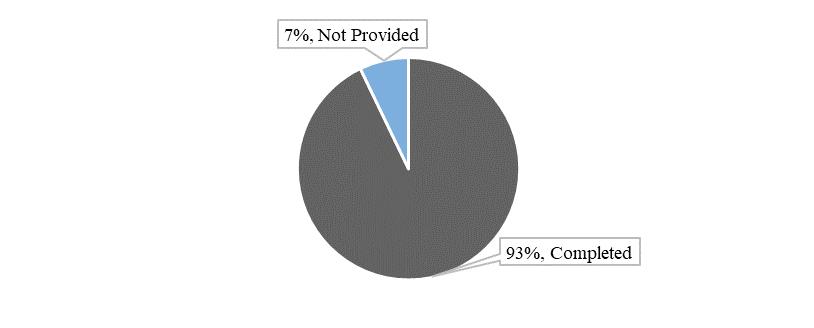
Figure 1: Project Status as per Survey – ICS2 – Release 1
3.1.2Overview of Project Progress
Table 10
indicates the estimated percentage of completion as of the end of 2021 in comparison to the target dates set forth in the UCC Work Programme.
Even if no operational dates were provided by BE and IT as part of the reporting, it was confirmed that they were ready by the end of the deployment window.
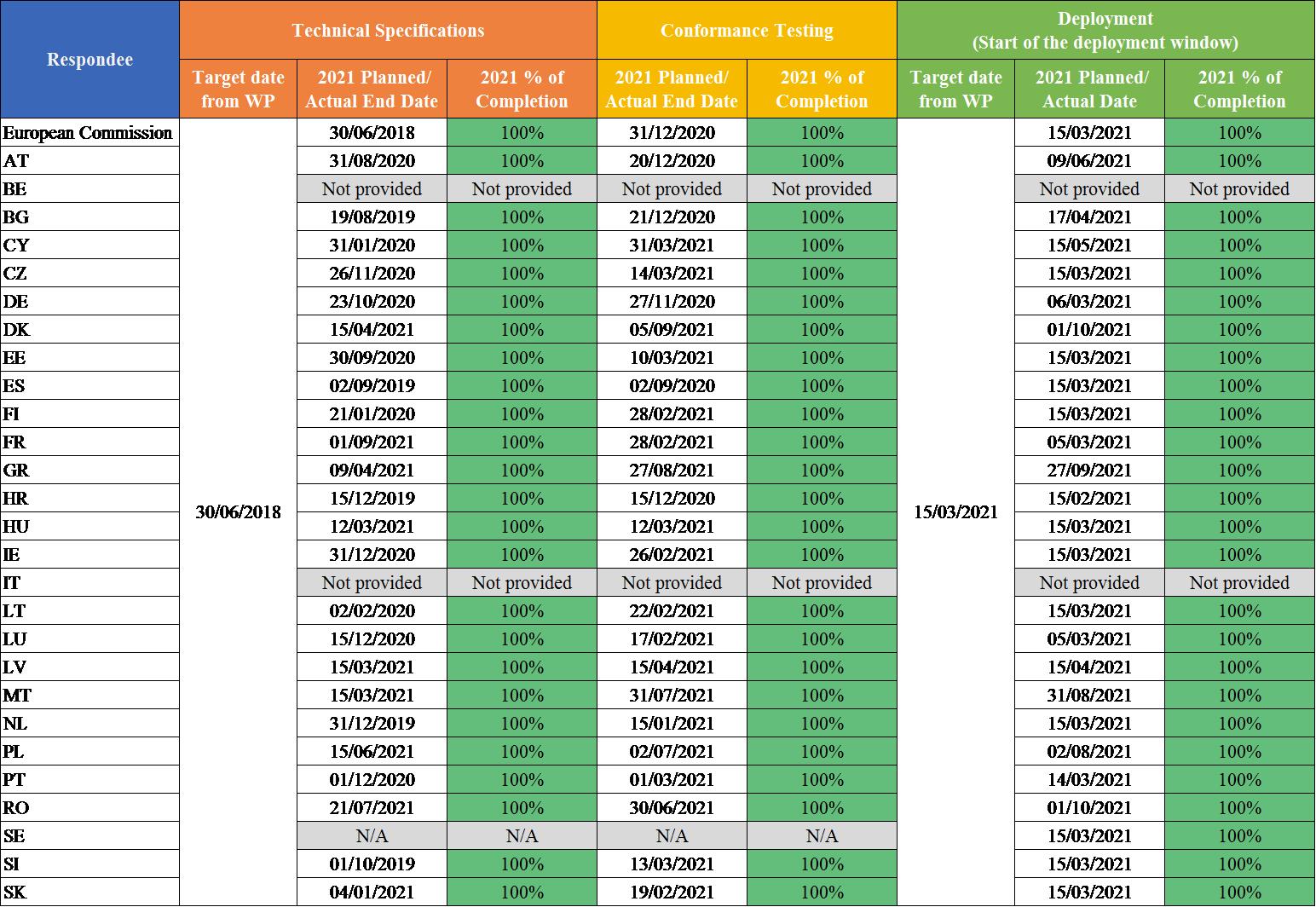
Table 10: Comparison of Planned and Actual Dates – ICS2 – Release 1
3.1.3Analysis of Progress against Milestones
Figure 2
summarises the status per milestone (technical specifications, conformance testing and deployment). The sum of each bar is 28 (responses from the 27 Member States plus the European Commission).

Figure 2: Summary of Responses per Milestone – ICS2 – Release 1
Regarding ICS2 - Release 1, BE and IT did not provide information. See
Figure 3
below:

Figure 3: Percentage of Completion per Phase – ICS2 – Release 1
4.Ongoing Projects: Detailed Planning and progress Information
4.1
UCC Notification of Arrival (NA), Presentation Notification (PN) and Temporary Storage (TS)
The goal of this project is to define the processes at the national level in respect to the notifications known as Notification of Arrival (NA), Presentation Notification (PN) and Declaration for Temporary Storage (TS), as described in the UCC. This project will ensure the customs formalities related to the entry of goods concerning safety and security exist and that customs supervision begins at the appropriate time and is duly performed. It also aims to support harmonisation across the Member States regarding the data exchange between trade and customs. Furthermore, the project covers the automation of processes at the national level.
4.1.1Summary of Responses
Notification of Arrival (NA)
Summary from the Commission:
The development activities are a national responsibility (‘national development’) and are planned to be operational before the end of 2022. The processes and data requirements for the external domain have been defined and agreed upon on at the EU-level. An expert group of Member States, ETCIT WP2 (Expert Team on new approaches to develop and operate Customs IT systems), financed by the Customs Programme, has been put in place to define and agree upon the business process models and discuss the legal/business/functional requirements. The expert team is also actively working on joining the specifications for PN and TS.
Summary from the Member States:
The project is closely interlinked with other projects/systems such as the national import systems and the Import Control System 2 (ICS2). This is often reported by Member States as the reason for assessing the project as medium to highly complex. The timely delivery of the required national systems by all Member States was already at risk in last year’s report. Some additional delays in comparison with the UCC Annual Progress Report 2020 are noted, though several Member States reported that measures are taken to keep the deployment within the deadline. Some examples include changing the organisational setup with contractors to achieve a more effective development process and/or implementing an Agile development methodology to reduce the implementation timeframe. Besides the complexity of the project, other reasons for potential delay are given such as resource constraints, further adaptations to the UCC Annex B, impact and re-planning due to the VAT eCommerce package and also the specific working circumstances caused by the COVID-19 pandemic. Intense collaboration in the ETCIT expert group is ongoing in order to share expertise and resources amongst interested Member States and to join forces in the development work. This summary also applies to PN and TS.
The following Member States plan to implement NA as part of ICS2 Release 2: AT, BG, CY, DE, EE, ES, FI, HU, LT and RO. The following Member States are developing or have developed a national solution: CZ, FR, IT, LU, LV, NL, PL, PT, SI and SK. DK, GR, HR and SE have not yet taken a decision on how to implement NA. NA is not applicable for IE while BE and MT did not provide information.
Detailed Responses:
Table 11
provides the individual Member States’ responses to the survey:
|
MS
|
Complexity Rating
|
Risk Level
|
Additional Comments
|
|
AT
|
4
|
Low
|
AT is working on defining the technical specifications. AT will implement NA as part of ICS2 – Release 2.
|
|
BE
|
Information not provided.
|
|
BE
|
6
|
Low
|
BE explained that the complexity is due to the exchanges with other systems and the harmonisation with other MSs participating in the collaboration group (ETCIT WP2). BE has already deployed a light version of PN to be able to send the PI of postal operators to the CR. They will later deploy the PN component, which at a later stage will be able to manage irregularities and finish with the revoke PN and PI. Lastly, BE mentioned that the re-export notification will be part of the PN/TS project.
|
|
BG
|
5
|
Low
|
BG’s national technical specifications were approved at the end of 2020. BG will implement NA as part of ICS2 – Release 2, which will cover the implementation of the complete new Entry Summary Declaration (ENS) obligations and related business and risk management processes for all goods in air traffic.
|
|
CY
|
6
|
Low
|
CY will implement NA as part of ICS2 – Release 2. CY explained that the complexity is caused by interdependencies between core and supporting systems, the high availability requirements of the systems and insufficient resources. CY explained that their national planning is not yet stable.
|
|
CZ
|
5
|
Med
|
CZ finds the application complex and has indicated that it requires a large amount of financial resources. CZ indicated that the project is currently delayed compared to the planning in the 2020 report, however the overall delivery is still expected within the deployment deadline set in the UCC Work Programme. CZ also highlighted a risk that the national project plan may have to be updated due to the COVID-19 pandemic and capacity of their contractor.
|
|
DE
|
4
|
Low
|
DE explained that the NA message will be updated in line with ICS2 – Release 2. The preparation activities for Release 10.1 of their national IT system, ATLAS, has not yet started. External milestones affecting economic operators will be considered for the ICS2 – Release 2.
|
|
DK
|
4
|
Low
|
DK noted that Deployment is needed but NA is included in many releases (VAT on eCommerce, Import, ICS2, Transit) so it not possible to provide a single status. The coordination and implementation between multiple projects and national legal requirements makes NA rather complex. The project is managed according to the Scaled Agile Framework (SAFe) in cooperation with the current national operations contractor.
|
|
EE
|
3
|
Low
|
EE will implement NA as part of ICS2 – Release 2.
|
|
ES
|
3
|
Low
|
ES will implement NA as part of ICS2 – Release 2. ES will be using an Agile development methodology.
|
|
FI
|
3
|
Med
|
FI will implement NA as part of ICS2 – Release 2. FI's plans have not changed drastically compared to last year, however, they anticipate several risks. The upgrade of the platform due to the increase of the volume of declarations is ongoing. Furthermore, there has been a need to postpone the development of some functionalities in the national import system. This will also affect the planning and implementation of future UCC projects. The complete impact is not yet clear but risks concerning timetables and resources have increased. Lastly, FI mentions that the resources were already scarce from the beginning and that the additional effects of the COVID-19 pandemic have only increased the pressure. These comments apply to all UCC projects.
|
|
FR
|
3
|
Low
|
FR explained that this project will be aligned with ETCIT's AN/PN/TS solution from BE. The production timeline has been aligned with ICS2 Release 2.
|
|
GR
|
6
|
Med
|
GR is facing a delay with budget allocation.
|
|
HR
|
1
|
High
|
HR explained that they have a lack of human resources.
|
|
HU
|
5
|
Med
|
None.
|
|
IE
|
1
|
Low
|
IE noted that the project is not applicable to the MS as arrival data are directly provided to their customs authorities by Airport and Maritime authorities and thus, carriers are not required to submit Notifications of Arrival.
|
|
IT
|
2
|
Med
|
IT identified a risk pertaining to the economic operators, underlining that requests for change might arise later in the process due to their lack of readiness.
|
|
LT
|
6
|
Low
|
LT will implement NA as part of ICS2 – Release 2. LT is currently initiating the public procurement procedure for this project.
|
|
LU
|
2
|
Med
|
LU explained that the complexity is due to the connections of this system with other systems namely TS and Import. The main risks are related to the limited number of customs experts both inside the customs administration and available for the software development. The requirements and specifications are planned to be completed by the end of 2021. LU also explained that the arrival notification is included in the combined project with the presentation notification and temporary storage.
|
|
LV
|
4
|
Low
|
LV has implemented NA as part of their national TS system. Necessary corrections will be performed in the context of the ICS2 implementation.
|
|
MT
|
Information not provided.
|
|
NL
|
5
|
Med
|
The complexity is caused by the large number of external stakeholders (e.g. carriers, freight forwarders and their software providers), and internal stakeholders (e.g. policy makers, risk analysts, control officers) with whom national requirements need to be defined. Furthermore, NL stressed there are a lot of projects running in parallel which are using the same development expertise. This complexity could cause an impact to all project milestones. NL also iterated that they use the Scaled Agile Framework (SAFe) development methodology for all UCC projects. They use features, which are part of the IT solution, and do not rely on technical specifications. A bundle of features adds up to the epic solution. Given their development methodology, technical specifications are often not applicable.
|
|
PL
|
4
|
Low
|
Analysis is ongoing and technical documentation is being prepared.
|
|
PT
|
6
|
Med
|
PT gave a high complexity rating as they are updating an existing National NA system and are incorporating the changes from the review of Annex B DA/IA- UCC. The risk level mainly stems from a lack of resources in addition to the complexity of the required updates. PT will use Agile development to reduce the implementation timeframe.
|
|
RO
|
4
|
Low
|
RO will implement NA as part of ICS2 – Release 2. Once the IT contractor is identified, RO will begin the analysis, design and development.
|
|
SE
|
3
|
Med
|
Currently, SE’s planning is not fully in line with the timelines set forth in the UCC Work Programme but since the project has not yet started, they are unable to assess.
|
|
SI
|
4
|
Low
|
SI explained that once their new import declaration system is completed, they will upgrade the existing electronic messages to be in accordance with the updated Annex B.
|
|
SK
|
1
|
Med
|
SK’s project is delayed in comparison to the planning in the 2020 report, but the overall delivery is still expected within the deployment deadline stated in the UCC Work Programme. They have identified risks related to a lack of human and financial resources and administrative burdens. No mitigation actions have been considered at this moment in time.
|
Table 11: Detailed responses from Member States – NA
Figure 4
provides the percentage of Member States in each development phase.

Figure 4: Project Status as per Survey – NA
Presentation Notification (PN)
Summary from the Commission:
The summary is the same as for NA.
Summary from the Member States:
Please see the summary from NA.
BG implemented PN as part of TS and their import declaration system. As it was implemented based on requirements from Annex D to Delegated Regulation (EU) 2015/2446, it will be updated by 31/10/2023. EE has also completed development. ES has already deployed PN for the VAT eCommerce package. The development of PN for the rest of the use cases is ongoing. FI explained that PN is completed however, upgrades may be required to align with ICS2 – Releases 2 and 3. FR will be implementing ETCIT’s NA/PN/TS solution, for which the production timeline has been aligned with ICS2 – Release 2. IE deployed PN as part of their national import system and they expect to align it to the revised Annex B by 01/07/2021. LV implemented PN as part of their national TS system; necessary corrections will be performed in the context of the ICS2 implementation.
Detailed Responses:
Table 12
provides the individual Member States’ responses to the survey:
|
MS
|
Complexity Rating
|
Risk Level
|
Additional Comments
|
|
AT
|
4
|
High
|
AT explained that the functional interaction and the tight timelines for ICS2, NoA and the adjustment of their existing import system along with the implementation of the VAT eCommerce package is challenging. Furthermore, the COVID-19 pandemic has added additional pressure. AT notes that the planned timeline will be difficult to maintain. The main milestone in concern is Deployment.
|
|
BE
|
6
|
Low
|
BE explained that the complexity is due to the exchanges with other systems and the harmonisation with other MSs participating in the collaboration group (ETCIT II). BE has already deployed a light version of PN to be able to send the PI of postal operators to the CR. They will later deploy the PN component, which at a later stage will be able to manage irregularities and finish with the revoke PN and PI. Lastly, BE mentioned that the re-export notification will be part of the PN/TS project.
|
|
BG
|
5
|
Low
|
PN was implemented as part of TS and their import declaration system. As it was implemented based on requirements from Annex D to Delegated Regulation (EU) 2015/2446, it will be updated by 31/10/2023.
|
|
CY
|
6
|
Low
|
Same response as for NA.
|
|
CZ
|
5
|
Med
|
Same response as for NA.
|
|
DE
|
4
|
Low
|
DE marked the project as delayed in comparison to the planning in the 2020 report, but the overall delivery date is still expected within the deployment deadline set in the UCC Work Programme. The business roadmap of the national IT-System ATLAS had to be replanned due to various unexpected factors, e.g. the implementation of the VAT eCommerce package. This message will be updated in the major release of the national IT-System ATLAS - Release 10.1 being part of the ‘National Entry System’. The expected date of deployment is December 2022. No mitigating actions are required as the annual release-cycle management will ensure delivery within the deployment deadline.
|
|
DK
|
4
|
Low
|
Same response as for NA.
|
|
EE
|
5
|
Low
|
EE indicated that their development is complete. EE further iterates that this project is closely linked to ICS2 and the project deadlines should be amended accordingly. The end date of the deployment window of PN should be 01/03/2024.
|
|
ES
|
5
|
Low
|
ES is using an iterative development methodology and already has PN deployed for the VAT eCommerce package. The development of PN for the rest of the cases is ongoing.
|
|
FI
|
4
|
Med
|
FI explained that the project is completed. However, upgrades may be required to align with the ICS2 – Release 2 and 3 implementations.
|
|
FR
|
2
|
Low
|
Same response as for NA.
|
|
GR
|
6
|
Med
|
Same response as for NA.
|
|
HR
|
4
|
Med
|
Progress has been made according to the project plan and the team has achieved the main milestones pertaining to delivery of project documentation and development. However, there is a risk that the planning for the technical specifications and/or conformance testing may be affected due to a lack of human resources. HR explains that there are numerous EU projects that have to be carried out simultaneously.
|
|
HU
|
5
|
Med
|
None.
|
|
IE
|
5
|
Low
|
PN has been deployed as part of their national import system update and is currently in operation for the majority of economic operators. CT for the remaining economic operators is expected to be completed by 30/06/2021. Development was based on EUCDM 5.2 however the system is scheduled to be aligned to the revised Annex B on 01/07/2021. The other import declaration types will be updated with the implementation of CCI – Phase 1.
|
|
IT
|
2
|
Med
|
Same response as for NA.
|
|
LT
|
6
|
Low
|
Same response as for NA.
|
|
LU
|
2
|
Med
|
Same response as for NA.
|
|
LV
|
4
|
Low
|
Same response as for NA.
|
|
MT
|
Information not provided.
|
|
NL
|
5
|
Med
|
Same response as for NA.
|
|
PL
|
4
|
Med
|
PL explained that the difficulties in planning the construction of the system are related to the changes in the data set specified in Annex B to Delegated Act 2015/2446. Agreements with contractors are based on applicable regulations, which is to ensure the contractor’s stability of work. Subsequent versions of data matrix projects, as well as changes to data regulations, introduced during the implementation of the project contract, necessitate constant changes in the systems and generate additional, unforeseen costs for both countries and economic operators. It also affects the delays in system implementation. An additional obstacle to the timely implementation of the import system is the COVID-19 pandemic, which disorganises design work in many areas.
|
|
PT
|
6
|
Med
|
Same response as for NA.
|
|
RO
|
6
|
Low
|
RO explained that the PN project is included in their development of the national system of import and follows the implementation established for that system.
|
|
SE
|
4
|
Med
|
SE noted that they are participating in the ETCIT pilot project lead by BE for the development of PN/TS and they will most likely use this IT application.
|
|
SI
|
3
|
Low
|
Same response as for NA.
|
|
SK
|
1
|
Med
|
Same response as for NA.
|
Table 12: Detailed responses from Member States – PN
Figure 5
provides the percentage of Member States in each development phase.

Figure 5: Project Status as per Survey – PN
Temporary Storage (TS)
Summary from the Commission:
The summary is the same as for PN.
Summary from the Member States:
Please see the summary from PN.
BG implemented PN and TS as part of their national import declaration system. As it was implemented based on requirements from Annex D to Delegated Regulation (EU) 2015/2446, it will be updated by 31/10/2023. EE, IE and LV have also implemented TS.
Detailed Responses:
Table 13
provides the individual Member States’ responses to the survey:
|
MS
|
Complexity Rating
|
Risk Level
|
Additional Comments
|
|
AT
|
3
|
High
|
The milestone most at risk is Deployment. AT is developing a new customs declaration system. The transformation process and integration with the existing application are complex. Furthermore, the COVID-19 pandemic and the restrictions that have been put in place have had an impact on the project progress.
|
|
BE
|
6
|
Low
|
BE explained that the complexity is due to the exchanges with other systems and the harmonisation with other MSs participating in the collaboration group (ETCIT II). BE will first deploy the TSD component and at a later stage they will be able to manage irregularities and finish with the movement between TSF. The re-export notification will be part of the PN/TS project.
|
|
BG
|
5
|
Low
|
None.
|
|
CY
|
6
|
Low
|
Same response as for PN.
|
|
CZ
|
5
|
Med
|
Same response as for PN.
|
|
DE
|
4
|
Low
|
Same response as for PN.
|
|
DK
|
6
|
High
|
The high risk rating is due to many dependencies with other systems, parallel development, limited resources and numerous stakeholders. DK mentioned that their project is currently delayed in comparison to the planning in the 2020 report, but the overall delivery is still expected within the deployment deadline. DK is fully focused on their national import systems upgrade, including configuration and validation of necessary functionality. However, this has been delayed due to the COVID-19 pandemic and their focus on finishing implementing the requirements from the VAT eCommerce package. Mitigating measures are foreseen and will be implemented during Q2 2021. Mitigation measures include changing the organisational setup with the supplier in terms of staffing and teams, primarily to achieve a more effective development process and to promote deeper understanding of the software at earlier stages of the process to avoid problems. Furthermore, initiatives in order to secure more robust release/deployment processes for standard software has been initiated in order to reduce the waiting time in relation to configuration and test. The project is handled within the Scaled Agile Framework (SAFe). Temporary Storage compliance will be built on top of a configured standard solution handling the H7 declaration type. The solution will also support the UCC Special Procedures and UCC CCI projects. Full focus on Temporary Storage has been delayed due to COVID-19 and due to focus on finishing the implementation of the VAT eCommerce package within deadline. People who are working on Release 1 are the same people who are going to work at Release 2. R1 is delayed which means R2 will be delayed as well because the people who are going to work on R2 cannot be allocated full time before R1 is completed.
|
|
EE
|
5
|
Med
|
EE indicated that they have limited resources and tight deadlines. EE further iterated that testing activities are ongoing in preparation for the deployment window start date, which is set for 01/07/2021. EE further iterates that this project is closely linked to ICS2 and the project deadlines should be amended accordingly. The end date of the deployment window of TS should be 01/03/2024.
|
|
ES
|
6
|
Med
|
ES mentioned that their project is currently delayed in comparison to the planning in the 2020 report, but the overall delivery is still expected within the deployment deadline. Technical specifications are not completed yet, but they still expect to have it operational before the end of 2022. Changes have been made to the conformance testing and deployment milestones. ES will use iterative development.
|
|
FI
|
6
|
High
|
In addition to the risks mentioned for NA, FI explained that the whole system will be built from scratch and that it will contain numerous integrations.
|
|
FR
|
2
|
Low
|
Same response as for NA and PN.
|
|
GR
|
5
|
Med
|
GR mentioned that their project is currently delayed in comparison to the planning in the 2020 report, but the overall delivery is still expected within the deployment deadline. GR is facing a delay due to budget allocation however hopes to have a contract in place by the end of 2021.
|
|
HR
|
4
|
Med
|
Same response as for PN.
|
|
HU
|
5
|
Med
|
None.
|
|
IE
|
5
|
Low
|
Same response as for PN.
|
|
IT
|
2
|
Med
|
Same response as for PN.
|
|
LT
|
4
|
Low
|
None.
|
|
LU
|
2
|
Med
|
Same response as for PN.
|
|
LV
|
5
|
Low
|
As from 24/09/2017, their national TS system has been updated according to the UCC data elements. Additional functionality for movements between TS places (if located in LV) was added on 05/03/2018. LV also mentioned that further developments, such as EUCDM changes, will be implemented in the timeframe between 2021 and 2023.
|
|
MT
|
Information not provided.
|
|
NL
|
5
|
Med
|
Same response as for PN.
|
|
PL
|
4
|
Med
|
Same response as for PN.
|
|
PT
|
6
|
Med
|
Same response as for PN.
|
|
RO
|
6
|
Low
|
Same response as for PN.
|
|
SE
|
4
|
Med
|
Same response as for PN.
|
|
SI
|
3
|
Low
|
Same response as for PN.
|
|
SK
|
1
|
Med
|
Same response as for PN.
|
Table 13: Detailed responses from Member States – TS
Figure 6
provides the percentage of Member States in each development phase.

Figure 6: Project Status as per Survey – TS
4.1.2Overview of Project Progress
Table 14
,
Table 15
and
Table 16
highlight any known divergences in the planning compared to the dates set in the Work Programme. As this project has a deployment window, the ‘Deployment’ and ‘Operations’ columns are shown. If there is a difference in these two dates, this implies that a migration period is planned.
In regards to the implementation of the Notification of Arrival, the following Member States have a planned operations date that is later than the deadline in the UCC Work Programme: BE, BG, EE, ES, NL and SE. SE plans a timely deployment of the national system but with a gradual migration of all economic operators). DE and IE marked NA as not applicable.
Subsequent to the gathering of the data in Table 14, DK have indicated that they intend to meet the deployment deadline of 31/12/2022.
More specifically, nine Member States (AT, BG, CY, DE, EE, ES, FI, LT and RO) have reported that they will use the NA integrated in ICS2 – Release 2 (planned deployment 15/03/2023). The specific dates can be found in
Table 14
.

Table 14: Comparison of Planned and Actual Dates – NA
In regards to the implementation of the Presentation Notification, the following Member States have indicated a planned operations date for PN, which is later than the deadline in the Work Programme: BE, EE, NL and SE. However, it should be noted that for these 4 Member States, the delay relates only to the migration of all their economic operators and not to the deployment of the national system. Moreover, all Member States will have a timely deployment of their national system.

Table 15: Comparison of Planned and Actual Dates – PN
In regards the implementation of the Temporary Storage, the following Member States have indicated a planned operations date for TS, which is later than the deadline in the Work Programme: BE, EE and NL.
More specifically, NL has reported that they will integrate TS into ICS2 – Release 2 (planned deployment 15/03/2023) which will cause a delay limited to two months.

Table 16: Comparison of Planned and Actual Dates – TS
4.1.3Analysis of Progress against Milestones
Figure 7
,
Figure 8
and
Figure 9
summarise the status per milestone (technical specifications, conformance testing and deployment). The sum of each bar is 27 (responses from the 27 Member States).

Figure 7: Summary of Responses per Milestone – NA

Figure 8: Summary of Responses per Milestone – PN

Figure 9: Summary of Responses per Milestone – TS
Additional details regarding the specific percentage of completion per milestone can be seen
Figure 10
,
Figure 11
and
Figure 12
.
Regarding the Notification of Arrival, the following Member States have not yet started: EE, FI, GR, IT, SE and SK. BE and MT did not provide percentage of completion information. Lastly, DE and IE marked Notification of Arrival as Not Applicable.

Figure 10: Percentage of Completion per Phase – NA
Regarding the Presentation Notification, the following Member States have not yet started: GR, IT, SE and SK. MT did not provide percentage of completion information.

Figure 11: Percentage of Completion per Phase – PN
Regarding Temporary Storage, the following Member States have not yet started: GR, IT, LT, SE and SK. MT did not provide percentage of completion information.

Figure 12: Percentage of Completion per Phase – TS
4.2
UCC National Import Systems Upgrade
The project will implement all processes and data requirements deriving from the UCC, which relate to the import of goods into the Union. The existing national import systems must be upgraded in line with these new UCC requirements. The upgrade mainly relates to the changes for the "Release for free circulation" procedure (standard procedure and the simplifications) and changes in the related exchanges of information, but also covers the impact of changes in other electronic systems. This project covers the national customs declarations processing systems, as well as national accountancy and payment systems.
4.1.4Summary of Responses
Summary from the Commission:
The availability of the technical specifications provided by the Commission for the Centralised Clearance at Import system and the harmonisation across entry/import-transit-export/exit (supported by the revision of the UCC annex B data requirements and the EU Customs Data Model) were crucial achievements to push this project forward on a national level.
Summary from the Member States:
Some Member States planned this project as a priority and have already upgraded their national import system in line with the UCC. Due to this early deployment, these Member States will need to make an additional effort for a second upgrade in view of the revised Annex B.
Other Member States have decided to concentrate first on other projects and wait for further progress on the specifications for the trans-European system related to import, being the Centralised Clearance at Import (CCI). In particular, those Member States that decided not to upgrade their existing national declaration system but to build a completely new one.
BG, EE, IE, LV, SI and SK have completed their system upgrades. If not already done, updates to align their systems with the latest Annex B will happen between 2021 and 2023. Furthermore, many Member States advanced their planning. This can be seen in section 4.2.2.
BE and MT have reported a planned operations date beyond the one in the UCC Work Programme and GR and LT have reported no progress on their technical specifications. Careful project risk management by the Member States and supervision by the Commission, in its role of coordinator, is to be envisaged for the next year.
Detailed Responses:
Table 17
provides the individual Member States’ responses to the survey:
|
MS
|
Complexity Rating
|
Risk Level
|
Additional Comments
|
|
AT
|
5
|
High
|
The milestone most at risk is deployment. AT is developing a new customs declaration system and the transformation process and integration with their existing application is complex. The restrictions put in place during the COVID-19 pandemic have had an impact on the project progress. AT is currently working on the technical specifications and requirements. Furthermore, the SAFe development methodology will now be used.
|
|
BE
|
6
|
Med
|
BE marked the project as delayed in comparison to the planning in the 2020 report, but the overall delivery date is still expected within the deployment deadline set in the UCC Work Programme. They have experienced delays in receiving final specifications (especially for H7), in addition to lack of clarity in the dataset. A lot of rework was required. Furthermore, there has been delays with other applications and new technologies are impacting their implementation. All milestones are impacted. BE noted the following mitigating actions: using an Agile development methodology, adapting the scope, assessing incremental progress and working in phases with several releases.
|
|
BG
|
6
|
Low
|
BG’s system has been in production since 07/01/2019. During 2020, the national import system was upgraded to implement the VAT eCommerce package, including the use of CD as per Art. 143a of the UCC-DA and the new column H7 in Annex B. All updates will be deployed and used from 01/07/2021, in-line with the postponement of the application of the VAT eCommerce package.
|
|
CY
|
6
|
Low
|
CY explained that the complexity is caused by dependencies with other systems, the high availability requirements and limited human resources. The national planning is not yet stable and is dependent on the details in the future contract.
|
|
CZ
|
5
|
Med
|
CZ marked the project as delayed in comparison to the planning in the 2020 report, but the overall delivery date is still expected within the deployment deadline set in the UCC Work Programme. Their national plans are not yet stable due to capacity constraints with their contractor. CZ has indicated that the project requires a large amount of financial resources. In addition, there is a risk that the national project plan may have to be updated due to the COVID-19 pandemic and the delays it is causing. The required changes will depend on the development of the situation.
|
|
DE
|
6
|
Low
|
DE marked the project as delayed in comparison to the planning in the 2020 report, but the overall delivery date is still expected within the deployment deadline set in the UCC Work Programme. The business roadmap of the national IT-System ATLAS had to be replanned due to various unforeseen factors, e.g. the implementation of the VAT eCommerce package. The national import system will be implemented as part of the national IT-System ATLAS - Release 10.1. The expected date of deployment is in December 2022.
|
|
DK
|
6
|
High
|
The complexity is high due to many dependencies with other systems, parallel development, numerous stakeholders and limited resources. DK marked the project as delayed in comparison to the planning in the 2020 report, but the overall delivery date is still expected within the deployment deadline set in the UCC Work Programme. Full focus on this project including configuration and validation of necessary functionality, has been delayed due to the COVID-19 pandemic and due to focus on finishing requirements from the VAT eCommerce package. Mitigating measures including organisational changes with the supplier to ensure an effective development process are foreseen to be implemented during Q2 2021. Furthermore, initiatives in order to secure more robust releases/deployments processes of standard software has been initiated in order to lower full stack teams waiting time in relation to configuration and test. The project is handled within the Scaled Agile Framework (SAFe).
|
|
EE
|
6
|
Low
|
EE explained that testing activities are ongoing. EE further iterated that CT and deployment were postponed by six months due to the VAT eCommerce package.
|
|
ES
|
5
|
Med
|
ES explained that this project requires coordination with other projects such as Centralised Clearance for Import and a sufficient window for economic operators to upgrade while limiting business impact. ES uses an iterative development methodology and has updated their planning to be in-line with the CCI-Phase 1 activities.
|
|
FI
|
6
|
High
|
FI marked the project as delayed beyond the deployment deadline. Their planning has changed as a result of the volume of Low Value Consignment (LVC) declarations which have risen dramatically. This was not anticipated at the moment of the acquisition of UCC IT systems. Because of this, there will be a considerable amount of upgrades to be performed on the platforms and supporting IT systems and a need to adjust the declaration management system’s internal processes. Due to these necessary changes, there has been a need to postpone the development of some functionalities in national import system.
|
|
FR
|
6
|
Med
|
FR marked the project as delayed in comparison to the planning in the 2020 report, but the overall delivery is still expected within the deployment deadline. FR explained that a comprehensive review of import and export processes was undertaken to define a schedule in order to optimise the use of available resources. FR is leading the overhaul of the import and export system, which entails more work explaining the slight delay with the completion of the technical specifications.
|
|
GR
|
6
|
Med
|
GR mentioned that their project is currently delayed in comparison to the planning in the 2020 report, but the overall delivery is still expected within the deployment deadline. GR is facing a delay due to budget allocation.
|
|
HR
|
6
|
High
|
HR explained that the project is very complex and human resources are limited as team members are involved in other MASP/national projects. HR is now defining the business process for simplified declarations and the impact on the other systems related to the national import system. They are also defining messages to economic operators according to the new Annex B. They are analysing the impact of the introduction of the EUR envisaged for the day of application of the new import customs declarations system in HR.
|
|
HU
|
6
|
High
|
HU explained that the IT development done for eCommerce will be used as a basis for the national import system which will ultimately be the basis for the upgrade developments as well.
|
|
IE
|
5
|
Med
|
IE’s system is in operation for the majority of economic operators and CT for the remaining economic operators is expected to be completed by 30/06/2021. Development was based on EUCDM 5.2 and the system is scheduled to be aligned to the revised Annex B for the H7 on 01/07/2021, and for all other import declaration types in conjunction with the implementation of CCI Phase 1. Due to the late adoption of revised Annex B and publication of EUCDM 6, there is a risk that the target date of 01/07/2021 for implementation of the H7 may not be met.
|
|
IT
|
Information not provided.
|
|
LT
|
3
|
Low
|
LT is currently initiating the public procurement procedure for this project.
|
|
LU
|
5
|
High
|
LU marked the project as delayed in comparison to the planning in the 2020 report, but the overall delivery is still expected within the deployment deadline. The various procedures in the various business cases both on the national and European-level are more complex than foreseen. More time is needed to analyse and document the various use cases. Additional internal resources have been put on this project in order to avoid further delays.
|
|
LV
|
5
|
Low
|
LV informed that their national import system has been aligned with UCC DI/IA Annex B and EUCDM V2.0 as from 03/06/2018. Further developments such as EUCDM changes, the VAT eCommerce package, integration with ECMS, are planned to be implemented in 2021-2023.
|
|
MT
|
6
|
Med
|
MT marked the project as delayed in comparison to the planning in the 2020 report, but the overall delivery date is still expected within the deployment deadline set in the UCC Work Programme. MT explained that this is due to various projects running in parallel in addition to limited resources. As a mitigating action, MT explained that some of the development of the upgrades will be outsourced. MT further noted that the compliancy to EUCDM is very complex and it involves various critical systems.
|
|
NL
|
3
|
Low
|
NL commented that an agile development approach is being used. NL explained that they are currently developing and testing the system together with their IT developer.
|
|
PL
|
6
|
Med
|
PL provided the same explanation for the risk level as in section 4.1 NA/PN/TS. PL further explained that they are now focusing on the VAT eCommerce package, which they aim to implement by 01/07/2021. In IT terms, the plans are related to the development of a new module AIS/eCommerce, which will be a separate component within the import system (that handles regular import declarations). The AIS/eCommerce module will handle customs declarations in postal and courier traffic (i.e. declarations with the H7 and H6 data scope).
|
|
PT
|
6
|
Med
|
PT explained that the risk level is due to the implementation of a new system and a lack of resources. PT stated that an Agile development methodology will be used to help reduce the implementation timeframe. PT iterates that the development of this system is not only related with the system itself, but also to the development of all national, central and other MS´s systems/modules. This increases the interdependencies and the complexity of the “global system”. The review of Annex B DA/IA-UCC makes it difficult to determine whether their work completed continues to be correct and applicable. Consequently, additional costs are created by the need to reassess the aforementioned developments thus further adding to the complexity of the deliverables. The deadline for the end of the work related to the harmonisation / modification of Annex B - Columns H and I, was the end of 2019, however the new version of the Annex B was only published on 23/03/2021. PT also mentions that the creation of new obligations/deadlines for Member States, like reviewing the package related with column H7 to be implemented in 2021, also created a constraint in updating their national import system because they have developed a new system to deal with the VAT eCommerce package.
|
|
RO
|
6
|
Low
|
RO is currently defining the technical specifications.
|
|
SE
|
4
|
Med
|
None.
|
|
SI
|
6
|
High
|
SI was expecting the Commission to prepare the technical specifications for the import declaration, code list for the Automated Import System (AIS) in the Central Services Reference Data 2 (CSRD2). SI explains that they have limited human resources and that their team members work on several projects simultaneously. Furthermore, there is a concern over financial resources as the COVID-19 pandemic unfolds. SI is convinced that the customs environment will be ready on time however, they have doubts regarding the testing readiness of the external environment (economic operators).
|
|
SK
|
3
|
Low
|
SK’s system has been in production since 30/06/2019. An upgrade to implement the updated version of Annex B will be needed.
|
Table 17: Detailed responses from Member States – National Import Systems Upgrade
Figure 13
provides the percentage of Member States in each development phase.

Figure 13: Summary of Survey Responses – National Import Systems Upgrade
4.1.5Overview of Project Progress
Table 18
highlights any divergences in the planning compared to the dates set in the Work Programme. As this project has a deployment window, the ‘Deployment’ and ‘Operations’ columns are shown. If there is a difference in these two dates, this implies that a migration period is planned.
In regards to the implementation of the National Import Systems Upgrade, the following Member States have a planned operations date that is later than the deadline in the UCC Work Programme: BE and MT. The specific dates can be found in
Table 18
below. The delay for BE is limited to a few days. MT explained that this is due to various projects running in parallel in addition to limited resources. As a mitigating action, some of the development of the upgrades will be outsourced. MT further noted that the compliancy to EUCDM is very complex and it involves various critical systems. For BE and MT, the deployment of the system at national level is planned to be on time; though the gradual migration to full operations is estimated to go beyond the date of 31 December 2022.
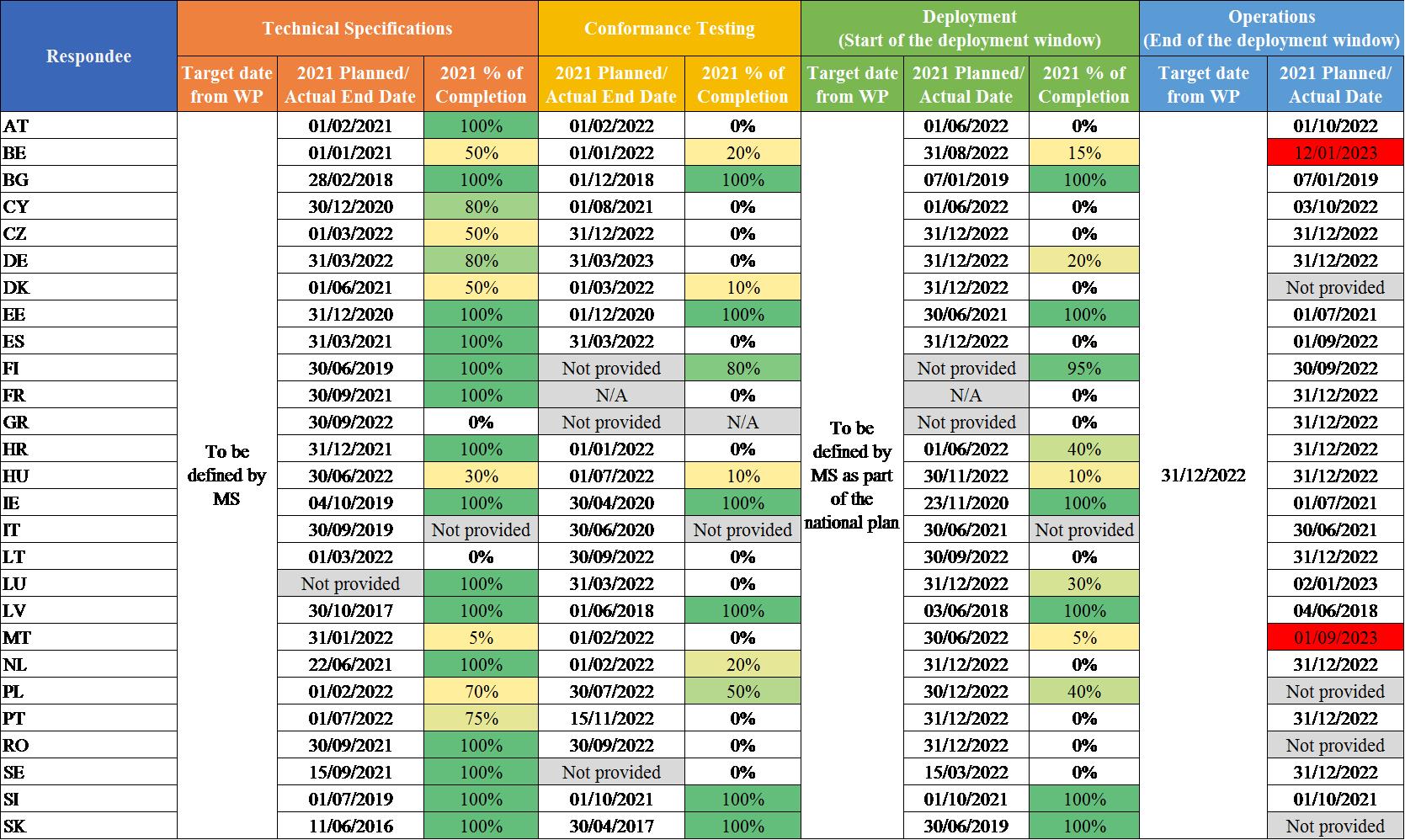
Table 18: Comparison of Planned and Actual Dates – National Import Systems Upgrade
4.1.6Analysis of Progress against Milestones
Figure 14
summarises the status per milestone (technical specifications, conformance testing and deployment). The sum of each bar is 27 (responses from the 27 Member States).

Figure 14: Summary of Responses per Milestone – National Import Systems Upgrade
Additional details regarding the specific percentage of completion per milestone can be seen in
Figure 15
. The following Member States have not yet started with the technical specifications: GR and LT.

Figure 15: Percentage of Completion per Phase – National Import Systems Upgrade
4.3
UCC Special Procedures
This national project aims to accelerate, facilitate and harmonise Special Procedures across the Union by means of providing common business process models. The national systems will implement all UCC changes required for all the special procedures (customs warehousing, end-use, temporary admission and inward/outward processing). It should be noted that, in many Member States, the implementation of this project occurs within the context of the upgrades of the national import and export systems.
In terms of planning, this project will be implemented in two parts. The first component is the "National Special Procedures EXP" (NSP EXP) with the view to providing the required national electronic solutions for the export-related special procedure activities. The second component is the "National Special Procedures IMP" (NSP IMP) with the view to providing the required national electronic solutions for the import-related special procedures activities.
4.1.7Summary of Responses
Special Procedures – Component 1 (NSP EXP)
Summary from the Member States:
DE and PL plan to deploy the updates to their systems by the end of 2021. The following Member States specified that they will implement this project as part of AES (Section 4.9): BG, FI, IE, PT, RO, SI and SK.
The potential causes for delay are the following: the implementation of a new import system and/or dependencies with other systems, lack of resources and procurement delays along with specific working circumstances caused by the COVID-19 pandemic. Some additional delays in comparison with the UCC Annual Progress Report 2020 are noted, though several Member States reported that measures are taken to have the deployment still on time. For example, many Member States have also implemented Agile development methodologies to reduce the implementation timeframe.
Detailed Responses:
Table 19
provides the individual Member States’ responses to the survey:
|
MS
|
Complexity Rating
|
Risk Level
|
Additional Comments
|
|
AT
|
4
|
Med
|
The milestone most at risk is deployment. AT is developing a new customs declaration system and the transformation and the integration with their existing application are complex. The restrictions put in place during the COVID-19 pandemic have had an impact on the on boarding and project progress. AT is currently refining their technical analysis, defining national requirements, establishing a cooperation team and coordinating planning with Belgian Customs.
|
|
BE
|
Information not provided.
|
|
BG
|
5
|
Low
|
BG stated that the technical specifications are completed. The award for implementation is now ongoing and will be completed by July 2021. The project will be implemented as part of the AES project to cover all the export operations for SP.
|
|
CY
|
6
|
Low
|
CY explained that the complexity is caused by dependencies with other systems, the high availability requirements and limited human resources. The development approach will be decided in cooperation with the contractor. The national planning is not yet stable and is dependent on the details in the future contract.
|
|
CZ
|
6
|
Med
|
CZ's national plan is stable. However, the COVID-19 pandemic does present a risk. In line with their national plan, CZ is currently preparing detailed national technical and functional specifications. The national specifications will be completed in Q2 2021.
|
|
DE
|
4
|
Low
|
DE is making use of an agile development approach in defined software release cycles. The ongoing activities concern the finalisation and fine-tuning of AES (e.g. adaptation of Surveillance), the monitoring of operations as well as the preparation of remaining Conformance Tests (Mode 2) for new functionalities of AES (e.g. centralised clearance) and the start of the Conformance Test (certification) of economic operators. The period for CT with Trade has been shifted from March 2021 - July 2022 to October 2021 - November 2022. Therefore, November 2022 is the end of the deployment window for trade. After this date, no ECS phase 2 messages will be accepted in the external domain.
|
|
DK
|
6
|
High
|
DK assessed the complexity as very high due to many dependencies with other systems, parallel development and many stakeholders. The milestones most at risk are CT and the final test phase, due to alignment and dependencies with other systems. The CT dates have not been set yet. The project is handled within the Scaled Agile Framework (SAFe). Currently the project is scaling-up with consultant assistance to configure/test the national adjustments on top of a standard solution.
|
|
EE
|
6
|
Med
|
EE considered the project delayed in comparison to the planning in the 2020 report, but the overall delivery is still expected within the deployment deadline set in the UCC Work Programme. The procurement process is delayed, however, mitigation actions are foreseen. A contract with a developer is in place, the technical specifications have been completed, a detailed analysis has been carried out, and the export core flow is completed. EE explained that the changes in national planning are due to delays in procurement.
|
|
ES
|
5
|
Med
|
ES noted that they are using an agile/iterative development methodology. ES further suggests that this project should be the subject of a specific project group to clarify the tasks and milestones to be achieved.
|
|
FI
|
6
|
High
|
FI explained that they are building AES and NSP-EXP from scratch and that several other IT projects are ongoing. AES will contain numerous integrations. The implementation is planned to start in Q2 2021.
|
|
FR
|
5
|
Low
|
FR noted that the complexity comes from the project’s link to the import/export clearance system. This project will use the same planning for Import and Export. At the time of collecting this information, FR is working on the links between Annexes B and A. They are also analysing their Customer Reference Service, the INF system and the national ROSA components to ensure consistency and to consider the possibility of a new web service.
|
|
GR
|
5
|
Low
|
GR is facing a delay with budget allocation.
|
|
HR
|
6
|
Med
|
HR noted that the TS and CT milestones may be affected due to a lack of human resources. Many EU projects have to be carried out simultaneously.
|
|
HU
|
3
|
Low
|
None.
|
|
IE
|
5
|
Low
|
IE explained that this project will be deployed as part of the AES project. Discussions will commence with external contractors this year.
|
|
IT
|
Information not provided.
|
|
LT
|
5
|
Low
|
None.
|
|
LU
|
4
|
Med
|
LU marked the project as delayed in comparison to the planning in the 2020 report, but the overall delivery date is still expected within the deployment deadline set in the UCC Work Programme. The procedure for the call for tenders and the negotiations with the software provider took longer than planned. LU noted that their software provider is also servicing another Member State ,which should help to progress faster than planned. The main risks are related to the limited number of customs experts both inside the customs administration and available for the software development. LU has started internal analysis on the business processes. LU also iterated that it is challenging to give the details according to the MASP-C planning as their internal planning for the Export formalities is following a different logic. LU noted that indeed there will be a first phase with AES-P1 including the special procedures but excluding all simplified procedures, while there will be second phase with all simplified procedures including simplified procedures for the special procedures.
|
|
LV
|
4
|
Low
|
LV plans to develop the database, messages for the export/re-export declarations and the graphical user interface for Customs users in 2021.
|
|
MT
|
Information not provided.
|
|
NL
|
3
|
Low
|
NL commented that an agile development approach is being used. NL explained that they are currently developing and testing the system together with their IT developer.
|
|
PL
|
5
|
Med
|
The medium level risk is caused by the creation of a new IT national Regulatory Procedure with Scrutiny (RPS) system and its integration with other IT national customs systems (inter alia Import and Export systems), which are currently being expanded. Therefore, the milestones also depend on the progress of other IT projects. Moreover, there is still a risk connected with the COVID-19 pandemic which has impact on the work. Recently, the RPS system was tested by internal users – customs officers and a few economic operators in terms of integration with related systems. Testers submitted comments to the external contractor regarding the system's functionalities. The new version of the software will be installed in Q2 2021. The project team is currently preparing wider test scenarios for the RPS system in terms of business services covering UCC Special Procedures. These business services will be available for testing for economic operators on the national customs and tax portal. This year's plan of implementation, deployment of the RPS national IT system and other related IT systems is postponed to the end of 2021 due to the situation caused by the COVID-19 pandemic. Part of the functionalities/requirements resulting from the provision of UCC Special Procedures will be covered under subsequent implementations in 2023.
|
|
PT
|
6
|
High
|
PT explained that the risk level is due to the implementation of a new export system and a lack of resources. PT explained that an Agile development methodology will be used to help reduce the implementation timeframe. This project is an integrated part of ‘UCC Trans-European Automated Export System (AES): Component 1’, consequently the comments made in section 4.9.1 are also applicable.
|
|
RO
|
2
|
Med
|
RO noted that this project will be an AES component. RO mentioned that the project is currently delayed in comparison to the planning in the 2020 report, but the overall delivery is still expected within the deployment deadline. This is due to a delay in approving the budget for the current year. No mitigating measures are foreseen yet since the overall delivery is still foreseen within the deployment deadline.
|
|
SE
|
4
|
Med
|
SE noted that they performed a pre-study in Autumn 2020.
|
|
SI
|
4
|
Med
|
The project is ongoing according to their national plan. However, the COVID-19 pandemic is still indicated as a risk that could cause a delay to the deployment of the project. The external contractor is currently preparing detailed technical specifications for the entire AES system. In 2020, their contractor prepared a detailed analysis on how to move from SIAES/ECS phase 2 to SIAES phase 1, with realistic and reachable dates. These dates have been reflected in the project plans at the end of 2020. The production environment date for AES is 01/05/2023.
|
|
SK
|
3
|
Med
|
SK's project is delayed in comparison to the planning in the 2020 report, but the overall delivery is still expected within the deployment deadline stated in the UCC Work Programme. This project will be developed together with AES. The milestone most at risk is technical specifications. CT is planned for Q2 2022 however, the procurement procedure is still not finished. Their aim is to have the technical specifications completed by the end of 2021.
|
Table 19: Detailed responses from Member States – NSP EXP
Figure 16
provides the percentage of Member States in each development phase.

Figure 16: Project Status as per Survey – NSP EXP
Special Procedures – Component 2 (NSP IMP)
Summary from the Member States:
BG’s system in production is currently being aligned with the latest Annex B. IE and LV also deployed this component as part of their National Import System. EE, PL SI and SK expect to be completed by the end of 2021. DE, DK, FI, HR and PT noted that they will implement this component as part of their National Import Systems upgrade.
The potential causes for delay are the following: the implementation of a new import system and/or dependencies with other systems, lack of resources and procurement delays along with specific working circumstances caused by the COVID-19 pandemic. Some additional delays in comparison with the UCC Annual Progress Report 2020 are noted, though several Member States reported that measures are taken to have the deployment still on time. For example, many Member States have also implemented Agile development methodologies to reduce the implementation timeframe.
Detailed Responses:
Table 20
provides the individual Member States’ responses to the survey:
|
MS
|
Complexity Rating
|
Risk Level
|
Additional Comments
|
|
AT
|
4
|
Med
|
The milestone most at risk is deployment. AT is developing a new customs declaration system and the transformation process and integration with their existing application is complex. The restrictions put in place during the COVID-19 pandemic had an impact on the project progress. AT is currently working on the technical specifications and requirements.
|
|
BE
|
Information not provided.
|
|
BG
|
5
|
Low
|
BG's national system is currently being adapted to conform with the amendments introduced by Delegated Regulation (EU) 2021/234.
|
|
CY
|
6
|
Low
|
Same response as for NSP EXP.
|
|
CZ
|
5
|
Med
|
CZ marked the project as delayed in comparison to the planning in the 2020 report, but the overall delivery date is still expected within the deployment deadline set in the UCC Work Programme. Their national plans are not yet stable due to capacity constraints with their contractor. CZ has indicated that the project requires a large amount of financial resources. In addition, there is a risk that the national project plan may have to be updated due to the COVID-19 pandemic and the delays it is causing. The required changes will depend on the development of the situation. The indicative date for technical specifications is 01/03/2022.
|
|
DE
|
4
|
Low
|
DE explained that they will implement this component as part of the "National Import Systems upgrade", which will be covered by their national IT-System ATLAS - Release 10.1. The expected deployment date is in December 2022.
|
|
DK
|
6
|
High
|
Same comments as for the National Import Systems Upgrade (section 4.2).
|
|
EE
|
6
|
Low
|
EE noted that conformance testing, training and deployment activities are ongoing. The CT and deployment have been postponed by six months due to the implementation of the VAT eCommerce package.
|
|
ES
|
5
|
Med
|
Same response as for NSP EXP.
|
|
FI
|
6
|
High
|
Same comments as for the National Import Systems Upgrade (section 4.2). FI further noted that the deployment and integration testing dates will be impacted. This year, they plan to deploy and test new versions. FI also explained that simplifications are postponed to Q1 2022.
|
|
FR
|
5
|
Low
|
Same response as for NSP EXP.
|
|
GR
|
6
|
Med
|
GR mentioned that their project is currently delayed in comparison to the planning in the 2020 report, but the overall delivery is still expected within the deployment deadline. GR is facing a delay due to budget allocation however hopes to have a contract in place by the end of 2021.
|
|
HR
|
6
|
High
|
Same comments as for the National Import Systems Upgrade (section 4.2).
|
|
HU
|
3
|
Low
|
None.
|
|
IE
|
5
|
Low
|
IE explained that this is deployed as part of their National Import system and it is in operation for the majority of economic operators. CT for the remaining economic operators is expected to be completed by 30/06/2021. A phased transition of traders was implemented rather than a 'big bang' approach.
|
|
IT
|
Information not provided.
|
|
LT
|
5
|
Low
|
None.
|
|
LU
|
5
|
Med
|
The main risks are related to the limited number of customs experts both inside the customs administration and available for the software development. The activities are ongoing together with the upgrade of the national import system. LU also iterated that it is challenging to give the details according to the MASP-C planning as their internal planning for the Export formalities is following a different logic. LU noted that indeed there will be a first phase with AES-P1 including the special procedures but excluding all simplified procedures, while there will be second phase with all simplified procedures including simplified procedures for the special procedures.
|
|
LV
|
5
|
Low
|
LV’s national import system has been aligned with UCC DA/IA Annex B and EUCDM V2.0 as of 03/06/2018.
|
|
MT
|
Information not provided.
|
|
NL
|
3
|
Low
|
Same response as for NSP EXP.
|
|
PL
|
5
|
Med
|
Same response as for NSP EXP.
|
|
PT
|
6
|
Med
|
PT mentioned the same comments as for the National Import System Upgrade (section 4.2). There has been some changes to their national plan such as the date of technical specifications publication for economic operators and the CT start date for economic operators.
|
|
RO
|
6
|
Low
|
RO is currently defining the technical specifications.
|
|
SE
|
4
|
Med
|
None.
|
|
SI
|
6
|
High
|
Same comments as for the National Import Systems Upgrade (section 4.2).
|
|
SK
|
5
|
Low
|
SK explained that an upgrade to implement the updated version of Annex B is required. This is planned to take place by the end of the deployment of CCI, as defined by the Work Programme.
|
Table 20: Detailed responses from Member States – NSP IMP
Figure 17
provides the percentage of Member States in each development phase.

Figure 17: Project Status as per Survey – NSP IMP
4.1.8Overview of Project Progress
Table 21
highlights any known divergences in the planning of the NSP EXP compared to the dates set in the Work Programme. As this project has a deployment window, the ‘Deployment’ and ‘Operations’ columns are shown. If there is a difference in these two dates, this implies that a migration period is planned.

Table 21: Comparison of Planned and Actual Dates – NSP EXP
Table 22
highlights any known divergences in the planning of the NSP IMP compared to the dates set in the Work Programme. As this project has a deployment window, the ‘Deployment’ and ‘Operations’ columns are shown. If there is a difference in these two dates, this implies that a migration period is planned.

Table 22: Comparison of Planned and Actual Dates – NSP IMP
4.1.9Analysis of Progress against Milestones
Figure 18
and
Figure 19
summarise the status per milestone (technical specifications, conformance testing and deployment). The sum of each bar is 27 (all Member States).

Figure 18: Summary of Responses per Milestone – NSP EXP

Figure 19: Summary of Responses per Milestone – NSP IMP
Additional details regarding the specific percentage of completion per milestone can be seen in the following figures. Regarding NSP EXP, the following Member States have not yet started: GR, HU, LT and SE. The following Member States did not provide percentage of completion information: BE, IT and MT.

Figure 20: Percentage of Completion per Phase – NSP EXP
Regarding NSP IMP, the following Member States have not yet started: DE, GR, HU, LT and SE. The following Member States did not provide percentage of completion information: BE, IT and MT.

Figure 21: Percentage of Completion per Phase – NSP IMP
4.4
UCC Guarantee Management (GUM)
The UCC Guarantee Management (GUM) project aims to assure the effective and efficient management of the different types of guarantees. The main objective is to ensure that the data of guarantees, which are used in more than one MS, are made electronically accessible to the MS where a customs declaration is lodged and accepted when such guarantee is used. This will require new interfaces between GUM and national systems. One advantage of the solution is that the traders can provide one guarantee that can be used across the Union. Moreover, the improved processing speed, traceability and monitoring of guarantees electronically between customs offices is expected to lead to a faster identification of cases where guarantees are deemed invalid or insufficient to cover the incurred or potential debt.
The system is comprised of two components. The first component is "GUM". GUM is a trans-European system that will cover the management of the comprehensive guarantees that may be used in more than one Member State. Transit guarantees monitoring is an exception to the above and is handled as part of the NCTS project.
4.1.10Summary of Responses
GUM – Component 1
Summary from the Commission:
In September 2020, the updated Business Case was approved by the Member States with the preferred implementation option being a decentralised system architecture with light central IT support. This option will be implemented through the UCC Customs Decisions System. The central GUM component is expected to be operational in the second quarter of 2025. On the basis of the systems architectural change, the hybrid-Member States, using the UCC Customs Decisions system should be ready and test their systems before the central GUM component goes live in 2025. Member States with hybrid solutions are expected to start operations in the first quarter of 2024. This creates a window of one year to develop their system after the component specifications of the GUM central system are made available.
The planning was significantly updated based on the architecture approved by the Member States in the Business Case. The milestones for updating the L4 BPMs and the Vision document were delayed by one quarter due to the anticipation of long discussions with MSs, the change in the architecture of the GUM system, a longer time period foreseen for the external reviews, etc. These activities are planned to be completed in 2021. The milestones of application and technical specifications also had to be revised since a draft of the Annex A data elements needed for GUM will only be ready during the first half of 2022. The planning aspect will need to be carefully examined and addressed in the coming years by the Commission and the Member States to keep this project on track.
The chosen option to use the Customs Decisions System might require less effort in the IT implementation, but will on the other hand require a legislative change. As this could potentially be a risk, it will become necessary to identify and initiate the required changes as early as possible.
National GUM – Component 2
Summary from the Member States:
GUM – Component 2 refers to the development of Member States’ National Guarantee Management systems. This work can mainly be done in parallel with GUM – Component 1. There is a project interdependency on the National Import System of each Member State, where they have multi-Member States’ guarantees involved.
Numerous Member States commented that they are waiting for the Level 4 BPMs to be provided by the Commission. These BPMs will elaborate the national business concept. Many Member States indicated that the Technical Specifications milestone was at risk due to this.
BG, IE and ES implemented national GUM systems. LT noted that system improvements are taking place and that they plan to launch the system in production by the end of 2021. The guarantee management systems for LV and PL have also been implemented in their National Import systems. SE’s system will be deployed in April 2021.
The potential causes for delay are the following: lack of transparency and information on the change in concepts with regards to GUM, lack of human and financial resources and delays in budget allocation. Many Member States updated their planning and none provided deployment dates later than what is specified in the Work Programme.
Detailed Responses:
Table 23
provides the individual Member States’ responses to the survey:
|
MS
|
Complexity Rating
|
Risk Level
|
Additional Comments
|
|
AT
|
3
|
Low
|
AT explained that they are waiting for the Level 4 BPMs to be provided by the Commission. These will elaborate the national business concept.
|
|
BE
|
Information not provided.
|
|
BG
|
4
|
Low
|
None.
|
|
CY
|
6
|
Low
|
CY stated that development has not yet started.
|
|
CZ
|
6
|
High
|
CZ marked the project as delayed beyond the deployment deadline stating that the delay is caused by the Commission. CZ mentions that the milestone most at risk is Technical Specifications. No mitigating actions have been foreseen.
|
|
DE
|
4
|
Low
|
DE explained that this project will be implemented in the major release of their national IT-System ATLAS (Release 10.3 / 2026) for which the preparatory activities have not yet started. DE also mentioned that until now, only transit guarantee monitoring has been implemented for NCTS. The working group to handle a new overall guarantee system has just resumed.
|
|
DK
|
Information not provided.
|
|
EE
|
6
|
Med
|
EE marked all milestones as at risk due to a lack of resources. Despite this, business analysis is ongoing and the development phase is planned to start in the second half of 2021.
|
|
ES
|
3
|
Low
|
ES confirmed the completion of their national guarantee management system, which went live on 01/09/2016.
|
|
FI
|
5
|
Med
|
FI commented that this project will require a large amount of integrations and that they have not yet started.
|
|
FR
|
6
|
Med
|
FR mentioned that the milestone most at risk is technical specifications.
|
|
GR
|
5
|
Low
|
GR is facing a delay with budget allocation.
|
|
HR
|
6
|
Med
|
HR is in the analysis phase.
|
|
HU
|
5
|
Low
|
None.
|
|
IE
|
6
|
Low
|
Same response as for SP2 (see section 4.3).
|
|
IT
|
3
|
Low
|
IT explained that project activities have not yet started.
|
|
LT
|
5
|
Low
|
LT explained that system improvements are taking place and that they plan to launch the system in production by the end of 2021. LT reported a delay in conformance testing with economic operators.
|
|
LU
|
4
|
Low
|
LU explained that the complexity of the system is mostly determined by the integration with their national accounting system. The ongoing discussion regarding the details for GUM make it challenging to estimate the project’s complexity. The limited number of customs experts both inside the customs administration and available for the software developers is currently the biggest risk.
|
|
LV
|
1
|
Low
|
LV explained that this project has been implemented in their National Import System.
|
|
MT
|
5
|
High
|
MT explained that their planning will be updated once analysis and requirements elicitation are completed. MT noted a risk due to the lack of transparency and information on the change in concepts with regards to GUM.
|
|
NL
|
3
|
Low
|
NL explained that they will build a new Guarantee Management System (DZA) for all UCC, Excise and other types of guarantees. DZA will replace their current GMS (KIS and GMS for NCTS). They plan to start in Q3 2021 and the development will be iterative and agile. In Q2 2022 the updated Annex A will be approved. The updated data elements and data structure are inputs for the UCC guarantees for which they need to register, manage and monitor in their national GMS (DZA). The reference amount in Annex A and CDS-GUM will be split per customs procedure and per Member State. Every Member State where the guarantee is used is responsible for the audit or transaction based monitoring. Transit is out-scope of GUM. One of the open GUM issues is if the reference amount for customs procedure 80 (Transit) should be split per Member State. These kind of issues are impacting the design, data model and rules & conditions of their national GUM component. In addition, the impact of delay could be large, because if their national GUM component is not ready in June 2025, NL cannot monitor the part of the reference amount for guarantees established in another MS.
|
|
PL
|
4
|
Low
|
PL's system is in production and they are adapting the system to applicable laws while also incorporating necessary improvements.
|
|
PT
|
6
|
Med
|
PT explained that the risk level is due to the implementation of a new national GUM System and a lack of resources. PT explained that an Agile development methodology will be used to help reduce the implementation timeframe.
|
|
RO
|
5
|
Low
|
None.
|
|
SE
|
3
|
Low
|
SE explained that this project will be completely deployed in April 2021.
|
|
SI
|
3
|
Low
|
None.
|
|
SK
|
2
|
Med
|
SK's project is delayed in comparison to the planning in the 2020 report, but the overall delivery is still expected within the deployment deadline stated in the UCC Work Programme. They have identified risks related to a lack of human and financial resources. No mitigation actions have been considered at this moment in time.
|
Table 23: Detailed responses from Member States – GUM – Component 2
Figure 22
provides the percentage of Member States in each development phase.

Figure 22: Summary of Survey Responses – GUM – Component 2
4.1.11Overview of Project Progress
Table 24
and
Table 25
highlight any known divergences in the planning compared to the dates set in the Work Programme.

Table 24: Comparison of Planned and Actual Dates – GUM – Component 1
As GUM – Component 2 has a deployment window, the ‘Deployment’ and ‘Operations’ columns are shown. If there is a difference in these two dates, this implies that a migration period is planned. In regards to the implementation, the following Member States have a planned operations date that is later than the deadline in the UCC Work Programme: FI and FR (approximately 1 month of delay).

Table 25: Comparison of Planned and Actual Dates – GUM – Component 2
4.1.12Analysis of Progress against Milestones
Figure 23
summarises the status per milestone (technical specifications, conformance testing and deployment) for the National GUM – Component 2. The sum of each bar is 27 (responses from the 27 Member States).

Figure 23: Summary of Responses per Milestone – GUM – Component 2
Regarding National GUM - Component 2, the following Member States have not yet started: AT, CY, CZ, DE, FI, GR, HU, IT, LU, MT, NL, RO, SI and SK.

Figure 24: Percentage of Completion per Phase – GUM – Component 2
4.5
UCC Import Control System 2 (ICS2) – Releases 2 and 3
4.1.13Summary of Responses
ICS2 – Release 2
Summary from the Commission:
As a second phase, ICS2 release 2 will cover the implementation of new ENS obligations and related business and risk management processes for all the goods entering the EU by air traffic. From this release onwards, and following a positive policy decision of the Commission and Member States in December 2020, the ICS2 system will implement a Safety and Security Analytics capability and Shared Trader Portal. As part of Release 2, the Safety and Security Analytics capability will be integrated within the ICS2 common repository component and will implement the analytics platform accessible by MSs via CCN2 (and the Commission via UUM&DS) integrated by a dedicated portal and a data factory for real time analytics (enrichment of ENS data) connected to a common repository. Shared Trader Portal will provide the User interface to Economic Operators allowing the file ENS information and run ICS2 Conformance testing for their own IT systems.
The Commission’s development activities for Release 2 are organised using as iterative process. Two major releases are planned to take place during 2021 and a following release is planned for 2022. The testing of the first major release is planned to be finished in September. Development for second major Release is ongoing. (Those releases includes also corrective and evolutive changes related to the ICS2 Release 1 scope).
ICS2 Release 2 Conformance Testing is planned to start in Q3 2022.
In addition to the ICS2 safety and security analytics capabilities project, Release 2 poses new challenges compared to Release 1 such as the addition of three new types of economic operators acting in the air transportation supply chains and thirteen different types of ENS filings, to bring into the system more and better quality trade data of goods moving towards the EU. Release 2 will also include new business models with their own business needs, rules and user interfaces. There will be an increasing complexity of timers, data quality, data consistency rules and linking for multiple filings and arrival notifications. Furthermore, there will be a larger volume of messages and complex conformance testing with numerous stakeholders. Lastly, the migration strategy between Release 1 and 2 will be complex with different transition windows. The Commission has initiated coordination meetings to ensure smooth development of the system. Additional complexity is raised by Safety and Security Analytics capabilities as well as implementation of Shared Trader Portal functionality
Summary from the Member States:
Member States are preparing the national functional and technical specifications based on the common EU specifications provided by the Commission, participating in webinars and reviewing documentation. The Member States also mentioned the increase in complexity compared with Release 1, citing the same potential causes of delay as mentioned for ICS2 – Release 1 (see section 3.1).
Detailed Responses:
Table 26
provides the individual Member States’ responses to the survey:
|
MS
|
Complexity Rating
|
Risk Level
|
Additional Comments
|
|
AT
|
4
|
Low
|
AT reported that they are working on the technical specifications.
|
|
BE
|
Information not provided.
|
|
BG
|
4
|
Low
|
BG explained that they are using the functional and technical specifications provided by the Commission. They are currently upgrading them with national requirements.
|
|
CY
|
6
|
Low
|
CY explained that the complexity is caused by dependencies with other systems, the high availability requirements and limited human resources. The development approach will be decided in cooperation with the contractor. The national planning is not yet stable and is dependent on the details in the future contract.
|
|
CZ
|
6
|
Med
|
CZ assessed the application complex and has indicated that it requires a large amount of financial resources. CZ highlighted a risk that the national project plan may have to be updated due to the COVID-19 pandemic and delays it is causing. The changes will depend on the evolution of the situation.
|
|
DE
|
4
|
Low
|
DE mentioned that ICS2 – Release 2 will be implemented in the major release of their national IT-System ATLAS (Releases 10.1) for which the preparatory activities have not yet started. The expected deployment date is Q1 2023.
|
|
DK
|
Information not provided.
|
|
EE
|
3
|
Med
|
EE indicated that they have limited resources in the development team. EE is applying for financial resources and is planning to start to analyse the process.
|
|
ES
|
6
|
Low
|
ES explained that they will start with Release 2 once they complete the activities for Release 1. They will develop Release 2 through several sprints.
|
|
FI
|
6
|
High
|
FI noted that preliminary analysis is ongoing.
|
|
FR
|
5
|
Low
|
FR noted that iterative development will not be used for Release 2.
|
|
GR
|
6
|
Low
|
GR mentioned that their project is currently delayed in comparison to the planning in the 2020 report, but the overall delivery is still expected within the deployment deadline. GR is facing a delay due to budget allocation.
|
|
HR
|
1
|
High
|
HR reported high risk due to a lack of human and financial resources.
|
|
HU
|
4
|
High
|
None.
|
|
IE
|
2
|
Low
|
IE is participating to webinars and is reviewing the relevant documentation.
|
|
IT
|
Information not provided.
|
|
LT
|
6
|
Low
|
LT is currently initiating the public procurement procedure for this project.
|
|
LU
|
4
|
Med
|
LU explained that the limited number of customs experts both inside the customs administration and available for the software developers is currently the biggest risk. Furthermore, the agile development methodology that they are using makes it challenging to already give an indication as to when certain activities might start.
|
|
LV
|
5
|
Med
|
LV plans to start the development for the transition from ICS2 Release 1 to Release 2 / Release 3 in 2021.
|
|
MT
|
6
|
Low
|
None.
|
|
NL
|
5
|
Med
|
The complexity is caused by the large number of external stakeholders (e.g. carriers, freight forwarders and their software providers), and internal stakeholders (e.g. policy makers, risk analysts, control officers) with whom national requirements need to be defined. Furthermore, NL stressed there are a lot of projects running in parallel which are using the same development expertise. This complexity could cause an impact to all project milestones. The starting date for the development is still to be decided.
|
|
PL
|
6
|
Low
|
PL explained that Release 2 seems more complex than Release 1 because there will be a transition period between the two for carriers and Economic Operators in addition to more types of Product Disclosure Statements (PDS) lodged. The ICS2 implementation date has been postponed to 02/03/2028.
|
|
PT
|
6
|
High
|
PT explained that the risk level is due to the implementation of a new import system and a lack of resources. PT explained that an Agile development methodology will be used to help reduce the implementation timeframe.
|
|
RO
|
2
|
Low
|
RO marked the project as delayed in comparison to the planning in the 2020 report, but the overall delivery date is still expected within the deployment deadline set in the UCC Work Programme. RO is still developing Release 1 and will initiate procurement procedures for Release 2 as soon as possible.
|
|
SE
|
4
|
Med
|
None.
|
|
SI
|
6
|
Low
|
SI is preparing technical specifications.
|
|
SK
|
1
|
Low
|
None.
|
Table 26: Detailed responses from Member States – ICS2 – Release 2
Figure 25
provides the percentage of respondents (Member States plus the European Commission) in each development phase.
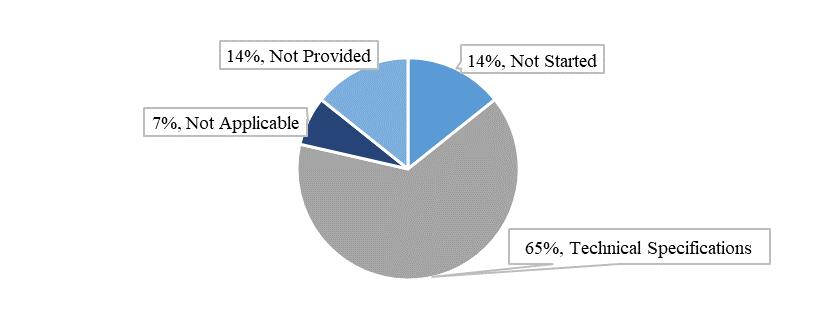
Figure 25: Summary of Survey Responses – ICS2 – Release 2
ICS2 – Release 3
Summary from the Commission:
The aim of the trans-European project on UCC ICS2 Release 3 is to enhance the functional scope of ICS2 with support for further modes of transport and implement the complete UCC requirements for all ‘entry of goods’ use cases building on ICS2 Release 1 and Release 2.
As a third phase, this release will cover the implementation of new ENS obligations and related business and risk management processes for all goods entering the EU by maritime, inland waterways, road and rail traffic (including goods in postal consignments transported by these means of transport). With Release 3, all modes of transports are supported.
The Common Functional System Specifications were published in Q2 2021.The Common Technical Specification is planned to be published by Q4 2021 and development will start in 2022.
Summary from the Member States:
Member States are currently focused on Releases 1 and 2.
Detailed Responses:
Table 27
provides the individual Member States’ responses to the survey:
|
MS
|
Complexity Rating
|
Risk Level
|
Additional Comments
|
|
AT
|
3
|
Low
|
None.
|
|
BE
|
Information not provided.
|
|
BG
|
4
|
Low
|
Same comments as for ICS2 - Release 1.
|
|
CY
|
6
|
Low
|
Same comments as for ICS2 - Release 1.
|
|
CZ
|
4
|
Med
|
Same comments as for ICS2 - Release 2.
|
|
DE
|
4
|
Low
|
DE mentioned that ICS2 – Release 3 will be implemented in the major release of their national IT-System ATLAS (Releases 10.2) for which the preparatory activities have not yet started.
|
|
DK
|
Information not provided.
|
|
EE
|
3
|
Low
|
EE is planning financial resources.
|
|
ES
|
6
|
Low
|
ES is currently improving specifications.
|
|
FI
|
6
|
High
|
None.
|
|
FR
|
5
|
Low
|
None.
|
|
GR
|
6
|
Low
|
GR specified that a contract is in place yet there is a delay in budget allocation.
|
|
HR
|
1
|
High
|
Same comments as for ICS2 - Release 2.
|
|
HU
|
3
|
High
|
None.
|
|
IE
|
2
|
Low
|
None.
|
|
IT
|
Information not provided.
|
|
LT
|
6
|
Low
|
None.
|
|
LU
|
3
|
Med
|
LU explained that the limited number of customs experts both inside the customs administration and available for the software developers is currently the biggest risk. Furthermore, the agile development methodology that they are using makes it challenging to already give an indication as to when certain activities might start. The conception phase is foreseen to start during 2021.
|
|
LV
|
5
|
Med
|
Same comments as for ICS2 – Release 2.
|
|
MT
|
6
|
Low
|
None.
|
|
NL
|
5
|
Med
|
Same comments as for ICS2 – Release 2.
|
|
PL
|
6
|
Low
|
PL started a preliminary analysis of the necessary changes to ICS2.
|
|
PT
|
6
|
High
|
Same comments as for ICS2 – Release 2.
|
|
RO
|
1
|
Low
|
None.
|
|
SE
|
3
|
Med
|
None.
|
|
SI
|
6
|
Low
|
None.
|
|
SK
|
1
|
Low
|
None.
|
Table 27: Detailed responses from Member States – ICS2 – Release 3
Figure 26
provides the percentage of respondents (Member States plus the European Commission) in each development phase.

Figure 26: Summary of Survey Responses – ICS2 – Release 3
4.1.14Overview of Project Progress
Table 28
and
Table 29
indicate the percentage of completion as of the end of 2021 in comparison to the target dates set forth in the UCC Work Programme.
The target date set for the technical specifications is in reference to the common technical specifications. Member States have reported the percentage of completion regarding their own national technical specifications, which are to be prepared incrementally for the three releases. The Commission will perform adjustments to the specifications for Releases 2 and 3 as per the MASP-C. In regards to the implementation of ICS2 – Release 2, the following Member State has a planned deployment date that is later than the deadline in the UCC Work Programme: MT.

Table 28: Comparison of Planned and Actual Dates – ICS2 – Release 2
In regards to the implementation of ICS2 – Release 3, no Member States have a planned deployment date that is later than the deadline in the UCC Work Programme.

Table 29: Comparison of Planned and Actual Dates – ICS2 – Release 3
4.1.15Analysis of Progress against Milestones
Figure 27
and
Figure 28
summarise the status per milestone (technical specifications, conformance testing and deployment). The sum of each bar is 28 (responses from the 27 Member States plus the European Commission).

Figure 27: Summary of Responses per Milestone – ICS2 – Release 2

Figure 28: Summary of Responses per Milestone – ICS2 – Release 3
Regarding ICS2 – Release 2, the following Member States have not yet started: LU, MT and RO. BE, DK and IT did not provide percentage of completion information.

Figure 29: Percentage of Completion per Phase – ICS2 – Release 2
Regarding ICS2 – Release 3, the only Member States, which have started their technical specifications, are BG, ES, LT, LV, NL and PL. DE and MT marked the release as N/A and BE, DK and IT did not provide information.

Figure 30: Percentage of Completion per Phase – ICS2 – Release 3
4.6
UCC Proof of Union Status (PoUS)
PoUS is a new trans-European system, which is designed to allow storage, management and retrieval of certain types of documents (e.g. T2L, T2L/F, customs goods manifest) that traders provide to prove the Union status of their goods. The system will improve the uniformity of the procedures across the European Union and contribute to the establishment of a more consistent, harmonised and thus simplified process related to customs clearance for Union goods.
A system will be created that will include a Central Repository for the storage and exchange between Customs Authorities across all Member States of data and documents dealing with proof of Union status.
The project is split into two phases:
• Implementing the electronic T2L (F) document with all the necessary functionalities (planned deployment 01/03/2024);
• Implementing the electronic Customs Goods Manifest (CGM), including the information exchange with the European Maritime Single Window environment (planned deployment 02/06/2025).
4.1.16Summary of Responses
PoUS – Phase 1
Summary from the Commission:
The Commission reported that the Vision Document and the Architecture Overview for both phases were approved by the Member States in Q3 2020. The Level 3 and Level 4 BPMs for Phase 1 were updated and accepted by the Member States in March 2020. Three separate external review packages were launched in 2021. As soon as the technical documentation is approved (estimated around February 2022), Member States will be able to start development to connect with the central system. An agile-like development approach is being used for the project. The project is progressing according to the planning set by the UCC Work Programme.
Summary from the Member States:
Member States have the option of using the central PoUS system or developing their own national application. Several Member States conveyed their intention to use the system developed by the European Commission: AT, BE, BG, CY, CZ, DE, DK, FR, HR, IE, LT, LU, NL, PT, RO, SE, SI and SK. ES and PL indicated that they would use a national system.
Detailed Responses:
Table 30
provides the individual Member States’ responses to the survey:
|
MS
|
Complexity Rating
|
Risk Level
|
Additional Comments
|
|
AT
|
3
|
Low
|
AT explained that no activities are planned for 2021.
|
|
BE
|
Information not provided.
|
|
BG
|
3
|
Low
|
None.
|
|
CY
|
6
|
Low
|
CY explained that the complexity is caused by dependencies with other systems, the high availability requirements and limited human resources. The development approach will be decided in cooperation with the contractor. The national planning is not yet stable and is dependent on the details in the future contract.
|
|
CZ
|
3
|
Med
|
CZ explained that the application, service and technical specifications are not yet available. They are unable to predict if they will have time to implement as per the deadlines in the UCC WP.
|
|
DE
|
4
|
Low
|
DE noted that this project will be implemented as part of their national IT-System ATLAS – Release 10.2. The preparatory activities have not yet started. The expected date of deployment is March 2024.
|
|
DK
|
3
|
Med
|
None.
|
|
EE
|
2
|
Low
|
None.
|
|
ES
|
3
|
Med
|
ES noted that the replication system needs to be implemented efficiently, this could be a risk. ES will use iterative development. Their planning remains indicative at this stage.
|
|
FI
|
3
|
Low
|
None.
|
|
FR
|
Information not provided.
|
|
GR
|
5
|
Low
|
GR is facing a delay with budget allocation.
|
|
HR
|
5
|
Med
|
HR will use the centrally developed solution. HR further iterated that TS and CT might be affected due to a lack of human resources. Many EU projects have to be carried out simultaneously by the same staff.
|
|
HU
|
3
|
Low
|
None.
|
|
IE
|
2
|
Low
|
IE will use the centrally developed solution.
|
|
IT
|
2
|
Med
|
IT identified a risk pertaining to the economic operators, underlining that requests for change might arise later in the process due to their lack of readiness.
|
|
LT
|
3
|
Low
|
LT will use the centrally developed solution. At the national level, the following tasks will need to be completed: establishing an interface with the national risk management system, translation of user interfaces and user manuals and user training. LT representatives take part in the PoUS project group activities.
|
|
LU
|
1
|
Low
|
LU explained that due to the very limited use of PoUS by the economic operators (less than 20 per year), they will use the centrally developed system. LU will advise their economic operators to create the PoUS needed by them through the solution provided by the Commission.
|
|
LV
|
2
|
Low
|
LV will use the centrally developed solution.
|
|
MT
|
Information not provided.
|
|
NL
|
3
|
Med
|
NL explained that no activities are planned for 2021. NL noted that there are a large number of external stakeholders and that it will be necessary to have a communication campaign to inform them. NL also stressed there are a lot of projects running in parallel which are using the same development expertise.
|
|
PL
|
5
|
Med
|
PL marked the project as delayed in comparison to the planning in the 2020 report, but the overall delivery date is still expected within the deployment deadline set in the UCC Work Programme. As of 10/09/2018, their National Revenue Administration implemented the new e-service called “e-Status”. The e-Status allows for electronic authentication of T2L/T2LF data by exchange of XML messages in the national Automated Export System/STATUS (the AES/STATUS). However, the new PoUS System is planned to be implemented in 2024 as new contracts have already been signed. It covers the deployment of a new PoUS System. The most important impact on the delivery and implementation of products is the lack of technical documentation at the central level. Another factor is the necessity to connect the PoUS System with new national systems created simultaneously in the country. An iterative development methodology will be used.
|
|
PT
|
5
|
High
|
PT will use the centrally developed and operationalised system. PT explained that the milestone most at risk is CT. Agile development will be used to reduce the implementation timeframe.
|
|
RO
|
2
|
Low
|
RO explained that they will use the centrally developed solution.
|
|
SE
|
3
|
Low
|
None.
|
|
SI
|
4
|
Low
|
SI explained that their planning takes into consideration delays caused by the ongoing review of documents and the phased approach.
|
|
SK
|
1
|
Med
|
None.
|
Table 30: Detailed responses from Member States – PoUS – Phase 1
Figure 31
provides the percentage of respondents (Member States plus the European Commission) in each development phase.

Figure 31: Project Status as per Survey – PoUS – Phase 1
PoUS – Phase 2
Summary from the Commission:
The functional specifications and the L4 BPMs for the Customs Goods Manifest, PoUS Phase 2 were developed and accepted by the MSs with written procedure on 21 June 2021.
Summary from the Member States:
Please see the summary from PoUS – Phase 1. Additionally, AT explained that PoUS – Phase 2 is not relevant for them.
Detailed Responses:
Table 31
provides the individual Member States’ responses to the survey:
|
MS
|
Complexity Rating
|
Risk Level
|
Additional Comments
|
|
AT
|
N/A
|
N/A
|
AT explained that PoUS – Phase 2 is not relevant for them.
|
|
BE
|
Information not provided.
|
|
BG
|
3
|
Low
|
None.
|
|
CY
|
6
|
Low
|
Same comments as for PoUS – Phase 1.
|
|
CZ
|
3
|
Med
|
Same comments as for PoUS – Phase 1.
|
|
DE
|
4
|
Low
|
DE noted that this project will be implemented as part of their national IT-System ATLAS. The preparatory activities have not yet started.
|
|
DK
|
Information not provided.
|
|
EE
|
2
|
Low
|
EE started analysing the processes.
|
|
ES
|
3
|
Med
|
Same comments as for PoUS – Phase 1.
|
|
FI
|
4
|
Low
|
FI explained that they intend to only implement the integration to the central PoUS.
|
|
FR
|
Information not provided.
|
|
GR
|
5
|
Low
|
Same comments as for PoUS – Phase 1.
|
|
HR
|
5
|
Med
|
Same comments as for PoUS – Phase 1.
|
|
HU
|
3
|
Low
|
None.
|
|
IE
|
2
|
Low
|
Same comments as for PoUS – Phase 1.
|
|
IT
|
2
|
Med
|
Same comments as for PoUS – Phase 1.
|
|
LT
|
3
|
Low
|
LT will use the centrally developed solution. LT representatives participate in the PoUS project group activities. The L4 BPMs and functional requirements are planned to be completed by Q2 2021.
|
|
LU
|
1
|
Low
|
Same comments as for PoUS – Phase 1.
|
|
LV
|
Information not provided.
|
|
MT
|
Information not provided.
|
|
NL
|
3
|
Med
|
Same comments as for PoUS – Phase 1.
|
|
PL
|
5
|
Med
|
Same comments as for PoUS – Phase 1.
|
|
PT
|
5
|
High
|
Same comments as for PoUS – Phase 1.
|
|
RO
|
2
|
Low
|
Same comments as for PoUS – Phase 1.
|
|
SE
|
3
|
Low
|
None.
|
|
SI
|
5
|
Low
|
None.
|
|
SK
|
1
|
Med
|
None.
|
Table 31: Detailed responses from Member States – PoUS – Phase 2
Figure 32
provides the percentage of respondents (Member States plus the European Commission) in each development phase.

Figure 32: Project Status as per Survey – PoUS – Phase 2
4.1.17Overview of Project Progress
Table 32
and
Table 33
highlight any known divergences in the planning compared to the dates set in the Work Programme. In regards to the implementation PoUS – Phase 1, the following Member States have a planned deployment date that is later than the deadline in the UCC Work Programme: CZ and HU.

Table 32: Comparison of Planned and Actual Dates – PoUS – Phase 1
In regards to the implementation PoUS – Phase 2, no Member States have a planned deployment date that is later than the deadline in the UCC Work Programme.

Table 33: Comparison of Planned and Actual Dates – PoUS – Phase 2
4.1.18Analysis of Progress against Milestones
Figure 33
and
Figure 34
summarise the status per milestone (technical specifications, conformance testing and deployment). The sum of each bar is 28 (responses from the 27 Member States plus the European Commission).

Figure 33: Summary of Responses per Milestone – PoUS – Phase 1

Figure 34: Summary of Responses per Milestone – PoUS – Phase 2
Regarding PoUS – Phase 1, the only Member State which has started their technical specifications is CZ. BE, FR, LU, MT and PL did not provide percentage of completion information. DE, LV and RO marked PoUS – Phase 1 as Not Applicable.

Figure 35: Percentage of Completion per Phase – PoUS – Phase 1
Regarding PoUS – Phase 2, no Member States have started their technical specifications yet. AT, DE, HU, IE and RO marked the release as N/A. BE, DK, FR, HU, LT, LU, LV and MT did not provide information.

Figure 36: Percentage of Completion per Phase – PoUS – Phase 2
4.7
UCC Centralised Clearance for Import (CCI)
The UCC Centralised Clearance for Import (CCI) project aims to allow for goods to be placed under a customs procedure using centralised clearance, enabling economic operators to centralise their business from a customs point of view. The processing of the customs declaration and the physical release of the goods will be coordinated between the related customs offices.
The implementation of the concept of Centralised Clearance for Import by a new trans-European System will strengthen the trade facilitation by enabling economic operators with the “centralisation” of their business related to import and the reduction of the interactions with customs by using the customs office of supervision as the main contact partner. In addition, the new CCI system will introduce harmonisation and standardisation of processes and electronic exchange of information across the Union for centralised clearance at import. It is also expected to reduce the administrative burden for the customs administration with automated processes and to allow tax authorities to have better supervision and control on the collection of import VAT.
In terms of the planning approach, as a trans-European system, the project contains components developed centrally and nationally. The project will be implemented in two phases.
Phase 1 will cover the combination of centralised clearance with standard customs declarations and with simplified customs declarations and related supplementary declarations (which regularise simplified customs declarations). In addition, this phase will cover the placing of goods under the following customs procedures: release for free circulation, customs warehousing, inward processing and end-use. In regards to the types of goods involved, this phase will cover all types of goods with the exception of excise goods and goods subject to common agricultural policy measures.
Phase 2 will cover everything that is not covered by Phase 1, namely:
·The combination of centralised clearance with customs declarations through an entry in the declarant’s records and related supplementary declarations, including the recapitulative one;
·Supplementary declarations regularising more than one simplified customs declaration;
·The placing of goods under the temporary admission procedure;
·Goods subject to common agricultural policy measures and excise goods;
·Goods in the context of trade with special fiscal territories;
·The communication of supporting/additional documents between the related customs offices.
4.1.19Summary of Responses
Summary from the Commission:
The Business Case, Vision Document, L4 BPMs, Functional System Specifications (FSS) and Technical Systems Specifications (TSS) have been approved, including an updated package of CCI Phase 1 TSS documentation approved in 2021 under the change mangement procedure. The system development has started. The planned deployment date for forerunner Member States is 1 March 2022. These “forerunner” Member States have been identified to work closely with the Commission for the development activities and with a view to start operations soon after the start of the deployment window planned for the project in the UCC Work Programme.
CCI is the first trans-European system using the new network architecture, CCN2ng. Other projects supporting conformance testing activities need to be aligned with the new architecture and approach. Currently, all Phase 1 activities are synchronised and managed between the various responsible project teams. A number of technical documents for Phase 2 have been approved internally in DG TAXUD in preparation for publication as part of a package for approval by Member States in 2022.
Summary from the Member States:
Most Member States are analysing the technical and functional specifications and some have cited that there may be a risk in meeting the CT and deployment milestones. Many Member States have commented that the planning is tight in the context of import systems. In addition to the complexity of the project, other reasons for potential delay are given such as human and financial resource constraints, impact and re-planning due to the VAT eCommerce package and also the specific working circumstances caused by the COVID-19 pandemic.
Detailed Responses:
Table 34
provides the individual Member States’ responses to the survey:
|
MS
|
Complexity Rating
|
Risk Level
|
Additional Comments
|
|
AT
|
5
|
Med
|
AT explained that they are preparing their technical specifications. The milestones most at risk are CT and deployment. The timing is tight in the context of import systems.
|
|
BE
|
4
|
Low
|
BE explained that the implementation period for the project is intense due to a number of IT systems that need to be implemented in the same timeframe. BE is currently performing analysis on the functional and technical specifications.
|
|
BG
|
6
|
Low
|
BG noted that this project will be implemented jointly with a project to align the national import system with the data requirements in Annex B of the Commission Delegated Regulation (EU) 2015/2446 as amended by Delegated Regulation (EU) 2021/234.
|
|
CY
|
6
|
Low
|
CY explained that the complexity is caused by dependencies with other systems, the high availability requirements and limited human resources. The development approach will be decided in cooperation with the contractor. The national planning is not yet stable and is dependent on the details in the future contract.
|
|
CZ
|
Information not provided.
|
|
DE
|
5
|
Low
|
DE noted that this project will be implemented as part of their national IT-System ATLAS – Release 10.2. The preparatory activities have not yet started. The expected date of deployment is in September 2024. Due to the requirements from the VAT eCommerce Package, DE had to push back all future planning.
|
|
DK
|
3
|
Low
|
None.
|
|
EE
|
6
|
Low
|
EE noted that the requirements of CCI will be taken into consideration during the development of their national import declaration system.
|
|
ES
|
6
|
Med
|
ES explained that the high complexity rating is because there is no history of a Trans-European system for import and this project requires strong coordination between countries. ES will use an agile/iterative development methodology. Lastly, ES is a forerunner for this project and their planning has been aligned with the project agreements.
|
|
FI
|
6
|
High
|
FI noted that this project will not be started in 2021.
|
|
FR
|
4
|
Med
|
FR marked the project as delayed compared to the planning in the 2020 report, however the overall delivery is still expected within the deployment deadline set in the UCC Work Programme. The review of the national import applications has increased the complexity and need for additional human resources. Furthermore, there are numerous projects ongoing in parallel that are utilising shared resources. FR is currently progressing on the technical and functional specifications.
|
|
GR
|
6
|
Med
|
GR noted risks related to a lack of personnel, having many projects running simultaneously and delay with budget allocation. According to their planning, GR should have a contract in place by the end of 2021.
|
|
HR
|
6
|
High
|
HR explained that the project is very complex and human resources are limited. Many team members are involved in other MASP and national projects in parallel. Furthermore, the COVID-19 pandemic has added additional pressure.
|
|
HU
|
5
|
Med
|
HU highlighted that a potential lack of human resources may impact the timely completion of the technical specifications. HU further explained that the IT development done for eCommerce will be used as a basis for the national import system which will ultimately be the basis of CCI.
|
|
IE
|
5
|
Low
|
IE noted that this project is at an early stage with technical specifications expected to be published at the end of Q3 2021.
|
|
IT
|
3
|
Med
|
IT noted that they are working on the technical specifications.
|
|
LT
|
6
|
Low
|
LT explained that they are working on the technical specifications.
|
|
LU
|
6
|
Low
|
At the time of writing, LU marked the project as delayed in comparison to the planning in the 2020 report, but the overall delivery date is still expected within the deployment deadline set in the UCC Work Programme. LU explained that the call for tender took more time than initially foreseen.
|
|
LV
|
6
|
High
|
At the time of writing, LV marked the project as delayed in comparison to the planning in the 2020 report, but the overall delivery date is still expected within the deployment deadline set in the UCC Work Programme. LV explained that their financial resources were only approved during Q3 2020. Furthermore, they need to create new IT systems which can be integrated since the current ones cannot be upgraded, scaled-up or integrated with each other. LV continued stating that they need to adapt other systems like those for risk management and statistics and integrate with other systems and Trade. A procurement process is ongoing to allocate the IT development activities before the end of 2021. There is a risk of delay with hand-over/take-over activities. Some mitigating actions are to break the project up into several stages and prioritise a core scope, use agile development and do testing step-by-step.
|
|
MT
|
6
|
Med
|
None.
|
|
NL
|
4
|
Low
|
NL explained that they are using an agile development approach and that they are currently describing features.
|
|
PL
|
5
|
Med
|
PL noted that CT has been delayed by three quarters and deployment by one. The risks pertain to the COVID-19 pandemic and its impact on financial and human resources. PL explained that this project will be developed and implemented within their National Import System. Lastly, PL iterated that the development of this system is linked to the development of all national, central and other Member States’ systems, which increases the interdependencies and the complexity of the “global system”.
|
|
PT
|
6
|
Low
|
PT explained that the risk level is due to the implementation of a new system and a lack of resources. PT stated that an Agile development methodology will be used to help reduce the implementation timeframe.
|
|
RO
|
6
|
Low
|
RO noted that they are working on the technical specifications.
|
|
SE
|
4
|
Med
|
None.
|
|
SI
|
6
|
Med
|
SI noted the high complexity rating as the project will include 47 electronic messages and 16 BPMs. The financial and social situation depend on the situation with the COVID-19 pandemic. It is difficult to predict how many people will be able to work smoothly on this project, both from the customs administration and from the IT contractor’s side. SI explained that they need to implement a new import declaration system by 01/06/2021 after which they will actively engage in CCI.
|
|
SK
|
2
|
Med
|
SK’s project is delayed in comparison to the planning in the 2020 report, but the overall delivery is still expected within the deployment deadline stated in the UCC Work Programme. They have identified risks related to a lack of human and financial resources. No mitigation actions have been considered at this moment in time.
|
Table 34: Detailed responses from Member States – CCI – Phase 1
Figure 37
provides the percentage of respondents (Member States plus the European Commission) in each development phase.

Figure 37: Summary of Survey Responses – CCI – Phase 1
CCI – Phase 2
Summary from the Commission:
The Business Case document for Phase 2 was completed and approved during Q3 2019. The package of L4 BPMs and functional specifications was created and approved by Member States and Trade Contact Group in August 2020. The Vision Document and Architecture Overview were approved in Q4 2020. Representatives of 10 Member States
have been actively involved in the CCI Phase 2 project group, identifying and developing proposals for the processes and the new functionalities to be implemented. The business processes and functional specifications for Phase 2 were approved during 2020 and the technical specifications are expected by June 2022 in view of the planned date for starting the deployment window for initial MSs in October 2023.
Summary from the Member States:
Please see the summary from CCI Phase 1.
Detailed Responses:
Table 35
provides the individual Member States’ responses to the survey:
|
MS
|
Complexity Rating
|
Risk Level
|
Additional Comments
|
|
AT
|
4
|
Low
|
None.
|
|
BE
|
5
|
Low
|
BE commented that the procedures to be implemented in CCI – Phase 2 are more complex than the ones in Phase 1.
|
|
BG
|
5
|
Low
|
None.
|
|
CY
|
6
|
Low
|
Same comments as for CCI – Phase 1.
|
|
CZ
|
Information not provided.
|
|
DE
|
5
|
Low
|
DE noted that this project will be implemented as part of their national IT-System ATLAS – Release 10.3. The preparatory activities have not yet started. The expected date of deployment is Q3/Q4 2025. Due to the requirements from the VAT eCommerce Package, DE had to push back all future planning.
|
|
DK
|
Information not provided.
|
|
EE
|
6
|
Low
|
None.
|
|
ES
|
6
|
Med
|
ES will also be a forerunner for CCI – Phase 2.
|
|
FI
|
6
|
High
|
Same comments as for CCI – Phase 1.
|
|
FR
|
4
|
Low
|
FR is currently working on a national review regarding topics such as an Entry in the Declarant’s Records (EIDR) solution.
|
|
GR
|
6
|
Low
|
GR mentioned that their project is currently delayed in comparison to the planning in the 2020 report, but the overall delivery is still expected within the deployment deadline. GR is facing a delay due to budget allocation.
|
|
HR
|
6
|
High
|
Same comments as for CCI – Phase 1.
|
|
HU
|
Information not provided.
|
|
IE
|
5
|
Low
|
None.
|
|
IT
|
5
|
Med
|
None.
|
|
LT
|
6
|
Low
|
Same comments as for CCI – Phase 1.
|
|
LU
|
5
|
Med
|
LU explained that the call for tender was launched in 2020. The limited number of customs experts both inside the customs administration and available for the software developers is currently the biggest risk.
|
|
LV
|
5
|
Low
|
None.
|
|
MT
|
6
|
Low
|
None.
|
|
NL
|
5
|
Low
|
NL explained that they are using an agile development approach and that they are currently describing the features based on the DDNCA.
|
|
PL
|
6
|
Med
|
Same comments as for CCI – Phase 1.
|
|
PT
|
6
|
Low
|
PT explained that the risk level is due to the implementation of a new system and a lack of resources. This project phase will treat all the matters, which were left outside of phase 1 due their complexity. This project will be developed and implemented "inside" of the National Import System. Since this system is a highly complex system, the integration of CCI – Phase 2 will be also complex. The development of this system, is not only related with the system itself, but it is also related to the development of all national, central and other MS´s systems/modules, national and EU entities connections, which increases the inter-dependencies and the complexity of the “global system. PT stated that an Agile development methodology will be used to help reduce the implementation timeframe.
|
|
RO
|
6
|
Low
|
None.
|
|
SE
|
4
|
Med
|
None.
|
|
SI
|
6
|
Med
|
Same comments as for CCI – Phase 1.
|
|
SK
|
2
|
Med
|
Same comments as for CCI – Phase 1.
|
Table 35: Detailed responses from Member States – CCI – Phase 2
Figure 38
provides the percentage of respondents (Member States plus the European Commission) in each development phase.

Figure 38: Summary of Survey Responses – CCI – Phase 2
4.1.20Overview of Project Progress
Table 36
and
Table 37
highlight any known divergences in the planning compared to the dates set in the Work Programme. As this project has a deployment window, the ‘Deployment’ and ‘Operations’ columns are shown. If there is a difference in these two dates, this implies that a migration period is planned.
Regarding CCI – Phase 1, the following Member State has a planned deployment and operations date that is later than the deadline in the UCC Work Programme: DE. DE has indicated that experience with the implementation of eCommerce and the new UCC systems for AES and NCTS Phase 5 has shown that the current architecture and infrastructure of the national import system is not sufficient and requires a fundamental renewal and modernisation in order to meet the requirements of UCC (CCI). The implementation plans take into account the simultaneous deployment of CCI Phase 1 and Phase 2 in a new import system. A completely new application will be developed based on the new and harmonised EU Customs Data Model and the European Commission specifications. The work will be carried out with the involvement of external IT support services and developed using the agile method in order to increase transparency and development speed, proactively minimise possible risks and misdevelopments in the process and thus lead to a faster deployment of CCI. The necessary resources are available for this purpose. With this approach, DE is convinced that it has taken all necessary remedial measures to ensure the simultaneous implementation of CCI Phase 1 and Phase 2 at the latest by September 2024 which is within the deployment window for Phase 2. The specific date can be found in
Table 36
below.

Table 36: Comparison of Planned and Actual Dates – CCI – Phase 1
For the implementation of CCI – Phase 2, DE’s planned deployment date in Table 37 is one month later than the target date set in the UCC WP and they will be providing a migration period which runs to 30/06/2026. DE explained that this project will be implemented in the major release of their national IT-System ATLAS (Release 10.3) for which the preparatory activities have not yet started. Subsequent to the collection of the data in Table 37, DE has indicated that it intends to deploy Phase 2 in Q4 2024 which is well within the deployment window laid down in the UCC Work Programme. This info was provided to the Commission just before finishing the report and is not reflected in the table below which reflects the outcome of the survey.
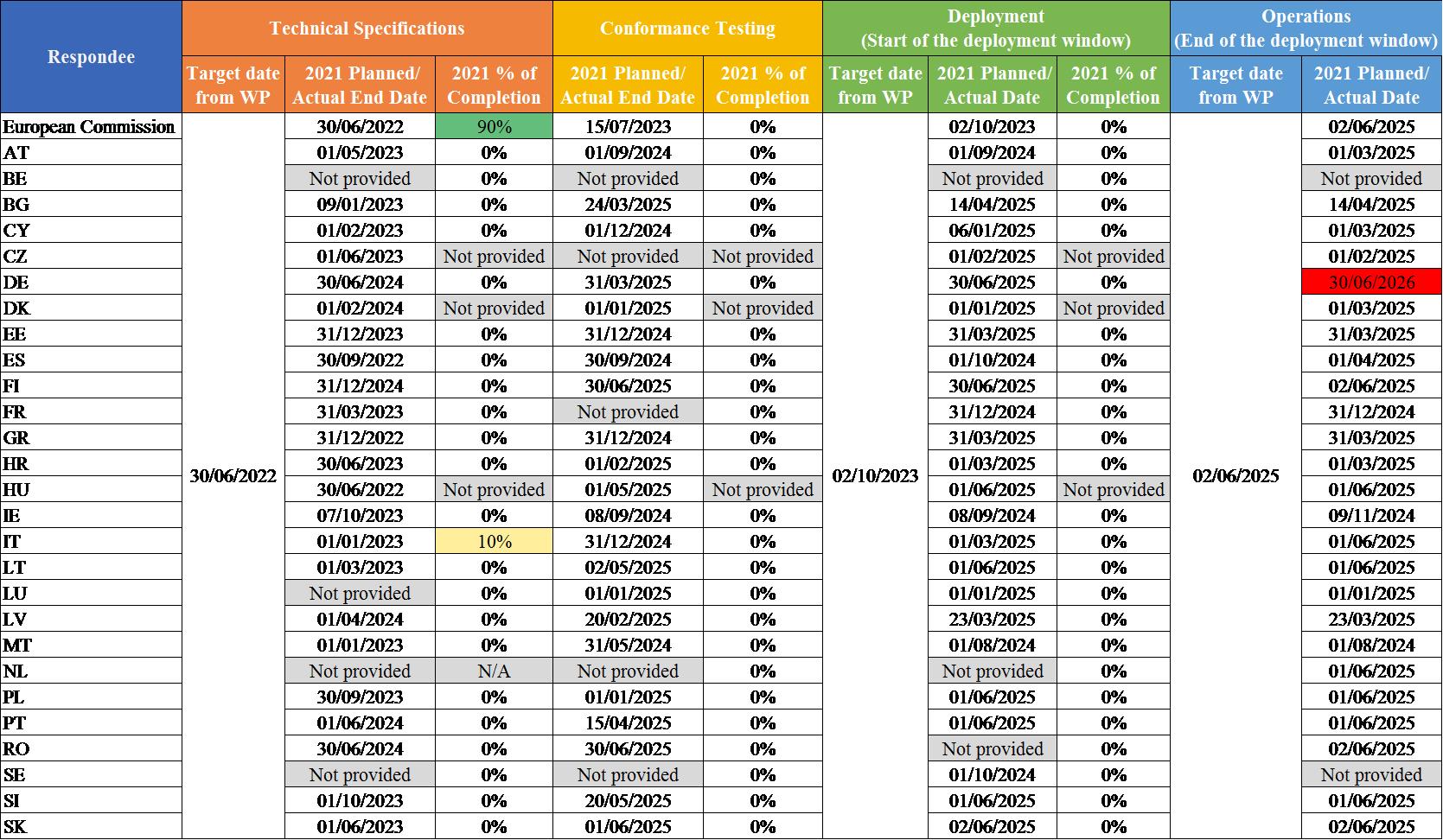
Table 37: Comparison of Planned and Actual Dates – CCI – Phase 2
4.1.21Analysis of Progress against Milestones
Figure 39
and
Figure 40
summarise the status per milestone (technical specifications, conformance testing and deployment). The sum of each bar is 28 (responses from the 27 Member States plus the European Commission).

Figure 39: Summary of Responses per Milestone – CCI – Phase 1

Figure 40: Summary of Responses per Milestone – CCI – Phase 2
Additional details regarding the specific percentage of completion per milestone can be seen in
Figure 41
.
Regarding CCI – Phase 1, the following Member States have not yet started: DE, FI, GR, LU, LV, SE, SI and SK. The following Member State did not provide percentage of completion information: CZ.

Figure 41: Percentage of Completion per Phase – CCI – Phase 1
Regarding CCI – Phase 2, the only Member State, which has started their technical specifications is IT. The following Member States did not provide percentage of completion information: CZ, DK and HU.

Figure 42: Percentage of Completion per Phase – CCI – Phase 2
4.8
UCC New Computerised Transit System (NCTS) Upgrade
The aim of this project is to align the existing trans-European New Computerised Transit System (NCTS) to the UCC legal provisions. The scope of the project includes the alignment of information exchanges to UCC data requirements, the upgrade and development of interfaces with other systems such as AES in addition to new safety and security requirements.
In terms of the planning approach, the project is divided into two components. Component 1, the ‘NCTS-Phase 5 (P5)’ includes steps to upgrade and extend the current NCTS processes in alignment with UCC legal provisions, to introduce new processes such as the pre-lodgement of Customs declarations, to provide for the registration of ‘en-route’ events, align information exchanges to UCC data requirements and the upgrade and development of interfaces with other systems. The system includes some components to be developed centrally but the main components are to be developed at the national level.
NCTS – Component 1 will meet the following objectives:
·Data harmonisation across customs domains (import, export, transit) – New Customs EU Data Model;
·Harmonisation in the external domain resulting in trade facilitation;
·Interoperability across customs and taxation/excise;
·Alignment to operational practices for export and transit;
·Business continuity and facilitation of the transition for national administrations and Trade;
·New IT architecture for customs trans-European systems for Member States and Common Transit Convention (CTC) countries.
Additionally, NCTS – Component 1 will improve the following processes:
·Transit guarantees monitoring;
·The enquiry process;
·Business statistics for transit: The current collection of business statistics will be optimised in order to ensure support of measurements of the Customs Union Performance system;
·Strengthen the safety and security for entry/exit.
Lastly, a number of new functionalities are being incorporated:
·Transit declaration pre-lodgement;
·Lodgement of transit declaration with reduced data-set;
·Management of ‘en route’ incidents;
·Export process followed-up by the transit TES and better monitoring of trade flows.
Component 2, the ‘NCTS-Phase 6 (P6)’, aims to include potential new requirements in the field of safety and security data elements in transit customs declarations. These requirements relate to goods brought into the customs territory of the Union and are also incorporated in the UCC Import Control System Upgrade 2 (ICS2).
4.1.22Summary of Responses
NCTS – Component 1
Summary from the Commission:
The Commission and the MSs’ customs authorities launched an important transition for the trans-European customs systems for export and transit, starting with the successful deployment of the new UCC NCTS-Phase 5 and UCC AES IT systems in DE in March 2021. This opened the path to the next generation of interconnected trans-European systems for the trade community and the national customs authorities. The new export and transit systems offer significant benefits and enable simplifications while ensuring the business continuity with the systems in operation so far. This important UCC milestone has been achieved thanks to the close collaboration between the Commission and the national customs and trade associations.
The Commission highlighted in its ‘Overview of the Customs Information Systems’ report
that the NCTS and ECS are already in operation, with multiple stakeholders and that the business continuity of these existing systems cannot be jeopardised.
Under the umbrella of the “National Administration coordination programme” the Commission assists and monitors the development and deployment of the national components for the NCTS-P5 and AES-P1 trans-European systems by the Members States and by the Signatory Parties of the Common Transit Convention. During the years 2020 and 2021, the following results can be reported for NCTS and AES:
·All national administrations have provided an initial National Project Plan by the end of 2020 as their baseline and most of them with subsequent quarterly updates. All plans remain within the deadline set by the UCC work programme. However, the latest plans show a shift of more than one quarter for the deployment of AES-P1 and NCTS-P5. Some Administrations already announced that further delays will be reported in the next two quarters. The Coordination Programme has proven instrumental to maintain a high level of transparency on the progress of the Member States and to report on the collective progress of the Member States;
·The Commission accompanies each Member State individually as to provide them with an as seamless as possible testing experience, speeding up their readiness and mitigating their technical risks;
·Hundreds of virtual meetings took place with the Member States, at operational, middle and senior management levels, as to mitigate the risks of delay of the Member States;
·The Member States approved an ambitious training programme for the next two years. This programme is now operationalised by the Commission;
·The trader Community is systematically informed of the progress and the plans of the Member States;
·The Commission has reported, to the ECCG and CPG, the ongoing progress of the Member states and other Signatory Parties to the Common Transit Convention, providing the Key Performance Indicators of the aggregated national plans. The Commission has issued a quarterly consolidated progress report of the transition of both NCTS-P5 and AES-P1 as from the 1st quarter of 2021.
For NCTS-P5 and AES-P1, the challenge is to ensure business continuity and smooth Member State and trade transition while applying significant changes in the applicable Data and Process models. The National Administrations approved a new set of specifications which will cover the quality, technical support, business continuity, security and capacity of the future AES-P1 and NCTS-P5 operations (Service Management, Service Level Agreement, Terms of Reference, Crisis management, Capacity Plan, Security Plan). So far, no delays have materialised on the central components and the project is currently on track. For both NCTS-P5 and AES-P1 projects, the quality of technical specifications are continuously improved in an agile manner to take advantage of the findings of the numerous tests conducted.
The National plans are published on Europa and the trader community is kept regularly informed on the progress achieved. Their feedback will be welcomed regarding the progress reported by the Member States.
From a technical point of view, the NCTS-P5 and AES-P1 projects pioneered a collaborative, iterative and agile working method that has been praised by all Member States and traders involved. It has been requested to have this method expanded to other projects of the UCC. The Agile approach adopted since the start of the project pays off in terms of functional and technical quality. The collective intelligence of the Member States is a critical asset for the success of the transition at stake.
The conformance testing started as planned in Q3 2020, leading to the entry in operation of DE in March 2021. Several MS will enter in conformance Testing before the end of 2021, aiming at entering in operation during 2022.
DE and PL have conducted intensive bilateral testing sessions with the Commission. In addition, all Member States and the Commission successfully tested a key central technical component (the converter) in peak operation load and conditions during the month of June 2021. It provided an increased confidence of the system maturity ahead of its entry in operation in 2022.
The real-life test conducted so far confirms the fitness of the common specifications and systems to meet the challenge of business continuity over the transition. Learning from each and every test with the Member States increases the maturity of the overall technical set up.
Regular releases of the central converter of NCTS were also delivered to improve its maturity in light of the findings of the tests.
All documents, systems and services are in place to support the start in earnest of the transition to the two new systems as soon as a second Member State will join DE in operation in 2022.
A number of Member States have reacted positively to the call of the Commission to bring forward the deployment date, as also pointed out in the ‘Overview of the Customs Information Systems’. National project plans are available and most maintained up to date, all national administrations have indicated to be ready within the deployment window in the UCC Work Programme, starting operations in Q1 2021 until Q4 2023, as illustrated in
Figure 43
. DE is the leading Member State, having entered operation in March 2021, as planned. A group of six Member States (AT, BE, LU, NL, PL and SE) will comprise the first wave of Member States entering into operations in 2022. The transition will spread over five quarters.
However, it is likely to further steepen during the 2nd half 2021 considering the announced delays and other risks at play. It will place an increasing risk on the capacity of the Commission to adequately support such a steep transition and will put under pressure the date of 01 December 2023 set by the UCC Work programme for the entry into force of the final arrangements of the UCC. The Commission monitors closely the Member States’ projects and invites the Member States to take all mitigation actions to avoid that their risks materialise.

Figure 43: NCTS – P5 National Administrations entry into operations as of 1 July 2021
Summary from the Member States:
NCTS-P5 is regarded as a highly complex project due to the dependencies with other systems, high availability requirements and competing priorities. Despite this, all Member States remain on-track for the ‘big bang’ transition planned for 1 December 2023. The main risks reported by the Member States relate to:
·Procurement and service providers;
·Competing priorities and inter-dependencies within and outside the UCC Work programme i.e. eCommerce and ICS2;
·Lack of resource (staff & budget);
·The COVID-19 pandemic;
·Transition;
·Delay from the traders;
·Changes in the specifications.
Detailed Responses:
Table 38
provides the individual Member States’ responses to the survey:
|
MS
|
Complexity Rating
|
Risk Level
|
Additional Comments
|
|
AT
|
6
|
Med
|
AT explained that the high complexity is due to their cooperation with Belgium, including the settlement of cooperation procedures and system integration with a national environment. AT is refining their technical analysis, preparing information for the traders, establishing a cooperation team and coordinating the planning of product increments with Belgian customs.
|
|
BE
|
6
|
Med
|
BE marked the project as delayed beyond the deployment deadline. BE will provide an updated planning as soon as possible. Furthermore, they have asked their contractor to expand their development team.
|
|
BG
|
4
|
Low
|
BG noted that their functional and technical specifications are under approval in accordance with their national procedures. They are planning to start development by the end of 2021.
|
|
CY
|
6
|
Low
|
CY explained that the complexity is caused by dependencies with other systems, the high availability requirements and limited human resources. The development approach will be decided in cooperation with the contractor. The national planning is not yet stable and is dependent on the details in the future contract.
|
|
CZ
|
6
|
Med
|
CZ gave a high complexity rating explaining that the application is complex and has indicated that it requires a large amount of financial resources. CZ’s national plan is stable however, the COVID-19 pandemic does present a risk. CZ is finalising their detailed national technical and functional specifications. Development started in January 2021 and should be completed by December 2021.
|
|
DE
|
6
|
Low
|
DE is making use of an agile development approach in defined software release cycles. The ongoing activities concern the finalisation and fine-tuning of NCTS, the monitoring of operations as well as the preparation of remaining Conformance Tests (Mode 2) and the start of the Conformance Test (certification) of economic operators. The period for CT with Trade has shifted from March 2021 – July 2022 to October 2021 – November 2022. Therefore, November 2022 is the end of the deployment window for trade. After this date, no NCTS-P4 messages will be accepted in the external domain.
|
|
DK
|
6
|
High
|
DK assessed the complexity as very high due to many dependencies with other systems, parallel development and many stakeholders. The milestones most at risk are CT and the final test phase, due to alignment and dependencies with other systems. The CT dates have not been set yet. The project is handled within the Scaled Agile Framework (SAFe).
|
|
EE
|
6
|
Med
|
EE considered the project delayed in comparison to the planning in the 2020 report, but the overall delivery is still expected within the deployment deadline set in the UCC Work Programme. The procurement process is delayed, however, mitigation actions are foreseen. A contract with a developer is in place, the technical specifications have been completed, a detailed analysis has been carried out and the user interface has been tested. EE explained that the changes in national planning are due to delays in procurement, milestones have been postponed by six months.
|
|
ES
|
5
|
Med
|
ES explained that the high complexity rating is because this project requires strong coordination between countries and significant effort in transition management. ES will use an agile/iterative development methodology.
|
|
FI
|
6
|
High
|
FI explained that they are re-building NCTS from scratch and that several other IT projects are ongoing. NCTS will contain numerous integrations. The implementation is planned to start in Q2 2021.
|
|
FR
|
5
|
Med
|
FR explained that this project requires many changes in message structure and rules. The complexity is increased by the support required during the transition period. FR marked the project as delayed compared to the planning in the 2020 report, however the overall delivery is still expected within the deployment deadline set in the UCC Work Programme. The reasons for delay are multiple: the prioritising of ‘Smart border’ during the second half of 2020, the COVID-19 pandemic (remote working, etc.), prioritisation of other projects such as the VAT eCommerce package, ICS2 and internal projects. Mitigating actions include mobilising more resources after September 2021. The main milestone impacted is deployment. FR currently has two iterations planned, the first without Export followed by Transit. The start of the technical specifications has been delayed however defining the interface specifications with traders is ongoing.
|
|
GR
|
6
|
Med
|
GR marked the project as delayed compared to the planning in the 2020 report, however the overall delivery is still expected within the deployment deadline set in the UCC Work Programme. GR is facing a delay due to budget allocation however hopes to have a contract in place by the end of 2021.
|
|
HR
|
6
|
Med
|
HR noted that the TS and CT milestones may be affected due to a lack of human resources. Many EU projects have to be carried out simultaneously.
|
|
HU
|
4
|
Low
|
HU is preparing technical specifications.
|
|
IE
|
5
|
Low
|
IE expects to finalise their technical specifications by November 2021.
|
|
IT
|
Information not provided.
|
|
LT
|
3
|
Med
|
LT noted that their procedure for public procurement is planned. Deployment is planned for 02/11/2023.
|
|
LU
|
3
|
Low
|
Some of the challenges which LU faces are related to the integration of export with various other systems (EOS, AEO, etc.). LU plans to be in the middle of conformance testing by the end of 2021 and to have finalised all requirements for their software provider.
|
|
LV
|
5
|
High
|
LV explained that they are securing a contract with a system developer and that this could potentially impact all stages of the project planning. In 2021, LV plans to have the following completed: design of the database structure and client interface for submitting transit declarations and the data download from CS/RD. The technical specifications for the system-to-system interface for NCTS-P5 was published at the end of February 2021. Furthermore, LV hopes that the message exchange between the trader’s module and the risk management system will also be completed this year.
|
|
MT
|
Information not provided.
|
|
NL
|
5
|
Med
|
NL explained that the high complexity rating is due to the fact that it is a new application and it requires interaction with many other national applications. Furthermore, many related MASP projects are ongoing at the same time. NL listed the following risks that could impact all milestones: stability of the specifications, uncertain volumes (for example iOSS not used in eCommerce) and the priority in Agile development. NL explained that they are using an agile development approach and that they are currently describing the features based on the DDNTA. The decision has been made to build the system themselves.
|
|
PL
|
5
|
High
|
PL explained that the biggest risk to the project is that their support/development contract for the NCTS system is ending. Another risk is the fact that the ongoing tender procedure for a new contract under which their new National Transit Application (NTA) will be updated for future changes and implemented into production has not yet been settled. The implementation of the new application is also influenced by changes related to the work on central documentation.
An additional difficulty is related to the COVID-19 pandemic and restrictions at work. In May 2020, PL adapted their project plan and updated the deployment date to Q4 2021.
|
|
PT
|
6
|
High
|
PT explained that the risk level is due to the implementation of a new system and a lack of resources. PT stated that an Agile development methodology will be used to help reduce the implementation timeframe.
|
|
RO
|
6
|
Med
|
RO marked the project as delayed in comparison to the planning in the 2020 report, but the overall delivery date is still expected within the deployment deadline set in the UCC Work Programme. This is due to a delay in approving the budget for the current year. No mitigating measures are foreseen yet since the overall delivery is still foreseen within the deployment deadline. RO has completed the procurement documentation and are awaiting budget approval.
|
|
SE
|
3
|
Med
|
SE performed a pre-study in the second half of 2020.
|
|
SI
|
5
|
High
|
SI explained that this long-lasting project became less important in comparison to new initiatives/priorities, also considering the lack of human resources and the undervaluation of the complexity. SI changed the national project manager in February 2021, which added another challenge. SI marked the project as delayed in comparison to the planning in the 2020 report, but the overall delivery date is still expected within the deployment deadline set in the UCC Work Programme. New planning was announced in November 2020 and only minimal corrections are required to stabilise it. The final deployment date is fixed. SI will implement strict monitoring and will split activities into smaller tasks with defined deadlines and regular reporting requirements. The development of the application and mode-0 CT is planned to be completed in 2021. In 2022, SI will start with Mode-1 CT, followed by Mode-2 and Mode-3. These campaigns will include tests with Member States as well as with economic operators.
|
|
SK
|
3
|
Med
|
SK’s project is delayed in comparison to the planning in the 2020 report, but the overall delivery is still expected within the deployment deadline stated in the UCC Work Programme. They have identified risks related to a lack of human and financial resources. No mitigation actions have been considered at this moment in time. SK assumes that the most impacted milestone will be the technical specifications. CT is planned for Q2 2022. Procurement is still ongoing however they aim to finalise the technical specifications by the end of 2021.
|
Table 38: Detailed responses from Member States – NCTS – P5
The risk assessment of National Project Plans of the Member States by the Commission is shown and substantiated in the table below:

Table 39: Risk Assessment: NCTS – P5
Figure 44
provides the percentage of respondents (Member States plus the European Commission) in each development phase.

Figure 44: Project Status as per Survey – NCTS – P5
The table below lists the status as of 1 July 2021 of the Member States according to their latest National Project Plans: ten Member States published their National Trader Specifications already, one Member State opened a conformance testing environment to qualify its traders, the remaining 15 Member States having either not started yet, or are in the procurement stage, or in the process of producing their trader specifications, or in an unknown status.

Table 40: Project Status – NCTS – P5 as of 1 July 2021
NCTS – Component 2
Summary from the Commission:
For NCTS - Phase 6 (interconnection with other systems), the Commission launched the inception early 2021 in close collaboration with the MS. The definition of the scope turned out much more challenging than anticipated considering the complexities at stake:
·the reconciliation of the process, data and technology of NCTS and ICS2,
·alignment of the deployment planning of ICS2 and NCTS-P6 with with the capacity of the Member States,
·securing the business continuity of NCTS just after having gone through its major transition to NCTS-P5;
·compromise between the interest of the “inland” Member States on the one hand and the “external border” Member States and other signatory parties of the Common Transit Convention on the other hand as far as the road traffic is concerned.
·The policy objectives of the UCC, in particular of NCTS, ICS2, trade faciliation.
4.1.23Overview of Project Progress
Table 41
highlights any known divergences in the planning compared to the dates set in the Work Programme
. As this project has a deployment window, the ‘Deployment’ and ‘Operations’ columns are shown. If there is a difference in these two dates, this implies that a migration period is planned.

Table 41: Comparison of Planned and Actual Dates – NCTS – P5
The deployment of NCTS-P5 shows a delay of 1+ quarters in comparison with the initial national plans filed at the end of 2020 (respectively Earned and Planned Value in the chart below). The Planned and Earned Values are built on a basket of 12 key milestones across all the Member States and other Signatory Parties of the Common Transit Convention. The deployment of NCTS-P5 is currently at 26% (Earned Value) while it should be at 38% (Planned Value). The Member States will have to speed up their project and contain their risks to reach the milestones of the entry into force of the final arrangement of the UCC on 1 December 2023. It will result in a sharper and shorter transition.

Figure 45: Key milestones: Planned value versus earned value – NCTS – P5
4.1.24Analysis of Progress against Milestones
Figure 46
summarises the status per milestone (technical specifications, conformance testing and deployment). The sum of each bar is 28 (responses from the 27 Member States plus the European Commission).

Figure 46: Summary of Responses per Milestone – NCTS – P5
Additional details regarding the specific percentage of completion per milestone can be seen in
Figure 47
.
Regarding NCTS Phase 5 or Component 1, the following Member States have not yet started with the technical specifications: GR, LT, and SE. HU and MT did not provide percentage of completion information.

Figure 47: Percentage of Completion per Phase – NCTS – P5 as of 1 July 2021
The figure below illustrates the four milestones set in Article 278(a) of the Regulation (EU) 2019/632 amending Regulation (EU) 2013/952 as reported by each Member State in their national plans, ranked by their entry in deployment window for the traders. It illustrates how the deployment window for the trader shortens with its later start, the entry into force of the final arrangements of the UCC being a legally set milestone by the UCC work programme.

Figure 48: NCTS – P5 Transitional Period
4.9
UCC Automated Export System (AES)
The AES project consists of an upgrade of both the existing trans-European Export Control System and the existing national export systems. It aims to implement the UCC requirements for export and exit of goods, including export and re-export declarations; EXS and centralised clearance for Export, re-export notifications and an interface with EMCS and NCTS. The project entails implementing the UCC simplifications offered to trade to facilitate export of goods for European companies, such as centralised clearance for Export, and the UCC obligations to better monitor what exits the EU customs territory to prevent fraud. The export declaration, and all linked message exchanges as well as the Arrival At Exit Notification and Exit Summary declaration are subject to considerable rework. The proposed message structures are fully convertible from/to “Legacy”/To Be” ones, guaranteeing a smooth transition and fostering business continuity from Q1 2021 until Q4 2023.
The following processes will be implemented:
·Export declaration pre-lodgement;
·Handling of simplified/supplementary declarations;
·Centralised clearance for export;
·Re-export notification;
·Export process followed-up by the transit TES and better monitoring of trade flows;
·Export handling of goods under excise duties suspension interoperability with EMCS;
·Facilitate legitimate trade & combat fraud;
·Strengthen the safety and security for exit.
In terms of planning, the system is comprised of two components. The first component relates to the “trans-European AES”. The aim of the project is to further develop the existing trans-European Export Control System (ECS) in order to implement a full AES that would cover the business requirements for processes and data brought about by the UCC. These processes and data will include the coverage of simplified procedures and centralised clearance for export. It will also cover the development of harmonised interfaces with the Excise Movement and Control System (EMCS) and NCTS. As such, AES will enable the full automation of export procedures and exit formalities. The system includes some parts to be developed centrally but the main components are to be developed at the national level.
The second component relates to the upgrade of the National Export Systems.
4.1.25Summary of Responses
AES – Component 1
Summary from the Commission:
Please refer to the “Summary from the Commission” section for NCTS-P5 above which applies equally to NCTS-P5 and AES-P1 as both projects are managed as twins, maximising their shared activities and leveraging any synergy between them.
For NCTS-P5 and AES-P1, the challenge is to ensure business continuity and a smooth transition for Member States and trade while applying significant changes in the applicable Data and Process models. The National Administrations approved a set of specifications which will cover the quality, support, business continuity, security and capacity of the future AES-P1 and NCTS-P5 operations (Service Management, Service Level Agreement, Terms of Reference, Crisis management, Capacity Plan and Security Plan). So far, no delays have materialised on the central components and the project is currently on track. For both NCTS-P5 and AES-P1 projects, the quality of technical specifications is continuously improved in an agile manner to recycle the finding of the numerous tests conducted.
Member States should complete the export component of their Special Procedures systems at the same time as the AES.
The National plans are published on Europa and the trader community is kept regularly informed of the progress achieved. Their feedback will be welcomed regarding the progress reported by the Member States.
A number of Member States have reacted positively to the call of the Commission to bring forward the deployment date, as also pointed out in the ‘Overview of the Customs Information Systems’. National project plans are available and most maintained up to date, all national administrations have indicated to be ready within the deployment window in the UCC Work Programme, starting operations in Q1 2021 until Q4 2023, as illustrated in
Figure 49
. DE is the leading Member State having entered operation in March 2021, as planned. A group of 6 Member States (AT, BE, ES, NL, PL and SE) will comprise the first wave of Member States entering into operations in 2022. The transition will spread over five quarters. However, it is likely to further steepen during the 2nd half of 2021 considering the announced delays and other risks at play. It will place an increasing risk on the capacity of the Commission to adequately support such a steep transition and will put under pressure the date of 01 December 2023 set by the UCC Work programme for the entry into force of the final arrangements of the UCC. The Commission closely monitors the Member States’ projects and invites the Member States to take all mitigation actions to avoid that their risks materialise.

Figure 49: AES – Component 1 National Administrations entry into operations as of 1 July 2021
Summary from the Member States:
As the same transition strategy is applied as for NCTS-P5, however with slightly different planning, many Member States provided the same commentary. Please see the summary for NCTS-P5 (section 4.8).
Detailed Responses:
Table 42
provides the individual Member States’ responses to the survey:
|
MS
|
Complexity Rating
|
Risk Level
|
Additional Comments
|
|
AT
|
6
|
Med
|
Same response as for NCTS-P5 (see section 4.8).
|
|
BE
|
6
|
Med
|
BE marked the project as delayed in comparison to the planning in the 2020 report, but the overall delivery date is still expected within the deployment deadline set in the UCC Work Programme. The main cause of delay has been due to regulatory requirements for financing which require a lot of up-front work from their contractor. As a mitigating action, a Minimal Viable Product (MVP) will be developed to allow conformance testing while additional functionalities are still being added.
|
|
BG
|
4
|
Low
|
Same response as for NCTS-P5 (see section 4.8).
|
|
CY
|
6
|
Low
|
Same response as for NCTS-P5 (see section 4.8).
|
|
CZ
|
6
|
Med
|
Same response as for NCTS-P5 (see section 4.8).
|
|
DE
|
6
|
Low
|
Same response as for NCTS-P5 (see section 4.8).
|
|
DK
|
6
|
High
|
Same response as for NCTS-P5 (see section 4.8).
|
|
EE
|
6
|
Med
|
Same response as for NCTS-P5 (see section 4.8).
|
|
ES
|
5
|
Med
|
Same response as for NCTS-P5 (see section 4.8).
|
|
FI
|
6
|
High
|
Same response as for NCTS-P5 (see section 4.8).
|
|
FR
|
6
|
Low
|
FR explained a delay has been applied to review their national export clearance application and to amend the functional and technical specifications. Their development team is currently implementing new messages.
|
|
GR
|
6
|
Med
|
Same response as for NCTS-P5 (see section 4.8).
|
|
HR
|
6
|
Med
|
Same response as for NCTS-P5 (see section 4.8).
|
|
HU
|
6
|
High
|
HU’s IT development based on eCommerce, will be used as a basis for the national import system which will ultimately be the basis for the AES developments.
|
|
IE
|
5
|
Low
|
IE expects to start the analysis and design discussions with external contractors this year.
|
|
IT
|
Information not provided.
|
|
LT
|
6
|
Low
|
None.
|
|
LU
|
4
|
Med
|
LU marked the project as delayed in comparison to the planning in the 2020 report, but the overall delivery date is still expected within the deployment deadline set in the UCC Work Programme. The procedure for the call for tenders and the negotiations with the software provider took longer than planned. LU noted that their software provider is also servicing another Member State ,which should help to progress faster than planned. The main risks are related to the limited number of customs experts both inside the customs administration and available for the software development. LU has started internal analysis on the business processes.
|
|
LV
|
4
|
High
|
LV explained that they plan to develop a database, messages for export/re-export declarations and the graphical user interface for customs users during 2021.
|
|
MT
|
Information not provided.
|
|
NL
|
4
|
Low
|
NL explained that the high complexity rating is due to the fact that Export and Exit are supported by different applications. Export is an upgrade of an existing system and Exit will become a new application. Furthermore, many related MASP projects are ongoing at the same time. NL explained that they are using an agile development approach and that they are currently describing the features based on the DDNXA.
|
|
PL
|
5
|
High
|
PL explained that the biggest risk to the project are changes in the technical documentation at the central level. PL iterates that internal factors also play a role, such as the lack of a contract with an external company to implement and deploy the new systems. Another key factor is the necessity to connect the export system with the new national systems that are being simultaneously created. Furthermore, the COVID-19 pandemic also influences the project progress. PL supports agile and iterative development of new systems. In May 2020, PL updated their national project plan changing the system development date to Q4 2021.
|
|
PT
|
6
|
High
|
Same response as for NCTS-P5 (see section 4.8).
|
|
RO
|
6
|
Med
|
Same response as for NCTS-P5 (see section 4.8).
|
|
SE
|
4
|
Med
|
Same response as for NCTS-P5 (see section 4.8).
|
|
SI
|
4
|
Med
|
Same response as for SP1 (see section 4.3).
|
|
SK
|
3
|
Med
|
Same response as for NCTS-P5 (see section 4.8).
|
Table 42: Detailed responses from Member States – AES – Component 1
The risk assessment of National Project Plans of the Member States by the Commission Services is shown and substantiated in the table below:

Table 43: Risk Assessment: AES – Component 1
Figure 50
provides the percentage of respondents (Member States plus the European Commission) in each development phase.

Figure 50: Summary of Survey Responses – AES – Component 1
The table below lists the status at 1 July 2021 of the Member States according to their latest National Project Plans: nine Member States published their National Trader Specifications already, one Member State opened a conformance testing environment to qualify its traders, the remaining 16 Member States having either not started yet, or being in procurement, or in the process of producing their trader specifications, or in an unknown status.

Table 44: Project Status – AES – Component 1 as of 1 July 2021
AES – Component 2
Summary from the Commission:
The Commission has provided the Member States with functional and technical specifications, Annex B data and the required legal text. This was provided for the external domain with trade and for the national domain between the national applications and the common domain. Furthermore, the required interfaces and the proposed architecture were also provided.
Summary from the Member States:
Please see the summary for AES – Component 1.
Detailed Responses:
Table 45
provides the individual Member States’ responses to the survey:
|
MS
|
Complexity Rating
|
Risk Level
|
Additional Comments
|
|
AT
|
6
|
Med
|
Same response as for AES - Component 1.
|
|
BE
|
Information not provided.
|
|
BG
|
4
|
Low
|
Same response as for AES - Component 1.
|
|
CY
|
6
|
Low
|
Same response as for AES - Component 1.
|
|
CZ
|
6
|
Med
|
CZ gave a high complexity rating explaining that the application is complex and has indicated that it requires a large amount of financial resources. CZ's national plan is stable however, the COVID-19 pandemic does present a risk. CZ is preparing their detailed national technical and functional specifications. Their national specifications will be completed in Q2 2021.
|
|
DE
|
5
|
Low
|
Same response as for AES - Component 1.
|
|
DK
|
4
|
High
|
DK explained that they are currently working on the development and implementation of standard software. The product is developed using an agile approach. Deploying prior to the onboarding of customs and economic operators is a risk.
|
|
EE
|
6
|
Med
|
Same response as for AES - Component 1.
|
|
ES
|
5
|
Med
|
Same response as for AES - Component 1.
|
|
FI
|
6
|
High
|
Same response as for AES - Component 1.
|
|
FR
|
6
|
Low
|
FR has completed the functional and technical specifications and has started development. FR explained that a delay has been applied to review their national export clearance application.
|
|
GR
|
6
|
Med
|
Same response as for AES - Component 1.
|
|
HR
|
6
|
Med
|
Same response as for AES - Component 1.
|
|
HU
|
5
|
High
|
Same response as for AES - Component 1.
|
|
IE
|
5
|
Low
|
Same response as for AES - Component 1.
|
|
IT
|
Information not provided.
|
|
LT
|
6
|
Low
|
None.
|
|
LU
|
4
|
Med
|
Some of the challenges which LU faces are related to the integration of export with various other systems (Tariff, Surveillance, EOS, AEO, REX, etc.). The main risks are related to the limited number of customs experts both inside the customs administration and available for the software development. LU expressed that using an Agile methodology makes it difficult to already provide an indication for when certain activities might start.
|
|
LV
|
4
|
High
|
At the time of writing, LV marked the project as delayed beyond the deployment deadline. They had a late start to development due to a delay with allocating finances, Some mitigating actions are foreseen: usage of ECS P2 (where it is possible), return to the previous non-automated data exchange (manual labour). All milestones are impacted.
|
|
MT
|
6
|
Med
|
None.
|
|
NL
|
4
|
Low
|
Same response as for AES - Component 1.
|
|
PL
|
5
|
High
|
Same response as for AES - Component 1.
|
|
PT
|
6
|
High
|
Same response as for AES - Component 1.
|
|
RO
|
6
|
Med
|
Same response as for AES - Component 1.
|
|
SE
|
4
|
Med
|
Same response as for AES - Component 1.
|
|
SI
|
4
|
Med
|
Same response as for AES - Component 1.
|
|
SK
|
3
|
Med
|
Same response as for AES - Component 1.
|
Table 45: Detailed responses from Member States – AES – Component 2

Figure 51: Project Status as per Survey – AES – Component 2
4.1.26Overview of Project Progress

Table 46: Comparison of Planned and Actual Dates – AES – Component 1
The deployment of AES-P1 shows a delay of 1+ quarters in comparison with the initial national plans filed at the end of 2020 (respectively Earned and Planned Value in the chart below). The Planned and Earned Values are built on a basket of 12 key milestones across all the Member States and other Signatory Parties of the Common Transit Convention. The deployment of AES-P1 is currently at 27% (Earned Value) while it should be at 34% (Planned Value). The Member States will have to speed up their project and contain their risks to reach the milestones of the entry into force of the final arrangement of the UCC on 1 December 2023. It will result in a sharper and shorter transition.

Figure 52: Key milestones: Planned value versus earned value – AES – Component 1
In regards to the implementation AES – Component 2, no Member States have a planned deployment date that is later than the deadline in the UCC Work Programme.
Table 47: Comparison of Planned and Actual Dates – AES – Component 2
4.1.27Analysis of Progress against Milestones
Figure 53
and
Figure 54
summarise the status per milestone (technical specifications, conformance testing and deployment). The sum of each bar in
Figure 53
is 28 (responses from the 27 Member States plus the European Commission). The sum of each bar in
Figure 54
is 27 (responses from the 27 Member States).

Figure 53: Summary of Responses per Milestone – AES – Component 1

Figure 54: Summary of Responses per Milestone – AES – Component 2
Additional details regarding the specific percentage of completion per milestone can be seen in
Figure 55
and
Figure 57
. Regarding AES - Component 1 (trans-European), the following Member States have not yet started: CY, GR, IE, LT and SE. IT, LU and MT did not provide percentage of completion information.

Figure 55: Percentage of Completion per Phase – AES – Component 1 as of 1 July 2021
The figure below illustrates the four milestones set in Article 278(a) of the Regulation (EU) 2019/632 amending Regulation (EU) 2013/952 as reported by each Member State in their national plans, ranked by their entry in deployment window for the traders. It illustrates how the deployment window for the trader shortens with its later start, the entry into force of the final arrangements of the UCC being a legally set milestone by the UCC work programme.
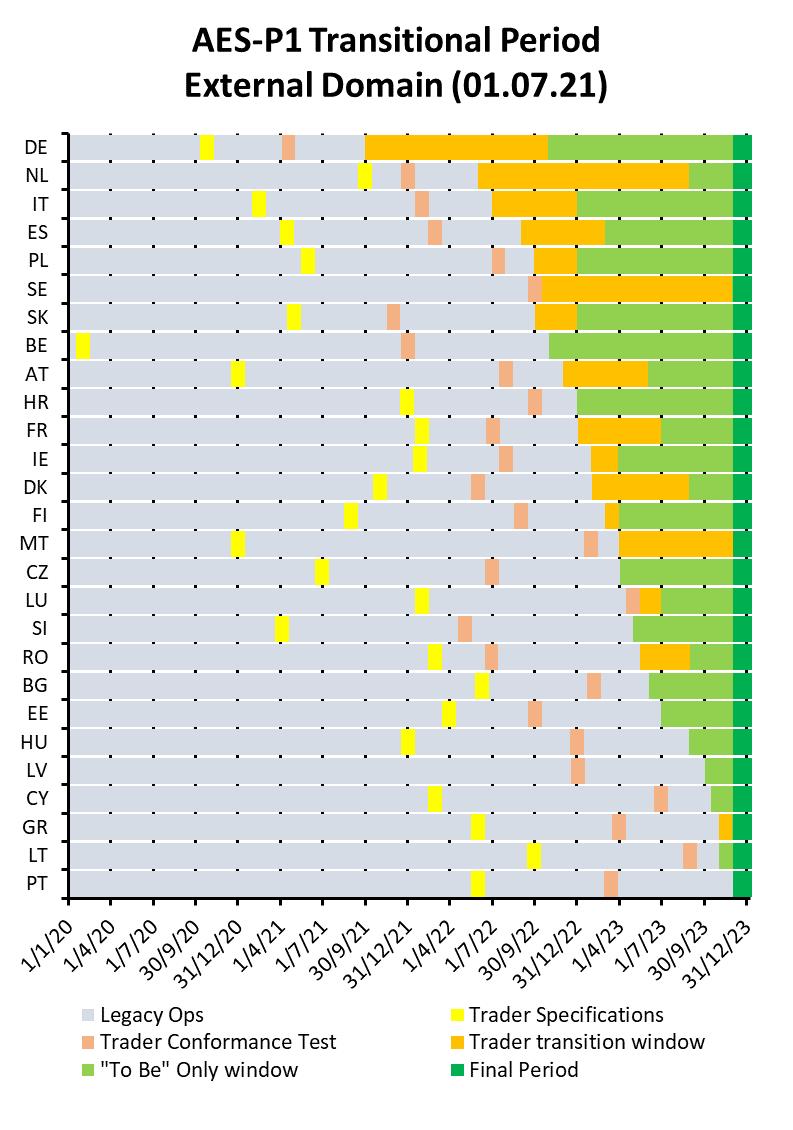
Figure 56: AES – Component 1 Transitional Period
Regarding AES - Component 2 (National Export Systems), the following Member States have not yet started: GR, LT, LV, PT, and SE. BE, IT and LU did not provide percentage of completion information.
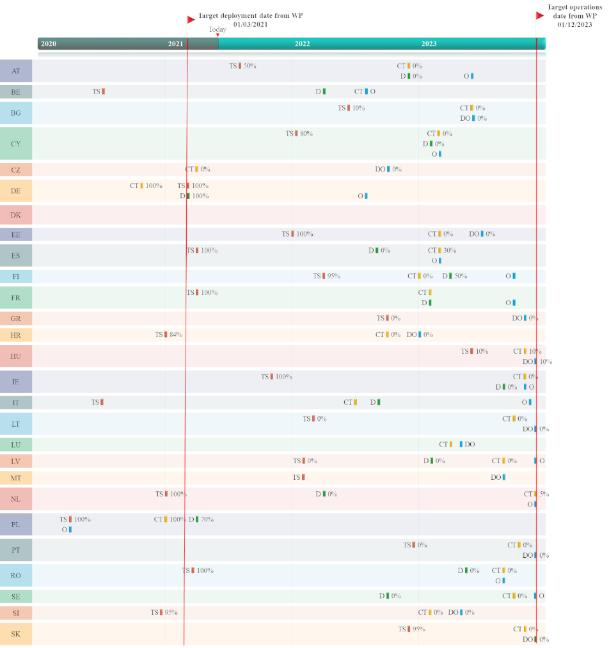
Figure 57: Percentage of Completion per Phase – AES – Component 2
5.Annex 1 – Planning Overview – UCC Work Programme Projects
Figure 58
provides a visual overview of the planning of the UCC Work Programme projects. There has been no change compared to Q4 2020. The overview provides the timeline of the development of the projects. The ‘N’ symbol identifies the national projects. The other projects are related to trans-European systems, which might have a central or decentralised architecture.

Figure 58: Planning Overview: UCC Work Programme Projects – Status Q4 2021
6.Annex 2 – Acronyms, Abbreviations & Key Terms
Acronym
|
Description
|
|
AEO
|
Authorised Economic Operator
|
|
ADM
|
Adaptive Development Methodology
|
|
AES
|
Automated Export System
|
|
AIS
|
Automated Import System
|
|
ATLAS
|
Automated Customs Tariff and Local Processing Application System
|
|
BPM
|
Business Process Model
|
|
BTI
|
Binding Tariff Information
|
|
CAP
|
Common Agricultural Policy
|
|
CBG
|
Customs Business Group
|
|
CCI
|
Centralised Clearance for Import
|
|
CCN; CCN2
|
Common Communication Network; Common Communication Network 2
|
|
CDC
|
Customs Duties Calculation
|
|
CDM
|
Customs Data Model
|
|
CDMS
|
Customs Decisions Management System
|
|
CDS
|
Customs Decisions System
|
|
CGM
|
Customs Goods Manifest
|
|
COM
|
European Commission
|
|
CPG
|
Customs Policy Group
|
|
CRS
|
Customer Reference Services
|
|
CS/RD; CS/RD2
|
Central Services – Reference Data; Central Services – Reference Data 2
|
|
CTC
|
Common Transit Convention
|
|
DA
|
Delegated Act
|
|
DDNTA
|
Design Document for National Transit Application
|
|
DDNXA
|
Design Document for National Export Application
|
|
DG TAXUD
|
Directorate General for Taxation and Customs Union
|
|
DMS
|
Declaration Management System
|
|
DTCA
|
Decision Taking Customs Authority
|
|
EBTI
|
European Binding Tariff Information
|
|
ECCG
|
Electronic Customs Coordination Group
|
|
ECS
|
Export Control System
|
|
EIDR
|
Entry in the Declarant's Records
|
|
EMCS
|
Excise Movement and Control System
|
|
EMSW
|
European Maritime Single Window
|
|
ENS
|
Entry Summary Declaration
|
|
EORI
|
Economic Operators Registration and Identification
|
|
EOS
|
Economic Operator System
|
|
ETCIT
|
Expert Teams on new approaches to develop and operate Customs IT systems
|
|
EUCDM
|
European Union Customs Data Model
|
|
EUCTP
|
EU Customs Trader Portal
|
|
EXP
|
Export
|
|
EXS
|
Exit Summary Declaration
|
|
FTA
|
Free Trade Agreement
|
|
GSP
|
Generalised Scheme of Preferences
|
|
GUM
|
Guarantee Management
|
|
IA
|
Implementing Act
|
|
ICS; ICS2
|
Import Control System; Import Control System 2
|
|
IMP
|
Import
|
|
INF
|
Information Sheet
|
|
INF SP
|
Standardised Exchange of Information for Special Procedures
|
|
iOSS
|
Infinite Open Source Solutions
|
|
LVC
|
Low Value Consignments
|
|
MASP-C
|
Multi-Annual Strategic Plan for Customs
|
|
MS
|
Member State
|
|
MVP
|
Minimal Viable Product
|
|
NCTS
|
New Computerised Transit System
|
|
NES
|
National Export System
|
|
NoA
|
Notification of Arrival
|
|
NSP
|
National Special Procedures
|
|
NTA
|
National Transit Application
|
|
OCT
|
Overseas Countries and Territories
|
|
PDS
|
Product Disclosure Statement
|
|
PG
|
Project Group
|
|
PN
|
Presentation Notification
|
|
Q1/2/3/4
|
Quarter 1/2/3/4
|
|
REX
|
Registered Exporters System
|
|
RPS
|
Regulatory Procedure with Scrutiny
|
|
RUP
|
Rational Unified Process
|
|
SAFe
|
Scaled Agile Framework
|
|
SP
|
Special Procedures
|
|
STI
|
Shared Trader Interface
|
|
T2L
|
Means of proof of the Customs status of Union goods
|
|
T2LF
|
Means of proof of the Customs status of Union goods for goods transported to, from or between the non-fiscal areas
|
|
TAPAS
|
TAXUD AS4 Profile
|
|
TARIC3
|
Integrated Tariff of the European Communities 3
|
|
TP
|
Trader Portal
|
|
TS
|
Temporary Storage
|
|
TSD
|
Temporary Storage Declaration
|
|
UCC
|
Union Customs Code
|
|
UI
|
User Interface
|
|
UUM&DS
|
Uniform User Management & Digital Signature
|
|
VAT
|
Value Added Tax
|
|
WP
|
Work Programme
|
Table 48: Abbreviations and Acronyms


