Table of contents
1.
Introduction: Political and legal context
1.1.
Benefits of Ecodesign and Energy Labelling
1.2.
Legal framework
1.2.1.
Current Regulation for off mode, standby and networked standby electric power consumption
1.3.
Legal context of the review
1.4.
Political Context
1.5.
Need to act
2.
Problem definition
2.1.
What are the problems?
2.1.1.
Problem 1: Outdated scope
2.1.2.
Problem 2: Outdated exemption creating uneven playing field
2.1.3.
Problem 3: Outdated requirements on maximum consumption in low power modes
2.1.4.
Problem 4: Lack of readily available information and use of unclear terms
2.2.
Who is affected by the problems?
2.2.1.
Consumers
2.2.2.
Manufacturers
2.2.3.
EU, Member States and MSAs
2.2.4.
Society as a whole
2.3.
How will the problem evolve?
2.3.1.
Market failure due to outdated scope
2.3.2.
Slow uptake of available technologies for more efficient low power modes would lead to missed energy savings
3.
Why should the EU act?
3.1.
Legal basis
3.2.
Subsidiarity: Necessity of EU action
3.1.
Subsidiarity: Added value of EU action
4.
Objectives: What is to be achieved?
4.1.
General objectives
4.2.
Specific objectives
5.
What are the available policy options?
5.1.
What is the baseline from which options are assessed? - BAU (PO 1)
5.2.
Measures common to all policy options
5.2.1.
Measure 1 - Extension of scope to include adjustable furniture and motor-operated building elements
5.2.2.
Measure 4 - Requirement for information to be available on publicly accessible websites and in user manuals
5.2.3.
Measure 5 - New definition and further clarifications
5.3.
Policy option 2 - Lenient Measure (PO 2)
5.3.1.
Measure 2, sub-measure 2.1 - Remove exemption for stationary products with LV EPS (while maintaining it for portable products)
5.4.
Policy option 3, sub-option 1 - Balanced EU measure (PO 3.1)
5.4.1.
Measure 3, sub-measure 3.1 - Reduce the power consumption in standby for products with status displays to 0.8 W
5.4.2.
Measure 2, sub-measure 2.1 - Remove exemption for stationary products with LV EPS (while maintaining it for portable products)
5.5.
Policy option 3, sub-option 2 - Balanced EU measure (PO 3.2)
5.5.1.
Measure 2, sub-measure 2.2 – Remove exemption for all products with LV EPS
5.6.
Policy option 4, sub-option 1 – Alternative Balanced EU measure (PO 4.1)
5.6.1.
Measure 3, sub-measure 3.2 - Lowering off mode requirement to 0.3 W
5.7.
Policy option 4, sub-option 2 – Alternative balanced EU measure (PO 4.2)
5.8.
Policy option 5 - Stringent EU measure (PO 5)
5.8.1.
Measure 3, Sub-measure 3.3: Reduce the power consumption in standby to 0.3 W
5.9.
Options discarded at an early stage
5.9.1.
Voluntary agreement by the industry
5.9.2.
Energy labelling
5.9.1.
Measures in support of circular economy objectives
5.9.2.
Introducing professional products and other office equipment in the scope
6.
What are the impacts of the policy options?
6.1.
Methodological considerations and key assumptions
6.2.
Environmental impacts
6.2.1.
Electricity savings
6.2.2.
Greenhouse gas emissions reduction
6.3.
Business impacts
6.4.
Consumer expenditure
6.5.
Social impacts
6.6.
Other impacts
6.6.1.
Small and Medium Size Enterprises (SMEs)
6.6.2.
Administrative burden and compliance costs
7.
How do the options compare?
7.1.
Summary of the impacts
7.2.
Sensitivity analysis – reduction of compliance costs over 6 years
7.3.
Sensitivity analysis – the general level of compliance costs
7.4.
Assessment of policy options
8.
Preferred option
8.1.
Preferred option – Why?
8.1.
REFIT (simplification and improved efficiency)
9.
How will actual impacts be monitored and evaluated?
Annex 1
Procedural information
Annex 2
Stakeholder consultation
Annex 3
Who is affected and how?
Annex 4
Analytical methods
Annex 5
The Ecodesign and Energy Labelling Framework
Annex 6
Existing policies, legislations and standards affecting off mode, standby and networked standby
Annex 7
Evaluation of Regulation (EC) No 1275/2008 on ecodesign requirements for standby and off mode, and networked standby
Annex 8
Sensitivity analyses
Annex 9
Clarification of scope
Annex 10
Glossary
1.Introduction: Political and legal context
This impact assessment relates to the review of Commission Regulation (EC) No 1275/2008
on the ecodesign requirements for standby and off mode, and networked standby, electric power consumption of electrical and electronic household and office equipment.
1.1.Benefits of Ecodesign and Energy Labelling
Ecodesign and energy labelling are recognised globally as one of the most effective policy tools in the area of energy efficiency. They are central to making Europe more energy efficient, contributing in particular to ‘The European Green Deal’
, the ‘Energy Union Framework Strategy’, and to the priority of a ‘Deeper and fairer internal market with a strengthened industrial base’. Firstly, this legislative framework pushes industry to improve the energy efficiency of products and removes the worst performing ones from the market. Secondly, it helps consumers and companies to reduce their energy bills. In the industrial and services sectors, this results in support to competitiveness and innovation. Thirdly, it ensures that manufacturers and importers responsible for placing products on the European Union (EU) market only have to comply with a single EU-wide set of rules.
It is estimated that by 2020, ecodesign and energy labelling regulations has delivered around 150 Mtoe (i.e. about 1748 TWh) of energy savings per year in primary energy, roughly equivalent to Italy's energy consumption, or around 45% of the EU 20% energy efficiency target by 2020. This represents savings of around 15% versus a Business-As-Usual scenario.
The average household will invest in more expensive and efficient products, but in return saves about € 285 annually on its energy bills by 2020. Although the cost for industry, service and wholesale and retail sectors will increase, it will result in € 66 billion per year of extra revenue by 2020.
This legislative framework benefits from a broad support from innovative European industries, consumers, environmental non-governmental organisations (NGOs) and Member States (MSs), because of its positive effects on innovation, increased information for consumers and lower costs, as well as environmental benefits.
The maximum standby and off mode consumption for a wide range of products have been subject to EU ecodesign requirements starting from 2010. Furthermore, networked standby consumption has been regulated since 2015.
Since its introduction, the scope of the Regulation has been amended several times, by removing some products from scope (see details in Section 1.2.1). The electricity savings estimated to be achieved by the current Regulation, after taking into account all scope amendments, are estimated at 33 TWh/year by 2020 and 44 TWh/year by 2030 (see details in Annex 7). It should be also noted that the ecodesign requirements on off mode, standby and networked standby set by the current Regulation have been transposed in the specific regulations for products that were exempted from scope. Thus, the current Regulation had in fact triggered energy savings far beyond those quantified here. However, for avoiding double-counting, those savings are accounted for in the impact assessments dedicated to e.g. televisions and electronic displays, computers, dishwashers and washing machines.
Additional savings of around 4 TWh/year by 2030 are estimated to be achieved after the application of the measures proposed in this impact assessment. In other words, the proposed new measures will bring around 9% additional savings by 2030 compared to what the Regulation in force is estimated to bring.
1.2.Legal framework
In the EU, the Ecodesign Framework Directive sets a framework requiring manufacturers of energy-related products to improve the environmental performance of their products by meeting minimum energy efficiency requirements, as well as other environmental criteria such as water consumption, emission levels or minimum durability of certain components before they can place their products on the market.
The Energy Labelling Framework Regulation complements Ecodesign by enabling end-consumers to identify the better-performing energy-related products, via the well-known A-G/green-to-red scale. The energy label is recognised and used by 85% of Europeans.
The legislative framework builds upon the combined effect of the two aforementioned pieces of legislation. See
Figure
1
for a visualisation of this effect.
Figure 1 Synergetic effect Ecodesign and energy labelling

The Ecodesign framework Directive and the Energy Labelling framework Regulation are implemented through product-specific implementing and delegated Regulations. Pursuant to Article 15.2 of the Ecodesign Framework Directive, the energy-related products that are covered must:
(I)represent a significant volume of sales (more than 200,000 units a year);
(II)have a significant environmental impact within the EU, and
(III) represent a significant energy improvement potential without increasing the cost excessively.
Pursuant to Article 17 of the Ecodesign Framework Directive, the industry can present voluntary agreements or other self-regulation measures as an alternative to the mandatory ecodesign requirements. If certain criteria are met, the Commission formally recognises these voluntary agreements
. The benefits are a quicker and more cost-effective implementation, which can be more flexible and easier to adapt to technological developments and market sensitivities.
For more details about the legal framework, including a full list of ecodesign and energy labelling measures, see Annex 5.
1.2.1.Current Regulation for off mode, standby and networked standby electric power consumption
Commission Regulation (EC) No 1275/2008, hereafter called the “Regulation”, currently sets ecodesign requirements with regard to off mode, standby, and networked standby electric power consumption. These modes are hereafter collectively called “low power modes”.
The scope of the Regulation covers electrical and electronic household and office equipment. The requirements are set with regard to their low power modes. Thus, the requirements address the states in which the equipment is not providing its main function(s) because it is either turned off or is in a state waiting for an activation signal, e.g. from a remote control (in standby) or from a smartphone app via an ICT network (in networked standby). Other power modes, such as active mode, are not addressed by this Regulation. They are usually addressed in product-specific regulations.
The Regulation is horizontal and covers a very broad range of vastly different products, grouped under four main categories: (i) household appliances (such as electric hobs and ovens, toasters, coffee machines, etc.), (ii) IT equipment (e.g. routers, Wi-Fi access points, printers and scanners), (iii) consumer equipment (Hi-fi and home theatre systems, video recording equipment, game consoles, electric musical instruments, etc.) and (iv) toys, leisure and sports equipment. Annex I of the Regulation presents an exhaustive list of the products covered.
To fall within the scope of the Regulation the products have to: (i) be sold as a single functional unit, (ii) be intended for use in households and/or offices, (iii) be dependent on energy inputs from the mains power source for functioning, and (iv) have a nominal voltage rating of 250 V or under.
Exemptions from scope – Since the Regulation was adopted over a decade ago, a conscious decision was made to move, whenever possible, the requirements on low power modes from this all-encompassing horizontal Regulation into vertical, product specific-regulations. This is usually done when new vertical regulations are adopted or when existing ones are amended. In these cases, when the requirements on low-power modes are transferred in product-specific regulations, the horizontal Regulation is amended by exempting from scope the products in question. This approach has two main benefits: (i) helps keeping the product-specific regulations simple enough, with all relevant ecodesign requirements (i.e. energy efficiency in active modes and in low-power modes) contained in the same piece of legislation, and (ii) allows adapting better the requirements on low power modes to the specificity of those respective products (both regarding the definitions of low power modes, and the maximum consumption allowed).
Three product groups, which were initially covered by this horizontal Regulation, have been removed from scope in the past, namely: televisions, computers, and products with low-voltage external power supplies. This change was made when vertical, product-specific regulations were adopted for these products. Additionally, three other product groups will be exempted from the scope of the Regulation starting with March 2021 as a result of recent revisions of their respective ecodesign regulations, namely: dishwashers, washing machines and electronic displays. See more details at the end of this section, explaining how various amendments to the current Regulation have added various exemptions to its scope.
Ecodesign requirements regarding the low power modes - while functioning, many products in scope of the Regulation spend the majority of their time in off mode, standby, or networked standby while plugged into the electric socket. It is thus essential to strictly limit their power consumption in these modes. Although some energy consumption is technically necessary in low power modes, it should be kept very small otherwise it would have a significant impact on the overall household and office energy consumption due to the high number of appliances in current use. This Regulation is also essential for protecting the users’ interest, as not all of them might be aware that their products are still consuming small amounts of energy even if they are not rendering any noticeable service.
|
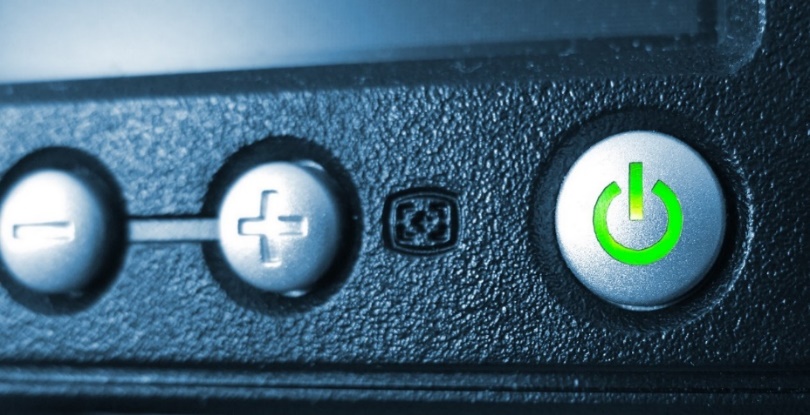
In off mode the products may provide an indication of being turned off (e.g. via a LED indicator) and/or provide functionalities for ensuring electromagnetic compatibility.
See example in
Figure 2
.
|
Figure 2: Example of an off button with LED indicator for device in off mode
 Source: iStock photo
|
|
In standby products provide reactivation functions (e.g. the capability to be turned on via a remote control or a signal from an internal clock or sensor). Products may also provide an indication of being in standby (e.g. via a LED) and/or an information or status display (e.g. a small display showing the time and/or other information).
See example in Figure 3
|
Figure 3: Example of an audio device in standby

Source: iStock photo
|
|
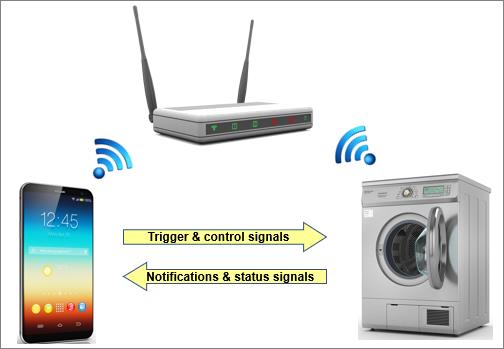
In networked standby products should be able to resume functioning by receiving a signal sent via an ICT network (e.g. a local wireless network, a Bluetooth connection etc.).
See schematic example in
Figure
4
.
|
Figure 4: Schematic illustration of networked standby with a mobile phone controlling a tumble drier with signals over Wi-Fi
Source: Viegand Maagøe edits of iStock photos
|
The main difference between standby and networked standby is that in networked standby the products can be reactivated by other devices (e.g. by a smart phone using an app for remotely starting a dishwasher or switching on the television, by a computer requesting internet access from a router, or by an incoming internet telephone call), while in standby the product can only be reactivated through built-in functions (e.g. self/delayed start based on timer) or an accompanying remote control.
The Regulation has been amended eight times in the past, as shown in
Table
1
. The first three amendments removed specific products from the scope and were made through the adoption of specific (vertical) regulations addressing those products. For televisions and computers, off mode and standby requirements were transferred from the horizontal Regulation to the product-specific ones and were further adapted to their specificities. In the case of external power supplies (EPSs), products using low voltage (LV) EPSs (such as mobile phones) were exempted from the Regulation with the argument that the off mode consumption of these products would be compensated by the more stringent no-load requirements in the EPS Regulation.
The fourth amendment was made due to technological developments resulting in many electronic appliances being often in networked standby rather than in standby. The aim was to enable them to be turned on via a network trigger signal. Networked standby is a different condition than standby and therefore needs separate definition and separate power limits, as it typically needs more power.
The fifth amendment was made to better specify how to use tolerances in verification procedures. Similar amendments were made to most of the other ecodesign regulations in force. Finally, three more amendments have removed computer displays, dishwashers and washing machines from the scope of this Regulation, in a similar manner to the past amendments regarding computers and televisions.
Table 1: List of amendments and their effects to Regulation 1275/2008
|
Regulation
|
Effect
|
|
Commission Regulation (EC) No 278/2009
|
Removing products equipped with a LV EPS from the scope.
|
|
Commission Regulation (EC) No 642/2009
|
Removing televisions from the scope.
|
|
Commission Regulation (EU) No 617/2013
|
Removing desktop computers, integrated desktop computers and notebook computers from the scope.
|
|
Commission Regulation (EU) No 801/2013
|
Expanding the requirements to include networked standby in the Regulation.
|
|
Commission Regulation (EU) 2016/2282
|
Use of tolerances in verification procedures (omnibus regulation amending several ecodesign regulations)
|
|
Commission Regulation (EU) 2019/2021
|
Removing electronic displays from the scope
|
|
Commission Regulation (EU) 2019/2022
|
Removing dishwashers from the scope
|
|
Commission Regulation (EU) 2019/2023
|
Removing washing machines from the scope
|
The ecodesign requirements specify maximum power consumption in off mode, standby, and networked standby mode, and have been introduced in different tiers by Regulations 1275 and 801 (entering into force in different years). The requirements are listed by year of effect in
Table
2
. The Regulation additionally requires that devices have an off and/or standby mode, and that devices automatically go into off mode, standby or networked standby after a certain period of inactivity.
Table 2: Ecodesign requirements for maximum energy consumption in low power modes.
|
Low power modes
|
2010
|
2013
|
2015
|
2017
|
2019
|
|
Standby mode [W]
|
2 / 1
|
1 / 0.5
|
1 / 0.5
|
1 / 0.5
|
1 / 0.5
|
|
Off mode [W]
|
1
|
0.5
|
0.5
|
0.5
|
0.5
|
|
Networked standby mode [W]
|
-
|
-
|
12 / 6
|
8 / 3
|
8 / 2
|
1.3.Legal context of the review
Article 7 of the Regulation requires the Commission to review it in the light of technological progress no later than 7th January 2016 and to present the results to the Consultation Forum. It also requires the review to address in particular: the scope and the requirements for standby/off mode, the appropriateness and the level of the requirement for networked standby with regard to its third stage of implementation (that starts in January 2019), products equipped with electric motors operated by remote controls, and professional equipment. A review study
focusing on a technical, economic and environmental analysis was carried out to assess the potential for updating the Regulation.
Moreover, the Ecodesign working plan 2016-2019 also includes this review.
1.4.Political Context
Several new policy initiatives indicate that ecodesign and energy labelling policies are relevant in a broader political context. The main ones are The European Green Deal, which calls for the prioritisation of the energy efficiency principle when acting to decarbonise Europe by 2050, the Energy Union Framework Strategy, which calls for a sustainable, low-carbon and climate-friendly economy, the Paris Agreement, which calls for a renewed effort in carbon emission abatement, the Gothenburg Protocol
, which aims at controlling air pollution, the Circular Economy Initiative
, which amongst others stresses the need to include durability, reparability and recyclability in ecodesign, the Emissions Trading Scheme (ETS), aiming at cost-effective greenhouse gas (GHG) emissions reductions and is indirectly affected by the energy consumption of the products in the scope of ecodesign and energy labelling policies, and the Energy Security Strategy
, which sets out a strategy to ensure a stable and abundant supply of energy.
1.5.Need to act
The need to act is driven by the following main considerations:
Cost effective energy savings:
Consumers, manufacturers and society as a whole stand to benefit from the fact that cost effective energy savings can still be achieved with regard to energy consumption in low power modes. By way of illustration, further electricity savings of 2 TWh per year by 2025 and 4 TWh per year by 2030 could be secured in a cost-effective way. This would be additional to the savings brought by the existing ecodesign requirements (estimated at 33 TWh per year by 2020, according to the evaluation of the current Regulation in Annex 7).
Other policies/political imperatives:
Several other policies and political priorities require the ecodesign reviews to look beyond the technical revisions mentioned in the review article of the existing regulations, e.g.:
·renewed effort in carbon emission abatement through the Paris agreement on climate change;
·the Better Regulation policy aiming at more efficient and effective legislation;
·renewed EU energy efficiency target for 2030.
2.Problem definition
2.1.What are the problems?
The problems identified, in relation with possible options for addressing them, were discussed with stakeholders in meetings that took place during the review study, and at the Consultation Forum. Stakeholders’ views are outlined in Section 5, and a detailed account is presented in Annex 2.
2.1.1.Problem 1: Outdated scope
Figure 5 Problem 1, its drivers and consequences
The problem: Not all relevant products are regulated and therefore consume more energy than they should have when are in low power modes. The Regulation was adopted 10 years ago, when the scope was defined for covering all household and office products that were considered suitable for being covered by a uniform, horizontal regulation. Meanwhile, technological progress led to a substantial increase in the number, type and functionalities of products having low power modes, which is beyond the analyses and projections carried out over a decade ago. This results in the scope of the Regulation no longer being able to cover adequately the market today and in the near future.
The review study that supports the current revision of the Regulation investigated additional product groups, not yet regulated with regard to consumption in low power modes. It concluded that two large product groups (motor-operated building elements and adjustable furniture) have substantial energy savings potential for being included in the scope. Examples of motor-operated building elements, as can be seen in
Figure
6
, feature electric motors and integrated controllers (used only to move elements such as windows and blinds) linked to a central control system. All these elements can have standby or networked standby consumption. The motor-operated building elements in question are simple products used for home automation, not the complex Building Management Systems (BMS) used for larger commercial buildings, which are in the scope of a separate Commission ecodesign initiative on Building Automation and Control Systems (BACS). Examples of adjustable furniture can be height-adjustable desks for home and offices that allow people to adjust height according to needs, and elevation beds that allow the shape of the bed to be altered for comfort or assistance, see
Figure
7
.
According to the review study, these products are typically in off mode, standby or networked standby 98% of the time, waiting for a control signal sent by remote controls, switches, sensors, etc. The market for motor-operated building elements is growing due to the increasing popularity of smart homes and Internet of Things (IoT) (see driver 1 below for details). The market for adjustable furniture is also increasing, due to the influence of other legislation (see driver 2 below) and consumers’ growing demand for comfort and convenience. It is therefore expected that the low power mode consumption of the installed stock of such products will grow in the future, especially if the market continues to evolve without having in place requirements on maximum energy consumption in low power modes.
Figure 6: Example of a home automation system using motor-operated building elements, which enables remote control of windows and blinds.

Source:
Velux
Figure 7: Examples of adjustable furniture


Source:
Linak
, under “desks” and “comfort furniture” business areas
A total EU stock of 111 million products (86 million motor-operated building elements and 25 million adjustable furniture units) consuming 2.4 TWh/year in low power modes was estimated for 2015. In 2030, a stock of 282 million with low power modes consumption of 5.4 TWh/year is estimated if no EU action is taken, according to this impact assessment. Including these products in scope of the Regulation would considerably reduce this consumption, by providing estimated savings of 3.1 TWh per year by 2030.
Other product groups, including professional products (e.g. professional ovens, dishwashers, washing machines, and dryers) and other office equipment not covered by the current Regulation (e.g. paper shredders, binding machines, staplers etc.), were considered by the review study for inclusion in the scope. However, they were not retained as a proposal because of two main considerations. Firstly, the estimated annual energy savings potential for such office equipment (not currently regulated) were assessed to be very small (approx. 0.06 TWh by 2025), and it was expected that in the future the demand for this type of products will continue to decrease. Secondly, although the potential annual savings for professional goods were estimated to be a little higher (around 0.4 TWh/year by 2025), due to the specialist use of these products there is currently a lack of harmonisation of their low power modes and therefore standardised testing would be challenging. For the latter category it was concluded that it would be more appropriate to include requirements on low-power modes in product-specific vertical regulations, whenever possible. For further details see Section 5.9.4.
Finally, the current scope has an exemption that is no longer fit for purpose. However, this is seen as a specific problem in its own right (with specific drivers and technological implications), and is therefore analysed under the next point (see Section. 2.1.2).
A special note should be made with regard to IoT. This term is a general designation stretching over products from many different categories. All these products have communication capabilities and exchange data between them (and over the internet). However, IoT is not a homogenous category of products, as it spans from smart thermostats and temperature sensors, to smart home appliances and intelligent chargers for electric vehicles. Many products falling under the ‘IoT’ designation are already covered by the current Regulation or by product-specific regulations as a result of scope amendments (as described in Section 1.2.1). They are the ‘smart’ versions of products such as televisions, washing machines, dish washers, coffee machines, game consoles, multimedia equipment and loud speakers etc. Some other IoT products, which are now present in increasing numbers on the market, are evaluated for inclusion in the scope through the current proposal (see the explanations below regarding motor-operated building elements, some of which are connected to the internet). Should there be other prominent IoT products emerging on the market in large numbers following future technological developments, and which would consume energy in low power modes, they will be examined in future revisions of this Regulation for potential inclusion in scope.
Driver 1: Technological progress
A major driver is technological progress over the last decade, which increases the number and types of products that started to be operated by small motors or actuators, which means they consume electricity in low power modes. The convergence of multiple technologies such as omnipresent wireless communication, real-time analytics, sensory advancement, and embedded systems have enabled the bloom of the IoT products, which are forecast to increase greatly during the next 10 years (see
Figure
8
). This development includes sensors to be used for motor-operated building elements e.g. sensors for temperature, rain, pressure, light, presence and motion detection. This enhances the functionalities and facilitates the wide deployment of motor-operated building elements.
For exemplification, the number of IoT devices is expected to more than double from 2016 to 2020, and the reduction in costs and increase in efficiency of electronic circuits have resulted in more products being equipped with electronically extended functionalities. Although motor-operated building elements controlled via sensors could be estimated to be a small fraction of the total IoT products, these products and similar manually controlled ones have emerged in great numbers over the last decade on the back of this technological progress.
Figure 8: Worldwide connected IoT devices
Source: Statista.com, accessed April 2018
Driver 2: Incentives triggered by other legislation
Legislation passed both at EU and Member States level, which results in overall energy savings and brings multiple benefits in other areas (e.g. GHG emissions abatement, personal/worker health and safety), incentivises automation in buildings (as explained below). Therefore, some (traditionally simple, not electrically-operated) products might become more sophisticated and start consuming energy.
Buildings are responsible for 40 % of energy consumption and 36 % of GHG emissions in the EU. Currently, about 35 % of EU buildings are over 50 years old. By improving the energy efficiency of buildings, total EU energy consumption could be reduced by 5‑6 %, whilst GHG emissions could decrease by about 5 %. These are the reasons for the legislation at EU and national levels addressing building energy consumption.
However, the use of structure, design and material composition start to reach the upper threshold of efficiency. Therefore, to reduce further the energy consumption of a building, many are turning to automation and controls. Experts expect that there is an annual energy saving potential of 23.4% in residential buildings, and much of it can be achieved by residential and home automation using motor-operated building elements. Industry has anticipated a boost in building automation and controls growth due to the legislation targeting building energy consumption.
There is also an increasing global focus on ergonomics at the workplace due to occupational health concerns. According to the standby review study, in the Nordic countries, such as Sweden, Finland, Denmark and Norway, at least 80% of all workers already have height-adjustable desks. In Denmark it is a mandatory requirement for the employers to offer desks that are easy to adjust to the employees and to both sitting and standing positions, hence creating incentives and boost for the industry. In other countries, such as Germany, the penetration rate is only 25 % and even lower in southern European countries. However, according to industry, there has been a strong growth in sales in the recent years and it is estimated to increase in the coming years.
2.1.2.Problem 2: Outdated exemption creating uneven playing field
Figure 9 Problem 2, its drivers and consequences
The problem: The current exemption for equipment with low voltage external power supplies (LV EPS) is outdated and no longer fit for purpose because: (i) many more products than initially intended are now exempted, and (ii) an uneven playing field is created between products with identical functionalities, where some of them are exempted from the Regulation while others are not.
The current Regulation exempts from scope products that use LV EPSs to function. The exemption was intended to apply mainly to mobile phones or small portable products, which were seen to be already energy efficient and therefore only the EPS consumption was important (see additional explanations in section 1.2.1). However, according to the review study, due to the technological development towards products using 5 V as the supply voltage level, there has been an important influx of products other than mobile phones beginning to use LV EPSs. These include both stationary and portable products: small network equipment (including Wi-Fi routers and modems), toys and consumer equipment (such as camcorders and wireless speakers with rechargeable batteries). This development goes well beyond what was initially intended to be exempted.
Additionally, the exemption was based on a specific assumption regarding the functioning of products with LV EPS. Mobile phones are put on charge and, after the charging cycle is completed, they are either unplugged from the power mains or they remain plugged in but draw virtually no electricity. Thus, having a requirement in place that sets a good efficiency of the LV EPS in no-load mode was seen as a proxy for guaranteeing a good overall efficiency of the whole combination (LV EPS plus phone) for when the phone is fully charged and in standby. Therefore, the ecodesign regulation for EPSs, which guaranteed a good EPS efficiency in no-load mode, added an exemption in the standby Regulation for products equipped with LV EPS. However, this usage pattern is no longer typical for the more recent products that are being exempted. For instance, stationary products such as small network equipment are permanently plugged in and draw electricity. Consequently, the LV EPS efficiency in no-load mode no longer helps to achieve a good efficiency of the whole combination LV EPS plus product.
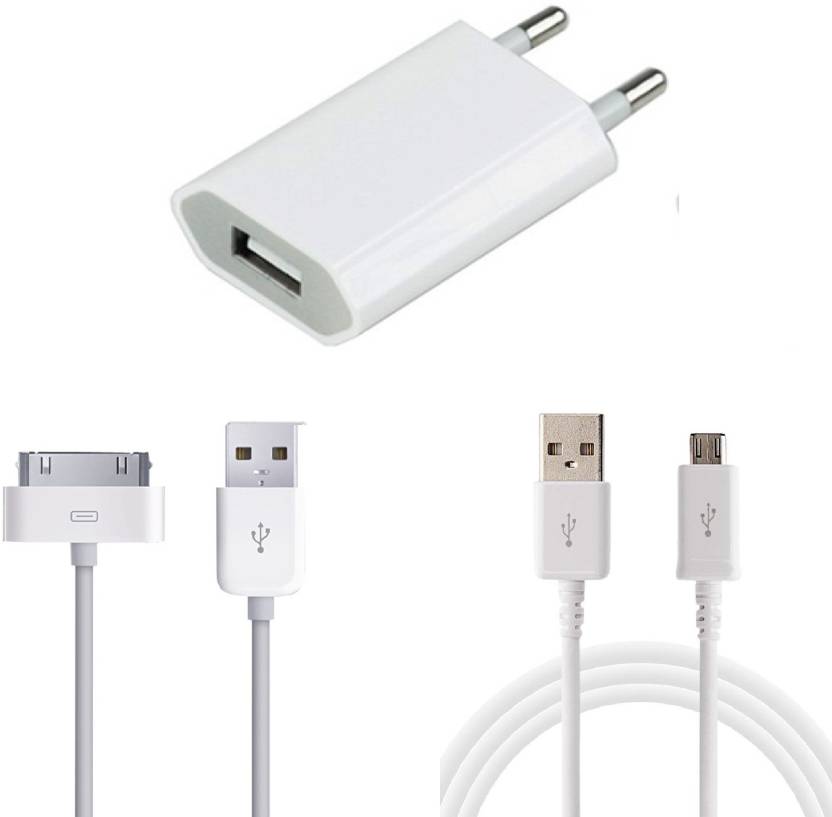
Figure 10: Picture of a LV EPS for smartphones.
Source: EPS manufacturer
Furthermore, an uneven playing field was first experienced by the manufacturers of mobile phones, where products are charged at different voltage levels and thus some products have LV EPSs (and are exempted from the Regulation), and others do not have such EPSs and therefore need to comply with the Regulation. The functionality of phones - both within the scope and exempted - is fundamentally identical. Networking equipment is another example where products with similar functionalities could be either in scope or exempted. These products are particularly problematic, as they tend to have high networked standby consumptions due to their high network availability functions. For instance, according to the review study about 30% of all routers are equipped with LV EPSs and are thus currently exempted from the Regulation.
The exemption has also created a loophole that could be exploited for circumventing the Regulation. Manufacturers can produce equipment with weaker designs, which consumes more energy than technically needed in standby, as long as the product is equipped with a LV EPS. As this is a design choice it is of course challenging to obtain figures regarding counter-factual scenarios (i.e. how many products were designed to use a LV EPS for being able to claim an exemption under this Regulation). However, it is clear that such a practice could create and/or deepen an uneven playing field, and could potentially force other manufactures to follow suit. This could result in higher user expenditure over the life cycle of products (due to higher energy consumption) and an increase in related GHG emissions. The effect of the Regulations would hence diminish, and the full savings potential not would not be reached.
Finally, technological progress over recent years has made it difficult to assess for some products whether they are exempted or not. A new type of adaptive charging EPS (so called ‘fast chargers’) can supply different voltage outputs depending on the products they are connected to. These EPSs can supply an output of 5 V (i.e. they could potentially meet the LV EPS definition) if the main product they connect to is not compatible with fast charging. However, the same EPS can also supply output voltages of up to 20 V (so no longer being a LV EPS) to products which are compatible with fast charging. This could create real difficulties in market surveillance, when interpreting whether some products are using LV EPS (and therefore are allowed to be exempted from the Regulation), or not (and therefore should comply with the ecodesign requirements).
This impact assessment estimates a total stock of 797 million products equipped with LV EPS, consuming 1.5 TWh/year in low power modes in 2015. The projections increase this numbers to 918 million products, consuming 2.1 TWh/year in low power modes in 2030. Applying ecodesign requirements would save 0.4 TWh/year by 2030.
Driver: Technological progress
Technological developments regarding the size and efficiency of microprocessors have resulted in products generally becoming more efficient. This, coupled with the rapid advancement in low-voltage components, has enabled many products to function with LV EPSs. This is especially the case for small products operated by microprocessors such as network equipment.
This technological progress is complemented by consumer demand for convenience, in this case meaning the use of the same EPS with several devices. The newer USB Power Delivery (USB PD) specification allows the use of so-called USB Type-C standardised charging connectors to be installed in notebook computers, mobiles, tablets and other electronic equipment. EPSs with USB Type-C connectors enable charging with variable power outputs (up to 100 W) and variable voltage levels (5-20 V), thus catering for the needs of a wide range of devices. As evidence of the increasing popularity of products with USB Type-C connectors, their number has increased globally from nearly zero to more than 1 billion in 2017 and is expected to grow to 5 billion in 2021.
2.1.3.Problem 3: Outdated requirements on maximum consumption in low power modes
Figure 11 Problem 3, its drivers and consequences
Problem: Outdated requirements on low power modes do no longer capture all possible energy savings. Technological progress now makes it possible for a wide range of products to consume less electricity in various low power modes (see the driver below). Without a timely update of the ecodesign limits set by the Regulation, this effect will be lost as manufactures have little to no incentive to integrate state-of-the-art technologies and redesign current and future products.
The review study analysed the possibilities of reducing consumption in off mode and standby. Networked standby was subject to the study only with regard to non-HiNA equipment, with a view to assess the suitability of its third tier of implementation (which entered into force in January 2019). The networked standby requirements for HiNA equipment were not analysed, as the latest tier only entered into force recently (January 2017), and therefore the full impact is not yet established.
As the Regulation is horizontal and covers very diverse types of products, general Best Available Technology (BAT) levels are rather hard to quantify. The review study however concluded that many products on the market already consume less than 0.5 W in both standby and off modes, with BAT products reaching 0 W consumption. See
Table
3
for a comparison between the BAT levels from the Regulation, compared to the findings from the review study.
Table 3: Benchmark levels from the Regulation compared to the review study.
|
Mode
|
Power consumption [W]
|
|
|
Regulation No 1275/2008 BAT
|
Review study BAT
|
|
Standby
|
0.1
|
0.03
|
|
Standby (with information display)
|
0.1
|
0.1
|
|
Off mode
|
0 - 0.3
|
0.0
|
|
Networked standby, non HiNA
|
1
|
0.36
|
|
Networked standby, HiNA
|
3
|
0.6
|
Source: Regulation No 1275/2008 and standby review study 2017
The review study states that many product groups can consume below 0.3 W in off mode on average, showing that the market is technologically ready for new regulatory limits. As an example,
Figure
12
plots the off mode consumptions for some major household appliances and equipment.
Figure 12: Off mode consumption of tumble dryers, printers, audio equipment.
Source: Review study on Standby Regulation, Viegand Maagøe 2017, figure 18
It is estimated that within the scope of the current standby Regulation there will be 5.1 billion products in use in the EU in 2030 (see
Figure
13
). They are projected to consume 31 TWh/year of electricity in low power modes (see Annex 7 - Evaluation of current Regulation) according to this impact assessment.
Figure 13: Sales and stock estimates for products with standby consumption.
Source: Based on calculations by Viegand Maagøe (see Annex 4)
Lowering the off mode consumption level could result in 2.1 TWh/year additional energy savings by 2030.
Driver: Technological progress
The main driver is the general technological progress in integrated electronic circuits. The efficiency of a circuit is evaluated in terms of both energy consumption and the density of processing power compared to size of the printed circuit board and/or microprocessor die. Both aspects have improved considerably in the last 10 years, especially as the size of transistors has moved from the 45 nm technology in 2008 to 10 nm in 2017. This results in much smaller microprocessors, which have lower power consumptions. This is the general effect of “Moore’s law”, and even though the effect is starting to diminish, further improvements of transistor sizes are expected in the years to come .
This technological process facilitated the inclusion of integrated electronic circuits in products that did not have them before, such as toasters (timer and display), hand blenders (speed and child protection) and coffee machines (auto-off, display and brewing process control). With integrated electronic circuits, soft switch buttons are often used because it is both cheaper and more design-friendly to use soft instead of hard switches. The first generations of the soft switches had higher power consumption allowing them to comply only with 0.5 W off mode requirement. However, technological progress over recent years has made it possible to use low power on-off controls with power levels typically below 0.3 W. These control parts come at practically no cost increase for the product, and in combination with efficient power supplies they allow a wide variety of appliances to reach very low off and standby consumptions.
2.1.4.Problem 4: Lack of readily available information and use of unclear terms
Figure 14 Problem 4, its drivers and consequences
Problem: The current Regulation does not require manufacturers to publish information regarding the off mode and standby consumption, although this is required for networked standby. In the latter case, the information is made available on manufacturers’ freely available websites and in the user manuals.
This creates problems for market surveillance authorities (MSA) in the MS. As the scope of the Regulation is very wide, the lack of freely available information on standby and off mode consumption hinders a rapid gathering of information or the use of data acquisition tools such as web crawlers, which would facilitate inexpensive market screenings. This reduces the efficiency of market surveillance due to low data availability.
For consumers, although standby consumption is not a deciding factor when buying new appliances, the visibility of standby and off mode consumption for all products will raise awareness of the importance of low power modes consumption and their rational use. The inconsistency of availability of standby consumption (compared to networked standby) could confuse the consumers, and the lack of information could also be misinterpreted as a lack of a standby mode in the product.
Additionally, the experience gathered by the MSAs, the Commission and the industry in implementing the Regulation revealed that some terms and formulations need further clarifications. These are:
·‘Main function’ is used in several articles, sometimes in combination with ‘intended use’. Neither of them is defined, but rather common sense was applied for judging the situations a product might be in. However, the main functions are instrumental for market surveillance, and without proper descriptions in the technical documentations the MSAs might encounter problematic situations during inspections;
·The test procedure for networked equipment with so-called ‘active cable connections’ needs to be slightly amended for adapting to the specifics of this technology;
·The requirement to offer the users the possibility to deactivate wireless connections needs to be further detailed. In some cases, the equipment does not function without a wireless connection, therefore this requirement should not apply.
Diver: Complex regulation with an early adoption
The Regulation was one of the first ecodesign regulations ever adopted in the EU. Therefore, the Regulation was already in place when the provision of information on freely accessible websites became a common requirement for all Ecodesign Regulations. The Ecodesign Framework Directive lays down the basis for having information requirements (i.e. specific data and information on the product's performance relevant for consumers, organisations and MSAs to be published on web sites and added in the user manuals).
The requirement to provide some information online was introduced later in the Regulation, with an amendment focusing on the introduction of networked standby (Regulation (EU) No 801/2013). However, the information requirement applied only to that mode, and not to standby and off mode.
With regard to the terms used, the ‘main function’ was neither defined in the initial Regulation, nor in the amendment with regard to the networked standby. The amendment brought many important changes to the Regulation, and relies heavily on correctly identifying the ‘main function(s)’ and ‘intended use’ of products for setting ecodesign requirements. Furthermore, these changes to the Regulation introduced requirements that, based on the practical experience gained in enforcing them on the market, need to be better explained.
2.2.Who is affected by the problems?
2.2.1.Consumers
Consumers are affected by missed energy and financial savings because the scope of the Regulation does not include products with LV EPS, motor-operated building elements and adjustable furniture. Annual financial savings of 3.5 billion € by 2030 would be missed simply because the manufacturers lack the economic incentives to adopt voluntarily more efficient off mode and standby technologies.
Consumers could also miss energy and financial savings because the products might not use optimal solutions. Technological progress has resulted in inexpensive and efficient off mode solutions being readily available, but manufacturers would not actively adopt them in the absence of regulatory requirements, A household containing 14 products in the scope of the Regulation would spend around 96 € for the electricity costs of these products for low power modes over seven years (taken as the average product lifetime). As an example, potential savings of 9-15 € (i.e. 9 to 16% of the associated electricity costs) could be ach if the off mode requirement was strengthened.
2.2.2.Manufacturers
Some manufacturers could try avoiding the Regulation by using LV EPSs for their products, thus having them exempted from the Regulation. By doing so, they would save development and integration costs by using cheaper components. They could thus gain an unfair advantage over competitors offering similar products, but which are not using LV EPSs and need to bear full compliance costs stemming from the Regulation requirements. Thus, some manufacturers could be affected by the uneven playing field created.
2.2.3.EU, Member States and MSAs
For EU and Member State policy makers, less effective and efficient ecodesign requirements means less contribution from a wide range of electrical and electronic products with low power modes consumption to achieving policy goals regarding single market, energy efficiency, energy security of supply, and climate change.
Enhancing information availability on websites via a regulatory instrument can improve the productivity of the MSAs, making the market surveillance of standby and off mode power consumption more cost-effective. Publicly available information facilitates the work of policy makers and researchers (for gathering evidence) and raises the awareness of consumers regarding consumption of products when placed in low power modes.
2.2.4.Society as a whole
For society as a whole, ambitious policies in the area of energy efficiency are important tools to mitigate climate change. Effective and efficient ecodesign regulations contribute to achieving the goals set in the Paris Agreement, and they help achieve the 2030 EU climate goal.
2.3.How will the problem evolve?
2.3.1.Market failure due to outdated scope
Ecodesign is a key driver for innovation in improving the energy efficiency of products and an excellent support to the EU’s technological and environmental leadership. However, without an updated scope that corresponds to the current technology and market trend, the Regulation fails to capture additional savings that could be quite important.
Without suitable ecodesign requirements in place, manufacturers have very little incentives to improve low power modes consumption as it is neither the most visible information to the consumers, nor it is (financially) rewarding for manufacturers to take action. Even though the technology is readily available with moderate additional costs, because of competitiveness reasons the manufacturers cannot market at higher prices products with lower consumption in of mode and standby. Without a push force from ecodesign, this could impact the component suppliers as well as end-product manufacturers negatively to abandon further Research and Development (R&D) into more efficient circuitry and electronics.
2.3.2.Slow uptake of available technologies for more efficient low power modes would lead to missed energy savings
Low power modes are found in a wide variety of household and office equipment. A typical household owns up to around 27 products that have off mode, standby or networked standby consumption. The number is increasing as consumers demand more convenience at home and at work. The figure below shows the sales-averaged consumption of low power modes per unit of product per year. The current Regulation has rapidly reduced the overall consumption in low power modes over the last decade despite the increasing number of products (see details in Annex 7 - Evaluation). The average standby power is 0.6 W and average off mode is 0.5 W from 2015. However, the consumption would generally stagnate around this level from now, instead of taking up the lower consumption level.
Figure 15 Sales-averaged electricity consumption in standby and off mode per unit of product per year in business-as-usual (BAU) and technically feasible (TF) scenario
Source: Based on calculations by Viegand Maagøe (see Annex 4)
Users of household and office equipment might forego additional energy savings resulting from the use of products with more efficient low power modes.
3.Why should the EU act?
3.1.Legal basis
The legal basis for acting at EU level through the Ecodesign framework Directive and the Energy Labelling Framework Regulation is Article 114 and Article 194 of the Treaty on European Union (TEU) and the Treaty on the Functioning of the European Union (TFEU) respectively. Article 114 relates to "the establishment and functioning of the internal market", while Article 194 gives, amongst others, the EU the objective "in the context of the establishment and functioning of the internal market and with regard for the need to preserve and improve the environment" to "ensure security of energy supply in the Union" and "promote energy efficiency and energy saving and the development of new and renewable forms of energy".
The Ecodesign Framework Directive includes a built-in proportionality and significance test. Articles 15(1) and 15(2) state that a product should be covered by an ecodesign or a self-regulating measure only if the following conditions are met:
·The product should represent a significant volume of sales;
·The product should have a significant environmental impact within the EU;
·The product should present a significant potential for improvement without entailing excessive costs, while taking into account:
oan absence of other relevant Community legislation or failure of market forces to address the issue properly,
oa wide disparity in environmental performance of products with equivalent functionality;
The procedure for preparing such measures is described in Article 15(3). In addition, the criteria of Article 15(5) should be met:
·No significant negative impacts on user functionality of the product;
·No significant negative impacts on health, safety and environment;
·No significant negative impacts on affordability and life cycle costs;
·No significant negative impacts on industry’s competitiveness (including SMEs see Section 6.6.1).
During the review process (Review study 2017), it was established that requirements for standby, off and networked standby modes of household and office electrical and electronic equipment fulfil the above-mentioned eligibility criteria.
The option of self-regulation has been considered. However, no industry proposal that would meet the requirements (inter alia minimum 80% market coverage) was put forward (see Section 5.9.1 for more details). In short, during the consultations, none of the MSs or any other stakeholder suggested any option other than setting minimum requirements at EU level.
3.2.Subsidiarity: Necessity of EU action
Action at EU level gives end-users the guarantee that they buy an energy efficient product and provides them with harmonised information no matter in which MS they purchase their product. This is becoming all the more relevant as the online trade increases. With ecodesign and energy labelling at EU level, energy efficient products are promoted in all MSs, creating a larger market and hence greater incentives for the industry to develop them.
It is essential to ensure a level playing field for manufactures and dealers in terms of requirements to be met before placing an appliance on the market and in terms of the information supplied to customers across the EU internal market. For this reason, EU-wide legally binding rules are necessary.
Market surveillance is carried out by the MSAs appointed by MSs. In order to be effective, the market surveillance effort must be uniform across the EU to support the internal market and incentivise businesses to invest resources in designing, making and selling energy efficient products.
In the particular case of low power modes, the Regulation should be updated to: (i) enable further cost-effective energy savings for end users, (ii) expand the scope by including products with potential for further energy savings and for closing a potential regulatory loophole, and (iii) improve the information provided to the users and other stakeholders with regard to the electricity consumption in off mode and in standby.
3.1.Subsidiarity: Added value of EU action
There is clear added value in requiring minimum energy efficiency levels at EU-level.
Without harmonised requirements at EU level, MSs would be incentivised to lay down national product-specific minimum energy efficiency requirements in the framework of their environmental and energy policies. This would undermine the free movement of products. Before the ecodesign and energy label measures were implemented, this was in fact the case for many products.
4.Objectives: What is to be achieved?
4.1.General objectives
The general objectives of a revised regulation on of mode, standby and networked standby are:
1.Facilitate the free circulation within the internal market of EU of electrical and electronic household and office equipment with low energy consumption in off mode, standby and networked standby;
2.Promote competitiveness of the EU electrical and electronic products industry through the creation or expansion of the EU internal market for more sustainable products;
3.Promote the energy efficiency by employing low consumption in off mode, standby and networked standby for electrical and electronic products as a contribution to the Commission’s proposal to reduce energy consumption by at least 30% and to the EU's objective to reduce domestic greenhouse gases (GHG) emissions by 40% by 2030; implement the ‘energy efficiency first’ principle established in the Commission Communication on Energy Union Framework Strategy: and
4.Increase the energy security in the EU and reduce energy dependency through a decrease in energy consumption of products in low power modes.
There are several synergies between these objectives. Reducing electricity consumption (by increasing the energy efficiency) leads to lower carbon, acidifying and other emissions to air. Tackling the problem at EU level enhances efficiency and effectiveness of the measure.
4.2.Specific objectives
The specific objectives of the policy options considered in this impact assessment are intended to correct the identified problems (see Section 2). These objectives aim to:
1.Expand the scope to (i) include new product types placed on the market in increasing numbers, and to (ii) close potential loopholes and ensure a level playing field, thereby promoting competitiveness of the EU industry of electrical and electronic products;
2.Update the requirements on low power modes in line with the technological developments, so that they continue to effectively support a functioning internal market, ensure further energy savings and reduce environmental impacts;
3.Enhance transparency regarding consumption in low power modes, raise their profile and improve consistency with other Ecodesign Regulations, thereby raising awareness of the policy framework update under objectives 1 and 2 with consumers and improving enforcement by Member States.
These objectives will drive investments and innovations in a sustainable manner, increase monetary savings for the end-users, and contribute to the objectives of the Energy Union Framework Strategy and the Paris Agreement. See below how the proposed measures relate to the specific objectives.
|
Drivers
|
Problems
|
Specific objectives
|
Measures
|
|
1. Technological progress;
2. Incentives triggered by other legislations
|
Outdated scope
|
Expand the scope (to include new product types placed on the market in increasing numbers)
|
Measure 1: Include motor-operated building elements and adjustable furniture in the scope.
|
|
Technological progress
|
Outdated exemption
|
Expand the scope (to close potential loopholes and facilitate a level playing field)
|
Measure 2: Include products equipped with LV EPS in the scope by removing the current exemption.
Measure 2 could be implemented by enforcing one of the two sub-measures below:
- Sub-measure 2.1: Include stationary products equipped with LV EPS in scope by partially removing the current exemption. Portable battery-operated products with LV EPS remain exempted;
- Sub-measure 2.2: Include all products equipped with LV EPS in scope by removing the current exemption.
The level of ambition with regard to scope expansion increases from Sub-measure 2.1 to Sub-measure 2.2.
|
|
Technological progress
|
Outdated requirements on power consumption
|
Update the requirements for low-power modes
|
Measure 3: Further reduce consumption in low power modes
Measure 3 could be implemented by enforcing any of the following components or a combination of them:
- Sub-measure 3.1: Reduce the power consumption in standby for products with status displays to 0.8 W;
- Sub-measure 3.2: Reduce the power consumption in off mode to 0.3 W;
- Sub-measure 3.3: Reduce the power consumption in standby to 0.3 W.
The level of ambition with regard to energy efficiency increases from enforcing only Sub-measure 3.1, to enforcing both 3.1 and 3.2, and furthermore enforcing all three of them (3.1 to 3.3)
|
|
Complex regulation with early adoption
|
Lack of readily available information and use of unclear terms
|
Enhance transparency regarding standby and off mode power consumption
|
Measure 4: Provision of information regarding standby and off mode power consumption on publicly accessible websites and user manuals.
|
|
|
|
|
Measure 5: Further clarify terms and definitions
|
5.What are the available policy options?
The procedure for identifying policy options follows from the Better Regulation Toolbox
. Specific measures in the policy options are the result of a combination of initiatives mentioned in the Review study 2017, comments from stakeholders and inspiration taken from the Ecodesign Framework Directive. They are aimed at addressing the issues identified in Section 2 and achieving the policy objectives defined in Section 4.
The options were designed in such a way as to allow analysing different ambition levels applied to two main aspects: (i) extension of scope, and (ii) maximum energy consumption in low power modes. Thus, the policy options were selected in such a way as to allow assessment of impacts for incremental increases in stringency of both dimensions previously mentioned.
The policy options considered are listed in
Table
4
(with detailed description presented in the next sections). Three measures, largely supported by stakeholders, are included in all policy options. PO 2 (‘Lenient option’), is considered a “low-hanging fruit” as it includes the common measures plus an additional one, also largely supported by stakeholders. As such PO 2 could be seen as a starting point, on top of which the other measures start building up in complexity and level of ambition.
PO 3 and 4 (‘Balanced options’) are based on the draft regulation discussed in the Consultation Forum in December 2017, and on the related feedback received from stakeholders. There were identified two decision points that needed special attention: 1) how much should the scope be expanded by including products with LV EPS (i.e. include only stationary products as supported by the industry, or include all products with LV EPS as asked by other stakeholders); and 2) how much should the energy efficiency requirements be tightened? For allowing a detailed analysis of the first point, each of PO 3 and PO 4 have two sub-options, with different ambitions in terms of scope expansion. For analysing the second point, PO 3 to 5 have increasing ambition levels in terms of energy efficiency. As such, PO 4 is largely the same as PO 3, with the additional requirement of reducing consumption in off mode to 0.3 W. Lastly, PO 5 (‘Ambitious option’) contains the most stringent elements proposed by the Review Study 2017 and collected from the stakeholder consultations. It builds on PO 4.1 by adding the measure of reducing to 0.3 W also the consumption in standby. Being the most ambitious measure, it also includes the most ambitious expansion of scope with regard to inclusion of products with LV EPS (i.e. inclusion of all such products).
Table 4: Available policy options
|
Policy option
|
Description
|
|
PO 1 - BAU
|
No action - The baseline, with current Regulation remaining unchanged.
|
|
Measures that are common to all policy options PO2 – PO5, and are additional to the specific measures stated for each option:
·Measure 1: Extension of the scope to include adjustable furniture and motor-operated building elements. Transitional period of two years.
·Measure 4: Provision of information regarding standby and off mode on publicly accessible websites and in user manuals.
·Measure 5: New definitions and further clarifications on the terms used.
|
|
PO 2
|
Lenient measure
·Measure 2, Sub-measure 2.1: Include stationary products equipped with LV EPS in scope by partially removing the current exemption. Portable battery-operated products with LV EPS remain exempted.
|
|
PO 3
|
Balanced EU measure
This policy option considers two possible implementations. The scope could be extended to cover either stationary products with LV EPS only, or all products with LV EPS. The requirements on low power modes are the same in both options.
|
|
|
PO 3.1
·Measure 2, Sub-measure 2.1: Include only stationary products equipped with LV EPS in scope by partially removing the current exemption. Portable battery-operated products with LV EPS remain exempted. Transitional period of two years;
·Measure 3, Sub-measure 3.1: Reduce the power consumption in standby for products with status displays to 0.8 W. Transitional period of two years.
|
PO 3.2
·Measure 2, Sub-measure 2.2: Include all products equipped with LV EPS in scope by removing the current exemption. Transitional period of two years;
·Measure 3, Sub-measure 3.1: Reduce the power consumption in standby for products with status displays to 0.8 W. Transitional period of two years.
|
|
PO 4
|
Alternative balanced EU measure
This policy option also considers two possible implementations. The scope could be extended to cover either stationary products with LV EPS only, or all products with LV EPS. The option is largely similar to PO 3, only adding the requirement regarding maximum consumption in off mode of 0.3 W.
|
|
|
PO 4.1
·Measure 2, Sub-measure 2.1: Include stationary products equipped with LV EPS in scope by partially removing the current exemption. Portable battery-operated products with LV EPS remain exempted. Transitional period of two years;
·Measure 3, Sub-measure 3.1: Reduce the power consumption in standby for products with status displays to 0.8 W. Transitional period of two years;
·Measure 3, Sub-measure 3.2: Reduce the power consumption in off mode to 0.3 W. Transitional period of two years.
|
PO 4.2
·Measure 2, Sub-measure 2.2: Include all products equipped with LV EPS in scope by removing the current exemption.
Transitional period of two years;
·Measure 3, Sub-measure 3.1: Reduce the power consumption in standby for products with status displays to 0.8 W. Transitional period of two years;
·Measure 3, Sub-measure 3.2: Reduce the power consumption in off mode to 0.3 W. Transitional period of two years.
|
|
PO 5
|
Stringent EU measure - Regulation entry into force July 2019
·Measure 2, Sub-measure 2.2: Include all products equipped with LV EPS in scope by removing the current exemption. Transitional period of two years;
·Measure 3, Sub-measure 3.1: Reduce the power consumption in standby for products with status displays to 0.8 W. Transitional period of two years;
·Measure 3, Sub-measure 3.2: Reduce the power consumption in off mode to 0.3 W. Transitional period of two years;
·Measure 3, Sub-measure 3.3: Reduce the power consumption in standby to 0.3 W. Transitional period of two years.
|
5.1.What is the baseline from which options are assessed? - BAU (PO 1)
The baseline used for the assessment of the policy options assumes the current standby Regulation is in place and maintained without further action, also known as the “Business as usual” (BAU) scenario. This means all changes to the scope, exemptions and regulation text introduced by the existing five amendments are reflected in this scenario and are kept as they are currently. Section 2.3 explains why continuing with BAU is problematic and EU action is needed.
It is worth noting that the current BAU scenario, which is the basis for assessing the impacts of the proposed policy options, differs from the “No regulatory effect” scenario denoted as BAU 0, which assume no standby regulation ever took place. BAU 0 is needed as a baseline to evaluate the effectiveness and efficiency of the existing Regulation. Further distinctions between BAU 0 and BAU are described in Annex 7.
In the BAU scenario, the current ecodesign regulation has transformed the market towards more efficient products with low off mode, standby and networked standby consumption (see evaluation of current Regulation in Annex 7). However, the effect of the Regulation is projected to slow down from 2019 onwards (as seen in the sales-averaged electricity consumption presented in Annex 7), due to the last tier of the networked standby requirement coming into force in January 2019. From then on, the low power modes consumption of products in scope are assumed to stagnate at the same level. This is assumed to happen because, according to industry stakeholders, increased functionalities and faster start-up are required in many modern products. This would lead to increased energy needs in low power modes, which will counterbalance any natural improvements in their consumption.
The requirement in the EU ETS to reduce CHG emissions, from amongst other things electricity production, will impact standby/off mode and networked standby of household and office equipment in the BAU scenario. Indeed, if the energy consumption in standby and off-mode is not reduced, the indirect emissions (i.e. from electricity consumption) relative to the allowed emissions will increase. In general, this means that more EU ETS emission allowances will have to be bought by electricity producers and that the price of electricity could slightly increase.
5.2.Measures common to all policy options
Measures 1, 4 and 5 described below are applicable to policy options 2 to 5. These measures are largely accepted by the stakeholders, will bring highest benefits (as is the case of measure 1 in terms of energy savings), or are clearly needed for improved clarity and consistency of the Regulation (measures 4 and 5). Therefore, they are included in all options, will apply under same conditions and are additional to the specific measures put forward by each policy option. For modelling purposes, the entry into force of the revised Regulation is assumed for July 2019.
5.2.1.Measure 1 - Extension of scope to include adjustable furniture and motor-operated building elements
Policy options 2 – 5 include different levels of scope extensions. However, the extension to include adjustable furniture and motor-operated building elements is common to all 4 options and responds to problem 1 in section 2.1. This would mean that these products would be subject to all applicable ecodesign requirements regarding off mode, standby and networked standby.
Stakeholder views: Generally wide acceptance of the proposal expressed by stakeholders. Member States (DE, DK, FR, NL) expressed support of the scope extension. Industry representatives (CECAPI and eu.bac) expressed doubts about the extension of the scope to motor-operated building elements and requested a clearer definition.
5.2.2.Measure 4 - Requirement for information to be available on publicly accessible websites and in user manuals
Measure 4 would ensure that the product information requirement is applicable to both networked and non-networked products and the information is published on manufacturers’ publicly accessible websites and in user manuals. As such, all interested parties will be informed regarding power consumption in standby and off mode, and the period of time after which the power management function will turn products in standby or off modes. This information will complement the similar information on networked standby, which is already available. The measure will enter into force two years after the revised Regulation is adopted. This measure responds to problem 4.
Stakeholder views: MSs (DE, DK) and NGOs (ECOS, EEB) expressed support for the extension of the requirement to provide information to cover all equipment in scope of the Regulation. Industry representatives (ARRIS) support the Commission’s efforts to increase transparency of energy consumption but expressed concern about software update altering the energy consumption already stated in the technical documentation before placing the product on the market. No other stakeholder expressed any particular concerns about this requirement, and there is a general agreement regarding the need to enhance consistency with other Ecodesign regulations. DIGITALEUROPE, as an industry representative, requested a reasonable transitional period for implementing this measure.
5.2.3.Measure 5 - New definition and further clarifications
A new definition is added on the “main function(s)” of equipment and linking them with the “intended use”. Furthermore, it is required that the main functions are described in the technical documentation provided by the manufacturers. This will further support the enforceability of the Regulation and will enable MSAs to verify if and when a product is performing its main function(s).
The requirement on the possibility of deactivating wireless network connection(s) will be further clarified by adding the possibility to not implement the deactivation function in cases where it would be inappropriate for the intended use of the product.
In the test procedure for networked equipment, it will be allowed to manually deactivate network ports instead of cable disconnection in some specific cases where only the first procedure would make sense technically, and the latter would not.
This measure responds to problem 4.
Stakeholder views: DE expressed concerned about the main function being defined by the manufacturers, as it should be objectively determinable. DE stressed that in any case, these functions should be described in the technical documentation. NL appreciated the value and simplicity of the definition proposed. The NGO ECOS supported the clarification of ambiguity and that any time a product is not providing main a function should comply with standby/off mode or networked standby requirements. APPLiA (formerly CECED) expressed reservations regarding a simple definition and proposed a more sophisticated approach, including at least one additional definition.
5.3.Policy option 2 - Lenient Measure (PO 2)
PO 2 consists primarily of elements supported by the industry in the comments made at the Consultation Forum and the subsequent written feedback. This option is considered a “low-hanging fruit”, as the measures included are largely accepted by stakeholders. Apart from the common measures described above, it includes the following measure:
5.3.1.Measure 2, sub-measure 2.1 - Remove exemption for stationary products with LV EPS (while maintaining it for portable products)
PO 2 removes the exemption for stationary products with LV EPS, while maintaining it for the portable products which are battery-operated (e.g. mobiles, smartphones portable game consoles etc.). This requirement will thus maintain the exemption existing in the current Regulation for equipment with LV EPS, but will apply it to a reduced number of such products, i.e. only to the battery-operated ones.
Stakeholder views: Keeping the exemption for battery-operated portable products with LV EPS is strongly supported by the industry stakeholders such as DIGITALEUROPE. The industry also claims that portable products with LV EPS are very efficient and the testing for compliance of battery-operated products would be difficult as (networked) standby would be hard to be separated from the charging functions. Its removal is supported by a number of MSs (DE, DK, FR, NL) and NGOs (ANEC/BEUC and ECOS).
The transition periods for different requirements in PO 2 are illustrated below.
Table 5: Implementation timeline under policy option 2
|
Option
|
Year of entry into force
|
+1 year
|
+2 years
|
+3 years
|
Onwards
|
|
Regulation into force
|
|
|
|
|
|
|
|
Stationary products with LV EPS in scope
|
|
|
|
|
|
|
|
|
|
Motor-operated building elements in scope
|
|
|
|
|
|
|
|
|
|
Adjustable furniture in scope
|
|
|
|
|
|
|
|
|
5.4.Policy option 3, sub-option 1 - Balanced EU measure (PO 3.1)
The Balanced EU measure (PO 3 with its two sub-options) builds on the draft regulation presented at the Consultation Forum in December 2017 combined with subsequent inputs from stakeholders. The common measures 1, 4 and 5, as well as measure 3, sub-measure 3.1 on reducing the power consumption in standby for products with status display to 0.8 W, are included in PO 3. This policy option has two alternative sub-options, which differ only in scope: (i) PO 3.1 includes in the extended scope only stationary products with LV EPS, while (ii) PO 3.2 includes all products with LV EPS. Analysing both sub-options would allow to decide the extent to which the scope should be amended with regard to products having LV EPSs.
5.4.1.Measure 3, sub-measure 3.1 - Reduce the power consumption in standby for products with status displays to 0.8 W
The current Regulation allows products with status displays to consume 1 W in standby mode, compared to 0,5 W for products that do not have such displays. According to MSs and NGOs, the products with status displays do no longer require, due to technological development, such a high allowance (effectively doubling the consumption). This is in agreement with the result of Standby Review Study data collection, which concluded that the majority of products with status display did not exceed 0.8 W, and some of them even being under 0.5 W.
Stakeholder views: This measure was not investigated per se in the preparatory study, but was introduced based on the comments received during and after the Consultation Forum. DE shared the view of ANEC/BEUC regarding reducing the standby consumption for products with status displays.
5.4.2.Measure 2, sub-measure 2.1 - Remove exemption for stationary products with LV EPS (while maintaining it for portable products)
Explanations and stakeholder views are provided in Section 5.3.1 above.
The transition periods for different requirements in PO 3.1 are illustrated below.
Table 6: Implementation timeline under policy option 3.1
|
Option
|
Year of entry into force64
|
+1 year
|
+2 years
|
+3 years
|
Onwards
|
|
Regulation into force
|
|
|
|
|
|
|
|
Stationary products with LV EPS in scope
|
|
|
|
|
|
|
|
|
|
Motor-operated building elements in scope
|
|
|
|
|
|
|
|
|
|
Adjustable furniture in scope
|
|
|
|
|
|
|
|
|
|
Standby power (with status display) ≤ 0.8 W
|
|
|
|
|
|
|
|
|
5.5.Policy option 3, sub-option 2 - Balanced EU measure (PO 3.2)
PO 3.2 is the same as PO 3.1, except that the scope extension applies to all products with LV EPS.
5.5.1.Measure 2, sub-measure 2.2 – Remove exemption for all products with LV EPS
Stakeholders view: Member States (DE, DK, NL) and NGOs (ANEC/BEUC, ECOS) strongly supported the full removal of the exemption for products with LV EPS. Most industry stakeholders (DIGITALEUROPE, APPLiA) opposed this and preferred keeping the exemption for mobile products, while an equipment manufacturer (ARRIS) supported it as it will level the playing field.
The transition periods for different requirements in PO3.2 are illustrated in the table below.
Table 7: Implementation timeline under policy option 3.2
|
Option
|
Year of entry into force64
|
+1 year
|
+2 years
|
+3 years
|
Onwards
|
|
Regulation into force
|
|
|
|
|
|
|
|
All products with LV EPS in scope
|
|
|
|
|
|
|
|
|
|
Motor-operated building elements in scope
|
|
|
|
|
|
|
|
|
|
Adjustable furniture in scope
|
|
|
|
|
|
|
|
|
|
Standby power (with status display) ≤ 0.8 W
|
|
|
|
|
|
|
|
|
5.6.Policy option 4, sub-option 1 – Alternative Balanced EU measure (PO 4.1)
The Alternative Balanced EU measure policy option is identical to PO 3, with the exception of the additional requirement of reducing power consumption in off mode to 0.3 W. As such, this option too builds on the proposal and discussions at the Consultation Forum, but aims at additional energy savings compared to PO 3. The split in two alternative sub-options, with different scope coverage, is the same as in PO 3.
5.6.1.Measure 3, sub-measure 3.2 - Lowering off mode requirement to 0.3 W
The review study concluded that lowering off mode consumption to 0.3 W is technically feasible for the majority of products on the market, with around half of them possibly being already compliant. This measure responds to problem 3.
Stakeholder views: The views on this measure were divided. While MS tended to support it, they asked for a thorough assessment (during the impact assessment phase) of the costs vs. benefits. One MS (BG) opposed it, believing that it would be difficult to apply horizontally this measure to a wide variety of products, where for some of them it would be very difficult to comply. They suggested to try to apply such a reduction in vertical regulations, only for product groups that could comply in cost-effective ways. The NGOs supported the measure, while the industry associations opposed it (stating that for some products it would be technically impossible to comply, while for others it would not make economic sense).
The transition periods for different requirements are illustrated hereafter.
Table 8: Implementation timeline under policy option 4.1
|
Option
|
Year of entry into force64
|
+1 year
|
+2 years
|
+3 years
|
Onwards
|
|
Regulation into force
|
|
|
|
|
|
|
|
Stationary products with LV EPS in scope
|
|
|
|
|
|
|
|
Motor-operated building elements in scope
|
|
|
|
|
|
|
|
Adjustable furniture in scope
|
|
|
|
|
|
|
|
Standby power (with status display) ≤ 0.8 W
|
|
|
|
|
|
|
|
Off-mode power consumption ≤ 0.3 W
|
|
|
|
|
|
|
5.7.Policy option 4, sub-option 2 – Alternative balanced EU measure (PO 4.2)
This sub-option differs from PO 4.1 only in scope and includes all products with LV EPS in scope.
Stakeholder views: Positions regarding the requirements on energy consumption were presented in Section 5.6, and positions regarding scope options were presented in Sections 5.3.1 and 5.5.1.
Table 9: Implementation timeline under policy option 4.2
|
Option
|
Year of entry into force64
|
+1 year
|
+2 years
|
+3 years
|
Onwards
|
|
Regulation into force
|
|
|
|
|
|
|
|
All products with LV EPS in scope
|
|
|
|
|
|
|
|
Motor-operated building elements in scope
|
|
|
|
|
|
|
|
Adjustable furniture in scope
|
|
|
|
|
|
|
|
Standby power (with status display) ≤ 0.8 W
|
|
|
|
|
|
|
|
Off-mode power consumption ≤ 0.3 W
|
|
|
|
|
|
|
5.8.Policy option 5 - Stringent EU measure (PO 5)
This is the most ambitious option based on the conclusion of Review study 2017 and stakeholder consultation. Environmental and consumers NGOs requested more ambitious requirements, such as further lowering the limits on power consumption in both standby and off mode. This policy option proposes this approach, by building up on PO 4.2 and strengthening its requirements. As such, PO 5 includes the same measures as PO 4.2 and additionally requires the reduction of consumption in standby mode.
5.8.1.Measure 3, Sub-measure 3.3: Reduce the power consumption in standby to 0.3 W
The Review study concluded that only around half of the data points (representing various products) collected for standby consumption can achieve 0.3 W. For many product types it might be technically more challenging to reach this level. Therefore, this measure is considered as part of the most ambitious policy option. In parallel, it should be noted that other very recent product-specific ecodesign regulations (e.g. for dishwashers, washing machines, and TVs and displays), which transferred the requirements on low power modes from the horizontal regulation to those vertical ones, have maintained the standby requirement at 0.5 W.
The transition periods for different requirements are illustrated below.
Table 10: Implementation timeline under policy option 5
|
Option
|
Year of entry into force64
|
+1 year
|
+2 years
|
+3 years
|
Onwards
|
|
Regulation into force
|
|
|
|
|
|
|
|
Products with LV EPS in scope
|
|
|
|
|
|
|
|
|
Motor-operated building elements in scope
|
|
|
|
|
|
|
|
|
Adjustable furniture in scope
|
|
|
|
|
|
|
|
|
Standby power (with status display) ≤ 0.8 W
|
|
|
|
|
|
|
|
|
Off-mode power consumption ≤ 0.3 W
|
|
|
|
|
|
|
|
|
Standby power consumption ≤ 0.3 W
|
|
|
|
|
|
|
|
Stakeholders view: NGOs such as ANEC/BEUC and ECOS supported such a more ambitious regulation with lower limits for both standby and off-mode consumption, and even suggested lowering further both limits to 0.2 W. MS varied in their preference for more stringent regulation, but generally supported keeping the standby limit at 0.5 W as it is seen as stringent enough for many product groups. The industry stakeholders opposed this option, as they see no feasible technical solutions for various products to further reduce the standby consumption.
5.9.Options discarded at an early stage
The potential options described below will not be further analysed in this impact assessment. The reasoning for doing so and the stakeholder views on the matter are explained below.
5.9.1.Voluntary agreement by the industry
A voluntary agreement must be given priority according to the Ecodesign Framework Directive, provided it meets the objectives in a quicker and more cost-effective manner. However, off mode, standby and networked standby are found in an extremely wide range of very diverse products. A voluntary agreement would be extremely difficult, as a large number of manufacturers of different types of equipment and their industry associations would have to be involved and agree on common requirements. Today minimum mandatory requirements are already in force. Furthermore, when substituting mandatory requirements by a voluntary agreement there would also be a risk of free riders, should not all actors present on the market sign and comply with the agreement.
Since no proposal has been put forward by the industry, there is no voluntary agreement that meets the conditions of the Ecodesign Directive. Consequently, this option is discarded from further analysis.
Stakeholder views: None of the stakeholders are in favour of a voluntary agreement for the reasons described above.
5.9.2.Energy labelling
A complementary option to minimum energy efficiency requirements could be the use of energy labels according to the Energy Labelling Regulation. These provide comparable information on the energy efficiency levels and other relevant information to consumers. Such a measure would mean that labelling targeting specifically off mode, standby and networked standby would be put in place in addition to or replacing Ecodesign requirements.
However, a horizontal regulation on energy labelling for low power modes would be extremely challenging because:
-Manufacturers already comply with the current ecodesign Regulation. There would be very little extra-incentives from potential energy labelling to determine manufacturers to further lower the consumption in low power modes;
-There will be very little differentiation between products, due to the already low limits of consumption in low power modes. Thus, it would be challenging to differentiate energy classes;
-Some products that already have energy labels for their overall performance are also in scope of this Regulation. An additional label dedicated only to low power modes would confuse consumers rather than helping them to make optimal purchasing choices.
An energy label under the Energy Labelling Regulation would thus create administrative burden on manufacturers and retailers while offering little to no gain. Therefore, this option is discarded from further analysis.
Stakeholder views: None of the stakeholders are in favour of energy labelling for the reasons described above.
5.9.3.Measures in support of circular economy objectives
The Regulation has a horizontal nature and refers to energy efficiency in low power modes for a wide range of products. As such, it is not aiming at regulating for improving the overall environmental performance of a specific product group, but at regulating a specific feature common to many different product types in order to reap energy savings across the board. Measures such as requirements on material efficiency that support the Commission’s circular economy objectives would not be feasible for this Regulation as the products in scope are too diverse and different in their functions, designs and compositions. Typical measures for resource efficiency, as included in other ecodesign regulations, include aspects regarding reparability and availability of spare parts, provision of information for repairs, requirements regarding end-of-life dismantling and recycling, limitation of use of specific substances and/or declaration regarding such content. All these requirements are product-specific (e.g. what types of spare parts should be made available, what substances should be declared etc.). Some of them might indeed not be applicable to all products (e.g. repairs might not be economically viable for some simple products, therefore spare parts are not available on the market). Thus, such measures are very difficult or impossible to conceive for a horizontal regulation such as this one, and they remain suitable for vertical (product-specific) regulations.
Stakeholder views: This approach was presented to the Consultation Forum. DE confirmed that they did not see a resource efficiency requirement as being appropriate for this horizontal regulation. ANEC/BEUC suggested to include this aspect in the revision clause, to be investigated during the next revision of the Regulation.
5.9.4.Introducing professional products and other office equipment in the scope
The Review study investigated the possibility of including professional products (e.g. professional ovens, dishwashers, washing machines and dryers) and other office equipment not currently in scope of the Regulation (e.g. paper shredders, binding machines, staplers etc.). It was concluded to not propose the inclusion of these products in an extended scope of the revised Regulation based on the following reasons:
(I)The estimated annual energy savings potential for other office equipment product category were considered small (approx. 0.06 TWh by 2025) and it is expected that in the future the demand for this type of products will decrease;
(II)The potential annual savings for professional goods were a little higher (around 0.4 TWh in 2025). However, due to the specialist use of these products, important methodological problems would be faced (e.g. there is currently a lack of harmonisation of low power modes for these products and therefore standardised testing would be challenging). It was concluded that it would be more appropriate to investigate the possibilities to include requirements on low-power modes in the product-specific vertical regulations.
Stakeholder views: NGOs such as ECOS and ANEC/BEUC supported the inclusion of professional office equipment in the scope. The industry stakeholders largely opposed this proposal.
6.What are the impacts of the policy options?
6.1.Methodological considerations and key assumptions
The methodology and key assumptions used in this impact assessment are as follows:
The analytical methods used to determine the impacts and the details about the level of low power modes energy consumption under different scenarios are described at length in Annex 4. A model is used for calculating the stock of products in scope (based on current stock, sales and lifetime), overall energy consumption and GHG emissions (based on unit consumption and total stock), user expenditure (including purchase price and energy costs), and industry turnover and jobs created. This model is built on 41 ‘base cases’, representing the different types of electrical and electronic equipment on the market. Each base case has specific usage patterns, expected lifetimes, low power modes consumptions, and purchase costs. For each policy option (PO) the additional improvement costs needed for modifying the products to achieve the proposed ecodesign requirements are also calculated. Life cycle costs (LCC) for each of the 41 base cases are calculated based on purchase costs (including additional compliance costs for each PO) and energy consumption costs (including specific gains for each PO). The LCC presents a valuable insight on the cost-effectiveness at the level of each individual group of products, while the overall consumer costs present a consolidated image over the whole scope of the Regulation.
A key assumption is that the annual sales of all the products in scope would comply with the revised requirements two years after the entry into force of the regulation. In specific, for the analysis below it was assumed that the revised regulation will into force in 2019 (i.e. “year of entry into force”) and that the products would comply in 2021. Another important assumption is the improvement costs entailed in each PO. These are based on cost data provided by a supplier of integrated circuits and by equipment manufacturers (see details in Annex 4). Key assumptions were also used for modelling the industry turnover and jobs created. The total improvement costs are assumed to be passed on entirely to the customers, without the demand being affected. This indeed seems to be the case, as the improvements costs for the low power modes are very small compared to the product prices Additional employment is then derived from the industry turnovers and turnover per employee ratios. Although this is an imperfect approximation and the estimated additional employment cannot be guaranteed in practice, it is based on a method widely used in the ecodesign impact assessments.
Additional assumptions and details on calculations are presented in the following sections, based on the analytical method detailed in Annex 4.
6.2.Environmental impacts
6.2.1.Electricity savings
The total energy consumption is based on a scope including all the products listed in Annex 4 and can be seen in
Figure
16
. All policy options have energy saving potentials, but of varying degrees. PO 3.1 and PO 3.2, as well as PO 4.1 and PO 4.2 are showing very similar potentials as the only difference between the sub-options of the same policy option is the inclusion in scope of portable products equipped with LV EPSs.
The difference between PO 2 and PO 3.1 is small as not many products are affected by the reduction in standby consumption of products with information displays, as many such products already have standby consumption below 1 W (i.e. the current requirement). The difference between the savings potential of PO 1 and PO 2 is mainly due to the inclusion of motor-operated building elements and adjustable furniture in the scope which accounts for around 96% of the savings. The rest is attributed to the inclusion of stationary LV-EPS products. The difference between PO 3.1 and PO 4.1 is due to the reduction of off-mode consumption from 0.5 W to 0.3 W. Finally, the difference between PO 4.2 and PO 5 is the effect of reducing the standby consumption from 0.5 W to 0.3 W.
Note: the reason for the slight increase in energy consumption in PO 1 (BAU) towards 2030 is an increase in the stock of products projected to be in use at that time.
Figure 16: Total energy consumption from 2016 to 2030 for the different policy options.67
Source: Based on calculations by Viegand Maagøe (see Annex 4). PO-1 is the Business As Usual scenario.
Table
11
shows the energy consumption, and annual and cumulative savings compared to PO 1 (BAU). Energy savings in 2030 are estimated to vary between 3.2 TWh/year and 7.9 TWh/year for PO 2 to PO 5 respectively.
Table 11: Total energy consumption, and savings potentials of the different policy options67
|
Policy options
|
Total energy consumption
[TWh/year]
|
Savings vs. BAU
[TWh/year]
|
Cumulative
energy savings vs BAU
[TWh]
|
|
|
2015
|
2020
|
2025
|
2030
|
2015
|
2020
|
2025
|
2030
|
2015
|
2020
|
2025
|
2030
|
|
PO-1
|
59.45
|
37.62
|
30.36
|
30.92
|
-
|
-
|
-
|
-
|
-
|
-
|
-
|
-
|
|
PO-2
|
59.45
|
37.50
|
28.89
|
27.71
|
-
|
0.13
|
1.47
|
3.21
|
-
|
0.13
|
4.65
|
17.08
|
|
PO-3.1
|
59.45
|
37.50
|
28.59
|
27.22
|
-
|
0.13
|
1.77
|
3.70
|
-
|
0.13
|
5.55
|
20.13
|
|
PO-3.2
|
59.45
|
37.50
|
28.30
|
26.92
|
-
|
0.13
|
2.05
|
4.01
|
-
|
0.13
|
6.47
|
22.55
|
|
PO-4.1
|
59.45
|
37.36
|
27.09
|
25.09
|
-
|
0.27
|
3.27
|
5.83
|
-
|
0.27
|
10.56
|
34.97
|
|
PO-4.2
|
59.45
|
37.32
|
26.80
|
24.79
|
-
|
0.30
|
3.56
|
6.13
|
-
|
0.30
|
11.63
|
37.55
|
|
PO-5
|
59.45
|
37.25
|
25.50
|
23.02
|
-
|
0.37
|
4.85
|
7.90
|
-
|
0.37
|
16.06
|
49.95
|
Source: Based on calculations by Viegand Maagøe (see Annex 4)
6.2.2.Greenhouse gas emissions reduction
The greenhouse gas emissions are based on the electricity consumption levels from section 6.2.1 and emission rates in kg CO2-eq./kWh from the Ecodesign Impact Accounting status report 2016. The annual emissions are illustrated in
Figure
17
, and annual and cumulative savings compared to PO 1 (BAU) are shown in
Table
12
.
As the GHG emissions are directly correlated to the electricity consumption, the trends are similar. Note however that the relative difference between the policy options are smaller towards 2030, as the emission factor is gradually reduced (due to an increase proportion of renewable energy sources in electricity production). A reduction potential in 2030 between 1.09 and 2.69 Mt. CO2-eq./year is estimated for the different policy options.
Figure 17: GHG emissions in Mt. CO2-eq/year for the different policy options. 67
Source: Based on calculations by Viegand Maagøe (see Annex 4)
Table 12: Greenhouse gas emissions and reductions compared with PO 1 for the different policy options67
|
Policy options
|
CO2-equivalent emissions
[Mt. CO2-eq./year]
|
Reductions vs. BAU
[Mt. CO2-eq./year]
|
Cumulative reductions
[Mt. CO2-eq./year]
|
|
|
2015
|
2020
|
2025
|
2030
|
2015
|
2020
|
2025
|
2030
|
2015
|
2020
|
2025
|
2030
|
|
PO-1
|
23.78
|
14.30
|
10.93
|
10.51
|
-
|
-
|
-
|
-
|
-
|
-
|
-
|
-
|
|
PO-2
|
23.78
|
14.25
|
10.40
|
9.42
|
-
|
0.05
|
0.53
|
1.09
|
-
|
0.05
|
1.70
|
6.01
|
|
PO-3.1
|
23.78
|
14.25
|
10.29
|
9.25
|
-
|
0.05
|
0.64
|
1.26
|
-
|
0.05
|
2.03
|
7.09
|
|
PO-3.2
|
23.78
|
14.25
|
10.19
|
9.15
|
-
|
0.05
|
0.74
|
1.36
|
-
|
0.05
|
2.37
|
7.95
|
|
PO-4.1
|
23.78
|
14.20
|
9.75
|
8.53
|
-
|
0.10
|
1.18
|
1.98
|
-
|
0.10
|
3.86
|
12.34
|
|
PO-4.2
|
23.78
|
14.18
|
9.65
|
8.43
|
-
|
0.11
|
1.28
|
2.09
|
-
|
0.11
|
4.26
|
13.26
|
|
PO-5
|
23.78
|
14.16
|
9.18
|
7.83
|
-
|
0.14
|
1.75
|
2.69
|
-
|
0.14
|
5.88
|
17.65
|
Source: Based on calculations by Viegand Maagøe (see Annex 4)
6.3.Business impacts
The policy options 2 – 5 are assumed to increase the total industry turnover. This is based on the cost of ensuring compliance of products with the proposed new requirements, which is considered to be additional to the current manufacturing costs. The added costs are incurred by manufacturers and assumed to be transferred integrally to the consumers as an increase in product prices. Thus, this assumption also leads to an increase in the turnover of both wholesalers and retailers. The compliance cost for the different product groups are listed in Annex 4. The sales margins for the different segments in the electronic and electrical supply chain are based on values from DIGITALEUROPE, having the breakdown defined as follows. The manufacturer selling price is estimated at 57%
of the final product price paid by the consumer. This is multiplied by the annual sales to obtain the annual turnover. The wholesaler’s selling price is assumed to be 74%
of the product price (having a 17% wholesaler margin added on top of the 57%). This is also multiplied by the annual sales to calculate the wholesale turnover. The turnover of the retailer (where a margin of 26% is assumed) is the actual product price multiplied by the annual sales.
The current compliance costs are assumed to be reduced by 25% after 6 years as a result of economies of scale (higher demand of efficient electronics and components leading to reduced prices, details in Annex 4). The policy options have 2 years transitional periods, which means that by 2027 the added costs are assumed stable. The change in turnover in 2030 are listed in
Table
13
, and the increase in industry turnover for 2019 – 2030 can be seen in
Figure
18
.
PO 5 has a relatively higher increase in product price illustrated by the large increase after 202167. This is because the reduction of both off-mode and standby consumption is assumed to be three times as expensive as reducing only the off mode consumption (e.g. as calculated for PO 4, see detailed assumptions in Annex 4). A total industry turnover increase between 0.54 and 6.42 billion €/year is thus estimated for the different policy options in 2030.
Figure 18: Total industry turnover for the different policy options67
Source: Based on calculations by Viegand Maagøe (see Annex 4)
Table 13: Industry turnover for manufacturers, wholesalers, and retailers in 2030, and the increase compared with PO-1, for the different policy options. 67
|
Policy options
|
Industry turnover in 2030
[bln. €/year]
|
Increased turnover vs. PO-1 (BAU) in 2030 [bln. €/year]
|
|
|
Manufactures
|
Wholesalers
|
Retailers
|
Total industry turnover
|
Manufactures
|
Wholesalers
|
Retailers
|
Total industry turnover
|
|
PO-1
|
59.1
|
75.4
|
101.8
|
236.3
|
-
|
-
|
-
|
-
|
|
PO-2
|
59.2
|
75.5
|
102.1
|
236.8
|
0.13
|
0.17
|
0.23
|
0.54
|
|
PO-3.1
|
59.2
|
75.6
|
102.1
|
236.9
|
0.16
|
0.20
|
0.27
|
0.63
|
|
PO-3.2
|
59.2
|
75.6
|
102.2
|
237.0
|
0.18
|
0.24
|
0.32
|
0.74
|
|
PO-4.1
|
59.7
|
76.1
|
102.9
|
238.7
|
0.60
|
0.76
|
1.03
|
2.39
|
|
PO-4.2
|
59.7
|
76.2
|
103.0
|
238.9
|
0.65
|
0.83
|
1.13
|
2.62
|
|
PO-5
|
60.7
|
77.4
|
104.6
|
242.7
|
1.61
|
2.05
|
2.77
|
6.42
|
Source: Based on calculations by Viegand Maagøe (see Annex 4)
The derived revenue figures are global figures as many electronic and electrical equipment manufacturers are multinational companies with R&D and administration in the EU, but production often located elsewhere. Data on the global electrical and electronic industry from ZVEI indicated that the EU accounts for around 14% of the global market (in terms of bln. €). Thus, it is estimated that the EU industry turnover is 14% of the calculated figures. This means that the EU industry revenue increase is estimated to be between 76 million € and 900 million € in 2030 for policy options 2 to 5.
6.4.Consumer expenditure
The total consumer expenditure is based on the acquisition cost, which includes the additional compliance cost in a given year, and the cost of electricity consumption in low power modes in the same given year.
The acquisition cost is based on the same assumptions as explained in section 6.3. It thus follows the industry turnover, and the same conclusions are applicable here. The consumer acquisition cost can be seen in
Figure
19
. The general increase in acquisition cost for all policy option is caused by the combination of increase in stock and increase in product prices due to general inflation obtained from EUROSTAT (see details in Annex 4).
Figure 19: Consumer acquisition cost for the different policy options67
Source: Based on calculations by Viegand Maagøe (see Annex 4)
The cost of electricity is based on the electricity consumption from
Figure
16
and the cost per kWh from PRIMES, and can be seen in
Table
14
together with savings potential (related to energy costs) compared to PO 1 (BAU).
Table 14: Energy costs and savings compared to PO-1 (BAU) for the different policy options67
|
Policy options
|
Energy costs [bln. €/year]
|
Saving vs. PO-1 (BAU) [bln. €/year]
|
|
|
2015
|
2020
|
2025
|
2030
|
2015
|
2020
|
2025
|
2030
|
|
PO-1
|
11.3
|
7.65
|
6.35
|
6.56
|
-
|
-
|
-
|
-
|
|
PO-2
|
11.3
|
7.62
|
6.04
|
5.88
|
-
|
0.03
|
0.31
|
0.68
|
|
PO-3.1
|
11.3
|
7.62
|
5.98
|
5.78
|
-
|
0.03
|
0.37
|
0.79
|
|
PO-3.2
|
11.3
|
7.62
|
5.92
|
5.71
|
-
|
0.03
|
0.43
|
0.85
|
|
PO-4.1
|
11.3
|
7.59
|
5.67
|
5.33
|
-
|
0.05
|
0.68
|
1.24
|
|
PO-4.2
|
11.3
|
7.59
|
5.61
|
5.26
|
-
|
0.06
|
0.74
|
1.30
|
|
PO-5
|
11.3
|
7.57
|
5.33
|
4.89
|
-
|
0.08
|
1.02
|
1.68
|
Source: Based on calculations by Viegand Maagøe (see Annex 4)
The total user expenditure is thus a sum of acquisition costs and energy costs (
Figure
19
and
Table
14
). The annual total expenditure can be seen in
Figure
20
. Furthermore,
Table
15
shows the annual and cumulative overall financial savings compared to PO 1.
For PO 2, 3.1, and 3.2, the cost savings obtained from reduced energy consumption outweigh the increased acquisition costs due to compliance. This becomes even more important after the improvement cost are reduced due to economies of scale (compliance costs reduced by 25% after 6 years). This also shows that the outcome of the user expenditure analysis depends on the step of reducing over time the improvement costs. Therefore, a sensitivity analysis was carried out to further assess this influence (see Sections 7.2 and 7.3, and Annex 8).
However, the increase in acquisition costs outweighs the reduction in electricity costs for PO 4.1, 4.2 and 5. This means that the immediate effect for the consumer will be an increase in total expenditure for these policy options. This happens because for several types of products (usually spending fewer hours in low power modes) the energy costs saving is outweighed by the compliance costs. In particular small kitchen appliances (such as juicers, blenders, toasters etc.), complex set top boxes and stationary products with LV-EPSs have relatively large improvement cost per unit in comparison with the savings brought by reduced off mode and standby consumption. These negative life cycle costs (LCC) per product, multiplied by the large stocks of products in use, lead to important negative savings estimated per policy option.
The model is considered robust with regard to the impacts that variations in costs could have on user expenditure, and is based on the standard methodology used for in other Ecodesign impact assessments. As PO 3.2 ensures the Least Life Cycle Costs (LLCC, see details in
Table
16
), it guarantees savings for consumers realised over the whole life cycle of products. Changes (e.g. increases) in total user expenditure (see Table 16 below) would mean different quantities of products (e.g. more products) are being purchased. This would change the total expenditure in all policy options, but proportional savings would be also achieved leading to the same conclusion (i.e. the LLCC ensures consumer savings). On longer term, both annual savings and cumulative savings for consumer expenditure would show that LLCC is the best option, given enough time after the purchase. In time, the initial slightly higher upfront purchase costs are balanced by financial savings due to energy savings during the products useful life. For policy options beyond LLCC (e.g. PO 4 and 5), the product improvement costs result in upfront consumer extra expenditure that is too high and it cannot be recuperated during the product life time via lower energy bills.
Figure 20: Total user expenditure for the different policy options67
Source: Based on calculations by Viegand Maagøe (see Annex 4)
Table 15: Total user expenditure and savings compared with BAU for different policy options67
|
Policy options
|
Consumer expenditure
[bln. €/year]
|
Saving vs. BAU
[bln. €/year]
|
Cumulative savings vs. BAU
[bln. €]
|
|
|
2015
|
2020
|
2025
|
2030
|
2015
|
2020
|
2025
|
2030
|
2015
|
2020
|
2025
|
2030
|
|
PO-1
|
158.9
|
96.7
|
99.3
|
108.4
|
-
|
-
|
-
|
-
|
-
|
-
|
-
|
-
|
|
PO-2
|
158.9
|
96.7
|
99.2
|
107.9
|
-
|
0.03
|
0.11
|
0.45
|
-
|
0.03
|
-0.02
|
1.55
|
|
PO-3.1
|
158.9
|
96.7
|
99.2
|
107.9
|
-
|
0.03
|
0.12
|
0.52
|
-
|
0.03
|
-0.10
|
1.71
|
|
PO-3.2
|
158.9
|
96.7
|
99.2
|
107.9
|
-
|
0.03
|
0.13
|
0.53
|
-
|
0.03
|
-0.19
|
1.70
|
|
PO-4.1
|
158.9
|
96.6
|
99.7
|
108.2
|
-
|
0.05
|
-0.40
|
0.21
|
-
|
0.05
|
-3.67
|
-3.61
|
|
PO-4.2
|
158.9
|
96.6
|
99.8
|
108.2
|
-
|
0.06
|
-0.44
|
0.17
|
-
|
0.06
|
-4.00
|
-4.11
|
|
PO-5
|
158.9
|
96.6
|
101.3
|
109.5
|
-
|
0.08
|
-1.98
|
-1.09
|
-
|
0.08
|
-13.1
|
-19.7
|
Source: Based on calculations by Viegand Maagøe (see Annex 4)
To evaluate the net effect in consumer expenditures at a disaggregated level (i.e. per product group), the LCC of individual product types are calculated in different policy scenarios (see
Table
16
). The calculations are made from 2021 up to the estimated lifetime (see details in Annex 4).
Savings from PO 2 – PO 5 are shown in comparison to the LCC of PO 1 (BAU). An immediate observation is that PO 4.1, 4.2 and 5 will result in increased LCC for an important number of product groups, which means that the higher initial investment in more efficient products is not paid back through the energy costs savings in the lifetime of the products. On the other hand, for all policy option, motor-operated building elements and adjustable furniture show great promise due to their high current consumption in low power modes. The inclusion of LV-EPS in PO 3.2 will result in a slight increase in LCC (0.28 € and 0.04 € respectively) for both stationary and portable products, however the increase is minimal and will bring the benefit of improving the level playing field.
Table 16: LCC Calculation for the different product groups and policy options based on product purchase in 2021. 67
Red shading and the colour scale illustrate negative savings and size of these savings, green shading illustrates positive savings, “ – “ means there are no savings as LCC remains the same as in BAU.
|
Product group
|
LCC [€]
|
Difference compared to PO1 [€]
|
|
|
PO1
|
PO2
|
PO3.1
|
PO3.2
|
PO4.1
|
PO4.2
|
PO5
|
|
Audio speakers (Wired)
|
170
|
-
|
-
|
-
|
-0.71
|
-0.71
|
-3.00
|
|
Audio speakers (Wireless)
|
112
|
-
|
-
|
-
|
-0.71
|
-0.71
|
-0.71
|
|
Game console charging stands
|
23
|
-
|
-
|
-
|
-
|
-
|
-1.37
|
|
Classic cell phones
|
16
|
-
|
-
|
-
|
-1.11
|
-1.11
|
-3.20
|
|
Coffee makers
|
42
|
-
|
-
|
-
|
-0.44
|
-0.44
|
-0.44
|
|
Complex Set Top Box
|
98
|
-
|
-
|
-
|
-
|
-
|
-
|
|
Electric hobs
|
272
|
-
|
-
|
-
|
-
|
-
|
0.49
|
|
Electric oven
|
271
|
-
|
-
|
-
|
-
|
-
|
-0.09
|
|
Electric toothbrush
|
34
|
-
|
-
|
-
|
-0.14
|
-0.14
|
-0.14
|
|
Elevation beds
|
1,333
|
15.73
|
15.73
|
15.73
|
15.73
|
15.73
|
17.22
|
|
Game Console
|
346
|
-
|
-
|
-
|
-
|
-
|
-2.15
|
|
Hair clippers and driers
|
21
|
-
|
-
|
-
|
-
|
-
|
-2.85
|
|
Height-adjustable desks
|
563
|
29.95
|
29.95
|
29.95
|
29.95
|
29.95
|
31.45
|
|
Home NAS (network-attached storage)
|
271
|
-
|
-
|
-
|
-
|
-
|
-
|
|
Home network equipment
|
124
|
-
|
-
|
-
|
-
|
-
|
-
|
|
Home Phones
|
65
|
-
|
-
|
-
|
-
|
-
|
-
|
|
Inkjet MFD (multi-functional device)
|
118
|
-
|
-
|
-
|
-
|
-
|
-
|
|
Inkjet Printer
|
124
|
-
|
-
|
-
|
-
|
-
|
-
|
|
Laser MFD
|
118
|
-
|
-
|
-
|
-
|
-
|
-
|
|
Laser Printer
|
124
|
-
|
-
|
-
|
-
|
-
|
-
|
|
Media box, media sticks
|
57
|
-
|
-
|
-
|
-
|
-
|
-1.35
|
|
Media players and recorders
|
81
|
-
|
-
|
-
|
-
|
-
|
-1.98
|
|
Motor-operated building element
|
319
|
21.66
|
21.66
|
21.66
|
21.66
|
21.66
|
25.93
|
|
Office network equipment
|
124
|
-
|
-
|
-
|
-
|
-
|
-
|
|
Office Phones
|
63
|
-
|
-
|
-
|
-
|
-
|
-
|
|
Portable LV EPS
|
94
|
-
|
-
|
-0.04
|
-
|
-0.38
|
-1.22
|
|
Projectors
|
397
|
-
|
-
|
-
|
-0.02
|
-0.02
|
-2.32
|
|
Radio
|
34
|
-
|
0.96
|
0.96
|
-0.24
|
-0.24
|
-1.70
|
|
Small appliances
|
40
|
-
|
-
|
-
|
-1.32
|
-1.32
|
-6.13
|
|
Smartphones
|
113
|
-
|
-
|
-
|
-1.11
|
-1.11
|
-3.07
|
|
Stationary LV EPS
|
125
|
-0.28
|
-0.28
|
-0.28
|
-0.28
|
-0.28
|
-0.28
|
|
Tumble dryers
|
471
|
-
|
-
|
-
|
-0.24
|
-0.24
|
-4.28
|
Source: Based on calculations by Viegand Maagøe (see Annex 4)
Note: some product groups do not display changes in LCC between different policy options because these products use networked standby (rather than standby and/or off mode), which is not impacted by any PO. Nevertheless, these product groups are included for analysing the energy aspects, i.e. consumption trends and overall energy savings in all low power modes. The latest requirements for network standby entered into force in January 2019, as per Regulation in force.
6.5.Social impacts
The increased manufacturer turnover shown in
Figure
18
can be linked to an increase in employment for manufacturers. This is calculated based on production statistics from EUROSTAT containing values on turnover per person employed. The increase in turnover (following the new regulatory measures) divided by this value represents thus the additional employment. The total and the added jobs due to the different policy options can be seen on
Figure
21
and
Table
17
.
Since the compliance costs with proposed requirements are directly transferred to consumers as increase in product price, the turnover of wholesalers and retailers have also increased. However, it is not expected that the increase in product prices would result in higher employment in wholesalers and retailers, this aspect being different from the impact on manufacturer employment. This is estimated because compliance with the new requirements could lead to more research and development work during product design, but it is not expected that more staff would be needed to sell these products at the wholesaler and retailer levels.
However, the extra employment cannot be guaranteed in practice, as it is based on the assumption that all extra costs borne by the industry for developing and producing more efficient products will be transferred to consumers (and accepted by them), resulting in higher turnover for the manufacturers. See details calculation of employment and key assumptions made in Annex 4.
Figure
21
shows between 510 – and 6620 jobs are created in 2025 globally depending on the policy option. As mentioned for business impacts, the EU accounts for 14% of the global electrical and electronic market, using the same market share, between 71 and 926 jobs are estimated to be added in 2025 in the EU depending on the policy option (see
Table
17
). PO5 shows the most employment due to the highest compliance costs.
Figure 21: Increased global manufacturer employment compared to BAU for different policy options67
Source: Based on calculations by Viegand Maagøe (see Annex 4)
Table 17: Total employment and change compared to BAU for the difference policy options within the EU. 67
|
Policy options
|
Total employment [Jobs]
|
Change vs. BAU [Jobs]
|
|
|
2015
|
2020
|
2025
|
2030
|
2015
|
2020
|
2025
|
2030
|
|
PO-1
|
28,199
|
17,672
|
17,880
|
18,536
|
-
|
-
|
-
|
-
|
|
PO-2
|
28,199
|
17,672
|
17,950
|
18,619
|
-
|
-
|
71
|
82
|
|
PO-3.1
|
28,199
|
17,672
|
17,965
|
18,631
|
-
|
-
|
86
|
95
|
|
PO-3.2
|
28,199
|
17,672
|
17,981
|
18,631
|
-
|
-
|
102
|
95
|
|
PO-4.1
|
28,199
|
17,672
|
18,221
|
18,863
|
-
|
-
|
342
|
327
|
|
PO-4.2
|
28,199
|
17,672
|
18,253
|
18,893
|
-
|
-
|
373
|
356
|
|
PO-5
|
28,199
|
17,672
|
18,806
|
19,393
|
-
|
-
|
926
|
856
|
Source: Based on calculations by Viegand Maagøe (see Annex 4)
While there is a correlation between revenue and employment for manufacturing industry, there are other influencing factors not related directly to the Regulation (e.g. macro-economics, EU trade policy, strategy of EU companies to move workforce to low-cost countries outside the EU, etc.) that have not been taken into account in the impact modelling. Hence, the real job impacts are expected to be lower than indicated in the report.
6.6.Other impacts
6.6.1.Small and Medium Size Enterprises (SMEs)
EUROSTAT statistics are available for the SMEs in two major sectors “manufacture of computer, electronic and optical products” and “manufacture of electrical equipment”. The SME share of the household and office electrical and electronic equipment is estimated to be 28 – 33% based on the turnover statistics from EUROSTAT. Out of the number of enterprises, there are estimated to be around 40,000 and 46,000 SMEs respectively in the above-mentioned two sectors, i.e. 98% of the total number of enterprises.
Applying an average turnover share of SMEs of 30%, the annual SME and extra turnover compared with BAU are shown in the table below, assuming all the added compliance costs are transferred to consumers via increased product price. PO 2, 3.1 and 3.2 would result in maximum 0.03 bln. €/year improvement costs for SME in 2030, this is assumed to represent the extra turnover that year. PO 4.1 and 4.2 would result in ca. 0.11 - 0.12 bln. €/year compliance costs and PO 5 has the highest compliance costs, 0.29 bln. €/year, this is equivalent to 2.7% of the total SME turnover in 2030.
Table 18 SMEs' turnover and extra turnover within EU compared to BAU for different policy options67
|
Policy options
|
SME turnover, bln. €/year
|
Extra turnover vs BAU, bln. €/year
|
|
|
2015
|
2020
|
2025
|
2030
|
2015
|
2020
|
2025
|
2030
|
|
PO-1
|
14.38
|
8.68
|
9.06
|
9.92
|
-
|
-
|
-
|
-
|
|
PO-2
|
14.38
|
8.68
|
9.08
|
9.95
|
-
|
-
|
0.02
|
0.02
|
|
PO-3.1
|
14.38
|
8.68
|
9.08
|
9.95
|
-
|
-
|
0.02
|
0.03
|
|
PO-3.2
|
14.38
|
8.68
|
9.09
|
9.95
|
-
|
-
|
0.03
|
0.03
|
|
PO-4.1
|
14.38
|
8.68
|
9.17
|
10.02
|
-
|
-
|
0.11
|
0.10
|
|
PO-4.2
|
14.38
|
8.68
|
9.18
|
10.03
|
-
|
-
|
0.12
|
0.11
|
|
PO-5
|
14.38
|
8.68
|
9.35
|
10.19
|
-
|
-
|
0.29
|
0.27
|
Source: Based on calculations by Viegand Maagøe (see Annex 4)
6.6.2.Administrative burden and compliance costs
In line with the established practice of legislation for the EU single market for goods, the proposed policy options would make use of the CE marking, based on a declaration of conformity. In practice, when placing products regulated by Ecodesign on the market, companies are therefore required to:
I.assess the products' conformity with the relevant requirements (typically requires physical testing of the energy efficiency of products);
II.issue an EC declaration of conformity;
III.affix the CE mark on the products;
IV.keep the documents relating to conformity assessments and declarations of conformity available for inspection by Member States for a period of 10 years after the last product has been manufactured.
Such costs are business as usual for products placed on the European market. A change to the current Regulation would mean that the household and office electrical and electronic manufacturers (SMEs and large companies), would be subject to product improvement and testing costs to prove compliance.
The testing cost for off/standby modes is on average 1300 € per model. Products with networked standby would cost an additional 1300 € per model, in order to account for the different testing method needed for networked standby. It is assumed that for each model 4 tests (1 original test plus 3 repetitions) are undertaken. An average testing cost of 0.028 € per unit of sales is assumed based on the number of models estimated for several product groups (see details on this estimation in Annex 4). This is equivalent to a total testing costs for EU SMEs of ca. 8.6 million € and 20 million € for EU larger companies. The testing cost is assumed to be the same in all policy options.
Compliance costs (i.e. redesign, improved components etc.) for different policy options vary due to the different stringency of requirements. The majority of the compliance costs are obtained through consultation with a supplier of integrated circuits, in order to find out the actual costs for changing technology, and with the testing costs added. For several products, manufacturers have supplied product specific improvement costs. For PO 2, 3.1 and 3.2, the compliances costs are mostly for improvement of products falling in the extended scope: 7.84 € per unit for motor-operated building elements, 2.06 € per unit for adjustable furniture, 0.53 € per unit for stationary products with LV EPS, and 0.34 € per unit for portable products with LV EPS. For PO 4.1 and 4.2, the compliance costs are typically in the range of 1.11 € per unit for products with around 5 W power inputs, 1.47 € per unit for 10 W, and 2.06 € per unit for 20 W and above, a few exceptions were adjusted according to stakeholder inputs. For PO 5 where the standby mode requirement is also proposed to be reduced, the costs per unit is assumed to triple for those that have changes made to both standby and off modes. See table below for total compliances costs in million € for both SMEs and large companies within the EU split into testing and improvement costs.
Table 19 Compliances costs (testing and improvement costs) for SMEs and large companies within the EU in 2030
|
Policy options
|
SME compliance costs
mln.€/year
|
Large companies compliance costs
mln.€/year
|
|
|
Testing costs
|
Improvement costs
|
Testing costs
|
Improvement costs
|
|
PO-2
|
8.6
|
14
|
20
|
33
|
|
PO-3.1
|
8.6
|
18
|
20
|
41
|
|
PO-3.2
|
8.6
|
22
|
20
|
52
|
|
PO-4.1
|
8.6
|
92
|
20
|
215
|
|
PO-4.2
|
8.6
|
101
|
20
|
236
|
|
PO-5
|
8.6
|
261
|
20
|
609
|
Source: Based on calculations by Viegand Maagøe (see Annex 4)
7.How do the options compare?
7.1. Summary of the impacts
Table 20
lists the major environmental, consumer, business, and social impacts in 2030 for the difference policy options. The total energy consumption in the EU can be further reduced by 3.21 to 7.90 TWh/year depending on the policy option. PO3.2 has the highest user costs savings, of over 0.52 billion euros in 2030.
Table 20: Comparison of impacts of different policy options in 2030
|
Changes in 2030 compared to BAU
|
Energy savings
|
GHG Reduction
|
User cost savings
|
Extra turnover
|
Extra employ-ment
|
|
|
Electricity
|
Primary
|
CO2eq
|
Overall
|
Purchase
|
Energy
|
Manu-
facture
|
Wholesale
|
Retail
|
Manu-
facture
|
|
Policy options
|
TWh
/year
|
PJ
/year
|
Mt.CO2eq
/year
|
bln.€
/year
|
bln.€
/year
|
bln.€
/year
|
bln. €
|
bln. €
|
bln. €
|
Jobs
|
|
PO2
|
3.21
|
28.89
|
1.09
|
0.45
|
-0.23
|
0.68
|
0.13
|
0.17
|
0.23
|
588
|
|
PO3.1
|
3.70
|
33.32
|
1.26
|
0.52
|
-0.27
|
0.79
|
0.16
|
0.20
|
0.27
|
676
|
|
PO3.2
|
4.01
|
36.05
|
1.36
|
0.53
|
-0.32
|
0.85
|
0.18
|
0.24
|
0.32
|
676
|
|
PO4.1
|
5.83
|
52.46
|
1.98
|
0.21
|
-1.03
|
1.24
|
0.60
|
0.76
|
1.03
|
2,332
|
|
PO4.2
|
6.13
|
55.20
|
2.09
|
0.17
|
-1.13
|
1.30
|
0.65
|
0.83
|
1.13
|
2,544
|
|
PO5
|
7.90
|
71.10
|
2.69
|
-1.09
|
-2.77
|
1.68
|
1.61
|
2.05
|
2.77
|
6,116
|
Source: Based on calculations by Viegand Maagøe (see Annex 4)
7.2.Sensitivity analysis – reduction of compliance costs over 6 years
The percentage of reduction in compliance cost from the effective date to 2030 proved to be an important input element, therefore the robustness of the conclusions is further assessed against variations of this factor. Currently, as explained in section 6.3, the compliance cost is assumed to be gradually reduced by up to 25% after 6 years due to economies of scale, after which it remains at the same level. This results in PO 3.2 having the lowest user expenditure in 2030. The conclusion of this sensitivity analysis is that PO 3.2 remains the option that brings highest consumer cost savings when the compliance costs are reduced by up to 58% after 6 years of requirements being in force. Only after that threshold other policy options become more appealing (see
Table
21
below and detailed explanations in Annex 8). However, it is difficult to assume that such a drastic reduction in improvement costs would be possible before 2030.
Table 21: Results of a sensitivity analysis for compliance cost reduction percentage
|
Compliance cost reduction after 6 years
|
Best policy option in terms of total user expenditure in 2030
|
|
0% (no reduction) - 58%
|
PO 3.2
|
|
58% - 83%
|
PO 4.2
|
|
83% - 100%
|
PO 5
|
7.3.Sensitivity analysis – the general level of compliance costs
The level of compliance costs considered is also an important factor in the outcome for the 2030 user expenditure savings. This sensitivity analysis assesses the impacts on the outcome of the best policy option if the compliance costs levels are reduced or increased, while the cost reduction over time is kept at 25% after 6 years (i.e.75% of cost remains). If the initial compliance costs are reduced by up to 43%, the best policy remains PO 3.2. If the costs are decreased by more than 43%, PO 4.1 becomes the best policy (however with only a marginal saving of 0.02 bln. € compared to PO 3.2, see details in
Table
22
below and additional explanations in Annex 8). PO5 would be the best option for 88% to 100% reduction in compliance costs. However, such important reductions in compliance costs are considered unlikely.
Table 22: Results of a sensitivity analysis for a flat compliance cost modification.
Note the switch between PO 4.1 and PO 3.2 being the best options is at 43%
|
Compliance cost level, decrease or increase [%]
|
Best policy option in terms of total user expenditure in 2030
|
Total user expenditure 2030 [bln. €/year]
|
|
|
|
PO 4.1
|
PO 3.2
|
|
-75%
|
PO 4.1
|
107.4
|
107.7
|
|
-50%
|
PO 4.1
|
107.7
|
107.7
|
|
-25%
|
PO 3.2
|
107.9
|
107.8
|
|
0% (Current cost level)
|
PO 3.2
|
108.2
|
107.9
|
|
+25%
|
PO 3.2
|
108.5
|
107.9
|
|
+50%
|
PO 3.2
|
108.7
|
108.0
|
|
+75%
|
PO 3.2
|
109.0
|
108.1
|
7.4.Assessment of policy options
In accordance with Article 15 of the Ecodesign Directive, each policy option should not have a significant negative impact, and therefore should fulfil the criteria in
Table
23
. This assessment, which is discussed in various parts of Section 6, is summarised below.
Table 23 Evaluation of policy options in terms of their impacts compared to the baseline.
|
Significant impacts as stipulated in Article 15 of the Ecodesign Directive
|
PO 2
|
PO 3.1
|
PO 3.2
|
PO 4.1
|
PO 4.2
|
PO 5
|
|
No significant negative impacts on the functionality of the product from the perspective of the user
|
✓
|
✓
|
✓
|
✓
|
✓
|
✓
|
|
Health, safety and the environment shall not be adversely affected
|
✓
|
✓
|
✓
|
✓
|
✓
|
✓
|
|
No significant negative impact on consumers in particular as regards affordability and life-cycle costs
|
✓
|
✓
|
✓
|
✗
|
✗
|
✗
|
|
No significant negative impacts on the industry competitiveness
|
✓
|
✓
|
✓
|
✓
|
✓
|
✓
|
|
Setting of an ecodesign requirement shall not have the consequence of imposing proprietary technology on manufacturers
|
✓
|
✓
|
✓
|
✓
|
✓
|
✓
|
|
Impose no excessive administrative burden on manufacturers
|
✓
|
✓
|
✓
|
✓
|
✓
|
✓
|
Although PO 5 has the best values in most of the categories in Table 20, it cannot be retained because it does not fulfil the criterion ‘no significant negative impact on consumers’ of Article 15(5) for the following two reasons:
§As shown in Table 16, the consumer expenditure in PO 5 is too high in terms of life cycle cost at product level for almost all product categories;
§The overall consumer savings projected for 2030 (in Table 20) are negative, meaning that this option will bring an increase in overall consumer expenditure.
Furthermore, PO 4.1 and PO 4.2 are not cost-effective options either. Table 20 shows that they result in substantial less savings for the end-users than PO 3.1 and 3.2, albeit the savings remain positive in this case (as opposed to PO 5). In addition, at individual product level Table 16 shows that PO 4.1 and PO 4.2 are also problematic, as they result in negative savings (i.e. higher LCC costs for users than the BAU option) for 10 more product groups compared to PO 3.1 and PO 3.2. Therefore, PO 4.1 and PO 4.2 are not retained either. This is also reflected in Table 15 in cumulative savings vs. BAU in 2030, which are negative. That means that consumers will not realise financial gains in the next decade in these policy options.
For PO 4.1, PO 4.2 and PO 5, the negative impacts on consumers do not stem from affordability. This is not an issue in this case, as the increase in product price is marginal and therefore the purchasing power would not be affected to a significant extent. However, the life-cycle costs (sub-) criterion is determinant here. The analysis shows that the energy saving for numerous product groups are not high enough to compensate the consumers, over the whole life cycle of respective products, for the higher upfront purchase costs. Therefore, the life cycle costs for these product groups remain negative.
On the other hand, PO 2 and PO 3.1 and PO 3.2 fulfil all the criteria of Article 15(5).
An assessment of the options against the objectives set in Section 4 is presented in
Table
24
below. The assessment is based on the impacts detailed in Section 6.
Table 24: Score of impacts against objectives. No Change (0), limited improvement (+), significant improvement (++). (Impact Assessment Study 2018)
|
|
BAU
|
PO 2
|
PO 3.1
|
PO 3.2
|
PO 4.1
|
PO 4.2
|
PO 5
|
|
General Objectives
|
|
|
|
|
|
|
|
|
1. Facilitate free circulation of efficient products within the internal market of EU
|
0
|
+
|
+
|
+
|
+
|
+
|
+
|
|
2. Promote competitiveness of EU industry manufacturing products through the creation or expansion of the EU internal market for sustainable products*
|
0
|
+
|
+
|
+
|
+
|
+
|
+
|
|
3. Promote the energy efficiency of products as contribution to the EU's objective to reduce energy consumption by at least 30% and domestic greenhouse gases (GHG) emissions by 40 % by 2030
|
0
|
+
|
+
|
+
|
+
|
+
|
++
|
|
4. Increase the energy security in the Union and reduce dependency through a decrease in energy consumption of household and office electronic and electrical equipment
|
0
|
+
|
+
|
+
|
+
|
+
|
+
|
|
Specific Objectives
|
|
|
|
|
|
|
|
|
1. Expand the scope to include new products, close potential loopholes and provide level playing field
|
0
|
+
|
+
|
++
|
+
|
++
|
++
|
|
2. Update the requirements on energy efficiency in line with the technological development
|
0
|
0
|
+
|
+
|
++
|
++
|
++
|
|
3. Enhance transparency regarding low power modes consumption and improve consistency with other Ecodesign Regulations
|
0
|
++
|
++
|
++
|
++
|
++
|
++
|
*Innovation will enhance competitiveness of the EU manufacturers; the effect on innovation is therefore included in this objective.
8.Preferred option
8.1.Preferred option – Why?
PO 3.2 – Balanced EU measure (sub-option 2) fulfils all the criteria in Article 15(5) of the Ecodesign Regulation and will achieve the objectives set out in Section 4 in a cost-effective way. PO 3.2 is the least life-cycle cost option and thus brings the highest consumer savings by 2030 (over half billion euros/year, see Tables 16 and 20). It also remains the most robust in the sensitivity analyses, where assumptions regarding variations in consumer costs were tested for assessing possible variations in overall consumer savings (see Annex 8). Against this background, PO 3.2 is estimated to bring the highest energy savings among the eligible options, of around 4 TWh/year by 2030. This represents around half of the current energy consumption of Malta or one fifth of Cyprus. It is also roughly equivalent to the savings estimated to be achieved by the recently adopted regulation for external power supplies, double than the savings estimated for the new regulation on dishwashers, and 40% of the savings estimated for the new regulation on domestic refrigeration. Finally, it is the most effective in expanding the scope and ensuring level playing field (by including all products with LV EPS).
Table 25 Preferred policy option
|
Policy option
|
Measures
|
|
PO 3.2
|
Balanced EU measure, sub-option 2
·Measure 1: Extension of the scope to include adjustable furniture and motor-operated building elements. Transitional period of two years;
·Measure 2, Sub-measure 2.2: Include all products equipped with LV EPS in the scope by removing the current exemption. Transitional period of two years;
·Measure 3, Sub-measure 3.1: Reduce the power consumption in standby for products with status displays to 0.8 W. Transitional period of two years;
·Measure 4: Provision of information regarding standby and off mode on publicly accessible websites and in user manuals;
·Measure 5: New definitions and further clarifications on the terms used.
|
By 2030, PO 3.2 will result in:
·Energy savings of 4.01 TWh/year and GHG emission reductions of 1.36 MtCO2-eq./year (i.e. 0.27% of the EU 2030 target for final energy consumption savings and 0.13% of the EU 2030 target for GHG emissions reduction).
·Savings on annual end-user expenditure of € 0.53 billion and extra business revenue for manufacturers of 185 million € per year, which is estimated to create around 95 jobs in the EU;
·An update of ecodesign requirements to keep up with technological progress in a cost-effective way. This includes expanding the scope of the Regulation and closing potential loopholes;
·Maintaining limited impacts on SMEs manufacturing electronic and electrical equipment.
On the other hand, the second-best option (PO 4.1 – Alternative Balanced EU measure, sub-option 1) could bring higher energy savings (5.8 TWh/year by 2030), but this is done at the expense of increasing the life cycle costs for the end users. As such, the total cost savings, calculated as a grand total of all savings brought by all categories of products, are substantially lower (around 0.2 billion €/year by 2030). At the level of individual product types, many of them will have negative LCC, meaning that the users will end up paying more over their life cycle than they do now, with the current Regulation in place. This happens because the improvement costs for these products (reflected in higher purchasing prices) will not be outbalanced by the related energy savings. Examples of such product types are: small appliances, mobile phones and smartphones. In such cases, according to some manufacturers, their standby/off mode consumption is already below 0.5 W, therefore the potential energy savings are rather modest. This, combined with the relatively reduced number of hours that these products spend in low-power modes, result in cost savings that are relatively small compared to the improvement costs needed.
As this Regulation is a horizontal one that covers a very wide variety of vastly different products, setting common requirements could be done in a cost-effective way only when it makes economic sense for the majority of these product types. This is not the case for PO 4.1 or PO 4.2.
In view of the above, PO 3.2 is retained as the preferred option.
8.1.REFIT (simplification and improved efficiency)
The new regulation provides an important simplification to the legislation, as will result in a single (new) legal text that replaces a regulation and five subsequent amendments. The new regulation brings clarifications of the terms used, responding to issues raised by the MS based on their experience in implementation and surveillance of the market. It also eliminates potential loopholes and provides important clarity for market surveillance by removing an exemption that became obsolete.
The main impact on the Member States' administrative burden is positive and relates to the requirement for product information to be made available on freely accessible websites. This can provide the Member States' market surveillance authorities with easily accessible information, which will facilitate the screening and selection of products for possible reinforcement checks.
The cost savings for these impacts are however difficult to assess because they are very much linked to the specific activities at each individual MS, with no central point of information regarding these costs being available for reference.
|
REFIT Cost Savings – Preferred Option(s)
|
|
Description
|
Amount
|
Comments
|
|
New regulation repealing the current Regulation and all amendments
|
n.a.
|
Recurrent cost savings for Member State authorities and market surveillance authorities.
|
|
Requirement on publishing information on freely accessible websites and in user manuals
|
n.a.
|
Recurrent cost savings for Member State market surveillance authorities.
|
9.How will actual impacts be monitored and evaluated?
The main monitoring element will be the tests carried out to verify compliance with the Ecodesign requirements. This monitoring should be done by MS market surveillance authorities to ensure that requirements are met.
The main indicator for evaluating the impact of potential Ecodesign regulations is the achievement of a market improvement towards products with lower consumptions during low power modes and hence result in smaller environmental impacts. An analysis of the products on the market will determine if the shift towards more efficient low power modes has happened as estimated in particular based on the following sub-indicators, which reflect the general and specific objectives:
·Compliance with energy efficiency requirements, i.e. maximum off mode, standby and networked standby consumption in W;
·Compliance with the revised Regulation of those products that were initially excluded;
·Reduction of the electricity consumption and related GHG emissions for products in low power modes;
·Increasing the economic savings for European consumers;
·Safeguarding the competitiveness of the European industry for household and office electronic and electrical equipment and the full value chain;
·Improving the regulatory effectiveness and efficiency of the Regulation.
The evaluation should therefore assess these sub-indicators.
The Ecodesign regulations include legal obligations for the Commission to review them. These review obligations are usually the trigger for evaluating the measures in place, and for developing new policy options that ensure a continued alignment of the ecodesign requirements with the pace of technological progress and the latest international policy developments.
It is proposed to evaluate the new Regulation five years after it enters into force. The results of this evaluation should be presented to stakeholders and Member States in the Ecodesign and Energy Labelling Consultation Forum.
Annex 1Procedural information
1.Lead DG, Decide Planning/CWP references
DG ENER is the lead DG for the Ecodesign Regulation on standby/off mode and networked standby.
The Decide number of the underlying initiative for the review of ecodesign requirements for is PLAN/2016/444. An inception impact assessment was published on 26 January 2018 and is available at
https://ec.europa.eu/info/law/better-regulation/initiatives/ares-2018-476688_en
.
The following DGs (Directorates General) have been invited to contribute to this impact assessment: SG (Secretariat-General), GROW (Internal Market, Industry, Entrepreneurship and SMEs), ENV (Environment), CNECT (Communications Networks, Content and Technology), JUST (Justice and Consumers), ECFIN (Economic and Financial Affairs), REGIO (Regional policy), RTD (Research and Innovation), CLIMA (Climate Action), COMP (Competition), TAXUD (Taxation and Customs Union) EMPL (Employment), MOVE (Mobility and Transport), TRADE (Trade) and the JRC (Joint Research Centre) were consulted on the draft IA report in October 2018.
2.Organisation and timing
According to Article 7 of Commission Regulation (EC) No 1275/2008, the review of the regulation should take place no later than 7 January 2016 in the light of technological progress. The review will in particular address the scope and the requirements for standby/off mode and the appropriateness and level of the requirements for networked standby with regard to the third stage of implementation (2019). The review could address, inter alia, professional equipment and products equipped with electric motors operated by remote control.
The latest Ecodesign Working Plan 2016-2019
, adopted in November 2016, confirms that off mode, standby and networked standby continue to be a priority regulation.
The timing of the review process of Regulation (EC) No 1275/2008 is as follows:
·Entry into force of Regulation (EC) No 1275/2008: 6 January 2009
·In 2016, two College orientation debates took place aimed at discussing and deciding on the future implementation of Ecodesign. The College decided to adopt ecodesign and energy labelling measures in packages. The first package was subsequently planned for end-2018 (in order to comply with the requirements of the new framework Regulation on energy labelling (EU) 2017/1369 regarding re-scaling some of the existing labels). Thus, the preparatory work on revising the Regulation was included in the new planning.
·Review study final report: April 2017.
·Ecodesign Consultation Forum on the Review of Regulation 1275/2008: 20 December 2017
·Impact Assessment: March - October 2018.
Article 19 of the Directive 2009/125/EC foresees a regulatory procedure with scrutiny for the adoption of implementing measures. Subject to qualified majority support in the regulatory committee and after scrutiny of the European Parliament and of the Council, the Commission will adopt the measure.
3.Consultation of the RSB
The Regulatory Scrutiny Board (RSB) delivered a positive opinion with reservations on the draft Impact Assessment report on 23 November 2018 after the meeting on 21 November. The opinion contained further recommendations for improving the report. The table below shows how those recommendations are addressed in this revised Impact Assessment report.
|
RSB Opinion 23.11.2018 – Positive with reservations
|
Where and how the comments have been taken into account
|
|
(B) Main considerations
|
|
(1)The evidence about the effectiveness of the existing Regulation is weak.
|
The evaluation of the effectiveness of the current Regulation presented in Annex 7 was amended for taking into account the upcoming exemptions from scope (due to amendments introduced by the new ecodesign regulations on electronic displays, dishwashers, and washing machines expected to be adopted in 2019). The expected annual energy savings by 2020 were amended accordingly.
Further explanations were introduced with regard to: the use of the model, the baseline (counterfactual) scenario describing the hypothetical case in which no Regulation would have been adopted, and the current Business-as-usual scenario (in case the current Regulation will continue to exist without any changes/revisions).
|
|
(2)The scope of the intervention is not sufficiently clear with regard to exemptions. Also, the reasons for not extending the scope of this regulation to many Internet of Things products are insufficiently explained.
|
Additional explanations were included in Section 1.2.1 regarding the current exemptions from scope (as operated through other ecodesign regulations), and upcoming exemptions (expected starting with 2019, as a result of other upcoming ecodesign regulations).
Section 2.1.1 was supplemented with information about other product categories that were screened for possible inclusion in scope, but with negative outcome. Additional explanations were also included with regard to products falling under the ‘Internet of Things’ range of different product categories.
Additional explanations were provided in point 7 of Annex 2 with regard to new exemptions proposed in the revised Regulation for small sub-categories of products that have specific technical challenges.
|
|
(3)The choice of the preferred option is not well justified.
|
Additional explanations were provided in Sections 7.4 and 8.1.
|
|
(C) Further consideration and recommendations for improvement
|
|
(1)The report should present more analysis and data in Annex 7 and in the main report on the actual savings achieved to date thanks to the existing Regulation on low-power modes. It should compare these with the forecasts in the impact assessment of the existing Regulation. It should clarify what data come from empirical observation and what data stem from past projections. It should also indicate the relative importance of the potential savings compared to what has already been achieved thanks to the current Regulation and in relation to other product-specific or horizontal eco-design Regulations.
|
Additional explanations regarding the model use and the calculation of savings were included in Annex 7, as explained at reply (B)(1) above.
Additional data and details regarding the importance of proposed Regulation in comparison with the existing one and with other ecodesign regulations were added in Sections 1.1 and 8.1.
|
|
(2)The report should better present the interaction of this horizontal Regulation with the other product Regulations. It should clarify which Regulation covers the standby mode of important product groups, including the developing Internet of Things products. It needs a more thorough discussion on the implications of various exemptions to the current Regulation. It should present data to inform about uses and abuses of current exemptions, and to illuminate tradeoffs involved in tightening or eliminating those exemptions. It is unclear how possible future exemptions to the revised Regulation would work.
|
Interactions with other ecodesign regulations (including the division among these for regulating low power modes) and details about ‘Internet of Things’ categories of products are presented in the additional details included in Sections 1.2.1 and 2.1.1.
Additional details about the current exemptions and upcoming imminent exemptions, proposed exemptions in the revision of the Regulation, as well as the need to level the playing field by lifting a problematic current exemption are presented in Sections 1.2.1, 2.1.1, 2.1.2 and point 7 of Annex 2.
|
|
(3)The presentation of options in the report is difficult to follow. Several policy measures are common for all options while others are not. A few options seem to provide about the same potential to save energy, and the report should provide a better justification for distinguishing them.
|
Additional details and explanations were provided in Sections 4.2 and 5.
|
|
(4)The report needs to better justify its preferred option. It should explain the absolute or relative relevance of the least life-cycle cost criterion under the eco-design regulatory framework. It should explain the extent to which the decision on the preferred choice is based on affordability for consumers. The report should point out that minor variations of the cost scenario would have consequences for overall savings in consumer expenditure.
|
Additional explanations were provided in Sections 7.4 and 8.1, as explained in reply (B)(3) above.
Additional details regarding assumptions on cost variations were included in Section 6.4.
|
|
(5)The explanation why the report does not integrate circular economy aspects is too cursory and not convincing. The Ecodesign Work Plan for 2016-2019 and the 2015 Communication on circular economy both call for including circular economy aspects in all revised and new eco-design Regulations. The report should address circular economy considerations upfront. It should provide a full explanation why a horizontal Regulation on low-power modes seems not to be the right legal instrument in this regard.
|
Additional explanations were included in Section 5.9.3.
|
4.Evidence, sources and quality
The impact assessment draws on an extensive amount of desk research, external studies, targeted consultations, interviews with relevant stakeholders and input from Member State representatives.
This impact assessment is based on the findings of the Review Study carried out by an external consultancy company (Viegand Maagøe A/S), the Ecodesign Consultation Forum, and the further stakeholder consultation during this impact assessment process (including the online public consultation). On the basis of this review work, the Commission drafted the policy options presented in this IA.
The calculations are based on an impact assessment model used in other impact assessments of product regulations under the Ecodesign framework Directive and the Energy Labelling Framework Regulation.
As part of the Review Study an extensive stakeholder consultation was performed to collect data on power consumption to verify assumptions and data quality.
During the impact assessment, further data were collected from stakeholders and from two market research organisations to provide data input on the modelling of the impact on energy, environment, economy and employment.
The stakeholders involved during the Review Study and the impact assessment included:
·Representatives of Member States;
·Manufacturers of electrical and electronic products;
·Manufacturers of electronic components, chips etc., which are used in the electrical and electronic products;
·Manufacturers of products equipped with electric motors operated via remote controls, i.e. motor-operated building elements and adjustable furniture.
·Industry associations of the above-mentioned manufacturers;
·Environmental and consumer organisations;
·General public and citizens.
The following Annex 2 provides more details on the stakeholder consultations held.
Annex 2Stakeholder consultation
1.Consultation and expertise
There was extensive consultation of stakeholders and other experts during the following main stages of development of the proposal:
-Review study;
-Ecodesign Consultation Forum;
-Impact assessment process (including the online public consultation).
External expertise regarding the low power modes was collected and analysed during these processes. The outcomes and conclusions are described below.
2.Review study and stakeholder consultations
The review study for the Commission Regulation (EC) No 1275/2008 started in July 2015 and was completed in April 2017.
The scope of the review focused on the aspects that are mentioned in the revision clause (Article 7) of the amended Commission Regulation (EC) 1275/2008, which are:
·the scope and the requirements for standby/off mode;
·the appropriateness and level of the requirements for networked standby with regard to the third stage of implementation, i.e. as of 1 January 2019;
·the inclusion of products currently not in scope, e.g. professional equipment and products equipped with electric motors operated by remote controls.
Moreover, the study also assessed other relevant aspects of standby/off modes and networked standby, such as potential loopholes or needs for clarifications.
One stakeholder meeting was held on 21 October 2015 with participation of more than 30 stakeholders representing the manufacturers, industry associations, Member States, environmental NGOs, consumer organisations, service and network providers, test laboratories and research organisations.
Several individual telephone meetings with stakeholders were additionally held and data and information were requested to and received from the stakeholders.
3.Working Document and Consultation Forum
Building on the results of the review study, the Commission services presented a Working Document (i.e. a draft revised Regulation) to the Ecodesign Consultation Forum on standby on 20 December 2017. The draft Working Document was circulated prior to the meeting to the members of the Forum and also sent for information to the secretariat of the ENVI and ITRE Committees of the European Parliament. The Consultation Forum has a balanced representation between Member States’ representatives and all relevant interested and affected parties (manufacturer associations, NGOs, etc.) concerned with the product group, in line with Article 18 of the Ecodesign Directive.
The working document was included in the Commission’s CIRCABC online system (accessible to the registered stakeholders), together with the stakeholder comments received in writing before and after the meeting, and the meeting minutes.
Meeting minutes are included in Section 8. A summary of the written feedback received after the meeting is included in Section 9.
4.Results of stakeholder consultations during and after the Consultation Forum
Some general conclusions could be derived based on the discussions in the Ecodesign Consultation Forum on standby held 20 December 2018 and the written feedback received subsequently:
·Extension of scope:
oAddition of "motor-operated building elements" were generally supported though with recommendations on revising the definition. Addition of adjustable furniture is also largely supported;
oRemoval of the exemption of products with low-voltage EPS was generally supported by Member States and NGOs. The industry proposed to maintain the exemption for portable products with LV EPS, arguing that little savings could be obtained there. They also asked for a reasonable transitional period for ensuring compliance for the stationary products;
oIt is challenging to include professional products in scope during this review due to low saving potential (around 0.4 TWh/year by 2025), lack of harmonised test standards and test data and because many of those are operated at voltages above 250 V, i.e. the maximum allowed by the Regulation for products to be in scope. These products could be included in the review clause. The NGOs argued they should be nevertheless considered;
oConsistency with other regulations needs to be ensured and gaps avoided when provisions regarding the low power modes for certain groups of products are moved from this horizontal Regulation into vertical, product-specific regulations (e.g. for washing machines, dish washers and computer displays).
·Energy consumption in low power modes - The industry presented several concerns and technical limitations regarding the proposal to lower the off mode consumption to 0.3 W. For several groups of products (e.g. small kitchen appliances) it might not make economic sense, and for other products (e.g. portable radios) there are no technical solutions available yet. NGOs supported the reduction of both off mode and standby consumption, while MSs had various views, mainly asking for a thorough analysis of the economic benefits of such a measure.
·Provision of information – the proposal to disclose information regarding energy consumption in low power modes on publicly accessible web sites and in user manuals was largely supported, with a view also to align with newer regulations.
·Definitions and clarifications:
oAddition of definition of "main function" connected to "intended use" was generally supported;
oAddition of a smaller change in the test procedure of networked equipment by allowing manual deactivation of network ports relying on active cable connection was generally supported. This should be allowed due to the technical characteristics of this special type of network ports, that remain active unless disconnected manually.
5.Online Public Consultation
An open online public consultation (OPC) took place from 2nd March to 24th May 2018 (12 weeks), with the aim to collect citizens’ and stakeholders' views on the following main issues:
-The effectiveness of the current Regulation, as well as its impact on businesses;
-The need to update the ecodesign requirements and technical possibilities of strengthening them in a cost-effective way; and
-The need to expand the scope of the Regulation.
The OPC contained a first part about general information regarding the respondents (questions 1-6) followed by a second part with general questions (question 7-11) regarding impact and effect of regulations and the respondent’s knowledge about off mode, standby and networked standby electricity consumption. The third and final part (question 12-15) contained specific questions about the scope of the Regulation and proposed new measures.
66 responses were received of which 41% were consumers and 23% businesses (of which half were large companies and the rest SMEs). NGOs made up 24% of respondents, and 6% were "other" categories. National or local governments made up 5% of respondents, and 2% came from national Market Surveillance Authorities (MSA).
The countries of residence of the participants were predominately France (20%), the UK (18%) and Belgium (15%), with a second group of Germany, Italy, and the Netherlands comprising together some 28%. Nine other Member States comprised another 17% of replies, while residents in 14 EU Member States gave either no or a negligible number of responses. Non-EU respondents comprised around 3% of replies.
The respondents from a company or business organisation represented 23% (15 respondents) of the total participants and were mainly manufacturer of consumer electronics (4 respondents) and ICT equipment (4 respondents), but also included consultancy/research organisation, manufacturer of home appliances, sports and leisure equipment, sales and distribution and repairer. Several respondents also chose the option “other” company and business organisations. It must to be noted that more than one option was permitted.
The countries in which the participant’s company were most active was the United Kingdom and Germany, followed up by a second group of Austria, Belgium, France and Spain. Overall, the participants covered all EU-28 countries. It must be noted that the respondents could choose more than one country.
When asked regarding registration with the EU transparency, 17% replied that their organisation was registered while 15% were not registered. “Not applicable” and “No answer” was replied by 17% and 52 % respectively.
Overall results
The second part of the questionnaire asked general questions aimed at EU citizens and stakeholders with no particular specialised knowledge of ecodesign and energy labelling regulations.
When asked regarding their knowledge about off mode, standby and networked standby electricity consumption of electrical and electronic household and office equipment, 50% cited that they are “familiar with the specific technical details” and 44% replied that they “know the general aspects allowing me to act as an informed buyer/user”. Only 5% of respondents had “very limited knowledge” about the subject. 2% gave no answer to this question.
Figure 22: Question 7) - How would you qualify your knowledge regarding the standby, networked standby and off mode electric consumption of electrical and electronic household and office equipment?
Source: Viegand Maagøe based on OPC responses
On the question about the awareness of provisions of Commission Regulation (EC) No 1275/2008 regarding ecodesign requirements for off mode, standby and networked standby electricity consumptions, 41% replied that they “know the main parts that are relevant to me/my work” and 39% replied that they have “detailed knowledge about the Regulation”. 18% of the respondents have only “very limited knowledge” about the Regulation and 2% provided “No answer”.
Figure 23: Question 8) - Are you aware of the provisions of Commission Regulation (EC) No 1275/2008 (and its subsequent amendments) setting ecodesign requirements for standby, networked standby and off mode electric consumption?
Source: Viegand Maagøe based on OPC responses
With regard to whether the participants see the Regulation (EC) No 1275/2008 as an effective instrument in delivering energy savings,
Figure
24
shows that the vast majority believe it is either very effective (33%) or effective to some extent (41%). Only 12% of the respondents believe the Regulation (EC) No 1275/2008 has a very limited effect. 14% don’t know or have no opinion on this.
This outcome is in agreement with the finding of the detailed evaluation in Annex 7 which presents the assessment of effectiveness of the current Regulation.
Figure 24: Question 9) - Do you see the Regulation (EC) No 1275/2008 as an effective instrument in delivering energy savings?
Source: Viegand Maagøe based on OPC responses
When asked about the main impact the Regulation has for the participants and the company they work for, 39% replied that the Regulation helps better products to be placed on the market. Out of the 39%, 14 respondents were businesses, while 16 were NGOs. Around one-quarter of the respondents believe the main impact is a lowering of energy bills and “other” respectively. Only 5% and 6% respectively replied that the Regulation has no immediate effect or did not have an opinion on this.
Figure 25: Question 10) - What main impact do you think the Regulation has for you/your company?
Source: Viegand Maagøe based on OPC responses
With regard to whether the participants agree with that the ecodesign requirements on off mode, standby, and networked standby should be updated due to the technological development the vast majority replied that this would bring additional benefits. 9% believe the current ecodesign requirements already suffice and 12% believe the Regulation is burdensome and should be replaced by something else or removed. 5% don’t know or have no opinion and 3% replied “no answer”. This shows that majority of the respondents would support the proposed measures for a repeal of the Regulation that includes updating the requirements while reducing the complexity of the current Regulation format.
Figure 26: Question 11) - Do you agree that the ecodesign requirements on standby, networked standby and off mode should be updated in light of technological developments?
Source: Viegand Maagøe based on OPC responses
When asked whether they think that the consumption in off mode could be lowered below the current threshold value of 0.5W for all products, more than two thirds of all the participants (62%, i.e. 41 respondents) replied that they think current technology allow this to be achieved in a cost-effective manner. 3 businesses respondents gave this reply (20% of all participants from businesses) while 14 NGOs (88% of participants from NGOs) and all 4 MS authorities respondents gave this reply. 27% of all the respondents think it is not possible to achieve this in a cost-effective manner with the wide range of equipment and variety of technologies. 10 businesses respondents gave this reply (67% of participants from businesses) while only 2 NGOs respondents gave this reply (12% of participants from NGOs). 9% of all participants don’t know or have no opinion on this and 1 respondent gave “no answer”.
Figure 27: Question 12) - Do you think that the consumption in off mode could be lowered below the current threshold value of 0.5W for all products in scope of the Regulation?
Source: Viegand Maagøe based on OPC responses
When asked whether they think that the consumption in standby could be lowered below the current threshold value of 0.5W for all products, around half of all the participants (48%) replied that they think current technology allow this to be achieved in a cost-effective manner. No participants from a company or business organisation believes the current technology would allow this, but 15 respondents from NGOs (94% of participants from NGOs) and 3 (out of 4 in total) MS authorities believe this is possible. 39% of the respondents think that with the wide range of equipment and variety of technologies this cannot be achieved in a cost-effective manner. 11 businesses respondents gave this reply (73% of participants from businesses) while only 1 NGOs respondent gave this reply (6% of participants from NGOs). 8 respondents don’t know or have no opinion on this and none gave “no answer”.
Figure 28: Question 13) - Do you think that the consumption in standby could be lowered below the current threshold value of 0.5W for all products in scope of the Regulation?
Source: Viegand Maagøe based on OPC responses
When asked whether they think that the consumption in networked standby could be lowered to 2W or should remain at the current level of 3W for edge equipment (smart washing machines, Wi-Fi speakers, wireless printers, game consoles etc.) around two thirds of the participants (64%) replied that they think current technology allow this to be achieved in a cost-effective manner. Only 1 participant from a company or business organisation and 14 respondents from NGOs (88% of participants from NGOs) and 4 MS governmental authorities believe the current technology would allow this in a cost-effective manner. 20% of all the respondents think that with the current technology such changes would be too expensive. However, 10 businesses respondents gave this reply (67% of participants from businesses) while for NGOs no one gave this reply. 17% of all respondents don’t know or have no opinion on this and none gave “no answer”.
Figure 29: Question 14) - Do you think that the consumption in networked standby mode for edge equipment (e.g. smart washing machines, Wi-Fi speakers, wireless printers, game consoles, etc.) could be lowered to 2W, as the Regulation foresees starting with 2019, or should remain at the current level of 3W?
Source: Viegand Maagøe based on OPC responses
With regard to including more product groups in the scope of the Regulation,
Figure
30
shows that 56% think this would ensure additional savings. 3 participants from a company or business organisation (20% of participants from businesses) and 14 respondents from NGOs (88% of participants from NGOs) believes more products should be included. Many respondents also gave additional suggestions to which products should be included in the scope, see
Table
26
below for details. Around one third (30%) think the product range currently covered in the Regulation is enough. 11 business respondents gave this reply (73% of participants from businesses) while for NGOs no one gave this reply. 7 participants have no opinion on this or don’t know while 2 persons gave “No answer”.
Figure 30: Question 15) - Do you think that more products should be included in the scope of the Regulation?
Source: Viegand Maagøe based on OPC responses
Table 26 Additional comments for products to be included in the scope of the Regulation
|
Type of respondent
|
Additional products to include in scope
|
|
A citizen/consumer
|
All electric consumer devices
|
|
A citizen/consumer
|
Any household appliances that charges
|
|
A citizen/consumer
|
All products that consume electricity shall be considered.
|
|
A citizen/consumer
|
Water heaters, smart lights, surveillance equipment, screen projectors
|
|
A citizen/consumer
|
Garage door systems, garden watering systems
|
|
A citizen/consumer
|
All eligible devices (no loopholes)
|
|
A citizen/consumer
|
In absolute terms, the range of products targeted by this regulation must be maximized
|
|
A citizen/consumer
|
WIFI Broadcasting boxes and all connected devices.
|
|
A company or business organization
|
Vertical legislation would be better as it is product specific, general horizontal legislation is either too easy for certain equipment or too hard for other types
|
|
A company or business organization
|
Smart connected lamps/switches etc.
|
|
A company or business organization
|
In general, new connected products that has appeared.
|
|
A market surveillance authority
|
Local building controls for all buildings (household, public building, private and industrial) and all adjustable furniture.
|
|
A non-governmental organisation
|
All other peripheral devices not shown in brackets in Q14
|
|
A non-governmental organisation
|
Home internet box
|
|
A non-governmental organisation
|
Washing machines and dish washers
|
|
A non-governmental organisation
|
If computers are not included it should be looked into. This would mean entering the field of operating systems.
|
|
A non-governmental organisation
|
Washing machines and dish washers
|
|
A non-governmental organisation
|
Professional and commercial appliances, medical equipment.
|
|
A non-governmental organisation
|
Professional products: washing and dry appliances, steamers, coffee machines, sound and image systems, signage display.
|
|
A public authority
|
It should cover all electronic products (home, office and professional)
|
|
A public authority
|
Complex Set Top Boxes (CSTB), Broadband equipment, small and large network equipment
|
|
A public authority
|
The products suggested by the Commission in the document discussed in the CF in December 2017 including LV EPS, adjustable furniture and building controls.
|
Source: Viegand Maagøe based on OPC responses
The last question was an open one and asked the participants for further comments. Two respondents mentioned that they would like to have the questionnaire available in their own native language to better understand the exact meaning of questions (to note that the online questionnaire was available in all EU official languages). 6 NGO respondents outlined the effectiveness of the Regulation in force, welcomed the proposal of its revision and urged the Commission to finalise the revision swiftly by the end of 2018. Majority of them also expressed support for the provision on wireless connection deactivation, specifying that network function should be deactivated by default, and finally that the main function of the product should be ensured when wireless connection is deactivated in order to prevent early obsolescence that might be caused by security problems, unavailability of firmware updates or a breakdown of the network service.
One business respondent (industry association) expressed that 0.3 W off mode is not possible for portable radios, products with DOCSIS protocol would not be able to meet 2 W in networked standby, and game consoles cannot achieve this by 2019. 1 business respondent indicated that local building controls should be out of the scope of this Regulation and handled in a dedicated BACS regulation instead. 3 business respondents mentioned that professional/performance lighting should not be in scope of this regulation (to note that they are actually not in the scope).
One MS authority mentioned the urgency to set off mode and other low power modes limit for complex set-top boxes (to note that they are actually in the scope of the Regulation). Another MS authority mentioned that the CSTB have low power modes not compliant with the requirement of the Regulation and proposed that any non-compliant low power modes should not allowed to be called “standby” or “networked standby” to avoid confusing consumers and MSAs.
It should be noted that only repeated or major issues are listed here. Several proposals were also made regarding possible expansions of the scope of the Regulation and regarding the requirements on maximum energy consumption. However, these largely overlap with the detailed discussions in the Consultation Forum and arguments already presented in this IA, therefore are not further detailed here.
Small and Medium Enterprises (SME) Consultation [SMEs < 250 employees]
One of the aims of the OPC was to gather specific information on SMEs' roles and importance on the market, and to acquire more knowledge on how the aspects related to the environmental impacts of Commission Regulation (EC) No 1275/2008 (and its subsequent amendments) were considered by SMEs.
The qualitative-quantitative evaluation of the effect on SMEs of potential regulatory measures for lowering the threshold value for electricity consumption for electronic equipment in off mode, standby and networked standby gave the following results.
Approximately 12% of replies (8 respondents) were from SMEs. These SMEs were involved in the following activities (most popular cited first): (i), Other, (ii) Manufacturer of consumer electronics, (iii) Manufacturer of ICT equipment, (iv) Consultancy/Research, (v) Repairer. 5 out of 8 SMEs that replied with “Other” specified the activities they are involved in. All 5 are within the event business and work with light design, theatre and television.
In the OPC responses, SMEs reported that regarding the provisions of Commission Regulation (EC) No 1275/2008 (and its subsequent amendments) setting ecodesign requirements for standby, networked standby and off mode electric consumption, they either have detailed knowledge (3 out of 8 respondents) or know the main parts relevant for them self and their businesses (5 out of 8 respondents).
All SMEs gave a response when asked about Commission Regulation (EC) No 1275/2008 as an effective instrument when delivering energy savings. 1 respondent see the regulation as a very effective instrument and 5 respondents see the regulation as an effective instrument to some extent. 2 respondents believe the regulation has very limited effect when delivering energy saving.
When asked about the potential impact on their businesses almost every participant responded with “Other" (7 out of 8) and only 1 replied “Helps better products to be placed on the market”. Of those SMEs who responded with “Other”, 6 respondents considered that the impacts could potentially be negative, and 1 respondent didn’t provide any specification.
When asked about whether they agreed that the ecodesign requirements on standby, networked standby and off mode should be updated in light of technological developments only 1 respondent gave a positive reply. 2 respondents thought that the current regulation is burdensome and should be replaced with something else/removed and 2 respondents believes that the current requirements were suffice. 3 respondents didn’t know, didn’t have an opinion or did not provide an answer.
Only 2 respondents (manufacturers of home appliances, consumer electronics and ICT equipment) believe the consumption in off mode could be lowered below the current threshold value of 0.5W for all products in scope of the Regulation. The majority of replies (4 respondents) stated that the wide range of equipment covered, and variety of technologies used would not allow a lower threshold value in a cost-effective manner. The last 2 respondents didn’t know or didn’t have an opinion on this.
When asked the same question with consumption in standby mode no positive replies were given. 6 out of 8 respondents believe that the wide range of equipment covered, and variety of technologies used, would not allow a lower threshold value in a cost-effective manner. The last 2 respondents didn’t know or didn’t have an opinion on this.
Regarding the consumption in networked standby mode for edge equipment (e.g. smart washing machines, Wi-Fi speakers, wireless printers, game consoles, etc.) could be lowered to 2W, as the Regulation foresees starting with 2019, or should remain at the current level of 3W the majority of respondents (5 out of 8) believes that the current technology would make this change too expensive. Only 1 respondent believe such a change would be allowed in a cost-effective manner. The last 2 respondents didn’t know or didn’t have an opinion on this.
Finally, the participants were asked whether they believed that more products should be included in the scope of the Regulation. Again, the majority of respondents from SMEs (6 out of 8) believes the product range currently are covered enough in the Regulation. Only 1 respondent believe that inclusion of further products in the Regulation would ensure additional energy savings and 1 respondent didn’t know or didn’t have an opinion. One of the respondents suggested to include smart/connected lamps, switches etc. and another suggested that a vertical legislation would better because it is more product specific than a general horizontal legislation, and that a general horizontal legislation is too easy to comply for certain product groups, while being quite hard for other product groups.
6.Impact Assessment process
An Impact Assessment (IA) is required when the expected economic, environmental or social impacts of EU action are likely to be significant. The IA process was carried out between March and October 2018. The OPC described in section 5 above was an integral part of this process.
The data collected in the review study served as a basis for the IA. Additional data and information were collected and discussed by the consultancy team supporting the IA process with industry and other stakeholders, including detailed discussions with various industry associations including DIGITALEUROPE representing European manufacturers of electronic devices, eu.bac representing manufacturers of motor-operated building elements, APPLiA representing European manufacturers of white goods and other home appliances, and Ignes representing French manufactures of motor-operated building elements, security devices etc. Direct contacts to manufacturers were also taken for collection of data and information including Arris and Technicolor (manufacturers of complex set-top boxes and media players etc.), Sony and Nintendo (manufacturers of games console), Cisco (manufacturer of network devices, PoE injectors etc.), Huawei (manufacturer of mobile phones, tables, network devices etc., Somfy (manufacturer of motor-operated building elements, security devices etc.) and component suppliers (chipset and power supply circuitry).
During this process, web-based and physical meetings were held with stakeholders and electronic questionnaires were circulated. The additional data and information collection focused on:
·Market data on product sales, power consumption levels and product prices;
·Technological developments, options on improved energy efficiency and the associated costs;
·Specific types of products, technologies etc. with potential compliance issues;
·Possible SME (Small and Medium Size Enterprises) impacts.
All the information collected was duly analysed and factored into the IA process.
7.Key issues highlighted by stakeholders
Assessment of key issues highlighted by stakeholders resulted in retaining for proposed exemptions the following:
·Exemption of non-HiNA DOCSIS Complex Set-top Boxes from Tier III network standby requirement (max. 2 W consumption – see details below). However, they will need to remain compliant with the requirements of Tier II (3 W) in network standby. This partial exemption should be re-assessed during the next revision of the Regulation. Additionally, it should be noted that the vast majority of complex set-top boxes using DOCSIS interfaces are HiNA equipment, therefore different requirements for networked standby are applicable.
·Exemption of professional projectors for use in larger venues from the scope of the Regulation.
Due to limited sales figures of non-HiNA DOCSIS Complex Set-top Boxes combined with low power impact of the exemption of those (i.e. only 1 W difference) and the low sales figures of professional projectors, the energy and environmental impact of the proposed exemptions is marginal and cannot be captured in the model used.
All technical issues raised by stakeholders and the conclusions of analyses carried out for them are listed below.
Complex Set-top Boxes and other products with DOCSIS technology
The industry stated at the stakeholder meeting in October 2015 and in a position paper from DIGITALEUROPE that cable CSTBs (Complex Set-top Boxes) using the DOCSIS (Data Over Cable Service Interface Specification) connection protocol have difficulties in complying with the Tier III level of network standby requirements for non-HiNA products. This tier entered into force on 1 January 2019 and the allowed power level is reduced from 3 W to 2 W.
This issue only occurs for a small proportion of DOCSIS Complex Set-top Boxes, which are not providing internet access for the end-users as an additional function, but use the DOCSIS connection for receiving data for electronic programme guide, software updates, etc. The technology for providing the connection over DOCSIS has difficulties in reaching a power level under 2 W. This is a problem, which worsens over the next few years when only chipsets supporting the newer DOCSIS 3.1 will available on the market, because the power consumption increases from the earlier versions of DOCSIS to version 3.1. The issue is of a technological nature, as in this case only the DOCSIS interface consumes (according to industry input) around 2 W. Thus, when the maximum consumption allowed for products in standby is 2 W, there is practically no power budget left for the rest of the circuitry in these products.
The issue does not concern most DOCSIS Complex Set-top Boxes, which also use the cable connection for the end-users' internet connection. In this case, the set-top box will fall into the HiNA category and will be allowed a higher power level.
The industry has also requested that other products that use DOCSIS interfaces should also be exempted, however has not been able to provide examples of such other products and therefore it is not seen as an issue that would need exemption.
The industry has informed that the market share of the concerned Complex Set-top Boxes is limited; it has however not been possible to quantify this further, neither by the industry, nor via other sources.
Conclusion: The issue is inherent in the DOCSIS protocol and with the current versions of the DOCSIS, therefore the solution is to exempt non-HiNA DOCSIS Complex Set-top Boxes from the reduction from 3 W to 2 W. Thus, these products could be allowed to continue to consume 3 W (i.e. remain compliant with the Tier II provisions).
Projectors for larger venues
Professional projectors for use in larger venues, halls etc. currently fall within the scope of the Regulation because they are considered to be covered by the definition of consumer equipment (Regulation Annex I, item 3) due the part of the definition stating “...other equipment for the purpose of recording or reproducing sound or images...”. The industry has provided information about difficulties for these projectors to comply with current and future levels of off, standby and networked standby due to customizations to meet the facilities’ requirements and request them to be excluded from the scope.
The industry has provided a proposed definition of these projectors differentiate the ones for professional use from those for office/domestic, which is based on the fact that they have mechanisms to exchange lens to other with different focal length to adapt the projection to various sizes of the venues. The industry has provided sales data on the quantity of interchangeable lens projectors showing a sale of approximately 200,000 units in 2016 out of a total sale of over 7 million units, i.e. less than 3 %.
Conclusion: Based on the information from the industry, it is considered difficult for these projectors to comply with the levels in the Regulation for standby, off and networked standby and the projectors should be exempted from the scope.
In the Regulation, the last sentence of Annex I, point 3 should be revised accordingly (by adding the text in bold):
And other equipment for the purpose of recording or reproducing sound or images, including signals or other technologies for the distribution of sound and image other than by telecommunications, but excluding televisions as defined in Commission Regulation (EC) No 642/2009, and excluding projectors with mechanisms for exchanging the lenses with others with different focal length.
Game consoles
The industry has provided information about challenges for some games consoles (specifically the Sony Playstation) in reaching the 2 W level in Tier III for non-HiNA products. Tests performed by Sony reveal that in networked standby using Wi-Fi at 5 GHz the console may consume between 1.5 W and 2.4 W due to variability in the components, i.e. above the allowed level. Information from Sony indicates that this is due to the chipset architecture, which includes a network proxy chip and a north/southbridge and due to the losses in the power supply. The architectural platform is quite similar to the platform of computers.
Sony indicated technological development opportunities making it possible to reduce the consumption in network standby to below 2 W, but meant this was not possible to complete in due time of effective date of Tier III. However, by mid 2018 Sony informed that they succeeded in reducing the network standby to below 2 W and that an exemption would no longer be needed.
Conclusion: No exemption should be made for games consoles.
Android IP Set-top Boxes
The industry via DIGITALEUROPE stated that Android IP Complex Set-top Boxes and other set-top boxes supporting wake on cast (i.e. a signal sent from another device on the network to start transmissions) using mDNS (Multicast Domain Name System) need to have the SoC (System on Chip) active to be able to react on the signal, because the network interface is not able to do it. This would require a power budget of about 2.2 W in standby, according to DIGITALEUROPE, and therefore it is not possible to reach the 2 W level in Tier III for non-HiNA products.
Conclusion: There are examples of network devices using mDNS having no problems in complying with the 2 W non-HiNA level. The same is possible to implement for Complex Set-top Boxes using mDNS and therefore no changes in the Regulation are needed.
Portable radios
The industry requests that portable analogue radio receivers for AM bands (Amplitude Modulation, a radio broadcasting technology for long wave, medium and shortwave) with internal power supply should be exempted for reduction of off mode power level from 0.5 W to 0.3 W. The reason is that these radios cannot use power supplies with switching power technology. This technology would be necessary for complying with a possible requirement on 0.3 W, and would need to replace the currently used technology (i.e. which includes linear transformers, but consumes slightly more energy in off mode).
The switching circuitry in such a power supply typically uses frequencies around 50 kHz – 1 MHz. The specific frequency is decided by design. At these frequencies, the switching circuitry functions as a small radio transmitter emitting noise, both at the switching frequency and at multiples of this frequency due to a phenomenon called "harmonics". E.g. a switching frequency of 150 kHz would also emit at 300 kHz, 450 kHz, 600 kHz, 750 Hz etc. Part of the noise can be filtered out, but the industry informs that complete removal is not possible. The result is radio interference which can be heard by the user as noise disturbing the radio reception.
The manufacturers use instead linear transformers, which transform the voltage at the mains frequency, 50 Hz, which does not create interference with the radio reception. Linear transformers can manage an off level of 0.5 W, but reduction to 0.3 W would in practice not be possible for portable radios according to the industry.
Conclusion: Based on the information from the industry, it is considered difficult for these radios to comply with a reduced off mode level of 0.3 W. Should a decision would be taken regarding lowering the off mode consumption, these small portable radios should be exempted from such a requirement and should continue to be allowed a consumption of 0.5 W in off mode.
Notebook computers
The Regulation exempts from the scope desktop computers, integrated desktop computers and notebook computers as defined in Commission Regulation (EU) No 617/2013, because these products' off and standby mode are covered by the corresponding modes in Regulation (EU) No 617/2013 (as off, lowest power and sleep modes).
However, some notebook computers that would generally meet the definition of a notebook computer in Regulation 617/2013, are in reality not covered by that regulation because they have a power consumption in idle state of less than 6 W. This technical characteristic excludes them from the definition of notebook computers in Regulation 617/2013. Therefore, as they are not covered by the computer regulation, they remain covered by the Regulation on off mode, standby and networked standby.
DIGITALEUROPE requests to remove these notebooks from the Regulation and address them in a future update of the computer regulation.
Conclusion: These notebooks will indeed be addressed by the ongoing revision of the computer regulation. However, if they would meanwhile be exempted from the standby Regulation, they will remain uncovered by any ecodesign measure and therefore having no ecodesign requirements at all. When the update of the computer regulation would come into force it could include a provision to exempt them from the standby Regulation. Until then, no changes are proposed to the standby Regulation and these notebooks will remain in its scope for the time being.
Inclusion of the HDBaseT protocol as HiNA
The industry has stated that HDBaseT network switches used for professional AV market have functionalities similar to those of an IP Ethernet network switch, but the definition of network switch in the Regulation does not cover HDBaseT switches. Because a network switch is one of the product types falling under the definition of HiNA equipment (and therefore having higher power allowances), the industry is worried that HDBaseT network switches would not considered HiNA devices and therefore will need to comply with more stringent requirements on power consumption.
Conclusion: HDBaseT switches can however be considered as “hub” because the functionality of the HDBaseT switch falls under the "hub" definition in the Regulation: “'hub' means a network device that contains multiple ports and is used to connect segments of a Local Area Network;” Thus, HDBaseT switches are therefore still considered to be HiNA equipment in the current Regulation. No changes to the Regulation are therefore needed.
8.Meeting minutes Ecodesign Consultation Forum
The meeting minutes of the Ecodesign Consultation Forum are included below.
 EUROPEAN COMMISSION
DIRECTORATE-GENERAL FOR ENERGY
Directorate C - Renewables, Research and Innovation, Energy Efficiency
C.3 - Energy efficiency
Brussels, 29 March 2018
Final Minutes of the
Consultation Forum meeting on the Review of the Commission Regulation (EC) No
1275/2008 on ecodesign requirements for standby, networked standby and off mode electric power consumption of electrical and electronic household and office equipment
Brussels, 20 December 2017 (10:00- 17:00)
List of participants: See the annex
1. Welcome and approval of the agenda
The chair opened the Consultation Forum meeting and welcomed participants. The agenda was presented and approved without amendments.
Belgium asked if there would be in the future an option to follow these meetings remotely (e.g. by videoconference), so people can attend without physically travelling to Brussels.
The chair stated that the Commission can look into the technical options, but that there is added value of being present to discuss the issues in person.
2. Main findings of the review study
The consultants for the review study from Viegand Maagoe (VM) presented their findings and the rationale behind each proposed change to the regulation.
The chair asked if there were any clarification questions regarding the review study.
ECOS asked about the conclusions on the professional products.
VM answered that the study team studied professional white goods and other professional products, and concluded that there was no strong argument for including them because the saving potential was quite low and because of lack of a harmonised standby mode for professional white goods which could be used as the basis for establishing a standby requirement.
CECED/Panasonic commented on the increase in cost for consumers and that the study was based on larger white goods, while there would be added costs for small appliances e.g. blenders, which might need new buttons for standby and off modes. This would translate in additional costs for consumers between 10 and 20 EUR.
3. Changes to the regulation proposed in the working document
The Commission services clarified that further fine-tuning was undertaken after the review study ended. The findings are included in the explanatory notes that were circulated together with the draft working document. To improve clarity, a new regulation is proposed that would repeal the old one, which was already amended five times. Regarding the low power modes for dishwashers and washing machines, the aim was to move them in the product-specific regulations and exempt them from this regulation, similar to the computers where about half of the different types were already exempted. The aim is to also remove the remaining types of computers from this regulation and fully include them in vertical regulation during the ongoing review of the computer regulation. The details of the proposed changes in scope, definitions and ecodesign requirements were presented.
Discussion on working document
Digital Europe presented their views on the working document. They supported the new exemptions and that some products are being treated separately. 0.3 W off mode would be a problem for switching power supplies for radios due radio interference from the switching frequency, which means that they will have to use linear power supplies, leading to difficulties in complying with the new requirement. Complex set-top boxes (CSTB) that use DOCSIS interface will be exempted from Tier III, but all products that use DOCSIS interfaces have problems with meeting requirement, and therefore this exemption should extend to cover all of them. Notebook computers, although continuously improving efficiency, when on, are always connected and it is difficult to meet the 2 W networked standby. Android set-top boxes (STB) will have difficulties to meet the 2 W, as they have enhanced processing capacity, additional tuners etc. Removal of LV EPS gives additional administrative burden and there is no impact study on this. Some of these products have batteries inside and Standard EN 50564 states that the batteries should be removed when testing. However, for some products the batteries cannot be removed which raises the question of how these products could be tested. Similarly, the same question was raised for smartphones. Regarding the information requirement for all equipment, now including non-networked ones, a 12 months transition period for publication and documentation was proposed.
Article 1 Subject matter and scope
Germany stated that the main function should be made clearer as it decides whether a product is in scope according to Annex I, and there should be a description in the technical documentation on how the main function is delivered.
ECOS stated that professional products are part of the review clause, but were overlooked as a topic.
The chair explained that they were not overlooked and the review study has investigated these products but concluded that setting requirements would be challenging and provide little benefits. VM added that the saving potential calculated for these products was estimated at 0.7 TWh per year, which is relatively small. There is also the issue about the voltage level, where the current regulation has a scope covering 250 Volt and below i.e.
1-phase appliances, while a lot of the professional appliances are 3-phase and higher than
250 Volts.
ECOS asked how the Commission would move forward with this issue.
The chair considered that it could be added to the review clause again, should the current lack of test data and test standards would meanwhile be addressed.
CECED supported the exclusion of dishwashers and washing machines from the scope. A lot of products in scope were not included in the review study, e.g. electric hot plates, toasters, fryers, portable ovens, blenders and irons. There was no indication that the proposed requirement would bring significant saving for these products, and that, combined with the associated costs, would bring net savings for consumers. CECED recommended to further assess these products. Otherwise, it was recommended not to lower the requirement for off mode to 0.3 W.
ANEC/ BEUC commented that washing machines are dealt with vertically, which means that some household machines would not be subject to some requirements of the standby regulation, e.g. information requirements and possibility to deactivate wireless connection. These aspects should be added to the vertical regulation. This was supported by CECED.
Digital Europe explained that the examples used in the explanatory notes for justifying not exempting CSTB were not adequate. Chromecast, for instance, is not an Android STB and only has two cores, whereas Android STB have more and therefore consume more.
TOPTEN asked about exempted electronic displays such as signage displays, and if these products will be addressed vertically.
The Commission services stated that they are now indeed in the scope of the vertical (displays) regulation, but currently exempted from requirements as there is still insufficient data available.
Germany supported deleting the exemption for LV EPS. The proposal from industry to exempt battery-operated products could create loopholes and continue the uneven playing field, e.g. for products that are now in scope and not using LV EPS, such as portable vacuum cleaners and similar products. Removing the exemption for LV EPS could indeed be an issue for switching power supplies and this should be further investigated.
Article 2 Definitions
ANEC/BEUC considered that the definition of main functions refers to the main services in relation to the intended use of the product, while the products’ intended use might change, sometime depending on its firmware. The question was whether the definition refers to the intention of the producer or the user.
The Commission services explained that intended use is determined and declared by the supplier, and that they have to describe the main functions. These should correlate with the intended use, as these terms could be used interchangeably.
CECED shared the concerns of the main function definitions. In cases of multiple functions it suggested to first define “function”, then “main function”. It suggested drawing inspiration from the European Chemical Agency’s guidance on the REACH regulation for “function” and “main function”.
The Netherlands stated that the purpose of the definition was to connect the two wordings that are already used in the regulation, rather than further defining terms that would not be practical for a horizontal regulation. The current proposal clarifies that the intended use is the main function declared by the manufacturer in the technical documentation and the product would be evaluated based on that.
EU.BAC referred to definitions of building automation and controls. The “climatic control” in the definition should be removed and “the use of sensors” can also be ambiguous therefore it should be better defined.
Belgium stated that definition 43 refers to more than building automation and controls, therefore the last sentence might be necessary. It also asked if the “primary functionality” in some definitions should be referred to as “main function” for keeping consistency across the regulation, and whether the definition for low voltage power suppliers was still necessary.
The Commission services commented that the definition of local building controls attempts to summarise the products concerned, and that it should be read together with the point 6 of Annex I which lists the exact product categories. Further suggestions for improvement were welcome, although removing more words from the definition would make it less specific and could bring more (and unintended) products in scope. The definition is intended to refer to simple products with motor or actuator, not including products for heating or complex controls such as BACS.
CECED asked if safety can be one of the main functions as for a lot of appliances that use water or gas, there could be a safety function to prevent water or gas leakage for example.
The chair answered that safety can be a main function of a product such as e.g. fire alarm, but not necessarily applying to the products in scope of this regulation. Determining the main function of a household appliance should be relatively straightforward i.e. providing the main service they're designed for, although there might be some grey areas left for interpretation.
CECED referred to definitions of HiNA equipment and equipment with HiNA functionality, where the list in the definition might be obsolete and should be updated. IoT (internet of things) should be added for allowing innovation.
Article 3 to Article 6
No comments were made on these articles.
Article 7 (Revision)
ANEC/ BEUC proposed to include life cycle perspectives and the consumption of critical raw materials in the further assessment and asked why it had not been looked into so far.
The Commission services answered that it is difficult to include such an assessment for horizontal regulation that covers so many different products from e.g. wireless routers to blenders. These aspects are suitable for being investigated in vertical regulations, as in fact is currently being done.
The Netherlands proposed to include a reference to the Internet of Things (IoT) as the driver for many products to become networked.
Germany supported the Dutch comment. It also added that they did not see a resource efficiency requirement as being appropriate for the standby regulation. However, the trade-off of lowering off mode consumption on 0.3 W and the possible increase in material consumption in EPS and others should be assessed.
The Commission services answered that the trade-offs of 0.3 W is an important issue which was not being overlooked and would be addressed in the impact assessment (together with aspects e.g. related to products that were not investigated in detail in the review study).
Digital Europe/SONY commented related to game consoles, that it may be difficult to manage the LoNA level in future with newer products and functionalities such as new Wi-Fi technologies. This can also be a consideration for the impact assessment.
ANEC/ BEUC expressed the idea of having a new study on fast-growing products for extending the current scope of work. This is especially true for a few emerging technologies which would be on the market in a few years. However, it would be quite a long time to wait another 4 years or so for reviewing the scope, as already a range of IoT products are in the innovation pipelines, e.g. variable computer, smart textile etc. which may hit the mass market before that. It would be better to think about the ecodesign standby consumption of these products in the innovation phase rather than to redesign the products when review would be due. They proposed to give a clear signal to these emerging technologies to consider the ecodesign regulations.
The chair indicated that it would be quite complicated to include these products now, without any robust data.
Article 8 (Repeal)
No comments were made.
Article 9 (Entry into force and application)
Belgium commented on the timing of the entry into force and proposed 24 instead of 30 months.
Germany mentioned that the information requirement was extended to the non- networked equipment but without a transitional period. They proposed a transitional period of 12 months.
Digital Europe agreed with Germany on the transitional period for information requirements.
ANNEX I (List of energy-using products covered by the Regulation)
The chair stated that the list of products would be updated and dishwashers and washing machines would be removed from the list, taking into account the timing of adoption for the horizontal vs. vertical regulations.
Italy asked for a clarification on when these products would be removed; before or after publication of the regulation.
The chair stated that there was the issue of timing, depending when the different regulations would be adopted. Should these ecodesign regulations move forward together, then they could be better aligned.
Belgium mentioned that there are other regulations also containing standby requirements, such as displays. It asked whether there would be a need to adapt these regulations to the same requirements.
The chair stated that alignment should be ensured, so the requirement for a product should either be in vertical regulation or in the horizontal regulation, but not in both.
Digital Europe/Intel stated that Lot 3 now excludes computers with idle power less than
6 W, which implies that they are then again covered by this regulation. However, if the intention was to remove all the computers from standby regulations and deal with them in Lot 3, this issue should be looked at and clarified.
ECOS stated the study mentioned some products used in offices are not covered by the current regulation and that they should be covered, e.g. video conference systems, paper shredders, 3D printers etc.
VM responded that the study did look at these products, but there was little data available. The data obtained for paper shredders showed that the estimated saving potential was very small: ca. 85 GWh per year in 2030. The screening of these types of business products showed that there are less and less of them and they are not used much. Video conferencing systems are the only ones being increasingly used, but typically they are smaller systems used together with own computers with webcam and a display. The larger professional video conference systems are exempted because they are specialised products and it would be difficult to bring them into a horizontal regulation.
Germany mentioned that the simple set-top boxes (SSTB) regulation had no off-mode requirement, which is confusing as the standby requirement is aligned. Therefore these products are under two regulations, where one requirement is duplicated.
The chair mentioned that this regulation can be used to repeal the provisions of the
SSTB regulation, which is indeed a very old regulation.
CECAPI proposed to consider special regulation regarding local building controls. The wording could be misleading as “local” could have a different meaning when cloud systems are taken into consideration. Therefore it was proposed to exclude these products.
The chair stated that the Commission has started a screening study on BACS that is focused more on the controls for e.g. HVAC systems. The standby regulation aims to target other types of (much simpler) products, not BACS. While one could consider replacing the word “local”, the rationale of including these local building control products remains valid.
The Netherlands expressed its preference for keeping these local building controls in the scope, as they are simple products which will spend most of the time in standby or off mode. The broad definition and the point 6 in Annex 1 using the wording of “such as” could however create the misunderstanding that it covers also BACS, therefore proposed to delete the words “such as”.
Italy asked what was intended to be measured for these products - the standby consumption of the motor, of the control or both.
VM answered that it was the standby consumption of the control box which can translate a signal into movement that should be measured. This control box consists of the electronics that, while waiting for a signal, do not need to be in active mode and can go into standby. The motor is connected to the control box and thus should be normally powered down through it.
France supported removing exemptions and having a broad scope, but while the principle of regulating products vertically was agreed with, excluding professional equipment shouldn't be pursued, even in the absence of data.
CECAPI disagreed that the motor controller could go into standby. In case of shutters and blinds, when they need to be opened, there should be no time wasted for waking up the computer or control. Thus, it should be always running so it can get a command, therefore not in a standby mode.
The chair stated that list of the products would be double-checked to make sure that it did not include products not intended to be covered.
Annex II (Ecodesign requirements)
CECED expressed concern about the proposed reduction in off-mode consumption, in particular for small appliances, e.g. blender, juicers, fryers etc. which are connected to the mains for a very limited time and mostly stowed away when not used.
Digital Europe considered that it would not possible to reduce the consumption of portable radios due to the fact that these products need to use linear power supplies which are less efficient than switching power supplies. This is related to the switching noise produced by the latter. It was proposed to exclude these products from 0.3 W off mode limit.
The Netherlands mentioned that point 3 of Annex II was now phrased too generously, while admitting that to deactivate the wireless connection for some products might not be practical and the phrasing in force might be too stringent. HiNA equipment could be exempt, but it is questionable whether it was really necessary to also exempt equipment with HiNA functionality. Regarding the wording of points 4 and 5, the excluded products should be repeated in point 4 and thus point 5 could be simplified.
CSTB VA appreciated the exemption for DOCSIS interfaced CSTB from point 5 and proposed to extend it to DOCSIS modems, as they use the same technology.
Germany supported the Dutch comments and indicated that there were no requirements for software updates. Such requirements are included in some vertical regulations (e.g. it would not be desirable that a software update deactivates all the power management) therefore requirements on software updates should be introduced.
ECOS remarked that the standby requirement was unchanged whereas off mode was reduced, even though the review study showed that it would be possible to reduce standby to 0.2 or 0.3 W. It asked to consider reducing the standby limit too.
The Commission services replied that, as work on the other vertical regulations continues, more information shows that for some products it is not economically viable to achieve a lower standby consumption. It is particularly challenging for a horizontal regulation to set requirements suitable for numerous categories of largely different products. Therefore the level of ambition is inherently somewhat lower than in the case of vertical regulations.
CSTB VA mentioned that STB with a HiNA functionality could create a mesh for homes where there might be a number of interconnected STBs. Therefore it is necessary to have the possibility to declare inappropriateness for the intended use to power down.
ANEC/BEUC welcomed the possibility of deactivating the wireless connection and supported ECOS on lowering the standby consumption limit. Regarding CECED’s comments on blenders and other small products and the alleges increase in consumer prices, it would like to see data on how the price increase would occur for achieving lower off mode limits.
The Netherlands commented on the possibility of deactivation of wireless connections, indicating that it was not compulsory to deactivate but merely create the option for users to do so. If a product had a mesh function the users would not want to deactivate, but they should still have the choice to switch off all the radio waves in their home if they wanted to do so.
Germany considered that the 0.3 W requirement calls for a thorough impact assessment regarding its feasibility and possible resource efficiency trade-offs.
CECED mentioned that also for free-standing cookers it would not be possible to meet the off-mode requirement because they have two functions in one, i.e. oven and hob, and these products use independent components for performing each of the two main functions.
ANEC/BEUC answered that it would be useful to have a list of products that struggle to meet the proposal, so that this could be crosschecked with data from its membership.
Denmark commented on set-top boxes, where the exemption should be limited to 2-3 years, and the need for further exemptions should be assessed in the next review study.
Germany commented on simple coffee machines where there was no difference between the process of brewing and descaling, but different requirements are set; the same requirements should apply.
Annex 3 (Product compliance verification by market surveillance authorities)
Digital Europe stated that there might be an issue with disconnecting the cable as cable connection is not defined and could be confusing. It proposed to use “wire connection” which is already in use in the regulation.
Germany commented that it could be a problem to measure any standby consumption for products with PoE (Power over Ethernet), if the network cable is disconnected. The deactivation of the network port could be an alternative.
Digital Europe stated that there could be other types of products which would have this type of problems and therefore also need deactivation of ports.
Italy mentioned that each regulation is accompanied by guidelines. These could include some questions and answers that could clarify that the simple 'local building controls' regulated here and the larger BACS (currently investigated in a separate preparatory study) are not the same products.
CENCELEC pointed out that products that only take power from their communication wire and not directly from the mains should not be considered in the scope.
ANEC/BEUC mentioned that a software update may change the product substantially and hence also the power consumption. They enquired on how this would be considered in the testing knowing that it only occurs when placing the products on market.
The chair answered that the regulation applies to products being placed on the market. If the software update changes the performance, the product in question could be considered to be a new product, which should again show its compliance with the requirements as explained in the Blue Guide.
Digital Europe echoed the chair on the explanation from the Blue Guide, but considered that this issue goes beyond the scope of this regulation. It is also a challenge for manufacturers.
The Netherlands mentioned there was already wording on software updates in the new energy labelling regulation, and it was copied into ecodesign measures for the white goods, therefore there should not be an issue to adapt it in this regulation too.
Sweden stated that they faced a problem where they saw the characteristics of a networked product on a website, where the standby consumption was declared, but the technical documentation stated that there was no network port and the product was not networked. It should be required that the technical documentation and website information or any other means providing information have to be consistent.
Annex 4 Benchmarks
Denmark stated that central governments and public institutions should, according to the Energy Efficiency Directive (EED), use the ecodesign benchmarks for public procurement, and enquired whether the Commission considered the proposed benchmarks to be optimal for purchasing, given also the date of entry into force.
The chair stated that proposed benchmark indicates what is possible to achieve. The EED does indeed require the public purchasers to buy such products, but it also says that this is subject to economical and technical feasibility. The Member States have several criteria to judge.
Germany stated that not enough attention is being paid to these benchmarks, which are generally used with the disclaimer that not all benchmarks are to be met by one single product or across all product groups.
The chair stated that for dishwashers and washing machines, the benchmark is 2 pages long, so it is not always brief, and are meant to be a reasonable reflection of what is possible on the market. Whenever there was a need for more clarifications, they would be considered.
The chair concluded the discussions on the draft working document.
4. Other issues and any other business
The chair presented an additional issue brought by the ecodesign ADCO about CSTB being shipped with a compliant standby function, but whereby consumers are sometimes given the option to change it into non-compliant modes. The forum was invited to provide additional details or views on the matter.
The Netherlands commented that the television standards from the USA could be a source of inspiration for looking into this matter.
Germany stated that there was a requirement for information on the power consumption in each standby and off mode in point 7 of Annex II. This would in the future also apply to non-networked equipment. There might indeed be a risk of confusing terminology, when other modes are used that do not correspond with the information given for standby/off modes. However, this is not a software update problem as it refers to functions already in place.
The Commission services stated that this question came up recently without more detailed information, but it could point to a bigger problem. It would be good to firstly understand what the underlying problem really was before trying to solve it. Is the problem related to low power modes with confusing naming (where some of them might not be compliant with the regulation), is it specific to CSTB only or is it a problem for other products as well? Is the user presented with several standby options where some of them are compliant, and some are not? There is a need to understand how this problem links to the regulation, and whether in practice choices made by the users (or installers) prevent the products to enter into any of the modes regulated. This topic was raised at this stage only for starting gathering information, not for immediate decision.
CSTB VA stated that the problem was quite complicated. Manufacturers put the products on the market with boot loader software that is compliant with the regulation, and CE- marked, but then the service providers often install their own software or other third party software, which means the manufacturers have no control over it. This raises the question of who is responsible for the power consumption.
Digital Europe stated that the standardisation of the names for low-power modes would be very difficult. Should all the different modes comply with regulation? If yes, then this should be specified in the regulation. It however all depends on the functions delivered in different modes, where different levels of power consumption are needed.
Digital Europe/SONY pointed out that there was a clarification issued by the Commission a few years ago saying that products might have a number of standby modes providing different low power functions. Only those providing network connectivity or normal connectivity are to be covered by the regulation. It then should be considered which modes are actually covered by the regulation, and looked at the consistency of the terminology used.
Belgium stated that there were two sides to this question, one on the different modes and one on software updates, which was also mentioned for STBs that can be shipped with or without software. This may be investigated for fast-moving consumer electronics, such as computers, laptops and phones, where it I might be possible to change the operating system.
Denmark stated that their market surveillance actions revealed that for several products the 'normal' or 'standard' standby modes (as branded by the suppliers of the CSTB) were non-compliant. Each standby mode should comply with the requirements. It therefore proposed that any low power mode should not be able to be called standby if not compliant with the regulation.
Digital Europe mentioned an issue with class A and B products, where the relevant standard EN 55022 was replaced by EN 55032. This change should be reflected in the documents.
The chair pointed out that the deadline for written comments was 2 February 2018. The chair informed about several stakeholder meetings as well as Consultation Forums for different product groups that are scheduled in the near future.
ANEC/BEUC encouraged the Commission to present regular updates on the ongoing work to facilitate preparations and receiving good comments from stakeholders.
The Commission services stated that the impact assessment of EPS would be updated to align with Better Regulation. The options considered would not change and remain those presented in the Consultation Forum.
Germany asked about the timing and practices of making impact assessments public.
The chair answered that they are usually published when the final regulation is published. This practice will be kept.
The chair thanked the participants and closed the meeting.
Annex – Attendance list
|
Member States
|
|
Belgium
|
|
Bulgaria
|
|
Switzerland
|
|
Germany
|
|
Denmark
|
|
Spain
|
|
Finland
|
|
France
|
|
Ireland
|
|
Italy
|
|
Netherlands
|
|
Portugal
|
|
Sweden
|
|
United Kingdom
|
|
|
|
Organisations
|
|
European Commission
|
|
ANEC/ BEUC
|
|
CECAPI
|
|
CECED
|
|
CLC/TC 100x
|
|
CSTB VA
|
|
DigitalEurope
|
|
ECOS
|
|
eu.bac
|
|
EuroVAprint
|
|
IFIXIT
|
|
LightingEurope
|
|
ORGALIME
|
|
TOPTEN
|
|
Viegand Maagøe
|
9.Summary of written feedback from Member States and stakeholders after Ecodesign Consultation Forum
Written feedback was received from the following 13 Member States and stakeholders:
·Bulgaria
·Denmark
·Germany
·The Netherlands
·ANEC & BEUC – The European Association for the Co-ordination of Consumer Representation in Standardisation, The European Consumer Organisation
·APPLiA (former CECED) – European Committee of Domestic Equipment Manufacturers
·ARRIS Group Inc.
·CECAPI – European Committee of Electrical Installation Equipment Manufacturers
·DIGITALEUROPE
·ECOS, EEB and iFixit Europe – European Environmental Citizens’ Organisation for Standardisation (and other organisations)
·eu.bac – European building automation controls association
·IGNES - Les Industries du Génie Numérique, Energétique et Sécuritaire
·Nintendo
Bulgaria
·Bulgaria (BG) recommends not to reduce the requirements on power consumption in off-mode from 0.5 W to 0.3 W because they believe that for some products it will be impossible to comply.
·BG furthermore supports a vertical regulation on product by product base for dishwashers, washing machines, washer dryers, etc. and avoiding double regulation.
Denmark
Denmark (DK) welcomes the proposal from the Commission and supports the changes regarding:
·Extending the scope to adjustable furniture and local building controls
·Removing the exemption for products with Low Voltage EPS
·Lowering the off-mode requirement to 0.3 W
·Keeping of the power consumption limit for a condition providing networked standby for non-HiNA networked equipment at 2 W
·Extension of the requirement to provide information on the manufacturers freely accessible websites to cover all equipment in scope of regulation
DK has the following specific comments:
·The scope extension to adjustable furniture and local building controls should cover all types and include e.g. professional kitchens (for instance height adjustable desks), hospitals (adjustable beds) and local building controls for industrial buildings.
·DK proposes that the exemption of the 2 W level for non-HiNA complex set-top boxes with DOCSIS should be limited to two years or alternatively be reassessed during next review.
·DK proposes that it should not be possible to deselect the power management function in the initial start-up menu of products, but instead only in the normal menu for settings and after a warning about increased power consumption.
·DK proposes to include the category of the equipment in the beginning of chapter 9 regarding “Information to be provided by manufacturers" i.e. i. Networked equipment, ii. Equipment with HiNA functionality, iii. HiNA equipment, or iv. Other equipment (not networked equipment, but within the scope of regulation)
·DK suggests modifying of Annex II section 9 (b) "If no information is provided, the equipment is considered not to be networked equipment..." to “If not all the above information is provided,..."
·DK proposes to include requirements on the naming of modes in order that non-compliant modes are not called "standby" or "networked standby".
·DK proposed to include in the revision clause the following topics:
·The requirements for off-mode
·Networked standby requirement for networked equipment (other than HiNA equipment and equipment with HiNA functionality)
·The exemption of complex set-top boxes with DOCSIS network connection from the 2 W power limits (if the exemption is not limited in time in the regulation)
·How to deal with equipment with initial start-up menu and updates of software. How can it be ensured that equipment also in real life (after installation and updates) are energy efficient and that the potential energy savings are achieved.
In relation to the benchmarks in the proposed regulation, DK proposes to establish two sets of benchmarks in ecodesign implementing measures: One set to indicate the best available product on the market (as done today) and one set more directly applicable for procurement activities as laid down in the Energy Efficiency Directive (2012/27/EU).
Germany
Germany (DE) acknowledges the work done by the Commission to review the standby regulation and to propose improvements.
Specific comments:
·DE proposed that products, which come into scope in this revision of the regulation, either through new additions to Annex I or through removal of exemptions should be given a transition time of two years before requirements apply. This is especially important if the reduction in off mode limit value is adopted.
·Product information requirements for products, other than networked equipment, should be applied one year after the entry into force, because the requirements are new for those products.
·DE supports the deletion of the exemption for equipment using low voltage EPS. In order to clarify that this equipment is included in the scope, DE proposed this to be explicitly mentioned in Article 1.
·In order to avoid loopholes, DE suggests using a wording which avoids the reference “placed on the market with” a LV EPS, but rather refers to the need to be connected to a LV EPS from time to time in order to work as intended.
·DE states that if the Commission considers exempting battery operated products, loopholes have to be prevented, as in fact rechargeable batteries also contribute to the energy consumption. Alternatively, the definition of standby could be defined by explicitly excluding battery charging modes.
·Medical products like hospital beds or operating room tables should be out of scope of the regulation, which should be clarified in Annex I, point 5.
·DE states that removing other product groups from the scope should only be done when including their standby and other low-power-modes in a product specific regulation, as planned for washing machines, washer-driers and dishwashers. However, this must be done carefully to create neither gaps nor overlaps or contradictions in legislation.
·The exemption for CSTB in Annex II, points 4 and 5 is too general according to DE. There should be a limit value that can be fulfilled by DOCSIS boxes to prevent those products from consuming more than they do now.
·DE has several comments on the definitions including:
·The definition of "main function“ in Article 2-4, which should be made clearer;
·The definition of the “reactivation function” should be extended;
·The definition of “household and office equipment”, currently related to EMC standards, should be revised;
·The definition of “local building controls” in Article 2, item 43 should be revised;
·Adding definitions on payload, disconnected and deactivated.
·DE proposed to include in the revision clause a provision to check the scope and assess this development of mainly IoT devices.
·DE proposed that software updates that could increase the energy consumption should require an approval of the user.
·DE asks the Commission to conduct an impact assessment considering off mode for products that do not have product specific ecodesign regulations to find out whether the off mode requirement of 0.3 W is feasible for all these products.
·DE asks the Commission to pay attention to a possible trade-off between lower off-mode power requirements and the resource efficiency of power supplies.
·DE asks the Commission to check whether the inclusion of low-voltage-EPS driven products affects small analogue products like radios that may suffer from interference with high frequency switched power supplies.
·DE proposes not to remove the requirement to provide a means of deactivating Wi-Fi for HiNA devices and devices with HiNA function because it could be possible that those devices are applied with LAN connection or that the user wants to deactivate them in case of longer time of absence.
·Annex II 1 (b): DE states that status displays do not require 1 W and recommends that the limit is set to 0.5 W.
·Annex II 3 (e) / Annex III: DE suggests the development of adequate measurement procedures particularly for CSTB and HiNA products that is closer to real use patterns because the measurement method to verify compliance with the energy use is performed with deactivated ports, where the real energy use appears to be sometimes higher because of the parallel use of several network ports or antennas.
·Annex II 6: DE believes that in simple coffee makers, the descaling process closely resembles the brewing process and he time to power down should therefore be the same. They propose 5 minutes for drip filter machines with insulated coffee jug after brewing or cleaning and 40 minutes for drip filter machines with non-insulated coffee jug.
·DE states that the requirements on product information in Annex 2, 7 and 9, lack clarity concerning the time the information must be available. To make these requirements meaningful, DE recommend a period of 10 years after the last unit of a model has been placed on the market, which is similar to the time a declaration of conformity must be kept available.
·DE believes that the exclusion of equipment in Annex II, 9 (b) from being networked equipment if no information is provided is difficult for market surveillance. If a product can in fact provide network function, which is not indicated by the manufacturer, the laboratory performing compliance testing should be allowed to test the equipment used and evaluate the result in verifying compliance for networked standby.
·In the same way, Annex III, 2 should not contain “as indicated in the technical documentation”. For testing, the actual properties of the product are relevant, not its description in the technical file. There should be no loophole for inefficient functions that are simply not documented in the official paperwork.
The Netherlands
The Netherlands (NL) welcomes the proposal for revision of the ecodesign regulation for standby and off mode and networked standby power consumption. NL agrees with the extension of scope to include equipment with a low voltage external power supply, to create a level playing field and avoid loopholes. They also agree with the extension of scope to adjustable furniture and local building controls.
NL provide one main comment related to the requirements, which concerns the timing of inclusion of adjustable furniture and local building controls in the scope, currently proposed to be 30 months after entry into force of the regulation. NL propose to reduce this period to 24 months because they believe this period is too generous.
Additionally, NL provides other comments:
·Include the clarification of HDBaseT as hub in a recital, e.g. between recitals (14) and (15).
·The definition about games console uses the wording ‘primary function’ and not ‘main function’.
·In the Article 7, the revision clause, NL suggests to make a reference to the “Internet of Things” as driver for many more products becoming networked and the need to explore further extension of the scope.
·In Annex II, ecodesign requirements, NL points out that the definition of power management in point 1(d) is slightly different from the definition in point 3(b): where for all equipment other than networked equipment the condition is “When equipment is not providing the main function”, for networked equipment this is “When equipment is providing a main function”. NL suggest for the sake of consistency to use in both cases “a main function”. Also, the new definition in Article 2(4) supports multiple main functions for all equipment.
·In Annex II, NL believes that the revised wording of point 3(a) excludes too many products by being in general not applicable to HiNA equipment and equipment with HiNA functionality and suggest that the addition of the wording ‘unless inappropriate for intended use’ should provide sufficient room for manufacturers to exclude the products mentioned from this requirement.
·In Annex II, the proposed wording of point 4 would, according to NL, unwantedly apply the power consumption limit to the products that are excluded through the list in point 3(e) and therefore, the list needs to be repeated in point 4. Similarly, NL suggests the wording of point 5 to be simplified.
·In Annex III (Compliance verification), NL states in that the second paragraph of point 2 the wording ‘active cable’ connection should not be replaced by ‘wired’ as suggested at the Consultation Forum by some stakeholders because this would seem to broaden the scope for this exemption too much. NL further states that if manual deactivation is allowed, the product information requirements shall provide guidance on this.
ANEC & BEUC – The European Association for the Co-ordination of Consumer Representation in Standardisation, The European Consumer Organisation
ANEC & BEUC provide the following comments:
·Low voltage EPS should be included in the scope (as proposed);
·Household-like professional products and ICT products for professional use should not be excluded from the scope;
·Power consumption of off mode should be reduced to 0.2 W and exemptions for certain products could be envisaged only if evidence is put forward that such value is not appropriate;
·Standby power consumption should be reduced, and especially the 1.0 W limit (for products with information display) is proposed to be reduced to 0.8 W;
·Information on the benefits of deactivating the wireless network connection should be provided;
·Washing machines and dishwashers should be kept in the horizontal regulation and household washer-dryers should be added to the scope. Alternatively, if moved to vertical regulations, the level of ambition of the requirements should not be reduced;
·The maximum duration before power management function is self-activated should be set at maximum 30 minutes;
·The revised regulation should be included in the next ecodesign package to be adopted by end of 2018;
·For the connected products: a more forward-looking legislation is needed and the revision clause must include ‘internet of things/connected devices’ as priorities for future analysis;
·It is advised that the definition of local building controls include non-rotating devices which will become increasingly relevant in smart buildings;
·It is suggested to include material efficiency in the revision clause to assess this aspect during the next preparatory study.
APPLiA – European Committee of Domestic Equipment Manufacturers
APPLiA, formerly known as “CECED”, recommends to exclude washing machines, washer dryers and dishwashers from the scope of the horizontal standby regulation and to include requirements for them in vertical regulations.
For other smaller products (electric hot plates, toasters, fryers, portable ovens, blenders, irons etc.) APPLiA recommends to let them stay at the current off mode level of 0.5 W (otherwise the net cost saving would be negative). APPLiA also emphasises the additional material consumption for changes in product design due to possible lower level consumption required for off mode.
APPLiA provides additional comments as follows:
·Definition of 'main function(s)' should be improved, APPLiA has provided suggestions;
·Definition of HiNA equipment and equipment with HiNA functionality, where APPLiA believes that the products falling into this groups should be extended to all products, whose main function(s) can only be performed if the equipment is continuously connected to the network and operational in that network;
·APPLiA wants to have a clarification for battery charged devices related to the explanation in the explanatory note regarding how to measure the standby consumption in a battery charged product.
ARRIS Group Inc.
Arris proposes to expand the exemption of DOCSIS CSTB to include all devices with a DOCSIS interface. Under the proposed regulations, certain devices with a DOCSIS interface (e.g., DOCSIS radio and “Internet of Things” devices), some of which are not technically capable of complying with the 2W (i.e. non-HiNA limit), would not qualify as set-top boxes for purposes of the exemption. Subjecting these devices to burdensome regulations could stifle innovation in this fast-changing area. Consequently, the Commission should act to exempt such devices.
Arris furthermore proposes that the Commission should further clarify its requirements regarding the publication of power consumption information and consider potential practical implementation issues, particularly for device manufacturers that may not supply devices directly to consumers in all instances but instead for service providers.
CECAPI – European Committee of Electrical Installation Equipment Manufacturers
CECAPI believes that the extension of the scope to local building controls can be in contradiction to the conclusions that will be reached from the ecodesign study regarding Building Automation and Control Systems (BACS / HBES). CECAPI therefore proposes not to include the local building controls in a revised standby regulation but instead in a possible BACS regulation.
DIGITALEUROPE
DIGITALEUROPE provides the following main comments:
·Analogue radios should be exempted from a possible requirement on reduction of the off mode to 0.3 W;
·All products with DOCSIS interface, and not only CSTB, should be exempted from the reduction to 2 W from 1 January 2019;
·Notebooks with a power consumption less than 6 W are exempted from Computer Regulation 617/2013 and are therefore in scope of the standby regulation. DIGITALEUROPE requests to
remove these notebooks from the networked standby regulation and address them in the current update process of the computer regulation.
·It is suggested to more clearly state the exempted products to Annex II, points 4 and 5.
·CSTBs using mDNS (e.g. Android STBs) should be exempted, as wake up trigger cannot meet the 2W networked standby limit;
·The extension of
information requirements will represent a significant administrative burden for manufacturers and DIGITALEUROPE
proposes a transitional period of one year after the entering into force of the regulation.
·Definition of workstations should be aligned with Energy Star v7.0 or the California Energy Commission standards.
·It is suggested that an impact assessment study and discussion should be conducted before removal of the exemption for products with LV EPS and it should also look more into the consequences of keeping the standby for portable battery charged devices.
·It is suggested that future network technologies with potentially higher energy consumption levels and thereby difficulties in complying with the 2 W non-HiNA level should be further studied.
ECOS, EEB and IFixit Europe – European Environmental Citizens’ Organisation for Standardisation, European Environmental Bureau, the company IFixit Europe, and other organisations
They support the proposed extension of the scope to new products, such as adjustable furniture, building controls, and products with LV EPSs.
They provide the following comments:
·They call for the immediate inclusion of professional product categories in the current scope, such as professional washers & dryers, professional cooking equipment, motor speed drives, tertiary hot drink machines, and vehicle battery chargers;
·They recommend refining the list of products in scope by adding the following office products: audio and video conference systems, electronic door locks & card readers, paper shredders, electronic staplers, 3D printers;
·They propose to include signage displays;
·They are in favour of maintaining dishwashers and washing machines in the scope of the current regulation;
·A priority for the next revision should be connected devices, therefore they should be integrated in the review clause;
·They propose the Commission to consider setting the requirements to 0.2 W for both standby and off mode consumption;
·They regret that the focus of the revision has not been more on reducing the network standby requirements, which are significantly higher than standby and off-modes, and becoming increasingly prevalent. It is crucial that appropriate requirements are defined to prevent possible rebound effects resulting from the influx of new connected devices;
·They do not support the proposed addition of the mention 'unless inappropriate for the intended use' to the provision on wireless connection deactivation and proposed it should not be up to the manufacturer but to the user to decide if the wireless connection is useful and should remain always on;
·They also consider that by default, the network function should be deactivated and that the main function of the product should be ensured when the wireless connection is deactivated, in order to prevent early obsolescence that might be caused;
·They state that there is a need for clearer definitions of main function and the reactivation function;
·They inform about two existing loopholes in the information requirements (i.e. requirement 7 of Annex II and the requirements regarding the technical documentation for networked equipment).
eu.bac – European building automation controls association
eu.bac proposes to adjust definitions in order that it is clearer that Building Automation Systems are not included:
·In the definition of “local building controls”, the reference to “climatic control elements” should be deleted as it could end up including the above-mentioned products in the scope;
·In the definition of “local building controls”, the inclusion of “actuators” may cause confusion, as this element could also include BACS in the scope of the Regulation. From this perspective it is preferable that the word “actuator” is deleted;
·In the definition of “local building controls”, it should be better specified the meaning of “as one entity” referred to the incorporation of electric motors and the control unity;
·In the definition of “local building controls”, adding the adjective “external” referred to “wired and wireless controls” could help specifying more precisely the products included in the scope;
·In the definition of “local building controls”, it is probably worth adding a reference to the new elements listed in the Annex I paragraph 6;
In Annex I Paragraph 6, the last sentence, referring to “similar products equipped with electric motors operated by wired or wireless controls” is too generic and should be better specified or deleted for the sake of clarity, leaving in the text a closed, comprehensive list of products.
IGNES - Les Industries du Génie Numérique, Energétique et Sécuritaire
Ignes proposes to modify the definition of “local building control” as follows (bold additions):
“Motorization for openings of buildings, excluding ventilation equipment, are products that move or rotate opening elements and /or climatic controls elements in buildings. The products incorporate electric motors or actuator and its control unit as one entity and are operated by the end user through external wired and/or external wireless controls or via a network, or controlled automatically with the use of sensors. External wired and/or external wireless controls operated by the end user or via a network and sensors are not part of the products.”
Nintendo
Nintendo manufacturers video games consoles and their handheld gaming consoles are powered by low voltage EPS.
Nintendo provides the following comments:
·They need more than 12 months (at least double) to redesign their products to comply with the requirements and to carrying out the necessary conformity assessment in order to comply with the proposed requirements;
·Consideration should be given to providing a time-limited exemption for End of Life products i.e. products, which will soon no longer be present on the market;
·Consideration should be given to providing an exemption for spare and service parts for products on the market working with a low voltage EPS.
Annex 3Who is affected and how?
This annex explains the practical implications of a potential ecodesign revised regulation, based on implementation of the preferred policy option (policy option 3.2, see Section 8).
1.Practical implications of the initiative
Ecodesign implementing measures aim to create a level playing field in the EU as they establish requirements, which need to be met by all products placed on the EU market within the scope of the requirements, independently from the manufacturers' origin and production sites.
The revised Regulation aims to: update ecodesign requirements due to the technological development; include relevant product types in scope; better contribute to a level playing field; remove some ambiguities in definitions and concepts used; and provide consumers with relevant information on low power modes for allowing them to make better informed choices.
The revised Regulation would have the following key practical implications for manufacturers:
·Manufacturers need to redesign non-compliant products before placing them on the EU market, and test them for proving compliance;
·Manufacturers need to re-test and re-issue the conformity declarations, technical documentations etc. to prove compliance (only in cases where the applicable ecodesign regulations have been updated);
·Manufacturers of new product groups included in scope need to test their products, and, if non-compliant, redesign for compliance and issue the conformity declarations, technical documentations etc.;
·Manufacturers need to publish information for all products (not only networked equipment) on power consumption in low power modes and on power management on freely accessible websites and in user manuals;
·Manufacturers would experience a fairer competition, where the application of this Regulation does not depend on which type of EPS the product is supplied with (i.e. products with all types of EPSs will be covered by eco-design provisions, and products with LV EPS are no longer exempted).
The redesign may take place through sourcing of more efficient components such as external or internal power supplies, chipsets and other electronic components.
The preferred option will result in substantial benefits for citizens, the society, manufacturers and wholesalers. The citizens will receive benefits in the form of saved electricity consumption leading to financial savings over the product life time. They will also be given the opportunity of making better informed decisions for purchase and to use the equipment in a more informed way. The society will receive benefits in terms of reduction of overall energy consumption and GHG emissions. Manufacturers and wholesalers will benefit from increased turnover and employment. The requirements will also imply some potentially higher upfront costs for consumers (i.e. increased product prices, although these will be compensated by lower energy bills throughout the product life cycle), additional compliance costs for manufacturers to improve products, and administrative costs for manufacturers for testing and certification. The estimated costs and benefits are described in more details below (see the summary tables).
For EU and Member State policy makers, less effective and efficient ecodesign requirements mean less contribution from a wide range of electrical and electronic products with consumption in low power modes to achieving policy goals regarding single market, energy efficiency, energy security of supply, and climate change.
Finally, the required enhanced information availability on websites can improve the productivity of the MSAs (Market Surveillance Authorities), making the market surveillance of standby and off mode power consumption more cost-effective. Publicly available information also facilitates the work of policy makers and researchers (for gathering evidence) and raises the awareness of consumers regarding consumption of products when placed in low power modes.
2.Summary of costs and benefits
The preferred option, policy option 3.2, will result in the below benefits. All benefits that are quantifiable are direct benefits.
|
I. Overview of Benefits (total for all provisions) – Preferred Option
|
|
Description
|
Amount
|
Comments
|
|
Direct benefits
|
|
Reduced energy consumption
|
4.01 TWh per year in 2030
|
The energy consumption of products with low power modes sold in the EU will be reduced (due to stricter requirements and added products to the scope), therefore the overall energy consumption in the EU will decrease accordingly
|
|
Reduced environmental impact (less GHG emissions)
|
1.36 Mt CO2-eq per year in 2030
|
The reduced energy consumption will result in reduced GHG emissions.
|
|
Reduced life cycle cost for consumers of products with low power modes
|
530 million € overall user expenditure savings in 2030
|
The consumer will experience lower electricity consumption due to the reduced consumption in low power modes and will thereby pay reduced electricity bills.
|
|
Level playing field for manufacturers of products with EPSs
|
0.4 TWh less energy consumed per year by 2030. Around 9 million € energy costs savings (measured for the EU projected sales of 207 million units in 2030 and included in the end-user expenditure savings quoted above).
|
By removing the exemption for electrical and electronic household and office equipment placed on the market with a LV EPS, a level playing field is achieved.
|
|
Increased turnover in industry
|
420 million € in 2030.
|
Manufacturers and wholesalers will have this benefit due to the increase product prices of more efficient products.
|
|
Increased employment
|
Over 650 more jobs overall estimated for 2030 (out of which over 90 jobs estimated in the EU).
|
Jobs will be created to handle the additional work of adapting the products to the requirements and of testing etc.
|
|
Indirect benefits
|
|
Citizens get an opportunity of making better informed purchases and use
|
Not available
|
The product information requirement for all products (not only networked equipment) on power consumption, power management etc. to be made available on websites and user manuals will allow the consumers to use this information when purchasing and using the equipment, and the consumer organisations to guide the consumers in finding products with low energy consumption.
|
|
Product data availability enhance the work of policy makers, MSAs, researchers etc.
|
Not available
|
The product information requirement for all products (not only networked equipment) on power consumption, power management etc. to be made available on websites and user manuals will allow policy makers, MSAs, researchers to do a structured collection of data, which can be used for effective market surveillance, effective policy making and performing energy research.
|
Certain caveats apply to the figures above. The financial savings per unit of product depend on the improvement (compliance) costs considered (see explanations in Section 6.4 and Annex 4, point 5). The model used assumes that additional costs incurred by the manufacturers are passed in totality to the end users through EPS purchase costs. Thus, the creation of jobs is only indicative and cannot be guaranteed in practice. The assumptions used in calculations are explained in Section 6.5 and Annex 4, point 10.
Overview of compliance and administrative costs (all costs are direct costs) compared to baseline are shown in the table below. Where no figures are mentioned, no extra cost are considered to apply.
|
II. Overview of costs – Preferred option (All values in mln. €)
|
|
|
Citizens/Consumers
|
Businesses
|
Administrations
|
|
|
One-off
|
Recurrent
|
One-off
|
Recurrent
|
One-off
|
Recurrent
|
|
Adjustable furniture and motor-operated building elements in scope
|
Direct costs
|
208.4
|
|
207.5
|
0.9
|
|
|
|
Stationary and portable products with LV EPS in scope
|
Direct costs
|
83.4
|
|
77.3
|
6.1
|
|
|
|
Power consumption in standby for products with status displays ≤ 0.8 W.
|
Direct costs
|
38.5
|
|
37.5
|
1.0
|
|
|
|
Product information publicly available
|
Direct costs
|
|
|
Negligible
|
|
|
|
The one-off costs presented above largely depend on the assumptions made with regard to additional costs for compliance (See Annex 4, point 5) and the mechanisms by which it is assumed that all these costs are passed to the consumers. The recurrent costs for testing are based on figures provided by the industry, that were averaged over different product types and the sales figures (see details in Section 6.6.2).
Annex 4Analytical methods
1.General introduction
The market data of electrical and electronic equipment in scope of the Regulation are not available from a centralised location and previous studies had overlapping and sometimes slightly contradictory datasets. Therefore this impact assessment made an effort to collect and compile data for 41 base cases from several sources. 29 base cases are in the current scope, 7 represent existing and expected exemptions (see
Table 28
for details), and 5 are product groups that are proposed for inclusion in the revised scope. A data normalization process was carried out to reduce potential gaps or inconsistencies in the acquired data sets, and in order to properly project and rescale data up to EU28 levels. The primary source of sales data is from Statista, GfK, EuP Preparatory study Lot 6, and EuP Preparatory Study Lot 26.
Most of the data used in the model e.g. sales, low power mode consumptions, usage hours, lifetime, purchase price, compliance and testing costs etc. have been supplied and/or verified by manufacturers, industry associations, and a supplier of electronic components.
For greenhouse gas emissions, the emission rate (in kg CO2 eq./kWh) does vary over the projection period in line with overall EU projections used in Ecodesign Impact Accounting 2016.
As regards the various monetary rates, all energy prices were obtained from PRIMES model and corrected with inflation rates from Eurostat. All product prices and costs are kept constant and expressed in EUR 2015.
2.Model structure
This impact assessment uses an analytical model developed by the external consultant Viegand Maagøe A/S. The model is built in MS Excel, using a 1-year time step. There are three Excel files in total, see
Figure
31
for the model structure.
1)Data inputs file contains raw sales data for 41 base cases from various data sources, data is sorted and normalised depending on the data quality, scaled up or down using Member State’s GDP.
2)Stock model file calculates the stock of the base cases using the sales from data input file, lifetime and S-curve model, this files also calculates the stock energy consumption per unit and per product group using the inputs from the scenarios file.
3)Scenarios file contains, for each policy option, the low power modes consumption in watts, usage hours, prices, and compliance costs. Using data from other two files, energy consumption, GHG emissions, turnover and employment in the industry, and user expenditure are calculated.
Figure 31: Model structure per policy option
Source: Viegand Maagøe
3.Sales and stock
To get representative EU28 sales figures, the datasets are extrapolated with historic GDP data for individual MSs and countries outside EU from EUROSTAT if the coverage of the datasets is broader or smaller than the whole EU28. For instance, Statista data coverage is based on the largest economies in Europe, which compared with EU28 includes Switzerland and Norway, but excludes Cyprus, Luxembourg, and Malta. For data originating from before 2013, the datasets are scaled in a similar way by comparing the total EU25/27 GDP with the total EU28 GDP. The main data sources and their coverage can be seen in
Table
27
.
Table 27: Coverage of the most commonly used data sources.
|
Data source
|
Coverage
|
|
GfK
|
EU28
Excluding: Cyprus, Malta, Slovenia
Including: Switzerland
|
|
Statista
|
EU28
Excluding: Cyprus, Luxembourg, Malta
Including: Norway, Switzerland
|
|
Lot 6 preparatory study/impact assessment
|
EU25
|
|
Lot 26 preparatory study/impact assessment
|
EU27
|
The model is built for the period of 2000 to 2030, the available data is extrapolated to these full ranges. The extrapolation is primarily done by using a triple exponential smoothing algorithm. If fewer than 4 data points (years) exists, an average forecasting approach is used were the extrapolated values is equal to the mean of the available data. This is hence a constant approach, as too few points are available to identify trends.
If the data source is static (i.e. only have available data from a certain year), the value is scaled by the annual change in EU28 GDP.
For products being introduced on the market between 2000 and 2017, a sigmoid function (“S-curve”) is used to estimate the sales forecast. This is used because other forecast models tend to overestimate sales values for newly introduced products, as the sales gradients are initially very steep. Thus, using for instance a linear projection will lead to exaggerated sales projections for future years, as the slope will be very steep. The S-curve normalised this effect by “breaking” the slope, to give realistic sales projections after introduction.
In some cases, stock data is available rather than annual sales. Raw stock data is used if possible, subject to the same treatment as the sales data analysis described above. If no direct stock data is available, the sales data is used to determine stock, based on a stock model, which uses the product lifetime and a normal distribution year-by-year to determine is a product is still on the market. Product lifetime were collected from various preparatory studies and previous Impact Assessments for standby and networked standby. A standard deviation of 20% of the product lifetime is assumed. For instance, for products sold in 2010 with an average lifetime of 5 years, a standard deviation of 1 is applied, and 16% of the sales from 2010 will still remain on the market in 2016. See estimated annual sales and stock in
Table
29
below
.
It should be noted that several tables in this Annex, such as
Table
29
and
Table
30
, show products that have been exempted (such as television, computers etc.) or are expected to be soon removed from scope (e.g. displays, dishwashers and washing machines are assumed to be exempted from 2019, when requirements on consumption in low power modes will be transferred into the vertical, product-specific legislation). In these cases the sales numbers, low power modes consumption and functioning hours in low power modes were needed to establish the stock consumption before and after Regulation is adopted, in order to capture the full savings and economic impacts of current regulation before they were exempted. When the exemptions had taken place, the product groups were removed from the total consumption in the model.
Table 28
shows the year from which the products are removed from the scope of current regulation and therefore the impacts are no longer included in the model.
Table 28 Products exempted or expected to be exempted from standby regulation
Red highlighted cells mark the year they are removed from the model scope
|
Products exempted or to be removed from scope
|
2010
|
2013
|
2019
|
|
Desktop computers
|
|
|
|
|
Displays
|
|
|
|
|
Dishwashers
|
|
|
|
|
Notebook and tablets
|
|
|
|
|
Televisions (simple and complex TV)
|
|
|
|
|
Washing machines
|
|
|
|
Table 29: List of selected products in scope, with sales/stock figures and product lifetime.
Red font indicates the products exempted or expected to be removed from scope soon, green indicates products proposed to be introduced in the revised scope, black font indicates the other products in scope of existing regulation
|
|
Sales
[mln. Units]
|
Stock
[mln. Units]
|
Average
lifetime
[Years]
|
|
Product
|
2015
|
2020
|
2025
|
2030
|
2015
|
2020
|
2025
|
2030
|
|
|
Audio speakers (Wired)
|
13
|
5
|
0
|
0
|
90
|
45
|
8
|
0
|
5
|
|
Audio speakers (Wireless)
|
15
|
39
|
44
|
44
|
32
|
148
|
232
|
242
|
5
|
|
Game console charging stands
|
0
|
0
|
0
|
0
|
1
|
1
|
1
|
2
|
5
|
|
Classic cell phones
|
46
|
48
|
48
|
49
|
160
|
167
|
169
|
171
|
3
|
|
Coffee makers
|
27
|
27
|
28
|
29
|
175
|
178
|
183
|
188
|
6
|
|
Complex Set Top Box
|
10
|
6
|
2
|
1
|
113
|
52
|
20
|
8
|
5
|
|
Complex TV
|
25
|
33
|
41
|
51
|
104
|
174
|
217
|
274
|
6
|
|
Desktop computers
|
10
|
9
|
8
|
8
|
68
|
60
|
55
|
51
|
6
|
|
Dishwashers
|
9
|
10
|
11
|
12
|
105
|
115
|
124
|
133
|
12
|
|
Displays
|
18
|
17
|
16
|
15
|
147
|
136
|
127
|
119
|
7
|
|
Electric hobs
|
13
|
14
|
14
|
15
|
165
|
188
|
203
|
214
|
15
|
|
Electric oven
|
8
|
8
|
8
|
8
|
108
|
114
|
115
|
115
|
15
|
|
Electric toothbrush
|
12
|
14
|
15
|
17
|
54
|
60
|
67
|
74
|
4
|
|
Elevation beds
|
1
|
1
|
2
|
3
|
3
|
7
|
13
|
22
|
10
|
|
Fax
|
0
|
0
|
0
|
0
|
8
|
3
|
0
|
0
|
8
|
|
Game Console
|
9
|
9
|
9
|
9
|
52
|
49
|
49
|
49
|
5
|
|
Hair clippers and driers
|
25
|
24
|
24
|
23
|
188
|
185
|
181
|
178
|
7
|
|
Height-adjustable desks
|
3
|
5
|
8
|
13
|
22
|
35
|
56
|
90
|
10
|
|
Home Network-attached storage equipment (NAS)
|
14
|
19
|
24
|
29
|
57
|
79
|
100
|
121
|
4
|
|
Home network equipment
|
28
|
29
|
29
|
30
|
124
|
128
|
131
|
135
|
4
|
|
Home Phones
|
21
|
24
|
26
|
28
|
113
|
124
|
137
|
149
|
5
|
|
Inkjet Multifunctional devices (MFD)
|
15
|
19
|
22
|
25
|
131
|
161
|
195
|
230
|
10
|
|
Inkjet Printer
|
1
|
1
|
0
|
0
|
82
|
33
|
7
|
3
|
10
|
|
Laser Multifunctional devices (MFD)
|
4
|
5
|
7
|
9
|
33
|
44
|
57
|
73
|
10
|
|
Laser Printers
|
4
|
3
|
2
|
1
|
46
|
39
|
29
|
20
|
10
|
|
Media box, media sticks
|
7
|
9
|
9
|
9
|
15
|
45
|
49
|
49
|
5
|
|
Media players and recorders
|
45
|
38
|
31
|
24
|
214
|
182
|
151
|
119
|
4
|
|
Motor-operated building elements
|
8
|
10
|
12
|
16
|
86
|
109
|
135
|
171
|
15
|
|
Notebooks and tablets
|
84
|
93
|
98
|
103
|
345
|
406
|
432
|
455
|
4
|
|
Office network equipment
|
10
|
20
|
29
|
38
|
31
|
72
|
115
|
158
|
4
|
|
Office Phones
|
6
|
2
|
0
|
0
|
50
|
20
|
2
|
0
|
5
|
|
Portable products with LV-EPS
|
170
|
176
|
182
|
188
|
756
|
781
|
808
|
835
|
4
|
|
Projectors
|
2
|
1
|
0
|
0
|
14
|
10
|
5
|
2
|
7
|
|
Radios
|
49
|
42
|
39
|
35
|
530
|
445
|
388
|
351
|
9
|
|
Simple Set Top Boxes
|
0
|
0
|
0
|
0
|
0
|
0
|
0
|
0
|
5
|
|
Simple TV
|
18
|
1
|
0
|
0
|
211
|
57
|
3
|
0
|
6
|
|
Small kitchen appliances
|
222
|
226
|
229
|
231
|
1852
|
1894
|
1926
|
1948
|
8
|
|
Smartphones
|
129
|
132
|
134
|
136
|
442
|
461
|
467
|
473
|
3
|
|
Stationary products with LV-EPS
|
16
|
21
|
25
|
29
|
66
|
85
|
105
|
124
|
4
|
|
Tumble dryers
|
5
|
5
|
6
|
6
|
51
|
57
|
64
|
68
|
12
|
|
Washing machines
|
19
|
20
|
20
|
20
|
236
|
242
|
246
|
248
|
12
|
4.Low power modes consumption and usage hours
Low power mods consumption and usage hours in
Table
30
were based largely on preparatory studies and previous Impact Assessment for standby and networked standby and a Fraunhofer report of energy consumption of consumer electronics, these figures were sent to all stakeholders for verification, and adjusted according to stakeholder inputs of recent development (see specific assumptions in the footnotes).
It should be noted that as there are a large number of products included in the model, it is not possible to have detailed analyses for each technologies and therefore weighted averages from credited sources have been used. For example, complex and simple set top boxes are based on the weighted average consumption and usage hours of several technologies for set top boxes from the Fraunhofer report. Electric hobs and ovens are assumed to have standby mode only, according to preparatory studies for ovens and electric hobs (Lot 23 and Lot 22). Typically, the oven has an always-on clock and timer display, and many electric hobs have finger touch operations. Furthermore, online research shows many electric hobs and ovens are sold in one unit and only standby consumption or standby with display status is indicated.
Table
30
below
shows the off mode, standby and networked standby consumption in watts and its development up to 2030 in BAU scenario with current regulation in place as well as the hours equipment spend in these low power modes. Using the low power modes consumption and usage hours per day, typical annual consumption per unit can be found, and multiplied with the stock of each product group, the EU consumption in low power modes is calculated for BAU scenario.
The same daily hours in active mode, standby mode, networked standby mode, and off mode is used throughout all scenarios. These are furthermore held constant throughout the years, with the exception of some product groups changing from standby to networked standby modes. Note that the new products to be included in a revised regulation have off, standby mode or networked standby consumption higher than the regulation limit, because in BAU scenario, these products are assumed to continue as they are and therefore consume higher in lower power modes.
Table 30: BAU low power mode consumptions in watts and hours in each mode, 2015 to 2030
Red font indicates the products exempted or expected to be removed from scope soon, green indicates products proposed to be introduced in the revised scope, black font indicates the other products in scope of existing regulation
|
|
Off mode
|
Standby
|
Networked standby
|
|
|
2015
|
2020
|
2025
|
2030
|
Hours
|
2015
|
2020
|
2025
|
2030
|
Hours
|
2015
|
2020
|
2025
|
2030
|
Hours
|
|
Audio speakers (Wired)
|
0.5
|
0.5
|
0.5
|
0.5
|
10.0
|
0.5
|
0.5
|
0.5
|
0.5
|
11.3
|
-
|
-
|
-
|
-
|
-
|
|
Audio speakers (Wireless)
|
0.5
|
0.5
|
0.5
|
0.5
|
10.0
|
-
|
-
|
-
|
-
|
-
|
3.9
|
2.0
|
2.0
|
2.0
|
11.3
|
|
Game console charging stands
|
-
|
-
|
-
|
-
|
-
|
0.5
|
0.5
|
0.5
|
0.5
|
20.6
|
-
|
-
|
-
|
-
|
-
|
|
Classic cell phones
|
0.3
|
0.3
|
0.3
|
0.3
|
0.1
|
0.5
|
0.5
|
0.5
|
0.5
|
2.9
|
-
|
-
|
-
|
-
|
-
|
|
Coffee makers
|
0.5
|
0.5
|
0.5
|
0.5
|
23.0
|
-
|
-
|
-
|
-
|
-
|
-
|
-
|
-
|
-
|
-
|
|
Complex Set Top Box
|
-
|
-
|
-
|
-
|
-
|
-
|
-
|
-
|
-
|
-
|
6.0
|
2.0
|
2.0
|
2.0
|
9.8
|
|
Complex TV
|
-
|
-
|
-
|
-
|
-
|
-
|
-
|
-
|
-
|
-
|
5.2
|
2.0
|
2.0
|
2.0
|
19.6
|
|
Desktop computers
|
-
|
-
|
-
|
-
|
-
|
0.5
|
0.5
|
0.5
|
0.5
|
17.0
|
-
|
-
|
-
|
-
|
-
|
|
Dishwashers
|
0.5
|
0.5
|
0.5
|
0.5
|
21.9
|
0.5
|
0.5
|
0.5
|
0.5
|
0.6
|
-
|
-
|
-
|
-
|
-
|
|
Displays
|
-
|
-
|
-
|
-
|
-
|
0.5
|
0.5
|
0.5
|
0.5
|
17.0
|
-
|
-
|
-
|
-
|
-
|
|
Electric hobs
|
-
|
-
|
-
|
-
|
-
|
0.5
|
0.5
|
0.5
|
0.5
|
23.7
|
-
|
-
|
-
|
-
|
-
|
|
Electric oven
|
-
|
-
|
-
|
-
|
-
|
0.5
|
0.5
|
0.5
|
0.5
|
23.7
|
-
|
-
|
-
|
-
|
-
|
|
Electric toothbrush
|
0.5
|
0.5
|
0.5
|
0.5
|
21.9
|
-
|
-
|
-
|
-
|
-
|
-
|
-
|
-
|
-
|
-
|
|
Elevation beds
|
-
|
-
|
-
|
-
|
-
|
1.5
|
1.5
|
1.5
|
1.5
|
23.5
|
-
|
-
|
-
|
-
|
-
|
|
Fax
|
-
|
-
|
-
|
-
|
-
|
-
|
-
|
-
|
-
|
-
|
5.9
|
2.0
|
2.0
|
2.0
|
15.0
|
|
Game Console
|
-
|
-
|
-
|
-
|
-
|
0.4
|
0.4
|
0.4
|
0.4
|
20.6
|
2.6
|
2.0
|
2.0
|
2.0
|
20.6
|
|
Hair clippers and driers
|
-
|
-
|
-
|
-
|
-
|
0.4
|
0.4
|
0.4
|
0.4
|
1.6
|
-
|
-
|
-
|
-
|
-
|
|
Height-adjustable desks
|
-
|
-
|
-
|
-
|
-
|
2.3
|
2.3
|
2.3
|
2.3
|
23.5
|
-
|
-
|
-
|
-
|
-
|
|
Home Network-attached storage equipment (NAS)
|
-
|
-
|
-
|
-
|
-
|
-
|
-
|
-
|
-
|
-
|
6.0
|
2.0
|
2.0
|
2.0
|
17.0
|
|
Home network equipment
|
-
|
-
|
-
|
-
|
-
|
-
|
-
|
-
|
-
|
-
|
9.0
|
8.0
|
8.0
|
8.0
|
2.6
|
|
Home Phones
|
-
|
-
|
-
|
-
|
-
|
-
|
-
|
-
|
-
|
-
|
3.6
|
2.0
|
2.0
|
2.0
|
22.0
|
|
Inkjet Multifunctional device (MFD)
|
-
|
-
|
-
|
-
|
-
|
-
|
-
|
-
|
-
|
-
|
6.0
|
2.0
|
2.0
|
2.0
|
15.0
|
|
Inkjet Printer
|
-
|
-
|
-
|
-
|
-
|
-
|
-
|
-
|
-
|
-
|
6.0
|
2.0
|
2.0
|
2.0
|
19.0
|
|
Laser Multifunctional device (MFD)
|
-
|
-
|
-
|
-
|
-
|
-
|
-
|
-
|
-
|
-
|
6.0
|
2.0
|
2.0
|
2.0
|
15.0
|
|
Laser Printer
|
-
|
-
|
-
|
-
|
-
|
-
|
-
|
-
|
-
|
-
|
6.0
|
2.0
|
2.0
|
2.0
|
19.0
|
|
Media box, media sticks
|
-
|
-
|
-
|
-
|
-
|
0.5
|
0.5
|
0.5
|
0.5
|
21.0
|
-
|
-
|
-
|
-
|
-
|
|
Media players and recorders
|
-
|
-
|
-
|
-
|
-
|
0.5
|
0.5
|
0.5
|
0.5
|
21.0
|
-
|
-
|
-
|
-
|
-
|
|
Motor-operated building elements
|
-
|
-
|
-
|
-
|
-
|
1.5
|
1.5
|
1.0
|
1.0
|
23.5
|
7.0
|
7.0
|
7.0
|
7.0
|
23.5
|
|
Notebooks and tablets
|
0.5
|
0.5
|
0.5
|
0.5
|
9.9
|
-
|
-
|
-
|
-
|
-
|
1.0
|
1.0
|
1.0
|
1.0
|
6.0
|
|
Office network equipment
|
-
|
-
|
-
|
-
|
-
|
-
|
-
|
-
|
-
|
-
|
12.0
|
8.0
|
8.0
|
8.0
|
2.6
|
|
Office Phones
|
-
|
-
|
-
|
-
|
-
|
-
|
-
|
-
|
-
|
-
|
3.6
|
2.0
|
2.0
|
2.0
|
20.0
|
|
Portable products with LV-EPS
|
0.3
|
0.3
|
0.3
|
0.3
|
0.4
|
0.7
|
0.7
|
0.7
|
0.7
|
5.0
|
-
|
-
|
-
|
-
|
-
|
|
Projectors
|
0.5
|
0.5
|
0.5
|
0.5
|
13.7
|
0.5
|
0.5
|
0.5
|
0.5
|
7.9
|
-
|
-
|
-
|
-
|
-
|
|
Radio
|
0.5
|
0.5
|
0.5
|
0.5
|
2.2
|
1.0
|
1.0
|
1.0
|
1.0
|
20.1
|
-
|
-
|
-
|
-
|
-
|
|
Simple Set Top Box
|
-
|
-
|
-
|
-
|
-
|
0.5
|
0.5
|
0.5
|
0.5
|
9.8
|
-
|
-
|
-
|
-
|
-
|
|
Simple TV
|
-
|
-
|
-
|
-
|
-
|
0.5
|
0.5
|
0.5
|
0.5
|
19.6
|
-
|
-
|
-
|
-
|
-
|
|
Small kitchen appliances
|
0.5
|
0.5
|
0.5
|
0.5
|
10.0
|
0.5
|
0.5
|
0.5
|
0.5
|
2.0
|
-
|
-
|
-
|
-
|
-
|
|
Smartphones
|
0.3
|
0.3
|
0.3
|
0.3
|
0.3
|
0.5
|
0.5
|
0.5
|
0.5
|
5.8
|
-
|
-
|
-
|
-
|
-
|
|
Stationary products with LV-EPS
|
-
|
-
|
-
|
-
|
-
|
-
|
-
|
-
|
-
|
-
|
9.0
|
9.0
|
9.0
|
9.0
|
2.6
|
|
Tumble dryers
|
0.5
|
0.5
|
0.4
|
0.3
|
21.9
|
0.5
|
0.5
|
0.5
|
0.5
|
0.6
|
-
|
-
|
-
|
-
|
-
|
|
Washing machines
|
0.5
|
0.5
|
0.4
|
0.3
|
20.0
|
0.5
|
0.5
|
0.5
|
0.5
|
3.0
|
-
|
-
|
-
|
-
|
-
|
5.Costs and price
The average unit prices per product category are based on best available sources, i.e. Statista, previous preparatory studies, impact assessments and ecodesign impact accounting. For years where there are no available data or forecasts the average unit prices are projected by the year-by-year percentage change in the
Harmonised Index for Consumer Prices (HICP),
covering all consumer products. Average unit price per product of all the base cases have been verified by stakeholders and adjusted according to their feedbacks. See average unit price per product in
Table
31
below for 2015.
Table 31: Unit price per product in €, 2015.
|
Product
|
Unit price, 2015, €
|
|
Audio speakers (Wired)
|
136
|
|
Audio speakers (Wireless)
|
119
|
|
Game console charging stands
|
20
|
|
Classic cell phones
|
60
|
|
Coffee makers
|
42
|
|
Complex Set Top Box
|
75
|
|
Complex TV
|
529
|
|
Desktop computers
|
538
|
|
Dishwashers
|
471
|
|
Displays
|
181
|
|
Electric hobs
|
313
|
|
Electric oven
|
313
|
|
Electric toothbrush
|
31
|
|
Elevation beds
|
1306
|
|
Fax
|
115
|
|
Game Console
|
343
|
|
Hair clippers and driers
|
26
|
|
Height-adjustable desks
|
522
|
|
Home Network-attached storage equipment (NAS)
|
261
|
|
Home network equipment
|
118
|
|
Home Phones
|
55
|
|
Inkjet Multifunctional device (MFD)
|
115
|
|
Inkjet Printer
|
115
|
|
Laser Multifunctional device (MFD)
|
115
|
|
Laser Printer
|
115
|
|
Media box, media sticks
|
50
|
|
Media players and recorders
|
78
|
|
Motor-operated building elements
|
260
|
|
Notebooks and tablets
|
451
|
|
Office network equipment
|
118
|
|
Office Phones
|
55
|
|
Portable products with LV-EPS
|
237
|
|
Projectors
|
392
|
|
Radio
|
25
|
|
Simple Set Top Box
|
75
|
|
Simple TV
|
529
|
|
Small kitchen appliances
|
42
|
|
Smartphones
|
297
|
|
Stationary products with LV-EPS
|
118
|
|
Tumble dryers
|
475
|
|
Washing machines
|
356
|
The compliance costs for achieving 0.3 W in off mode and standby is based on inputs by a component supplier, who indicated that, at the level of electronic components, technology for achieving 0.3 W in off or standby mode already exists already for a wide range of applications. In some cases, this can be achieved at little extra costs. The costs were verified, and further adjusted where needed, with industry representatives. However, stakeholder consultations with industry revealed that the costs of achieving standby consumption of 0.3 W is very difficult to approximate, as they lacked technical solutions for achieving this horizontally, for all product categories in scope. To reflect this technical challenge, the costs of reducing both off mode and standby (if a product has both modes) is assumed three times as high as only reducing off mode to 0.3 W. For scope extension, some new products proposed (motor-operated building elements and stationary products with LV EPS.) would need to comply with networked standby of 2 W (non-HiNA) or 8 W (HiNA), the cost is twice as high as reducing off mode. These compliance costs have been verified by stakeholders and adjusted according to their feedbacks.
Table 32 Compliance costs in € per unit for different requirements
|
Product
|
Compliance cost [€/Unit]
|
|
|
For reducing off-mode to 0.3W
|
For reducing standby to 0.3W
|
For reducing networked standby to 2W (non-HiNA) or 8W (HiNA)
|
|
Audio speakers (Wired)
|
1.47
|
2.93
|
-
|
|
Audio speakers (Wireless)
|
1.47
|
-
|
-
|
|
Game console charging stands
|
-
|
2.93
|
-
|
|
Classic cell phones
|
1.11
|
2.22
|
-
|
|
Coffee makers
|
2.53
|
-
|
-
|
|
Complex Set Top Box
|
-
|
-
|
-
|
|
Complex TV
|
-
|
-
|
-
|
|
Desktop computers
|
-
|
4.12
|
-
|
|
Dishwashers
|
2.06
|
4.12
|
-
|
|
Displays
|
-
|
2.93
|
-
|
|
Electric hobs
|
-
|
4.12
|
-
|
|
Electric oven
|
-
|
4.12
|
-
|
|
Electric toothbrush
|
1.47
|
-
|
-
|
|
Elevation beds
|
2.06
|
4.12
|
-
|
|
Fax
|
-
|
-
|
-
|
|
Game Console
|
-
|
2.93
|
-
|
|
Hair clippers and driers
|
-
|
2.93
|
-
|
|
Height-adjustable desks
|
2.06
|
4.12
|
-
|
|
Home Network-attached storage equipment (NAS)
|
-
|
-
|
-
|
|
Home network equipment
|
-
|
-
|
-
|
|
Home Phones
|
-
|
-
|
-
|
|
Inkjet Multifunctional device (MFD)
|
-
|
-
|
-
|
|
Inkjet Printer
|
-
|
-
|
-
|
|
Laser Multifunctional device (MFD)
|
-
|
-
|
-
|
|
Laser Printer
|
-
|
-
|
-
|
|
Media box, media sticks
|
-
|
2.93
|
-
|
|
Media players and recorders
|
-
|
2.93
|
-
|
|
Motor-operated building elements
|
-
|
15.68
|
15.68
|
|
Notebooks and tablets
|
1.47
|
-
|
-
|
|
Office network equipment
|
-
|
-
|
-
|
|
Office Phones
|
-
|
-
|
-
|
|
Portable products with LV-EPS
|
0.34
|
0.68
|
-
|
|
Projectors
|
1.47
|
2.93
|
-
|
|
Radio
|
1.47
|
2.93
|
-
|
|
Simple Set Top Box
|
-
|
1.06
|
-
|
|
Simple TV
|
-
|
2.93
|
-
|
|
Small kitchen appliances
|
2.53
|
5.06
|
-
|
|
Smartphones
|
1.11
|
2.22
|
-
|
|
Stationary products with LV-EPS
|
-
|
1.06
|
1.06
|
|
Tumble dryers
|
2.06
|
4.12
|
-
|
|
Washing machines
|
2.06
|
4.12
|
-
|
(Source: Component supplier expert, manufacturers and industry stakeholders, 2018)
The compliance costs for different requirements can be seen in the
Table
32
above, it should be noted that the costs are only applied to the corresponding policy options and not all products have all three of the low power modes, therefore the actual compliance costs applied to each policy option can be seen in
Table
33
. If a product group is already below the proposed limits to standby/off-mode/networked standby consumption, no compliance cost is added to the product group. Again, some products are already removed due to exemptions and some are expected to be removed from the scope (red font in table). For these, the compliance costs are not included in the total compliance costs calculated for policy options.
Table 33 Compliance costs in € per unit for different policy options
|
Product
|
Compliance cost [€/Unit]
|
|
|
PO2
|
PO3.1
|
PO3.2
|
PO4.1
|
PO4.2
|
PO5
|
|
Audio speakers (Wired)
|
-
|
-
|
-
|
1.5
|
1.5
|
4.4
|
|
Audio speakers (Wireless)
|
-
|
-
|
-
|
1.5
|
1.5
|
1.5
|
|
Game console charging stands
|
-
|
-
|
-
|
-
|
-
|
2.9
|
|
Classic cell phones
|
-
|
-
|
-
|
1.1
|
1.1
|
3.3
|
|
Coffee makers
|
-
|
-
|
-
|
2.5
|
2.5
|
2.5
|
|
Complex Set Top Box
|
-
|
-
|
-
|
-
|
-
|
-
|
|
Complex TV
|
-
|
-
|
-
|
-
|
-
|
-
|
|
Desktop computers
|
-
|
-
|
-
|
-
|
-
|
4.1
|
|
Dishwashers
|
-
|
-
|
-
|
2.1
|
2.1
|
6.2
|
|
Displays
|
-
|
-
|
-
|
-
|
-
|
2.9
|
|
Electric hobs
|
-
|
-
|
-
|
-
|
-
|
4.1
|
|
Electric oven
|
-
|
-
|
-
|
-
|
-
|
4.1
|
|
Electric toothbrush
|
-
|
-
|
-
|
1.5
|
1.5
|
1.5
|
|
Elevation beds
|
2.1
|
2.1
|
2.1
|
2.1
|
2.1
|
4.1
|
|
Fax
|
-
|
-
|
-
|
-
|
-
|
-
|
|
Game Console
|
-
|
-
|
-
|
-
|
-
|
2.9
|
|
Hair clippers and driers
|
-
|
-
|
-
|
-
|
-
|
2.9
|
|
Height-adjustable desks
|
2.1
|
2.1
|
2.1
|
2.1
|
2.1
|
4.1
|
|
Home Network-attached storage equipment (NAS)
|
-
|
-
|
-
|
-
|
-
|
-
|
|
Home network equipment
|
-
|
-
|
-
|
-
|
-
|
-
|
|
Home Phones
|
-
|
-
|
-
|
-
|
-
|
-
|
|
Inkjet Multifunctional device (MFD)
|
-
|
-
|
-
|
-
|
-
|
-
|
|
Inkjet Printer
|
-
|
-
|
-
|
-
|
-
|
-
|
|
Laser Multifunctional device (MFD)
|
-
|
-
|
-
|
-
|
-
|
-
|
|
Laser Printer
|
-
|
-
|
-
|
-
|
-
|
-
|
|
Media box, media sticks
|
-
|
-
|
-
|
-
|
-
|
2.9
|
|
Media players and recorders
|
-
|
-
|
-
|
-
|
-
|
2.9
|
|
Motor-operated building elements
|
15.7
|
15.7
|
15.7
|
15.7
|
15.7
|
15.7
|
|
Notebooks and tablets
|
-
|
-
|
-
|
1.5
|
1.5
|
1.5
|
|
Office network equipment
|
-
|
-
|
-
|
-
|
-
|
-
|
|
Office Phones
|
-
|
-
|
-
|
-
|
-
|
-
|
|
Portable products with LV-EPS
|
-
|
-
|
0.4
|
-
|
0.9
|
1.9
|
|
Projectors
|
-
|
-
|
-
|
1.5
|
1.5
|
4.4
|
|
Radio
|
-
|
1.5
|
1.5
|
2.9
|
2.9
|
4.4
|
|
Simple Set Top Box
|
-
|
-
|
-
|
-
|
-
|
1.1
|
|
Simple TV
|
-
|
-
|
-
|
-
|
-
|
2.9
|
|
Small kitchen appliances
|
-
|
-
|
-
|
2.5
|
2.5
|
7.6
|
|
Smartphones
|
-
|
-
|
-
|
1.1
|
1.1
|
3.3
|
|
Stationary products with LV-EPS
|
1.1
|
1.1
|
1.1
|
1.1
|
1.1
|
1.1
|
|
Tumble dryers
|
-
|
-
|
-
|
2.1
|
2.1
|
6.2
|
|
Washing machines
|
-
|
-
|
-
|
2.1
|
2.1
|
6.2
|
6.Testing costs
The testing cost for off/standby modes is in average 1300 € per model. Products with networked standby would costs an additional 1300 € per model, in order to account for the different testing method needed for networked standby. It is assumed that for each model 4 tests (1 original test plus 3 repetitions) are taken. If the product is networked and can provide standby mode, it is assumed that two different types of tests are carried out, and therefore in total 8 tests are assumed.
An average testing costs of 0.028 € per unit of sales is assumed based on the number of models estimated for several product groups, for which the estimation of model number would be feasible. See table below for assumptions of testing costs.
Table 34 Testing costs estimation for selected groups of products
|
Product group
|
No. of models
|
No. of tests
|
Lab testing, €/test
|
Total testing cost, €/year
|
Sales in 2017, mln
|
Testing cost €/sale unit
|
|
Smartphones
|
95
|
4
|
1300
|
494,000
|
130.72
|
0.004
|
|
Classic cell phones
|
12
|
4
|
1300
|
62,400
|
47.25
|
0.001
|
|
Electric toothbrush
|
147
|
4
|
1300
|
764,400
|
12.90
|
0.059
|
|
Audio speakers (Wireless)
|
489
|
4
|
1300
|
2,542,800
|
22.02
|
0.115
|
|
Game Console
|
5
|
8*
|
1300
|
52,000
|
9.02
|
0.006
|
|
Game console charging stands
|
1
|
4
|
1300
|
5,200
|
0.20
|
0.026
|
|
Media box, media sticks
|
18
|
4
|
1300
|
93,600
|
7.71
|
0.012
|
|
Portable LV-EPS (Portable Game consoles)
|
6
|
4
|
1300
|
31,200
|
38.64
|
0.001
|
|
AVERAGE
|
|
|
|
|
|
0.028
|
Note: for having both standby/off and networked standby, double as many tests are carried out
This is equivalent to a total testing costs for EU SMEs of around 8.6 million €, and for EU larger companies of 20 million €. The testing cost is assumed to be the same in all policy options.
7.GHG emission and primary energy consumption
The greenhouse gases (GHG) emissions are calculated by using the emission rate for electricity in Ecodesign Impact Accounting status report 2016 to convert the electricity consumption in TWh to CO2-eq in Mt. It can be noted that there is no one-to-one ratio between energy consumption and GHG emissions throughout the calculation period, because the CO2 conversion factor shown in the Impact Accounting report decreases from 0.43 Mt CO2/TWh in 2000 to 0.39 Mt CO2/TWh in 2016 and further to 0.34 Mt CO2/TWh by 2030. This is due to the increasing share of renewable energy present in the grid electricity in EU countries.
The primary energy consumption is found by converting final energy consumption into primary using a primary energy factor of 2.5, according to MEErP methodology Part I, 2011.
8.End-user expenditure and electricity price
End-user expenditure is the sum of purchase costs and energy costs of any given year for the whole EU. The purchase costs for the given year is found as the number of units sold multiplied by the product price per unit. The energy costs are the electricity price per kWh multiplied by the energy consumption of the given year.
The electricity prices used are 2013 constant prices from PRIMES model provided for each 5th year and corrected with inflation to 2015 constant prices used for all economic calculations. See the electricity prices used in the model in
Table
35
.
Table 35: Electricity prices from PRIMES model for households
|
Year
|
2010
|
2015
|
2020
|
2025
|
2030
|
|
Households, €/kWh
|
0.175
|
0.194
|
0.207
|
0.213
|
0.217
|
9.Industry revenue
Industry revenue is the sum of the revenue or turnover of manufacturers, wholesalers and retailers. The turnover is estimated as the product of manufacturers’ or wholesalers’ selling price and annual sales. Based on information provided by DIGITALEUROPE to support the review study of external power supplies (EPS) in
Figure
32
, using the cost price, margin and selling prices at each level to divide by the final product price, the percentage of the final product price that make up the manufacturer selling price and wholesaler selling price were found, see
Table
36
.
Figure 32 Manufacturing cost price, selling price, wholesale selling price and retail selling price and margins
Source: DIGITALEUROPE, Revision of Lot 7 External Power Supplies Regulation, Brussels, 16 June 2015
Table 36 Calculation of manufacturer and wholesaler selling price as a fraction of final product price
|
|
DE input/Bulter consultants
|
% of final product price
|
|
Cost price manufacturer
|
€ 68.02
|
39%
|
|
Margin manufacturer
|
€ 31.98
|
18%
|
|
Manufacturer selling price
|
€ 100.00
|
58%
|
|
Buying price wholesale
|
€ 100.00
|
58%
|
|
Margin wholesale
|
€ 29.37
|
17%
|
|
Wholesale selling price
|
€ 129.37
|
74%
|
|
Buying price retail
|
€ 129.37
|
74%
|
|
Margin retail
|
€ 44.43
|
26%
|
|
Retail selling price/final product price
|
€ 173.79
|
100%
|
The manufacturer production cost is 39% of the final product price, and manufacturer selling price is 58% of final product price (with 18% profit margin), multiplied by the annual sales to arrive at the annual turnover. The wholesaler’s selling price is 74% of the product price (with 17% margin) and multiplying by the annual sales to arrive at the wholesale turnover. The turnover of the retailer (26% margin) is usually the actual product price multiplying annual sales.
A large fraction of electronic and electrical equipment is not manufactured in the EU. However, it is likely that research and development, sourcing and design tasks are carried out in the offices within EU. The turnover for EU is assumed 14% of the total industry turnover calculated. This is based on facts and figures of global electrical and electronic industry from ZVEI, which indicated the EU accounts for 14% of the global market (in terms of billion €).
10.Employment
The employment is estimated by dividing the industry turnover (and in this case we consider only manufacturers) with a ratio of turnover per employee. This approach is a widely used method by impact assessments of ecodesign and energy labelling regulations. In practice, the extra turnover covers for improvement costs for R&D, product design improvement and compliance testing, without additional profit or need for extra expertise. It does not necessarily guarantee extra jobs. However, in order to give an estimate of the employment impact of different policy options, a simple model using average economic figures and generalising assumptions is applied, by assuming the following: 1) productivity as given by turnover per employee is constant, 2) the price increase is passed on to the consumers and that the consumers are not price sensitive such that the demand for goods will not be affected despite the price increase.
The BAU employment related to the products in the scope is calculated by using turnover multiply by the sales value (price in € x units) and turnover per employee as a measure for productivity such that:
In Eurostat’s database it is possible to acquire productivity (turnover per employee) for specific manufacturing sectors approximately matching the product groups in scope of the Regulation. See table below.
Table 37 Eurostat database turnover per person employed for relevant manufacturing sector
|
NACE_R2/INDIC_SB
|
Turnover per person employed, thousand €
|
|
Manufacture of computers and peripheral equipment
|
1,692
|
|
Manufacture of communication equipment
|
294
|
|
Manufacture of consumer electronics
|
385
|
|
Manufacture of electrical equipment
|
210
|
|
Manufacture of electricity distribution and control apparatus
|
208
|
|
Manufacture of electric domestic appliances
|
260
|
11.BAU – baseline
The BAU scenario uses the BAU 0 (without current regulation) scenario consumption up until the regulation enters into force in the various stages. After this point, if the consumption of a product group is higher than the maximum allowed, the standby consumption is changed to the regulation limit. The different products are differentiated whether or not they have a display or are using networked standby modes.
Figure
33
below shows the development of off, standby and networked standby consumption in BAU scenario with the current regulation in place and unchanged.
For the BAU 0 scenario (without the current regulation) standby consumption data from the 2007 preparatory study is used as much as possible. No change is assumed in standby consumptions for this scenario up till 2030. See details in Annex 7.
Figure 33: Sales averaged low power mode consumption in Watt for the BAU scenario for 2000 to 2030.
*Note the steep increase for networked standby consumption in 2013 is due to computers becoming exempted from the scope, which had a low networked standby consumption.
12.Scenarios
Graphs below show the development of off, standby and networked standby power over the years of 2015 -2030 in different policy options.
PO2 includes scope extension but the maximum power consumption requirements are kept at the same level. It can be seen that standby consumption is briefly higher in 2020 and 2021 due to scope extension, but maintained at 0.57W afterwards. The average is higher than 0.5 W because there are products with information displays that consume more than 0.5 W in standby.
PO3.1 and PO3.2 show that the standby consumption is lowered in PO 3.2. This is due to the inclusion of portable products with LV-EPS, which tend to have lower standby consumptions.
PO4.1 and PO 4.2 include more stringent off mode requirement to 0.3 W. This is reflected in the sales weighted off mode consumption dropping to 0.3 W by 2021. Similar to PO3.1 and PO 3.2, standby consumption is lower in PO 4.2 due to the inclusion of portable products with LV-EPS.
PO5 shows both standby and off mode consumption are lowered due to more stringent requirement of max. 0.3 W.
Figure 34: Sales averaged low power mode consumption in watt for the PO2, PO3.1/3.2, PO4.1/4.2, and PO5 from 2015 to 2030.
13.Outputs
Based on the above various inputs, the model developed for this impact assessment has generated the following outputs for electricity consumption, GHG emissions, industry turnover, consumer expenditures and industry employment (see the tables below).
The electricity consumption, and the annual and cumulative savings are presented below. More details are presented in section 6.2.1 of this report.
Table 38: Total energy consumption, and savings potentials of the different policy options
|
Policy options
|
Total energy consumption
[TWh/year]
|
Savings vs. BAU
[TWh/year]
|
Cumulative
energy savings vs BAU
[TWh]
|
|
|
2015
|
2020
|
2025
|
2030
|
2015
|
2020
|
2025
|
2030
|
2015
|
2020
|
2025
|
2030
|
|
PO-1
|
59.4
|
37.6
|
30.4
|
30.9
|
-
|
-
|
-
|
-
|
-
|
-
|
-
|
-
|
|
PO-2
|
59.4
|
37.5
|
28.9
|
27.7
|
-
|
0.13
|
1.47
|
3.21
|
-
|
0.13
|
4.65
|
17.1
|
|
PO-3.1
|
59.4
|
37.5
|
28.6
|
27.2
|
-
|
0.13
|
1.77
|
3.70
|
-
|
0.13
|
5.55
|
20.1
|
|
PO-3.2
|
59.4
|
37.5
|
28.3
|
26.9
|
-
|
0.13
|
2.05
|
4.01
|
-
|
0.13
|
6.47
|
22.6
|
|
PO-4.1
|
59.4
|
37.4
|
27.1
|
25.1
|
-
|
0.27
|
3.27
|
5.83
|
-
|
0.27
|
10.6
|
35.0
|
|
PO-4.2
|
59.4
|
37.3
|
26.8
|
24.8
|
-
|
0.30
|
3.56
|
6.13
|
-
|
0.30
|
11.6
|
37.5
|
|
PO-5
|
59.4
|
37.3
|
25.5
|
23.0
|
-
|
0.37
|
4.85
|
7.90
|
-
|
0.37
|
16.1
|
50.0
|
Source: Based on calculations by Viegand Maagøe
Using the emission rates and the electricity consumption from above, GHG emission are calculated (as presented in section 6.2.2).
Table 39: Greenhouse gas emissions and reductions compared with PO 1 for the different policy options
|
Policy options
|
CO2-equivalent emissions
[Mt. CO2-eq./year]
|
Reductions vs. BAU
[Mt. CO2-eq./year]
|
Cumulative reductions
[Mt. CO2-eq./year]
|
|
|
2015
|
2020
|
2025
|
2030
|
2015
|
2020
|
2025
|
2030
|
2015
|
2020
|
2025
|
2030
|
|
PO-1
|
23.8
|
14.3
|
10.9
|
10.5
|
-
|
-
|
-
|
-
|
-
|
-
|
-
|
-
|
|
PO-2
|
23.8
|
14.2
|
10.4
|
9.42
|
-
|
0.05
|
0.53
|
1.09
|
-
|
0.05
|
1.70
|
6.01
|
|
PO-3.1
|
23.8
|
14.2
|
10.3
|
9.25
|
-
|
0.05
|
0.64
|
1.26
|
-
|
0.05
|
2.03
|
7.09
|
|
PO-3.2
|
23.8
|
14.2
|
10.2
|
9.15
|
-
|
0.05
|
0.74
|
1.36
|
-
|
0.05
|
2.37
|
7.95
|
|
PO-4.1
|
23.8
|
14.2
|
9.8
|
8.53
|
-
|
0.10
|
1.18
|
1.98
|
-
|
0.10
|
3.86
|
12.34
|
|
PO-4.2
|
23.8
|
14.2
|
9.6
|
8.43
|
-
|
0.11
|
1.28
|
2.09
|
-
|
0.11
|
4.26
|
13.26
|
|
PO-5
|
23.8
|
14.2
|
9.2
|
7.83
|
-
|
0.14
|
1.75
|
2.69
|
-
|
0.14
|
5.88
|
17.65
|
Source: Based on calculations by Viegand Maagøe
The business impacts of the policy options in terms of manufacturer and wholesaler turnover are presented in section 6.3.
Table 40: Industry turnover for manufacturers, wholesalers, and retailers in 2030, and the increase compared with PO-1, for the different policy options.
|
Policy options
|
Industry turnover in 2030
[bln. €/year]
|
Increased turnover vs. PO-1 (BAU) in 2030 [bln. €/year]
|
|
|
Manufactures
|
Wholesalers
|
Retailers
|
Total industry turnover
|
Manufactures
|
Wholesalers
|
Retailers
|
Total industry turnover
|
|
PO-1
|
59.1
|
75.4
|
101.8
|
236.3
|
-
|
-
|
-
|
-
|
|
PO-2
|
59.2
|
75.5
|
102.1
|
236.8
|
0.13
|
0.17
|
0.23
|
0.54
|
|
PO-3.1
|
59.2
|
75.6
|
102.1
|
236.9
|
0.16
|
0.20
|
0.27
|
0.63
|
|
PO-3.2
|
59.2
|
75.6
|
102.2
|
237.0
|
0.18
|
0.24
|
0.32
|
0.74
|
|
PO-4.1
|
59.7
|
76.1
|
102.9
|
238.7
|
0.60
|
0.76
|
1.03
|
2.39
|
|
PO-4.2
|
59.7
|
76.2
|
103.0
|
238.9
|
0.65
|
0.83
|
1.13
|
2.62
|
|
PO-5
|
60.7
|
77.4
|
104.6
|
242.7
|
1.61
|
2.05
|
2.77
|
6.42
|
Source: Based on calculations by Viegand Maagøe
Using the energy consumption and electricity prices, the energy costs for consumers are found.
Table 41: Energy costs and savings compared to PO-1 (BAU) for the different policy options
|
Policy options
|
Energy costs [bln. €/year]
|
Saving vs. PO-1 (BAU) [bln. €/year]
|
|
|
2015
|
2020
|
2025
|
2030
|
2015
|
2020
|
2025
|
2030
|
|
PO-1
|
11.3
|
7.65
|
6.35
|
6.56
|
-
|
-
|
-
|
-
|
|
PO-2
|
11.3
|
7.62
|
6.04
|
5.88
|
-
|
0.03
|
0.31
|
0.68
|
|
PO-3.1
|
11.3
|
7.62
|
5.98
|
5.78
|
-
|
0.03
|
0.37
|
0.79
|
|
PO-3.2
|
11.3
|
7.62
|
5.92
|
5.71
|
-
|
0.03
|
0.43
|
0.85
|
|
PO-4.1
|
11.3
|
7.59
|
5.67
|
5.33
|
-
|
0.05
|
0.68
|
1.24
|
|
PO-4.2
|
11.3
|
7.59
|
5.61
|
5.26
|
-
|
0.06
|
0.74
|
1.30
|
|
PO-5
|
11.3
|
7.57
|
5.33
|
4.89
|
-
|
0.08
|
1.02
|
1.68
|
Source: Based on calculations by Viegand Maagøe
The product prices and annual sales are used for calculating the purchase costs for consumers. The sum of energy and purchase costs is the consumer net expenditure. The savings compared with BAU are presented in section 6.4.
The manufacturer turnovers and sector turnover per employee are used for calculating the employment (as presented in section 6.4).
Table 42: Total employment and change compared to BAU for the difference policy options within the EU.
|
Policy options
|
Total employment [jobs]
|
Change vs. BAU [jobs]
|
|
|
2015
|
2020
|
2025
|
2030
|
2015
|
2020
|
2025
|
2030
|
|
PO-1
|
28,199
|
17,672
|
17,880
|
18,536
|
-
|
-
|
-
|
-
|
|
PO-2
|
28,199
|
17,672
|
17,950
|
18,619
|
-
|
-
|
71
|
82
|
|
PO-3.1
|
28,199
|
17,672
|
17,965
|
18,631
|
-
|
-
|
86
|
95
|
|
PO-3.2
|
28,199
|
17,672
|
17,981
|
18,631
|
-
|
-
|
102
|
95
|
|
PO-4.1
|
28,199
|
17,672
|
18,221
|
18,863
|
-
|
-
|
342
|
327
|
|
PO-4.2
|
28,199
|
17,672
|
18,253
|
18,893
|
-
|
-
|
373
|
356
|
|
PO-5
|
28,199
|
17,672
|
18,806
|
19,393
|
-
|
-
|
926
|
856
|
Source: Based on calculations by Viegand Maagøe
14.Explanation regarding some differences between current and previous Impact Assessments
The results of the impact assessments made for preparatory studies for lot 6 and lot 26, and the current study show differences between total consumption, stock, sales, and savings potentials. This is due to differences in the sales and stock data used and the number of products base cases in scope.
The impact assessment for Lot 26 used an aggregated stock model, with a 100% linear projection from 2010 to 2025. It does thus not account for the stock development of each specific product group, but only takes the total stock into account. The IA for lot 6 projected the stock in a non-linear way, by including some degree of product-level modelling.
The IA for Lot 6 used approx. 3 kWh per product per year for standby and off mode consumption for products being subject to the regulation requirements. This is in line with the current study. The difference between total consumption and thus saving potentials hence origins from the difference in stock data.
The differences are further amplified due to the product scopes being different. Lot 6 dealt only with ‘regular’ standby, while Lot 26 examined networked standby. As such, the two scopes were partly different, partly overlapping.
The present IA has notably attempted to consolidate the various product categories into a single scope (and associated stock) and eliminate possible overlaps (i.e. avoid double counting of certain products).
Table 43
lists the 2015 stock levels used as well as the product scopes.
Table 43: Comparison between stock models of the different IA studies.
|
Study
|
2015-Stock [Mil. Units]
|
Number of product groups in scope
|
Data source year
|
|
Lot 6 IA
|
4600
|
34
|
2008
|
|
Lot 26 IA
|
2100
|
21
|
2013
|
|
Current study
|
7100
|
41 (29 product groups are in the current scope, 7 represent existing and expected exemptions, and 5 are product groups that are proposed for inclusion in the revised scope)
|
2015-2018
|
Annex 5 The Ecodesign and Energy Labelling Framework
The Ecodesign Framework Directive and Energy Labelling Framework Regulation are framework rules, establishing conditions for laying down product-specific requirements in regulations adopted by the Commission. The Commission's role in the implementation of delegated and implementing acts is to ensure a maximum of transparency and stakeholder participation in presenting a proposal, based on generally accepted data and information, to the European Parliament and Council for scrutiny.
Figure 35
gives an overview of the legislative process.
Figure 35: Overview of the legislative process

Energy labelling delegated acts are usually adopted in parallel with ecodesign implementing measures laying down minimum energy efficiency requirements for the same product group. This is done to ensure a coherent impact of the two measures: energy labelling should reward the best performing products through mandatory rating, while ecodesign should ban the worst performers.
The process starts with establishing the priorities for Union action in this area. Priority product groups are selected based on their potential for cost-effective reduction of greenhouse gas emissions and following a fully transparent process culminating in working plans that outline the priorities for the development of implementing measures.
A first list of priority product groups was provided in Article 16 of the Ecodesign Framework Directive in force at that time. Subsequently, the (first) Ecodesign Working Plan 2009-2011, the (second) Ecodesign Working Plan 2012-2014 and the Ecodesign Working Plan 2016-2019 were adopted by the Commission after consultation of the Ecodesign Consultation Forum (composed of MS and stakeholder experts).
The products listed in the three plans (1st working plan: 1-10; 2nd working plan: 11-18; 3rd working plan: 19-25) can be found in
Table
44
.
Table 44: Overview of products listed in the three working plans
|
1.Air-conditioning and ventilation systems (commercial and industrial)
|
14.Enterprises' servers, data storage and ancillary equipment
|
|
2.Electric and fossil-fuelled heating equipment
|
15.Smart appliances/meters
|
|
3.Food preparing equipment (including coffee machines)
|
16.Lighting systems
|
|
4.Industrial and laboratory furnaces and ovens
|
17.Wine storage appliances (c.f. Ecodesign regulation 643/2009)
|
|
5.Machine tools
|
18.Water-related products
|
|
6.Network, data processing and data storing equipment
|
19.Building automation control systems
|
|
7.Refrigerating and freezing (professional)
|
20.Electric kettles
|
|
8.Sound and imaging equipment (incl. game consoles)
|
21.Hand dryers
|
|
9.Transformers
|
22.Lifts
|
|
10.Water-using equipment
|
23.Solar panels and inverters
|
|
11.Window products
|
24.Refrigerated containers
|
|
12.Steam boilers (< 50 MW)
|
25.High-pressure cleaners
|
|
13.Power cables
|
|
There were also a number of conditional products listed in the 2nd Working Plan that the Commission committed to study closer before deciding to launch full preparatory work (such as thermal insulation, power generating equipment). In the 3rd Working Plan, the Commission committed to assess certain ICT (Information and Communication Technology) products in a separate track to determine the best policy approach for improving their energy efficiency and wider circular economy aspects and a potential inclusion in the Ecodesign working plan.
Once the product group has been selected, a preparatory study is undertaken by an independent consultant, also involving extensive technical discussions with interested stakeholders. The preparatory study follows the MEErP (Methodology for the Ecodesign of Energy-related Products). Subsequently, the Commission's first drafts of ecodesign and energy labelling measures are submitted for discussion to the Ecodesign Consultation Forum consisting of MS’s and other stakeholders’ representatives.
After the Ecodesign Consultation Forum, the Commission drafts an impact assessment, which, after the approval of the RSB, is taken forward to the inter-service consultation together with draft implementing measures. In this and subsequent steps, the Parliament's functional mailboxes for delegated/implementing acts are copied on each message from the Commission services. After the inter-service consultation, stakeholders are alerted when the draft measures are published in the WTO notification database.
After the WTO notification phase is completed, the two procedures follow different paths. The draft energy labelling delegated act is discussed in a MS Expert Group where opinion(s) are expressed and consensus is sought but no vote is taken. The draft ecodesign measure is submitted for vote to the Regulatory Committee of MS experts.
The European Parliament and Council have the right of scrutiny for which a period of up to four months, if requested, is foreseen. Within this time the co-legislators can block the adoption process by the Commission. Parliament committees sometimes discuss draft objections to measures (e.g. light bulbs and fridges in 2009) or vote to reject a measure (e.g. vacuum cleaners in 2013
). On one occasion an objection was even adopted in plenary, blocking the measure for televisions in 2009
Today, 30 Ecodesign Regulations, 17 Energy Labelling Regulations, 3 voluntary agreements and 2 tyre labelling regulations have been implemented. An overview of these measures can be found in
Table
45
.
Table 45: Overview of applicable measures
|
Framework legislation
|
|
2017/1369
|
Energy labelling Framework Regulation
|
|
2009/125/EC
|
Ecodesign Framework Directive
|
|
1222/2009/EC
|
European Parliament and Council Regulation on the labelling of tyres with respect to fuel efficiency and other essential parameters
|
|
30 Ecodesign implementing regulations
|
|
1275/2008
|
Standby and off mode electric power consumption
|
|
107/2009
|
Simple set-top boxes
|
|
244/2009
|
Non-directional household lamps (amended by 859/2009/EC)
|
|
245/2009
|
Fluorescent lamps without integrated ballast, for high intensity discharge lamps and for ballasts and luminaires (amended by 347/2010/EU)
|
|
278/2009
|
External power supplies
|
|
640/2009
|
Electric motors (amended by regulation 4/2014/EU)
|
|
641/2009
|
Circulators (amended by regulation 622/2012/EU)
|
|
642/2009
|
Televisions
|
|
643/2009
|
Household refrigerating appliances
|
|
1015/2010
|
Household washing machines
|
|
1016/2010
|
Household dishwashers
|
|
327/2011
|
Fans
|
|
206/2012
|
Air conditioning and comfort fans
|
|
547/2012
|
Water pumps
|
|
932/2012
|
Household tumble driers
|
|
1194/2012
|
Directional lamps, light emitting diode (LED) lamps and related equipment
|
|
617/2013
|
Computers and servers
|
|
666/2013
|
Vacuum cleaners
|
|
801/2013
|
Networked standby electric power consumption
|
|
813/2013
|
Space heaters
|
|
814/2013
|
Water heaters
|
|
66/2014
|
Domestic cooking appliances (ovens, hobs and range hoods)
|
|
548/2014
|
Power transformers
|
|
1253/2014
|
Ventilation units
|
|
2015/1095
|
Professional refrigeration
|
|
2015/1188
|
Solid fuel local space heaters
|
|
2015/1189
|
Local space heaters
|
|
2015/1189
|
Solid fuel boilers
|
|
2016/2281
|
Air heating products, cooling products, high temperature process chillers and fan coil units
|
|
2016/2282
|
Use of tolerances in verification procedures
|
|
17 Energy labelling supplementing regulations
|
|
1059/2010
|
Household dishwashers
|
|
1060/2010
|
Household refrigerating appliances
|
|
1061/2010
|
Household washing machines
|
|
1062/2010
|
Televisions
|
|
626/2011
|
Air conditioners
|
|
392/2012
|
Household tumble driers
|
|
874/2012
|
Electrical lamps and luminaires
|
|
665/2013
|
Vacuum cleaners
|
|
811/2013
|
Space heaters
|
|
812/2013
|
Water heaters
|
|
65/2014
|
Domestic cooking appliances (ovens and range hoods)
|
|
518/2014
|
Internet energy labelling
|
|
1254/2014
|
Domestic ventilation units
|
|
2015/1094
|
Professional refrigeration
|
|
2015/1186
|
Local space heaters
|
|
2015/1187
|
Solid fuel boilers
|
|
2017/254
|
Use of tolerances in verification procedures
|
|
3 Voluntary Agreements (Report to the EP & Council)
|
|
COM (2012) 684
|
Complex set top boxes
|
|
COM (2013) 23
|
Imaging equipment
|
|
COM(2015) 178
|
Games consoles
|
|
2 tyre labelling amending regulations
|
|
228/2011
|
Wet grip testing method for C1 tyres
|
|
1235/2011
|
Wet grip grading of C2, C3 tyres, measurement of tyres rolling resistance and verification procedure
|
|
Previous legal acts still in force
|
|
92/42/EEC
|
Hot-water boilers efficiency Council Directive (Ecodesign)
|
|
96/60/EC
|
Household combined washer-driers (Energy labelling)
|
|
2002/40/EC
|
Household electric ovens Commission Directive (Energy labelling) – will be repealed on 1/1/2015
|
MSAs (Market Surveillance Authorities), designated by the MSs, will verify the conformity of the products with the requirements laid down in the implementing measures and delegated acts. These can be done either on the product itself or by verifying the technical documentation. The rules on Union market surveillance and control of products entering the Union market are given in Regulation (EC) No 765/2008. Given the principle of free movement of goods, it is imperative that MSs' market surveillance authorities cooperate with each other effectively.
Annex 6Existing policies, legislations and standards affecting off mode, standby and networked standby
1.EU ecodesign regulation
The current Regulation (Ecodesign Regulation (EC) No 1275/2008
) sets ecodesign requirements for off mode, standby and networked standby electric power consumption of electrical and electronic household and office equipment.
The Regulation was amended by:
·Commission Regulation (EC) No 278/2009 of 6 April 2009 (ecodesign requirements for no-load condition electric power consumption and average active efficiency of external power supplies);
·Commission Regulation (EC) No 642/2009 of 22 July 2009 (ecodesign requirements for televisions);
·Commission Regulation (EU) No 617/2013 of 26 June 2013 (ecodesign requirements for computers and computer servers);
·Commission Regulation (EU) No 801/2013 of 22 August 2013 (ecodesign requirements for networked standby);
·Commission Regulation (EU) 2016/2282 of 30 November 2016 (use of tolerances in verification procedures).
Ecodesign and energy labelling regulations on components: In addition to ecodesign and energy labelling regulations on the final products, some ecodesign requirements might be applicable on product components. Components that are regulated under ecodesign and/or energy labelling are the following:
·External power supplies (Ecodesign Regulation (EC) No 278/2009)
·Electric motors (Ecodesign Regulation (EC) No 640/2009);
·Circulators (Ecodesign Regulation (EC) No 641/2009);
·Fans (Ecodesign Regulation (EU) No 327/2011);
·Water pumps (Ecodesign Regulation (EU) No 547/2012);
·Lamps (Ecodesign Regulation (EC) No 244/2009 and (EC) No 245/2009 and Energy Labelling Regulation (EU) 874/2012).
Mainly EPSs are relevant for many products in scope of the Regulation. In cases where the products are sold with an EPS, they have to comply with both the component regulations and the Regulation on low power modes. There are no overlaps between the proposed scope extensions (to include some motor-operated products) and the motor regulation, as the latter does not contain requirements on low power modes.
2.Other EU regulations and policies
The Low Voltage Directive
regulates health and safety aspects including e.g. mechanical, chemical, noise related or ergonomic aspects. Apart from this, the directive seeks to ensure that the covered equipment benefits fully from the Single Market. The LVD covers electrical equipment operating with a voltage between 50 and 1000 V for alternating current (AC) and between 75 and 1500 V for direct current (DV). Falling under this category, products in scope of the Regulation are covered by the scope of the LVD, but there is no overlap in terms of type of requirements.
The WEEE Directive sets requirements on e.g. recovery and recycling of Waste of Electrical and Electronic Equipment to reduce the negative environmental effects resulting from the generation and management of WEEE and from resource use. The WEEE Directive applies directly to products under the Regulation. This is however not overlapping any provisions of the Regulation, but helping the products in scope to better contribute to the objectives of circular economy.
The RoHS Directive
restricts the use of six specific hazardous materials and four different phthalates found in electrical and electronic equipment (EEE). Products under the Regulation are directly covered by the RoHS Directive. There is no overlapping requirement with the Regulation.
The REACH Directive
restricts the use of Substances of Very High Concern (SVHC) to improve protection of human health and the environment. The REACH Directive applies directly to products under the Regulation, however, there is no overlapping requirement with the Regulation.
The EMC Directive
sets requirements for the Electro-Magnetic Compatibility performance of electrical equipment to ensure that electrical devices will function without causing or being affected by interference to or from other devices. The EMC Directive applies directly to products under the Regulation, however, there is no overlapping requirement with the Regulation.
Three Voluntary Agreements under the ecodesign legislation cover products which are in scope of the Regulation: complex set-top boxes, imaging equipment and game consoles. These products must comply with the Regulation, and the provisions of the voluntary agreements are additional. These requirements cover other areas than the ones covered by the Regulation and there are no conflicting requirements with the Regulation.
The European Commission has launched and developed EU Codes of Conduct for ICT, (Information and Communication Technologies). Two of these codes cover products in scope of the Regulation: EU Code of Conduct on Energy Efficiency of Digital TV Service Systems (includes set-top boxes) and EU Code of Conduct on Energy Consumption of Broadband Equipment. Similar with the voluntary agreements, the products in scope must comply with the Regulation, and the provisions of the codes of conduct are additional. There are no conflicting requirements between the codes and the Regulation.
The EU Green Public Procurement Criteria (GPP) are developed by the European Commission as a voluntary instrument for a number of product groups. The scheme has a key role to play in the EU's efforts to become a more resource-efficient economy. It can help stimulate a critical mass of demand for more sustainable goods and services which otherwise would be difficult to get onto the market. Member States should develop national criteria and national approaches to GPP, while the European Commission has developed common GPP criteria for a range of products. Products include computer and monitors and imaging equipment, which partly are in scope of the Regulation, but there are no conflicting requirements with the Regulation.
The EU Ecolabel is a voluntary scheme, where manufacturers, importers and retailers can choose to apply for the label for their products, if they comply with the set criteria. The ecolabel criteria are set in close coordination with the EU GPP Criteria (see above). Products include computers, monitors and imaging equipment, which are partly in scope of the Regulation, but there are no conflicting requirements with the Regulation.
The EU ETS (EU Emissions Trading System) sets a cap on the total amount of certain greenhouse gasses that can be emitted by installations. This cap reduces over time, so that the total emissions fall. Within this cap companies receive or buy emission allowances which they can trade with one another as needed. They can also buy a limited amount of international credits. The ETS does not directly apply to products under the Regulation, however, it does apply to electricity production. Hence, if the electricity consumption in low power modes reduces, the electricity companies might need to trade less, leading to a potential reduction in the price of carbon. Consequently, the price of electricity might slightly drop.
3.Policies at EU Member State level or regional level
There are no mandatory Member State or regional policies overlapping or conflicting with the Regulation. Some voluntary schemes exist, such as the Blue Angel and the Nordic Swan Ecolabel, both being voluntary labelling schemes.
4.Measurement methods
The following test standards are currently used in relation to measuring the low power modes:
·EN 50564:2011 Electrical and electronic household and office equipment - Measurement of low power consumption;
·EN 50643:2018 Electrical and electronic household and office equipment – Measurement of networked standby power consumption of edge equipment;
·EN 303 423 V1.1.1:2017 Environmental Engineering (EE); Electrical and electronic household and office equipment; Measurement of networked standby power consumption of Interconnecting equipment; Harmonised Standard covering the measurement method for EC Regulation 1275/2008 amended by EU Regulation 801/2013
·EN 50242:2016 Electric dishwashers for household use - Methods for measuring the performance
·EN 60350-1:2016 Household electric cooking appliances - Part 1: Ranges, ovens, steam ovens and grills - Methods for measuring performance
·EN 60350-2:2018 Household electric cooking appliances – Part 2: Hobs – Methods for measuring performance
Annex 7Evaluation of Regulation (EC) No 1275/2008
on ecodesign requirements for standby and off mode, and networked standby
In the context of the Better Regulation policy, the Commission is committed to evaluate all EU activities intended to have an impact on society or the economy in a proportionate way.
A joint evaluation of the Ecodesign and Energy Labelling Directives was carried out by the Commission in 2015. Main findings and conclusions were presented in a Report to the European Parliament and the Council. Among others it was pointed out that the ecodesign and energy labelling measures in place are effective and bring tangible and substantial energy and cost savings. The implementation of the two Directives is estimated to save 175 Mtoe primary energy per year by 2020, which corresponds to 19% savings with respect to business-as-usual energy use for those products. These policies will deliver almost half of the 20% energy efficiency target by 2020. Dependency on imports of energy would be reduced by 23% and 37% for natural gas and coal, respectively. In total, the ecodesign and energy labelling measures in place to date are estimated to save end-users of products 100 billion euro per year in 2020 through lower utility bills (translated into roughly 500 euros yearly savings in each household).
This annex presents the relevant findings of the evaluation of the current Regulation on off mode, standby and networked standby. It focuses on relevance, effectiveness and efficiency. The assessment builds on the information collected during the review study and the impact assessment. The remaining two evaluation criteria (coherence and EU added value) are examining the same aspects in a similar way for all ecodesign implementing measures, therefore they are addressed in a coherent and aggregated manner at the level of the ecodesign framework directive (see the evaluation exercise of 2015 described above).
1.Relevance
The evaluation of the framework Regulation has shown that the objectives (increasing energy efficiency and the level of protection of the environment; providing consumers with information that allows them to choose more efficient products; and ensuring the free movement of energy-related products in the European Union) remain very much relevant.
This section describes the relevance of the current Regulation.
The review study and this Impact Assessment have shown that the regulation is effectively supporting a transition towards more efficient low power modes in household and office equipment. The results in this impact assessment also indicate that higher savings could be achieved by revising the requirements, extending the scope, and correcting imperfections in the regulation (see sections 5 and 6 of this report). This forms the basis of the proposal for an updated regulation. These changes were necessary due to technological progress, other EU and national legislations that are incentivising these technological changes, and the complexity of the current regulation that suffered already many amendments.
The Regulation remains highly relevant due to its horizontal nature that captures a wide variety of products. New products can enter the market, and the regulation ensures these products will not use excessive amounts of energy while placed in low power modes. Current examples include wireless speakers and media sticks, which are covered by the existing scope listed in Annex I of the Regulation and have emerged on the market as new products during the recent years.
This Impact Assessment have shown that extending the scope and/or setting more rigorous requirements for the low power mode consumption can save up to an additional 4.01 TWh/year in 2030 (in case of PO3.2). This is simultaneously the best estimate of the potential loss in energy savings in case the outdated requirements remain unchanged.
2.Effectiveness
This section focuses on the key objective of the current regulation: reductions of standby/off modes and networked standby electricity consumption and achieving significant energy savings.
It shows that energy savings of around 33 TWh per year by 2020 are being achieved by products placed in low power modes that are compliant with the current Regulation.
The current regulation was amended five times until now, with three further amendments pending. The major changes to the regulation have altered the scope by including requirements for networked standby consumption (see explanations in Section 1.2.1 of the main report). To assess the impact of the current regulation, the figures of two different scenarios are compared:
·BAU 0 scenario, which is similar to the baseline (business-as-usual) scenario used in the 2008 impact assessment carried out when Regulation 1275/2008 was proposed. This scenario considers the changes in scope, with several products removed as the Regulation was amended (i.e. products with LV-EPS, television, computers, dishwashers, washing machines and electronic displays, see Figure 37 below). The scope considered is amended according to the amendments brought to the Regulation, so that only the energy savings provided by the products remaining in scope are calculated. The savings associated to products that were exempted are accounted for in the impact assessments for those respective product-specific regulations. BAU 0 does not consider any regulatory limits for electricity consumption in low power modes. As such, this scenario models the counterfactual possibility when no regulation was adopted. BAU 0 includes the best estimates for how the low power modes would have evolved in absence of regulations. It considers both a modest improvement in efficiency after 2008 (based on a natural technological advancement leading to increased efficiency of integrated circuits), as well as a marginal increase in energy consumption (for taking into account the complexity of modern products, where more functionalities are added in low power modes, and therefore counterbalances the trend of improving energy efficiency).
·BAU scenario considers both the changes in scope and the introduction of regulatory limits for electricity consumption in lower power modes. This scenario models the application of the Regulation in force and therefore is the baseline scenario used in this impact assessment (i.e. the baseline against which the further changes proposed in this impact assessment are compared, as detailed in Section 6 of the main report and in Annex 4). The low power modes consumptions for all product groups are based on the data collected during the Review Study 2017 and stakeholder consultations carried out for this impact assessment process.
Thus, the energy savings brought by the Regulation in force are estimated by calculating the energy consumption in low power modes in BAU and deducting the consumption calculated for BAU0. The calculations are carried out using the energy-related part of the methodology described in Annex 4. The stock figures are the same in both scenarios (see explanations in Section 3 of Annex 4 on data collection and extrapolations used). The usage times for different categories of equipment are also the same in both scenarios, and only the consumption in low power modes is the parameter that varies. For BAU explanations are provided in Section 4 of Annex 4, while for BAU 0 are provided below.
In BAU 0, the average standby power consumption was around 2 W before the regulation was adopted in period 2000 - 2008 and with the technological advancement and bloom in multi-functionalities per product, the standby consumption swings up and down in the recent years and it was estimated that it would reach 1.2 W by 2030 without any intervention of regulation. This natural improvement is assumed due to the general focus in the EU on climate change and energy consumption. In BAU scenario with the current Regulation in force, the average standby consumption is reduced to 0.49 W by 2015 and the level of consumption is assumed to continue up to 2030 as some products, according to stakeholders, cannot further reduce due to increasing functionalities, capacities and speed etc. Similar trend can be observed for off mode where the power consumption rapidly dropped from 1.5 W in 2008 to 0.5 W in 2013, see
Figure
36
. Networked standby requirement shows even larger impact with an average of 6.5 W before the regulation which would increase to almost 8 W in average by 2030. In the BAU scenario, it is reduced to an average of 5.5 W in 2015 and 3.7 W by 2030.
Figure 36: Sales-averaged standby/off mode and networked standby energy consumption per unit in W
Source: Viegand Maagøe calculations based on impact assessment 2008 for Lot 6 and preparatory study for Lot 26
The impact of regulation can also be seen in figure below showing the sales-averaged total low power mode energy consumption per unit and per year. With an average unit consumption of 15 kWh per year, it is reduced to 6.0 kWh per year by 2015 and 4.4 kWh per year by 2030.
Figure 37:Sales-averaged total standby/off mode and networked standby energy consumption per unit in kWh/year for BAU 0 (without regulation) and BAU (current regulation) scenarios
Source: Viegand Maagøe calculations based on impact assessment 2008 for Lot 6 and preparatory study for Lot 26
The effectiveness of the Ecodesign Regulation can be demonstrated by the amount of the energy savings it yields. The Impact Assessment carried out in 2008, before the adoption of Regulation 1275/2008, estimated annual energy savings of 35 TWh per year by 2020 from regulating off mode and standby. The Impact Assessment carried out in 2013 for Regulation 801/2013 estimated also 35.5 TWh annual savings by 2020 from regulating networked standby. There was a large degree of overlap between the two IAs both in term of product categories considered, and in term of savings to be achieved. However, there were also differences, because some of the products have transitioned to networked standby instead of standby/off mode as the technology evolved. The first IA reflected the technology state of 2007-2008, while the second one included, five years later, the evolution towards products able to function in networked standby. The present impact assessment had firstly consolidated the product groups previously examined into a single, comprehensive, data set covering all relevant products. Secondly, it updated the model with recent data regarding annual sales and total product stocks in use on EU market, as well as consumption in low power modes per group of products. As such, the present IA is taking into account consolidated savings from all three low power modes based on up-to-date market and technical figures. Thus, although there is a large overlap between the scope and functioning modes considered by the past two IAs and the current one, there is no direct one-to-one relation.
This IA estimates the annual energy savings in 2020 to be approx. 33 TWh per year after removing from scope the upcoming exemptions for computer displays, dishwashers and washing machines. If these product groups are still included, for ensuring better comparability with the scope considered by the two previous IAs, the savings would be of 38 TWh per year by 2020. The figures are therefore consistent with the differences in scope and technologies considered, as well as with the evolution of sales and stock figures. The difference between the lower figure (33 TWh) and the figures of previous IAs is explained largely by the reduced scope presently considered. The difference regarding the higher figure (38 TWh) comes mainly from considering updated sales and stock figures, together with a consolidated range of products groups analysed. Point 14 of Annex 4 describes in more detail the differences between the models used in these three IAs.
A comparison for the total electric consumption in low power modes for all products between BAU 0 (without regulation) and BAU (with regulation) scenarios can be seen in
Figure
38
.
Figure 38: Impact of the current regulation No 1275/2008 visualised by comparing the BAU 0 scenario (No regulatory effects), with the BAU scenario (current regulatory effects).
Source: Viegand Maagøe calculations
The effectiveness of the ecodesign regulation can be further seen per product group in
Figure
39
and
Figure
40
below. For example, media players would consume 5.4 TWh in 2020 and 3.6 TWh in 2030 without regulation, but with the current regulation, it is estimated that they consume 0.6 TWh in 2020 and 0.4 TWh in 2030, a saving of 4.8 TWh and 3.2 TWh respectively.
Figure 39: Product specific energy consumption in BAU 0 without regulation vs BAU with regulation in 2020, for selected products.
Source: Viegand Maagøe calculations
Figure 40: Product specific energy consumption in BAU 0 without regulation vs BAU with regulation in 2030, for selected products.
Source: Viegand Maagøe calculations
A more comprehensive view on the other impacts of the Ecodesign Regulation (i.e. impacts on GHG emissions, purchase costs, the energy bills and user net expenditure) is presented in
Table
46
.
Table 46: The effect of the regulation expressed as the differences between the two BAU scenarios, expressed in key indicators
|
Year
|
2010
|
2015
|
2020
|
2025
|
2030
|
|
Impact
|
unit
|
BAU 0
|
BAU-BAU 0
|
BAU 0
|
BAU-BAU 0
|
BAU 0
|
BAU-BAU 0
|
BAU 0
|
BAU-BAU 0
|
BAU 0
|
BAU-BAU 0
|
|
Electricity use
|
TWh/yr
|
85.6
|
-4.4
|
74.2
|
-18.7
|
65.3
|
-32.6
|
65.7
|
-41.4
|
67.8
|
-44.4
|
|
GHG emissions
|
MtCO2eq
|
35.1
|
-1.8
|
29.7
|
-7.5
|
24.8
|
-12.4
|
23.6
|
-14.9
|
23.0
|
-15.1
|
|
Acquisition costs
|
billion €
|
125.4
|
0.6
|
99.4
|
1.2
|
60.2
|
1.6
|
61.4
|
1.6
|
64.2
|
1.6
|
|
Energy costs
|
billion €
|
14.7
|
-0.8
|
14.1
|
-3.6
|
13.3
|
-6.6
|
13.7
|
-8.7
|
14.4
|
-9.4
|
|
User Expenditure
|
billion €
|
140.1
|
-0.2
|
113.5
|
-2.4
|
73.5
|
-5.0
|
75.1
|
-7.1
|
78.6
|
-7.8
|
|
Employment
|
000 jobs
|
194.8
|
1.3
|
197.7
|
2.5
|
122.4
|
3.2
|
124.0
|
3.1
|
128.8
|
3.2
|
|
Manuf. revenue
|
billion €
|
72.7
|
0.3
|
57.6
|
0.7
|
34.9
|
0.9
|
35.6
|
0.9
|
37.2
|
0.9
|
|
Wholesale revenue
|
billion €
|
92.8
|
0.4
|
73.5
|
0.9
|
44.5
|
1.2
|
45.4
|
1.2
|
47.5
|
1.2
|
The analytical method applied in this evaluation of the current Regulation is the same as the one described in Annex 4 for the policy options PO1 to PO5 considered for this impact assessment. 2015 fixed prices were used, the improvement costs for reducing low power modes consumption were based on the preparatory studies for Lot 6 and Lot 26.
3.Efficiency
This section describes how efficient has the regulation been in delivering the above-mentioned benefits.
The effects of the regulation are summarised in
Table
46
. The low power modes requirements trigger increased industry revenue and reduced net expenditure for the end-user. The user acquisition costs were estimated to rise by 1.2 billion € for the year 2015 but are more than compensated by the reduction incurred in the costs of electricity used (3.6 billion € reduction), resulting a total expenditure saving of 2.4 billion €. The overall economic impact for end users has thus been positive, with a cumulative reduction in expenditures of 72 billion € expected for the period 2008 - 2020.
Besides energy savings, the GHG emissions have significantly reduced, cumulatively avoiding emissions of 85 Mt CO2eq from 2008 to 2020.
With the introduction of requirements on low power modes consumption, the industry also obtained higher revenue due to higher investment in research and development and better components etc. The revenue of the manufacturer was estimated to increase by 0.3 billion € in 2010 which led to an increase of 1300 jobs. It is estimated that additional 1000-3200 jobs were created in period 2010-2020, due to increased manufacturer revenue.
The Impact Assessment in 2008 assumed no costs for national administrations for transposition of the regulation into national legislation as it is of directly applicable nature. This is still a valid assumption. There have been more difficulties than expected for market surveillance by Member States e.g. due to the lack of information on publicly accessible websites and ambiguity in the regulation, but the proposed option for a revised regulation intends to address this issue. However, there is no evidence that these difficulties did induce significant extra surveillance costs, as the consequence of these difficulties was an imperfect surveillance, rather than a more expensive one.
All in all, the regulation has been very efficient in reducing energy consumptions while concurrently adding positive socioeconomic value to the EU28.
Annex 8Sensitivity analyses
1.Sensitivity analysis – reduction of compliance costs over 6 years
The percentage of reduction in compliance cost from the effective date to 2030 proved to be an important input element. Therefore, the robustness of the conclusions is further assessed against variations of this factor. Currently, as explained in section 6.3, the compliance cost is assumed to be gradually reduced by 25% (i.e. 75% of the costs remains) during a 6-year period due to economies of scale, after which the compliance cost is assumed constant. This results in PO 3.2 having the lowest user expenditure in 2030. See the figure below for how the user expenditure in 2030 changes for different policy options, as the percentage of the compliance cost being reduced after 6 years is varied. The conclusion of this analysis is that PO 3.2 remains the option that brings highest consumer cost savings when the compliance costs are reduced by up to 58% after 6 years. Other policy options become more appealing only beyond this threshold. However, it is hard to assume that such a drastic reduction in improvement costs would be possible before 2030.
Figure 41 Total user expenditure in 2030 plotted against percentage of compliance cost remaining after 6 years
Table 47: Results of a sensitivity analysis for price reduction percentage
|
Compliance cost reduction after 6 years [%]
|
Best policy option in terms of total user expenditure in 2030
|
|
0% (no reduction) - 58%
|
PO 3.2
|
|
58% - 83%
|
PO 4.2
|
|
83% - 100%
|
PO 5
|
2.Sensitivity analysis – the level of compliance costs
The level of compliance costs assumed seem to be an important factor in the outcome for the 2030 user expenditure savings. This sensitivity analysis assesses the impacts on the outcome of the best policy option if the compliance costs levels are reduced or increased, while the costs reduction over time (after 6 years) is kept at 25%. See the figure below on the changes of total user expenditure in 2030 due to compliance costs. If the costs are reduced by up to 43% or increased by up to 100% (i.e. doubled costs), the best policy remains PO 3.2 in terms of user expenditure in 2030. If the costs are decreased by more than 43%, PO 4.1 becomes the best policy option. PO5 would be the best option with 88% to 100% reduction in compliance costs. However, such important reductions are unlikely scenarios.
Figure 42 Total user expenditure in 2030 plotted against the level compliance cost (75% costs remaining after 6 years)
Table 48: Results of a sensitivity analysis for a flat compliance cost modification
|
Compliance cost level, decrease or increase [%]
|
Best policy option in terms of total user expenditure in 2030
|
|
-75%
|
PO 4.1
|
|
-50%
|
PO 4.1
|
|
-25%
|
PO 3.2
|
|
0% (Current cost level)
|
PO 3.2
|
|
+25%
|
PO 3.2
|
|
+50%
|
PO 3.2
|
|
+75%
|
PO 3.2
|
Annex 9Clarification of scope
“Adjustable furniture” is defined in the draft regulation presented in Consultation Forum in December 2017 as “furniture that includes motors, actuators, lifting columns or other electric means employed for adjusting height, position or form. These adjustments are operated by the end user through wired and/or wireless controls or via a network.”
These types of furniture typically include height-adjustable desks for offices, elevation beds, shape-adjustable chairs and sofas for home comforts etc. These are usually equipped with electric motors that enable the position, height or form of the furniture to be altered via signals from controls to a control box which translates the signals into movements to be carried out in many cases by electric motors and actuators, and in some others by other movement devices such as lift columns. See
Figure
43
for schematic diagram of adjustable furniture in scope and where standby consumption typically occurs.
Figure 43. Representation of adjustable furniture in scope.

‘Motor-operated building element’ is defined as “a product that move or rotate opening element(s) and/or comfort element(s) in buildings, excluding ventilation equipment. The product incorporates an electric motor or an actuator and a control unit, and is operated by the end user through wired and/or wireless control(s), via a network, or controlled automatically with the use of sensors.”
This scope extension addresses the motor-operated building element’ mostly in residential buildings, homes and office buildings where the end-users, i.e. home owners and office workers, can control the system. These systems often have an electric motor or an actuator and a control box as one unit, which gives the movement to the end-products such as windows, curtains, blinds, etc. It is important to note that the remote controls can be wired or wirelessly connected to the motorised end product. These systems largely resemble the system previously described for adjustable furniture, see
Figure
44
for a generic schematic diagram for motor-operated building elements. There can be many different variants, but the standby or networked standby consumption occurs where the electric motor (or the actuator) and the control box as one entity is connected to mains for power.
Motor-operated building elements do not include the ventilation equipment such as fans, ventilation units, and kitchen range hoods already covered by other Ecodesign regulations.
Figure 44. Generic representation of motor-operated building element included in scope.

Annex 10Glossary
|
Term or acronym
|
Definition or meaning
|
|
ANEC
|
European Association for the Co-ordination of Consumer Representation in Standardisation (NGO)
|
|
APPLiA
|
Home Appliances Europe, trade association representing the home appliance industry in Europe (formerly known as CECED)
|
|
BACS
|
Building automation and control system
|
|
BAT
|
Best available technology
|
|
BAU
|
Business-as-usual (describing a scenario without any further policy intervention)
|
|
BEUC
|
Bureau Européen des Unions de Consommateurs (European Consumers Organisation, NGO)
|
|
BMS
|
Building Management Systems
|
|
CE
|
"Conformité Européene" ("European Conformity")
|
|
Consultation Forum
|
Expert group formally established under the Ecodesign Directive. It ensures that a balanced participation of all interested parties - MSs, trade associations (such as industry), NGOs (e.g. environmental and consumer protection), etc. – take part in the development of Ecodesign regulations and energy labels
|
|
DIGITALEUROPE
|
Trade association representing the digital technology industry in Europe (e.g. IT, telecom and consumer electronics)
|
|
DOCSIS
|
Data Over Cable Service Interface Specification
|
|
ECOS
|
European Environmental Citizens’ Organisation for Standardisation (NGO)
|
|
EEB
|
European Environmental Bureau (NGO)
|
|
EED
|
Energy Efficiency Directive
|
|
EPBD
|
Energy Performance of Buildings Directive
|
|
EPS
|
External Power Supply
|
|
ETS
|
Emissions Trading Scheme
|
|
EU
|
European Union
|
|
GHG
|
Greenhouse gas
|
|
HiNA
|
High Network Availability - Equipment that needs to be available for the network data traffic immediately after waking up from a low power state (such as router, switch, wireless network access point, and internet telephone)
|
|
ICT
|
Information and Communication Technology
|
|
IoT
|
Internet of Things, the network of physical devices equipped with internet connection capabilities (e.g. home appliances, smart vehicles)
|
|
kg
|
Kilogram (unit of weight)
|
|
kWh
|
kilowatt hour, 103 watt hour (unit of energy)
|
|
LCC
|
Life Cycle Cost, a means of comparing options and their associated costs (including purchase and energy costs) over the whole lifetime of a product
|
|
Low power modes
|
Name used to collectively cover the off mode, standby and networked standby
|
|
Low voltage external power supplies (LV EPS)
|
Low voltage external power supplies, a type of EPS with a nameplate output voltage of less than 6 volts and a nameplate output current greater than or equal to 550 milliamperes
|
|
MEErP
|
Methodology for the Ecodesign of Energy-related Products
|
|
MEEuP
|
Methodology for the Ecdesign of Energy-using Products (now obsolete, replaced by MEErP)
|
|
MEPS
|
Minimum Energy Efficiency Performance Standards
|
|
MS
|
Member State
|
|
MSA
|
Market Surveillance Authority, public authority tasked by a MS with the surveillance of its market for goods, and which checks, among others, the compliance of products with Ecodesign and Energy Labelling regulations
|
|
MSP
|
Manufacturer Selling Price, the price charged by manufacturers when selling goods to wholesalers
|
|
MtCO2 eq.
|
Megatonnes of carbon dioxide equivalents, 106 kg of GHG gas having equivalent impact to CO2 (unit of GHG emissions)
|
|
Mtoe
|
Million Tonnes of Oil Equivalent, the amount of energy equivalent to the one released by burning one tonne of crude oil (unit of energy)
|
|
NGO
|
Non-Governmental Organisation
|
|
REFIT
|
Regulatory Fitness and Performance
|
|
SME
|
Small and Medium-sized Enterprises
|
|
TWh
|
Terawatt hour, 1012 Watt hour (unit of energy)
|
|
Web crawler
|
An automated computer application searching specific web pages with e.g. product data, collecting these data and structuring them in a database format to be used for technical analyses, market surveillance etc.
|
|
WEEE
|
Waste Electrical and Electronic Equipment
|
|
Working Document
|
Term used in the ecodesign working process to designate a draft version of a regulation (comprising the main act, its annexes, and the related explanatory memorandum) submitted to the attention of the Consultation Forum
|

