 EUROPEAN COMMISSION
Brussels, 23.5.2022
SWD(2022) 627 final
COMMISSION STAFF WORKING DOCUMENT
2022 Country Report – Slovakia
Accompanying the document
Recommendation for a COUNCIL RECOMMENDATION
on the 2022 National Reform Programme of Slovakia and delivering a Council opinion on the 2022 Stability Programme of Slovakia
{COM(2022) 627 final} - {SWD(2022) 640 final}

Economic and Financial Affairs

Economic and employment snapshot
A robust recovery has set in, but structural challenges remain
After fast progress in catching up with the EU in many areas, Slovakia’s convergence slowed down in recent years, as the country faces long-term structural challenges. With the economy highly exposed to manufacturing, maintaining productivity growth in the face of the green and digital transitions requires further efforts, and a faster shift to a more diversified and environmentally sustainable economy. While inequality and poverty are relatively low, some weaknesses in social and regional cohesion persist. Macroeconomic stability faces risks from rising household indebtedness in the medium run, and from the effect of population ageing on public finances in the long run.
Slovakia’s economy has weathered the COVID-19 pandemic relatively well, although the recovery has been slowing down, and inflationary pressures are rising. After a sharp contraction in real GDP in 2020, economic activity bounced back in 2021. However, the recovery slowed down towards the end of the year due to a new wave of COVID-19 infections and global supply bottlenecks, which adversely affected Slovakia’s industry-heavy export sector. The Russian invasion of Ukraine is expected to cloud the economic outlook further in the coming years, lowering projected annual GDP growth to 2.3% in 2022 and 3.6% 2023, as increasing energy and commodity prices raise production costs and erode the purchasing power of households. Nonetheless, public investments financed by the Recovery and Resilience Facility (RRF) and by the ESIF () are expected to benefit economic growth. Fiscal support measures helped mitigate the impact of the pandemic on the labour market, with short-time work schemes containing the rise in unemployment (Graph 1.1). However, a tightening labour market due to skill mismatches and labour shortages in certain sectors could constrain production. Inflationary pressures have intensified and become more broad-based recently, driven by adverse supply side developments and rising production costs, which are set to push annual inflation to 9.8% this year, and keep price growth elevated in 2023 as well. ()
|
Graph 1.1:
Labour market indicators
|
|

|
|
Source: Eurostat
|
External vulnerabilities remain contained, but dynamic house price growth requires continued vigilance. While external cost competitiveness deteriorated somewhat in recent years, export performance remained stable. Despite this, the recent rise in import prices is set to weigh on the external balance in the coming years, but as the inflow of NextGenerationEU funds gathers pace, it would contain the growth of external debt and the associated stability risks. However, rising household debt might pose a potential risk to macroeconomic and financial stability. House prices have risen strongly over the past years (6.4% in 2021), with benchmark indicators suggesting a possible overvaluation. While banks remain sound and well-capitalized, the increase in household indebtedness associated with this strong house price growth raised the exposure of the banking system to a potentially overheating housing market, which therefore warrants continued regulatory vigilance. () In addition, the availability of affordable private, public and social housing in Slovakia remains very low, which puts further pressure on house prices.
Poverty and social inequalities are relatively low, but certain groups remain disadvantaged, and regional disparities persist. Income inequality is among the lowest in the EU, due to a low dispersion of pre-tax incomes rather than redistribution. The share of population at risk of poverty is also relatively low. However, behind the low average there are large disparities. Some regions (e.g. in Eastern Slovakia, see Annex 15) and social groups (e.g. marginalised Roma communities) remain particularly disadvantaged, for example, because of lower employment rates. The unemployment rate of low-skilled workers, and especially of low-skilled youth, is among the highest in the EU. The share of long-term unemployment also remains high. The gender employment gap is close to the EU average, but is significantly higher for women of childbearing age, corresponding to the limited use and availability of formal childcare under the age of 3. This hinders equal opportunities in the labour market. Gender inequalities in pay remain high. Despite some challenges such as poor childcare enrolment, Slovakia performs relatively well on many dimensions of the Social Scoreboard supporting the European Pillar of Social Rights (see Annex 12).
Slovakia’s progress in catching up to the EU has slowed down, with further growth opportunities lying in a more sustainable, higher-value-added economy. Slovak GDP per person (at constant 2015 purchasing power parity) has stood between 78% and 82% of the EU average since 2015. The country’s export-driven growth model, based on low labour costs in industrial production, faces challenges as its significant car manufacturing sector is heavily exposed to risks posed by automation. This underscores the need to speed up preparations for the green and digital transition. Mismatches between current skillsets of the labour force and future labour market needs are high. The lifelong learning system is also underdeveloped, hampering human capital accumulation. Research and innovation (R&I) spending remains relatively low, and its governance system is also fragmented (see Annex 9). Amid high energy intensity, the green transition lacks sufficient investment in energy efficiency, renewable energies, and a more circular economy. Therefore, raising long-term productivity growth and restarting convergence requires shifting to a more diversified and environmentally sustainable economy, based on a larger share of high value-added activities, enabling Slovakia to remain technologically competitive in the digital age.
Slovakia is progressing towards the UN Sustainable Development Goals (SDG) but still lags behind in some areas. Slovakia has seen progress in all SDGs related to environmental sustainability, with affordable and clean energy (SDG 7) improving at a slower pace. Moreover, it remains well below the EU average for responsible production and consumption (SDG 12) and climate action (SDG 13). Performance in SDGs on fairness has been improving, with good progress in those on poverty, work and inequalities (SDGs 1 and 8), while education, health and gender balance (SDGs 3, 4 and 5) are making slower progress and remain below the EU average. For productivity and macroeconomic stability (SDGs 4, 8, 9 and 16), Slovakia has also progressed well, but remains below the EU average for most of them (see Annex 1).
Public finances face sustainability challenges
Fiscal policy provided support to the economy during the COVID-19 crisis, which is being phased out as the recovery takes hold. During the pandemic, the budget deficit widened from 1.3% in 2019 to 5.5% in 2020 and 6.2% in 2021 (see Graph 1.2), as fiscal policy was mobilized to support the economy and limit the socio-economic consequences of the pandemic. Budgetary revenues weathered the crisis relatively well (remaining stable at approximately 40% of GDP), while expenditures increased from 40.7% of GDP in 2019 to 46.8% in 2021 on the back of measures to support selected sectors, and to protect employment and household incomes. Consolidation of public finances is expected to start in 2022-2023, as COVID-19 support measures are gradually withdrawn (depending on the evolution of the pandemic). At the same time, public investment (which has generally been lower than in other Central and Eastern European countries) is expected to rise as a share of GDP. Funding from RRF grants will support the increase in public investments without compromising the consolidation of public finances.
|
Graph 1.2:
Key fiscal indicators
|
|

|
|
Source: European Commission
|
Public debt is projected to stabilize in the coming years. During the pandemic, the combination of sizeable deficits and falling output resulted in a sharp jump of the public debt-to-GDP ratio, from 48.1% prior to the crisis to 63.1% in 2021 (the change including also an adjustment of liquid assets of about 5% of GDP). However, declining primary budget deficits, robust nominal GDP growth as well as a persistently low interest rates are expected to contain the debt-to-GDP ratio in the coming years.
Population ageing poses challenges to the long-term sustainability of public finances. Medium-term and long-term fiscal sustainability challenges are substantial for Slovakia (). Ageing is the biggest challenge to long-term fiscal sustainability, driven mainly by pensions, and to a lesser degree by health care and long-term care costs. According to the 2021 Ageing Report, the old-age dependency ratio (the ratio of people over 65 to people of working age, i.e. 20-64 years old) is expected to almost triple from 2019 to 2060 as life expectancy is increasing. Given the lack of a link between population ageing and the retirement age, as well as the level of pensions, pension expenses are estimated to increase from 8.3% of GDP in 2019 to 13.4% in 2050, one of the highest increases in the EU. Additional mitigating measures could help reduce the fiscal burden, such as strengthening the labour market integration of women with young children and of vulnerable groups such as Roma, or facilitating immigration. Regarding healthcare, excessive reliance on hospitals reflects the difficulty of primary care to act as a successful gatekeeper, hindering the efficacy of the healthcare system. In addition, the challenge of providing sustainable and adequate long-term care to an ageing population is likely to add to the pressure on public finances.
Economic and social consequences of the Russia’s invasion of Ukraine
Slovakia’s economy is highly exposed to the effects of Russia’s invasion of Ukraine, which clouds the near term economic outlook. While direct exposure to Russian and Ukrainian exports is relatively low, the country is highly exposed to a possible disruption of Russian energy imports and rising import costs, which would adversely affect the supply side of the economy. Based on 2020 data, the dependence of Slovakia on Russian fossil energy imports is one of the highest in the EU, particularly for crude oil and natural gas. In addition to energy, Slovak heavy industry also depends on iron imports from Russia, while shortages of cable harness and neon gas, largely imported from Ukraine, are expected to constrain output in the automotive industry, also worsening the global semi-conductor shortage, which has already been weighing heavily on the Slovak car industry for the past year.
The supply-side disruption and rising import costs caused by the military aggression are expected to amplify inflationary pressures and dampen economic growth. The sharp rise in imported energy and commodity prices leads to a deteriorating terms-of-trade, which transfers purchasing power from Slovakia to the rest of the world. Slovakia is particularly vulnerable to this shock since, due to the relatively large role of industry, its economy is among the most energy intensive in the EU. This aggravates the adverse supply side effects of higher energy costs, constraining production and increasing the prices of a broader set of goods and services. In addition, the share of energy expenditures in household consumption is one of the highest in the EU, magnifying also the direct impact of higher energy prices on inflation. The resulting erosion of the purchasing power of households is expected to lower consumption, while higher uncertainty is forecast to weigh on investments. Manufacturing exports are expected to suffer from intensifying supply chain disruptions, rising production costs, and weaker growth in trading partners, worsening the outlook for near term GDP growth.
The humanitarian crisis in Ukraine will create new social, health care and labour market challenges for Slovakia. As of 9 May 2022, approximately 74 519 displaced persons from Ukraine have applied for temporary shelter in Slovakia. Their integration will require significant adaptations in the health and social care system, as well as in education. Slovakia has implemented measures under the EU’s Temporary Protection Directive. To facilitate integration into mainstream education, it became an immediate priority to provide language courses and psychological support to those fleeing Ukraine, as well as support to teachers. As the number of displaced persons from Ukraine is growing, potential challenges related to the kindergarten and school capacities, as well as sufficient educational staff will need to be addressed. Support will also be needed to facilitate the labour market integration of people fleeing Ukraine, which would benefit labour supply. As the participation of adults in learning in Slovakia was well below the EU average (see the Section 3) the up- and reskilling schemes will be needed also for the refugees. The influx of refugees put additional pressure on availability of social housing for vulnerable groups.
Additional government measures might slow the pace of the fiscal consolidation, but higher inflation could provide relief to public finances. Fiscal policy may need to extend further support to a weakening economy in order to mitigate the effects of energy price increases on households and businesses (a cap on wholesale electricity prices for households has already been agreed). Additionally, measures taken by Slovakia to accommodate the arrival of people fleeing Ukraine could also put additional pressure on efforts to keep public expenditures under control, constraining the pace of budget deficit reduction. On the other hand, higher nominal GDP growth due to rising inflation is set to have a positive impact on fiscal revenues, cushioning the budget balance.
Slovakia will benefit from exceptional flexibilities provided in the framework of CARE Regulation and additional pre-financing under REACT-EU to urgently address reception and integration needs for those fleeing Ukraine as a result of the Russian invasion.
The recovery and resilience plan is underway
Slovakia‘s recovery and resilience plan (RRP) puts forward investments of EUR 6.3 billion (about 6.7% of 2019 GDP) to address the country’s main socio-economic and environmental challenges. In particular, the plan’s ambitious reforms and investment will contribute to effectively addressing a significant subset of structural challenges identified in the country-specific recommendations of 2019 and 2020. The plan focuses on policies for the next generation (in particular, inclusive education), public governance and productivity-enhancing investment in the green and digital transition and smart growth. It also contributes to social and territorial cohesion supporting the goals of the European Pillar of Social Rights. Moreover, it includes measures to improve fiscal sustainability, notably of the pension system. This makes it a comprehensive and adequate response to the challenges Slovakia is facing (see Graph A2.1 in Annex 2).
One landmark initiative of the RRP is the educational reform package. The level of basic skills of Slovak teenagers is below the EU average, and the proportion of low achievers is significantly higher than the EU average (31% vs 22.5% in reading, 29% vs 22.3% in science, and 25% vs 22.9% in mathematics (PISA 2018). By expanding quality early childhood education and care, launching the school curricula reform and modernising teacher education, the reform package is geared towards improving pupils’ basic skills, including digital skills, and developing transversal skills like critical thinking, problem-solving, or working in a team. Reforms in higher education aim to improve its quality assurance, governance and financing systems. Inclusion is to be strengthened at all levels of education. The research, development and innovation (RDI) reform will strengthen coordination and RDI performance.
The plan proposes a comprehensive response to healthcare challenges. It envisages measures to improve the health system’s capacity and infrastructure, as well as improved provision of primary care in underserved areas. Recently adopted legislation on the hospital network has the potential to improve the quality of healthcare and cost-efficiency. Moreover, plan focuses on home-based and community-based provision of the long-term and care services, reinforcing of palliative care and addressing this sector’s fragmented governance.
Slovakia’s plan is tackling the green transition with comprehensive measures. They are targeted at renovating buildings, modernising railways, decarbonising industry, accelerating deployment of renewable energies, and adapting to climate change.
The plan is expected to accelerate the digital transition across the economy and society. Slovakia is Investing in and reforming its digital economy. This supports e-government, digital skills education and digital innovation. The drive for better digital capabilities and services extends to education, healthcare, public administration and research and innovation (R&I). Slovakia will also participate in four multi-country digital projects, including the deployment of Digital Innovation Hubs and joining the European High Performance Computing project.
Slovakia’s RRP brings significant structural changes to public administration and institutions. Notably, reforms of the justice system and the fight against corruption and money laundering are set to have a lasting impact. Work to digitalise a wide range of institutions and public administration has the potential to improve the efficiency and quality of public services. In addition, the reform of public procurement should significantly speed up investment procedures, thanks in part to digitalisation. Well-functioning public procurement is crucial for the investments planned under the RRF and Cohesion Policy.
Implementation of the RRP is progressing. Slovakia has taken the first steps to reform key areas. These include merging of higher education institutions, publishing of an investment plan for the Slovak railway system, the adoption of a broader methodology for carrying out projects to support cycling (primarily infrastructure), as well as the adoption of the concept of the Development of Intermodal Transport in the Slovak Republic until 2030 or the national park reform which sets the first step in the transition to the unified management of state-owned lands located in the national parks.
|
Box 1:
|
Key deliverables expected under the Recovery and Resilience Plan in 2022-2023
·Reform of the education system to enhance its quality and inclusiveness.
·Strengthening the governance structure at the universities to increase their performance and RDI reform.
·A new hospital network delivering better healthcare.
·Support schemes improving energy efficiency of family houses
·A pension system reform improving long-term fiscal sustainability
·A streamlined judicial map to foster the quality and efficiency of the justice system
|
|
|
|
Further priorities ahead
Beyond the challenges addressed by the recovery and resilience plan (RRP), as outlined above, Slovakia faces additional challenges not sufficiently covered in the plan. Policy attention and further progress are required in sustainable taxation, enhancing public administration, addressing skills mismatches, rental and social housing and inclusion, advancing the green transition and strengthening the energy sector. Addressing these challenges will also help to make further progress in achieving SDG indicators related to decent work and economic growth, peace, justice and strong institutions, quality education, reduced inequalities and affordable and clean energy.
Slovakia’s competitive sustainability can be further strengthened beyond the measures in the RRP. The tax system can be tailored to better enhance productivity and growth, fairness and social inclusion, and environmental and fiscal sustainability. Strengthening skills by addressing mismatches and investing in lifelong learning can play a part in closing the labour productivity gap with the EU and reap the benefits of the twin transition. Investment in social housing and infrastructure can help better provide for inclusion of disadvantaged groups, such as marginalised Roma communities, and ensure more inclusive growth. Improvements to the regulatory environment can help businesses and the government invest in and deliver more productivity gains in the future. Closing the gap in regional disparities would stimulate long-term sustainable and inclusive growth boosting the economic potential of Slovakia’s less-developed regions. Moreover, further steps to move to a more resource-efficient and circular economy can help Slovakia move forward on the path to environmental sustainability.
Reforming the tax system to boost the twin transition and safeguard public finances
A well-designed tax system can contribute to improving efficiency, fairness, and long-term fiscal sustainability. The tax burden on workers is high, particularly for low-income earners. This can discourage people from taking up work. By contrast, environmental and property taxes play a limited role in Slovakia. A shift towards green and property taxation that carefully weighs social considerations could improve employment and growth prospects and fiscal sustainability.
Further efforts simplifying taxes and improving compliance can increase public revenues, and ensure fairness. Despite some improvement, the VAT compliance gap remains high (16.1% vs 10.4% in the EU). Further tax administration improvement, including electronic invoicing, pre-filled tax returns and more digitalisation, could help improve revenue by reducing leaks in the tax system.
Fiscal policy and taxation are not yet sufficiently supporting the green transition. Most CO2 emissions have a price that is too low given their environmental costs. Even though the economy has an energy intensity, environmental taxes were only 2.4% of GDP in 2020, close to the EU average. The indexation of environmental taxes and charges would prevent further reductions of this revenue over time. Road taxes and vehicle registration fees could better reflect emission intensity by increasing them for polluting vehicles. Moreover, revised EU rules for taxing energy are expected to better take into account negative environmental effects of different energy sources when setting taxes for them.
Environmental charges relating to waste management and air pollution could better promote resource efficiency. Poor air quality is harmful for health. Nitrogen oxides are responsible for smog and particulate matter formation, but the corresponding tax has not been adjusted since 2008. While fees increased in 2019, 50% of municipal waste was still disposed at landfills in 2020 compared to 23% in the EU). In 2022, Slovakia encouraged more people to recycle by introducing a deposit refund system for single-use drink containers, prevention further step for the circular economy. Still, the use of economic incentives and disincentives lacks coherence and is not always in line with the polluter pays and the user pays principles.
Property taxation, despite being relatively growth-friendly, is not used to its full potential. The revenue from recurrent property taxes is relatively low (0.5% of GDP vs 1.2% in the EU; see Annex 18) Slovakia’s tax system favours home ownership more than other EU countries. Updating the tax base to reflect market values can increase revenue without increasing tax rates. Without proper indexation, the eroding tax base could also contribute to driving up house prices. When reforming property taxes, social implications need to be considered carefully.
Strengthening public administration and regulation to foster investment
The public administration´s ability to invest and reform is a decisive factor for transforming the country. The low capacity of the public administration is a serious bottleneck for investments and reforms. The lack of human resource management, effective governance, and coordination across areas such as administration, justice, services to people and businesses and research and innovation often result in delayed or only partial implementation of reforms and investments. Gaps in the quality of the public administration also have an impact on the effective and timely implementation of EU Funds, which remains a key challenge (see Annex 11).
More efficient public investment governance could help unlock Slovakia’s full investment potential. A reform of the construction laws could address the lengthy construction permit process, which is a bottleneck for public investment and the housing market. Public participation and access to justice need to be ensured. While Slovakia is implementing reforms to speed-up public procurement procedures, the use of quality criteria remains limited. In 2020, about 94% of contracts in Slovakia were awarded based only on the lowest price. This is well above the EU average of 64% and limits competition based on quality. It also reduces the possibility for strategic use of public procurement to support other policies, including green, social and innovation. Furthermore, the professional services sector remains highly regulated (see Annex 10).
Strengthened regional administration and capacities would help to fully address complex challenges, including the twin transition. Implementation pressure on the ground to ensure strategic policy coordination and synergies among different investment interventions is enormous. At the same time, a new structure to facilitate the cohesion policy investment in regions governed by the Partnership Council is not mature enough and requires additional administrative support. Targeted regional initiatives funded by the EU funds (e.g. catching-up regions) contribute to building up knowledge, but successful regional transformation requires skilled human capital and strong coordination of investments (see Annex 3 for an overview of the EU instruments for recovery and growth in Slovakia). Some progress has been made in strengthening local governance and addressing high fragmentation through shared services centres. However, the overall reform of territorial consolidation for municipalities is still work in progress.
Late payments and poor access to finance hamper business investment in Slovakia. Average payment times by public hospitals exceed 400 days, affecting SMEs’ liquidity and investment potential. In 2020, late payments were one of the biggest problems for 40% of companies. Furthermore, 45% of Slovak businesses declared that payment delays were a risk to their survival in 2021 (). This was in addition to challenges in accessing finance with loan requests rejected or refused for around 26% of companies (). Equity financing is also underdeveloped, venture capital investment is only 0,02% of GDP () (see Annex 10).
Fostering a more inclusive society
Poverty and social exclusion remain a serious challenge in some regions and for marginalised Roma communities. In 2020, the ‘at-risk-of poverty or social exclusion’ rate dropped from 14.9% to 13.8%, remaining well below the EU average. However, almost 200 000 Roma people continue to live in deprived and excluded conditions, often with unmet basic needs for adequate housing and access to drinking water, electricity and heating ().
The availability of rental and social housing remains a key challenge for addressing social exclusion. EU-SILC data shows that the share of households living in rental flats owned by the public sector in Slovakia (1.6%) is significantly lower than the EU average (10.8%) (). This constraints access of disadvantaged groups to the rental housing, as well as the ability of public authorities to develop social housing schemes. The government programme for 2020-2024 indicated the state supported rental housing as a flagship area for reforms and investments. So far, there are some measures deployed under the European Social Fund to support soft “Housing First” projects () based on the private rental market in several bigger cities. Introducing measures to increase housing supply and develop the rental market and public housing may contribute to address these constraints.
The government has not approved the national strategy for preventing and ending homelessness yet, despite it being a continuing problem. Around 23000 are homeless and between 4% and 8% of the population are at risk of losing their homes (). Tackling these challenges is crucial for Slovakia to contribute to reaching the 2030 EU headline target on poverty reduction.
Inequalities widened due to the COVID-19 pandemic, especially in education. A significant proportion of low-achieving students are from a disadvantaged socio-economic background (see Annex 13). In 2020-2021, schools were closed for 38 weeks in Slovakia and provided distance education instead. Research shows that 10% of pupils were not or very poorly involved in distance learning (), including a significantly higher proportion of disadvantaged students (). The RRP contains remedial classes for 12000 school pupils in 2022 and a study on the impact of COVID-19 on primary and secondary school pupils. However, further remedial measures may be needed to mitigate the long-term negative impact. To provide quality education and address the learning/skills losses due to COVID-19, it is necessary to ensure a sufficient supply of qualified teachers. While the RRP aims to improve the quality of teacher training programmes, the low salaries in the teaching profession cause shortages. This indicates the need for a pay rise to attract and retain high-skilled professionals. The share of early leavers from education and training increased in 2020, rising to 7.6% from 6.9% in 2015. Early school leaving is particularly common among Roma (72% in 2018 for the 18-24 age group) due in part to limited access to inclusive education at pre-primary, primary and secondary level ().
Developing skills through lifelong learning to boost productivity
Skills mismatches and skills shortages in Slovakia are high and this has a harmful effect on economic growth. The employment gap between high- and low-skilled people is the highest in the EU, with the latter suffering the highest unemployment rate in the EU (42.9% in Q3-2021). Moreover, Slovakia suffers from a low level of the graduates in science, technology, engineering and mathematics who achieve better labour market outcomes than people who choose more general education fields. Cedefop’s Skills Panorama suggests that Slovakia is likely experiencing shortages both across high-skilled and medium-skilled jobs. Teachers, healthcare and IT professionals are among high shortage occupations. Likewise, the green transition put pressure on further development green skills to fill out the green jobs.
Addressing skills mismatches and further investing in adult learning will be essential to increase productivity growth and improving living standards. The labour productivity gap with the EU average has been widening since 2010 unlike in most peer countries (see Graph 3.1.). Moreover, shrinking working-age population will reduce the contribution of labour utilisation to economic growth.
|
Graph 3.1:
Evolution of labour productivity towards the EU average (GDP per hour worked in PPS, EU27_2020=100)
|
|

|
|
Source: Eurostat
|
Slovakia’s adult learning system is underdeveloped. Despite some improvements in recent years, the participation of adults aged 25-64 in formal or non-formal education and training over the last four weeks decreased in 2020 and is currently the fourth lowest in the EU (). While the RRP has ambitions in education, it does not tackle the main adult learning priorities. The Ministry of Education presented a draft strategy on lifelong learning by 2030 that announces reforms, such as a pilot for the individual learning accounts and strengthening basic skills. Tackling these challenges is key for Slovakia to contribute to reaching the 2030 EU headline target on skills.
Digital skills are improving slowly, but persisting gaps in both basic and specialist skills are a barrier for the digital transition and call for further action. Slovakia has a mixed performance in the DESI human capital dimension, with improvement in digital skills needed across the population. The country is somewhat below the EU average for basic and expert digital skills, with substantial gaps to meet the 2030 Digital Decade targets (see Annex 8). A lack of digital skills will complicate job transitions in the ongoing industrial transformation and hinder people from benefiting from the digitalisation of public services. The RRP substantially addresses digital skills in education and proposes a concrete measure for older and disadvantaged people. However, the national digital skills strategy for the adult population included in the RRP is only a starting point to address the issue for all adults. Measures in the strategy could be aimed at a wider audience ranging from ICT experts to the most vulnerable people, address the main bottlenecks and barriers to participation in adult learning, and adopt a specific approach targeting small and medium-sized companies.
Advancing the green transition and enhancing resource efficiency
The process to decouple economic growth from negative environmental effects remains a major challenge for Slovakia, partly due to industry´s significant role in the economy (). The country´s energy intensity was 70% above the EU average in 2020. Compared to 2000, the greenhouse gas intensity of Slovakia´s energy consumption has decreased only by 17% (). Industrial production and use of fossil fuels are the source of 41% of all emissions produced and reducing industrial emissions remains the significant challenge in decarbonising the Slovak economy. Since 2015, the progress in reducing net greenhouse gas emissions has stalled, and in 2020, net emissions increased compared to 2019 (Annex 5).
The Slovak National Energy and Climate Plan (NECP) () will require an update, in view of the EU’s increased climate ambitions for 2030 and the developments related to the invasion of Ukraine. The NECP increased Slovakia´s emission reductions target for sectors outside the EU Emissions Trading System to 20% by 2030 (compared to 2005). However, the measures to be taken now need to be described in detail, also in context of the EU´s recent increased ambitions to reduce emissions by 55% by 2030.
Slovakia´s energy-intensive economy remains highly dependent on fossil imports. The share of natural gas in the Slovak energy mix was 24.9% in 2020 (0.5 percentage point higher as compared to the EU average), with 85% of supplies imported from Russia (). Over 90% of the population has access to natural gas networks. The share of nuclear in the Slovak energy mix stood at 24.6% in 2020 (compared to 13.1% in the EU). The nuclear fuel and crude oil are supplied from Russia (at the rate of 100%, in 2020), while hard coal imports are more diversified (). The industry and heating sector make up a significant part of natural gas consumption in Slovakia. Large consumers accounted for 54.9%, small and mid-size industries for 16.6% and households for 28.4% of domestic natural gas consumption in 2020 ().
Slovakia is making progress in diversifying energy supplies through new cross-border interconnectors. A new gas pipeline between Slovakia and Poland () is expected to start operations in mid-2022. The gas import capacity from Czechia was strengthened in 2019, while the Adria oil pipeline which connects Slovakia with Hungary, allows for imports from Adriatic Sea terminals and provides an alternative to the Druzhba pipeline from Russia. Slovakia’s electricity interconnection capacity stood at 40.2% of installed capacity in 2021, well above the EU objectives for 2020 and 2030 (10% and 15%, respectively). A significant improvement to the Slovak-Hungarian electricity interconnection was delivered as part of the RRP reform in 2021.
A faster uptake of renewables is essential to reduce Slovakia´s dependence on fossil fuel imports. Slovakia surpassed its 14% renewable energy target for 2020 by a large margin (17.3%), to a large extent due to more precise statistical coverage (reflecting an increase in biomass use in households´ heating) (). The 2020 NECP introduced a 2030 renewable target of 19.2% for Slovakia’s final energy consumption, which is below the 24% level that results from formula of the Regulation on the Governance of the Energy Union. Slovakia´s renewables uptake, in line with relevant sustainability criteria, may cover a broad range of technologies, such as solar, wind, geothermal, sustainable bio-methane technologies and heat pumps. There is also a significant potential to replace natural gas imports by domestic sustainable bio-methane production (). The Slovak authorities are working on an action plan that will aid investments in a hydrogen value chain and introduce an appropriate regulatory framework.
Additional reforms would help fill the significant renewable investment gap. Following recent important legislative initiatives, () reforms in the area of market design and support to renewables are in the legislative pipeline for spring 2022, as part of the RRP. Further reforms need to address the outstanding challenges in grid connection and network fees (the G-charge), access to land, digitalisation and streamlining of authorisation proceedings in a one-stop-shop. Efforts to roll-out the energy communities and build capacities at regional level are also needed. The development of regional decarbonisation plans could be facilitated by the creation of regional sustainable energy centres. The ample public funding of renewables could be further leveraged through deployment of more private resources.
The investments to increase the flexibility of the Slovak electricity network would help to accommodate the increasing volume of intermittent renewables. The Slovak recovery and resilience plan includes investments increasing the network balancing capacity (by at least 68 MW). A higher flexibility at the level of transmission and distribution grids would allow for increasing renewable capacity, in line with the NECP update. The “stop-state” for connection of renewables to the grid was terminated in April 2021 and a framework for reservation of new electricity generation capacity has been established. A forward-looking mechanism providing transparent and predictable information on capacities for connection of new intermittent renewables to the grid still needs to be implemented.
Slovakia suffers from insufficient incentives for deep renovation to make public and private buildings more energy-efficient and greener. Seizing the remaining energy savings potential requires accelerating the renovation rate, shift towards deep renovation of buildings to be combined with the increased use of renewable heat sources. While suitable renovation schemes are available for residential buildings (67% renovated multi-apartment buildings, 49% renovated single-family houses) (), renovation of public and private, non-residential buildings remains untapped. The RRP allocates around EUR 2billion (around 2% of GDP) to this effort in 2021-2026, but the investment gap remains substantial. Achieving the renovation targets will require tapping into more private funding, particularly for public buildings, adjusting renovation schemes, through innovative financing approaches, improving the energy monitoring and planning as well as promoting dedicated measures to address energy poverty. A series of barriers such as lack of skilled workers and capacities, including implementation challenges linked to funding programmes further prevent market actors from realising the energy savings potential. Promoting energy efficient solutions and cleaner fuels and technologies would also contribute to improving air quality, given that domestic solid fuel combustion is the main source of particulate matter emissions.
The uptake of green modes of transport could lower greenhouse gas emissions and demand for oil. In 2021, electric vehicles still represented only 1.5% of new registrations in Slovakia compared to 9% in the EU, partly due to lower income levels of the Slovak population. The investments in Slovakia into charging and refuelling infrastructure need to speed up. The Slovak Automotive Association estimates that between 21,000 to 27,000 by 2030 electric charging stations are needed in the country by 2030. The RRP will contribute by investing into around 3,000 public charging stations for alternative fuels vehicles by 2026. Investments in Slovakia (including in the RRP) are carried out to enable a shift from individual automobile transport to more environmentally friendly modes of transport such as rail, public transport or cycling.
As regards resource efficiency, more sustained efforts could help lower municipal landfill rates. Currently, Slovakia has one of the highest rates of municipal landfilling in the EU, despite a decrease from 66% in 2016 to 50% in 2020 (the EU average in 2020 was 23%). A significant number of irregular landfills and longstanding burdens from industrial facilities create serious risks for health and the environment, including underground water sources. Recycling rates in Slovakia have climbed sharply over the past years (to 42% in 2020, compared to 47% for the EU-27 in 2020), although improvements in 2014-2017 could partly be due to changes how this was measured.
Slovakia needs more investments to support the climate and biodiversity goals, although the RRP includes a reform of nature protection parks (targeting also the protected areas and wetlands). Restoration of natural ecosystems, improvements to water retention of the land and sustainable forest management can deliver significant environmental and socio-economic benefits. Biodiversity in Slovakia is continuously worsening especially for birds, amphibians and reptiles, agricultural and forest habitats in Natura 2000 sites, and aquatic and wetlands ecosystems (). The government has not yet adopted a detailed circular economy strategy, although work is ongoing on a circular economy roadmap (while further development is also hampered by data limitations). In 2022, the deposit-refund system for single-use drink containers began. The availability of circular technologies would also help to greening of the sizeable industry sector.
Key findings
Slovakia’s Recovery and Resilience Plan includes measures to address a series of its structural challenges through:
·Improving the availability of early childhood education and care and the quality, inclusiveness and digitalisation of school education, improving governance, quality and relevance of higher education and curbing segregation of Roma pupils in education.
·Investment in renovating buildings, modernising railways, decarbonising industry and deploying renewable energy sources.
·Digitalising the public and private sector, and reforming research and innovation governance and funding.
·Reforms improving the efficiency of public administration and the effectiveness of the justice system in line with European standards, and fighting against corruption.
·Improving the resilience and cost-effectiveness of the healthcare system modernising the hospital network.
Beyond the reforms and investments in the RRP, Slovakia would benefit from:
·Reforming the taxation system to stimulate the circular economy and green transition, further enhance fairness, and safeguard the long-term sustainability of public finances.
·Boosting competitiveness and labour productivity by addressing skills mismatches and improving adult learning, including digital skills.
·Increasing efforts to promote inclusion of Roma marginalised communities and other disadvantaged groups, including by improving the availability of rental and social housing.
·Strengthening the capacity of the public administration, particularly at regional level, and improving public investment governance.
·Reducing fossil fuel dependence through an accelerated rollout of renewable energy sources, including through facilitation of grid access and measures to streamline permitting and administrative procedures, and reducing reliance on natural gas through increased energy savings in the industry and residential heating sectors, with the latter focusing on deep renovations and renewable heat sources.
Annexes
List of Annexes
Cross-cutting progress indicators
Annex 1: Sustainable Development Goals
Annex 2: Recovery and Resilience Plan -implementation
Annex 3: Other EU instruments for recovery and growth
Annex 4: Progress in the implementation of country-specific recommendations
Environmental sustainability
Annex 5: Green Deal
Annex 6: Employment and social impact of the green transition
Productivity
Annex 7: Resource efficiency and productivity
Annex 8: Digital transition
Annex 9: Innovation
Annex 10: Industry and single market
Annex 11: Public administration
Fairness
Annex 12: Employment, skills and social policy challenges in light of the European Pillar of Social Rights
Annex 13: Education and skills
Annex 14: Health and health systems
Annex 15: Economic and social performance at regional level
Macroeconomic stability
Annex 16: Key financial sector developments
Annex 17: Taxation
Annex 18: Key economic and financial indicators
Annex 19: Debt sustainability analysis
LIST OF Tables
Table A2.1:Key elements of the Slovak RRP
Table A4.1:Summary table on 2019, 2020 and 2021 CSRs
Table A5.1:Indicators underpinning the progress on EU Green Deal from macroeconomic perspective
Table A7.1:Selected resource efficiency indicators
Table A8.1:Key Digital Economy and Society Index Indicators
Table A9.1:Key research, development and innovation indicators
Table A10.1:Key Single Market and Industry Indicators
Table A11.1:Public administration indicators – Slovakia
Table A12.1:Social Scoreboard for Slovakia
Table A13.1:EU-level targets and other contextual indicators under the European Education Area strategic framework
Table A14.1:Key health indicators
Table A15.1:Slovakia, selected indicators at regional level
Table A16.1:Financial soundness indicators in Slovakia
Table A17.1:Indicators on taxation
Table A18.1:Key economic and financial indicators
Table A19.1:Debt sustainability analysis for Slovakia
Table A19.2:Heat map of fiscal sustainability risks for Slovakia
LIST OF Graphs
Graph A1.1:
Progress towards SDGs in Slovakia in the last five years (1)
Graph A2.1:
Share of RFF funds contributing to each policy pillar
Graph A3.1:
ESIF 2014-2020 Total budget by fund (EUR billion, %)
Graph A3.2:
Cohesion policy contribution to the SDGs (EUR billion)
Graph A4.1:
Slovakia's progress on the 2019-2020 CSRs (2022 European Semester cycle)
Graph A5.1:
Fiscal aspects of the green transition Taxation and government expenditure on environmental protection
Graph A5.2:
Thematic – Energy Share in energy mix (solids, oil, gas, nuclear, renewables)
Graph A5.3:
Thematic – Biodiversity Terrestrial protected areas and organic farming
Graph A5.4:
Thematic – Mobility Share of zero emission vehicles (% of new registrations)
Graph A6.1:
Fair green transition challenges
Graph A6.2:
Energy poverty by income decile
Graph A7.1:
Economic importance and expansion of the circular economy
Graph A11.1:
Open data maturity
Graph A11.2:
Performance on the single market public procurement indicator
Graph A13.1:
Isolation index of disadvantaged students, PISA 2018
Graph A14.1:
Life expectancy at birth, years
Graph A14.2:
Projected increase in public expenditure on health care in 2019-2070 (reference scenario)
Graph A15.1:
Territories most affected by the climate transition in Slovakia
Graph A15.2:
Unemployment rate (2020) in Slovakia
Graph A17.1:
Indicators on tax wedge
Cross-cutting progress indicators
Annex 1: Sustainable Development Goals
This Annex assesses Slovakia’s progress on the Sustainable Development Goals (SDGs) along the four dimensions of competitive sustainability. The 17 SDGs and their related indicators provide a policy framework under the UN’s 2030 Agenda for Sustainable Development. The aim is to end all forms of poverty, fight inequalities and tackle climate change, while ensuring that no one is left behind. The EU and its Member States are committed to this historic global framework agreement and to playing an active role in maximising progress on the SDGs. The graph below is based on the EU SDG indicator set developed to monitor progress on SDGs in an EU context.
Slovakia performs very well or is improving on indicators related to environmental sustainability (SDG 2, 6, 7, 9, 11, 13 and 15). Slovakia further improved in sustainable mobility (public transport share increased to 26.2%, well above the EU average of 17.2%) and has reduced severe housing deprivation (at 3.2% compared to the EU rate of 4.2%). Notably, Slovakia has potential to reap the economic benefits of innovation and clean energy (SDG 7, 9). In particular, although the share of renewable energy has increased from 12.9% to 17.3% and Slovakia exceeded its 2020 target (in large part due to revised statistical assumptions), it remains below the EU average of 22.1%. Energy productivity has improved only marginally, resulting in an increased gap compared to the EU average (from 4.8 to 5.0 EUR/kgoe, compared to the average EU improvement of 7.8 to 8.6 EUR/kgoe). Measures included in the recovery and resilience plan’s components on renewables, industry decarbonisation, energy efficiency and R&D will help to further improve performance on environmental SDGs.
Slovakia is performing very well on one SDG related to fairness (SDG 1) and is improving on most of the others (SDG 2, 3, 4, 5 and 8) although at an uneven pace. Slovakia outperforms the EU average in one indicator on poverty and inequality (SDGs 1), which can be attributed to low wage dispersion rather than the social welfare system. Slovakia improved on some quality education indicators (SDG 4), like ‘participation in early childhood education’ (72.2 % in 2015, 78.1 % in 2020) although Slovakia is still lagging behind the EU average in this area. The indicators for early leaving from education and the adult learning participation deteriorated, which pose important challenges for the productivity growth. The RRP includes measures to improve pupils’ skills and ensure inclusiveness at all levels of education, notably by expanding pre-school education, reforming school curricula, teacher education and professional requirements, and curbing the segregation of Roma communities. (Component 6, 7, 8).
Slovakia is improving on SDG indicators related to productivity (SDG 4, 8, 9). R&D spending in Slovakia has been stagnating recently. At 0.9% of GDP in 2020, it remains markedly below the EU average of 2.3%, which does not bode well for innovation and technology-driven productivity increases. The share of R&D personnel, has been increasing and reached 0.8% of the active population in 2020, but remains below the EU average of 1.4%. Tertiary educational attainment, a crucial element of improving the quality of human capital and transitioning to a knowledge based society, has been steadily increasing and, at 39.5% of the 25-34-aged population in 2021, has almost caught up with the EU average of 41.2%. However, the share of adults participating in learning remains very low at 4.8%, which is below the EU average of 10.8% in 2021. The share of households with at least 100 Mbps internet connection has been increasing to 26% in 66.7% in 2021 (below the EU average of 70.2%), while 55% of adults had at least basic digital skills in 2021, slightly above the EU average of 54%. Investment in digital infrastructure and educational reforms outlined in the RRP are expected to boost these sources of long-term productivity further.
Slovakia is improving on SDG indicators related to macroeconomic stability (8, 16). Real GDP per capita in Slovakia has been increasing, reaching 15,660 € in 2020 in real terms (up from 14,550 € in 2016). However, it is still substantially below the EU average (27,810 € in 2021), with convergence slowing down (even at comparable purchasing power standards). The investment share of GDP declined markedly from 23.8% in 2015 to 19.6% in 2020, which is now also below the EU average of 22.3%. With the exception of the period during the pandemic, the employment rate has been increasing steadily, reaching 74.6% of the population aged 20-64 years in 2021, and staying consistently above the EU average of 73.1%. The long-term unemployment rate has increased somewhat (to 3.9% in 2021) and remains above the EU average of 2.8%. Public investments and the reforms outlined in the Slovak RRP could help address low investment rates and further reduce the share of long-term unemployment.
|
Graph A1.1:
Progress towards SDGs in Slovakia in the last five years (1)
|
|

|
|
Source: Eurostat, latest update of 28 April 2022. Data mainly refer to 2015-2020 and 2016-2021.Eurostat
|
Annex 2: Recovery and Resilience Plan -implementation
The Recovery and Resilience Facility (RRF) is the centrepiece of the EU’s efforts to support its recovery from the COVID-19 pandemic, fast forward the twin transition and strengthen resilience against future shocks. Slovakia submitted its recovery and resilience plan (RRP) on 29 April 2021. The Commission’s positive assessment on 16 June 2021 and Council’s approval on 13 July 2021 paved the way for disbursing EUR 6.3 billion in grants under the RRF in 2021-2026. The financing agreement and operational arrangements were signed on 7 October 2021 and 16 December 2021 respectively. The key elements of the Slovakian RRP are set out in Table A2.1.
The share of funds contributing to each of the RRF’s six policy pillars is outlined in the graph below.
The progress made by Slovakia in implementing its plan is published in the
Recovery
and Resilience Scoreboard. The pre-financing payment of EUR 823 million was made on 23 October 2021 and Slovakia has submitted its first payment request of EUR 458.3 million on 29 April 2022. The Scoreboard also gives an overview of the progress made in implementing the RRF.
|
|
|
Table A2.1:
Key elements of the Slovak RRP
|
|

|
|
Source: European Commission 2022
|
|
|
|
Graph A2.1:
Share of RFF funds contributing to each policy pillar
|
|

|
|
Source: European Commission 2022. As each measure contributes towards two policy areas of the six pillars: primary (dark blue) and secondary assignments (bright blue), the total contribution to all pillars displayed in this graph amounts to 200% of the RRF funds allocated to the Member State
|
Annex 3: Other EU instruments for recovery and growth
The EU’s budget of more than EUR 1.2 trillion for 2021-2027 is the investment lever to help implement EU priorities. Underpinned by an additional amount of about EUR 800 billion through NextGenerationEU and its largest instrument, the Recovery and Resilience Facility, it represents significant firepower to support the recovery and sustainable growth.
In 2021-2027, EU cohesion policy funds () will support long-term development objectives in Slovakia by investing EUR 13.31 billion (). This includes EUR 459.0 million from the Just Transition Fund directed to alleviate the socio-economic impact of the green transition in the most vulnerable regions. The 2021-2027 cohesion policy funds partnership agreements and programmes are designed taking into account the 2019-2020 country specific recommendations (CSRs) and investment guidance provided as part of the European Semester, ensuring synergies and complementarities with other EU funding. In addition, Slovakia will benefit from EUR 3.4 billion support for the 2023-27 period from the Common Agricultural Policy, which supports social, environmental, and economic sustainability and innovation in agriculture and rural areas, contributing to the European Green Deal, and ensuring long-term food security.
|
Graph A3.1:
ESIF 2014-2020 Total budget by fund (EUR billion, %)
|
|

|
|
Source: European Commission, Cohesion Open Data
|
In 2014-2020, the European Structural and Investment Funds (ESIF) allocated invest EUR 16.47 billion () from the EU budget to Slovakia. The total investment, including national financing, amounts to EUR 20.77 billion (see Graph 3.1). This represents around 3.40% of GDP for 2014-2020 and 70.72% of public investment (). By 31 December 2021, 96% of the total was allocated to specific projects, and 52% was reported as spent, leaving EUR 10.05 billion to be spent by the end of 2023 (). Among the eleven objectives the most relevant ones for cohesion policy funding in Slovakia are network infrastructure in transport and energy, environmental protection and resource efficiency, competitiveness of small and medium-sized companies (SMEs) and research and innovation (in total EUR 11.3 billion). By the end of 2020, cohesion policy investments supported 12 025 companies, renovated schools for 91 773 pupils, improved waste-water treatment for 37 280 more people and constructed 62 km and renovated 267 km of roads. By the end of 2021, European Social Fund (ESF) investments provided different forms of support reaching approximately 893 000 projects’ participants.
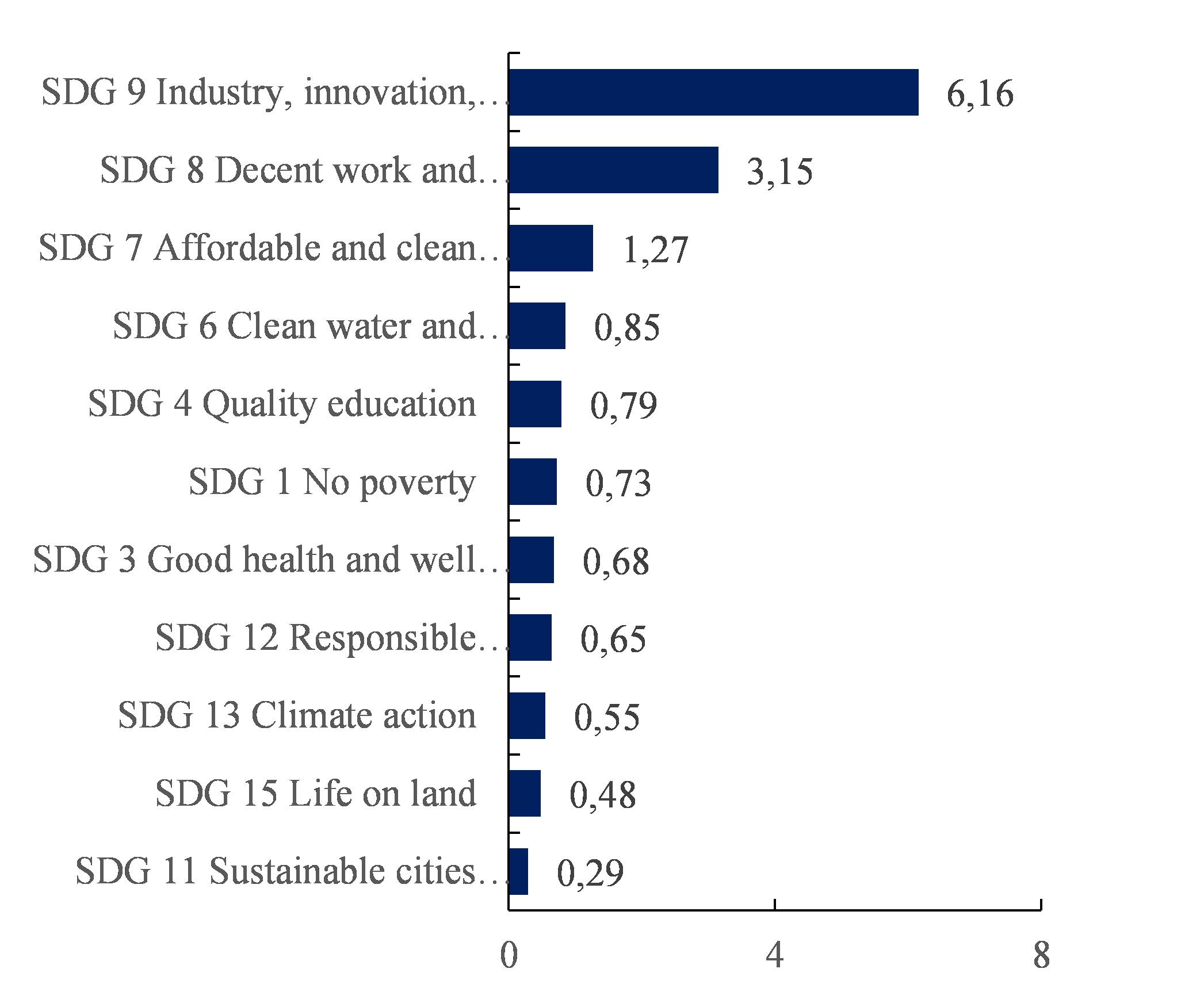
Cohesion policy funds are already substantially contributing to the Sustainable Development Goals (SDGs). In Slovakia, cohesion policy funds are supporting 11 of the 17 SDGs with up to 90% of the expenditure contributing to reaching the goals.
The REACT-EU instrument (Recovery Assistance for Cohesion and the Territories of Europe) under NextGenerationEU provided EUR 616 million of additional funding to 2014-2020 cohesion policy allocations for Slovakia to ensure a balanced recovery, foster convergence and provide vital support to regions following the coronavirus outbreak. REACT-EU support in Slovakia contributed to the short-time work schemes, strengthened education, training and skills development, promoted energy efficiency and green infrastructure and reduced material deprivation with direct food delivery.
The Coronavirus Response Investment Initiative () provided the first EU emergency support to Slovakia for the COVID-19 pandemic. It introduced extraordinary flexibility enabling Slovakia to reallocate resources for immediate public health needs (EUR 25 million) and support for companies (EUR 355 million). For instance, Slovakia shifted resources to purchase protective equipment, vaccines and healthcare supplies, strengthen primary healthcare, provide working capital for SMEs, and help digitalise the education system and the public administration. Slovakia also benefited from the temporary 100% EU financing of cohesion policy incurred measures, with approximately EUR 521 million in 2021 through 100% co-financing.
|
Graph A3.2:
Cohesion policy contribution to the SDGs (EUR billion)
|
|
|
|
Source: European Commission
|
Slovakia received support under the European instrument for temporary support to mitigate unemployment risks in an emergency (SURE) to finance short-time work schemes. The Council granted financial assistance under SURE to Slovakia in September 2020 for a maximum of EUR 630 million, which was disbursed by 16 March 2021. SURE is estimated to have supported approximately 30% of workers and 25% of firms for at least one month in 2020 and 10% of workers and 15% of firms in 2021, primarily in manufacturing, wholesale and retail trade, and accommodation and food services. Slovakia is estimated to have saved a total of EUR 8 million on interest payments as a result of SURE’s lower interest rates.
The Commission is provides tailored-made expertise via the Technical Support Instrument to help Slovakia design and implement growth-enhancing reforms and its recovery and resilience plan (RRP). Since 2016, Slovakia has received assistance through 57 technical support projects. Projects delivered in 2021 aimed, for example, to help Slovakia prepare the RRP, prepare and implement its territorial just transition plan and develop a strategy for the use of artificial intelligence in healthcare. The Commission also assisted Slovakia in designing the overall RRP communication strategy and implementing specific RRP reforms and investments in the RRP, for instance, for improving the quality and attractiveness of higher education. In 2022, new projects will start to support, among others, building renovations set out in a number of RRP components.
Slovakia also benefits from other EU programmes. These include the Connecting Europe Facility, which allocated EUR 559.2 million in funding to specific projects on strategic transport networks, and Horizon 2020, which allocated EUR 138.8 million in funding.
Annex 4: Progress in the implementation of country-specific recommendations
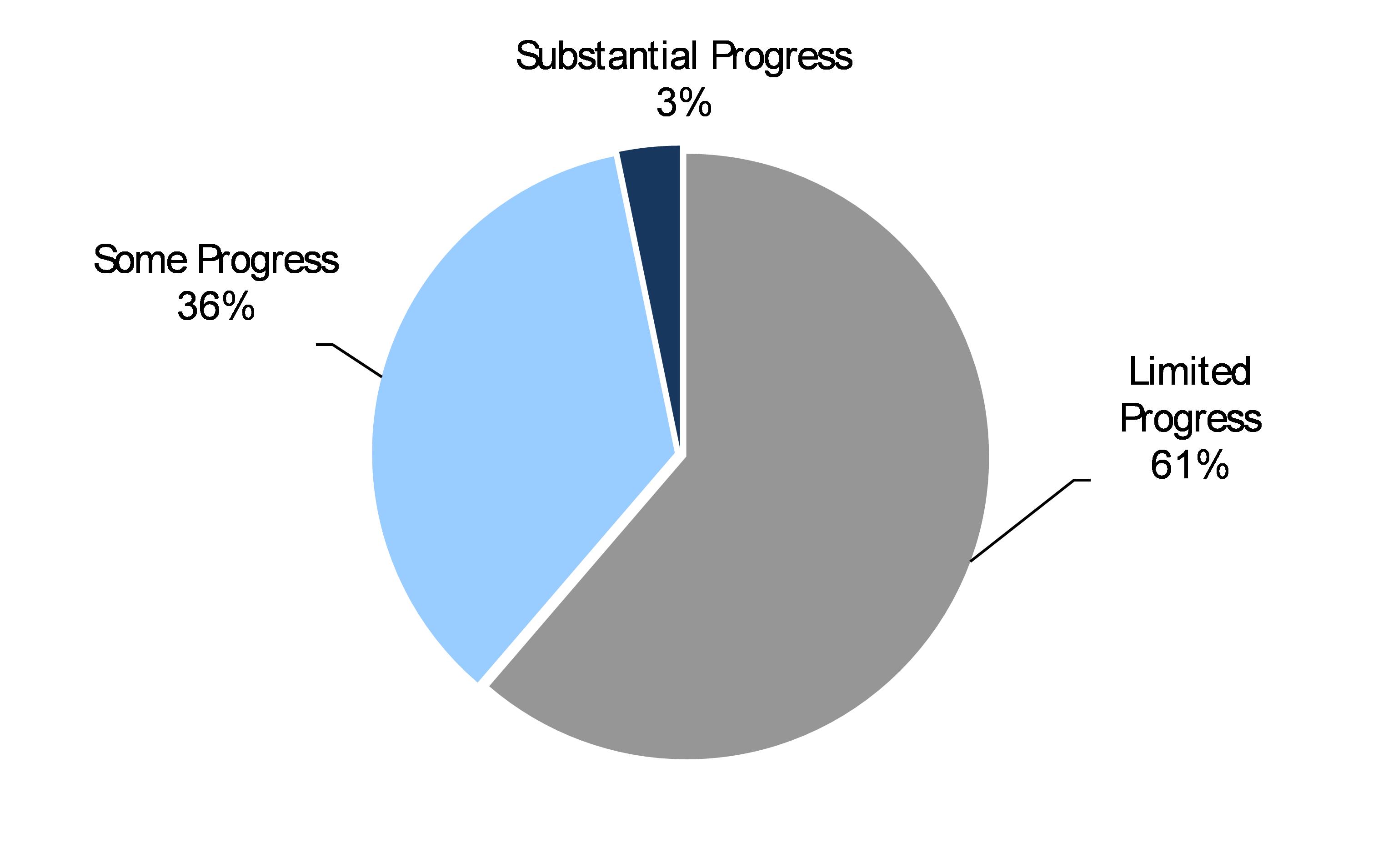
The Commission assessed the 2019-2021 country-specific recommendations (CSRs) () addressed to Slovakia in the context of the European Semester. The assessment takes into account the policy action taken by Slovakia to date (), as well as the commitments in the Recovery and Resilience Plan (RRP) (). At this early stage of the RRP implementation, overall 39% of the CSRs focusing on structural issues in 2019 and 2020 have recorded at least “some progress”, while 61% recorded “limited” (see Graph A4.1). Considerable additional progress in addressing structural CSRs is expected in the years to come with the further implementation of the RRP.
|
Graph A4.1:
Slovakia's progress on the 2019-2020 CSRs (2022 European Semester cycle)
|
|
|
|
Source: European Commission
|
|
|
|
Table A4.1:
Summary table on 2019, 2020 and 2021 CSRs
|
|

|
|
|
|
(Continued on the next page)
|
|
Table (continued)
|
|
|
|

|
|
Source: European Commission
|
|
|
Environmental sustainability
Annex 5: Green Deal
The European Green Deal intends to transform the EU into a fair and prosperous society, with a modern, resource-efficient and competitive economy where there are no net emissions of greenhouse gases in 2050 and where economic growth is decoupled from resource use. This annex offers a snapshot of the most significant and economically relevant developments in Slovakia in the respective building blocks of the European Green Deal. It is complemented by Annex 6 on the employment and social impact of the green transition and Annex 7 for circular economy aspects of the Green Deal.
Slovakia has a long way to go in its transition to a low-carbon economy. Between 1990 and 2019, economy wide greenhouse gas (GHG) emissions decreased by 43%, which was a marked fall even in the regional context of the transition to a market economy. At the same time, the greenhouse gas intensity of the economy remains significantly higher than the EU average. GHG emissions in non-Emissions Trading System sectors are currently projected to increase, which makes meeting the national target of a 23% reduction by 2030 particularly difficult. Slovakia’s projections in the National Energy and Climate Plan indicate a further decrease of net removals from the land use and forestry sink by 2030. In its Recovery and Resilience Plan (RRP), Slovakia allocates 43% of spending to climate objectives and outlines crucial reforms and investments to support the transition to a more sustainable, low-carbon and climate-resilient economy.
Slovakia is performing close to the EU average in collecting environmental taxes and government spending in environmental protection but could face climate adaptation challenges. Despite the high energy intensity of the economy, environmental taxes stood at 2.4% of GDP in 2020, close to the EU average, with energy taxes largely driving environmental taxation, and a smaller extent being attributed to transport and pollution taxes. At the same time, government expenditure share on environmental protection is higher than in the EU overall. Slovakia’s estimated climate protection gap today places it into an overall low-to-medium risk category from the point of view of insured losses. However, it is in a medium–to-high risk category for floods and wildfires, with low to very low insurance coverage for these hazards that are either already significant (floods) or becoming more significant (wildfires). For more indicators on taxation, see Annex 18.
|
Graph A5.1:
Fiscal aspects of the green transition
Taxation and government expenditure on environmental protection
|
|

|
|
Source: Eurostat
|
|
Graph A5.2:
Thematic – Energy
Share in energy mix (solids, oil, gas, nuclear, renewables)
|
|

|
|
Source: Eurostat. Share of renewables include waste
|
Slovakia largely relies on fossil fuels, with the share of natural gas in the energy mix in 2020 being 24.9% and crude oil being 21.9%. Nuclear had a share of 24.65% and the share of coal and lignite stood at 14%. Finally, renewables and biofuels have reached 14.5%, including 8% for primary solid biofuels and 1% for non-renewable waste.The Commission estimates that Slovakia's renewable energy contribution to the EU’s 2030 target of 19.2% by 2030 will need to be reviewed upwards to be in line with the ‘Fit for 55’ objectives.
In the building sector, insufficient awareness about energy renovation, the low quality of the current building energy performance certificates and a lack of advisory services are all barriers to improvement.
In terms of biodiversity, by 2021, 37.4% of Slovakia was covered by protected areas, which is significantly above the EU average (25.7%). Special protection areas (SPAs) classified under the Birds directive covered 26.7% (EU average 12.8%) and sites of Community importance (SCIs) designated under the Habitats Directive covered 12.5% (EU average 14.2%) of the Slovak territory. Slovakia is experiencing specific problems with the sustainable forest management in the protected areas. Slovak forests in Natura 2000 sites are facing high levels of sanitary logging in reaction to forest disturbances, such as bark beetle infestation or storm damage. Nonetheless, since 2020 and based on the amended legislation, only close-to-nature forestry is possible within national parks (97 % of national parks area overlap with Natura 2000 sites), while zoning of national park will lead to no-intervention regime at 50 % (where appropriate) of their territories. In 2022 the reform of national parks also established administrations of 9 national parks, providing them with management rights over the forest land. With an estimated 11.,7% of the area under organic farming, Slovakia is marginally above the EU average of 9,1%.
|
Graph A5.3:
Thematic – Biodiversity
Terrestrial protected areas and organic farming
|
|

|
|
Source: EEA (terrestrial protected areas) and Eurostat
|
On air quality, the situation in Slovakia continues to be of great concern. Fine particulate matter has led to significantly more years of life lost than the EU average in 2019. However, pollution from nitrous oxide has a limited impact on health compared to the EU average. Slovakia expects to reach emission reduction commitments for all air pollutants under the Directive in 2020-2029 and for most pollutants from 2030 onwards. However, these projections do not comply with the emission reduction commitments for ammonia from 2030 on.
In terms of mobility, the share of zero-emission vehicles in newly registered passenger cars in Slovakia is only 1.5% (compared to EU average of 9%), which is in large part due to the higher price of electric cars and lower household income levels. While this share is one of the lowest in the EU, the country is showing a very positive trend with higher growth than the EU average (despite no incentive programme in place). Slovakia also is experiencing increases in the emissions of the transport sector.
|
Graph A5.4:
Thematic – Mobility
Share of zero emission vehicles (% of new registrations)
|
|

|
|
Source: European Alternative Fuels Observatory. Zero emission vehicles (passenger cars) include battery and fuel cell electric vehicles (BEV, FCEV).
|
|
|
|
Table A5.1:
Indicators underpinning the progress on EU Green Deal from macroeconomic perspective

|
|
|
|
Source: Eurostat, JRC, European Commission, EEA, EAFO
|
|
|
Annex 6: Employment and social impact of the green transition
The green transition not only encompasses improvements to environmental sustainability, but also includes a significant social dimension. While measures in this regard include the opportunity for sustainable growth and job creation, it must also be ensured that no one is left behind and all groups in society benefit from the transition. Slovakia´s green economy is still limited and its development, supported by investments and reforms included in the RRP, can foster sustainable growth and quality job creation; at the same time, the green transition is expected to affect low to middle-income groups to a larger extent.
Slovakia belongs among the most industrialised countries in the EU and the green transition might bring some challenges for its economy; at the same time, Slovakia’s green transition benefits from a comparatively low carbon energy mix and strong focus on green economy under the Recovery and Resilience Plan.
Slovakia’s Recovery and Resilience Plan (RRP) includes some major investments for a fair green transition. In particular the investments in new or renovation of existing healthcare and long-term care establishments are all planned with due account for the energy efficiency standards. Similarly, the completion of the school infrastructure, as well as the new investments in the tertiary education will all be supporting the green economy. The Slovakia’s integrated national energy and climate plan (NECP) of December 2019 looks into the matters of energy poverty with some distance, stating that it is more a matter for social than energy policy. In addition, the programmes under the ESF+ and the Just Transition Fund (JTF) will provide further support to green skills and support green transition.
The economy has slightly reduced its carbon footprint, while energy-intensive sectors remain sizeable. The greenhouse gas (GHG) emissions intensity of the Slovak economy decreased slightly between 2015 and 2020 (in terms of gross value added), but stands 62% above the EU average. The carbon footprint per worker is at 13.09 tons of GHG emissions around the EU average (13.61) (see Figure 1). Declining sectors present in Slovakia include coal/lignite extraction and fossil fuel based electricity production Slovakia’s energy-intensive industry (EII), including metals, chemicals, non-metallic minerals, and automotive manufacturing (), provides jobs for 5.7% of the total workforce, one of the highest share among EU Member States. In particular, Slovakia’s automotive manufacturing sector is among the largest in the EU in terms of employment share. In this context, up- and reskilling could be particularly important (see Annex 15).
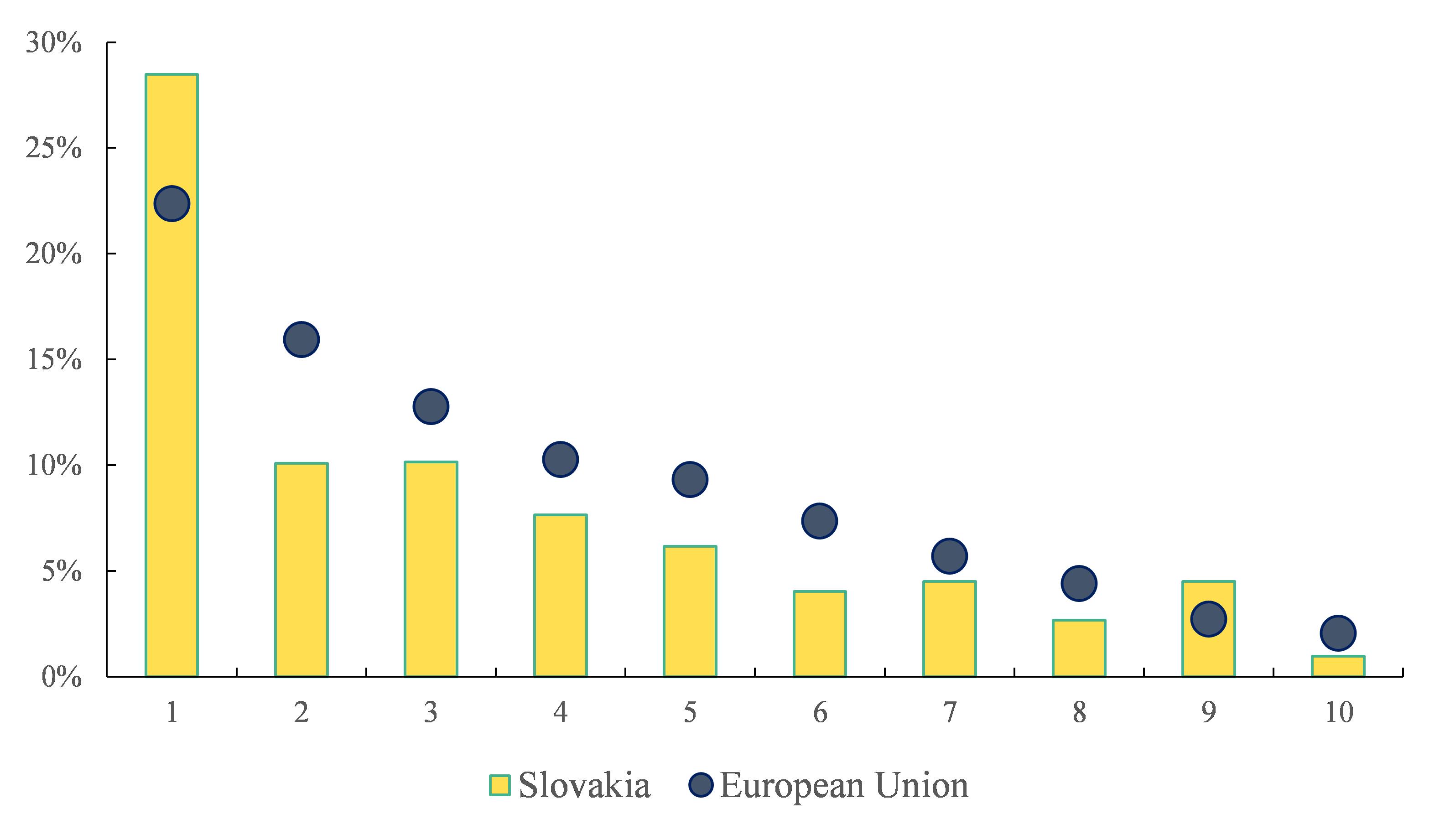
As for the social dimension of the green transition, ensuring access to essential transport and energy services, appears overall less of a challenge in Slovakia. The share of the rural population at risk of poverty is 13.8% against the EU average of 18.7% (). The share of the population being unable to keep their homes adequately warm is 5.8%, in 2020; a value that is virtually unchanged compared to 2015, and is below the EU average (8.2%). The lowest income decile is affected most (see Figure 2). The average carbon footprint of the top 10% of emitters is about 4.3 times higher than that of the bottom 50%, which represents a relatively moderate gap against the EU average of 5.3.
Tax systems are key to ensuring a fair transition towards climate neutrality (). Slovakia’s revenues from total environmental taxes decreased slightly from 2.5% of GDP in 2015 to 2.39% in 2019, and remained relatively stable in 2020 (against 2.24% in the EU). The labour tax wedge for low-income earners () increased from 32.8% in 2015 to 37.3% in 2019 (36.6% in 2021), compared to 31.9% in the EU in 2021 (see Annex 17). Redistributive measures accompanying environmental taxation can have the potential to foster progressive measures and to have a positive impact on the disposable income of households in the lowest segments of the income distribution ().
|
Graph A6.1:
Fair green transition challenges
|
|

|
|
Source: Eurostat, World inequality database
|
|
Graph A6.2:
Energy poverty by income decile
|
|
|
|
Source: Eurostat EU-SILC survey (2020)
|
Productivity
Annex 7: Resource efficiency and productivity
The efficient use of resources is key to ensuring competitiveness and open strategic autonomy, while minimising the environmental impact. The green transition presents a major opportunity for European industry by creating markets for clean technologies and products. It will have an impact across the entire value chain in sectors such as energy and transport, construction and renovation, food and electronics, helping create sustainable, local and well-paid jobs across Europe.
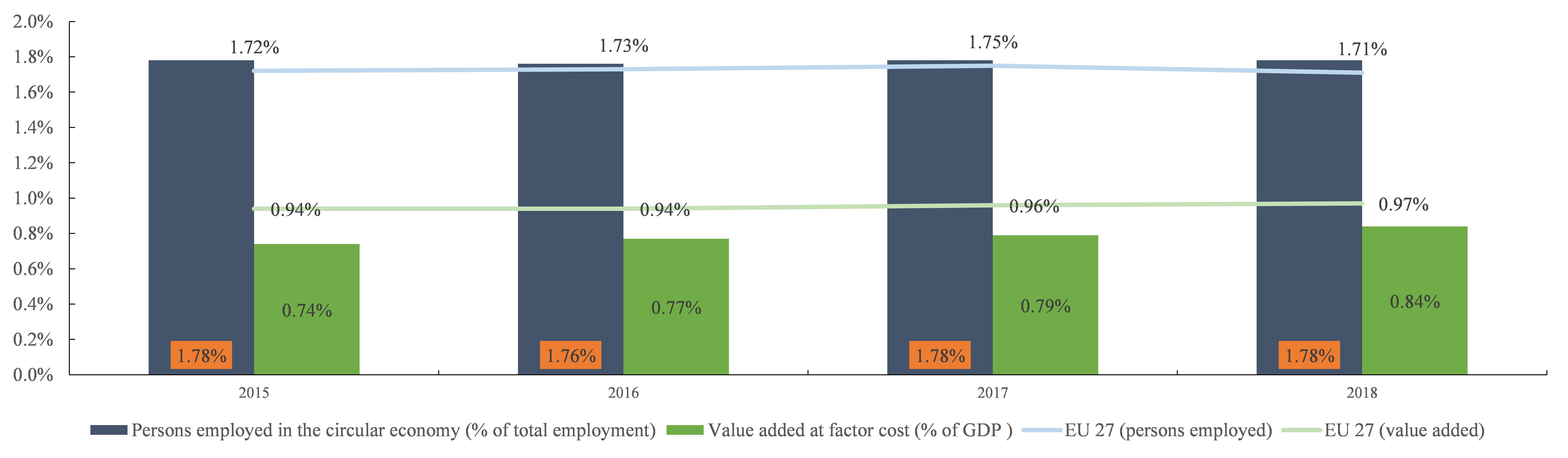
In 2020, circular material use in Slovakia was 6.4%, only half the EU27 average of 12.8%. At the same time, the circular economy has become more important not only to support the green transition, but also the strategic autonomy of the country.
Resource productivity in Slovakia remains below the EU average. In 2020 it was 1.83 PPS per kg, while the EU average was 2.23 PPS per kg. Fundamental changes in production and consumption, which are a prerequisite for the transition towards sustainability, are even more challenging to implement in Slovakia due to its current economic model.
|
Graph A7.1:
Economic importance and expansion of the circular economy
|
|
|
|
Source: Eurostat
|
Although Slovakia’s waste generation remained below the EU average in 2018 (2.277kg/capita vs around 5.234 kg/capita), there has been a significant increase since 2016 (1.953 kg/capita). The first waste prevention programme (WPP) was put in place in 2014, but it has had no effect in reducing municipal waste. Although Slovakia’s recycling rate has significantly increased since 2015, growth has not been decoupled yet from its generation of waste.
|
|
|
Table A7.1:
Selected resource efficiency indicators
|
|

|
|
Source: Eurostat
|
|
|
Annex 8: Digital transition
The Digital Economy and Society Index (DESI) monitors EU Member States’ digital progress. The areas of human capital, digital connectivity, the integration of digital technologies by businesses and digital public services reflect the Digital Decade cardinal points (). This Annex describes Slovakia’s DESI performance.
The digital transformation of the economy and society is at the centre of Slovakia’s Recovery and Resilience Plan and amounts to 21% of its total budget (). Digital reforms and investments in the plan should help modernise Slovakia, with the main focus on public services, skills and digitalisation of businesses.
Slovakia has a mixed performance in the DESI human capital dimension. The country is just above the EU average for basic digital and below EU average for above-basic digital skills. Digital skills need to improve across the population to successfully meet the challenges of digital transformation. The share of ICT specialists in total employment has grown and is almost equal to the EU average.
Improving very high capacity network coverage would enable a wider use of digital technologies and services by households and businesses. Recently, the share of households covered by fixed very high capacity networks increased, but remains below the EU average.
Slovakia is intensifying its efforts to scale up its digital economy, but there is considerable room for improvement. The share of SMEs reaching at least a basic level of digital intensity is below the EU average. For the use of advanced technologies, the country’s results are mixed: the gap with the EU average for cloud services is rather small but larger for artificial intelligence and big data. As part of the recovery and resilience plan, digitalisation of companies, including SMEs, should be boosted by developing Digital Innovation Hubs and supporting the use of advanced digital technologies.
Slovakia is rolling out new digital public services, but their poor quality, interoperability and user-friendliness discourage people and businesses from using them. () The digital public services for citizens indicator is below the EU average. This difference is lower in the digital public services for businesses indicator. The recovery and resilience plan contains several important measures aimed to improve and broaden the scope of digital public services.
|
|
|
Table A8.1:
Key Digital Economy and Society Index Indicators
|
|

|
|
Source: Digital Economy and Society Index
(*) The 5G coverage indicator does not measure users’ experience, which may be affected by a variety of factors such as the type of device used, environmental conditions, number of concurrent users and network capacity. 5G coverage refers to the percentage of populated areas as reported by operators and national regulatory authorities.
|
|
|
Annex 9: Innovation
The present annex provides a general overview on the performance of the Slovak research and innovation system. According to the 2021 edition of the European Innovation Scoreboard (), Slovakia is an emerging innovator but its performance relative to the EU has decreased over time. Total R&D intensity reached 0.91% in 2020 and remains well below the EU average of 2.32%.
A fragmented R&I governance and the low quality of public science harm the performance of Slovak R&I. In 2020, public R&D intensity reached 0.42% of GDP and despite a slight increase over time, it remains behind the EU average of 0.78% of GDP. For scientific excellence, the share of scientific publications among the top 10% most cited scientific publications worldwide is about half the EU average, and the number of patent applications is very low. The number of new graduates in science and engineering also continues to decrease. The Recovery and Resilience Plan (RRP) has an ambitious R&I reform agenda to address the fragmentation of R&I governance and the lack of coordination between ministries and implementing agencies. In addition, Slovakia will reform the scientific performance evaluation of higher education institutes and improve R&I support instruments.
Limited cooperation between universities and businesses and insufficient support for business innovation restrict knowledge production and technology diffusion. Although Slovakia offers generous R&D tax incentives, total public sector support for business enterprise expenditure on R&D remains very low (0.045% of GDP in 2019 in comparison to the EU average of 0.196%). Moreover, business R&D intensity is weak and public-private scientific co-publications remain below the EU average and are decreasing. The Slovak recovery and resilience plan includes the transformation of the Slovak Academy of Sciences into a public organisation. This will make it possible to receive funding from different sources, including the private sector, and thus strengthen the cooperation with the private sector. Other measures would optimise and improve the transfer of scientific results and domestic technological development, such as simplifying the regulatory framework for public-private cooperation.
|
|
|
Table A9.1:
Key research, development and innovation indicators
|
|

|
|
Source: DG Research and Innovation - Common R&I Strategy and Foresight Service - Chief Economist Unit
Data: Eurostat, OECD, DG JRC, Science-Metrix (Scopus database and EPO’s Patent Statistical database), Invest Europe
|
|
|
Annex 10: Industry and single market
Productivity growth is a critical driver of economic prosperity, well-being and convergence over the long run. A major source of productivity for the EU economy is a well-functioning single market, where fair and effective competition and a business friendly environment are ensured, in which small and medium enterprises (SMEs) can operate and innovate without difficulty. Businesses and industry rely heavily on robust supply chains and are facing bottlenecks that bear a negative impact on firms’ productivity levels, employment, turnover and entry/exit rates. This may impact the Member States’ capacity to deliver on Europe’s green and digital transformation.
Productivity growth in Slovakia has slowed in recent years. While the country experienced a 4.9% increase in hours-based labour productivity in 2020 (one of the highest in the EU), this was mainly a result of the collapse in hours worked during the pandemic amid short-time work schemes. In addition, the growth contribution of total factor productivity (TFP) remains subdued partially due to the limited investment in R&I and the slow uptake of digital technologies by companies. Support to R&I and digitalisation from the recovery and resilience plan (RRP) and Cohesion policy funds can lead to high productivity gains in the coming years if properly implemented.
Despite improvements, the business environment still faces challenges. While ongoing RRP reforms for limiting the administrative burden are promising, late payments and subdued access to finance hamper investment potential in Slovakia. Liquidity measures decreased the number of bankruptcies in 2020 and 2021, but the costly and lengthy insolvency procedures hinder resource reallocation. Improvements to the insolvency framework are foreseen in the RRP. In 2020, business investment in the country remained below the EU average, and it was also affected by labour shortages, with 21% of the companies facing such constraints ().
The Slovak economy is well-integrated in the Single Market, but some barriers remain. While Slovakia is implementing reforms to speed up public procurement, the use of quality criteria remains limited. In 2020, about 94% of the contracts in Slovakia were awarded based only on the lowest price. Furthermore, professional services are still heavily regulated thus hampering competition. The level of restrictiveness remains higher than the EU average for lawyers, accountants/tax advisers, architects, civil engineers, patent agents and tourist guides (), with only a few measures put in place to address this since 2017.
As Slovakia is well integrated in global value chains, its resilience to external shocks could become a challenge. Material shortages are being reported more often by companies, reaching 23% of the respondents in 2020 compared to 11% in 2017 and 2018. Amid low R&I investment and low diversification, the strong manufacturing sector is vulnerable to external shocks. There have been recent disruptions to supply chains, e.g. a semiconductors shortage affected negatively the automotive industry, which is critical for the Slovak economy. The rate of installed renewables electricity capacity needs to accelerate in order to reduce dependence on fossil fuel imports and make the economy more resilient to adverse external energy supply and price shocks.
|
|
|
Table A10.1:
Key Single Market and Industry Indicators
|
|

|
|
Source: See above in the table the respective source for each indicator in the column “Description”
|
|
|
Annex 11: Public administration
Good administrative capacity enables economic prosperity, social progress and fairness. Public administrations at all government levels deliver crisis response, ensure the provision of public services and contribute to building resilience for the sustainable development of the EU economy.
Overall, the effectiveness of public administration in Slovakia is below the average in the EU27 (). The quality and access to public services present an important challenge. The e-government score is 59.8 compared to the EU average of 70.9 and 62% of users vs 70.7% in the EU. The Slovak recovery and resilience plan (RRP) provides for substantial investments in digital technologies across many policy areas, such as the judiciary, healthcare, and police and rescue. User-centricity is expected to improve via a new digital platform for e-services, and administrative procedures will be simplified based on the principle of ‘life events.’ Reforms will aim to improve cyber security and stability of systems supporting government services. Investments in shared services will aim to address weaknesses in local governance.
Slovakia scores low on selected indicators measuring government transparency and oversight institutions. It ranks among the bottom 20% in the provision of open data (see graph A11.1). Moreover, the mandate of its independent fiscal institution is narrower than most others in the EU.
The justice system faces challenges. In particular, the administrative cases are lengthy, with an increasing trend (585 days in the first instance in 2020 compared to 401 days in 2018) with a clearance rate of only 86% in 2020. The quality of the justice system is overall good: digital tools are widely used in courts, but gaps remain. As regards judicial independence and the integrity of the justice system, concerns remain. ()
There is room for improvement in selected fiscal framework indicators. This applies to the Commission´s strength of fiscal rules index. The Single Market Scoreboard’s public procurement indicator reveals high shares of contracts awarded where there was just a single bidder and underperformance on different measures of efficiency (see map A11.1). The RRP aims to improve public procurement. Slovakia amended the Public Procurement Act in 2021, in particular to speed up procedures.
|
Graph A11.1:
Open data maturity
|
|
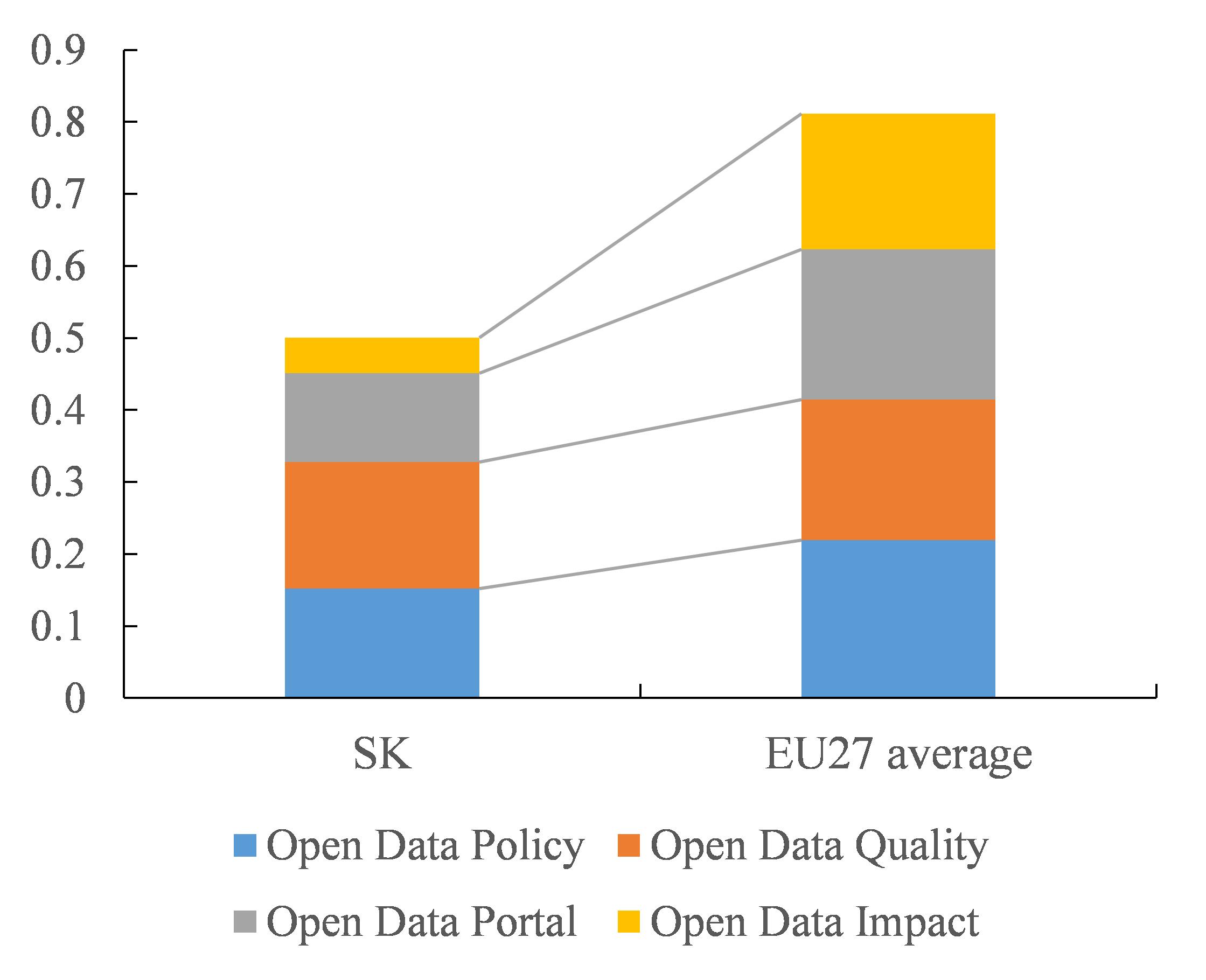
|
|
Source: Open Data Maturity | data.europa.eu
|
|
Graph A11.2:
Performance on the single market public procurement indicator
|
|

|
|
Source: Single market scoreboard 2020 data.
|
Administrative capacity at all government levels in Slovakia remains a challenge for implementing reforms and absorbing EU funds. As Table A11.1 below shows, skills remain low with a low share of public administration employees with tertiary education (52.2% vs 55.3% in the EU) and a very low percentage of public administration employees who participate in adult learning (6.4% vs 18.6% in the EU). The proportion of civil servants between 55 and 74 years old (21.2%) is close to the EU average (21.3%). Political influence in staffing and appraisals is a risk for strengthening professionalism. Strategic planning and inter-ministerial coordination has improved. Public consultations have benefited from using digital platforms. While regulatory impact assessment and evaluations are not consistently carried out, especially due to the fast-track adoption of laws, Slovakia has embarked on a series of reforms to improve these shortcomings. Administrative capacities have been strengthened to implement Slovakia’s RRP.
|
|
|
Table A11.1:
Public administration indicators – Slovakia
|
|

|
|
Source: ICT use survey, Eurostat (# 1); E-government benchmark report (# 2); Open data maturity report (# 3); Fiscal Governance Database (# 4, 9, 10); Labour Force Survey, Eurostat (# 5, 6, 8), European Institute for Gender Equality (# 7), Single Market Scoreboard public procurement composite indicator (# 11); OECD Indicators of Regulatory Policy and Governance (# 12).
|
|
|
Fairness
Annex 12: Employment, skills and social policy challenges in light of the European Pillar of Social Rights
The European Pillar of Social Rights provides the compass for upward convergence towards better working and living conditions in the EU. The implementation of its 20 principles on equal opportunities and access to the labour market, fair working conditions, social protection and inclusion, supported by the 2030 EU headline targets on employment, skills and poverty reduction, will strengthen the EU’s drive towards a digital, green and fair transition. This Annex provides an overview of Slovakia’s progress in achieving the goals under the European Pillar of Social Rights.
|
|
|
Table A12.1:
Social Scoreboard for Slovakia
|
|

|
|
Source: European Commission.
|
|
|
While the Slovak labour market has overall recovered, challenges have intensified for vulnerable groups. The unemployment rate of the low-skilled increased to 42.9% in Q3-2021 (the highest in the EU) and the share of the long-term unemployed (as the proportion of the unemployed) remained significant, at 61.3% in Q3-2021. Young people were disproportionately impacted during the COVID-19 crisis. In 2021 the NEET rate (the share of youth not in education, employment or training in total population aged 15-29) stood at 14.2%, below the pre-pandemic level but slightly above the EU average (13.1%).. To address this challenge, under the European Social Fund Plus (ESF+), 12.5% of the overall allocation will be devoted to fostering youth employment under the reinforced Youth Guarantee. The gender employment gap remains close to the EU average, at 8.5 pps in 2021. However, the gender pay gap (18.4 % in 2019) remains wider than the EU average (14.1 %), in spite of significantly higher tertiary attainment rates for women. In addition, the gap in the employment rate between people with and without disabilities is 23.6 pps. Employment opportunities are particularly weak for the Roma community, with an employment rate at only 20% in the age group of 20-64 (12% for women). In addition, 68% of young people aged 16-24 are not in employment, neither in education or training with 74% for women ().
Slovakia has one of the highest rates of jobs at risk of automation in the OECD, which points at the key role of upskilling and reskilling. Technological change and digitalisation are major challenges the country is facing. Skills mismatches in the labour market may affect employability and job transitions in the future. In 2020 Slovakia was among the countries with highest skills mismatches (35%) in the EU ISCED 3-8 (upper secondary to PhD education). Against this background, education, upskilling and reskilling will be key intervention areas for the European Social Fund Plus (ESF+). Adult participation in learning over the past four weeks was below the EU average in 2020 (2.8% against 9.2%). The proportion of Slovak adults with at least basic digital skills stood at 55% in 2021, just above the EU average of 54%. Workers most in need of continuous education and training participated considerably less than those less in need. The number of children aged less than three in formal childcare in Slovakia was 4.8% in 2020, which remains amongst the lowest in the EU (EU average is 32.3% in 2020). Slovakia is also facing a high rate of early leaving from education and training among Roma children, together with regional disparities in educational outcomes (see also Annex 13). Strengthening the quality and inclusiveness of education and training at all levels is key for Slovakia to contribute to reaching the 2030 EU headline targets on skills and employment.
The share of people at risk of poverty or social exclusion remains relatively low, but with large regional disparities. The overall at risk of poverty or social exclusion rate (13.8% in 2020) has steadily declined and is among the lowest in the EU, although the rate is still comparatively high for children (19.2% in 2020). Regional disparities are substantial - the proportion of people at risk of poverty or social exclusion ranging from 7.9% in Bratislava to 21.7% in East Slovakia. Severe material and social deprivation still affects 4.5% of the population, largely linked to the poor living standards in marginalised Roma settlements. Substantial ESF+ investment is planned to bring jobs and social services to more of these communities than in the 2021-2027 programming period. The availability of rental and social housing in Slovakia remains very low. The EU-SILC data shows that the share of households living in rental flats owned by the public sector (1.6%) is comparatively lower than the EU average (10.8%). Access to healthcare is generally good as the share of the population reporting unmet medical care needs is in line with the EU average. However, mortality due to preventable and treatable causes remains one of the highest in the EU. At the same time, a shortage of healthcare staff, especially nurses and general practitioners, disproportionately affects the accessibility of healthcare in rural areas.
Annex 13: Education and skills
This Annex outlines the main challenges for Slovakia’s education and training system in light of the EU-level targets of the European Education Area strategic framework and other contextual indicators, based on the analysis from the 2021 Education and Training Monitor. Slovakia’s education and training system struggles with low inclusiveness and quality and equity challenges that risk worsening due to the pandemic. Slovakia lags significantly behind the EU average and the EU-level targets in terms of participation in early childhood education and care, and basic skills.
Participation in early childhood education and care remains one of the lowest in the EU. Furthermore, the enrolment rate of children between above the age of three varies significantly between the regions, with East Slovakia having the lowest rate (65.3%). Compulsory pre-primary education for 5-year-olds was introduced in September 2021, but first evidence shows that not all got enrolled. ()
Educational outcomes remain low, with more than half of pupils from disadvantaged backgrounds lacking basic skills. The proportion of young people with low basic skills in reading, mathematics and science as measured by the PISA test – is significantly higher than the EU average. Students’ socio-economic backgrounds strongly affect their performance as more than half of all pupils in the bottom social quartile lack basic skills (51.9%). The share of top performers is also low, almost half the EU average (1.8% vs 3.4% in EU-27). Despite action taken expected learning losses due to COVID-19 risk aggravating educational inequalities, in particular affecting students with special educational needs and from disadvantaged socio-economic backgrounds. Public expenditure on education remains below the EU average (4.2% of GDP in 2019, 4.7% in EU-27).
|
|
|
Table A13.1:
EU-level targets and other contextual indicators under the European Education Area strategic framework
|
|

|
|
Source: Eurostat (UOE, LFS); OECD (PISA). Notes: The 2018 EU average on PISA reading performance does not include ES; u = low reliability, : = not available; Data is not yet available for the remaining EU-level targets under the European Education Area strategic framework, covering underachievement in digital skills, exposure of VET vocational educational training graduates to work based learning and participation of adults in learning
|
|
|
Early school leaving has increased, and there are inequalities between the regions and for the Roma community. The share of early leavers from education and training dropped sharply in 2021, from a low 5.3% in 2012. The rate remains the highest in Eastern Slovakia (12% in 2020), with the prevalence of Roma population and with consequences for their job prospects and social inclusion. Disadvantaged students are clustered in the same schools more often than in other EU Member States (see Figure 13.1.). The proportion of pupils with special educational needs placed in fully separate educational settings in Slovakia is the highest among the 23 EU countries surveyed (5.63% vs 1.55% in EU23) (). This trend in particular affects the Roma population. The recently adopted strategy for inclusive education until 2030 aims to improve equity at all levels.
The attractiveness of the teaching profession is limited and teacher shortages are pronounced. Slovak teachers’ salaries are significantly below those of other tertiary educated workers (between 56%-75%) (). The teaching profession is perceived as less valued by society, and shortages of teachers are growing. Analysis () shows that the teaching workforce in Slovakia needs to be strengthened, and teacher education policies should put special focus on quality, equity and inclusive education.
|
Graph A13.1:
Isolation index of disadvantaged students, PISA 2018
|
|

|
|
Source: OECD (2019), PISA 2018
|
Participation in higher education is close to the EU average, but strong disparities and shortages of specialists persist. Between 2012 and 2021, the rate grew by 12.5 pps. However, in 2021, the gender gap in favour of women has widened and at 23 pps it was more than double the EU average (11.1 pps). The rural-urban gap stands out at 28.1 pps (EU 21.8 pps). High regional disparities also remain: in the Bratislava region 54.9% of the adult population have a tertiary degree, while in other regions the rate ranges between 34.5% and 37.2% (2020). The gender gap in tertiary educational attainment at 19.9 pps in favour of women is almost double the EU average (10.8 pps). Furthermore, the proportion of graduates in science, technology, engineering and mathematics (STEM) is below the EU average (21.86% vs. 26%).Furthermore, Slovakia has one of the highest proportions of students studying abroad (19% vs 2% across all OECD countries) and many of them do not return home (). The skills mismatches are among the highest in the EU (see Annex 12). Slovakia has embarked on the reforms to improve quality assurance, financing and governance systems in higher education. The country will also improve the alignment between the labour market needs relevance and vocational education and training.
The reforms and investment under the recovery and resilience plan will help address some of the longstanding challenges. Key reforms and investments focus on expanding early childhood education and care, modernising school education, reducing early school leaving, improving the quality of teacher education and raising professional requirements, improving inclusiveness at all levels, and desegregation of the Roma community in education. Reforms in higher education aim to improve quality, internationalisation and governance.
Annex 14: Health and health systems
Especially relevant in light of the ongoing COVID-19 pandemic, resilient healthcare is a prerequisite for a sustainable economy and society. This Annex provides a snapshot of the healthcare sector in Slovakia.
Life expectancy in Slovakia is low compared to the EU average, and it fell by almost ten months in 2020 due to COVID-19. As of 17 April 2022, Slovakia reported 3.55 cumulative COVID-19 deaths per 1 000 inhabitants and 414 confirmed cumulative COVID-19 cases per 1 000 inhabitants. Despite improvements, mortality from treatable causes remains much higher than in most EU countries.
|
Graph A14.1:
Life expectancy at birth, years
|
|

|
|
Source: Eurostat database
|
Health spending in Slovakia was almost 3 percentage points of GDP below the EU average in 2019. Despite this low level, Slovakia provides a comprehensive benefits to almost the entire population through statutory health insurance. The share of public spending in total health expenditures is slightly higher than the EU average. However, household out-of-pocket spending accounts for nearly 20 % of all health spending. Despite the current relatively young population, public expenditure on health is projected to increase by 2.5 percentage points of GDP by 2070 (compared to 0.9 pp for the EU), and this raise long-term fiscal sustainability concerns.
|
Graph A14.2:
Projected increase in public expenditure on health care in 2019-2070 (reference scenario)
|
|

|
|
Source: European Commission/EPC (2021)
|
Reforms are being developed to alleviate shortages of healthcare workers. The rates of both nurses and physicians in Slovakia are below the EU average, with shortages particularly affecting primary care services in some regions. The age of the health workforce, coupled with a low number of nursing graduates and physicians in some specialties heighten concerns about their future supply. In response, the government has developed a range of measures to increase training and improve the retention rate of public healthcare workers.
Through its Recovery and Resilience Plan, Slovakia plans to invest EUR 1.26 billion (19.3 % of the total RRP) to strengthen the physical and digital infrastructure of the Slovak healthcare and mental care systems and improve their cost-effectiveness, notably through modernising the national public hospitals’ network. Investments and reforms are also concentrated in the historically underfinanced areas of long-term care.
|
|
|
Table A14.1:
Key health indicators
|
|

|
|
Source: Eurostat Database; except: * Eurostat Database and OECD, ** ECDC.
|
|
|
Annex 15: Economic and social performance at regional level
|
|
|
Table A15.1:
Slovakia, selected indicators at regional level
|
|
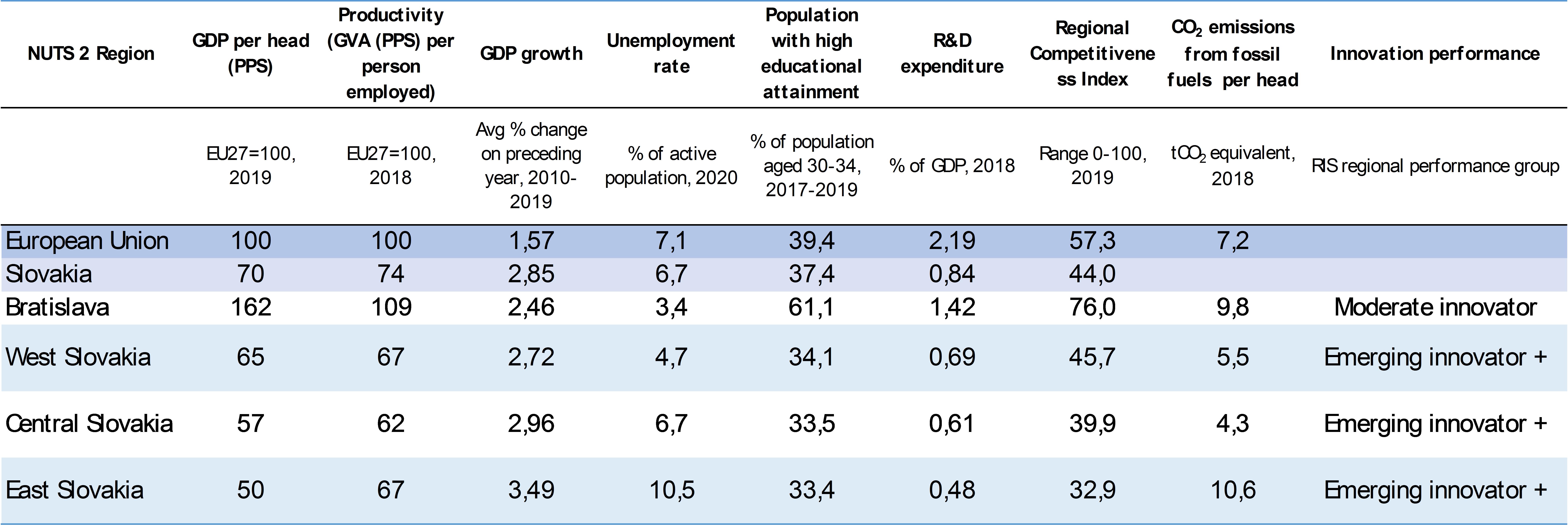
|
|
Source: Eurostat
|
|
|
The regional dimension is an important factor when assessing economic and social developments in Member States. Taking into account this dimension enables a well-calibrated and targeted policy response that fosters cohesion and ensures sustainable and resilient economic development across all regions. With the exception of the capital region of Bratislava, Slovak regions remain significantly below the EU average in terms of GDP/capita (PPS). Regional disparities remain high, driven by labour productivity, infrastructure and competitiveness gaps between the capital and the less developed regions of the country and represent a bottleneck for the green and digital transition.
Slovakia had been catching up with the rest of the EU until 2014, but GDP has been diverging from the EU average ever since. Following the peak of 78%, GDP per head now stands at 70% of the EU average. The trend is the same for all Slovak regions but the least developed regions declined relatively less compared to the capital since the peak. GDP in the three regions range between 50% and 65%, while it is 162% of the EU average in the capital region of Bratislava.
In 2018, productivity in Slovakia was below the EU average (at 74%). It ranged between 109% in the capital region of Bratislava and 62% in Central Slovakia (Stredné Slovensko). Real productivity growth on an annual basis was 1.79% in 2010-2019. This varied regionally between 1.7% for Central Slovakia and 2.09% for East Slovakia (Východné Slovensko). Several factors affect territorial development trends as funding key assets such as transport infrastructure and human capital is still facing challenges in the less developed regions. All regions lag behind the capital region in labour market conditions, in the share of population with tertiary education, the employment in high-tech and knowledge-intensive services, and R&D expenditure.
A significant regional gap in competitiveness prevails between Bratislava and the rest of the country. The capital region is more productive, more innovative (R&D) expenditure in the capital, at 1.4% of GDP, is twice as high as in other regions), and better connected. The Regional Competitiveness Index for the capital region in 2019 was 76 but drops 33 in East Slovakia. West Slovakia (Západné Slovensko) and, in particular, Central and East Slovakia lag behind in terms of transport performance by car. In and around Bratislava, this ratio is 87.2% but it drops to 50.3% in West Slovakia, 30.7% in Central Slovakia and 37.5% in East Slovakia. The country shows moderately low innovation performance emphasising the regional disparities.
Slovak regions will address the effects of the transition to climate neutrality. The territories that are most affected by the transition are: the Trenčín region (namely the Upper Nitra region with its coal mining and coal-fired energy generation), the Košice region (expected to be the most affected by the transition and with the biggest potential to reduce CO2 emissions by 2030 out of the three regions) and the Banská Bystrica region (heavily dependent on climate-intensive industry and of large companies). These regions will need to make higher a greater effort to achieve climate neutrality and to address the socio-economic impacts of the transition. In all three regions, Just Transition Fund (JTF) interventions are planned to focus on areas with where carbon-intensive industries are located.
|
Graph A15.1:
Territories most affected by the climate transition in Slovakia
|
|

|
|
Source: European Commission
|
16.4% of the Slovak population was considered at risk of poverty or social exclusion in 2019. This is higher in Central (21.5%) and East Slovakia (21.2%). In addition, East Slovakia has a higher share of early school leavers (12% of people aged 18-24). The capital region can count on the country’s highest share of highly educated people aged 30-34 (61.1%). It is almost twice as high as the other Slovak regions (33-34%), which are below the EU average (39.4%).
|
Graph A15.2:
Unemployment rate (2020) in Slovakia
|
|

|
|
Source: European Commission
|
Regional disparities in employment remain high. Employment in the capital region was almost 80% in 2020, whereas in East Slovakia only 67.6% of the active population was employed. This translates into an unemployment rate of 10.5%, which is considerably higher than in the other regions: 3.4% in the capital region, 4.7% in West Slovakia and 6.7% in Central Slovakia. In Bratislava, just over half of the employment is realised in knowledge-intensive sectors. These shares are much lower in other regions where they vary between 29% and 38%. A similar pattern emerges for employment in high-technology sectors (10.8% in the capital region and less than5% in the other regions).
All regions in Slovakia have been affected by the COVID-19 pandemic. There are differences between the regions in terms of excess mortality due to COVID-19. The rate is 23-25% in East Slovakia and West Slovakia and 17-19% in Bratislava and Central Slovakia. Estimated regional GDP impact of the crisis in 2020 was higher in the three regions (minus 6.34-6.72%) than in the capital region (minus 4.75%). Slovakia was one of the EU countries where schools were closed the longest time –(38 weeks). Around 52 000 (7.5%) primary and secondary school pupils had no distance education, and up to 128 000 (more than 18%) pupils head no online learning (). The situation was critical especially in schools with a high proportion of students from socially disadvantaged backgrounds, mainly in East Slovakia and Central Slovakia.
Macroeconomic stability
Annex 16: Key financial sector developments
This Annex provides an overview of key developments in Slovakia’s financial sector. The Slovak banking sector remained stable despite the COVID-19 pandemic. The banking solvency ratio remained stable at 19.9% in Q3 2021 (vs 19.3% in the EU). Banking sector profitability remained resilient and further improved with a return on equity (ROE) of 8.7% in Q3 2021 (vs 7.1% in the EU). Asset quality has improved for both businesses and households with the non-performing loans (NPL) ratio declining to 2.1% in Q3 2021 (vs 2.1% in the EU). The cost-to-income-ratio has declined to 54% in Q3 2021 (vs 60.4% in the EU). Banks have also benefited from abundant central bank liquidity, which stood at roughly 10.9% of total liabilities in Q3 2021. The liquidity coverage ratio (LCR) was high at 185.6% in Q3 2021. The main challenges for Slovakia’s banking sector relates to the buoyant residential real estate market.
The residential real estate market exhibits medium-term vulnerabilities. The European Systemic Risk Board (ESRB) (2022) () has issued a warning and identified several key vulnerabilities: signs of house price overvaluation, high house price growth, increasing household indebtedness and high (mortgage) credit growth. House purchases lending year-on-year growth rate was 11.1% in Q3 2021. The ESRB has warned that the current policy mix in Slovakia is appropriate and partially sufficient in mitigating risks and suggested to: fine-tune the existing borrower-based measures framework to tackle pockets of vulnerability; alternatively, rebuild the countercyclical capital buffer (CCyB) or introduce a sectoral systemic risk buffer (SyRB) to potentially reduce mortgage lending; alternatively, activate Article 458 of Regulation (EU) No 575/2013 on prudential requirements for credit institutions for internal ratings based (IRB) banks’ residential real estate (RRE) exposures which could increase the resilience of the banking sector; and for authorities to take complementary steps by eliminating tax incentives for taking mortgage debt and reforming the rental market.
Slovakia has taken measures at the institutional and organisational level to address weaknesses in its anti-money laundering and countering financing of terrorism system. The authorities in charge can now rely on a broader set of tools to prevent, detect, investigate and prosecute money laundering. The understanding of money laundering and terrorist financing risks remains limited, although steps are being taken to improve this. Authorities are also taking steps to address emerging risks, in particular in relation to virtual assets. The Financial Intelligence Unit (FIU) and the National Bank of Slovakia are taking measures to step up their supervision. However, the limited number of resources in the FIU remain a concern given its role as the anti-money laundering supervisor. Lack of human, financial and technical resources also hampers the financial intelligence work of the FIU. The police presidium is undergoing a reorganisation to improve its financial investigation role. For prosecution and confiscation, the power to carry out third-party confiscation and the establishment of the Asset Recovery Office are showing positive effects.
|
|
|
Table A16.1:
Financial soundness indicators in Slovakia
|
|

|
|
Source: ECB, Eurostat, Refinitiv
|
|
|
Annex 17: Taxation
|
|
|
Table A17.1:
Indicators on taxation
|
|
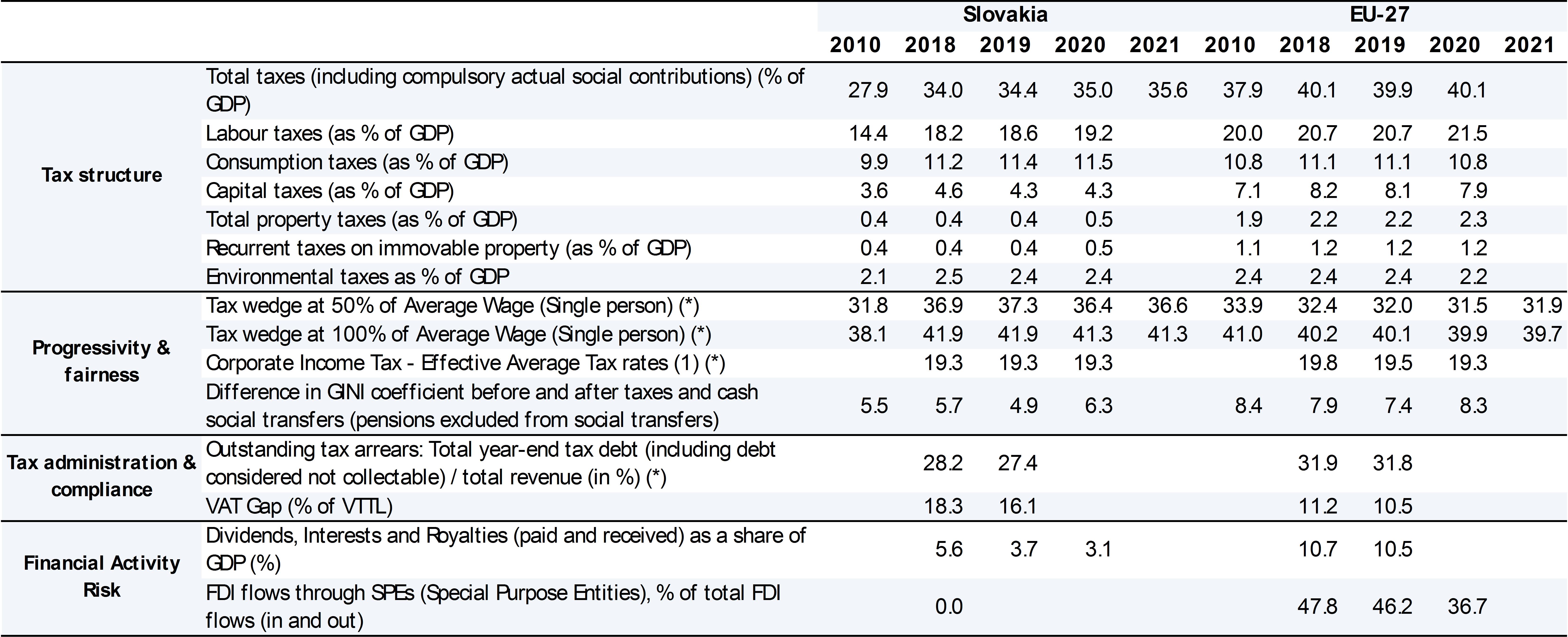
|
|
Source: European Commission and OECD
|
|
|
This Annex provides an indicator-based overview of Slovakia’s tax system. It includes information on the tax structure, i.e. the types of tax that Slovakia derives most revenue from, the tax burden for workers, and the progressivity and redistributive effect of the tax system. It also provides information on tax collection and compliance, and on the risks of aggressive tax planning activity.
Slovakia’s tax system relies relatively heavily on labour taxation and consumption taxation and only to a low extent on property taxation. The revenue from labour taxes increased from 14.4% of GDP in 2010 to 19.2% in 2020 and is now close to the EU average. The revenue from consumption taxation increased from 9.9% of GDP in 2010 to 11.5% of GDP in 2020 and is now higher than the EU average. In turn, recurrent taxes on immovable property generate revenue of 0.5% of GDP in 2020 (as compared to the EU average of 1.2%). Moreover, the revenue from green taxation is 2.4% of GDP in 2020, close to the EU average.
The tax burden on labour is relatively high in Slovakia for low earners. In particular, in 2021 the tax wedge for single workers earning 50% of the average wage was 36.6% against an EU average of 31.9%. At higher earnings (i.e. at 100% and 167% of the average wage), the tax wedge was close to the EU average. The ability of the tax and benefit system to reduce inequality (measured by its ability to reduce the GINI coefficient) has somewhat increased since 2010 but is still below the EU average.
Slovakia could do more in terms of digitalising tax administration to help reduce tax arrears and cut compliance costs. Outstanding tax arrears have declined slightly by 0.8 pp. to 27.4% of total net revenue. This is slightly below the EU27 average of 31.8%, although that average is inflated by very large values in a few Member States. The Annual Report on Taxation 2021 highlights a large scope for improving the rate of tax return e-filing. Tax compliance could be improved further by digitalisation. Slovakia’s intention to introduce an e-invoicing system to report business-to-business transactions is a step in this direction. In 2015-2019, the VAT gap fell by approximately 9 pps. However, despite recent reductions, the VAT gap remains high in Slovakia. In 2019, it was 16.1% of the VAT total tax liability (VTTL), 5.6 pp above the EU average.
|
Graph A17.1:
Indicators on tax wedge
|
|

|
|
Source: European Commission
|
Annex 18: Key economic and financial indicators
|
|
|
Table A18.1:
Key economic and financial indicators
|
|
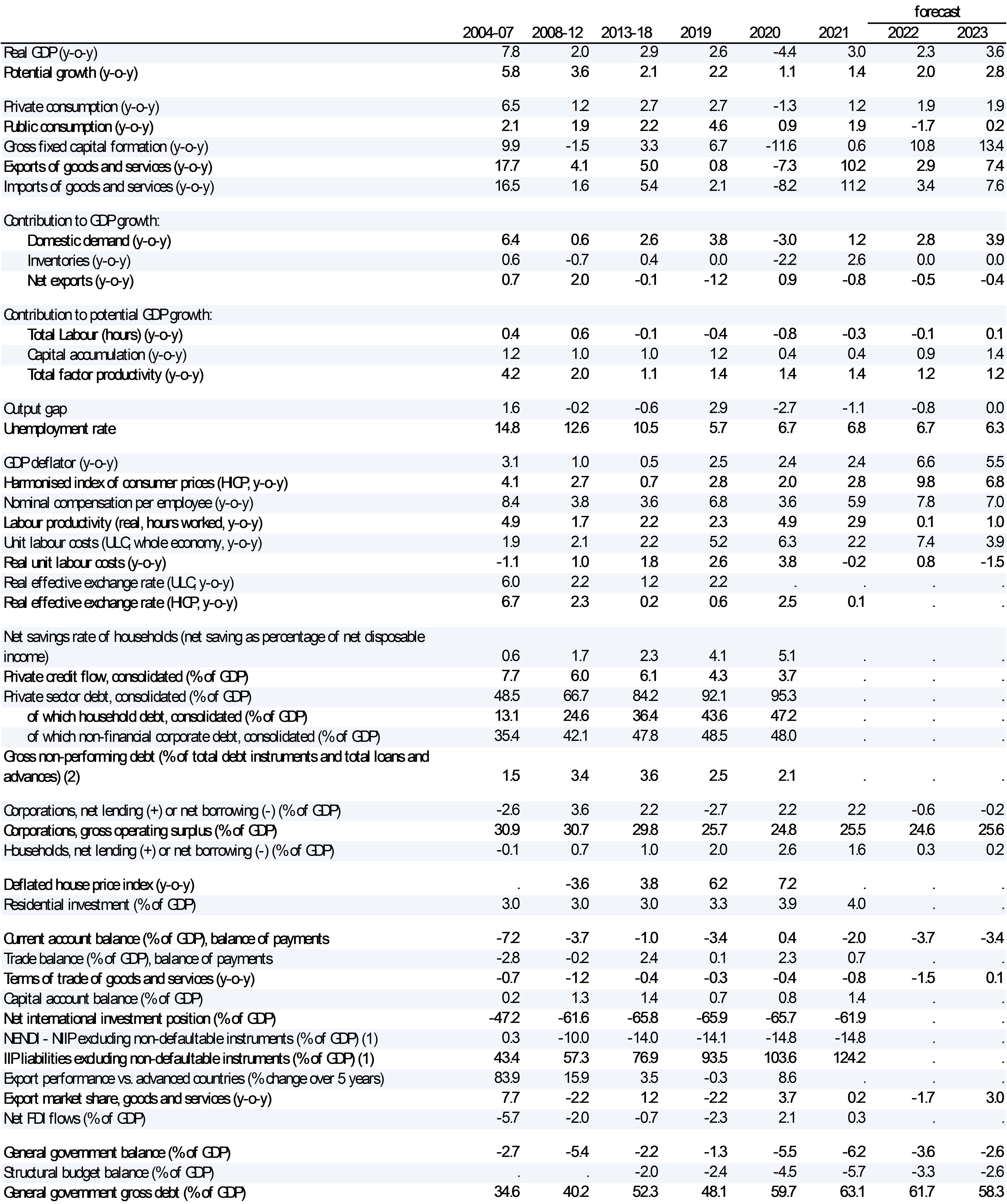
|
|
Source: Eurostat and ECB as of 2 May 2022, where available; European Commission for forecast figures (Spring forecast 2022)
|
|
|
Annex 19: Debt sustainability analysis
This annex assesses fiscal sustainability risks for Slovakia over the short, medium and long term. It follows the same multi-dimensional approach as the 2021 Fiscal Sustainability Report, updated on the basis of the Commission 2022 spring forecast.
Table 1 presents the baseline debt projections. It shows the projected government debt and its breakdown into the primary balance, the snowball effect (the combined impact of interest payments and nominal GDP growth on the debt dynamics) and the stock-flow adjustment. These projections assume that no new fiscal policy measures are taken after 2023, and include the expected positive impact of investments under Next Generation EU.
Graph 1 shows four alternative scenarios around the baseline, to illustrate the impact of changes in assumptions. The ‘historical SPB’ scenario assumes that the structural primary balance (SPB) gradually returns to its past average level. In the ‘lower SPB’ scenario, the SPB is permanently weaker than in the baseline. The ‘adverse interest-growth rate’ scenario assumes a less favourable snowball effect than in the baseline. In the ‘financial stress’ scenario, the country temporarily faces higher market interest rates in 2022.
|
|
|
Table A19.1:
Debt sustainability analysis for Slovakia
|
|
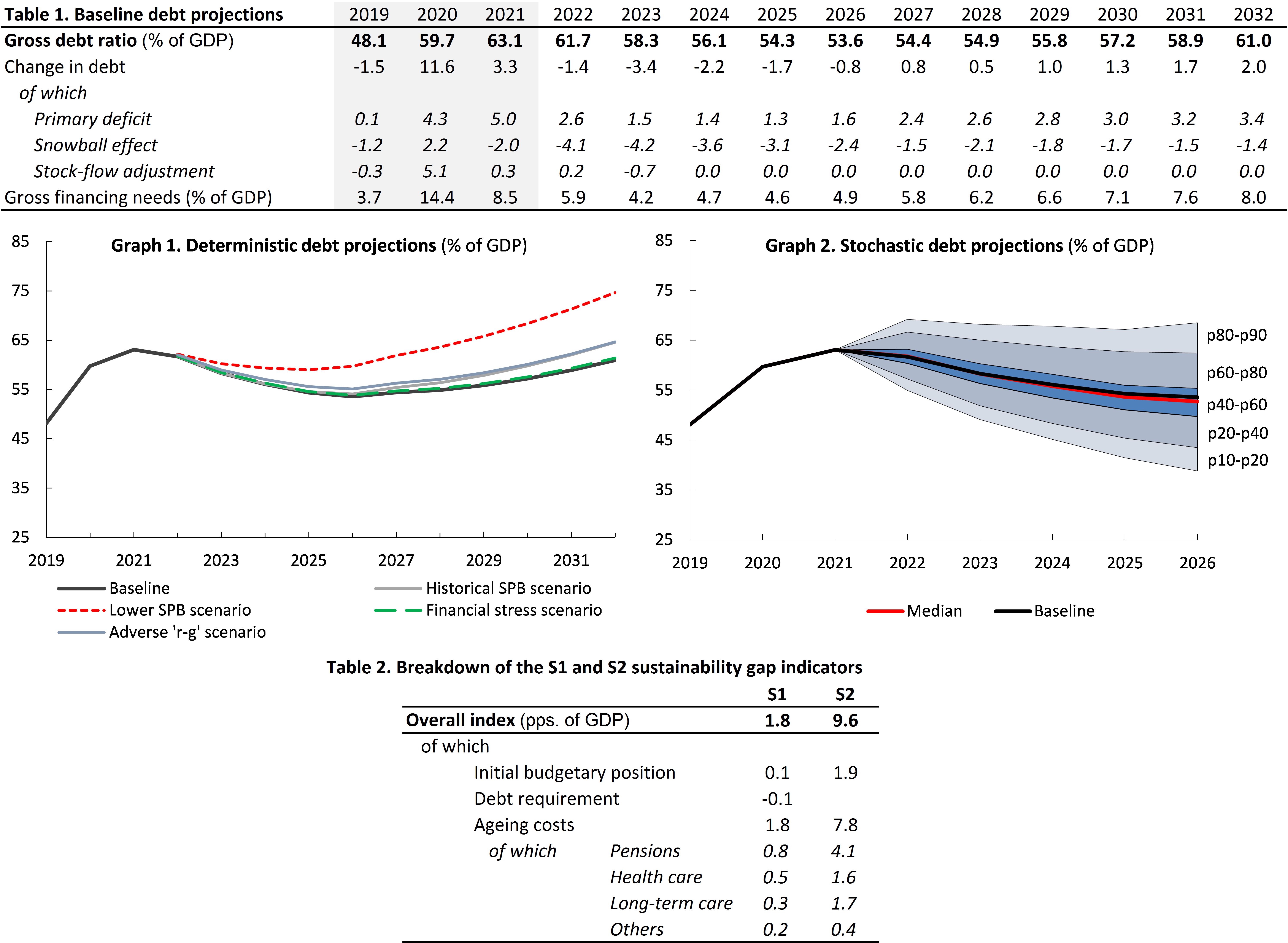
|
|
Source: European Commission
|
|
|
Graph 2 shows the outcome of the stochastic projections. These projections show the impact on debt of 2 000 different shocks affecting the government’s budgetary position, economic growth, interest rates and exchange rates. The cone covers 80% of all the simulated debt paths, therefore excluding tail events.
Table 2 shows the S1 and S2 fiscal sustainability indicators and their main drivers. S1 measures the consolidation effort needed to bring debt to 60% of GDP in 15 years. S2 measures the consolidation effort required to stabilise debt over an infinite horizon. The initial budgetary position measures the effort required to cover future interest payments, the ageing costs component accounts for the need to absorb the projected change in ageing-related public expenditure such as pensions, health care and long-term care, and the debt requirement measures the additional adjustment needed to reach the 60% of GDP debt target.
Finally, the heat map presents the overall fiscal sustainability risk classification (Table A19.2). The short-term risk category is based on the S0 indicator, an early-detection indicator of fiscal stress in the upcoming year. The medium-term risk category is derived from the debt sustainability analysis (DSA) and the S1 indicator. The DSA assesses risks to sustainability based on several criteria: the projected debt level in 10 years’ time, the debt trajectory (‘peak year’), the plausibility of fiscal assumptions and room for tighter positions if needed (‘fiscal consolidation space’), the probability of debt not stabilising in the next 5 years and the size of uncertainty. The long-term risk category is based on the S2 indicator and the DSA.
Overall, short-term risks to fiscal sustainability are low. The Commission’s early-detection indicator (S0) does not signal major short-term fiscal risks (Table A19.2).
Medium-term risks to fiscal sustainability are high. On the one hand, the debt sustainability analysis (DSA) points to high risk. It shows that government debt is projected to remain close to its 2022 level (above 60% of GDP) in the baseline (Table 1). This debt path is sensitive to possible shocks to fiscal, macroeconomic and financial variables, as illustrated by alternative scenarios (pointing to medium and high risks) and stochastic simulations (Tables A19.1 and A19.2). Moreover, the sustainability gap indicator S1 signals that a consolidation effort of 1.8 pps. of GDP would be needed to reduce debt to 60% of GDP in 15 years’ time (Table 2). Overall, the high risk reflects the sensitivity to adverse shocks and the projected increase in ageing costs, in particular from public pensions.
Long-term risks to fiscal sustainability are high. Over the long term, both the sustainability gap indicator S2 (at 9.6 pps. of GDP) and the DSA point to high risks. The S2 indicator suggests that, to stabilise debt over the long term, it will be necessary to address budgetary pressures stemming from population ageing, especially related to public pension, health care and long-term care expenditure (Table 2).
|
|
|
Table A19.2:
Heat map of fiscal sustainability risks for Slovakia
|
|

|
|
Source: European Commission (for further details on the Commission’s multi-dimensional approach, see the 2021 Fiscal Sustainability Report).
|
|
|

