 EUROPEAN COMMISSION
Brussels, 4.3.2021
SWD(2021) 41 final
COMMISSION STAFF WORKING DOCUMENT
IMPACT ASSESSMENT
Accompanying the document
Proposal for a
DIRECTIVE OF THE EUROPEAN PARLIAMENT AND OF THE COUNCIL
to strengthen the application of the principle of equal pay for equal work or work of equal value between men and women through pay transparency and enforcement mechanisms
{COM(2021) 93 final} - {SEC(2021) 101 final} - {SWD(2021) 42 final}
Contents
Glossary
1.Introduction: Political and legal context
2.Problem definition
2.1.What is the problem?
2.2.What are the problem drivers?
2.3.Why is it a problem?
2.4.How will the problem evolve?
3.Why should the EU act?
3.1.Legal basis
3.2.Subsidiarity: Necessity of EU action
3.3.Subsidiarity: Added value of EU action
4.Objectives: What is to be achieved?
4.1.General objectives
4.2.Specific objectives
4.3.What is the baseline from which options are assessed?
5.SME test
6.Description of the policy options for EU level action
6.1.Options discarded at an early stage
6.2.Option 0: Status Quo
6.3.Option 1: Legislative action to create transparency for individual workers
6.4.Option 2: Legislative action to create transparency at employer level
6.5. Option 3: Legislative action to facilitate the application of and enforce the existing legal framework
6.6. Overview of the policy options
7.What are the impacts of the policy options?
7.1.Option 0: Status Quo
7.2.Option 1: Legislative action to create transparency for individual workers
7.3.Option 2: Legislative action to create transparency at employer level
7.4. Option 3: Legislative action to facilitate and enforce the existing legal framework
8.How do the options compare / preferred option
8.1.Effectiveness
8.2.Efficiency
8.3.Coherence
8.4. Comparison of options
8.5.Possible combination of options
8.6.Preferred Package
8.7.Hypothetical scenario of the potential economic impact of the preferred package of measures
8.8.Choice of legal instrument
9.How will actual impacts be monitored and evaluated?
Bibliography
Annexes
Annex 1: Procedural information
Annex 2: Stakeholder consultation
Annex 3: Who is affected and how?
Annex 4: Analytical methods
Annex 5: Initiative specific annex
Annex 6: Intervention logic
Annex 7: Subsidiarity grid
Annex 8: Job evaluation systems
Glossary
|
Term or acronym
|
Meaning or definition
|
|
CJEU
|
Court of Justice of the European Union
|
|
COVID-19
|
Severe acute respiratory syndrome coronavirus disease 2019
|
|
DG JUST
|
Directorate-General for Justice and Consumers of the European Commission
|
|
ECSR
|
European Committee of Social Rights of the Council of Europe
|
|
EIGE
|
European Institute for Gender Equality
|
|
ETUC
|
European Trade Union Confederation
|
|
FTE
|
Full-Time Employment
|
|
FRA
|
European Union Agency for Fundamental Rights
|
|
GDPR
|
General Data Protection Regulation
|
|
GPG
|
Gender Pay Gap
|
|
ILO
|
International Labour Organisation
|
|
ISCED
|
International Standard Classification of Education
|
|
ISCO-08
|
International Standard Classification of Occupations
|
|
JRC
|
Joint Research Center
|
|
LFS
|
Labour Force Survey
|
|
NACE
|
Statistical Classification of Economic Activities in the European Community (Nomenclature statistique des Activités économiques dans la Communauté Européenne)
|
|
NFRD
|
Non-Financial Reporting Directive
|
|
RSB
|
Regulatory Scrutiny Board
|
|
SCM
|
Standard Cost Model
|
|
SES
|
Structure of Earnings Survey
|
|
SMEs
|
Small and Medium Enterprises
|
|
STEM
|
Science, Technology, Engineering and Math
|
|
TFEU
|
Treaty on the Functioning of the European Union
|
1.Introduction: Political and legal context
The right to equal pay between women and men for equal work or work of equal value has been a founding principle of the European Union since the Treaty of Rome in 1957. The requirement to ensure equal pay is set out in Article 157 TFEU and in Directive 2006/54/EC (the ‘Recast Directive’), as complemented in 2014 by a Commission Recommendation on Pay Transparency (the ‘2014 Recommendation’). Despite this legal framework, the effective implementation and enforcement of this principle in practice remains a major challenge in the European Union. In 2019, the European Committee of Social Rights identified the lack of pay transparency as one of the key obstacles to the implementation of the principle of equal pay
.
The European Parliament has repeatedly called for more action at EU level to enhance the application of the equal pay provisions. Also the Council has asked for action both on the side of Member States and on the side of the Commission. In June 2019, the Council called on the Commission to develop concrete measures to increase pay transparency.
The European Pillar of social rights includes gender equality and the right to equal pay among its 20 principles. The EU Action Plan for 2017-2019 on tackling the gender pay gap
specified that the Commission will assess the opportunities for improving pay transparency. Following European Commission’s President von der Leyen’s announcement in her political guidelines to introduce binding pay transparency measures, the Commission reaffirmed its commitment to present this initiative in the Gender Equality Strategy 2020-2025.
The present initiative follows on the Commission’s evaluation
of the relevant legal provisions (the ‘2020 evaluation’) and previous Commission work
. These assessments concluded that there was limited progress on enforcing the right to equal pay in Member States and evidenced, in particular, vastly distinct and largely inefficient systems operating in most Member States – making equal pay an inert legal provision. The evaluation pointed to a number of problems deterring victims of pay discrimination from enforcing their right and deemed to require further action: despite the 2014 Recommendation, a very limited number of countries put forward measures to improve transparency in pay setting systems within organisations; key legal definitions and concepts are not applied uniformly in practice and are insufficiently implemented across national legislations; victims have difficulties to claim their rights.
This initiative aims at tackling the persisting inadequate implementation and enforcement of the fundamental right to equal pay and ensuring the respect of this right across the EU by establishing transparency on pay. It is part of a broader package of measures and initiatives that focus on tackling the root causes of the gender pay gap, such as the adoption and implementation of the Work-Life Balance Directive 2019/1158, sectoral initiatives fighting stereotypes and ensuring better gender balance, and the proposed Directive on improving gender balance on company boards of large EU listed companies. In addition, the initiative is coherent with the initiative aimed at increasing reporting by companies of relevant non-financial information. It is also consistent with and supported by the EU Minimum Wage initiative and the sustainable corporate governance initiative.
While addressing the implementation of the principle of equal pay through pay transparency, this initiative takes into account different features of national social dialogue and collective bargaining systems as well as the autonomy of social partners and their contractual freedom. It also recognises the important role of social partners in addressing gender pay inequalities, including through pay transparency.
2.Problem definition
2.1.What is the problem?
The problem tackled in this initiative is the failure to realise in the European Union the fundamental right to equal pay for the same work or work of equal value, despite this right being enshrined in EU law for more than 60 years. The information and data presented in the 2020 evaluation and in this chapter show that this failure persists
.
The failure to realise the right to equal pay means that women and men may still be discriminated either directly or on the basis of pay structures that do not value the work of women and men equally, i.e. according to objective and gender-neutral criteria.
In many cases, discrimination or bias is the result not of deliberate discriminatory behaviour but rather of a failure to grasp, both by workers and employers, what it means in practice to pay men and women equally for the same work or for work of equal value. This might not be straightforward, especially when it comes to ‘work of equal value’ since it must first be assessed what is the value of the jobs concerned and second whether the pay received by men and women for jobs of same value is not discriminatory on the basis of sex. It is important to stress at the outset that under the current state of the law in the EU, the concept of ‘work of equal value’ only applies to different occupations defined as of equal value in the same organisation.
A number of legal cases illustrate the matter at stake. For instance, in a landmark case in Belgium regarding equal pay for the same work, a female researcher in the European Trade Union Institute did not receive the same automatic promotion going with seniority as her male counterparts. The Labour Court of Appeal of Brussels found the employer’s pay system opaque and, referring to the CJEU’s decision in Case 109/88 Danfoss, concluded that there had been gender-based pay discrimination.
In another case, the French Supreme Court was faced with an equal pay claim from a female mushroom packer comparing her work with more highly paid male packers. The Court noted that it was clear that women packers were systematically paid less than their male equivalents and that the employer could not produce any objective reasons for such difference between men and women doing the same work.
A UK landmark case from 2018 concerned the right to equal pay for work of equal value. In this case, about 30,000 claimants, mostly women working in ASDA supermarkets as shop-floor staff, brought equal pay claims against their employer on the basis of comparisons with the pay of male workers employed at depots as part of ASDA's distribution operation. The Court of Appeal of England and Wales held that the women were discriminated as the work of the shop-floor staff should be considered of equal value as the work in the distribution center.
It was only possible for the claimants in the above cases to claim their right because they had the necessary information on the average pay levels of their male colleagues and because, in the UK case, they were able to group their 30,000 claims. Landmark cases like these only show a small top of a possible iceberg. Many women in the EU having salaries below those of their male colleagues doing the same work or work of equal value, do not necessarily know about it as they do not have the necessary information about average pay levels. This means they cannot enforce their right to equal pay. Lack of transparency thus hinders uncovering pay discrimination and allows discriminatory pay structures to remain in place.
Gender pay discrimination and the gender pay gap
Individual pay discrimination and systemic bias in pay structures are only one of the root causes of the gender pay gap, besides other causes such as horizontal and vertical segregation. The gender pay gap accumulates to and remains at 14% in the European Union overall.
From a policy perspective, it would be useful to know in which sectors/occupations/types of employment gender-based pay discrimination is more widespread or whether pay discrimination affects some groups of workers more than others (e.g. among specific contract types or age groups). However, precisely quantifying the overall size of gender-based pay discrimination at that level is not possible as of today.
Indications on the existence of the problem of pay discrimination and gender bias in pay settings can be derived from available EU statistics on the gender pay gap at aggregate national level (e.g. the Structure of Earnings survey (SES) or other national data) and from the analysis of the related SES micro-data.
The ‘unadjusted’
gender pay gap can be decomposed into two parts. A first component, the ‘statistically explained’ part, is the gap between male and female average earnings due to the differences in the average characteristics (sector of activity, age, occupation, full time versus part time, etc.) of male and female employees.
The second, residual component measures the difference between the financial returns to men and women with identical characteristics. It depends on any other factor for which no observable variable was available, measurable or omitted from the analysis, such as pay discrimination. This second, ‘unexplained part’ includes gender pay discrimination and accounts for 2/3 of the gender pay gap in the EU Member States. It is also the highest portion of the national pay gap in 21 out of 24 countries analysed in the support study.
The same study shows that the relevance of the unexplained part is confirmed also at sectoral level. The unexplained part, including pay discrimination, is the largest factor responsible for gender pay differences at sectoral level. It is more important than the ‘occupation’ factor, which is the second largest cause. In other words, even when excluding the statistical impact on the difference in pay related to working in different sectors and occupations (i.e. women work in sectors and occupations which are generally less paid), the analysis of pay gap data still points to a potential problem with respect of equal pay (see Annex 5.2). This finding does not necessarily apply to all employers. The only way to ascertain whether pay discrimination actually exists is to recalculate the unexplained gender pay gap at organisational/employer level and verify whether these differences subsist and why.
Moreover, as explained above, under the current case law of the Court of Justice of the European Union, workers can enforce their right to equal pay only in comparison to workers within the establishment in which they work or, beyond such establishment, when the wage setting is derived from a single source (e.g. a parent company in a corporate group) setting the working conditions including pay. As a result, the occurrence and the extent of pay discrimination can only be measured at employer level by comparing categories of workers doing the same work or work of equal value as defined by a given employer.
Other relevant indications of possible pay discrimination to be further explored at employer level, which the statistical analysis from the support study evidences at aggregate level, include:
·Pay penalties in hourly pay
for part-time jobs (compared to full-time). Since part-time jobs are predominantly held by women
, this indicates indirect discrimination: even if penalties apply in a gender-neutral way, in practice they put women at a particular disadvantage as regards pay. At employer level, it should be checked whether this difference is justified by some factor that cannot be captured at aggregate level (e.g. in case part-time is coupled with exemption from some specific tasks performed instead by the full-time employees in the same category).
·The pay gap is higher in managerial occupations and among graduate workers. The reason for this may be that women in such positions are not aware of the value of their work and do not request, negotiate or obtain their wages in the same way as men do. The peaks in high-pay occupation statistics highlight how much wage negotiation processes influence the gendered pay. At employer level, one should check whether the difference persists when everything else is equal (e.g. task performed, level of responsibilities, quality of deliverables etc.).
·Women earn less and work in lower paid occupations than men do, even if working in the same sector and with otherwise identical observable characteristics; this holds true for 70 out of 72 investigated sectors (see Annex 5.2). This puts into question the notion that women ‘have a preference’ for lower paid occupations and raises instead concerns that they are to some extent constrained into undervalued female-dominated occupations, and not only sectors. At employer level, one can verify whether this is the case by looking into job descriptions/definitions versus attributed responsibilities. In other words, checking whether e.g. the tasks performed are identical (‘same work’), but labelled differently, or require skills that are not properly recognised and valued (e.g. social skills) because of gender bias (‘equal value’).
·With regard to irregular payments (i.e. fringe benefits
), women have a lower participation in job-related cash benefits, with particularly pronounced participation gender gaps in SE and NO and the UK. Moreover, these payments drop sharply in women’s late careers in terms of payment receipts (cash and in-kind benefits) compared to men. For those who receive them, gender gaps in monetary fringe benefits are much higher than gender gaps in (regular) wages. In 22 countries, the magnitude is 1.5 to 10 times higher for fringe gaps than for wage gaps. A large review of research found that employers systematically under-reward women performing relatively similarly to or better than men.
Again, the possible reasons for these differences might be found at employer level.
To sum up, differences in pay by gender drawn from available statistics, both at EU, national and sectoral level tend to indicate pay discrimination. These same differences might or might not turn out to be perfectly legitimate from an equal pay perspective when verified at an individual employer level. Nevertheless, in countries where pay transparency measures have been introduced, an important number of employers discovered that pay differences could not be explained from an equal pay perspective (see below).
Empirical evidence of pay discrimination
The empirical analyses also show indications that pay discrimination takes place even in countries with the highest gender equality ratings. Evidence from countries that introduced pay transparency measures suggest that the latter allowed gender bias in pay to come to light (see box below).
After pay audits were introduced in Sweden, over 40% of (surveyed) employers identified and corrected unjustified wage differences between women and men.
In Iceland, a survey among 76 employers credited with the Equal pay standard certification revealed that the results of wage analyses prompted corrections in salaries of staff and of groups, as well as changes of job titles or reviews of perks and bonuses. According to a preliminary reporting on the evaluation of the Transparency Act in Germany (Federal Republic of Germany, 2019), 43% of the employers surveyed had reviewed their pay structures as a result of assessments under the Transparency Act. In France, the first phase of the implementation of the Equality Index showed that: (i) 1 out of 3 employers did not respect the legal obligation to grant the statutory salary increase to women returning from maternity leave in undertakings of over 1,000 workers which scored below 75/100; whilst (ii) 1 out of 5 employers did not respect this legal obligation in undertakings between 250 and 1,000 workers which scored below 75/100.
Without transparency measures such as the Equality Index, workers and employers would not have been aware of unjustified pay differences and no further action would have been taken. Finally, the Institute for Public Policy Research reports that although equal pay cases made up 11% of all labour court cases in the UK in 2017, ‘many more cases on unequal pay go unchallenged’.
Public perception of gender pay discrimination
Results of recent surveys on pay discrimination show a non negligible perception of gender pay discrimination. The majority of respondents (60%) in the public consultation carried out for this impact assessment, though not a representative sample, reported that they have experienced gender pay discrimination directly or know someone who has. In addition, a significant number of respondents (39%) think that women and men are not paid equally in their organisation. This corresponds to data gathered in surveys on discrimination more generally. For instance, over a third (35%) of respondents across the EU think discrimination based on gender is widespread in their country – ranging from over 50% in France to 16% in Bulgaria. When asked about gender equality in their company, only half of respondents in the EU believe that female and male employees are paid the same for equivalent positions by their employer – ranging from 68% in the Netherlands to 30% in Czechia.
A study in Belgium found that three in four women workers have faced at least one form of discrimination, prejudice or issue at work in relation to their pregnancy or maternity; 12% have been discriminated in terms of pay or career. A survey conducted in Ireland showed that ‘women are almost twice as likely as men to experience discrimination at work, in terms of pay and promotion’.
Legal cases
Successful legal cases
equally point to gender pay discrimination. The number of cases concerning pay discrimination is extensive in the UK
and France
, whilst being relatively rare in other countries. However, case law statistics most probably do not accurately reflect the size of the problem. In many cases, workers are not aware of the fact that they are underpaid on the basis of sex (lack of transparency). In addition, several Member States reported, in the targeted consultation, that these numbers are also under-representative due to procedural obstacles in claimants’ access to justice and to the prevalence of out of court settlements. Among trade unions, the large majority of respondents highlighted that it is ‘difficult’ for their members to enforce equal pay rights in their country for various reasons while one third of employer associations identify that there is difficulty in assessing work of equal value without otherwise reporting difficulties to any significant level (See Annex 2).
Other circumstantial evidence
In practice, gender norms in the workplace, in particular on work valuation, have been shown to result in labour market discrimination against women
, and therefore in differences in pay, in various ways. Not all skills relevant for today’s modern service economy are valued in more traditional job valuations. For instance, an analysis of the retail sector in France showed that occupational skills such as having a sense of human relations and ability to serve with care, skills that are highly relevant in retail, are mostly considered as innate and are therefore not valued in the evaluation of the position of retail workers. Also, the estimation of potential productivity of prospective workers that employers must make in order to take decisions at hiring/evaluation point can be influenced, consciously or unconsciously, by gender bias; lacking specific information, employers may tend to rely on gender biased assumptions or experiences. A bias towards more critical review of women, particularly as for personality aspects, is especially prevalent for jobs traditionally held by men and has obvious consequences in self-perpetuating differences in pay. A gender bias has also been evidenced in wage/rise/bonus negotiations, showing that the frequency and outcomes of pay negotiations are not gender-neutral. Gender norms influence both women employees (who tend to negotiate less and have lower expectations as to salary level) and employers (e.g. expecting that women will accept lower pay offers than men; or perceiving their request differently).
Impact of intersectional discrimination
Finally, it is worth mentioning that the problem of pay discrimination is likely to be more profound for women incurring also other types of discrimination (intersectionality), for instance for women with a minority racial or ethnic background or a disability.
Other groups are also more likely to be affected by pay discrimination such as single parents (of which 85% are women) and LGBTIQ people
.
Lack of data on the extent of pay discrimination
It is hard, at aggregate level, to know whether differences observed on the labour market (e.g. in terms of salary level, bonuses, promotions) result from employers’ discriminatory behaviour or from gender-biased pay setting practices as opposed to legitimate differences stemming from objective factors, e.g. different rewarding of merit
. Discriminatory behaviour is rarely openly stated; the reasons for differential treatment are often only in the mind (consciously or unconsciously) of the perpetrators and their victims
or they are hidden in pay structures which have not been evaluated for many years. It is therefore difficult to provide specific and extended data about pay discrimination under today’s rules. Promoting and realising pay transparency at employer level will increase the amount of data available and may thus enable to fine-tune the statistical analysis of the gender pay gap, providing a better understanding of the share which is justified by objective factors and the share which is not justified objectively, and thus likely to be linked to gender pay discrimination.
2.2.What are the problem drivers?
The intervention logic (see Annex 6) depicts the two key problem drivers, namely i) a market failure linked to the asymmetry of pay information at employer level and persisting gender bias in pay setting mechanisms and valuation of women’s work, ii) a regulatory failure linked to an inconsistent and inadequate application of key legal concepts, in particular the concept of ‘work of equal value’, and procedural obstacles such as a lack of proper remedies and an insufficient victims’ support. Both of these drivers leave room for pay discrimination to appear at individual but also at employer level.
1)Market failure - asymmetries of information on pay and persisting bias in pay
Pay discrimination can be viewed as a market failure caused by information asymmetries between worker and employer about market wages.
This asymmetry creates a problem for individual workers, as they do not have the information necessary to understand the relative value of their work compared to that of their colleagues of opposite sex and therefore to detect sex-based pay discrimination when they negotiate wages. In many instances, the information may simply not be available, due to a lack of transparency in wages and wage setting.
The problem of information asymmetry may be reinforced because of other factors. Workers may be reluctant to ask for such information because of fear of victimisation, or because of a prohibition or cultural reticence to discuss salary levels. Moreover, their own expectations on pay can be gender-biased (i.e. stemming from gender norms). This might happen because women tend to compare their salaries to other women’s salaries and might therefore simply not be aware of a gender wage inequality in their occupation. Furthermore, people tend to compare themselves with workers belonging to the same job category but do not normally question whether the occupation is possibly only labelled differently or is of equal value to their own. Pay differences may therefore look justified while they are not (i.e. they cannot be justified by objective, gender-neutral factors). Finally, as indicated above, gender norms might also discourage women from self-advocacy
, lower the likelihood that they negotiate salary offers
and raises
or lessen the results of such negotiations
in comparison to those of their male colleagues
. Lack of pay transparency contributes to pay discrimination remaining hidden and its effects accumulate from point of entry into the labour market along the whole career.
This implicitly creates a problem also at employers’ level: the fact that discrimination is not known by individuals and therefore rarely challenged in practice masks the problem of discrimination at employer level, even in the case of employers who want to treat their employees equally on the basis of sex.
Regulatory failure – lack of legal clarity and difficulty to apply key legal concepts and lack of access to justice
The second key problem driver is related to a regulatory failure due to a lack of legal clarity of key legal concepts and the related difficulty to apply them in practice and a lack of access to justice to ensure the enforcement of the right to equal pay. This was clearly illustrated by the 2020 evaluation and other surveys such as a 2019 survey carried out among trade union confederations.
Lack of clarity of/difficulty to apply key legal concepts. Even though the concept of ‘pay’ has been clarified by the Court of Justice of the European Union, a number of national legislators (e.g. AT, FI, IT, LV, SE) have not incorporated such clarifications in national law. In a similar vein, despite the Court’s guidance on the concept of ‘work of equal value’, the application of the concept in practice, by employers, social partners, enforcement bodies and courts, remains subject to varied and incoherent interpretations. Stakeholders in the public consultation stressed that the definition of ‘work of equal value’ elaborated by the Court of Justice should be visible in the law and that substantial guidance on how to evaluate work of equal value is needed, even for individual employers.
These problems lead to the fact that, at individual level, workers do not know what elements are relevant to assess whether they are paid equally on the basis of sex and to whom they should compare themselves as regards carrying out equal work or work of equal value. This lack of clarity deters victims from bringing claims and makes running a case even more difficult. Without clear criteria for assessing ‘work of equal value’, workers cannot exercise their right to equal pay effectively.
The above problems are a problem also at employer level. Employers and business associations still underline the difficulties in applying the concept of work of equal value.
This may allow unconscious bias in pay setting and gives room to gender pay discrimination. While gender bias is particularly relevant in the application of the concept of ‘work of equal value’, it also still exists as regards ‘equal work’.
A structural undervaluation of female work, related to specific occupations in the organisation or to women’s work in general, could influence wage structures due to institutional inertia:
in the absence of an external trigger, a legal obligation, or a very strong commitment at managerial level, there is no incentive for employers to evaluate the gender neutrality of their wage structures and revise them where needed, also because employers might simply not be aware that there could be a problem of gender pay inequality.
Lack of access to justice. The existing EU legal framework already makes efforts to support potential victims in bringing their claim, e.g. with protection against victimisation and rules on remedies and sanctions or penalties. However, the 2020 evaluation identified persistent problems with regard to the effective enforcement of the right to equal pay and procedural obstacles to this enforcement, leading to an insufficient protection of victims. It reported major problems related to the costs of litigation, the lack of a proper mandate for equality bodies to help potential victims of sex-based pay discrimination, the lack of possibility of collective action, the practical application of the reversed burden of proof, and the low level of compensation awarded. National experts reported the costs of court proceedings as a barrier to access to justice (AT, BE, EE, FI, HR, HU, LV, NL, PL). While legal aid is only available to (very) low income earners, in most countries the ‘looser pays’ principle is a disincentive for many victims to go to court. Compensation for material damages may be claimed in only 18 Member States and non-material damages may be compensated in 14 Member States. Most national experts consider compensation or reparation of victims as a significant problem as remedies are too low and not dissuasive for defendants while they discourage victims from taking action especially when compared to litigation costs.
Nine Member States (AT, DE, DK, EE, HR, NL, PL, PT, SE) foresee no sanctions or penalties in addition to compensation. Symbolically, the absence of sanctions or penalties suggests that society at large would not be concerned by gender pay discrimination.
The lack of enforcement and insufficient protection of victims were confirmed by participants in the public consultation.
2.3.Why is it a problem?
The Charter of Fundamental Rights of the EU prohibits discrimination, in particular on the basis of sex (Article 21), and states that equality between women and men must be ensured in all areas (Article 23). Equality between women and men is a fundamental value in the European Union (Article 2 TEU). Gender-based pay discrimination and the improper enforcement of the principle of equal pay is therefore first of all a breach of an individual’s fundamental right protected under Union law.
Article 23 of the Charter explicitly refers to equality between women and men in employment, work and pay. Article 153 TFEU lists equality between women and men with regard to labour market opportunities and treatment at work as one of the main objectives of the Union’s social policy. Article 157 TFEU calls on Member States to ensure that the principle of equal pay for male and female workers for equal work or work of equal value is applied. In practice this means that employers must have pay structures ensuring that women and men be paid equally for the same work or work of equal value. Gender-based pay discrimination hence breaches individuals’ social rights protected under Union law.
Besides violating fundamental and social rights, pay discrimination has negative economic consequences as it entails inefficiencies in how the labour market operates and lowers competitiveness in the internal market. From an individual worker’s viewpoint, insufficient protection from gender pay discrimination, even if only suspected, contributes to lowering personal expectations regarding prospective earnings. As such, it can distort decisions relating to employment and occupation. It also impacts workers’ decisions on time worked and career patterns, in particular when balancing household responsibilities with earnings’ perspectives; the expectation of a potentially lower income may influence women’s apparent own choice to engage in unpaid care rather than paid work. This happens even if the household would equally share housework and care (or have no care responsibilities) due to employers’ possible biased expectations of future caring responsibilities for women or the assumption that they are not the sole or main earners in a family. All this has negative consequences on poverty rates and ultimately on the gender pension gap (which stands at 30% in the EU overall). Finally, personal beliefs regarding different levels of fairness in pay/pay structures may influence workers’ propensity to mobility across sectors or countries.
The above elements bring a clear risk of potential loss of productivity, due to suboptimal female labour market participation. Such suboptimal participation increases as a consequence of women’s increasingly higher level of education compared to men. An economy cannot afford such a waste of talents, especially in an ageing society confronted with skills shortages.
For employers, pay discrimination has a hidden cost, as the motivation and productivity of employees may decrease if they are – or suspect being – treated unequally. They may feel undervalued, disrespected, upset or even doubt their capacities and lose self-confidence. Pay discrimination may also result in a loss of talent and investment in people in case workers would decide to move to a different employer.
Furthermore, even if the guiding principle of equal pay for the same work or work of equal value is set at EU level, the differences in approach among Member States continue to be an obstacle, not only to workers’ mobility (see above) but also for employers to operate across Member States. Indeed, the very inclusion of the equal pay principle in the EU’s founding treaties (at the time the 1957 Treaty of Rome) explicitly aimed at ensuring a level playing field among employers in the internal market. Ensuring a consistent equal pay between women and men is therefore inherently a market condition to safeguard fair competition among employers across the EU. Finally, without an EU approach there could be no action taken on matters of equal pay as employers might overlook the long term productivity gains and concentrate on a perceived risk of loss of competitiveness due to potential salary adjustments.
2.4.How will the problem evolve?
As evidenced in the previous sections, gender pay discrimination is a persisting phenomenon, even if its extent may not be evaluated precisely. Because it is hard to identify and evaluate by Member States, employers, workers, enforcement bodies such as equality bodies and courts, the situation is likely to continue to evolve only very slowly: if not identified, existing discriminations may persist. Without further policy intervention towards more pay transparency, it is likely to remain largely hidden, with workers deprived of tools to have their rights respected, employers lacking the incentive to analyse and revise their pay structures, and governments and policy makers unable to grasp the extent of the problem effectively enough to tackle it.
National legislative actions to correct this situation have been scarce and there are no indications that their rate would increase. This hesitation conflicts with an increasing openness and demands for pay transparency from the general public as related to the broader concept of fair pay, even though these have to some extent been embraced by certain employers, notwithstanding potential costs. The shift towards rebalancing the asymmetry of pay information between workers and employers remains, however, very slow overall. The 2014 Recommendation, which is per definition non-binding, received a limited follow up by Member States. As a result, there are no incentives for employers to act. In practice, the situation relies essentially on individual workers’ responsibility to become aware, collect information (if available) and take action against pay discrimination while balancing the cost-opportunity of doing so. This is unlikely to change on its own.
The support study carried out in the context of this impact assessment confirms that the unexplained part of the gender pay gap, which includes pay discrimination, is not likely to decline significantly over time without further interventions.
The main factor that might shape future trends on the labour market, and therefore potentially impact on gender pay discrimination as part of the gender pay gap, is the impact of the COVID-19 crisis. The latter has already shown a gendered impact and a strong backlash on gender equality. It also reversed the usual pattern of a recession: this time, it is women, rather than men, who experience larger employment losses and higher unemployment. Women are overrepresented in lower paid jobs which are the first and the most affected by redundancies in the crisis, for instance hospitality, retail, care, and personal services. To the extent that these women might not find their way back into the labour market (also because employers might restructure supply chains by recurring to more automation in order to allow for social distancing), the gender pay gap might even decrease and give the illusion that gender pay discrimination will also decrease.
In addition, the share of pay discrimination in the overall gender pay gap may reasonably be expected to increase with the recession. An increase of precarious and atypical jobs (e.g. due to more digitalisation) could reinforce this trend. Precarity risks increasing wage discrimination as it further limits negotiating power on the side of workers, which especially affects women. It may further reinforce the drivers mentioned in section 2.2 (market and regulatory failures). While these larger trends on the labour market are out of the scope of this initiative, their possible impact on the problem addressed in this initiative cannot be denied.
Besides transparency on wages and wage structures, there is no indication that the other problem drivers would be addressed. Even if the Court of Justice may shed further light on how to assess work of equal value, such guidance is unlikely to reach individual employers if this concept is not encoded in the legal framework and there are no practical tools to implement it in practice. Furthermore, there are no indications that the procedural obstacles to access to justice are addressed at national level, even though they have been known and acknowledged for many years.
Section 4.3 on the baseline scenario develops these points further.
3.Why should the EU act?
3.1.Legal basis
The Union’s specific right to act in this field is set out in detail in Title X of the TFEU related to social policy. Its right to act on matters of gender equality in employment and occupation follows from Article 157(3) TFEU. The Treaty provides that, although Member States shall ensure the application of the principle of equal pay for male and female workers for equal work or work of equal value (Article 157(1) TFEU), the EU shall adopt measures to ensure the application of the principle of ‘equal opportunities and equal treatment of women and men in matters of employment and occupation, including the principle of equal pay for equal work or work of equal value’ (Article 157(3) TFEU).
Article 157(3) TFEU is the legal basis for the Recast Directive and for the 2014 Commission Recommendation on pay transparency. It should therefore also serve as the legal basis for legally binding pay transparency measures, which support the implementation and better enforcement of the principle of equal pay under Article 157 TFEU and the Recast Directive. Unlike for an ‘internal market’ legal basis, the existence of an internal market problem is not a prerequisite to the availability of Article 157(3) as a legal basis: the pursuit of equal treatment is sufficient in that respect.
Article 157 TFEU governs a specific subject matter (lex specialis) compared to Article 153 TFEU, which provides a legal basis for all measures implementing the principle of non-discrimination on grounds of sex in the field of ‘equal opportunities’ and in ‘matters of employment and occupation’. The lex specialis prevails over the general norm. Article 157(3) TFEU therefore constitutes the proper legal basis for this initiative.
3.2.Subsidiarity: Necessity of EU action
The principle of subsidiarity (Article 5(3) TEU) requires that the Union shall act only and insofar as the objectives of the proposed actions cannot be sufficiently achieved by the Member States, either at central level or at regional and local level, but can rather, by reasons of the scale or effects of the proposed action, be better achieved at Union level.
The EU principle of equal pay was established by the founding Treaties as a fundamental support for the functioning of the internal market. Equal pay between women and men for the same work or work of equal value ensures fair competition for companies which have to comply with a similar fundamental social requirement, thus creating a level playing field for companies operating in the internal market. In the words of the Court of Justice (1976):
The aim of article 119 [now 157 TFEU] is to avoid a situation in which undertakings established in states which have actually implemented the principle of equal pay suffer a competitive disadvantage in intra-community competition as compared with undertakings established in states which have not yet eliminated discrimination against women workers as regards pay.
The Treaty itself thus confirms that harmonised requirements facilitate cross-border operations and create equal conditions for investment in Member States. This objective cannot be achieved by individual Member States as national measures would inevitably distort competition and create market barriers and could not achieve the envisaged level playing field.
While the principle of equal pay initially had primarily an economic function aiming at avoiding distortions to competition, in 1976 the Court of Justice recognised, in addition to its economic goal, the social objective of Article 119 EEC and its horizontal direct effect. The latter effect means that the principle of equal pay may be relied upon before the national courts and that these courts have a duty to ensure the protection of the rights which this provision vests in individuals, even if there are no implementing provisions at EU or national level.
Later on, the Court added that the social goal prevails over its economic function and that equal pay is a fundamental right. Articles 2 and 3(3) TEU include the right to equality between women and men as one of the essential values and objectives of the EU.
Article 23 of the Charter of Fundamental Rights of the EU confirms that equality between women and men must be ensured in all areas, including employment, work and pay. Articles 8 and 10 TFEU add that the EU shall aim to eliminate inequalities, to promote equality between women and men and to combat discrimination based on sex in all its policies and activities. The TFEU also provides that, although Member States shall ensure application of the principle of equal pay for male and female workers for equal work or work of equal value (Article 157(1) TFEU), the EU shall adopt measures to achieve that aim (Article 157(3) TFEU).
It is important to note that Article 157 is mandatory in nature and that the prohibition of discrimination, as confirmed by the Court of Justice, applies not only to the action of public authorities, but extends to all agreements which are intended to regulate paid labour collectively, as well as to contracts between individuals.
The EU acted to implement the Treaty principle, in particular, through the 1975 Equal Pay Directive, subsequently merged into the Recast Directive. The evaluation of the Recast Directive showed that further action was needed, in particular in order to create transparency on pay and pay settings. This was done through the 2014 Commission Recommendation on pay transparency. The 2017 evaluation of the Pay Transparency Recommendation showed that it had not brought about the necessary change (see below). This was confirmed by the 2020 evaluation, which reiterated that EU-level action remains necessary to better enforce the right to equal pay through pay transparency. Member States and social partners did not so far take sufficient measures to combat such discrimination.
Pay transparency measures as outlined in the 2014 Recommendation were implemented only in some Member States, and the fragmented level of implementation raises doubts on the effectiveness of non-binding measures.
The measures introduced by some Member States vary broadly in effectiveness, and many Member States did not take any action in this area. There might be several reasons for this, depending on the perceived relevance of the equal pay issue, that may cause reluctance to impose possible costs on employers that might put them at a competitive disadvantage vis-à-vis foreign employers who are not applying similar norms (yet).
Member States are therefore unlikely to be able to address the problem on their own based on the existing non-binding measures. The existing legal framework will therefore not bring about significant improvements in pay equality without a new impetus.
3.3.Subsidiarity: Added value of EU action
Action at EU level would ensure that pay equality between women and men, enshrined in Article 157(1) TFEU, is effective and that all citizens can claim their rights according to the harmonised minimum standards applicable in all Member States.
EU action does not only create a harmonised minimum standard protecting workers (social objective), it creates equal market conditions for companies operating in the internal market, thus preventing unfair competition (economic objective). Only a coherent and comprehensive European approach can ensure a level playing field for market operators in all Member States and exclude possible unfair competitive advantages that could be derived from pay discrimination (see above). As shown in the report on the evaluation of the 2014 Recommendation, national measures regarding pay transparency are fragmented, scarce and most often set lower thresholds than those proposed by the 2014 Recommendation. Their variety, different levels of ambition, and the progressive nature of the changes bring unnecessary complexity and uncertainty and constitute barriers to operating across Member States.
EU action establishing pay transparency and related enforcement mechanisms would ensure that workers across the EU can experience the same level of protection of the equal pay right, and that employers can operate across Member States with lower risks/uncertainties. It would realise a fundamental and social right while preventing businesses from competing on an uneven playing field and therefore improve the operation and competitiveness of the internal market.
4.Objectives: What is to be achieved?
4.1.General objectives
The overall objective of the initiative is to improve the implementation and enforcement of the principle of equal pay for equal work or for work of equal value both as a fundamental right and social objective to be achieved in the European Union and as an economic objective linked to the full realisation of gender equal conditions on the internal market. It does so by creating transparency both at the individual worker and at employer level, based on a facilitated implementation of the legal concepts of equal pay for equal work or for work of equal value. It balances the responsibility for taking action between workers claiming their EU right and employers ensuring these rights are respected.
4.2.Specific objectives
The initiative more specifically aims at:
1.Empowering workers to enforce their right to equal pay: the initiative aims at bringing instances of pay discrimination to light through transparency, giving workers, especially female workers, the necessary information to act upon them. This objective could be supported by addressing the difficulties relating to the application of the key legal concepts relating to equal pay and the inadequate access to justice.
2.Addressing systemic undervaluation of women’s work at employer level: the initiative aims, through transparency, at correcting biases in pay setting mechanisms that perpetuate the undervaluation of work done by women. Such undervaluation occurs when women’s skills are not or not sufficiently valued in pay structures. This objective could equally be supported by addressing the difficulties relating to the application of the key legal concepts relating to pay and the inadequate access to justice.
At the same time, pay transparency measures will help to collect more information and data on the existence and extent of pay discrimination.
4.3.What is the baseline from which options are assessed?
EU action through the 2014 Recommendation and the European Semester.
Under the baseline scenario, the 2014 Recommendation would remain the main action at EU level to address the problems set out above. In addition, the Commission could continue to issue Country Specific Recommendations (CSRs) in the context of the European Semester. In principle, CSRs have the potential to address the phenomenon of the gender pay gap but only from a global perspective and highlight its root causes in Member States. In 2019, the pay gap was addressed in the country reports of 11 Member States and a country-specific recommendation on the gender pay gap was issued to one Member State. The CSRs can contribute to tackle some of the root causes of the overall gender pay gap e.g. by supporting measures to strengthen work-life balance policies, counter sectoral segregation, or even suggesting wage transparency.
The above actions are, however, unlikely to bring about the desired change and fulfil the objectives set out in sections 4.1 and 4.2. First of all, as shown above, the Recommendation has had limited follow-up in Member States and while a few Member States have recently moved towards more transparency (e.g. PT, ES), most Member States are not undertaking any action or action remains very limited (e.g. only for very large employers, only voluntary, no structural measures) and does not create the necessary level playing field. In regard to action through the European Semester, given the many issues addressed in the European Semester, the CSRs cannot reach the necessary level of detail to address the implementation of the principle of equal pay at employer level nor to reinforce victims’ protection or support. In addition, the European Semester is being reshaped towards a focus on the monitoring of Recovery and Resilience Plans and relevant challenges, in particular in the context of the green and digital transition. Hence, while country specific recommendations could be a useful policy tool, they could only complement legislative measures on pay transparency and, more generally, strengthen a comprehensive approach in tackling the gender pay gap.
Trends in the labour market (see Annex 5, section 6). Before the COVID-19 pandemic, women had largely reduced, if not reversed, some differences in the average characteristics relating to pay compared to men: they have surpassed men regarding the level of education and are moving, though slowly, into areas that were traditionally men-dominated such as construction, transport and automotive services. These elements, which were important in explaining differences in average pay in the past, may be expected to contribute less and less in further reducing the relative pay differences. Today, the justified pay gap represents a third of the total gender pay gap; in the future, a further reduction in the gender pay gap may be expected to result mainly from changes in the unexplained component, including gender pay discrimination. At the same time, trends in wage setting – e.g. moving away from collective towards more individualised payments linked to new forms of work – are increasing the scope for discretionary pay and therefore could put women further in disadvantage (as they are more likely victims of pay discrimination) (see section 2.1). As a consequence, it seems unlikely that without any positive intervention through binding measures, the rate of reduction of the unexplained part of the gender pay gap – which covers possible discrimination – could accelerate.
5.SME test
The specific impact of all policy measures on SMEs has been screened ex ante for all options. The aim of the analysis was to check whether SMEs would be disproportionately affected and, where relevant, to include mitigating measures in the design of the policy options.
The measures envisaged are aimed at protecting a fundamental right. They should therefore in principle apply to all workers, independently from sector, employer size or type of contract. As a large majority of workers work in SMEs, it would not be consistent with the purpose of this initiative to exclude all SMEs from its field of application, as their exclusion would not allow to reach the goals of the initiative and would undermine a fundamental right. Nevertheless, the measures may be designed in such a way as to achieve the objectives of this initiative without imposing a disproportionate burden on SMEs.
Consultation of SME stakeholders
82% of respondents from business/employers’ organisations and associations in the targeted consultation agree that pay transparency measures should be tailored to the size of the organisations. At the dedicated hearing, for instance, SMEunited (the association of Crafts and SMEs in Europe) requested the exemption of SMEs from a directive on pay transparency at EU level, especially as regards small and microenterprises (see Annex 2).
Assessment of alternative mechanisms and mitigating measures
Taking into account the principle of proportionality, concerns expressed by stakeholders, and technical feasibility of some individual measures, it seems advisable to modulate the measures according to the size of the employers. This was also the conclusion of the impact assessment for the 2014 Recommendation and is in line with what is done at Member State level. In addition, specific measures may be added to shield SMEs and in particular micro-enterprises from increased business risk linked e.g. to exposure to legal costs. Furthermore, SMEs will benefit from the guidance and methodologies developed to assess work of equal value. Member States could also provide as mitigating measures ready-made templates with info line support or off-the-shelf software, since these were found to reduce costs for employers (Eurofound, 2020).
The definition of the exemption thresholds
The thresholds applied to tailor the design of the measures in this initiative are directly derived from the 2014 Recommendation. Similar thresholds are found in national legislation of a number of Member States.
The definition of the thresholds is linked to the number of workers. The reason for not referring to other criteria often used to define small and medium sized employers, such as turnover or annual balance sheet (e.g. based on Commission Recommendation 2003/361), is that the focus and scope of the proposed Directive is worker-oriented, based on the enforcement of an individual fundamental right, and it uses statistical methods for the implementation of which only staff headcount is relevant. Moreover, this reference simplifies the implementation by avoiding the complexity and administrative burden in verifying the compliance criteria by Member States and employers.
The proposed measures are adapted depending on the size of the employers, to find a balance between the interest of all workers in seeing their right protected and minimising costs and burden on employers, even if the latter would also benefit from an increase in productivity. While a number of considerations are taken into account to define the thresholds, the ultimate decision on the exact threshold to apply in this initiative is a question of political determination and a choice made on this trade-off. Focusing on larger employers also follows a cautious approach. It will allow to collect more data on the extent of gender pay discrimination and therefore bring more arguments for or against extending it further to smaller companies. The details of this tailored design of the measures are explained in the description of the options and analysed further for each measure in Section 7. SMEs could always on a voluntary basis adopt more far-reaching measures than those set out for them in this initiative in order to build a more attractive employer profile. Member States could also decide to extend the scope of the measures envisaged by this initiative.
6.Description of the policy options for EU level action
The policy options described in Sections 6.3 through 6.5 below can be broadly described as follows:
-Option 1 aims at creating transparency at the level of individual workers, mainly aiming at empowering workers (first specific objective of this initiative). It includes two possible levels of ambition, with Sub-option 1A presenting a higher level of ambition than Sub-option 1B;
-Option 2 aims at creating transparency at employers’ level, mainly aiming at addressing structural undervaluation of women’s work (second specific objective of this initiative). It includes four possible levels of ambition, with Sub-options 2A and 2B presenting a more ambitious level while Sub-options 2C and 2D go for a lower level of ambition;
-Option 3 aims at facilitating the implementation and enforcement of the existing legal framework, contributing to both specific objectives of this initiative.
The basic work done in terms of data gathering by an employer to create transparency either at individual or at organizational level is the same for most Sub-options under Options 1 and 2 (see Section 8.5). The options differ as to the way in which the information is made transparent.
The three options can be effective on their own, depending on the political decision to achieve to a greater or lesser extent the policy objectives of this initiative.
6.1.Options discarded at an early stage
Council Recommendation
This instrument has been considered as an option aimed at anchoring pay transparency measures at political level and enhancing Member States’ engagement on the matter. It would replace the 2014 Commission Recommendation providing general guidance to Member States on how to address the lack of pay transparency. Given the limited follow-up to the 2014 Recommendation, the involvement of Member States in the decision-making process, even as regards non-binding measures, might constitute a step forward.
A Council Recommendation has the advantage of being a flexible instrument that could be adapted to national contexts. Moreover, it could provide a basis towards a level playing field between Member States on how to address the lack of pay transparency, based on a consensus by Member States at Council level endorsing their political commitment. For this reason, it could presumably be more effective than the 2014 Commission Recommendation.
This option would, however, present several drawbacks. First of all, providing general guidance to Member States, in nature not binding, is very uncertain in terms of compliance. Furthermore, the scope of such initiative would most likely be limited to pay transparency measures only as this instrument is not suitable to introduce changes to enforcement measures aiming to ensure the effective implementation of the measures and enhance workers’ access to justice that are already at least partly covered by the 2006/54 Directive. Thirdly, implementation would remain uneven, with different modalities corresponding to different levels of ambition, and without ensuring a minimum level of worker protection. Fourthly, there would be no enforcement at EU level allowing to assess and ensure the effectiveness of any measures taken. Finally, the analysis of existing Council recommendations shows that such type of policy instrument is more appropriate to address areas covered by Member States’ exclusive competence with a purpose to undertake political commitments by all Member States supported by existing EU financial instruments and programmes.
Conclusion: Since this option is not likely to effectively achieve the general and specific objectives of the initiative, it has not been considered further in this impact assessment.
6.2.Option 0: Status Quo
The first possible course of action would be not to undertake further action and let the situation evolve under the current framework (See sections 2.4 and 4.3).
6.3.Option 1: Legislative action to create transparency for individual workers
This option aims at realising the specific objective of empowering workers to claim their right to equal pay. Indirectly, by raising awareness among employers when preparing pay information it could affect gender bias in pay setting mechanisms and valuation of women’s work, but such effect would depend on the self-motivation of employers to launch action in that respect. Two alternative sub-options (1A and 1B) are suggested below. They present different levels of ambition, balancing the rights of workers against the cost and burden on employers, especially SMEs.
Sub-option 1A: Empower workers by granting a right to receive pay information
Measure 1: Transparency of salary information prior to employment
This measure aims to ensure that the employer informs prospective workers about the initial salary offer or a reasonable range expected to apply to the position concerned. It would strengthen workers’ bargaining power when it comes to pay setting and their understanding of their paid position compared to other workers carrying out equal work or work of equal value in the organisation. It would also ensure that the employer is not allowed to ask about the applicant’s previous salary or to require them to sign non-disclosure agreements concerning the wages they receive. The measure would be applicable to all employers.
Measure 2: Employer’s obligation to provide all workers with individual information on pay compared to their category
The existing obligations under the Treaty require employers to have pay structures ensuring that women and men are paid equally for the same work or work of equal value. In order to comply with this existing requirement, employers should group workers in their organisation according to the carrying out of equal work or work of equal value. This measure would require the information on average pay levels in such groupings to be made available to workers insofar as it relates to them. Workers would receive information on average pay levels, broken down by sex, only for their own category of workers doing the same work or work of equal value within the organisation. On the basis of the information received, workers would be able, in line with the requirements set by the Court of Justice, to compare their position and job description against a comparator attributed to the same category; this would enable them to evaluate whether or not they may be victim of pay discrimination based on sex.
The information would be provided by employers to workers periodically (e.g. synchronised with performance evaluation performed usually every year), without any prerequisite request from the worker.
Exemption: the measure would exempt employers with less than 50 workers from producing such periodic information in the absence of a worker’s request. This means that workers in such organisations would still be able to obtain the information, however only upon request. To address the possible fear of victimisation, workers would be protected by a strengthening of the existing framework regarding the burden of proof (from the Recast Directive) by adding an additional alleviation of this burden regarding compliance with the pay transparency requirements set out by the initiative. Thus, in case an employer does not comply with its pay transparency obligations under the initiative, the burden of proof would be automatically shifted on the employer in case of a worker’s complaint. In addition, minimum standards on access to evidence would be set. Such alleviated provision would at the same time better reflect the case law of the Court.
Sub-option 1B: Empower workers by granting a right to request pay information
Measure 1: Transparency of salary information prior to employment
Same as measure 1 of Sub-option 1A.
Measure 2: Right of worker to receive individual information on pay compared to their category – upon request
The right to information would be the same as in Sub-option 1A above, with the difference that the pay information under this Sub-option would be provided by the employer only upon an individual worker’s request (or by workers’ representatives or equality bodies). The measure would apply to all employers without exemption.
6.4. Option 2: Legislative action to create transparency at employer level
This option aims at increasing transparency about pay structures of employers and organisations and thus bringing to light any potential structural gender bias. It would have an indirect effect on the problem driver of asymmetries of information on pay as some information would be shared with workers or made public. However, this latter effect would be limited because of exemptions excluding a significant share of the workforce and the potential difficulty of an individual worker to position themselves with the information provided. Four alternative Sub-options are suggested under this option. As in Option 1, they balance, on the one hand, the fundamental right and the need for protection of workers and, on the other hand, the costs and burden on employers, especially SMEs.
Sub-option 2A: Equal pay certification
This option would introduce the obligation for employers to receive by an accredited certification body the Standard accreditation ‘Equal Pay Standard’ (Standard ÍST 85: 2012 – Equal Pay Management System – Requirements and Guidance), which is the only example existing in the world. The accreditation certifies, ex ante, the gender-neutrality of the employer’s pay structure. The certification ensures that the difference in the average pay of women and men for the same work or work of equal value (assessed by the employer according to the standard) is solely linked to objective factors (including employers’ discretion based on explicit gender-neutral criteria regarding both the position and the performance of the employee). There are four main criteria (expertise/competence, responsibility, strain and working conditions). Each workplace must then define its own sub-criteria. This Sub-option fundamentally differs from the next approaches considered under Option 2, which are limited to ex post actions, aiming at uncovering pay inequalities in ad hoc cases.
Exemption: employers with less than 50 workers would be exempted from this measure.
Sub-option 2B: Employers’ obligation to carry out a joint pay assessment
This option would require employers to carry out an annual pay assessment in cooperation with workers’ representatives. Such joint pay assessment could also be conducted by an external audit firm. It would include an assessment of the employer’s pay structure and any pay differentials based on sex, with the aim of identifying any unjustified gender pay differences. If the assessment brings to light such differences, these would need to be remedied.
This option would trigger a systematic evaluation by employers on the extent to which their own policies and practices may be, even unconsciously, biased or discriminatory and how they may thus contribute to the gender pay gap, as opposed to factors justified or outside the employer’s control. This option therefore aims at uncovering the often unconscious systemic undervaluation of women’s work. It will require remedial action.
The main difference with Sub-option 2A is that all action would be at organisational, employer level, with no mandatory external or Government involvement/certification.
Exemption: employers with less than 50 workers would be exempted from this measure.
Sub-option 2C: Basic pay reporting combined with joint pay assessment
This Sub-option presents a less ambitious alternative, reserving the joint pay assessment to larger employers (measure 1), combining it with a less demanding requirement of pay reporting on the basis of easily accessible data for medium-sized employers (measure 2).
Measure 1: Employers’ obligation to carry out a joint pay assessment
The content of this measure would be similar to the one set out in Sub-option 2B. In light of the annual publication of a pay report (see measure 2), the assessment could be carried out on a less regular basis, every three years.
Exemption: employers with less than 250 workers would be exempted from this measure.
Measure 2: Employers’ obligation to report on average differences in pay between female and male workers
This measure would require employers to publish annually the information on the average difference in pay between female and male workers as a percentage of the average salary of male workers in their organisation. Reporting on average differences in pay between men and women in the organisation permits to see how such differences are distributed among the overall workforce within the employer, whether they are visible in regard to the basic wage or rather/also in regard to other, complementary or variable components such as benefits and bonuses and the proportion of male and female workers receiving such components. The information could be easily processed by employers on the basis of existing data. It would not contain precise information on categories of workers doing the same work or work of equal value; it can therefore only give a rough indication of possible pay inequalities. No remedial action by employers would be required. The information made accessible under this measure would ensure a minimum transparency of easily available information; as such, it would complement the more detailed pay information envisaged under option 1, which would only be available upon request. This measure can still contribute to achieving the policy objectives, since the publicity of the information and the possibility for workers and their representatives, equality bodies and labour inspectorates to ask for an explanation of any differences shown in the report is expected to work as an incentive for employers to analyse further the drivers of pay differences and act upon them.
The information provided under this measure is to be shared with the national authorities which could use it for monitoring compliance with the obligation to report, to assess aggregated data, and possibly to tailor further targeted policy measures e.g. by sector or geographical area.
Member States could alleviate the impact of this measure on employers by gathering the information by employer on the basis of administrative data, if available and interlinked.
Exemption: employers with less than 50 workers would be exempted from this measure.
Sub-option 2D: Strengthened pay reporting and joint pay assessment in case of pay differences which cannot be justified by objective, gender-neutral factors
This Sub-option further reduces costs and burden for employers by limiting the obligation to carry out a joint pay assessment only to those employers which have a problem of pay inequality in their organisation. Such targeted action would be based on a strengthened pay reporting obligation which gives a more refined view on pay inequalities than the pay reporting under Sub-option 2C above.
Measure 1: Employers’ obligation to report on the average difference in pay between female and male workers by worker category
This measure would be similar to measure 2 under Sub-option 2C above but would extend the reporting exercise by the calculation of the average difference in pay between female and male employees by categories of workers doing the same work or work of equal value. As such, it would provide for a more refined diagnosis of possible pay inequalities in the organisation. This latter information would only be made available to workers and their representatives (and equality bodies and labour inspectorates upon request). The reason for this is that the categorization of workers performing work of equal value is based on a combination and weight of criteria which are relevant to the specific employer concerned. Such information may more appropriately remain within the employer concerned or be shared only with designated public bodies; it does not have much added value for the general public. The overall average pay gap at employer level would be made public as in Sub-option 2C.
Exemption: employers with less than 250 workers would be exempted from this measure.
Measure 2: Employers’ obligation to carry out a joint pay assessment if pay reports show pay differences which cannot be justified by objective, gender-neutral factors
Under this Sub-option, a joint pay assessment would only be required if the pay report under measure 1 shows a difference of average pay between female and male workers at employer level of 5% in any category of workers doing the same work or work of equal value, unless the employer can justify this difference by objective factors. In case of disagreement between the employer and workers’ representatives on the need to launch a joint pay assessment, this obligation may need to be enforced through the competent enforcement authorities.
Exemption: employers with less than 250 workers would be exempted from this measure.
6.5. Option 3: Legislative action to facilitate the application of and enforce the existing legal framework
This option consists of a package of 3 measures aimed at facilitating the application of and better enforcing the existing legal framework. It would tackle the regulatory problem driver relating to the inconsistent and inadequate application of key legal concepts relating to the principle of equal pay (measure 1). It also addresses the problems relating to access to justice and deficient enforcement through addressing the procedural obstacles and victims’ support (measures 2 and 3).
Measure 1: Facilitate the application of the existing key concepts of ‘pay’ and ‘work of equal value’
This measure especially would ensure a common approach on the application and interpretation of the EU rules on equal pay. It would enshrine the main guidelines and objective criteria set by the CJEU (which is of general nature and authoritative in all Member States) in the law. The application of such criteria would facilitate compliance with the existing obligation to ensure that the pay structures of all employers are designed to uphold equality of pay between women and men doing equal work or work of equal value.
The legal concept of ‘pay’ will be clarified to reflect that ‘pay’ comprises not only salary, but also its complementary components whether in cash or in kind, which the workers receive directly or indirectly, in respect of their employment from their employer. This clarification will ensure that the equal pay principle applies to all components constituting pay – not only its fixed amount, but also variable components such as bonuses, overtime compensation, travel facilities, compensation for attending training, payments in case of dismissal, overtime supplements, and gratuities paid at the discretion of an employer, statutory sick pay, statutory required compensation and occupational pensions. The principle of equal pay does not mean that all workers should be paid equally; it means that any pay differences should be based on objective criteria, not related to sex.
In regard to the concept of ‘work of equal value’, the Court stresses that the comparison of jobs should be made in the light of objective criteria, such as education, professional and training requirements, skills, effort and responsibility, work undertaken and the nature of the tasks involved. The existing legislation would benefit from an incorporation of these criteria, as examples, in the law. In practice the application of this concept means that employers have to identify key criteria which are relevant to the organisation and its business model and based on which workers doing the same work or work of equal value get comparable pay. Again, it does not preclude employers to pay workers doing the same work or work of equal value differently, as long as such differences are based on objective, gender-neutral and bias-free criteria as for example performance and competence.
In order to comply with the current legal framework, all employers should be able to define which workers in their organisation are carrying out work of equal value. The application of the criteria to assess the value of work also assists workers, both women and men, who may have reason to believe their work is under-valued because of gender based discrimination, to obtain the necessary information to resolve the problem through negotiation or, as a last resort, to bring the matter to the equality body, labour inspectorate or national courts. In situations where human resource management is not formalised or clear criteria are not established by the employer, the evaluation of the categorisation of workers by value of the work within a given employer or organisation may require effort at managerial level.
It is important to note that the comparison of ‘work of equal value’, under the existing case law of the Court, has to be done between workers at employer (as opposed to sectoral) level. It does not compare similar jobs at sectoral level nor similar jobs between different employers except in a situation where pay structures are laid down centrally for more than one organisation or business within a holding company or conglomerate. So far, the concept has not been used under EU law to address horizontal gender segregation, i.e. the part of the gender pay gap linked to the fact that women are overrepresented in low paid sectors, or other root-causes of the gender pay gap. This initiative does not aim to change this situation at this stage.
Besides clarifying the concept of ‘equal value’ in the law, its implementation in practice would be improved by tools or guidelines developed at EU and national level. At EU level, such guidance would be foreseen as a flanking non-legislative measure under the Communication accompanying the legislative initiative. Flexibility would be left to Member States as to the choice of the tools or guidelines at national level; these could be developed by Governments and/or social partners.
The tools to support the application of the concept of work of equal value could consist, for instance, of gender-neutral job evaluation and classification methodologies (see Annex 5, Section 14) or IT tools such as Logib
. Job evaluation and classification systems, can be exploited as a basis for an equitable pay structure, though they usually go beyond matters relating to equal pay, including all matters relating to labour relations, such as hiring, training, health and safety, etc. Any disputes related to pay or performance evaluation can be settled conveniently by referring to the existing job evaluation mechanism. For job evaluation mechanisms to be effective in removing gender inequalities in pay structures, they must include criteria relevant to modern job descriptions and be formulated in a gender neutral way
, i.e. not influenced e.g. by traditional stereotypes.
Measure 2: Improved access to justice for potential victims of pay discrimination
This measure includes a set of tools aimed at improving worker’s access to justice in case of alleged pay discrimination, addressing specifically the obstacles raised in the studies and consultations carried out for the 2020 Evaluation and this impact assessment.
Victims’ representation (legal standing and representative actions)
This measure would strengthen the provisions of the Recast Directive regarding the defence of rights (Article 17) in matters of pay equality. Equality bodies and workers representatives’ organisations would have the capacity to act not only in support but also on behalf of victims in any judicial or administrative procedure. The aim is to relieve the burden of bringing a claim from the individual victim of pay discrimination, who may be in a precarious and vulnerable situation and fear victimisation. The measure would include the possibility for equality bodies or workers’ representatives to join claims of several victims, with the aim of supporting the latter but also possibly address structural discrimination in pay structures.
An alternative would be to extend the right of action also to associations, organisations or other legal entities pursuing the enforcement of the right to equal pay.
Strengthened and new remedies (compensation and injunction orders)
This measure would strengthen the already existing right to compensation under the Recast Directive (Article 18) by requiring Member States to enable victims who have suffered harm caused by unjustified pay differences to obtain full compensation. The CJEU already clarified that measures appropriate to restore genuine equality of opportunity must guarantee real and effective judicial protection and have a genuine deterrent effect on the employer. This measure aims at translating this general requirement into more specific minimum standards applicable to matters covered by the initiative. It would ensure that the worker is placed in the position they would have been in if no unjustified pay difference had taken place (including full recovery of back pay and related bonuses or payments in kind, compensation for lost opportunities, and moral prejudice).
Furthermore, under this measure, national courts would have the possibility to stop an infringement or to order the implementation of structural or organisational measures to comply with the obligations foreseen under the proposed initiative.
Limitation periods and legal costs
One of the obstacles raised in the context of gender pay discrimination claims is the deadlines for claims to be brought before the courts (limitation periods). If they are too short or start running before the victim may actually be aware of the existing discrimination, limitation periods may make it impossible in practice for the victim to exercise their rights. Under this measure, therefore, Member States would be required to comply with minimum standards set out by the initiative and applicable to matters covered by the initiative. Member States will determine when the period starts, its duration and the circumstances under which it is interrupted or suspended.
Probably the most important obstacle preventing access to justice is the financial burden of enforcing the equal pay right. Such burden could be alleviated by allowing successful claimants to recover proceedings’ costs while defendants who are successful in rebutting a pay discrimination claim would, on the other hand, not have the right to recover such costs from the claimant. The envisaged rule would be accompanied by an additional safeguard so that the claimant-friendly rule would not apply in case of claims brought in bad faith, claims which are clearly frivolous or when the non-recovery by the defendant would be considered unreasonable under the circumstances. An alternative could be that the claimant would always be allowed to recover proceedings’ costs in an equal pay case from the defendant whether successful or not.
Measure 3: Other measures to enhance enforcement and implementation
Penalties
This measure would require Member States to lay down administrative or criminal sanctions or penalties aimed at enforcing rights and obligations under the initiative. The level of sanctions/penalties should be effective, proportionate and dissuasive. The level of fines should include a minimum level and be set at such a level as to reflect the value of equal pay as a core element of the fundamental right to equality and equal opportunities, ensuring a deterrent effect.
Involvement of the social partners
Social partners at all levels (e.g. employer, sectoral, national) play a crucial role in ensuring the proper implementation of the right to equal pay. While the matter is high on the agenda of social partners in some Member States, it is hardly ever discussed in some others
. The initiative, with due respect to the autonomy of social partners and in accordance with national law and practice, would require Member States to take appropriate measures ensuring that the implementation of the rights and obligations under this initiative be discussed with social partners. This could be achieved through different policy measures to help develop active social partnership and inclusion of equal pay matters, especially ensuring proper implementation of the right to equal pay for work of equal value as a key element of collective bargaining. The participation of social partners is important, for instance, in case gender-neutral job evaluation and classification methods are established to prevent or identify and tackle possible direct or indirect gender-based pay discrimination.
6.6. Overview of the policy options
|
Option 1: Legislative action to create pay transparency for individual workers
|
|
Sub-option 1A: Empower workers by granting a right to pay information
|
|
Measure 1: Transparency of salary information prior to employment (exemption: none)
|
|
Measure 2: Employers’ obligation to provide all workers with individual information on pay compared to their category doing the same work or work of equal value within the organisation (exemption: <50 workers)
|
|
Sub-option 1B: Empower workers by granting right to request pay information
|
|
Measure 1: Transparency of salary information prior to employment (exemption: none)
|
|
Measure 2: Right of workers to receive individual information on pay compared to their category doing the same work or work of equal value within the organisation - upon request (exemption: none)
|
|
Option 2: Legislative action to create pay transparency at employer level
|
|
Sub-option 2A: Equal pay certification (exemption: <50 workers)
|
|
Sub-option 2B: Joint pay assessment (exemption: <50 workers)
|
|
Sub-option 2C: Basic pay reporting combined with joint pay assessment
|
|
Measure 1: Employers’ obligation to carry out a joint pay assessment (exemption: <250 workers)
|
|
Measure 2: Employers’ obligation to report on average differences in pay between female and male workers at employer level (exemption: <50 workers)
|
|
Sub-option 2D: Strengthened pay reporting and joint pay assessment if pay report shows pay differences which cannot be justified by objective, gender-neutral factors
|
|
Measure 1: Employers’ obligation to report on average differences in pay between female and male workers at employer level and by worker category doing the same work or work of equal value within the organisation (exemption: <250 workers)
|
|
Measure 2: Employers’ obligation to carry out joint pay assessment if pay report shows pay differences which cannot be justified by objective, gender-neutral factors
|
|
Option 3: Legislative action to facilitate the application of and enforce the existing legal framework
|
|
Measure 1: Facilitate the application of the existing key concepts of ‘pay’ and ‘work of equal value’
|
|
Measure 2: Improved access to justice for potential victims of pay discrimination
|
|
Measure 3: Other measures to enhance enforcement and implementation
|
7.What are the impacts of the policy options?
7.1. Option 0: Status Quo
See the Baseline (Section 4.3).
7.2.Option 1: Legislative action to create transparency for individual workers
The policy sub-options identified in this section primarily address the first specific objective (see Section 4.2) of this initiative, i.e. empowering workers to enforce their right to equal pay. They aim at strengthening workers’ bargaining power when it comes to pay setting and their understanding of their position in regard to pay compared to other workers carrying out equal work or work of equal value in the organisation (not across sectors).
Sub-option 1A: Empower workers by granting a right to receive pay information
Measure 1: Transparency of salary information prior to employment
This measure is likely to reduce the risk of gender bias when salary is set for a newly hired worker. The measure is twofold: first, it provides workers with information on the range of the salary envisaged for the vacancy before starting negotiating their salaries. As such, it strengthens workers’ bargaining position by ensuring they have all relevant information to negotiate on an appropriate basis. Secondly, it prohibits to ask for previous salary, something which has been shown to perpetuate gender gaps in pay over time, especially when changing job. Overall, this measure would ensure that parties to the salary negotiation are on equal footing as regards the information relating to the value (or range) assigned by the employer to that position. It would ensure that salary negotiations are unbiased by possible gendered expectations, which tend to work (more frequently) to the disadvantage of women, with consequences lasting during the entire career. Stakeholders’ views: the targeted consultation with social partners informed that the inclusion of expected salary in job postings is supported by the large majority of trade unions (78%) that participated in the consultation. It is also the most preferred option for action on the side of employer association respondents, though not reaching a majority (41%) among them. As for the prohibition to ask about previous salaries, in the targeted consultation with Member States, seven out of the 13 who replied to the question included this option in their ideal preferred package of measures, five included the prohibition to ask for previous salary and six the prohibition of confidentiality agreements. In the targeted consultation with social partners about 38% supported this option, as the envisaged measures are yet known only in a limited number of Member States (see below).
Costs: there are no direct costs related to the right to information on pay before employment, and the prohibition to ask about previous salary. Indirect costs could arise if the measure would lead to a limitation of the negotiating space for both parties, which is not the case. The measure only requires to share/receive information on the starting offer (or reasonable range) and would not constrain the negotiating power of either employer or worker. Employers could be protected from the risk of having prospective candidates ‘poached’ in very competitive job markets by the possibility, in the absence of a vacancy notice, to inform about the initial offer only at the beginning of the interview. While this would to some extent reduce the effectiveness of the measure, it would still enable workers to come better informed at the negotiating table. This measure would only carry an opportunity cost if the employer had intended to benefit from a gender-biased salary offer, which would be discriminatory and therefore illegal. Finally, in general terms, it is also more efficient to avoid having good candidates competing for positions that they would eventually refuse because paid below their minimum expectations.
Benefits: Beyond rebalancing the information asymmetry and reducing the risk of gender bias in negotiations
, disclosing the pay range offered shows to prospective workers how the skills and job requirements are evaluated and valued (process transparency). It also motivates employers to analyse the pay setting criteria due to be applied when making the offer, and to ensure that these are gender neutral. The measure is expected to have a positive gender effect, as studies show that women negotiate better in transparent environments. Finally, it contributes to building trust between workers and employers therefore promoting a better work environment. It is further reinforced by the prohibition to ask about previous salary that breaks a vicious circle of path dependency in salary setting.
The measures envisaged may be expected to gradually benefit an increasing number of workers entering the labour market or changing job.
They may lead to an increase in women’s salaries. Estimating such increase cannot, however, be predicted with reliability – it would need to be based on an estimate of the gender biased difference in salary
that would have been offered in the absence of measures applied to an also estimated share of job applicants for each employer. This measure may benefit most women in precarious situations, such as single mothers, and women potentially subject to multiple discrimination, two categories which can be expected to face higher gender discrimination (see problem definition). Finally, the consequent increase in women’s salaries may have a negative impact on the profits made by employers, profits which, however, were potentially based on illegal behaviour.
Legal change: Transparency of salary information prior to employment is currently available in 4 Member States (AT, LV, PT, SK) and the prohibition to ask about previous salary only exists in PT. No concern has been expressed in the support study that introducing this measure would raise questions of feasibility.
Conclusion: This measure entails low costs in comparison to related benefits, remedying the asymmetry of information on pay prior to employment and preventing a perpetuation of an existing unjustified pay difference between women and men. The cost/benefit analysis is therefore positive, even if it entails a change in the majority of Member States.
Measure 2: Employers’ obligation to provide all workers with individual information on pay compared to their category
In order to be able to meaningfully exercise their right to equal pay, workers must have the information necessary to assess prima facie whether they may be the victim of pay discrimination. This measure would achieve that objective, by making available the information on the average level of pay of their comparators (i.e. workers carrying out the same work or work of equal value). In order to best address a possible fear of victimisation on the part of workers, the information would be provided without workers having to ask for it.
To the extent that employers have a firm-specific grouping or classification available, the information to be provided can easily be gathered (see Section 6.3, Sub-option 1A). If no such grouping or classification is available, the employer would need to determine first which workers carry out the same work or work of equal value. The transparent classification of jobs and positions by the employer provides an objective picture of the pay structure and implicitly of the pay setting and progression mechanisms. As such, it brings to light possible biases on which employers could, but would not be obliged to act unless a worker were to show an unjustified gender-based pay difference.
Exemption regarding the automatic provision of information for smaller employers.
The grouping of workers into categories based on the content or value of the work they are attributed to do requires a minimum number of observations to be effective. This minimum number is influenced by the specific field, the organisation of work in the organisation and the proportion between women and men. In general, one can expect that smaller employers may have less room for differentiating between categories of workers or may possibly have categories with no possible gender split. In Member States that have such type of measure in place, the threshold varies very widely, between 10 and 500 workers - most often it is set below or at 50 workers. Studying the preparation of measures under national law shows that the applicable threshold is mostly the result of political decision-making. For this initiative, it may reasonably be assumed that the useful headcount making this measure meaningful, also in statistical terms, may be set at least 50 workers. Requiring smaller employers to pro-actively classify their workers and provide regular information may be considered as disproportionate. The ‘50+ workers’ threshold is also the one retained in the 2014 Recommendation. Using such threshold, the right to receive relevant information on pay automatically would apply to 50% of the EU27 workforce and on average 1% of EU27 enterprises.
To protect the right of workers in organisations with less than 50 workers, it must be ensured that the latter always have the right to request the information on the comparators that is relevant for them. Nevertheless, additional protection seems to be needed since experience in Member States (e.g. Germany) shows that workers frequently hesitate to request information on their comparators for fear of victimisation (e.g. being perceived as uncollegial or pushy). Although workers would have the right to request pay information, they might be reluctant to do so. Therefore, their right to request is accompanied by a strengthened mechanism regarding the shift of the burden of proof in case of pay discrimination. Under this mechanism, would an employer not reply to a worker’s request, this would trigger a presumption of gender pay discrimination and the burden to prove that there is no discrimination would automatically shift to the employer. Though this would not dispel fear of victimisation, it might provide more motivation for workers to act.
Data protection. During the targeted hearing with social partners, employers’ organisations raised certain concerns about data protection, especially on the conciliation of potential transparency obligations with their obligations under the EU General Data Protection Regulation (GDPR). These concerns were not shared by trade unions (see Annex 2). Disclosure of private data is allowed if required by a legal obligation with a legitimate aim – here the enforcement of the equal pay principle.
Nevertheless, as the culture around pay secrecy varies across Member States and in order to address the concerns, safeguards may be needed. First of all, disclosure of personal data of an identifiable individual could be avoided while protecting workers’ right to information. This could be done by disclosing the information through a third party, such as an equality body, bound to maintain the confidentiality of the data. In addition, the initiative would permit to limit the use of the information obtained for purposes of making a claim relating to equal pay only.
Stakeholder views: EU citizens who replied to the public consultation largely favour this measure (88%), as do trade union organisations (89%). Among employers’ organisations, only 18% support the measure. The main concerns expressed by employers relate not to the measure itself, but to the possible difficulties relating to the grouping of workers in categories of equal work or work of equal value (see Option 3) and data protection. The consultation with Member States revealed that a majority (59%) of them thinks this measure would be the most effective and would best support a better enforcement of the equal pay principle across the EU.
Costs: For employers, the direct cost would arise from assembling the necessary information and communicating it to workers in a transparent manner. The communication cost itself would be very low: automatic information can be easily added to the payslip and punctual replies to requests are even less costly overall. The overall communication cost for employers in EU27 was estimated at between 70 and 137 million EUR, i.e. an average cost per employer between a minimum of 32-135 EUR and a maximum of 53-262 EUR depending on size (see Annex 5, section 11 for details by Member State/employer size). These costs are recurring.
If the employer has not yet compared the value of work carried out by workers in its organisation, the direct cost of this measure might be more substantial. Such cost would, however, only arise from the non-respect of the current legal obligations under the EU Treaty and Recast directive. In that case, the preparatory work might be the most time-consuming and therefore costly activity under this measure, though the bulk of this cost would be one-off. The time would depend on the level of preparedness of the employer, the complexity of the organisation and the tasks performed in the different positions.
In practice, the employer will build on the existing pay structure, hence no employer is likely to start entirely from scratch. Employers must review the criteria used to reward the different positions (not workers) and then group workers accordingly. The only constraint is that these criteria must not be gender biased and must apply to all workers. They can however be defined taking into account discretionary elements as long as these elements are objective and free from gender bias. Collective agreements may already provide for classifications that can further inform the process and therefore their coverage is another factor influencing how demanding the process would be and how many employers would be concerned. In addition, as set out in Option 3, the initiative could propose tools to support the classification exercise, thus limiting any burden which the measure may entail.
For employers with 50 workers or more, this classification would need to take place pro-actively in order to deliver the required information to workers. For employers with less than 50 workers, such classification would only need to be carried out in case of a request and would be limited to the category to which the requesting worker belongs.
The possible additional estimated average cost of setting up the grouping of workers would be between 217 and 1080 EUR per employer depending on employer size (taking into account that several Member States already have tools available to support the classification). It is not possible to reliably estimate the number of employers that would have to incur these costs and therefore the total cost at EU level. This action is necessary only the first year and only requires adaptations in the following years.
For Member States: the costs of this measure is negligible. It was estimated in the 2014 Recommendation impact assessment as negligible, linked to adding an additional task consisting of regular monitoring of employers’ compliance and dealing with possible complaints.
Unintended effects: Granting access to information on pay could produce a ‘disgruntlement effect’, i.e. a decrease in productivity from workers who find out to be paid unfairly. Would the difference be large, workers might decide to leave the employer with a turnover cost to organisations estimated at 100-150% of the salary of the worker concerned
. Other concerns include upward pressure on wages or pay compression
, and potential tensions and conflicts, which may contribute to increased rates of absenteeism. While these effects cannot be excluded, it should be noted, that even without this measure, workers could in any case suspect pay discrimination or misinterpret informal information on salaries. This underlines the importance of addressing possible unjustified pay differences and establishing effective communication on what justifies differences. A PayScale survey of 70,000 US employees in 2015 showed that when people know why they earn what they earn through open and honest discussions about pay, they are less likely to quit their job.
There are only two empirical studies in the EU on this topic with divergent findings. Bennedsen et al. (2019) found some evidence of ‘disgruntlement’ after the introduction of pay transparency measures in Denmark, though there was no effect on firms’ profitability because the reduction in productivity was offset by the lower wage growth of male employees. Gulyas et al. (2020) found that in Austria, introducing pay transparency laws led to an increased retention rate of workers, pointing towards higher job satisfaction. There is no evidence on the extent to which these results can be generalised, although there is evidence that pay transparency has a positive effect on motivation (see section 2.1 and below).
Benefits: The most important benefit for workers is empowerment as they have the necessary information to assess whether they are paid in a non-discriminatory manner compared to other workers in the same organisation carrying out equal work or work of equal value – and a fortiori to enforce their right to equal pay. As to employers, while no remedial action is required unless a claim about unjustified pay differences is made, the measure may nevertheless invite them to look at their pay structures as regards the category/ies of work of equal value for which information is given.
Conclusion: This measure has a positive impact on empowering workers to enforce their fundamental right to equal pay by requiring employers to provide information automatically to workers. While being effective in reaching the first specific objective, it would be less effective in removing bias in pay structures. In addition, it would impose a burden of communicating information to a great number of organisations, including those that may not have a problem of pay inequalities. Therefore, while having a positive impact on protecting the fundamental right to equal pay, this Sub-option may be disproportionate, particularly taking into account the lack of hard data on the extent of the problem. Also, the current economic crisis as a result of the COVID-19 pandemic already puts enterprises under a lot of strain; imposing a broad measure covering all employers, including those that may have no problem, would be difficult to justify at the present time.
Sub-option 1B: Empower workers by granting a right to request pay information
Measure 1: Transparency of salary information prior to employment
As in Sub-option 1A.
Measure 2: Right of workers to receive individual information on pay compared to their category upon request
Under this sub-option, the right to information would only be enforced upon request from a worker. The type of impact of this measure would be the same as for Sub-option 1A; the difference would mainly lie in a lower administrative burden on employers, depending on the number of worker requests; there would be no requirement to pro-actively inform each worker on an annual basis.
Costs: It can reasonably be assumed that the communication cost for a single request would be proportionally higher than the cost of a single request under Sub-option 1A/ measure 2, as there would be no economies of scale. The total cost per employer would, however, remain below the cost of the automatic right to information, at least up to the point where the loss of economies of scale in replying to single requests would make it more efficient for the company to automatically provide the information to all employees.
An accurate estimate of the number of requests is not possible. Estimating this number requires hypotheses on the percentage of employees that would request the information. This depends on many factors, e.g. the level of awareness about gender pay differences, the perception of gender pay differences being justified or not , the availability of relevant comparators, the fear of victimisation etc. The number would also depend on whether or not this measure is combined with Option 2. Considering that the overall cost is not likely to remain substantial, an estimate is not provided. As a reference, in Germany, the cost of a single request (under the German law) was estimated at 20 EUR and a request was filed by 4% of those entitled to ask, i.e. workers in organisations with more than 500 employees (i.e. for a company of 500 employees, the cost of the requests would be of 400 EUR).
For Member States: the costs of this measure, as in measure 2 sub-option 1A, would be linked to monitoring compliance and negligible.
Benefits: The benefits of this sub-option are, at individual level, of the same nature as in sub-option 1A, insofar as the worker has the possibility to obtain the information relevant to assess potential gender pay discrimination. However, under this Sub-option the responsibility, including risk of victimisation, left to the individual worker is larger as it is the worker who needs to initiate action to uncover gender pay discrimination. This could be countered, however, by alleviating the worker’s burden in accessing justice, especially by further alleviating the burden of proof as in sub-option 1A.
Legal change across Member States: The right to request information exists, in various forms, in 10 Member States, either directly from the employer and/or through a third party. No major institutional or legal barriers to the implementation of this measure have been highlighted.
Conclusion: This measure has a positive impact on empowering workers to enforce their fundamental right to equal pay. Compared to Sub-option 1A, it shifts the responsibility of triggering transparency on the worker. As such, it may be considered less effective than Sub-option 1A. On the other hand, it gives greater consideration to the proportionality arguments and the lack of knowledge about the size of the problem: it is less demanding for employers and would be more coherent with the current economic recovery policy. In order to counter the lower effectiveness for workers, it could be accompanied by an alleviation of workers’ burden in accessing justice.
7.3.Option 2: Legislative action to create transparency at employer level
The policy sub-options identified in this section aim at realising mainly the specific objective of addressing a systemic undervaluation of women’s work at employer level by reducing the scope for gender pay discrimination attracting management’s attention to possible gender pay inequalities in wage structures. This recognises that pay inequalities do not only concern individual workers comparing their pay to co-workers of the other sex carrying out the same work or work of equal value, but can be embedded in a systemic way in the pay structures of an organisation, which may not value all relevant skills, and/or do so in a discriminatory manner.
Sub-option 2A: Equal pay certification
This certification, as developed in Iceland, ensures that ‘women and men, working for the same employer, are paid equal wages and enjoyed equal terms of employment for the same jobs or jobs of equal value, unless such differences can be justified by relevant considerations’. (IST 85).
Small employers’ exemption: The application of the standard in SMEs may be hampered by the lack of formal human resource practices (e.g. where each member of staff carries out multiple tasks and there exists no HR management) or may require hiring specialised staff. The measure may therefore involve proportionally more costs. In Iceland the measure applies to employers with more than 25 workers – a threshold which also applies for the obligation to develop equality plans at employer level – and follows a very strong and sustained political commitment at political level. To limit the burden which certification may bring for smaller employers and in coherence with the other envisaged measures, we rather propose a threshold of at least 50 employees, which allows to cover 50% of the EU27 workforce. Again, also in Iceland it appears that the decision on the threshold ultimately was a political decision, balancing workers’ coverage with employers’ burden. This balance also depends on the distribution of workers by employer size, which explains why a higher threshold may be justified in the EU than in Iceland.
Costs – The requirement currently exists only in Iceland. It was introduced without a formal impact assessment (See Annex 5, section 9 for details) and the implementation is still being rolled out, so there is no comprehensive evaluation yet. Empirical data are also scarce. The estimates of costs are based on preliminary information from employers having already applied the scheme, as shared in a Mutual Learning Seminar organised by Icelandic authorities in 2019.
For national administrations. This option is the most demanding among those proposed. As the standard was developed by Icelandic Standards, national administrations/social partners incur no costs beyond negligible adaptations to each country’s specific labour market and labour laws. However, a public authority must be tasked to manage the scheme, i.e. organise the accreditation of auditors, keep the companies’ register, possibly control the use of a logo, monitor application and levy possible sanctions in case of non-respect of the standard. This function could be carried out by an existing body or department in a ministry or an entirely new body, which could presumably also take up additional tasks related to gender equality in general. Extrapolating the cost for a voluntary labelling scheme computed in the impact assessment carried out for the 2014 Recommendation, the cost of setting up a new dedicated body may be estimated in current prices at 190,000 EUR. This cost, if incurred, would come in addition to the costs estimated for monitoring compliance, i.e. a one-off cost of around 400,000 EUR for setting up a database and website and a recurrent maintenance cost of around 50,000 EUR annually. Running costs would depend on the number of new employees assigned to these functions.
For employers - A certification is more demanding than a pay reporting or a joint pay assessment presented under the next Sub-options, especially in terms of time invested and burden on the part of employers. Interestingly, according to unpublished information from a survey among the first employers that introduced the standard in Iceland, it appears that employers at the beginning of the process had overestimated the costs but underestimated the time and efforts needed for the implementation. The main reported challenges were the job classification, the implementation of procedures, the lack of time for implementation, and the certification process itself. The financial cost was not among the main challenges cited by employers; it was named only on 8th place out of a choice of 11 factors. Employers that already apply other management quality standards can build on those and reduce costs. Moreover, after the initial cost, the costs are likely to be significantly lower in the following years.
The estimated cost is relatively high (and substantially higher than for the other Sub-options presented below): between a minimum of 2.2 and a maximum 3.4 billion EUR for all companies with at least 50 employees, i.e. an average cost per employer between a minimum of 5,791 and 13,136 EUR and a maximum between 8,301 and 24,512 EUR depending on the size of the organisation. For comparison, the estimated costs of an audit in the UK impact assessment on the national pay transparency measures was around 15,000 EUR. The impact assessment for the 2014 Recommendation estimated an actualised amount of between 1,500 and 5,600 EUR, depending on the size of employer, for applying a voluntary labelling scheme. Finally, the more employers apply the scheme the lower the consultancy fees are likely to be.
Benefits – Based on the experience from Iceland, there are indications of behavioural changes triggered by the certification. Most surveyed employers are satisfied with the standard: it increased the quality of human resource management and pay systems and highlighted pay inequalities as well as the intersectional dimension of discrimination. Employers are able to improve their job evaluation systems and correct undervalued salaries. 60% of the surveyed employers corrected salaries of specific people and 11% corrected it for wage groups. 1/3 made improvements to the evaluation system or reviewed the salary system, and ¼ changed job titles or reviewed perks and bonuses. One-third of respondents also looked at equality factors not strictly required by the standard, e.g. number of women administrators, appointments to boards and committees, gender ratio in job classification, training and other professional growth opportunities within the job. Finally, over 30% which did not previously have any written procedures or quality systems developed them according to the standard. These findings correspond to the objective of the Standard to have better organised and formalised remuneration practices. The whole process required the involvement of senior management and reinforced the priority given to equality within the employer. Other benefits included increased employee satisfaction and a reduction in staff turnover. We can expect that similar benefits would come from an application at EU level.
Conclusion: This option would in principle eliminate any difference (at employer level) in pay by gender not linked to objective factors (including gender-neutral factors specific to the position or to the worker). As such, it would in particular address a systemic undervaluation of women’s work and remove hidden gender bias. It would also be very visible and increase awareness of the equal pay principle. Theoretically, there should not even be a further need to empower workers in organisations covered by certification nor to increase access to justice as the absence of differences in pay linked to gender bias is certified ex ante. In order to guarantee the right to equal pay also in smaller organisations, this option could be combined with Sub-option 1B, especially Measure 2, which ensures that workers always have access to pay information relevant to assess whether they may be victim of pay discrimination. Nevertheless, it might be that the great visibility of the measure might already motivate smaller employers to comply voluntarily with the Equal pay standard, which would reduce the number of individual requests. To optimise its effectiveness, the certification could be supported by a clarification of the key legal concepts relating to ‘pay’ and ‘equal value’ (see Option 3).
The main limitation of this measure consists in the costs and the burden it brings for employers. Taking into account the difficulty in assessing the scale of the problem and at a time of economic downturn, it makes it score low from a proportionality perspective. It requires a strong commitment from the management at employer level and a strong political commitment to pass and monitor the implementation of the certification. Iceland has a longstanding tradition in this regard: employers with 25 workers or more are already required to have a gender equality plan and boards of employers with 50 or more workers are required to have gender balance (60/40 at least).
Sub-option 2B: Joint pay assessment
The joint pay assessment involves a systematic revision of pay structures combined with remedial action where needed.
Exemption: There may be an issue in implementing this measure in smaller organisations as the computation of the average pay differences can be easily distorted by outliers - few employees at the top or at the bottom of the wage distribution. In light of this possible distortion and weighing this risk against the burden of producing the assessment, the initiative would limit the obligation of pay assessment to employers with at least 50 workers. Applying such threshold, the pay assessment would apply to 50% of the EU27 workforce and an average of 1% of EU27 enterprises.
Carrying out, on a regular basis, an assessment of the employer’s pay structure and any pay differentials based on sex, would ensure a regular analysis of the proportion of female and male workers in each category doing the same work or work of equal value, information on average pay levels in those categories, and an analysis of the reasons for any pay differences between women and men.
The effectiveness of the measure would depend on the follow-up action on problems brought to light in the assessment. The Eurofound study showed significant differences between employers and workers in terms of perception of actions taken (Eurofound, 2020), suggesting the importance of addressing and communicating the pay audit results with workers. It also relies on the relevant expertise available at workers’ representatives level to be able to assess the root-causes of possible differences in pay – which might be stronger than workers’ own assessment of the same information.
This measure provides for a diagnosis helping the development of targeted action on equal pay within the organisation and would contribute to bringing to light conscious or unconscious gender bias in pay setting and discriminatory pay practices.
Ideally, an assessment should take place on an annual basis. This would allow to include short term, seasonal and interim workers where relevant and would follow from the definition of ‘pay’ encompassing all the elements going beyond basic pay that are best accounted for on an annual basis. It would also reduce the costs as it may be expected that no relevant major changes take place from one year to the next one, thus allowing employers and workers’ representatives to easily build on the results and actions from the previous year. It also allows to link the exercise to regular the workers’ evaluation, normally carried out every year, which might result in a revision of job descriptions (and possibly of pay) or the introduction of new profiles at employer’s level. Nevertheless, despite all the above reasons for an annual exercise, it may be noted that, in those Member States that have introduced a similar type of measure, the decision on the frequency of the assessment (between 1 to 4 years) is typically subject to political decision-making.
Stakeholders’ views: pay auditing/assessment is among the most preferred options for trade union respondents to the consultation strategy (95.6%), but received limited support from employers’ associations (23.5%). The ILO highlighted pay audits as a platform for change in helping to expose pay differentials and to reveal the need for structural change in the workplace. It pointed to the value of providing practical support for employers to implement measures; making employer action plans public; involving employers’ and workers’ organisations; recognising the effective contribution made by collective bargaining; and strengthening complaint mechanisms. The European Women’s Lobby recommended the introduction of mandatory joint pay assessments in all organisations, regardless of size. Support to employers with up to 500 workers is recommended by the Business & Professional Women organisation in order to create a culture of reporting and auditing on gender issues in the workplace, including pay.
Costs: The Eurofound report found that this measure would be more time consuming and costly than other transparency measures while nevertheless remaining moderate. The costs range from 88 EUR per audit in Estonia (where it is done only in the public sector) to 820 SEK (80 EUR) in Sweden (according to the reply from Sweden to the targeted survey), and to 1,390 EUR on an annual basis for the compilation of a full gender equality plan including a pay audit in Finland.
The average cost per employer (all sizes) would be between 1,800 and 2,500 EUR in their first year. This cost might decrease in the following exercises depending on the learning curve in relation to the exercise and specific context for the employer. It should be noted that the costs of an internal assessment are manifestly lower than those related to an audit carried out by an external consultant (e.g. in UK, the costs of an external audit have been calculated at around 15,000 EUR). The recurring costs relating to any subsequent assessments are expected to be lower.
The total cost for the EU 27 is estimated at between 636 and 932 EUR million, again taking into account that some Member States already apply similar measures. (See Annex 5, section 11 - for the split by Member States and employer size).
For Member States: the costs of this measure would be linked to monitoring compliance and therefore negligible.
Benefits: The cooperation between employers and workers’ representatives ensures a supported approach and leads to common action. The communication of the results contributes to a better workplace environment and has an additional deterrent effect against non-compliance or failure to follow up. This measure triggers mandatory action on the part of employers to look into their pay setting practices and address any potential gender bias in pay structures. By encouraging proactive measures, it reduces the risk of legal action for the employer and the need to respond to individual requests, hence savings of time and money. Employers could make use of tools to assess work of equal value, such as gender-neutral job evaluation and classification systems, which would effectively contribute to the implementation of the joint pay assessment.
Data protection: see Option 1, Sub-option 1A, measure 2
Legal change across Member States: several models of pay auditing are currently available in 8 Member States (BE, DE, DK, ES, FI, FR, PT, SE). Their frequency ranges between 1 and 4 years. The degree of legal change required in these Member States would vary depending on what they already have in place. The measure would need to be set up in the remaining 19 Member States which do not provide for a joint pay assessment yet.
Conclusion: In a situation where no ex-ante certification would be organised at Governmental level, an annual joint pay assessment involving workers’ representatives and employers would be the second best option to create pay transparency at employer level. The overall positive scoring of this measure by experts interviewed for the support study from across the different assessment criteria reflects the significant expected effectiveness of joint pay assessments in removing gender bias in pay structures. The institutional assessment points towards a positive conclusion in spite of challenges in relation to stakeholder resistance. There is no indication of legal barriers, including on data protection concerns as the information would not be about individual identifiable workers’ data. Overall, all perspectives converge to a positive assessment with the scope to boost equality outcomes through this measure. At the same time this option would bring the same proportionality questions as mentioned in Sub-option 2A.
Finally, as with pay certification, this measure could be accompanied by an additional measure ensuring that the right to equal pay is ensured for those workers not covered by any joint pay assessment, i.e. in employers with less than 50 workers. This option could therefore be combined with Sub-option 1A, in particular Measure 2, which ensures that workers in such organisations have access to pay information relevant to assess whether they may be the victim of pay discrimination. In addition, its implementation would be strengthened if combined with measures aimed at the facilitation of the application of the key legal concepts relating to ‘pay’ and ‘equal value’ (see Option 3). Finally, as no ex ante screening of pay structures is organised by public authorities, this option could be further supported by measures aimed at improving access to justice and other enforcement and implementation measures (see Option 3).
Sub-option 2C: Basic pay reporting combined with joint pay assessment
Measure 1: Employer obligation to carry out a joint pay assessment
This measure would trigger a transparent revision of pay structures as set out under Sub-option 2B but only on the part of larger employers. In order to create at least some degree of transparency in medium-sized employers, it would be complemented by a pay reporting as referred to in measure 2.
Exemption: Considering that employers already produce pay reports (measure 2), action may already be triggered by stakeholders, and given the costs involved of a pay assessment, this additional measure would be limited to those employers expected to have increasingly formalised human resources in-house, i.e. usually employers with more than 250 employees. This threshold is the one usually used to refer to larger organisations in the European Union. It is also in between the thresholds set at national level for similar measures. The study of preparatory work at national level shows that the threshold is ultimately the subject of political decision. Finally, an integral part of a pay assessment is an analysis of pay structures and therefore also of the job evaluation and classification system in the organisation, in order to ensure that all relevant skills are valued and that they are valued in a gender-neutral way. This brings benefits mostly for employers of a certain size.
Exempting employers with less than 250 employees from the obligation of conducting the joint pay assessment, while further reducing the administrative burden from employers (as compared to Sub-option 2A), would limit the coverage of the measure to 33% of the EU27 workforce and an average of 0.2% of EU27 enterprises.
Costs: The total cost of the measure for employers in the class size ‘250+ workers’ in the EU27 for ensuring the joint pay assessment can be estimated between around 90 and 125 million, i.e. an average cost between 1,829 and 2,175 EUR per employer (the detailed calculations per country and employer size are in Annex 5, section 11). One could expect that these costs would decrease following a first assessment, as subsequent assessments may be based on the previous one. Also, in order to reduce costs, the assessment could be carried out every three years, considering that the pay reporting would fill in the gap between the joint pay assessments.
For Member States: as in Sub-option 2B, the costs of this measure would be linked to monitoring compliance and therefore negligible.
Benefits: As in Sub-option 2B but for less employers and workers.
Measure 2: Employer obligation to report on average differences in pay between female and male workers
The information under this measure gives a general idea about the situation regarding pay equality in the organisation. In countries where such information is published (e.g. UK, DE), it creates peer pressure, raises awareness and triggers action. It gives a basis for workers’ representatives, labour inspectorates or equality bodies to ask questions and explanations if important gender pay differences come to light.
Publishing data about average differences in pay between men and women at employer level would not in itself directly contribute to reaching the objective of empowering workers to claim their right to equal pay, but it offers sufficient details to motivate workers to request more information should they suspect gender pay discrimination. This, in addition to reputational concerns - or as a result of questions by trade unions, labour inspectorates or equality bodies - could therefore trigger action on the part of employers. It could more specifically serve as a trigger for a systematic revision of pay structures from the perspective of discrimination based on sex, even if such follow-up action would not be mandatory.
The effect of this measure could be strengthened by ensuring a centralised publication of the data by the Government, as done, for instance, in the UK. The gathering of the data by the Government would further allow public authorities to assess and monitor the impact of pay transparency measures at aggregate level. It would also allow them to analyse the data to detect differences per region, per sector, etc. and to develop targeted policy measures.
The national experts who contributed to the support study were particularly positive about this measure in terms of fitting within existing institutions and its likely effectiveness (behavioural feasibility).
Two important elements affecting efficiency need to be taken into account when shaping this measure:
·Publicity on the results and follow-up/monitoring: publicity is an important mechanism to promote change and awareness of the gender pay gap. In addition, it motivates employers to act taking into account branding, image, and capacity to attract talent. There should be follow-up action in case unjustified pay differences come to light.
·Sanctions and/or positive incentives should be in place to ensure that employers provide the information.
Exemption for smaller employers: There are statistical reasons to exempt smaller organisations from pay reporting. In small and very small employers, the computation of the average pay differences can easily be distorted by outliers or by few employees at the top or at the bottom of the wage distribution. Because of this possible distortion and weighing this risk against the burden of producing the report (even if the latter is low, see below), the initiative would limit the obligation of reporting on the pay gap to employers with at least 50 workers. The impact of such a limitation on the coverage of workforce and employers concerned is the same as set out under Sub-options 2A and 2B.
Stakeholders’ views: The majority of respondents (78.4%) to the public consultation think pay reporting would be effective to better enforce the principle of equal pay.
Furthermore, making the pay report available to the public at large is expected to be effective by between 65% and 78% of respondents from all groups, with the exception of only a limited minority of employers/business associations and organisations supporting this measure (20%). The Member States’ consultation shows that a large majority of respondents (82%) favour this measure and selected it as the first most effective one to better enforce the principle of equal pay. No particular concerns were raised.
Costs: For employers – The reporting consists of three different steps: (1) information gathering, (2) computing the average pay differences, (3) writing and clearing the report for publication. Data on salaries are already available to the employer and the computation itself is not difficult; the most demanding task is the clearance process for the publication of the results and possibly developing a supporting narrative.
The impact assessment for the 2014 Recommendation assessed the average time needed for (broader) pay reporting at 40 hours per year. This assessment is consistent with the estimate for Germany of about 3.5 working days for a report obligation for an employer with more than 500 workers
and with the estimate of 23 hours in the impact assessment of the UK government for a lighter measure. Finally, the mini-survey of employers carried out for this impact assessment showed that 7 out of 11 employers (mostly with over 250 workers) expect a cost below 1,000 EUR, noting that digitalisation and data availability simplify data processing.
Our estimation of costs for the EU27 is consistent with these figures and is of an overall cost of around 131 and 214 million EUR, i.e. an average cost between 315 and 500 EUR per employer. This decreases in the following years to between 20 and 36 million EUR, i.e. an average of less than 100 EUR per employer (the detailed estimated amounts per Member State are available in Annex 5, section 11).
For Member States: The gathering and publication of the reports by Member States, including an analysis of the aggregate data, would entail costs on the part of Member States. The minimum costs are related to building a database to monitor compliance. This can be estimated as one-off cost of around 400,000 EUR for project and delivery of the website and recurrent maintenance of around 50,000 EUR annually. An employee should be assigned full time to monitor compliance. The annual median earning of public employees in the EU is around 32,000 EUR. Member States could generally rely on existing administrative entities and/or hire new staff. Setting up a new dedicated body would be the most expensive option: the costs of setting up an equal pay competence centre in Estonia was estimated at around 1 million EUR over 4 years (including IT investments and administration costs, information, communication and other support activities). Such a body would be likely to carry out broader tasks than simply collecting and monitoring data, most likely it would also deal with additional gender equality policies.
Finally, there are no costs involved for trade unions/workers’ representatives in regard to the implementation of the measure. There may be work involved by these organisations in the follow-up to the publication of the pay gap information, in particular when questions arise regarding a specific employer or for the purpose of wage negotiations. However, any such follow-up action is voluntary. Nevertheless, it should be noted that pro-active monitoring of the published data by trade unions/workers’ representatives would significantly increase the effectiveness of this measure.
Unintended effects: Employers’ accountability for the existence of average gender pay differences in their organisation would make somewhat lower managerial wage discretion and could even influence hiring/firing decisions. IT applications allowing to assess the impact of any prospective hiring on such differences are already available for free. The effect could be to reduce the discretion of the employer, also given the larger publicity of the information. For the same reason, however, more accountability could induce employers’ voluntary implementation of gender equality plans, also considering that workers’ representatives would have relevant information as basis for discussion.
Benefits: Pay reporting has intangible benefits by making employers more conscious of equal pay issues, with an added peer pressure element that could motivate a stronger focus and awareness on the gender pay gap not only among workers but also among other stakeholders e.g. NGOs, national and social media. Depending on the monitoring and action by relevant stakeholders, the measure may be expected to trigger action at employer level. However, it should be noted that the main weakness of this measure, if adopted on its own, would be the lack of pro-active remedial action by employers in case the data were to show possible pay inequalities in the organisation. Follow-up action would only be triggered in case of questions by workers, their representatives, or other stakeholders.
Legal change across Member States: several models of pay reporting are currently available in 11 Member States (AT, BE, DE, DK, ES, FR, IT, LT, LU, NL, PT). Some changes may be required in these Member States to adapt their current reporting obligation to that foreseen in this initiative. The measure would need to be set up in the remaining 16 Member States.
Alternative sub-option: Pay transparency realized through action by national administrations
It may be feasible, in some Member States, that national administrations are able to gather and interlink the necessary data allowing for a computation of the gender pay gap per employer. Where that is possible, such administrative action could replace the obligation for employers to do so.
Technically, this is only possible if administrative data matching employers’ (firm level) to workers’ (individual level) data, including benefits in cash and in-kind, are available. It would require interlinking data from several public administrations (such as tax inspectorates, social security offices, etc.). According to a study carried out by the OECD, some countries should already be able to carry out this task. All 20 surveyed Member States, except Czechia, record firm-level information; 12 countries already link firm-level with individual-level data and five expect to be able to do so shortly (Austria, Bulgaria, Ireland, Italy and Spain). According to this study, Czechia, Slovenia and Slovakia are not yet able to link the data, and have no specific plans to do so soon. Despite this study, in the targeted consultation only six Member States out of 20 confirmed that their existing national registers (tax, social security, etc.) would allow to compute the gender pay gap at organisational level
. Computation by national organisations already happens for instance in Estonia and Denmark. In the public consultation, Member States found pay reporting done by organisations more efficient than reporting by administrative authorities. Almost 80% of employer organisations replying to the public consultation found it ineffective for the labour inspectorate/equality body to perform automated checks based on employment, tax, and/or social security registers.
In addition, the computation of average pay differences at employer level by administrative authorities may have an additional drawback. It would leave employers in a reactive role, just in case they would be flagged in the system. If employers are involved in the reporting themselves, stronger buy-in and commitment from the employer’s management level may be expected, eventually leading to a mind shift at employer level. Also, employers may wish to control and handle the data themselves, particularly in light of the relative small burden that calculating the average gender pay differences at employer level entails.
Nevertheless, in light of the concerns expressed by employers’ associations as to the possible burden on employers in the initiative and in light of the fact that certain Member States may be able to alleviate such burden by achieving the results of this measure through administrative computation of the pay gap at employer level, the initiative could allow the flexibility for Member States to impose this as an obligation on employers or carry out the task at governmental level.
Overall conclusion of Sub-option 2C
Under this option, the regular joint pay assessment would be limited to large organisations of at least 250 workers and to a tri-annual exercise in order to limit burden on employers. A lighter obligation would be added for those organisations of at least 50 workers. This lighter annual exercise, based on available human resource data, would create a framework that would bring to light potential pay inequalities in organisations. Even if the data gathered would not be very detailed and may not trigger follow-up action from employers in the absence of action triggered by stakeholders, the publication of such data would give indicative information to stakeholders and may be expected to create peer pressure among employers. Therefore, this Sub-option would be somewhat effective in empowering workers and relatively effective in removing bias in pay structure. It would represent a proportionate measure having limited cost, imposing a limited burden on employers and therefore being relatively coherent with current economic recovery policy.
For all workers to have the possibility to access the specific information relevant to establish gender pay discrimination, the pay reporting and assessment measures above could be accompanied by the measure envisaged under Sub-option 1B, especially Measure 2.
As in Sub-option 2B above, the joint pay assessment could be supported by a clarification improved implementation of the key legal concepts relating to ‘pay’ and ‘equal value’ (see Option 3). As no ex-ante screening of pay structures is organised by public authorities, this option could be further supported by measures aimed at improving access to justice and improved enforcement and implementation (see Option 3).
Sub-option 2D: Strengthened pay reporting and joint pay assessment if pay differences which cannot be justified by objective, gender-neutral factors
Measure 1: Employer obligation to report on average differences in pay between female and male workers by worker category
The strengthened pay reporting envisaged under this option would require a slightly heavier investment on the part of employers as they would need to calculate, in addition to the average gender pay differences in their organisation overall, more specific pay differences among workers carrying out the same work or work of equal value. However, it should be noted that this measure requires processing the same information as envisaged under measure 2 in Sub-option 1A and 1B, but for all categories of workers. Depending on the situation, the employer may therefore already have the information available. Compared to the basic reporting under option 2C, access to this information is more valuable to precisely identify possible unjustified pay gaps and the reasons behind such gaps.
Exemption: Because of the heavier burden on employers and in order to remain coherent with the other thresholds chosen for the pay transparency measures, this measure would exempt small and medium sized employers, i.e. employers with less than 250 workers. This measure would therefore cover about 33% of the EU27 workforce and an average of 0.2% of EU27 enterprises. Again, ultimately the threshold is subject to political decision.
Costs: The total cost for the employers would amount to around 26 and 50 million EUR, i.e. between a minimum of 379-508 and a maximum of 721-890 EUR per employer depending on the size. These amounts are higher by class-size than those for Sub-option 2C measure 2 (basic pay reporting for 50+), but they are lower as regards the total cost since a larger share of employers would be exempted. These costs would also be reduced in the following years.
For Member States: as in Sub-option 2C, the costs of this measure would be linked to the gathering and publication of the reports by Member States, including an analysis of the aggregate data and monitoring compliance.
Benefits: The measure gives a more precise insight on the side of employers on possible discrimination and bias of which they may not have been aware (valuation of women’s work). As such, the measure creates a better enabling environment to trigger change, building an environment of transparency and trust. This would have a result on the employer’s reputation, making it more attractive for new applicants and current workers (retention of talent), and pointing to higher job satisfaction. As an indirect effect it could also push the management to reflect on gender equality policies more generally. For workers, the measure gives them the information necessary to assess whether or not they may be subject to discrimination. This measure actually provides workers with the information foreseen under Option 1 in an automatic way, only in companies with more than 250 workers. For Member States, long-term intangible benefits relate to raising awareness and stimulating political and social debate on gender equality issues at employer level. The main weakness of this measure remains, however, that on its own it does not ensure follow-up action on the side of the employer, as it does not impose corrective measures. For that reason this sub-option envisages targeted joint pay assessment to be applied where unjustified pay differences have been discovered.
Data protection: see Option 1, Sub-option 1A, measure 2.
Measure 2: Employer obligation to carry out a joint pay assessment if pay reports show pay differences which cannot be justified by objective, gender-neutral factors
To ensure follow-up action in those organisations that show a problem of pay inequalities through the pay reporting conducted under measure 1, pay reporting would be accompanied by the obligation to carry out a joint pay assessment, for those employers showing a difference of 5% in any category of workers doing the same work or work of equal value which cannot be justified by objective factors. This measure would build on the pay report, not duplicating transparency obligations, and would remedy the main weakness of measure 1 in a targeted manner. The 5% criterion ensures statistical significance. In statistical terms 5% level gives an indication whether a phenomenon is worth paying attention to as something likely to occur beyond a mere coincidence. In most areas of scientific research it is conventionally set at 5% level.
Exemption: This measure would exempt employers with less than 250 employees, for similar reasons as set out under Sub-option 2C. Assuming that voluntary follow-up action may have been triggered by the publication of the pay report (measure 1), the joint pay assessment would only be imposed as a mandatory measure for statistically significant differences. As such, the measure would target follow-up action to those large employers where the pay report shows a manifest problem in regard to pay equality.
Cost: Based on the explanations on method followed to calculate the cost of joint pay assessments (cf. supra), the average cost of such assessment can be estimated between a minimum of 1,180-1,724 EUR and a maximum of 1,911 and 2,266 EUR depending on size. These costs are lower than the average cost of option 2B, as they are partly covered from the pay reporting under measure 2D1 for which employers would already have collected and published part of the information. This cost may be expected to decrease in any subsequent exercises or not be necessary at all, should the unjustified difference in pay be eliminated as aimed to by the joint pay assessment.
For Member States: the costs of this measure would be linked to monitoring compliance and may be considered negligible.
Benefits: The main benefit of this measure would be that follow-up action is targeted to only those employers where problems of pay inequalities are brought to light by pay reporting. See also Sub-options 2B and 2C above in relation to this measure.
Overall conclusion on Sub-option 2D
The pay reporting envisaged under this option would be more effective than under Sub-option 2C, as it would bring to light not only possible pay inequalities in organisations, but also unjustified pay differences in specific categories of workers doing the same work or work of equal value. While this information may trigger voluntary follow-up action, a mandatory joint pay assessment would be required only in case of manifest problems of pay inequalities. By limiting the obligation on employers and focusing more stringent intervention on employers which have a problem relating to pay inequalities, this Sub-option presents the most proportionate solution, taking into account current limitations regarding the measurement of the scale of the problem and the strain on companies in this time of economic downturn. The limitation of both measures to employers with at least 250 workers, while limiting their scope, would limit to the maximum extent the cost and burden on employers.
However, in order to ensure the adequate protection of all workers also in organisations with less than 250 workers, this sub-option could be combined with one of the Sub-options of Option 1; this could especially ensure that all workers have access to the information necessary to assess whether they are victim of gender pay discrimination.
In addition, in order to increase its effectiveness, the joint pay assessment could be combined with Option 3.
7.4. Option 3: Legislative action to facilitate and enforce the existing legal framework
This option aims to address the problem of inconsistent and inadequate application of key concepts relating to equal pay. It does so by allowing workers and employers to more easily point to possible comparators of the other sex doing work of equal value. Access to justice and enforcement of the existing legal framework would be improved not only to tackle individual instances but also systemic discrimination. As such, it would contribute to addressing the undervaluation of women's work and to empower workers to claim their right to equal pay, even without pay transparency.
Measure 1: Facilitate the application of the existing key concepts of ‘pay’ and ‘work of equal value’
Costs: clarification of the ‘pay’ concept and incorporating the CJEU criteria into the new legislative proposal would not bring, as such, a change to the legal framework, as these criteria already apply through the case law today; it would only enhance the visibility of these criteria in the law. Therefore, it would not entail direct costs. As for the support for companies in the implementation of the concept of ‘work of equal value’, flexibility would be left to Member States concerning the choice of the relevant tools. Any costs would largely depend on the present availability of supporting instruments and therefore cannot be calculated precisely. For instance, gender neutral job evaluation and classification systems can be implemented at company level (which may take a few days in a larger company) but equally at collective bargaining level (which then depends on negotiations which may take months or years).
Benefits: Legal clarity aimed at a uniform application of key concepts would significantly support the proper implementation of the current legal framework, reducing implementation gaps.
The availability of clear criteria in national legislation would help claimants to establish a valid comparator and evaluate whether or not they are treated less favourably than the comparator performing the same work or work of equal value. It would also allow employers to better categorize jobs based on objective criteria and ensure that such jobs are remunerated in a just and bias-free way. It is of particular relevance to note that in the consultations carried out for this impact assessment, employers’ associations raised concerns on the difficulty to assess what constitutes ‘work of equal value’, knowing that they already are obliged by law to apply that concept. It should be stressed that the assessment of equal value is, under the current legal framework, an assessment at company level, and not at sectoral level (which is out of the scope of the present initiative).
Legal change: No legal barriers have been identified for the implementation of this measure.
Conclusion: This measure could help workers to establish a valid comparator and could allow employers to ascertain that their pay settings are based on bias-free and objective criteria and may therefore contribute to achieve both the specific objectives of empowering workers and addressing the systematic undervaluation of work done by women. Furthermore, clarification of the ‘pay’ concept would clarify that the equal pay principle applies to all components constituting pay, whether in cash or in kind, which the workers receive directly or indirectly, in respect of their employment from their employer. These measures would benefit an improved implementation of the current legal framework, but could also be used to support the implementation of new pay transparency measures.
Measure 2: Improved access to justice for potential victims of pay discrimination
Victims’ representation (legal standing and representative actions):
-Legal standing
Stakeholders’ views: More than three fourth (76%) of respondents from all groups to the public consultation found that strengthening the mandate of equality bodies as well as workers’ representatives to support victims would be an effective measure to improve access to justice for individual victims.
Costs: this measure consists of a legislative change at EU level which entails no direct costs. In those Member States where equality bodies and workers’ representatives do not yet have legal standing, the measure might increase to some extent their workload assuming that they might, at least in the medium term, be asked to handle more claims. However, combined with the measure below on representative actions, they could ensure economies of scale as they could act on behalf of a group of victims.
Benefits: Ensuring legal standing for equality bodies and workers’ representatives would contribute to removing one of the most important obstacles which victims of pay discrimination face when claiming their rights, especially the burden of carrying a legal claim and the fear of victimisation.
Legal change required: Equality bodies have the power to bring cases to court or to represent the claimant before courts or administrative bodies in only 8 Member States (DK, FI, HU, IE, IT, SE, SI, SK).
This measure would thus require a legal change in 19 Member States where equality bodies presently do not have the power to act on behalf of individuals. As regards, workers’ representatives, they have legal standing in most Member States; the measure would entail a change only in four Member States (DE, EE, FI, RO).
-Representative action
Article 17(1) of the Recast Directive contains a general requirement for Member States to ensure that judicial procedures are available for victims of sex discrimination in employment matters. Member States have mainly not implemented this provision, relying on their common civil judicial procedures laid down in national law. As a result, in most Member States victims of discrimination can only pursue an infringement of the right to equal pay on an individual basis. Experience shows, however, that structural biases in pay structures in a given organisation may affect several workers in the same way.
Costs: introducing this measure as such would not entail costs. It would enable economies of scale in the preparation and litigation of equal pay cases and may reduce coordination and transaction costs of bringing victims together for redress purposes. Qualified entities would experience procedural efficiencies from being able to assess equal pay claims in a single procedure, enabling them to bear the costs of preparing a single action. If the action is successful, it will of course entail costs, in the form of proceedings costs, sanction and/or compensation, for infringing employers. Again, however, such costs would be incurred only to comply with their current obligations under EU law.
Benefits: collective claims are a way to facilitate actions that would not otherwise have been brought because of procedural and financial barriers or fear of victimisation. In particular, allowing collective complaints can reduce the fear of reprisals and victimization and reduce the overall costs for complainants. Furthermore, collective claims have the potential to improve compliance with pay transparency measures especially regarding businesses sensitive to reputational damage. They also allow more easily to uncover systemic discrimination and create visibility of equal pay and gender equality in society as a whole. Representative actions therefore have an important impact on employers' awareness and willingness to act preventively. This measure combined with the other proposed enforcement measures may be expected to have a preventive and deterrent effect and reduce costs linked to legal action.
Legal change: as collective action is currently only possible, in discrimination cases, in seven Member States (DK, ES, FR, IT, LV, NL, SI), this measure would bring change in the legal framework of 20 Member States.
While it would be useful to extend the right of action also to associations, organisations or other legal entities pursuing the enforcement of the right to equal pay, the wide variety of such organisations and the interests they represent call for caution. Such alternative was therefore not retained.
Strengthened and new remedies (compensation and injunction orders)
Costs: The introduction of these requirements does not entail costs as such. Strengthened rules on compensation and court orders may entail costs for non-compliant employers, as would be the case with any non-compliance with the law. Some minimum costs of informing judicial authorities may be incurred; these may be covered, among others, by trainings such as those organised by the Academy of European Law (ERA) funded by the European Commission.
Benefits: a strengthened requirement to compensation will provide incentives for victims of gender pay discrimination to seek justice and uphold their right to equal pay. Court orders to stop infringements or impose remedial action will allow to address infringements of the pay transparency rules and systemic undervaluation of women’s work. In addition, these measures would contribute to dissuade employers to infringe the workers’ right to equal pay and motivate them to pro-actively undertake action.
Minimum standards on limitation periods
Costs: The introduction of this requirement does not entail any costs as such, except for training of judicial authorities which may have to apply the new rules (see above).
Benefits: for victims to have sufficient time to gather the necessary evidence to make their case and to take action once they become aware of the potential pay discrimination. Under the current framework some victims may already have moved on to another job and many other victims decide simply not to act because of the unsurmountable difficulties involved in taking the necessary action within the required time limits. Action on limitation periods requiring minimum standards would therefore enhance an effective access to justice.
Legal change: Some Member States (DE, EE, LV, SI) have very short time limits to bring a case to court, from 30 days to 3 months. Other Member States have longer limitation periods from 3 years (AT, BG, CZ, HU, LT, PL) to 5 years (BE, FR, NL).
Support to carry legal costs
Stakeholders’ views: respondents in the public consultation conducted for this initiative identified legal costs as a relevant enforcement problem in relation to pay discrimination. A large majority of respondents (92%) considers the provision of support to be important in order to lower these costs and enable action in pay discrimination cases.
Costs: Some minimum costs of informing judicial authorities may be incurred (see above).
Benefits: The possibility for prevailing claimants to recover the proceedings’ costs while not having to bear the costs of a successful defendant would alleviate one of the most important barriers faced by victims to enforce their rights and have access to justice. This rule would not apply to claims brought in bad faith, which are clearly frivolous or when the non-recovery by the defendant would be considered unreasonable under the circumstances. This rule would be innovative in most Member States, as it deviates from the normally applicable loser pays principle. However, it is justified in the specific case of pay discrimination because of the particular vulnerability of victims in these cases.
The envisaged alternative that the claimant would recovers proceedings’ costs from the defendant whether successful or not would pose questions of fairness and proportionality and was therefore not retained.
Overall conclusion of Measure 2:
The measure could contribute to achieving both the specific objectives of empowering workers to enforce their right to equal pay and addressing the systemic undervaluation of women’s work at employer level that would potentially come to light. Furthermore, the measure may be effective in tackling the problem driver of insufficient access to justice and would trigger action to remedy systemic discrimination overall with clarification of what constitutes full compensation and providing for injunction orders in case of infringements.
However, while these measures may contribute to improving the existing legal framework, their effectiveness would remain rather limited if applied on their own because potential victims of gender pay discrimination would still lack crucial information on pay to bring gender pay discrimination claims to courts.
Measure 3: Other measures to enhance enforcement and implementation
Penalties
Costs: Strengthening rules on sanctions/penalties would require some minimum costs of informing the authorities that have the power to sanction under national law (see above).
Benefits: The proposed measure would strengthen the existing minimum standards on sanctions/penalties regarding gender pay discrimination across the EU and further the deterrence effect for employers engaging in illegal behaviour regarding pay setting practices and gender pay discrimination. At the same time, it would have a preventive effect in stimulating employers to comply pro-actively.
Conclusion: this measure could be effective in tackling the problem driver of deficient enforcement of the right to equal pay. It would contribute to achieving the specific objective of addressing the systemic undervaluation of women’s work at employer level by sanctioning the infringement of the equal pay principle by employers and stimulating employers’ compliance. However, its effectiveness would remain limited if applied on its own because potential victims of gender pay discrimination would still lack crucial information on pay to be able to bring gender pay discrimination claims to courts.
Involvement of social partners
The effect of this measure requiring Member States to take appropriate measures ensuring that the implementation of the rights and obligations under this initiative be discussed with social partners would depend on the culture of social dialogue in the Member States. If it would lead to equal pay matters being taken up in collective bargaining, it would concern the share of the workforce that is covered by collective agreements. This percentage varies largely in the EU. In 11 Member States the largest share of workers in the country are not covered by collective agreements. Collective bargaining coverage ranges from 7% in LT to 98% in FR and AT.
The level at which discussions take place also influences the impact of the measure, with industrial and national level being the most common modalities. If it is at employer level, social partners could discuss employer-specific implementation and identify targeted solutions to reduce gender-based pay inequalities. As a result, action at all levels of social dialogue is useful. Such action would increase in effectiveness if supported by the information made available through pay transparency measures.
Expert views. The study carried out for this impact assessment showed that this modality has the most positive score of all by experts in terms of effectiveness in addressing the problem of pay inequalities. The experts’ scores on behavioural feasibility or effectiveness also underline positive outcomes. However, despite the overall positive scoring of this measure across the different perspectives, the importance attached to the autonomy of social partners on the one hand and the weak bargaining culture in some Member States on the other hand lead to a greater spread of opinions than for some other modalities (see Annex 5, section 8 and EY, 2021). Institutional and legal experts, social partners and individual Member States raised these concerns. In order to respect the autonomy of social partners, the initiative would not impose an obligation of result but only an obligation on Member States to take appropriate measures ensuring that the implementation of the rights and obligations under the initiative is discussed in social dialogue, without prejudice to the autonomy of social partners and in accordance with national law and practice.
Stakeholders’ views: the obligation to include social partners in the implementation of equal pay matters was viewed as being effective to better enforce the principle of equal pay by 81% of respondents from the public consultation. The social partners’ targeted consultation shows that employers’ organisations and trade unions have opposite views regarding regular equal pay bargaining. A large majority of the trade unions respondents (85%) answered that this measure would be effective to better enforce the principle of equal pay while 64% of employers’ organisations answered that this measure would be ineffective. However, outside the context of collective bargaining as such, the involvement of social partners is generally considered positive.
Costs: In accordance with the impact study for the 2014 Recommendation, the average annual administrative cost of this measure for employers may be assessed as inexistent since the obligation only concerns social partners. For social partners the consideration of equal pay issues does not imply any significant costs, as it is part of their institutional discussions with no obligation of result. If the discussion would include matters such as the desirability of gender-neutral job evaluation and classification tools, this would require a minimum level of expertise for both parties. Several experts signalled that this is not necessarily always the case; some training would therefore be useful.
For Member States, this measure could require ensuring that social partners are involved in the implementation of the rights and obligations under the directive. The obligation could be monitored by labour inspectorates or by other competent authorities as part of the regular monitoring and enforcement of the equal pay legislation. Estimates on the time spent to monitor social dialogue are not available in the literature. If Member States would go beyond the obligation to ensure debate on the matter, and go into the monitoring of collective agreements themselves, it may be referred to the impact assessment for the 2014 Recommendation which reports that the monitoring of approximately 2,000 company level collective agreements would take 100 hours. That would mean an average updated amount of around 15,000 EUR per year per Member State. However, this would not be mandatory under the current initiative.
Benefits: The measure would raise awareness of equal pay matters among social partners, key stakeholders in ensuring protection of the right to equal pay. As a result of this measure, employers and trade unions could e.g. present a diagnosis of the situation, identify a list of possible measures to address equal pay issues and/or the discussion could feed into wage negotiations. In the context of this initiative, this measure contributes to addressing the systemic undervaluation of women’s work.
Legal change across Member States: In principle, this measure would not require legal change as social dialogue is available at national level. The measure would only require the inclusion of equal pay in the existing social dialogue and support the implementation of equal pay as such. As the 2020 evaluation identified, equal pay matters and pay audits have so far been explicitly included in collective bargaining only in 3 Member States (BE, FR and LU).
Conclusion: This measure has the potential to address the systemic undervaluation of women’s work at employer level with the development of active social partnership and inclusion of equal pay matters, especially ensuring a proper implementation of the equal pay right to work of equal value as a key element of social dialogue. It would not impose an obligation of result but only an obligation on Member States to ensure that the implementation of the rights and obligations under the initiative is discussed with social partners, without prejudice to the autonomy of social partners and in accordance with national law and practice.
8.How do the options compare / preferred option
8.1. Effectiveness
Option 0 would not be effective in achieving the objectives overall as no action would be initiated to tackle the problem drivers and issues highlighted. This means, at best, continuing at a very slow pace towards better enforcement of the equal pay principle.
Option 1 Sub-option 1A scores high on achieving the specific objective of empowering workers to claim their right to equal pay as it would allow workers to have the necessary and relevant information on pay and to be most effectively protected against potential victimisation. On its own, however, it would not address the problem driver related to the persisting bias in pay setting mechanisms and valuation of women’s work because of the lack of structural corrective measures. As such, it does not score well in relation to the second objective, even if it would create the conditions for potential remedial action; employers would be obliged to gather the information on a regular basis, at least in organisations with at least 50 workers, which might potentially incite them to analyse their pay structures more closely. In order to more effectively remove systemic bias in pay structures, this option could be combined with either of the Sub-options 2B, 2C or 2D.
Option 1 Sub-option 1B scores lower than Sub-option 1A but is still significant to achieve the specific objective of empowering workers to claim their right to equal pay as it would allow all workers to request the relevant information on pay to their employers. This option would reduce the administrative burden on employers by relieving them from the obligation to inform workers on a regular basis. Workers would be protected through a strengthened reversal of the burden of proof countering a possible fear of victimisation. Even less than Sub-option 1A, however, this sub-option would not address the problem driver related to the persisting bias in pay setting mechanisms and valuation of women’s work. Indeed, because of the lack of systematic gathering of the information by employers, the latter would be even less triggered to analyse their pay structured on hidden pay inequalities. For similar reasons as Sub-option 1A, this Sub-option could work better if combined with either of the Sub-options 2B, 2C or 2D.
Option 2 Sub-option 2A scores very high in effectiveness for the two main specific objectives and therefore also high on the general objective. It would contribute to empowering workers ex ante (rather than ex post, once a discrimination case arises), it would strongly address the systemic undervaluation of women’s work by an ex-ante screening of pay structures thus eliminating gender bias in pay setting practices at employer level. The envisaged exemption, however, would reduce its impact; in order to protect all workers, this Sub-option could be combined with one of the Sub-options under Option 1, for those organisations not covered by the certification.
Option 2 Sub-option 2B equally scores very high on achieving the two main specific objectives and thus on the general objective. The joint pay assessment is based on information needed by workers to assess possible individual discrimination which would be made available to them, even if the assessment would not be carried out ex ante. If the information is provided in a transparent manner allowing workers to place themselves individually in the context of the provided salary information, it could also score well on the first specific objective. In addition, the joint pay assessment with workers’ representatives would oblige employers, beyond any individual instances of discrimination, to focus the attention on potential gender bias in their pay structure and more importantly to take remedial action in case discrimination and bias are uncovered. However, the envisaged exemption would reduce the impact of this Sub-option; in order to protect all workers, it could be combined with one of the Sub-options under Option 1, for those organisations not covered by the joint pay assessment.
Option 2 Sub-option 2C scores lower than Sub-option 2A or 2B. Indeed, pay reporting as envisaged under this Sub-option would not give workers the information needed to assess possible discrimination in their individual case, but it gives a basis for workers, workers’ representatives, labour inspectorates or equality bodies to ask questions and explanations on overall gender pay differences in organisations and acts as an incentive for companies to assess those more in detail. Any systematic revision of pay structures from the perspective of gender pay discrimination would nevertheless depend on the willingness to do so by the employer based on peer pressure or questions as referred to above, except for large organisations with at least 250 workers that would be subject to a joint pay assessment. In order to be more effective on the first specific objective and to ensure the protection of workers in all organisations across the EU, this Sub-option could gain in effectiveness if combined with any Sub-option under Option 1, especially in those organisations not covered by the joint pay assessment.
Option 2 Sub-option 2D scores lower than Sub-option 2C but is still relevant to achieve the two specific objectives. It covers less employers but the inclusion of the additional key element in the pay reporting allowing to better uncover pay discrimination makes this reporting more useful than the one under Sub-option 2C. The limitation of the requirement to carry out a joint pay assessment to those organisations where problems would be evidenced, would permit to target action on the part of large employers where such action is mostly needed (relevant pay difference exceeding the statistical significance threshold). The envisaged limitation of the measures to organisations with at least 250 workers would, however, reduce the impact of this Sub-option. Again, given the exemptions envisaged and to ensure that all workers, also those employed in small and medium-sized organisations, have tools to enforce their right to equal pay, it would gain in effectiveness if combined with any Sub-option under Option 1.
Option 3 scores relatively high on achieving both specific objectives. It does so by allowing workers to more easily point to possible comparators of the other sex and employers to gain insight in their pay structures through a better understanding of what is ‘work of equal value’. Access to justice would be improved, not only to tackle individual instances of gender pay discrimination but also systemic discrimination. However, on its own this option would only partially achieve the objectives as it does not address the primary obstacle consisting in the lack of pay information necessary to assess whether one is victim of pay discrimination or whether there is gender bias in pay structures. Therefore, in order to contribute to the overall objective, it should be combined with other measures foreseen under Options 1 and/or 2.
8.2. Efficiency
Option 0 scores null in terms of efficiency because it would not have any more costs/benefits than the current framework.
Options 1 Sub-option 1A scores relatively well on efficiency in relation to the first specific objective as it has the most benefits/social impacts on workers and brings moderate economic costs for employers. Thanks to the exemptions tailored to the size of employers, the costs and burden are minimised for smaller employers. Even if workers would not automatically receive information in smaller organisations, an effective protection of their rights would still be ensured by the reinforced burden of proof mechanism and other access to justice tools. On the other hand, this option would still impose a burden of communicating information to a great number of organisations, also those in which there may be no problem relating to pay inequalities. The Sub-Option does not score very well on the second specific objective; it would create costs for employers without triggering a systematic revision of pay structures, even if it would create the necessary conditions for such revisions.
Option 1 Sub-option 1B scores better on efficiency in relation to the first specific objective. It achieves the objective of empowering workers, while maximally reducing the burden on employers. As such, it would constitute a more proportionate measure, in that information would only need to be provided in case of suspected problem. On the other hand, it would score lower in regard to the second specific objective, as it would seem unlikely to trigger any systematic revision of pay structures in organisations.
Option 2 Sub-option 2A scores lower than the other options on efficiency as the costs and burden of the option are much higher. Although the mandatory certification scheme has the potential to drastically reduce pay discrimination, its application to all organisations with at least 50 workers would include those that might not have a problem relating to pay inequalities. In addition, its application in Iceland has not yet been evaluated, therefore it is difficult to fully assess the rather high costs against the expected benefits.
Option 2 Sub-option 2B scores better than Sub-Option 2A but still lower on efficiency than Sub-options 2C and 2D. While it would have a strong influence on addressing gender bias in pay structures and has the potential to empower workers in organisations with at least 50 workers, it would still impose a noteworthy burden on medium sized employers, even if its cost would be lower than the cost of Sub-Option 2A. In addition, it suffers from the same drawback as Sub-Option 2A in that it would entail costs and burden on the part of all employers, including those which may not have a problem of pay inequalities in their organisation.
Option 2 Sub-option 2C. The limited average time of pay reporting added to the possible simplification of the data processing through digitalisation shows that the overall costs of pay reporting as envisaged under this Sub-option remains low. This is proportionate to the benefits it entails in terms of peer pressure and providing at least an indication of possible pay inequalities triggering questions from stakeholders. While the measure may involve more costs for Member States in regard to the monitoring of the data, they could generally rely on existing administrative entities. In term of efficiency, some Member States may be able to alleviate the administrative burden on employers by achieving the results of this measure through administrative computation of the pay gap at employer level. The joint pay assessment for employers with at least 250 employees would ensure that follow-up action takes place in large organisations; its costs remain moderate compared to the benefits it brings. However, the assessment would be imposed on all such organisations, even those that may not have a problem with pay inequalities, thus raising similar questions regarding proportionality as Sub-Options 2A and 2B above.
Option 2 Sub-option 2D would entail the least costs and burden for employers, ensuring transparency on pay structures in large organisations and providing targeted action where problems of discrimination and bias are detected. Benefits would be limited to workers in organisations with at least 250 employees. Nevertheless, this Sub-option could be considered the most adequate at this moment in time, in light of the lack of hard data on the extent of existing gender based pay discrimination on the one hand and the current economic downturn as a result of the pandemic on the other hand. It would constitute a first step, allowing to gather more data at least in large organisations and awaiting circumstances where employers could more easily carry the burden of more effective pay transparency measures. By laying down minimum standards targeting action only where necessary, this Sub-option would reach the second specific objective in a more proportionate manner. However, its efficiency in relation to the first specific objective would remain limited.
Option 3 scores relatively high on efficiency because the benefits and social impacts would be higher than the costs involved. The envisaged measures consist of legislative changes which entail no direct costs while providing strengthened protection and support to potential victims of discrimination and deterring potential infringers.
8.3. Coherence
In terms of coherence, all the options considered under this initiative are coherent with the social and economic goals of the EU as described in the Section 1 and Section 3.2 of this impact assessment. Together with other EU action such as the Work-Life Balance Directive, the proposed Gender Balance on Corporate Boards proposal, the EU’s Skills Agenda, it contributes to combating the root causes of the gender pay gap. It is coherent to the Gender Equality Recast Directive, to which it would constitute a lex specialis (see Section 8.8 below). As a targeted binding measure, the initiative would address the most problematic issue identified by the 2013 implementation report of the Recast directive – the implementation of the principle of equal pay between women and men. It does so by way of measures which already exist to a certain extent in a number of Member States. This proposal is also coherent with the initiative aimed at increasing companies’ reporting of relevant non-financial information. It is consistent with and supported by the EU minimum wage initiative and the upcoming sustainable corporate governance initiative
.
The initiative is coherent with the Commission's commitment to recovery from the economic crisis resulting from the COVID-19 pandemic. It seeks to achieve the proportionate balance between protecting workers’ rights and moderating the burden and costs of pay transparency for employers. Through a combination of measures, it may be ensured that a minimum level of transparency would exist in all organisations in the EU, even in small and medium-sized enterprises. The latter would thus not necessarily suffer in terms of image as attractive employers or ability to retain talent. Of course, they may always go for higher levels of transparency and remedial action if they wish to do so.
At different stages of the consultation process, including the consultation related to the 2020 Evaluation, Member States and stakeholders expressed some concerns, in particular as regards the possible interference of EU-level intervention with Member States’ different labour market models, different levels of social partners’ participation in the area of wage setting and related employment relations as well as the autonomy of social partners. All options are designed in a manner that effectively addresses the objective of the intervention while respecting different features of national social dialogue and collective bargaining systems and the autonomy of social partners. The initiative not only allows but would most desirably rely on social partners to be entrusted with the implementation of the measures and would allow for the necessary flexibility in this regard.
8.4. Comparison of options
The table below compares the different options taking into account the assessment criteria of effectiveness, efficiency and coherence.
Table 1: comparison of options
|
|
Effectiveness
|
Efficiency
|
Coherence
|
|
Baseline
|
0
|
0
|
0
|
|
Option 1
|
Sub-option 1A
|
+++Strongly effective in ensuring access to information on pay and relevant comparators for workers. Less effective in removing bias in pay structures
|
++ Beneficial for workers and moderately costly for companies and Member States. Questions regarding proportionality though
|
++ Higher positive impact on protection of fundamental rights and social goals of the EU. Less coherent with economic recovery policy
|
|
|
Sub-option 1B
|
++ Effective in ensuring access to information on pay and relevant comparators for workers. Not effective in removing bias in pay structures
|
+++ Beneficial for workers while imposing less costs and burden on employers. More proportionate
|
+++ Positive impact on protection of fundamental rights and social goals of the EU. Coherent with economic recovery policy
|
|
Option 2
|
Sub-option 2A
|
+++ Very strong effectiveness in empowering workers and removing bias in pay structures (ex ante certification)
|
+ Addresses both specific objectives but imposes high burden and costs on employers. Questions on proportionality though
|
++ High positive impact on protection of fundamental rights and social goals of the EU. Less coherent with economic recovery policy
|
|
|
Sub-option 2B
|
+++ Very strong effectiveness in removing bias in pay structures; potentially effective in empowering workers
|
+ Addresses mainly the systemic undervaluation of women’s work while still imposing high burden and costs on employers (proportionality)
|
++ High positive impact on protection of fundamental rights and social goals of the EU. Less coherent with economic recovery policy
|
|
|
Sub-option 2C
|
++ Effective in addressing removing bias in pay structures; somewhat effective in empowering workers
|
++Limited costs and burden and moderate stimulus for employer’s action. Better on proportionality
|
++ Positive impact on protection of fundamental rights and social goals of the EU. Relatively coherent with economic recovery policy.
|
|
|
Sub-option 2D
|
+ Medium effectiveness in addressing systemic undervaluation of women’s work. Limited effective in regard to empowering workers
|
+++ Least administrative burden and targeted action towards employers where problems of discrimination and bias are detected. Most proportionate in regard to second specific objective
|
+++ Positive impact on protection of fundamental rights and social goals of the EU. Most coherent with economic recovery policy
|
|
Option 3
|
|
+ Somewhat effective in offering employers the tools to assess and define which workers in their organisations are carrying out work of equal value (thus addressing the undervaluation of women’s work). While helpful also for workers, nevertheless limited effectiveness in regard to the empowerment of workers because of remaining lack of crucial information on pay
|
+++ Least administrative burden and providing strengthened protection and support to potential victims of discrimination while deterring potential infringements of the law
|
+++ Positive impact on protection of fundamental rights and social goals of the EU. Most coherent with economic recovery policy
|
8.5. Possible combination of options
The above analysis shows that none of the options would reach the two specific objectives on its own. However, a combination of (Sub-)options would permit to reach the two specific and hence also the general objective of the initiative.
Option 3 is of limited relevance as a stand alone option. While it would improve better implementation and enforcement of the existing legal framework, it is not expected to improve the current situation tangibly if not accompanied by the possibility to gather information on a comparator and/or if employers are not involved in the gender analysis of the pay structure. This option should therefore be combined with one of the other options to be effective and to support them.
The basic work done in terms of data gathering by an employer to create transparency both at individual or at organisational level is the same for most Sub-options under Options 1 and 2. For this reason, most combinations of such Sub-options would lead to some economies in terms of overall cost and burden. The only exception is basic pay reporting (Sub-option 2C), where this obligation is much lighter as no active grouping according to work of equal value would be triggered; the calculation would concern only the percentage of pay difference between all women and all men working within the establishment.
In choosing the preferred combination of Sub-options, it is important to avoid unnecessary duplication of obligations. For instance, combining Equal pay certification (Sub-option 2A) or Joint pay assessment (Sub-option 2B) with Option 1A would add a communication burden on employers without adding much information for workers. The latter would indeed already have pay information as a result of the certification/pay assessment (except in organisations with less than 50 workers).
On the other hand, any Sub-option under Option 2 which would not lead to (all) workers having the necessary transparency on their individual situation in regard to pay, would need to be combined with either of the Sub-options under Option 1 in order to ensure that both specific objectives could be achieved. This would be particuraly the case for basic pay reporting (Sub-option 2C) where only the information on the overall gender pay difference in the company is provided.
8.6. Preferred Package
In light of the above, the preferred package should be a combination of measures creating transparency at individual worker level and at employer level. These measures should be accompanied by measures aiming at facilitating the application of the key concepts on equal pay and at strengthening access to justice.
The best combination would consist of Option 1B (ensuring transparency prior to employment and right to receive information on pay upon request), coupled with pay reporting on the part of large employers, including on pay differences among workers carrying out equal work or work of equal value and mandatory joint pay assessment in case of unjustified differences in pay between women and men in the same grouping of workers above a 5% threshold (Sub-option 2D). To be fully functional, these measures should be supported by Option 3 with its three measures.
This preferred package would empower workers to claim their right to equal pay and start creating an incentive to more systematically assess gender bias and discrimination in pay structures. It would achieve the objectives of the initiative while balancing workers’ fundamental right to equal pay with the possible burden and costs of the envisaged measures on employers. Even if Sub-option 2D only applies to employers with at least 250 workers, all workers’ rights would still be protected through their right to ask for information, reinforced further by improved access to justice. Moreover, the package may be expected to increase broader awareness around equal pay and could therefore prompt a voluntary move towards more transparency at employer level.
The preferred package would reach the objectives in the most proportionate manner possible as it allows to improve the practical possibility to verify and assert the respect of the equal pay principle for all workers while at the same time limiting costs to a maximum extent. It is not possible to provide an estimate of the total costs of the preferred package. As to the cost related to the individual right of information, the cost of a single request was estimated at 20 EUR. The total cost per company as for pay information will depend on the number of requests. The overall cost for pay reporting for employers would amount to around 26 and 50 million EUR, i.e. between a minimum of 379-508 and a maximum of 721-890 EUR per employer depending on the size. Where gender pay differences are small or absent, there will be no or little follow-up action (pay assessment) triggered - the average cost per employer to carry out the additional assessment has been estimated between a minimum of 1,180-1,724 EUR and a maximum of 1,911 and 2,266 EUR (expected to decrease in any subsequent exercises to respectively 843-1,232 EUR and 1,461-1,675 EUR). As described in previous sections, the cost for national administrations would amount to one-off spending of 400,000 EUR and about 82,000 EUR annually.
The choice for a rather modest policy intervention furthermore takes into account the lack of hard data on the size of the problem. The chosen pay transparency measures permit to target the more stringent obligations to companies with a gender pay discrimination problem. They may be expected to shed more light on the extent of pay discrimination in the future.
The choice is furthermore based on the uncertainty linked to the longer term economic impact of the COVID-19 crisis which puts employers already under significant stress. The latest economic forecasts indicate that recovery prospects are subject to a high degree of uncertainty, with downside risks to the outlook. It is hence advisable to focus on instruments which, while giving individuals some minimum tools to claim their right, do not impose unnecessary costs and burden on employers at this time.
Once the impact of the current measures as well as the impact of the current economic crisis is clear, the opportunity for extending the scope of the measures could be assessed with the help of the additional data on pay discrimination collected through the first measures.
8.7. Hypothetical scenario of the potential economic impact of the preferred package of measures
The impact of pay transparency measures should ideally be measured through the reduction of pay discrimination and/or a reduction of gender bias in pay structures that would affect relative wages between women and men. As a suitable metrics of the scale of ‘gender pay discrimination’, or even of ‘gender discrimination’, is lacking, this impact assessment estimates – purely for illustrational purposes – distributional effects of a very modest reduction in the gender pay gap that may result from pay transparency measures. The assumption is that pay transparency will help correcting discriminatory gender differences in average wages and therefore reduce the share of the gender pay gap that is due to gender pay discrimination. Since this share, as mentioned, cannot be measured with precision, the estimates of a possible impact rely on experts’ judgement and other various, mostly qualitative, assessments of the possible reduction. More specifically, the hypothetical scenario is built based on estimates available in the impact assessment for the 2014 Recommendation for similar measures and on the qualitative assessment of experts consulted in the context of the support study for this initiative. Similar assessments have been carried out elsewhere, such as in the European Parliament’s study and in studies assessing the impact of pay transparency measures carried out at national level.
The qualitative assessment of experts confirms the possible scale of estimates presented in the impact assessment for the 2014 Recommendation for similar measures, namely:
·a right to pay information would have a positive impact in the order of 1-2 percentage points reduction of the gender pay gap;
·pay reporting would have a positive impact in the order of 2-3 percentage points reduction of the gender pay gap;
·joint pay assessment would have a positive impact in the order of 2-4 percentage points reduction of the gender pay gap.
In addition, if social partners are involved and this would lead to equal pay matters being included in collective bargaining, this would have a positive impact in the order 1 percentage point reduction of the gender pay gap.
Considering that the measures in the preferred package (combination of Sub-option 1B, Sub-option 2D, and Option 3), cannot have, and do not aim at having, an impact on all the root causes of the gender pay gap, but are meant to affect pay discrimination, which is one part of the unexplained component of the gender pay gap, the percentage change is applied to the latter only. In order to estimate potential distributional effects in a hypothetical scenario, we assume a conservative reduction of the unexplained part of the pay gap of 3 percentage points as a result of the application of the package of measures. Pay transparency measures would influence differences in pay by gender and therefore wages and the income distribution. This change assumes that the average speed of the reduction in the unexplained pay gap would double as compared to the change observed for the years 2010-2014. This overall estimate is more conservative than what can be found e.g. in the assessment of the Recommendations of the Bauer report.
Impact on household income distribution, risk of poverty and public budgets: The following analysis looks at the potential direct impact of a reduction in the unexplained part of the gender pay gap on the household income distribution (the at-riskofpoverty rates (per different groups) and on government budgets using the EUROMOD model (See Annex 4, section 4 for more details).
EUROMOD is a static tax-benefit microsimulation model, which allows simulating the immediate effects of a policy change. In this modelling framework neither behavioral responses nor general equilibrium macroeconomic effects are accounted for; thus, results should be interpreted as a ¨morning-after¨ effect.
For this analysis, the simulations focused on the impact of an externally given targeted increase in women gross hourly wages, driven by the expected reduction of the gender pay gap, while keeping constant all other variables, including male wages. The estimated impact on household disposable income on poverty and inequality indicators and the budgetary implications, come both from this external shock in gross earnings as well as from the interactions of the tax and benefit system in each country.
The micro simulations obtained from the EUROMOD model evaluate the impact of closing the gender pay gap by raising women´s gross hourly wages and applying countries´ tax-benefit systems (as of 2019). Microeconomic analysis allows to take into account the initial distribution of wages, the shares of working women in each decile, the household composition, the structure of personal income taxes (e.g., progressivity of the personal income tax, joint assessment of taxable income, etc.) and the interactions within the tax-benefit system. We present the effects of the expected reduction of 3 p.p. of the unexplained part of the gender pay gap, compared to the baseline given by the policy systems in 2019 (see Annex 4 – for a comparison with the impact of a reduction of 1 and 5 p.p.).
Main results (see further details in Annex 4):
Impact on gross earnings and inequality: Raising women´s gross hourly wages in order to close the gap would lead to an overall increase of total gross earnings of 6.9% on average at the EU level, and a reduction of inequality in market income (i.e. income before taxes and benefits) inequality for all Member States. Due to the interaction of the tax-benefit systems, the reduction of inequality of disposable income (i.e. after taxes and benefits) would occur for 18 Member States.
Impact on poverty: The at-risk-of-poverty rate would drop from the initial 16.3% on average in the EU27 to around 14.6%, with important heterogeneities across countries and by household types. The risk of poverty would be mostly reduced for single parent households, which are mostly women (85%).
Impact on public budgets: The reduction of the gender pay gap would generate a positive budgetary impact due to a rise in government revenues (higher collection of income taxes and social insurance contributions) and a small decline in social (cash) transfers (mainly explained by a reduction of means-tested cash benefits). At the EU population-weighted average level, the shrinking of the gap is expected to lead to a rise in government revenues from direct taxes and social contributions of about 7.5%, while the reduction of social transfers (cash benefits) would be of approximately 0.4% .
The results differ substantially across Member States. The growth in total market incomes and government revenues would range from around 4% to 14%. It would be particularly high in some countries, such as BG, EE, LT and LV (in between 10% and 14%), whereas it would be more limited in EL, IT, MT and NL (of about 5%).
Macroeconomic impact: The analysis of the behavioral impacts of a change in the gender pay gap could in principle be carried out with other types of models. For instance, a labour supply model could assess the impact of these changes in women gross earnings at the extensive margin (change in labour market participation) and intensive margin (change in number of hours worked for people already employed). The use of a general equilibrium model (which could estimate effects on other earnings, prices and gender pay gap) would however require a number of assumptions, which could make the macro-level effect of the reform difficult to evaluate. For example, accounting only for the wage increase would overestimate the effect at the macrolevel as it could not be excluded that male labour supply/participation would adapt to such a large increase in female earnings (e.g. within households). Firms might also just re-adjust wages on male workers in order to mitigate the higher wage costs.
Several studies have estimated the potential impact of a reduction of the gender pay gap on economic growth through different channels (See Annex 5, section 4 – for a summary review). The main channel is the increase in labour market participation. The European Added Value Assessment carried out by the European Parliament estimates a substantial potential effect of a reduction of the gender pay gap on the GDP: each percentage point reduction in the gender pay gap would translate into an increase in the EU gross domestic product (GDP) of 0.1 percentage point.
This impact was estimated as the result of the implementation of the Recommendation of the Bauer report mentioned above. EIGE’s estimates of the effect on GDP of closing the gender pay gap are lower: they show a 0-0.2% increase in GDP per capita over the 2030-2050 period.
8.8. Choice of legal instrument
As regards the choice of the legal instrument, different types of acts were considered. A regulation would impose uniform obligations in all Member States, which would be most easy to monitor and apply across the EU. However, a regulation would make it more difficult for Member States to integrate the new measures taking into account the existing legal and administrative framework; it would also not allow flexibility to adapt the implementation in accordance with their specific labour market models. Room should be left for implementation especially considering the crucial role of Social Partners for a successful implementation.
A revision of the Recast Directive was discarded because of its wider scope and because its entire logical structure would have to be revised to include the new measures. Indeed, the new measures focus on one aspect of the Recast Directive, namely the right to equal pay, tailoring measures according to size of organisations; as a result, a specific directive dedicated to this matter, strengthening the general rules under the Recast Directive, is considered as more appropriate.
On the basis of the 2020 evaluation and this impact assessment, a new directive, laying down a framework to enhance the application of the equal pay principle through pay transparency and related reinforced enforcement mechanisms, is therefore considered to be a more appropriate instrument. A Directive allows for flexibility as to the means each Member State considers appropriate to ensure compliance with the obligations taking into account the national context. It would also be in line with the approach followed as regards similar obligations in the field of employment (posted workers) and discrimination (free movement of workers). Further development of non-binding measures, as mentioned in Section 6.1, is unlikely to bring pay inequalities on the political agenda and engage in setting the necessary framework to combat pay discrimination and bias in pay structures. This does not mean that the future directive may not be supported by non-legislative flanking measures, some of which may be directly relevant to a good implementation of the new rules (e.g. guidance on how to assess and define work of equal value based on the criteria set out in the new rules).
9.How will actual impacts be monitored and evaluated?
Monitoring of implementation. Transposition of the initiatve into national legislation will be monitored by the European Commission, in particular at the end of the transposition period and thereafter. The monitoring would look at legislative or non-legislative initiatives adopted by Member States beyond what is strictly required by the initiative and their effect. The Commission will evaluate the initiative 8 years after the end of the implementation deadline referred to in the initiative.
In addition, monitoring of the implementation of national legal provisions will be conducted through a body designated in accordance with the initiative. This national body may be part of existing bodies at national level pursuing similar objectives. Regular exchanges between these bodies would be organised at EU level in the context of the existing Advisory Committee on equal opportunities for women and men (together with social partners and relevant NGOs represented in the Committee).
Quantitative monitoring of impacts. Ideally, progress towards achieving the objectives of the initiative should be monitored on the basis of a quantitative indicator of gender pay discrimination. However, the lack of data and methodological difficulties make developing such indicator a challenging exercise. A feasibility study could be launched to investigate how to assess pay discrimination and the possibility to develop more robust indicators based on the additional information collected through the envisaged pay transparency measures.
In the absence of a pay discrimination indicator, a refinement of the GPG indicator at EU level could already support in-depth quantitative analysis. Such analysis should focus on the impact on people starting out in their careers and in their mid-career in order to capture changes in behaviour and outcomes. The aggregated information collected from data resulting from pay reporting could also be used with this purpose at national level e.g. by monitoring the evolution of data by employer/group of employers and checking the progression in the reduction of the gender pay gap over time. Depending on public availability of data, a selection (e.g. by size or sector) of employers could be monitored at EU level over time at aggregate level, possibly with in-depth analysis of volunteering employers. Finally, considering that the legal baseline is different across Member States, progress could be monitored with reference to tailor-made benchmarks, i.e. monitoring progress compared to the initial situation up to a common EU target. This could be done in coordination with the European Semester process.
Qualitative monitoring of impacts could be organised as follows:
-Based on data collected in Member States, the state of pay discrimination may be evaluated based on the number and percentage of employers that will have to carry out a joint pay assessment. Such data will give an indication of suspected gender pay discrimination in the context of the pay reporting exercice set out by the initiative.
-Follow up analysis could be done on remedial action by employers, e.g. in terms of gender equality plans developed after the introduction of pay transparency measures or voluntary overall revisions of pay structures.
-Data on the number of claims brought before enforcement authorities (e.g. equality bodies, courts) would also be a useful indication of the impact of the measures. This could be monitored through the European Equality Law Network and could be combined with a periodic survey of judicial and enforcement staff to test the extent to which awareness and skills to deal with these matters are increasing.
-The cooperation with social partners would allow collective qualitative information on implementation issues and to link the monitoring process of equal pay to the broader concept of gender equality in the workplace. The presence, quality and relevance of specific measures aimed at fostering equal pay in collective agreements e.g. the successful development and implementation of tools to facilitate the application of the concept of ‘work of equal value’ (e.g. gender-neutral job evaluation and classification systems) would be monitored through surveys or dedicated hearings with social partners. Possible recommendations from such surveys/meetings could feed into mutual learning sessions organised under the Commission’s Mutual Learning Programme on gender equality and capacity-building seminars.
-The increase in the level of awareness on equal pay issues among the general public could be monitored by looking at the frequency with which equal pay is mentioned in the press, parliamentary acts, company reports and other relevant sources.
-Finally, a Eurobarometer survey (such as the one from 2017) could show change in perceptions and attitudes.
The future evaluation of impacts, i.e. to assess factually the degree of success of the initiative, would require a timeframe of at least eight years from full implementation of the initiative and would require data gathered at Member State level. The review should ideally be synchronised with the release of SES data. Different conceptual options are in principle available:
1. Counterfactual analysis – the golden standard to determine the specific impact of a policy measure. The literature shows some national examples regarding pay transparency measures. Due to the granularity of the data required for this exercise, the analysis would need to be tailored to the specifics of the national legislation of each Member State and should therefore be carried out at national level. The Commission could support Member States through dedicated projects.
2. Indicators on transparency in wage setting: regression of wage levels on explanatory variables such as age, occupation, economic activity, etc. can provide an indicator (the coefficient of determination – R2) on the transparency of wage setting mechanisms in the different countries. Moreover, adjusting the gender pay gap for the above mentioned explanatory factors can give indications on possible inequalities between male and female earnings. Both indicators could be further refined, by collecting, possibly, a variable to account for career breaks.
Bibliography
|
Books / papers / reports:
Agúndez García A., De Poli S., Ivaškaitė-Tamošiūnė V., Maier, S., Closing the gender pay gap as a result of increased pay transparency: estimated impacts on household income distribution and government budgets based on EUROMOD, JRC, 2020.
|
|
Al-Zu'bi, H. A., ‘
A study of relationship between organizational justice and job satisfaction
’, International Journal of Business and Management, 5(12), 2010, pp. 102-109.
|
|
Allen, D.G., Arnold, A., Fulmer, I.S., Sender, A., Staffelbach, B., & Perkins, S.J.,
International study on compensation and pay transparency practices
. Lucerne, Switzerland: Center for Human Resource Management, University of Lucerne, 2018.
|
|
Alterman, V. Bamberger, P., Belogolovsky, E., et al., ‘
Looking for Assistance in the Dark: Pay Secrecy, Expertise Perceptions, and Efficacious Help Seeking Among Members of Newly Formed Virtual Work Groups
’, Journal of Business and Psychology 31, 2016, pp. 459–477.
|
|
Artz, B., Goodall, A. H. and Oswald, A. J., ‘
Do Women Ask
?’ Industrial Relations: A Journal of Economy and Society, Vol. 57, Issue 4, pp. 611-636, 2018.
|
|
Auspurg K., Hinz T., Sauer C., ‘
Why Should Women Get Less? Evidence on the Gender Pay Gap from Multifactorial Survey Experiments
’, American Sociological Review, 82(1), 2017, 179–210.
|
|
Avent-Holt, D., Tomaskovic-Devey, D., ‘
A relational theory of earnings inequality
’. American Behavioral Scientist, 58, 2014.
|
|
Babcock, L., Gelfand, M., Laschever, S., Small, D., ‘
Nice girls don't ask - Women negotiate less than men - and everyone pays the price
’. Harvard business review. 81, 2003.
|
|
Baker, et al., ‘
Pay Transparency and the Gender Gap
’, NBER Working Paper No. 25834, May 2019.
|
|
Bamberger, P.; Belogolovsky, E., ‘
The dark side of transparency: How and when pay administration practices affect employee helping
.’, Journal of Applied Psychology 102(4), 658, 2017.
|
|
Bamberger, P.; Belogolovsky E. ‘
Signaling in Secret: Pay for Performance and the Incentive and Sorting Effects of Pay Secrecy
’, Academy of Management Journal, Vol. 57, No. 6, 2014.
|
|
Bamberger, P.; SimanTov-Nachlieli, I., ‘
Pay communication, justice, and affect: The asymmetric effects of process and outcome pay transparency on counterproductive workplace behavior
’, Journal of Applied Psychology, 2020.
|
|
Bauer, P. et al.,
Productivity in Europe: Trends and drivers in a service-based economy
, Publications office of the European Union, Luxembourg, 2020.
|
|
Becker, G.S., Human Capital. A Theoretical and Empirical Analysis with Special Reference to Education, New York: National Bureau of Economic Research, Chicago/London: Chicago University Press, 1964.
|
|
Bennedsen, M.; Simintzi, E.; Tsoutsoura, M.; Wolfenzon, D.: ‘
Do Firms Respond to Gender Pay Gap Transparency?
’, NBER Working Paper No. 25435, 2019.
|
|
Bohnet, I., R. Zeckhauser:, ‘
Social comparisons in ultimatum bargaining
’, Scandinavian Journal of Economics 106(3), 2004, pp. 495–510;
|
|
Bosmans, K., Gagnon, N., Riedl, A., ‘
The Effect of Unfair Chances and Gender Discrimination on Labor Supply
’, IZA DP No. 12912, 2020.
|
|
Bracha, A., Gneezy, U., Loewenstein, G., ‘
Relative pay and labor supply
’. Journal of labor economics 33(2), 2015, pp. 297–31.
|
|
Breza, E., Kaur, S., Shamdasani, Y., ‘
The morale effects of pay inequality
’. The Quarterly Journal of Economics 133(2), 2018, pp. 611–663.
|
|
Brosi, P.; Schwarzmüller, T.; Welpe, I.,
Ensuring equal pay and equal access to employment through gender-neutral job evaluation and classification
, European Union, 2015.
|
|
Bryson, A., et al., ‘
A Short History of the Gender Wage Gap in Britain
’, IZA Discussion Papers No. 13289, May 2020.
|
|
Burn, I., Kettler, K., ‘
The more you know, the better you’re paid? Evidence from pay secrecy bans for managers
’, Labour Economics, 59, 2019, 92-109.
|
|
Burri, S., ‘
National cases and good practices on equal pay
’. European Network of Legal Experts in Gender Equality and Non-Discrimination. European Commission – DG JUST. Luxembourg: Publications Office of the European Union, 2019.
|
|
Card, D.; Mas, A.; Moretti, E.; Saez, E., ‘
Inequality at work: The effect of peer salaries on job satisfaction
’, American Economic Review 102(6), 2012, pp. 2981–3003.
|
|
Castilla, E.J., ‘
Accounting for the Gap: A Firm Study Manipulating Organizational Accountability and Transparency in Pay Decisions
’, Organization Science, 26, 2015, pp. 311–333.
|
|
CGTP-IN et al, ‘
Value of work and gender equality – Guide to applying a methodology for assessing the value of work free from gender bias
’, Lisbon, November 2008.
|
|
Chamberlain, A., ‘
Is Salary Transparency More Than a Trend?
’, Glassdoor Economic Research Report, 2015.
|
|
Charness, G.; Cobo-Reyes, R.; Lacomba, J. A.; Lagos, F.; Pérez, J. M., ‘Social comparisonsin wage delegation: Experimental evidence’, Experimental Economics 19(2), 433–459, 2016.
|
|
Chicha, M.-T., ‘
A comparative analysis of promoting pay equity: models and impacts
’,
ILO Working Papers
, International Labour Organization, 2006.
|
|
Clark, A. E., Masclet, D., Villeval, M. C., ‘Effort and comparison income: Experimentaland survey evidence’. ILR Review 63(3), 2010, pp. 407–426.
|
|
Colletti, J. A., Schuster, J. R., ‘
Pay Secrecy: Who Is for and against It
?’, The Academy of Management Journal, vol. 16, no. 1, 1973.
|
|
Crosby, F., Relative Deprivation and Working Women. New York: Oxford University Press, 1982.
|
|
Cullen, Z.B. and Pakzad-Hurson B.,
Equilibrium Effects of Pay Transparency in a Simple Labor Market
, Working Paper, April 2019.
|
|
Davison, H., ‘
The Paradox of the Contented Female Worker: Why Are Women Satisfied with Lower Pay?
’, Employee Responsibilities and Rights Journal 26, 2014, pp. 195–216.
|
|
De Wispelaere, J., Noguera, J. A., ‘On the Political Feasibility of Universal Basic Income’ in Caputo, K., Basic Income Guarantee and Politics. International Experiences and Perspectives on the Viability of Income Guarantee, NewYork: Palgrave Macmillan, 2012, pp. 17-38.
|
|
Deakin, S. et al., ‘Are litigation and collective bargaining complements or substitutes for achieving gender equality? A study of the British Equal Pay Act’, Cambridge Journal of Economics, 39, 2015, pp. 381–403.
|
|
Deutscher Bundestag, Entwurf eines Gesetzes zur Förderung der Transparenz von Entgeltstrukturen, Gesetzentwurf des Bundesregierung, 2017. (Drucksache 18/11133).
|
|
Eckel, C.C., Shurchkov, O., ‘
Gender differences in Behavioural Traits and Labour Market Outcomes
’, The Oxford Handbook of Women and the Economy, 2018.
|
|
EY, Support study for the impact assessment, forthcoming 2021.
|
|
EIGE, Gender Equality Index,2020. https://eige.europa.eu/gender-equality-index/2020.
|
|
England, P., Comparable Worth: Theories and Evidence. Social institutions and social change, Aldine De Gruyter, 1992.
|
|
EPSCO, Council Conclusions, June 2019, doc. 10349/19.
|
|
ESRI,
Who experiences discrimination in Ireland? Evidence from the QNHS Equality Modules
, 2017
|
|
ETUC,
Annual Gender Equality Survey
, 2019.
|
|
Eurofound, Measures to promote gender pay transparency in companies: How much do they cost and what are their benefits and opportunities?, 2020.
|
|
Eurofound (European Foundation for the Improvement of Living and Working Conditions),
Addressing the gender pay gap: Government and social partner actions
, 2010.
|
|
European Commission,
Pilot and feasibility study on the sustainability and effectiveness of results for European Social Fund participants using Counterfactual impact evaluations
, 2019.
|
|
European Commission, EU Action Plan 2017-2019: tackling the gender pay gap, (COM (2017)0678 final) and its implementation report, SWD(2020) 101 final, 2020.
|
|
European Commission, Report on the implementation of Commission Recommendation on strengthening the principle of equal pay between women and men through transparency, (COM(2017) 671 final), 2017.
|
|
European Commission, Adjusted Commission Work Programme 2020, COM(2020)440 final, Annex I, 2020.
|
|
European Commission, Employment and Social Developments in Europe, 2020 (2020b).
|
|
European Commission, Implementation report on Directive 2006/54/EC, SWD(2013) 512 final, 2013.
|
|
European Commission, Recommendation on Standards for Equality Bodies, C(2018) 3850 final, 2018.
|
|
European Commission, Annual report on equality between women and men, 2019.
|
|
European Commission, Education and training Monitor, 2019.
|
|
European Commission, Special Eurobarometer 465, Gender Equality, 2017.
|
|
European Commission, Evaluation of the relevant provisions in the Directive 2006/54/EC implementing the Treaty principle on ‘equal pay for equal work or work of equal value’, SWD(2020)50, 2020.
|
|
European Commission, Impact Assessment accompanying the Pay Transparency Recommendation (SWD(2014) 59 final), 2014.
|
|
European Parliament,
Equal pay for equal work – Binding pay-transparency measures
, European Parliament, Policy Department for Economic, Scientific and Quality of Life Policies Directorate-General for Internal Policies, 2020.
|
|
European Union Agency for Fundamental Rights and Council of Europe, Handbook on European non-discrimination law, 2018.
|
|
EIGE,
Economic Benefits of Gender Equality in the European Union. How closing the gender gaps in labour market activity and pay leads to economic growth
, 2017.
|
|
Equinet, How to build a case on equal pay, 2016.
|
|
Eurostat, ‘
A decomposition of the unadjusted gender pay gap using Structure of Earnings Survey data
’, Statistical working papers, 2018.
|
|
Federal Republic of Germany, Report for the Twenty‐fifth Anniversary of the Fourth World Conference on Women and Adoption of the Beijing Declaration and Platform for Action (1995), August 2019.
|
|
Foubert, P., The enforcement of the principle of equal pay for equal work or work of equal value, A legal analysis of the situation in the EU Member States, Iceland, Liechtenstein and Norway, European network of legal experts in gender equality and non-discrimination, DG JUST, 2017.
|
|
Gächter, S., Thöni, C., ‘Social comparison and performance: Experimental evidence onthe fair wage–effort hypothesis’, Journal of Economic Behavior & Organization 76(3), 2010, pp. 531–543.
|
|
Gomez, R.;Wald, S., ‘When Public-Sector Salaries Become Public Knowledge: Academic Salaries and Ontario’s Public Sector Salary Disclosure Act’, Canadian Public Administration, vol. 53, issue 1, 2010., pp. 107-123.
|
|
Granato, S., Santangelo, G., ‘Administrative data for the evaluation of Pay transparency measures’, JRC Technical report, 2020.
|
|
Greiner, B., Ockenfels, A., Werner: P., ‘Wage transparency and performance: A real-effort experiment’. Economics Letters 111(3), 2011, pp. 236–238.
|
|
Gulyas, A., Seitz, S., Sinha, S., ‘
Does Pay Transparency Affect the Gender Wage Gap? Evidence from Austria
’, CRC TR 224 Discussion Paper Series crctr224_2020_194, University of Bonn and University of Mannheim, Germany.
|
|
Huet-Vaughn, E., Do Social Comparisons Motivate Workers? A Field Experiment on Relative Earnings, Labor Supply and the Inhibitory Effect of Pay Inequality,Working paper, 2015.
|
|
ICF, Final Report - Study to support the evaluation of the relevant provisions in Directive 2006/54/EC implementing, DG JUST, 2019.
ILO, Global Wage Report 2018/19:
What lies behind gender pay gaps
, International Labour Office – Geneva: ILO, 2018.
|
|
ILO,
Promoting Equity: Gender-Neutral Job Evaluation for Equal Pay
, 2019.
|
|
Institute for Equality between Women and Men,
Grossesse au travail. Expériences de candidates, d'employées et de travailleuses indépendantes en Belgique
, 2017.
|
|
Joshi, Aparna et al
., ‘When can women close the gap? A meta-analytic test of sex differences in performance and rewards’, Academy of Management Journal, Vol. 58, No. 5, 2014.
|
|
Kahn, L. M., ‘
Wage compression and the gender pay gap
’,
IZA World of Labor
, Institute of Labor Economics, 2015, pp. 150-150.
|
|
Kim, M., ‘
Pay Secrecy and the Gender Wage Gap in the United States
’, Industrial Relations, 54, 2015, pp. 648-667.
|
|
KPMG, ‘
She is Price(d)less: The Economics of the Gender Pay Gap
’ summary report, 22 August 2019.
|
|
Leibbrandt, A.; List J.A., ‘
Do women avoid salary negotiations? Evidence from a large-scale natural field experiment
’, Management Science 61.9, 2012 (published in 2015), pp. 2016-2024.
|
|
Luebker, M., Schulten, T., ‘Minimum Wage Report 2019
Time for substantial minimum wage rises and a European minimum wage policy
’, WSI/HBS No. 46e, 2019.
|
|
Maas, V. S., Yin, H.,‘
Finding Partners in Crime? How Internal Transparency Affects Employee Collusion
’ (paper), 2018.
|
|
Manning, A., ‘The Equal Pay Act as an Experiment to Test Theories of the Labour Market’, Economica 63(250), 1996, pp. 191–212.
|
|
Mueller, C.W. and Kim, S.-W., ‘
The contented female worker: Still a paradox?
’, Hegtvedt, K.A. and Clay-Warner, J. (Ed.) Justice (Advances in Group Processes, Vol. 25, Emerald Group Publishing Limited, Bingley, 2008, pp. 117-149.
|
|
Murphy E., Oesch D., The Feminisation of Occupations and Change in Wages: A Panel Analysis of Britain, Germany, and Switzerland, 2015.
|
|
OECD, Impact evaluation of labour market policies through the use of linked administrative data, DELSA/ELSA(2020)6, forthcoming, 2020.
|
|
OECD, Policy Responses to Coronavirus (COVID-19) -
Women at the core of the fight against COVID-19 crisis
, 2020b.
|
|
Olsen W.K, Walby, S., Modelling Gender Pay Gaps, EOC Working Paper Series, Manchester: Equal Opportunities Commission, 2004.
|
|
Oelz M., Olney S. and Manuel T.,
Equal Pay: An Introductory Guide
, International Labour Office Geneva, 2013.
|
|
O’Neill O.A., O’Reilly Ch., ‘Reducing the backlash effect: Self‐monitoring and women's promotions’, Journal of Occupational and Organizational Psychology 84(4), 2011, pp. 825 – 832.
|
|
O’Reilly et al., ‘
Equal Pay as a Moving Target: International perspectives on forty-years of addressing the gender pay gap
’, Cambridge Journal of Economics, volume 39, issue 2, March 2015, Pages 299–317.
|
|
Perez-Truglia, R. (2019). “The Effects of Income Transparency on Well-Being: Evidence from a Natural Experiment,” NBER Working Paper Series, No. 25622.
|
|
Rafferty, A., Rubery, J., ‘
Women and recession revisited
’, Work, employment and society, Vol.27/, 2013, pp. 414 –432.
|
|
Snyder K., ‘
The abrasiveness trap: High-achieving men and women are described differently in reviews
, Fortune, 26 August 2014.
|
|
Trotter, R. G.; Zacur, S. R., Stickney, L.T., ‘
The new age of pay transparency
’, Business Horizons, Volume 60, Issue 4, 2017, Pages 529-539.
|
|
Vaccaro, G., ‘Using econometrics to reduce gender discrimination: Evidence from a Difference-in-Discontinuity Design’, IZA, 2nd Workshop: Gender and Family Economics, 2018.
|
|
Valet P., ‘
Social Structure and the Paradox of the Contented Female Worker: How Occupational Gender Segregation Biases Justice Perceptions of Wages
’, Work and Occupations, Volume 45, Issue 2, May 2018.
|
|
Veldman A. (2017).
Pay transparency in the EU. A legal analysis of the situation in the EU Member States, Iceland, Liechtenstein and Norway
. European network of legal experts in gender equality and non-discrimination. European Commission – DG JUST. Luxembourg: Publications Office of the European Union.
|
|
Werner, P., ‘
Wage negotiations and strategic responses to transparency
’. Annual Conference 2019 (Leipzig): 30 Years after the Fall of the Berlin Wall - Democracy and Market Economy, Verein für Sozialpolitik / German Economic Association, 2019.
|
Legislative acts:
Council, Directive 76/207/EEC, as amended by Directive 2002/73/EC, on equal treatment of women and men, 1976.
Council, Directive 86/378/EEC, as amended by Directive 96/97/EC, on equal treatment in occupational social security schemes, 1986.
Council, Directive 97/80/EC, as amended by Directive 98/52/EC, on the burden of proof in cases of discrimination based on sex, 1997.
Council, Directive 75/117/EEC on equal pay.
Deutscher Bundestag, Entwurf eines Gesetzes zur Förderung der Transparenz von Entgeltstrukturen, Gesetzentwurf des Bundesregierung, 2017. (Drucksache 18/11133).
https://web.stanford.edu/dept/radiology/cgi-bin/raddiversity/wp-content/uploads/2017/12/TheAbrasivenessTrap.pdf
Case law of the European Court of Justice
|
CJEU, Case C-43/75 Gabrielle Defrenne v Société anonyme belge de navigation aérienne Sabena, ECR 1976:455.
CJEU, Case 50/96, Deutsche Telekom AG v Lilli Schröder, ECLI:EU:C:2000:72,
CJEU, Case C-61/81 Commission of the European Communities v United Kingdom of Great Britain and Northern Ireland, ECR 1982:2601.
CJEU, Case C-109/88, Handels-og Kontorfunktionærernes Forbund I Danmark v Dansk Arbejdsgiverforening, acting on behalf of Danfoss, ECLI:EU:C:1989:383.
|
|
CJEU, Case C-309/97 Angestelltenbetriebsrat der Wiener Gebietskrankenkasse, ECR 1999:241.
CJEU, Case C-320/00 A.G. Lawrence and Others v Regent Office Care Ltd, Commercial Catering Group and Mitie Secure Services Ltd, ECR 2002 I:7325.
|
|
CJEU, Case C-381/99 Brunnhofer, ECR 2001:358.
CJEU, Case C-400/93 Royal Copenhagen, ECR 1995:155.
CJEU, Case C-407/14, María Auxiliadora Arjona Camacho v Securitas Seguridad España SA, ECLI:EU:C:2015:831, para. 31.
|
|
|
Annexes
Annex 1: Procedural information
1.Lead DG, Decide Planning/CWP references
This impact assessment and the related initiatives are under the responsibility of the Directorate-General for Justice and Consumers (JUST).
The Agenda Planning Reference is PLAN/2019/5818.
The project has been added to the 2020 European Commission work programme under the section 'A new push for European democracy', following the non-legislative Gender Equality Strategy 2020-2025, as binding pay transparency measures (legislative, including impact assessment, Article 157 TFEU, Q4 2020).
2.Organisation and timing
Work on the preparation of this initiative started during the autumn 2019. The Inception Impact assessment consultation was carried out between 06 January 2020 - 03 February 2020. The impact assessment was prepared with the involvement of JUST C.3 (Data protection) as well as the following Services through the Inter-Service Steering Group (ISG), chaired by the Secretariat General: DG BUDG, DG CLIMA, DG CNET, DG COMM, DG DEFIS, DG EAC, DG ECFIN, EEAS, DG ENV, ESTAT, DG FISMA, DG GROW, DG HOME, DG MOVE, DG RTD, JRC.
The Inter-Service Steering Group was set up in 2019. The first ISG meeting took place on 24 January 2020 and focused on a study to support an Impact Assessment of pay transparency measures, consultation strategy and on public consultation questionnaire. The following ISG meeting took place on 17 July. The interim report of the support study, the preliminary results aof the consultations and the outline of the Communication were discussed. Another meeting took place on 26 August to discuss a first draft of this IA. The last meeting took place on 11 November.
On each occasion, the members of the Steering Group were given the opportunity to provide comments orally and/or in writing on the draft versions of the documents presented.
3.Consultation of the RSB
This version of the impact assessment was submitted to the RSB on 23 December 2020. It took into account comments received from the Board on 25 September and on 17 November 2020. A hearing with the Regulatory Scrutiny Board took place on 23 September 2020. An upstream meeting with the Regulatory Scrutiny Board took place on 5 May 2020.
The RSB comments were taken into account in the following way:
Ø3rd RSB opinion:
General comments
|
(1) Some aspects of the policy options remain unclear (e.g. as regards their exact content, the interplay between the different measures and their practical implementation).
|
Clarifications have been added in the description of the options (see below).
|
|
(2) The report lacks an overview of the global costs and benefits of the preferred package. It does not sufficiently explain why this combination of measures is considered the most proportionate one.
|
The presentation of costs and benefits and the analysis of proportionality have been revised (see below).
|
Specific comments
|
(1) The report should further clarify the content of some of the options and how they would function in practice. For instance, it should better explain the complementarity or possible overlap between the proposed measure to provide individual workers with pay information and the more generalised obligation on pay reporting at company level. It should explain how a measure to report on pay differences, without differentiating between worker categories, would be able to reach the objectives. It should clarify the trigger and foreseen process for requiring companies to carry out a joint pay assessment under the preferred option, and what possibilities employers will have to contest. It should further specify how data protection would be ensured and by whom. The structure of the options would gain in clarity if it would address all objectives by combining the different options into alternative packages.
|
The description of options and their impacts has been further clarified in the text. It now better specifies features, complementarities and interactions among different measures and their contribution to the objectives (chapter 6). The text clarifies how the joint pay assessment is triggered and what happens if the employer and worker representatives do not agree on the need to carry it out. It further clarifies how data protection would be ensured. In order to adopt a gradual approach, and therefore to target with more demanding measures only employers for which pay discrimination is suspected, the preferred option is necessarily the best combination of possible options. A full description of all other feasible combinations was not carried out to avoid unnecessary lengthy discussion.
|
|
(2) The impact analysis should draw coherent conclusions as regards the effects of pay discrimination on companies’ competitiveness (e.g. likely competitive disadvantages versus productivity gains, talent retention or reputational benefits). The impact analysis of individual pay transparency measures (e.g. ban for employers to ask for previous wage) should better take into account that pay differences play a legitimate role in rewarding performance.The report should explain in more detail the assumptions behind the analysis of economic impacts (Euromod model) and the channels which lead to the expected impacts. It should explain how male wages, business profitability and (male and female) labour market participation would evolve. It should consider the impact of these changes on prices, thus on supply and demand.
|
The presentation of the conclusions has been adapted and the effects on competitiveness clarified. It has been further clarified that the measures do not have in any way an effect on the possibility to reward performance. The presentation of the EUROMOD model and its assumptions and features has been expanded in the text. The text explains the analytical scope of this model. It also presents more references to studies on macroeconomic impact including on labour market participation (Chapter 7 and relevant annexes).
|
|
(3) The assessment should be clearer on the costs and benefits of the preferred combination of measures and why it is judged to be the most proportionate. The report should provide a clear estimate of the total costs of the preferred package (in the main report and in the summary table in annex).
|
The text of chapter 7 on impacts has been revised and its coherence with the summary table on costs and benefits in Annex 3 was ensured. A table regrouping costs and benefits of all options has been added to better illustrate the proportionality of the preferred package. The text on the prefered package was further clarified.
|
|
(4) The executive summary should be fully aligned with the revised impact assessment report.
|
The executive summary is now fully aligned with the main text.
|
Ø2nd RSB opinion:
General comments
|
1) The report makes strong claims on pay discrimination, despite the limited evidence. It continues to rely on the gender pay gap indicator to show the existence of pay discrimination, to define the objectives of the initiative, and to measure the expected impacts of the policy options.
|
The problem is presented with more balanced language and necessary qualifiers were added when referring to the link between gender pay gap and pay discrimination. The report specifies that there is limited statistical evidence on the scale of pay discimination, though maintaining that there is sufficient circumstantial and qualitative evidence about its prevalence. The report clarifies that the lack of evidence is actually to a large extent due to the lack of pay transparency. The monitoring and evaluation section includes more coordinated efforts to collect evidence in cooperation with Member States based on the pay transparency created.
The objectives are narrowed down to the problem of pay discrimination, without referring to the overall gender pay gap.
The report acknowledges that while gender pay discrimination is only one element of the gender pay gap indicator and therefore its reduction may be expected to have an impact on the overall gender pay gap, the extent of this impact cannot be measured precisely. The report presents alternative hypothetical simulations of the impact of a reduction of the gender pay gap specifying that they are for illustrative purposes only.
The impact assessment added some possible solutions on how pay transparency will fill the gap in data in the future monitoring framework
|
|
2) The report does not demonstrate the proportionality of the preferred option, and the need for and suitability of all included measures.
|
The options were regrouped in a gradual way of ambition to better account for proportionality concerns. The need for and suitability of the various measures are explained in light of the specific objectives of the initiative. The complementarity of various options and of different measures within options has been clarified.
A broader proportionality analysis is carried out, taking into account not only costs and benefits, but also proportionality in light of the lack of hard data on pay discrimination and the economic downturn as a result of the COVID-19 pandemic.
|
Specific comments
|
1) The report should avoid making strong claims on pay discrimination unless they are supported by strong evidence. Where there is not strong evidence, the text should present the arguments using more balanced language. Given the number of sources, it would be helpful to specify which evidence is most robust and of direct relevance for this impact assessment.
|
As mentioned above, language has been revised, with a narrower focus; the number of references was also reduced accordingly and limited to the most relevant.
|
|
2) The report acknowledges that the gender pay gap is not a good yardstick for pay discrimination. Nevertheless, it relies on this indicator throughout the report. The report should review the references to gender pay gap. It should avoid defining objectives and measuring the impact of pay transparency measures in terms of the gender pay gap.
|
As mentioned above, the objectives have been revised and the presentation of the impact on the adjusted gender pay gap is included for illustrative purposes only.
|
|
3) Given the limited evidence on pay discrimination and the importance of such information for this policy area, the report should discuss possible solutions to solve the lack of data in the future monitoring framework.
|
The monitoring framework now includes specific measures to improve the collection of both quantitative and qualitative data. It includes a feasibility study on the possibility to develop a more robust indicator of pay discrimination and various ways of gathering qualitative data, including through exchange of experience with the implementation in the context of the Advisory Committee on equal opportunities for women and men (involving Member States, social partners and relevant NGOs).
|
|
4) The report should discuss the feasibility of using the concept of ‘work of equal value’ in practice at large scale (not only in specific legal cases) and assess how this may affect the possibility to implement (and the success of) the measure to clarify legal concepts.
|
The text of the impact assessment clarifies that while the concept is in place since the Treaty of Rome and general criteria for its application exist at EU level, in practice it must be applied at employer level with employer-specific criteria. The application of the concept will be improved by making the EU-level criteria more visible in the legislation and by and supporting tools and methodologies to be developed by MS.
|
|
5) The report should justify why the option on ‘access to justice’ does not present alternative ways of addressing the relevant problem drivers.
|
A number of alternative ways are added and discussed.
|
|
6) For the legal option on pay transparency, the report should substantiate why all included measures are necessary and proportionate. For instance, what is the added value of an obligation to report on the gender pay gap, given that this is not a direct indicator for pay discrimination. Why is there a need for a measure on pay reporting if there is a requirement for joint pay assessments? What would an inclusion of equal pay matters in collective bargaining add to these measures? To what extent would gender-neutral job classification systems be a prerequisite (and thus an intrinsic part) of the other measures? How was the frequency of the different reporting requirements decided and why could it not be less often (e.g. some Member States are doing pay audits every four years)? On the basis of these clarifications, the report should consider presenting and assessing alternative groupings of these measures, representing different degrees of ambition.
|
The measures are regrouped and presented by degree of ambition in under each option – see the explanation at the introduction of Section 6. The report explains the different degrees in pay reporting and why one would be more useful, but also more burdensome, than the other. It explains why the role of social partners is important in supporting implementation of the measures. It further explains that gender-neutral job classification systems are only a possible tool to facilitate the application of the concept of ‘equal value’; other methodologies may exist at national level and flexibility would be left to Member States in this respect. The report explains the choice for the frequency as regards the various obligations.
|
|
7) The impact analysis of individual pay transparency measures should better take into account that pay differences play a legitimate role in rewarding performance. The report should integrate possible negative effects into the comparison of measures. It should also complete the impact analysis of the measure to introduce gender-neutral job evaluation and classification systems. It should provide more detail on the causal links between pay transparency measures and the expected macroeconomic income growth
|
The report clarifies that the proposed measures do not interfere with the possibility to reward performance (unless rewarding is based on gender-biased criteria). Possible unintended effects of the measures have been included when relevant in the assessment of the various measures. The report clarifies that gender – neutral job evaluation and classification systems are a possible support tool to assess work of equal value, among other possible tools that may exist at national level. The illustration of the possible impacts of the preferred option details the link between pay transparency, wages and macroeconomic income growth
|
|
8) The report introduces exemptions for small companies. However, the report should explain how workers’ rights would be respected in exempted companies. This is relevant given the large share of workers that would not be covered by certain measures. The report should also provide more coherent justifications for the different SME exemptions.
|
The exemptions are tailored to the specific measures and their justification takes into account the varying elements that are relevant for each measure. The revised report explains these elements in more detail and why they are relevant for the different measures. The report further clarifies the trade off between any applicable thresholds and individual workers’ protection and how workers’ protection is ensured when certain measures do not apply to exempted companies. Such protection is ensured, in particular, through the combination of various pay transparency measures as well as reinforced access to justice (e.g. reversed burden of proof) and enforcement mechanisms.
|
|
9) The report should fully present the content of the options in the options description. It should not introduce further option characteristics - on, for example, SME exemptions - in the impact analysis. It should number the measures consistently in the options and impacts sections.
|
The options description has been extended with a more detailed description of the options and with the envisaged SME exemptions. The coherence of the text has been double-checked.
|
Ø1st RSB opinion:
General comments
|
1)The report does not provide sufficient evidence of the problem it aims to fix. It does not explain clearly the links between the problems, the objectives and the measures.
|
The updated report provides more explicit evidence of pay discrimination and combines empirical analysis, data from surveys, links to sources of information and evidence as well as an overview of legal cases. The explanation on the lack of measurement of the extent of pay discrimination has been incorporated within the section on the problem definition.
The report clarifies the link between problem, objectives and measures. It underlines the need for more pay transparency to let discriminatory pay practices , as well as bias in pay setting and valuation fully emerge.
|
|
2)The difference between the main policy options is unclear and some possible options are not analysed. The report does not explain how the specific measures of the options were selected.
|
The presentation of options has been significantly redrafted. The report explains the choice of pay transparency options, its link with the existing 2014 Pay transparency recommendation as well as opinions of stakeholders expressed during the consultation process.
The report clarifies the need to minimise the administrative burden by aligning pay transparency measures to employers with a certain number of workers. It further clarifies the complementarity of the measures ensuring their effectiveness and avoiding overlap.
|
|
3)The analysis of potential impacts is incomplete. The report deals with a few expected impacts only. The analysis relies on experts’ views and does not sufficiently consider stakeholders’ views.
|
The report highlights stakeholders’ views alongside the views of experts consulted for the study and covers their main concerns related to data protection, administrative burden, and social partners’ autonomy.
The calculation of the potential costs for employers has been developed and additional calculations of impacts have been included, together with literature findings about the impact of the various measures.
|
Specific comments
|
1) The report needs to be clearer about the evidence of pay discrimination and its limitations. It should explain to what extent the gender pay gap provides an indication of pay discrimination and use these different concepts coherently throughout the report. It should be explicit about the extent to which pay differences can be decomposed into discriminatory and non-discriminatory determinants. The problem description should be clear to what extent observed pay discrimination concerns not being paid equally for the same job or work of women and men not being valued equally.
|
The updated report provides more explicit evidence of pay discrimination combining empirical analysis, data from surveys, links to sources of information and evidence as well as an overview of legal cases, though acknowledging the limitations of the evidence. The explanation of the extent to which pay differences can be decomposed into discriminatory and non-discriminatory determinants has been further clarified and incorporated within the section on the ‘size of the problem’. More clarification has been added on detailed analysis of the pay gap at national and at sector level.
|
|
2) The report should analyse whether the problems are linked to the policy or legal framework, to its poor implementation, or to other factors.
|
The report addresses these issues under the section ‘what are the problem drivers’. The description of the key drivers of the problem was further clarified namely: i) a market failure linked to asymmetries of information on pay and persisting bias in pay; ii) a regulatory failure linked to lack of legal clarity and difficulty to apply key legal concepts and lack of access to justice for potential victims.
|
|
3) With a view to designing well targeted measures, the report should include an analysis of where pay discrimination takes place. It should analyse whether pay discrimination is more widespread in certain sectors, occupations, types of companies, countries, etc., or affects certain groups of workers more than others (e.g. age, type of contract, etc.). To the extent possible, this analysis should be quantitative.
|
The report acknowledges limitations in regard to the quantification of pay discrimination. It highlights the need to collect data at employer level in order to detect discrimination as the available aggregate data do not have the necessary granularity to do that. Still, statistical analysis presented in the IA provides sufficient indications on where pay gap can be influenced by biased decisions, e.g.: part-time workers, managers, occupations within sectors, fringe benefits – that should be verified at employer level. Similarly, the report clarifies that only employer level data can determine whether pay discrimination affects more certain groups of workers than others (e.g. by type of contract, by age).
|
|
4) The report should consider using a more selective use of sources, focusing on those that are most relevant. More careful consideration should be given to whether the conclusions of studies in particular countries can be generalised to the EU. If evidence is not available or is incomplete, the report should acknowledge this clearly.
|
The updated report addresses these concerns: sources were dropped, replaced or presented in more selective manner.
|
|
5) The report should better explain the intervention logic, linking the measures to the problems and the objectives. The report should present a more analytical description of the links between pay transparency, pay discrimination and their consequences on the labour market, competition and productivity. It should show to what extent measures taken by individual Member States have resulted in a reduction in pay discrimination. It should indicate whether measures were implemented at the employer, sector or national level.
|
The narrative of the report is now better aligned to the revised intervention logic. The report explains the expected positive effect of pay transparency measures established at EU level which allow a more efficient operation of the labour market and enhanced competitiveness in the internal market. It also emphasizes that the intervention respects different models of labour markets, different levels of social partners’ participation in the area of wage setting as well as the autonomy of social partners.
The report refers to the findings of the evaluation which could not find evidence of significant impact of pay transparency measures on pay discrimination, mostly because, as mentioned pay discrimination cannot be quantified.
Additional hypothetical calculations using the EUROMOD model were added illustrating the effect of a GPG reduction on income ditrbiution, poverty rates and public budgets.
|
|
6) The report should further elaborate on how the situation would evolve under the existing framework, without further action. It could discuss future trends in wage setting and how they may affect pay discrimination. It should reflect on the likely impact of the COVID-19 pandemic on developments in pay discrimination.
|
These considerations have been included in the section on ‘How will the problem evolve’.
|
|
7) The report should better justify the choice and design of the policy options. It should explain why other possible options were not considered, such as a non-legislative approach of issuing specific recommendations to Member States, or an option with a less comprehensive coverage of pay transparency measures. It should indicate which measures are alternatives and which ones are complementary. It should better justify the inclusion of an obligation to report on the gender pay gap, as it is not part of the identified problem.
|
The choice of options and description of the discarded options has been substantially revised. The non-legislative approach of issuing specific recommendations to Member States is included in the baseline from which the options are assessed. The complementarity links between measures have been highlighted. The report clarifies in particular the peer pressure and policy oriented role of pay reporting of the gender pay gap at employer level.
|
|
8) The report should explain how the specific pay transparency measures in the two retained options were selected. It should clarify the difference between the two and whether one option is more ambitious than the other.
|
The definition of the options has been expanded. The report explains the choice of pay transparency options, its link with the existing 2014 Pay transparency recommendation as well opinions of stakeholders expressed during consultation process. It explains the need to minimise the administrative burden by limiting more stringent pay transparency measures only to employers where potential problems have been flagged, aligning pay transparency measures to employers with a certain number of workers. It explains the complementary nature of the measures, ensuring their effectiveness while avoiding the overlap.
|
|
9) The report should discuss how the different parameters were decided, e.g. thresholds for exemptions or frequency of reporting or assessments. It should analyse for each measure why it does not take into account the size of the employer (based on turnover) for setting thresholds. The report should discuss the legal feasibility of the measures.
|
This has been incorporated to the report. The thresholds applied to tailor the design of the measures are linked only to the number of employees and not turnover or annual balance sheet because the scope of the proposed Directive is worker–oriented. Therefore, it focusses on the enforcement of an individual fundamental right, and it uses statistical methods for which only staff headcount is relevant for its implementation. Moreover, the reference to headcount simplifies the implementation by avoiding the complexity and administrative burden in verifying the compliance criteria by Member States.
|
|
10) The report should clarify whether soft measures are discarded or whether they complement the preferred policy option. In this case, the report should analyse the likely impact of such measures in combination with the binding measures of the main options.
|
An option related to non-binding measures (Council Recommendation) is included as discarded option at early stage. Soft and non-legislative measures under the remit of the Commission have been included more clearly in the baseline (as foreseen in the Gender Equality Strategy 2020-2025) as such measures on their own would not achieve the objectives of the initiative.
|
|
11) The report should provide a comprehensive analysis of potential impacts, including possible unintended impacts. It should substantiate the expectation that pay transparency not only reduces pay discrimination but also has wage equalising effects. It should provide total cost estimates for the whole EU, at least for those measures that entail significant obligations for business.
|
A qualitative assessment of possible unintended effects has been included in the report and discussed for each option. Updated estimates of the costs for employers (for the EU, by MS, by size of employer and as average cost for employer by size) have been provided.
|
|
12) The report should better justify the selection of the preferred option. It should build on an improved impact analysis and better balance experts’ views with evidence and stakeholders’ views. The analysis should cover the main stakeholder concerns (e.g. on data protection, reward of high performers, etc.) and explain how each of these are addressed in the options.
|
The updated report highlights stakeholders’ views alongside the views of experts. Their main concerns, related to data protection, administrative burden, and social partners’ autonomy, have been incorporated in the impact analysis. The comparison between options has been developed.
|
|
13) The report should better justify the exemptions of small companies from certain obligations. To this end, the report should show the magnitude of the problem in small vs. big companies, possibly differentiating by sector and country (problem definition). It should discuss whether these exemptions will have an impact on the effectiveness of the initiative.
|
The updated report clarifies the justification of the exemptions for small employers from measures such as the automatic right to information, pay reporting and joint pay assessment. To counter-balance the exemptions, measures are complementary and an enhanced access to justice and enforcement is considered. For instance, would the employer not reply to the worker’s request for information, this would trigger a presumption of gender pay discrimination and the burden to prove that this is not the case would automatically shift to the employer.
Assessing the magnitude of the problem in small vs. big employers is not possible as the available data do not have the necessary granularity to reach conclusions whether pay discrimination is more widespread in certain sectors, occupations, or types of companies.
|
4.Evidence, sources and quality
DG JUST commissioned a number of studies in support of this Initiative, namely a dedicated support study used as main source for this Impact Assessment; a revised and expanded version of the Eurofound study on costs and benefits of existing pay transparency systems; a behavioural experiment and a literature review of behavioural economics carried by JRC(See Annex 5, section 5); additional material on administrative data sources and a simulation with the EUROMOD model of the impacts of a reduction of the GPG also by JRC; a review on the number of case law by the Legal Network/equality bodies.
The Commission consulted widely and received input from various sources for this impact assessment work.The consultation strategy included:
Consultation of high-level representatives of Member States in the High-Level Group on Gender Mainstreaming, on 29 January 2020 and 15 September 2020.
Targeted consultation of Member States through a separate specific questionnaire issued in March 2020.
Targeted consultation of social partners organised on the basis of a separate specific questionnaire issued in March 2020 (and a mini-survey for companies) and followed by a dedicated consultation hearing of social partners run by DG JUST and DG EMPL in June 2020.
A public consultation launched in March 2020, opened for 12 weeks. The consultation covers general awareness, experience and knowledge of citizens and stakeholders regarding pay transparency issues as well as views on the possible specific measures.
Relevant previous consultation activities:
In 2019, the Commission already carried out a number of consultation activities around the equal pay principle. This process started as part of the evaluation of the relevant provisions in Directive 2006/54/EC implementing the Treaty principle on 'equal pay for equal work or work of equal value' (and in the 2014 Commission Recommendation on strengthening the principle of equal pay between women and men through transparency). It was also embedded in the preparatory work on the future EU Strategy on gender equality and related consultation. In particular:
From 11 January 2019 to 5 April 2019, a public consultation was carried out for the Evaluation of the relevant provisions in Recast Directive implementing the Treaty principle on ‘equal pay for equal work or work of equal value’. Among others, the consultation's objective was to collect information, views and experiences on problems appearing from gaps and weaknesses of existing pay transparency measures at national and EU level. Furthermore, it sought evidence on the extent to which the 2014 Pay Transparency Recommendation had helped to reinforce the implementation of equal pay principle enshrined in Article 157 TFEU and Recast Directive. The respondents took the opportunity to share their views regarding forward-looking questions on relevant aspects of the transparency initiative including on the need for some further EU-level action on measures to address sex-based pay discrimination.
The Evaluation process also included a targeted consultation survey and semi-structured interviews with representatives of national equality bodies, competent public authorities, trade unions, employers’ representatives, labour inspectorates, NGOs and experts. The Evaluation resulted in an online discussion with selected experts from different Member States.
On 2019 International Women's Day, a public consultation on the state of gender equality in the EU at present as well as about priorities for the future was launched in order to prepare the next Commission's gender equality policy framework. More than 1300 replies were gathered from a broad range of stakeholders, including academic/research institutions, business associations, company/business organisations, consumer organisations, EU citizens, non-EU citizens, non-governmental organisations (NGOs), public authorities, trade unions and others. They showed considerable public interest in introducing measures to further support the principle of ‘equal pay for equal work or work of equal value’, such as pay transparency.
A consultation of the High Level Group on Gender Mainstreaming and the Advisory Committee for Equal Opportunities for women and men took place through dedicated meetings in 2019.
A dialogue between the European Commission and the social partners took place in May 2019 during a thematic seminar on the role, costs and benefits of pay transparency initiatives.
Eurofound has compiled information on the ‘costs of pay transparency measures’ that focuses on EU countries that have already implemented pay transparency measures affecting employer level. A small set of interviews (44 in total) was conducted with companies for each Member State present in the survey.
Annex 2: Stakeholder consultation
1.Consultation Strategy
The objective of the consultation was to secure stakeholder inputs in relation to the proposed legislative initiative on strengthening the principle of equal pay between women and men through pay transparency. The stakeholders identified for the consultation were: the general public; and, specifically, the Member States; the social partners; and individual employers.
An online Open Public Consultation was targeted at the general public, over the period of 5 March 2020 to 28 May 2020. The questionnaire was available in electronic format only, and the official languages of the European Union (EU) were used, for answers and replies. The questionnaire included open-ended and closed questions. Some respondents sent individually formulated contributions by email.
Three targeted surveys were implemented to complement the Open Public Consultation. They addressed the Member States, the social partners, and individual employers. The engagement with the social partners was further complemented with 8 interviews with European level social partner organisations, 4 employers’ organisations and 4 trade union organisations. Information gathered during interviews are integrated here in social partners' sections. Finally, a dedicated consultation hearing was held in June 2020 with the participation of 25 employers and 25 trade unions’ representatives. The Commission also received 7 position papers afterwards. The Commission’s consultation with European, national and local social partner organisations in March 2020 on binding pay transparency measures resulted in mixed feedback on the need for the adoption of a legally binding measure on pay transparency.
The four surveys investigated views on the relevance, effectiveness, efficiency, coherence, and EU added value of pay transparency measures. Information on the general state of play in relation to national measures and legislation on pay transparency was gathered from the Member States and the social partners. Information about attitudes and experiences in relation to pay discrimination was gathered from the general public, social partners and individual employers. Information on the level of pay transparency in organisations was gathered from individual employers. Looking to the future, information on the effectiveness and impact of possible EU initiatives on binding pay transparency measures was gathered from the general public, the Member States, and the social partners.
Diverse information channels were used to maximise responses to the consultation, with information disseminated to: permanent representations (social attachés and counsellors) via the Council Secretariat; members of the High-Level Group for Gender Mainstreaming and of the Advisory Committee for Gender Equality; 87 social partners’ organisations; the European Network of legal experts in Gender Equality and Non-Discrimination, the European network of equality bodies (EQUINET); members of the EU Platform of Diversity Charters; the European Economic and Social Committee(EESC); experts of the Scientific Analysis and Advise on Gender Equality in the EU (SAAGE) network; and members of the European Women on Boards (EWoB) network.
Information on the Open Public Consultation was posted on the Facebook and Twitter accounts of the Directorate-General for Justice and Consumers, and the public consultation was referenced in a video disseminated on these accounts. Specific information was sent to individual journalists.
Six Member States, either in addition to the questionnaire or as an alternative, submitted position papers to clarify their views, and a number of international organisations and civil society organisations provided position papers.
2.Stakeholder Participation
All identified stakeholder groups were reached: general public; Member States; social partners; and individual employers.
The Online Public Consultation received 560 responses. 51.3% of respondents were women, 21.4% were men, 0.5% were ‘Other’, and 26.8% did not identify. The geographical distribution of responses was somewhat unbalanced: 39.3% of respondents were from Spain, with Germany following at a distance with 11.4% of respondents, and Italy with 9.5% of respondents. 4.8% of respondents were from Belgium, 4.1% from France, 3.6% from Poland, and 3.4% from the Netherlands.
Different types of respondents are evident: 67.1% of the responses were filed by EU individual citizens, 3.2% by non-EU citizens; 9% of respondents identified themselves as being from company/business associations; 7% as being from non-governmental organisations; 5.5% as being from trade unions; 3.8% as being from public institutions; and 2.5% as being from academic/research bodies.
The targeted survey of Member States’ authorities received 20 responses, from 17 Member States: Austria, Czechia (2), Denmark, France, Germany, Hungary, Ireland, Italy, Latvia (2), Lithuania, Malta, The Netherlands, Portugal, Romania, Slovenia, Spain (2), and Sweden. The authorities from Croatia, Estonia, France, The Netherlands, Portugal, and Sweden submitted off-line responses as an alternative or in addition to on-line responses. No responses were received from Belgium, Bulgaria, Cyprus, Finland, Greece, Luxembourg, Poland and Slovakia.
The targeted survey of social partners received 80 on-line responses and 4 off-line responses. 41.3% of the respondents were employer associations, and 58.7% were trade unions. The majority of respondents, in both cases, operate at Member State level (63.6% of employers’ organisations and 78.7% of trade unions). Nearly 50% of responses came from five Member States: Germany (26.3%); Finland (7.5%); Belgium Czechia and Italy (5% each).
The targeted survey of individual employers received 24 responses. Nine of these respondents operate in all Member States, 9 respondents operate only in one Member State, and 6 respondents operate in several Member States. 12.5% of respondents are associated with the manufacturing sector(s). 21% have between 50 and 249 employees, while 79% have at least 250 employees.
3.Analytical Methodology
The preparation of the dataset involved the creation of four Excel databases to analyse the replies. The Excel files were imported in the Statistical Package for Social Science (SPSS) and elaborated using this professional statistical tool, which enabled checking for coherence and completeness, and control for duplications.
Five-point Likert scales on attitudes and expectations of respondents regarding impacts and effectiveness were systematically recoded in three-point Likert scales in the quantitative analysis, as responses were somewhat dispersed across modalities. All questions were analysed, highlighting, as relevant, differences between sub-groups. Differences had to be interpreted as they could be attributed to group distribution or to the natural variance in responses. Where statistically significant, the disaggregation by sub-groups was reported.
Inductive coding was used to derive themes from the answers in the qualitative analysis. This was conducted on qualitative information included in the questionnaires, on documentation received from stakeholders and Member States, on the analysis of documents received from the European Commission and on qualitative interviews. Clusters of the most recurrent type of answers served as a starting point for the analysis. Additionally, particular answers, albeit not recurrent, were included if considered particularly original and relevant by the experts involved. Essential messages were identified through a distillation of the responses.
Each questionnaire had a similar initial section of information on the respondent, while the questions in the other sections differed according to the respondents targeted. Responses were analysed, grouped by the themes they refer to, with: presentation of results (frequency and breakdown of responses); quantitative analysis for closed questions; and qualitative analysis for open-ended questions.
4.Results
Public Consultation
The State of Play
The gender pay gap is viewed as being particularly at issue in the private sector, in: micro (72%), small (71%), medium-sized (70%), and larger (61%) enterprises. Nevertheless 39% of respondents viewed it as being at issue in the public sector. 49% of respondents felt women and men have equal pay for the same work or for work of equal value in the organisation where they worked, however 39% felt that this was not the case.
Costs of litigation were identified as a relevant enforcement issue by respondents in relation to pay discrimination. A very large majority of respondents (92%) considered the provision of support to individual workers to be important in order to lower these costs and enable legal action in pay discrimination cases to be undertaken.
Future Measures
The four measures presented, of the type not focused on strengthening victim rights, pay transparency measures, were each viewed as being effective by significant majorities of respondents: obligation to include equal pay matters in collective bargaining (81%); gender-neutral job evaluation and classification systems (80%); employers and employees’ representatives analysing pay levels and gender pay gaps in regular pay audits (79%); and regular employer reports on pay levels and gender pay gaps (78%).
In respect of the different types of respondents, this consensus was shared to a high level by individual EU citizens and non-EU citizens, and by respondents from trade unions, academic/research bodies, and public institutions. Agreement was at a lower level among respondents from company/business associations. Nonetheless, the numbers of this type of respondent that agreed with the effectiveness of the individual measures stood at between 40% and 50%.
In identifying the possible impacts of these pay transparency measures: 90% agreed they would raise awareness about equal pay issues; 88% they should be part of wider equal pay policies; 86% they would reduce pay discrimination; 77% they would have a positive impact on employees' motivation and productivity; and 72% they would improve the work climate. The same pattern of consensus is evident in this across the different type of respondents as for the effectiveness of prospective pay transparency measures, with low levels of agreement among respondents from company/business associations.
Respondents from company/business associations were more likely to agree that such measures might make it difficult to reward high-performing employees (78%), they limit employers’ discretion (76%), and they create a significant additional burden (74%). There was a low level of agreement from the other types of respondents that such impacts would result.
The four measures presented, of the type focused on strengthening victim rights, enforcement measures, were each viewed as being effective by significant majorities of respondents: employees have a right to access information on pay levels and gender pay gaps (84%); effective and proportionate penalties for companies and compensation for victims of discrimination (80%); reinforced mandate of labour inspectorates to intervene in support of victims (77%); and strong mandate of equality bodies to intervene in support of victims (76%).
The same pattern is evident in this consensus across the different type of respondents as with the first type of prospective pay transparency measures, with lower levels of agreement from respondents from company/business associations, where agreement ranged from 28% to 40%.
In identifying the possible impacts of these pay transparency measures: 91% agreed they would help enforce the right to equal pay; 88% they would be a powerful tool for equality bodies/labour inspectorates/social partners to support employees in defending this right; and 85% they would encourage employers to better implement the principle of equal pay. The same pattern of consensus across the different types of respondent is evident as for the first type of pay transparency measures, with respondents from company/business associations expressing lower levels of agreement.
There was significant consensus among respondents in their agreement on the effectiveness of the different modalities presented for implementation: the right to access information; job evaluation and classification systems; pay audits; and pay reporting. The only modalities that had low level of agreement related to sharing of information with employee on request (right of access to information, pay audits, pay reporting) and gender equality labelling (job evaluation and classification systems). In all instances, agreement from respondents from company/business associations was significantly lower than the overall consensus. In general, the measures were considered as suitable for all sizes of organisations, except pay audits which few respondents considered suitable for micro and small enterprises.
An analysis as to whether significant differences could be observed in individual citizens’ response patterns across the EU Member States found only minor cross-country differences in the response behaviour of individuals.
EU Member States
The State of Play
Responses from the Member States in relation to the current situation were highly differentiated, reflecting different contexts across the Member States. Only 4 Member State respondents reported that current legislation was influenced by the EU 2014 recommendation. Six respondents reported that pay transparency measures had not been introduced due to the low priority for this issue on the policy agenda. Few respondents reported on the number of court cases on equal pay in the past year. However, most respondents did not think the number of cases was a valid indicator of the relevance of the gender pay gap issue. Some respondents noted that not all cases of discrimination end up in court, due to barriers of access to justice, and lack of information among employees.
Future Measures
Members State respondents reflected some consensus in their agreement with the following options: employer reports regularly on pay level and gender pay gaps (82%); employees have a right to access information on pay levels and gender pay gaps (59%); employers who advertise a job vacancy to include information about expected salary or salary range (53%). The least favoured option was: forbidding confidentiality clauses on disclosing individual pay (35%).
There was some consensus among Member State respondents on the roles of equality bodies/labour inspectorates in supervising equal pay measures as being to: impose fines for non-compliance (75%); initiate equal pay cases on behalf of individuals (55%); represent victims in legal proceedings (50%); and pursue collective equal pay claims (45%).
In relation to the role of other national actors in implementing pay transparency measures there was significant consensus in agreement that organisations have a role in reporting on pay gaps (70%). There was some consensus in agreement that labour inspectorates have a role in performing automated checks on pay gaps based on employment, tax or social security registers (55%); and that employers’ organisations have a role in compiling pay statistics (50%). Only 25% agreed that statistical offices have a role in compiling pay reports; and 20% that equality bodies have a role in performing automated checks on pay gaps based on employment, tax or social security registers
In identifying the possible impacts of these pay transparency measures, there was significant consensus among Member State respondents: 100% agreed they would help enforce the right to equal pay; 90% they would contribute to raising awareness on equal pay issues; 90% they would reduce pay discrimination; 85% they would improve the work climate; 85% they are a powerful tool for equality bodies/labour inspectorates/social partners; 80% they would have a positive impact on employees' motivation and productivity; and 80% they would encourage employers to take action to better implement the principle of equal pay.
There was a low level of agreement that such measures: create additional administrative burden on organisations (50%); limit employers’ discretion (35%); and need to be tailored to size of organisation (40%). Only 25% agreed that such measures should be part of wider equal pay policies.
Social Partners
The State of Play
The social partner survey points up different perspectives held by and experiences of trade unions and employer associations. Trade union respondents were more likely than employer associations to identify that gender pay discrimination is an issue and that pay discrimination legislation is difficult to use. Some trade union respondents noted the different levels of protection and of implementation of EU requirements on this issue across the Member States. These results were also confirmed by interviewes.
Most employer association respondents (81%) believe that there is a conflict between General Data Protection Regulation (GDPR) and possible pay transparency measures, while most trade unions believe there is not (57%). Most trade unions reported being often solicited by members in relation to gender equal pay (75%), while most employers had not often been solicited (79%). The comments received during the hearing as well as the analysis of the position papers received after the hearing confirm these different perspectives.
Future Measures
Five legislative options at EU level were presented. The most preferred option for employer association respondents was for the inclusion of expected salary in job postings (41%), which was supported by 78% of trade unions. The most preferred option for trade unions was for regular pay audits (96%), which was supported by 24% of employer associations. A similar pattern is evident across the other options: regular employer reports (29% for employer associations vs 89% for trade unions); employee right to access information (18% vs 89% respectively); and forbid confidentiality clauses (18% vs 76% respectively).
Five options for binding pay transparency measures involving direct social partner participation were presented. Trade unions were significantly supportive of all options, bar certification related to job evaluation systems (47%, which compares to 21% employer associations) and self-regulatory measures linked to pay reporting (32%, which compares to 39% employer associations). The most preferred option for trade unions was for an equal pay plan (98%), which was chosen by 42% of employer associations, also their most preferred option. None of the measures were considered effective by a majority of employer associations.
In relation to standardised solutions, employer associations identified employers’ organisations compiling pay statistics for their members as the preferred option (42%), while this was the least favoured option for trade unions (87%). The most favoured options for trade unions was for the state to provide IT tools to organisations (87%); social partners to agree on/develop standardised tools (85%); and the labour inspectorate/equality body to conduct automated checks based on tax, social security or employment registers (79%).
When it comes to assessment of impact, a large majority of employer association respondents agree that pay transparency measures: create additional administrative burden on organisations (91%); limit employers’ discretion (82%); need to be tailored to size of organisation (82%); and might make it difficult to reward highly performing employees (79%). This assessment finds low levels of support among trade unions. 100% of trade union respondents agree that pay transparency measures: are a powerful tool for equality bodies/labour inspectorates/social partners; contribute to raising awareness on equal pay issues; and help in enforcing the right to equal pay. These impacts find low support among employer associations. 98% of trade unions agree that such measures should be part of wider equal pay policy, a view shared by 52% of employer associations.
In relation to raising awareness about equal pay legal provisions both trade union (96%) and employer association (82%) respondents felt awareness campaigns were the most effective. Employer associations felt an information webpage and online guidebooks would be effective (64%) as their next preferred option. Trade union felt training and guidance on pay reporting and auditing would be effective (96%) as their next preferred option.
Difficulties in implementation of pay transparency emerged in the existing experiences in Member States led to a request for the Commission to develop a definition of work of equal value in this new initiative on pay transparency.
As regards other obstacles in implementation, trade unions agree that measures should be applicable in all sectors with no exceptions or adaptation, as the ultimate goal is to go beyond gender segregation of labour and value female-dominated sectors more, as they are usually less attractive because of lower salaries and career opportunities. Within the group of employers’ organisations a resistance to have a uniform measure emerged. Additionally they mention the positive role that collective bargaining may have towards closing the gap. Social partners agree on opposing an initiative dictating on the content of collective bargaining.
In regard to the protection of privacy and the right to access salary information, the majority acknowledge that privacy can be protected with an accurate anonymisation of all pay data disclosed to employees. So this cannot be an obstacle to implementing a measure.
Finally as far as the added value of a European Union initiative employers' organisations argue that salaries are exclusively a national competence while trade unions mostly call for strong initiative from the Commission stating clear obligations can have the necessary impact to help reduce the gender pay gap in Europe. They argue that a measure protecting female workers and working to eliminate long-standing discrimination is long overdue, and to take advantage of this moment of change related to the COVID-19 crisis to build a more inclusive labour market.
Individual Employers
The State of Play
Five respondents (21%) identify that gender pay discrimination may be an issue in their organisation, all of which were companies with at least 250 employees. These 5 respondents reported some improvements in internal policy of their organisation in the last five years.
13 respondents (54%) reported that their organisation had carried out at least one gender pay gap analysis. 10 of these respondents had at least 250 employees and 3 had between 50 and 249 employees.
All respondents reported on the pay information they make available. The level of pay transparency varies according to what part of salary is included.
§9 respondents provide a salary range at the point of hiring and information on average basic salary by category or position to employees, and 3 to employee representatives, without request.
§6 respondents provide information on average variable pay components in cash by category of employee or position to employees, and 4 to employee representatives, without request. 7 respondents have this information available on request.
§4 respondents provide information on average variable pay components in kind by category of employee or position to employees, and 2 to employee representatives, without request. 13 respondents have this information available on request.
§8 respondents provide information on pay raises by category or position to employees, and 3 to employees’ representatives, without request. 8 respondents have this information available on request.
§11 respondents (46%) reported an estimation of annual costs of this pay reporting: 7 respondents costed it as less than EUR 1,000, 3 between EUR 1,000 and EUR 6,000, and 1 above EUR 10,000.
Further Contributions: International Organisations
State of Play
The United Nations Entity for Gender Equality and the Empowerment of Women (UN Women) identified a set of initiatives it regards as good practice that it has collected from G7 and EU-based companies that have taken steps to address the gender pay gap, including, in particular, pay transparency measures. These include measures such as job evaluation systems, pay gap assessments and reports, annual assessment of pay equity and gender balance in company leadership, development and use of a pay assessment tool, and steps to ensure pay inequities in the labour market are not imported into an organisation.
Future Measures
The International Labour Office (ILO) highlighted limitations of pay transparency measures that only target large enterprises, as this results in a limited number of workers being covered. It pointed out that legislation on pay transparency should be part of an ecosystem with proactive legislation addressing a range of interconnected issues including: increasing the prevalence of women in leadership; incentivising women to shift to higher-paid jobs; tackling violence and harassment; and redistributing unpaid care work, through improving care and family policies and services.
The ILO emphasised the importance of direct access to information on pay differentials as a means of: ensuring transparency; monitoring the pay gap; and as a basis for remedial action, including through the development of an equal pay plan. It highlighted pay audits as a platform for change in helping to expose pay differentials and reveal the need for structural change in the workplace. It noted that pay audits may be too aggregate to provide sufficient transparency, and the importance of involving trade unions or employee representatives in the process and making the results publicly available. It pointed to a value in: providing practical supports to assist companies to implement measures; making company action plans public; involving employers’ and workers’ organisations throughout the process; recognising the effective contribution to be made by collective bargaining; and strengthening complaint mechanisms.
Further Contributions: Civil Society Organisations
State of Play
The European Women’s Lobby stressed that the concept of work of ‘equal value’ remains challenging. Criteria have not been provided in law to determine the meaning for work of ‘equal value’. This could usefully be a focus for a Europe wide study and would need to be addressed in pay transparency legislation. Make Mothers Matter identify the problematic of ineffective implementation and enforcement of equal pay legislation and identify the issue of definition of ‘pay’ and of ‘work of equal value’ as part of the reason for this.
Future Measures
The European Women’s Lobby (EWL) pointed to the need to introduce mandatory pay audits in all companies, regardless of size. Smaller companies could be supported with technical assistance and financial support as necessary. It expressed confidence that GDPR would not be an obstacle to accessing information to ensure pay transparency. It emphasised the need for a focus on recruitment practices and non-discriminatory recruitment policies.
The Business & Professional Women organisation emphasised the need to support companies with up to 500 employees with training and financial and human resources, to create a culture of reporting and auditing on gender issues in the workplace. Training on methodologies should be compulsory in this area for employer associations and trade unions.
Make Mothers Matter underlined that more detailed reporting measures, along with a consistently applied enforcement system, is advisable.
Confederation of Family Organisations in the European Union (COFACE) emphasised that pay transparency measures need to include reference to the EU legislative framework in the area of work and family in order to guarantee that all workers have the same rights. There is a need to take action on the causes of the gender pay gap, including unequal sharing of care duties, unequal take-up of parental leaves, and lack of affordable childcare.
5.Way Forward
A public appetite for tackling this issue can be identified from the consultation. It clearly identifies that an issue of fundamental rights is at stake, pay discrimination. Not all EU citizens enjoy this right fully. While a strong consensus is evidenced for action and for particular types of action, there is no full consensus on this. Respondents from companies/business associations generally did not share the same high level of consensus.
There are options which reach some level of consensus. These include: the obligation to adopt an equal pay plan at organisational level; employers’ requirement to report regularly on pay levels and gender pay gaps; employees’ right to access information on pay levels and gender pay gaps; and for employers and employees representatives to analyse information about pay levels and gender pay gaps. At the same time, the level of overall consensus evident behind the full range of proposals put forward in the consultation suggests that there is room for some further ambition in responding definitively to this issue that to-date has proven so resistant to change.
Annex 3: Who is affected and how?
1.Practical implications of the initiative
The Initiatives has potential implications for national administration, social partners, companies and all workers. Direct costs are mostly on the employer, but in large part non recurrent.
Table 1 summarises the main aspects of legislative options on pay transparency (see next page).
Table 1 – Summary of coverage, support by stakeholders, costs and main impacts of main pay transparency measures
|
|
Preferred option
|
Other options
|
|
|
Option1A-1/1B-1
|
Option 1B-2
|
Option 2D-1
|
Option 2D-2
|
Option 1A-2
|
Option 2A
|
Option 2B
|
Option 2C-1
|
Option 2C-2
|
|
Measure
|
Transparency of salary information prior to employment
|
Right of workers to receive individual information on pay compared to their category upon request
|
Employer obligation to report on average differences in pay between female and male workers by worker category
|
Employer obligation to carry out a joint pay assessment if pay reports show pay differences which cannot be justified by objective, gender-neutral factors
|
Employers’ obligation to provide all workers with individual information on pay compared to their category
|
Equal pay certification
|
Joint pay assessment
|
Employer obligation to carry out a joint pay assessment
|
Employer obligation to report on average differences in pay between female and male workers
|
|
Scope
|
All EU companies
|
All EU companies
|
250+ workers
|
250+ workers
|
50+ workers
|
50+ workers
|
50+ workers
|
250+ workers
|
50+ workers
|
|
Overall support from consultations
|
Unions 78%
Business 41%
|
EU citizens 88%
Unions 89%
Business 18%
Member States 59%
|
EU citizens 78%
Business 20%
Member States 82%
|
Unions 95,6%
Business 23,5%
|
EU citizens 88%
Unions 89%
Business 18%
Member States 59%
|
|
Unions 95,6%
Business 23,5%
|
Unions 95,6%
Business 23,5%
|
EU citizens 78%
Business 20%
Member States 82%
|
|
Nbr and % of companies impacted
|
20 million (100%)
|
20 million (100%)
|
41 thousand
(0,2%)
|
Depend on number of employers subject to pay assessment
|
249 thousand
(1,1%)
|
249 thousand (1,1%)
|
249 thousand (1,1%)
|
41 thousand (0,2%)
|
249 thousand (1,1%)
|
|
% of workers impacted
|
100%
|
100%
|
33%
|
Depend on number of employers subject to pay assessment
|
50%
|
50%
|
50%
|
33%
|
50%
|
|
Cost per employer
|
Nihil
|
Depend on number of requests (20EUR/request)
|
min.379-508 EUR; max.721-890EUR the first year (costs would decrease the following years)
|
min.1,180-1,724EUR; max.1,911-2,266EUR
for the first year (costs might decrease or not be necessary in the following years)
|
Communication costs: min. 32-135 EUR; max. 53-262 EUR;
possible additional cost for grouping workers : 217-1080 EUR
|
min. 5,791-13,136 EUR; max. 8,301-24,512 EUR
|
Average 1,800-2,500 EUR
for the first year (lower for subsequent assessments).
|
Average 1,829-2,175 EUR
|
315-500 EUR
yearly (100 EUR in the following years)
|
|
Cost per MS
|
Nihil
|
negligible
|
400,000 EUR (82,000 EUR annual)
|
negligible
|
negligible
|
One-off 590,000 EUR (min. 50,000 EUR annual)
|
negligible
|
negligible
|
400,000 EUR (82,000 EUR annual)
|
|
Total Cost EU27
|
Nihil
|
Depend on number of requests
|
26-50 million EUR for employers and 10 million EUR for MS
|
Depend on number of employers subject to pay assessment
|
70-137 million EUR
(+possible costs for grouping workers)
|
2.2-3.4 billion EUR
|
636-932 million EUR
|
90-125 million EUR
|
131-214 million EUR
for the first year (This decreases in the following years to between 20 and 36 million)
|
2.Summary of costs and benefits
|
I. Overview of Benefits (total for all provisions) – Preferred Option
|
|
Description
|
Amount
|
Comments
|
|
Direct benefits
|
|
Promote employee efficiency
|
Concerns victims of gender pay discrimination/undervaluation by gender
|
Not possible to quantify.
|
|
Help firms present better image
|
Potentially all employers appling the mesaure
|
Not possible to quantify.
|
|
Motivate lower paid groups
|
Concerns victims of gender pay discrimination/undervaluation by gender – depends on specific workplace situation
|
Not possible to quantify.
|
|
Awareness raising
|
All workers
|
Not possible to quantify.
|
|
Facilitation aimed at uniform application of key concepts
|
All workers benefit from knowing that their rights are better protected – potential victims benefit more; Employers redress the bias in pay structures and valuation
|
Not possible to quantify.
|
|
Procedural improvement
|
Potentially all workers
|
Not possible to quantify.
|
|
Strenghtened remedies
|
Potentially all workers
|
Not possible to quantify.
|
|
Indirect benefits
|
|
Promote employee efficiency
|
Potentially for all workers but real extent depends on specific situation in the workplace
|
Not possible to quantify.
|
|
Decreasing overall gender pay gap
|
A potential reduction of 3 p.p. of the unexplained GPG has been taken as reasonable estimate
|
Lacking precise information on the extent of pay discrimiantion the potential impact of the measure is difficult to assess
|
|
Behavioural change
|
|
Not possible to quantify.
|
|
Decrease in the at-risk-of-poverty rate
|
This is a likely impact of a potential increase of previously discriminatory low salaries
|
From the initial 16.3% on average in the EU27 to around 14.6%, with important heterogeneities across countries and by household types
|
(1) Estimates are relative to the baseline for the preferred option as a whole (i.e. the impact of individual actions/obligations of the preferred option are aggregated together); (2) Please indicate which stakeholder group is the main recipient of the benefit in the comment section.
|
II. Overview of costs – Preferred option
|
|
|
Citizens/Consumers
|
Businesses
|
Administrations
|
|
|
One-off
|
Recurrent
|
One-off
|
Recurrent
|
One-off
|
Recurrent
|
|
Information prior to employment
____
right to receive information on pay upon request for all workers
(Sub-option 1B)
|
Direct costs
|
negligible
|
negligible
|
Negligible
____
Overall: not possible to quantify (depends on the number of requests from employees)
For employers 250+: negligible (partly covered under measure 2D below).
The cost of a single request was estimated at 20 EUR
|
Negligible
____
Not possible to quantify (depends on the number of requests from employees)
|
n.a.
____
negligible
|
n.a.
____
negligible
|
|
|
Indirect costs
|
n.a./ negligible
|
n.a./
negligible
|
n.a./
negligible
|
n.a./
negligible
|
n.a./
negligible
|
n.a/
negligible
|
|
Strengthened Pay reporting for 250+
(Sub-option 2D)
|
Direct costs
|
n.a./ negligible
|
n.a./
negligible
|
Overall: 26 - 50 million EUR
Per employer: between min. 379-508 and max; 721-890 EUR depending on the size
|
Expected to decrease in any subsequent exercises
|
400,000
EUR
|
82,000
EUR
|
|
|
Indirect costs
|
n.a./
negligible
|
n.a./
negligible
|
n.a./
negligible
|
n.a./negligible
|
n.a./ negligible
|
n.a/
negligible
|
|
Joint pay assessment in case of unjustified gender pay differences (Sub-option 2D)
|
Direct costs
|
n.a./negligible
|
n.a./
negligible
|
Overall: not possible to quantify (depends on the percentage of employers subject to pay assessment)
Per employer: between min. 1,180-1,724 EUR and max.1,911 and 2,266 EUR depending on size.
|
Expected to decrease in any subsequent exercises
|
n.a./ negligible
|
n.a/
negligible
|
|
|
Indirect costs
|
n.a./
negligible
|
n.a./
negligible
|
Not possible to quantify
|
Not possible to quantify
|
n.a./ negligible
|
n.a/
negligible
|
|
Facilitation and enforcement of the existing legal framework (Option 3)
|
Direct costs
|
n.a./
negligible
|
n.a./
negligible
|
Only for employers not yet compliant with the equal pay principle
|
n.a.
|
n.a./
negligible
|
n.a./
negligible
|
|
|
Indirect costs
|
n.a./
negligible
|
n.a./
negligible
|
If non compliant
|
n.a.
|
n.a./
negligible
|
n.a./
negligible
|
(1) Estimates to be provided with respect to the baseline; (2) costs are provided for each identifiable action/obligation of the preferred option otherwise for all retained options when no preferred option is specified; (3) If relevant and available, please present information on costs according to the standard typology of costs (compliance costs, regulatory charges, hassle costs, administrative costs, enforcement costs, indirect costs; see section 6 of the attached guidance).
3.Coverage of entreprises and workforce by employer threshold applied
|
|
Entreprise - number (by size of company)
|
Entreprise coverage (by threshold)
|
|
|
0 to 9
|
10+
|
50+
|
250+
|
TOTAL
|
10+
|
50+
|
250+
|
|
EU28
|
22.600.000
|
1.739.195
|
283.993
|
47.810
|
24.378.356
|
7,1%
|
1,2%
|
0,2%
|
|
EU27
|
20.000.000
|
1.526.409
|
249.216
|
41.491
|
22.234.234
|
6,9%
|
1,1%
|
0,2%
|
|
BE
|
598.781
|
33.038
|
5.243
|
960
|
631.819
|
5,2%
|
0,8%
|
0,2%
|
|
BG
|
311.829
|
28.658
|
4.965
|
675
|
340.487
|
8,4%
|
1,5%
|
0,2%
|
|
CZ
|
978.967
|
40.806
|
8.514
|
1.619
|
1.019.773
|
4,0%
|
0,8%
|
0,2%
|
|
DK
|
198.166
|
25.194
|
4.470
|
693
|
223.360
|
11,3%
|
2,0%
|
0,3%
|
|
DE
|
2.055.093
|
449.277
|
73.773
|
12.139
|
2.504.371
|
17,9%
|
2,9%
|
0,5%
|
|
EE
|
69.069
|
6.719
|
1.198
|
169
|
75.788
|
8,9%
|
1,6%
|
0,2%
|
|
IE
|
243.956
|
20.778
|
3.565
|
546
|
264.734
|
7,8%
|
1,3%
|
0,2%
|
|
EL
|
688.217
|
27.920
|
2.932
|
388
|
719.492
|
3,9%
|
0,4%
|
0,1%
|
|
ES
|
2.512.494
|
148.932
|
19.369
|
3.362
|
2.661.427
|
5,6%
|
0,7%
|
0,1%
|
|
FR
|
2.659.644
|
124.349
|
20.921
|
4.059
|
2.783.993
|
4,5%
|
0,8%
|
0,1%
|
|
HR
|
135.797
|
13.527
|
2.277
|
416
|
149.324
|
9,1%
|
1,5%
|
0,3%
|
|
IT
|
3.517.178
|
194.095
|
23.063
|
3.249
|
3.712.043
|
5,2%
|
0,6%
|
0,1%
|
|
CY
|
43.896
|
3.409
|
545
|
80
|
52.657
|
6,5%
|
1,0%
|
0,2%
|
|
LV
|
103.316
|
9.551
|
1.632
|
194
|
112.867
|
8,5%
|
1,4%
|
0,2%
|
|
LT
|
188.376
|
14.146
|
2.616
|
354
|
202.522
|
7,0%
|
1,3%
|
0,2%
|
|
LU
|
29.471
|
4.270
|
839
|
156
|
33.741
|
12,7%
|
2,5%
|
0,5%
|
|
HU
|
536.779
|
33.226
|
5.451
|
935
|
570.005
|
5,8%
|
1,0%
|
0,2%
|
|
MT
|
26.419
|
2.196
|
399
|
62
|
28.615
|
7,7%
|
1,4%
|
0,2%
|
|
NL
|
1.108.718
|
51.297
|
10.245
|
1.639
|
1.160.015
|
4,4%
|
0,9%
|
0,1%
|
|
AT
|
289.874
|
42.881
|
6.551
|
1.127
|
332.755
|
12,9%
|
2,0%
|
0,3%
|
|
PL
|
1.672.365
|
71.920
|
18.965
|
3.464
|
1.744.285
|
4,1%
|
1,1%
|
0,2%
|
|
PT
|
826.908
|
41.171
|
6.365
|
883
|
868.079
|
4,7%
|
0,7%
|
0,1%
|
|
RO
|
431.910
|
53.305
|
9.776
|
1.663
|
485.215
|
11,0%
|
2,0%
|
0,3%
|
|
SI
|
134.614
|
7.539
|
1.415
|
233
|
142.153
|
5,3%
|
1,0%
|
0,2%
|
|
SK
|
457.439
|
14.252
|
3.098
|
581
|
471.691
|
3,0%
|
0,7%
|
0,1%
|
|
FI
|
210.392
|
20.487
|
3.542
|
596
|
230.879
|
8,9%
|
1,5%
|
0,3%
|
|
SE
|
673.255
|
38.889
|
6.558
|
1.031
|
712.144
|
5,5%
|
0,9%
|
0,1%
|
|
UK
|
1.931.336
|
212.786
|
34.777
|
6.319
|
2.144.122
|
9,9%
|
1,6%
|
0,3%
|
Source: Own calculations based on Eurostat - Annual enterprise statistics by size class for special aggregates of activities (NACE Rev. 2) [sbs_sc_sca_r2] – 2017 or latest available or estimate
|
|
Persons employed - number (by size of company)
|
Employees coverage (by threshold)
|
|
|
0 to 9
|
10+
|
50+
|
250+
|
TOTAL
|
10+
|
50+
|
250+
|
|
EU28
|
41.412.183
|
103.817.204
|
74.895.363
|
50.629.946
|
145.229.381
|
71%
|
52%
|
35%
|
|
EU27
|
37.519.121
|
87.774.384
|
62.599.778
|
41.372.323
|
125.293.500
|
70%
|
50%
|
33%
|
|
BE
|
990.906
|
1.881.042
|
1.335.604
|
904.881
|
2.871.948
|
65%
|
47%
|
32%
|
|
BG
|
599.212
|
1.398.428
|
929.386
|
506.340
|
1.997.640
|
70%
|
47%
|
25%
|
|
CZ
|
1.135.839
|
2.586.951
|
1.940.544
|
1.234.241
|
3.722.789
|
69%
|
52%
|
33%
|
|
DK
|
343.768
|
1.405.825
|
949.689
|
595.198
|
1.749.593
|
80%
|
54%
|
34%
|
|
DE
|
5.684.119
|
24.084.212
|
16.974.114
|
10.955.838
|
29.768.330
|
81%
|
57%
|
37%
|
|
EE
|
138.956
|
293.859
|
188.101
|
91.412
|
432.815
|
68%
|
43%
|
21%
|
|
IE
|
404.280
|
1.052.111
|
718.314
|
424.577
|
1.456.391
|
72%
|
49%
|
29%
|
|
EL
|
1.137.741
|
960.782
|
527.077
|
287.972
|
2.343.485
|
41%
|
22%
|
12%
|
|
ES
|
4.569.295
|
7.535.644
|
5.045.340
|
3.412.672
|
12.104.938
|
62%
|
42%
|
28%
|
|
FR
|
4.010.604
|
11.711.646
|
9.338.792
|
7.331.573
|
15.722.250
|
74%
|
59%
|
47%
|
|
HR
|
304.326
|
720.158
|
505.901
|
316.868
|
1.024.484
|
70%
|
49%
|
31%
|
|
IT
|
6.496.451
|
8.055.387
|
5.021.082
|
3.108.862
|
14.894.596
|
54%
|
34%
|
21%
|
|
CY
|
79.206
|
146.192
|
89.802
|
42.891
|
248.711
|
59%
|
36%
|
17%
|
|
LV
|
211.818
|
429.483
|
273.943
|
133.097
|
641.301
|
67%
|
43%
|
21%
|
|
LT
|
280.194
|
690.488
|
462.604
|
240.695
|
970.682
|
71%
|
48%
|
25%
|
|
LU
|
48.456
|
226.717
|
159.505
|
90.897
|
275.173
|
82%
|
58%
|
33%
|
|
HU
|
896.754
|
1.818.105
|
1.294.692
|
845.206
|
2.714.859
|
67%
|
48%
|
31%
|
|
MT
|
44.635
|
99.654
|
65.020
|
33.179
|
148.277
|
67%
|
44%
|
22%
|
|
NL
|
1.642.367
|
4.150.148
|
3.079.839
|
2.021.325
|
5.792.516
|
72%
|
53%
|
35%
|
|
AT
|
714.956
|
2.078.127
|
1.400.732
|
865.209
|
2.850.280
|
73%
|
49%
|
30%
|
|
PL
|
3.481.387
|
5.752.561
|
4.618.052
|
2.994.835
|
9.233.948
|
62%
|
50%
|
32%
|
|
PT
|
1.321.714
|
1.957.189
|
|
1.289.142
|
3.278.903
|
60%
|
|
39%
|
|
RO
|
921.117
|
3.099.004
|
2.235.795
|
1.410.818
|
4.020.121
|
77%
|
56%
|
35%
|
|
SI
|
219.106
|
409.070
|
292.845
|
172.556
|
628.176
|
65%
|
47%
|
27%
|
|
SK
|
675.515
|
932.406
|
708.125
|
450.861
|
1.607.921
|
58%
|
44%
|
28%
|
|
FI
|
354.924
|
1.132.914
|
796.089
|
511.995
|
1.487.837
|
76%
|
54%
|
34%
|
|
SE
|
792.516
|
2.513.020
|
1.779.581
|
1.155.531
|
3.305.536
|
76%
|
54%
|
35%
|
|
UK
|
3.893.062
|
16.042.820
|
12.295.585
|
9.257.623
|
19.935.881
|
80%
|
62%
|
46%
|
Source: Own calculations based on Eurostat - Annual enterprise statistics by size class for special aggregates of activities (NACE Rev. 2) [sbs_sc_sca_r2] – 2017 or latest available or estimate
Annex 4: Analytical methods
1.In-depth analysis of the gender pay gap using SES microdata
Data set – The analyses were conducted based on the Structure of Earnings Survey for the reference year 2014 (EU-SES). The objective of the survey is to provide accurate and harmonised data on earnings in EU Member States and Candidate Countries, for policymaking and research purposes. The 2014 SES gives detailed and comparable information on relationships between the level of remuneration and individual characteristics of employees and their employers. The SES collects the earnings actually received by an employee of a business in the reference month and year. The information collected relates to the earnings paid to each ‘job holder’. It does not cover earnings by the same employee elsewhere in a second or third job. The SES results are produced in accordance with the relevant international classification systems. The main classifications used in this study are: (a) Economic activity (industry): Industrial classification of economic activities within the European Communities (NACE Rev. 2) – Results disseminated at the 2 digit level; (b) Occupation: International Standard Classification of Occupations (ISCO-08) – Results disseminated at the 2 digit level, and (c) Educational Level: International Standard Classification of Education (ISCED 2011) – Results disseminated in groupings as specified by EUROSTAT (basic education, secondary education, tertiary education of up to 4 years length and tertiary of more than 4 years length). All results are based on the scientific-use file (SUF) of SES 2014.3 Information is available for 22 EU countries – Belgium (BE), Bulgaria (BG), Cyprus (CY), Czechia (CZ), Germany (DE), Estonia (EE), Spain (ES), Finland (FI), France (FR), Hungary (HU), Italy (IT), Lithuania (LT), Luxembourg (LU), Latvia (LV), Malta (MT), the Netherlands (NL), Poland (PL), Portugal (PT), Romania (RO), Sweden (SE), Slovenia (SI), Slovakia (SK) – and Norway (NO) and the United Kingdom (UK).
Sample description - The sample regularly includes enterprises which are from sections C to O of the Statistical Classification of Economic Activities in the European Community (commonly referred to as NACE). However, public administration is excluded in some countries, leading us to drop employees from this sector in our analysis. Moreover, we exclude apprentices from the analysis. Given these restrictions, we are left with 24 countries (BE, BG, CY, CZ, DE, EE, ES, FI, FR, HU, IT, LT, LU, LV, MT, NL, NO, PL, PT, RO, SE, SI, SK and UK) and 8 831 219 individual observations (4 303 411 men and 4 527 808 women).
Data analysis - The analysis involved looking at gender pay gaps reported on the country level, for the whole workforce (univariate analyses) and for selected subgroups within countries (bivariate analyses). Bivariate relationships are likely to mask notable within-group heterogeneity. Multivariate analysis isolates the contributions of single factors to the overall gender pay gap, controlling for the contributions of other (statistically measurable) factors while univariate and bivariate analyses offer an helpful first overview. The three complementary aspects are all relevant for policy implications. The results are presented in Annex 5, section 2.
2.Assessment of legal proposal – methodology
Three assessment criteria guided the ex-ante evaluation of the envisaged transparency measures: a) effectiveness (degree to which the options are likely to meet the initiative’s objectives), b) efficiency (costs benefits and their distribution across stakeholders) and c) coherence (with other main EU policies/legislation). The assessment took into account social and economic impacts for different stakeholder groups and employer sizes. The necessary data and information was collected through an extensive literature review, interviews with stakeholders at the EU level, several analyses of data on the gender pay gap from the Eurostat Structure of Earnings Survey (SES), and country studies in all 27 EU member states, as well as specific data collection in Iceland, Norway, and Australia.
The effectiveness and institutional coherence have been explored using the conceptual framework of ‘feasibilities’ as developed by De Wispelaere and Noguera. These ‘feasibilities’ are: Firstly, strategic feasibility (i.e. political actors support for a given modality); secondly, institutional feasibility (i.e. whether for the policy option to achieve its stated aims the existing policy framework would first need to be modified (coherence)); third psychological feasibility (i.e. general public support); and finally, behavioural feasibility (i.e. whether the behavioural incentives the policy would establish align with aims or undermine the viability of the policy (effectiveness)). These four types of political feasibility are interlinked with specific national constraints and agency that different actors possess in relation to novel policy development.
This framework allows to consider the coherence and effectiveness of policy measures in the context of heterogeneous availability of data and thus systematically analyse the constraints, possibilities and impacts at the national level. The constraints are considered both in a prospective way, i.e. the probability of adoption of the policy, and retrospectively, i.e. potential issues affecting the functioning and resilience of the possible policy. The feasibility framework therefore provides a means of structuring the experts' analyses in a variety of contexts and states of national advancement in relation to pay transparency. Experts were thus able to assess pay transparency modalities in a systematic manner even with the limited development of such measures in some national contexts and relative absence of empirical evidence. Finally, experts also offered insights on the interaction between the feasibilities at the national level and on the likely behaviours of different key stakeholders – workers, managers and HRM professionals, social partners and equality bodies and labour inspectorates.
Before the actual assessment of different options, a baseline against which the impacts of those options could be assessed was developed. In democratic societies strategic feasibility depends on psychological feasibility – that is, political actors and general public support. This psychological feasibility also helps inform the assessment of the baseline scenario at the Member State level in the case of no additional EU-level measures or actions. In addition, the Baseline scenario was elaborated by exploring the existing situation in Member States and their responses to the 2014 Recommendations as well as the economic environment and in particular, the potential consequences of the COVID crisis.
Drawing upon the Baseline Scenario each expert was required to score the overall desirability of a each modality and its overall feasibility (in relation to the national context) on a common grid. Further, each expert scored the coherence of the measure using the institutional and psychological feasibility for each of the stakeholders (8 measures in total). Similarly, in addition to the qualitative comments on the likely consequences of pay transparency measures, the effectiveness was scored by the expert for each of the stakeholder groups (4 measures). Expert scores varied from 1 to 5 low to high and this scoring system was used to construct indicators based on the averages across stakeholder groups both within and across countries. These indicators summarise the overall expert assessment for each measure and are reported below in relation to each of the Option 4 measures.
As for the legal coherence, the legal analysis of measures addressing the lack of transparency focused on coherence with EU law and selected instruments of international law. It also inventorised obstacles as well as existing practices at the national level. Legal coherence was assessed through a literature review and review of legal cases in particular in order to inventorise obstacles as well as existing practices at the national level. When assessing measures related to the lack of legal clarity, the legal analysis focused on the legal concepts of ‘equal pay’, ‘equal work’, ‘equal value’ and ‘comparator’. A separate analysis was conducted for compliance with the GDPR.
Procedural measures were assessed from a legal point of view. Their assessment looked at coherence with existing practice and legislation while identifying obstacles to the implementation. This assessment was based on literature review, existing case law, and experience of stakeholders concerned by enforcement of the equal pay principle.
Finally, costs and benefits included compliance and administrative costs for companies and economic and social impacts for all relevant stakeholder groups. Specific attention was paid to a possible increase of compliance and administrative cost burdens on employers, as the Public Consultation supporting this study shows this to be one of the major arguments brought by businesses forward against introducing pay transparency measures. This assessment was also supported by a review of costs of existing measures carried out by Eurofound for this Impact Assessment (Eurofound, 2020). The results of the multiple perspectives – legal, economic, institutional – are integrated to provide a final overall assessment for each option.
3.Methodology for computing direct costs for companies
The discussed above, the starting point of the analysis was a qualitative assessment of each measure looking at its feasibility, legal analysis and cost-benefit assessment
, stakeholders’ views gathered through the consultation process, studies by the Commission and the results of evaluations and impact assessments carried out in individual Member States. The computation was limited to pay transparency measures, since from the scoping exercise they were assessed as being those most likely to bear costs for employers, and bring biggest changes compared to the current situation in Member States. From a methodological point of view they are also the estimate most likely to be quantified with some degree of reliability.
A fully fledged cost-benefit analysis should in principle entail:
-The mapping of all direct and indirect costs and benefits likely generated by the intervention (including distinguishing between one-off and recurring costs) for all stakeholders and in line with the intervention logic of each policy option
-A suitable timeframe to discount the flow of costs and benefits over time
Such quantification exercises are very challenging with reference to this intitiative, given the great level of uncertainty surrounding the actual materialisation of costs and benefits of the different policy options (especially indirect/second order ones), as well as their size and direction. This is also acknowledged in the Better Regulation framework which states that within impact assessments ‘all relevant impacts should be assessed qualitatively and quantitatively whenever possible (i.e. if they are susceptible of being quantitatively estimated through a sound methodology and if the required data exists and can be collected at a proportionate cost.). Quantification of impacts will not be possible in all cases […].’ Detailed calculations were performed narrowing down the scope to only to cover the direct costs to firms. This focus ensures greater reliability of estimates. Indirect, second-order effects such as changes to the wage-setting curve as well as corrective actions needed to ensure equal pay for work of equal value are assumed away.
The final outcome of this exercise are the estimates reported in the following tables. They include the total direct costs by Member States and in the total EU-27 calculated based on disaggregated information and costs by firm-size (small, medium, large according to Eurostat definitions). Total direct costs are presented in the form of range of values to better reflect the variability in the forecasts whenever necessary.
The point of departure for the exercise is the equation below. It presents the Total costs calculated according to the formula:

Where
C = Hourly cost of work inputs needed for fulfilling the possible option requirements by one firm of a given size in a given Member State
N = Hours of work needed for each inputs to fulfill the possible requirements by one firm of a given size n in a given Member State
A = the total number of firms existing in each Member State for each size
i = the number of the considered inputs
To estimate the direct costs, the following steps were carried out:
1.A mapping of direct costs, identified based on information from a few Member States which have already implemented similar measures and then transformed into EU level averages (in the form of ranges whenever necessary). To this end, current experiences e.g. with the pay reports, pay audits etc in some Member States and their costs were reviewed in detail to ensure that only the costs which are directly entailed by the (‘direct costs’) Directive are attributed to it across the different policy options. This means that we excluded any additional burden likely generated by the way in which Member States have implemented, say, a pay report measure which does not necessarily stem from the text of the policy options discussed in this study and their modalities. All costs have been harmonised as hours of work necessary to carry out the different activities. This ensures a comparatively homogeneous basis for consistent cross-country estimations.
2.A customisation of costs by firm size. In general, unit costs are assumed to grow along with firm size given the increasing complexity of the phenomena under observation, but at a decreasing pace (decreasing marginal costs), in line with the standardisation of procedures and materialisation of economies of scale. The starting point for this differentiation remains that of existing experiences with the few Member States having already experimented measures which resemble those suggested by the different policy options. The fact that enterprises of different sizes have been interviewed allow to construct a progression of costs throughout different size classes.
3.A customisation of costs at the Member States level, according to three main elements:
a.Additionality of the costs that might be generated in each Member State, that is, the actual additional costs entailed to comply with the Directive’s requirements with respect to the existing framework in each Member State. The key consideration here is that baselines differ among Member States. For instance, in Italy there is an obligation to produce pay transparency reports that is line with Sub-option 2B, but it is limited to companies with over 100 employees. In such case, the cost of complying is zero for all firms except those with less than 100 employees.
b.Differences in labour costs: labour costs might differ substantially in different member states, and so might the cost of specific services (e.g. pay audits). As the main driver of these costs is essentially the hourly cost of labour, we used such information to monetise the cost of the hours of work needed to comply with the directive requirements across the different policy options.
c.The complexity of the labour law and payroll arrangements: this is proxied, especially for costs linked to in-depth audit and analyses, by the international tax competitiveness index, and particularly the average hours needed for businesses to comply with Labour taxes in 2018.
4.Aggregation of costs at the Member State Level. EU level averages of costs by policy option at the firm level have then been calculated by firm size and contextual Member State factors as per point 2 and 3. These averages have been multiplied by the number of firms per each size class in each Member State.
From the outset, a distinction was made between one-off costs and recurring ones. This distinction resulted into two different tables being produced:
oCosts for the first year (one-off costs + recurring costs for the first year), which include the typical familiarisation, training, software adaptation and design costs
oCost for the subsequent years (only recurring costs).
The results of the calculations are presented in Annex 5, section 11.
4.Estimated impacts on household income distribution, inequality, poverty risk and government budgets based on the EUROMOD microsimulation model
The estimates of the impacts of reducing the adjusted gender pay gap (AGPG) on household income distribution, inequality, poverty risk and on government budgets of reducing the AGPG are obtained with the EU-microsimulation model EUROMOD model. EUROMOD is the European Union tax-benefit microsimulation model (see https://euromod-web.jrc.ec.europa.eu/about/what-is-euromod). EUROMOD combines country-specific coded policy rules with representative household microdata (mainly from the European Union Statistics on Income and Living Conditions database, EU-SILC 2018 for this exercise, which refers to 2017 incomes). and its underlying microdata based on EU-SILC 2018 (which refers to 2017 incomes).
EUROMOD allows the simulation of tax-benefit reforms and provides their overnight fiscal impact as well as indicators on their distributional impact, by household or individual groups according to socio-economic variables of interest. The model generates disposable individual and household incomes, applying countries´ tax codes and calculating theoretical benefit entitlements and tax liabilities based on the original market income (including gross wages) reported by households in EU SILC. The model employs information on countries’ tax codes and on household characteristics and economic circumstances to simulate tax liabilities and cash benefit entitlements. The model simulations take into account the role played by each tax-benefit instrument, their possible interactions, and generate the disposable (i.e. income after taxes and cash benefits) household income. Therefore, the model results are particularly suitable for the analysis of the distributional, inequality and poverty impact of reforms, by household or by individual groups according to socio-economic variables of interest. EUROMOD simulations also provide estimations of the budgetary effects. Cross-country comparability is enabled by coding the policy systems of the EU Member States according to a common framework.
It should be kept in mind that EUROMOD simulations do not incorporate any behavioural effects that may also affect the fiscal as well as the distributional outcome of a reform. Thus, the model is static and delivers the first-round effects (`the morning-after effect'). Changing hourly wages may have labour supply and labour demand effects which are not captured in this modelling framework.
The impact of a rise in the gross hourly wage of women can affect disposable income and distributional outcomes in different ways and by a different magnitude, depending on several factors, such as: i) the tax benefit system (personal income tax progressivity, joint-taxation considering pooled taxable income at the couple level, means-tested benefits, etc.), ii) the relative position of working women through the income distribution (which depend also on other households members income), iii) household composition.
The analysis performed assumes the closing of the adjusted gender pay gap (AGPG), i.e. considering the difference in wages between women and men of different subgroups of the working population. Groups are defined by occupation, sector, education and working experience (36 groups are considered to account for sample size representativity). The narrowing of the gap is done by keeping men´s wages unaltered and lifting up women´s wages to the new target gross hourly wage which (ex-ante) closes the gap by the intended amount per group. Notably, wages of women who in the starting point earn more than the new reference wage are not reduced. For the subgroup of women affected by the increased wages (those below the reference wage at the starting point), the reduction of the AGPG nears the targeted amounts. However, theThis implies an overall generous total final effect of changes in women’s gross earnings leads in many cases to an ex-post closing of the overall gender pay gap larger than the targeted one. .
The simulations are carried out for a reduction of the AGPG by 3pp, and alternatively by 1 and 5 pp, on account of the pay transparency measures. The results are provided for the whole EU as well as per country. . The results of the simulated scenarios of AGPG reduction are compared against the baseline (i.e. the policy systems in place in Member States in 2019).
Main results: Rising women´s gross hourly wages in order to close the gap would lead to an overall increase of total gross earnings of 6.9% on average at the EU level, and a reduction of inequality in market income (i.e. income before taxes and benefits) for all Member States. Due to the interaction of the tax-benefit systems, the reduction of inequality in disposable income (i.e. income after taxes and benefits) would occur for 18 Member States.
The at-risk-of-poverty rate would drop from the initial 16.3% on average in the EU27 to around 14.6%, with important heterogeneities across countries and by household types. The risk of poverty rate would be mostly reduced for the single parent households, which are mostly women.
The reduction of the gender pay gap would generate a positive budgetary impact due to a rise in government revenues (higher collection of income taxes and social insurance contributions) and a small decline in social (cash) transfers (mainly explained by a reduction of means-tested cash benefits). At the EU population-weighted average level, the shrinking of the gap would lead to a rise in government revenues from direct taxes and social contributions of about 7.5%, while the reduction of social transfers (cash benefits) would be of approximately 0.4%.
The results substantially differ across Member States. The growth in total market incomes and government revenues is estimated to range from around 4% to 14%. It would be particularly high in some countries, such as BG, EE, LT and LV (in between 10% and 14%), whereas it would be less pronounced for EL, NL, MT and IT (about 5%).
Sensitivity analysis: overall, the larger the reduction of the gap, the larger the effects, although in general the gains from moving to the 5 pp closing of the gap scenario are rather similar to the 3pp closing scenario (especially for reduction of poverty rates).
4.1 Country specific results
The rise in women gross hourly wages that would close the AGPG by 1, 3 or 5pp would increase both market and household disposable incomes. Figure 1 below depicts the estimated changes in the equivalised disposable income by deciles for each Member State. Changes in disposable incomes are expected to be clearly progressive for some countries - lower deciles would benefit more than the top ones - (e.g. ES, FR, HU, SE). In some others countries the change follows an inverted U shape, where middle incomes would gain more from the change (e.g. CY, HR, LT, RO, ). In BE, the impact is expected more left skewed, affecting incomes at the top more than at the bottom.
Figure 1. Change in equivalised household disposable income for three scenarios of AGPG reduction (i.e. closing the adjusted gender pay gap by 1, 3, 5 pp), by decile
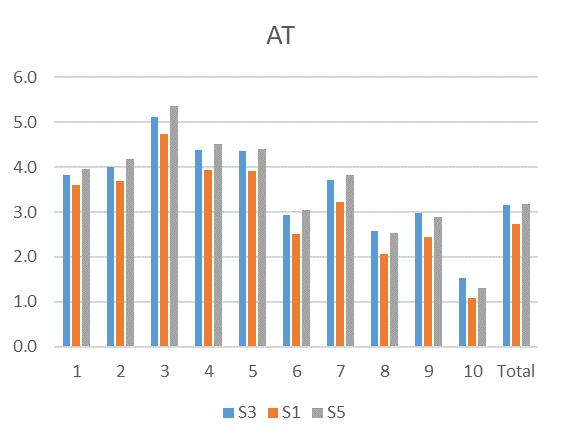


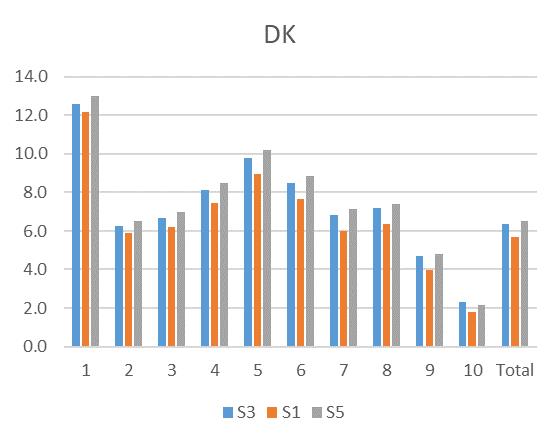

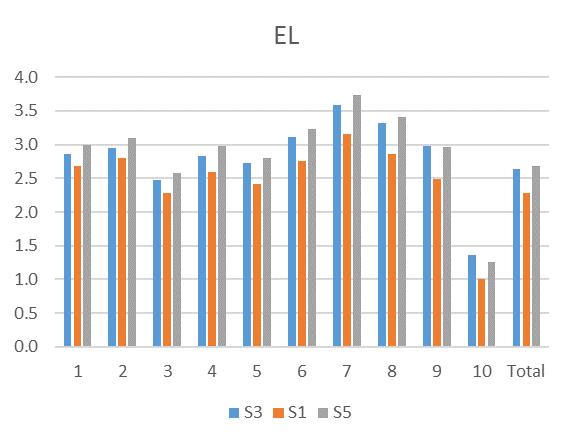


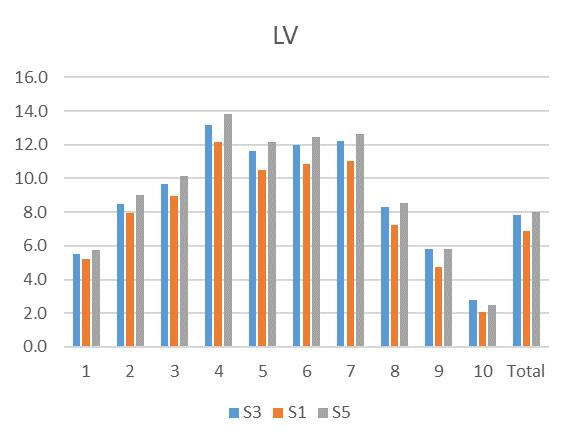


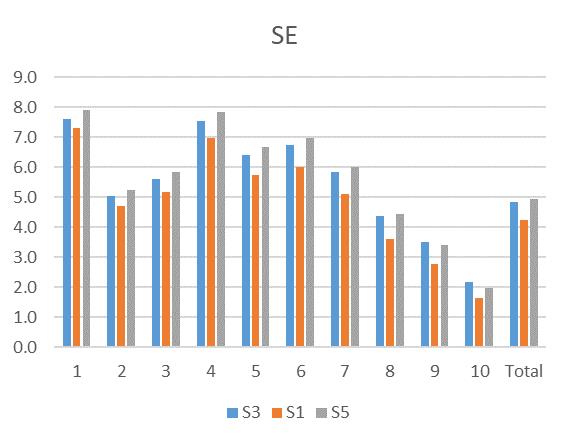


Note: Plots show the mean annual equivalised disposable income by decile (% change with respect to the baseline). The scaling of y-axis differs across countries. Source: European Commission, Joint Research Centre, based on the EUROMOD model.
The extent to which changes in market income (driven by the simulated changes in gross hourly wages of some women) would be translated into changes in household disposable income depends on several issues.
First, on the initial distribution of wages and gender gaps across income deciles, and shares of working women in each decile. For example, in some countries, when closing the AGPG by 3 pp, incomes of women concentrated in the middle of the income distribution may be changed relatively more than at the top (and vice versa). The share of employed women across the income distribution helps explain some of the country differences (see Figure 6): a stronger effect in the lower part of the income distribution is expected in countries in which the share of women employed in the first decile is higher (e.g. DK, HU) compared to countries where this share is lower (e.g. BE, RO, IE).
Figure 2. Share of employed women by income deciles


Source: European Commission, Joint Research Centre, based on the EUROMOD model.
Secondly, the structure of personal income taxes (e.g., progressivity of the personal income tax, existence of different allowances, tax credits, joint assessment of taxable income, etc.) and the interactions within the tax-benefit system also impact the translation of market income changes into disposable income changes.
Finally, some other things, such as household composition, might also play a role, as incomes used for inequality measures are assessed at the household level, i.e. accounting for the number of household members living in a household.
Because of the higher gross earnings of women when the AGPG narrows, market income inequality -measured by the Gini coefficient - would be reduced for all countries for all scenarios (Figure 3). However, this inequality-reducing effect in market income would not always translate into lower inequality in disposable income. The Gini coefficient of equivalised disposable income would be reduced in 18 out of 27 EU Member States (Figure 4). According to the simulations, the disposable income inequality is expected to increase, although to a different extent depending on the scenario, in BE, EL, FI, IE, LT, MT, PL, RO and SI. These inequality results were expected given the distributional tables shown above, as in a country like BE the upper tail of the income distribution benefited from the changes more than the lower, while all other mentioned countries showed an inverted U shape (middle-top deciles benefit more than the lower ones).
Figure 3. Change in market income inequality (Gini coefficient) for three scenarios of AGPG reduction

Source: European Commission, Joint Research Centre , based on the EUROMOD model.
Figure 4. Change in disposable income inequality (Gini coefficient) for three scenarios of AGPG reduction

Source: European Commission, Joint Research Centre, based on the EUROMOD model.
The impact on inequality of the different scenarios of AGPG reduction does not seem to be linear: the scenarios simulating 1 and 5pp reduction of the AGPG would often lead to higher changes in the Gini inequality of disposable income than the 3 pp scenario.
The closing of the AGPG by 1, 3 or 5 pp would lead to a reduction in the at-risk-of poverty rate for all countries, more so for EE, ES and HU. The countries with the lowest decline in poverty risk would be BE, EL, FI, IE, MT and RO (Figure 5). As a rule, the more the AGPG is closed (or the more women´s gross hourly earnings increase), the more the poverty risk would be reduced. For some countries, moving from 1 to 3 pp closing of the AGPG would strengthen the effect of poverty risk reduction; but there would be little change when going from 3 to 5 pp of AGPG narrowing (e.g., AT, BE, FR, IE, IT, LV and PL). This means that a small increase would suffice to lift up women above the poverty line, while further increases in gross earnings would matter for their financial situation but not for the poverty indicator. In addition, the impact on poverty rates depends on how many working women fall below the poverty line. Most often, people below the poverty line have no or little market income. For instance, in RO the change in at-risk-of poverty rates would always be small or remain unchanged: this is because, as seen from the distributional tables, the lowest decile would not be affected by the changes, as there are virtually no working women in the first decile (and only 2 and 5% in the second and third deciles), (see Figure 6 below showing the shares of working women across deciles).
Figure 5. Change in the at-risk-of poverty rates for three scenarios of AGPG reduction

Source: European Commission, Joint Research Centre, based on the EUROMOD model.
The overall change in the at-risk-of poverty rates hides important variations by household type. Figure 6 provides estimates for households with and without children separately. The increased wages of working women would have almost no effect for elderly households as their main source of income is pension benefits, which remain unchanged. On the contrary, single parent households – that most often are women – would benefit the most. The poverty is expected to be reduced by 8 pp in DE, ES, HU, LT, LV and even by 16 pp in EE. The other two groups that would experience a significant decrease in poverty risk are two adult with three or more children households (decrease by more than 6 pp in MT, SE) and three or more adults with children (drop of 5 or more pp in ES, HU, NL). DK stands out as a country where the poverty would be reduced more for single adults below 65 than for any household with children.
Figure 6. Change in the at-risk-of poverty rates for the 3pp AGPG reduction scenario, by household type (in pp with respect to the baseline).

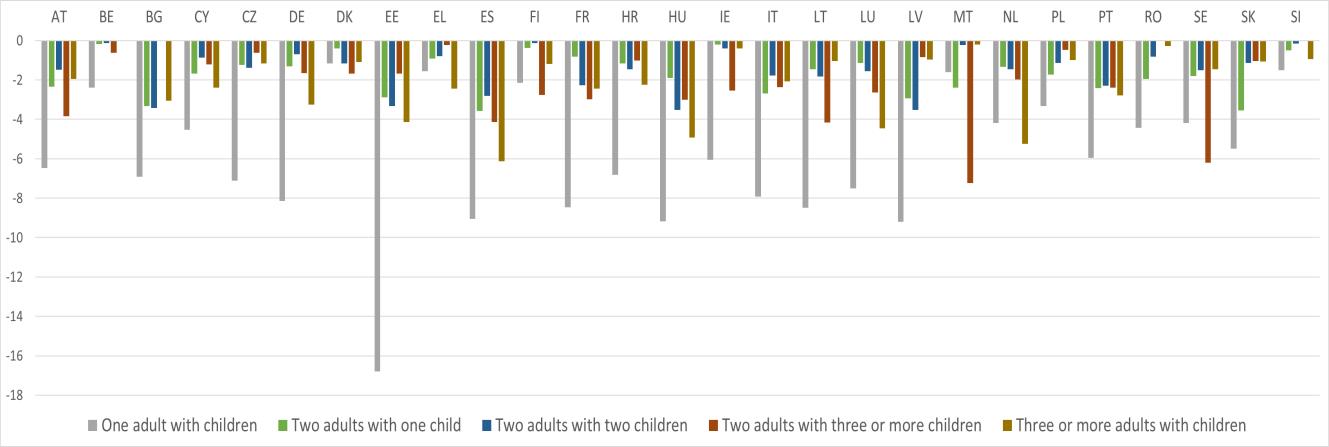
Note: The poverty line is fixed in the baseline. The first graph depicts changes for different households without children and the second for households with children. The scaling of y-axis differs for the two graphs.
Source: European Commission, Joint Research Centre, based on the EUROMOD model.
1.2Budgetary effects
Estimates obtained with EUROMOD simulations suggest that the reduction of the AGPG would generate a positive budgetary impact, due to a rise in government revenues (higher revenues from the personal income taxes and social insurance contributions) and a small decline in social (cash) transfers. Note that this is an expected outcome that results from the methodological approach taken in the simulations to reduce the AGPG, ie women’s gross hourly wages are only increased for some women (lower earning women), and the distribution of men´s earnings is left unchanged. Different results would be obtained if the approach to close the gender pay gap was different.
Figure 7 shows how changes in market income and government budgets would differ substantially across Member States. The growth in total market incomes and government revenues would range from around 4% to 14%. It is particularly high in some countries, such as BG, EE, LT and LV (in between 10% and 14%), whereas the impact would be smaller in EL, NL, MT and IT (around 5%).
Figure 7. Changes in market income, government revenues and expenditures for the 3 pp AGPG reduction scenario

Note: EU* is the weighted average for the EU 27 countries (weights: population size).
Source: European Commission, Joint Research Centre, based on the EUROMOD model.
At the EU population-weighted average, the scenario of 1 pp reduction would imply a rise in government revenues from direct taxes and social insurance contributions of 6.5% while the scenario of 5 pp would suggest a rise of 7.6% (which is very close to the one estimated for the 3 pp scenario, of 7.5%).
Figure 8. % change in government revenues for the three scenarios of AGPG reeduction

Note: Government revenues from direct personal income taxes and social insurance contributions.
Source: European Commission, Joint Research Centre, based on the EUROMOD model
Comparing results for the alternative scenarios (Figure 8), it seems that closing the AGPG by either 1 or 3 pp would have rather different impact for government revenues (the more the gap closes, the larger the positive impact on revenues). But that is not the case for the further reduction of the AGPG by 5 pp, as government revenues seem to stabilize.
5.Behavioural experiment
In order to investigate the behavioural implications of transparency on pay levels, the Competence Centre on Behavioural Insights (hereinafter CCBI - part of the Foresight, Modelling, Behavioural Insights & Design for Policy Unit JRC I.2) is undertaking a behavioural study aimed at identifying the effects of different policy options to support the proper enforcement of the equal pay principle.
Following a preliminary literature review on gender pay transparency, reporting key behavioural insights into gender pay transparency policy with an attempt to assess the potential impact on labour market outcomes, the CCBI, with the support of an external contractor (The Behaviouralist Ltd) is currently implementing an incentivized online experiment.
In terms of geographical scope, the experiment is being conducted in three EU member states: Poland, Spain, and Germany. Further, two samples within each member state are being recruited: a representative sample of the employed adult population, and a sample of HR professionals and managers. The first sample, representing employees in the experiment, will be representative in terms of age, gender, and region. The second sample, representing employers in the experiment, will be drawn from a cross-section of sectors and companies of different sizes and will be balanced in terms of gender.
Employees and employers will form a company and interact within the experimental design. In particular, employers will know the gender and have incomplete information about the potential performance of prospective employees. Employers will also set the wages and career promotions under a budgetary constraint. Employees will work for their employers, deciding the level of effort they wish to exert, and receive a wage in exchange.
The experimental methodology translates the envisaged policy options into the following experimental conditions:
The devised labour market experiment translates policy options in the following treatments:
-Option 0: No change of policy (baseline scenario).
-Option 1: Right of employees to information on pay levels. Employees receive information on their wage and role, how many man and women work for the employer, and the average wage overall and by gender, but only for their role. This information could be provided automatically [a] OR only upon the request of employees [b]. In the experiment the request for information has a monetary cost, representing the real life effort required by the employee to request the information to the employer.
-Option 2: Reporting on Pay. Employees receive information on their wage and role, how many man and women work in the employer, and the average wage overall and by gender, for every role in the employer.
The study aims at investigating the following outcome variables:
–Average level of gender pay discrimination under each treatment (employer’s behaviour);
–Employees productivity and inferred effort;
–Employees gathering of the information (request or search for available info); and
–Employee’s (costly) action against employer (contentiousness).
At the end of the experiment a post-experimental survey is administered to respondents. The post-experimental survey consists of a set of closed general socio-demographic questions, not sensitive in nature (i.e. gender, age, employment status, hours worked per week, education). Furthermore, a number of behavioural measures, such ask risk preferences, fairness, reciprocity, and intrinsic motivation, are included. Lastly, the elicitation of beliefs on one’s own and others’ performance, as well as others’ strategic behaviour, is incorporated by means of incentivised introspection.
Annex 5: Initiative specific annex
1.Employers’ rationality and discrimination
A common misconception is the assumption that, given the perfect rationality of employers and their intent to maximize profit, the possibility to pay women (or other groups) less than men for the same work (though illegal) would result in crowing out the male labour force. While this might be the case in low paying female segregated sectors, and going beyond the simple consideration that salary might not be the one and only reason to hire someone, from an economic point of view, discrimination is difficult to rationalize: it is costly for companies and workers alike because by restricting the pool of choices results in less productive or more expensive employees to be employed. It should therefore not exist. But given that it does exist, economists have struggled to explain it. Beyond the simple issue of ‘bounded rationality’, i.e. the idea that rational behaviour must be necessarily compatible with the access to information and the computational capacities in a specific environment, economists have identified two major reasons for discrimination: personal prejudice and statistical discrimination. The first occurs when employers tend to hire only from certain groups, employees prefer to work with specific co-workers (e.g. some white male workers might quit employers who employ women or people with a minority background), or customers prefer certain groups (e.g. trusting more a white male doctor).
Statistical discrimination occurs in turn due to a lack of information. When trying to predict the potential productivity of job applicants, employers rely on information not related to productivity or that does not apply to a specific worker. Broadly speaking this can be quite common: for instance, employers may rely on a prestigious degree for their hiring decisions whilst that degree does not necessarily ensure higher productivity. In the case of gender, the expectation that motherhood will negatively influence job attachment on the part of women is a common example. These findings have been confirmed by experimental economics. The evidence indicates that employers have a specific gender preference for certain jobs, especially for stereotypical jobs. Kuhn and Shen (2013) found that employers’ relative gender preference for employees occupation- and job-specific and more strongly related to the employers’ preferred age, height, and beauty of the potential employee than to their job skill levels in China.
There is experimental evidence as regards hiring discrimination suggesting that it is due to incorrect beliefs about the women’s ability (Reuben E. et al., How stereotypes impair women's careers in science. Proceedings of the National Academy of Sciences of the United States of America. 111. 10.1073/pnas.1314788111). Other studies point out that hiring discrimination is not specifically about stereotypes, but employers are simply less willing to hire a worker from a group that performs worse on average, even when this group is defined by a non-stereotypical characteristic. (See Coffman, K. et al. ‘The Role of Beliefs in Driving Gender Discrimination.’ Harvard Business School Working Paper, No. 18-054, December 2017).
2.Statistical analysis of the gender pay gap
Figure 1 depicts the gaps in 22 EU countries plus NO and the UK. For these 24 countries, a mean gender pay gap of 13.8% can be observed; 9 countries (including the UK) range above; and 15 countries (including NO) range below this cross-country average.
In 2014, the overall gender pay gap varied substantially across European countries, ranging from 1% in RO to 23.5% in EE.
CZ, DE, EE, FI and UK are the ‘Top Five’ with the highest overall gaps of over 17%. In six countries (BE, HU, IT, LU, RO, SI), the gap is quite low; it ranges below or around 5%.
In between the two poles, a group of 5 countries show rather modest gaps between 6% and 10% (BG, CY, LT, PL and MT), while the remaining group of 8 countries (ES, FR, LV, NL, NO, PT, SE and SK) features notable gaps between 11% and 16%.
Figure 1: Unadjusted gender pay gaps per country (in %, 2014)

The gender pay gap in the EU has been declining but at a very slow pace (Figure 2). The pattern of change has also been variable among member states: between 2010 and 2014, 13 of the EU27 countries reduced their gaps, but 11 increased them, whilst three registered no change, and from 2014 to 2018 most countries (18) reduced their gaps, one remained constant, and nine widened them.
The discussion of GPG trends is however not straightforward, as it also depends on employment patterns and on the structure of the labour force participation. In the financial crisis, gender pay gaps in some contexts narrowed, as men’s earnings were pushed down more than women’s (Karamessini and Rubery 2013). Likewise, trends in the Covid recovery may be difficult to predict as it is possible that more lower paid women may lose employment, thereby ‘improving’ the gender pay gap.
Figure 2: Trends in the unadjusted gender pay gap 2010-2018

Note: 2018 values for Greece, Ireland, and Italy are not available. The values for IE and IT under column 2018 are from 2017 and the value for Greece from 2014
Source: Eurostat- structure of earnings survey methodology [earn_gr_gpgr2]
The factors included as potential explanations for gender pay gaps include personal characteristics such as education and age, but also job related characteristics such as occupation, hours of work, temporary contract, tenure, and coverage by a collective agreement. Also included are employer characteristics such as sector, firm size, and the type of financial control (public or private) over the employer. The unexplained part shows the residual portion that cannot be explained with statistically observable factors. It comprises the wage differences arising from characteristics not included in the statistics, as well as different remunerations of women and men for the same (un)observed characteristics, including remuneration on the basis of sex (see Boll and Lagemann, 2018, for an interpretation).
Figure 3 shows the degree to which each factor contributes to the GPG. Factors may have a negative contribution if the data suggest women should earn more than men, for example if women’s educational level is higher.
Figure 3: Decomposition of the gender pay gap in SES (in %, 2014)

The unexplained gap constitutes the highest portion of the overall gap in 21 out of 24 countries under investigation - the exceptions being DE, BE and NL. Within the explained part, sector affiliation and hours of work are the most important characteristics that drive the gaps, referring to the EU average. Other factors (education, age, tenure, occupation (as associated with sector), temporary contracts, public control, firm size and collective pay agreements) are of only minor importance even on the country level. Eight countries had in fact negative explained (HU, IT, LT, LU, MT, PL, RO, SI) reflecting the fact that due to gender differences in statistically observable characteristics, women would earn higher wages than men in CEE countries. In these cases the unadjusted gender pay gap is in fact less than the unexplained gap.
To a certain extent it can be said that higher overall gaps are associated with higher largest gaps on the sectoral level. Among the Top 6 countries with the highest overall pay gaps are 4 (CZ, DE, EE and SK) whose highest pay gaps at sector level are also among the Top 6 across countries.
EU countries differ significantly with respect to pay gap dispersion across sectors. While gaps are rather compressed in the Nordic countries, they show a great diversity in other countries. The Top 3 sectors with the largest, second largest and third largest gender pay gap per country are (Table 1):
•Administrative and Support Service Activities: this sector occurs most frequently as the one with the largest gender pay gap;
•the Information and Communication sector;
•Manufacturing.
The fourth position is shared by two sectors, namely ‘Transportation and Storage’, and ‘Professional, Scientific and Technical Activities’.
Table 1: Top 3 sectors* with the highest gender pay gaps per country
|
|
Largest gap
|
2nd largest gap
|
3rd largest gap
|
|
BE
|
N
|
R, S
|
C
|
|
BG
|
H, J, N
|
E
|
C
|
|
CY
|
C
|
K, M, N
|
M, Q
|
|
CZ
|
H, J, N
|
C
|
C, J
|
|
DE
|
K, M
|
M
|
C
|
|
EE
|
H, J, N
|
C
|
C
|
|
ES
|
R, S
|
C
|
N
|
|
FI
|
K, M, N
|
M, Q
|
N
|
|
FR
|
C
|
N
|
R, S
|
|
HU
|
C
|
C
|
C
|
|
IT
|
M, Q
|
R, S
|
C
|
|
LT
|
H, J, N
|
C
|
M, Q
|
|
LU
|
N
|
K, M, Q
|
I
|
|
LV
|
H, J, N
|
D, E
|
N
|
|
MT
|
M, Q
|
P
|
I
|
|
NL
|
C
|
H, J, N
|
K, M, N
|
|
NO
|
R, S
|
K, M, N
|
C
|
|
PL
|
C
|
H, J, N
|
C
|
|
PT
|
N
|
C
|
R, S
|
|
RO
|
C, J
|
C
|
C
|
|
SE
|
K, M, N
|
H, J, N
|
R, S
|
|
SI
|
C
|
R, S
|
C
|
|
SK
|
H, J, N
|
C
|
C
|
|
UK
|
K, M, N
|
P
|
F
|
* Sections to which the divisions with the largest, second largest and third largest gender pay gap refer to (based on NACE rev. 2); Sources: SES 2014.
As Table 1 shows, among sections with the largest gender pay gap on the country level, section N ‘Administrative and Support Service Activities’ is most frequently named (12 counts), followed by sections J ‘Information and Communication’ and C ‘Manufacturing’ (7 counts each). Sections H ‘Transportation and Storage’ and M ‘Professional, Scientific and Technical Activities’ rank fourth (6 counts each). Section K ‘Financial and Insurance Activities’ (4 counts), S ‘Other Service Activities’ and Q ‘Human Health and Social Work Activities’ follow with 2 counts each. For the second and third largest gaps, the same sections prove to be relevant. Additionally, sections E ‘Water Supply, Sewerage, Waste Management and Remediation Activities’, D ‘Electricity, Gas, Steam and Air Conditioning Supply’, P ‘Education’, F ‘Construction’ and I ‘Accommodation and Food Service Activities’ were named a few times (maximum 2 counts each). Further, section H is among the Top 5 sections with the highest gaps in both studies.
The decomposition of pay gaps at sectoral level shows that the unexplained part is a major driver of sector-specific gaps. A second major driver is occupation. Since occupation and sector have high correlation, usually the association of occupation with the pay gap is often not visible in statistical analysis. The analysis conducted for this section however shows occupation to be highly relevant for the gender pay differential within sectors.
The participation of women and men in cash bonus payments shows a geographical divide. There are 11 countries where more men than women receive monetary fringe benefits (9 within the EU: BE, DE, ES, FI, FR, NL, RO, SE, SK and 2 outside the EU: NO and UK). Interestingly, only one Eastern European country (RO) is among those countries where men are advantaged in access to bonuses. The much higher participation of men in cash fringe benefits in the Nordic countries NO and SE as well as the UK is striking. In 11 other countries, the opposite holds true (BG, CY, CZ, EE, HU, IT, LT, LV, MT, PL and SI). Countries where women are advantaged belong to Eastern and Southern Europe without exception. In two countries (LU and PT), gender parity in participation is observed. The level of participation differs tremendously between countries. While only 9% to 19% of women and men receive cash bonuses in SE, this applies to 98% to 99% in IT.
However, for those women and men who receive monetary fringe benefits, gender gaps in monetary fringe benefits are much higher than gender gaps in (regular) wages (Figure 4). Only in CY and FR is the magnitude of gaps roughly the same. In 22 countries, the magnitude is 1.5 to 10 times higher for fringe gaps than for wage gaps. Analogous to wages, gender gaps in monetary fringe benefits also vary notably across countries, althought the country order is different.
Figure 4: Unadjusted gender pay gaps in terms of monetary fringe benefits (in %)

Further analysis shows provides some more detailed insights:
·Among graduates, cash bonus gaps tend to be even larger than wage gaps (this applies to EE, ES, LT and LV, with the only exception being RO). At the same time, cash bonus gaps seem to be less important than wage gaps among the medium educated groups (as shown in the BG, HU, MT, NL, NO, SE and UK) and low educated groups (as shown in IT, LU, MT, NL and SI). Note that this information does not relate to magnitude in absolute numbers, but to the relative size of gaps across educational groups.
·The very young (aged 14 to 19) tend to be less affected by gender gaps in terms of cash bonuses compared to gender wage gaps. On the contrary, older employees aged 50 or older seem to be more affected by cash bonus gaps compared to wage gaps.
·Occupational patterns in cash bonus payments resemble those in wages throughout countries. However, in half of the countries, negative bonus gaps are higher than wage gaps and/or the number of occupations in which women have a lead over men in terms of bonuses is higher than the respective number of occupations where this is the case for wages.
3.Overview of existing pay transparency measures in the Member States
The following overview is based on information mainly gathered through various studies and reports of the European Equality Law Network, the study carried out for this impact assessment, and the 2020 Eurofound report. It inevitably presents a simplified overview of what can be complex measures at national level, focussing only on elements considered relevant for the present initiative and without taking into account the broad variety of modalities related to the implementation of the measures concerned.
Table 2: Overview of existing pay transparency measures in the Member States
|
|
|
|
|
Right/obligation in place in some form
|
Right/obligation not in place
|
|
Right to request information on pay
|
CY, DE, ES, FI, IE, LV, PT, NL, RO, SE
|
AT, BE, BG, CZ, EE, EL, FR, HR, HU, IT, LT, LU, MT, NL, PL, SI, SK
|
|
Pay Reporting
|
AT, BE, DE, DK, ES, FR, IT, LT, LU, NL, PT
|
CZ, FI, EE, HR, IE, BG, CY, EL, HU, LV, MT, PL, RO, SE, SI, SK
|
|
Joint Pay Assessment (or Pay audit)
|
BE, DK, DE, ES, FI, FR, PT, SE
|
AT, BG, CY, CZ, EE, EL, HR, HU, IE, IT, LT, LU, LV, MT, NL, PL, RO, SI, SK
|
4.Theoretical outputs/outcomes/impacts of pay transparency
Only few studies, mostly related to the Anglo-Saxon world, explore the impact of pay transparency laws on employer and employee behaviour and outcomes and even less directly focus on the gender wage gap. Nevertheless, some studies find statistically significant reductions of around 2-3 p.p. of the reference gender wage gap due to pay transparency measures.
The literature review shows that the effect of transparency measures on the gender pay gap and firm outcomes is ultimately an empirical question. The effects depend on the kind of measure that is taken, the involved sanctions and their enforcement, the targeted group of workers, the institutional and labour market settings in the respective country, and the time window that is taken into consideration.
The expected effects can be tentatively summarised as follows:
First, pay transparency should decrease the scope for taste-based discrimination. Since firms exhibiting large pay gaps are liable to suffer reputational damage in the eyes of consumers, investors and potential employees employers who ‘prefer’ to pay more a specific group suffer economic damages (Bryson, A., et al., 2020).
Second, pay transparency arguably decreases the scope for statistical discrimination. Transparent mechanisms of wage setting will highlight wage determinant, e.g. tenure, type of education, skills particularly for managerial positions and, in the long term will see behavioural changes to unfold.
Third, pay transparency may combat wage discrimination in monopsonistic labour markets and improve overall efficiency in labor markets. Information on wages that effectively circulates among peer workers can reveal monopolistic profits. Further, due to the fact that in monopsonistic markets, it is labour supply, not demand, that defines effective employment, female employment deductions in the course of reform-driven wage increases should be circumvented (depending on the structure of the local labour market). This is because in general pay transparency should allow smarter job searching and improve the quality of job matches, and therefore it may lead to shorter unemployment spells for workers. Moreover, information about job application processes improves the diversity of applicant pools by boosting in particular the number of female job applicants.
Fourth, fairer compensation should in principle increase women’s attachment to the labour market in multiple dimensions (employment, hours of work and managerial positions).
Theoretically, the design of the measures must include: full and anonymous disclosure, information on pay criteria and automatic disclosure. To reach the goal to reduce the gender wage gap, pay transparency measures have to be accompanied by policies that support women’s awareness on the matter and, second, equip them with better negotiation skills, as well as strong enforcement mechanisms. Moreover, if well-designed, pay transparency measures could support other measures promoting gender equality in the labour market such as female quotas for board members or measures to better reconcile work and family tasks.
Finally, potential costs for companies are expected to be low and decreasing after initial years. Eurofound carried out a review on these aspects that confirms this expectation based on a review among its network and targeted interviews.
5.Behavioural effects of pay transparency
By favouring unawareness, pay opacity influences employees behaviour e.g. as for salary/rise negotiations and acceptance of a lower wage, also depending on their risk aversion (Eckel and Shurchkov, 2018, Kim, 2015; Burn and Kettler, 2019; Bennedsen et al., 2019). Experimental bargaining studies show that offers become more egalitarian under transparency (Bohnet and Zeckhauser, 2004; Cullen and Pakzad-Hurson, 2019). Measures mandating the employers to report gender pay information publicly seems the most effective in terms of wage offers and the implementation of transparency measures (Werner, 2019).
Pay transparency measures enable workers to observe discriminatory pay. The workers who become aware that they receive a lower wage than co-workers might reduce their effort level (Clark et al., 2010; Gächterand Thöni, 2010; Greiner et al., 2011; Charness et al., 2016) and labor supply (Bracha et al., 2015; Bosmans et al., 2020). They also become more likely to quit (Card, et al., 2012) or initiate collusion with colleagues (Maas and Yin, 2018). The transparency of pay disparity also harms cooperation among peers (Breza et al., 2018; Bamberger and Belogolovsky, 2017). However, since the evidence indicate that pay transparency encourages employers to offer equal wages, we speculate that the adverse impact of the policy that emerges due to the observed discrimination may disappear in the long run.
Fair compensation practices increase the reputational capital of companies and facilitate attracting and retaining the best talent, avoding the costs of high turnover. Employees can accept differences in pay if these are explained to them in a fair context of clear information sharing on the criteria behind remuneration. The literature in the compensation field supports salary transparency because it has been found to foster greater trust in management, enhance employee engagement, encourage extra effort by employees, reduce turnover, and contribute to competitive advantage in the labour market.
Employees that feel they receive a fair compensation will feel valued and likely to be more productive.
- A large survey by PayScale (71,000 U.S. employees) found that workers who are paid less than the market rate for their jobs were more satisfied if their employer was transparent about their pay, even more if someone talked to them about compensation and the reasoning behind it: their job satisfaction doubled, rising from 40 percent to 82 percent.
Pay confidentiality erodes trust in the management: employees might question the wage distribution even if it is fair, i.e. accurately reflects differences in productivity. As a consequence, their motivation can be affected. Moreover, this inefficiency on the labour market will prevent employees to maximise their value on the market and the employer to find the best fit for the job.
On the other hand, pay confidentiality makes it easier for companies to avoid direct conflicts and HR managers will not feel compelled to keep pay differences artificially low and maintain a larger margin to compensate the top talents. Indeed, high performers desire pay confidentiality more than low performers (Schuster& Colletti, 1973) because they think to be (rightly) paid more than others, and want to avoid conflicts (and are not interested in other salaries because they think those are lower). For the same reasons, they prefer avoiding shrinking of the wage range (again because they think to be on the upper end). Finally, for very specialised companies, pay confidentiality can reduce turn-over and improve the return of costly specialised training; on the other side, employees with firm specific skills (that cannot be sold outside) will not find comparable pay information on the market and therefore can only guess that they are being paid fairly.
6.Summary of trends pre- and post-COVID-19 crisis
Trends pre and post-COVID pandemic in female pay and employment and in women’s potential contributions to more resilient and productive societies
|
|
Pre COVID-19 pandemic
|
Post COVID-19 pandemic
|
|
a.Trends in gender pay gap and gender-related wage discrimination
|
|
Gender pay gap
|
Slight overall narrowing; variations among member states and size of gender pay gap may be lower due to higher female employment gaps (composition effects)
|
Trends difficult to predict as may narrow if more low paid women lose work. There may be benefits for some women if COVID-19 leads to an upward valuation of care work.
|
|
Trends in wage setting
|
Reduction in coverage of collective bargaining associated with decline in extension of legal collective agreements
Rise in minimum wages as percent of median wages (46.4% to 50.6% 2008 to 2019a)
|
Recognition of value of key workers could prompt changes in value attached to key worker jobs; alternatively crisis may lead to lower increase in pay including minimum wages or even pay cuts
|
|
Gender-related wage discrimination
|
Evidence is variable across countries; higher minimum wages may have reduced some undervaluation but growth of individualised pay and bonuses may have increased scope for gender pay discrimination
|
Trends may be variable – lower minimum wages or constraints on public sector pay could increase undervaluation but recession could reduce bonuses. High unemployment may lead to lower bargaining power, less focus on equality issues
|
|
b.Trends related to household division of labour and female employment
|
|
Gender division of labour and women’s economic independence
|
High but stable gender gap in care activities/ improvements in women’s financial resources
|
Mixed possible trends in opportunities for sharing care (could be positive from increased telework, but negative if care provision declines)
Women’s access to financial resources may decline if face disproportionate loss of employment.
|
|
Female employment rates
|
Steady increase and closing of gender employment gaps- headcount and FTE but declining rates among lower educated.
|
Likely reversal in levels of female employment rate and risk of widening gender employment gap
|
|
Adoption of new technologies
|
Risks of job displacement for routinised jobs (impact on lower educated) but women’s employment prospects potentially protected in areas where social skills important.
|
Risks to jobs if automation accelerated in key service areas/ reduction in face to face work but also wider opportunities for flexible working arrangements/teleworking
|
|
Public services and childcare infrastructure
|
Barcelona childcare targets met for EU as a whole but only in 13 member states, with affordability and accessibility still an issue.
Provision of public services on which women rely more than men eroded under austerity measures post the financial crash in 2008
|
Risk of return to austerity and negative impact on public service provision including childcare (and longterm care)
|
|
c.Trends towards a more resilient economy and society
|
|
Supporting an ageing population
|
High increase in employment rates of older workers particularly women and small improvement in gender pension gap
|
Likely halting in increased employment rate for older workers including women and risk to pension improvements for both women and men - trends in gap depend on employment trends
|
|
Poverty rates and women’s employment
|
Stable but still higher risk of poverty than men since 2012 and still higher than 2005.
Small decline in children at risk of poverty and social inclusion
|
Overall increased risk of poverty- impact by gender depends upon trends in employment.
|
|
Trends in productivity
|
Sluggish productivity growth post financial crisis and even before associated with switch to services and other factorsb
|
Move to reduce direct labour contact in services could increase productivity but, at least temporarily, at expense of jobs. However the crisis may lead to postponement of investments.
|
|
Effective utilisation of female talent
|
Women have been investing more in their education and achieving more entry into high level jobs, potentially boosting firm performance but also facing glass ceilings such that the gender pay gap is largest among graduates in all countries
|
The expansion of telework may enable women to access more high level jobs or could lead to new forms of segregation possibly further depressing women’s pay in higher level jobs.
|
a Schulten, T. and Luebker, 2019.
b Bauer, P. et al., 2020
7.Experts’ recommendations on priority actions
|
Experts’ Recommendations on priority actions
|
|
1.Improvements to procedures:
|
|
Simplification of the process
|
NL
|
|
Shortening the legal procedures
|
AT, CY, LV
|
|
Clearer rules on the division of the burden of proof
|
LV, NL
|
|
Lower costs for procedures
|
NL
|
|
Longer limitation periods
|
CY, HU, LV
|
|
Improve access to information to prove a claim
|
NL, RO
|
|
Standard pay information and IT processing
|
ES, IE
|
|
|
|
|
2.Improvements to Compensation rules:
|
|
Higher level of compensation
|
AT, CZ, IE, IT, LV, NL, RO
|
|
Compensation proportionate to size/ turnover
|
CZ, EE, LV
|
|
Reinforce rules against victimization
|
EE, MT
|
|
|
|
|
3.Effectiveness of the measure:
|
|
Legally binding pay transparency measures
|
BG, CY, DE, HR
|
|
Allow collective claim /class actions
|
DE, EE, FR
|
|
Legal standing for NGO, equality commissioner, trade unions, etc. on behalf victims:
|
CZ, HU, RO
|
|
Legal standing for NGO, equality commissioner, trade unions, etc. in their own name
|
EE
|
|
Adequate resources to Labour inspectorates and monitoring bodies
|
IT, LU, PL
|
|
Awareness campaigns on equal pay rights and role of Labour inspectorate and other bodies
|
RO
|
|
Reinforce coordination and collaboration between labour inspectorates and other organisms
|
IT
|
|
Link pay transparency to the ability to win public contract/public procurement:
|
FR
|
|
4.Avoid tick boxing exercise
|
|
Effective monitoring of the process and the outcome
|
BE, DE, ES, PT, SK
|
|
Assess feasibility and administrative capability
|
EL, PT
|
|
Independent audit
|
FR
|
|
Training of stakeholders
|
CY, CZ, DE, HR, LU
|
|
Adequate resources to labour inspectorates and other
|
IT, PT
|
|
|
|
|
5.Scope of the measure:
|
|
|
Public and the private sectors
|
BG, FI
|
|
Measures applied to all size of companies
|
EL, IE, IT
|
|
Broad definition of ‘employee’/’workers’
|
IE
|
|
Broad definition of pay
|
IE
|
8.Indications of the change to the legal systems introduced by the initative
The table shows for each Member State whether the new initiative intervenes on an already (partly) regulated policy area. For countries that already have some legal provisions in this area, the table indicates changes the new initiative would require depending on the exact form the measures introduced by the initiative will take.
This assessment was made by the country experts that conducted the country studies. The score provided here is the average of the individual scores for the four options assessed under Strand A. The average scores per option (across countries) are similar, with the exception of option 2 which has a higher average than the three other options. The assessment of the four options per country may also vary.
|
Acronym
|
Already regulated*
|
Conditions under which the initiative widens the scope of the existing Member State regulation
|
|
|
AT
|
Yes
|
The regulation would apply to companies with less than 150 employees.
|
|
BE
|
Yes
|
(i) The pay reporting duties would apply to companies: both in the public and private sector; with less than 50 employees. (ii) The biennial pay audit applicable in this Member State wouldn’t be kept confidential and would be used for creating general statistics or national policy plans.
|
|
BG
|
No
|
|
|
CY
|
No
|
|
|
CZ
|
No
|
|
|
DE
|
Yes
|
(i) The evaluation of pay schemes and equal pay at employer-level would be legally binding; (ii) The legal entitlement for information on pay differences would be extended to smaller companies with less than 200 employees.
|
|
DK
|
Yes
|
The initiative could improve the rather low degree of pay transparency, in particular in small companies, but also in workplaces where there are few employees within a certain job-category.
|
|
EE
|
No
|
|
|
EL
|
No
|
|
|
ES
|
Yes
|
Pay audit would be conducted also in employer with less than 50 employees; under the condition that it would improve monitoring on pay transparency in all the companies.
|
|
FI
|
Yes
|
(i) The regulation (pay reporting and audit obligations) would apply to companies with less than 30 employees. (ii) The regulation would ensure the accessibility to pay information for employees and their representatives. Under the condition that pay transparency would be guaranteed in private companies, too.
|
|
FR
|
Yes
|
(i) Pay transparency would be compulsory. (ii) The regulation would ensure pay transparency (reporting duties, collective bargaining, etc.) in companies with less than 50 employees.
|
|
HR
|
Yes
|
Pay transparency would be compulsory and that public discussions, campaigns and trainings on pay transparency would be ensured for public administrations of employees, trade unions, lawyers, judges in order to improve their awareness of gender based discrimination in pay.
|
|
HU
|
Yes
|
Since, according to the national expert, as the number of cases reported to the Equal Treatment Authority are decreasing ‘the visibility of advocacy efforts to achieve gender equality and the infringement activity have decreased’ (see national fiche), the proposed measures would improve such aspects.
|
|
IE
|
Yes
|
Adopt binding transparency measures. Under the conditions to address discrimination in wage collective bargaining.
|
|
IT
|
Yes
|
Recognise reporting duties also in companies with less than 100 employees.
|
|
LT
|
Yes
|
Collective bargaining will improve its potentialities in guaranteeing pay transparency and address pay discrimination.
|
|
LU
|
No
|
|
|
LV
|
No
|
|
|
MT
|
No
|
|
|
NL
|
No
|
|
|
PL
|
No
|
|
|
PT
|
Yes
|
Pay reporting duties would apply to companies with less than 50 employees.
|
|
RO
|
No
|
|
|
SE
|
Yes
|
Pay surveys could be carried out and used, that specific actors would provide efficient supervision, and legislation would follow up.
|
|
SI
|
No
|
In the case a pay transparency right would be recognized to the employee and eventual measures of strand C would ensure its enforceability.
|
|
SK
|
No
|
|
* The pay transparency measures envisaged under the new EU legal initiative (Strand A) are already to a lesser or greater extent regulated by the legal framework in the country.
9.The Icelandic Equal pay standard
The Equal Pay Standard (Standard ÍST 85: 2012 – Equal Pay Management System – Requirements and Guidance) was published by Icelandic Standards in December 2012. It aims to create a system to confirm that women and men, working for the same employer, were paid equal wages for the same jobs or jobs of equal value and it is applicable to all companies and institutions, regardless of their size, field of activity and staff gender composition. In 2008, the Iceland’s Ministry of Welfare, along with the Icelandic Confederation of Labour and the Confederation of Icelandic Employers, began to develop the Equal Pay Standard under the supervision of Icelandic Standards (IST), and a dedicated Technical Committee (TC). In 2018 it was made mandatory for all companies with more than 25 employees. Full implementation was delayed one year and is now foreseen for the end of 2022.
The process starts with an assessment of pay policies, classifying jobs, according to equal value and formalizing policies and processes related to pay decisions. The organisation can then apply for certification.
Iceland Customs was the first organisation to receive the certification in 2016, when it was not yet mandatory. It first set up a project HR group tasked to come up with preliminary definitions for job classifications, and criteria for job classifications. Then, a focus group with the managers approved the definitions and criteria, ensuring a common understanding of all the elements. Finally, the actual job classifications were applied and all jobs were categorized in terms of their comparability and equal value. As a consequence 10% of workers received a pay rise, 9 p.p. were women.

Source: https://mag.wcoomd.org/magazine/wco-news-83/gender-equality-through-equal-pay-iceland-customs-takes-the-lead/
10.Main literature findings on the impact of a reduction of the GPG
A study from PwC (2018) estimated that the benefits resulting from closing the gender pay gap in OECD countries would result in a 23% increase (at least) in women’s annual earnings. Also, Gradin et al. (2010) found that reducing the gender wage gap would result in a reduction of the poverty rate by between 0.3% and 1.1%. Under complete wage equality, therefore, 2.4% – 10.5% of the poor population would be lifted out of poverty. Reducing poverty would significantly decrease the need for low income benefit payments to women and would thereby lead to a related reduction in the pressure on public finances.
Improved gender equality may induce more women to participate in the labour market, having a positive impact on the gender employment gap. The literature points to the positive effects of lower gender employment gaps on the economy, in three central ways: economic and growth gains, saving effects on welfare transfers, and benefits stemming from women taking-up managerial positions. For economic and growth gains, Ostry et al (2018) estimated the welfare gains from higher female labour force participation, deriving primarily from higher gender diversity in the labour force. They estimated that, in Europe, the welfare gains would be a 1% welfare increase, with an estimated 14% output increase (different estimates depend on the different assumptions made for the elasticity of substitution between women and men). Löfström (2009) estimated that full gender equality (in employment, part-time work and productivity) would lead to a GDP 27% higher (on average) in the EU, or a per-capita GDP higher by €6,800. Similarly, PwC (2018) estimated that reducing the gender employment gap (which in their exercise meant bringing the female employment rate in each country to the same level as that of Sweden, the country with the highest female employment rate) would result in 12% higher GDP in OECD countries. Klasen and Minasyan (2017) estimated that the growth costs of the gender employment gap (thus the gains from closing it) for European countries would be around 8.3 p.p. loss in output over a decade. The growth costs are annual per capita growth costs of the country relative to the best performer in the ratio of female-male participation rates in that decade (Finland in the 1970s and 1980s, and Sweden in the 1990s). Eurofound (2016) estimated that the gains from closing the gender employment gap would be €327 million. This stems from the additional earnings that would accrue to women who were not employed before.
11.Summary of costs
|
Sub-option 1A - Right to receive information on pay
Communication cost per MS and class-size - Minimun cost - first year
|
|
MS
|
10<50
|
50≤N<250
|
250≤N<500
|
500≤N<1000
|
N≥1000
|
|
AT
|
2.156.369
|
241.456
|
0
|
0
|
0
|
|
BE
|
1.911.157
|
220.871
|
0
|
0
|
0
|
|
BG
|
303.270
|
82.368
|
19.440
|
2.916
|
1.836
|
|
CY
|
106.704
|
21.762
|
5.616
|
842
|
530
|
|
CZ
|
937.223
|
300.174
|
105.725
|
15.859
|
9.985
|
|
DE
|
31.141.397
|
3.833.585
|
0
|
0
|
0
|
|
DK
|
917.716
|
0
|
0
|
0
|
0
|
|
EE
|
0
|
0
|
0
|
0
|
0
|
|
EL
|
752.644
|
114.939
|
26.295
|
3.944
|
2.483
|
|
ES
|
0
|
0
|
0
|
0
|
0
|
|
FI
|
0
|
0
|
0
|
0
|
0
|
|
FR
|
0
|
0
|
0
|
0
|
0
|
|
HR
|
261.000
|
64.763
|
21.715
|
3.257
|
2.051
|
|
HU
|
781.085
|
190.497
|
59.161
|
8.874
|
5.587
|
|
IE
|
925.482
|
243.481
|
66.052
|
9.908
|
6.238
|
|
IT
|
13.103.574
|
1.138.534
|
0
|
0
|
0
|
|
LT
|
112.994
|
0
|
0
|
0
|
0
|
|
LU
|
117.331
|
0
|
0
|
0
|
0
|
|
LV
|
171.792
|
46.793
|
9.469
|
1.420
|
894
|
|
MT
|
52.113
|
14.660
|
4.046
|
607
|
382
|
|
NL
|
2.676.043
|
841.495
|
240.392
|
36.059
|
22.704
|
|
PL
|
1.241.307
|
545.034
|
182.698
|
27.405
|
17.255
|
|
PT
|
1.103.284
|
0
|
0
|
0
|
0
|
|
RO
|
687.758
|
192.278
|
59.120
|
8.868
|
5.584
|
|
SE
|
1.055.137
|
0
|
0
|
0
|
0
|
|
SI
|
255.351
|
73.928
|
21.860
|
3.279
|
2.065
|
|
SK
|
267.180
|
90.437
|
31.314
|
4.697
|
2.957
|
|
Source: own calculations on Eurostat data
Note: costs take into account existing measures in the Member States. Microenterprises are excluded
|
|
Sub-option 1A - Right to receive automatically information on pay
Communication cost per MS and class-size – Maximum cost -first year
|
|
MS
|
10<50
|
50≤N<250
|
250≤N<500
|
500≤N<1000
|
N≥1000
|
|
AT
|
4.312.739
|
402.427
|
0
|
0
|
0
|
|
BE
|
3.822.315
|
368.119
|
0
|
0
|
0
|
|
BG
|
606.541
|
137.280
|
34.992
|
5.508
|
3.564
|
|
CY
|
213.408
|
36.270
|
10.109
|
1.591
|
1.030
|
|
CZ
|
1.874.446
|
500.290
|
190.305
|
29.955
|
19.383
|
|
DE
|
62.282.794
|
6.389.309
|
0
|
0
|
0
|
|
DK
|
1.835.431
|
0
|
0
|
0
|
0
|
|
EE
|
0
|
0
|
0
|
0
|
0
|
|
EL
|
1.505.287
|
191.565
|
47.331
|
7.450
|
4.821
|
|
ES
|
0
|
0
|
0
|
0
|
0
|
|
FI
|
0
|
0
|
0
|
0
|
0
|
|
FR
|
0
|
0
|
0
|
0
|
0
|
|
HR
|
522.000
|
107.938
|
39.087
|
6.153
|
3.981
|
|
HU
|
1.562.169
|
317.496
|
106.490
|
16.762
|
10.846
|
|
IE
|
1.850.964
|
405.802
|
118.894
|
18.715
|
12.110
|
|
IT
|
26.207.149
|
1.897.556
|
0
|
0
|
0
|
|
LT
|
225.988
|
0
|
0
|
0
|
0
|
|
LU
|
234.661
|
0
|
0
|
0
|
0
|
|
LV
|
343.584
|
77.989
|
17.045
|
2.683
|
1.736
|
|
MT
|
104.226
|
24.433
|
7.282
|
1.146
|
742
|
|
NL
|
5.352.085
|
1.402.491
|
432.706
|
68.111
|
44.072
|
|
PL
|
2.482.615
|
908.389
|
328.856
|
51.764
|
33.495
|
|
PT
|
2.206.568
|
0
|
0
|
0
|
0
|
|
RO
|
1.375.516
|
320.464
|
106.415
|
16.751
|
10.839
|
|
SE
|
2.110.273
|
0
|
0
|
0
|
0
|
|
SI
|
510.703
|
123.214
|
39.347
|
6.194
|
4.008
|
|
SK
|
534.360
|
150.729
|
56.364
|
8.872
|
5.741
|
|
Source: own calculations on Eurostat data
Note: costs take into account existing measures in the Member States. Microenterprises are excluded
|
|
Option 2A - Equal pay certification - cost per MS and class-size - Minimun and maximum - Euro
|
|
|
|
|
50≤N<250
|
250≤N<500
|
500≤N<1000
|
N≥1000
|
|
|
Min
|
Max
|
Min
|
Max
|
Min
|
Max
|
Min
|
Max
|
|
AT
|
39.793.374
|
57.039.658
|
9.675.280
|
17.423.880
|
1.004.060
|
2.040.698
|
468.872
|
874.917
|
|
BE
|
35.040.663
|
50.227.142
|
9.190.603
|
16.551.043
|
953.763
|
1.938.470
|
445.384
|
831.089
|
|
BG
|
7.317.024
|
10.488.192
|
1.347.192
|
2.426.112
|
139.806
|
284.148
|
65.286
|
121.824
|
|
CY
|
1.933.191
|
2.771.028
|
389.189
|
700.877
|
40.388
|
82.087
|
18.860
|
35.194
|
|
CZ
|
27.537.304
|
39.471.857
|
7.566.282
|
13.625.859
|
785.197
|
1.595.870
|
366.668
|
684.204
|
|
DE
|
769.426.962
|
1.102.893.432
|
177.328.481
|
319.344.796
|
18.402.414
|
37.401.895
|
8.593.480
|
16.035.476
|
|
DK
|
43.421.347
|
62.239.979
|
9.322.622
|
16.788.791
|
967.463
|
1.966.315
|
451.782
|
843.027
|
|
EE
|
2.643.429
|
3.789.080
|
508.028
|
914.890
|
52.721
|
107.153
|
24.619
|
45.940
|
|
EL
|
9.333.586
|
13.378.723
|
1.665.757
|
2.999.805
|
172.865
|
351.339
|
80.724
|
150.631
|
|
ES
|
94.109.125
|
134.895.631
|
23.129.595
|
41.653.297
|
2.400.293
|
4.878.464
|
1.120.879
|
2.091.565
|
|
FI
|
21.847.232
|
31.315.732
|
5.171.999
|
9.314.077
|
536.729
|
1.090.871
|
250.639
|
467.694
|
|
FR
|
172.720.092
|
247.576.266
|
48.652.074
|
87.615.857
|
5.048.911
|
10.261.633
|
2.357.718
|
4.399.514
|
|
HR
|
5.753.095
|
8.246.463
|
1.504.863
|
2.710.057
|
156.168
|
317.404
|
72.927
|
136.082
|
|
HU
|
19.458.675
|
27.891.985
|
4.714.325
|
8.489.866
|
489.233
|
994.339
|
228.460
|
426.307
|
|
IE
|
19.313.859
|
27.684.406
|
4.087.400
|
7.360.859
|
424.173
|
862.109
|
198.079
|
369.616
|
|
IT
|
239.620.472
|
343.470.995
|
45.977.993
|
82.800.195
|
4.771.405
|
9.697.619
|
2.228.130
|
4.157.702
|
|
LT
|
5.907.665
|
8.468.023
|
1.081.870
|
1.948.303
|
112.272
|
228.187
|
52.428
|
97.831
|
|
LU
|
4.889.401
|
7.008.447
|
1.306.797
|
2.353.366
|
135.614
|
275.628
|
63.328
|
118.171
|
|
LV
|
4.219.848
|
6.048.713
|
666.175
|
1.199.691
|
69.133
|
140.509
|
32.283
|
60.241
|
|
MT
|
1.302.252
|
1.866.643
|
280.353
|
504.878
|
29.094
|
59.132
|
13.586
|
25.352
|
|
NL
|
72.601.969
|
104.067.362
|
16.179.852
|
29.137.742
|
1.679.078
|
3.412.634
|
784.089
|
1.463.113
|
|
PL
|
51.778.145
|
74.218.579
|
13.539.829
|
24.383.416
|
1.405.107
|
2.855.803
|
656.151
|
1.224.381
|
|
PT
|
24.079.064
|
34.514.831
|
4.538.473
|
8.173.182
|
470.984
|
957.249
|
219.938
|
410.405
|
|
RO
|
17.080.705
|
24.483.411
|
4.096.992
|
7.378.132
|
425.169
|
864.132
|
198.543
|
370.483
|
|
SE
|
42.213.258
|
60.508.309
|
9.214.390
|
16.593.880
|
956.231
|
1.943.487
|
446.537
|
833.240
|
|
SI
|
6.829.483
|
9.789.353
|
1.575.342
|
2.836.979
|
163.482
|
332.269
|
76.342
|
142.455
|
|
SK
|
7.755.195
|
11.116.264
|
2.094.760
|
3.772.381
|
217.385
|
441.824
|
101.514
|
189.425
|
|
Source: own calculations on Eurostat data
Note: costs take into account existing measures in the Member States. Microenterprises are excluded
|
|
Sub-option 2B – Joint Pay assessment - Cost per MS and class-size –
Minimun and maximum - Euro
|
|
|
50≤N<250
|
250≤N<500
|
500≤N<1000
|
N≥1000
|
|
|
Min
|
Max
|
Min
|
Max
|
Min
|
Max
|
Min
|
Max
|
|
AT
|
14334574
|
20904587
|
2848134
|
4300124
|
365324
|
486324
|
133409
|
173742
|
|
BE
|
12622528
|
18407853
|
0
|
0
|
0
|
0
|
0
|
0
|
|
BG
|
2635776
|
3843840
|
396576
|
598752
|
50868
|
67716
|
18576
|
24192
|
|
CY
|
696384
|
1015560
|
114566
|
172973
|
14695
|
19562
|
5366
|
6989
|
|
CZ
|
9919629
|
14466126
|
2227304
|
3362792
|
285692
|
380316
|
104329
|
135870
|
|
DE
|
277166936
|
404201781
|
52200592
|
78812658
|
0
|
0
|
0
|
0
|
|
DK
|
15641461
|
22810463
|
0
|
0
|
0
|
0
|
0
|
0
|
|
EE
|
952230
|
1388668
|
149549
|
225790
|
19182
|
25536
|
7005
|
9123
|
|
EL
|
3362192
|
4903197
|
490353
|
740336
|
62897
|
83729
|
22969
|
29913
|
|
ES
|
33900473
|
49438189
|
0
|
0
|
0
|
0
|
0
|
0
|
|
FI
|
0
|
0
|
0
|
0
|
0
|
0
|
0
|
0
|
|
FR
|
0
|
0
|
0
|
0
|
0
|
0
|
0
|
0
|
|
HR
|
2072410
|
3022264
|
442990
|
668828
|
56821
|
75641
|
20750
|
27023
|
|
HU
|
7009504
|
10222193
|
1387767
|
2095255
|
178006
|
236963
|
65004
|
84657
|
|
IE
|
6957338
|
10146117
|
1203217
|
1816622
|
154334
|
205451
|
56360
|
73399
|
|
IT
|
86317318
|
125879422
|
13534647
|
20434663
|
1736062
|
2311063
|
633976
|
825643
|
|
LT
|
2128090
|
3103464
|
318473
|
480831
|
40850
|
54380
|
14918
|
19428
|
|
LU
|
1761285
|
2568541
|
384685
|
580799
|
49343
|
65686
|
18019
|
23467
|
|
LV
|
1520095
|
2216806
|
196103
|
296078
|
25154
|
33485
|
9186
|
11963
|
|
MT
|
469104
|
684110
|
82528
|
124601
|
10586
|
14092
|
3866
|
5034
|
|
NL
|
26153054
|
38139871
|
4762900
|
7191045
|
610928
|
813273
|
223099
|
290547
|
|
PL
|
18651790
|
27200526
|
3985751
|
6017702
|
511244
|
680573
|
186696
|
243139
|
|
PT
|
0
|
0
|
0
|
0
|
0
|
0
|
0
|
0
|
|
RO
|
6152899
|
8972978
|
1206041
|
1820885
|
154696
|
205933
|
56492
|
73571
|
|
SE
|
7603138
|
11087910
|
0
|
0
|
0
|
0
|
0
|
0
|
|
SI
|
2460152
|
3587721
|
463737
|
700152
|
59483
|
79184
|
21722
|
28289
|
|
SK
|
2793616
|
4074024
|
616639
|
931004
|
79095
|
105292
|
28884
|
37616
|
|
Source: own calculations on Eurostat data
Note: costs take into account existing measures in the Member States. Microenterprises are excluded. The cost for employers with more than 250 employees is the same as for Sub-option 2C, Measure 1.
|
|
Sub-option 2B - Joint pay assessment - Cost per MS and class-size –
Minimun and maximum - Euro
|
|
|
|
50≤N<250
|
250≤N<500
|
500≤N<1000
|
N≥1000
|
|
|
Min
|
Max
|
Min
|
Max
|
Min
|
Max
|
Min
|
Max
|
|
AT
|
7.167.287
|
10.452.293
|
2.848.134
|
4.300.124
|
365.324
|
486.324
|
133.409
|
173.742
|
|
BE
|
0
|
0
|
0
|
0
|
0
|
0
|
0
|
0
|
|
BG
|
2.635.776
|
3.843.840
|
396.576
|
598.752
|
50.868
|
67.716
|
18.576
|
24.192
|
|
CY
|
696.384
|
1.015.560
|
114.566
|
172.973
|
14.695
|
19.562
|
5.366
|
6.989
|
|
CZ
|
9.919.629
|
14.466.126
|
2.227.304
|
3.362.792
|
285.692
|
380.316
|
104.329
|
135.870
|
|
DE
|
277.166.936
|
404.201.781
|
52.200.592
|
78.812.658
|
0
|
0
|
0
|
0
|
|
DK
|
0
|
0
|
0
|
0
|
0
|
0
|
0
|
0
|
|
EE
|
0
|
0
|
149.549
|
225.790
|
19.182
|
25.536
|
7.005
|
9.123
|
|
EL
|
3.362.192
|
4.903.197
|
490.353
|
740.336
|
62.897
|
83.729
|
22.969
|
29.913
|
|
ES
|
0
|
0
|
0
|
0
|
0
|
0
|
0
|
0
|
|
FI
|
0
|
0
|
0
|
0
|
0
|
0
|
0
|
0
|
|
FR
|
0
|
0
|
0
|
0
|
0
|
0
|
0
|
0
|
|
HR
|
2.072.410
|
3.022.264
|
442.990
|
668.828
|
56.821
|
75.641
|
20.750
|
27.023
|
|
HU
|
7.009.504
|
10.222.193
|
1.387.767
|
2.095.255
|
178.006
|
236.963
|
65.004
|
84.657
|
|
IE
|
6.957.338
|
10.146.117
|
1.203.217
|
1.816.622
|
154.334
|
205.451
|
56.360
|
73.399
|
|
IT
|
43.158.659
|
62.939.711
|
13.534.647
|
20.434.663
|
1.736.062
|
2.311.063
|
633.976
|
825.643
|
|
LT
|
0
|
0
|
318.473
|
480.831
|
40.850
|
54.380
|
14.918
|
19.428
|
|
LU
|
0
|
0
|
384.685
|
580.799
|
49.343
|
65.686
|
18.019
|
23.467
|
|
LV
|
1.520.095
|
2.216.806
|
196.103
|
296.078
|
25.154
|
33.485
|
9.186
|
11.963
|
|
MT
|
469.104
|
684.110
|
82.528
|
124.601
|
10.586
|
14.092
|
3.866
|
5.034
|
|
NL
|
26.153.054
|
38.139.871
|
4.762.900
|
7.191.045
|
610.928
|
813.273
|
223.099
|
290.547
|
|
PL
|
18.651.790
|
27.200.526
|
3.985.751
|
6.017.702
|
511.244
|
680.573
|
186.696
|
243.139
|
|
PT
|
0
|
0
|
0
|
0
|
0
|
0
|
0
|
0
|
|
RO
|
6.152.899
|
8.972.978
|
1.206.041
|
1.820.885
|
154.696
|
205.933
|
56.492
|
73.571
|
|
SE
|
0
|
0
|
0
|
0
|
0
|
0
|
0
|
0
|
|
SI
|
2.460.152
|
3.587.721
|
463.737
|
700.152
|
59.483
|
79.184
|
21.722
|
28.289
|
|
SK
|
2.793.616
|
4.074.024
|
616.639
|
931.004
|
79.095
|
105.292
|
28.884
|
37.616
|
|
Source: own calculations on Eurostat data
Note: costs take into account existing measures in the Member States. Microenterprises are excluded –
Costs for the joint pay assessment under option 2C are the same for employers with more than 250 employees
|
|
Sub-option 2c – Bazsic Pay reporting - cost per MS and class-size –
Minimun and maximum - Euro
|
|
|
50≤N<250
|
250≤N<500
|
500≤N<1000
|
N≥1000
|
|
|
Min
|
Max
|
Min
|
Max
|
Min
|
Max
|
Min
|
Max
|
|
AT
|
2253593
|
3702331
|
0
|
0
|
0
|
0
|
0
|
0
|
|
BE
|
2061465
|
3386692
|
0
|
0
|
0
|
0
|
0
|
0
|
|
BG
|
768768
|
1262976
|
108864
|
171072
|
11988
|
19764
|
5184
|
7776
|
|
CY
|
203112
|
333684
|
31450
|
49421
|
3463
|
5710
|
1498
|
2246
|
|
CZ
|
2801626
|
4602672
|
592059
|
930379
|
65197
|
107487
|
28193
|
42290
|
|
DE
|
71560260
|
117563285
|
12684606
|
19932952
|
0
|
0
|
0
|
0
|
|
DK
|
0
|
0
|
0
|
0
|
0
|
0
|
0
|
0
|
|
EE
|
0
|
0
|
0
|
0
|
0
|
0
|
0
|
0
|
|
EL
|
1072761
|
1762393
|
147252
|
231395
|
16215
|
26733
|
7012
|
10518
|
|
ES
|
0
|
0
|
0
|
0
|
0
|
0
|
0
|
0
|
|
FI
|
0
|
0
|
0
|
0
|
0
|
0
|
0
|
0
|
|
FR
|
0
|
0
|
0
|
0
|
0
|
0
|
0
|
0
|
|
HR
|
604453
|
993030
|
121605
|
191094
|
13391
|
22077
|
5791
|
8686
|
|
HU
|
1777976
|
2920961
|
331304
|
520620
|
36483
|
60147
|
15776
|
23665
|
|
IE
|
2272493
|
3733382
|
369892
|
581259
|
40732
|
67153
|
17614
|
26421
|
|
IT
|
10626313
|
17457514
|
0
|
0
|
0
|
0
|
0
|
0
|
|
LT
|
0
|
0
|
0
|
0
|
0
|
0
|
0
|
0
|
|
LU
|
0
|
0
|
0
|
0
|
0
|
0
|
0
|
0
|
|
LV
|
436736
|
717495
|
53028
|
83330
|
5839
|
9627
|
2525
|
3788
|
|
MT
|
136822
|
224779
|
22655
|
35600
|
2495
|
4113
|
1079
|
1618
|
|
NL
|
7853949
|
12902917
|
1346196
|
2115450
|
148242
|
244399
|
64105
|
96157
|
|
PL
|
5086981
|
8357183
|
1023106
|
1607739
|
112663
|
185743
|
48719
|
73079
|
|
PT
|
0
|
0
|
0
|
0
|
0
|
0
|
0
|
0
|
|
RO
|
1794596
|
2948264
|
331070
|
520253
|
36457
|
60105
|
15765
|
23648
|
|
SE
|
0
|
0
|
0
|
0
|
0
|
0
|
0
|
0
|
|
SI
|
689999
|
1133570
|
122414
|
192364
|
13480
|
22224
|
5829
|
8744
|
|
SK
|
844082
|
1386706
|
175356
|
275559
|
19310
|
31835
|
8350
|
12525
|
|
Source: own calculations on Eurostat data
Note: costs take into account existing measures in the Member States. Microenterprises are excluded.
|
|
Sub-option 2D - Pay reporting full - cost per MS and class-size –
Minimun and maximum - Euro
|
|
|
|
|
50≤N<250
|
250≤N<500
|
500≤N<1000
|
N≥1000
|
|
|
Min
|
Max
|
Min
|
Max
|
Min
|
Max
|
Min
|
Max
|
|
AT
|
3219419
|
5955924
|
0
|
0
|
0
|
0
|
0
|
0
|
|
BE
|
2944950
|
5448157
|
0
|
0
|
0
|
0
|
0
|
0
|
|
BG
|
1098240
|
2031744
|
155520
|
295488
|
17172
|
32724
|
6912
|
12096
|
|
CY
|
290160
|
536796
|
44928
|
85363
|
4961
|
9454
|
1997
|
3494
|
|
CZ
|
4002323
|
7404298
|
845799
|
1607018
|
93390
|
177970
|
37591
|
65784
|
|
DE
|
102228944
|
189123546
|
18120866
|
34429645
|
0
|
0
|
0
|
0
|
|
DK
|
0
|
0
|
0
|
0
|
0
|
0
|
0
|
0
|
|
EE
|
0
|
0
|
0
|
0
|
0
|
0
|
0
|
0
|
|
EL
|
1532516
|
2835155
|
210360
|
399683
|
23227
|
44263
|
9349
|
16361
|
|
ES
|
0
|
0
|
0
|
0
|
0
|
0
|
0
|
0
|
|
FI
|
0
|
0
|
0
|
0
|
0
|
0
|
0
|
0
|
|
FR
|
0
|
0
|
0
|
0
|
0
|
0
|
0
|
0
|
|
HR
|
863504
|
1597482
|
173722
|
330071
|
19182
|
36554
|
7721
|
13512
|
|
HU
|
2539966
|
4698938
|
473291
|
899253
|
52259
|
99588
|
21035
|
36812
|
|
IE
|
3246419
|
6005876
|
528417
|
1003992
|
58346
|
111188
|
23485
|
41099
|
|
IT
|
15180447
|
28083827
|
0
|
0
|
0
|
0
|
0
|
0
|
|
LT
|
0
|
0
|
0
|
0
|
0
|
0
|
0
|
0
|
|
LU
|
0
|
0
|
0
|
0
|
0
|
0
|
0
|
0
|
|
LV
|
623909
|
1154231
|
75754
|
143933
|
8365
|
15940
|
3367
|
5892
|
|
MT
|
195460
|
361601
|
32364
|
61492
|
3574
|
6810
|
1438
|
2517
|
|
NL
|
11219928
|
20756866
|
1923137
|
3653960
|
212346
|
404660
|
85473
|
149577
|
|
PL
|
7267115
|
13444163
|
1461580
|
2777003
|
161383
|
307541
|
64959
|
113678
|
|
PT
|
0
|
0
|
0
|
0
|
0
|
0
|
0
|
0
|
|
RO
|
2563708
|
4742860
|
472957
|
898619
|
52222
|
99518
|
21020
|
36786
|
|
SE
|
0
|
0
|
0
|
0
|
0
|
0
|
0
|
0
|
|
SI
|
985713
|
1823569
|
174877
|
332265
|
19309
|
36797
|
7772
|
13602
|
|
SK
|
1205831
|
2230788
|
250508
|
475966
|
27660
|
52711
|
11134
|
19484
|
|
Source: own calculations on Eurostat data
Note: costs take into account existing measures in the Member States. Microenterprises are excluded.
|
|
Issue
|
Absent
|
Limited
|
Moderate
|
Significant
|
|
Issue of legal clarity on concept of equal pay for equal work or work of equal value
|
BE, IE, LU, NL, PL
|
CY, DE, ES, HR, PT, SE, UK
|
FR, LV, MT, SK
|
AT, BG, CZ, DK, EE, EL, HU, IT, LT, SI, FI
|
|
Access to justice and defence of rights
|
|
DK, FR, HU, IT, PT
|
AT, CY, ES, FI, IE, LT, MT, SE
|
BE, BG, CZ, DE, EE, EL, HR, LU, LV, NL, PL, RO SI, SK, UK
|
|
Compensation or reparation to victims
|
|
CY, ES, FR, IE, LU, MT
|
AT, BE, BG, CZ, DK, FI, PT, RO, SE, UK
|
DE, EE, EL, HR, HU, IT, LT, LV, NL, PL, SI, SK
|
|
Application of the reversed burden of proof
|
|
SE
|
BE, DE, DK, ES, FI, FR, HU, IE, IT, LT, LU, LV, MT, PT, RO, UK
|
AT, BG, CY, CZ, EE, EL, HR, NL, PL, SI, SK
|
|
Promotion, development and use of gender-neutral job evaluation and classification systems
|
|
BE, ES, IE, IT, LT, LU, NL
|
CZ, FI, HU, PL, RO, SE, SI, SK, UK
|
AT, BG, CY, DE, DK, EE, EL, FR, HR, LV, MT, PT
|
|
Clear powers and promotion of equality bodies
|
BE, CZ, FR, HU, LU
|
DK, FI, HR, LT, NL, RO, SE
|
CY, DE, ES, IT, LV, MT, SI
|
AT, BG, EE, EL, IE, LU, PL, PT, SK, UK
|
12.Mapping of the issues by relevance
Source: ICF country fiches (2019).
13.Qualitative assessment of costs in the 2020 Evaluation
|
Type of cost
|
Citizens
|
Businesses
|
Member States
|
Trade unions
|
Explanation
|
|
Enforcement and monitoring of the Recast Directive
|
|
|
0/*
|
|
Some Member States (e.g. SE, ES, SK) reallocated resources. In others (e.g. EE, PT, NL), stakeholders consider the allocated resources insufficient to guarantee effective implementation of the legislation.
|
|
Promoting the use of gender- neutral job evaluation systems
|
|
|
0/*
|
|
In Luxembourg, the government finances training for employers on job classification. Participation in the training is voluntary. An estimated EUR 40,000 was allocated to each employer participating in the programme. In Belgium, the Ministry of Employment reviews all collective agreements to ensure their gender neutrality. However, no additional staff have been allocated, with the task absorbed by the existing staff.
|
|
Development and utilisation of tools (e.g. wage calculators)
|
|
|
*
|
|
Some Member States (e.g. AT, DE, PL, UK) have developed tools such as wage calculators to promote implementation of the legislation. Information on the costs of developing these tools could not be obtained but are assumed to be minimal.
|
|
Pay information requests (cost per request)
|
*
|
*
|
|
|
In Germany, an impact assessment estimates that about 75,602 requests for information on pay would be made per year. Each request would take 70 minutes of time for an employee to compile. To employers, fulfilling a request for information would cost on average 39 EUR per request.
|
|
Pay discrimination complaints (cost per complaint)
|
*
|
*
|
|
*
|
The costs to individuals are (primarily) the stigma, risk of retaliation and the cost of filing pay discrimination complaints (can be assumed to be the same as the costs of filing a pay information request). The costs to employers are similar to those for pay information requests.
|
|
Judicial procedures
|
***
|
**
|
*
|
**
|
Citizens – the availability of legal aid to offset the impact on individuals is limited.
Member States - according to the stakeholders consulted, these costs should amount to no more than a few hundred euro.
Businesses - may suffer a loss to their reputation.
Trade unions – costs of legal representation of potential pay discrimination victims in some countries.
|
|
Substantive compliance costs for pay transparency measures
|
|
*/**
|
**
|
*
|
For businesses, see Table 49 (section 3.5.1.2). These costs include adapting the pay database and training staff.
|
|
Monitoring costs of pay transparency measures
|
|
|
**
|
*
|
Member States – and, to a lesser extent, trade unions - are involved in monitoring the pay transparency measures. The extent of the monitoring varies across Member States, depending on the measures adopted. Equality bodies have monitoring responsibilities in all countries, while in some cases work councils are also involved in monitoring activities.
|
|
Administrative burden for pay transparency measures
|
|
*/**
|
|
|
These costs are higher for pay audits than for pay reports and are primarily driven by producing and analysing gender pay gap reports.
|
|
Limited freedom to negotiate wages
|
|
*
|
|
|
The OPC provides some evidence that this is an indirect cost faced by employers. It could also be a cost for employees if equal pay measures limit individual wage-bargaining power.
|
0 none; * low cost; ** medium cost; *** high cost
14.Useful gender neutral tools for work evaluation
This section provides information on tools for work evaluation, listed by organisation and/or country. In general, the process of identifying equal work is carried out with the help of job titles, job codes, job grade systems and the like. There are a number of tools and instruments in the labor market, both in the private and public sector. The various tools are provided both by private actors, for instance consultancies, and public organs. The process of identifying work of equal value is normally carried out with the help of a tool for work evaluation. Four criteria are used when determining work of equal value: skills, effort, responsibility and working conditions.
General Overview:
Austria, Wage calculation tool by the Austrian ministry for women’s affairs:
A German-language tool designed to indicate average salaries in particular professions based on individualized parameters.
www.gehaltsrechner.gv.at
Belgium, Statistical calculation tool by the Belgian Institute for the Equality of Women and Men:
This website provides a French and Flemish- language tool to calculate wage equality as well as a checklist on gender neutrality in job evaluation and classification.
http://igvm-iefh.belgium.be/fr/domaines_action/emploi/gelijk_loon/berekening/
Belgium, Review of gender-neutral job classifications by the Belgian Federal Public Service of Employment, Labour and Public Dialogue:
This website offers a job evaluation scheme to ensure that sectoral job classification systems are gender-neutral as established by the law.
http://www.emploi.belgique.be/defaultTab.aspx?id=8486#
France, Guide on non-discriminatory job evaluation of predominantly feminine professions by the French Defender of Rights:
A French language guide on gender neutral job evaluation for assessing work of equal value
http://www.defenseurdesdroits.fr/sites/default/files/atoms/files/ddd_gui_20130301_discrimination_emploi_femme.pdf
Germany, Gender neutral job evaluation ‘EG-Check’:
This German-language webpage provides a tool to check whether a company is complying with gender equal treatment in relation to pay for the German labour market.
www.eg-check.de
Holland, Loonwijzer, Equal pay test for employers and employees:
This equal pay test tool enables employees to check whether they are being paid in line with the provisions of the Dutch Equal Treatment Act and also offers the possibility to employers to ascertain whether they abide by the act.
www.loonwijzer.nl
Slovakia, Gender income calculator:
This Slovakian-language website offers a wage calculator, which also indicates wage gaps in different professions.
http://www.kedvyrastiem.sk/vsetko-o-kampani
Sweden, BESTA job evaluation scheme by the Swedish Agency for Government Employers
This widely used system allows employees to evaluate whether their job is in compliance with equality guidelines.
https://www.arbetsgivarverket.se/globalassets/avtal-skrifter/skrifter/bestawebb.pdf
15.Pay transparency as a policy action on pay inequalities

MEASURESMEASURESOBJECTIVESOBJECTIVESAnnex 6: Intervention logic
OVERALL OBJECTIVE
Improve the implementation and enforcement of the principle of equal pay between women and men for equal work or for work of equal value
Transparency at individual level
Transparency prior to employment
+
Right to information on pay levels
Market failure:
Asymmetry of information on pay between employee and employer
Persisting bias in pay setting mechanisms and valuation of women’s work
Transparency at employer level
Regular reporting on pay differences between women and men
+
Joint pay assessment
Regulatory failure:
Inconsistent/ inadequate application of pay related concepts
+
Lack of access to justice and deficient enforcement: procedural obstacles and victims’ support
Facilitation of the application of key concepts and development of tools to assess ‘work of equal value’
Removal of procedural obstacles on access to justice
+
strengthened remedies and penalties
Annex 7: Subsidiarity grid
|
1.Can the Union act? What is the legal basis and competence of the Unions’ intended action?
|
|
1.1 Which article(s) of the Treaty are used to support the legislative proposal or policy initiative?
|
|
Article 157(3) TFEU.
The EU principle of equal pay for equal work or for work of equal value between women and men was established by the founding Treaties as a fundamental support for the functioning of the internal market. Later on, the CJEU added that the social goal prevails on its economic function and that equal pay is a fundamental right. Articles 2 and 3(3) TEU clearly refer to the right to equality between women and men as one of the essential values and objectives of the EU.
|
|
1.2 Is the Union competence represented by this Treaty article exclusive, shared or supporting in nature?
|
|
In the case of gender equality on the area of employment and occupation, the Union’s competence is shared.
|
|
2.Subsidiarity Principle: Why should the EU act?
|
|
2.1Does the proposal fulfil the procedural requirements of Protocol No. 2:
-Has there been a wide consultation before proposing the act?
Yes, the Commission carried out a number of consultation activities related to the Initiative: a consultation of Member States representatives in the High-Level Group on Gender Mainstreaming, on 29 January 2020 and 15 September 2020; a targeted consultation of Member States through a separate specific questionnaire issued in March 2020; a targeted consultation of social partners organised on the basis of a separate specific questionnaire issued in March 2020 (and a mini-survey for companies) and followed by a dedicated consultation hearing of social partners run in June 2020; a 12-weeks public consultation launched in March 2020 covered general awareness, experience and knowledge of citizens and stakeholders regarding pay discrimination and pay transparency issues as well as views on the possible specific measures. Earlier, another public consultation was carried out for the evaluation of the relevant provisions in Recast Directive implementing the Treaty principle on ‘equal pay for equal work or work of equal value’ (from 11 January 2019 to 5 April 2019).
-Is there a detailed statement with qualitative and, where possible, quantitative indicators allowing an appraisal of whether the action can best be achieved at Union level?
Limited number of Member States have followed up on the 2014 Commission Recommendation.
22 Member States did not take any action regarding workers’ right to pay information, 14 regarding pay reporting, and 19 regarding joint pay assessment (for more information see SWD (2020) 50 final).
|
|
The impact assessment (section 3) includes a section on the principle of subsidiarity and refers to question 2.2 below.
|
|
2.2Does the explanatory memorandum (and any impact assessment) accompanying the Commission’s proposal contain an adequate justification regarding the conformity with the principle of subsidiarity?
|
|
The implementation of the EU principle of equal pay has been established at EU level by Founding Treaties (now in Article 157 TFEU) and detailed by Directive 2006/54/EEC. The fact that the founding members of the European Community included the principle of equal pay as a goal in the Treaty of Rome indicates that they regarded it as a fundamental value of the Union. Initially, it had merely an economic function aiming at avoiding distortions to competition. In 1976, however, the CJEU recognised, together with its economic goal, the social objective of Article 119 EEC and its horizontal direct effect. Later on, the CJEU added that the social goal prevails on its economic function and that equal pay is a fundamental right.
As demonstrated in the 2020 evaluation, comparable level of promotion of pay equality between women and men throughout the Union is not likely to happen without a push from the EU-level instrument. There is a need for coordinated approach to the issue, as lack of it jeopardises the attainment at the national level of the pay equality between women and men, enshrined in Article 157(1) TFEU.
As national measures regarding pay transparency are very fragmented and scarce, often lack ambition, it becomes ever more significant to establish a coherent and comprehensive European approach aiming to advance and enforce the implementation of the principle of equal pay.
Proposed pay transparency and related enforcement measures are justified at EU level insofar as action solely by Member States in response to the lack of implementation of the EU principle and existing provisions would not necessary have the same level of the guaranteeing equal pay for women and men for the same work or work of equal value and would risk increasing divergences between Member States with potential competition on the basis of social standards. Business would therefore continue to compete on an uneven playing field, which would hamper the operation of the internal market.
The proposed Directive is based on a minimal degree of harmonisation of Member State systems which respects Member States' competences to set higher standards and provides the possibility for social partners to vary the mix of material rights and obligations by collective agreement. It also duly takes into account a trade-off beetwen stronger protection of workers and easing of the administrative burden on employers, especially SMEs, in particular in the context of the economic difficulties faced by the EU companies during current COVID-19 crisis
|
|
2.3Based on the answers to the questions below, can the objectives of the proposed action be achieved sufficiently by the Member States acting alone (necessity for EU action)?
|
|
Analysis shows that Member States acting alone are not able to ensure the transparency of pay systems aiming to ensure the right to equal pay for the same work or for work of equal value for women and men across the EU. The 2020 evaluation concluded that there is limited progress on enforcing the right to equal pay and increasing pay transparency by Member States and evidenced, in particular, vastly distinct and largely inefficient systems operating in most Member States – making equal pay an inert legal provision.
|
|
(a)Are there significant/appreciable transnational/cross-border aspects to the problems being tackled? Have these been quantified?
|
|
Existing approaches (including any regulation in this area in a number of Member States) significantly different across the EU and would create additional costs and complexity for companies operating across borders and therefore undermine the Single Market.
|
|
(b)Would national action or the absence of the EU level action conflict with core objectives of the Treaty or significantly damage the interests of other Member States?
|
|
The absence of the EU level action would limit the progress of enforcing the principle of equal pay enshrined in 157(1) TFEU and the implementation of the core objective of the Treaty related to combat social exclusion and discrimination.
|
|
(c)To what extent do Member States have the ability or possibility to enact appropriate measures?
|
|
Member States had shown a relatively low level of response to voluntary measures such as the 2014 EU Recommendation on Pay Transparency, and a range of evaluations suggested that for progress and to move beyond a piecemeal approach action at the EU level is necessary.
|
|
(d)How does the problem and its causes (e.g. negative externalities, spill-over effects) vary across the national, regional and local levels of the EU?
|
|
The relevance of the different factors contributing to gender-based pay discrimination can be influenced by the distribution of workers by gender and by the socio-economic context (e.g. sector, size of employer, number of workers covered by collective bargaining).
|
|
(e)Is the problem widespread across the EU or limited to a few Member States?
|
|
No precise estimate of the scale of gender pay discrimination is available; however if we look at the gender pay gap as a broad indicator of gender discrimination on the labour market we see that it is widespread across Europe with a very slow decline in the last 10 years. The absence of clarity on gender disparities in companies’ pay structures contribute to this persistence.
|
|
(f)Are Member States overstretched in achieving the objectives of the planned measure?
|
|
There is a strong evidence of pay discrimination based on gender that needs to be addressed.
|
|
(g)How do the views/preferred courses of action of national, regional and local authorities differ across the EU?
|
|
Member State respondents in public consultation and targeted Member States survey conducted in March-May 2020 showed a strong consensus that pay transparency measures would help enforce the right to equal pay (100%), contribute to raising awareness on equal pay issues (90%) and reduce pay discrimination (90%). There is a high degree of consensus among Member State respondents that regular employer reports on pay level and gender pay gaps is an effective option (82.4%). There is also some agreement that employees having the right to access information on pay levels and gender pay gaps of categories of individuals performing the same work or work of equal value would be effective (58.8%). Among the general public, the results from the public consultation show clear consensus on the effectiveness of introducing binding measures on: obligation to include equal pay matters in collective bargaining (80.7%); gender-neutral job evaluation and classification systems (80.2%); employers and employees’ representatives analysing pay levels and gender pay gaps in regular pay audits (78.9%); and regular employer reports on pay levels and gender pay gaps (78.4%). The significant outlier group that did not share this consensus were respondents from company/business associations.
|
|
2.4Based on the answer to the questions below, can the objectives of the proposed action be better achieved at Union level by reason of scale or effects of that action (EU added value)?
|
|
A comparable level of promotion of pay equality throughout the Union is not likely to happen without a push from an EU-level instrument to create equal market conditions for fair competiton in the internal market. EU action also responds to an obligation to act in the Treaty, implements a fundamental principle and right to equal treatment confirmed in the Charter of Fundamental Rights.
|
|
(a)Are there clear benefits from EU level action?
|
|
Homogeneus enforcement of the equal pay right and prevention of unfair competition in the internal market. For workers, pay transparency empower them to claim their rights and has a positive effect on job satisfaction and worker motivation. Furthermore, pay transparency measures have a significant behavioural change effect for employers and would help to address the issue of the undervaluation of women work. This would have positive impact on companies reputation and workforce participation and retention, including enhanced career progression for women across the EU. For society as a whole, it will benefit from the increased equality and better utilisation of talents.
|
|
(b)Are there economies of scale? Can the objectives be met more efficiently at EU level (larger benefits per unit cost)? Will the functioning of the internal market be improved?
|
|
Since the measures are applied at employer and individual level there are no clear EU economies of scale for the provisions as such.
|
|
(c)What are the benefits in replacing different national policies and rules with a more homogenous policy approach?
|
|
The initiative would contribute to achieving the aim of improving the implementation, promotion and enforcement of the equal pay principle by providing legal clarity to improve uniform aplication across the EU. The clarification of the concepts of ‘pay’, ‘work of equal value’ would be instrumental for more uniform application of the equal pay principle across the EU, ensure that remuneration systems are based on objective criteria such as educational, professional and training requirements, skills, effort and responsibility, work undertaken and the nature of tasks involved. This would help to tackle gender-based pay discrimination and address pay inequalities arising for biased valuation of work of equal value. Consequently, this would have positive impact on workforce participation and retention, including enhanced career progression for women across the EU.
|
|
(d)Do the benefits of EU-level action outweigh the loss of competence of the Member States and the local and regional authorities (beyond the costs and benefits of acting at national, regional and local levels)?
|
|
The initiative establishing minimum standards regarding pay transparency and related enforcement measures would set benchmarks to Member States and their relevant authorities in order to ensure that the principle of equal pay is properly implemented and enforced across the EU. Such an approach would leave room of flexibility to them to design concrete implementing measures in accordance with national circumstances, legal system and the level of participation of national social partners in matters relating to remuneration and job evaluation. The initiative also leaves the Member States the option of keeping or setting more favourable standards for workers and taking into account features specific to their national situations, and allows for modifications in the composition of the material rights by means of collective agreements.
|
|
(e)Will there be improved legal clarity for those having to implement the legislation?
|
|
The lack of clarity, of current EU law, for example, regarding definitions of ‘pay’, ‘work of equal value’ means that employers, and even courts, may tend to exercise a wide margin of discretion in assessing whether differences in pay can be justified by differences in productivity. The lack of information on structural differences in the treatment of employees by gender prevents the identification of pay inequalities and uphold the possible influence of unconscious bias. It also creates a vicious circle challenging equal pay enforcement: to establish a prima facie pay discrimination, one would need to have some indication of whether or not there is a problem based on reliable pay information, which is most often not available. The initiative aims to address these issues and improve legal clarity in the light of the CJEU case law.
|
|
3. Proportionality: How the EU should act
|
|
3.1 Does the explanatory memorandum (and any impact assessment) accompanying the Commission’s proposal contain an adequate justification regarding the proportionality of the proposal and a statement allowing appraisal of the compliance of the proposal with the principle of proportionality?
|
|
Article 5(4) TEU adds that ‘[u]nder the principle of proportionality, the content and form of Union action shall not exceed what is necessary to achieve the objectives of the Treaties’.
The existing non-binding 2014 Recommendation in this framework is not sufficient to achieve the intended objective (more effective implementation of the equal pay principle through pay transparency). The Recast Directive 2006/54/EC needs to be supported by a further directive guaranteeing pay transparency measures since the Recommendation had a limited follow-up by Member States .
In particular, the initiative to adopt a binding legal measure is a proportionate response to the obvious need for operational support of the equal pay principle and does not go beyond what is necessary to achieve this goal. The proposed directive does not impinge on national decision-making, legislation or enforcement activities, which remain the competence of Member States. Moreover, it is left largely to the discretion of Member States how they make use of the possibilities put in place by the initiative and entrust the social partners with the transposition through collective agreements.
Since the objective of the proposed legal measure, namely to improve pay transparency, cannot be sufficiently achieved by the Member States but can rather, by reason of the need to establish common minimum requirements, be better achieved at the EU level, the EU may adopt measures, in accordance with the principles of subsidiarity (set out in Article 5(3) TFEU) and to the extent that they are proportionate (Article 5(4) TFEU).
The proportionality principle is fully respected as the scope of the proposal is tailored to different sizes of companies to maximally limit administrative burden, and to ensure basic rights for workers, the absence of which could limit the possibility to detect gender-based pay discrimination and defend their right to equal pay in case of the alleged sex discrimination. The proposed Directive includes measures through established company size thresholds subject to types of pay transparency measures concerned. As indicated in the Impact Assessment, the costs are reasonable and justified in light of the accrued and longer-term benefits regarding more secure employment, workforce retention, better workers’ and firms’ productivity. It therefore affects positively business profitability, a better functioning of internal market, and matches the wider social ambitions of the EU as emphasised in the European Pillar of Social Rights, jointly proclaimed by the Commission, the European Parliament and the Council.
The proposal leaves the Member States the option of keeping or setting more favourable standards for workers, and taking into account features specific to their national situations, and, in order to respect the diversity of labour market models across the EU, allows Member States to entrust the social partners with the implementation of the Directive, provided that Member States take all the necessary steps to ensure that the results sought by this Directive are guaranteed at all times.
|
|
3.2Based on the answers to the questions below and information available from any impact assessment, the explanatory memorandum or other sources, is the proposed action an appropriate way to achieve the intended objectives?
|
|
The proposed action is considered and an appropriate and optimal way to achieve the intended objectives concerning proper application of the principle of ‘equal opportunities and equal treatment of women and men in matters of employment and occupation, including the principle of equal pay for equal work or work of equal value’ (Article 157(3) TFEU). The initiative aims to address only legal issues identified during the evaluation and previous assessments conducted by the Commission. Other root causes of gender pay gap remain beyond the scope of this initiative.
|
|
(a)Is the initiative limited to those aspects that Member States cannot achieve satisfactorily on their own, and where the Union can do better?
|
|
The initiative addresses legal issues and obstacles identified during the 2020 evaluation which relate to persisting problem of pay discrimination and effective enforcement of the principle of equal pay which cannot be achieved by Member States satisfactorily on their own and in systematic manner. Additional non-legislative measures addressing root causes other than pay discrimination based on sex, could also support combating the overall gender pay gap – they are tackled in the EU Gender equality strategy 2020-2025.
|
|
(b)Is the form of Union action (choice of instrument) justified, as simple as possible, and coherent with the satisfactory achievement of, and ensuring compliance with the objectives pursued (e.g. choice between regulation, (framework) directive, recommendation, or alternative regulatory methods such as co-legislation, etc.)?
|
|
As regards the choice of the legal instrument, regulation, amendments to the Recast Directive and new directive were considered. A regulation would impose uniform obligations in all Member States. The use of such an instrument to achieve the objectives set was evaluated as disproportionate, as the measures considered would by their own nature very much depend on the legal and administrative framework of each Member State, which should be respected. A revised Recast Directive was discarded for the reasons of wider scope of that directive and its entire logical structure would have to be revised. On the basis of the conducted evaluation and impact assessment, it seems that a new directive establishing minimum standards regarding pay transparency and related enforcement measures will be an optimal form of the initiative which will complement the Recast Directive which establishes a general framework for gender equality in employment and occupation matters.
A directive, laying down a framework to enhance the application of the equal pay principle through pay transparency and related reinforced enforcement mechanisms, which allows for some flexibility as to the means each Member State considers appropriate to ensure their obligations taking into account the national context, seems to be a more appropriate instrument. It would also be in line with the approach followed as regards similar obligations in the field of employment (posed workers) and discrimination (free movement of workers). Further development of soft measures could have some impact on the effectiveness of legal provisions in place, but it is unlikely that by itself they will motivate the laggard countries to bring the equality issues on the political agenda and engage in setting the new legal frameworks as advised under the 2014 Commission Recommendation.
|
|
(c)Does the Union action leave as much scope for national decision as possible while achieving satisfactorily the objectives set? (e.g. is it possible to limit the European action to minimum standards or use a less stringent policy instrument og approach?)
|
|
Action at the EU level establishing minimum standards regarding pay transparency and related enforcement measures would ensure that pay equality for the same work and for work of equal value between women and men, enshrined in Article 157(1) TFEU, is effective and that all citizens can claim their rights according to the same minimum standards applicable in all Member States. This is a balanced measure at the EU-level which takes into account existing effective examples of national measures and the positions of Member States, social partners and citizens and helps addressing the problem of pay discrimination ensuring a uniform approach across the Union.
|
|
(d)Does the initiative create financial or administrative cost for the Union, national governments, regional or local authorities, economic operators or citizens? Are these costs commensurate with the objective to be achieved?
|
|
The costs of the initiative concern mostly employers and are largely offset by the potential benefits of increased gender equality on the labour market.
The proposed action takes into account a trade-off beetwen stronger protection of workers and easing of the administrative burden on employers, especially SMEs, in particular in the context of the economic difficulties faced by the EU companies during current COVID-19 crisis
|
|
(e)While respecting the Union law, have special circumstances applying in individual Member States been taken into account?
|
|
N/a
|
Annex 8: Job evaluation systems
The 2020 evaluation found that the issue of promotion, development and use of gender-neutral job evaluation and classification has significant relevance in 12 Member States, moderate significance in 8 and limited significance in 7 Member States.
|
Actions to promote gender-neutral job classification and evaluation since 2006
|
|
Member States
|
|
Since 2006, national legislation included the obligation of gender-neutral job evaluation and classification systems
|
BE, CY, DE, EL, ES, FR, IT, LT, MT, PT, SE, SI, SK, UK
|
|
Training programmes to assist employers in implementing gender-neutral job classification systems
|
BE, CY, EE, LU, SE
|
|
Establishment of guides and checklists for job evaluation and classification that avoid gender bias
|
AT, BE, BG, EE, FR, LU, NL, PT, SE, UK
|
|
Reported issue of lack of development of gender-neutral job classification system in practice
|
AT, BG, CZ, DK, EE, EL, IT, LT, LV, MT
|
Source: ICF, 2019.

