 EUROPEAN COMMISSION
Brussels, 26.2.2020
SWD(2020) 517 final
COMMISSION STAFF WORKING DOCUMENT
Country Report Malta 2020
Accompanying the document
COMMUNICATION FROM THE COMMISSION TO THE EUROPEAN PARLIAMENT, THE EUROPEAN COUNCIL, THE COUNCIL, THE EUROPEAN CENTRAL BANK AND THE EUROGROUP
2020 European Semester: Assessment of progress on structural reforms, prevention and correction of macroeconomic imbalances, and results of in-depth reviews under Regulation (EU) No 1176/2011
{SWD(2020) 150 final}
Contents
Executive summary
1.Economic situation and outlook
2.Progress with country-specific recommendations
3.Reform priorities
3.1.Public finances and taxation
3.2.Financial sector
3.3.Labour market, education and social policies
3.4. Competitiveness, reforms and investments
3.5. Environmental sustainability
Annex A: Overview Table
Annex B: Commission debt sustainability analysis and fiscal risks
Annex C: Standard Tables
Annex D: Investment guidance on Just Transition Fund 2021-2027 for Malta
Annex E: Progress towards the Sustainable Development Goals (SDGs)
References
LIST OF Tables
Table 1.1:Key economic and financial indicators - Malta
Table 2.1:Annual assessment of the 2019 CSRs (*)
Table C.1:Financial market indicators
Table C.2:Headline Social Scoreboard indicators
Table C.3:Labour market and education indicators
Table C.4:Social inclusion and health indicators
Table C.5:Product market performance and policy indicators
Table C.6:Green growth
Table E.1:Indicators measuring Malta’s progress towards the SDGs
LIST OF Graphs
Graph 1.1:
Gross Added Value by sector, 2009-2018
Graph 1.2:
Real GDP and components, 2012-2021
Graph 1.3:
Key employment indicators
Graph 1.4:
Total Factor Productivity trends, Malta and selected countries
Graph 1.5:
Trade balance and import content of export trends, 2005-2018
Graph 1.6:
Current account decomposition, 2005-2018
Graph 1.7:
Private sector debt and benchmarks
Graph 2.1:
Overall multiannual implementation of 2011-2019 CSRs to date
Graph 3.1.1:
Total outgoing dividend payments from EU Member States and share going to offshore financial centres***
Graph 3.2.1:
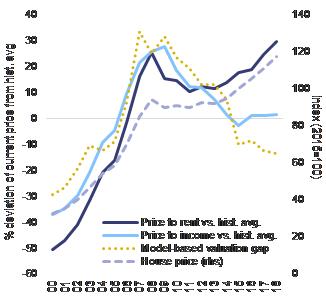
House price misalignment
Graph 3.2.2:
Building permits and housing investment
Graph 3.3.1:
Labour shortages: job finding and separation rates
Graph 3.3.2:
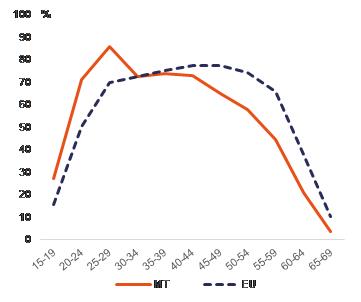
Women employment rates by age cohort
Graph 3.3.3:
At-risk-of-poverty-or-social-exclusion rate (AROPE), age groups
Graph 3.4.1:
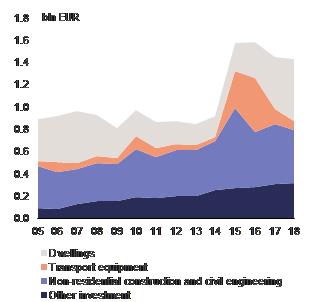
Malta investment trends, excluding machinery
Graph 3.4.2:
Labour productivity by sector, 2008-2018
Graph 3.4.3:
Productivity per person employed by sector and firm-size, 2016
Graph 3.4.4:
Inbound tourism, January 2018-October 2019
Graph 3.5.1:
Total greenhouse gas emissions (excluding international aviation), EU and Malta
Graph 3.5.2:
Trends in population growth and road transport sector
LIST OF Boxes
Box 2.1: EU funds and programmes contribute to addressing structural challenges and to foster growth and competitiveness in Malta
Box 3.3.2: Monitoring performance in light of the European Pillar of Social Rights
Box 3.4.3: Investment challenges and reforms in Malta
Box 3.5.4: Social and environmental sustainability implications of Malta’s housing sector
Executive summary
Malta’s fast-growing economy is confronted with long-term sustainability challenges. The Maltese economy has been experiencing fast growth and sustained employment creation for several years. Recent reform efforts have helped to encourage investment in a number of important areas. However, several long-term structural challenges remain, including (i) the fiscal sustainability implications of ageing; (ii)_ low skills levels and (iii) governance vulnerabilities. In addition, demographic and economic growth are expected to put further pressure on Malta’s infrastructure and natural resources. It is therefore key to (i) strengthen long-term resilience through innovation; (ii) improve infrastructure quality and (iii) take further steps towards a climate-neutral and environmentally sustainable economy. (
)
Economic growth is expected to slow down. Malta’s economic performance continues to be among the strongest in the EU, supported by strong domestic demand and a vibrant, export-oriented services sector. Real GDP growth is expected to gradually moderate, from 4.5% in 2019 to 4% in 2020 and 3.7% in 2021. Inflation is expected to stabilise at 1.5%. As a small open economy, Malta is subject to risks in the external environment.
The government is running fiscal surpluses although at lower levels than in previous years. The headline surplus has declined gradually from an exceptionally high level in 2017 to an estimated surplus of about 1% of GDP in 2019, where it is expected to stabilise in the coming years. A large rise in tax revenues driven by favourable economic conditions was used to increase expenditure growth. Expenditure composition is expected to shift in favour of public investment, while social and healthcare spending as a percentage of GDP is set to stabilise below the figures observed in the past. The decline in the public debt-to-GDP ratio, which reached some 46% in 2018, is expected to continue.
The banking sector remains in good health, due to conservative lending practices but is exposed to risks. Banks have remained profitable while strengthening their capital base and maintaining sufficient liquidity owing to customer deposits. Non-performing loans have declined as well. However, tight lending standards limit borrowing opportunities for companies. In addition, continued weaknesses in the anti-money laundering framework has put strains on relationships with correspondent banks.
Investing in innovation, natural resource management, skills and infrastructure are critical to sustaining Malta’s economic growth. In the longer term, investment in areas other than residential construction will be crucial to alleviate growing bottlenecks. Investment is also needed in adequate infrastructure, skills and innovation. Given spatial and resources constraints, continued economic development will require even more focus to be placed on environmental sustainability. This environmental sustainability can be promoted by (i) continuous improvement in resource management and (ii) increasing the economy’s energy efficiency.
Malta has made limited (
) progress in addressing the 2019 country-specific recommendations.
There has been some progress in the following areas:
·strengthening the anti-money laundering framework;
·focussing investment-related economic policy on research and innovation;
·improving the management of natural resources and improving resource and energy efficiency;
·improving inclusive education and training.
There has been limited progress in the following area:
·ensuring sustainable transport and reducing traffic congestion;
·strengthening the judicial independence, through the establishment of a separate prosecution service.
·strengthening the overall governance framework, including by continuing efforts to detect and prosecute corruption.
There has been no progress in the following areas:
·ensuring long-term sustainability of public finances by addressing shortcomings of the pension and healthcare systems;
·addressing features of the tax system that may facilitate aggressive tax planning;
The Social Scoreboard supporting the European Pillar of Social Rights points to a relatively good performance of Malta, despite remaining challenges. The robust expansion in recent years contributed to: (i) one of the highest employment growth in the EU and (ii) a drop in both, the overall and long-term unemployment rates over recent years. Income inequality is stable, although, some population groups face a higher risk of poverty than others. High level of early school leaving and poor education outcomes, (both of which are greatly determined by the type of school a pupil attends), limit equal opportunities.
Progress in reaching the national targets under the Europe 2020 strategy is mixed. Malta has met its targets on employment and tertiary education attainment. However, it is expected that Malta will narrowly miss its 2020 renewable energy target. Other areas require further efforts to achieve the set targets. These areas include R&D expenditure, early school leaving, poverty reduction, the reduction of greenhouse gas emissions and energy efficiency.
Malta has made some progress on the United Nations’ Sustainable Development Goals (SDGs). It made significant progress on SDG 8 (decent work and economic growth), with especially fast growth in employment. However, Malta still faces significant challenges on SDG 9 (industry, innovation and infrastructure). In particular, gross domestic R&D expenditure as a share of GDP has been declining (
).
Key structural issues analysed in this report, which point to particular challenges for Malta’s economy, are set out in the following paragraphs:
The composition of Government revenues may dent the fiscal position in the medium term. Corporate taxes, which constitute a significant share of tax revenues, may prove volatile given the slowing economy and international initiatives in the area of corporate taxation. Moreover, recent fiscal surpluses have relied to a large extent on proceeds from the Individual Investor Programme (citizenship scheme). These proceeds are difficult to predict and may decline over the medium term. Preserving a sound fiscal position will therefore become increasingly dependent on expenditure adjustments.
Public finances will come under increasing pressures from the costs of ageing. In the long term, Malta’s increase in public pension and healthcare spending is projected to be one of the largest in the EU, albeit from a level much below the EU average. Recent measures have aimed at diversifying pension income and increasing pension adequacy. Pension indexation at levels above increases in the cost of living contributed to better adequacy, but this will weaken public finances in the long term. Measures are ongoing to improve healthcare efficiency and to ensure the provision of long-term care services.
Economic evidence suggests that Malta’s tax rules are used for aggressive tax planning purposes. Although Malta has implemented previously agreed European and international initiatives to address some ATP concerns, rules such as the absence of withholding taxes and the design of Malta’s investor-citizenship and investor-residence schemes remain a cause for concern.
The Maltese economy remains vulnerable to money laundering risks. The supervision of financial markets is improving gradually. Three aspects of the Maltese economy are particularly susceptible to money-laundering risks: (i) its specialisation in remote gaming; (ii) its specialisation in virtual assets and (iii) its citizenship and residence schemes. Steps have been taken to strengthen the role of the anti-money laundering supervisor by investing in human resources and IT, strengthening risk assessment tools and improving risk-based processes. However, the practice of the Malta Financial Services Authority to use a private consultancy for supervisory tasks raises concerns. Shortcomings in the investigation and prosecution of money laundering remain a challenge. Reforms to strengthen law enforcement in the fight against money laundering are under way but still need to be assessed for effectiveness.
The unabated growth of residential house prices needs close monitoring. Demand pressures have led to a surge in residential investments. These demand pressures have, in turn, been driven by job-rich growth, low interest rates, inward migration and booming tourism. There are now signs of overheating in the residential real estate market and surging house prices have also raised concerns about affordability, especially in the rental sector. Moreover, although the capital bases of banks are solid, the continued concentration of their portfolios in real estate deserves attention. This is an especially pressing issue given lengthy insolvencies procedures and the relatively high ratio of household debt to gross disposable income.
The labour market is tightening, resulting in labour shortages and a greater reliance on foreign workers. Employment rates continue to increase for both men and women. The participation of young women in the labour market has significantly increased, facilitated by free childcare. However, the gender employment gap in Malta remains the highest in the EU. Unemployment rates, including long-term unemployment and youth unemployment, are well below the EU average. Malta relies heavily on foreign workers from within and outside the EU to fill labour shortages. There is no strategy in place to keep these workers in Malta for longer periods even though companies report difficulties in recruiting and retaining skilled workers. The share of low-skilled adults is comparatively high, but the take-up of measures to promote adult learning and upskilling remains low.
Poor educational outcomes are set to impede future growth. Persistently high student underachievement and early school leaving make it difficult to meet the need for skilled labour. This also has long-term implications for social inclusion, because children from socially disadvantaged families are less likely to benefit from the best education opportunities and are more likely to lag behind their more advantaged peers. Measures have been taken to make education more inclusive. The average performance of Maltese pupils remains below the EU average and an increasingly diverse student population poses challenges for the Maltese education system. Increased coordination and more use of evidence-based approaches may make reforms and investment in education more effective.
Inequalities and poverty have stabilised after declining in recent years, but certain groups face higher risks of poverty. Child poverty has decreased, but children whose parents are single, foreign or with low income are at higher risk of poverty. The social integration of non-Maltese people, despite their high participation in the labour market, is limited. The rapid population growth (+17% in the past 10 years), mainly due to economic migration from both EU and non-EU countries may exacerbate existing social and environmental challenges. The need to cater to a larger and more diverse population presents particular pressures for the housing market, social services, health services, and the education system.
The services sector continues to grow rapidly, but companies face increasing difficulties in access to finance. The services sector continues to enjoy solid growth. Tourism continues to grow all year-round, albeit at a slower pace than in recent years. The gaming industry is a key contributor to Malta’s economic performance, although it entails governance risks, with potential cross-border implications, given the international significance of the sector. Malta is also set to play an increasing role in blockchain solutions and virtual financial assets, and has adopted a national strategy on artificial intelligence. In addition to ongoing labour-shortages, difficulties in access to bank services and bank credit are a growing business concern, particularly for small businesses.
It remains a challenge to strengthen the institutional capacity Different indicators point to a perceived weakness in Malta’s governance framework, with negative effects on the business environment. The government announced its intention to strengthen the independence of the judiciary and took steps to establish a separate prosecution service. This will require concrete follow-up and adequate implementation. Institutional shortcomings hinder the effective detection of corruption, while investigations by the police seem to remain fragmentary. There is room for improvement in (i) the prosecution of crimes related to corruption, abuse of power and money laundering, and (ii) transparency in public procurement. Conflicts of interest are perceived to be widespread, including in public procurement.
Productivity has significantly improved, but research and innovation still play a limited role in the economy. Malta has experienced significant growth in investment and productivity experienced a sizeable growth in the past decade. Small and medium-sized enterprises are the main contributors to economic growth and employment. However, research and innovation activity by Maltese firms remains limited. Although Malta’s scientific output is improving, academic research does not seem to translate easily into innovation.
Malta’s efforts to cut greenhouse gas emissions, promote sustainable mobility and increase energy efficiency do not seem to match the scale of the challenges it faces. With current policies, emissions are projected to continue increasing, putting Malta far off track in relation to its 2020 and 2030 targets. If Malta is to reach these targets it will be necessary to break the current trend of increasing emissions from transport as well as from the heating and cooling of buildings.
Malta’s transition to greener and more sustainable growth requires a long-term, comprehensive strategy. To deliver on its climate and energy objectives, Malta will need to: (i) identify investment needs in green technologies and sustainable solutions and (ii) secure adequate funding. Malta is the most urbanised and most densely populated country in the EU and remains particularly vulnerable to climate risks. Sectors such as water management; infrastructure and land use; natural ecosystems; agriculture and fisheries; health and tourism would benefit from targeted investments to further climate neutrality. These sectors would also benefit from measures in disaster risk management and disaster risk response. Malta´s level of resource productivity is below the EU average. Economic growth and the increasing population and economic activity are expected to further exacerbate environmental concerns and put pressure on scarce natural resources. Malta has not yet capitalised on turning waste into a resource or on turning low recycling rates into business opportunities. The booming housing and construction sector is generating social and environmental concerns as new projects exert further pressure on the already-high levels of land use. Actions to address infrastructure bottlenecks emphasise road construction. The Commission’s proposal for a Just Transition Mechanism under the next multi-annual financial framework for the period 2021-2017, includes a Just Transition Fund, a dedicated just transition scheme under InvestEU, and a new public sector loan facility with the EIB. It is designed to ensure that the transition towards EU climate neutrality is fair by helping Member States to address the social and economic consequences. Key priorities for support by the Just Transition Fund, set up as part of the Just Transition Mechanism under the next multi-annual financial framework for the period 2021-2027, are identified in Annex D, building on the analysis of the transition challenges outlined in this report.
EU funds and programmes contribute to addressing structural challenges in the Maltese economy. Support from the EU programmes focussed especially on sustainable and inclusive growth and sustainable transport. Research facilities have been built and business infrastructure has been strengthened. EU programmes have also helped to promote inclusion in education and vocational training. Given the positive experience with EU funds in the past, EU funds can also help to overcome the identified challenges in the future.
1.
Economic situation and outlook
Growth performance
Malta’s economy keeps growing faster than the EU average, supported by a thriving services sector. Malta’s annual growth in real gross domestic product (GDP) averaged 7.8% between 2014 and 2018, making it one of the fastest growing economies in the EU. In particular, the gross value added generated by the services sector grew on average by 12% per year in the same period, accounting for 68.5% of Malta’s total gross value added in 2018 (
) (see Graph 1.1). Economic growth started to moderate in 2019, and annual real GDP growth is expected to come in at 4.5% for the full year of 2019. Domestic demand has been underpinned by increasing public expenditure and strong investment growth, which helped to boost growth in goods imports. However, private consumption growth was less than the very high rate recorded in 2018. While rebounding in the third quarter of 2019, export growth remained rather subdued compared to the strong increases of recent years, partly reflecting a slowdown in the growth of tourism.
|
Graph 1.1:Gross Added Value by sector, 2009-2018
|
|
|
|
Source: Eurostat
|
Growth is expected to slow in the short term, amid external risks. Growth is set to continue, but the pace of expansion is expected to gradually ease to 4% in 2020 and 3.7% in 2021 (see Graph 1.2). Private consumption growth is set to weaken, while remaining above its historical average, due to favourable labour-market conditions. Investment growth is forecast to remain high into 2020, supported by large-scale projects in the aviation, health and tourism sectors. However, it is set to slow down thereafter, as a number of infrastructure projects reach completion. Export growth is expected to remain relatively modest in the short term, reflecting less robust growth in Malta’s main export markets and elevated global uncertainty. As domestic demand continues to remain high, imports are set to grow somewhat faster than exports in 2020, before decelerating in 2021. As a small, open economy, Malta’s economic outlook is subject to the risks of a weak external environment and the economic performance of its trading partners.
|
Graph 1.2:Real GDP and components, 2012-2021
|
|
|
|
Source: European Commission
|
The long-term sustainability of Malta’s growth potential remains the main concern. Malta’s strong economic performance has been driven by the shift towards fast-growing export-oriented services, such as remote gaming, finance and tourism. The large inflow of foreign workers has helped to boost labour supply and enabled strong jobs growth. However, the Maltese economy faces a number of structural challenges, notably an ageing population, low skills levels, governance vulnerabilities, infrastructure bottlenecks, and limited innovation potential (see also Section 3). In this context, reconciling the increasing economic activity with Malta’s physical and institutional constraints (e.g. land and other natural resources; the labour force; and institutional capacity) remains crucial to ensure the long-term economic, social and environmental sustainability of the country’s growth model.
Inflation
Inflation remains moderate and is expected to increase only gradually. Headline inflation in 2019 registered a slight deceleration compared to the previous year, from 1.7% to 1.5%. Starting in April 2019, inflation in Malta was in line with inflation in the euro area. This followed a period in 2017 and 2018 when inflation in Malta was lower than the euro-area average. Prices of unprocessed food increased particularly swiftly in the first half of 2019. By contrast, prices for non-energy industrial goods remained low, due to weak inflationary pressures in Malta’s trading partners, helping to keep core inflation below headline inflation. In the future, labour-market tightness is expected to gradually translate into higher wages, particularly in the services sector. This is expected to lift the price of services in the coming years.
Labour market
The labour market is tightening due to sustained job creation and low unemployment. Robust economic growth has gone hand in hand with sustained employment growth (5.7% in 2018). The employment rate reached 75.5% in 2018 and has increased for both men and women. The unemployment rate dropped to 3.4% in the second quarter of 2019 (see Graph 1.3). Long-term unemployment is very low, at 1.1% in 2018. Youth unemployment has also been falling, and decreased to 9.1% in 2018, well below the EU average. As economic growth slows down, employment growth is expected to moderate slightly, but the unemployment rate is projected to remain below 4% in the short term.
Wage growth started accelerating in 2018 and is expected to remain strong in 2019 and 2020. The increases in labour supply due to significant inflows of foreign workers, and the rising labour-market participation of women, have both helped to limit wage growth in recent years. In 2018, nominal compensation per employee increased by 2.3%, while real (GDP-deflated) wages turned positive (increasing by 0.2%). Nominal wages are expected to continue their gradual increase in 2020. Unit labour costs increased by 1% in 2018. However, wage growth remains both: (i) below the rate consistent with a stable evolution of cost competitiveness; and (ii) below the rate consistent with internal labour-market conditions (
).
|
Graph 1.3:Key employment indicators
|
|
|
|
Source: Eurostat
|
Despite the overall favourable labour-market conditions, structural challenges risk hampering inclusive and sustainable growth. The population is rapidly ageing and labour shortages continue to remain a challenge. At the same time, the labour-market participation of certain groups remains low. Although the employment rate of women has increased significantly in recent years, the gender employment gap was 21.9 pps in 2018, one of the highest in the EU. The labour-market participation of older people (between 55 and 64) and people with disabilities remains below the EU average. In addition, Malta continues to face challenges in the area of education and skills, which impede inclusive and sustainable growth. Both the share of low-skilled people and the early school-leaving rate remain high, despite improvements in recent years. Basic skills attainment is also still weak (see also Section 3.3).
Social developments and inequality
After a strong decline, the risk of poverty or social exclusion is stabilising, but some groups are still at high risk. Strong economic growth and job creation helped to reduce the risk of poverty or social exclusion in recent years. However, this risk remains high for specific population groups, such as single earner households, the low-skilled, older people, and non-EU nationals.
Inequality is stable, but some disparities remain. Malta has relatively moderate inequality of income compared to EU averages (the income quintile ratio stood at 4.28 in 2018 against 5.17 in EU, and is stable), despite the fact that equal opportunities remain limited for some groups. The unmet need for medical care is low with little variation between income groups. Disparities in education outcomes are strong and linked to socioeconomic background, disability status and type of school (see also Section 3.3).
Regional disparities
A regional gap can be observed between the island of Malta and the island of Gozo. Regional disparities in Malta can be observed only at NUTS3 level (
), dividing the country into the island of Malta (around 93% of total population) and the islands of Gozo and Comino. The population density of Gozo in 2018 was roughly one fourth of the density on the island of Malta, while Comino is mostly uninhabited. The share of working age population (age 15-64) for the island of Malta is generally 2 pps higher than in the island of Gozo. More than 20% of the Gozo resident workforce works on the island of Malta. In 2017, GDP per capita in Gozo, in purchasing power standards, corresponded to 60% of the EU average. The gap between the two islands significantly widened from 2004 to 2017, from 31 to 41 pps (European Commission, 2019i).
Productivity
Total factor productivity growth increased, in contrast to labour productivity per hour in 2018. Over the last decade, several factors, including the shift to high-added-value sectors, have helped to boost productivity growth in Malta. After peaking at over 4% in 2017, labour productivity growth slowed in 2018 to 1.3%. In turn, total factor productivity growth peaked at 2.2% in 2018 (see Graph 1.4), suggesting that investment did not keep up with the increase in labour utilisation (see also Section 3.4).
|
Graph 1.4:Total Factor Productivity trends, Malta and selected countries
|
|
|
|
Source: European Commission
|
The inflows of skilled foreign workers helped lift productivity, but these inflows also create challenges. The Maltese economy experienced substantial inflows of foreign workers in the past decade, including many high-skilled individuals (see also Section 3.3). The increased availability of skilled labour helped to address skills shortages and mitigate skills mismatches, which previously acted as a drag on productivity growth. At the same time, research shows that EU-national foreign workers in Malta are generally young and tend to spend a relatively short time in the country. In most cases, these workers do not change job while in Malta, nor do they improve their employment occupation while there (Borg, 2019). The lack of mobility within the Maltese labour market may weigh on future productivity growth, as firms must routinely hire new workers, with limited productivity gains from ‘learning-by-doing’.
Competitiveness
There are some signs of a moderate deterioration in Malta’s external competitiveness. The real effective exchange rate continued to appreciate above that of major EU economies in 2018, while the export market share stabilised in 2018, after increases in 2014 and 2015. As a result, with a decline in export growth and an increase in import growth fuelled by growth in internal demand, the trade surplus shrank slightly, but it remains largely positive.
A steady decline in the import content of services exports has supported the trade surplus. The import content of services exports is defined as the share of services imports to services exports (in real terms). Since 2012, the services import content has been on a declining path, which has helped to reduce total import intensity (i.e. the ratio of total imports to total demand) and so increase the trade surplus. In 2018, services imports were equivalent to 72% of services exports, significantly lower than the 2009-2018 average, which was above 80% (see Graph 1.5). The decline in the import content of exports reflects the shift in value added creation towards service-oriented firms that use information technology and skilled labour as their main inputs. These firms operate in sectors such as computer programming and remote gaming (Central Bank of Malta, 2019a).
|
Graph 1.5:Trade balance and import content of export trends, 2005-2018
|
|
|
|
Source: European Commission
|
External position
Malta’s current account surplus is among the highest in the EU. The current account balance turned from negative to positive in 2013 and has remained in surplus since then, peaking at 10.5% of GDP in 2017, among the highest figures in the EU for both years. The current account surplus reflects a large surplus in the balance of services, which averaged 32.4% of GDP in the four quarters ending in the third quarter of 2019. In the same period, exports of services represented 115.7% of Malta’s GDP, an indicator of the Maltese economy’s services specialisation and trade openness (see Graph 1.6). Amid a weakening external environment, which was reflected in the slowdown in export growth, the current account balance narrowed, averaging 10.1% of GDP in the four quarters ending in the third quarter of 2019.
|
Graph 1.6:Current account decomposition, 2005-2018
|
|
|
|
Source: Eurostat
|
The large current account surplus is not in line with fundamentals. The cyclically adjusted current account surplus was estimated at 13.1% of GDP in 2018. The current account balance remains above the current account norm calculated by the European Commission according to fundamentals (i.e. demographics, reserve currency status and manufacturing intensity) (Coutinho, Turrini and Zeugner, 2018), which for Malta indicates a current account close to balance, taking into account the financial centre status of Malta, which is estimated to inflate the current account balance by 2 pps.”. A large residual, which is not explained by fundamentals, is the most important factor behind this difference, reflecting the presence of large internationally oriented businesses. In small finance centres like Malta, the cross-border flows associated with multinational companies may also result in measurement errors (
).
The net international investment position shows that Malta is a creditor to the rest of the world. Malta’s net assets, measured by the net international investment position, amounted to 63% of GDP in June 2019. The net international investment position excluding ‘non-defaultable’ debt, which focuses on the net international investment position components that may be subject to default or partly used as collateral, constituted 255% of GDP in June 2019. This points to vulnerabilities due to changes in debtor economies. In particular, claims of UK banks on Maltese residents amount to around 46% of Maltese GDP. The level of Malta’s total foreign assets abroad amounted to €251 billion, with roughly 47% of foreign assets represented by portfolio investment, in particular equity and investment fund shares. Net foreign liabilities accounted for €244 billion, of which €198 billion was direct investment (around 81%). In total, gross external assets and liabilities are equivalent to around 40 times the country’s GDP.
Private sector debt
Private debt levels highlight the need for further deleveraging. Deleveraging is still needed, despite the reduction in private sector borrowing due to the high nominal growth in GDP. Private sector consolidated debt amounted to 130% of GDP in 2018, above the European Commission’s fundamental-based and prudential benchmarks (
), while non-consolidated debt was close to 190% of GDP (
) (see Graph 1.7). A significant share of total private debt is owed by non-financial corporations (80% of GDP consolidated, and just below 139% of GDP non-consolidated). The significant difference between consolidated and non-consolidated non-financial corporate debt is explained by the extensive use of intragroup lending, related to the presence of multinational companies. The high level of private debt combined with a weak insolvency framework (see Section 3.2.1) amplifies the economy’s vulnerability to possible adverse shocks.
Household indebtedness has been declining but remains relatively high. Household indebtedness as a share of GDP decreased from 61% to 49% between 2012 and 2018, mostly reflecting the fast pace of GDP growth. However, the analysis of mortgage trends reveals specific vulnerabilities (see Section 3.2.3). While the household debt-to-GDP ratio is below its prudential benchmark (at 58% of GDP), it is still somewhat higher than the fundamentals-based benchmark estimated by the European Commission (42% of GDP). Furthermore, the ratio of household debt to gross disposable income is close to 100%, suggesting the need to contain the increase in nominal debt to ensure more sustainable household balance sheets.
|
Graph 1.7:Private sector debt and benchmarks
|
|
|
|
Source: European Commission
|
Financial sector
Conservative lending practices keep the financial sector in good health, but make lending difficult. The median loan-to-value at origination of around 77%, and a loan-service-to income ratio of 21%, point to a continuation of conservative practices by local banks despite favourable macroeconomic conditions. The overall ratio of non-performing loans improved further to 3.4% in 2018, down from 4.1% in 2017. This is just above the EU bank average of 3.2%. The non-performing loans ratio for mortgages also declined to 2.5% in 2018. Core domestic banks continue to be largely funded through customer deposits (which account for 80% of all assets), and more specifically by residents (90% of total customer deposits), thus maintaining ample liquidity. Comprehensive stress tests by the Central Bank of Malta confirm that the overall capital and liquidity positions of banks would remain sound and within the regulatory requirements even in the event of severe shocks. Nevertheless, Maltese surveyed banks have maintained their tight credit standards on loans to enterprises (Central Bank of Malta, 2019b). The banking sector is also facing: (i) the retraction of correspondent banks from the Maltese market in recent months; and (ii) ongoing weaknesses in the supervisory framework to counter money laundering (see Section 3.2).
The exposure of domestic banks to the real-estate market has further increased. Total assets of core domestic banks (
) grew by 5.1% in 2018, amounting to some 195% of GDP. Growth was almost entirely driven by customer loans to residents, especially to finance mortgages, which increased by almost 9%. The share of resident mortgages in total resident loans increased to 49.5% in 2018. Loans granted to the construction and real-estate sector also increased. Collectively, the share of property-related loans in the total loan portfolio of domestic banks increased to 63% in 2018 compared to just above 52% in 2008. Such sectoral concentration poses a growing risk for the local financial system (Central Bank of Malta, 2019b).
Public finances
Public finances are expected to remain in good shape in the coming years. After an exceptionally high surplus of 3.4% of GDP recorded in 2017, the fiscal balance declined in 2018. The fiscal balance is expected to ease further to about 1% of GDP in 2019 and the following years. Positive fiscal outcomes are largely sustained by revenue from the Individual Investor Programme (citizenship scheme) (
), whose future development is difficult to predict. As of 2019, the composition of expenditures is expected to have shifted in favour of public investment, which is expected to have exceed 4% of GDP, well above the long-term average. In contrast, the ratio of social and healthcare spending to GDP, which amounted to 9.8% in 2018 (EU average 20.4%), is set to stabilise below the levels observed in the past.
Fiscal challenges are more pronounced in the longer term. The ratio of public debt to GDP fell by more than 17 pps between 2014 and 2018 to about 45%, and is expected to decline further in the coming years. A relatively low level of public debt combined with fiscal surpluses makes Maltese public finances resilient in the short term. However, in the medium term, Malta’s reliance on corporate taxes makes the country vulnerable to international initiatives on the fight against tax avoidance, which could reduce fiscal revenues. In the long term, an increase in ageing-related outlays on pensions and healthcare is expected to put an additional strain on Malta’s public finances (see Section 3.1).
Progress towards sustainable development
Malta’s performance in relation to the United Nations’ Sustainable Development Goals (SDG) is mixed. Malta is above the EU average in most of the indicators pertaining to decent work and economic growth (SDG 8), which contributed to advancing on reducing poverty (SDG 1). Good health and well-being are also areas where Malta performs relatively well (SDG 3). Despite some recent improvements, Malta lags behind EU average on a number of indicators related to quality of education (SGD 4) and gender equality (SDG 5). A declining trend in terms of R&D expenditure and R&D personnel points to a particularly weak performance on SDG 9. In addition, a number of environmental challenges remains, for example in relation to final energy consumption (contributing to SDG 7 on affordable and clean energy, SDG 12 on responsible consumption and production, and SDG 13 on climate action) and waste recycling (SDG 11, sustainable cities and communities). The corruption perception index (SDG 16, peace, justice and strong institutions) has also deteriorated over the past years.
|
|
|
Table 1.1:Key economic and financial indicators - Malta
|
|
|
|
Source: Source: Eurostat and ECB as of 4-2-2020, where available; European Commission for forecast figures (Winter forecast 2020 for real GDP and HICP, Autumn forecast 2019 otherwise)
|
|
|
2.
Progress with country-specific recommendations
Since the start of the European Semester in 2011, 68% of all country-specific recommendations (CSRs) addressed to Malta have recorded at least ‘some progress” (
). 32% of these CSRs recorded 'limited' or 'no progress' since 2011 (see Figure 72.1). Substantial progress or full implementation have been achieved in the area of fiscal policy and fiscal governance, as well as in certain areas of the labour market and energy sector.
|
Graph 2.1:Overall multiannual implementation of 2011-2019 CSRs to date
|
|
|
|
Source: European Commission
|
Although the short-term fiscal position has improved, long-term challenges have not yet been sufficiently addressed. The budget has been in surplus since 2016. In addition, the structural balance remained above the medium-term objective over the past years and the debt-to-GDP ratio fell below the 60% threshold in 2015, and has continued falling since then. The fiscal framework has been strengthened through the implementation of binding multiannual targets and the introduction of spending reviews. The further incorporation in the budgetary process of these targets and reviews is ongoing. In contrast, limited action has been taken to improve the long-term sustainability of public finances, and the projected increase in ageing costs in Malta remains one of the highest in the EU, although from a level much below the EU average.
There remains room to mitigate the risks from money laundering. Malta’s supervisory bodies have been strengthened by: (i) investing in human resources and IT; (ii) revising policies and procedures aimed at improving risk-based processes; and (iii) introducing better monitoring of money laundering/terrorist financing risks. However, there has been insufficient action to tackle flaws in the frameworks for investigating and prosecuting money laundering.
Weaknesses in the governance framework persist, particularly in the judicial independence. Although police resources are being increased, efforts to detect and prosecute corruption remain insufficient. Reforms to improve the criminal justice system have not yet been implemented. Limited progress was made to strengthen the independence of the judiciary. The government announced its intention to tackle the issue but concrete measures on the appointment and dismissal of judges have been announced but have not been taken yet. On the prosecution services, the government took steps to create an autonomous prosecution service, with the adoption of the State Advocate Act in July 2019. This measure aims at ending the Attorney General’s dual role as both the primary public prosecutor and the primary government consultant in legal matters. However, the reform appears insufficient to meet existing concerns about the independent functioning, effectiveness, and accountability of the prosecution services. Concerns remain over checks and balances in the appointment procedure for the Attorney General, which in practice remains under the exclusive power of the Government.
Energy reforms have been implemented, but environmental sustainability challenges remain. In recent years, Malta has made substantial progress in diversifying its energy mix, in particular through infrastructure investment. The growing population makes it all the more important to further strengthen environmental sustainability, especially by improving the energy performance of buildings. In addition, greenhouse gas emissions are increasing, and Malta is expected to miss its 2030 emissions targets. A number of policy measures to promote sustainable mobility are in the pipeline. It is crucial to strengthen and implement these measures, as traffic congestion generates significant economic and environmental costs.
Measures to strengthen human capital are now under way, and previous reforms have helped to broaden the labour supply. Labour-market reforms have helped to increase the labour supply in recent years. Some progress has also been made in making education more inclusive for all. A policy on inclusive education in schools and a national inclusive education framework were published in 2019. It is now important to ensure full implementation of the new policy in all schools. The early-school-leaving rate has been declining in recent years, but it remains one of the highest in the EU. The government recently invested in research infrastructures, aiming to improve the teaching and research capacity of the public sector.
Malta has made limited progress in addressing the 2019 CSRs (see Table 22.1). No progress has been made in addressing the 2019 CSR on the long-term sustainability of public finances. This is because no new measures were adopted to: (i) restrict early retirement; or (ii) reflect gains in life expectancy in the statutory retirement age. The steps that have been taken to address the adequacy of pensions are likely to require additional government outlays, and therefore do not improve the fiscal position in the long term. Although implementation continues of measures introduced in the past to improve the efficiency of the healthcare system, no new measures have been announced to further improve the system.
On the governance framework, some progress has been made to improve the regulatory and supervisory framework for combating money laundering. Additional resources were allocated to supervision and cooperation among supervisory authorities was strengthened. However, the practice of Malta Financial Services Authority to use a private consultancy for supervisory tasks is of concern. A reform of the Financial Investigation Department within the police is underway. Investigations, prosecutions and convictions for money laundering and related offences remain limited. However, no progress has been made in altering features of the tax system that may facilitate aggressive tax planning. In addition, only limited progress was made on tackling corruption. Limited progress was also made on strengthening the independence of the judiciary. Some progress has been made in focusing investment-related economic policy on: (i) research and innovation; (ii) natural-resource management; (iii) resource and energy efficiency; and (iv) inclusive education and training. Limited progress was made on investing in sustainable transport and reducing traffic congestion.
Upon request from a Member State, the Commission can provide tailor-made expertise via the Structural Reform Support Programme to help design and implement growth-enhancing reforms. Since 2017, such support has been provided to Malta for 30 projects. In 2019, several projects were delivered on the ground. The Commission, for example, helped the Maltese authorities to improve the framework for detecting and supporting students at risk of early school leaving and to strengthen the administrative capacity of the Planning Authority. Furthermore, the Commission facilitated the training of public officials working in the area of e-government. In 2019, support continued in promoting spending reviews with a particular focus on the implementation of recommendations and in introducing a performance-based budgeting framework, while work has started in supporting Malta’s participation in InvestEU.
|
|
|
Table 2.1:Annual assessment of the 2019 CSRs (*)
|
|
|
|
Source: European Commission
(*)The assessment of CSR 3 does not take into account the contribution of the EU 2021-2027 cohesion policy funds. The regulatory framework underpinning the programming of the 2021-2027 EU cohesion policy funds has not yet been adopted by the co-legislators, pending inter alia an agreement on the multiannual financial framework (MFF).
|
|
|
|
Box 2.1: EU funds and programmes to address structural challenges and to foster growth and competitiveness in Malta.
Malta significantly benefits from EU cohesion policy funding. The financial allocation from the EU Cohesion policy funds (
I
) for Malta amounts to €863 million in the current Multiannual Financial Framework, representing around 1.1% of GDP. As of end 2019, Malta allocated to specific projects €888 million (more than the total amount planned) and spent €345 million (
II
), showing a level of implementation above the EU average. In particular, the cohesion policy programmes have allocated EU funding of €146 million for smart growth, €361 million for sustainable growth and sustainable transport, and €181 million for inclusive growth. In 2019, following a performance review (
III
), Malta received additional funding for €52 million.
EU cohesion policy is contributing to the transformation of the Maltese economy. By 2019, investments driven by the European Regional Development Fund (ERDF) have led to two significant research facilities implemented by the University of Malta: one enabling and supporting technology transfer, entrepreneurship and knowledge exchange with industry (the “Trake project”, the other one being a laboratory to monitor resource efficient technologies in real life (the “Sustainable Living Complex”). With the aim of promoting innovation, Malta also approved the ‘Sintegram’ project in 2018 to develop a national spatial data infrastructure, and to enhance the capacity of geo-spatial technology expertise. Malta also decided to support business infrastructure for SMEs through three projects: the Internationalisation Knowledge Platform (231 enterprises have registered), the redevelopment of Ta’ Qali Crafts Villa, and the ongoing extension of Xewkija Industrial Park. In the field of environment, a major project aiming at ensuring an integrated water resources management is set to be implemented by January 2022. The European Social Fund (ESF) notably promotes inclusive training opportunities. By the end 2018, 16,342 people received training or other support through the ESF, which aims among others, at providing inclusive and quality vocational education and training (VET) and making VET more attractive. 1 272 people with disabilities participated in an ESF funded activity. 9,431 people gained a qualification and 1,645 people found a job.
Agricultural and fisheries funds and other EU programmes also contribute to addressing the investment needs. The European Agricultural Fund for Rural Development (EAFRD) fund makes available in total €130 million, whereas the European Maritime and Fisheries Fund (EMFF) a total of €29 million, including national co-funding. Malta benefits also from other EU programs, such as the Connecting Europe Facility, which allocated EU funding of €49 million to specific projects on strategic transport networks and Horizon 2020 which allocated EU funding of €24 million (including €6 million support for 20 SMEs).
EU funding contributes to mobilise private investment. The SME initiative allocates €22 million in the form of loans, guarantees and equity, an increase by €7 million compared to 2018 due to the success of the initiative. This is expected to leverage additional private investment amounting to €88 million. At end September 2019, 655 SMEs from 60 different economic sectors have benefitted from the initiative, 48% of which being start-ups.
EU funds already invest substantial amounts on actions in line with the Sustainable Development Goals (SDGs). In Malta the European Structural and Investment Funds support 12 out the 17 SDGs and up to 94% of the expenditure is contributing to those.
|
3.
Reform priorities
3.1.Public finances and taxation
3.1.1.Taxation
Corporate income taxes continue to be a crucial source of government revenues, but their volatility remains a concern. With a tax-to-GDP ratio of 31.8% (
) in 2018, Malta has one of the lowest tax burdens in the EU. Although consumption and labour-income taxes were the largest sources of tax revenue, the share of corporate income tax in total tax revenue (17.4%) remained among the highest in the EU (
), partly reflecting a surge in registered businesses. Between 2010 and 2018, the number of corporations in Malta doubled to over 55,000. Most of these corporations have at most 10 employees. This growth is likely due to international companies that are attracted by the Malta’s tax system, which allows companies to reduce their effective tax rate to between 0% and 10% through a series of tax credits and refunds even though the statutory corporate income tax rate stands at 35% (Deloitte, 2019). High reliance on corporate tax revenues, combined with hard-to-predict revenues from its Individual Investor Programme that amount to some 1% of GDP, make Malta’s fiscal position sensitive to economic shocks and developments in the corporate and personal tax framework, both in the EU and beyond.
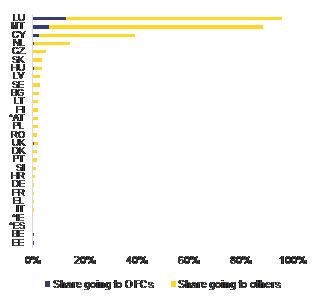
The economic data suggests that companies and individuals are using Malta’s tax rules to engage in aggressive tax Planning. Persistently high inward and outward foreign direct investment stock (which is almost exclusively held by special purpose entities) coupled with a high level of dividend (see Graph 3.1.1) and royalty payments as a percentage of GDP suggests that companies use Malta’s tax rules to engage in aggressive tax planning (European Commission, 2020b). Measures identified as being of particular concern: the absence of withholding taxes on outbound payments, the country’s investor citizenship and residence schemes (the Individual Investor Programme and Residence and Visa Programme); and the notional interest deduction (
) (European Commission, 2019b). The Maltese treatment of resident non-domiciled companies can also lead to situations of double non-taxation between Malta and most countries with which Malta has concluded a bilateral tax treaty (the ‘Single Malt’ structure (
)). In August 2019, Malta introduced a new ‘patent box’ regime in line with EU and international standards. However, the economic evidence for the effectiveness of patent boxes in encouraging R&D remains limited (CPB, 2014), and they could be used in aggressive tax planning schemes (Alstadsæter et al., 2018). Finally, the lack of a robust transfer-pricing framework may also allow multinational groups to use Malta for aggressive tax planning.
Malta is implementing European and internationally agreed initiatives to curb aggressive tax planning. Malta has implemented the second anti-tax avoidance Directive (ATAD 2), which should neutralise certain hybrid mismatch arrangements that would otherwise result in double non-taxation, and the sixth amendment of the Directive on Administrative Cooperation (DAC 6), which provides for new transparency rules for intermediaries involved in tax planning. Further, Malta has ratified the OECD Multilateral Convention to Implement Tax Treaty Related Measures to Prevent Base Erosion and Profit Shifting, which entered into force on 1 April 2019. Although Malta applies this convention to the vast majority of its treaty partners, it has put reservations on numerous articles, significantly limiting the effectiveness of this multilateral instrument. A Competent Authority Agreement between Malta and Ireland came into force in November 2019 to make sure that the bilateral tax treaty between those countries is not used for aggressive tax planning practices through the ‘Single Malt’ structure (
). The extent to which these initiatives limit the scope for aggressive tax planning remains to be assessed. No additional reforms have been introduced to address specific tax rules used by multinationals engaged in aggressive tax planning structures.
|
Graph 3.1.1:Total outgoing dividend payments from EU Member States and share going to offshore financial centres***
|
|
|
|
Source: European Commission
|
Significant tax revenue is lost due to international tax evasion by individuals. Offshore wealth held by Maltese citizens is estimated to have reached 48% of GDP in 2016, 17 pps more than the 2001-2016 average. This is very high compared to an EU average of 9.7% (ECOPA and CASE, 2019). The corresponding estimated level of international tax evasion of 2.4% of GDP was the highest in the EU (against an EU average of 0.3%). As shown in a recent study, after the introduction of the Individual Investor Programme, deposits of Maltese citizens held in low-tax jurisdictions reporting to the Bank of International Settlements increased by about 70% (Langenmayr and Zyska, 2019). The OECD (
) has said that Malta’s investor citizenship and residence schemes have a potentially high risk of being misused to circumvent the automatic exchange of financial account information. This is because such schemes facilitate the concealment of the real jurisdictions of residence. When used as tools to hide assets held abroad from reporting, they can be used to evade tax.
Some efforts are ongoing to limit international tax evasion by individuals. The Maltese government exchanges information with other governments about people that have obtained residence/citizenship through Malta’s investor citizenship and residence schemes. In addition, the country’s common reporting standard guidelines have been amended to give more detailed explanations to financial institutions about these schemes and their potential to circumvent reporting guidelines.
Tax compliance has improved and further measures have been implemented. In 2017, the VAT gap (
) declined by an additional 0.7 pps to 2%. This is well below the EU average of 10.9% (CASE, 2019) and suggests there have been improvements in compliance. Nevertheless, due to VAT exemptions and the application of lower VAT rates to selected products, Malta is one of the EU countries with the highest rate gap suggesting revenue losses due to the existence (and level) of reduced rates. To tackle tax evasion, cash transactions exceeding €10,000 were banned for purchases such as properties, vehicles, art, precious stones and yachts. Given a sharp increase in tourist demand for private accommodation, in 2019 the authorities made an agreement with major providers of online booking portals to promote properties licensed by the Malta Tourist Authority. This will improve the monitoring of private rental income and improve collection of the 15% tax that is due on this type of income.
Real-estate-related tax revenue comes exclusively from transaction taxes. Real estate taxes, which exclusively come from transaction taxes, totalled 1.3% of GDP in 2018, compared to an EU average of 2.5%. They represented 4.2% of total tax revenues in Malta compared with 6.4% in the EU, since Malta does not apply recurrent taxation on immovable property. Shifting from transaction to recurrent property taxes could foster a more efficient use of building space, which is particularly relevant for Malta. However, as Malta does not have a property register, this would entail certain set-up costs. Recurrent property taxes could also help in dampen potential boom-and-bust cycles, especially given the considerable recent increases in Malta’s property prices (see Section 3.2).
There is scope to improve the design of environmental taxes. Environmental taxation both in terms of GDP and total tax revenue exceed the EU average. This is mainly due to the category of non-fuel-related transport taxes, which ranks among the highest in the EU. Vehicle taxes depend on the carbon dioxide emissions of the vehicle, and hence encourage fuel efficiency. However, they do not affect decisions on the number of kilometres driven. Fuel taxes, on the other hand, affect the marginal cost of using a vehicle and tend to have the greatest effect in reducing carbon dioxide emissions from car use. Fuel taxes are part of energy taxes which is the largest category of environmental taxation. Malta’s energy taxes are below the EU average, both as a percentage of GDP and as a share of total tax revenues. In addition, two major tax distortions diminish the effectiveness of fuel taxes, namely the reduced 5% VAT rate on electricity and the diesel excise duty rate (which is 14% lower than the petrol rate) (see also Section 3.5). Compensatory measures may help to mitigate the potential adverse impacts of fuel taxes for low-income groups (European Commission, 2019n). It is also noteworthy that Malta is one of the few Member States that does not appear to have a landfill tax nor an incineration tax (Confederation of European Waste-to-Energy Plants, 2017).
3.1.2.Fiscal Framework
Malta’s sound fiscal framework could be improved further. The Maltese fiscal framework is well guided by numerical fiscal rules and medium-term budgetary plans with clear policy objectives. In addition, fiscal policies are monitored by an independent fiscal council. In line with the recommendations of the IMF fiscal transparency report (IMF, 2018), the government expanded the coverage of fiscal reports and improved reporting for extra-budgetary units and pension entitlements. However, the transparency of the framework would further benefit from: reporting tax expenditures; ensuring consistency between different fiscal reports; reviewing the performance of different public budget entities; and reviewing the performance of the public corporation sector (IMF, 2018).
Initiatives continue in the area of spending reviews. In 2019, the spending review focused on the Malta Police Force. The review concluded that the ongoing move towards hubs with inter-disciplinary teams should enable police officers to be better redeployed in new priority areas (i.e. to address the changing nature of crime).
3.1.3.Debt Sustainability analysis and fiscal risks
Malta faces fiscal sustainability risks in the long term. A relatively low — and declining — public-debt-to-GDP ratio (43% in 2019), combined with headline fiscal surpluses, make Malta one of the countries with low fiscal risks (
) in the short-to-medium term in the EU. However, in the long term the sustainability gap indicator S2 (
) (3.0 pps of GDP) suggests medium risks to fiscal sustainability. This is driven by a projected increase in ageing costs of 6.8 pps of GDP until 2070, which are due to: (i) increasing pension costs (2.9 pps of GDP); and expenditure on healthcare and long-term care expenditure (4.1 pps of GDP).
Pension system
The effects of an ageing population will weigh on the sustainability of the pension system. At 8% of GDP in 2016, pension spending in Malta was among the lowest in the EU. According to the European Commission (2018b), Maltese pension spending is projected to increase to 10.9% of GDP in 2070. Although this would be close to the EU average, the rate of growth over this time would be among the highest in the EU. The largest contribution to this increase in spending is projected to come from the dependency ratio, reflecting a relative increase in the number of pensioners compared to those of working age. However, the indexation rules in place will go some way to containing pension outlays (
).
Migration is likely to dampen pension outlays. The intermediate 2019 Eurostat population projections envisage faster population growth for Malta than previous projections due to higher projected migration flows. If these migration forecasts are confirmed in April 2020 (
), the projected increase in pension expenditure would be 0.8 pps lower by 2070 than previously estimated. However, Malta would still remain a ‘medium-risk’ country with respect to the long-term sustainability of its public finances.
If sustained, short-term stays of migrant workers may ease the pressures on pension outlays. About half of foreign workers leave again after 1-2 years, and almost 70% leave the country by the sixth year (Borg, 2019). Given their relatively short stays, not many foreign workers meet the minimum period of contributions (10 years) to qualify for pension entitlements (
). This is especially true for migrants from non-EU countries, whose share in total migration has been increasing.
Recent measures aim at diversifying pension income and increasing pension adequacy. In 2019, the government launched the home equity release scheme, which allows homeowner pensioners to raise their standard of living by allowing them to convert a part of their home’s value into income. The fiscal incentives for private pension savings and voluntary occupational pensions were also strengthened by increasing the maximum tax credit granted. To address the adequacy of pensions, the government increased pensions beyond the regular cost-of-living adjustment index. This led to a hike of more than 20% in the average public pension in 2020, the largest increase since 1980. A broader review of the pension system is expected in 2020 when the Pension Strategy Group set up in 2018 is expected to publish its report.
Healthcare and long-term care system
Public expenditure on healthcare is projected to increase considerably due to ageing. Malta spends 9.3% of GDP on health, only marginally below the EU average of 9.8% of GDP. However, out-of-pocket outlays of Maltese patients cover over a third of healthcare expenditure, more than double the amount of their average EU counterparts. Government expenditure on healthcare (excluding outlays on long-term care) is therefore relatively low at 5.9% of GDP (EU: 6.8% of GDP in 2016). However, given the ageing population, public spending on healthcare is projected to surge by 2.7 pps of GDP between now and 2070. An additional increase of 1.4 pps of GDP is expected for long-term care expenditure over the same period.
The health system appears to be effective and well accessible. Malta has one of the highest life expectancies (82.4 years) in the EU, and in recent years has recorded substantial falls in treatable and preventable mortality. Nevertheless, behavioural risk factors persist. The obesity rate remains high and requires further prevention measures. A high rate (70%) of family doctor visits carried out in private clinics (OECD/European Observatory on Health Systems and Policies, 2019) is the main reason for high out-of-pocket outlays. Despite this, healthcare appears well accessible, as self-reported unmet needs for medical care are very low.
Overuse of hospital emergency care persists, while long waiting times for specialists declined. In the absence of after-office-hours services of private doctors, patients tend to use emergency care in hospitals, despite the increased after-office hours in the National Health Service outpatient care, coupled with enhanced supply of diagnostics and specialist care. The government has run an information campaign to encourage patients in such cases to revert to public primary health centres. However, these measures seem to be insufficient to yield the full efficiency potential of reducing this costly practice. The public-private arrangements in outpatient care (e.g. for dentists and medical imaging) have reportedly reduced waiting times and are expected to be revisited once the backlog of cases declines to a reasonable level. Although the number of physicians and nurses has increased in recent years and converged to EU averages, shortages persist for nursing staff in hospitals and long-term care.
Various measures aim to increase healthcare efficiency. Two primary-care hubs expected to be operational in 2022 will offer emergency outpatient care and increase the number of specialists. Efficiency gains may materialise if unjustified use of hospital emergency care is limited. Given a lack of details on service fees for the public-private partnership in hospital care, monitoring is warranted to ensure costs are contained. As the Valletta Declaration (
) initiative is still under development, Malta continues to face challenges from the high prices of innovative medicines and treatments due to the small size of its market. Further policy measures are therefore needed in this area to address the growing pressure on public finances. The electronic patient record system is well advanced. The implementation of a broader national e-health system, which has the potential to improve the efficiency of the healthcare sector, is still ongoing.
Long-term care capacity has expanded in recent years. Although public capacity for institutional care (i.e. residential homes) is around the EU average, it is insufficient to meet demand. The government therefore contracted long-term care beds from the private sector. Home-based services have also expanded in recent years. The provision of these services is tested for needs, but not means, and the existing co-payments asked of patients are relatively low. The demand for long-term care services is expected to grow due to the ageing population and the growing labour-market participation of women who traditionally provided this type of care.
3.2.
Financial sector
3.2.1.Financial stability
Core domestic banks continue to strengthen their capital positions and leverage ratios. Capital ratios remained high in 2018 after declining mildly in previous years, which can be explained by balance sheet expansion (leading to the growth of risk-weighted assets) and valuation losses caused by higher yields. The total capital ratio stands at 23.4%, and the leverage ratio at 12.3%, for the sector (
). The profitability of core domestic banks remains slightly above their euro-area peers, with a return on assets of 0.4% and a return on equity of 3.7% (0.2% and 3.2% in the euro area respectively). In the first half of 2019, net interest income declined to 73.6% of gross income. The operational-cost-to-income ratio plunged in the second quarter of 2019, reaching 48.5%, well below the euro-area average of 66.2%. However, fintech companies, which tap primarily business for electronic money, have become significant competitors to local banks in this service area. Although the impact of this new source of competition on banks’ interest rate margins is not yet relevant, the new digital players have increased their market share by taking on customers that do not fit the risk profile of a traditional bank.
Aggregate figures on mortgages hide pockets of vulnerability. A shift from the construction and real-estate sector towards mortgages has reduced concentration risk, as lending is spread among a larger number of small borrowers. In addition, although household indebtedness grew, it was accompanied by household accumulation of net financial wealth. However, there has been an increase in both: (i) the shares of mortgages with a value equivalent to 5-6 times the client’s gross income; and (ii) the share of mortgages to people with a loan-service-to-income ratio within the 20%-25% interval (Central Bank of Malta, 2019b). This suggests that borrowers are increasingly required to borrow more compared to their income, and must therefore pay higher monthly instalments. Mortgages are also largely granted at variable rates, indirectly linked to the European Central Bank’s main refinancing operations rate (IMF, 2019), creating vulnerabilities in the event of a downturn or interest-rate hikes. Nevertheless, sensitivity tests carried out by the Central Bank of Malta on a potential increase in the interest rates by 150 basis points on new mortgages show that only 5% of new loans would have a debt-service-to-income ratio that exceeds 40%.
In response to the momentum in the residential real-estate sector, supervisory rules were strengthened. The Central Bank of Malta issued Directive 16 on the Regulation on Borrower-Based Measures, which came into force on 1 July 2019, and applies to all domestic lenders granting domestic, residential real-estate loans. For two categories of borrower, the measures set limits on: (i) the size of loans relative to the value of property; (ii) the size of debt service relative to income; and (iii) the maturity of the loan (
). Under the new rules, first-time buyers benefit from higher loan-to-value ratios and longer maturities relative to category II buyers. They are also exempt from loan-to-value and debt-service-to-income restrictions if the collateral market value of the acquired property is below €175,000. With both borrower categories, the banks have ‘speed limits’, which allow banks to deviate from the maximum loan-to-value ratios for a specified number of loans, differing by borrower category. These borrower-based measures are expected to: (i) strengthen the resilience of lenders and borrowers to any potential shocks; and (ii) preserve the current sound and prudent lending standards.
Malta is also further developing its capital market for small and medium-sized enterprises. The number of non-bank companies quoted on the Malta Stock Exchange surged between 2013 and 2019. There was also a corresponding increase in the amount of debt issued on financial markets by non-bank companies, which almost tripled over the same period. This trend exacerbated the disintermediation process (companies being able to raise money in debt markets instead of having to go to banks), and is expected to improve financial stability by diversifying credit risk among a range of market participants. Moreover, as a result of the national capital-markets strategic plan that was launched in 2016, small and medium-sized enterprises were able to issue bonds or equity via the Prospects Multilateral Trading Facility, thus increasing access to the capital markets for small players. By 2019, the Prospect Multilateral Trading Facility market, which consisted predominantly of bonds, constituted almost 2.5% of outstanding corporate bond issuance and amounted to some 0.4% of GDP. It is important to ensure that buyers of different financing instruments are aware of the associated risks.
The domestic insurance sector remains profitable and has retained a strong solvency position. Out of 70 insurance companies, only 8 firms underwrite risks in Malta as their main line of business. Notwithstanding the prevailing uncertainty in yields on international markets, the systemically relevant domestic insurance sector has remained profitable, with a return on assets and return on equity respectively standing at 1.3% and 12% (EU insurers: 0.6% and 12.7%) in June 2019. Over the same period, the sector also met regulatory Solvency II requirements with all domestic insurers having solvency capital requirement ratios (
) and minimum capital requirement (
) ratios well above 100%.
The withdrawal of correspondent banks still needs to be addressed. Correspondent banks, which help domestic banks conduct transactions in other currencies, especially US dollars, have become increasingly more risk averse in recent years. This has led them to exit or de-risk this service in small jurisdictions and those with a concentration of high-risk clients. US regulators perceive payments involving online gaming and payment gateways that are outside the Visa and MasterCard systems as high risk. To address such concerns, several banks implemented requirements set by correspondent banks, such as refraining from: (i) processing payments in the gaming and crypto-currencies sectors; and (ii) dealing with clients who availed of any of Malta’s citizenship or residency schemes (MONEYVAL, 2019). Deutsche Bank stopped providing such services to local banks in 2019, while ING promised to extend them until March 2020. To improve their international reputation and prevent the further loss of correspondent banks, additional measures to tackle money-laundering issues may be required (see Section 3.2.2).
Lengthy procedures do not provide an adequate remedy against insolvency. In the World Bank’s Doing Business 2020 report, Malta ranked among the last of all EU Member States for resolving insolvency. This is because of a relatively low recovery rate and long proceedings (which last about 3 years on average). Moreover, the insolvency framework index (
) points to overall weakness in the whole insolvency framework. An assessment of the insolvency system by the Central Bank of Malta in early 2019 took a sample of 204 non-performing loans. The assessment showed that 27 obligors (13% of the total) were resolved in court and settled within a median timeframe of 0.7 years, while longer-lasting cases took some 4 years to settle. To remedy the system, the banking association proposed that banks with commercial loans could be allowed to sell the commercial property themselves to accelerate the process and achieve an easy disposal of assets. The government has not yet discussed the measure.
3.2.2.Combating money laundering
The Maltese economy remains vulnerable to money-laundering risks. Money-laundering cases have affected Maltese credit institutions in recent years (European Commission, 2019k). Following the findings of the European Banking Authority of a breach of EU law by Malta’s Financial Intelligence Analysis Unit (FIAU) in July 2018, and the subsequent opinion from the European Commission, Malta’s anti-money laundering system has been strengthened with regard to supervision. However, the Mutual Evaluation Report of Malta, published by MONEYVAL in July 2019, identified shortcomings in the investigation and prosecution of money laundering, due to limited resources within the police and a lack of sufficient prioritisation. Deficiencies were also found in asset-tracing and the confiscation regime for criminal proceeds.
Malta’s specialisation in gaming and plans to specialise in virtual assets, which have inherent money laundering risks, highlights the need for commensurate mitigating measures. Remote gaming is one of the key sectors in the Maltese economy and is expected to contribute to Malta’s economic growth in the coming years (EY, 2019). At the same time, as highlighted in the country’s national risk assessment (Ministry for Finance, 2018), remote gaming is inherently vulnerable to money laundering. This requires effective implementation of appropriate mitigating checks, both at the initial stage (when a customer first signs up) and on an ongoing basis. Cooperation between the FIAU and the Malta Gaming Authority has been strengthened. Furthermore, as an emerging international hub in the area of virtual assets, Malta has begun an analysis aimed at assessing the risks posed by the sector and related services. The findings of the analysis will be crucial to ensure effective application of the appropriate mitigating measures to address vulnerabilities and money-laundering risks emerging from this sector.
Potential money-laundering risks are associated with Malta’s citizenship and residence schemes. In 2013, Malta introduced an investor citizenship scheme, the Individual Investor Programme, and a residence by investment scheme, the Malta Residence and Visa Programme. The Individual Investor Programme is being administered by an independent government entity. In the country’s national risk assessment, the potential risks of money laundering linked to the citizenship and residence schemes were not analysed, although these schemes inherently raise money-laundering concerns (European Commission, 2019j). Ensuring an adequate understanding of the risks posed by this type of scheme and the adoption of appropriate mitigating measures remain a challenge.
Malta has stepped up efforts to enhance its anti-money-laundering regulatory and supervisory framework. The FIAU, as the anti-money-laundering supervisor, has adopted a 2019-2021 development plan. The plan aims at significant growth in all the FIAU’s areas, such as investment in human resources and IT solutions to improve data gathering and risk-assessment tools. The FIAU also continues to revise policies and procedures aimed at improving risk-based processes. In parallel, the Malta Financial Services Authority (MFSA) has: (i) begun to increase staff levels to support its supervisory role (European Commission, 2019b); and (ii) reviewed its structure and anti-money-laundering oversight. In February 2019, the MFSA published an anti-money-laundering/counter-financing-of-terrorism strategy. The strategy includes the monitoring of money-laundering/terrorist-financing risks associated with the firms overseen by the MFSA. On the basis of a memorandum of understanding, the MFSA conducts anti-money-laundering supervision jointly with the FIAU, or on its behalf, on the basis of this FIAU’s manual and procedures. The response given by the Maltese authorities in the Satabank case (European Commission, 2019b) is an example of the stronger cooperation between the FIAU and MFSA in the anti-money-laundering supervision of credit institutions. It also shows improvements in Malta’s application of effective sanctions for breaches of anti-money-laundering obligations. However, the MFSA practice of using a private consultancy for supervisory tasks is of concern.
On the law enforcement side, additional reforms are in the pipeline, although their effectiveness has yet to be assessed and yield results. In June 2019, Malta announced a number of reforms aimed at strengthening the role of law enforcement authorities in the fight against money laundering and financial crime more generally (doi.mt.gov, 2019). These reforms include: (i) the creation of a new Financial Organised Crime Agency to investigate and prosecute the most serious cases of money laundering and financial crime; and (ii) increased powers for the Asset Recovery Bureau. It remains to be assessed how these reforms will be implemented in practice. Until the end of October 2019, the Police intended setting up their own Prosecutions Unit but eventually this was superseded by a decision taken ahead of the date of the fact-finding mission in November. At the time, it was agreed that there would be one prosecution service led by the Attorney General, with the police retaining cases up to two years imprisonment.
3.2.3.Housing market
There has been a sustained increase in residential house prices with some signs of overvaluation. Following the peaks reached between 2005 and 2008, property price growth was sluggish until 2014. Since then, house prices — as measured by the official transactions-based index published by the National Statistical Office — gained momentum, growing by 5.8% per year between 2014 and 2018. The property price index published by the Central Bank of Malta, which is based on advertised prices, suggests even faster annual average growth of 9.3%. Neither of these two indices reflects the floor area of sold properties. The price per square metre may therefore have surged by even more. Housing demand has been supported by: (i) the low-interest-rate environment; and (ii) budgetary measures incentivising property purchases for first-time buyers (and, more recently, also for second-time buyers). The job-rich economic growth, coupled with higher female participation, has also contributed to an increase in household incomes, supporting borrowers’ ability to apply for a mortgage. Higher demand for properties was also driven by inward migration and booming tourism (tourists are increasingly renting private accommodation for their stays). Ratios of house price to income and to rent point to a positive deviation from their long-term averages, suggesting some degree of overheating (Graph 3.2.1). This evidence is muted by the model overvaluation gap, based on econometric analysis, which suggests instead some undervaluation. Combining all indicators, the overall valuation gap points to an overvaluation of about 6% (Philiponnet and Turrini, 2017) (
).
Supply responded strongly to the swelling demand for residential property. Between 2014 and 2018, residential investment almost tripled in real terms, reaching 5.2% of GDP. In 2018, real investment in dwellings surpassed even the peak reached in 2007 (Graph 3.2.2) and accounted for more than half of total construction investment. The Planning Authority issued the highest-ever number of building permits (for 12,885 dwelling units) in 2018, an increase of 338% compared to 2014. The construction spree is thus likely to continue. Building permits are also increasingly issued for construction on virgin land.
The government is seeking to tame high rental prices amid affordability concerns. The rapid growth of house prices appears to have made it more difficult for middle-income households to enter the property market (MDA, 2019). More importantly, rental prices have surged, driven by growing demand, mainly from foreign employees and tourists looking for temporary and short-term stays (see Box 3.5.1). High levels of rent inflation may crowd out vulnerable groups from what used to be affordable property. To address this issue, the government approved a reform to regulate the rental housing market starting in 2020 without imposing upper limits on rent levels in new rental contracts. The main elements of the reform include: (i) annual rental increases capped at 5%; (ii) residential leases of a minimum of 1 year; (iii) tax credits for landlords for long-term contracts; and (iv) an obligation for all rental contracts to be registered online using blockchain technology.
|
Graph 3.2.1:House price misalignment
|
|
|
|
Source: European Commission services calculations
|
|
Graph 3.2.2:Building permits and housing investment
|
|
|
|
Source: Malta Planning Authority, Eurostat
|
3.3.
Labour market, education and social policies
3.3.1.Labour market
Malta is experiencing high levels of employment and a tightening of the labour market. In 2018, the employment rate in Malta reached 75.5%. At 5.7%, its employment growth is the highest in the EU. The unemployment rate is at a record low (3.7%), including for young people aged 15-24 (9.1%). Long-term unemployment (1.1%) is also at a record low. The share of young people (aged 15-24) not in employment, education or training is 7.3%, far below the EU average (10.5%). The activity rate rose to 74.7% and is now above the EU average (73.7%). However, the labour-market participation of certain groups remains low. In 2018, the employment rate of older people aged 55-64 was 50.2%, well below the EU average (58.7%).
|
Graph 3.3.1:Labour shortages: job finding and separation rates
|
|
|
|
Source: European Commission
|
Labour shortages affect all skills levels. The share of companies reporting labour shortages as a major factor constraining their activity is among the highest in the EU, and increased from 4.2% in 2013 to 38.1% in 2018. Difficulties in finding and retaining specialised skilled workers remain one of the main challenges expressed by employers (Jobsplus survey) (see Graph 3.3.1). The authorities plan to address the shortage of employees through incentives for overtime work, and further promoting upskilling opportunities.
Skills mismatches remain an issue. The share of low-qualified adults is decreasing but remains one of the highest in the EU (46.7% in 2018 against 21.9% in the EU). The employment rate of low-skilled adults increased from 59.2% in 2017 to 62.2% in 2018, but they tend to be employed in jobs for which they are underqualified (the second highest under-qualification rate in the EU).
The uptake of upskilling and re-skilling schemes remains low, notably by SMEs and low-skilled adults. Adult participation in education and training stood at 10.8% in 2018, almost reaching the EU average (11.1%). However, only 4.1% of low-skilled adults participated in training in 2018, despite their greater need for upskilling. Incentives for employers’ involvement, and the improved labour-market relevance of training programmes, may have helped increase the number of SMEs providing training to their employees in recent years. 249 SMEs provided training to their employees under the European Social Fund co-financed scheme, Investing in Skills, in 2018 and 2019. However, the level of SME participation in training is below the EU average, and the uptake of existing support schemes remains low. Most employees surveyed by Malta’s Public Employment Service report a lack of interest in in-work training, mainly because they claim they already have the right skills for the job. Employers, on the other hand, report a lack of incentive to invest in the training of their employees due to the high turnover of workers.
Foreign labour strongly contributed to Malta’s economic dynamism, but the population growth can also exacerbate existing challenges. Malta relies strongly on foreign workers to address labour shortages and skills gaps. In 2019, foreign workers represented 23.8% of the labour force in Malta, of which more than 60% were from other EU countries (Jobsplus). According to Eurostat, the population residing in Malta increased by 17% between 2008 and 2018, mainly due to large economic migration flows from both EU and non-EU countries. This increased demand for public services (schools, healthcare, etc.) and housing, resulting in an integration challenge. The high turnover of foreign workers also undermines investments in training (
).
The share of non-Maltese workers varies across sectors, and their skills level is higher than the native average. The share of foreign workers is especially high in the arts, entertainment and recreation (including gaming) sector (39.9%), and in accommodation and food-service activities (32.1%). Foreigners aged 25-54 are represented at all skill levels. Almost half of foreign people are high-skilled (4.1% of EU nationals and 45.6% of non-EU nationals), against 26.9% of Maltese workers. They are more often employed in occupations below their skill level (41% of non-EU born workers in 2018, against 13% of those born in Malta (Eurostat, Labour Force Survey). Malta also attracts foreign workers for medium- and low-skilled jobs. It has developed bilateral agreements with specific non-EU countries to meet the growing demand in specific sectors.
Foreign workers tend not to settle in Malta. The average length of stay is 3.5 years, relatively unchanged since 2012 (Borg, 2019). Due to the shortness of their stays, it is likely that their social integration is low. However, Malta has not yet adopted incentives for the retention of foreign workers, for example by facilitating their socioeconomic integration through labour mobility and opportunities to improve their skills or job quality and better access to services.
Despite significant improvements, the activity rate of women still lags behind that of men. Malta has implemented various policy initiatives aimed at attracting more women to the labour market, such as: back-to-work fiscal incentives; new income-tax arrangements; increases in maternity and adoption leave; tax credits for self-employed people; and exemptions from means-testing for income earned by women working part-time. Despite these efforts, the activity gap is still high with 64% of women aged 15‑64 in Malta being active, against 85% of men. At 21.9 pps, the gender employment gap is also one of the highest in the EU. The employment rate of younger women has increased significantly in recent years (up 15.5 pps between 2008 and 2018 for women aged 25-29 and 18.2 pps for those aged 30-34), facilitated by the free childcare scheme and the ‘making work pay’ strategy (European Commission, 2019b). Work-life balance is still a concern in Malta, and the employment rate of women still drops after the age of 40 (Graph 3.3.2). One out of five women aged 46-55 provides unpaid care services and the employment rate of female informal carers of this age group is below 50% (
). More labour-market support for informal carers, either from outside the labour force or unemployed, could further address the gender employment gap.
The gender pay gap is below the EU average, but slightly widening. The gender pay gap stood at 12.2% as a percentage of men’s average gross hourly earnings in 2017. This is partly due to women being more likely to: (i) engage in the labour market on a part-time basis (in 2018, 6.5% of men worked part-time as against 23.0% of women); (ii) fill medium- and low-skilled positions; and (iii) occupy fewer managerial positions (men held 70% of managerial positions in 2018). As for the gender pension gap (
), although improving, it remains at 46%, one of the highest in the EU.
|
Graph 3.3.2:Women employment rates by age cohort
|
|
|
|
Source: European Commission
|
The employment rate of people with disabilities remains low. The employment rate of people with disabilities in Malta (37% in 2017) increased by 8 pps in 1 year, and has more than doubled over 10 years, but remains one of the lowest in the EU (EU average: 51%). The activity rate of people with disabilities is also very low. The weak labour-market outcomes of people with disabilities may be explained by a low level of qualifications and educational attainment (despite recent improvements) combined with a lack of accessibility or reasonable accommodation in the workplace. Current measures to address this situation include a quota requiring that in companies employing 20 or more employees at least 2% of the workforce are persons with a disability, and schemes supporting the transition of people with disabilities from unemployment to employment (including subsidies to employers and exemptions from social security contributions). Other initiatives include pre-employment training, job coaching, and sheltered employment training (ANED, 2018).
Malta has a high number of information and communication technology (ICT) specialists and graduates, but shortages in ICT remain. Malta is one of the EU’s leaders in training ICT specialists (7.9% of all graduates), and they account for a relatively high share of the workforce (4.8% against 3.9% in the EU). However, mismatches remain. In 2019, 67.3% of enterprises that tried to recruit ICT specialists had difficulties recruiting employees with appropriate skills. While the share of female ICT specialists is slightly above the EU average, it is important to further increase the participation of women in this field, given the focus of the country on the ICT sector. Steps have been taken to address skills mismatches and the gender gap in the digital sector with the collaboration of all stakeholders. Malta’s strategy for artificial intelligence promotes training, including a specific re-skilling programme to help vulnerable workers acquire digital skills.
The collective bargaining system functions well, and social partners’ involvement in policy-making remains frequent and meaningful. Examples of a functioning social dialogue include discussions on the minimum wage or pension reforms. However, the technical capacity of social partners could still be improved, and the density in trade-union membership (38% of workers were trade-union members in 2018, Eurofound (
)) is not keeping up with the increase in employment. This is partly a reflection of the low trade-union-membership rates of foreign workers, who represent an increasing share of the labour force.
Undeclared work is an issue, but there is a lack of definition of this phenomenon and no appropriate monitoring mechanisms. In 2018, Malta’s National Statistical Office estimated that the non-observed economy constituted 2.9% of Maltese GDP. Malta recently increased the number of inspections and penalties for employers that do not comply with labour and social security requirements. Income tax rates have also decreased to encourage the uptake of formal employment. The introduction of itemised payslips in 2019 aims at reducing fraud and abuse, in particular for social security contributions. However, coordination across key bodies responsible for tackling undeclared work remains an issue.
3.3.2.Education and skills
A large percentage of pupils do not possess an adequate level of basic skills. The latest results of the OECD Programme for International Student Assessment (PISA) 2018 show that, in all three subjects tested, Malta’s mean performance is below the EU average (
). These results also show that the proportion of underachieving pupils is above the EU average and remains practically unchanged since 2015 (
) (OECD, 2019a; European Commission, 2019h). Underachievement is prevalent across the entire socioeconomic distribution. This suggests that educational factors such as curricula, student assessment practices, and teaching quality are also important determinants of poor student outcomes. Successful implementation of the curriculum and reform of student assessment are crucial in this context.
Socioeconomic background and type of school strongly influence student outcomes. PISA 2018 also shows that underachievement is widespread among disadvantaged students. Around 51% of pupils from the bottom socioeconomic quartile fail to achieve a minimum level of skills in reading (compared to 34.8% at EU level). This is more than twice the rate of underachievement within the top quartile — even if the underachievement rate for the top quartile is also high by international standards (24.3% against an EU average for this top quartile of 9.3%). The difference between the top and the bottom quartile in average reading score has decreased by 17 points since 2009, suggesting that equity has improved, but this improvement is still insufficient. Performance remains strongly related to the type of school a pupil attends, with private school pupils performing best (they have a mean reading score of 516) compared to peers in church schools (a score of 473) and public schools (a score of 419) (Ministry for Education and Employment, 2019). This suggests a persistent fragmentation of the education system, whereby children from socially disadvantaged families, including some of those with a migrant background, do not have access to the best performing schools.
Relatively high investment in the education system is not leading to better education outcomes. In 2017, Malta spent 4.9% of its GDP (vs 4.6% of GDP at EU level) and 13.9% of its total public expenditure (vs 10.2% at EU level) on education. Comparatively high levels of investment, high rates of underachievement in basic skills, and a high share of early school leavers suggest there is a need for more effective and efficient allocation of resources. They also suggest there is a need for comprehensive long-term strategies to tackle the skills challenge and accommodate a growing and more diverse pupil population.
Difficulties in recruiting and retaining teachers may affect teaching quality and student outcomes. Teacher shortages tend to be a recurrent problem. Limited salary progression throughout the career and a lack of appraisal and feedback on performance (European Commission/EACEA/ Eurydice, 2019; European Commission 2019c) may make it more difficult to attract and retain better candidates into the profession. It may be all the more difficult given the high demand for skilled workers in the private sector. High turnover may also have adverse effects on teacher collaboration and student outcomes (OECD, 2019c). This highlights the need to make the profession more attractive, and take measures that go beyond improving teachers’ education and their access to continuous professional development.
Efforts are underway to make education more inclusive but challenges remain. The number of foreign-born pupils aged under 15 increased by 67% between 2014 and 2017. In some schools, there are more than 50 nationalities represented among the pupils, and this has an impact on the working environment for teachers (OECD, 2019c). According to the 2018 OECD Teaching and Learning International Survey (TALIS), 20.4% (vs 13.4% at EU level) of teachers report a high need for training to teach in multicultural settings. Malta adopted a strategic plan on inclusive education in schools in 2019. It aims to guide public schools on how to adapt pedagogical approaches and redesign their practices to meet the needs of a more diverse student population. Induction programmes have been set up for newly arrived pupils who cannot yet communicate in Maltese or English. This may help reduce the average difference in reading performance between foreign pupils who speak English at home and those who do not (a difference in PISA score in 2018 of 63 points). Although the plan is welcome, operating a central monitoring and assessment system would also help to ensure more consistent and evidence-based policy implementation across and within schools.
Participation in childcare remains around the EU average for children under 3 years of age. The free childcare scheme helped to double the share of children below the age of 3 in formal childcare from 18% in 2015 to 36.6% in 2017, slightly above the EU average. EU-SILC data indicates a decline to 32.1% in 2018, although a further increase in the number of children registered in the scheme is recorded by administrative data. Childcare centres offer places for children of low-income families who are not eligible for the free childcare scheme, which is solely targeted at parents who are working or studying. However, the participation of children of low-income families in childcare remains low, even if these children would benefit the most from the positive long-term impact of early childhood education and care. Participation in early childhood education for 4-year-olds in 2017 was almost universal (96.5% against the EU average of 95.4%).
Improving the quality of early childhood education and care remains a challenge. The government has been working since March 2019 on a new national policy for early childhood education and care, and is reviewing national standards for the age group 0-3. The target that all groups of children should be supervised by at least one staff member with a tertiary qualification has not yet been reached.
Reducing early school leaving remains a priority. Although it has declined since 2010, the share of early leavers from education and training aged 18-24 is still significantly above the EU average (17.4% against 10.6% in 2018), and has remained almost unchanged since 2017. Secondary school absenteeism also declined markedly from 30% in 2012/2013 to 21.6% in 2016/2017. Based on the support received through the European Commission, Malta is working to improve how it detects students at risk and introduce or mainstream intervention measures. The new lower-secondary school system aims to further reduce early school-leaving by allowing students to combine general, vocational and applied subjects, in addition to the core curriculum.
Malta has developed many initiatives for promoting the acquisition of digital skills. Young people (16-19 year-olds) reported having a higher level of digital skills than the EU average (74% against 57%) in 2017. The share of Maltese schools with a high provision of digital equipment is greater than the EU averages at primary (82% against 35% at EU level) and lower-secondary level (54% against 52%). Measures are underway to help teachers integrate digital technologies into their teaching to improve student outcomes. However, there is no regular monitoring and evaluation of digital education policies, creating a risk that the technologies will not be used effectively. Malta’s E-skills Foundation has started an ICT skills audit to collect data on skills needed in the ICT industry. This could help to further update the education curriculum and teaching practices.
Demographic trends highlight the need for long-term strategies for investment in education. The primary-school population increased by 6.4% between 2013 and 2016, and the student population (5-16 year-olds) is expected to increase by 12.7% between 2019 and 2025, according to Eurostat baseline projections. This will have a major impact on the demand for teachers and education infrastructure. Local authorities have recently built new schools or extended existing schools (including with pre-fabricated classrooms). However, given these demographic trends, the pressure on school infrastructure is expected to persist over the coming years.
The number of new entrants in tertiary education is accelerating. From 2013 to 2017, the number of new entrants in tertiary education increased by 23.3%, reflecting demographic factors and measures to ease access. The proportion of people aged 30-34 with tertiary-level qualifications has also increased (12.6 pps since 2010). This positive trend may help to address skills shortages in the future. However, this proportion remains below the EU average (34.7% against an EU average of 40.7%) despite reaching the national target of 33%. Despite having the highest employment rate in the EU for recent tertiary graduates (96.7% against 85.5% for the EU), the skills of tertiary graduates in Malta do not sufficiently match the needs of the labour market (EY, 2019). Developing a graduate tracking system may help improve the quality of tertiary programmes and identify skills gaps.
Despite the high employability of vocational education and training (VET) graduates, uptake of VET remains low. The employment rate of VET graduates in Malta is well above the EU average (91% against 79.5% EU in 2018). However, the share of upper-secondary students (ISCED 3) enrolled in VET decreased slightly from 28.8% in 2017 to 27.1% in 2018, and remained well below the EU average of 48%. Expenditure on VET increased by 76% between 2016 and 2018 (Caruana, 2018). The overall uptake of VET subjects in secondary schools increased from 23% in 2016 to 55% in 2019. This substantial increase at secondary level is expected to be may lead to reflected in a higher VET take up at further and higher VET levels in the coming years.
Malta has taken steps to improve the labour-market relevance of initial VET. On average, 32% of upper-secondary initial VET students followed work-based programmes in 2017, well above the EU average of 27%. The number of apprenticeships organised by the Malta College of Arts, Science and Technology (MCAST) increased to 950 in the 2019-2020 academic year, 130 more than in the previous year. Over 90 % of the students in the Institute of Tourism Studies are benefitting from internships through VET for Hospitality and Tourism sector. Moreover, partnership agreements with business have been extended to students following an applied learning pathway. In 2019, the MCAST added six new degree apprenticeships at bachelor level 6, which allow students to achieve a recognised qualification while obtaining work experience. In addition, a project co-financed by the European Social Fund offers mentoring for MCAST lecturers and staff involved in apprenticeship programmes.. A quality assurance framework will be adopted for work-based learning, in line with the European Commission standard for high-quality apprenticeships.
Skills-mapping and skills-anticipation systems remain fragmented, but several initiatives are ongoing, including in the area of green jobs. Malta has collaborated with Cedefop and the Slovak Academy of Sciences to develop a national skills-forecasting system. Some final refinements are now being carried out to the updated skills forecasting model. Its implementation is planned for the first quarter of 2020. The National Skills Council put green skills among its priorities, and is planning a skills audit for 2020. The Ministry for Sustainable Development, the Environment & Climate Change will launch a study on green jobs by the end of 2020 in cooperation with the National Statistics Office. The study will assess the economy’s potential to generate green jobs and map the sectors contributing the most to the green transition.
3.3.3.Social policy
Headline indicators of poverty and social exclusion show a good performance but they mask differences between social groups. Malta’s rate of people at risk of poverty or social exclusion (19%) is below the EU average (21.9%) and has been steadily decreasing in recent years. However, despite measures aimed at limiting the time workers spend on the minimum wage to 1 year and supporting low-wage earners, the share of people at risk of in-work poverty (6.4%) is increasing, although it remains below the EU average. Wage polarisation could explain the trend in in-work poverty: wages for high-skilled workers are growing faster than wages for low- and medium-skilled workers. Indeed, in 2019 the average basic salary of people occupying an elementary position was less than half the average basic salary of people in managerial occupations. Wages in high-skilled occupations also grew twice as fast as those in low-skilled occupations between 2014 and 2019, due to Malta specialising in higher-added-value sectors.
Social benefits reduced the incidence of poverty in Malta by slightly less than the EU average. In 2018, social transfers (excluding pensions) reduced the risk of poverty by 30.6% (33.2% in the EU). In particular, sickness, disability, and social-inclusion benefits have a large impact on the risk-of-poverty rate. The adequacy of minimum income benefits is high. Benefits in general significantly increase beneficiaries’ income, thereby strongly reducing the poverty gap and raising many families closer to the poverty line. The changes to tax-benefit policy introduced since 2008 have protected lower income groups in particular: the disposable income of the lowest decile increased by close to 4% between 2008 and 2018 (compared to less than 1% for the other deciles). Nevertheless, the effect of family benefits on the number of people at risk of poverty is one of the lowest in the EU.
Malta has closed formal gaps in access to social protection. In 2019, Malta extended access to social security benefits for the self-employed. The access is based on contributions to — and registration with — the Public Employment Service. Trainee, apprentices, and foreign workers are also covered under the same criteria.
Overall child poverty is decreasing, but children of low-skilled or foreign parents are at greater risk of poverty and social exclusion. The share of children aged 0-17 at risk of poverty or social exclusion declined to 22.8% in 2018, below the EU average of 24.3% (see Graph 3.3.3). In 2018, children facing the highest risk of poverty and social exclusion were those whose parents were single (51%), low-skilled (40%), or foreign-born (33.5% of those children are at risk of poverty and social exclusion compared to 20.2% for Maltese-born children). Unequal access to quality education, including early education and care, might further affect equality of opportunity for those children (see Section 3.3.2). The poverty rate of large families has decreased, most likely thanks to the increase in children’s allowances: since January 2019, families with a gross income of less than €20,000 received a maximum increase in children’s allowance of €96 per year per child.
|
Graph 3.3.3:At-risk-of-poverty-or-social-exclusion rate (AROPE), age groups
|
|
|
|
Source: European Commission
|
People with disabilities are still at higher risk of poverty and social exclusion. In 2018, 30% of people with severe or some disability were at risk of poverty and social exclusion, against 17% for non-disabled people. Support measures announced in the Budget for 2020 include improvement of disability and invalidity pensions, a grant for purchasing special equipment, dedicated helpline and training for employees in the disability sector.”
People aged 65 or over in Malta are at a slightly greater risk of poverty than in the EU. For a single person aged 65 or older, the at-risk-of-poverty-or-social-exclusion rate is 30.2% (EU: 28.1%). For households composed of two adults with at least one over 65, the rate is 28.2% (EU: 15.7%). In addition to the reform aiming at limiting early retirement and increasing the duration of working life undertaken in recent years, the government took measures to increase pension adequacy in 2019 (an additional allowance of €4.50 per week for all pensioners, including the cost-of-living adjustment). The ceiling on which income from pensions is exempted from income tax was also raised in 2019. Despite these measures, pension adequacy remains an issue in Malta, especially for women and workers with incomplete careers (since 2014, a bonus is given to those who do not have enough social contributions to qualify for the minimum pension). Ageing also poses challenges for the long-term care and healthcare systems. In recent years, Malta has introduced several services to support informal carers and older adults that wish to continue living in their homes rather than move into residential care. These services include functional assistance, education, psychological support and respite care. The number of beds in institutions was also increased. However, staff shortages remain an issue (see Section 3.1).
Foreign-born residents are at greater risk of poverty and social exclusion despite their high levels of participation in the labour market. In 2018, the foreign-born population accounted for 18% of the total population, and was almost equally split between non-EU born and those born in other EU countries. In the 2015-2018 period, Malta granted 3,845 positive decisions to asylum applications (equivalent to 4.6% of the total foreign population or 0.8% of the total population). People born outside the EU face a much higher risk of poverty or social exclusion (28.8%) than those born in Malta (17.7%). This is despite the high employment rates of both EU born and non-EU born people (80.3%) and the greater likelihood of foreign-born people to have completed tertiary education (42.5% against 22.3% for native-born). However, in comparison to EU averages, the gaps between natives and non-EU born are moderate, they have also been improving since 2017. The gap is higher for young people not in employment, education or training (20% for non-EU born vs 7% for native born).
Malta faces challenges in the economic and social integration of the foreign‑born. Foreign-born people face difficulties in accessing healthcare and social services (language and cultural barriers, lack of information, etc.). Energy poverty and access to affordable housing are growing concerns for this group. The national strategy for integration adopted in 2017 only partially addresses the challenges faced by the foreign-born residents, as measures mainly focus on non-compulsory language learning and cultural-orientation guidance. A follow-up integration strategy is planned for 2020, aiming to address broader issues in a more integrated way.
Overall energy poverty has declined, but vulnerable groups are slightly more affected by environmental issues than less vulnerable people. The share of people at risk of poverty suffering from pollution and other environmental problems is 0.9 pps. Since 2017, the ‘Eco-Reduction’ scheme has successfully addressed energy poverty in the country: the share of Maltese households unable to keep their home adequately warm dropped from 24% in 2013 to 6% in 2017. Malta also provides financial support to low-income households to make their dwellings more energy efficient (see Section 3.5). While customer satisfaction with energy services is above the EU average in Malta, there remain some issues related to billing services (
) that affect low-income households in particular.
Steps have been taken to increase the social housing stock, but an overarching strategy to address housing exclusion is lacking. To address the increasing demand for housing resulting from socio-demographic trends (see in-depth box), authorities announced in 2019 that they would deliver 1,700 new social housing units in the coming years. Homelessness in the sense of ‘living rough’ is rare in Malta, but tensions on the housing market have exacerbated problems around access to housing. In addition, Malta lacks: (i) a formal definition of homelessness and of housing exclusion; and (ii) an overarching strategy to combat homelessness and housing exclusion.
|
Box 3.3.2: Monitoring performance in light of the European Pillar of Social Rights
The European Pillar of Social Rights seeks to promote upward convergence towards better working and living conditions in the European Union. It sets out 20 essential principles and rights in the areas of: equal opportunities and access to the labour market; fair working conditions; and social protection and inclusion.
Malta scores relatively well on indicators from the Social Scoreboard supporting the European Pillar of Social Rights, despite remaining challenges. The strong economic expansion in recent years contributed to one of the highest rates of employment growth in the EU and a drop in overall and long-term unemployment rates. Both income and wealth inequalities have stabilised at moderate levels. However, some population groups are at an above-average risk of poverty, notably: (i) children of single, low-income or foreign parents; (ii) elderly people; (iii) people with disabilities; and (iv) migrant workers. Equality of opportunities poses challenges, as Malta combines a rate of early school leaving and a share of underachievers in basic skills that are among the highest in the EU. Educational outcomes also vary greatly by type of school. On the positive side, digital skills are widespread in the population, and the number of people with an above-basic level of digital skills is higher than the EU average. Unmet needs for medical care are low, with little variation between income groups. Long waiting lists for inpatient care have also been successfully reduced, but they remain a significant issue for specialist outpatient services.
High rates of early school leaving hamper social cohesion and the sustainability of economic growth. Although decreasing, the early-school-leaving rate (17.4%) remains one of the highest in the EU (the EU average is 10.6%). Moreover, low education levels significantly increase the risk of future poverty and social exclusion. The share of low-skilled adults in Malta is high, and participation in adult learning and upskilling is limited.
Provision of free childcare has contributed to a significant increase in the employment rate of young women. The employment rate of young women increased significantly between 2014 and 2018 (+5 pps for 20-29-year-olds and +2.1 pps for 30-34-year-olds), facilitated by the free childcare scheme provided by the Public Employment Service to parents in employment or education. The service expects take-up of the scheme to increase further. However, female labour market participation still drops after the age of 40, and the overall gender employment gap (21.9 pps) remains the highest in the EU (11.6 pps on average). Support for the labour-market participation of informal carers could still improve.
|
3.4. Competitiveness, reforms and investments
3.4.1.Productivity and Innovation
Investment has stabilised at high levels, driven by construction. Thanks to buoyant economic growth, investment peaked in 2016 and has remained at historically high levels. In particular, investment has been supported by steady growth in construction investment (see Graph 3.4.1). Construction constituted almost 45% of aggregate investment in 2018. Among other investment components, intellectual property rights have experienced a significant growth in recent years, representing 17% of total investment in 2018 (up from 6% in 2013).
|
Graph 3.4.1:Malta investment trends, excluding machinery
|
|
|
|
Source: AMECO
|
Productivity has grown but remains below the EU average in most sectors. Malta’s increasingly services-driven economy (see also Section 1) saw productivity per person employed grow in all sectors (
) between 2008 and 2018 (see Graph 3.4.2). In addition, the share of workers employed in high-productivity sectors increased during the same period. Professional services, entertainment and trade recorded the largest growth in productivity, followed by agriculture, construction and financial services. The greatest productivity is recorded in the entertainment sector (where productivity is also above the EU entertainment-sector average), followed by information and communications, and financial activities (both sectors have productivity levels below the EU average for these sectors). Construction is the sector with the lowest productivity. However, the productivity analysis faces substantial data limitations (e.g. sector deflators, hours worked in key services sectors, data at firm level, and contribution of foreign activities). Malta recently set up a National Productivity Board, which published its first annual report in November 2019 (National Productivity Board, 2019).
|
Graph 3.4.2:Labour productivity by sector, 2008-2018
|
|
|
|
Source: European Commission
|
Small and medium-size enterprises are the main contributors to economic growth, employment and productivity. In 2018, small and medium-size enterprises generated 82% of value added and 78% of employment. Between 2014 and 2018, small and medium-size enterprises’ value added increased by 58%, exceeding that of large Maltese firms (where value added only increased 43%). In the same period, small and medium-size enterprises’ employment growth was 19%, lagging behind the 32% increase in large Maltese firms. The annual productivity of Maltese small and medium-size enterprises (
) is €44,300, close to the EU average of €44,600 and higher than that of large Maltese firms whose number is low (less than 1%) given constraints of the small local market size. Large firms operate mainly in industry, administrative services and transport.
In some services sectors, micro and small firms are more productive than larger ones. Estimates of productivity per sector and size class (
) show that, in 2016, micro-firms outperformed larger businesses in information, communication, and administrative services, while small firms outperformed larger businesses in the construction, real-estate and trade sectors, where large firms are almost absent. In turn, large firms performed better than micro-firms and small firms in professional services, food and accommodation (see Graph 3.4.3).
|
Graph 3.4.3:Productivity per person employed by sector and firm-size, 2016
|
|
|
|
Source: European Commission calculations on data from the Central Bank of Malta
|
EU financial instruments support strategic investment in Malta. Between 2015 and 2019, total financing under the European Fund for Strategic Investments in Malta reached €44 million, which is set to trigger €211 million in additional investments. Approximately €33 million was allocated to infrastructure and innovation projects, while €11 million was targeted at financing small and medium-size enterprises.
Innovation
Research and innovation play a limited role in the economy. In spite of the increase in innovation performance since 2011 (European Commission, 2019d), research and innovation (R&I) continue to play a limited role in Malta’s fast-growing economy. Malta’s R&D investment, which is also relevant to progress on SGD 9, is very low (ranked 26th in the EU) and has declined significantly since 2012 (0.55% of GDP in 2018 against 0.83% in 2012). Public R&D investment has also been on a declining trend since 2015, thus placing Malta at the bottom of the EU ranking on this measure. According to the Maltese authorities, Malta will miss its 2020 R&D intensity target of 2% of GDP.
Research and innovation governance remains overly fragmented compared to the small size of the science base. Six different ministries/governmental bodies (
) are responsible for R&I policy, while public research is mainly performed by one institution (the University of Malta). Coordination mechanisms remain weak between the different authorities involved in the implementation of the smart specialisation strategy and the R&I strategy. The Horizon 2020 Policy Support Facility’s peer review of the Maltese R&I system pointed to the need for a major overhaul of R&I policy governance, with possibly one institution/minister providing political leadership (European Commission, 2019g).
Although Malta is catching up in terms of scientific excellence, the translation of research into innovation remains a concern. In 2018, Malta ranked close to the EU average for the presence of its nationals in international co-publications in academic journals. Although the University of Malta has improved its scientific performance with a specialisation in medical sciences, its research activity suffers from limited national funding for R&D, technological development, and industrial cooperation. Further incentives could also attract new researchers, by (i) improving the framework conditions for doctoral studies and post-doc employment; and (ii) adding popularisation initiatives such as the ESPLORA science centre. Structural funds have been directed towards setting up new research infrastructures (see Box 2.1). However, academia-business links are underdeveloped due to the low R&D absorption capacity of Maltese firms.
Innovation activity by firms remains limited. Business R&D intensity stood at 0.33% of GDP in 2018 (vs 0.48% in 2012), one of the lowest levels in the EU. There are very few innovative companies in Malta. Most innovative companies are foreign-owned, which partly explains the low uptake of most R&I schemes (
). Most Maltese firms are very small and not R&D intensive. However, Maltese small and medium-size enterprises in the specialised knowledge-intensive services and high-tech manufacturing sectors (both of which are usually R&D intensive) accounted for 38% of SME value added in the manufacturing and services sectors in 2018, above the EU average of 33%. At the same time, the share of small and medium-size enterprises introducing innovation and cooperating with others remains markedly below the EU average (European Commission, 2019a).
Maltese enterprises have high levels of digitisation, although there remains a gap between large companies and small and medium-size enterprises. Malta performs above the EU average for the digitisation of enterprises. According to the digital-intensity index, only 29% of companies in Malta have a very low level of digitisation (compared to 46% in the EU), and 32% are highly digitised (compared to 18% in the EU). Maltese businesses outperform the EU average for the use of digital technologies. However, there is a difference between large companies and small and medium-size enterprises. For example, 54% of large enterprises have a high level of digital intensity, while this share drops to 31% for small and medium-size enterprises. Despite the recent initiatives taken, the difficulty in finding people with the right technical skills is a barrier to further progress in digitisation (see also Section 3.3).
Development of the digital economy has been supported by dedicated policy measures. The Maltese government is prioritising measures for building capacity in digital technologies, considering this to be a critical tool for improving the competitiveness of the country. One of the key initiatives in this field has been the adoption in 2018 of a strategy and regulatory framework dedicated to blockchain technology (European Commission, 2019b). In October 2019, Malta also launched its artificial intelligence strategy (see Section 3.4.3). A new body, Tech.mt, was also set up in March 2019 to ‘promote Malta as a tech centre for innovative technologies’. Tech.mt will also focus on the development of human capital as the precondition for growth in the IT and technology industries. Malta also performs very well when it comes to broadband coverage (including fixed, fast, and ultrafast) with almost 100 % of households covered. With regard to the 5G pioneer bands, according to the roadmap published in Malta in June 2018, the 700 MHz band should be made available by 2021 whereas the 3.6 and 26 GHz are already available but none of the operators expressed interest for these bands. In May 2019, the national authority for Communications published a Discussion paper and survey on "5G Demand and Future Business Models - Towards a Feasible 5G Deployment" but the replies of the stakeholders are not publicly available.
3.4.2.Governance and Business environment
Justice system
Strengthening the independence of the judiciary requires further efforts. Businesses’ perception of judicial independence (2018-2019) remains low compared to other EU countries, and has worsened since 2010 (European Commission, 2020a).
While some reforms to the justice system are ongoing, identified shortcomings persist. In January 2020, the Government established a Cabinet committee on governance, which will be in charge of key governance reforms responding to the recommendations of the Venice Commission and GRECO, including a new method for judicial appointments. The implementation of the institutional reforms announced by the government in March 2019 has started, notably with the adoption of the State Advocate Act of July 2019. and the subsequent appointment of a new State Advocate in December 2019. These are steps in the right direction but may not be sufficient to meet existing concerns about the independent functioning and accountability of the prosecutorial services and the police (see also Section 2). In particular, challenges remain over: (i) checks and balances in the future appointment procedure of the Attorney General; and (ii) his or her role. Moreover, based on current staffing levels and prospects of recruitment for the Attorney General Office, establishing a prosecution function separate from the Police requires a transitory period. Long-standing concerns may therefore persist until the reform is complete and there is an established positive track record. Investigations by the police remain fragmentary, and crimes related to corruption, abuse of power, and money-laundering are not effectively prosecuted. In 2019, the police reported on seven ongoing investigations into corruption involving public officials, two of which concern high-level corruption cases (
). A major reform is now being planned to increase the capacity of the currently understaffed Economic Crimes Squad by 2020. Timely implementation of this reform is essential to strengthen prosecution of corruption.
The length of proceedings remains among the longest in the EU. Despite some improvements in recent years, the length of proceedings at all levels and in all categories of cases remains comparatively long. For litigious civil and commercial cases in first instance, Maltese courts in 2018 required 440 days to complete a case on average, which is among the longest case times in the EU. This is further aggravated by lengthy proceedings in second instance (1,120 days on average) which are also among the longest disposition times in the EU. Similarly, proceedings in administrative courts remain time-consuming (1,057 days on average), despite some improvements in recent years. Clearance rates also indicate that courts are currently operating at the limit of their capacities (European Commission, 2020a, CEPEJ 2018 ).
Some measures have been adopted to improve the efficiency and quality of the justice system. Recent measures taken to improve the efficiency and quality of the justice system include the extension of the Civil Court’s (Commercial Section) competence to include competition and consumer affairs. One additional judge has been assigned to this section to decide on competition and consumer cases. Measures aimed at further improving the use of IT in courts include: (i) e-filing and the electronic payment of fees being extended to more civil courts; (ii) free online access granted to citizens and legal professionals in order to view the acts related to their cases; and (iii) the creation of the e-Courts platform, which offers a host of justice-related services to the general public and legal professionals.
Fight against corruption
Different indicators point to a perceived weakness of the governance framework. Malta’s ranking in the World Bank’s control-of-corruption index has fluctuated in recent years. It currently ranks in the 72nd percentile (a deterioration from the 77th percentile in 2018) among all countries worldwide. According to the 2019 Business Eurobarometer Survey on corruption, 60% of companies surveyed said that corruption is a problem when doing business in Malta, while the EU average was 37% (European Commission, 2019e). With a score of 54 in 2019 (
), similar to 2018, Malta has seen a significant decline on the Transparency International’s corruption-perception index, dropping six points since 2015 (Transparency International, 2020).
Institutional shortcomings hinder the effective detection of corruption. The European Commission, the Venice Commission and GRECO have all criticised the lack of impact of Malta’s Permanent Commission against Corruption, which is responsible for corruption prevention and administrative inquiries on corruption-related reports (Venice Commission, 2018). Structural flaws prevent the Permanent Commission from fulfilling its role independently and effectively. Its reports provide information to the Minister of Justice and the Prime Minister only, while the law does not require follow-up enforcement or prosecution (European Commission, 2019b). Yet there are no specific plans to review the Permanent Commission’s powers or to enable it to conduct inquiries in a way that would lead to tangible results and allow the police to follow up on its findings.
The governance of the citizenship and residence schemes raises concerns. The transparency and governance of both the citizenship-by-investment scheme (Individual Investor Programme) and the residence scheme (Malta Residence Visa Programme) could be improved (European Commission, 2019b; European Commission 2019j). Moreover, investor citizenship schemes potentially raise concerns with respect to their compatibility with the EU Treaties. The Individual Investor Programme has a dedicated independent regulator who since 2019 reviews all applications and issues an annual report. However, no similar regulator exists for the Malta Residence Visa Program. The European Commission continues to monitor wider issues of compliance with EU law raised by the schemes.
There are indications of potential conflicts of interest. The newly appointed Commissioner for Standards remarked that political appointments in ad hoc positions affected the appointed persons’ ability to operate independently from the government. This concern has been exacerbated by appointments of MPs to important paid posts such as heads of public authorities. According to the 2019 Bertelsmann Legislative Actors’ Resources indicator, Malta ranks at the bottom (38th of 46 countries).
Limited transparency in public procurement affects the business environment. 64% of businesses believe that abuse of negotiated procedures without prior publication are common in public procurement (2019 Eurobarometer). Indeed, official audits remark on the common practice of direct orders (i.e. orders made without a contract being put out to tender) and other irregularities, and three concessions in the health sectors are currently under judicial scrutiny (European Commission, 2019b) In 2018 direct orders approved by from the Ministry for Finance amounted to €86 million; nearly 9% of them were made by the Ministry for Health (National Audit Office, 2019). The transparency of contracts is also limited as Malta has a low public-contract publication rate compared with most EU countries. The Ministry of Finance’s Department of Contracts carries out several regulatory and operational tasks, and has very few staff to monitor public procurement. The ongoing decentralisation of procurement may exacerbate some of these challenges (see Section 3.4.3).
Business environment
The environment for small and medium-size enterprises has improved in recent years, but still lags behind in some areas. Since 2008, Malta has made good progress in implementing most recommendations of the Small Business Act, with significant progress in practically all areas. However, Malta still performs below the EU average in various areas, including on policies to favour both access to finance and a second chance for failed entrepreneurs (see Section 3.2.1). In turn, Malta has made progress on policies to encourage entrepreneurship, skills and innovation.
The main problems in Malta’s business environment remain the shortage of labour and limited access to finance. Businesses complain about severe shortages of labour and a lack of readily available skilled workers (see Section 3.3). They also complain about growing difficulties in access to bank credit, which is the most significant concern for 13% of Maltese small and medium-size enterprises (against an EU average of 7% of small and medium-size enterprises) (European Central Bank, 2019). Maltese businesses also complain about bank services. A recent survey by the Malta Chamber of small and medium-size enterprises reveals that 60% of Maltese enterprises consider that bank services have worsened in recent years: 73.4% do not find it easy to get finance from banks and 17.4% were refused credit by banks. Moreover, half of surveyed firms have encountered difficulties when opening a bank account. The Malta Development Bank is setting up guarantee schemes to support lending to small and medium-size enterprises.
The business ‘birth rate’ is high, thanks to the registration of foreign-owned companies. More than 12,000 new businesses registered in 2018, a rise of 7% compared to 2017. The total number of registered companies in Malta has risen by 47% since 2013, and reached more than 113,000 in 2018. Foreign-owned companies account for nearly half of new and total business registrations (Malta Chamber of Commerce, 2019).
Insufficient venture capital may limit business expansion. The number of high-growth firms with more than 10 employees as a percentage of all enterprises in Malta (14% in 2017) is among the highest in EU. However, venture capital investments account for a very low share of Malta’s GDP, which makes it difficult to secure funding for business expansion.
Digital public services
Malta has progressed in the digital public services it now offers, but the uptake of these services by the public remains low. Malta has developed e-government services for citizens and businesses, including a number of mobile apps to facilitate access to digital public services. Its e-government services also score highly when compared to other countries (
). However, only 56.8% of individuals that need to submit forms do so via online services; although this share is increasing, it is still below the EU average is 67.3%. Similarly, only 6% of the public uses e-health services (against 18% in the EU). According to a survey by the Maltese government, reasons for the low uptake of digital e-government services include: a lack of awareness; the need for simplification; and low levels of education (the lower a person’s level of education the less likely they are to use online government services). The survey resulted in a set of recommendations (
). Moreover, the new strategy on digital transformation of the public administration for 2019-2021 addresses the uptake of e-government services, focusing on simplification and client-centred approaches (Public Service of Malta, 2019). Finally, the government has embarked in a number of cybersecurity projects, expected to increase the security of digital infrastructure (
). In 2019, the Public Service in Malta has undertaken the initiative to develop a Business Process Re-Engineering (BPR), expected to improve efficiency of the public administration through digital means.
3.4.3.Single Market integration and sectoral performance
The importance of intra-EU trade has increased. Intra-EU exports of services tripled between 2011 and 2018, and represent 70% of Malta’s total exports. Trade in goods represents a fraction of trade in services, yet the share of Intra-EU exports of goods have increased in value and relative weight over time, probably due to the manufacturing sector’s increasing focus on high-added-value segments: in 2018 accounted for around 58% of total exports (up from 41% in 2011). Imports show an increasing reliance on intra-EU supplies for services (70% of all imports in 2018, up from 22% in 2011).
Malta has significantly benefited from the single market. A recent study estimates that Malta’s intra-EU goods trade increased by 42% due to EU accession. The increase is far above the EU average and particularly high in the transport equipment and food-and-beverages sectors. Estimates also show the country could benefit from additional trade increases (of 4.7%-7.2%) if it complied fully with the single market framework (European Commission, 2019m).
Indicators on compliance with single market rules point to room for improvement in the area of goods. Malta has a low level of notifications of technical regulations under the Transparency Directive (Office Journal of the European Union, 2015). This suggests the country is making limited use of this tool to allow dialogue with other Member States to improve the free movement of goods. Malta is more active in reacting to other countries’ notifications than in launching notifications on its own rules. Between 2016 and 2018, Malta notified only 28 draft regulations, i.e. only 1.3% of the total. Integration in the single market for goods is less developed than in the capital and services areas (LE Europe, 2017).
The effectiveness of public procurement can be strengthened. TED data (
) show that the lowest price was used as the sole award criterion in 97% of cases in 2018. This means that the quality of the supplies or services is not ensured for many contracts. Moreover, the use of the best price-quality-ratio award criteria may help to prevent market concentration and cartels. In addition, purchases are increasingly decentralised without strengthened monitoring and control: only 1% are tendered out on behalf of another public buyer (6% on average are tendered out on behalf of another buyer in EU). This suggests that Malta may be missing the opportunity to pool resources and expertise to achieve the best outcome possible. Decentralisation may also hamper professionalisation and innovative procurement. Improving green public procurement would contribute to sustainability goals.
Services sector
Malta’s buoyant services sector is a key contributor to the country’s economic success. Setting aside the large financial sector (see Section 3.2.1), the tourism industry is one of the main pillars of the economy, while the gaming sector continues to experience strong growth.
|
Graph 3.4.4:Inbound tourism, January 2018-October 2019
|
|
|
|
Source: Malta National Statistics Office
|
The tourism industry continues to grow. The number of inbound visitors has doubled since 2010, reaching 2.6 million in 2018 and 2.1 million during the first 9 months of 2019 (National Statistics Office, 2019). Tourist expenditure also grew remarkably, although at a slower pace. An important strength of the country has been its ability to attract visitors all year round. However, the tourism sector is exposed to the risk of global economic downturns, increases in fuel prices, and uncertainties in the economies of its trading partners.
Challenges in the tourism sector include the additional pressure it exerts on already limited resources. The significant number of tourists that come to Malta every year amounted to an increase in population between 15,000 and 45,000 people per month in 2019, with peaks during the summer. This has implications for water use, land use, housing supply, local mobility, and quality of life (see Section 3.5).
The gaming industry keeps extending its impact, including beyond national borders. The industry accounts for 13.2% of gross value added and 2.8% of employment (4.1% of employment, including related jobs in support services). Both turnover and employment in the industry are expected to rise in 2019 (by 12% and 10% respectively) and 2020 (by 14% and 11% respectively) (MGA, 2019). The sector has the highest productivity growth of any sector in the Maltese economy (see Section 3.4.1). I-gaming services provided under Maltese licences are by their nature without borders. In 2018, Maltese-based gaming companies had almost 18 million customer accounts, 30% more than in 2017. The land-based premises of gambling services also registered high shares of total visits by non-Maltese: 55.4% for casinos and 40% for gaming parlours in 2018 (MGA, 2019).
New rules adopted in 2018 gave a boost to the gaming sector, but they have also entailed governance challenges. The Gaming Act simplified the licensing system. As for i-gaming, holders of either a business to consumer or business to business licence can now offer a wide range of services that previously fell under separate licences. Furthermore, the introduction of a regulatory framework based on the use of distributed ledger technologies has opened up the possibility for gaming companies to adopt innovative business models. The increasing complexity of the industry and the amplification of range of services provided, including via platforms, call for a high level of regulatory attention. Given the international significance of a sector that involves customers, partners and workers from a range of countries (and from other EU Member States in particular), there may be the risk of significant spillovers to the single market (see Section 2 and Section 3.2.2).
Innovative digital services remain a strategic priority. Malta has recently adopted a comprehensive regulatory framework dedicated to blockchain technology (European Commission, 2019b). The impacts of this technology on the economy have not yet materialised, but they are expected to be felt in the future. In October 2019, the government also adopted a national strategy on artificial intelligence (‘A Strategy and Vision for Artificial Intelligence in Malta 2030’), based on three strategic pillars: investment; start-ups and innovation; and adoption by both the public sector and private sector. The strategy is expected to be supported by the establishment of a digital innovation hub and call for higher regulatory attention. Malta also cooperates with other Member States in these strategic areas, having signed the Declaration of cooperation on Artificial Intelligence and the Declaration of European Blockchain Partnership.
|
Box 3.4.3: Investment challenges and reforms in Malta
Section 1. Macroeconomic perspective
Investment fell in 2017 and 2018 in constant prices, partly due to the high starting level in 2016. However, investment is now expected to grow in 2019 and 2020. In particular, large-scale investment projects in the aviation, health and tourism sectors are set to boost private investment. Investment growth is then projected to slow down in 2021, as some of these projects reach completion. Construction investment is predicted to grow at a progressively slower pace, following the strong expansion seen in recent years. The public investment-to-GDP ratio is also expected to increase sizeably, and exceed 4% in 2019. This will be largely driven by the implementation of EU-funded projects. In the future, growth in public investment is expected to decline as the absorption rate of EU funds stabilises.
Section 2. Assessment of barriers to investment and ongoing reforms

The business environment has improved in recent years, particularly for SMEs. However, gaps in access to finance continue to limit the growth prospects of firms. Weaknesses in the governance framework persist, especially in the justice system and the anti-corruption institutional framework. On human capital, remaining investment barriers to be addressed include low skill levels, labour shortages, and moderate R&D performance. In addition, transport infrastructure and the limited uptake of sustainable transport solutions remain weak points in Malta’s business environment. The impact of planned policy measures to encourage a modal shift away from private cars is still limited. Infrastructure bottlenecks, including severe traffic congestion, hamper productivity growth and create sustainability challenges. Addressing the infrastructure gap with a stronger focus on the environment would strengthen long-term sustainability and improve Malta’s ability to attract and retain workers and investment.
Main barriers to investment
1. Given the tightening labour market and the record-low unemployment rate, the difficulty in recruiting and retaining skilled staff constitutes a sizeable barrier to investment. The inflow of foreign workers helps to mitigate skills shortages, but it also creates integration and sustainability challenges. Educational outcomes remain poor, and so does the take-up of in-work upskilling schemes. Ongoing policy measures focused on improving digital and green skills, and on fostering the deployment of digital technologies, are expected to help tackle this issue (see Section 3.3).
2. Small and medium-sized enterprises experience growing difficulties in access to credit. Although the Malta Development Bank is creating a framework of guarantee schemes to support lending, banks have tightened the terms and conditions applicable to corporate loans. An increasing number of firms find it difficult to obtain even basic bank services (see Section 3.4.2).
|
3.5. Environmental sustainability
Achieving environmentally sustainable economic growth is one of Malta’s key challenges. Malta is the smallest, most urbanised, and most densely populated country in the EU. With demographic and economic growth expected to put further pressure on capacity constraints in the coming years, the Maltese economy faces significant sustainability challenges. These challenges could affect Malta’s future competitiveness and living standards. The increasing economic activity is likely to exacerbate environmental concerns and put pressure on scarce natural resources. As a small island-state, Malta is particularly challenged by the demands of a growing population for land, water and energy. At the same time, addressing infrastructure bottlenecks and promoting the transition to a climate-neutral economic model remain crucial to strengthen sustainability in the long term.
Strengthening sustainability requires a comprehensive strategy covering a wide range of policy areas. Steering the transition to greener and more sustainable economic development calls for a long-term, comprehensive strategy. This strategy should be targeted in particular at vulnerable sectors and population groups. Overexploitation of natural resources, for example, may adversely affect the competitiveness of Malta’s tourism sector as well as employment in this sector. At the same time, the overall population growth, which includes development of tourism will continue to exert further pressure on water use, waste treatment, air quality, and traffic congestion. Priority actions for this sector could therefore include (but not be limited to): (i) sustainable natural-resource management that promotes climate-change resilience and equity; and (ii) sustainable mobility. Taken together, these actions could drive the transition to a green economy. Ensuring that the necessary skills are available to support the green transition (see Section 3.3.2), and increasing participation in innovation projects, would consolidate the economy’s resilience and equity. It would also equip Malta to better harness the potential of new climate-friendly technologies (European Commission, 2019n).
Climate action
Malta is particularly vulnerable to climate risks. Given its specificities and insular nature, Malta is particularly vulnerable to the impacts of climate change. Malta’s low-carbon development vision integrates both climate-change mitigation and adaptation, and should now be turned into a comprehensive strategy expected to identify additional adaptation actions to complement Malta’s national adaptation plans. Additional efforts could help to further mainstream climate-change adaptation and disaster-risk-reduction measures. Malta does not currently have a comprehensive framework for disaster-risk management, and sectoral plans do not always include an assessment of how climate change may affect disaster risks. Particularly vulnerable sectors (such as water management, infrastructure and land use; natural ecosystems; agriculture and fisheries; health; and tourism) would benefit from targeted investments in resilience, as well as disaster-risk preparedness, management and response.
Ongoing efforts to cut emissions do not appear sufficient to achieve Malta’s reduction targets. Although Malta has the lowest greenhouse gas emissions per capita in the EU, its absolute emissions are rising. The 2020 emissions-reduction target under the Effort Sharing Decision is expected to be missed by a large margin of 27 pps, according to the latest national projections submitted to the Commission, which takes all existing measures into account. In 2030, this gap with the effort-sharing target is expected to rise to 62 pps. Malta is currently preparing a strategy for climate neutrality by 2050, and on 14 June 2019 it endorsed the Valletta Declaration supporting this goal. On 22 October 2019, Malta declared a ‘climate emergency’. Reducing the carbon-intensity of the Maltese economy would contribute to advancing towards SDG 7 and 13.
|
Graph 3.5.1:Total greenhouse gas emissions (excluding international aviation), EU and Malta
|
|
|
|
Source: European Commission
|
Sustainable transport
The road transport sector generates significant negative externalities, which are exacerbated by demographic and economic growth. The external cost of road transport in Malta is estimated at around €400 million annually, approximately 4% of GDP (
). This figure includes external costs related to congestion, accidents, and environmental damage (air pollution; climate change; and the costs related to energy production, i.e. well-to-tank emissions, noise, habitat damage). All of these external costs frequently affect the quality of life of Maltese residents. In recent years, Malta has experienced increasing road traffic volumes, mainly because of the rapid growth in population, the economy and tourism. The transport sector is responsible for around a quarter of total greenhouse gas emissions in Malta. Air pollution related to transport also generates considerable social impacts (
). Worsening road congestion is the result of heavy reliance on passenger vehicles for transportation and sharp increases in the number of licensed motor vehicles. Poor transport infrastructure and road quality are also considered one of the island’s drawbacks in investment attractiveness (World Economic Forum, 2019 and Ernst & Young, 2019). While the development of road infrastructure remains a government priority, it is unclear to what extent planned road projects will contribute to enabling modal shift. Targeted and effective action in this area would lead to progress on SDG 9.
Maritime transport would benefit from green solutions. Two main ports are a significant part of the economy through the growth and jobs that they create: the Grand Harbour Port and Marsaxlokk Port. The use of ship engines for power supply during docking is a significant source of greenhouse gas emissions and pollution. Malta is planning to construct a system to provide the necessary electrical demand for ships docked in the Grand Harbour. This system and a similar system in the Marsaxlokk Port (which is not yet under planning) could facilitate Malta’s green transition and support the ports’ competitiveness in the transition (see Annex D). Another source of emissions and air pollution are oil tankers not berthing in any port, but sailing or bunkering just off the coast of Malta. Green solutions are as of yet technically difficult to achieve, but will have to be included in national and regional research agendas.
|
Graph 3.5.2:Trends in population growth and road transport sector
|
|
|
|
Source: European Commission
|
Several policy measures, recently put in place or planned, have the potential to promote sustainable transport. Current policies appear to encourage the uptake of electric vehicles. The government has also renewed grant schemes for more fuel-efficient passenger vehicles. An impact assessment of seven road projects underway in April 2019 has identified possible savings of 62,000 tonnes of CO2 per year (doi.mt.gov, 2019b). An inter-ministerial committee has been set up to decide by the end of 2020 on a cut-off date for banning the importation and registration of new and second hand (newly registered) sale of internal combustion engines on Maltese territory. The 2020 budget introduces a number of environmental measures including: (i) an extension of free public transport to all citizens above 75 years of age and all students; (ii) grants of up to €200,000 for the scrappage of polluting machinery in exchange for the purchase of cleaner models; (iii) reduced electricity tariffs for the charging of electric vehicles at one’s home; (iv) an extension of Malta’s ferry network service; and (v) additional schemes to encourage the purchase of bicycles, scooters and pedelecs. However, the budget amounts dedicated to sustainable transport measures are considerably smaller than the investment planned in new roads. The impact of recent measures on greenhouse gas emissions will be evaluated during the mid-term review of the transport master plan in 2020. Greater action on sustainable mobility, including improving public transport and further encouraging its use, would help reduce both congestion and greenhouse gas emissions without increasing pressure on transport infrastructure.
Energy transition
The impact of a growing population and economy on energy consumption highlights the need for greater energy efficiency. Reaching Malta’s 2020 and 2030 energy and carbon targets requires additional efforts to be made beyond those that are currently planned. Reducing primary and final energy consumption is essential to ensure that energy-efficiency and carbon emission reduction targets are met and support progress on SDGs 7, 12 and 13. In a context of strong demographic and economic growth, final energy consumption continued to increase in recent years. In 2016, the transport sector was responsible for over half of Malta’s energy consumption, followed by the buildings and services sectors. The Maltese National Energy and Climate Plan, submitted in December 2019 (
), estimates that the government would spend some €1.66 billion between 2018 and 2030 on energy-related projects and measures. Expenditure is expected to peak in 2021 at 1.7% of real GDP. The transport sector is expected to maintain the largest share in terms of estimated investments, followed by the services and residential sectors.
The energy consumption of buildings has been increasing. The residential construction sector is a major source of greenhouse gas emissions, which come from energy consumption, fluorinated gases for cooling, and waste disposal (including construction waste). Apart from grant schemes for heat pumps, Malta has no policy in place to target the growing energy demand and greenhouse gas emissions from air conditioning systems. Measures seem to focus on increasing the energy efficiency of air conditioning systems, rather than on a more holistic approach also targeting a building’s structure.
Renovating the building stock may help to substantially boost energy efficiency. Although residential buildings account for 84% of Malta’s building stock, only around 0.6% of them are renovated per year. In turn, around 2.1% of non-residential buildings are renovated. Energy-related ‘deep’ renovations are carried out on 0.1% of residential buildings and 0.4% of non-residential buildings each year, while medium and light renovations are predominant (European Commission, 2019o). As a result, renovations result in only 10% energy savings for the residential sector on average and 15% energy savings for the non-residential sector. The uptake of energy renovation could benefit from: (i) increased public awareness of support schemes; (ii) better use of energy performance certificates; and (iii) a comprehensive long-term renovation strategy to address both social housing infrastructure and the worst-performing buildings in the building stock. A project to assess and measure the energy efficiency of social housing will be launched in 2020.
The uptake of renewable-energy sources is not sufficient. Malta appears in line with the trajectory indicated in the National Renewable Energy Action Plan submitted in 2017. To achieve the 2020 targets on renewable-energy sources, Malta has given priority to developing domestic energy sources. It also intends to launch additional schemes to incentivise the installation of solar water heaters and photovoltaic panels. However, current renewable-energy policies and planned initiatives appear insufficient to generate the required renewable-energy volumes purely domestically (European Commission, 2019REPR). Malta plans to consider statistical transfers (
) as a contingency measure to reach the 2020 targets. Further opportunities in renewable-energy investments could be explored under the revised Connecting Europe Facility regulation and the cohesion policy funds. Malta’s participation in research and innovation projects exploring offshore wind and solar technologies could provide additional options to increase the share of renewables.
Natural resources management
Sound water management remains a priority, given the sustained and severe water scarcity due to natural constraints. The “water exploitation index” is well above the threshold for severe water scarcity and it is increasing. This is partly balanced by Malta's low water use intensity, one of the lowest in the EU. However, the latter indicates a limited capacity to further boost the efficiency of water consumption. It therefore remains a key challenge to keep up with the increasing demand for water. Although the major source of potable water is desalination from three reverse osmosis plants located across the islands, Malta also heavily relies on ground water supply from aquifers. These aquifers are tapped both by private entities and by the public Water Services Corporation. The Maltese government has committed to invest to continue addressing the sustainability of the water sector. More specifically, the government has planned measures focused on continuing to: (i) improve the quality of tap water; and (ii) address the partial treatment of farm liquid waste so that it can be discharged into the water infrastructure network.
The steady increase in land use represents a threat to biodiversity and the Maltese economy. Ecosystem services related to land use are critical to Malta’s economy (e.g. loss of income from nature-oriented tourism and agriculture) and quality of life. Malta had the highest land take (
) in the EEA39 during the period 2012-2018 (EEA, 2019b), largely due to mining and urban sprawl. Data on construction permits show a remarkable increase (a trebling in the period between 2013 and 2018) in the number of dwelling approvals on virgin land. Natural area conversion into land use, including built areas, is threatening biodiversity, and can also have negative economic impacts (e.g. a loss of income from nature-oriented tourism and agriculture). High-quality land administration is key to addressing environmental concerns, but land administration appears to be of relatively modest quality in Malta (World Economic Forum, 2019). Ongoing afforestation initiatives and tree-planting schemes (in particular those required as part of planning approval) are expected to improve land use efficiency and air quality. In addition, Malta’s national biodiversity strategy and action plan has set 19 national targets to be achieved by 2020 to support Malta’s natural heritage. Well-planned and managed tourism in natural areas, notably in Gozo, has a significant potential for generating sustainable income and jobs.
A strong dependence on external energy sources, lack of natural resources and little usable space contribute to the need for innovative solutions but at the same time make the transition to a circular economy harder. Malta has planned actions to reduce the amount of its waste generated and going to landfill. Relevant measures to achieve this include: (i) a waste-to-energy facility; (ii) a collection system for the separation of paper, metal, plastic, paperboard and bio-waste; and (iii) a material recovery facility plant to gather different waste streams for preparation and storage. The government plans to implement these measures over a four-year period, and they are expected to help the transition to a circular economy. However, planning the capacity of such installations requires a cautious approach, as these facilities have a long life span and high capital costs. Thus, to be economically viable they need to operate close to full capacity. The remaining gaps to to boost Maltese economy circularity include: (i) the implementation of robust separate collection systems (which in turn would enable better quality recycling in the country); and (ii) revised producer responsibility schemes to improve effectiveness, collect good quality data, and ensure that producers meet their recycling targets. Construction and demolition waste rose to over 2.2 million tonnes in 2017 (up from 1.3 million tonnes in 2016); 56% of which was backfilled and 19% of which was disposed at sea (
). The government launched a public consultation for a Construction and Demolition Waste Strategy for Malta 2020 – 2025 aiming at making its economy more circular by treating construction waste as a resource. Addressing these challenges would lead to progress on SDG 12.
|
Box 3.5.4: Social and environmental sustainability implications of Malta’s housing sector
Malta is experiencing strong growth in housing demand and supply. The Maltese population grew exceptionally quickly (17%), in the last decade. This increase was coupled with an even larger rise in the number of households (36.6%), which fuelled housing demand. Changes in family structures, reduced the average size of households (from 2.9 people to 2.5 people in 10 years), while the number of single-person households more than doubled. The surge in demand for housing was backed by a rapid expansion in supply of dwellings, particularly from 2015 onwards, with an average 50% annual increase in dwelling units approvals between 2015 and 2018.
Demographic and social changes create pressure on the rental market. Although Malta continues to be a country of homeowners (81.2% of the population own their own home), the share of the population renting at market price in Malta has risen significantly in recent years (from 2.1% in 2011 to 6.8% in 2018). This increase has come on the back of population growth and large inflows of migrants primarily looking for temporary accommodation. Tenants have an increasingly diverse range of incomes, and the current rental supply does not satisfy the demand for lower priced and smaller units. This is partly because current construction standards impose a relatively large minimum size for new dwellings. Rental properties priced under €1,000 per month are noted as being in short supply and properties for under €600 a month being very limited. On the other hand, mid-range properties priced between €1,000 and €2,000, were in excess supply (MDA, 2019).
The growing rental demand and increasing rent levels raise concerns over access and affordability for vulnerable families. Young couples and single people, including single parents, are among the households most likely to rent and face the surge in rental prices. 18.5% of single parents now rent at market price, against 6.8% for the total population. The share of rent in the disposable income of tenant households has been constantly growing for the past decade, from 4.6% in 2008 to 7.7% in 2018, although it remains well below the EU average (24.7%). Acquiring affordable properties is becoming increasingly difficult, particularly for first-time buyers, a problem that can further increase demand in the private rental sector.
Malta has taken a series of measures to address these challenges. A rent reform law adopted in 2019 aims to address the lack of a regular tenancy system and appropriate legal framework. Malta also introduced an affordable housing benefit to support tenants, and offers financial aid to buyers over the age of 40 through a ‘shared equity’ scheme. A shared equity scheme for young people is also in the pipeline. The government also announced the building of 1,700 new social housing units in 2019. Malta envisages to draft a National Housing Strategy, which will include a sustainability dimension, and consider adopting a more comprehensive national housing policy.
Addressing environmental concerns remains crucial to ensure a sustainable housing market. Although it represents an important source of economic growth, the housing sector also presents a number of negative externalities (land use, greenhouse-gas emissions, energy consumption and waste generation, among others) that may severely impact environmental sustainability. The number of dwelling unit approvals on virgin land (around 33% of the total in 2018) has increased in parallel with total dwelling unit approvals, and in 2018 was four times higher than in 2014. Construction projects also regularly take place in areas that have not been zoned for development, creating a cumulative effect over time. However, the high growth in new construction projects (around 5% in the residential sector and 7% in the non-residential sector), creates significant opportunities to improve the sector’s energy performance. For example, energy performance could be improved by updating cost-optimal minimum requirements and adopting a more ambitious near-zero-emissions standard for new buildings.
Renovation of the existing building stock and targeted training schemes may help to improve the energy performance of buildings. Malta’s low renovation rates result in insufficient energy savings. Skills shortages in the construction sector lead to limited expertise in energy efficiency. The ZEROCO2 project, funded through the European Regional Development Fund by Interreg Europe, set up training programmes of Energy Perfomance Assessors for architects and engineers and increased grant schemes for solar water heaters. Further European Regional Development Fund funding could: (i) provide fiscal incentives for contractors that build to high efficiency standards, with a special focus on summer thermal insulation; (ii) extend solar farm projects to the residential sector; and (iii) use R&I funds to develop energy performance contracting.
Steps have been taken to ensure effective oversight of the construction sector. During times of a strong building activity, the enforcement of codes and consideration of sustainability factors is crucial. This is because the new building stock will remain largely unchanged for a generation. Similarly, regular maintenance is key for existing buildings and heating-and-cooling systems. The budget for 2020 has proposed stronger regulatory oversight in the construction sector. The Malta Construction and Building Authority is currently being set up to ensure consistent management and regulation of the construction sector, which was previously subject to fragmented legislation.
|
Annex A: Overview Table
|
Commitments
|
Summary assessment (
)
|
|
2019 country-specific recommendations (CSRs)
|
|
CSR 1: Ensure the fiscal sustainability of the healthcare and pension systems, including by restricting early retirement and adjusting the statutory retirement age in view of expected gains in life expectancy.
|
Malta has made No Progress in addressing CSR 1:
As regards the pension system, the adequacy of the average level of pensions is in line with EU average and measures to increase employment of older age cohorts as well as incentivising people to prolong their working lives are steps in the right direction. However, public expenditure on pensions is not sustainable in the long term in the absence of further action such as restricting early retirement and/or adjusting the statutory retirement age. Moreover, the additional €3.51 weekly increase in public pensions announced with the 2020 budget is assessed as an action that would increase the pressure on public expenditure on pensions in the long term, even if potential benefits from higher population projections would materialize, and therefore, would not address the sustainability problem raised by the 2019 CSR. As regards the healthcare policies, two regional primary care centres with emergency care services are being built and investments to gradually expand the use of eHealth are in progress, thus creating the basis for limiting unjustified hospital admissions and the use of hospital emergency care. Capacities of institutional and home-based LTC are being expanded which may reduce the length of stay in geriatric clinics. Concrete results of these efficiency potentials and their impact on long-term fiscal sustainability, however, will become evident only in a few years time.
|
|
CSR 2: Address features of the tax system that may facilitate aggressive tax planning by individuals and multinationals, in particular by means of outbound payments. Strengthen the overall governance framework, including by continuing efforts to detect and prosecute corruption. Continue the ongoing progress made on strengthening the anti-money-laundering framework, in particular with regard to enforcements. Strengthen the independence of the judiciary, in particular the safeguards for judicial appointments and dismissals, and establish a separate prosecution service.
|
Malta has made Limited Progress in addressing CSR 2
|
|
Address features of the tax system that may facilitate aggressive tax planning by individuals and multinationals, in particular by means of outbound payments.
|
No Progress Economic evidence suggests that Malta’s tax rules are used for aggressive tax planning purposes. Specifically, rules such as the absence of withholding taxes and the design of Malta's investor citizenship and residence schemes are causes for concern. Aside from the transposition of EU Directives in this area, which are not sufficient to address existing concerns, no additional reforms were announced.
|
|
Strengthen the overall governance framework, including by continuing efforts to detect and prosecute corruption.
|
Limited Progress The resources for the police are being improved. However, the efforts to detect and prosecute corruption need to be further strengthened to meet existing concerns.
|
|
Continue the ongoing progress made on strengthening the anti-money-laundering framework, in particular with regard to enforcements.
|
Some Progress Some progress was achieved in strengthening the enforcement of the anti-money laundering framework. The Financial Intelligence Analysis Unit (FIAU) made substantial progress in enhancing its supervisory capacity. The increase in the human resources and the implementation of a risk-based approach to supervision have already yielded good results. Steps have also been taken to strengthen the cooperation between the FIAU and the Malta Financial Services Authority (MFSA), but the MFSA’s practice of insourcing a private consultancy for supervisory tasks is of concern. Steps have been taken to address the risks of remote gaming through cooperation between the FIAU and the Malta Gaming Authority, while an assessment of the risk exposure of virtual assets is under way. At the same time, limited progress was achieved as regards the enforcement of repressive measures against Money Laundering. While a reform of the Financial Investigation Department within the police is underway, including a recent increase in human resources, results have not materialised yet. Achievements in terms of investigations, prosecutions and convictions for money laundering and related offences remain limited.
|
|
Strengthen the independence of the judiciary, in particular the safeguards for judicial appointments and dismissals, and establish a separate prosecution service.
|
Limited Progress. The government announced its intention to tackle the issue but concrete measures on the appointment and dismissal of judges have not been taken yet. On the prosecution services, the government took steps to create an autonomous prosecution service, with the adoption of the State Advocate Act in July 2019. This legislation aims at separating the Attorney General’s dual role as the primary public prosecutor and as the primary government consultant in legal matters. However, the reform is not sufficient to meet existing concerns with regards to the independent functioning, effectiveness and accountability of the prosecution services. Concerns remain over checks and balances in the appointment procedure of the Attorney General, which in practice remain under the exclusive power of the Prime Minister.
|
|
CSR 3: Focus investment-related economic policy on research and innovation, natural resources management, resource and energy efficiency, sustainable transport, reducing traffic congestion and inclusive education and training.
|
Malta has made Some Progress in addressing CSR 3
|
|
Focus investment-related economic policy on research and innovation,
|
Some Progress With support from ESIF, the government has invested in research infrastructures aiming to improve teaching and research capacity of the public sector. The National R&I Strategy post-2020 is under preparation, smart specialisation strategy is being updated and the National AI Strategy launched in autumn 2019. The results of these policies are to be evaluated in the coming years.
|
|
natural resources management,
|
Some Progress With regard to water management, the Net Zero Impact Water Utility Project is expected to bring about a holistic improvement in the water sector in terms of security of supply, quality, groundwater conservation and operation efficiency. The Maltese waste water treatment has been confronted with the dumping of farm manure into the collecting systems. This caused a capacity problem, but also a treatment one, as the Urban Waste Water Treatment technology is not adapted to this type of waste. The Maltese authorities reported progress on this, by taking measures to separate the two waste water streams, and thus provide an alternative to farmers. The problem was reported to be solved for Gozo and Malta island in 2020 - separate facilities will be put in place to manage the farm waste by March, and then the access to the Urban Waste Water collection system will be sealed off for farmers by autumn. Solidified manure will return to farmers as fertilizer, and liquid is converted into irrigation water. In parallel, works are going on to improve the capacity/technology for the plants in south and north of Malta island. Some measures aimed at optimising the management of rainwater runoff through valley management initiatives and the development of on-field storage facilities, in particular aimed at addressing the demand of the agricultural sector, have been taken. Sea water infiltrations are being also dealt with. Solar energy remains the predominant renewable energy source in Malta. An assessment of Malta’s technical potential for solar photovoltaic was conducted by the Energy & Water Agency in 2018. The technical potential assessment indicates that photovoltaic deployment post-2020 will be largely limited to suitable rooftops within the residential, commercial and industrial sectors, as well as a handful of ground-mounted systems. Development and construction trends supported by strong economic growth lead to an increase in the number of rooftops which are deemed unsuitable for photovoltaic installations.
|
|
resource and energy efficiency,
|
Some Progress Progress is still limited as regards improving energy efficiency, in particular in the transport and building sectors. In particular the housing sector generates a number of negative externalities, including on greenhouse gas emissions from waste, heating and cooling. Given the high growth rates in both the residential and non-residential sectors, energy performance requirements have to be set, and most importantly, enforced rigorously. On 6 May 2019 a national roundtable on Financing Energy Efficiency in Malta was organized in partnership with the UN Environment Finance Initiative and the Ministry of Transport, Infrastructure and Capital Projects of Malta. This event revealed the various structural barriers of the buildings sector in Malta, the investment needs and the necessary reforms needed to boost renovation rates and raise awareness in developing investment projects and programmes in sustainable energy. Within the framework of the Smart Financing for Smart Buildings Initiative the European Investment Bank (Group approved and signed EUR 12m funding agreement with Malta using European Structural and Investment Funds (ESIF) resources. The decision to make use of the statistical transfer mechanism to close the gap towards the 2020 renewable energy target is considered a good improvement. As precise identification of the avenues for this statistical transfer (i.e. MS from where to source the statistical transfer) is at the moment not provided, meeting the 2020 renewable energy target remains uncertain. According to the '‘Early Warning Report'’ Malta is considered at risk of missing the 2020 municipal waste recycling target of 50 %. Heavy reliance on waste disposal is not in line with EU targets and is an unnecessary pressure on its limited land. On construction & demolition waste, a Public Consultation on the Construction and Demolition Waste Strategy for Malta 2020-2025 was conducted. This strategy aims at making its economy more circular by treating construction waste as a resource. For the moment, Malta has recorded an increase of construction & demolition recycling rate and fosters reuse of materials to prevent them from entering this waste stream.
|
|
sustainable transport, reducing traffic congestion and
|
Limited Progress Malta is based on road transport, with internal maritime transport being a potential alternative, while limited. In line with the National Transport Plan 2025, investment is being focused on a number of measures to encourage a modal shift from the private car to collective sustainable and alternative low carbon transport mode through the use of harbour ferry connections for travel within Malta. There are some promotion of incentives to reduce private vehicle use in an attempt to reduce congestion, which remains the main transport issue. Incentives are also going to cycling, electrification of cars, intelligent transport systems in the SUMPs. While the development of road infrastructure remains a Government’s priority, it is unclear to what extent planned road projects will contribute to enabling modal shift and much needed expansion of public transport offers and improved reliability of buses. A key measure taken by the Maltese authorities is the adoption of a reform of the public transport service. Free public transport was extended this year to include 14- and 20-year olds and full-time students over the age of 20. As from 2020 free public transport is also being extended to persons over the age of 75. There are no reliable assessments of the impact of new transport measures under the Transport Master Plan will have on greenhouse gas emissions. Ongoing studies on a mass rapid transit system and a phase out of internal combustion engines are promising signs. The introduction of measures to promote further the use of alternative fuels in the transport sector is considered a positive development.
|
|
inclusive education and training.
|
Some Progress Some progress have been made to make education more inclusive for all. A policy on inclusive education in schools and a national inclusive education framework were published in 2019. However, progress remains to be done in ensuring a full implementation of the new policy across and within schools. Induction programmes for newly arrived pupils who cannot communicate in Maltese or English have been set up. Malta has also requested technical support from the Commission to improve the quality of services provided by the Migrant Learners’ Unit. Measures remain to be taken to reduce differences in student outcomes between different types of schools. Although positive results have been recorded such as the decline in the rate of early leavers from education and training and increases in tertiary education attainment, comparatively high levels of spending are not leading to better educational outcomes for all. Education outcomes are generally lower in EU comparison and this suggests some challenges in efficiency of spending. Malta improved the labour market relevance of both initial and continuous VET. Despite the high employability of initial vocational education and training graduates and important measures implemented in the last years, its take up remains low. Malta also increased its upskilling and adult learning offer, but the take up is low, especially for SMEs, despite the fact that the share of low-skilled adults is high and that employers report difficulties in recruiting and retaining skilled workforce.
|
|
Europe 2020 (national targets and progress)
|
|
Employment rate target set in the NRP: 70%.
|
In 2018, the employment rate was of 75.5%.
|
|
R&D target set in the NRP: 2% of GDP
|
The set-up target will not be reached, the total R&D expenditure stood only at 0.55 % of GDP in 2018 and has decreased since 2012. The R&I system lacks public and private support both in terms of investment and dedication to the field.
|
|
National greenhouse gas (GHG) emissions target: +5% in 2020 compared with 2005 (in sectors not included in the EU emissions trading scheme)
|
In 2020, emissions are projected to be 32% above the 2005 level. Malta would thereby miss the 2020 target.
2018 (interim) target: +5% compared with 2005: In 2018, emissions were 32% above the 2005 level.
|
|
2020 renewable energy target: 10% of gross final energy consumption
|
Malta has made progress towards the 2020 renewable energy target, reaching 8% in 2018 (projected to reach a RES share of 9.3% by the end of 2020). However, it estimates to be slightly short of the 10% RES share required and will therefore consider making use of biofuel imports and statistical transfers (as indicated in the National Energy and Climate Plan submitted in December 2019).
|
|
Energy efficiency, 2020 energy consumption targets:
Malta's 2020 energy efficiency target is 0.823 Mtoe expressed in primary energy consumption (0.623 Mtoe expressed in final energy consumption)
|
Progress remains limited as regards improving energy efficiency.
Steep increase in population and GDP, demand in the housing market and the growth in tourism are contributing to an increase in both primary and final energy consumption.
Although Malta managed to reduce its primary energy consumption until 2016 (from 0.916 Mtoe in 2005 rising up to 0.970 Mtoe in 2012 and then falling to 0.723 Mtoe in 2016), indicators for 2017 and 2018 show once again an increasing trend (0.8 Mtoe according to Eurostat).
Malta's final energy consumption has been continuously increasing over the last years (reaching 0.7 Mtoe in 2018, according to Eurostat), with transport remaining the most consuming sector. According to the National Energy and Climate Plan Malta is not on track to meet the 2020 energy efficiency targets.
|
|
Early school/training leaving target: 10%.
|
Despite recent progress, Malta is still far from the target with an early school leaving rate of 17.4% in 2018.
|
|
Tertiary education target: 33% of population aged 30-34.
|
Malta has reached the target with 34.7% of the population aged 30-34 having completed tertiary education in 2018.
|
|
Target for reducing the number of people at risk of poverty or social exclusion, expressed as an absolute number of people: 6,560 (base year 2010: 2,008).
|
In 2018, 89,000 persons were at risk of poverty or social exclusion. In absolute terms, this is 9,000 more people than in 2008, but 10,000 less than in 2015. This represents a 19% share of the total population.
|
Annex B: Commission debt sustainability analysis and fiscal risks
Annex C: Standard Tables
|
|
|
Table C.1:Financial market indicators
|
|
|
|
Source: European Commission (long-term interest rates); World Bank (gross external debt); Eurostat (private debt); ECB (all other indicators).
|
|
|
|
|
|
Table C.2:Headline Social Scoreboard indicators
|
|
|
|
Source: Eurostat
|
|
|
|
|
|
Table C.3:Labour market and education indicators
|
|
|
|
Source: Eurostat, OECD
|
|
|
|
|
|
Table C.4:Social inclusion and health indicators
|
|
|
|
Source: Eurostat, OECD
|
|
|
|
|
|
Table C.5:Product market performance and policy indicators
|
|
|
|
Source: European Commission; World Bank — Doing Business (for enforcing contracts and time to start a business); OECD (for the product market regulation indicators); SAFE (for outcome of SMEs' applications for bank loans).
|
|
|
|
|
|
Table C.6:Green growth
|
|
|
|
Source: European Commission and European Environment Agency (Share of GHG emissions covered by ETS); European Commission (Environmental taxes over labour taxes and GDP); Eurostat (all other indicators).
|
|
|
Annex D: Investment guidance on Just Transition Fund 2021-2027 for Malta
Building on the Commission proposal, this Annex () presents the preliminary Commission services’ views on priority investment areas and framework conditions for effective delivery for the 2021-2027 Just Transition Fund investments in Malta. These priority investment areas are derived from the broader analysis of territories facing serious socio-economic challenges deriving from the transition process towards a climate-neutral economy of the Union by 2050 in Malta, assessed in the report. This Annex provides the basis for a dialogue between Malta and the Commission services as well as the relevant guidance for the Member States in preparing their territorial just transition plans, which will form the basis for programming the Just Transition Fund. The Just Transition Fund investments complement those under Cohesion Policy funding for which guidance in the form of Annex D was given in the 2019 Country Report for Malta (
).
The draft National Energy and Climate plan indicates that particular challenges exist for Malta in meeting the 2030 decarbonisation targets in terms of non-ETS greenhouse gas (GHG) emissions, of primary and final consumption, and of renewable energy. The largest source of non-ETS GHG emissions are transport, and buildings, including the use of fluorinated gases.
In this context, the Just Transition Fund could in particular target the two main Maltese ports, which are an important part of the economy in terms of enabling growth and providing jobs. The Grand Harbour Port for cruising vessels welcomes more than 700 000 visitors/year (
) and the Malta FreePort serves as a transhipment hub in the Mediterranean Sea, handling 3.3 million containers/year (
). Based on this preliminary assessment, it appears warranted that the Just Transition Fund concentrates its intervention on these areas.
In view of reducing GHG emissions by the docking ships and keeping the competitiveness of Maltese ports, it is necessary to provide an alternative to the burning of heavy fuel/gasoil in these ports by providing the ships with power supply, in light of the experience gained in other EU ports (
). Such investments would also address possible future regulatory constraints on CO2 emissions in harbours and possible associated skill needs.
In order to tackle these challenges, related investment needs have been identified. Key actions of the Just Transition Fund could target in particular:
-investment in the deployment of technology and infrastructures for affordable clean energy, in greenhouse gas emission reduction, energy efficiency and renewable energy;
-investment in research and innovation activities and fostering the transfer of advanced technologies;
-investments in enhancing the circular economy, including through waste prevention, reduction, resource efficiency, reuse, repair and recycling;
-upskilling and reskilling of workers.
Annex E: Progress towards the Sustainable Development Goals (SDGs)
Table E.1 shows the data (
) for Malta and the EU-28 for the indicators included in the EU SDG indicator set used by Eurostat for
monitoring progress towards the SDGs in an EU context
(
). As the short-term trend at EU-level is assessed over a 5-year period, both the value at the beginning of the period and the latest available value is presented. The indicators are regularly updated on the
SDI dedicated section
of the Eurostat website.
|
|
|
Table E.1:Indicators measuring Malta’s progress towards the SDGs
|
|
|
|
|
|
(Continued on the next page)
|
|
Table (continued)
|
|
|
|
|
|
|
|
(Continued on the next page)
|
|
Table (continued)
|
|
|
|
|
|
|
|
(Continued on the next page)
|
|
Table (continued)
|
|
|
|
|
|
|
|
(Continued on the next page)
|
|
Table (continued)
|
|
|
|
|
|
Source: Eurostat
|
|
|
References
Alstadsæter, A., S. Barrios, G. Nicodeme, A. M. Skonieczna, and A. Vezzani (2018), Patent boxes design, patents location, and local R&D, Economic Policy, Volume 33, Issue 93.
ANED (2018), European Semester 2017/18 country fiche on disability – Malta, Academic Network of European Disability experts.
Bricongne, J.-C., A. Turrini and P. Pontuch (2019), Assessing House Prices: Insights from Houselev, a Dataset of Price Level Estimates, European Commission Discussion Paper 101/July 2019.
Borg, I. (2019), The Length of Stay of Foreign Workers in Malta, Central Bank of Malta Policy Papers, PP/01/2019, January 2019.
Caruana, H. (2018), Cedefop opinion survey on vocational education and training in Europe: Malta, Cedefop ReferNet thematic perspectives series (
http://libserver.cedefop.europa.eu/vetelib/2018/opinion_survey_VET_Malta_Cedefop_ReferNet.pdf
).
CASE – Center for Social and Economic Research (2019), Study and Reports on the VAT Gap in the EU-28 Member States: 2019 Final Report, Warsaw.
Central Bank of Malta (2019a), Economic Projections 2019-2021, CBM Economic Projections 2019:3 (
https://www.centralbankmalta.org/file.aspx?f=82546
).
Central Bank of Malta (2019b), Financial Stability Report 2018, Central Bank of Malta.
Confederation of European Waste-to-Energy Plants (2017), Landfill Taxes and Bans, (
https://www.cewep.eu/landfill-taxes-and-bans/
).
Coutinho, L., A. Turrini, and S. Zeugner (2018), Methodologies for the Assessment of Current Account Benchmarks, European Commission Discussion Paper No. 86, September 2018.
CPB (2014), A Study on R&D Tax Incentives – Final Report, European Commission Taxation Papers, working paper n. 52, Office for Official Publications of the European Communities, Luxembourg.
Deloitte (2019), International Tax: Malta Highlights 2019, January 2019 (
https://www2.deloitte.com/content/dam/Deloitte/global/Documents/Tax/dttl-tax-maltahighlights-2019.pdf
)
doi.gov.mt (2019a), Press release by the Ministry for Finance: Malta announces major reforms to stregthen the fight agains financial crime (
https://www.gov.mt/en/Government/DOI/Press%20Releases/Pages/2019/June/27/pr191434.aspx
).
doi.gov.mt (2019b), Press release by the Ministry for Transport, Infrastructure and Capital Projects: Our country is gaining back €1,200 million for every €141 million we are investing in infrastructure” – Minister Ian Borg (
https://www.gov.mt/en/Government/DOI/Press%20Releases/Pages/2019/April/15/pr190789en.aspx
).
ECOPA and CASE (2019), Estimating International Tax Evasion by Individuals, Taxation Papers, Working Paper No. 76/2019 (
https://ec.europa.eu/taxation_customs/sites/taxation/files/2019-taxation-papers-76.pdf
).
EEA (2019a), Air quality in Europe – 2019 report, European Environment Agency Report No. 10/2019, Pubblications Office of the European Union, Luxembourg.
EEA (2019b), The European environment – state and outlook 2020: Knowledge for transition to a sustainable Europe (
https://ec.europa.eu/energy/sites/ener/files/documents/2.annex_to_final_report.pdf
).
Ernst & Young – EY (2019), Attractiveness Survey – Malta, October 2019.
European Central Bank (2019), Survey on the Access to Finance of Enterprises in the euro area: April to September 2019, November 2019 (
https://www.ecb.europa.eu/stats/accesstofinancesofenterprises/pdf/ecb.safe201911~57720ae65f.en.pdf
).
European Commission (2015), Benchmarks for the assessent of wage developments: Spring 2015, Analytical Web Note 2/2015, DG Employment and Social Affairs (
https://ec.europa.eu/social/BlobServlet?docId=14070&langId=en
).
European Commission (2017), Benchmarks for the assessment of private debt, European Commission Note to the Economic Policy Committee, October.
European Commission (2018a), Fundamentals-based private debt benchmarks: enhanced sample and robustness checks, European Commission note to LIME, June.
European Commission (2018b), The 2018 Ageing Report: Economic and Budgetary Projections for the EU Member States (2016-2070), European Economy Institutional Paper No. 79, Publications Office of the European Union, Luxembourg.
European Commission (2019a), 2019 SBA Fact Sheet: Malta (
https://ec.europa.eu/docsroom/documents/38364/attachments/20/translations/en/renditions/native
).
European Commission (2019b), Country Report Poland 2019, SWD(2019) 1017 final.
European Commission (2019c), Education and Training Monitor 2019, Volume II – Malta
European Commission (2019d), European Innovation Scoreboard 2019, Publications Office of the European Union, Luxembourg.
European Commission (2019e), Flash Eurobarometer 482: Businesses’ attitudes towards corruption in the EU – report (
https://ec.europa.eu/commfrontoffice/publicopinion/index.cfm/ResultDoc/download/DocumentKy/88739
).
European Commission (2019f), Labour Market and Wage Developments report 2019, Publications Office of the European Union, Luxembourg.
European Commission (2019g), Peer Review - Maltese Research and Innovation System, Publications Office of the European Union, Luxembourg.
European Commission (2019h), PISA 2018 and the EU: Striving for social fairness through education, Publications Office of the European Union, Luxembourg.
European Commission (2019i), Report from the Commission to the Council, 2019 report on the Economic and Social Situation of Gozo (Malta), Brussels, 8.10.2019 COM(2019) 463 final.
European Commission (2019j), Report from the Commission to the European Parliament, the Council, the European Economic and Social Committee and the Committee of the Regions, Investor Citizenship and Residence Schemes in the European Union, Brussels, 23.1.2019 COM(2019) 12 final.
European Commission (2019k), Report from the Commission to the European Parliament and the Council on the assessment of recent alleged money laundering cases involving EU credit institutions, Brussels, 24.7.2019 COM(2019) 373 final.
European Commission (2019l), Sustainable Transport Infrastructure charging and internalisation of Transport Externalities (
https://ec.europa.eu/transport/sites/transport/files/studies/internalisation-study-summary-isbn_978-92-76-03076-8.pdf
)
European Commission (2019m), The performance of the Single Market for goods after 25 years – Final Report, July 2019, Publications Office of the European Union, Luxembourg.
European Commission (2019n), Employment and Social Developments in Europe: Sustainable growth for all: choices for the future of Social Europe, European Commission, Brussels.
European Commission (2019o), European Commission: Comprehensive study of building energy renovation activities and the uptake of nearly zero-energy buildings in the EU (
https://ec.europa.eu/energy/sites/ener/files/documents/2.annex_to_final_report.pdf
).
European Commission/EACEA/Eurydice (2019), Teachers' and School Heads' Salaries and Allowances in Europe – 2017/18, Eurydice Facts and Figures, Publications Office of the European Union, Luxembourg.
European Commission (2020a), 2020 EU Justice Scoreboard, forthcoming.
European Commission (2020b), Tax Policies in the European Union – 2020 Survey.
IMF (2018), Fiscal Transparency Evaluation, IMF Country Report No. 18/284, Washington.
IMF (2019), Financial Sector Assessment Program: Technical Note – Macroprudential Policy Framework and Tools, IMF Country Report No. 19/349, Washington.
Langenmayr, D. and L. Zyska (2019), Escaping the Exchange of Information: Tax Evasion via Citizenship-by-Investment, Working Paper.
LE Europe (2017), The EU Single Market: Impact on Member States, Brussels (
https://www.amchameu.eu/sites/default/files/publications/files/amcham_eu_single_market_web.pdf
).
Malta Chamber of Commerce (2019), More than 25 new companies registered in Malta every day, 28 February 2019 (
https://www.maltachamber.org.mt/en/more-than-25-new-companies-registered-in-malta-every-day
).
Malta Developers Association – MDA (2019), Construction Industry and Property Market Report 2019, October 2019.
Malta Gaming Authority – MGA (2019), Annual Report 2018 (
https://www.mga.org.mt/wp-content/uploads/MGA-Annual-Report-2018.pdf
).
Ministry for Education and Employment (2019), PISA 2018 results confirm steady improvement in Maltese State Schools, press release (
https://education.gov.mt/pisa2018/Pages/PISA-2.aspx
).
Ministry for Finance (2018), Results of the ML/TF National Risk Assessment, Republic of Malta (
https://mfin.gov.mt/en/Library/Documents/Result_of_the_NRA_2018.pdf
).
MONEYVAL (2019), Anti-Money Laundering and counter-terrorist financing measures, Malta, Fifth Round Mutual Evaluation Report, July 2019 (
https://rm.coe.int/moneyval-2019-5-5th-round-mer-malta2/168097396c
).
National Audit Office (2019), Report of public accounts 2019.
National Productivity Board (2019), The National Productivity Board Annual Report, November 2019 (
https://ec.europa.eu/info/sites/info/files/mt.npb_annual_report_2019.pdf
).
National Statistics Office (2019), Inbound Tourism: September 2019, News Release No. 181/2019 (
https://nso.gov.mt/en/News_Releases/View_by_Unit/Unit_C3/Tourism_Statistics/Documents/2019/News2019_181.pdf
).
OECD (2019a), PISA 2018 Results (Volume I): What Students Know and Can Do, PISA, OECD Publishing, Paris.
OECD (2019b), Residence/Citizenship by investment schemes, Automatic Exchange Portal: Online support for the implementation of automatic exchange of information in tax matters (
https://www.oecd.org/tax/automatic-exchange/crs-implementation-and-assistance/residence-citizenship-by-investment
).
OECD (2019c), TALIS 2018 Results (Volume I): Teachers and school leaders as lifelong learners, OECD Publishing, Paris.
OECD/European Observatory on Health Systems and Policies (2019), Malta: Country Health Profile 2019, State of Health in the EU, OECD Publishing, Paris/European Observatory on Health Systems and Policies, Brussels.
Office Journal of the European Union (2015), Directive (EU) 2015/1535 of the European Parliament and of the Council of 9 September 2015, 17.9.2015, L241/1 (
https://eur-lex.europa.eu/legal-content/EN/TXT/PDF/?uri=CELEX:32015L1535&from=EN
).
Philiponnet, N. and Turrini, A. (2017), Assessing House Price Developments in the EU, European Economy, Discussion Paper 048, Brussels.
Public Service of Malta (2019), Mapping Tomorrow: A Strategic Plan for the Digital Transformation of the Public Administration 2019-2021 (
https://publicservice.gov.mt/en/Documents/MappingTomorrow_StrategicPlan2019.pdf
).
Transparency International (2020), Corruption Perceptions Index 2019 (
https://www.transparency.org/cpi2019?/news/feature/cpi-2019
).
Venice Commission (2018), Malta – Opinion No. 940/2018, CDL-AD(2018)028.
World Economic Forum (2019), The Global Competitiveness Report 2019.
-
(I)
()European Regional Development Fund, Cohesion Fund, European Social Fund, Youth Employment Initiative.
-
(II)
()
https://cohesiondata.ec.europa.eu/countries/MT
-
(III)
()The performance review is regulated by article 22 of Regulation (EU) No 1303/2013, whereby 5 – 7 % of overall resources allocated are released to performing priority axes of the operational programmes. The amount includes national co-financing.