Table of Contents
1.Introduction
2.What was the expected outcome of the intervention?
2.1.Description of the intervention and its objectives
2.2.Points of comparison
3.How has the situation evolved over the evaluation period?
3.1.The single market for lifts
3.2.Safety of lifts
4.Evaluation findings (analytical part)
4.1.To what extent was the intervention successful and why?
4.1.1Cross-cutting NLF issues
4.1.2Issues specific to the Lifts Directive
4.2.How has the EU intervention made a difference and for whom?
4.2.1Brussels Effect
4.3.Is eu action still relevant?
5.What are the conclusions and lessons learned?
Annex I – procedural information
Annex II – methodology and analytical models used
Annex III – evaluation matrix and, where relevant, details on answers to the evaluation questions (by criterion)
Annex IV – overview of costs and benefits
Annex V – stakeholder consultations - synopsis report
Annex VI – the lifts directive
Annex VII – annexes to the market analysis
Annex VIII – annex to the brussels effect
Annex IX – modernisation and maintenance practices of eu member states
Glossary
|
Term or acronym
|
Meaning or definition
|
|
ASME
|
American Society of Mechanical Engineers
|
|
CAB
|
Conformity assessment bodies
|
|
CEA
|
China Elevator Association
|
|
CEN
|
The European Committee for Standardization
|
|
CRPD
|
Convention on the Rights of Persons with Disabilities
|
|
CSB
|
Companion standardisation body
|
|
CSES
|
Centre for Strategy & Evaluation Services
|
|
EHSR
|
Essential health and safety requirements
|
|
ELA
|
European Lifts Association
|
|
ESO
|
European standardisation organisations
|
|
ICSMS
|
Information and Communication System on Market Surveillance
|
|
MASM
|
Mongolian Agency for Standardization and Metrology
|
|
NAB
|
National accreditation body
|
|
NB
|
Notified bodies
|
|
NLF
|
New Legislative Framework
|
|
SESEC
|
Seconded European Standardization Expert for China
|
|
SITC
|
Standard international trade classification
|
|
SMEs
|
Small- and medium-sized enterprises
|
|
TRIS
|
Technical Regulation Information System
|
Lifts provide an essential means of comfortable and safe access to different floors in buildings. By making buildings more accessible, they promote inclusivity. Installing lifts supports the social integration of persons with disabilities, including those with temporary impairments or reduced mobility.
The main objectives of Directive 2014/33/EU (the Lifts Directive) are (i) to guarantee the free movement of lifts and safety components for lifts within the EU, and (ii) to ensure a high level of protection for the health and safety of lift users and maintenance staff. The Directive governs the design, manufacture and installation of lifts and safety components for lifts when they are placed on the EU’s single market. The Directive is primarily of interest to lift installers and safety component manufacturers, but it also has major implications for lift owners and users.
The Lifts Directive sets out essential requirements (Annex I to the Directive) applicable to lifts travelling faster than 0.15 m/s and to the safety components listed in Annex III when they are first placed on the EU market. By laying down harmonised requirements applicable to lifts and safety components for lifts across all EU Member States, the Directive has created a single market in this sector.
The conformity of safety components is assessed independently of the lifts in which they will be installed, and those components are CE-marked in their own right. Manufacturers place safety components on the market once and may then sell them in any quantity. In contrast, lifts are put into service individually after their installation. Accordingly, the Lifts Directive lays down obligations for installers in relation to lifts and for manufacturers in relation to safety components. Additionally, the Directive sets out obligations for authorised representatives, importers, distributors and notified bodies (NBs).
The essential requirements are currently interpreted through 14 harmonised European standards (EN) that have been cited in the Official Journal of the European Union. Two of these standards form the basis for the others:
·EN 81-20:2020
Safety rules for the construction and installation of lifts - Lifts for the transport of persons and goods - Part 20: Passenger and goods passenger lifts;
·EN 81-50:2020
Safety rules for the construction and installation of lifts - Examinations and tests - Part 50: Design rules, calculations, examinations and tests of lift components.
Lift installers and safety component manufacturers can choose from several conformity assessment modules that set out different methods for assessing product conformity (Annexes IV to XII). In all cases, a third party, i.e. a notified body authorised by a national notifying authority, must be involved.
If a lift or a safety component is found to be compliant with the Lifts Directive, the installer or manufacturer respectively issues a declaration of conformity and affixes the CE mark to the product. The CE mark signals to the client that the product complies with the Directive.
The provisions of the Lifts Directive, for example those on the obligations of economic operators, the conformity assessment modules and the CE mark are based on the template created by the New Legislative Framework (NLF). Most EU product legislation is based on the NLF, ensuring a high level of coherence across sectors of the single market.
As it is derived from the NLF, the Lifts Directive does not cover the maintenance and modernisation of lifts, meaning what happens to lifts after they are placed on the market. Responsibility for modernisation and maintenance lies with national authorities in EU Member States. For a more detailed explanation of the Lifts Directive, please see Annex VI.
Adopted in 2014, the Lifts Directive has been applicable since 20 April 2016, replacing Directive 95/16/EC. An evaluation in 2019 concluded that the Lifts Directive was serving its purpose effectively.
As the Lifts Directive enters its 10th year of application, this new evaluation assesses whether the Directive is still fit for purpose, updating the previous evaluation. In particular, it examines developments in the policy context since 2019, the legislative and non-legislative measures adopted following the previous evaluation, and any new issues raised by stakeholders during the consultation. The evaluation covers the period from 2019 to 2024.
In addition to updating the previous evaluation’s assessment of the five standard evaluation criteria under the Better Regulation toolbox (effectiveness, efficiency, coherence, relevance and EU added value), this evaluation also considers a list of issues raised by stakeholders, such as cybersecurity, competition issues affecting small and medium-sized enterprises (SMEs), digitalisation, the circular economy, alignment with the new Machinery Regulation, accessibility, and the consequences of technological progress, including greater dependence on electronic components. The evaluation also examines the ‘Brussels effect’ of harmonised European standards in the lift sector, i.e. the extent to which European lift standards have been adopted by national or international standardisation organisations, and the associated economic benefits for European and other stakeholders.
This report builds on a study carried out for the Commission by a contractor. For ease of reference, the structure of this staff working document follows the same structure as the supporting study report. Throughout the supporting study, the contractor followed the Commission’s Better Regulation procedures for evaluations. The contractor conducted a mix of data collection activities: document and data analysis, 55 interviews with 73 stakeholders, a public consultation that received 47 responses, and targeted consultations with main stakeholders (112 responses) and building owners and managers (4 responses). Annex V contains a synopsis of these consultations.
As in the 2019 evaluation, the main limitations of the study were: (i) the limited availability of data, especially on lift-related accidents and on market surveillance and customs controls, and (ii) the low level of stakeholder responsiveness to the consultations. For more details on the methodology, please see Annex II.
2.What was the expected outcome of the intervention?
2.1.Description of the intervention and its objectives
Figure 1
illustrates the intervention logic of the Lifts Directive. The Directive creates a single market for lifts and safety components for lifts by harmonising safety requirements at EU level. As with all legislation based on the NLF, these requirements are complemented by provisions on conformity assessment, market surveillance and harmonised standards. The intended outcome is seamless and fair trade in safe lifts and safety components within the EU.

Figure 1: Intervention logic of Lifts Directive 2014/33/EU
2.2.Points of comparison
The Lifts Directive has remained largely unchanged since its initial adoption in 1995, i.e. 30 years ago. While many lifts installed before that year are still in service, few stakeholders remember a time before the Lifts Directive’s harmonised health and safety requirements. Therefore, it would not be meaningful to use a hypothetical scenario without EU legislation on lifts as a baseline. The 2019 evaluation concluded that the recast Lifts Directive was fit for purpose.
Instead of comparing the effects of the Lifts Directive against a hypothetical baseline, this evaluation considers whether the current version of the Lifts Directive is still fit for purpose in today’s context in terms of its effectiveness, efficiency, relevance and coherence. The focus is on documenting the shortcomings of the current Lifts Directive rather than questioning whether its existence is justified. The 2019 evaluation and the contractor’s report for this evaluation already document the aspects that work well. For the sake of brevity, these are not repeated here.
3.How has the situation evolved over the evaluation period?
3.1.The single market for lifts
Since the Lifts Directive was evaluated in 2019, a global pandemic has shaken the EU market. As a result, the economic data for 2019-2024 are not fully representative or meaningful in terms of past or future trends. The economic analysis below should therefore be read with this limitation in mind.
The European lift sector is characterised by a handful of multinational manufacturers that dominate the global market for lifts, alongside thousands of small companies that maintain the many millions of lifts used daily across the EU. It should be noted that the Lifts Directive does not cover lift maintenance.
As an indicative order of magnitude, 7 000 firms were active in the EU-27 in 2020 in the statistical category covering the production of lifts and safety components, modernisation and maintenance. In addition, there are many thousands of firms, often SMEs, involved in the daily maintenance of lifts. According to Eurostat data, more than half (56.7%) of these firms are located in four Member States: Czechia, Germany, Italy and Poland.
Eurostat data indicate that the number of firms active in the production of lifts and safety components and in lift modernisation and maintenance in the EU-27 declined by 9.7% between 2015 and 2020. Over this period, Eurostat recorded an increase in the number of firms only in Belgium, France, the Netherlands, Poland and Slovakia.
According to the European Lifts Association (ELA), the number of employees in the lift sector grew by 4.7% between 2015 and 2022, reaching around 150 000 in the EU-27 plus Norway, Türkiye and Switzerland. Most were employed in Türkiye (28 000; 18.8%), Italy (25 000; 16.7%); Spain (20 000; 13.3%), France (17 000; 11.3%) and Germany (17 000; 11.3%).
Between 2011 and 2023, there was no discernible trend in the value of lifts sold, which oscillated around EUR 3 billion (
Figure 2
). By contrast, the value of safety components for lifts sold increased markedly, rising from EUR 2.5 billion in 2021 to EUR 4 billion in 2023 and thereby surpassing the total value of lifts sold (
Figure 3
).

Figure 2: Value of sold production of lifts within the scope of Directive 2014/33/EU in EU-27 (nominal values)

Figure 3: Value of sold production of lift safety components within the scope of Directive 2014/33/EU in EU-27 (nominal values)
Confirming the findings of the 2019 evaluation, Spain continues to dominate lift production, while Italy remains the largest safety component manufacturer. Both countries have increased their market shares since 2015.
The European Lifts Association reports that the annual number of lifts installed in the EU-27 plus Norway, Switzerland and Türkiye increased by 2.2% year-on-year, from 118 531 units in 2015 to 137 560 units in 2022. Over this seven-year period, the average increase in the number of newly installed lifts was 16.1%, with outliers of 227% in Greece and 160% in Croatia. The total value of newly installed lifts increased by 24.9% over the same period.
According to the Eurostat international trade database, the EU is a net exporter of lifts and safety components for lifts. In 2023, the EU-27 exported lift products worth EUR 2.1 billion to third countries, while imports of such products totalled EUR 0.6 billion.
The export value increased from EUR 1.8 billion in 2011 to EUR 2.2 billion in 2016. It then declined almost back to 2011 levels by 2021. After the Covid-19 pandemic, it recovered quickly, returning to 2016 levels in 2023.
While exports to third countries grew until 2016 (with an average growth rate of 13.6% between 1995 and 2011) and then stagnated, developments in intra-EU trade followed an opposite pattern, growing steadily since 2015, after being stagnant in previous years (
Figure 4
). Within the EU, trade in safety components has grown more strongly than trade in lifts (with average annual growth rates of 27.5% and 14.2% respectively between 2015 and 2023). In 2023, intra-EU-27 exports accounted for 65% of total exports. Countries with the largest production (e.g. Spain, Germany and Italy) export above the average to countries outside the EU.

Figure 4: Intra- and extra-EU-27 exports of products within the scope of the Directive between 2011 and 2023
According to the UN Comtrade database, the share of European companies (EU-27, Switzerland, Norway, Türkiye and Iceland) in global exports increased from 54.8% in 2015 to 60% in 2023.
With a share of 25.7% in 2023 (up from 23.4% in 2015), China was a distant second in terms of global exports of lift products. The United States followed in third place, also at a considerable distance, with a share of 3.5% in 2023.
For more information on data sources and aggregation, please consult Annex VII.
While it is not possible to establish a direct causal link with the Lifts Directive, the following conclusions can be drawn.
-The number of newly installed lifts is growing slowly but steadily.
-Intra-EU trade in lifts and safety components has grown strongly since 2015.
-For decades, the EU has had a significant trade surplus in lifts and safety components for lifts, but exports to third countries have only recently recovered after the pandemic. The EU remains the largest global exporter.
-The number of firms has consolidated, potentially indicating a trend towards larger manufacturing firms.
-Lift manufacturing is concentrated in Member States that traditionally have a strong machinery industry.
3.2.Safety of lifts
As there are no legal reporting obligations, there are no official statistics on lift-related accidents. Therefore, this analysis relies on data provided by the European Lifts Association, i.e. by lift manufacturers. The General Product Safety Regulation requires manufacturers to report accidents though the Safety Business Gateway. Besides continued dependence on self-reporting by manufacturers, lift installers are only rarely informed about accidents with their products.
The informational value of the available data is limited, as these data do not distinguish between accidents according to the age of the lift or their causes. In addition, it is not possible to verify whether the accident was recorded in the year in which it occurred or later. Most importantly, the data depend on what the economic operators choose to share, as there is no official, systematic collection of such data.
Although the observable trends are volatile (
Figure
5
,
Figure
6
), the number of fatalities and severe accidents involving lift users and maintenance personnel has significantly decreased since the adoption of the Lifts Directive. The number of non-serious accidents has increased for lift users but has remained steady for maintenance personnel.
Given that the number of lifts steadily increased during this period, lift safety appears to be improving, especially with regard to serious and fatal accidents. According to data from the European Lifts Association (ELA), the ratio of accidents to the total number of lifts decreased for both users and maintenance personnel between 2014 and 2022.

Figure 5: Number of lift-related accidents involving users (source: underlying study)

Figure 6: Number of lift-related accidents involving workers (source: underlying study)
Information on accident causes is available for 2021 and 2022. For users, stopping inaccuracy (such as not levelling with the floor) and door malfunctions are the most commonly experienced problems, followed by sudden movements or stops. For workers, human errors like inadequate working methods or tools and improper working body positions are among the most common causes recorded, alongside falling objects and slipping or tripping. Problems like entrapment or uncontrolled movements or stops of the lift are uncommon.
Considering the vast number of journeys that lifts complete every day, fatal accidents are rare. Therefore, European lifts are a safe means of transport.
4.Evaluation findings (analytical part)
4.1.To what extent was the intervention successful and why?
The Lifts Directive – and with it, CE-marked lifts – have been in place for 30 years. Successive evaluations, most recently in 2019, have concluded that the Directive has successfully created a single market for lifts by harmonising safety requirements.
This evaluation confirms these findings. As shown in the previous chapter, EU lift manufacturers are globally competitive and intra-EU trade has increased significantly since 2011. Stakeholders agree that the Directive has a positive impact on the single market by reducing trade barriers (see
Figure 7
and refer to the synopsis report in Annex V for further details).

Figure 7: Contribution of the Directive to improving or worsening the situation on the EU single market (lifts sector) in the EU (n=86)
The previous chapter also showed that lifts in the EU are safe and becoming safer. Participants in the consultations for this evaluation perceive lifts as safe, and over 80% consider safety as improving. Few noted differences between Member States in terms of safety. Respondents attributed this improvement to strengthened regulatory standards, technological advances in safety controls, better lift design, regular maintenance and inspections.
The 2019 evaluation concluded that the recast Lifts Directive was fit for purpose. Economic operators and notified bodies have confirmed that evaluation’s finding that the Directive’s benefits outweigh its costs. Generally, costs have increased for reasons unrelated to the Lifts Directive, such as higher labour and energy costs. Compliance costs are higher for SMEs than for larger companies, as larger companies often use conformity assessment module H/H1 (‘full quality assurance’). Under this module, a notified body certifies a company’s ability to ensure product compliance without additional intervention by a notified body. The extent of the cost difference between SMEs and larger companies cannot be quantified, because of a lack of statistics on conformity assessments. For a more detailed discussion of this module, see the next section.
Economic operators appreciate the creation of a common EU regulatory framework for lifts and safety components, as it has made importing and exporting within the EU easier. The cost of doing business in multiple EU Member States is lower than it would be without the Lifts Directive, because conformity assessments are recognised across countries and no additional authorisations are required. Large companies benefit more than SMEs from the internal market, because they tend to operate in more countries.
Costs for notifying authorities and market surveillance authorities mainly stem from the NLF rather than the Lifts Directive. Although the NLF has strengthened market surveillance, the actual costs for market surveillance authorities remain low, as notified bodies carry out most of the conformity assessment work before products are placed on the market.
The following sections describe the shortcomings of the Lifts Directive. Cross-cutting issues that apply to all legislation based on the NLF and issues specific to the Lifts Directive are discussed separately. The annex to the contractor’s report includes a detailed information sheet on each issue. The Commission has recently evaluated the NLF and the Standardisation Regulation and is currently revising them. An evaluation combined with an impact assessment of the Market Surveillance Regulation is in progress. The evaluation matrix in Annex III presents an analysis of the evaluation results structured according to the evaluation questions that guided the research.
4.1.1Cross-cutting NLF issues
Given the very long lifetime of lifts, their modernisation and maintenance are essential for long-term safety. As with other legislation based on the NLF, the Lifts Directive does not cover lifts once they are put into service. It only requires lifts to be designed and put into service with all the necessary tools and instructions that make it possible to maintain them safely.
During the evaluation, stakeholders noted the positive impact of Commission Recommendation 95/216/EC on improving the safety of existing lifts. It was adopted together with the original version of the Lifts Directive in 1995 to accommodate the fact that the Directive did not go beyond placing products on the market. It promoted safety upgrades to existing lifts, which encouraged Member States to adopt national rules in this area and initiated European standardisation. Currently, 21 Member States have such rules in place (see Annex IX for an overview). Occasionally, Member States conduct modernisation campaigns; for example, Belgium recently took measures to improve the safety of historical lifts to an acceptable level.
The NLF evaluation found that the fact that product legislation aligned with the NLF only covers the placing of products on the market is a shortcoming. Responsibility for regulating the maintenance and modernisation of these products rests with national authorities. However, it can no longer be assumed that a product will remain safe after it has been placed on the market. For example, many products require updates throughout their lifetime because of cybersecurity risks. The transition to the circular economy requires clear end-of-life rules. Refurbishment and repair – needed throughout the lifetime of a product - are also receiving more attention. These developments are especially relevant for lifts, which typically remain in use for several decades.
Spare parts and the replacement of CE-marked safety components are a recurring topic in many sectors regulated under the NLF, and the lift sector is no exception. Two thirds of the respondents to the public consultation (8 out of 12) reported difficulties in using spare parts, especially for older lifts, because technology and standards have evolved. Under the Lifts Directive, safety components listed in Annex III must undergo conformity assessment and be CE-marked independently. As lifts have a very long lifetime, it is regularly the case that CE-marked safety components need to be replaced but are no longer available. These components can be replicated, but it is not sufficiently clear what requirements apply and how compliance should be assessed and documented. Two representatives of notified bodies consulted on this topic considered the current guidance on how to ensure compliance of spare parts too vague, because it hinges on the term ‘compatible’, which can be interpreted in many ways. This creates legal uncertainty and leads to divergent practices across sectors.
Stakeholders are satisfied with the Lifts Directive’s conformity assessment modules (95%; n=87 out of the 91 respondents to the targeted survey). Safety component manufacturers and lift installers can choose from several conformity assessment modules set out in the Lifts Directive, meaning there is flexibility in how product conformity is assessed. Their preferences vary depending on factors such as company size, product and Member State. According to participants in the consultation, conformity assessment module B (EU-type examination) is the most commonly used module for lifts (69%, n=24 of respondents to the targeted survey) and for safety components (84%, n=26). It is followed by module G (unit-type verification) and module H1 (based on full quality assurance and design examination).
However, one Member State in which conformity assessment module H1 predominates noted that the lack of third-party assessment of lifts installed under this module leads to too many non-compliant lifts. Under module H1, a third party assesses whether the lift installer is qualified to verify installation conformity themselves but does not verify whether the installer has actually assessed the safety of each lift they have installed. In addition, notified bodies stated that it is insufficiently clear which certificates are required for the two parts of module H1 (quality system and design examination), especially when different notified bodies are responsible for each of these two interrelated parts of the module. For example, if a non-EU manufacturer and an EU installer are both certified under H1, but by different notified bodies, and each performs one part of the module, it is not sufficiently clear which certificates should be issued. In theory, there should be only one certificate per product, but under module H1 issuing two certificates may be more intuitive and practical. This problem is exacerbated if the lift model is not entirely aligned with the harmonised standards. The Lifts Directive requires a notified body to issue a design examination certificate if products diverge from the relevant harmonised standard, while the Blue Guide does not address this issue. These concerns were confirmed by notified bodies and members of the expert group during the evaluation.
Representatives of notified bodies also found it insufficiently clear which tests must be performed on each safety component under module E (Annex VI). The Directive (Annex VI, point 3.2) states that each safety component for lifts must be inspected, and appropriate tests, as set out in relevant harmonised standards or equivalent tests, must be carried out. Responses to the targeted survey indicate that there might be differences in understanding between notified bodies and notifying authorities in some Member States about the mandatory tests to be performed on each safety component for lifts (e.g. according to EN 81-50 or equivalent). If notified bodies are unclear about test requirements, the playing field becomes uneven. After all, manufacturers may choose those notified bodies that offer more favourable terms, including lower prices.
A few notified bodies and industry representatives responding to the targeted survey also indicated that, in their view, modules D (17%, n=18 out of 108) and E (15%, n=16 out of 108) might be considered superfluous, given their limited use. However, two national authority representatives and one industry representative pointed out that having multiple module options available gives economic operators the flexibility to choose according to their needs and preferences, and that removing any of them would be counterproductive, as they still respond to market needs.
Stakeholders are also concerned about how the conformity assessments required by the Cyber Resilience Act and the AI Act will interact in future with the conformity assessment under the Lifts Directive. A complicating factor is that the requirements on protection against corruption (cybersecurity) and self-evolving behaviour (AI) in the Machinery Regulation apply to lifts. These requirements are closely related to those of the Cyber Resilience Act and the AI Act. Therefore, the Commission must provide guidance on how to navigate the conformity assessment procedures set out in different pieces of legislation that apply to the same product.
Across sectors, including the lift sector, there have been cases of notified bodies issuing misleading or fraudulent conformity assessment certificates. For example, certificates have been issued without authorisation (i.e. not by a notified body) or without appropriate conformity assessment. Stakeholders reported difficulties in obtaining information from manufacturers on whether products bearing such certificates have been placed on the EU market, which makes it difficult to trace these products. Manufacturers have little interest in incriminating themselves. For the same reason, enforcement action against the issuing notified bodies has proven difficult. The economic operators and notified bodies involved do have little incentive to provide evidence to the enforcement authorities.
In terms of coherence, stakeholders repeatedly underlined the importance of the Guide to Application of the Lifts Directive for ensuring continued internal coherence of the Lifts Directive. It allows its application to be constantly adapted to new market circumstances, especially new technological developments. Nevertheless, stakeholders pointed out that a couple of concepts derived from the NLF lack workable definitions. ‘Substantial modification’ is not defined precisely enough. When a lift is substantially modified, e.g. when a new floor served is added, its conformity with the Lifts Directive needs to be assessed again. Currently, the term can be interpreted so widely that there is a risk that this will be abused to avoid renewed conformity assessment. It is too easy to argue that a change to a lift does not constitute a substantial modification. The concept of ‘safety component’ (see also the lift-specific discussion below) also poses a problem following the adoption of the AI Act. While the Lifts Directive lists safety components by name in Annex III, the AI Act uses a broader definition of the concept, which determines the scope of the act. As both acts apply to lifts, the definitions must be reconciled to ensure coherent application.
Stakeholders also pointed out a lack of coordination among notifying authorities, which leads to an unlevel playing field for notified bodies. Unlike market surveillance authorities and notified bodies, notifying authorities have no formal administrative infrastructure for regular meetings and exchanges, even though legislation based on the NLF requires coordination (Article 35 of the Lifts Directive). Since October 2023, the Commission has initiated several informal meetings between the notifying authorities in the lift sector. Stakeholders cited the coordination carried out by the group of notified bodies as a very valuable development that has resulted in a more harmonised application of the Lifts Directive and increased confidence in the work of notified bodies in the lift sector. Since 2016, the group of notified bodies for lifts has published 18 recommendations for use (RfUs), which are notes in which notified bodies clarify how the provisions of the Lifts Directive that are open to interpretation should be understood.
The evaluation of the Lifts Directive confirmed many of the findings from the evaluation of the Standardisation Regulation. Stakeholders overwhelmingly agree that harmonised standards are instrumental for the effective application of the Lifts Directive. According to them, these standards have contributed to a well-functioning single market and have been the main driver behind the gradual increase in the level of safety. Stakeholders consider that the European standards cited in support of the Lifts Directive adequately reflect the state-of-the-art and are sufficiently technology-neutral, as reported by 81% of respondents to the targeted consultation, n=60 out of 74. In addition, 85% of survey respondents (n=66 out of 78) believe the standards are innovation-friendly.
However, a little over half of the respondents to the targeted consultation were concerned about the length and complexity of the standardisation process (57%, n=49 out of 163 responses). Additionally, stakeholders noted that SMEs are underrepresented in the time-consuming standard development activities. Furthermore, the development of harmonised standards might not be sufficiently responsive to technological advancements. For example, stakeholders observed that developments in the field of electronics were addressed more promptly at the international level.
Market surveillance differs widely in its organisation and resource allocation across Member States. Over the years, the increasing volume of legislation applicable to each product has strained authorities’ limited resources, especially in smaller Member States. As a result, the enforcement of product safety legislation, like the Lifts Directive, competes for resources with the enforcement of legislation pursuing other policy goals. In practice, market surveillance authorities in the lift sector mostly work reactively. They benefit from the effective work of notified bodies, which successfully limits the number of non-compliant lifts and safety components before they reach the market. Joint enforcement across Member States is gradually improving, as illustrated by the increasing number of entries in the Information and Communication System on Market Surveillance (ICSMS) and the launch of a joint action in 2025.
According to information collected through the targeted survey, a few market surveillance actions have resulted in fines and sanctions for economic operators over the past 10 years, as reported by 54% of respondents (n=7 out of 13). Respondents reported five non-compliance cases in which fines had been imposed on manufacturers. They also indicated that, besides fines, market surveillance authorities had more often instructed economic operators to either bring products into compliance or withdraw them from the market.
As pointed out by the European Commission’s Directorate-General for Taxation and the Customs Union (DG TAXUD), lifts are put into service individually, meaning each lift is CE-marked after its safe installation has been verified. This implies that lifts are imported into (and exported from) the EU before they are CE-marked following installation. Consequently, customs authorities cannot verify whether lifts have been CE-marked. They can only verify the CE marking of imported safety components. Therefore, customs authorities cannot contribute to reducing the number of non-compliant lifts, as inadequate products are not identified before the end of the supply chain.
Since 2019, the body of EU legislation applicable to lifts and safety components for lifts has doubled (
Table 1
, legislation adopted since 2019 indicated by red font). Safety requirements from earlier legislation now coexist with product requirements regulating the green and digital transitions. Additionally, new EU legislation with operational sustainability requirements has been adopted. SMEs are not exempt from product requirements and are only partially exempt from the operational requirements. As a result, safety component manufacturers and lift installers face a significantly higher regulatory density, meaning they must comply with a greater number of regulatory rules and bear additional bureaucratic burdens, compared with the situation at the time of the 2019 evaluation of the Lifts Directive.
Table 1: Legislation applicable to lifts and safety components for lifts and to lift installers and manufacturers. Adapted from the VDMA regulatory cockpit.
|
Legislation
|
Comments
|
Applicable to SMEs
|
Already applicable
|
|
Product
|
|
Lifts Directive 2014/33/EU
|
|
x
|
x
|
|
Machinery Directive 2006/42/EC - Machinery Regulation (EU) 2023/1230
|
|
x
|
x
|
|
ATEX Directive – 2014/34/EU
|
Dependent on environment
|
x
|
x
|
|
Pressure Equipment Directive 2014/68/EU
|
Dependent on integrated components
|
x
|
x
|
|
Radio Equipment Directive 2014/53/EU
|
Dependent on integrated components
|
x
|
x
|
|
EMC Directive 2014/30/EU
|
|
x
|
x
|
|
Low Voltage Directive 2014/35/EU
|
|
x
|
x
|
|
Restriction Hazardous Substances (RoHS) Directive 2011/65/EU
|
|
x
|
x
|
|
REACH Regulation (EC) 1907/2006
|
PFAS restriction proposal under development
|
x
|
x
|
|
General Product Safety Regulation (EU) 2023/988
|
|
x
|
x
|
|
Cyber Resilience Act – Regulation (EU) 2024/2847
|
|
x
|
2026/27
|
|
AI Act – Regulation (EU) 2024/2689
|
|
x
|
2027
|
|
Data Act – Regulation (EU) 2023/2854
|
|
|
x
|
|
NIS-2 Directive 2022/2555
|
|
|
x
|
|
EU Deforestation Regulation (EU) 2023/1115
|
Relevant to lift packaging
|
x
|
Dec 2025
|
|
Packaging and packaging waste Regulation (EU) 2025/40
|
Proposal on preventing plastic pellets losses
|
x
|
2026
|
|
EU Battery Regulation (EU) 2023/1542 + implementing acts
|
Dependent on integrated components
|
x
|
x
|
|
Critical Raw Materials Act – Regulation 2024/1525
|
e.g. magnets in motors
|
|
x
|
|
Operational requirements
|
|
Carbon Border Adjustment Mechanism – Regulation (EU) 2023/956
|
|
x
|
x
|
|
Corporate Sustainability Due Diligence Directive (EU) 2024/1760
|
|
x
|
2027
|
|
Corporate Sustainability Reporting Directive (EU) 2022/2464
|
|
|
x
|
|
EU Taxonomy & Sustainable Finance Regulation 2020/852
|
|
|
x
|
|
Indirectly relevant to manufacturers and installers
|
|
Market Surveillance Regulation (EU) 2019/1020
|
|
x
|
x
|
|
Standardisation Regulation (EU) 1025/2012
|
|
x
|
x
|
SMEs struggle with the complexity and volume of EU and national legislation. They are also underrepresented in standardisation, which determines the minimum level of safety accepted in the EU. The limited resources available to SMEs are a key factor in both problems.
For this evaluation, the lack of reporting obligations has posed a serious obstacle. The Commission has been unable to objectively verify the safety of lifts, which is one of the two objectives of the Lifts Directive. As accidents and their causes and consequences are not systematically or independently recorded, this evaluation has had to rely on data provided by ELA, the association of lift manufacturers. The Machinery Regulation has recently introduced mandatory accident reporting. The General Product Safety Regulation requires manufacturers to report accidents involving their products. However, those data will still not enable an objective assessment as they rely on evidence provided by manufacturers, who may not be informed about accidents with their products.
4.1.2Issues specific to the Lifts Directive
Given the long lifetime of lifts, repair and maintenance present significant business opportunities, especially for SMEs. To ensure lift safety and fair competition in the maintenance market, the Lifts Directive provides that ‘machinery must be supplied with all the special equipment and accessories essential to enable it to be adjusted, maintained and used safely.’ During the evaluation, the association representing SMEs in the lift sector reiterated a long-standing complaint: proprietary systems and tools, insufficient communication on the technical specifications of lifts and restricted access to lift machine rooms hinder their participation in the maintenance market. This problem may worsen in future, because the Lifts Directive does not regulate access to lifts’ electronic components. Some lift installers could prevent other companies from taking over lift maintenance by locking such access.
The Lifts Directive’s requirement on the accessibility of lifts for people with disabilities is often interpreted as optional, as in its current wording it applies only to lifts where adaptations are possible. It is also limited to the structural features of the lift. During the evaluation, stakeholders noted that the cited standard EN 81-70 on the construction of lifts for people with disabilities is still considered merely an addition to the foundational standards EN 81-20 and EN 81-50 rather than an integral part of the design of any new lift. Consequently, accessibility is not seen as a feature that all lifts should have by default, but rather as an add-on to the basic design. In addition, some Member States have adopted more specific legislation, such as rules on the minimum width of lifts, which risk fragmenting the single market, and suggest that the Lifts Directive do not ensure the desired level of accessibility. Finally, the evaluation highlighted that for people with disabilities not only safety, but also reliability is essential. When a lift is out of service, people with reduced mobility are prevented from going where they need to go. Currently, the Lifts Directive does not contain any provisions on minimising lift downtime.
Besides lifts, the scope of the Lifts Directive includes safety components for lifts. It sets out requirements for such components, including safety requirements, manufacturers’ obligations and rules on the applicable conformity assessment modules. Rather than defining the concept of safety components, the Directive lists the safety components within its scope in Annex III:
1.
Devices for locking landing doors.
2.
Devices to prevent falls referred to in point 3.2 of Annex I to prevent the car from falling or moving uncontrollably.
3.
Overspeed limitation devices.
4.
(a) Energy-accumulating buffers:
(i) non-linear, or
(ii) with damping of the return movement.
(b) Energy-dissipating buffers.
5.
Safety devices fitted to jacks of hydraulic power circuits where these are used as devices to prevent falls.
6.
Electric safety devices in the form of safety circuits containing electronic components.
The Lifts Directive does not give the Commission delegated powers to update this list, so it has remained unchanged since 1995. Meanwhile, the Machinery Regulation, to which the Lifts Directive refers, and the AI Act, which also applies to lifts, have introduced separate definitions of safety features and safety components.
During the evaluation, stakeholders were divided on whether the list should be revised. Based on the consultations, it was concluded that the sector has managed with the current situation and is cautious about the consequences of updating the annex. Manufacturers and notified bodies have taken it upon themselves to ensure continued lift safety as technology advances despite the potential obsolescence of Annex III and, by implication, of the scope of the Lifts Directive. Some stakeholders suggested adding items such as car door locking devices, stopping devices and safety-related software to Annex III. Others considered that the current combination with the essential health and safety requirements of the machinery legislation was sufficient.
The Lifts Directive gives Member States discretion in implementing measures to prevent risk of crushing when the lift car reaches one of its extreme positions. Member States may require prior approval of the proposed technical solution if there is insufficient free space or refuge at the lower or upper end of the lift shaft. Currently, 20 Member States and Norway have legislation requiring such prior approvals; in 11 of these, market surveillance authorities are involved. Participants in the evaluation were divided on the merits of these arrangements. The main concerns were the lack of an overview of national provisions, whether they apply to only existing or also new buildings, differing national approval criteria and processes, and possible differences in safety. Economic operators did not report any negative impact of this approach on the market or innovation. While no data are available to assess the effect of national prior approvals on safety, there is also no anecdotal evidence that it causes safety problems.
The lift shaft, which bears the weight of the lift, and the access routes to and from the lift are essential for the safe use of lifts. Consequently, the interface between the building and the lift is a recurring topic of discussion, especially in standardisation, and it resurfaced during the evaluation. As building codes are national, meaning requirements for buildings are not regulated at EU level, lift installers must adapt their installations to differing national requirements to ensure safety. Some stakeholders, particularly lift installers and standardisers, argue that provisions on buildings should be included harmonised standards cited in support of the Lifts Directive to achieve greater harmonisation across Member States. However, this is not legally possible, as it would infringe on Member States’ national competence over building codes. Nevertheless, standardisers are free to develop standards other than those requested by the Commission and cited in the Official Journal of the European Union, and Member States are then free to refer to these standards in their national building codes.
During the evaluation, the possible use of national registers of lifts to facilitate market surveillance was discussed, as this would provide an overview of all lift installations by date and location, making it easier to locate lift models found to be non-compliant after installation. Some Member States, such as Germany and Italy, maintain such registers. Others, such as Denmark and Spain, have discontinued them because the benefits did not justify the time and resources invested.
Some terms, such as ‘installer’, ‘safety circuit’, ‘electric safety devices’, ‘permanent’ and ‘putting on the market’, are not used consistently throughout the Lifts Directive. This creates a need for guidance, as requested, for example, by the group of notified bodies in the lift sector.
For the basic safety requirements generally applicable to machinery, point 1.1 of Annex I to the Lifts Directive refers to Annex I to the Machinery Directive 2006/42/EC:
‘Where the relevant risk exists and is not dealt with in this Annex, the essential health and safety requirements of Annex I to Directive 2006/42/EC of the European Parliament and of the Council apply. The essential health and safety requirements of point 1.1.2 of Annex I to Directive 2006/42/EC apply in any event.’
However, when the Machinery Directive was revised to become the Machinery Regulation, Annex I to the Machinery Directive, to which the Lifts Directive refers, changed. As a result, new requirements, such as those on self-evolving behaviour or protection against corruption (cybersecurity), also apply to lifts. In this context, the definition of ‘relevant risk’ has become increasingly significant. It remains to be seen whether the considerable room for interpretation that this formulation provides will create problems, such as safety concerns, when the Machinery Regulation becomes applicable.
The Cyber Resilience Act and the AI Act address major risks that technological progress has created since 1995. To the extent necessary, specifications for lifts will be set out in harmonised standards. A few years after the implementation of these two acts, it will be necessary to evaluate to which extent they are fit for purpose in the lift sector.
On energy efficiency, the 2019 study on ecodesign for lifts pointed out the lack of energy efficiency requirements for lifts and the significant potential for energy savings. The study recommended including lifts in the list of technical building systems in the Energy Performance of Buildings Directive. However, this recommendation was not taken on board in the 2024 revision of that Directive. As a result, there are still no energy efficiency requirements for lifts despite an estimated annual electricity saving potential of 3 TWh by 2045 (comparable to Malta’s annual electricity consumption). In practice, the sector uses international standards (EN ISO 25745), and national requirements on energy efficiency apply.
4.2.How has the EU intervention made a difference and for whom?
Stakeholders responded positively to the EU added value of the Directive. A significant majority of respondents considered that the Directive provided benefits to the EU internal market, both in terms of free movement and safety. In particular, stakeholders indicated that the Directive:
•
had increased the safety of lifts for users, with 91% (91/100) either agreeing or strongly agreeing, and for lift operators and maintenance personnel as a result of alignment with EU safety standards (84%, 84/100);
•
had contributed to reducing barriers to trade within the single market (83%, 83/100) and to creating a level playing field for economic operators (72%, 72/100);
•
had increased the competitiveness of EU companies in the lift sector on both the EU market (71%, 71/100) and the global market (64%, 64/100).
Moreover, 57% of respondents (57/100) disagreed or strongly disagreed that similar results could have been achieved through national action alone, without EU intervention.
4.2.1Brussels effect
The evaluation gave special attention to what is known as the ‘Brussels effect’. This refers to the ability of the European Union to determine, shape or otherwise influence regulatory standards and/or behaviour beyond the confines of its jurisdiction.
European lift standards play a decisive role in shaping global lift standardisation. The foundational EU standards EN 81-20 and EN 81-50 were adopted as ISO standards ISO 8100-1:2019 and ISO 8100-2:2019. In addition, the European Committee for Standardization, (CEN, Comité Européen de Normalisation), leads three of five ongoing standardisation processes for the EN ISO 8100 series.
Membership of, or cooperation with, CEN by national standardisation bodies worldwide is an important factor in the global influence of European lift standards.
The world's second-largest lift exporter, after the EU, is China. Additionally, the Chinese market is important for European lift manufacturers because currently ten times more lifts are installed each year in China than in the EU. In 2005, CEN’s technical committee on lifts (CEN/TC 10) and the Standardization Administration of China (SAC/TC 196) signed a cooperation agreement to align their efforts in developing lift standards. As a result of these regular exchanges, China’s lift safety standards have long been based on EN 81-1, i.e. the precursor to the current EN 81-20. According to the Chinese seconded national experts on standardisation, over half (34 out of 65) of the currently active national lift standards are adopted foreign standards. Of these, 5 are directly EN standards and the other 29 are ISO standards. The latest set of Chinese standards (the GB/T 7588 series) are based on ISO 8100-1:2019 and ISO 8100-2:2019, which originated in the EU, as mentioned above. Additionally, Chinese lift standards refer to European standards on several occasions.
Seven non-EU Member States that are members of CEN have adopted EU standards. For example, the Turkish Standards Institute, the TSE, has transposed various EN standards into national standards, including TS EN 81-1 and TS EN 81-2, which govern lift construction and installation.
Some countries have aligned their standards with those of the EU on the basis of partnerships with CEN. For example, Standards Australia works closely with CEN on harmonisation and mutual recognition of international standards. As a result, several parts of AS 1735 are direct adoptions or adaptations of EU standards.
Although formal cooperation between India and CEN/TC 10 has been limited, the Bureau of Indian Standards (BIS) has mostly aligned its standards with the EN 81 series, which are the European standards for lifts. As confirmed by the seconded European standardisation expert in India, a framework copyright licence agreement between CEN-CENELEC and India’s national standardisation body, the BIS, is currently under discussion.
European lift standards also extend their influence beyond formal cooperation. For example, the Eurasian Economic Union’s Technical Regulation on the safety of lifts (TR CU 011/2011) is influenced by EU and international standards, although it is not completely aligned with them.
Additionally, many producers of lifts around the world have chosen to develop products in compliance with EU standards, even in countries where these standards are not legally mandatory. For example, Japan has its own national code, but firms such as Mitsubishi and Hitachi use EN 81 for export. Similarly, manufacturers in Brazil, Hong Kong, Singapore and South Korea often choose to align with EU standards. In the United Arab Emirates and Qatar, EN 81 standards are often required in construction tenders.
Table 2 below provides an overview of the adoption of current EU lift standards by third countries, whether identical or adapted.
Table 2: Adoption of current EU lift standards by third countries
|
Country
|
Adoption of EN standards by TC 10
|
Total
|
|
|
Identical
|
Modified
|
Other
|
|
|
Armenia
|
2
|
|
|
2
|
|
Australia
|
4
|
2
|
|
6
|
|
Belarus
|
1
|
|
|
1
|
|
Bosnia and Herzegovina
|
21
|
|
16
|
37
|
|
China
|
1
|
1
|
|
2
|
|
Côte d’Ivoire
|
2
|
|
|
2
|
|
Georgia
|
36
|
|
3
|
39
|
|
Kosovo
|
7
|
|
|
7
|
|
Lebanon
|
|
|
1
|
1
|
|
Malaysia
|
|
1
|
|
1
|
|
Moldova, Republic of
|
26
|
|
16
|
42
|
|
Montenegro
|
24
|
|
12
|
36
|
|
Morocco
|
2
|
|
7
|
9
|
|
Namibia
|
1
|
|
|
1
|
|
Saudi Arabia
|
5
|
|
|
5
|
|
South Africa
|
2
|
1
|
|
3
|
|
Tunisia
|
1
|
|
5
|
6
|
|
Ukraine
|
30
|
|
4
|
34
|
|
Uzbekistan
|
2
|
|
|
2
|
|
Total
|
189
|
5
|
77
|
271
|
As discussed in Chapter 2, the EU is the largest lift exporter in the world and enjoys a significant trade surplus. However, it is not possible to determine to which extent this is due to the international success of European lift standards, or vice versa. Nevertheless, it is likely that both aspects are linked.
The responses to the survey conducted as part of this evaluation share this impression. The vast majority of stakeholders participating in the targeted survey believe that the EU standards have contributed to global advancements in science and technology (79%, n=68 out of 86), that the EU is a global leader in setting lift standards (86%, n=74 out of 86); and that EU standards have influenced international standards (79%, n=68 out of 86).
For more detailed information on the Brussels effect, please see Annex VIII.
4.3.Is EU action still relevant?
Like the 2019 evaluation, the current evaluation confirms that the Lifts Directive’s main objectives remain relevant and aligned with stakeholders’ needs. Approximately 85% (n=84 out of 99) of respondents to the targeted survey confirmed the continued relevance of the internal market objective, while 88% (n=91 out of 103) supported the goal of ensuring a high level of safety for users, and 87% (n=90 out of 103) for lift operators and maintenance personnel.
On the scope of the Lifts Directive – particularly the speed criterion of 0.15 m/s that distinguishes it from the Machinery Directive – 85% (n=81 out of 95) of respondents to the targeted survey considered it fully relevant. Nevertheless, two stakeholders proposed removing the speed threshold, arguing that any lift capable of transporting people should fall under the Lifts Directive due to similar safety risks. Conversely, one stakeholder advocated raising the minimum speed threshold to 0.30 m/s, citing technological and safety advancements. The same stakeholder noted the potential risk that installers might deliberately limit lift speed to remain just below the threshold and thereby avoid the Lifts Directive’s application.
It could be considered a shortcoming that the scope of the Directive includes the safety, but not the reliability and accessibility of lifts. As discussed in section
4.1
, this of the utmost importance for persons with disabilities. Since the Lifts Directive was first adopted in 1995, the EU’s ageing society has made this aspect more relevant. Additionally, society now places a higher value on the inclusion of people with disabilities.
Maintenance and inspections were cited by respondents to the targeted survey as the fourth most important factor in improving lift safety. In the context of the revision of the NLF, questions have emerged about whether the lifetime of products such as lifts should be regulated at EU level, particularly in relation to the circular economy and cybersecurity updates. For lifts, the most salient issue is ensuring access to the lift’s electronic components for maintenance and repair.
Due to the long service life of lifts, there are many lifts in operation today that do not meet state-of-the-art standards. About one third of respondents to the targeted survey indicated that the absence of EU rules on modernisation limits the Lifts Directive’s relevance. Similarly, the co-legislators deemed the modernisation of lifts so important that in 1995 they adopted a recommendation on this subject alongside the first version of the Lifts Directive. While there is no evidence that old lifts pose major safety risks, data on lift accidents are not collected systemically and are therefore patchy.
The scope of the Lifts Directive is partly determined by the list of safety components in Annex III. As that annex is arguably outdated, technological progress may have limited the relevance of the Lifts Directive in this respect. For a full discussion of this issue, please refer to section
4.1
.
Due to technological developments, the concept of ‘means of suspension’ is no longer sufficiently technology-neutral. Most notably, the redundancy requirement names specific means of suspension, such as ropes and chains, that are increasingly being replaced by more modern alternatives. The Commission updated the Guide to Application of the Lifts Directive in 2025 to provide guidance, but the core issue within the Directive itself remains unresolved.
5.What are the conclusions and lessons learned?
In general, the evaluation confirmed the findings of the 2019 assessment. This time, more attention was paid to specific issues that had already been raised in part in 2019. These issues were analysed in detail, and stakeholders were consulted on their urgency.
Overall, the evaluation once again confirmed that the Lifts Directive is fit for purpose.
It is effective in the sense that it has created a single market for lifts and trade among Member States continues to grow. The lifts traded within the single market provide a high and consistently improving level of safety. Therefore, the Lifts Directive meets its two objectives.
Besides some minor concerns, the main shortcoming of the Lifts Directive in terms of effectiveness is the long-standing issue of unfair competition in the maintenance market, stemming from restricted access to lifts and tools and instructions necessary for maintenance and repair. Technological progress has exacerbated the problem, as it has become possible to digitally lock access to lifts’ electronic components. With restricted access to tools, information and electronic components, it is difficult for the lift owner to switch maintenance companies. This creates a market barrier, especially for SMEs offering maintenance and repair services.
In terms of efficiency, the Lifts Directive does not generate any costs beyond those associated with the system set up by the NLF. In other words, the Directive does not diverge significantly from the standard system of essential requirements, conformity assessment, responsibilities of various actors, etc. Some economic operators reported rising costs, but rather than being caused by the Lifts Directive, these increases reflect rising energy and labour costs and inflation in general.
The evaluation has also reaffirmed the EU added value of the Lifts Directive, and of the single market more broadly.
The need for coherence with new pieces of legislation, notably the Machinery Regulation, the Cyber Resilience Act and the AI Act, has made additional guidance necessary.
The evaluation found that some recommendations from the 2019 ecodesign preparatory study for lifts, particularly the proposal to include lifts on the list of technical building systems under the Energy Performance in Buildings Directive, have not been implemented. As a result, there are still no energy efficiency requirements for lifts despite an estimated annual electricity saving potential of 3 TWh by 2045 (comparable to Malta’s annual electricity consumption).
The Lifts Directive’s current scope may limit its relevance in two ways. First, Annex III lists the safety components for lifts that fall within the scope of the Directive, i.e. components that need to be CE-marked independently. As a result of technological progress, this list and therefore the scope of the Lifts Directive are outdated. Stakeholders are divided over whether that creates a safety problem.
Second, accessibility for persons with disabilities has become increasingly important since the Lifts Directive was adopted. However, accessibility does not fall squarely within the scope of the Lifts Directive, which focuses on safety and the single market. Accessibility goes beyond safety and also includes reliability, i.e. lifts’ ability to perform their intended function without fail.
Overall, each group of stakeholders mentioned shortcomings of the Lifts Directive – some smaller, some bigger – that they would like to see addressed. However, those concerns were not shared by all stakeholders. Stakeholders expressed doubts as to whether revising the Directive to address their concerns, and those of others, would produce a net positive outcome for their specific group.
Some of the shortcomings described in this evaluation are inherent to the NLF on which the Lifts Directive is based. As described in section
4.1
, those horizontal issues are unclear requirements for spare parts, shortcomings in individual conformity assessment modules, undefined concepts (‘substantial modification’, ‘safety component’) and insufficient coordination among notifying authorities. In addition, there is a debate about whether, and to which extent, maintenance and modernisation should be regulated by legislation based on the NLF rather than by national legislation as is currently the case. Finally, the absence of reporting obligations on accidents makes it difficult to objectively evaluate lift safety, which is one of the two main objectives of the Directive.
Beyond the NLF, the evaluation confirmed that the lift sector experiences the same issues as those identified in the evaluation of the Standardisation Regulation, such as lengthy processes for updating standards and difficulties for some stakeholders in making their voices heard in the standardisation process. The evaluation showed a significant ‘Brussels Effect’ largely driven by both formal and informal, but systematic collaboration among national and international standardisation bodies.
Finally, a significant increase in regulatory density at EU level is stretching the resources of manufacturers, installers, notified bodies and market surveillance authorities, all of whom must ensure compliance with an increasing number of requirements beyond safety. Since 2019, the number of pieces of EU legislation applicable to lifts and safety components for lifts has doubled. Safety requirements from older EU legislation now coexist with new product requirements intended to regulate the green and digital transitions. Additionally, new EU legislation with reporting requirements relating to the sustainability of business and production processes has been adopted.
Annex I – Procedural Information
Lead DG, Decide reference and, if relevant, work programme reference
DG for Internal Market, Industry, Entrepreneurship and SMEs
Agenda planning/Work programme reference: PLAN/2023/2666
Organisation and timing
Work started in June 2024. The Call for Evidence and the public consultation were published on 7 November 2024. An Interservice Steering Group (ISSG) chaired by DG for Internal Market, Industry, Entrepreneurship and SMEs was established to this purpose. The ISSG met twice (2 October 2024 and 13 May 2025) and was consulted in writing on all the draft documents (reports, questionnaires, etc.).
Use of external expertise
The Centre for Strategy & Evaluation Services (CSES) carried out a supporting study.
Annex II – Methodology and Analytical models used
The evaluation builds on the supporting study carried out by an external contractor. The study employed a combination of different approaches to gather data and information from stakeholders as explained below.
Desk research
The desk research conducted focused on three strands:
·A desk-based analysis of the Directive and other relevant EU pieces of legislation to assess their objectives, rationale and scope, review their implementation in each EU MS, and compare the main approaches and differences.
·An analysis of statistical data on the lift market to collect information required for an analysis of the sector, its features and trends, and information on lift-related accidents. Market data were retrieved from Eurostat and UN Comtrade, while the accident data came from the European Lifts Association. The analysis also covered market surveillance data retrieved from Commission databases, such as Safety Gate.
·A review of the available literature on the lift sector, mainly white papers, reviews and articles from industry covering the evaluation period.
Consultations
The table below provides an overview of the stakeholder consultations.
|
Data collection methods
|
Description
|
|
Interviews
|
The original interview programme planned for 40 interviews with stakeholders in the sector. In the end, 55 interviews were conducted with 73 stakeholders across various groups, including Commission officials, national notifying authorities and national market surveillance authorities (largely members of the Lifts Expert Group), industry associations and economic operators from various countries, representatives of the CEN/TC 10 standardisation committee and representatives of civil society organisations.
The aim of these interviews was to: (i) investigate in detail specific issues raised by stakeholders or identified through other data sources; (ii) gain a clearer understanding of stakeholders’ experience with the Directive and the implication of any emerging issues for the relevance of the Lifts Directive; (iii) complement other research tools, particularly in cases where data were limited (e.g. on costs).
It was difficult to engage with stakeholders, in particular SMEs (including maintenance companies) and some national authorities, which caused delays in the overall study timeline.
The Lifts Expert Group meeting held in February 2025 was used to validate some of the findings and collect additional information.
|
|
Public consultation
|
The public consultation ran from 7 November 2024 to 13 February 2025 and received 47 responses, although not all respondents answered every question.
The largest group of respondents by type were EU citizens (29 responses), followed by non-governmental organisations (6 responses). Economic operators were encouraged to respond to the targeted consultation, which was more technical and detailed.
The 47 responses were received from 13 EU Member States and two non-EU countries, Türkiye and the United Kingdom. With 12, Spain had the largest number of respondents, followed by Lithuania with 6.
The aim of the public consultation was primarily to investigate perceptions of lift safety accessibility and maintenance in the EU.
|
|
Targeted consultation – sector survey
|
The targeted consultation consisted of an online survey, which received 112 responses. The largest group was composed of economic operators (including manufacturers, installers and maintenance companies), followed by conformity assessment bodies, national authorities and industry associations. As respondents were allowed to select more than one stakeholder category, the number of recorded stakeholder types was higher (142).
In terms of SME representativeness, 9 of the 34 economic operators were small companies and 6 were medium-sized companies, giving a total of 15 SMEs.
In terms of geographic coverage, 17 respondents stated that they operated across the entire EU, while 13 indicated that they operated globally. Germany was the most represented country (10 respondents), followed by Italy (6 respondents). Respondents from non-EU countries were based in Switzerland, Türkiye, Serbia, Tunisia and the UK.
The targeted survey covered all evaluation criteria and topics. Its aim was to collect technical feedback and views from stakeholders who were very familiar with the Directive and its performance over the evaluation period.
|
|
Targeted consultation – building managers / owners
|
Another consultation targeted building owners and managers. The objective was to collect opinions and information on challenges and issues relating to lift maintenance and operation, and supplement the information provided by other stakeholder groups.
Despite efforts to secure support from national and international associations of facility managers, only 4 responses were received.
|
A summary of the feedback collected through the various consultation activities is included in Annex V.
Annex III – Evaluation matrix and, where relevant, Details on answers to the evaluation questions (by criterion)
|
Question
|
Judgement criteria
|
Indicators
|
Sources of evidence
|
Assessment methods
|
|
The European lift market
|
|
·EQ1 - How has the European lift market evolved since the adoption of the Directive in 2014?
·What is the current situation and what are the main trends in the European and global lift markets?
|
·The extent to which the market has evolved since the 2019 evaluation in terms of market size and structure, integration of digital technologies etc.
|
Quantitative indicators
·Total market size, value and composition (in terms of number and size of companies) compared with 2019
·Trends in intra-EU trade in lifts and safety components, in volume and value, and comparison with 2019 data
·Comparison of competitiveness indicators across the EU and major trading partners
Qualitative indicators
·Presence of new technological developments affecting the market since 2019 and their perceived effects on economic operators and consumers
|
Desk research
·Eurostat databases (e.g. Prodcom, Structural business statistics (SBS) and R&D expenditure)
·International databases (e.g. UN Comtrade, OECD databases);
·Publications by EU industry associations, trade unions and consumer associations
Field research
·Public consultation
·Targeted consultations with representatives from industry, SMEs and consumers
|
·Market analysis of the lift sector, including key trends since 2019 (e.g. types of lift, market structure, manufacturer size, sales, production costs, and the competitiveness of EU companies)
·Desk and field research to identify key technological developments with an impact on the lift market
|
|
Relevance
|
|
·EQ2 – To what extent did the initial objective of facilitating the functioning of the internal market correspond to the needs and concerns of all stakeholders? How far does it still do so?
|
·The extent to which the Directive remains relevant in guaranteeing a well-functioning internal market, ensuring the free movement of lifts and their safety components and avoiding trade barriers arising from divergent regulations
|
Quantitative indicators
·Number of products and/or safety components for lifts currently outside of the scope of the Directive that have high market potential (e.g. in terms of market value)
·Number of notifications in the Technical Regulation Information System (TRIS) database
Qualitative indicators
·Degree of alignment between stakeholders’ needs and the Directive’s objectives, by stakeholder group
·Relevance of products and/or safety components for lifts currently outside the scope of the Directive, as perceived by stakeholders
·Presence of new regulatory elements that may hamper trade in lifts and their components
|
Desk research
·EU policy and legislative documents
·TRIS database
·Publications by EU industry associations, trade unions and consumer associations
Field research
·Public consultation
·Targeted consultations with representatives from industry and SMEs, consumers and relevant national authorities
|
·Desk and field research to analyse market trends and identify additional regulations in the sector
·Qualitative assessment of the ‘relevance’ criterion
·Descriptive statistical analysis
·Contextual multi-stakeholder analysis of perceptions
|
|
·EQ3 - To what extent did the initial objective of ensuring a high level of safety for lifts correspond to the needs and concerns of all stakeholders? To what degree does it remain relevant in addressing these needs today?
|
·The extent to which the Directive still contains appropriate provisions to ensure a high level of safety for users, installers and maintenance personnel
|
Quantitative indicators
·Number of safety components for lifts currently outside the scope of the Directive
·Number of cases of safety issues related to lifts reported in the EU since 2019
·Number and deaths and injuries caused by lifts (a proxy for assessing the impact of the Lifts Directive on accidents and injuries over time).
Qualitative indicators
·Evidence of factors contributing to accidents since the Directive came into force, linked to risks covered and not covered by the Directive
·Degree of alignment between stakeholders’ needs and the Directive’s objectives by stakeholder group
·Stakeholders’ perceptions of the relevance of the Directive’s safety requirement in the light of current needs and emerging issues, including in particular any gaps in the list of safety components requiring conformity assessment
·Stakeholders’ perceptions of general lift safety in the EU
|
Desk research
·EU policy and legislative documents
·Publications by EU industry associations, trade unions and consumer associations
Field research
·Public consultation
·Targeted consultations with representatives from industry and SMEs, consumers, relevant national authorities and conformity assessment bodies
|
·Desk and field research identify and analyse possible safety risks linked to lifts, with a focus on components within the scope of the Directive
·Qualitative assessment of the relevance criterion
·Comparative assessment of the safety requirements of the Directive against new emerging safety issues reported by stakeholders
·Descriptive statistical analysis
·Contextual multi-stakeholder analysis of perceptions
|
|
·EQ4 - How have innovation and new technologies been taken into account?
|
The extent to which the Directive remains relevant to new trends in safety and market related to:
·digitalisation
·cybersecurity
·other technological developments and the scientific state-of-the-art.
|
Quantitative indicators
·Emerging safety issues, related to digitalisation and other technological developments not covered by the Directive, as reported by stakeholders
·Number of revisions to existing European safety standards
·Trends in patents registered in the lift sector
·Number of patents that could be linked to the Directive (number of patents for safety components, from 2019 to today)
Qualitative indicators
·Presence of digital and technological developments that have impacted the lifts market, and assessment of whether these have been accommodated in the Directive
·Gaps in the provisions and requirements of the Directive in relation to digital and technological developments
·Stakeholders’ perceptions of the relevance of the Directive’s provisions in addressing digitalisation, technological developments and related aspects (e.g. product instructions, logbooks)
|
Desk research
·European Patent Office database
·Relevant CEN/TC 10 documents
·Publications by EU industry associations, trade unions and consumer associations
Field research
·Public consultation
·Targeted consultations with representatives from industry, SMEs and consumers
|
·Desk and field research to provide an analysis of evidence of technological developments related to lifts and their coverage in the Directive
·Qualitative assessment of the ‘relevance’ criterion
·Contextual multi-stakeholder analysis of perceptions
|
|
·EQ5 - Are there any outstanding issues relating to the clarity of the Directive and its internal coherence?
|
·The extent to which the Directive’s provisions are clear to all stakeholders
|
Qualitative indicators
·Level of clarity and understanding of the Directive’s provisions and requirements reported by stakeholders, by category
|
Desk research
·Publications by EU industry associations, trade unions and consumer associations
Field research
·Public consultation
·Targeted consultations with representatives from industry and SMEs, consumers, relevant national authorities and conformity assessment bodies
|
·Desk and field research to identify and analyse gaps or lack of clarity in the scope, provisions, requirements of the Directive
·Qualitative assessment of the ‘relevance’ criterion
·Contextual multi-stakeholder analysis of perceptions
|
|
·
|
· The clarity of provisions and the consistent application of the Directive in all Member States.
·The extent to which the Directive has been able to accommodate new developments and the modernisation of lift practices
|
Qualitative indicators
·Level of clarity and understanding of the scope of the Directive, as reported by stakeholders, by stakeholder category
·Evidence of differences in how the relevant requirements of the Directive are applied across Member States
|
|
·
|
|
·
|
·The extent to which the Directive provides all relevant definitions
|
Qualitative indicators
·Presence of gaps or lack of clarity in the definitions provided by the Directive, as reported by stakeholders
|
|
·
|
|
Effectiveness
|
|
·EQ6 - What progress has been made towards achieving the general and specific objectives?
|
·The progress made towards the general objectives
·The progress made towards the specific objectives
|
Progress towards general objectives
Progress towards specific objectives
|
Interview feedback
Targeted consultation
|
·Qualitative assessment of the ‘effectiveness’ criterion
|
|
·EQ7 - What discrepancies are there between Member States in the implementation of the Lifts Directive?
·EQ8 - Have there been any problems with the implementation of the Directive?
|
·The absence of problems in the implementation of the Directive
·The absence of discrepancies in the implementation of the Directive across Member States
|
Quantitative indicators
·Trends in the lift market before and after the adoption of the Directive
·Number of provisions implemented differently by different Member States
Qualitative indicators
·Problems and obstacles in the implementation of the Directive, as reported by stakeholders
·Evidence of discrepancies in national transposition and implementing legislation
|
Desk research
·Eurostat databases (e.g. Prodcom, SBS and R&D expenditure)
·Publications by EU industry associations, trade unions and consumer associations
·National transposition legislation
Field research
·Public consultation
·Targeted consultations with representatives from industry and SMEs, consumers, relevant national authorities
|
·Market analysis of the lifts sector, including key trends since 2019 to identify possible trends linked to a discontinuous or divergent implementation of the Directive
·Legal analysis of transposition documents
·Qualitative assessment of the ‘effectiveness’ criterion
·Contextual multi-stakeholder analysis of perceptions
|
|
·EQ9 - How effective has the development and use of the harmonised European standards been for the Lifts Directive?
|
·The extent to which the use of harmonised standards has supported the implementation of the Directive
|
Quantitative indicators
·Number of harmonised European standards (hENs) relevant to the Directive
·Number of revisions to hENs since 2019
·Number of formal objections to the content of hENs since 2019
Qualitative indicators
·Degree of alignment of hENs with technological developments relevant to the Directive
·Extent to which hENs are used as a reference guide for ensuring compliance with the Directive in the EU
·Stakeholders’ perceptions of the effectiveness and importance of hENs in the implementation of the Directive
|
Desk research
·Relevant publications and deliverables by European standardisation organisations (ESOs)
Field research
·Public consultation
·Targeted consultations with representatives from industry and SMEs, consumers, relevant national authorities
|
·Assessment of the number and coverage of European standards relevant to the implementation of the Directive
·Qualitative assessment of the ‘effectiveness’ criterion
·Contextual multi-stakeholder analysis of perceptions
|
|
·EQ10 - To what extent has the conformity assessment procedure for lifts and safety components for lifts been effective and provided the highest degree of health and safety for consumers and users?
|
·The absence of problems in the implementation of conformity assessment procedures
|
Quantitative indicators
·Number of cases of product non-compliance in the sector
Qualitative indicators
·Number and type of problems reported by notified bodies in applying conformity assessment procedures for lifts and safety components
·Evidence of difficulties related to the acceptance of certificates by Member State authorities
·Stakeholders’ perceptions of the effectiveness and appropriateness of conformity assessment procedures
|
Desk research
·Data provided by notified bodies and other authorities
·ICSMS and Safety Gate (previously RAPEX) data
Field research
·Public consultation
·Targeted consultations with representatives from industry and SMEs, notified bodies and market surveillance authorities
|
·Assessment of the number of cases of product non- in the lift sector and the reasons for these
·Qualitative assessment of the ‘effectiveness’ criterion
·Contextual multi-stakeholder analysis of perceptions
|
|
·EQ11 - How effective are market surveillance authorities in identifying non-compliant lifts and safety components for lifts?
|
·The effectiveness of current market surveillance mechanisms in ensuring that products placed on the market comply with safety standards
|
Quantitative indicators
·Number of cases of product non-compliance in the sector
·Number of checks and inspections carried out by market surveillance authorities
·Percentage of checks that have identified non-conformities or produced results inconsistent with the conformity assessment procedure
Qualitative indicators
·Evidence of differences between Member States in terms of the level of priority given to market surveillance in the sector
·Stakeholders’ perceptions of the effectiveness of the work of market surveillance authorities
|
Desk research
·Data provided by market surveillance authorities
·ICSMS and SafetyGate data
·CASP (coordinated activities on the safety of products) data
Field research
·Targeted consultations with representatives from industry and SMEs, notified bodies and market surveillance authorities
|
|
|
·EQ12 - To what extent has the Lifts Directive contributed to a well-functioning internal market for products covered by it?
·EQ13 - To what extent does the Directive ensure legal certainty, transparency and non-discrimination between companies?
·EQ14 - To what extent has the Lifts Directive achieved its aims regarding the protection of the health and safety of users and maintenance personnel?
|
·The proper functioning of the internal market for lifts
·The clarity and appropriateness of the Directive in ensuring a level playing field for companies in the EU
|
Quantitative indicators
·Market size of the sector (production, intra-EU and extra-EU trade, etc.) and trends since the adoption of the Directive
Qualitative indicators
·Stakeholders’ perceptions of the extent to which the Directive has facilitated the free movement of lifts and safety components and reduced implementation differences across Member States
·Evidence and stakeholders’ perceptions of the creation of a level playing field for companies in the EU
·Evidence and stakeholders’ perceptions of any lack of relevant information or guidance to ensure the effective implementation of the Directive
|
Desk research
·Market data (EQ1)
·Publications and other information sources from industry
Field research
·Public consultation
·Targeted consultations with representatives from industry and SMEs, consumers and relevant national authorities
|
|
|
·
|
·The Directive’s contribution to simplifying and harmonising legislation and conformity assessment procedures in the EU
|
Quantitative indicators
·Number of hENs relevant to the Directive
Qualitative indicators
·Number and type of issues reported by stakeholders regarding the procedures laid down in the Directive and its provisions
·Evidence and stakeholders’ perceptions of the benefits provided by the conformity assessment procedure
|
Desk research
·ESOs data (EQ8)
·Data on conformity assessment (EQ9)
Field research
·Public consultation
·Targeted consultations with representatives from industry and SMEs, consumers, notified bodies and relevant national authorities
|
|
|
·
|
·The Directive’s contribution to preventing non-compliant products from being placed on the market
|
Quantitative indicators
·Number of cases of non-compliant products reported in the sector
Qualitative indicators
·Stakeholders’ perceptions of the benefits brought by the Directive in preventing non-compliant products from being placed on the market
|
Desk research
·Data on conformity assessment (EQ9) and market surveillance (EQ10)
Field research
·Public consultation
·Targeted consultations with representatives from industry and SMEs, consumers, notified bodies and market surveillance authorities
|
|
|
·
|
·The extent to which the Directive has improved lift safety and whether its essential requirements exhaustively cover existing lift-related risks
|
Quantitative indicators
·Trends in accidents and injuries in the sector (latest year available)
·Number of cases of non-compliant products reported in the sector
·Number of lifts/safety components recalled or withdrawn from the market due to safety issues (latest available data)
Qualitative indicators
·Stakeholders’ perceptions of the benefits brought by the Directive in improving health and safety in the sector
·Stakeholders’ perceptions of the adequacy of the essential health and safety requirements (EHSR), and any issues related to their capacity to prevent risks
|
Desk research
·Data on market surveillance (EQ10)
·ELA accident statistics
·Other secondary sources on accidents and health and safety
Field research
·Public consultation
·Targeted consultations with representatives from industry and SMEs, consumers, notified bodies and market surveillance authorities
|
|
|
·
|
·The presence of any unintended (positive or negative) consequences of the Directive
|
Qualitative indicators
·Evidence of any unintended (positive or negative) effects of the implementation of the Directive on the market
·Stakeholders’ perceptions of the presence of unintended effects stemming from the adoption of the Directive
|
Desk research
·Publications from industry, consumers and other stakeholders
Field research
·Public consultation
·Targeted consultations with representatives from industry and SMEs, consumers, and relevant national authorities
|
|
|
·EQ15 - What are the barriers to the effective application and enforcement, particularly through surveillance of lifts on the market?
|
·The presence of obstacles to the full implementation of the Directive
|
Quantitative indicators
·Number of cases of non-compliance reported in the EU
Qualitative indicators
·Evidence of barriers to the implementation and enforcement of the Directive in the Member States, in particular regarding the capacity of market surveillance authorities and the effect on enforcement
·Existence of barriers to the effective application and enforcement, as reported by stakeholders
·Existence of provisions to discourage negative behaviours related to the implementation of the Directive
|
Desk research
·Market surveillance data
Field research
·Public consultation
·Targeted consultations with representatives from industry and SMEs, consumers, and relevant national authorities
|
|
|
·EQ16 - What factors have a positive or negative impact on the effective application of the Directive?
|
·The presence of external factors facilitating the implementation of the Directive
·The presence of external factors negatively affecting the implementation of the Directive
|
Qualitative indicators
·Evidence of factors positively or negatively affecting the implementation of the Directive
·Existence of mechanisms for cooperation, coordination and exchange of information at national level
·Other factors reported by stakeholders as positively or negatively affecting the implementation of the Directive
|
Field research
·Public consultation
·Targeted consultations with representatives from industry and SMEs, consumers, and relevant national authorities
|
|
|
Efficiency
|
|
·EQ17 - What are the regulatory (including administrative) costs for different stakeholders?
|
·Regulatory costs generated by the Directive for economic operators
·Regulatory costs generated by the Directive for market surveillance authorities
·Regulatory costs generated by the Directive for notified bodies
·Regulatory costs generated by the Directive for other categories of stakeholders
|
Quantitative indicators
·Estimated average regulatory costs per stakeholder category
·Estimate administrative burden generated by the Directive per stakeholder category
·Estimated enforcement costs for market surveillance authorities
·Influence of these costs on installation and maintenance prices (impact on users)
Qualitative indicators
·Existence of regulatory costs reported by each stakeholder category
·Stakeholders’ perceptions of any increases or decreases in the regulatory costs generated by the Directive since its adoption, by type
|
Desk research
·Data produced by stakeholders on the implementation of the Directive and data from the previous evaluation
Field research
·Targeted consultations with representatives from industry and SMEs, consumers, and relevant national authorities
|
·Mapping and quantification of the administrative requirements for economic operators (manufacturers, installers and importers), where possible by lift type and safety component category;
·Mapping and estimation of compliance costs (technical adaptations, adaptation to standards, testing etc.), by lift type, safety component category and stakeholder group;
·Mapping and quantification of enforcement costs for market surveillance authorities;
·Qualitative assessment of the ‘efficiency’ criterion
|
|
·
|
·Evidence of unnecessary regulatory costs
|
Qualitative indicators
·Evidence reported by stakeholders that certain costs could be reduced or procedures simplified
|
·
|
|
|
·EQ18 - What are the main benefits for stakeholders and civil society resulting from the Directive?
|
·Benefits produced by the Directive for different categories of stakeholders
|
Quantitative indicators
·Estimated benefits quantified by stakeholders in terms of market efficiency
·Estimated benefits quantified by stakeholders in terms of improved safety
Qualitative indicators
·Existence of additional benefits reported by each stakeholder category
·Stakeholders’ perceptions of any changes in costs and benefits brought by the Directive since its adoption, by stakeholder type
|
Desk research
·Data on market size and trends
·Data on the safety of lifts
Field research
·Targeted consultations with representatives from industry and SMEs, consumers, and relevant national authorities
|
·Mapping and, where possible, quantification of benefits provided by the Directive for different categories of stakeholders.
·Monetisation of benefits, where possible
·Qualitative assessment of the ‘efficiency’ criterion
|
|
·EQ19 - To what extent are the regulatory costs proportionate to the benefits achieved? How affordable are the costs for stakeholders, given the benefits they receive? What does this represent in terms of administrative and reporting burdens?
|
·The proportionality of costs incurred under the Directive to the benefits achieved
|
Quantitative indicators
·Estimated comparison of costs and benefits
Qualitative indicators
·Stakeholders’ perceptions of the extent to which benefits outweigh the costs
|
Desk research
·Data on costs and benefits (EQ16 and 17)
Field research
·Public consultation
·Targeted consultations with representatives from industry and SMEs, consumers, and relevant national authorities
|
·Comparison between the costs and benefits generated by the Directive (quantitative where possible)
·Qualitative comparison between the costs and the effectiveness of the Directive
|
|
·
|
·Stakeholders’ perception of costs as affordable overall, with the administrative burden considered not excessive
|
Qualitative indicators
·Stakeholders’ perceptions of the affordability of costs
·Stakeholders’ perceptions of the proportionality of the administrative burden
|
|
·
|
|
Coherence
|
|
·EQ20 - External coherence: Are there any overlaps or complementarities between the Lifts Directive and other EU Member State legislation in the relevant areas (in particular the Cableways and Machinery Directives)? To what extent are they coherent? Are there additional requirements at EU and national level for certain products? Are there contradictions?
Sub-questions:
a.To what extent has the alignment of the Lifts Directive with the NLF helped to strengthen consistency and coherence with other applicable EU legislation?
b.How far has the most recent revision of the Lifts Directive in 2014 helped to eliminate any inconsistencies, overlaps and gaps in Union harmonisation legislation?
c.Is the product scope for the Lifts Directive appropriate? For instance, is the delineation clear between the Lifts Directive and the Machinery Directive? Is there sufficient clarity on: (1) the speed of lifts and how this affects which Directive is applicable and (2) vehicle lifts?
d.To what extent does the emphasis placed by the newly adopted Machinery Regulation to digitalisation ( e.g. product risks from AI, the internet of things, robotics and autonomous decision-making through automation technologies) require alignment of that Regulation with the Lifts Directive?
e.How coherent is the Lifts Directive with the new digitalisation and cybersecurity legislation relevant to lifts , such the Cyber Resilience Act (CRA)?
f.How coherent is the Lifts Directive with the Accessibility Directive (2019/882/EU) in improving accessibility for people with disabilities?
g.Has the updated Energy Efficiency Directive had any implications for the coherence of the Lifts Directive in terms of energy efficiency and sustainability (including repairability, recycling, circularity)?
h.How coherent is the Lifts Directive with well-established legislation such as the Construction Products Regulation, the Electromagnetic Compatibility Directive and the Low Voltage Directive?
i.How coherent is the Lifts Directive with occupational safety legislation on to ensure that there are no duplicate inspections while lifts are in service?
|
·Consistency of the Directive with both EU and national legislation without overlap or contradictions resulting from changes to existing legislation or the adoption of new legislation
·Complementarity and coherence of the Directive with the accessibility requirements of the European Accessibility Act
·Alignment of the Directive with the Cyber Resilience Act
·Absence of issues of complementarity and coherence with the Machinery Directive and the new Machinery Regulation in terms of product scope and requirements
·The Directive’s consistency and complementarity with existing legislation on worker safety, avoiding the risk of duplicate inspections
·The extent to which the alignment of the Directive with the NLF has helped strengthen consistency and coherence with EU legislation
|
·Number of provisions of the Lifts Directive not aligned with other relevant EU and national legislation adopted since 2019
·Number of overlaps or contradictions between the Lifts Directive and other relevant EU and national legislation adopted since 2019
Qualitative indicators
·Evidence of potential risks of complementarity and duplication between the Directive and other legislation (e.g. unclear delineation of product scope, dual applicability, etc.), as reported since 2019
·Level of alignment of objectives and requirements between the Directive and other legislation
·Level of complementarity between the scope, objectives and requirements of the Directive and those of other legislation
|
Desk research
·Relevant EU legislation and application guides (Machinery Regulation, Cyber Resilience Act, European Accessibility Act, Energy Efficiency Directive, etc.)
·Guide to application of the Lifts Directive 2014/33/EU
Field research
·Public consultation
·Targeted survey of economic operators and industry associations, consumers and relevant national authorities
|
·Qualitative assessment based on desk research and analysis of relevant legislation
·Contextual multi-stakeholder analysis of how any inconsistencies identified influence market behaviour
|
|
·EQ21 – Internal coherence Are there any internal inconsistencies within the Lifts Directive? For example, are there any inconsistent provisions within the articles or annexes?*
Sub-questions:
a.How far do stakeholders perceive that there is clarity and consistency in the requirements for economic operators, including producers, importers, distributors, installers and operators?
b.To what extent is the Directive consistent with ‘digital by default’ (cybersecurity) principles?
c.To what extent is the Lifts Directive coherent with the digital rulebook, given that it does not yet address digitalisation in areas such as risk assessment (see question about the Machinery Regulation below) and remote inspections to check compliance of lifts that are in service?
d.Are there examples of inconsistent use of, or the absence of definitions for, terminology used in the manufacturing and putting into service of lifts, for example ‘safety circuit(s)’?
|
·The absence of conflicting or contradictory provisions, requirements or other elements in the Directive
·Clarity and consistency of all the Directive’s requirements, leaving no scope for differing interpretations
|
Qualitative indicators
·Evidence of possible risks of complementarity and duplication within the legal text of the Directive
·Perceived clarity and consistency of the Directive’s requirements and provisions , by stakeholder type
|
Desk research
·Legal text of the Directive
·Guide to application of the Lifts Directive 2014/33/EU
Field research
·Public consultation
·Targeted survey of economic operators and industry associations, consumers and relevant national authorities
|
·Qualitative assessment based on desk research and analysis of the legal text of the Directive
·Contextual multi-stakeholder analysis of how any inconsistencies identified influence market behaviour
|
|
·EQ22 - Are the requirements for installers and manufacturers clear? Are there any overlapping rules?
|
·The clarity of the Directive’s scope and requirements for manufacturers and installers, with all relevant definitions provided
|
Qualitative indicators
·Perceived clarity and consistency of the Directive’s requirements and provisions, by stakeholder type
|
Desk research
·Guide to application of the Lifts Directive 2014/33/EU
Field research
·Public consultation
·Targeted survey of economic operators and industry associations of installers and manufacturers
|
·Contextual multi-stakeholder analysis of how any inconsistencies identified influence market behaviour
|
|
EU Added Value
|
|
·EQ23. What additional value does the Lifts Directive bring, compared with what could be achieved at national level?
Sub-questions:
a.Do the needs and challenges addressed by the Directive continue to require harmonisation action at EU level?
b.Would national action or the absence of EU action significantly affect the level playing field?
c.Has the Lifts Directive tackled any significant or appreciable transnational or cross-border aspects? Could these be quantified?
d.Have there been any clear benefits from action at EU level? Have there been economies of scale and service-sharing? Have the objectives been achieved more efficiently at EU level than they would have been by Member States acting individually (larger benefits per unit cost)?
|
·The Directive’s contribution to creating common rules across Europe and thereby establishing a well-functioning internal market and increasing intra-EU trade
·The Directive’s contribution to harmonising and aligning former or existing national legislation relating to the lift sector
·The Directive’s contribution to increasing the competitiveness and innovativeness of EU economic operators
|
Quantitative indicators
·Market trends in the Lifts sector since the adoption of the Directive (market size, trade, industry competitiveness)
·Trend in the number of non-compliant products identified by market surveillance authorities
·Trends in the number of accidents and injuries since the adoption of the Directive
·Estimated costs saved by complying with a harmonised EU regime instead of several national regimes
·Estimated benefit of harmonisation where national regulations might otherwise diverge for the same product
Qualitative indicators
·Stakeholders’ perceptions of the benefits of common legislation
·Stakeholders’ perceptions of whether similar benefits could be achieved through national action alone
|
Desk research
·Eurostat data on market size and trends
·Other secondary sources (e.g. OECD databases, UN Comtrade)
·Publications and other resources produced by industry organisations
Field research
·Public consultation
·Targeted survey of economic operators and industry associations, consumers and relevant national authorities
|
·Qualitative assessment of EU added value based on consultations
·Quantitative assessment of estimated cost savings
·Contextual multi-stakeholder analysis of perceptions
|
|
·EQ24 - What is the added value of the Lifts Directive for stakeholders?
Sub-questions:
a.Would national action, or the absence of EU action, significantly affect the level playing field?
b.Has the Lifts Directive tackled any significant or appreciable transnational or cross-border aspects ? Could these be quantified?
c.What added value has the Directive created for SMEs?
|
·The extent to which the Directive has increased benefits for users and maintenance personnel through harmonised safety requirements
|
Quantitative indicators
·Market trends in the lift sector since the adoption of the Directive (market size, trade, industry competitiveness)
·Estimated costs saved by complying with a harmonised EU regime instead of several national regimes
·Estimated benefit of the harmonisation where national regulations might otherwise diverge for the same product
Qualitative indicators
·Stakeholders’ perceptions of the benefits of common legislation
·Stakeholders’ perceptions of whether similar benefits could be achieved through national action alone
|
Desk research
·Eurostat data on market size and trends
·Other secondary sources (e.g. OECD databases, UN Comtrade)
·Publications and other resources produced by industry organisations
Field research
·Public consultation
·Targeted survey of economic operators and industry associations, consumers and relevant national authorities
|
·Qualitative assessment of EU added value based on consultations
·Quantitative assessment of estimated cost savings
·Contextual multi-stakeholder analysis of perceptions
|
|
·
|
·The Directive’s contribution to strengthening the position of EU SMEs in the EU and global markets
|
Quantitative indicators
·Market share of SMEs
Qualitative indicators
·SMEs’ perceptions of the benefits of common legislation and of improvements in their competitiveness at EU and global level
|
Desk research
·Eurostat data on market size and trends
·Other secondary sources (e.g. OECD databases, UN Comtrade)
·Publications and other resources produced by industry organisations
Field research
·Public consultation
·Targeted survey of economic operators and industry associations
|
·Qualitative assessment of EU added value based on consultations
·Contextual multi-stakeholder analysis of perceptions
|
|
·EQ25* – What value has the Brussels effect of the Directive created?
|
·The extent to which the EU provides a regulatory model for other countries in the sector
|
Quantitative indicators
·Market share of EU companies globally
·Number of countries where CEN/TC 10 standards are accepted
Qualitative indicators
·Stakeholders’ perceptions of how the Directive has benefited their competitiveness in the global market
·Stakeholders’ perceptions of the uptake of the same quality and safety standards by international companies
|
Desk research
·Eurostat data on market size and trends
·ESO data on the global uptake of CEN/TC 10 standards
·Other secondary sources (e.g. OECD databases, UN Comtrade)
·Publications and other resources produced by industry organisations
Field research
·Targeted survey of economic operators and industry associations
|
·Qualitative assessment of EU added value based on consultations
·Contextual multi-stakeholder analysis of perceptions
|
|
·EQ26* - What would be the most likely consequences of ending EU intervention?
|
·The extent to which repeal of the Directive would negatively affect stakeholders, worsening their position compared with the current situation
|
·Budget allocated to market surveillance (including costs of enforcement activities).
·Difference in enforcement costs between EU and national approaches.
·Time-series trends analysis of internal market trade and exports
Qualitative indicators
·Stakeholders’ perceptions of how they would be affected by a repeal of the Directive
|
Field research
·Public consultation
·Targeted survey of economic operators and industry associations
|
·Qualitative assessment of EU added value based on consultations
·Contextual multi-stakeholder analysis of perceptions
|
Annex IV – Overview of costs and benefits
The following tables offer an overview of the costs and benefits compared to the situation that preceded the 2008 legislative package, and of the potential burden reduction. Source: Annex IV of the evaluation of the NLF –
https://ec.europa.eu/info/law/better-regulation/have-your-say/initiatives/12654-Industrial-products-evaluation-of-the-new-legislative-framework_en
Overview of costs and benefits identified in the evaluation of the NLF
|
Overview of costs and benefits identified in the evaluation
|
|
|
Citizens/Consumers
|
Businesses
|
Administrations
|
[Other]
|
|
|
Quantitative
|
Comment
|
Quantitative
|
Comment
|
Quantitative
|
Comment
|
Quantitative
|
Comment
|
|
Enforcement costs
|
|
Resources spent by EU bodies to ensure NLF implementation
|
Recurrent
|
n/a
|
n/a
|
n/a
|
n/a
|
0
|
Resources spent by the Commission’s relevant units in relation to NLF implementation are considered to be business-as-usual costs.
|
EUR 270 000-360 000
|
Incremental cost of EA
|
|
Resources spent by national authorities to ensure NLF implementation
|
Recurrent
|
n/a
|
n/a
|
n/a
|
n/a
|
Not quantifiable
|
Resources spent by notifying authorities in relation to NLF implementation.
|
Not quantifiable
|
Resources spent by accreditation bodies in relation to NLF implementation (importantly, however, this cost is borne largely by conformity assessment bodies (CABs) through the purchase of accreditation services).
|
|
Resources spent by economic operators during conformity assessment procedures
|
Recurrent
|
n/a
|
n/a
|
0
|
Since the principles of conformity assessment have not changed with the 2008 introduction of the NLF, no additional costs have been identified.
|
n/a
|
n/a
|
n/a
|
n/a
|
|
Resources spent by economic operators to develop standards
|
Recurrent
|
n/a
|
n/a
|
0
|
The cost of developing standards within the ESOs was approximately EUR 3 000 million in 2009. The approximate cost of creating one standard was estimated at approximately EUR 1 million. This cost is financed primarily by industry (93-95%). Since no changes related to standards were introduced with the 2008 NLF, no additional costs have been identified compared to the previous scenario.
|
0
|
The approximate cost of creating one standard was estimated at approximately EUR 1 million. Around 3-5% of this cost is financed by national governments and around 2% by the Commission/EFTA. Since no changes related to standards were introduced with the 2008 NLF, no additional costs have been identified compared to the previous scenario.
|
n/a
|
n/a
|
|
Cost of CE marking
|
Recurrent
|
n/a
|
n/a
|
0
|
Since no changes related to CE marking were introduced with the 2008 NLF, no additional costs have been identified compared to the previous scenario.
|
n/a
|
n/a
|
n/a
|
n/a
|
|
Costs related to the accreditation framework: examination fee payable to an accreditation body
|
One-off (every time an accreditation expires)
|
n/a
|
n/a
|
n/a
|
n/a
|
n/a
|
n/a
|
EUR 4 000-20 000 per accreditation
(the cumulative cost borne by CABs in relation to accreditation is in the order of magnitude of hundreds of millions of euros across the EU as a whole).
|
In addition to country-specific differences in fees, variations in costs borne by CABs also depend on the extent of the scope being sought, the number of locations, the experience and involvement of the CAB, the maturity of the quality management system and its processes, and the availability of staff.
|
|
Costs related to the accreditation framework: annual fee payable to accreditation body (continuous monitoring costs, maintenance fee)
|
Recurrent
|
n/a
|
n/a
|
n/a
|
n/a
|
n/a
|
n/a
|
Different practices by country (see comment).
|
Concerning this cost, differences between accreditation bodies emerged. Among those bodies who charge a maintenance fee, there are the Italian body (maintenance fee calculated as a share of turnover) and the Latvian body (annual fee of EUR 425). In Slovenia, a maintenance fee is charged at each surveillance visit (either every 12 or 15 months).
|
|
Costs related to the accreditation framework: cost of developing a quality management system
|
Recurrent
|
n/a
|
n/a
|
n/a
|
n/a
|
n/a
|
n/a
|
0
|
Established CABs typically already have a quality management system with established procedures in place and already have a quality manager dealing with it. Given that this cost would be incurred in full even in the absence of the 2008 NLF, no additional costs have been identified compared to the previous scenario.
|
|
Costs related to the accreditation framework: insurance fee
|
Recurrent
|
n/a
|
n/a
|
n/a
|
n/a
|
n/a
|
n/a
|
Not quantifiable
|
Sector-specific and country-specific variations.
|
|
Direct benefits
|
|
Reduced costs linked to becoming familiar with the legislation thanks to the introduction of common definitions
|
Recurrent
|
n/a
|
n/a
|
Not quantifiable
|
Savings thanks to absence of divergent requirements (e.g. common suite conformity assessment modules).
|
Not quantifiable
|
n/a
|
n/a
|
n/a
|
|
Cost savings in conformity assessment activities
|
Recurrent
|
n/a
|
n/a
|
Not quantifiable
|
Savings thanks to greater coherence between directives.
|
n/a
|
n/a
|
n/a
|
n/a
|
|
Enhanced legal certainty
|
Recurrent
|
n/a
|
n/a
|
Not quantifiable
|
n/a
|
n/a
|
n/a
|
n/a
|
n/a
|
|
Indirect benefits
|
|
Increased safety, health, and reduced environmental damages
|
Recurrent
|
Not quantifiable
|
Benefits deriving from the reduction in differences in the activities carried out by the notified bodies (thanks to the NLF).
|
n/a
|
n/a
|
n/a
|
n/a
|
n/a
|
n/a
|
|
Single market benefits
|
Recurrent
|
n/a
|
n/a
|
Order of magnitude: tens of billions of euros.
|
n/a
|
n/a
|
n/a
|
n/a
|
n/a
|
|
Greater global relevance of EU regulations
|
Recurrent
|
Not quantifiable
|
Benefit deriving from the ability of EU legislation to elevate its model worldwide and shape international practices (‘Brussels effect’). This in turn supports the EU's global standing in global commerce.
|
n/a
|
n/a
|
n/a
|
n/a
|
n/a
|
n/a
|
|
Higher EU industrial competitiveness
|
Recurrent
|
n/a
|
n/a
|
Not quantifiable
|
Comparative competitiveness between EU and non-EU manufacturers.
|
n/a
|
n/a
|
n/a
|
n/a
|
Overview of simplification and burden reduction in the NLF
|
Simplification and burden reduction (savings already achieved)
|
|
|
Citizens / Consumers
|
Businesses
|
Administrations
|
[Other]
|
|
|
Quantitative
|
Comment
|
Quantitative
|
Comment
|
Quantitative
|
Comment
|
Quantitative
|
Comment
|
|
Indirect compliance cost savings
|
|
Reduced costs linked to becoming familiar with the legislation thanks to the introduction of common definitions
|
Recurrent
|
n/a
|
n/a
|
Not quantifiable
|
Savings thanks to absence of divergent requirements (e.g. common suite conformity assessment modules).
|
Not quantifiable
|
n/a
|
n/a
|
n/a
|
|
Cost savings in conformity assessment activities
|
Recurrent
|
n/a
|
n/a
|
Not quantifiable
|
Savings thanks to greater coherence between directives.
|
n/a
|
n/a
|
n/a
|
n/a
|
|
Potential simplification and burden reduction (savings not yet achieved)
Further potential simplification and savings that could be achieved with a view to making the initiative more effective and efficient without undermining its policy objectives.
|
|
|
Citizens/Consumers
|
Businesses
|
Administrations
|
[Other]
|
|
|
Quantitative
|
Comment
|
Quantitative
|
Comment
|
Quantitative
|
Comment
|
Quantitative
|
Comment
|
|
Possibility of increasing efficiency through the introduction of an e-labelling scheme
|
|
Recurrent
|
n/a
|
n/a
|
EUR 490 million per year
|
A general consensus was found among interviewees on the possibility of increasing efficiency through the introduction of e-labelling
|
n/a
|
n/a
|
n/a
|
Recurrent
|
|
Possibility of accreditation by accreditation body of a different MS
|
|
Recurrent
|
n/a
|
n/a
|
n/a
|
n/a
|
n/a
|
n/a
|
Not quantifiable
|
Efficiency could be increased if it were possible to be accredited by the accreditation body of a different Member State (since one national accreditation body (NAB) might be slower and more costly than another)
|
|
Remote assessment
|
|
Recurrent
|
n/a
|
n/a
|
Not quantifiable
|
Strong indications that CABs could achieve cost savings and other positive impacts through the use of remote assessment techniques.
Potential additional costs related to developing/becoming familiar with new standards on remote techniques.
|
Not quantifiable
|
Strong indications that NABs could achieve cost savings and positive environmental and efficiency impacts through the use of remote assessment techniques. However, given the nature of NABs, the cost savings should be passed on to CABs.
Potential additional costs related to developing/becoming familiar with new guidance/standards on remote techniques.
|
Not quantifiable
|
Strong indications that EA could achieve cost savings and other positive impacts through the use of remote techniques in the peer evaluation process. However, there will be additional costs (borne by EA and ESOs) associated with developing guidance and standards related to remote assessment techniques.
|
Annex V – Stakeholder consultations - Synopsis report
Annex V presents an overview of all stakeholder consultations conducted as part of the evaluation supporting the study of Directive 2014/33/EU – the Lifts Directive.
The objective of the stakeholder consultations was to gather evidence and collect insights from all relevant stakeholders that would inform the findings and conclusions of the evaluation of the Lifts Directive.
The stakeholder consultation strategy was designed and delivered in accordance with the Better Regulation Guidelines and the research framework, including the evaluation matrix presented in Annex III to this staff working document.
Consultation activities and methodology
A multi-faceted approach was implemented, comprising the following methods:
·Call for Evidence. On 7 November 2024, the Call for Evidence was published on the Have Your Say portal. Stakeholders had until 13 February 2025 to provide feedback. 22 contributions were received.
·Open public consultation. The consultation targeting non-professionals was open on the Have Your Say portal from 7 November 2024 to 13 February 2025. 47 responses were received.
·Semi-structured interviews. The external contractor carried out the interviews from August 2024 until April 2025. In total, interviews were conducted with 73 stakeholders, covering all relevant stakeholder groups.
·Online surveys. Two online surveys were conducted, targeting professionals working in the sector (survey #1) and building owners and managers (survey #2).
Survey #1 was launched on 11 November 2024 and ran up to 12 February 2025 because so few responses had been received (the closing date of the open public consultation was 13 February). The survey was disseminated by the European Commission as well as by industry associations (ELA), notified bodies for lifts and the Administrative Cooperation Group for Lifts (AdCo Lifts). A total of 97 complete and 15 partial (but usable) responses were received. An additional 63 responses were recorded in the system but deemed unusable as they responded to too few questions.
Survey 2 was launched on 11 November 2024 and ran up to 12 February 2025 because so few responses had been received (the closing date of the open public consultation was 13 February). Support was sought from the international association of facility managers (and related national members), but only 4 complete responses were recorded. An additional 21 responses were recorded in the system but deemed unusable as they responded to too few questions.
·Consultation of the Commission’s Expert Group on Lifts. The evaluation team presented some preliminary evaluation findings to the Expert Group on Lifts on 25 February 2025. The aim was to elicit feedback on the main findings and find consensus on the key issues.
Results of the consultation activities
Call for Evidence
Between 7 November 2024 and 13 February 2025, the European Commission received 22 contributions in response to the Call for Evidence, including 7 position papers. These contributions were submitted by various stakeholders, including business associations, NGOs and EU citizens. Key thematic areas of discussion revolved around technological advancements, regulatory scope, safety components and the need for clearer guidelines.
Contributors from notified bodies and industry associations highlighted the need to update the Directive to address cybersecurity threats and the implications of AI used in lifts. There is a push for robust cyber safety and AI requirements grounded in other relevant regulations such as Regulation (EU) 2023/1230.
Several civil society organisations highlighted inadequacies in terms of accessibility for people with disabilities, particularly deaf, hard of hearing, and deafblind people. They emphasised the need for legislation with binding accessibility requirements supported by detailed standards to ensure that all lifts serving the public are designed according to the universal design principle and that better consideration is given to the interface with the building. The organisations agree that revisions of the Directive and the EN 81-70 standard are necessary to close the existing accessibility gaps and better align with the UN Convention on the Rights of Persons with Disabilities (CRPD).
Several stakeholders, including a notified body, noted the lack of clear criteria distinguishing ‘new lifts’ from ‘modernisation of existing lifts’. This ambiguity impedes proper compliance and could be clarified by integrating existing interpretative guidelines directly into the Directive.
Stakeholders recommended expanding the list of safety components to include modern technological devices like AI safety components and car door locking mechanisms. Definitions within the Directive require adjustments to ensure that they are clear and up to date.
One contributor argued that all safety circuits on printed circuit boards (PCBs), regardless of whether they contain semiconductor components, should be EU-type examined, because they are critical for lift safety. Two contributors pointed out that changes in means of suspension, for example belts, are not adequately reflected in the Lifts Directive.
EU citizens and organisations expressed the need to align the Lifts Directive with environmental and economic sustainability frameworks like the Ecodesign for Sustainable Products Regulation and the Right to Repair Directive.
Multiple stakeholders, including a notified body, advocated for integrating the non-binding interpretative guidelines of the ‘Guide to Application of the Lifts Directive 2014/33/EU’ directly into the Directive to ensure consistency and reduce confusion among manufacturers and notified bodies.
A property owners’ network emphasised the importance of ensuring interoperability in control systems and the availability of spare parts to extend the life of lifts and to prevent obsolescence and market lock-in.
The notified bodies asked that definitions for the terms ‘lift installation company’, ‘installer’, ‘licensee’ and ‘safety manager’ be added.
An organisation representing workers emphasised the need for better physical access to lifts and machine rooms as well as appropriate and clearly indicated protective spaces, especially for lifts without a machine room.
An association representing public and private residential companies warned that any change to the Directive would result in significant costs for all stakeholders to adapt to the new rules.
Open public consultation (online)
A total of 47 responses were received from 13 EU Member States and 2 non-EU countries, namely the United Kingdom and Türkiye, with responses predominantly from Spain, Lithuania and Greece. The largest respondent group comprised EU citizens, followed by company/business representatives comprising micro and small organisations. Although the consultation was promoted via LinkedIn and DG GROW’s social media channels, the response rate remained low, reflecting the niche nature of the topic.
Most respondents reported using lifts daily, primarily at the workplace, at home or in shopping areas. When queried about safety perceptions, many felt either very safe or somewhat safe in lifts. The main concerns raised were lift entrapment, free fall, lack of emergency assistance, power outages and mislevelling. Additionally, 31 respondents reported issues with lifts in the past decade, spanning safety-compromising defects and inconveniences like jerky movements or unusual noises. Use of emergency communication was reported as functional by most respondents who had needed it.
Lifts in private residential buildings were perceived as less safe than those in public or commercial buildings. Recent lifts (less than 20 years old) were seen as safer compared to those over 30 years old. Respondents did not generally observe significant differences in lift safety when visiting other EU countries.
Accessibility provisions varied, with private residential buildings reported as less accessible. Respondents suggested improvements for access by people with disabilities, including features like Braille instructions and voice messages. Lifts were seen as sometimes, rarely, or never accessible for people with reduced mobility or impaired hearing or vision.
Out of 15 building owners, 10 reported experiencing lift safety issues over the past 5 years, with common problems like unusual noises or mislevelling. Obstacles in obtaining spare parts were also noted. Inspection and maintenance frequency varied, and the administrative burden in managing lifts was mostly deemed low to medium. Rare instances of non-compliance were related to outdated equipment and improper safety signage, with rectification costs ranging from EUR 250 to EUR 3 000. Only 3 respondents had modernised their lift in the last 5 years, with associated costs varying widely.
Suggestions for the Directive included creating comprehensive databases for lift documentation to enhance safety and integrating mandatory upgrades to current safety standards. There was also a call for clear guidelines on cabin temperature and dimensions in specific cases like historic buildings.
Interviews
A total of 73 stakeholders were interviewed for the evaluation support study. The below table breaks this down by stakeholder group:
Table 1: Number of consulted stakeholders per group
|
Stakeholder groups
|
Target
|
Completed
|
|
EU institutions
|
3
|
7
|
|
Trade and business representatives (including individual economic operators)
|
13
|
21
|
|
Conformity assessment bodies
|
5
|
9
|
|
National authorities (including both notifying and market surveillance authorities)
|
15
|
28
|
|
Representatives of standardisation technical committees
|
1
|
4
|
|
Representatives of civil society organisations
|
3
|
4
|
|
Total
|
40
|
73
|
Given the extensive number of interviews conducted, the below text represents a high-level summary of the results.
Effectiveness
Representatives of businesses do not consider that there are any particular issues, especially given that the Directive has become a well-known and well-established piece of legislation for all stakeholders in the sector. The Directive provides a good point of reference for the sector and helps establish predictability and a level playing field for all economic operators in the EU.
However, there are still some discrepancies across Member States, both because the Directive allows national authorities to regulate some areas (e.g. prior approval), and because in some Member States there are additional national requirements or rules that might modify the overall landscape. For instance, different rules on inspections by notified bodies or accessibility requirements can de facto create different market conditions across countries.
Harmonised European standards have become an important part of the implementation of the Directive. The presence of standards has allowed companies to rely on the presumption of conformity, thus reducing the costs for some economic operators linked to the conformity assessment process. However, the standardisation process remains quite slow, making it hard to keep up with the pace of such developments.
Representatives of notifying authorities did not identify any shortcomings or issues with the application of the Directive. They agreed overall on the success of the Directive in providing a clear, established framework for the safety and free movement of lifts and safety components in the EU.
Two authorities mentioned the accreditation of notified bodies, which might lead to issues of quality with the work performed by some of them. This could create an uneven playing field between notified bodies, and lead to notified bodies using accreditation bodies in a different country from the one they operate in. Where there are problems, it is very difficult for authorities to trace them back and verify compliance and quality.
Representatives of market surveillance authorities generally agreed that market surveillance for lifts and safety components in the EU has become rather reactive. Authorities, in particular due to limited capacity and lack of specialised and knowledgeable staff, rely heavily on notified bodies to signal any risks or cases of non-compliance before the product is made operational. Some countries do have a lift register which can be beneficial for market surveillance; however, the time and effort required, as well as its limited usability in the past, has made some countries decide to discontinue it. This also limits the ability of the authorities to track (new) lifts over their lifetime.
According to representatives of conformity assessment bodies, the Directive is a good piece of legislation, which, in combination with the applicable standards, helps to provide legal certainly for economic operators and other stakeholders in the sector. The Directive does not present significant limitations or shortcomings, even if there are factors that could limit its clarity. Representatives of notified bodies indicated that approaches might vary across countries, including as regards the requirements and accreditation process for notified bodies. A few representatives of notified bodies suggested that the absence of a more homogeneous approach is also due to the fact that notifying authorities lack coordination.
Representatives of standardisation technical committees underlined that the EU has indeed become a standard-setter at international level in this field. They pointed out that the standards developed by the EU have been used as the basis for globally recognised specifications, with several non-EU countries looking at the EU’s quality and safety standards to develop their own. Innovation and developments are typically driven by large companies, which have time and resources, while SMEs are more likely to be present in niche sectors and focused on more tailored solutions.
Efficiency
Representatives of businesses agreed that the burden linked to the Directive’s obligations is not significant. What they experience, in terms of types of costs, is justified by the type of services required and received to prove the safety of the products before they enter the market. A few economic operators confirmed that costs have been increasing, but these cannot be linked to the Directive; rather, they relate to energy and labour costs, increased fees charged by notified bodies and inflation in general.
Representatives of notifying and market surveillance authorities confirmed that the burden linked to the Directive is appropriate and not at all perceived as high. On the one hand, most of the costs and efforts linked to the Directive would have been sustained anyway, given the information they need to collect and procedures they need to follow and monitor to ensure the safety of new installations. On the other hand, they are heavily reliant on notified bodies to identify possible cases of non-compliance, which means that they can limit their involvement to those cases where an issue has already been identified. This helps the authorities to cope with their general lack of resources, especially considering that each authority is responsible for multiple products, not only lifts.
Representatives of conformity assessment bodies noted a general increase in the costs of accreditation over time. However, this cost cannot be directly attributed to the Directive. Similarly, other costs such as labour, training and energy have increased (and have been reflected in increased testing costs for economic operators) but are not linked to the Directive and its provisions.
Coherence
All categories of stakeholders agreed that the Directive’s objectives and provisions align well with EU priorities and the other pieces of legislation. Representatives of businesses raised a question regarding the interplay of the Directive with new legislation, such as the AI Act and the new Machinery Regulation. Representatives of small and medium enterprises, furthermore, indicated how the combined effects of these pieces of legislation risked creating a burden and leading to confusion.
Relevance
All stakeholders agreed that the Directive’s core objectives and activities remain highly relevant at both national and EU level.
Representatives of conformity assessment bodies indicated that the fact that the Directive is quite old is reflected in the list of safety components (Annex III), which should be updated. The testing of these components, moreover, would not be possible on-site, as this would lead to the risk of breaking them and leaving the lift out of order.
Representatives of businesses, notifying authorities and conformity assessment bodies agree about the importance of the Guide to Application of the Lifts Directive in clarifying aspects or provisions of the Directive.
EU added value
Representatives of notifying and market surveillance authorities emphasised the significant added value that the Directive brings to Member States, as it lays down some minimum requirements for all countries, providing a useful basis for additional national legislation (if necessary) and ensuring a common understanding of rules and requirements across the EU.
Representatives of businesses agree that the Directive has provided added value compared to what would have been possible without EU intervention. In particular, the presence of clear requirements for installers, together with the possibility of different conformity assessment options, creates a market where they can operate with enough certainty.
Targeted stakeholder surveys – survey of professionals in the sector
For the survey targeting professionals in the sector (survey #1), responses were received from 112 stakeholders. As multiple selections were allowed, the total number of responses was 161, as indicated in the table below:
Table 2: Distribution of respondents to the targeted survey by stakeholder group
|
Stakeholder groups
|
#
|
%
|
|
Economic operators – Installers/Manufacturers
|
41
|
25.5%
|
|
Public authorities (including Market Surveillance Authorities)
|
36
|
22.4%
|
|
Conformity assessment bodies
|
28
|
17.4%
|
|
Economic operators – Maintenance companies (incl. repairers)
|
25
|
16.1%
|
|
Industry associations, business networks
|
16
|
9.9%
|
|
Organisations representing lift users/consumers
|
7
|
4.3%
|
|
Economic operators – Construction/building companies
|
1
|
0.6%
|
|
Authorised representatives of manufacturers
|
1
|
0.6%
|
|
Economic operators – Installers/Manufacturers
|
5
|
3.1%
|
Economic operators and conformity assessment bodies were asked to state where they operate (a maximum of 3 countries). Out of 102 respondents, in 16.7% of cases (n=17) respondents selected ‘EU wide’ and in another 12.7% (n=13) of cases they selected ‘Global’. The most represented individual countries were Germany (9.8%, n=10), Italy (5.6%, n=6), Switzerland, Malta and Belgium (each with 5 responses, 4.9% of the total).
A total of 34 economic operators indicated the size of their business: 19 respondents (55.6%) indicated a size of over 250 employees, 6 respondents (17.6%) belonged to companies with 10-49 employees, 6 (17.6%) to companies with 50-249 employees and 3 (8.9%) to companies with less than 10 employees.
A total of 31 public authorities indicated the country they represent: 7 responses came from Germany, 5 from Lithuania, 2 from each of Belgium, Ireland, Slovenia and Switzerland, and 1 from each of Croatia, Czechia, Denmark, Finland, Greece, Iceland, Luxembourg, Poland, Portugal, Slovakia and Sweden.
Effectiveness
Lift safety in the EU
Lifts in the EU are generally considered safe: to a large extent by 61% (68/112) of respondents, to some extent by 22.3% (25/112) of respondents, and safe only in some countries (and less safe in others) by 16% (18/112) of respondents. Only 1 respondent indicated that they were not safe. The majority of stakeholders also agreed that improvements in lift safety had been made in the past 10 years: significant improvement for 40.2% of respondents (45/112) and some improvement for 36.6% (41/112). In 16.1% of cases (18/112) respondents identified no changes and only 2 indicated a worsening of conditions.
Regulatory standards and technological advancements are seen as the main factors contributing to improving the safety of lifts, as displayed in the figure below. The adoption of Commission Recommendation 95/216/EC was seen as contributing significantly to improving the safety of existing lifts in the EU countries which have adopted upgrading measures.

Figure 1: Main factors improving lift safety in the past 10 years (n=112)
According to 37.5% (42/112) of respondents, there are also factors that contributed to reducing lift safety, to some extent. In the open-ended comments, the factors mentioned included the increased complexity of installations, the presence of ‘closed systems’ which are not easy to access for maintenance or repairs, the lack of testing options for specific safety functions, and the shortage of skilled personnel for inspections and maintenance.
Functioning of the single market
Stakeholders were asked to indicate to what extent the single market functions well for lifts and safety components. On a scale from 1 (not at all) to 5 (to a strong extent), 47.3% (53/112) responded 5 and 38.4% (43/112) responded 4.
When asked if they ever experienced any issues when importing parts and safety components into the EU from non-EU countries, 34.9% (30/112) said yes. Most of the additional responses provided to further explain the problem indicated the presence of missing/inadequate technical documents or counterfeit certificates.
Implementation of the Directive
Regarding the implementation of the Directive, 56.4% (62/110) of respondents indicated no change in the past 5 years, while another 34.5% (38/110) indicated either some or significant improvements. Improvements were mainly linked to improvements in the Guide to Application of the Lifts Directive.
As shown in the figure below, the majority of respondents (when able to provide a response) indicated that the Directive contributed positively to improving the situation in the single market.
Figure 2: Contribution of the Directive in improving or worsening the situation in the EU (n=86)
Stakeholders were also asked to indicate whether there are any major shortcomings linked to the implementation of the Directive. As shown in the figure below, the main limitations identified related to an uneven enforcement of market surveillance and the challenges stemming from the lack of a definition of ‘substantial modification’ for a lift.
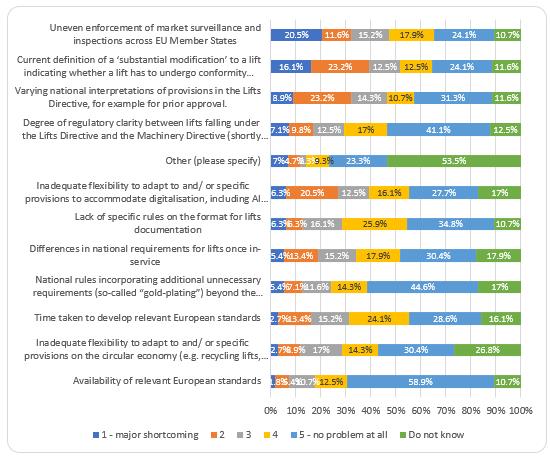
Figure 3: Extent to which there are shortcomings in the implementation of the Directive (n=112)
European standards
Stakeholders responding to the survey indicated that lift-related European standards are technology-neutral to a strong extent (44.2%, 38/86) or some extent (25.6%, 22/86). They also represent state-of-the-art specifications to a strong extent (39.5%, 34/86) or some extent (37.2%, 32/86). However, it should also be noted that technology moves faster than regulation, and subjects such as AI and cybersecurity are missing from current standards.
Respondents to the survey agree that the EU can be considered a leading standard-setter at global level, either to some extent (36%, 31/86) or to a strong extent (50%, 43/86). European standards have influenced international standards according to 64% (55/86) of respondents, with another 15% (13/86) indicating that the influence was mutual.
Stakeholders were asked to indicate to what extent, in their experience, European standards were contributing to the development of the lift sector, as shown in the figure below.

Figure 4: Extent to which EN standards are deemed to contribute to the lift sector in the EU
The presence of harmonised European standards has been a factor in helping economic operators to export lifts outside the EU according to 53.1% (17/32) of respondents. 25% (8/32) replied that they don’t know.
Market surveillance
Market surveillance is considered either partially (30.3%, 33/109) or completely effective (33.9%, 37/109) by the majority of stakeholders who responded to the survey. For 10.1% (11/109) of respondents it is rather ineffective, while 14.7% (12/109) of respondents consider that it varies across Member States. While 35.8% (39/109) of stakeholders replied that they don’t know, 37.6% (41/109) of respondents consider that market surveillance has improved in the past 5 years.
Stakeholders were asked to identify and rank the main drivers of change in market surveillance. They are displayed in the figure below. Common provisions across authorities and strengthened coordination were indicated as the most important factors to drive any change.

Figure 5: Drivers of change in market surveillance, ranked 1-5 (n=72)
Accessibility of tools and systems
Stakeholders were asked about how easy it is to access tools, systems and spare parts for maintenance purposes and in emergency situations. As shown in the figure below, access is generally provided, with a few exceptions especially regarding operating systems, tools and spare parts.

Figure 6: Degree of accessibility of specific items for emergency situations, rescues and maintenance work (n=107)
Accessibility for people with disabilities
When asked about the accessibility of lifts for people with disabilities, stakeholders indicated that they are accessible some or most of the time, as depicted in the figure below.

Figure 7: Extent to which lifts are safely usable for people with different disabilities (n=100)
According to 46.3% (31/67) of stakeholders, the current national and EU provisions on the accessibility of (public) buildings are comprehensive enough to ensure the safe use of lifts, while 23.9% (16/67) think that this aspect should be better regulated at EU level. Standard EN 81-70 was specifically mentioned as providing the necessary specifications to ensure accessibility of lifts. However, in their replies to open-ended questions, a few stakeholders indicated that this standard, which is voluntary, is often not applied, thus limiting its effectiveness.
Relevance
Most stakeholders responded that the Directive remains (strongly or somewhat) relevant to the needs of stakeholders in the sector, as shown in the figure below.

Figure 8: Extent to which the Directive remains relevant to current needs (n=110)
The scope of the Directive is still deemed relevant, in terms of both the definition of lifts as machines travelling faster than 0.15 m/s (75.7%, 81/107) and the list of safety components in Annex III (60.4%, 61/106). This also takes into consideration those who replied that they don't know.
When asked about the main aspects that could affect the relevance of the Directive, sector professionals indicated in particular the rules on building interfaces, modernisation and re-manufacturing of lifts, and on new technologies such as cybersecurity and AI, which are topics not explicitly addressed by the Directive (see figure below).

Figure 9: Extent to which these elements limit the Directive’s relevance (n=101)
All the main aspects of the Directive (i.e. essential health and safety requirements, conformity assessment modules, roles and obligations of stakeholders) were deemed flexible enough to respond to new technologies and digitalisation-related developments. In particular, essential requirements were deemed very flexible (by 70.3% (26/35) of respondents), as were conformity assessment modules (73%, 27/37) and roles and obligations of stakeholders (67.6%, 25/37).
Stakeholders were asked to indicate the conformity assessment modules they use the most within the scope of the Directive. Module B – EU-type examination (24/35), Module G – Conformity based on unit verification (21/35) and Module H1 – Conformity based on full quality assurance plus design examination (20/35) are those reported to be used the most to assess compliance of lifts. Module B – EU-type examination is the one most used for conformity assessments of safety components (26/31).
Overall, 26.6% (28/104) of respondents find that there are aspects missing from the current set of conformity assessment modules. According to the open-ended responses, they largely relate to the areas of cybersecurity and artificial intelligence.

Figure 10: Extent to which there are shortcomings, gaps or superfluous modules linked to the Directive (n=108)
Regarding the provision of prior approval, stakeholders’ views were quite wide-ranging: 20.2% (22/109) of respondents indicated that national discretion on the matter is very positive, 22% (24/109) indicated that it is quite positive, 18.3% (20/109) showed a neutral position, while 32.6% (32/109) of respondents indicated that this is somewhat or very negative.
Coherence
Stakeholders were asked to identify some issues of internal coherence regarding the Directive. In open-ended questions, some stakeholders underlined that, as it does not cover the lifecycle of the lift, rules and regulations for important aspects such as lift maintenance and periodic inspections are left at the discretion of Member States, creating fragmented national regulations with different requirements.
In terms of external coherence with other pieces of EU legislation, stakeholders did not indicate any major issues, as shown in the figure below.
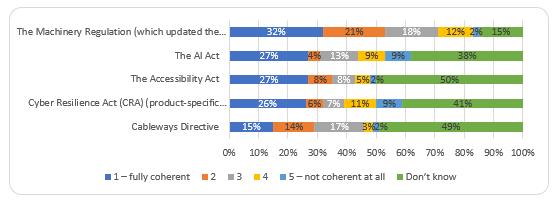
Figure 11: Extent to which the Lifts Directive is coherent with other pieces of EU legislation (n=100)
Efficiency
In line with the general views on the Directive’s effectiveness, all stakeholders responding to the survey were largely positive regarding the burden linked to compliance with and enforcement of the Directive. In particular, stakeholders indicated that costs have remained the same over the past 10 years (43%, 43/100), while 13% (13/100) indicated that they increased slightly and 16% (16/100) said they increased significantly. When asked to further explain their response, the few stakeholders that responded indicated the costs for examinations and notified bodies’ fees as the main reasons for the increase.
In general, 76% (19/25) of stakeholders indicated that their workload to comply with the Directive is ‘medium’, 8% (2/25) that it is ‘high’ and 4% (1/25) that it is ‘low’ or ‘none’. One of the key reasons for which the burden is seen to be on the lower end of the scale (and has been reduced over time) is the use of harmonised standards, which give products the presumption of conformity, thus making conformity assessment procedures less costly and less time-consuming. Becoming familiar with new harmonised standards does produce some costs for economic operators and other stakeholders: these include the costs of purchasing and translating the standards, training staff and adapting to the new technical specifications.
In general, stakeholders were often not able to provide estimates to quantify the costs related to compliance with and enforcement of the Directive.
EU added value
Stakeholders responded positively regarding the EU added value of the Directive. Including those who responded that they don’t know, stakeholders indicated that the Directive:
·increased the safety of lifts for users, with 91% (91/100) either agreeing or strongly agreeing, and for lift operators and maintenance personnel due to alignment with EU safety standards (84%, 84/100);
·contributed to reducing barriers to trade on the single market (83%, 83/100) and to establishing a level playing field for economic operators (72%, 72/100);
·increased the competitiveness of EU companies in the lift sector on both the EU market (71%, 71/100) and the global market (64%, 64/100).
As regards whether similar results could have been achieved solely with national measures, without EU intervention, 57% of respondents (57/100) either disagree or strongly disagree with that statement.
Targeted stakeholder surveys – survey of building owners/managers
For the survey targeting building owners and managers (survey #2), responses were received from 4 stakeholders only. Given the very limited representativeness of the input received, the survey data were not used in the evaluation.
Of the 4 respondents who completed the survey, 2 were based in Belgium, 1 in Italy and 1 in Czechia. In 3 cases, respondents said that they manage more than 1 lift. As regards the age of the lifts managed, 2 respondents indicated that the average age was around 20-30 years (with some lifts installed in 2023 and the oldest ones in the 1960s), 1 that the average age was 10-20 years, and 1 that the average age was less than 5 years.
Annex VI – The Lifts Directive
The Lifts Directive ensures the safe and efficient operation of lifts in the EU. The essential health and safety requirements set out in Annex I apply to lift installations. This section is particularly important as it contains the safety requirements for lift design, manufacture and installation. Compliance ensures passenger safety, prevents accidents and minimises risks, through specific assessment procedures (and modules) which are set out in the Directive’s Annexes.
Moreover, the Directive details which types of manufacturers, installers and other economic operators are responsible for lift safety. Directive 2014/33/EU is a recast of the previous directive covering lifts, Directive 95/16/EC. This recast aligned the previous Lifts Directive to the NLF. The NLF harmonised market surveillance, conformity assessment and responsibility for product compliance across all the product sectors that are covered by the NLF (approximately 30 sectors) The Lifts Directive has not changed substantially in the last 30 years, but the market has, especially since 1995 in the areas of digitalisation, the circular economy, globalisation, accessibility, EU approaches to standardisation, market surveillance and customs.
The Lifts Directive allows lifts and their safety components to be traded freely within the EU single market while ensuring greater safety for lift users and maintenance staff. It covers lifting appliances that are (or can be) used to transport people and whose speed is not greater than 0.15 m/s. All other lifts and lifting devices are covered by the Machinery Directive 2006/42/EC (to be replaced by the Machinery Regulation (EU) 2023/1230 on 20 January 2027) or Regulation (EU) 2016/424 on cableway installations. Moreover, EU legislation does not cover the maintenance and modernisation of lifts. That is the responsibility of the national authorities in EU countries. However, the Lifts Directive does apply to lifts that were substantially modified.
Some key provisions of the Directive are:
·Article 3 on free movement, and particularly point (3) thereof, which sets out the possibility for Member States to lay down the requirements as they see fit.
·Article 5 on essential health and safety requirements (given that essential requirements are of paramount importance of to all harmonised product legislation). Article 5 is the main point of reference for the EHSRs set out in Annex I (see below).
·The articles on economic operators’ obligations, e.g. Article 7 on the obligations of installers, Article 8 on the obligations of manufacturers, Article 9 on authorised representatives, Article 10 on the obligations of importers and Article 11 on the obligations of distributors.
·The articles on conformity assessment procedures, namely Article 15 on conformity assessment procedures for safety components for lifts and Article 16 on conformity assessment procedures for lifts.
The Directive introduced a series of changes compared to the previous EU legislation on lifts, Directive 95/16/EC. For instance, some definitions (provided in Article 3) were clarified and aligned with the NLF. Article 4 (on making lifts available on the market) and Article 5 (on the essential health and safety requirements) consolidated and explicitly set out the rules for placing products on the market and the application of EHSRs. Chapter II of the Directive was a major expansion, as it formally laid out specific, distinct and extensive obligations for every actor in the supply chain to ensure better compliance and traceability:
·Article 8(6) mandates that manufacturers indicate their name, registered trade name or trademark, and postal address on the component or its packaging. This was not explicitly required in Directive 95/16/EC.
·Article 10 introduced a comprehensive list of obligations for importers (a role that was not explicitly covered in the previous Directive), including: ensuring that the manufacturer has carried out the correct conformity assessment, that the component bears the CE marking, and that the technical documentation has been provided. They must also take immediate corrective action if a component presents a risk.
·Similarly, Article 11 introduced obligations for distributors, which are explicitly required to verify the presence of the CE marking, the necessary documentation, and the manufacturer/importer information before making components available on the market.
The Directive also kept the original obligations of installers and manufacturers, but these were clarified in line with the NLF. In particular, the Directive served to improve traceability/labelling, as the manufacturer/installer must ensure the component is marked with their name, registered trade name or trademark, and a single postal address. They also have to keep a register of non-conforming safety components and recalls and keep this information for 10 years.
Similarly, the Directive is now in line with the NLF on the role of market surveillance authorities, which were granted increased powers (e.g. to carry out on-site inspections, make test purchases and impose penalties) and the possibility of working with customs authorities.
The table below provides an overview of all the key changes introduced by the Directive.
Table 1: Main changes introduced by Directive 2014/33/EU
|
Directive 95/16/EC
|
Directive 2014/33/EU
|
Main differences/key changes
|
|
Art. 1
|
Art. 1
|
Scope clarified and exclusions expanded (explicit exclusion of escalators, stage/theatre lifts, lifting appliances < 0.15 m/s).
|
|
Art. 1(4)
|
Art. 2 – Definitions
|
New NLF terminology added: ‘making available’, ‘placing on the market’, ‘economic operator’, ‘recall’, ‘withdrawal’.
|
|
Art. 2(1)
|
Art. 4 – Placing on the market/putting into service
|
Split treatment for lifts and safety components; clear legal definitions of the two actions.
|
|
Art. 3
|
Art. 5 – EHSR
|
References moved to updated Annex I; language aligned with NLF.
|
|
-
|
Arts. 7-13 – Obligations of economic operators
|
Entirely new chapter. Introduces duties for installers, manufacturers, importers and distributors, and sets out traceability rules.
|
|
Art. 8 + Annexes
|
Arts. 14-16 – Conformity assessment
|
Modules restructured using NLF terminology (EU-type examination, quality assurance, unit verification).
|
|
Art. 7
|
Arts. 18-19 – CE marking
|
Aligns CE marking with Regulation (EC) 765/2008; defines affixing and notified body identification number.
|
|
Annex VII
|
Arts. 24-35 – Notified bodies: requirements and duties
|
Overhauls notification process; introduces concept of ‘notifying authority’ and reliance on accreditation. Expands requirements for the designation, functioning, and monitoring of notified bodies, ensuring a consistently high level of competence and accreditation across the EU.
|
|
-
|
Art. 36 – Coordination of notified bodies
|
New: sets up EU-level coordination group for notified bodies.
|
|
Art. 8(2)-(5)
|
Arts. 37-44 – Market surveillance & safeguard procedures
|
New framework aligned with Regulation (EC) 765/2008, detailing clearer, standardised procedures for national authorities to follow when conducting market surveillance, including a formal EU safeguard procedure for consistently dealing with non-compliant products across all Member States.
|
|
Art. 9-10
|
Arts. 45-49 – Final provisions
|
Transposition, penalties, and addressees updated; repeal of 95/16/EC effective 20 April 2016.
|
Annex I of the Directive sets out the essential health and safety requirements applicable to lifts and their safety components. These requirements have been devised to protect users and workers conducting lift maintenance, rescue operations, repairs or inspections, for example. This Annex I is in line with the principles of the ‘new approach’ to legislation.
The Lifts Directive does not cover the maintenance and modernisation of lifts, which is the responsibility of the national authorities in EU countries. The Directive does, however, require the installer of the lift to ‘design the lift in such a way that maintenance, inspection and rescue operations can be carried out safely’. Moreover, the lift installer must provide appropriate instructions for maintenance, inspection, repair, periodic checks and rescue operations, although the Directive does not regulate the conditions under which they should be carried out.
Essential requirement 2.2 of Annex I adds a prior approval provision for cases where Member States take a different approach to cases where there is not enough space above or below the lift (which should, according to essential requirement 2.2, prevent the risk of crushing when the car is either at the very top or very bottom of the lift shaft by leaving some free space beyond extreme positions). This prior approval provision may create various potential problems if there is not enough space above the lift in existing buildings, an issue which could be explored in the evaluation.
Safety component manufacturers and lift installers are obliged to verify that the product complies with the applicable essential requirements (through conformity assessment) and affix the CE marking, both on the safety component and on the lift.
The Lifts Directive provides a range of options for conformity assessment of lifts and safety components of lifts, for the design phase, and for the production phase (for safety components) and the installation phase (for lifts). All of these conformity assessment procedures require the involvement of a notified body for lifts, appointed by each Member State to assess whether the products comply with the requirements of the Lifts Directive and/or whether the companies’ quality management system is compliant.
The table below provides an overview of the conformity assessment modules (responsibility of the installers) for lifts and safety components.
Table 2: Overview of conformity assessment modules in the Directive
|
Annex
|
Module
|
Applies to
|
Core procedure
|
Notified body’s role
|
|
Annex IV
|
EU-type examination (Module B)
|
Safety components and lifts (at design stage)
|
Manufacturer/installer submits a representative design sample or technical documentation to a NB for design conformity check against the EHSR in Annex I.
|
Examines technical design, verifies compliance, issues EU-type examination certificate valid for 5 years (renewable).
|
|
Annex V
|
Conformity to type based on product quality assurance (Module D)
|
Lifts or safety components already type-examined
|
Manufacturer/installer takes necessary measures to ensure installed lift complies with EHSRs through EU-type examination (B) or implementation of a certified quality system (H1).
|
Carries out the final inspection of the lift about to be placed on the market in order to check the conformity of the lift.
|
|
Annex VI
|
Conformity to type based on product quality assurance (Module E)
|
Safety components
|
Manufacturer uses an approved quality system for final inspection and testing of the safety components for lifts.
|
Periodically carries out audits to ensure that the manufacturer maintains and applies the quality system.
|
|
Annex VII
|
Conformity based on full quality assurance (Module H)
|
Safety components
|
Manufacturer uses an approved quality system for the design, manufacture, final inspection and testing of safety components.
|
Assesses the manufacturer’s quality system to ensure that the safety components for lifts are designed, manufactured, inspected and tested in compliance with EHSRs.
|
|
Annex VIII
|
Unit verification (Module G)
|
Lifts
|
Each individual lift is examined and tested by a NB to verify conformity with Annex I (one-off certification).
|
Performs design check, construction inspection and functional testing on-site and examines the technical documentation.
|
|
Annex IX
|
Conformity to type with random checking (Module C2)
|
Safety components
|
Used after EU-type examination (Module B). The manufacturer ensures that the components conform to the approved type.
|
Conducts random checks on the manufactured products.
|
|
Annex X
|
Conformity to type based on product quality assurance for lifts (Module E)
|
Lifts
|
Installer uses an approved product quality system for final lift inspection and testing.
|
Assesses the installer’s product quality system to ensure that the lifts are in conformity with the approved type as described in the EU-type examination certificate or with a lift designed and manufactured under a full quality system.
|
|
Annex XI
|
Conformity based on full QA plus design examination (Module H1)
|
Lifts
|
Combines Module H (full QA) with a design examination stage (by NB) for technically innovative lifts not fully covered by harmonised standards.
|
Assesses the installer’s quality system and carries out a design examination where harmonised standards are not fully applied.
|
|
Annex XII
|
Conformity to type based on product quality assurance (Module D)
|
Lifts
|
Installer operates an approved production quality system for manufacturing and installing the lifts.
|
Assesses and audits the production quality system to ensure that the lifts installed are in conformity with the approved type (Module B) or with a lift designed and manufactured under an approved quality system (Module H1).
|
Harmonised European standards also play a key role, by providing safety component manufacturers and lift installers with solutions to ensure compliance and by conferring presumption of conformity with the EU legislation. A number of regularly updated European standards (developed by the CEN/TC 10) detail the safety rules for various types of lift, and different aspects of lift construction and mechanisms.
Furthermore, market surveillance is an important part of the NLF. It sets out measures to check that products meet the requirements of the applicable legislation and that non-compliant products are brought into compliance or withdrawn from the market. The Directive requires Member States to organise and carry out market surveillance activities through market surveillance authorities. One challenge that needs to be taken into consideration is that the European market surveillance system relies primarily on ex post compliance checks when a product is placed on the market and put into service.
Annex VII – Annexes to the market analysis
Products falling within the scope of the Directive include lifts – those intended for the transport of persons, persons and goods, and goods alone if the carrier is accessible – and their safety components (as listed in Annex III of the Directive). The Directive does not cover the maintenance and modernisation of lifts, although it does apply to lifts that were substantially modified. The market analysis looked at the following indicators:
·number of firms and employees,
·units and value of lifts and safety components sold (production),
·number of lifts installed,
·overall value and volume of intra/extra-EU imports/exports of lifts and safety components,
·competitiveness of trade compared to other exporters.
A number of sources have been analysed to look for the above-mentioned indicators. Most of them follow on from the work that was undertaken in the previous 2019 evaluation study of the Lifts Directive. However, some indicators had to be discontinued as the research team was unable to recover some data sources, or the sources themselves were not available for the most recent period; for example, the indicator providing information on the size of enterprises falling within the scope of the Directive could not be used this time around and, for the analysis of the number of patents falling within scope of the Directive, the information source was not available to the current research team.
Furthermore, it should be noted at this point that some limitations exist, such as the lack or incompleteness of market data. This issue was dealt with in our analysis by applying a methodology that aims to gather estimates and to disaggregate data, while also adding value through desk research and stakeholder consultation. Other limitations were also encountered in gathering market data:
·The NACE codes used for the analysis include products that are outside the scope of the Directive (i.e. some lifts and skip hoists that are subject to the Machinery Directive), thus making it harder to obtain a precise estimate of the size and value of the lift market.
·The available data do not allow a distinction to be made between safety component manufacturers and lift installers, here again hindering an accurate assessment of the lift market.
·For the same reason, the available data do not show the number of new lift installers and safety component manufacturers entering the market since 2015. Furthermore, data at national level are highly fragmented.
·Some indicators are also limited in time. This is the case for the number of firms, as data are only available until 2020 (source: Eurostat SBS).
·Finally, as part of the EU harmonisation legislation, the Directive does not cover after-sales services (i.e. maintenance and modernisation of lifts). However, these constitute an integral and relevant part of the lift sector, particularly in the EU. Due to data aggregation, it was not possible to distinguish between firms active in production and installation and those performing modernisation and maintenance only, and therefore not impacted by the Directive but by national legislation.
These limitations made it somewhat more difficult to assess the impacts of the Directive on the internal market, though some trends could still be identified. A specific methodology was developed for the market analysis in order to take account of these limitations.
The table below summarises the methodology developed to conduct this analysis, showing which indicators have been identified, from which sources and for which products. Unfortunately, in many cases the available data do not fully match with the products covered by the Directive. Where possible, indicators relating only to the products within the scope of the Directive were estimated by combining official and non-official sources.
Table 1: Methodology for market analysis indicators
|
Indicator
|
Source
|
Coverage
|
Issues
|
Action
|
Estimate
|
|
Units and value of lifts and components sold (production)
|
ELA 2023 white paper and other ELA industrial statistics
|
Products: lifts and
safety components
Territory: EU-27, CH, NO, TR
Timeframe:
2015-2022
|
Fully matching with the scope of the Directive, though likely to under-represent SMEs.
|
The under-representation of SMEs is not deemed to hinder the estimate of production sold, as they play a minor role in lift production. In some cases, these data were used to triangulate data provided by official sources.
|
None
|
|
|
Eurostat
Prodcom
|
Products: lifts: NACE Rev. 2 code 28221630 and 28221650;
Safety components: NACE Rev. 2 code 28221950
Territory: EU-27
Timeframe: 2011-2023
|
(A) Data at Member State level are very fragmented.
(B) NACE codes for lifts include skip hoists.
(C) NACE codes for lifts include lifts that might fall under the Machinery Directive (e.g. due to different speeds).
(D) The NACE code for safety components also includes escalators that are not covered by the Directive.
|
(A) Data have been used only at aggregate level (EU).
(B) The inclusion rather than the exclusion of skip hoists covered by the Directive is not straightforward. Nonetheless, skip hoist production value – whether covered by the Directive or not – over total EU production of lifts and skip hoists is estimated to not exceed 10%, meaning that those outside the scope of the Directive are even fewer. As a result, the indicator has been used as it is.
(C) The percentage of lifts that may fall under the Machinery Directive has been estimated as residual, considering that most products in its scope are ‘captured’ by NACE Rev. 2 code 2822. As a result, the indicator has been used as it is.
(D) We estimate that only 92% of the NACE code for safety components fall within the scope of the Directive, the remaining 8% being related to escalators.
|
Value of lifts sold = no calculation necessary
Value of lift components sold = value of lift components including escalator components*0.92
|
|
Intra- and extra-EU-28 trade (import and export) in value
|
Eurostat International Trade and UN Comtrade Database
|
Products: lifts: SITC Rev. 3 code 74481; Safety components: SITC Rev. 3 code 74493
Territory: EU-28 and EEA
Timeframe: 2011-2023
|
|
|
Import/export of lifts = no calculation necessary Import/export of lift components = import/export of lift components including escalator components*0.92
|
|
Competitive ness
|
UN Comtrade Database;
|
None
|
None
|
Estimated based on UN Comtrade Database.
|
Export percentages
|
|
Number of enterprises
|
Eurostat SBS
|
Products: lifting and handling equipment: NACE Rev. 2 code 2822
Territory: EU-27 + IS, NO, CH
Timeframe: 2011-2020
|
Lifting equipment also includes lifting machineries that do not fall within the scope of the Directive.
|
.
It is not possible for the research team to estimate the percentage of manufacturing companies included in the NACE code that do not produce any products included in the scope of the Lifts Directive. Therefore, this data will be considered to be purely indicative.
|
None
|
|
Number of employees
|
ELA 2023 white paper and other ELA industrial statistics
|
Products: lifts and safety components
Territory: EU-27, CH, NO, TR
Timeframe:
2015-2022
|
These data also include employees and enterprises active only in the after-sales market (i.e. not covered by the Directive).
|
Data provided by ELA specifically relate to the lift sector. These data include employees involved in both production/installation and the provision of after-sales services (the latter not being covered by the Directive). We have opted to use ELA statistics rather than other sources for this indicator as they are relatively reliable and relate only to the lift sector.
|
None
|
The following table presents the product composition of NACE code 2822 based on Eurostat classification.
Table 2: Eurostat classification of NACE code 2822, lifting and handling equipment
|
Code
|
Product
|
|
28221130
|
Pulley tackle and hoists powered by an electric motor (excluding of the kind used for raising vehicles)
|
|
28221170
|
Pulley tackle and hoists, non-powered by electric motor (other than skip hoists or hoists of a kind used for raising vehicles)
|
|
28221200
|
Winches and capstans (excluding those for raising vehicles)
|
|
28221330
|
Built-in jacking systems of a type used in garages for raising vehicles
|
|
28221350
|
Hydraulic jacks and hoists for raising vehicles (excluding those for use in garages)
|
|
28221370
|
Jacks and hoists of a kind used for raising vehicles (excluding built-in jacking systems of a kind used in garages, hydraulic jacks and hoists)
|
|
28221420
|
Overhead travelling cranes on fixed support
|
|
28221433
|
Mobile lifting frames on tyres and straddle carriers
|
|
28221435
|
Transporter cranes, gantry cranes and bridge cranes
|
|
28221440
|
Tower cranes and portal or pedestal jib cranes
|
|
28221450
|
Self-propelled lifting equipment, of a kind mounted to run on rails in servicing building sites, quarries and the like
|
|
28221460
|
Lifting equipment designed for mounting on road vehicles
|
|
28221470
|
Lifting equipment (excluding overhead travelling cranes, tower, transporter, gantry, portal, bridge or pedestal jib cranes, mobile lifting frames or straddle carriers, self-propelled machinery)
|
|
28221513
|
Self-propelled works trucks fitted with lifting or handling equipment, powered by an electric motor, with a lifting height ≥ 1 m
|
|
28221515
|
Self-propelled works trucks fitted with lifting or handling equipment, powered by an electric motor, with a lifting height < 1 m
|
|
28221530
|
Self-propelled works trucks fitted with lifting or handling equipment, non-powered by an electric motor
|
|
28221550
|
Works trucks fitted with lifting or handling equipment (excluding self-propelled trucks)
|
|
28221570
|
Works trucks, self-propelled, not fitted with lifting or handling equipment, of the type used in factories, warehouses, dock areas or airports for short distance transport of goods; tractors of the type used on railway station platforms
|
|
28221630
|
Electrically operated lifts and skip hoists
|
|
28221650
|
Lifts and skip hoists (excluding electrically operated)
|
|
28221670
|
Escalators and moving walkways
|
|
28221740
|
Pneumatic elevators and conveyors
|
|
28221750
|
Bucket type continuous-action elevators and conveyors for goods or materials
|
|
28221770
|
Belt type continuous-action elevators and conveyors for goods or materials
|
|
28221793
|
Roller conveyors for goods or materials (excluding pneumatic elevators and conveyors, those specially designed for use underground, bucket type, belt type)
|
|
28221795
|
Continuous-action elevators or conveyors for goods or materials (excluding pneumatic elevators or conveyors, those designed for use underground, bucket type, belt type, roller conveyors)
|
|
28221820
|
Teleferics, chair-lifts, ski-draglines and traction mechanisms for funiculars
|
|
28221840
|
Lifting, handling, loading or unloading machinery, n.e.s.
|
|
28221850
|
Loading machinery specially designed for agricultural use
|
|
28221930
|
Parts of machinery of HS 8425, 8427 and 8428 (excluding lifts, skip hoists or escalators)
|
|
28221950
|
Parts of lifts, skip hoists or escalators
|
|
28221970
|
Parts of self-propelled works trucks, not fitted with lifting or handling equipment, of the type used in factories, warehouses, dock areas or airports for short distance transport of goods, incl. tractors for railways station platforms, n.e.s.
|
|
28222000
|
Buckets, shovels, grabs and grips for cranes, excavators and the like
|
Annex VIII – Annex to the Brussels effect
Definition
The ‘Brussels effect’ refers to the ability of the European Union to determine, shape or otherwise influence regulatory standards and/or behaviour beyond the confines of its jurisdiction. This ability is generally thought to be realised through non-negotiated and non-coercive means. The Brussels effect can be considered as a proxy of the EU’s ability to shape global governance and trade through its regulatory power and serves as a model for other regions seeking to influence international standards and norms. The Brussels effect has been said to have five underlying elements, all of which apply to the case of lifts, namely market size, regulatory capacity, stringent standards, inelastic targets, and non-divisibility.
In analysing the non-EU Member States that have adopted standards that are identical or broadly aligned with EU standards, it is worth thinking in terms of ‘concentric circles’ as regards the degree of formal cooperation with the EU regulatory process and/or adoption of EU standards: first, non-EU Member States within CEN/TC 10; second, countries with a formal cooperation agreement with the EU; third, other countries that have unilaterally adopted national standards that are closely aligned with EU standards; fourth, other countries where many suppliers have chosen to operate according to EU standards; fifth, other countries not aligned with EU standards, notably the US.
The available evidence is sufficient to demonstrate that the Brussels effect manifests itself in the lift sector. In particular, there is strong evidence that many non-EU countries have aligned their standards with the EU either through direct cooperation or unilateral adoption or indirectly via alignment with ISO standards. Moreover, the stakeholders consulted for this survey consistently reported the importance of the Brussels effect in terms of its influence on non-EU jurisdictions and on global manufacturers. There is evidence to show that the EU has high levels of trade in lifts and a significant trade surplus: USD 0.466 billion in ‘Parts of lifts, skip hoists or escalators’
and USD 1.281 billion in ‘Lifts and hoists’
(see ‘Impact on global trade flows’ below). This points to the importance of the Brussels effect for the EU’s global trade, although causality cannot be directly proven by the data. Moreover, the trade data does not neatly map onto the products covered by the Lifts Directive but may encompass other products.
Non-Member States within CEN/TC 10
CEN comprises 34 member countries, each represented by their respective national standardisation bodies. These members work together to develop and adopt European standards (EN), including those formulated by CEN’s technical committee on lifts (CEN/TC 10), which focuses on safety rules for the construction and installation of lifts, escalators and passenger conveyors.
As well as the 27 EU Member States, the member countries of CEN include Iceland, North Macedonia, Norway, Serbia, Switzerland, Türkiye and the UK. These last two countries are examples of CEN members that have adopted the standards developed by CEN/TC 10, which facilitates compliance with the Lifts Directive.
United Kingdom
The 2014 Lifts Directive was transposed into UK law under the Lifts Regulations 2016, which have remained in force ever since, albeit with some minor amendments. The EU Withdrawal Act 2018 preserved the Lifts Regulation 2016 and enabled them to be amended so as to continue to function effectively following the UK’s departure from the EU. In line with this, the Product Safety and Metrology etc. (Amendment etc.) (EU Exit) Regulations 2019 removed references to EU institutions and made specific provision for the market in Great Britain. However, some of the provisions in UK legislation apply differently in Northern Ireland under the terms of the Windsor Framework.
Türkiye
Türkiye has aligned its national legislation with the requirements of the Lifts Directive. The Turkish standards institution, the TSE, has transposed various European Norm (EN) standards into national standards, such as TS EN 81-1 and TS EN 81-2, which were adopted in the early 2000s and govern the construction and installation of lifts.
To ensure compliance with this national legislation, Türkiye has established procedures for the designation of notified bodies for the construction and installation of lifts. The Turkish Ministry of Industry and Trade oversees this process, ensuring that CABs meet the necessary criteria before being designated as NBs. The Ministry also conducts market surveillance to ensure compliance with the legislation, including inspections at locations where lifts are installed.
Türkiye has also implemented a regulation on electrical equipment designed for use within certain voltage limits, based on the EU’s Low Voltage Directive 2014/35/EU. This regulation lays down safety principles and conformity assessment procedures for electrical equipment, including components used in lifts, further harmonising Turkish legislation with EU directives.
Cooperation with CEN
Some countries have aligned their standards with those of the Lifts Directive on the basis of a partnership with CEN.
Australia
Australia’s national standards body, Standards Australia, has a long history of working with CEN and other international standards organisations, such as the International Organization for Standardization (ISO), for example, through international standardisation forums and bilateral technical committees. While Standards Australia is not a full member of CEN, it works closely with CEN through harmonisation efforts and mutual recognition of international standards where applicable.
The Australian Standard AS 1735 series governs the design, construction and installation of lifts, escalators and moving walkways. Several parts of AS 1735 are direct adoptions or adaptations of European standards:
·AS 1735.19:2019. This standard specifies requirements for alarm systems in passenger and goods passenger lifts and is identical to the European standard EN 81-28:2018+AC:2019.
·AS 1735.12:2020. Focusing on accessibility features for persons with disabilities, this standard adopts EN 81-70:2018 with amendments to address Australian conditions.
·AS 1735.8.1-2020. This standard pertains to safety rules for electric lifts with inclined paths and is a modified adoption of EN 81-22:2014.
Given this close alignment, some EU certifications are accepted in Australia, albeit on a case-by-case basis.
China
CEN and China have been working together for a long time to encourage a move towards the harmonisation of product standards. This has included the Seconded European Standardization Expert for China (SESEC) project, which has aimed to raise awareness of the European Standardisation System in China. Collaboration has encompassed a broad range of product fields, including lifts.
In 2005, CEN/TC 10 and the Standardization Administration of China (SAC/TC 196) signed a cooperation agreement to align their efforts in developing lift standards. This cooperation transformed European standards EN 81-20 and EN 81-50 into international standards, resulting in ISO 8100-1 and ISO 8100-2. China’s lift standards have historically been heavily influenced by European standards, particularly the EN 81 series. The Chinese standard GB 7588, for example, is almost identical to EN 81.
Efforts to harmonise standards have been ongoing. In 2019, ELA and the China Elevator Association (CEA) signed a memorandum of understanding to promote cooperation and mutual understanding of standards. This cooperation aims to align interpretations of standards like ISO 8100-1 and ISO 8100-2 in order to facilitate a more unified approach to lift safety and design.
Unilateral adoption of (close to) EU standards
Some countries have adopted regulatory standards for lifts that are heavily influenced by EU standards as this allows them to ensure that they are in line with international best practice.
India
India’s standard IS 14665 was introduced in 2000. Although formal cooperation between India and CEN/TC 10 has been limited, the Bureau of Indian Standards has tended to align its standards with those of EN 81.
Eurasian Economic Union (EAEU)
The EAEU’s ‘Technical Regulation on the Safety of Lifts’ (TR CU 011/2011) came into force in April 2013 and harmonises safety requirements for lifts across the EAEU countries (Armenia, Belarus, Kazakhstan, Kyrgyzstan and Russia). That technical regulation is influenced by international standards, including those of the EU’s Lifts Directive, although not completely aligned. It specifies safety requirements for design, installation and use and requires EAC Certification.
Mongolia
In 2015, Mongolia adopted its national lift standard (MNS ISO/TR 11071-1:2015) setting out safety rules for the construction and installation of lifts. The standard is not legally binding but is instead a technical report providing a comparative analysis of safety standards used in various countries, including the EU. It serves as guidance for policy and alignment of standards.
There is potential for further alignment with EU standards, given that in 2016 the Mongolian Agency for Standardization and Metrology (MASM) became the first companion standardisation body (CSB) of CEN. CSB status enabled Mongolian experts to work with their European counterparts with the aim of learning from each other, exchanging best practices and working jointly on strategic areas. While the CSB agreement does not specifically target lift standards, it encompasses related sectors, including construction and safety.
Widespread adoption by producers
Many producers of lifts around the world have chosen to develop products in compliance with the Lifts Directive and the EN 81 series. For example, Japan has its own national code but firms like Mitsubishi and Hitachi use EN 81T for export. Similarly, manufacturers in Brazil, Hong Kong, Singapore and South Korea often choose to align with EU standards. In the Gulf States (e.g. UAE, Qatar), EN 81 standards are often required in construction tenders.
United States
The American Society of Mechanical Engineers (ASME) sets the primary standards for lifts in the US, specifically the ASME A17.1 Safety Code for Elevators and Escalators. US standards are not directly based on EU standards but are designed to offer alignment with international standards (e.g. ISO 8100-1) and thus show a degree of overlap with EU standards.
The first standard, A17.1/CSA B44 – Safety Code for Elevators and Escalators, is prescriptive in that it specifies detailed requirements (e.g. dimensions, forces, sensors, clearances) for the design, construction, installation, operation, inspection, testing, maintenance, alteration and repair of lifts, escalators and related conveyances. The standard is relatively inflexible and thus mostly suitable for standard installations. A17.1/CSA B44 is focused on installation and maintenance rather than approval of individual components. It relies on on-site inspection and testing rather than design conformity documentation.
In contrast, the second standard, A17.7/CSA B44.7 – Performance-Based Safety Code for Elevators and Escalators, is performance-based. It is intended to offer flexibility in problem-solving, particularly for new technologies and practices or non-traditional systems.
Overall, US regulation is more performance-based and less prescriptive than in the EU and requirements can vary significantly between states and municipalities, particularly in terms of accessibility and energy efficiency. Attention is mostly given to on-site inspection and testing in contrast to the EU’s focus on design conformity documentation and approval of individual components. Regulation and enforcement are also more decentralised than in the EU.
Influence on the International Organization for Standardization
The ISO’s adoption of EU standards shows just how important EU standards have become. Following close collaboration between CEN/TC 10 and the ISO technical committee ISO/TC 178, the EU standards EN 81-20 and EN 81-50 were adopted as ISO standards ISO 8100-1:2019 and ISO 8100-2:2019. These ISO standards are expected to be replaced by ISO/DIS 8100-1 and ISO/DIS 8100-2 in the near future. CEN reports that it intends to work in parallel with ISO on the revision of standards, so that EU standards and ISO standards remain aligned.
Impact on global trade flows
The precise impact of the Brussels effect on trade flows with the rest of the world cannot be estimated with any certainty. There is, however, some evidence to support the argument that the Brussels effect provides a boost to EU exports to the rest of the world. (Some caution must be applied in the analysis of trade data, as product categories do not always correlate precisely with those products covered by the Lifts Directive.) This boost arises not only through the adoption of EU standards by regulators in other countries but also through the choices made by manufacturers exporting to the EU and through the supply chains of EU-based manufacturers.
Trade data shows that the EU was the second-largest exporter of ‘Parts of lifts, skip hoists or escalators’ in 2023. China’s exports amounted to USD 1.219 billion, while the EU’s exports came to USD 0.893 billion (not including intra-EU trade)
. Moreover, after China and the EU, the next two countries with the highest exports were both member countries of CEN and apply the standards set out in the Lifts Directive, i.e. the UK (USD 0.203 billion) and Türkiye (USD 0.167 billion). With imports of EUR 0.427 billion, the EU had an overall trade surplus of USD 0.466 billion. In contrast, US exports stood at only USD 0.16 billion compared with imports of USD 0.561 billion, resulting in an overall trade deficit of USD 0.402 billion.
Table 1: Exports of parts of lifts, skip hoists or escalators (2023)
|
Country
|
Export trade value, 2023
(USD billion)
|
|
China
|
1.219
|
|
EU (excluding intra-EU trade)
|
0.893
|
|
EU (including intra-EU trade)
|
3.316
|
|
UK
|
0.203
|
|
Türkiye
|
0.167
|
|
US
|
0.160
|
Source: World Integrated Trade Solution
Other data suggests a significant EU trade surplus in ‘Lifts and skip hoists’. Total exports of these products by the 27 EU Member States in 2023 were USD 3.316 billion (including intra-EU trade), while total imports were USD 2.034 billion. Thus, even accounting for intra-EU trade, the surplus with the rest of the world amounted to USD 1.281 billion in that year. Moreover, this trade surplus has arisen in a sector experiencing steady growth: 6.32% in 2023 compared with 2022 and 1.72% annually over the last five years.
These findings from the trade data are supported by the responses to the survey conducted for this evaluation. The vast majority of stakeholders responding to the survey reported that:
·EU standards had contributed to advancing the state-of-the-art (scientific and technological progress) globally (68/86, 79%);
·the EU is a world leading standard-setter in lifts (74/86, 86%);
·EU standards influenced international standards (68/86, 79%).
Of 32 economic operators or industry associations, the majority (17/32, 53%) reported that harmonised European lift standards help them to sell lifts outside the EU and only 7/32(22%) said that the standards did not (the rest, 8/32, did not know). Two manufacturers were able to estimate the value of such sales: one estimated them at 11-25% of annual turnover, while the other estimated 1-10%. In their qualitative responses to open questions in the survey, economic operators, industry associations and other stakeholders consistently reported that EU standards were important influences on standards in other ways, thus creating a favourable global trading environment for them.
The data also suggests that the US, Canada and Mexico are not only net importers of ‘Lifts and skip hoists’ but also have low levels of imports and exports of these products. The three countries together experienced a trade deficit in these goods of USD 210 million in 2023. Total trade was far less than the EU both in terms of exports (USD 0.459 billion, compared with USD 3.316 billion for the EU-27) and imports (USD 0.670 billion, compared with USD 2.033 billion for the EU-27), which suggests that much of the US market is served by domestic manufacturers.
Annex IX – Modernisation and maintenance practices of EU Member States
The tables below were completed using information provided by national authorities and/or national industry associations. No information was received for Austria, Estonia, Luxembourg and Malta. Information on modernisation for Austria and Luxembourg was partially retrieved from a survey conducted by the European Lifts Association in 2020 on the implementation of EN 81-20/50.
Table 1: National practices regarding modernisation
|
Country
|
Existence of national legislation on modernisation of lifts
|
Explicit reference to European standards
|
Application of penalties for non-compliance
|
|
Austria
|
Yes
|
No (as of 2020)
|
n/a
|
|
Belgium
|
Yes
|
No – reference to 1995 EC Recommendation
|
Yes
|
|
Bulgaria
|
Yes
|
Yes
|
Yes
|
|
Croatia
|
Yes
|
Yes
|
Yes
|
|
Cyprus
|
Yes
|
No
|
Yes
|
|
Czechia
|
Yes
|
No
|
Yes
|
|
Denmark
|
Yes
|
No
|
Yes
|
|
Finland
|
Yes
|
No – reference to the Directive
|
Yes
|
|
France
|
No – rules on the safety of existing lifts mandate that certain lift components be brought into conformity
|
Yes
|
Yes
|
|
Germany
|
No – existing legislation mandates that a risk assessment be carried out regularly
|
No
|
Yes
|
|
Greece
|
Yes
|
Yes
|
Yes
|
|
Hungary
|
No – national guide covers technical requirements for lift modernisation
|
Yes
|
No
|
|
Ireland
|
No specific regulation
|
No
|
No
|
|
Italy
|
Yes
|
Yes
|
Yes
|
|
Latvia
|
Yes
|
No – indirectly
|
Yes
|
|
Lithuania
|
Yes
|
Yes
|
Yes
|
|
Luxembourg
|
No (as of 2020)
|
No
|
n/a
|
|
Netherlands
|
Yes
|
No
|
Yes
|
|
Poland
|
Yes
|
No
|
Yes
|
|
Portugal
|
Yes
|
No
|
Yes
|
|
Romania
|
Yes
|
No
|
No
|
|
Slovakia
|
Yes
|
No
|
Yes
|
|
Slovenia
|
Yes
|
No
|
Yes
|
|
Spain
|
Yes
|
No – indirectly
|
Yes
|
|
Sweden
|
Yes
|
No – indirectly
|
Yes
|
|
Norway
|
Yes
|
No
|
Yes
|
|
Switzerland
|
No – rules are set at regional level
|
No
|
No
|
Table 2: National inspection and maintenance practices
|
Country
|
Existence of national legislation on maintenance of lifts
|
Minimum frequency for inspections
|
Minimum frequency for maintenance
|
Use of a register of lifts
|
|
Belgium
|
Yes
|
Every 6 months if maintenance carried out by a certified maintenance company; otherwise every 3 months.
|
As set out in lift’s technical documentation. If not available, every 6 months.
|
No, but in the process of setting up a digital repository.
|
|
Bulgaria
|
Yes
|
Once a year (or within one year of last inspection).
|
Once a month.
|
Yes
|
|
Croatia
|
Yes
|
Once a year.
|
Once a month.
|
No, but it is planned.
|
|
Cyprus
|
Yes
|
At least once every 2 years.
|
Once a month for lifts in public buildings.
Once every 3 months for lifts in private buildings.
|
Yes, but not up to date.
|
|
Czechia
|
Yes
|
Expert inspections once every 2 months for lifts in buildings with free public access.
Once every 3 months for lifts in buildings with limited public access.
|
As set out in lift’s technical documentation and national legislation (frequency depends on the specific part/component).
|
No
|
|
Denmark
|
Yes
|
Once every 2 to 12 months depending on the lift.
|
n/a
|
No
|
|
Finland
|
Yes
|
Once every 2 years.
|
As set out in lift’s technical documentation.
|
No
|
|
France
|
Yes
|
Once a year for high-rise buildings;
otherwise, once every 5 years.
|
Once every 6 weeks or once a year, depending on the component.
|
No
|
|
Germany
|
Yes
|
Once every 2 years.
|
No minimum frequency.
|
Yes
|
|
Greece
|
Yes
|
Once a year.
|
Once every 15 days.
|
Under development.
|
|
Hungary
|
Yes
|
Once a year for lifts less than 20 years old;
otherwise, once every 6 months.
|
As set out in lift’s technical documentation; otherwise once every 35 or 70 days depending on the age of the lift.
|
Yes
|
|
Ireland
|
Yes
|
Two reports of thorough examination per year.
|
No minimum frequency.
|
n/a
|
|
Italy
|
Yes
|
Once every 2 years.
|
Once every six months.
|
No
|
|
Latvia
|
Yes
|
Once a year.
|
As set out in lift’s technical documentation.
|
Yes
|
|
Lithuania
|
Yes
|
Once a year.
|
Once a month.
|
Yes
|
|
Netherlands
|
Yes
|
At least once every 18 months.
|
No minimum frequency.
|
No
|
|
Poland
|
Yes
|
Once a year.
|
As set out in lift’s technical documentation.
|
Yes
|
|
Portugal
|
Yes
|
Once every 2, 4 or 6 years depending on type and use of the building.
|
Once a month.
|
Yes
|
|
Romania
|
Yes
|
Once a year.
|
Once every 14 days for regular check.
Once every 6 or 12 months for general maintenance.
|
Yes
|
|
Slovakia
|
Yes
|
Once every 3 months for a professional inspection.
Once every 3 years for a professional test.
Once every 6 years for official test by NBs.
|
As set out in lift’s technical documentation.
|
No
|
|
Slovenia
|
Yes
|
Once a year.
|
As set out in lift’s technical documentation.
|
No
|
|
Spain
|
Yes
|
Once every 2, 4 or 6 years depending on type and use of the building.
|
Once a month.
|
Yes, at regional level.
|
|
Sweden
|
Yes
|
Once a year.
|
No minimum frequency.
|
No
|
|
Norway
|
Yes
|
Once every 2 years.
|
No minimum frequency.
|
Yes
|
|
Switzerland
|
Yes
|
As decided at regional level.
|
As set out in lift’s technical documentation.
|
Yes, at regional level.
|

