 EUROPEAN COMMISSION
Brussels, 21.11.2018
SWD(2018) 466 final
COMMISSION STAFF WORKING DOCUMENT
STATISTICAL ANNEX
Accompanying the document
REPORT FROM THE COMMISSION TO THE EUROPEAN PARLIAMENT, THE COUNCIL, THE EUROPEAN CENTRAL BANK AND THE EUROPEAN ECONOMIC AND SOCIAL COMMITTEE
Alert Mechanism Report 2019
(prepared in accordance with Articles 3 and 4 of Regulation (EU) No 1176/2011 on the prevention and correction of macroeconomic imbalances)
{COM(2018) 758 final}
|
|
European
Commission
|
|
|
Statistical Annex of
Alert Mechanism Report 2019
This document was prepared by the European Commission's Directorate-General Eurostat
|
Table of Contents
Background information
Statistical methodology improvements
The MIP quality framework
Chapter 1: Tables by year - Headline indicators
Table 1.1: MIP Scoreboard 2017
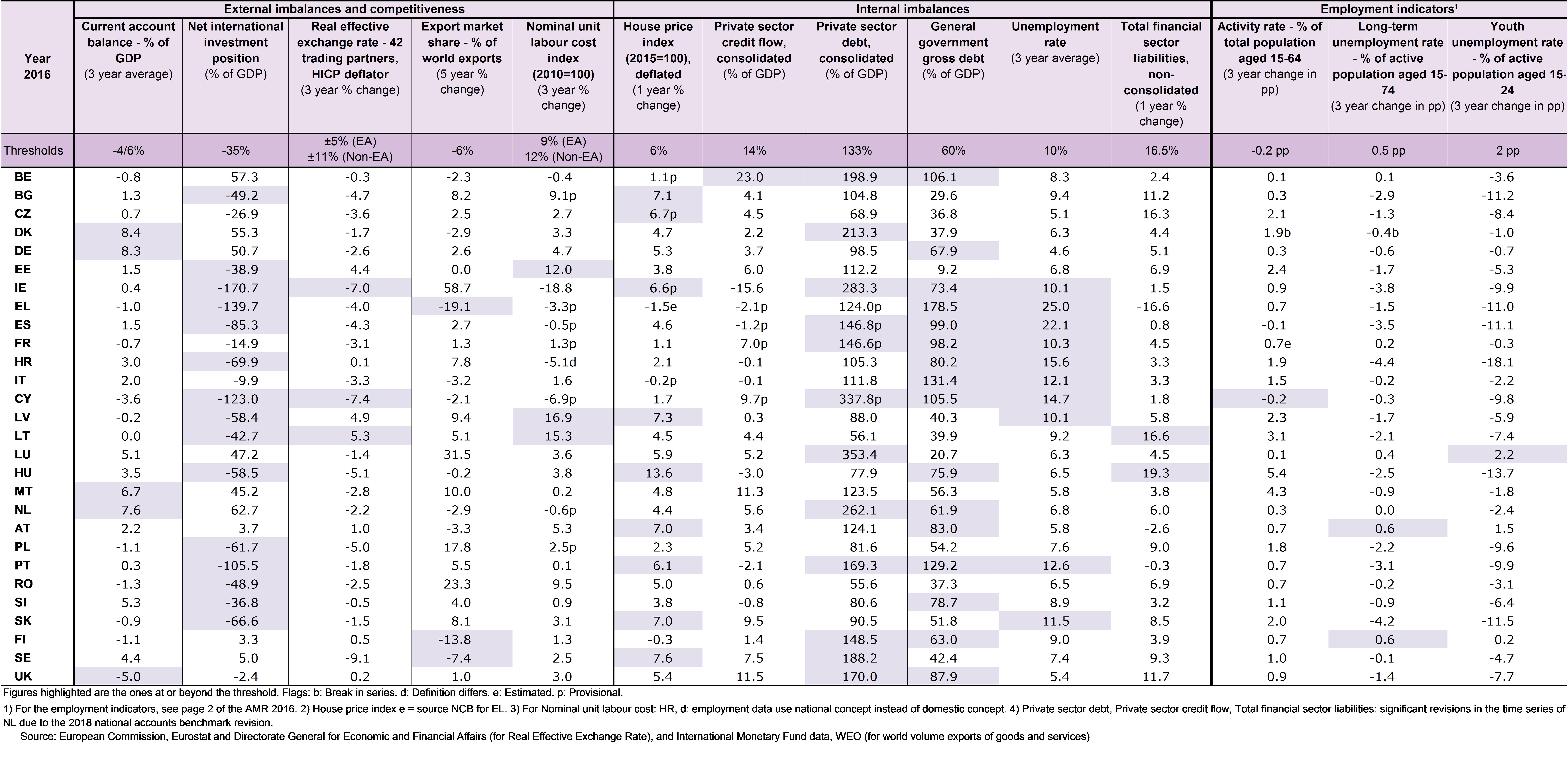
Table 1.2: MIP Scoreboard 2016
Table 1.3: MIP Scoreboard 2015
Table 1.4: MIP Scoreboard 2014
Table 1.5: MIP Scoreboard 2013
Table 1.6: MIP Scoreboard 2012
Table 1.7: MIP Scoreboard 2011
Table 1.8: MIP Scoreboard 2010
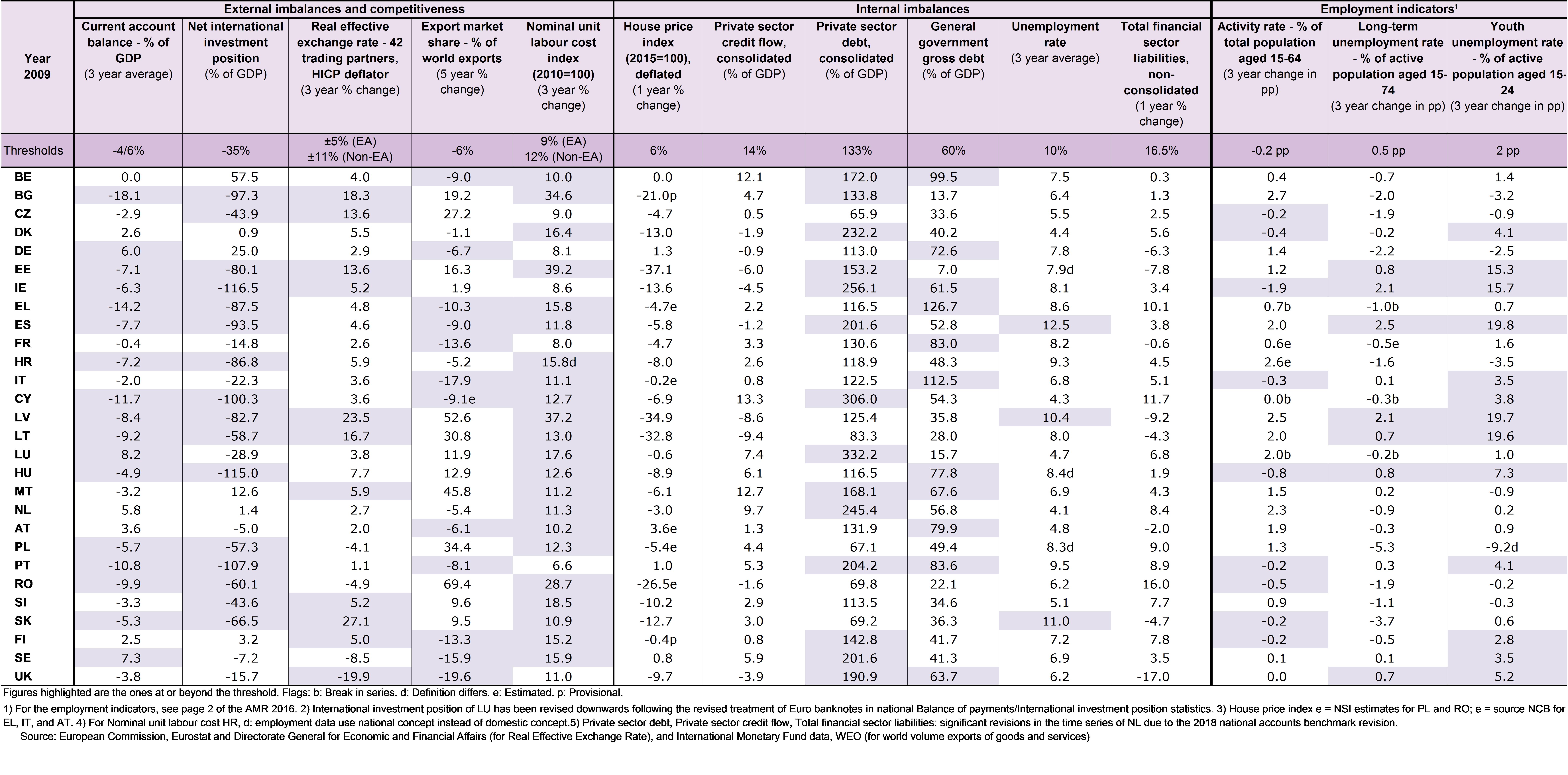
Table 1.9: MIP Scoreboard 2009
Table 1.10: MIP Scoreboard 2008
Chapter 2: Tables by year - Auxiliary indicators used in the economic reading of the MIP scoreboard
Table 2.1: Auxiliary indicators, 2017
Table 2.1 (continued): Auxiliary indicators, 2017
Table 2.2: Auxiliary indicators, 2016
Table 2.2 (continued): Auxiliary indicators, 2016
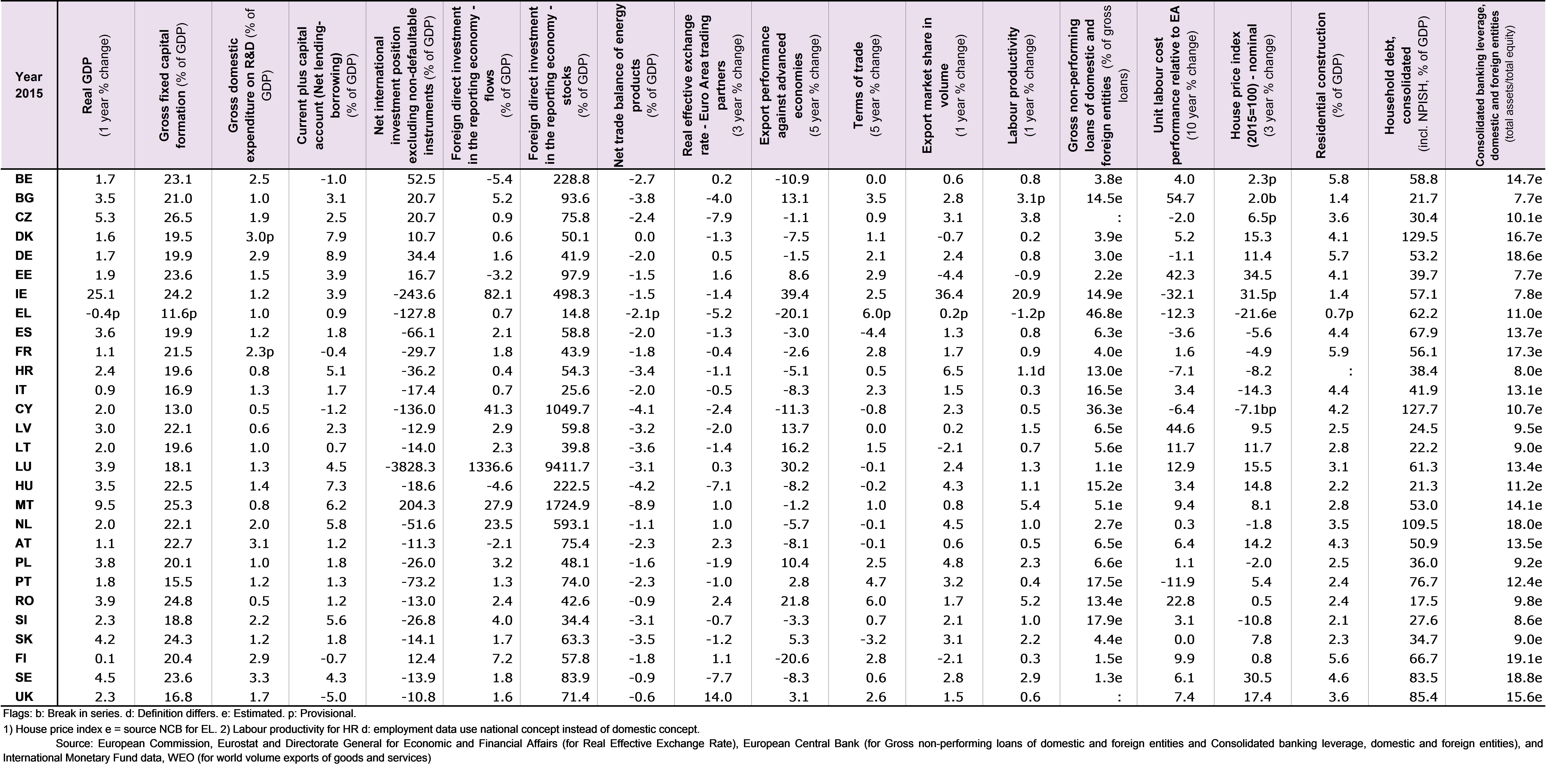
Table 2.3: Auxiliary indicators, 2015
Table 2.3 (continued): Auxiliary indicators, 2015
Table 2.4: Auxiliary indicators, 2014
Table 2.4 (continued): Auxiliary indicators, 2014
Table 2.5: Auxiliary indicators, 2013
Table 2.5 (continued): Auxiliary indicators, 2013
Table 2.6: Auxiliary indicators, 2012
Table 2.6 (continued): Auxiliary indicators, 2012
Table 2.7: Auxiliary indicators, 2011
Table 2.7 (continued): Auxiliary indicators, 2011
Table 2.8: Auxiliary indicators, 2010
Table 2.8 (continued): Auxiliary indicators, 2010
Table 2.9: Auxiliary indicators, 2009
Table 2.9 (continued): Auxiliary indicators, 2009
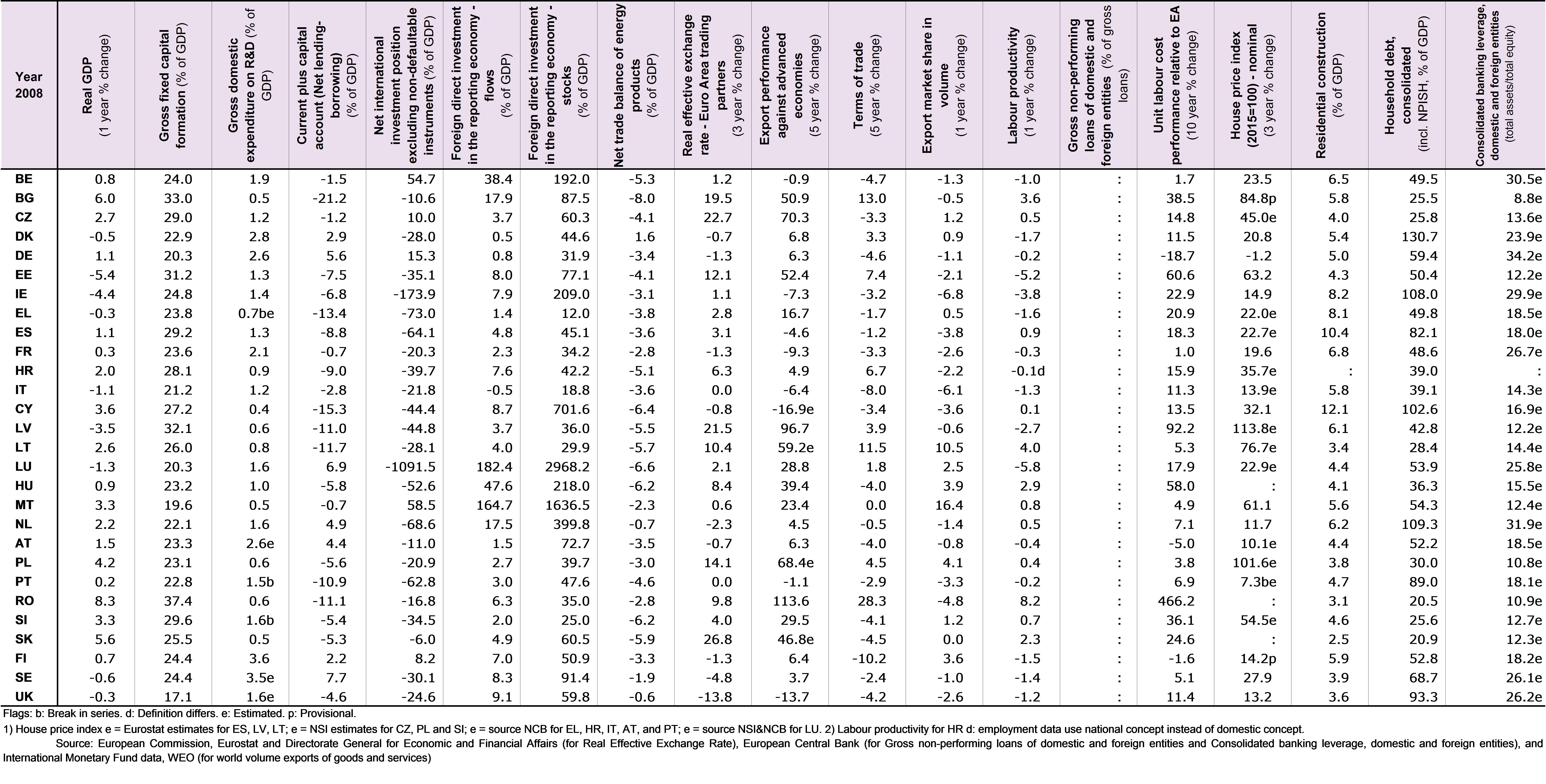
Table 2.10: Auxiliary indicators, 2008
43
Table 2.10 (continued): Auxiliary indicators, 2008
44
Chapter 3: Tables by indicator
45
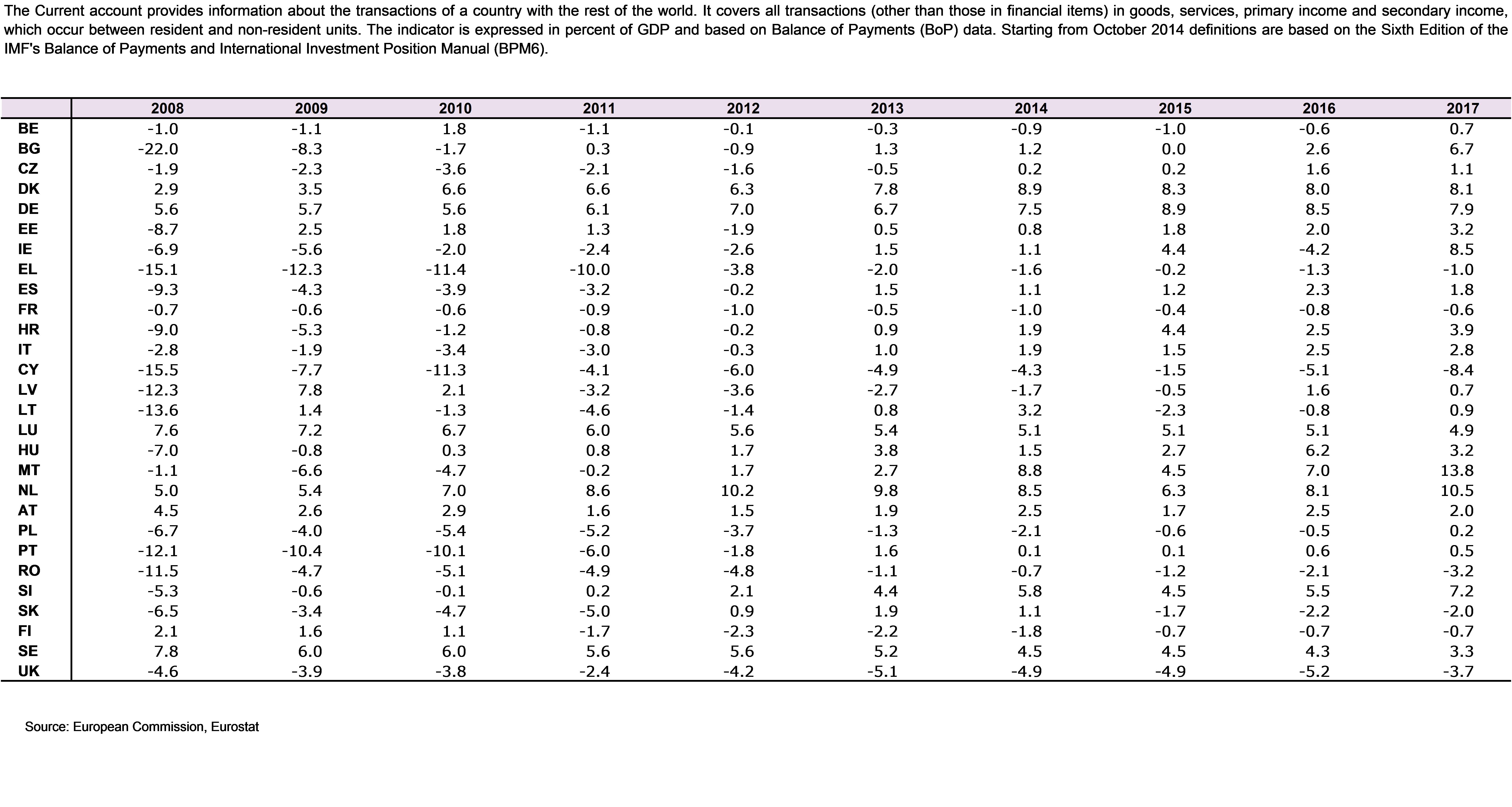
Table 3.1: Current account balance, % of GDP (3 year average)
45
Table 3.2: Current account balance (% of GDP)
46
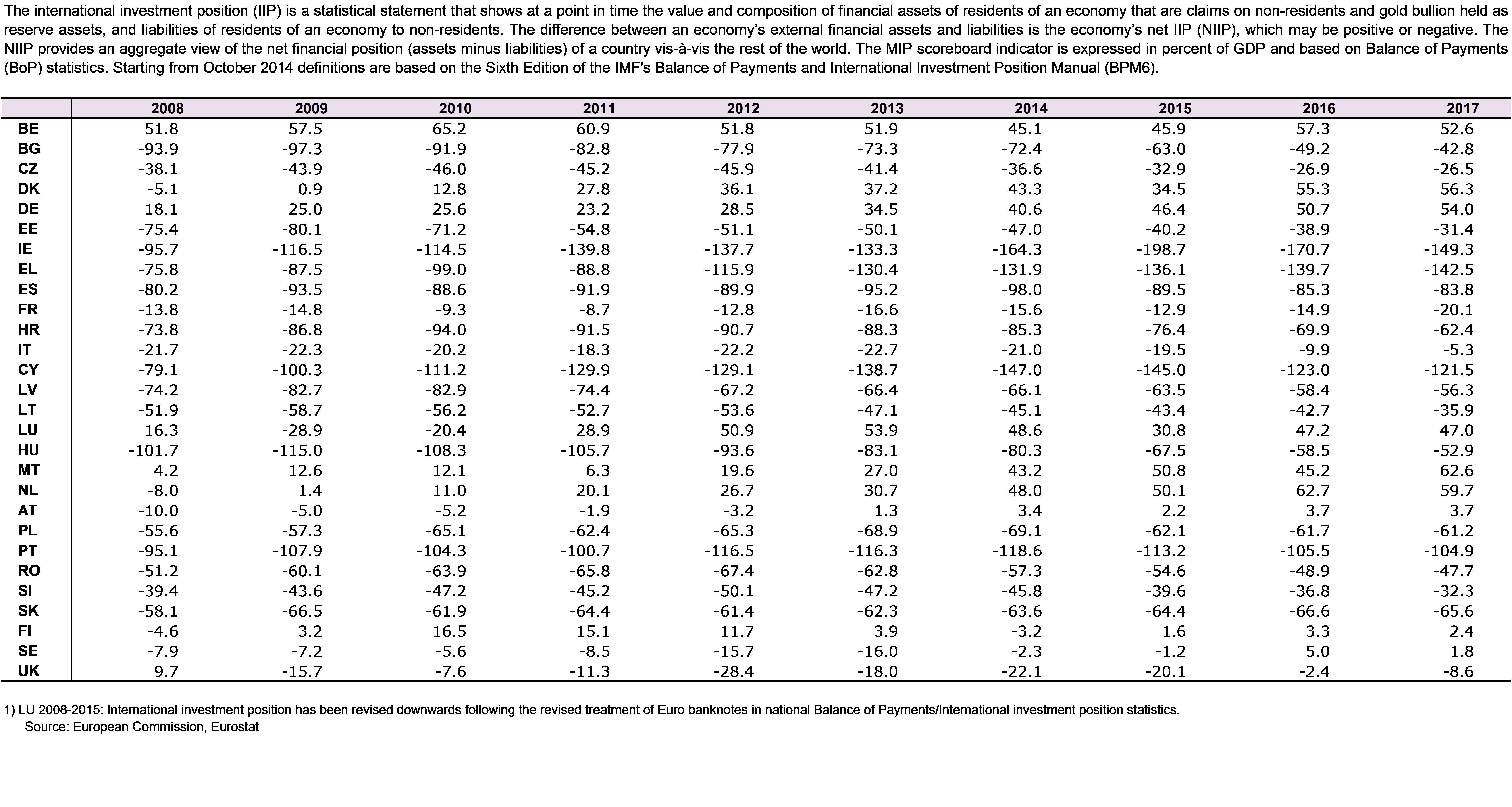
Table 3.3: Net International Investment Position (% of GDP)
47
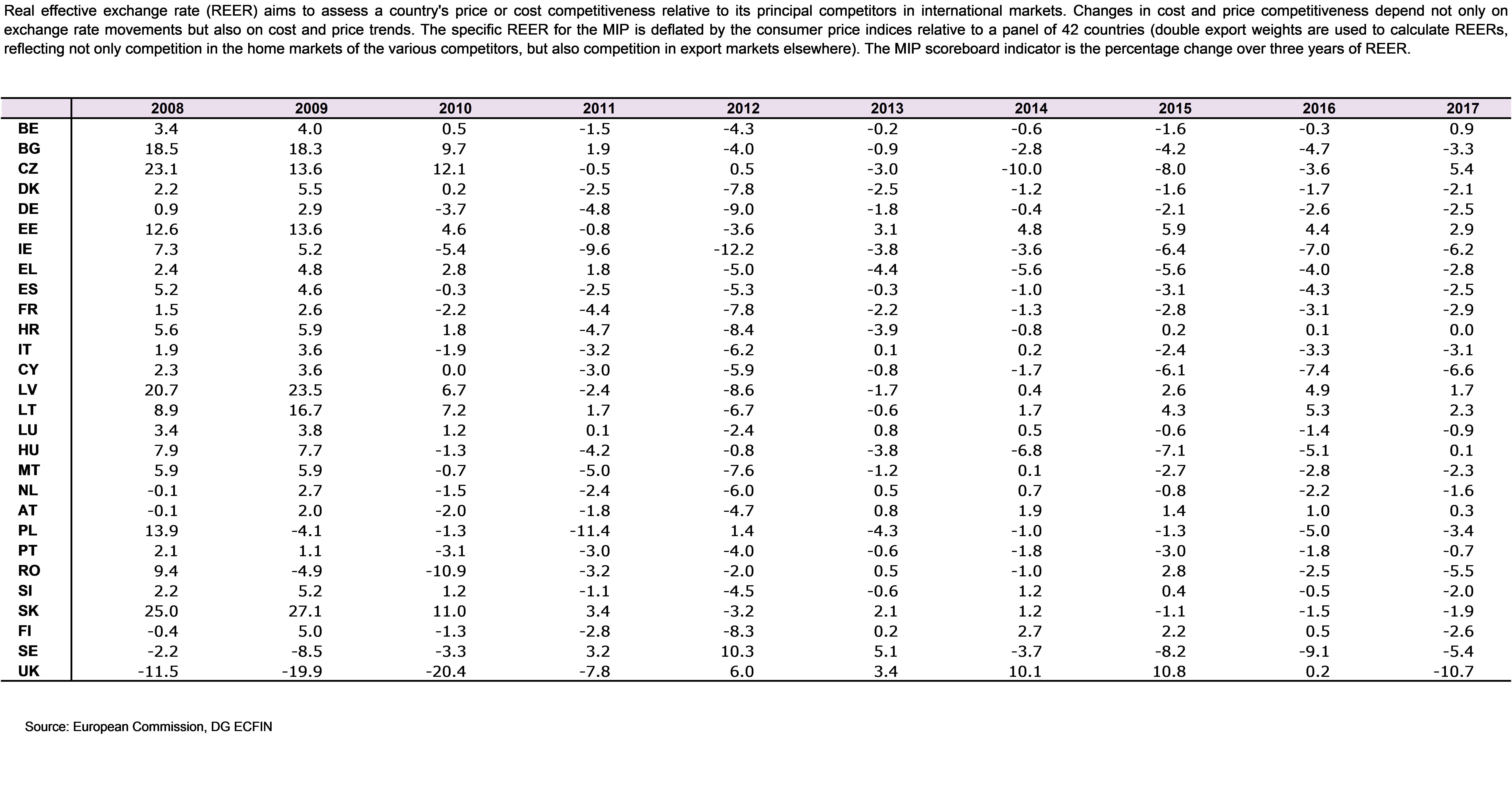
Table 3.4: Real effective exchange rate - 42 trading partners, HICP deflator (3 year % change)
48
Table 3.5: Real effective exchange rate - 42 trading partners, HICP deflator (1 year % change)
49
Table 3.6: Export market share - % of world exports (5 year % change)
50
Table 3.7: Export market share - % of world exports (1 year % change)
51
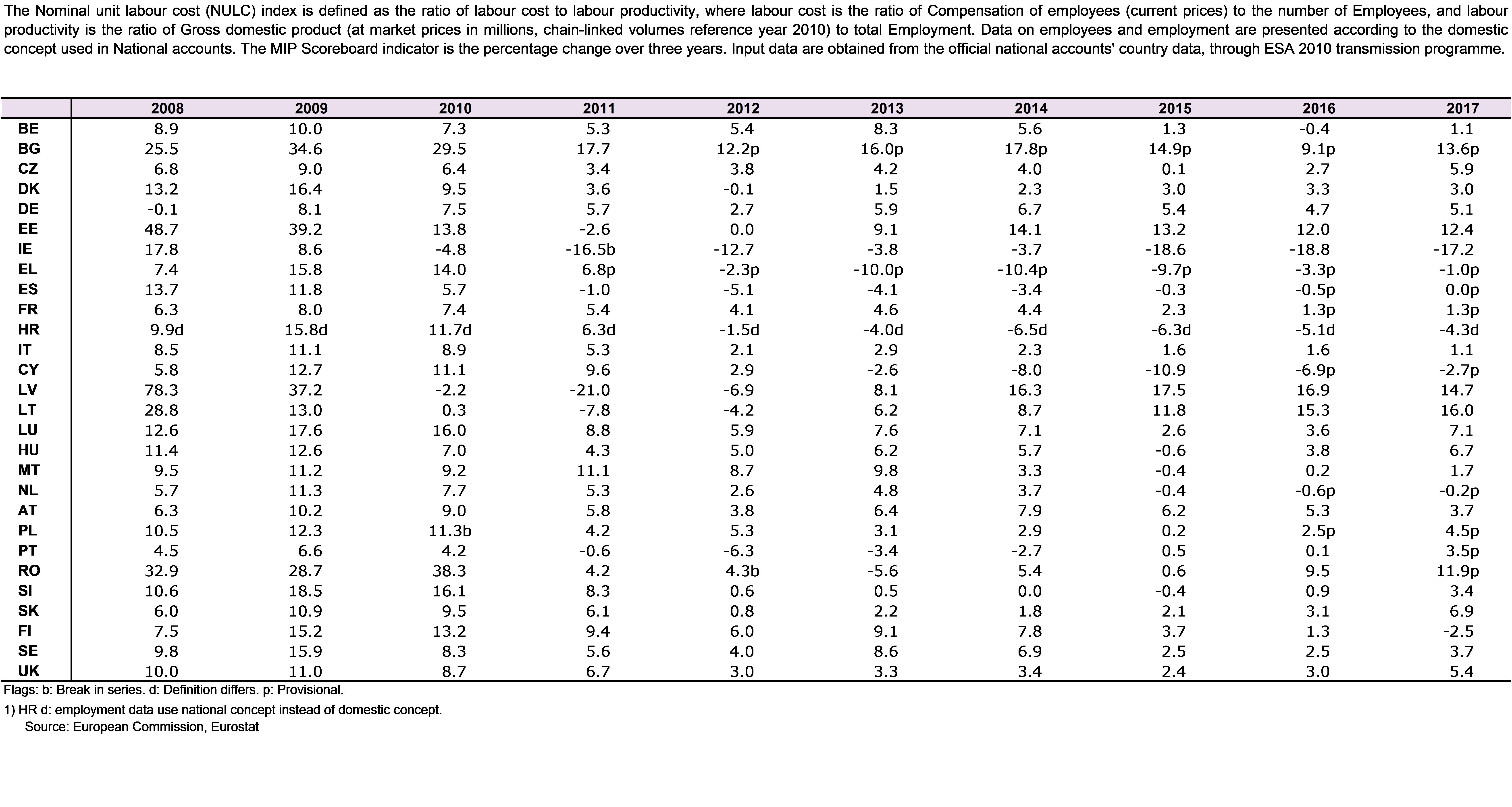
Table 3.8: Nominal unit labour cost index, 2010=100 (3 year % change)
52
Table 3.9: Nominal unit labour cost index, 2010=100 (1 year % change)
53
Table 3.10: House price index (2015=100), deflated (1 year % change)
54
Table 3.11: Private sector credit flow, consolidated (% of GDP)
55
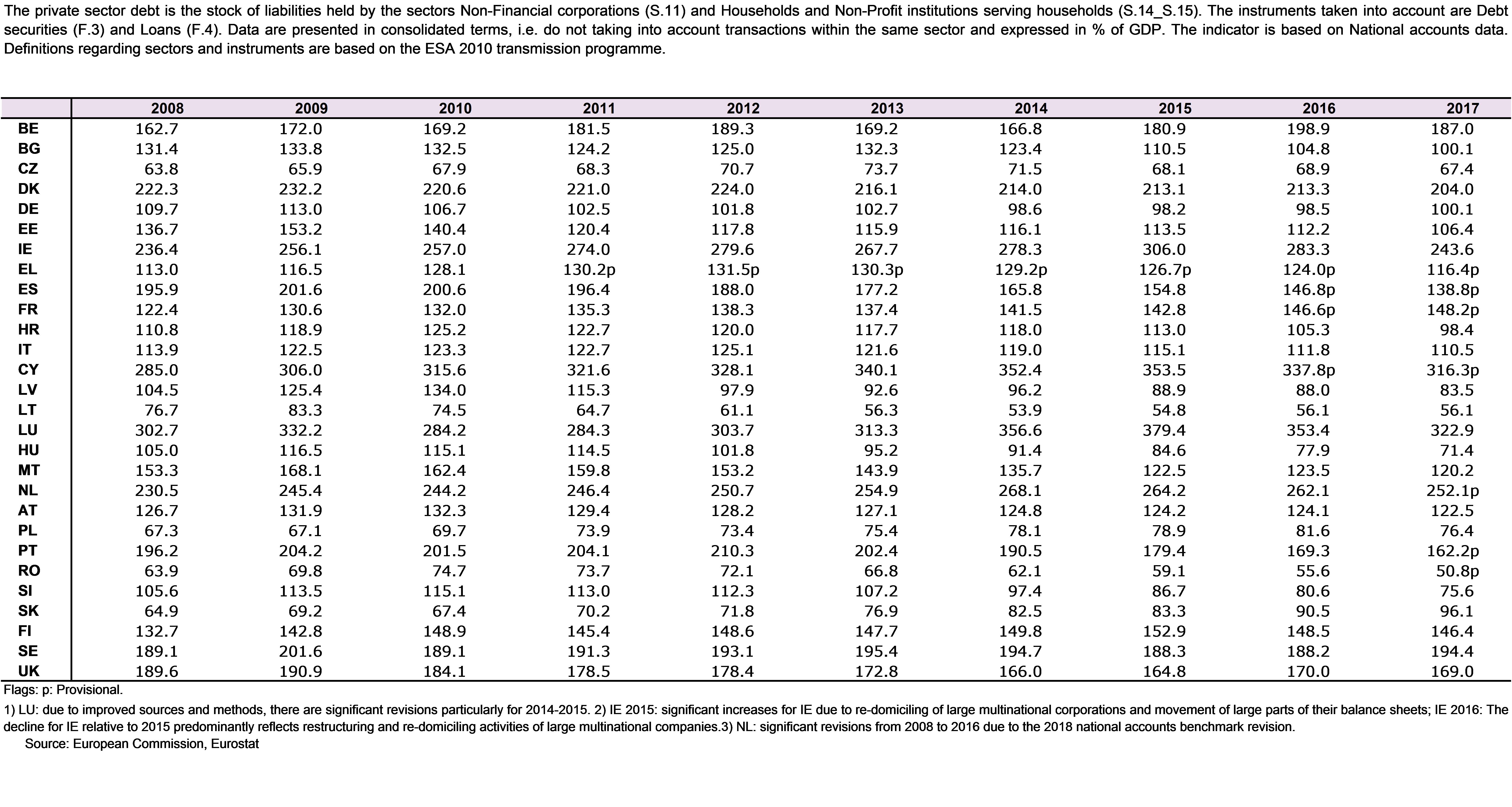
Table 3.12: Private sector debt, consolidated (% of GDP)
56
Table 3.13: General government gross debt (% of GDP)
57
Table 3.14: Unemployment rate (3 year average)
58
Table 3.15: Unemployment rate (%)
59
Table 3.16: Total financial sector liabilities, non-consolidated (1 year % change)
60
Table 3.17: Total financial sector liabilities, non-consolidated (Millions NC)
61
Table 3.18: Activity rate - % of total population aged 15-64 (3 year change in pp)
62
Table 3.19: Activity rate - % of total population aged 15-64
63
Table 3.20: Long-term unemployment rate - % of active population aged 15-74 (3 year change in pp)
64
Table 3.21: Long-term unemployment rate - % of active population aged 15-74
65
Table 3.22: Youth unemployment rate - % of active population aged 15-24 (3 year change in pp)
66
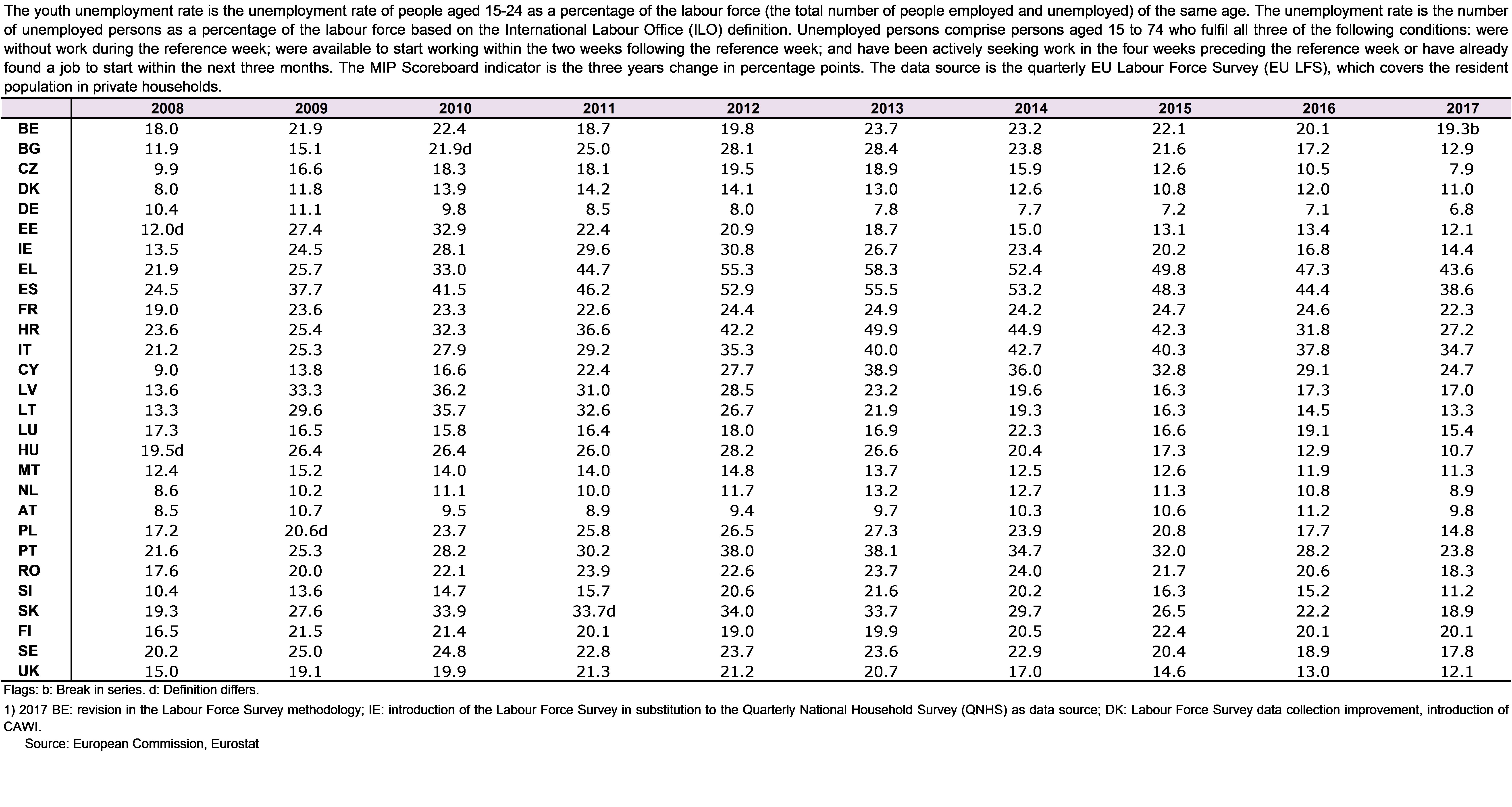
Table 3.23: Youth unemployment rate - % of active population aged 15-24
67
Table 3.24: Real GDP (1 year % change)
68
Table 3.25: Gross fixed capital formation (% of GDP)
69
Table 3.26: Gross domestic expenditure on R&D (% of GDP)
70
Table 3.27: Current plus capital account - Net lending-borrowing (% of GDP)
71
Table 3.28: Net international investment position excluding non-defaultable instruments (% of GDP)
72
Table 3.29: Foreign direct investment in the reporting economy - flows (% of GDP)
73
Table 3.30: Foreign direct investment in the reporting economy - stocks (% of GDP)
74
Table 3.31: Net trade balance of energy products (% of GDP)
75
Table 3.32: Real effective exchange rate - Euro Area trading partners (3 year % change)
76
Table 3.33: Export performance against advanced economies (5 year % change)
77
Table 3.34: Terms of trade (5 year % change)
78
Table 3.35: Export market share, volume (1 year % change)
79
Table 3.36: Real labour productivity (1 year % change)
80
Table 3.37: Gross non-performing loans, domestic and foreign entities (% of gross loans)
81
Table 3.38: Unit labour cost performance relative to EA (10 year % change)
82
Table 3.39: House price index (2015=100) - nominal (3 year % change)
83
Table 3.40: Residential construction (% of GDP)
84
Table 3.41: Household debt, consolidated (incl. Non-profit institutions serving households, % of GDP)
85
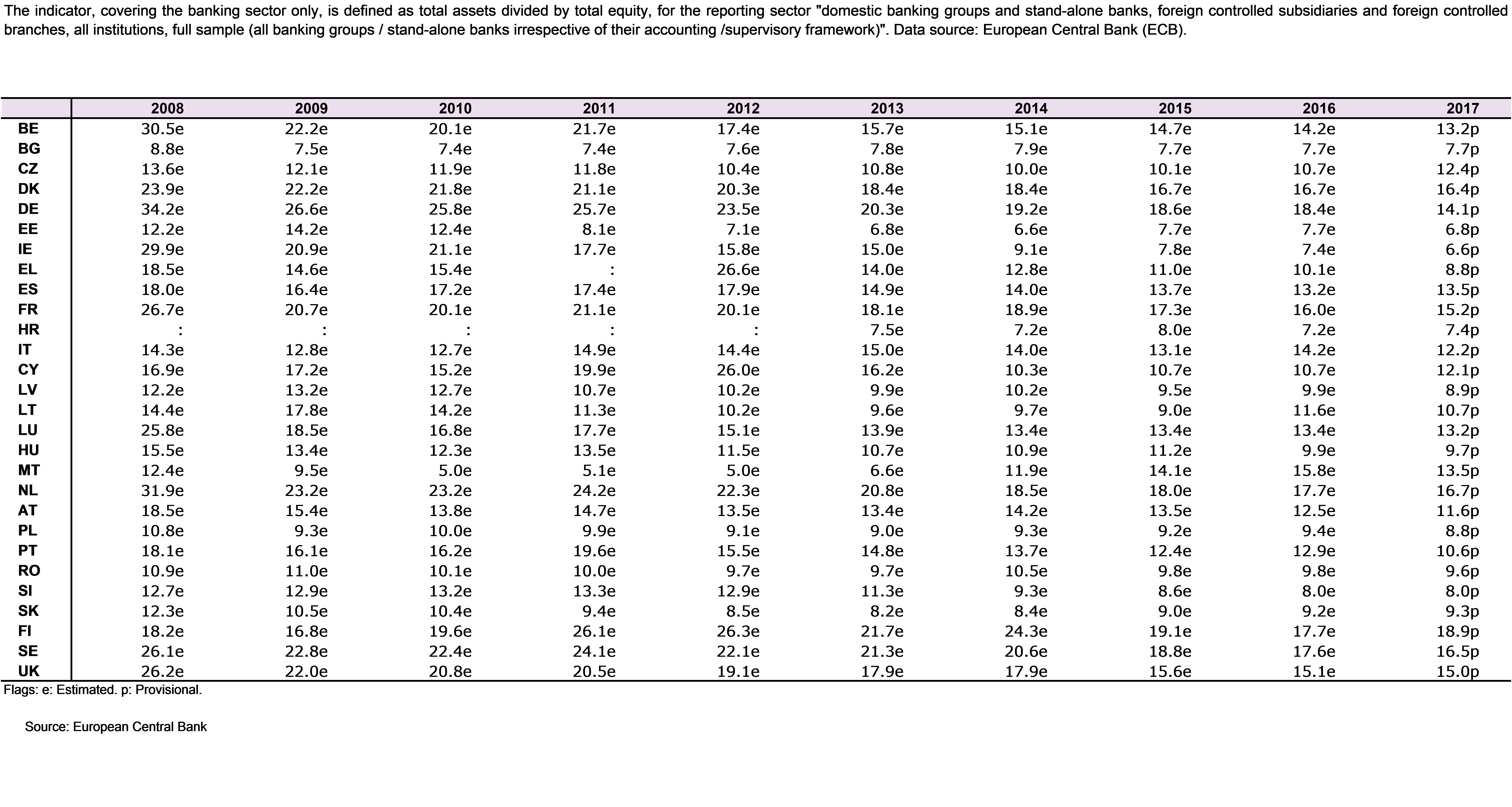
Table 3.42: Consolidated banking leverage, domestic and foreign entities (asset-to-equity multiple)
86
Table 3.43: Employment rate (1 year % change)
87
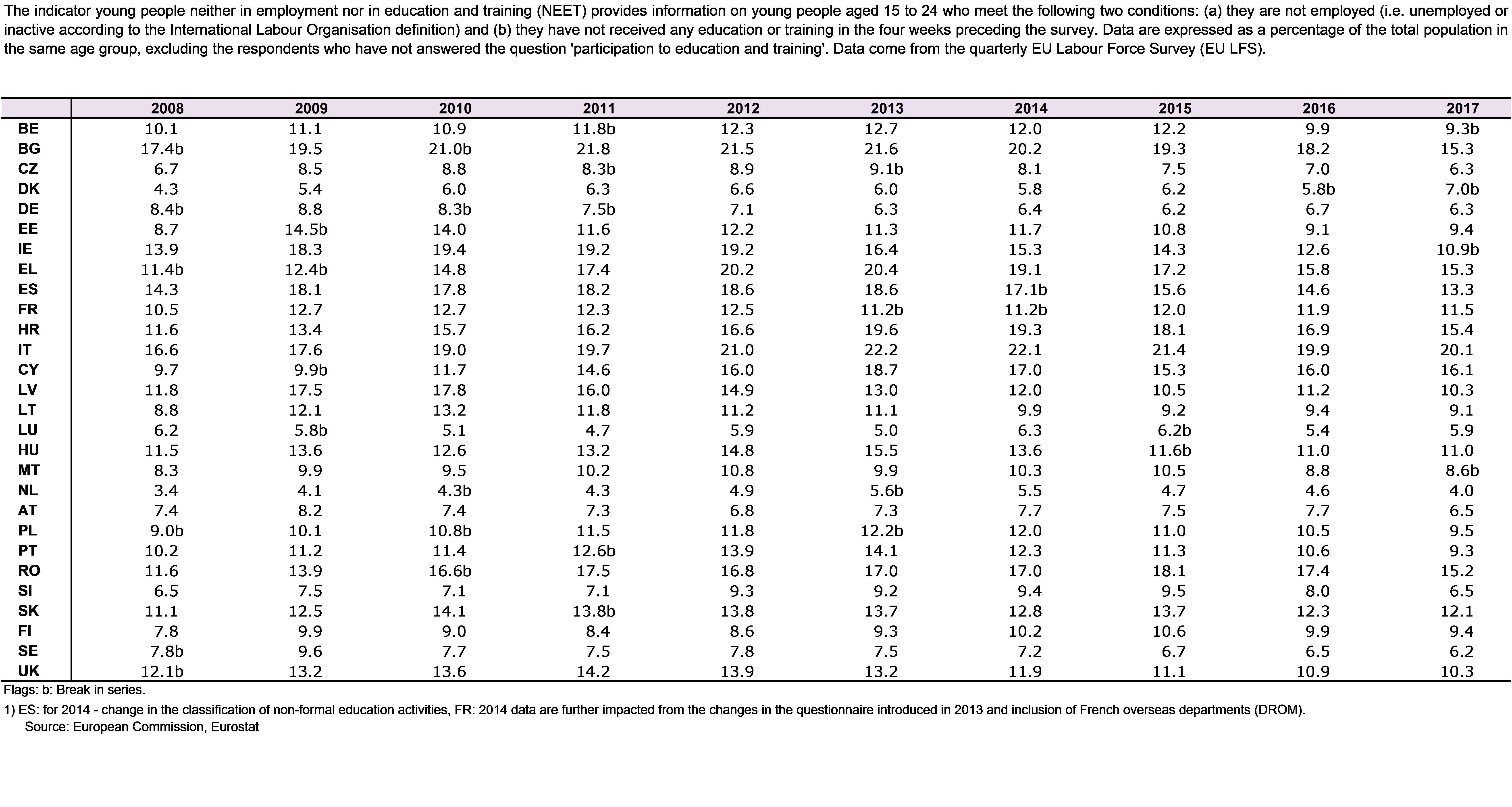
Table 3.44: Young people neither in employment nor in education and training - % of total population aged 15-24
88
Table 3.45: People at risk of poverty or social exclusion - % of total population
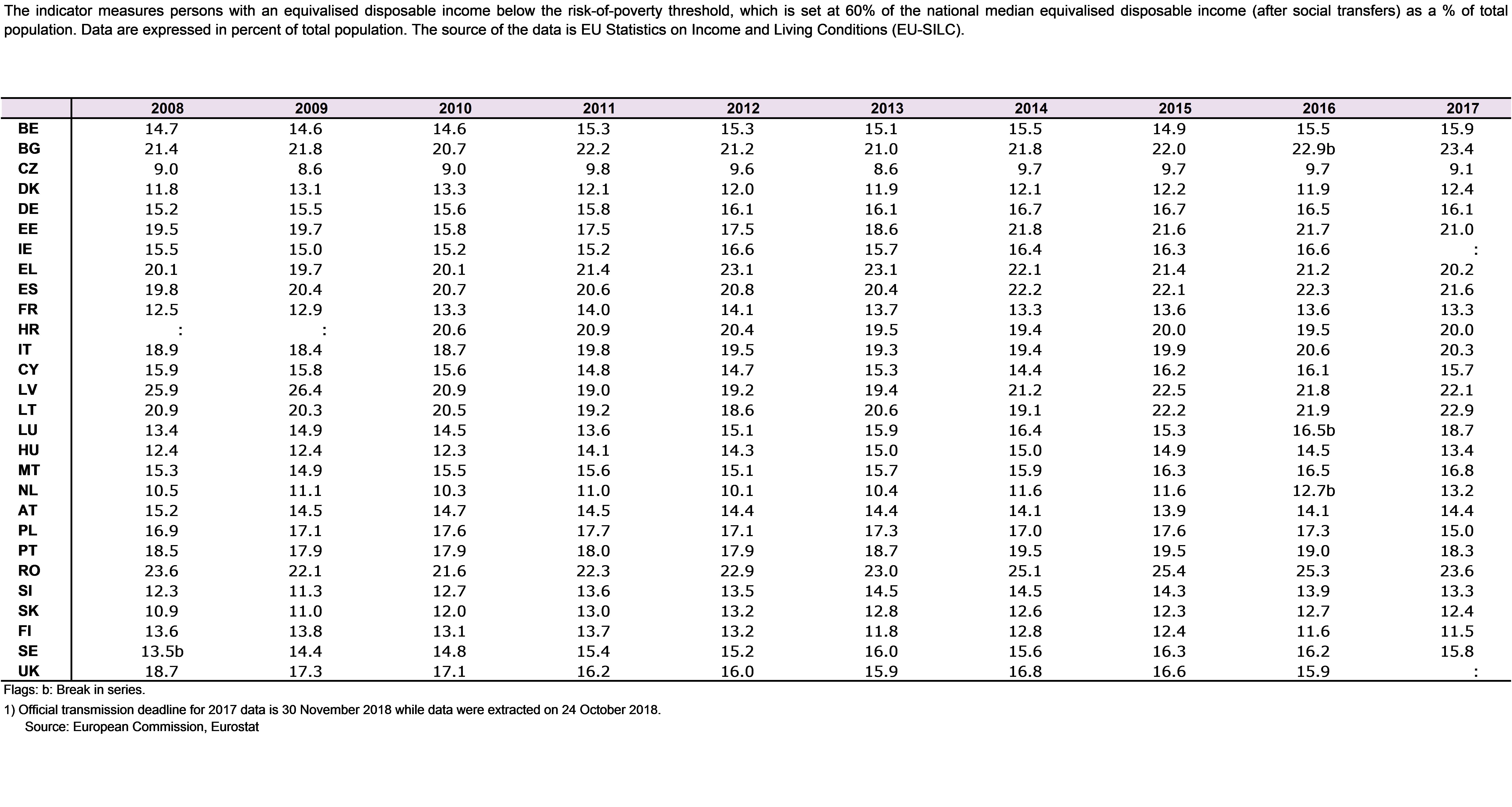
89
Table 3.46: People at risk of poverty after social transfers - % of total population
90
Table 3.47: Severely materially deprived people - % of total population
91
Table 3.48: People living in households with very low work intensity - % of total population aged 0-59
92
Chapter 4: Tables by Member State - Headline indicators
93
Table 4.1: The MIP scoreboard for Belgium
93
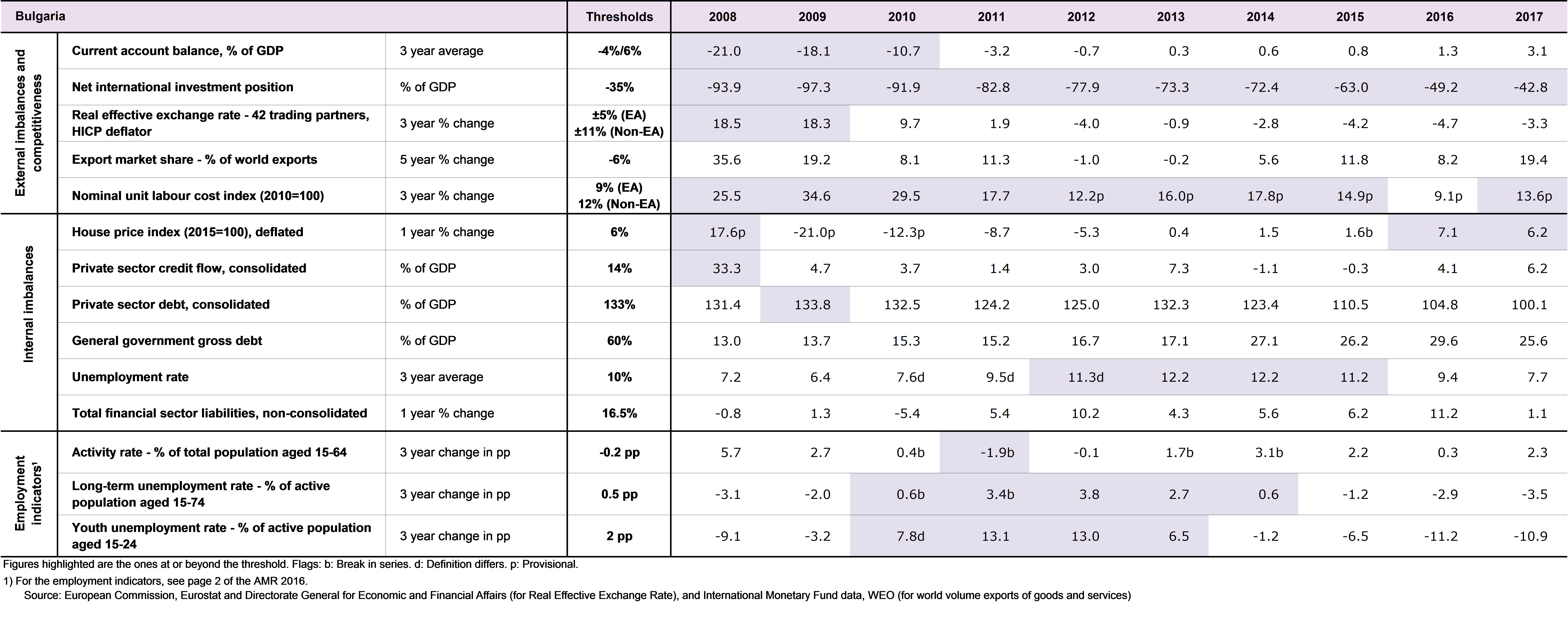
Table 4.2: The MIP scoreboard for Bulgaria
94
Table 4.3: The MIP scoreboard for Czechia
95
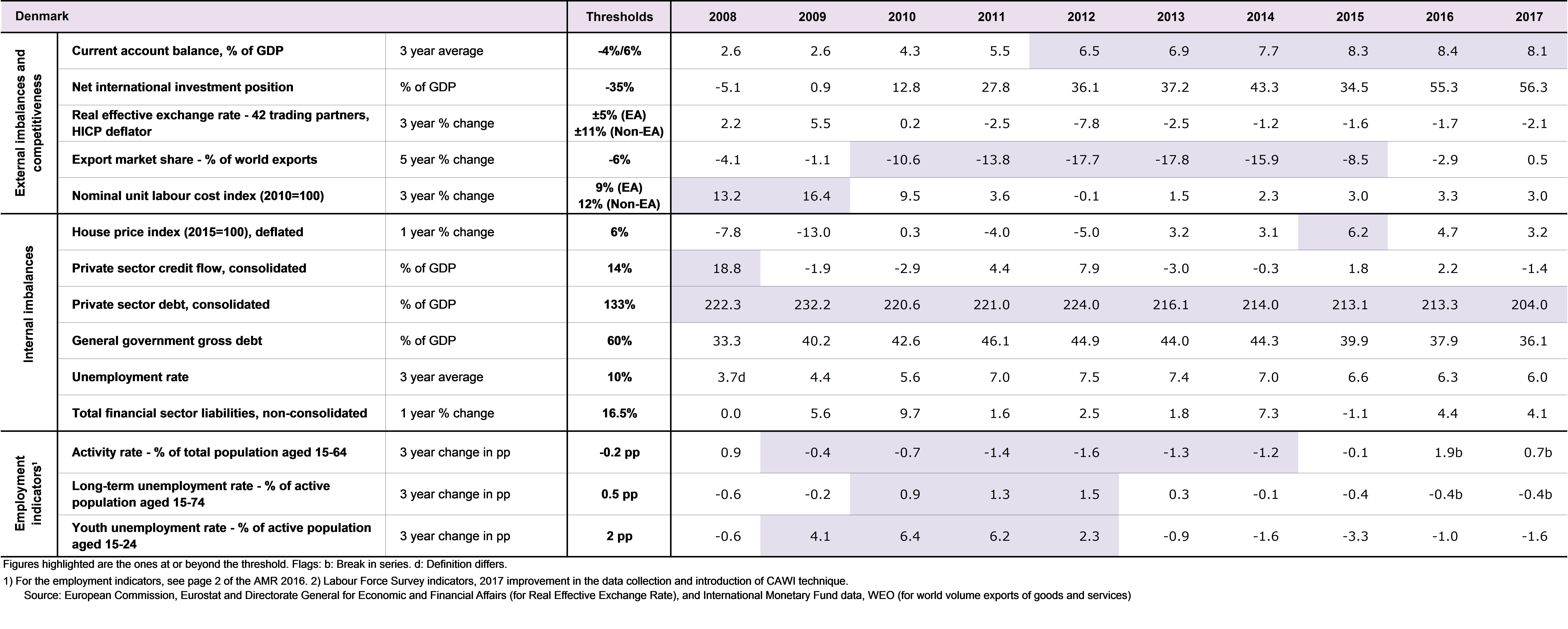
Table 4.4: The MIP scoreboard for Denmark
96
Table 4.5: The MIP scoreboard for Germany
97
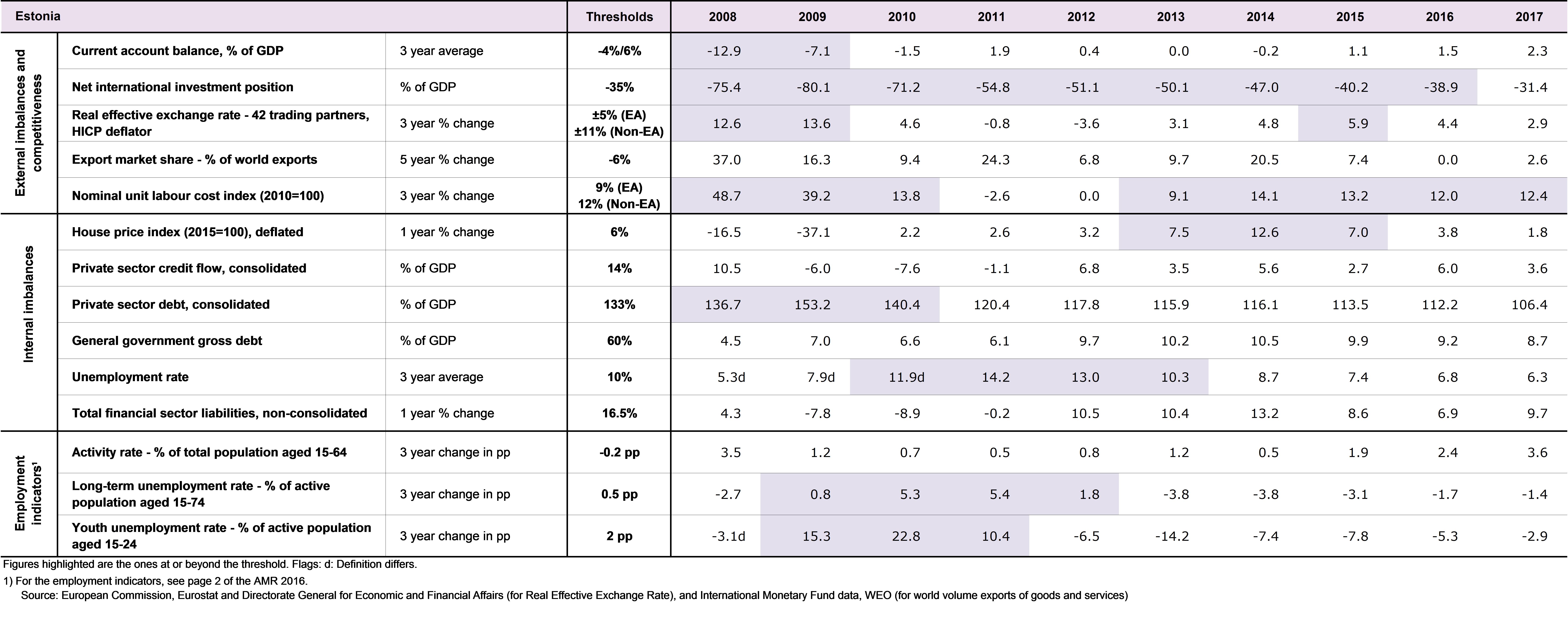
Table 4.6: The MIP scoreboard for Estonia
98
Table 4.7: The MIP scoreboard for Ireland
99
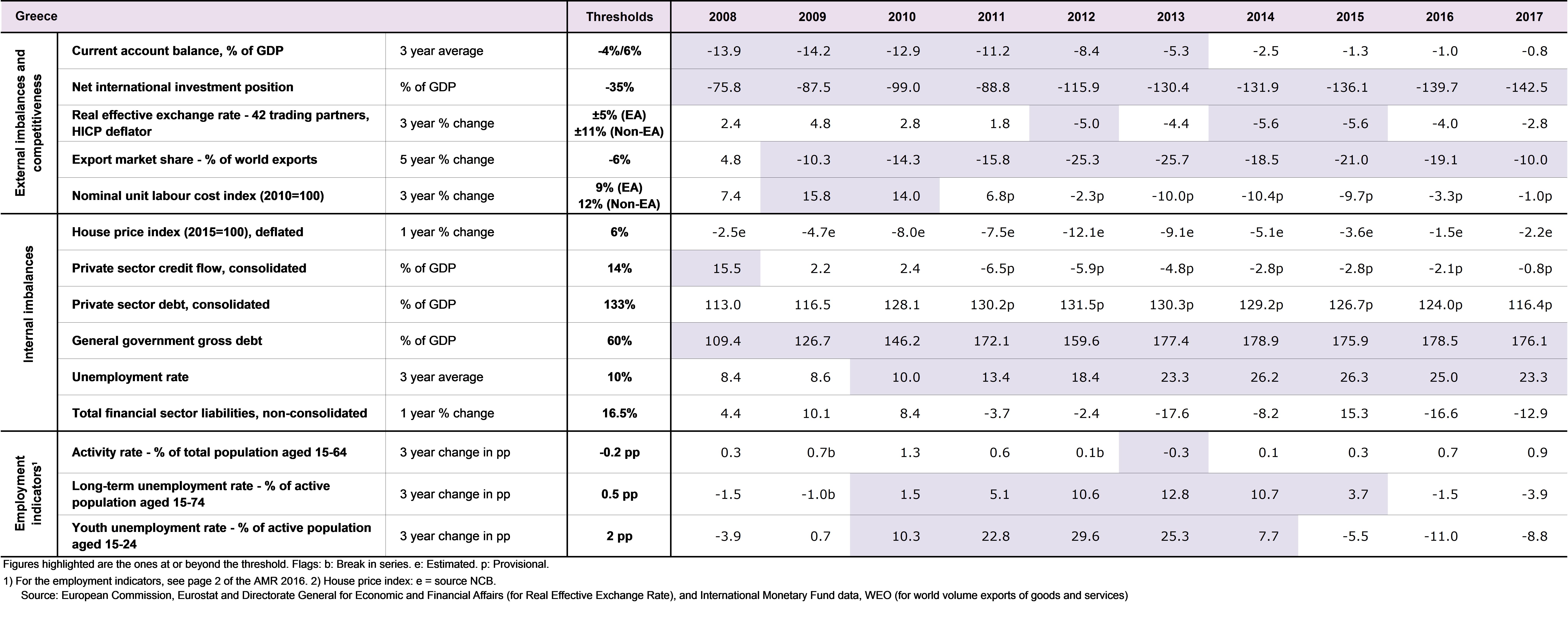
Table 4.8: The MIP scoreboard for Greece
100
Table 4.9: The MIP scoreboard for Spain
101
Table 4.10: The MIP scoreboard for France
102
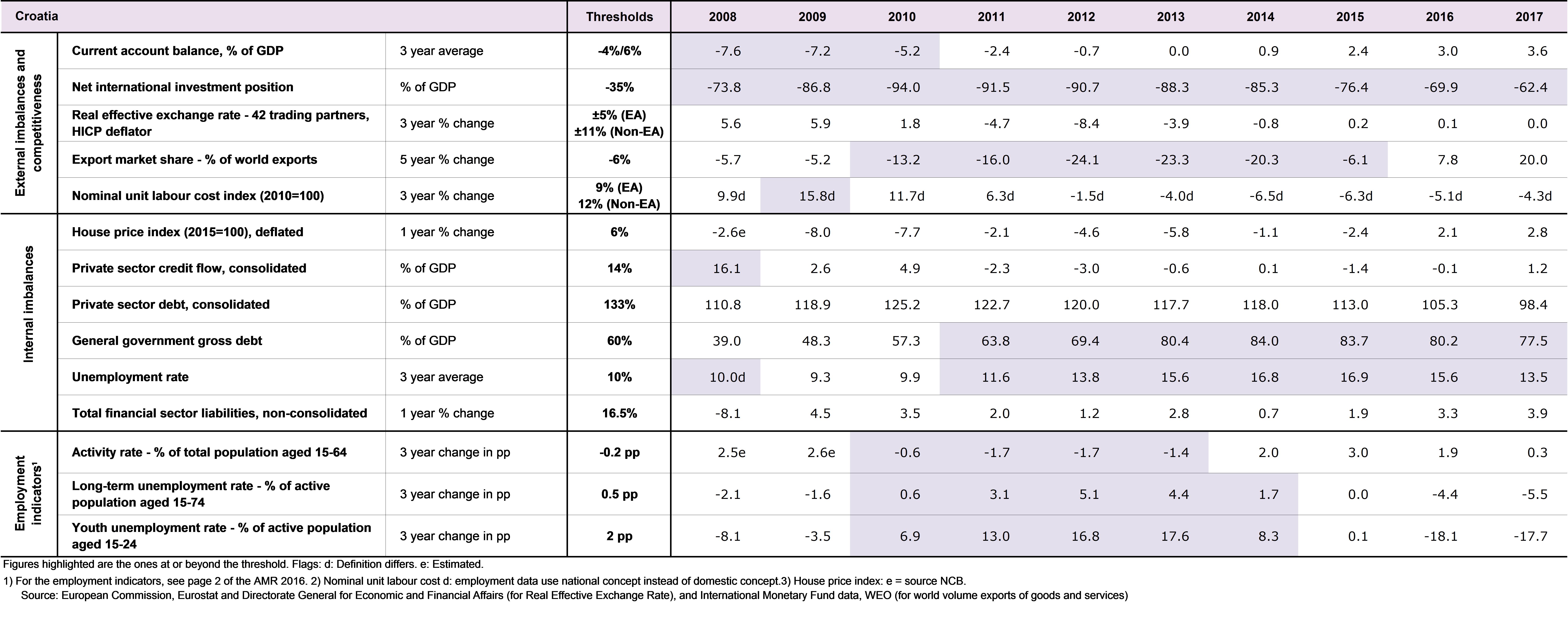
Table 4.11: The MIP scoreboard for Croatia
103
Table 4.12: The MIP scoreboard for Italy
104
Table 4.13: The MIP scoreboard for Cyprus
105
Table 4.14: The MIP scoreboard for Latvia
106
Table 4.15: The MIP scoreboard for Lithuania
107
Table 4.16: The MIP scoreboard for Luxembourg
108
Table 4.17: The MIP scoreboard for Hungary
109
Table 4.18: The MIP scoreboard for Malta
110
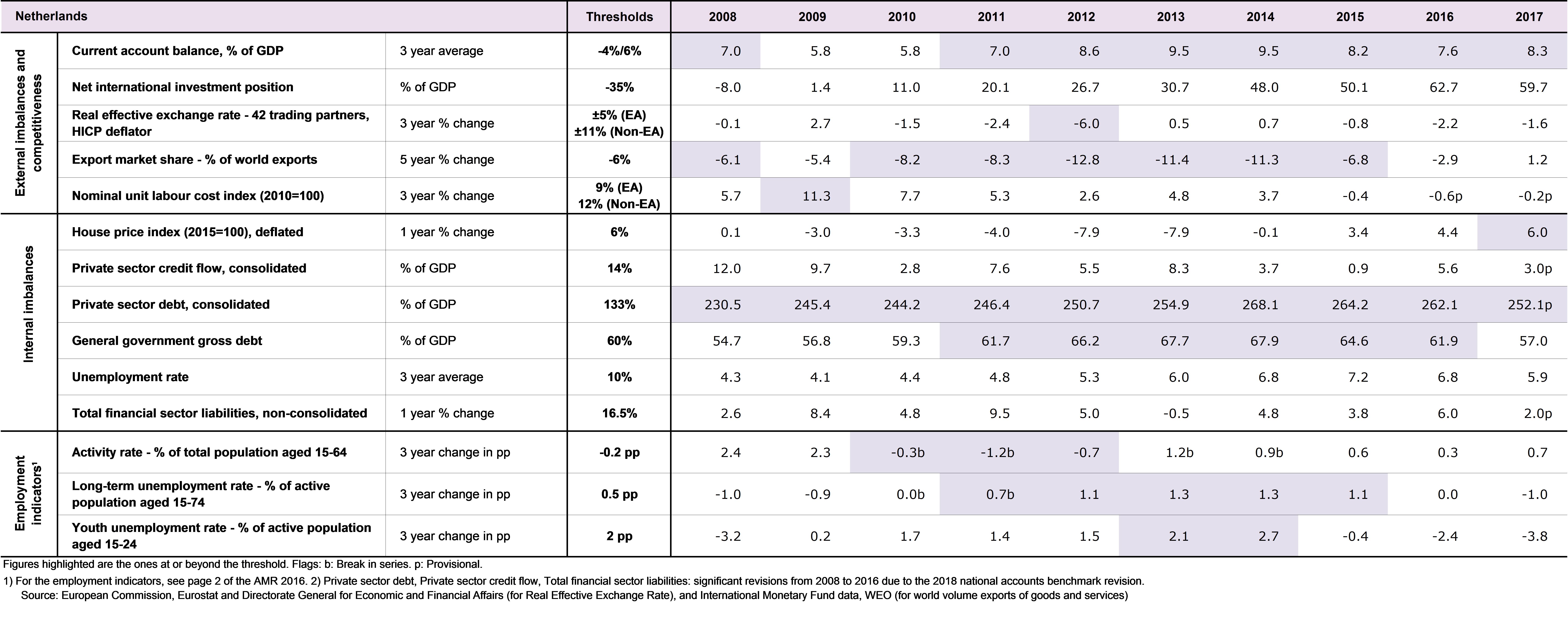
Table 4.19: The MIP scoreboard for Netherlands
111
Table 4.20: The MIP scoreboard for Austria
112
Table 4.21: The MIP scoreboard for Poland
113
Table 4.22: The MIP scoreboard for Portugal
114
Table 4.23: The MIP scoreboard for Romania
115
Table 4.24: The MIP scoreboard for Slovenia
116
Table 4.25: The MIP scoreboard for Slovakia
117
Table 4.26: The MIP scoreboard for Finland
118
Table 4.27: The MIP scoreboard for Sweden
119
Table 4.28: The MIP scoreboard for United Kingdom
120
Chapter 5: Tables by Member State - Auxiliary indicators used in the economic reading of the MIP scoreboard
121
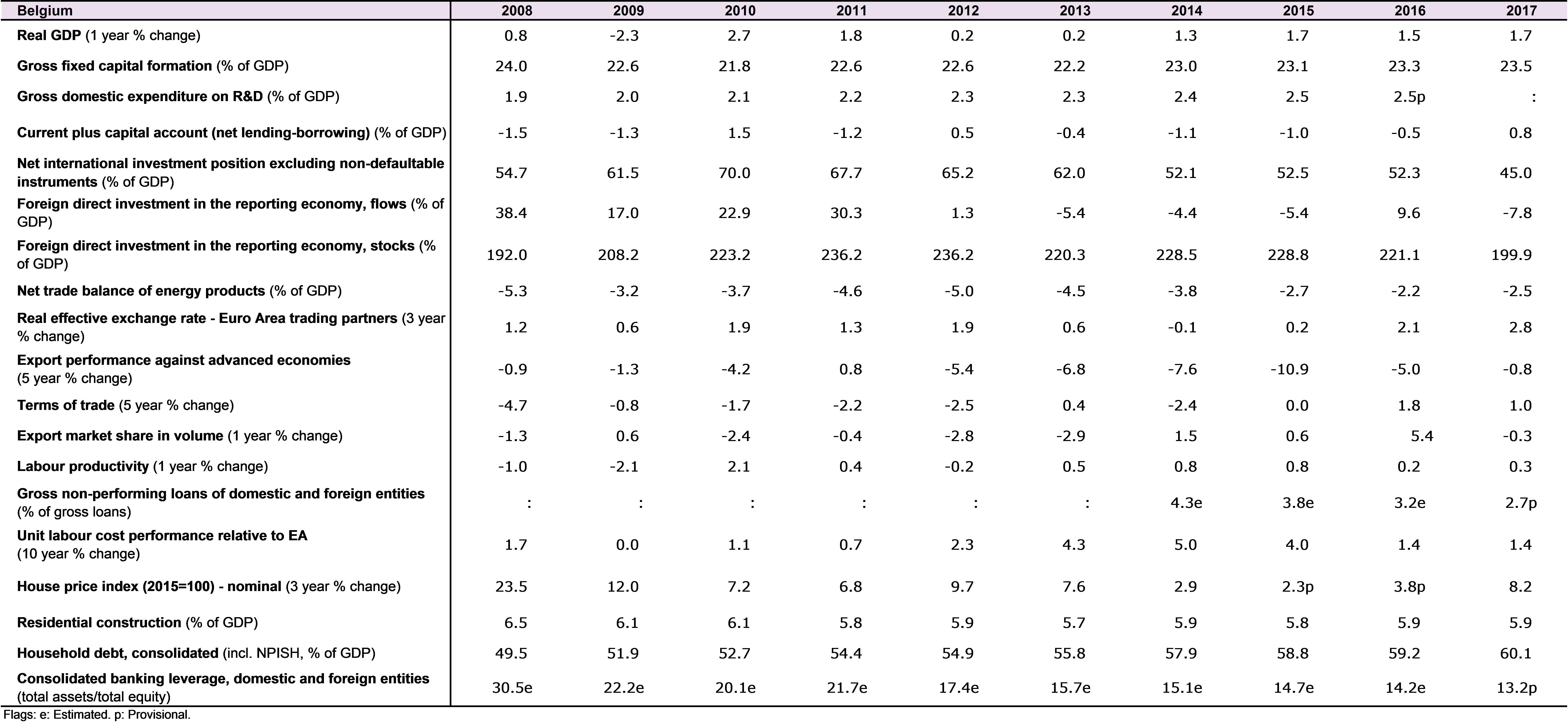
Table 5.1: Auxiliary indicators for Belgium
121
Table 5.1 (continued): Auxiliary indicators for Belgium
122
Table 5.2: Auxiliary indicators for Bulgaria
123
Table 5.2 (continued): Auxiliary indicators for Bulgaria
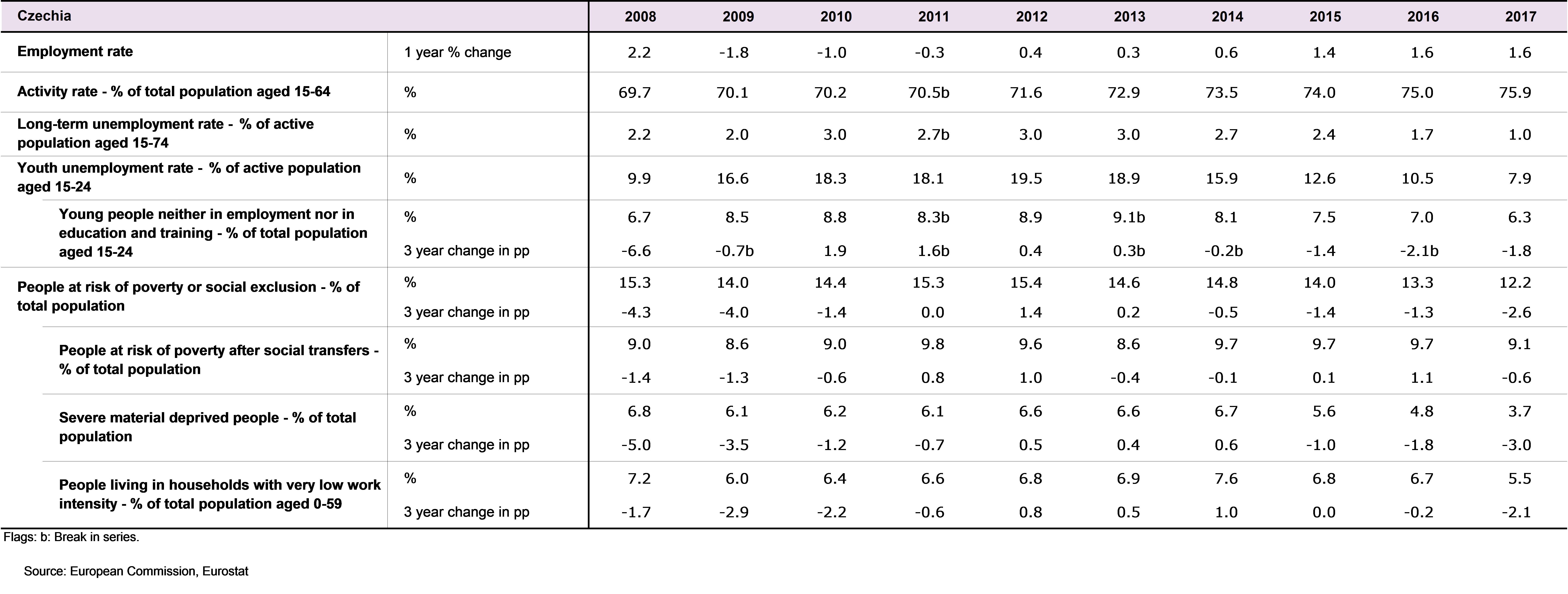
124
Table 5.3: Auxiliary indicators for Czechia
125
Table 5.3 (continued): Auxiliary indicators for Czechia
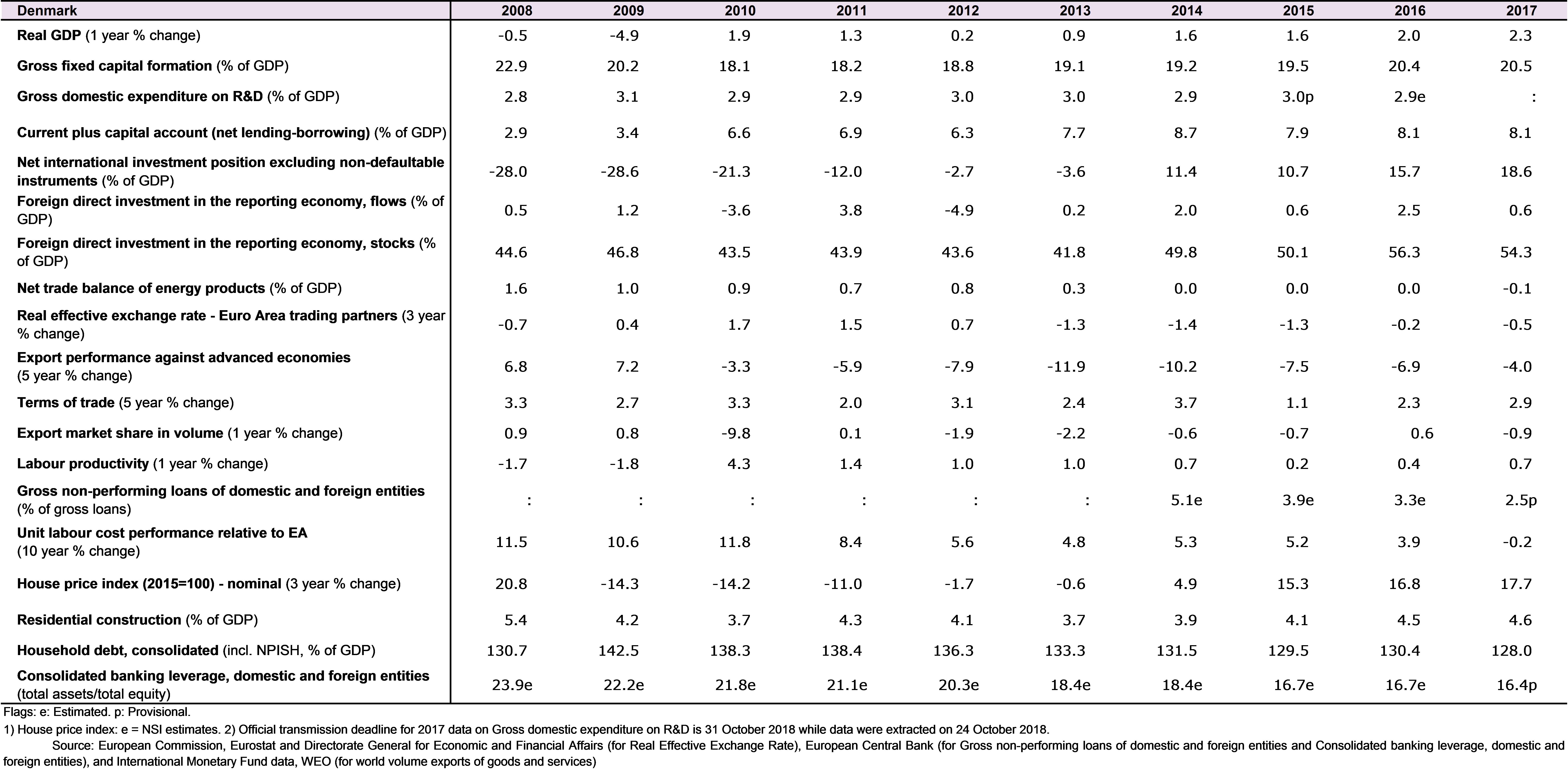
126
Table 5.4: Auxiliary indicators for Denmark
127
Table 5.4 (continued): Auxiliary indicators for Denmark
128
Table 5.5: Auxiliary indicators for Germany
129
Table 5.5 (continued): Auxiliary indicators for Germany
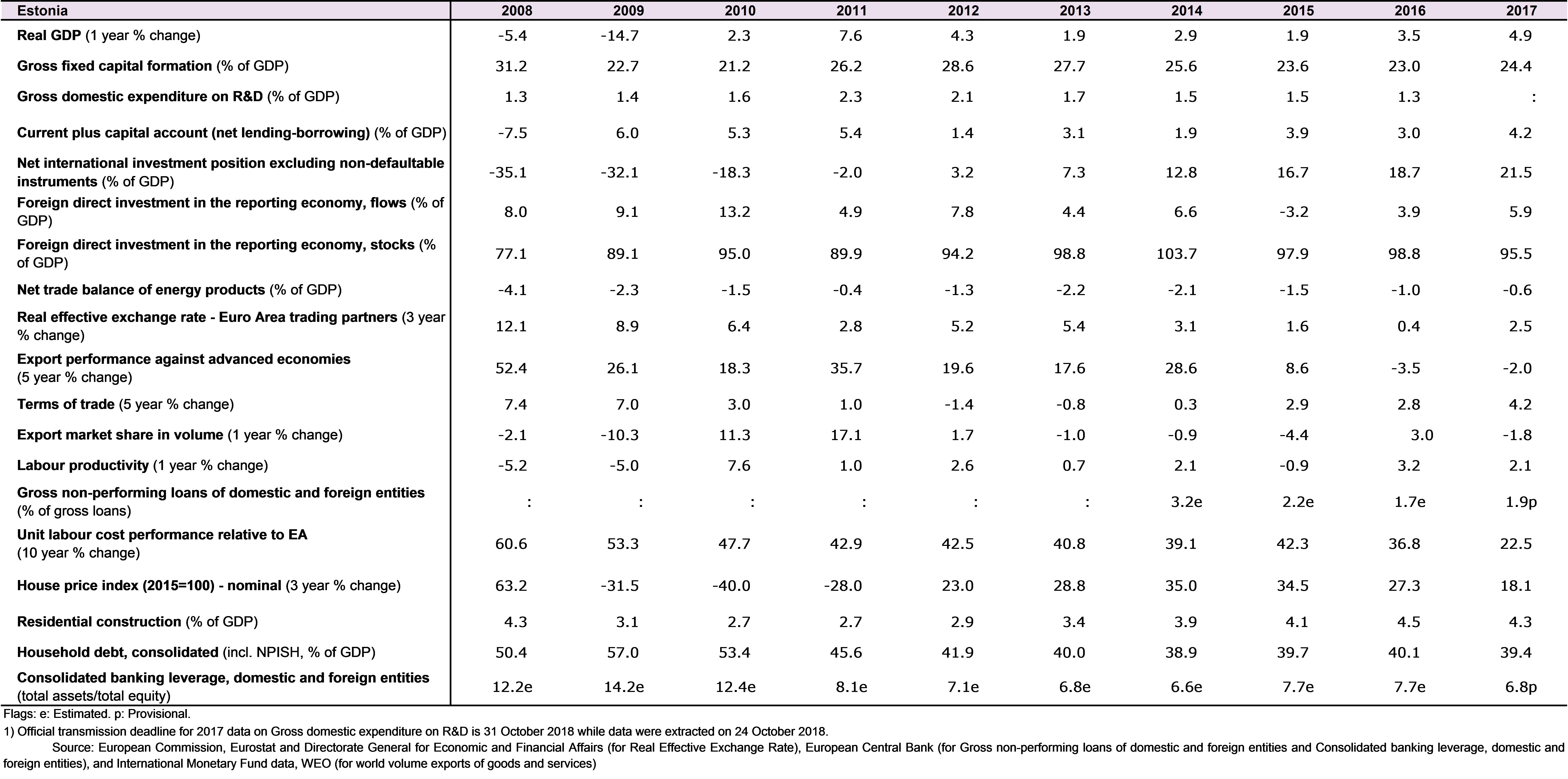
130
Table 5.6: Auxiliary indicators for Estonia
131
Table 5.6 (continued): Auxiliary indicators for Estonia
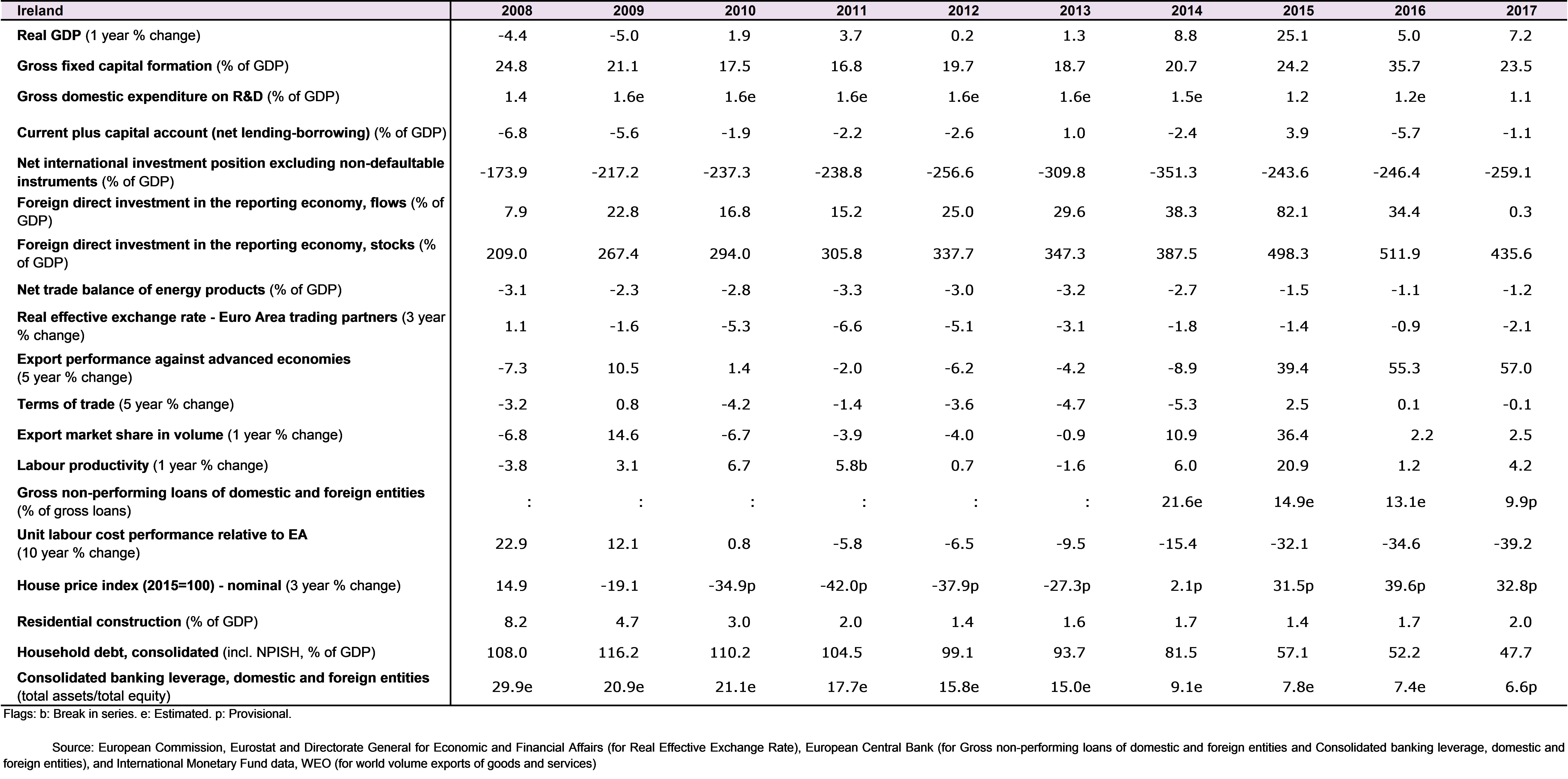
132
Table 5.7: Auxiliary indicators for Ireland
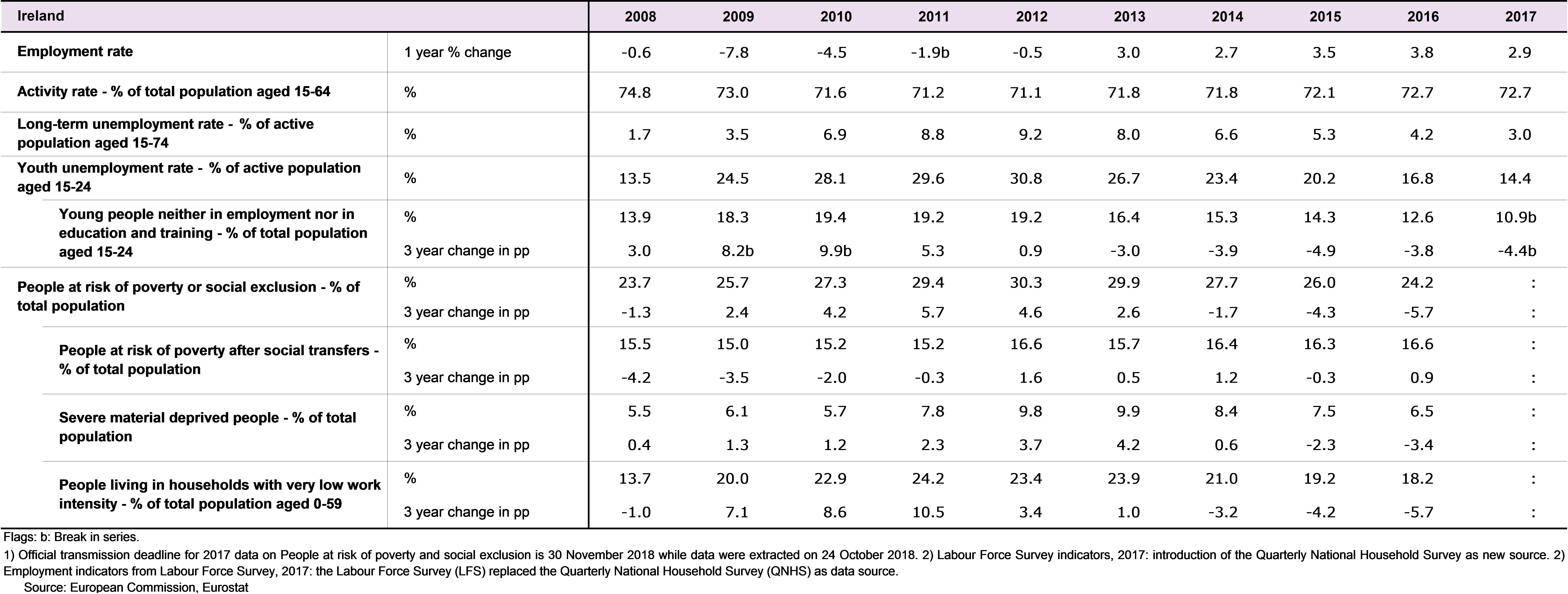
133
Table 5.7 (continued): Auxiliary indicators for Ireland
134
Table 5.8: Auxiliary indicators for Greece
135
Table 5.8 (continued): Auxiliary indicators for Greece
136
Table 5.9: Auxiliary indicators for Spain
137
Table 5.9 (continued): Auxiliary indicators for Spain
138
Table 5.10: Auxiliary indicators for France
139
Table 5.10 (continued): Auxiliary indicators for France
140
Table 5.11: Auxiliary indicators for Croatia
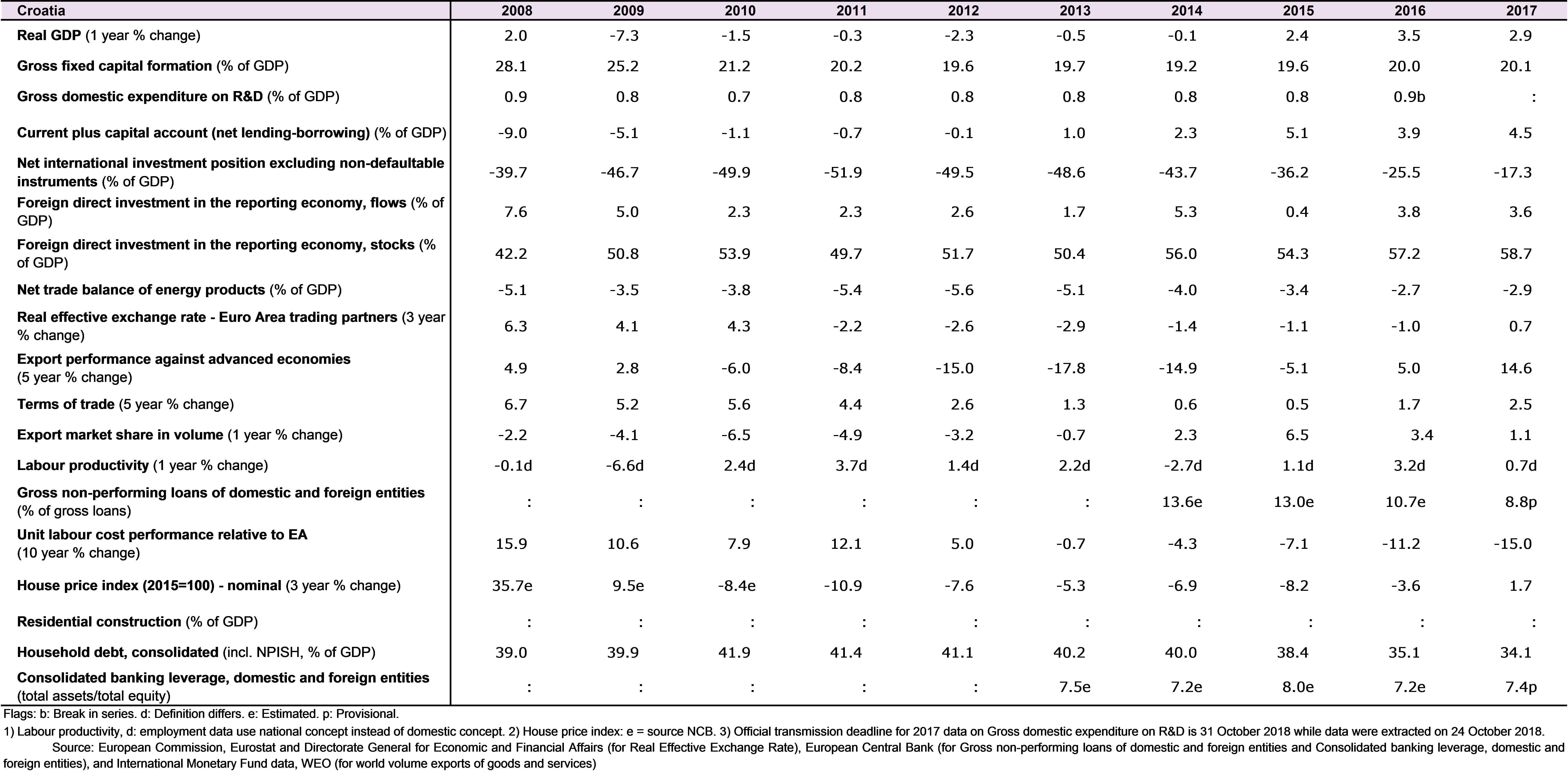
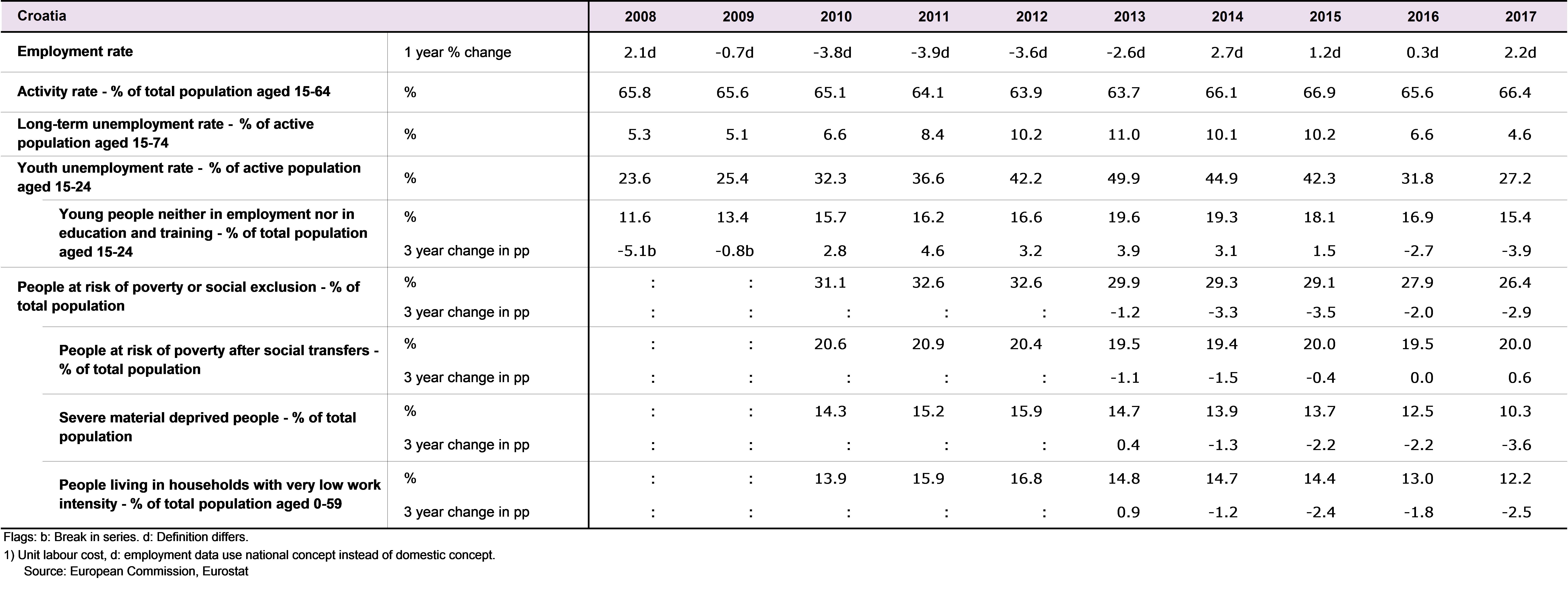
141
Table 5.11 (continued): Auxiliary indicators for Croatia
142
Table 5.12: Auxiliary indicators for Italy
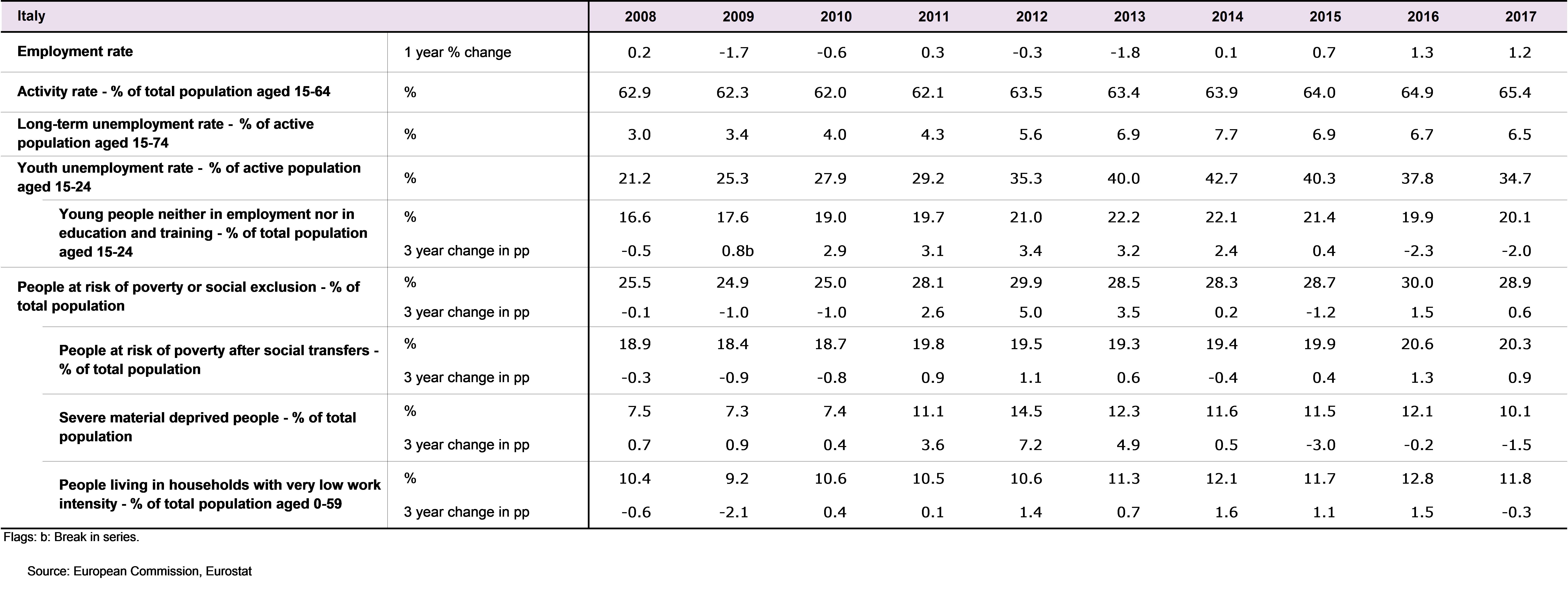
143
Table 5.12 (continued): Auxiliary indicators for Italy
144
Table 5.13: Auxiliary indicators for Cyprus
145
Table 5.13 (continued): Auxiliary indicators for Cyprus
146
Table 5.14: Auxiliary indicators for Latvia
147
Table 5.14 (continued): Auxiliary indicators for Latvia
148
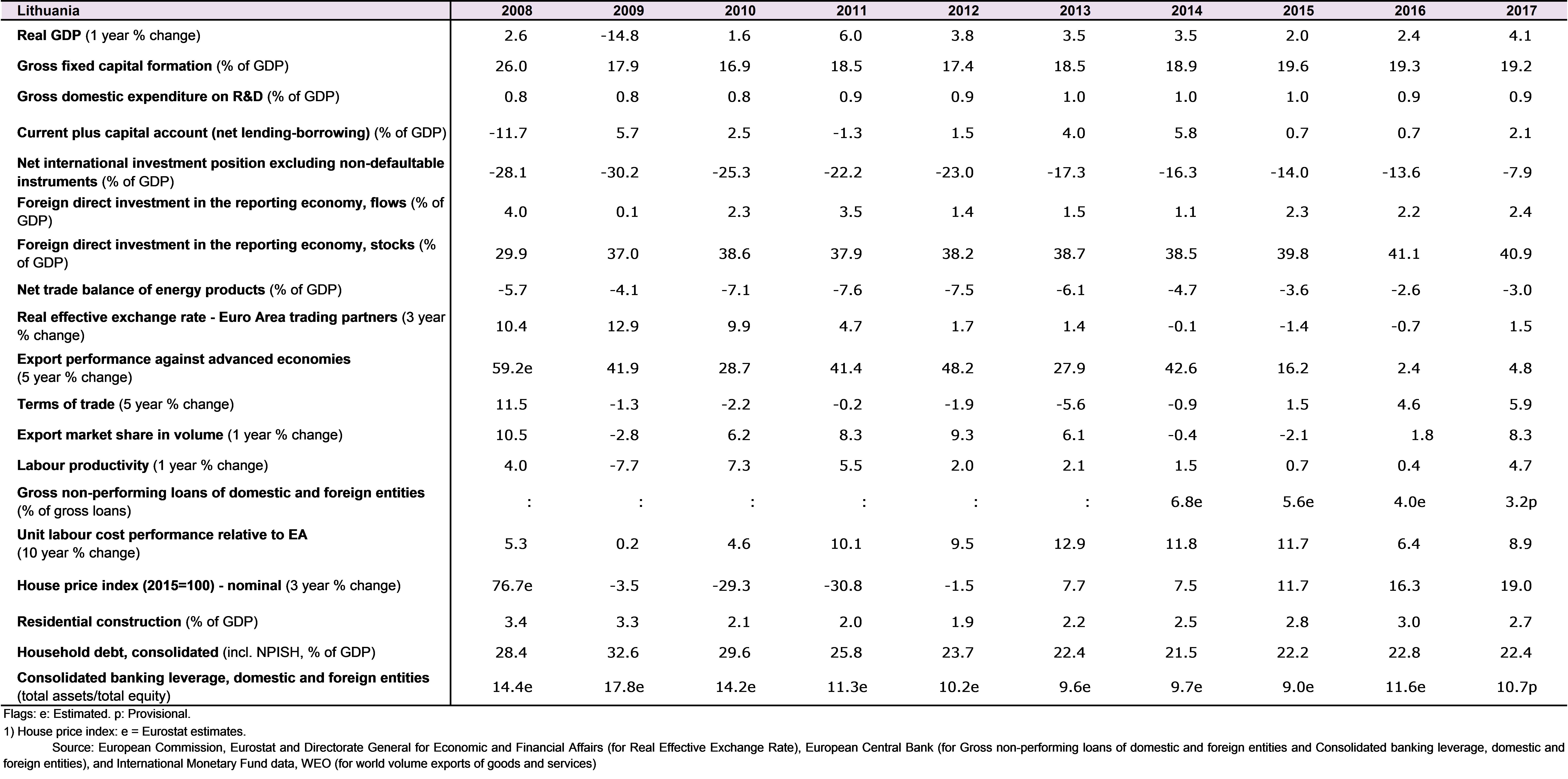
Table 5.15: Auxiliary indicators for Lithuania
149
Table 5.15 (continued): Auxiliary indicators for Lithuania
150
Table 5.16: Auxiliary indicators for Luxembourg
151
Table 5.16 (continued): Auxiliary indicators for Luxembourg
152
Table 5.17: Auxiliary indicators for Hungary
153
Table 5.17 (continued): Auxiliary indicators for Hungary
154
Table 5.18: Auxiliary indicators for Malta
155
Table 5.18 (continued): Auxiliary indicators for Malta
156
Table 5.19: Auxiliary indicators for Netherlands
157
Table 5.19 (continued): Auxiliary indicators for Netherlands
158
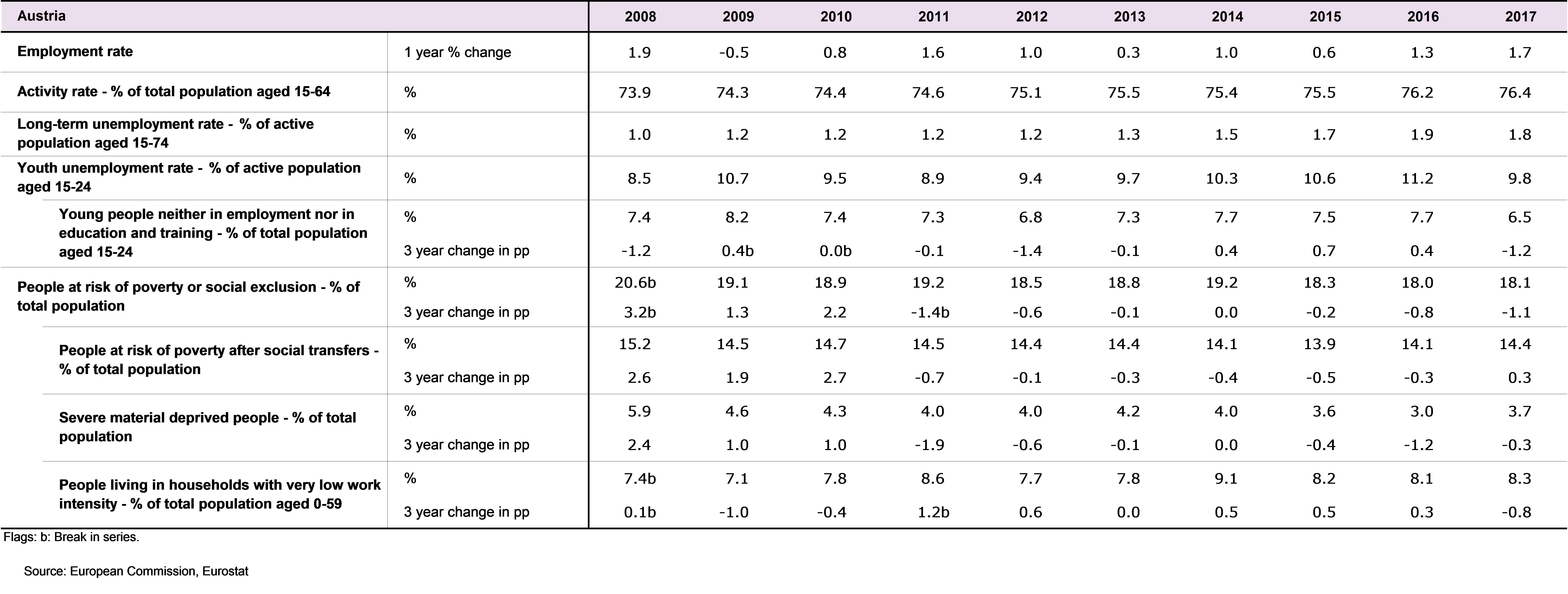
Table 5.20: Auxiliary indicators for Austria
159
Table 5.20 (continued): Auxiliary indicators for Austria
160
Table 5.21: Auxiliary indicators for Poland
161
Table 5.21 (continued): Auxiliary indicators for Poland
162
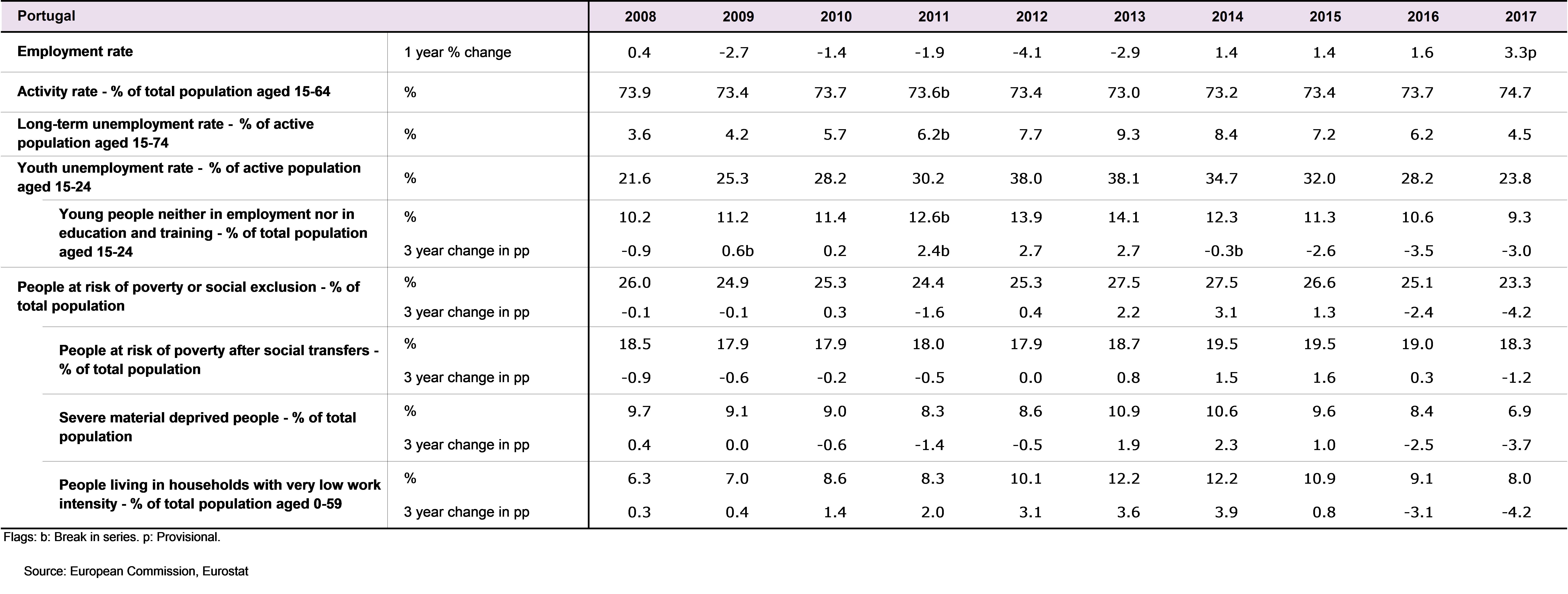
Table 5.22: Auxiliary indicators for Portugal
163
Table 5.22 (continued): Auxiliary indicators for Portugal
164
Table 5.23: Auxiliary indicators for Romania
165
Table 5.23 (continued): Auxiliary indicators for Romania
166
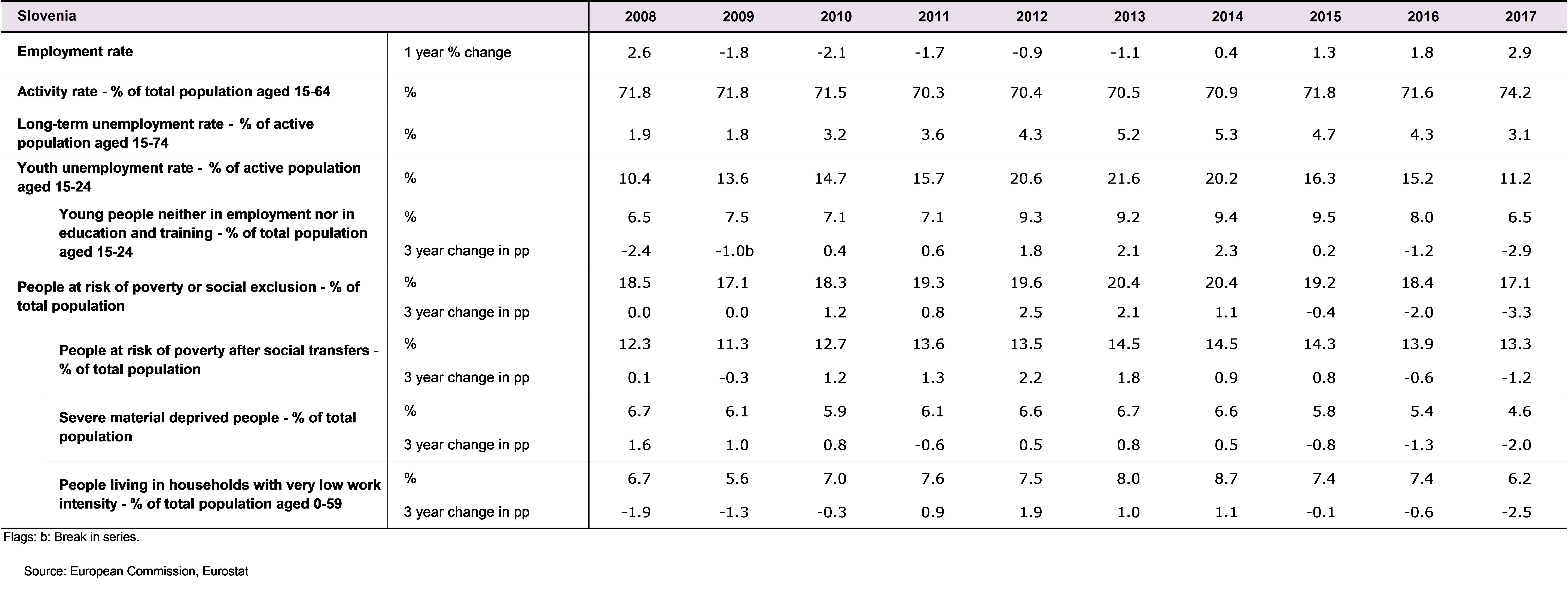
Table 5.24: Auxiliary indicators for Slovenia
167
Table 5.24 (continued): Auxiliary indicators for Slovenia
168
Table 5.25: Auxiliary indicators for Slovakia
169
Table 5.25 (continued): Auxiliary indicators for Slovakia
170
Table 5.26: Auxiliary indicators for Finland
171
Table 5.26 (continued): Auxiliary indicators for Finland
172
Table 5.27: Auxiliary indicators for Sweden
173
Table 5.27 (continued): Auxiliary indicators for Sweden
174
Table 5.28: Auxiliary indicators for United Kingdom
175
Table 5.28 (continued): Auxiliary indicators for United Kingdom
176
Chapter 6: Tables by year - MIP Scoreboard (base indicators)
177
Table 6.1: MIP Scoreboard (base indicators) 2017
177
Table 6.2: MIP Scoreboard (base indicators) 2016
178
Table 6.3: MIP Scoreboard (base indicators) 2015
179
Table 6.4: MIP Scoreboard (base indicators) 2014
180
Table 6.5: MIP Scoreboard (base indicators) 2013
181
Table 6.6: MIP Scoreboard (base indicators) 2012
182
Table 6.7: MIP Scoreboard (base indicators) 2011
183
Table 6.8: MIP Scoreboard (base indicators) 2010
184
Table 6.9: MIP Scoreboard (base indicators) 2009
185
Table 6.10: MIP Scoreboard (base indicators) 2008
186
Background information
This Statistical Annex to the 2019 Alert Mechanism Report (AMR 2019) presents the Macroeconomic Imbalance Procedure (MIP) scoreboard and auxiliary indicators used in the economic reading of the MIP scoreboard. These indicators are mainly compiled by Eurostat from the data transmitted by Member States, following European legislation. The MIP scoreboard indicators are presented with their indicative thresholds (used in the AMR) while no threshold is applied to the auxiliary indicators.
The policy framework of the MIP relies on timely and high quality socio-economic and financial statistics. Since the publication of the first Statistical Annex in 2012, significant progress has been achieved towards enhancing the standards and methods used for the compilation of underlying data as well as strengthening the statistical quality assurance framework.
The MIP Scoreboard consists of fourteen scoreboard indicators measuring internal and external imbalances as well as social and labour market developments. The MIP scoreboard indicators for the last ten years are displayed in this statistical annex by year in chapter 1, and by country in chapter 4. Table 1 lists the MIP scoreboard indicators together with detailed information on their data sources.
The cut-off date for the data, that is the date on which the data were extracted from the Eurostat database for the preparation of this document, was the 24th October 2018. For additional information about the data, please contact
ESTAT-MIP@ec.europa.eu
.
Table 1. MIP scoreboard indicators (AMR 2018)
|
Indicator
|
Unit
|
Data source
|
Statistical domain
|
|
Current account balance (% of GDP)
|
3 year average
|
Eurostat
|
BoP/NA
|
|
Net international investment position
|
% of GDP
|
Eurostat
|
BoP/NA
|
|
Real effective exchange rate (42 trading partners, HICP deflator)
|
3 year % change
|
DG ECFIN
|
|
|
Export market share (% of world exports)
|
5 year % change
|
Eurostat, IMF
|
BoP
|
|
Nominal unit labour cost index (2010=100)
|
3 year % change
|
Eurostat
|
NA
|
|
House price index (2015=100), deflated
|
1 year % change
|
Eurostat
|
Price statistics/NA
|
|
Private sector credit flow, consolidated
|
% of GDP
|
Eurostat
|
NA (FA)
|
|
Private sector debt, consolidated
|
% of GDP
|
Eurostat
|
NA (FA)
|
|
General government gross debt
|
% of GDP
|
Eurostat
|
EDP/GFS
|
|
Unemployment rate
|
3 year average
|
Eurostat
|
EU-LFS
|
|
Total financial sector liabilities, non-consolidated
|
1 year % change
|
Eurostat
|
NA (FA)
|
|
Activity rate (% of total population aged 15-64)
|
3 year change in pp
|
Eurostat
|
EU-LFS
|
|
Long-term unemployment rate (% of active population aged 15-74)
|
3 year change in pp
|
Eurostat
|
EU-LFS
|
|
Youth unemployment rate (% of active population aged 15-24)
|
3 year change in pp
|
Eurostat
|
EU-LFS
|
Note: NA – National Accounts; BoP – Balance of Payments; FA – Financial Accounts; EDP – Excessive Deficit Procedure Statistics / GFS – Government Finance Statistics; and LFS – Labour Force Survey/Labour Market Statistics; pp – percentage points
Supplementing the MIP scoreboard indicators, a list of 28 auxiliary indicators (see Table 2) provides additional information on aspects linked to the general macroeconomic situation, nominal and real convergence inside and outside the European Union and the euro area, detailed data on external liabilities, including foreign direct investment and net external debt, and social statistics. The auxiliary indicators enhance the information base for understanding potential imbalances, as well as the adjustment capacity of the economy. The auxiliary indicators are also presented in this Statistical Annex by year (in Chapter 2) and by country (in Chapter 5).
Compared to the AMR 2018 the composition of the set of auxiliary indicators has changed, mainly to benefit from improved statistics becoming available and to incorporate into the set of the auxiliary indicators variables that provide finer breakdowns and/or complementary information to the Scoreboard indicators.
Net international investment position excluding non-defaultable instruments measured as a percentage of GDP (NENDI) replaced the Net External debt (NED), as this indicator focuses on the NIIP components that may be subject to default or partly be used as collateral. This change has become possible after the adoption of the 6th version of the Balance of Payment and International Investment Position Manual (BPM6) that permits a finer breakdown of net foreign assets and liabilities.
Consolidated banking leverage (CBL), domestic and foreign entities (asset-to-equity multiple) from the Consolidated banking data (CBD) produced by the European Central Bank (ECB), replaced the previous non-consolidated financial sector leverage (FSL) indicator. The leverage indicator based on ECB data has a clearer economic interpretation since it is consistently based on book values, whereas the previous indicator provided the ratio of debt over equity, based on the overall financial sector (including banks, insurers, pension funds, mutual funds, and other financial institutions) on a non-consolidated basis.
Household debt, consolidated (including non-profit institutions serving households (NPISH)) as a percentage of GDP was added; this variable helps to distinguish between the debt of households and that of non-financial corporations (which would correspond to the difference between total private debt, already included among the indicators of the MIP scoreboard, and household debt), and contributes to interpreting and assessing private debt developments.
Finally, following the availability of cross-country-comparable data in the ECB's consolidated banking statistics, the addition of Gross non-performing loans of domestic and foreign entities (in percentage of gross loans, GNPL) has become possible. The indicator is consistent with the macro-financial focus of MIP surveillance and provides complementary information to assess private debt developments.
In order to keep the total number of indicators stable, two auxiliary indicators were removed: ten-year change of Nominal unit labour cost (NULC), as it overlaps with data on ULC and on ULC relative to euro area already in the scoreboard, and non-consolidated Private sector debt, which has been superseded by the consolidated headline indicator.
Table 2. MIP auxiliary indicators (AMR 2019)
|
Indicator
|
Unit
|
Data source
|
Statistical domain
|
|
Real GDP
|
1 year % change
|
Eurostat
|
NA
|
|
Gross fixed capital formation
|
% of GDP
|
Eurostat
|
NA
|
|
Gross domestic expenditure on R&D
|
% of GDP
|
Eurostat
|
Business Statistics/ NA
|
|
Current plus capital account (Net lending-borrowing)
|
% of GDP
|
Eurostat
|
BoP/NA
|
|
Net international investment position excluding non-defaultable instruments
|
% of GDP
|
Eurostat
|
BoP/ NA
|
|
Foreign direct investment in the reporting economy – net inward flows
|
% of GDP
|
Eurostat
|
BoP/NA
|
|
Foreign direct investment in the reporting economy - stocks
|
% of GDP
|
Eurostat
|
BoP/NA
|
|
Net trade balance of energy products
|
% of GDP
|
Eurostat
|
International Trade/ NA
|
|
Real effective exchange rates – euro area trading partners
|
3 year % change
|
DG ECFIN
|
|
|
Export performance against advanced economies
|
5 year % change
|
Eurostat/OECD
|
BoP
|
|
Terms of trade
|
5 year % change
|
Eurostat
|
NA
|
|
Export market share - in volume
|
1 year % change
|
Eurostat /IMF
|
|
|
Labour productivity
|
1 year % change
|
Eurostat
|
NA
|
|
Gross non-performing loans, domestic and foreign entities
|
% of gross loans
|
ECB
|
CBD
|
|
Unit labour cost performance relative to euro area
|
10 year % change
|
DG ECFIN
|
|
|
House price index (2015=100) - nominal
|
3 year % change
|
Eurostat
|
Price statistics
|
|
Residential construction
|
% of GDP
|
Eurostat
|
NA
|
|
Household debt, consolidated (incl. NPISH)
|
% of GDP
|
Eurostat
|
NA (FA)
|
|
Consolidated banking leverage
|
Total asset/ total equity
|
ECB
|
CBD
|
|
Employment rate
|
1 year % change
|
Eurostat
|
NA
|
|
Activity rate
|
% of total population aged 15-64
|
Eurostat
|
EU-LFS
|
|
Long term unemployment rate
|
% of active population aged 15-74
|
Eurostat
|
EU-LFS
|
|
Youth unemployment rate
|
% of active population aged 15-24
|
Eurostat
|
EU-LFS
|
|
Young people neither in employment nor in education and training
|
% of total population aged 15-24
|
Eurostat
|
EU-LFS
|
|
People at risk of poverty or social exclusion
|
% of total population
|
Eurostat
|
EU-SILC
|
|
People at risk of poverty after social transfers
|
% of total population
|
Eurostat
|
EU-SILC
|
|
Severely materially deprived people
|
% of total population
|
Eurostat
|
EU-SILC
|
|
People living in households with very low work intensity
|
% of total population aged 0-59
|
Eurostat
|
EU-SILC
|
Note: NA – National Accounts; BoP – Balance of Payments; CBD – Consolidated banking data; FA – Financial Accounts; LFS – Labour Force Survey/Labour Market Statistics; SILC – Statistics on Income and Living Condition
In Chapter 3, the data are presented by indicator to allow easy comparison of Member States for the 10-year time series. In addition, short descriptions of the indicators and detailed information on sources and methods employed for their compilation are provided.
Statistical methodology improvements
Since 2014, MIP indicators stemming from the National Accounts (NA) and Balance of Payments (BoP) and International Investment Position (IIP) domains have been computed following the ESA 2010 and BPM6 statistical standards (the European System of Accounts 2010 and the Balance of Payments and International Investment Position Manual, sixth edition) that guarantee a high level of comparability across European Union Member States. The successful implementation of these standards improved the quality of the MIP underlying data.
In particular, concerning indicators from the Balance of Payments and International Investment Position, the revision of international standards and changeover to BPM6 was translated into new data requirements via the adoption of
Commission Regulation (EU) No 555/2012
and ECB Guideline (ECB/2011/23). According to the legislation, Member States shall submit to the Commission (Eurostat) data following the BPM6 requirements from 2014 onwards only. In order to maintain comparability over time, either countries themselves or Eurostat in cooperation with them, have back-calculated the main BoP time series according to the new standards. As a result, data coverage for the ten years timespan needed for this year's Statistical Annex (2008-2017) is complete.
The implementation of the standards ensures conceptual consistency between National Accounts and Balance of Payments/ International Investment Position. However, in practice, differences in the different components of the accounts (the BoP/IIP and NA Rest of the world data) still persist.
Eurostat has further elaborated on the reconciliation of the Balance of Payments and the Rest of the World (RoW) account at national level. After the implementation of the BPM6 methodology in 2014, Eurostat has regularly assessed the state of consistency between Balance of Payments and National Accounts statistics, with a focus on the non-financial accounts. In order to maximize efforts at European level, Eurostat contributes to a Task Force on the Consistency between NA and BoP, established by the Committee for Monetary, Financial and Balance of Payments statistics (CMFB), with the purpose of identifying the reasons behind methodological differences in compiling the two data sets and making recommendations for addressing them.
Additional changes in 2018
A common harmonised European revision policy for National Accounts and balance of payments statistics covering benchmark and routine revisions has been recently agreed and its implementation has started on a voluntary basis. The policy includes differentiated guidelines regarding the timing and depth of routine and benchmarking revisions to quarterly and annual data. It aims at improving adherence to the twofold principle of alignment at national level between statistical domains and coordinated alignment at European Union level across the countries. While most countries plan to introduce benchmark revisions in national accounts in 2019, it is worth noting that France and the Netherlands already implemented their benchmark revisions in 2018.
In the Balance of Payments domain, progress has been registered concerning the asymmetries in trade in goods and services. To address the problem of asymmetries in mirror trade data, Eurostat organized several workshops in the course of 2016 and 2017 with Member States. During these workshops, experts from Member States had the opportunity to exchange experiences, discuss bilaterally and decide on specific actions to resolve their corresponding trade asymmetries. Due to the full alignment with integrated levels in national accounts, the current account and IIP of the Netherlands has been revised backwards. Ireland improved the consistency of treatment of research and development in its National Accounts and Balance of Payments Statistics. Further, estimates of trade in financial services were improved, and the involvement of Multinational enterprises in cross-border transactions related to intellectual property and royalties/licenses were accounted for.
In the domain of Financial Accounts, regarding Total Financial Sector Liabilities, work is ongoing to ensure a comprehensive and timely coverage of ‘Other financial institutions’ (OFIs). Other areas of ongoing or planned statistical work which are important for the quality of MIP indicators concern the recording of other equity, of loans between non-financial corporations, and of derivatives. For Luxembourg there have been further improvements in sources and methods in financial accounts, leading to significant revisions particularly for 2014-2015 in the indicators on Total Financial Sector Liabilities, Private Sector Debt, and Private Sector Credit Flow. For the Netherlands there were significant revisions in these three MIP indicators due to the 2018 national accounts benchmark revision.
Concerning the Labour Force Survey, from the third quarter of 2017 Ireland substituted the Quarterly National Household Survey (QNHS) by the new Labour Force Survey (LFS) as the official source of estimates of employment and unemployment. The new survey introduced several methodological changes, in particular the introduction of mixed collection modes, a new sample allocation guarantying equal distribution of the sample over all the weeks of the quarter, the introduction of a non-response adjustment in order to reduce the possible bias of estimates, and the implementation, in the weighting procedure, of the results of the 2016 Census of Population. The latter change had the largest revision impact. To minimise breaks in series, the Irish Central Statistics Office has created a back-casted LFS series from Q1 1998 to Q2 2017 using scaling factors calibrated on the base of a parallel run of the QNHS and LFS at the beginning of 2017. As a consequence, MIP indicators series have been revised as well.
Further methodological improvements have been introduced in the following countries: Malta implemented a back data extensions of its new weighting scheme using population estimates, amongst other sources, starting from the first quarter of 2010 onwards; Belgium revised its survey methodology, in particular for the sampling design, rotational scheme of the survey units and weighting procedure; Denmark improved data collection and introduced the Computer-assisted web interviewing (CAWI) technique also in the core survey.
General Government Gross Debt data notified for the years 2014 to 2017 have been released on 22nd October 2018 within the EDP notification. For more information on main revisions between the April 2018 and the October 2018 notifications please see the latest
EDP news release
.
The MIP quality framework
The credibility of the MIP and its smooth implementation depends critically on the availability and quality of the MIP underlying statistics. The statistics used in the procedure have to be fit for the purpose, reliable and comparable among Member States and in time. For that reason, the scoreboard indicators are regularly reviewed; the underlying statistical methodology and the statistical production processes are constantly improved. Statistics underlying the MIP indicators are based on European Union legislation and compiled by the European Statistical System (ESS) and in part by the European System of Central Banks (ESCB).
In 2016, the Economic and Financial Affairs Council (ECOFIN) recalled that the MIP must rely upon sound and harmonised official statistics and since 2011 it had emphasised the importance of close cooperation between the ESS and the ESCB in assessing the reliability of the statistics underlying the MIP and improving their quality. Following the invitation of the Council to take all necessary initiatives to assure a reliable procedure for the compilation of MIP indicators as well as a continuous improvement of the underlying statistical information, a Memorandum of Understanding (MoU) was signed between Eurostat and the Directorate General Statistics of the European Central Bank in November 2016, which mutually recognises both quality assurance frameworks and enables an even closer cooperation on the respective quality reports in the field of BoP/IIP and Financial Accounts.
The MIP quality assurance framework, developed jointly by Eurostat and the Directorate General Statistics of the European Central Bank, follows a three-level structure. A
comprehensive webpage
with information and links to all relevant quality documents is available on the MIP dedicated section of Eurostat website. In this framework, the work performed in 2018 consisted of the following actions:
·Level 1: preparation of an annual ESS-ESCB quality assessment report on MIP statistics by Eurostat and the ECB towards the European Parliament and Council, policy makers and the public at large, to assess the reliability and comparability of MIP underlying statistics and address the most relevant quality issues; the fourth report has been prepared in 2018 and has been published on the websites of Eurostat, the ECB, and of the CMFB.
·Level 2: domain-specific quality reports produced by Eurostat and the ECB summarising the main findings for the euro area or the European Union Member States. These reports assess the underlying compilation process and its robustness, describe its legal basis and evaluate whether the statistics are in line with international statistical standards. The following level 2 reports are currently available:
-National Accounts (including Financial Accounts) (
Eurostat
) and Financial Accounts (
ECB
)
-Balance of Payments and International Investment Position statistics (
Eurostat
,
ECB
)
-House Price Statistics (
Eurostat
)
-Labour Force Survey (
Eurostat
)
In the area of National Accounts, following the adoption of an implementing act, an annual reporting on the quality of national and regional accounts data by Member States started in 2017. The first annual Eurostat quality report was published on 17 May 2018, based on data transmissions in 2016 covered by the ESA 2010 transmission programme. The Eurostat quality report also explicitly covers data underlying the MIP indicators. The set of quality indicators covered will be progressively extended by 2021. An overview on ESA 2010 implementation and quality was added to the Eurostat website.
The full implementation of the alignment of the existing Quality Reports on Balance of Payments/International Investment Position produced by the ESS and the ESCB was achieved in the course of 2018 (on reference data for 2017). While due to the different data coverage and legislation it is currently not possible to have one common report, its structure, the indicators and the findings included in the Eurostat and the ECB reports are to great extent harmonized.
In addition, the Commission (DG ECFIN), in its capacity as compiler of the Real Effective Exchange Rate (REER) indicator, publishes quality information on real effective exchange rate indicators on its website
.
·Level 3: development of condensed country specific self-assessment reports on the quality and statistical processes for statistics underlying the MIP indicators which are easily understandable by users. They should provide the basis for assuring the quality of the statistics and their comparability across countries. Member States are encouraged to publish such reports. In 2017 information for the statistical domains Balance of Payments and International Investment Position, Financial Accounts, House Price Statistics and the Labour Force Survey were prepared for almost all countries. Updated versions of these national reports are being drafted and they will be published on the CMFB website when available.
Moreover, in the context of the MoU, joint ECB-Eurostat visits to the Member States have taken place, focussing on BoP and Financial Accounts. The first two pilot joint visits took place in 2017 in Belgium and Greece. In 2018 Eurostat and the ECB have visited Luxembourg and Poland.
The rest of this document presents MIP scoreboard and auxiliary indicators by different perspectives: Chapter 1 and Chapter 2 illustrate the headline and auxiliary indicators by year respectively, Chapter 3 focuses on the evolution of indicators in time, while Chapter 4 and Chapter 5 present the scoreboard and auxiliary indicators by Member State respectively, finally Chapter 6 illustrates untransformed scoreboard indicators by year.
Chapter 1: Tables by year - Headline indicators
Table 1.1: MIP Scoreboard 2017
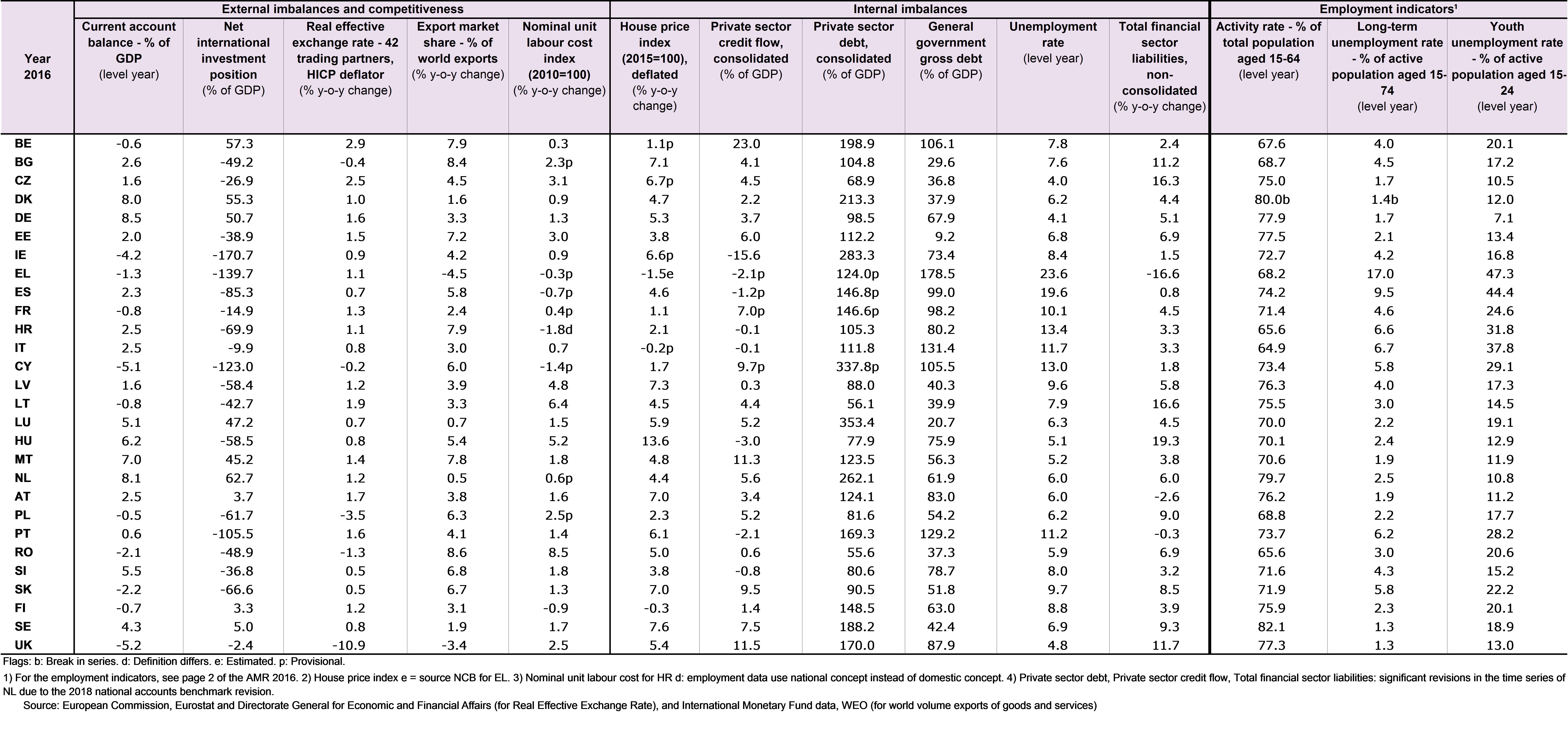
Table 1.2: MIP Scoreboard 2016
Table 1.3: MIP Scoreboard 2015
Table 1.4: MIP Scoreboard 2014
Table 1.5: MIP Scoreboard 2013
Table 1.6: MIP Scoreboard 2012
Table 1.7: MIP Scoreboard 2011
Table 1.8: MIP Scoreboard 2010
Table 1.9: MIP Scoreboard 2009
Table 1.10: MIP Scoreboard 2008
Chapter 2: Tables by year - Auxiliary indicators used in the economic reading of the MIP scoreboard
Table 2.1: Auxiliary indicators, 2017
Table 2.1 (continued): Auxiliary indicators, 2017
Table 2.2: Auxiliary indicators, 2016
Table 2.2 (continued): Auxiliary indicators, 2016
Table 2.3: Auxiliary indicators, 2015
Table 2.3 (continued): Auxiliary indicators, 2015
Table 2.4: Auxiliary indicators, 2014
Table 2.4 (continued): Auxiliary indicators, 2014
Table 2.5: Auxiliary indicators, 2013
Table 2.5 (continued): Auxiliary indicators, 2013
Table 2.6: Auxiliary indicators, 2012
Table 2.6 (continued): Auxiliary indicators, 2012
Table 2.7: Auxiliary indicators, 2011
Table 2.7 (continued): Auxiliary indicators, 2011
Table 2.8: Auxiliary indicators, 2010
Table 2.8 (continued): Auxiliary indicators, 2010
Table 2.9: Auxiliary indicators, 2009
Table 2.9 (continued): Auxiliary indicators, 2009
Table 2.10: Auxiliary indicators, 2008
Table 2.10 (continued): Auxiliary indicators, 2008
Chapter 3: Tables by indicator
Table 3.1: Current account balance, % of GDP (3 year average)
Table 3.2: Current account balance (% of GDP)
Table 3.3: Net International Investment Position (% of GDP)
Table 3.4: Real effective exchange rate - 42 trading partners, HICP deflator (3 year % change)
Table 3.5: Real effective exchange rate - 42 trading partners, HICP deflator (1 year % change)
Table 3.6: Export market share - % of world exports (5 year % change)
Table 3.7: Export market share - % of world exports (1 year % change)
Table 3.8: Nominal unit labour cost index, 2010=100 (3 year % change)
Table 3.9: Nominal unit labour cost index, 2010=100 (1 year % change)
Table 3.10: House price index (2015=100), deflated (1 year % change)
Table 3.11: Private sector credit flow, consolidated (% of GDP)
Table 3.12: Private sector debt, consolidated (% of GDP)
Table 3.13: General government gross debt (% of GDP)
Table 3.14: Unemployment rate (3 year average)
Table 3.15: Unemployment rate (%)
Table 3.16: Total financial sector liabilities, non-consolidated (1 year % change)
Table 3.17: Total financial sector liabilities, non-consolidated (Millions NC)
Table 3.18: Activity rate - % of total population aged 15-64 (3 year change in pp)
Table 3.19: Activity rate - % of total population aged 15-64
Table 3.20: Long-term unemployment rate - % of active population aged 15-74 (3 year change in pp)
Table 3.21: Long-term unemployment rate - % of active population aged 15-74
Table 3.22: Youth unemployment rate - % of active population aged 15-24 (3 year change in pp)
Table 3.23: Youth unemployment rate - % of active population aged 15-24
Table 3.24: Real GDP (1 year % change)
Table 3.25: Gross fixed capital formation (% of GDP)
Table 3.26: Gross domestic expenditure on R&D (% of GDP)
Table 3.27: Current plus capital account - Net lending-borrowing (% of GDP)
Table 3.28: Net international investment position excluding non-defaultable instruments (% of GDP)
Table 3.29: Foreign direct investment in the reporting economy - flows (% of GDP)
Table 3.30: Foreign direct investment in the reporting economy - stocks (% of GDP)
Table 3.31: Net trade balance of energy products (% of GDP)
Table 3.32: Real effective exchange rate - Euro Area trading partners (3 year % change)
Table 3.33: Export performance against advanced economies (5 year % change)
Table 3.34: Terms of trade (5 year % change)
Table 3.35: Export market share, volume (1 year % change)
Table 3.36: Real labour productivity (1 year % change)
Table 3.37: Gross non-performing loans, domestic and foreign entities (% of gross loans)
Table 3.38: Unit labour cost performance relative to EA (10 year % change)
Table 3.39: House price index (2015=100) - nominal (3 year % change)
Table 3.40: Residential construction (% of GDP)
Table 3.41: Household debt, consolidated (incl. Non-profit institutions serving households, % of GDP)
Table 3.42: Consolidated banking leverage, domestic and foreign entities (asset-to-equity multiple)
Table 3.43: Employment rate (1 year % change)
Table 3.44: Young people neither in employment nor in education and training - % of total population aged 15-24
Table 3.45: People at risk of poverty or social exclusion - % of total population
Table 3.46: People at risk of poverty after social transfers - % of total population
Table 3.47: Severely materially deprived people - % of total population
Table 3.48: People living in households with very low work intensity - % of total population aged 0-59
Chapter 4: Tables by Member State - Headline indicators
Table 4.1: The MIP scoreboard for Belgium
Table 4.2: The MIP scoreboard for Bulgaria
Table 4.3: The MIP scoreboard for Czechia
Table 4.4: The MIP scoreboard for Denmark
Table 4.5: The MIP scoreboard for Germany
Table 4.6: The MIP scoreboard for Estonia
Table 4.7: The MIP scoreboard for Ireland
Table 4.8: The MIP scoreboard for Greece
Table 4.9: The MIP scoreboard for Spain
Table 4.10: The MIP scoreboard for France
Table 4.11: The MIP scoreboard for Croatia
Table 4.12: The MIP scoreboard for Italy
Table 4.13: The MIP scoreboard for Cyprus
Table 4.14: The MIP scoreboard for Latvia
Table 4.15: The MIP scoreboard for Lithuania
Table 4.16: The MIP scoreboard for Luxembourg
Table 4.17: The MIP scoreboard for Hungary
Table 4.18: The MIP scoreboard for Malta
Table 4.19: The MIP scoreboard for Netherlands
Table 4.20: The MIP scoreboard for Austria
Table 4.21: The MIP scoreboard for Poland
Table 4.22: The MIP scoreboard for Portugal
Table 4.23: The MIP scoreboard for Romania
Table 4.24: The MIP scoreboard for Slovenia
Table 4.25: The MIP scoreboard for Slovakia
Table 4.26: The MIP scoreboard for Finland
Table 4.27: The MIP scoreboard for Sweden
Table 4.28: The MIP scoreboard for United Kingdom
Chapter 5: Tables by Member State - Auxiliary indicators used in the economic reading of the MIP scoreboard
Table 5.1: Auxiliary indicators for Belgium
Table 5.1 (continued): Auxiliary indicators for Belgium
Table 5.2: Auxiliary indicators for Bulgaria
Table 5.2 (continued): Auxiliary indicators for Bulgaria
Table 5.3: Auxiliary indicators for Czechia
Table 5.3 (continued): Auxiliary indicators for Czechia
Table 5.4: Auxiliary indicators for Denmark
Table 5.4 (continued): Auxiliary indicators for Denmark
Table 5.5: Auxiliary indicators for Germany
Table 5.5 (continued): Auxiliary indicators for Germany
Table 5.6: Auxiliary indicators for Estonia
Table 5.6 (continued): Auxiliary indicators for Estonia
Table 5.7: Auxiliary indicators for Ireland
Table 5.7 (continued): Auxiliary indicators for Ireland
Table 5.8: Auxiliary indicators for Greece
Table 5.8 (continued): Auxiliary indicators for Greece
Table 5.9: Auxiliary indicators for Spain
Table 5.9 (continued): Auxiliary indicators for Spain
Table 5.10: Auxiliary indicators for France
Table 5.10 (continued): Auxiliary indicators for France
Table 5.11: Auxiliary indicators for Croatia
Table 5.11 (continued): Auxiliary indicators for Croatia
Table 5.12: Auxiliary indicators for Italy
Table 5.12 (continued): Auxiliary indicators for Italy
Table 5.13: Auxiliary indicators for Cyprus
Table 5.13 (continued): Auxiliary indicators for Cyprus
Table 5.14: Auxiliary indicators for Latvia
Table 5.14 (continued): Auxiliary indicators for Latvia
Table 5.15: Auxiliary indicators for Lithuania
Table 5.15 (continued): Auxiliary indicators for Lithuania
Table 5.16: Auxiliary indicators for Luxembourg
Table 5.16 (continued): Auxiliary indicators for Luxembourg
Table 5.17: Auxiliary indicators for Hungary
Table 5.17 (continued): Auxiliary indicators for Hungary
Table 5.18: Auxiliary indicators for Malta
Table 5.18 (continued): Auxiliary indicators for Malta
Table 5.19: Auxiliary indicators for Netherlands
Table 5.19 (continued): Auxiliary indicators for Netherlands
Table 5.20: Auxiliary indicators for Austria
Table 5.20 (continued): Auxiliary indicators for Austria
Table 5.21: Auxiliary indicators for Poland
Table 5.21 (continued): Auxiliary indicators for Poland
Table 5.22: Auxiliary indicators for Portugal
Table 5.22 (continued): Auxiliary indicators for Portugal
Table 5.23: Auxiliary indicators for Romania
Table 5.23 (continued): Auxiliary indicators for Romania
Table 5.24: Auxiliary indicators for Slovenia
Table 5.24 (continued): Auxiliary indicators for Slovenia
Table 5.25: Auxiliary indicators for Slovakia
Table 5.25 (continued): Auxiliary indicators for Slovakia
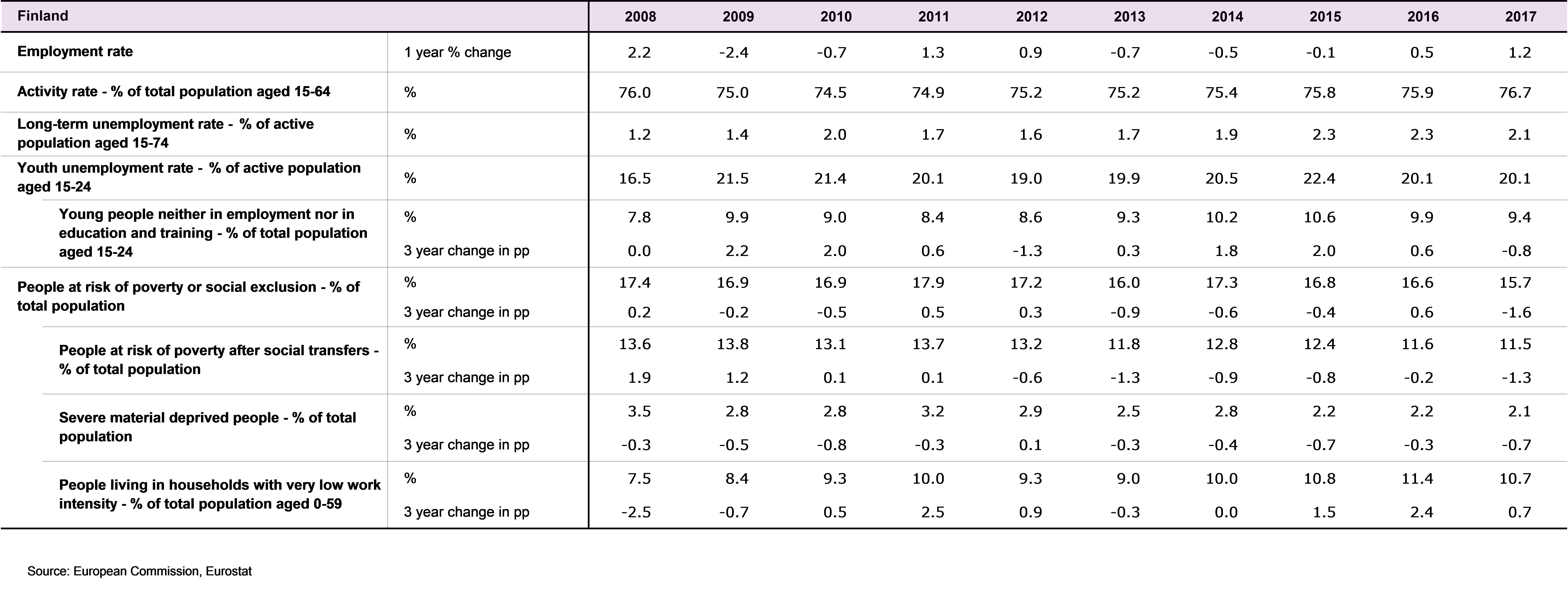
Table 5.26: Auxiliary indicators for Finland
Table 5.26 (continued): Auxiliary indicators for Finland
Table 5.27: Auxiliary indicators for Sweden
Table 5.27 (continued): Auxiliary indicators for Sweden
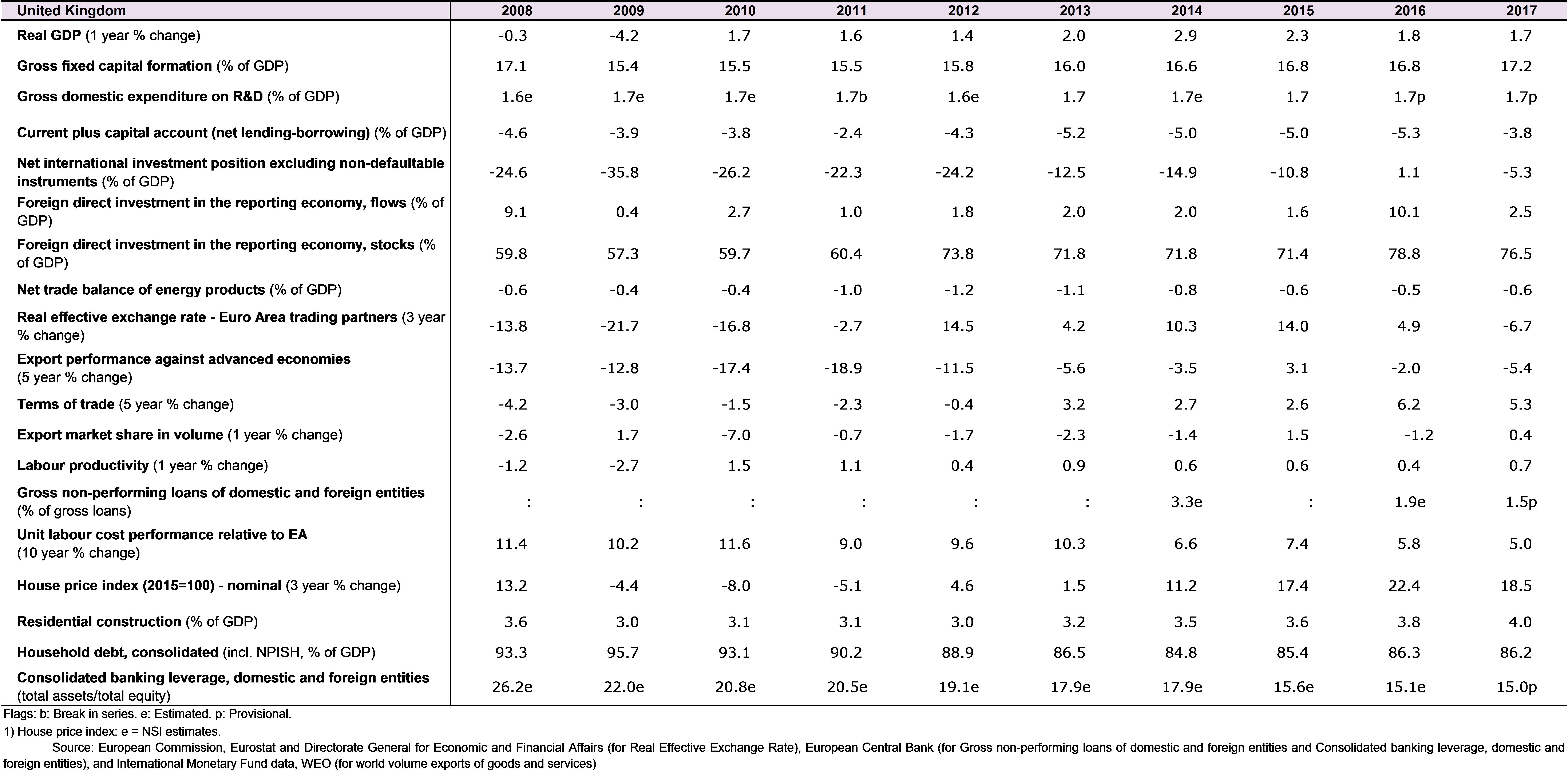
Table 5.28: Auxiliary indicators for United Kingdom
Table 5.28 (continued): Auxiliary indicators for United Kingdom
Chapter 6: Tables by year - MIP Scoreboard (base indicators)
Table 6.1: MIP Scoreboard (base indicators) 2017
Table 6.2: MIP Scoreboard (base indicators) 2016
Table 6.3: MIP Scoreboard (base indicators) 2015
Table 6.4: MIP Scoreboard (base indicators) 2014
Table 6.5: MIP Scoreboard (base indicators) 2013
Table 6.6: MIP Scoreboard (base indicators) 2012
Table 6.7: MIP Scoreboard (base indicators) 2011
Table 6.8: MIP Scoreboard (base indicators) 2010
Table 6.9: MIP Scoreboard (base indicators) 2009
Table 6.10: MIP Scoreboard (base indicators) 2008