 EUROPEAN COMMISSION
Brussels,7.3.2018
SWD(2018) 216 final
COMMISSION STAFF WORKING DOCUMENT
Country Report Malta 2018
Accompanying the document
COMMUNICATION FROM THE COMMISSION TO THE EUROPEAN PARLIAMENT, THE COUNCIL, THE EUROPEAN CENTRAL BANK AND THE EUROGROUP
2018 European Semester: Assessment of progress on structural reforms, prevention and correction of macroeconomic imbalances, and results of in-depth reviews under Regulation (EU) No 1176/2011
{COM(2018) 120 final}
Contents
Executive summary
1.Economic situation and outlook
2.Progress with country-specific recommendations
3.Reform priorities
3.1.Public finances and taxation
3.2.Financial sector
3.3.Labour market, education and social policies
3.4. Investment
3.5. Sectoral policies
Annex A: Overview Table
Annex B: Macroecnomic Imbalance Procedure Scoreboard
Annex C: Standard Tables
References
LIST OF Tables
Table 1.1:Key economic and financial indicators - Malta
Table 3.2.1:Financial soundness indicators, total (i.e. domestic and international) banks, Malta (%)
Table 3.4.1:Enterprises, employment and value added by firm size class35
Table 3.5.1:Largest sector of GHG emissions in 2015 (% of total GHG emissions)
Table B.1:The MIP scoreboard for Malta (AMR 2018)
Table C.1:Financial market indicators
Table C.2:Headline Social Scoreboard indicators
Table C.3:Labour market and social indicators
Table C.4:Social inclusion and health indicators
Table C.5:Product market performance and policy indicators
Table C.6:Green growth
LIST OF Graphs
Graph 1.1:
Quarterly GDP growth, Malta and euro area
Graph 1.2:
Core HICP inflation, Malta and euro-area
Graph 1.3:
Decomposition of rate of change of unit labour costs
Graph 1.4:
Export market share decomposition
Graph 1.5:
Current account in services (% of GDP)
Graph 1.6:
Current account decomposition (% of GDP)
Graph 1.7:
Private sector debt: gaps to prudential and fundamental-based benchmarks
Graph 1.8:
Funding of non-financial corporations
Graph 1.9:
Government balance and debt (% of GDP)
Graph 2.1:
Overall multiannual implementation of 2011-2017 CSRs to date
Graph 3.1.1:
General government balance and the impact of the Individual Investor Programme (% of GDP)
Graph 3.1.2:
Average growth 2013-2016 of total current expenditure per inhabitants
Graph 3.1.3:
Gross fixed capital formation in 2012 and 2016 (% of GDP)
Graph 3.2.1:
Residential investment and building permits
Graph 3.2.2:
Overvaluation gap of house prices
Graph 3.3.1:
Employment rate by age and sex, 2016
Graph 3.3.2:
Employment gap of persons with disabilities by gender and Member State (age 20-64), 2015
Graph 3.3.3:
Share of employers by sector reporting labour shortages in Malta
Graph 3.3.4:
Early school leaving rate
Graph 3.3.5:
Participation rate in education and training (25-64 years), 2016
Graph 3.4.1:
Number of persons employed in SMEs
Graph 3.4.2:
Value added of SMEs
Graph 3.4.3:
World Bank 2017 Governance Indicators - Malta
Graph 3.4.4:
Evolution of business R&D intensity and public R&D intensity in Malta, 2004-2016
Graph 3.5.1:
Selected road transport indicators - Malta
Graph 3.5.2:
GHG emission per capita (kg CO2-eq/inhabitant)
Graph 3.5.3:
WEF Travel and Tourism Competitiveness Index – Selected indicators
LIST OF Boxes
Box 1.1:
The gaming sector
Box 2.2:
CSR implementation table
14
Box 2.3:
Tangible results delivered through EU support to structural change in Malta
Box 3.3. 1:
Monitoring performance in the light of the European Pillar of Social Rights
Box 3.3.5:
Policy highlights
Box 3.4.6:
Investment Box -challenges and reforms in Malta
Executive summary
In the context of robust economic growth, Malta’s key challenges mostly concern its longer term sustainability. Growth prospects look favourable and the fiscal outlook remains positive, on the back of a significant current account surplus. Yet, the mounting pressure on infrastructure and natural resources, rising housing prices, as well as shortages of labour and skills may create challenges in the future. Reducing the infrastructure gap, improving labour supply, strengthening the business environment and promoting environmental sustainability remain key policy priorities to sustain long-term growth. Enhanced supervision in the financial sector is an additional important factor to safeguard financial stability and preserve Malta’s attractiveness and good reputation as investment destination (
).
Growth has remained dynamic. Real GDP growth was among the highest in the EU in recent years. It reached its peak in 2014-15, averaging 7.7%, driven also by a surge in investment related to one-off factors. Despite strong net service exports and robust private consumption, real GDP growth moderated in 2016 and is forecast to have remained robust at 6.9 % in 2017. Moreover, employment growth is among the highest in the EU, in particular due to the services sector. The unemployment rate has dropped to a record low of under 5 %. Immigration flows were key in offsetting emerging skills gaps and labour shortages.
Going forward, growth momentum remains strong. Real GDP growth is forecast to remain solid, reaching 4.9 % in 2018. Private consumption is expected to become the main driver of growth on the back of an increasing population and growing disposable income. In addition, improved consumer confidence and consumption is expected to result in a somewhat lower household saving rate. Investment is forecast to recover, led by the residential construction sector, which is expected to continue growing strongly in 2018. Exports are forecast to continue rising, in line with growing demand among Malta’s main trading partners.
The current account continues to show a marked surplus. Since 2014, the current account surplus averaged close to 8 %. In mid-2017, it reached a peak of 10 % of GDP. This high level is mostly attributable to the service sector, reflecting buoyant activity in the gaming, tourism and transport sectors. The autumn forecast projects the surplus to stabilise below 10 %, reflecting rising exports.
Strong economic growth boosted tax revenues, in particular direct taxes. In the context of a fiscal surplus, expenditure remains quite dynamic, calling for a close monitoring. Gross government debt has dropped below 60 % of GDP already in 2016 and it is projected to continue falling. Despite some progress, challenges concerning tax compliance remain and the corporate debt bias remains high.
Malta made some progress in addressing the 2017 country-specific recommendations Initiatives are envisaged to expand the scope of the spending review and ultimately contribute to increasing effectiveness in public expenditure. While cross-border supervision remains essential in particular in the insurance sector, some progress has been made in securing more resources in the supervisory departments.
Regarding the progress in reaching the national targets under the Europe 2020 strategy Malta has made progress towards its target on employment. However, gaps remain with respect to the targets for reducing greenhouse gases, raising R&D expenditure, increasing renewable energy provision, improving energy efficiency, reducing early school leaving, increasing the tertiary education attainment, and reducing poverty.
Malta performs relatively well on the indicators of the Social Scoreboard supporting the European Pillar of Social Rights. Malta continues relevant policy action to address labour market integration and social exclusion, notably through its ‘make work pay’ policies. However, high early school leaving rates, the high gender employment gap and labour market participation of people with disabilities merit attention.
Key structural issues analysed in this report, which point to particular challenges for Malta’s economy, are the following:
·Short and medium-term fiscal risks appear contained. Public finances have benefited from the strengthening of tax revenues, supported by favourable macroeconomic conditions. The proceeds related to the Individual Investment Programme have also contributed to this improvement. The spending review is expected to be conducive to more efficient expenditure performance. In the long-term, age-related public spending in the healthcare and pension systems is expected to increase relatively fast compared to other EU countries, indicating a possible challenge to fiscal sustainability.
·Some indicators suggest that Malta’s tax rules are used by multinationals engaged in aggressive tax planning structures. Malta has taken steps to amend certain aspects of its tax system that may facilitate aggressive tax planning. However, the existence of some tax rules (among them the design of the planned Notional Interest Deduction regime), the absence of withholding taxes on payments made by companies based in Malta, combined with a lack of some anti-abuse rules, suggest that Malta's tax rules may still be used in tax avoidance structures.
·Ensuring effective financial supervision remains a challenge. The financial sector is characterised by a large number of foreign institutions, in particular insurance companies, predominantly operating cross-border. The effectiveness of the recently adopted anti-money laundering legislation has to be thoroughly followed. In this context, ensuring a strengthened supervisory framework is crucial to preserve Malta’s good reputation and attractiveness as an international financial centre.
·House prices have surged and deserve continuous monitoring. Strong economic activity, favourable labour market conditions, investment in real estate by non-residents and low interest rates have all contributed to a sustained increase in house prices in the recent past. Residential construction and mortgage lending are experiencing rapid growth, which may lead to increased vulnerability of the economy to housing market developments, also considering that the bulk of new mortgages are at variable interest rates.
·Malta’s labour market continues to perform strongly, however with a still high gender gap. Employment grows, in line with the high economic growth. The employment rate reached 71.8 % in Q3 2017. Wage growth remains modest, despite the continued fall in unemployment. A large gender employment gap persists, as employment rates are high for women below 30, but they considerably lower above this age.
·Skills shortages have become very pronounced. Over 30 % of companies report skills shortages, a significantly higher share than previous years. These shortages are being filled with foreign labour across all skills levels. While investment in education and skills continues, the rate of early school leaving remains very high and has not improved much compared to the previous year. Educational outcomes remain strongly linked to socio-economic background. Basic skills attainment among young people is still weak.
·Poverty and social exclusion risks have been reduced but remain substantial for some population groups. Poverty and social exclusion risks declined to levels last seen in 2008. However, single-earner households and the low-skilled face substantial poverty risks. There are obstacles to integration of the foreign population, especially non EU migrants who face a high risk of poverty and social exclusion despite a high employment rate. Malta continues to strengthen its policies for active inclusion, and has recently adopted a Strategy on the integration of migrants. Income inequalities remain below the EU average thanks to low market inequalities and the features of Malta’s tax and benefits system.
·The SMEs sector has shown a considerable dynamism in recent years, despite existing gaps in the R&D framework. Growth in terms of number of persons employed and value added has been above EU average and only a minority of firms appears to be finance constrained. At the same time, the predominance of micro and small firms, which have to rely on internal funding to support R&D activities, and the size of local market limit their innovation potential. While Malta’s R&D performance has recently improved, a better innovation ecosystem would enhance the capacity of innovative companies to scale up their activities.
·Shortcomings in the judicial and anti-corruption framework affect the business climate. The justice system continues to face challenges concerning its efficiency. According to a recent Eurobarometer Flash Survey, corruption is perceived as a problematic factor for doing business in Malta. The fragmented landscape of anti-corruption institutions and the lack of formalised institutional coordination may hamper effective investigation and prosecution of corruption allegations.
·The road transport sector faces major infrastructure and sustainability challenges. Severe traffic congestion constitutes a barrier to investment, and generates significant external costs and greenhouse gas emissions (also given the expected increasing demand for transport). The authorities have recently announced a project to upgrade the road infrastructure over a period of seven years, which is however expected to reduce congestion costs and greenhouse gas emissions only modestly.
·Increased economic activity may exacerbate existing bottlenecks, including in infrastructure, and put further pressure on environmental resources. Moving towards a more circular economy and tackling the negative externalities from the construction sector and the property market, for example concerning waste disposal, environmental impacts and energy performance, remain challenging. If not addressed, bottlenecks in natural resources and infrastructure may also affect the development of the tourism sector, still a key pillar of the Maltese economy. Tourism expansion may itself intensify pressure on the country’s resources.
1.
Economic situation and outlook
Economic growth and inflation
Malta’s economic performance has been outstanding in recent years. Following a relatively quick recovery after the 2008-09 crisis, the Maltese economy got a second wind in mid-2012. As a result, it effectively decoupled from the euro-area economic cycle, avoiding the double-dip recession observed there and exhibited growth rates higher than its pre-2009 peak. Growth has been job-rich, tapping into the potential of the domestic labour force and the still relatively low labour market participation rate. Increasing inflows of foreign labour have helped maintain the growth momentum and mitigated skills shortages and wage pressures.
|
Graph 1.1:Quarterly GDP growth, Malta and euro area
|
|

|
|
Source: European Commission
|
Growth has been mainly export driven. Net exports accounted for about half the increase in real GDP since 2012 as export growth, in particular of services, more than offset a rise in imports. The latter is associated with buoyant domestic demand, reflecting strong household consumption and a spike in investment. Malta’s openness to trade (measured by exports plus imports as a share of GDP) has increased significantly over the past decade, from around 200 % of GDP in 2006 to over 300 % in 2011-12, before subsiding somewhat to around 270 % as the weight of domestic demand in the economy started to rebound.
Inflation has stabilised at relatively low levels. Following a period of volatility in the past, Malta has shown the lowest volatility in its HICP inflation among the euro-area members since early 2014. To a large extent, this reflects the regulation of fuel prices by the government. Thus, while overall HICP inflation has been rising in the euro area since 2016, in Malta it remained stable, averaging just over 1 % in the twelve months to September 2017.
|
Graph 1.2:Core HICP inflation, Malta and euro-area
|
|

|
|
Source: European Commission
|
Growth momentum remains strong going forward. Real GDP growth reached 5.5% in 2016 and accelerated in the first three quarters of 2017, registering a year-on-year increase of 7.2%. External demand looks to be the main driver of growth in 2017, with domestic demand playing a secondary role due to a strong contraction of investment (reflecting a high base in 2016). Real GDP growth is forecast to reach [6.9%] in 2017 as a whole, higher than the rate recorded in 2016. It is projected to slow somewhat in 2018 to [5.6 %]. Private consumption is expected to become the main driver of growth, on the back of an increasing population and growing disposable income. At the same time, improved consumer confidence and consumption is expected to result in a somewhat lower household saving rate. Investment is forecast to recover, led by the residential construction sector, expected to continue growing strongly in 2018. Exports are forecast to continue rising, in line with growing demand among Malta’s main trading partners, resulting in a further increase in the current account surplus. In 2019, real GDP growth is projected to slow down to 4.5 %, below potential output. Private consumption is projected to remain the main driver of growth, while all demand components are forecast to contribute positively.
Risks to the macroeconomic projections are linked primarily to the outlook for investment and net exports. A faster realisation of planned infrastructure projects could boost growth in the near term. In addition, in view of Malta’s openness to trade, any volatility in its main exporting sectors would have a disproportionately large impact on real GDP growth.
Malta’s key challenges are mostly related to the long-term sustainability of its growth model. Overall, Malta’s recent economic performance appears to have been largely the result of structural change and, in the medium term, it is expected to stabilise and remain at a relatively strong rate. These prospects on economic activity are expected to exacerbate existing bottlenecks, including in infrastructure, and to put further pressure on environmental resources. There are increasing signals of tightness in the labour market, constraining firms' expansion plans and growth prospects (see Section 3.3). Growing reliance on foreign labour, to address labour and skill shortages, may pose further risk to the competiveness of the Maltese economy. In this context, maintaining Malta as a reliable jurisdiction for financial and gaming services is particularly important in light of sustaining Malta’s attractiveness as an international financial and business location.
Labour Market and social developments
Labour market conditions continue to be favourable. The unemployment rate dropped to 4 % in 2017, while employment growth remains robust. Youth unemployment remains also much below EU average. Reliance on inward labour migration to fill vacancies remains substantial. Strong increases in labour supply, also on the back of rising inflows of foreign workers, served to dampen the upward pressure on wages in 2016 and 2017. In 2018 and 2019 the tightening labour market is expected to put increased upward pressure on wages.
Nonetheless, the sustainability of the current employment growth may be hindered by persisting challenges. Although the employment rate is at 69.6 %, the gender employment gap is still 27.6 %. The participation of people with disabilities in the labour market also remains low, despite modest improvements in educational outcomes and participation. Low tertiary educational attainment and skills levels and higher risks of poverty affecting children and the lower-skilled population hamper efforts to reach overall sustainable and inclusive growth.
While inequality in both income and wealth remain moderate, there is a risk of unequal opportunities for the next generation. The share of income held by the richest 20 % of households was 4.2 times greater than that of the poorest 20 % in 2016. This is one of the lowest ratios in the EU, and unchanged from the previous year. Net wealth is also relatively evenly distributed, reflecting the even distribution of housing assets across the population. However, learning outcomes for children are more strongly correlated to their socioeconomic background than in most other EU countries, as is their risk of poverty (see Section 3.3.3). In addition, rising market inequalities might in the long run put pressure on the redistributive impact of the tax and benefits system.
Productivity and competitiveness
Labour productivity is improving strongly. Nominal unit labour costs are moving broadly in line with the euro area (+0.9 % compared with 0.8 % in 2016, respectively) , benefiting from robust productivity gains. In 2016, real labour productivity per person employed decelerated compared to 2014-15 but still grew at a significantly higher pace than the euro area (+1.7 % vs 0.5 %, respectively).
After moderate wage growth in recent years, the tightening labour market is expected to put increasing upward pressure on wages. In 2016 nominal wages increased by 2.7 % and in 2017 nominal wage growth is projected to have slowed down to 2 %. Real wages increased by 1.1 % in 2016, and are projected to have stabilised in 2017. In 2018 and 2019 wage growth is expected to accelerate somewhat, as a result of the tightening labour market (
). Driven by increased nominal wage growth and moderate productivity gains, nominal unit labour costs are projected to increase by 1.3 % in 2018 and 2019 (see Graph 1.3). A somewhat accelerated wage growth can be considered sustainable, considering that real wage growth has remained below productivity growth over the last years, and given Malta's positive external position.
|
Graph 1.3:Decomposition of rate of change of unit labour costs
|
|

|
|
Source: European Commission
|
Malta occupies one of the highest positions in the EU for export quality in manufacturing. Around 40 % of the total export value concerns products of top quality (vs 25 % in 2011). In exported manufacturing goods, there have been relatively large swings in the shares of high-tech and medium-low tech goods in the recent past. In 2016, the share of high-tech manufacturing exports amounted to 43.2 % (up from 26.8 % in 2015) while the share of medium-low tech products fell to 34.8 % (from 50.7 % in 2015).
The services sector contributes strongly to a positive export performance. Buoyant export performance in recent years has resulted in rising export market shares, as gains in services markets offset losses in goods.
|
Graph 1.4:Export market share decomposition
|
|

|
|
Source: European Commission
|
Keeping pace with the rise of new sectors creates challenges, in terms of governance and infrastructure. Malta ranks 37th out of 137 countries in the 2017-18 Global Competitiveness Report, three places higher than last year. Inefficient public administration, insufficient capacity to innovate, inadequate supply of infrastructure and access to finance are reported in the Global Competitiveness Report as the main barriers to doing business in Malta.
External sustainability
The external position remained robust, relying on a high current account surplus and a positive net international investment position. The balance of Malta’s net international investment position reached 64.5 % of GDP in Q2 of 2017, one of the highest in the EU after the Netherlands. Meanwhile, the surplus in the current account reached 10 % of GDP in mid-2017 reflecting a strong surplus in the services account (see Graph 1.5). Exports of services have been boosted predominantly by the activities of the gaming industry (see Box 1.1), but supported also by sizeable gains in tourism and transport sectors.
Imports of goods are falling, related to the recent contraction in investment. In 2016, ‘machinery and transport equipment’ accounted for almost half (48.2 %) of the value of imports of goods. Around two thirds of such products were imported from extra-EU countries. Real imports declined by 4% y-o-y in the first three quarters of 2017, due to the large drop in goods imports (-11.2 % y-o-y), while imports of services fell only slightly (-0.2 %). This could be explained largely by the decline in investment in machinery and equipment (-34.8 % y-o-y during the same period).
|
Graph 1.5:Current account in services (% of GDP)
|
|

|
|
Source: European Commission
|
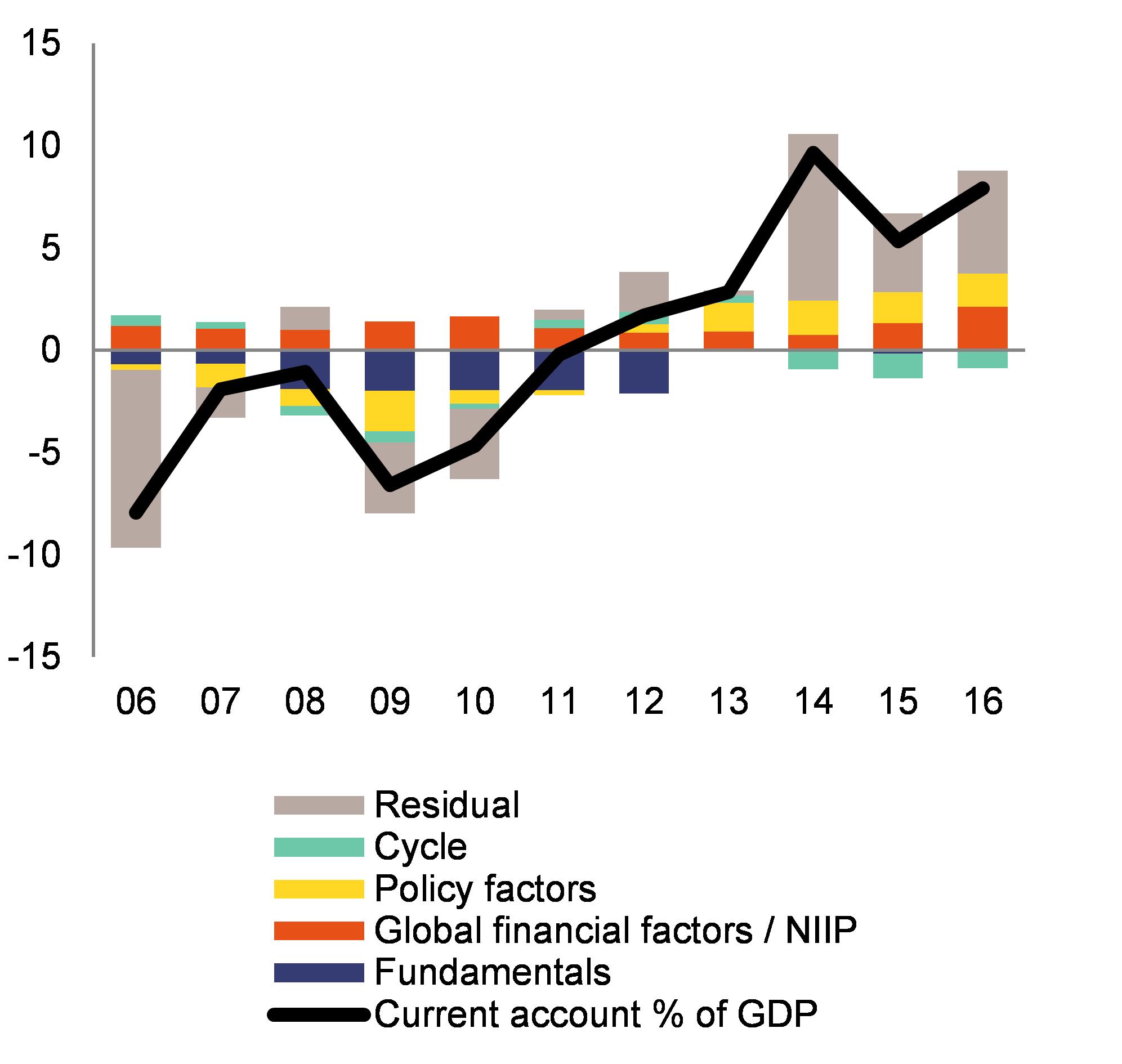
The change in Malta’s current account position seems to be of structural nature. The present level of the current account surplus significantly exceeds the current account norm (
), estimated by the Commission (see Graph 1.6). Even after taking into account the impact of the cycle and policy factors there remains a large residual that cannot be explained by fundamentals. The size of the residual could reflect the changing structure of the Maltese economy (
), including its emerging status as an international financial centre and the growing importance of cross-border activities. Revenues from the Individual Investment Programme (
) also contributed sizeably to the external balance, thus also helping explain the residual factor in 2016.
|
Graph 1.6:Current account decomposition (% of GDP)
|
|
|
|
Source: European Commission
|
Lower import intensity and reliance on physical capital is coupled with a sustained saving rate. Underpinning the improvement in the current account balance is a recovery in the national saving rate, driven by improved fiscal performance, and rising corporate and household savings. The latter are the result of the emergence of new export-oriented services sectors as well as the restructuring of previously existing sectors which has led to higher growth in profits. In addition, the strong economic growth registered in recent years, combined with higher dependence on labour in the new economic sectors, has raised disposable income. Conversely investment has slightly declined. In particular, private investment in 2011-14 was below the average registered since EU accession. The shift from capital intensive industries to the more labour intensive sectors is likely to have led to a compositional effect that has weighed negatively on total investment growth. The unusual fluctuation in private investment related to one-off large investment projects led to a surge in private investment in 2015-16. It is expected to return to its previous levels going forward. Public investment, after having reached its lowest level in 2010, increased until 2015 thanks also to the EU funds. However, in 2016 it diminished significantly, showing a gap compared to the average registered since EU accession.
Financial sector
Although the size of the total banking sector in Malta declined, the domestic sector further expanded. The size of the total banking sector in Malta declined to 457 % of GDP by June-2017, from 510 % end-2015. However, the domestic sector further expanded, as total assets of domestic banks reached 218 % of GDP by June 2017, on the back of increased lending to households. The banks have continued engaging in mortgage contracts, growing 8 % y-o-y, while lending to non-financial corporates remains weak. Growth in mortgage lending increased balance sheet concentration for domestic banks, whereby property-related loans represent almost 60 % of resident loans. However, the banks apply a stringent credit risk policy, applying a haircut of about 30 % on the market value of the property. Furthermore, according to the authorities, approximately half of housing purchases are funded by banks’ lending, while the other half comes from residents and non-residents’ cash. The exposure to the general government, both through direct lending and through holding sovereign bonds, has declined (
).
Despite the increase in loans to the private sector, loans to non-financial corporations are declining. Loans to non-financial corporations have continued to decline, despite favourable financing conditions. In yearly terms, the stock of loans to non-financial corporations fell by 1 % in October 2017, while growing by 2.5 % in the euro area. This could be partly explained by the growing services sector, which is highly labour intensive and generally requires lower capital investment, and thus may be contributing to lower demand for credit (Central Bank of Malta, 2017). Intercompany loans have become the main funding source for firms. Direct issuance of debt securities and credit from non-bank financial institutions have grown rapidly, albeit from a low base (see Section 3.4).
On the liabilities side, domestic banks are highly liquid. The main funding source is retail deposits, most of which are from domestic residents, and about one fifth from non-residents. Deposits cover the total loan portfolio, and domestic banks have only a marginal exposure to ECB funding, i.e. 0.4 % of their total funding needs. The loan-to-deposit ratio has gone down significantly in the past five years and now amounts to about 50 %. However, most of the deposits have a short-term maturity (90 % of them up to one year), which creates an increasing asset-liability maturity mismatch, in particular compared to mortgages, whose maturity is usually 25-30 years. Non-resident deposits, or non-Maltese residents, represent about 14 % of total deposits being held in the domestic banking sector. Those coming from non-EU countries, e.g. Libya, expose the banks’ funding to volatility risk, especially in the event of intensified geopolitical tensions. Whereas the minimum capital and liquidity requirements for these banks are already higher than for others, the situation warrants continued attention by the supervisor (see also Section 3.2).
Private sector debt — non-financial corporations and households
While private sector debt has eased in recent years, further deleveraging may be necessary. Consolidated private sector debt has decreased relative to the size of the economy from its peak at over 160 % in 2009 to 121.4 % in 2016, (though this was marginally higher than 2015). The decline has been mainly due to passive deleveraging in a favourable macroeconomic environment by non-financial corporations, whose debt ratio fell from 100.8 % in 2009 to 68.3 % in 2016. Nevertheless, both household and corporate debt levels stand above the prudential thresholds and fundamentals-based benchmarks (Graph1.7), suggesting that further deleveraging may be necessary (
).
|
Graph 1.7:Private sector debt: gaps to prudential and fundamental-based benchmarks
|
|

|
|
Source: European Commission
|
The capital market remains underdeveloped. Maltese companies finance themselves mainly via debt instruments, while equity financing constitutes 30.2 % of total funding. By contrast, equity is the main source of company financing in the euro area. The amount of corporate bond issuances in Malta is negligible, yet the stock exchange is making efforts to promote their use and expand it even to the SMEs. In the absence of a sufficiently deep capital market, companies use intra-group financing as an alternative source. In addition, companies’ high gross operating surplus (a result of the current favourable macroeconomic environment) provides an additional cushion, enabling them to finance investment through retained profits.
|
Graph 1.8:Funding of non-financial corporations
|
|

|
|
Source: European Central Bank and European Commission
|
Fiscal developments
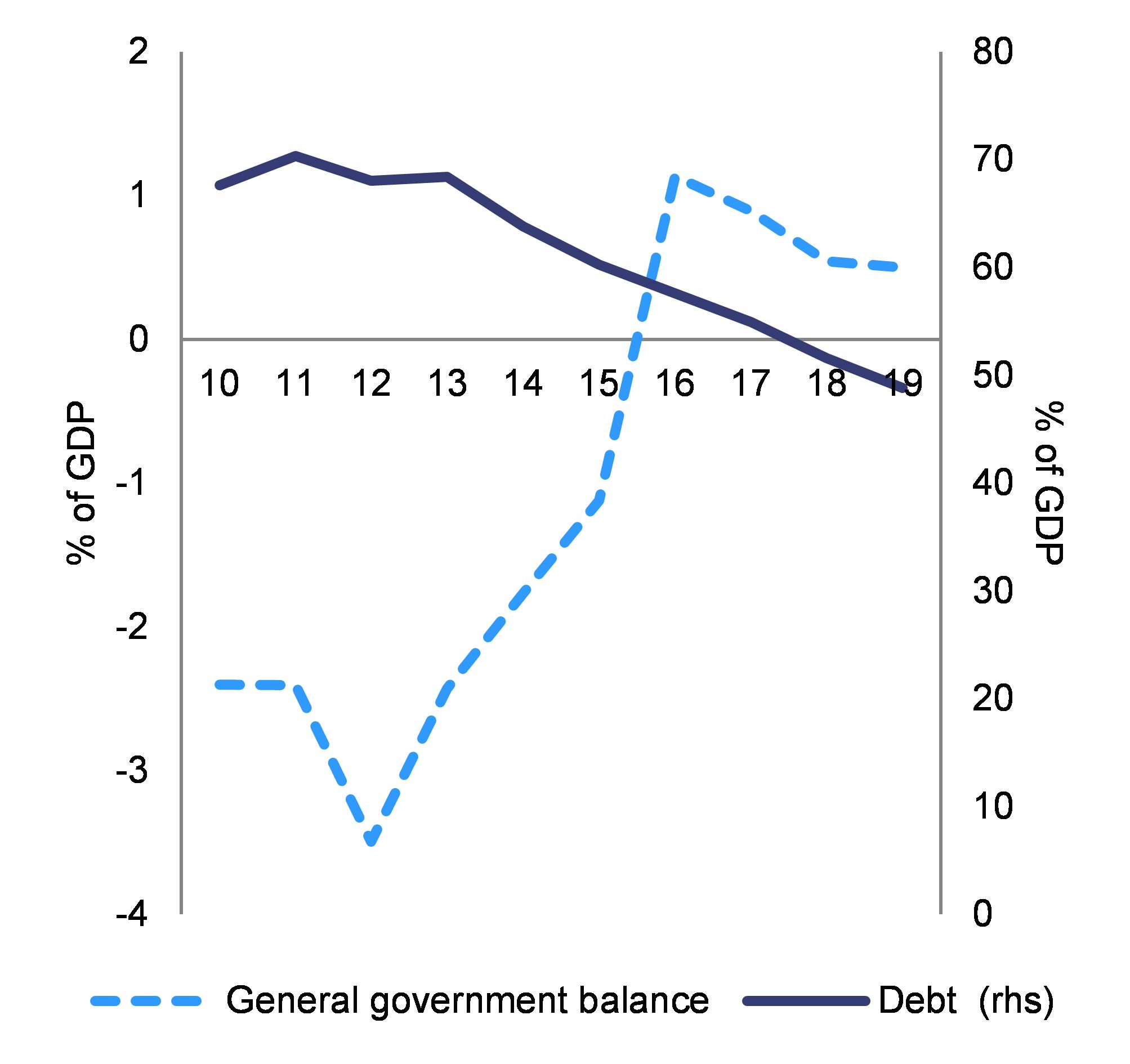
Public finances appear sound. The headline government surplus is set to decrease from 1.1 % of GDP in 2016 to 0.9 % of GDP in 2017. For 2018 and 2019 a budget surplus of 0.5 % of GDP is projected (Graph 1.9). As a result of the stronger primary balances and GDP growth, public debt ratio has trended downward, falling below the 60 %–of–GDP threshold already in 2016. The debt-to-GDP ratio is forecast to decrease further, to below 50 % in 2019.
|
Graph 1.9:Government balance and debt (% of GDP)
|
|
|
|
Source: European Commission
|
|
Box 1.1: The gaming sector
The gaming sphere in Malta has grown markedly over the past ten years (see also European Commission, 2017a). As a result of these developments, the gaming industry has steadily increased its share in the economic activity and contributed almost 12% of the economic value added in 2016. The gaming industry has become the third-largest sector in the economy, exceeding in terms of value added other traditionally important sectors. Gaming contributes also to generating value added in other major sectors, including professional services, financial and ICT activities, distributive trades and real estate.
Malta has been able to capitalize on its EU first mover advantage, and has continued to be proactive in developing its regulatory framework to sustain the island’s competitive edge at the forefront of the gaming sector. In 2016, the Malta Gaming Authority (MGA) continued working on the overhaul of its regulatory framework, started in early 2015, which is expected to come into force in 2018. The new licensing framework will target more effectively the development of business-to-business activities, enhance the efficiency of regulatory processes and introduce flexibility to meet current and future dynamics with respect to technological developments, consumer protection standards and market demands. It will also increase certain powers of the regulator such as that of oversight.
In addition, the Fourth Anti-Money Laundering Directive, which came into force in June 2015, was finally transposed into national law on 20 December 2017. The Directive requires iGaming companies more onerous obligations to prevent money laundering, while bringing about an obligation for all gambling operators to conduct customer due diligence for transactions over €2,000. Under the previous Anti-Money Laundering Directive, iGaming operators were not subject persons. The Fourth Directive also set the obligation for remote gaming operators, as subject persons, to appoint a Money Laundering Reporting Officer and to notify the appointment to both the Financial Intelligence Analysis Unit and the MGA. iGaming operators are also required to have systems and training in place to prevent money laundering and the financing of terrorism, such as customer due diligence procedures, record keeping and internal reporting procedures.
|
|
|
|
Table 1.1:Key economic and financial indicators - Malta
|
|

|
|
Source: Eurostat and ECB as of 30 Jan 2018, where available; European Commission for forecast figures (Winter forecast 2018 for real GDP and HICP, Autumn forecast 2017 otherwise)
|
|
|
2.
Progress with country-specific recommendations
Progress with the implementation of the recommendations addressed to Malta in 2017(
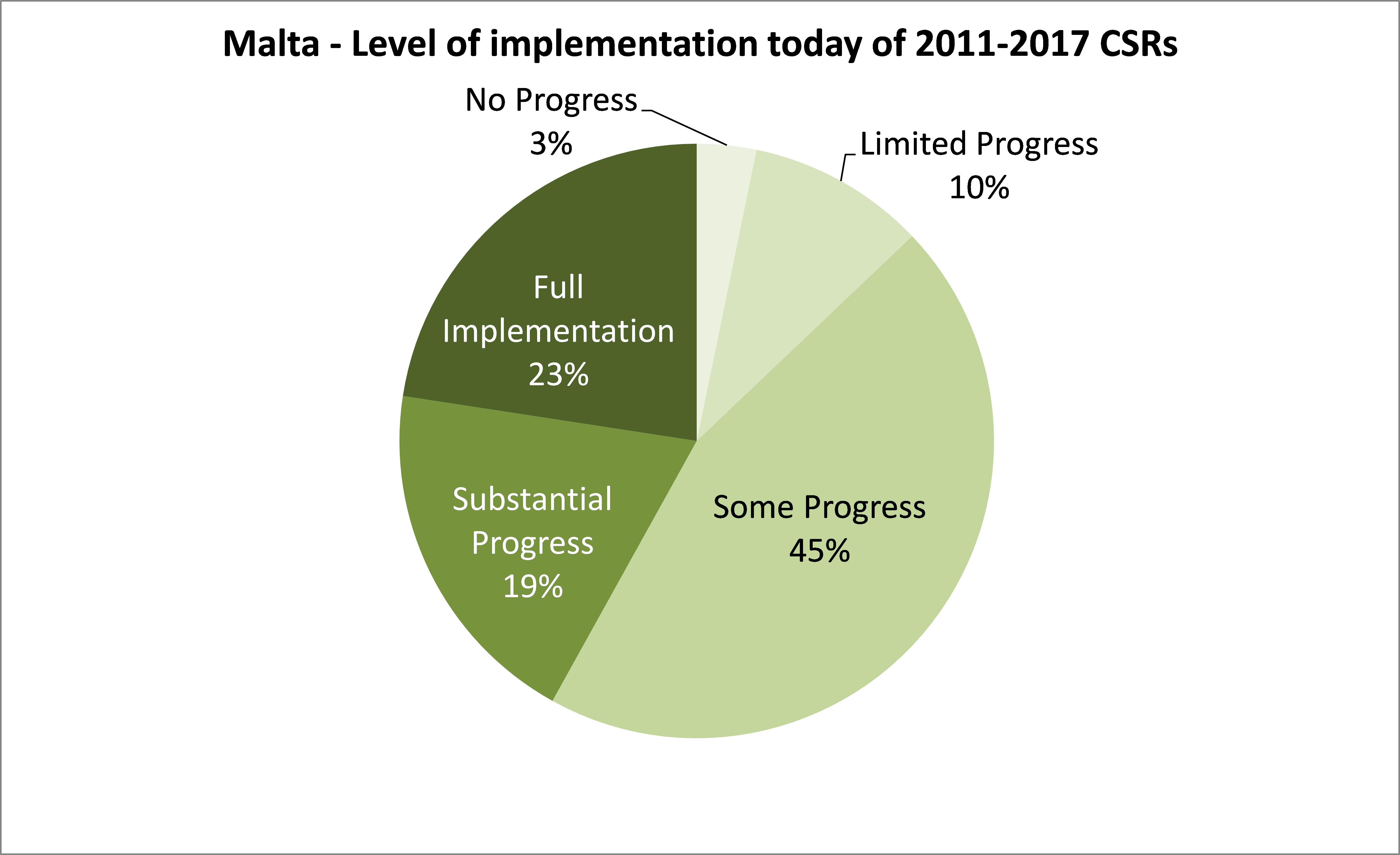
) has to be seen in a longer term perspective since the introduction of the European Semester in 2011. Looking at the multi-annual assessment of the implementation of the CSRs since these were first adopted, 87 % of all the CSRs addressed to Malta have recorded at least 'some progress'. 13 % of these CSRs recorded 'limited' or 'no progress' (see Graph 2.1). Substantial progress and full implementation have been achieved in the area of fiscal policy and fiscal governance as well as in several areas of the labour market. Other areas with substantial progress have been the business environment and the energy sector.
|
Graph 2.1:Overall multiannual implementation of 2011-2017 CSRs to date
|
|
|
|
Source: European Commission
|
Public finances have improved since Malta’s accession to the EU. The budget balance has exhibited various trends since Malta’s accession to the EU, leading to the opening of three excessive deficit procedures. As a result, the budget deficit averaged at 3.2 % of GDP in 2004-12. From 2013, a continuing improvement in the budgetary situation took place, leading to a budget surplus of 1.1 % of GDP in 2016. The medium-term objective was achieved three years ahead of schedule. In the same year, the government debt fell below the 60 %-of-GDP threshold. The improvement in the fiscal position was the result of both budgetary measures implemented in the recent years and a strengthening of revenues, supported by favourable macroeconomic conditions. Conversely, there has been limited progress in improving the sustainability of public finances.
Substantial progress has been made in recent years in diversifying the energy mix. Significant efforts have been targeted at upgrading the energy infrastructure, including switching electricity production from oil to natural gas. Important measures in this area include the gasification of the Maltese power plants and the completion of the electricity interconnector with Italy. Nevertheless, progress is still limited as regards improving energy efficiency, increasing energy production from renewable sources and reducing greenhouse gas emissions, in particular in the transport sector.
The business environment is improving and judicial reforms are ongoing, although inefficiencies remain in some areas. While the numbers of days to start a business have diminished and the length of public procurement procedures was reduced, the justice system continues to face a number of challenges and recent improvements to the insolvency framework still need to be translated into practical effects. Various initiatives have been put in place to improve access to finance for SMEs, including the set-up of the Malta Development Bank. Substantial improvements were achieved in reducing the length of public procurement procedures.
Some progress was also achieved in improving human capital development. This was partly achieved by reducing early school leaving, and incentivising the professional development of teachers. The authorities have also improved skills governance and participation in adult learning. Skill levels appear low, as it may take time before achievements can be seen in key outcome indicators. Substantial progress has been made on policies to improve the work-life balance and "make work pay" which has helped to lower the gender employment gap, although it remains substantial.
Malta has made some (
) progress in addressing the 2017 country-specific recommendations. There has been some progress expanding the scope of the ongoing spending reviews to the broader public sector and in introducing performance-based public spending. This also contributes to addressing issues from the 2017 Council Recommendation for the Euro Area on improving the composition of public finances. The authorities have made some progress in ensuring the effective national supervision of internationally oriented business by financial institutions licensed in Malta by strengthening cooperation with the host supervisors in the countries where they operate. This is in line with the Euro Area Recommendation to address viability risks within the banking sector.
European Structural and Investment (ESI) Funds are important in addressing key challenges to inclusive growth and convergence in Malta, notably by boosting investment in R&D and innovation and - through their conditionalities – ensuring the timely transposition of public procurement and environment directives. ESI Funds also help improve the relevance of education and training so as to match skills supply to labour market needs, they support the participation of low skilled in learning programmes and the reducing of the number of people living at risk of poverty (see also Box 2.2).
Member States can request from the Commission technical support to prepare, design, and implement growth-enhancing structural reforms. The Structural Reform Support Service (SRSS) provides, in cooperation with the relevant Commission services, tailor-made technical support, which does not require co-financing and is provided at a Member State’s request. The support addresses priorities identified in the context of the EU economic governance process (i.e., implementation of country-specific recommendations), but the scope of the SRSS support is wider as it can also cover reforms linked to other Commission priorities, or reforms undertaken at the initiative of Member States.
Malta has requested technical support from the SRSS to help implement reforms in various areas such as: public administration, growth and the business environment, public financial management, and the financial sector. In particular, the SRSS provides support in implementing spending reviews, introducing accrual accounting standards, developing a national energy and climate plan, and designing a policy framework for promoting alternative fuel infrastructure in transport.
|
Box 2.2: Tangible results delivered through EU support to structural change in Malta
Malta is a beneficiary of European Structural and Investment Funds (ESI Funds) support with an allocation of up to EUR 828 million until 2020. This represents around 1 % of GDP annually over the period 2014-18 and 28 % of public investment (
I1). By end-2017, an estimated EUR 402 billion (49 % of the total) was allocated to projects on the ground. In this context, over 2 900 firms have been selected to receive support for new productive investments; almost 240 jobs have been created with the above investments; improvement in road infrastructures has been achieved with new roads constructed and upgraded, such as the Kappara junction, which is part of the main EU road network (Ten T). Out of the EU financing EUR 34 million is planned to be delivered via financial instruments, which is more than a three-fold increase compared to the 2007-13 period. Malta also contributes EUR 15 million to the SME initiative which has proved to be very successful, with an implementation rate of 100 %.
ESI Funds help address structural policy challenges and implement country-specific recommendations. ESI Funds address main structural obstacles to growth and competitiveness by contributing to improving the effectiveness of the justice system, the increase of the proportion of GDP invested in R&I, from 0.72 % to at least 2 %. They also contribute to increasing employment to 70 % of the working age population. A substantial number of measures taken in response to Malta’s challenges and related CSR are co-financed by the European Social Fund projects, in particular on the relevance of education and training and on the need to reduce early school leaving. For example, the Youth Guarantee 2.0 and the Access to Employment projects address the quality of labour supply and the participation of low skilled in learning programmes. Other measures contribute to reducing the number of people that face poverty-or-social-exclusion risks.
Various reforms were undertaken already as precondition for ESI Funds support (
II2). These include the timely transposition of public procurement and environment directives, as well as structural reforms in the areas of research, development and innovation, transport infrastructure, education, employment and social inclusion, water supply including agricultural purposes. The contribution of JASPERS was pivotal in developing the internal capacity for maintaining, operating and updating the National Transport Model, with forecasting models up until 2025 and 2050 to facilitate the implementation of more sustainable and efficient mobility measures. Smart specialisation strategies spur and coordinate innovation investments between public and private sectors, and transport plans provide a coherent framework. These reforms prepared the ground for better implementation of public investment projects in general, including those financed from national sources and from other EU instruments.
Malta is advancing the take up of the European Fund for Strategic Investments (EFSI). As of December 2017, overall financing volume of operations approved under the EFSI amounted to EUR 11 million, which is expected to trigger total private and public investment of EUR 34 million. More specifically, 1 multi-country project involving Malta has been approved so far under the Infrastructure and Innovation Window, amounting to EUR 5 million in EIB financing under the EFSI. It concerns the RDI sector and is expected to trigger about EUR 17 million in investments. Under the SME Window, 1 agreement with financial intermediaries has been approved so far. European Investment Fund financing enabled by the EFSI amounts to EUR 6 million, which is expected to mobilise approximatively EUR 17 million in total investment.
Funding under Horizon 2020, the Connecting Europe Facility and other directly managed EU funds is additional to the ESI Funds. By the end of 2017, Malta has signed agreements for EUR 45 million for projects under the Connecting Europe Facility.
https://cohesiondata.ec.europa.eu/countries/MT
|
3.
Reform priorities
3.1.
Public finances and taxation
3.1.1.Recent developments in fiscal balances and main drivers
The fiscal situation has improved markedly. In 2016 Malta moved from a deficit to a surplus position, both in nominal and in structural terms. Also the debt ratio fell below the 60 %–of–GDP threshold. This improvement was the result of both budgetary measures implemented in recent years and favourable macroeconomic conditions.
Some fiscal revenues remain difficult to predict. The general government balance has benefitted from the revenue from a particular budget measure i.e. the Individual Investor Programme (IIP), which was introduced in 2014. The proceeds related to this programme are estimated to have reached 4.3 % of GDP cumulatively in 2014-17. But it is difficult to predict the outcome of this measure in the medium term, since it is not linked to any macroeconomic development.
|
Graph 3.1.1:General government balance and the impact of the Individual Investor Programme (% of GDP)
|
|

|
|
Source: European Commission
|
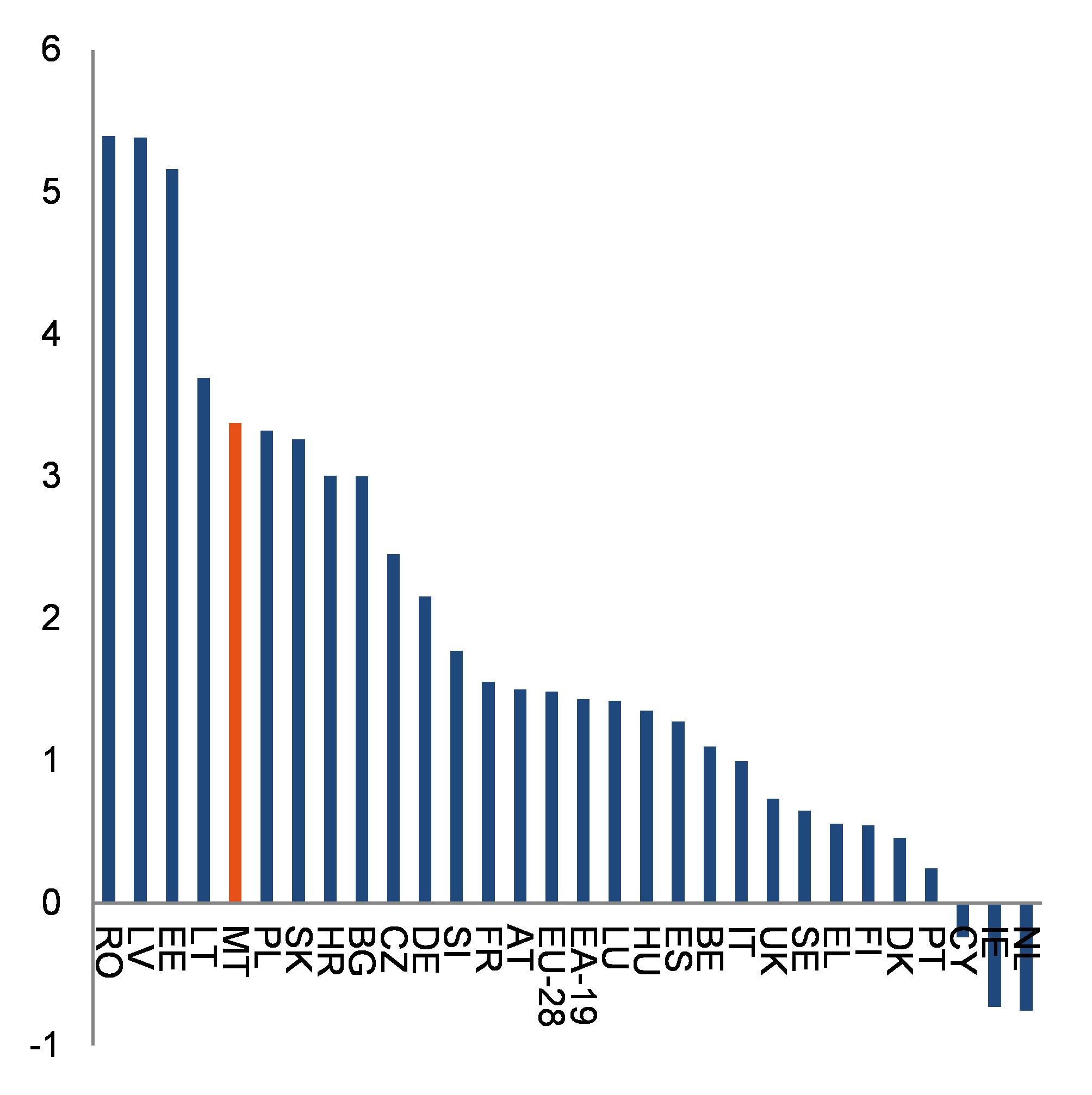
At the same time, current expenditure was relatively dynamic. At 37.9 % of GDP in 2016, total public spending appears low compared to the euro area average of 47.6 %. But Malta had one of the highest growth rates in public expenditure in the EU over the last three years (at 5.6 % vs 1.5 % in the EU). This high growth rate in public spending was partly due to increased public investment related to the absorption of EU funds in 2015. Nevertheless, current expenditure was also very dynamic in the last three years, with a growth rate of 6.0 %, against 1.8 % in the EU.
|
Graph 3.1.2:Average growth 2013-2016 of total current expenditure per inhabitants
|
|
|
|
Source: European Commission
|
Expenditure per capita is growing fast, especially for health and education. While the level of public expenditure per capita in Malta is below the EU average, its growth rate is one of the highest in the EU in the last three years (Graph 3.1.2). The functions where expenditure per inhabitants has increased most are health and education. In the long run, these sectors will also face pressure from the ageing population, thus putting additional pressure on the expenditure dynamic (see below). Growth rates above the EU average have been registered also for economic affairs and general public services, while social protection expenditure is growing at a moderate pace.
Malta has largely achieved fiscal consolidation without penalising public investment, albeit the latter is low compared to peer countries. After declining to 2.2 % of GDP in 2010, government investment increased to 4.3 % of GDP in 2015, reflecting also the necessity to shield EU-funded projects from cuts, which account for a large share of public investment. However, in 2016 it fell significantly to 2.5 % of GDP and it is projected to increase only marginally in 2017, due also to the beginning of the new programming period and despite the accumulation of funds in the National Development and Social Fund (
) related to the IIP. As a result, public investment accounted for 3.5 % of GDP on average in 2014-16, above the EU average of 2.8 % (EA: 2.7 % of GDP), but one of the lowest among peer countries (small Member States).
|
Graph 3.1.3:Gross fixed capital formation in 2012 and 2016 (% of GDP)
|
|

|
|
Source: European Commission
|
3.1.2.Taxation
Malta’s tax system increasingly relies on corporate income tax. In 2016, Malta had an overall tax-to-GDP ratio of 32.7 %, well below the EU average of 38.9 % (
) (European Commission, forthcoming). While the share of taxes on production and imports is in line with the EU average, the share of taxes on individual income is lower than the EU average. Social contributions (5.5% of GDP) represent a relatively small portion of tax revenue (against 12.1% in the EU). In proportion to GDP, corporate income tax revenues (6.5%) are the highest in the EU and 2.5 times the EU average (2.6%). Malta’s corporate income tax to GDP ratio has increased by 2.8 pps. from 2005 to 2016 (from 3.7% to 6.5%), against a decrease of 0.3 pps. on average in the EU. Corporate taxation therefore stands out as an important and growing source of tax revenue for Malta. Malta’s narrow tax base, combined with its tax compliance and planning challenges (see below), could adversely affect the country's fiscal position in the case of economic shocks or international corporate income tax reforms.
Malta has proposed a measure to address its relatively high corporate debt bias. Debt financing seems encouraged in Malta by the corporate tax advantage offered on debt over equity. As a result, Malta has one of the highest debt-equity biases (3.8 %) in the EU (
), and has made no progress in addressing it in recent years (
). Some steps have been taken to reduce the bias, like the Notional Interest Deduction (NID) regime (available from 2018), which is expected to make equity financing more attractive. In particular, it will allow companies and foreign companies with permanent establishments in Malta to claim a deduction on their equity against their tax base. The deduction will be capped at 90 % of the tax base and any excess may be carried forward to be deducted in future years. The 90 % cap may be problematic for young companies, as they tend to accumulate early-year losses. The scheme also contains features which could have a high impact on budget revenues: it applies to all equity, which gives a windfall for pre-existing investments; and the scope of risk capital is broad and the current notional return rate is high, at about 7 % (
).
Some indicators continue to suggest that the country’s corporate tax rules are used by companies that engage in aggressive tax planning. As shown in a study, Malta’s high inward and outward FDI stock (
) is only partly explained by real economic activities taking place in the country (
). The high level of dividend, interest and royalty payments (
) as a percentage of GDP continue to suggest that the country’s tax rules are used by companies to engage in aggressive tax planning. Companies might choose to invest in Malta to benefit from these corporate tax rules. The large majority of FDI is held by 'Special Purpose Entities' (
). The absence of withholding taxes on dividends, interest and royalty payments made by Malta based companies may lead to those payments escaping tax altogether, if they are also not subject to tax in the recipient country. This may facilitate aggressive tax planning. While Malta’s new NID regime will help to reduce the debt equity bias, the current anti-avoidance provisions included in the law are not detailed or strong enough. For example, the NID regime includes neither comprehensive anti-earnings stripping nor adequate anti-cascading rules. This lack of strong anti-abuse rules, combined with the high return rate and not-incremental system of the regime, may provide opportunities for tax avoidance, thus pointing to the need to closely monitor the effectiveness of these anti-avoidance rules. The existence of some provisions in bilateral tax treaties between Malta and other EU Member States, coupled with the Malta’s tax system, where a company being a resident but not domiciled in Malta is taxed on source and remittance basis, may be used by companies to engage in tax avoidance practices.
Malta has taken measures to amend some aspects of the tax system that were facilitating tax planning. The Code of Conduct on Business Taxation Group has approved the closure of the old patent box, to align it with international developments. However, it is subject to a grandfathering clause that lasts until June 2021. While the economic evidence on the effectiveness of patent boxes as a means to encourage R&D remains limited (CPB, 2014), they may be used as tax competition tools (Alstadsæter et. al, 2017). Finally, the provisions of the EU Anti-Tax Avoidance Directives (ATAD) will have to be transposed into national law by the end of 2018 and 2019. The directives will introduce new anti-abuse rules (
). It will be important to assess to what extent this change, in conjunction with the effect of the transposition of the ATAD, will limit the scope for aggressive tax planning in Malta.
Improving VAT tax compliance remains a challenge, but significant progress has been made. Malta recently experienced its biggest decline in the VAT gap (
). In 2015, as a result of a 17 % decline in VAT total tax liability, there was a considerable drop in the VAT gap – to 23 % from 40 % the previous year. The fall is due mostly to the impact on the e-gambling regime of the introduction of the new Mini One Stop Shop regime (MOSS) (
) introduced in 2015 in accordance with EU law. However, the VAT gap remains well above EU average (13 %).
The 2018 budget introduces measures to fight tax evasion. The authorities aim to fight tax evasion and unfair competition by increasing penalties for agreements settled both in and out of court. And the Joint Enforcement Task Force is expected to continue fighting tax evasion, also by increasing the number of inspectors.
3.1.3.Fiscal framework and expenditure review
Public finances have also benefited from the strengthening of the fiscal framework brought about by the Fiscal Responsibility Act. One of the new features of the 2014 Fiscal Responsibility Act was the creation of Malta’s Fiscal Advisory Council (MFAC), whose members were nominated in January 2015 (see European Commission, 2017a). The Council is already a firm fixture in the public debate on fiscal developments. Up to now, it has expressed broad endorsement of the government’s forecasts and assessed positively the compliance with national fiscal rules. But despite those positive opinions, the Council regularly appealed to the government to rigorously execute its budgetary strategy. It also drew attention to the volatility of population projections and the related risk in assessing the long-term sustainability of public finances. Since the Council’s early years of operation have coincided with fairly benign macroeconomic and fiscal developments, its effectiveness is yet to be tested in hard economic times.
The expenditure review is ongoing. The authorities started an expenditure review in 2014 in three areas of public spending that are particularly relevant for fiscal sustainability: social security, health and education. In 2017, the review programme focused on other services within the Ministry for Health, including the Ministry itself, Primary Care Services, Pharmacy Of Your Choice and the Contracts Procurement Services Unit. Each review ended with the publication of a report which included recommendations, some of which have been already implemented (mainly for the first two reviews) and some of which are in the process of being implemented.
Further initiatives are envisaged both in the area of spending review and fiscal framework. The authorities are planning that a review will be undertaken at the Management Efficiency Unit and the Malta College for the Arts, Sciences and Technology. They are also planning to institutionalise the spending review function under a directorate in the Ministry for Finance that deals with public sector performance and evaluation. This directorate will also be in charge of monitoring the recommendations issued in past years in the three areas covered by the spending review and will coordinate in the future. If properly implemented, these initiatives could contribute towards increased effectiveness in public spending. The fiscal framework would also benefit from the planned introduction of accrual accounting in all government departments. This project, which in its initial stage will cover only selected departments, should encompass them all within 30 months. Once finalised, the new system should generate a much more accurate and transparent picture of public finances.
3.1.4.Fiscal sustainability
Malta faces medium sustainability risks in the long term. With government debt below the 60 %-of-GDP threshold, Malta does not face significant fiscal risks over the short or the medium term. However, according to the Commission’s long-term sustainability gap indicator (the S2 indicator (
)), Malta appears to be at medium risk in the long term. Risks to long-term sustainability are driven entirely by the projected cost of population ageing (5.0 pps of GDP), particularly higher expenditure on healthcare and long-term care (2.9 pps. of GDP), but also higher pension expenditure (1.8 pps. of GDP).
Pension system
The long term sustainability of the pension system has improved. Mainly thanks to a more positive assessment of Malta’s long-term growth potential, the long-term sustainability prospects for pension expenditure have improved. However, the measures introduced in the 2016 budget had only a limited impact on long term sustainability, and this remains a challenge in Malta.
Measures to improve pension adequacy continued, but the gender coverage gap in pensions remains high. Last year's fiscal reform introduced substantial tax exemptions on pensions. Efforts towards improved adequacy continue e.g. with upward adjustments and further fiscal reforms. Nevertheless, in 2016 the risk of poverty and social exclusion increased to 26.1 % (2.4 pps) for elderly people, against very dynamic work incomes (see section 3.3). Malta’s 26 pps gender coverage gap (EU average 5 %) for pensioners above 65 years remains (
) one of the highest in the EU. The lower economic activity of women in earlier decades has led to poor pension coverage for older cohorts. The authorities envisage changes to National Insurance contributions seeking to redress the situation of low contributions by women in particular (
).
Healthcare and long-term care system
Indicators on health outcomes have improved and waiting times are being reduced. The performance of the health system has improved, as evidenced by high life expectancy, amenable and preventable mortality rates below the EU average and generally low levels of unmet need. Access to innovative medicines, mainly for cancer treatment, was improved by introducing clinical pathways and innovative procurement strategies. In addition, waiting times for surgical interventions and diagnostics are being tackled thanks to an increased capacity and commissioning of some services from the private sector. Nevertheless, some risk factors may have a negative impact on fiscal sustainability in the future. In particular, rising obesity levels pose a significant challenge to public health (IHME, 2016).
Challenges remain in the redistribution of resources and activities from hospital to primary care, and in access to innovative medicines. The institutional setting of primary healthcare provision puts pressure on both hospital and emergency care, also making the management of care for patients with chronic conditions more complex. Hospital and primary care are not well coordinated, emergency care remains inefficiently used, thus not improving the efficiency of the health system nor reducing pressure on its long-term sustainability. Finally, access to innovative medicines remains a major challenge, also in budgetary terms (OECD/European Observatory on Health Systems and Policies, 2017).
Initiatives are being undertaken to cater for growing demand in the long-term care system. Due to the increasing demand for long-term care, the government is incentivising community-based and home care, which are considered cheaper than institutional or hospital care. Better coordination between the health sector and the social sector would also help the sustainability in the long-term.
3.2.
Financial sector
Financial stability
Good economic performance has been reflected also in the performance of the banking sector, while new accounting rules call for extra provisions. In 2017, domestic banks further increased their profitability on an annual basis, although this had come down substantially during the crisis, mainly due to the compressed interest rate margins. The profits came mainly from improved interest margins, with higher lending rates and expanded mortgages in terms of volume, and flat, low deposit rates. Domestic banks are well capitalised according to the local supervisor, with capital ratios (CET1) at 15.5 % on September 2017 (Table 1.1). Although Maltese banks are considered well provisioned, with half of their collateral being real estate property whereby 10-30 % haircut on the value of the property is applied, extra provisioning is called for following the new accounting rules (i.e. IFRS9). According to EBA estimates, domestic banks will need to increase their provisions by around 13 % on average from the current provisions they hold (under IAS39). The current coverage ratio stood at 46.3 % in June 2017. The two largest domestic banks increased their capital buffers in Q3 2017, by issuing subordinated debt, giving them sufficient comfort for the upcoming EU-wide stress test in 2018.
In line with firms’ enhanced financial results, but also due to new supervisory rules, credit risk has improved. Consistent with strong economic growth, the formation of new gross non-performing loans (NPL) has declined. Moreover, stricter supervisory rules on reducing NPL pushed domestic banks to further reduce their stock of legacy assets to 4.3 % of total gross loans by June 2017, a decrease by 19 % since the beginning of the year. The reduction of NPLs was conducted mainly through write-offs, which banks managed to afford through a combination of higher profits and some provisions. While legacy exposures to households were further reduced, and stand at 3.9 %, those to the corporate sector remain relatively high, at 10.2 %. These exposures relate mainly to the construction sector, where a large stock of NPLs was build up during the crisis period. The effort by domestic banks to reduce and write-off legacy assets was incentivised by the relevant change in the supervisory requirements, notably the amended Banking Act, published in December 2016 (
).
|
|
|
Table 3.2.1:Financial soundness indicators, total (i.e. domestic and international) banks, Malta (%)
|
|

|
|
Source: ECB CBD
|
|
|
Given the international dimension of the insurance sector, ensuring effective cross-border supervision and strengthening supervisory capacity is crucial. Insurance companies registered in Malta and writing business across the EU are under direct supervision by the Maltese regulator, the Malta Financial Services Authority (MFSA). The main destinations for cross-border insurance business are the UK, Ireland, the Netherlands, Italy and Germany. Over the past two years, five new foreign financial companies with EU cross-border activities were established in Malta. At the end of 2016, 95 % of the non-life insurance business and over 70 % of the life business registered in Malta was written abroad. This aspect – together with the complexity of insurance business models and products, with increased appetite for establishing and expanding specialised insurance vehicles – calls for stringent supervisory attention. Whereas insurance supervision has been strengthened since the Solvency II regime was transposed into national law, the implementation of the new supervisory powers needs to be further monitored. In addition, the MFSA seems understaffed to ensure effective supervision of a large number of foreign financial companies (both banks and insurance companies). Lack of human and financial resources may undermine the effectiveness of supervision, especially in the insurance sector, with potential consequences across the Single Market, given the focus on cross-border business. Measures to ease restrictions on remuneration levels are in progress.
Anti-money laundering
Ensuring an effective legal framework to combat money laundering remains critical, given the size of Malta’s financial sector. Malta is an important international financial centre. The Maltese authorities notified a complete transposition of the Anti-Money Laundering Directive in December 2017. Further analysis is needed to assess if these measures are sufficient to ensure an effective framework for the fight against money laundering and terrorist financing. The 2018 EU Justice Scoreboard examines the functioning of EU Member States’ justice systems when dealing with money laundering criminal offences, but no data was available for Malta.
Housing market
House prices are increasing sharply driven by several factors. In recent years, house prices increased considerably, by 5.8 % and 5.6 % in 2015 and 2016, respectively (see also European Commission, 2017a). This growth rate was sustained in the first half of 2017, at 5.3%. Factors behind these developments include strong economic activity, buoyant labour market together with rising numbers of foreign workers, and low interest rates which make property a more attractive asset. Lower interest rates have both reduced the cost of borrowing and boosted demand for property through portfolio rebalancing. Some policy measures have also contributed to the recent rise in house prices, namely the stamp duty exemption for first-time buyers (
), the Individual Investor Programme (IIP) (
), the reform to rental income tax legislation (all introduced in 2014) and the 2015 capital gains tax reform. In addition, the tourism sector seems to put pressure on house prices and availability, as in 2014-16 the percentage of tourists (share of guest nights) using private accommodation has increased from 34.4 % to 40.6 % (Malta Tourism Authority, 2016).
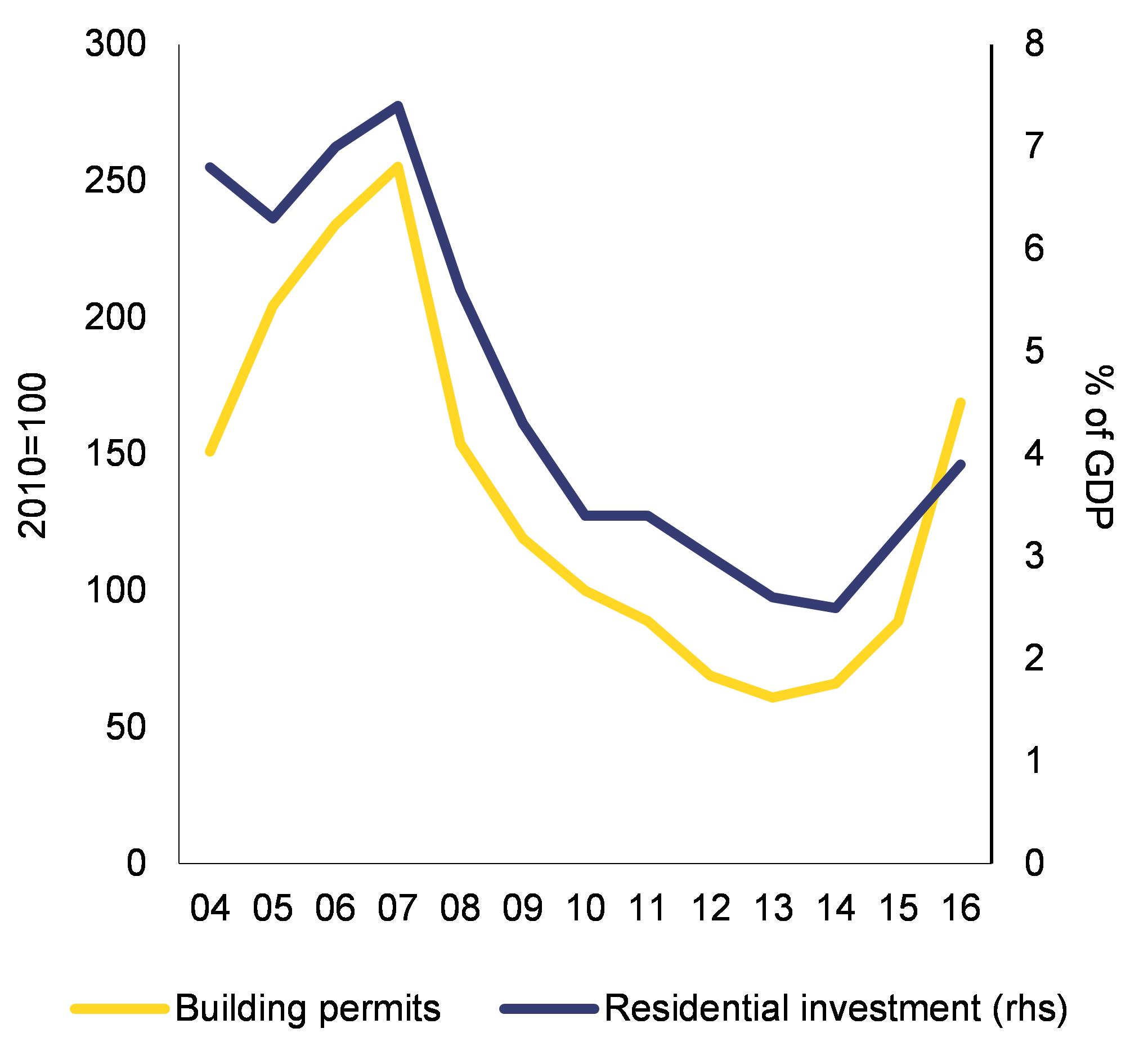
Residential construction seems to be experiencing very rapid growth, which could further fuel price expectations. In response to the higher demand, supply has also expanded, with profitability in the sector (
) increasing despite growing costs. Building permits have been on a rapid recovery path since 2014 and the increase was more pronounced in 2016, especially for apartments which doubled. Also the volume of property transactions has been very dynamic since 2014, resulting in one of the highest rates in the EU of non-recurrent tax on property as a proportion of total taxation.
|
Graph 3.2.1:Residential investment and building permits
|
|
|
|
Source: European Commission
|
Despite increasing house prices, housing in Malta is generally affordable, though there are increasing concerns for low-income households. Overall housing conditions are favourable (Housing Europe, 2015). Indeed, the overcrowding rate (
) in 2015 was at 3.5 %, one of the lowest in the EU, and considerably below the EU average of 16.8 %. However, the severe housing deprivation rate for tenants who rent at market price is 10.1 %, significantly higher than for home owners (0.5 %) and also above the EU average (6.4 %). The share of the population who rent at market prices is currently relatively low in Malta. Access to affordable, quality housing might become more difficult for low-income earners, due to increased demand for rental housing by new residents and the already existing waiting lists for social housing (see also section 3.3).
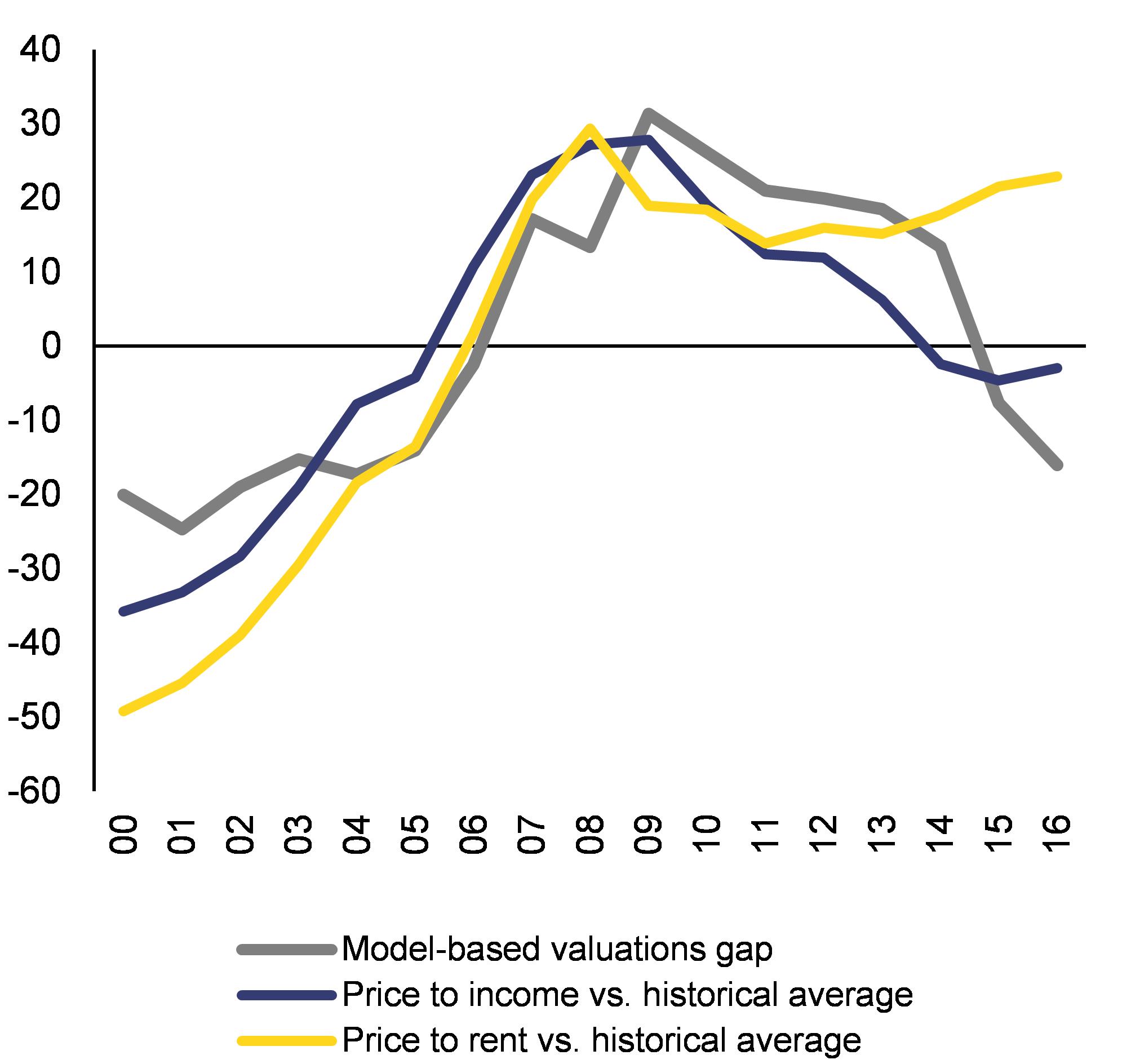
House prices seem broadly in line with fundamentals, though recent trends could result in risks, going forward. The price-to-rent ratio remains close to its 2007 peak. However, the other valuation estimates show that the excessive price growth prior to 2008 has corrected. Overall, these metrics do not point to significant risks of overvaluation, although the trend is on the upward side, thus requiring additional monitoring. Approximate information on the ratio between house prices and household income in Malta can be estimated using the ECB Household Finance and Consumption Survey. This reflects the number of years of income per capita needed to buy an average 100 m2 dwelling, with the value of 10 being the prudential threshold. According to these data, the ratio of prices to income can be estimated at around 10 for Malta (
).
|
Graph 3.2.2:Overvaluation gap of house prices
|
|
|
|
Source: European Commission
|
Lending to households led to rapid growth in mortgage lending, mainly at variable rates. Lending to construction and real estate activities recovered, in particular in the third quarter of 2017, on the back of positive developments in the property market. At the same time, mortgage lending remained buoyant. In recent years, new mortgages at variable rates have represented between 70.4 and 98.4 % of the total. A further rise in interest rates could have some impact on both households and domestic banks’ balance sheets, due to their exposure to property-related loans. In light of this, close monitoring of the housing market would help prevent possible adverse developments.
3.3.
Labour market, education and social policies
3.3.1.Labour Market
On the back of strong economic growth, Malta’s labour market outcomes have further improved. The employment rate rose for both women and men, reaching 71.8 % in Q3 of 2017, close to the EU average. Activity rates have continued to rise. The unemployment rate has reduced further to 4 % in 2017. Long-term unemployment is very low. Average wage growth remained moderate despite low unemployment and increasing labour shortages, but is expected to pick up in 2018-19 (see Section 1). Labour market outcomes have improved on the back of strong economic growth in recent years, supported by a well-functioning social dialogue. The Malta Council for Economic and Social Development is currently being restructured, potentially further improving social dialogue.
The employment rate for prime age women is improving but employment rates fall sharply after the age of 30. The female employment rate (20-64 years) continued its steady growth to 55.5 % in 2016 but implies a large gender employment gap, except for women below 30: the employment rate for women 25-29 years has been high at 82.9 %. Employment rates drop considerably for women after 30. By contrast, the employment rate for men continues to rise or remains stable above the age of 30, resulting in a large and growing employment gap from the 30-34 age group onwards. Policies to increase female labour market participation may so far be more effective for younger women whereas the structural change required at older ages is more challenging.
‘Make work pay’ policies continue to support female employment, but the sharing of care responsibilities between women and men remains unbalanced. The 2018 budget announced several extensions of the 'make work pay' measures that could improve work-life balance. These include income tax rebates for long-term unemployed women on re-entering work, benefits and maternity leave for self-employed women, expanding availability of before and after school care; leave to care for sick children; financial incentives for employers to introduce work-life balance measures. However, fathers still have very limited entitlement to paid leave (only 1 day of paternity leave), and parental leave is not compensated. This often prevents men, generally main earners, from taking it thereby reinforcing an imbalance in the share of work and caring responsibilities between women and men.
|
Graph 3.3.1:Employment rate by age and sex, 2016
|
|

|
|
Source: Eurostat – EU Labour Force Survey
|
Participation by children below 3 years old in formal childcare remains below EU average. Despite significant efforts to offer almost universally free childcare, current take-up is below EU average and the Barcelona target of 33 % coverage. (
) Take-up may be linked to female labour market participation and must be seen in the context of low education outcomes and high migrant population, where participation in early childcare has been associated with improved outcomes.
The employment rate of people with disabilities is low. In 2015, the employment rate of people with disabilities, at 25.8 % (EU average: 47.4 %) was the lowest in the EU, potentially reflecting the lack of effectiveness of the measures to support their employment. Difficulties on the labour market could be linked to the gap in educational attainment between people with and without disabilities (also the largest in the EU), reflecting partly the difficulties of children with disabilities in reaching their full education potential.
|
Box 3.3.1: Monitoring performance in the light of the European Pillar of Social Rights
The European Pillar of Social Rights, proclaimed on 17 November 2017 by the European Parliament, the Council and the European Commission, sets out 20 principles and rights to benefit citizens in the EU. In light of the legacy of the crisis and changes in our societies driven by population ageing, digitalisation and new ways of working, the Pillar serves as a compass for a renewed process of convergence towards better working and living conditions.
 Malta performs relatively well on the indicators of the Social Scoreboard (1) supporting the European Pillar of Social Rights. The labour market situation is especially good in Malta. Over the year, the unemployment rate continued to decline to presently favourably low levels. However, Malta has a high number of early school leavers and low employment rates for people with disabilities. Important reforms have significantly increased female labour market participation especially of younger women, but the employment rate of women is still comparatively low.
High early school leaving rates still present obstacles on ensuring equal opportunities. Efforts to address the high flows of young people leaving school with low-skill levels and the high proportion of low-skill levels in the population have started to bear fruit, but still need to produce their full effect.
|
Measures to improve access to employment for people with disabilities are beginning to bear fruit. In 2015, steps were taken to enforce a previous measure stipulating a 2 % minimum quota of people with disabilities in all companies employing more than 20 people. This was further supported by programmes to increase work readiness for people with disabilities and train employers to adapt the workplace. National data indicate an increase from just 11 % in 2014 to close to 60 %, or 820 enterprises are now hiring workers with disabilities in Malta in 2017. However, the latest available statistics on disability (see Graph 3.3.2) do not yet give a full understanding of the labour market impacts.
|
Graph 3.3.2:Employment gap of persons with disabilities by gender and Member State (age 20-64), 2015
|
|

|
|
Source: EU-SILC UDB 2015
|
The share of employers reporting labour shortages has increased substantially. In 2017, more than 30 % of companies reported labour shortages. This is one of the highest shares in the EU and has increased significantly compared to 2016 (see Graph 3.3.3). Shortages are most pronounced in the services sector, with almost 40 % reporting low availability of labour constraining their business. Qualitative evidence points at unfilled vacancies for high skilled jobs in sectors such as healthcare, finance and ICT, reflecting the fact that Malta has one of the lowest shares of tertiary level graduates in the EU.
Reliance on foreign labour to address labour and skills shortages is increasing. The share of foreign workers has increased substantially across all skill levels and reached 16.7 % of the workforce in 2016 (compared to 5.5 % in 2009). While Malta is experiencing comparatively high growth in ICT services, the share of graduates in Science, Technology and Mathematics is insufficient to meet this demand and is well below the EU average: 1.5 % compared to 1.8 %. Over two thirds of foreign workers originate from the EU (71.8 %) (
), and less than a third are non-EU nationals. Compared to the native population, foreign workers have on average a higher level of skills. Whereas in 2016, 30.8 % of foreigners (25-64) had tertiary education, it was only 19.6 % for the Maltese population in the same age group (
).
|
Graph 3.3.3:Share of employers by sector reporting labour shortages in Malta
|
|

|
|
Source: European Commission
|
The last decade has also seen a steep increase in the number of asylum seekers and refugees in Malta. Per capita, Malta receives relatively high numbers of asylum seekers and refugees. For third country nationals including asylum seekers, a Job Brokerage Office has been established to facilitate work opportunities, but there seems to be a lack of awareness of this service among potential employers. The service aims to give these workers' rights and opportunities to work under the standard conditions and legal provisions covering employment in Malta. While measures are in place to facilitate their recruitment, there are indications that certain third country migrants may not fully benefit from standard rights and conditions and may also encounter discrimination (see FRA, 2017).
3.3.2.Education and skills
Despite improvement in recent years, the early school leaving (ESL) rate continues to be a challenge. In 2016, Malta had one of the highest ESL rate (19.6 %) in the EU and is still far from reaching its ambitious Europe 2020 national target of 10 %. The rate is considerably higher for men than for women, and is especially high for people with disabilities (39.5 % compared to the EU average of 22 % in 2015). And the gender gap (7.3 pps) is well above the EU average of 3 pps. Malta is implementing a range of measures designed to prevent or compensate for early school leaving. Improvements may be seen in the longer term, but latest progress has not been impressive.
Learning outcomes are strongly influenced by socio-economic background and type of school. Basic skills attainment among young people, as measured by the OECD’s Programme for International Student Assessment (PISA), has improved somewhat between 2009 and 2015, but remains weak. Fifteen year olds perform below the EU average, and improvement was only significant in mathematics. Socio-economic status strongly influences student performance, as does the type of school, with ‘independent’ (i.e. private) school students performing best, followed by church school pupils and then state school pupils. These findings were confirmed by the 2015 Trends in International Mathematics and Science Study survey of 13-14 year olds.
Vocational education and training (VET) graduates have good employment outcomes. The employment rate for VET graduates was one of the highest in the EU in 2016 (96.2 % against 75 % in the EU). Both the availability and quality of work-based programmes have increased due to an enhanced partnership with employers. However, the proportion of upper secondary students (ISCED 3) in VET decreased slightly in 2015 to 12.7 % and is far below the EU average of 47.3 %. A standardised legal framework –the ‘Work-based learning and the Apprenticeship Act’ – is currently being finalised.
The tertiary educational attainment rate is rising steadily but still below the EU average. The rate for people aged 30-34 increased by 6.4 pps over the last five years, though at 29.8 % in 2016, it remains one of the lowest in the EU. The gender gap is relatively low, at 5 pps against 9.5 pps in the EU. At the same time, the employment rate for recent tertiary graduates increased by almost 4 pps between 2013 and 2015 and, at 97 %, is one of the highest in the EU, reflecting the demand for highly educated and skilled labour in Malta. With two additional Bachelor-awarding state institutions, Malta now has three such institutions, the University of Malta, MCAST and ITS. In April 2017 a public consultation was launched to create a sustainable framework to support higher education institutions and to improve the quality of teaching and learning.
|
Graph 3.3.4:Early school leaving rate
|
|

|
|
Source: European Commission
|
Skills levels and participation in adult learning are growing but remain quite low. Participation in adult learning (25-64) slightly increased to 7.5 % in 2016, but is still low compared to the EU average of 10.8 %. Participation rates are especially low for the low-skilled, increasing only modestly to 3 % in 2016, against 4.2 % in the EU. Efforts to enhance participation in education and adult learning also aim to improve quality and relevance to the labour market and should facilitate implementation of the Council Recommendation on Upskilling Pathways (
). The Continuous VET (CVET) strategy, supported by the ESF, combines a comprehensive set of measures including: career guidance, retraining and up-skilling of workers in shrinking sectors; and a framework and financial initiatives for employers to invest in CVET for the low-skilled (see also European Commission, 2017b).
Measures have been undertaken to improve skills governance by bringing together education and the labour market. A high level National Skills Council was set up in December 2016 and has since identified three priority areas: work-based learning; digital skills; and research and development. Moreover, Malta is building a national framework for the validation of non-formal and informal learning (
) and a skills forecasting and anticipation system (
). However, the impact of these measures will become visible only in the longer term.
|
Graph 3.3.5:Participation rate in education and training (25-64 years), 2016
|
|

|
|
Source: European Commission
|
Despite improvements in recent years, Malta's workforce remains relatively low-qualified. In 2016, Malta still had the highest share of low-qualified adults aged 25-64 (54.8 %) in the EU, although it was decreasing. Performance on basic digital skills has improved and is now around the EU average. To address this issue, the Malta Communications Authority (MCA) and the Ministry for Education and Employment offers children regular coding sessions in schools. For the elderly, both the MCA and the Malta Information Technology Agency (MITA) have a number of projects offering training to boost basic digital skills. And MITA organises summer work placements for ICT students.
Recent actions to tailor skills to the needs of innovative firms are an important step forward. The launch of several schemes (STEPS grants, the Reach High postdoctoral grant scheme), coupled with increased public expenditure in tertiary education (see European Commission, 2018a) and improved entrepreneurship training are starting to have a positive impact. Malta ranked first in the EU in terms of graduates in the field of computing (6 per thousand of population aged 25-34 in 2014) and 16th for new graduates in science and engineering (15 per thousand of population aged 25-34 in 2014).
3.3.3.Social policy
Favourable economic and employment conditions led to a significant reduction in the proportion of people at risk of poverty or social exclusion. Poverty risks reverted to 2008 levels, as those at risk dropped by a further 2.3 pps to 20.1 % in 2016, below the EU average (23.4 %). From 2015 to 2016 Malta almost halved severe material deprivation, to 4.4 % in 2016 (
). Adults and children living in single-earner households face higher risks of poverty, highlighting the importance of facilitating the labour market participation of second earners, most of them being women. The low-skilled also face a higher poverty risk including when at work, as in work poverty for the low skilled increased to 10.5 % in 2016.
The elderly and people with disabilities face a relative increase of their risk of poverty, as they mainly depend on social transfers. People with disabilities (16-64 years) in Malta face a greater risk of poverty or social exclusion (41.3 %, 2016) compared to EU averages (37.5 %, 2016). Malta’s welfare system does go some way protecting people with disabilities, but the lack of inclusion in education and the labour market creates a high degree of benefit dependency. The share of elderly over 65 years (26.1 %) at risk of poverty continued to increase, and is higher than the EU average (17.7 %). However, the comparatively small and declining poverty gap from the median income (11.1 % compared to 16.5 % in the EU in 2015) reflects adequate pension levels overall. People who mainly depend on social transfers do not immediately benefit from labour market improvements, and the impact of recent measures to upgrade disability benefits cannot yet be seen in available income data.
Poverty risks for third country nationals have increased. Despite high employment rates, poverty risks increased for third country nationals by 9 pps since 2010 to 29.4 % in 2016, while their numbers increased more than threefold over that period. Evidence suggests that migrants in general are facing difficulties in accessing services needed for their integration into society, including language training, affordable housing (see section on housing rents), access to finance and health services. In addition, third country migrants face particular challenges opening bank accounts and this will impact more on refugees and asylum seekers. Currently measures are in place to facilitate the recruitment of migrants (see Section 3.3.1) by speeding up work permit applications and introducing the Job Brokerage Scheme. And Malta has recently published a specific migrant integration strategy.
|
Box 3.3.5: Policy highlights
Building an effective apprenticeship framework
Malta undertook with support from the European Social Fund, a comprehensive reform of their apprenticeship scheme. More emphasis was put on quality and on a reinforced employers' role in assessments. Apprenticeships have expanded to new sectors and participation increased more than five-fold with 900 interested companies and 455 participants (2015/2016). In 2016/17 around 18% of students in the European Qualifications Framework (EQF) level 3 programmes were apprentices and in level 4 the take-up was 40% (CEDEFOP, 2017). The quality criteria include inter alia defining rights and obligations for vocational education and training (VET) providers, employers and learners, setting a minimum number of hours for work-based learning and linking remuneration to the minimum wage. They can now offer over half of EQF level 3 and 4 programmes as apprenticeship. A harmonised legal framework "Work-based learning and the Apprenticeship Act" is also being finalised.
|
Malta is addressing its social challenges and strengthening policies for active inclusion. Income inequalities are relatively stable and below the EU average, mostly due to low market income inequalities. The tax and benefit system reduces disposable income inequality substantially, but to a lesser extent than the EU average. Still, Malta performs above EU average for the indicators related to adequacy of minimum income benefits. While recent reforms set out to increase the redistributive impact of the tax and benefit system, the lagged effects are not yet reflected in aggregate economic figures. Malta has also invested in measures to reach the most vulnerable in society with the support of EU funds. In particular, the LEAP centres provide personalised integrated support to families, facilitating access to employment and social services. More than 25 000 households have received food support through national and FEAD schemes.
Malta’s social protection coverage is wide, and gaps are limited. Generally, the social security system does not distinguish between the self-employed and employees as regards benefit entitlement. For those who satisfy the relevant conditions, entitlements do not differ. While self-employed people are not entitled to contributory unemployment benefits, unlike employees, they may qualify for the means-tested ‘social assistance’ and the tapering of benefits which was introduced with the ‘make work pay’ reforms (see European Commission, 2017c). The share of short term unemployed receiving unemployment benefits (
) is significantly below the EU average. This is partly due to the short duration of benefits and possibly to a high level of non-take up as unemployment spells are short and benefits are flat rate. The qualifying period for the receipt of unemployment benefit is one of the shortest in the EU.
3.4. Investment
3.4.1.Business environment and public administration
While investment in Malta has recently been highly dynamic, most companies consider that barriers to investment still exist. In 2016 investment registered a marginal increase, following a sharp rise in 2015 (see also Box 3.4.1). Data from the EIB show that in 2017 most firms (94 %) based in Malta considered the availability of skilled staff as a barrier to investment (EIB, 2017) (see also Section 3.3). Business regulation, transport infrastructure and energy costs are also mentioned by around 70% of firms. Transport infrastructure appears to be a growing concern for companies operating in Malta, which see this aspect as the major priority for public investment (see also section 3.5).
The Maltese SME sector has thrived in recent years. In 2015-2016, value added and employment by SMEs rose by 7.0 % and 4.2 % respectively. This dynamism is also reflected in the large number of high-growth firms. In 2015, 12.5 % of all firms with 10 or more employees were high-growth firms (
), second highest share in the EU. This upward trend is expected to continue in 2016-2018. Value added by SMEs is projected to grow by 15.4 %, along with an increase of 6.3 % in SME employment, corresponding to around 6,700 new jobs. The productivity of micro firms SMEs, calculated as value added per person employed, is higher than EU average, while it is below EU average for SMEs (see also Table 3.4.1).
Nevertheless, firms’ innovation activities and capacity to scale up their investments appear limited. Firms’ share of turnover relating to innovation remains low (4.1 %) compared to the EU average (13.4 %) (
). Recent data show that although the development of new products/services is the top investment priority for small and micro firms, the latter are also less likely to develop new products, processes or services than medium and large firms (EIB, 2017). The prevalence of micro and small size firms (both as a share of employment and value added) translates into firms’ limited capacity to grow and undertake risky activities. Not surprisingly, the top sectors in terms of business R&D expenditure (ICT, electronic components and boards, pharma) are not amongst the top contributors to gross value-added (
).
|
Graph 3.4.1:Number of persons employed in SMEs
|
|

|
|
Source: European Commission
|
|
Graph 3.4.2:Value added of SMEs
|
|

|
|
Source: European Commission
|
In relation to the indicators on the digital economy, Malta’s performance appears mixed. Malta is a European leader in fast broadband (30 Mbps and above), being the only Member State with full coverage of NGA networks. Malta is also very advanced in the provision of digital public services. At the same time, it scores below the EU average in digital skills and in mobile broadband.
The business environment is improving, although inefficiencies remain in some areas. The European Commission’s indicators of the responsiveness of administration to the needs of SMEs (European Commission, 2017d) confirm that significant efforts have been made. For instance the number of days to start a business (3 days) has improved compared to last year (6.5 days) and time to transfer property (15 days) is shorter than the EU average (23.8). However, the costs of transferring property and costs of enforcing contracts are very high (respectively 13.5 % of property value and 35.9 % of claims against EU averages of 4.8 % and 22.0 %). Malta’s performance under the indicators on the ‘second chance’ area is particularly weak (
). However, the actual implementation of recent improvements to the insolvency legal framework (notably efforts to reduce the time for restructuring and increase the availability of qualified practitioners) is expected to translate into practical effects over the next years.
The perceived quality of governance seems to have slightly decreased over the last decade. According to the World Bank’s 2017 Worldwide Governance Indicators (WGI), Malta’s rank between 2006 and 2016 in almost all areas of governance has slightly worsened (see Figure 3.4.3), in particular concerning the areas of ‘Rule of Law’ and ‘Control of corruption’ (
). Furthermore, according to the World Economic Forum Global Competitiveness Index (GCI) 2017/2018 (
), despite an overall rather positive score (37th in ranking, with a value of 4.6), the ranking is remarkably lower for specific components such as trust in politicians and favouritisms in decisions of government officials. Inefficient government bureaucracy is identified as the single biggest obstacle in doing business in Malta according to the GCI survey’s respondents. The influence of private interests on public decisions affects the business environment and the sustainability of Malta’s development model (see also sections 3.4.4 and 3.5).
|
Graph 3.4.3:World Bank 2017 Governance Indicators - Malta
|
|

|
|
Source: World Bank
|
Competition in business service sectors is still constrained by restrictive requirements. Despite the full transposition of the Professional Qualifications Directive (
) in the fourth quarter of 2017, certain services are still subject to specific requirements. The degree of restrictions in professional services, which often represent also key inputs for manufacturing, is higher in Malta with respect to the EU average (European Commission, 2015 and 2017e). In particular, restrictions concern architects, civil engineers, accountants, tourist guides, and lawyers (
).
3.4.2.Access to finance
Only a minority of Maltese firms are finance constrained. In October 2017, 6 % of SMEs in Malta considered access to finance as the most important concern (down from 11 % in 2013 and compared to an average of 7 % at EU level). According to the EIB Investment Survey, in 2016 firms in Malta largely depended on internal funds for financing their investments (almost 80 % against the EU average of 60 %); in 2017, internal funding diminished to 60 % while intergroup lending emerged as a supplementary source of finance for 11 % of investments (against the EU average of 3 %). The three most important sources of external financing are credit lines (relevant for 78 % of SMEs), bank loans (63 %) and trade credit (62 %), while equity financing is relevant for 25 % of SMEs (European Commission, 2017f). Among firms applying for bank loans in Malta, the share of SMEs that did not manage to get the full bank loan financing they had planned for during 2017 decreased to 15 % from 29 % in 2014, in line with the EU (EU average: 17 % in 2017 against 34 % in 2014). Furthermore, the share of bank lending has been falling.
However, the current reliance on internal funding might constraint access to finance for innovative firms in the longer term. According to the Central Bank of Malta, the banking sector is reluctant to provide credit for SMEs investment, especially innovative ones, for which strong collaterals are not available. The current positive macroeconomic conditions and liquidity of the market allow for alternative sources of finance (reinvestment of profits, intra-sectorial lending, foreign lending). However, this segment of the economy remains more exposed to the risk of possible downturns. The recently launched Seed Investment Scheme (see section 3.4.3) is expected to boost the use of equity funding for innovative start-ups. In the future, the launch of the Malta Development Bank’s lending activities would set up a system of guarantees to remedy the market failure. According to the authorities, this bank is expected to focus on finance for long-term infrastructural projects and for SMEs.
3.4.3.Research and development
Malta’s Research and Development (R&D) performance has improved. The improvement in the R&D performance is partly due to sustained efforts by the public authorities to build an R&D system based on indigenous strengths, involving several policy measures to support the emergence of an innovation ecosystem and innovative firms (
). To increase the use of equity funding, in 2016 the government launched the Seed Investment Scheme, which provides tax credits to investors investing in Maltese start-ups or early stage companies. This scheme complements existing R&D tax credit schemes. However, better monitoring and evaluation of the different measures would help to better understand their effectiveness, notably in boosting private R&D expenditure.
|
Graph 3.4.4:Evolution of business R&D intensity and public R&D intensity in Malta, 2004-2016
|
|

|
|
Source: European Commission
|
Structural factors continue to hamper the growth of R&D-intensive firms and thus the development of a thriving innovation ecosystem. Firms have limited capacity to scale up their R&D activities, due to their small size (
), reliance on internal funding for R&D expenditure and the limited size of the local market. Their investment in intangible assets (
) has declined in relative terms since 2016 and revolves around computer software, databases and organisation/business processes, which partly reflects Malta’s specialisation in ICT (EIB, 2017). The overall lack of critical mass is further evidenced by the low business enterprise R&D expenditure (BERD) intensity (with 0.39% of GDP in 2016, Malta ranked 23th in the EU), which moves the country further away from its target of 2% R&D intensity (see Graph 3.4.4). Evidence also indicates the scope for innovative firms to increase their R&D intensity, through better science-business linkages.
3.4.4.Justice system and corruption
Judicial system
The Maltese justice system continues to face a number of challenges. This concerns in particular very long proceedings in administrative cases. In 2016, the average disposition time for first instance administrative law cases was 1,464 days, among the longest in the EU (European Commission, 2018b). Compared to 2015 (495 days), this represents an almost threefold increase. In the important category of first instance litigious civil and commercial cases, disposition remained high in 2016 (432 days), although slightly less than in 2015 (445 days).
The implementation of the programme of judicial reforms has continued. Judicial reforms in the area of civil, commercial and administrative justice aim to improve the efficiency and quality of the judicial system. The 2016 legislation on the appointment of judges and magistrates has been implemented, and in 2017 three candidates were appointed (one judge and two magistrates). Each judge (but not magistrates) is entitled since 2016 to be assisted by a court attorney, chosen by the judge and appointed for a 3-year (renewable) mandate. According to Maltese authorities, court attorneys have so far dealt with the preparation of over 2,000 judgments in the civil area, and contributed to substantially reducing backlogs and increasing the clearance rate for first instance civil and commercial litigious cases. Under the programme of judicial reforms two pieces of legislation have been adopted, which aim at further court specialisation, reduced backlogs, improved insolvency proceedings and strengthened mediation (
).
Initiatives are ongoing to improve the quality of the justice system, including e-justice. In March 2017 the ‘MY CASE’ system became operational. It allows lawyers and their clients to follow developments in their judicial cases in real time. The Legal Aid Agency was established in 2014 and offers its services to the most needy. The budget for legal aid is currently EUR 150,000 and will be increased to EUR 400,000 in 2018.
Anti-Corruption
Corruption and favouritism are perceived as a problematic factor for doing business in Malta. According to a recent Flash Eurobarometer survey, a majority of business representatives agreed with the statement that favouritism and corruption hamper business competition in Malta (85 %, up from 78 % in 2015, EU average: 74 %). A similar share of respondents thinks corruption is widespread in Malta (84 %, EU average: 67 %). Over half of the managers surveyed identified corruption as a problem when doing business (58 %, up from 44 % in 2015, EU average: 37 %), and disagreed that measures against corruption are applied impartially and without ulterior motives (up from 41 % in 2015 to 57 % in 2017, EU average: 54 %) (European Commission, 2017g).
There is a fragmented landscape of agencies dealing with corruption allegations. The Attorney General’s Office, the Police, the Permanent Commission against Corruption, the Internal Audit and Investigations Department, within the scope of their competence, can deal with allegations of corruption. However, criminal investigations are carried out by the Police, while prosecution is co-ordinated between the Attorney General and the Police. The Commissioner of Police and the Attorney General are appointed by the government and the Permanent Commission against Corruption is designed to report its findings to the government. Other organisations competent for processing information on corruption allegations in their own competence have faced challenges in conducting thorough enquiries because of lack of necessary means, powers or resources. The absence of established procedures to ensure independent treatment of cases in responding to corruption allegations may result in inconsistencies in handling corruption allegations.
|
|
|
Table 3.4.1:Enterprises, employment and value added by firm size class
|
|

|
|
Source: DIW Econ
|
|
|
Box 3.4.6: Investment Box -challenges and reforms in Malta
Section 1. Macroeconomic perspective
The Maltese economy entered into a strong investment cycle as of 2014. The level of investment grew sharply in 2015 and marginally increased further in 2016. Provisional data from 2017 point out to a contraction in investment despite dynamic construction activity and improved firms’ balance sheets, reflecting the still-high base from 2016. The recent investment cycle was driven by both the private sector and the government, as a result of a number of large scale projects in the energy sector, other private investments in particular in the aviation sector, and the finalisation of projects funded by the 2007-2013 EU financial framework.
Section 2. Assessment of barriers to investment and ongoing reforms

Barriers to private investment in Malta are reflected in the European Commission's assessment of investment environments (
III1). Some reforms have been adopted or are in the pipeline, in particular in the areas of the judicial system and skills mismatches, but some barriers remain to be addressed.
Main barriers to investment and priority actions underway
·Skill shortages, in particular in the service sector, still weigh on investment. The share of employers reporting labour shortages has increased substantially in 2017 and is one of the highest in the EU. The lack of availability of skilled staff has resulted in increasing reliance on foreign labour. A series of initiatives have been recently put in place to improve skills governance by better aligning education with business needs (see Section 3.3).
·Infrastructure bottleneck, also linked to the country's insular nature, have been exacerbated by the ongoing economic expansion. In particular, severe traffic congestion constitutes an important barrier to investment as it increases transport costs and has a negative impact on productivity. While the car fleet has increased in volume, the quality of road infrastructure is perceived as particularly low. In 2017, Maltese authorities have announced a project to upgrade the road network over a period of 7 years, although this is expected to only partially address congestion (see Section 3.5).
·The investment climate would benefit from an improved judicial and anti-corruption framework. The Maltese justice system continues to face challenges concerning its efficiency, in particular regarding the length of proceeding in administrative cases. Malta is also characterised by a fragmented anti-corruption landscape. In a recent Flash Eurobarometer Survey, more than half of the surveyed company managers identified corruption as a problem when doing business. Recent reform measures aim at enhance the judicial system efficiency by fostering court specialisation, reducing backlogs and improving the insolvency framework (see Section 3.4).
|
3.5. Sectoral policies
3.5.1.Transport
Enhancing the sustainability of Malta’s growth model remains a challenge. The recent developments of the economy and the prospect of further growth are expected to exacerbate existing bottlenecks, as well as to increase the weight of negative externalities from transport and other sectors (see also section 3.5.3, 3.5.4 and 3.5.5)
Citizens and businesses in Malta endure significant economic costs caused by traffic congestion. Road infrastructure is often highly congested and considered one of the weak points of Malta’s business environment. The economic costs of traffic congestion (time spent in traffic, additional fuel costs, accidents and economic costs of congestion) are projected to rise to EUR 721 million by 2025 in a scenario where only a minimum amount of policy measures are taken to address the issue (Transport Malta, 2016) . The contribution to air pollution from road transport remains high, fuelled by increasing congestion levels and an expected growing demand for transport.
So far, measures announced by the authorities focus on the improvement of road infrastructure and reduce congestion costs only partially. In 2016, the government adopted a National Transport Strategy with a 2050 horizon and an Operational Transport Master Plan to 2025 (see European Commission, 2017a). Implementation of the comprehensive set of measures included in these documents began in February 2017. In particular, authorities announced a EUR 700 million project to upgrade the road infrastructure over a period of seven years. However, according to the Transport Master Plan the economic costs of congestion are expected to decrease by less than 20%.
Current transport policy lacks a clear target on reducing greenhouse gas emissions from transport until 2030. Reducing emissions is particularly pressing in road transport, considering the aged and increasing car fleet. However, further elaboration on the quantification of emission reductions through the various policy measures under the Transport Master Plan is lacking. One positive development is the low CO2 emissions levels from new cars sold on the Maltese market (below the EU average). Furthermore, in combination with renewable electricity targets, the Malta National Electromobility Action Plan Malta envisages to have at least 5,000 electric vehicles registered by 2020. The use of public bus transport has lagged behind private car use, but has shown strong growth since 2013.
|
Graph 3.5.1:Selected road transport indicators - Malta
|
|

|
|
Source: European Commission and European Environmental Agency (EEA)
|
3.5.2.Energy
The energy mix of primary energy products in Malta displays a steady diversification over time. The increase in renewables production and the commissioning of gas-fired electricity generation plants in 2017 will further diversify Malta’s energy mix. However, the share of petroleum and petrol products in the energy mix is still above the EU average. In May 2017, Malta signed a political declaration together with 13 Member States and the European Commission for a Clean Energy for All European Islands Initiative to accelerate the clean energy transition, on all EU islands.
Primary energy consumption has decreased over the last years, despite buoyant economic activity. Primary energy intensity in Malta is now below the EU average. The main drivers for the decrease in primary energy consumption are the interconnector with Italy, operational since April 2015, and increased efficiency through the gasification of the Maltese power plants, starting with the first gas deliveries in January 2017.
However, Malta has had a large increase in final energy consumption. Final energy consumption in 2015 increased by 3 %, one of largest growth rates in the EU, and by 2% in 2016. Next to electricity imports, this was driven by the increase in energy consumption in transport, which represented 55 % of total final energy consumption in 2015. Services consumed over 21 % of final energy consumption, well above the EU average of 13.5 %.
The construction sector seems to lag behind in improving the energy performance of buildings. Malta introduced national targets for energy saving through its National Energy Efficiency Action Plan (NEEAP) in 2014. All new buildings in Malta should be nearly zero-energy buildings (nZEB) by 2020 (
). The construction sector in Malta is characterised by small and traditional firms, which do not typically engage in innovative activities. The government also introduced several programmes to incentivise energy performance improvements in buildings, through grant schemes or soft loans for energy saving solutions. These solutions included energy-efficient appliances, energy-saving lighting systems, thermal insulation, double glazing, solar heating, building-management systems, photovoltaic panels, solar water heaters and wind energy resources (European Commission, 2016 and 2017h).
Malta is on track to reach its 10 % renewable energy target for 2020. Malta met its 2013/2014 indicative trajectory on the share of renewable energy sources (RES) in gross final energy consumption and is well above its 2015/2016 indicative trajectory towards the 2020 RES targets.
3.5.3.Environment
The change to a more circular economy remains challenging, also in view of the recent robust economic growth. According to the EU eco-innovation index, Malta has remained in the bottom group for eco-innovation performance (26th in the EU in 2016 from 18th in 2013). In addition, the country’s size and island status pose a number of unique challenges (
). If fully implemented, the ‘Sustainable Living Complex’ (
) has the potential to mobilise private investment from the construction sector and help generate innovative materials and techniques (e.g. for resource and energy efficiency, water management, quality of the environment).
Malta’s water resources are under severe pressure. Water scarcity is a major problem and may be exacerbated by climate change. The country’s groundwater resources are being heavily exploited, at a rate well above the natural recharge, and sea water is slowly invading the island’s aquifers (European Commission, 2017i). The severe water scarcity has induced Malta to rely also on desalination as major supply of drinking water. While desalination was significantly reduced over the last years, it still consumes 3 % of the country’s total electricity generation.
Despite significant investments in waste management infrastructure, waste performance remains low, especially in the construction sector. According to the latest data available, in 2014 the recycling and composting rate was 12 %, far below the EU average of 44 % and the 2020 target (50 %), and the landfilling rate, at 80 %, was far above the EU average of 28 %. Full implementation of the existing waste legislation would help increase the annual turnover of the waste sector. Construction and demolition (C&D) waste almost doubled between 2011 and 2015, in line with the growing construction activity (National Statistics Office Malta, 2017). Despite high recovery rates for this type of waste, the main practice in Malta is recovering through backfilling in quarries, an ultimately unsustainable practice in view of the quarries' size constraint. Furthermore, stakeholders indicate that disposal of such waste at sea is taking place (
). Malta still has not developed sufficient recycling infrastructure for C&D waste. The quality of recycling is generally low and the resulting products have limited downstream use (European Commission, 2017h).
The construction sector generates significant negative externalities that are not adequately addressed. Construction development projects are authorised on a stand–alone basis, without a cumulative assessment of impacts. According to stakeholders, building regulation and the environmental authorities are understaffed, so they would have limited oversight on ongoing projects.
Malta aims to substantially increase green public procurement. In its 2012 National Environmental Policy, authorities announced a specific target (50 % of public procurement in accordance with green public procurement criteria by 2015) and other measures for green procurement. Measures implemented include an administrative procedure requiring contracting authorities to use green procurement checklists, training sessions and specific green procurement targets for specific product categories (European Commission, 2017i). These are valuable steps towards strategic use of public procurement as tool for sustainable economic growth and competitiveness, in line with EU policy priorities. However, specific targets for the 2012-2014 period were met only partially and authorities do not have data on actual implementation from 2015 on (
).
3.5.4.Climate Action
Current climate policy efforts may not be sufficient. While Malta has the lowest emissions per capita in the EU, it is also one of the few Member States that currently appear to require the use of flexibility mechanisms to meet its target for reducing greenhouse gas emissions under the Effort Sharing Decision (ESD), for example as suggested by the 2016 proxy estimates for the years 2015 and 2016. The main increases in greenhouse gas emissions in Malta were evidenced in refrigeration/air conditioning and transport. As a small island state in the Mediterranean region, Malta is extremely vulnerable to the impacts of climate change, with the most vulnerable sectors being water resources, infrastructure and land use, natural ecosystems, agriculture and fisheries, health and tourism.
|
|
|
Table 3.5.1:Largest sector of GHG emissions in 2015 (% of total GHG emissions)
|
|
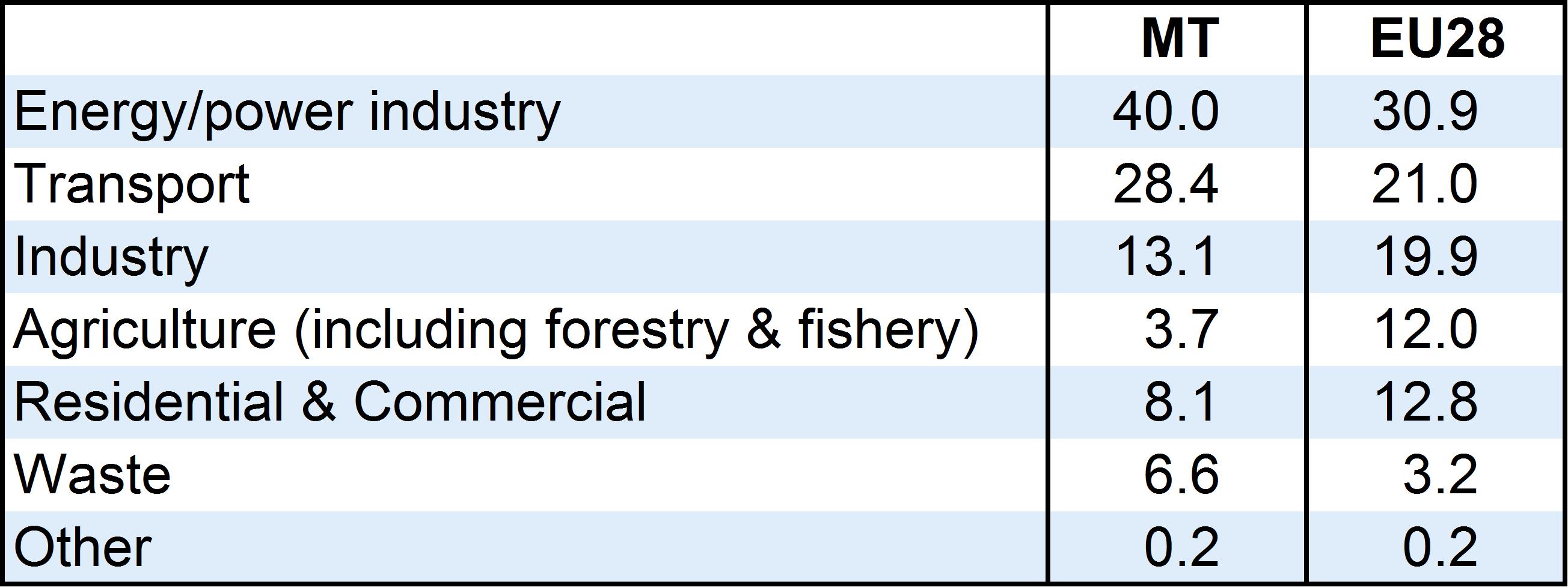
|
|
Source: European Commission and European Environmental Agency
|
|
|
|
Graph 3.5.2:GHG emission per capita
(kg CO2-eq/inhabitant)
|
|
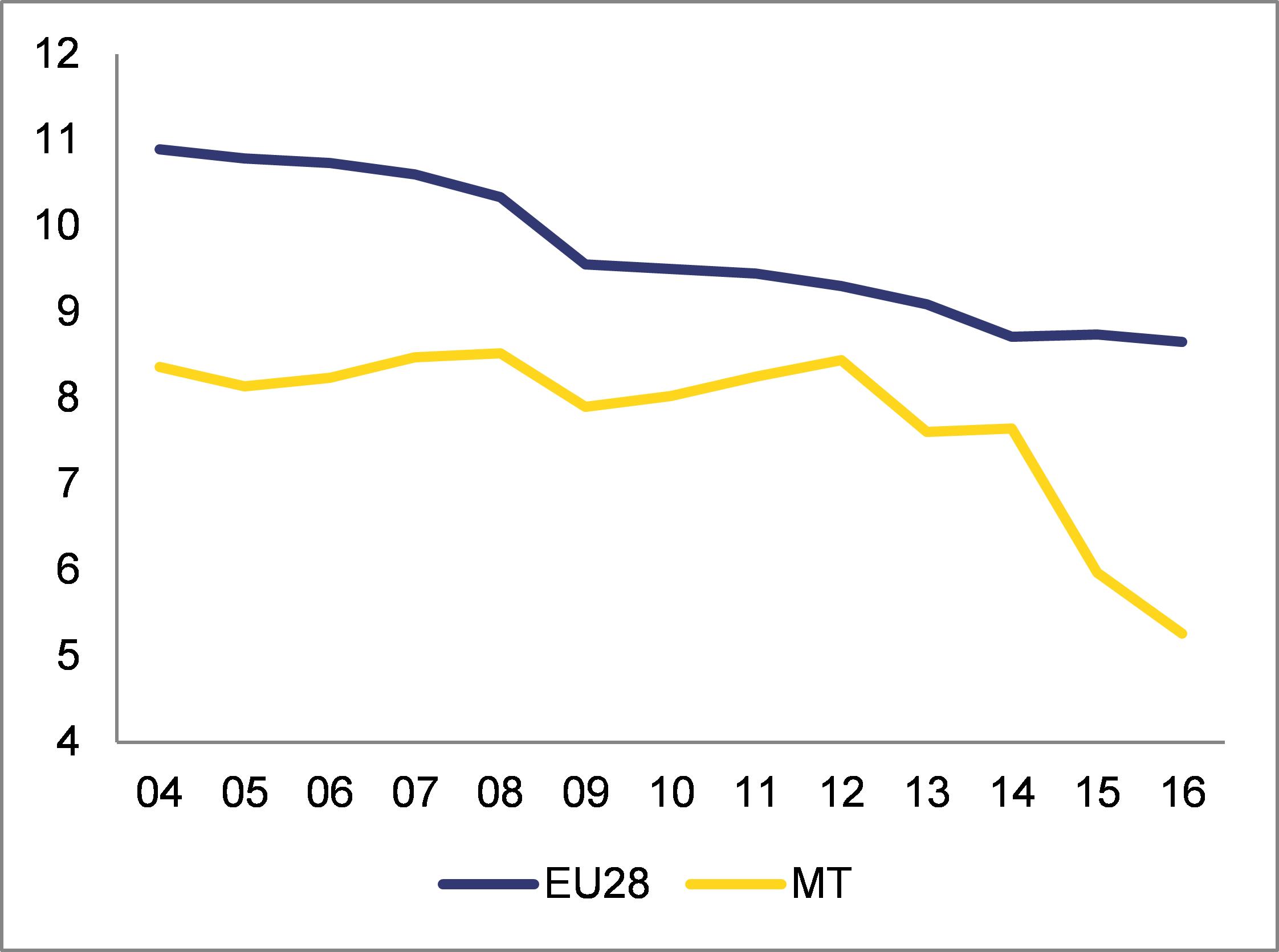
|
|
Source: European Commission and European Environmental Agency
|
The robust economic growth as well as the increase in population put further pressure on climate policies. Malta is currently developing a Low Carbon Development Strategy and after a public consultation closed in June 2017, it is working on sector-specific strategies. Given Malta’s climate vulnerabilities, the Low Carbon Development Strategy will also incorporate the revised National Adaptation Strategy. This is an important step to integrate climate-related policies across sectors, especially in view of the increasing population. In addition, the issues of climate change and environmental protection have been integrated into the Malta Resources Authority (MRA) and Environment and Resource Authority (ERA), which is consulted on the award of new planning permits.
3.5.5.Tourism
The tourism industry is one of the main pillars of Malta’s economy. The contribution of tourism to the Maltese economy has been estimated at between 6 and 17 % (
). The number of inbound visitors grew by over 5 % in 2015 and over 10 % in 2016 (Malta Tourism Authority, 2016), although tourism expenditure per capita declined in 2016. Provisional figures for 2017 point to an upward trend in the number of visitors, as data for the first eleven months of 2017 show that total inbound visitors have increased by 15.7 % compared to the same period in 2016.
If not addressed, bottlenecks in natural resources and infrastructure may impact tourism development in Malta. The WEF Travel and Tourism Competitiveness Index identifies natural resources as a relatively weak point in Malta’s touristic supply (see Graph 3.5.3) (World Economic Forum, 2017b). The sector is also heavily dependent on a stable water supply and highly vulnerable to the impacts of climate change. Furthermore, congestion of road infrastructure and its impact on air quality, as well as difficulties in waste management, have the potential to reduce the attractiveness of the country as a tourist destination. Also, the possibility of illegal disposal of C&D waste at sea could threaten the conservation of coastal areas.
|
Graph 3.5.3:WEF Travel and Tourism Competitiveness Index – Selected indicators
|
|

|
|
Source: World Economic Forum.
|
On the other hand, the development of tourism might itself exert further pressure on natural resources, waste, water, air quality and traffic congestion. This is especially true when it comes to large-scale tourism activities in vulnerable coastal areas and high peak seasons. Furthermore, despite the main source of congestion issues (see Section 3.5.1) being mainly domestic, tourists are expected to contribute to the problem during the peak season, when visitors increase the population by 65 %. While continuing to favour the inflow of tourists and the scaling up of accommodation facilities, authorities are focusing efforts on flattening the seasonality curve by attracting different types of tourism (e.g. language studies and cultural attractions), ensuring all-year-round connectivity, and favouring the supply of non-car transport options for tourists. The need to promote Malta as a sustainable tourism destination is also reflected in the Smart Specialisation Strategy, which identifies tourism product development as a priority.
Annex A: Overview Table
|
Commitments
|
Summary assessment(
)
|
|
2017 country-specific recommendations (CSRs)
|
|
CSR 1: Expand the scope of the ongoing spending reviews to the broader public sector and introduce performance-based public spending.
|
Malta has made some progress in addressing CSR1.
The authorities envisage that a review will be undertaken at the Management Efficiency Unit and the Malta College for the Arts, Sciences and Technology. They are also planning to institutionalise the spending review function under a directorate within the Ministry for Finance which is tasked with public sector performance and evaluation. This directorate will be also in charge of the monitoring of the recommendations issued in the past years in the three areas concerned by the spending review and coordinate in the future. These initiatives seem promising and should contribute towards increased effectiveness in public spending, provided those are properly implemented.
|
|
CSR 2: Ensure the effective national supervision of internationally oriented business by financial institutions licensed in Malta by strengthening cooperation with the host supervisors in the countries where they operate.
|
Malta has made some progress in addressing CSR2.
The authorities are making effort in securing more resources in the supervisory departments, whereby a high number of open vacancies proof that MFSA is understaffed. However, the process of reinforcing supervision of cross-border entities is slow and for the small supervisory body, such as in Malta, cross-border supervision remains an issue. In this respect, the Maltese authorities need to further ensure strong cross border supervisory cooperation, in order to assure the protection of freedom of services and also to protect the reputation of their jurisdiction, given the importance of the large cross-border financial sector registered in Malta.
|
|
Europe 2020 (national targets and progress)
|
|
Employment rate target set in the NRP: 70 %
|
69.6 % in 2016, up from 67.8 % in 2015.
|
|
Early school leaving target: 10 %
|
Despite significant progress over the last 10 years (from 27.2 % in 2008 to 19.6 % in 2016), Malta is still far from reaching its ambitious Europe 2020 national target of 10 %.
|
|
Tertiary education target: 33 %
|
Rising steadily, but still below target. Tertiary educational attainment rate for people aged 30-34 increased by 6.4 percentage points over the last five years, but at 29.8 % in 2016 it remains one of the lowest in the EU.
|
|
At risk of poverty target in numbers of persons:
Lifting 6,560 individuals from the risk of poverty or social exclusion
|
85,000 at risk of poverty or social exclusion, a decrease of 9,000 people since 2015.
In absolute terms – 5,000 more people are at risk of poverty or social exclusion in 2016 than in 2008.
|
|
Non-ETS 2020 target: + 5%
Greenhouse gas (GHG) emissions target: + 5% in 2020 compared to 2005 (in sectors outside the scope of the Emissions Trading Scheme).
Non-ETS 2016 target: + 4%
|
2020 estimate: + 16%
According to the latest national projections submitted to the Commission, and taking into account existing measures, it is expected that the target will not be achieved: emissions are expected to increase 16% in 2020 as compared with 2005 (shortfall of 11 percentage points)
2016 estimate: + 20%
Greenhouse gas emissions from sectors not covered by the Emissions Trading Scheme increased by 20% between 2005 and 2016, according to preliminary data.
|
|
2020 Renewable energy target: 10 % of gross final energy consumption
|
Malta’s renewable energy share has increased achieving a share of 6 % in 2016, well above the indicative trajectory towards the 2020 target. However, significant renewables deployment is needed in view of the steeper trajectory towards 2020. Use of cooperation mechanisms with other Member States could be considered to facilitate the achievement of the renewable energy target.
|
|
National energy efficiency target:
Malta’s 2020 energy efficiency target is 0.822 Mtoe expressed in primary energy consumption and 0.633 Mtoe expressed in final energy consumption
|
Malta’s primary energy consumption in 2016 was 0.72 Mtoe (reduction of 4.2 % from 2010) and final energy consumption was 0.58 Mtoe (increase of 2.50 % from 2010). (preliminary data)
|
|
R&D target: 2 % of GDP
|
0.61 % of GDP in 2016
Malta has decreased its R&D intensity, partly due to a slower growth of BERD since 2012 and increasing GDP.
|
Annex B: Macroeconomic Imbalance Procedure Scoreboard
|
|
|
Table B.1:The MIP scoreboard for Malta (AMR 2018)
|
|

|
|
Source: European Commission 2017, Statistical Annex to the Alert Mechanism Report 2018, SWD(2017) 661.
|
|
|
Annex C: Standard Tables
|
|
|
Table C.1:Financial market indicators
|
|
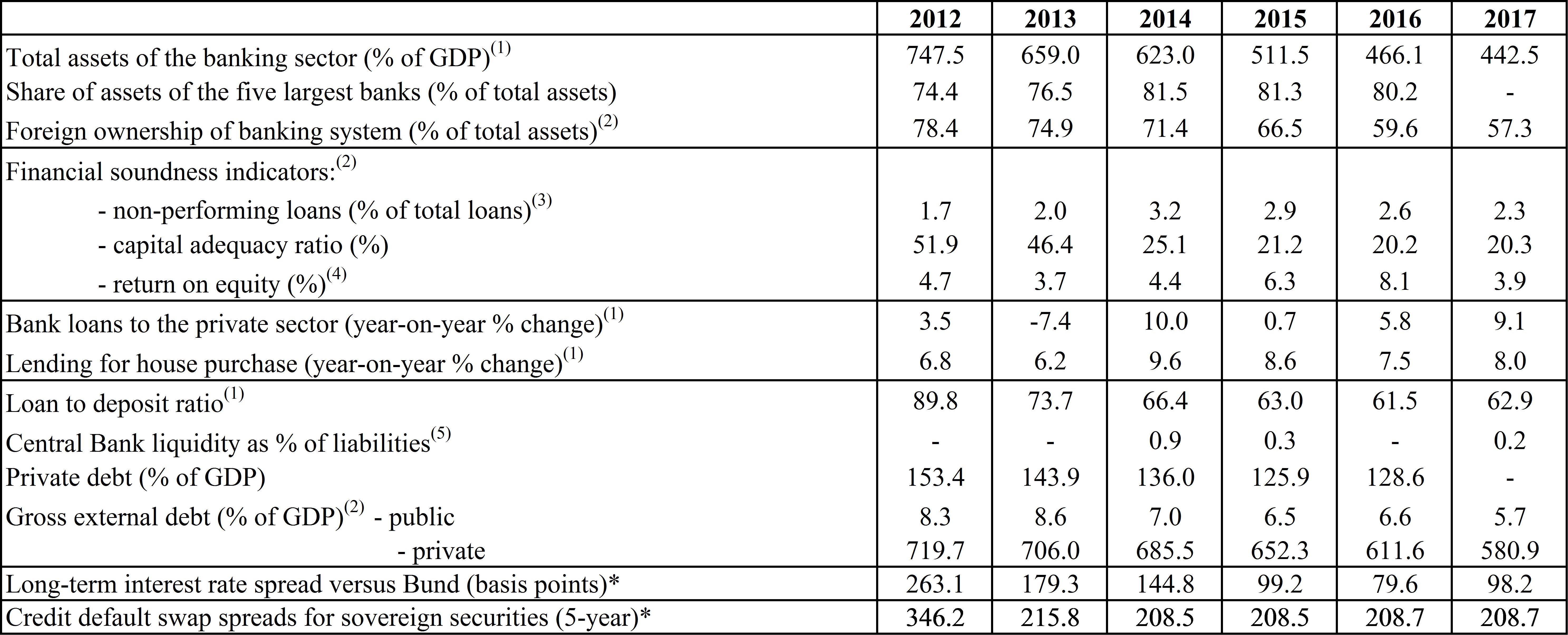
|
|
Source: European Commission (long-term interest rates); World Bank (gross external debt); Eurostat (private debt); ECB (all other indicators).
|
|
|
|
|
|
Table C.2:Headline Social Scoreboard indicators
|
|

|
|
(5) Average of first three quarters of 2017 for the employment rate and gender employment gap.
Source: Eurostat
|
|
|
|
|
|
Table C.3:Labour market and social indicators
|
|

|
|
(5) Average of first three quarters of 2017, unless for the youth unemployment rate (annual figure).
Source: Eurostat, OECD
|
|
|
|
|
|
Table C.4:Social inclusion and health indicators
|
|

|
|
|
|
|
|
|
|
Table C.5:Product market performance and policy indicators
|
|

|
|
Source: European Commission; World Bank — Doing Business (for enforcing contracts and time to start a business); OECD (for the product market regulation indicators); SAFE (for outcome of SMEs' applications for bank loans).
|
|
|
|
|
|
Table C.6:Green growth
|
|

|
|
* European Commission and European Environment AgencySource: European Commission and European Environment Agency (Share of GHG emissions covered by ETS); European Commission (Environmental taxes over labour taxes and GDP); Eurostat (all other indicators)
|
|
|
References
Bricongne, J.-C., P. Pontuch, and A. Turrini (forthcoming), Assessing House Prices: Insights from HouseLev, a new dataset of prices in levels, European Commission Discussion Paper.
Cassar I. P., K. Vella, and S. Buttigieg (2017), Understanding the Economic Contribution of Tourism in Malta: A Literature Review, Ministry for Finance Malta, WP 01/2017, February 2017.
Cedefop (2017), Vocational education and training in Malta: short description, Luxembourg, Publications Office.
EIB (2017), EIB Group Survey on Investment and Investment Finance Country Overview: Malta, European Investment Bank (EIB).
European Commission (forthcoming), Taxation trends in the European Union, Data for EU Member States, Iceland and Norway, 2018 edition, European Commission, Brussels.
European Commission (2018a), Warrington, B, Hristov, H; RIO Country Report 2017: Malta, Joint Research Centre.
European Commission (2018b), EU Justice Scoreboard 2018, European Commission, Brussels.
European Commission (2017a), Country Report Malta 2017, SWD(2017) 83 final, European Commission, Brussels.
European Commission (2017b), Education and Training Monitor 2017 - Malta, European Commission, Brussels.
European Commission (2017c), ESPN Thematic Report on Access to social protection of people working as self-employed or on non-standard contracts - Malta, European Commission, Brussels.
European Commission (2017d), 2017 Small Business Act Fact Sheet — Malta, European Commission, Brussels.
European Commission (2017e), Communication on reform recommendation for regulation in professional services, COM(2016) 820 final, European Commission, Brussels.
European Commission (2017f), Survey on the access to finance of enterprises (SAFE) - Analytical Report 2017, Luxembourg, Publication Office.
European Commission (2017g), Flash Eurobarometer 457: Businesses’ attitudes towards corruption in the EU, European Commission, Brussels.
European Commission (2017h), European Construction Sector Observatory – Malta country profile, European Commission, Brussels.
European Commission (2017i), The EU environmental Implementation review, Country Report - Malta, SWD(2017)51, European Commission, Brussels.
European Commission (2016), European Construction Sector Observatory – Malta country profile, European Commission, Brussels.
European Commission (2015), Business services — Assessment of barriers and their economic impact, European Commission, Brussels.
FRA (2017), Second European Union Minorities and Discrimination Survey - Main results, FRA European Union Agency for fundamental rights, Luxembourg, Publications Office.
Housing Europe (2015), The State of Housing in the EU 2015.
IHME (2016), Global Health Data Exchange, Institute for Health Metrics and Evaluation, available at
http://ghdx.healthdata.org/gbd-results-tool
.
IHS (forthcoming), Aggressive Tax Planning indicators, Institute for Advanced Studies, Vienna.
KPMG and Malta Developers Association (2017), The Construction Industry and Property Market in Malta, October 2017.
Ministry for Tourism, the Environment and Culture (2012), National environmental Policy, February 2012.
Ministry for Transport and Infrastructure and Transport Malta (2013), The Malta National Electromobility Action Plan.
Malta Tourism Authority (2016), Tourism in Malta- facts and figures 2016.
National Statistics Office Malta (2017), Solid Waste Management: 2015, January 2017.
OECD/European Observatory on Health Systems and Policies (2017), Malta: Country Health Profile 2017, OECD Publishing, Paris/European Observatory on Health Systems and Policies, Brussels.
Office of the Prime Minister (2017), Malta’s National Energy Efficiency Action Plan, April 2017.
Transport Malta (2016), National Transport Master Plan to 2025.
Van 't Riet, M., and A. Lejour (2017), Optimal Tax Routing: Network Analysis of FDI Diversion, (CentER Discussion Paper; Vol. 2017-022), Tilburg: CentER, Center for Economic Research.
World Economic Forum (2017a), The Global Competitiveness Report 2017–2018.
World Economic Forum (2017b), Travel and Tourism Competitiveness Report 2017.
-
(I)
(1)Public investment is defined as gross fixed capital formation + investment grants + national expenditure on agriculture and fisheries.
-
(II)
(2)Before programmes are adopted, Member States are required to comply with a number of so-called ex-ante conditionalities, which aim at improving conditions for the majority of public investments areas.
-
(III)
(1)See ‘Challenges to Member States’ Investment Environments’, SWD (2015)
http://ec.europa.eu/europe2020/
challenges-to-member-states-investment-environments/index_en.htm
and 2017 Country report for Malta.


