ECO/639
Cohesion policy and EU enlargement
OPINION
Section for Economic and Monetary Union and Economic and Social Cohesion
The role of cohesion policy in upcoming rounds of EU enlargement
(exploratory opinion)
Rapporteur: María del Carmen BARRERA CHAMORRO
|
Referral
|
European Commission, 11/12/2023
|
|
Legal basis
|
Article 304 of the Treaty on the Functioning of the European Union
|
|
|
|
|
Section responsible
|
Economic and Monetary Union and Economic and Social Cohesion
|
|
Adopted in section
|
17/5/2024
|
|
Outcome of vote
(for/against/abstentions)
|
62/0/0
|
|
Adopted at plenary
|
D/M/YYYY
|
|
Plenary session No
|
…
|
|
Outcome of vote
(for/against/abstentions)
|
…/…/…
|
1.Conclusions and recommendations
1.1The EESC stresses that pre-accession aid policy is an indispensable tool of enlargement policy whose influence can be boosted to promote peace and prosperity across the European continent, particularly in regions where peace and stability have been recently challenged.
1.2To prepare candidate states to fully implement the cohesion policy instruments in the future pre-accession aid policy should be better tailored to the strengths, challenges, and needs of the respective regions, as well as the bordering regions of EU Member States.
1.3The EESC recommends that pre-accession aid policy in candidate states should invest more systematically in human capital development, education and social integration to prevent and ease social inequalities. Promoting links with CSOs and engaging them in improving pre-accession aid policy planning are essential.
1.4With the future cohesion policy, the protection of vulnerable groups, which face additional and formidable obstacles to their economic and social development and can face additional challenges in the future accession process should be prioritised.
1.5Stronger partnerships with CSOs in candidate states are not only invaluable for the promotion of enlargement objectives; they are also in line with effective and inclusive development strategies by using the established principles of strong partnership and shared management.
1.6Pre-accession aid policy should enjoy all the necessary support to promote growth and recovery across European regions; this includes delivering on the green and digital transition and helping regions adapt to ongoing demographic, industrial, strategic and security challenges.
1.7The EESC stresses that the role of cohesion policy has to go far beyond core investment. It must focus on institution and capacity building, including twinning programmes and support for civil society and social partners. The experience of the Baltic states has shown that improving institutional capacities enables more effective use of cohesion policy funds, accelerating their integration and economic growth. These funds have also helped these countries rise to the forefront of effective public policy making.
1.8The EESC underlines the fact that enlargement waves have also had an impact on the current Member States and their regions, as the new Member States join the single market and affect the international value chain and labour migration in the EU. Additional funds are therefore needed to invest in the regions bordering the candidate countries, as well as in the regions of the current Member States severely affected by changes in the EU and global value chains as a result of enlargement.
1.9The EESC points out that given the scale of the challenges, especially in Ukraine, it is not sufficient to solely rely on pre-accession aid policy. The EU will have to undertake specific actions, possibly through ad hoc mechanisms to ensure that the most pressing and demanding issues, such as post-war reconstruction, are effectively addressed. This is essential for the impact and benefits of any future public policy to be maximised.
1.10The EESC believes that one of the greatest challenges for EU enlargement would be a post-accession deterioration of the rule of law. This risk could be mitigated by including post-accession compliance tools in the new accession treaties, such as effective methods to suspend voting rights and EU funds in case of non-compliance with the fundamental values of the EU and the rule of law. Other often mentioned challenges, such as the functioning of EU institutions and the effects on the EU budget, could be managed through transition periods and EU reforms during accession negotiations.
1.11The EC should orient its reforms of future cohesion policy, in parallel to the enlargement process, to boost the effectiveness of current policies, based on increased specialisation and diversification, linked to greater flexibility and financial specialisation. No financial assistance can succeed in unleashing economic prosperity without parallel efforts in institution building, governance reform and civil society engagement.
1.12The EESC stresses the need for urgent action to stem the tide of emigration from the EU candidate countries, which threatens to ruin the potential for economic and social development, through various policy measures, including investment in human capital.
1.13The EESC considers it essential to improve the situation of young people in the candidate countries. Efforts are needed to improve the skills and employment of young people and to increase both educational and quality employment opportunities for young people, in parallel with housing solutions. Dialogue and participation of young people in youth guarantee initiatives should also be encouraged.
1.14The EESC recommends increasing efforts to care for the most vulnerable people and vulnerable groups in the candidate countries, incorporating them not only into protection systems but also taking them into account in the decision-making process, as the best way of achieving the first basic principle of the Cohesion Policy of ‘Leaving no one behind’.
2.General comments
2.1Russia’s aggression against Ukraine has not only threatened the sovereignty and territorial integrity of a European state. It has emerged as a clear challenge against European integration and the political values that have underpinned European integration over the past 75 years. It is therefore imperative that the European Union rises to the historical circumstances and signals to the Western Balkans and Eastern Europe that it will not abandon the states facing the Russian threat but will accelerate all efforts to promote their integration into the European Union. Cohesion policy instruments can help to increase the effectiveness of EU enlargement initiatives in the Western Balkans and Eastern Europe.
2.2Cohesion policy has become one of the flagship policies of the European Union. Since it was first enshrined in the Treaty of Rome, cohesion policy has become the cornerstone of European solidarity and has contributed to a fairer and more equitable European Union. As such, it acquired an indispensable position in EU’s enlargement policy priorities.
2.3Enlargement has rightly been described as one of the most powerful instruments of EU foreign policy. Through its waves of enlargement the European Union has become bigger, stronger and more peaceful and just. It would not be an exaggeration to say that enlargement has spread peace, prosperity, and security across the European continent.
2.4As EU leaders stated in the Granada Declaration, enlargement is an engine for improving the economic and social conditions of European citizens, reducing disparities between countries, and must promote the values on which the Union is founded. This declaration underlines the importance of pre-accession aid policies as an essential part of EU enlargement.
2.5Rendering pre-accession aid policy available to the candidate countries is crucial, as it facilitates the future integration of the candidate countries into the Union and strengthens the attractiveness of key European values in both the Member States and candidate countries.
3.Social Considerations and Guarantees
3.1The EESC considers it is key to ensure the full respect for the acquis for admission to the EU, including fundamental rights, the social acquis and respect for and reinforcement of civil and social dialogue; special attention should be paid to the full respect of Social Partners and Civil Society Organisations rights. In this framework, it is necessary to ensure adequate funding for capacity building of social partners and Civil Society Organisations in accession countries. Enlargement must be a success for workers, companies, SMEs and civil society organizations in both new Member States and existing ones.
3.2The EESC strongly believes that a gradual, merit-based approach to acquiring incremental benefits during the EU accession process is the best way forward for the enlargement of the Union. The Commission should develop a proposal to facilitate the institutional connectivity of candidates and their access to the work of the EU institutions, including the various Directorates General of the Commission, including during the accession process. The European Commission should ensure that beneficiaries receive timely technical assistance in adapting and implementing the acquis. The EESC call for the clear rejection of any piecemeal approach to accession discussions: access to the internal market, or parts of it, should be linked with full alignment with the fundamental rights and the social acquis. At the same time, access to the internal market should be based on fair competition which in practice means alignment with the relevant EU acquis (e.g. social, environmental, state aid etc.)
3.3The EESC considers that the discussions on EU enlargement open a window of opportunity to reflect on how the EU institutional setting should adapt. It is necessary to ensure a reform of the EU institutions to guarantee a more effective, social and progressive institutional framework for the European Union to deliver a more dynamic and competitive EU economy that goes hand in hand with better living and working conditions, improved competitiveness and better functioning economy.
3.4The EU must respond to growing inequalities and must ensure improvement for citizens, already hit by the long-standing effects of austerity policies, the pandemic and by high inflation during 2022 and 2023.
3.5In view of EU enlargement, the EESC calls for the development of a new fiscal instrument for investment, an EU sovereignty fund for a just socio-economic transition and common goods, leaving no citizen and no region behind.
3.6There is a need for a strong European industrial policy with significant and effective public and private investment that underpins quality jobs and social progress. The decline of competitiveness remains the key obstacle to the European economy as well as the future of cohesion policy.
3.7The European Commission should contribute to the orientation of the debate on future institutional reforms:
3.7.1calling for a full, proper, and complete implementation of economic governance reform to ensure that social justice, social progress and improving people’s working and living conditions, the protection of the environment are considered key objectives of economic policies, including by strengthening investments in public services;
3.7.2ensuring a stronger role for social partners and civil society organizations in the decision-making process. This could be done only by implementing the main values of cohesion policy like the partnership principle in solidarity, multilevel development and multilevel governance.
4.Enlargement and Cohesion policy: lessons learned from the 2004/2007 wave
4.1The EESC welcomes the decision of the European Council taken in December 2023 to open accession talks with Bosnia and Herzegovina, Moldova, and Ukraine. However, the EESC believes that this requires the activation of a set of pre-accession aid policy instrument for the promotion of key EU policies among the accession states.
4.2Pre-accession aid policy has played a key role in almost all enlargements, facilitating the accession of new Member States in a way that benefited them and the rest of the Union. The current Cohesion Policy was born as a policy to, among other things, facilitate the successful integration of Spain and Portugal into the European Economic Community. The future enlargement will be the eighth. All of them were processes enabling the EU to combine enlargement and deepening effectively.
4.3The EESC would like to highlight the case of the 2004 enlargement, the largest to date. Investments to prepare Central and Eastern European countries led to subsequent increases in funding, contributing to advances in infrastructure, investment in productive capital, human capital, foreign direct investment (FDI), environmental conditions and employment in all post-2004 Member States. Enlargement strengthens the functioning of the single market and other Member States benefit, as the single market and cohesion policy are engines of growth for all Member States.
4.4The EESC therefore stresses that the complex situation in which many candidate countries find themselves requires a cohesion policy that is robust and adaptable to the individual circumstances of each country. These range from institutional issues in many of the candidate countries, to post-conflict recovery in Bosnia-Herzegovina and Kosovo, to the uncertain post‑conflict future in Ukraine. Cohesion Policy can lay the foundations by providing core investments for integration and development, regardless of each country’s situation.
4.5The EESC points out that there is a need for a tailor-made approach to Pre-accession aid Policy, also considering ad hoc tools with emphasis on technical expertise involving EU and Member State teams. Albania and North Macedonia, for example, have different economic and social structures from EU Member States. Ukraine, for its part, will need a major reconstruction effort following the Russian war of aggression. A specific place-based strategy for each country and region will ensure that Cohesion Policy investments are tailored to the specific development needs and priorities of each country and region.
4.6The EESC underlines the experience of previous enlargements in terms of synergy as the long-term benefits of a well-implemented Cohesion Policy for the new members include sustainable growth, social cohesion and improved competitiveness. The inclusion of all these countries could also serve as a stabilising factor in a historically fractured and conflictual part of Europe, laying the foundations for much greater social and political stability and, consequently, for more sustainable economic development.
4.7As the European Union embarks on yet another enlargement process that should increase the number of its members from 27 to 36, it is important to remind ourselves that cohesion concerns enlargement. In particular, the current enlargement process bears significant similarities with the 2004/2007 enlargement in terms of number of citizens and development levels. It can therefore help us learn lessons in terms of effectiveness of the policy, its implementation and impact, inclusiveness of the process and the effect on imbalances redressed.
4.8Pre-accession aid funds were crucial in preparing prospective member states for their impressive post‑accession economic performance. Relatively small investments set the stage for rapid development and led to subsequent increases in funding, contributing to advances in infrastructure, investment in productive capital, human capital, FDI, environmental conditions and employment in all post-2004 member countries.
4.9The Granada Declaration states that Enlargement is a geo-strategic investment in peace, security, stability and prosperity…. We will address key questions related to our priorities and policies as well as our capacity to act. This will make the EU stronger and will enhance European sovereignty.
4.10Enlargement remains Europe’s raison d’être as well as an opportunity to make improvements in the EU institutional structure.
4.11The view of CSOs from candidate states is invaluable for the better planning of enlargement and its finetuning with Pre-accession aid policies.
4.12The EESC stresses that the EU enlargement is not only going to bring financial stress but also major strategic, political, and financial benefits to the European Union.This holds particularly in the case of Ukraine, the largest EU candidate state.
5.The Significance of Cohesion Policy in EU Enlargement
5.1The development of the EU candidate states in the Western Balkans and Eastern Europe requires strong financial and institutional support, which are at the heart of the EU’s pre-accession aid policies. Cohesion support should be considered sine qua non for the success of the effective integration of prospective Member States in the European Union.
5.2The economies of the Western Balkan candidate countries have recently shown some positive signs. However, much remains to be done to contribute to the process of convergence of the Western Balkan economies with the European average; these measures include economic and political reform, capacity building, the fight against corruption and the shadow economy and the strengthening of the rule of law. The effect of Russia’s war of aggression against Ukraine has been detrimental to hopes for a stronger economic recovery.
5.3The economies of Ukraine and other Eastern European candidate states have faced unprecedented challenges due to Russia’s war of aggression. Ukraine’s accession would improve the EU’s energy security and could reduce energy costs. It could stabilise the EU’s eastern neighborhood and enhance the EU’s military and security capabilities. Fears about the effect of Ukraine’s accession on EU finances are exaggerated, as the cost of enlargement will be substantial but still manageable. Providing war aid and planning post-war economic development measures have emerged as a vital dimension of European pre-accession aid policy
.
5.4Pre-accession aid policy cannot address the needs of EU enlargement without taking due account of the European Growth Model as well as the European Commission’s New Growth Plan for the Western Balkans. Its pillars focus on:
5.4.1enhancing economic integration with the EU single market. Seven priority actions are suggested:
1.Free movement of goods.
2.Free movement of services and workers.
3.Access to the Single Euro Payments Area (SEPA).
4.Facilitation of Road transport.
5.Integration and de-carbonisation of Energy markets.
6.Digital Single Market.
7.Integration into industrial supply chains;
5.4.2boosting economic integration with the Western Balkans through the Common Regional Market;
5.4.3accelerating fundamental reforms, including on the fundamentals cluster, supporting the Western Balkans’ path towards EU membership, improving sustainable economic growth including through attracting foreign investments and strengthening regional stability;
5.4.4increasing financial assistance to support the reforms.
5.5Challenges such as the climate crisis, inflation, migration, social resilience, digitalisation and innovation are all vital given the strategic and economic circumstances in Europe and the world.
5.6The European Commission should steer the debate on future institutional reforms based on the conclusions of the Conference on the Future of Europe and the European Parliament resolution on the proposals for amending the Treaties, taking into account the development of the European Pillar of Social Rights. This can only be achieved by applying the main values of cohesion policy.
5.7In its opinion the EESC considers the concept of ‘cohesion policy 2.0’, which includes shared management, a regional approach, pre-financing and co-financing rates, to be of paramount importance.
5.8Dialogue and cooperation with the social partners and civil society organisations in the candidate countries is of the utmost importance. Social partners and CSOs should be involved at all stages of cohesion policy, from design to implementation and review. This involvement and engagement of economic and social partners fosters ownership, empowerment and a holistic approach to policy design and management and will lead to effective absorption of funds.
5.9As in the 2004/2007 enlargement, the cohesion policy should not be considered synonymous with financial support. All the aid measures should include capacity building in public administration and civil society as well as institution building so that they can be effective and prepare to implement the cohesion policy.
5.10In particular, cohesion policy should take into consideration the potential effect that enlargement will have in EU regions adjacent to EU candidate states, in Bulgaria, Romania, Hungary, Croatia, Greece, Poland and Slovakia. Cross-border cooperation is essential for the success of this policy.
5.11Therefore, the EESC signals and calls for a more ambitious MFF for the next programming period so that the challenges of the enlargement are addressed effectively.
5.12A long experience of cohesion policy designed and implemented by EU Institutions and Member States has resulted in the accumulation of a set of norms and practices, a ‘cohesion culture’. The proliferation of this cohesion culture to the candidate states through the enlargement process and the accession negotiations should be one of the key EU priorities.
6.The Voice of the Civil Society
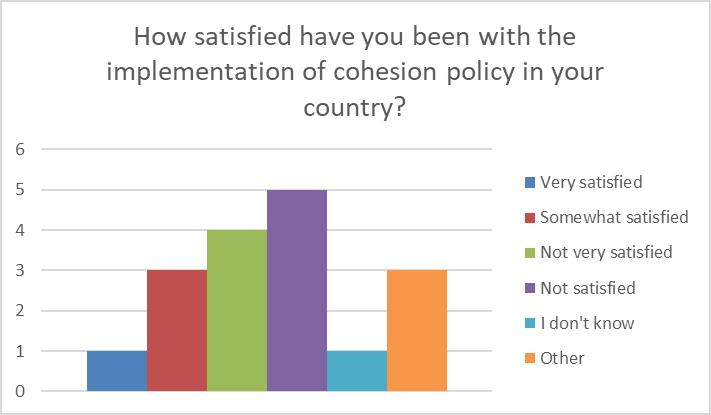
6.1Civil society organisations in the candidate countries have a negative view of the implementation of pre-accession policies in their respective countries.
6.2Social dialogue and consultation with the social partners of civil society are considered essential. However, the representative organisations state that these instruments are not effectively and efficiently taken into account in the processes put in place for enlargement and in decision-making.
6.3Attention to the most vulnerable groups is considered essential, but the representative organisations state that these groups are not given special attention, social protection is insufficient and they are not taken into account in decision-making.
6.4An overwhelming majority of respondents stated that they were aware of the main principles of multilevel governance and shared management in cohesion policy and how to apply the partnership principle.
6.5The New Growth Plan for the Western Balkans is seen as a unique opportunity to focus on the human capital, economic and social aspects of pre-accession assistance. The candidate countries can be included in the debate on pre-accession aid policy.
6.6The emigration of skilled labour is one of the greatest threats to the economy and society of the candidate countries. Young people are motivated to emigrate by a lack of trust in institutions and a lack of motivation and opportunities, including failures in the education system. Unemployment and lack of quality employment are pressing problems as well as lack of housing for young people. They also state that there is a lack of dialogue and participation in youth guarantee initiatives.
6.7People with disabilities report a lack of public support. The lack of attention to the most vulnerable groups distances the candidate countries from the basic objective of cohesion policy of ‘leaving no one behind’.
Brussels, 17 May 2024.
Ioannis VARDAKASTANIS
The president of the Section for Economic and Monetary Union and Economic and Social Cohesion
*
*
*
ANNEX I - STATUS OF ENLARGEMENT PROCESSES BY COUNTRY
·In Albania and North Macedonia, the organisation of the first intergovernmental conferences on accession negotiations in July 2022 boosted optimism that outstanding concerns could be overcome and that both countries could accelerate the pace of accession negotiations.
·Bosnia and Herzegovina was granted EU candidate status in December 2022, provided it fulfils the conditions set out in the Commission’s October 2022 Communication on enlargement policy.
·Ukraine and Moldova were granted EU candidate status in December 2022 in recognition of their reform efforts, as well as in solidarity against Russian aggression. In Ukraine, the continuation of Russian aggression has made it clear that the EU must do more to strengthen Ukraine’s military capabilities.
·Georgia failed to achieve EU candidate status alongside Ukraine and Moldova, as its government did not carry out the expected political and institutional reforms. However, its government has defined EU accession as its strategic goal and is making efforts on reforms and legislative alignment; Georgia will obtain EU candidate status as soon as the priorities specified in the Commission's Opinion on Georgia’s application for membership have been addressed.
·Turkey has not made significant progress in restoring its convergence with the Copenhagen criteria. However, its cooperation with the EU on migration issues improved markedly, as did its relations with Greece, paving the way for détente across the Aegean and seeking ways to consolidate a positive agenda in bilateral relations. Moreover, Turkey’s neutral stance towards Russia’s war of aggression against Ukraine has raised new concerns about its willingness to become a full member of the Western political, economic and diplomatic community.
·In Montenegro, the tense political climate and the management of public affairs by a caretaker government prevented significant progress towards meeting the accession criteria.
·In Serbia, although accession negotiations have not broken down, events in Kosovo and Serbia’s stance on Russia's war of aggression in Ukraine have complicated EU-Serbian relations.
·In December 2022 Kosovo became the latest Western Balkan partner applying for EU membership.
ANNEX II - MAIN APPROACHES OF CIVIL SOCIETY ORGANISATIONS IN THE CANDIDATE COUNTRIES
II.1
Evidence from the Survey and the Hearings
a.Survey
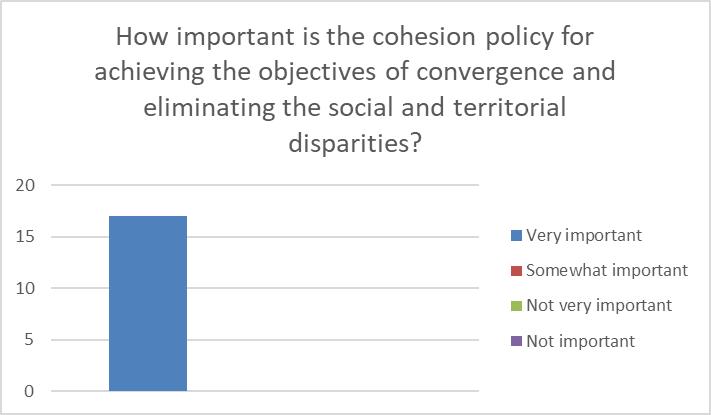
·All respondents to our questionnaire consider the cohesion policy to be very important for achieving the objectives of convergence and eliminating social and regional disparities.
·The respondents represented seven of the EU candidate states, with most of them coming from Montenegro, Albania and Georgia.
·The majority of respondents represented CSOs, while representatives of employers and workers were also included.
·Most of the respondents could not confirm that social dialogue is incorporated in the democratic process of their countries.
·A clear majority confirmed that there are institutions in their respective countries supporting social dialogue.
·A rather negative view prevailed in the answers of respondents regarding their satisfaction with the implementation of pre-accession policies in their respective countries.
·The respondents were split regarding the inclusion of CSOs by public authorities in the design and implementation of development programmes or programmes managed by EU funds.
·The respondents overwhelmingly supported the EU enlargement policy process in the western Balkans and eastern Europe.
·A clear majority of the respondents considered that EU enlargement would not be detrimental to cohesion policy in their respective countries.
·An overwhelming majority of the respondents stated that they were aware of the main principles of multilevel governance and shared management on cohesion policy and knew how to implement the partnership principle.
Tables
b.
Hearings
I.Brussels
·The EU budget implications of EU enlargement are often exaggerated, as we often hear fears that the cost of EU enlargement would be huge, while the cost of enlargement will be substantial but still manageable.
·Beneficiaries will remain beneficiaries but their financial position will change little.
·The net beneficiary vs. net payer division is not useful, as net payers enjoy large benefits indirectly through EU cohesion policies.
·It is the responsibility of all stakeholders to get involved; yet there is no sufficient financial muscle to develop the region and address the current deficiencies. The delivery method does not have development criteria or an element of ownership.
·The partnership principle needs to be translated into local languages, while EU scrutiny is essential to mitigate weak governance.
·The real sense of urgency and belonging among CSOs is impressive. While the journey is long and the work laborious, all are equipped to further the actions and processes that started. More Europe, not less Europe, is the answer.
·The New Growth Plan for the Western Balkans is a rare opportunity for focusing on human capital and the economic and social aspects of cohesion. Candidate countries can be included in the discussion of cohesion policy.
II.Podgorica (Montenegro)
·There are huge problems and regional disparities in the regions of Montenegro. Social partners have not been involved effectively and properly in the design of the funds. Social partners are not so familiar with these procedures and needs to be empowered. More cooperation among the social partners is essential.
·While establishing ad hoc mechanisms to reinforce Montenegro's enthusiasm and to have a date already would encourage this, there are no pre-accession aid mechanisms of any kind. A global, holistic approach is needed. New jobs and possibilities must be created in Montenegro, so that young people stay in Montenegro. We are contributing to the loss of a whole generation.
·There is significant lack of labour, especially in seasonal sectors like tourism. Emigration of skilled labour is a major threat to the economy and the society. 70% of young people are considering migration. 30,000 young people have left the country in the last 3 years. The situation is very different in the north and south, in relation to the capital. The motivation for young people to leave is the lack of trust in institutions and the lack of motivation and opportunities. There is no dialogue and participation for youth guarantee initiatives. They need to be considered in policy-making.
·Unemployment and skilled employment are the most important problems in Montenegro. There is need to avoid brain drain and build the capacity of young people. Talent drain is due to certain economic and social policies. The cheap labour policy does not attract investment but causes the exodus of generations. The social partners are underestimated and left aside, they could advance the integration process. He considers as regards participation in the working groups on different chapters of which his colleagues have spoken, he does not know what it is for or if it has served any purpose. In the current economy there are only temporary jobs linked to tourism; labour supply and employment conditions need to be improved.
·Not only is attracting talent and employment of young people necessary, but also social housing for young people; they have been demanding this from the government for 3 years. Wages are low and jobs are in bad conditions, with unpaid overtime. Montenegro is one of the countries with the longest working hours, which does not allow for reconciliation or training, and these conditions are linked to temporary and precarious jobs.
·There is not much coverage and little support for NGOs focusing on children rights and welfare; the social welfare system is almost non-existent.
·The education system needs to be aligned with EU standards.
·Public administration reform is essential for the better implementation of the transition.
·Vulnerable groups are often neglected or ignored in the decision-making process. There is big room for improvement for persons with disabilities. The most vulnerable people must be taken care of, because that is what social cohesion is all about, so that no one is left behind.
·There are no platforms to get the voice of the NGOs across. After 15 years there are no joint organisations working together for a social economy. They work trying to avoid the state because it is the state that puts barriers.
·Social dialogue and consultation with social partners and civil society is essential. One needs to establish the social council, as they only have the economic council, which although important is not dedicated to social issues and trade unions are not part of it. They need to participate in the European integration council where they are only as observers but do not participate like the CSOs.
·Young people don’t want to be involved in the tourism sector. They favour an innovation eco-system and a diversified economy with more opportunities.
·There is an issue of transparency of EU funds as we don’t have any insight into how they are managed.
·Trade unions don’t have significant involvement, nor is there a systematic approach to young people.
·There is a need to reform the housing policy in MNE. Cost of rents is high and there are not many houses for young people.
·Agriculture is a key sector for the economy but we do not take advantage of it. A lot of food is imported. Agriculture is the second sector after tourism and there are no sustainable development programmes in this respect, from European funds and this is not used.
·It is important to implement all rules and laws that are expected for pre-accession.
·The internal market is an important factor and businesses support the EU perspective.
·Important pre-enlargement funds were lost because they did not meet the conditions and these funds are essential to prepare for cohesion afterwards. Unity is not possible because it is a very deeply politically divided society. They need the 6 Balkan candidates to unite in order to put more pressure on the Balkans.
·A big package of transition measures needs to be introduced and has a cost associated with it in order for businesses in Montenegro and abroad to be competitive and participate in policy-making.
·The principle of partnership is agreed upon, but where shared interests could be developed. They should be able to have quality institutional cooperation. Cohesion policy as a whole should be made coherent through a better knowledge of all actors.
·CSOs must be involved in policy-making, not just informed. Alliance-building and working together can improve their capacity.
·There is a lot to be done in terms of social welfare. Services are important and we must work to make them better.
·The Montenegrin government states that they will not neglect the role of civil society as we support them and support them.
·Two representatives of the civil society participate in the group of the negotiations on Chapter 22.
·There is a huge amount of work to be done in order to meet the requirements. We need a standardised system that follows the monitoring and can report us those milestones are accomplished.
_____________