Table of contents
1.Introduction
2.Background to the Directive
2.1.
From Mutual Assistance to Administrative Cooperation: 1977-2011
2.2.
The evolution of Administrative Cooperation during 2011-2018
2.3.
Intervention logic
2.4.
Baseline and scope of activities under review
3.Implementation / state of Play
3.1.
Transposition (state of play as of end April 2019)
3.2.
State of Play: DAC activities and outputs 2013-2017
4.Method
4.1.
Limitations in the evidence basis of the evaluation
5.Analysis and answers to the evaluation questions
5.1.
Effectiveness
Extent to which the Directive has achieved its general objectives
Extent to which the Directive has achieved its specific objectives
5.2.
Efficiency – costs and benefits
Costs for complying with administrative cooperation
Costs for tax authorities of administrative cooperation under DAC
Burden for tax authorities due to reporting to the Commission
Costs and burdens for financial institutions
Costs and burdens for taxpayers
Costs for Fiscalis budget
Benefits for Member States of additional taxes assessed
Cost savings for Member States tax authorities
Cost savings for taxpayers and other reporting bodies
Considerations on cost-effectiveness
5.3.
Relevance
Extent to which the objectives of the Directive are aligned with the identified needs
Extent to which the Directive mechanisms are in line with its objectives
5.4.
Coherence
Coherence with administrative cooperation in the field of VAT and for the recovery of taxes due
Coherence with data protection requirements and privacy rights
Coherence with anti-money laundering provisions
Coherence with OECD provisions
5.5.
EU added value
Extent to which the outcomes / impacts generated by the Directive are additional compared to national / international initiatives
Extent to which the cooperation mechanisms established by the Directive are superior to other platforms/channels
Extent to which EU financial support enabled the achievement of additional outputs
6.Conclusions
7.Annex 1 - 9
Glossary of key terms
Advance Pricing Agreement
An agreement between a tax authority and a taxpayer, either a natural or legal person, regarding the methodology to be used to determine the transfer pricing for a set of transactions.
Advance Tax Ruling
A binding interpretation of an applicable fiscal provisions issued by a public authority on request from an individual or corporate taxpayer. As synonym, the simple word ruling is used.
Automatic exchange of information
A key activity under the Directive on administrative cooperation in direct taxation, it refers to systematic communication of predefined tax-related information from one Member State to another Member State, without prior request, at pre-established regular intervals. As synonym, the evaluation uses the term automatic exchanges. This activity is shortened with the acronym “AEOI”, which is often used in the text.
Country-by-Country Reporting
The obligation for certain multinational enterprises to provide tax authorities with a detailed geographical account of key financial data and information on the performance of the company and the taxes paid.
Deterrent effect
Change in taxpayers’ behaviour originating from the risk of detection posed by the increased information available to tax authorities, resulting in additional spontaneous tax compliance.
Directive on Administrative Cooperation in direct taxation
Council Directive 2011/16/EU on administrative cooperation. As synonym of the Directive, the evaluation uses the term intervention or the acronyms DAC or DAC1. References to ‘the Directive’ must be understood as being made to this directive as subsequently amended. Since 2011, this Directive has been amended five times by different directives: Directive 2014/107/EU (DAC2), which introduced automatic exchange of financial accounts information; Directive 2015/2376/EU (DAC3), on automatic exchange of tax rulings and advance pricing agreements; Directive 2016/881/EU (DAC4), on automatic exchange of country by country reports; Directive 2016/2258/EU (DAC5) ensuring that tax authorities have access to anti-money laundering information; and Directive 2018/822/EU (DAC6) introducing automatic exchange of information on potentially aggressive cross-border tax schemes.
Evaluation
Evaluation is an assessment by the Commission services of five evaluation criteria: effectiveness, efficiency, coherence, relevance and EU added-value of an EU intervention.
The Commission Better Regulation guidelines provide the instructions that the Commission services have to follow when evaluating policies. Specific information on the five evaluation criteria is provided in a dedicated Toolbox accompanying the guidelines.
Exchange of Information on Request
Transmission by the requested tax authorities of information expressly solicited by a requesting tax authority, which is either already available in existing databases, or requires enquiries for its collection.
Matching
Process of combining the information received from foreign tax authorities with the national taxpayers’ databases. The matching process can be made automatically, i.e. using a computing algorithm, or manually.
Presence in Administrative Offices / Participation in administrative enquires
Presence of the requesting tax authority’s officials in the administrative offices / during administrative enquires in the territory of the requested tax authority.
Regulatory Scrutiny Board
The Regulatory Scrutiny Board (RSB) plays a major role in the implementation of the Commission’s better regulation agenda. The Board scrutinises the quality of impact assessments, fitness checks and major evaluations. The evaluation of the Directive on Administrative Cooperation in direct taxation, which was qualified as strategic, has benefited from the review and positive opinion of the RSB. Additional information is provided in Annex 1.
Simultaneous Control
Tax controls carried out simultaneously by two or more tax authorities in their own territory, on one or more taxpayers of common interest.
Spontaneous Exchange of Information
Unsystematic provision of information that the supplying tax authority deems to be of interest to the receiving tax authority.
(Incremental) Tax assessed
Additional tax liability resulting from a (re-)assessment of the assets value or incomes earned such as one leading to an increase in the taxable base.
Acronyms
|
Term or acronym
|
Meaning or definition
|
|
AEOI
|
Automatic exchange of information
|
|
APA
|
Advance Pricing Agreement
|
|
ATR
|
Advance Tax Ruling
|
|
BEPS
|
Base erosion and profit shifting
|
|
CCN
|
Common Communication Network
|
|
CRS
|
Common Reporting Standard
|
|
DAC
|
Directive on Administrative Cooperation
|
|
DF
|
Director’s Fees
|
|
EC
|
European Commission
|
|
EI
|
Income from Employment
|
|
EU
|
European Union
|
|
FATCA
|
Foreign Account Tax Compliance Act
|
|
GDP
|
Gross Domestic Product
|
|
IP
|
Immovable Property
|
|
IT
|
Information Technology
|
|
LIP
|
Life Insurance Products
|
|
NGO
|
Non-Governmental Organization
|
|
OECD
|
Organization for Economic Co-operation and Development
|
|
PEN
|
Pensions
|
|
VAT
|
Value-Added Tax
|
|
XML
|
Extensible Mark-up Language, used to encode documents in a format which both humans and machines can read
|
Committee and expert groups in administrative cooperation
|
CACT
|
Committee on Administrative Cooperation for Taxation
|
|
SG AEOI
|
Sub-Group on the Automatic Exchange of Information
|
|
SSG eFDT
|
Small Sub-Group ‘Electronic forms for Direct Taxes’
|
|
WG ACDT
|
Working Group on Administrative Cooperation in the field of Direct Taxation
|
1.Introduction
Fair taxation is in the interest of all European citizens and is a major priority of the European Commission. Putting an end to non-taxation and double taxation in the Single Market should be guiding the common actions to make taxation in EU fairer, and support the welfare and sustainability of European society. The Single Market allows people, goods, services and capital to move freely across Europe. Mobility brings opportunities for jobs, growth and investment from which we all benefit. Yet, increasing mobility brings also new challenges for tax administrations. No Member State on its own, relying exclusively on information gathered nationally, would be capable of assessing taxes due properly. Taxation can be fair in the Single Market only if tax administrations cooperate with each other.
Over the last 5 years, major progress has been made on cooperation between the tax authorities of the Member States. In 2011, Council Directive 2011/16/EU on Administrative Cooperation (DAC or DAC1) in the area of direct taxation replaced the old mutual assistance framework from 1977. The new Directive, applicable since January 2013, lays down the rules and procedures for cooperation between Member States on the exchange of information that is foreseeably relevant to the tax administration of other Member States. The general objective is to protect the financial interests of the Member States and of the EU while ensuring the proper functioning of the single market. More specifically, the Directive establishes a common framework and standards for cooperation between the Member States, allowing them to assist each other, through different forms of exchange of information and other forms of cooperation such as simultaneous controls, in ensuring the proper collection of taxes in EU Member States. Moreover, DAC also introduced a new concept of mandatory automatic exchange of information of five specific categories of income and capital. Between 2015 and 2018, Member States adopted five amendments to that Directive, in order to expand the scope of mandatory automatic exchange of information making the European Union the front-runner worldwide when it comes to targeting for international tax compliance: Directive 2014/107/EU
(DAC2); Directive 2015/2376/EU
(DAC3); Directive 2016/881/EU
(DAC4); Directive 2016/2258/EU
(DAC5); and Directive 2018/822/EU
(DAC6).
Unlike many, this ‘tax’ Directive does not include substantial tax rules but instead aims at providing Member States the means and powers to efficiently cooperate at international level to overcome the negative effects of an ever increasing globalisation on the internal market. As such, the rules on administrative cooperation do not replace national rules but provide some minimum standards for exchanges and enable, but do not require, a number of other cooperative actions. The cooperation is intended to give tax administrations a more complete picture of taxpayers that are active cross-border. For the Commission ensuring the level playing field, fair taxation and transparency as well as fighting cross-border tax avoidance are the reasons to support the Member States in their cooperation activities.
After more than five years of implementation of the Directive, to ensure the policy meets its objectives, it is time to assess to what extent administrative cooperation in direct taxation in the EU has benefitted from the introduction of time limits to exchange the information, the support of standard forms and computerised formats and secure channel of communication that were to increase efficiency of the cooperation. At the end of 2017, the Commission published its first multiannual report on DAC, pointing out the limited effectiveness of some DAC provisions, scarce resources in the Member States for cooperation and challenges in assessing the benefits of working together. In December 2018, the Commission released a report on a key element of cooperation, i.e. automatic exchange of information, highlighting the need to improve the quality and use of the tax information, and the need to improve the assessment of the benefits accrued. Building upon findings of these two reports, this evaluation aims to present in more breadth an answer to some fundamental questions: has administrative cooperation been effective? Has it been efficient? Is it coherent, relevant and does it bring EU added value? The basic objective of this evaluation is to assess the actual performance of the Directive on administrative cooperation in direct taxation and to make an evidence-based judgment whether it is fit for purpose and at a what cost, feeding into the decision-making for the preparation of new initiatives for fair taxation.
This evaluation answers a specific requirement set out in the legal basis of the intervention. Administrative cooperation is an area of EU policy which has evolved significantly during the past years. It is expected it will continue to be the case in the foreseeable future. Moreover, this evaluation will help identifying outstanding issues, to be taken into account when assessing whether new initiatives in this area may be needed. The evaluation is based on a sufficient amount of data and information concerning operational experience. At the time of starting the evaluation work, most provisions of the intervention were already operational since years. Overall, the evaluation work is based mainly on data covering a period of 5 years, from 2013 to 2017 included.
This evaluation, which draws to a great extent on work conducted by the external contractor Economisti Associati srl (hereafter referred as the Contractor) presents the views of the Commission services on administrative cooperation in direct taxation as regards its effectiveness, efficiency, coherence, and relevance and EU added value. Most of the feedback and other material for the evaluation comes from the main stakeholders, i.e. the EU tax administrations.
2.Background to the Directive
2.1.From Mutual Assistance to Administrative Cooperation: 1977-2011
The origins of administrative cooperation between Member States’ tax authorities date back to the late 70s. In December 1977, the Council of the European Economic Communities (EEC) put in place for the first time a legal framework allowing its then nine Member States to cooperate to ensure fairness, combat tax evasion and tax avoidance, and allow a correct assessment of taxes: Council Directive 77/799/EEC concerning mutual assistance in the field of direct taxation, also referred to as the mutual assistance Directive. This framework provided Member States with different administrative cooperation tools: exchange information on request and spontaneously, possibility to agree on automatic exchange of information, presence of tax officers in other Member States’ offices, simultaneous controls and notifications of tax decisions.
The 2000s marked a decade of major progress in administrative cooperation. In 2003, the Council adopted Directive 2003/48/EC on taxation of savings income in the form of interest payments (the Savings Directive). This Directive aimed at reducing cross-border tax evasion, introducing for the EU Member States first time a mechanism for automatic exchange of information between tax authorities on non-resident individuals who received income from savings held outside their country of residence. In 2011, the Council adopted Directive 2011/16/EU on administrative cooperation (DAC). DAC was meant to ensure “(…) the efficient administrative cooperation between Member States to overcome the negative effects of the increasing globalisation on the internal market (…),, enhancing and tackling the shortcomings of the previous framework.
DAC represents a crucial milestone in the history of administrative cooperation between tax authorities of the Member States. DAC extended and enhanced the administrative cooperation between Member States to cover taxesof any kind, yet excluding value added tax, customs duties and excise duties as these were already covered by other EU provisions on administrative cooperation. In practice, administrative cooperation under DAC concerns mainly personal and corporate income taxation. DAC aligned the EU standards to the international ones ensuring the exchange of information also in the absence of domestic interest and in case of request for banking information. It established time limits for the provision of information on request and spontaneous exchanges; it made mandatory to exchange automatically certain type of information. It allowed officials of one Member State to participate in administrative enquiries on the territory of another Member State; it provided for feedback on the exchange of information and, moreover, that information exchange be made using standardised forms, formats and channels of communication. Finally it introduced the obligation for Member States to provide to all other Member States with at least as wide a cooperation they have agreed with a third country.
2.2.The evolution of Administrative Cooperation during 2011-2018
The Directive on administrative cooperation, adopted in February 2011, entered into force on January 2013. As of that date, Member States started to cooperate and exchange information with each other under the new rules. This meant a structured exchange of information on request about any tax matter with a broad scope within the area of direct taxation, with new common electronic forms, a secured channel of communication and commonly agreed timelines. The same applied to spontaneous exchanges of information on tax matters, which were considered foreseeably relevant to another Member State. The competent tax authorities were also supported by Fiscalis budget to arrange other forms of cooperation, where for example simultaneous controls in several Member States and/or participation in administrative enquires were required. These elements constitute the main body of administrative cooperation in direct tax matters, in cases which were under a tax investigation in one or more Member States.
As of 1 January 2015, DAC automatic exchange of information (”AEOI”) started. Member States began exchanging information, without prior request, on five categories of predefined income and capital: income from employment, directors' fees, certain life insurance products, pensions, and ownership of and income from immovable property. This was a completely new step in the area of administrative cooperation, where the tax authorities were supposed to get masses of information regularly in order to have better background data and the possibility to acknowledge the effects of double-tax conventions, and thereby to ensure correct tax assessment in two or more Member States.
In December 2014, the Council adopted the first amendment to the Directive (DAC2). This amendment broadened the scope of automatic exchange of information to cover financial accounts, introducing in the EU framework the OECD Common Reporting Standard (CRS). The adoption of DAC2 led to a repeal of the Savings Directive, the instrument which was previously used by Member States to automatically exchange information on private savings income.
In December 2015, the Council adopted the second amendment to the Directive (DAC3). Again, as in the case of DAC2, the scope of automatic exchange of information was broadened. DAC3, largely a reaction to the November 2014 financial scandal “LuxLeaks”, expanded automatic exchange to cover advance cross-border rulings and advance pricing arrangements.
Despite having being amended twice in a year’s time (with DAC2 and DAC3), the Directive continued to evolve and to strengthen the administrative cooperation among Member States. The year 2016 was an important year in this respect, with two new amendments being introduced: in May, the third amendment (DAC4) was adopted. As it was the case for DAC2 and DAC3, also DAC4 intervened on the scope of automatic exchange of information, this time to introduce exchanges of country-by-country reports. In December 2016, DAC5 was adopted. Composed of essentially only one article, DAC5 introduced (as of 1 January 2018) a legal obligation for Member States to grant tax administrations access to beneficial ownership information as collected under the Anti-money laundering framework.
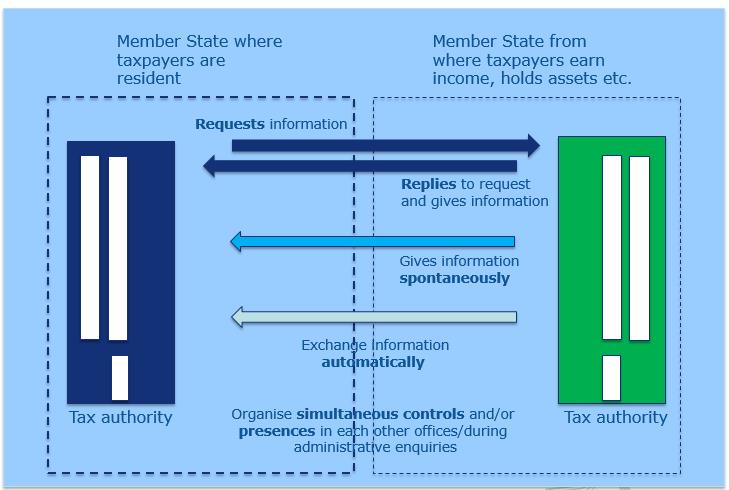
Figure 1 Illustration of the key activities of the Directive on Administrative Cooperation
The next two years, 2017 and 2018, were dedicated to the actual implementation and entry into operation of: exchanges of financial accounts as per DAC2 and advance cross-border rulings and advance pricing arrangements rulings under DAC3, as from 2017; and of exchanges of country-by-country reports as per DAC4, as from 2018. During the same time, the Commission services began a process of evaluation of the Directive, which led to the publication of two Commission reports: first, in December 2017, on the functioning of the Directive as whole; second, in December 2018, on automatic exchange of information.
On 25 May2018, the Council adopted DAC6, the fifth amendment to the Directive, which broadened once more the scope of automatic exchange of information to cover cross-border arrangements, (paper) structures which are ‘‘developed across various jurisdictions and may move taxable profits towards more beneficial tax regimes or have the effect of reducing the taxpayer's overall tax bill’. At the time of writing this document, Member States were in the process of transposing DAC6 into national law and working to develop the national IT systems needed to enable DAC6 reporting, from taxpayers and/or tax intermediaries towards national tax administrations. The Commission services are developing the central EU database where Member States will have to share information on the arrangements. DAC6 will enter into application on 1 July 2020 and cannot be taken into account in thisthis evaluation.

Figure 2 Illustration of DAC evolution over time
2.3.Intervention logic
After having presented the evolution of the legal framework, this section constitutes the analysis of the Directive. The analysis begins with a presentation of the intervention logic, a conceptual framework useful for breaking down the Directive into its various components which, later in the document, will be then analysed in more details. A graph depicting the intervention logic is provided below, and in a larger format in Annex 3.

Figure 3 Intervention Logic
The Directive answers to the need to bring European solutions to common problems all Member States are facing. The Directiveis needed to tackle (i) the mismatch between the growing globalisation of economic activities, both at international and EU levels, and the inherently national character of taxation which creates an opportunity for tax evasion or tax avoidance, (ii) the limited transparency in tax decisions with a cross-border element and (iii) issues that may result from differences in the implementation of commitments to tax cooperation and transparency made by some Member States at the OECD/G20 level, by establishing a set of uniform and common rules in the EU.
In the Single Market, we have a European economy but not European taxes nor an EU tax authority. Cooperation between Member States’ tax authorities is necessary to minimize the risks of double taxation and non-taxation. Tax decisions in cross-border situations taken by national tax administrations matter for other tax authorities as well. For example, the 2015 "LuxLeaks" affair showed that administrative cooperation via spontaneous exchange of rulings that potentially affect the tax bases in more than one Member State was not working. The Commission acted by proposing DAC3 to oblige Member States to automatically exchange information on their tax rulings. Finally, within the EU, a common and binding approach of putting into practice international commitments to promote tax transparency should be found – such as the Base Erosion and Profit Shifting (BEPS) project led by the OECD/G20 – as to minimise costs and burdens for taxpayers who are active cross-border.
To satisfy these needs, the Directive aims at a series of general objectives: (i) contribute to the proper functioning of the Single Market; (ii) contribute to safeguarding Member States’ tax revenues; and (iii) contribute to improving the perceived fairness of the tax system. These general objectives translate into three specific objectives or outcomes: (i) increase MS’ ability to fight cross-border tax fraud, evasion and avoidance, the latter particularly linked to forms of aggressive tax planning by multinational enterprises and other large taxpayers; (ii) reduce the scope for harmful tax competition, namely through greater transparency in tax rules; (iii) increase spontaneous/voluntary tax compliance via a ‘deterrent effect’. The Commission services report on all three objectives; but consider that increased transparency was an objective rather than reducing harmful tax competition, as made clear in the relevant proposals by the Commission. The approach of the Commission services has also been reflected in the Public Consultation questions.
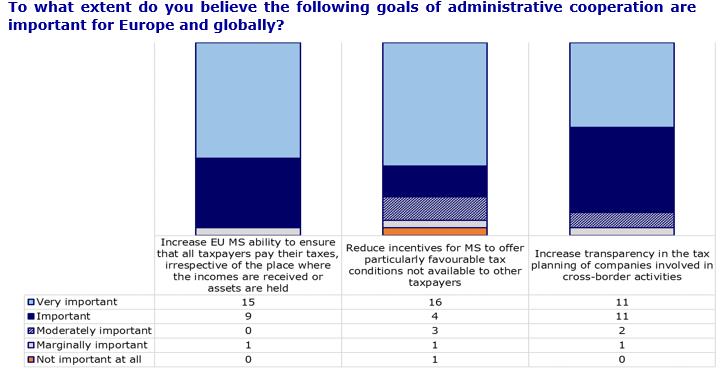
Figure 4 Extract from Public Consultation results
Tax fairness
European Commission aims at meeting demands for social justice and economic growth also through fair and effective tax coordination. Together with the Member States, the Commission is working to make tax systems more transparent, more accountable and more effective across the board. Here, tax fairness relates to the expectation that taxpayers operating across multiple Member States – both multinational enterprises and individuals – should not enjoy an unforeseen tax advantage because of the limited communication between tax authorities. At the same time, both taxpayers and tax authorities benefit, in terms of fairness, if taxes are paid in the correct amount and to the correct country right from the start, so that later adjustments are not needed. In this sense, the concept of fairness gets closer to the idea of certainty of tax, for both taxpayers and tax authorities.
The implementation of the Directive requires resources to perform a series of activities which then lead to certain outputs. To achieve the Directive’s objectives, Member States, the EU and the private sector have been deploying (and still deploy) financial and human resources, mostly for developing and operating information systems to collect and exchange information. Resources have been used mainly so that tax administrations exchange information with each other. This key activity, administrative cooperation, takes place in different forms: on request, spontaneously, automatically, as part of simultaneous controls etc. Activities lead to outputs and provide a measure of the status of implementation of the Directive. Considering the nature of the activities presented above, outputs can be grouped into some broad categories, namely: exchange on information (on request, automatically and spontaneously), presences abroad, simultaneous controls, notifications; and IT tools.
The scope of the Directive has been expanded through several amendments often influenced by external revelations concerning tax abuse. The members of the OECD and the G20 have responded by way of agreeing international improvements whereas within the EU it has been possible to legislate. The implementation of the Directive has been influenced by certain features of national legislation and regulations such as the availability of the data to be exchanged under DAC1, the statutes of limitations, the requirements to notify taxpayers of requests for information, and national tax policy developments, such as the introduction of tax amnesties or voluntary disclosure programmes focusing on assets held abroad.
2.4.Baseline and scope of activities under review
The initial DAC proposal was not accompanied and supported by an impact assessment. Therefore, for the purposes of this evaluation, identifying a comprehensive baseline or points of comparison proved challenging. For some elements of the intervention, and with a focus on its outputs, the volumes of exchanges in the pre-DAC period (at the time of the Mutual Assistance Directive) has been taken as baseline; for instance, the evaluation compares the number of requests for information before and after the entry into application of the Directive. The same approach has been followed when it comes to spontaneous exchanges.
Mandatory automatic exchange of information of five categories of income and capital between Member States started in 2015, so there was no point of comparison. In the case of DAC2 exchange of financial account information, no comparison over time is possible, but the amounts reported have seemingly grown, when compared with the figures reported under the Savings Directive. For exchanges of tax rulings the comparison was between the situation before and after the entry into application of DAC3, which made exchanges of tax rulings mandatory and automatic.
Defining a baseline for the analysis has proven difficult. The same has been the case for defining ex-post, years after the start of the intervention, a plausible definition of what the success of the intervention should or should have been. Success of a policy intervention depends on the extent to which its objectives have been met. The review of effectiveness which follows attempts at providing an answer to this question. That on average Member States have expressed satisfaction with the functioning of the Directive suggests success. A similar, overall positive impression emerges from the responses to the public consultation. Yet, responses to the public consultation have been very few. In very few cases Member States have been able to provide figures to back their overall positive assessment of the intervention. Overall, evidence and feedback available give an overall impression of success. Yet, the fact remains that the amount of evidence and feedback behind such an impression is very scarce.
So how was the evidence (very scarce on possible benefits) for this evaluation gathered? Article 23(2) of the Directive stipulates that Member States shall send the Commission any relevant information necessary for the evaluation. The forms and conditions of communication for the yearly assessment and statistical data are defined in Commission implementing regulation (EU) 2018/99. This evaluation is based on the feedback collected from Member States on an annual basis. Additional evidence was gathered in targeted consultations and on a public consultation.
The focus of the evaluation is on feedback relating to experiences of Member States activities until the end of 2017, last responses being from mid-2018. DAC1 administrative cooperation via exchange on request and spontaneously, via presences and simultaneous controls have been applied since 2013 and feedback on them covers the longest period. On DAC1 automatic exchange of information, there is feedback from exchanges in three years (2015-2017). The feedback on DAC2 and DAC3 exchanges which have started in late 2017, was very limited.
|
Directive evolution
|
Applicable as of
|
First actions or exchanges
|
First qualitative annual feedback received from MS
|
|
DAC1 other than AEOI
|
1/1/2013
|
1/1/2013
|
31/5/2014
|
|
DAC1 AEOI
|
1/1/2015
|
30/6/2015
|
31/3/2016
|
|
DAC2
|
1/1/2016
|
30/9/2017
|
31/3/2018
|
|
DAC3
|
1/1/2017
|
30/9/2017
|
31/3/2018
|
Figure 5 Timeline for receiving feedback from Member States during 2014-2018
As part of the evaluation, both a targeted and a public consultation were conducted. Annex 2 provides a synthesis of the evidence collected via the public consultation.
3.Implementation / state of Play
This chapter looks into the implementation and state of play of the Directive. The first section is about the transposition of the Directive in the Member States; the second section looks into activities related to exchange of information and other forms of administrative cooperation, presenting their outputs.
3.1.Transposition (state of play as of end April 2019)
Member States have transposed DAC and its amendments, yet not always as rigorously as expected: there are ongoing infringements against Estonia (DAC1), Czechia (DAC2), Spain (DAC4), as well as Ireland and Romania (DAC5). In the cases of Estonia, Czechia and Spain, the Commission has found irregularities regarding some national provisions transposing the Directives. Ireland and Romania have not yet communicated formally to the Commission their national transposition measures. In Annex 6, more details are provided.
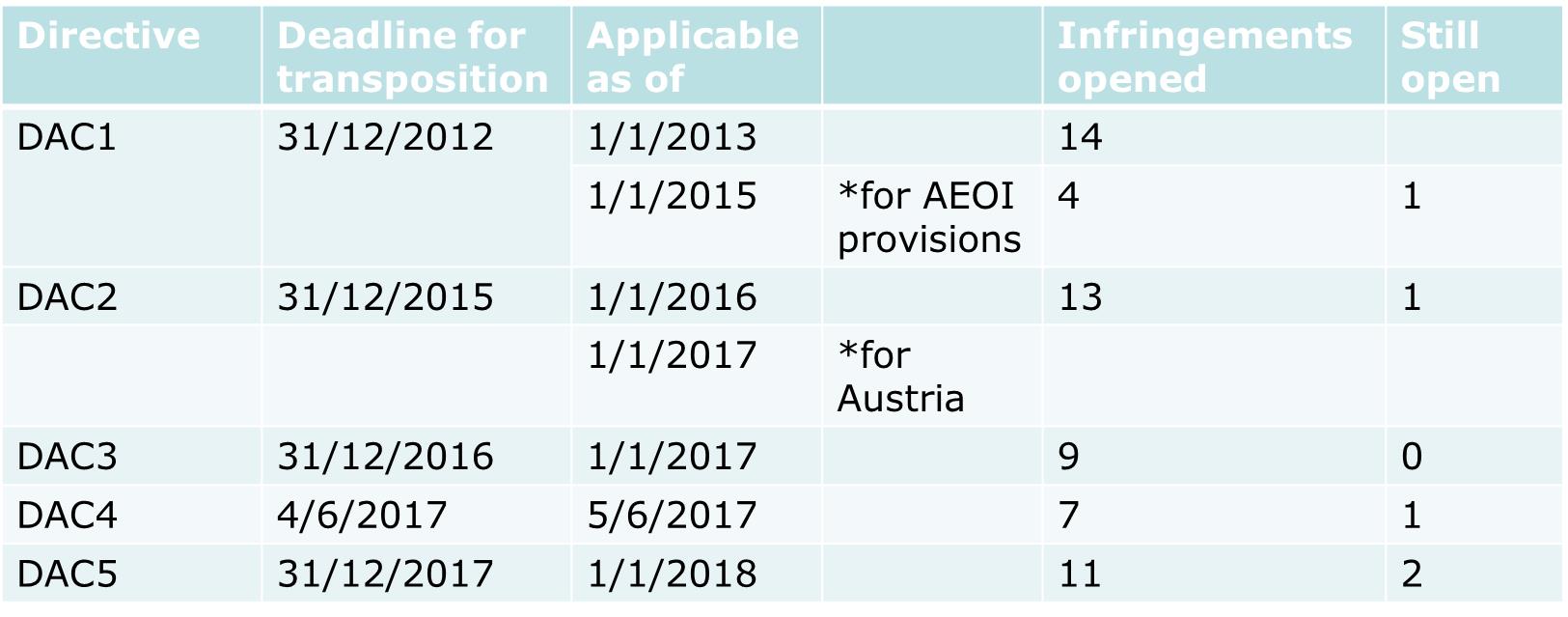
Table 1 DAC transposition: state of play – updated as of April 2019
3.2.State of Play: DAC activities and outputs 2013-2017
The key activity envisaged by the Directive on administrative cooperation is the exchange of information. Since its entry into application on 1 January 2013, Member States’ tax authorities have been putting into operation the Directive first and foremost by exchanging information under the new framework. Exchanges of information can take place in three different manners: on request, spontaneously (without prior request) or automatically, i.e. at a certain time and in a specific format.
Exchanges of information on request, under the time limits and by using the relevant electronic forms envisaged by the Directive, started as of 1 January 2013, and have been in the order of thousands of requests per year. Between 2013 and 2017, Member States sent almost 45 000 requests for information, corresponding to between 8 200 and 9 400 requests per year. This represents a substantial increase compared to the years 2008-2012, when the number of requests exchanged on the basis of the mutual assistance Directive ranged between 4 000 - 5 800 per year.
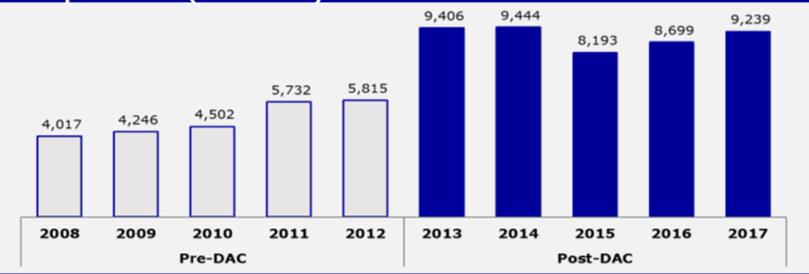
Figure 6 Extract of statistical data on exchange on request, by exchange year
Most requests are sent by Poland, France, Germany, Netherlands and Sweden. The largest receivers are Germany, UK, Luxembourg, Poland and the Netherlands. Almost all main bilateral flows occur between bordering countries. The largest bilateral flow involves Germany and Poland.
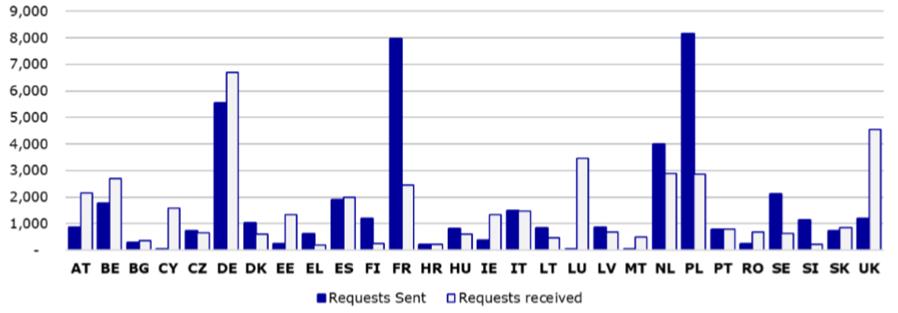
Figure 7 Extract of statistical data on exchange on request, by Member State
Unless differently agreed, Member States have to reply to a request for information within six months from the date of receipt of the request, yet about 45 % of the replies were provided beyond this time limit in 2017. The key reason for delayed answer seems to lie in the complexity of the requests and/or in special national procedure to get the information requested.
Three main findings emerge from looking at the number of requests sent/ received and their timing: first, some Member States are requested and/or receive information more than others; second, still many replies are provided beyond the time limits established by the Directive and no data are available of the number of cases falling under special time limits eventually agreed by the Member States; third, main type of information requested on natural persons are information about residency of taxpayers, employment income and banking information; while main type of information requested for legal persons are accounting information, companies’ ownership and general tax information.
Also as of 1 January 2013, Member States sent to each other information spontaneously under the time limits and by using the relevant electronic forms envisaged by the Directive. When Member States become aware of tax information, which may be of interest for other Member States, for instance when a Member State supposes that there may be a loss of tax in a second Member State, they must inform each other rapidly i.e. within one month the information becomes available. Since 2013, Member States sent almost 158 000 spontaneous information to each other with a certain variation over the years and a peak in 2017, when half of the total information were sent.

Figure 8 Extract of statistical data on spontaneous exchanges, by exchange year
Typical information which is sent spontaneously concern tax rulings, employment and business transactions.
Automatic exchanges under DAC started in 2015 and the scope of automatic exchanges has been expanded almost each year since then. Member States began exchanging information automatically as of 2015, when the first exchanges of information on income from employment, directors’ fees, pensions, life insurance products and immovable property started. The tax authorities extract tax information available concerning residents of other Member States and send it annually “in bulk” to the country of residence. They key findings concerning this flow of information are the following: the volume of exchanges among the five categories of incomes/assets shows major variations, with most information being exchanged about pensions and employment income, as not all Member States have available information on immovable property (24 out of 28), directors’ fees (23), and especially life-insurance products (only 8). Overall, exchange patterns are generally consistent with intra-EU migration patterns. Emigration countries are net receivers of information. Depending on countries, information sent differs in terms of its exhaustiveness. Due to differences in tax information collected nationally, Member States sending information on a certain type of income may send different sets of data. The structure of the data exchange format allows national differences, but the common elements such as structured name and address of the taxpayer should be the same for all. There are differences also when it comes to the inclusion of taxpayers’ tax identification number of the resident country. Some countries (a few) are collecting this piece of information and are able to include them systematically to the information to be sent.
Once Member State tax authorities receive information from abroad, information has to be matched with data in national databases. The matching, i.e. the success rate in identifying the taxpayer concerned, vary considerably across countries, with a positive trend over time. In the case of wages, pensions and directors’ fees, in 2017, six Member States (Belgium, Estonia, Latvia, Lithuania, Poland and Slovenia) were the “best matchers”, achieving almost full matching for at least two types of incomes/assets. The interviews with tax authorities underlined, that the accuracy of matching improves over time, thanks to a learning process built into the algorithms, which lead to partly automated matching especially with repeated exchanges about the same taxpayers, for example in case of pensioners. After having identified reliably the taxpayer which the information received concerns, Member States are expected to make an effort to use the information of income and/or assets they have obtained thanks to automatic exchanges. Countries which use the information typically do it. for risk assessment, tax assessment, and notification to the taxpayer, or for audits.
As from September 2017, Member States started the automatic exchange of information on financial accounts. A key difference compared with automatic exchanges concerning the other five categories of income is that, in the case of financial accounts, if tax administrations would not have the information available, they must obtain it from financial institutions, in a format which is aligned with the OECD common reporting standard. The DAC2 exchanges therefore required in most Member States new national reporting obligations to be introduced, in order to collect and send the agreed information to other Member States. The key findings concerning financial accounts information are that: in terms of value of accounts, exchanges reach almost three trillion euro; the sets of information exchanges are more uniform and exhaustive than in the case of DAC1, and typically include taxpayers’ identification numbers, as financial institutions have to include them in their reporting of new accounts as per the Directive; when it comes to use upon reception, not yet all Member States make use of the information. When they do so, information is used in a similar way than DAC1, with risk assessment being the most common use.
In addition to DAC2 exchanges, in 2017 Member States started to also exchange automatically or, in fact, to upload to a central directory cross-border tax rulings and advance pricing agreements (DAC3). As for other flows of exchanges, there are significant differences between Member States. As at January 2018, the main senders of DAC3 information were the Netherlands, Luxembourg and the UK. A few Member States have not shared any rulings. DAC3 concerns cross-border cases of business activities, where tax rulings are based on national legislation and/or interpretation of the applicable double tax treaty. No information is available on the actual use of DAC3 information, but a finding which emerges from the targeted consultation with Member States is that information exchanged (especially, the summary of the ruling) is often too brief to be usable. This means that it is difficult for a Member State to know when to request further information, and if further information is requested to demonstrate that it satisfies the foreseeably relevance requirement; and therefore it is relatively easy for a Member State to refuse to exchange more information.
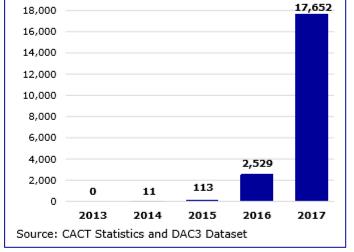
Exchanges of rulings before and after DAC3
The number advance tax rulings (ATR) or advance pricing arrangements (APA) exchanged has skyrocketed in 2017, due to the implementation of DAC3 provisions. The nearly 18 000 ATR/APA on which information has been disclosed in 2017 must be compared with the zero or near zero values recorded up to 2015 when this exchange was only spontaneous. Only in 2016, i.e. after the LuxLeaks scandal and the adoption of the DAC3-related amendment, did the Member States start exchanging information on a significantly larger volume of tax rulings. But even in that year, the total number of messages sent barely exceeded the 2 500 mark. While the Netherlands was one of the few countries to send information on tax rulings even before the adoption of DAC3 (though absolute figures were quite low), the other two current top senders, Luxembourg and the UK, started sending some information only in 2016. Ireland and Poland provided information for the first time in 2017. In the case of all other countries, the number of rulings disclosed is higher in 2017 than in 2016, with the only two exceptions being Spain (which communicated some 200 rulings in 2016) and Slovenia (where the number is small in any case).
In addition to exchange of information on request, spontaneously and automatically, the Directive allows a Member State to be present in another Member State to collect information, either by being present in the latter’ offices or by actively interviewing taxpayers or examine records, if the national legislation allows for it. However in no less than 12 countries the national legislation does not allow officials of another Member State to interview individuals or to examine records, and in another four countries the permission for such activities is subject to certain caveats, like for instance the need of the taxpayer’s consent or a reciprocity requirement. There have been in average about 45 visits per year since 2013, mostly seeing the involvement of the Netherlands and Finland (presences in neighbouring countries).
Moreover, the Directive permits Member States to arrange simultaneous controls of taxpayers of common interest. There have been in average about 40 simultaneous controls initiated per year since 2013 and, as for the presences abroad, some countries such as Germany were much more active than others, mainly with neighbouring countries.
The table below provides a summary of key outputs across the various activities described and the timeframe of the feedback received for these activities.
|
Activity
|
Key outputs
|
|
Requests for information and replies
(2013-2017)
|
Ø9 000 requests per year (average)
ØTotal: 44 981
ØMain senders: Poland, France, and Germany
ØNB: Late replies – about 45% of replies received later than 6 months (2017)
|
|
Spontaneous exchanges
(2013-2017)
|
Ø31 600 information sent without prior request per year (average)
ØTotal: almost 158 000
ØMain senders: the Netherlands
|
|
Presences abroad
(2013-2017)
|
ØTotal: 229
ØMost active countries: Finland and the Netherlands
|
|
Simultaneous controls
(2013-2017)
|
ØTotal: 202
ØMost active countries: Germany, Sweden, the Netherlands
|
|
Automatic exchanges DAC1
(2015-2017)
|
ØAlmost 3 700 messages sent per year (average)
ØTotal: about 11 000 messages
ØAn average message concern 1 500 taxpayers and is in value of €11 million of income/capital.
ØIn total, DAC1 exchanges concerned 16 million taxpayers and €120 billion of income/capital.
ØPensions and employment income account for 80% of the taxpayers and 97% of the income value.
ØMain senders: France, Germany, Italy, Spain, UK.
ØLeast common information available: life insurance products (available in only eight countries)
ØMatching rate (identification of taxpayer): (highest) 90% (average) for pensions and employment income; (lowest) 59% for life insurance products
ØMost common use of information: risk management
ØNB: at end 2017, seven Member States did not yet use the information (11 did not use information received on life insurance products)
|
|
Automatic exchanges DAC2
(2017)
|
ØTotal: about 4 000 messages
ØMain senders: Luxembourg, Germany, Ireland (2017)
ØMatching rate (identification of taxpayer): 81% (average)
ØMost common use of information: risk management
ØNB: at end 2017, nine Member States were not yet using the information
|
|
Automatic exchanges DAC3
(2017)
|
ØTotal: information about 17 652 rulings exchanged (on 1/2/2018)
ØMain senders: Netherlands, Luxembourg, UK
ØNB: summary of rulings often too brief to be useful and it is difficult to make convincing follow up requests for information.
|
Table 2 Key activities and outputs
4.Method
The evaluation is based on the following questions:
·To what extent has the Directive contributed to safeguarding financial interests of the Member States and of the EU by enabling effective administrative cooperation? (effectiveness)
·To what extent have the standardisation provisions of the Directive (e.g. adoption of electronic standard forms etc.) improved the efficiency of administrative cooperation? (efficiency)
·To what extent are the provisions of the Directive relevant to the needs of the Member States? (relevance)
·Is the EU approach coherent? (coherence)
·Could Member States achieve similar results without acting at the EU level? (EU added value)
To answer to these questions, the analysis relies mainly on statistical data and other qualitative information communicated by the Member States to the Commission services.
An open public consultation took place from 10 December 2018 till 4 March 2019. Despite social media announcements, ease of access to the survey online and announcements made at several occasions, there were only thirty-one responses to this public consultation. A summary report of the responses to this public consultation has been annexed to this document (Annex 2).
In this regard, it should be noted that the exchange of information and other forms of administrative cooperation involve tax administrations first and foremost. Under the Directive, citizens are not expected to provide information to tax administrations. However, businesses – mainly financial institutions and large multinationals – have to do so. As 31 replies were received over the course of the open public consultation, it is impossible to derive any general conclusions from so few responses.
As the Directive primarily involves tax administrations, the Commission gathered information on the functioning of the Directive from tax authorities. Since 2013, Member States have replied each year to a questionnaire on the functioning of the Directive covering all forms of administrative cooperation a part automatic exchanges. The questionnaire was prepared by the Commission in cooperation with the Expert Group of Administrative Cooperation in Direct Taxation where all Member States are represented. These replies have served as a crucial source of information for this evaluation. In addition Member States provided every year statistical data related to all forms of administrative cooperation other than the automatic ones that have taken place in a given calendar year.
Considering the crucial role played by automatic exchange of information for administrative cooperation, since the start of these exchanges Member States have the legal obligation to provide to the Commission a yearly assessment of the effectiveness of automatic exchanges and results achieved. Member States’ assessments covering three years (2015, 2016 and 2017) of automatic exchanges represent an important material for this evaluation. In addition to the yearly assessment, each year Member States provide statistics on automatic exchanges.
Furthermore, this evaluation relies also upon the findings of recent Commission reports on administrative cooperation, makes uses of ideas and comments expressed in several relevant Fiscalis 2020 project groups and workshops, discussions held within Expert Group meetings and quotes some external studies or research of interest.
The evaluation process was supported by a Commission inter-service steering group. The evaluation covered all Member States for the period January 2013 – June 2018. Considering however their relatively recent entry into application, the evaluation does not include in its scope DAC5 (which started to apply on 1 January 2018) and covers only to a limited extent DAC4.
4.1.Limitations in the evidence basis of the evaluation
Quantitative and qualitative feedback from Member States presents some weaknesses concerning consistency and comparability. The Contractor has examined the limitations of this information in Chapter 1.4 of its study. Abnormal values identified were discussed, corrected or confirmed as far as was possible with the relevant tax authorities during the targeted consultation. While the process resulted in a homogeneous and coherent database of information, there is no guarantee that no anomalies remained undetected.
The statistical data on other forms than automatic exchanges creates the possibility to compare the timeliness of replies to information requests and amounts of various types of cooperation during a year. A few Member States have also provided estimated added revenues. These data have some limitations, for example as to when and how each action or value in euro is calculated, and for example a bilaterally agreed longer timeframe for answering to a request is not reflected.
The statistical data on automatic exchange of information is a set of more complex defined data, which Member States are expected to retrieve from the sent tax information files. The compiled statistical data – even if anonymised – is intended to bring out details of the taxpayer profiles as regards the quality of the data exchange, that is, for example the details sent for taxpayer identification purposes.
5.Analysis and answers to the evaluation questions
This evaluation asks a set of questions to investigate whether the intervention has been effective, efficient, and coherent with other initiatives and policies, relevant and if it has delivered EU added value. Questions are listed in annexes, in the evaluation matrix. This chapter presents the answers to these questions.
As explained above, this evaluation does not cover all DAC amendments. The following table summarises the scope of this analysis, where it is highlighted that for assessing the effectiveness and efficiency, the data for DAC2 and DAC3 was too limited. For the most part, DAC4 and DAC5 are not in the scope of this evaluation.

Table 3 Summary of the scope of the evaluation
5.1.Effectiveness
This section looks into whether and to what extent the Directive has met its objectives.
·The three general objectives of the Directive are: (i) contribute to the proper functioning of the Single Market; (ii) contribute to safeguard Member States’ tax revenues; and (iii) contribute to improve the perceived fairness of the tax system.
·Stemming from these general objectives, three specific objectives were identified: (i) an increased ability to fight cross-border tax fraud, evasion and avoidance; (ii) reduced scope for harmful tax competition, namely through greater transparency in tax rules; and (iii) enhanced spontaneous tax compliance in a timely manner, through the ‘deterrent effect’ resulting from the greater ability to detect cross-border incomes and assets. The Commission services report on all of these three objectives; but consider that increased transparency was the main objective rather than reducing harmful tax competition.
There is only limited evidence concerning the effectiveness of the intervention. It appears that the Directive has contributed to some extent to the important objective of safeguarding tax revenues, which can be verified on the basis of the other forms of cooperation other than automatic exchanges, and the automatic exchanges under DAC1. The feedback received revealed that Member States were not yet able to produce estimations of additional revenues related to the latest forms of automatic exchange of information.
Due to their relatively recent implementation, it has proven too early to assess the effect of DAC2, DAC3 exchanges and their effect on the ability of Member States to tackle harmful tax competition and avoidance. Due to lack of convincing evidence, it was also not feasible to judge the effectiveness of the intervention on the general objectives of improving the functioning of the Single Market and making tax systems fairer; and on the specific objective of having a deterrent effect.
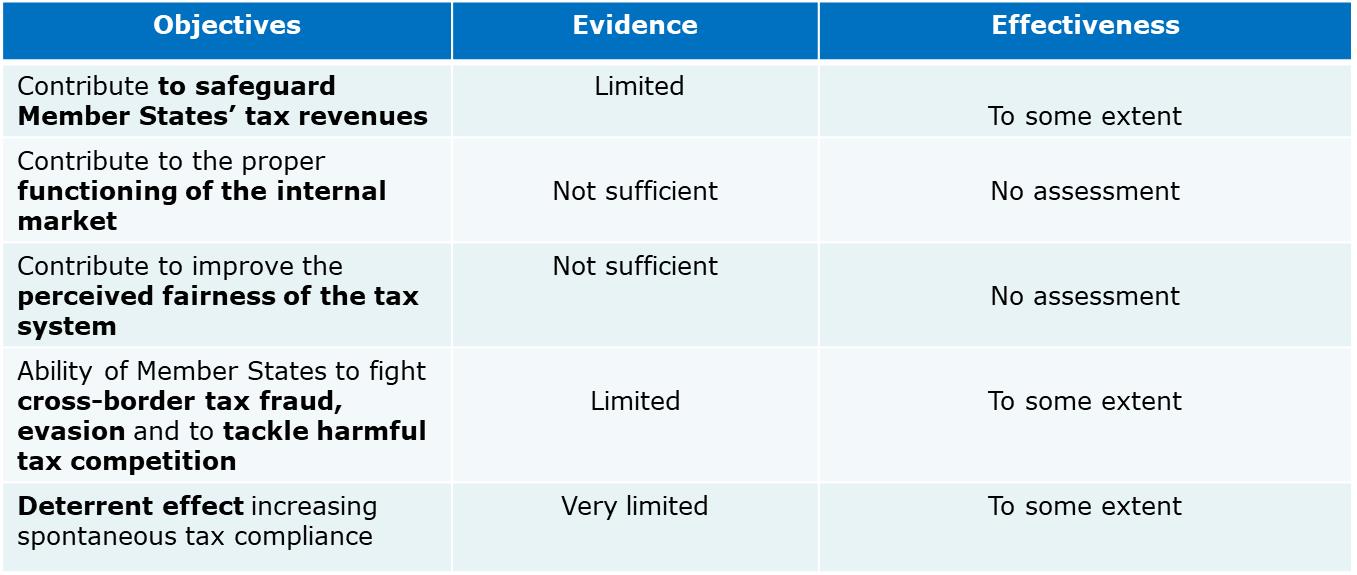
Table 4 A summary of the findings concerning effectiveness
Extent to which the Directive has achieved its general objectives
Member States’ satisfaction with the Directive
Before looking into the various objectives of the intervention, it is worth pointing out that Member States are satisfied with the intervention as a whole. The Member States have been asked each year since 2013 how satisfied they are with the Directive and with the legal and practical framework it provides for EU area. The question has been asked on each article of the Directive, as well as the overall functioning of the Directive. So far the average reply has always been positive, as presented in the table below.
|
2013
|
2014
|
2015
|
2016
|
2017
|
2018
|
|
3.97
|
3.97
|
4.25
|
4.28
|
4.18
|
4.21
|
Table 5 Directive average MS satisfaction rate per year (from 1 “not satisfied” to 5 “very satisfied”)
Safeguarding Member States’ tax revenue
There is evidence that certain elements of the Directive have contributed to safeguarding some Member States’ tax revenues. Evidence gathered via the yearly assessment and statistics on cooperation other than automatic exchanges is limited and does not support generalizations to the whole EU. There is some evidence on quite high amounts of additional tax revenues on the basis of simultaneous controls, but only from a limited number of Member States. From the ones that have given results, one Member State covers 80% of the reported total additional tax revenues.
On the other hand, evidence concerns, when it comes to automatic exchanges, only DAC1. Even if the majority of Member States have been able to give their estimation of the costs for building up their DAC1 AEOI systems, the estimation of benefits covers only for limited number of years and Member States. However, the Member States that have been able to report some benefit, report benefits exceeding their costs already. The effect of DAC2 and DAC3 remains to be assessed, mainly due to their relatively recent implementation.
In addition to providing additional tax revenues, the Directive supports Member States in safeguarding their tax revenue by ensuring that a correct tax assessment takes place, even if it does not lead to additional tax revenues but to the acknowledgement that taxpayers have duly declared their income. Unfortunately, there is no feedback on how much of the information received by the country of residence has helped in determining that the tax declaration was already correct and no additional taxes needed to be imposed in the country of residence.
·DAC1 automatic exchange of information, mostly of pensions and wage income, has contributed to safeguarding revenues, as reported by five Member States. They have given estimates for monetary benefit in the order of several million of euro per year in Belgium, Finland and from hundred thousand to few millions euro in Estonia, Poland and Slovenia. These figures cover both additional tax base and additional tax assessed.
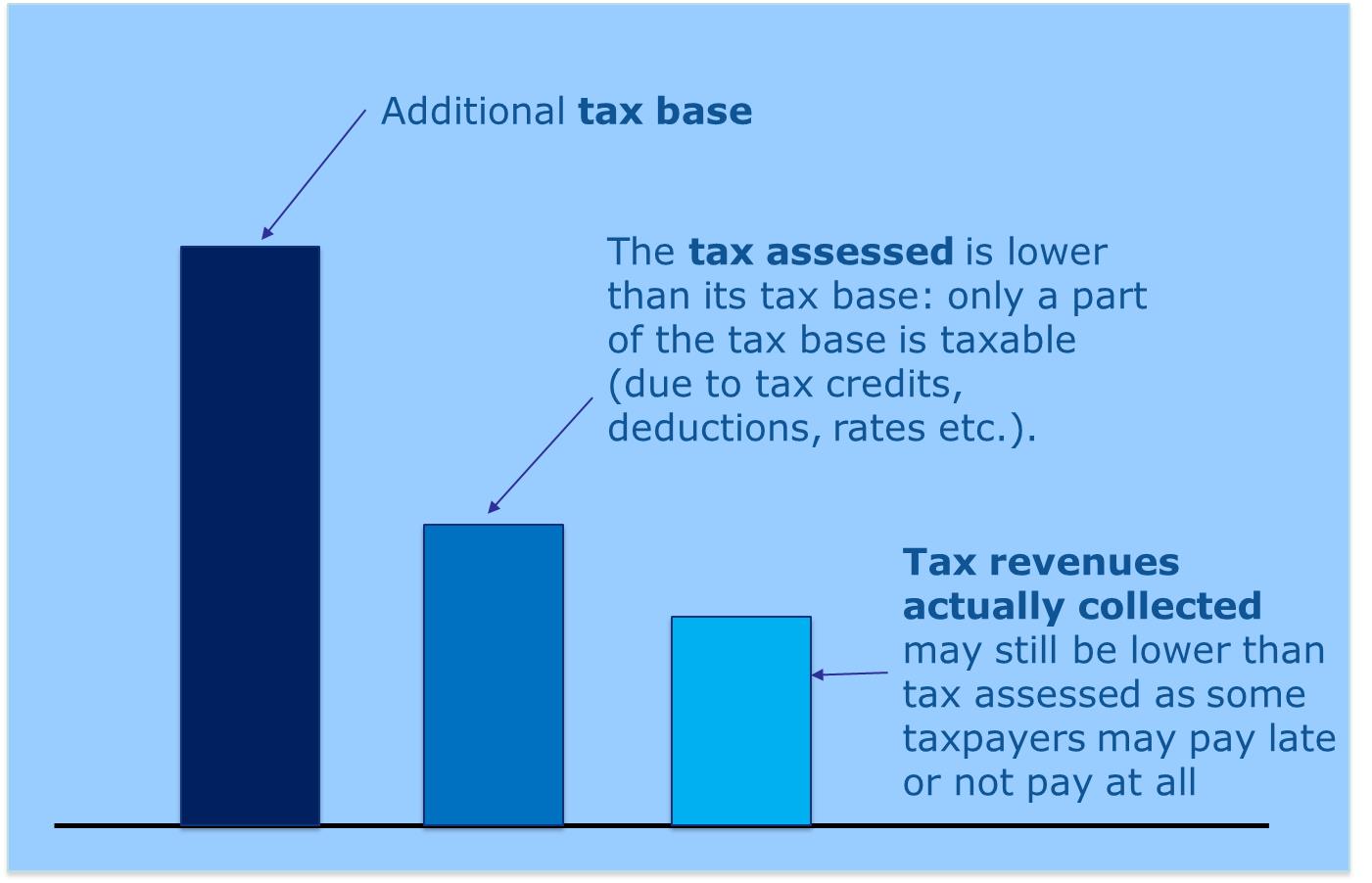
Figure 9 Illustration of the difference between tax base, tax assessed and tax collected
·In the countries which have been able to monitor the increase of the assessed tax for more than a year, Estonia, Poland and Slovenia, the trend is positive. This may indicate that tax authorities are progressively making a better use of the information exchanged which in turn is indicative of increased effectiveness in the future.
·Cooperation other than through automatic exchanges, mainly exchanges of information on request and simultaneous controls, has been effective, in some Member States, in safeguarding tax revenues in the order of tens of millions of euro. Sweden is the country which has reported most benefits.
Improved functioning of the Single Market and fairer tax systems
It has not been possible to draw clear conclusions on the effectiveness of the Directive regarding these two other general objectives. Both objectives are not specific nor measurable. Very few findings are available.
·Most respondents to the public consultation (19/25) considered that the intervention has positively contributed to increasing the fairness of the tax systems, so that companies that are active cross-border and individuals with incomes from or assets in another Member State are more likely to pay their fair share. Also, most of them (19/25) considered that the Directive has helped in ensuring that cross-border companies do not enjoy an undue tax advantage, so that the Single Market functions more properly.
·On the basis of the public consultation replies, it can be said that transparency in tax matters increases the overall understanding of a level playing field in the Single Market, where all taxpayers pay their fair share of taxes, in all EU Member States.
·Respondents to the targeted consultation were not able to comment on the effect of the Directive towards reaching these objectives.
Extent to which the Directive has achieved its specific objectives
Improved ability of Member States to fight cross-border tax evasion and to increase tax transparency
Information is a crucial asset for tax administration. By knowing taxpayers’ global financial situation, assets and income tax authorities can ensure that taxes are collected as they should. Also, information about activities, income and assets abroad are needed for a full taxpayer profile for risk analysis purposes in order to focus on risky taxpayers in the national tax assessment processes. The tax authorities’ ability to prevent, detect and ensure tax non-compliance is therefore considerably enhanced with information from abroad, if the information is received in a timely manner and put into efficient use.
Thanks to exchange of information and its use, the Directive has improved to some extent the ability of Member States to fight cross-border tax fraud and tax evasion by complementing the otherwise partial, missing or incorrect reporting of income from or assets held abroad. There is very limited evidence yet of the effect of the intervention on more subtle forms of tax non-compliance, such as harmful tax competition or avoidance.
·Thanks to the DAC1 core elements of administrative cooperation, and later to DAC1/DAC2 automatic exchange of information, Member States have been able, among others, to perform audits and to assess taxes due more efficiently, and to identify taxpayers with a risk of non-compliance because of activities abroad, when receiving mass information via automatic exchanges. Member States have also during the first three years of AEOI been able to improve their processes to some extent, in order to handle and utilize the mass information received. However, not all AEOI data received is yet put into full use, despite a positive trend, and thereby the ability of Member States to fight cross-border tax fraud and tax evasion has not reached the full extent yet. Some Member States have been quicker than others in exploiting the additional information made available by the Directive.
·There is no evidence concerning the actual use of DAC3 information. The latter should prove useful especially against tax avoidance and to tackle harmful tax competition. Respondents to the targeted consultation indicate that they plan to use it mainly for high-level risk assessment.
·As the other elements of the Directive support AEOI and vice versa, the toolbox has improved the ability of Member States to fight cross-border tax fraud, evasion and to tackle harmful tax competition. Through exchanges on request, simultaneous controls and presences abroad, Member States get the information needed to assess taxpayer’s position under investigation. Under such circumstances the information received is in any case useful, regardless of any additional taxes assessed. On the other hand, the spontaneous and automatic information received could trigger an investigation potentially leading to ascertain tax non-compliance, as confirmed by some respondents to the targeted consultation.
Deterrent effect increasing spontaneous tax compliance
The general awareness of an increasingly extensive scope of cooperation among tax authorities may have a deterrent effect on taxpayers, thus contributing to their spontaneous compliance. In particular, the automatic and systematic exchange of information on agreed income and asset categories of standardised tax information (particularly DAC1 and DAC2) has a high potential in this respect, since it can be regarded as third-party reporting for foreign income and assets and can thus support controlling of the national tax assessment, or even before tax assessment help tax authorities to target their reminders and nudge letter to correct taxpayers.
The intervention probably had a deterrent effect but there is limited evidence of it.
·One tax authority reported an increase in the voluntary disclosure of foreign proceedings, although a full-fledged measurement will be carried out in the coming years. Another tax authority reported that a substantial share of the taxpayers voluntarily amended their tax declarations, however only after being contacted by the tax administration.
·Voluntary disclosure or tax amnesty programmes launched by some Member States in connection with the oncoming stream of global automatic exchange initiatives delivered in some cases additional tax revenues, yet it would be going too far to conclude they did so because (or also because) of DAC.
·A draft of forthcoming Commission study on tax evasion by individuals finds a downward trend in offshore hidden wealth as of 2015. This may be a result of the deterrent effect of the Directive, possibly incentivised by voluntary disclosure and amnesty programmes by some Member States.
Deterrence depends upon awareness, which may be very limited among taxpayers in general but higher among concerned taxpayers.
·The results of public consultation, while far from being statistically representative, suggest that a significant share of the taxpayer population is still unaware of the fact that tax authorities exchange information on incomes gained and assets held abroad.
·However, representatives of taxpayers’ associations and tax advisors report increased awareness among their clients, i.e. taxpayers having activity abroad.
5.2.Efficiency – costs and benefits
The DAC, which builds on the achievements of 1977 mutual assistance directive, introduced more precise rules and procedures in administrative cooperation, wider scope and finding the most effective means of enhancing the correct assessment of taxes in cross-border situations and for fighting fraud. The collaboration between Member States and Commission through a permanent review of cooperation procedures, feedback and sharing of experiences was supposed to support the continuous enhancement of administrative cooperation.
The questions regarding efficiency addressed in the study supporting this evaluation have the intention to reveal to what extent the standardisation provisions of the Directive, for example adoption of common formats and timelines for exchanges, structured data schemas and frame for common procedures, have improved the efficiency of administrative cooperation, and if the benefits have exceeded costs incurred.
The independent analysis by the Contractor on replies given by Member States and information gathered in respect of other stakeholders has focussed on the side of costs, due to the fact that the Member States have not yet been able to provide sufficient data concerning the monetary benefits of administrative cooperation. The evidence collected is very limited. On its basis, it is not possible to arrive at robust conclusions, which could be applicable for all Member States and for all the period under review. Yet, the scarce information available suggests an overall positive cost-benefit ratio, in part due to operational cost savings for administrative cooperation activities compared with situation before the intervention.
Costs for complying with administrative cooperation
The Directive introduced in 2013 a new standardised structure and electronic means for contacts between Competent Authorities in the Member States. To date, most of the costs generated by the Directive come from developing the national IT systems to have an interoperability with the EU common domain. However, at the time of introducing electronic forms for exchange of case-by-case information, the Member States were not asked to follow up their national costs for any internal development work. As a result Member States were not able to reliably estimate their costs for the work in 2011-2013, when building up the functionalities for the core elements of the administrative cooperation. Hence, the case-by-case investigations.
Whereas the costs were tracked at Member States from the beginning of IT development for automatic exchanges, and it has been continued from year to year taking into account that each new amendment expanding the scope of automatic exchange has required its own actions for IT systems at the tax authorities and at the Commission. The Contractor has compiled the replies for IT implementation for AEOI and the national IT work. According to feedback from Member States this required in total about €130 million from national budgets. This is an extrapolated figure for 28 Member States, based on replies from 22 Member States for DAC1 AEOI, 21 Member States for DAC2 AEOI and 17 Member States for DAC3 AEOI. An additional €31 million of EU support was used during the analysed period for development and operation of the CCN network for all data traffic within EU, but not only consisting of administrative cooperation exchanges.
The main part of the analysis therefore concentrates on the costs for complying with the mandatory automatic exchange of information: there is a reliable coverage of recent information available from Member States. The AEOI compliance costs have been categorized being one-off costs for the development phase, and recurring costs or operational costs for the later maintenance phase. One-off costs mainly consist of investment expenses, but also include the costs of staff resources and training needed to work with new tools. Recurrent costs refer to the expenses incurred in operating the exchange mechanisms on a daily basis, consisting of the personnel and financial resources needed to fulfil the various obligations of administrative cooperation in a timely manner, as well as of the operational and maintenance costs for the use of the IT systems.
The costs and burdens investigated concern three categories of stakeholders, namely: (i) the Member States’ tax authorities responsible for the implementation of the Directive; (ii) the financial institutions collecting the information to be exchanged under DAC2; and (iii) the taxpayers to whom the information exchanged refers. The analysis of the costs for tax authorities focuses on three aspects: (i) the costs due to the automatic exchange of information, (ii) the costs and cost savings due to the non-automatic exchange of information and other forms of other forms of administrative cooperation; and (iii) the administrative burdens due to the reporting obligations. A quantitative assessment at the EU level has been carried out for automatic exchanges’ costs and reporting obligation burdens, while the other items are assessed qualitatively.
Costs for tax authorities of administrative cooperation under DAC
Costs due Automatic Exchange of Information
As not all Member States were able to report costs occurred, the available data for costs related to projects for DAC1 (automatic exchange of income from employment, pensions, directors fees, immovable property and life insurance products), DAC2 (financial account information) and DAC3 (tax rulings and advance pricing agreements) have been extrapolated considering the median costs per Member State. This was considered a reliable generalisation, as the costs incurred were not driven by common causal factors (e.g. country size, amount of data exchanged). Summing up the impacts of the three provisions, the total costs incurred by the national tax authorities up to 2017 for automatic exchanges can be estimated at about €130 million, or about €4.6 million per Member State.
|
Provision
|
Period
|
Compliance costs (€)
|
Share of total
|
Of which: Development
|
Of which: Recurrent
|
|
DAC1
|
Initial costs up to 2015 ; 2016 ; 2017
|
73.8
|
57%
|
60.5
|
13.3
|
|
DAC2
|
Initial costs up to 2017
|
53.3
|
41%
|
49.1
|
4.2
|
|
DAC3
|
Initial costs up to 2017
|
2.8
|
2%
|
2.0
|
0.8
|
|
Total
|
-
|
129.9
|
-
|
111.6
|
18.3
|
Source: Contractor’s own elaboration (on the basis of yearly assessment)
Table 6 Member States costs due to AEOI – EU estimates (€ million)
Around five euro out of six were spent to develop and adjust the IT infrastructure, while about one euro out of six was spent for operating the IT systems. The prevalence of development over recurrent costs is constant across the three types of automatic exchanges, although the share of the development costs is likely to decrease in the subsequent years.
In order to get a more comprehensive layout of the costs, the costs for automatic exchanges were compared to number of cases involved. A calculation of the “costs per exchange” reveals that between 2015 and 2017 the average DAC1 automatic exchanges costs amounted to €4.6 per taxpayer position on which tax information was sent; for DAC2 automatic exchanges, the average costs per account reported amounted to €6.4. Average costs are significantly higher for DAC3 exchanges, at €157 per ATR/APA submitted. The higher “per exchange”-costs reflect the smaller volume of information than within DAC1 and DAC2 automatic exchanges, which means that the IT costs can be spread over a lower number of operations.
The total compliance costs generated in both setting up and running the systems are presented below separately for DAC1, DAC2, and DAC3 automatic exchanges.
Compliance Costs: DAC1 AEOI
The information on DAC1 AEOI costs is available in the yearly assessment for 22 Member States, for the years 2015, 2016 and 2017. The data for 2015 also include any costs that were incurred in the previous years, in preparation of the first exchange of information.
Trend in Total DAC1 Compliance Costs 2015 – 2017
 Note: Excluding France and Sweden
Source: Contractor’s elaboration on yearly assessment
|
Composition of DAC1 Compliance Costs 2015 - 2017
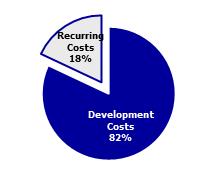
Note: Excluding France and Sweden
Source: Contractor’s elaboration on yearly assessment
Composition of DAC1 Compliance Costs 2015 - 2017
Note: Excluding France and Sweden
Source: Contractor’s elaboration on yearly assessment
Composition of DAC1 Compliance Costs 2015 - 2017
Note: Excluding France and Sweden
Source: Contractor’s elaboration on yearly assessment
|
Figure 10 Trend in Total DAC1 Compliance Costs 2015 – 2017 and the Composition of the Compliance Costs
Between 2015 and 2017, the total compliance costs borne by the 22 Member States amounted to about €69 million. The table above showing the trend in the costs excludes figures given by France and Sweden, for which annual values were not available. The annual expenses incurred from 2012 up to the end of 2015 amount to €31 million, i.e. slightly less than half of the total. Still, expenses in the two following years were also considerable, at about €15 – 18 million/year.
Even if the costs for DAC1 AEOI in the Member States are incurred for more than three years, the development costs account for the main part of the total expenses. The balance between development and recurrent costs shows only modest variations over these three years, which corresponds to the step-by-step approach anticipated for implementing DAC1 automatic exchanges: the Member States were since 2011 targeting to compile and exchange at least three categories of income by 2017, as by the original text of DAC. The requirement of minimum of three categories to be exchanged was removed at the time of introducing DAC3 amendment. The relative size of the two cost components shows limited variations across countries, as, with only two exceptions, the majority of costs relate to development costs in all Member States.
The total compliance costs show major differences across the Member States, ranging from more than €15 million spent by Germany to less than €100 000 spent by Hungary. In addition to Germany, large expenditures in the €7-9 million range were also incurred in Belgium, the UK, Luxembourg and Slovakia. The magnitude of the costs is largely unrelated to the country size or to the amount of information exchanged (i.e. number of taxpayers and amounts concerned). As discussed with the tax authorities, the compliance cost differences are motivated by a combination of factors. The factors include the different level of IT readiness of tax authorities at the start of DAC1 exchanges, the varying level of sophistication of the IT systems implemented for automatic exchanges, and the adoption of different procurement methods (e.g. reliance on services provided by big IT consultancies vs in-house development). In certain cases, institutional aspects (such as the involvement of sub-national tax authorities) may have also played a role.
The lack of any significant trend in national DAC1 costs driven by the country size or the amount of information exchanged suggests using a simple approach to extrapolate the EU costs, based on the median of the 22 available data points. Considering that the median costs per country amount to €0.9 million, and inputting this value for the six missing Member States, as presented above in Table 6 on page 30, the total costs for the EU due to DAC1 in the 2015-2017 period can be estimated at €74 million, of which €60.5 million is for its development, and €13.5 million for its operation. These figures are discussed further later in this section under the chapter of cost-effectiveness.
Compliance Costs: DAC2 AEOI
The information on DAC2 compliance costs is available for 21 Member States and refers to the expenses incurred in the first year in which the first exchange took place, i.e. up to the end of 2017. The total compliance costs for the tax authorities amount to €50 million. This is quite a significant figure, exceeding by some €20 million the costs incurred by the same Member States in the DAC1 launch phase. However, it should be noted that the same data exchange format is used both for DAC2 and Common Reporting Standard introduced by OECD. Therefore, it is difficult to accurately distinguish the DAC2 costs, for example for building the national reporting tools for Financial Institutions. Similar considerations are due to preceding work with banks’ reporting liabilities and exchanges with United States related to the Foreign Accounts Tax Compliance Act (FATCA) legislation, as some countries have developed integrated platforms capable of handling all types of financial information reporting. Therefore, the figures reported by Member States may overestimate the true compliance costs attributable solely to the EU legislation. Indeed, it is likely that without DAC2 Member States would still have exchanged DAC2 information but under the CRS, in which case arguably the costs of DAC2 could be calculated as zero.
Given that the exchanges had just started in September 2017, it is natural that most of the DAC2 compliance costs consist of development costs (92% of the total). There are limited differences across Member States on the composition of the costs, but as in the case of DAC1, there are significant differences in the euro amounts of total compliance costs incurred by the Member States. Germany is by far the largest spender, with nearly €20 million invested in DAC2 (almost entirely in IT infrastructure), accounting alone for almost 40% of total costs in all the Member States. Other Member States spending considerable amounts include Denmark, the UK, the Slovak Republic, Luxembourg, and the Netherlands, which report costs in the €3 – 5 million range each. A number of EU countries show significant expenses for both DAC1 and DAC2 (Germany, the UK, Luxembourg, and the Slovak Republic), while others spent much less for DAC2 (e.g. Belgium and Finland, whose expenses for DAC2 are just one-tenth of what was spent for DAC1).
The median DAC2 compliance costs per Member State amount to €0.5 million. As for DAC1, EU costs are estimated by inputting the median value for the seven missing Member States. Based on this assumption, the total implementation costs for DAC2 in the EU can be estimated at €53 million, of which €49 million is for its development, and €4 million for its operation, as presented in Table 6 on page 30. As mentioned, these estimates are likely to include costs attributable to the CRS data collection and exchanges and, to a more limited extent, FATCA related collection and exchanges with US.
Compliance Costs: DAC3 AEOI
The information on the costs borne by the Member States for implementing and operationalising DAC3 is available for 13 Member States in their yearly assessment. As in the case of DAC2, the expenses are incurred up to 2017, when the first exchange took place.
The implementation of DAC3 provisions resulted in total compliance costs of around €2.2 million in the starting phase. This is a modest figure compared with the costs incurred for DAC1 and DAC2, in line with the very nature of the provisions and technical solution provided for automatic exchanges. In fact, there is no exchange of information bilaterally between Member States, but under DAC3 the relevant information from tax authorities’ decisions is uploaded in the Central Directory managed by the Commission, where it can be seen and extracted by all Member States. Moreover, the amount of information to be exchanged is much smaller than in the case of DAC1 and DAC2 (at most a few thousand rather than millions of records). This reduced the complexity of the IT systems and procedures that were put in place by the Member States, and thereby resulted to less costs.
The development costs account for three-quarters of the total expenses. However, there are a few countries in which the recurrent costs account for at least 50% of the total costs. The larger share of recurrent costs can be explained by the information shared with other Member States, as the advance tax rulings and transfer pricing arrangements (ATR/APA) may need more manual intervention, for example for drafting the summaries to be uploaded to Central Directory.
While the absolute values are generally low, there are significant differences in total compliance costs among Member States. Belgium displays costs above €700 000, followed by Germany, the Netherlands, Austria, and Luxembourg, whose reported costs fall in the €200 000 – 400 000 range. Overall, the compliance costs appear to be only loosely correlated with the volume of information exchanged. Hence, the EU costs for implementation of DAC3 are estimated based on the median value – around €42 000 – and like presented in Table 6 on page 32, they thus amount to €2.8 million, of which €2 million is for its development and €800,000 for its operation.
Costs due to non-automatic exchanges of information, spontaneous exchanges and other forms of administrative cooperation
From the targeted consultation at Member States competent authorities, it emerged that the new procedures and tools for exchange of information on request introduced by the DAC generated in 2011-2013 no significant one-off costs for the IT systems. And the tax authorities made it clear in the targeted consultation that connecting the DAC core elements into national procedures did not result in additional operational costs. A quantitative analysis costs for exchanges on request is not possible as the tax cases are all different. For example, the time needed to retrieve the information requested by another Member State varies on a case-by-case basis, depending on whether a local tax office needs to be alerted, whether an interaction with the taxpayer is needed, and through which channels the cooperation actions take place.
To obtain some clarifications or additional information about the costs incurred, tax authorities in 14 Member States were interviewed. Amongst them a number of tax authorities was asked to provide data on the costs incurred for spontaneous exchange of information activities and other forms of administrative cooperation such as simultaneous controls and presences in administrative offices. They confirmed that these tools did not require any specific or significant investment. Only one authority was able to provide an indication of the time spent for spontaneous exchanges, presences in administrative offices, and simultaneous controls. Usually, no typical time commitment in these respects could be defined.
Importantly, the operational costs of simultaneous controls and presences in administrative offices have been partly covered by the funding provided by the Fiscalis programme, which the national tax authorities can use to finance these activities. While the national budgets must cover personnel costs, i.e. the time that tax officials spend in carrying out presences in administrative offices and simultaneous controls, other items, such as travel and subsistence costs, can be financed via the Fiscalis programme.
Burden for tax authorities due to reporting to the Commission
The Members States are required by DAC to submit periodically information to the Commission regarding the practical implementation of the DAC provisions. This obligation is made up of four information obligations, namely:
·The filling-in of the yearly assessment questionnaire on the quality and effectiveness of automatic exchanges;
·The filling-in of the questionnaire on functioning of the DAC;
·The compilation of the automatic exchanges statistics, i.e. conducting queries on the information sent under DAC1 and DAC2;
·The compilation of the statistics on forms of administrative cooperation other than automatic exchanges.
In accordance with the Standard Cost Model methodology, the quantification of these administrative burdens is based on the following parameters
1)Frequency. Each information obligation must be complied with once per year.
2)Population. The 28 Member States responsible for providing this information.
3)Costs per occurrence. The costs per occurrence were estimated by asking four tax authorities about the amount of personnel time spent in compiling and submitting the information. The data provided were consistent, and the normally-efficient time per occurrence has been estimated based on the median value, and then monetised based on the average EU salary of an associate professional.
The compliance with each information obligation takes about three to four days per year, with the exception of statistics on cooperation other than by automatic exchanges, which can be collected with a more limited effort (1.5 days). In total, each Member State authority spent almost twelve person/days per year on reporting obligations. Based on these estimates, the average cost for all of the four obligations is estimated at €3 000 per year. At the EU level, the total costs thus reaches nearly €80 000 per year, as shown in the table below.
|
|
Questionnaires
|
Statistics
|
Total
|
|
|
Yearly assessment on AEOI
|
on non-AEOI
|
AEOI
|
Non-AEOI
|
|
|
Time per occurrence (days)
|
3
|
4
|
3.3
|
1.5
|
11.8
|
|
Cost per occurrence (€)
|
706
|
941
|
764
|
353
|
2,764
|
|
Total costs at EU level (€ ‘000)
|
20
|
26
|
21
|
10
|
77
|
Source: Contractor’s own elaboration
Table 7 Member States burdens due to reporting obligations
The relatively small quantifiable burden may not capture the entire picture. Several tax authorities felt they were being subject to a combination of EU and OECD reporting obligations that partly leads to duplicated reporting of similar facts and figures, which have nevertheless to be handled and submitted according to different standards. According to some interviewees, the burden of different reporting is aggravated by the feeling the given information is not used for improving the functioning of administrative cooperation.
The burdens quantified above represent the operational costs of the current systems, i.e. they do not take into consideration the one-off costs that may have been needed to set up a system capable of extracting this information. However, there is insufficient information available for quantifying these one-off costs. The questionnaire on the functioning of the directive is most likely still filled in manually in most of the Member States, as is the case with yearly assessment where however some assessment, e.g. matching rates require calculations. Additionally, for statistics on automatic exchanges, the data presented above do not take into account the computation time needed for running the queries and extracting the information from the database.
Costs and burdens for financial institutions
Costs due to DAC2 AEOI
The information exchanged under DAC2 AEOI originates from the financial institutions, i.e. from banks and other financial operators. The financial institutions are required to review their client base in order to identify the accounts of non-resident clients whose information is to be reported to local tax authorities (the ‘Reportable Accounts’ and ‘Reportable Persons’) and to collect the information necessary for their identification (e.g. Tax Identification Number, address of the residence country). Therefore, the financial institutions have to carry out the following tasks:
1.the search of internal databases to identify elements suggesting tax residency in another country (the so-called indicia);
2.the performance of various due diligence activities to ascertain the tax residency status and/or the identity of certain account holders;
3.the transmission of the information to the tax authorities through secure channels.
DAC2 requirements generated financial institutions development costs and recurrent costs. DAC2 initial Costs refer to the expenses for: (i) the design and setting up of the procedures and IT systems for the search, collection and transmission of the information; and (ii) the due diligence activities on the existing clients, i.e. those with an account pre-dating the entry into force of DAC2. DAC2 annual costs include expenses for: (i) collecting information on new clients; and (ii) monitoring the tax residency situation of existing clients and, in case of changes in circumstances, the collection of the relevant information.
The information on costs presented in Annex 7 is less than ideal for formulating an overall estimate, as the number of countries and financial institutions for which some data could be obtained is limited and, in some cases, the estimates were provided in the form of fairly wide ranges. At the same time, albeit obtained independently from different sources, the estimates are generally consistent with each other and figures for large countries, such as France, Germany and the UK are of the same order of magnitude and the same applies to smaller countries, such as Austria and Luxembourg. Also, the evidence collected is broadly in line with the estimates found in other studies concerning the implementation of DAC2/CRS, both in EU countries and in third countries, or dealing with the implementation of other mechanisms for exchanging financial information.
However, the costs incurred by financial institutions were substantial and higher than those borne by tax authorities. The sum of the estimated initial costs in Austria, France, Germany, Luxembourg and the UK yields a total of at least €340 million, which is more than ten times the development costs (about €30 million) borne by the tax authorities in the same Member States.
The interviews with the financial sector stakeholders generally suggest that the experience gained when implementing FATCA-related requirements allowed some savings in the initial stages and helped in understanding the implications of DAC2. Some interviewees also noted that tools initially developed for FATCA could be reused for DAC2. However, since FATCA and DAC2/CRS are based on similar but not identical concepts and definitions, the bulk of work had to be redone. A major difference between FATCA and DAC2/CRS is that the previous concerned only US citizens and clients with US indicia. Financial institutions consider only DAC2/CRS forced them to make the change towards automated processing. Overall, the available evidence suggests that the costs estimated for financial institutions would at least to some extent be additional to those previously incurred for FATCA. However, as with the cost estimates of tax authorities, it is impossible to say which could be isolated solely to DAC2 rather than CRS. It could also be argued that as the costs were required by CRS, the costs related to DAC could be described as zero.
Costs and burdens for taxpayers
Costs due to DAC2 identification requirements
The implementation of DAC2 by the financial institutions resulted in some administrative burden for the taxpayers, i.e. for the account holders, who had to provide information on their tax residency status. In the vast majority of cases, the status could be quickly ascertained based on the information already available to the financial institutions. However, in the remaining cases, the financial institutions interacted with their clients in order to clarify their tax residency and to get the necessary identification elements.
The administrative burdens borne by account holders for the provision of DAC2-related information could be estimated by multiplying: (i) the number of direct interactions with financial institutions; (ii) the average time per interaction; and (iii) the monetary value of this interaction. No reliable information is currently available on the first two parameters and, therefore, an estimate of the DAC2 burdens borne by taxpayers is not available. The number of direct interactions is likely to be significant, as in the EU there are some 600 million accounts, of which nearly 9 million were reported under DAC2.
Costs for Fiscalis budget
Support to tools of administrative cooperation in all areas
The administrative cooperation between competent authorities in the field of direct taxation is supported by providing EU funds to deploy the technologies required and to use the tools and mechanisms created. This support was provided via the Fiscalis programmes, and namely the Fiscalis 2013 and Fiscalis 2020 iterations, in whose general objective the administrative cooperation among tax authorities was explicitly mentioned. The funding for the administrative cooperation activities could consist of: (i) support to the EU IT systems for taxation; (ii) financing of administrative cooperation tools and mechanisms, in particular simultaneous controls and, since 2015, presences in administrative offices; and (iii) other actions aimed at sharing knowledge and best practices on administrative cooperation themes (e.g. working visits, project groups, and workshops).
Most of the resources made available by Fiscalis to support administrative cooperation went indeed to the development and operation of the Common Communication Network, which is the central IT infrastructure for safe exchange of information. The trans-European system in place for exchange of information consists of a set of processes, applications, services and infrastructure distributed in national tax administrations and at the European Commission. The Common Domain consists of:
·The pan-European telecommunications network infrastructure (CCN/CSI), including the security equipment (e.g. encryption devices, firewalls), the communications gateways and the software linking them together;
·The central management services (e.g. central help desk and support).
As the CCN provides the basic communication infrastructure for the Member States both for administrative cooperation in the field of direct taxation, indirect taxation and numerous other purposes, it is not possible to distinguish the amount that should be allocated to DAC. The total Fiscalis support to the CCN between 2011 and 2017 amounts to around €31 million.
The IT support is not limited to the CCN infrastructure, as it also includes the development of software modules for the interoperability of the national IT systems and of standard forms and computerised formats for the exchange of information, both automatic and non-automatic. Fiscalis 2013 specifically supported the development of the e-forms used for non-automatic exchanges, and the XML schemas used for DAC1 automatic exchanges. Fiscalis 2020 supported the development of software modules which Member States could use (and adapt) for implementing the DAC2 provisions.
Concerning other forms of administrative cooperation, the Fiscalis programmes played a significant role in the financing of simultaneous controls and, more recently, presences in administrative offices. The support was two-fold: on one hand, Fiscalis fostered the creation of horizontal tools to improve the awareness, uptake, and effectiveness of presences in administrative offices and simultaneous controls (e.g. creating working groups for presences in administrative offices / simultaneous controls coordinators, supporting the drafting of operational guidelines); on the other hand, it directly supported the national tax authorities by compensating the operational costs of participation (i.e. travel costs). The latter support shall be considered as a transfer, rather than an additional cost, as it offsets national expenditures.
The Fiscalis support to the IT systems complements the national investments, but is not a transfer payment and does not offset them. The deployment of the national IT systems remain the responsibility of the Member States’ tax authorities. That said, it appears that having undertaken certain expenses at the EU level resulted in savings due to economies of scale, especially when common modules or schemas could be developed centrally and then used by Member States.
Between 2014 and June 2018, 245 simultaneous controls were financed by the Fiscalis 2020 programme across the various tax areas. In total, the simultaneous controls absorbed about €2 million of support, with an average cost of about €8,000 per control. It is not possible to distinguish which simultaneous controls concerned direct taxation, but considering that the number of simultaneous controls in the fields of direct taxation and VAT amounted to around 150-170 per tax area over that period, and that a significant share of simultaneous controls dealt jointly with direct taxation and VAT, it can be estimated that Fiscalis 2020 did fund a large share of the simultaneous controls deployed under the DAC.
Since 2015, there were 88 presences in administrative offices financed; about €100 000 of the programme resources were spent on this tool with an average cost of about €1 100 per activity. Each year, on average, around 150-200 presences are organised in the field of VAT and 50 in the field of direct taxation.The share of visits financed by Fiscalis is lower than for simultaneous controls. It should be noted, that the number of simultaneous controls and presences financed by Fiscalis does not reflect the total number of actions, as using Fiscalis budget for these is not mandatory.
Benefits for Member States - additional taxes assessed
The evidence on benefits of the intervention, in terms of additional revenues, is very limited. Only very few Member States have been able to provide information on the incremental tax revenues associated with administrative cooperation, despite this question been asked systematically in the yearly assessment questionnaire (for automatic exchanges) as well as in the Statistics for all other forms of cooperation than automatic exchanges. In the yearly assessment questionnaire Member States are asked to estimate ‘additional revenue or increase in assessed tax’. The two concepts can be understood differently, if considering the additional revenues refer to taxes actually collected whereas the increase in or additional taxes assessed could mean assessed but not collected yet. In practise, the tax collection may take place quite a long time after tax assessment at the end of the administrative procedure, as the taxpayer usually has the possibility to appeal in courts or to settle for payment of a lower amount. During the targeted consultation, it emerged that the tax authorities mostly referred to additional tax assessed (i.e. not necessarily collected yet), so this kind of benefits are uniformly referred to as ‘additional tax assessed’ throughout the analysis.
Secondly, in answering the questionnaire, some respondents made reference to yet another notion of benefit, namely the increase in the tax base, i.e. in the values of incomes/assets that they have found not reported by the taxpayer and therefore potentially subject to taxation. The additional tax base cannot be automatically converted into additional tax assessed – let alone collected – as it depends on the tax rate, which varies across Member States, levels of incomes, and tax bases and lastly, the effect of crediting taxes paid abroad or exempting foreign income based on bilateral tax treaties. Obviously, the use of different notions of tax revenues complicates the comparison across countries. Therefore, for the purpose of comparison of total costs and benefits, the increase in tax base is finally converted into an estimation of additional tax assessed.
Estimated additional taxes due to Automatic Exchange of Information
The evidence on the incremental tax assessed triggered by DAC1 AEOI is very limited. It consists of nine observations from five Member States, out of a theoretical total of eighty-four observations. Some of these Member States could provide with information from all three tax years, some for less than that.
In some cases, the information is broken down for the various categories of incomes/assets subject to automatic exchanges, while in others only aggregate figures are provided. The available evidence derived from the yearly assessment questionnaires is summarised in the table below, as reported by the Member States.
|
Member States
|
Year
|
Employment income
|
Directors’
fees
|
Pensions
|
LIP
|
Income from property
|
Total
|
|
Reported as Increase in Tax Base (additional income)
|
|
Belgium
|
2017
|
148 593
|
..
|
105 837
|
33
|
40 040
|
289 470
|
|
Finland
|
2017
|
..
|
..
|
..
|
..
|
..
|
29 000
|
|
Total
|
2017
|
..
|
..
|
..
|
..
|
..
|
318 470
|
|
Reported as Increase in Assessed Tax (additional taxes)
|
|
Estonia
|
2016
|
..
|
..
|
..
|
..
|
..
|
320
|
|
|
2017
|
..
|
..
|
..
|
..
|
..
|
417
|
|
Poland
|
2015
|
87
|
0
|
3
|
0
|
0
|
91
|
|
|
2016
|
830
|
0
|
39
|
0
|
2
|
870
|
|
|
2017
|
1 108
|
1
|
390
|
0
|
19
|
1 519
|
|
Slovenia
|
2016
|
329
|
0
|
495
|
0
|
7
|
830
|
|
|
2017
|
1 373
|
0
|
2 259
|
5
|
13
|
3 650
|
|
Total
|
2016
|
..
|
..
|
..
|
..
|
..
|
2 850
|
|
|
2017
|
..
|
..
|
..
|
..
|
..
|
9 236
|
Source: Yearly Assessment (note: LIP stands for life insurance products).
Table 8 Additional income or tax assessed from DAC1 AEOI-related Actions (€ ‘000)
The available information suggests the following observations:
·Increase in the tax base may include amounts that are not subject to recovery.
·In the case of Belgium, the Contractor was told in the targeted consultation that by estimation the tax assessed is in the order of 25% of the additional tax base. This translates into an additional tax assessed of €70 – 75 million on tax years 2014-2015. Even if only half of the additional tax assessed estimated this way would be eligible for recovery, the starting phase compliance costs of DAC1 automatic exchange systems in Belgium (total of €9.1 million estimated by Belgium) would already be covered. The same applies to Finland: if the estimated additional income of €29 million is translated into estimation of 25% taxes, it would mean additional tax of €7.25 million from one year to cover all their costs of DAC1 AEOI, and even the costs for DAC2 AEOI (reported total costs €5.1 million).
·However, a direct translation from income into 25% of taxes may not be a fully reliable basis, as discussed with some of the Member States in the targeted consultations. It may be that the double tax conventions do not allow the country of residence to impose full tax on income already taxed in the source country.
·The information provided by the Member States reporting for more than one year indicates an increase over time in the amount of additional tax assessed. The additional taxes assessed in Poland rose from around €90 000 in 2015 to some €1.5 million in 2017, mainly thanks to an increase in the volume of information received from foreign authorities, and to a growing awareness among tax officials about the possibility to use information gained from automatic exchanges.
The limited evidence available suggests that DAC1 AEOI data exchanged and used by the receiving country did generate an increase in assessed taxes. At the same time, the growing trend in the figures reported by some Member States suggests that tax authorities are progressively making a better use of the information exchanged which in turn is indicative of possible further increases in the future.
The incremental assessed taxes associated with DAC1 exchanges were compared with total tax revenues on individual and household incomes. In the case of Poland, Estonia and Finland, the incidence is quite low, as the DAC1-related incremental tax assessed accounts for 0.01% of total tax revenue for Poland and 0.03% for both Estonia and Finland. It is naturally quite expected that most of the national revenues come from domestic income and assets, but the before mentioned ratio was elaborated in the study supporting this evaluation in order to highlight the how large the benefits are from the perspective of the Member States tax authorities. If it would in the future be possible to have figures for increase in tax base due to automatic exchanges compared to all taxable foreign income, it could tell about the scope of the foreign income discovered via automatic exchanges, as well as the added value of DAC actions.
For DAC2 and DAC3 automatic exchanges, given the very recent implementation, the Member States were not in the position to provide any information on the possible results of use of the information. Little information is available from other sources, as the topic has not yet been extensively analysed in the literature.
According to the interviews with Member States, highly targeted tax investigations have the potential to bring considerable returns, especially concerning large corporate taxpayers. Overall, based on the limited information available at this stage, it can only be concluded that all these forms of automatic exchange of information have the potential to generate incremental tax revenues. However, the magnitude of these benefits remains to be ascertained. As learned from the DAC1 AEOI reporting to the Commission, the Member States should be tracking the benefits from the very beginning in a common structured manner, to produce comparable results.
Estimated additional taxes thanks to exchanges on request, spontaneously and other forms of administrative cooperation
As in the case of automatic exchanges, also for other types of exchanges and cooperation the information concerning benefits is scarce. It consists of fifteen observations from only six Member States, out of a theoretical total of one-hundred-forty. The inability to produce estimates cannot be attributed to the novelty of the instrument as in the case of automatic exchanges, but rather suggests the existence of structural problems in tracking and assessing the benefits of administrative cooperation in most Member States.
The additional tax assessed in the Member States for which data are available increased significantly over the years, from €29 million in 2014 (reported by four countries) to €277 million in 2017 (reported by five countries). Over the whole period, the additional tax assessed by six different Member States is in the order of €532 million. Nearly 80% of the total figure for increase in tax assessed accounts for Sweden, but even in the targeted consultation it was impossible for the interviewee to say if this is due to an outlier or represents for example improved processes in Sweden. In Germany, values show an oscillating trend, dropping from nearly €20 million in 2014 to just € 4-6 million in 2015-2016 and then increasing to almost €50 million in 2017. Significant benefits were also declared by Lithuania. Overall, benefits reached over €200 million over the four-year period, mostly attributable to a jump in 2017, when the results of exchanges on request were reported to more than €19 million.
Incremental tax assessed from non-AEOI actions
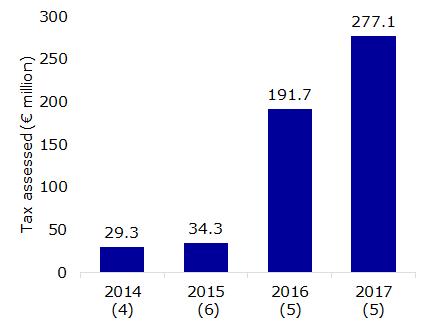
Note: in brackets, number of reporting MS
Source: CACT statistics
Figure 11 Incremental tax assessed from non-AEOI actions
Based on this very limited (6 Member States) information and taking into account that two of the countries only reported the aggregated value, while the others were able to provide values based on the form of cooperation, it can be estimated that nearly half of the incremental tax assessed is generated by exchanges on request, while another 35% is attributable to simultaneous controls. Spontaneous exchanges represents less than 0.5% of incremental tax assessed, possibly because of its character: sometimes information received via spontaneous exchange is not as usable as the sender has expected, whereas request of information is a tool for a specific need and the reply gives added value, even if it would result in a decision that no additional taxes will be imposed.
To assess the magnitude of the Directive’s benefits in terms of tax assessed, the figures on estimated additional tax assessed due to exchanges on request, spontaneous exchanges and simultaneous controls activities in 2017 were compared with data on total income tax per country. For Germany, Bulgaria and Sweden, the share of incremental tax assessed over the total tax revenue is at, respectively, 0.01%, 0.04% and 0.2%. The percentage is even lower for Poland, accounting for just 0.003% of its total tax revenue. Higher figures have been attained for Lithuania, where incremental tax assessed thanks to simultaneous controls and exchanges on request and spontaneously accounts for nearly 1% of the total revenue.
Though only very few Member States were able to provide quantitative estimates of the amount of additional tax collected, the findings suggest that the use of the Directive tools has to some extent contributed to safeguard Member States tax revenues.
Cost savings for Member States tax authorities
Before DAC, requests for information were sent under the previous EU legislation, bilateral agreements, and the OECD framework. However, the DAC was intended to enhance and converge the process of exchanging information on request between EU Member States, and indeed has resulted in significant efficiency gains, according to the feedback from the tax authorities. The impact of DAC on the work of tax authorities is assessed by considering the various administrative activities required for this type of exchange.
All the authorities interviewed confirmed that the DAC has made sending a request more efficient, in particular because of standardisation. The standardisation concerned various aspects of the exchanges on request: (i) the format, and thus the information which needs to be included in the request; (ii) the means of communication for exchanging the information, i.e. the CCN; (iii) the responsible addressee, i.e. the central liaison office of the other Member State; and (iv) the procedures and the time limits for replying to requests. The process is more efficient as the Member States have a common tool and common practises.
DAC also made replying to requests for information more efficient. Moreover, the introduction of a standard content for requests and replies to requests helped in instructing the tax officials, especially outside the central liaison office and in local offices, for streamlining how requests are formulated and handled.
The improved efficiency brought by the e-forms was confirmed by the evaluation of the Fiscalis 2013 programme, which supported introduction of e-forms. These forms were considered having made exchanges on request easier, in particular because of the introduction of pre-set fields which, especially for simpler cases, eased the formulation of the request for the sending authority, and its handling for the receiving authority. The automatic translation tool embedded in the e-forms was also praised as a cost-saver.
Standardisation in e-forms harmonised the exchange of information, improved the quality and completeness of the requests made, reducing the risk for false interpretations of the request or the received information as common expectations on the content simplified the use of the information. The positive effect of the standardisation of the communication channels for spontaneous exchanges was noted as cost savings, but this was less significant than for exchanges on request.
On the other hand, unfortunately it is not possible to quantify the time and resources saved by exchanging information in an automatic manner, instead of doing so on case by case basis through requests from one country to another, of the same tax information.
Finally, the implementation of the e-Forms Central Application is expected to allow the automatic collection of some of the statistics currently retrieved via the questionnaires (e.g. on the type and timeliness of certain exchanges). This should result, in the near future, in lower burdens related to part of the DAC reporting obligations. No evidence is yet available however to back this assumption.
Cost savings for taxpayers and other reporting bodies
Notwithstanding the limited number of replies (25) to the Public Consultation, it can be noted that the goals of administrative cooperation, namely (i) to increase the capacity of Member States to ensure that all taxpayers pay their taxes, irrespective of where their incomes are gained and taxes held and (ii) reduce the incentives for Member States to engage in harmful tax competition, were rated as very important by respectively 15 and 16 respondents. Third goal, increase the transparency in tax planning for cross-border companies, showed a marginally lower score. Due to implementation of the Directive no significant unintended effect was identified, neither based on the stakeholders’ feedback, nor on the analysis of the available statistics and secondary sources. In particular, attention was devoted to verify whether the establishment of the DAC2 automatic exchanges on financial assets detained abroad would have caused taxpayers to shift their capital towards non-EU Member States, especially to jurisdictions not part of the CRS framework. No tax authorities or private operators witnessed the occurrence of such a movement of capital. Similarly, for income from employment, no circumventing measures were observed by the stakeholders (for instance, attributing a number of work contracts to a non-EU subsidiary). These two findings may be interpreted that the actions related to administrative cooperation have not caused unwanted shift of activities abroad from EU area. Instead, these findings can be seen to support a view that administrative cooperation contributes to the overall understanding of tax fairness within EU.
In fact for individual taxpayers, there are possibly cost or time savings via the pre-filling burden reduction, when automatic exchange information is used to pre-fill the yearly tax declaration. In addition to that, in some countries pre-filling is understood as a service by the tax authorities. According to the yearly assessment, three Member States reported using the information exchanged via DAC1 automatic exchange for the pre-filling of tax declarations. In particular, the pre-filling is practiced: in Lithuania since 2015 for income from employment and directors’ fees; in Slovenia since 2016 for pension income; and in the Netherlands since 2017 for pension income. Based on the information from the automatic exchange statistics, nearly 220 000 taxpayers benefitted from this facility.
The administrative burden reduction associated with the pre-filling of tax declarations can be monetised on the basis of the Standard Cost Model. Based on information retrieved from earlier studies and cross checked with some tax advisors, the time savings can be estimated to range between 15 and 30 minutes per taxpayer.Following standard practices, the time savings can be monetised by using a measure of the average hourly salary rate.Based on these parameters, for the year 2017, the burden reduction due to the pre-filling made possible by automatic exchange is estimated to range between € 0.5 and 1.1 million, in the three Member States.
Given the recent headlines concerning allegations of money laundering through various Union financial institutions, but also the emphasis placed on the need to reinforce the legal framework by consolidating and enhancing the powers of the national Anti-Money Laundering (AML) supervisors and of the relevant European Supervisory Authorities, the Commission encourages the financial sector to deploy more efforts than before for identifying reliably their account holders and other clients, in order to be compliant with “Know Your Customer”-processes and Anti-Money Laundering regulations. There are also standards to be followed in respect of Anti-Financial Crime, including Anti-Bribery and Corruption, Counter Terrorism Financing, Anti-Fraud and local regulations. A relevant question therefore arises, namely whether for financial institutions the identification of their clients for DAC2, FATCA and CRS reporting purposes has made it easier to achieve compliance with these other regulations. The public pressure for increased transparency of account holders’ identity has positive effects on both improving the tax compliance, DAC2 automatic exchanges, as well as the anti-money laundering efforts.
Considerations on cost-effectiveness
Finally, the cost-effectiveness of the Directive is discussed in order to assess the extent to which the benefits achieved are commensurate with the costs incurred. First, the costs for which quantitative estimates could be produced are briefly summarised. When quantitative estimates are not available, the analysis is complemented by a qualitative assessment of the remaining cost items. Then these data are confronted with the available estimates on the benefits produced by the provisions, which remain however very limited, to assess the net impact of the Directive. Importantly, the assessment does not include non-quantifiable benefits, and in particular increased tax fairness and Single Market effects.
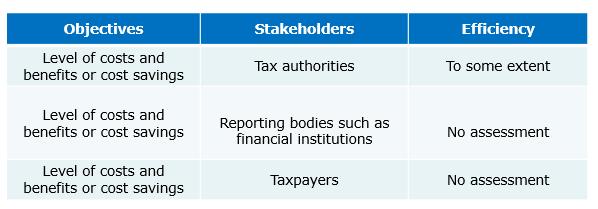
Table 9 Key findings on the costs and benefits of the Directive
As described in the previous sections, the following cost items could be quantified: the costs of automatic exchanges (for DAC1, DAC2 and DAC3), the administrative burdens for Member States tax authorities due to the DAC evaluation reporting obligations, and the AEOI IT costs borne by the EU budget, whereas the costs for exchanging information on request or spontaneously could not be quantified.
As expressed in the table 10 below, at face value, the total quantified costs generated by the Directive over the 2015-2017 period amount to nearly €145 million, with a plausible range of €141 – 172 million. A substantial share, €123 million, consists of development costs, i.e. expenses on building the IT systems needed for safe exchange of information. Yet, while investment costs were incurred up-front, they produce benefits over time. Therefore, costs are discounted over a five-year depreciation period, and the amortisation pertinent to the years 2015-2017 is considered.
As shown in the table below, the regulatory costs for 2015-2017, discounted for the amortisation of the investments, amount to about €90 million. If taking also into account DAC2 costs borne by the financial institutions, which by the Contractor’s estimation could be 10 times the costs for DAC2 automatic exchanges at the tax authorities (10 x €9.8+€4.3), the total regulatory costs would likely fall in the range of €200 – 260 million.
Total DAC Regulatory Costs (2015-2017) without amortisation
with amortisation
|
Cost item
|
Type of cost
|
EU-28
|
Per MS
|
|
EU-28
|
Per MS
|
|
|
|
€ mn
|
€ '000
|
|
€ mn
|
€ '000
|
|
AEOI DAC1 Member States
|
Development Costs
|
60.5
|
2,160
|
|
27.2
|
972
|
|
|
Recurrent Costs
|
13.3
|
474
|
|
39.8
|
1,423
|
|
AEOI DAC2 Member States
|
Development Costs
|
49.7
|
1,752
|
|
9.8
|
351
|
|
|
Recurrent Costs
|
4.3
|
152
|
|
4.3
|
152
|
|
AEOI DAC3 Member States
|
Development Costs
|
2.0
|
72
|
|
0.4
|
14
|
|
|
Recurrent Costs
|
0.8
|
27
|
|
0.8
|
27
|
|
Subtotal AEOI
IT costs at MS
|
Development Costs
|
111.6
|
3,985
|
|
37.4
|
1 337
|
|
|
Recurrent Costs
|
18.3
|
653
|
|
44.9
|
1 602
|
|
|
Total
|
129.9
(126-158)
|
4,639
(4 500- 5 600)
|
|
82.3
|
2 939
|
|
Burdens from Reporting Obligations
|
Recurrent Costs
|
0.2
|
8
|
|
0.2
|
8
|
|
EU budget support
|
Development Costs
|
12.6
|
449
|
|
5.2
|
187
|
|
|
Recurrent Costs
|
1.4
|
52
|
|
1.4
|
50
|
|
Total costs
|
|
143.9
(141-172)
|
5 140
(5,000-6,200)
|
|
89.2
|
3 184
|
Source: Contractor’s own elaboration
Table 10 Total DAC Regulatory Costs (2015-2017) without amortisation – with amortisation
The limited national data available on the additional tax assessed due to the Directive seem to suggest that the benefits could easily exceed the costs generated by the Directive. Yet, such generalisation is based, as said, on very limited evidence concerning only a handful of Member States. On this basis, it is not feasible to draw a general conclusion, valid for all Member States and all years.
To summarize the benefits as presented in table 8 and costs from table 10 above:
|
Reported Benefits
|
Notes
|
|
DAC1 AEOI
|
€92 m
|
Information for only 5 MS and not all years 2015-2017
|
|
DAC1 non-AEOI
|
€532 m
|
Information for only 6 MS and not all years 2013-2017
|
|
DAC2 and DAC3
|
Information not available
|
|
|
Total
|
€624 million
|
|
|
Reported Costs
|
Notes
|
|
DAC AEOI -by MS
(DAC1, DAC2 and DAC3 )
|
€90 m
|
incl. amortisation of €145 million
|
|
DAC2 –- by financial institutions
|
€141 m
|
10 x amortized DAC2 costs
|
|
non-AEOI
|
no costs reported
|
|
|
Total
|
€231 m
|
|
Indeed, although data on additional tax assessed are available from only a very limited number of Member States, the additional tax assessed reached up to €624 million, of which €92 million from automatic exchanges, and €532 million from exchanges on request, spontaneous exchanges and other forms of cooperation. At first glance, these values are higher than the overall DAC costs for the stakeholders in the EU, estimated above at €200 – 260 million.
To highlight why the cost-benefit comparison is not so straight-forward between different tools of the administrative cooperation and as already explained, the Member States could not specify any costs for introducing Directive to the core elements of cooperation, exchange on request, spontaneously, or e.g. in simultaneous controls. On the other hand, DAC1 AEOI did not cause any regulatory costs for other stakeholders than tax authorities, because the Directive foresees that only information already available at tax administrations should be sent to other Member States.
In addition, an elementary difference between the DAC1 non-AEOI benefits and AEOI benefits in the use of the data should be recognised. To cover the somewhat high IT costs AEOI has caused, the tax authorities are supposed to use the tax information received regularly via AEOI more routinely and in a more and more automated manner thus saving labour costs, whereas non-AEOI information means always a tax case is being investigated in a tax audit by tax officers, that is, with a considerable usage of labour force.
|
Simplification Potential
|
|
As shown above most of the costs generated by the Directive are development costs, i.e. the one-off investment in the IT systems and procedures necessary to collect, store, and exchange the AEOI data, by both national tax authorities and financial institutions. As these costs were incurred upfront during the early implementation of the act, and since the recurrent costs for the operation and maintenance of the system are fraction of the former, there is no significant simplification potential for most of the costs measured above.
Other recurrent costs include the administrative burdens generated by the reporting obligations for national tax authorities. However, the effort required is limited, at about 12 persons/days per year per Member State. Rather, a possible simplification could concern the reduction of the costs generated by the duplicated reporting under EU and other international frameworks, and the improvement of the feedback returned to the Member States on the use and usefulness of the information provided annually to the Commission.
Finally, albeit no estimate of the costs generated is provided, a simplification potential could consist in streamlining non-AEOI procedures and tools, an area in which the Commission is already progressing via the development and deployment of the new web central-based application for exchanging e-forms, called eFCA.
|
Efficient use of the DAC tools and the information received
For Member States tax authorities, the various cooperation provisions have resulted in a toolbox, from which the tax officials can select the most useful and most efficient tool for the case at hand or the objective to be pursued. Furthermore, the instruments supported by the Directive complement, trigger, and reinforce each other. As the implementation of the tools require some time to bring results, it is clear that more efficiency from automatic exchanges can be reached by focussing to collection of data of good quality to be sent and also by giving more specific feedback to sending Member State, which both will in due time lead into better quality of the information, which is a requirement for effective and automated use of information.
The general awareness of an increasingly better cooperation among tax authorities may increase the taxpayers’ spontaneous compliance. In particular, the automatic and systematic exchange of DAC1 and DAC2 information has a high potential in this respect. Information received automatically from abroad gives tax authorities the opportunity to cross-check the information provided by the taxpayer. The availability of third-party information is well known to induce taxpayers to file more faithful tax declarations. For instance, studies carried out in the US by the Internal Revenue Service (IRS) tell that incomes subject to little or no third-party information reporting show a 63% misreporting rate, compared with a mere 7% misreporting for incomes subject to substantial third-party information reporting.
Several Member States have already started taking advantage of the possible deterrent effect of automatic exchange provisions, particularly by increasing awareness on the existence of DAC1 and DAC2 exchanges and through targeted actions towards taxpayers with activities abroad. Some tax authorities have started to use DAC1 and DAC2 information for signalling that the taxpayer needs to provide information about his/her foreign incomes and assets. The interviewed tax authorities pointed out that the awareness of the public at large about the obligations related to income and assets abroad, should be promoted more via communication campaigns. The expected result would be improved tax compliance and tax correctness with less actions from the tax authorities, hence added efficiency.
To conclude the evaluation of efficiency some non-measurable benefits should also be mentioned. These include increased spontaneous compliance, level playing field for companies and private persons that are active domestically and abroad, and a general impression of added efficiency in administrative cooperation between Member States tax authorities. However, ensuring a level playing field within EU requires (i) same level of efforts in all Member States as regards use of the Directive tools, (ii) the quality of the information collected nationally for sharing with other Member States, and (iii) with same level of interest given to the use of the information received from other Member States.
5.3.Relevance
The analysis of relevance takes place at two levels: first, the evaluation looks into whether the intervention’s objectives are aligned with the policy needs identified; second, it assesses to what extent the Directive’s mechanisms are in line with the objectives of the intervention.
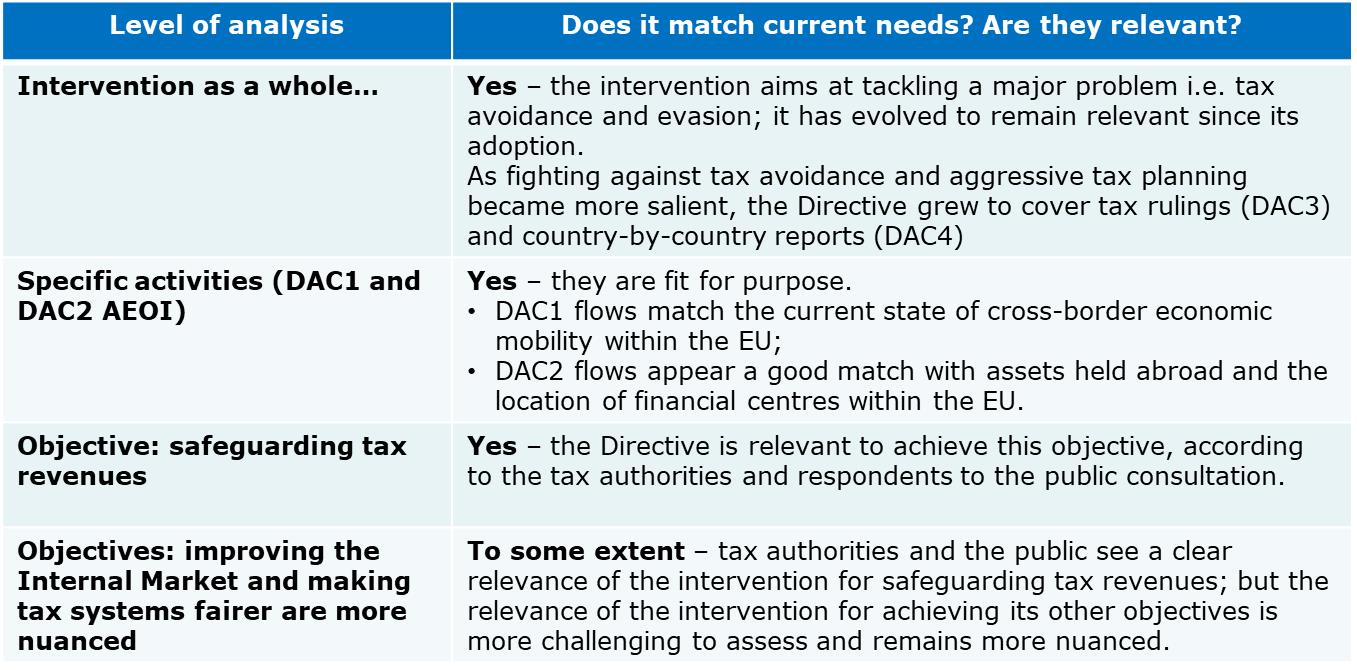
Table 11 A summary of the findings concerning relevance
Extent to which the objectives of the Directive are aligned with the identified needs
The Directive is relevant as it aims to tackle major, timely societal challenges. The Directive was relevant at the time of its adoption and the successive amendments ensured that it continued to be so over time. In particular, the Directive was amended in view of developments in the fight against tax avoidance and evasion. The EU framework for administrative cooperation evolved not only to take into account international developments but also, where appropriate, going further. DAC2 expanded the scope of automatic exchange of information within the Union in line with the international standard for automatic exchange of financial account information in tax matters, the Common Reporting Standard. DAC3 introduced in the EU legal order the outcomes of work performed at the OECD in the context of the Action Plan on Base Erosion and Profit Shifting, while having a broader scope of rulings covered and a broader range of recipients, with rulings being exchanged with all EU Member States. While not being part of the scope of this evaluation, the same can be argued of the most recent amendments to the Directive, which ensure continuous relevance of the Directive in view of the OECD Base Erosion and Profit Shifting Project (DAC4) and going beyond what is required at international level (DAC5 and DAC6
Administrative cooperation aims first and foremost and tackling tax evasion, fraud and avoidance, a major challenge for the preservation of the European social market economy. While it is challenging to quantify tax evasion, the magnitude of these problems are confirmed by recent estimates:
• A draft of a forthcoming Commission study makes a first estimate of tax evasion by individuals and its cost per Member State. It amounts to US$74 billion per year on average over the period 2002-2016 for the EU, or approximately 0.5% of GDP, with great variations over the period and a downward trend observed since 2015, with a drop to US$ 36 billion (0.2% of GDP) in 2016.
• A study by Dover et others estimates that the value of the loss of tax revenues in the EU due to corporate tax avoidance ranges between €50 and 70 billion per year (specifically, €52.3 billion for 2013 and a yearly average of €72.3 billion for the period 2009-2013). The value increases to up to €190 billion if other factors, such as special tax arrangements and ineffective collection of taxes, are considered, representing around 1.7% of EU GDP during that time.
• In a more recent study, Alvarez-Martinez and others found that profit-shifting activities cost EU Member States around € 36 billion each year, representing roughly 0.3% of their GDP. However, these effects incorporate both intra-EU and extra-EU profit shifting. From another angle, the losses due to profit shifting amount to about 8% of the total EU revenues from corporate income taxation.
Zooming on specific provisions of the Directive, they appear to be fit for purpose. DAC1 automatic exchange flows are relevant when assessed in terms of intra-EU migration and investment patterns. In other words, DAC1 automatic exchange is a faithful representation of the underlying economic reality of taxpayers’ mobility within the EU.
•
As of 2016, Poland and Romania, the two main receivers of employment income information, were by far the two leading countries of origin of recent intra-EU workers. Similar considerations apply to the two top senders of employment income information, France and Germany, which were the first and second largest countries of destination for cross-border workers in 2016, respectively.
•
Overall, employment income flows − and, despite the limited coverage, flows of information on director’s fees as well − also reflect another component of intra-EU labour mobility, namely the new generation of well–paid mobile professionals. Originating from France, Germany, Benelux and the Nordic countries, these highly qualified individuals are highly mobile and often work cross-borders. A clear example is the number of exchanges between Luxembourg and France, Belgium and Germany, clearly linked with Luxembourg’s financial and service sectors.
•
Much in the same vein, pension income flows are closely correlated with old migration patterns, with 1.9 million pensions reported by France and Germany to Italy, Spain and Portugal during 2016.
•
Italy, Spain, Ireland and Portugal are the main senders of immovable property information, with Germany, France, and UK and, to a smaller extent, The Netherlands and Belgium as the main receivers
The relevance of DAC2 exchanges emerges when comparing the flows of information with financial assets held by EU households and non-financial corporations abroad. In some Member States, especially small and mid-sized countries, the DAC2 share can exceed 20% of these financial assets. In 2016, the information on the end-of-year account balance exchanged under DAC2 corresponds to 4.6% of the gross financial assets held by households and non-financial corporations. The variations across countries are quite large, with a share of 20% or more in small countries (Cyprus, Slovakia, and Malta) or in mid-size countries that are well integrated into their regional economies (Belgium, Sweden). In the five largest Member States, the shares are much lower: 2% or less for Germany, France, Italy, and Spain, and 5% for the UK.
DAC3 provides for the exchange of tax rulings and advance transfer pricing agreements and aims at fighting tax avoidance through increased transparency. DAC4 was adopted in the wake of tax scandals such as LuxLeaks, which gave a rare glimpse into secret "tax deals" arranged between hundreds of different multinationals and that highlighted a lack of clear and transparent information about the operations of multinational companies.
The Directive has evolved to remain relevant over time and reply to new challenges. The Directive was well aligned with the needs and priorities of the European Union at its adoption.
·The DAC has been mentioned as one of the most important EU tools for fighting against tax evasion and tax avoidance, foster tax compliance and a fair taxation of all companies and citizens, and these have been steadily among the top priorities for the Commission and EU citizens alike.
o
·The objectives of the Directive remain in line with the EU priorities in the field of tax policies. Indeed, the need to address cross-border tax evasion and harmful tax competition to safeguard both the functioning of the Single Market and national tax revenues has been a stable component of EU tax policy at least over the last two decades.
·The rationale which identified administrative cooperation as one of the pillars to pursue these objectives was already evident at that time. This confirms that the DAC (and its different amendments) was adopted to address a number of needs that were identified as ongoing priorities for the EU tax policies.
Thanks to its amendments, the Directive has evolved to remain relevant to EU priorities and needs until today. In recent communications from the Commission, an increasing emphasis has been placed on corporate tax avoidance, on fighting aggressive tax planning, and increasing tax transparency. The inclusion of DAC3 provisions appears fully aligned to this evolution.
The objective of fighting cross-border tax evasion and avoidance, emerged as a top priority of the EU tax policy in more recent periods, with the dual purpose of protecting national tax revenues and the Single Market. Compared to the years preceding the adoption of the DAC, the emphasis has progressively shifted from cross-border tax evasion to corporate tax avoidance, i.e. towards issues of fair corporate taxation, harmful tax competition, and profit shifting.
The 2015 tax transparency package placed both tax evasion and corporate tax avoidance at the top of the EU agenda. The emphasis was further shifted towards other forms of tax avoidance, such as aggressive tax planning and profit shifting, by means of more transparency. On the one hand, DAC2 remained a point of attention, as it provided more transparency on financial assets held in other Member States. The package highlighted that the framework for cooperation could be better aligned with the new priorities by introducing a measure to fight corporate tax avoidance, namely the automatic exchange of cross-border tax rulings – and indeed, the DAC3 proposal was part of the package.
At the same time, the Commission started considering how to introduce country-by-country reporting obligations for multinational companies in the near future – which would eventually become DAC4. Later that year, the Commission adopted the Action Plan focusing on corporate taxation, which re-stated the intention of the Commission to explore country-by-country reporting as a means to increase transparency and thus reduce the possibility for aggressive tax planning and profit shifting. Also, it put forward the need to reinforce Member States’ coordination on tax audits, within the existing frameworks for administrative cooperation. Shortly thereafter, in January 2016, the Commission presented a proposal for DAC4 together with the 2016 Action Plan on anti-tax avoidance, which explained how such a proposal would reduce the opportunities for aggressive tax planning by making the tax paid in each Member States by multinational companies transparent.
In 2016, the Panama papers scandal revealed the significant existence of tax evasors sheltered by agressive tax planning schemes using non cooperative jurisdictions. In July 2016, the Commission adopted a new Communication on possible measures to increase transparency and fight against tax evasion and avoidance. After reiterating the need to fight tax evasion and avoidance to preserve the proper functioning of the Single Market, Member States’ revenues, and the fairness of the tax system, the Commission insisted that the additional transparency introduced by the DAC was ‘necessary’ and ‘ambitious’ compared to the progress achieved in the international arena. At the same time, to prevent individuals from hiding from tax authorities behind opaque structures and in order to exploit the information already being collected for AML purposes, the Commission proposed to grant tax authorities’ access to beneficial ownership information as defined and collected in accordance with the AML framework via DAC5.
Although the Directive continues to prove its relevance, there are several challenges administrative cooperation is expected to face in the near future to continue to remain relevant. New business models and further advances of European integration may result in new challenges to national tax administrations. In such a scenario, tax bases will become increasingly of common interest. Therefore, the already existing need to address cross-border tax avoidance and evasion to secure them will become even more relevant and require even closer cooperation among national authorities, and thus more extensive and effective exchanges of information.
Finally, the progressive digitalisation of taxation, with many Member States exploring the quasi-real time handling of taxpayers’ declarations and transactions, will generate more and better quality data on short timeframe, thus enhancing the usefulness and quality of the automatic exchange mechanisms put in place by the Directive.
Extent to which the Directive mechanisms are in line with its objectives
Tax authorities consider the Directive to be relevant for safeguarding tax revenues. Member States’ perception of the relevance of the Directive as a whole for safeguarding tax revenues is positive. The assessment provided by tax authorities when replying to the yearly questionnaire has been persistently very positive over the last three years. In 2018, on a scale from one to five – with five being the top grade – 24 Member States have given the Directive’s appropriateness a score of at least four. Until 2016, tax authorities were also asked to score the appropriateness of each tool on a yes/no basis and this evaluation was overwhelmingly positive. In 2016, across the various tools, there were two negative opinions or less among the 28 Member States for each tool.
Tax authorities confirmed their positive assessment of the Directive when replying to the targeted consultation. As for the specific mechanisms, there were no clear indications regarding the tool considered the most relevant.
·Apart from information exchanged on an automatic basis, tax administrations choose the best tool to address their needs in accordance with the case at hand. This subjective aspect also makes the assessment of the relevance of these other tools almost impossible to quantify.
·When a request for information is made or when a simultaneous control or presence in offices is launched, the tax authorities have already established the need to use this tool. It is a pre-condition for the use of the tools set forth in the Directive that the information sought is foreseeably relevant to the assessment and enforcement of taxes by the requesting Member State, and that national sources have been exhausted. As such, all cooperation under these tools is relevant for the Member States involved.
The perceived relevance of a certain instrument of the Directive depends on the familiarity withthat tool. In general, the authorities that use a certain instrument more frequently tend to have a more positive view of its suitability for their needs, which is another positive indication that, on the ground, the Directive is considered fit for purpose. This is particularly true for automatic exchanges, as some tax authorities with broader expertise in the processing of this data confirmed its added value to address cross-border tax evasion, and considered it as possibly the most useful tool available. Conversely, the officials of countries which have less experience in the use of data received automatically mostly indicated other tools, such as exchanges on request as the most relevant. The same consideration applies to other forms of cooperation. The tax officials of two countries which have a wide experience with presences abroad consider it very useful to fit their needs, while a third Member State’s authority, which had never participated in any presences abroad, had a more negative view. The Directive only makes this tool available, but does not make it mandatory, unlike other types of cooperation such as exchange on request or automatic exchanges of information. The fact that the negative assessments derive from Member States which do not have any experience in using this tool, whereas those who have experienced it consider it useful, leads to the conclusion that presences abroad remain a relevant tool, albeit not used to its full potential.
While overall the Directive is perceived as relevant, the relevance of its most recent provisions i.e. DAC3 and DAC4 remains to be fully assessed. As regards DAC3, the tax authorities reportedly access the Central Directory on a regular basis in order to verify whether any relevant information has been added, or on a case-by-case basis when the need arises (e.g. during a tax audit). However, the perceived usefulness of accessing information on foreign rulings is still limited. The opinions on the potential relevance of DAC4 are more positive, albeit there are as of yet hardly any cases where these tools have been tested.
The results of the public consultation confirm a broadly positive assessment of the Directive’s fitness to safeguard Member States’ revenues. Twenty out of the twenty-five respondents believe that the tools provided by the Directive are appropriate, at least to some extent, to increase Member States’ ability to ensure that all taxpayers pay their fair share.
Opinions on the relevance of the Directive for improving the Single Market and making tax systems fairer are more nuanced
·According to the targeted consultation, the Directive mechanisms and tools are fit to improve the functioning of the Single Market, but to a different degree. Respondents’ views can be summarized as follows: all the provisions in the Directive are relevant by ensuring that all citizens and companies can enjoy a level-playing field within the EU.
·In practical terms, the contribution to the functioning of the Single Market is perceived as more relevant for the provisions addressed to corporate entities − again, DAC3 and partly DAC2 − since companies are viewed as more likely to suffer from the unequal opportunities when compared to multinationals, as the latter are perceived as more likely to resort to aggressive tax planning and profit shifting than local firms. In the public consultation, more than two thirds of the 25 respondents consider that the Directive can, to some extent, increase transparency in the tax planning of cross-border economic operators, thus contributing to the proper functioning of the Single Market.
The assessment is similar with respect to the contribution of the Directive’s mechanisms to the fairness of tax systems. The various mechanisms are seen as supporting the tax authorities to spot and prosecute natural and corporate persons that have not paid their fair share of taxes.
On the other hand, the public consultation showed that only slightly more than half of the 25 respondents consider that the Directive is able to, at least to some extent, reduce the incentives for Member States to offer particularly favourable condition to certain taxpayers.
5.4.Coherence
This section of the study is based on the information provided by the Member States in the questionnaire on the functioning of the Directive and on the feedback collected from the targeted consultation of tax authorities and other stakeholders. It assesses the coherence of the Directive in its internal and external dimensions. Checking internal coherence means looking at how the various parts of the Directive work together. External coherence looks instead at possible inconsistencies between the Directive and other interventions, in particular at the international level.
The key finding is that the intervention presents no major problems as far as its coherence, internal and external, is concerned and this despite several amendments. Consistency of definitions between the Directive and anti-money laundering may enhance external coherence further.
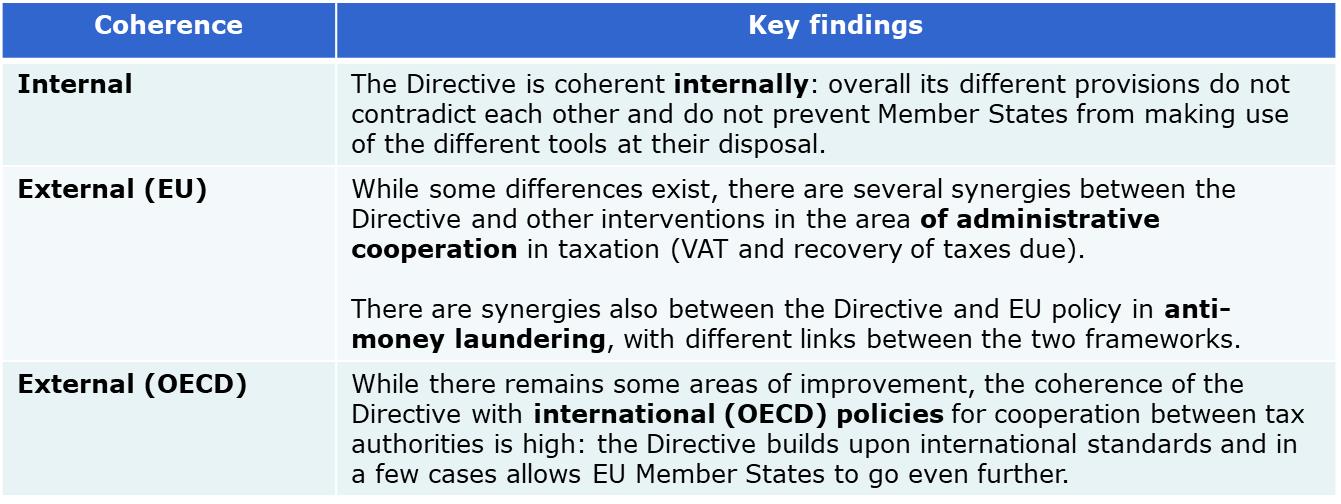
Table 12 Key findings on the coherence of the Directive
Internal coherence: the extent various parts of the Directive are coherent with each other
To assess internal coherence, the focus is put on a limited set of elements of the intervention which, on the basis of the consultation with Member States, were most often mentioned as possibly problematic: foreseeable relevance, requests for information for a group of taxpayers (instead of only for one single taxpayer) often referred to as group requests, the possibility of use information gained through administrative cooperation for purposes other than taxation, and different deadlines for different categories of automatic exchanges.
Tax authorities may proceed to sharing the information requested only when its foreseeable relevance is proved by the requesting authority. However, there is no definition of “foreseeable relevance” in the Directive. It is broadly understood as information relevant for tax purposes. While the concept of foreseeable relevance may be vague, the instances in which the foreseeable relevance of a request is disputed are negligible, and any issue that may arise seems to usually be solved by providing additional clarifications. In 2017, only two Member States reported the refusal of a request for information because of the lack of foreseeable relevance (and in one case, this was solved by providing further clarifications). During the same period, only one Member State stated that it refused one or more requests for failure to comply with the foreseeably relevant requirement. The only information available refers to exchanges on request, where the lack of disputes may derive from a cautious approach by Member States when making requests for information. DAC3 has shown that the effect of the foreseeable relevance requirement may undermine cooperation. As the only information available to Member States is that of the summary of the ruling – often one sentence – their ability to formally demonstrate the foreseeable relevance of the request for the full text is undermined. Similar limitations are expected to occur as regards the other types of cooperation governed by the Directive – in particular as regards automatic exchange of information and the inherent follow-up requests. Designed to protect against ‘fishing expeditions’ one cannot rule out the possibility that in the future it may be desirable to allow more general requests for information. In this case, the need for maintaining the ‘foreseeable relevance’ requirement may disappear.
The absence of an explicit reference to group requests does not prevent Member States to make some. Group requests - requests for information on taxpayers not individually identified, but with certain characteristics in common – are not explicitly mentioned in any provision of the Directive. However, in practice nothing prevents Member States from making such group requests (which can prove especially useful for large scale investigations). While few group requests are actually made, their handling seems to be overall smooth.
The requirement to ask for permission to use information for purposes other than taxation does not limit in practice the reuse of information. The possibility to use information for purposes other than taxation – in particular anti money laundering and tackling of financial crimes – is considered by Member States as one of the main strengths of the Directive. In principle, the need to ask for permission does not cause much of a problem for the information received on request or spontaneously although most of the tax authorities participating in the targeted consultation would appreciate more clarity on the matter, with the aim of reducing the administrative burden required by the need of a permission on a case-by-case basis. The procedure has been considered cumbersome especially for the purposes of disclosing information received via automatic exchanges, where the records and taxpayers concerned amount to thousands.
Different deadlines for automatic exchanges do not limit these exchanges nor create confusion. For automatic exchanges of income and capital, the deadline is at the latest six months after the end of the tax year when information becomes available; for automatic exchanges of financial accounts, nine months after the end of the calendar year to which the information refers. In principle, this leads to the fact that Member States may receive tax year 2018 information on income and capital only in 2020 and financial account information already in 2019. Different deadlines prevents a peak in the usage of human and IT resources and are for that reason appreciated by tax authorities, as it has been summarised on the basis of interviews. However, it might be more efficient to receive same type of information as via DAC1 and DAC2 exchange regarding individuals, where you could actually control and compare these two, if they both concerned the same tax year. It has to be pointed out that the Directive indicates deadlines and, as such, any authority that prefers sending information at an earlier date can already do so.
Finally, none of the definitions and standards included in the Directive seems to be a recurrent major cause of impediments for the exchange of information, although in a limited number of cases the interpretation of terms such as ‘administrative enquiry’, ‘fees’, ‘foreseeable relevance’ or ‘purposes other than taxation’ can be uncertain.
External coherence: the extent the Directive is coherent with other EU or international interventions
External coherence is checked at two levels: first, at the EU level, by looking at coherence between the Directive and interventions within the same policy field in the area of VAT and recovery of taxes due; and checking also coherence with a key policy area with which coherence is necessary: anti-money laundering. Secondly, coherence is assessed at the international level, looking at how coherent the intervention is with relevant OECD policies.
Coherence with administrative cooperation in the field of VAT and for the recovery of taxes due
The assessment of the external coherence of the Directive focuses on three EU acts:
1.The Regulation on administrative cooperation in VAT matters
2.The Recovery Directive
3.The Anti-Money Laundering Directive
Despite some differences, the Directive is overall coherent with similar provisions in the area of VAT. With respect to the Council Regulation No 904/2010 on administrative cooperation in the field of VAT, the two pieces of legislation share the same objectives (proper functioning of the Single Market; protection of tax revenues and fight against tax frauds; contribution to the fairness of the tax system), the institutional framework (in 14 Member States the central liaison office is in charge of administrative cooperation both for direct taxation and VAT matters), and the information communication system (CCN network). The tools placed at the disposal of the national tax authorities by the two acts are also similar (exchanges on request, without prior request, automatic exchanges etc.).
Yet, differences exist: Eurofisc, a forum for enhanced tax control cooperation set under the VAT administrative cooperation framework, does not cover direct taxes; administrative enquiries carried out jointly in the field of VAT are in some cases mandatory (in other words, Member States have to take part to them); this is not the case for presences abroad or simultaneous controls under the Directive. Other differences concern the choice of the legal instrument (Regulation vs Directive) and the different use of automatic exchanges (widespread in direct taxes, residual in VAT). These differences stem from the fact that VAT is a harmonized tax at EU level, whereas direct taxation has been subject to little harmonisation at EU level. However, the similarities in the approach, the objectives, and the available tools prevail over the differences, so that the two acts present limited and very specific problems of coherence, and rather create a number of synergies at the institutional and technical levels. To conclude, the two acts are coherent, and only a limited number of problems emerge in their daily operation (differences in administrative enquiries, differences in the deadline for exchanges on request, forwarding information to another Member State).
The Directive is overall coherent with the Directive 2010/24/EU on mutual assistance of recovery of taxes, despite some differences in scope. The scope of the two policies is not identical. While the DAC covers only taxes that are not dealt with in other specific EU acts, the recovery directive applies also to a) duties; b) certain funds granted in the context of the EU agricultural policies; c) penalties, fees, interests and other costs relating to the claims for which a mutual assistance is requested. However, the intervention and the recovery directive are based on a similar approach: both directives share the same objectives (preservation of Member States’ revenues; proper functioning of the Single Market; fairness of the tax systems); both Directives rely on a number of similar tools such as the possibility to submit requests for information and carry out presences abroad, and to require assistance in notification; both Directives rely on the CCN and on a number of standardised forms; in terms of the applicable institutional framework, both Directives provide for the establishment of a central liaison office (although only in three Member States the same office deals with both acts). As a whole, there is no issue of coherence between the two directives. The difference in the scope is not reported as a cause of concern by tax authorities. To the contrary, synergies arise, since recovery may benefit from the improved exchange of information made possible administrative cooperation in direct taxation.
Coherence with data protection requirements and privacy rights
It had been commonly recognised that under the Mutual Assistance Directive the cooperation mechanisms had not always functioned in an efficient and satisfactory manner. Member States themselves expressed the need for a global set of more binding EU rules, applying to all kinds of taxes not yet provided for in European Union legislation. Applying the same conditions, the same methods and the same practices for administrative cooperation with regard to all these taxes should not only improve mutual trust and thereby facilitate the work of the authorities, but also increase the volumes of information sharing, and finally improve the quality of the information exchanged. Adopting a more detailed, enforced directive was expected to help to achieve this objective.
All exchange of information is naturally subject to the provisions of data protection. However, it is stated in recital 27 of the Directive recitals to be appropriate to consider limitations of certain rights and obligations, as long as ‘Such limitations are necessary and proportionate in view of the potential loss of revenue for Member States and the crucial importance of information covered by this Directive for the effectiveness of the fight against fraud.’
In the Directive on administrative cooperation, the relevance, confidentiality and secrecy of the information exchanged and shared are stipulated in several ways: Article 1 limits the scope to ‘foreseeably relevant’ information for tax purposes, Article 4 sets up an organisation for competent authorities and rules for designation of competent officials engaged in administrative cooperation, Article 16 sets the conditions for disclosure of the protected information and documents, Article 21 sets practical arrangements in ensuring the security of CCN network and national systems, Article 23a provides for confidentiality of any information communicated to the Commission, for example the evaluation reporting. Article 25, titled “Data Protection”, ensures that all exchange of information pursuant to this Directive shall be subject to EU legislation on data protection. It also states that reporting financial institutions and competent authorities in Member States are considered as data controllers in accordance with data protection regulation. Furthermore, Article 25(3) confirms that Financial Institutions shall inform their clients that information relating to them will be collected and transferred in accordance with this Directive and shall ensure that the Reporting Financial Institution provides to that individual all information that he is entitled to under applicable data protection legislation. It requires the Member States to ensure the Financial Institutions comply with this obligation.
Only two providers of tax advisory services have commented (Annex 2) that in light of the General Data Protection Regulation and of a recent ruling by the Court of Justice, it could be appropriate to grant to the taxpayers the right to be notified whenever their information is exchanged, as well as the right to review the correspondence between tax authorities in advance and ‘limit the information exchanged to what is most relevant’.
This is a question of balancing between taxpayer rights and taxpayer obligations. As presented above, the ‘foreseeable relevance’ is one of the basic factors limiting the scope of the information exchanged. On the other hand, tax authorities have explained in the expert groups, that in practise it is not necessarily wise to inform the taxpayer about the administrative cooperation activities in the phase of requesting for information from abroad, as there may be risk a fraudulent taxpayer to hide some data. As tax authorities are obliged to respect the taxpayers’ rights also as regards tax information from abroad, the contact to taxpayer and confirmation on the foreign income or assets should be done as soon as the national risk management process allows, ensuring at the same time not to endanger ongoing tax investigations in any of the countries involved.
Coherence with anti-money laundering provisions
Synergies between the Directive and anti-money laundering provisions are evident, in particular as regards exchanges on request and automatic exchange of financial account information. Access by tax administrations to AML information held by entities pursuant to Directive (EU) 2015/849 ensures that tax administrations are better equipped to combat tax evasion and fraud more effectively, and is relevant in different forms of cooperation and exchange of information provided by the Directive.
However, the interaction between the anti-money laundering framework and the Directive is blatant as regards automatic exchanges of financial information. DAC2 provides that when the holder of a reportable account is an intermediary structure (that is a passive non-financial entity), the reporting financial institution is called to communicate the ‘controlling person’ of that entity. The Directive clearly states that term ‘Controlling Persons’ must be interpreted in a manner consistent with the Financial Action Task Force Recommendations, which refer to it as ‘beneficial ownership information’. Nevertheless, financial institutions are often called to positively confirm the identity of the Controlling Persons of a given entity, on top of the AML procedures.
The synergies between the Directive and the anti-money laundering framework were further reinforced with the adoption of the 5th Anti-money laundering Directive, where a link was explicitly made between the two directives, so as to ensure that the updated information obtained by financial institutions through the confirmation of the Controlling Persons of a given entity automatically prompts an update of the information available under the AML framework. Once the rules of the 5th AMLD are transposed and applied in practice in the Member States, the Commission is going to be in a better position to assess the interaction between banking confidentiality rules and the automatic exchange of financial account information within the EU. As financial institutions are required to protect client confidentiality and incur sanctions in case of undue disclosure, it will be important to consider whether there is need for identifying best practices in the area or issuing guidance regarding the scope of the reporting obligations.
Coherence with OECD provisions
The Directive is coherent with OECD provisions, despite some differences. The various policy measures consolidated in the Directive have their counterparts in the OECD framework. Even considering the different nature of the two sets of norms and the respective institutional frameworks, it is essential that the EU and OECD obligations on administrative cooperation are and remain closely aligned. DAC and the OECD framework provide for similar, often identical, material obligations for the Member States and also include the same legal definitions and standards (e.g. foreseeable relevance, taxes and fees). OECD documents - and particularly the OECD Commentary - are considered as relevant guidance for applying the Directive, even though not explicitly subsumed within the EU legal framework.
The obligations under Action 5 of the OECD Base Erosion and Profit Shifting project 5 and DAC3 are similar. However, under DAC3 the information on tax rulings is available to all Member States (once uploaded on the Central Directory) while, under BEPS5, the ruling needs to be transmitted to the ‘relevant jurisdictions’ (those that may be affected by the rulings). Finally, as regards exchanges on request, tax authorities point out that they have to work under two different deadlines for the same type of exchange and would like to see the EU deadlines (six months from the date of the request, or two months in case it is already in possession of that information) aligned with those most of them agreed at the OECD (standard set at 90 days).
5.5.EU added value
This section looks into whether and to what extent the Directive has produced an EU added value. It needs to be assessed whether the outcomes and the impacts achieved would have occurred also in case of no intervention at EU level but rather through international or bilateral policies. The evaluation of the added value covers DAC1, DAC2 and DAC3.
The Directive provides for a comprehensive set of mechanisms and tools that have in most cases their counterparts in other international initiatives, such as double tax treaties and OECD standards/guidelines. In particular:
•
Exchanges on request and spontaneously mirror Article 26 of the OECD Model Tax Convention;
•
Automatic exchanges provided by DAC2 mirror the OECD common reporting standard for automatic exchange of financial account information;
•
Automatic exchanges under DAC3 implement the OECD BEPS5 minimum standard.
This equivalence does not apply to the categories of income exchanged automatically under DAC1, as only some of them are (rarely) included in the double tax treaties under certain conditions.
The most obvious and evident added value of DAC provisions compared to the corresponding OECD standards/guidelines is that they are compulsory for all Member States. With the adoption of DAC1, the banking secrecy came to an end by not permitting Member States to decline to supply information solely because it is held by a bank or other financial institutions, in line with Article 26(5) of the OECD Model Tax Convention. The Directive has therefore ensured the implementation of this international standard consistently throughout Europe. Without the Directive, Member States would have had to align each double tax treaty with the updated Article 26 of the OECD Model Tax Convention prohibiting the banking secrecy.
DAC contributed to the goal of having all Member States exchanging tax information which is beneficial to their peers, even in absence of a domestic interest in gathering such information and also in the case of lack of a mutual incentive for cooperation, which could have relied, for instance, on the estimate on the number of residents having income/assets abroad. DAC created a common European framework for the administrative cooperation in direct taxation where all Member States can get access to information on cross-border activities carried out by their tax residents by using the most suitable tool among the ones at their disposal.
The key EU added value of the Directive is summarised in the table below:

Table 13 Key findings on the EU added value of the Directive
Extent to which the outcomes / impacts generated by the Directive are additional compared to national / international initiatives
The EU added value of the Directive becomes evident also when it comes to the increase effectiveness of tax controls and to the additional tax compliance generated. The contribution of DAC towards the exchange of tax information is confirmed by the volume of information communicated under automatic exchanges, which has grown overtime with a twofold increase between 2015 and 2016 (the data available for the first half of 2017 suggests that the growth trend continued), by the number of exchanges on request and spontaneously, and by the fact that Member States very seldom refuse to provide information under the DAC.
The specific added value of the Directive compared to other initiatives comes from benefits generated by DAC1 automatic exchanges, as this provision has (almost) no counterpart in other frameworks. The EU added value of DAC1 automatic exchanges corresponds to the benefits reported by six Member States, amounting to around € 92 million of incremental tax assessed. As regards DAC2 and DAC3, the EU added value cannot be clearly delimitated, as their scope is similar to the relevant international standard and exchanges of information could have taken place within these frameworks.
For cooperation other than via automatic exchanges, the added value of the Directive can be primarily captured by the efficiency gains created by the administrative cooperation framework implemented with the standardisation of the exchanges on request and the creation of a secured channel of communication. A reduction in the costs and time needed to ask and reply to requests for information, simultaneous controls, or presences in administrative offices has resulted in additional controls and enquiries. The evidence shows that (i) the average number of exchanges on request increased by 85% between the five years preceding and following the entry into force of DAC, (ii) the total number of spontaneous exchanges increased by 31% between the five years preceding and following the entry into force of DAC and (iii) the number of presences abroad skyrocketed after the entry into force of DAC, with the five-year average going from 11 presences abroad per year to 44. Of note, most presences concern bordering countries. Nevertheless, the number of simultaneous controls remained constant before and after the implementation of DAC. This can be explained by the fact that both forms of cooperation were already provided for under the previous directive on administrative cooperation, but only simultaneous controls were at time supported by Fiscalis while presences were only encompassed in this program as of 2015. The EU added value of cooperation other than via automatic exchanges could thus be considered significant, considered the efficiency gains translated into an accelerated deployment of the tools.
Extent to which the cooperation mechanisms established by the Directive are superior to other platforms/channels
Stakeholders’ perception on the added value of EU cooperation compared to international / national platforms
For exchanges on request, spontaneously and for other forms of cooperation, the tax authorities unanimously acknowledge the added value of the EU framework in terms of efficiency, i.e. ease of use and cost savings. In particular, the standardisation of the requests for information is considered a significant improvement compared to the situation pre DAC and the lack of similar mechanism under other framework. The development of the electronic standard forms constitutes a key advantage, as this has greatly facilitated the work of the tax authorities, contributing at the same time to raise awareness on the exchange on request and spontaneous within the Member States, given the possibility for the electronic forms to be deployed not only at central level. Also, the CCN allows the safe and secure exchange of data, and a similar infrastructure is not available for communicating with other jurisdictions. Tax authorities consider that the standardised forms and the CCN have enhanced and supported their daily activities and that they would have not been able to develop the same system without the EU coordination. All in all, the standardisation of forms and the set-up of a centralised IT infrastructure resulted in regulatory cost savings for tax authorities in using tools for exchanges on request and spontaneously, the quantification of which has however not been possible. The lack of quantification of cost savings by standardisation and centralised IT infrastructure is part of the more general challenge for Member States to find a reliable system for tracking and assessing the costs and benefits of administrative cooperation.
As for presences in administrative offices and simultaneous controls, their added value is due to the fact that, under the DAC, the rules and requirements for these tools are defined in detail. This is not the case for the simultaneous examinations encompassed in the Model Tax Convention, where they are only referred to in the non-binding commentaries, thus limiting their ease-of-use.
As regards DAC2, the provisions are very similar to the CRS; hence, the substantive added value of the EU Directive can be perceived as negligible. Nevertheless, DAC2 provisions were the basis for the negotiation of EU agreements with Switzerland, Andorra, San Marino, Monaco and Liechtenstein, negotiated by the Commission as a consequence of a mandate granted by the EU Member States. At a more technical level, some tax authorities praise the DAC2 framework because the data on financial assets can be handled more easily, and thus the information exchanged has a better quality. In particular, the DAC2 provisions are conducive to a more automated handling and exchange of the data, and the EU technical and functional specifications have proved to be very helpful in the deployment of this type of automatic exchanges. Finally, tax authorities appreciated the positive coordination role played by the Commission in implementing and operationalising DAC2.
As regards DAC3 the added value comes from the form and modality of the exchanges. Indeed, DAC3 requires the automatic exchange of information on ATR/APA by uploading the summary in a centralised directory. Conversely, the BEPS5 action provides for the ‘compulsory spontaneous’ exchange by directly communicating the ATR/APA to the concerned jurisdictions. The EU approach is considered more efficient from an operational perspective. A minority of the tax authorities interviewed, however, were somewhat unhappy with the functioning of the Central Directory, especially since it is not searchable and not very usable for analytical purposes.
Stakeholders’ perception on the increased trust and likelihood of cooperation between Member States’ national competent authorities
The Directive contributed to building trust among tax authorities, in particular by setting up a safe and secure IT environment and procedural framework through which competent officials could cooperate and exchange data. The Directive supported the creation of a common approach to administrative cooperation, which facilitated the exchange of information more than under other frameworks. The Directive generated trust and a stronger and more effective cooperation. The trust was also increased by the cooperation taking place in the various working groups and expert committees, as well as in the DAC related Fiscalis activities, which allowed tax authorities to meet and build trustful relationships and sharing best practices. This was especially valuable for non-neighbouring countries, which may not have had a pre-existing history of cross-border cooperation. Furthermore, as mentioned by one tax authority, having committed to commonly shared EU-wide exchange of information also improved the negotiating position of the single Member States and of the Union, when negotiating similar agreements with non-EU jurisdictions.
Extent to which EU financial support enabled the achievement of additional outputs
Another source of EU added value consists in the funding made available via the Fiscalis programme to support the cooperation mechanisms and tools which generated economies of scale and transaction cost savings, and allowed additional simultaneous controls and presences in administrative offices to be carried out. National tax authorities appreciate especially the added value generated by:
·the EU support to the central IT infrastructure and the development of joint software modules and schemas for exchanges of information; and
·the EU support to other forms of cooperation.
For common IT systems and joint software modules and schemas, two economic drivers generate additional value because of the EU funding, rather than via national programmes. First and foremost, economies of scale are at play, as the investment in a common infrastructure or a joint software is more efficient than 28 separate investment programmes. Secondly, the EU support generated transaction cost savings, because it avoided duplicated efforts by Member States authorities and helped in coordinating national approaches. The transaction cost savings arose especially from the development of software modules and schemas, which national authorities can subsequently adopt for handling and exchanging the information records.
In relation to the IT modules to be deployed at national level for DAC2 implementation, recent comments from Member States show that their interest in using the modules was not only related to the start of the exchanges, but has increased with time. This could be taken as an evidence that the outputs of IT collaboration may raise interest on a longer time span, and not only by the Member States who participated the original project group.
For other forms of ADCT activities, it clearly emerges from the Fiscalis evaluations and the targeted consultation, that the same number of presences abroad and simultaneous controls would have not taken place in the absence of the EU support. A number of Member States have indeed acknowledged that the Fiscalis funding allowed them to participate in more simultaneous controls and presences abroad activities that than would be allowed by the national budgets. Furthermore, for these tools, Fiscalis also generated transaction cost savings, by supporting the setup of coordination fora and operational guidelines, such as the Multilateral Controls Platform and the Presence Coordinators meetings.
It may be unnecessary to repeat, but in the absence of the legally binding framework with its set of instruments for efficient and secure administrative cooperation and practical solutions supported by the Commission, the EU area would step back into the time when Member States did not have a well-established network for cooperation. The requests would be non-standardised, and might require many contacts that would not necessarily lead to response. There would be no automatic exchange of information without prior request with commonly agreed tax related details, and there would be no mandatory process for giving bilateral feedback between countries to improve the quality of the information exchanged. In addition to these, there would be no requirement for a continuous effort for common analysis and improvement of the functioning of the administrative cooperation within EU.
6.Conclusions
In conclusion, on the basis of limited evidence, this evaluation shows that the intervention has been, to some extent, effective. There is also some, again limited, evidence concerning efficiency. Overall, the Directive remains relevant, appears coherent with other interventions, and offers EU added value.
The timing of the evaluation has proved to be appropriate, identifying the need to improve the monitoring activities, as the comparison between years and between Member States has revealed discrepancies in feedback and lack of data due to recent implementation and difficulties in measuring accurately the benefits by Member States. Evidence of monetary and non-monetary benefits, as already pointed out in the 2017 and 2018 reports, is very scarce.
However, conclusions have to be taken with care as they are grounded on limited and in some cases very thin evidence, if any at all. It is acknowledged that the evidence on the basis of which this evaluation has been conducted is far from ideal. For most Member States, it is not known whether the intervention has led to efficiency and/or effectiveness gain. In particular, evidence of monetary benefits of the intervention is severely limited. It consists of nine observations from five Member States when it comes to automatic exchanges of income and capital, out of a theoretical total of eighty-four observations; and of fifteen observations from six Member States when it comes to forms of exchange and cooperation other than automatic exchanges, out of a theoretical total of one-hundred-forty.
Aware of the limitations of the evidence basis, the evaluation concludes the following:
Effectiveness: As described in Chapter 5.1., in a few cases, there is limited evidence that the Directive has been somehow effective in improving tax authorities’ ability to fight tax fraud, evasion, and avoidance. Improved ability has translated into some monetary benefits, reported in Chapter 5.2. Table 8. There is also very limited evidence that the intervention has had some deterrent effect, as presented in Chapter 5.1. Otherwise, it is not known to what extent the intervention has contributed to the proper functioning of the internal market nor to the perceived fairness of the tax system. Evidence is insufficient to allow making conclusions on these aspects.
As the effect of the intervention is crucially dependent on the quality of information exchanges, as a key way forward towards increasing effectiveness, Member States should carefully review the information they send out before the exchanges take place, make more efforts to ensure that information is as comprehensive, usable and useful as possible, and provide feedback to each other about the information they receive. Also, Member States should provide more information to the Commission about effectiveness of the intervention so that the evidence basis improves and grows over time.
Efficiency: The evaluation of efficiency is mainly done on the basis of a cost-benefit assessment. There is some evidence of costs for most Member States and years and covering most elements of the intervention. On this basis, as reported in Chapter 5.2., costs for Member States have been quantified at about €90 million. There is limited evidence of costs for stakeholders other than Member States which had to comply with some elements of the intervention. In particular, automatic exchanges of financial accounts information (DAC2) resulted in costs for financial institutions. Only a few observations are available in this regard, and they are reported in Chapter 5.2, for an estimated amount of about €140 million over time. Overall, the estimated costs of the intervention are of about €230 million.
Evidence of benefits, as said, is very limited. It is not possible to draw a general conclusion, valid for all Member States and all years. It can be said, however, that in a few cases (actually, in all cases for which benefits information is available) benefits of the intervention are higher than reported costs for Member States. While the overall estimate of benefits of the intervention of circa €620 million must be taken with care, it suggests a somehow positive cost-benefit ratio of the Directive overall.
A key way forward when it comes to reporting to the Commission, to the management at tax administrations, and to the public about efficiency in administrative cooperation, and costs/benefits in particular, is to generate better quantitative evidence of the benefits of the intervention. Member States which already today are able to estimate the benefits of administrative cooperation should share their experiences and practices with the others. Good practices include: keeping track of which requests for information and/or spontaneous exchanges lead to control actions; what the results of these actions are; reporting systematically about the results of other forms of administrative cooperation, such as presences in offices abroad or simultaneous controls; and estimating additional tax base and discovered financial accounts thanks to information received automatically.
Relevance: The Directive was relevant at the time it was adopted, and it remains so today, as it is considered appropriate to tax authorities’ needs as a toolbox, in which different mechanisms complement and reinforce each other. This appreciation for the complementary character of the Directive tools has been one of the key messages from Member States’ feedback. It tackles substantial problems by providing valuable tools to fight tax avoidance and evasion, as well as fostering tax compliance, increasing transparency, and contributing to the fairness of the tax systems and to the proper functioning of the Single Market. The different tools in the DAC-toolbox respond to different needs in different situations.
Nevertheless, it may become necessary to make adjustments to scope and forms of cooperation envisaged in the Directive to keep up with new challenges as they arise, due to changes in evasion patterns and economic and technological developments.
Therefore, the Directive can be considered responding to the needs of Member States and is largely in line with the EU overarching fiscal policies. As the economy changes (digitalisation, growing importance of intangible assets, new forms of employment, gig-economy etc.), so does taxpayers’ behaviour. Tax policy in general, including tax administration and administrative cooperation, has to adapt to ensure it remains relevant.
Coherence: No major issues of coherence have emerged from the assessment, both as regards the consistency of the provisions within the Directive and vis-a-vis the interaction with other relevant legal frameworks. The internal coherence of the Directive is deemed noteworthy, given that it has been subject to repeated and frequent amendments. However, there are some inconsistencies within the Directive that may prevent an efficient use of the information obtained, derived from strict interpretation of some terms and national legal restrictions. Enhancing internal coherence for example by ensuring aligned deadlines for sending information emerges as a short term area for improvement.
EU added value: The EU action in the area of administrative cooperation in the field of direct taxation has generated an added value compared to its possible alternatives, in particular as regards DAC1 AEOI and the increased efficiency of non-AEOI provisions are concerned. The Directive created a common European framework for the administrative cooperation in direct taxation where all Member States can get access to information on cross-border activities carried out by their tax residents by using the most suitable tool among the ones at their disposal. The common legal framework brings efficiency via harmonisation of methods and common platforms of exchange, and it brings a level playing field for the EU area with a common approach, which is confirmed via a comprehensive network of dedicated experts who work together to make the administrative cooperation activities as effective as possible.
The evaluation shows that administrative cooperation is useful. Yet, it is also clear that not all Member States are exploiting the tools in the same way. There remains scope to enhance the ways to use the information, as well as to track the added value the cooperation produces, for each and every Member StateEspecially as regards data availability, the key lesson learned is that more (and better) follow up is necessary to be able to gather data in particular concerning the outcomes and impacts of the intervention. Monitoring and evaluation are and shall remain continuous practices essential for ensuring EU rules deliver and remain fit for purpose. To monitor future performance and prepare for this report, it is important to redesign the current process of data collection which, as shown by this report, is not effective, especially in collecting data on benefits and performance. A key action in this respect will be to review the scope of the existing data collection process, to ensure that relevant data is collected, reducing the reporting burden for Member States while gaining useful information to track the performance of the intervention.
Another key lesson of this evaluation is that in order to benefit from administrative cooperation, the use of information exchanged is essential. By 1 January 2023, the Commission will have to report for the second time to the European Parliament and the Council on the application of the Directive.
As a key objective of the intervention is the use of information, that report should make clear which Member States are using information (and if not, explain the reasons), for which purposes and with what effect, for each year and for all the various forms of exchanges. As the other forms of administrative cooperation could also be used more, perhaps the AEOI tax data can be used to identify some risky taxpayers who could be worth auditing together by two or more Member States.
7.Annex 1 - 9
Annex 1 Procedural information
1)Lead DG, Decide Planning/CWP references
Lead DG: DG TAXUD; Decide Planning reference: PLAN/2017/2103
Unit responsible for draft: DG TAXUD Unit Direct Tax Policy and Cooperation
2)Organisation and timing
Creation of Decide entry: 17 November 2017.
Public consultation: from 10 December 2018 to 4 March 2019.
ISG meetings (from the most recent):
·10 April 2019
·21 February 2019
·4 September 2018
·25 June 2018
·19 April 2018
3)Exceptions to the better regulation guidelines
Not applicable.
4)Consultation of the RSB
On 3 July 2019, the meeting with the RSB was held. Following the meeting, on 5 July the RSB issued an overall positive opinion on the evaluation, putting forward a set of considerations and recommendations for improving the report.
The report has been revised to take into account RSB advice. In particular, the following changes have been made:
|
RSB considerations or recommendations
|
How the report has been modified in response
|
|
The report’s conclusions are not sufficiently anchored in the available evidence. The report is not sufficiently transparent about what is not known.
|
The report's conclusions on pages 69-71 have been redrafted to link them more clearly to the analysis part of the report, stressing limits to available evidence and explicitly pointing out which evidence in particular is lacking or insufficient.
Concerning additional transparency on what is not known, several changes have been made especially to the parts of effectiveness and efficiency. Details concerning these changes are provided below.
|
|
The report does not explain that the initiative which it evaluates involves broad administrative cooperation going beyond the tax sources of wages, pensions and local property.
|
To clarify that the evaluation looks into administrative cooperation in a broad sense, going beyond automatic exchanges of information on wages, pensions and immovable property, the introduction (page 7) has been reviewed.
|
|
The report does not draw lessons for the future on data availability.
|
The conclusions have been expanded to include text on "lessons learned" (page 71) when it comes to data availability.
|
|
The report should better explain the timing and the scope of the evaluation. It should clarify why the evaluation was conducted now, even though there was only some information on the implementation of the first DAC. It should better explain how the results of the evaluation of DAC1 could be used as a basis for improving the functioning of DACs 2-6.
|
In the introduction, page 8, the timing and reasons for the evaluation (why it has conducted now) have been clarified, with a new paragraph.
The scope of the evaluation has been clarified in a new section 2.4 (pages 14 and 15), with a new table added to show clearly what evidence is available.
Conclusions are made more explicit on the timing of the evaluation and its appropriateness (page 69).
|
|
Given limited evidence, the report presents an overly optimistic view of effectiveness. It should present a more nuanced assessment of DAC effectiveness based on currently available information. The report should be more transparent about the lack of data, explain its causes, and discuss how it limits conclusions the report can confidently draw at this point. The analysis could be more specific and transparent about the performance of individual Member States. It would be useful to discuss good practices to monitor future performance.
|
The assessment of effectiveness has been softened, with changes made to Chapter 5.1. (page 24).
The report's conclusions on pages 69-71 have been redrafted, stressing limits to available evidence and explicitly pointing out which evidence in particular is lacking or insufficient.
Concerning the performance of individual Member States, in the part on efficiency specific information is given about how many Member States, which ones and for how many years have been able to report information on benefits.
Key good practices for monitoring performance have been listed in the conclusions, on page 74.
|
|
The report gives the impression that it evaluates exchanges of information on wage, pension and local property taxes. It should make clear that it sets up a broad framework for cooperation between tax administrations, also to accommodate the later DAC2 and DAC3. It should point out that the fixed costs reported in the efficiency part will serve this broad framework.
|
To clarify that the evaluation looks into administrative cooperation in a broad sense, going beyond automatic exchanges of information on wages, pensions and immovable property, the introduction (page 7) has been reviewed.
A table clarifying the scope of the evaluation, which covers DAC1 as well as DAC2 and DAC3, has been added to page 16.
|
|
The report should develop a more nuanced assessment of costs and benefits. This analysis should be done per type of data exchange and be based on disaggregated efficiency findings. The efficiency conclusions should reflect this more nuanced analysis.
|
Changes have been made to nuance the main text on costs and benefits. In chapter 5.2, efficiency, page 31, text on the cost/benefits has been added to pass the message that the picture is incomplete but somehow positive; remarks going in the same direction have been added to page 42, at the start of the section on: "Benefits for Member States of additional taxes assessed"; on pages 43 and 45, it has been clarified how limited information on benefits is (as done for the conclusions) respectively for AEOI and for non-AEOI.
On page 46, changes have been made to the concluding paragraph of section: "Estimated additional taxes thanks to exchanges on request, spontaneously and other forms of administrative cooperation".
On page 50, in the part: "Considerations on cost-effectiveness" (the efficiency conclusions) it has been stressed that evidence backing any generalization is very limited, in line with is written in the conclusions.
|
|
The report should better explain the difficulties of establishing a useful baseline. If this report is to serve as a basis for future action, it should more clearly explain how success of the initiative would look like. It should articulate objectives and propose criteria and indicators to measure the success.
|
The report has been improved by adding text on the baseline and on the concept of success of the initiative (pages 14 and 15), section “2.4. Baseline and scope of activities under review”.
|
|
The report should better explain how the initiative respects EU privacy standards. The analysis of coherence should reflect how the initiative aligns with privacy rights legislation, and provides protection despite the complexity of DAC data. It should also clarify why this does not unduly limit data exchange between Member States.
|
Changes have been on how the intervention fits within the broader framework of EU data protection and privacy rights, with an additional section added in the coherence part (pages 61 and 62).
|
5)Evidence, sources and quality
Most of the evidence used in this document comes from the Member States tax authorities, the administrative bodies responsible for putting into practice the Directive.
Data and information received from the Member States are assumed as valid and reliable to the best of the Member States’ knowledge.
Annex 2: Stakeholders consultation
Questionnaire for consultations with Member States
The Member States have provided the Commission with a considerable volume of information on various aspects of the Directive. Such information was made available to the Contractor. The purpose of consultations with tax authorities was to collect elements that complement the information already provided by Member States.
The questionnaire was intended to serve as basis for the consultations with Member States, and to be filled-in during interviews with representatives of national tax authorities carried out by the Contractor.
The questionnaire included three [four] sections, namely:
·Section A aims at obtaining clarifications on certain aspects of the information provided by Member States;
·Section B aims at eliciting an overall assessment of the Directive and of the various ACDT tools;
·Section C focuses on possible improvements of the Directive;
·[SELECTED MS ONLY] Section D aims at obtaining information on the level of efforts required by non-AEOI activities and the reporting obligations provided for by the Directive.
Targeted consultation - list of persons and institutions contacted
Member States Competent Authorities: Austria, Belgium, Estonia, Finland, Germany, Greece, Hungary, Italy, Latvia, Lithuania, Netherlands, Poland, Sweden, United Kingdom
Financial Sector: EBF - European Banking Federation, Fédération Européenne des Conseils et Intermédiaires Financiers, ABI – Associazione Bancaria Italiana, AFME- Association for Financial Markets in Europe, Austrian Bankers' Association, Bundesverband der Deutschen Volksbanken und Raiffeisenbanken (BVR), ČSOB - Československá obchodní banka, Crédit Agricole, Febelfin, FBF - Fédération Bancaire Française, PensionsEurope, Swedbank AB
Tax Advisors: Czechia, France, Germany, Italy, Poland
Others: CBGA India - Centre for Budget and Governance Accountability, Christian Aid, European Citizen Action Service, OECD, Tax Justice Network
Overview of the public consultation
As part of the evaluation, the Commission services carried out an open-public consultation running from 10 December 2018 to 4 March 2019. The questionnaire, available in all EU languages, was divided into 6 sections, for a total of 48 questions. The structure of the questionnaire is illustrated below:
Thirty-one entities and individuals participated to the Public Consultation, from 10 Member States. Thirty respondents provided their input via the online questionnaire. One ad hoc contribution in the form of a position paper was received separately.
As five respondents did not answer to the questionnaire, e.g. because they preferred to only upload a separate contribution at the end of it, the survey analysis is based on 26 responses.
Status of respondents (26 responses)
Business associations (10) and European Union (EU) citizens (8) represented the most common type of respondent. Furthermore, two Non-Governmental Organizations (NGO) and six companies took part to the consultation. As for the company size, three respondents were large enterprises, two small, and one micro.

The geographical distribution of the respondents covered 10 EU Member States with Belgium (10) and Italy (4) being the most represented countries.
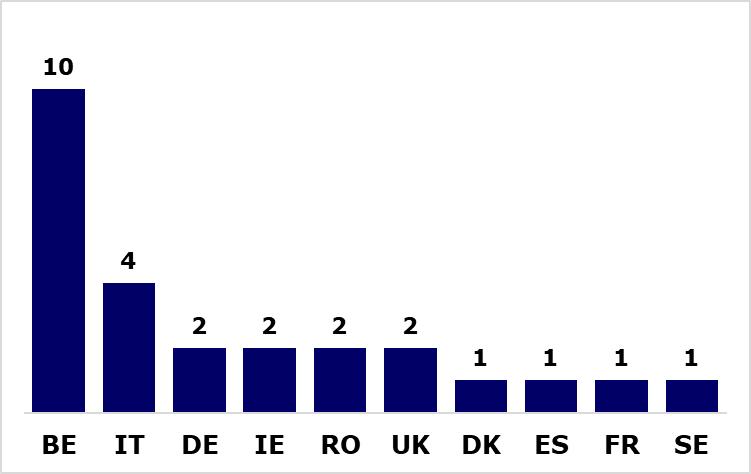
Overall assessment of the Directive (25 responses)
Respondents were asked to assess the importance of three objectives of administrative cooperation, namely (i) to increase the capacity of Member States to ensure that all taxpayers pay their taxes, irrespective of where their incomes are gained and taxes held; (ii) reduce the incentives for Member States to engage in harmful tax competition; and (iii) increase the transparency in tax-planning of cross-border companies.
There was a general consensus that all the mentioned goals are important, with some differences between objectives as shown in the chart:
To what extent do you believe the following goals of administrative cooperation are important for Europe and globally?

There was no clear-cut consensus among the respondents on whether the tools provided by the Directive to tax authorities are appropriate to meet the above-mentioned goals. In the opinion of the respondents, the tools of the Directive appear to be best suited to increase Member State ability to ensure that all taxpayers pay their taxes.
Question #14 To what extent do you consider the tools given for tax authorities in the Directive appropriate to meet the goals?

Nevertheless, the majority of the respondents agreed in considering the effects of the Directive as contributing to achieving the goals of administrative cooperation. Among the various effects, reducing incentives for Member States to offer particularly favourable tax conditions not available to other taxpayers was the one for which a higher number of respondents was in partial or total disagreement (3).
Question #15 Concerning the effects of the directive, to what extent did the Directive contribute to the following objectives?

Most respondents considered the Directive on Administrative Cooperation (DAC) as bringing additional value compared to international initiatives or national interventions. Indeed, just two respondents thought that (most of) the same results would have been achieved also without the Directive.

Some respondents commented that similar results could have been achieved through bilateral tax control initiatives of each Member States or thanks to the similar commitment that exist among Countries of the Organization for Economic Co-operation and Development (OECD).
A number of replies focused on added value of the Directive, referring to:
·the establishment of a shared legal framework among Member States, which permit to implements administrative cooperation in direct taxation commitments “in a coherent and homogeneous manner”;
·the “increased public visibility of the issue” and the subsequent deterrent effect, meaning that taxpayers “might refrain from certain activities linked to tax avoidance or tax evasion”; and
·the development of a mandatory automatic exchange of information, which seems to be “the most effective way to improve the correct assessment of taxes […]”
A majority of the respondents judged the Directive as being coherent with other laws or initiatives, while two indicated inconsistencies without offering examples.
Individual taxpayers (8 responses)
Most respondents (6/8) knew that that their local tax authority automatically receives certain data on incomes received and financial assets held in other EU Member States concerning taxpayers which are tax resident therein. Out of these six, four respondents thought that most of the taxpayers are aware, whereas the other two thought that, respectively, only some or few taxpayers are aware of the mechanism
None of the respondents reported having income and/or to hold financial assets in an EU Member State other than the one of their residence. Nevertheless, three had been contacted by their banks in which they hold one or more current accounts for providing additional information on their tax residence situation. In two cases out of three the interaction was exclusively via email, letter or telephone, whereas in one case a visit to the bank or financial institution was needed.
Legal entities – legal arrangements (2 respondents)
Both respondents were aware of the exchange of information between national tax authorities on advance tax rulings/advance pricing arrangements. One of the two respondents was contacted by their financial institution for clarifications concerning the tax residence situation of the legal entity.
One of the two respondents declared to have been subject to country-by-country reporting. Though compliance with this obligation mostly relied on already existing information, both respondents considered country-by-country reporting requirements as complex. For example, it was reported that the conversion of the country-by-country reports into an XML format could only be done with the assistance of external experts. This translated, the respondent specified, in “estimated [costs of] €10,000 (one time) and recurring [yearly] €1,000”, pointing out that “the indicated costs were only achievable through already existing, detailed, internal reporting, otherwise it would have become significantly more expensive”.
Providers of Tax Advice and Accountancy Services (7 responses)
Seven respondents replied as providers of Tax Advice and Accountancy Services, of which four identified as companies; two as business associations and one as NGO.
The great part of the respondents thought that all (2) or most (3) of their clients are aware about the fact that their home country tax authority receives automatically each year data on incomes received and financial assets held in other EU Member State. Only two respondents thought, respectively, that some or few of their clients know about the exchange of information among tax authorities. When analysing the involvement of their clients in cross-border activities, four respondents specified that a little share of them (i.e. 0-10%) earn incomes from another Member States, while another two declared that most (i.e. >50%) of them do, whereas another one was not able to answer. Quite on the same line, the share of clients which held financial assets in another EU Member State was between 0-10% for three respondents; higher than 50% for three respondents and negligible for another respondent.
All but one respondent thought that the general awareness of their clients of the exchange of information between tax authorities has increased the compliance with their tax obligations, even though the opinion differed on the magnitude of this effect. This was also mirrored by an increase in the perceived frequency of checks: although the number of replies only provide for an anecdotal view, five respondents considered that more than 10% of their clients were subject to checks on foreign incomes / assets (compared to three prior to 2015).
Three respondents declared that all or most of their clients are aware of exchange of information on rulings, while three respondents thought that only some of their clients are. Moreover, according to three respondents the general awareness of their clients on the subject had no effect on their clients’ interest to apply for a ruling or arrangement; for two respondents it increased their interest, while for just one respondent it had the effect of decreasing their clients’ interest to apply for such rulings or arrangements.
Financial institutions (2 responses)
One respondent judged the process of complying with DAC2 as being very difficult, whereas for the other one it was neither easy nor difficult. Both respondents specified that the actions needed to comply with the rules and to provide the required information involved (i) the setting up/modification of their internal procedures as well as of their Information Technology (IT) system; (ii) the training of staff; and (iii) other unspecified activities. Both had to collect of new and existing information in equal part for complying. To collect and check information, for a significant minority of clients (i.e. 10% - 50%), interactions in writing, via phone or face-to-face with customers were needed, one respondent reported.
Concerning the costs of compliance, quantitative data were provided, but both respondents gave an overall picture of the efforts required. One respondent explained that some of its associate clients relied on in-house expertise (e.g. lawyers, IT experts, project managers), whereas others had to hire external consultants, thus incurring in higher costs, judged as “significant” by the other respondent experiencing the same situation. Furthermore, the “too fast” implementation and entry into force of the Directive (i) did not give enough time to adjust the internal arrangements accordingly (e.g. “two years is a minimum time to change IT-systems”); (ii) created difficulties in understanding and interpreting the piece of legislation, and ultimately (iii) contributed to increase the costs of the process. Specifically, the respondents complained about the “quite extensive reporting” required under DAC2, which made it “a cost and time consuming exercise”.
Both the respondents declared to have had instructions and guidance from their tax authorities regarding the collection and submission of the information required for DAC2. Nevertheless, only in one case this guidance has been judged as sufficient. Moreover, the respondent who was satisfied with the guidance received from its local tax authority did not get any feedback about the information provided, while the respondent who deemed the guidance as being not sufficient got a feedback from its local tax authority, even though it was rather limited.
Additional contributions (9, of which 1 ad hoc position paper; 8 contributions submitted online)
The organisations that provided written input consist of 1 sub-national Parliament (ad hoc position paper), 1 NGO, 3 companies providing tax advisory services and 4 business associations representing specific industries or financial institutions.
Written inputs are summarised below.
Contribution from the sub-national Parliament
·International tax audits would be a welcome addition to the directive as a tool to achieve fair and uniform taxation while also avoiding duplicated audit costs for the taxpayers.
·They are also deemed useful to address the difficulties for national tax authorities caused by instances of double taxation and non-taxation, the occurrence of which has increased following the progressive globalisation of the economy.
·Improvements are still needed for the Directive to be the legal basis for ‘real’ international tax audits. Specifically:
othe justification for maintaining the requirement for which the audited company must consent to the international audit should be re-assessed;
othe situations in which the request for an international audit can be declined should be clearly identified;
omore clarity should be provided in the Directive as regards the legal position and powers of competent officials carrying out audit activities in another Member State;
othe results of the audits should have binding effects also for future decisions (i.e. representing an alternative or an addition to advance pricing agreements); and
othere should be more possibilities for activating administrative enquiries in another Member State, in line with the recent changes made to the administrative cooperation in the field of Value-Added Tax (VAT).
Contribution provided by an international NGO
·While recognizing the role of the Directive and its amendments in improving the administrative cooperation in the field of direct taxation between EU Member States, the respondent pointed out that the DAC still falls short of discouraging harmful tax competition within the EU, and of sufficiently improving the transparency of the tax planning of multinational companies.
·In the opinion of the respondent:
oCountry-by-Country Reporting details should be accessible to “all the countries in which the companies operate”, and especially to developing countries, as well as to the civil society as a whole; and
oMember States should increase cooperation in the area of harmful tax competition and transfer pricing through, for example, “the introduction of unitary taxation, through the adoption of the proposal on the Common Consolidated Corporate Tax Base”.
Contribution provided by a provider of tax advisory services (1)
·Among Dutch and British companies, there is a good level of awareness about the exchange of information. Namely, the awareness is higher for the Automatic Exchange of information mechanisms, and lower for the exchange for information on request or spontaneous.
·There is a perceived lack of transparency on how the French Tax Authorities use the information collected through automatic exchanges. Thus, as a general rule, taxpayers should be made aware of how their information is analysed and interpreted, and Member States should adopt a common methodology to deal with the information received, as to avoid “inefficiencies in the treatment of similar situations within the EU”.
·In Romania, the number of transfer pricing audits almost doubled since 2017, and this is considered as a sign of more efforts in the fight against international tax frauds.
Contribution provided by a provider of tax advisory services (2)
·The respondent pointed out that, in light of the General Data Protection Regulation and of a recent ruling enacted by the Court of Justice, it could be appropriate to grant to the taxpayers the right to be notified whenever their information is exchanged, as well as the right to review the correspondence between tax authorities in advance and “limit the information exchanged to what is most relevant”;
·Furthermore, more actions are needed at European level in order to prevent and resolve legal disputes, which can be expected to arise from the combination of an increased amount of information available to the tax authorities and the significant changes occurred in the tax systems of several Member States over the last years.
Contribution provided by a provider of tax advisory services (3)
·While acknowledging that the recent European legislation had (and will have) the effect of reducing harmful tax practices (e.g. aggressive tax planning), the respondent pointed out to several issues:
othe recent changes to the fiscal legislation brought about additional compliance costs, additional reporting requirements and more uncertainty, and these elements need to be taken into account when examining the efficiency and effectiveness of the Directive at stake;
othe increased transparency in the tax planning of companies carrying out cross-border activities could be clouded by the complexity of the rules at stake, which prevent the public from appreciating such an increase; and
onotwithstanding that the “cooperation between countries is far superior to unilateral action”, improvements are still needed by the Member States in order to reach “a balanced tax system”, which would be able to eliminate not only instances of non-taxation, but also cases of double taxation.
Contribution provided by a business association representing financial institutions (1)
·The large amount of information about the accounts holder which needs to be collected and shared under DAC2/CRS could be detrimental for individuals who wants to open a new bank account. For this reason, CRS reporting obligations would need to be more “proportionate and balanced” and include a de minimis threshold for reporting obligations, in order to limiting the risk of delays and additional costs for individuals accessing banking services;
·Difficulties were experienced by the respondent’s members in the implementation of DAC2/CRS, which mainly relate to: (i) the costs, resources and time constraints to comply with its requirements; (ii) the lack of a de minimis threshold for collecting and reporting the information that led to situations in which the information to be provided “may be not proportionate to the risk involved”; (iii) the lack of consistency that sometimes emerged between guidance published at local level and those published by the OECD, which translates into “additional monitoring and compliance costs for financial institutions”; and (iv) difficulties in reporting requirements, which stem from unclear CRS definitions and obligations.
Contribution provided by a business association representing financial institutions (2)
·The contribution focused on DAC6 and its implementation. While DAC6 is deemed a positive intervention, the respondent indicated that some aspects need to be better clarified (e.g. “it should be clarified that tax advantages that are foreseen by the law […] should not be reportable”).
Contribution provided by a business association representing financial institutions (3)
·Considering the “enormous efforts and high costs” sustained by financial institutions in implementing DAC2 provisions (e.g. adapting the IT system; training of staff; dealing with inconsistent interpretations of the Directive across the EU Member States), the respondent noted the need to measure ex ante the impact that any future change to the current reporting rules could have, as to not worsen the administrative burden already bearing on stakeholders and individuals, which potentially create “barriers to the free movement of capital, and, possibly, to the free provision of financial services across the EU”. Moreover, account holders should be better informed by tax authorities about the purpose and the requirements of DAC2.
·As regards DAC6, the respondent called the attention on the need for internal guidance from Member States on “how the rules should be applied in practice”, and for a coherent application of those rules across Member States, in order to avoid any ambiguity on clients and transactions for which information should be disclosed.
Contribution provided by a business association representing the creative sector
·The input provided mainly focused on the tax situation of artists and live performance organizations, which are subject to withholding taxes levied on performances taking place abroad. This arises because of the application of article 17 of the Double Tax Treaties between EU Member States on entertainers and sportspeople, and it leads to situations of double or excessive taxation, which constitute “a genuine obstacle for cross-border work within the EU”. The respondent thus suggested to take advantage of the improved administrative cooperation between Member States to overcome problems linked to taxation of performing artists and, in particular, to include in the Directive the option that “the proof of deduction of expenses can immediately be taken into consideration instead of being done afterwards”.
Annex 3: Intervention Logic
The Intervention Logic diagram drafted by Economisti Associati srl has been revised and slightly modified by the Commission services.
The Intervention Logic diagram drafted by Economisti Associati srl has been revised and slightly modified by the Commission services.
The Intervention Logic diagram drafted by Economisti Associati srl has been revised and slightly modified by the Commission services.

Annex 4: Evaluation Matrix
|
Evaluation questions
|
Judgement criteria
|
Indicators
|
Data sources
|
|
Effectiveness:
Has the Directive met its objectives?
|
General objectives
|
Extent to which the Directive has contributed to safeguard Member States’ tax revenue
|
Desk research (literature review)
Targeted consultations (Member States & other stakeholders)
Public consultation
|
|
|
|
Extent to which the Directive has improved the functioning of the Single Market and made tax systems fairer
|
|
|
|
Specific objectives
|
Extent to which the Directive has improved ability of Member States to fight cross-border tax fraud, evasion and to tackle harmful tax competition
|
AEOI Data
Non-AEOI Data
Targeted consultations (Member States)
|
|
|
|
Extent to which the Directive has had a deterrent effect
|
Desk research (literature review)
Targeted consultations (Member States & other stakeholders)
Public consultation
|
|
Efficiency:
What have been the costs (e.g. compliance costs, administrative burdens) generated by the implementation of and compliance with the Directive on stakeholders (Member States administrations, economic operators, citizens) and how do they compare?
|
Level of costs borne by tax authorities
Level of costs borne by financial institutions
Level of costs borne by taxpayers
|
Compliance costs due to exchanges of information (AEOI, exchanges on request, spontaneous exchanges)
Compliance costs due to other forms of cooperation (presences, simultaneous controls)
Administrative burdens due to interaction with financial institutions (DAC2 AEOI)
Administrative burdens due to information obligations (e.g. provision of statistics)
|
AEOI data
Non-AEOI data
Targeted consultations (Member States)
Desk research (literature review)
Targeted consultations (tax advisors, taxpayers’ associations; financial sector)
Public Consultation
|
|
What have been the benefits (e.g. incremental tax assessed) and cost savings (e.g. because of easier / faster cooperation and exchanges) generated by the implementation of and compliance with the Directive on stakeholders (Member States administrations, economic operators, citizens) and how do they compare?
|
Level of benefits and cost savings borne by tax authorities
Level of benefits and cost savings borne by financial institutions
Level of benefits and cost savings borne by taxpayers
|
Incremental tax assessed
Other benefits (e.g. voluntary compliance)
Administrative burden reduction due to AEOI (e.g. tax declaration pre-filling)
Compliance cost savings compared to the pre-Directive situation
Share of compliance costs financed by the EU budget to support common actions, cooperation and common tools
|
AEOI data
Non-AEOI data
Targeted consultations (Member States)
Desk research (literature review)
Targeted consultations (tax advisors, taxpayers’ associations; financial sector)
Public Consultation
|
|
Cost-benefit considerations
|
Extent to which costs incurred are commensurate with the outcomes achieved
|
Comparison of selected costs incurred and results achieved in the area of tax fraud and avoidance prevention, as emerging from the analysis of effectiveness
|
Desk research (literature review)
Targeted consultations (Member States & other stakeholders)
Public consultation
|
|
Relevance:
To what extent has the Directive adequately addressed the identified needs?
|
Extent to which the objectives of the Directive are aligned with the identified needs
|
Comparison between AEOI flows and information on incomes / assets generated by EU taxpayers in countries other than the one of residence (e.g. share of national income/asset generated in other EU counties; past and present intra-EU migration flows)
|
Desk research (tax statistics)
AEOI Data Non-AEOI Data
Targeted consultations (Member States and other stakeholders)
Public consultation
|
|
|
|
Stakeholders’ perception about the change in transparency of the treatment of cross-border economic operators by tax authorities
|
|
|
|
|
Degree to which the Directive sets up the conditions for more uniform rules and procedures in administrative cooperation in direct taxation
|
|
|
|
Extent to which the Directive mechanisms are in line with its objectives
|
Stakeholders’ perception of Directive fitness to safeguard Member States’ tax revenues by limiting cross-border tax fraud and avoidance
|
|
|
|
|
Degree to which the Directive mechanisms are in line with international best practices against cross-border tax fraud and avoidance
|
|
|
|
|
Stakeholders’ perception of Directive fitness to ensure a level-playing field in the Single Market
|
|
|
|
|
Stakeholders’ perception of Directive fitness to increase the fairness of tax systems
|
|
|
Coherence:
To what extent are the provisions of the Directive consistent both internally and with other related interventions, EU policies and strategies in the area of administrative cooperation and fight against tax fraud?
|
Internal coherence: to what extent various parts of the Directive are coherent with each other?
|
Existence of unclear definitions
|
Non-AEOI data
Targeted consultations (Member States)
Public consultation
|
|
|
|
Existence of mismatches on operational matters among different provision of the directive (e.g. different time limits for AEOI DAC1 and DAC2)
|
|
|
|
External coherence: to what extent is the Directive coherent with other EU or international interventions?
|
Existence of conflicting provisions (e.g. some criteria reportedly narrower than in AML)
|
Desk research (literature review)
Targeted consultations (Member States & other stakeholders)
Public consultation
|
|
|
|
Existence of supporting provisions e.g. in AML
|
|
|
|
|
Existence of gaps or missing links (e.g. reported absence of exhaustive commentaries and/or guidelines from national authorities)
|
|
|
|
|
Existence of overlaps (e.g. reported duplication of reporting for DAC and other pieces of EU legislation)
|
|
|
EU added value:
To what extent has the Directive brought additional benefits compared with what could have been achieved by Member States acting independently on national or international levels?
|
Extent to which the outcomes / impacts generated by the Directive are additional compared to national / international initiatives
|
Effectiveness indicators concerning tax control (appreciation of the role of the Directive to increase effectiveness of tax control and to generate additional tax compliance)
|
Targeted consultations (Member States & other stakeholders)
Public consultation
Findings from other e
|
|
|
Extent to which the cooperation mechanisms established by the Directive are superior to other platforms/channels
|
Stakeholders’ perception on the added value of EU cooperation compared to international / national platforms
|
Targeted consultations (Member States & other stakeholders)
Public consultation
|
|
|
|
Stakeholders’ perception on the increased trust and likelihood of cooperation between Member States’ national competent authorities
|
|
|
|
|
Efficiency indicators concerning the amount of additional regulatory cost savings generated by having mandatory exchanges and an EU supported cooperation, structure, IT formats and secure channels for Member States and a set of common procedures
|
|
|
|
Extent to which EU financial support enabled the achievement of additional outputs
|
Exchanges which have materialised only (or mainly) because of the EU support, by type of exchange
|
Desk research (Fiscalis 2020 dataset)
Targeted consultations (Member States)
|
|
|
|
Other forms of cooperation which have materialised only (or mainly) because of the EU support
|
|
|
|
|
Use or interest in using in the future IT modules built for AEOI in collaboration by some Member States participating the project, but shared with all Member States.
|
|
Annex 5: Exchanges under DAC4
Member States started exchanging country-by-country reports of multinational enterprises’ groups following the entry into application of DAC4 on 5 June 2017. The first country-by-country reports to be exchanged were those concerning the groups’ fiscal year starting on or after 1 January 2016.
In November 2018, for the first time the Commission services received statistics on country-by-country reports exchanged between Member States. This annex is based on those statistical data.
Volumes of exchanges vary between countries, with relatively larger EU economies contributing to most of the exchanges. Between June 2017 and October 2018, Member States sent to each other 19,511 reports. The main senders are UK, Germany and Netherlands.
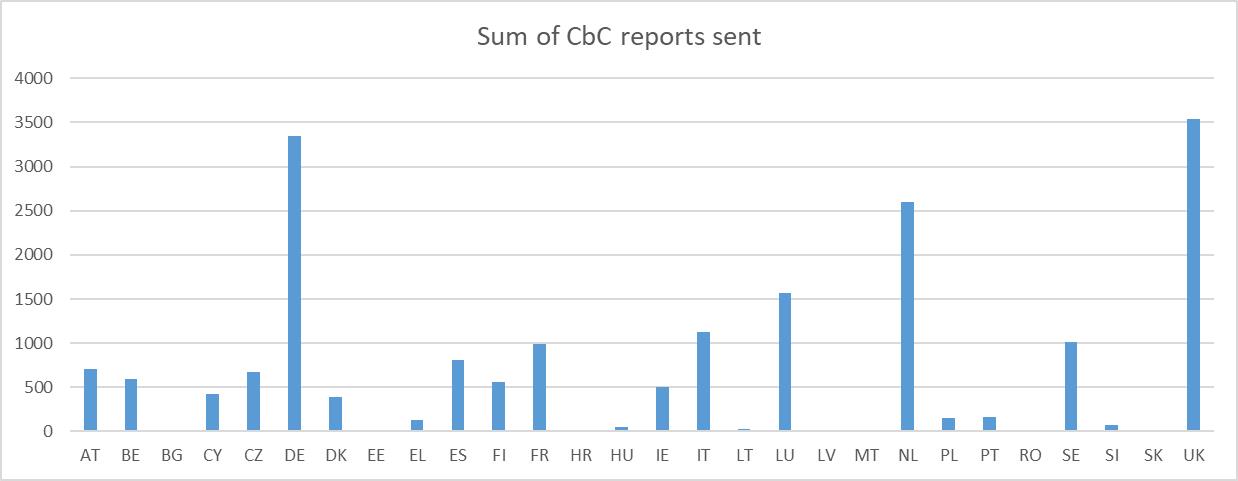
During the same period, Member States received from each other 17,319 reports. The largest receivers are Germany, Spain and Italy.
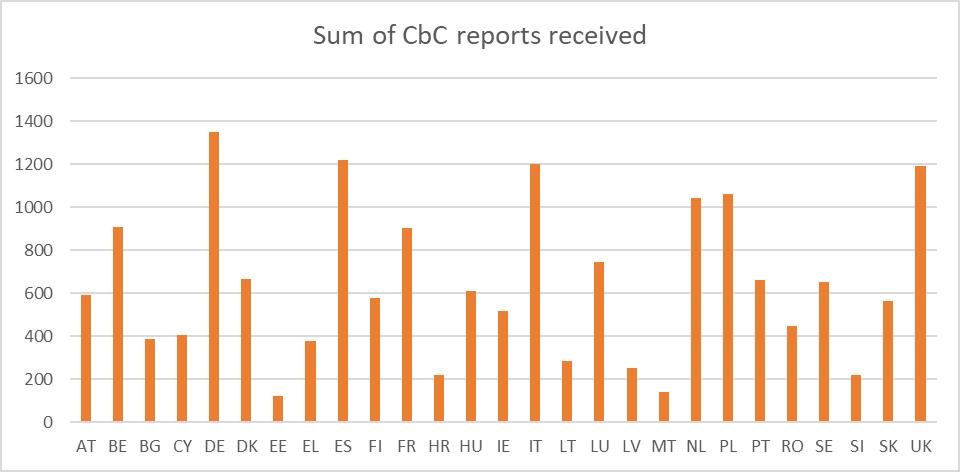
At the time of writing, no information is available concerning the quality, use and effect of country-by-country reports. The Commission services will continue monitoring DAC4 exchanges and report about them in more details as part of the next multiannual report on the functioning of the Directive on administrative cooperation due by 31 December 2022.
Annex 6: More information concerning open infringements
With reference to DAC1, the Commission initiated the infringement procedure n. 20182110 against Estonia by issuing a letter of formal notice on 19 July 2018 pursuant to art. 258 of the Treaty on the Functioning of the European Union (TFEU). The Commission found that Estonian law does not oblige its tax authorities to provide their counterparts in other EU Member States with the requested information. Nor does it require them to initiate tax proceedings for obtaining such information where needed or to engage in spontaneous exchanges of information.
Therefore, the Commission asked Estonia to align its rules on exchange of certain tax information held by Member States on taxpayers from other EU countries, as required byforeseenrequired by DAC1. Currently, no reasoned opinion has been sent to Estonian authorities by the Commission yet.
With regard to DAC2, the Commission initiated the infringement procedure n. 20182056 against Czechia by issuing a letter of formal notice on 7 June 2018 pursuant to art. 258 TFEU. The Commission ascertained Czechia’s failure to implement correctly DAC2. Presently, no reasoned opinion has been sent to Czech authorities by the Commission yet.
With regard to DAC4, the Commission initiated the infringement procedure n. 20182360 against Spain by issuing a letter of formal notice on 24 January 2019 pursuant to art. 258 TFEU. The Commission found that the current Spanish rules lack a number of elements regarding the reporting obligations of multinational companies.
Therefore, the Commission asked Spanish authorities to implement DAC4 in its entirety.
Presently, no reasoned opinion has been sent to Spanish authorities by the Commission yet.
As for DAC5, the Commission opened infringement procedures n. 20180025 against Ireland and n. 20180040 against Romania by sending first a letter of formal notice on 24 January 2018 and then a reasoned opinion on 7 June 2018 pursuant to art. 258 TFEU to each of them. In both cases, the Commission ascertained the failure to communicate the transposition of DAC5. To date neither Ireland nor Romania have been referred to the Court of Justice of the European Union yet.
Annex 7: Evidence and estimates on compliance costs incurred by financial institutions
|
Evidence on Compliance Costs Incurred by Financial Institutions
|
|
Estimates for Selected Member States
Austria. Financial sector stakeholders indicated that the implementation of DAC2/CRS “involved major costs for the banking sector”. For the quantification of these costs, a reference was made to an impact assessment carried out by the Ministry of Finance, which estimated the total initial costs for the financial sector (banks and insurance companies) at some € 40 to € 60 million. Annual costs were estimated at some € 5 to € 10 million per year.
Belgium. The stakeholders considered that DAC2 placed a considerable burden on the financial sector. This was particularly the case for commercial banks, whereas investment funds and insurance companies were much less affected. While no estimate was provided, the total cost was deemed to be substantial (“the total cost of CRS for the Belgian banking sector is for sure several million euro; could even be dozens of millions”).
France. An unofficial estimate offered by an economic operator puts the initial cost of implementing DAC2/CRS at some € 100 million. The recurrent costs for DAC2/CRS are estimated at some € 30 million per year. The figure for initial costs is somewhat lower than an earlier estimate of the costs for FATCA, which were assessed to be between € 200 and € 300 million.
Germany. The financial sector stakeholders expressed the view that the implementation of DAC2/CRS entailed a significant effort. In the case of savings banks, the initial development work was largely carried out by the umbrella organisation, with positive effects on the total costs. At the national level, the impact assessment carried out by the Federal Ministry of Finance − validated by the National Regulatory Control Council − estimated the initial costs at some € 100 million, while annual costs were estimated at some € 80 million.
Luxembourg. The financial sector stakeholders interviewed considered that DAC2/CRS was a source of “huge administrative burdens”, but were not in the position to provide an estimate. However, based on information presented by the banking association at the AEFI Expert Group, the initial costs could be assessed at around € 50 million, while recurrent costs at around € 5 million per year.
The United Kingdom. No information could be obtained from UK-based stakeholders. However, the costs of implementing DAC2/CRS were estimated in an impact assessment carried out in 2015 by the tax administration. In particular, initial costs were assessed to range between € 50 and € 150 million while annual costs were estimated to range between € 1.5 and € 3 million.
Estimates for Selected Financial Institutions
Leading Banking Group – Western Europe. No estimate was provided, but the implementation of DAC2/CRS was regarded as an “extremely expensive exercise”. This applies to both the initial phase (“we are talking about millions of euro”) and the ongoing operations (“you need to adjust the IT system from time to time, re-train people in the local offices, deal with changes in circumstances, etc.”).
Medium-sized Commercial Bank – Central Europe. The initial cost for implementing DAC2/CRS was marginally below € 800,000. Most of the work was done internally, which greatly helped in keeping costs under control. The bank had a quite high number of reportable accounts, in the order of 70,000 – 80,000, with an average cost of some € 10 per reportable account.
Small Commercial Bank – Southern Europe. The initial costs were in the € 0.5 – 1.0 million range, considered to be quite high (“it costed us a fortune”) due to the extensive involvement of external service providers. In the end, the bank had fewer than 1,000 reportable accounts, with an average cost of at least € 500 per account. Operating costs are difficult to estimate, as the bank has few new foreign clients; reportedly, the costs per new cases can sometimes be large (“two cases have been on my desk for months”).
Large Commercial Bank – Northern Europe. The total initial costs for implementing DAC2/CRS were estimated at € 5-7 million. The IT system developed for DAC2 was also shared with some subsidiaries. The bank had some 50,000 accounts screened for indicators, with an average cost of € 100 – 140 per account screened.
Banks of undisclosed size – Southern Europe. With the support of a national business associations, data on DAC2/CRS costs were collected from a number of banks. Bank A incurred in investment costs of about € 400,000, and bear an annual recurrent cost of € 24,000 for about 35,000 reportable accounts; Bank B’s investment costs amounted to about € 600,000 and recurrent costs (including indirect expenditures for administration and IT support) to about € 350,000 per year for about 55,000 reportable accounts. Bank C invested about €3 million in the first year, and has running costs of € 2 million for about 11,000 clients (no information on the number of reportable accounts is available). The time required to process new reportable accounts or relevant changes to existing reportable accounts for DAC2 purposes is of about 2 hours per occurrence.
|
Annex 8: The Cum-Ex Scandal and Administrative Cooperation
On 18 October 2018 Correctiv, a German, independent, non-profit journalistic research centre, published online the cum-ex files, the result of joint journalistic work done by 38 reporters in 12 countries based on about 180.000 pages of documents. Journalists reported on a vast tax scandal in the area of withholding taxes on cross-border dividends, referred to as cum-ex.
The estimated losses to national budgets due to cum-ex have been estimated to about € 55 billion. The largest part of the losses involved Germany during the period 2007-2012, when Germany amended its tax law to stop the most damaging form of abuse. As a general rule, cross-border investors pay tax on dividends from foreign investment as per the rate set in bilateral tax treaties. When more tax is paid than what it should according to the treaty, investors have the right to ask for a refund of the tax paid in excess. This is done to avoid double taxation of the same income flow by more than one country.
Cum-ex exploited weaknesses in the control frameworks of some tax authorities including EU Member States (in particular, in terms of losses, Denmark and Germany; but also Belgium, France, Spain, Italy, the Netherlands, Austria, Finland, Poland, and the Czech Republic) abusing the mechanism of refund from tax withheld in excess with the result of having many refunds being paid unduly, often on the basis of fictitious paperwork – but without any right for actually making such a claim.
From a market point of view, cum-ex is a form of organised trade in shares in publicly traded companies, mainly taking place around the date of payment of the dividend. The share is acquired with the right to the dividend on the dividend payment date. It is then traded, or sometimes ‘lent’ several times on that day. As a result, the share has several holders on the dividend payment date – each of these holders were able to obtain a certificate showing they owned the share on the date the dividend was paid – net of withholding tax. If they have exempt status the various holders may all potentially claim for a refund of the tax withheld – even if in reality they have not suffered any withholding (or received any dividend). In many cases, the tax authority has paid out on claims on the basis that the correct paperwork has been submitted.
An alternative form of abuse consisted in shares being sold to specially created (apparently, only with avoidance purposes) pension schemes on the day of dividend payment. The pension company reclaims the tax as it is entitled to under relevant double tax treaties; and promptly sells the shares again to the original owner – who would not have been exempt.
A clear feature in all these types of trades is the fact that the operations are adapted to target the “weakest link” e.g. a country where tax controls for various reasons appear the easiest to break. Within the EU, the Directive on administrative cooperation provides tools which, if actually exploited by Member States’ tax administrations, could prevent a scandal of the kind of cum-ex from happening again – or to help discovering / stopping it in case similar abuses remain ongoing in some countries.
1.EU countries have the possibility to ask for information on request to other tax authorities if foreseeably relevant for the administration and enforcement of their tax laws, including taxes on cross-border dividends. For instance, a tax administration before paying a refund or exempting an investor resident in other Member State from withholding tax may request for additional information on the taxpayer from the tax administration of residence, in addition to any information the tax administration may already have at its disposal as part of the normal procedure, at the national level, to check compliance with withholding taxes.
2.In case, during its operations to monitor and control compliance with withholding tax obligations, a tax administration discover that there may be a loss of tax in another Member State – for instance, it turns out that a non-compliant taxpayer is active also in the latter Member State – then it has to inform that second Member State within one month. This mechanism is covered under provisions for the spontaneous exchange of information.
3.Tax authorities have the possibility to agree to be present in each other offices and during investigations in each other’s territories, as well as to run simultaneous controls, tools which could prove usual to detect “large scale” non-compliance, involving more than one country – as in the cum-ex case, a case of international tax evasion.
If used fully by Member States, the toolbox for administrative cooperation can prove effective in discovering and preventing abuses on withholding taxes paid on cross-border dividends – as well more generally against tax fraud, tax evasion and tax avoidance. As shown by the evaluation, and especially its section on effectiveness, the Directive has contributed to an improved ability to fight tax fraud, evasion, and avoidance by Member States. While it is not known if and to what extent mechanisms set up under the Directive have contributed to prevent abuses similar to cum-ex from happening (in some cases at least), it is possible that tax administrations did make use of some of the instruments available to them for administrative cooperation to deter, prevent and detect some of the abuses.
Ultimately, however, the effect of the Directive depends on the active take-up by Member States. If not put to use, the toolbox remains inert. Faced with the magnitude of the losses estimated in the case of cum-ex, it is important that all Member States – irrespective of whether they have been victim of this type of abuses or not – reap the full potential of the Directive on administrative cooperation, sharing quality, useful information with each other promptly and being open to get involved in simultaneous controls and/or presences abroad in order to prevent scandals such as the cum-ex from happening again – while ensuring any loopholes existing in national tax laws is stopped.
Annex 9: List of studies or research quoted in the evaluation
·AEOI 2017 Study by Finér L. and Tokola A.
·Alvarez-Martinez, M., Barrios, S., d'Andria, D., Gesualdo, M., Nicodème, G., & Pycroft, J. (2018). How Large is the Corporate Tax Base Erosion and Profit Shifting? A General Equilibrium Approach.
·Commonwealth of Australia, Explanatory Memoranda - Tax Laws Amendment (Implementation of the Common Reporting Standard) Bill 2015 (
http://classic.austlii.edu.au/au/legis/cth/bill_em/tlaotcrsb2015658/memo_0.html
)
·Dover, R. Ferrett, B., Gravino, D., Jones, E. and S. Merler (2015), Bringing Transparency, Coordination and Convergence to Corporate Tax Policies in the European Union, Research Paper prepared for the European Parliament Research Service
·ECOPA and CASE (forthcoming), “Estimating International Tax Evasion by Individuals”, commissioned by European Commission. This study provides for estimates of tax revenues losses by Member States due to international tax evasion by individuals, in terms of personal income tax (PIT), capital income tax (on the returns to the escaped savings) and wealth and inheritance tax. It focusses on two channels: revenues hidden (a) on foreign bank accounts and (b) channelled via shell entities.
·Fiscalis 2013 final evaluation:
https://ec.europa.eu/taxation_customs/sites/taxation/files/docs/body/fiscalis2013_final_evaluation.pdf
·Fiscalis 2020 mid-term evaluation: https://ec.europa.eu/taxation_customs/sites/taxation/files/mid-term_evaluation_study_f2020.pdf
·GAO, Tax Gap - IRS Needs Specific Goals and Strategies for Improving Compliance, October 2017.
·Goolsbee A, The ‘Simple Return’: Reducing America’s Tax Burden Through Return-Free Filing, The Brookings Institution, Discussion Paper 2006-004, July 2006
·HMRC, The International Tax Compliance (Crown Dependencies and Gibraltar) Regulations 2014, 17 March 2014