 EUROPEAN COMMISSION
Brussels, 31.3.2015
COM(2015) 145 final
REPORT FROM THE COMMISSION TO THE EUROPEAN PARLIAMENT AND THE COUNCIL
Report on the application of Regulation (EU) No 211/2011 on the citizens' initiative
EUROPEAN COMMISSION
Brussels, 31.3.2015
COM(2015) 145 final
REPORT FROM THE COMMISSION TO THE EUROPEAN PARLIAMENT AND THE COUNCIL
Report on the application of Regulation (EU) No 211/2011 on the citizens' initiative
1.Introduction
The European Citizens' Initiative (ECI) is one of the major innovations introduced by the Lisbon Treaty 1 and aims at involving citizens more closely in agenda-setting at EU level. One of the main benefits of this tool resides in forging links with like-minded people across the continent, facilitating pan-European debates on issues that are clearly close to citizens' concerns. An estimated 6 million statements of support have already been collected by organisers of citizens' initiatives for their various causes, while 10 % of the registered initiatives managed to reach the 1 million threshold.
The ECI allows citizens to connect directly with EU institutions to discuss key issues at European level. This aims to further strengthen the democratic legitimacy of the Union. The Commission attaches utmost importance to the ECI and is fully committed to making this instrument work, so that it can fully achieve its potential.
The rules and procedures concerning the citizens' initiative are set out in a Regulation 2 which was adopted by the European Parliament and the Council in February 2011 and entered into effect on 1 April 2012. All Member States have implemented the Regulation 3 . Article 22 of the Regulation foresees that by 1 April 2015, and every three years thereafter, the Commission shall present a report to the European Parliament and the Council on the application of this Regulation.
The Commission's analysis, as outlined in this report, is supported by the ongoing feedback received from stakeholders, including organisers of citizens' initiatives 4 , directly or via the Ombudsman's own-initiative inquiry, the European Parliament's study, various publications, conferences etc. It also takes into account information and views gathered from Member States 5 via the Commission's expert group on the citizens' initiative 6 .
2.State of Play
The ECI process involves a number of steps. In order to launch a citizens' initiative, organisers must form a "citizens' committee". Before they can start to collect statements of support from signatories, the proposed initiative must be registered by the Commission. Once registration is confirmed, organisers have one year to gather the support needed to reach the thresholds required.
Since April 2012, the Commission has received 51 requests for registration of proposed citizens’ initiatives. 31 of them were registered (16 registrations in 2012, nine in 2013, five in 2014 and one in 2015). Three initiatives are currently collecting statements of support 7 .
18 initiatives have reached the end of their collection period (10 others 8 were withdrawn before the end of their collection period). Among those 18, three initiatives have reached the required number of statements of support and were submitted to the Commission. Two of them have already received a formal response from the Commission: 'Water and sanitation are a human right! Water is a public good, not a commodity!' ('Right2Water') and 'One of us'. The third one ('Stop vivisection') is under examination by the Commission and will receive an answer by 3 June 2015 (see also point 3.e).
20 proposed initiatives did not fulfil the registration criteria and therefore could not be registered by the Commission.
|
Registered |
Not registered |
|||||
|
Collection ongoing |
Withdrawn by its organisers |
Collection closed 9 |
Closed initiatives without the required support 10 |
Submitted to the Commission – Commission's answer pending |
Answered by the Commission |
Registration refused |
|
3 |
10 |
3 |
12 |
1 |
2 |
20 |
|
31 |
||||||
Six citizens' committees decided to bring proceedings before the General Court against Commission decisions refusing the registration of their proposed initiatives 11 . The organising committee of 'One of us' contested the Commission's Communication 12 . All of these cases are pending.
The European Ombudsman received two complaints from organisers of initiatives. The Ombudsman has already closed one of them 13 , concluding that there was no Commission maladministration. The second case is still under analysis by the Ombudsman 14 .
3.implementation of the ECI Procedure
The following provides information on implementation of the ECI procedure at the successive steps of the lifecycle of an initiative.
a.Citizens' committee
An ECI initiative must be organised by a citizens' committee of at least seven EU citizens residing in seven different Member States and of the age to vote in European Parliament elections. Only the seven members needed to comply with this condition are registered with the Commission.
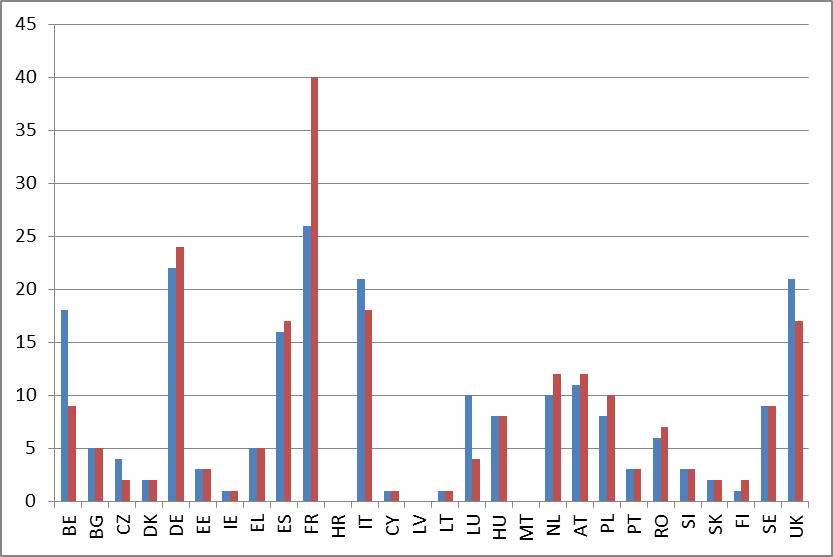
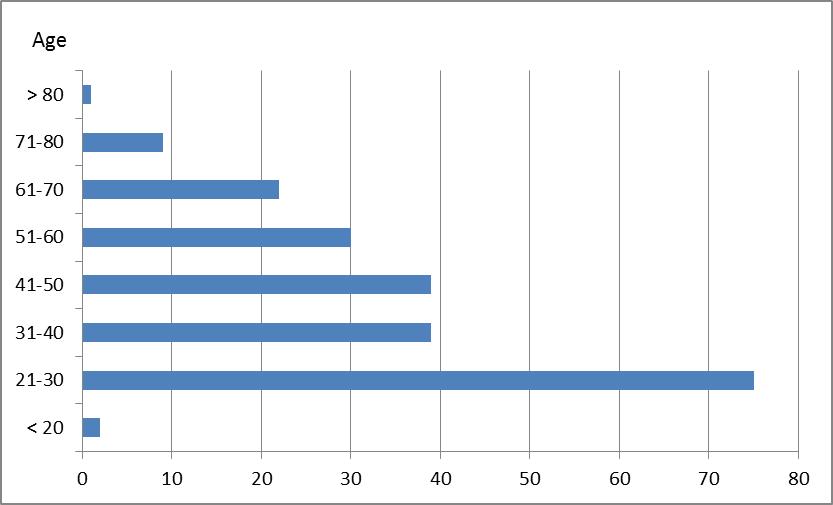
Statistics on the members of citizens' committees
– Residence and nationality of committee members for the registered initiatives:
 Residence
 Nationality
– Age of committee members for the registered initiatives:
b.Registration phase
In order to be registered, the proposed initiative must comply with the conditions set out in Article 4(2) of the Regulation, which require that a citizens’ committee has been formed and the contact persons have been designated; that the proposed initiative does not manifestly fall outside the framework of the Commission’s powers to submit a proposal for a legal act of the Union for the purpose of implementing the Treaties; that the initiative is not manifestly abusive, frivolous or vexatious; and is not manifestly contrary to the values of the Union as set out in Article 2 of the Treaty on European Union. 31 proposed initiatives were registered, covering a wide range of topics, from environment, mobility and education to development cooperation and social issues 15 .
20 proposed initiatives could not be registered 16 as they fell manifestly outside the framework of the Commission’s powers to submit a proposal for a legal act of the Union for the purpose of implementing the Treaties. All the decisions refusing registration have been published on the ECI website.
c.Collection phase
Organisers have 12 months to collect statements of support, as of the date of registration of their proposed initiative by the Commission.
Any EU citizen of the age to vote in European Parliament elections is entitled to give support to an initiative. According to the Regulation, for that purpose, signatories have to fulfil the requirement of a link of nationality or residence with a given Member State and provide personal data, allowing thereby that Member State to verify its statements of support. These requirements vary from one Member State to another 17 . These divergences prevent some EU citizens from being able to support a citizens' initiative 18 . This situation has generated criticism and frustration among organisers and signatories, many of them considering that the difference of treatment and the high amount of personal data required by some Member States, including sometimes a personal identification number, could deter many citizens from giving their support.
The requirements are set out in Annex III to the Regulation, which can be modified by a Commission delegated act at the request of the Member States concerned. The Commission continues its efforts to encourage Member States to simplify their requirements.
Several Member States have already responded positively to the Commission's calls for simplification. A modification of Annex III, which entered into force on 8 October 2013, contained changes suggested by Spain, Ireland, France, Luxembourg, the Netherlands and Slovenia. In particular, the Netherlands opened the possibility for Dutch nationals living outside the Netherlands to give their support on a Dutch form, and Spain the possibility for non-Spanish EU citizens residing in Spain to give their support on a Spanish form, thus reducing the number of citizens excluded from their right to support an initiative. A second modification, which was adopted by the Commission in March 2015 and is currently under scrutiny by the European Parliament and the Council 19 , further simplifies the requirements for Latvia, Malta and Sweden.
Signatories can give their support in paper form or online, on the basis of forms compliant with the model set out in Annex III to the Regulation. It is also possible to give support to an initiative using an 'advanced electronic signature' 20 . No use of the latter has been reported to date.
Around 55% of the statements of support collected by the three initiatives, 'Right2Water', 'One of us' and 'Stop Vivisection', were collected online.
|
Initiative |
Statements of support collected on paper |
Statements of support collected online |
|
Right2Water |
Around 20% |
Around 80% |
|
One of us |
Around 70% |
Around 30% |
|
Stop vivisection |
Around 40% |
Around 60% |
Once their proposed initiative is registered, organisers can also provide the Commission with translations of their proposed initiative in any official EU languages. Before publication, the Commission verifies that there are no manifest and significant inconsistencies between the translated text and the original version of the title, the subject-matter and the objectives of the proposed initiative. The publication of a translation allows the organisers to use this language version for the description of their proposed initiative included in the formal statement of support forms.
In total, more than 300 translations have been published in the ECI register. On average, proposed initiatives have been translated into 11 languages. Four initiatives have provided translations in all official EU languages. Around one third of translations had to be revised (once or several times) by the organisers before their publication.
Online collection
According to Article 6 of the Regulation, organisers must build their online collection system and get it certified by a competent authority in the Member State 21 where the data collected will be stored before starting to collect statements of support online via this system.
In order to be certified, the systems must ensure i.a. that the signatories' data are securely collected and stored, by complying with the technical specifications set out in Commission Implementing Regulation (EU) No 1179/2011.
Certification can be requested by organisers before or after registering their proposed initiative with the Commission. However, the starting date of the collection period is in all cases the date of the registration of the proposed initiative with the Commission, regardless of whether the organisers' system has already been certified or not. In most cases, organisers did not have their system certified before the registration of their initiative by the Commission. Consequently, while they could start collecting support on paper, they have had less than 12 months for online collection. Certifying systems before the registration of the corresponding initiatives is an issue of concern for Member States' competent authorities as they have to carry out the verification without the certainty that the initiative concerned will be registered.
As foreseen in the ECI Regulation, and in the context of the ISA Programme (Interoperability Solutions for Administrations) 22 , the Commission has developed open source Online Collection Software which has been available since 22 December 2011 free of charge. Eight versions of the Commission software have already been released, progressively improving it, adding new features and keeping it up-to-date.
Organisers can use the Commission's software (with or without modifications) or another software of their choice. In order to build a complete system, organisers have to find hosting servers (also complying with the technical specifications) to install their software.
Shortly after the entry into application of the Regulation, the first organisers of initiatives complained about the difficulty to find appropriate and affordable host providers to build their systems. In view of this obstacle that prevented organisers from starting to collect statements of support online, the Commission has exceptionally offered, beyond its obligations under the Regulation, to host organisers' online collection systems on its own servers, free of charge.
Moreover, for all initiatives registered by 31 October 2012, and in order to compensate for the delays caused by these logistic issues, the Commission took the political decision to exceptionally accept statements of support collected until 1 November 2013.
Among the 31 registered initiatives, 21 initiatives have collected statements of support online. Two of them ('Right2Water' and '30 km/h - making the streets liveable!') have used private servers and have had their systems certified by the competent authority in Germany 23 . All the others have benefitted from the Commission's hosting offer described above and have had their systems certified by the competent authority in Luxembourg 24 .
In addition, all organisers who have collected online have used the software made available by the Commission.
d.Verification of the statements of support
In accordance with Article 15 of the Regulation, Member States have designated competent authorities 25 for the verification of the statements of support 26 .
All Member States' authorities have been requested to verify statements of support. 26 Member States have verified the statements of support for the three initiatives 'Right2Water', 'One of us' and 'Stop vivisection', while two Member States have only verified the statements of support for one or two of them.
Globally, almost 90% of the statements of support collected by these three initiatives altogether were found valid by the competent authorities. Similar results are found for both statements of support collected on paper and the ones collected via an online collection system.
For all three initiatives, most authorities validated above 80 % of statements of support, with only one authority obtaining results below 60%.
Verification by use of random sampling was carried out in 17 Member States (among them, four only as regards the statements of support collected on paper and one only as regards the statements of support collected online). No significant discrepancies in the results could be observed between the Member States using random sampling and the ones verifying all statements of support.
In order to assist Member States in their verification process, the Commission has developed a validation tool under the ISA Programme 27 . It has been developed on the basis of an existing tool already developed by the BSI, the German competent authority. So far, only a few Member States have made use of this tool.
e.Submission and examination of the initiatives having reached the required number of statements of support
The first initiative, 'Right2Water', submitted to the Commission on 20 December 2013 called for "legislation implementing the human right to water and sanitation as recognised by the United Nations and promoting the provision of water and sanitation as essential public services for all".
In accordance with the ECI Regulation, its organisers were received by the Commission Vice-President in charge of Interinstitutional Relations and representatives of the relevant DGs on 17 February 2014. A public hearing took place at the European Parliament on the same day.
The Commission's reply was adopted on 19 March 2014. It responds positively to the requests where the Commission has powers to act under the Treaties and where the subsidiarity and proportionality principles were respected. As a follow-up to the 'Right2Water' initiative, the Commission has committed to a series of actions, which are being progressively implemented 28 .
The second initiative, 'One of us', called for "the EU to end the financing of activities which presuppose the destruction of human embryos, in particular in the areas of research, development aid and public health".
It was submitted to the Commission on 28 February 2014. Its organisers were received on 9 April 2014 by the Commissioner for Research, Innovation and Science and representatives of the relevant DGs. The public hearing in the Parliament took place on 10 April 2014.
On 28 May 2014, the Commission adopted its Communication explaining that it did not intend to submit a legislative proposal, given that the EU legal framework in place, which had been recently adopted by the European Parliament and the Council, was considered to be adequate.
The third initiative, 'Stop vivisection', calls for the Commission to "abrogate directive 2010/63/EU on the protection of animals used for scientific purposes and to present a new proposal that does away with animal experimentation and instead makes compulsory the use - in biomedical and toxicological research - of data directly relevant for the human species."
It was submitted on 3 March 2015 and is awaiting a reply by the Commission by 3 June 2015.
Number and distribution of signatories
'Right2Water':
|
BE |
BG |
CZ |
DK |
DE |
EE |
IE |
EL |
ES |
FR |
HR |
IT |
CY |
LV |
LT |
|
40549 |
1406 |
7575 |
0* |
1236455 |
516 |
2513 |
33220 |
58051 |
0* |
0 |
65223 |
2924 |
393 |
13252 |
|
LU |
HU |
MT |
NL |
AT |
PL |
PT |
RO |
SI |
SK |
FI |
SE |
UK |
Total |
|
|
5566 |
18245 |
1635 |
21469 |
57643 |
3962 |
13964 |
3176 |
17546 |
20988 |
14589 |
11579 |
7104 |
1659543 |
|
* Certificates received after the time of submission. DK: 3495 FR: 17247
In green: countries where the threshold has been reached (13)
'One of us':
|
BE |
BG |
CZ |
DK |
DE |
EE |
IE |
EL |
ES |
FR |
HR |
IT |
CY |
LV |
LT |
|
5478 |
906 |
11468 |
7563 |
137874 |
2417 |
6679 |
52977 |
144827 |
83503 |
12778 |
623947 |
6407 |
9132 |
11646 |
|
LU |
HU |
MT |
NL |
AT |
PL |
PT |
RO |
SI |
SK |
FI |
SE |
UK |
Total |
|
|
5469 |
45933 |
23017 |
27271 |
24973 |
235964 |
65564 |
110405 |
3481 |
31951 |
1230 |
2468 |
26298 |
1721626 |
|
In green: countries where the threshold has been reached (18)
'Stop vivisection':
|
BE |
BG |
CZ |
DK |
DE |
EE |
IE |
EL |
ES |
FR |
HR |
IT |
CY |
LV |
LT |
|
0 |
12598 |
4075 |
4610 |
164304 |
2502 |
3333 |
1952 |
47194 |
61818 |
0 |
690325 |
533 |
3167 |
4737 |
|
LU |
HU |
MT |
NL |
AT |
PL |
PT |
RO |
SI |
SK |
FI |
SE |
UK |
Total |
|
|
1291 |
26948 |
1662 |
9909 |
9208 |
38824 |
11305 |
1645 |
19507 |
12055 |
12495 |
7661 |
19472 |
1173130 |
|
In green: countries where the threshold has been reached (9)
The distribution of signatories shows that the organisers have preferred to focus on some Member States (notably Germany in the case of 'Right2Water' and Italy for 'One of us' and 'Stop vivisection') to reach the target of one million signatories, while making sure at the same time that the threshold was achieved in seven Member States. Experience so far shows that campaigning in all EU Member States with the same intensity is a particular challenge for ECI organisers.
Submission to the Commission
The Regulation does not foresee a time-limit for organisers to submit their initiative to the Commission once their statements of support have been verified by the competent national authorities. As a result, for one initiative, over one year elapsed between the end of its collection period and its submission.
Public hearings in the European Parliament
In order to implement Article 11 of the Regulation and provide for the necessary procedural arrangements, the European Parliament amended its rules of procedure in 2012 29 .
Accordingly, the European Parliament has organised the two hearings, referred to above 30 . On these occasions the Commission was represented by the Vice-President for Interinstitutional Relations (for 'Right2Water') and the Commissioner for Research, Innovation and Science and the Commissioner for Development (for 'One of Us').
f.Transparency: funding
In accordance with the Regulation, organisers have to provide information on all sources exceeding 500 EUR per year and per sponsor. All the information provided by the organisers can be found in the ECI Register.
|
No funding sources |
Total amount of funding and support below 10.000 EUR |
Total amount of funding and support above 10.000 EUR |
|
|
Number of initiatives |
14 |
9 |
8 |
The three successful initiatives are among the eight initiatives having declared more than 10.000 EUR of funding and support ('Right2Water': 140.000 EUR – 'One of us': 159.219 EUR – 'Stop vivisection': 23.651 EUR).
g.Point of contact
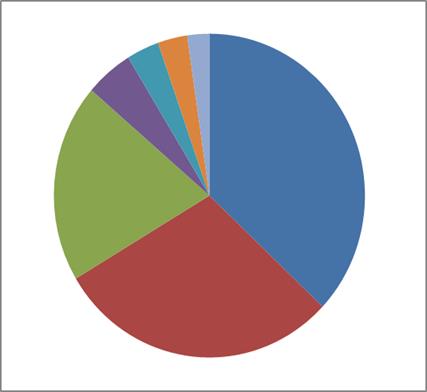
In accordance with Article 4(1) of the Regulation, the Commission has established a point of contact providing information and assistance, based in the Europe Direct Contact Centre. It answers any questions from citizens on the ECI rules and procedures, in all official EU languages. Since April 2012, the point of contact has answered over 1080 questions.
Requests per type of questions
 General or procedural questions or comments
 Questions from (potential) signatories (e.g. how to sign up in paper form/online, how to verify whether they already gave support, concerns about site security)
 Questions on specific initiatives (e.g. their status, the number of signatories, comments for or against)
 Questions on IT tools (software and register) and set-up of online collection systems
 Scope of the instrument (e.g. possible types of requests via the ECI, questions on EU competences)
 Questions/complaints from citizens unable to give support (e.g. excluded by the Regulation or not holding a valid required ID)
 Questions on communication (journalists, reuse of information and copyright)
Via this point of contact, the Commission informally answers questions from potential organisers on the issue of whether a possible citizens' initiative may be registered, before a registration request is formally submitted by the organisers to the Commission. Since April 2012, the Commission has answered around 15 questions of that kind. Those answers were given without prejudice to any formal reply by the Commission following a possible request for registration of a proposed citizens' initiative.
In addition to the service provided by the Europe Direct Contact Centre, support has been provided directly by the Commission's services to organisers of initiatives. Once they have their proposed initiative registered, they can directly contact the Commission's services via their organiser account on the Commission's website (more than 85 requests answered since April 2012) or by email (around 125 requests). Technical support as regards the Commission's online collection software and the hosting of online collection systems has also been provided by email (almost 300 requests) and via the Joinup platform 31 . Support has also been provided by dedicated meetings, phone and videoconference whenever necessary.
4.Assessment of the Implementation
The Commission considers that the ECI has been fully implemented.
The fact that two initiatives have managed to complete the full lifecycle of an ECI, from registration through successful collection of required support to the formal reply of the Commission, that a third one is now awaiting this formal reply and that the follow-up to the 'Right2Water' initiative is underway, confirms that the necessary procedures and mechanisms are in place to ensure that the ECI is operational.
At the same time, the Commission is aware that there is still room to improve. Over the last three years, stakeholders have identified various challenges in relation to this new institutional and legislative framework, which range from rather technical or logistical aspects to issues of a more political nature. The Commission would like to highlight in particular the following ones 32 :
The lack of legal personality of the citizens' committees: several committees have reported concerns about liability and obstacles e.g. to raise funds and manage data protection, especially in view of the fact that they reside in at least seven different countries.
Registration: remains a major challenge for the organisers as an important number of proposed ECIs are manifestly outside the scope of the Commission's competences.
Requirements for signatories: divergences between the conditions and personal data required from signatories by the different Member States remain an issue of concern, especially in the cases where citizens are as a result excluded from their right to support an initiative. The Commission welcomes the constructive approach of those Member States who so far have responded positively to the Commission's calls to make uniform and simplify their (data) requirements, but there is need for further efforts to make the ECI tool more accessible.
The timeline of an ECI's lifecycle: organisers have indicated that the time needed to set up their online collection system means that in most cases, they have less than 12 months to collect and this should be remedied. The lack of a specific time limit for the submission of a successful initiative to the Commission is also a potential source for confusion and uncertainty both for the institutions and the public.
The verification of the translations of the proposed initiatives provided by its organisers has proved to be a cumbersome process. Organisers had difficulties to ensure the necessary accuracy of their translations, even on the basis of the comments received from the Commission on their first version(s).
As regards online collection, the Commission's hosting offer managed to remove the biggest obstacle. However, the stakeholders remain critical with regard to the complexity of the current certification procedure and are not fully satisfied with the features offered by the Commission software. Moreover, the Commission hosting has been offered as a temporary and exceptional service, as it was not foreseen by the Regulation. Several Member States’ competent authorities are uncomfortable with the possibility for organisers to request the certification of their system before the registration of their proposed initiative with the Commission. Two systems were certified but never used given that the corresponding initiatives could not be registered by the Commission.
In the light of the above, the Commission has recently commissioned a study on ECI Information and Communication Technology (ICT) impacts 33 , which will feed into the Commission reflection regarding the online collection process.
On the occasion of both public hearings organised at the European Parliament, no stakeholders or experts other than the ECI organisers themselves were invited to actively participate.
Attempts should be made to organise the public hearing in such a manner as to ensure that stakeholders representing different views and perspectives are heard. This is all the more important given that the 3 month period foreseen by the ECI Regulation for the preparation of the Commission reply to a successful initiative is extremely short and leaves little time to organise a formal stakeholders consultation.
Some ECI organisers (and other stakeholders) consider that there is insufficient dialogue and interaction with the Commission at different stages of the ECI's lifecycle and in particular after the adoption of the Commission's Communication on the citizens’ initiative. They would like to see the examination and follow-up process more structured and to be more extensively involved therein.
5.Conclusions
It is still too early to assess the long-term impacts of the ECI on the EU institutional and legislative process. The Commission is committed to continue monitoring and discussing a range of ECI issues, and namely those identified above, in close cooperation and coordination between the various stakeholders and institutions and with a view to improving the instrument.
In this respect the Commission has noted with interest the study carried out by the European Parliament 34 , the conclusions of the own-initiative inquiry carried out by the European Ombudsman 35 and the outcome of the "ECI Days" organised each year since 2012 by the European Economic and Social Committee and some civil society partners 36 .
While the outcome of the on-going Commission's study on the issue of online collection will further guide the Commission position on this important matter, it will continue to provide its exceptional hosting service to organisers free of charge as long as needed.
These various processes have fed and will continue to feed into the institutions' ongoing reflections on the ECI. The Commission is looking forward to engage in more in-depth discussions with the legislator and to receive the European Parliament's own initiative report, which will take into account the discussions at the public Hearing on the ECI co-organised by the Committees on Constitutional Affairs and on Petitions in February 2015.
Article 11(4) of the Treaty on European Union and Article 24 of the Treaty on the Functioning of the European Union, which pertains to Union Citizenship
Regulation (EU) No 211/2011 of the European Parliament and of the Council of 16 February 2011 on the citizens' initiative (OJ L 65/1, 11.03.2011)
The provisions adopted by some Member States raised conformity issues which, with the exception of two Member States, have been resolved.
Figures related to the collection of statements of support are only based on the three submitted initiatives as these are the only official figures available to the Commission and the Member States.
Given the differences in the Member States' practice, the detail of available information is variable. In particular, the ECI has only been applicable to Croatia since its accession to the EU (July 2013).
See http://ec.europa.eu/citizens-initiative/public/legislative-framework for more information.
http://ec.europa.eu/citizens-initiative/public/initiatives/ongoing
Four of them have only withdrawn in order to re-register.
The Commission formally does not have any information about whether the organisers managed or failed to collect the required number of statements of support.
The Commission does not have official information regarding the exact number of collected statements of support for these initiatives.
Cases T-754/14, T-361/14, T-44/14, T-529/13, T-450/12, T-646/13
Case T-561/14
Complaint 2013/2071
Complaint 2014/402
Full list available in the ECI register: http://ec.europa.eu/citizens-initiative
http://ec.europa.eu/citizens-initiative/public/initiatives/non-registered
Conversely, the Commission's initial proposal for a Regulation foresaw uniform requirements for all Member States, which would have enabled any European citizen meeting the age requirement to support a citizens' initiative. However, reflecting the outcome of interinstitutional negotiations, the final ECI Regulation now foresees requirements which differ from Member State to Member State.
Currently, it mainly concerns Irish and British citizens residing in Bulgaria, the Czech Republic, France, Austria and Portugal as well as outside the EU.
The Parliament and the Council have the right to express objections in the two months following the adoption.
In the sense of Regulation (EU) No 910/2014 of the European Parliament and of the Council of 23 July 2014 on electronic identification and trust services for electronic transactions in the internal market and repealing Directive 1999/93/EC.
http://ec.europa.eu/citizens-initiative/public/authorities-online-systems
Bundesamt für Sicherheit in der Informationstechnik (BSI)
Centre des technologies de l'information de l’Etat
http://ec.europa.eu/citizens-initiative/public/authorities-verification
Each Member State verifies the statements of support submitted in accordance with Article 8 of the Regulation.
For more information, see:
http://ec.europa.eu/dgs/secretariat_general/followup_actions/citizens_initiative_en.htm
http://www.europarl.europa.eu/news/en/news-room/content/20140210IPR35552/html/The-'Right2Water'-campaign-EP-hearing-on-first-European-Citizens'-Initiative and http://www.europarl.europa.eu/news/en/news-room/content/20140407IPR42621/html/European-Parliament-hearing-on-%E2%80%9COne-of-Us%E2%80%9D-European-Citizens%E2%80%99-Initiative
Issues are listed in the order followed in Chapter 2, reflecting the different steps of an ECI's lifecycle.
Study supported by the ISA Programme.
"ECI - First Lessons of Implementation", see:
http://www.europarl.europa.eu/thinktank/en/document.html?reference=IPOL_STU(2014)509982
OI/9/2013/TN
http://www.eesc.europa.eu/?i=portal.en.events-and-activities-eci-day-2014