Table of contents
1.Introduction: Political and legal context
2.Problem definition
3.Why should the EU act?
4.Objectives: What is to be achieved?
5.What are the available policy options?
6.What are the impacts of the policy options?
7.How do the options compare?
8.Preferred option
9.How will actual impacts be monitored and evaluated?
Annex 1: Procedural information
Annex 2: Stakeholder consultation
Annex 3: Who is affected and how?
Annex 4: Analytical methods: inputs, outputs, calculations
Annex 5a: Minutes of the Consultation Forum (6 May 2014)
Annex 5b: Minutes of the Consultation Forum (25 October 2017)
Annex 6: Existing Policies, Legislation and Standards affecting welding equipment
Annex 7: The Ecodesign and Energy Labelling Framework
Annex 8: Standards
Annex 9: Who is affected by the measure and how
Annex 10: List of figures
ANNEX 11. List of Tables
Annex 12: Results of the OPC
Annex 13. Technology change description: transformer vs inverter welding equipment
Annex 14: Glossary
Annex 15. Definitions
Annex 16: PROPOSED ECODESIGN REQUIREMENTS
This report commits only the Commission’s services involved in its preparation and does not prejudge the final form of any decision to be taken by the Commission.
Note to the reader: The text in italics is common to the IAs on ecodesign submitted in the spring 2018 and aiming at adoption in a package in 2018/19. This streamlining has been introduced in agreement with the RSB to facilitate the reading and discussions of the IAs.
1.Introduction: Political and legal context
This impact assessment relates to the proposal of a Commission Regulation on ecodesign requirements for welding equipment. The requirements are presented in Annex 16.
The Ecodesign Directive 2009/125/EC establishes a framework for setting eco-design requirements for energy-related products. In its Article 1(1) the Ecodesign Directive defines its primary aim: “ensuring the free movement of products within the internal market”. Article 1(2) adds that “it contributes to sustainable development by increasing energy efficiency and the level of protection of the environment”.
Since its initial adoption in 2005, the Ecodesign Directive has significantly contributed to the achievement of the EU's Energy and Climate 20/20/20 targets, and it is expected to also be fundamental for energy savings to 2030.
For about half of the products covered to date, the Ecodesign Directive works in close coordination with the Energy Labelling Directive, this synergy allowing a maximisation of their impacts in terms of market transformation, through a combined 'push' and 'pull' effect. For business-to-business (B2B) products, given that users normally have a higher technical understanding of the products, the 'pull' effect of the extra information provided by the energy label is not that fundamental to generate energy savings. Welding equipment is a B2B product for which Ecodesign requirements are proposed, but no Energy Labelling proposals are made. Ecodesign requirements will introduce mandatory minimum environmental performance levels to any welding equipment sold in the EU, and will thus exclude the least performing products from the market. Additional information will be made available via the technical fiche for each product as required via Ecodesign provisions.
The proposal on welding equipment is intended to be part of a 2018 package of Ecodesign and Energy labelling regulation proposals on twelve product groups, including refrigerators, electric motors, washing machines, dishwashers, lighting, electronic displays, external power supplies, commercial refrigeration, power transformers, enterprise servers, industrial fans, and welding equipment. Impact assessments have been prepared for the respective product groups.
1.1.Benefits of Ecodesign and Energy Labelling
Ecodesign and energy labelling are recognised globally as one of the most effective policy tools in the area of energy efficiency. They are central to making Europe more energy efficient, contributing in particular to the ‘Energy Union Framework Strategy’, and to the priority of a ‘Deeper and fairer internal market with a strengthened industrial base’. Firstly, this legislative framework pushes industry to improve the energy efficiency of products and removes the worst-performing ones from the market. Secondly, it helps consumers and companies to reduce their energy bills. In the industrial and services sectors, this results in support to competitiveness and innovation. Thirdly, it ensures that manufacturers and importers responsible for placing products on the European Union (EU) market only have to comply with a single EU-wide set of rules.
It is estimated that from 2005 to 2020, ecodesign and energy labelling regulations will have delivered around 175 Mtoe (i.e. about 2035 TWh) of energy savings per year in primary energy in comparison to if there were no measures in place. This is roughly equivalent to Italy's energy consumption in 2010, close to half the EU 20 % energy efficiency target by 2020 and about 11 % of the expected EU primary energy consumption in 2020.
The end user of the products will have to invest in more expensive and efficient products, but the investment will be paid back over the lifetime. On average, a European household will have saved about € 500 annually on its energy bills by 2020. Although the initial cost for industry, service and wholesale and retail sectors also increases, it is expected that by 2020 it will result in EUR 55 billion of extra revenue per year.
This legislative framework benefits from broad support from European industries, consumers, environmental non-governmental organisations (NGOs) and Member States (MSs), because of its positive effects on innovation, increased information for consumers and lower costs, as well as environmental benefits.
1.2.Legal framework
In the EU, the Ecodesign Framework Directive sets a framework requiring manufacturers of energy-related products to improve the environmental performance of their products by meeting minimum energy efficiency requirements, as well as other environmental criteria such as water consumption, emission levels or minimum durability of certain components before they can place their products on the market.
About half of the product groups currently covered by Ecodesign requirements also meet Energy Labelling requirements. The Energy Labelling Framework Regulation complements the Ecodesign Framework Directive by enabling end-consumers to identify the better-performing energy-related products, via an A-G/green-to-red scale.. The energy labelling is mostly used in household and business-to-consumer (B2C) products, rather than business-to-business (B2B) products.
The Ecodesign framework Directive and the Energy Labelling framework Regulation are implemented through product-specific implementing and delegated regulations. To be covered, the energy-related products must (i) represent a significant volume of sales (more than 200000 units a year), (ii) have a significant environmental impact within the EU and (iii) represent a significant energy improvement potential without increasing the cost excessively, see also Article 15.2 of the Ecodesign Framework Directive.
As an alternative to the mandatory ecodesign requirements, voluntary agreements or other self-regulation measures can be presented by the industry. If certain criteria are met, the Commission formally recognises these voluntary agreements. The benefits are a quicker and more cost-effective implementation, which can be more flexible and easier to adapt to technological developments and market sensitivities. However such voluntary agreements tend to be less ambitious in terms of energy saving and suffer from compliance issues.
The latest Ecodesign working plan 2016-2019 includes the commitment not to deal only with energy efficiency, but also examine how aspects relevant to the circular economy (e.g. requirements to make a product more durable, easier to repair, reuse or recycle) can be assessed and taken on board the proposed Ecodesign requirements. This is in line with the Circular Economy Initiative, which concluded that product design is key in achieving the goals, as it can have significant impacts across the life cycle of products. More details about the legal framework, and procedural issues, are presented in Annex 1.
1.3.Legal context of the proposed measures
Currently, there is no EU-wide legislation in place addressing the energy and environmental efficiency of machine tools or welding equipment. However, under the framework of Ecodesign presented above, the Ecodesign Working Plans 2009-2011 and 2016-2019 identified machine tools and welding equipment as priority groups for which the European Commission should consider ecodesign requirements.
Following this, a preparatory study including technical, economic and environmental analyses for machine tools and related machinery was carried out in 2009-2012. It was complemented with an Impact Assessment background study in 2013-2015. Both documents, together with updates and in-house modelling carried out during 2017-2018, are the main basis for the present Impact Assessment report.
1.4.Scope of this Impact assessment
One of the outcomes of the preparatory studies was the difficulty to define minimum efficiency requirements for machine tools. This was due to the complexity and wide variety of machine categories, often tailor-made to specific user needs. To handle this diversity, the machine tool industry suggested in 2014 to develop a self-regulatory initiative (SRI) on machine tools. Following the recommendations of Better Regulation guidelines, the Commission and the stakeholders of the Consultation Forum showed support to this alternative and provided the machine tool industry with the necessary time to prepare it. However, the industry abandoned the initiative at the end of 2016 due to insufficient market coverage (an ecodesign SRI is required to represent 80% of the EU market, which was not reached). Furthermore, the industry concerned could not agree on how the control mechanisms of the SRI should work. The options of not regulating at all the machine tools by means of ecodesign, or of introducing mandatory information requirements but not efficiency requirements have been thoroughly discussed with member States and stakeholders. Most opinions confirm the difficulty of defining minimum efficiency requirements by means of ecodesign for machine tools, and additionally point at the low value-added of ecodesign if it only contains information requirements.
Furthermore, an open public consultation (OPC) on welding equipment and machine tools took place between 16 April 2018 and 10 July 2018. The collected opinions further confirm the inappropriateness of ecodesign as a mechanism to address the energy and material efficiency of machine tools, see Annex 12. As a result of the above, machine tools have been excluded from the scope of the proposed Ecodesign Regulation.
The scope of the products covered by the measure is therefore reduced significantly compared to the original conception.
Regarding welding equipment, which is a relatively homogeneous, non-tailored product group, the OPC results confirm the support of a regulatory approach with ecodesign measuresexpressed during the preparatory phase,.
1.5.Political Context
Several recent policy initiatives provide the background to the proposed measures. The main elements include the Energy Union Framework Strategy, which calls for a sustainable, low-carbon and climate-friendly economy, the Paris Agreement, which calls for a renewed effort in carbon emission abatement, the Circular Economy Initiative
, which amongst others stresses the need to include reparability, recyclability and durability in ecodesign, and the Emissions Trading Scheme (ETS), aiming at cost-effective greenhouse gas (GHG) emissions reductions.
2.Problem definition
2.1.What is welding equipment– product and market characteristics
Welding equipment are products that deliver energy in the form of electricity to join or cut two or more metals by heating (often >6000°C), with or without the use of ancillary materials such as filler sticks, wire, or gases that shield the welding area from the surrounding air. Welding equipment takes energy from the power supply, and transforms it, by means of electric and electronic components, into the combination of voltage and intensity needed to melt the metals. Welding equipment can be manual, automated or semi-automated, stationary or transportable.
When in operation, welding devices are large energy consumers. A small arc welding device of ca. 5 kW consumes the power equivalent to 12 vacuum cleaners, or 6 powerful microwave ovens. It is noteworthy that welding devices operate in general discontinuously, from 2 to 8 hours per day, depending on the technology and use conditions. Welding equipment is gradually becoming more and more efficient, but also steadily more complex, and able to perform different operations and weld types. Note that the actual annual operation time for each product increases if the product is capable of performing a larger variety of welding types. This development is taking place in the last years thanks to the technology change from transformer-based equipment to inverter-based equipment. Typical arc welding products, representing over 90% of the products in scope, are depicted in
Figure 1
.
Figure 1. Examples of professional welding units within the scope of the proposed Regulation
Welding equipment products within the scope of the proposed regulation are professional "business-to-business" products, used in industry in a horizontal manner for a wide variety of sectors. They are used most intensively in aerospace and shipbuilding, energy, construction, automotive, heavy machinery, and in general for repair and maintenance operations. Light duty welding units (so-called "hobby" or business-to-consumer (B2C) products) are excluded from the scope of the proposed measures, due to their low levels of use (counted in net hours per year), and subsequent small share of the total use of energy by welding equipment in the EU (4GWh/yr, equivalent to less than 1%). Three specific technology types of professional welding units are also excluded, on the grounds that they contribute each with less 5% and altogether less than 10% to the total use of energy by welding equipment in the EU energy consumption. These are: submerged arc, resistance, and stud welding devices.
The typical arc welding equipment within scope has a mass of 15 to 150 kg (stationary units are often heavier), and consists essentially of a power source that transforms the incoming commercial current to the current of low voltage and high intensity needed for welding. This is achieved by means of electronic circuitry. Complementing this, the welding unit has typically a torch that delivers the power close to the welding spot, and depending on the type of welding, it has also feeding mechanisms for a welding filler, and/or a shielding gas.
Welding equipment within the scope of this proposal can be divided into two categories: (1) large industrial welding devices and (2) smaller mobile, manually operated welding devices. The former are often stationary machines and are installed in production lines of medium and large manufacturing companies, especially in the energy and transport sectors. Their use constitutes a relatively small market share of the overall use of welding equipment (<35%) and is to some extent integrated in fairly automatized production lines, which means a weld operator is not needed, the duty cycles are constant and the equipment is subject to a scrutiny and if applicable optimisation in terms of energy and material use.
Smaller mobile, manually operated welding devices on the other hand account for a larger share of the overall use of welding equipment (>65% market share). These machines are used both by manufacturing companies and by other sectors (construction, repair and maintenance services), in particular by SMEs (>80% of cases). What is typical for this category is that one and the same welding equipment can perform several different welds. This type of equipment is characterised by non-constant duty operation in terms of hours-per-day of use. Manual welding costs are labour-intensive average labour cost representing >75% (usually 85-90%) of the life cycle costs of a manual electric arc weld.
Professional welding equipment is replaced on average every 7-15 years. Rather than product senescence or malfunction, the replacement philosophy is more dependent on users wishing to replace slightly outdated machinery by the latest technologies in order to reduce welding times, improve the quality of welds, or be able to perform several welding types with the same device. This replacement rate may increase slightly in the future, as the new equipment has increasing functionality and therefore larger workload, and has on average a shorter lifetime (closer to 7 years than to 15 years) due to the larger presence of electronic components, which have lower longevity than purely electric components.
In the EU, over 5 million professional welding units are in operation, of which approximately 0.5 million are stationary industrial duty stations, 3 million professional mobile units, and 1.5 million are lighter, semi-professional units.
2.2.What is the issue or problem that may require action?
There are three main problems in the current markets of welding equipment:
(1)The manufacturers of the welding equipment are unaware of design demands to improve efficiency of these devices in terms of (a) energy and (b) materials;
(2)There are no incentives to improve the efficiency design of welding equipment in terms of (a) energy and (b) materials;
(3)Communication of energy and material consumption of the welding equipment in the supply chain between downstream actors (end-users, and recyclers) and product designers and manufacturers is poor.
Technical development in the last two decades has taken place on welding equipment, resulting in high, and readily-available saving potentials for both energy and materials, which however still remain untapped.
The drivers of the problems mentioned above are described in detail in the next section.
2.3.What are the underlying drivers of the problem?
The main driver behind the problems listed above is imperfect communication in the supply chain about product energy and environmental information, both from downstream actors (end-users and recyclers) up to product designers, and from product manufacturers downstreams to end-users and recyclers. More in detail, the observed market failure in terms of sound economic purchasing decision is due to the following reasons:
·Lack of information for end-users on energy and material efficiency of welding equipment;
·Lack of incentives to base purchase decision on other factors than welding performance (“suboptimal economic behaviour” of the users);
·Miopia of cost calculation, i.e., not assessing the Total Cost of Ownership (TCO)and instead solely relying on purchase price, especially in the case of SMEs;
·Split incentives within companies due to the separate budgets for purchasing and running costs (typically part of an administrative budget), and between the welding equipment owner and the client being the supplier of the electricity consumed (the case of off-site welding);
·Lack of communication between the welding equipment designers and the actors in the supply chain involved in repair, refurbishment and end-of-life treatment.
Other drivers which are of marginal importance and have not been elaborated further include user preferences for selecting specific brands of equipment and ancillary materials (e.g. tradition). It has been found that there can be multiple reasons why economic actors do not rationally choose the products which are the most cost-effective over the product's lifetime. In several cases companies (as well as some public services sectors) are less likely to undertake energy saving measures, even if they would have the same economic viability as other investments,.
Problem driver 1: Lack of information on energy and material efficiency
For end-users of welding equipment, one source of market failure is a lack of reliable, standardised information on energy and material efficiency (and related environmental) performance of welding equipment.
The lack of such information implies the lack of a reliable parameter to measure the energy and material efficiency of the products. The problem is complex, since energy and material consumption depends not only on the welding equipment characteristics, but also on the welding process, including amongst others two highly variable parameters: (1) the type of weld performed (which material, which thickness, which angle, which position, etc) by the welding tool, and (2) the skills of the welder. In automated operations in production lines (normally in large manufacturing companies, e.g. automotive) the second factor is absent, the human operators being replaced by robot machines.
There are several performance tests and a wide range of information for welding equipment. Many manufacturers have product sizing and configuration tools but in terms of energy, they often only provide the maximum power. Sometimes efficiency benchmark data can be found for certain models, but it cannot be used for comparison with products from other brands. Since there is no standardisation, all vendors tend to heavily optimise and select the tests which lets them show their own products in the best possible light. This makes totally accurate and unbiased comparisons impossible for end-users, when making purchase decisions.
In the 2018 open public consultation carried out for this impact assessment, one of the questions was intended to understand how the respondents judged the information made available by manufacturers to users in terms of energy and material consumption. The results obtained point at the absence of structured and comparable information in the market.
Problem driver 2: Lack of incentives to base the purchase decision on other factors than welding performance (“suboptimal economic behaviour” of the users)
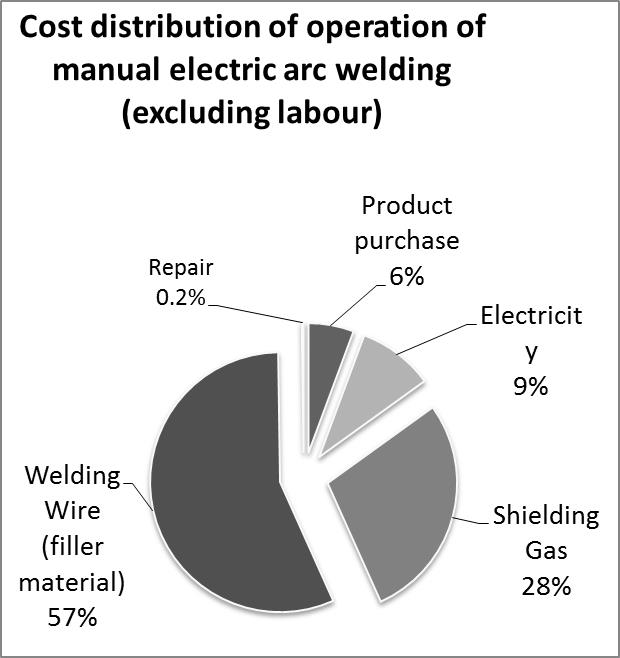
Efficient welding equipment products are already available on the EU market today. However, many customers, especially SMEs and larger users of manual equipment, do not purchase efficient products. The majority of users prioritise performance and low purchasing cost over reducing electricity costs and obtaining environmental savings during the use phase. Welders are very much aware that equipment and its operational costs are small compared to labour costs (see
Figure 2
).
Figure 2. Distribution of cost components of metal inert gas (MIG) welding process.
Therefore to most welding professionals, the energy or material efficiency of this equipment is of a marginal concern. When users of welding equipment currently purchase the equipment they do not prioritise the energy or material efficiency, but rather aspects such as performance, and reliability. Suppliers of materials and manufacturers of ancillary equipment (welding gas, welding wire) have also little or no interest in reducing material consumption, and their profits. When welding is not in a workshop but on e.g. a construction site, the energy for welding is not a cost for the welding equipment owner, and there are no incentives to use efficient equipment.
All of the above generates a vicious loop: the lack of interest from majority of customers perpetuates a lack of functional information. These factors together result in an environment that does not stimulate investments and efforts towards designing more efficient products.
Problem driver 3: Miopia of cost calculation - assessing the Total Cost of Ownership (TCO)
Without up-to-date energy and material efficiency requirements, economic operators (both business and private) will not easily be able to choose the product that is the most cost-effective over that product's life-time. This is because the information they are provided with is limited.
This prevents business customers from transparently and independently evaluating - via universally-accepted energy measurement standards - different welding products, and integrate this information in their purchase decisions.
Even for well-informed businesses and when efficient equipment exists, which is at least at the same level of reliability as the less efficient equipment, many welding equipment owners still neglect this information when taking purchasing decisions. In some cases, it is because of budgetary constraints that they opt for a less efficient instead of more efficient (and frequently more expensive) equipment. Other reasons include that it requires less resources to continue with the same choice of solutions, product brands and suppliers that to switch to other solutions, brands and suppliers. This is a known phaenomenon seen not only in welding equipment, but also in many other B2B markets.
When acquiring new equipment, SMEs do not usually have resources to incorporate life-cycle cost (LCC) considerations for energy aspects. The choice of equipment is mostly driven by the performance of welding. This is the parameter that operators identify with business continuity and evaluation. Additionally, welding companies are aware that equipment and operational costs are small compared to labour costs. When labour costs are set aside, electricity, welding gases and welding wire can represent significant share of the total operation costs (respectively 1.7, 5 and 10 times the cost of equipment purchase, cf.
Figure 2
). This distribution of costs and the high contribution of labour and materials are well known to welding companies. However, even if welding companies were interested in applying an LCC approach to purchase, there is currently no actor in the supply chain that generates comparable data on energy and material efficiency.
Problem driver 4: Split incentives
Without clear, up to date energy efficiency requirements including information provision, the evidence that the products will be cost-effective over their life-time is lost. This is typical for landlord-tenant situations, in which the owner of the equipment does not pay for the energy consumption. For welding equipment, this is typically found in mobile units that operate off-site (e.g. repairs of wind turbines, pipelines, construction sites). Furthermore, welding SMEs operate often off-site, welding being done at the customer's premises. In this case, there is an additional split incentive for energy consumption, as welding power is consumed by the client, and not by the owner of the welding equipment.
Split incentives exist also due to organisational company differences. Company energy specialists, or production line specialists, are aware of the possible differences in efficiency when new equipment is purchased. However, industry stakeholders report that the priorities of the purchase, technical performance and environmental departments of companies are often not aligned. Firstly, this is a result of the aforementioned absence of harmonised metrics for representation of the energy consumption of welding makes it difficult to compare and present to other colleagues life-cycle costs (LCC) of different equipment. Secondly, because priorities of different actors in a company are different: welding technicians prioritise performance, environmental managers prioritise efficiency, and the purchase department prioritises costs and short investment payback.
Problem driver 5: Lack of communication between the welding equipment designers and the actors in the supply chain involved in repair, refurbishment and end-of-life treatment.
In very general economic terms, this driver can be interpreted as an issue of price: the price of the products does not reflect the real environmental costs to society (externalities) in terms of circular economy aspects, most notably material efficiency (use of wire and shielding gas), but also increasing the useful lifetime, reparability and recyclability of devices. Hence, without setting requirements or market mechanisms that improve circular economy aspects of the product, the different actors in the life cycle of the appliance will not be incentivised to improve material efficiency.
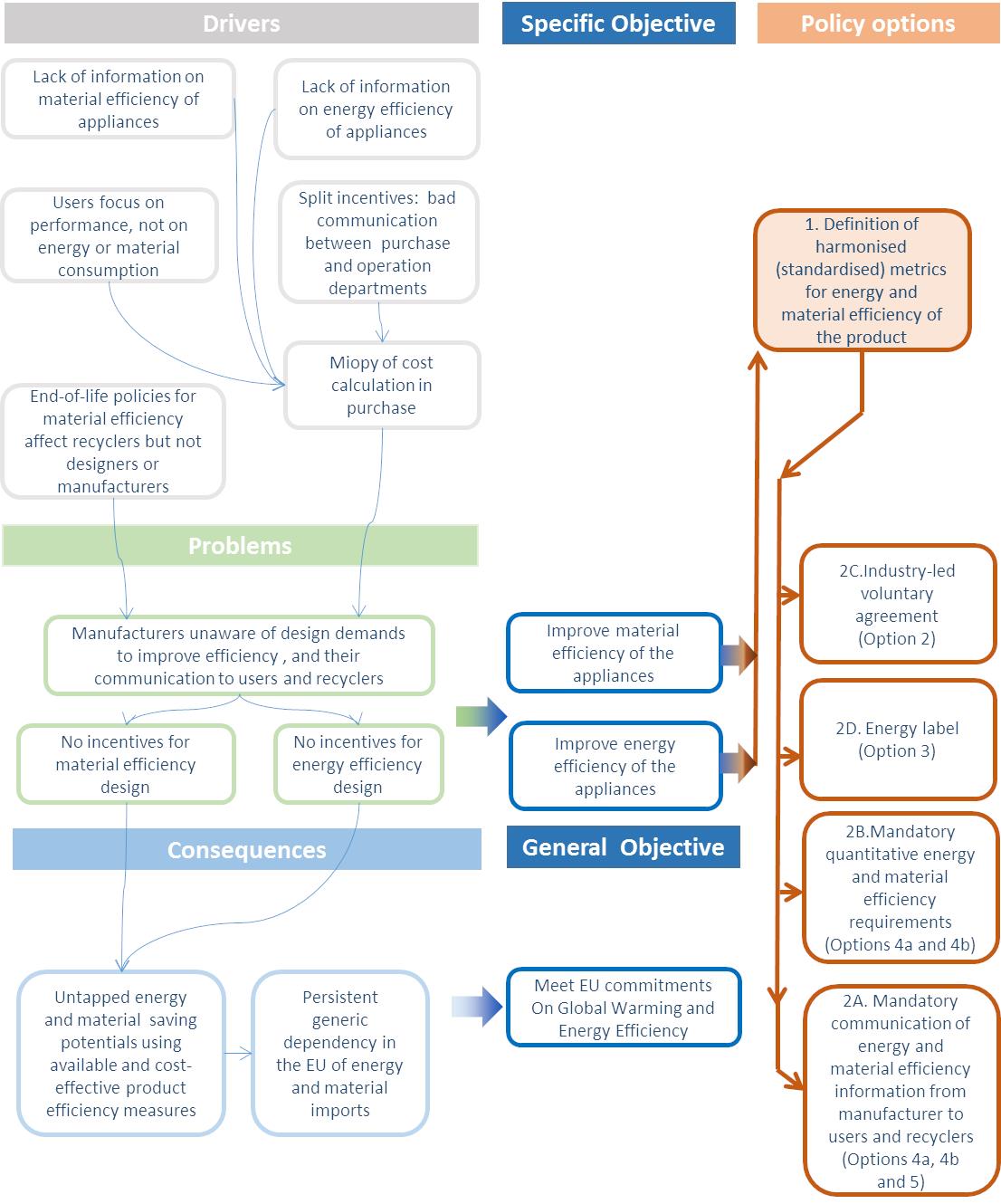
Figure 3. Identification and relationship of drivers, problems, and consequences.
The current lack of requirements on material efficiency aspects means that end-users do not benefit from more material-efficient, better reparable, and more durable appliances. This happens despite the existence of cost-effective improvements to the reparability and reusability of these products, and of measures to improve communication to end-users, for instance indicating the relative (more/less than average) use of shielding gas and welding wire.
Materials and components of welding equipment age with time, and especially mobile welding equipment, suffer intensive wear and tear during operation. The availability of spare parts or the ease of repair vary widely from brand to brand and product to product. Repair information is especially missing for entry-level, low price, simpler equipment. The identified market failures for welding products mainly concern incomplete information when customers and downstream operators (repairers, recyclers) do not have sufficient information for their purchase, reuse, disposal or recycling.
Being an electric and electronic device, in the EU welding equipment has to be handled at the end of its life according to the provisions of the WEEE Directive (Waste of electric and electronic equipment). However, due to the lower sales compared to household equipment (TVs, computers, washing machines, etc.), WEEE treatment plants seldom receive and have to treat welding equipment. Consequently, WEEE operators are often not familiar with the presence of hazardous or valuable components in welding equipment. Additionally, the present state-of-play of welding equipment design does not facilitate the recycling process. Barriers to disassembly are related to different aspects, such as the use of permanently fixed (soldered, welded or glued) components, the use of several different fastening techniques (e.g. the used of several different screws and snap fits), the use of proprietary fastening systems (e.g. special screws that necessitate of special tools); and in general poor visibility or accessibility of certain fastening (e.g. screws that are covered by labels). For these reasons welding equipment is not (easily) disassembled. For recyclers, this poses a problem as they cannot (easily) fulfil of some of the prescriptions of the WEEE Directive
. Article 8(2) and Annex VII of this Directive include a list of components (e.g. large condensers) which need to be collected separately during the recycling process.
These difficulties have also been observed when the disassembly is performed by reuse operators, independent from manufacturer's aftersales services, who do not know the exact architecture of the device and the required disassembly procedures. Modern welding equipment, especially if based on inverter power sources, has considerable amounts of electronic components, which are characterised by a significant content of critical raw materials (CRM) e.g. Neodymium. As they are often contained in components that are boxed inside a casing, the lack of information on both the presence and mass of critical raw materials provides little incentive for recyclers to disassemble difficult casings for extraction.
Finally regarding the repair, refurbishment and reuse of high-end welding equipment, before the equipment is re-sold reuse operators should readily be able to delete in the equipment's software any personal data or company-specific welding profiles. However, this functionality is currently not available.
2.4.What is the scale of the problem?
Estimated yearly sales of welding equipment products within the scope of this study are ca. 0.5 million units. The stock in the EU27 is ca. 3 million units. These products consume yearly about 7 TWh of electricity (equivalent to 65 PJ of primary energy), to which one has to add the primary energy consumed for the manufacturing of welding equipment, shielding gas, and welding wire (respectively 4, 3.5 and 20 PJ). This is altogether a rather modest consumption contribution (0.4%) to the aggregate energy consumption of the 25 products subject to ecodesign implementing regulations (23850 PJ).
However, the ecodesign preparatory study (referred to as 'the preparatory study' in the remainder of the text), highlighted that welding equipment can readily be more energy efficient in its overall operation, and that it can also use fewer resources. According to the preparatory study, the primary environmental impact of welding equipment is related to the energy (electricity) consumption in the 'use phase' of the equipment. On average, 70-75% of this energy is required by the welding equipment in the use phase of the product, the remainder comprising the "embedded energy" contained in the raw materials used: materials for manufacturing the welding machine (ca.3% of the total primary energy utilised over the product's lifetime), materials for the shielding gas (3-4% of total primary energy), and for the welding wire (15-20%).
According to the preparatory study estimations, about 1.1 TWh of final electricity savings could be saved every year if ecodesign requirements were introduced, equivalent to the consumption of about 300.000 households, and 0.075% of the Commission’s 2030 target for final energy consumption savings. Although this is a modest saving figure, the preparatory study and subsequent impact assessment background study indicated that an ecodesign regulation on these products would be feasible due to (1) the availability of technology that enable the transformation, (2) the reported readiness of the industry sector to invest and adapt to the changes, and (3) the increasing presence on the EU market of low efficiency products, especially originating from Asia.
Due to the important role of material consumption during the use phase in the overall energy and resources footprint of welding, especially the use of welding wire, requirements of material consumption have also been analysed in depth. Additionally, during the period 2015-2018 material efficiency requirements under the scope of ecodesign have been proposed for a number of products, such as computers, and data storage systems. Similar requirements have been proposed for the component and hardware characteristics, as well as taking into account the similar repair and disposal pathways that welding equipment share with these products. The requirements on product material efficiency refer to the extraction of components for separate depollution treatment, identification and extraction and of critical raw materials, and availability of built-in data deletion tools.
2.5.Who is affected by the problem, in what ways and to what extent?
The supply chain and additional stakeholders are affected by the problems described in different ways:
2.5.1.Welding equipment manufacturing industry
In the EU, there are about 50 welding equipment manufacturers, composed of a small number (10-15) of large (>250 employees) global product manufacturers, and a larger number (around 40) of smaller producers (SMEs with <250 employees),. SMEs are in general specialised in the manufacture of lower-end products, primarily for hobby use, but some models also for professional use.
The welding equipment market is global. The rate of exports of the EU products is about one third, while the European market uses essentially EU-assembled welding equipment, with only 15% of the market in 2016 stemming from imported welding units. However, Asian (especially Chinese) manufacturers are rapidly expanding their global market share, initially of the low-end product range, but increasingly also in the higher efficiency devices, profiting from the fact that most of the inverter and controller component manufacturers are located in China.
Particularly China has already responded to the problems identified in section 2.2, and has implemented in the domestic Chinese market a standard/regulation GB 28736 – 2012 on energy efficiency of welding equipment. As the domestic market in China gets with time more restrictive to the less efficient appliances, Chinese welding equipment manufacturers may search overseas, including the EU, to find an outlet for such appliances, for which know-how and production lines are already amortised. Following this, in the absence of the additional incentive of the ecodesign regulation, smaller EU manufacturers that specialise in the price-friendly, less investment-intensive manual welding devices (MMA) may rapidly be pushed out of the market in the next 5-10 years.
Manufacturers in the EU are very alert of the developments described above, and have been in the last decade gradually adapting their production from traditional transformer technology to electronic-based inverter technology, and are joining efforts to assist CEN-CENELEC in the development of measurement methods for energy and material efficiency.
2.5.2.Suppliers of components
Manufacturers are aware that an important proportion of the efficiency gains of welding equipment (about 80-85%) are achieved through power source efficiency. Manufacturers indicate that they have access to only 5-10 major component manufacturers of power sources, and essential electronic components, mainly located in Asia. These suppliers serve electronics and power sources not only to all the welding manufacturers, but also to manufacturers of electric and electronic products such as cars, trains, aircrafts, and household appliances. Manufacturers indicate that access to efficient components is increasingly difficult, and prices are increasing. They face tough competition with much larger sectors that have more negotiation power with component manufacturers. This affects in particular welding equipment manufacturing SMEs.
Manufacturers also experience the lack of communication in the supply chain, when requesting information about component composition (of valuable, critical or hazardous substances) or when negotiating component efficiency.
2.5.3.Industry end-users
Welding equipment products are used horizontally in industry for a wide variety of sectors, and in general for repair and maintenance operations.
The problems described mean that, despite the availability of affordable efficient technology, end-users are currently not enjoying saving costs of electricity and ancillary materials. For industrial users, the provision of energy and material efficiency information offers them the opportunity to make batter informed choices as to which products offers the best environmental and energy performance over the lifetime. Moreover, ecodesign requirements safeguard end-users from the worst performing products. Additionally, insufficient or absent information on reparability hinders that appliances can extend their lifetimes.
2.5.4.Private consumers
Welding equipment within the scope of this Impact Assessment provides services for industry. The private end consumer is only occasionally affected by the market failures described (e.g. housing and vehicle refurbishment), repairs requiring sometimes metal welding tasks.
2.5.5.Repair and recycling industry
Welding equipment rarely arrives to recyclers. If they do, recyclers have to comply to the prescriptions of Article 8(2) of the WEEE Directive, on the separate collection and treatment of hazardous components in electric and electronic appliances. The absence of information on the presence and location of hazardous components (electronic boards, transistors, inverters, transformers, displays) makes WEEE compliance difficult. Currently in the EU, welding equipment is thus treated in large installations, together with household appliances, hardly targeting any hazardous or valuable substance.
For repairers, the absence of any information on disassembly, or of any measure facilitating disassembly, means they unnecessarily use too much time for repair, resulting in larger bills for end-users and discarding repairable devices.
2.5.6.Society as a whole
Despite the limited scope of impact of welding equipment, society at large is affected by the problems described by not making profit of existing knowledge to reduce overall environmental impacts, ie. a matter of lost opportunities.
For society as a whole, ambitious policies in the area of energy and material efficiency are important tools to mitigate greenhouse gas emission targets, and improve material recycling. Effective and efficient ecodesign regulations contribute to achieving goals set in the Paris Agreement, the 2030 EU climate goals. In total for ecodesign products, ecodesign measures currently proposed will generate 0.29 % of the total EU GHG-emissions savings target for 2030 and 0.66 % of the total EU final energy consumption savings target for 2030.
2.6.How would the problem evolve?
Both the product choice by end-users and the product design of the welding equipment are dominated by inertia and consist in repeating a beaten business track. The current market practices in the sector seem insufficient to change this state of affairs. Welding is a professional practice that requires skilled labour, which is the main cost of the operation. This focuses attention in the sector on labour costs and performance, relegating use of energy and materials to a secondary concern. This state of play is likely to continue in the future.
The evolution of the problem described will not enable society to harvest all the potential for energy and material savings that the current development of technology and knowledge about energy efficiency allows. Evolution will be guided by business interests only.
Additionally, as mentioned in section 2.5.1, the European Welding Association (EWA) reports a gradual increase of total imports of arc welding equipment from Asia, from a few hundred euros in 2003 to ca. EUR 60 Million in 2017. Most of these imports concern small, low power welding equipment from China sold mainly by distributors for manual welding, and sport mainly lower purchase cost, and lower quality, including energy efficiency. In the near future less efficient, poorer welding equipment from third countries would be gradually increasing their share in the EU market. Although the energy savings estimate for welding equipment are currently modest, due to imports of less efficient equipment from third countries, the dynamics of potential overall energy savings for the welding equipment sector might increase in the coming years in the absence of policy intervention.
2.7.How do existing policies and legislation affect the issue?
2.7.1.Energy and material efficiency legislation
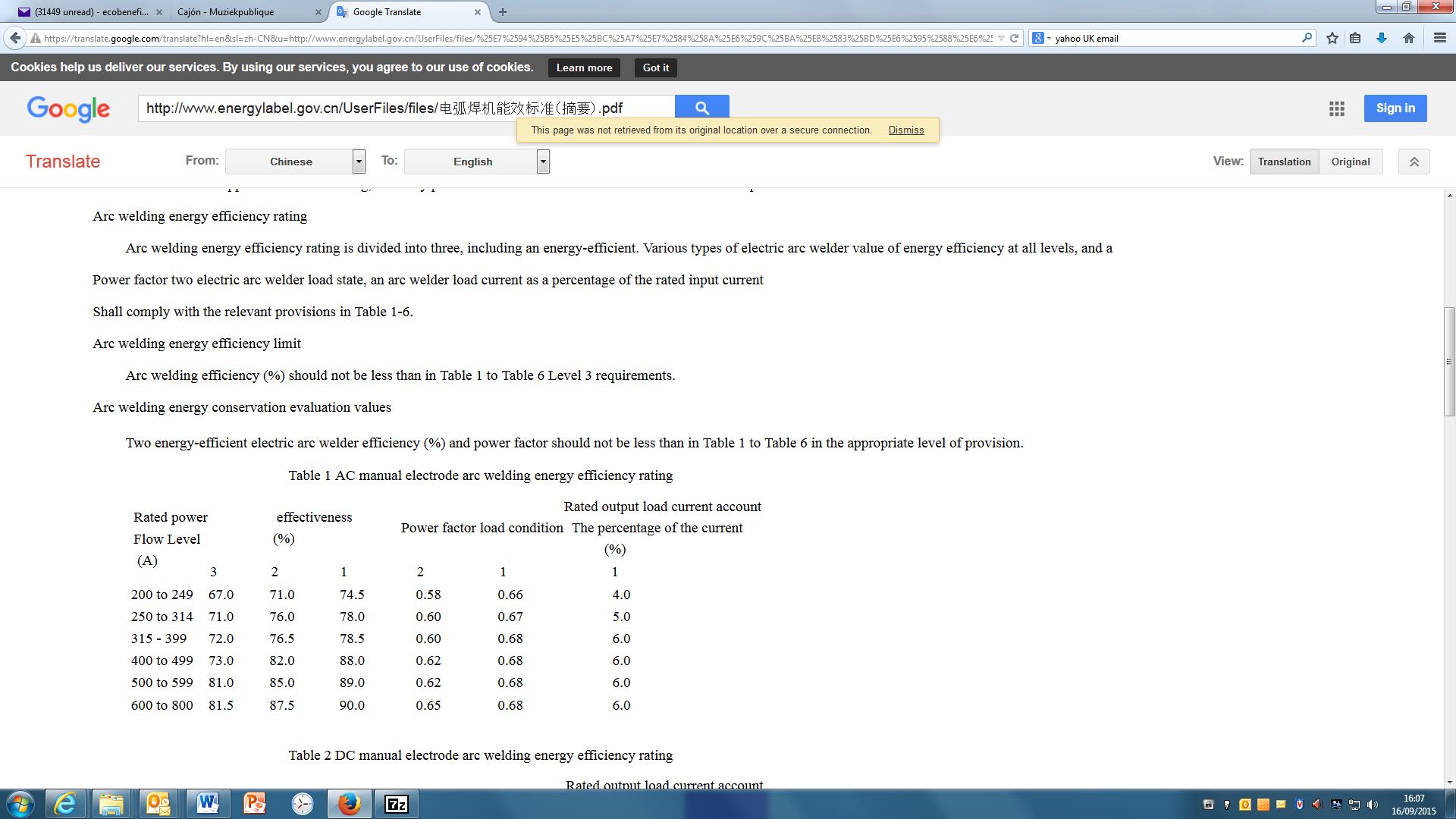
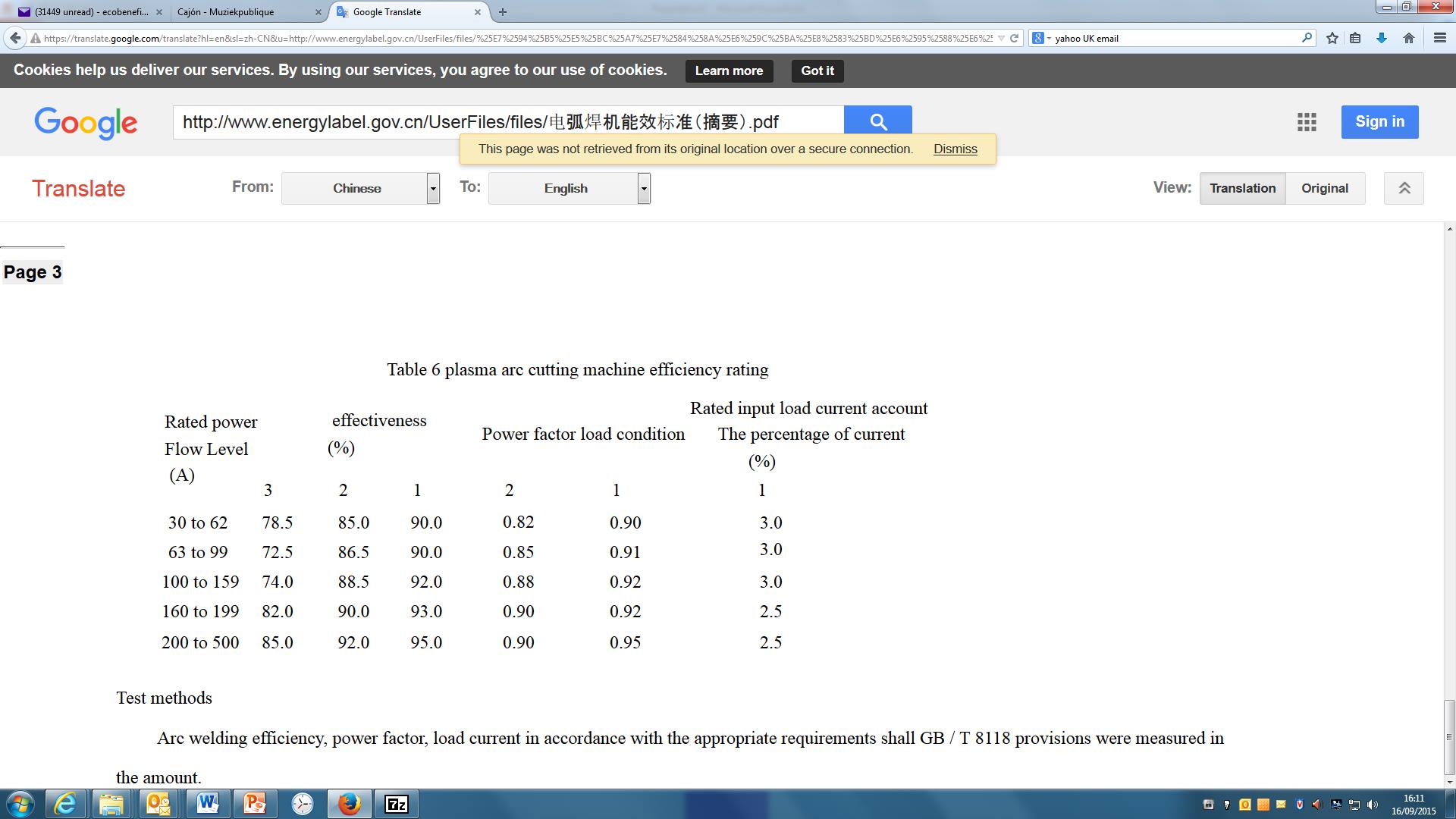
There is currently no legislation at EU level or in EU Member States that would foster energy or material efficiency regarding welding equipment. The preparatory study screened the existence of such legislation at the international level, and found that only China has an energy efficiency regulation for arc welding equipment based on the regulation/standard GB 26736-2012 (entitled 'Minimum allowable values of energy efficiency and energy efficiency grades for arc welding machines'). The standard is currently mandatory for welding equipment to enter the Chinese market (China Compulsory Certification –CCC, similar to the European CE system). This standard addresses professional arc welding equipment, and similarly to this proposed EU Regulation, excludes hobby equipment, resistance welding, and stud welding.
The Chinese regulation includes both voluntary and mandatory requirements as grades:
·Grade 3 (includes efficiency values limits), the lowest limit is compulsory;
·Grade 2 (includes efficiency and power factor limits), and is voluntary;
·Grade 1 (includes efficiency, power factor and idle power limits) is voluntary.
The limit values for the grades in the potential Chinese regulation, just like the ecodesign requirements envisaged for welding equipment in the EU, also depend on the type of phase of the welding current used (AC or DC). Although standard GB 26736 was already published in 2012, it is still not mentioned in the Chinese implementation of energy-efficiency labelling products overview.
Concerning material efficiency aspects, legislation on the "Right to Repair" of electronics equipment is under analysis in some US states, such as Massachusetts and New York. These initiatives aim to ensure that:
·(New York) manufacturers make available diagnostic and repair information for digital electronic parts and machines to independent repair providers;
·(Massachusetts) 'Manufacturers of digital electronic products shall make available to independent repair facilities or owners of products manufactured by the manufacturer the same diagnostic and repair information, including repair technical updates, diagnostic software, service access passwords, updates and corrections to firmware, and related documentation, free of charge and in the same manner the manufacturer makes available to its authorized repair providers'.
2.7.2.Relevant boundary EU legislation
EU Directives for health, safety, and performance apply to welding equipment. They are described in detail in Annex 6.
EU legislation on end-of-life treatment affects welding equipment. As explained in section 2.2, compliance with this legislation is the reason why repairers and recyclers demand additional information from manufacturers. The most relevant EU legislation is:
·The Waste Electrical and Electronic Equipment (WEEE) Directive (2012/19/EU), which sets requirements on recovery and recycling of Waste of Electrical and Electronic Equipment to reduce the negative environmental effects resulting from the generation and management of WEEE and from resource use. It also requires manufacturers to finance collection, treatment, recovery and environmentally sound disposal costs. The WEEE directive applies directly to welding equipment. Ecodesign implementing measures can facilitate the implementation of the WEEE directive by including measures for material efficiency contributing to waste reduction, and instructions for correct assembly and disassembly, contributing to waste prevention.
·The Restriction of hazardous Substances (RoHS) Directive (2011/65/EU), which restricts the use of six specific hazardous materials: lead, mercury, cadmium, chromium-IV, PBB, and PBDE in electric and electronic equipment, including welding equipment. Exemptions from RoHS bans for certain applications apply, such as lead used in solder wire for welding, and exemptions for lead content up to a certain level in steel, aluminium and copper alloys (which allow s better workability of these alloys). There is no overlapping requirement with a proposed ecodesign regulation.
·The REACH Directive, which restricts the use of Substances of Very High Concern (SVHC) to improve protection of human health and the environment. The REACH Directive applies directly to welding equipment. There is no overlapping requirement with a proposed ecodesign regulation.
2.7.3.Standards regarding energy and material efficiency of welding equipment
Harmonised metrics for energy and material consumption of welding equipment, as well as for air emissions from welding processes are essential to measure and compare the life-cycle costs of different equipment. The envisaged ecodesign requirements for welding equipment calculation rely directly on these measurements, based on reliable, accurate and reproducible measurement and calculation methods, set up in accordance with Article 10 of Directive 2009/125/EC. The European Commission has just adopted a standardisation request to CEN/CENELEC for developing such standards, based on the international standard IEC 60974 of performance of arc welding equipment. The remit of the future CEN/CENELEC standard is to unambiguously describe measurement methods for, inter alia:
1.the efficiency (in %) of single-phase and three-phase welding power sources with direct current (DC) and alternating current (AC) output,
2.the durability or lifetime expectations of the welding power source, and/or its key components.
3.the consumption related to welding processes, of shielding gases, and welding wire or filler material;
4.the emissions to air during welding processes;
Complementing this, CEN/CENELEC Joint Technical Committee 10 is currently developing, with final delivery by the end of 2019, horizontal measurement methods on material efficiency, which will be used for assessing compliance with the following material efficiency requirements:
1.requirement on extraction of key-components (analysis of the joining, fastening or sealing techniques at product level, and on the presence of documentation on the sequence of disassembling operations)
2.requirement on secure data deletion functionality (check of the presence of this functionality in the product)
3.requirement on the critical raw material information (check of the information reported by the manufacturer).
3.Why should the EU act?
3.1.Legal basis
The legal basis for acting at EU level through the Ecodesign framework Directive and the Energy Labelling framework Regulation is Article 114 and Article 194 of the Treaty on European Union and the Treaty on the Functioning of the European Union (TFEU) respectively. Article 114 relates to the "the establishment and functioning of the internal market", while Article 194 gives, amongst others, the EU the objective "in the context of the establishment and functioning of the internal market and with regard for the need to preserve and improve the environment" to "ensure security of energy supply in the Union" and "promote energy efficiency and energy saving and the development of new and renewable forms of energy".
The Ecodesign Framework Directive includes a built-in proportionality and significance test, which however is described in relative terms. Articles 15(1) and 15(2) state that a product should be covered by an ecodesign or a self-regulating measure if the following conditions are met:
·The product represents a significant volume of sales;
·The product has a significant environmental impact within the EU;
·The product presents a significant potential for improvement without entailing excessive costs, while taking into account:
o an absence of other relevant Community legislation or failure of market forces to address the issue properly,
oa wide disparity in environmental performance of products with equivalent functionality;
The procedure for preparing such measures are described in Article 15(3). In addition, the criteria of Article 15(5) should be met:
·No significant negative impacts on user functionality of the product;
·No significant negative impacts on Health, safety and environment
·No significant negative impacts on affordability and life cycle costs
·No significant negative impacts on industry’s competitiveness (including SMEs see Section 6.2.2).
During the preparatory phase, it was concluded that despite the modest energy saving potential, welding equipment appliances would meet the eligibility criteria listed above. A detailed assessment of how the different policy options meet the criteria above is provided in Section 7.
3.2.Subsidiarity: Necessity of EU action
The EU should not act if the objectives of the action can be achieved sufficiently by Member States acting along. However, action by Member States could not solve the problem for the following reasons:
Action at EU level gives end-users the guarantee that they buy an energy efficient product and provides end-users with harmonised information no matter in which MS they purchase their product.
Welding equipment is traded internationally. Technology for these products is very complex; hence it would be highly difficult for Member States to develop national schemes and regulations, while an EU action would eliminate additional costs needed in each Member State to regulate a technology that does not vary from country to country.
It is essential to ensure a level playing field for manufactures and dealers in terms of requirements to be met before placing an appliance on the market, and in terms of the information supplied to customers for sale across the EU internal market. For this reason EU-wide legally binding rules are necessary.
Market surveillance is carried out by the MSAs appointed by MSs. In order to be effective, the market surveillance effort must be uniform across the EU to support the internal market and incentivise businesses to invest resources in designing, making and selling energy efficient products.
3.3.Subsidiarity: Added value of EU action
There is clear added value in requiring minimum energy efficiency levels at EU-level.
With ecodesign at EU level, energy efficient products are promoted in all MSs, creating a larger market and hence greater incentives for the industry to develop them.
Without harmonised requirements at EU level, MSs would be incentivised to lay down national product-specific minimum energy efficiency requirements in the framework of their environmental and energy policies. This would undermine the free movement of products. Fragmentation of requirements, moreover, with consequent unnecessary multiplication of specific models, would inevitably increase design, manufacturing and distribution costs, and often be passed on to customers. Manufacturers have expressed views that national schemes and regulations would create more obstacles and administrative burden for entering national markets, and would prefer to comply with an EU-wide legislation.
The preparatory studies have established for the products within scope a significant potential for improvement (wide disparity in environmental performance), which can be achieved without excessive costs (improvement of average product results in lower life cycle costs). Moreover, it is expected in absence of regulatory interventions, the market failures analysed in Section 2 could not be solved, and they would represent missed opportunities to move the market from a non-optimal situation.
4.Objectives: What is to be achieved?
This impact assessment addresses both the general and the specific objectives, but it only elaborates on how to achieve the specific objectives, since the general ones have already been set out in the impact assessments for the Ecodesign Directive.
4.1.General objectives
The general objective of the initiative is to contribute to the EU climate and energy targets i.e. the 2030 targets, while ensuring the functioning of the internal market.
Following the legal basis of Directives 2009/125/EC in the TFEU, the general objectives are to:
1.Facilitate free circulation of efficient welding equipment within the internal market;
0.Promote competitiveness of the EU welding equipment industry through the creation or expansion of the EU internal market for sustainable products;
1.Promote the energy efficiency of welding equipment as a contribution to the Commission's objective to reduce energy consumption by at least 30 % and domestic greenhouse gas (GHG) emissions by 40 % by 2030; implement the energy efficiency first principle established in the Commission Communication on Energy Union Framework Strategy; and
2.Increase energy security in the EU and reduce energy dependency through a decrease in energy consumption of welding equipment.
There are several synergies between these objectives. Reducing electricity consumption (by increasing the energy efficiency) leads to lower carbon, acidifying and other environmental impacts, and contributes to circular economy targets by promoting reuse and recycling, in light of EU’s Circular Economy Package. Tackling the problem at EU level enhances efficiency and effectiveness of the measure.
4.2.Specific objectives
The specific objectives of this proposal are the following:
1.Improve the energy efficiency of welding equipment in the EU, in line with international and technological developments, to achieve cost-efficient energy savings;
2.Improve the material efficiency of welding equipment, contributing towards a circular economy in the EU by including requirements on reparability and recyclability;
4.3.Consistency with other EU policies
These objectives should drive investments and innovations in a sustainable manner, increase monetary savings for the consumer, contribute to the Energy Union Framework Strategy and the Paris Agreement, contribute to the Circular Economy Initiative and strengthen the competitiveness of EU industry.
Improved energy efficiency of welding equipment is in line with and would contribute to reaching the minimum of at least 30% energy savings potential by the year 2030 compared to the 1990 baseline, as agreed in the 2030 framework for climate and energy policies
.
5.What are the available policy options?
Policy options have been developed in close cooperation with stakeholders in the course of the review study and at the Ecodesign Consultation Fora. They were also inspired by the Eco-design Framework Directive and the Circular Economy Initiative.
The policy options defined for welding equipment are listed in
Table 1
, with a detailed description in the following sections.
Table 1: Policy options
|
Option
|
Description
|
|
Option 1
|
No EU action (“BAU”, Business-as-Usual)
|
|
Option 2
|
Self-regulation
|
|
Option 3
|
Energy labelling
|
|
Option 4a
|
Mandatory ecodesign requirements for welding equipment
a.Minimum efficiency limits for power supply, designed at the level of the Least Life Cycle Cost (LLCC)
b.Minimum requirement for idle mode energy consumption
c.Information requirements for material efficiency
|
|
Option 4b
|
Same requirements as option 4a, but the quantitative limits to be met in a stricter timescale (year 2025 instead of 2028) than in option 4a.
|
|
Option 5
|
Mandatory ecodesign information provision requirements (identical to options 4a and 4b), on energy and material efficiency.
No quantitative requirements on energy or material efficiency.
|
To meet the specific objectives described, and raise awareness in the supply chain regarding efficiency and environmental performance of welding equipment, the first fundamental pillar of any of the proposed options is to generate unambiguous and comparable energy and material efficiency information.
Lack of harmonised information is usually addressed by mobilising a standardisation group, which is tasked with developing measurement methods of energy and material consumption of a product. Once the standard is in place, different policy options can ensure or facilitate that the data is generated following the standard, and users can compare products.
As one of the first parallel activities since the launching of the preparatory study in 2012, and in order to generate harmonised and comparable information, relevant industry actors and Member State specialists have been cooperating with the European Commission in the preparation of a standardisation request for the European Standardisation bodies CEN-CENELEC, based on existing IEC standards, the purpose of which is to define a standardised testing methodology for energy and material consumption efficiency.
Table 2
gives an overview of the action that needs to be undertaken.
Table 2: Test standard – Actions: what, who and by when
|
|
What
|
Who
|
By When
|
|
Ecodesign
|
Test appliances’ material and energy efficiency, and air emissions.
|
Open to all stakeholders. Current standardisation committees are mainly composed of manufacturers/ importers
|
1 July 2021
[36 months from acceptance by standardisation organisation of the standardisation request, expected July 2018]
|
The industry actors involved in the standardisation committee have calculated that the total workload based on the available test capacity amounts to 36 months. Assuming an entry into force of the Regulation on 1 April 2019, with the first requirements applying as of 1 January 2021 , an adoption by the Standardisation bodies of the standardisation request in July 2018 would allow the customary 36 months to develop the testing methodologies. As such, the actions to be undertaken are feasible within the given time frame. In addition, this test standard aims to be universally applicable. The use of the standard will improve the quality of the products and enhance global competitiveness.
In this Impact Assessment, the generation and availability of the standard is considered part of the baseline scenario.
Stakeholder views: None of the stakeholders opposed the development of the standard. The Commission has discussed extensively with Member States and industry the precise phrasing of the standard, especially the air emissions and consumption which is possible to attribute to the welding equipment, compared to the consumption and emissions that depend on the welding process and the skills of the welder.
5.1.What is the baseline against which other options are assessed? (Option 1: BAU)
Section 2 describes qualitatively how the situation would evolve in the absence of action at EU level. A quantitative description of impacts is provided in Section 6, where the BAU is used as a reference and compared with the other policy options.
Option 1 – “Business as usual” (BAU) scenario - is the baseline where welding equipment will continue without EU regulatory intervention. The reference year used is 2016, the year from which the latest information on sales and technology uptake is available. Based on the current trend, the following development in the welding equipment market can be expected:
·Welding equipment sales will likely remain stable until 2030. This hypothesis is based on the observation of the sales over the past 20 years (1995-2015), when only very limited sale increase occurred (5% increase in total). The main reason for the stability of sales is probably a close link of welding with industrial activities for which yearly growth rate in the EU has been modest or even negative on over the last two decades: for e.g. civil engineering and construction it was 0.07% growth, for transport: 1.1%, and for energy (-0.04%). It is thus assumed that the market for welding equipment is saturated, and sales are assumed to remain constant until 2030, replacing gradually the units that cease to work or are not repairable.
·As a consequence of the development of European harmonised measurement standards by 2021, the generation of comparable information on energy and material efficiency will be possible. However, in the absence of any voluntary or regulatory approach referring to these measurement standards, the provision of data by manufacturers will be unstructured: some may measure and some may not, some may deliver data to end-users and some may not. The baseline scenario assumes therefore that the finalisation of the standardisation exercise will have no significant effect on the technology and efficiency of the appliances brought to the market.
·Many factors can stimulate sales upwards and downwards. For welding equipment the following factors may apply, possibly compensating for one another:
oslight decreases in sales may result from the gradual technology switch to inverter controllers which is already happening. These systems allow the same machine to perform several welding tasks, and makes the replacement of mechanical bonding by welding (e.g. aluminium welding) affordable. The consequence of this may be that fewer, but more versatile welding machines will be sold.
oinverter-controlled welding equipment has a shorter lifetime than transformer equipment. Firstly, due to the higher intensity of operation (on tasks where previously two devices were used), and secondly, due to the lower intrinsic longevity of electronic components (about 7 years) compared to transformers (9-15 years). Shorter lifetime means higher rates of replacement, and consequently higher sales.
·Transformer-controlled welding technology will be gradually replaced by the more efficient and versatile inverter technology. Without stimulating measures, this process may be long, and in any case at a slower pace than if measures were introduced. It will also be a process geared by market forces, and business interests and dynamics, European or international.
·The observed trends of gradually increasing import of welding equipment from outside the EU (especially China) will continue, increasing their share in the EU market from €40m in 2012 to nearly €70m in 2017, and projections of €100in 2020 and €150m in 2030. EWA (2018) indicates that these appliances serve the inexpensive market share and are of lower efficiency. In the current absence of harmonised and comparable information on energy performance, it is more likely that users that prioritise purchase price (i.e. short-term costs) above total life-cycle costs will choose these devices.
The baseline scenario assumes that current policy measures at Member State level will not change, and that no further action at EU level will be taken. However, responding to the request from stakeholders, the baseline has been adapted to account for the already on-going technology transformation triggered by this policy process, which started in 2011. If in the end there is no intervention at the EU level, the transformation would most likely be interrupted and set to a standstill. The full saving potential of materials and energy would not be realised for the welding equipment and the market failures mentioned earlier would persist: standardised measurement methodologies would be missing and sub-optimised behaviour of users would continue.
The baseline scenario also assumes that the average power use of welding equipment is roughly constant. According to the MEErP (Methodology for Ecodesign of Energy-related Products) methodology used for Eco-design and developed in close consultation with the industry affected, the baseline scenario has to be developed using a hypothetical 'average technology' product or 'base-case' that also represents a major market share. This helps to establish the energy consumption which is most representative for the sector. Whilst the introduction of more efficient equipment does take place gradually (approximately 1% replacement yearly of technology from transformer to inverter), the new equipment has a shorter lifetime (7 years as opposed to 10 years for transformer-based equipment) with subsequent more frequent replacements and sales. A more detailed description of base case and the baseline assumptions can be found in Annex 4.
Stakeholder views – The welding industry stakeholders have highlighted the transformation effort of manufacturers since the inception of the regulation proposal in 2011, now included in the baseline scenario, as well as to take into account the particular needs of SMEs, both as manufacturers and as users of welding equipment.
5.2.Discarded options
Option 2: Self-regulation. According to the Eco-design Framework Directive, a voluntary agreement has to be given priority provided it meets the objectives in a quicker and more cost-effective manner. However, the welding equipment industry has not proposed any kind of self-regulation during the preparatory phase of the project, which is a minimum condition in accordance with Article 17 and Annex VIII of the Directive 2009/125/EC to consider such an option. Both during the preparatory study work, and during initial collection of inputs to the impact assessment, thorough discussions were held between the European Commission and the European Welding Association to explain to the welding industry the needs and implications of a Voluntary Agreement to meet the stipulations of the Ecodesign Framework Directive. Following their own internal discussions, the EU welding industry decided that regulatory measures would provide more certainty for both manufacturers and end-users than the certainty which a Voluntary Agreement promoted by themselves could provide.
As a consequence, this option is discarded from further analysis.
Stakeholder views –Welding industry stakeholders have expressed their preference for the legal certainty that a regulatory approach provides.
Member States have had a neutral position on this matter: they support self-regulatory initiatives when feasible, but they do not have the leverage to prioritise this option if the industry itself does not promote and support it.
Option 3: Energy efficiency labelling. This option is usually implemented jointly with ecodesign, so that the ´pull´ effect of the label (of the best performing products) adds to the ´push’ effects of eco-design, eliminating the worst performing products from the market. This option has been discarded for the following reasons:
First of all, there are no or very few direct sales of professional welding equipment to private households (B2C), at whom the energy (or material) efficiency label would normally target. A B2C consumer has normally no technical insight of the product, and therefore the label is used to display technical characteristics of the product graphically, in a very simplified manner. For business-to-business (B2B) products as welding equipment, given that users normally have a higher technical understanding of the products, the 'pull' effect of the extra information provided by the energy label is normally not that fundamental to generate energy savings. A professional end-user, even if initially not aware of the efficiency, would also effectively respond to information about efficiency not presented as a simplified label, but as technical documentation in the instruction manuals, and the product fiche.
Secondly, in order for the EU energy label to be a relevant tool to promote informed choices when buying the products, it should be carefully designed to provide concise but at the same time relevant and effective information. There should normally also be a known "spread" of performance of the product within scope, so that any Energy Label proposed is able to guide end-consumers to differentiate the best performing products (those towards "A" or "B") from the worst-performing products (those placed in Energy Classes "F" or "G"). The present lack of both a well-established metric for the energy efficiency of welding equipment, and necessary data on product performance and efficiency collected annually, would be the main obstacle for the development of an energy label at this stage. The preparation of the scaling and ranges of values for each energy class of a labelling system entails knowledge of the efficiencies of products on the market over a time-series of several years, indicating how products might be split in the various potential energy classes. The level of detail is even higher than the one needed to set minimum threshold requirements for ecodesign. Current knowledge of the "spread of performance" of the different welding equipment devices is judged not sufficient to merit the introduction of 5 or 6 discrete energy class labels. In the absence of a minimum critical mass of data related to product performance and efficiency, it has not been possible to further contemplate this option. In case an ecodesign regulation was finally adopted, this assessment could be revised in a revision 4-5 years after adoption, if a reliable data pool is by then made available.
Stakeholder views – Member States, NGOs and industry have supported the exclusion of this option, as they did not consider that it would provide any added-value.
5.3.Description of policy option 4: Mandatory ecodesign requirements for welding equipment (energy efficiency, and information)
Option 4 is divided into two sub-options 4a and 4b, which are based on the same principle of mandatory requirements and thresholds. The two sub-options proposed differ in terms of timing and speed of adaptation of the measures, one being more conservative (4a) and the second option more ambitious (4b).
Both sub-options propose a number of mandatory requirements for energy efficiency, material efficiency and provision of information thereon.
For the energy efficiency related measures, the preparatory study identified the following cost-effective measures that could reduce the life-cycle costs (LLCC) of welding equipment for users. They are developed in more detail in sections 5.3.1-5.3.3. Collectively they are referred to as LLCC measures:
·Efficiency of welding power sources: higher efficiency in operation and reduced consumption in idle state;
·Optimised shielding gas supply;
·Optimised supply of weld (wire or electrode) metal and reduction of spatter losses.
Table 3
summarises all the requirements. They have been prepared in close cooperation with the industry (especially the European Welding Association and its members), and were discussed openly at the Consultation Fora on 6 May 2014, and on 25 October 2017. Sections 5.3.4-5.3.8 of this chapter provide a justification for the measures as well as stakeholders views.
Table 3: Proposed measures under Option 4
|
Identified problems
|
Corrective measures
|
|
Problem 1 (The manufacturers of the welding equipment are unaware of design demands to improve efficiency of these devices)
|
|
a)Product designers unaware of interest of users in energy efficiency data.
|
·Mandatory declaration of energy efficiency for the power source;
·Mandatory declaration of idle state consumption values of the power source.
|
|
b)Product designers unaware of interest of users in material efficiency data.
|
·Mandatory declaration of expected shielding gas utilisation;
·if the welding equipment has a display, this must indicate the shielding gas consumption, and indicate if it is normal or excessive;
·Mandatory declaration of expected welding wire or filler material utilisation;
·if the welding equipment has a display, this must indicate the welding wire consumption, and indicate if it is normal or excessive.
|
|
Problem 2 (There are no incentives to improve the efficiency design of welding equipment in terms of energy and material)
|
|
a)No incentives for designers to improve energy efficiency of products.
|
·Mandatory minimum energy efficiency for the power source;
·Mandatory maximum idle state consumption values for the power source.
|
|
b)No incentives for designers to improve material efficiency of products.
|
·Mandatory reparability requirements:
- access to components;
- joining techniques that do not prevent disassembly;
- enabled data deletion prior to reuse.
|
|
Problem 3 (Poor communication of energy and material consumption in the supply chain)
|
|
Poor communication in the supply chain between downstream actors (end-users, and recyclers) and product designers and manufacturers.
|
·Mandatory declaration of information relevant to disassembly;
·Mandatory declaration of information relevant to recycling and disposal at end-of-life, including access and removal of components that need special treatment according to the WEEE Directive;
·Mandatory declaration of the mass per product of critical raw materials.
|
5.3.1.Efficiency of welding power sources
Welding power sources have undergone major technical changes from bulky transformers to inverters. The major reasons driving this development have been the overall size and weight reduction of the power sources, the lower material costs, and the better multi-process capabilities and process controllability of inverter-powered welding equipment. Additionally, a beneficial side-effect of this development has been considerably higher efficiency power transformation. Equipment based on inverter-based power sources reduce energy consumption by up to 10-15% compared to the transformer-based counterparts. According to EWA estimates, the maximum achievable efficiency for an arc welding power source is ca. 90%. According to EWA, the above-stated efficiency increase will not be achievable for alternating current (AC) arc welding power sources, which are designed for some advanced welding processes (e.g. on aluminium). These AC welding machines need a second direct current (DC)/AC converter which results in additional losses.
Regarding idle power consumption, where previous generation welding machines consumed more than 100 watts (W), the current generations are in the order of 60W. According to manufacturers, the newest generations could be expected to consume less than 30W. These figures have been used as targets to be reached by the mandatory requirements (see 5.3.4 and
Table 4
below). In addition, air-flow–cooled welding units can feature a fan which is switched off, when the equipment is in idle mode and at cold state, which allows reduced power consumption.
5.3.2.Optimised shielding gas supply
Welding gas manufacturing requires resources for production, including energy. Excessive shielding gas consumption has also an adverse effect on weld quality due to turbulences. An optimized gas flow thus also has a positive effect on productivity (less rework), weld quality, and lifetime, and indirectly on the lower required supply of weld metal due to reduced spatter losses. The setting of the flow rate depends heavily on the information the welder has about the recommended gas use, so she/he is aware of when consumption is normal or excessive.
Welding gas savings of 40% to 50% are reported, but this depends on many variables,. This study estimates conservatively the potential of a 10% gas saving through a combination of state-of-the-art measures, which are estimated to increase the purchase price of the equipment by 10%.
5.3.3.Optimised supply of weld metal and reduction of spatter losses
Like welding gas, the manufacturing of weld wire (or electrodes, depending on the welding type) requires resources for production, including energy. Excessive wire use is unnecessary to reach the desired weld resistances. It is essentially up to the skill of the welder to achieve a smooth and proportionate weld wire deposition, but equipment that allows fine adjustment of the wire feeding, and/or information of the wire use, facilitates the welder be aware of when consumption is normal or excessive, and correct accordingly.
This study estimates conservatively the potential of a 5% welding wire saving through a combination of state-of-the-art measures. These would have the estimated effect of increasing the purchase price of the equipment by 10%.
Figure 4. Estimation of the cumulative improvement design option and the cost effects of implementing the technical improvements simultaneously (e.g. 1=energy only, 2 = 1+gas saving, 3=2+weld wire saving).
The aggregated implementation of the technical measures described above represents the point of least life cycle costs (LLCCs) for users (
Figure 4
), where the LCCs reach a minimum at reduced environmental impacts. The realised savings are estimated to represent some 12.2% of total energy consumption, at a 7.5% lower LCC.
5.3.4.Measures related to problem 2a: Lack of incentives for designers to improve energy efficiency of products
The following two measures have been proposed:
·Mandatory minimum energy efficiency to the power source, and
·Mandatory maximum idle state consumption values to the power source
The LLCC scenario requires that the powers sources of welding equipment achieve minimum efficiency values of between 80 and 87%, as shown in
Table 4
, and to achieve a maximum idle consumption of 30W. The new efficiency levels would become applicable as of 1st January 2028 ('Tier 2'). They would correspond to the LLCC point as determined in the preparatory study with an intermediate Tier in 2023. Both timing and strictness of the measures were discussed with stakeholders at the consultation forum meetings. Option 4a is considered challenging (especially for SMEs) but feasible according to the manufacturing industry, as it consolidates a development and effort that the industry has already started to undertake, but ensures international access to the more efficient components, cf. section 2.5.2. Some MSs commented that the adaptation time of 8 years was long, suggesting the elimination of Tier 1 (2023) and bringing forward to 2025 the measures of Tier 2. This enhanced ambition scenario has been further elaborated and is presented as option 4b.
The measures would require from all the manufacturers of welding equipment (including overseas manufacturers if the equipment is imported) adaptation of the design and production methods by this date. Beyond this date, products incompatible with the new requirements could not be placed on the EU market. All stakeholders agree that the timing for the measures should be sufficient to allow manufacturers to test their redesigned appliances, and ensure that they could confidently meet the ecodesign requirements, the associated manufacturer performance self-declarations, and market surveillance authorities' inspections.
The requirements proposed are approximately 5% stricter than the similar requirements introduced in China by GB28736-2012 Standard/ Regulation, see Annex 8.
Table 4: LLCC – Power source minimum efficiency values, and maximum idle state power consumption
|
|
Power source minimum efficiency values
|
Maximum idle state power consumption
|
|
|
1 January 2023 (Tier 1)
|
1 January 2028 (Tier 2)
|
1 January 2023 (Tier 1)
|
1 January 2028 (Tier 2)
|
|
Three-phase power sources with direct current (DC) output
|
85%
|
87%
|
50
|
30
|
|
Single-phase power sources with direct current (DC) output
|
80%
|
82%
|
50
|
30
|
|
Single-phase and three-phase power sources with alternating current (AC) output
|
80 %
|
80%
|
50
|
30
|
The increase of the energy efficiency requirements will result in the removal from the market by 2023 of 13% of the products currently sold, increasing to a product removal share of 19% in 2028, compared to a BAU scenario (see Annex 4). By 2028, the measures would have the projected effect that there would be no more sales in the EU of transformer-powered welding equipment within the scope of the regulation.
Table 5: Energy efficiency requirements – Overview of the actions: what, who and by when
|
|
What
|
Who
|
By When
|
|
Eco-design
|
To adapt production to stricter energy efficiency limits (see Table 4), after which products not meeting the requirements cannot be placed on the EU market.
|
Manufacturers (including overseas manufacturers if the equipment is imported) or importers
|
1 January 2023 (Tier 1)
1 January 2028 (Tier 2)
|
5.3.5.Measures related to problem 2b: Lack of incentives for designers to improve material efficiency of products.
The following three measures have been proposed for the design of the equipment to make it repairable in an easier manner:
·Access is possible to all essential components.
·Joining techniques do not prevent disassembly,
·Systems are in place that enable data deletion (e.g for remanufacturing prior to reuse).
In addition to promoting the design of repairable appliances, and thereby extending the average lifetime of these, these measures attempt to avoid the creation of 'captive market' for repair, for instance by the equipment manufacturers themselves.
Manufacturers should ensure that a number of components essential to the operation of the equipment can be accessed and removed so that they may be fully inspected, cleaned, maintained, repaired or upgraded as required, by third-party maintenance organisations or representatives of the manufacturer or importer.
Manufacturers should also ensure that joining, fastening or sealing techniques do not prevent the disassembly of the essential components, e.g. by using soldered, welded or glued joints. Accessing these components for disassembly must be ensured by documenting the sequence of dismantling operations needed to access the targeted components, including for each of these operations: type of operation, type and number of fastening technique(s) to be unlocked, and the tool(s) required.
Finally, manufacturers are required to build in software-based data deletion tool(s) in potentially reusable welding equipment (e.g. on any embedded hard drives and solid state drives).
Table 6: LLCC, reparability – overview of actions: who, what and by when
|
|
Actions
|
Who
|
By When
|
|
Ecodesign
|
Adapting the design of welding equipment so that:
- access is possible to all essential components.
- joining techniques do not prevent disassembly,
- systems are in place that enable data deletion (e.g for remanufacturing prior to reuse).
|
Manufacturer or importer
|
1 January 2021
|
All of the proposed measures have been thoroughly discussed with stakeholders and Member States and found to have a value. A standardisation request to define reliable measurement methods has been adopted in July 2018.
The measures proposed are simple and enforceable. They have been selected on the basis of input from stakeholders. Contrary to other ecodesign examples (e.g. refrigerator´s tradeoff of durability vs replacement with more efficient appliances), the measures proposed do not imply any trade-off with energy requirements, which would have implied a more detailed quantitative assessment. They are thus fully compatible to the proposed energy-related requirements.
The measures above are not specific for welding equipment. Similar measures are also being proposed to other EEE (Electric and Electronic Equipment) under ecodesign in 2018. Welding equipment is under the scope of the WEEE Directive, where recyclers have to meet the requirements (Art 8 and Annex VII) of safe treatment and disposal.
Stakeholder views: All stakeholders are in favour of setting these requirements. Users support these measures for obvious reasons: welding equipment is expensive and needs maintenance and repair. Manufacturers are on the other hand interested in protecting their brand reputation and the continuity of B2B relationships with clients. These measures have the support of environmental NGOs and Member States.
5.3.6.Measures related to problem 1a: Product designers unaware of interest of users in energy efficiency data
The following two measures have been proposed:
·Mandatory declaration of energy efficiency of the power source, and
·Mandatory declaration of idle state consumption values of the power source
Welding equipment products must include energy efficiency information in the instruction manuals for installers and end-users, and on the free-access websites of manufacturers, their authorised representatives and importers. The information to be made available to the user is the minimum necessary for her/him to calculate life-cycle costs:
·minimum power source efficiency (%) at the stated highest power consumption point, and
·maximum idle power consumption at cold state (Watts).
Stakeholder views: All stakeholders are in favour of setting these information requirements. The concept is well-known to the Consultation Forum stakeholders as it is part of the methodological approach used in all eco-design proposals.
5.3.7.Measures related to problem 1b: Product designers unaware of the interest of users in material efficiency data
The following four measures have been proposed:
·Mandatory declaration of expected shielding gas utilisation, including tabulated information on expected shielding gas utilisation of the product for representative welding schedules and programmes;
·If the welding equipment has a display, this shall indicate the shielding gas consumption, and indicate if it is normal or excessive;
·Mandatory declaration of expected welding wire or filler material utilisation, including tabulated information on expected wire or filler material utilisation of the product for representative welding schedules and programmes;
·If the welding equipment has a display, this shall indicate the welding wire consumption, and indicate if it is normal or excessive.
Section 2 (problem definition) proves how significant material consumption is during the use phase. In the overall energy footprint and operational cost of welding equipment, this relates in particular to welding wire, but also to a smaller extent to shielding gas. In terms of total primary energy consumption over the life cycle of a welding unit, wire and gas use contribute respectively to ~15-20% and ~ 3-4%, and in terms of cost to 7% and 5% (including labour) and ~ 55% and ~30 % (excluding labour). This justifies the need for information on material consumption provided to the user. Such an information would help users calculate life-cycle costs and see the benefits of more efficient equipment.
Table 7: LLCC, material efficiency data to users – overview of the measures: who, what and by when
|
|
Actions
|
Who
|
By When
|
|
Ecodesign
|
Accompany welding equipment with documentation to users on material efficiency consumption (shielding gas, welding wire)
|
Manufacturer or importer
|
1 January 2021
|
The measures above are specific measures for welding equipment (not found in other products).
These specific measures aim at providing information to end-users of the real-life (if the equipment has a display) and expected consumption of welding wire and shielding gas.
The measures are simple, easy, low cost and enforceable, selected on the basis of input from stakeholders, and are meant to solve cost-effectively the identified problem of lack of communication to end-users. The measures include no 'hard criteria', and are essentially informational, the least common denominator criterion. The measures involving the use of the display are conditional: if the display is available, the consumption values shall be presented on it.
The measures proposed do not imply any trade-off with energy requirements, which would have implied a more detailed quantitative assessment. They are thus fully compatible to the proposed energy-related requirements.
Stakeholder views: Stakeholders are in favour of setting these requirements. Manufacturers indicated that, however relevant may be the wire and gas consumption, their consumption is not only dependent on the welding equipment itself, but also on the process of welding. They support the information provision, but for the reason above, they would be against the proposal of mandatory levels of consumption.
5.3.8.Measures related to problem 3: Poor communication of energy and material consumption of the welding equipment in the supply chain between downstream actors and product designers and manufacturers.
The following three measures have been proposed:
·Mandatory declaration of information relevant for disassembly. This measure complements the measures above related to problem 2b (Mandatory reparability requirements) and ensures the access to components during disassembly by documenting the sequence of dismantling operations needed to access the targeted components, including for each of these operations: type of operation, type and number of fastening technique(s) to be unlocked, and the tool(s) required.
·Mandatory declaration of information relevant for recycling, and disposal at end-of-life, including access to and removal of components that need special treatment listed in Annex VII of WEEE Directive (2012/19/EU);
·Mandatory declaration of the mass per product of critical raw materials, including the total mass of the three most present critical raw materials per product, expressed in grams rounded to the nearest integer, and a clear indication of those components in which the cited critical raw materials are present.
Table 8: LLCC, recyclability: overview of the measures: who, what and by when
|
|
Actions
|
Who
|
By When
|
|
Ecodesign
|
Accompany welding equipment with documentation for disassembly and recycling
|
Manufacturer or importer
|
1 January 2021
|
All of the proposed measures have been thoroughly discussed and agreed with stakeholders. A standardisation request to define reliable measurements methods has been adopted in July 2018.
They measures are purely informational, the least common denominator criterion. They are meant to solve cost-effectively the identified problem of lack of communication to end-users, and downstream actors of the supply chain. They are simple, easy, low cost and enforceable, selected on the basis of the input from stakeholders.
The measures proposed do not imply any trade-off with energy requirements, which would have implied a more detailed quantitative assessment. They are thus fully compatible to the proposed energy-related requirements.
The measures are not specific to welding equipment. Similar measures are being also proposed in 2018 to other EEE (Electric and Electronic Equipment) under ecodesign.
Stakeholder views: WEEE recyclers are strong supporters of this measure. Environmental and consumer NGOs, and some Member States, strongly recommend including such requirements in the regulation. Some Member States are cautious about the value added of the requirements but would accept it if it is not too onerous for the manufacturing industry.
5.4.Policy option 4b: Mandatory eco-design requirements for welding equipment with stricter adaptation timing
The requirements proposed for this option are the same as for 4a but their application is spread over a period of three years, from 2019 to 2025 with no intermediate target, as indicated in
Table 9
. This option was suggested by some Member States during the Consultation Forum.
Stakeholder views: Most stakeholders, especially industry, agreed that the timing in combination with the minimum requirements was too demanding. The main objection reasons that were mentioned were the need to redesign and test all appliances, which is especially difficult for SMEs.
Table 9: Time table LLCC versus LLCC with stricter timing
|
|
Tier 1
|
Tier 2
|
|
Option 4a
|
1 January 2023
|
1 January 2028
|
|
Option 4b
|
No Tier 1
|
1 January 2025
|
5.1.Option 5 ("Info"): mandatory information provision on energy and material efficiency (but no quantitative minimum efficiency requirements)
This option proposes information requirements, but no 'hard' quantitative energy efficiency requirements. The information requirements and application deadlines are the same as for Options 4 (see sections 5.3.5 to 5.3.8), that is 1 January 2021
In terms of modelling and quantification, this option has been structured conceptually assuming that the information requirements will:
1) result in the systematic testing and provision of information by manufacturers on efficiency, disassembly and recycling, which will create more awareness in the sector and supply chain about these parameters. Contrary to the baseline scenario, the observed technical development will continue, both in terms of energy efficiency, and material efficiency.
2) not result in a fast replacement of equipment to meet the sunset dates of removal of non-compliant equipment from the market, as in options 4a and 4b. Equipment will develop in light of technical development (pt.1), but manufacturers will not adapt production lines and still manufacture equipment as currently, following market demand, subject however to testing and having to bear new information on energy and material efficiency.
This option has been suggested during the ISSG consultation, and as such has not been consulted with Member States and other stakeholders. However, stakeholders, especially Member States, answering a similar question related to machine tools, have expressed their reluctance to the proposal of ecodesign regulations purely based on information requirements. Member States have highlighted the possibly relatively small benefits in relation to the burdens on industry and market surveillance.
6.What are the impacts of the policy options?
This chapter describes the environmental, economic and social impacts associated with the policy options mentioned in Section 5. Details of the stock model inputs and analytical methods used to determine the impacts and projections are provided in Annex 4.
The requirements on improved material efficiency information to users, reparability and recyclability introduced in the LLCC (both 4a and 4b) and Info (Option 5) options are not discussed quantitatively. A qualitative assessment is included in Section 6.1.3.
6.1.Environmental impact
6.1.1.Final energy savings
Energy savings potentials have been estimated for the years 2020 – 2030 for different policy scenarios in this impact assessment. With no action, it is estimated that the consumption of energy for welding would remain stable until 2030, despite the availability of affordable technology know-how to bring it down. If ecodesign measures based on minimum efficiency limits (options 4a and 4b) are undertaken, yearly primary energy demand savings of ca. 10 PJ have been estimated by 2030 (equivalent to 1.1 TWh of final electricity savings yearly or to the consumption of about 300.000 households).
Figure 5
shows the EU-wide final energy consumption of the total population of welding equipment within scope, for the different scenarios.
The average lifetime of welding equipment within scope is 9 years for transformer-controlled equipment, and 7 years for inverter-controlled equipment. The share of sales by 2016 was: 81% of inverter-based units, and 19% transformer-based units. The overview of savings expected by 2030 for the different scenarios presented are provided in
Table 10
. The energy consumption of the baseline over time, relative to 2015 are 7.10 TWh/a (+0.5 %) in 2025 and 7.17 TWh/a (+1.5 %) in 2030.
Figure 5: EU energy consumption over the period 2005-2030, in TWh/yr electricity, for various scenarios of welding equipment.
Table 10: Overview of the final energy consumption and savings for each scenario in comparison to the baseline
|
Scenarios
|
Energy consumption (TWh/a), 2016
|
Savings vs BAU in 2025 (TWh/a)
|
Savings vs BAU in 2030 (TWh/a)
|
Savings vs BAU in 2030 (%)
|
Cummulative savings 2019- 2030 (TWh)
|
|
Baseline
|
7.06
|
(consumption value: 7.10 TWh/a)
|
(consumption value: 7.17 TWh/a)
|
0%
|
-
|
|
Option 4a. LLCC
|
7.06
|
(-0.86)
|
(-1.09)
|
(-15.2%)
|
(-9.49)
|
|
Option 4b. LCCC -amb
|
7.06
|
(-1.08)
|
(-1.09)
|
(-15.2%)
|
(-10.3)
|
|
Option 5. Info
|
7.06
|
(-0.56)
|
(-0.7)
|
(-9.8%)
|
(-6.18)
|
Additional basic estimations have been performed to provide an illustration of the sensitivity of the model to change of the main variables. The maximum and minimum saving potential extremes are the following:
- For year 2025 reference value (-0.86) TWh/yr: extreme minimum: (-0.52) TWh/yr, extreme maximum: (-1.2) TWh/yr.
- For year 2030 the values are: reference (-1.09) TWh/yr, extreme minimum: (-0.75) TWh/yr, extreme max: (-1.43) TWh/yr.
6.1.2.GHG-emissions
The trends for GHG-emissions are largely comparable to the energy consumption trends. The main difference is that for the energy scenarios, by convention, a primary energy factor of 2.5 is used (according to the Annex V of the Energy Efficiency Directive (Directive 2012/27/EU), whereas for the projections of the GHG-emissions, the changes over time in carbon-intensity of the types of electric power generation are taken into account.
Table 11
shows the EU GHG-emissions of the total population of welding appliances within scope for different scenarios. Greenhouse gas emissions associated with the electricity consumed by welding equipment during the use phase, plus with the manufacturing (including welding consumables) comprised in total about 2.45 Mt CO2-eq in 2015. For material resources efficiency, the emissions in 2016 were an additional 1.05 Mt CO2-eq.
The proposed ecodesign measures on energy efficiency are projected to save 0.27 Mt CO2-eq yearly by 2030 (Options 4a and 4b). This saves cumulatively between 2019 and 2030 2.7 Mt CO2-eq compared to the baseline scenario.
Table 11: Overview of the GHG emissions and savings for each scenario in comparison to the baseline
|
Scenarios
|
GHG emissions (Mt CO2 eq./yr), 2016
|
Savings vs BAU in 2025 (Mt CO2 eq./yr)
|
Savings vs BAU in 2030 (Mt CO2 eq./yr)
|
Savings vs BAU in 2030 (%)
|
Cummulative savings vs BAU 2019-2030 (Mt CO2 eq)
|
|
Baseline
|
2.46
|
[2.06 Mt CO2 eq./yr] (-0.4 vs 2016)
|
[1.76 Mt CO2 eq./yr] (-0.7 vs 2016)
|
-
|
-
|
|
Option 4a. LLCC
|
2.46
|
(-0.25)
|
(-0.27)
|
(-15.2%)
|
(-2.66)
|
|
Option 4b. LLCC Amb
|
2.46
|
(-0.31)
|
(-0.27)
|
(-15.2%)
|
(-3.03)
|
|
Option 5. Info
|
2.46
|
(-0.16)
|
(-0.17)
|
(-9.8%)
|
(-1.73)
|
6.1.3.Material efficiency impacts
Table 12
shows the EU energy equivalent consumption and GHG-emissions of the total population of welding appliances within scope. It additionally includes the savings in primary energy and GHG emissions of the transformation from the BAU to the LLCC point (To be reached by 2028 for Option 4a, and by 2025 for Option 4b).
Table 12: Overview of the energy consumption (both primary, and in power final energy equivalents) and GHG emissions and yearly savings for different material efficiency measures, by reaching the LLCC point. For Shielding gas, it assumes 10% saving potential, for wire and electrode, 5%.
|
|
Totals (2016)
|
Potential saving per year by a transition to LLCC
|
|
|
Primary Energy Use
|
Final energy (power)
|
Emissions GWP
|
Final energy (power)
|
Primary Energy Use
|
Emissions GWP
|
|
|
PJ/yr
|
TWh/yr
|
t CO2-eq/yr
|
TWh/yr
|
PJ/yr
|
t CO2-eq/yr
|
|
ANCILLARY MATERIALS (WHEN APPLICABLE)
|
|
SHIELDING GAS
|
3.48
|
0.39
|
66,514
|
0.02
|
0.35
|
3,326
|
|
WELDING WIRE
|
15.17
|
1.69
|
956,263
|
0.08
|
0.76
|
47,813
|
|
ELECTRODES
|
20.21
|
2.25
|
1,274,177
|
0.11
|
1.01
|
63,709
|
|
MATERIAL REDUCTION SAVINGS Inverter vs Non-inverter welding equipment
|
|
Copper savings
|
|
|
|
0.005
|
0.04
|
2,216
|
|
Steel casing and chassis
|
|
|
|
0.013
|
0.12
|
7,743
|
The overall savings of the material efficiency measures are modest compared to the energy efficiency savings: Shielding gas is about 2%, Wire/electrode savings are ca. 7-9%, and the reduction in weight of the unit from transformer-based to inverter is ca. 1% of the total saving of primary energy of all ecodesign measures on welding equipment.
The remaining measures on material efficiency (communication obligations on identification and removability of key components as per Article 8(2) of the WEEE Directive) are considered important according to stakeholder feedback, but it was not possible to quantify them. It needs to be noted that those measures are identical for Option 4a, 4b and 5.
The cost of compliance of this measure is estimated as very low (see section 6 on impacts), as it does not require new design or production adaptation, but only the production and provision of documentation accompanying the product.
For non-EU manufacturers, no information is available on the possible impact of material efficiency measures. In general, the impact is not expected to be large. Ensuring minimum repairability criteria facilitates that the appliance’s lifetime is long enough to ensure that the higher investment cost in a more efficient appliance is recuperated through lower electricity bills and that the appliances remain efficient throughout their life.
For recyclers, the benefits of the measures in Option 4 and 5 for improving the efficiency of recycling are among others reduction of treatment costs. This is of benefit to all stakeholders, including industry who finances the collection, treatment, recovery and environmentally sound disposal of EEE.
6.2.Economic impacts
6.2.1.Business revenue
In order to achieve energy and material savings, industry will need to do investments, which will increase production costs. The retail sector is more limited in B2B than in B2C, but if average wholesale- and retail margins (and Value Added Tax (VAT)) were assumed to be constant, the cost will also be higher. This will be translated into a higher price (in absolute terms) of the product, which will affect consumer expenditure. Consequently, the acquisition cost for the end-user will increase for policy option 4 (despite the assumption of a learning effect of 1% for prices above the current base case level; see also Section 6.3 and Section 6.5.1). The overall effect of the measure is that following an initial investment by industry and retail (the latter in terms of additional communication effort to end-users), the higher revenues generated by higher product price compensate for the industry and retail sector for the initial investments. The revenue estimates are presented in
Table 13
and
Figure 6
.
Table 13: Overview business revenue per scenario, in million Euro [2016**]
|
sector
|
MANUFACTURING
|
RETAIL
|
TOTAL
|
Cummulative
|
|
scenario
|
2016
|
2025
|
2030
|
2016
|
2025
|
2030
|
2016
|
2025
|
2030
|
2019-2030
|
|
Baseline
|
380.9
|
387.4
|
391.1
|
136.0
|
138.3
|
139.6
|
516.9
|
525.8
|
530.8
|
-
|
|
Option 4a. LLCC
|
380.9
|
395.3
|
401.7
|
136.0
|
141.2
|
143.5
|
516.9
|
536.5
|
545.2
|
+118
|
|
Option 4b. LLCC Ambitious
|
380.9
|
398.0
|
401.7
|
136.0
|
142.1
|
143.5
|
516.9
|
540.1
|
545.2
|
+138
|
|
Option 5. Info
|
380.9
|
389.1
|
393.3
|
136.0
|
138.9
|
140.4
|
516.9
|
528.1
|
533.8
|
+23
|
Figure 6. Evolution of estimated revenue of manufacturing for the different scenarios
The welding equipment market is considered saturated, and this is assumed to result in a fairly inelastic price response from B2B end-users, which would readily absorb a limited product price increase as a consequence of additional energy efficiency. This is especially likely if the measures are accompanied by the provision of information that allows life-cycle cost calculations, showing a payback time within the average lifetime of the units (7-9 years).
Option 1 - baseline scenario – is expected to generate 2.7% increase of 13.8 million Euros (Net Present ValueNPV 2016) in 2030 with respect to 2016. Option 4A - LLCC and Option 4B – LLCC ambitious are expected to generate additionally to the baseline 2.8% in total business turnover (EUR 28.3 million) in 2030, while Option 5 (Information) is estimated to give 0.6% revenue additionally to the baseline (EUR 16 million). As reflected in
Figure 6
, it is assumed that the increased revenues would gradually but steadily be observed as soon as the regulation with the measures enters into force (2019-2020), and transformation of the market commences.
Indirect business impacts
In the EU27 in 2015, the annual sales of all joining techniques (including welding and soldering) devices sales were valued at ca. EUR 4.3 billion (2017), with additional revenue of ca. EUR 4 billion from consumables (electrodes, fluxes and industrial gases, ventilation and safety equipment), and services estimated at 19 billion Euros (2017).
In addition to this, welding equipment manufacturing per se represents only a relatively small share of the welding business, and it has a large value-added and employment multiplication effect to the supply chain, both upstreams (suppliers) and downstreams (manufacturing industry using welding). Data for Germany of the indirect value-added creation in the supply chains of materials for welding equipment and ancillary products indicate a factor 1 upstreams (suppliers), that is 1 euro of value added created indirectly per euro of direct sales of welding equipment, and a factor 12 downstreams, in indirect attribution to welding of the value added of the welding-dependent industry.
Stakeholder views – Stakeholders did not comment on business revenue.
6.2.1.Compliance costs
Research and development as well as production investments are common practice for the welding industry. Redesign would happen with or without new measures. As a consequence, the compliance costs and the cost for redesign are not expected to increase. Costs of testing according to the new standard will be the same for all options, including the baseline.
In the process of review, it has proved difficult to obtain data from industry on projected or actual compliance costs (e.g. costs to re-design and test equipment, change production lines…) in relation to energy or material efficiency requirements. This may be due to the following reasons:
·The difficulty for industry to disentangle ex-post the motivations for technology change, and attribute any of those changes to the foreseen EU provisions, or to other non-regulatory factors.
·Commercial secrecy;
·Legal risks (sharing cost information can be considered as a fraudulent commercial practice, especially for industry trade associations).
In the absence of compliance cost data, it has been considered that welding equipment price increase is a reference indicator, noting however that pricing strategies are not solely determined by compliance costs for energy efficiency, but also reflect size (kW), brand reputation, quality (longevity), production volume, service, special features (most notably including versatility and multi-tasking), distribution structure/margins, etc. These latter factors mean that the EU can still compete with Asian manufacturers. . These factors mean that the EU can still compete with Asian manufacturers. The increase in price of a welding device for options 4a and 4b is expected to amount to 21%.
The administrative burden of current and proposed measures is further developed in Section 6.4.
With regard to SMEs, and in the absence of quantitative data to underpin the adaptation costs, the only difference between scenarios is that the LLCC Option 4a provides a more lenient timescale for the introduction of the efficiency limits.
Stakeholder views – the welding manufacturers trade association EWA has indicated in the course of the consultations that while the larger manufacturers would be ready to use the proposed efficiency limits by 2025 (ambitious LLCC scenario), this would be much more challenging for SMEs, which have lower R&D capacity and access to financing to fund the required design and manufacturing investments.
The proposals of ecodesign requirements have not led to complaints on extra costs that would not be repaid, in the short or long run, by the extra revenue gained.
6.2.2.Innovation, Research and Development, Competitiveness and Trade
The European welding equipment manufacturing industry spends approximately EUR 50 million or 7% of its total turnover on research and development (R&D). According to the industry association EWA, the difference is large between SMEs (3-5%) and the larger (>250 employees) companies (8-11%).
The proposed enhanced performance ecodesign requirements may lead to a shift in research and development (R&D) towards energy efficiency issues and may require adjustments in existing production lines, or may induce faster construction/renovation of new/existing production lines. Welding equipment manufacturers will exploit the advantages of higher efficiency in their commercial strategies, amongst others by educating the end-product industry to make best use of the new appliances.
An ecodesign regulation on welding equipment is expected to support innovation and drive market transformation, as has been observed for nearly 30 product groups under ecodesign over the last 20 years. The policy underpins and is in line with an ongoing technical market trend towards higher energy efficiency, driven essentially by the substitution of power sources (inverters replacing transformers) with higher versatility of welding operations, but also greater energy efficiency. As of 2015, already almost 80% of the welding equipment used inverters, meaning that on average manufacturers already in the last decade have invested in new capacity building, in test facilities and have faced higher (variable) costs in attracting and training more and better skilled personnel, as well as using better materials and parts.
It is not expected that the regulation will lead to any significant structural increase in R&D budgets because products meeting the requirements are already commercially available on the market, and transformation investments are already on the way. If any, investments will be undertaken by SMEs to adapt the supply chain routes to the required power source technology change, since - compared to the average 80% of market share of inverters -, this percentage is only 45% for the more affordable, less investment-intensive manual welding devices (MMA) in which a large population of SMEs specialise.
Impacts will be most limited in the LLCC scenario, and most challenging in the LLCC ambitious scenario. The LLCC scenario is in line with the pace of innovation over previous periods. To protect the high population of SMEs, and to maintain the R&D expenditure at its normal pace in this sector, the proposed period between the application of the first and second tier of requirements is set at 5 years, whereas in other products' similar ecodesign regulations the period between Tier 1 to Tier 2 has been 2-3 years.
The development of innovative energy-efficient technologies at competitive prices in the EU is likely to enhance the competitiveness of European manufacturers in the international arena. This is important, because -as previously stated- Asian (notably Chinese) manufacturers are steadily expanding their market share in the EU, initially of the low-end product range, but increasingly also in the higher efficiency devices, following the implementation of standard/regulation GB 28736 – 2012 in the domestic Chinese market, and given that most inverter and controller component manufacturers are located in China. As the domestic market in China starts to become more restrictive over time with regard to permitted efficiency levels, Chinese welding equipment manufacturers may search overseas, including the EU, to find an outlet for the less efficient appliances for which know-how and the investment in production lines have already been amortised. As such, in the absence of the additional incentive of the ecodesign regulation, smaller EU manufacturers that specialise in the more affordable manual welding devices (MMA) may rapidly be pushed out of the market in the next 5-10 years.
Stakeholder views – Stakeholders, especially industry SMEs, would support the development of an ecodesign regulation to foster efficiency investments in the sector under a predictable legislative framework, and support the outlined technology change. Member States also support this view as well.
6.2.3.Intellectual Property Rights
The technologies considered in all scenarios are commonly available to all major manufacturers.
Stakeholder views - No concerns were raised that the options would impose proprietary technology on manufacturers.
6.2.4.Stranded investments
When a regulation is reviewed and tighter requirements are proposed, the question of stranded investments arises. For welding equipment, it is the first time that an ecodesign regulation is proposed, and therefore there is no impact regarding stranded investments.
6.3.End-user expenditure
End-user expenditure consists of acquisition costs, maintenance/repairs and running costs. End-user expenditure is dominated by energy costs. With the revised regulation users may experience a higher purchase price compared to the current situation, especially initially, but this will be compensated for by lower running costs.
In this Impact Assessment, affordability has been based on the payback time. Payback-times will vary per product and application, but in general are predicted to be well within the life-span of the products and often within a few years, especially if electricity prices continue to increase. The calculated payback times for the energy-saving measures range from 1.4 to 4.3 years, depending on the welding product subtype, see
Table 14
. The shielding gas saving technology payback time is even shorter, at between 0.8 and 1.25 years. Note that in general, in the context of ecodesign product IAs, as an approximate guide if the payback time exceeds more than half of the lifetime of the product, it is not considered to be affordable for the end-user.
Table 14. Payback times of the different energy and material efficiency measures
|
|
Average lifetime (Years)
|
Payback times (years)
|
|
|
|
Energy
|
Shielding gas
|
Wire /electrode
|
|
|
Transformer-based
|
Inverter-based
|
|
% electricity use proportion from the power source
|
% electricity use proportion from Idle state
|
|
|
|
MMA
|
9
|
7
|
1.52
|
89%
|
11%
|
-
|
1.16
|
|
TIG
|
9
|
7
|
4.33
|
84%
|
16%
|
0.78
|
4.64
|
|
MIG-MAG
|
9
|
7
|
3.03
|
93%
|
7%
|
1.25
|
3.71
|
|
Plasma
|
9
|
7
|
1.41
|
74%
|
26%
|
-
|
-
|
The increase in energy efficiency, reached by replacing non-compliant models, results in an increase of the product purchase price.
Table 15
shows the expenditure, running costs and acquisition costs, for different categories of welding equipment. Note that acquisition costs exclude VAT, since the welding equipment within scope is principally a B2B product.
Table 15. Payback times of the different energy and material efficiency measures. NA: non-applicable
|
Welding equipment subtype
|
Acquisition costs (EURO, 2015)
|
Operational costs over the lifetime (EURO 2015)
|
|
|
T: transformer-based
I: inverter-based
|
Average cquisition price
|
Shielding gas saving technology (10% saving)
|
Weld wire/ electrode saving technology (5% saving)
|
Electricity (based on PRIMES industry prices EU over 2005-2030)
|
Shielding gas
|
Wire / electrode
|
Repair and maintenance costs
|
|
MMA
|
T
|
80
|
+10% of transformer-based acquisition price
|
655
|
NA
|
1200
|
37% of the purchase price, once in the lifetime
|
|
|
I
|
135
|
|
94
|
NA
|
950
|
|
|
TIG
|
T
|
750
|
|
444
|
8600
|
2900
|
|
|
|
I
|
900
|
|
116
|
6700
|
2300
|
|
|
MIG-MAG
|
T
|
1200
|
|
881
|
8600
|
2900
|
|
|
|
I
|
1350
|
|
238
|
6700
|
2300
|
|
|
Plasma
|
T
|
1850
|
|
1839
|
NA
|
NA
|
|
|
|
I
|
2000
|
|
434
|
NA
|
NA
|
|
MAG: Metal Active Gas, MIG: Metal Inert Gas, TIG: Tungsten inert gas , MMA:Manual Metal Arc
Stakeholder views – Stakeholders have raised the issue of appliance affordability in some Member States after the implementation. The report operates solely on EU averages and aggregated values. It does not present any regional (Member-State level) or distributional analysis. While the overall consumer expenditure is expected to be lower over the lifetime of a welding unit, the higher acquisition costs may lead to affordability barriers in lower-income countries and for lower-income consumers.
6.4.Administrative costs
a) Authorities (implementation)
The form of the legislation is a Regulation that is directly applicable in all Member States, implying no cost for national administrations for transposition of the implementing legislation into national legislation. For reference, the Impact Assessment on the recast of the Energy Labelling Directive calculates the administrative burden of introducing a new implementing Directive, similar to the proposed ecodesign implementing measure, in accordance with the EU Standard Cost Model. It estimates the administrative cost of implementing measures in the form of a Directive at € 4.7 million of which € 720.000 for administrative work on the amendment/development of the new Directive and €4 million for transposition by Member States. The administrative cost of an implementing Regulation – as is currently proposed - would be lower than indicated, since a regulation does not require transposition and the associated costs of it.
b) Authorities (enforcement)
The enforcement costs for authorities are in principle not much different than for other products under the scope of ecodesign. The products have no specific characteristic (size, weight, etc) that justify deviating from standard surveillance practice of B2B products, or require very specific laboratory facilities. Market surveillance authorities shall pay particular attention to the distinction of welding equipment in and out of scope, as there are several types of welding equipment not included in the scope of the measure (home use and limited duty welding, resistance, stud and submerged welding). The types of welding are described in standard IEC 60974, and the documentation accompanying the equipment indicates the type. However, some degree of technical knowledge is still necessary to discern and test the equipment, which may discourage market surveillance authorities from taking action on this particular product group. Given their limited resources and the relative low sales of welding equipment, market surveillance authorities may tend to focus on other more common product groups (e.g. household appliances), leaving welding equipment relatively unsurveyed. This would in turn worsen the general level of compliance to the detriment of the market actors who make the effort to comply.
c) Industry. The manufacturing and retail industry will need to allocate resources to the reporting and communication of energy and material efficiency data in the supply chain. In the OPC results collected, 6 of a total of 8 respondents indicate a concern of the administrative burden associated to the implementing measures. The order of magnitude of administrative costs at about 10% of the total testing cost of ca. EUR 1000 per model is however very low compared to the expected revenues from the measure: with about 600 models within the scope in the EU market, and a market lifetime of 10 years per model, the total yearly testing cost is about EUR 60.000 annually (10% administration), which is 0.6% of the expected yearly manufacturer's revenue from the measure of EUR 10.3 million.
Stakeholder views – No stakeholder or Member State expressed any doubts about the appropriateness of this system, or requested a different basis for the conformity assessment. As indicated above, the manufacturing industry has expressed concern of the administrative costs of the measure.
6.5.Social Impacts
6.5.1.Affordability
Welding equipment within scope is generally not directly purchased by private consumers. Laymen ('hobby' class) equipment is exempted from the scope of the proposal. The end-users will experience some increase in purchase price (€50-150 depending on the product type) of inverter-based compared to transformer-based, but this higher investment will be largely paid back by the lower energy costs over the product life (average saving of €200-1300 over the lifetime of the equipment, depending on the product subtype, see also
Figure 4
which shows that the proposed energy efficiency requirements correspond to the least life-cycle costs over the lifetime of the product).
The risk that end-users would postpone the purchase of a new appliance is low, for several reasons. One is that machines are replaced mostly because of malfunctioning, or by specific needs of additional functionality in a new machine (control of weld quality, versatility, and lower weight). Secondly, as indicated in Section 6.2.1, an inelastic price response from B2B end-users is assumed, which would readily absorb a limited product price increase as a consequence of additional energy efficiency, especially if accompanied by a payback argumentation. Thirdly energy saving is only one of the purchase factors of inverter-based welding machines, and often given low priority by end-users.
SMEs using welding equipment in the course of their activities will benefit from the new regulation through reduced costs over the lifetime of the units.
In summary, the market saturation and B2B character of welding equipment sales, and the additional information provision proposed are altogether assumed to result in a fairly inelastic price response from end-users, who would readily be able to absorb a limited product price increase as a consequence of additional energy efficiency.
Stakeholder views – See stakeholder comments on end-user expenditure, Section 6.3.
6.5.2.Health, Safety and Functionality Aspects
Over and above those already in place, there are no specific health nor safety aspects related to the measures analysed. There are no known negative impacts from using more efficient, appliances as prescribed by the policy options.
As described in detail in Section 2.1 and Annex 13, functionality is enhanced by the use of inverters, which allow the welder have better control of the welding parameters, and perform several welding operations with the same equipment.
If any, ergonomic conditions for workers will improve, since they will be handling a 10-15kg welding device instead of devices with a mass in excess of 100kg.
Stakeholder views – Stakeholders did not report any negative impacts in this respect.
6.5.3.Employment, including SMEs
Total employment - The EU impact on direct employment in the sector is estimated from the increase in revenue, and turnover per employee.
Table 16
gives an overview of the direct employment impact, following the calculation assumptions described in Annex 4.
Table 16: Overview direct employment per scenario, in thousand jobs.
|
sector
|
INDUSTRY*
|
RETAIL and TRADE**
|
TOTAL
|
Difference
|
Cumulative vs BAU
|
|
scenario
|
2016
|
2025
|
2030
|
2016
|
2025
|
2030
|
2016
|
2025
|
2030
|
2016-2030
|
2019-2030
|
|
BAU
|
3.0
|
3.1
|
3.1
|
2.3
|
2.3
|
2.3
|
5.3
|
5.4
|
5.4
|
+0.14
|
-
|
|
4a. LLCC
|
3.0
|
3.2
|
3.2
|
2.3
|
2.4
|
2.4
|
5.3
|
5.5
|
5.6
|
+0.29
|
+1200
|
|
4b. LLCC Ambitious
|
3.0
|
3.2
|
3.2
|
2.3
|
2.4
|
2.4
|
5.3
|
5.5
|
5.6
|
+0.29
|
+1400
|
|
5. Information
|
3.0
|
3.1
|
3.1
|
2.3
|
2.3
|
2.3
|
5.3
|
5.4
|
5.5
|
+173
|
+240
|
Assumptions: *=33% manufacturer, 33% Original Equipment manufacturer (OEM) (of which 50% EU), 33% business services such as installation and maintenance; EUR150k/job;
**=EUR60k/job
The impact on employment of the measure is small but positive overall. The development of the BAU scenario, following the stable sales and slightly increasing equipment turnover, is estimated to result in itself in the creation of 5.600 jobs by 2030, only marginally larger in Options 4 or 5 if measures are adopted compared to the baseline. This is in line with the limited revenue increase (0.6-2.8%) of these scenarios compared to the baseline.
Welding equipment manufacturing per se represents only a relatively small share of the welding business, with large value-added and employment multiplication effect to the supply chain. With regard to indirect effects, data for Germany of the indirect job creation in the supply chains of materials for welding equipment and ancillary products indicate a factor 1 to 1.5 in upstream (suppliers) and downstream (welding equipment users) both for the welding equipment and the welding ancillary production industries, that is 1 employment post created indirectly per employee in the welding equipment and ancillary industry. This indirect employment will be important also in SMEs active in importing, customizing, reselling, installing and/or servicing welding equipment, as well as businesses specialised in welding services and welding training. However, exact numbers are not available as these small companies tend to supply a broad range of industrial services, of which welding equipment installation and maintenance are only a part.
Stakeholder views – Stakeholders did not comment on the total employment. EWA favours more lenient requirements to better allow SMEs to adapt, and retain employment.
7.How do the options compare?
7.1.Summary of the impacts
Table 17
and
Table 18
summarise the impacts described in Section 6.
Table 17: Overview main annual impacts of the options, in 2025 and 2030. Best values (Bold), worst values (Italic)
|
|
2016
|
2025
|
2030
|
|
|
Absolute (reference)
|
abs
|
increment
|
absolute
|
increment
|
|
|
BAU
|
BAU
|
Option 4a. LLCC
|
Option 4b. LLCC Amb
|
Option 5. Info
|
baseline
|
Option 4a.LLCC
|
Option 4b. LLCC Amb
|
Option 5. Info
|
|
Unit electricity (kWh/a)
|
3302
|
3302
|
2919
(-382)
|
2861
(-441)
|
2919
(-382)
|
3302
|
2861
(-441)
|
2861
(-441)
|
2861
(-441)
|
|
Electricity consumption (TWh/yr)
|
7.06
|
7.1
|
(-0.86)
|
(-1.08)
|
(-0.56)
|
7.17
|
(-1.09)
|
(-1.09)
|
(-0.7)
|
|
GHG emissions (Mt CO2 eq./yr)
|
2.46
|
2.06
|
(-0.25)
|
(-0.31)
|
(-0.16)
|
1.76
|
(-0.27)
|
(-0.27)
|
(-0.17)
|
|
Acquisition costs (EUR mio)
|
356
|
363
|
+7.4
|
+9.9
|
+1.5
|
367
|
+9.9
|
+9.9
|
+2.1
|
|
Energy costs (EUR mio)
|
675
|
702
|
(-93.4)
|
(-115)
|
(-71)
|
716
|
(-121)
|
(-121)
|
(-91)
|
|
Material cost (Wire/electrode) (EUR mio)
|
1043
|
1071
|
(-45.8)
|
(-63.6)
|
(-35.1)
|
1087
|
(-118)
|
(-64.6)
|
(-48)
|
|
Material cost (Shielding gas) (EUR mio)
|
2939
|
3017
|
(-258)
|
(-358)
|
(-196)
|
3061
|
(-363)
|
(-363)
|
(-268)
|
|
Total consumer expenditure (EUR mio)
|
5808
|
5858
|
(-377)
|
(-340)
|
(-290)
|
6045
|
(-522)
|
(-350)
|
(-400)
|
|
Industry revenue (EUR mio)
|
380.9
|
387.4
|
+7.9
|
+10.6
|
+1.7
|
391.1
|
+10.6
|
+10.6
|
+2.2
|
|
Retail and trade revenue (EUR mio)
|
136.0
|
138.3
|
+2.9
|
+3.8
|
+0.6
|
139.6
|
+3.9
|
+3.9
|
+0.8
|
|
Employment (*) ['000 jobs)
|
3.0
|
3.1
|
+0.2
|
+0.2
|
+0.1
|
3.1
|
+0.2
|
+0.2
|
+0.1
|
(*)(73.000 jobs in the manufacturing sector)
Table 18: Overview main cumulative impacts of the options, from adoption estimated in 2019 to 2030. Best values (Bold), worst values (Italic)
|
Impact (unit)
|
Absolute values
|
Cumulative 2019-2030
|
|
|
Reference year – adoption 2019
|
4a. LLCC
|
4b. LLCC Ambitious
|
5.Info
|
|
EU electricity consumption (TWh/a)
|
7.02
|
(-9.49)
|
(-10.3)
|
(-6.18)
|
|
EU GHG emissions (Mt CO2 eq./a)
|
2.27
|
(-2.66)
|
(-3.03)
|
(-1.73)
|
|
Acquisition costs (million Euros 2015), incl. VAT)
|
358
|
+81.6
|
+95.6
|
+16.15
|
|
Energy costs (million Euros 2015)
|
683
|
(-1,032)
|
(-1,152)
|
(-772)
|
|
Mat costs – wire/electrode (million Euros 2015)
|
1052
|
(-458)
|
(-636)
|
(-351)
|
|
Mat costs – Shielding gas (million Euros 2015)
|
2964
|
(-257)
|
(-357)
|
(-196)
|
|
Consumer expenditure (million Euros 2015)
|
5858
|
(-4183)
|
(-4898)
|
(-3269)
|
|
Industry revenue (EUR million)
|
383
|
+87.2
|
+102.1
|
+17.2
|
|
Retail revenue (EUR million)
|
136
|
+31.1
|
+36.4
|
+6.2
|
|
Total revenue (EUR billion)
|
712
|
+118.2
|
+138
|
+23
|
Table 17
indicates that Options 4a and 4b deliver the overall largest yearly savings of the options analysed. Option 4b has a more ambitious timeline, and therefore scores best in the 2025 horizon, while option 4a and 4b get similar savings in a longer (2030) time perspective. Because of the ambitious timeline, option 4b results in larger cumulative savings in the period 2025-2030 (
Table 18
). Option 5 results in savings compared to the baseline, but significantly smaller than options 4a or 4b.
7.2.Market Surveillance
All proposed policy options would be subject to Article 15(8) of the Ecodesign Framework Directive, as well as Article 8(1) and 8(3) of the Energy Labelling Framework Regulation, which requires that MSAs can verify the conformity of a product with all regulatory requirements.
7.3.Assessment with regard to Article 15(5) of the Ecodesign Framework Directive
Table 19
below is a checklist of items that should not be subject to ‘significant negative impacts’ according to Directive 2009/125/EC, Art. 15.5. It shows that the two options (Option 4a and 4b) proposed as alternatives to the BAU pass the checklist criteria.
Table 19: Qualitative evaluation of policy options in terms of their impacts compared to the baseline
Legend: ++: very positive impact, +: small positive impact; 0: neutral impact, -: small negative impact, --: large negative impact.
|
Item
|
Significant impacts as stipulated in Article 15 of the Ecodesign Directive
|
Baseline (BAU)
|
4a. LLCC
|
4b. LLCC Ambitious
|
5. Information
|
|
1
|
No negative impacts on the functionality (Section 5.3 and 6.5.2)
|
0
|
++
|
++
|
++
|
|
2
|
No negative impacts on health, safety and environment (Section 6.1)
|
0
|
++
|
++
|
++
|
|
3
|
No negative impact on consumers/end-users (Section 6.3)
|
0
|
+
|
++
|
+
|
|
4
|
No negative impacts on industry's competitiveness (Sections 6.2)
|
0
|
++
|
+
|
+
|
|
5
|
Not imposing proprietary technology (Section 6.2.2)
|
0
|
0
|
0
|
0
|
|
6
|
No excessive administrative burden on manufacturers (Section 6.2 and 6.4)
|
0
|
0
|
0
|
-
|
Options 4a and 4b, and to a more limited extent option 5, introduce energy and material efficiency requirements, and therefore address Item 4 by supporting the use of efficient welding equipment in the EU. From these three options, option 4b proposes fast and ambitious adaptation (scores higher on item 3, for the benefit of end-users). Option 4a (++ on item 4, + on item 3) provides a more gradual adaptation timing, and thereby addresses the slower reaction time of SMEs, which are a large proportion of manufacturers in the sector in the EU.
Option 5 imposes only information criteria. This is assumed to only trigger a limited and not proactive adaptation of manufacturers, essentially reacting to market demand for the newer technologies. Option 5 has the lowest scores of the alternatives to the baseline in terms of energy and GHG savings, business revenues, and end-user total cost of ownership. It provides therefore considerably lower value added compared to the costs incurred, both for manufacturers and for the market surveillance authorities. Thus, it is not retained as the option for a future implementing measure.
7.4.Assessment with regard to the objectives
An assessment of the options with regard to the objectives in Section 4, on the basis of Tables
Table 17
and
Table 18
, is shown in
Table
20
below.
Option 1 – baseline (BAU) does not contribute to any of the objectives, and therefore it is not retained as option.
Table 20: Score of impacts against objectives.
No Change (0), limited improvement (+), significant improvement (++).
|
General Objectives
|
BAU
|
Option 4a. LLCC
|
Option 4b. LLCC Ambitious
|
Option 5. Info
|
|
1. Facilitate the free circulation of efficient welding equipment products within the internal market;
|
0
|
++
|
++
|
+
|
|
2. Promote competitiveness of the EU welding equipment industry through the creation or expansion of the EU internal market for sustainable products (*);
|
0
|
++
|
++
|
+
|
|
3. Promote the energy efficiency of welding equipment as a contribution to the Commission's objective to reduce energy consumption by at least 30 % and domestic greenhouse gas (GHG) emissions by 40 % by 2030;
|
0
|
++
|
++
|
+
|
|
4.
Increase energy security in the EU and reduce energy dependency through a decrease in energy consumption of welding equipment.
|
0
|
++
|
++
|
+
|
|
Specific Objectives
|
|
|
|
|
|
1.
Improve the energy efficiency of welding equipment in the EU, in line with international and technological developments, to achieve cost-efficient energy savings;
|
0
|
++
|
++
|
+
|
|
2.
Improve the material efficiency of welding equipment, contributing towards a circular economy in the EU by including requirements on material consumption, reparability and recyclability.
|
0
|
+
|
+
|
+
|
(*) Innovation will enhance competitiveness of the EU manufacturers; the effect on innovation is therefore included in this objective.
Option 4b – LLCC ambitious addresses the objectives in a similar way as Option 4a (Table 20).
Option 4b has the best values in most of the categories in
Table 18
referring to 2025, and is similar in terms of savings to option 4a (LLCC) if the reference year taken is 2030. However, compared to Option 4a this option creates a concern, voiced repeatedly by industry, that it imposes a too heavy adaptation burden to manufacturers, in particular SMEs that account for a large part (60% of sales, 80% of companies) of the EU's welding equipment manufacturing industry. The industry must also find affordable access to the key components of the new technologies, a market which is highly competitive (see Section 2.5.2 Suppliers of components). Balancing the qualitative and quantitative elements of both options, it is proposed that Option 4b is not retained for a future implementing measure.
8.Preferred option
8.1.Preferred option – Why?
From a technical point of view, and on the basis of the results of the economic and environmental assessment, Option 4a - LLCC fulfils the criteria of Article 15(5) of the Ecodesign Regulation, see Section 3.1 and Table 19, and will achieve the generic and specific objectives set (Section 4, and table 20), delivering the highest yearly energy and material savings and revenue generation by 2030 of option 4b. Thus, based on the impact assessment, Option 4a – LLCC is the preferred option.
By 2030, option 4a – LLCC is expected to result in the following:
·Energy savings of 1.1 TWh/yr and GHG emission savings of 0.27 MtCO2eq./a, i.e. 0.075% of the Commission’s 2030 target for final energy consumption savings and 0.078 % of the Commission’s 2030 target for GHG-emissions savings;
·Savings on annual end-user expenditure of ca. EUR 520 million and extra business revenue of ca. EUR 14 million per year, which translates into about 200 additional jobs yearly;
·Accelerating the alignment with technological progress and global minimum energy efficiency requirements in other economies, and avoids perpetuating the use and production of outdated technologies in the EU;
·Ensuring EU industry sector’s competitiveness and EU firms' leading role as high-quality manufacturers; both domestically and in international markets.
·Safeguarding SMEs working in niche markets.
This option promotes innovation and medium-term cost reduction for more efficient welding equipment. It redistributes in a time scale the investments of end-users and manufacturers, but delivers savings to both over the lifetime of the appliances, as summarised in
Table 21
.
Table 21: Overall balance of costs, revenue and administrative burden of the measure for Option 4a - LLCC
|
|
2025
|
2030
|
Comment
|
|
Acquisition costs (EUR million)
|
+7.4
|
+9.9
|
The acquisition cost increases, but the total consumer expenditure over the lifetime of the equipment decreases (significantly more).
|
|
Energy costs (EUR million)
|
(-93)
|
(-121)
|
|
|
Shielding gas cost (EUR million)
|
(-258)
|
(-363)
|
|
|
Welding wire cost (EUR million)
|
(-45)
|
(-118)
|
|
|
Consumer expenditure (EUR million)
|
(-377)
|
(-522)
|
|
|
Manufacturing Industry revenue (EUR million)
|
+ 7.9
|
+10.6
|
There is an increase in revenue in manufacturing industry, and retail and trade, compensating adaptation costs
|
|
Retail and trade revenue (EUR million)
|
+2.9
|
+3.9
|
|
8.2.Additional considerations for the political decision
Notwithstanding the technical considerations, this Impact Assessment leaves it for the political level to decide if the identified impacts are sufficiently significant for proposing a regulation at EU level. The arguments below provide additional policy insight, and complement the result of the Impact Assessment.
As outlined above, two important parameters used as reference in the Ecodesign Directive 2009/125/EC to define when the saving potential is significant are both met: (1) product yearly sales of 0.5 million units are well above the minimum threshold of 200.000 units, and (2) energy saving potential above 1 TWh annually, which was confirmed by member States in the latest discussions of the Consultation Forum as an attractive threshold to pursue an ecodesign regulation. Additionally (section 7.3) the checklist parameters of absence of ‘significant negative impacts’ laid out in Article 15 of the Directive 2009/125/EC are also all met. The proposal is thus self-sustaining from this point of view.
The saving potential of about 1.1TWh/yr for welding equipment is however modest if compared to other products so far proposed in an ecodesign regulation. It is comparable to the savings estimated in the 2018 revisions of dishwashers and washing machines (1.5-2 TWh/yr). The savings for welding equipment would thus deliver modest contributions to the EU energy and climate goals: 0.075% of the Commission’s 2030 target for final energy consumption savings, and 0.078 % of the Commission’s 2030 target for GHG-emissions savings.
It is to be also noted that with technological progress, the energy saving potential of the products under the scope of ecodesign (energy-related products) will gradually be smaller. The largest energy saving potentials have already been tapped. It is not because energy-efficient technologies cease to develop, but because they cannot be adapted to the product in a manner that is cost-effective for the end-user within the lifetime of the product. Therefore, unless unprecedented technology breakthroughs appear for a given product, the basic principle of least-life cycle cost inherent in the Impact Assessment of ecodesign will be more and more difficult to meet.
It also can be expected in the next 2-3 years that a methodological revision of the least-life cycle cost principles of ecodesign will take place. If so, it is likely that other environmental aspects than energy will be analysed quantitatively and systematically in the quantitative assessments, such as material consumption, durability, recyclability, or reparability. Some of them may introduce trade-offs between energy and material efficiency, for instance when replacement of more energy-efficient appliances is advisable rather than extending the lifetime of energy-guzzling older models.
In the next years, the interest in the introduction of these elements may still justify the adoption of more ecodesign measures that also deliver limited energy savings. It needs to be therefore noted that despite the modest energy savings outlined, the welding equipment regulation proposal has analysed these non-energy aspects (some of them quantitatively, as the use of welding wire and shielding gas), and is thus also valuable to pursue to increase the durability, repairability and recyclability of these products. The proposal includes a revision clause after five years (see Section 9 below) that will assess to what extent both the energy efficiency and material efficiency goals have been met.
8.3.REFIT (Regulatory Fitness and Performance programme)
It is the first time that ecodesign requirements are proposed to regulate welding equipment in the EU. Thus, no assessment of efficiency improvement of earlier measures can be made.
9.How will actual impacts be monitored and evaluated?
A revision of the measure is proposed within 5 years after entry into force. During the revision the effectiveness of the measure shall be evaluated, and options for modification, update or enhancement of requirements will be discussed.
The main monitoring element will be the tests carried out to verify compliance with the ecodesign requirements. This monitoring should be done by MS market surveillance authorities to ensure that requirements are met.
The main indicator for evaluating the impact of a potential ecodesign regulation is achieving a higher market share of more efficient welding equipment. An analysis of the products on the market (sales figures, performance, etc.) will determine if the shift towards more resource efficient products has happened as estimated, in particular based on the following sub-indicators, which reflect the specific objectives:
·Compliance with energy efficiency requirements:
ominimum power source efficiency
omaximum idle power consumption
·Compliance with material efficiency requirements
opresence of information on wire and shielding gas consumption
ofacilitate disassembly of key-components of the equipment
oaccess to component relevant for recycling (WEEE Directive)
opresence of a data deletion functionality in the product
opresence of information related to content of critical raw materials in certain components
Additional indicators that can help monitor the parameters above are the relative market share of transformer-controlled versus inverter-controlled welding equipment, sales of equipment of different energy-efficiency characteristics, and monitoring of equipment average price. This will also enable to evaluate the success of the policy, in terms of economic savings for European consumers on welding operations, and for the manufacturing industry of welding equipment;
The generation of data enabling a calculation of the indicators above shall be facilitated by the recent adoption (4 June 2018) of the standardisation mandate to CEN CENELEC.
With regard to the general objectives:
·Reduction of the electricity, shielding gas, and welding wire consumption, and related air (including GHG) emissions of welding equipment;
·
Additional issues for consideration for the review of the measure 5 years from adoption would include:
·the appropriateness of adjusting the efficiency targets set ;
·the appropriateness to set specific ecodesign requirements on material efficiency (gas and wire consumption, air emissions);
·the need to update the definitions or the scope of the Regulation;
·the need to improve the regulatory effectiveness and efficiency of the regulation;
The evaluation should therefore assess these sub-indicators as well.
Annex 1: Procedural information
9.1.Lead Directorates General (DG), Decide Planning/CWP references
DG GROW is the lead DG for the Ecodesign regulation for welding equipment.
Decide number of the underlying initiative for the review of ecodesign requirements for welding equipment is 2017/GROW041 (including the inception impact assessment, published publicly on 27/02/2018 at https://ec.europa.eu/info/law/better-regulation/initiatives/ares-2018-1092570_en)
The following DGs (Directorates General) have been invited to contribute to this impact assessment: GROW (Internal Market, Industry, Entrepreneurship and SMEs), SG (Secretariat-General), ENER (Energy), ENV (Environment), CNECT (Communications Networks, Content and Technology), JUST (Justice and Consumers), ECFIN (Economic and Financial Affairs), REGIO (Regional policy), RTD (Research and Innovation), CLIMA (Climate Action), COMP (Competition), TAXUD (Taxation and Customs Union) EMPL (Employment), MOVE (Mobility and Transport), TRADE (Trade) and the JRC (Joint Research Centre) were consulted on the IIA in February 2018, and on the draft IA in end of May 2018.
9.2.Organisation and timing
The welding equipment product group (together with machine tools) has been identified as one of the priority groups for which the Commission should consider eco-design requirements in the Ecodesign Working Plan 2016-2019, adopted in November 2016. There is no EU-wide legislation currently in place addressing the energy and environmental efficiency of machine tools or welding equipment.
Article 19 of the Ecodesign Directive foresees a regulatory procedure with scrutiny for the adoption of implementing measures. Subject to qualified majority support in the Regulatory Committee and after scrutiny of the European Parliament and of the Council, the adoption of the measure by the Commission is planned for the end of 2018.
9.3.Consultation of the RSB
A draft version of the impact assessment was presented to the Regulatory Scrutiny Board on 11 June 2018. The RSB issued a positive opinion with reservations on 29 June 2018. Subsequently, the draft report has been amended in order to take into account the recommendations for improvement, as explained in more detail in the table below.
|
RSB recommendations
|
How have the recommendations led to changes to the report?
|
|
(B) Main considerations
The Board notes that the initiative now foresees significantly less energy savings than did the Ecodesign Working Plan and inception impact assessment. It also notes low response to an open public consultation that remains ongoing.
The report still contains significant shortcomings that need to be addressed. As a result, the Board expresses reservations and gives a positive opinion only on the understanding that the report shall be adjusted in order to integrate the Board's recommendations on the following key aspects:
(1) The report does not show that EU Ecodesign regulation of only welding equipment would deliver significant benefits that justify the need for the EU to act.
(2) The report does not demonstrate the risk of low quality imports from third countries as an additional reason to act.
|
Ad pt (1)
The working plan is indeed the reference used by Member States and the Commission for prioritisation of product groups where work on ecodesign is to be explored. However, the re-definition of scope is an inherent part of the analysis of each product group.
Based on technical feasibility, often the final scope deviates from the initial one. In the case analysed here, the exclusion of Machine Tools is a substantial adjustment of the scope. Therefore, the IA has assessed with particular care the support from Member States and stakeholders of a regulation covering welding equipment only, and the Commission has thoroughly discussed its conclusions with Member States and stakeholders. The adjustment of scope has thus been debated openly to remove any wrong expectations. The conclusion from the discussions, and the IA analysis, is that the proposal is self-standing financially, and fulfils the minimum criteria so far used to define ´significant´ energy savings and market relevance. From a technical point of view, it thus deserves consideration in its own right.
From a political angle, the IA acknowledges the modest saving potential, which can however contribute to the overall general objectives of the ecodesign work plan 2016-2019, including material efficiency objectives. To reflect these considerations of technical/economic and political character, Section 8 (preferred option) has been redrafted.
Ad pt (2)
It is important to note that the IA discussion and conclusions do not build on this argument. The justification for action is to address potential energy and material savings, and this is presented consistently in the problem identification, and policy options.
The risk of low quality imports from third countries is an additional argument conveyed by industry stakeholders that has been transparently reflected in the report.
These statements have been contrasted with EU trade statistics, and have been reported in Annex 4. The analysis of the trade statistics underpin clearly the industry statements of rocketing imports from China to the EU since 2003. Due to the absence of testing metrics and surveillance, it is not possible to verify the energy efficiency of the imported equipment.
Regarding the divergence of figures of the working plan and preparatory studies, it is important to note that the modelling of yearly energy saving potential of ca. 1.1 TWh presented in this IA study differs from the estimations made in the preparatory study (2009-2012) and Impact Assessment background study (2013-2015) by approximately 0.4 TWh. The reason for this difference is the origin of the sales data. While in the 2009-2015 studies Eurostat PRODCOM data was used (Table A4.1 in Annex 4), the present estimations have been made with updated sales data generated by EWA on the basis of surveys of their manufacturing companies (table A4.3 in Annex 4). The preparatory and IA background studies already questioned the accurateness and plausibility of the Eurostat PRODCOM data, indicating that probably the definitions of welding equipment used to gather PRODCOM data did not fit with the definitions used in the scope of this ecodesign proposal.
Regarding the OPC, it received in total 108 responses by the date of its closure on 13 July 2018, compared to 57 responses at the presentation to the RSB on 27 June 2018. However, only 8 of the responses referred to the questions to welding equipment (the remaining referred to machine tools). The additional responses on welding equipment and on machine tools confirm the opinions already gathered and presented to the RSB. This has been reflected in Annex 12, and in all references made to the OPC throughout the report.
|
|
(C) Further considerations and adjustment requirements
(1) The report does not discuss the overall implications of substantially reducing the ambitions for energy savings. Estimated potential energy savings from regulating only welding equipment are close to the minimum threshold below which several Member States have suggested that regulation is not appropriate.
The report should present confidence intervals around its estimates, and treat the decision to extend regulation as political rather than technical. It should neutrally present what is known about stakeholder support for an initiative on welding equipment. It might consider not identifying a preferred option.
|
pt (1)
See answers to pt (1) above.
The discussion of the preferred option (Section 8) has been redrafted to reflect the RSB input, adding a section with political and context considerations.
Pt (2)
With the resources available, a basic analysis of maximum and minimum saving potential estimates has been modelled using extreme value maxima and minima (Annex 4 (subsection Outputs), with main results summarised in Section 6). A full statistic sensitivity analysis with confidence intervals would require building up a stock model that embeds Montecarlo simulations, or a similar statistically-based procedure. The stock models so far used in the ca. 30 ecodesign regulations adopted by the Commission are deterministic, and not stochastic.
|
|
(2) The report’s projections of how problems may evolve are not well supported by evidence. The report should either present more supporting evidence or indicate the absence of such evidence. For example, the report should present available information about imports of low-efficiency products from third countries, given that these imports should in principle adhere to stricter standards than those in the EU.
|
The available trade statistics (Eurostat/DGTrade market access Database) have been checked to extract information of trade evolution of manual arc welding (SH code 851539) from China to the EU28. Industry indicated that the imports of this welding equipment subgroup were the most evidently increasing. Trade data is presented and discussed in Annex 4 (Figures A4.4) and in the sections throughout the report where sales and trade are referenced.
It is not possible to verify the energy efficiency of the imported equipment, due to the absence of testing metrics and surveillance. This is exactly one of the basic pillars of the policy option proposed.
As indicated above, it is also important to note that the quantitative estimations of the report, on which the assessment is based, do not include any assumption about the evolution of sales of imported, low-efficient appliances. The IA discussion and conclusions do not use or build on this argument, and the argument has been conveyed to the report for transparency, and to complete the picture of the sector. The justification for action laid out is to address potential energy and material savings exclusively.
|
|
(3) The report should better inform about the value added of requirements linked to the circular economy for welding equipment. It should better justify the choice of options and explain their relation to and consistency with other circular economy measures proposed in the ecodesign framework, as well as horizontal legislation on waste electronic and electrical equipment.
|
Arguments to support the proposals made have been inserted in the different subsections of Section 5.3.
One shall distinguish the 2 types of measures presented:
(1)
Specific measures for welding equipment (not found on other products).
The specific measures aim at providing information to end-users of the real-life (if the equipment has a display) and expected consumption of welding wire and shielding gas.
(2)
Horizontal measures proposed also to other EEE (Electric and Electronic Equipment) under ecodesign. The measures are proposed also to welding equipment, as this product is under the scope of the WEEE Directive, where recyclers have to meet the requirements (Art 8 and Annex VII) of safe treatment and disposal.
As in the specific measures, they concern information provision for disassembly for repair, and for safe treatment and disposal.
All of the proposed measures have been thoroughly discussed and found to have a value. A standardisation request has been adopted in July 2018 to define reliable measurement methods.
The measures are simple, easy, low cost and enforceable, selected on the basis of the input from stakeholders. The measures include no 'hard criteria', and are essentially informational, least common denominator criteria.
They are meant to solve cost-effectively the identified problem of lack of communication to end-users, and downstream actors of the supply chain.
Contrary to other ecodesign examples (e.g. refrigerator´s trade-off of durability vs replacement with more efficient appliances), the measures proposed do not imply any trade-off with energy requirements, which would have implied a more detailed quantitative assessment. They are thus fully compatible to the proposed energy-related requirements and proposed complementarily.
|
|
The Board takes note of the quantification of the various costs and benefits associated to the preferred option of this initiative, as assessed in the report considered by the Board and summarised in the attached quantification tables.
Some more technical comments have been transmitted directly to the author DG.
|
Adjustments have been made throughout the report to address the specific comments received from the RSB.
|
9.4.Evidence, sources and quality
For this impact assessment, the main supporting information has been:
·A preparatory study for machine tools and related machinery was launched in November 2009, and published in August 2012 at:
http://www.ecomachinetools.eu/typo/reports.html
. It was prepared by Fraunhofer institute for reliability and micro integration, IZM, Berlin.
·An Impact Assessment study was finalized in March 2015. It was prepared by Bio by Deloitte, Paris.
·A refreshment of data and assumptions undertaken November 2017-May2018, including the development of a stock and net present value model.
The two first studies covered both machine tools and welding equipment. The last data update and modelling included only welding equipment.
Member Sate and Stakeholder input has been received during the preparation of the three supporting information activities above, as well as in the Consultation Forum meetings, and Open Public Consultation (see Annex 2).
On the basis of this preparatory work, the Commission has drafted the policy options presented in this IA.
Annex 2: Stakeholder consultation
This Annex gives a brief summary of the consultation process. In addition, it explains how it was ensured that all stakeholder’s opinions on the key elements relevant for the IA were gathered.
There has been extensive consultation of stakeholders during the review studies (see Annex 1), before and after and the Consultation Forum. External expertise on machine tools and welding equipment was collected and analysed during this process. The results of the stakeholder consultation during and after the Consultation Forum are further described in this section.
9.5.Review study and stakeholder consultations
The technical Preparatory Study was launched in November 2009, and published in August 2012. It followed the structure Methodology for Ecodesign of Energy related Products (MEErP)
.
The review study covered welding equipment, as well as machine tools. A technical, environmental and economic analysis was performed. This assessed the need of updating the requirements for these products and to assess policy options.
The review study was developed in an open process, taking into account input from relevant stakeholders including manufacturers and their associations, users of the equipment, environmental NGOs, academia, and MS representatives. To facilitate communication with stakeholders, dedicated website was set up on which the interim results and other relevant materials were published. The study website
http://www.ecomachinetools.eu/typo/reports.html
is still open for download of the study documents (status March 2018).
During the study, three open consultation meetings were organised with stakeholders at the Commission premises in Brussels on 12 July 2010, 28 March 2011, and 12 March 2012. During these meetings, the preliminary study were discussed and validated with results interested stakeholders.
9.6.Impact Assessment background study
An IA is required when the expected economic, environmental or social impacts of EU action are likely to be significant. Being this the case for ecodesign regulations a background IA study was carried out between end 2012 and March 2015.
The data collected in the preparatory study served as a basis for the IA. Additional data and information was collected and discussed by the IA study team with industry and experts, and other stakeholders including MSs. During this process, several bilateral meetings were organised with industry and MSs experts. The additional data and information collection focused on:
·Additional machine tool types (stone and ceramic);
·Fine-tuning of the metrics for machine tool efficiency measurement;
·Option of a point-system and checklist for machine tools
·Extended company information on SMEs, possible impacts;
·Refinement and update of statistical data (extension from 2009 to 2015);
·Discussion and additional data collection for the policy options.
9.7.First Consultation Forum Meeting
The Ecodesign Consultation Forum, in line with Article 18 of the Ecodesign Directive, consists of a balanced representation of Member State representatives, industry associations, and NGOs.
The Ecodesign Consultation Forum met on 6 May 2014 to follow-up the results of the Impact Assessment background study (Dec 2012 – March 2015),
The Working Documents and the stakeholder comments received in writing before and after the Consultation Forum meeting were posted on the Commission’s document exchange platform CIRCA. Minutes of the Consultation Forum meeting can be found in Annex 5a. Around 10 written comments were received from MS representatives, industry associations and NGOs.
The main outcome of the CF meeting was that it proves difficult to arrive to a regulatory proposal for machine tools that encompasses adequately the diversity of tools. The option of a Self-regulatory initiative (SRI) is discussed conceptually and worthwhile exploring in detail as alternative. Regarding welding equipment, mandatory ecodesign requirements were supported despite the moderate energy saving potential, and shall be guided by the LLCC point (where the strictest minimum efficiency requirements (Tier 3) are set), as this maximises the affordability for users of the energy efficiency technology.
9.8.Self-regulatory initiative
The option of a Self-regulatory initiative (SRI) had emerged as one of the possible policy options in the Preparatory and the IA Studies.
In 2014-2016, the European Association for the Machine Tool Industries CECIMO worked on the development of a SRI for machine tools, not including welding equipment. The Welding Equipment industry preferred the legal certainty of a regulatory option and did not pursue this option.
Following the recommendations of Better Regulation practice guidelines (,,), the Commission facilitated the development of this option and provided CECIMO the time to prepare it. However, CECIMO abandoned the initiative in the end of 2016 due to insufficient market coverage of the supporting industry (it is required that SRI indicatively represent 80% of the market), and disagreement by its members on the control mechanisms.
9.9.Working Document and second Consultation Forum meeting
After the elapse of the SRI, the Commission services prepared a Working Document with draft mandatory ecodesign requirements, based on the results of the Preparatory Study, covering machine tools and welding equipment. The Working Documents were circulated to the members of the Ecodesign Consultation Forum and to the secretariat of the Environment, Public Health and Food Safety (ENVI) Committee of the European Parliament for information. The Ecodesign Consultation Forum met on 25 October 2017 to discuss the document.
The Working Documents and the stakeholder comments received in writing before and after the Consultation Forum meeting were posted on the Commission’s document exchange platform CIRCA
. Minutes of the Consultation Forum meeting of 25 October 2017 can be found in Annex 5b. Around 10 written comments were also in this case received from MS representatives, industry associations and NGOs.
The conclusion from the meeting was that MS and Industry were supportive on moving forward with mandatory ecodesign requirements for welding equipment, despite the moderate energy saving potential. The increasing share market of lower quality and efficiency welding equipment reinforced the support.
Regarding machine tools, it became evident that despite the efforts, it was not possible to deploy minimum efficiency requirements that encompassed all machine categories. The perspective of proposing non-quantitative requirements for mandatory information about efficiency was judged by some Member States insufficient to shape an ecodesign Regulation.
9.10.Results of stakeholder consultation during and after the Consultation Forum
The comments of the main stakeholders on key features of the Commission services’ Working Document received during and after the Consultation Forum can be summarized as follows:
·Scope – There is support from Member States and Industry to propose a Welding Equipment Regulation, including quantitative, minimum efficiency requirements. Conversely, there is weak support to a Regulation on machine tools. Pending the confirmation of this in the OPC, machine tools would be taken out of the scope of the Regulation.
·EEI requirements – Regarding welding equipment, mandatory ecodesign requirements shall target the LLCC point (where the strictest minimum efficiency requirements (Tier 2) are set). Discussion remains on how much adaptation time Industry shall have, when the adequate date of introduction of the requirements is, and in how many intermediate steps (Tiers).
·Circular Economy – Environmental NGOs and some MSs supported the requirements on material efficiency proposed. Industry remained neutral.
·Metrics and Standards – Stakeholders supported the development of a standardisation request to ensure that at the time of entry into force of the Regulation, the requirements proposed are measurable. A standardisation request has been agreed with CEN-CENELEC, and has been adopted by the Commission 4 June 2018. CEN-CENELEC has to accept the request formally, after which the 36 months of work shall start.
9.11.Open public consultation
An open public consultation on potential measures for regulating the environmental impact of welding equipment and machine tools took place from 16 April until 10 July 2018. This open public consultation was launched with the aim of confirming (or not) the opinions widely discussed during the preparatory phase, and collecting any additional stakeholder views on issues such as the expected impact on innovation and employment of mandatory legislative measures. The opinion of SMEs and businesses is in particular sought after, especially if they did not participate in the consultation of earlier stages of the proposal. A summary of results of the OPC is presented in Annex 12.
9.12.IA report
An inception impact assessment for the regulatory measure for this product group was published on 27 February 2018 for feedback until 27 March 2018. Only 1 comment was received from a national welding association, confirming the scope of the regulation.
The present Impact Assessment report has been drafted by the Commission services, consolidating and completing the information of the background studies above, and the input from Stakeholders.
Additional data and information was collected (November 2017-May 2018) and discussed by the Commission services with industry and experts, and other stakeholders including MSs. The additional data and information collection focused on:
•
Additional market data on energy efficiency, industry costs of manufacturing more efficient equipment, and equipment prices; Information on other possible impacts on SMEs;
•
Fine-tuning of the product subtypes in scope;
•
Fine-tuning of definitions;
The information above was used as input to a stock and net present value model, from which the results port derive.
Annex 3: Who is affected and how?
This annex explains the practical implications of a potential ecodesign measure, based on implementation of the preferred policy option, see Section 8.
9.13.Practical implications of the initiative. Who is affected?
The ecodesign regulation will apply to the manufacturers, importers and authorised representatives of welding equipment in the scope of the regulations. They will need to comply with the ecodesign requirements summarised in
Table 22
.
Table 22: Summary of the Ecodesign requirements. See Section 5.3
|
What
|
By Whom
|
By When
|
|
Adapt production to stricter energy efficiency limits of:
-power source
-idle state
after which products not meeting the requirements cannot be placed on the EU market.
|
Manufacturers (including overseas manufacturers if the equipment is imported) or importers
|
1 January 2023 (Tier 1)
1 January 2028 (Tier 2)
|
|
Accompany welding equipment with documentation to users on energy efficiency and material efficiency consumption (shielding gas, welding wire)
|
Manufacturers (including overseas manufacturers if the equipment is imported) or importers
|
1 January 2021
|
|
Adapt the design of welding equipment so that:
- access is possible to all essential components.
- joining techniques do not prevent disassembly,
- systems are in place that enable data deletion (e.g. for remanufacturing prior to reuse).
|
Manufacturers (including overseas manufacturers if the equipment is imported) or importers
|
1 January 2021
|
|
Accompany welding equipment with documentation relevant for disassembly and recycling
|
Manufacturers (including overseas manufacturers if the equipment is imported) or importers
|
1 January 2021
|
|
Standardisation
|
European standardisation organisations (CEN/CENELEC). The process is open to any interested participant, but the standardisation groups are normally largely composed of industry representatives.
|
1 July 2021 (expectedly 36 months from acceptance of the standardisation request adopted by the European Commission 4 June 2018).
|
9.14.Summary of costs and benefits
For the preferred option,
Table 23
and
Table 24
present the costs and benefits that have been identified and assessed during the impact assessment process.
Table 23: Overview of Benefits (total for all provisions) as compared to the baseline– Preferred Option (LLCC Scenario, option 4a)
|
I. Overview of Benefits (total for all provisions) – Preferred Option
|
|
Description
|
Amount
|
Comments
|
|
Direct benefits
|
|
Energy efficiency savings
|
1.1 TWh yearly by 2030
|
Yearly energy savings of the EU stock of welding equipment products under the scope.
See Section 6.1.1 and 7.1
Main beneficiary: end-users of equipment, (society as a whole)
|
|
GHG-emissions savings
|
0.27 Mt CO2-eq yearly savings by 2030
|
See Section 6.1.2 and 7.1
Main beneficiary: society as a whole
|
|
Material efficiency improvements: reduction of use of welding wire/electrode/shielding gas
|
~0.11 TWh yearly in final energy-equivalents (weld wire)
|
Equivalent in final electricity (TWh) of the primary energy savings of raw material extraction.
See Section 6.1.3
Main beneficiary: end-users of equipment, (society as a whole)
|
|
Material efficiency improvements: improved disassembly, improved communication of presence of hazardous components
|
No quantification
|
See Section 6.1.3
Main beneficiary: repairers, recyclers, end-users of equipment, (society as a whole)
|
|
Additional business revenues for industry (manufacturing plus retail and trade)
|
2.7% in total business turnover (EUR 14.5 million) yearly by 2030
|
See Section 6.2.1 and 7.1
Main beneficiary: manufacturing industry, retail and trade industry, (society as a whole)
|
|
Support of innovation, R&D and improved competition
|
No quantification
|
Benefit important in particular in relation to balancing the level of efficiency to requirements found internationally, and ensuring business continuity of SMEs in the EU.
See Section 6.2.1
Main beneficiary: manufacturing industry
|
|
Decreased consumer expenditure
|
EUR 522 million are saved yearly by 2030
|
Main beneficiary: end-users of equipment
See Section 6.3 and 7.1
|
(1) Estimates are relative to the baseline for the preferred option as a whole (i.e. the impact of individual actions/obligations of the preferred option are aggregated together); (2) Please indicate which stakeholder group is the main recipient of the benefit in the comment section;(3) For reductions in regulatory costs, please describe details as to how the saving arises (e.g. reductions in compliance costs, administrative costs, regulatory charges, enforcement costs, etc.; see section 6 of the attached guidance).
Table 24: Overview of costs as compared to the baseline – Preferred option
|
II. Overview of costs – Preferred option
|
|
What
|
Amount
|
Affected stakeholder
|
|
Improvement cost associated with achieving higher power source efficiency
|
EUR 150 on average. Varies between EUR 50 and EUR 200 depending on economies of scale, and size (maximum amperage) of the welding unit.
|
Manufacturers of welding equipment
|
|
Improvement cost associated with achieving lower idle state consumption
|
EUR 20 on average.
|
Manufacturers of welding equipment
|
|
Improvement cost associated with achieving more efficient use of shielding gas, and of welding wire/electrode
|
Estimated increase of the purchase price of the equipment by 10%. This is EUR 70 for the base case, but can vary depending on economies of scale, and manufacturing learning curves.
|
Manufacturers of welding equipment and of ancillaries (shielding gas, welding wire, electrode)
|
|
Testing cost (for energy efficiency of power source and idle state consumption)
|
approx. EUR 1000 per unit
|
Manufacturers of welding equipment
Market Surveillance authorities
|
|
Costs related to the enforcement of the Ecodesign Regulation
|
-
|
Market Surveillance Authorities
|
(1) Estimates to be provided with respect to the baseline; (2) costs are provided for each identifiable action/obligation of the preferred option otherwise for all retained options when no preferred option is specified; (3) If relevant and available, please present information on costs according to the standard typology of costs (compliance costs, regulatory charges, hassle costs, administrative costs, enforcement costs, indirect costs; see section 6 of the attached guidance).
Annex 4: Analytical methods: inputs, outputs, calculations
9.15.Inputs and Base Case
According to the MEErP methodology, the base cases with major market share should be included in the baseline scenario to establish the energy consumption most representative of the sector. In this subsection, a base case is presented. It has been developed in close consultation with the industry.
9.15.1.Use of welding equipment
Typically, welding devices are used in one of the following two cases:
(1) Large industrial welding. These machines are often stationary (as opposed to mobile) and are installed in production lines of medium and large manufacturing companies, especially in the energy and transport sectors. Their use constitutes a relatively small part of the overall use of welding equipment (<35%), and is to some extent integrated (meaning not requiring a weld operator) in fairly automatized production lines, i.e. a welding step is an integral part of a product manufacturing, the duty cycles are constant, and the equipment is subject to a scrutiny, and if applicable optimisation (among other) in terms of energy and material use. According to the stakeholders feedback, although company energy specialists are aware of possible differences in efficiency when purchasing new equipment, communication of priorities between purchase, technical performance and environmental departments is often not aligned. This is partly due to the absence of harmonised metrics for energy consumption of welding, which makes it difficult to compare life-cycle costs (LCC) of different equipment. Secondly, this is due to the fact that welding technicians prioritise performance, while environmental managers prioritise efficiency, and the purchase departments prioritise costs and short investment payback. Split incentives are therefore the drivers of the problem.
(2) Smaller mobile, manually operated welding device which account for a larger share of the overall use of welding equipment (>65%). These machines are used both by manufacturing companies and by other sectors (construction, repair and maintenance services), the latter with a share of SMEs of more than 80%. What is characteristic for this category is that one and the same welding equipment can have many different uses. This type of equipment is characterised by non-constant duty operation in terms of hours-per-day of use. Manual welding costs are labour-intensive, also in terms of cost: on average labour cost represents >75% (normally 85-90%) of the life cycle costs of a manual electric arc weld. When acquiring new equipment, SMEs do not usually have resources to incorporate life-cycle cost (LCC) considerations for energy aspects (miopia of cost calculation). The choice of equipment is mostly driven by the performance of welding. This is the parameter that operators identify with business continuity and evaluation. Additionally, welding companies are aware that equipment and operational costs are small compared to labour costs. When labour costs are set aside, electricity, welding gases and welding wire can represent significant share of the total operation costs (respectively 1.7, 5 and 10 times the cost of equipment purchase, cf. Figure 3). This distribution of costs and the high contribution of labour and materials are well known to welding companies. However, even if welding companies were interested in applying an LCC approach to purchase, as it was mentioned in pt. (1) for large companies, there is currently no actor in the supply chain that generates comparable data on energy and material efficiency. Furthermore, welding SMEs operate often off-site, when the weld is done at the customer's premises. In this case, there is an additional split incentive for energy consumption, as welding power is consumed by the client, and not by the owner of the welding equipment.
9.15.2.Sales
The market of is global, as a few very large international vendors cover most of the market share. Generally, the market of these products in the EU is expected to follow the global market trend.
The tables below (A4.1 and A4.2) present the production and trade statistics 2009 -2016 extracted from Eurostat's PRODCOM database.
Figure A4.1. Yearly share of imports
Figure A4.2. Yearly share of exports
From the categories above, only some of them (marked in dark grey in the figures, and in grey in Table A4.1 below ) are identified by the welding industry as matching non-stationary arc welding B2B machines, which is the focus and scope of the proposed ecodesign measures.
Table A4.1 EU-27 Production of welding, soldering and brazing equipment (2009, based on PRODCOM)
|
EU-27 Production of welding, soldering and brazing equipment (2009, based on PRODCOM, plausibility checked by Fraunhofer in the preparatory study)
|
|
PRODCOM Code
|
Description
|
Volume (units) EU27 , EuroStat
|
Plausibility Check
|
|
27903118
|
Electric brazing or soldering machines and apparatus (excluding soldering irons and guns)
|
2713
|
seems to be plausible, likely to be electronics soldering ma-chines etc., covering solder pots to flow solder machines
|
|
27903145
|
Electric machines and apparatus for resistance welding of metal
|
224,563
|
volume is not plausible; CZ, GER, ES, SWE, UK: 75% market share at minimum 5000 Euro unit value
|
|
27903154
|
Fully or partly automatic electric machines for arc welding of metals (including plasma arc)
|
277,321
|
seems to be plausible: transportable equipment for manual welding with automatic feed of welding wire; GER 25% market share @ 20.000 Euro unit value, all others in the 500 - 2.000 Euro range
|
|
27903163
|
Other for manual welding with coated electrodes
|
630,299
|
seems to be plausible: transportable equipment for manual welding, low unit values < 400 Euro
|
|
27903172
|
Other shielded arc welding
|
326,963
|
seems to be plausible: transportable equipment for manual welding, low unit value 700 Euro
|
|
27903181
|
Machines and apparatus for welding or spraying of metals, n.e.c.
|
17,367
|
seems to be plausible, covers automatic machinery, i.e. mostly stationary welding units; UK with 5% market share at low 2.500 Euro unit value, others in the 10.000 Euro range
|
|
27903190
|
Machines and apparatus for resistance welding of plastics
|
1,111,507
|
number and category questionable, not covered by "welding" sector, presumably packaging machines to seal plastic packages; some large units for the automotive sector might be covered here as well; I 35% market share (< 2.000 Euro unit value), F 10% market share(13 Euro unit value - laminating devices?), GER 50% market share (10.000 Euro unit value)
|
|
27903199
|
Machines and apparatus for welding (excluding for resistance welding of plastics, for arc and plasma arc welding, for treating metals)
|
41,999
|
GER, UK, DK 85% market share
|
|
28297090
|
Machinery and apparatus for soldering, brazing, welding or surface tempering (excluding hand-held blow pipes and electric machines and apparatus)
|
672,909
|
covers inter alia industrial cutting equipment, but number of units is way too high for this; I, FIN with unit values below 100 Euro, F at 1.000 Euro, GER+UK 70% market share
|
The aggregated trade development 2009-2015 of the categories within scope (marked in grey in the table above) are presented in the table and figure below.
Figure A4.3 Evolution 2009-2015 of exports, imports and net sales of WE in the EU27
Table A4.2 Evolution 2009-2015 of exports, imports and net sales of WE in the EU27
|
|
totals
|
|
|
|
|
exports
|
imports
|
net trade
|
|
2009
|
761
|
(- 428)
|
333
|
|
2010
|
878
|
(- 458)
|
420
|
|
2011
|
1,030
|
(- 538)
|
491
|
|
2012
|
1,015
|
(- 588)
|
427
|
|
2013
|
925
|
(- 526)
|
399
|
|
2014
|
922
|
(- 553)
|
369
|
|
2015
|
931
|
(- 553)
|
378
|
|
|
|
|
|
Figure A4.4a. Evolution of imports from China (P.R.C.) to the EU28 of the welding equipment category HS 851539 (Machines and apparatus for arc (including plasma arc) welding of metals, other than fully or partly automatic). Source: EU Market Access database (http://madb.europa.eu/madb/statistical_form.htm)
Figure A4.4b. Evolution of imports from China (P.R.C.) to the US of the welding equipment category HS 851539 (Machines and apparatus for arc (including plasma arc) welding of metals, other than fully or partly automatic). Source: https://www.flexport.com/data/hs-code/851539-mach-appr-f-arc-welding-met-ex-full-part-automtc.
From the categories within scope, sales figures have been estimated by the European Welding Association, as follows:
Table A4.3 sales of welding equipment in the EU28
|
|
Welding equipment sales in EU28
|
|
|
2012
|
2016
|
|
|
units
|
units
|
|
MMA
|
321455.7
|
250000
|
|
inverter
|
289310
|
231428.5714
|
|
non-inverter
|
32145.71
|
18571.42857
|
|
0
|
90%
|
93%
|
|
TIG
|
61805.71
|
82571.42857
|
|
inverter
|
58715.71
|
78442.85714
|
|
non-inverter
|
3090
|
4128.571429
|
|
0
|
95%
|
95%
|
|
MIG-MAG
|
137712.9
|
174444.2857
|
|
inverter
|
47034.29
|
99285.71429
|
|
non-inverter
|
90678.57
|
75158.57143
|
|
0
|
34%
|
57%
|
|
Plasma
|
18462.86
|
22102.85714
|
|
inverter
|
16455.71
|
21634.28571
|
|
non-inverter
|
2007.143
|
468.5714286
|
|
|
89%
|
98%
|
|
Totals
|
|
|
539437.1
|
529118.5714
|
|
|
411515.7
|
430791.4286
|
|
|
127921.4
|
98327.14286
|
|
|
76%
|
81%
|
The sales have been corrected to the totals, as EWA market coverage is 70%.
The sales figures above have been used as main input for a stock model, which estimates, based on them and on lifetime of the appliances, the EU stock of appliances of the different types/technologies.
The technical characteristics affecting energy and material consumption of the stock of products is presented in the table below:
Table A4.4 Key technology assumptions of the welding equipment subtypes within scope
|
KEY TECHNOLOGY ASSUMPTIONS OF THE DIFFERENT WELDING EQUIPMENT SUBTYPES
|
Technology breakdown
|
|
|
|
Targets efficiency %
|
|
|
|
2023
|
2023
|
2023
|
|
|
|
85%
|
80%
|
80%
|
|
|
|
2028
|
2028
|
2028
|
|
|
|
87%
|
82%
|
80%
|
|
|
|
kW output (or VA)
|
EURO
|
%
|
% of stock uses technology
|
|
years
|
%
|
|
|
Average power in operation
|
avg price excl. VAT
|
AVG EFFICIENCY
|
3-phase DC
|
1- phase DC
|
1- and 3-phase AC
|
LIFETIME
|
arc-on time
|
|
MMA
|
|
|
|
|
|
|
|
|
|
inverter
|
3
|
133
|
78%
|
2.3%
|
72.8%
|
25.0%
|
7
|
20%
|
|
non-inverter
|
4
|
79
|
60%
|
3.0%
|
97.0%
|
25.0%
|
9
|
20%
|
|
TIG
|
|
|
|
|
|
|
|
|
|
inverter
|
3
|
900
|
78%
|
25.6%
|
47.5%
|
27.0%
|
7
|
20%
|
|
non-inverter
|
3
|
600
|
68%
|
25.6%
|
47.5%
|
27.0%
|
9
|
20%
|
|
MIG-MAG
|
|
|
|
|
|
|
|
|
|
inverter
|
4.6
|
2100
|
78%
|
50.0%
|
50.0%
|
0.0%
|
7
|
25%
|
|
non-inverter
|
4.6
|
1200
|
68%
|
50.0%
|
50.0%
|
0.0%
|
9
|
25%
|
|
Plasma
|
|
|
|
|
|
|
|
|
|
inverter
|
7
|
2000
|
78%
|
60.0%
|
40.0%
|
0.0%
|
7
|
30%
|
|
non-inverter
|
8
|
1850
|
68%
|
60.0%
|
40.0%
|
0.0%
|
9
|
30%
|
9.15.1.Product lifetime and stock
For calculating the stock of the base cases, an average lifetime of 9 years was assumed for the transformer-based equipment, while it is estimated to 7 years for the inverter-based equipment (see Table A4.4). The model assumes a Weibull distribution for the lifetime of the appliances with its characteristic parameters =1.60 and =9 for the BAU scenario according to Prakash et al (2016) having an average lifetime on the market close to 9 years.
The real lifetime calculated in this way is the lifetime that is assumed for 2015 in the stock and sales model. The literature reports that he real and technical lifetime of the appliances have not been kept constant along the years. A reduction of the lifetime of the equipment from 9 to 7 years has been observed by several authors and modelled by changing the characteristic parameters of the Weibull distribution along the years.
The stock is presented in the table below:
Table A4.5 Stock for welding equipment base case
|
Base case
|
2010
|
2015
|
2020
|
2025
|
2030
|
|
Stock in the EU28 (million units)
|
3.3
|
3.33
|
3.36
|
3.39
|
3.43
|
Annual growth rates are mainly obtained through forecast of the industry development forecasts, in the sectors of largest activity of welding: transport, construction, and energy
Welding equipment sales will likely remain stable until 2030. This hypothesis is based on the observation of the sales over the past 20 years (1995-2015), when only very limited sale increase occurred (5% increase in total). The main reason for the stability of sales is probably a close link of welding with industrial activities for which yearly growth rate in the EU has been modest or even negative on over the last two decades: for e.g. civil engineering and construction it was 0.07% growth, for transport: 1.1%, and for energy (-0.04%). It is thus assumed that the market for welding equipment is saturated, and sales are assumed to remain constant until 2030, replacing gradually the units that cease to work or are not repairable. The supporting information from the production sectors is presented below:
Figure A4.5. EU-28 and EA-19 Construction production 2005 - 2017, calendar and seasonally adjusted data (2015 = 100)
Figure A4.6. EU-28 Total construction, buildings and civil engineering, 2005-2017, monthly data, seasonally and calendar adjusted (2015=100), Source: Eurostat
Figure A4.7 Energy production development in the EU, 1990-2015
Figure A4.8 Transport sector development in the EU, 1995-2015
9.15.2.Expenditure
The purchase price for the welding equipment within scope is shown in Table A4.4.
9.15.3.Employment
The model estimates the creation of jobs in the manufacturer and retailer sectors in the BAU and the sub-options under study from 2016 to 2030.
It is not a perfect estimation, but a reasonable proxy in the absence or more detailed data.
The model uses specific ratios to estimate the number of jobs based on the revenues of each sector as shown in Table A4.6
Table A4.6. Ratios used for the estimation of job creation in the welding equipment
|
Sector
|
Revenue/employee
|
% jobs in EU
|
% revenue of the sector
|
|
Manufacturer
|
EUR 150000 /employee
|
85%
|
70%
|
|
Retailer
|
EUR 60000 /employee
|
90%
|
10%
|
9.1.Model description
These sales data also give an overview of representative market prices, related to energy efficiency classes, in the larger MSs. It enables the assessment of the instantaneous price increases that would follow from the review of the measures (these price increases will diminish on the long run due to a ‘learning curve’ effect set at 1% price reduction per year).
The reliability of most data could be checked by various sources and ultimately the data were confirmed by stakeholder consensus in various stakeholder meetings, bilateral and plenary.
9.1.1.Energy consumption and GHG emissions
The annual energy consumption is based on the stock model and data of power, energy consumption in idle and arc-on time (Table A4.4) for the base case. Energy consumption is calculated as the power of the device, times the average hours of operation.
For consistency across the ecodesign proposals of 2018, rates of energy efficiency and CO2 emissions from power generation are taken from the Ecodesign Impact Accounting study (VHK for EC, 2014).
The costs of energy are based on EU28 average energy price estimations, which are used by the European Commission in its yearly energy forecasts (PRIMES, 2018),, see Table A4.7. The shaded row of energy prices (without VAT) has been used as input in the stock model.
Table A4.7. Energy prices
|
END USER PRICE (in c€/kWh)
|
|
|
2005
|
2010
|
2015
|
2020
|
2025
|
2030
|
2035
|
2040
|
2045
|
2050
|
|
Electricity
|
|
Average price
|
11.7
|
13.6
|
14.4
|
15.3
|
15.7
|
16.1
|
16.5
|
16.5
|
16.3
|
16.3
|
|
Industry
|
8.4
|
9.7
|
9.7
|
9.8
|
9.9
|
10.0
|
10.1
|
10.2
|
10.1
|
10.1
|
|
Households
|
15.6
|
17.2
|
18.99
|
20.3
|
20.9
|
21.2
|
21.7
|
21.5
|
21.1
|
20.9
|
|
Services
|
12.7
|
14.8
|
15.7
|
17.1
|
17.6
|
17.9
|
18.4
|
18.2
|
18.0
|
17.8
|
In this Impact Assessment, in line with the Methodology for the Ecodesign of Energy-related Products
(MEErP), energy prices were assessed from Eurostat data. For future projections an escalation rate of 4% was used. All prices and costs are expressed in Euro 2010, calculated with historical inflation. For investment-type considerations, a discount rate of 4% is used, in line with the Commission's recommended values (as per the Better Regulation Toolbox).
For primary energy conversion rates for electricity generation and distribution a Primary Energy Factor (PEF) of 2.5 is used, implying by convention a 40% efficiency over the full projection period. For GHG emissions, the emission rate (in kg CO2 eq./kWh) does vary over the projection period in line with overall EU projections as indicated in the MEErP.
For energy efficiency of power generation a fixed value of 40% is used. For CO2 from electricity generation dynamic rates are used as shown in table 6.5.
|
Table A4.8. Greenhouse gas emissions power generation 1990-2030 in kg CO2 eq./kWh electric
|
|
|
|
1990
|
1995
|
2000
|
2005
|
2010
|
2015
|
2020
|
2025
|
2030
|
|
GHG power gen.
|
kg/kwh
|
0.500
|
0.465
|
0.430
|
0.420
|
0.410
|
0.395
|
0.380
|
0.360
|
0.340
|
|
Source: MEErP (VHK 2011)
|
9.2.Main characteristics of the model
The impact assessment uses a stock model developed by DG JRC in the context of the Methodology for the Ecodesign of Energy-using Products (MEEuP), and in the current 2018 package it has been applied also to the IAs of washing machines and dishwashers.
It takes its main elements and it is similar to the model developed by VHK for the Ecodesign Impact Accounting Study (EIA Study) for the Commission.
This approach has been used successfully, i.e. to the satisfaction of stakeholders and Commission, in over 20 impact assessment studies for Ecodesign and Energy Labelling studies.
Over the years, the stock model principles has been part of over 30 Commission contracts it has been scrutinised by many Commission officials of various DGs as well as experts from various stakeholder groups (industry, MSs and NGOs).
The input data for the stock model have been retrieved from the preparatory study, carried out by Fraunhofer , and additional stakeholder consultation. For throughput data the model follows the MEErP and latest official (e.g. Eurostat) publications.
9.3.Model structure
For the market estimation, the stock model was used as basis for estimating the EU stock of welding equipment
There is a lack of data for some input parameters such as the historical stock, and parameters related to the reparability of the appliances.
9.3.1.Annual emissions
For primary energy conversion, rates for electricity generation and distribution the projections included in PRIMES 2016 were considered. For GHG emissions, the emission rate (in kg CO2 eq/kWh) does vary over the projection period in line with the overall EU projections as indicated in MEErP and published in PRIMEs 2016.
9.3.2.Consumer expenditure
The impacts of possible policy measures on the consumer expenditure have been analysed. These impacts include a change in the operating expenses (which are usually decreased because of more energy efficient machines) and a change in the purchase price (which is usually increased). The consumer expenditure is calculated as the life cycle costs (LCC) i.e including purchase costs and operating costs (energy, water costs, auxiliary costs (detergents) and repair and maintenance costs.
9.3.3.Purchase price
The purchase price is estimated based on the information included in the preparatory study, regarding manufacturing costs, mark-ups for the manufacturers and retailers and the VAT.
The structure of mark-ups used for welding equipment is the following:
|
Manufacture Production Costs
|
|
|
|
|
|
|
[Euro2015]
|
[%]
|
|
Total
|
497.16
|
100%
|
|
Materials
|
312.16
|
62.79%
|
|
Labour
|
89.13
|
17.93%
|
|
Depreciation
|
30.82
|
6.20%
|
|
Overhead
|
65.04
|
13.08%
|
|
|
|
|
|
|
|
|
|
Markups
|
|
|
|
|
|
[-]
|
|
Manufacturer Profit
|
ORP
|
1.28
|
|
|
RRP
|
1.28
|
|
Retailer Profit
|
ORP
|
1.10
|
|
|
RRP
|
1.10
|
|
VAT
|
1.22
|
|
Other taxes
|
1.00
|
|
Total
|
ORP
|
1.72
|
|
|
RRP
|
1.72
|
ORP: observed retail price, RRP: retailer recommended price
The manufacturing costs include, when appropriate, the additional manufacturing costs of the improvement options which are added to the base case to achieve better energy performance. The real cost of a product usually decreases over time because the manufacturer's experience in producing that product.
An experience curve corrects the real costs of the production with the manufacturer's cumulative production and could be described as a mathematical correlation between the initial purchase price (euro 2015) and the cumulative sales to the power of a positive constant known as the experience rate parameter. The parameters of this mathematical function depend on the maturity of the technology under consideration.
The structure of learning curve used for welding equipment is the following:
9.3.4.Operating costs
The operating costs consist of the electricity and material costs, maintenance and repair costs, and auxiliaries' costs (if applicable).
The energy consumption of the overall stock at EU 28 per year is calculated multiplied the number of units surviving in a specific year which have entered the market in any year before that date and the average energy consumption of a new product in that year which the product was purchased as a new unit. The average energy consumption of a new product is calculated from the distribution of the sales over the label classes when it is purchased.
As regards the various monetary rates, the impact assessment forecast data that are reported in EUR2015 simplifying future projections of discount rate and inflation rate. Whenever needed, the impact assessment conforms to the MEErP. Historical energy prices were assessed from Eurostat and future energy prices projections rely on PRIMES 2016.
The repair and maintenance costs include costs associated with repairing or replacing components that have failed and costs associated with maintaining the operation of the product. According to the preparatory study, it was assumed that small incremental changes in product energy efficiency produce no changes in repair and maintenance costs over the base case costs. However, newer technology devices are more likely to incur higher repair and maintenance costs, because their increased complexity and higher part count typically increases the cumulative probability of failure.
For the auxiliaries' costs, the cost per year per product is multiplied by the stock on the EU 28 market in that year. The annual average price is assumed constant, the same as for the repair and maintenance costs.
9.3.5.Business impacts and employment impacts
Only direct jobs in the production and distribution chain are considered, i.e. including OEM suppliers and business services but excluding the indirect employment effect of employees in the production and distribution chain buying/renting houses, doing their shopping, paying taxes, etc.;
It is assumed that the increase in revenue leads to an increase in the number of jobs, but where employment is declining, it can also be understood as retaining jobs that would otherwise be lost;
The total number of direct jobs is considered. However, it needs to be taken into account that typically half of the OEM jobs (16% of industry jobs) are created/ retained outside of the EU through imports of components.
9.4.Outputs
The total revenue of the welding manufacturing industry, as well as the associated retail and trade industry, are about 516 million euros in 2016. Table A4.9 and Figure A4.9.
Table A.4.9: Overview business revenue per scenario, in million Euro [2016**]
|
sector
|
MANUFACTURING
|
RETAIL
|
TOTAL
|
Cummulative
|
|
scenario
|
2016
|
2025
|
2030
|
2016
|
2025
|
2030
|
2016
|
2025
|
2030
|
2019-2030
|
|
Baseline
|
380.9
|
387.4
|
391.1
|
136.0
|
138.3
|
139.6
|
516.9
|
525.8
|
530.8
|
-
|
|
Option 4a. LLCC
|
380.9
|
395.3
|
401.7
|
136.0
|
141.2
|
143.5
|
516.9
|
536.5
|
545.2
|
+118
|
|
Option 4b. LLCC Ambitious
|
380.9
|
398.0
|
401.7
|
136.0
|
142.1
|
143.5
|
516.9
|
540.1
|
545.2
|
+138
|
|
Option 5. Info
|
380.9
|
389.1
|
393.3
|
136.0
|
138.9
|
140.4
|
516.9
|
528.1
|
533.8
|
+23
|
Figure A4.9. Evolution of estimated revenue for manufacturers of the different scenarios
9.4.1.Reliability of energy estimates - sensitivity
The energy saving figures are based to the extent possible based on measurements, with reasonable reliability (energy and weld wire and shielding gas consumption are the results of testing of devices). Time series of sales data are reliable for the past, as they are based on surveys from the EWA to EU manufacturers (very reliable), and technology replacement rates (very reliable for the past). The future estimates (2018-2030) are based on expert judgment, and have been discussed with stakeholders.
The following variables are part of the estimations:
(1) Measurements of energy and weld wire and shielding gas are the results of testing of devices (very reliable). The tolerance range of measurements is customarily 6-8% for electrical-mechanical appliances of this type. A 10% deviation would thus be an extreme value.
(2) Time series of sales data (very reliable) based on surveys from the EWA to EU manufacturers (very reliable), and technology replacement rates (very reliable for the past, while for the future 2018-2030 they are estimates based on expert judgment). The evolution of past sales data from a total of 539400 in 2012 to 529100 in 2016 units sold yearly indicate very stable market conditions (-1.9%). A 10% deviation would thus be an extreme value.
(3) Data on equipment average lifetime, provided by manufacturers based on endurance tests . While the tests deliver very reliable data, real-life usage has to be estimated (as reliable as an expert judgment can be). As indicated in Section 5,
inverter-controlled welding equipment has a shorter lifetime (on average7 years) than transformer equipment (on average 9 years). Firstly, due to the higher intensity of operation (on tasks where previously two devices were used), and secondly, due to the lower intrinsic longevity of electronic components compared to transformers. Shorter lifetime means higher rates of replacement, and consequently higher sales of gradually more efficient appliances.
From the three data items above, calculations of future total stocks in the EU have been made.
It is also important to note that the modelling of yearly energy saving potential of ca. 1.1 TWh presented in this IA study differs from the estimations made in the preparatory study (2009-2012) and Impact Assessment background study (2013-2015) of approximately 0.7 TWh. The reason for this difference is the origin of the sales data. While in the 2009-2015 studies Eurostat PRODCOM data was used (Table A4.1 in Annex 4), the present estimations have been made with updated sales data generated by EWA on the basis of surveys of their manufacturing companies (table A4.3 in Annex 4). The preparatory and IA background studies already questioned the accurateness and plausibility of the Eurostat PRODCOM data, indicating that probably the definitions of welding equipment used to gather PRODCOM data did not fit with the definitions used in the scope of this ecodesign proposal.
Within the time of the IA, it has not been possible to model a comprehensive Montecarlo sensitivity simulation, which would be necessary to derive confidence interval values of statistical meaning. Illustrative, basic range (high-low) estimates have been modelled based on extreme values for the span of the individual factors (1) to (3) outlined above:
Table A.4.10: Range (high-low) estimates calculation
|
|
Least savings extremes
|
Average values
|
Maximum savings extremes
|
|
Energy use
- no inverter
- inverter
|
-10%
+10%
|
[kWh/yr]
2867
1910
|
+10%
-10%
|
|
Sales data
|
-10% yearly
|
529119 [units in 2016]
|
+10% yearly
|
|
Lifetime –
- inverter
|
9 years
|
7 [years]
|
5 years
|
|
Lifetime
transformer
|
11 years
|
9 [years]
|
7 years
|
|
|
|
|
BAU
|
LLCC
|
BAU
|
LLCC
|
BAU
|
LLCC
|
|
TWh/yr in 2025
|
6.78
|
6.25
|
7.10
|
6.24
|
7.42
|
6.22
|
|
Difference LLCC to BAU
|
|
-0.522
|
|
-0.861
|
|
-1.20
|
|
TWh/yr in 2030
|
6.85
|
6.10
|
7.17
|
6.08
|
7.48
|
6.05
|
|
Difference LLCC to BAU
|
|
-0.75
|
|
-1.09
|
|
-1.43
|
The resulting energy saving potentials are:
- For year 2025 reference value 0.86 TWh/yr: extreme min: 0.52 TWh/yr, extreme max: 1.2 TWh/yr.
- For year 2030 the values are: reference 1.09 TWh/yr, extreme min: 0.75 TWh/yr, extreme max: 1.43 TWh/yr.
Please note that the results above are not derived using a statistical approach, and are therefore not average/confidence intervals, but only illustrative extreme values.
9.5.End-user expenditure
Figure A4.8displays the total life-cycle expenditure per year for the policy options proposed, illustrating (a) the similar saving potential of scenarios 4a and 4b compared to BAU. Expenditure is brought forward (2025) by option 4b compared to option 4a.
Figure A4.10 Total life-cycle cost per welding equipment unit (EUR/yr) for the policy option
Figure A4.11 Breakdown of consumer expenditure for welding equipment in the EU28, BAU scenario
Figure A4.11 presents a breakdown of the expenditure per concept. The largest cost is for shielding gas, followed by welding wire, and electricity. Purchase price is less than 10% of the total cost of ownership. The figure illustrates the proportionally small overall contribution of efficiency saving costs per year to the total running costs, which include acquisition cost, installation costs, repair & maintenance, electricity, shielding gas, and welding wire.
9.6.Business costs
9.6.1.Compliance cost
In the process of conducting the preparatory study review and the Impact Assessment, it has been very difficult to obtain data from industry related to the actual compliance costs in relation to changing product energy efficiency requirements (e.g. costs to re-design equipment, change production lines, etc.). This is due to several reasons:
-difficulties for industry to identify or be sure whether an innovation was triggered by EU provisions per se, provisions required on other markets (Third Countries), and determining whether the innovation was also (at least) partly driven by perceived customer demand, and non-regulatory factors.
-commercial secrecy/ Intellectual Property Rights (IPR)
-legal risks (sharing cost information may be considered as fraudulent commercial practice regarding EU competition law, or some industry sectors' perceptions of correct implementation of such requirements).
Given the lack of availability of sufficient detail around compliance costs, it was considered appropriate to instead use observed purchase price increases as an indicator.
Figure A4.12 BAU manufacture costs of transformer and inverter welding equipment
The analysis notes, however, that pricing strategies are of course not solely determined by compliance costs for energy efficiency, but also reflect other functionalities and characteristics (or other legal requirements) of the product such as production volume, service and after-sale services, distribution structure/margins, brand reputation, quality, etc. Prices and price increase of welding equipment due to Ecodesign measures used in this impact assessment are based on market research and stakeholder consultation (see annex )
Product price increases will result in increased business revenue for manufacturers as long as the sale volume is not unduly affected. Price increases are a consequence of – inter alia - redesign efforts, including investment and updating the existing production lines, the enhancement of the intrinsic quality of the appliances, as well as the additional profit motive per se. If the volume of sales were significantly affected by the increase in the purchase price, this could have a magnified effect on the sector, and the whole supply chain (see considerations explained in Section 6.2.1).
9.6.2.Innovation, Research and development, competitiveness and trade
The European welding equipment manufacturing industry spends approximately EUR 50 million or 7% of its total turnover on research and development (R&D). According to the industry association EWA, the difference is large between SMEs (3-5%) and the larger (>250 employees) companies (8-11%).
It is not expected that the ecodesign regulation will lead to any significant structural increase of R&D budgets because the products meeting the requirements are already commercially available on the market. Impacts will be more limited in the LLCC scenarios, and more challenging in the LLCC ambitious scenario.
The development of innovative energy-efficient technologies at competitive prices will enhance competitiveness of European manufacturers in home and foreign markets. On the contrary, no action (BAU scenario) could lead to lower R&D spending or declining revenues, because the demand for innovative welding equipment would be lower and hence reduce the payback on R&D investments. In general the industry is highly competitive, with Asian manufacturers rapidly expanding their global market share where product-price, rather than quality, is one of the main selling points.
It has to be noted that new requirements assessed in this Impact Assessment in scenarios would be introduced within a timeframe that is shorter to the innovation cycle of this industry. The new requirements would be technology-neutral, as manufacturers are free to choose the options in order to improve the efficiency of their products.
Furthermore, the potential Ecodesign requirements on material efficiency are expected to create incentives for extending the lifetime of the appliances (repair or reuse) and for better recycling. It can lead to e.g. expanding market for second-hand products, for repairing of devices, welding service companies etc. This would mean that the envisaged material efficiency requirements could have some impact for what concerns innovative business models, in particular third parties dealing with maintenance, repair, reuse and upgrading of the appliances as well as providers of the service instead of the products.
9.6.3. Intellectual property rights
All technologies considered in the review study, except from one, are commonly available to all major manufacturers. No stakeholder such as industry associations or individual companies raised concerns that more stringent Ecodesign requirements would impose proprietary technology on manufacturers.
8.4. Administrative burden
Administrative costs are defined as the costs incurred by enterprises, the voluntary sector, public authorities and citizens in meeting legal obligations to provide information on their action or production, either to public authorities or to private parties. No precise data is available for welding equipment, but related administrative costs to parent or comparable exercises are described below.
9.6.4. Change 'least life cycle cost' requirement
This measure does not require administrative effort additional to business-as-usual. However, there are likely to be compliance costs for business in order to meet the more stringent requirements. For product groups only covered by Ecodesign requirements (and no energy labels) the compliance cost in terms of redesign may be significant for some businesses. A recent case study for laptops estimated that the total design costs for compliance with the seven applicable
EU
internal market directives and regulations, including Ecodesign, are EUR 8 million per year. Assuming that: 1) one quarter of that cost is due to Ecodesign; 2) changing the least life-cycle cost requirement to break-even point may increase the design cost by half; and 3) laptops constitute about one third of the Ecodesign regulation for computers, the total additional compliance cost above business-as-usual for the 15 regulations for product groups which have no energy label could be EUR 45 million per year.
9.6.5.External laboratory testing
Manufacturers use self-declaration to declare relevant values for Ecodesign measures. All large manufacturers will have facilities for in-house testing. These facilities are used for declaration of Ecodesign but also for broader Research and Development (R&D).
SMEs are likely to externalise testing to accredited testing laboratories. On average the testig cost can be EUR 1000 per model for the the third party fee, and EUR500 for logistics costs.
The manufacturing and retail industry will need to allocate resources to the reporting and communication of energy and material efficiency data in the supply chain. In the OPC results collected, 6 of a total of 8 respondents indicate a concern of the administrative burden associated to the implementing measures. The order of magnitude of administrative costs at about 10% of the total testing cost of ca. EUR 1000 per model is however very low compared to the expected revenues from the measure: with about 600 models within the scope in the EU market, and a market lifetime of 10 years per model, the total yearly testing cost is about EUR 60.000 annually (10% administration), which is 0.6% of the expected yearly manufacturer's revenue from the measure of EUR 10.3 million.
9.6.6.Market surveillance costs
No precise figures on total
MS
expenditure on market surveillance are available, since only about half of the
MS
s share information of available budgets. In 2011 the budget was estimated at EUR 7-10 million. Based on (incomplete) data collected from
MS
s it is currently likely to be around EUR 10 million. Welding equipment is one of thirty product groups for surveillance. Assuming the effort to be equally distributed per product group this amounts to EUR 330000 of market surveillance costs for surveillance. Most likely, due to the low sales relative to other products, welding equipment will only sparsely be surveyed.
Annex 5a: Minutes of the Consultation Forum (6 May 2014)
Minutes
Meeting of the Consultation Forum under Article 18 of Directive 2009/125/EC on energy-related products on
ENTR Lot 5 Machine Tools and Related Machinery
Centre ALBERT BORSCHETTE, Room: AB-2B, European Commission, Brussels
Brussels, 6 May 2014 (09.30 - 17.00)
Participants:
See Annex.
EC participants:
César SANTOS GIL (Chairman - ENTR), Michael BENNETT (ENTR), Justyna SOBIESKA (ENTR).
Documents:
The Commission services circulated the relevant working documents on 12 April 2014.
9.7.Welcome and introduction
The Chair welcomed the participants and indicated that the purpose of the meeting was to outline progress on the product group "Machine Tools and Related Machinery", to present the state-of-play of both Working Draft interim proposals under development for this product group, and the Impact Assessment study being undertaken in parallel by external consultants.
Feedback and comments had been requested in the Working Documents circulated prior to today's meeting, and were sought both at the meeting and in writing over the coming weeks. These findings would then be taken into account in the further development of the Commission's proposals, and also by the external consultants in completing their Impact Assessment study.
9.8.A. European Commission (EC) – Introduction & Overview Presentation
EC: The Chair outlines the Agenda, and asks if there are any requests for changes, and suggests timeline for written comments to ENTR Lot 5 Working Documents, and further to today's Consultation Forum meeting.
Germany, Italy: there is a problem with the short timing giving before the meeting (for analysing the documents) and after (for comments).
EUMABOIS (EU wood working machine tools association): Refer to their previous position asking to postpone the meeting due to their perceived lack of involvement, and strict timing regarding the comments deadline.
Deadline for comments proposed and accepted: May 27th .
9.9.B. Presentation by Impact Assessment Consultants BioDeloitte-Atkins on the Draft Impact Assessment: Policy Option 1, Welding Equipment
Austria: Asks regarding energy saving potential and consumption, why there is a focus on welding equipment if it solely represents c. 10% of the total energy consumption of all products within the scope of ENTR Lot 5? Secondly, how will market surveillance function for these products?
Italy: IT fully supports Austria's first point. Furthermore, a priority list of "products related to energy saving than can be achieved" should be drawn, as this is not clear up to now.
Netherlands: Regarding Guidelines/ Good Practices, asks for a description in more detail regarding how this is envisaged to be implemented in Ecodesign.
EC: The Annex of the Working Documents shows the projected savings; at least 2.5-5TWh/y could be saved with the proposed measures. Regarding Italy's and Austria's points, by adopting a modular approach for all the involved components, the discrete Voluntary Agreement/ Regulation (depending on Base Cases) is designed for all products within scope. Therefore, overall, we think that this is an interesting saving potential, of which Welding Equipment is a part, and should be viewed as such. The relevant industrial stakeholders also share this perspective. To NL, concerning Guidelines/ Good Practice, they could be implemented as information requirements, to assist a more informed purchase process by customers.
ECOS (European Environmental Citizens' Organisation for Standardization): Putting "hobby" tools for welding out of scope could entail risks of creating regulatory loopholes.
Consultants: Concerning "hobby" tools, these "hobby" products entail very small duty cycles (around 24 hours' use per year), whereas professional welding equipment is designed to have much longer duty cycles (e.g., a total "arc-on" time of c. 500 hours per year, and an idle time of c. 1500 hours per year). The relevant distinguishing standard under development is IEC 60974-1.
EWA (European Welding Association): Confirms that the relevant standard framework gives a useable, straightforward definition of the properties of "hobby equipment", to exclude such products without creating legal loopholes within a potential Ecodesign regulation.
NL: Regarding expected energy savings, NL shares the "rule of thumb approach" of taking minimum annual energy savings of 1TWh as a "significance test", regarding if a proposed Ecodesign regulation is required for a certain product group. A 1 TWh p.a. savings threshold would seem to exclude Welding Equipment in this case. EU alignment with international efficiency standards could be the only rationale for a regulatory option. Concerning Guidelines, please bear in mind that Ecodesign information requirements are, in NL's understanding, for the manufacturer; governments and Market Surveillance Authorities (MSAs) have no control on how such information could be used in the purchasing process.
DE: There is a need to see more clearly the expected savings compared to the specific options, in turn compared to the impact on industry. There could also be the risk that, by dividing machine tools according to the materials being processed (e.g., metal, wood, etc) that manufacturers could have different kinds of requirements placed on them for similar machine tool products. Germany thinks that "checklist" type approaches belong within standardisation; secondly, the actual time (in minutes, etc) should be explicitly specified for the distinguishing duty cycles between "hobby" and professional welding equipment.
DK: DK shares the initial Austrian comment on potential difficulties on the enforcement of the envisaged policy options. DK supports the modular approach (and the fact that the Regulation mainly affects component modules).
BE: The proposals for wood working tools and welding equipment seem feasible. Nevertheless, the European Commission needs to further develop the proposed measures, and to ensure the enforceability of the potential regulations (e.g., with regard to onsite inspection of larger equipment). The potential options for metal-working machine tools should be implemented in a different way (compared to the other two product categories), and this should be taken into account.
Slovakia: Contrary to the NL proposal, SK is against excluding welding equipment solely because of the proposed measures having relatively small total expected energy savings.
EC: The Chair comments that if we regulate only some subsectors (excluding the ones with less interesting saving potentials) there may then be a risk of "substitution effects".
IT: Supports the NL position that guidelines would be better included in standards rather than in Ecodesign regulations. Italy asks how imported products could be checked, with regard to guidelines. Secondly, IT thinks that the rationale of the proposed regulatory options does not adequately address the issues highlighted in the Preparatory Study.
EC: The Chair stresses that a trade-off between efforts for market surveillance authorities and improving the environmental performance of products has to be sought. The point regarding guidelines to be in standards should be considered further.
IT: Stresses that Market Surveillance Authorities (MSAs) are obliged to perform market surveillance. In terms of expected energy saving, IT asks if the administrative burden on industry and market surveillance authorities is worth the relatively small expected energy savings for some product sub-groups within ENTR Lot 5.
CECIMO (European Machine Tools Association): Underlines that increasing energy efficiency does always not necessarily mean energy savings, for the product stock population as a whole, i.e., the machine tools market is still not saturated.
BE: Asks for further information on the current market situation, concerning the chart of Policy Option 1: welding equipment (Working Document, Table 6) on inverter efficiency levels, and maximum idling power? What is the percentage of products already compliant with Tiers 1, 2 and 3?
Consultants: Current average idling power consumption is c. 150W-200W. We do not yet have a precise breakdown of other Table 6 data; nevertheless, we are trying to obtain this.
Sweden: SE thinks that the "cut-off" approach is not ideal. From a techno-economic point of view, it has to be clarified what could be the cost-effective value for Ecodesign tiers.
UK: Shares Sweden's above point of view.
Consultants: The Least Life Cycle Cost (LLCC) point for welding equipment corresponds to the proposed regulations' Tier 3 level. The welding equipment sector has indicated that one option might be to proceed straight to the proposed Tier 3 level of ambition, rather than having a stepped approach via Tiers 1 and 2.
Austria: Questions whether market surveillance is feasible for machine tool and welding products, bearing in mind the issue of customised products. As some previous comments have stated, Guidelines may not be effective, from an Ecodesign point of view. Moreover, the issue of cost-effectiveness of the proposed measures should be better highlighted.
DE: Stresses that regarding market surveillance, it is undertaken not to protect the EU market, but rather to protect the level-playing field. The administrative burden of the proposed measures for market surveillance seems rather heavy, with requirements that are difficult to enforce.
NL: Returning to Policy Option 1, Table 6 of the Working Document on welding equipment. If Tier 3 represents the Least Life Cycle Costs (LLCC) point, the NL questions whether the proposed timeframe for the Ecodesign tiers is ambitious enough. Regarding market surveillance, there are standards for measuring the energy efficiency of some components, and therefore this could be feasible. The NL asks if there are other non-EU countries having standards similar to Table 6 for the parameters cited.
SE: Sweden is of the opinion that we should be open to new approaches to market surveillance (e.g., for large, heavy transformers). For large transformers, the market surveillance could be performed via examining the contract between the supplier and the client. Nevertheless, the comments from standardisation bodies and industry should be noted, regarding the enforceability of the proposed requirements.
ECOS: Shares the NL's concerns on the ambitiousness of Tier 3, and in particular whether the timeframe is too long for Tier 3. ECOS understands the point from some Member States, of potentially low energy savings. Concerning Guidelines, ECOS supports the Commission's approach; on the point if guidelines have to be embodied in standards, ECOS prefers to have them as Ecodesign information requirements. Concerning market surveillance, ECOS considers it to be possible, at least for non-customised products.
IT: Considers that the Table 6 values of Policy Option 1 for welding equipment should be disaggregated for the various subcategories of welding equipment, regarding inverter efficiency levels and maximum idling power.
Consultants: Respond that the relative impacts are independent of size considerations.
EWA: EWA confirms that Policy Option 1's Table 6 is not related to equipment size.
IT: IT thinks that, concerning welding tools, it should be also summarised as a general overview, if it is worth regulating them with the proposed approach.
EC: The Chair summarises that there seems to be a need for reassessing socioeconomic aspects, together with industrial stakeholders. We should also reconsider the structure of the proposed tiers for welding tools (for possible greater ambition), and also obtain further up-to-date data to reassess the situation in non-EU countries.
9.10.C. Presentation BioDeloitte-Atkins on the Draft Impact Assessment: Policy Option for Wood working Machinery
UK: requires a clarification on regenerative Variable Speed Drives (VSDs) – does the equipment have a battery, or is the electricity generated exported directly into the grid?
Consultants: The regenerative VSDs export electricity back into the main grid supply.
CETOP (European Fluid Power Association): Among the proposed measures, there are some which are not possible for either hydraulics or pneumatics applications in wood working tools (e.g. for maximum speed of the fluid), because the proposed values come from industrial water applications, which are not directly applicable.
Consultants: Concerning the values for hydronic speed, the proposal presently lacks some precision, which will be corrected in a follow-up draft, which we are happy to develop in consultation with CETOP.
CETOP: CETOP thinks that the proposed measures for wood working machine tools are not appropriate to address the environmental impacts of such products. Other aspects could make the system more efficient, e.g., optimal choice and assembly of components.
Consultants: The proposed measures have been chosen via contemplating parameters which can be measured; it must be restated that the overall approach is at the level of optimising components. However, it does not attempt to propose measures to optimise the tools as a whole (thus the approach leaves flexibility to manufacturers for implementation).
CETOP: Asks if the expected energy saving potential has been calculated.
Consultants: The calculation of the energy saving potential has not been performed in detail; nevertheless, it is regarded as significant. BioDeloitte and Atkins welcome CETOP's interventions, and suggest coming back bilaterally to CETOP on the specific issues raised, to seek to revise the potential proposals.
BE: In Belgium's opinion, the proposed measures for wood machine tools need to be further discussed, as they would seem to be difficult for market surveillance authorities to deal with. A requirement on the availability of spare parts, similar to that in the standard on welding tools, could be useful to consider for wood working machine tools.
DE: DE's opinion is that in Table 5 (Working Document) regarding wood working machine tools, only the first row of the table should remain, but even for this, market surveillance would seem to be very difficult. For other elements of the table, further work is needed.
ECOS: ECOS think that it is not clear for which tools the proposed component criteria are meant. A second question is: what is the share of products which would be covered by those criteria?
EUMABOIS: Expresses the sentiment that its industry sector has not been sufficiently consulted, and therefore asks for more time for the involvement of its stakeholders/ members.
EC: Concerning EUMABOIS and their involvement, according to our consultants, there have been several attempts to contact them, but we could not get answers.
NL: Concerning the question in the Working Documents from the Commission regarding whether it is worth pursuing the proposed policy option on wood machine tools, in the NL's opinion, the reply is negative (referring to the estimate of annual energy savings of 0.22 TWh by the year 2040). The proposed requirements are very qualitative, and it would seem that implementation would be very difficult, or even impossible, via the Ecodesign directive. NL thinks that it is not worth proceeding further with investigations on wood machine tools, due to the low expected savings.
UK: The UK shares NL's above view. Asks the European wood industry, EUMABOIS: if you had time, could you come with a VA proposal such as that proposed by CECIMO?
CECIMO: Base Case 5 basically consists of a motor. Therefore, this implies that it could not be regulated under the proposed policy option for wood machine tools (i.e., because the motor will already be covered by the Ecodesign regulation for motors).
Consultants: We proposed criteria which we thought would be enforceable for market surveillance purposes. These measures are focused on more advanced equipment (which has a smaller share of the market); thus, it is true that for Base Case 5 (simpler equipment), the measures proposed are largely if not wholly redundant.
EC: The Chair summarises thus: the top priority is to bilaterally check with EUMABOIS and CETOP the proposed measures. This could help in better shaping and revising the proposed requirements, and/ or discussing any potential for a Voluntary Agreement for wood working machine tools.
9.11.D. Presentation BioDeloitte-Atkins on the draft Impact Assessment - Policy Options for Metal-working Machine Tools
DE: In Annex C of the Working Documents on Policy Option 2, there is an example with 3 points; how could this be calculated if the threshold is 4 points?
Consultants: Annex C refers to percentages; the "4 points = 1 %" system is a recent draft, which allows sub-1% energy gains to be counted (i.e., it allows a greater degree of sensitivity). It must be emphasised that that the points allocated in Tables 7 and 8 are draft representations, for illustration purposes only at this stage, to explain the concept.
DE: A clarification on the non-linear allocation system is required, i.e., the maximum 20 points allocated to energy savings of 4% or over for any one measure. This "non-linear" approach could be modified to better show the energy saving potential/ energy consumption, via applying it to the sum of the points on a group of measures, rather than restricting the points allocated to individual actions.
DK: DK expresses doubts that market surveillance of the proposed points scheme is enforceable. DK prefers a classic "Emissions/ Energy Limits Value" approach.
EC: The reason for the points scheme being proposed is that the "traditional" Ecodesign MEPS approach is extremely difficult, or impossible, to apply in the case of machine tools, where the products being considered are so heterogeneous, and where the components used represent more possibilities for examination and possible regulation, via a scheme where the ambition of optimisation is set, but the optimisation choices are left to the designer.
CETOP: CETOP thinks that the points system is not feasible, or at least it should be reformulated, as the effect of every single solution strongly depends on the specific application. Moreover, there is an issue regarding how many points to give to certain solutions, depending on the application (e.g., for hydraulics presses purposes, the sophistication of the hydraulics solutions applied will have much greater relevance on the energy consumption overall than for hydraulics when solely applied to lighter duty clamping of workpieces).
IT: IT appreciates the efforts of the Commission and the consultants, regarding innovation within Ecodesign measures. Nevertheless, at the stage that we are at - the Consultation Forum - the degree of maturity of the proposed approach seems to be insufficiently developed. The Commission should come back to the Consultation Forum on this approach in some months, after having further developed the proposed points system.
DE: Regarding enforceability, the main problem is not that the proposed system is a points scheme per se; the problem is that the proposed options are still neither sufficiently complete, nor well-enough defined.
AT: Austria wonders if Ecodesign it the right field for measures of this kind, and whether they are more appropriate for the supply side or the demand side.
NL: The NL is of the opinion that the proposed option (points system) could be good for a Voluntary Agreement, but not for an Ecodesign regulation, in particular in its present immature state. A dynamic database is seen as difficult for use in Ecodesign.
Orgalime: In the development work related to ISO standard 14955–Part 1, there is no evidence for the percentages suggested to be allocated in the points system, within the Working Documents (which, it should be noted, are also absent from the final international standard, although some previous draft versions of the standard allocated some percentage energy gains). Secondly, the points system should wait for the full development of all of the parts of the above standard (speaker is Convenor of ISO 14955 – Part 1).
Consultants: It should be noted that the suggested numbers are solely averages, e.g. some are derived from previous studies, and some are from the consultants' own best estimates.
BE: Belgium wishes to encourage the Commission to work further on this proposal, to enable it to reach a greater level of maturity. Some specific points concerning non-linearity should also be better reformulated. BE recommends firstly examining the proposed SRI for metal-working machine tools, and then examining a points system, if the latter seems reasonable and feasible.
CECIMO on the statement that "CECIMO is funding etc...". This will be only the case if the proposed CECIMO SRI is accepted. The values for the points system should be based on a robust date set, to be established (and controlled) by the European Commission. The rationale for the 4% cap is also not seen as robust (e.g. it would penalise a measure capable single-handedly of a 5% improvement). Equal treatment of machine tools with the same kinematics should be given.
SK: Slovakia welcomes the self-regulatory option, because the industry concerned is best placed to understand such complex products. However, such an SRI must be challenging. SK does not support the points system via regulation, as it will be difficult to enforce. SK thinks that the self-regulatory approach would also be welcome for the wood and welding sectors.
9.12.E. CECIMO presentation on the SRI Policy Option for Metal-working Machine Tools
EC: The Chair gives a brief update clarification regarding the draft guidelines for Ecodesign Voluntary Agreements (VAs): once the guidelines are published, it is envisaged that existing VAs will have one year to be adapted to the new guidelines.
ECOS: Asks for clarification regarding what are the incentives for industrial stakeholders to join the metal-working machine tools SRI?
BE: Asks how would CECIMO prove the coverage of market players? What is the current coverage? What is the presence of foreign market players? Also, does the figure of 90% market coverage refer to sales or models? Can suppliers also be signatories? Regarding the aim of “12% + 6%” energy efficiency improvement overall, what is the risk free-riders? Also, is there no aim foreseen for a minimum improvement for each single product type/ group?
CECIMO: Answers ECOS and BE. The SRI should provide the incentive to our customers to buy more efficient machinery (there are also national schemes/ loan schemes with special conditions, if energy efficient machine tools are used, e.g., via KfW in DE). Coverage: there are big market competitors, in particular Japan and (increasingly) China. CECIMO’s national members’ exports comprise a total of 44% of global production. However, in the EU, note that 30% of the machine tools on the market are imported. CECIMO gathers production data via the relationship “production minus export”. CECIMO share the concern of the problem of free-riders, but considers that the proposed SRI is the only alternative. Signatories to the SRI should only be machine tools builders (i.e. system integrators), not suppliers (of single components). The logic behind this philosophy is that “suppliers are normally covered already by relevant legislation”. CECIMO confirms there will be no obligation on every single product, but that there will be on the average overall; partly, this is to avoid creating implementation problems, e.g. for SMEs.
EC: The Chair comments that the problem of free-riders is inherent to SRIs/ VAs.
SK restates its support for the SRI. However, how does CECIMO propose that we tackle the issue of the measures' ambition? In particular, how can the “greater than BAU” required arguments of SRIs in the Ecodesign Directive be ensured? One could say that some energy efficiency gains would occur independently of the SRI, simply due to the “BAU” technological developments, or customer requests.
NL: Comments that the CECIMO SRI seems to be well thought out, and is a well-prepared initiative. The NL acknowledges that the baseline will need to vary over time, but that this is also partly the case with regulatory ecodesign measures, with regard to building in dynamism. The coverage of the SRI also depends on the scope. Concerning the SRI guidelines, there is potentially some debate about whether the European Commission could fund the required independent inspector for SRIs. If so, in the NL's view, this is important, as the independent inspector should be an independent figure. Another issue is which data will be made public. From other VAs, there is some reluctance to do this, by manufacturers. However, the NL thinks that this is important (e.g. by "anonymizing" the data in such a way that they can be circulated, for the sake of transparency).
CECIMO: It is not straightforward to disentangle the energy efficiency gains of single components and of the whole system, and with current data this is virtually impossible. The fact that now the SRI scope comprises CNC tools is derived from careful analysis.
Orgalime: It has to be emphasised that the two options of the SRI or regulation with the points system are mutually exclusive. Orgalime asks what incentives are there for machine tools builders to join the SRI?
CECIMO: Answers that being part of the SRI could and should be seen as a benefit (and marketing exercise) for the machine tools market. In addition, having an established SRI "prevents" having a Regulation, and the SRI should be a more refined, adaptable instrument.
DE: DE appreciates and welcomes CECIMO's work. Nevertheless, DE shares the concern about how to motivate industry participants to become members. DE also sees a certain responsibility on the part of the EC to approach the wood working machine tools sector, so that there is equal treatment of the wood and metal machine tools sectors; otherwise, the regulatory points system might be the required solution to achieve this same treatment.
SK: Asks how CECIMO proposes to tackle the issue of data confidentiality among competitors.
CECIMO: Responds that there is, of course, a certain level of confidentiality, which depends on the level of detail at which data and solutions will be described in the SRI.
IT: If CECIMO could include technological developments within the "evolving BAU", this would increase the credibility of the proposed SRI. IT also warns CECIMO that if the VA did not work, ambitious Ecodesign tiers could be adopted instead. Regarding how to make the SRI membership more attractive, related public/green procurement criteria could help.
UK: The UK in general supports SRIs, and congratulates CECIMO on the proposed SRI. However, there is the need for CECIMO to show that the proposed SRI is ambitious.
Austria: From CECIMO’s survey of its own members, the reported additional 40% of members who might participate in the SRI on the basis of specific conditions is not clear. Could CECIMO please clarify?
CECIMO: Answers Austria, stating that this response was mainly due to the fact that the risk of high costs was seen as a potential problem by industry. Again, the problem of free-riders/ importers not signing the SRI was recognised in the survey.
BE: Energy efficiency gains due to single components, e.g. motors, should not be included in the 12%+6% claim, so as to avoid “double-counting” with the Motors Ecodesign regulation. CECIMO has mentioned “energy efficiency per processed unit” - how is the productivity of the machine included in the calculation? Could a signatory to the SRI make its own Base Case, and define its own “Functional Unit”?
CECIMO: Answers BE: The 90% is about product types, in CECIMO's understanding. Concerning the issue of taking out energy efficiency gains from single components, it is not clear, in this case, how the added value of combining the components can be measured regarding energy efficiency (and note that this optimal combining aspect is the strength and skill of machine tools designers). The issue of defining energy consumption per produced component (i.e., per end-product) is already emerging with some customers. Another difficulty is comparing components (end-products) produced with one type of machine tool to those made using another type of machine tool, especially where some years have elapsed between the two machine tools (e.g., a new technical feature, making the comparison not very straightforward). Ideally, CECIMO would like 100% of companies to sign up to the SRI, rather than 80%, and would like 100% of products to be covered, but acknowledges that this ideal scenario is unfortunately unlikely to occur.
ECOS: In general, environmental NGOs prefer Ecodesign regulations, rather than SRIs. However, ECOS appreciates the efforts made by CECIMO in this case, to be innovative in the SRI. Nevertheless, ECOS shares the concerns already raised by Member States, in particular if the SRI does not work properly. ECOS would welcome sanctions for not-compliant signatories. ECOS questions the “floating baseline”. ECOS stresses that it would also like to see similar initiatives from the wood working machine tools sector, to have a level playing field.
FI: Very warmly supports the proposed SRI. There are always discussions regarding on ambition levels, but this can and has also happened with some ecodesign regulations. Therefore, it is acknowledged to be not only an SRI issue.
EC: The Chair confirms in summary that there is substantial support for the CECIMO SRI on metal-working machine tools, provided that it proves to be sufficiently ambitious, but notes that there is dissatisfaction with regard to the lack of measures currently concerning the wood working machine tools sector.
9.13.F. Consultant's presentation on the good practice guidelines
CECIMO: CECIMO asks why the content of such guidelines is not left to standards.
EC: The checklist/ guidelines are for information requirements, whether or not there will be a regulation. It is acknowledged that generic requirements are difficult to implement owing to their weak enforceability.
IT: Recommends that the checklist be included as guidelines within the standardisation process, via a mandate to the standardisation bodies, rather than as a common template within ecodesign per se.
CETOP: Notes that the list of good practice guidelines is largely derived from the Ecodesign Preparatory Study (Fraunhofer, 2012). However, it is not clear why some elements from the 2012 study have been included, and some not. For example, some of the Preparatory Study recommendations for pneumatics have been ignored. Consequently, CETOP thinks that the guidelines should be adapted, to be more in line with the 2012 Fraunhofer list.
Consultants: Respond that the list is essentially a filtered version of the 2012 guidelines; further elements from the 2012 list could be incorporated, after bilateral discussion with CETOP.
CECIMO: An information requirements regulation would be inconsistent with the CECIMO SRI, if the latter came into force.
EC: The Chair acknowledges the above point, and notes that “generic requirements” have been a possibility for products within the Ecodesign directive since the original 2005 directive. However, such generic requirements face the two issues of reliability and verifiability.
9.14.G. Consultant's presentation on the IA state of play
Next steps: Written comments due by 27 May 2014, and draft IA study to be submitted to the EC in first half of July. Dialogues to continue with industrial sectors affected (CECIMO, CETOP, EUMABOIS, and EWA). Bilateral submissions of information, data, and further discussions are welcome, time allowing.
Voluntary Agreements horizontal Ecodesign Consultation Forum meeting in June 2014 will also affect on some of the considerations discussed today.
ECOS: wonders how the simulation on saving potentials could be derived, bearing in mind all the problems in data-gathering which have previously emerged.
Consultants: The present estimates are derived from the information collated during the 2012 Preparatory Study.
EC: The Chair stresses that consultants have to construct the stock models via the data available, and can only update this via additional reliable information, to be submitted by external stakeholders.
9.15.H. Overall Conclusions
EC – initial conclusions (later refined, see (ii) below):
1.It is noted that overall there has not been a great deal of support for a possible regulation on welding equipment, despite the "beauty of its simplicity". This is because Member States' representatives present have emphasised that the energy saving estimates are below the 1 TWh indicative figure for annual energy savings, at which an ecodesign regulation may be attractive to pursue, as a “rule of thumb”.
2.With regard to a possible regulation on wood working machine tools, there has not been support for the suggested regulation, owing to too many open issues.
3.With regard to the possible points system used within a regulation, the overall opinion of the Consultation Forum seems to be that such a points system might be better used within a (future) SRI, rather than in a regulation. The EC has, however, received the message that a "points system" is something that we should continue working on, for general possible use within ecodesign implementing measures.
4.For the metal-working machine tools SRI from CECIMO, there has been substantial support, provided that the EC ensures that the ambitions of the SRI are sufficient.
5.Calls on the wood working sector to come forward similarly to the metal-working machine tools sector with an SRI for the wood working machine tools sector.
6.Notes that the Consultation Forum generally feels that a Good Practice Design List belongs better in the standard-setting process, than within a regulation.
NL: Disagrees with the negative conclusion on the possible welding equipment regulation. The proposed draft regulation may depend on two issues: firstly, regulations (existing and evolving) on welding equipment elsewhere in the world should be thoroughly checked, to ensure that there is parity; secondly, the efficiency of such equipment should be maintained in the EU, if it is suspected that less efficient, poorer products from third countries might be increasing their share in the EU market. It could be, after analysing these two aspects, that the dynamic savings potential going forward might increase.
If this is the case, it may then be appropriate to adopt a simple, effective regulation, if there is industry support across the EU.
IT: IT is more negative concerning the welding equipment proposals for regulation.
UK: The UK sits between the IT and NL positions, but recommends that the further data be sought out, as per the NL’s conclusions, so that we guard against “dumping” of poorer welding equipment products.
EWA: EWA takes the above comments to mean that the EC should keep the regulatory option open.
CECIMO: Firstly, asks why the wood working machine tools sector should be out of scope regarding a regulation. Secondly, a part of the proposed CECIMO SRI is that it clearly maintains competitiveness of EU industry sectors. Thirdly, CECIMO makes a plea for adequate market surveillance, and makes the link between the 80% market coverage and market surveillance, to make it difficult for free-riders.
BE: Asks for confirmation that both the points system and the Good Design Practice Checklist have presently been ruled out, and with regard to the former point, asks whether this leaves the stone and ceramics working machine tools.
EC: Confirms that presently, the points system and the Checklist have been ruled out, at least for regulation purposes. For stone and ceramics working machine tools, this will have to be revisited after today’s Consultation Forum.
IT: Seeks a decision at today's meeting on whether the welding regulation should be further contemplated, or dismissed.
NL: Underlines that it is not in the gift of the Consultation Forum to decide such a matter; that is rather for the European Commission, with its right to propose measures.
EC: The Chair confirms the NL’s arguments, and additionally remarks that there are only a small number of Member States present at today’s Consultation Forum, and thus any motion for or against would not be representative.
CECIMO: Expresses concerns that the only definite substantial element left from today’s discussions seems to be the metal-working machine tools SRI, and that this conclusion goes against the philosophy of a technologically level playing field.
EC: The Chair summarises that the main policy option that has received a positive welcome at today's Consultation Forum by members and observers present is the metal-working machine tools SRI, proposed by CECIMO. This should be taken as a positive endorsement of what CECIMO is trying to achieve. CECIMO and its members, if they are confident of the initiative, have to consider it as a "no regrets" policy, and utilise such an SRI to improve the competitiveness of the signatories in this sector.
CECIMO: Asks regarding the possibilities of reconsidering the SRI, for possible presentation again in 5 years' time.
EC: Instead of additional time, if the SRI is functional, it should be put into motion as soon as it is feasible to do so.
UK: Requests that the points scheme ideas should be discussed at the next Ecodesign Horizontal Consultation Forum, as the issues raised are of general interest regarding the progress of Ecodesign future regulations.
EC: Agrees to carry forward the UK's request.
(ii) EC – final revised conclusions:
1.Welding equipment: The welding regulation is recommended to be further investigated and refined, taking into account additional data on less energy-efficient imports to the EU, and that the EU should not be lagging behind any regulatory developments elsewhere in the world. The proposed draft three Tiers may be condensed into solely one Tier, to be further discussed with the welding sector.
2.Guidelines "Checklist": may be considered for use within a standardisation mandate, and requires further technical detailed discussion with experts beforehand.
3."Points System": The "points system" approach should be refined, and revisited, before it may be considered for use - in general - in ecodesign. This will be discussed at a future Horizontal Ecodesign Consultation Forum.
4.Wood working machine tools sector: The wood working machine tools sector should be prepared to further consider an SRI proposal of its own, in the light of the lack of support for the regulatory proposals submitted to the Consultation Forum
5.Metal-working machine tools sector. For the metal-working machine tools SRI from CECIMO, there has been substantial support, provided that the EC ensures that the ambitions of the SRI are sufficient.
6.Role of the Consultation Forum, and that of the European Commission. As a basic principle, the Consultation Forum is reminded that the EC retains the right to propose legislation (in this case, possible regulation(s)), and is obliged solely to consult the Consultation Forum. Member States of course subsequently have the right to vote in favour of, or to reject, final regulation proposals at the Regulatory Committee set up to consider Ecodesign Implementing Measures.
Attendance List
|
Commission Services
|
César SANTOS GIL (ENTR)
Michael BENNETT (ENTR)
Justyna SOBIESKA (ENTR)
|
|
|
|
Belgium
|
Guibert CREVECOEUR
Bram SOENEN
Bram VERCKENS
|
|
Bulgaria
|
Bontcho BONTCHEV
|
|
Czech Republic
|
Vlastimil HYKSA
Simon PILÁT
|
|
Denmark
|
Peter NIELSEN
|
|
Germany
|
Floris AKKERMAN
Arne KÜPER
|
|
France
|
Evelyne BISSON
|
|
Italy
|
Emanuele BASILIO
Milena PRESUTTO
|
|
Latvia
|
Dainis MATULIS
|
|
The Netherlands
|
Hans-Paul SIDERIUS
|
|
Austria
|
Bernd SCHAEPPI
|
|
Portugal
|
Rodrigo GONCALVES
|
|
Romania
|
Liliana Daniela LINCULESCU
|
|
Slovakia
|
Erik TOPOLSKY
|
|
Finland
|
Kaisa-Reeta KOSKINEN
|
|
Sweden
|
Carlos LOPES
Glenn WIDERSTROM
|
|
The United Kingdom
|
Liz OWEN
Edward Michael RIMMER
|
|
|
|
AGORIA
|
Tim HAMERS
|
|
CECIMO (European Association of Machine Tool Industries)
|
Filip GEERTS
Kamila SLUPEK
|
|
CETOP (European Fluid Power Committee)
|
Joern DUERER
|
|
ECOS
|
Chloë FAYOLE
Stamatis SIVITOS
|
|
EPTA
|
Charles TOLLIT
|
|
EUMABOIS (European Federation of Woodworking Machinery Manufacturers)
|
Gianni GHIZZONI
Matteo SIMONETTA
|
|
EWA (European Welding Association)
|
Josef FEICHTINGER
Luca MANZINI
Guy MISSIAEN
|
|
OEKOPOL
|
Dirk JEPSEN
|
|
ORGALIME
|
Guy VAN DOORSLAER
|
|
SEMI (Global association - manufacturing supply chain for the micro- and nano-electronics industries)
|
Ourania GEORGOUTSAKOU
|
|
TEKNOLOGIATEOLLISUUS (The Federation of Finnish Technology Industries)
|
Carina WIIK
|
|
VDMA
|
Hanna BLANKEMEYER
|
|
VDW (German Machine Tool Builders' Association)
|
Alexander BROOS
Ralf REINES
|
|
|
|
Atkins
|
Hugh FAULKNER
|
|
BioDeloitte
|
Shailendra MUDGAL
Sandeep PAHAL
|
Annex 5b: Minutes of the Consultation Forum (25 October 2017)
minutes
Meeting of the Consultation Forum under
Article 18 of the Ecodesign of Energy-related Products
(Directive 2009/125/EC)
GROW Lot 5 – Machine Tools and Welding Equipment
Room CCAB-1A
Centre A. Borschette, rue Froissart 36, 1040 Brussels
25 October 2017, 10.00 – 17.30
Participants: See “Attendance List” in Annex
EC Participants: DG GROW C1 and DG JRC B5 (Sevilla)
1.Welcome and introduction
The Commission services welcomed the participants and indicated that the purpose of the meeting was to discuss the proposed draft Ecodesign Regulation on machine tools (MT) and welding equipment (WE). The agenda was endorsed without amendments.
2.Presentation of the working documents - Welding equipment
The Commission services presented the different sections of the proposal on welding equipment, after which the working documents were discussed by Member States and stakeholders.
2.1.Scope and definitions
BE and DE asked for a clearer definition of the inclusion or exclusion of: (a) laser MTs, and (b) plasma cutting MTs. EWA (European Welding Association), VDW (German Machine Tools Federation) and CECIMO (European Association of the Machine Tool Industries) were of the opinion that a laser cutting machines are clearly MTs. EWA explained that plasma cutting machines are 70% hand-held, and could be considered as “welding equipment”. Therefore, plasma cutting machines could belong to either WE or MT. Overall, the focus has to be on the type of power source, and whether the product may be hand-held. If electric transformation and hand-held, then this points to a product being considered as “welding equipment”. VDW additionally clarified that where a robot is used, this is a separate entity, i.e., it should only be considered as a “robot” per se, and then separately an appliance may be attached to it (e.g. welding, as used in the automotive industry). We are discussing the appliance solely, here.
NL asked for the origin of the definition of welding equipment, as it seems to be long and cumbersome. Is it related to standards? EWA indicated that it was a combination of definitions currently published in standards.
DE asked to clarify if battery operated welding was excluded from the scope.
2.2.energy efficiency requirements
NL mentioned that much as they supported the development of the European industry for energy efficiency in general, and in particular for welding equipment, they would in general not be sure if it was cost-effective to regulate when the projected savings for welding equipment products were below 1TWh per year. If the proposed requirements contributed to the creation of a more level playing field for the WE manufacturing industry, be it of European origin or manufactured in Third Countries, NL would support the requirements, provided they were sufficiently ambitious. NL would propose a more ambitious, simplified 1st Tier, with a more generous timescale for its adoptation. UK, DE, DK, IT and BE supported this opinion.
DK and DE appreciated the clear and simplified approach of the requirements, (i.e., taking the previous approach of three Tiers and proposing them as the new Tier 1 levels). DK and DE also appreciated the advanced stage of related standardisation work.
EWA indicated that according to their estimations, >30% of the current sales would be jeopardised by the enforcement of the Tier 1 requirements, and manufacturers would have to adapt promptly, mainly by adopting inverter technology for energy supply, as this is the only current technology that is able to meet the requirements of the proposed Tiers. EWA indicated that anything more ambitious than the Tiers as presented would represent more of a wish than a realistically achievable target, and could not be achieved without a technological breakthrough, especially in electronics. It should also be noted that WE manufacturers comprise a small segment of the end-customers of the electronics concerned, which are manufactured for a much broader range of uses than for WE. As such, WE manufacturers do not have high 1everage over the specific development of the electronics components for WE innovations.
The Commission services took note of the concerns and indicated that energy savings were still the priority, but after 32 ecodesign and 16 energy labelling regulations, large savings per product are becoming less available.
ECOS advocated for a wrap-up of the preparatory work on this product group after more than 4 years of investigations, and for an earlier timescale of adoption for the Tier 2 requirements.
IT prefers another approach, and proposes moving the Tier 1 requirements to 2028, making it one tier with one level of requirements.
2.3. Welding equipment: material efficiency requirements
BE proposed a simplification of the CRM requirement, and to only address the 3 most frequently found substances. BE also questioned the added value of requesting the information in grammes. The Commission clarified that this was relevant for recyclers to judge if recycling was feasible.
DE indicated that market surveillance is very difficult for checking the content of CRM. DE is sceptical that the CRM content is of sufficient value to justify the effort. It is also a political demand, not an environmental one. A more pragmatic approach to CRM reclamation must be found.
IT had a positive opinion of the proposal, but found that it would be timely to hold a horizontal information meeting on Circular Economy (material efficiency) requirements, to better define what is feasible to regulate under Ecodesign, and how. IT is of the opinion that very little may be added to energy efficiency within Ecodesign, and the rest of the present requirements should be voluntary, covered by best practice guidance. PT supported the organisation of such a horizontal Ecodesign/ material efficiency discussion, and noted the different approaches for material efficiency requirements followed so far, regarding eachdifferent product group. DE also favoured such a discussion, in view of having a clearer perception of what is reasonable to regulate horizontally, and what should be performed on a product-by-product basis, and alerted that it was important to balance the benefits of such measures with regard to the associated costs, and perhaps jobs. UK and BE supported this claim, and found material efficiency requirements useful, but had doubts on their operational workability. NL, supporting such a horizontal approach, requested that the discussion be limited to real examples and cases, and not held on a theoretical level. Material efficiency requirements must be built gradually, based on practical cases, and not be drawn up across the board. However, NL underlined that we do not need to wait on a product-specific level for the final outcome of the horizontal standardisation exercise.
EWA comments that the adaptation time provided for the material efficiency provisions is too short. It took the WE industry 6 years to be fully compliant with RoHS. EWA additionally pointed out that most welding equipment has an average lifetime of c. 10 years, and is built using common industry tools. EWA also questioned the operational feasibility of the requirements for market surveillance authorities. In particular, EWA challenged the use of a display as the optimal means of communicating the use of gas or welding wire, also considering that there are 5-10 gas combinations possible, varying across countries, and that gas cylinders often have flow meters. EWA also raised the question of Intellectual Property Rights (IPR) regarding the provision of dismantling information regarding a WE product.
ORGALIME found the material efficiency requirements more useful for B2C than B2B requirements.
FR and VDMA supported the MS request of a material efficiency horizontal discussion.
BE expressed doubts about the relevance of the requirements regarding data deletion and software updates, but supports the application of CRM requirements. Also, the “material efficiency” requirements on components might be better drafted as “Information Requirements”. BE supports the inclusion of monitoring welding gas and wire consumption, during a certain welding cycle.
EWA made the point that regarding discussions of consumables in material efficiency, welding wire, once used, forms an integral part of the finished weld. If too little welding wire or filler is used, then it affects the weld quality. With regard to shielding gas, its consumption has to be well managed, but if too little is used it will also affect the quality of the weld performed. EWA also notes that regarding optimising/ reducing the consumption of welding gas, there are two important variables: firstly, there are many mixtures of welding gases, which are prescribed according to the metals being welded; secondly, mixtures of gases vary also according to established working practices in each Member State in the EU. Comparisons of optimal use are therefore difficult to make. A similar issue exists regarding the many types and thicknesses of welding wire available, which are defined by the welding engineer in charge of each job and application.
IT suggests any tabulated information regarding consumption of “consumables” should be given in a standard, rather than in the Ecodesign regulation. If this tabulated information could be made in the standard, then this could be linked to the WE display. For shielding gas use, training of welding equipment operators should be the priority.
BE asks whether there are, for example, 20 common types of welding that could be addressed and for which requirements could be given, rather than trying to address all of the possible combinations. EWA responds that there is no one standard that is presently capable of addressing this issue.
2.4.Welding equipment: standardisation
The Commission services presented the current development of the welding equipment standardisation. A revised version of a standardisation request has been prepared, which incorporates the latest comments from Member States and standardisation experts. This version will be submitted for vote to national standardisation organisations during November-December 2017.
3.Presentation of the working documents – Machine tools
The Commission services presented the proposal on machine tools, and the working documents were discussed by Member States and stakeholders.
3.1.Scope and definitions
BE indicated that the versification of large stationary machines is very challenging. Regarding definitions, indicated that 'low end' and 'high end' configurations are not defined. The definition of drives is also missing.
DE appreciated the work presented. While the WE proposals are to a wide extent acceptable, DE had concerns about the MT. The requirements are only useful if they address the diversity, and the tabled proposals are not applicable to all variants of MTs. The EEI calculation method presented in the working documents is too theoretical to be applied with confidence in real life. It may be only suited to drilling operations.
CECIMO stated that the scope of the MT requirements is too diverse, and cannot be handled with the approach proposed.
3.2.Energy efficiency
ORGALIME and CECIMO challenged the added value of the proposal in the absence of specific energy requirements: only information requirements are proposed.
UK indicated that the 400V requirement is not informational, but a minimum requirement.
BE indicated that given the diversity of MT, it makes sense not to propose minimum efficiency requirements, except perhaps for standby, if not covered in the standby regulation. Information requirements are the only reasonable option here. BE asked also for clarification of why 400V is requested.
SCM GROUP indicated that while the 400V is desirable, it is not available in all locations of the facilities, especially if far from large urban or industrial areas. It is also excessive for the smaller machines. Regenerative braking is also not beneficial in some cases.
IT questioned if the information requirements are really demanded by clients, as they are normally part of B2B contracts. The requirements on the standby modes are however relevant.
NL and ECOS supported the proposals as a step towards compulsory measurements and declaration of power modes, which can be strengthened at later stages. NL did not share the B2B vs B2C argumentation, as many smaller companies are not experts and suffer from the same needs as end consumers do with regard to access to energy efficiency information at the moment of purchase.
BE and SCM GROUP asked for clarification on the mandatory use of the EEI formula for energy efficiency. It was explained that the declaration is voluntary, but use of the formula compulsory if a declaration is made. This interpretation was supported by DK. IT indicated that one would then be preventing the declaration using other methodologies.
To conclude this part of the discussion, the Commission services asked the MS for their opinion on supporting an ecodesign proposal that does not contain quantitative efficiency requirements. PT, SE, DK, DE, BE declared no clear position; they would have to discuss internally. UK and IT highlighted the potential burdens on industry and MS actors for possibly relatively small benefits, especially for market surveillance, if the content of the declarations have to be checked, i.e., not solely checking if there is a declaration. CZ indicated that the proposal delivered more questions than answers, and would be cautious in analysing the impacts on competitiveness.
3.3.Machine Tools - material efficiency requirements
ORGALIME challenged the demand of the measurements, arguing that B2B transactions already have mechanisms to ensure durability, reparability and recyclability. The need of CRM measures was questioned, and reference to its high cost for smaller companies was raised, as these SMEs need to track down the supply chain.
VDMA indicated that the requirements on CRM were not feasible.
CECIMO indicated that in their view, all MT components were accessible and repairable.
3.4.Machine tools - state of art of standardisation
The convenor of ISO TC 39 WG12 (from VDW) presented the development of the standard on energy measurement of machine tools (ISO 14955 series).
4.Conclusions
The Commission thanked the participants for their contributions and explained that the next steps would include the drafting of a regulation, the usual steps of impact assessment, inter-service consultation and WTO notification and that it would be working to hold a meeting of the Regulatory Committee just before or after summer 2018, with a view to having the regulation included in the package for adoption in winter 2018.
ANNEX – Attendance List
|
European Commission Services - DG GROW C1 and DG JRC B5 (Sevilla)
|
|
|
Austria
|
|
|
Belgium
|
|
|
Bulgaria
|
|
|
Czech Republic
|
|
|
Cyprus
|
|
|
Denmark
|
|
|
France
|
|
|
Germany
|
|
|
Ireland
|
|
|
Italy
|
|
|
The Netherlands
|
|
|
Portugal
|
|
|
Finland
|
|
|
Sweden
|
|
|
The United Kingdom
|
|
|
ECOS
|
|
|
EWA
|
|
|
CECIMO
|
|
|
AMICS/SYMACAP
|
|
|
VDW
|
|
|
ORGALIME
|
|
|
SCM GROUP/ EUMABOIS
|
|
|
VDMA
|
|
Annex 6: Existing Policies, Legislation and Standards affecting welding equipment
A number of EU directives and regulations affect welding equipment:
The Machinery Directive (2006/42/EC): Explicitly tackles aspects which are intended to limit environmental impacts (such as safety integration, materials and product and related design measures must not endanger persons safety or health, airborne noise an d other emissions, such as vibrations, radiation has to be minimised, and emissions of hazardous materials and substances have to be reduced through design and construction).
The
EMC Directive
sets requirements for the Electro-Magnetic Compatibility performance of electrical equipment to ensure that electrical devices will function without causing or being affected by interference to or from other devices. The
EMC Directive
applies directly to welding equipment. There is no overlapping requirement with a proposed ecodesign regulation.
The Low Voltage Directive (LVD) regulates health and safety aspects including e.g. mechanical, chemical, noise related or ergonomic aspects. Apart from this, the directive seeks to ensure that the covered equipment benefits fully from the Single Market. The LVD covers electrical equipment operating with a voltage between 50 and 1000 V for alternating current and between 75 and 1500 V for direct current. Falling under this category, welding equipment products are covered by the scope of the LVD, but there is no overlapping in terms of the type of requirements.
The
WEEE Directive
set requirements on e.g. recovery and recycling of Waste of Electrical and Electronic Equipment to reduce the negative environmental effects resulting from the generation and management of
WEEE
and from resource use. The
WEEE Directive
applies directly to welding equipment. Ecodesign implementing measures can complement the implementation of the
WEEE Directive
by including e.g. measures for material efficiency, thus contributing to waste reduction, instructions for correct assembly and disassembly, thus contributing to waste prevention and others.
The
RoHS Directive
restricts the use of six specific hazardous materials and four different phthalates found in electrical and electronic equipment (EEE). Welding equipment are directly covered by the RoHS Directive. There is no overlapping requirement with a proposed ecodesign regulation.
The
REACH Directive
restricts the use of Substances of Very High Concern (
SVHC
) to improve protection of human health and the environment. The
REACH Directive
applies directly to welding equipment. There is no overlapping requirement with a proposed ecodesign regulation.
The
ETS
sets a cap on the total amount of certain greenhouse gasses that can be emitted by installations. This cap reduces over time, so that the total emissions fall. Within this cap companies receive or buy emission allowances which they can trade with one another as needed. They can also buy a limited amount of international credits. The
ETS
does not directly apply to welding equipment, however, it does apply to electricity production. Hence, if the electricity consumption reduces, the electricity companies will have to trade less or the price of carbon will reduce under the cap system. Consequently, the price of electricity will drop.
9.16.Policies at
MS
level
There are no measures and policies at
MS
level for welding equipment.
9.17.Non-
EU
policies
To safeguard competition in the
EU
, it is important that the
EU
keeps on distinguishing based on innovation and quality. Up to date requirements will enable this. In addition, the use of the standard, adapted to the
EU
situations, in ecodesign is essential for global competitiveness.
The main international policy identified is the
Chinese standard/regulation on energy efficiency of welding equipment (see details in Annex 8) GB 28736 – 2012.
Following the implementation of standard/regulation GB 28736 – 2012 in the domestic Chinese market, and given that most inverter and controller component manufacturers are located in China, the following development is expected: As the domestic market in China starts to become more restrictive over time with regard to permitted efficiency levels, Chinese welding equipment manufacturers may search overseas, including the EU, to find an outlet for the less efficient appliances for which know-how and the investment in production lines have already been amortised. As such, in the absence of the additional incentive of the ecodesign regulation, smaller EU manufacturers that specialise in the more affordable manual welding devices (MMA) may rapidly be pushed out of the market in the next 5-10 years.
Annex 7: The Ecodesign and Energy Labelling Framework
The Ecodesign Framework Directive and Energy Labelling Framework Regulation are framework rules, establishing conditions for laying down product-specific requirements in regulations adopted by the Commission. The Commission's role in the implementation of delegated and implementing acts is to ensure a maximum of transparency and stakeholder participation in presenting a proposal, based on generally accepted data and information, to the European Parliament and Council for scrutiny.
Figure 7
gives an overview of the legislative process.
Figure 7: Overview of the legislative process
Energy labelling delegated acts are usually adopted in parallel with ecodesign implementing measures laying down minimum energy efficiency requirements for the same product group. This is done to ensure a coherent impact of the two measures: energy labelling should reward the best performing products through mandatory rating, while ecodesign should ban the worst performers.
The process starts with establishing the priorities for Union action in this area. Priority product groups are selected based on their potential for cost-effective reduction of greenhouse gas emissions and following a fully transparent process culminating in working plans that outline the priorities for the development of implementing measures.
A first list of priority product groups was provided in Article 16 of the Ecodesign Framework Directive in force at that time. Subsequently, the (first) Ecodesign Working Plan 2009-2011, the (second) Ecodesign Working Plan 2012-2014 and the Ecodesign Working Plan 2016-2019 were adopted by the Commission after consultation of the Ecodesign Consultation Forum (composed of MS and stakeholder experts).
The products listed in the three plans (1st working plan: 1-10; 2nd working plan: 11-18; 3rd working plan: 19-25) can be found in
Table 25
.
Table 25: Overview of products listed in the 3 Working plans
|
1.Air-conditioning and ventilation systems (commercial and industrial)
|
14.Enterprises' servers, data storage and ancillary equipment
|
|
2.Electric and fossil-fuelled heating equipment
|
15.Smart appliances/meters
|
|
3.Food preparing equipment (including coffee machines)
|
16.Lighting systems
|
|
4.Industrial and laboratory furnaces and ovens
|
17.Wine storage appliances (c.f. Ecodesign regulation 643/2009)
|
|
5.Machine tools (including welding equipment)
|
18.Water-related products
|
|
6.Network, data processing and data storing equipment
|
19.Building automation control systems
|
|
7.Refrigerating and freezing (professional)
|
20.Electric kettles
|
|
8.Sound and imaging equipment (incl. game consoles)
|
21.Hand dryers
|
|
9.Transformers
|
22.Lifts
|
|
10.Water-using equipment
|
23.Solar panels and inverters
|
|
11.Window products
|
24.Refrigerated containers
|
|
12.Steam boilers ( < 50MW)
|
25.High- pressure cleaners
|
|
13.Power cables
|
|
There were also a number of conditional products listed in the 2nd Working Plan that the Commission committed to study closer before deciding to launch full preparatory work (such as thermal insulation, power generating equipment). In the 3rd Working Plan, the Commission committed to assess certain ICT products in a separate track to determine the best policy approach for improving their energy efficiency and wider circular economy aspects and a potential inclusion in the Ecodesign working plan.
Once the product group has been selected, a preparatory study is undertaken by an independent consultant, also involving extensive technical discussions with interested stakeholders. The preparatory study follows the MEERP. Subsequently, the Commission's first drafts of ecodesign and energy labelling measures are submitted for discussion to the Consultation Forum, consisting of MSs' and other stakeholders' representatives.
After the Consultation Forum, the Commission drafts an impact assessment, which after approval of the IAB is taken forward to the inter-service consultation together with draft implementing measures. In this and subsequent steps, the Parliament's functional mailboxes for delegated/implementing acts are copied on each message from the Commission services. After the inter-service consultation, stakeholders are alerted when the draft measures are published in the WTO notification database.
After the WTO notification phase is completed, the two procedures follow different paths. The draft energy labelling delegated act is discussed in a MS Expert Group where opinion(s) are expressed and consensus is sought but no vote is taken. The draft ecodesign measure is submitted for vote to the Regulatory Committee of MS experts.
The European Parliament and Council have the right of scrutiny for which a period of up to four months, if requested, is foreseen. Within this time the co-legislators can block the adoption process by the Commission. Parliament committees sometimes discuss draft objections to measures (light bulbs and fridges in 2009) or vote to reject a measure (vacuum cleaners in 2013). On one occasion an objection was even adopted in plenary, blocking the measure for televisions in 2009.
Today, 30 Ecodesign Regulations, 17 Energy Labelling Regulations, 3 voluntary agreements and 2 tyre labelling regulations have been implemented. An overview of these measures can be found in
Table 26
.
Table 26: Overview of applicable measures
|
Framework legislation
|
|
2017/1369
|
Energy labelling Framework Regulation
|
|
2009/125/EC
|
Ecodesign Framework Directive
|
|
1222/2009/EC
|
European Parliament and Council Regulation on the labelling of tyres with respect to fuel efficiency and other essential parameters
|
|
30 Ecodesign implementing regulations
|
|
1275/2008
|
Standby and off mode electric power consumption
|
|
107/2009
|
Simple set-top boxes
|
|
244/2009
|
Non-directional household lamps (amended by 859/2009/EC)
|
|
245/2009
|
Fluorescent lamps without integrated ballast, for high intensity discharge lamps and for ballasts and luminaires (amended by 347/2010/EU)
|
|
278/2009
|
External power supplies
|
|
640/2009
|
Electric motors (amended by regulation 4/2014/EU)
|
|
641/2009
|
Circulators (amended by regulation 622/2012/EU)
|
|
642/2009
|
Televisions
|
|
643/2009
|
Household refrigerating appliances
|
|
1015/2010
|
Household washing machines
|
|
1016/2010
|
Household dishwashers
|
|
327/2011
|
Fans
|
|
206/2012
|
Air conditioning and comfort fans
|
|
547/2012
|
Water pumps
|
|
932/2012
|
Household tumble driers
|
|
1194/2012
|
Directional lamps, light emitting diode (LED) lamps and related equipment
|
|
617/2013
|
Computers and servers
|
|
666/2013
|
Vacuum cleaners
|
|
801/2013
|
Networked standby electric power consumption
|
|
813/2013
|
Space heaters
|
|
814/2013
|
Water heaters
|
|
66/2014
|
Domestic cooking appliances (ovens, hobs and range hoods)
|
|
548/2014
|
Power transformers
|
|
1253/2014
|
Ventilation units
|
|
2015/1095
|
Professional refigeration
|
|
2015/1188
|
Solid fuel local space heaters
|
|
2015/1189
|
Local space heaters
|
|
2015/1189
|
Solid fuel boilers
|
|
2016/2281
|
Air heating products, cooling products, high temperature process chillers and fan coil units
|
|
2016/2282
|
Use of tolerances in verification procedures
|
|
17 Energy labelling supplementing regulations
|
|
1059/2010
|
Household dishwashers
|
|
1060/2010
|
Household refrigerating appliances
|
|
1061/2010
|
Household washing machines
|
|
1062/2010
|
Televisions
|
|
626/2011
|
Air conditioners
|
|
392/2012
|
Household tumble driers
|
|
874/2012
|
Electrical lamps and luminaires
|
|
665/2013
|
Vacuum cleaners
|
|
811/2013
|
Space heaters
|
|
812/2013
|
Water heaters
|
|
65/2014
|
Domestic cooking appliances (ovens and range hoods)
|
|
518/2014
|
Internet energy labelling
|
|
1254/2014
|
Domestic ventilation units
|
|
2015/1094
|
Professional refrigeration
|
|
2015/1186
|
Local space heaters
|
|
2015/1187
|
Solid fuel boilers
|
|
2017/254
|
Use of tolerances in verification procedures
|
|
3 Voluntary Agreements (Report to the EP & Council)
|
|
COM (2012) 684
|
Complex set top boxes
|
|
COM (2013) 23
|
Imaging equipment
|
|
COM(2015)178
|
Game consoles
|
|
2 tyre labelling amending regulations
|
|
228/2011
|
Wet grip testing method for C1 tyres
|
|
1235/2011
|
Wet grip grading of C2, C3 tyres, measurement of tyres rolling resistance and verification procedure
|
|
Previous legal acts still in force
|
|
92/42/EEC
|
Hot-water boilers efficiency Council Directive (Ecodesign)
|
|
96/60/EC
|
Household combined washer-driers (Energy labelling)
|
|
2002/40/EC
|
Household electric ovens Commission Directive (Energy labelling) – will be repealed on 1/1/2015
|
MSAs, designated by the MSs, will verify the conformity of the products with the requirements laid down in the implementing measures and delegated acts. These can be done either on the product itself or by verifying the technical documentation. The rules on Union market surveillance and control of products entering the Union market are given in Regulation (EC) No 765/2008. Given the principle of free movement of goods, it is imperative that MSs' market surveillance authorities cooperate with each other effectively.
Annex 8: Standards
9.18.Standardisation request to the European Committee for Standardisation and to the European Committee for Electrotechnical Standardisation pursuant to Regulation (EU) No 1025/2012 of the European Parliament and of the Council as regards ecodesign requirements for welding equipment
Requirements for the harmonised standards
1.
GENERAL REQUIREMENTS
The measurement and calculation methods laid down in the requested harmonised standards shall be reliable, accurate and reproducible and shall take into account the generally recognised ‘state of the art’ measurement and calculation methods. These methods shall be laid down in new European standards for welding equipment, or in amended existing European standards, laying down procedures and methods for measuring and calculating the energy consumption and any related environmental inputs, outputs and emissions associated with this equipment.
The prospective standards must also include the necessary definitions of the product types and of the parameters that are to be measured or calculated. The welding equipment to be included must cover automated, semi-automated and manual applications.
Categories of welding equipment excluded from the scope of the requested harmonised standards are the following: (a) Submerged Arc equipment (arc > 600A); (b) Welding equipment in the scope of EN 60974-6 (low duty cycle equipment designed primarily for domestic levels of use on an annual basis); (c) Resistance welding equipment; (d) Stud welding equipment.
2.
SPECIFIC REQUIREMENTS FOR THE HARMONISED STANDARDS
2.1.
Tasks covered by this request
CEN and Cenelec are requested:
1.
To indicate clearly in the work programme for harmonised standards which specific ecodesign-related product parameters (among those referred to in Section 2.2) are addressed by every specific standard;
2.
To indicate in the work programme for harmonised standards those existing standards which are suitable, the existing standards which have to be revised and any new standards which have to be developed.
The harmonised standards shall incorporate relevant measurement and calculation methods in line with requirements given in section 2.2.
2.2.
Requirements for harmonised standards on welding equipment
The objectives of standards for procedures and methods for measurements and calculations for welding equipment are:
1.
To ensure that the harmonised standards provide, where appropriate, revised or new definitions for at least the types and main characteristics of welding equipment, taking into account, inter alia, the parameters and definitions contained in the reference documents referred to in Table 2 of Annex II;
2.
To ensure that the harmonised standards provide procedures and methods to examine, measure and calculate at least the following parameters:
(a)
The efficiency of three-phase welding power sources with direct current (DC) output, in %;
(b)
The efficiency of single-phase welding power sources with direct current (DC) output, in %;
(c)
The efficiency of single-phase and three-phase welding power sources with alternating current (AC) output, in %;
(d)
The idle state power consumption of welding power sources [in W];
(e)
A precise description of the sequence of events leading to automatic changes of power states;
(f)
A method to determine whether the power management capability to enter the idle state occurs after a period of inactivity;
(g)
A method to determine the time taken for welding power sources to power down to idle state;
(h)
A method to determine durability or lifetime expectations of the welding power source, and/or its key components.
3.
To ensure that the harmonised standards stipulate appropriate test conditions and measurement methods, including:
(a)
Stipulating appropriate test conditions and sensitivity and accuracy of measuring instruments;
(b)
Parameters to define the suitability of the electricity supply system regarding measurement of the true Root Mean Square (r.m.s.) value of the supply current;
(c)
Parameters to define conventional welding conditions and conventional load voltages;
(d)
Parameters to define power draw;
(e)
Parameters to define the measurement of consumables related to welding processes, inter alia shielding gases, and welding wire or filler material;
(f)
Characterisation and measurement of emissions to air during welding processes;
(g)
Parameters to permit the definition of any required standardised materials, test pieces and geometries of joints for testing;
(h)
Parameters to measure the quality and strength of defined test pieces and welding joints produced during the test, also taking into account any after-treatment techniques;
(i)
Parameters to describe requirements relating to access to components and modules, to ensure transparent availability of information sufficient to undertake their repair, refurbishment or replacement, for example based on a description of the disassembly sequence, including for each necessary operation, the type of joining, fastening or sealing techniques to be undone, and the tool(s) required.
4.
To ensure that the harmonised standards build on existing standards, by taking into account improved measurement and calculation methods and new or improved appliance types to better reflect the user behaviour and state of the art methods at European and international level;
5.
To take in into account that the harmonised standards must concentrate on the welding equipment which has been identified as most relevant for inclusion in potential Ecodesign measures.
6.
To ensure that the harmonised standards include a procedure that avoids welding equipment being programmed to recognise the test conditions, and reacting specifically to them .
2.3.
Requirements for the verification procedure for market surveillance purposes
The objectives of standards for procedures and methods for measurements and calculations are:
1.
To ensure that the harmonised standards identify and control the sources of variability that influence measurement uncertainties to be considered for market surveillance purposes;
2.
To provide values for measurement uncertainties to characterise the verification procedure for the measured parameters, taking into account the different sources of variability to be considered when a specific product is taken from the market and measured for market surveillance purposes;
3.
To define templates for test reports for welding equipment, indicating the information which is needed when declaring compliance with regulated or other parameters considered in a harmonised standard and as envisaged in Section 2.2 point 2.
ANNEX II
Harmonised standards and deadline for adoption
Table 1 –Requested Harmonised standards for welding equipment
|
Reference information
|
Deadline for adoption
|
|
European standard(s) for the measurement and calculation of product parameters for welding equipment
|
36 months after notification of this Decision to CEN and Cenelec
|
Table 2: Non-exhaustive list of reference documents
EN 14717:2005, Welding and allied processes – Environmental Checklist
HD 22.1 S4, Cables of rated voltages up to and including 450/750 V and having crosslinked insulation — Part 1: General requirements
HD 22.6 S2, Rubber Insulated Cables of Rated Voltages up to and Including 450/750 V —Part 6: Arc Welding Cables
IEC 60038:2009, IEC standard voltages
IEC 60050-195:1998, International Electrotechnical Vocabulary (IEV) — Part 195: Earthing and protection against electric shock
IEC 60050-851:2008, International Electrotechnical Vocabulary (IEV) – Part 851: Electric welding
IEC 60050-826:2004, International Electrotechnical Vocabulary — Part 826: Electrical installations
IEC 60085, Electrical insulation — Thermal evaluation and designation
IEC 60204-1, Safety of machinery — Electrical equipment of machines —
1: General requirements
IEC 60309-1, Plugs, socket-outlets and couplers for industrial purposes —
1: General requirements
IEC/TR 60755:2008, General requirements for residual current operated protective devices
IEC 60950-1, Information technology equipment — Safety — Part 1: General requirements
IEC 60974-1, Arc welding equipment – Part 1: Welding power sources
IEC 60974-6, Arc welding equipment — Part 6: Limited duty equipment
IEC 60974-9 Arc welding equipment — Part 9: Installation and use
IEC 60974-10, Arc welding equipment — Part 10: Electromagnetic compatibility (EMC) requirements
IEC 60974-12, Arc welding equipment — Part 12: Coupling devices for welding cables
IEC 61558-1, Safety of power transformers, power supplies, reactors and similar products —Part 1: General requirements and tests
IEC 62079, Preparation of instructions — Structuring, content and presentation
ISO 3864-1, Graphical symbols — Safety colours and safety signs — Part 1: Design principles for safety signs and safety markings
ISO 7000:2004, Graphical symbols for use on equipment — Index and synopsis
ISO 13732-1, Ergonomics of the thermal environment — Methods for the assessment of human responses to contact with surfaces — Part 1: Hot surfaces
ISO 17846, Welding and allied processes — Health and safety — Wordless precautionary labels for equipment and consumables used in arc welding and cutting
ONR 192102:2014, Label of excellence for durable, repair-friendly designed electrical and electronic appliances
Working documents resulting from CEN and Cenelec's ongoing work addressing Commission Implementing Decision C(2015) 9096 final of 17.12.2015 on a standardisation request to the European standardisation organisations as regards ecodesign requirements on material efficiency aspects for energy-related products in support of the implementation of Directive 2009/125/EC of the European Parliament and of the Council
9.19.JTC10 Terms of Reference
Terms of Reference aim at facilitating the daily work of the CEN-CENELEC JWG 10. By no means do they
overrule any official rules applicable at the time of their adoption, or any Technical Board or CCMC decisions taken after
their adoption.
1. Title
CEN-CENELEC JWG 10 'Energy-related products – Material Efficiency Aspects for ecodesign'
(JWG10)
2. Status
Through decisions BT C138/2015 and D152/C065 to C067, respectively, CEN/BT and CLC/BT both accepted M/543 ‘standardisation request to the European standardisation organisations as regards ecodesign requirements on material efficiency aspects for energy-related products in support of the implementation of Directive 2009/125/EC of the European Parliament and of the Council’. M/543 requests CEN and CENELEC to develop one or several horizontal (non-sector-specific, nonproduct- specific) European Standards or other deliverables giving the basic principles to take account of when addressing aspects such as:
extending product lifetime;
ability to re-use components or recycle materials from products at end-of-life;
the use of re-used components and/or recycled materials in products.
The intention is that the resulting standardization deliverables1 can be used and referenced in any future product-specific Harmonized Standards. The European Commission have stated that further, product-specific, standardization requests can be expected which will detail requirements appropriate to future ecodesign implementing measures. JWG10 is a joint working group between CEN and CENELEC established to perform the forthcoming technical work of M/543. The main reason for the need for a JWG is that the mandated standards will be fully horizontal and will be applicable regardless of the products or category of products covered.
JWG10 was set up by the CEN-CENELEC Presidential Committee (PC) and reports directly to the CEN and CENELEC Technical Boards.
3. Working plan
CEN-CENELEC Eco-CG Task Force 4 ‘Resource efficiency’ finalized a proposed CEN-CENELEC work programme covering the requirements of M/543. This was subsequently approved by the full Eco-CG meeting on 9 June 2016. It has been combined with the work programme prepared by ETSI and was delivered by CCMC to the EC at 17 June 2016 (see Annex A).
4. Membership
The JWG10 is comprised of Members and Observers.
4.1 Officers
The Secretariat of the JWG10 shall be provided by a CEN or CENELEC National Member2. The Convenor of the JWG10 shall be nominated by the JWG10 Secretariat and appointed by the CEN-CENELEC Presidential Committee (PC) for a three-year period. Subsequent reappointments are allowed3.
4.2 Members
Members from each body or organization falling in the following category:
a) Experts appointed by CEN and CENELEC National Members.
4.3 Observers
Observers from each of the following organizations:
a) CCMC;
b) EC and EFTA;
c) Organizations having an official partnership with CEN and/or CENELEC, by virtue of the CENCENELEC
Guide 25;
d) Chairperson and Secretary of the CEN Strategic Advisory Body on Environment (SABE);
e) Chairperson and Secretary of the CEN-CENELEC Ecodesign Coordination group (ECO-CG);
f) Other relevant CEN and CENELEC Sector Fora;
g) ISO, IEC and ITU-T;
h) ETSI.
4.4 Other
Affected TCs can request liaison status according to the Internal Regulations Part 2, Clause 4. In addition, by agreement of the JWG10 Members, representatives from other organizations may be invited as Observers to attend specific meetings on an ad hoc basis.
To be adopted on 2016-09-28
Annex A
standard to be developed by CEN, CENELEC and ETSI under Mandate M/543
Proposed Project Teams
:
It is proposed that the following PTs be installed. The exact PT teams and the work they will undertake will be agreed during the kick off meeting:
PT1: Terminology
PT2: Durability
PT3: Upgradability, Ability to repair, Facilitate Re Use ,Use or re - used components
PT4: Ability to re - manufacture
PT5: Recyclability, recoverability, RRR index, Recycling , Use of recycled materials
PT6: Use of Critical Raw Materials, Recyclability of Critical Raw Materials
PT7: Documentation and/or marking regarding information relating to material efficiency of the product
9.20.Chinese standard on energy efficiency of welding equipment
Chinese Welding Eqpt Regulation GB 28736 – 2012
(English unofficial translation)
GB28736-2012 Standard/ Regulation
Arc welding energy efficiency limit value and energy efficiency rating (Abstract)
This standard specifies the energy efficiency rating arc welder, limit values, evaluating values of energy conservation and test methods for energy efficiency. This standard
Voltage power supply suitable for arc welding by the GB / T 156 standard prescribed in Table 1 for industrial and professional use and design.
This standard does not apply to AC TIG arc welding, AC and DC TIG arc welding machine, mechanical equipment driven by the electric arc machines and limit the load of manual metal arc welding power source of non-professionals skills requirement
This standard is applicable to arc welding, its safety performance should be consistent with GB 15579.1 requirements.
Arc welding energy efficiency rating
Arc welding energy efficiency rating is divided into three, including an energy-efficient. Various types of electric arc welder value of energy efficiency at all levels, and a Power factor two electric arc welder load state, an arc welder load current as a percentage of the rated input current shall comply with the relevant provisions in Table 1-6.
Arc welding energy efficiency limit
Arc welding efficiency (%) should not be less than in Table 1 to Table 6 Level 3 requirements.
Arc welding energy conservation evaluation values
Two energy-efficient electric arc welder efficiency (%) and power factor should not be less than in Table 1 to Table 6 in the appropriate level of provision.
Table 1 AC manual electrode arc welding energy efficiency rating
Table 2 DC manual electrode arc welding energy efficiency rating
Table 3 MIG / MAG welding performance efficiency rating
Table 4 DC TIG welder energy efficiency rating
Table 6 plasma arc cutting machine efficiency rating
Annex 9: Who is affected by the measure and how
The supply chain would be affected by the proposed measures in different ways.
9.21.Welding equipment manufacturing industry
Similarly to most electric and electronic products, there is a global supply chain involved in the welding equipment manufacturing industry. A limited number (5-10 according to manufacturers) of product components are sourced globally to different specialised manufacturers, and assembled in the EU. In the EU, there is a small number (10-15) of large (>250 employees) global product manufacturers and a larger number (around 40) of smaller producers (SMEs with <250 employees). SMEs are in general specialised on lower-end products, primarily for hobby use, but they produce also for professional uses.
The European Welding Association (EWA) has 38 member companies producing welding equipment in the EU, which is reported to represent 82% of the EU production. The majority of EWA member companies (32 out of 38) are SMEs, but more than 60% of its sales in the EU are represented by the six largest members.
The overall EU market of welding, soldering and brazing equipment, including ancillaries (welding wire and shielding gas) was roughly €2.2 billion in 2016. The market of welding products in scope is around €0.8billion excluding ancillaries, and about €1.5 billion including them. The rate of exports of the EU products is about one third. Worldwide, the volume of the market is reportedly US$7.2 billion for equipment, and US$13.3billion for ancillary consumables.
Germany has a large share of the EU production of welding equipment, with about 1/3 of the total production. France, Italy, Sweden, Poland, Austria and Finland are also among the top producers.
As of 2016 in the EU28, there were about 73.000 people employed directly in the welding equipment manufacturing sector, including 17.000 on the manufacturing of ancillary equipment. Reflecting the distribution of production, the majority of employment was located in Germany (~ 25%), Italy (~6%), and France (~ 5%).
Figure 8. Production share of EU countries (2016, in monetary values). Data: Eusrostat Prodcom
EWA estimates the European market uses essentially EU-assembled welding equipment, with only 15% of the market in 2016 stemming from imported welding units. However, this association estimated in 2012 that Chinese import of welding equipment was around €44 million (representing 5% of the mobile welding equipment market), and estimated to increase to at least €100 million (representing 10% of the EU welding equipment market) by 2020. For these manufacturers, product price is the main selling point. This suggests that in the current business-as-usual situation, less efficient, poorer welding equipment from third countries may be increasing their share in the EU market. Strict energy criteria can be a means for the EU WE industry to distinguish itself based on quality and innovation rather than solely on price.
Manufacturers will be most affected since they directly implement ecodesign policies and are responsible for placing the product on the market and showing compliance. The manufacturer designs and assembles the product, only seldom manufacturing part of the components. Manufacturers will be pushed to have increased focus on resource efficiency, invest in production lines adaptation, deploy resources for building know-how (research and development), and provide users with the appropriate information. However, roughly 15-20 % of the energy saving potential identified during the life cycle of a welding device is associated to savings in the ancillary consumables, mainly the energy used for manufacturing welding wire and the welding gas (the latter to a much smaller proportion). The remaining efficiency potentials (about 80-85%) are related to the power source, which is for SMEs also often a component not produced by the welding equipment manufacturers themselves. Manufacturers will therefore also need to work with component manufacturers in their supply chains to help developing and source the most efficient parts and ensure future component design road maps meet future efficiency requirements.
9.22.Suppliers of components
Many components have 5-10 major component manufacturers, essentially in Asia, that supply electronics and power sources to all the welding manufacturers. Given that an important proportion of the efficiency gains are achieved through power source efficiency, by means of technology change (from traditional transformer technology to electronic-based inverter technology), this means in most cases a change of supplier (except when the same supplier produces both technologies). Manufacturers indicate that competition is tough on access to electronic controllers, transistors, and inverters, as component manufacturers do not only produce for welding equipment, but for a wide series of mass consumer and professional electronic equipment with larger sales and negotiation power (e.g. household goods, cars, trains, ships, airplanes, windmills), which is resulting in increasing prices in the last 5-10 years.
9.23.Industry end users
Welding equipment products are used horizontally in industry for a wide variety of sectors, and in general for repair and maintenance operations. Key target markets for welding equipment are:
·Automotive sector, where a technology shift is observed from steel to aluminium welding due to the demand for light-weight vehicles;
·Aerospace industry, including building new aircrafts and maintenance of existing ones;
·Shipbuilding;
·Heavy machinery building;
·Energy and power industry, in particular manufacturing of wind turbines, which sees a steady and stable growth against the trend of the economic crisis;
·Consumer good manufacturing (e.g. white goods).
·Repair and maintenance in various sectors, frequently done by small enterprises.
The preparatory study indicates that in the EU, the main markets of welding products are Germany (19%), Italy (14%), and France (12%).
For industrial users, the provision of energy and material efficiency information offers them the opportunity to make batter informed choices as to which products offers the best environmental and energy performance over the lifetime. This allows additionally saving costs of electricity and ancillary materials. Moreover, ecodesign requirements safeguard end users from the worst performing products.
Additionally, information on reparability facilitates that appliances can extend their lifetimes, and facilitate users understand the expected life time (7 years on average), and if the payback period of purchasing more efficient appliances makes the investment worthwhile.
9.24.Private consumers
Welding equipment within the scope provides services for industry, and the private end consumer is not directly affected by the market failures described, except occasionally: housing refurbishment or repair requires sometimes metal welding tasks. The currently proposed measures will expectedly reduce the cost of operation of welding, but this would only marginally affect the final price of repair or construction, as labour has a much heavier weight in the total cost of such operations.
9.25.Repair and recycling industry
For recyclers, design requirements that facilitate compliance to the prescriptions of Article 8(2) of the WEEE Directive, on the separate collection and treatment of hazardous components. Additionally, the requirements would reduce the time needed and cost to disassemble and shred welding appliances. Recycling companies are situated all over the
EU
. Some of the bigger WEEE recyclers are Coolrec in the Netherlands and Belgium, SIMS in the UK and Derichebourg in France. However, welding equipment rarely arrives to recyclers, and the overall flow of ca. 500.000 units yearly (conservatively equivalent to 10.000 tonnes) is minimal compared to the 10 million tonnes of household WEEE appliances generated yearly.
The requirement on the extraction of key-components is expected to foster, in particular, the reparability and upgradability of welding equipment, and be of most benefit for industrial users and repairers. Nevertheless, the information on disassembly operations can be useful for other categories of stakeholders, such as the recyclers.
9.26.Market surveillance authorities
Market surveillance authorities can suffer from any ambiguities and weaknesses in a regulation, especially those that concern scope. There are several types of welding equipment not included in the scope of the measure (home use and limited duty welding, resistance, stud and submerged welding). In principle, the types of welding are described in standard IEC 60974, and the documentation accompanying the equipment indicates the type. However, a high degree of technical knowledge is still necessary to discern and test the equipment, which may discourage market surveillance authorities from taking action on this particular product group. Given their limited resources and the relative low sales of welding equipment, they tend to focus on other more common product groups (e.g. household appliances), leaving welding equipment relatively unsurveyed. This is in turn worsens the general level of compliance to the detriment of the market actors who make the effort to comply.
9.27.Society as a whole
For society as a whole, ambitious policies in the area of energy and material efficiency are important tools to mitigate climate change targets, and improve material recycling. Effective and efficient ecodesign regulations contribute to achieving goals set in the Paris Agreement and they help achieve the 2030 EU climate goal. In total, these measures will generate 0.29 % of the total EU GHG-emissions savings target for 2030 and 0.66 % of the total EU final energy consumption savings target for 2030.
Environmental organisations are represented by the European Environmental Citizens Organisation for Standardisation (ECOS), the European Environment Bureau (EEB), TopTen, the Collaborative Labelling and Appliance Standards Program (CLASP).
Annex 10: List of figures
Figure 1. Examples of professional welding units within the scope of the proposed Regulation
Figure 2. Distribution of cost components of metal inert gas (MIG) welding process.
Figure 3. Identification and relationship of drivers, problems, and consequences.
Figure 4. Estimation of the cumulative improvement design option and the cost effects of implementing the technical improvements simultaneously (e.g. 1=energy only, 2 = 1+gas saving, 3=2+weld wire saving).
Figure 5: EU energy consumption over the period 2005-2030, in TWh/yr electricity, for various scenarios of welding equipment.
Figure 6. Evolution of estimated revenue for the different scenarios
Figure 7: Overview of the legislative process
Figure 8. Production share of EU countries (2016, in monetary values). Data: Eusrostat Prodcom
Figure 9. Size comparison of a transformer-based and an inverter-based arc welding equipment, both delivering the same function.
ANNEX 11. List of Tables
Table 1: Policy options
Table 2: Test standard – Actions: what, who and by when
Table 3: Proposed measures under Option 4
Table 4: LLCC – Power source minimum efficiency values, and maximum idle state power consumption
Table 5: Energy efficiency requirements – Overview of the actions: what, who and by when
Table 6: LLCC, reparability – overview of actions: who, what and by when
Table 7: LLCC, material efficiency data to users – overview of the measures: who, what and by when
Table 8: LLCC, recyclability: overview of the measures: who, what and by when
Table 9: Time table LLCC versus LLCC with stricter timing
Table 10: Overview of the final energy consumption and savings for each scenario in comparison to the baseline
Table 11: Overview of the GHG emissions and savings for each scenario in comparison to the baseline
Table 12: Overview of the energy consumption (both primary, and in power final energy equivalents) and GHG emissions and yearly savings for different material efficiency measures, by reaching the LLCC point. For Shielding gas, it assumes 10% saving potential, for wire and electrode, 5%.
Table 13: Overview business revenue per scenario, in million Euro [2016**]
Table 14. Payback times of the different energy and material efficiency measures
Table 15. Payback times of the different energy and material efficiency measures. NA: non-applicable
Table 16: Overview direct employment per scenario, in thousand jobs.
Table 17: Overview main annual impacts of the options, in 2025 and 2030. Best values (Bold), worst values (Italic)
Table 18: Overview main cumulative impacts of the options, from adoption estimated in 2019 to 2030. Best values (Bold), worst values (Italic)
Table 19: Qualitative evaluation of policy options in terms of their impacts compared to the baseline
Table 20: Score of impacts against objectives.
Table 21: Overall balance of costs, revenue and administrative burden of the measure for Option 4a - LLCC
Table 22: Summary of the Ecodesign requirements. See Section 5.3
Table 23: Overview of Benefits (total for all provisions) as compared to the baseline– Preferred Option (LLCC Scenario, option 4a)
Table 24: Overview of costs as compared to the baseline – Preferred option
Table 25: Overview of products listed in the 3 Working plans
Table 26: Overview of applicable measures
Annex 12: Results of the OPC
The open public consultation on potential measures for regulating the environmental impact of welding equipment and machine tools took place from 16 April until 10 July 2018. The deadline was in practice extended to 13 July to allow for last-minute contributions, as the EU Survey system experienced an overload breakdown on 5-9 July 2018.
This open public consultation was launched with the aim of confirming (or not) the opinions widely discussed during the preparatory phase, and collecting any additional stakeholder views on issues such as the expected impact on innovation and employment of mandatory legislative measures. The opinion of SMEs and businesses is in particular sought after, especially if they did not participate in the consultation of earlier stages of the proposal.
9.28.Responsiveness
The responsiveness to the OPC has been as follows:
·108 responses in total.
·87% of the respondents claim not having contributed to the consultation rounds undertaken during the technical preparatory phase of the study.
·Out of these 108 responses, 3 were excluded as being duplicates (same author).
·Eight responded exclusively to the questions on welding equipment, 50 exclusively to the questions on machine tools, and the rest to both or undisclosed.
·26 answers were from citizens, 1 from a member state authority, 1 from a NGO, 19 from industry organisations, and 57 were from businesses (private companies).
·From the business replies, one third came from manufacturing companies, 10% from manufacturers of components, 10% from industrial users of MT and WE, 20% from installers of MT and WE, 15% from maintenance companies, 18% from repair companies, 10% from refurbishing companies, 13% from second hand retailers, 15% from professional training companies, and the remaining from other related businesses (leasing, renting, IT, and other services).
·7 responses were from out of the EU, and the remaining from EU respondents, with a very wide geographical distribution (5% UK, 10% ES, 3% NL, 7% IT, 17% DE, 7% FR, 5% FI, 5% CZ, 25% BG, 5% BE, 6% AT).
·Over 50 % of the total business respondents were active outside the EU (mostly China, India, Brazil, Mexico, US, Switzerland, and Turkey).
Given the low responsiveness to the welding equipment, it is hardly representative to provide any meaningful quantitative statistics of the responses for this part. Therefore, an essentially qualitative listing of the key issues responded are provided.
9.29.Main outcomes – welding equipment
The eight respondents all indicate to be familiar with the technical details of the equipment, and respond on behalf of medium and large manufacturing companies that operate internationally, and export >40% of their products out of the EU. Only half of them had participated in the technical preparatory phase. The respondents highlighted the following issues:
-Three of the respondents indicate that welding equipment is efficient in terms of energy, and the situation is improving with the introduction of inverter technology.
-Most respondents do not know how much energy consumption information is currently communicated. Some respondents indicate that information is available, however in a non-standardised way, with big differences in information provided.
-the development and adaptation effort made during the last years by the manufacturing industry is highlighted .
-the respondents confirm the challenge of increasing, low efficiency Asian imports, albeit without quantification.
-Manufacturers do not declare currently efficiency data, this can currently only be detected by buying the equipment, and testing it.
-Two respondents don’t see the need for any action to address material efficiency on these products. Nearly all (7 out of 8) respondents indicate that manufacturers already today provide users with the necessary information to calculate life-cycle costs of materials. They believe the equipment is efficient, however four of the free text answers are worded identically, indicating a common origin.
-Respondents indicate that material efficiency of gas and welding wire cannot be demanded quantitatively to the manufacturer or the welding equipment, as it depends to a large extent on the skills of the welder and the welding task. Welding parameters (gas, wire consumption) are specified by a qualified welding engineer and stated in the Welding Porcedure Specification (WPS) to ensure the integrity of final construction.
-Two respondents indicate that SMEs will likely be more affected by the measure than larger companies, due to the relatively larger effort of testing and adaptation.
-Most respondents do not expect large consequences of ecodesign measures on innovation.
-All respondents expect a stable market for welding equipment sales.
-Most respondents indicate that the energy consumption related to welding equipment will remain approximately as it is today. Due to higher efficiency of welding power sources and stable market outlook, energy consumption will stay rather stable.
-Of the material efficiency measures outlined, the most important for respondents are those related to reparability: access to components, spare part availability, and the time of delivery of those. Other parameters (lifetime, CR presence, recyclability, data deletion software) are of less importance.
-Two responding manufacturers agree that the cost of the products, and the testing and reporting will increase as a consequence of the requirements, and are concerned that this may reduce their competitiveness internationally. One manufacturer does not agree that the overall quality of the product will increase as a consequence of having to meet stricter energy efficiency requirements.
-Two responding manufacturers also agree that the energy bills for end users will decrease, however they are not that convinced that the use of materials (welding wire, shielding gas) would decrease
9.30.Main outcomes - machine tools
Of the 50 received responses on machine tools, 27 responses are from manufacturers of machine tools, 4 from installers/repairers, 2 component manufacturers, and 13 from organisations representing the industry. From both industry and industry associations, 12 responses have copied-pasted a number of the free-text questions, suggesting a common origin and coordinated answer. These answers will be bundled and will be reported below as a single answer.
From the 38 industry respondents, 19 are from large companies (>250 empoyees), 12 from medium-sized companies (50-249 employees), and 11 from small and micro companies (<50 employees). There is wide geographical spread, with predominance of Spanish (6), German (6), French (4),Bulgarian (8), Finnish 84) and UK (4) manufacturers, but in all 17 nationalities are represented.
All respondents claim to know well the technical features of the products, and be aware of the details of the proposed regulation. 15 of them disclose that they have already participated in the preparatory phase.
-To the question: 'Do you think currently sold machine tools are sufficiently energy efficient?' only six respondents answer NO, seven don´t know, and the remaining answer YES. The following arguments are provided to support this:
oMachine tools are complex and the measurement depends on the machine and the specific part and process. A standard approach may be detrimental to the overall goal of reducing energy consumption.
oManufacturers already are working intensively in reducing energy consumption, as this is a strategic key factor for competitiveness in the sector, and 90% of Environmental Impact of the machine comes from the energy consumption at the production phase, when the machine is working and producing in customer facilities.
oThe NO respondents indicate that more can be done with appropriate supplementary information.
-Eight respondents mean that manufacturers already today provide users with the necessary information to calculate life-cycle energy costs. The majority (29) agree that for machine tools, some information on energy use and efficiency is available, however in a non-standardised way, with big differences in information provided between the various manufacturers. Five respondents did not know.
-To address the issue above, only one respondent answered that there is any need to act, five respondents answered that energy efficiency should be governed by a Voluntary Agreement of machine tool manufacturers, and one that member Sates shall decide nationally. Two respondents support the answer whereby energy efficiency for machine tools shall be addressed by a EU-wide regulation. Most respondents have not responded to this question, arguing that:
oThe required Information depends on the customer process and changes over the life time, the manufacturer is not in control and in many cases does not have the access to such information
oThe energy consumption on these machines is incredibly difficult to calculate and vary mainly with the type of product being produced on that machine
oThe information generated is not comparable: he actual energy consumption depends on the basic setup of the MT, the configuration of customized options, work piece, material and the customer’s process requirements
oMachine-tools are right now so configurable that it is not easy to give a standard consumption rate per model
-Most respondents are of the opinion that the Ecodesign Directive is not an appropriate framework to regulate machine tools. This is due to the fact that MTs are highly complex capital goods, typically highly customised to meet customer needs. Moreover, they indicate that the end-user would use MT in a customised manner, and therefore select the performance. An approach including incentives and recommendations to end users, inserted in instruction manuals, in terms of procedures connected to energy efficiency (correct maintenance, avoid over-loads...), may therefore be more effective than establishing requirements through an Ecodesign Regulation.
-On the question of the need of material efficiency requirements for machine tools, most answers indicate that such requirements are not needed. Some of the arguments used are:
oThe cost of calculation is high
oThere is risk of diminishing the quality of the product
oThe consumption of materials is already optimised
oThe machine tools are expensive B2B equipment, and designed for long lifetimes (over 30 years) and already designed for reparability and retrofitting. If MTs would not be material efficient and reparable they would not be sold
oServicing and recycling of MTs are already working under the normal market forces and therefore there is no need to address these issues through legislation.
-Most manufacturers agree in general that the energy bills for end users will decrease if mandatory requirements are set.
-Manufacturers disagree that the ecodesign measures would improve the quality of the machine tools
-Manufacturers agree that improving the efficiency of the machines would make them more competitive internationally. Respondents indicate that so far, Europe is the world leader for high end MTs and demand for such machines is growing, especiallyin emerging economies. China, for instance, is the world driver for MT demand, which is currently expanding. Other emerging economies in Latin America e.g. Mexico and Argentina, have also relatively high economic growth rates. The same goes for smaller open economies in Asia. Other respondents indicate that the MT sector is a cyclic activity, and a long term prediction is not easy to carry out. In 2018 EU exports are at the same production level of 2008. It seems the market will grow, but in long term, a cyclic stable behaviour is to be expected.
- Manufacturers think it is important to convey information to the end user of the efficiency of the equipment. However, being an expensive and durable good, customers normally have various contacts with sales experts from different possible MT manufacturers and dealers before concluding a transaction. Questions will therefore normally be clarified beforehand. If they have questions following the transaction it is likely that the client will contact the MT manufacturer directly to request further information. MTs are highly customized products and MT providers and clients normally have close business relationships.
-Of the material efficiency measures outlined, the most important are those related to reparability: access to components, spare part availability, and the time of delivery of those. Other parameters (lifetime, CR presence, recyclability, data deletion software) are of less importance.
Annex 13. Technology change description: transformer vs inverter welding equipment
Inverter vs transformer-controlled power sources in welding equipment
In the past, welding power supplies have been based on transformers. Transformers take the standard power supply from electricity networks and transform it into the low-voltage, high-intensity electricity current needed for welding. All the process is relatively inefficient in a transformer. A lot of heat is generated and lost, and the transformer must be relatively large and heavy, welding equipment weighing often over 100 kg and having the shape of a 0.5 to 1m cube. To be reasonably efficient, transformers need some 10-20 kg of thick coils of good conductors like copper. Additionally, in these machines it is not possible to control the output stream to high frequency pulses, something necessary for some welding operations.
Figure 9. Size comparison of a transformer-based and an inverter-based arc welding equipment, both delivering the same function.
Inverters
Replacing transformers, inverters transform the electric currents needed for welding much more efficiently. Under normal circumstances, power savings are approximately 10-15%. Moreover, efficiency means the device can be much smaller. An inverter-controlled device weighs some 10kgs and is a 20x30x40 cm cube, compared to the 10-times higher dimensions and weight of a transformer-based device. This is a large advantage in terms of savings in expensive raw materials, all to deliver the same function.
In addition to the above, a significant advantage of inverter power supplies is that the same device can deliver additional 'types' of electric currents, which result in a smoother deposition of welding wire (higher quality welding), saving welding wire and shielding gas. Inverters can also deliver high frequency pulsed AC currents needed in some applications like aluminium welding, or in welding thin materials, which were not welded in the past except with very specialised, expensive equipment.
Finally, the inverter power supplies are software-programmable. This makes it much easier to change power supply characteristics. One device can thus be used to a wider range of welding tasks, so the device and the pulsing parameters can be programed and optimized (including welding wire and shielding gas use) for specific filler materials and wire sizes. Previously, each type of welding required a separate machine.
Annex 14: Glossary
|
Term or acronym
|
Meaning or definition
|
|
ANEC
|
European Association for the Co-ordination of Consumer Representation in Standardisation (NGO)
|
|
BAT
|
Best Available Technology
|
|
BAU
|
Business-as-usual (describing a scenario without any further intervention)
|
|
BEUC
|
European Consumer Organisation (NGO)
|
|
CLASP
|
Collaborative Labeling and Appliance Standards Program
|
|
DG
|
Directorate General
|
|
DMC
|
Domestic Material Consumption
|
|
4E
|
Energy Efficient End-use Equipment
|
|
ECOS
|
European Environmental Citizens Organisation for Standardisation (NGO)
|
|
EEB
|
European Environment Bureau (NGO)
|
|
EEE
|
Electrical and Electronic Equipment
|
|
EEI
|
Energy Efficiency Index
|
|
ENV
|
Environment, Public health and safety
|
|
ETS
|
Emissions Trading Scheme
|
|
EU
|
European Union
|
|
EURIC
|
European Recycling Industries’ Confederation
|
|
GHG
|
Greenhouse gas
|
|
GWP
|
Global Warming Potential
|
|
hh
|
Household
|
|
IEA
|
International Energy agency
|
|
IEC
|
International Electrotechnical Commission; global standardisation organisation
|
|
kg
|
kilogram
|
|
kWh
|
kilo Watt hour, 103 Watt per hour (unit of energy)
|
|
LCC
|
Life cycle cost over the whole lifetime of a product, including purchase cost and energy costs
|
|
LLCC
|
Least life cycle cost; used to determine the energy efficiency requirements that minimise costs of a product
for its whole lifetime.
|
|
MAG
|
Metal Active Gas (Welding )
|
|
MIG
|
Metal Inert Gas (Welding )
|
|
MMA
|
Manual Metal Arc (Welding )
|
|
MEErP
|
Methodology for the Ecodesign of Energy-related Products
|
|
MEEuP
|
Methodology for the Ecdesign of Energy-using Products
|
|
MEPS
|
Minimum Energy efficiency Performance Standards
|
|
Mt CO2 eq.
|
Mega tonne CO2 equivalent, 109 kg of gas equivalent to potency of CO2 (unit of GHG emissions)
|
|
Mtoe
|
Million Tonnes of Oil Equivalent
|
|
MS
|
Member State
|
|
MSA
|
Market Surveillance Authority (in charge of enforcing ecodesign regulation in a MS)
|
|
NGO
|
Non-Governmental Organisation e.g. ANEC, BEUC, ECOS, EEB, RREUSE
|
|
ODP
|
Ozone depleting
|
|
OEM
|
Original Equipment Manufacturer
|
|
PEF
|
Primary Energy Factor
|
|
R&D
|
Research and Development
|
|
REFIT
|
Regulatory Fitness and Performance
|
|
SME
|
Small and Medium-sized Enterprises
|
|
SVHC
|
Substances of Very High Concern
|
|
TIG
|
Tungsten Inert Gas (Welding )
|
|
TopTen
|
International program to create a dynamic benchmark for the most energy efficient products
|
|
TWh
|
Tera Watt hour, 1012 Watt per hour (unit of energy)
|
|
Type I
|
single thermostat design
|
|
Type II
|
two thermostats
|
|
VAT
|
Value Added Tax
|
|
VIP
|
Vacuum insulation panels
|
|
WEEE
|
Waste Electrical and Electronic Equipment
|
|
wt%
|
Weight percentage or percentage by weight
|
|
Yr or a
|
Abbreviation used as denominator for units expressed per year (e.g. TWh/yr or TWh/a)
|
Annex 15. Definitions
1.Welding equipment
means a product that provides all or any of manual, automated or semi-automated welding, brazing, soldering or cutting, via arc welding and allied processes. Welding equipment is stationary or transportable, and consists of linked parts or components, at least one of which moves, and which are joined together to produce coalescence of arbitrary materials by heating them to the welding temperature, with or without the application of pressure or by the application of pressure alone, and with or without the use of filler metal, and with or without the use of shielding gas or gases, using appropriate tools and technologies, resulting in a product of defined geometry.
2.Manual metal arc welding
means an arc-welding process welding with a coated electrode where the operator’s hand controls the travel speed of the welding operation and the rate at which the electrode is fed into the electric arc.
3.
Shielded metal arc welding
means an arc-welding process whereby coalescence is produced by heating with an electric arc between a covered metal electrode and the workpiece and work area. Shielding is obtained from decomposition of the electrode covering. Pressure is not used and filler metal is obtained from the electrode.
3.Self-shielded flux-cored welding
is a wire welding process in which a continuous hollow wire electrode is fed through the welding gun into the weld joint without the need for the use of an external shielding gas to protect the weld pool from contamination. Instead of an external shielding gas, a flux compound contained within the hollow wire reacts with the welding arc to form a gas that protects the weld pool. Flux cored arc welding utilises composite tubular filler metal electrodes consisting of a metal sheath and a core of various powdered materials, producing an extensive slag cover on the face of a weld bead. The use of external shield gas(es) may or may not be required.
4.Metal inert gas (MIG)/ metal active gas (MAG) welding
means types of gas metal arc welding whereby coalescence is produced by heating with an arc between a continuous filler metal (consumable) electrode and the workpiece area. Shielding is obtained entirely from an externally supplied gas, or gas mixture, which is inert (MIG) or active (MAG).
5.Tungsten inert gas welding
means an arc welding process whereby coalescence is produced by heating with an arc between a single tungsten (non-consumable) electrode and the workpiece area. Shielding is obtained from a gas or gas mixture. Pressure may or may not be used and filler metal may or may not be used.
6.Plasma arc cutting
means an arc cutting process that uses a constricted arc and removes the molten metal in a high velocity jet of ionized gas (plasma gas) issuing from the constricting orifice. Plasma arc cutting is a direct current electrode negative process.
7.Plasma gas
means a gas directed into the torch to surround the electrode, which becomes ionized by the arc to form a plasma and issues from the torch nozzle as the plasma jet, and is also sometimes referred to as orifice gas or cutting gas.
8.Laser-arc welding
means a welding process where welding is carried out by a pulsed laser or constant wave laser. The use of external shield gas(es) may or may not be required.
9.Laser-arc hybrid welding
means a welding process where welding is carried out by a pulsed laser or constant wave laser together with the use of an electric arc. Coalescence between the workpiece area and the filler metal (consumable) electrode is produced by heat from both the arc and the laser energy sources. The use of external shield gas(es) may or may not be required.
10.Shielding gas (also referred to as secondary gas)
means a gas that does not pass through the orifice of the nozzle, but instead passes around the nozzle and forms a shield around the electric arc.
11.Submerged arc welding equipment (arc exceeding 600 A)
means an arc welding process that uses an arc or arcs between a bare metal electrode or electrodes and the weld pool. The arc and molten metal are shielded by a blanket of granular flux on the workpieces. The process is used without pressure and also utilises filler metal from the electrode and sometimes from a supplemental source such as a welding rod, flux, or metal granules.
12.Limited duty arc welding equipment
means products for arc welding and allied processes that are not designed for industrial and professional use, as defined in IEC 60974-6, Arc-welding equipment – Part 6: Limited duty equipment. According to IEC 60974-6, limited duty arc welding equipment excludes powers sources that require for operation: arc striking and stabilizing devices, liquid cooling systems, gas consoles, or three-phase input supply, and which are intended for professional and industrial use only. Limited duty arc welding equipment excludes also mechanically guided applications, submerged arc welding, plasma gouging, and plasma welding processes.
13.Resistance welding equipment
means a thermo-electric process in which heat is generated at the interface of the parts to be joined by passing an electrical current through the parts for a precisely controlled time and under a controlled pressure. No consumables such as welding rods or shielding gases are required. ,
14.Stud welding equipment
means a form of arc welding where capacitive discharge occurs across the consumable calibrated tip of a welding rod. When the negatively-charged tip of the welding rod is in contact with the positively-charged object, the tip explodes and the atmosphere between the rod and object ionizes, causing the material of the rod and object to melt.
15.Machine tool
means a mechanical device which is fixed and immobile, powered typically by mains electricity, compressed air pneumatic and hydraulic systems, and is used to produce workpieces by selective removal or addition of material, or by mechanical deformation of materials. The operation of a machine tool, such as those designed for processes such as, but not limited to, milling, drilling or perforating, grinding, cutting, turning, laser-operated operations, and multi-functional machining centres combining any or all of the above functions, may be controlled by mechanical or electronic sources.
Annex 16: PROPOSED ECODESIGN REQUIREMENTS
(ANNEX III in the proposed Ecodesign Regulation)
Specific ecodesign requirements and Information Provision for welding equipment products only
1.Specific Ecodesign requirements for welding products only on power source efficiency and power consumption in the idle state
1.1From 1 January 2023, for welding equipment products, the power source efficiency at the highest power consumption shall be not less than the values reported in Table 1, and the idle state power consumption shall not exceed the values reported in Table 1.
Table 1 Minimum power source efficiency and maximum idle state power consumption from 1 January 2023
|
|
Minimum power source efficiency at the highest power consumption
|
Maximum idle power consumption at cold state [W]
|
|
Three-phase power sources with direct current (DC) output
|
85%
|
50
|
|
Single-phase power sources with direct current (DC) output
|
80%
|
50
|
|
Single-phase and three-phase power sources with alternating current (AC) output
|
80 %
|
50
|
1.2From 1 January 2028, for welding equipment products, the power source efficiency at the highest power consumption shall be not less than the values reported in Table 2, and the idle state power consumption shall not exceed the values reported in Table 2.
Table 2 Minimum power source efficiency and maximum idle state power consumption from 1 January 2028
|
|
Minimum power source efficiency at the highest power consumption
|
Maximum idle power consumption at cold state [W]
|
|
Three-phase power sources with direct current (DC) output
|
87%
|
30
|
|
Single-phase power sources with direct current (DC) output
|
82%
|
30
|
|
Single-phase and three-phase power sources with alternating current (AC) output
|
80%
|
30
|
2.
Material efficiency requirements for welding equipment products
From [Date, 1 January 2021 will be proposed to enable the development of measurement standards], manufacturers shall ensure that the following requirements are complied with:
2.1Manufacturers shall ensure that the following types of components, when present, can be accessed and removed, such that they may be fully inspected, cleaned, maintained, repaired or upgraded, as required, by third-party maintenance organisations or representatives of the manufacturer or importer, without prejudice to the requirements of Directive 2006/42/EC, as amended:
(a)Control panel
(b)Power source(s)
(c)Equipment housing
(d)Battery(ies)
(e)Welding torch
(f)Gas supply hose(s)
(g)Gas supply regulator(s)
(h)Welding wire or filler material drive
(i)Fan(s)
(j)Electricity supply cable.
2.2Manufacturers shall ensure that joining, fastening or sealing techniques do not prevent the disassembly of the above components. Accessing these components for disassembly shall be ensured by documenting the sequence of dismantling operations needed to access the targeted components, including for each of these operations: type of operation, type and number of fastening technique(s) to be unlocked, and the tool(s) required.
2.3Deletion of data stored on potentially reusable welding equipment (e.g. on any embedded hard drives and solid state drives) shall be made possible by securing availability of built-in software based data deletion tool(s).
2.4If a display is provided on welding equipment products, manufacturers of the products shall ensure that a clear indication of the use of shielding gas in litres/ minute, shall be readily visible to the user of welding equipment during its operation; the display shall also indicate whether the shielding gas use is normal or excessive for the type of operation, with reference to the welding type, schedule and programme.
2.5
If a display is provided on welding equipment products, manufacturers of the products shall ensure that a clear indication of the use of welding wire or filler material in grammes/ minute or equivalently sensitive standardised unit of measurement shall be readily visible to the user of welding equipment during its operation; the display shall also indicate whether the welding wire or filler material use is normal or excessive for the type of operation, with reference to the welding type, schedule and programme.
3.Information to be provided by manufacturers and importers of welding equipment products
3.1.From [Date, 1 January 2021 will be proposed], the following product information on welding equipment products shall be provided in the instruction manuals for installers and end-users, and on the free-access websites of manufacturers, their authorised representatives and importers:
(a)product type;
(b)manufacturer’s name, registered trade name and registered trade address at which they can be contacted;
(c)product model number;
(d)year of manufacture;
(e)minimum power source efficiency at the stated highest power consumption point;
(f)maximum idle power consumption at cold state [Watts];
(g)information on the data deletion tool(s) referred to in point 2.3 of this Annex;
(h)tabulated information on expected shielding gas utilisation of the product for representative welding schedules and programmes;
(i)tabulated information on expected welding wire or filler material utilisation of the product for representative welding schedules and programmes.
3.2
From [Date, 1 January 2021will be proposed], the following product information on welding equipment products shall be made available free of charge by manufacturers, their authorised representatives and importers to third parties dealing with maintenance, repair, reuse and upgrading of welding equipment products (including brokers, spare parts repairers, spare parts providers and third party maintenance) upon registration by the interested third party on a website provided:
(a)product type;
(b)manufacturer’s name, registered trade name and registered trade address at which they can be contacted;
(c)product model number;
(d)year of manufacture;
(e)information relevant to disassembly;
(f)information relevant to recycling and disposal at end-of-life, including access to any of the components listed in Annex VII of WEEE Directive (2012/19/EU);
(g)information on the data deletion tool(s) referred to in point 2.3 of this Annex;
(h)information on the latest version of software and/ or firmware referred to in point 2.4 of this Annex;
(i)total mass per product, expressed in grammes rounded to the nearest integer, of the three most commonly-found listed critical raw materials, if any, and a clear indication of the components in which those critical raw materials are present.
3.3.From [Date, 1 January 2021will be proposed], product information listed in points 1, 2 and 3.1 of this Annex on welding equipment products shall be provided in the technical documentation for the purposes of conformity assessment pursuant to the requirements of Section 4.
(ANNEX VII of the proposed Ecodesign Regulation)
Indicative benchmarks for welding equipment products
The following indicative benchmarks are identified for the purpose of Part 3, point 2 of Annex I to Directive 2009/125/EC.
They refer to the best available technology at the time of drafting the Regulation.
The indicative benchmarks for the best available technology on the market for welding equipment products are as follows.
3.Table 2 Benchmark for idle state power, power sourcer efficiency and operating condition
|
Product type
|
Maximum idle state power consumption at cold state [W]
|
Power source efficiency (%)
|
|
Three-phase power sources with direct current (DC) output
|
10
|
92
|
|
Single-phase power sources with direct current (DC) output
|
10
|
90
|
|
Single-phase and three-phase power sources with alternating current (AC) output
|
10
|
83
|