|

|
EUROPEAN COMMISSION
DIRECTORATE GENERAL FOR HEALTH AND FOOD SAFETY
Health systems, medical products and innovation
Medical Products: quality, safety, innovation
|
Disclaimer: "This document should be regarded solely as a summary of the contributions made by stakeholders to the Public Consultation for the Revision of the Union legislation on blood, tissues and cells (BTC). It cannot in any circumstances be regarded as the official position of the Commission or its services. Responses to the consultation activities cannot be considered as a representative sample of the views of the EU population.”
Revision of the Union legislation on blood, tissues and cells
Public consultation factual summary report
Contents
I.
INTRODUCTION
II.
RESPONDENTS
4
III.
SUMMARY OF RESPONSES
6
Validity of the Evaluation Findings
6
Objective 1. - Patient protection
8
Objective 2. - Donor and offspring protection
9
Objective 3. - Oversight
10
Objective 4. - Innovation
10
Objective 5. - Supply
12
IV.
FURTHER STEPS
13
I.INTRODUCTION
This document presents a summary of the results of the Public Consultation carried out between 21 January 2021 and 15 April 2021 in the context of the revision of the EU legal frameworks on blood, tissues and cells (BTC). It focuses on the closed (quantitative) questions asked in the Public Consultation, which was directed at the general public, and should be understood in the context of the wider stakeholder consultation process. As such it precedes the Stakeholder Consultation Synopsis, which will contain further analysis of the Targeted Public Consultation, as well as the free text questions contained in both consultations, and be made available in the final Impact Assessment Report.
The aim of this Public Consultation was to collect stakeholders' views on the validity of the findings of the evaluation of the BTC legislation, in particular in light of the Covid-19 crisis, and their opinions on the approaches proposed in the Inception Impact Assessment to address the shortcomings identified in the evaluation. The questionnaire was structured according to the 5 key problems identified in relation to the current legislation:
1)Patients are not fully protected from avoidable risks;
2)There are avoidable risks for BTC donors and for children born from donated gametes;
3)Divergent approaches to oversight cause unequal levels of safety and quality and barriers to exchange of BTC across the EU;
4)BTC legislation lags behind innovation;
5)The EU is vulnerable to interruptions in supply of some BTC.
Specific issues explored included the level at which technical rules for the protection of BTC donors and recipients should be defined, especially considering the comparative cost-effectiveness of different approaches, secondly the effectiveness of proposed measures to improve oversight of BTC activities, thirdly the impact of measures proposed to support BTC innovation for patient benefit and finally the effectiveness of measures proposed to support a sustainable supply of BTC.
This report provides an overview of the responses received, grouping them by stakeholder category, where relevant. A summary of stakeholder opinions on the options proposed to address the problems are presented under the headings of the five problems. Stakeholders' responses are published together with this report and in line with the Commission's applicable rules.
II.
RESPONDENTS
The Public Consultation gathered a total of 214 replies, including 19 from individuals/citizens (9%) and 195 from non-individual respondents (91%). This group was largely made up of company/business stakeholders (61; 29%) and non-governmental organisations (44; 21%). It also included 35 public authorities (16%) as well as 24 academic/research institutions (11%), 17 business associations (8%), 1 consumer organisation and 13 other non-individual respondents.
The breakdown of the respondents by activities shows that their representation is in line with expectations, reflecting especially the key role of BTC establishments in the sector, as well as the role of healthcare providers and academia. Member State competent authorities, ministries and other public administration bodies were well represented among the respondents. Non-governmental organisations representing donors and patients and ethics bodies also responded, as well as private industry (manufacturers of products based on blood, tissues and cells as well as manufacturers of the devices needed in the processing of BTC) (Figure 1). Overall, the spread of respondents concurred with expectations and targeted groups are considered to be satisfactorily represented.
The majority of the responding organisations work both in the blood and the tissues & cells sector (126), while 19 indicated to be active exclusively in the blood sector and 22 exclusively in the tissues & cells sector.
Figure 1. Activities of respondents to the Public Consultation (non-individual respondents only; multiple answers possible).

In addition to the answers given to the questionnaire, 24 additional documents were annexed by respondents, including a number of position statements of relevance to future policy.
As regards the geographical distribution of respondents (Figure 2), the highest number of replies came from Belgium (24), including from several EU advocacy/umbrella organisations, followed by Germany and France (21). There were respondents from almost every EU Member State, and from several non-EU countries.
 Figure 2. Geographic coverage of respondents to the Public Consultation (size of blue circles proportional to number of respondents based in the country).
Thirty-two percent of respondents stated that their organisation is registered in the Transparency Register.
The responses were screened for duplicates and ‘coordinated/campaign responses’ (same content/free text submitted by more than 10 respondents) using PowerBI. This analysis detected 15 coordinated responses, representing views of the cord blood bank sector.
III.SUMMARY OF RESPONSES
All survey questions had to be answered by respondents, although they could choose the ‘no answer’ option if they were not in a position to answer a particular question. Consequently, the total number of responses to each question reported here was 214.
Validity of the Evaluation Findings
The findings of the 2019 evaluation were largely confirmed by the respondents as still valid in 2021 (Figure 3) and in the light of the Covid-19 crisis (Figure 4). Throughout, issues relevant to a limited sub-set of stakeholder groups tended to receive a higher number of ‘no answer’ responses and thus lower rates of complete agreement (this applied in particular to questions related to specific disciplines such as medically assisted reproduction).
Figure 3. To what extent are the findings of the evaluation still valid one year since the publication of the evaluation?


When asked about the impact of the ongoing Covid-19 crisis specifically, participants agreed that the shortcomings identified in the evaluation retained their validity and were not weakened (Figure 4). Especially in regards to shortages and sudden supply disruption, and to a slightly lesser extent in regards to technical requirements and lacking harmonization in oversight, large numbers of respondents considered that the pandemic had even exacerbated the problem. In the other categories, most respondents indicated that the findings of the evaluation were unchanged.
Figure 4. How did the Covid-19 pandemic influence the evaluation conclusions?


Objective 1. - Patient protection
To ensure optimal patient protection, technical rules for the collection, processing, storage and distribution of BTC need to be kept up to date with scientific evidence. Three key options have been proposed to address this need in the revised legal framework:
1)technical rules are set by professionals themselves;
2)technical rules are set by expert bodies such as the ECDC and EDQM (Council of Europe); or
3)technical rules are set in EU law.
Stakeholders were presented with all three of these options and asked to express their preference, considering particular areas of technical rule setting (Figure 5).
Across all stakeholder categories, the majority of respondents indicated that expert bodies (such as ECDC or EDQM) would be their preferred option for setting technical rules to effectively achieve safety and quality for patient protection. However, it is noted that the sub-group of BTC establishments also frequently selected ‘professionals’ for this role, e.g. when asked about setting the rules on the technical characteristics of BTC that will be provided to patients (49 establishments selected expert bodies, while 45 selected professionals in their answers). It also needs to be noted that, when asked about elements that relate to oversight, e.g. criteria/templates to report Serious Adverse Reactions and Events, many respondents believe these should partly be set in EU law.
Figure 5. Who should set technical rules to effectively achieve up-to-date safety and quality rules to protect patients?


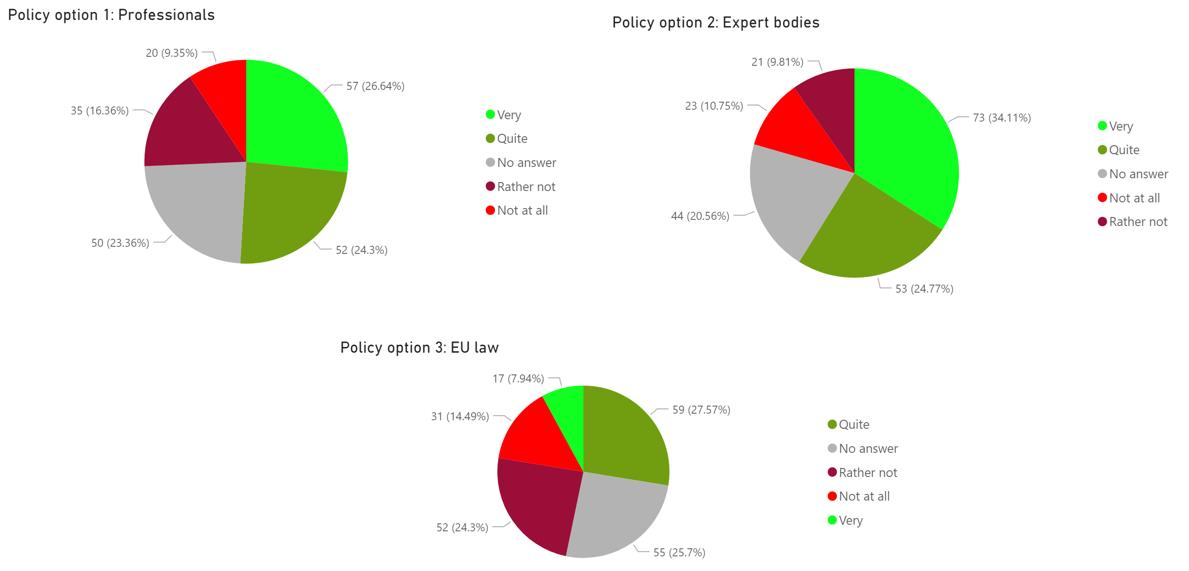
To further explore the feasibility of all three options for setting technical rules, respondents were asked to specifically assess the expected cost-effectiveness of each. Answers reflected the preferences expressed previously. Thus, rule setting by expert bodies was considered to be most cost-effective (123 responses of very or quite cost-effective), closely followed by updates by professionals (109 responses of very or quite). Technical rule setting in EU law was considered the least cost-effective (76 responses of very or quite) (Figure 6). Analysis by stakeholder groups showed some differences of opinion amongst these groups. Notably, slightly more respondents of blood/tissue establishments (BE/TEs) considered rule setting by professionals (66 responses) to be (very or quite) cost effective compared to expert bodies (59 responses). National competent authorities (NCA) with oversight responsibility, indicated that expert bodies would be cost-effective.
Figure 6. Which of the options would overall be most cost-effective to set technical rules?
Objective 2. - Donor and offspring protection
In addition to patient protection, donor and offspring protection also requires the setting of technical rules. Rules for donor and offspring protection could similarly be set by professionals themselves, by expert bodies, or by EU law. Again, the majority of respondents indicated that expert bodies (such as ECDC or EDQM) would be the most appropriate for this role (Figure 7). However, when comparing these responses to those for technical rules for patient protection, a more significant role was indicated for EU law than for professionals.
Figure 7. Who should set out these technical rules [for donor protection] to effectively achieve up-to-date safety and quality rules, based on good science?

Objective 3. - Oversight
To address the problems resulting from divergent national approaches to oversight, various measures were proposed in the Inception Impact Assessment. Respondents were asked to indicate the expected impact of introducing oversight principles (meaning that EU law would mandate certain requirements for competence or independence of authorities), European Commission audits of NCAs, greater collaboration between Member States and a training programme (Figure 8). Overall, respondents considered that the proposed measures to strengthen oversight would have positive impacts – average response being 7 on the scale of 1-10 (negative to positive, default value 5).
Figure 8. Overview of expected impact of strengthened oversight measures (1 to 10 – negative to positive)
|
|
Average
|
Median
|
Standard deviation
|
|
Introducing oversight principles for authorities in EU legislation. The principles might address independence of inspectors, conflicts of interest, and competency requirements for staff in authorities.
|
7.17
|
7
|
1.8
|
|
Audits by the European Commission of Member State competent authority control systems (inspection, vigilance, reporting)
|
6.87
|
7
|
2.0
|
|
Greater collaboration between Member State competent authorities (e.g. joint inspections, peer audits of inspections)
|
6.99
|
7
|
2.17
|
|
EU programme of training of staff in national/regional authorities to agreed guidelines
|
7.3
|
8
|
2.06
|
Objective 4. - Innovation
Figure 9. Clarity and application of regulatory classifications

When considering different measures to address the problem highlighted in Figure 9, respondents overall tended to agree that the set-up of an EU-level structure or committee to advise Members States on whether a substance falls under the BTC legislation would have positive impacts, the average response being 7 on the scale of 1-10. There were slight variations across the categories of stakeholders, but considering the number of respondents the difference is not meaningful.
Furthermore, the overwhelming majority of respondents indicated that such an EU-level structure or committee, if established, should co-ordinate decisions with the equivalent committees in the medicinal product and medical device frameworks (Figure 10).
 Figure 10. If an EU level structure or committee were established, do you consider that it should co-ordinate decisions with the equivalent committees in the medicinal product and medical device frameworks?
To effectively regulate innovation in the BTC field, respondents agreed that legal requirements should be introduced in EU legislation for demonstrating safety, quality, and efficacy when BTC are prepared or used in new ways (Figure 11). Support for such requirements was expressed by the majority of respondents across different types of organisations, including public authorities (85%), citizen/patient organisations (80%), academic/research organisations (71%) as well as companies/business associations (60%). Breaking down the responses by sector, the support is strongest in the blood sector (81%), followed by tissues & cells (77%). A slightly weaker majority of the respondents in the pharmaceuticals sector (57%) also support this approach.
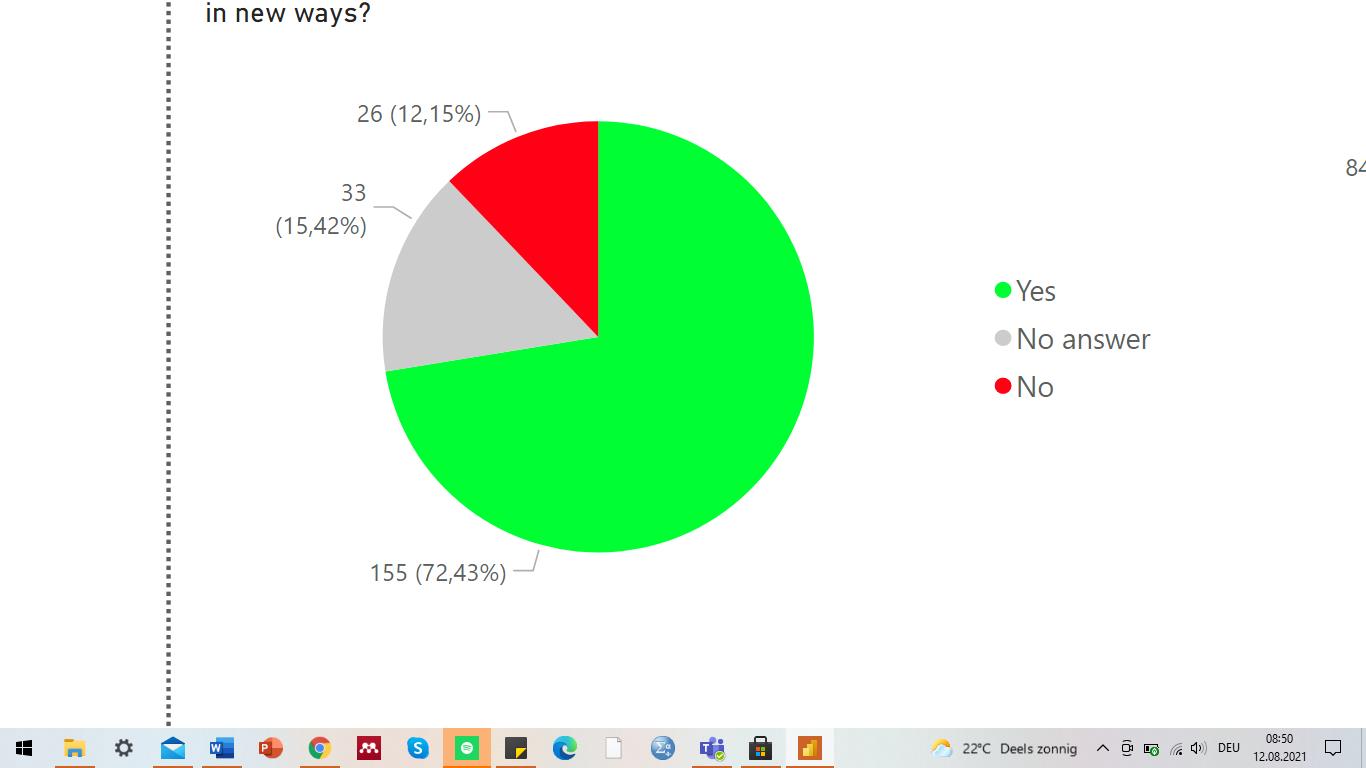 Figure 11. Should legal requirements be introduced in EU legislation for demonstrating safety, quality and efficacy when blood, tissues and cells are prepared or used in new ways?
Objective 5. - Supply
On the topic of sustainability of the supply of BTC, stakeholders were asked to assess the expected impact of proposed measures. Overall, respondents considered that the establishment of mandatory EU monitoring and routine reporting of sufficiency data (including rapid notifications in case of sudden significant supply drops) would have positive impacts. The average responses for the measures are 7 on the scale of 1-10 (1 being no impact and 10 being a significant positive impact). Respondents also indicated an increase of administrative burden and costs for such measures (with an average response of 6 on a scale of 1 to 10 in both cases, where 1 indicated low burden or cost and 10 a very significant burden or cost). Other measures selected as helpful to address a sudden drop in supply (crisis) were co-operation amongst BTC establishments (selected by 117 respondents), notification to the EU level with collective response co-ordination (93) and notification to the NCA with a national response (72).
Around 65% of respondents indicated that mandatory preparedness/contingency plans would bring some, or many, improvements, with around 20% of respondents not responding to this question. This support was strongest among NCAs, of which around 80% indicated that they would expect some or many improvements, followed by BTC establishments and healthcare providers (around 60%) and manufacturers (around 40%).
IV.FURTHER STEPS
The views presented in this report will be duly taken into account in the revision process leading up to the proposal for a new legal framework for the BTC sector. These conclusions will be further supplemented by a detailed analysis of the free text questions in this Public Consultation and all questions in the targeted consultation, as well as other stakeholder consultation activities taking place in the context of the Impact Assessment.